


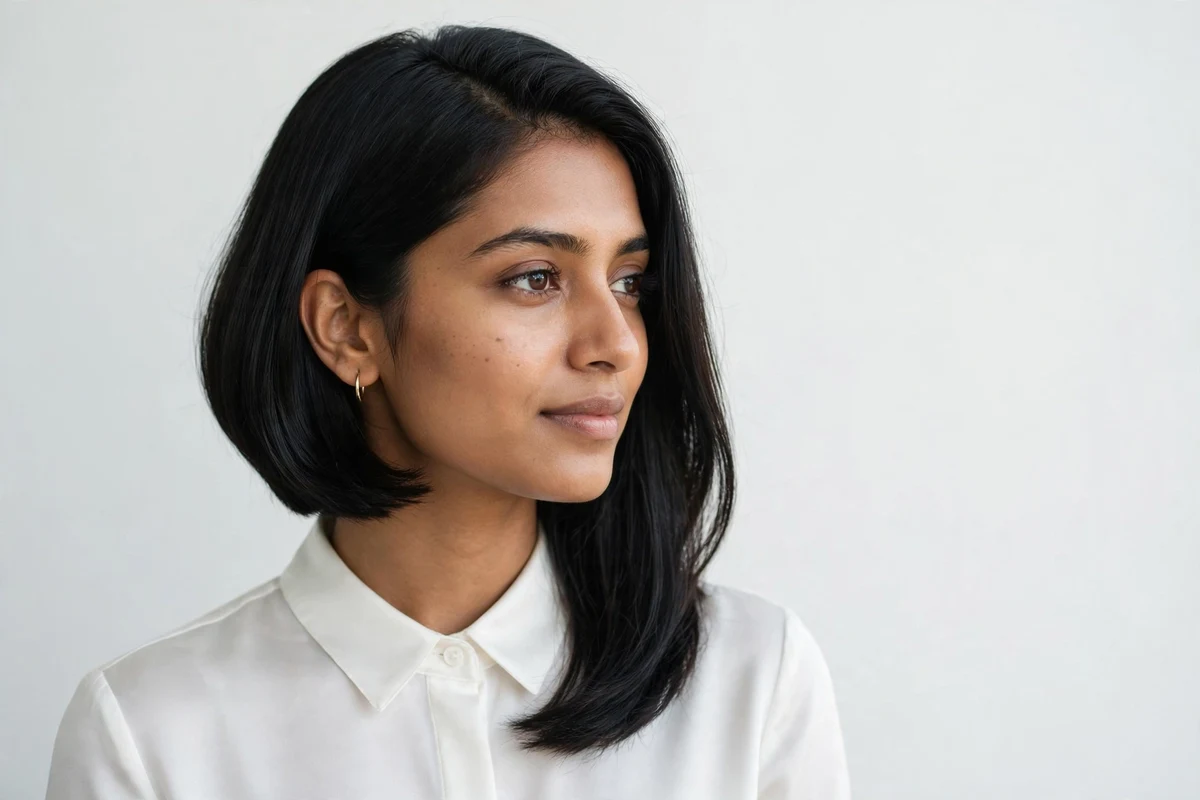
An asymmetrical bob keeps one side longer than the other, and that single choice changes the whole cut. It works on straight, wavy, and curly hair, and it suits almost every face shape because the uneven lengths draw the eye in a way a level cut can’t.
This guide covers 30 asymmetrical bob hairstyles pulled from what’s actually ranking and what salons are cutting right now. I’ve combed through the top stylist galleries so you don’t have to, and each idea comes with a “Try this” tip you can bring to your appointment.
Quick answer: Asymmetrical bob hairstyles feature one side cut longer than the other, usually with a deep side part. They flatter round, square, and long faces by adding diagonal lines, and they work with straight, wavy, curly, fine, or thick hair. Trims every 6 to 8 weeks keep the shape sharp.
Quick Takeaways
- An asymmetrical bob means uneven side lengths, not just an angled back.
- A deep side part sells the asymmetry more than the cut itself does.
- Fine hair gains the most from the shape, since the diagonal line creates the look of volume.
- Bold color (two-tone, pastel, silver) makes the length difference read instantly.
- Plan a trim every 6 to 8 weeks, or the longer side starts to look like a mistake.
Why Asymmetrical Bob Hairstyles Work So Well
Most bob cuts sit level. An asymmetrical bob breaks that line on purpose, and the diagonal shape guides the eye across your face instead of straight across. That’s why stylists reach for it when a client wants a bob that doesn’t read as “safe.”
The cut is also practical. You can tuck the short side behind your ear and let the long side do the work, which means it looks styled with almost no effort. It handles second-day hair well, since the shape carries the style even when the texture fades.
One more honest note: the cut grows out visibly. When one side is two inches longer, an extra half inch of growth shows more than it would on a level cut. If you like this look, budget for regular trims and you won’t have a problem.
1. Classic Straight Side-Parted Asymmetrical Bob

This is the version most people picture: chin-length on one side, brushing the jaw on the other, parted deeply on one side and worn poker straight. The asymmetry reads clearest when the hair is sleek, so a flat iron is part of the routine here. It suits oval and heart-shaped faces especially well because the long side softens one cheek while the short side opens up the other. A center part kills the effect, so keep the part deep on one side every time you style it.
Try this: Apply heat protectant, flat iron in small sections, then press a pea-sized amount of lightweight serum through the ends for a polished finish that holds all day.
2. Long Asymmetrical Bob (Lob)

Not ready for chin length? The long asymmetrical bob keeps one side at the shoulder and the other a few inches shorter. You get the edgy shape without losing the ponytail option. This length works for thick hair because the weight keeps the longer side lying flat, and it gives wavy hair enough length to form real waves instead of frizzing out at the ends. The extra length also means you can pull it into a low ponytail on lazy days, which shorter asymmetrical cuts can’t offer.
Try this: Blow dry with a round brush, rolling the longer side under slightly so the length difference looks deliberate rather than accidental.
3. Short Asymmetrical Bob
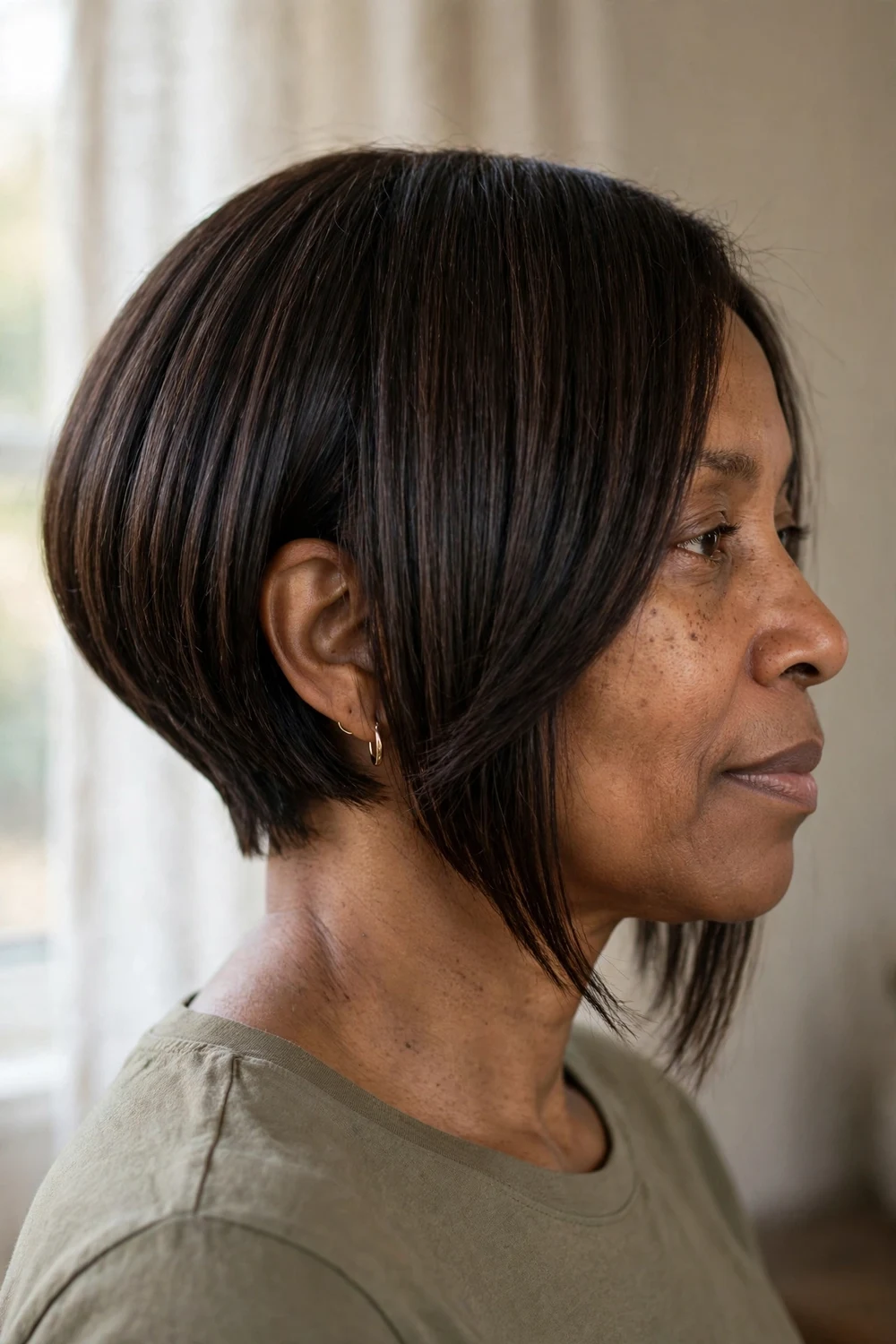
The short version commits fully: one side sits at the chin, the other at the jawline. It’s the highest contrast you can get while still calling it a bob. Round faces benefit most, since the long side adds vertical length that slims the cheeks. Ask your stylist to keep the nape neat, because a messy back undermines the precision this cut needs. The cut works with a middle part too, though the asymmetry shows strongest with a deep side part.
Try this: Tuck the short side behind your ear with a bobby pin for work, then let it loose in the evening for two different looks from one cut.
4. Sharp Angled Asymmetrical Bob
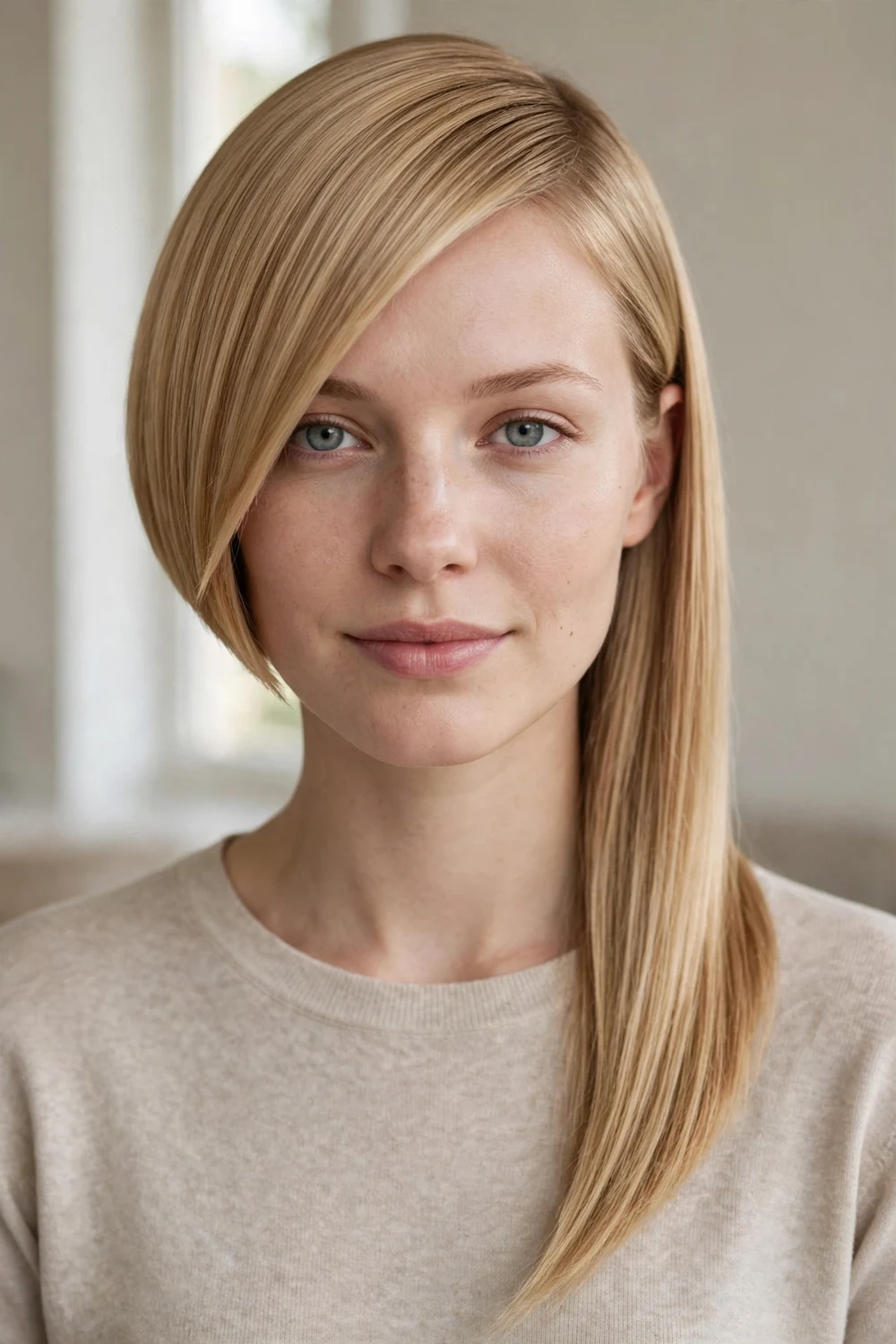
This one combines two ideas: the back is cut at an angle like an inverted bob, and one side runs much longer than the other. The result is the boldest silhouette on this list. Straight hair shows it off best, since every line has to read clean. It’s a strong pick for anyone who wants the cut to be the statement, with color and styling kept simple. Because the lines are so precise, this version shows regrowth fastest, so book trims closer to the 6-week mark.
Try this: Run a flat iron over the longer front section last, pulling it forward and down so the sharp diagonal line stays the focal point.
5. Wavy Asymmetrical Bob
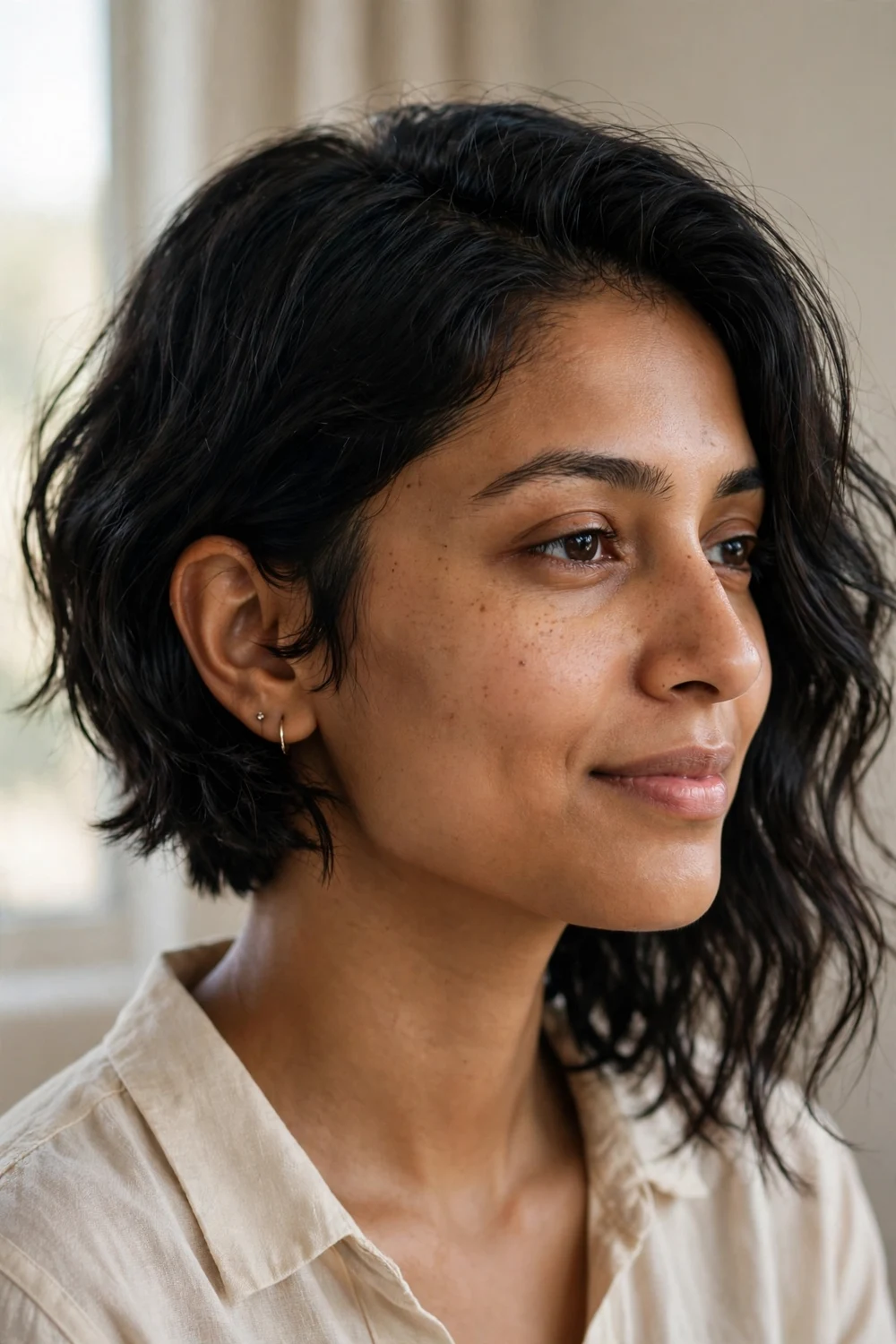
Waves soften the geometry of an asymmetrical cut without hiding it. The uneven lengths still show, but the texture keeps the look relaxed instead of severe. This is a good pick for square faces, where soft waves take the edge off a strong jawline. Sea salt spray on damp hair, scrunched and left to air dry, gets you most of the way there. The waves don’t need to be uniform; slightly uneven waves suit the uneven cut better than perfect curls.
Try this: Curl only the longer side away from your face with a medium barrel iron, then shake everything out so the waves look uneven on purpose.
6. Two-Toned Asymmetrical Bob

Color does half the work here: dye one side a different shade and the length difference becomes impossible to miss. Black on one side with platinum on the other is the classic version, but brown-to-caramel reads more wearable for everyday life. The color split follows the part, so the cut and color reinforce each other instead of competing. Maintenance means two dye schedules, so pick shades that fade gracefully together rather than fighting each other at the roots.
Try this: Keep the darker shade on the shorter side and the lighter shade on the longer side, since light colors pull the eye forward and emphasize the length.
7. Baby Bob

The baby bob is short, choppy, and deliberately unfinished, with a side swoop that looks like bangs caught mid-grow-out. Adding a slight asymmetry keeps it from reading too cute. It works for heart-shaped and round faces, where the choppy ends break up width. Ask for the ends to be point-cut rather than cut straight across, which is what gives it that fluffy texture. It grows out into a shaggy bob within a couple of months, so the awkward phase is short if you decide to grow it.
Try this: Work a dab of texture paste through dry ends only, avoiding the roots so the style stays light instead of greasy.
8. Messy Shaggy Asymmetrical Bob
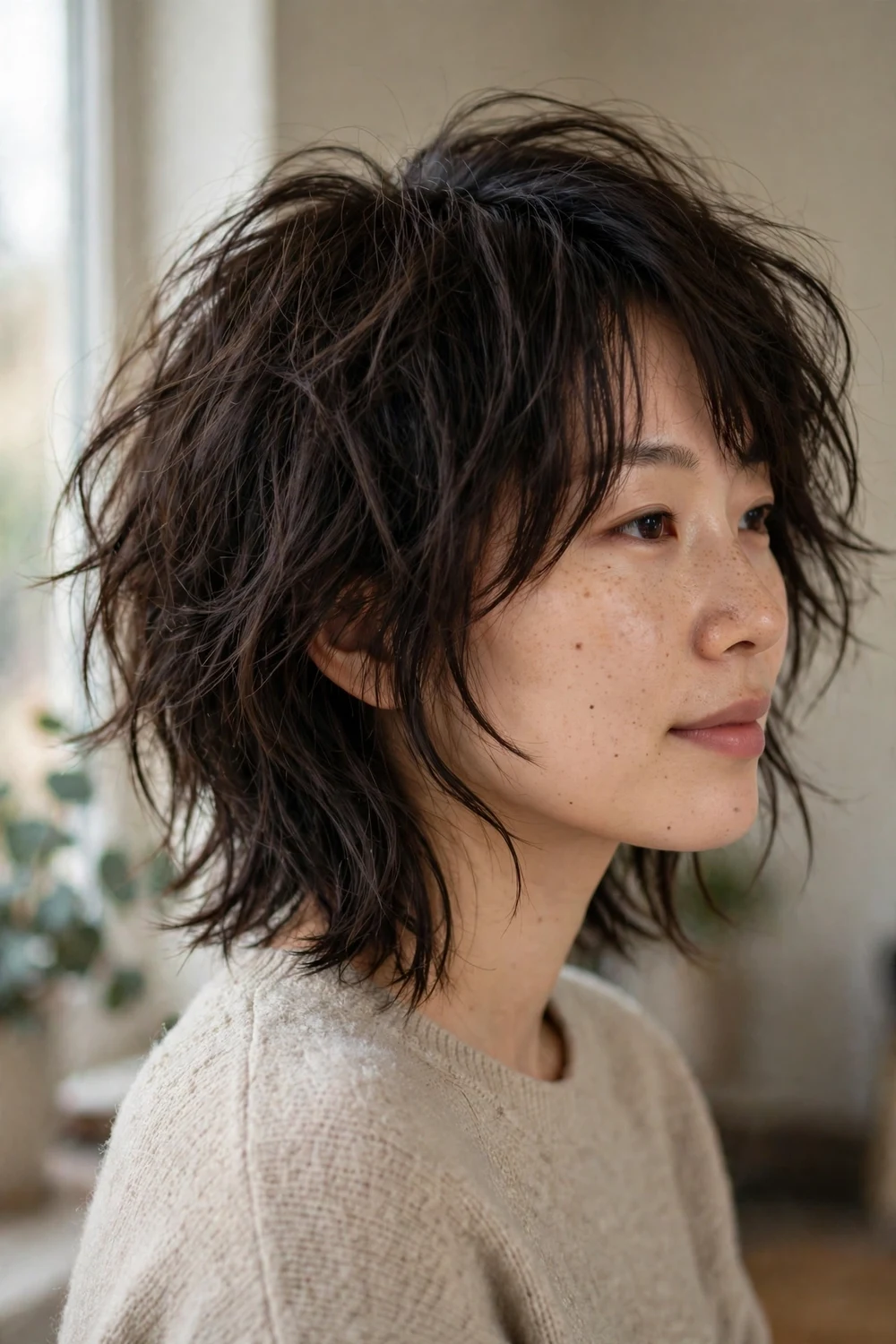
Choppy layers plus uneven sides equals the lowest-maintenance option on this list. The whole point is that it looks a little undone, so bedhead works in your favor. Thick, coarse hair does best here because the layers remove weight that would otherwise puff the style out. If your hair is fine, ask for fewer layers so you don’t lose what density you have. A little dry shampoo at the roots on day two revives the texture without a full wash.
Try this: Flip your head upside down, blast the roots with the dryer for 30 seconds, then flip back up. Instant volume, zero round-brush work.
9. Purple Asymmetrical Bob
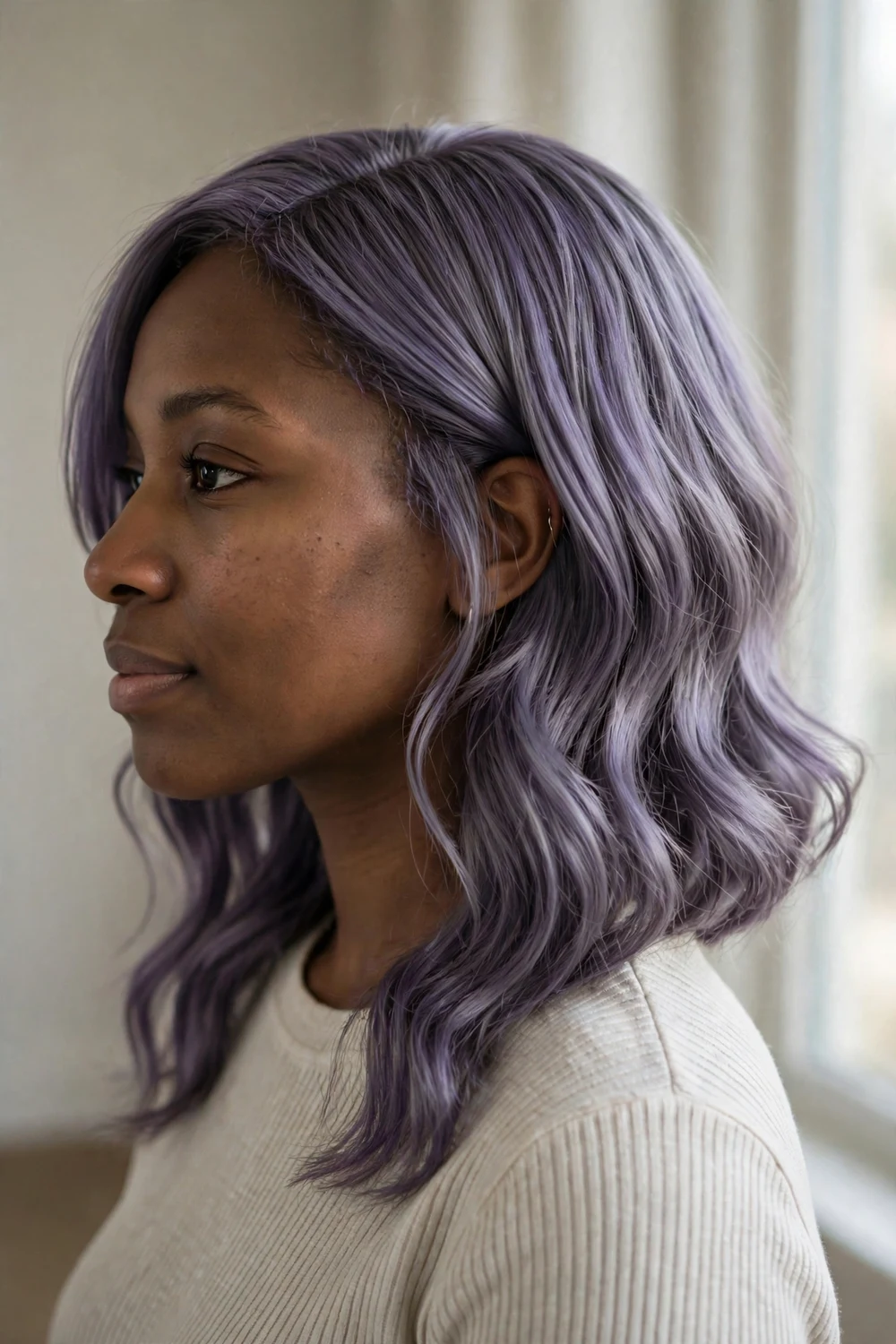
Purple, from lavender to deep violet to purple-gray, is the color most associated with asymmetrical bobs, and it earns the pairing. The fantasy shade turns an already bold cut into a full statement. Gray-purple tones fade faster than natural shades, so this one needs color-depositing conditioner between salon visits. Straight or softly waved both work; curls make the color look even richer. Pair it with simple makeup and neutral clothes, since the hair is already doing all the talking.
Try this: Wash with cool water and a sulfate-free shampoo to slow fading, and refresh the tone at home every two weeks with a purple color mask.
10. Side-Shaved Asymmetrical Bob
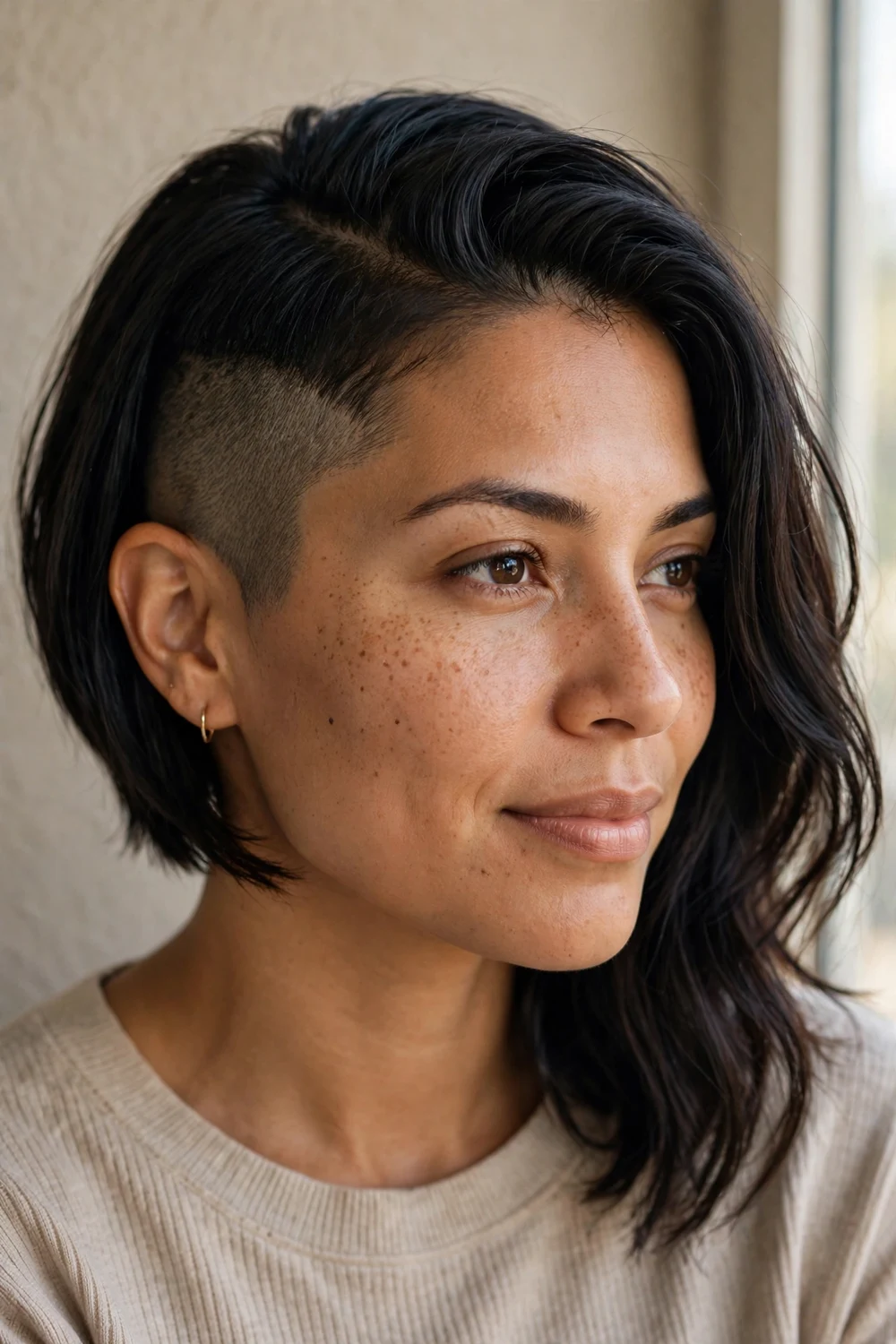
Shave one side close and sweep the long top over from a deep part. It’s the most dramatic version here, and it’s also practical: the shaved side stays cool and needs no styling. Thick hair benefits because removing one whole section cuts drying time in half. The grow-out is the trade-off, so only pick this if you’re fine with regular clipper touch-ups. You can hide the shaved side completely by parting your hair over it, which makes this surprisingly office-friendly.
Try this: Book a 15-minute clipper cleanup every 3 weeks. Letting the shaved side grow out turns the style fuzzy instead of sharp.
11. Wavy Balayage Asymmetrical Bob
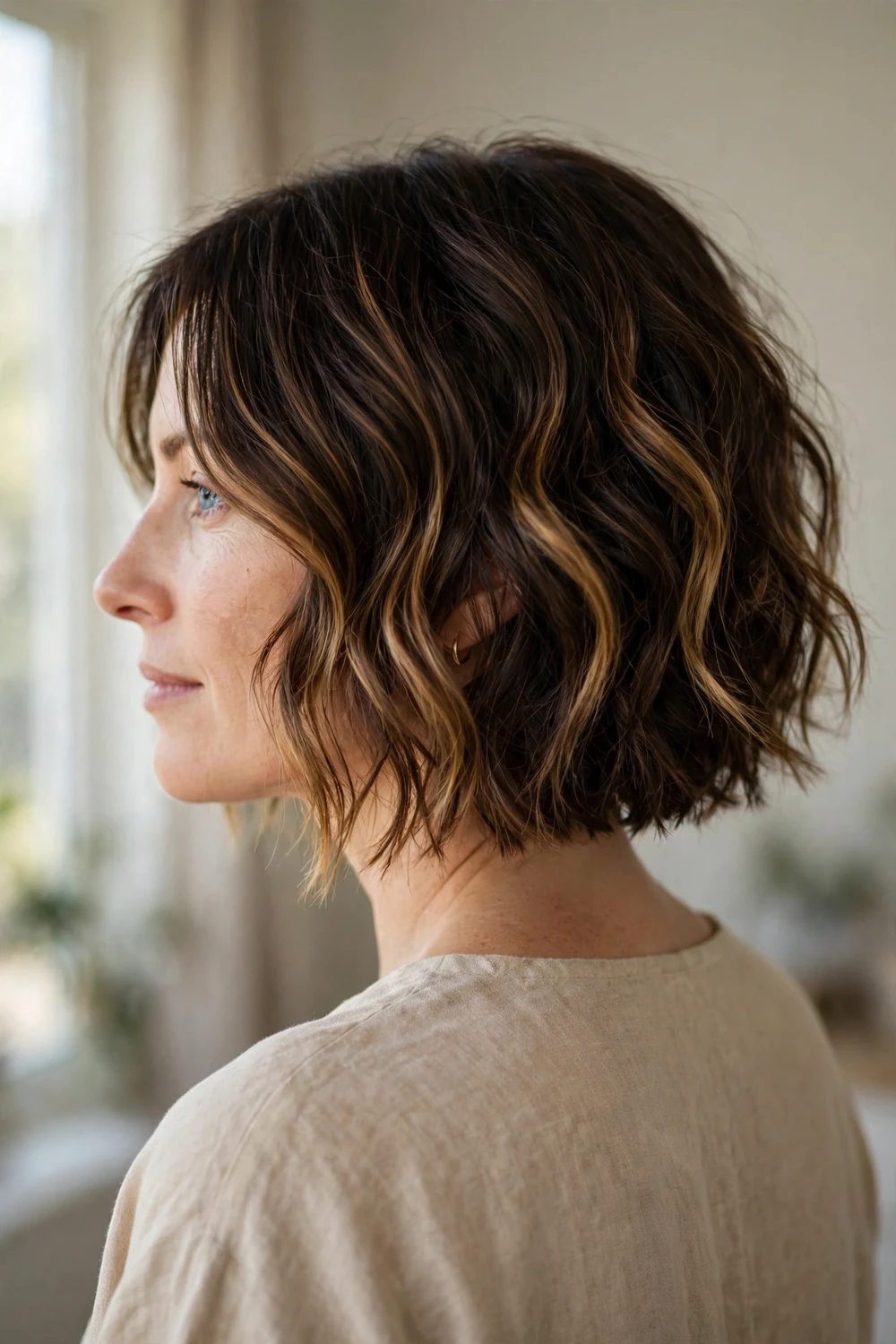
Balayage painted through a wavy asymmetrical bob adds depth that flat color can’t. The hand-painted highlights catch the wave bends, which makes the uneven lengths more visible from every angle. This is the version to ask for if you want dimension without obvious regrowth lines, since balayage grows out softer than foils. Brunettes get the most natural result with caramel or honey balayage over a dark base, and the waves keep the grow-out looking relaxed.
Try this: Ask for the lightest pieces around the face and on the longer side, since brightness there draws attention to the asymmetry.
12. Long Mermaid Waves Asymmetrical Bob
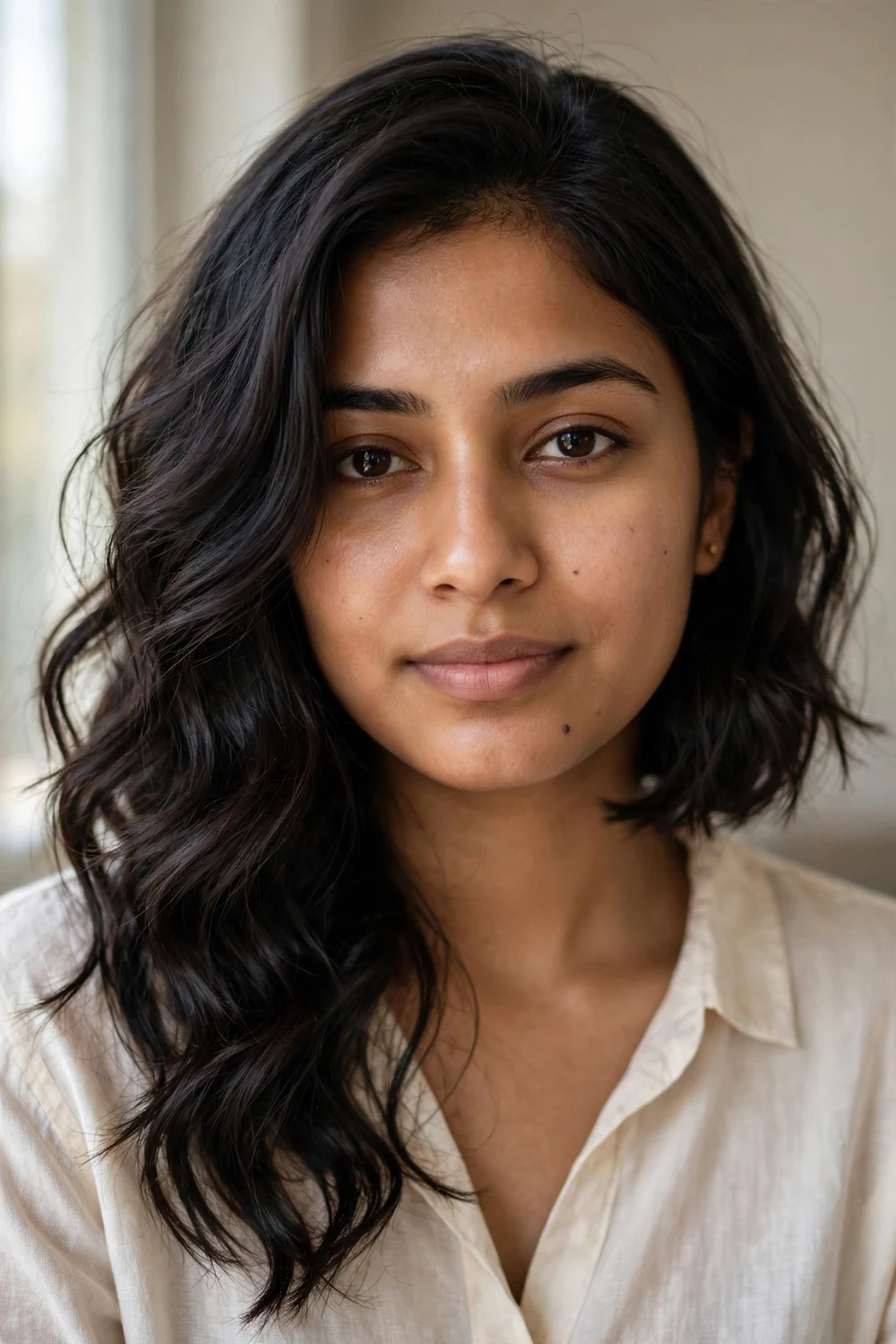
Take the lob past the shoulders, add loose flowing waves, and keep one side clearly longer for a romantic take on asymmetry. It suits long faces because the width of the waves balances length, and it photographs well since the waves show the cut’s movement. A large barrel iron and a light-hold spray are all the tools you need, and the style holds up through a full evening because the longer length gives the waves more to grip.
Try this: Wrap sections around a 1.25-inch iron, alternating directions, then brush through once for waves that look soft instead of ringlet-tight.
13. Wedged Asymmetrical Bob with Elongated Side
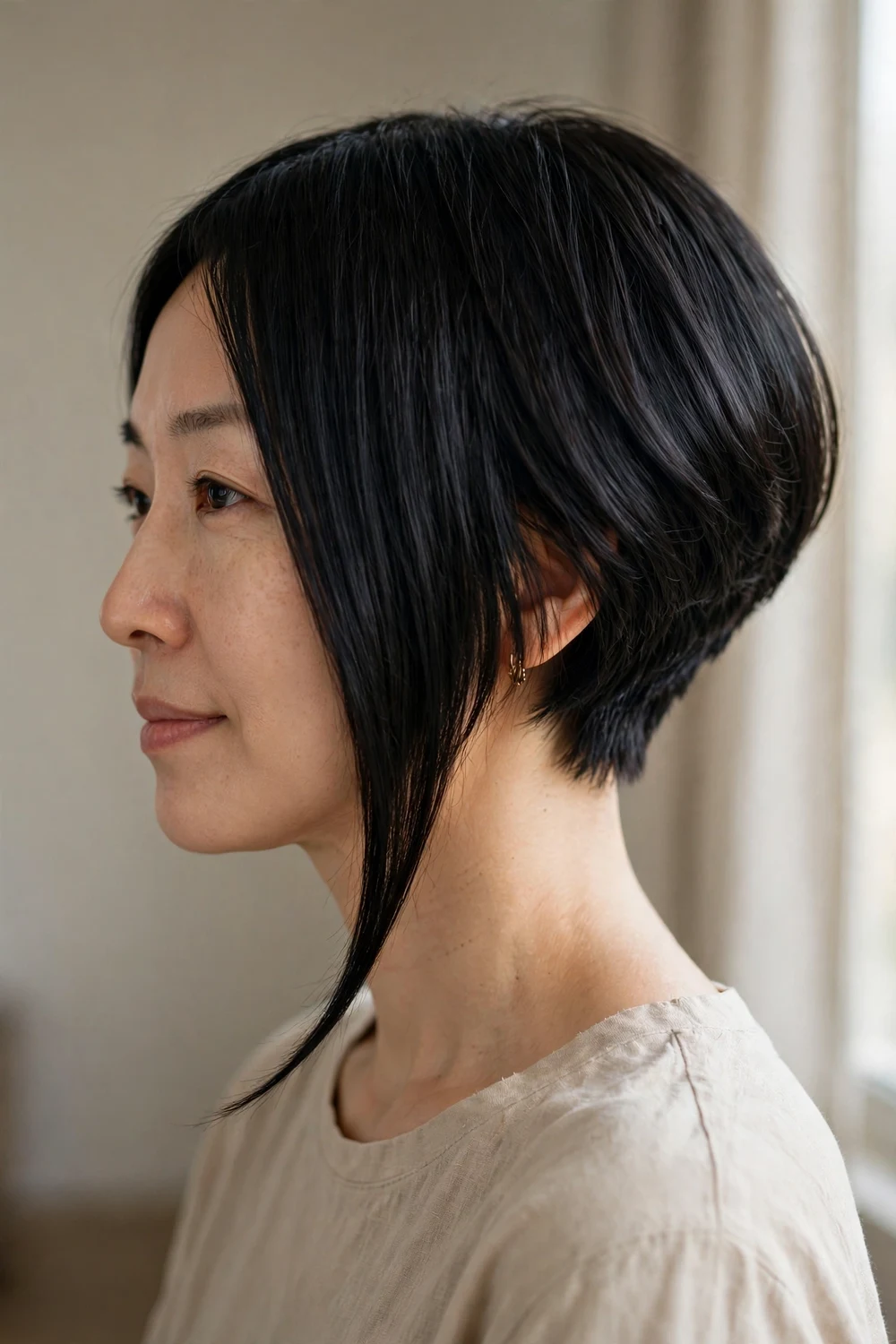
The wedge stacks short layers at the back and lets one front side run long, combining the classic wedge shape with asymmetry. Fine to medium hair gets the most from it because the stacking builds volume at the crown that fine hair usually lacks. The cut does the styling for you, which is why it’s popular with people who don’t want a daily routine. The stacked back also means the cut holds its shape well between appointments, stretching the time between trims.
Try this: Blow dry the back with a round brush lifting at the roots, and let the long front air dry to keep the contrast between volume and sleekness.
14. Asymmetrical Bob with Bangs

Bangs plus asymmetry sounds like a lot, but side-swept bangs actually blend into the longer side and make the whole cut look more connected. Straight-across bangs fight the diagonal line, so always go side-swept with this cut. Long faces and high foreheads benefit most, since the bangs shorten the forehead while the asymmetry keeps the style from looking heavy. Keep the bangs long enough to tuck behind your ear on days you want them out of the way.
Try this: Blow dry bangs first, before the rest of the hair, while they’re still very damp. Dry bangs set in whatever direction they fall.
15. Asymmetrical Bob with Undercut
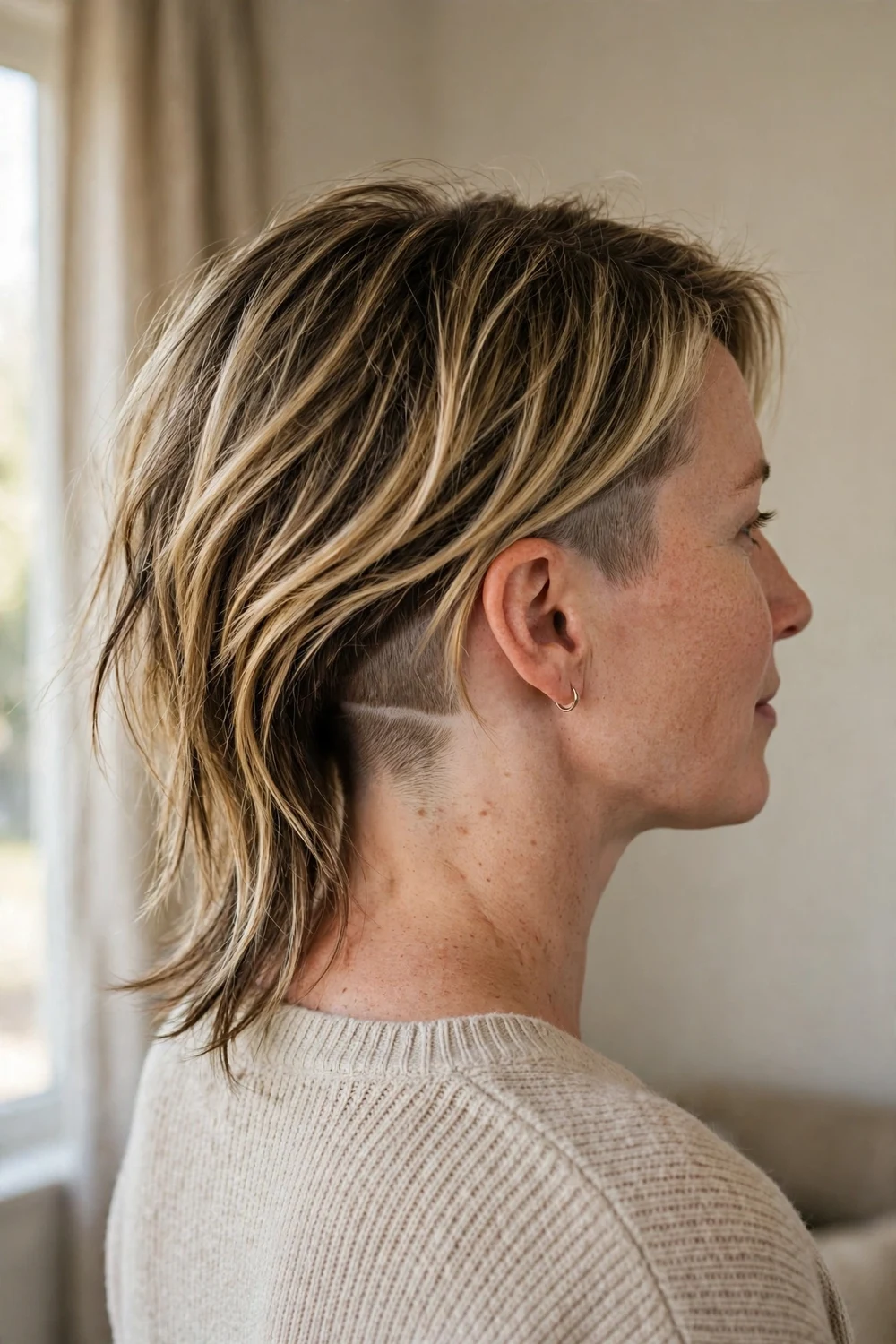
An undercut at the nape removes bulk underneath while the longer top layers keep the bob silhouette. From the front it looks like a normal asymmetrical bob; from the back it has an edge. Very thick hair is the best candidate, since the undercut takes out the weight that makes bobs puff out at the bottom. Some people add a shaved design at the nape for extra detail. In summer the undercut keeps your neck cool, which is a practical bonus most people don’t expect from the style.
Try this: Ask for a disconnected undercut rather than a blended one, so the top layers fall cleanly over the short section without a visible shelf.
16. Platinum Blonde Curly Asymmetrical Bob
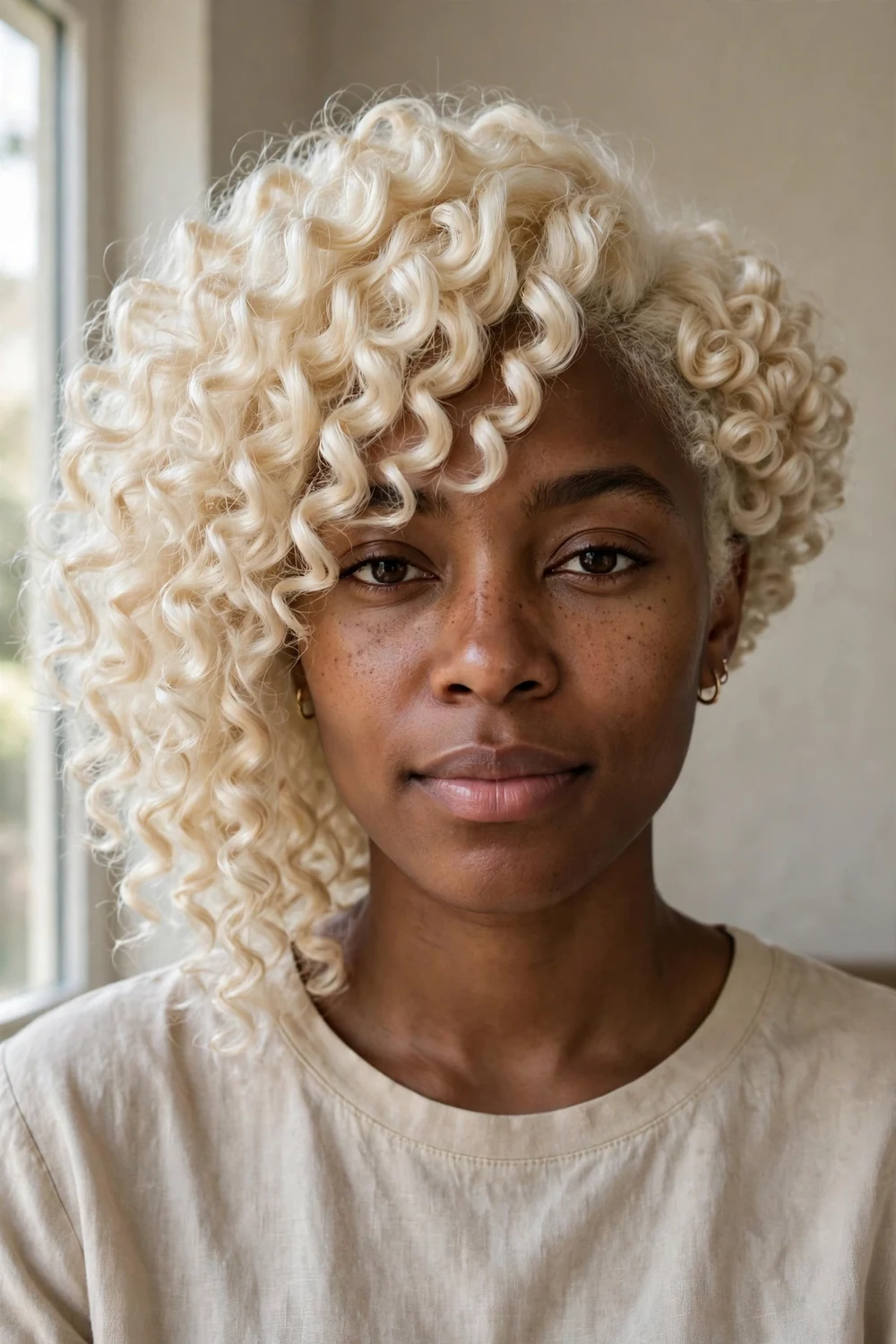
Platinum curls with uneven lengths make a bold pairing, and side bangs tie the two sides together so the cut reads as one style. Curly hair needs the asymmetry cut dry or nearly dry, since wet curls shrink and the length difference disappears after drying. This is a high-maintenance color on a cut that already needs regular trims, so budget for both salon visits before committing. When the color and cut are both fresh, though, few styles turn more heads.
Try this: Ask your stylist to cut your curls dry, one curl at a time, so the asymmetry lands exactly where it should once the hair springs up.
17. Medium-Length Asymmetrical Bob

Sitting between the classic bob and the lob, this length grazes the collarbone on one side and the chin on the other. It’s the most versatile option here: long enough to pull back, short enough to read as a real bob. Oval faces can wear it with almost any part, while round faces should stick to the deep side part for the slimming effect. This length also photographs well from the back, since the asymmetry reads clearly in back-view shots.
Try this: Wear it tucked on the short side for the office and loose on weekends. The length difference makes both versions look intentional.
18. Pastel Blue Asymmetrical Bob
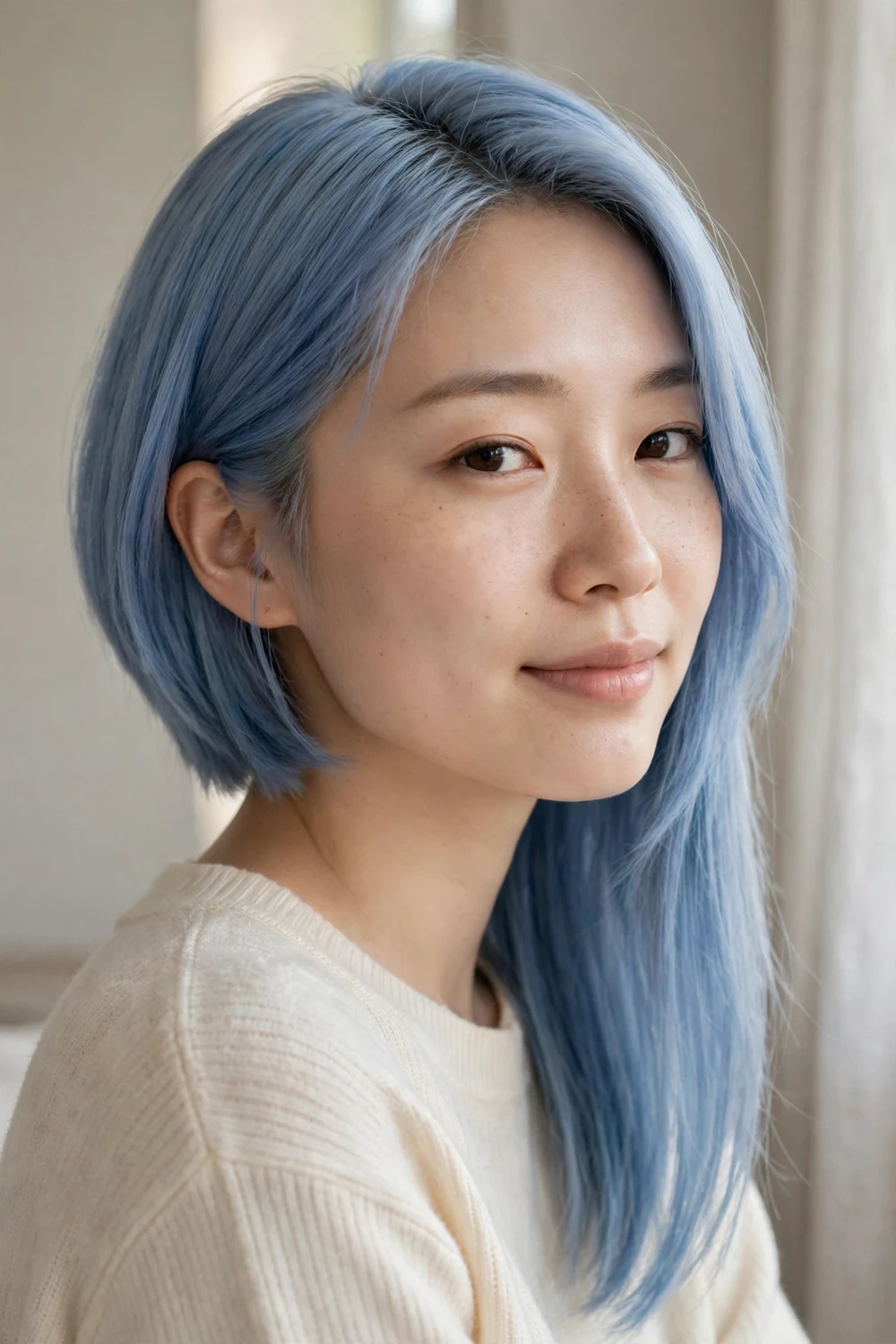
Pastel blue fades faster than any natural shade, but on an asymmetrical bob it looks striking while it lasts. The color works best on pre-lightened hair, so this is a salon job, not a box dye project. Straight styling shows the color most evenly, and the asymmetry keeps a sweet pastel shade from looking too soft. If you want the color to last longer between appointments, ask for a slightly deeper blue at the roots that melts into pastel at the ends.
Try this: Use a blue color-depositing conditioner once a week to hold the tone, and expect a full refresh every 4 to 6 weeks.
19. Angled Layered Asymmetrical Bob
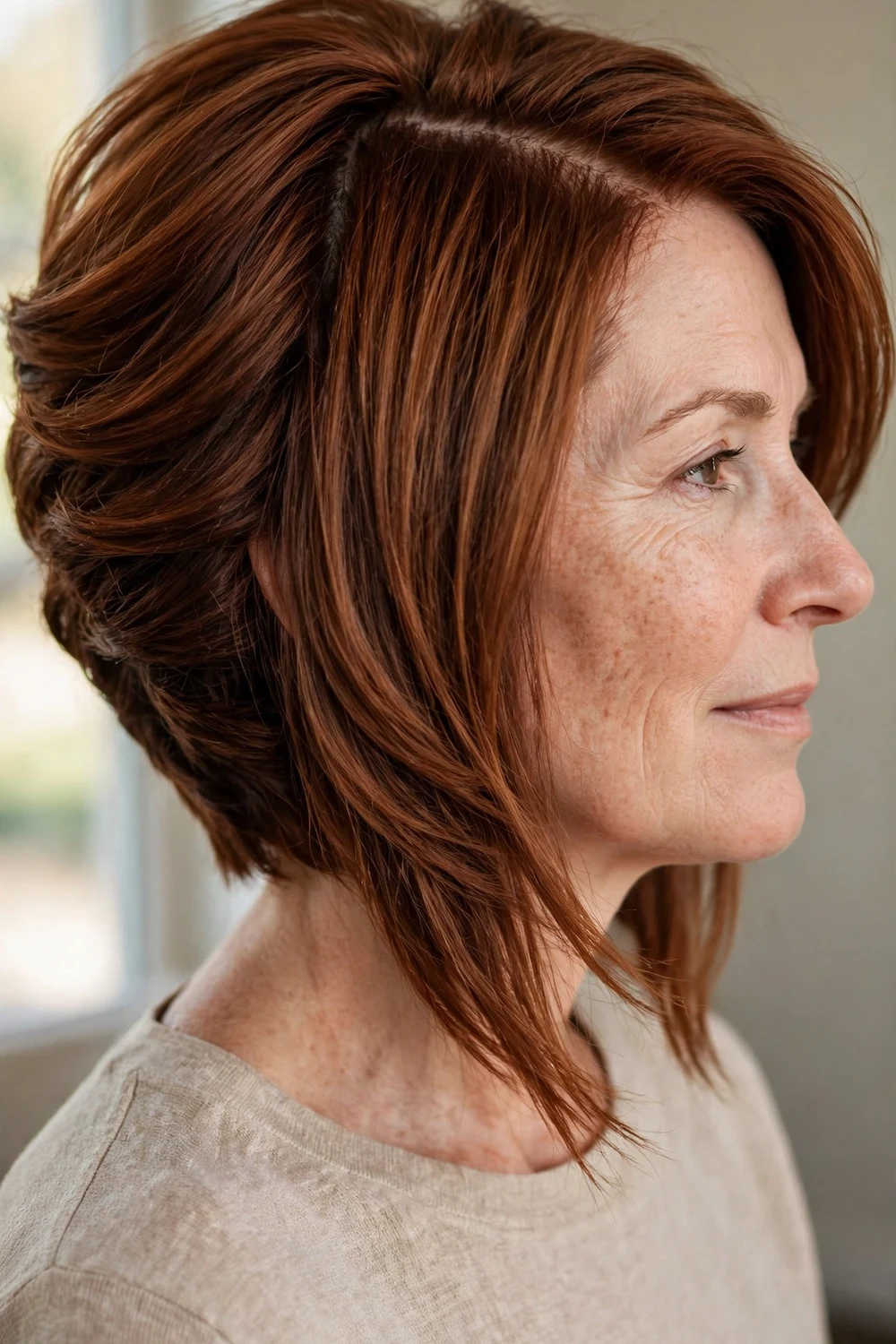
Layers angled through the cut add movement that a blunt asymmetrical bob lacks, and the deep side part pushes volume to one side. Medium to thick hair handles the layering best; on very fine hair, too many layers can make the ends look thin. This version suits women over 40 well because the layers around the face soften features without adding bulk. The layers make this one of the better asymmetrical options for thick hair, since they remove bulk without losing shape.
Try this: Ask for long layers only, nothing shorter than chin length, so the layers add swing without breaking up the bob’s shape.
20. Subtle One-Length Asymmetrical Bob

The length difference here is barely an inch, which makes this the entry-level asymmetrical bob. It reads as a normal bob until you look closely, so it’s the safest way to test the shape. Professional settings accept it easily, and growing it out is painless since the sides even up within a couple of trims. Tuck one side behind your ear to make the difference more obvious when you want it to show.
Try this: Start here if you’re unsure about asymmetry. You can always go shorter on one side at the next appointment.
21. Spiked Asymmetrical Bob
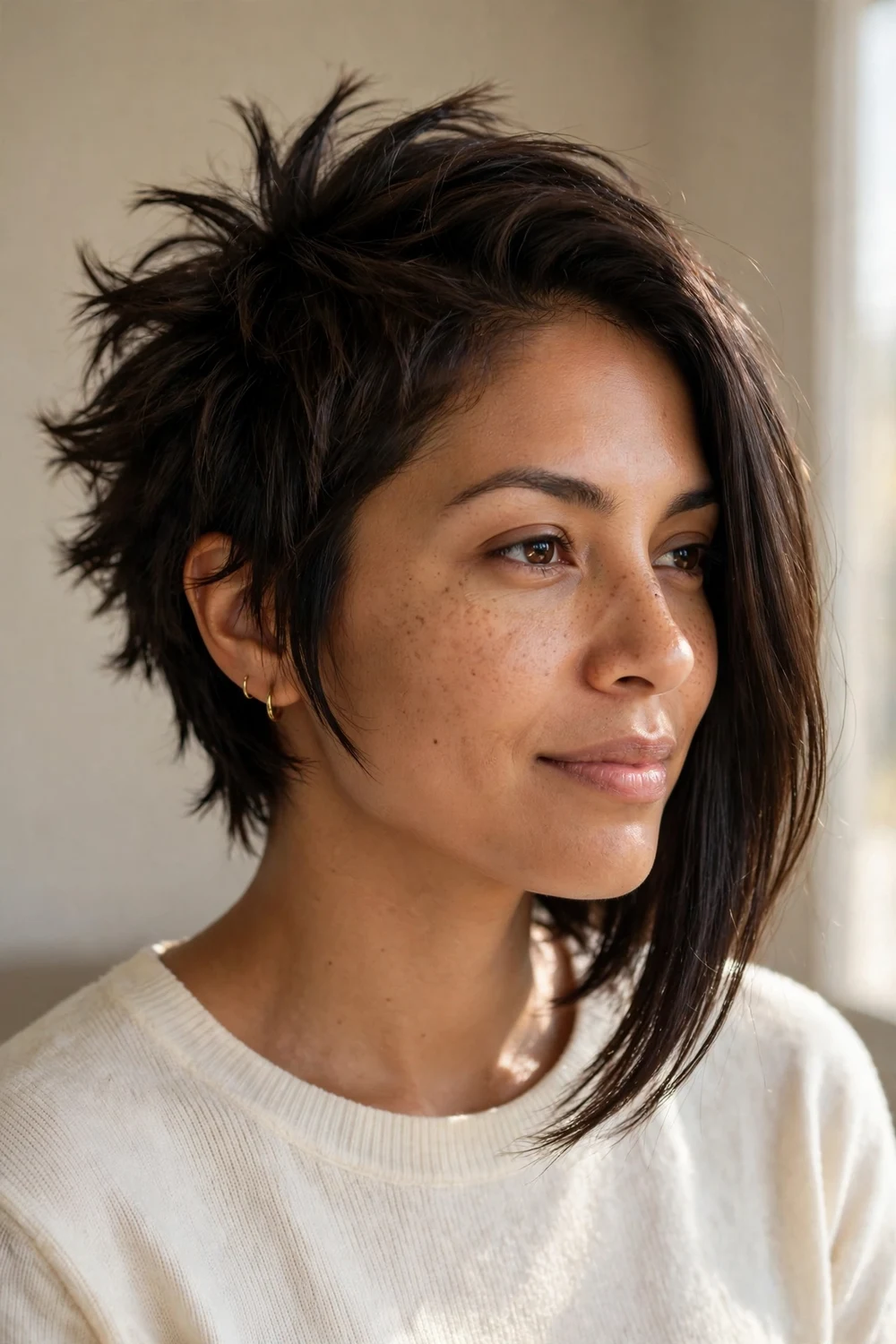
Spiky texture on the short back and side, smooth length on the long side: this one mixes two finishes in a single cut. It needs a strong-hold product to keep the spikes standing, so plan on daily styling rather than a wash-and-go routine. Younger wearers and anyone with an edgy wardrobe get the most from it, but the smooth long side keeps it from reading as a costume. Keep the spikes piece-y rather than stiff, since separated texture looks modern while helmet spikes look dated.
Try this: Use a matte clay on dry hair, pinching small sections upward on the short side while leaving the long side completely smooth.
22. Dark Roots with Silver/White Asymmetrical Bob

Dark roots melting into white or silver lengths give the cut a two-tone effect without dyeing two separate sections. The root shadow also means regrowth blends in, which cuts down salon visits compared to all-over silver. Cool skin tones carry this best, and a purple shampoo once a week keeps the silver from turning yellow. The asymmetry keeps the high-contrast color from looking flat, since the uneven lengths catch light differently on each side.
Try this: Ask for a shadow root of 1 to 2 inches rather than harsh regrowth lines, so the grow-out looks planned from day one.
23. Pixie-Like Asymmetrical Bob
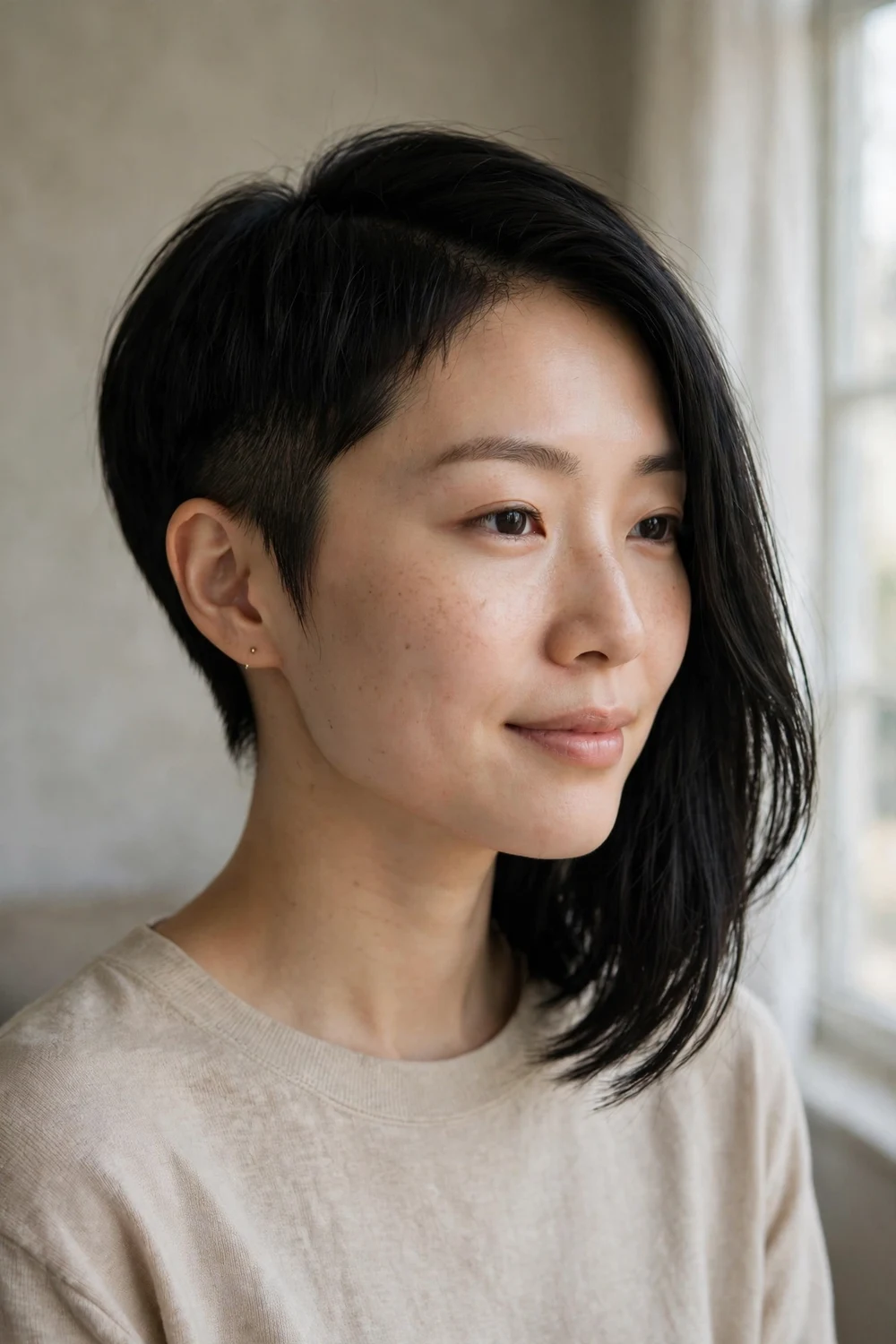
One side is cut like a pixie, the other like a bob, and the contrast between them is the whole point. It’s a good stepping stone if you’re growing out a pixie or thinking about getting one. The long side gives you styling options while the short side keeps the edge. Oval and long faces wear it best, since the long side adds width where narrow faces need it. This is also a smart grow-out strategy if you’re moving from a pixie toward a bob, since the long side bridges the gap.
Try this: Style the long side with a flat iron and the short side with a little pomade for piece-y texture, so each side reads as its own cut.
24. Two-Way Straight-and-Curly Asymmetrical Bob
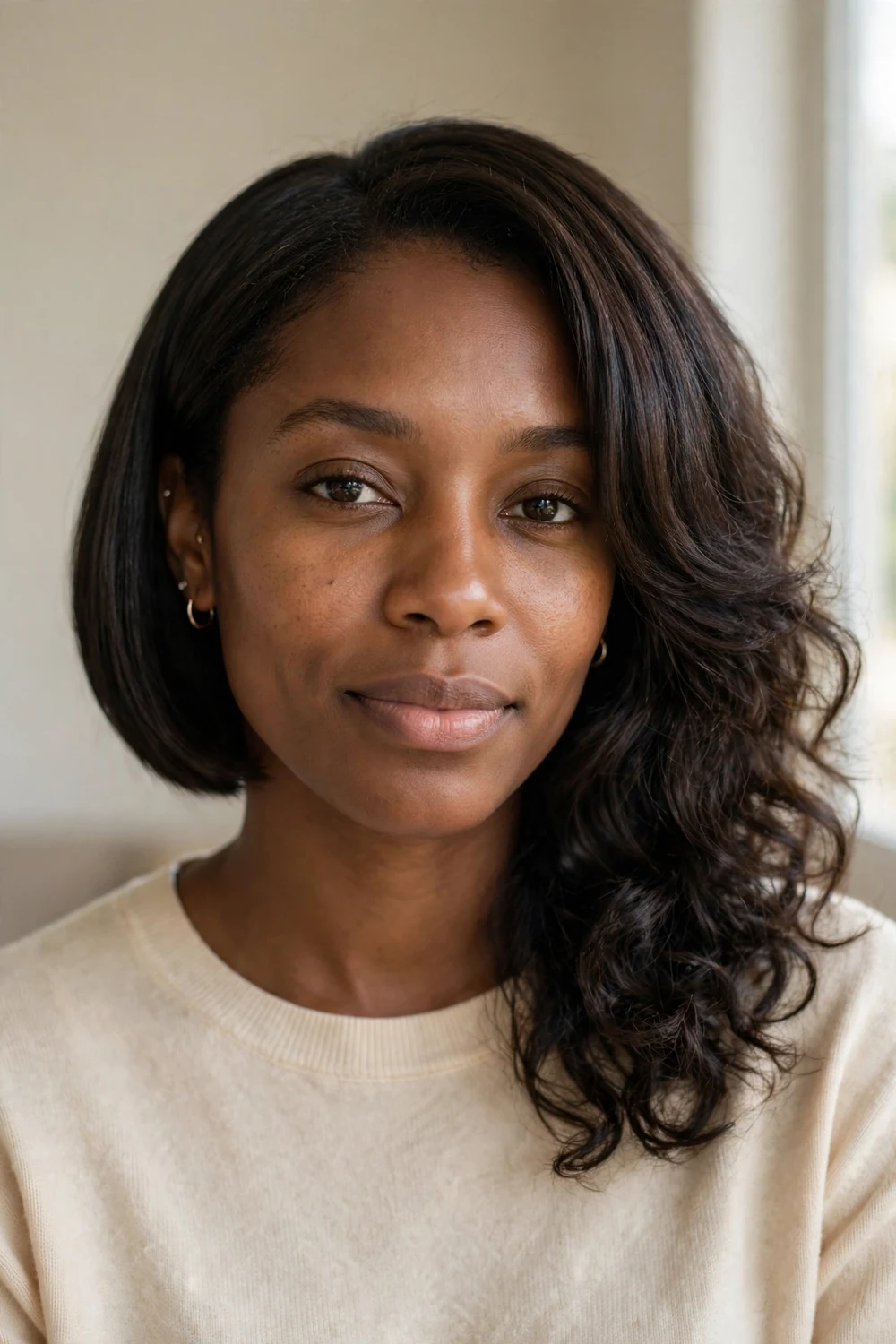
Here’s a styling trick rather than a cut: wear the bob straight and sleek on one side, softly curled on the other. The mixed textures exaggerate the asymmetry without any extra cutting. It works for events when you want the cut to look different from your everyday version. The key is keeping the curls loose so the two sides still feel like one hairstyle. The mixed textures photograph well, which is why this styling trick shows up so often in event photos.
Try this: Flat iron everything first, then curl only the longer side with a large iron. The contrast shows best when the short side stays perfectly smooth.
25. Smooth Red Asymmetrical Bob
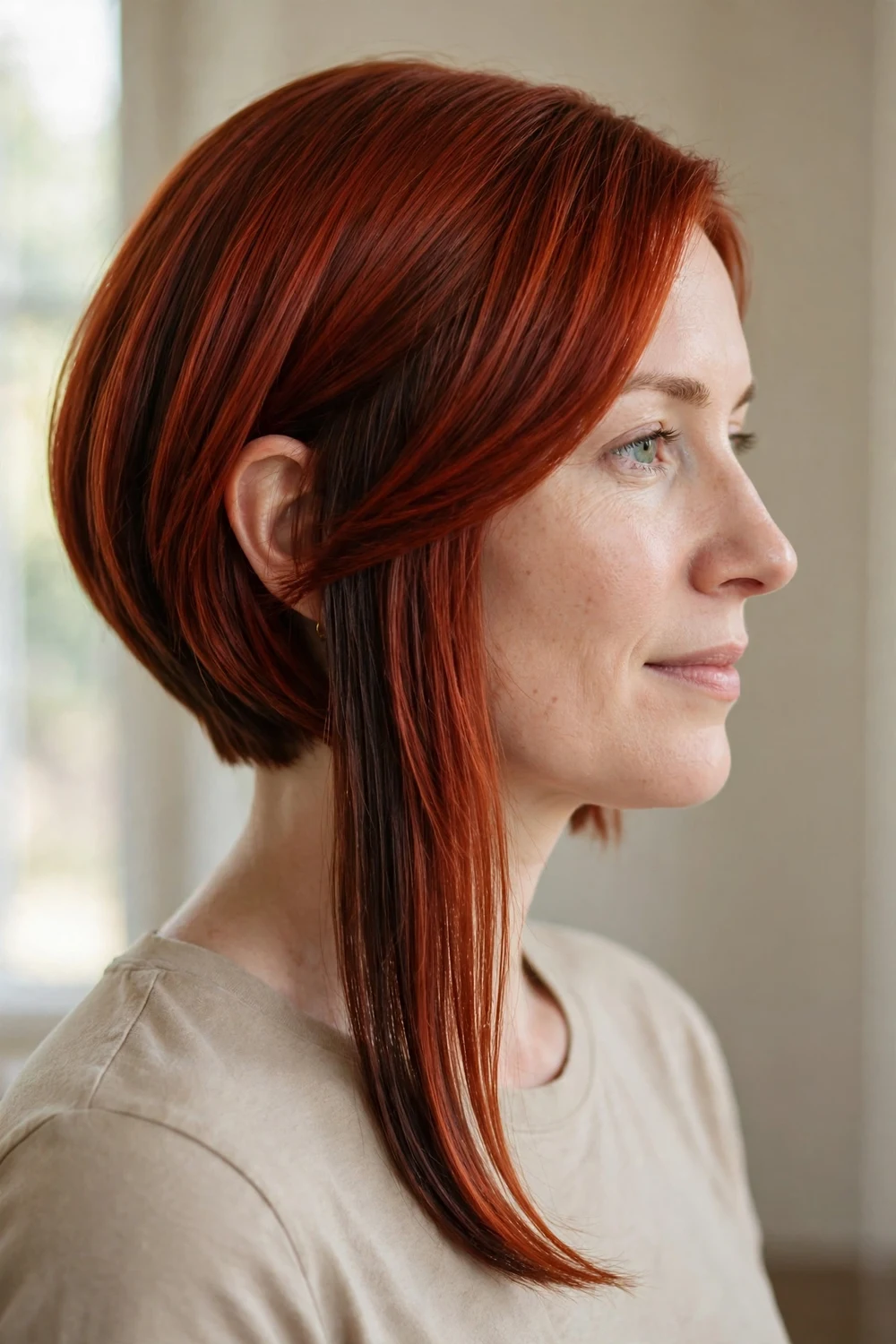
An all-over rich red, from copper to deep auburn, turns a simple asymmetrical bob into a head-turner. Red fades faster than brown or blonde, so this color needs the same upkeep commitment as the pastels, including color-safe shampoo and cooler wash water. For a smaller commitment, dye just the ends red instead: the dipped tips give you the edge with half the maintenance and grow out without a harsh line.
Try this: Add a clear gloss treatment at the salon every 6 weeks. It seals the red in and brings back the shine that fading steals.
26. Dramatic Extreme Asymmetrical Bob
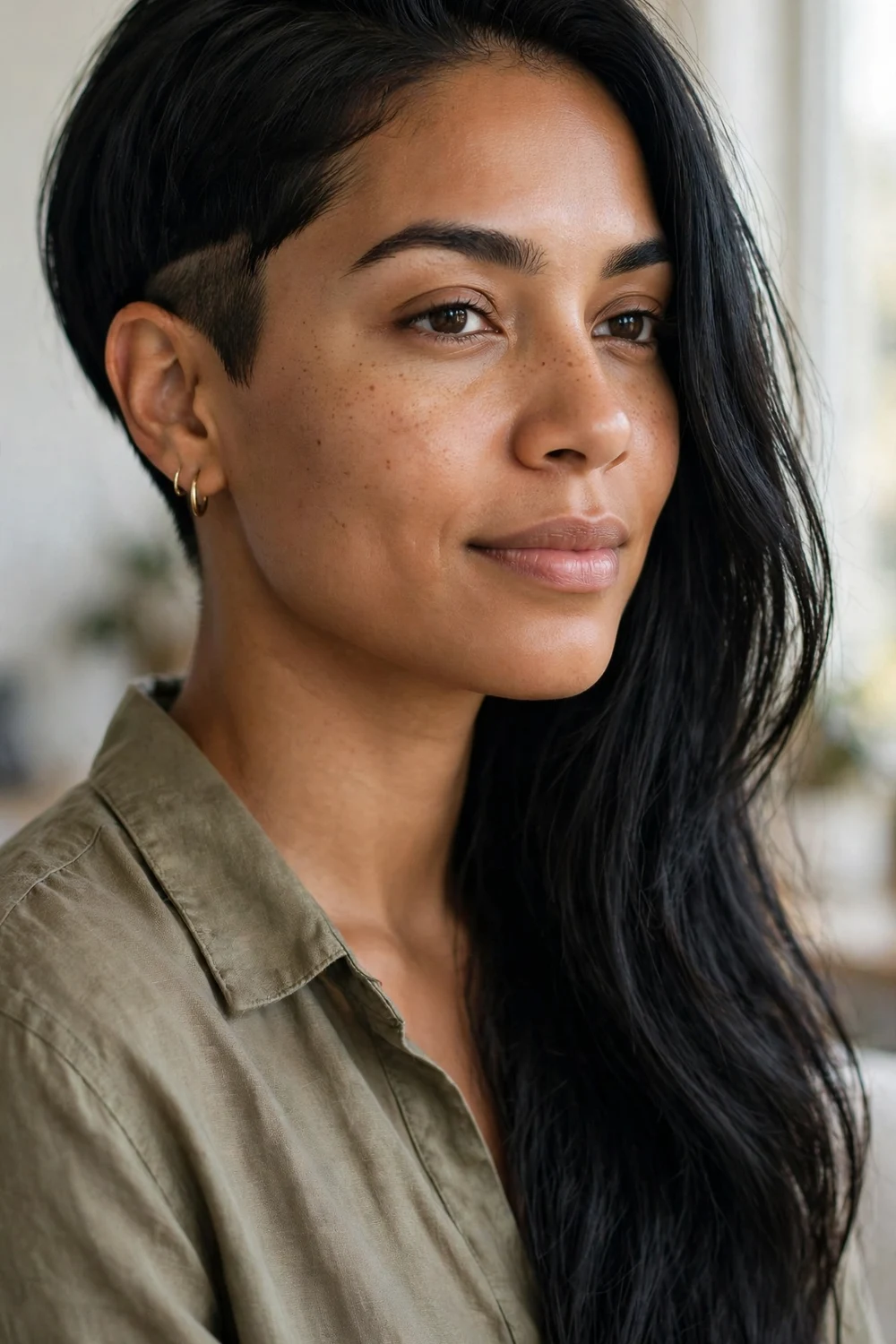
This is maximum contrast: one side cropped above the jaw, the other falling to the collarbone. It’s the version that gets photographed, and it needs confidence to wear. The cut only works when the line between the sides is clean, so this is not the cut to get from a stylist who hesitates. Maintenance is constant, since even a little growth softens the drama. This cut looks best with minimal styling products, since the shape itself is already the statement.
Try this: Bring reference photos to your appointment and point to exactly where each side should end. Vague instructions give vague asymmetry.
27. Asymmetrical Bob with Highlights
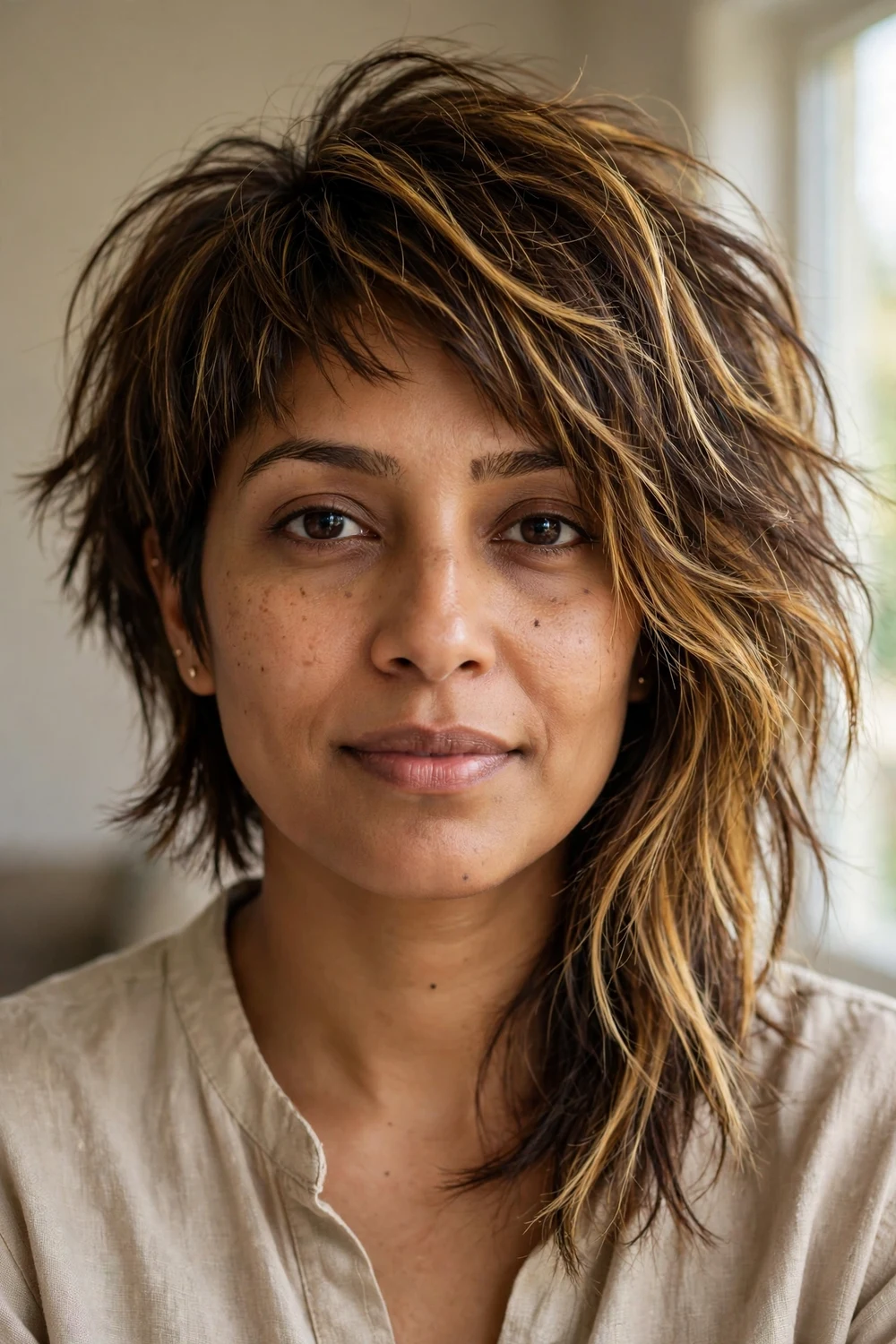
Highlights woven through an asymmetrical bob add dimension that makes the layers and length difference pop. Choppy cuts pair with chunky highlights, while smoother cuts pair with fine babylights that catch the light subtly. An ombre version, darker at the roots fading lighter at the ends, gives a similar effect with easier grow-out and fewer touch-ups. Brunettes get the most visible payoff from caramel or honey tones placed where the light hits the longer side.
Try this: Ask for the highlights to be placed heavier on the longer side. It pulls the eye along the diagonal and makes the asymmetry read stronger.
28. Pink Asymmetrical Bob
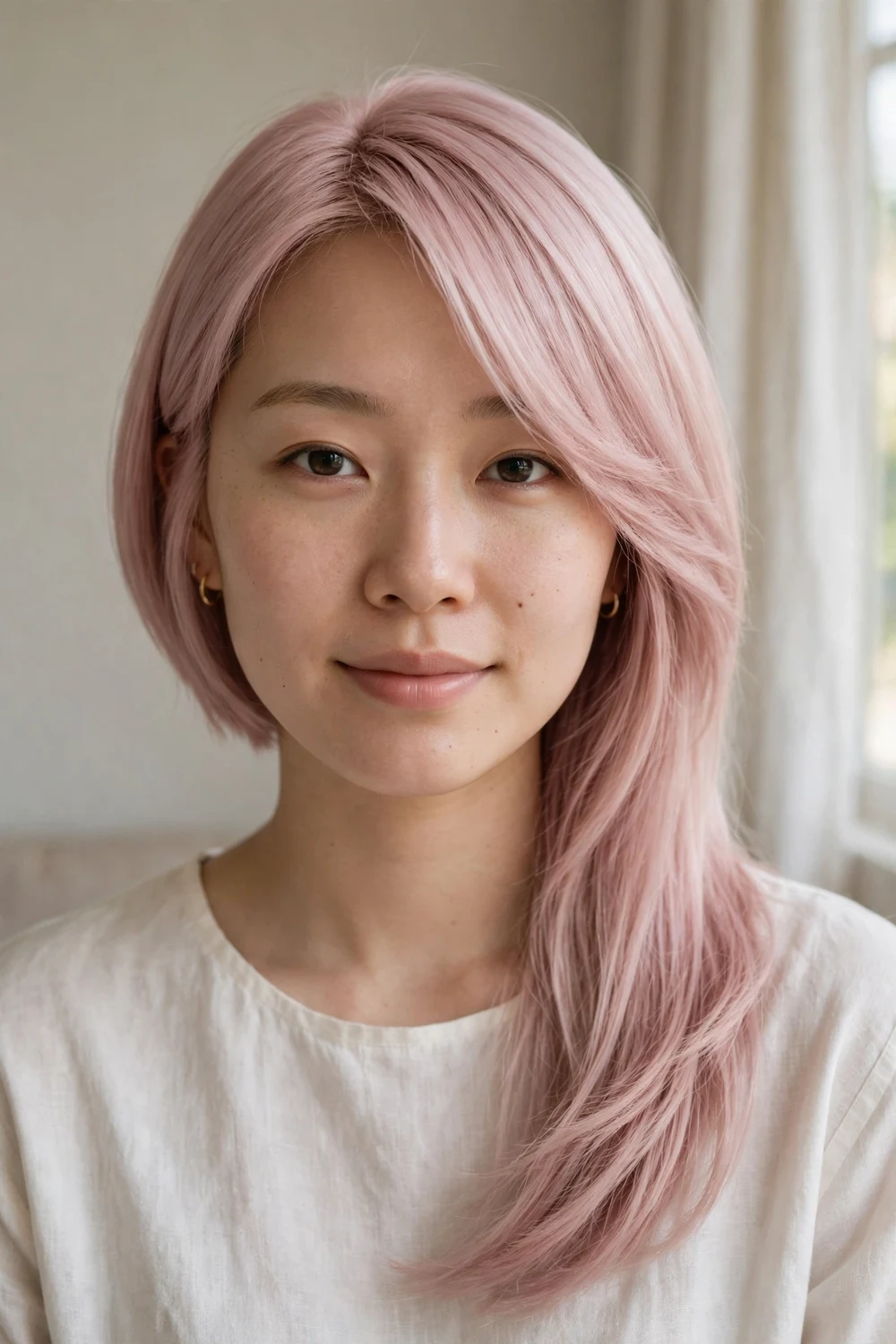
Soft pink, from pastel to rose gold, keeps the sweetness while the uneven cut adds edge. It’s less harsh than blue or purple against warm skin tones. Like all pastels, it fades fast, so treat it as a 4-to-6-week color. Long side bangs blend into the longer side of the cut and keep the pink from looking disconnected from the shape. Pink pairs well with the asymmetrical shape because the playful color and edgy cut balance each other out.
Try this: Start with a rose gold toner over lightened hair instead of full pink dye. It fades more gracefully and costs less to maintain.
29. Blunt Asymmetrical Bob

Cut straight across with zero layers, one side longer than the other: the blunt version is all about the clean line. Thick, straight hair shows it best, since the weight keeps the ends sitting flat. Fine hair can work too, but the ends need to be cut thick, not thinned out, or the blunt line disappears. This is the most office-friendly bold option on the list. Sleep on a silk pillowcase to keep the ends smooth overnight, since frizz shows more on blunt cuts than layered ones.
Try this: Get the ends dusted every 6 weeks. On a blunt cut, even slightly frayed ends ruin the whole effect.
30. Fine Hair Asymmetrical Bob

Fine hair might be the biggest winner with asymmetry. The diagonal line creates the impression of density, and soft layering through the crown adds lift that fine hair rarely holds on its own. Keep the layers long and the ends thick; over-layering is the fastest way to make fine hair look thinner. A root-lifting spray at the crown before blow drying does the rest. Avoid heavy oils and butters on fine hair with this cut, since they weigh down the very volume the cut creates.
Try this: Tell your stylist to keep the perimeter strong and layer only the interior. That one instruction protects fine hair from being cut too wispy.
Asymmetrical Bob Hairstyles Comparison at a Glance
| Style | Best Occasion | Difficulty | Hold Time |
|---|---|---|---|
| Classic Straight Side-Parted | Work, formal events | Medium | All day |
| Long Asymmetrical Lob | Everyday, weddings | Easy | All day |
| Short Asymmetrical Bob | Nights out, events | Easy | All day |
| Sharp Angled | Events, photoshoots | Medium | All day |
| Wavy | Casual, weekends | Easy | 6 to 8 hours |
| Two-Toned | Concerts, parties | Hard | 4 to 6 weeks |
| Baby Bob | Everyday, casual | Easy | All day |
| Messy Shaggy | Casual, weekends | Easy | All day |
| Purple | Parties, festivals | Hard | 3 to 4 weeks |
| Side-Shaved | Concerts, edgy events | Medium | 2 to 3 weeks |
| Wavy Balayage | Weddings, vacations | Medium | 8 to 12 weeks |
| Long Mermaid Waves | Formal events, dates | Medium | 6 to 8 hours |
| Wedged with Elongated Side | Work, everyday | Easy | All day |
| With Bangs | Everyday, casual | Medium | All day |
| With Undercut | Parties, edgy looks | Medium | 3 to 4 weeks |
| Platinum Blonde Curly | Events, photoshoots | Hard | 4 to 6 weeks |
| Medium-Length | Work, everyday | Easy | All day |
| Pastel Blue | Festivals, parties | Hard | 3 to 4 weeks |
| Angled Layered | Work, everyday | Easy | All day |
| Subtle One-Length | Office, interviews | Easy | All day |
| Spiked | Concerts, nights out | Medium | 6 to 8 hours |
| Dark Roots with Silver/White | Events, fashion looks | Hard | 6 to 8 weeks |
| Pixie-Like | Creative workplaces | Medium | All day |
| Straight-and-Curly | Parties, dates | Medium | 6 to 8 hours |
| Smooth Red | Evenings, events | Hard | 4 to 6 weeks |
| Dramatic Extreme | Photoshoots, runways | Hard | 2 to 3 weeks |
| With Highlights | Everyday, vacations | Medium | 8 to 12 weeks |
| Pink | Parties, festivals | Hard | 3 to 4 weeks |
| Blunt | Work, formal events | Easy | All day |
| Fine Hair | Everyday, work | Easy | All day |
How to Choose the Right Asymmetrical Bob for You
Start with your face shape. Round faces need the longer side to reach at least the chin to get the slimming effect. Square faces do better with waves or layers that soften the jaw. Long faces should avoid going too short on the short side, since that adds more vertical emphasis.
Next, be honest about your hair texture. Straight hair shows the cut’s lines most clearly, which is great if you want precision and bad if your hair won’t stay straight. Wavy and curly hair softens everything, so you can go bolder with the length difference without it looking harsh. Fine hair benefits from the shape itself, while very thick hair may need an undercut or heavy layering to keep the bob from ballooning.
Finally, think about upkeep before you sit in the chair. The bolder the asymmetry and the brighter the color, the more often you’ll see your stylist. A subtle one-length version needs a trim every 8 weeks; an extreme cut with pastel color needs attention every 3 to 4. Pick the version that fits your actual schedule, not the one you wish fit.
Mistakes to Avoid
The biggest mistake is cutting it yourself. Asymmetry looks simple but the balance between the sides takes a trained eye, and a home cut usually ends up looking lopsided rather than designed. The second mistake is skipping the consultation: bring photos, point to exact lengths, and tell your stylist how much daily styling you’ll actually do.
Another common error is choosing the cut for your face shape but ignoring your hair’s behavior. If your hair flips out at the ends no matter what, a blunt asymmetrical bob will flip on one side and lie flat on the other. Tell your stylist how your hair misbehaves so they can adjust the layering. And don’t forget grow-out: if you know you won’t book trims on time, pick a softer version like the wavy or subtle one-length bob that ages gracefully.
If you like the angled geometry but want the back shorter than the front, inverted bob hairstyles offer that graduated shape with plenty of styling range.
For a version where the angle runs through the whole cut rather than just the sides, angled bob hairstyles keep the diagonal line from back to front.
When you want to keep your length while testing uneven sides, long bob hairstyles give you shoulder-grazing options that still read as bobs.
If choppy texture appeals to you more than clean lines, choppy bob hairstyles deliver that piece-y finish in every length.
Frequently Asked Questions
What is an asymmetrical bob haircut?
An asymmetrical bob is a bob cut where one side is longer than the other, usually with a deep side part. The difference can be subtle, about an inch, or dramatic, with several inches between the sides. It differs from an angled bob, where the back is shorter than the front but both sides match.
Do asymmetrical bobs suit round faces?
Yes, they are one of the better bob choices for round faces. The longer side adds vertical length that visually slims the cheeks, and a deep side part breaks up the face’s symmetry. Keep the longer side at chin length or below for the full effect.
How often does an asymmetrical bob need trimming?
Every 6 to 8 weeks for most versions. Because the style depends on the length difference between the sides, growth shows faster than on a level cut. Extreme versions and shaved sides need touch-ups every 3 to 4 weeks to stay sharp.
Can you get an asymmetrical bob with curly hair?
Yes, but it should be cut dry or nearly dry so the stylist can see where each curl falls. Wet curls shrink as they dry, which can erase the length difference. Curly versions look best with the asymmetry kept moderate rather than extreme.
Will an asymmetrical bob work for fine hair?
Fine hair often looks better in an asymmetrical bob than in a level one. The diagonal line creates the impression of fullness, and light layering at the crown adds lift. Ask your stylist to keep the ends thick rather than thinning them out.
Final Thoughts
Asymmetrical bob hairstyles earn their popularity: one uneven cut gives you edge, face-flattering lines, and a style that looks deliberate with minimal effort. Pick the version that matches your texture and your real maintenance habits, bring clear photos to your stylist, and keep up with trims. After testing dozens of bob variations over the years, the asymmetrical cut remains the one I’d recommend first to anyone bored with a level bob.

