


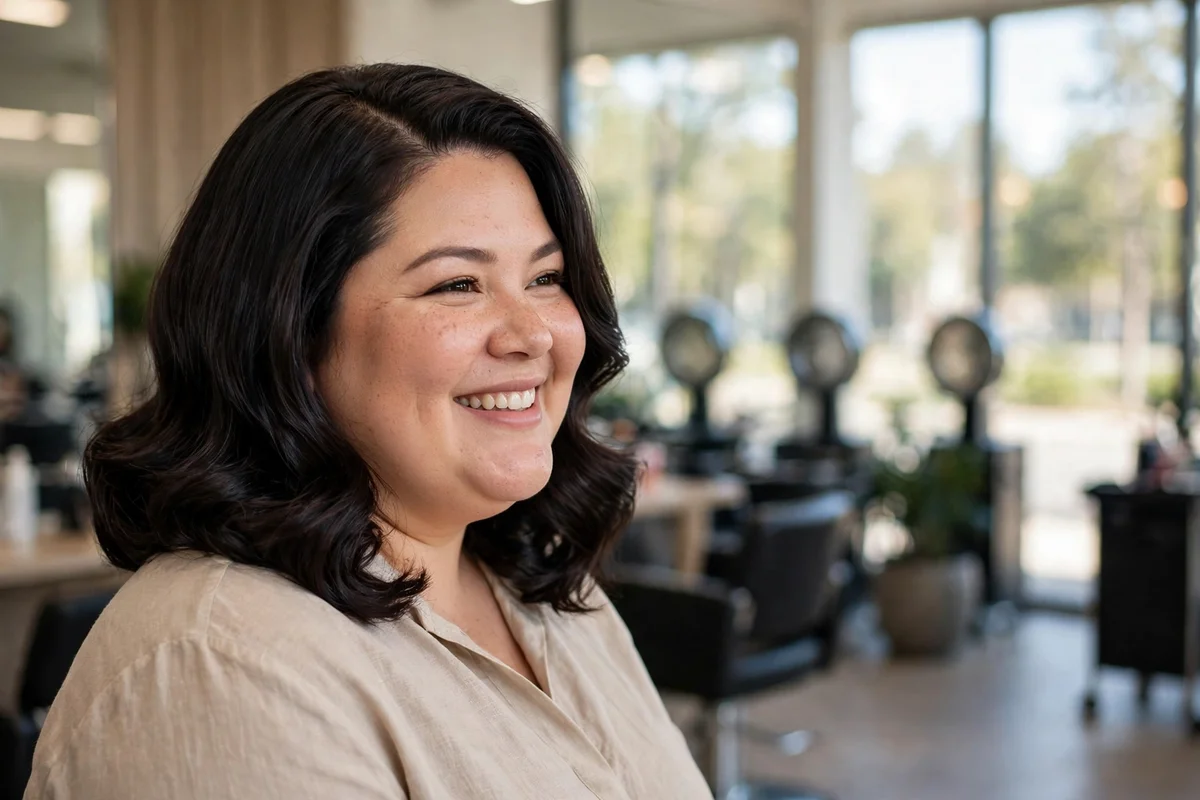
The most flattering plus size hairstyles for a double chin are cuts that end below the chin, keep soft layers around the face, and add a little height at the crown. Those three choices draw the eye downward and upward at the same time, which takes focus off the jawline and lower face. Side parts and loose waves help too, since they break up roundness instead of echoing it.
This guide covers 22 specific hairstyles, each with a styling tip, a difficulty rating, and honest notes on who each cut suits best.
Quick Takeaways
- Pick lengths that end below the chin: shoulder-length cuts, lobs, and long layers draw the eye downward.
- Ask for soft face-framing layers that start at or below the chin line, never blunt ends at the jaw.
- Add volume at the crown through blow-drying, a side part, or a half-up style to give the face more length.
- Loose waves and curls flatter fuller faces more than flat, pin-straight hair or tight ringlets.
- Trim every 8 to 10 weeks. Layers lose their shape as they grow, and shapeless ends drag attention downward unevenly.
1. Layered Shoulder-Length Hair

A shoulder-length cut with soft layers is the safest starting point on this list. The length clears the chin by a few inches, which keeps the eye moving down the hair instead of stopping at the jawline. Ask your stylist for layers that begin at the cheekbones and get longer toward the ends, so the cut has movement without puffing out at chin level.
This works on straight, wavy, and slightly curly textures. Style it smooth with a round brush or scrunch in loose curls for more fullness. The appointment usually runs 45 minutes, and the shape holds up for about 8 weeks before the layers start to blend together.
Try this: flip your part to the opposite side after styling for instant root lift that costs nothing.
Difficulty: Easy · Cost: $55–$110 (salon cut)
2. Long Bob with Face-Framing Layers

A long bob, or lob, hits between the chin and collarbone and reads clean and current. The face-framing layers are the part that matters most here. They should start below the chin and curve inward slightly, which softens the cheeks and keeps attention near your eyes. A one-length lob without those layers can look boxy, so don’t skip them.
Wear it sleek for a polished finish or add loose waves for a relaxed look. Fine hair benefits from the lob’s blunt-ish ends, which make the hair look thicker. Expect a 40-minute cut and a trim cycle of 8 to 10 weeks to keep the front pieces sharp.
Try this: tuck one side behind your ear to show the layer line and add asymmetry.
Difficulty: Easy · Cost: $55–$110 (salon cut)
3. Butterfly Haircut

The butterfly haircut pairs long overall length with shorter pieces around the face, so you get volume up top and flow through the lengths. The short face-framing sections open around the cheekbones and sweep back, which frames the face without pressing against the jawline. Thick and medium hair wear this cut best, since the layering removes weight.
It needs some styling to look its best. A blowout with a round brush gives the layers their signature bounce, though air-dried waves work for a softer finish. Budget an hour at the salon and trims every 10 weeks, since the shorter pieces grow into the longer layers quickly.
Try this: blow-dry the face-framing pieces away from your face with a medium round brush for the classic winged shape.
Difficulty: Moderate · Cost: $65–$130 (salon cut)
4. Soft Wolf Cut

A soft wolf cut stacks short layers at the crown and lets the ends feather out light. The crown height is the flattering part for a fuller face, since lift on top makes the face read longer. Keep the shaggy texture gentle rather than choppy. Heavy, jagged layers can add width exactly where you don’t want it.
This cut suits wavy and straight hair that holds texture. A pea-sized amount of texturizing cream scrunched into damp hair is usually enough styling. The layers need a trim every 6 to 8 weeks to stay defined, which is a bit more upkeep than a simple lob.
Try this: ask the stylist to keep the shortest layer no higher than the cheekbones, so fullness stays above the jawline.
Difficulty: Moderate · Cost: $60–$120 (salon cut)
5. Collarbone-Length Lob

Ending right at the collarbone puts this lob well clear of the chin, and that extra inch or two past a standard lob makes a visible difference on a fuller face. Light layers through the front add movement without thinning the ends too much. The overall shape stays balanced and easy to manage day to day.
Straighten it for work, wave it for weekends. The length is long enough for a low ponytail on lazy days, which shorter bobs can’t manage. Plan a 45-minute appointment and trims every 8 to 10 weeks to keep the ends from creeping toward the shoulders unevenly.
Try this: curl the front sections away from your face with a 1.25-inch barrel, and apply heat protectant first.
Difficulty: Easy · Cost: $55–$110 (salon cut)
6. Side-Swept Loose Waves

Loose waves plus a deep side part is a styling choice more than a haircut, which means it works over almost any medium-to-long cut. The deep part creates instant asymmetry and root lift, while the waves add width at the sides of the hair rather than at the jaw. Together they break up the roundness of a fuller face without any scissors involved.
Use a 1.5-inch curling wand on dry hair, wrapping sections away from the face, and finish with a light-hold spray. Always apply heat protectant before the wand. The waves last two to three days with a silk pillowcase, which makes this a practical everyday option.
Try this: set the part while your hair is damp so it dries in place and holds the lift longer.
Difficulty: Easy · Cost: $0 (styling only, or $30–$60 for a blowout)
7. Long Layers with Curtain Bangs

Long layers keep length flowing past the shoulders while curtain bangs open across the forehead and sweep to each side. The bangs pull focus up toward the eyes and cheekbones, and the long layers keep the silhouette slim through the jawline area. It’s one of the most requested combinations in salons for fuller faces right now.
Curtain bangs need a trim every 4 to 6 weeks to stay at the right length, which is the main upkeep. Blow-dry them with a round brush, rolling the brush away from the face. The long layers themselves need little more than regular trims every 10 to 12 weeks.
Try this: grow the bangs slightly longer than you think you want. They settle shorter once styled.
Difficulty: Moderate · Cost: $65–$130 (salon cut)
Bangs come in more than one shape, and the right one matters for a fuller face. Our plus size hairstyles with bangs guide breaks down which fringe styles balance round features and which to skip.
8. Textured Shoulder-Length Shag

A textured shag spreads volume evenly through the hair instead of stacking it at one level. The layers move, the ends stay light, and nothing sits heavy against the chin. It reads relaxed and modern, and it handles second-day hair better than most cuts on this list because the texture hides oil at the roots.
Styling is minimal. Work a small amount of sea-salt spray or texturizing cream through damp hair and let it air-dry. The cut needs reshaping every 6 to 8 weeks, since shaggy layers grow out into bulk faster than blunt cuts do. Thick hair benefits most from this style.
Try this: flip your head upside down while diffusing to build volume at the roots instead of the sides.
Difficulty: Easy · Cost: $60–$120 (salon cut)
Shaggy texture shows best on hair that holds a wave. Our hairstyles for thick wavy hair roundup has more layered cuts built for that texture.
9. Angled Bob

An angled bob runs shorter in the back and longer in the front, and the longer front pieces are what make it work for a double chin. They drop past the jawline and create diagonal lines that pull the eye downward. The stacked back adds height and keeps the cut from looking flat at the crown.
It styles fast: straighten for a sleek finish or bend the ends under with a flat iron for softness. The angle grows out quickly, so plan trims every 6 to 8 weeks. Ask the stylist to keep the front at least an inch below the chin, or the angled effect lands too high.
Try this: check the angle from the side in the salon mirror before you leave. Both sides should match.
Difficulty: Easy · Cost: $50–$100 (salon cut)
Bob shapes vary a lot in how they sit on fuller faces. Our bob hairstyles for round faces collection compares the angles and lengths that balance wider cheeks and softer jawlines.
10. Feathered Medium-Length Hair

Feathered layers are cut at an angle so the ends flick outward softly instead of forming a heavy line. On medium-length hair, that flicking keeps the area around the chin light and airy. The style has a timeless feel and works for office settings where trendier cuts might feel out of place.
A round brush and blow dryer create the feathered flip in about 15 minutes. Use a nozzle attachment to direct the airflow down the hair shaft for smoothness. The layers hold their shape for 8 to 10 weeks. Fine to medium hair takes to feathering most easily.
Try this: flip only the top layer outward and keep the underlayers smooth for a controlled version of the look.
Difficulty: Moderate · Cost: $55–$110 (salon cut)
11. Voluminous Pixie Cut

A pixie can flatter a fuller face when it keeps length and lift on top and stays soft at the sides. The crown height stretches the face visually, and longer pieces swept across the forehead draw attention to the eyes. What doesn’t work is a tight, flat pixie that hugs the head, since that leaves the jawline fully exposed.
Style it with a lightweight cream or paste, lifting the roots with your fingers while blow-drying. Pixies need trims every 4 to 6 weeks to keep their shape, which is the most frequent maintenance on this list. It’s the lowest-effort daily style once the cut is right.
Try this: ask for at least two inches of length on top. Anything shorter loses the slimming lift.
Difficulty: Moderate · Cost: $40–$90 (salon cut)
Short cuts need the right proportions for a fuller face. Our cute hairstyles for short hair ideas show which cropped styles keep their balance on rounder features.
12. Curly Long Bob

Natural curls plus a below-the-chin length make a lob that frames the face softly. Keep the curls loose rather than tight. Loose curls fall and move, while tight ringlets can stack width at the sides of the face. A curl cream worked through damp hair defines the pattern and controls frizz through the day.
Curly lobs need a stylist who cuts curls dry or understands shrinkage, since wet cutting takes off more length than it looks. Trims every 10 to 12 weeks keep the shape. Diffuse on low heat for volume, or let it air-dry for a softer finish.
Try this: part curly hair while it’s wet. Dry parting on curls creates a harsh line.
Difficulty: Easy · Cost: $60–$120 (salon cut)
13. Deep Side Part with Straight Hair

Sometimes the cut isn’t the issue and the part is. A deep side part shifts the whole balance of the face, adding height on one side and angles that a middle part doesn’t give. On straight hair the effect is clean and polished, and it takes about thirty seconds in the morning.
Set the part with a fine-tooth comb while hair is damp, then blow-dry the roots forward for lift. A small amount of smoothing serum keeps flyaways down without flattening the lift. This works on any length from a lob down to long hair, which makes it the cheapest trick on this list.
Try this: move the part about two inches off-center. Any deeper and it can look lopsided on straight hair.
Difficulty: Easy · Cost: $0 (styling only)
14. Long Straight Hair with Soft Layers

Long straight hair stretches the whole silhouette, which helps a fuller face and figure look longer. The soft layers matter here: one-length long hair can hang like a curtain and actually widen the face visually. Layers that start at the chin and continue down keep the hair moving and break up that flat sheet.
Long hair needs real upkeep to look good. Deep condition weekly, trim the ends every 10 to 12 weeks, and watch for thinning at the bottom, which drags the look down. If your hair is fine, keep the layers minimal so the ends stay thick.
Try this: ask for the face-framing layers to begin a full inch below your chin, not at it.
Difficulty: Easy · Cost: $65–$130 (salon cut)
15. Shoulder-Length Blowout

A salon-style blowout gives shoulder-length hair body, bend, and shine all at once. The lifted roots add the crown height that flatters a fuller face, and the curved-under ends keep the shape soft instead of blunt. It’s the most polished option here and photographs well, which is why it shows up at events.
Recreate it at home with a round brush, a blow dryer with a nozzle, and a volumizing mousse at the roots. Work in sections and roll the brush under at the ends. Always apply heat protectant before blow-drying. A blowout lasts two to four days depending on your hair type.
Try this: finish with a blast of cool air on each section to set the shape before moving on.
Difficulty: Moderate · Cost: $65–$130 (cut) or $30–$60 (salon blowout)
16. Half-Up Half-Down Hairstyle

Pulling the top section back lifts the crown while the rest of the hair falls loose around the face. You get the slimming height of an updo without losing the soft framing that loose hair gives. It works on straight, wavy, and curly hair, and it suits everything from workdays to weddings.
Gather the top third of your hair, tease the roots lightly for lift, and secure it with a clip or small elastic. Leave the front pieces out to frame the cheeks. The whole style takes about five minutes, which makes it a strong everyday pick.
Try this: loosen the top section slightly after securing it. A little slack reads softer than a pulled-tight half-up.
Difficulty: Easy · Cost: $0 (styling only)
Half-up styles come in endless variations for different lengths. Our half-up half-down hairstyles collection has versions for short, medium, and long hair with step-by-step styling notes.
17. High Ponytail with Soft Face-Framing Pieces

A high ponytail pulls everything upward, which gives the face an instant lift. The placement matters: a ponytail at the crown reads longer than one at the nape. Leave two soft pieces out at the front to keep the look from feeling severe. Without those pieces, a scraped-back ponytail can expose the jawline more than you’d like.
Add gentle waves to the tail with a curling wand for extra fullness, and apply heat protectant first. A fabric-covered elastic prevents breakage at the tie point. This is a practical pick for workouts, warm weather, and busy mornings.
Try this: backcomb the hair at the crown before tying it up for a little extra height.
Difficulty: Easy · Cost: $0 (styling only)
18. Loose Side Braid

Draping a loose braid over one shoulder creates a diagonal line across the body that breaks up symmetry and draws the eye sideways and down. Keep the braid loose and a little messy. A tight braid sits close to the head and loses the softening effect entirely.
Braid damp or dry hair loosely, then tug the edges of the braid gently to widen it. Leave soft pieces around the cheeks for framing. It holds through casual outings and travel days, and it keeps long hair contained without heat styling.
Try this: start the braid behind the ear rather than at the nape so it falls naturally over the shoulder.
Difficulty: Easy · Cost: $0 (styling only)
19. Soft Beach Waves

Beach waves give medium-to-long hair loose texture without the bulk of tight curls. The uneven wave pattern adds width through the mid-lengths of the hair, which balances a fuller face instead of hugging it. It reads casual and current, and it works on hair that holds a bend for at least a few hours.
Wrap 1-inch sections around a curling wand, alternating directions, and leave the ends straight for that undone finish. Always apply heat protectant first. A texturizing spray through the cooled waves keeps them separated. No-heat options exist too: braid damp hair overnight for a similar wave by morning.
Try this: let the waves cool completely before touching them. Handling hot curls pulls the wave out.
Difficulty: Easy · Cost: $0 (styling only, or $30–$60 for a salon wave set)
20. Layered Wavy Bob

A wavy bob with layers cut through it moves in a way a blunt bob doesn’t. The layers stop the hair from sitting as one heavy block around the jaw, and the waves add air between the strands. Fine and medium hair looks fuller in this cut, since texture always reads as volume.
Scrunch a golf-ball-sized amount of mousse into damp hair and diffuse, or braid it damp overnight for morning waves. A texturizing spray refreshes the layers on day two. Trims every 8 weeks keep the layers from growing into a triangle shape.
Try this: keep the shortest layer above the chin and the longest below it, so the cut frames instead of widening.
Difficulty: Easy · Cost: $55–$110 (salon cut)
21. Modern Italian Bob

The modern Italian bob is a chin-grazing cut with built-in volume and a smooth, rounded finish. It works for a double chin because the fullness sits high and the ends tuck just past the jaw, skimming rather than stopping at it. Root lift is the signature move here: without it, the shape falls flat.
Blow-dry with a round brush, lifting at the roots and rolling the ends under. A side part breaks up the rounded shape and adds the asymmetry a fuller face benefits from. The cut needs a trim every 6 to 8 weeks to hold its rounded silhouette.
Try this: ask your stylist to keep the ends just below chin level. Any higher and the cut cups the jawline.
Difficulty: Moderate · Cost: $60–$120 (salon cut)
22. Face-Framing Balayage Layers

Color can do some of the slimming work too. Balayage pieces painted lighter around the face pull light toward the eyes and cheekbones, while the darker lengths fall away quietly. Pair it with long layers and you get dimension that a single all-over color can’t give. It suits medium to long hair in any texture.
Balayage grows out softly, so touch-ups stretch to 12 to 16 weeks, which is longer than foil highlights. Use a color-safe shampoo and a weekly mask to keep the lightened pieces from drying out. The face-framing brightness works best one to two shades above your base, not more.
Try this: bring a photo showing the exact brightness you want at the hairline, since “subtle” means different things to different colorists.
Difficulty: Moderate · Cost: $140–$260 (salon balayage)
Quick Comparison
| Hairstyle | Best for | Daily styling effort | Cost range |
|---|---|---|---|
| Layered Shoulder-Length Hair | First-time change, all textures | Low | $55–$110 |
| Long Bob with Face-Framing Layers | Polished look, fine hair | Low | $55–$110 |
| Butterfly Haircut | Thick hair, lots of movement | Medium | $65–$130 |
| Angled Bob | Quick styling, work and weekends | Low | $50–$100 |
| Long Layers with Curtain Bangs | Drawing focus to the eyes | Medium | $65–$130 |
| Voluminous Pixie Cut | Short hair lovers, wash and go | Low daily, frequent trims | $40–$90 |
| Half-Up Half-Down Hairstyle | Zero-cost crown lift | Minimal | $0 |
| Face-Framing Balayage Layers | Long hair, low-maintenance color | Low | $140–$260 |
How to Choose the Right Cut (and What to Avoid)
Start with length. If you’re unsure, shoulder length is the middle ground that flatters almost every fuller face, and it grows out gracefully if you change your mind. Then decide on layers: soft, blended layers suit most people, while heavy choppy layers suit thick hair that needs weight removed. Finish with the part: try a deep side part for a week before your appointment and see if you like the asymmetry.
Tell your stylist three things at the consultation: where you want the shortest layer to hit, how much daily styling you’ll actually do, and whether you want the cut to work pulled back. Bring two or three photos of cuts on faces shaped like yours, not just the hair itself.
A few things work against a fuller face with a double chin. Blunt cuts that end right at the chin create a hard horizontal line at the widest point of the lower face. Flat, center-parted hair with no layers hangs straight down and mirrors the face’s roundness. Very tight curls stacked at the sides can add width where layers would have added length. And skipping trims lets layers grow into one shapeless mass that drags the whole look down.
Frequently Asked Questions
What is the most flattering hairstyle for a double chin?
Shoulder-length layered hair, long bobs with face-framing layers, butterfly haircuts, and long layers with curtain bangs are the most reliable picks. They keep the ends below the chin, soften the cheeks with layers, and add fullness where it balances the face rather than at the jawline.
Is short hair good for plus size women?
Yes, when the cut keeps height on top. A voluminous pixie with longer crown pieces, an angled bob with front pieces below the chin, or a layered wavy bob can all flatter a fuller face. Short cuts that lie flat against the head tend to expose the jawline, so lift and texture are what make the difference.
What haircuts should you avoid with a double chin?
Skip blunt cuts that end exactly at the chin, since they draw a line across the widest part of the lower face. Also be careful with flat center-parted styles with no layers, and very tight curls stacked at the sides. Each of these adds width or emphasis where soft layers and below-the-chin lengths would have taken it away.
Do curtain bangs help with a double chin?
They can. Curtain bangs open across the forehead and sweep to the sides, which pulls attention up toward the eyes and cheekbones. They work best paired with long layers and need a trim every 4 to 6 weeks to stay at the right length. Side-swept bangs give a similar effect with slightly less upkeep.
How often should I trim my hair to keep the cut flattering?
Every 8 to 10 weeks for most cuts on this list. Pixies and angled bobs need trims every 4 to 8 weeks because their shapes grow out fast, while long layers can stretch to 10 to 12 weeks. Curtain bangs need attention every 4 to 6 weeks. Layers that grow out lose the shape that made the cut flattering in the first place.
Final Thoughts
A flattering haircut for a double chin comes down to three choices: length that clears the chin, layers that stay soft around the face, and a little lift at the crown. Pick the cut on this list that fits your texture and your real styling routine, bring photos to your appointment, and tell your stylist where you want the layers to land.
For more hair ideas across every length and face shape, browse the full collection at PrimeHairPicks.
