


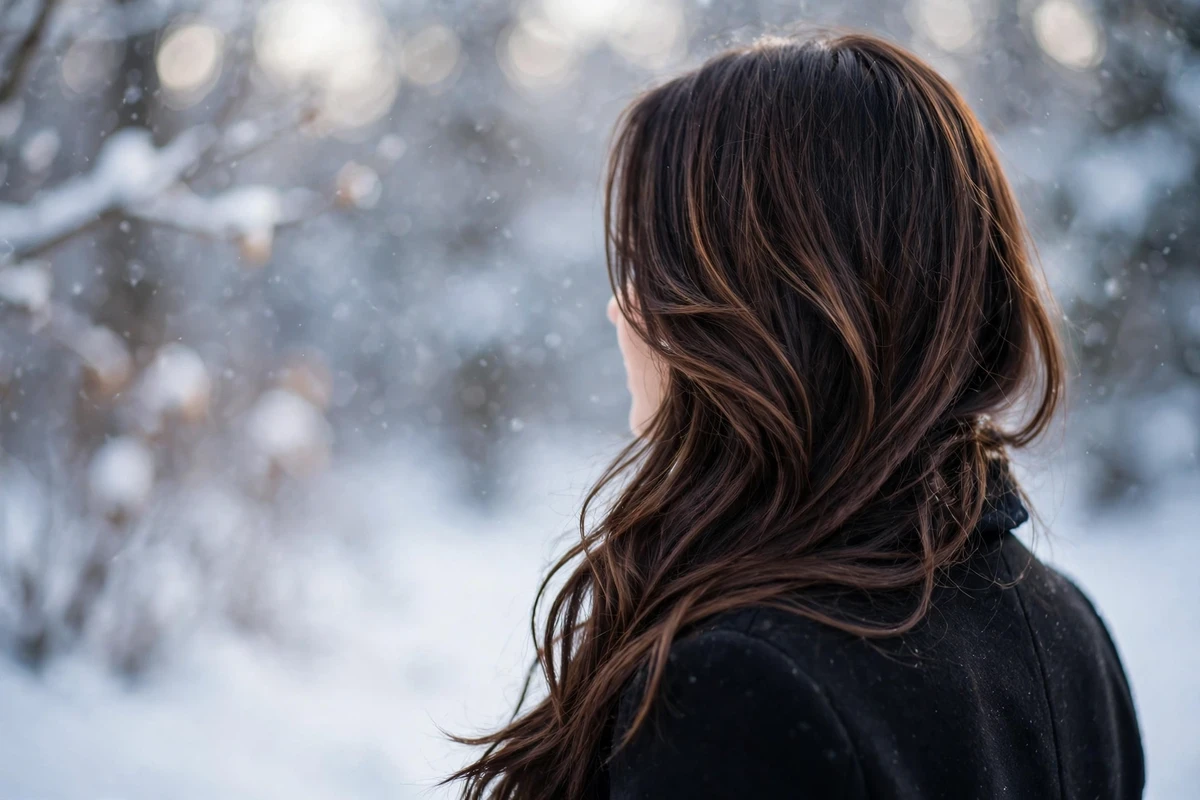
Winter light is cooler and weaker, so brunette hair that looked rich in summer can read flat and dull by December. The fix is not always going darker. It is choosing a shade built for low light, with enough depth to stay glossy and enough dimension to catch what little sun there is.
This guide rounds up 22 winter hair colors made for brunettes, from near-black raven shine to cherry cola and frosted ash. Every shade keeps a brunette base. Each one lists salon costs, gloss schedules, and brassiness-control notes, so the upkeep is clear before booking.
Quick Takeaways
- Keep the brunette base. Winter shades work best when color is built on natural depth instead of lifted several levels.
- Book a gloss every 6 to 8 weeks. A clear or tinted gloss revives shine, deepens tone, and neutralizes brassiness between full color appointments.
- Control warmth with the right shampoo. Blue or purple shampoo once a week keeps ash and cool browns from turning orange; a color-safe sulfate-free shampoo protects warm shades.
- Pick balayage or root-melt placement for the longest wear. Hand-painted and melted color grows out softly, stretching salon visits to 10 to 14 weeks.
- Apply heat protectant before every hot tool. Colored brunette hair dries faster than virgin hair, and winter air already strips moisture.
1. Midnight Raven Shine
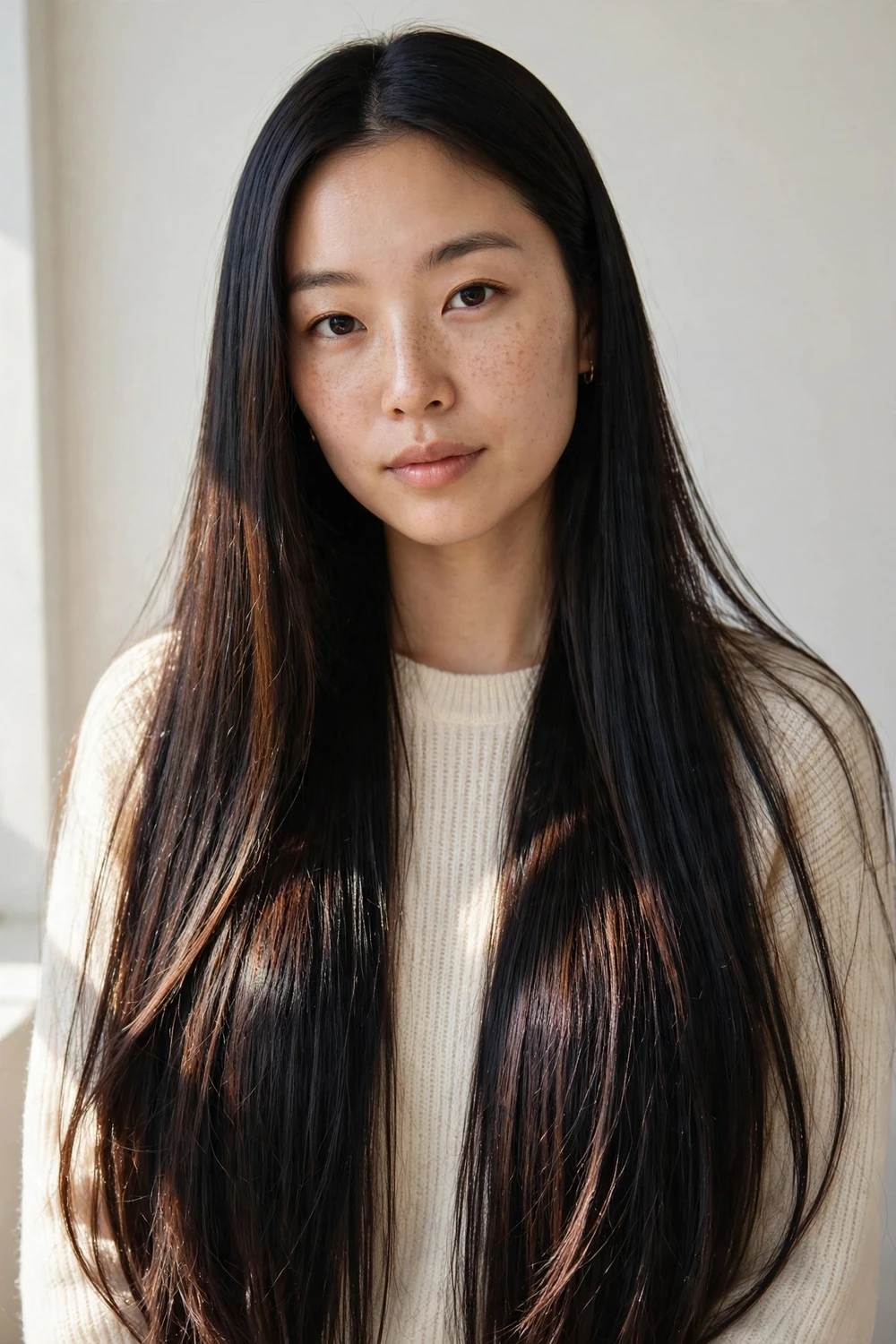
Midnight raven takes dark brown to its deepest limit: a near-black gloss built on warm reflections. The warmth keeps the shade from reading flat or harsh under gray winter skies. It is a single-process color, so the appointment runs about 90 minutes and the grow-out is soft, since roots are already dark. Shine is the whole point here, and dullness shows fast on near-black, so plan a clear gloss every 6 weeks. Wash lukewarm, since hot water strips gloss faster.
Style it sleek to show the mirror finish. If straightening is part of the routine, apply heat protectant first. Heat dulls gloss color quicker than anything else.
Try this: ask for a warm-based level 2 or 3 formula rather than blue-black, which can look flat on warm skin.
Difficulty: Easy · Cost: $80–$150 (single process + gloss)
If the starting point is naturally black rather than brown, our black hair with brown highlights guide covers brown pairings built for near-black bases.
2. Soft Toffee Layers
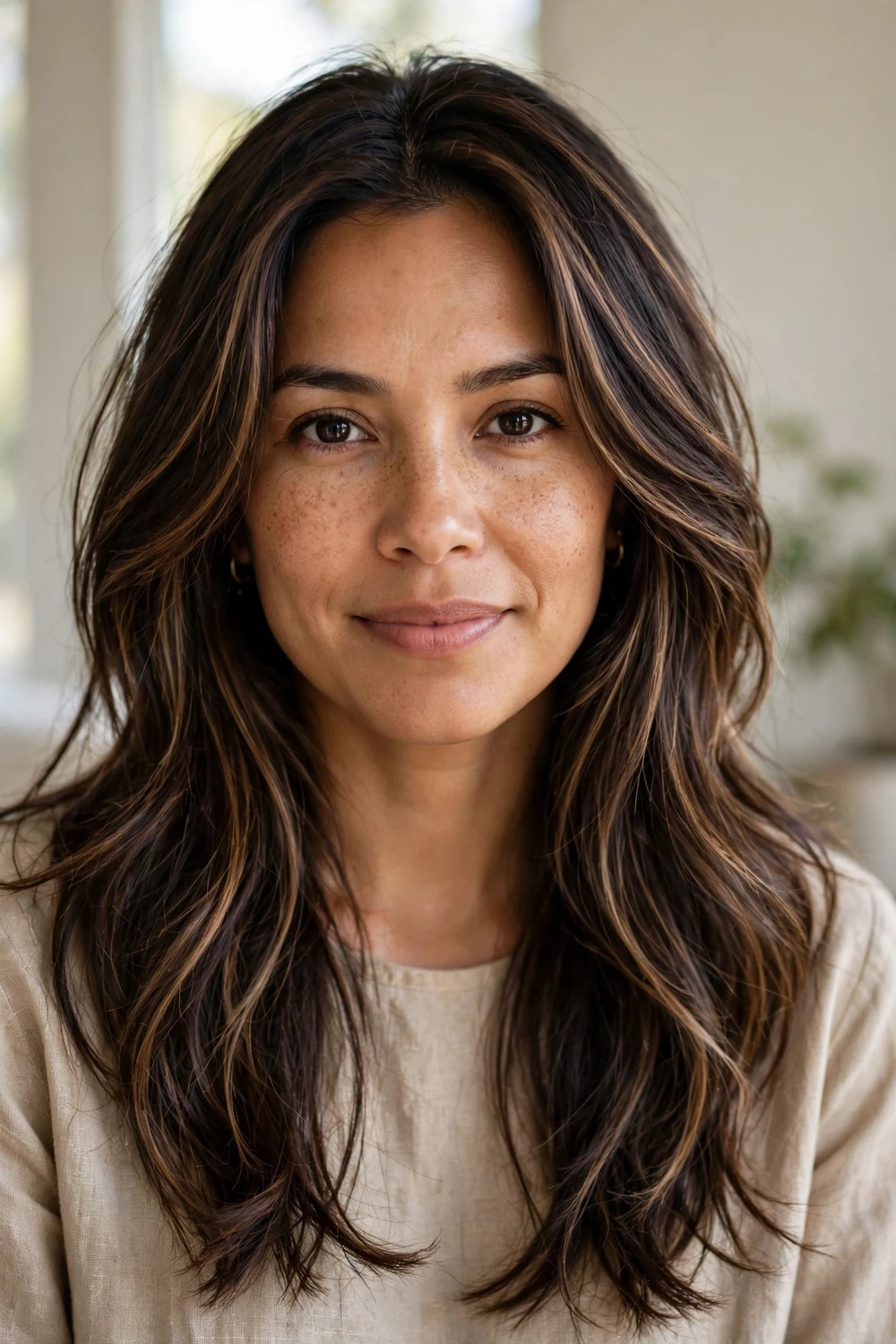
Toffee stripes are woven through the layers of a medium brown base, lifting only two levels so the contrast stays soft. Because the lift is small, the hair keeps more of its natural strength and the color fades slower than high-contrast highlights. The stripes follow the layering, which means the cut and the color work as one: every layer catches a slightly different ribbon. Refresh every 10 to 12 weeks; the placement is forgiving as it grows.
This suits straight and wavy hair best, since smooth strands show the stripe pattern cleanly.
Try this: ask the colorist to weave the toffee finer around the part line so the top never looks striped.
Difficulty: Easy · Cost: $140–$240 (partial highlights)
3. Frosted Ash Brunette
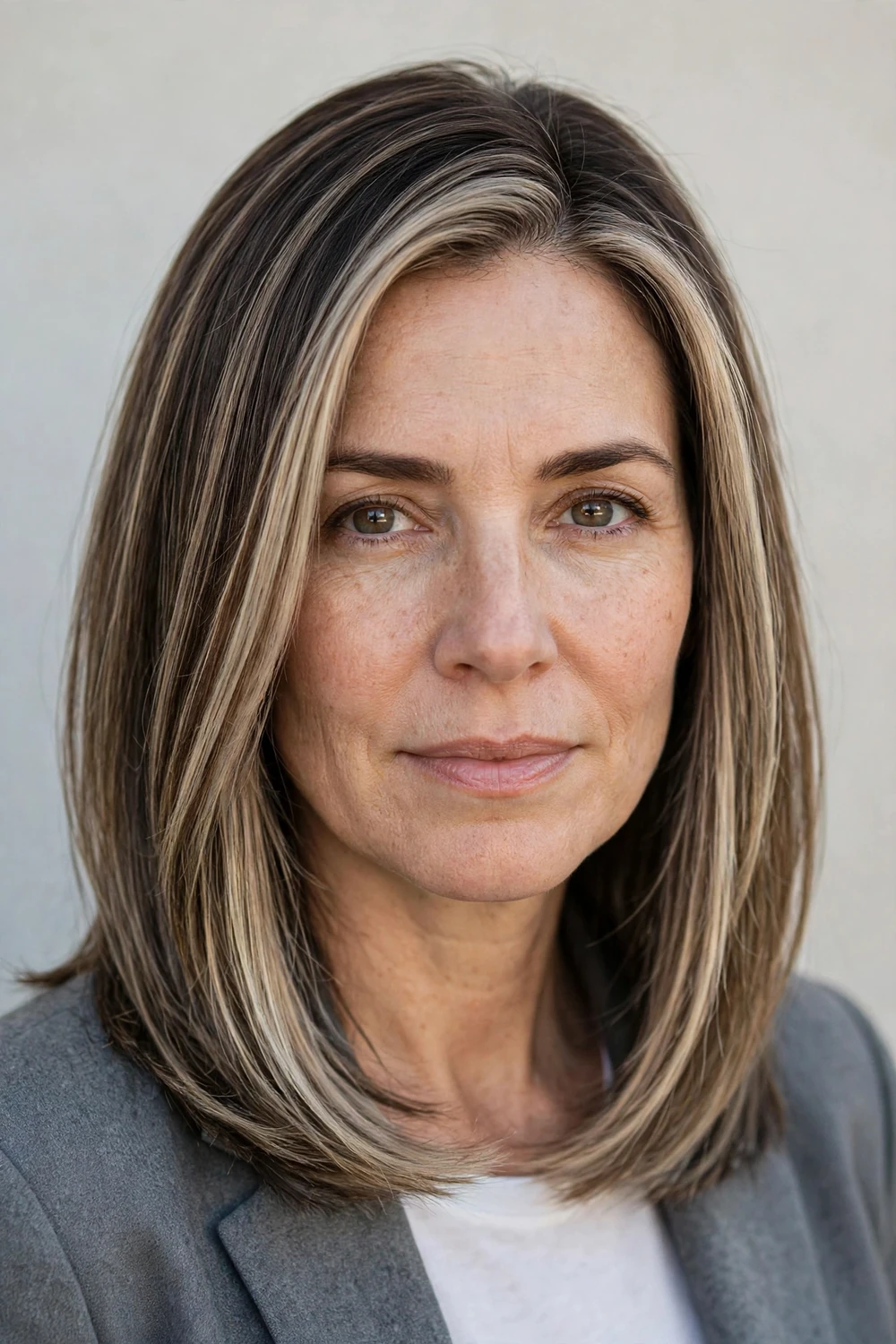
Cool ash highlights thread through a dark brown base for a frosted, almost silvered dimension. This is the shade for brunettes with cool or neutral undertones who want winter color without warmth. The trade-off is upkeep: ash fades faster than warm brown and can turn brassy as it washes out, so a blue or purple shampoo once a week is non-negotiable. Plan a toning gloss every 6 to 8 weeks to keep the frost crisp.
Check the color in daylight before leaving the salon. Ash reads darker indoors than it really is.
Try this: if the hair pulls warm naturally, ask the colorist to lift one extra level so the ash has room to hold.
Difficulty: Moderate · Cost: $160–$280 (foils + toner)
To take the cool spectrum further, our brown hair with silver highlights guide stays in icy territory from start to finish.
4. Wine Brown
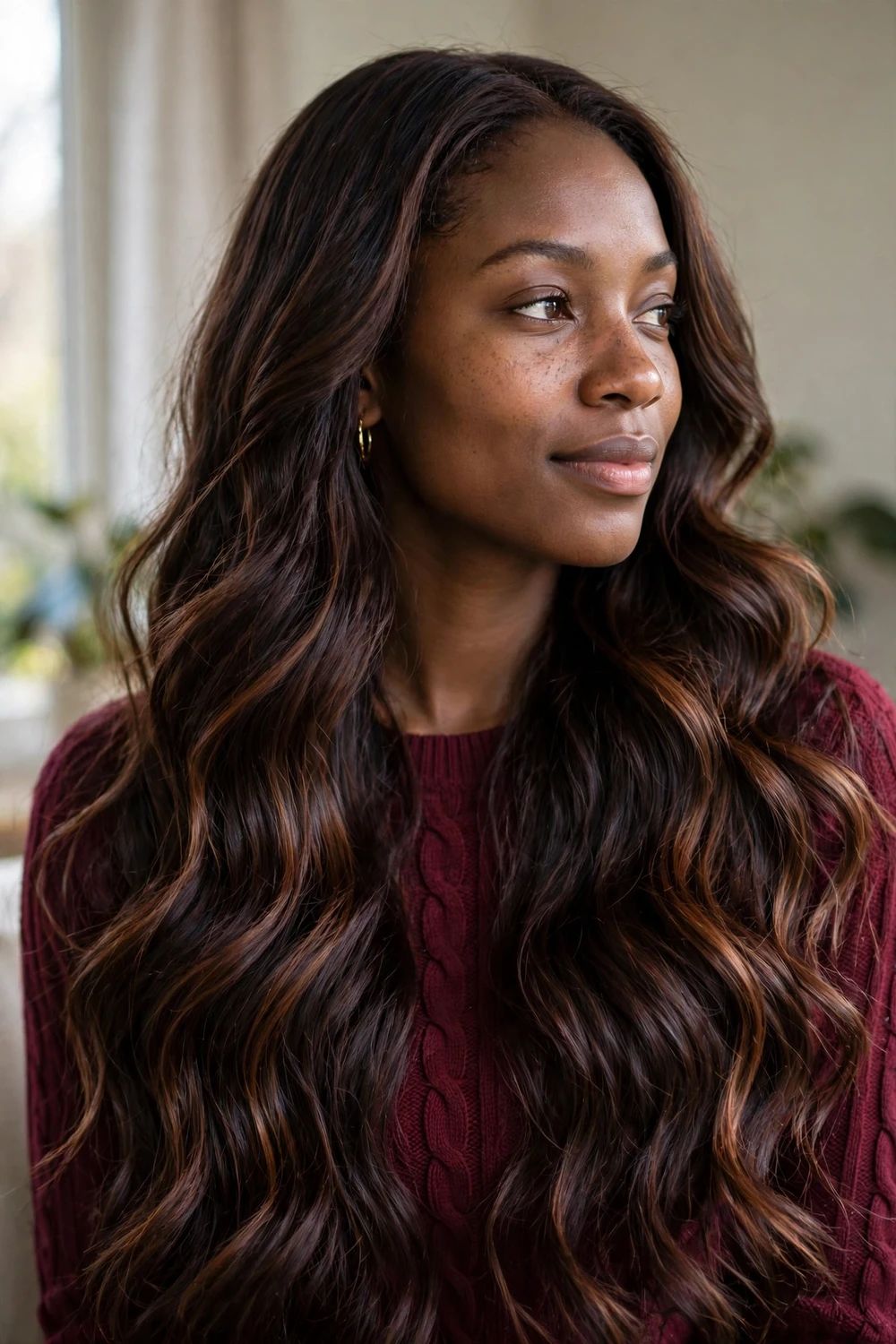
Wine brown keeps brunette depth but pours in deep red-wine tones with a thread of caramel warmth. The red shows most in sunlight and reads as rich dark brown indoors, which makes it office-friendly despite the drama. Red tones fade fastest of any color family, so wash with a sulfate-free shampoo in cool water and expect the tone to soften by week four. A red-tinted gloss every 6 weeks holds the wine.
Dark bases need no bleach for this, which keeps damage low.
Try this: sleep on a satin pillowcase to cut friction. Friction fades reds quicker than it fades browns.
Difficulty: Moderate · Cost: $120–$220 (single process)
5. Frosted Mocha
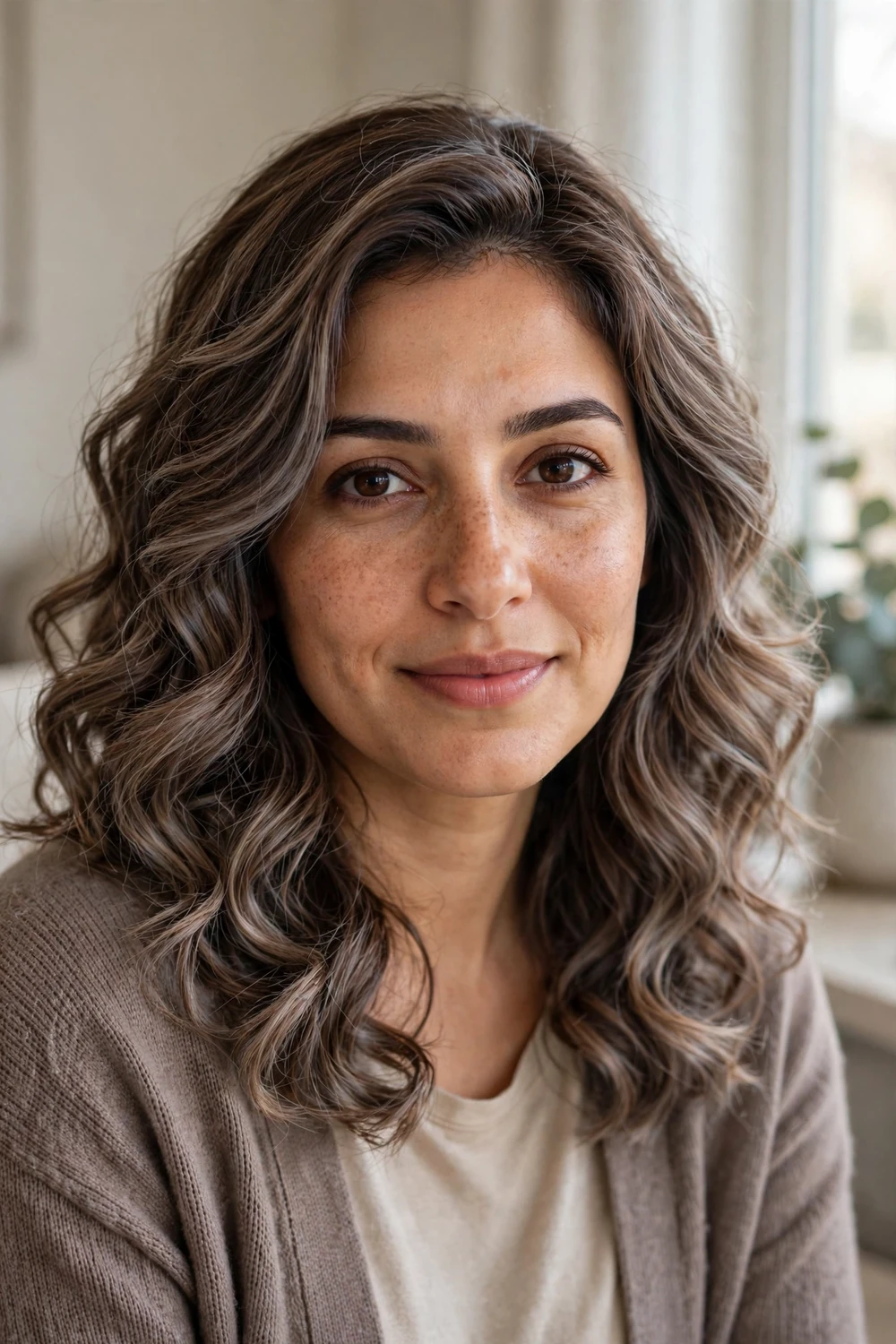
Frosted mocha is a creamy medium brown with cool, almost icy undertones stirred through. It sits between warm mocha and ash brown, which makes it a good middle ground for brunettes who want coolness without full silver. A demi-permanent formula gives it a translucent finish that grows out without a line, so root touch-ups can wait 8 to 10 weeks. It also blends early grays well, since the frosted pieces camouflage silver strands.
Style with soft waves to show the cool-warm interplay.
Try this: alternate purple shampoo with a hydrating mask each week so the cool tone stays without drying the hair.
Difficulty: Easy · Cost: $100–$180 (demi-permanent color)
6. Cinnamon Cocoa
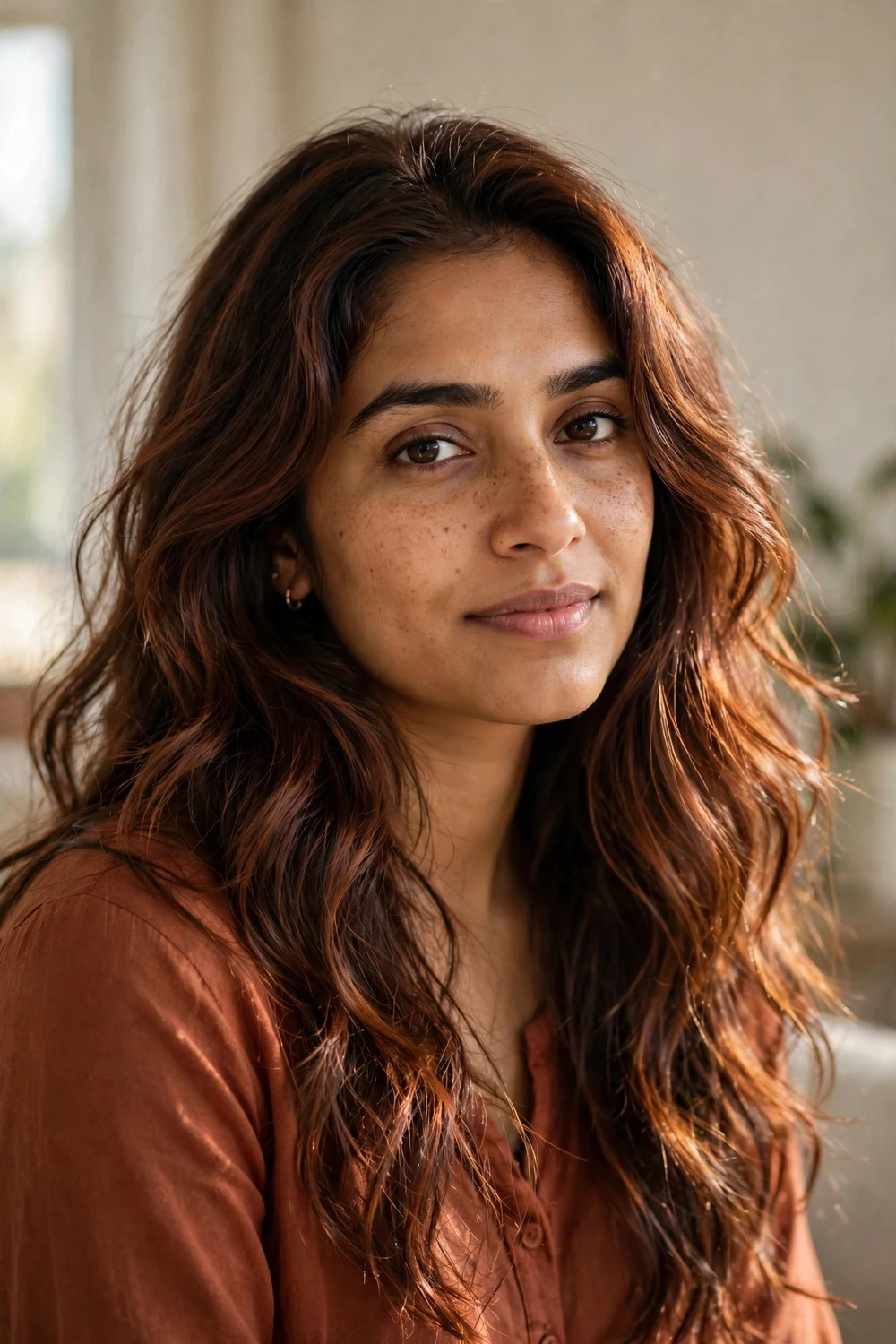
Cinnamon undertones warm up a deep cocoa base, giving brown hair a spiced glow that flatters warm and olive skin. The cinnamon shows as a reddish-copper shimmer in daylight and settles into cocoa indoors. Warm shades like this fade a little faster than neutral browns, so a color-safe shampoo and a gloss every 8 weeks keep the spice from washing out. No lightening is needed on medium brown bases, which keeps the appointment short.
Loose waves catch the cinnamon best; straight styling mutes it.
Try this: curl away from the face with a 1.25-inch iron, heat protectant applied first, to open up the warm pieces.
Difficulty: Easy · Cost: $110–$200 (single process)
7. Snowy Beige Bronde
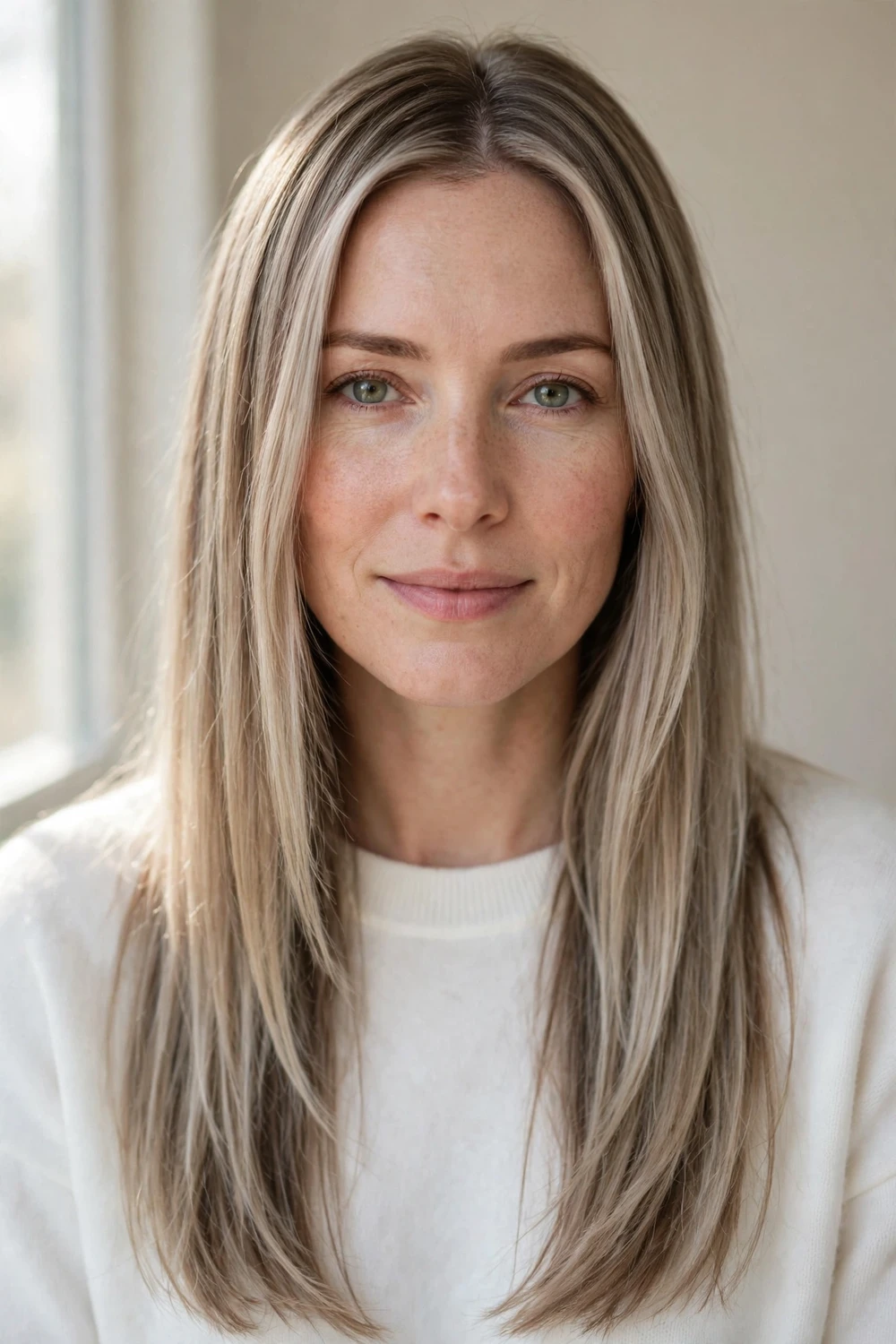
Beige bronde lands between brown and blonde with an icy, almost snowy cast. On a brunette base it reads as the lightest option on this list, but the cool beige tone keeps it firmly winter. Reaching it requires lifting, so this is the highest-commitment shade here: purple shampoo weekly, a toner every 4 to 6 weeks, and a deep-conditioning mask to offset the lift. Face-framing pieces carry most of the lightness, which keeps the grow-out soft around the hairline.
Bring reference photos in both daylight and indoor light. Beige shifts between the two.
Try this: ask for the money pieces one shade deeper than the inspiration photo. They settle lighter as they oxidize.
Difficulty: High · Cost: $180–$320 (balayage + toner)
To compare these brunette-only shades against the full winter range, our winter hair color ideas guide covers blonde, red, and copper options for the season too.
8. Toasted Caramel Mocha
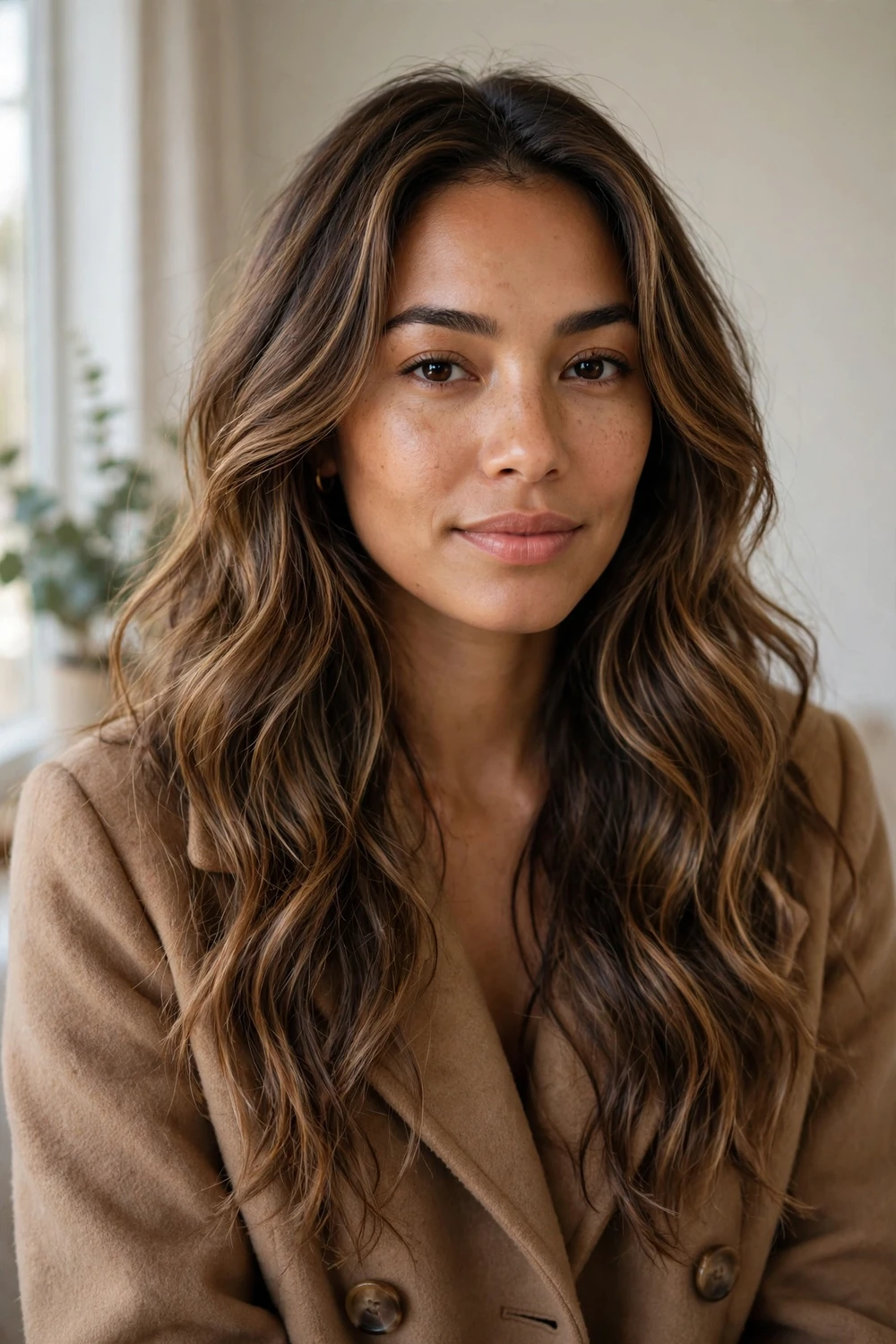
Toasted caramel ribbons melt through a warm mocha base for a cozy, dimensional brown. The caramel is kept in the mid-range, never pale, so it glows against winter skin without washing it out. Hand-painted placement means the grow-out stays soft for 12 to 14 weeks, and the warm tones fade gracefully toward a neutral brown rather than turning brassy. A tinted gloss at each refresh keeps the caramel toasted.
This is one of the most forgiving shades for first-time color.
Try this: wear the hair down the first week to watch how the ribbons catch daylight before deciding on styling.
Difficulty: Easy · Cost: $150–$260 (balayage)
9. Rich Chestnut Cocoa
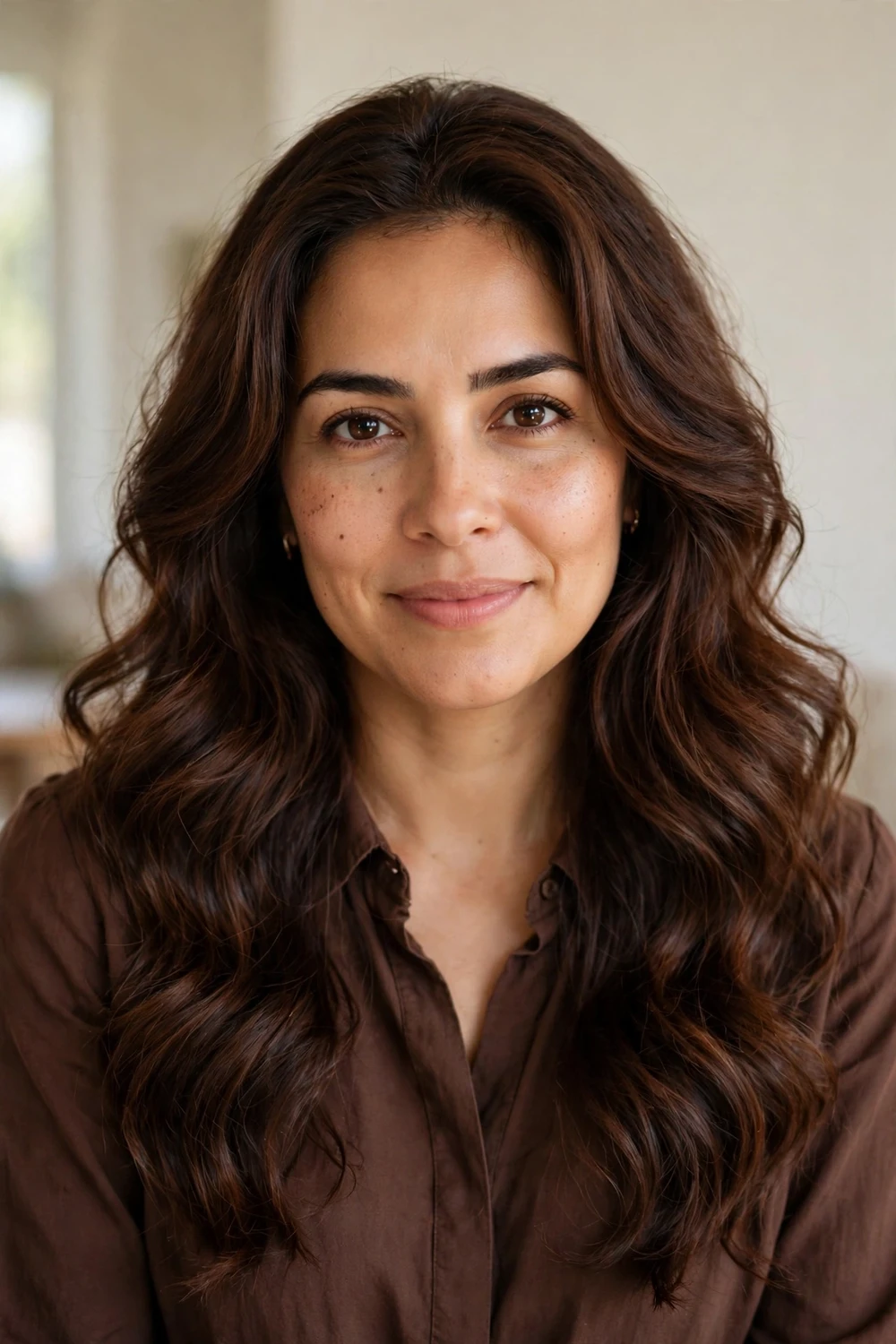
Chestnut cocoa is a deep, warm brown that suits nearly every skin tone, which is why colorists reach for it all winter. The shade is built from a chestnut base with cocoa depth, giving full coverage in one process and a glossy finish that hides winter dryness well. Maintenance is simple: a clear or chestnut gloss every 6 to 8 weeks and color-safe shampoo. It also covers gray reliably in a single step.
This is the lowest-drama darkening option for brunettes going deeper for winter.
Try this: ask for a demi-permanent formula to test the depth. It fades out over 6 to 8 weeks.
Difficulty: Easy · Cost: $90–$170 (single process)
10. Warm Golden Highlights
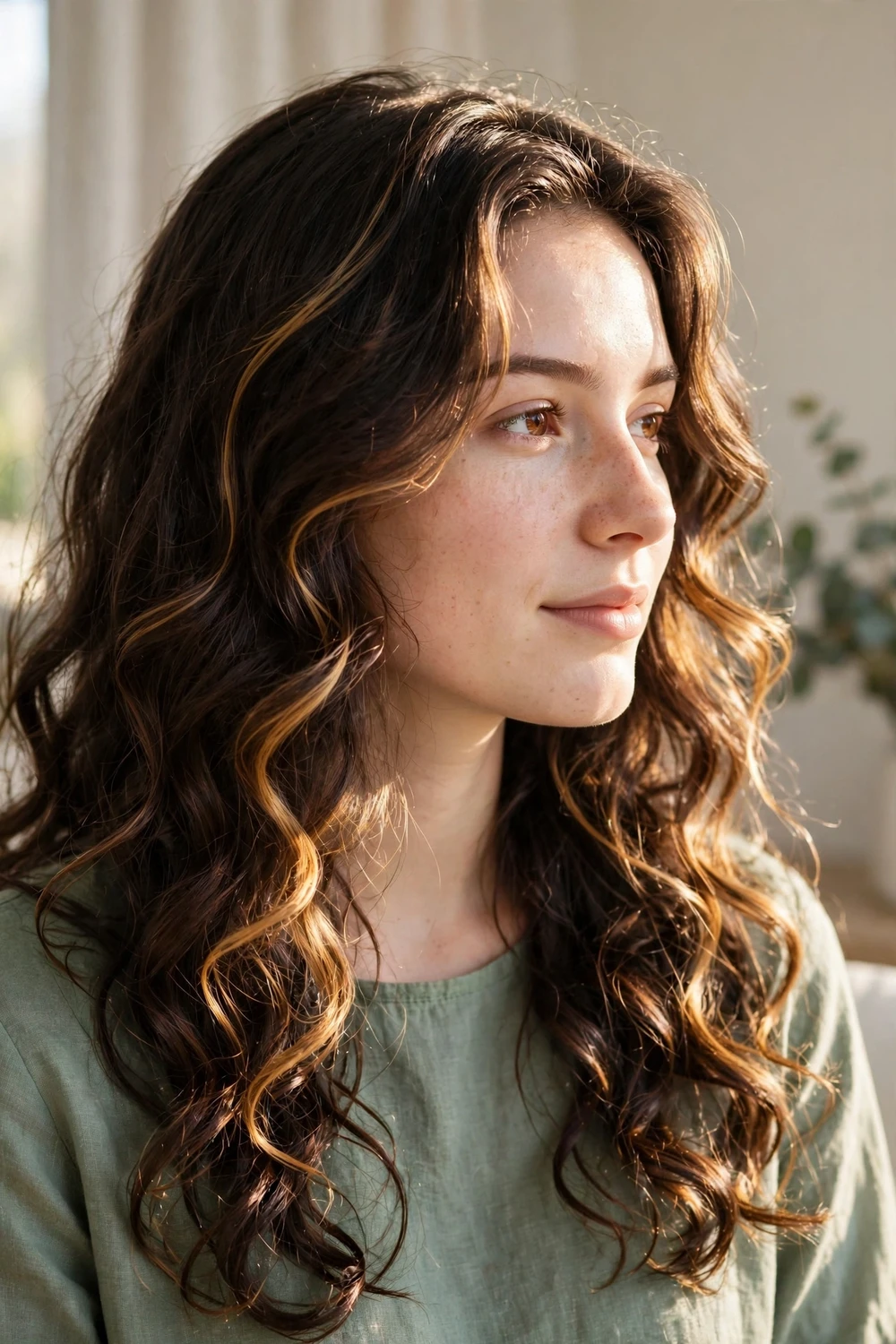
Soft golden pieces are woven through a brunette base for a sunlit finish that holds up in the dark winter months. The gold is kept warm and honeyed rather than icy, which flatters warm undertones and keeps pale winter skin from looking washed out. Because only the mid-lengths and ends are lifted, roots grow in cleanly and refreshes stretch to 10 to 12 weeks. A golden gloss between appointments stops the pieces from dulling into brass.
This works on straight, wavy, and curly hair alike.
Try this: concentrate the lightest pieces around the face and ends. Interior lightness barely shows.
Difficulty: Easy · Cost: $130–$240 (partial foils)
11. Chocolate Brown Layers
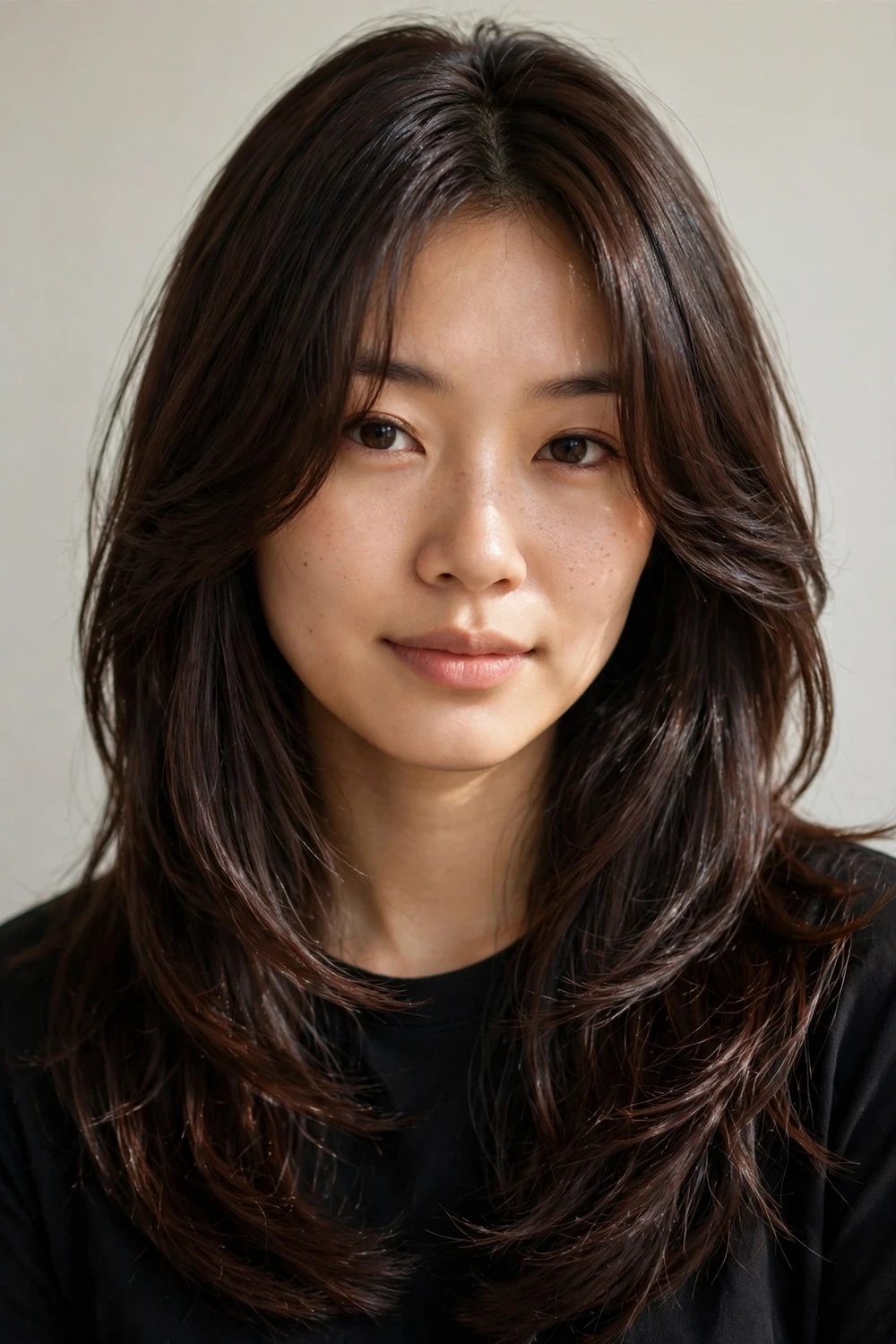
Deep chocolate brown paired with a layered cut is a brunette classic built for winter. The layers break up the dark mass so the chocolate shows movement instead of sitting flat, and the color’s natural depth makes fine hair look thicker. A gloss treatment every 6 to 8 weeks keeps the chocolate from going matte, which dark browns do in dry indoor heat. Round-brush blowouts show the layer-and-color interplay best; apply heat protectant before the dryer.
Trims every 8 to 10 weeks keep the layers sharp.
Try this: flip the ends out with a round brush to make each layer catch the light.
Difficulty: Easy · Cost: $100–$190 (color + cut)
12. Molten Brunette
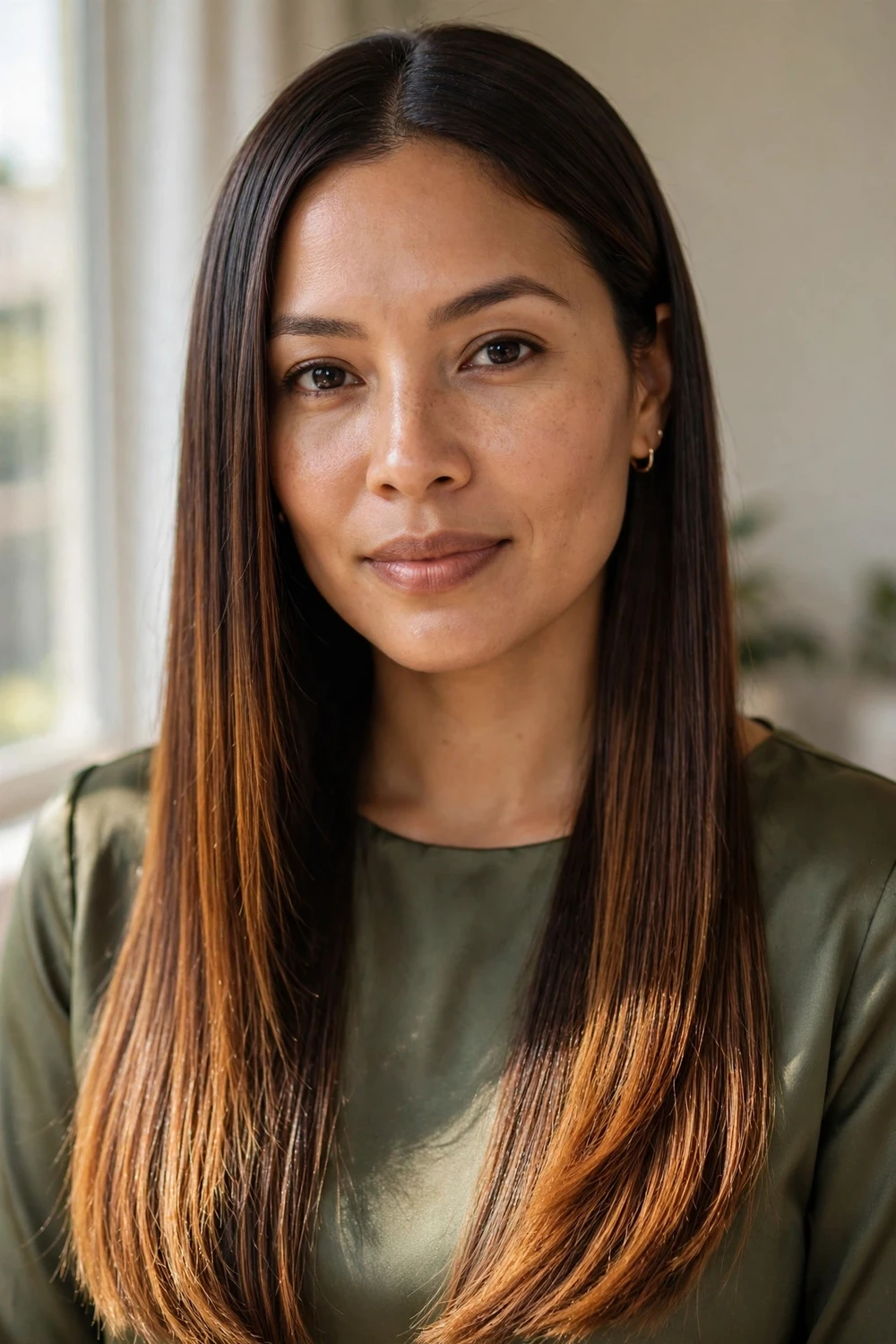
Molten brunette melts dark chocolate roots into warm amber ends with no visible line between them. The technique is a root-to-tip gradient, painted or melted, that keeps all the depth at the crown and all the warmth at the ends. Shine is the signature: the gradient reads almost liquid when the hair is healthy, so a clear gloss every 6 weeks and a lightweight shine serum are part of the routine. Grow-out is graceful, with refreshes at 12 to 14 weeks.
Sleek straight styling shows the melt best.
Try this: straighten in thin sections with a flat iron, heat protectant applied first, for the cleanest gradient.
Difficulty: Moderate · Cost: $170–$290 (melt + gloss)
13. Caramel Auburn Blend

Warm auburn blends into golden caramel through soft waves for a multi-tonal brunette with real movement. The auburn keeps the base in red-brown territory while the caramel lifts the mids and ends, so the overall read stays brunette, not redhead. Curls and waves show this blend best; straight styling compresses the tones. Refresh the auburn with a tinted gloss every 6 to 8 weeks, since red tones fade first.
A sulfate-free shampoo slows the fade noticeably.
Try this: diffuse on low heat with heat protectant applied first to keep the waves defined and the color sealed.
Difficulty: Moderate · Cost: $150–$260 (color + gloss)
14. Dark Auburn Curls
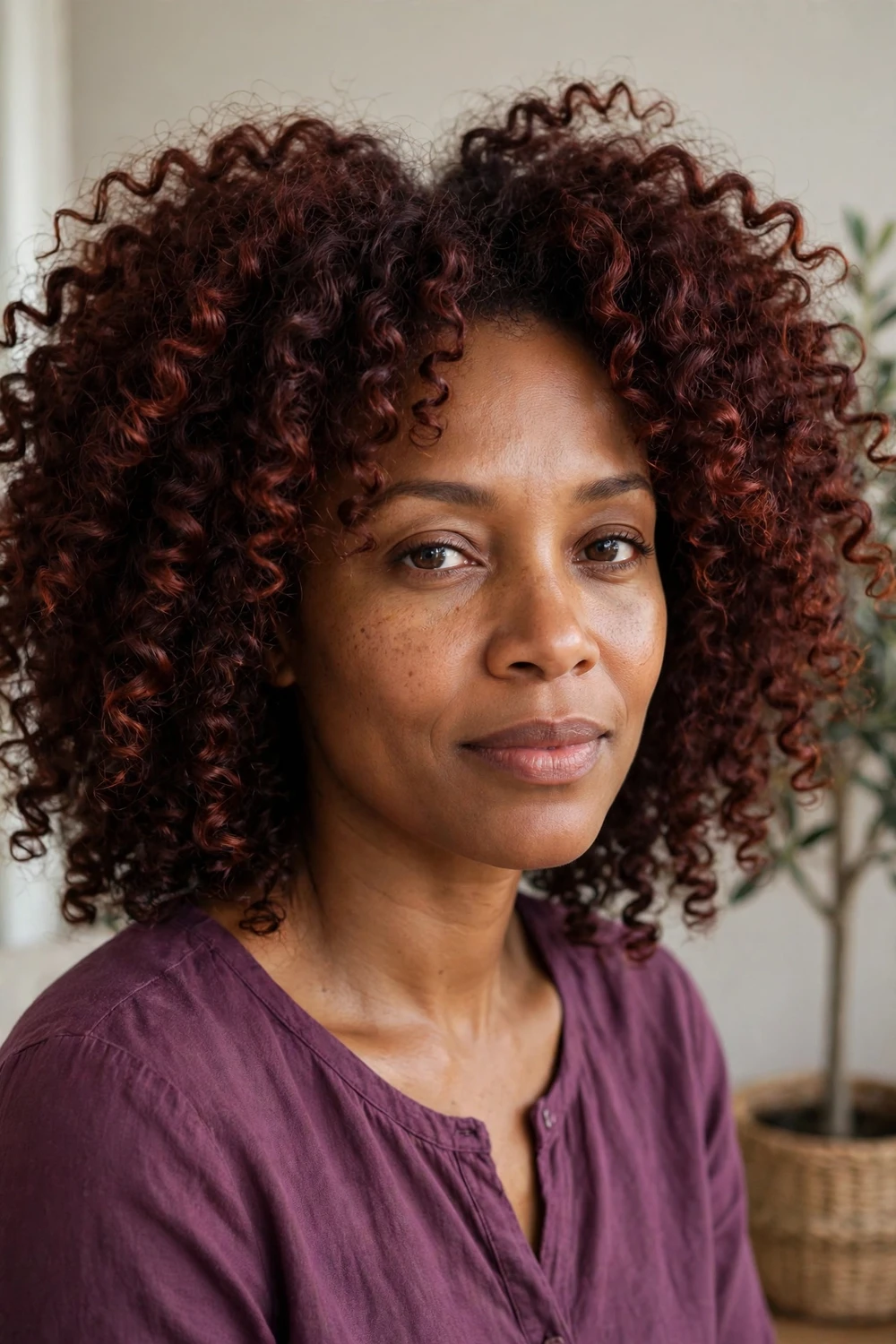
Deep auburn poured over voluminous curls gives dark hair warmth that moves. Colorists often paint this curl by curl on dry hair so the auburn lands where the curls catch light, following the natural pattern. Curly color needs extra moisture: deep-condition weekly, since lifted curls dry faster, and refresh curls with water and leave-in instead of re-washing, which strips tone. The auburn holds 6 to 8 weeks before a gloss refresh.
This flatters every curl pattern from loose waves to tight coils.
Try this: ask for the auburn concentrated on the outer curls. Interior color barely shows on dense curls.
Difficulty: Moderate · Cost: $140–$260 (curly specialist color)
15. Subtle Auburn Balayage
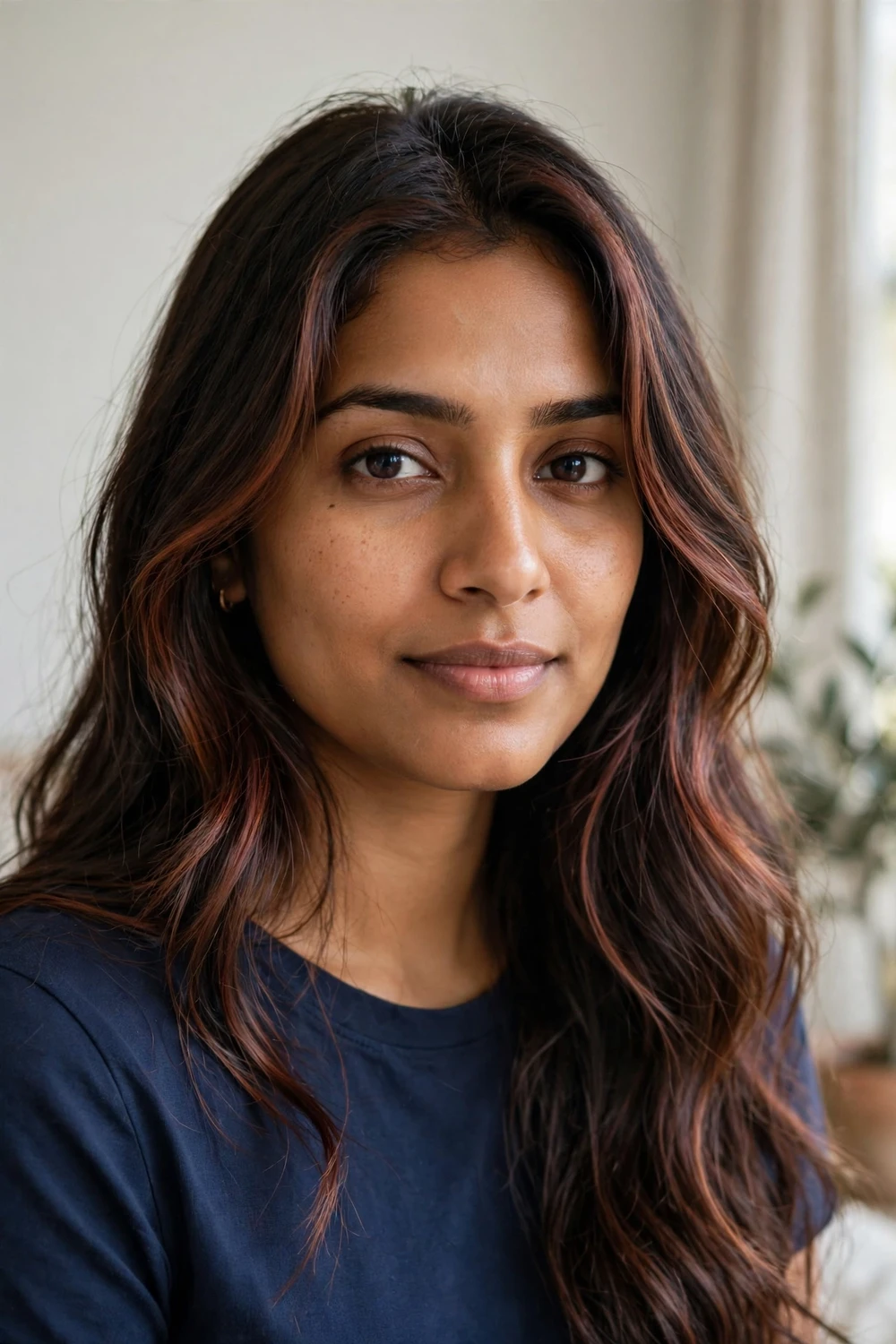
A brunette base gets hand-painted auburn balayage, concentrated on face-framing strands and through the mid-lengths. The placement is deliberately quiet: enough warmth to change the hair’s whole temperature, little enough that regrowth barely shows. Because nothing touches the roots, appointments stretch to 12 to 14 weeks, and the grow-out looks intentional. A tinted gloss at each visit keeps the auburn from fading toward plain brown.
This is the auburn option for brunettes who want low commitment.
Try this: ask for the face-framing pieces painted slightly brighter. They frame the features and fade first.
Difficulty: Easy · Cost: $150–$250 (balayage)
If hand-painted warmth in golden tones appeals, our dark caramel balayage guide explores that technique in caramel shades.
16. Copper Curly Bob
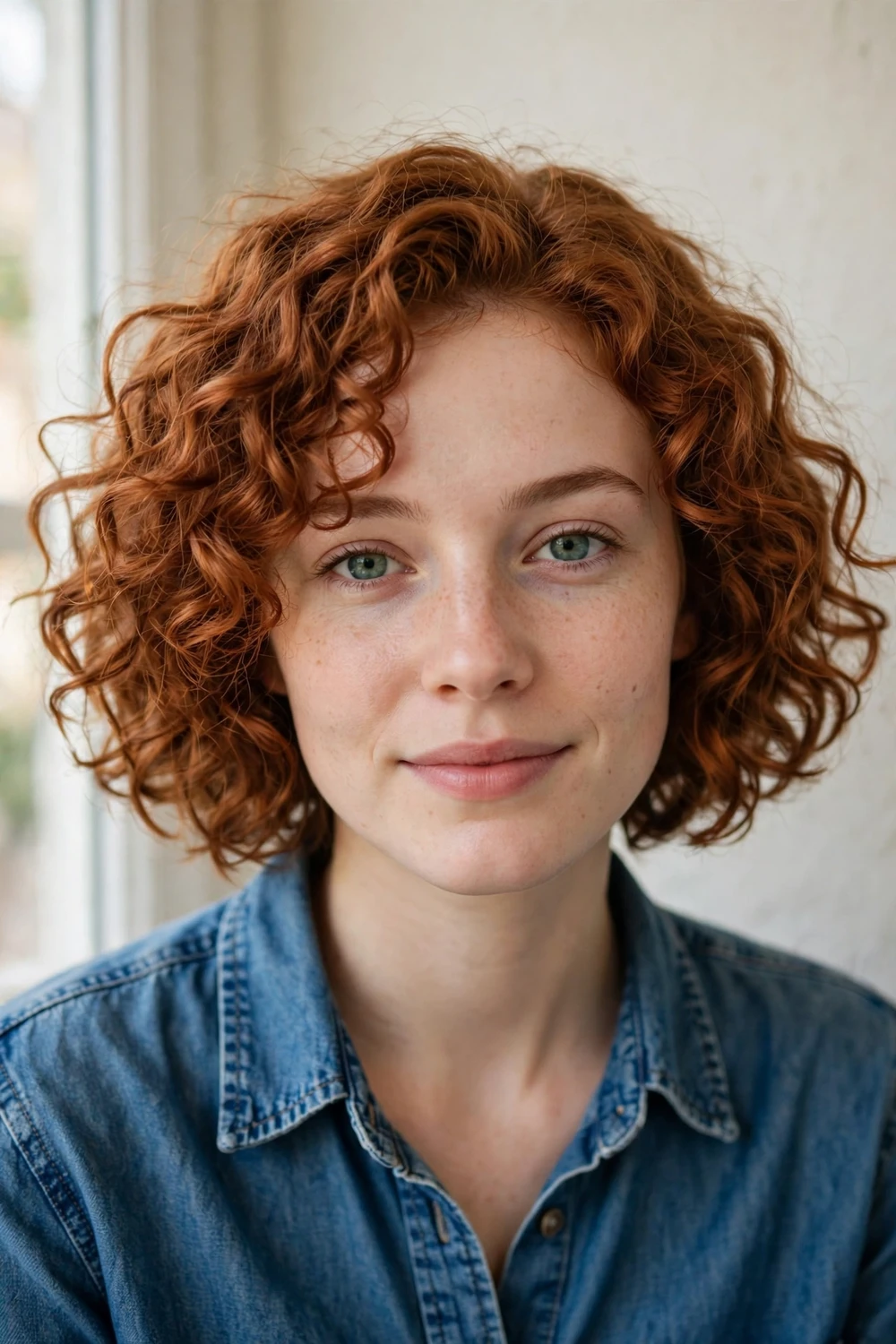
A curly bob goes copper, built on a deepened brunette base so the warmth has depth behind it. The copper lights up each curl, and the bob’s shape keeps the color concentrated where it shows most. Copper fades faster than brown, so a color-depositing conditioner once a week and a gloss every 6 weeks hold the fire. Curly bobs also need trims every 6 to 8 weeks to hold the shape, so pair the color and cut appointments.
Hydration matters: copper on dry curls looks dull fast.
Try this: scrunch a lightweight curl cream through damp hair. Heavy creams drag curls down and hide the color.
Difficulty: Moderate · Cost: $130–$250 (color + curly cut)
17. Warm Maple Flow
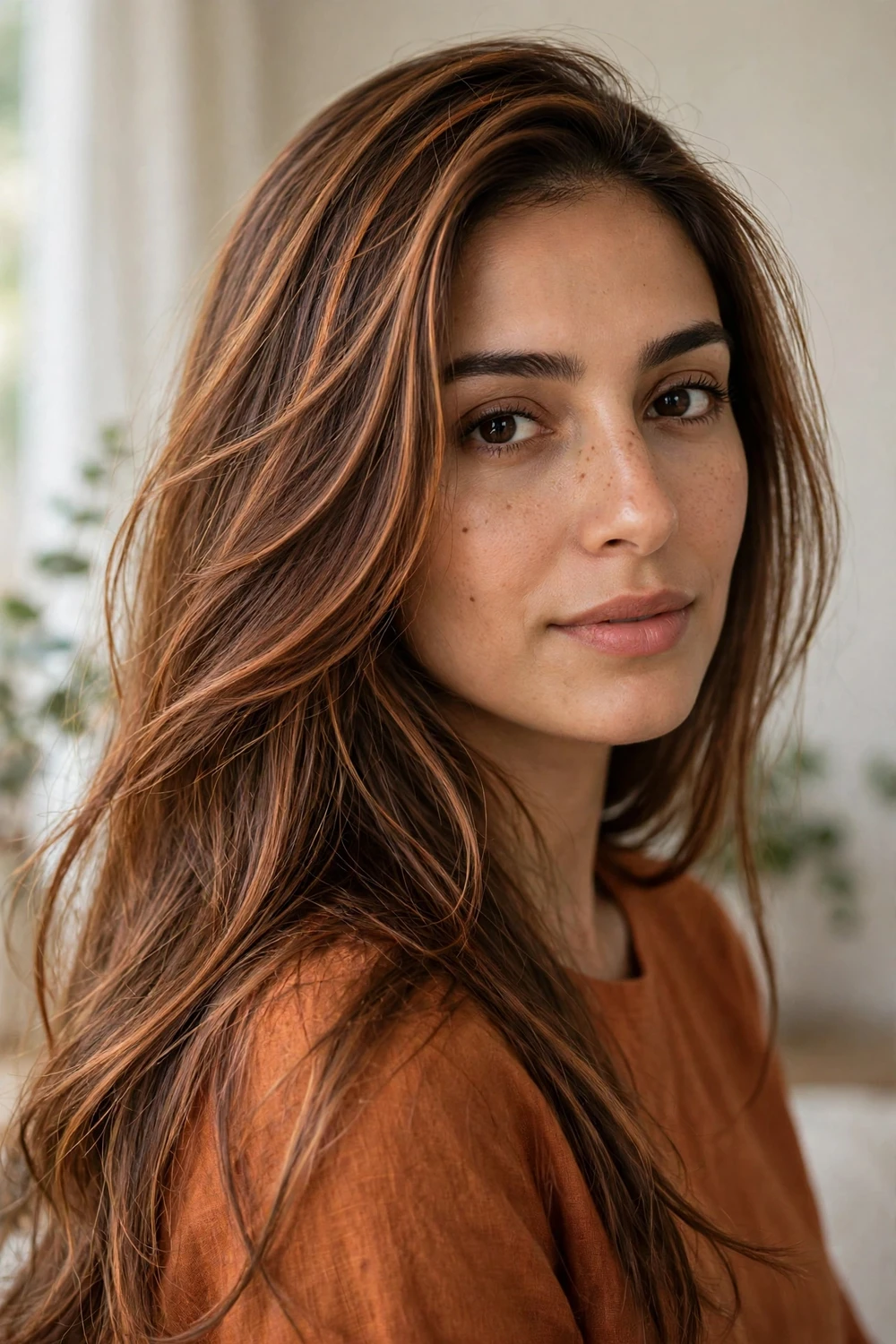
Maple brown flows through long hair with thin copper ribbons running the length. The maple base is a golden amber brown that glows in daylight and reads natural indoors, while the copper ribbons add a spiced edge. Smooth blowouts show this shade best, since sleek strands let the ribbons run uninterrupted. Apply heat protectant before blow-drying; repeated heat fades copper tones faster than any other part of this color. A gloss every 8 to 10 weeks revives the maple.
Long hair carries this best: the color needs length to develop.
Try this: part the hair in the middle to let the ribbons fall evenly on both sides.
Difficulty: Easy · Cost: $140–$240 (color)
18. Short Chestnut Glam
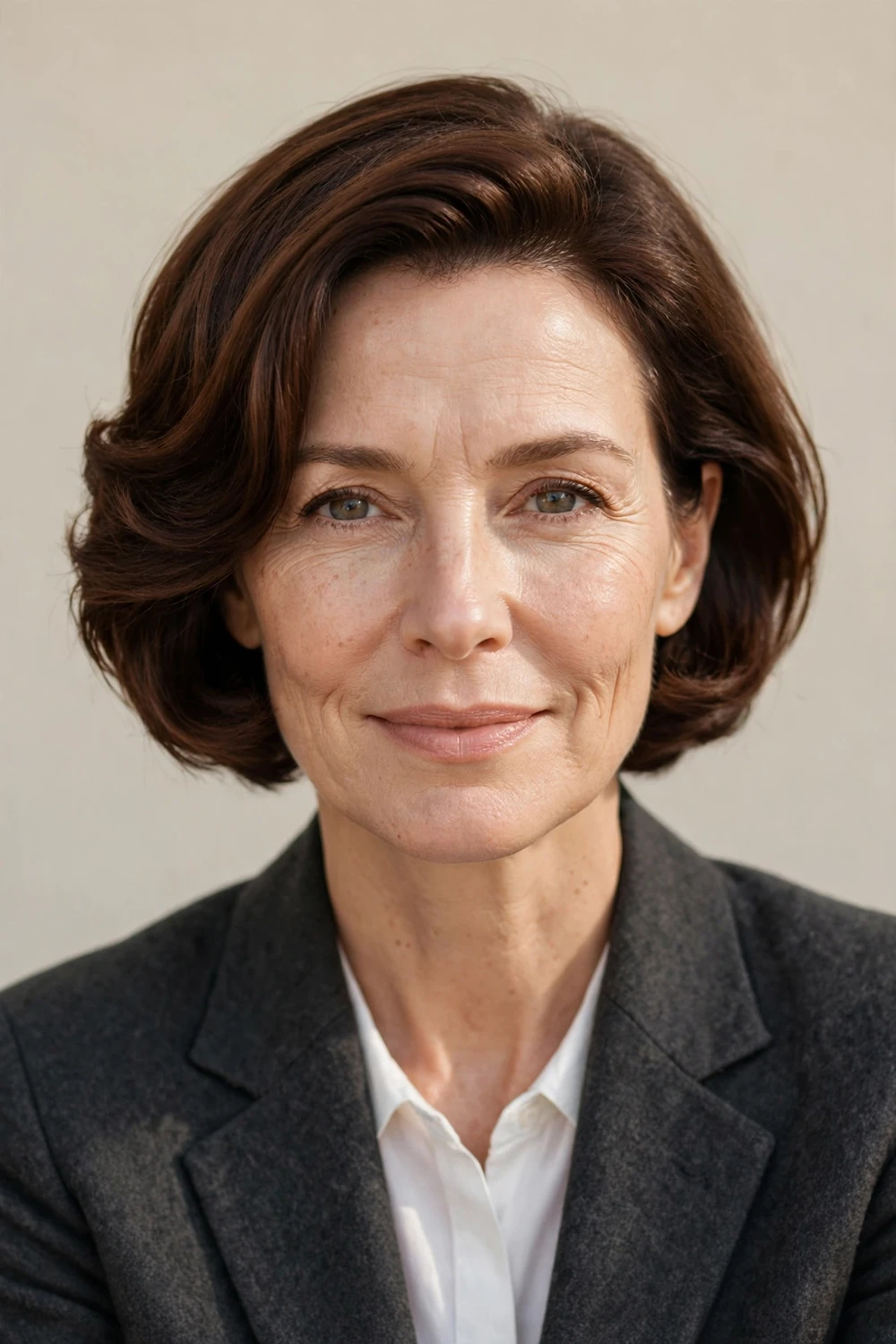
A short, polished cut in rich chocolate chestnut proves dark color and short hair belong together in winter. The cut’s motion, soft waves or a curved bob shape, keeps the deep shade from sitting heavy, and the chestnut’s warmth flatters mature skin. Styling is quick: a round-brush blowout with heat protectant applied first, finished with a shine spray. A gloss every 6 weeks keeps short, frequently washed hair from dulling.
Trims every 6 to 8 weeks hold the shape.
Try this: tuck one side behind the ear to show the color’s depth against the skin.
Difficulty: Easy · Cost: $90–$180 (cut + color)
19. Cherry Cola Brunette
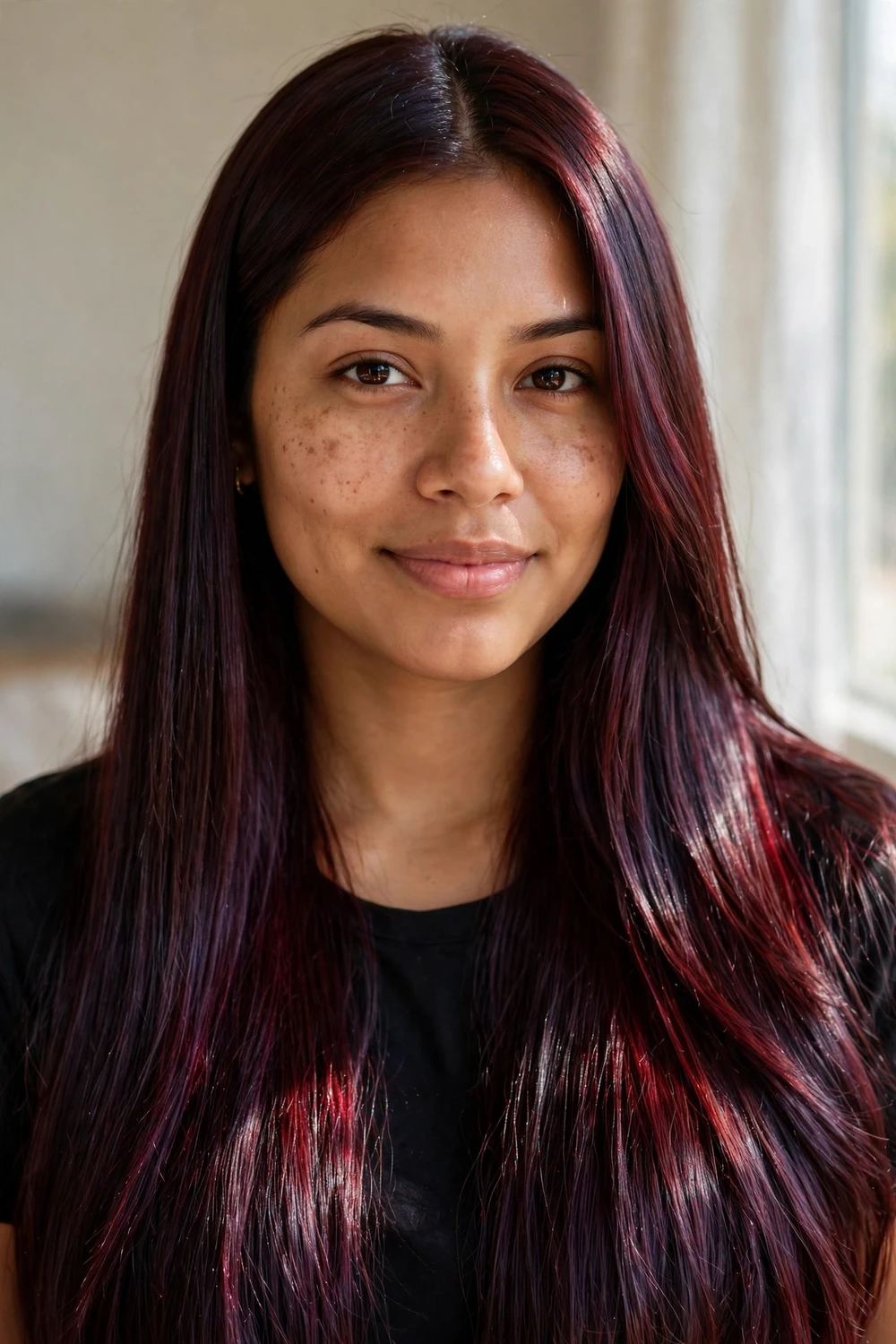
Cherry cola mixes deep brown with dark cherry red for a shade that keeps coming back every cold season. The brown keeps it wearable and office-appropriate; the cherry gives it an edge that shows in sunlight. Reds fade fastest, so this needs the most maintenance on the list: a color-safe shampoo, cool rinses, and a red-tinted refresh shampoo or gloss every 4 to 6 weeks. Dark bases take cherry cola without bleach, which keeps the hair healthier.
Expect the cherry to soften toward brown between appointments. That fade still looks good.
Try this: wash less often and use dry shampoo between washes to slow the red fade.
Difficulty: High · Cost: $130–$240 (color + red maintenance)
20. Hidden Crimson Peekaboo Brunette
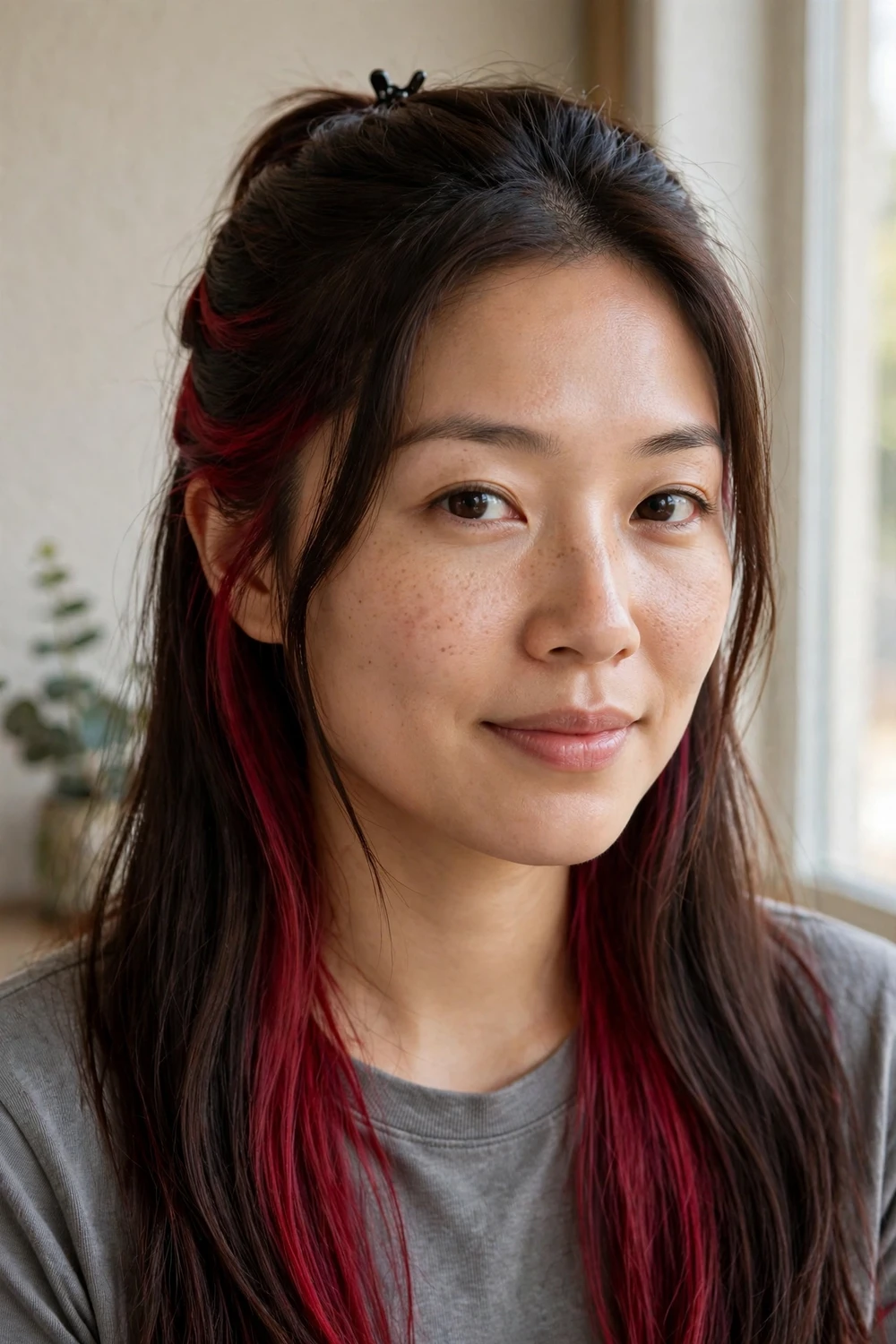
Crimson streaks hide under the top layer of dark brown hair, flashing only when the hair moves or goes up. The top stays a natural-looking brunette, which makes this the most concealable bold color here: sleek and professional from the front, crimson from every other angle. Because the color sits underneath, it takes less sun and heat, so the red holds its tone longer than surface color. Refresh every 8 to 10 weeks.
Half-up styles and ponytails reveal the peekaboo on demand.
Try this: ask for the hidden pieces in medium widths. Too fine and they disappear; too wide and they peek constantly.
Difficulty: Easy · Cost: $120–$230 (partial color)
21. Mocha Mousse Brunette
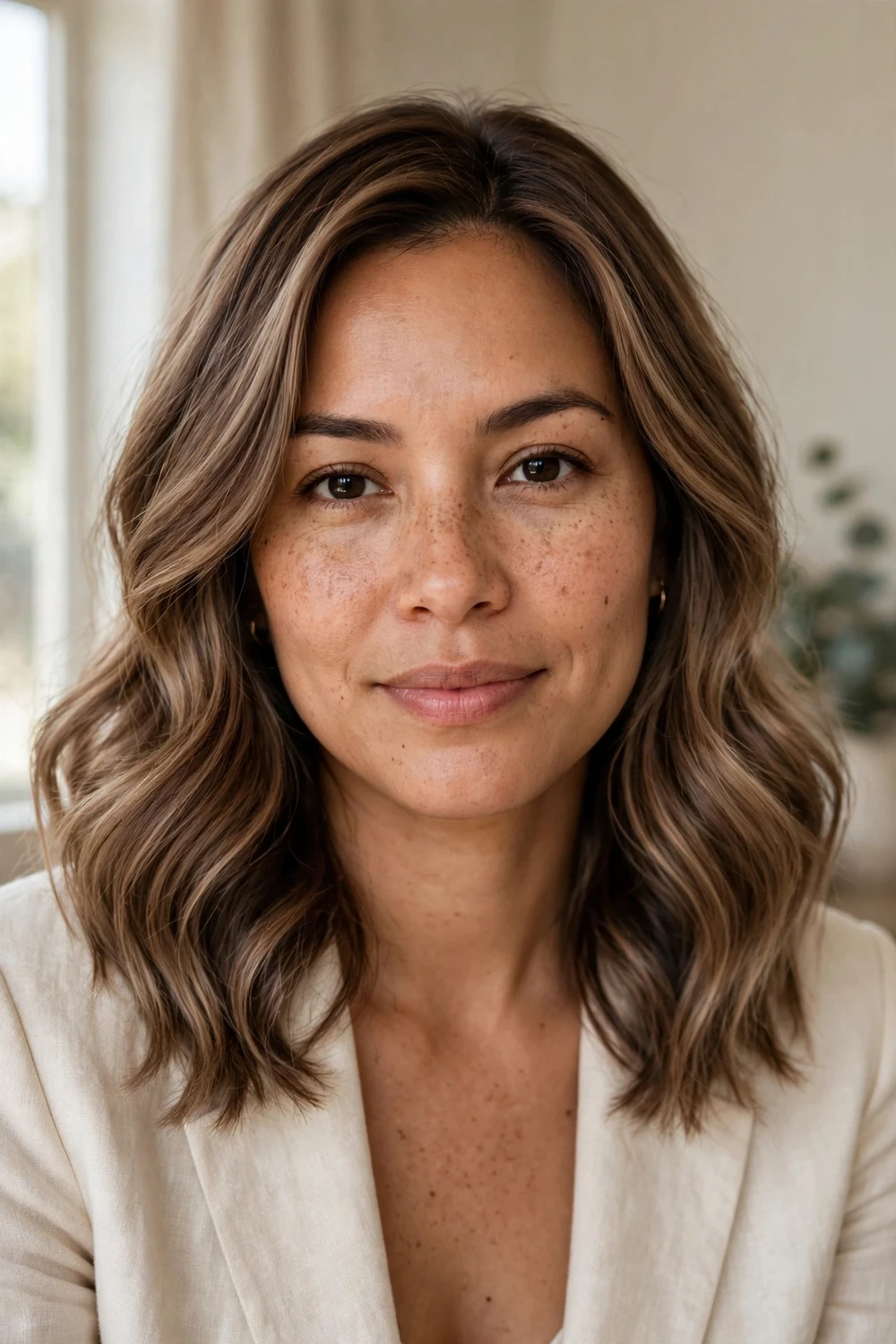
Mocha mousse blends warm espresso with soft caramel into a creamy, even brunette with a velvety finish. The tones are close together, so the result reads as one rich color with depth rather than obvious highlights, which makes the grow-out nearly invisible. It is a single-process option for most brunettes, keeping the appointment under two hours and the cost down. A tinted gloss every 8 weeks keeps the creaminess; without it, the caramel can dull.
This suits brunettes who want change without visible color lines.
Try this: compare the finished color in daylight before leaving the salon. Warm browns read darker indoors.
Difficulty: Easy · Cost: $100–$190 (single process)
22. Root-Melted Winter Brunette
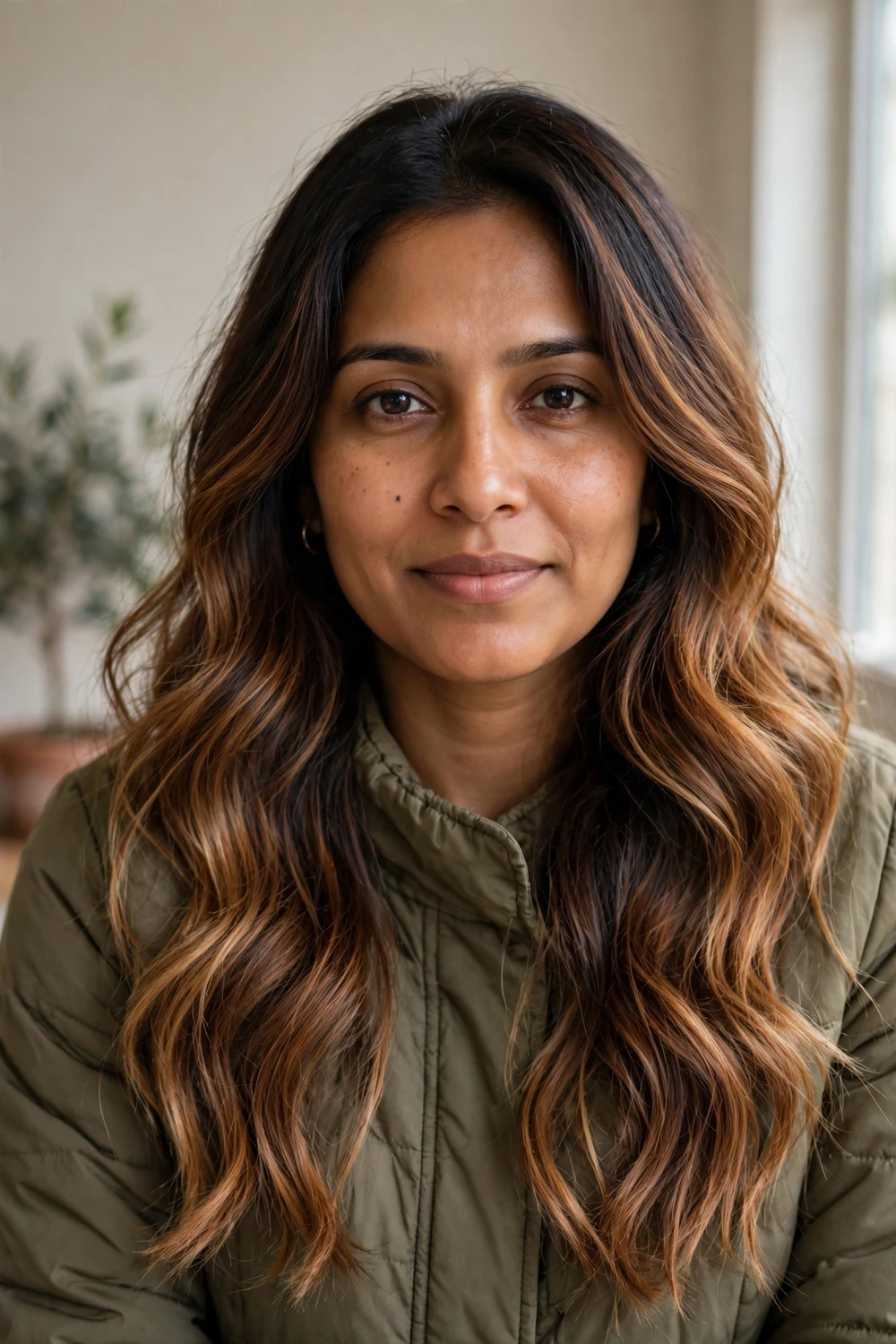
A deep espresso root melts into warm caramel mids and ends with no line anywhere. The root melt erases the regrowth line, so this is the longest-wearing option here: most people go 14 to 16 weeks between appointments. The dark root keeps it winter-appropriate while the warm ends stop the overall look from going flat. Ask for the melt in the natural level so the blend stays invisible as it grows, and book a gloss at 8 weeks to keep the ends rich.
This is the pick for brunettes who dislike salon upkeep.
Try this: request the lightest pieces two to three inches below the part line for the most natural finish.
Difficulty: Easy · Cost: $160–$280 (melt)
How to Choose Your Winter Brunette Shade
Match the undertone to the skin. Cool and neutral skin takes ash, frosted mocha, and snowy beige bronde well. Warm and olive skin glows with cinnamon cocoa, copper, maple, and cherry cola. Chestnut cocoa and mocha mousse flatter nearly everyone, which makes them safe first picks.
Start from the natural level. The closer the shade sits to the base, the lower the maintenance. Brunettes at level 4 to 5 can reach most shades here with gloss or demi-permanent color. Shades that lift, like snowy beige bronde, cost more and need toners.
Be honest about upkeep. Single-process browns need a gloss every 6 to 8 weeks. Reds and coppers fade fastest and need tinted maintenance. Balayage and root melts stretch visits to 12 to 16 weeks. Pick the refresh cycle that will actually be kept.
Mind the gray. Demi-permanent browns blend early grays softly. Full-coverage chestnut and wine brown hide them completely. Frosted and ash tones camouflage silver strands between appointments.
Winter Brunette Shades at a Glance
| Shade | Tone | Refresh cycle | Approx. cost | Best for |
|---|---|---|---|---|
| Midnight Raven Shine | Warm near-black | 6 weeks (gloss) | $80–$150 | Deepest brunettes |
| Soft Toffee Layers | Warm medium brown | 10–12 weeks | $140–$240 | Subtle dimension |
| Frosted Ash Brunette | Cool ash brown | 6–8 weeks (toner) | $160–$280 | Cool undertones |
| Wine Brown | Deep red-brown | 6 weeks (gloss) | $120–$220 | Red without bleach |
| Frosted Mocha | Cool medium brown | 8–10 weeks | $100–$180 | Early gray blending |
| Cinnamon Cocoa | Warm spiced brown | 8 weeks (gloss) | $110–$200 | Warm and olive skin |
| Snowy Beige Bronde | Icy beige bronde | 4–6 weeks (toner) | $180–$320 | Lightest winter brunette |
| Toasted Caramel Mocha | Warm caramel brown | 12–14 weeks | $150–$260 | First-time color |
| Rich Chestnut Cocoa | Deep warm brown | 6–8 weeks (gloss) | $90–$170 | Full gray coverage |
| Warm Golden Highlights | Golden brown | 10–12 weeks | $130–$240 | Sunlit winter glow |
| Chocolate Brown Layers | Deep neutral brown | 6–8 weeks (gloss) | $100–$190 | Fine hair thickness |
| Molten Brunette | Chocolate-to-amber | 12–14 weeks | $170–$290 | High-shine gradient |
| Caramel Auburn Blend | Warm auburn-caramel | 6–8 weeks (gloss) | $150–$260 | Wavy texture |
| Dark Auburn Curls | Deep red-brown | 6–8 weeks (gloss) | $140–$260 | Curly patterns |
| Subtle Auburn Balayage | Auburn on brown | 12–14 weeks | $150–$250 | Low-commitment warmth |
| Copper Curly Bob | Warm copper | 6 weeks (gloss) | $130–$250 | Short curly cuts |
| Warm Maple Flow | Amber maple brown | 8–10 weeks (gloss) | $140–$240 | Long straight hair |
| Short Chestnut Glam | Chocolate chestnut | 6 weeks (gloss) | $90–$180 | Short polished cuts |
| Cherry Cola Brunette | Brownish cherry red | 4–6 weeks | $130–$240 | Bold but wearable red |
| Hidden Crimson Peekaboo | Dark brown + crimson | 8–10 weeks | $120–$230 | Concealable color |
| Mocha Mousse Brunette | Creamy espresso-caramel | 8 weeks (gloss) | $100–$190 | Seamless grow-out |
| Root-Melted Winter Brunette | Espresso-to-caramel | 14–16 weeks | $160–$280 | Lowest salon upkeep |
Frequently Asked Questions
Should brunettes go darker for winter?
Not always. Depth helps in weak winter light, but going too dark can wash out fair skin. A gloss that deepens the base by one level often does the job without a full color change. If the hair already sits at level 3 or 4, adding dimension with toffee, caramel, or auburn ribbons usually beats going darker. Ask the colorist to show the shade in daylight before committing.
How do I keep my brown hair from turning brassy in winter?
Use a blue or purple shampoo once a week for cool and ash tones, and a color-safe sulfate-free shampoo for warm shades. Book a toning gloss every 6 to 8 weeks, since gloss neutralizes the orange that builds as color fades. Hot water and dry indoor heat speed up brassiness, so rinse lukewarm and keep up with conditioning masks.
How often should brunettes get a gloss in winter?
Every 6 to 8 weeks for most brunette shades. Reds, coppers, and cherry tones fade fastest and do better on a 4 to 6 week cycle. Balayage and root-melt placements can stretch to 8 weeks between glosses because the grow-out is soft. A clear gloss adds shine and seals the cuticle without changing the color, so it works between any full color appointments.
What is the lowest-maintenance winter color for brunettes?
Root-melted brunette or mocha mousse. Both keep color close to the natural base, so regrowth barely shows and salon visits stretch to 12 to 16 weeks. Demi-permanent formulas fade gradually instead of leaving a line. Single-process browns like chestnut cocoa are also low-effort, needing only a gloss every 6 to 8 weeks.
Can warm brunette hair pull off cool ash tones?
Yes, with enough lift. Hair that pulls warm naturally needs to be lifted slightly more so the ash toner has room to hold instead of turning muddy. A blue or purple shampoo once a week keeps the cool tone in place at home. Testing with a demi-permanent ash gloss first is a low-risk way to see how the skin handles cool tones before committing to foils.
Final Thoughts
Winter rewards brunettes who lean into depth. Whether the pick is near-black raven, cherry cola, or a quiet root melt, the shades that hold up in cold months are the ones with a gloss schedule behind them. Bring reference photos, stay honest about upkeep, and book the gloss before the color fades, not after.
Brunettes who want extra luminosity can also browse bright winter hair colors, which include glossy black and cherry shades built for dark bases.

