



Fine hair after 60 needs a cut that does two jobs at once: it has to look fuller and ask almost nothing of you in the morning. The winners are short, blunt-edged or lightly layered shapes that air-dry well and hold their form between salon visits. Chin-length bobs, textured pixies, and easy crops top the list because they remove weight that pulls fine hair flat while keeping styling to a few minutes.
This guide collects 32 low maintenance hairstyles for 60 year old women with fine hair, merged from the most recommended ideas across leading hair guides, with duplicates removed and a few worthwhile gaps filled in. Every idea includes a “Try this” styling tip plus a difficulty and cost label, so you know exactly what you are signing up for.
Quick Takeaways
- Blunt edges make fine hair look thicker. Light layers add movement, but over-layering thins out the ends.
- Air-dry-friendly cuts cut morning styling to minutes: wash, apply a lightweight product, and go.
- Book trims every 6 to 8 weeks. Pixies and crops need shaping every 4 to 6 weeks; fine hair shows grown-out edges fast.
- Use lightweight products only: volumizing mousse, root-lifting spray, and dry shampoo. Heavy creams and oils flatten fine hair.
- Gray and silver tones show texture well, which makes grow-out between appointments look softer.
32 Low Maintenance Hairstyles for 60 Year Old Women with Fine Hair
1. Classic Pixie Cut

The classic pixie is short at the nape and sides with a little more length on top, which gives fine hair instant lift at the crown. It dries in minutes and needs almost no tools. A pea-sized amount of texture cream worked through dry hair is enough to define the shape. Ask your stylist to keep the top long enough to cover thinning at the temples. A shaping appointment every four to six weeks keeps the nape neat, since pixies show growth fastest at the back.
Try this: rub the cream between your palms, then push the top layers upward and forward with your fingertips for soft height.
Difficulty: Easy · Cost: pixie cut ($45–$85, trims every 4–6 weeks)
2. Textured Pixie
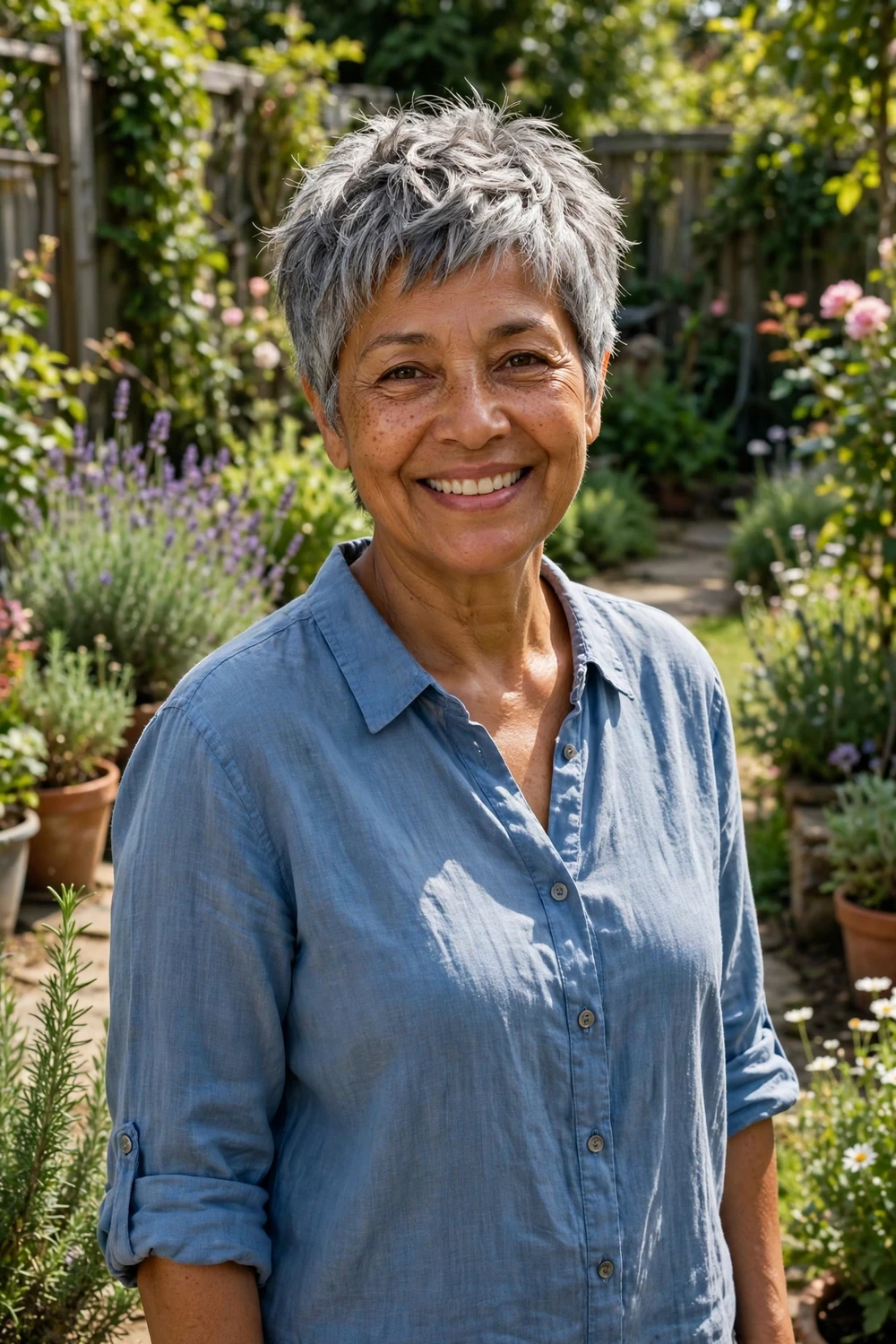
Choppy, point-cut layers turn a basic pixie into a fuller-looking style because the uneven ends catch light and create separation. Fine hair benefits most since texture replaces the bulk it lacks. Style on damp hair with a small amount of volumizing mousse, then finger-style as it dries. The whole routine takes about three minutes and no brush is required. Ask for point-cutting rather than blunt-cut ends, which is what creates the separated texture.
Try this: pinch small sections at the crown between your fingers while drying to build piecey definition that lasts all day.
Difficulty: Easy · Cost: pixie cut ($50–$90, trims every 5–6 weeks)
3. Feathered Pixie
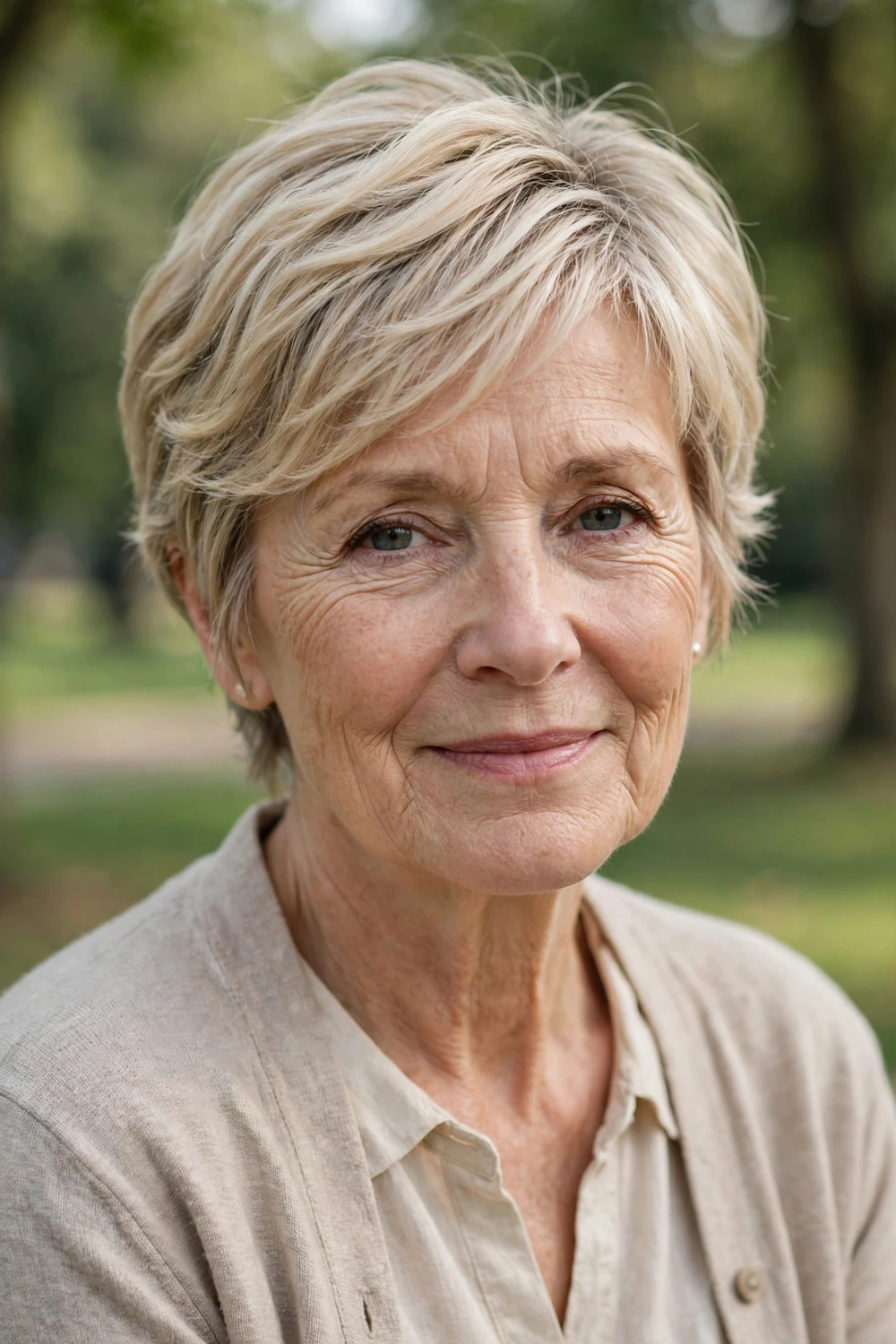
Feathered layers are cut with a razor or thinning technique so the ends taper to soft points instead of blunt lines. The result moves easily and never looks stiff on fine hair. A light styling cream smoothed over the surface tames flyaways without adding weight. This cut flatters straight to wavy hair and grows out more gracefully than a blunt pixie. Feathered ends also grow out softly, so the shape stays wearable a week or two past your usual trim date.
Try this: direct the feathered layers backward with your fingers while blow-drying on low heat for a smooth, swept finish. Apply heat protectant first.
Difficulty: Easy · Cost: pixie cut ($50–$90, trims every 5–6 weeks)
4. Tapered Crop

The tapered crop keeps the sides and nape closely graduated while leaving height on top. That contrast makes the crown look denser, which is exactly what fine hair needs. Morning styling is a quick pass with a root-lifting spray at the crown, then finger-style. It suits active routines because it stays neat through wind and busy days. The close sides also let you stretch washes a day longer, since the neat taper hides oily roots well.
Try this: spray root lifter only at the crown on damp hair, then blow-dry upward with your fingers for lift that holds without stiffness. Apply heat protectant before the dryer.
Difficulty: Easy · Cost: precision cut ($45–$85, trims every 4–6 weeks)
5. Soft Spiky Pixie

Short, piecey spikes give fine hair a lively finish with almost no effort. The trick is restraint: a tiny amount of matte paste on the tips creates separation without clumping strands together. Because the cut is so short, it dries almost instantly after washing. It works well for women who want a confident, modern shape that never needs a round brush. A matte paste works better than a shiny one here, since shine can make fine spikes look thinner.
Try this: use less product than you think you need. Start with half a pea-sized amount and add more only if sections fall flat.
Difficulty: Easy · Cost: pixie cut ($50–$90, trims every 4–5 weeks)
6. Buzz Cut
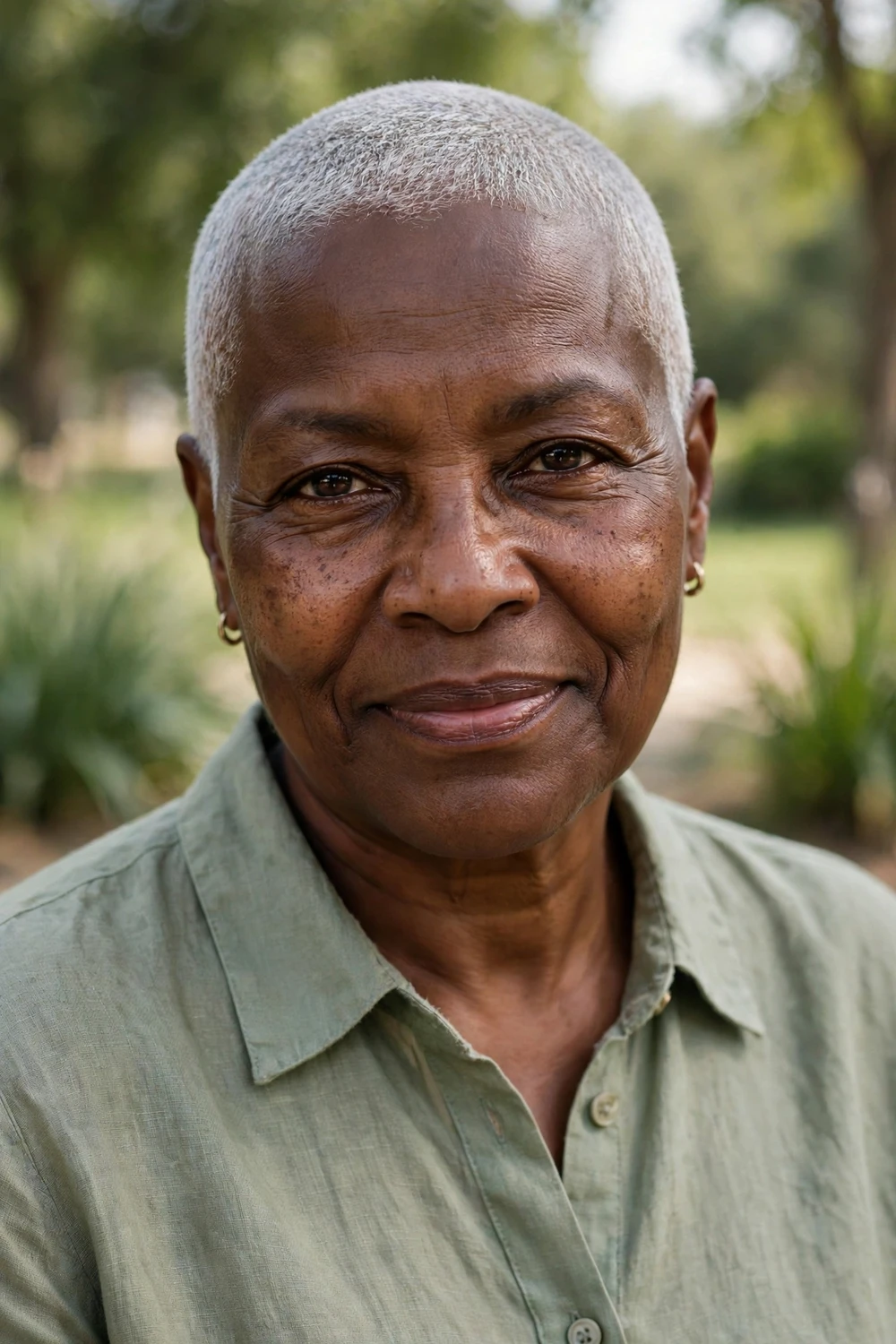
The buzz cut is the lowest-maintenance option that exists: one clipper length all over, usually a number 3 or 4 guard. There is no styling, no product, and no bad hair days. Fine or thinning hair actually suits it well because the uniform length removes any contrast between sparse and dense areas. Maintenance is a barbershop or salon clipper cut every 4 to 6 weeks, typically $25 to $45. Regrowth comes in evenly all over, so there is no awkward in-between stage.
Try this: keep the scalp moisturized and use sunscreen on sunny days, since short hair leaves more skin exposed.
Difficulty: Very easy · Cost: clipper cut ($25–$45, trims every 4–6 weeks)
7. Layered Short Crop
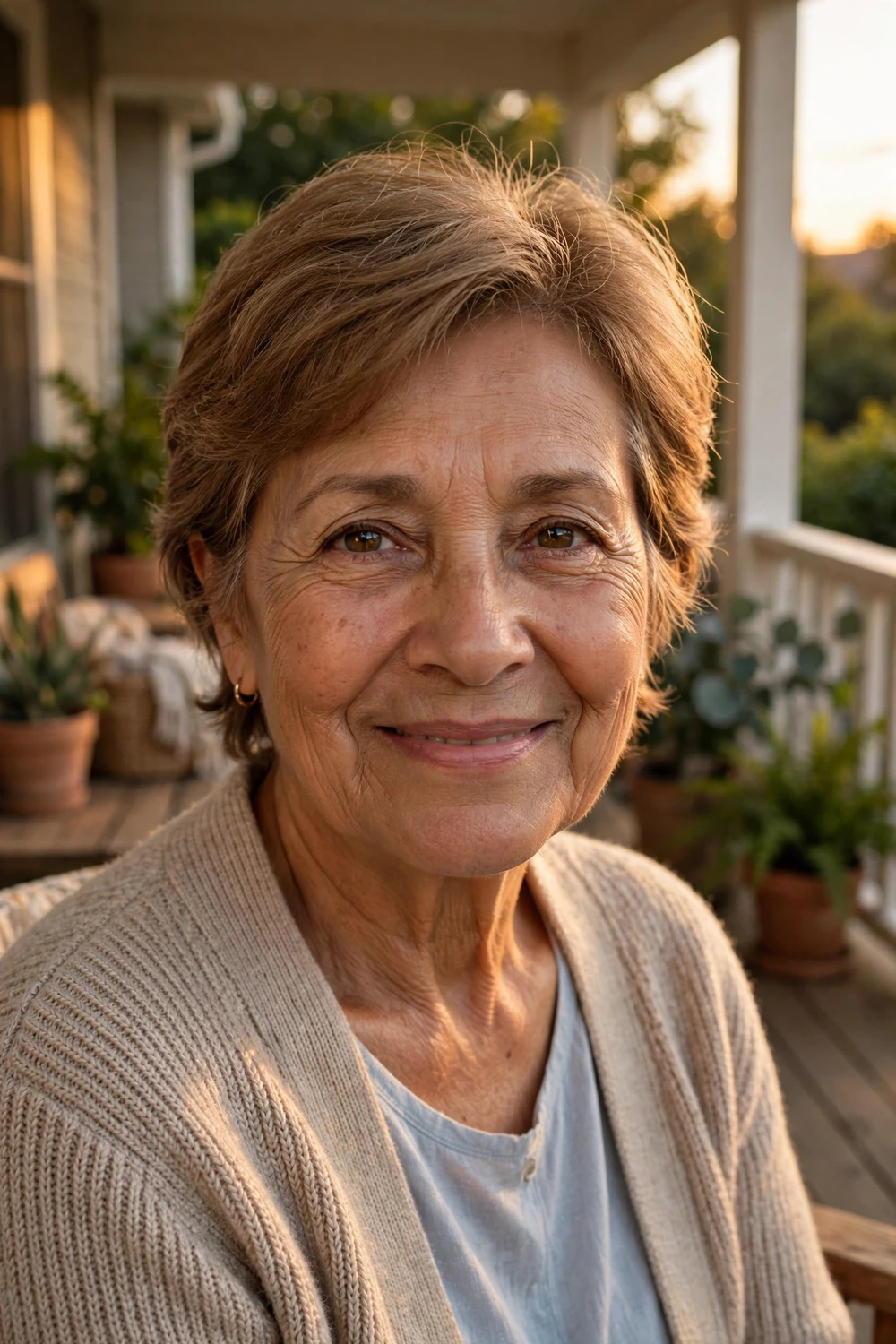
Subtle layers through a short crop add shape and movement without removing the density fine hair needs. The cut sits between a pixie and a bob, long enough to tuck behind the ears but short enough to dry fast. Work volumizing mousse through damp hair and either air-dry or do a two-minute blow-dry with heat protectant. The layers are cut long enough that the style still looks neat on day three without refreshing.
Try this: tuck one side behind your ear and leave the other loose for an easy asymmetric look that takes five seconds.
Difficulty: Easy · Cost: standard haircut ($50–$90, trims every 6 weeks)
8. Classic Bob
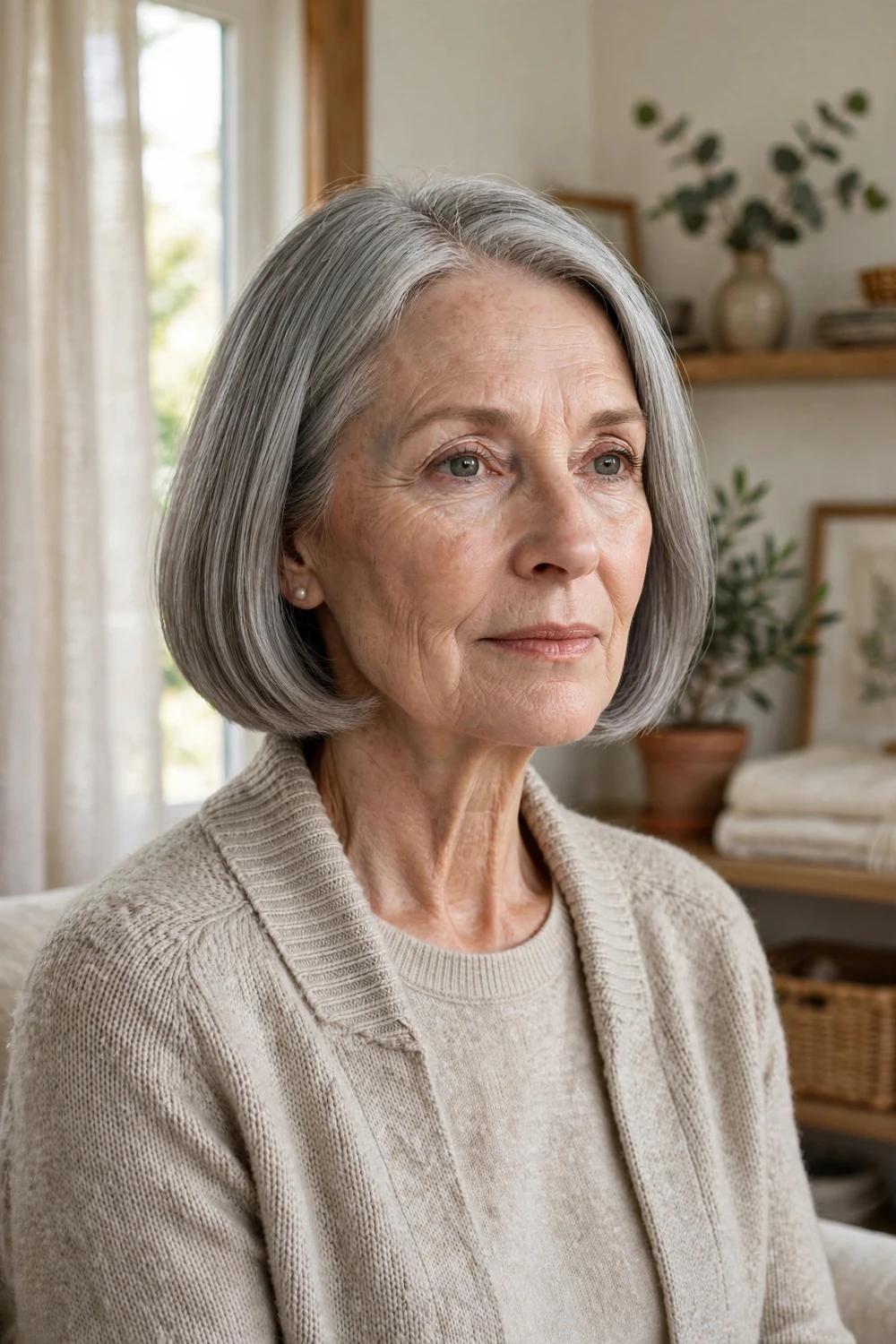
A one-length bob cut at the chin or jaw is one of the most reliable choices for fine hair. The solid bottom edge creates the illusion of thickness, and the short length keeps weight off the roots. Blow-dry with a paddle brush for a smooth finish, always with heat protectant, or let it air-dry for a softer line. The shape holds well between appointments.
For more density-first bob shapes, browse our bob hairstyles for fine hair collection.
Try this: flip your part to the opposite side every few days. The switch adds instant lift at the roots where hair tends to lie flat.
Difficulty: Easy · Cost: standard haircut ($60–$110, trims every 6–8 weeks)
9. Layered Bob

Light, blended layers through a chin-length bob add dimension and movement while keeping the outline full. The key is asking for long, soft layers rather than short choppy ones, so the ends stay dense. A quick round-brush blow-dry builds body in about five minutes. Use heat protectant before the dryer and finish with a light mist of texturizing spray.
Our layered bob hairstyles for women over 60 guide rounds up more age-specific takes on this shape.
Try this: ask your stylist for “invisible layers” that sit inside the cut. They create movement without visibly thinning the ends.
Difficulty: Easy · Cost: precision haircut ($65–$120, trims every 6–8 weeks)
10. Chin-Length Bob

Cut right at the chin, this bob frames the face and draws attention to the cheekbones. The short perimeter keeps fine hair from stringing out, and the length is easy to maintain at home. Smooth a lightweight cream through damp hair and air-dry, or blow-dry under in two minutes with heat protectant. It suits straight and slightly wavy hair equally well. A center part gives a classic line, while a side part adds instant root lift on flat days.
Try this: tuck both sides behind your ears to show off earrings and give the cut a sleeker line on dressier days.
Difficulty: Easy · Cost: standard haircut ($60–$110, trims every 6–8 weeks)
11. Angled Bob
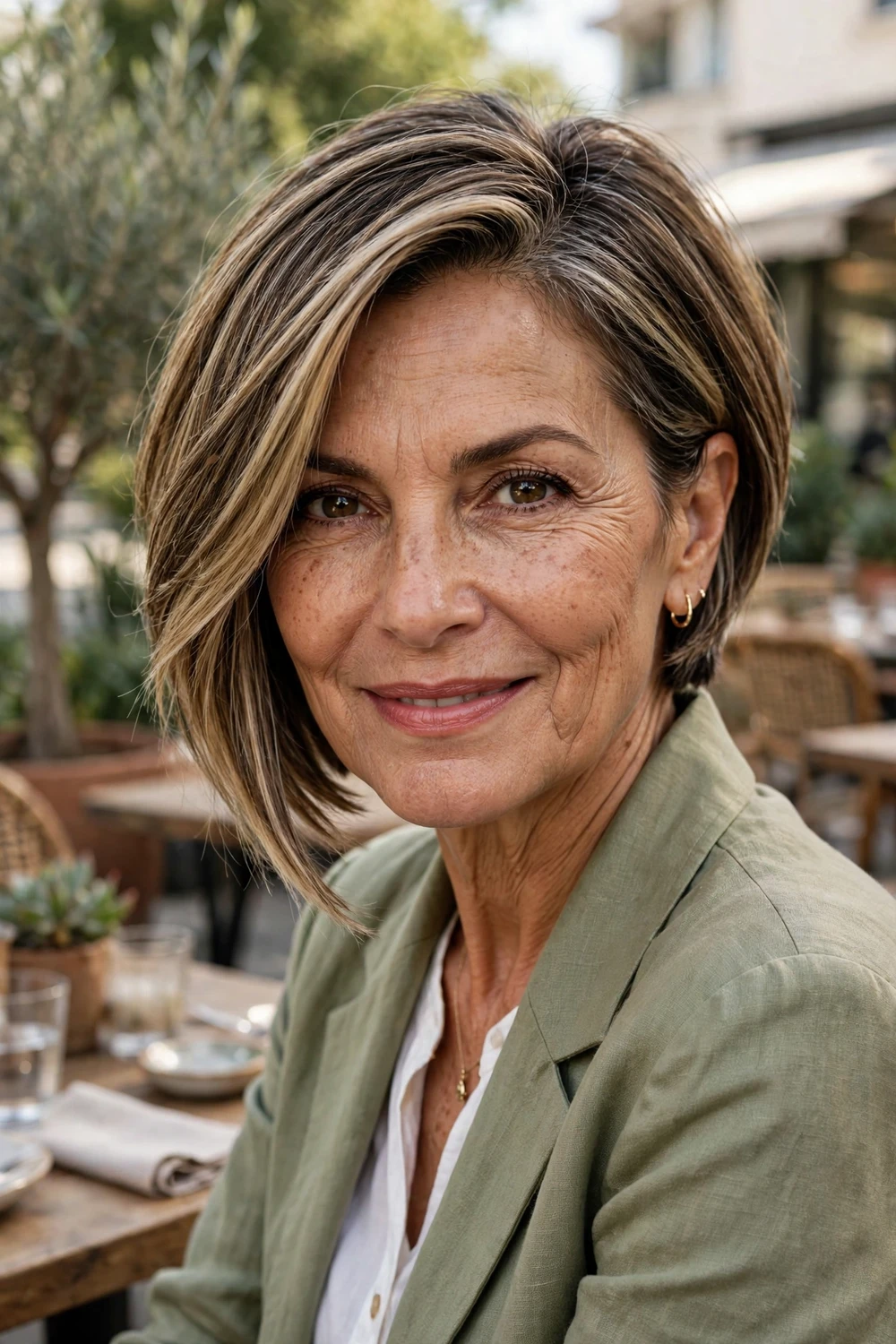
The angled bob is cut shorter at the back and longer toward the front, which builds natural structure and swing into fine hair. The forward angle makes the front sections look denser. Smooth the front pieces with a flat iron for a polished finish, using heat protectant every time. The stacked back dries quickly on its own. The angle works best on straight to slightly wavy hair, where the forward line stays visible.
Try this: keep the angle subtle, about one to two inches of difference. A dramatic angle needs more frequent trims to hold its line.
Difficulty: Easy · Cost: precision haircut ($65–$120, trims every 6–8 weeks)
12. Stacked Bob
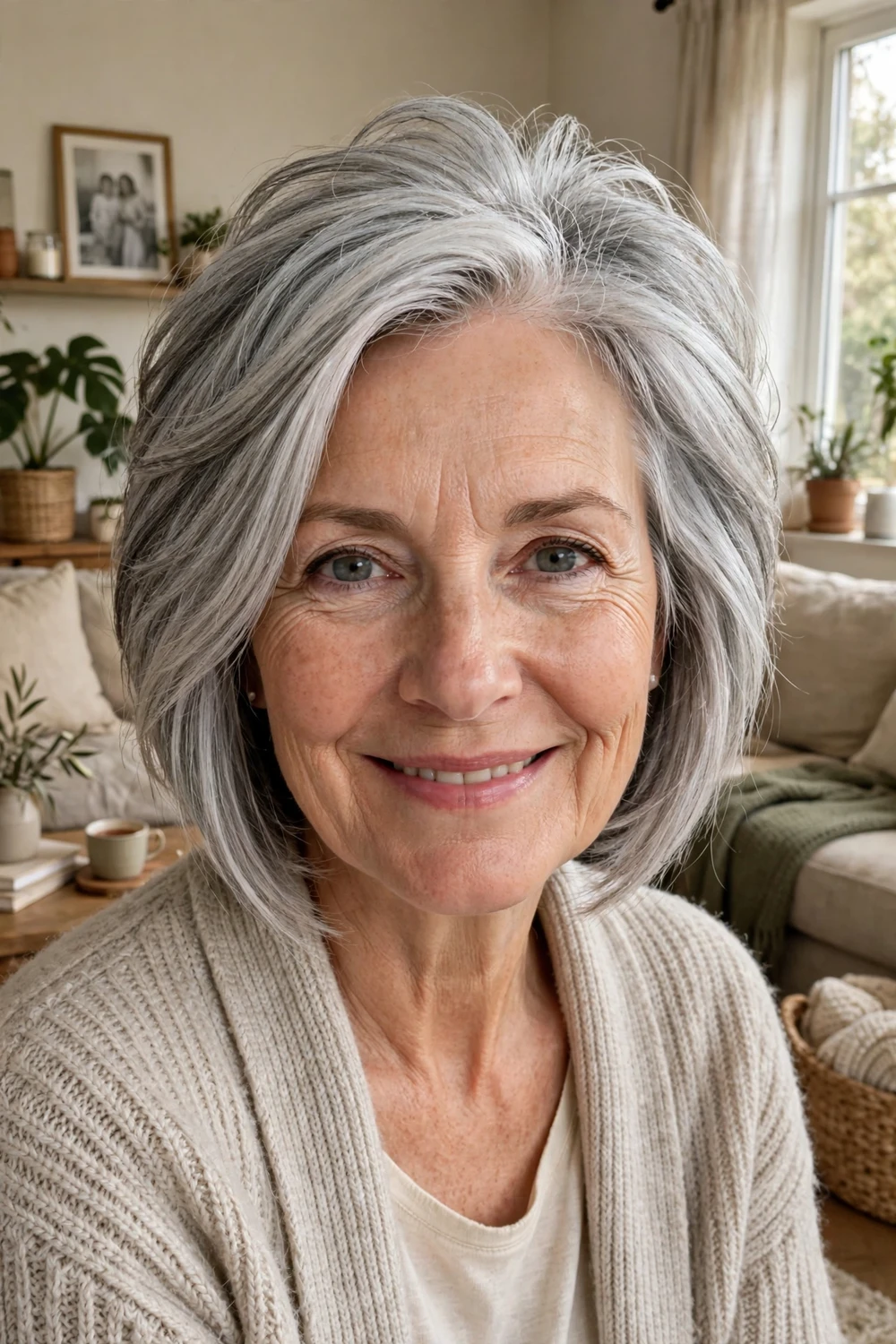
Graduated layers stacked at the back create built-in volume at the crown, the spot where fine hair over 60 tends to lie flattest. The front stays longer for softness around the face. A round-brush blow-dry shapes it in about five minutes with heat protectant. Because the graduation grows out visibly, book trims closer to every six weeks. The graduated back shows its shape best when the crown is dried with lift.
Try this: dry the back sections first, lifting straight up with the round brush. That sets the stacked shape before the front pieces cool.
Difficulty: Easy · Cost: precision haircut ($65–$125, trims every 6 weeks)
13. Wavy Bob

If your hair has any natural wave, a chin-length bob lets you use it instead of fighting it. Scrunch a golf-ball-sized amount of mousse into damp hair and air-dry for soft, full waves with zero heat. The waves break up the surface so fine hair reads as thicker. On straight hair, the same cut takes loose bends from a curling wand in about ten minutes with heat protectant. A dime-sized amount of curl cream on the ends keeps waves defined without weighing them down.
Try this: sleep with the waves loosely pinned on top of your head. They bounce back fuller in the morning with a quick shake.
Difficulty: Easy · Cost: standard haircut ($60–$110, trims every 6–8 weeks)
14. French Bob
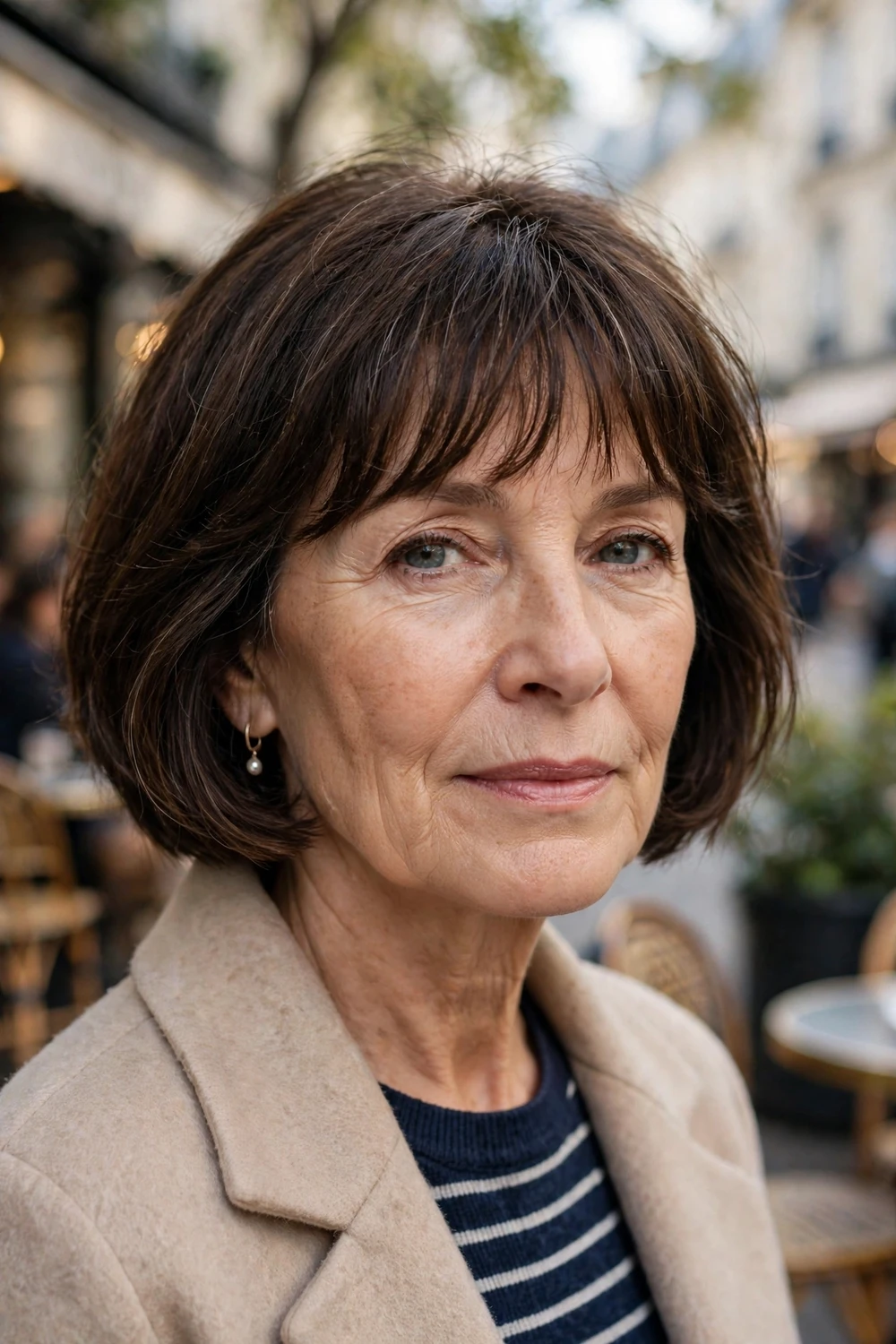
The French bob sits at the jaw with a slightly textured edge and often pairs with a soft full fringe. The short length gives fine hair a dense, chunky outline, and the whole cut air-dries into place. It is one of the most forgiving shapes for second-day hair. Keep the fringe trimmed every three to four weeks so it stays out of your eyes. The textured edge rarely needs straightening, which saves fine hair from daily heat.
Try this: let the fringe air-dry naturally instead of blow-drying it straight. A little natural movement suits this cut better than a stiff fringe.
Difficulty: Easy · Cost: precision haircut ($60–$110, trims every 5–7 weeks)
15. Shoulder-Length Layers

For women who prefer to keep some length, light layers at shoulder length add movement without sacrificing the ends. Keep the layers long, starting below the chin, so fine hair keeps its density. It air-dries well with a smoothing cream, or blow-dry with a round brush and heat protectant for a polished finish. Pull it into a low ponytail on busy days, an option shorter cuts cannot offer. A light texturizing spray on the mid-lengths keeps the layers from falling flat by afternoon.
Try this: ask for layers that start no higher than chin level. Higher layers remove too much weight from fine hair and thin the ends.
Difficulty: Easy · Cost: standard haircut ($65–$120, trims every 8 weeks)
16. Soft Shag
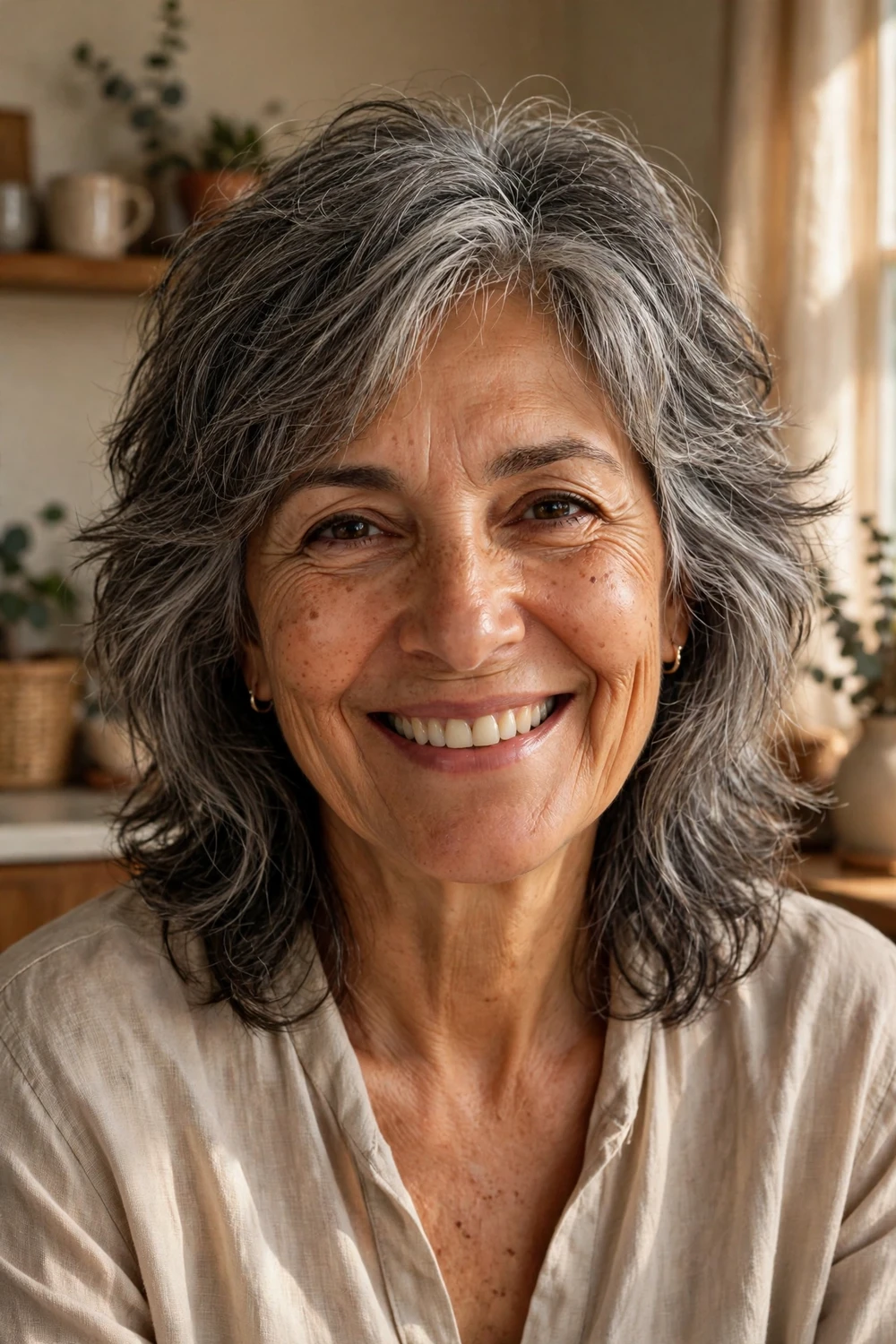
The soft shag uses feathered, disconnected layers to build texture through the mid-lengths, which gives fine hair natural-looking volume. It thrives on minimal styling: mousse scrunched into damp hair, then air-dry. The lived-in finish means it looks good even when you skip a wash day. It suits wavy and straight hair with some natural bend. The disconnected layers also keep their shape for eight to ten weeks between trims. It is one of the few cuts that looks better slightly grown out, which suits a relaxed salon schedule.
Try this: revive second-day shag with a spritz of dry shampoo at the roots, then shake the layers out with your fingers.
Difficulty: Easy · Cost: precision haircut ($65–$120, trims every 8–10 weeks)
17. Layered Lob

The lob, or long bob, falls just above the shoulders with soft layers that keep it from looking heavy. It is the most versatile medium cut for fine hair: wear it air-dried, add loose waves with a curling iron and heat protectant, or pull it back. The layers stop the length from dragging fine hair flat, which is the usual problem with one-length medium cuts. Part it in the middle for a sleek line, or on the side when you want more crown volume.
Try this: wrap only the mid-lengths around a curling iron, leaving the ends straight. The undone finish looks modern and takes half the time of full curls.
Difficulty: Easy · Cost: standard haircut ($65–$125, trims every 8 weeks)
18. Wispy Layered Cut

Wispy layers are cut thin at the very ends so the cut never feels heavy on fine hair. The soft perimeter moves easily and air-dries without bulk. Apply a lightweight leave-in conditioner to the ends only, since conditioner at the roots flattens fine hair. This cut works well for women whose hair is both fine and sparse, as it avoids harsh lines. Wispy ends also dry faster than any other layered cut, since there is very little hair at the perimeter.
Try this: condition from the ears down only. Keeping product off the roots is the simplest way to protect volume in fine hair.
Difficulty: Easy · Cost: standard haircut ($60–$110, trims every 8 weeks)
19. Curtain Bangs with Layers

Curtain bangs part in the middle and sweep to each side, framing the face while blending into the surrounding layers. They add interest around the face without the density cost of a full fringe, which matters for fine hair. Blow-dry the bangs with a round brush, using heat protectant, then let them fall naturally. They grow out gracefully into face-framing layers. They also camouflage a high forehead or thinning hairline, which many women notice after 60.
Try this: dry curtain bangs forward first, then sweep them apart. Drying them flat against the forehead first builds natural lift at the part.
Difficulty: Easy · Cost: haircut with fringe ($65–$120, bang trims every 3–4 weeks)
20. Short Shaggy Cut

The short shaggy cut is choppier and more undone than the soft shag, with piecey ends and plenty of texture. It is ideal for fine hair that falls flat, because the uneven layers create volume that does not depend on styling. Mist texturizing spray through dry hair and scrunch. The whole routine takes about two minutes. The choppy finish also hides cowlicks well, since the uneven texture disguises growth direction.
Try this: apply texturizing spray to dry hair only. On damp hair it can make fine strands clump together and look thinner.
Difficulty: Easy · Cost: precision haircut ($60–$115, trims every 8–10 weeks)
21. Choppy Layers

Choppy layers are cut with deliberate unevenness so the surface breaks up and fine hair reads as thicker. Unlike soft blended layers, the visible texture does the volumizing work for you. Work a small amount of mousse into the roots on damp hair and air-dry. Avoid over-brushing, which smooths away the texture you paid for. Choppy layering suits straight hair best, where the uneven ends stay visible all day. A root-lifting spray at the crown pairs well with this cut, since lift at the roots balances the textured ends.
Try this: once dry, flip your head upside down and shake gently. It separates the choppy pieces for maximum fullness in seconds.
Difficulty: Easy · Cost: standard haircut ($60–$115, trims every 6–8 weeks)
22. Tousled Waves
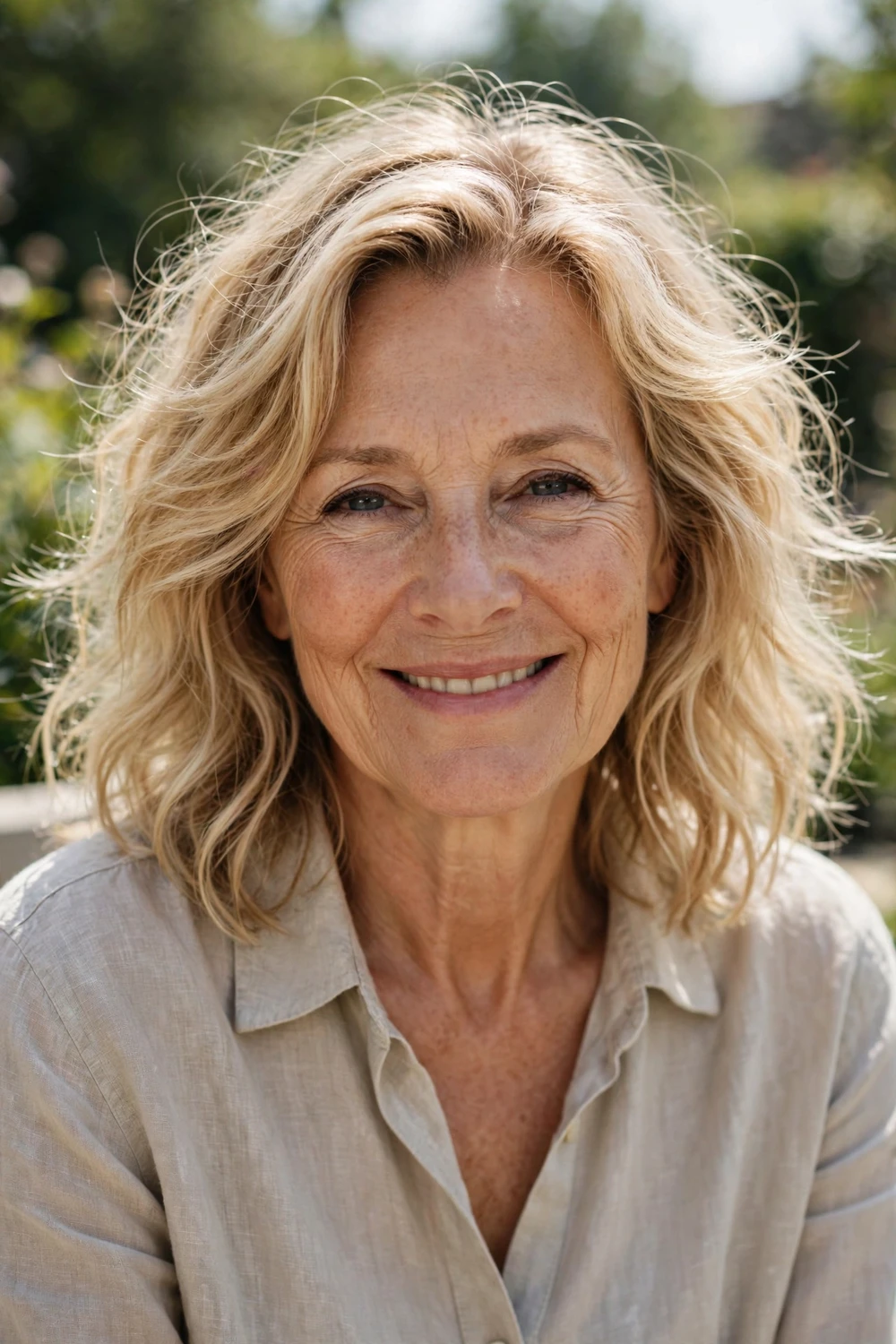
Tousled waves are less a cut than a styling approach that suits shoulder-length fine hair. Wrap one-inch sections around a curling wand, let them cool, then brush through for soft, separated waves. Always apply heat protectant first. The waves add width and movement, which makes fine hair look considerably fuller. The style holds for two to three days with dry shampoo at the roots. Let each curl cool completely before brushing through, which sets the wave so it lasts longer.
Try this: curl sections in alternating directions. The mix of directions keeps waves from clumping into one flat sheet.
Difficulty: Moderate · Cost: standard haircut ($65–$120, styling 10–15 minutes)
23. Permed Soft Curls

A modern soft perm adds lasting volume to fine hair for three to five months, which makes it one of the lowest daily-effort options. Today’s acid perms create loose, natural-looking curl rather than tight ringlets. Daily care is simple: scrunch with a curl cream and air-dry. Expect to pay $120 to $250, and use sulfate-free shampoo to protect the curl pattern. Modern perms use gentler acid formulas, but skip the service if your hair is already fragile or breaking.
Try this: ask for a “body wave” perm with large rods. It gives volume and bend without obvious curls.
Difficulty: Easy daily · Cost: perm ($120–$250, lasts 3–5 months)
24. Wash-and-Go Cut
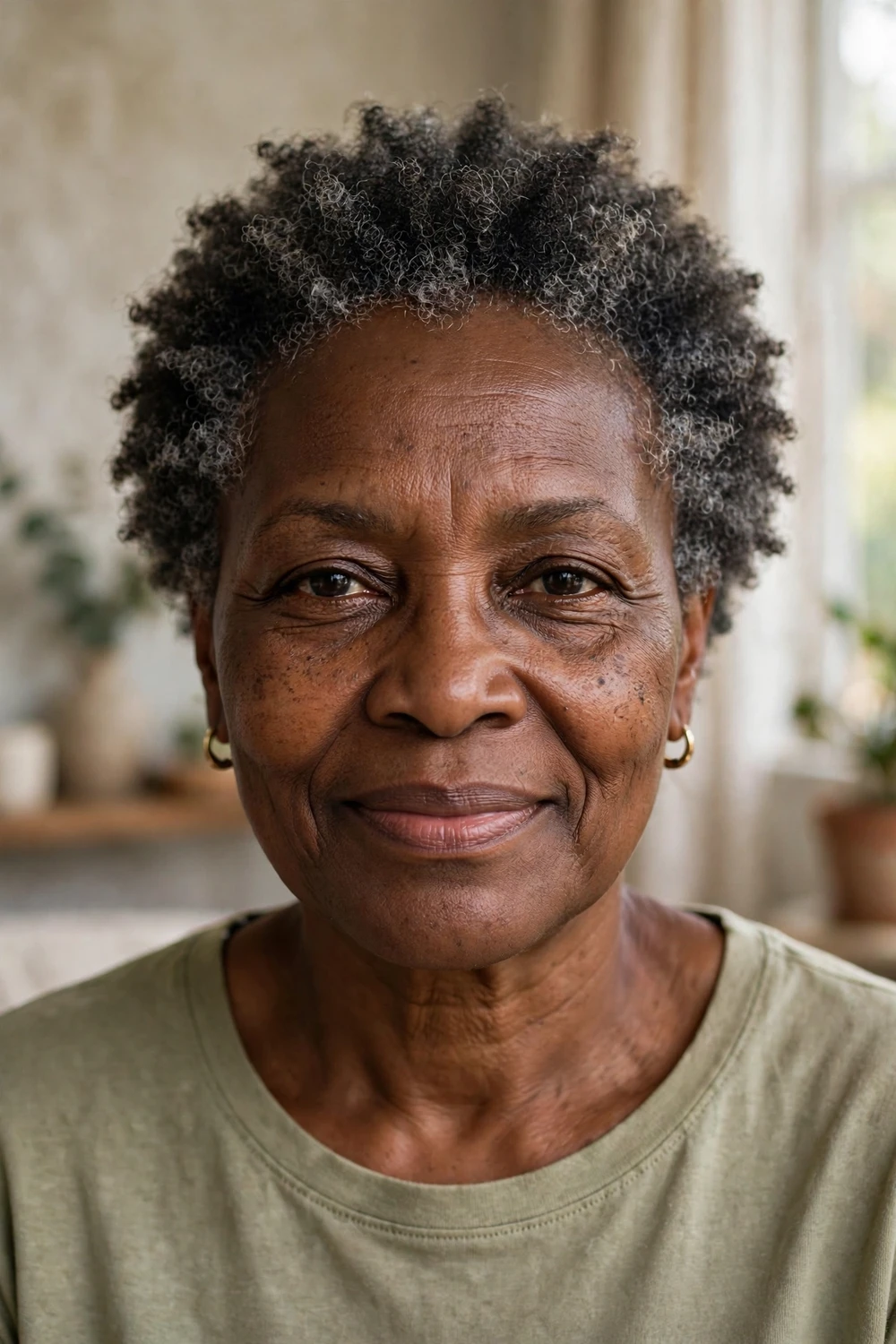
A true wash-and-go cut is shaped so it falls correctly with zero heat: wash, apply leave-in conditioner, scrunch, and leave it alone. The cut works with your natural texture instead of against it, which is why it suits fine hair so well. Fine hair dries fast, so the whole routine fits into a normal shower. Tell your stylist you want to air-dry exclusively so they cut for your natural fall.
For more air-dry shapes, our wash and wear haircuts for women over 60 guide focuses on cuts that need no heat at all.
Try this: do not touch your hair while it air-dries. Handling fine hair during drying creates frizz and breaks up the natural pattern.
Difficulty: Very easy · Cost: standard haircut ($60–$110, trims every 8 weeks)
25. Air-Dry Layered Style
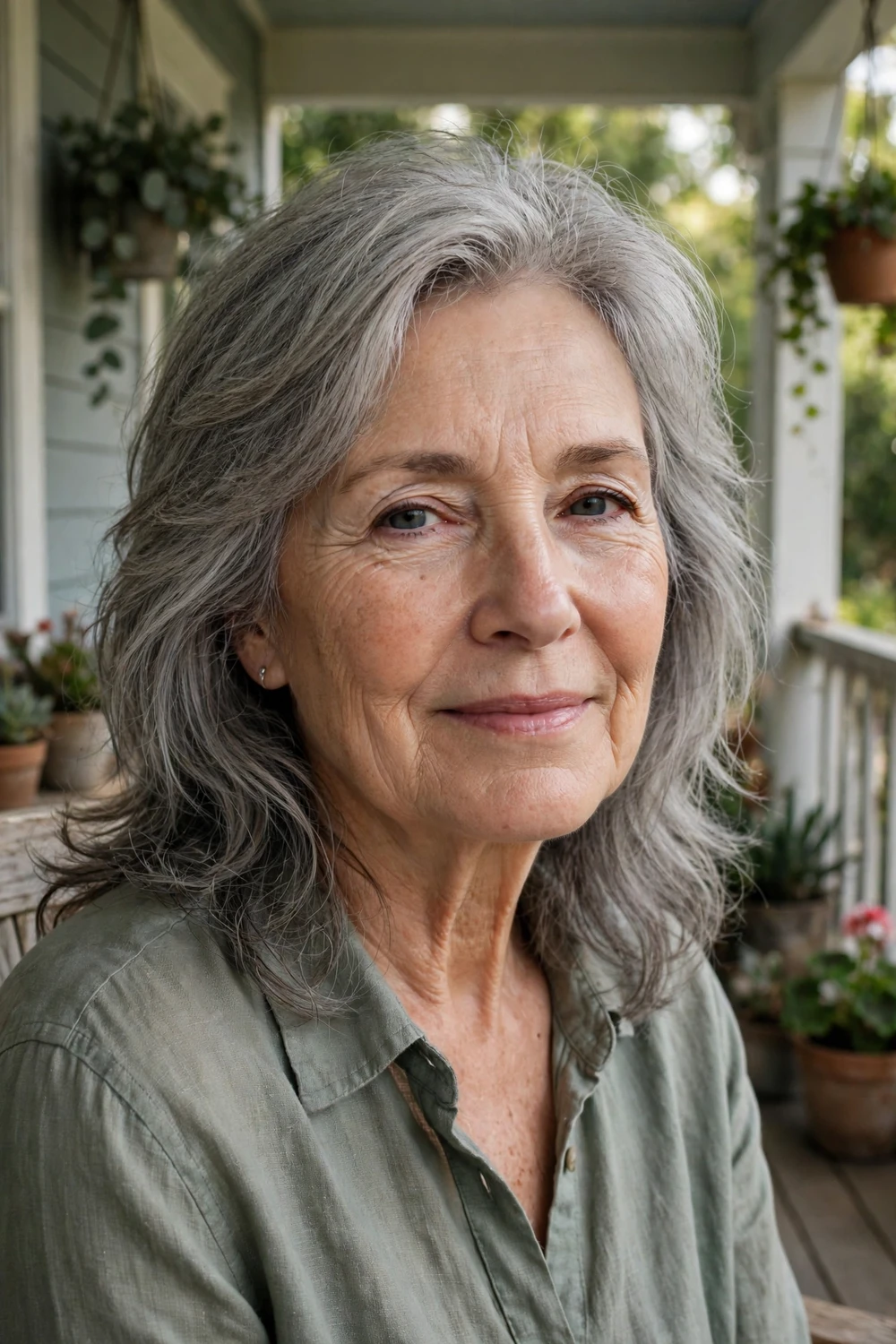
This cut is layered specifically for air-drying: the layers are placed so they fall into shape as the hair dries naturally. Work volumizing mousse through damp hair, arrange the part with your fingers, and walk away. Fine hair dries in 20 to 30 minutes on its own. It is a practical pick for women who want to skip heat styling entirely. A microfiber towel reduces frizz better than a regular towel, since it absorbs water without roughing the cuticle.
Try this: set your part while the hair is still wet. Fine hair locks in the part as it dries, so a wet-set part stays put all day.
Difficulty: Very easy · Cost: standard haircut ($60–$110, trims every 8 weeks)
26. Natural Gray Textured Cut

Embracing natural gray removes color appointments from your routine entirely, which is a real maintenance saving. Texture through the cut keeps the gray from looking flat, since every layer catches light differently. Wash with a purple shampoo once a week to keep white and silver tones bright instead of yellow. The cut itself can be any short textured shape you like. Gray hair is often coarser, so the texture in this cut also keeps wiry strands under control.
Try this: switch to purple shampoo gradually, once a week at first. Overuse can leave a lilac tint on very white hair.
Difficulty: Very easy · Cost: standard haircut ($60–$110, trims every 6–8 weeks)
27. Minimal Styling Crop
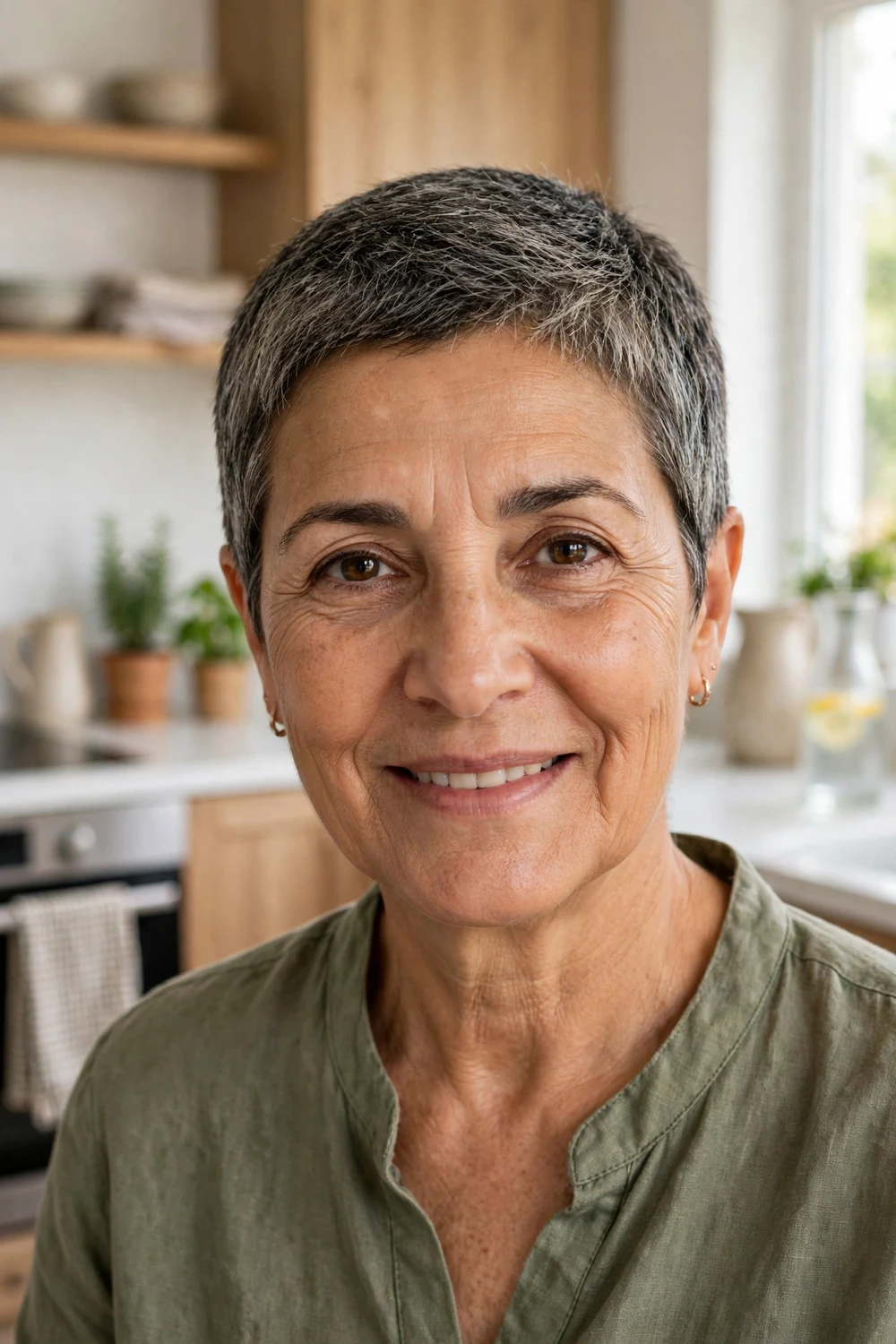
The minimal styling crop is cut clean and simple with no fussy sections: wash, towel-dry, and go. It is shorter than a pixie on top, so there is nothing to arrange in the morning. Fine hair suits it because the short, even length looks neat without product. This is the cut to choose when you want hair to be a non-issue in your day.
For more no-fuss short shapes, see our short hairstyles for thin hair collection.
Try this: keep a small tube of smoothing cream for windy days only. Daily product is unnecessary with this cut.
Difficulty: Very easy · Cost: standard haircut ($45–$85, trims every 5–6 weeks)
28. Blunt Collarbone Cut
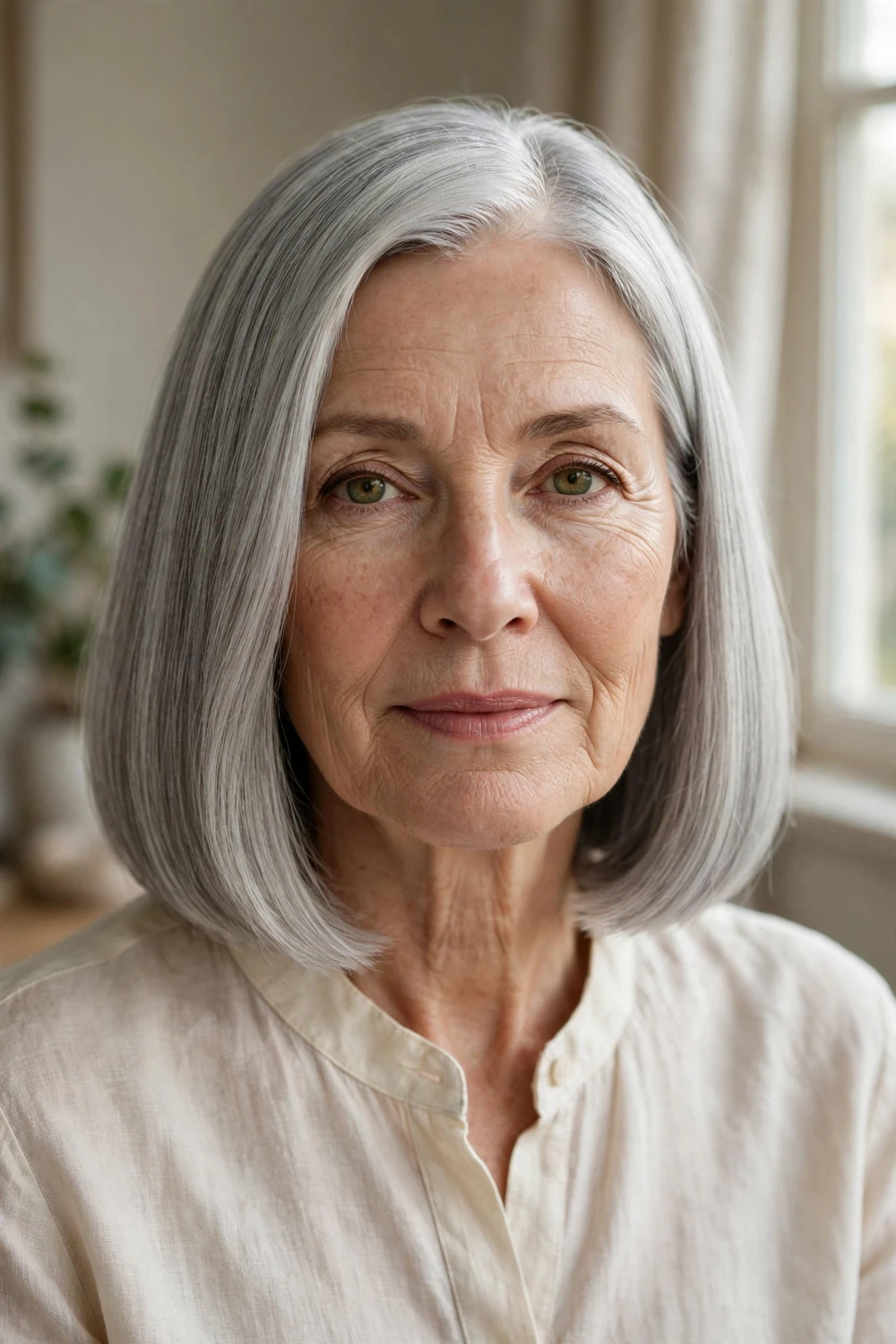
The blunt collarbone cut is the longest genuinely low-maintenance option for fine hair. Cut one length at the collarbone with no long layers, the solid edge keeps the ends looking dense. Long layers would only pull fine hair thin, so the bluntness does the work. Air-dry with a light oil on the ends, or blow-dry smooth with heat protectant. Trims every 8 to 10 weeks keep the edge sharp. The one-length edge also makes ponytails look thicker, since no layers poke out of the elastic.
Try this: sleep with the hair in a loose low braid. It prevents tangles and gives the ends a soft bend by morning.
Difficulty: Easy · Cost: standard haircut ($60–$110, trims every 8–10 weeks)
29. Grown-Out Pixie (Shixie)
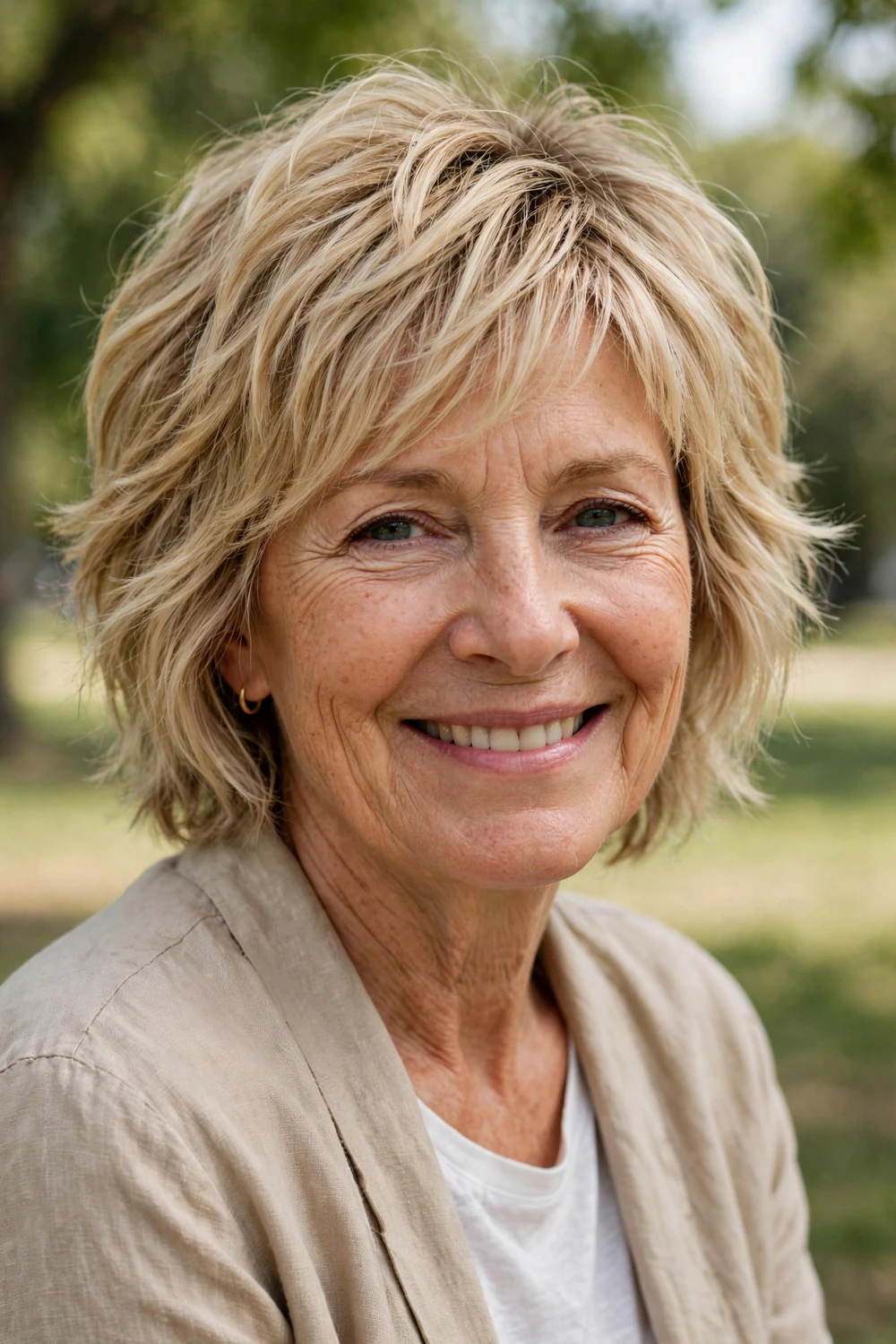
The shixie sits between a pixie and a bob, with a longer top that can be tucked, tousled, or smoothed. Its biggest advantage is the grow-out: the shape stays flattering for weeks longer than a sharp pixie, which stretches the time between trims to 8 to 10 weeks. Style with a little texture cream or let it air-dry. It is a forgiving cut that adapts as it grows. It is also the easiest pixie to grow into a bob later, if you ever want more length.
Try this: when the top gets long between appointments, tuck it behind your ears. The tucked look reads as intentional, not overgrown.
Difficulty: Easy · Cost: pixie cut ($55–$100, trims every 8–10 weeks)
30. Pixie with Side-Swept Fringe
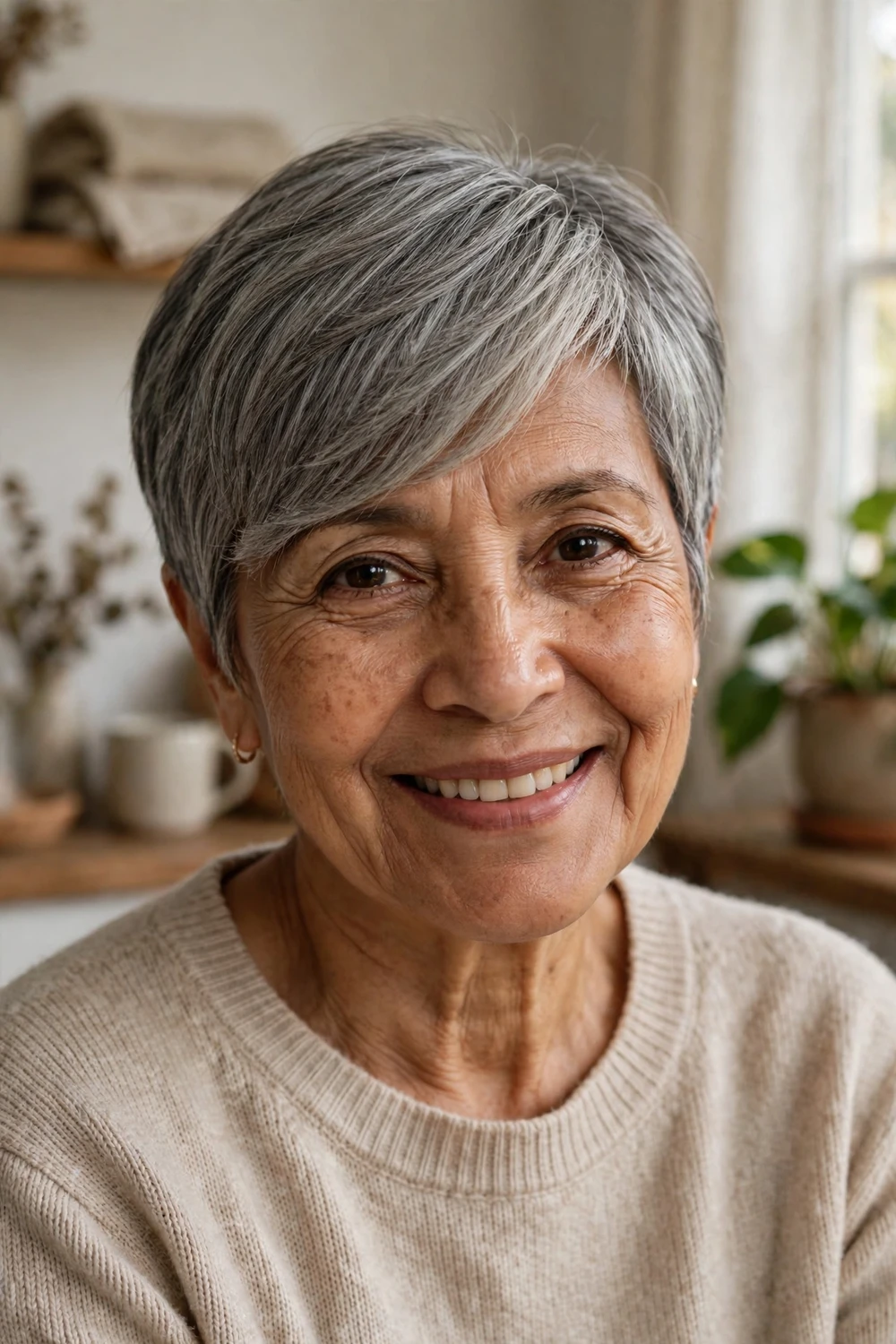
A pixie with a longer side-swept fringe solves a common over-60 concern: thinning at the temples. The fringe sweeps across the forehead and covers sparse areas while the short back keeps maintenance minimal. Style the fringe with a quick blow-dry to the side using heat protectant, or let it air-dry and sweep it over with your fingers. The asymmetry also adds the look of fullness. The longer fringe softens forehead lines too, which is a welcome side effect after 60.
Try this: dry the fringe in the opposite direction first, then sweep it into place. The root lift this creates keeps it from lying flat.
Difficulty: Easy · Cost: pixie cut ($50–$95, trims every 5–6 weeks)
31. Deep Side-Part Bob
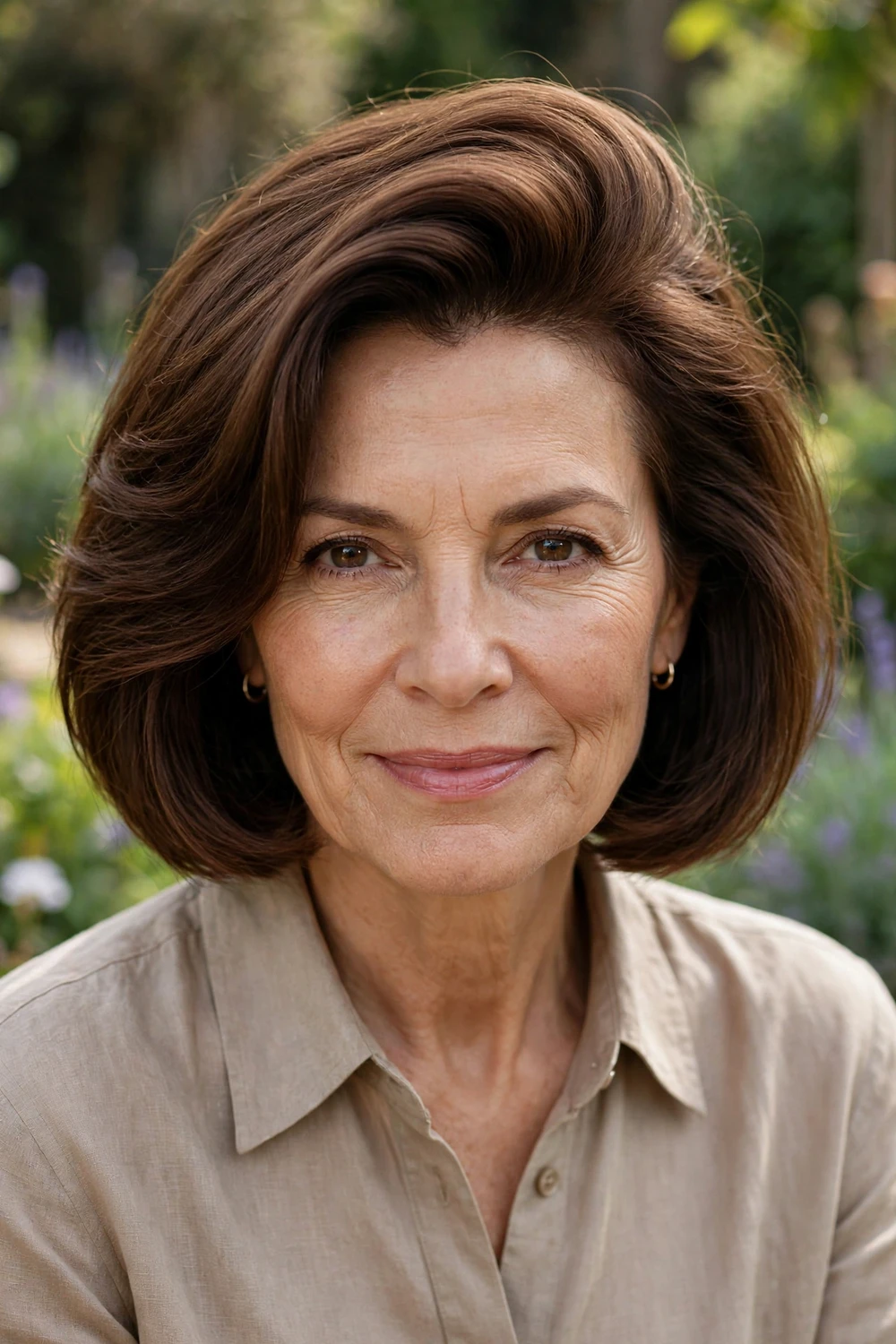
Moving the part several inches to one side is the fastest volume trick for fine hair. The deep side part forces hair to sweep across the crown, creating asymmetric fullness with no teasing and no product buildup. It works on any chin-length bob you already have, so it costs nothing to try. Set the part on damp hair so it holds as it dries. A deep part also balances a round face, since the diagonal line breaks up facial symmetry.
Try this: switch the side every week or two. Hair trains itself to lie flat along a permanent part, so rotating sides preserves the lift.
Difficulty: Very easy · Cost: free with any bob haircut
32. Nape-Undercut Bob
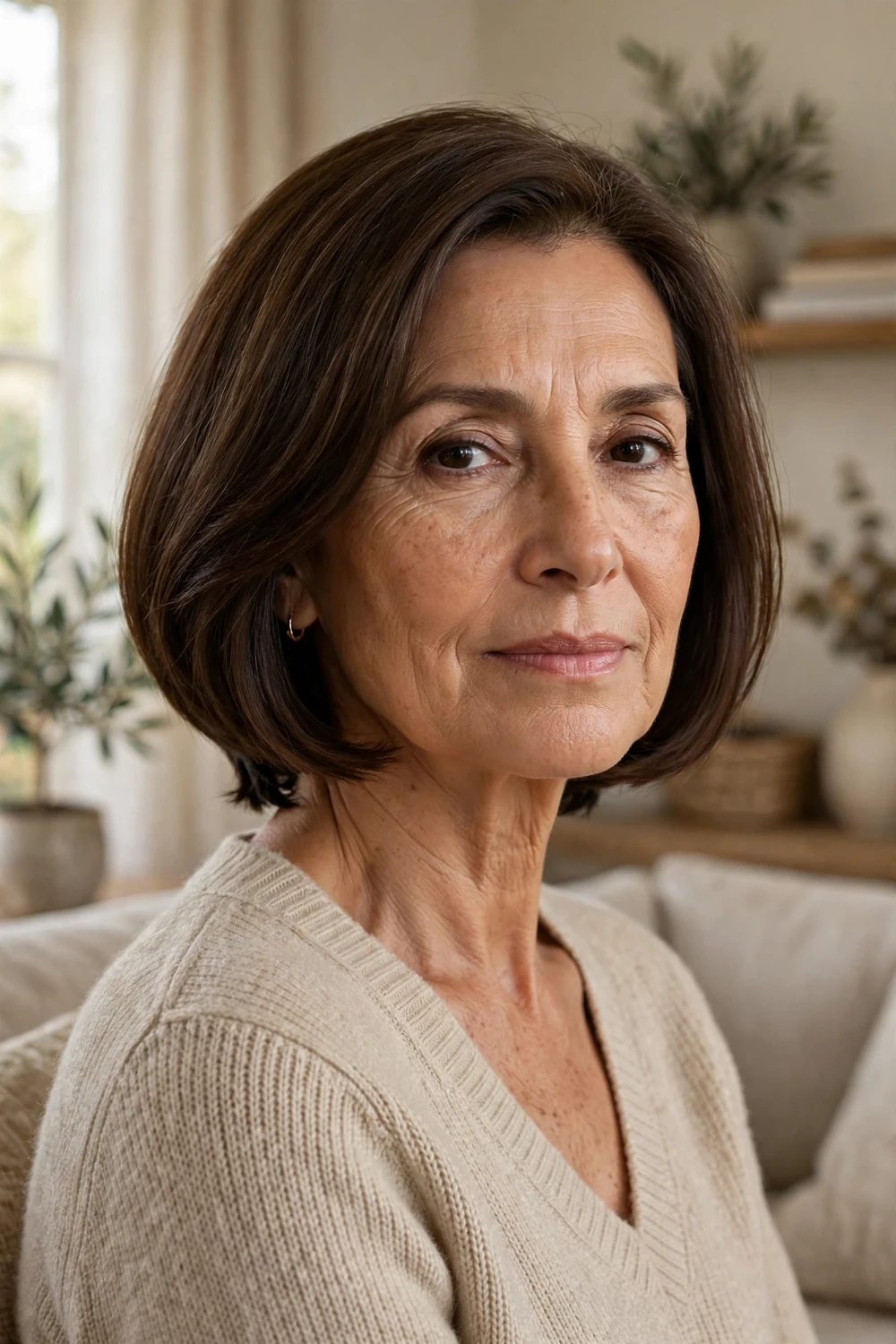
A hidden undercut at the nape removes bulk where it is least visible, which makes the bob dry faster and sit closer at the neck. The top layers fall over the undercut, so it stays discreet until you lift the hair. Fine hair benefits because less hair at the nape means less weight pulling the style down. Ask for a soft undercut rather than a shaved one for the most natural grow-out.
Try this: tell your stylist you want the undercut “disconnected but soft.” A harsh line shows when the wind lifts the top layers.
Difficulty: Easy · Cost: precision haircut ($65–$120, undercut touch-ups every 6–8 weeks)
Quick Comparison: 8 Popular Picks
| Hairstyle | Daily Styling Time | Volume Boost | Trim Every |
|---|---|---|---|
| Classic Pixie Cut | 2 minutes | High | 4–6 weeks |
| Textured Pixie | 3 minutes | High | 5–6 weeks |
| Classic Bob | 5 minutes | Medium | 6–8 weeks |
| Stacked Bob | 5 minutes | High | 6 weeks |
| French Bob | 2 minutes | Medium | 5–7 weeks |
| Layered Lob | 5–10 minutes | Medium | 8 weeks |
| Wash-and-Go Cut | 0 minutes | Medium | 8 weeks |
| Permed Soft Curls | 3 minutes | High | Perm lasts 3–5 months |
How to Choose the Right Cut (and What to Avoid)
Match the cut to your hair density first. Fine hair that is also sparse looks fullest with blunt, one-length cuts like the classic bob or collarbone cut. Fine hair with decent density can handle light layers, which add movement without thinning the ends.
Be honest about your styling tolerance. If you never want to pick up a blow dryer, choose from the air-dry-friendly ideas: the wash-and-go cut, French bob, or natural gray textured cut. If five minutes with a round brush is fine, layered bobs and lobs open up.
Bring photos to your appointment and tell your stylist you plan to air-dry, if that is the plan. Cuts are shaped differently for air-drying versus blow-drying, and the cut needs to match your real routine.
What to avoid: over-layering thin hair, which leaves the ends wispy. Heavy oils, butters, and thick creams, which flatten fine hair by midday. Growing past the shoulders without layers, since the weight pulls everything flat. Skipping trims, because fine hair shows split ends and straggly edges faster than thick hair. Very dark solid color can also make sparse areas more visible, while softer or dimensional color adds the look of depth.
For even more ideas in this exact lane, this collection of hairstyles for women over 60 with thin hair rounds up 24 cuts, from wash-and-wear pixies to soft curled bobs, that keep styling time short.
Frequently Asked Questions
What is the easiest haircut for a 60-year-old woman with fine hair?
A textured pixie or a classic chin-length bob. Both dry in minutes, need only a small amount of lightweight product, and hold their shape well between appointments. The pixie needs trims every 4 to 6 weeks, while the bob stretches to 6 to 8 weeks.
Should fine hair over 60 be layered or cut blunt?
It depends on density. Fine hair that is also sparse looks thicker with blunt, one-length ends. Fine hair with good density benefits from light, long layers that add movement. Avoid short, choppy layers on very sparse hair, since they can make the ends look thinner.
How often should I trim fine hair after 60?
Every 6 to 8 weeks for bobs and medium cuts, and every 4 to 6 weeks for pixies and crops. Fine hair shows grown-out edges and split ends faster than thick hair, so regular trims keep the shape that creates the fuller look.
Are bangs a good idea for fine hair in your 60s?
Light bangs work well: wispy bangs, curtain bangs, and side-swept fringes add interest without using up much density. Avoid blunt, thick bangs, which remove too much hair from the already fine canopy and need frequent trimming.
What products make fine hair look thicker without weighing it down?
Volumizing mousse applied at the roots, root-lifting spray, dry shampoo between washes, and a lightweight leave-in conditioner on the ends only. Skip heavy creams, oils, and butters near the roots, since they flatten fine hair within hours.
Final Thoughts
The right cut lets fine hair look its fullest with the least daily effort. Start with your density and your real morning routine, pick one idea from this list, and bring it to your stylist. Small choices, like a blunt edge, a deep side part, or a lightweight mousse, add up to hair that behaves itself day after day.

