


The best pixie haircuts for women over 60 work with hair as it is now: finer than it used to be, sometimes thinner at the crown, and often part silver. Shorter lengths take weight off, which lets fine hair stand up instead of lying flat, and a good pixie asks little more than a wash and a quick style in the morning.
After sixty, the strongest pixies share three traits: softness around the face, fullness at the crown, and a shape that grows out gracefully between trims. Below are 20 pixie variations chosen for those exact needs, each with honest notes on upkeep, cost, and who it suits best.
Quick Takeaways
- Shorter lengths make fine, thinning hair look fuller by removing the weight that drags roots flat.
- Soft, feathered edges flatter mature faces better than harsh, blunt lines.
- Silver and salt-and-pepper pixies cut color maintenance down to almost zero.
- Most pixies need a trim every 5 to 7 weeks to hold their shape.
- Bring your glasses to the appointment so the fringe can be shaped around the frames.
20 Pixie Haircuts for Women Over 60
1. Feathered Silver Pixie

Feathered ends are the kindest thing you can do for fine silver hair. Instead of blunt lines that expose thin spots, feathery layering breaks up the perimeter so light scatters and the hair reads fuller. Keeping extra length at the crown covers the part area where thinning usually shows first.
Ask your stylist for soft, point-cut layers through the top and a tapered finish at the nape. A pea-sized amount of volumizing mousse worked into damp roots, then blow-dried upward with your fingers, gives lift that lasts all day. Use a purple shampoo once a week to keep silver from turning yellow near the temples.
Try this: dry the crown in the opposite direction of growth for extra lift right at the roots.
Difficulty: Easy · Cost: standard pixie cut ($)
2. Soft Layered Pixie with Side-Swept Fringe
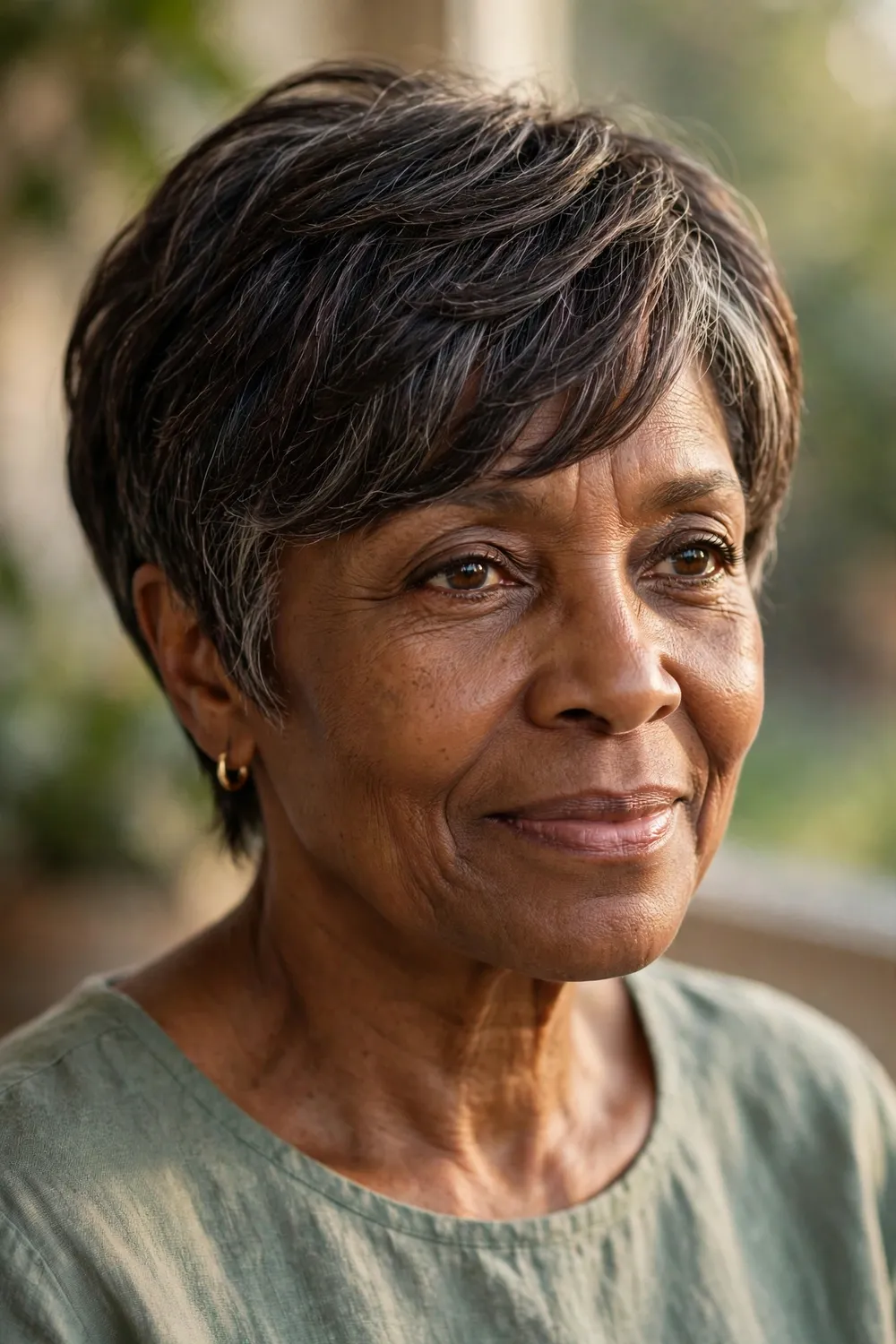
A side-swept fringe is the most forgiving detail a pixie can have after 60. It softens forehead lines, draws attention to the eyes, and gives styling flexibility: sweep it across for polish, push it back for ease. Soft layers through the sides keep the silhouette feminine without looking fussy.
This cut works well with glasses because the fringe can be shaped to sit just above the frames. Bring your glasses to the appointment so your stylist can check the length against them. Style with a small round brush or just fingers and a dab of lightweight cream. Trims every six weeks keep the fringe out of your eyes.
Try this: part the fringe slightly off-center to add asymmetry that flatters rounder faces.
Difficulty: Easy · Cost: standard pixie cut ($)
3. Textured Crop Pixie

The textured crop is the wash-and-go champion of the pixie family. Short all over with piecey definition through the top, it needs nothing more than a fingertip of paste scrunched into dry hair. There is no fringe to manage and no part to maintain, which makes it ideal for women who want a sharp look with near-zero daily effort.
Ask for texture cut into the top with clippers or shears kept close at the sides, not shaved, just neat. This cut grows out evenly, so you can stretch trims to seven or eight weeks. It suits straight to slightly wavy hair best; very curly hair will need a different approach to avoid unwanted volume at the sides.
Try this: work the paste in while hair is slightly damp, then let it air-dry for soft, separated texture.
Difficulty: Easy · Cost: standard pixie cut ($)
4. Long Pixie for Extra Coverage

If a short crop feels like too big a leap, the long pixie is the gentle middle ground. Grown to the edge of a bob at the sides and fringe, with a tidy tapered nape, it covers more scalp than a classic pixie, a real advantage when hair is thinning at the temples or crown. The extra length also gives more styling options day to day.
Keep the crown full rather than heavily layered, since too many short layers on top can make fine hair look sparse. A long, wispy fringe that can be swept to either side adds versatility. Blow-dry with a round brush for smoothness, or air-dry with a little cream for a softer finish. Apply heat protectant before any hot styling.
Try this: tuck one side behind the ear to show off earrings and create instant asymmetry.
Difficulty: Easy · Cost: standard pixie cut ($)
5. Wispy Bangs Pixie
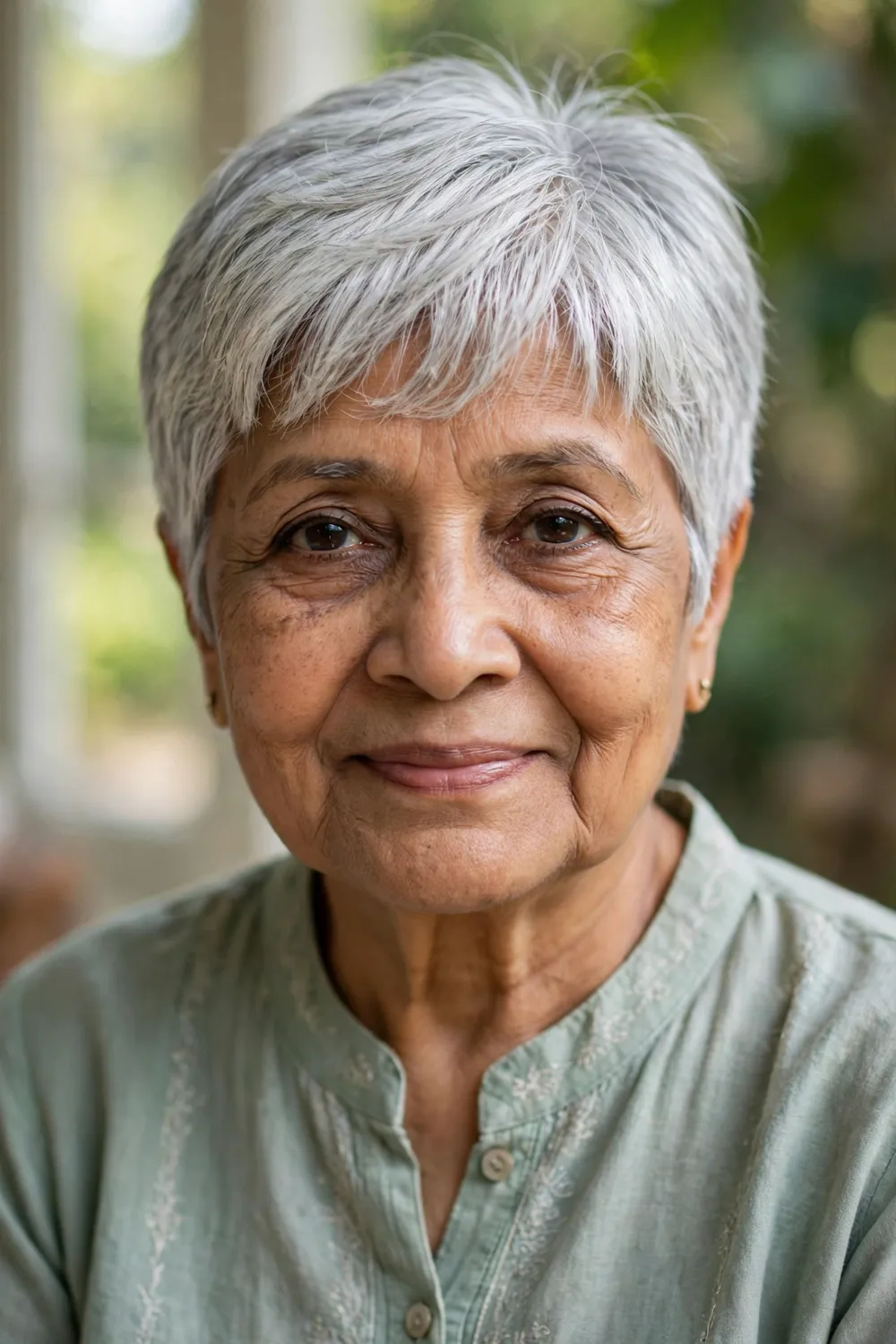
Wispy bangs solve two common concerns at once: they camouflage a high forehead or thinning hairline, and because they are light, they never weigh fine hair down. Paired with a short pixie, they keep the whole look soft and youthful without trying too hard.
The bangs should be cut with thinning shears or point-cutting so they lie in separated wisps rather than a solid curtain. They need a quick trim every three to four weeks, faster than the rest of the cut, so ask your stylist about complimentary fringe trims between appointments. Style by simply combing forward while damp and letting them fall naturally.
Try this: blow-dry bangs side to side with a flat brush to train them to lie flat.
Difficulty: Easy · Cost: standard pixie cut ($)
6. Volumizing Crown Pixie

When hair goes flat at the crown, the whole face can look drawn down. This pixie builds its architecture around height: stacked layers at the crown create lift exactly where age-related thinning hits hardest, while the sides stay close so all the fullness reads up top. The result lifts the eye upward, which flatters softening jawlines.
A root-lift spray applied to damp hair at the crown, followed by blow-drying upward with a small round brush, sets the volume. Use heat protectant first to guard fine strands. Avoid heavy waxes or oils near the roots; they collapse the very lift this cut is built for. A trim every five to six weeks keeps the stacked shape from growing heavy.
Try this: flip your head upside down for the last minute of blow-drying to lock in root lift.
Difficulty: Medium · Cost: standard pixie cut ($)
7. Salt-and-Pepper Blended Pixie

Going salt-and-pepper is the lowest-maintenance color decision you can make after 60, and a pixie shows it off best. Short lengths mean the grow-out phase passes in weeks instead of months, and the mix of dark and silver strands creates natural dimension that solid color never achieves. Many women find they can drop monthly color appointments entirely.
If your gray is coming in unevenly, ask your colorist about silver blending, fine highlights woven through the darker areas to soften the line of demarcation. After that, maintenance is just trims every six to eight weeks and purple shampoo once a week to keep the silver tones bright rather than dull.
Try this: a clear gloss treatment every couple of months adds shine that makes gray look intentional and polished.
Difficulty: Easy · Cost: pixie cut ($), blending session ($$) if needed
8. Tapered Nape Pixie

A tapered nape is what separates a polished pixie from a grown-out one. By graduating the hairline at the back of the neck into a clean, soft contour, this cut looks tidy from every angle and grows out far more gracefully than a blunt nape. It is especially flattering if you wear your collar up or favor necklaces.
The top can be as long or as textured as you like, the signature is all in the back. Keep the taper soft rather than skin-tight for an age-appropriate finish. Between salon visits, you can neaten the very bottom edge yourself with small trimmers, which stretches the trim cycle to a full eight weeks for some women.
Try this: ask for the nape tapered with shears rather than clippers for the softest grow-out.
Difficulty: Easy · Cost: standard pixie cut ($)
9. Curly Pixie

Natural curls and pixies are a happy match at any age. Short lengths let curls spring up instead of dragging down, which gives automatic volume, exactly what finer, aging hair needs. A curly pixie also skips heat styling entirely, sparing already-delicate strands.
For 20 ideas built around this exact combination, see our curly pixie haircuts for women over 60 roundup.
Ask for a dry cut from someone experienced with curls, with length left on top for definition and the sides kept neat. Scrunch a lightweight curl cream into damp hair and either diffuse on low heat or air-dry. Use heat protectant if you diffuse. Gray curls can run dry, so a weekly deep-conditioning mask keeps them soft rather than frizzy.
Try this: pineapple your hair loosely at night to protect curl shape for the next morning.
Difficulty: Easy · Cost: curly cut ($$)
For the full deep dive, these curly pixie haircuts for older women explore 21 cuts tuned to mature curly hair.
10. Wavy Tousled Pixie

Waves give a pixie built-in texture that reads modern without any effort. This cut keeps enough length through the top for the wave pattern to show, with shorter sides for contrast. It is one of the best air-dry options on this list: waves do the styling work for you.
Work a sea salt spray or light mousse through damp hair, scrunch, and walk away. The layers should be cut to follow your natural wave rather than fight it, so bring photos of your hair air-dried to the consultation. Trims every six to seven weeks keep the waves from growing into an undefined shape.
Try this: twist two front sections away from your face while damp for soft, face-framing waves.
Difficulty: Easy · Cost: standard pixie cut ($)
11. Pixie with a Longer Top

Keeping length on top while the back and sides stay short is the most versatile pixie formula after 60. The longer crown covers thinning at the part, and you can part it, sweep it, or push it back depending on the day. It is also the most forgiving grow-out: when the top gets long, it simply becomes a different style rather than a mess.
Ask for at least three to four inches through the top with textured ends so it moves naturally. Style options range from a quick finger-comb with cream to a round-brush blowout for more polish, always with heat protectant first. This is a strong choice if you are growing out a shorter crop and want something wearable in between.
Try this: change your part every few days to prevent the top from lying flat in one direction.
Difficulty: Easy · Cost: standard pixie cut ($)
12. Brushed-Back Pixie

Brushing everything back off the face creates instant polish. This is the pixie you wear to a wedding or an important dinner. With no fringe to manage, the focus lands on your bone structure, and the swept-back shape adds height that lengthens the face. It reads confident and refined.
The cut needs enough length on top to sweep back smoothly, usually three inches or more. Work a light pomade or cream through damp hair, comb straight back, and let it set. For extra hold on fine hair, a light mist of flexible hairspray finishes it. Because the style is so clean, keep the nape and sideburns tidy with regular trims.
Try this: blow-dry the top straight back with a flat brush while lifting at the roots for lasting height.
Difficulty: Medium · Cost: standard pixie cut ($)
13. Side-Parted Sleek Pixie

A deep side part turns a simple pixie into something quietly striking. The asymmetry adds volume on one side, which is useful when hair is thinner on top, and the sleek finish looks deliberate and put-together. This is the office-ready pixie: neat, professional, and quick.
Smoothing serum on damp hair followed by a blow-dry with a flat brush creates the sleek surface; use heat protectant before the dryer. Tuck the shorter side behind the ear for a clean line. Fine hair holds this style well because there is less weight to pull it out of shape. A trim every five to six weeks keeps the part area sharp.
Try this: set the part while hair is damp; once dry, fine hair resists re-parting.
Difficulty: Easy · Cost: standard pixie cut ($)
14. Choppy Textured Pixie

Choppy, piecey texture keeps a pixie looking current rather than classic. The deliberate unevenness creates separation that makes even fine hair look like it has more of it, and the style tolerates a little messiness, welcome news on busy mornings. It suits women who want edge without going extreme.
Ask for point-cutting and razor work through the top, but keep the texture moderate: over-thinning fine hair makes it look sparse rather than piecey. A matte wax or clay worked through dry ends defines the pieces. This cut pairs well with silver or highlighted hair, since light catching the separated pieces adds visible dimension.
Try this: pinch small sections at the crown between your fingers with wax for deliberate separation.
Difficulty: Medium · Cost: textured pixie cut ($$)
15. Pixie with Soft Balayage Highlights

Fine hair over 60 often looks one-dimensional in a single color. Soft balayage highlights, hand-painted lightness concentrated at the crown and around the face to create the illusion of depth and thickness without a harsh grow-out line. On a pixie, the effect is subtle and sunlit rather than stripey.
Keep the highlight no more than two shades lighter than your base for the most natural result. Because pixies get trimmed often, the color needs refreshing every eight to ten weeks to keep the lightness where the cut shows it most. A color-safe shampoo and weekly mask protect highlighted strands, which run drier with age.
Try this: ask for the lightest pieces around the face, where they brighten the complexion most.
Difficulty: Easy · Cost: pixie cut ($) + partial balayage ($$)
16. Platinum Silver Pixie

Going fully platinum silver is a statement, and on a pixie it looks intentional rather than accidental. The bright, even tone draws light to the face and makes the cut’s shape read crisply. It suits women whose gray is already 80 percent or more of their hair, at that point, blending into silver is easier than fighting it.
Achieving platinum usually takes a lightening session followed by toning, then purple shampoo once a week at home to stop brassiness creeping back, especially at the temples where hair is more porous. Keep the cut itself simple; clean lines let the color do the talking. Trims every six weeks keep the bright shape sharp.
Try this: a silver gloss between color appointments refreshes the tone without more lightening.
Difficulty: Easy · Cost: pixie cut ($) + silver color service ($$)
17. The Bixie: Pixie-Bob Hybrid

Can’t decide between a pixie and a bob? The bixie splits the difference: pixie-short at the back and crown, with bob-like length grazing the cheeks and jaw. It gives more coverage and styling versatility than a true pixie while keeping the wash-and-wear ease of short hair. Stylists call it one of the most adaptable cuts for women over 60.
The longer perimeter softens the jawline and works on nearly every face shape. Style it smooth with a round brush for polish or tousled with cream for a relaxed finish. Use heat protectant first if you use hot tools. Because it sits between lengths, tell your stylist you want a bixie specifically, or you may walk out with a plain short bob.
Try this: flip the cheek-grazing pieces outward with a flat iron for a flippy, retro finish.
Difficulty: Easy · Cost: standard pixie cut ($)
18. Pixie with Tapered Sides for Glasses Wearers

Glasses change the geometry of a haircut, and this pixie is designed around them. Tapered sides leave room for bold frames without competing, while height at the crown balances the visual weight of the glasses. The fringe is kept short enough to clear the top of the frames; no more hair catching in hinges.
Always bring your glasses to the cut. A good stylist will shape the fringe and sideburns while you are wearing them. Shorter, sleeker sides suit strong frames; softer, longer sides suit delicate ones. If you wear glasses daily, you may also want ideas made for frames. See our short pixie haircuts for women with glasses for more frame-friendly options.
Try this: keep sideburns trimmed just above where your frames sit to avoid bulk behind the ears.
Difficulty: Easy · Cost: standard pixie cut ($)
19. Wash-and-Wear Pixie

This is the pixie for women who want to stop thinking about their hair. Cut to fall into place with zero heat styling, it relies on a smart shape: even layers, a natural part, ends that tuck where they should, rather than daily effort. Wash, towel-dry, add a dab of cream if you like, and go.
The secret is in the consultation: tell your stylist you want to air-dry every day, and they will cut accordingly, keeping weight where your hair needs guidance. This cut is cut for your natural texture, whatever it is. For more genuinely low-effort options beyond pixies, browse our wash-and-wear haircuts for women over 60.
Try this: sleep on a satin pillowcase to cut morning frizz and skip restyling entirely.
Difficulty: Easy · Cost: standard pixie cut ($)
20. Soft Spiky Pixie
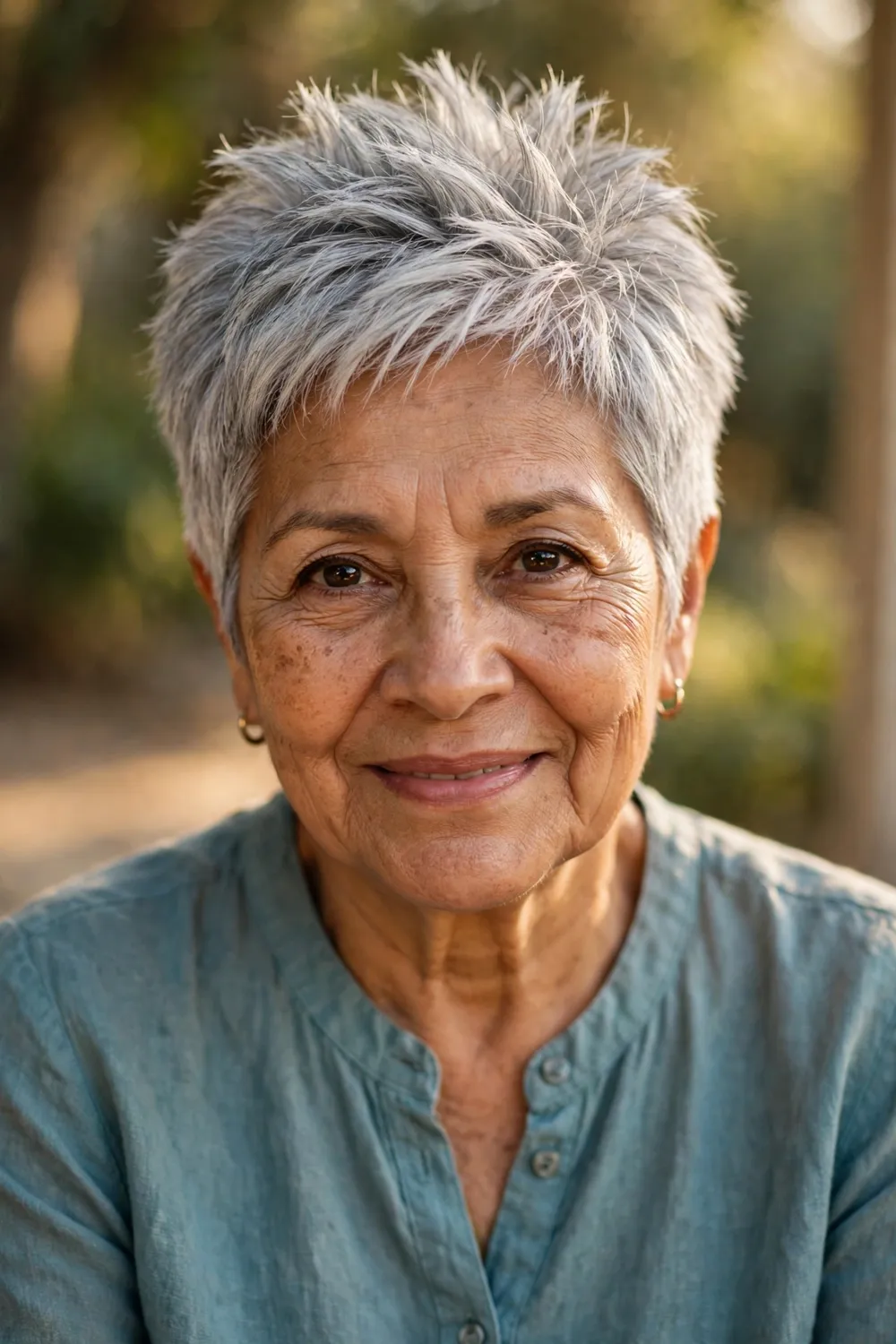
Spiky doesn’t have to mean severe. This version keeps the playful texture of a spiky cut but softens every edge: the spikes are piecey rather than stiff, the silhouette stays rounded, and the overall effect is lively, not harsh. It is a good choice for women who want their haircut to have some personality.
A matte paste worked through dry hair with your fingertips creates separation; use less product than you think, since overloading fine hair makes spikes collapse. Keep the sides and nape neat so the texture reads intentional. If your taste runs bolder than this soft version, our undercut pixie haircuts for women over 60 take the edge considerably further.
Try this: spike just the crown and keep the fringe smooth for a balanced, modern finish.
Difficulty: Medium · Cost: textured pixie cut ($$)
How to Choose the Right Pixie After 60
Start with your hair as it is today, not as it was at 40. Fine or thinning hair needs crown fullness and soft layering, never heavy texturizing that removes bulk you can’t spare. Thick or coarse hair can handle more layering and texture. Then consider your routine: if you will not blow-dry daily, choose a cut designed to air-dry, and say so at the consultation.
Face shape matters less than most guides claim, but two details matter a lot: glasses (bring them) and your willingness to get trims every five to seven weeks. A pixie is low daily effort but regular-salon-visit commitment. For the broader family of mature pixie styles beyond the over-60 focus, our short pixie haircuts for older women covers more classic variations.
Pixie Comparison at a Glance
| Style | Best for | Daily effort | Trim every |
|---|---|---|---|
| Feathered Silver Pixie | Fine, graying hair | 5 minutes | 6 weeks |
| Textured Crop Pixie | Zero-fuss routines | 2 minutes | 7–8 weeks |
| Long Pixie | Thinning crown, cautious first-timers | 5 minutes | 6–7 weeks |
| Salt-and-Pepper Pixie | Skipping hair dye | 3 minutes | 6–8 weeks |
| Curly Pixie | Natural curls | 5 minutes | 6–8 weeks |
| Bixie | Wanting versatility | 5 minutes | 6 weeks |
| Wash-and-Wear Pixie | No heat styling, ever | 2 minutes | 6 weeks |
| Side-Parted Sleek Pixie | Polished, professional looks | 5 minutes | 5–6 weeks |
Frequently Asked Questions
Will a pixie suit me if my hair is thinning after 60?
Usually yes, and often better than longer styles. Shorter lengths remove the weight that pulls thinning hair flat against the scalp, and crown layering creates lift where thinning shows most. Ask for soft layers rather than heavy texturizing, which can make fine hair look sparser. A skilled stylist will cut for the density you have now.
How often does a pixie need trimming after 60?
Every five to seven weeks for most pixies. The nape and sideburns grow out fastest and are what make a pixie look untidy, so some women get just the edges cleaned up between full cuts. Wash-and-wear shapes can occasionally stretch to eight weeks.
Can I wear a pixie if I wear glasses every day?
Absolutely. Keep the fringe short enough to clear the top of your frames, taper the sides so they don’t compete with bold frames, and build some height at the crown for balance. Bring your glasses to every appointment so the cut is shaped around them.
How do I blend gray into a pixie without constant dyeing?
Silver blending, fine highlights woven through darker areas, which softens the grow-out line so you can stop regular color appointments. After that, purple shampoo once a week keeps silver tones bright. On a pixie, any remaining demarcation grows out in weeks rather than months because the hair is short.
Is a pixie high maintenance at 60?
Daily styling is minimal. Most pixies on this list need two to ten minutes. The real commitment is the salon cycle: a trim every five to seven weeks to hold the shape. If you prefer stretching salon visits further, choose a wash-and-wear pixie or a long pixie, which grow out most gracefully.
For pixie ideas aimed at the 70-plus group, see our short pixie haircut for women over 70 collection.
For pixie ideas aimed at the over-40 group, see our short pixie haircuts for women over 40 collection.
Final Thoughts
A pixie after 60 is less a haircut than a reset: less time, less product, less worry, and hair that works with the texture you have. Pick the variation that matches your routine honestly: wash-and-wear if you never heat-style, a longer pixie if you want coverage, silver if you’re done with dye. And keep that trim appointment; it’s the one habit that keeps every pixie on this list looking sharp.
For more on this topic, see pixie hairstyles for black women.

