

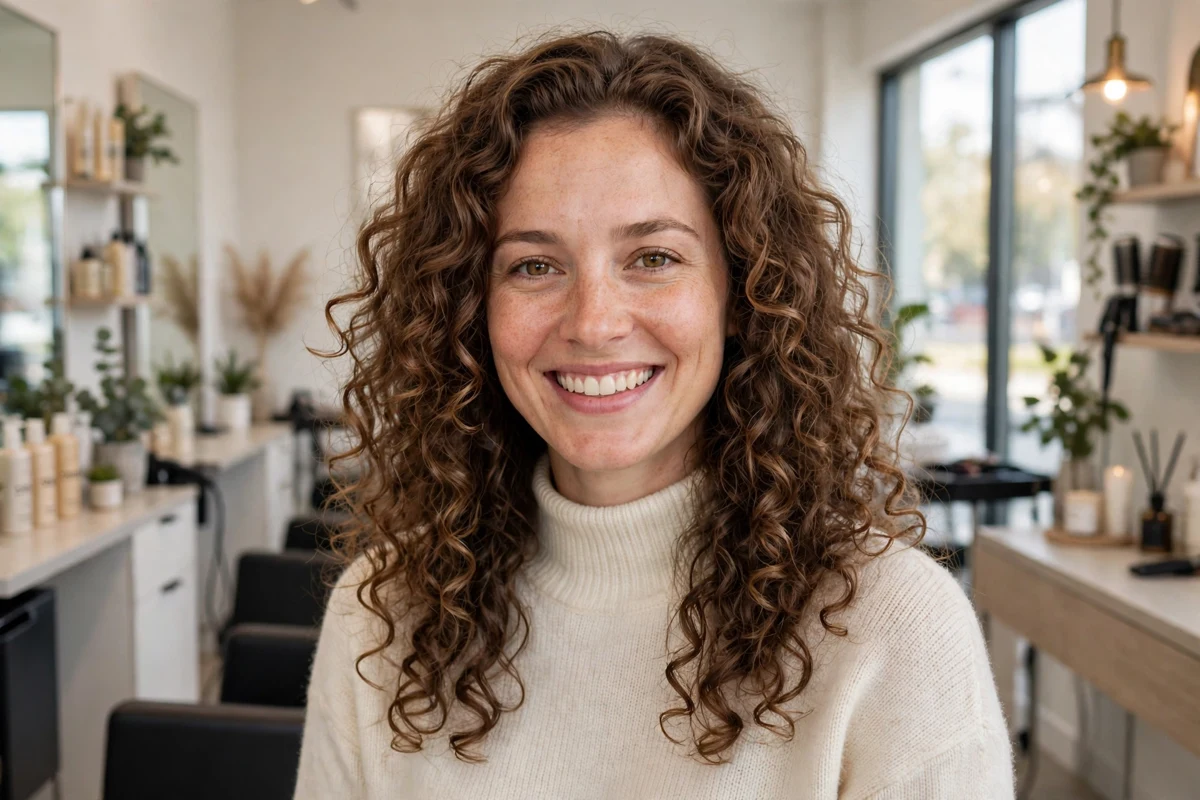
A modern perm can look like the curls you were born with, as long as the rod size, wrap and cut are planned together. Mixed rod sizes, loose wraps and longer layers copy the way natural curls vary from one section of the head to the next.
This guide gathers 24 perm hairstyles for natural looking curly hair, from soft body waves and loose long curls to spiral bobs, a pixie perm and simple up styles. Each idea notes the rod approach to ask for, how the curls behave day to day, and one tip to try at home. If you already have natural curls and want cuts for your own pattern, the guide to hairstyles for naturally curly hair covers that side of the chair.
Key Takeaways
- Larger rods and mixed rod sizes give the most natural looking curls, since born curly hair rarely grows in one uniform size.
- Curl shrinkage is real: permed hair sits shorter than it looks wet, so start longer than your target length.
- Loose and body wave perms fade fastest, while tight spirals hold longest. Pick hold and upkeep together, not one at a time.
- Permed hair needs moisture at every wash: sulfate free shampoo, conditioner each time, and gentle detangling while wet.
- Wait on the first wash as your stylist directs, often two to three days, so the new pattern sets fully.
How to Keep a Perm Looking Natural
Permed hair is drier than it was before the service, so moisture comes first. Wash with a sulfate free shampoo, condition at every wash, and add a leave in cream while the hair is still damp. A deep conditioning mask once a week keeps the curls soft and stops the ends from tangling against each other.
Handle the pattern gently. Detangle in the shower with conditioner in the hair, scrunch with a soft towel or old T shirt instead of rubbing, and let the hair air dry or use a diffuser on low heat. On days you skip hot tools entirely, the ideas in the guide to no heat hair styling pair well with a perm, since the pattern is already built in.
| Style group | Best for | Upkeep | Daily styling time |
|---|---|---|---|
| Soft waves and body perms (ideas 1, 2, 7, 8, 16) | Loose, natural fall and gentle root support | Pattern softens in 2 to 4 months | 10 minutes |
| Spirals and tight curls (ideas 3, 4, 11, 20, 24) | Defined curls with strong hold | Pattern holds 4 to 6 months | 10 to 15 minutes |
| Short perms (ideas 4, 6, 11, 12) | Bobs and pixies with full ends and lift | Trim every 4 to 6 weeks | 5 to 10 minutes |
| Targeted perms (ideas 13, 14, 15) | Lift or curl only where hair needs it | Repeat a few times a year | 5 to 10 minutes |
| Styled permed hair (ideas 18, 19, 23) | Ponytails, half up styles and updos | Restyle each wear | 3 to 15 minutes |
1. Soft Wavy Perm on Long Hair
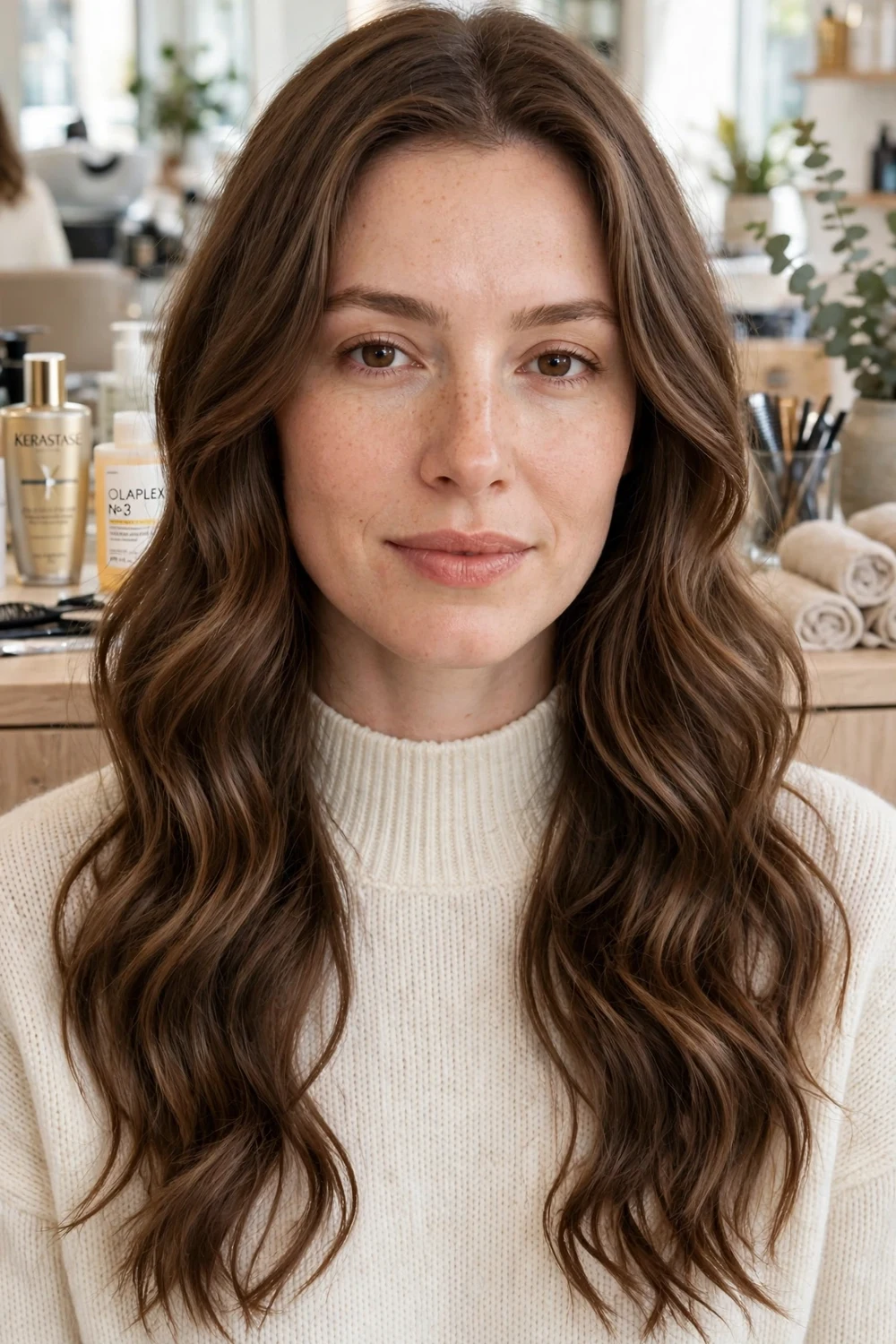
Large rods set in a loose brick pattern give long hair a soft S wave from mid length to ends. The roots stay flatter, so the result reads like hair that dries wavy on its own.
Ask your stylist to keep the top layer a touch longer than the layers below. That weight stops the wave from puffing out at the sides and keeps the outline smooth.
Try this: Scrunch a light mousse into damp hair and let it air dry. Touching the waves while they dry breaks the pattern and adds frizz.
Difficulty: Moderate | Cost: $$$ | Time: 2 to 3 hours in salon, 10 minutes daily
2. Loose Curl Perm with Natural Fall

Bigger rods and wide sections create loose curls that fall in different directions, much like a natural 2C to 3A curl pattern. The variation from section to section is what keeps it believable.
This perm suits medium to long hair with few layers. Too many short layers lift the curls into a rounded shape, while longer layers let them drop and blend.
Try this: Refresh on day two with a water spray and a pea size amount of curl cream, scrunched upward. Skip a full rewash unless the scalp needs it.
Difficulty: Moderate | Cost: $$$ | Time: 2 to 3 hours in salon, 10 minutes daily
3. Small Spiral Perm at Shoulder Length
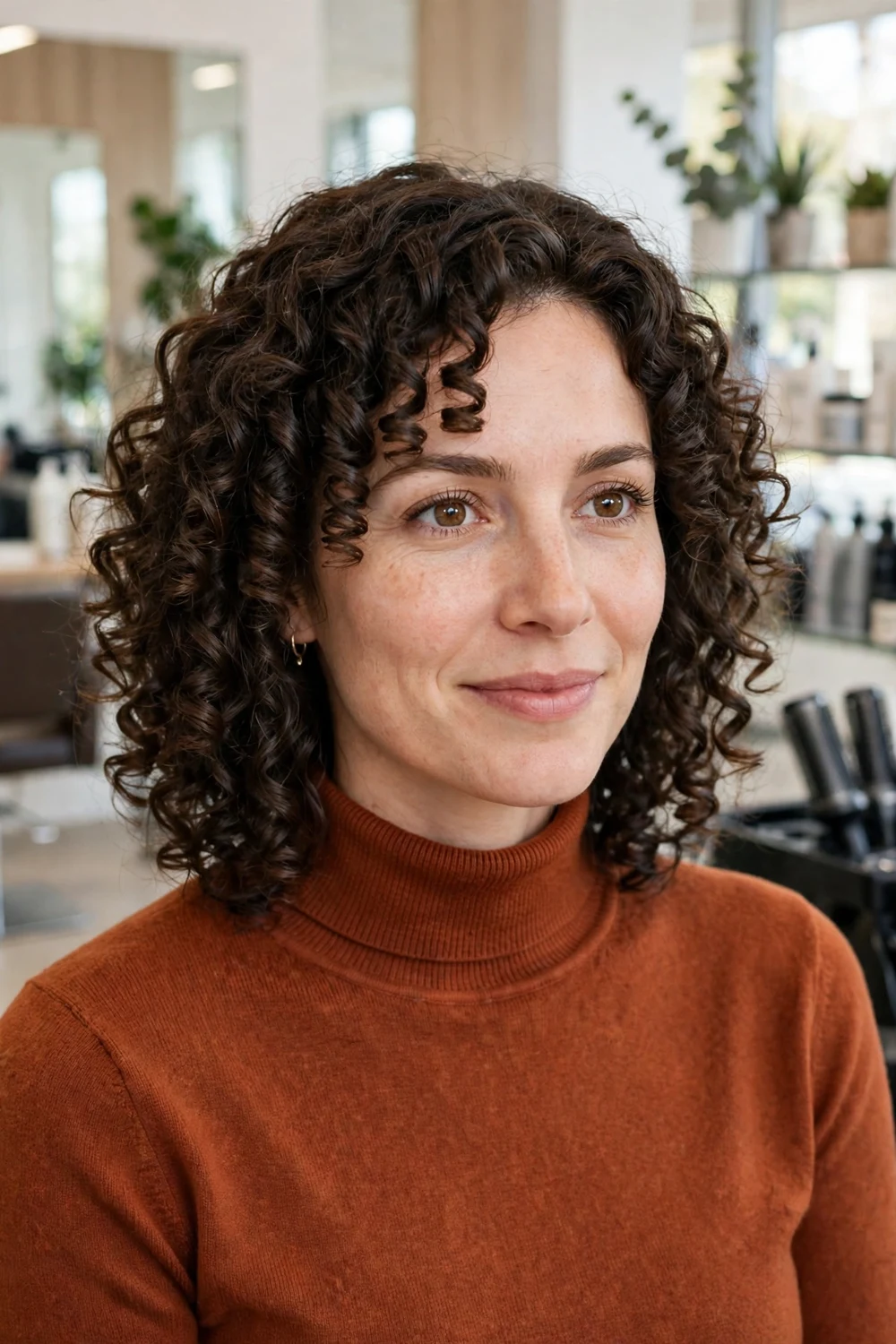
Thin rods wrapped vertically produce springy spiral curls that sit close together. At shoulder length the spirals bounce when you move and hold their shape through the day.
Spirals shrink the look of your length, so start with hair a few inches past the shoulders if you want the finished cut at shoulder level. A light layer at the ends stops the shape from going triangular.
Try this: Separate each spiral with your fingers once the hair is fully dry. A brush pulls spirals into fluff and shortens the life of the set.
Difficulty: Hard | Cost: $$$ | Time: 3 to 4 hours in salon, 15 minutes daily
4. Classic Short Perm with Tight Curls
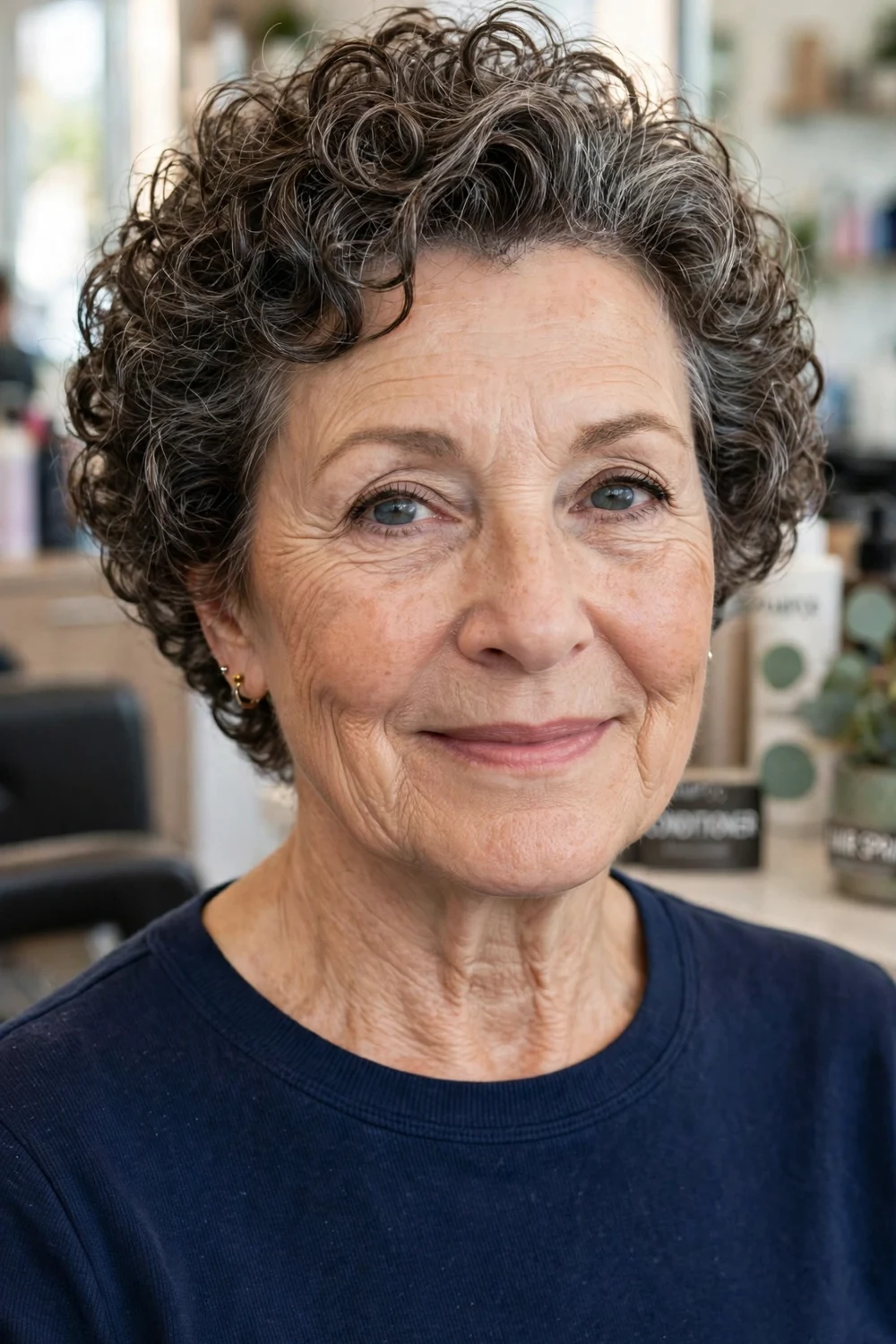
Small rods on short hair give tight, even curls with clear lift at the crown. The short length keeps the curls light, so they stack neatly instead of weighing each other down.
This is a strong choice for fine hair that falls flat by midday. Keep the sides a little shorter than the top so the curl pattern stays tidy as it grows out.
Try this: Pat a small amount of gel over dry curls and pinch the crown upward. The hold lasts longer when the product goes on dry hair rather than wet hair.
Difficulty: Moderate | Cost: $$ | Time: 2 hours in salon, 5 to 10 minutes daily
5. Long Layered Perm with Loose Waves

Long layers cut before the perm let loose waves stack at different heights, which adds width at the cheekbones and movement at the ends. The layers also remove weight that would pull a perm straight.
Ask for layers that start below the chin. Shorter face layers curl up higher than expected and can sit shorter than planned once the perm sets.
Try this: Dry with a diffuser on low heat, holding each section still for a count of twenty. Moving the diffuser around lifts frizz at the surface.
Difficulty: Moderate | Cost: $$$ | Time: 3 hours in salon, 10 to 15 minutes daily
6. Jaw-Length Curly Perm Bob

A jaw length bob permed on medium rods gives round, bouncy curls that frame the face. The blunt base keeps the bottom edge full, so fine hair looks thicker at the ends.
A center or slightly off center part both work here. Keep the back a fraction shorter than the front so the curls clear the collar and sit cleanly.
Try this: Tuck one side behind the ear while the hair dries. The tucked side dries flatter and gives a simple shape change without heat.
Difficulty: Moderate | Cost: $$ | Time: 2 hours in salon, 10 minutes daily
7. Body Wave Perm for Fine Hair

A body wave uses the largest rods to add a gentle bend and root support rather than a clear curl. Fine hair gains the look of more hair without a tight pattern to maintain.
Because the bend is soft, it grows out with no hard line. It pairs well with a bob or lob cut, and color treated fine hair should be strand tested first.
Try this: Use a volumizing mousse at the roots only. Product through the ends weighs a soft body wave down and shortens the lift.
Difficulty: Easy | Cost: $$ | Time: 1.5 to 2 hours in salon, 5 to 10 minutes daily
8. Beach Wave Perm on Medium Hair
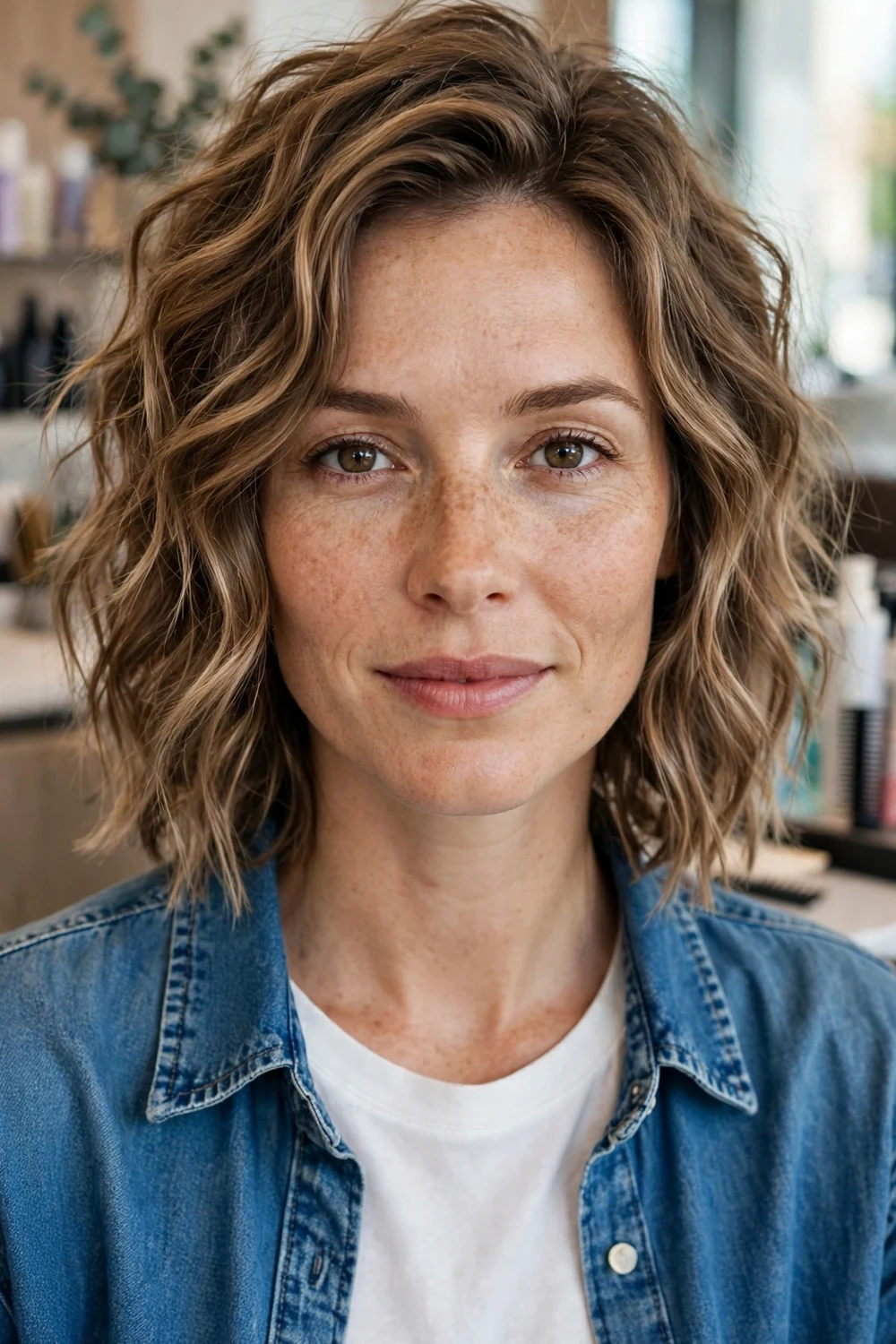
Uneven rod sizes and a loose wrap give medium hair the separated, slightly irregular waves linked with a day at the coast. The ends are left a little straighter, which keeps the look current.
Medium hair at collar to shoulder length holds this pattern well. Ask your stylist to alternate the wrap direction so waves turn toward and away from the face.
Try this: Mist a salt spray through the mid lengths on dry hair and squeeze sections in your palm. Work in small amounts, since salt spray can feel drying with daily use.
Difficulty: Moderate | Cost: $$ | Time: 2 to 3 hours in salon, 10 minutes daily
9. Multi-Textured Perm with Varied Curl Sizes

This perm mixes two or three rod sizes across the head, so some curls sit tight and others sit loose. Born curly hair rarely grows in one uniform size, and the mix copies that pattern closely.
Your stylist places the smaller rods where your hair needs support, often at the crown, and larger rods through the lengths. Bring photos of natural curls you like to guide the mix.
Try this: Style all the sizes the same way, with one cream worked through evenly. Treating sections differently makes the size mix look uneven rather than natural.
Difficulty: Hard | Cost: $$$ | Time: 3 to 4 hours in salon, 15 minutes daily
10. Irregular Curl Perm with Alternating Direction

Each section is wrapped in the opposite direction from the one beside it. The curls push against each other instead of stacking, which gives width and a lived in finish.
This direction change suits medium and long hair best, where the curls have room to cross. On very short hair the pattern can look busy, so keep rods larger there.
Try this: Shake the hair out at the roots with your fingertips in the morning rather than combing. The shake restores the crossing pattern in under a minute.
Difficulty: Moderate | Cost: $$$ | Time: 2 to 3 hours in salon, 10 minutes daily
11. Spiral Perm Bob with Rounded Shape

A bob cut into a rounded outline and set on spiral rods gives compact, springy curls that hold the round shape. The silhouette stays neat at the nape and full at the sides.
This shape suits oval and longer face shapes well. Ask for the corners at the front to stay soft, since tight spirals at the corners can sit wide.
Try this: Sleep with the bob loose on a satin pillowcase. A tight band overnight flattens one side of the rounded shape and leaves a crease.
Difficulty: Hard | Cost: $$ | Time: 2.5 to 3 hours in salon, 10 to 15 minutes daily
12. Pixie Perm with Longer Curly Top

Short tapered sides with a longer permed top give a pixie clear curl and height where you want it. The contrast between the close sides and the curly top keeps the cut sharp.
The top needs enough length to wrap a small rod, so grow the crown out before the appointment. Trims every four to five weeks keep the sides tidy.
Try this: Work a matte cream through the top and push the curls forward for a softer front, or to one side for a cleaner line.
Difficulty: Moderate | Cost: $$ | Time: 1.5 to 2 hours in salon, 5 minutes daily
13. Root Perm for Lift at the Crown Only
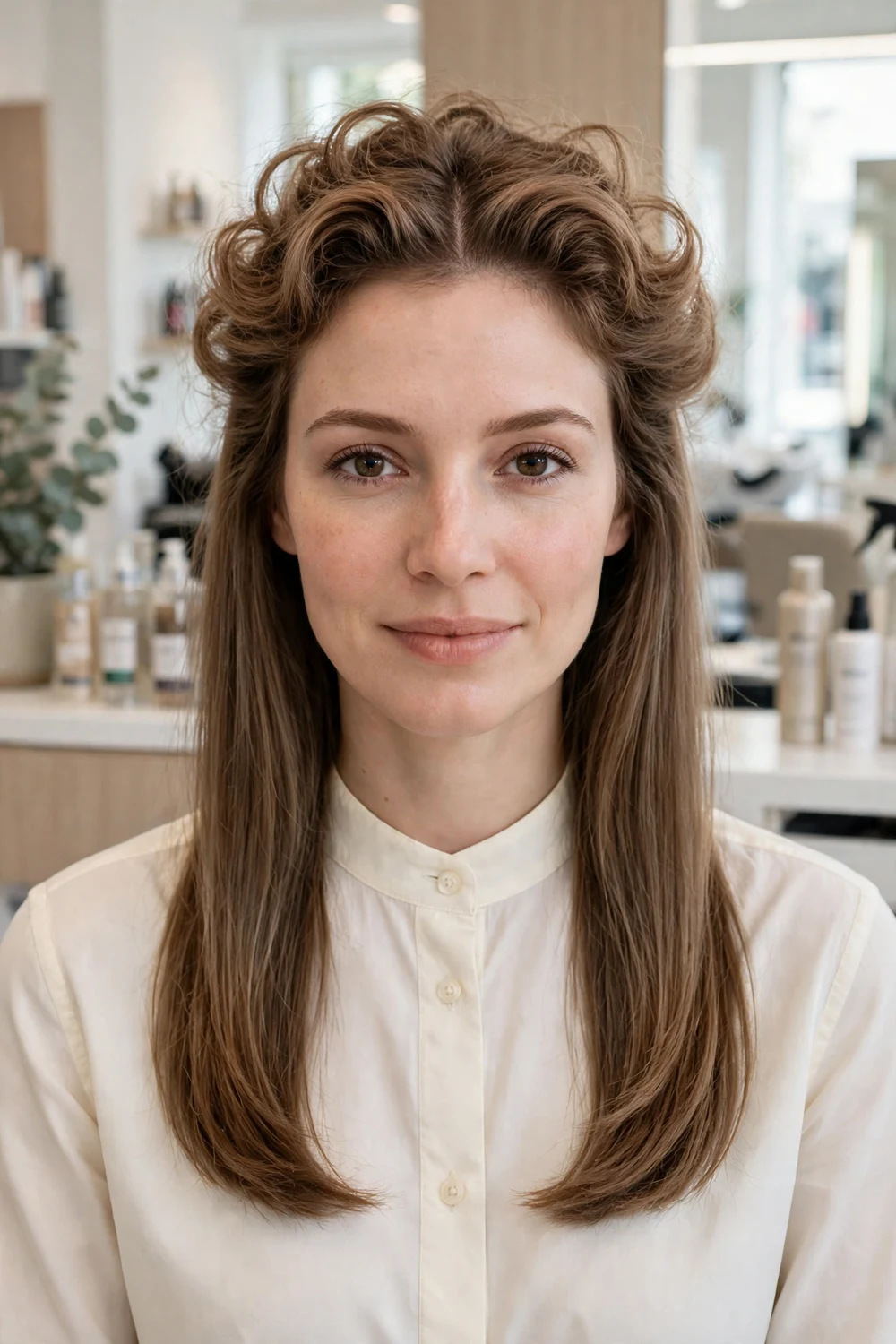
A root perm wraps only the first few inches near the scalp, lifting hair that lies flat at the part and crown. The lengths keep their current texture, straight or wavy.
It helps fine hair and heavy long hair that flattens on top. The lift grows out gradually, and most people repeat it a few times a year rather than on a fixed schedule.
Try this: Blow dry the crown upside down for two minutes after washing. The root perm holds the lift, and the short dry sets the direction.
Difficulty: Easy | Cost: $ | Time: 1 hour in salon, 5 minutes daily
14. Spot Perm for the Front and Crown

A spot perm treats only the sections that need help, often the front hairline and crown where curls tend to fall flat or grow in a different pattern from the rest.
It is a good first perm if you want to test the look on a small area. Your stylist matches the rod size to your existing wave so the treated sections blend in.
Try this: Style the treated and untreated hair together with the same product. Matching care keeps the two areas moving the same way through the day.
Difficulty: Easy | Cost: $ | Time: 1 hour in salon, 5 to 10 minutes daily
15. Partial Perm on the Ends Only

Only the lower third of the hair is wrapped, so the roots and mid lengths stay smooth while the ends curl. The result suits long hair that needs movement at the bottom without full curl.
The blend point matters most. Your stylist feathers the first wrapped sections at different heights so there is no straight line where the curl starts.
Try this: Curl the ends upward in your palm while drying to blend the two textures. A diffuser on low gives the smoothest join.
Difficulty: Moderate | Cost: $$ | Time: 1.5 to 2 hours in salon, 10 minutes daily
16. Long Perm with Feathered Layers

Feathered layers are cut at an angle so the ends taper, and a loose perm through them gives long hair soft, separated waves that move in pieces rather than one block.
The taper removes bulk at the bottom, which helps thick hair sit closer to the head. Keep some length in the front layers so they frame the face after curl shrinkage.
Try this: Apply leave in conditioner to the tapered ends every wash. Feathered ends are the oldest hair and dry out first, and dry ends tangle against each other.
Difficulty: Moderate | Cost: $$$ | Time: 3 hours in salon, 10 to 15 minutes daily
17. Curly Perm with Soft Bangs

A loose perm carried through a soft, wispy bang proves curly fringe can work. The bang is cut longer than a straight bang, since curls spring up once dry.
Keep the bang light and see through rather than thick. A heavy curly bang can close the forehead in and is harder to adjust on humid days.
Try this: Restyle the bang on its own with wet fingers and a pinch of cream each morning. It dries in minutes and rarely needs a full restyle of the whole head.
Difficulty: Moderate | Cost: $$ | Time: 2 to 3 hours in salon, 10 minutes daily
18. High Ponytail on Permed Curls

Gathering permed curls into a high ponytail shows off the full curl pattern in the tail while keeping hair off the face and neck. The height at the crown also lifts the whole look.
Use a fabric covered band and keep the base loose enough that the front curls keep their shape. A very tight base stretches the front pattern flat by midday.
Try this: Leave two small curls loose at the temples before you secure the band. The loose pieces soften the front and take ten seconds to arrange.
Difficulty: Easy | Cost: $ | Time: 5 minutes at home
19. Half-Up Claw Clip on Permed Curls

The top half of permed hair is twisted once and held with a claw clip, while the lower curls hang free. It clears the face and still shows the length and pattern of the perm.
A claw clip holds curly hair better than a thin band because the teeth grip several curls at once. Place it slightly above the ears for the most secure hold.
Try this: Pull one or two curls free at the front after clipping. The style looks best when the clipped section keeps some looseness at the roots.
Difficulty: Easy | Cost: $ | Time: 3 minutes at home
20. Voluminous Afro-Style Ringlet Perm

Tight small rods across the whole head create dense ringlets with a rounded, lifted shape. The style celebrates volume and works best when the cut is shaped dry, curl by curl.
Moisture is the main upkeep here. Dense ringlets tangle at the roots if they dry out, so a rich conditioner at every wash and a weekly mask keep the shape soft.
Try this: Fluff the roots with a wide pick in short lifts, working from the inside out. Pulling from the surface stretches the outer ringlets and breaks the round shape.
Difficulty: Hard | Cost: $$$ | Time: 3 to 4 hours in salon, 15 minutes daily
21. Ombré Perm on Long Curls

Color that deepens at the roots and lightens toward the ends runs through long permed curls, so the lightest pieces sit where the curls catch the most light. The perm and color are planned together, usually weeks apart.
Your stylist may perm first and color later, or the reverse, based on hair condition. Both services on damaged hair in one visit can push the hair too far, so ask for a strand test.
Try this: Use a color safe, sulfate free wash and keep hot tools off the lightened ends. The ends carry both the oldest color and the perm, so they need the gentlest care.
Difficulty: Hard | Cost: $$$ | Time: 3 to 4 hours in salon plus color visit, 10 to 15 minutes daily
22. Edgy Perm with Angular Layers

Angular layers are cut on a diagonal, giving a perm longer pieces at the front and shorter stacked pieces at the back. The uneven outline adds edge while the curls keep it soft.
This cut needs a stylist who cuts curly hair dry or checks the shape dry after washing. Wet cutting alone can hide how high the short back layers will sit once curled.
Try this: Push the long front pieces to one side for the clearest angle. A deep side part shows the difference between the front and back lengths best.
Difficulty: Hard | Cost: $$ | Time: 2 to 3 hours in salon, 10 minutes daily
23. Curly Perm Updo with Loose Pieces

Permed curls are pinned up in loose sections at the back, with a few curls left free at the front and nape. The curl pattern does most of the work, so the updo needs fewer pins than a straight hair updo.
Build it on day two hair if you can. Freshly washed permed curls are slippery, and a day of natural oil helps pins hold without extra spray.
Try this: Cross two pins in an X at each section instead of one pin straight in. Crossed pins hold curly sections far more securely.
Difficulty: Moderate | Cost: $ | Time: 15 minutes at home
24. Medium Spiral Perm with Side Part

Medium spiral rods at shoulder to collar length give defined curls with a softer spring than small rods. A side part adds lift on the heavier side and a gentle sweep across the forehead.
This is a balanced starting point if small spirals feel too tight and loose waves feel too flat. The side part also makes grow out easier, since the roots are not fixed in one line.
Try this: Flip the part to the other side once a week while the hair dries. Alternating sides stops the roots from training flat in one direction.
Difficulty: Moderate | Cost: $$ | Time: 2.5 to 3 hours in salon, 10 minutes daily
Frequently Asked Questions
How long does a natural looking perm last?
Most perms hold their pattern for three to six months, then soften as the hair grows. Loose and body wave perms fade faster than tight spiral perms, and long hair often keeps a soft wave at the ends after the roots have grown out.
Which rod size gives the most natural looking curls?
Larger rods give looser, more natural looking curls and waves. A mix of two rod sizes often looks most like born curly hair, since natural curls rarely grow in one uniform size across the whole head.
Can I perm color treated hair?
Many color treated heads can be permed, but the order and timing matter. Ask your stylist for a strand test first, and expect to space the perm and color services apart so the hair is not pushed through two chemical services at once.
How do I wash permed hair in the first days?
Follow your stylist guidance on when to first wash, often after two to three days. After that, use a sulfate free wash, condition every time, and detangle gently in the shower with conditioner in the hair rather than brushing dry curls.
Will a perm work on fine, thin hair?
Yes, and fine hair often gains the most visible change. A body wave or loose curl perm adds bend and root support, which makes fine hair look fuller. Keep rods larger and layers longer so the curls do not shrink the length too much.
How is a modern perm different from an older style perm?
Modern perms use larger and mixed rod sizes, looser wraps, and cuts shaped for curls. The aim is a pattern that falls like natural curls, with variation between sections, rather than one tight uniform curl across the whole head.
Final Thoughts
Start with the curl size you want to see in the mirror each morning, then match the rod size and cut to it. Bring photos of natural curls, talk through shrinkage and upkeep with your stylist, and book a strand test if your hair is color treated. A perm planned that way grows out softly and keeps its natural fall for months. If you are choosing a length first, the guide to shoulder length hairstyles shows the cuts these perms sit on best.

