

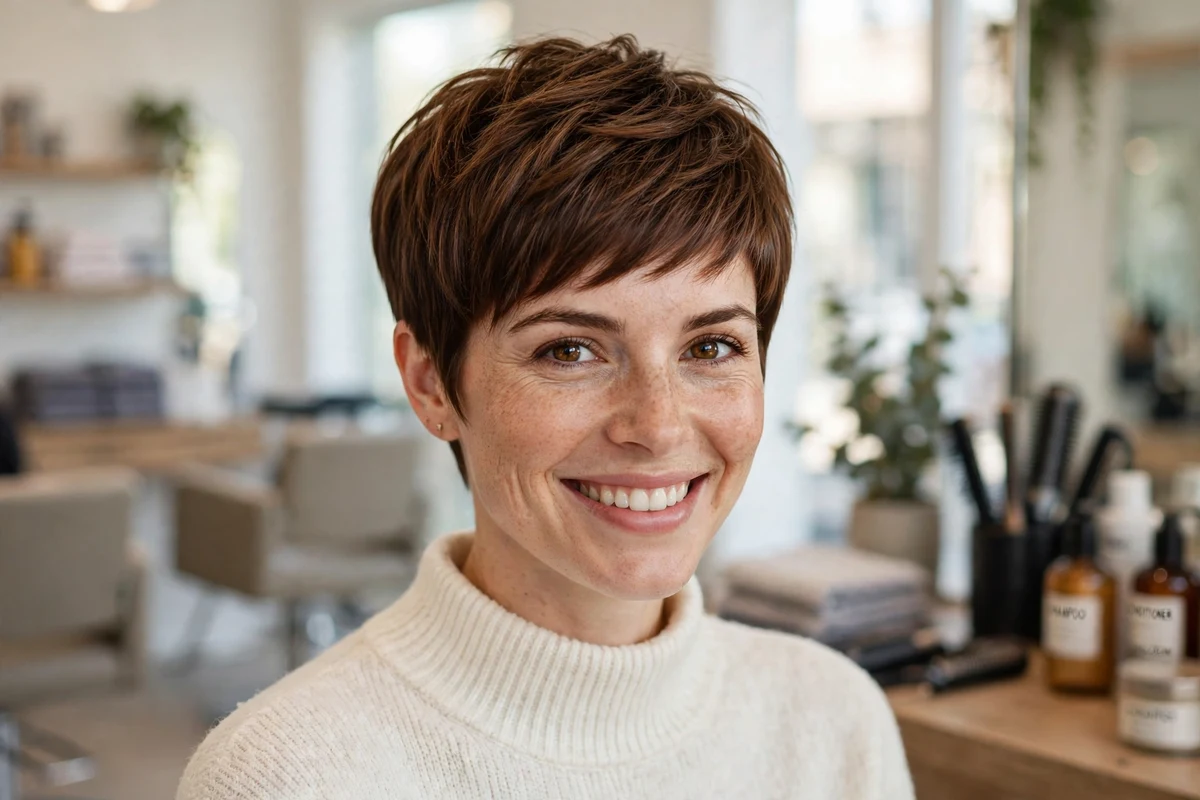
Going short feels like a big decision until you see how many shapes fit under one name. A pixie can be cropped close, left long enough to tuck behind your ears, curled, feathered, or swept to one side, and each version asks for a different amount of morning effort.
I put this list together to help you walk into the salon with a clear picture and clear words. Every idea below covers the shape, the hair type it suits, and the upkeep it needs, so you can pick a pixie that fits your hair and your routine.
Key Takeaways
- The crown length controls most of the look: keep it longer for styling options, crop it for the lowest upkeep.
- Fine hair gains the most from stacked or layered crowns, while thick hair benefits from tapering and undercuts that remove bulk.
- Curly and wavy pixies need length on top so the natural pattern can form.
- Most pixies need a trim every four to six weeks to keep the nape and ears tidy.
- Bring a photo and name your fringe choice (wispy, baby bangs, side-swept, or none) before the cut starts.
1. Classic Tapered Pixie
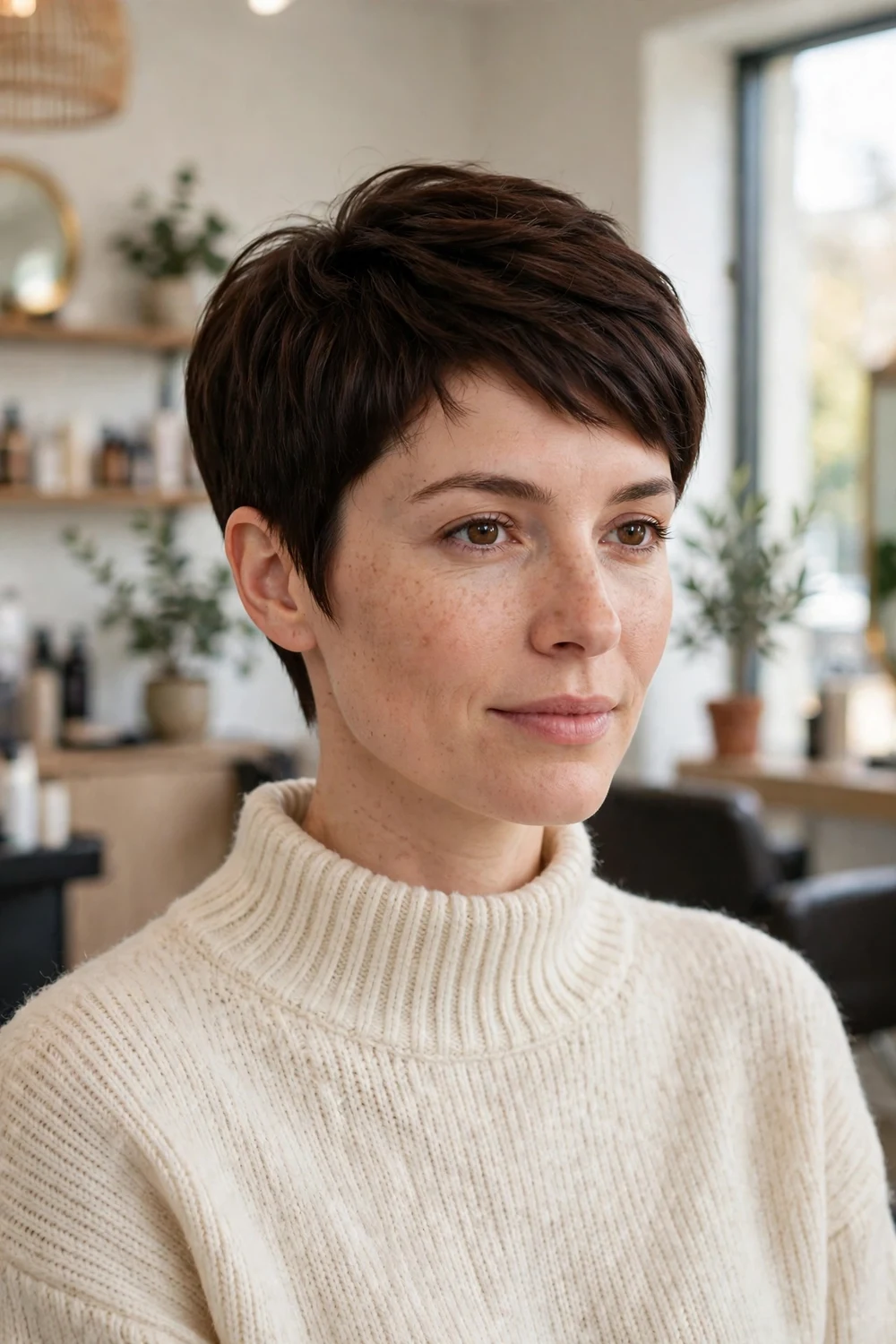
The classic tapered pixie keeps the sides and nape trimmed close while the crown stays a touch longer. That small difference in length gives you a clean outline and enough top hair to brush forward, back, or to one side. Dark chocolate brown works well here because the solid color shows the tapered graduation clearly.
Ask your stylist for scissor tapering at the nape rather than a hard clipper line if you want a softer grow-out. The cut suits oval, heart, and square faces. Trim the nape every four to five weeks to keep the shape tidy.
Try this: Brush the crown forward while damp, then smooth the sides down with a pea-size amount of styling cream.
Difficulty: Low · Cost: $
2. Textured Choppy Pixie
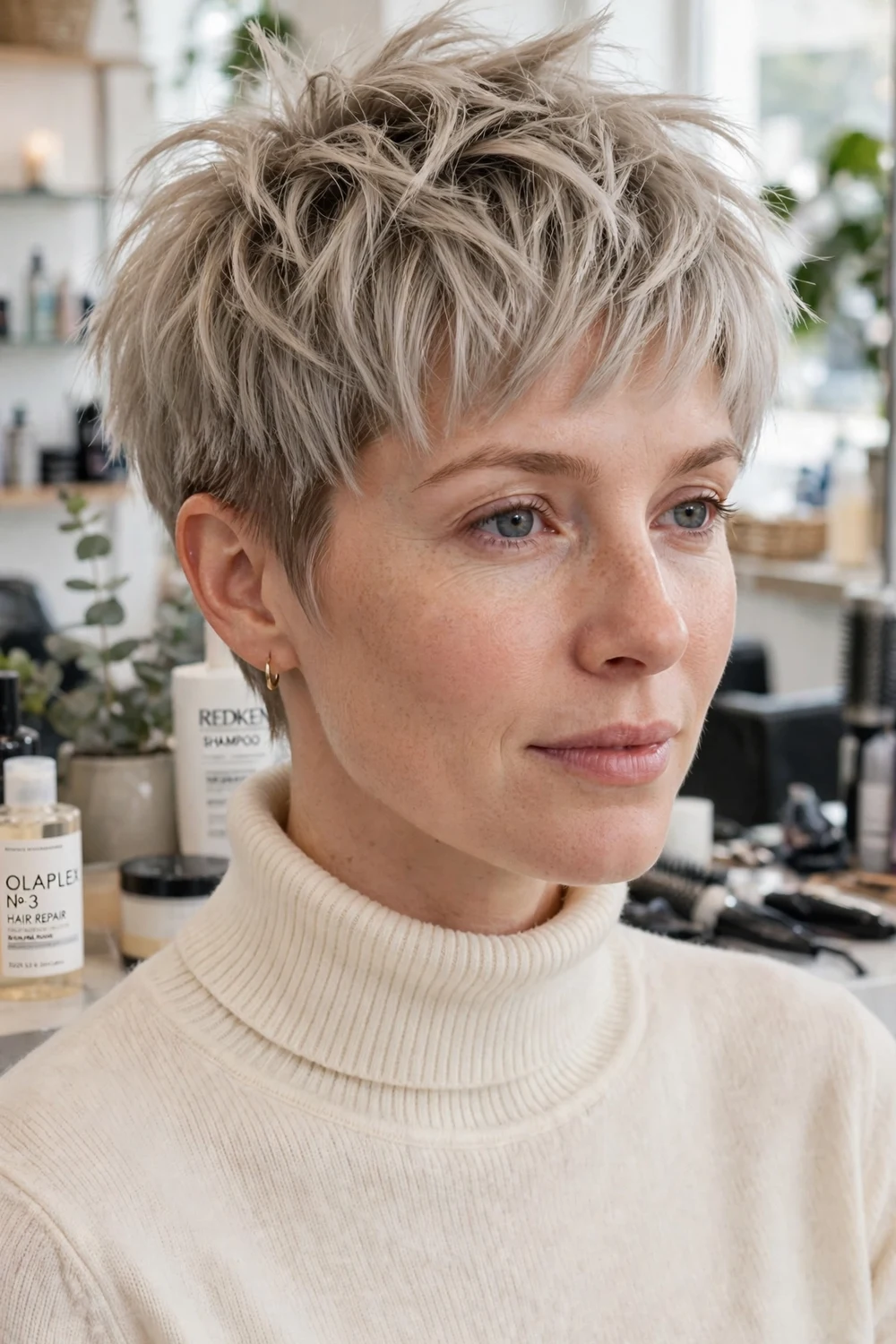
Short, uneven layers run through the crown and fringe in this cut. The choppy ends break up the surface so light hits each piece at a different angle. Ash blonde helps the separation show, though the cut works in any color.
The sides stay tapered and close, which keeps the focus on the textured top. It suits straight and lightly wavy hair. Style on dry hair so the pieces stay separated instead of clumping together.
Try this: Pinch matte paste through the ends with your fingertips and lift a few crown pieces upward.
Difficulty: Low · Cost: $$
3. Soft Feathered Pixie
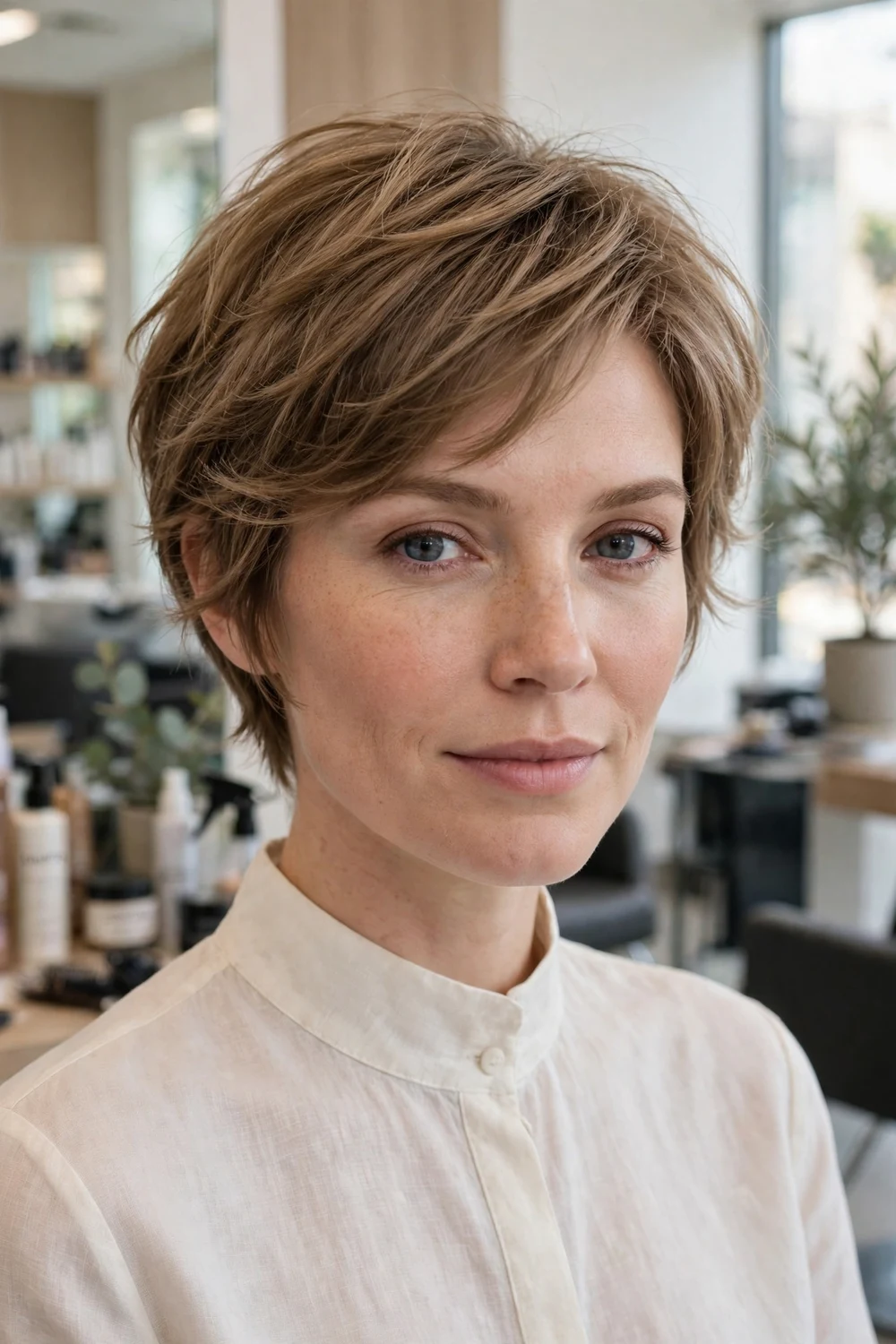
Feathered layers overlap in thin, airy sections instead of chunky blocks. The crown keeps enough length for gentle lift, and the sides blend softly around the ears. Light brown keeps the finish natural and low contrast.
This shape suits fine to medium hair and round or oval faces that benefit from soft edges. Blow-dry with a small round brush, directing the layers back and slightly up. Heavy wax will weigh the feathering down, so keep product light.
Try this: Use volumizing spray at the roots only, then finger-dry in alternating directions.
Difficulty: Low · Cost: $
4. Side-Swept Pixie
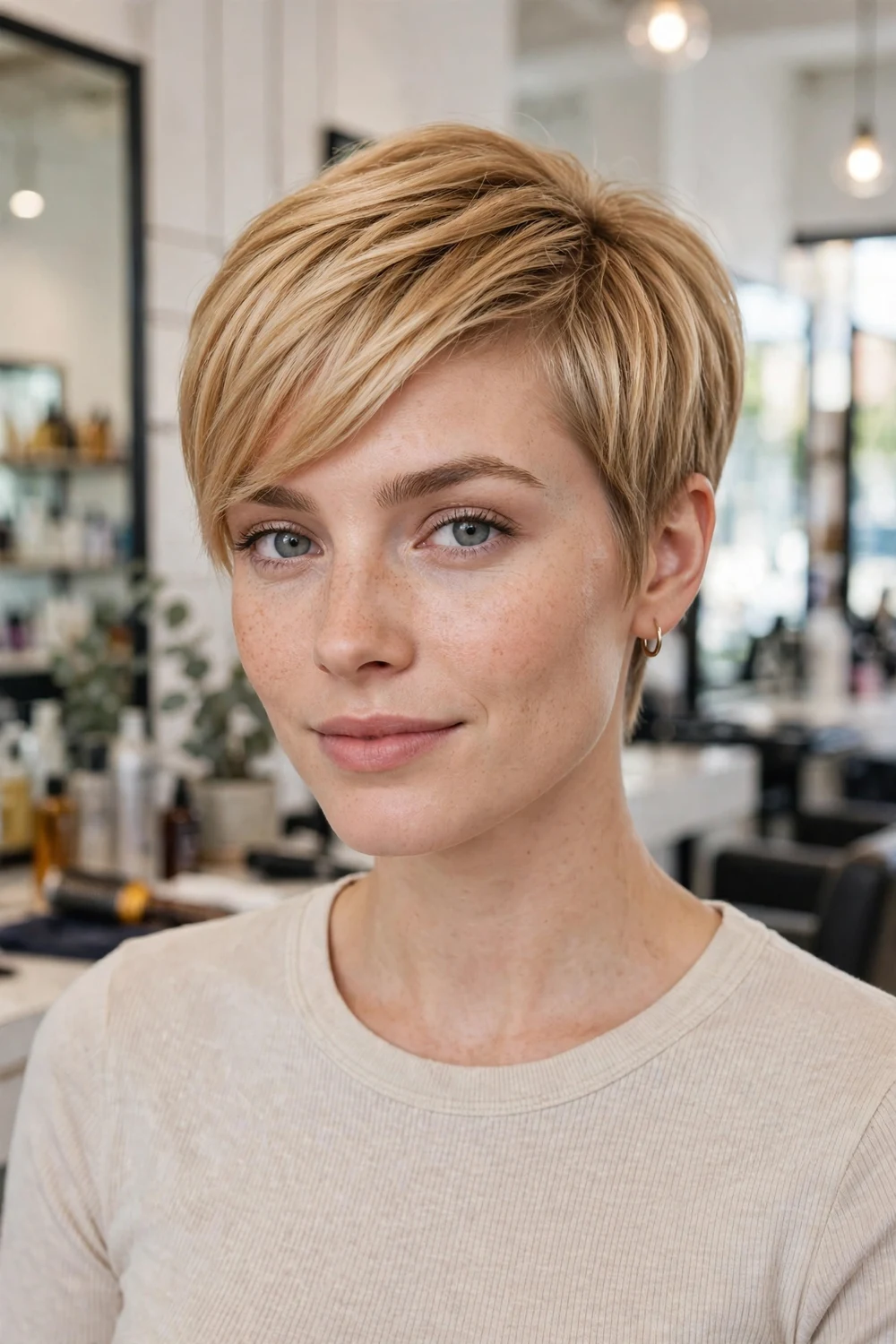
A longer front section sweeps diagonally across the forehead in this pixie. The sides and back stay cropped and neat, so the sweep becomes the main feature. Golden blonde adds warmth along the fringe line.
The diagonal line helps soften a broad forehead and draws attention to the eyes. It suits oval, long, and heart faces. You can wear the sweep sleek for work or tousled on weekends without changing the cut.
Try this: Blow-dry the fringe across with a flat brush, then set the part with a light mist of flexible spray.
Difficulty: Low · Cost: $
5. Wispy Bangs Pixie
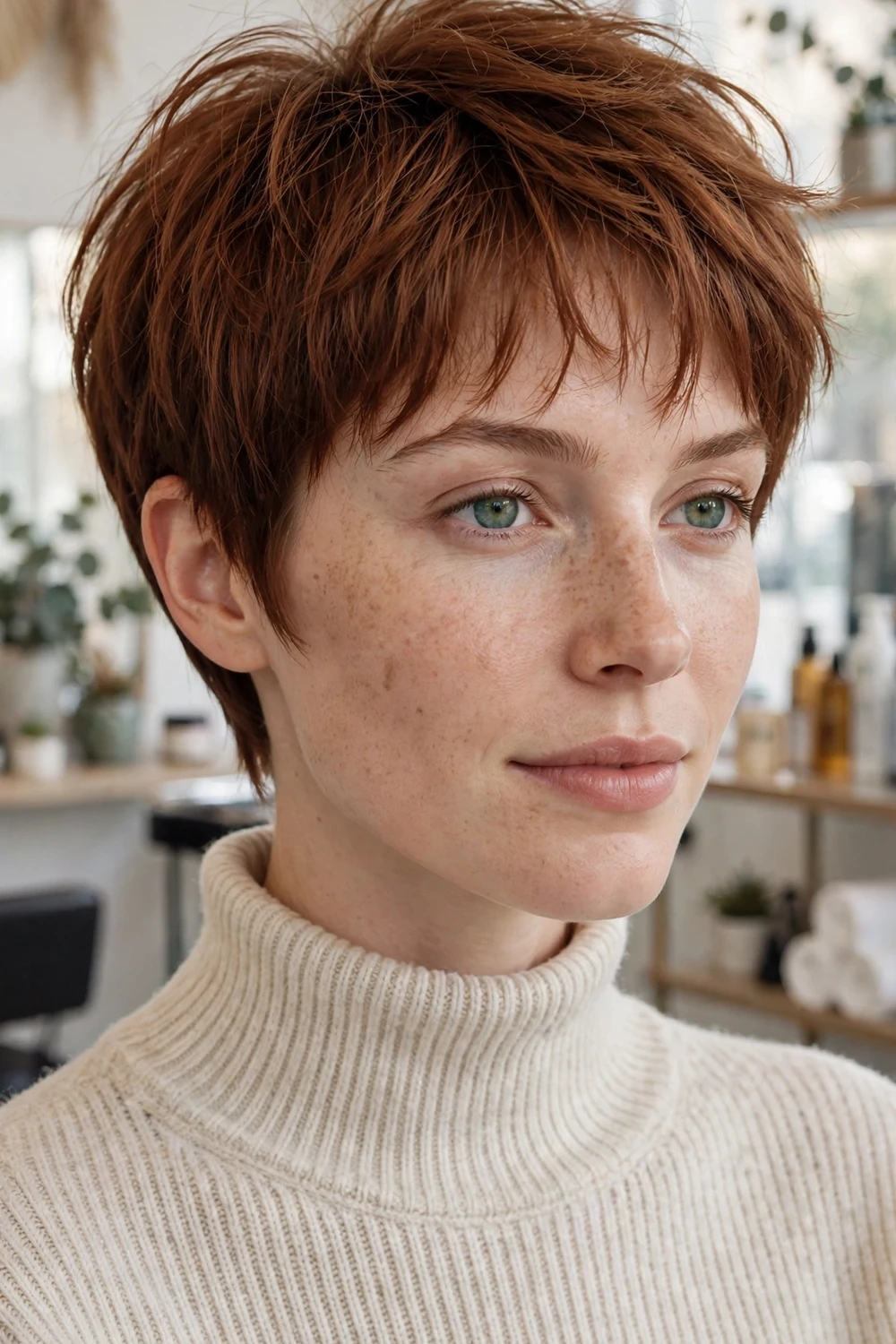
Fine, separated bangs sit lightly across the forehead in this version. The crown stays slightly fuller for height, and the neckline tapers cleanly at the back. Medium auburn gives the short layers a warm, even tone.
Wispy bangs suit women who want forehead coverage without a heavy fringe. The cut works on straight and lightly wavy hair. Ask for the bangs point-cut at the tips so they stay soft and broken up.
Try this: Dry the bangs first with your fingers, moving them side to side so they do not split in the middle.
Difficulty: Low · Cost: $
6. Layered Crown Pixie
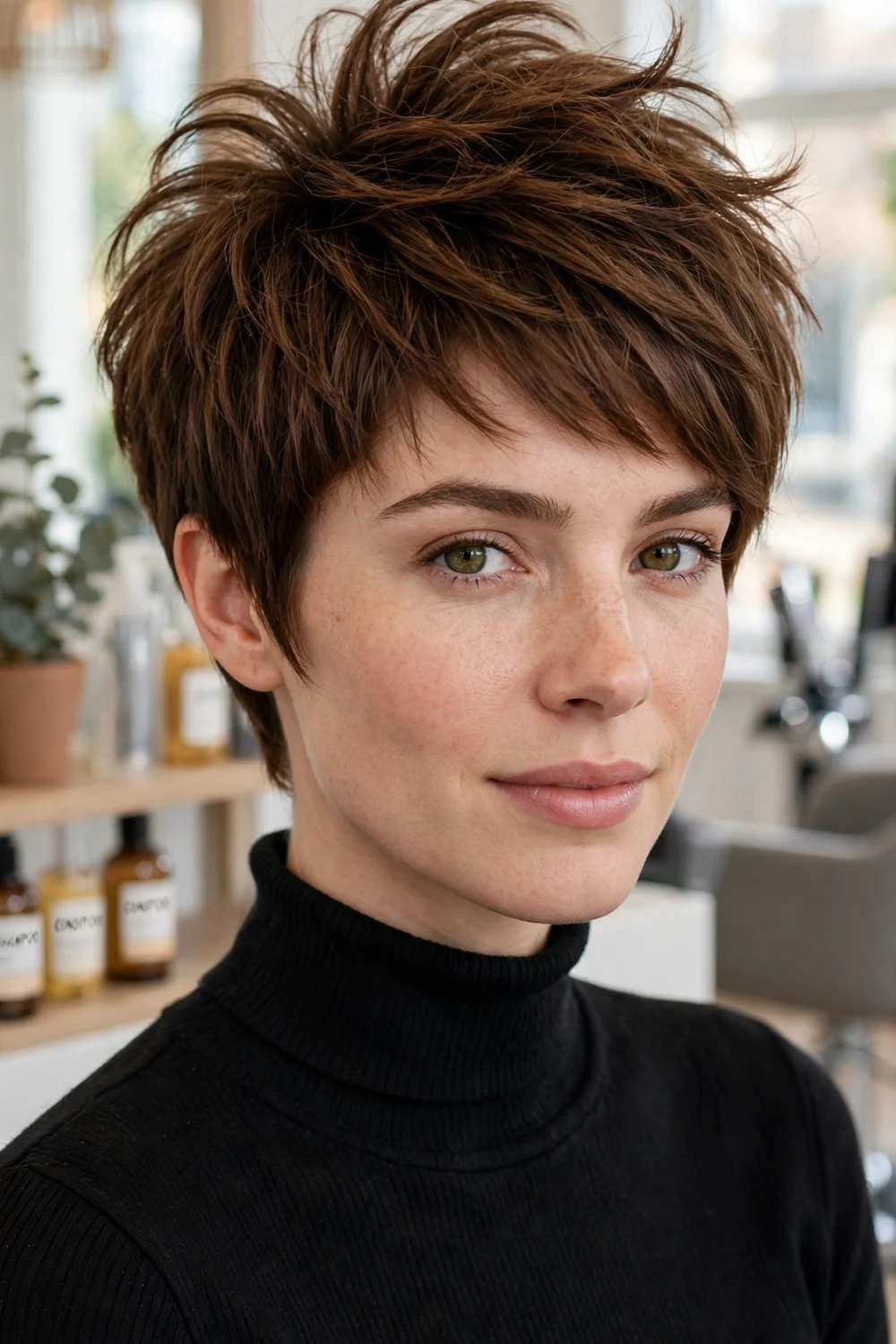
Graduated layers stack through the crown to build height where many pixies fall flat. The sides stay shorter and shaped close, so the fuller top stands out. Chestnut brown shows the layer steps clearly in natural light.
This is a practical pick for fine hair that needs help at the top. It suits round and oval faces because the crown height adds length to the silhouette. Keep the layers connected, with no sharp shelf between the top and sides.
Try this: Blow-dry the crown upward with a small brush, then cool the roots for ten seconds to hold the lift.
Difficulty: Low · Cost: $
7. Sleek Micro Pixie
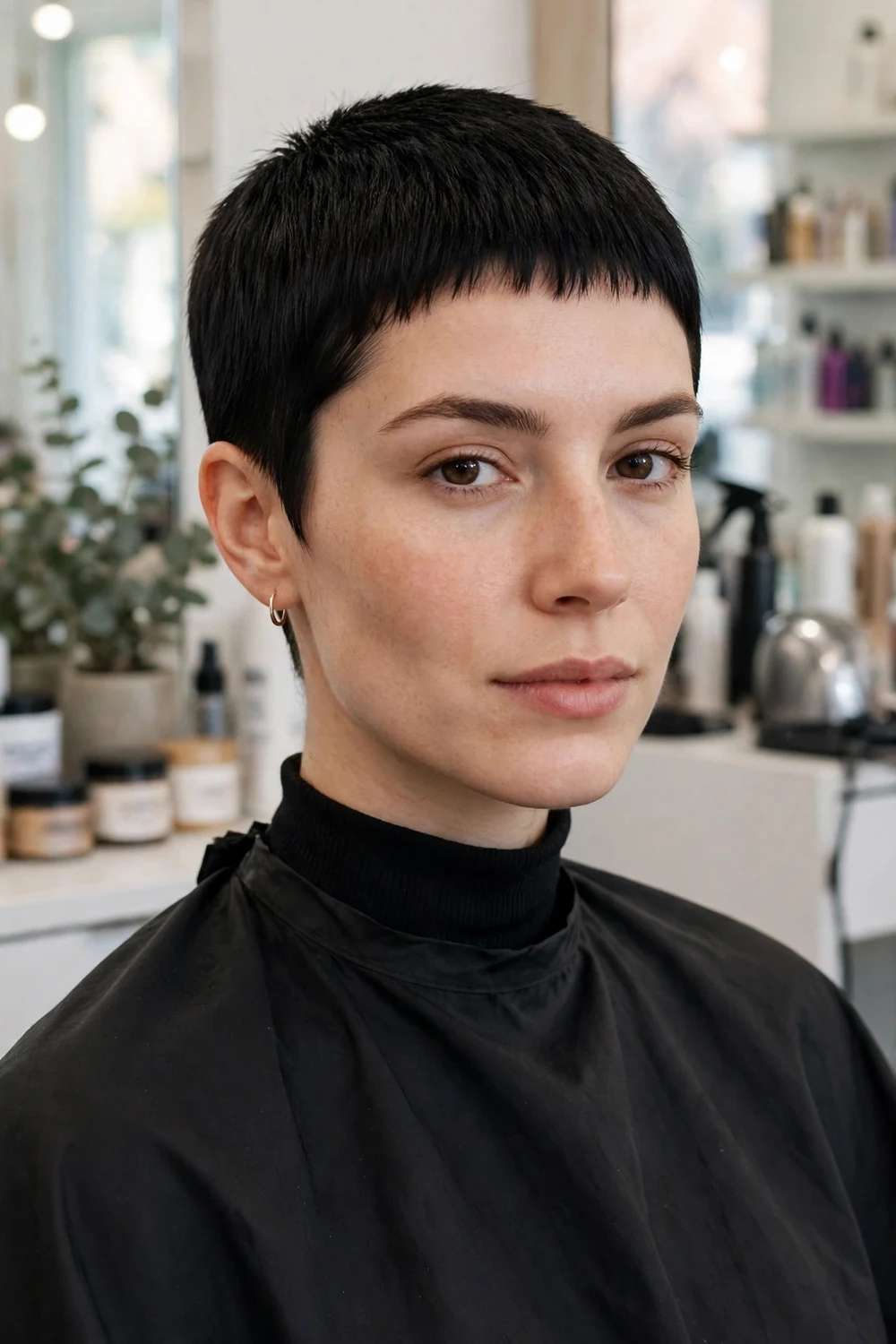
The micro pixie is cropped close all over, with clean lines around the ears and hairline. Jet black makes the shape look sharp and glossy. The fringe sits short and neat, just above the brows.
This cut suits oval and heart faces and straight hair that lies flat naturally. It needs trims every three to four weeks because even a small amount of growth changes the outline. Daily styling stays under five minutes.
Try this: Smooth a drop of shine serum over dry hair with flat palms for a polished finish.
Difficulty: Medium · Cost: $
8. Tousled Pixie
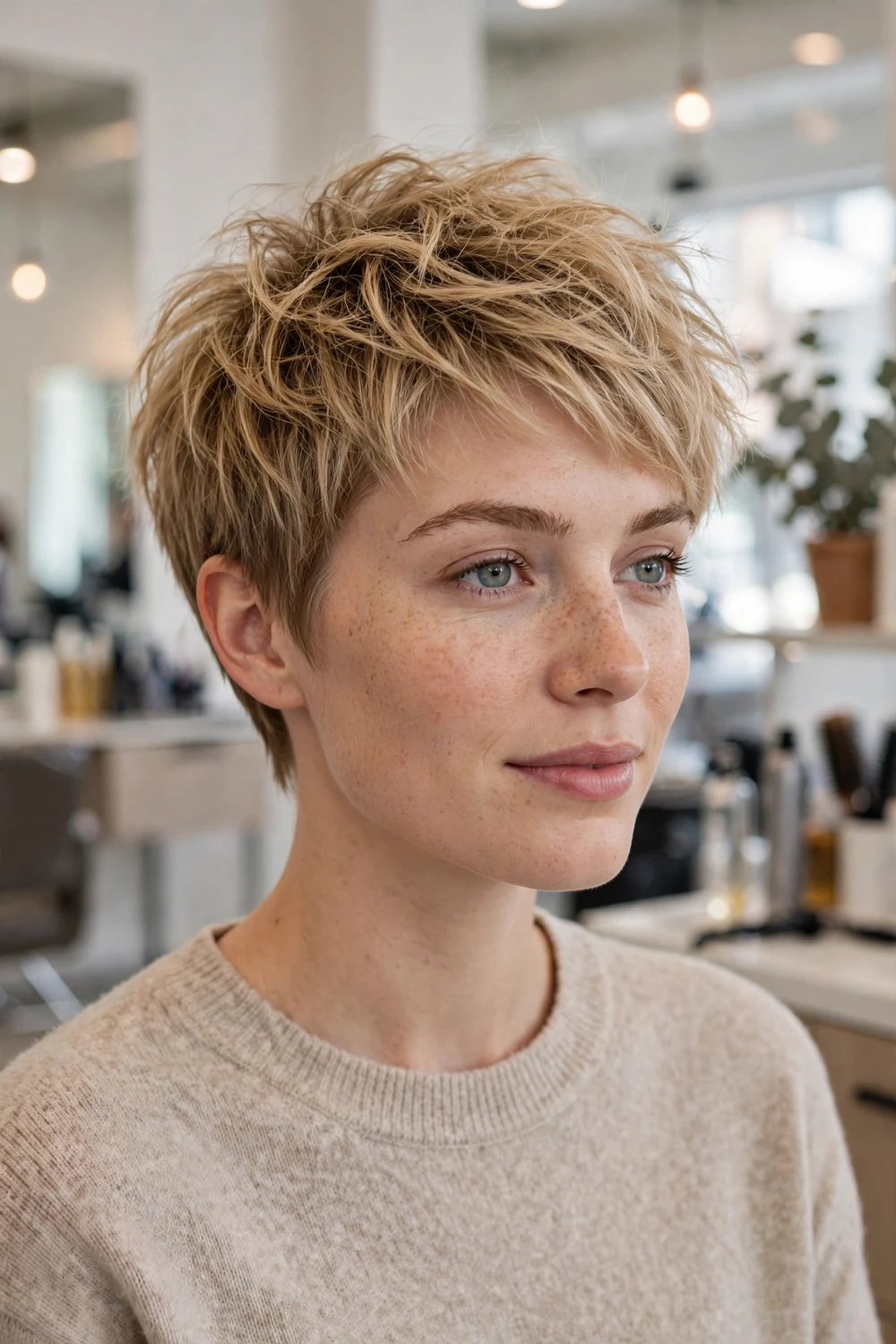
Irregular lengths through the top give the tousled pixie its relaxed finish. The sides stay tidy, so the messy top reads as styling rather than grow-out. Sandy blonde keeps the texture looking soft and sunlit.
It suits wavy and straight hair and most face shapes. The cut forgives cowlicks better than a sleek pixie because the texture works with them. Ask for texture on the ends, not heavy thinning through the middle.
Try this: Work matte wax through dry hair and push pieces in different directions with your fingertips.
Difficulty: Low · Cost: $
9. Asymmetrical Pixie

One side stays cropped close around the ear while the other side falls longer toward the cheek. Espresso brown keeps the contrast focused on shape rather than color. The back stays neat so the diagonal front line stays clear.
A deep side part strengthens the effect. The cut suits oval, round, and long faces, and it can be worn smooth for a graphic look or textured for a softer one. Tell your stylist which side you part on before the cut starts.
Try this: Smooth the longer side with a flat brush and bend the ends slightly toward your face.
Difficulty: Medium · Cost: $$
10. Short Curly Pixie
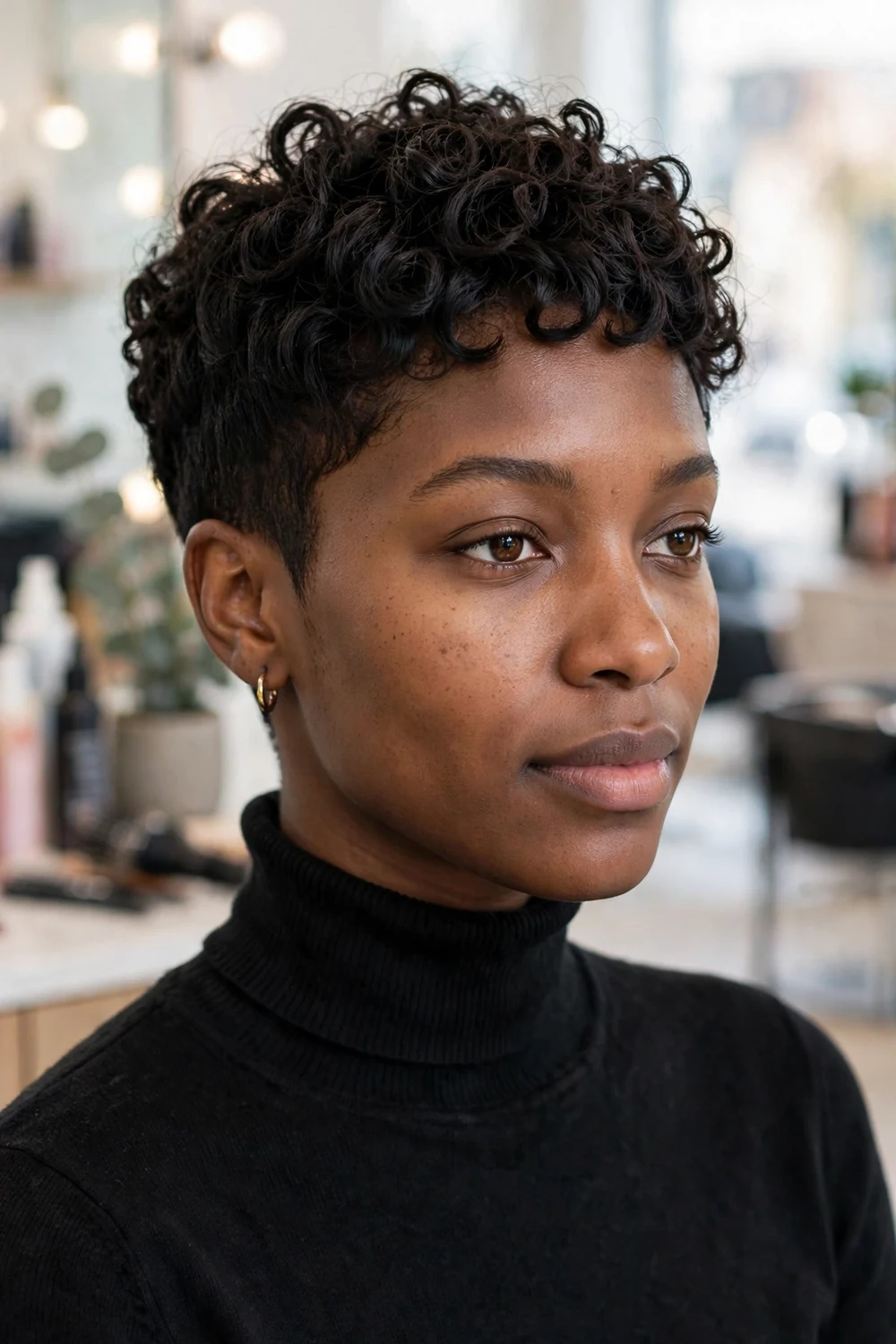
Curls stay longer through the crown so the pattern can form, while the sides taper gently to keep the outline compact. Natural black shows curl definition clearly. The shape gives volume without extra length at the sides.
Ask for curl-by-curl shaping on dry hair if your stylist offers it, since curls shrink as they dry. This cut suits round, oval, and heart faces. For daily care for curls like these, see our guide to pixie haircuts for curly natural hair.
Try this: Apply curl cream to damp hair, scrunch gently, and diffuse on low heat or air-dry.
Difficulty: Low · Cost: $
11. Piecey Pixie

Separated pieces define the fringe and crown in this pixie. Honey blonde adds dimension that makes each piece easier to see. The sides blend smoothly into the top with short, lightly textured layers.
Piecey styling works best on straight and lightly wavy hair with medium density. Very fine hair can still wear it, with less product and softer separation. If fullness is your main goal, compare this with pixie haircuts for fine hair before you book.
Try this: Rub paste between your fingertips only, then twist a few front pieces into points.
Difficulty: Low · Cost: $
12. Undercut Pixie
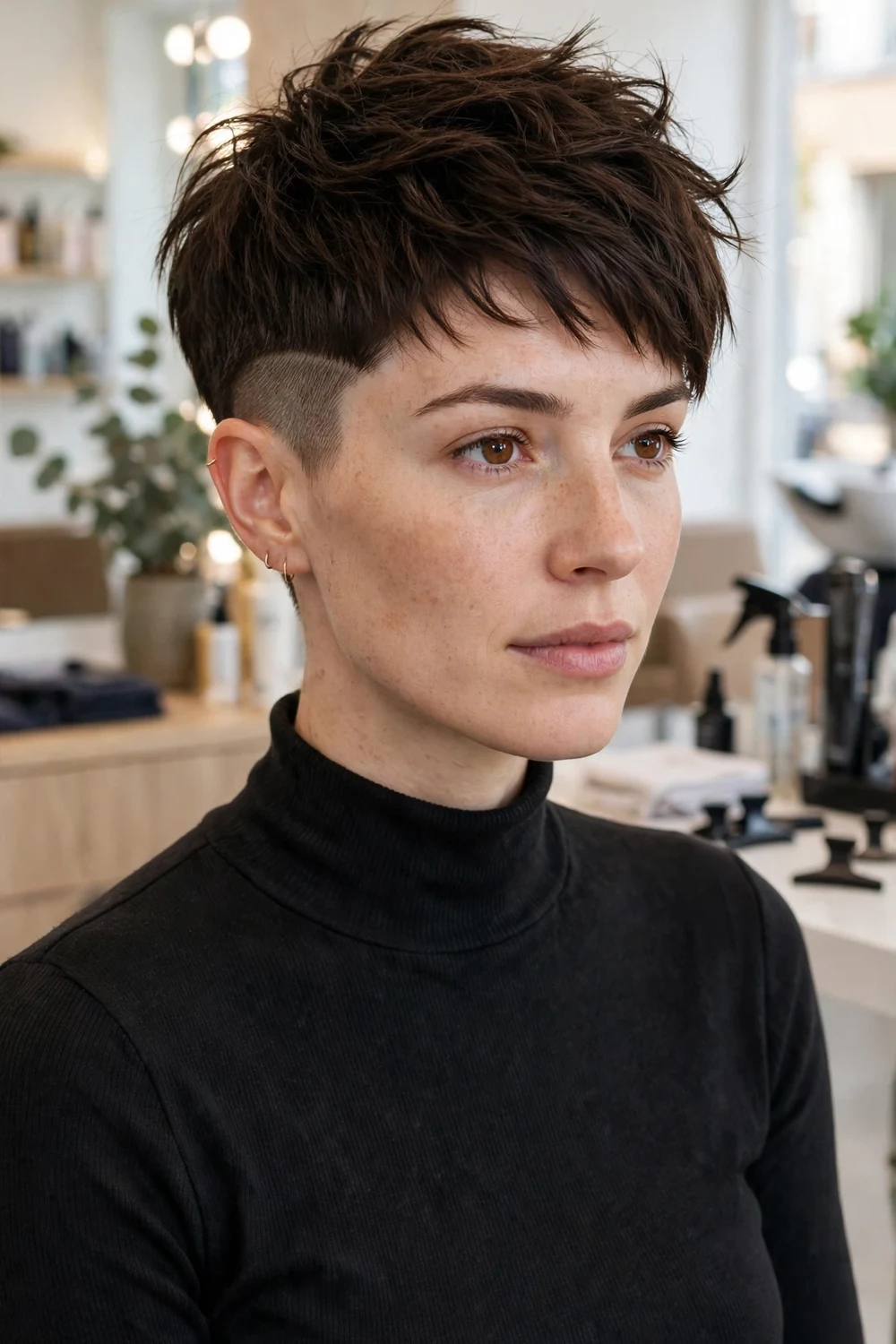
Clipped sides sit close to the head while the top stays long and textured. Dark brown keeps the contrast clear between the two lengths. You can brush the top forward, back, or up depending on the day.
The undercut removes bulk at the sides, which helps thick hair sit closer. It suits oval and square faces. Grow-out needs attention at the disconnect line, so plan trims every four weeks.
Try this: Use lightweight clay on the top only and keep product off the clipped sides.
Difficulty: Medium · Cost: $$
13. Rounded Pixie
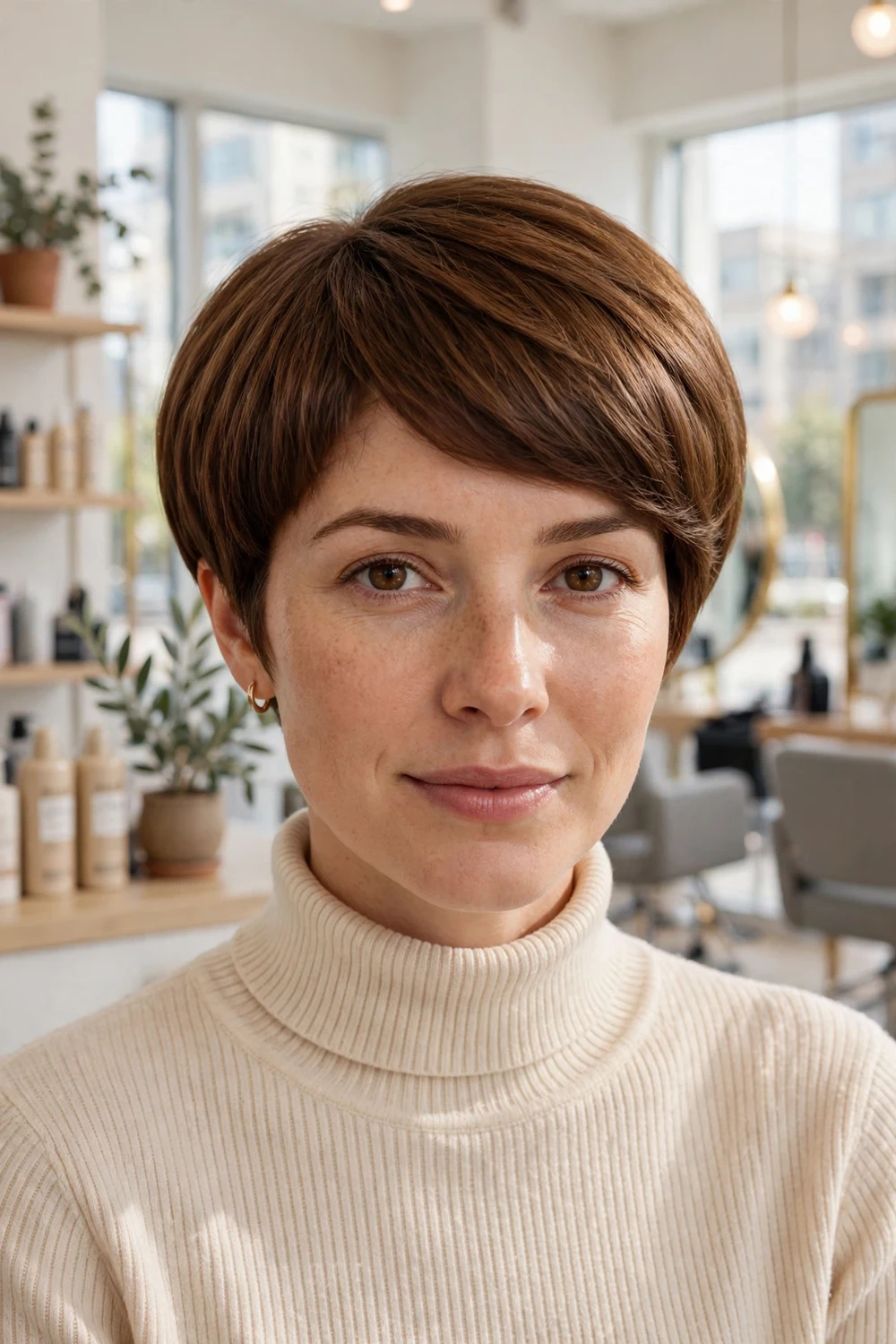
Soft curves shape this pixie into a rounded outline. The crown follows a gentle dome, and the sides trim close enough to keep the shape compact. Warm brown gives the surface an even, polished look.
Rounded shapes suit angular faces because the curve softens the jaw and cheek lines. Medium and thick hair hold the dome best. Blow-dry with a small round brush to keep the curve smooth.
Try this: Dry the hair forward first, then brush it back into the rounded shape for extra fullness.
Difficulty: Low · Cost: $
14. Spiky Pixie

Short, pointed layers lift at the crown in this spiky version. Silver gray shows each separated piece clearly. The sides stay tapered so the height on top stays balanced.
Spiky texture suits straight hair and oval or diamond faces. Keep the spikes soft and separated rather than stiff. A matte clay gives hold without a wet shine.
Try this: Lift small sections at the crown with clay on your fingertips and leave the sides flat.
Difficulty: Low · Cost: $
15. Shaggy Pixie

Uneven layers and feathered ends give the shaggy pixie a lived-in feel. Slightly longer pieces sit around the crown and ears, while the back stays shaped. Caramel brown warms up the broken-up ends.
This cut suits wavy hair and anyone who prefers low-precision styling. It grows out softly, which stretches time between trims. Texturizing spray helps the layers separate on their own.
Try this: Spritz texture spray on dry hair, scrunch lightly, and let the ends fall where they want.
Difficulty: Low · Cost: $
16. Side-Parted Pixie
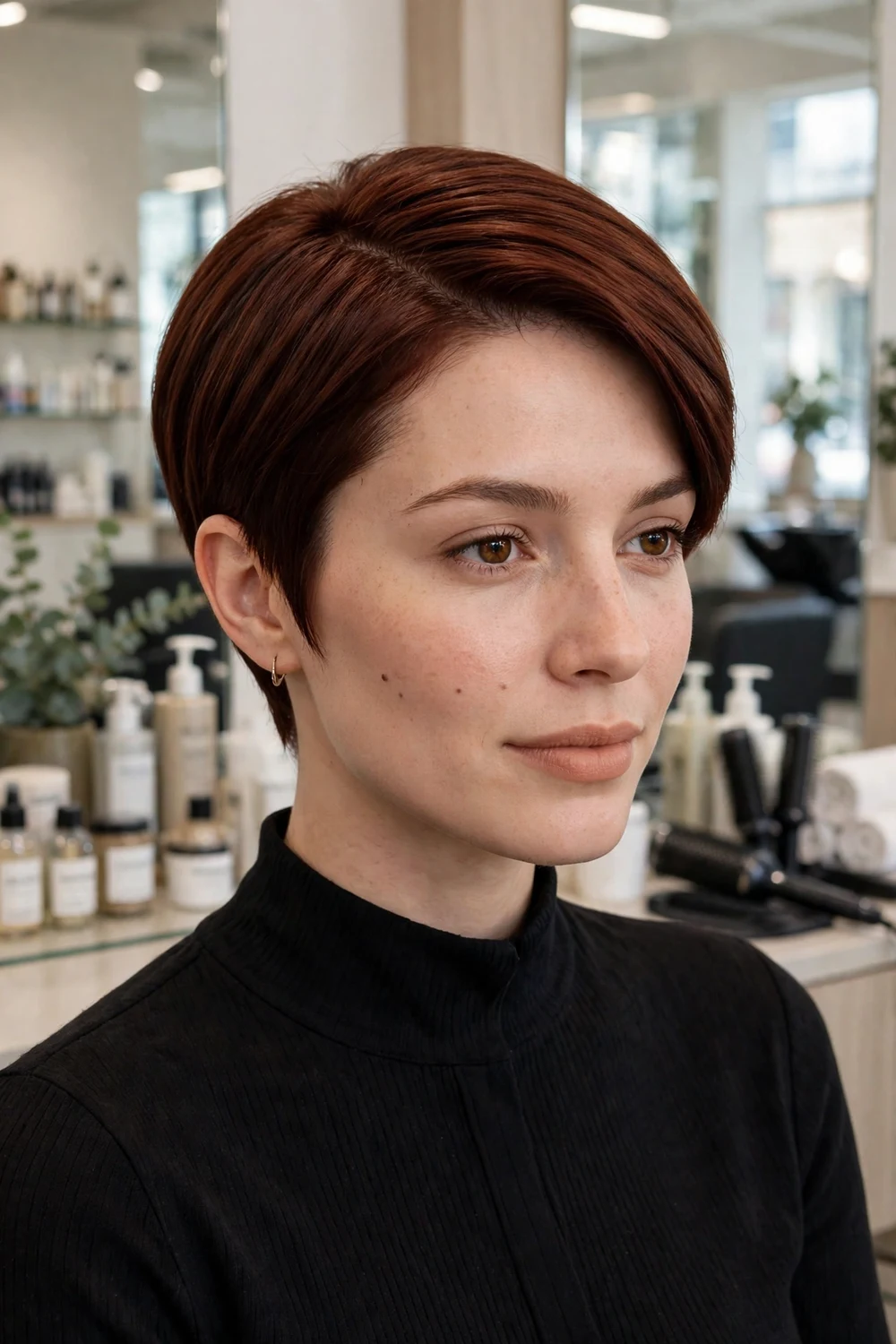
A clear side part organizes this pixie into a neat, polished shape. Dark auburn adds depth along the part and fringe. The top lies smoothly across the head instead of lifting high.
Side parts suit most face shapes and work well for office settings. The cut needs tidy edges around the ears and nape to keep its clean look. Smoothing cream helps the top lie flat without stiffness.
Try this: Part the hair while damp, blow-dry in the direction of the part, and finish with a fine comb.
Difficulty: Low · Cost: $
17. Wavy Pixie

Natural waves need enough crown length to bend, and this pixie leaves it there. The sides taper subtly so the waves on top carry the shape. Ash brown gives the waves a cool, muted finish.
It suits naturally wavy hair and oval or round faces. Scrunching encourages the wave pattern without heat. Avoid heavy oils that pull waves straight.
Try this: Scrunch mousse into damp hair and air-dry, touching the waves as little as possible.
Difficulty: Low · Cost: $
18. French Pixie
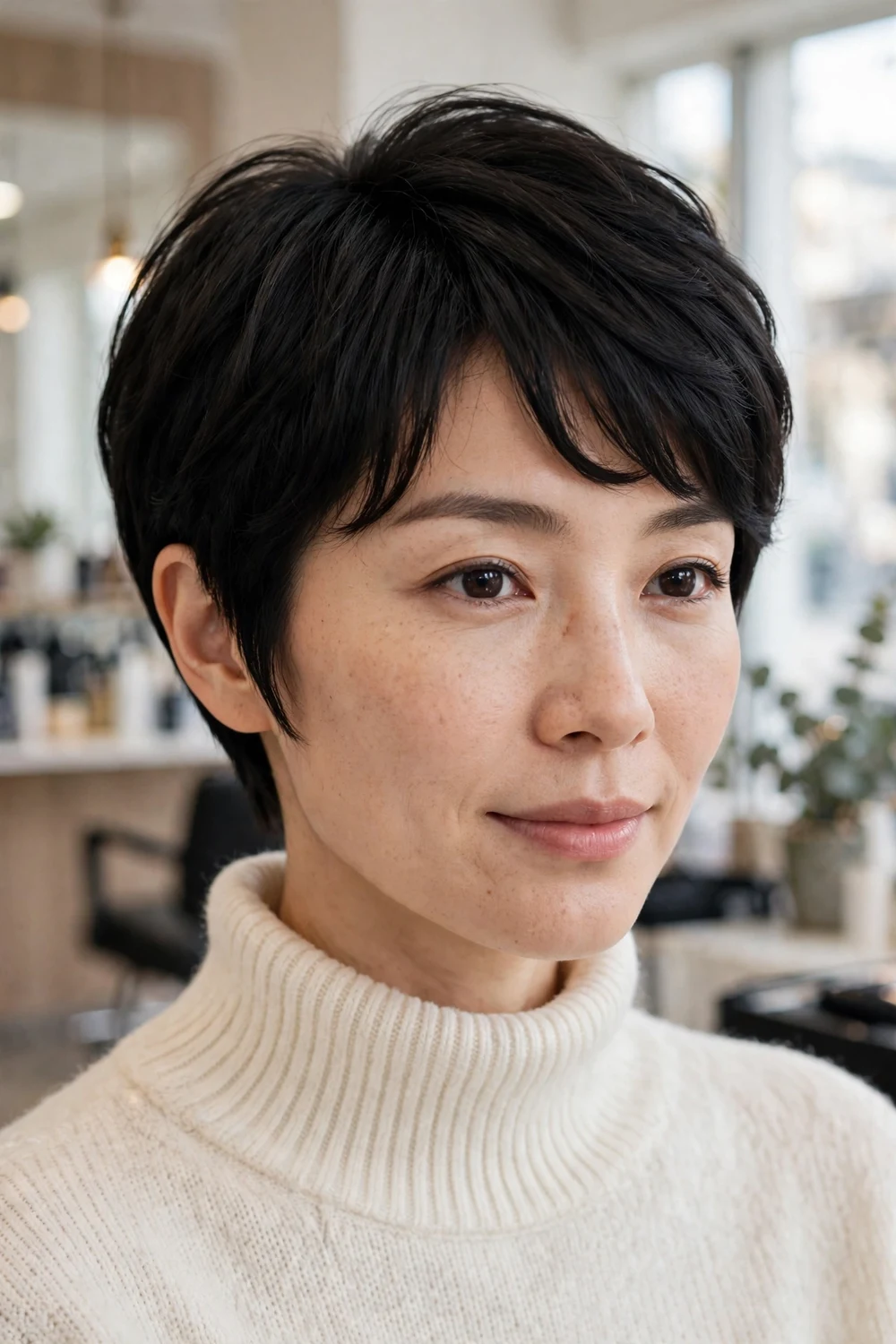
A short, curved fringe and neat sides around the ears define the French pixie. Soft black keeps the outline clean and the texture visible. Crown layers stay subtle so the hair sits naturally.
This shape suits oval and heart faces and straight to lightly wavy hair. Style the fringe forward and keep product minimal. The appeal is a tidy shape that still moves.
Try this: Blow-dry the fringe forward with your fingers and leave a few strands loose at the front.
Difficulty: Low · Cost: $
19. Voluminous Pixie
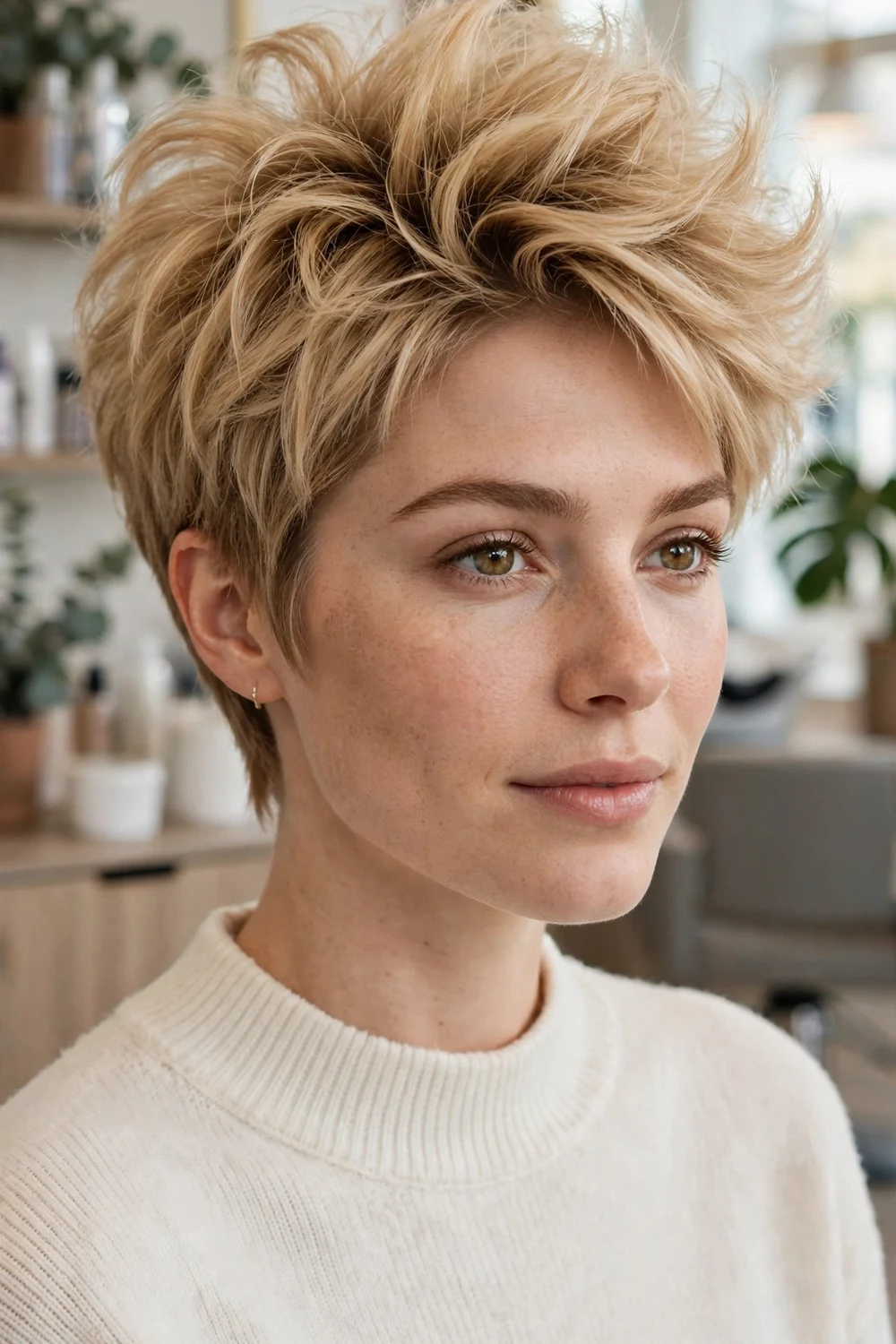
Lifted roots and graduated crown layers build a fuller silhouette in this pixie. Wheat blonde keeps the height looking light and airy. Shorter sides balance the top so the shape stays neat.
Volumizing cuts help fine and medium hair look thicker at the crown. Round faces benefit from the added height. Root product and upward drying do most of the daily work.
Try this: Apply mousse at the roots and blow-dry upward with a small round brush, section by section.
Difficulty: Medium · Cost: $$
20. Pixie with Baby Bangs
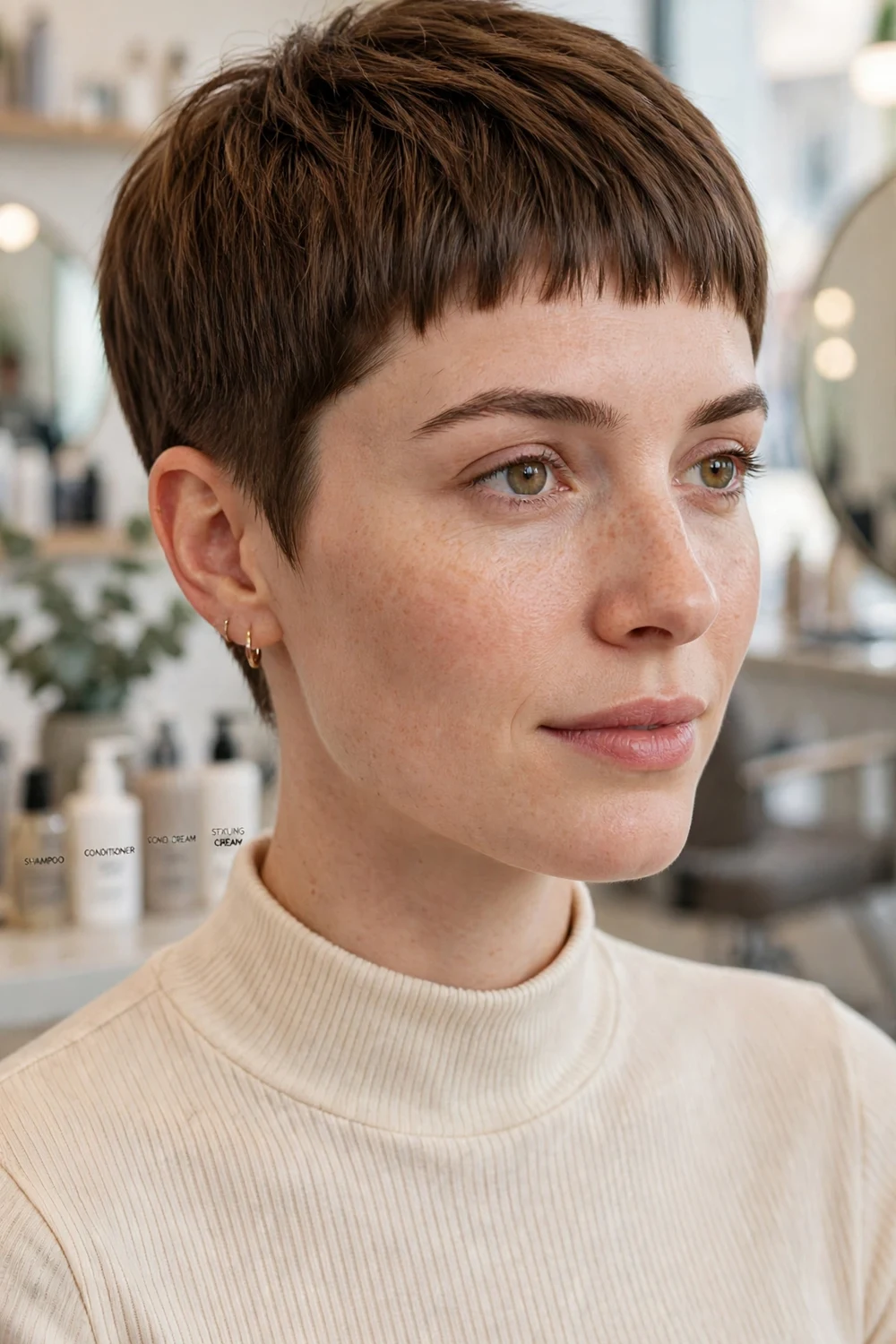
Baby bangs sit high on the forehead in this cropped pixie. Medium brown keeps the short fringe looking balanced and natural. The sides and back stay close, with light texture on top for softness.
Baby bangs suit oval and long faces and straight hair. They need small trims often because they grow into the eyes quickly. Discuss the exact fringe length with your stylist using a photo, since a few millimeters change the look.
Try this: Smooth the fringe forward with a tiny amount of cream and press it flat with your palms.
Difficulty: Medium · Cost: $
21. Brushed-Back Pixie

Front layers brush away from the forehead in this open, tidy style. Golden brown adds warmth along the swept-back top. The sides trim close so the backward direction stays clear.
Brushed-back styling suits oval and square faces and works for straight or wavy hair with enough top length. It also helps during grow-out, since longer front pieces have somewhere to go.
Try this: Blow-dry the top backward with mousse, then set it with a soft-hold spray.
Difficulty: Low · Cost: $
22. Razor-Cut Pixie
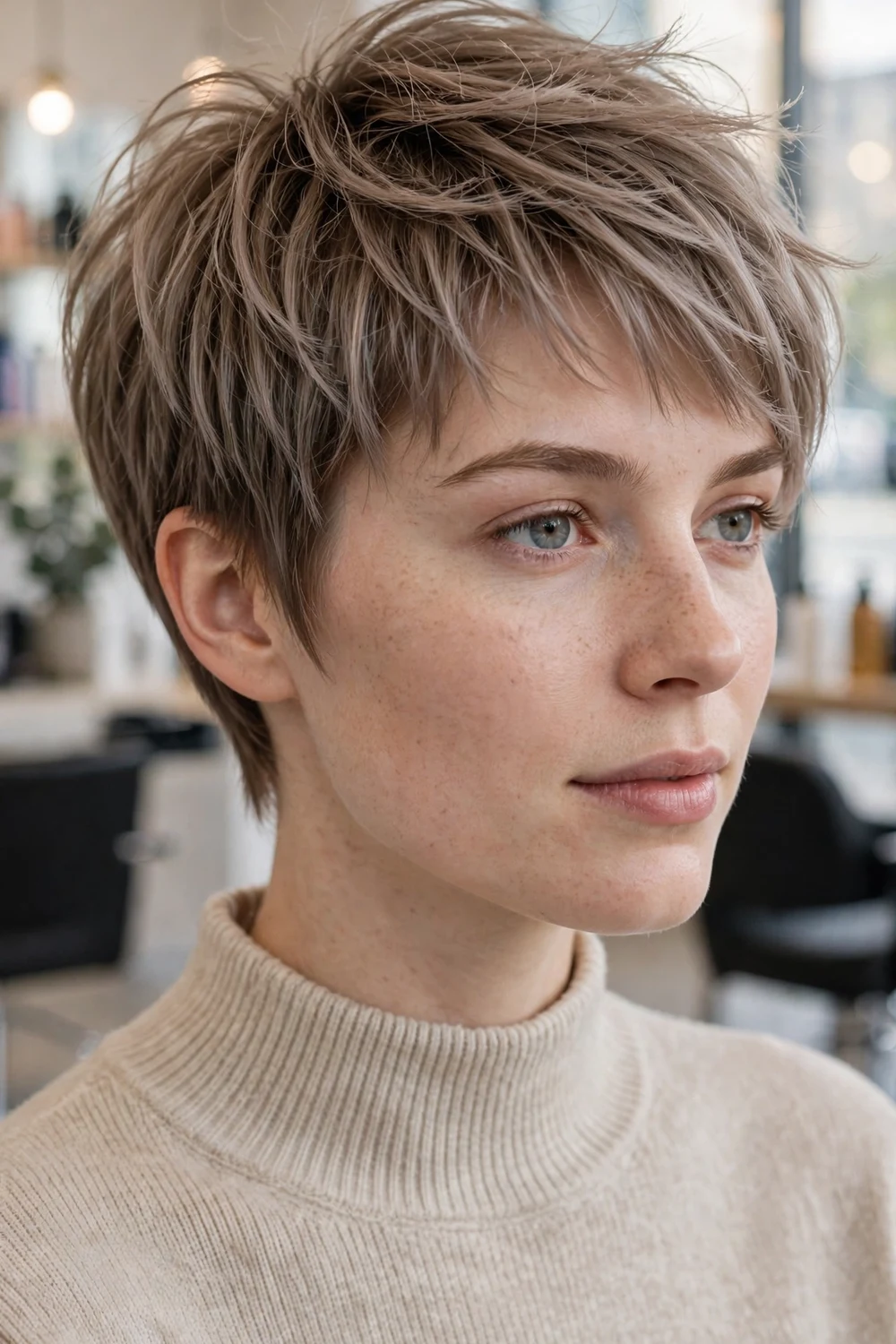
A razor finish tapers the ends into fine points in this pixie. Light ash brown suits the soft, separated texture. The crown keeps gentle movement while the sides shape close to the head.
Razor work suits straight and lightly wavy hair with medium density. On very fine hair, ask your stylist to use the razor lightly so the ends stay full. Texture cream defines the wispy tips without weight.
Try this: Apply texture cream to damp hair, finger-dry, and pinch the ends to show the razor finish.
Difficulty: Low · Cost: $
23. Long Pixie
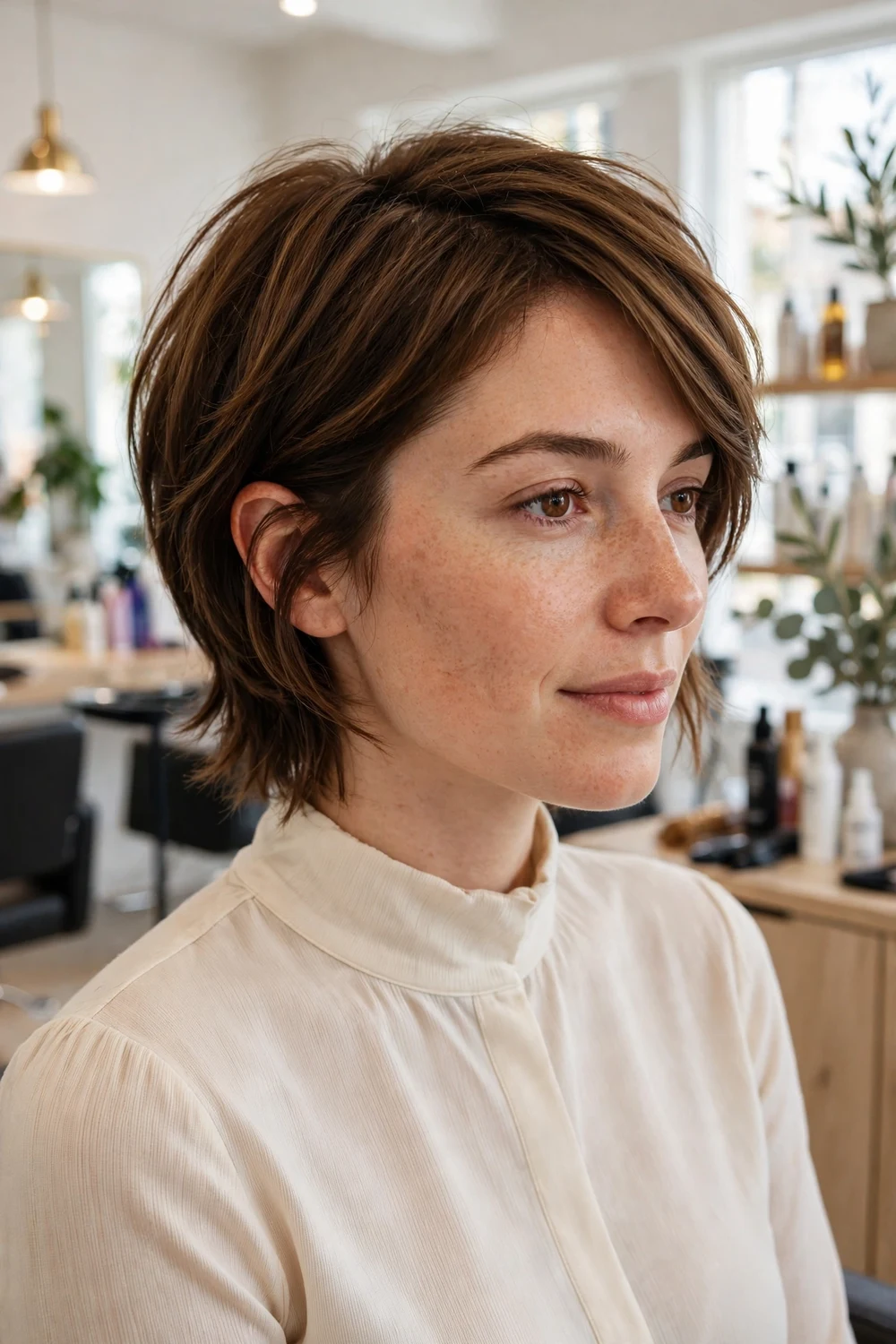
The long pixie keeps length around the ears and nape while the top stays layered. You can tuck the sides behind your ears, which a shorter pixie cannot do. Warm brunette keeps the longer shape looking even and neat.
This is a good first step if you are moving from a bob to short hair. It suits most face shapes and straight to wavy hair. Grow-out is forgiving, with trims every six to seven weeks.
Try this: Tuck one side behind your ear and leave the other side loose to change the shape in seconds.
Difficulty: Low · Cost: $$
24. Bixie Pixie Bob
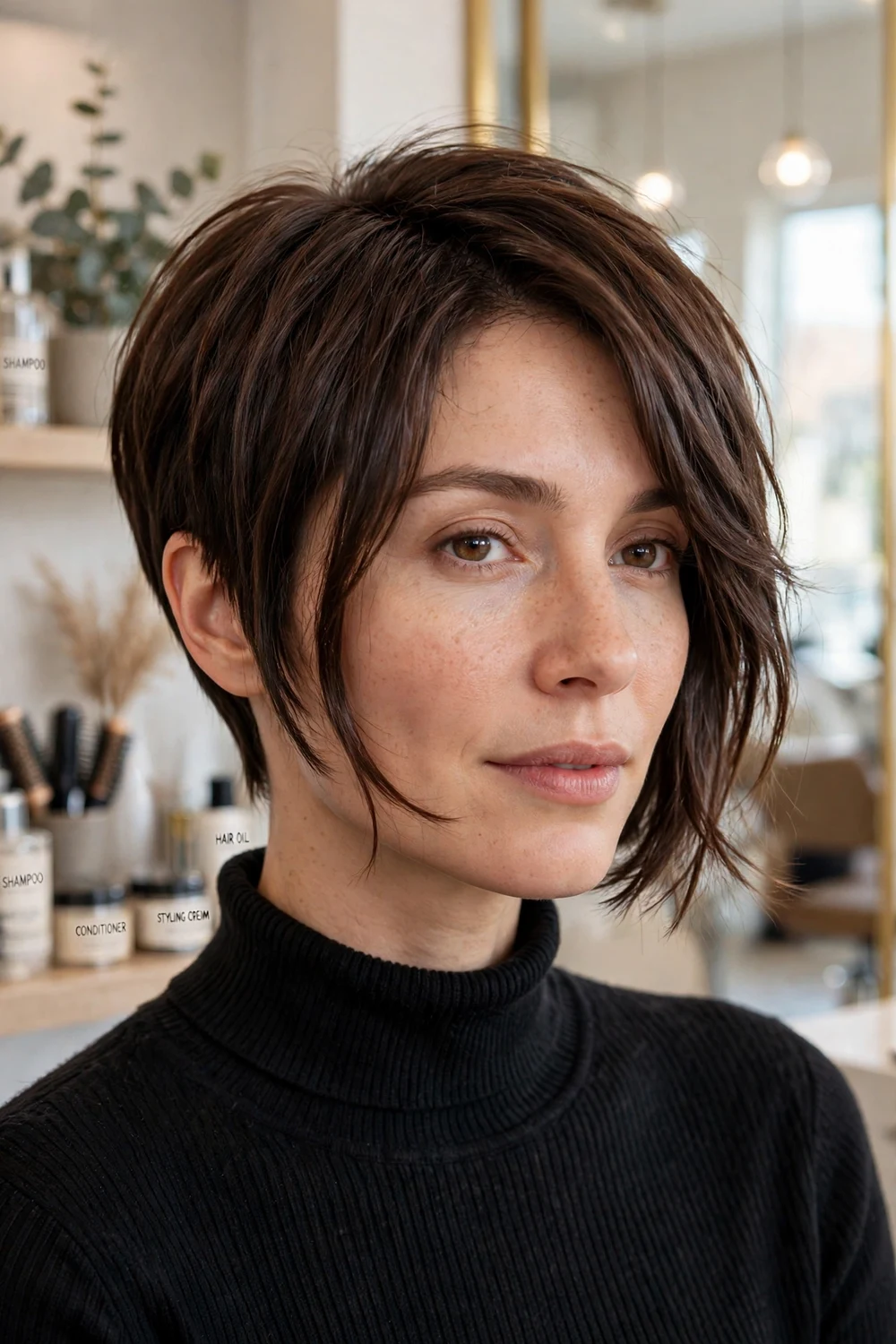
The bixie blends a short pixie back with longer, bob-length front pieces. Long front layers frame the face while the back stays cropped and light. Brunette shows the hybrid shape clearly. For more variations, see pixie bob haircut ideas.
The bixie suits women who want short hair with more styling options around the face. It works on straight and wavy hair. Ask for the back to stay soft rather than blunt so the pixie shape stays visible.
Try this: Blow-dry the front pieces forward and under with a round brush for a smooth frame.
Difficulty: Low · Cost: $$
25. Platinum Pixie
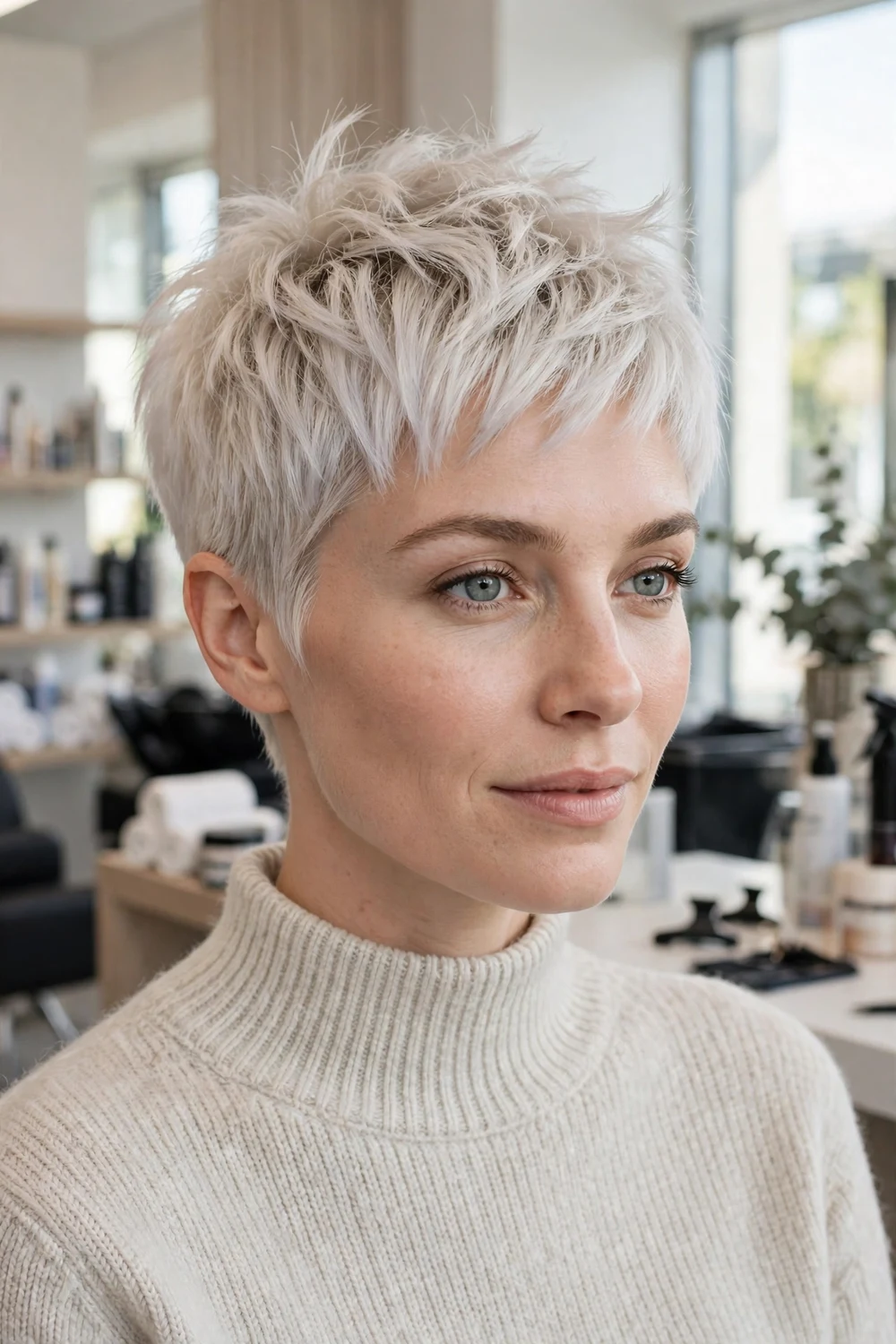
Platinum blonde turns a simple pixie shape into a high-contrast look. Piecey texture on top keeps the light color from looking flat. Short sides keep the outline sharp.
Platinum needs salon toning and careful home care to avoid brassiness and dryness. The cut itself suits oval and heart faces. If your hair is thick, texturing helps the top sit close; see pixie haircuts for thick hair for bulk-control options.
Try this: Use a purple shampoo once a week and a light leave-in conditioner on the ends.
Difficulty: Medium · Cost: $$$
26. Pixie with a Soft Quiff
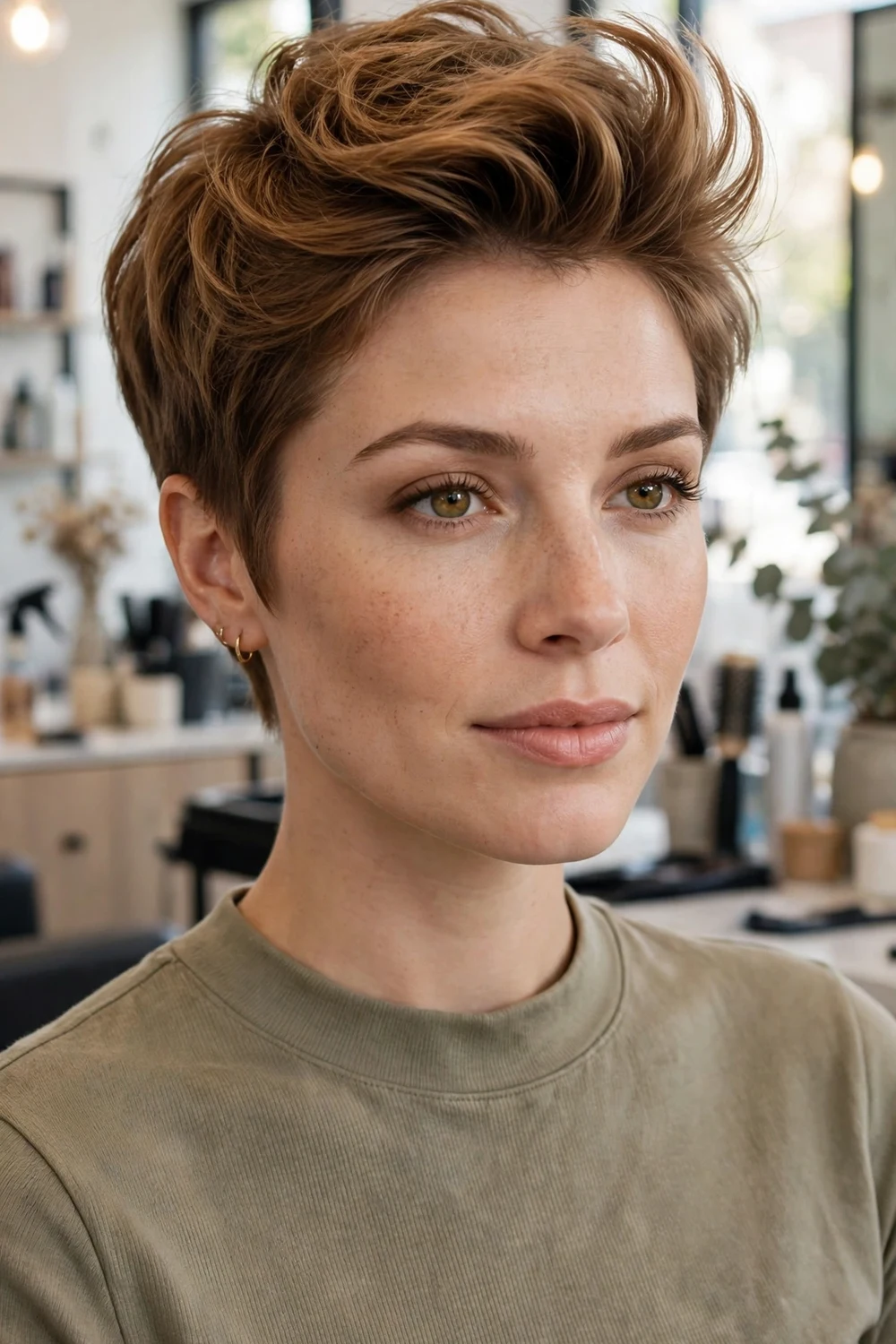
The front lifts up and slightly back into a soft quiff in this pixie. The sides stay short and the crown shortens gradually toward the back, so the lift flows into the rest of the cut. Honey brown keeps the height looking warm and natural.
A quiff adds height above the forehead, which suits round and square faces. The same cut can fall forward into a fringe on low-effort days. Root foam and upward drying set the shape.
Try this: Blow-dry the front up with a vent brush, then press flexible paste into the ends only.
Difficulty: Medium · Cost: $$
27. Slicked-Back Pixie
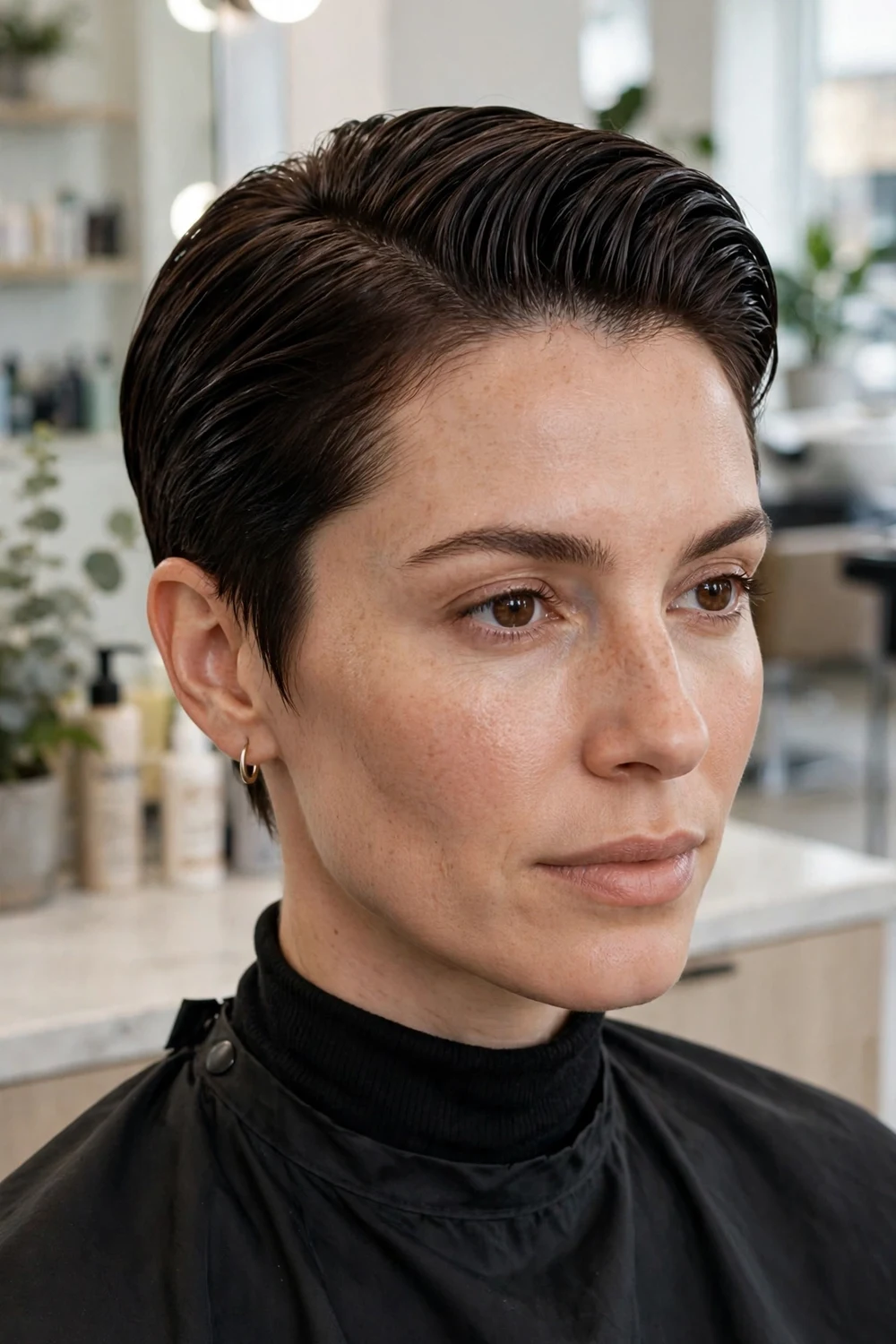
Gel styling slicks the top back into a smooth, glossy finish in this version. The cut underneath is a standard pixie with enough top length to lie flat. Deep brunette gives the slick finish an even shine.
Slicked-back styling suits oval faces and straight hair. It works for evening events when you want a sharper look from the same cut. Use gel sparingly so the hair stays glossy rather than crunchy.
Try this: Comb gel through damp hair from the hairline to the crown in one direction, then leave it to set.
Difficulty: Low · Cost: $$
28. Pixie Mullet
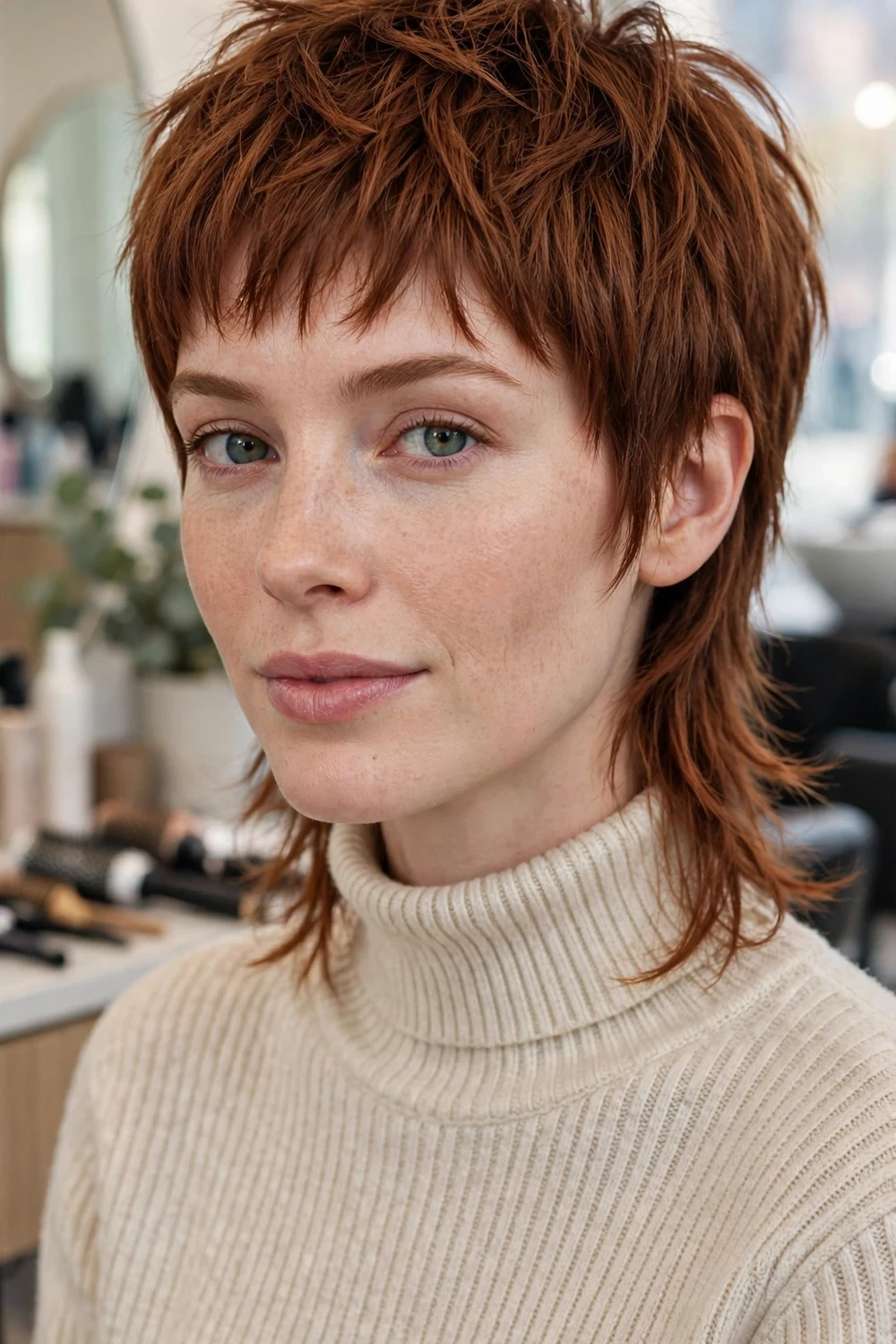
The pixie mullet keeps the front and top short and textured while the nape stays longer. Copper brown draws attention to the longer back section. The contrast is clear but the lengths still blend through the sides.
This cut suits wavy and straight hair and oval or long faces. It needs a stylist who balances the back length carefully, since too much length can look disconnected. Texture spray keeps the top and back moving together.
Try this: Scrunch texture spray through the back section so the longer nape looks soft, not stringy.
Difficulty: Medium · Cost: $$
Pixie Haircuts at a Glance
| Pixie Type | Best For | Upkeep | Cost Band |
|---|---|---|---|
| Classic Tapered Pixie | Most hair types, first pixie | Trim every 4-5 weeks | $ |
| Layered Crown Pixie | Fine hair needing crown lift | Trim every 4-6 weeks | $ |
| Short Curly Pixie | Natural curls and coils | Trim every 5-6 weeks | $ |
| Undercut Pixie | Thick hair, bold contrast | Trim every 4 weeks | $$ |
| Long Pixie / Bixie | Nervous about going very short | Trim every 6-7 weeks | $$ |
| Platinum Pixie | Color-focused change | Toning plus trim every 4 weeks | $$$ |
More Ideas to Explore
Frequently Asked Questions
How often does a pixie haircut need a trim?
Most pixie haircuts need a trim every four to six weeks. Very short styles such as the micro pixie need attention every three to four weeks, while long pixies and bixies can stretch to six or seven weeks.
Will a pixie haircut suit my face shape?
A pixie can be adjusted for any face shape. Crown height helps round faces, side-swept fringe softens long faces, and softer feathered edges suit square faces. Your stylist adjusts fringe, crown height, and side length to balance your features.
Are pixie haircuts hard to style every day?
Most pixies take five to ten minutes to style. Short and tapered versions need only cream or wax worked through with your fingers. Longer tops, quiffs, and slicked-back styles take a few extra minutes with a blow-dryer.
Can I get a pixie haircut with curly hair?
Yes. A curly pixie keeps enough length on top for curls to form and tapers the sides to control width. Ask for dry, curl-by-curl shaping and use curl cream on damp hair to keep definition.
What should I tell my stylist for a pixie haircut?
Bring a photo of the exact version you want and name the fringe, crown length, and side length. Say whether you want scissor tapering or clipped sides at the nape, and ask how often that shape needs a trim.
Final Thoughts
Pick the pixie that matches the hair you have and the mornings you want. If you love a five-minute routine, start with a tapered, feathered, or micro version. If you want options, keep the top long or try a bixie. Save two or three photos from this list, book a consultation, and let your stylist adjust the fringe and crown to your face and growth pattern. Short hair grows fast, so you can refine the shape at every trim until it feels fully yours.

