

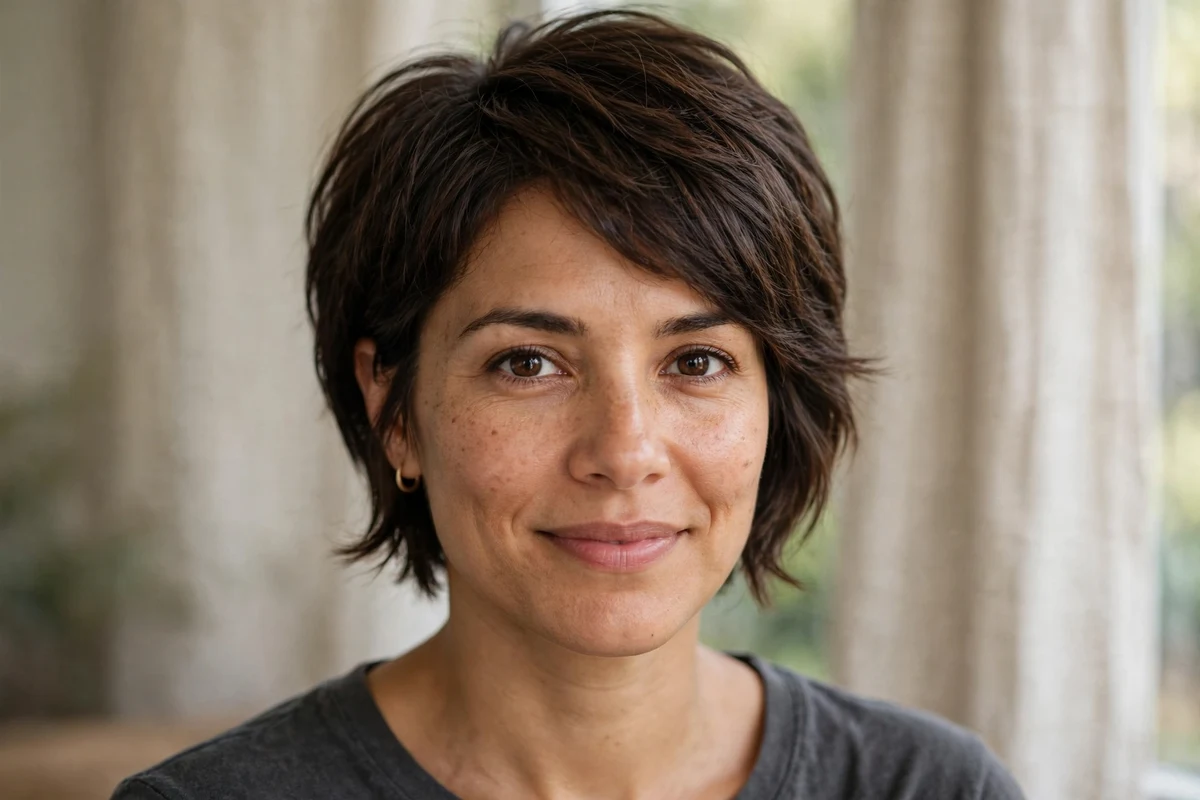
A pixie bob lives in the gap between two classic cuts: shorter and airier at the back like a pixie, with softer length around the face like a bob. That extra length is what makes it forgiving. You can tuck it, part it, and restyle it in ways a full pixie will not allow, while still getting the light feel of very short hair. I have watched this hybrid cycle in and out of salons for years, and it keeps coming back because the shape suits so many people.
This list rounds up 27 pixie bob haircut ideas that cover the full spectrum of the cut, from neat and polished versions to choppy, curly, and color-driven takes. Every idea here works for fine, medium, and thick hair with the right layering, since the hybrid adapts to texture instead of fighting it. Pick the one that matches your routine, then bring a photo to your stylist with notes on what you like most.
Quick Takeaways
- A pixie bob is a hybrid: a cropped back and sides like a pixie, with longer face-framing length like a bob.
- The extra front length gives more styling options than a true pixie: tuck it, part it, or sweep it.
- Ask for internal layering instead of thinned-out ends, so fine hair stays full and thick hair stays light.
- A neckline clean-up every 4 to 6 weeks keeps the shape crisp between full cuts.
- Full shape refreshes every 8 to 10 weeks renew the layers and the fringe without a full overhaul.
1. Classic Short Pixie Bob
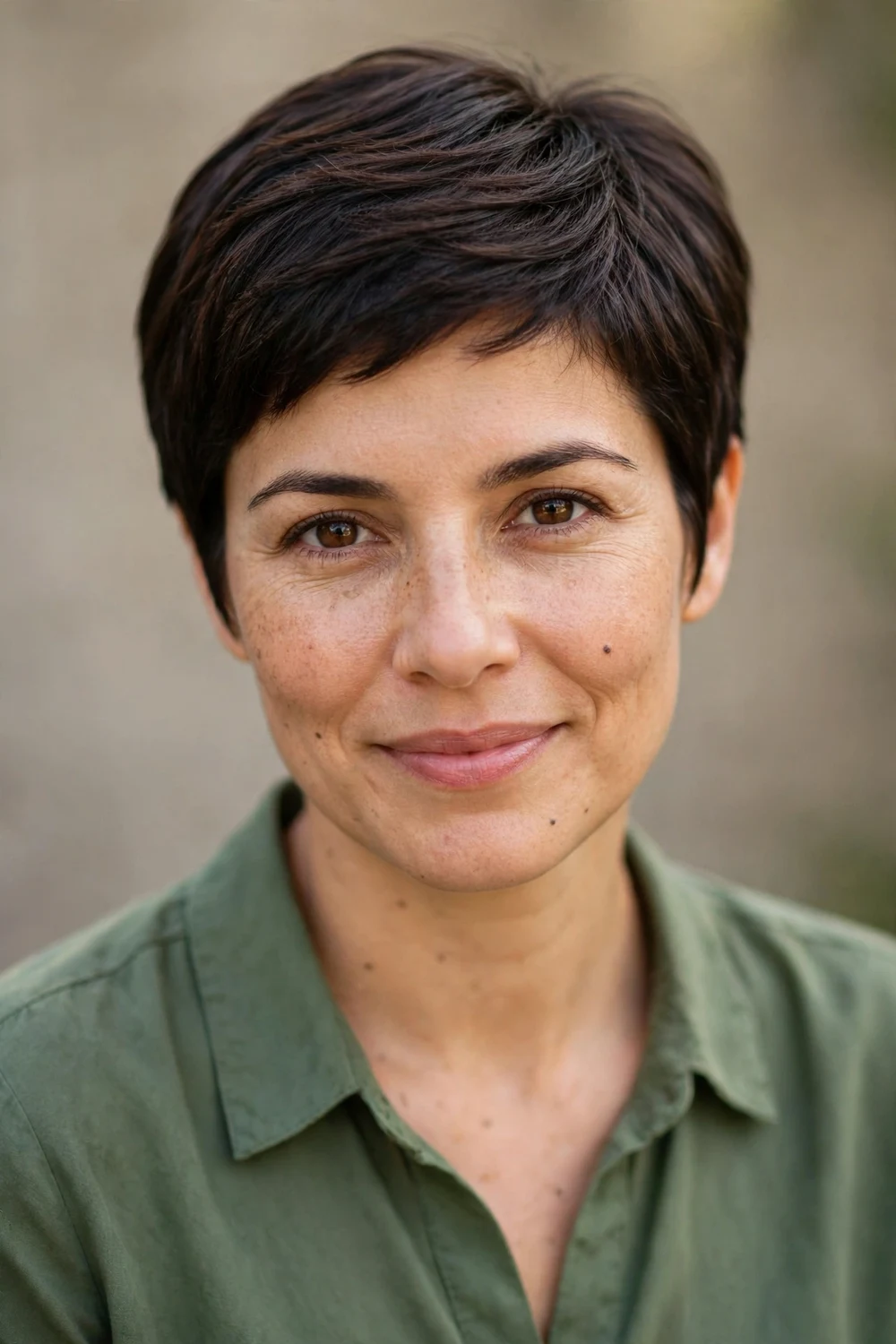
The classic short pixie bob is the version most people picture when they hear the name: a neat tapered back, soft layers through the crown, and enough length around the ears and jawline to tuck, part, and restyle. It reads more settled than a pixie because of that extra face-framing length, and it reads lighter than a bob because the back is cropped close instead of hanging heavy. It is the safest first step into the hybrid if you have never gone short before.
This cut works across straight, wavy, and curly hair, and it flatters most face shapes with small tweaks to the fringe. Blow-dry with a small round brush for polish, or rough-dry with your fingers for a softer finish. A dab of lightweight paste gives the crown layers definition without making the cut look stiff or overdone. Fine hair benefits from a volumizing mousse at the roots before drying, while thick hair needs interior weight removed so the shape stays light instead of puffy.
Try this: ask for the longest version of the classic first, then go shorter at your next trim if you love the shape.
Difficulty: Low · Cost: $ (salon)
2. Long Bixie

The long bixie keeps the pixie spirit at the back while letting the front reach the chin or just past it. That length makes it the gentlest entry point for anyone coming from a bob, since you keep the styling options you are used to: side parts, soft waves, tucked sides. The cropped back does the heavy lifting on lightness, so the cut never feels as dense as a one-length bob even with the longer front.
It suits fine to medium hair best, since very long front pieces need some density to avoid looking stringy. Ask your stylist to keep the back stacked enough that the contrast reads as intentional. Air-dry for a relaxed finish, or smooth the front pieces with a flat iron for a sharper line on polished days. If your hair is thick, ask for the interior layers to be thinned so the longer front does not turn heavy. A light styling cream keeps the front pieces smooth without weighing down the cropped back.
Try this: wear it tucked behind both ears on busy days to show off the tapered back shape.
Difficulty: Low · Cost: $ (salon)
3. Stacked Pixie Bob

Graduated layers stacked through the nape give this version its signature lift at the back. The stacking builds volume exactly where the cut is shortest, so the shape looks full and rounded instead of flat. Longer pieces through the front keep it firmly in pixie-bob territory, framing the face while the back stays neat and close to the head. It is also one of the longest-lasting shapes between appointments, since the graduated back grows out into a soft layered bob rather than an awkward in-between stage.
It is a strong pick for fine or flat hair, since the stacked back creates body without teasing. Ask for clean graduation at the nape with soft layers blending into the crown. Blow-dry the back with a round brush directed upward to set the lift, and the shape holds for days with a little dry shampoo. Thick hair works here too if the stylist removes weight from the interior layers, keeping the stacking light instead of bulky. Avoid heavy oils on the back sections, since they collapse the graduated volume that makes this cut special.
Try this: flip the nape sections up with a round brush while drying to lock in the stacked volume.
Difficulty: Medium · Cost: $$ (salon)
4. Inverted Pixie Bob

The inverted pixie bob takes the classic A-line idea and shrinks it: a short, stacked back that rises toward a much longer front. The steep angle gives the cut drama and movement, with the long front pieces drawing the eye down toward the jawline. It is one of the most sculpted versions of the hybrid, and the silhouette reads clearly even from across the room. The contrast between the short back and the long front also makes fine hair look denser, since the stacked layers build body exactly where it is needed.
This cut suits straight to slightly wavy hair, since the angle shows best on smooth texture. Ask your stylist how steep you want the line: a gentle slope is easier to grow out, while a sharp angle makes the statement. A smoothing serum through the front pieces keeps the long sections sleek and defined all day. If your hair is thick, the stacked back removes welcome weight while the long front keeps the shape balanced. Finish with a cool shot from the dryer to set the smooth front pieces in place.
Try this: request a moderate angle first, since a steep one needs more frequent trims to stay crisp.
Difficulty: Medium · Cost: $$ (salon)
5. Asymmetrical Pixie Bob

One side noticeably longer than the other turns the pixie bob into a statement cut. The asymmetry creates a diagonal line across the face that flatters round and full faces in particular, since it breaks up symmetry with a clear direction. Keep the back cropped like a standard pixie bob so the contrast between the two sides stays the star of the show. The uneven lengths also give fine hair visual interest, since the eye follows the line instead of noticing a lack of density.
Wear it sleek to make the uneven lengths obvious, or tousle it for a softer take where the difference reads as casual. It suits straight hair best, since curls blur the clean line. Commit to trims every five to six weeks, because the asymmetry grows out into plain unevenness if you let it drift. Thick hair can wear it too if the longer side is thinned at the ends so it does not swing heavily. A shine serum on the longer side highlights the contrast between the two lengths.
Try this: part on the deeper side to show off the longer section at its fullest.
Difficulty: Medium · Cost: $$ (salon)
6. Choppy Pixie Bob
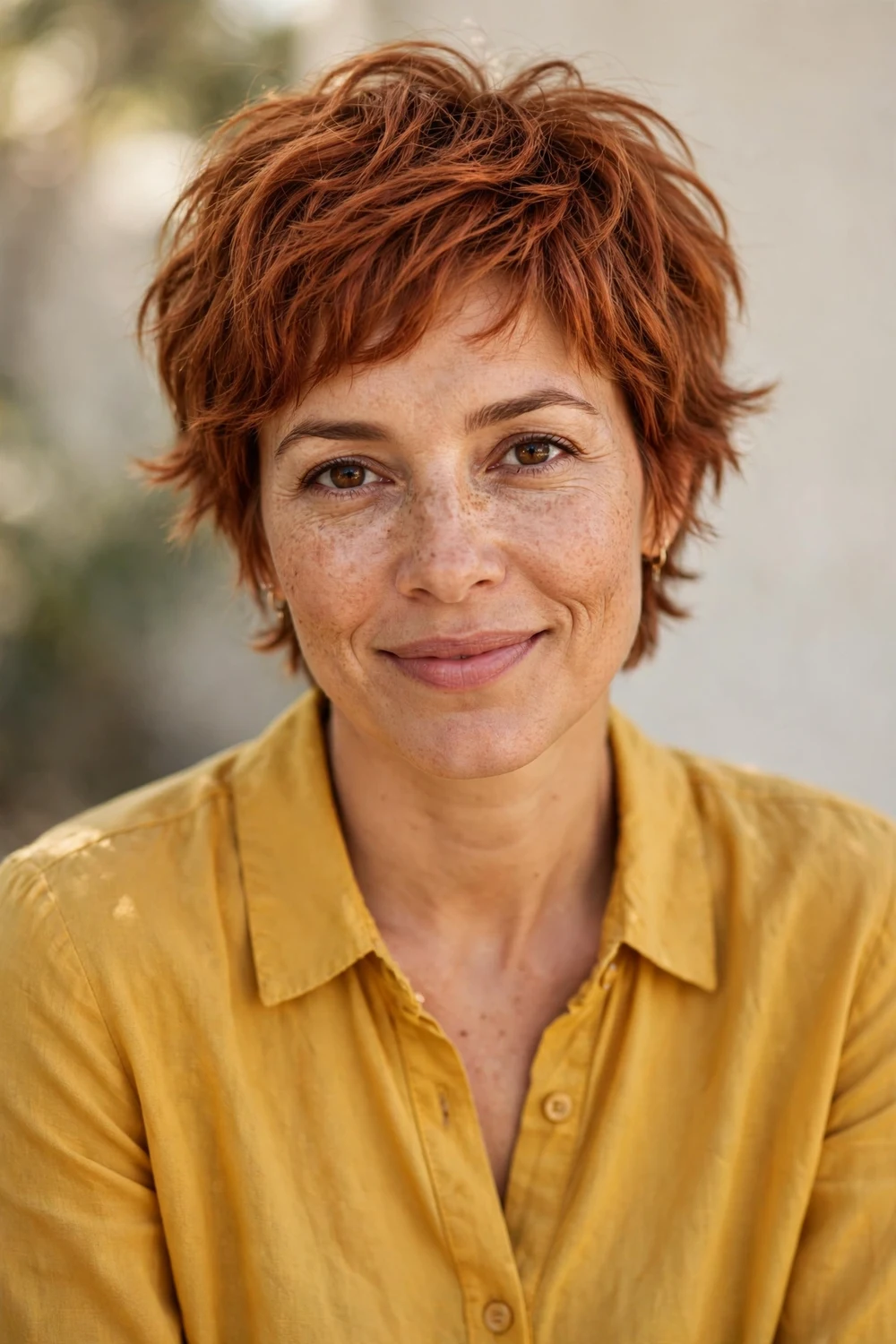
Chunky, jagged layers give the choppy pixie bob its edge. Instead of blended softness, the ends are point-cut into distinct pieces that catch light and create movement. The choppiness also removes weight, which is why this version suits thick hair so well: the bulk disappears without losing the fullness around the face that makes it a bob. Fine hair benefits as well, because the jagged ends create the illusion of thickness where blunt ends would show every gap.
Style it with a pea-sized amount of texturizing paste worked through dry hair, piece by piece. It suits straight to wavy hair and anyone who wants a cut with attitude. The rougher finish means grow-out is forgiving, so you can stretch appointments a little longer than with precision styles. For extra separation, twist individual pieces between your fingers after applying the paste. A light texturizing spray on the crown adds grit that helps the choppy layers stand apart all day.
Try this: apply paste only to the ends, since loading the roots flattens the choppy texture.
Difficulty: Low · Cost: $ (salon)
7. Soft Layered Pixie Bob
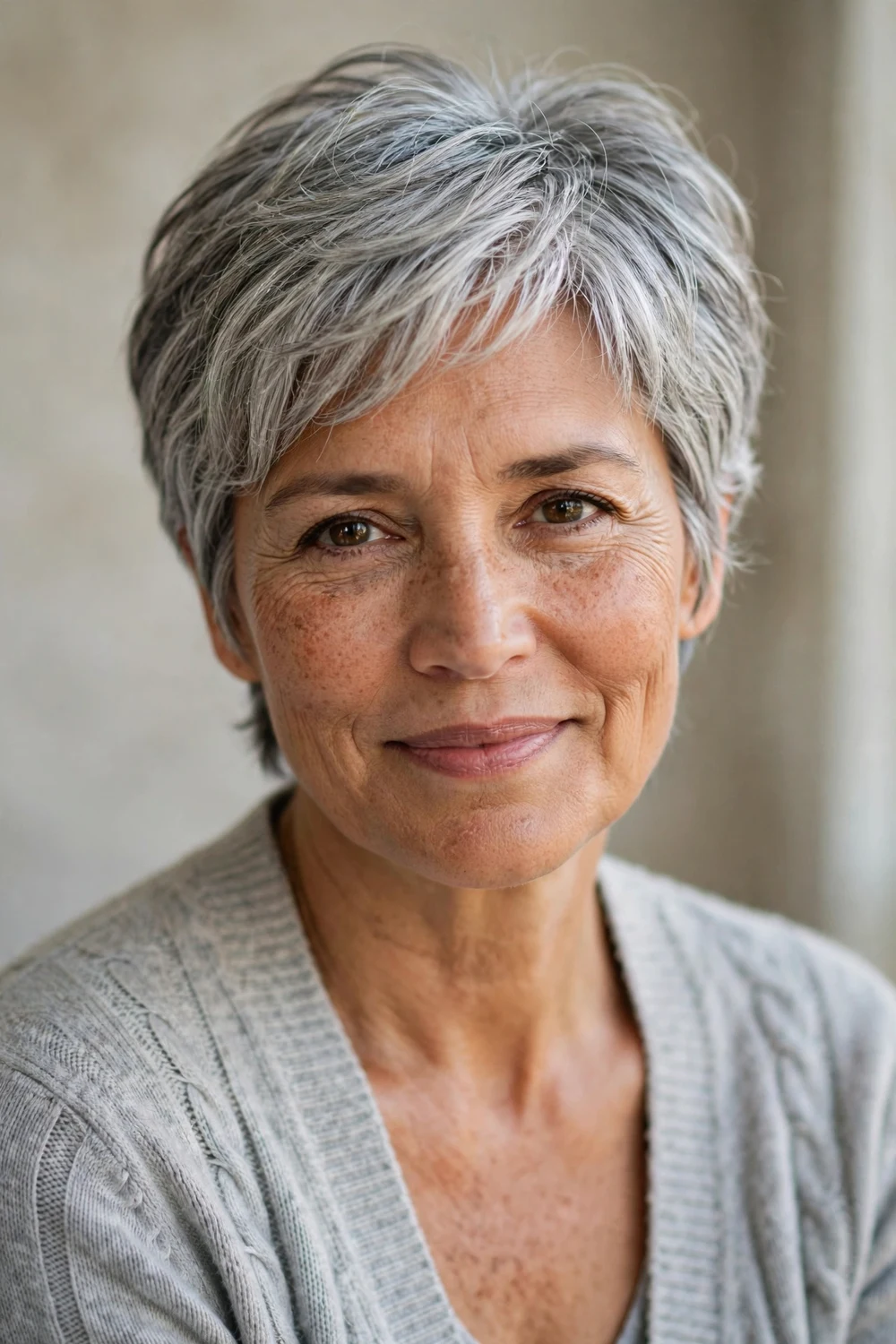
Where the choppy version goes jagged, the soft layered pixie bob keeps everything blended. The layers melt into each other for a smooth, feathered finish that moves as one piece. It is the polished sibling of the family, and it suits anyone who wants the pixie bob shape without any roughness at the edges. The softness also makes it very forgiving around the temples and hairline. Thick hair stays controlled because the blended layers remove weight gradually instead of all at once.
This version flatters oval, heart, and long faces especially well. Blow-dry with a round brush for a smooth finish, or let it air-dry for gentle movement. It works on all hair types, and a light cream keeps the layers cohesive without weighing them down or making them stringy. Fine hair gets a lift from the layered crown, while curly hair should ask for the layers cut to follow the curl pattern. A silk pillowcase at night keeps the smooth finish intact until your next wash.
If you like gentle layering at short lengths, these short layered hairstyles for women over 60 show more soft, flattering shapes.
Try this: ask your stylist to point-cut just the very ends for softness without visible steps.
Difficulty: Low · Cost: $ (salon)
8. Angled Pixie Bob
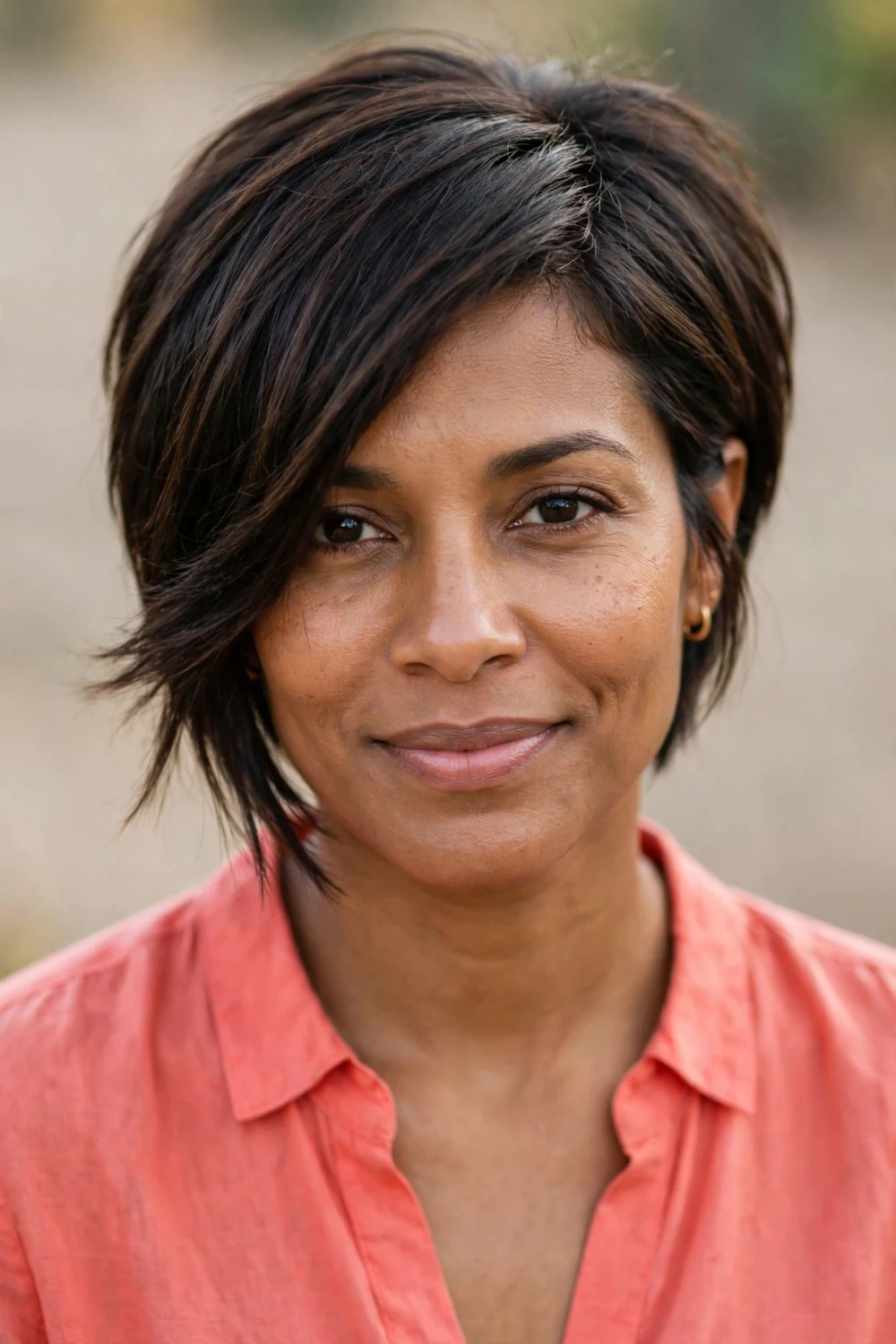
The angled pixie bob is cut with precision: clean lines that slope from a short back down to longer points near the chin. Unlike the inverted version, which stacks volume in back, the angled cut keeps the line itself as the feature. It reads sharp and modern, almost architectural, and the diagonal draws attention to the jawline in a flattering way. Fine hair looks denser in this cut because the solid perimeter keeps the ends looking full from every angle.
This is a precision cut, so it needs a stylist who is confident with short hair and trims every five to six weeks to hold the line. It suits straight hair best, since the crisp angle softens on very curly texture. Style it sleek with a flat iron pass on the front pieces for the full graphic effect. Thick hair needs interior thinning so the sharp line does not turn bulky at the ends. A heat protectant is a must before every flat-iron pass to keep the sleek finish healthy.
Try this: smooth a flat iron over just the front points on mornings when you want extra sharpness.
Difficulty: Medium · Cost: $$ (salon)
9. Tapered Nape Pixie Bob
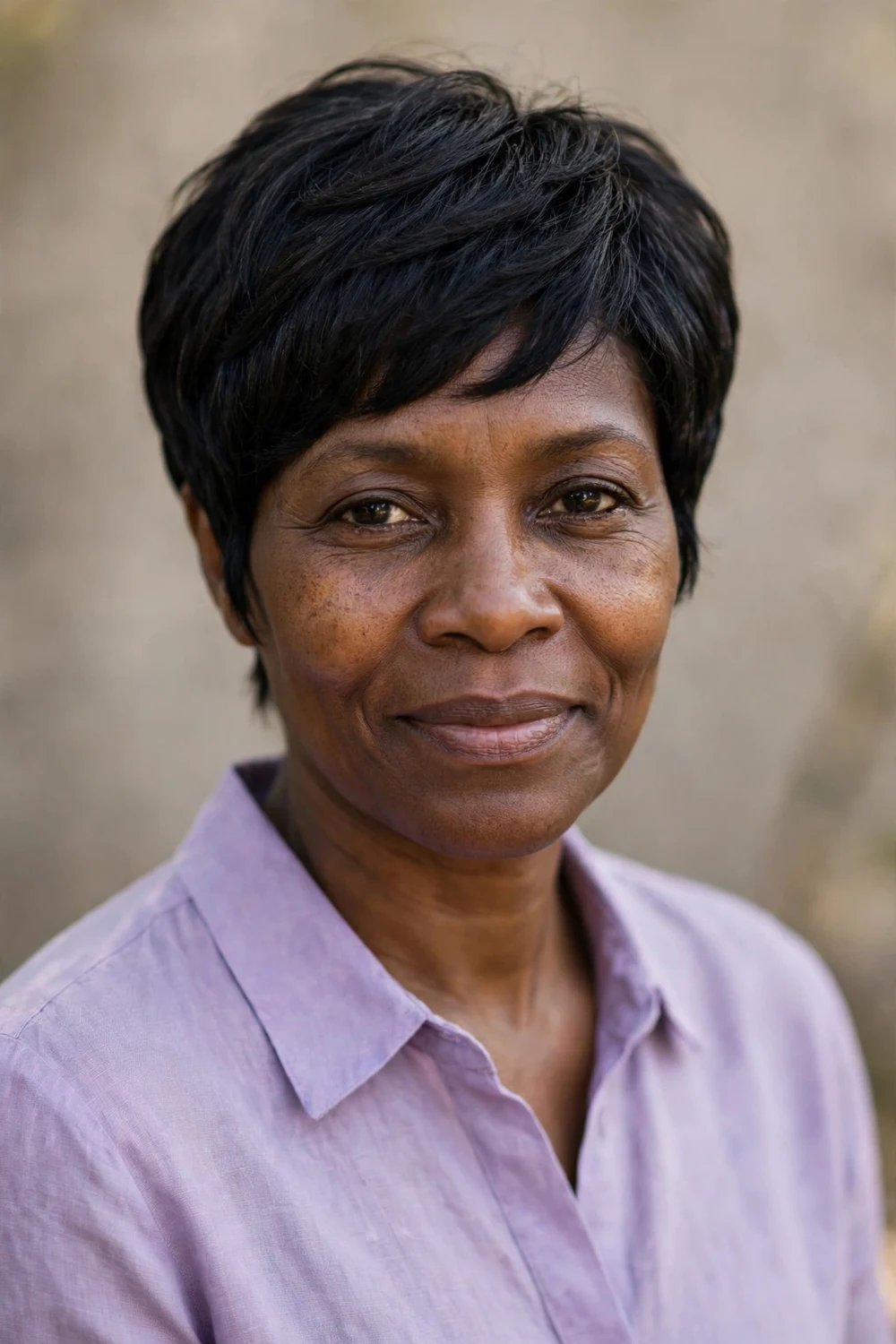
A closely tapered nape is what separates this version from the rest of the list. The back of the neck is cut short and clean, fading into the longer crown and face-framing front. That tidy neckline makes the whole cut look intentional even as it grows, and it keeps the back of your neck cool and free of stray hair in warm weather. It also shows off earrings and necklaces well, since nothing competes with them at the neckline.
The tapered nape works on every hair type, though very curly hair needs a stylist who cuts with the curl pattern in mind. Keep up with neckline clean-ups every four to five weeks, since the taper is the detail that makes the cut work. A little styling cream smoothed over the nape keeps it neat between appointments. Fine hair looks tidy and intentional with a taper, while thick hair feels lighter without the weight at the neck. Ask your stylist to blend the fade gradually so it grows out softly.
Try this: book neckline-only trims between full cuts to keep the taper sharp on a budget.
Difficulty: Low · Cost: $ (salon)
10. Undercut Pixie Bob
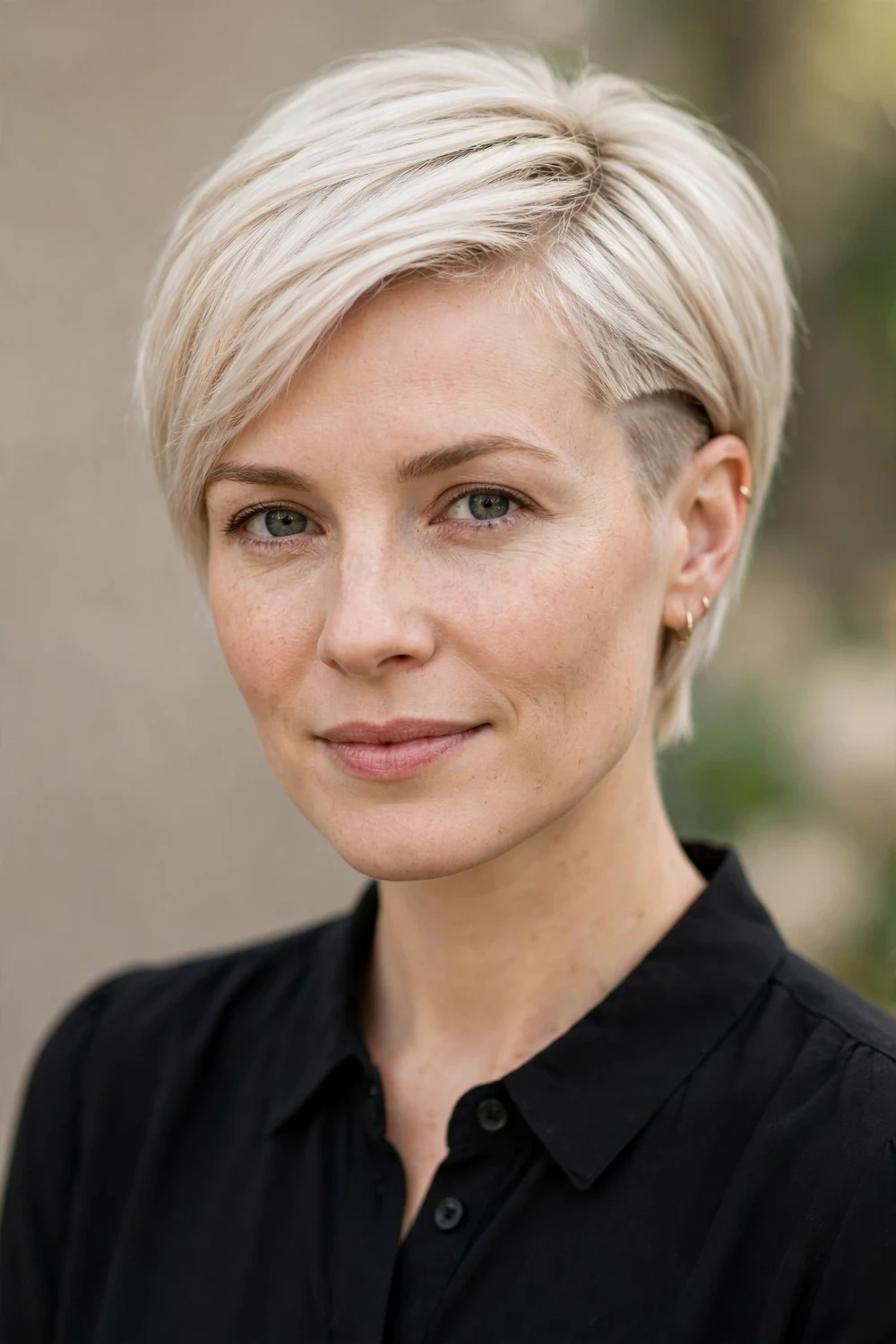
The undercut pixie bob hides a shaved or closely clipped section under longer top layers. Worn down, it looks like a regular pixie bob; tucked or lifted, it flashes the undercut for an edgy surprise. It also removes serious bulk, which makes it practical for very thick hair that would otherwise puff up at this length. The contrast between the close sides and the longer top is the whole point.
Maintenance is the trade-off: the undercut needs clipping every three to four weeks to stay crisp, or it grows into an awkward middle stage. Ask your stylist to keep the undercut subtle at first, since you can always take it shorter or wider later. It suits confident dressers and anyone who likes a hidden detail in their cut. Thick hair benefits most from the debulking, while fine hair should keep the undercut narrow so the top keeps its fullness. A little pomade on the top layers adds polish that contrasts nicely with the close sides.
Try this: start with just a nape undercut before committing to shaved sides, since it is easier to grow out.
Difficulty: Medium · Cost: $$ (salon)
11. Curly Pixie Bob
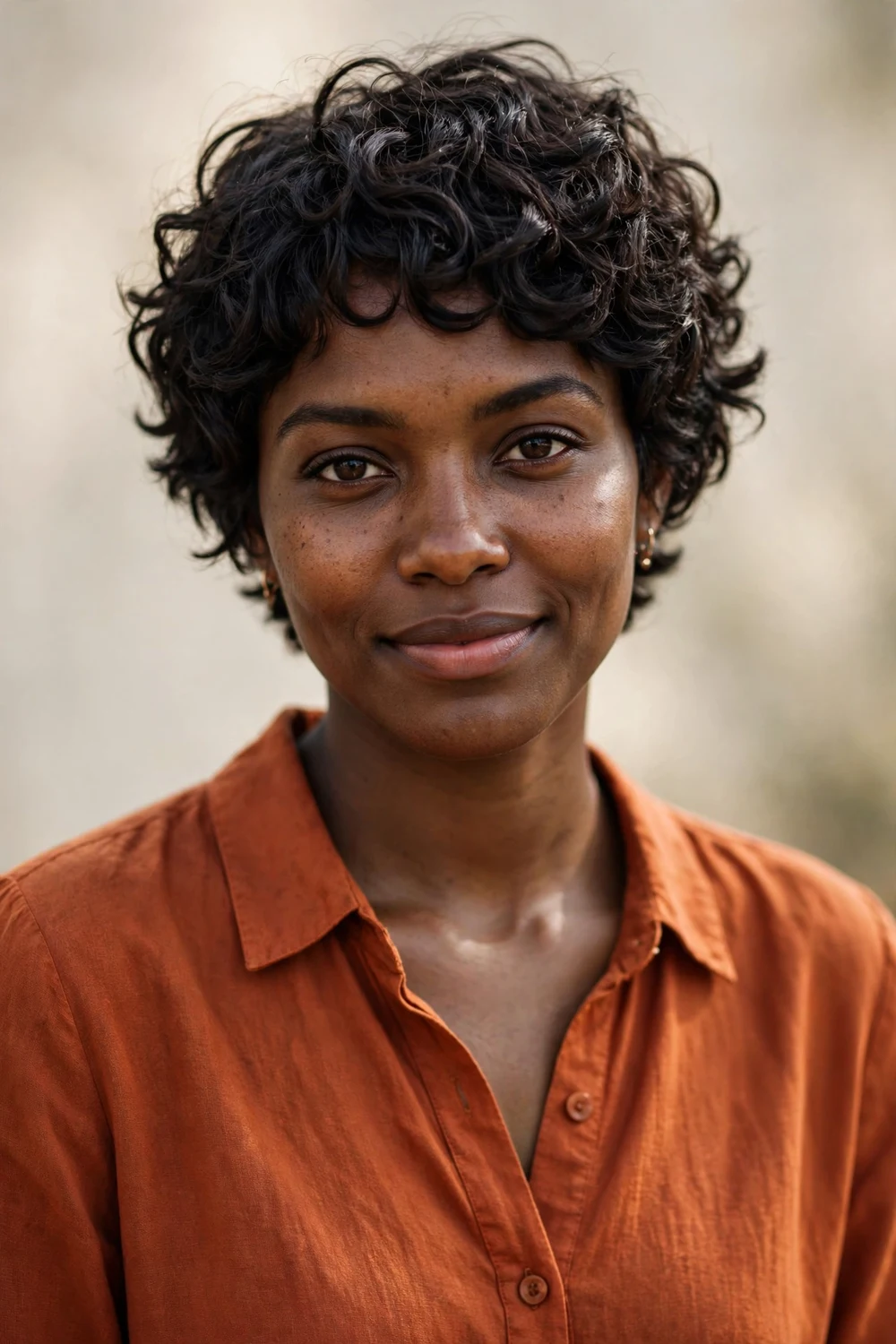
Curls get the pixie bob treatment here with a cut that respects spring and volume. The key is curl-aware shaping: the stylist cuts each curl dry or stretched so the length lands where it should once it springs up. The result is a rounded, bouncy shape with enough length around the face to frame it, plus a light tapered back that keeps the silhouette from going triangular. It works for loose waves through tight coils, as long as the layers follow your specific curl pattern.
It suits curl patterns from loose waves to tight coils, as long as the layers are built for your specific texture. Use a curl cream on damp hair and diffuse or air-dry for definition. Ask for the taper at the nape to be gradual rather than severe, so the back blends into the curls instead of fighting them. Refresh the curls on non-wash days with water and a little cream scrunched in. A satin pillowcase reduces overnight frizz so the shape holds between washes.
Try this: ask your stylist to cut your curls dry so the finished length lands exactly where you want it.
Difficulty: Medium · Cost: $$ (salon)
12. Wavy Tousled Pixie Bob
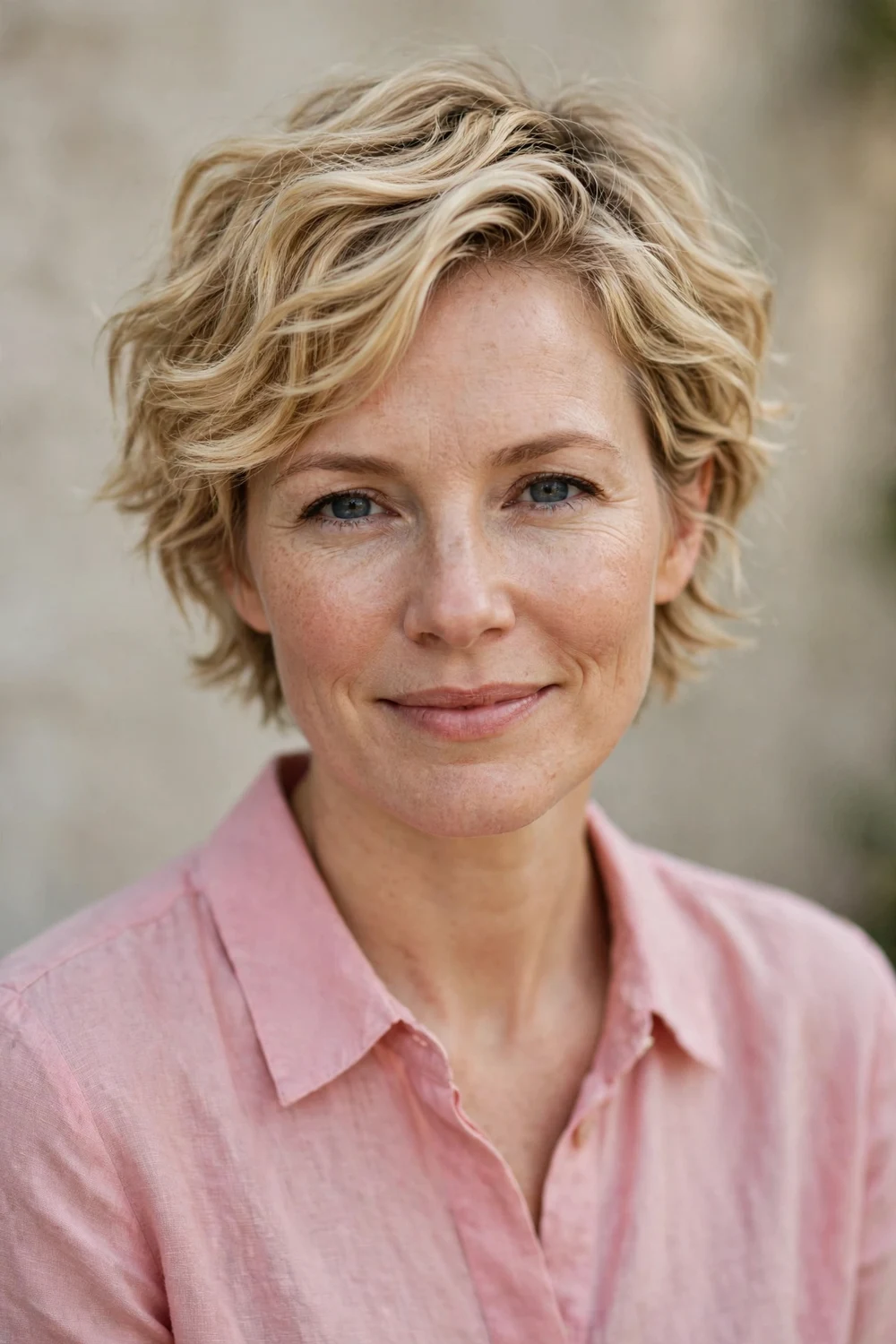
Natural waves do the styling work in the wavy tousled pixie bob. The cut is built on loose layers that let waves fall where they want, with the longer front pieces giving the waves room to move. It is the most relaxed version of the hybrid: the kind of cut that looks better slightly undone, with a texture that reads effortless rather than engineered. Fine wavy hair gains body from the loose layers, while thick waves stay light because the texture removes weight.
It suits naturally wavy hair best, though straight hair can fake it with a large-barrel curling iron on the front pieces. Scrunch a salt spray or light mousse into damp hair and let it air-dry for the truest texture. Because the finish is meant to be imperfect, this is one of the easiest versions to grow out gracefully. Sleep on a silk pillowcase to keep the waves intact overnight. In the morning, revive flat spots with a mist of water and a quick scrunch instead of restyling from scratch.
Try this: twist the front pieces away from your face while they air-dry for soft, face-framing waves.
Difficulty: Low · Cost: $ (salon)
13. Shaggy Pixie Bob

The shaggy pixie bob borrows the shag’s choppy layers and fringe and applies them to the hybrid shape. Lots of short layers through the crown, a textured fringe, and flicked-out pieces at the ends give it a rock-and-roll feel that is still wearable for everyday life. The heavy texture removes bulk, so thick hair gets lighter while fine hair gains the illusion of fullness. The fringe is the detail that sells it, so ask for one that blends into the layers rather than sitting apart.
It suits wavy and straight hair with natural texture best. Style with your fingers and a little texturizing spray, and skip the brush since rough texture is the point. Ask your stylist to keep the fringe soft rather than blunt so it blends into the layers instead of sitting on top of them. Curly hair can wear a shaggy version too if the layers are cut to follow the curl pattern. A dry texture spray on day two revives the piecey finish without a full restyle.
For more choppy, layered inspiration, these short shag hairstyles for women show how the cut adapts to different textures.
Try this: flip the ends outward with your fingers while blow-drying for the signature shaggy kick.
Difficulty: Low · Cost: $$ (salon)
14. Pixie Bob with Side Bangs
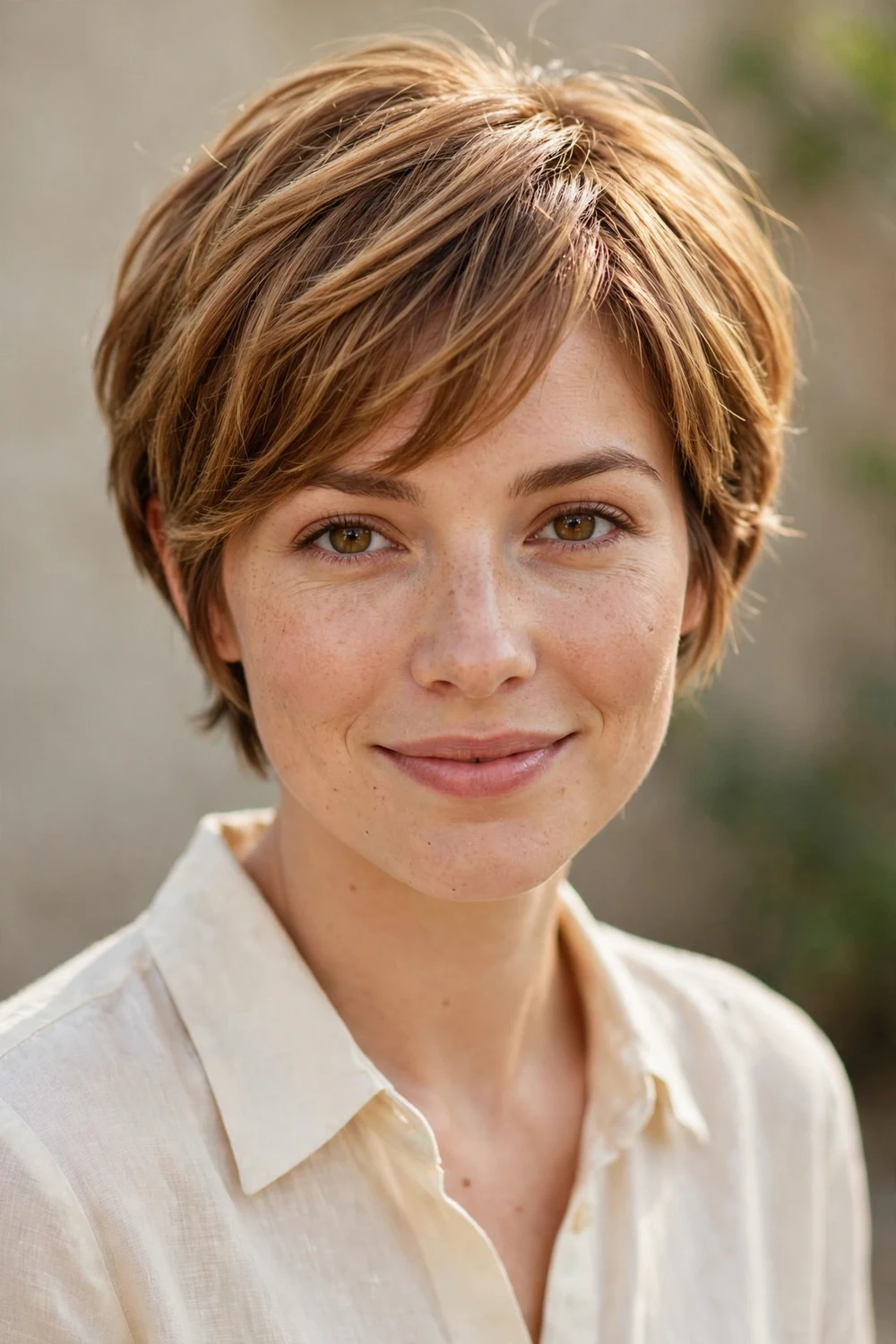
Long side-swept bangs are the most forgiving fringe you can pair with a pixie bob. They sweep diagonally across the forehead, softening the face and drawing the eye along a flattering line. Because they are long, they grow out into face-framing layers with no awkward stage, which makes this the lowest-commitment bangs option on the list. Fine hair gets movement without losing density, since the sweep keeps the fringe light and airy.
It flatters round and square faces especially well by adding diagonal movement. Blow-dry the fringe to the side with a small round brush so it falls into place naturally. This version suits all hair types, and it is an easy add-on if you already wear a pixie bob and want a change without a full recut. Thick hair should have the fringe thinned slightly so it sweeps instead of sitting heavily. A light-hold hairspray keeps the sweep in place on windy days without stiffness.
Try this: direct the bangs across your forehead while blow-drying so they fall into place on their own.
Difficulty: Low · Cost: $ (salon)
15. Pixie Bob with Micro Bangs

Micro bangs cut well above the brows give the pixie bob a bold, editorial edge. The ultra-short fringe puts the focus on the eyes and cheekbones, while the longer bob length around the sides keeps the overall look balanced and wearable. It is a high-fashion pairing that still works in real life because the cut underneath is so practical. Fine hair suits this pairing well, since the short fringe needs little density to make its statement.
It suits oval, heart, and petite faces best, and straight to slightly wavy hair. The fringe needs trims every three to four weeks to keep its line, since micro bangs lose their shape fast as they grow. Style the bangs smooth with a light cream or a quick flat-iron pass for a clean, intentional finish. Thick hair needs the micro fringe thinned so it lies flat instead of puffing forward. Keep a mini flat iron handy for quick touch-ups on humid mornings.
Try this: keep the micro bangs pin-straight, since the blunt short line is the whole point of the pairing.
Difficulty: Medium · Cost: $ (salon)
16. Pixie Bob with Curtain Bangs

Curtain bangs part in the middle and frame the face in two soft sweeps, and on a pixie bob they lean into the French-bob side of the family. The center part gives the cut a gentle, romantic feel while the short back keeps it modern. This is the fringe for anyone who wants bangs without the daily precision of a straight-across cut. They also flatter wider foreheads, since the parted sweeps break up the space softly.
They suit nearly every face shape and grow out seamlessly into face-framing layers. Blow-dry them forward with a round brush, then part them in the center for the signature sweep. A light cream keeps the two sides separated and soft instead of falling flat against the forehead. Fine hair should keep the curtain pieces light so they do not separate into strings. On thick hair, ask for the bangs to be thinned underneath so they fall softly instead of fanning out.
For more French-inspired short cuts, these short french bobs explore similar shapes with a Parisian finish.
Try this: twist each side away from your face while blow-drying to set the curtain sweep correctly.
Difficulty: Low · Cost: $ (salon)
17. Middle-Parted Pixie Bob

A center part turns the pixie bob into the friendliest version of itself. The hair falls evenly on both sides, framing the face symmetrically, and the look reads calm and balanced. It is also the best version for growing out a shorter cut, since the even front length disguises the transition stages that side parts tend to expose. It suits fine to thick hair equally, since the symmetry does the flattering work regardless of density.
It suits oval and heart-shaped faces best, and straight to wavy hair that will hold a clean part. Keep the part crisp with a tail comb on damp hair, then let it set as it dries. This version needs the least styling of any bangs-free option, which makes it a strong daily driver. Curly hair can wear a middle part too if the front is long enough to fall evenly on both sides. A tiny amount of smoothing cream along the part keeps flyaways from breaking the clean line.
Try this: set the part on damp hair with a tail comb, then hands off while it dries for a lasting line.
Difficulty: Low · Cost: $ (salon)
18. Deep Side Part Pixie Bob
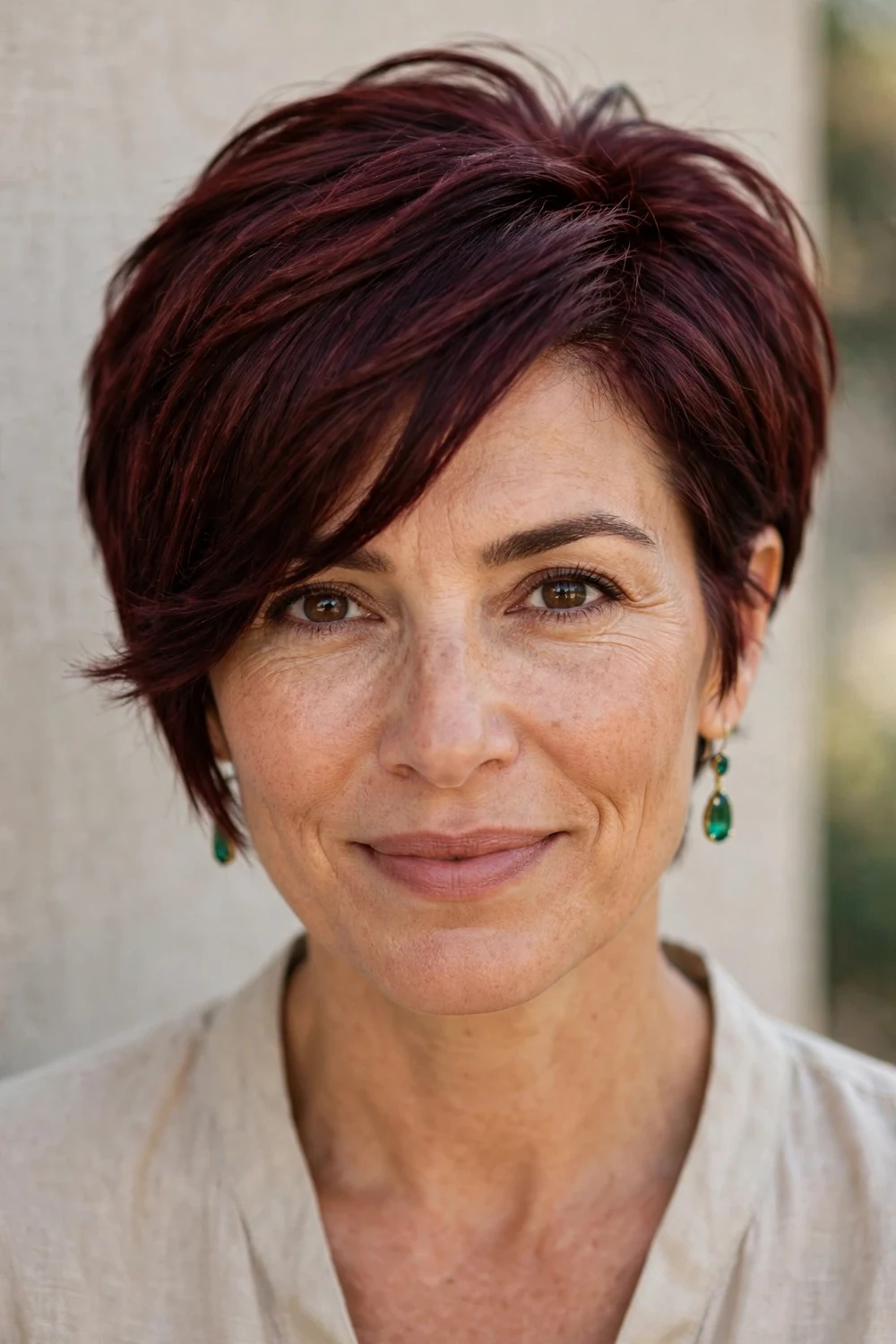
Shifting the part deep to one side instantly adds volume and drama to a pixie bob. The heavy sweep of hair across the crown creates lift where fine hair needs it most, and the asymmetry flatters round, square, and heart-shaped faces by breaking up symmetry. It is the simplest way to make a familiar cut feel new again without changing the shape. Thick hair wears it well too, since the weight of the sweep keeps the volume controlled and sleek.
It works best on fine to medium hair that can hold the sweep without collapsing. Blow-dry the crown upward and over to set the volume, then let the longer side fall naturally. A light volumizing mousse at the roots before drying gives the deep part its staying power through the day. On very thick hair, thin the longer side slightly so the sweep lies flat against the head. Flip the part to the other side occasionally to keep the roots from going flat in one direction.
Try this: set the deep part while your hair is damp, since dry hair resists a new part line.
Difficulty: Low · Cost: $ (salon)
19. Face-Framing Pixie Bob

Wispy layers cut to follow the cheekbones and jawline make this the most face-conscious version of the pixie bob. The framing pieces soften the perimeter of the cut, drawing attention to your features instead of the haircut itself. It is a gentle, flattering take that works especially well for anyone who finds blunt short cuts too severe. Fine hair looks fuller with framing, since the layers create movement that suggests density.
It suits all face shapes, since the framing can be adjusted to highlight cheekbones or soften a strong jaw. Ask your stylist to keep the layers light and feathery rather than chunky. A small round brush on the front pieces during blow-drying gives the framing its soft inward curve. Thick hair should have the framing layers thinned at the ends so they curve instead of kicking out. A drop of smoothing serum on the front pieces keeps the wispy ends polished all day.
Try this: ask for the framing layers to start at the cheekbones, the most flattering point for most faces.
Difficulty: Low · Cost: $ (salon)
20. Razored Chin-Length Pixie Bob

Razored edges give this pixie bob a feathered, piecey finish that scissors alone cannot create. The razor thins and softens the ends, so the chin-length front moves with a wispy lightness while the back stays close and clean. It is a great match for thick hair, since the razor removes bulk from the ends without touching the interior fullness. Medium hair gets lovely movement from razoring, while fine hair should keep the razor work light to protect density.
Ask your stylist whether your hair suits razoring: very fine or fragile hair can look frayed instead of feathered. The finish suits straight to wavy hair best. A light oil on the ends keeps the feathered pieces smooth, and the cut air-dries into shape with almost no effort. Curly hair usually skips the razor, since it can rough up the curl pattern and create frizz. Between cuts, a tiny trim of just the feathered ends keeps the wispy finish fresh.
Try this: smooth a drop of hair oil over the ends only, since the roots need to stay light and airy.
Difficulty: Medium · Cost: $$ (salon)
21. Sleek Polished Pixie Bob
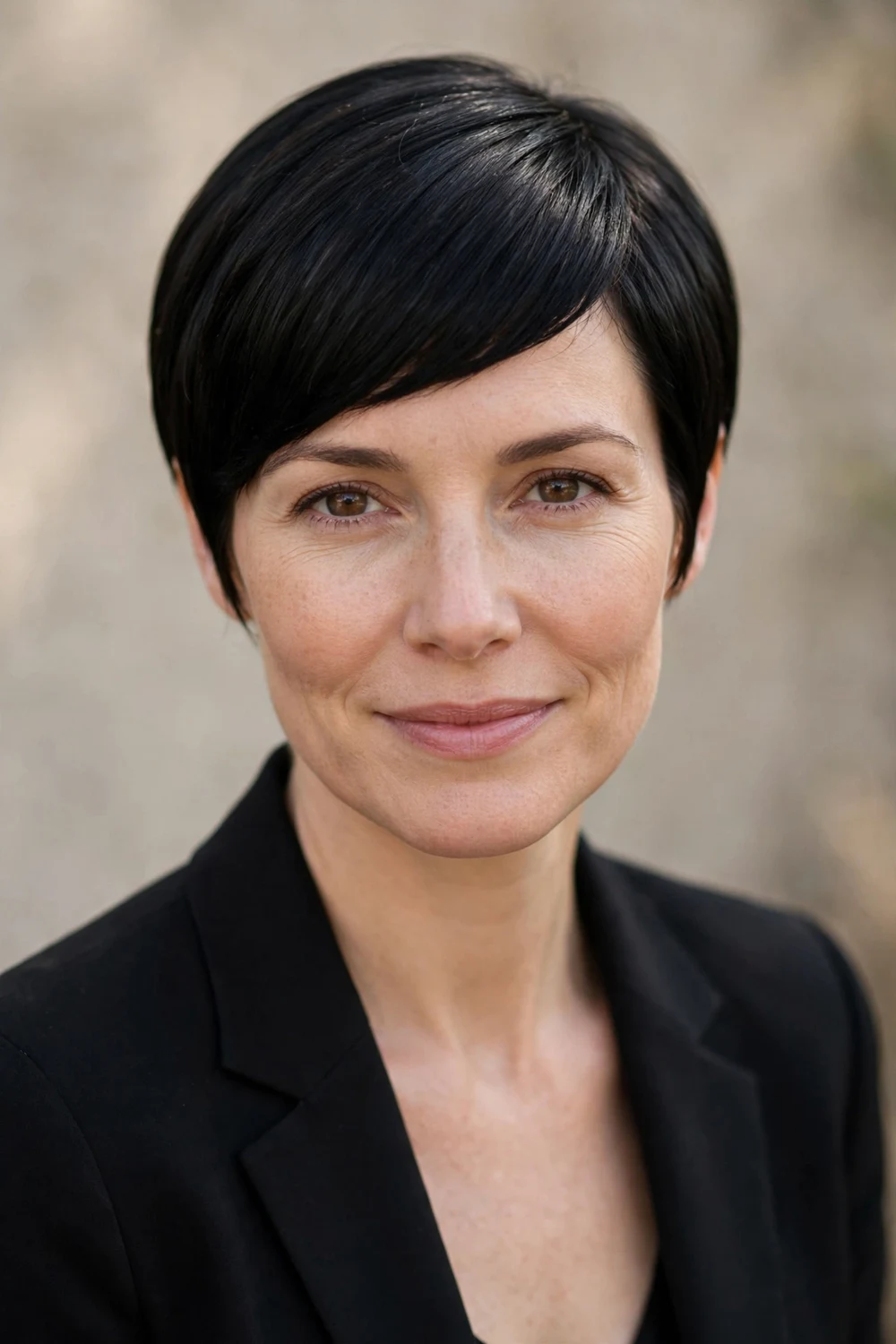
The sleek polished pixie bob is all about the finish: smooth, glossy, and controlled from crown to ends. Every layer is blown out in the same direction for a unified shape that shows off the cut’s architecture. It is the dressiest version of the hybrid, and it turns the same haircut into an evening look with nothing but styling. Fine hair shines in this finish because the smooth surface reflects light and suggests fullness.
It suits straight or straightened hair best, since the smooth finish needs a cooperative texture. Always use a heat protectant before blow-drying or flat-ironing, and finish with a shine serum for the reflective surface. This version shows regrowth fastest, so keep up with trims if you want to hold the crispness. Thick hair needs thorough blow-drying in sections to get the sleek result without puffiness. A boar-bristle brush helps smooth the surface while you dry for extra polish.
Try this: finish with a pea-sized amount of shine serum pressed over the surface for a glass-like gleam.
Difficulty: High · Cost: $$ (salon)
22. Platinum Silver Pixie Bob
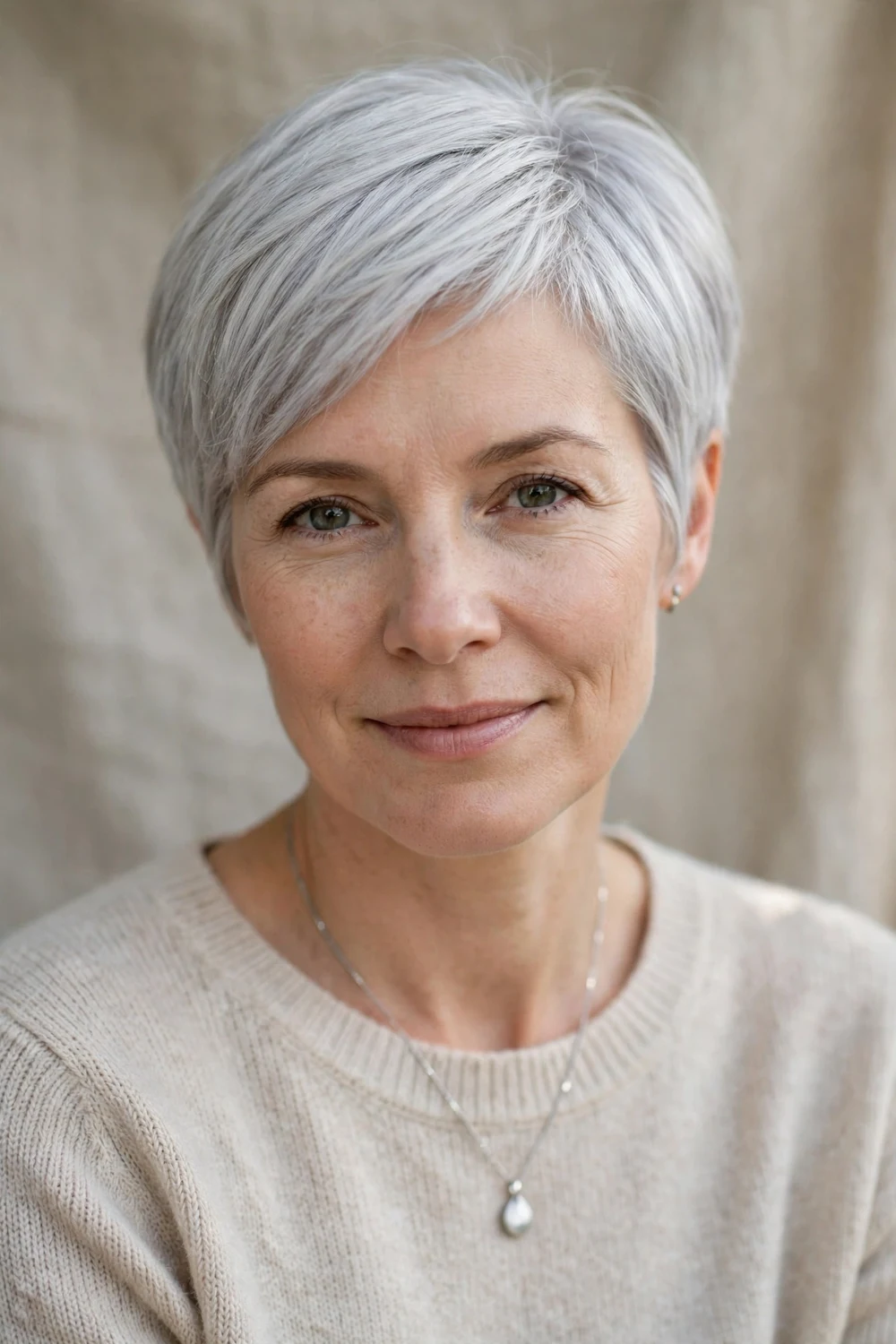
Platinum and silver tones turn the pixie bob into a color statement as much as a cut. The icy shade shows off every layer and angle, making the shape itself more visible, and the short length means there is less bleached hair to maintain than on a longer cut. It is a striking pairing for anyone who wants their haircut and their color to work as one look. The short length is a real advantage here, since growing out a shade you tire of takes weeks rather than months.
Bleached hair needs extra care: a weekly deep-conditioning mask is non-negotiable, and purple shampoo once a week keeps the tone icy instead of yellow. It suits fair to medium skin tones best, though the right toner can adapt it more broadly. Book the color and cut with a colorist you trust, since platinum on short hair shows every uneven patch. All hair types can go platinum, but fine hair needs a gentler lightening plan to protect its density. A bond-building treatment during the color service keeps bleached short hair strong.
Try this: use purple shampoo once a week to keep platinum tones icy instead of brassy.
Difficulty: High · Cost: $$ (salon)
23. Lived-In Blonde Pixie Bob

Dark roots melting into soft blonde lengths give this pixie bob a relaxed, lived-in feel. The shadow at the roots adds depth that makes the crown look fuller, and it stretches the time between color appointments since regrowth blends into the darker base. The color does half the styling work by giving the layers visible dimension. Fine hair looks noticeably thicker with a root shadow, since the depth at the crown suggests density.
It suits medium to thick hair that can carry the two-tone effect without looking sparse. Ask your colorist for a soft root melt rather than a harsh line, so the grow-out stays seamless. A color-safe shampoo and a gloss treatment between appointments keep the blonde bright and the blend smooth. Curly hair wears lived-in blonde well, since the curls show off the blend from every angle. Ask for the blonde pieces to be placed where the light hits, usually around the face and crown.
Try this: ask for a root melt two shades darker than the blonde so regrowth disappears into the base.
Difficulty: Medium · Cost: $$ (salon)
24. Pixie Bob with Dimensional Highlights

Highlights placed through the crown and front pieces make the pixie bob’s layers visible in a way a single color cannot. Light and dark ribbons woven through the cut create movement and depth, and fine hair looks noticeably fuller when the color breaks up the surface. It is the subtlest color upgrade on this list, and it works with your natural base instead of replacing it. Thick hair gains definition too, since the ribbons separate the layers visually instead of letting them merge.
Ask your colorist to concentrate the lightness around the face and crown, where it flatters most. Keep the highlights within two or three shades of your base for a natural grow-out. A gloss every couple of months refreshes the shine without a full highlight appointment. All hair types suit this technique, from straight to curly, since the placement adapts to your texture. On curly hair, ask for the highlights to be painted on to follow the curl pattern for the most natural result.
Try this: bring a photo of the highlight placement you want, since “dimensional” means different things to every colorist.
Difficulty: Medium · Cost: $$ (salon)
25. Pastel Pixie Bob

Soft lavender, rose, or peach tones give the pixie bob a playful, fashion-forward twist. Pastel shades sit well on the hybrid’s mix of short and long sections, with the color shifting as the layers catch the light. The short length is actually an advantage here: less hair to bleach means less damage, and growing out a pastel you are tired of takes weeks instead of months. Fine hair takes pastel well because there is less weight for the lightener to process evenly.
Pastels fade fast, so use a color-safe shampoo and wash with cool water to hold the tone. They suit pre-lightened hair best, and the effect is strongest on the longer front pieces. If you are pastel-curious, this is one of the lowest-risk cuts to try it on. Thick hair needs extra lightener and time, so book a longer appointment for an even result. A tinted conditioner in your shade refreshes the pastel between salon visits without a full recolor.
Try this: wash with cool water and a color-safe shampoo to slow pastel fading between appointments.
Difficulty: High · Cost: $$ (salon)
26. Messy Undone Pixie Bob

The messy undone pixie bob is styled to look like you barely touched it, and that is the appeal. Finger-tousled texture through the crown, slightly separated ends, and a general lived-in feel make it the most casual version of the hybrid. The trick is that the cut underneath still has structure, so the mess reads as intentional rather than neglected. Fine hair gets welcome grit from this finish, while thick hair stays light because the texture breaks up the bulk.
It suits straight to wavy hair and anyone with a low-maintenance routine. Rub a pea-sized amount of texturizing cream between your palms and work it through dry hair against the growth direction for lift. Skip the brush entirely: fingers are the only tool this version needs. Curly hair can do undone too by scrunching curl cream in and skipping the diffuser for a softer set. A spritz of dry shampoo at the roots on day two keeps the lift going without washing.
Try this: style second-day hair instead of freshly washed, since a little natural texture helps the undone finish.
Difficulty: Low · Cost: $ (salon)
27. Low-Maintenance Wash-and-Go Pixie Bob
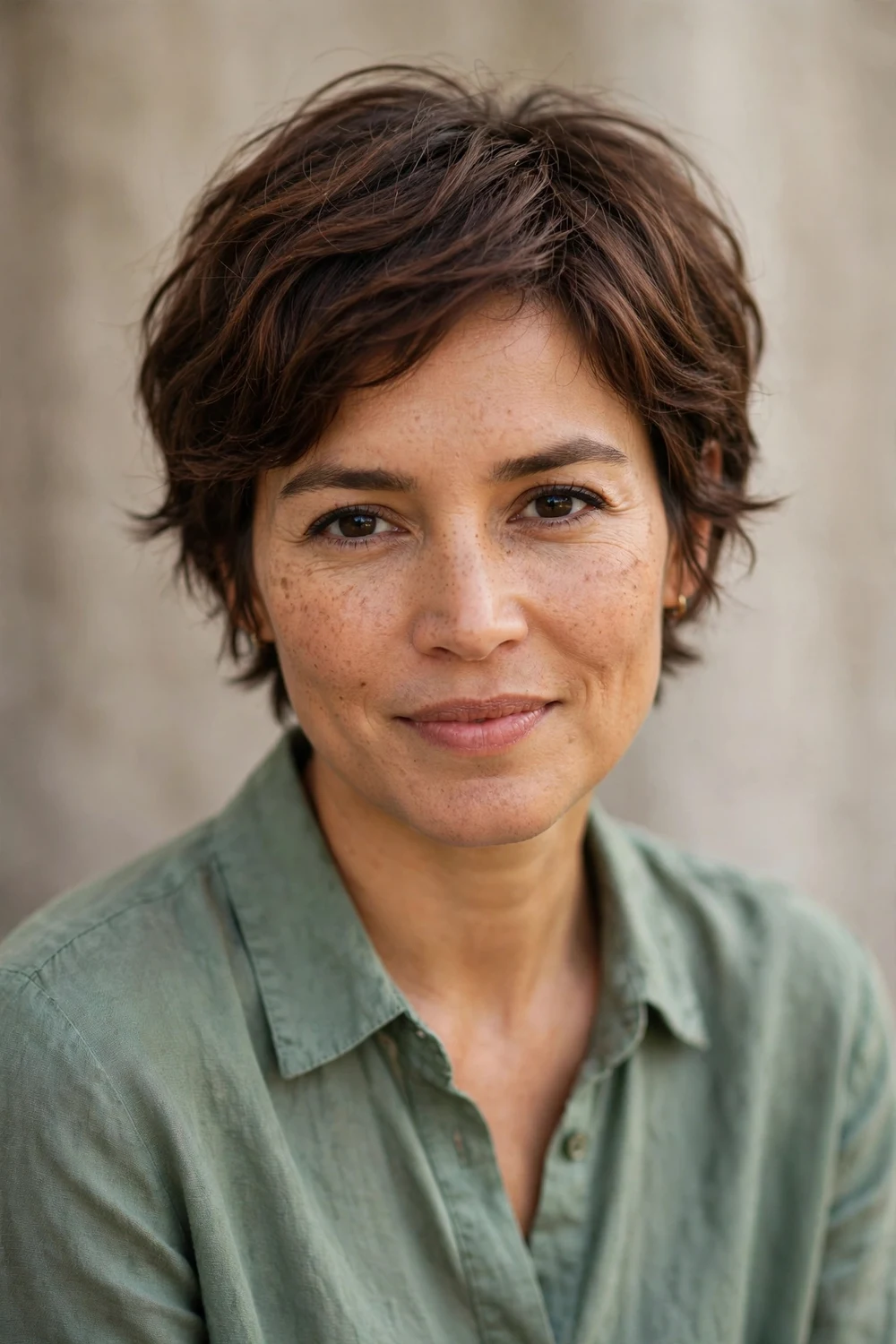
Some pixie bobs are built to be air-dried, and this is the one to ask for if your mornings are short. The layers are cut to fall into place on their own, with enough weight in the right spots that the shape holds without heat or product. It is the cut for anyone who wants to wash, shake, and walk out the door. It suits every hair type, since the cut is built around your natural texture instead of fighting it.
Tell your stylist you want a wash-and-go finish so they cut for your natural texture, not an idealized blowout. A leave-in conditioner is usually the only product needed. Trims every eight to ten weeks keep the shape, and the grow-out stays soft enough that you can stretch appointments without worry. Fine hair air-dries fastest in this cut, while thick hair should scrunch in the leave-in to keep the shape controlled. Sleep on a satin pillowcase to wake up with the shape mostly intact.
For more easy, low-effort short cuts, these short pixie haircuts for older women gather flattering options with simple upkeep.
Try this: tell your stylist “wash and go” explicitly so the cut is built for your natural texture.
Difficulty: Low · Cost: $ (salon)
At a Glance: 27 Pixie Bobs Compared
| Cut | Best for | Pixie-bob perk | Upkeep |
|---|---|---|---|
| Classic Short Pixie Bob | First-time short cuts | Balanced hybrid shape | Paste, trims every 6 to 8 weeks |
| Long Bixie | Bob wearers going shorter | Keeps familiar styling options | Air-dry or smooth front pieces |
| Stacked Pixie Bob | Fine, flat hair | Built-in back volume | Round-brush blow-dry |
| Inverted Pixie Bob | Straight hair | Dramatic sculpted angle | Smoothing serum, regular trims |
| Asymmetrical Pixie Bob | Round, full faces | Slimming diagonal line | Trims every 5 to 6 weeks |
| Choppy Pixie Bob | Thick hair | Removes bulk, keeps fullness | Texturizing paste on ends |
| Soft Layered Pixie Bob | Oval and heart faces | Polished, no harsh edges | Light cream, round brush |
| Angled Pixie Bob | Straight hair | Sharp, architectural line | Flat iron, trims every 5 to 6 weeks |
| Tapered Nape Pixie Bob | All hair types | Clean neckline, cool neck | Neckline clean-ups every 4 to 5 weeks |
| Undercut Pixie Bob | Very thick hair | Hidden edge, serious debulking | Clipper touch-ups every 3 to 4 weeks |
| Curly Pixie Bob | Curly hair | Bounce without triangle shape | Curl cream, diffuse or air-dry |
| Wavy Tousled Pixie Bob | Naturally wavy hair | Effortless, forgiving grow-out | Salt spray, air-dry |
| Shaggy Pixie Bob | Textured hair | Rock feel, everyday wearable | Fingers plus texturizing spray |
| Pixie Bob with Side Bangs | Round and square faces | Low-commitment fringe | Blow-dry fringe aside |
| Pixie Bob with Micro Bangs | Oval and petite faces | Bold, eye-focused edge | Fringe trims every 3 to 4 weeks |
| Pixie Bob with Curtain Bangs | Every face shape | Soft, no-precision fringe | Round-brush sweep, light cream |
| Middle-Parted Pixie Bob | Growing out a pixie | Hides transition stages | Set part on damp hair |
| Deep Side Part Pixie Bob | Fine to medium hair | Instant crown volume | Mousse at roots, blow-dry over |
| Face-Framing Pixie Bob | All face shapes | Highlights your features | Small round brush on front pieces |
| Razored Chin-Length Pixie Bob | Thick, straight to wavy hair | Feathered, weightless ends | Hair oil on ends, air-dry |
| Sleek Polished Pixie Bob | Straight hair | Dressy, architectural finish | Heat protectant, shine serum |
| Platinum Silver Pixie Bob | Fair to medium skin tones | Color shows off the shape | Purple shampoo, deep-condition weekly |
| Lived-In Blonde Pixie Bob | Medium to thick hair | Depth plus easy regrowth | Color-safe shampoo, gloss between visits |
| Pixie Bob with Dimensional Highlights | Fine hair | Fuller look through color | Gloss every couple of months |
| Pastel Pixie Bob | Pre-lightened hair | Low-risk fashion color | Color-safe shampoo, cool-water washes |
| Messy Undone Pixie Bob | Low-maintenance routines | Casual on purpose | Texturizing cream, fingers only |
| Low-Maintenance Wash-and-Go Pixie Bob | Busy mornings | Air-dries into shape | Leave-in conditioner, trims every 8 to 10 weeks |
How to Choose Your Pixie Bob
Start with your face shape. Round faces do well with height on top and diagonal lines, like an asymmetrical or deep side part version. Longer faces suit fullness at the sides, which soft layers or curtain bangs provide. If you are unsure, bring photos of the versions you like to your stylist and ask which will work with your bone structure and growth patterns.
Next, be honest about your hair type and your routine. Fine hair needs built-in volume from stacking or layering, while thick hair needs weight removed through choppy or razored ends so it does not puff up. Curly hair should be cut with the curl pattern in mind so the length lands right. If you style with heat every morning, pick a shape that forgives skipped days, like a tousled or shaggy version.
Finally, think about maintenance honestly. Precision cuts and undercuts need attention every three to six weeks. Softer, textured versions can stretch to eight or ten. Pick the schedule you will actually keep, since a grown-out sharp cut looks worse than a fresh easy one.
Pixie Bob Care and Styling
Washing. Short hair shows oil faster than long hair, so most pixie bobs do best with washing every one to two days. Use a lightweight shampoo and keep conditioner to the mid-lengths and ends, since heavy conditioner at the roots flattens the crown volume that makes the cut work.
Styling. A pea-sized amount of product is usually enough at this length. Texturizing paste defines choppy and messy versions, light cream smooths polished ones, and mousse at the roots builds volume for fine hair. Apply product to damp or dry hair depending on the finish you want, and use your fingers more than your brush for textured styles.
Regrowth. The back and nape grow out fastest and blur the pixie-bob shape first. Neckline clean-ups every four to six weeks keep the silhouette sharp, while the layers and fringe can go eight to ten weeks between full cuts. If you are growing it out, the middle-parted and long bixie versions bridge the gap to bob length with the least awkwardness.
Frequently Asked Questions
What is a pixie bob haircut?
A pixie bob is a hybrid short haircut that combines a pixie’s cropped back and sides with a bob’s longer length around the face. The back is tapered or stacked like a pixie, while the front keeps enough length to tuck behind the ears, part, and restyle. It suits fine, medium, and thick hair, and it works as a middle ground for anyone who finds a full pixie too short but a bob too heavy.
Is a pixie bob the same as a bixie?
Yes, bixie is simply the nickname for the pixie bob: a blend of bob and pixie. Some stylists use bixie for the longer, more bob-leaning versions of the cut, while pixie bob covers the whole family from short to long. In practice the terms describe the same hybrid, so you can use either one when talking to your stylist and show a photo to be precise.
Which face shapes suit a pixie bob?
Most face shapes suit a pixie bob because the cut is so adjustable. Round faces benefit from height on top and diagonal lines like an asymmetrical or deep side part version. Square faces are softened by textured layers and side bangs. Oval faces can wear nearly any version. Bring reference photos to your stylist and ask them to adjust the fringe and front length for your bone structure.
How often should I trim a pixie bob?
Plan a neckline clean-up every 4 to 6 weeks to keep the back and nape sharp, since that area grows out fastest. Full shape refreshes for the layers and fringe can wait 8 to 10 weeks. Precision versions like angled cuts and undercuts need more frequent attention, while soft, textured versions forgive a longer stretch between appointments.
Can I get a pixie bob with curly hair?
Yes, curly hair works well in a pixie bob as long as the cut is built for your curl pattern. Ask for curl-aware shaping, ideally cut dry or stretched, so the length lands where you want it after the curls spring up. Keep the nape taper gradual to avoid a triangle silhouette, and use curl cream with a diffuser or air-drying to define the texture.
Final Thoughts
The pixie bob earns its place because it refuses to make you choose between short and versatile. Whether you go classic, choppy, curly, or color-driven, the hybrid gives you the lightness of a pixie with just enough length to keep your options open. Pick the version that fits your hair type and your routine, and enjoy a cut that works as hard as you do.

