


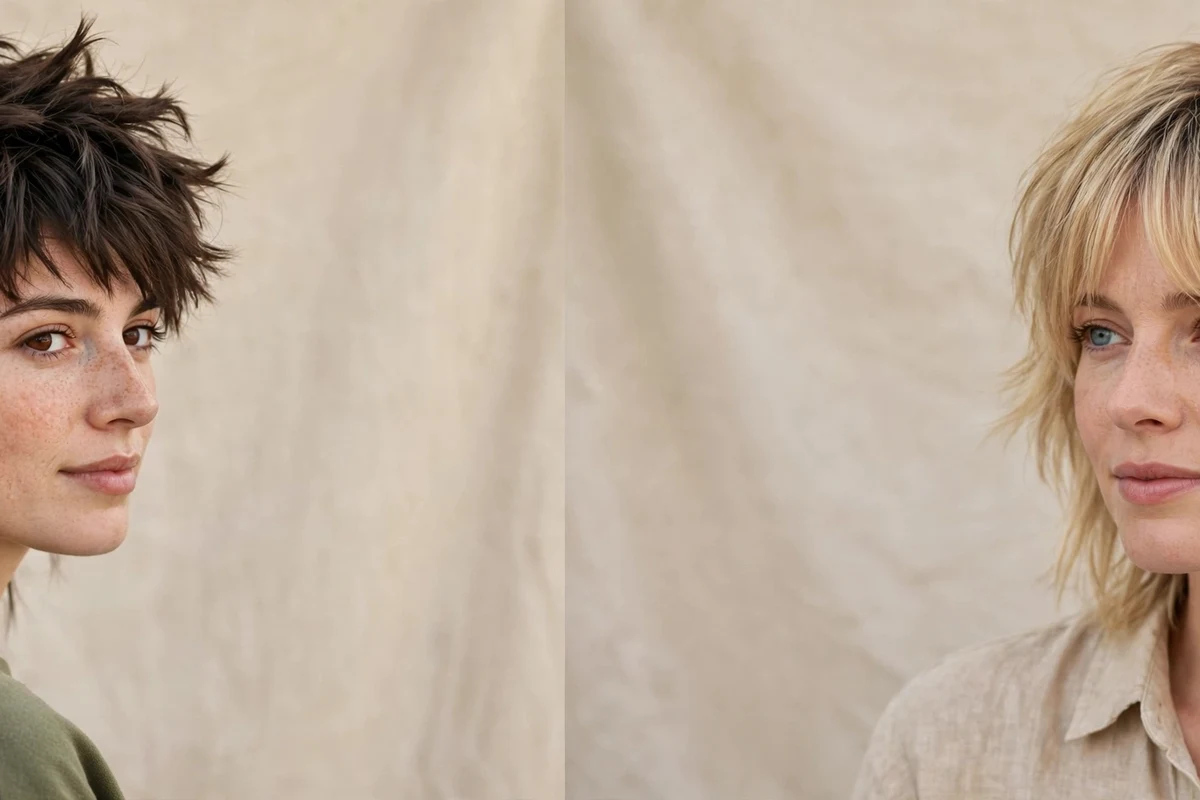
The wolf vs shag cut question comes down to one thing: where the volume sits. A wolf cut piles short, heavy layers through the crown and lets the back taper longer, which gives it a wilder, mullet-leaning outline. A shag spreads its layers evenly through the whole head with fringe as the focal point, so the shape reads softer and more balanced. Both are choppy and textured, but they frame the face in different ways.
Neither cut is “the better one.” The right pick depends on your hair texture, how much styling time you have, and whether you want edge or ease. This guide breaks down the differences section by section, shows 12 example styles (six per side), and ends with a direct verdict so you can book your appointment with confidence.
Quick takeaways:
- A wolf cut concentrates volume at the crown with a longer, tapered back; a shag distributes layers evenly with fringe leading the shape.
- Wolf cuts suit thick, wavy, or curly hair that can hold crown volume; shags work on more textures, including fine hair.
- Both cuts air-dry well with texture products, but wolf cuts need more frequent trims to keep the crown shape.
- A wolf cut typically costs $90–$160 for the first cut; a shag runs $70–$130.
- Shags grow out more gracefully; wolf cuts can turn mullet-heavy between appointments if left untrimmed.
Shape and silhouette: the visible difference
Stand the two cuts side by side and the outline tells the story. The wolf cut is top-heavy: short layers explode through the crown, the sides hug close, and the back falls longer in a tapered tail. It reads bold and a little untamed, which is exactly the point.
The shag is more even-handed. Layers run from the crown to the ends at a steadier pace, and the fringe (curtain, wispy, or full) anchors the front. The silhouette is rounded and rock-inspired rather than spiky. If the wolf cut shouts, the shag hums.
Length plays a role too. Wolf cuts often pair a short top with medium-to-long back length, so the contrast is the feature. Shags can sit anywhere from a pixie-short crop to collarbone length without losing their identity, because the identity is the layering, not the contrast.
Layering technique: where the scissors go
A wolf cut is built with disconnection. The stylist cuts the crown layers much shorter than the back, sometimes with visible steps between the two zones. Razor or point cutting adds the choppy finish. The fringe is usually heavy and textured, blending into the short crown pieces.
A shag is built with connection. Layers graduate smoothly from top to bottom, so no single zone jumps out. The classic shag technique feathers the ends around the face and through the lengths, which is why it moves so well. Modern versions keep this flow but vary the fringe and the overall length.
If you want to see how varied the layered approach can get, browse our roundup of modern shag haircuts before you decide.
Who suits each: face shapes and hair textures
The wolf cut flatters oval, heart, and long face shapes most, because the crown volume balances a narrower chin and the fringe shortens a long forehead. It needs hair with some body: thick, wavy, or curly textures hold the shape best. Very fine, straight hair can fall flat on top, which defeats the cut’s main feature.
The shag is the more forgiving option. Round faces benefit from the face-framing layers that add vertical lines; square faces soften under feathered pieces around the jaw. Fine hair gains the illusion of fullness from the texture, while thick hair loses bulk. Curly hair works in both, but shags give curls a more rounded, even shape.
Wavy texture sits comfortably in both camps. Our collection of wavy short shag haircuts shows how the shag handles waves at shorter lengths.
Maintenance, salon cost, and grow-out
Daily styling is easy for both. A wolf cut needs a volumizing product at the roots and a texturizer through the ends; ten minutes with a blow dryer (use a heat protectant first) or a full air-dry both work. A shag asks even less: scrunch in a styling cream or salt spray and go.
Trim schedules differ. Wolf cuts need a tidy every 6 to 8 weeks, because the crown layers lose their punch as they grow and the back starts to dominate. Shags can stretch to 8 to 10 weeks; the even layering grows out without awkward phases.
First-cut pricing reflects the work involved. Expect $90–$160 for a wolf cut at most salons, and $70–$130 for a shag. Grow-out is the shag’s clear advantage: it softens into a longer layered cut, while a neglected wolf cut drifts toward an accidental mullet.
Wolf cut styles to try
Six ways to wear the wolf cut, from classic to experimental.
Classic wolf cut with curtain bangs

This is the reference wolf cut most people picture: heavy short layers through the crown, curtain bangs that split down the middle, and a longer tapered back that falls past the shoulders. The contrast between the voluminous top and the slim tail is what makes it a wolf cut rather than a shag. It works best on medium to thick hair with natural wave. Styling takes about ten minutes with a round brush or a diffuser. Ask your stylist to keep the disconnect between crown and back visible, since blending it away turns the cut into a regular layered style.
Try this: Blow-dry the crown with your head flipped upside down for maximum lift, then smooth only the back tail.
Difficulty: Medium | Salon cost: $90–$150
Short wolf cut with textured crown
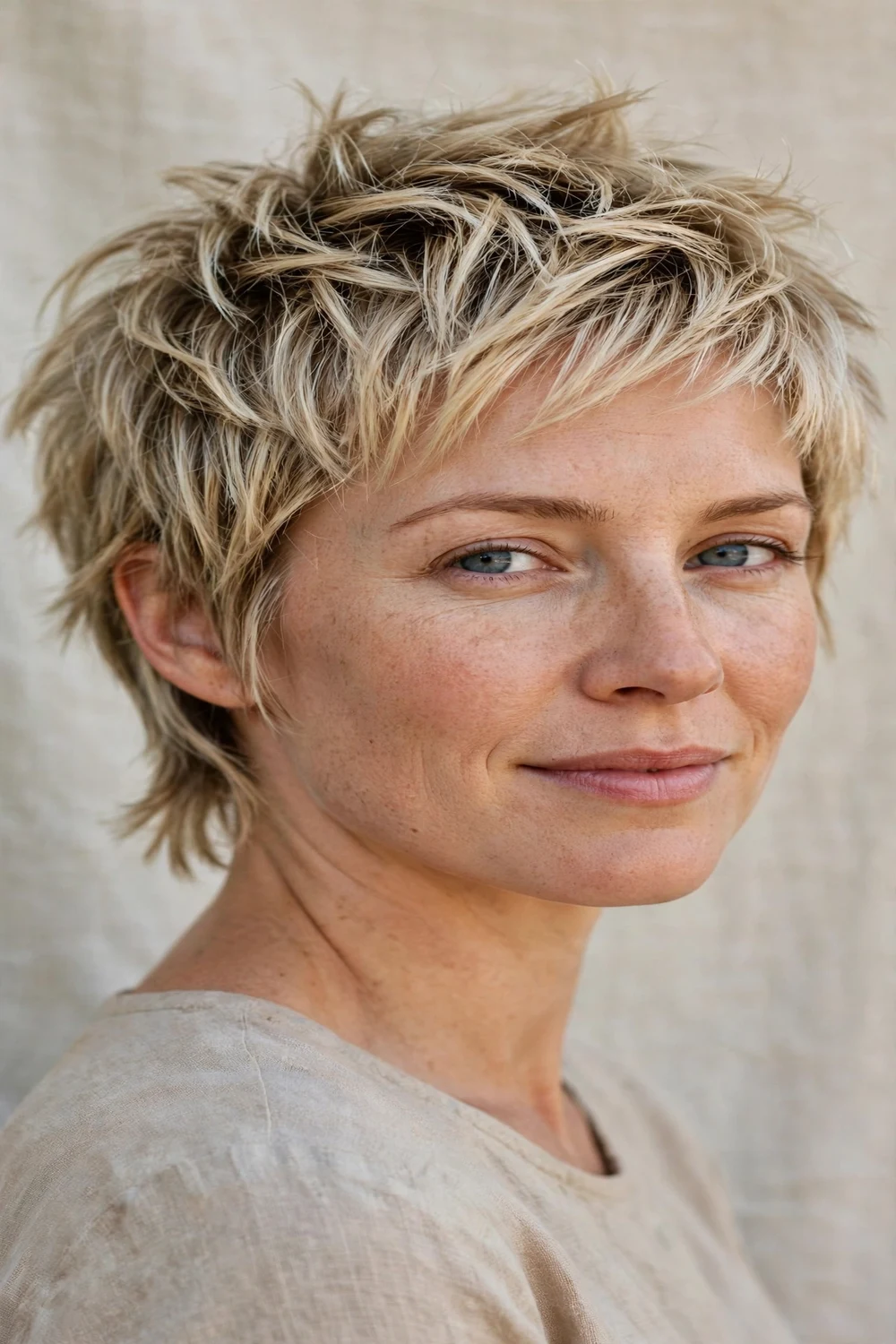
The short wolf cut keeps the signature crown volume but pulls the back length up to the nape or just below. The result is punchier and easier to manage than the long version, with the same choppy attitude. It suits petite frames and anyone who wants the wolf shape without committing to long hair. Thick hair holds the shape with minimal product; fine hair needs a root-lifting mousse to keep the crown from collapsing. Trims every six weeks keep the nape clean.
Try this: Work a pea-sized amount of matte paste through dry layers and pinch the ends for separation.
Difficulty: Easy | Salon cost: $80–$130
Curly wolf cut

Curls give the wolf cut its most dramatic form. Cut dry and curl by curl, the short crown layers spring up into a halo of volume while the back curls hang longer and looser. This version needs a stylist experienced with curly cutting; a wet cut with straight-across sections will not produce the right shape. A curl-defining cream and diffuser keep the two zones distinct without frizz. It suits 2C to 3C curl patterns best, where the texture difference between crown and back really shows.
Try this: Diffuse the crown on high heat and low speed for lift, then let the back air-dry for a looser finish.
Difficulty: Hard | Salon cost: $120–$180
Wolf cut with choppy fringe
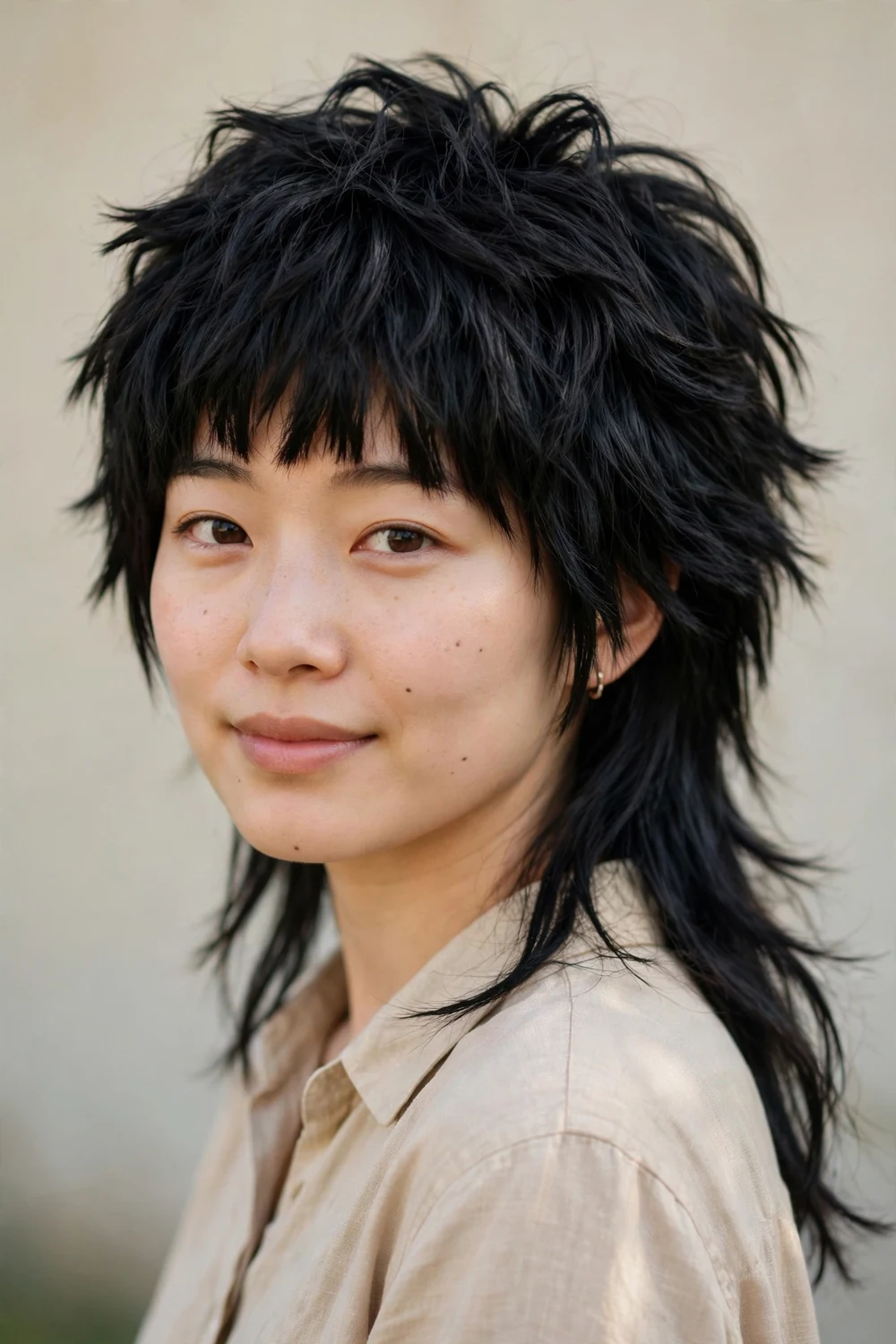
Swapping the curtain bangs for a heavy choppy fringe pushes the wolf cut toward its edgiest form. The fringe is cut blunt and point-textured so it sits in separated pieces across the forehead, merging into the short crown layers at the temples. It shortens long faces and adds attitude to straight or wavy hair. The fringe needs trimming every three to four weeks to stay out of the eyes. Skip this version if you wear glasses with heavy frames, since the combination can crowd the face.
Try this: Flat-iron just the fringe with a heat protectant applied first, and leave the rest of the cut air-dried for contrast.
Difficulty: Medium | Salon cost: $90–$150
Long wolf cut with face framing

The long wolf cut keeps back length near the waist while the crown stays short and full, which creates the boldest length contrast of any version. Face-framing pieces start at the cheekbones and blend into the longer layers, softening the transition so the cut stays wearable. It needs thick hair to support the shape; thin hair looks stringy at this length difference. Deep-condition weekly, since the long back shows damage faster than the short crown. This is the highest-maintenance wolf cut, but also the most striking.
Try this: Braid the long back loosely overnight for heat-free waves that keep the crown volume intact.
Difficulty: Hard | Salon cost: $110–$170
Wolf cut with undercut nape
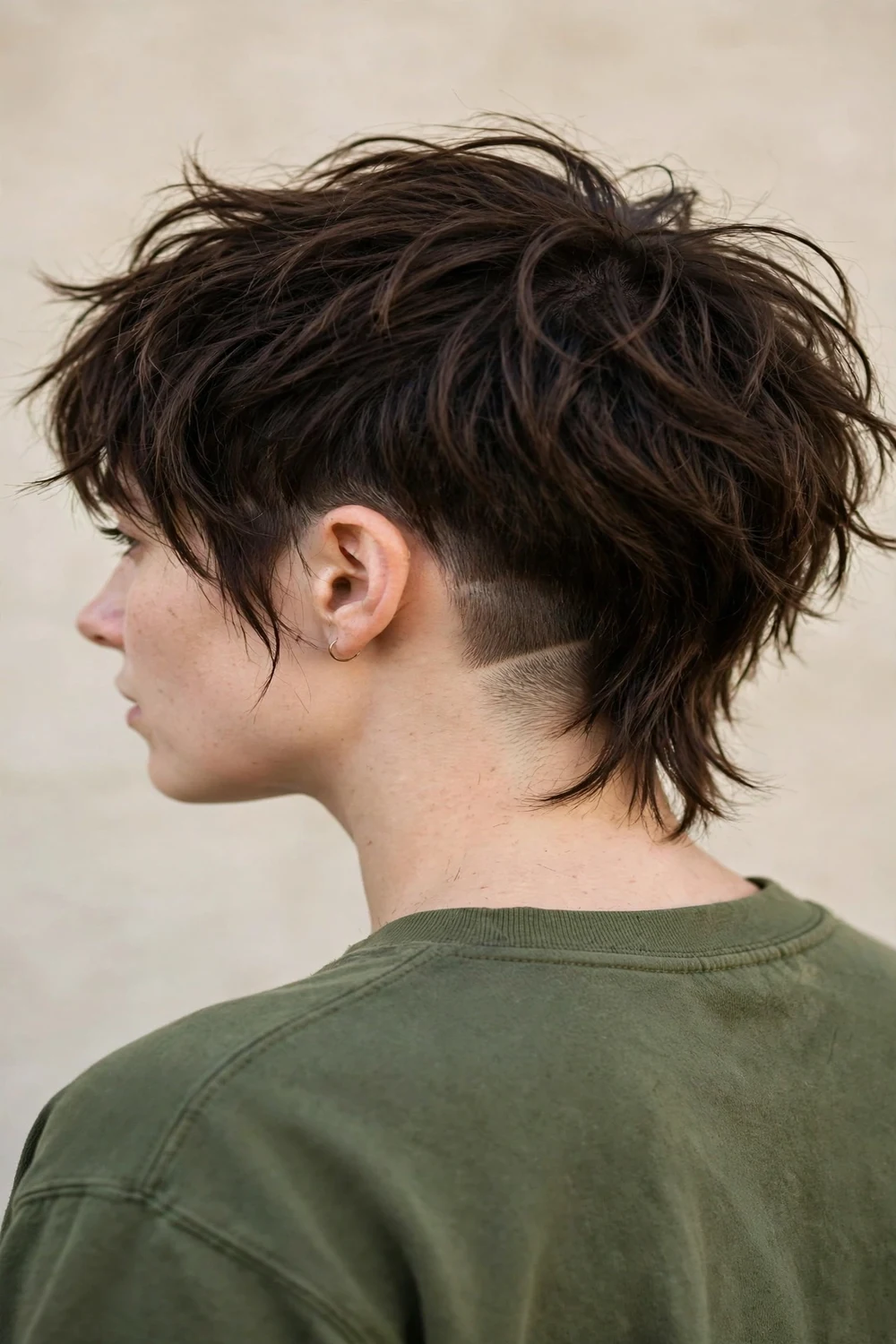
An undercut nape removes bulk where the wolf cut’s back tapers, which sharpens the silhouette and cuts drying time. The shaved section hides under the longer top layers, so the edge only shows when the hair is up or moves. It suits very thick hair that otherwise overwhelms the cut’s shape. The undercut needs a touch-up every three to four weeks to stay crisp. If the wolf cut’s edge appeals to you, our 25 wolf cut hairstyles roundup shows more bold takes on the look.
Try this: Ask for a soft fade on the undercut rather than a harsh line so grow-out stays tidy.
Difficulty: Hard | Salon cost: $110–$170
For the newest versions of the cut beyond these six, trending wolf cut hairstyles gathers 30 current variations in one place.
Shag styles to try
Six ways to wear the shag, from retro to current.
Classic 70s shag with feathered layers
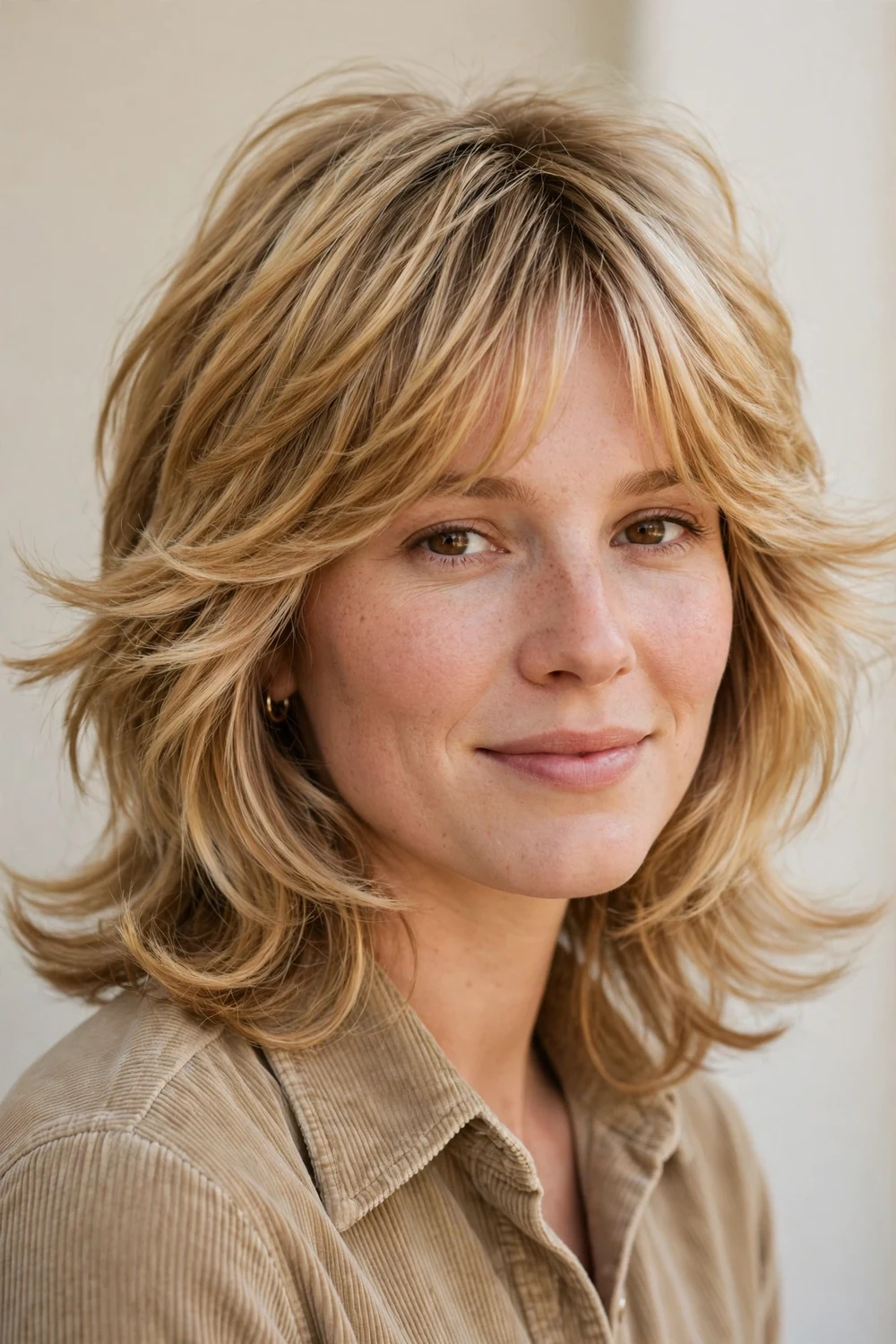
The original shag is all about feathering: layers that flip outward at the ends and a wispy fringe that blends into the face-framing pieces. It sits at shoulder length with even, flowing layers rather than a disconnected crown. This version suits medium-density hair and flatters most face shapes because the feathering softens strong jawlines. Styling is simple: blow-dry with a round brush flipping the ends out, or scrunch for a lived-in finish. It is the lowest-commitment entry into shag cuts.
Try this: Use a large round brush and flip the ends outward while blow-drying for the authentic feathered flip.
Difficulty: Easy | Salon cost: $70–$120
Modern shag with curtain bangs
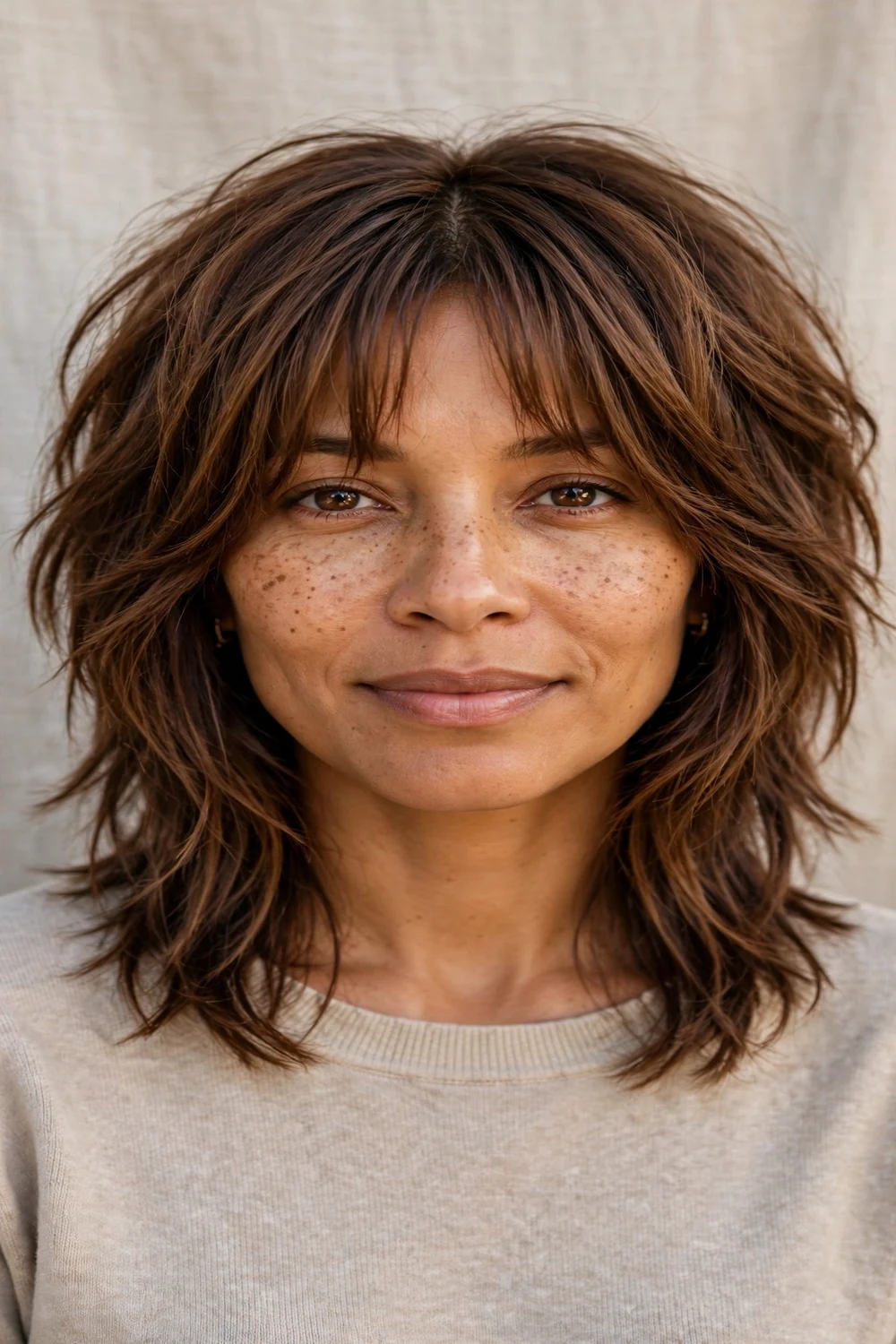
The current shag pairs its even layers with curtain bangs and a little more texture through the ends than the 70s original. It lands between the chin and collarbone, with the bangs opening at the center to frame the eyes and cheekbones. This is the most requested shag in salons right now because it photographs well and grows out cleanly. It works on straight, wavy, and loosely curly hair alike. A texturizing spray on dry hair keeps the ends piecey between washes.
Try this: Twist small sections of dry hair and pinch the ends with a flat iron (heat protectant first) for piecey definition.
Difficulty: Easy | Salon cost: $80–$130
Short shag with full fringe

Cropped to jaw length with a full textured fringe, the short shag reads playful rather than edgy. The layers stay close to the head instead of exploding outward, which makes it manageable for fine hair that cannot hold big volume. It suits oval and heart faces, and the fringe can be adjusted to flatter a longer forehead. Wash-and-go styling works well; a dab of styling cream controls the fringe. Trims every seven to eight weeks keep the shape crisp.
Try this: Air-dry with a lightweight mousse scrunched in, then shake the roots once dry for soft lift.
Difficulty: Easy | Salon cost: $70–$110
Curly shag

The curly shag distributes its layers evenly so curls form a rounded, balanced shape instead of a top-heavy one. Cut dry curl by curl, it keeps volume through the sides and avoids the triangle effect that one-length curly cuts can produce. A soft fringe or long curtain pieces frame the face without fighting the curl pattern. It suits 2B to 3B textures and air-dries into shape with a curl cream. This is the best shag option for anyone who wants layers without the wolf cut’s drama.
Try this: Pineapple the hair overnight to protect the curl shape, then refresh the fringe with water in the morning.
Difficulty: Medium | Salon cost: $100–$160
Long shag with face-framing layers
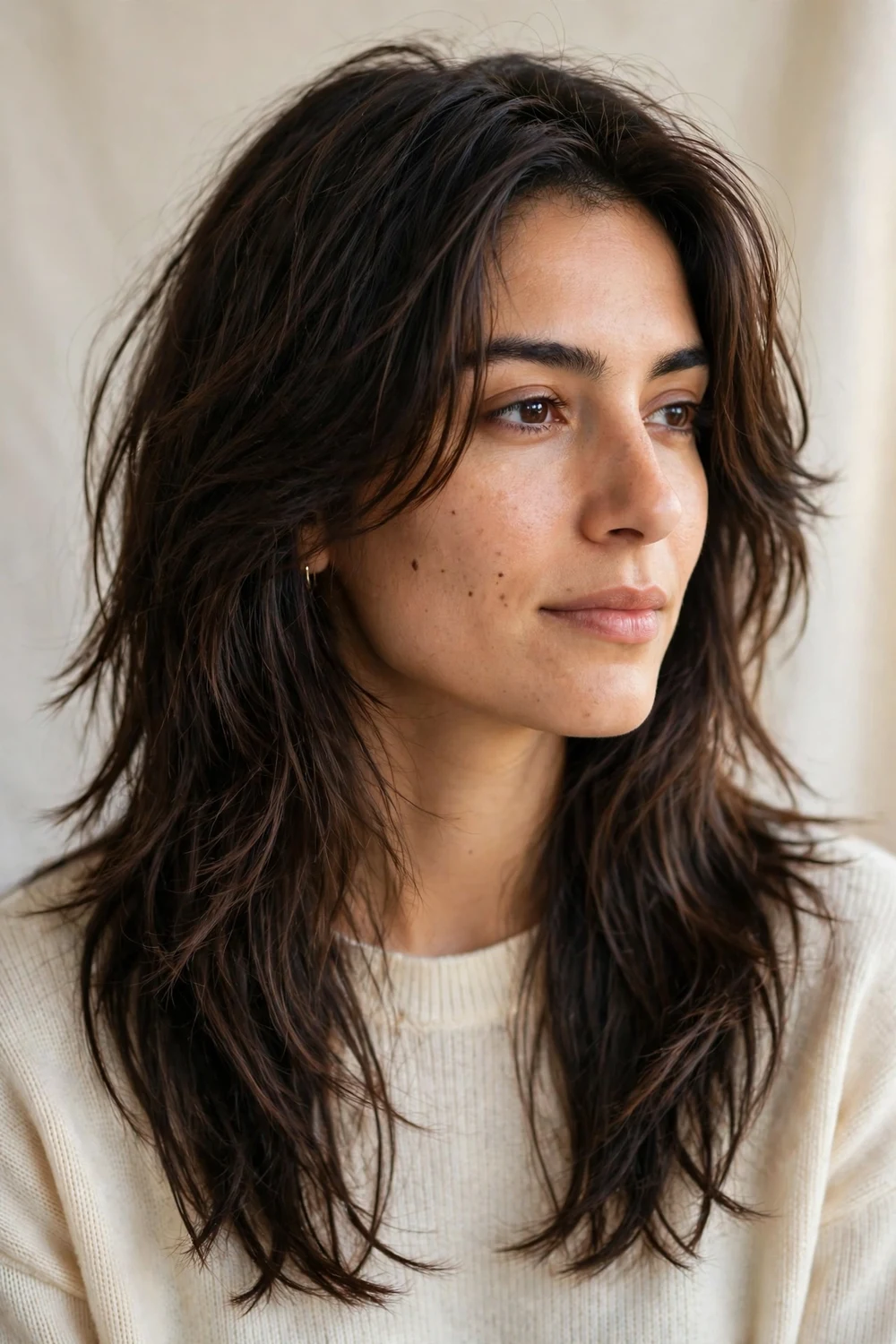
The long shag keeps length past the shoulders while the layers start high at the cheekbones, which adds movement without sacrificing length. It is a strong choice for anyone growing out shorter hair, since the layering keeps the in-between stage flattering. Thick hair sheds bulk; fine hair should keep the layers lighter to avoid thinning the ends. Heat styling with a large curling wand (heat protectant first) gives polished waves, while air-drying keeps it casual. Trims every eight to ten weeks are enough.
Try this: Ask for the shortest layer to start no higher than the cheekbones so the grow-out stays balanced.
Difficulty: Easy | Salon cost: $80–$140
Shaggy bob

The shaggy bob compresses the shag’s layering into a chin-to-jaw length cut, which makes it the lowest-maintenance option on this list. Choppy layers and a textured fringe give it the shag’s signature movement in a compact shape. It suits fine to medium hair and flatters round faces by adding height at the crown. Styling takes five minutes: a texturizing spray on damp hair, scrunch, and go. If you like short texture in general, the short wolf cut guide covers the edgier cropped alternative.
Try this: Sleep on a silk pillowcase to keep the choppy texture intact overnight without restyling.
Difficulty: Easy | Salon cost: $70–$110
The verdict: which one should you get
Get the wolf cut if you have thick, wavy, or curly hair, want a bold shape with real crown volume, and can commit to trims every six to eight weeks. It rewards texture and confidence, and it looks its best when the disconnect between crown and back stays sharp.
Get the shag if you want movement without the edge, have fine or medium hair, or prefer a cut that grows out gracefully with minimal appointments. It flatters more face shapes, suits more textures, and asks less of your styling routine.
If you are still torn, start with a shag. A stylist can always take a shag shorter at the crown and longer at the back later, turning it into a wolf cut in one appointment. Going the other direction takes months of grow-out.
Wolf cut vs shag cut: side-by-side comparison
| Feature | Wolf cut | Shag cut |
|---|---|---|
| Silhouette | Top-heavy, short crown, tapered longer back | Balanced, rounded, even from top to ends |
| Layering style | Disconnected, choppy, mullet-leaning | Connected, feathered, flowing |
| Fringe | Heavy textured fringe or curtain bangs | Curtain, wispy, or full fringe as focal point |
| Best hair texture | Thick, wavy, or curly | Fine, medium, thick, wavy, or curly |
| Best face shapes | Oval, heart, long | Oval, round, square, heart |
| Daily styling time | 10–15 minutes | 5–10 minutes |
| Trim schedule | Every 6–8 weeks | Every 8–10 weeks |
| First-cut salon cost | $90–$160 | $70–$130 |
| Grow-out | Can turn mullet-heavy without trims | Softens into a longer layered cut |
| Vibe | Bold, edgy, statement | Relaxed, retro, effortless |
FAQs
Is a wolf cut just a shag with a mullet?
Close, but the distinction matters. A wolf cut combines shag-style choppy layers on top with a mullet’s short-front, long-back contrast. A shag keeps its layers connected and balanced without the mullet element. Think of the wolf cut as the wilder cousin, not a renamed shag.
Can I get a wolf cut with fine hair?
You can, but manage expectations. Fine hair struggles to hold the crown volume that defines the wolf cut, so ask for a shorter version with texturizing through the ends and use a root-lifting mousse daily. A shag usually gives fine hair a better result with less effort.
Which cut is easier to grow out?
The shag, by a clear margin. Its even layering grows into a longer layered cut without awkward phases. A wolf cut needs regular trims to keep the crown-to-back ratio; left alone for three months, the back dominates and the shape reads as a mullet.
Can a stylist turn my shag into a wolf cut?
Yes, and it is a common request. The stylist shortens the crown layers and takes weight out of the sides while leaving the back length, which creates the wolf cut’s signature disconnect. The reverse (wolf cut to shag) requires growing the crown out for several months.
Do both cuts work with bangs?
Yes. Curtain bangs suit both cuts and are the safest choice if you are unsure. Wolf cuts also pair well with heavy choppy fringe, while shags look good with wispy or full fringe. Tell your stylist which cut you are leaning toward before the fringe is cut, since the fringe is shaped to match.
Final thoughts
The wolf vs shag cut debate has no universal winner, but it does have a right answer for your hair. Thick, textured hair with an appetite for edge belongs in a wolf cut. Finer hair, busier mornings, or a first step into layered cuts belongs in a shag. Bring reference photos of the exact version you want, because both names cover a wide range, and your stylist will thank you for the clarity.

