


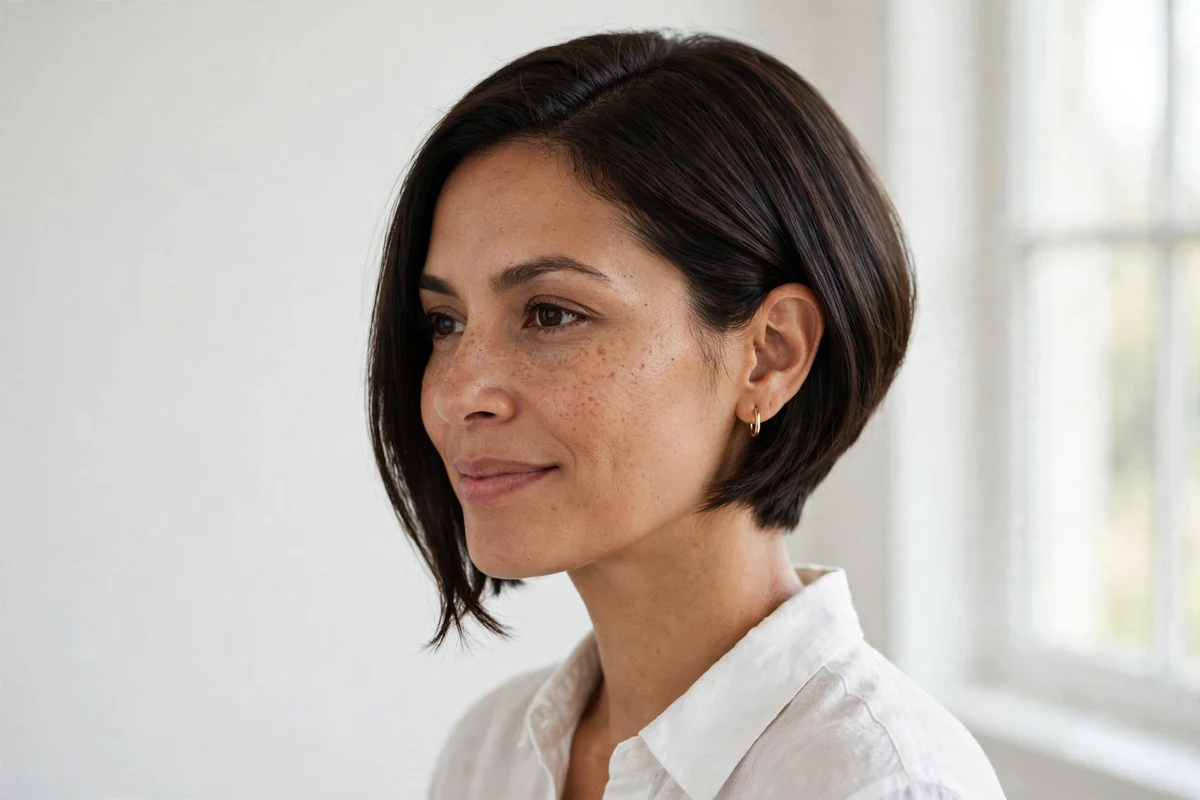
If you have a round face, you have probably heard a long list of rules about what not to do with your hair. An angled bob turns that list on its head. The diagonal cut line does the one thing round faces need most: it pulls the eye downward instead of sideways.
This guide walks through 30 angled bob variations that flatter round faces, from classic graduated cuts to choppy, textured, and undercut versions. I have followed this cut’s evolution for years, and one rule never changes: a well-placed angle slims where it counts.
Quick answer: For a round face, pick an angled bob with a clear slope from a shorter back to front pieces that reach the chin or fall below it. Add a deep side part and a little lift at the crown. Those diagonal lines make the face look longer and more defined.
Quick Takeaways
- The front pieces should end at or below the chin. Ends that stop above the chin can make the face look wider.
- A deep side part breaks up facial symmetry and slims the face right away.
- Lift at the crown balances fullness through the cheeks.
- Keep the angle sharp and visible. A grown-out, blurred angle loses the slimming effect.
- Book trims every 6 to 8 weeks so the shape stays crisp.
Why Angled Bobs Flatter Round Faces
A round face is widest at the cheeks with a soft, curved jawline. An angled bob draws a diagonal line straight across that width. Diagonal lines pull the eye down and inward, which is the exact opposite of what a straight-across chin bob does.
The shorter back lifts the silhouette and creates room for height at the crown. Height on top plus long lines in front stretches the whole face visually. This works with straight, wavy, and curly hair, and it holds for thick and fine textures too, as long as the angle stays visible.
1. Classic Angled Bob
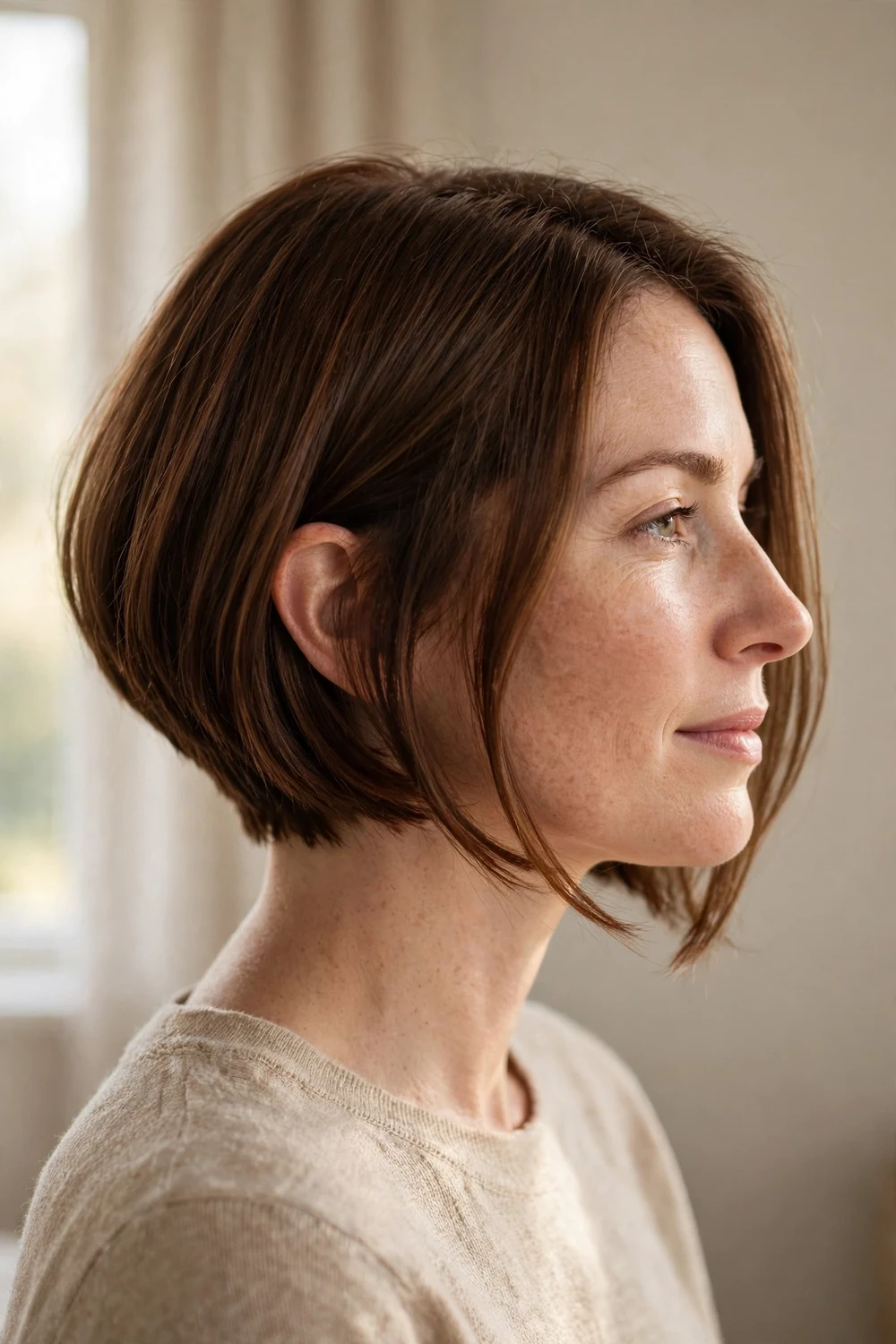
Start with the original. The classic angled bob runs from a neatly tapered back to front pieces that graze the chin. The slope is moderate, not dramatic, which keeps the look wearable for work and weekends. It suits straight to slightly wavy hair and frames the jaw without adding width at the cheeks. Ask your stylist for a one-length perimeter with a gradual angle so the shape stays clean as it grows.
Try this: Blow-dry the front sections forward with a flat brush, then tuck one side behind the ear to show off the angled line.
2. Dramatic High-Contrast Angled Bob
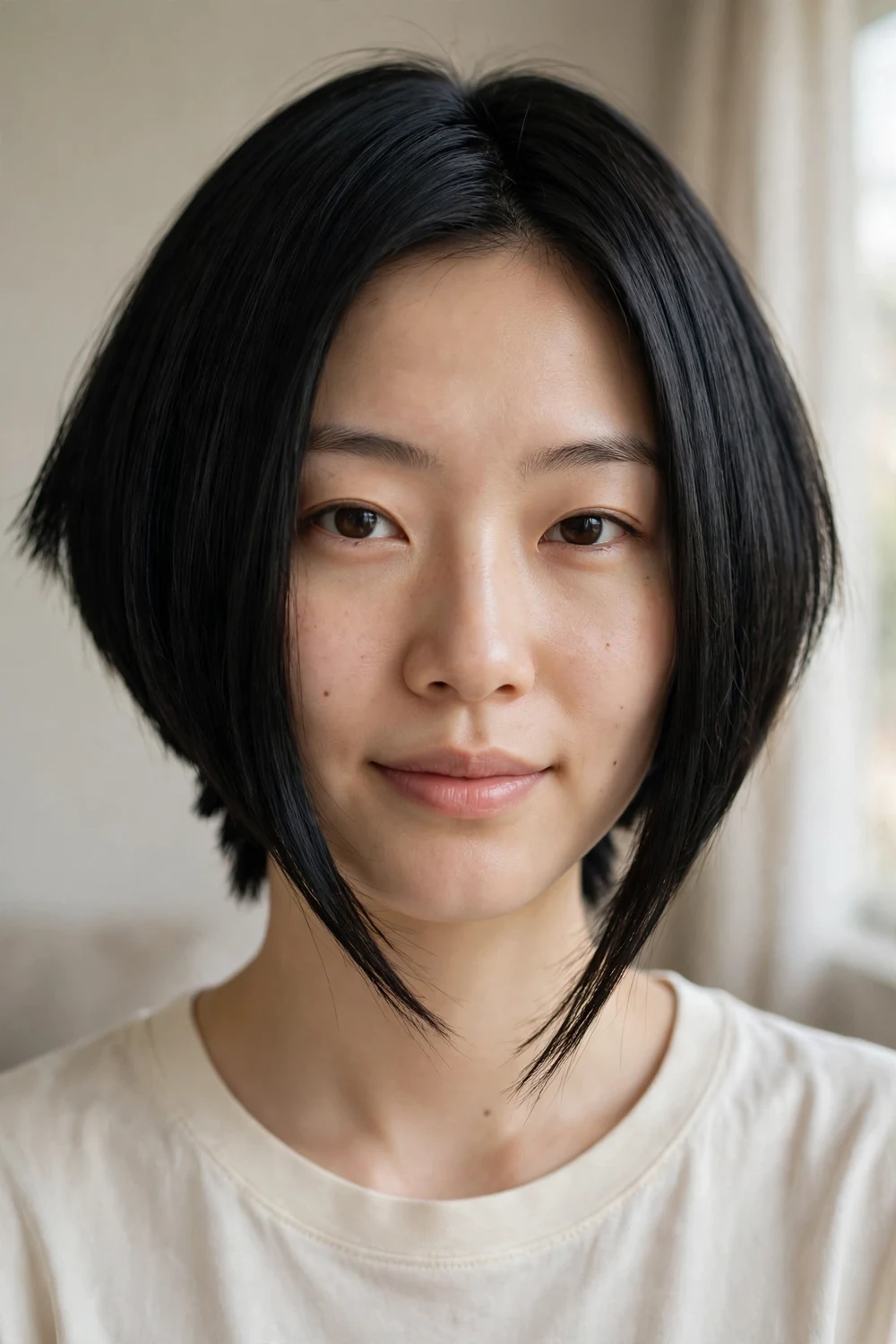
Want maximum slimming? Go bold. A high-contrast angled bob drops from a short stacked nape to front pieces that fall well past the chin. The steep diagonal creates the strongest downward pull of any version here, which makes round cheeks recede fast. This cut demands a confident stylist and regular upkeep, since a soft grow-out shows quickly. It flatters thick, straight hair best and pairs well with a deep side part.
Try this: Flat-iron the front pieces to keep the diagonal edge crisp, and use a pea-sized drop of smoothing serum on the ends only.
3. Inverted Angled Bob
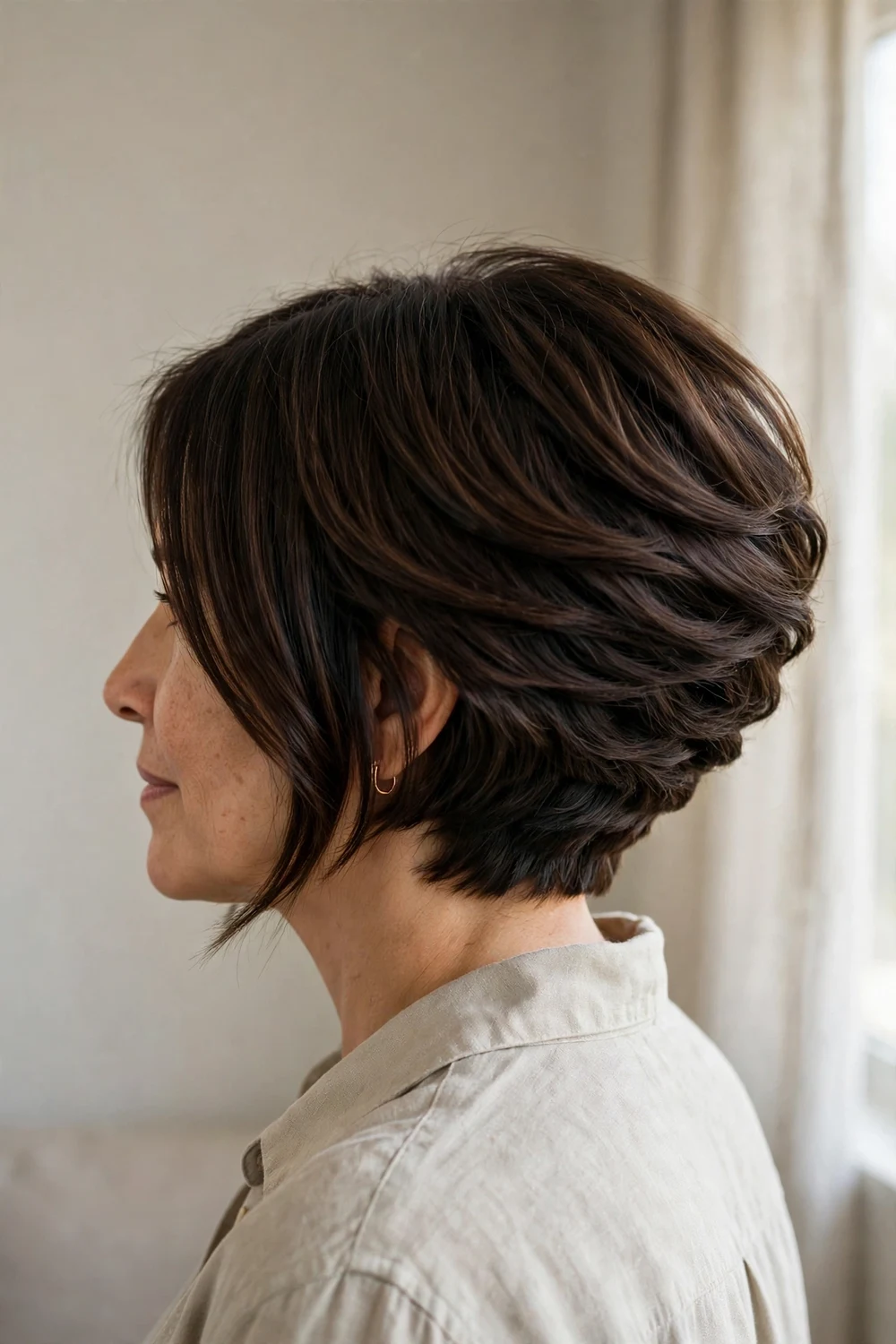
Stacking is your friend when the face needs lift. The inverted angled bob builds graduated layers at the back, which adds automatic volume at the crown, while the front angles down past the jaw. That combination, height on top and length in front, is exactly what elongates a round face. Round-brush the back sections upward at the roots to keep the stack rounded and full instead of flat.
Try this: Work a volumizing mousse through damp roots before blow-drying to keep the stacked back from collapsing by midday.
4. Angled Long Bob
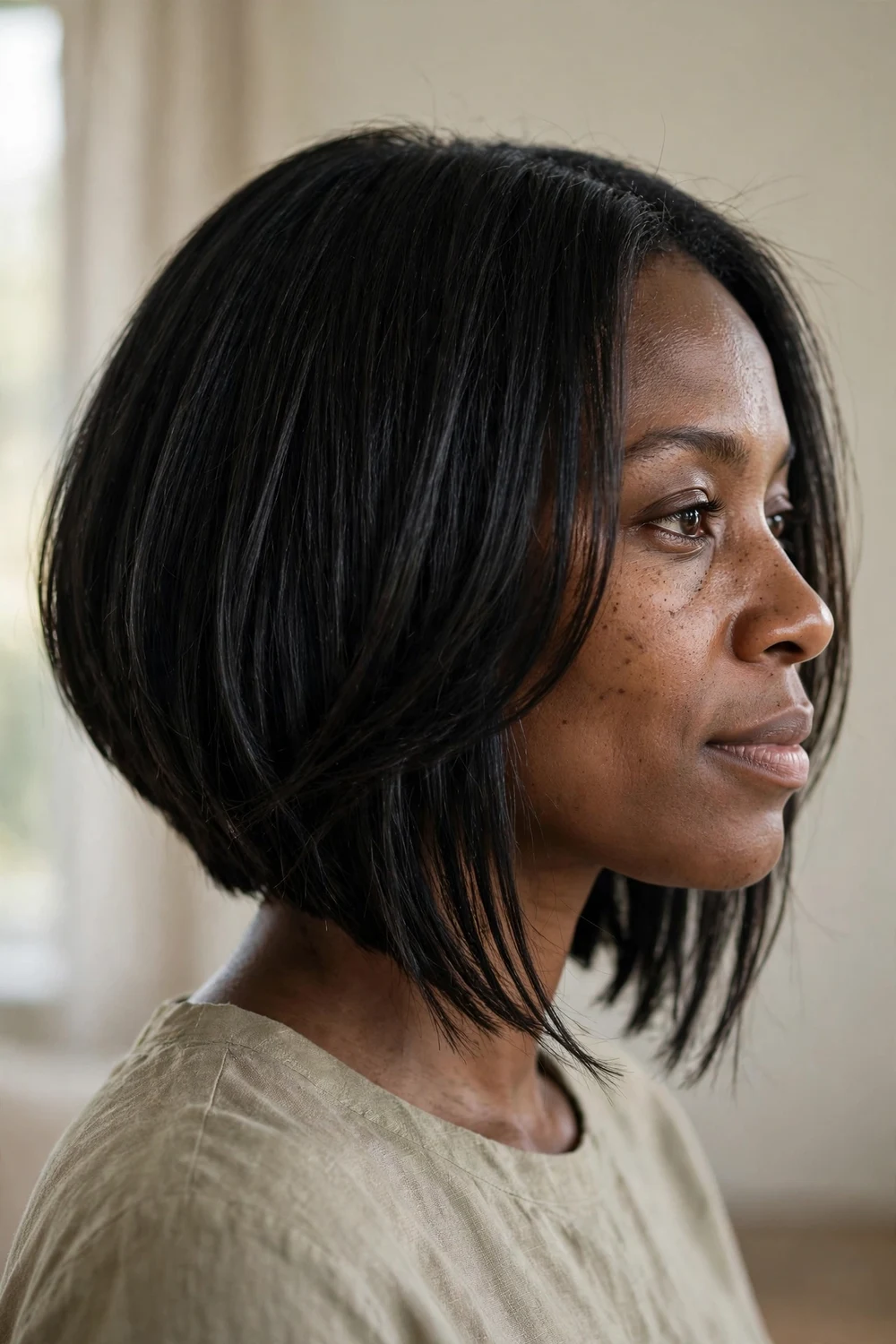
When you want the angle without giving up length, the angled long bob is the answer. The back sits around the nape while the front stretches toward the collarbone. Those long front panels sweep past the widest part of the cheeks, which stretches the face visually. This version is forgiving on thick hair because the weight of the length keeps everything smooth and controlled. It also grows out gracefully between appointments.
Try this: Add loose bends with a 1.25-inch curling iron, rolling the front pieces away from the face for extra movement.
5. A-Line Angled Bob
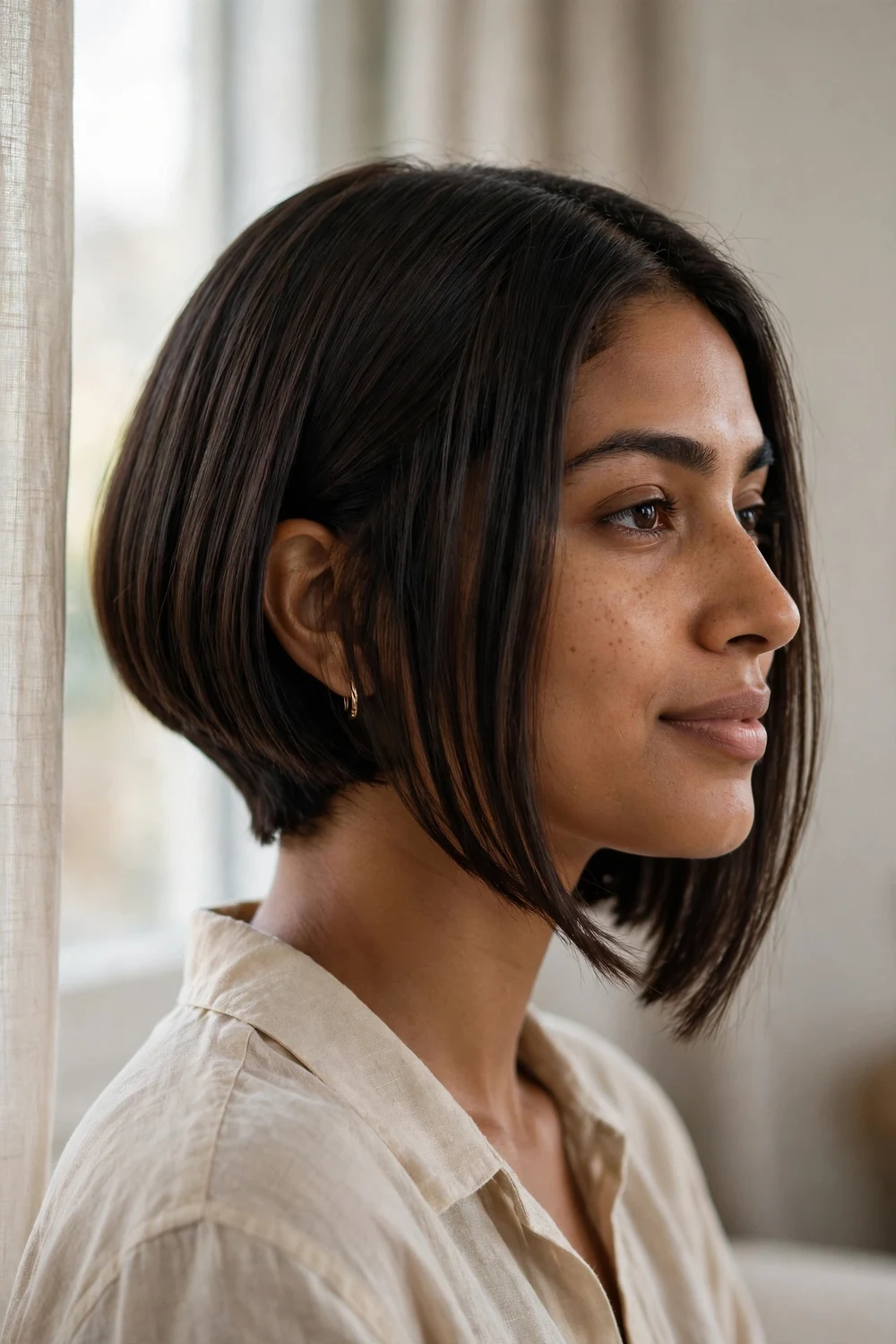
Picture the letter A: narrow at the top, widening downward. That is this cut. The A-line angled bob skips the stacking and keeps one clean diagonal line from nape to chin. Without interior layers the outline stays sharp, which is great for fine to medium hair that can look thin when over-layered. Keep the ends one length so the diagonal reads clearly from every angle.
Try this: Run a flat iron over the perimeter after blow-drying to make the A-line silhouette razor clean.
6. Asymmetrical Angled Bob
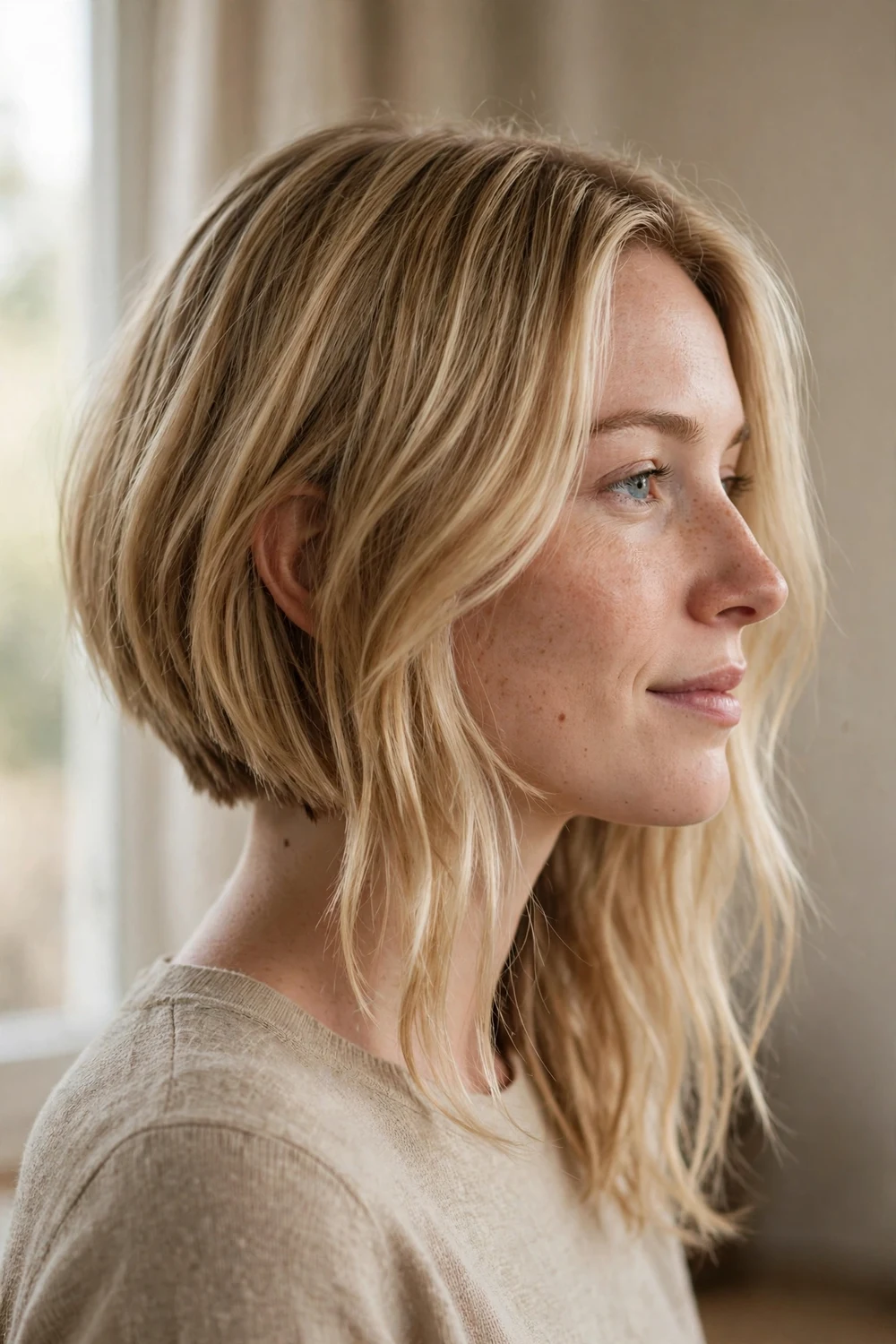
One side sits at the chin and the other falls an inch or two longer. That imbalance is the whole point. Asymmetry breaks the mirror-image roundness of the face, and the longer side drags the eye downward. This is a strong pick if your roundness feels most obvious in photos, since the diagonal across the frame hides width. Keep the shorter side tucked or sleek so the difference stays obvious.
Try this: Part deeply on the short side so the long panel sweeps across and exaggerates the diagonal.
7. Blunt Angled Bob
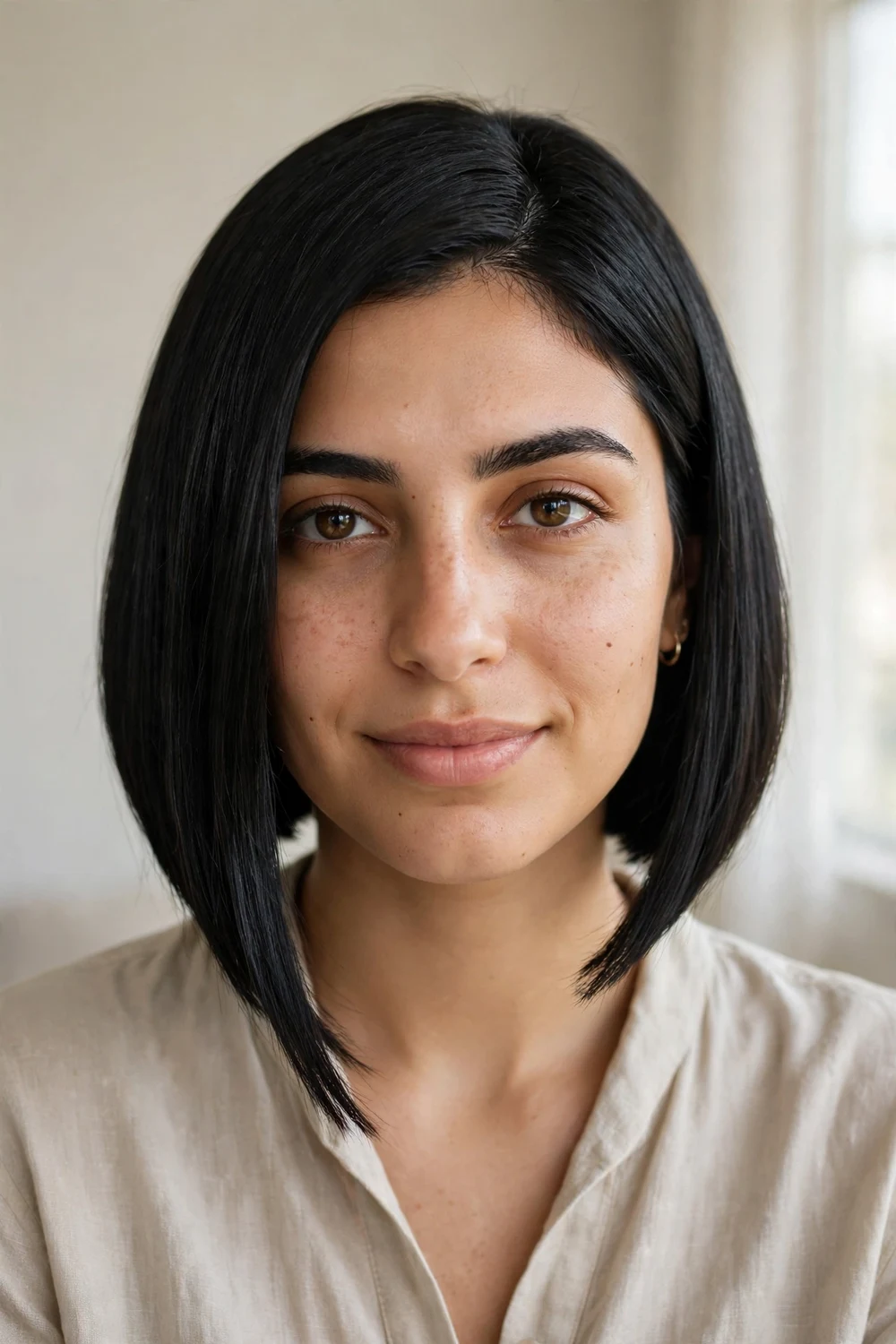
Sharp ends, sharp angle, zero layers. The blunt angled bob pairs a straight-across perimeter with the classic back-to-front slope. The weight at the ends gives fine hair the illusion of density, while the angle keeps the shape slimming instead of boxy. This one looks best glass-straight, so a good flat iron and heat protectant earn their keep. Trim on schedule; blunt ends show damage fast.
Try this: Mist a shine spray over the finished style. The gloss makes the angled line look even more precise.
8. Layered Angled Bob
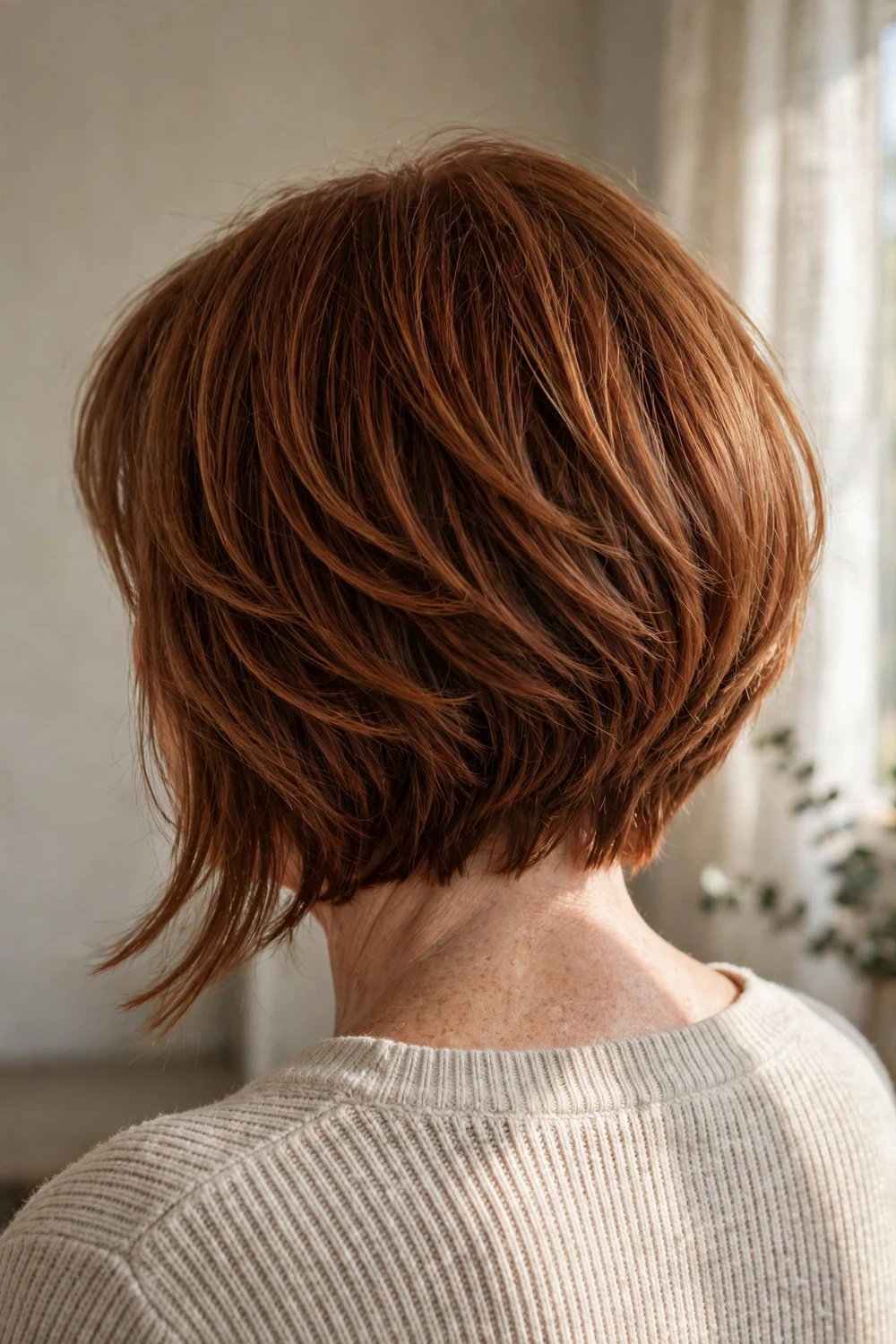
Layers change how the angle behaves. A layered angled bob adds graduated interior layers through the cut, which removes bulk and builds movement. This matters for thick hair that can turn a plain angled bob into a triangle. The layers should stay long, starting below the cheekbones, so they don’t add width where the face is already full. The result moves naturally and never looks heavy.
Try this: Scrunch a lightweight cream into damp ends and diffuse for soft, separated movement.
9. Textured Angled Bob
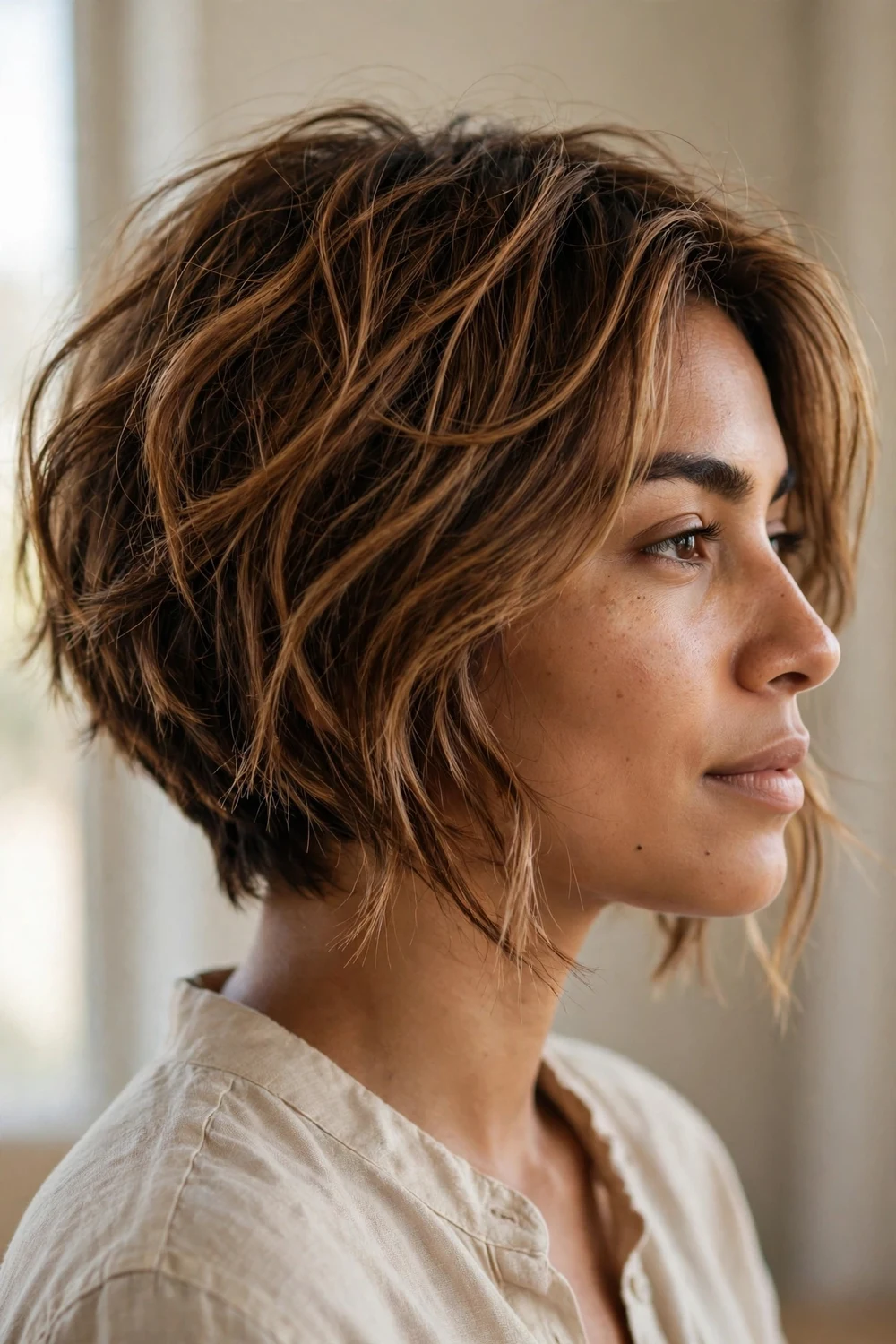
Airy and piecey beats flat and heavy for round faces. A textured angled bob uses point cutting and slide cutting to break up the ends while the overall slope stays intact. The texture catches light in different directions, which adds dimension and distracts from cheek width. This is an easy everyday cut because it looks good slightly undone and needs almost no heat styling.
Try this: Rub a tiny amount of texture paste between your palms and pinch random ends for separation.
10. Choppy Angled Bob
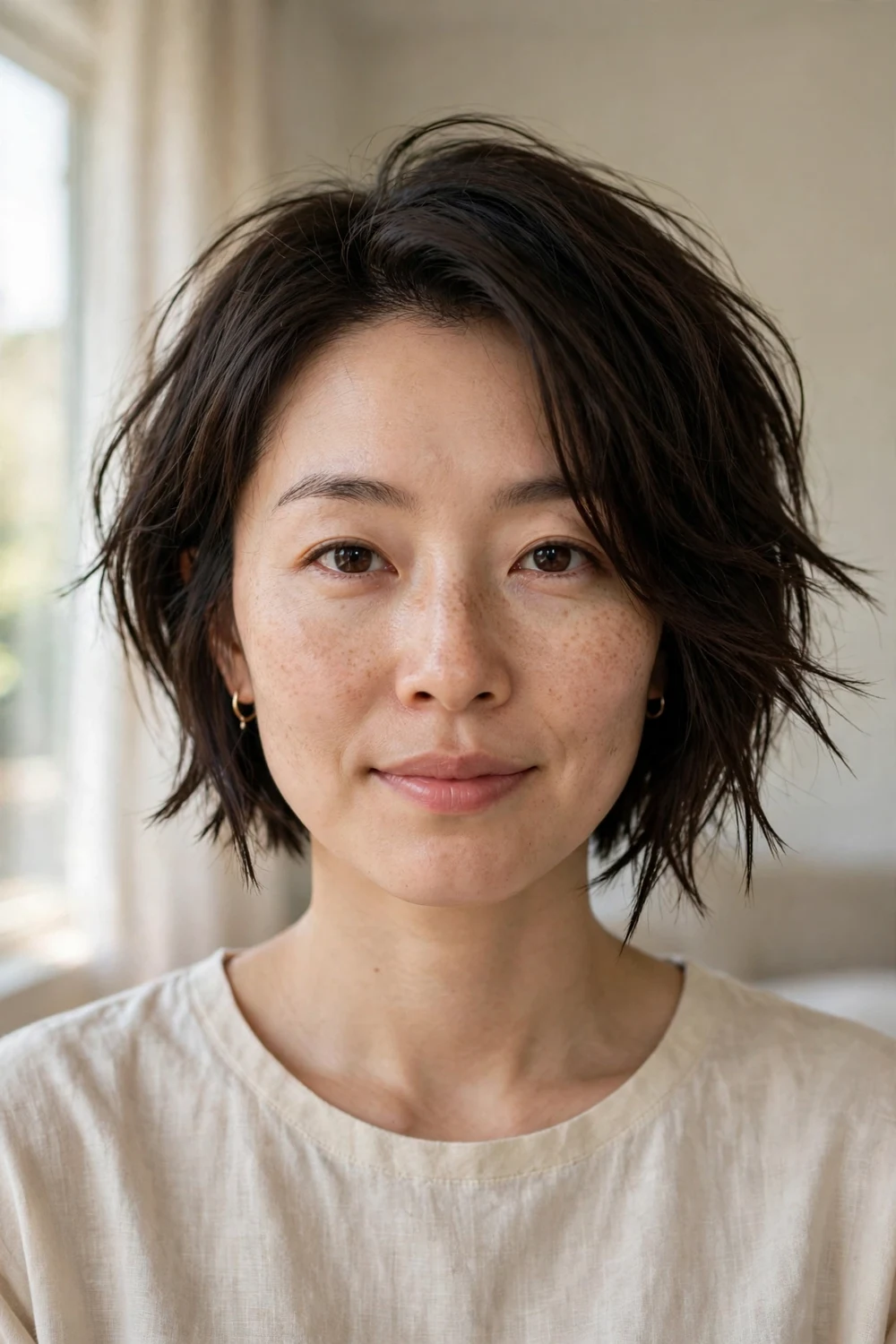
Choppy goes one step further than textured. The choppy angled bob has jagged, uneven ends that give the cut an edgy finish while the angle does the slimming work underneath. The irregular ends stop the outline from looking like a solid curve around the face, and curves are what emphasize roundness. Keep the choppiness at the ends, not the top, so the crown stays smooth and lifted.
Try this: Spray dry texture spray at the roots and rough-dry upside down for instant lift and edge.
11. Shaggy Angled Bob
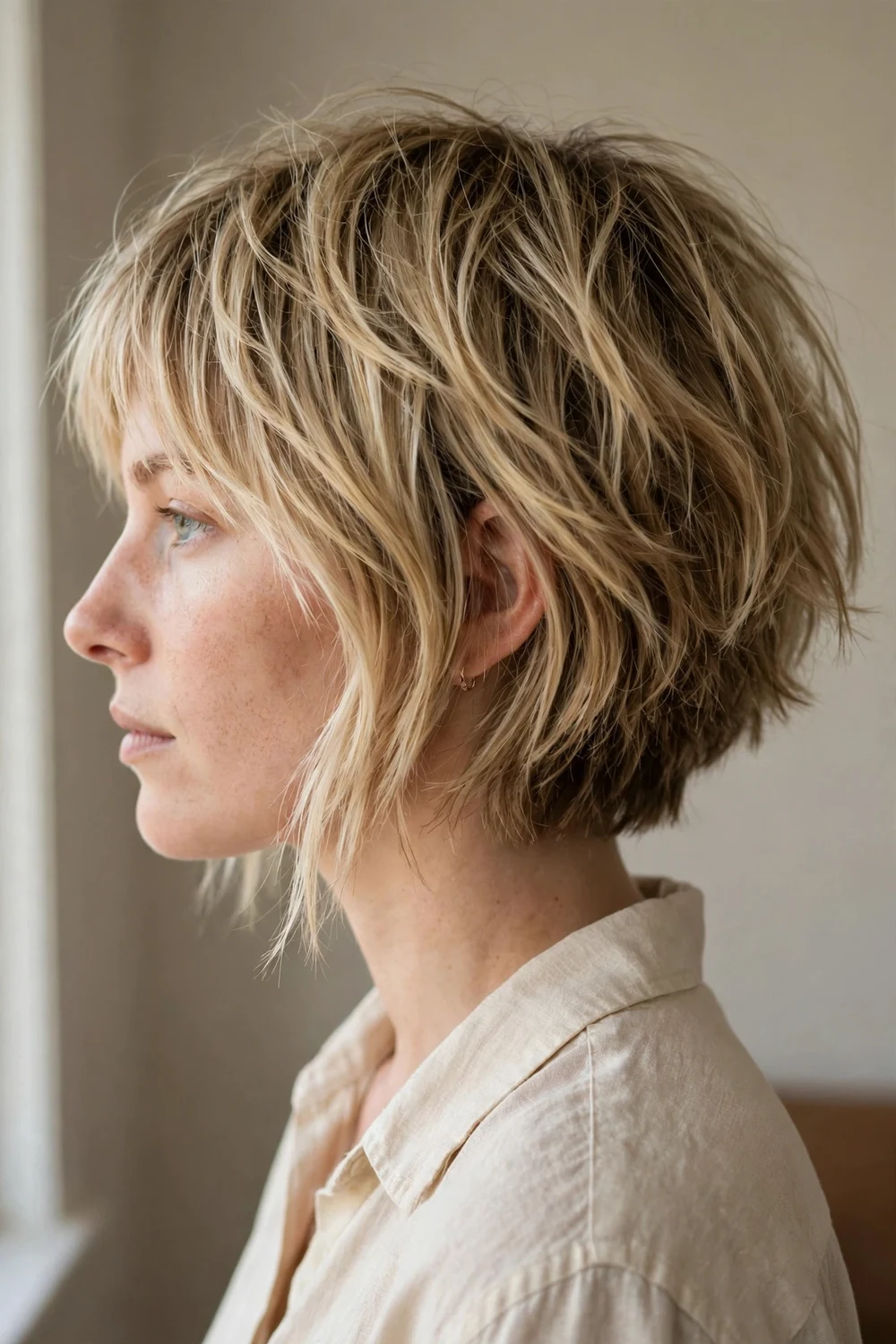
Think of the shaggy angled bob as the relaxed cousin of the classic. Feathery shag layers run through the cut, and wispy ends keep it from looking heavy. The angle still slopes from back to front, so the slimming geometry stays, but the finish feels casual instead of polished. It is a good match for wavy hair, since the layers encourage natural texture instead of fighting it.
Try this: Air-dry with a wave-enhancing cream and skip the brush. The messier it dries, the better it looks.
12. Feathered Angled Bob
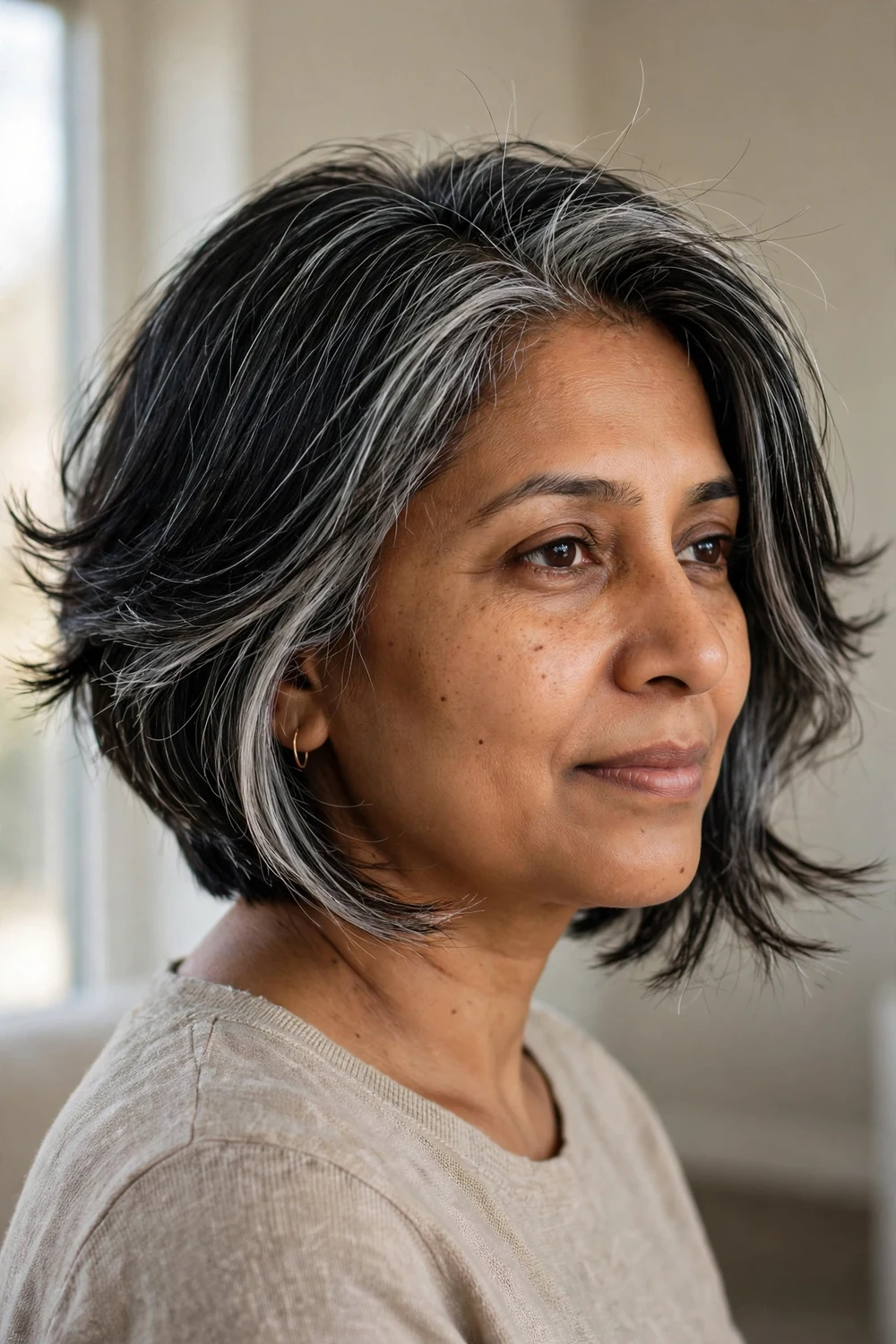
Feathering flips the ends outward in soft, light flicks. On an angled bob, those flicks sit along the angled line and keep the perimeter from hugging the cheeks. That little bit of outward movement opens up the face instead of framing it tightly. A round brush is the tool here: roll the ends out and away as you dry each front section. The result reads soft and polished at the same time.
Try this: Dry each front panel with a medium round brush, flicking the ends outward, then set with a light flexible hairspray.
13. Wavy Angled Bob
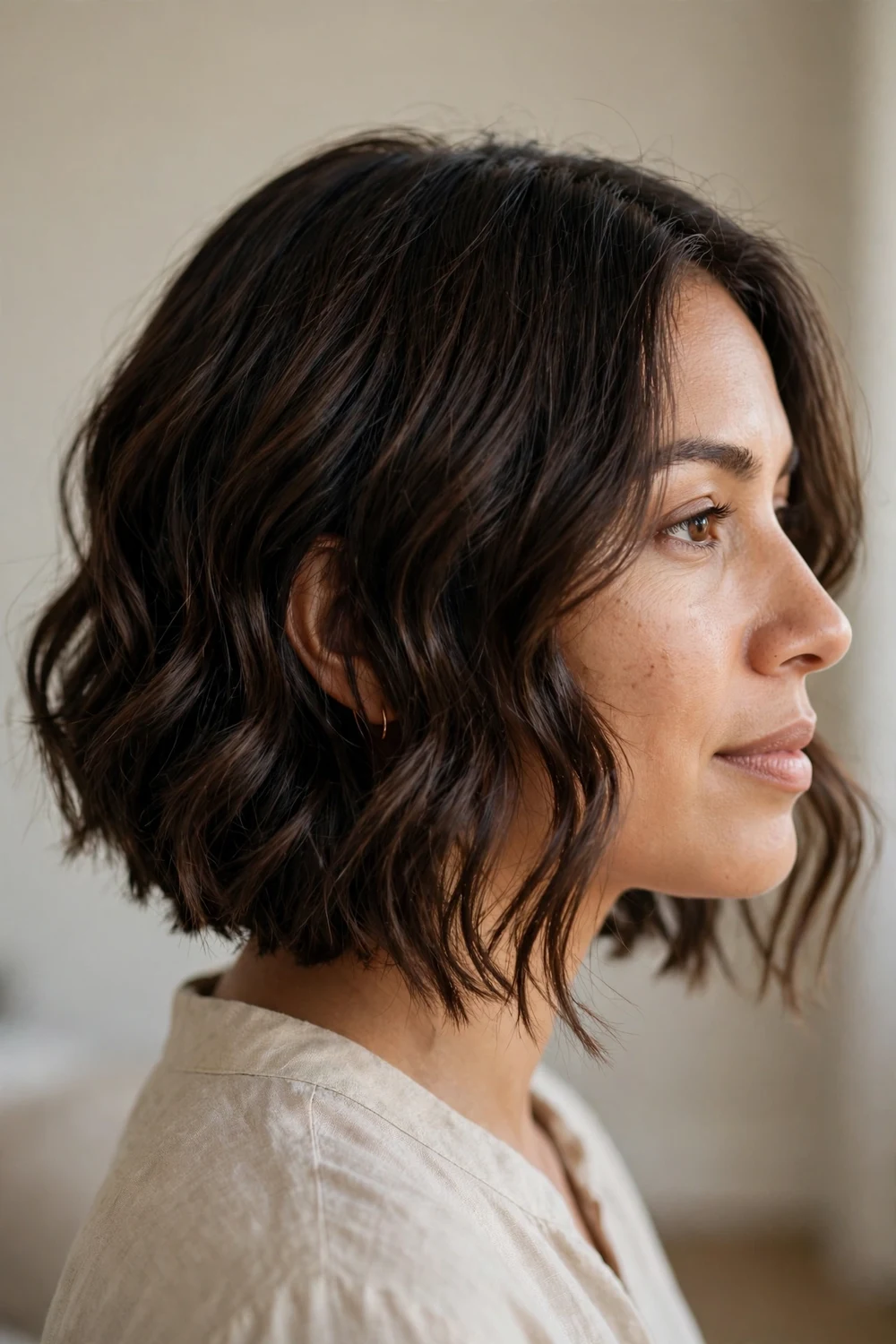
Waves add width only if they start at the wrong spot. A wavy angled bob keeps the waves below the cheekbones and lets the top stay smooth, so the volume lands where it elongates instead of where it widens. The angled cut line gives the waves a direction to follow, which stops them from puffing out sideways. This style works with natural waves or with a quick pass of a curling wand.
Try this: Wrap sections around a 1-inch wand, leaving the ends out for a modern, undone finish.
14. Curly Angled Bob
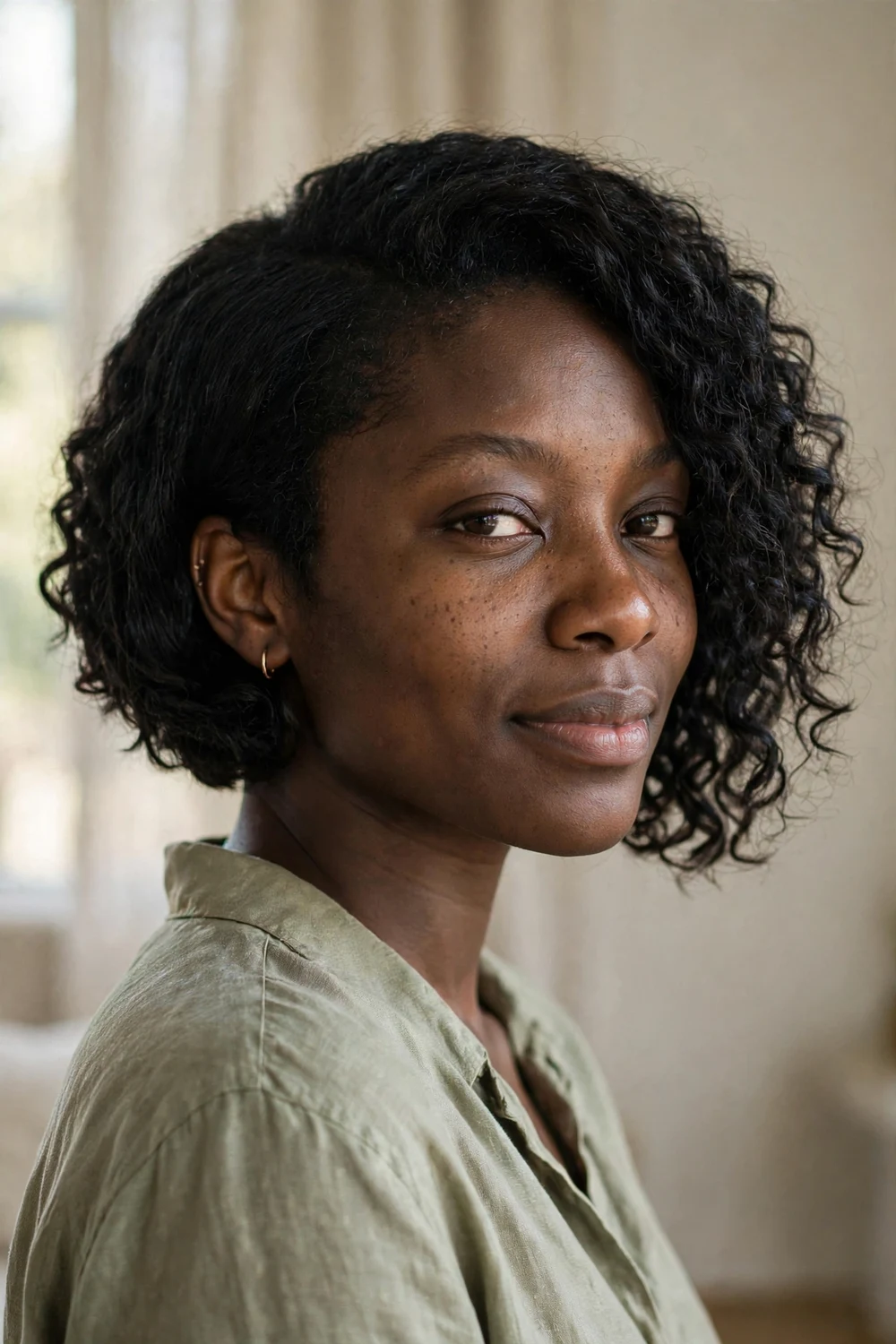
Can curls do an angle? Yes, with the right cutting approach. A curly angled bob is cut dry, curl by curl, so the stylist can see exactly where each curl springs. The silhouette stays shorter in back and longer in front even as the curls bounce up. Keep the crown curls a touch longer for height and ask for weight removal through the sides so the shape tapers instead of rounding out. The angle peeks through the texture and keeps the face defined.
Try this: Apply curl cream to soaking-wet hair and diffuse on low heat to protect the shape as it dries.
15. Sleek Straight Angled Bob
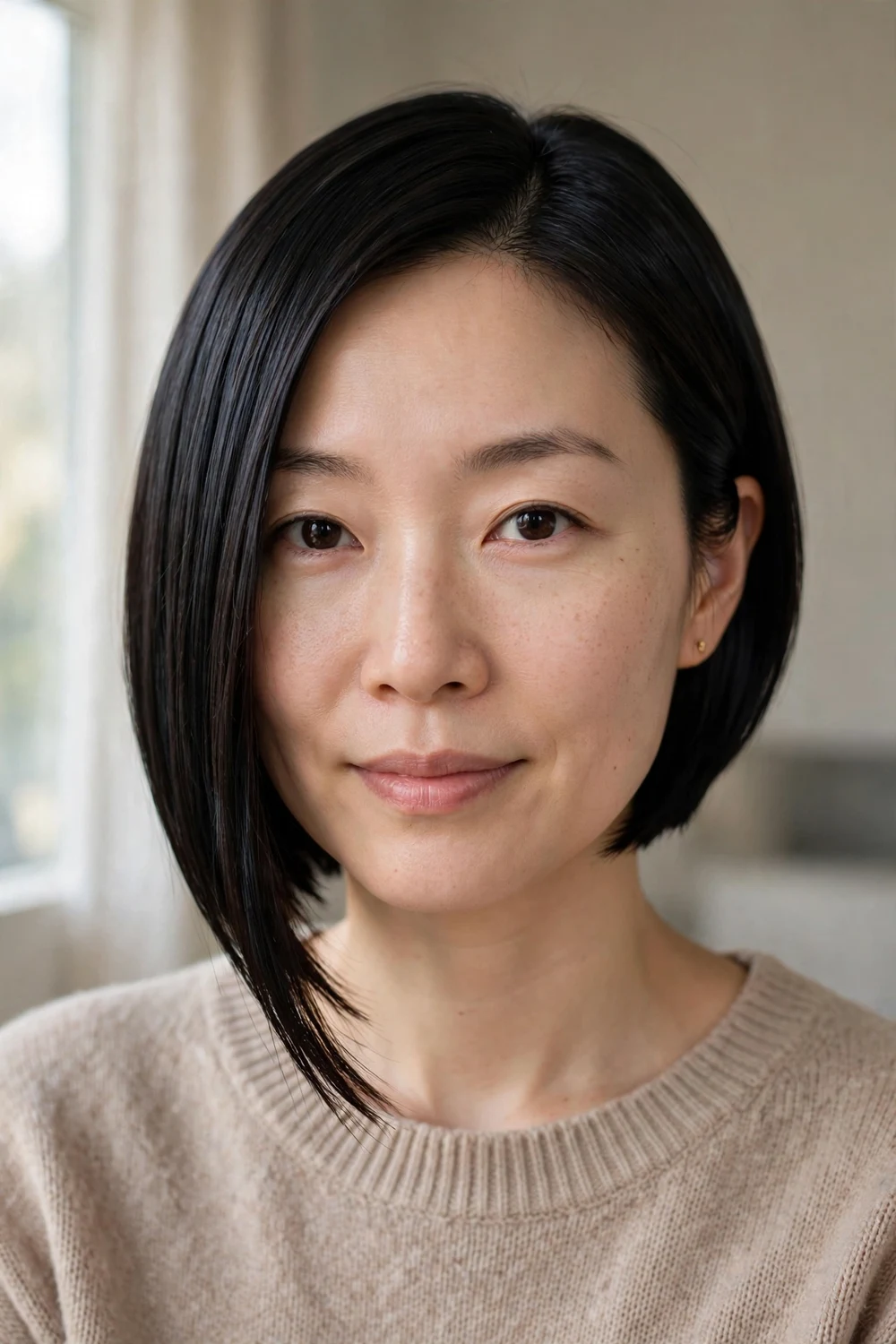
When the angle is the star, frizz is the enemy. The sleek straight angled bob is flat-ironed glass smooth so the diagonal line reads with zero distraction. This version shows off the cut’s architecture better than any other, which is why it photographs so well. It needs naturally straight or straightened hair and a solid heat routine. The payoff is a sharp, expensive-looking silhouette that slims the face in one clean gesture.
Try this: Finish with a few drops of argan oil smoothed over the surface to kill flyaways without adding weight.
16. Short Angled Bob
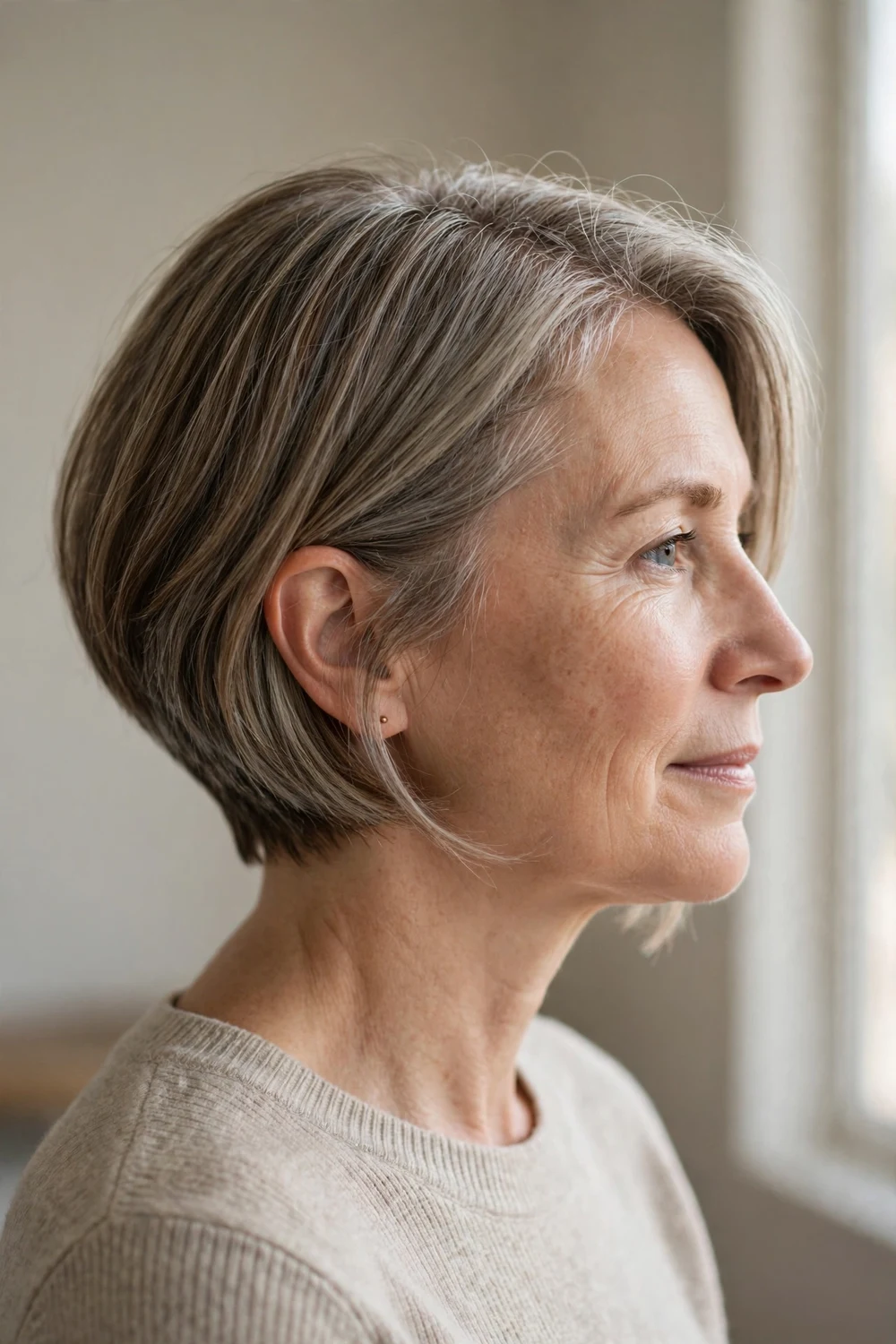
Short hair and round faces can work when the shape lifts instead of hugs. A short angled bob keeps the back at ear length and brings the front to the chin, so even the short version keeps its downward line. The key is avoiding a rounded, helmet-like silhouette: the back should taper close to the head while the front panels stay defined. It is low maintenance and dries fast, which makes it a practical daily cut.
Try this: Direct the front sections forward and slightly under with a small round brush to keep the angle crisp.
17. Angled Bob with Deep Side Part
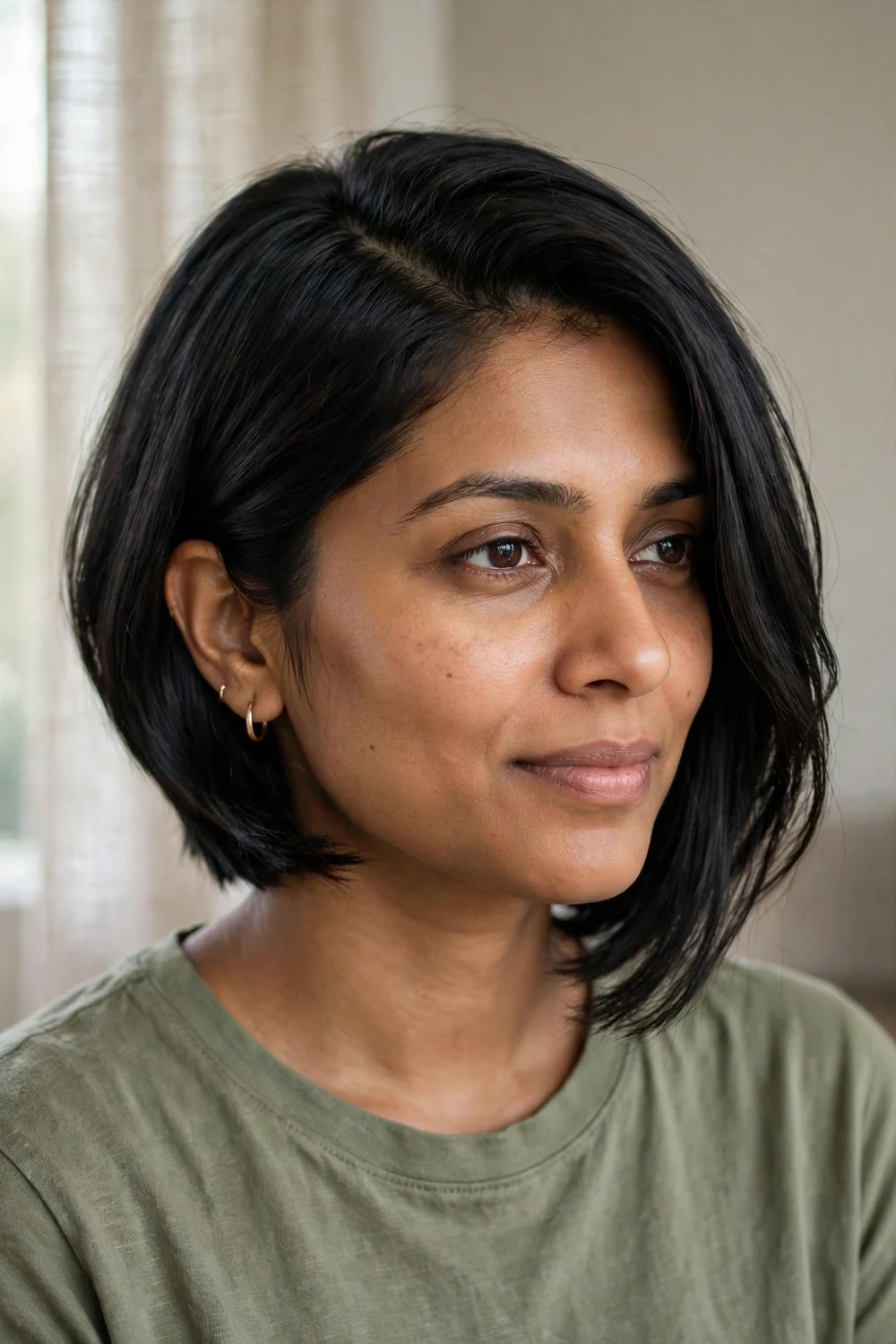
Here is the fastest slimming trick on this list, and it costs nothing. Moving the part two or three inches off center breaks the face’s symmetry, and asymmetry always reads slimmer than a centered mirror image. On an angled bob, the deep side part sends a heavy sweep across the forehead and loads volume on one side, which stretches the face diagonally. This styling tweak upgrades any angled bob on the list.
Try this: Set the part while the hair is damp and train it for a week. It will start falling into place on its own.
18. Angled Bob with Side-Swept Bangs
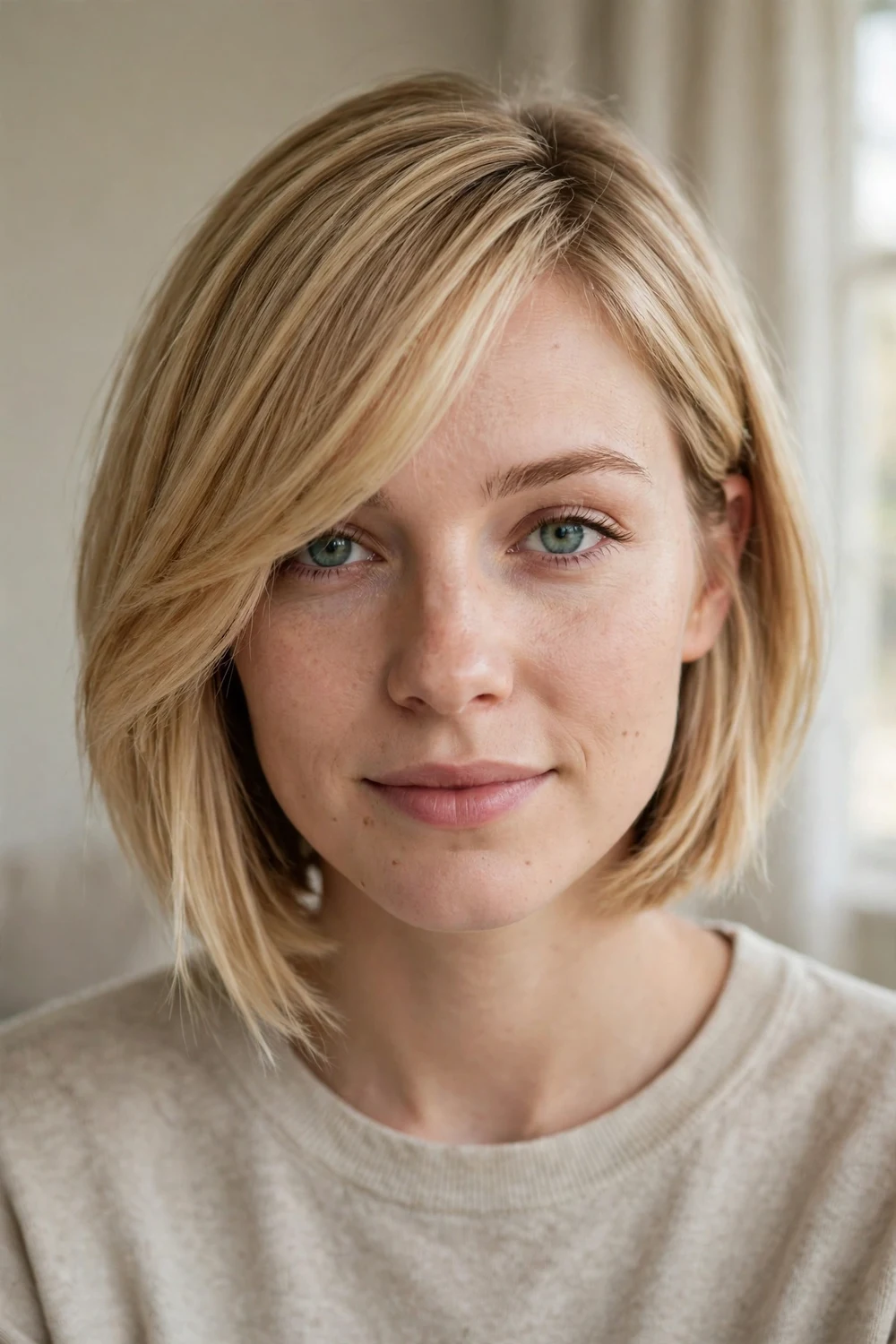
Side-swept bangs and angled bobs were made for each other. The bangs draw their own diagonal across the forehead, which doubles the slimming lines already in the cut. Keep them long enough to blend into the front pieces, around cheekbone length, so they read as part of the style instead of a separate fringe. This is one of the most forgiving bang choices for round faces because there is no blunt horizontal line.
Try this: Blow-dry the bangs across the forehead with a flat brush, then sweep them to the side while still warm.
19. Angled Bob with Curtain Bangs
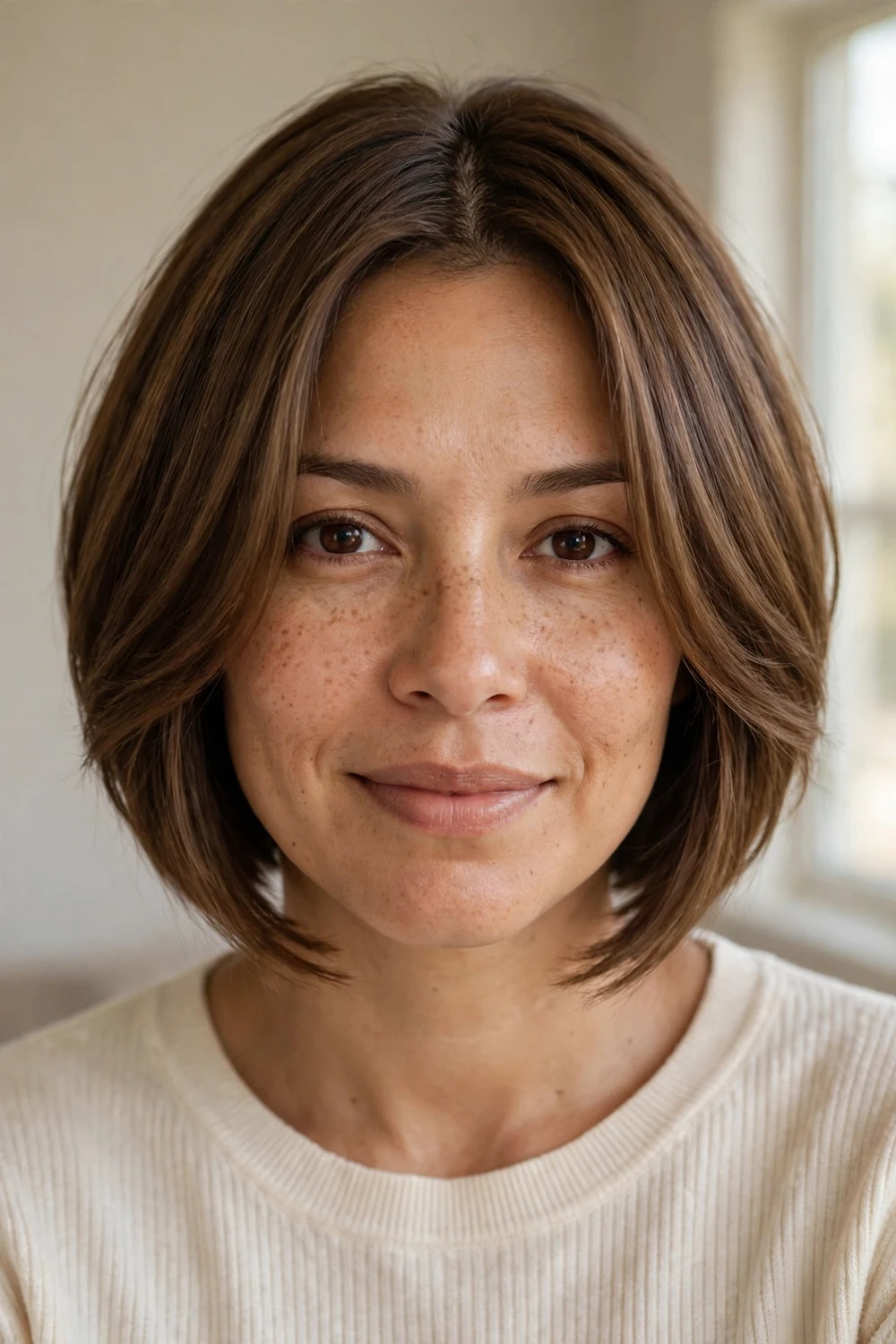
Curtain bangs part in the middle and sweep to both sides, framing the forehead while opening the center. On an angled bob, they soften the look without adding a straight-across line, which is the thing to avoid on round faces. Ask for the curtains to start at the cheekbones and blend into the angled front pieces so the whole front reads as one continuous frame.
Try this: Wrap each curtain section around a round brush away from the face, then let it cool before touching it.
20. Angled Bob with Wispy Bangs
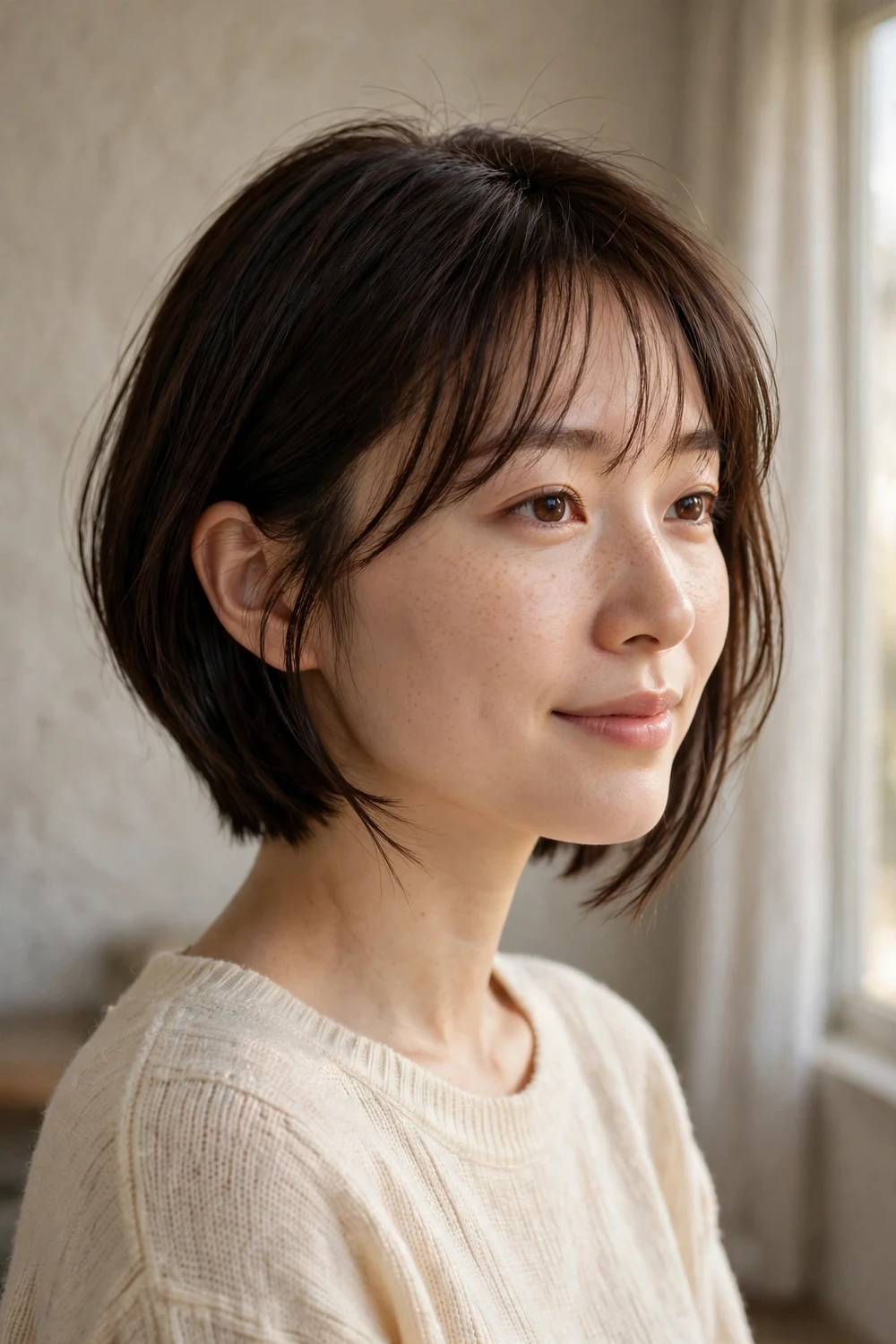
Full heavy bangs can shorten a round face, but wispy ones play by different rules. Wispy bangs are light and separated, so they show skin through the fringe and keep the forehead looking open. Paired with an angled bob, they add softness around the eyes while the cut’s diagonal does the structural slimming below. Keep the wisps long and textured rather than cut straight across.
Try this: Trim the wisps yourself between appointments with point-cutting, taking off only a few millimeters at a time.
For more fringe options that keep a round face looking longer, these bob haircuts for round faces with bangs cover 20 pairings from side-swept to curtain styles.
21. Angled Bob with Face-Framing Layers
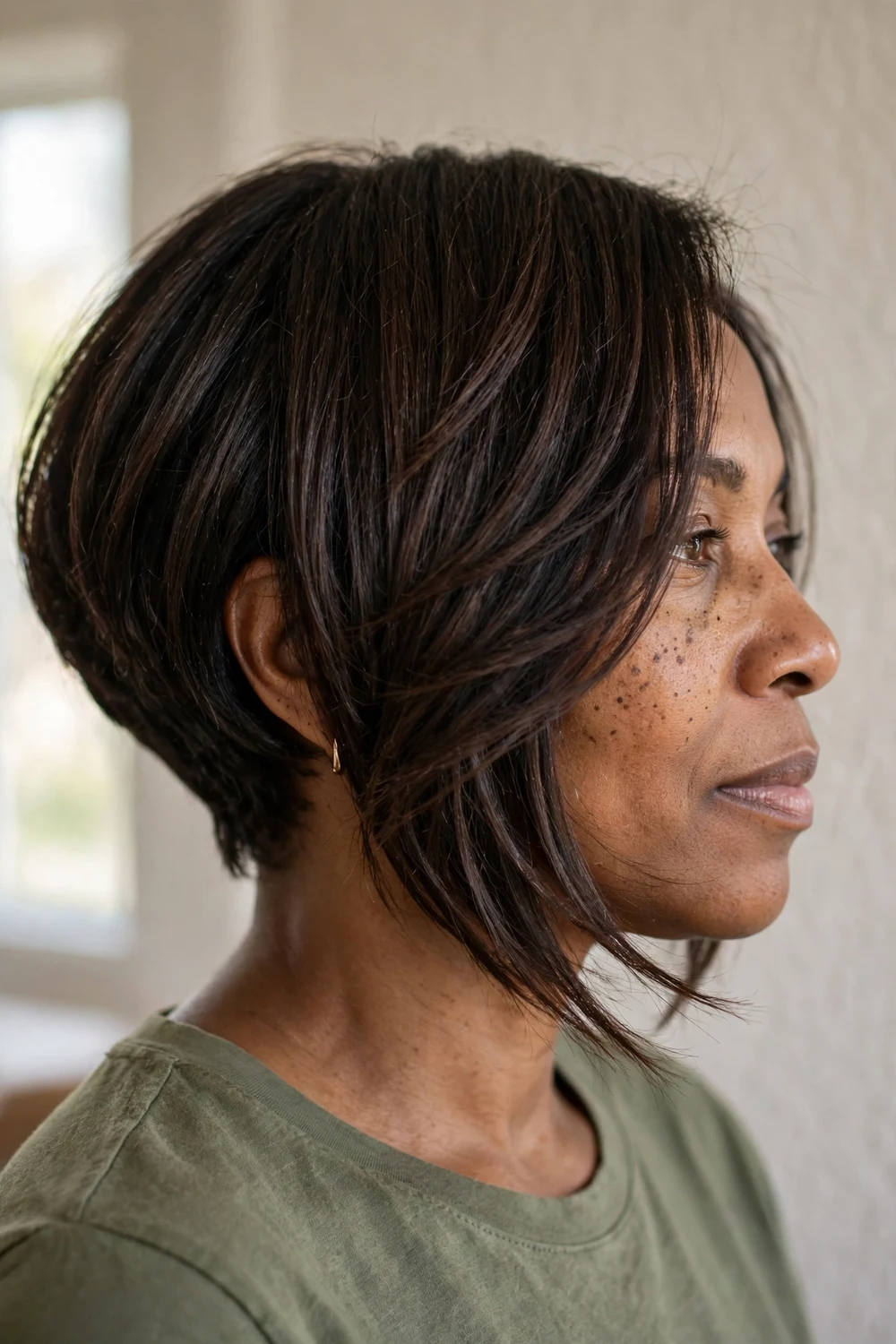
Face-framing layers start at the cheekbones and melt into the angled front. The shorter pieces near the face create shadows and lines that carve definition into soft roundness, while the longer pieces keep the downward pull. The trick is placement: layers that start too high add width at the cheeks, so ask for them to begin at or below the cheekbone. Everything above that stays smooth.
Try this: Curl the face-framing pieces away from the face with a flat iron for a soft outward flick.
22. Angled Bob with Crown Volume
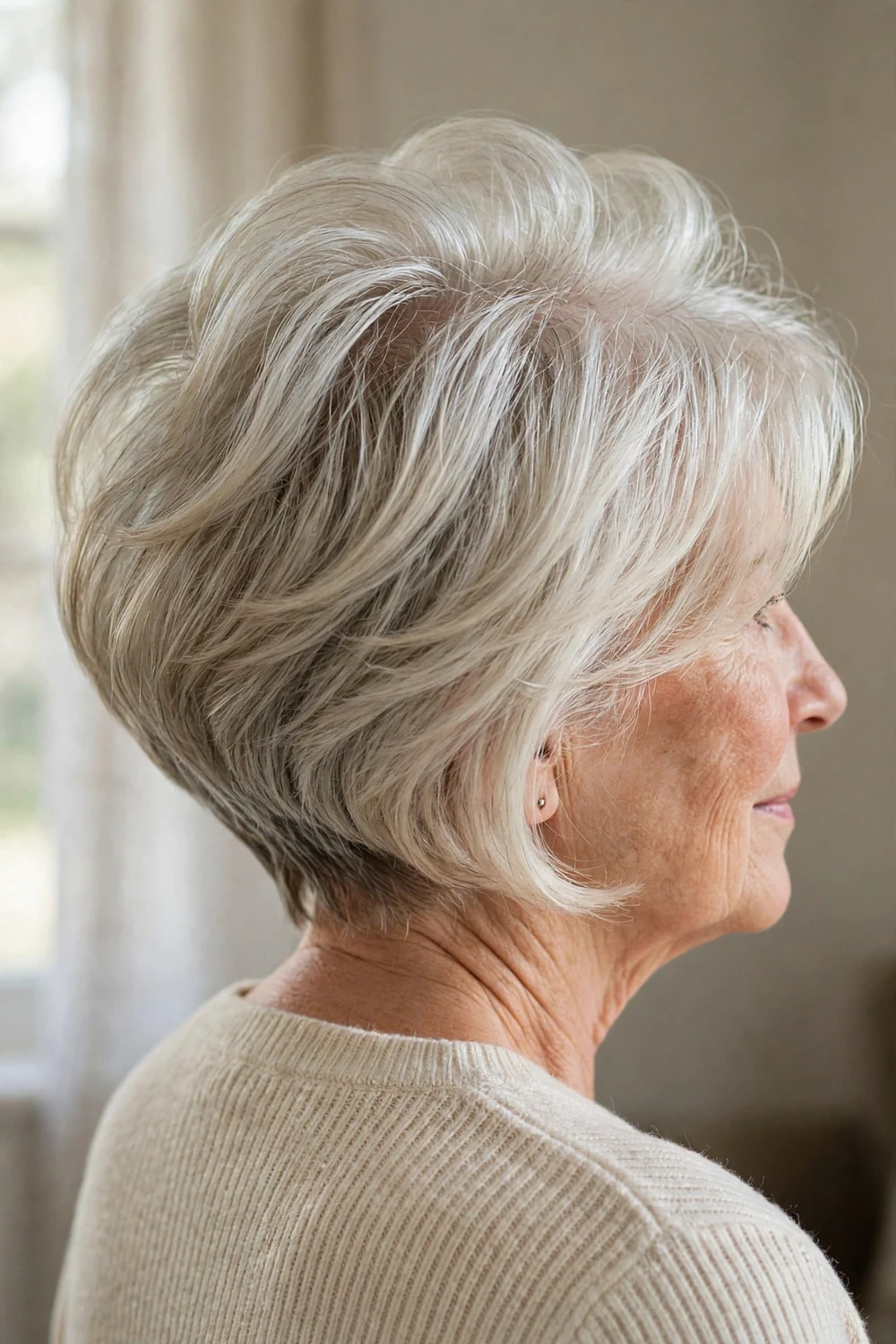
Height on top is the oldest slimming trick in the book. An angled bob with deliberate crown volume lifts the silhouette upward, which stretches the face’s proportions. Get the lift from a short round-brush blowout at the roots or from backcombing the crown lightly before smoothing the top layer over it. The angled front then continues the elongation down the sides. This combination works for every hair texture.
Try this: Sprinkle volumizing powder at the crown roots and massage it in for lift that lasts all day.
23. Angled Bob for Thick Hair
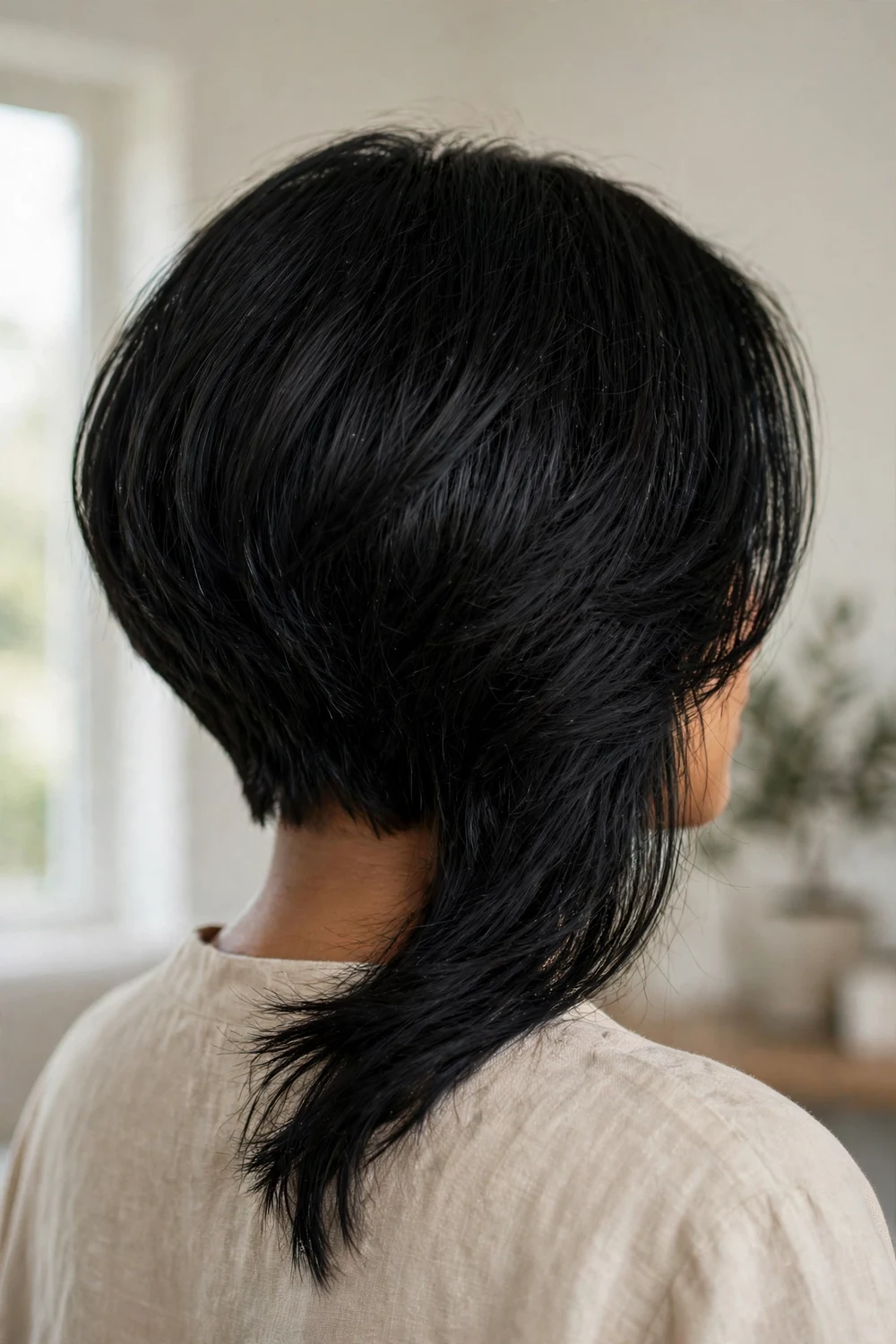
Thick hair plus an angled bob can turn into a pyramid without the right interior work. The fix is aggressive weight removal through the mid-lengths while the perimeter keeps its angled line. Ask for thinning shears or deep point cutting through the interior, never at the ends, so the shape stays sleek on the surface. Done right, thick hair gives this cut its best version: smooth, swingy, and full of movement.
Try this: Use a smoothing cream on damp hair before blow-drying to keep the dense interior controlled and glossy.
24. Angled Bob for Fine Hair
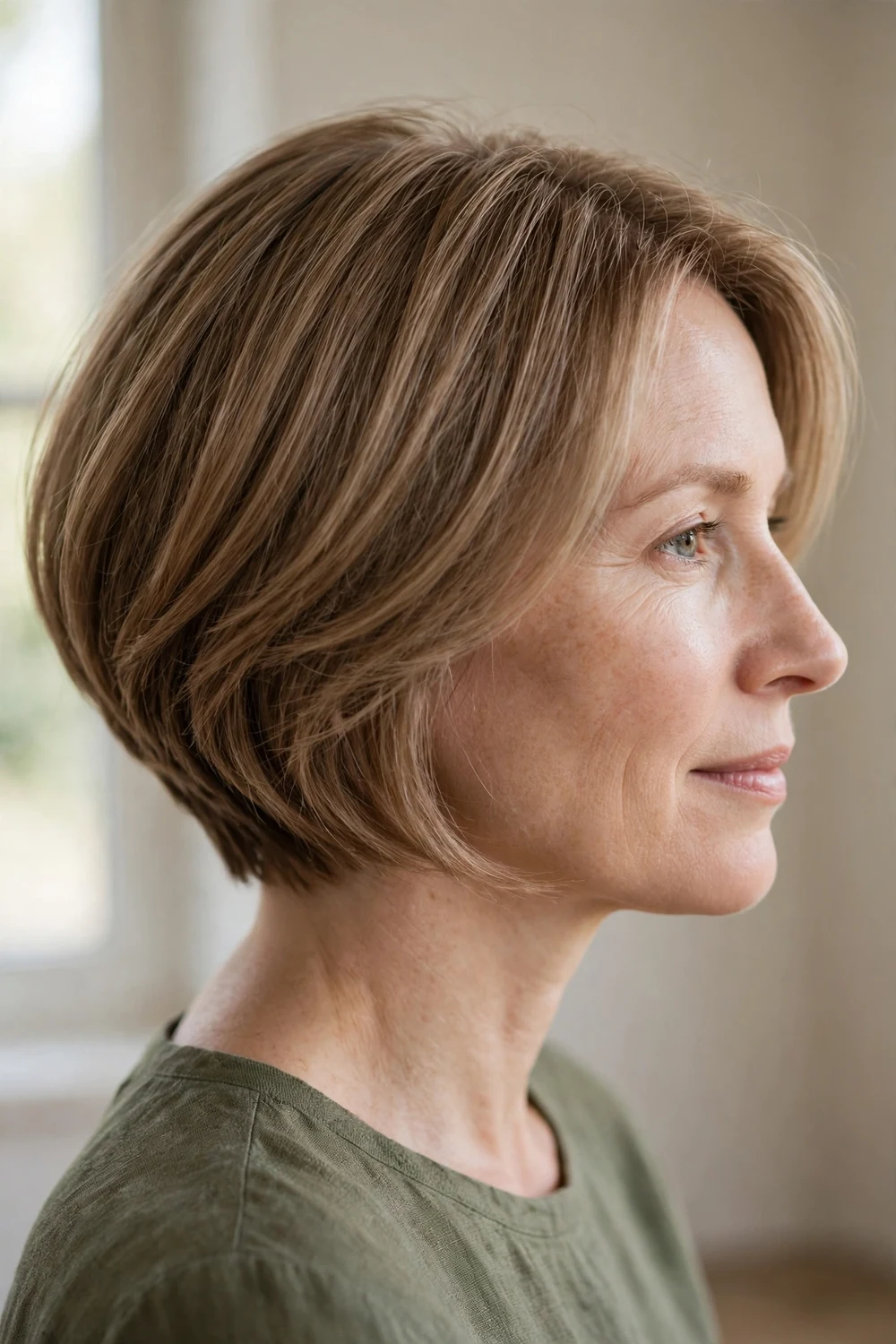
Fine hair needs the opposite strategy. Keep the interior mostly one length and add a gentle stack at the back for built-in fullness. The blunt-ish perimeter makes fine hair look denser, and the angle stops the shape from sitting flat against a round face. Avoid heavy conditioners and oils that drag fine hair down. A light mousse at the roots is usually all the help this cut needs.
Try this: Blow-dry upside down for the first minute to build root lift before smoothing the surface.
25. Angled Bob with Highlights
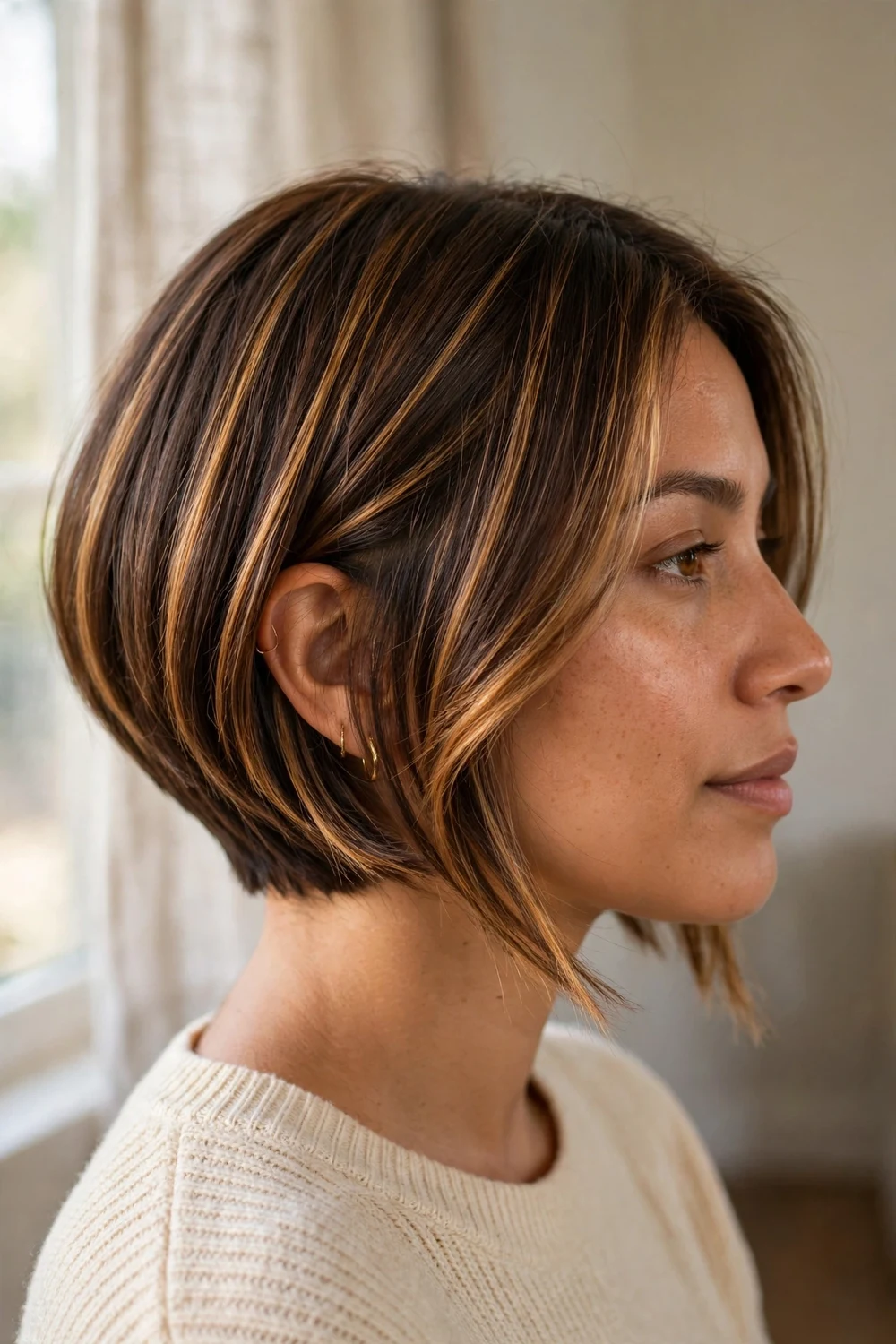
Color can do half the stylist’s job. Highlights placed along the angled cut line draw the eye along the diagonal, which reinforces the slimming direction of the haircut. Ask for the brightness to concentrate through the front pieces and the top, keeping the underside slightly deeper for contrast. That contrast makes the angle pop. Keep up with gloss treatments so the highlights stay bright against the base color.
Try this: Request face-framing highlights that start two inches off the root for a softer grow-out.
26. Angled Bob with Balayage
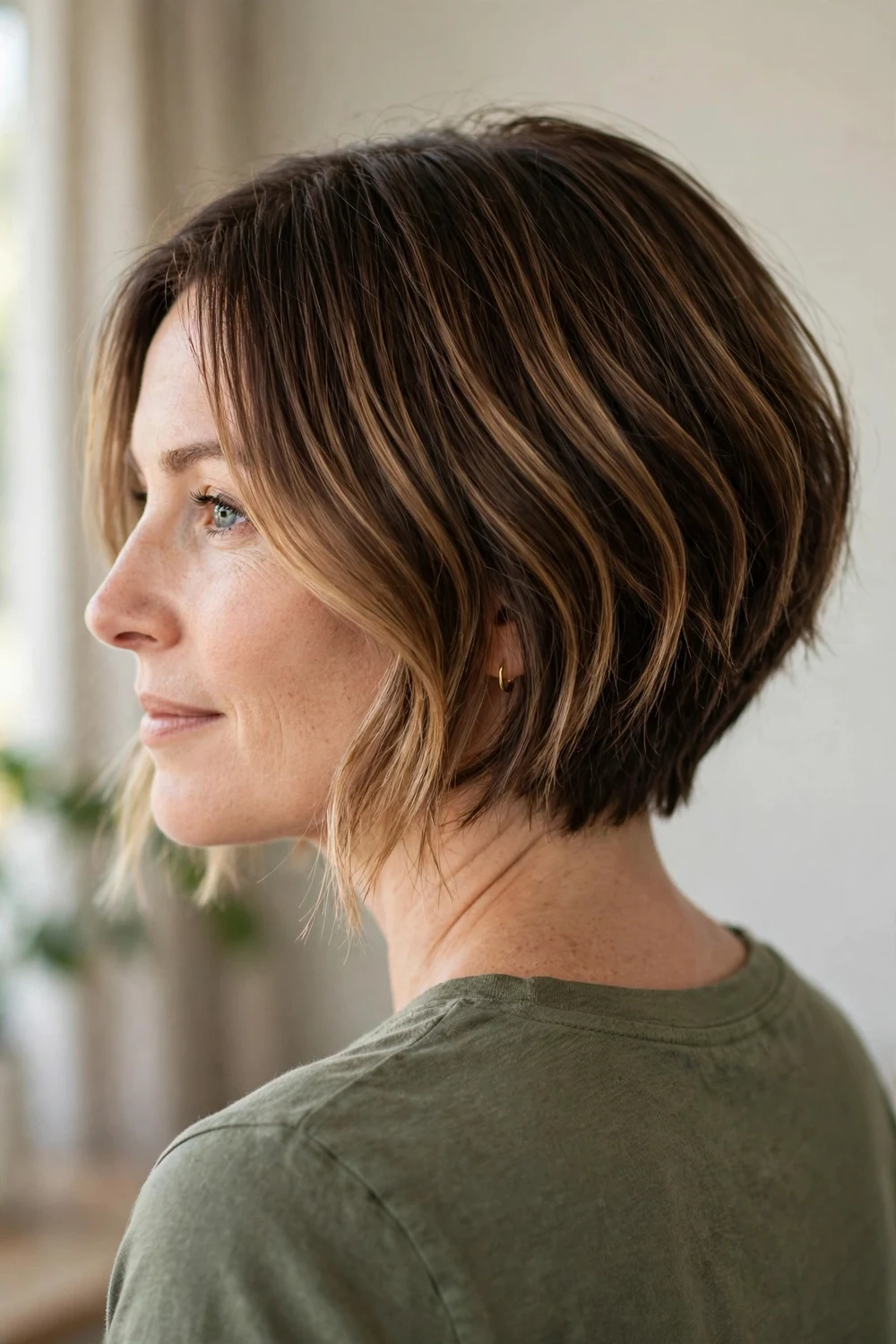
Balayage is the low-maintenance sibling of highlights. The hand-painted lightness sits mostly on the mid-lengths and ends, which means the longer front pieces of an angled bob catch the most light. That brightness at the ends pulls attention downward, right where you want it. It grows out without a harsh line, so it pairs well with a cut you want to keep between trims.
Try this: Use a color-safe shampoo and a weekly mask to keep the balayage from turning brassy.
27. Angled Bob with Tucked Side

Styling, not scissors, creates this one. Tuck one side of your angled bob behind the ear and leave the other side falling past the chin. The tucked side opens up the jawline and shows the ear, which breaks up cheek width, while the loose side keeps its long diagonal. It takes ten seconds and works on every angled bob on this list. A small bobby pin behind the ear keeps it in place through the day.
Try this: Tuck the side on the same side as your part for a cleaner line, or the opposite side for more drama.
28. Angled Bob for Women Over 50

The angle does not retire at any age. For women over 50, a softer version of the angled bob works best: a gentle slope instead of a dramatic drop, polished ends, and a little root lift. The shape slims a round face and the clean lines read modern without trying too hard. It also handles gray and silver well, since the smooth surface shows off the color’s shine. Keep the front at chin length or below for the most flattering line.
Try this: Ask for soft, blended ends rather than a razor edge. They grow out more gracefully between appointments.
29. Angled Bob with Undercut Nape
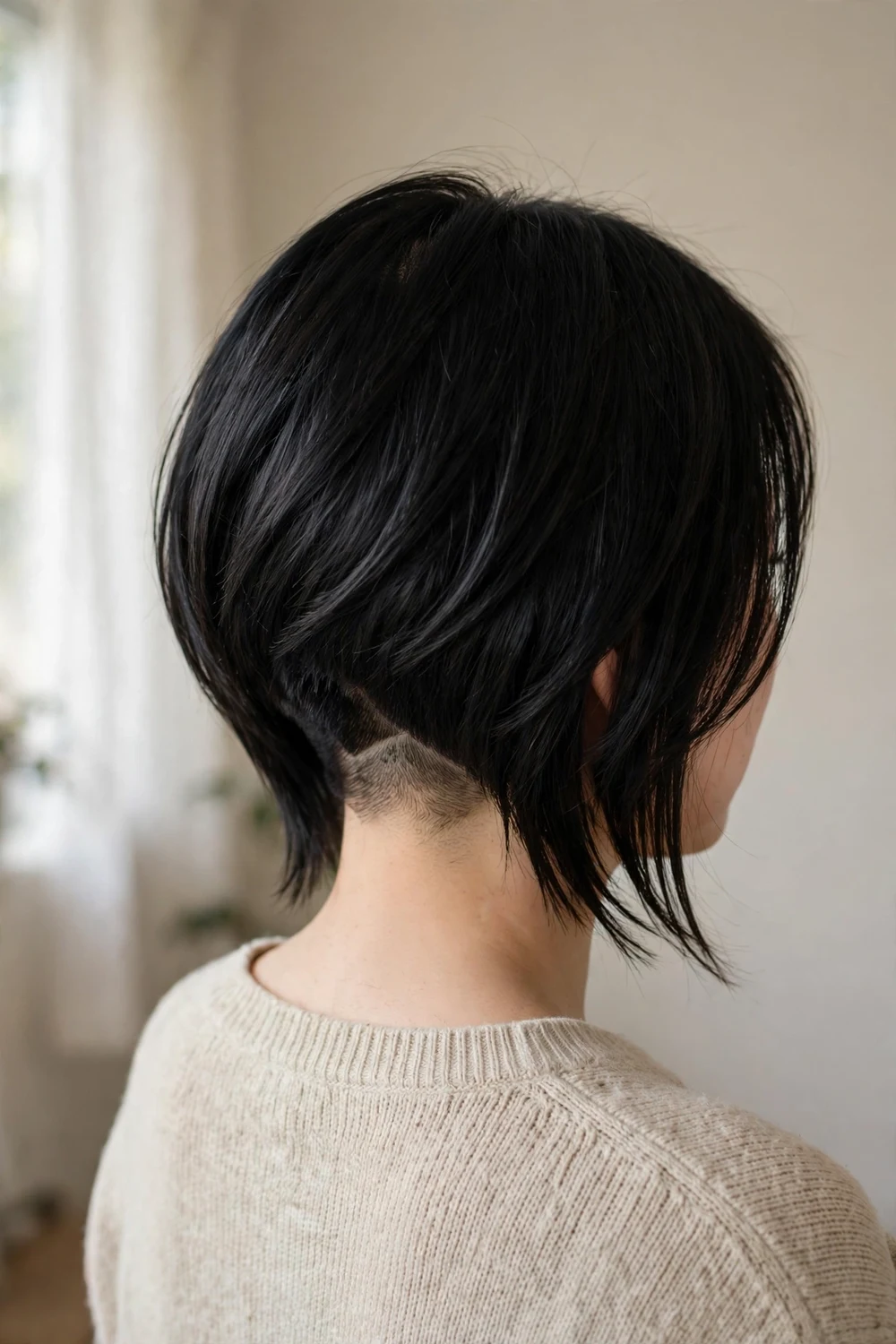
Here is the secret-weapon version. An undercut at the nape removes bulk from underneath while the top layers keep their full angled shape. Nobody sees it until you lift the hair, but you feel the difference: less weight, faster drying, and a nape that stays neat as it grows. It also stops thick hair from pushing the back outward, which keeps the angled line clean. Ask your stylist to keep it disconnected so the top falls over it smoothly.
Try this: Grow it out for summer or keep it trimmed in winter. The hidden placement makes it flexible.
30. Tousled Angled Bob
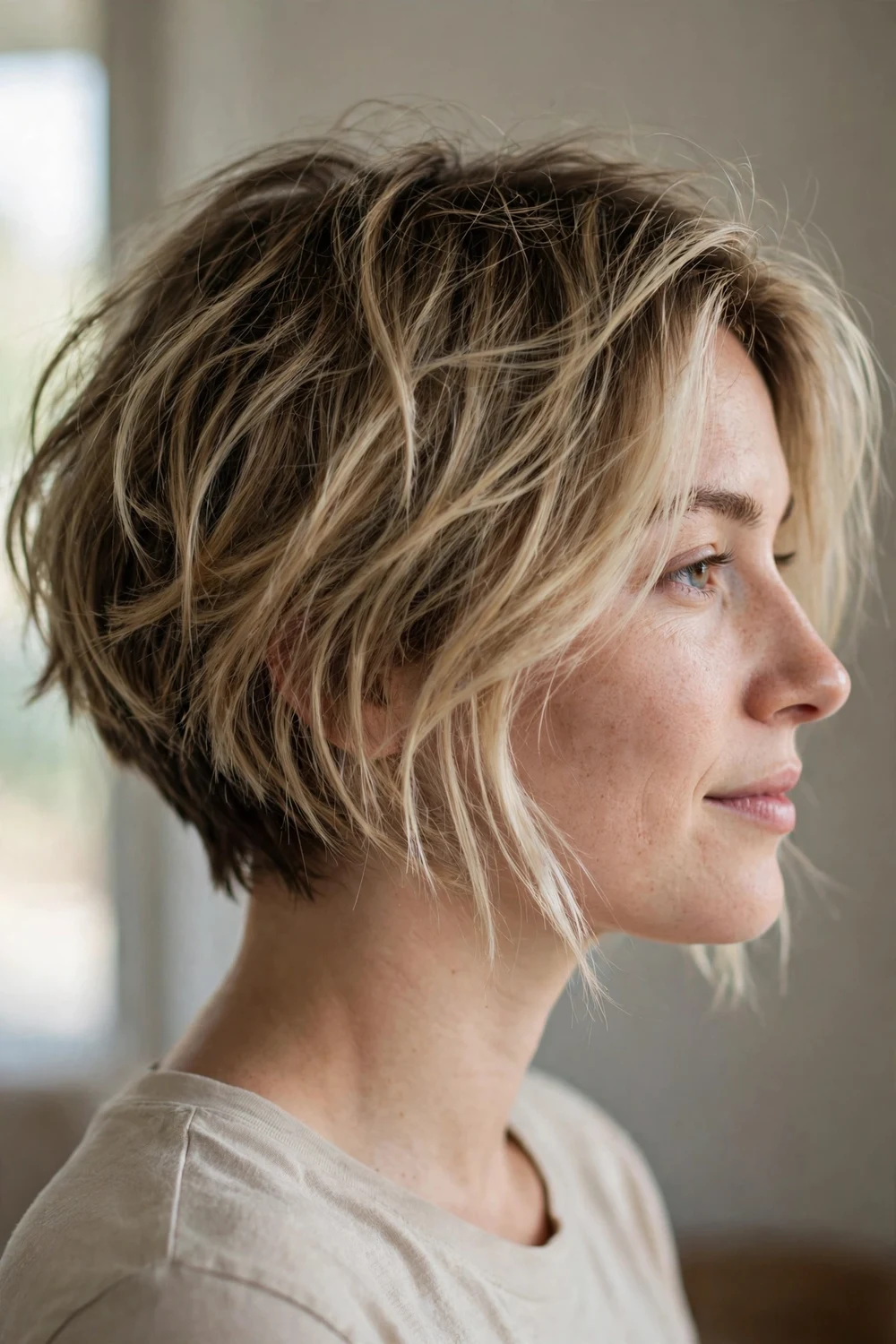
Last on the list, and the easiest to live with. The tousled angled bob keeps the back-to-front slope but finishes with airy, undone texture instead of a polished blowout. The messiness keeps the cut from looking severe, and the angle underneath still does the slimming work. Rough-dry with your fingers, add a little texture spray, and go. It is the angled bob for people who do not want to think about their hair.
Try this: Twist random sections while drying and let them fall where they want for natural-looking texture.
Angled Bob Styles Comparison at a Glance
| Style | Best For | Difficulty | Upkeep |
|---|---|---|---|
| Classic Angled Bob | Everyday wear, straight hair | Easy | Trims every 6-8 weeks |
| Dramatic High-Contrast Angled Bob | Maximum slimming, thick hair | Hard | Trims every 4-6 weeks |
| Inverted Angled Bob | Crown lift, fine to medium hair | Medium | Trims every 6-8 weeks |
| Angled Long Bob | Keeping length, thick hair | Easy | Trims every 8-10 weeks |
| A-Line Angled Bob | Fine hair, sharp lines | Easy | Trims every 6-8 weeks |
| Asymmetrical Angled Bob | Bold looks, photo slimming | Medium | Trims every 5-7 weeks |
| Blunt Angled Bob | Fine hair, polished finish | Medium | Trims every 5-6 weeks |
| Layered Angled Bob | Thick hair, movement | Medium | Trims every 6-8 weeks |
| Textured Angled Bob | Low effort, natural texture | Easy | Trims every 8-10 weeks |
| Choppy Angled Bob | Edgy finish, straight hair | Medium | Trims every 6-8 weeks |
| Shaggy Angled Bob | Wavy hair, casual style | Easy | Trims every 8-10 weeks |
| Feathered Angled Bob | Softness, medium hair | Medium | Trims every 6-8 weeks |
| Wavy Angled Bob | Natural waves, relaxed looks | Easy | Trims every 8 weeks |
| Curly Angled Bob | Curly hair, defined shape | Hard | Trims every 8-12 weeks |
| Sleek Straight Angled Bob | Sharp lines, straight hair | Medium | Trims every 6 weeks |
| Short Angled Bob | Low maintenance, quick drying | Easy | Trims every 5-6 weeks |
| Angled Bob with Deep Side Part | Instant slimming, any texture | Easy | Restyle daily |
| Angled Bob with Side-Swept Bangs | Softening forehead, round cheeks | Medium | Bang trims every 3-4 weeks |
| Angled Bob with Curtain Bangs | Soft framing, medium hair | Medium | Bang trims every 4-6 weeks |
| Angled Bob with Wispy Bangs | Light fringe, fine hair | Medium | Bang trims every 3-4 weeks |
| Angled Bob with Face-Framing Layers | Definition, soft roundness | Medium | Trims every 6-8 weeks |
| Angled Bob with Crown Volume | Elongation, flat roots | Easy | Style daily |
| Angled Bob for Thick Hair | Dense hair, weight removal | Hard | Trims every 6-8 weeks |
| Angled Bob for Fine Hair | Density illusion, easy styling | Easy | Trims every 6-8 weeks |
| Angled Bob with Highlights | Dimension, light play | Hard | Color every 8-12 weeks |
| Angled Bob with Balayage | Low-maintenance color | Hard | Color every 12-16 weeks |
| Angled Bob with Tucked Side | Quick styling, any version | Easy | None |
| Angled Bob for Women Over 50 | Polished, modern look | Easy | Trims every 6-8 weeks |
| Angled Bob with Undercut Nape | Bulk removal, thick hair | Hard | Nape trims every 4-6 weeks |
| Tousled Angled Bob | Effortless texture, busy days | Easy | Trims every 8-10 weeks |
How to Choose the Right Angled Bob for You
Match the version to your hair texture first, face second. Thick hair needs interior weight removal, so lean toward layered, undercut, or thinned versions. Fine hair needs the opposite: a cleaner perimeter with a gentle stack for fullness.
If your face is slim rather than round, the goal flips from slimming to widening: bob haircuts for thin faces covers 24 cuts that add width at the cheekbones and jaw.
Then decide how bold you want the angle. A subtle slope is easier to grow out and suits conservative settings. A dramatic drop slims more but shows grow-out faster and needs a stylist who cuts angles regularly. Ask to see their portfolio of angled cuts before you book.
Finally, think about your styling habits. If you flat-iron daily, the sleek and blunt versions reward the effort. If you air-dry, pick textured, shaggy, or tousled versions that look good without heat. The best angled bob is the one you will actually maintain.
Mistakes to Avoid
The most common mistake is cutting the front too short. Front pieces that end above the chin create a horizontal line right at the widest part of the face, which is the opposite of slimming. Chin length is the minimum; below the chin is safer.
Another frequent error is a center part with a rounded bob shape. Center parts mirror the face’s roundness back at itself. Move the part off center or add a sweep to break the symmetry. Also avoid heavy, blunt bangs cut straight across, since they shorten the face. And do not skip trims: once the angle grows out and blurs, the whole slimming effect fades with it.
If you want to see how these cuts fit into the bigger picture of face-flattering bobs, take a look at bob hairstyles for round faces for more shapes that work with your features.
For a version that keeps the length while holding the angled line, long bob hairstyles offer collarbone-grazing options with the same slimming geometry.
Stacked backs add the crown lift that round faces need, and inverted bob hairstyles break down every stacked and graduated variation.
Thick hair benefits from interior layers that remove weight without losing the angle, which is exactly what layered bob hairstyles cover in detail.
Frequently Asked Questions
Does an angled bob suit a round face?
Yes. An angled bob is one of the most flattering cuts for a round face because the diagonal line from the shorter back to the longer front pulls the eye downward. That downward direction counteracts the sideways width of a round face. Keep the front pieces at or below chin length and add a side part for the strongest slimming effect.
How short should the back of an angled bob be for a round face?
The back usually sits between the nape and just below the ears, while the front reaches the chin or falls below it. The exact drop depends on how bold you want the angle. A moderate slope suits most people. A very short stacked back adds crown height, which also helps elongate a round face.
How often should you trim an angled bob?
Every 6 to 8 weeks for most versions. Blunt and dramatic versions need trims closer to every 5 to 6 weeks because the sharp line shows grow-out quickly. Textured and tousled versions can stretch to 8 to 10 weeks. Once the angle blurs, the slimming effect fades, so do not wait too long between appointments.
Can an angled bob work with curly hair?
Yes, when it is cut dry and curl by curl by a stylist experienced with curly hair. The silhouette stays shorter in the back and longer in the front, even as the curls spring up. Ask for weight removal through the sides so the shape tapers instead of rounding out, and keep some length at the crown for height.
Is an angled bob the same as an inverted bob?
They overlap but are not identical. An angled bob is defined by its diagonal silhouette, shorter in back and longer in front. An inverted bob specifically uses stacked layers at the back to build volume. Many inverted bobs are angled, but an angled bob does not need stacking. A clean A-line angled bob, for example, has the slope with no stacked layers at all.
Final Thoughts
Thirty versions, one shared geometry: a diagonal line that makes a round face look longer and more defined. Pick the version that matches your hair texture and your styling habits, keep the front at chin length or below, and protect the angle with regular trims. Do that, and the cut does the slimming work for you every single day.

