

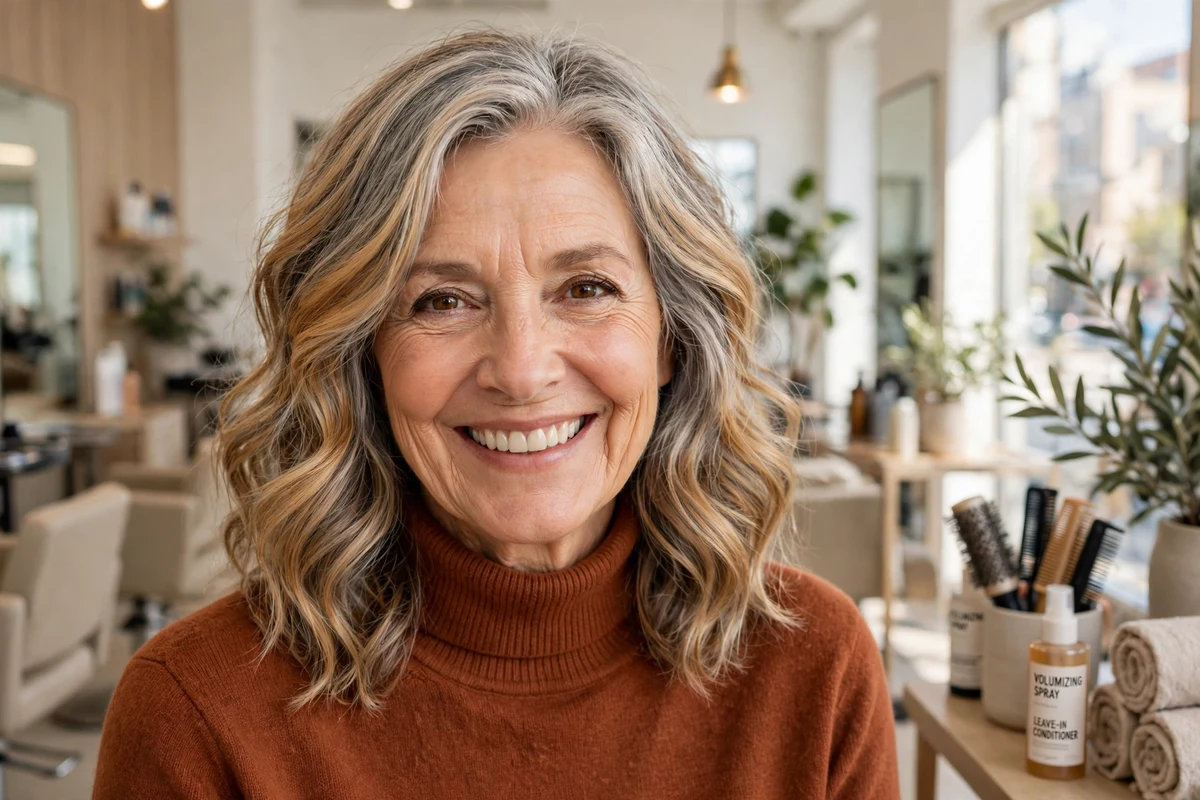
Fall color after 60 has a different job than it did at 40. Hair is often finer, grey is part of the picture, and harsh root lines show faster. The shades below answer those facts directly, with grey blending, silver friendly tones, and gentler demi and gloss formulas that fade softly instead of growing out in a stripe. If you are comparing age guides, our fall hair colors for women over 50 list covers the younger end of this same palette.
Every idea here was chosen for women in their 60s and 70s, with models to match. You will find silver blends that end the dye cycle, warm browns and coppers that stain grey into natural looking dimension, and a few deeper reds for women who still want a strong fall shade. Each idea lists upkeep in plain terms, so you can pick by the salon schedule you will keep.
Quick Takeaways
- Grey blending beats grey hiding after 60. Highlights, lowlights, and demi color blur new growth and stretch appointments to six weeks or more.
- Silver is a color choice, not a stopping point. Honey lowlights, silver blonde blends, and transition cuts make natural grey look planned.
- Gentler formulas suit finer hair. Demi color and glosses coat the strand, add shine, and fade with no hard line.
- Warmth near the face matters more than depth at the back. Copper, caramel, and honey pieces at the front brighten mature skin.
- Reds need a fade plan. Cider, maple, and auburn shades hold best with a gloss refresh halfway between full color visits.
How to Pick a Fall Shade After 60
Start with how much grey you have and where it sits. Scattered grey through the top blends well with highlights, bronde, and demi glosses. Mostly white roots against dark dye show a line within three weeks, so a lighter blend, a root shadow, or a planned move toward silver usually serves you better across a year. Be honest about appointment rhythm too. A shade that needs a salon every four weeks will look tired by week five if your real rhythm is eight.
Then match the tone to your skin and your wardrobe. Warm and neutral skin carries honey, cinnamon, caramel, and copper with ease, and the fall copper hair colors roundup shows that family in full. Cool skin does better with silver blonde, plum kissed blonde, and the red shades that lean wine rather than orange. Depth matters as well. Very dark color against pale fall skin can sharpen features, while one shade softer usually reads kinder.
1. Silver Blonde Grey Blend

Silver blonde grey blending mixes your natural silver with pale blonde pieces so the two tones read as one color. A colorist places fine highlights through the top and temples, then tones everything to a soft silver blonde that matches your lightest natural strands.
Because the blend follows your own grey pattern, new growth shows as a slight shift in tone rather than a line. It suits women who are already mostly grey and want the grow-out phase finished for good.
Try this: Ask for the blonde pieces to sit close to your natural silver level, within one shade, so regrowth stays soft.
Difficulty: Low | Cost: $$ | Time: 2 hours, refresh gloss every 8 to 10 weeks
2. Soft Chestnut with Grey Blending

Soft chestnut lays a warm medium brown over grey with a demi-permanent formula that stains the grey instead of covering it fully. The grey strands take the color lighter, which leaves fine natural highlights running through the brown.
Demi color fades gradually over six to eight weeks, so there is no hard root line to chase. It is a gentle first step for women who colored with permanent dye for years and want a softer routine.
Try this: Bring a photo of your hair from your fifties if you have one. Matching your earlier depth keeps the result familiar.
Difficulty: Low | Cost: $ | Time: 45 minutes, reapply every 6 to 8 weeks
3. Warm Honey Lowlights on Silver
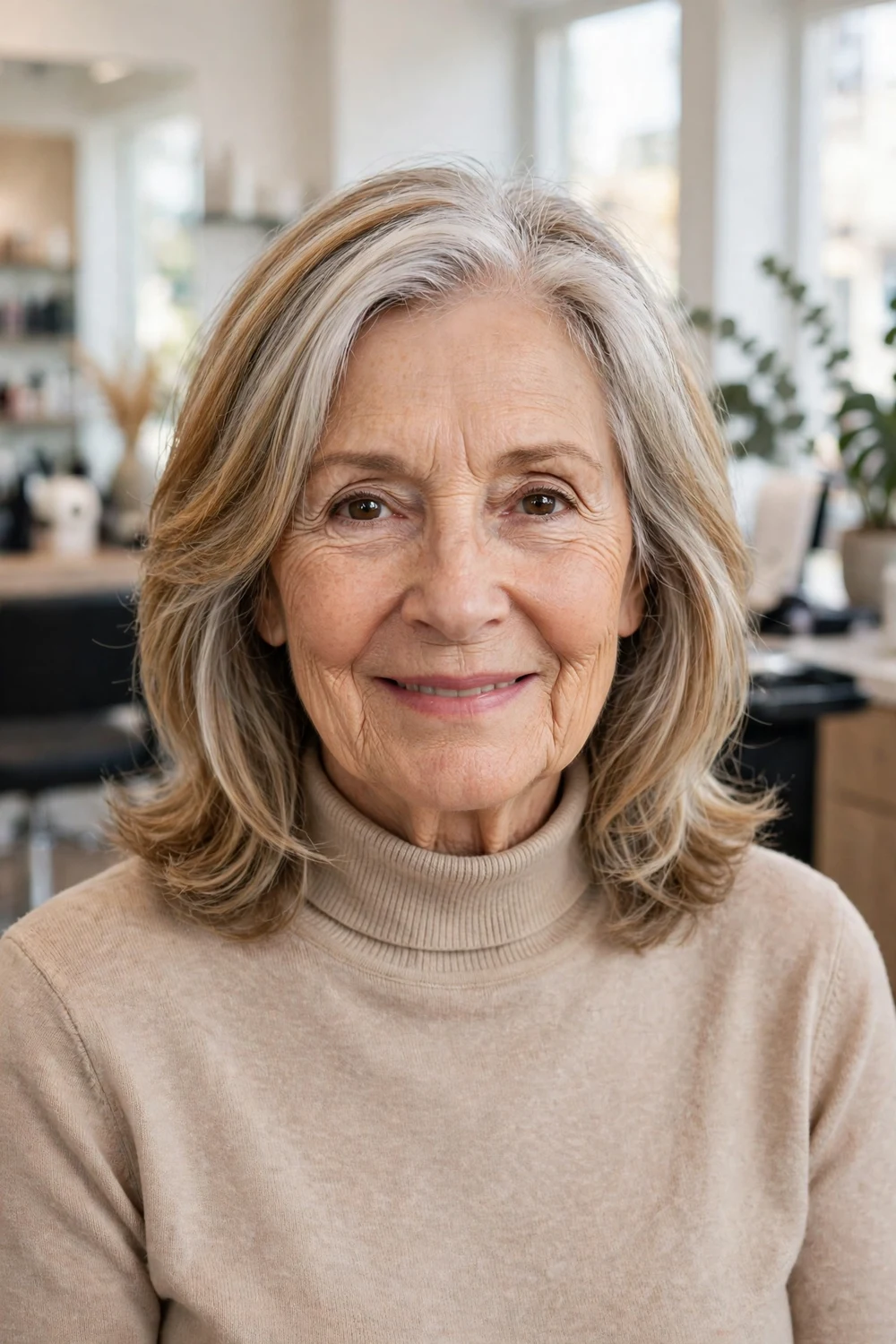
Warm honey lowlights add ribbons of golden honey through fully silver or white hair. The lowlights sit below the surface layers, so the silver still leads while the honey warms the overall tone for fall.
This route adds no root upkeep at all, since nothing is colored at the scalp line. The honey pieces fade slowly and can be refreshed two or three times a year.
Try this: Keep the honey to the mid-lengths and ends. Color at the root would restart the grow-out cycle you are avoiding.
Difficulty: Low | Cost: $$ | Time: 90 minutes, refresh 2 to 3 times a year
4. Cinnamon Bronde for Grey Grow-Out

Cinnamon bronde blends a brunette base with cinnamon and dark blonde pieces, toned warm for fall. Scattered grey disappears into the mix because the highlights and lowlights already vary the color from strand to strand.
It works well at the halfway stage, when grey is heavy at the temples but the back is still dark. The warm cinnamon tone also softens the contrast that makes grey look wiry.
Try this: Ask for extra pieces around the temples and parting, where grey shows first and grows fastest.
Difficulty: Medium | Cost: $$ | Time: 2 to 2.5 hours, gloss at 8 weeks
5. Copper-Kissed Dark Blonde

Dark blonde with copper ribbons takes the base one shade deeper for fall and threads fine copper highlights through the front and crown. The copper warms the face and gives fine hair visible dimension.
On a dark blonde base the copper fades to a soft strawberry tone rather than going brassy. Grey at the roots blends in because the base stays close to a natural level.
Try this: Use a color-safe shampoo and wash in lukewarm water. Copper pigment leaves fine hair fast in hot water.
Difficulty: Medium | Cost: $$ | Time: 2 hours, tone refresh every 6 weeks
6. Soft Copper Bob
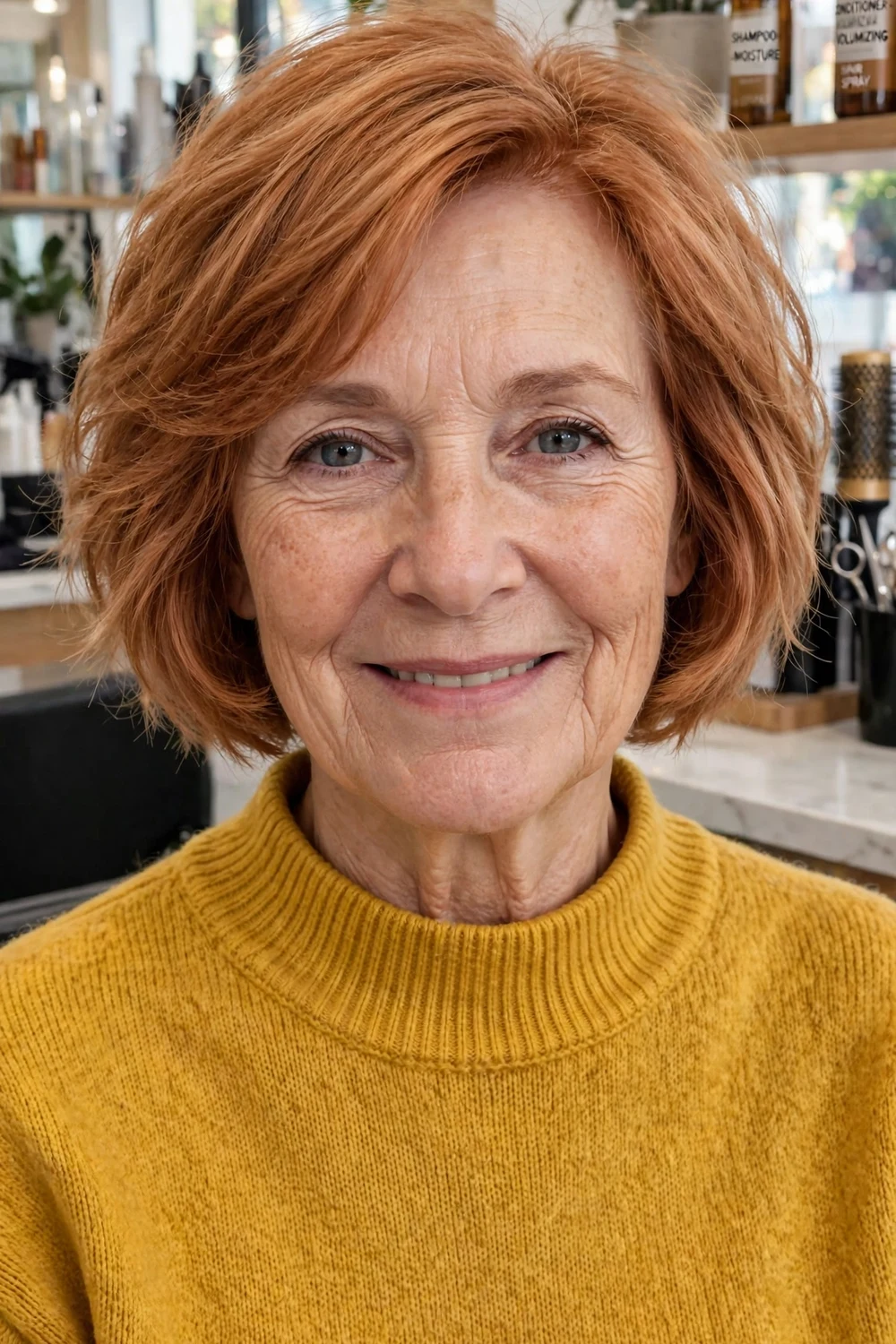
A soft copper bob pairs a chin or jaw length cut with an all-over copper that leans golden rather than red. The shorter length shows the color cleanly and keeps damaged ends out of the picture.
Copper at this depth covers grey well with a demi or permanent formula, and a bob needs only a short touch-up area, which keeps appointments quick. It flatters fair and neutral skin.
Try this: Schedule the root touch-up and the trim together every five to six weeks so the shape and color stay in step.
Difficulty: Medium | Cost: $$ | Time: 90 minutes plus trim, roots every 5 to 6 weeks
7. Red Maple Pixie
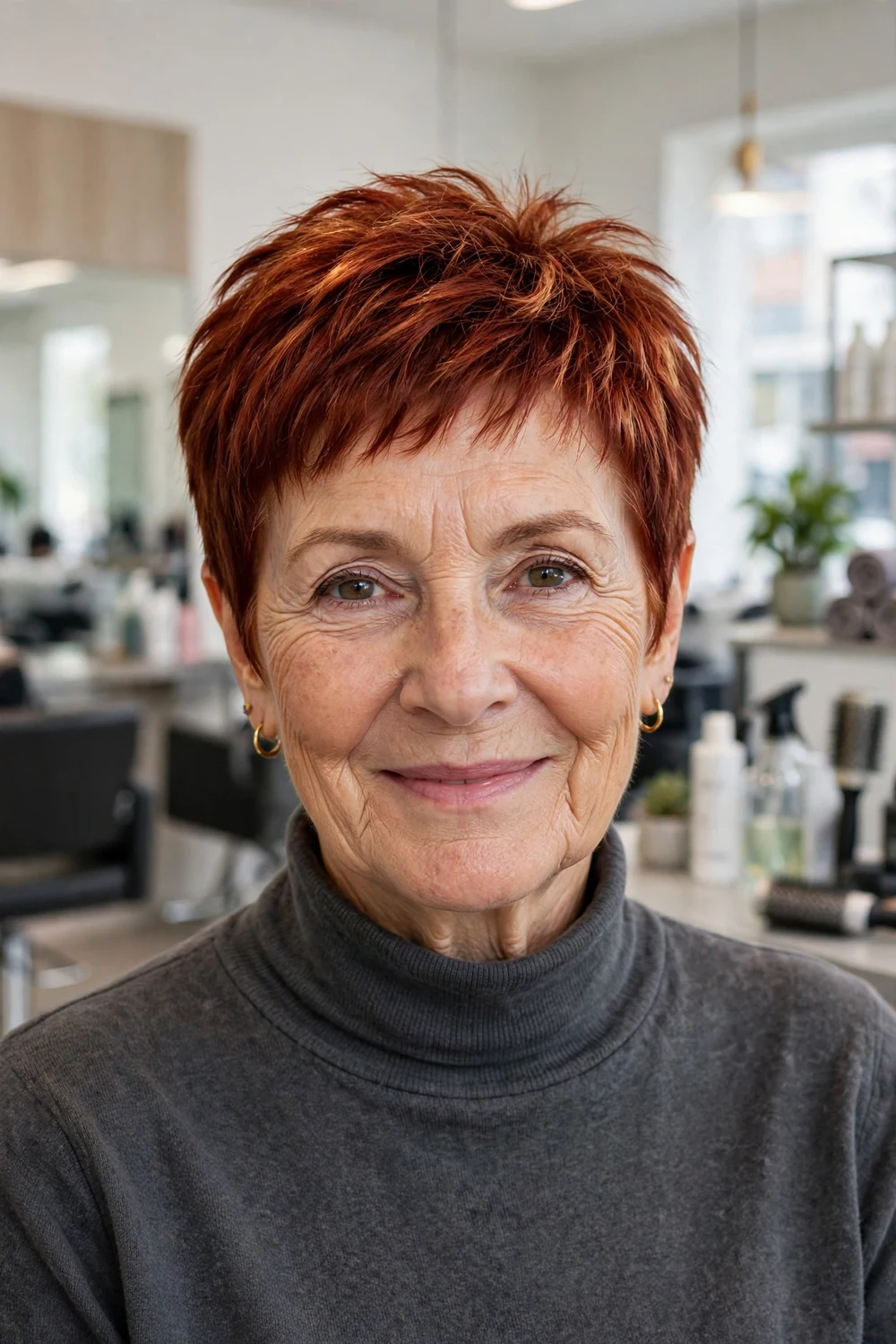
Red maple is a deep red with golden undertones, worn here on a short textured pixie. The color does the work, so the cut can stay simple, with soft layers on top and a tidy neckline.
Short hair shows regrowth sooner, yet a pixie also takes minutes to color, so upkeep stays cheap in time. The golden undertone keeps the red friendly against mature skin.
Try this: Ask for a red gloss at the halfway point between full colors. It revives the tone in 20 minutes.
Difficulty: Medium | Cost: $ | Time: 1 hour, color every 4 to 5 weeks
8. Plum-Kissed Dirty Blonde

Dirty blonde with plum lowlights places a few cool plum pieces under the top layer and through the ends. Indoors the hair reads as a soft dark blonde, and the plum shows when light hits it or the hair moves.
The placement keeps the look low key for everyday wear while still giving a fall twist. Grey blending stays easy because the base remains a natural dark blonde.
Try this: Keep plum pieces away from the front hairline if your skin is warm toned. Cooler pieces sit better at the back.
Difficulty: Medium | Cost: $$ | Time: 2 hours, refresh every 8 weeks
9. Peachy Rose Gold Gloss

Peachy rose gold is a tinted gloss over blonde, light bronde, or heavily grey hair. The peach and rose tones warm pale hair for fall and fade out evenly in four to six weeks.
A gloss adds shine, which mature hair often lacks, and it coats wiry grey strands so they lie smoother. There is no lift and no root line, since the color is translucent.
Try this: Try the gloss first before any permanent change. If you like the warmth, you can repeat it all season.
Difficulty: Low | Cost: $ | Time: 30 to 45 minutes, fades in 4 to 6 weeks
10. Dark Chestnut Demi Gloss

Dark chestnut in a demi formula gives rich brown depth with a glossy finish, on short or medium hair. Demi color coats the strand rather than lifting it, which is kinder to finer, older hair.
Grey coverage lands around 70 to 80 percent, enough to soften grey into the brown without a solid painted look. The fade is gradual, so appointments can stretch to seven weeks.
Try this: Ask for a clear gloss on top at the same visit. The extra shine layer makes chestnut read richer.
Difficulty: Low | Cost: $ | Time: 45 minutes, reapply every 6 to 7 weeks
11. Golden Red Cider Shine
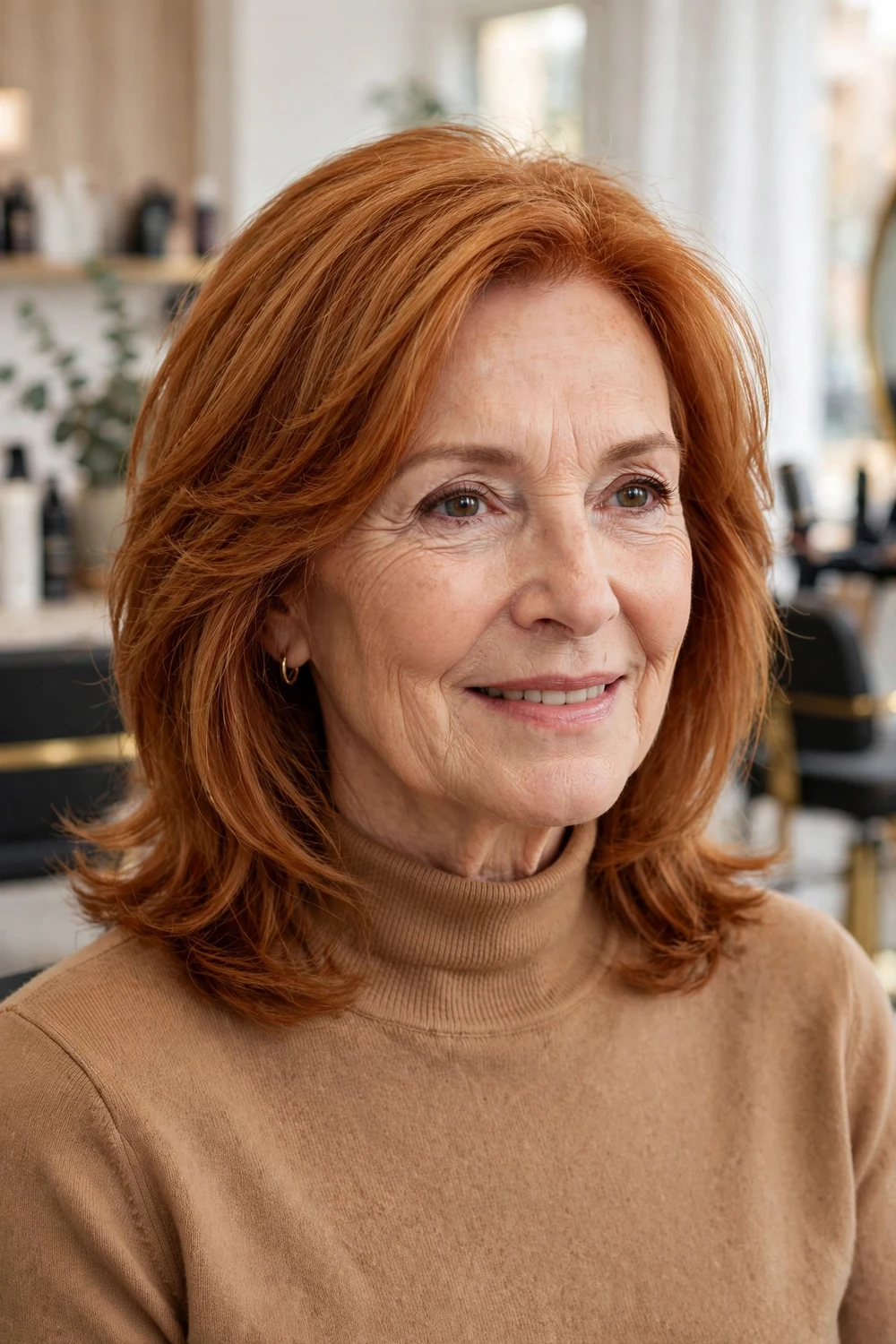
Golden red cider sits between copper and red, with enough gold to keep it bright. It suits shoulder length hair and layered cuts, where the tone shifts as the layers move.
Red family colors fade faster than browns, so plan on a tone refresh between full appointments. On grey hair the cider tone stains strands a lighter red, which reads as natural variation.
Try this: Wash twice a week at most and use a red depositing conditioner once a week to hold the tone.
Difficulty: Medium | Cost: $$ | Time: 90 minutes, gloss refresh at 4 weeks
12. Root Shadow Auburn
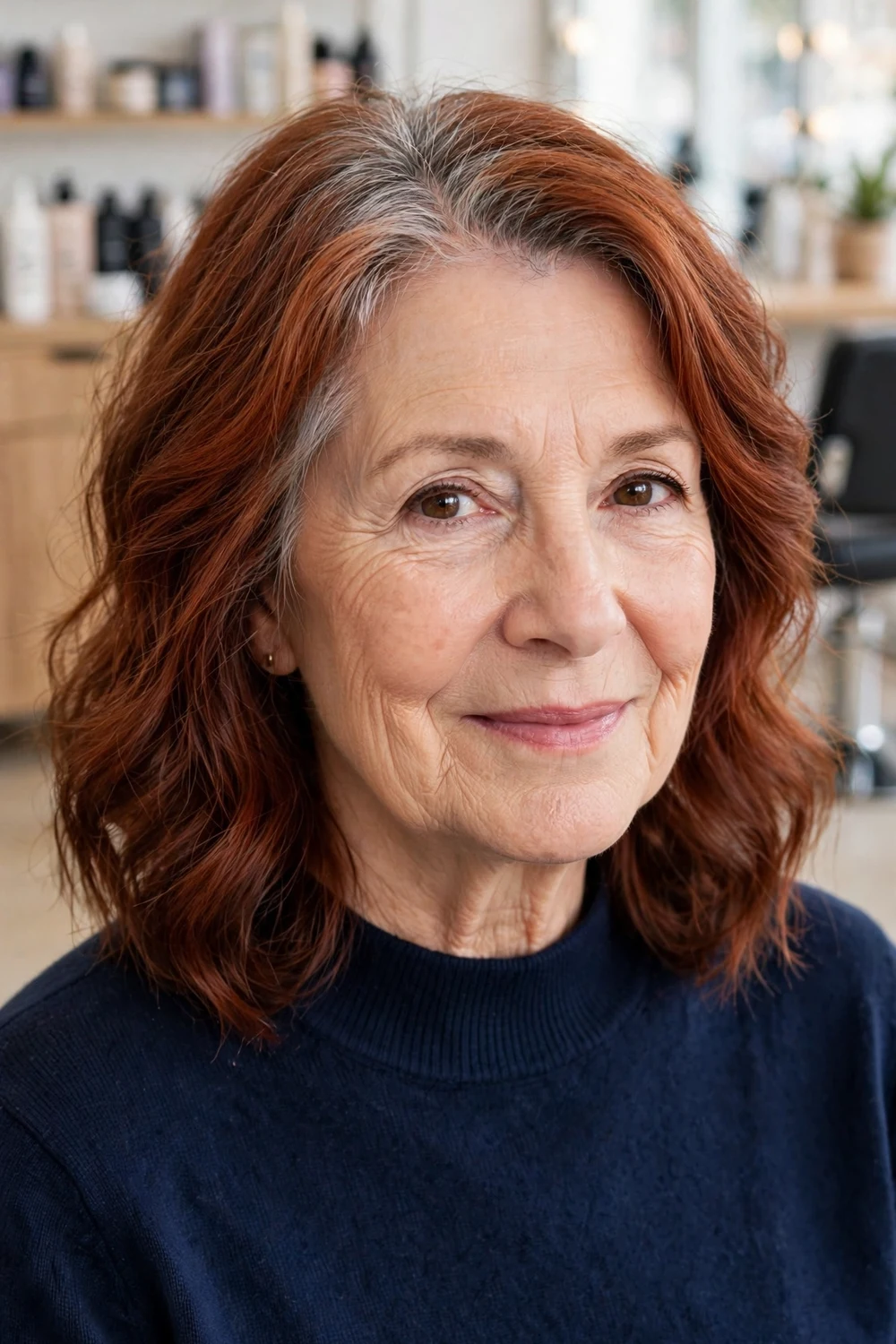
Root shadow auburn keeps the root area one to two shades deeper than the auburn lengths, blended down about an inch. New grey grows into the shadowed root zone and stays far less visible.
This is a practical route for women who love auburn and refuse to give it up, yet want six weeks between visits instead of three. The deeper root also adds the look of density at the scalp.
Try this: Ask your colorist to blend the shadow lower at the temples, where grey usually appears first.
Difficulty: Medium | Cost: $$ | Time: 2 hours, roots every 6 weeks
13. Pumpkin Spice with Blonde Ribbons
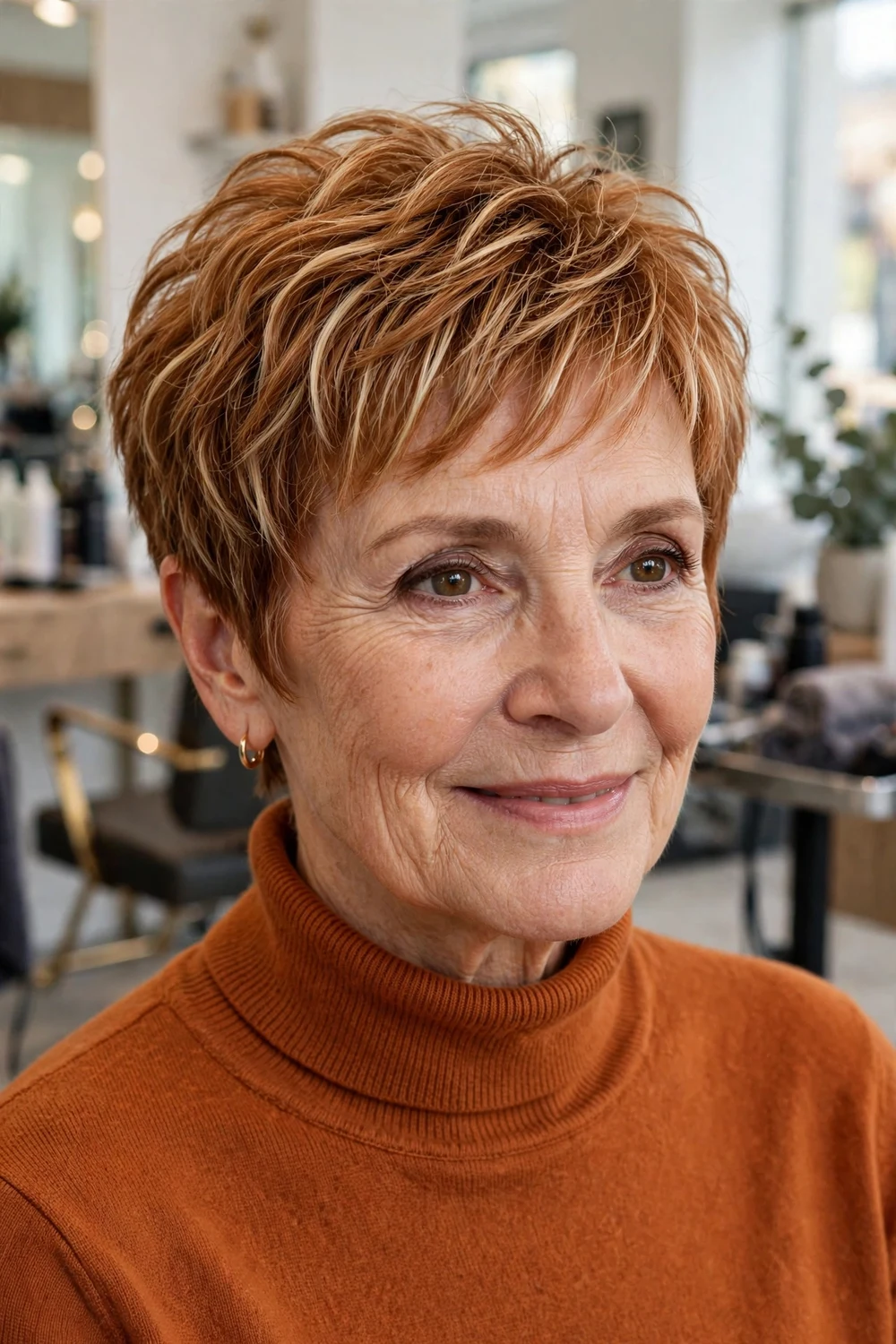
Pumpkin spice color lays a warm spiced copper over most of the hair, then adds fine blonde ribbons through the top. The ribbons break up the copper and stop it reading flat on fine hair.
On a pixie-bob or short layered cut the ribbons add the look of texture. The copper base covers grey, and the blonde pieces hide new growth at the parting.
Try this: Keep the blonde ribbons fine and numerous rather than chunky. Fine pieces blend with grey far better.
Difficulty: Medium | Cost: $$ | Time: 2 hours, tone at 6 weeks
14. Warm Creamy Blonde with Lowlights
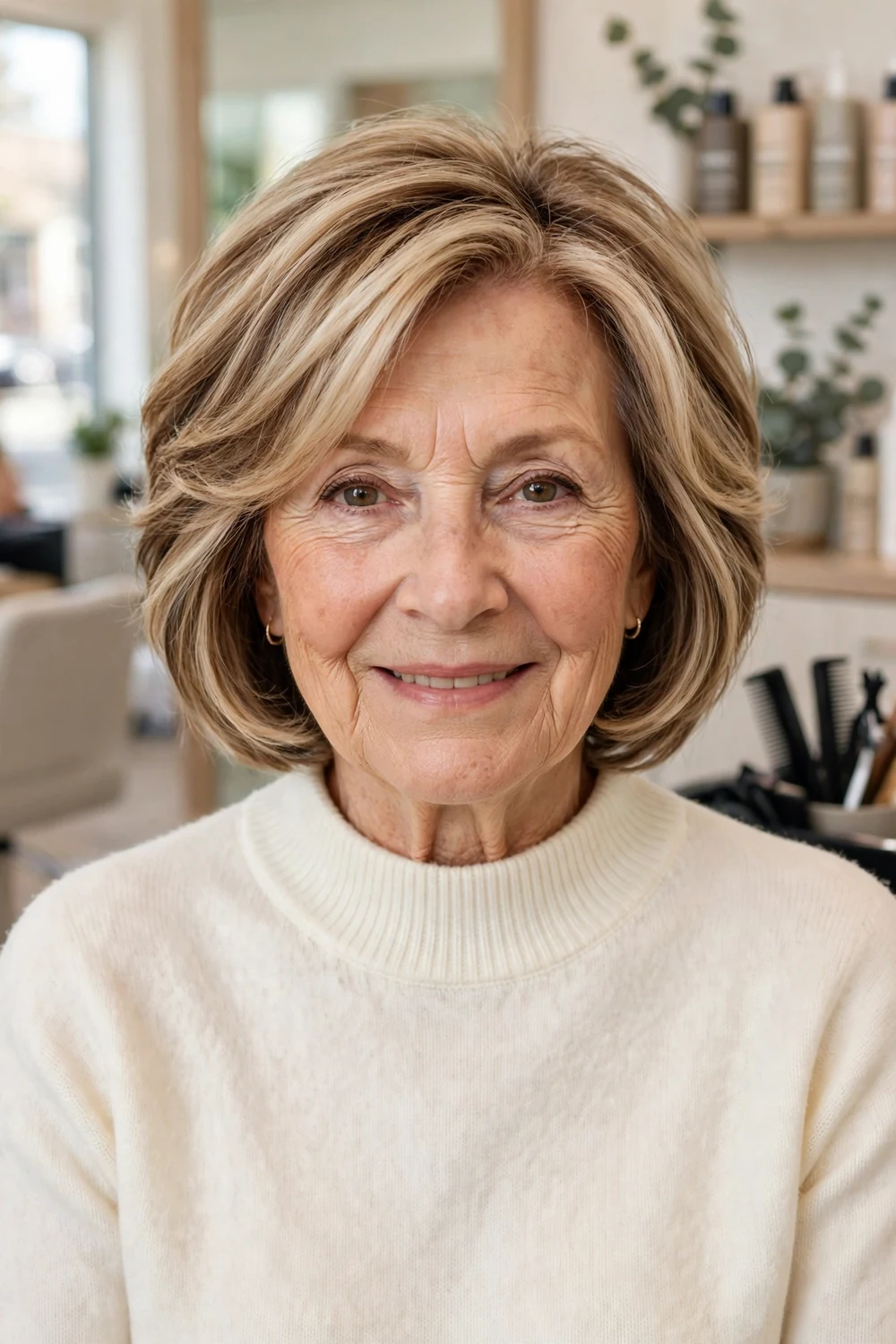
Warm creamy blonde lightens the overall color close to the tone of white grey, then adds soft brown lowlights for depth. Once the base sits near your grey tone, regrowth nearly disappears.
It is a bigger first appointment, often two sessions for dark hair, and an easy routine after that. Lowlights stop the blonde from washing out fall skin tones.
Try this: Budget for a purple shampoo once a week to keep the creamy tone from going yellow.
Difficulty: High | Cost: $$$ | Time: 3 hours first visit, lowlights every 10 to 12 weeks
15. Light Brown Grey Transition Blend
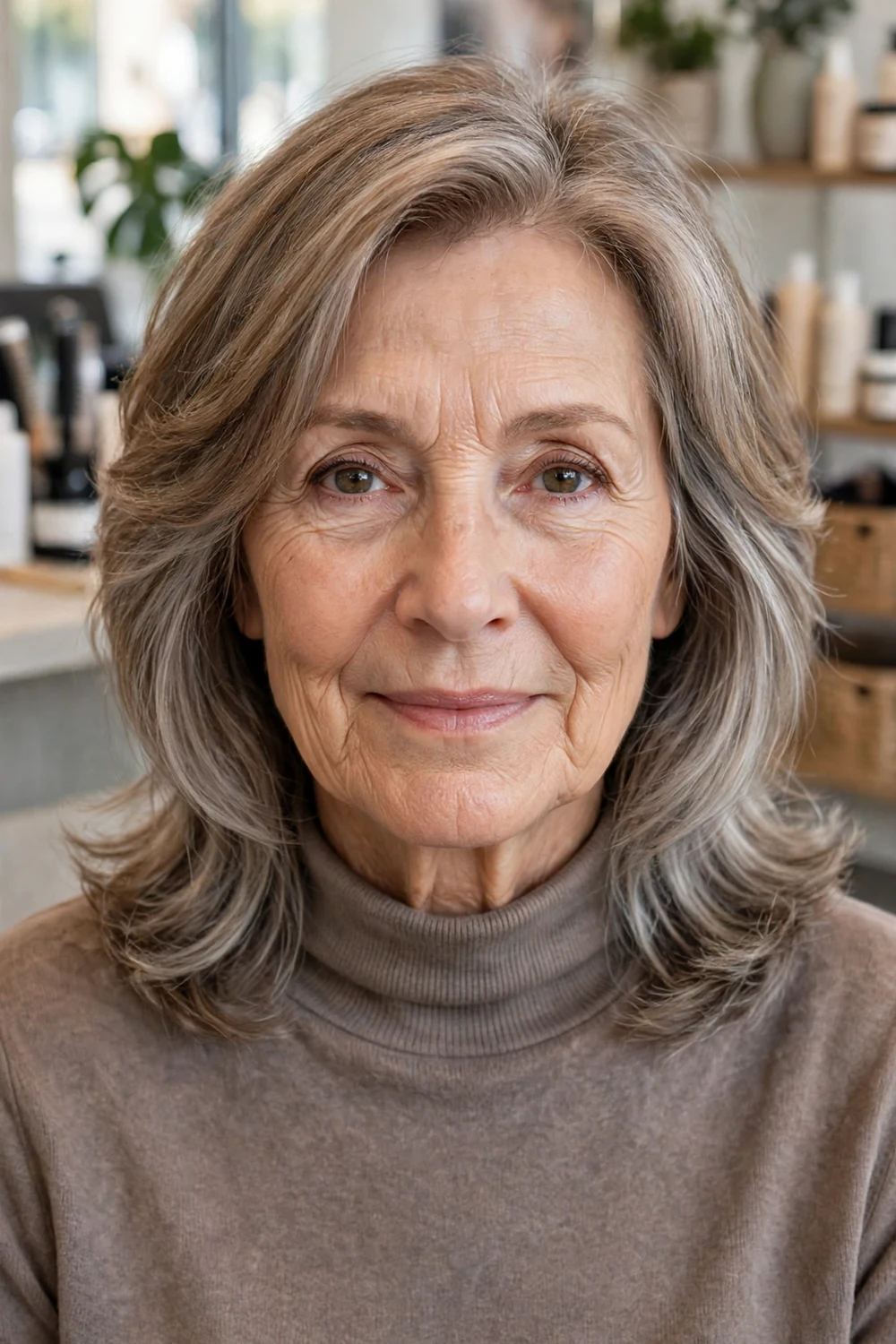
This blend is built for the full transition to natural grey. A colorist adds silver and ash highlights through light brown dyed hair and removes old color gradually, session by session, until dyed and natural tones meet.
Each visit moves the line of old color lower until only your natural silver and grey remain. Most women finish the process in three to four appointments across a season.
Try this: Take a photo at each stage. Seeing the progress helps you stick with the plan between visits.
Difficulty: High | Cost: $$$ | Time: 2.5 hours per session, 3 to 4 sessions
16. Ginger Bob with Soft Layers
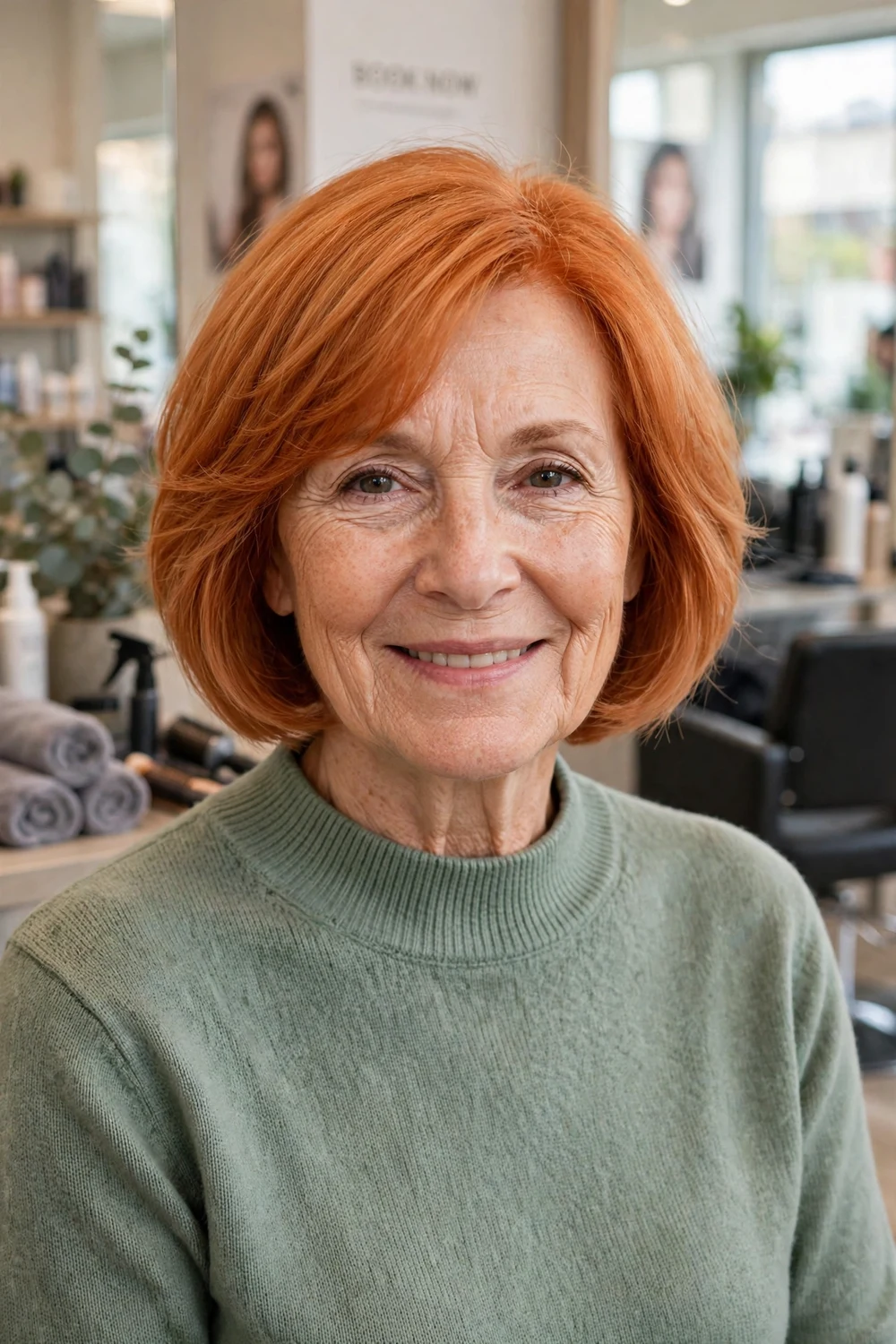
A ginger bob uses a bright natural ginger tone on a layered bob that sits at the jaw or just below. The layers keep the bright color from forming one solid block and add movement for fine hair.
Ginger covers grey with a permanent or demi formula and fades toward a soft strawberry, so the grow-out stays gentle. It suits fair skin and green or hazel eyes well.
Try this: Ask for the front layers to start at cheekbone level. That placement puts the brightest ginger beside the face.
Difficulty: Medium | Cost: $$ | Time: 90 minutes, roots every 5 to 6 weeks
17. Rich Auburn Brown Waves

Rich auburn brown keeps brown as the lead tone with a clear red reflect that shows in daylight. On longer wavy hair the red catches the bends of each wave, which gives quiet dimension without foils.
It covers grey fully and fades slowly for a red family shade, since the brown base holds the tone. Women with medium and olive skin wear this depth well.
Try this: Add a few auburn gloss pieces around the face at the second visit if you want more red presence.
Difficulty: Medium | Cost: $$ | Time: 90 minutes to 2 hours, refresh every 6 weeks
18. Glossy Cinnamon Brown Demi
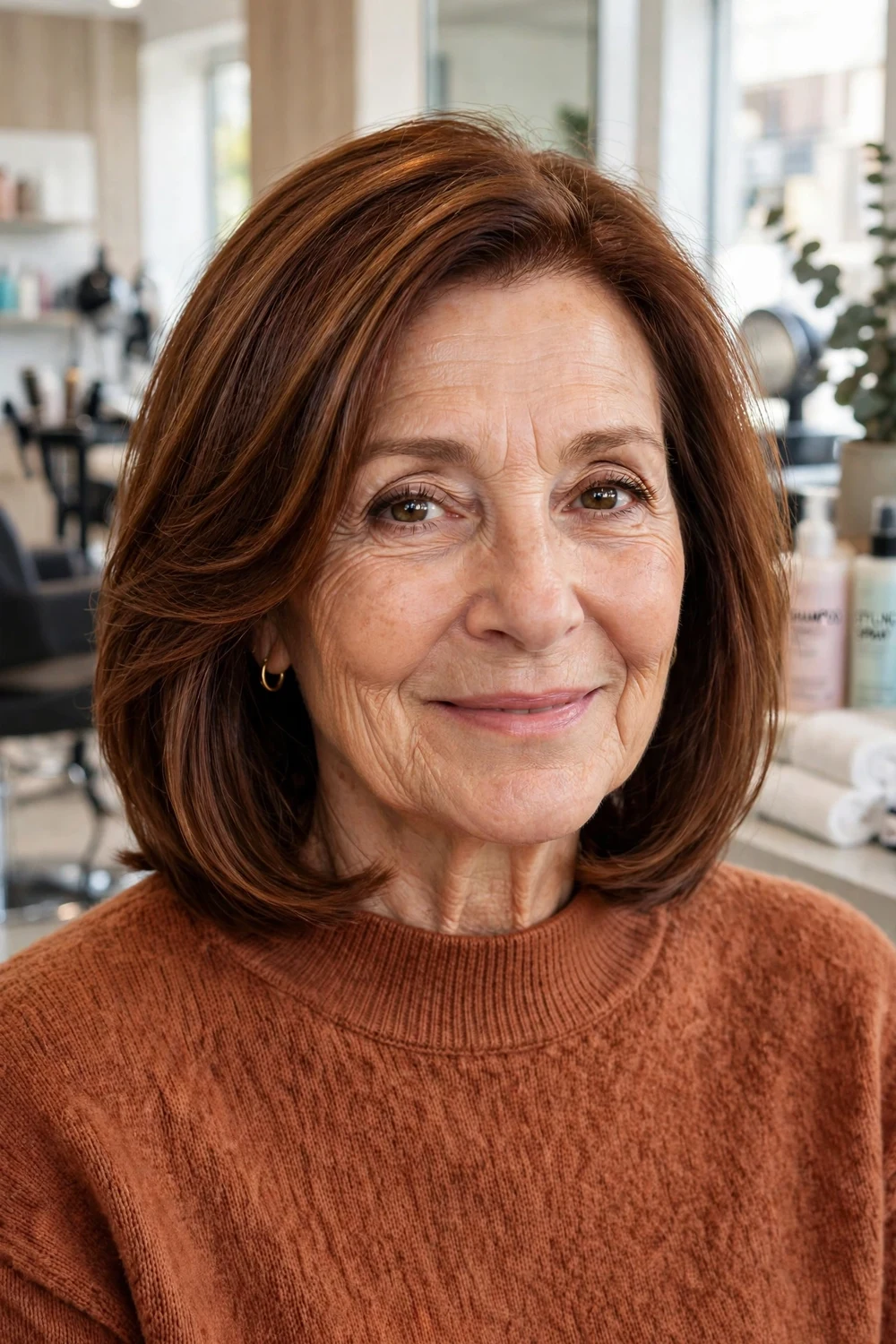
Glossy cinnamon brown takes a medium brown base and warms it with cinnamon through a demi gloss. The result is a polished, even tone that reflects light well on straight and lightly wavy hair.
Demi color is a sound pick for thinning hair because it adds a coating that makes each strand feel slightly thicker. Grey softens into the brown and fades without a line.
Try this: Book the gloss with your regular haircut. The two together take about an hour and reset the whole look.
Difficulty: Low | Cost: $ | Time: 45 minutes, every 6 weeks
19. Caramel Copper Duo
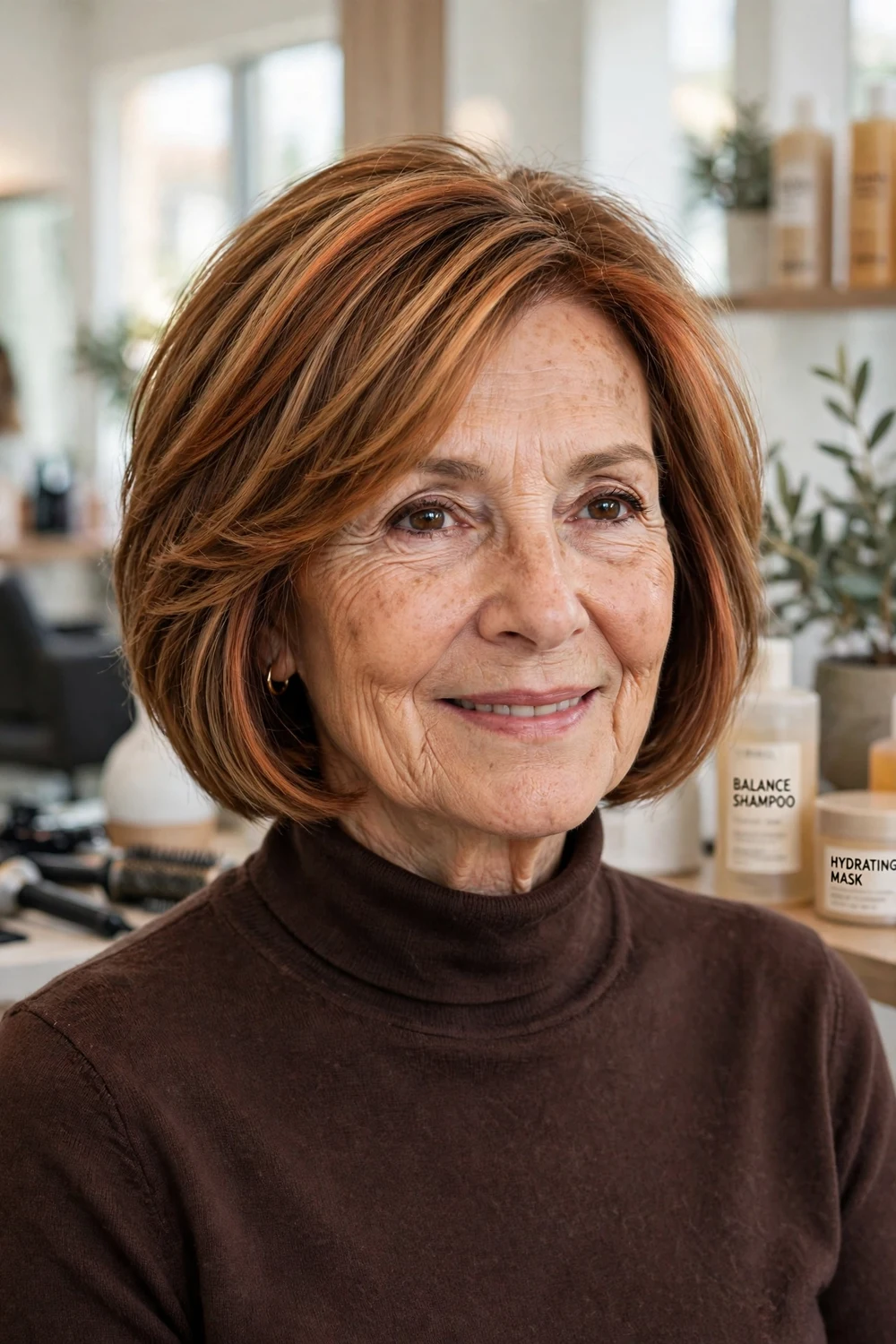
The caramel copper duo pairs two warm tones on a layered bob: caramel through the top layers and copper beneath. When the bob moves, the copper shows at the edges and neckline.
Two tones give fine hair the look of thickness, and both shades sit in the same warm family, so fading stays even. Grey coverage comes from the all-over base color beneath the duo.
Try this: Show your colorist where your part falls. The caramel should sit on your natural part side to frame the face.
Difficulty: Medium | Cost: $$ | Time: 2 hours, refresh every 6 to 8 weeks
20. Pinot Noir with Beige Face Frame
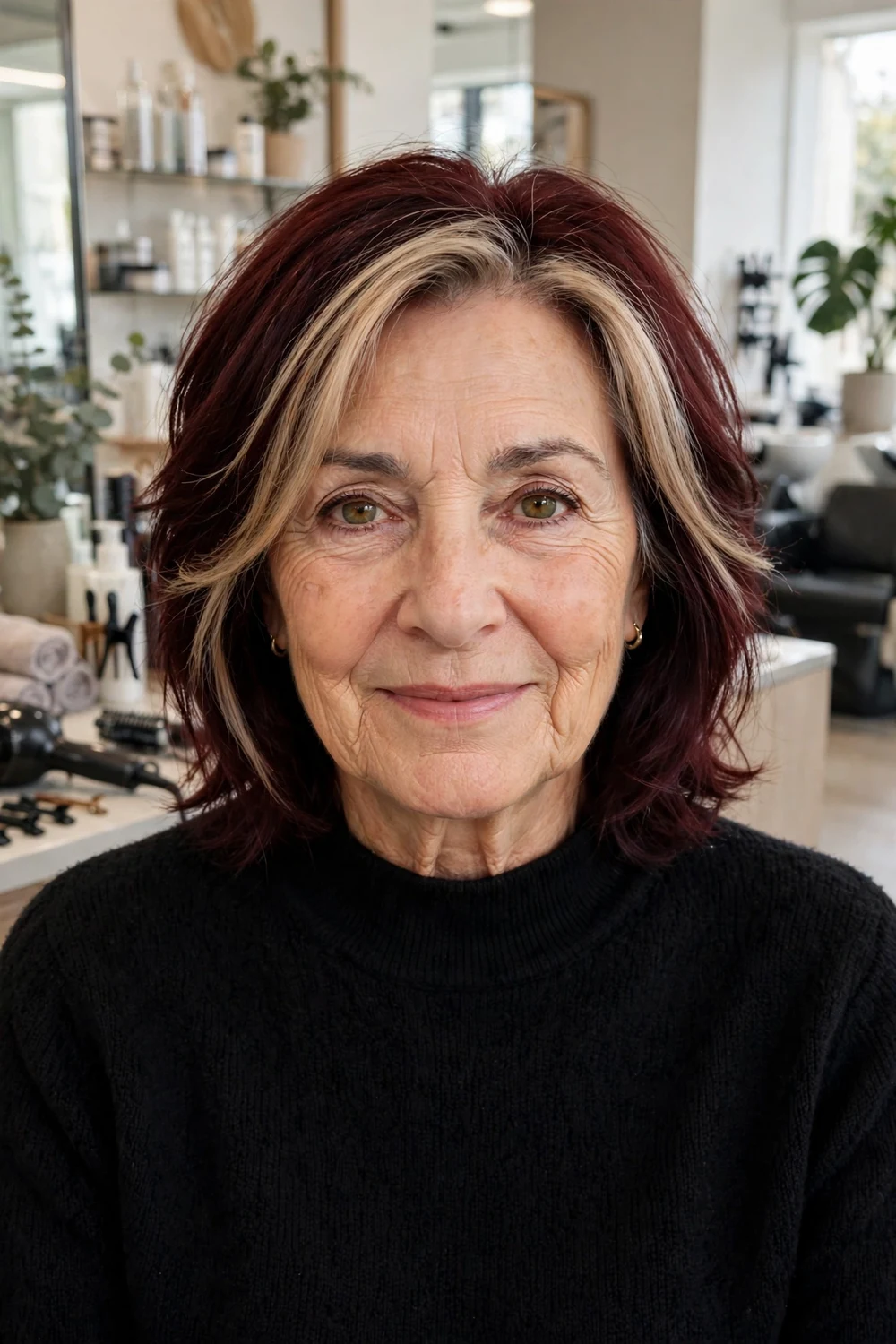
Pinot noir is a deep red wine base, dark enough to read brunette indoors. Beige blonde face framing pieces lighten the front, which lifts the face and gives grey at the hairline a place to blend.
The dark base covers grey fully, while the light front pieces need only occasional refreshing. It is a good pick for women who want one bolder shade for fall events and photos.
Try this: Keep the face frame narrow, about an inch wide on each side, so the contrast stays refined.
Difficulty: High | Cost: $$$ | Time: 2.5 hours, face frame refresh at 8 weeks
21. Caramel Apple Painted Highlights
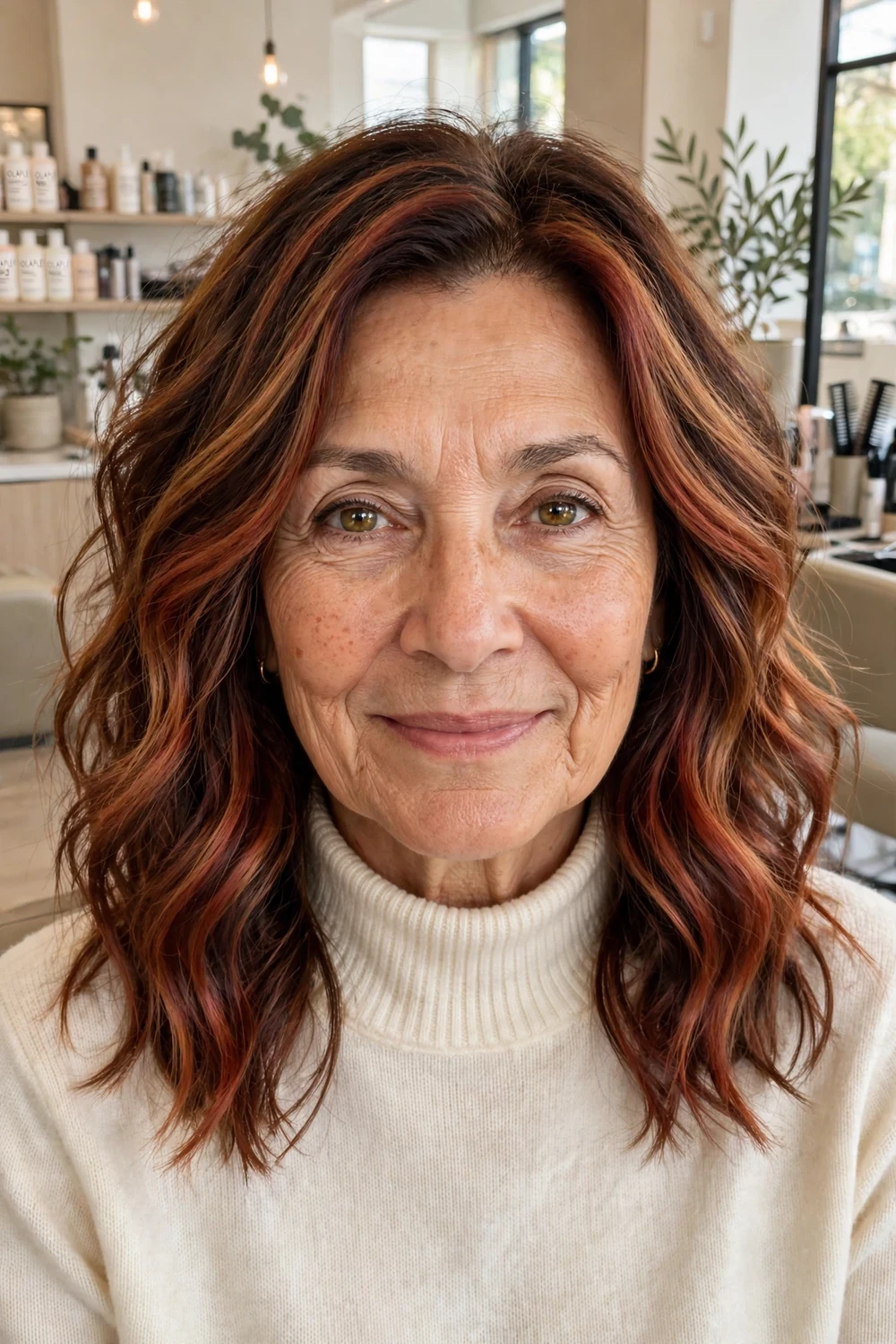
Caramel apple painted highlights brush caramel and soft red tones through the mid-lengths and ends of a brunette base, balayage style. The roots stay your own color, so grey grow-out follows the slower balayage schedule.
Painted placement suits wavy and curly hair, since the color follows the curl pattern. Readers of our fall balayage hair colors guide will know the technique keeps ends lightest and brightest.
Try this: Ask for the red kept softer than the caramel. Red fades first, and a soft start fades gracefully.
Difficulty: Medium | Cost: $$ | Time: 2 to 2.5 hours, refresh every 10 to 12 weeks
22. Hazelnut with Honey Face Lights

Hazelnut is a soft medium brown that suits fine hair, and honey face lights add two or three brighter pieces at the front. The base adds depth, the front pieces add light where the face needs it.
This is one of the gentlest full color routes for women over 60 with fine or thinning hair, since nothing is lifted more than two shades. Grey blends at the front, where the honey sits.
Try this: Pair it with a layered bob cut. Color and cut together give fine hair its fullest look.
Difficulty: Low | Cost: $$ | Time: 90 minutes, refresh every 8 weeks
23. Spiced Orange Copper Melt
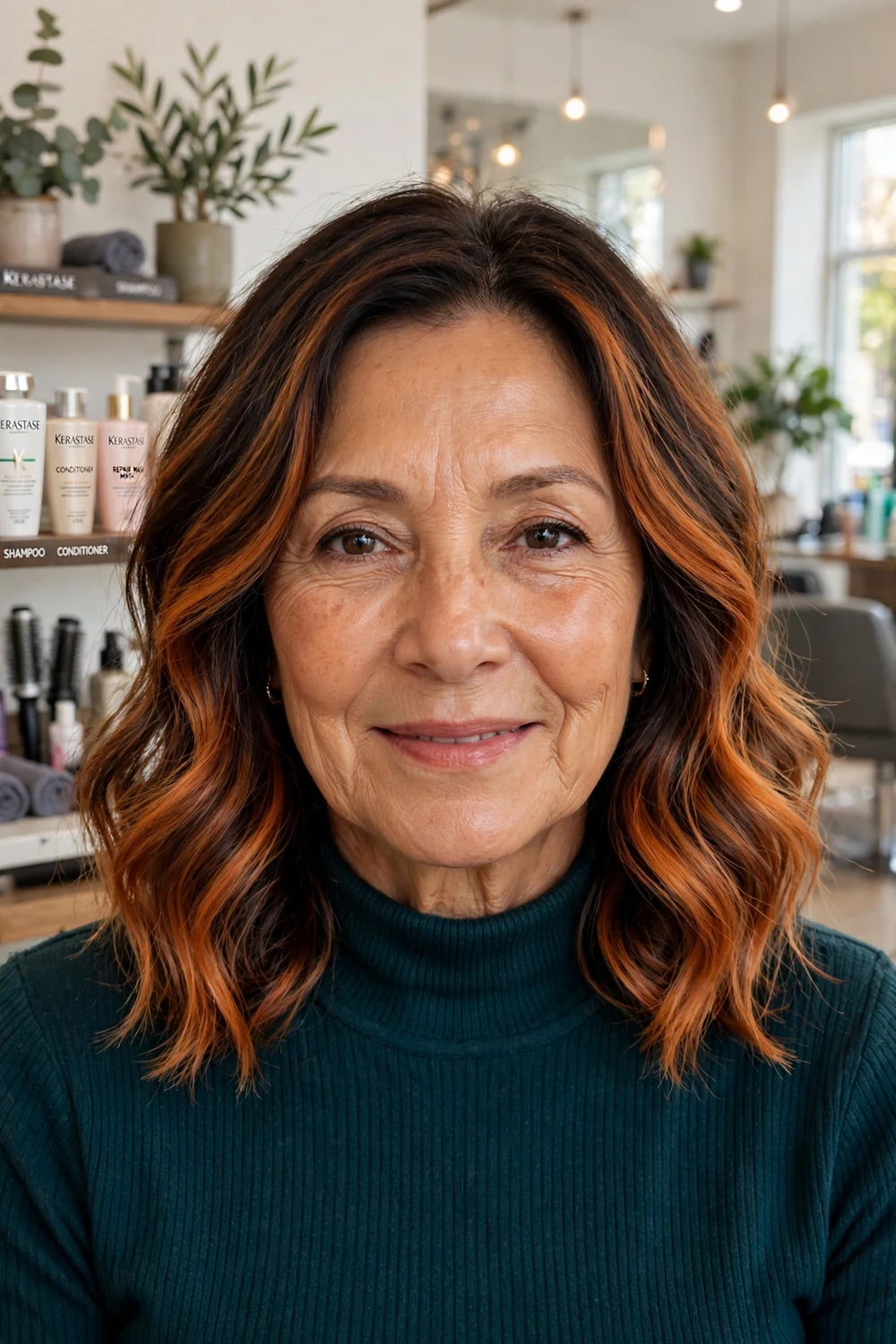
A spiced orange copper melt starts with a deeper brunette root, melts through copper, and ends in a spiced orange tone. The melt has no hard lines, so it grows out softly over two to three months.
It is the boldest shade on this list and still workable after 60, because the deep root keeps it grounded. Grey at the root zone hides inside the deeper brunette until your next visit.
Try this: This melt needs lightened ends, so ask for a bond care treatment at the same appointment.
Difficulty: High | Cost: $$$ | Time: 3 hours, gloss every 6 weeks
| Shade family | Grey strategy | Best for | Upkeep |
|---|---|---|---|
| Silver and grey blends | Work with your grey | Mostly grey hair, low upkeep goals | Low |
| Warm browns and brondes | Demi stain or fine highlights | Warm and neutral skin, fine hair | Low to medium |
| Coppers and gingers | Full cover, soft fade | Fair skin, short cuts and bobs | Medium |
| Deep reds and wine tones | Full cover plus gloss refresh | Medium and olive skin, longer hair | Medium to high |
| Transition blends | Highlights remove old dye gradually | Women ending the dye cycle | High at first, then none |
Frequently Asked Questions
What is the lowest upkeep fall color for women over 60?
Silver blonde grey blending and honey lowlights on natural silver ask the least. Both work with your grey pattern instead of covering it, so there is no root line, and salon visits drop to a gloss or lowlight refresh a few times a year.
Are demi-permanent colors enough to cover grey?
Demi color covers roughly 70 to 80 percent of grey and stains the rest a lighter tone. The result reads as soft dimension rather than full coverage. For women who dislike a hard regrowth line, that softer coverage is often the better trade.
Which fall shades suit fully white hair?
Peachy rose gold gloss, warm honey lowlights, and silver blonde blending all sit well on white hair. The gloss adds a fall tint that fades out, while lowlights add warmth and depth without touching the root.
How often should women over 60 color their hair in fall?
With blending techniques, every 6 to 10 weeks is realistic. Solid permanent color on mostly grey hair needs roots every 3 to 4 weeks. Choosing a blend at your fall appointment sets the easier schedule for the whole season.
Can I stop dyeing and go grey with a fall color plan?
Yes. A light brown grey transition blend uses highlights and gradual color removal across three to four sessions to merge dyed lengths with natural grey. Fall is a good time to start, since warmer lowlights can soften the in-between stage.
Final Thoughts
The right fall shade after 60 respects your grey, your hair texture, and your calendar at the same time. Blends, glosses, and silver friendly tones do that work quietly, while copper, cider, and wine shades are there for the days you want color to lead. Pick the idea whose upkeep matches your real life, bring the photo to your colorist, and let the season start there.

