


Balayage is the technique I point fall clients to first, because the same hand-painted placement can carry almost any shade the season brings. Painted warm, it turns a plain brunette into caramel and toffee dimension. Painted cool, it gives ash brown and mushroom tones that no all-over color can match. The roots stay yours, the color lives in the mid-lengths and ends, and the grow-out stays soft for months.
This list collects 26 fall balayage hair colors and runs them by family: warm brunette shades first, then the cool browns, the red-leaning shades, the blonde-leaning shades, and finally the placement services, partial, reverse, and money-piece work. Every idea names the shade and the placement, notes who it suits, and gives the upkeep it asks for. If you want every fall family side by side before you settle on balayage, the general fall hair colors guide covers the full spread.
Quick Takeaways
- Balayage starts with placement. The same painted technique carries caramel, ash brown, red velvet, and beige blonde very differently.
- Warm brunette balayage, caramel, chestnut, and toffee, needs the least lift and suits warm skin best.
- Cool balayage, ash brown, mushroom, and pearl, suits cool skin but needs a cleaner lift and more frequent glossing.
- Partial and money-piece balayage are smaller services in a lower cost band. Full balayage on dark hair that needs heavy lift sits in the highest band.
- The placement grows out for three to four months. The tone fades first, so budget for a gloss at five to eight weeks depending on the shade family.
How to Pick Your Fall Balayage
Start with placement, then shade. A full balayage paints the whole head and gives the lightest ends. A partial paints the top and front only. A money piece concentrates the color at the hairline, and reverse balayage paints darker pieces in instead of lighter ones. The placement decides your appointment length, your cost band, and how the color grows out, so settle it before you pick between caramel and chestnut.
Then match the shade family to your undertone and your starting base. Warm gold and red-brown shades flatter warm skin, cool ash and taupe shades flatter cool skin, and beige and mocha sit in the middle for neutral skin. Dark bases reach the brunette and deep red families with modest lift, and need real lifting time for the blonde and ash families. The wider autumn hair colors roundup shows these same families in all-over and foil placements if you want to compare techniques.
| Balayage family | Undertone | Best starting base | Upkeep |
|---|---|---|---|
| Warm brunette balayage (caramel, toffee, chestnut) | Warm gold-brown | Light brown to dark brown | Low to medium |
| Cool balayage (ash brown, mushroom, pearl) | Cool taupe and ash | Medium brown to dark blonde | Medium to high |
| Red-leaning balayage (cinnamon, auburn, red velvet) | Red-brown and wine | Medium brown to dark brown | Medium to high |
| Blonde-leaning balayage (beige, sandy, butterscotch) | Neutral to warm blonde | Dark blonde to medium brown | Medium |
| Placement balayage (partial, reverse, money piece) | Varies by shade | Any base | Low |
1. Caramel Balayage on Brunette
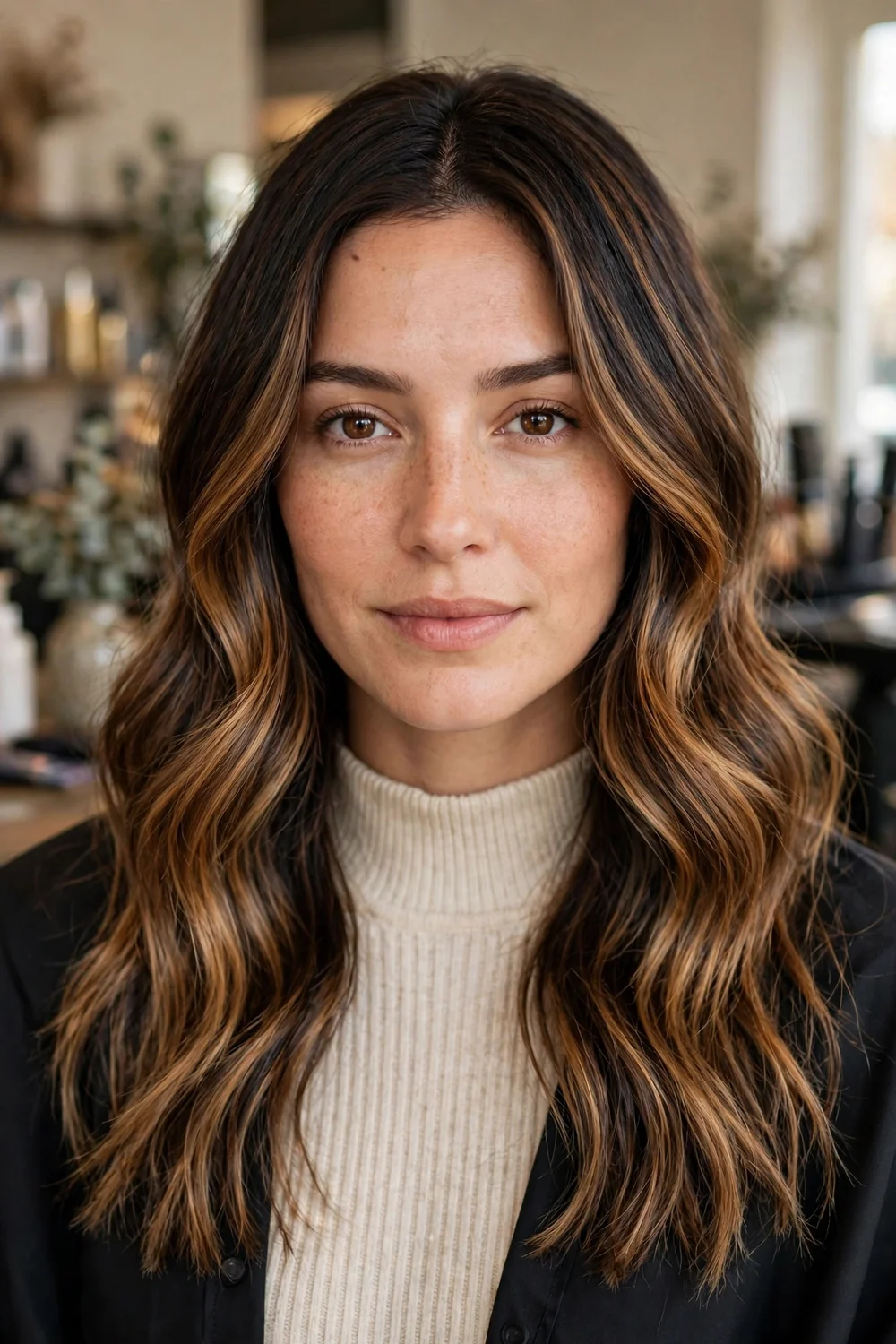
Caramel balayage hand-paints warm caramel pieces through a brunette base, with the color placed from the mid-lengths down and the roots left natural. The caramel tone is warm gold-brown, and it suits warm and neutral skin across light, medium, and deep ranges. It is the most requested fall balayage in this group because it brightens a brunette without turning her blonde.
Light and medium brunettes reach this shade with a standard lift, while dark brunettes need the painted pieces lifted a few levels before the caramel toner goes on. Grow-out is soft, since no color sits at the root, and most wearers refresh the toner at eight to ten weeks.
Try this: ask for the caramel kept one to two shades lighter than your base, with the brightest pieces around the face and on the top layer.
Difficulty: Medium · Cost: $$ (salon)
2. Honey Balayage

Honey balayage paints warm honey gold through a light brown or dark blonde base. The tone sits between caramel and blonde, so it reads warm without going orange. It suits warm and neutral skin, and the face-framing pieces do most of the brightening work.
Most light bases reach honey in one session. The gold tone fades toward a softer blonde over time, which keeps the grow-out forgiving. A warm gloss at six to eight weeks brings the honey tone back when it starts to look pale.
Try this: if your summer highlights have gone too light, ask for a honey toner over them first. That single step often gives you this whole look.
Difficulty: Medium · Cost: $$ (salon)
3. Chestnut Balayage
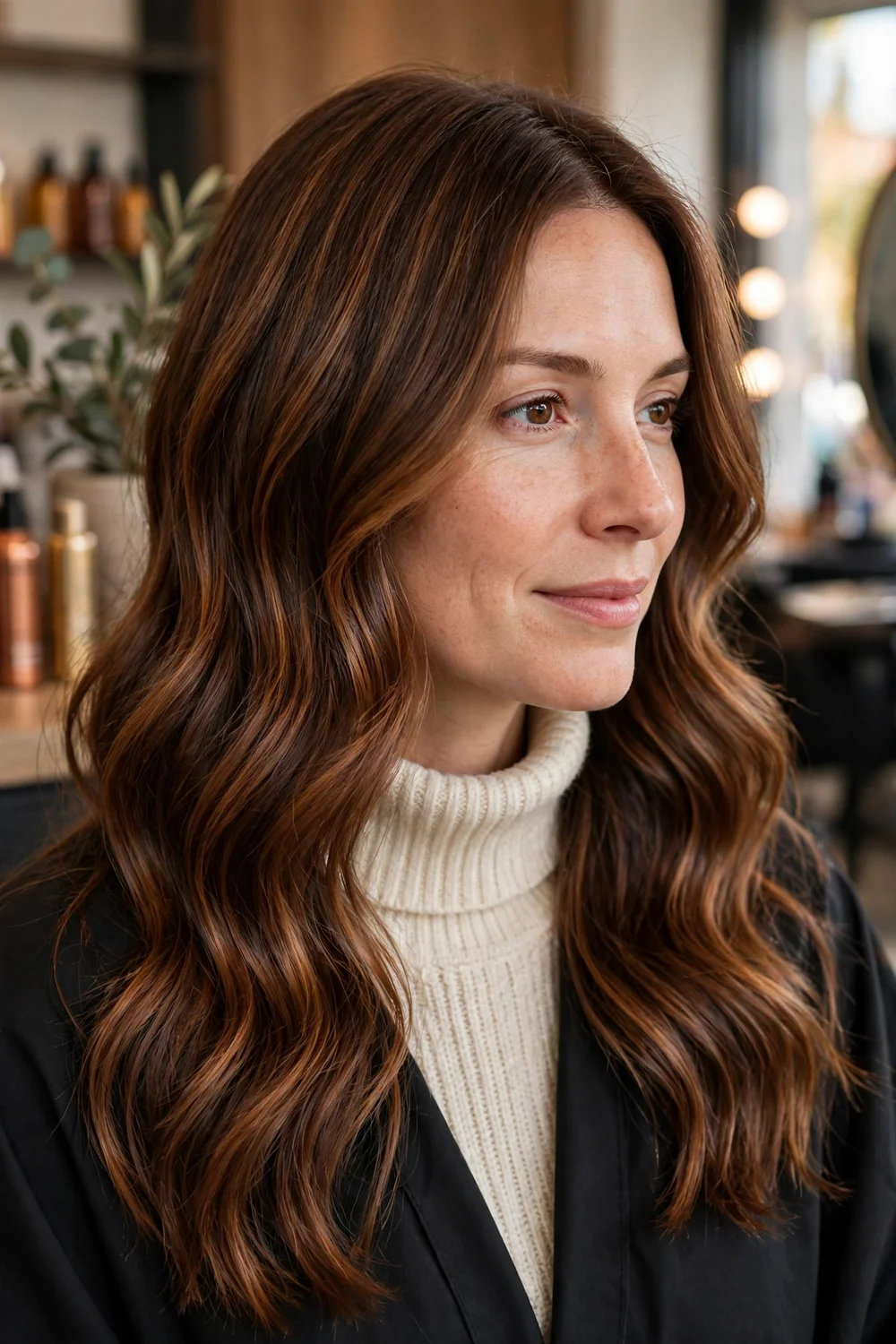
Chestnut balayage keeps the whole look inside the brown family: warm chestnut pieces painted through a medium brown base, only a shade or two lighter than the root. The result is depth and shine rather than clear contrast. It suits warm skin and anyone who wants a fall change that still reads as natural brunette.
Because the target shade sits close to the base, this service needs little lift and does less damage than the blonde-leaning options on this list. Upkeep is low. The chestnut tone holds well, and a clear or chestnut gloss at eight weeks restores the shine.
Try this: ask your colorist to paint the chestnut in wide, soft sections instead of fine pieces. Wide placement is what gives chestnut its glossy, sheet-like finish.
Difficulty: Medium · Cost: $$ (salon)
4. Chocolate Balayage
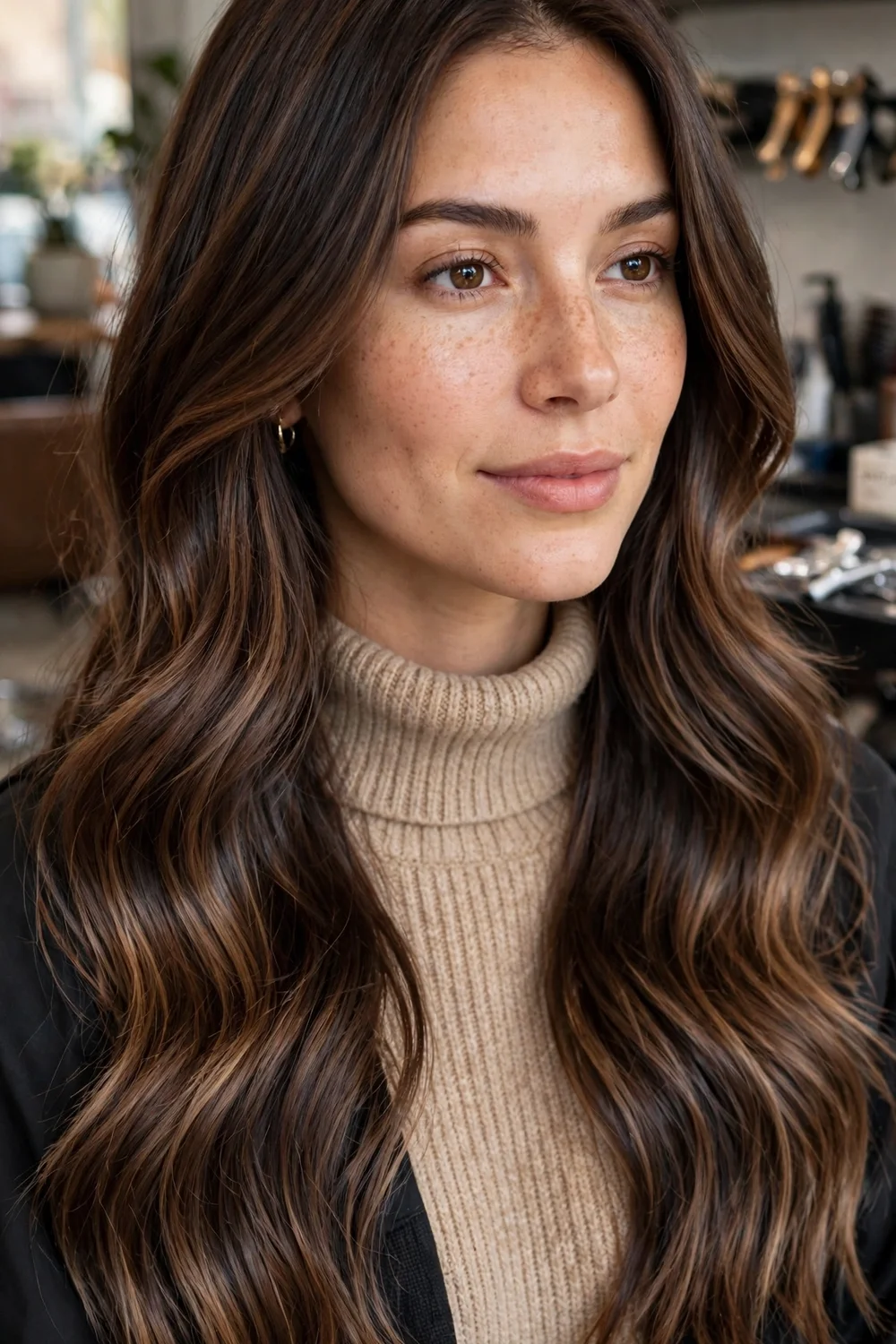
Chocolate balayage paints milk chocolate pieces through a dark espresso base. The contrast is low and the finish is rich, which makes it a strong pick for dark hair that looks flat in one tone. Warm and neutral skin both carry it, and deep skin suits the dark base with lighter chocolate lengths especially well.
The painted pieces need only a modest lift, so a single session covers most dark bases. Chocolate tones fade slowly compared with red or blonde tones. Plan a gloss at eight to ten weeks and the color stays rich through the season.
Try this: keep the chocolate pieces off the very ends if your ends are dry. Ending the color a little higher protects the weakest hair.
Difficulty: Medium · Cost: $$ (salon)
5. Cinnamon Balayage
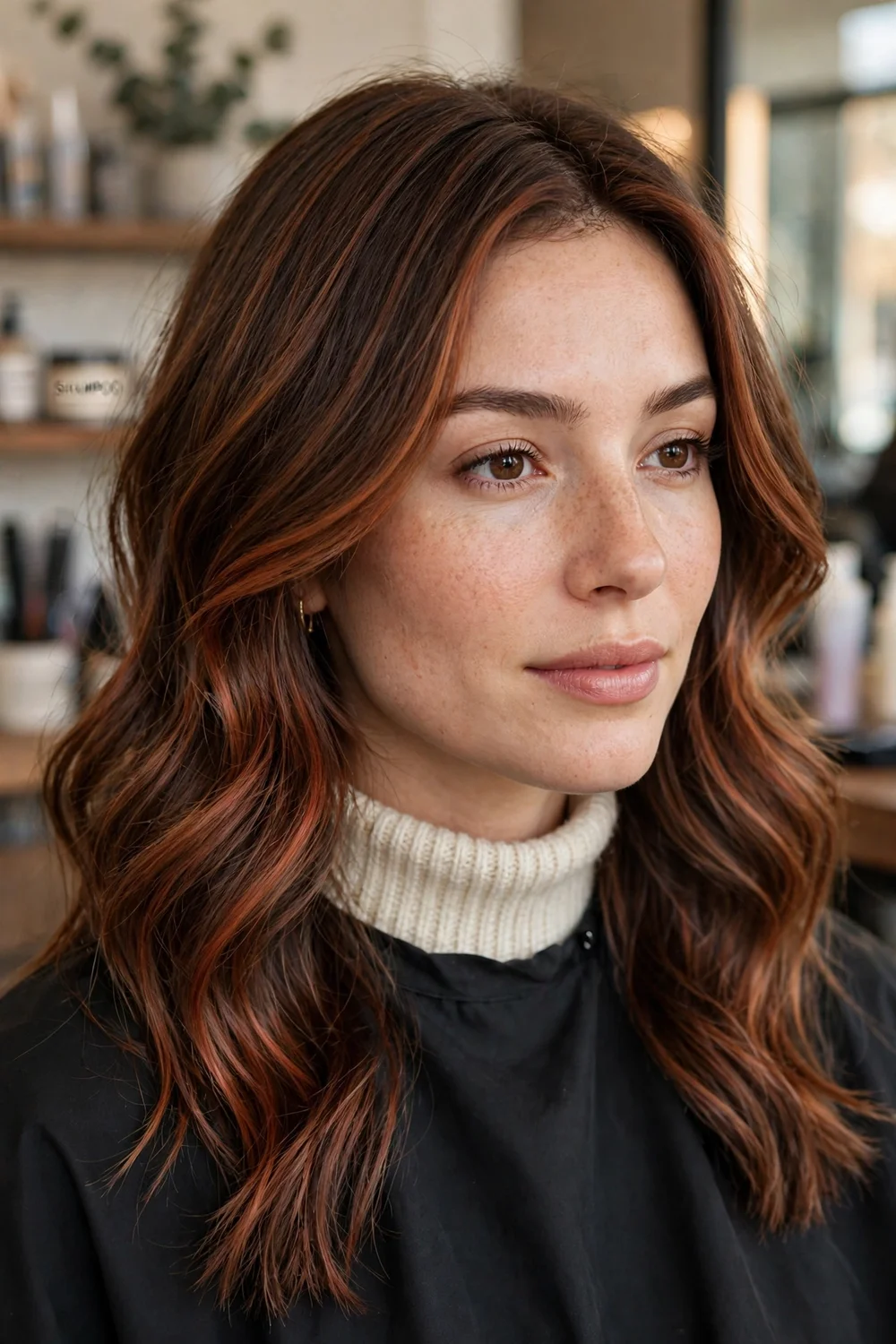
Cinnamon balayage paints warm cinnamon, a red-brown spice tone, through a brown base. The red content is clear but kept in the lengths, so the root stays brunette and the grow-out stays soft. It suits warm and neutral skin, and layered cuts show the cinnamon pieces well because each layer catches light at a different angle.
Light brown bases take cinnamon directly over a small lift. Darker bases need more lift before the red-brown will show. Red-family tones fade faster than brown tones, so a cinnamon gloss at five to six weeks keeps the spice note in place.
Try this: ask for cinnamon concentrated on the mid-lengths, with only a few fine pieces near the face, if you want the warmth without a full red read.
Difficulty: Medium · Cost: $$ (salon)
6. Toffee Balayage
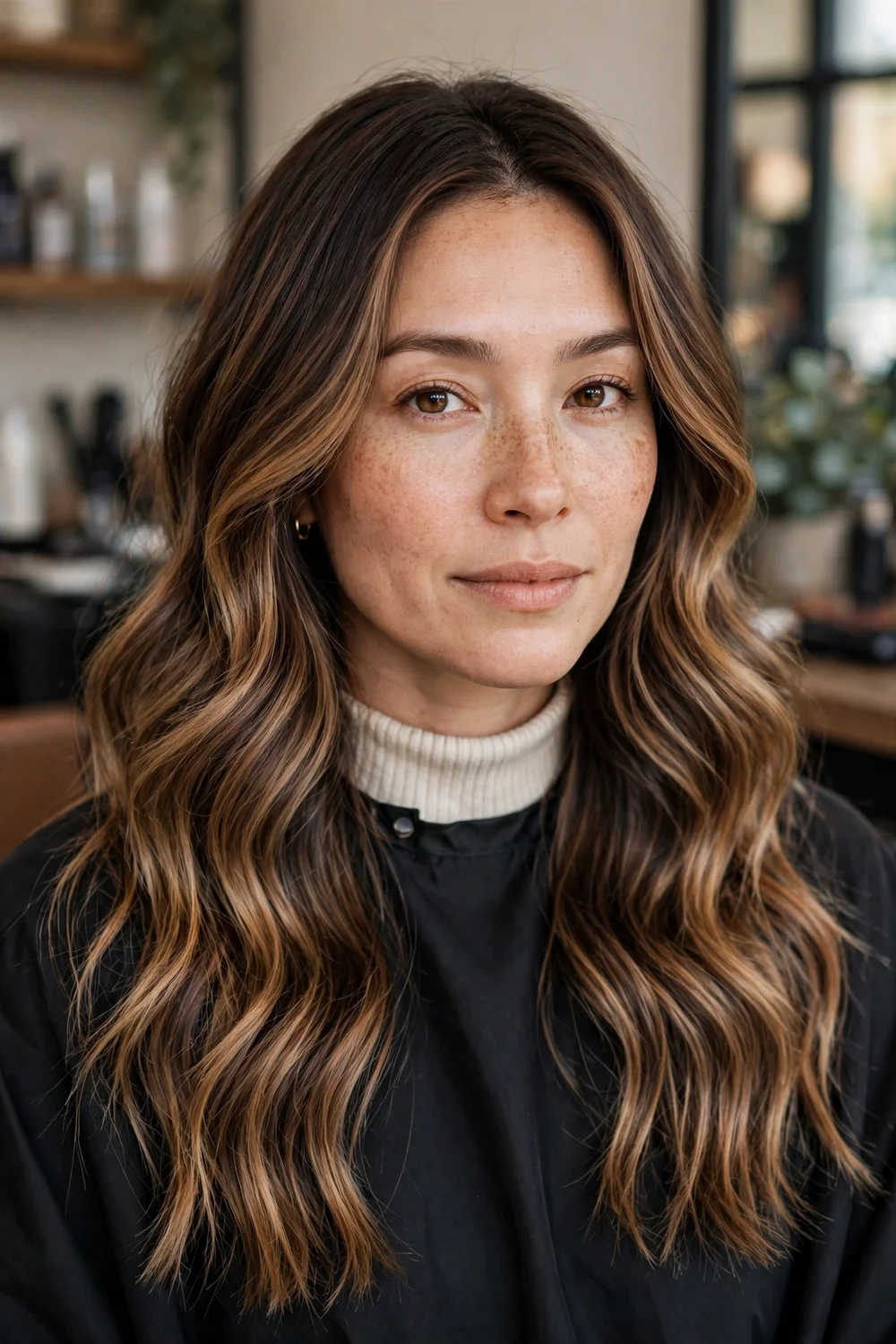
Toffee balayage sits a step deeper than caramel: a golden brown with more brown in it, painted through a mocha or medium brown base. It gives warmth and dimension while staying clearly brunette. Medium and olive skin get the most from the golden brown reflect.
Toffee needs a moderate lift on brown bases and a warm toner to finish. It fades toward a soft light brown rather than a brassy orange when the toner is balanced well. A gloss at six to eight weeks holds the toffee tone.
Try this: pair toffee balayage with a root smudge in your natural shade. The smudge blurs the top of the painted pieces and adds weeks to the grow-out.
Difficulty: Medium · Cost: $$ (salon)
7. Golden Balayage
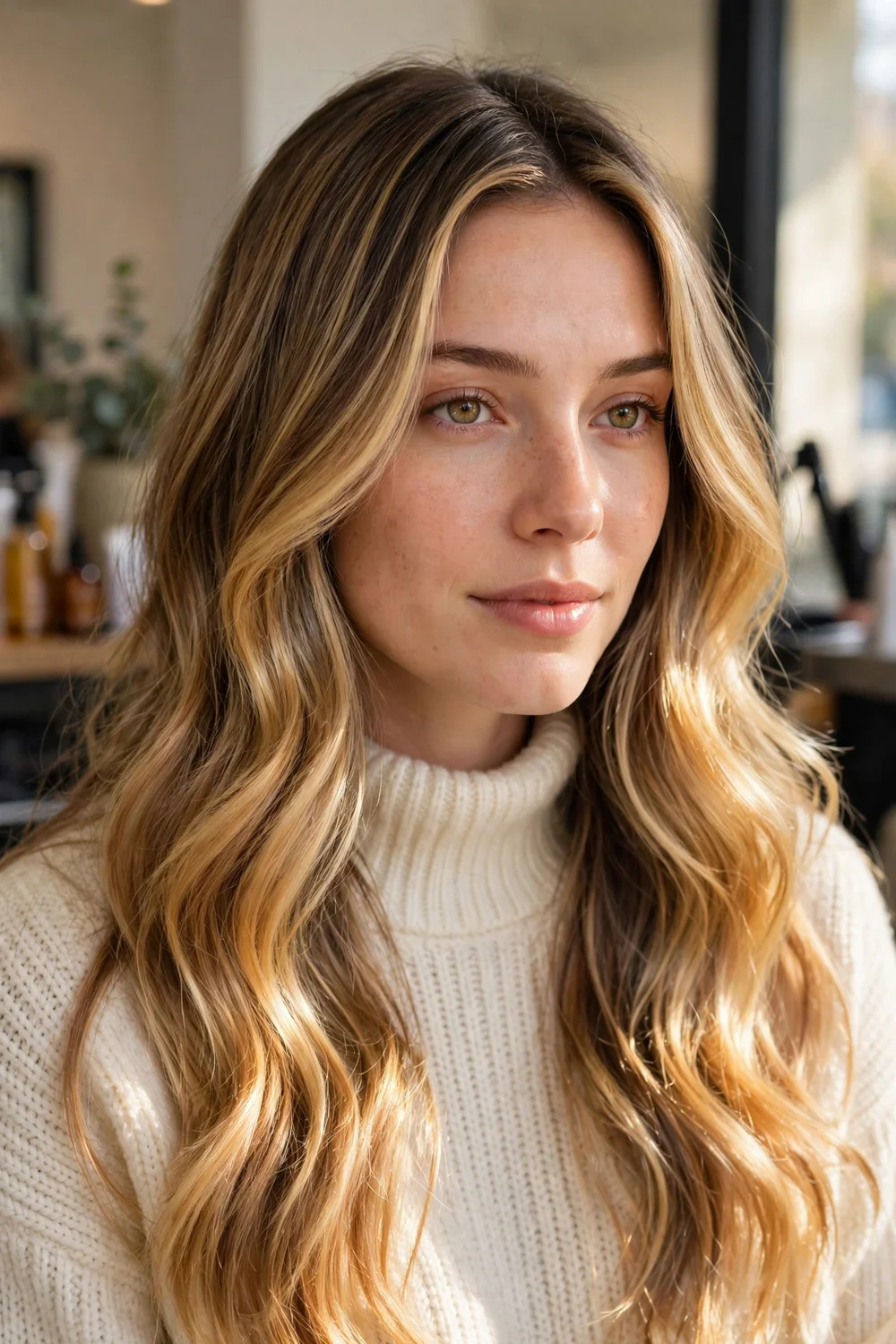
Golden balayage paints bright golden pieces through a dark blonde or light brown base, with the ends taken the lightest. It is the sunniest option in the warm group, and it suits warm skin and light eyes well. Fall is a good time for it, since the deeper root keeps the gold from reading like summer hair.
Reaching clear gold takes more lift than caramel or toffee, and dark bases go through a longer first session. Gold tones can turn brassy between visits, so a warm gloss and a color-safe shampoo matter here. Refresh the toner at six weeks.
Try this: ask for a true golden toner at the toner step, and check the color in daylight before you leave the salon.
Difficulty: Medium to High · Cost: $$$ (salon)
8. Bronde Balayage
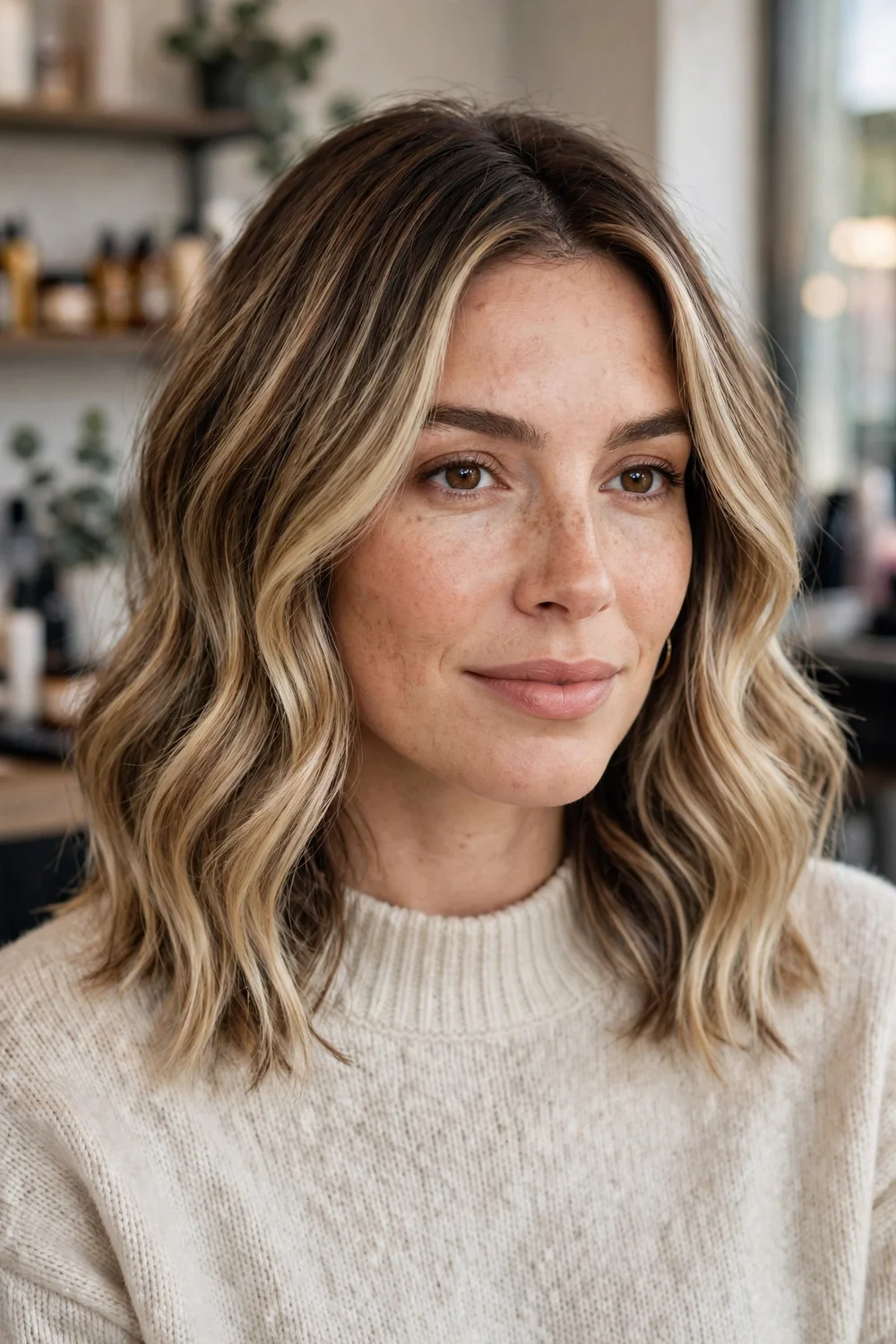
Bronde balayage blends brown and blonde in one painted placement: brown at the root and through the underneath, blonde through the mid-lengths and ends. It is the middle ground for brunettes who want clear lightness and blondes who want their depth back for fall. Warm, neutral, and many cool skin tones can carry it, depending on the toner.
The service combines lift for the blonde pieces with a root shade that keeps the blend grounded. Grow-out is one of the softest on this list, because both ends of the blend sit close to a natural base. A toner refresh at eight weeks is usually the only upkeep.
Try this: bring photos that show the brown to blonde ratio you want. Bronde covers a wide range, and the ratio is the whole decision.
Difficulty: Medium · Cost: $$ (salon)
9. Ash Brown Balayage

Ash brown balayage paints cool ash brown and smoky beige pieces through a dark or medium brown base. There is no gold in this version, which is why it suits cool and neutral skin and anyone whose warm color keeps clashing with pink undertones in the skin.
Cool tones need the hair lifted past the warm stage before the ash toner can hold, so dark bases take longer in the chair. Ash fades faster than warm tones and can drift warm between visits. A cool gloss at five to six weeks and occasional purple shampoo keep the tone smoky.
Try this: if your hair lifts very warm, tell your colorist at the consultation. Ash brown on a warm-lifting base may need a two-step plan.
Difficulty: Medium to High · Cost: $$$ (salon)
10. Mushroom Balayage
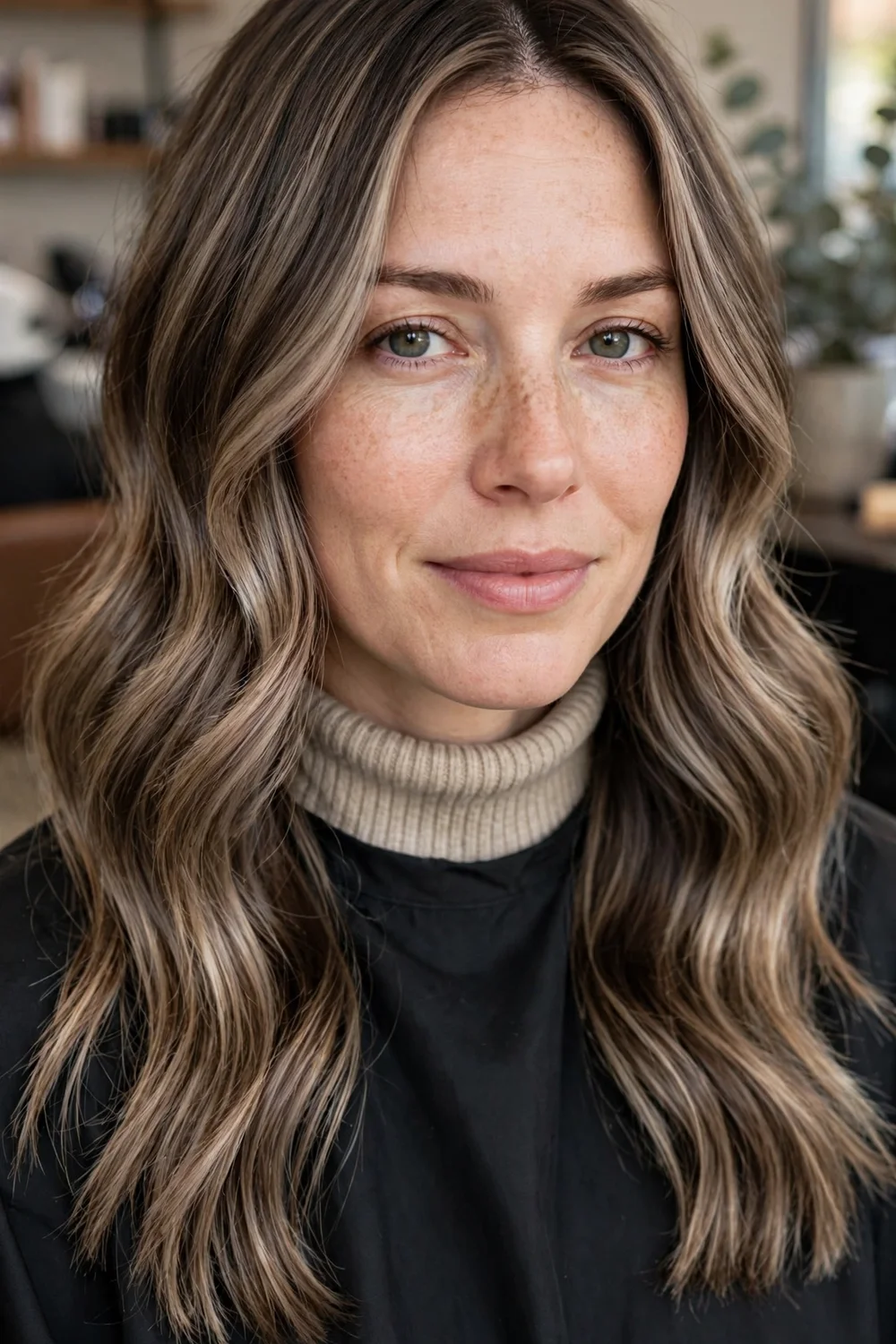
Mushroom balayage uses muted taupe, beige, and gray-brown tones painted through a cool brown base. Nothing in it is warm or bright, and that muted finish is the point. It suits cool and neutral skin, and it pairs well with the gray and stone tones that show up in fall clothing.
Like ash brown, mushroom tones need a clean lift before toning, and the taupe finish needs regular glossing to stay muted rather than muddy. Plan a toner at five to six weeks. The painted placement itself grows out softly for months.
Try this: ask for a mix of taupe and beige pieces rather than one flat taupe. The mix is what keeps mushroom balayage from reading gray.
Difficulty: Medium to High · Cost: $$$ (salon)
11. Mocha Balayage
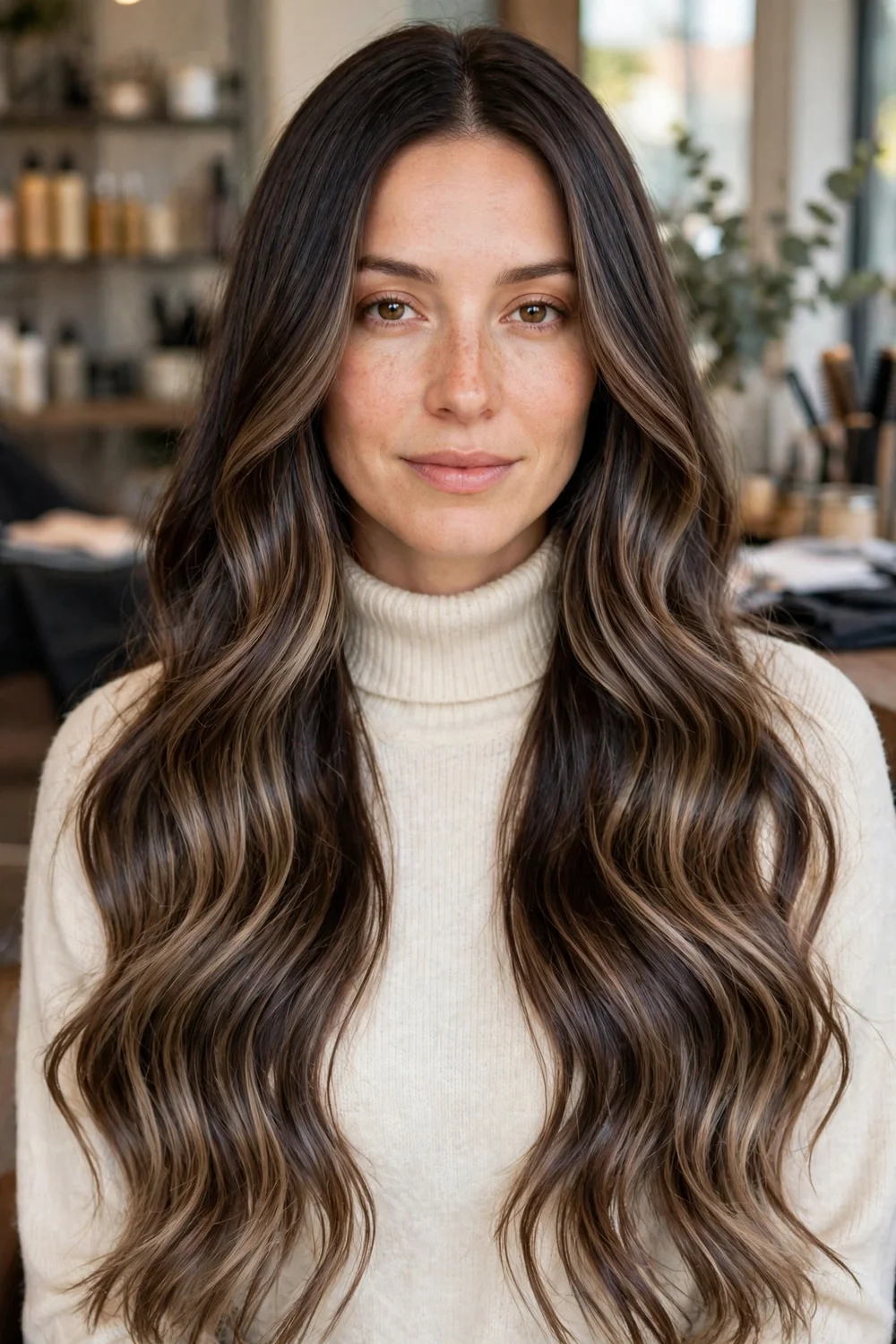
Mocha balayage paints mocha and beige brown pieces through a deep brunette base, keeping the contrast soft and the overall read rich and cool-neutral. It suits a wide range of skin tones, since mocha can be toned warmer or cooler at the gloss step to match the wearer.
Mocha is a low-lift service on brunette bases, so most heads finish in one standard session. The beige pieces lighten the look without blonde upkeep. A gloss at eight weeks keeps the mocha depth from going flat.
Try this: ask your colorist to tone the pieces mocha rather than caramel if your skin runs cool. The two shades start from the same lift and read very differently.
Difficulty: Medium · Cost: $$ (salon)
12. Hazelnut Balayage
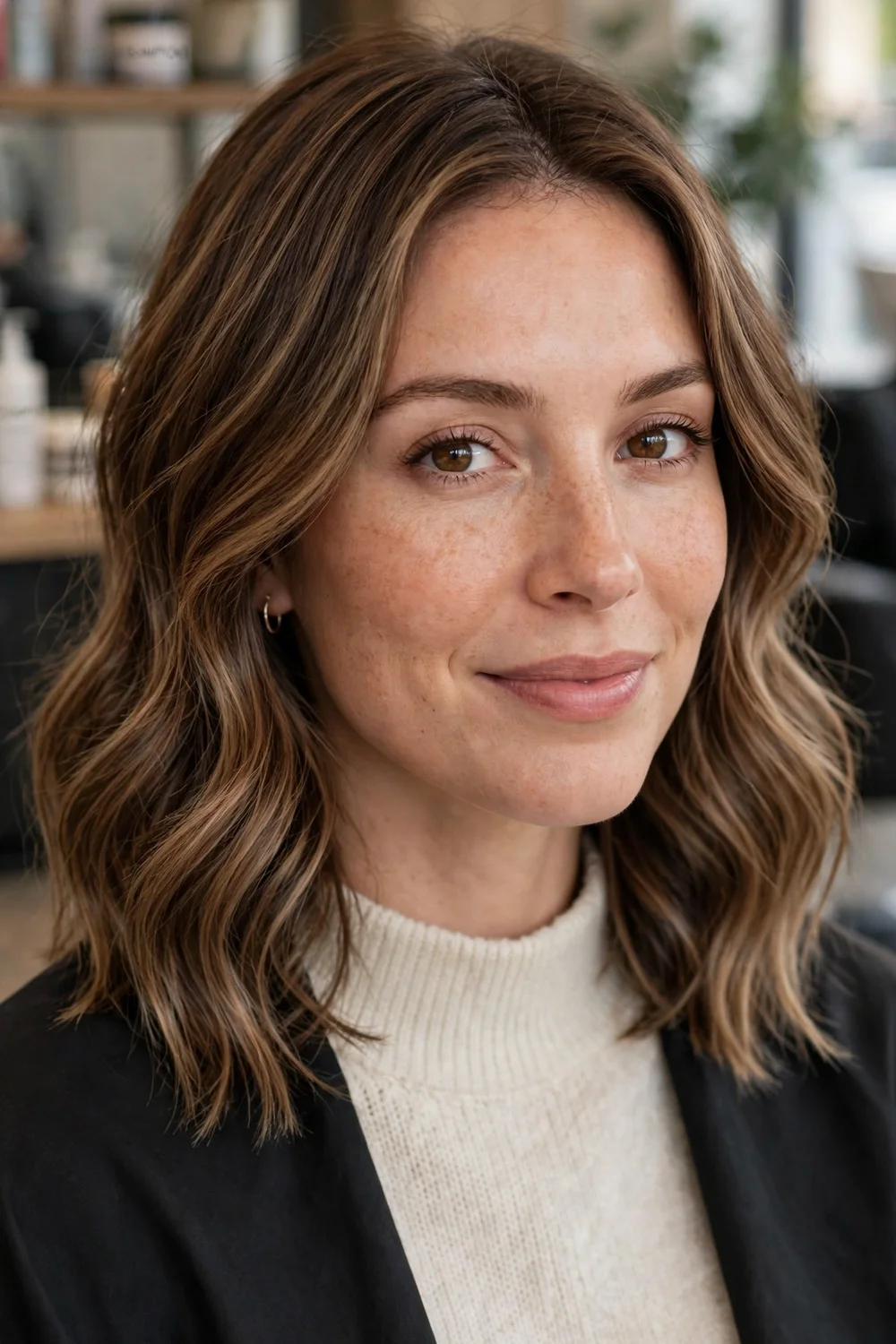
Hazelnut balayage paints warm hazelnut and light brown pieces through a medium brown base. It is the softest warm option on this list, with low contrast and a finish close to how sun lightens brown hair on its own. It suits warm and neutral skin and works well as a first balayage.
The lift is small, the toner is close to the base, and the grow-out is barely visible. That makes hazelnut a good pick for anyone stretching salon visits. A gloss at eight to ten weeks is enough for most wearers.
Try this: start with hazelnut if you are unsure about balayage. The same placement can be taken lighter toward caramel or honey at the next visit.
Difficulty: Low to Medium · Cost: $$ (salon)
13. Red Velvet Balayage
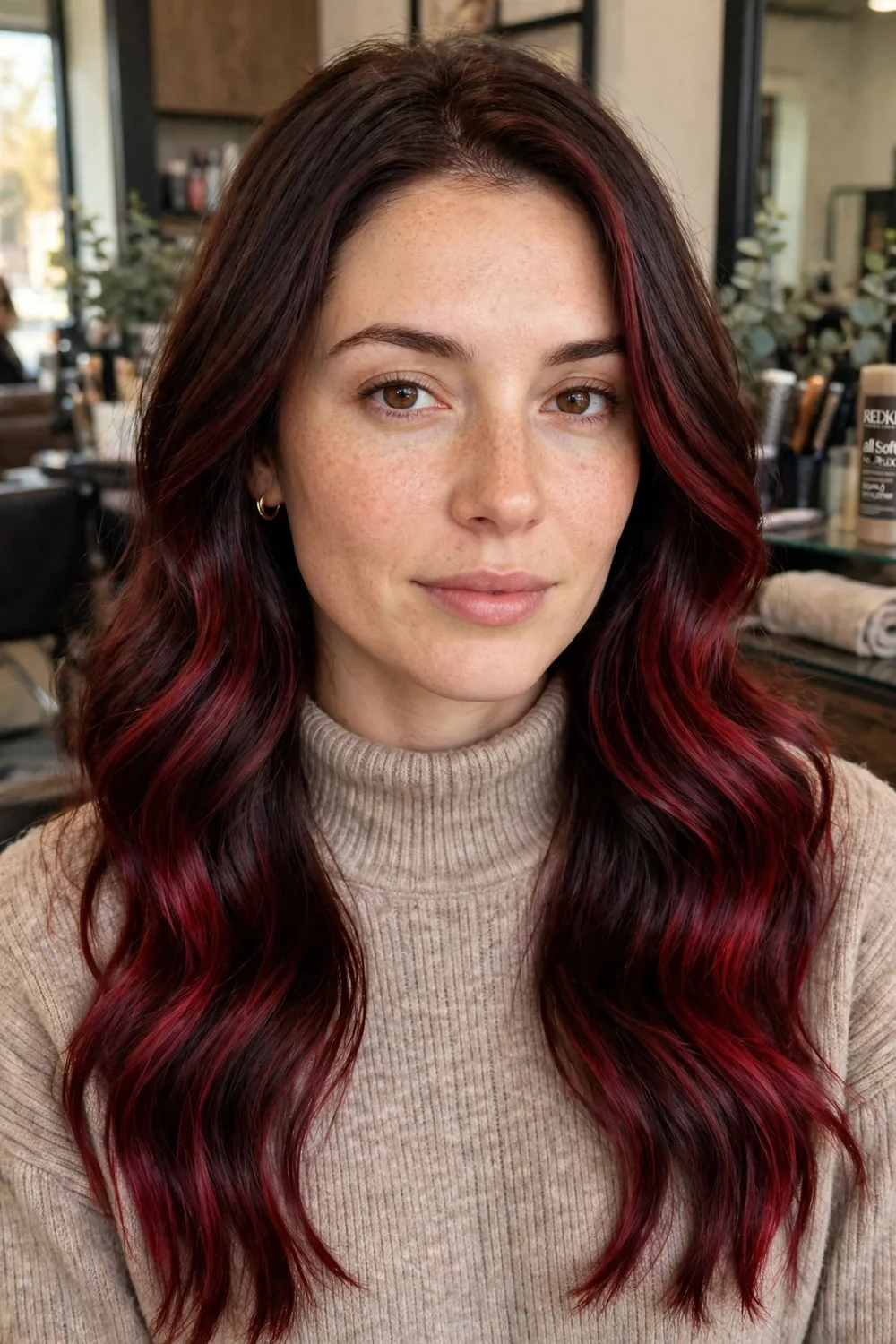
Red velvet balayage paints deep, blue-leaning red through a dark brown base, with the red concentrated in the mid-lengths and ends. The dark root keeps it grounded, and the red shows most in bright light. It suits cool and deep skin well, since the blue-red tone holds its own against rich complexions. The full roundup of fall hair colors for dark skin shows how deep reds like this sit alongside other fall shades.
Dark bases need lift before a red this clear will show, and then the red gloss goes over the lifted pieces. Red fades faster than any other family here, so plan a red gloss at four to five weeks and wash with cool water from the start.
Try this: ask for the red placed lower, from the cheekbones down, if you want the drama in the lengths and a calm grow-out at the root.
Difficulty: Medium to High · Cost: $$$ (salon)
14. Auburn Balayage
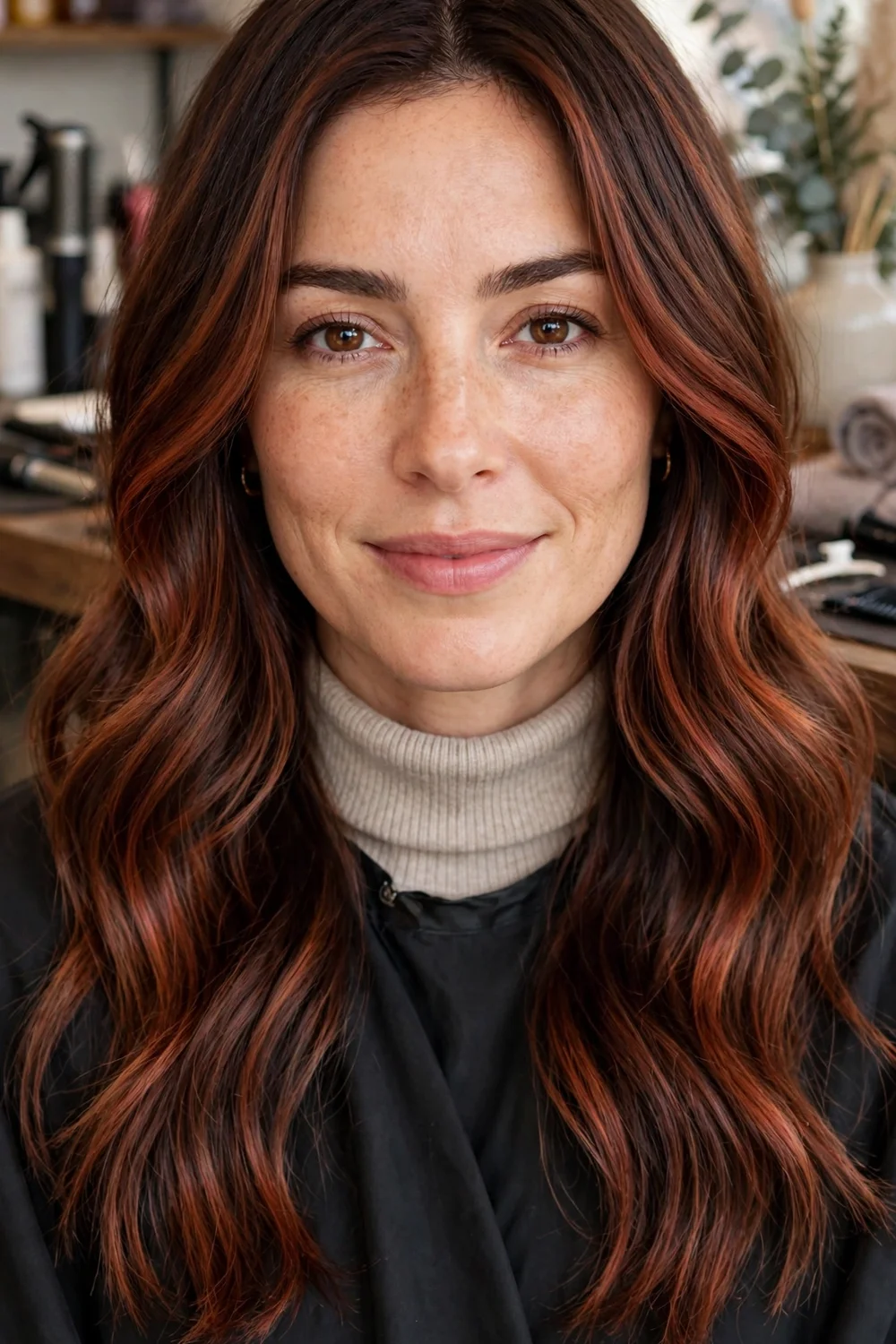
Auburn balayage paints red-brown auburn pieces through a brunette base. Auburn carries more brown than red velvet, so it reads as a warm brunette with red in it rather than a red shade. It suits warm and neutral skin, and it is a practical first step into red-family color for fall.
Medium brown bases reach auburn with a modest lift, and darker bases need the pieces lifted before the auburn toner shows. The brown content makes auburn fade more gently than brighter reds. A gloss at six weeks keeps the red-brown balance.
Try this: ask for auburn pieces in two depths, deeper underneath and brighter on top, so the color moves as the hair moves.
Difficulty: Medium · Cost: $$ (salon)
15. Mahogany Balayage
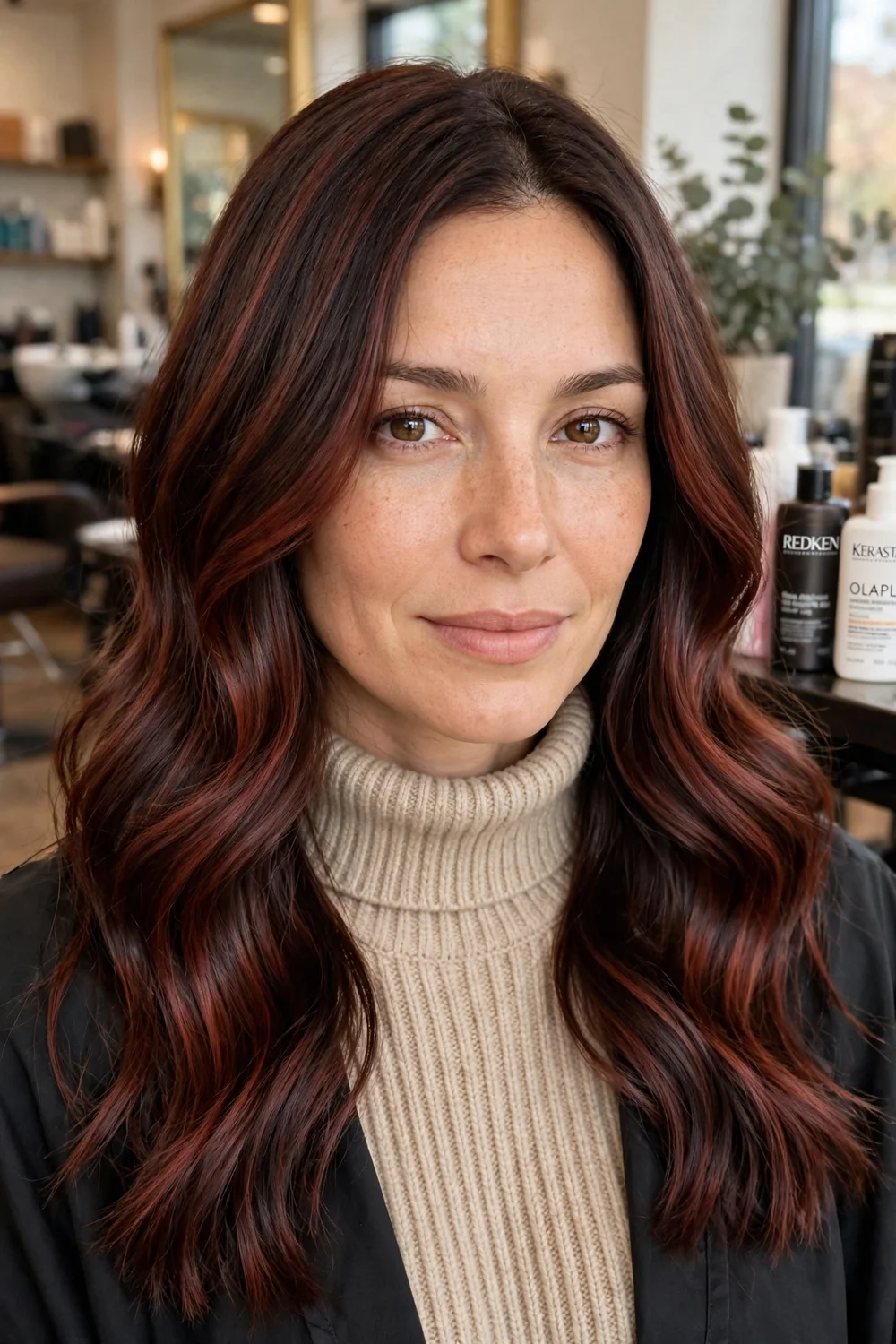
Mahogany balayage blends brown and red into deep mahogany pieces painted through a dark brown base. The depth hides the placement at first glance, then the red-brown shows as the hair turns. It suits medium and deep skin, and the muted finish keeps it suitable for conservative workplaces.
Mahogany sits close to a dark base, so most brunettes skip heavy lifting. The shade hides regrowth well because the painted pieces stay deep. A clear or mahogany gloss at six to eight weeks keeps the surface reflective, which this shade depends on.
Try this: finish with a clear gloss at every visit. Mahogany balayage looks flat without shine and rich with it, more than any other shade here.
Difficulty: Medium · Cost: $$ (salon)
16. Burgundy Balayage

Burgundy balayage paints wine-red pieces through a dark brunette base. Burgundy leans purple-red, which separates it from the warmer reds on this list and makes it the red option that suits cool skin best. The color stays subtle indoors and shows clearly in daylight.
Dark hair needs lift first, then a burgundy gloss over the painted pieces. Purple-red tones fade toward brown, so the change between visits is gentle rather than harsh. A burgundy gloss at five weeks holds the wine tone.
Try this: keep the burgundy off the top layer if you want a subtle version. Placed underneath, it shows in movement and stays hidden when the hair is still.
Difficulty: Medium to High · Cost: $$$ (salon)
17. Beige Blonde Balayage
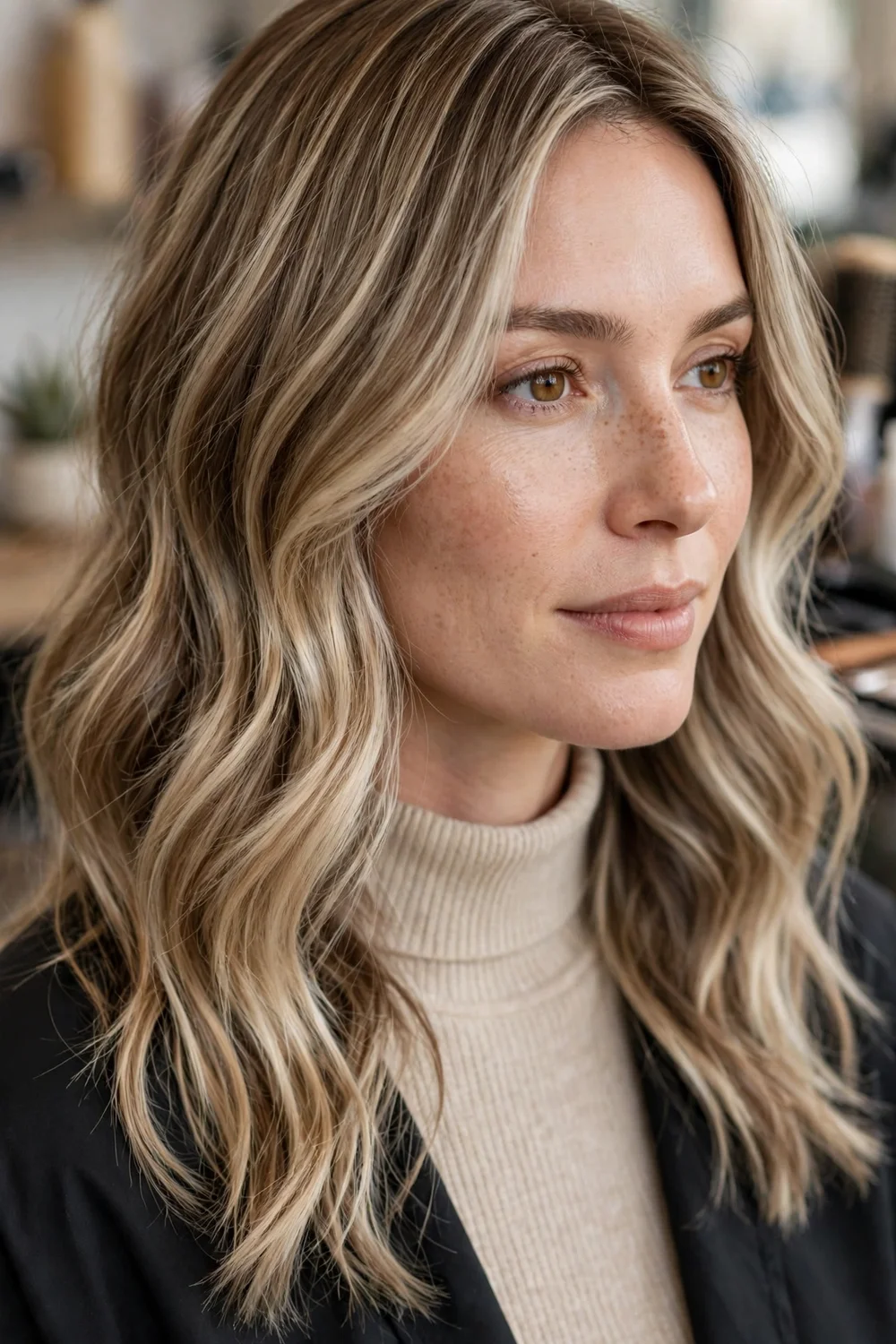
Beige blonde balayage paints neutral beige blonde through a light brown or dark blonde base. Beige sits between warm and cool, with no clear gold and no clear ash, which is why it suits such a wide range of skin tones. Blondes moving into fall often use it to soften summer brightness, and the fall blonde hair colors list covers the all-blonde side of the same shift.
The lift is standard for balayage, and the beige toner does the balancing work. Beige can drift warm over time, so a gloss at six weeks keeps it neutral. The darker root built into the placement stretches the time between full services.
Try this: ask for beige in those exact words. Colorists tone beige differently from ash and from gold, and the word matters.
Difficulty: Medium · Cost: $$ (salon)
18. Sandy Blonde Balayage
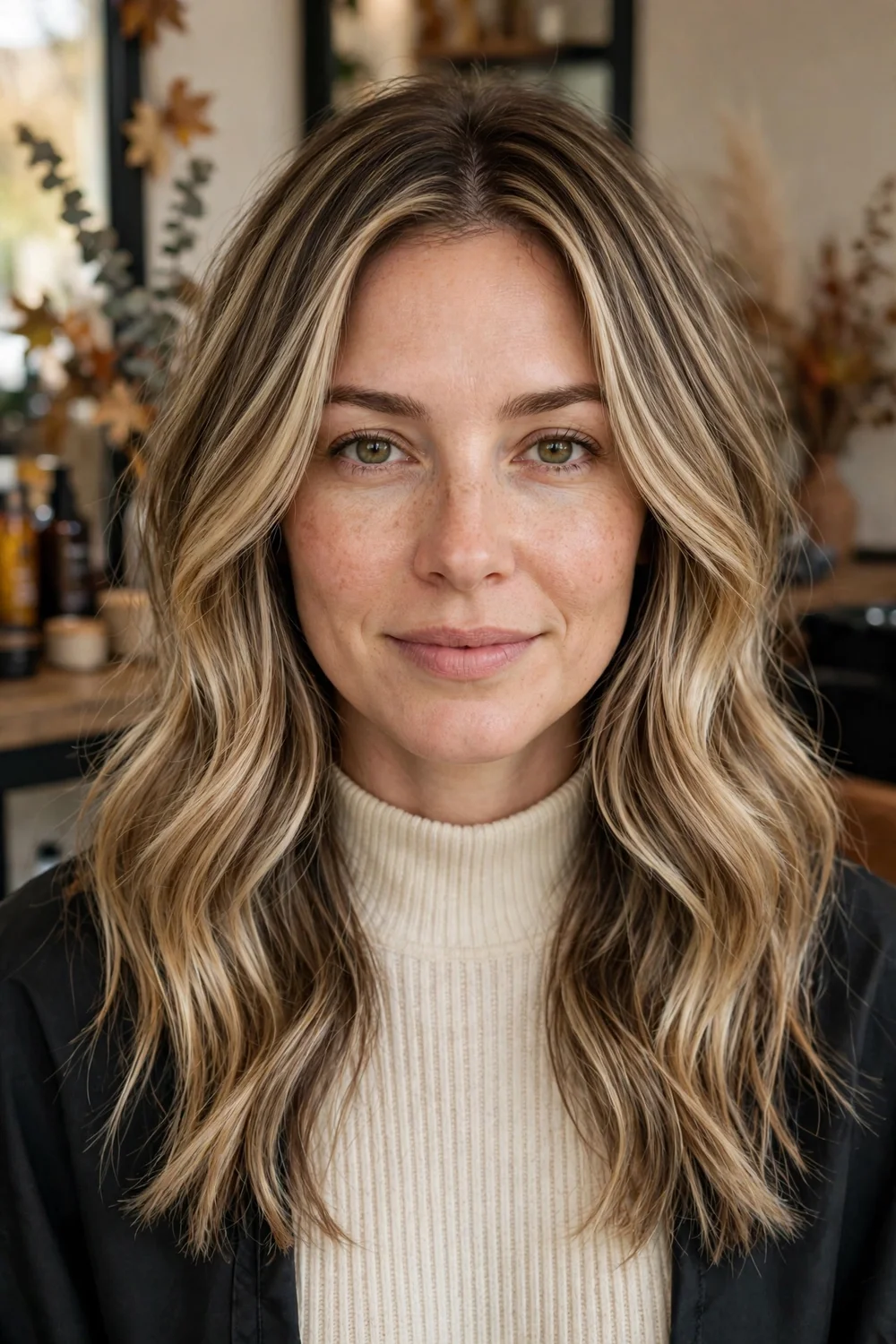
Sandy blonde balayage paints sandy, muted blonde through a dark blonde base. It keeps the lightness of blonde while dropping the brightness, which is the standard fall adjustment for natural blondes. It suits warm and neutral skin, and the muted tone pairs well with heavier fall fabrics and colors.
Most blonde and light brown bases reach sandy blonde in one session, often as a toner change over existing painted pieces. Upkeep is a gloss at six to eight weeks to keep the sandy tone muted rather than yellow.
Try this: if you already have balayage, this can be a toner-only appointment. Ask for a sandy gloss over your current pieces before booking a full service.
Difficulty: Low to Medium · Cost: $$ (salon)
19. Butterscotch Balayage
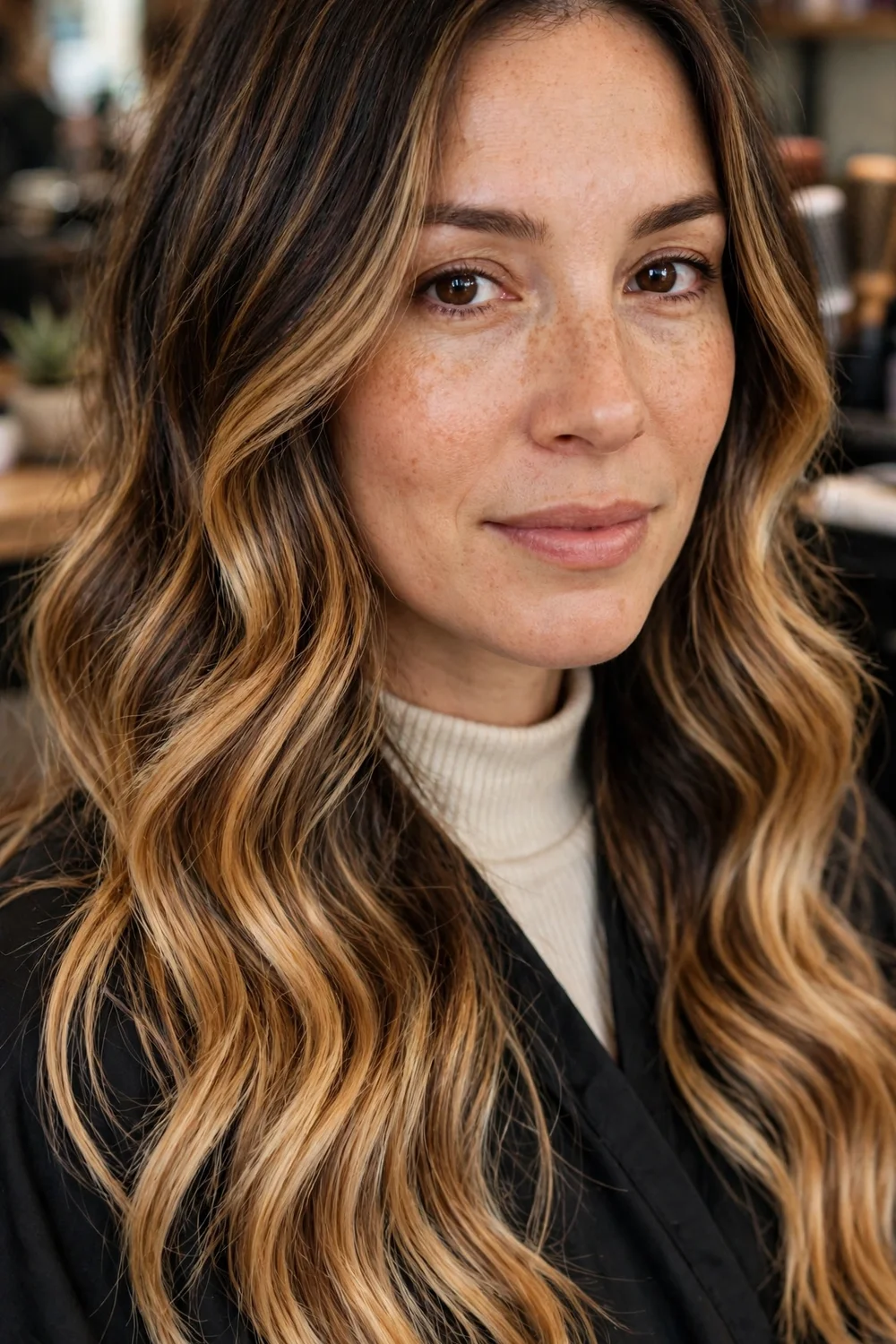
Butterscotch balayage paints warm, golden butterscotch blonde through a dark brunette base, with clear contrast between the root and the ends. It is the highest-contrast warm option on this list, and it suits warm and medium skin that can carry strong lightness near the face.
Getting dark hair to a clean butterscotch takes real lift, and some dark bases need the work split across two sessions to protect the hair. The lighter ends need moisture care and a warm gloss at five to six weeks to stop them drying out or turning pale.
Try this: ask your colorist to be honest about how light your ends can go in one session. Butterscotch forced in one visit on very dark hair costs you length later.
Difficulty: High · Cost: $$$ (salon)
20. Smoky Ash Balayage on Dark Hair
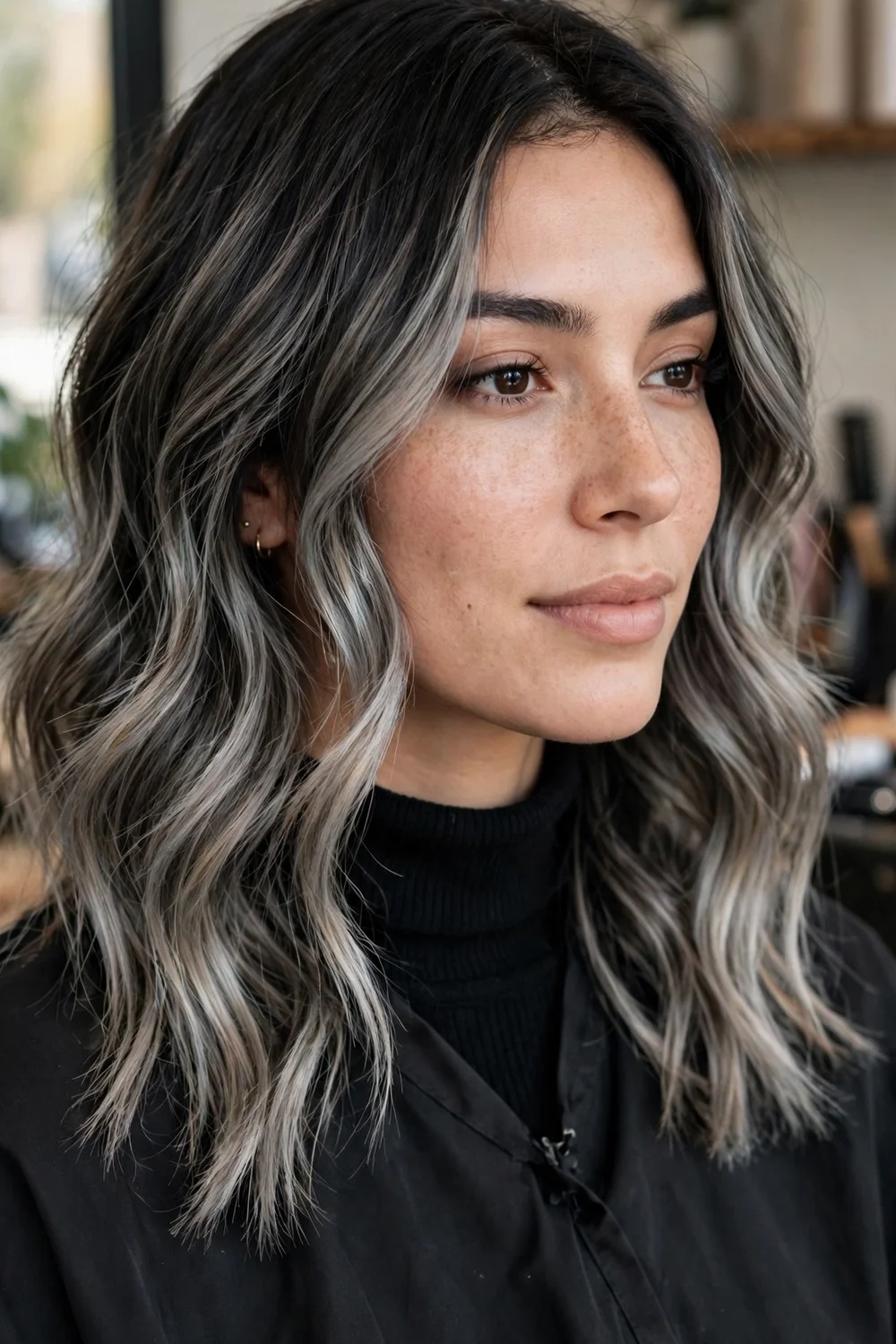
Smoky ash balayage paints ash blonde and soft silver-gray pieces through a near-black or dark brown base. The contrast is high and the tone is fully cool. It suits cool skin and anyone who wants a fall change with no warmth in it at all.
This is the most demanding service on the list. Dark hair must be lifted several levels and then toned cool, and rushing that lift damages the ends. Plan on a long first session, purple shampoo at home, and a cool gloss at four to five weeks, since ash tones fade first.
Try this: book a strand test before the full service. On dark hair, the strand test tells you whether the smoky tone is reachable on your hair at all.
Difficulty: High · Cost: $$$ (salon)
21. Pearl Balayage

Pearl balayage melts a deeper sandy brown root into pearly, pale blonde ends, painted in two shades of the same pearl tone so the hair reflects light at different depths. It suits cool and fair skin, and the pale finish reads clean against the darker root.
Pearl needs a clean, even lift before the pearly toner can sit properly, so light brown bases do best and dark bases take longer. Violet shampoo once a week keeps the ends from turning yellow. A gloss at five to six weeks holds the pearl tone.
Try this: keep heat styling moderate on pearl ends. The palest pieces are the most fragile hair on the head, and fall heat styling adds up fast.
Difficulty: Medium to High · Cost: $$$ (salon)
22. Reverse Balayage
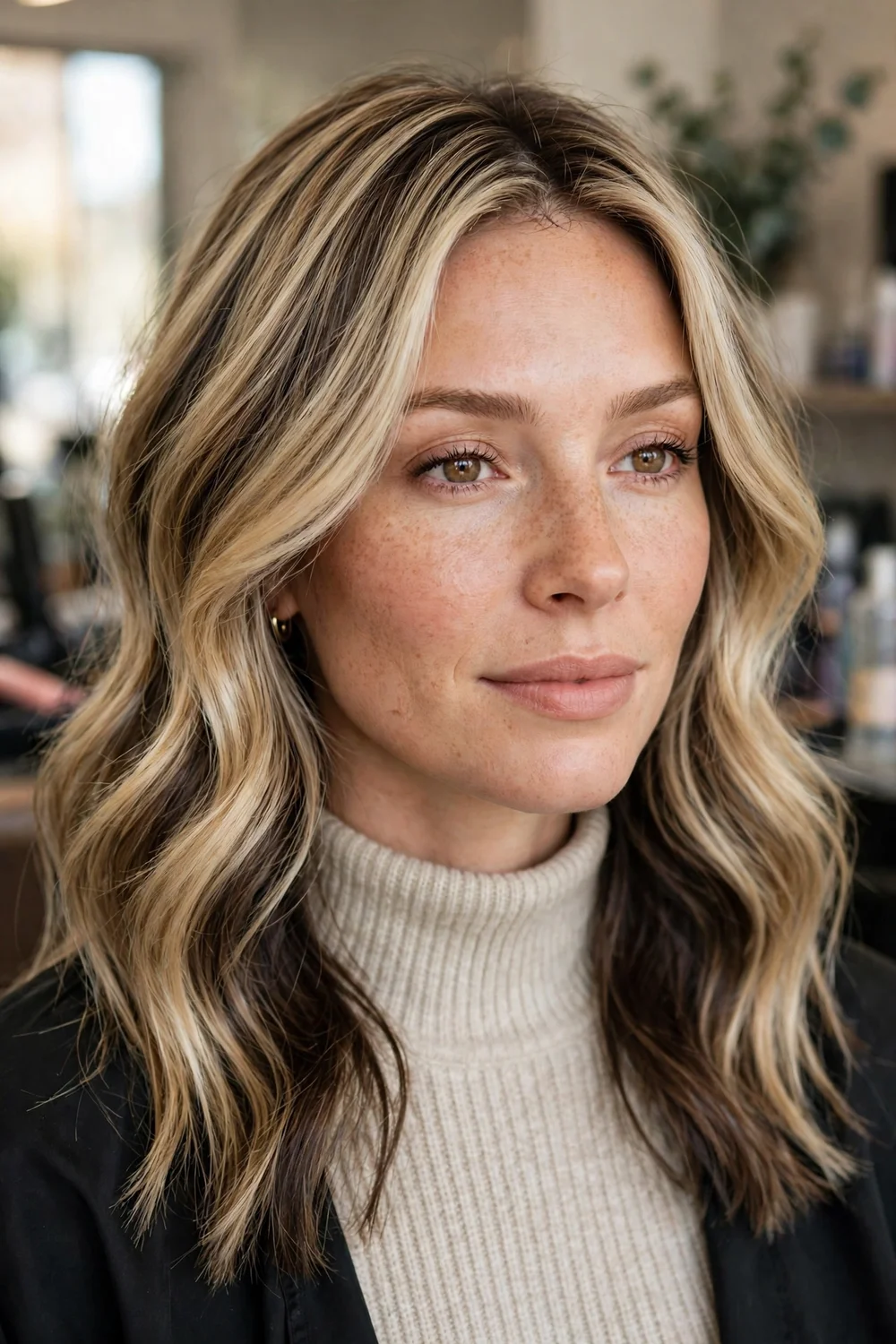
Reverse balayage works in the opposite direction from the rest of this list: instead of painting lighter pieces in, the colorist paints darker lowlights down through a blonde or light base. The result adds depth at the root and underneath while the existing lightness stays on the surface. It is a common fall service for blondes who feel too light after summer.
There is no lift involved, so reverse balayage is gentle on the hair and quick compared with lightening services. The added depth also makes the remaining blonde pieces look brighter by contrast. The lowlights fade over two to three months and can be repainted on the same cycle.
Try this: bring a photo of how deep you want the root to read. Reverse balayage can go subtly darker or fully brunette-leaning, and the photo settles it.
Difficulty: Low to Medium · Cost: $$ (salon)
23. Money-Piece Balayage
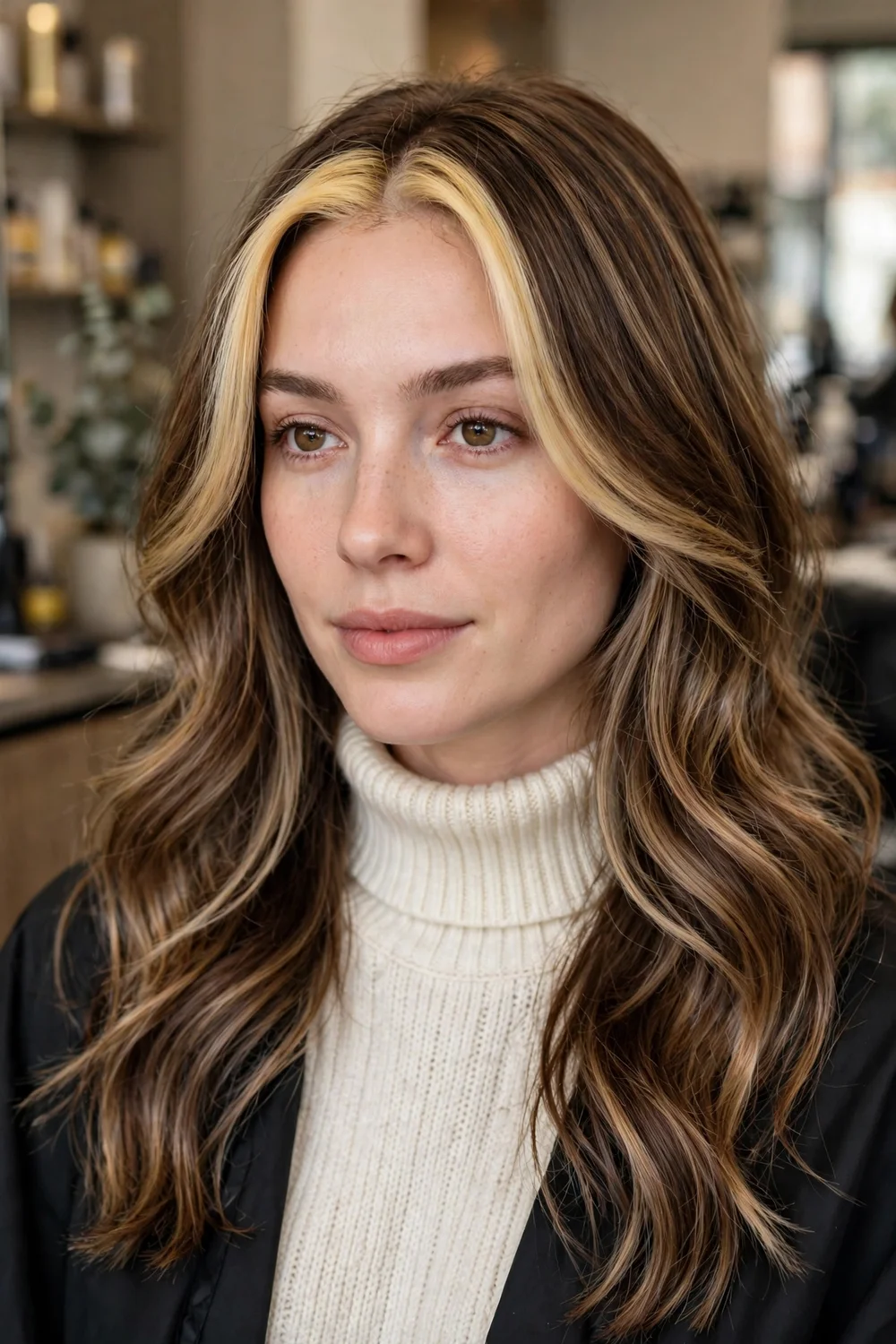
Money-piece balayage concentrates the painted color into two bright panels at the front hairline, over a softer balayage or natural base behind them. The panels brighten the face more than any other placement of this size. It suits fair and medium skin, and it works on long hair, lobs, and layered cuts alike.
Because only the front panels carry the lightest color, the service is smaller and faster than a full balayage. The panels fade first and need a mini gloss at four weeks, while the rest of the hair keeps a longer schedule. It is also a low-risk way to test brighter color near your face.
Try this: ask for the panels one to two shades brighter than the rest of your color, no more, so the frame blends instead of striping.
Difficulty: Low to Medium · Cost: $ (salon)
24. Ribbon Balayage
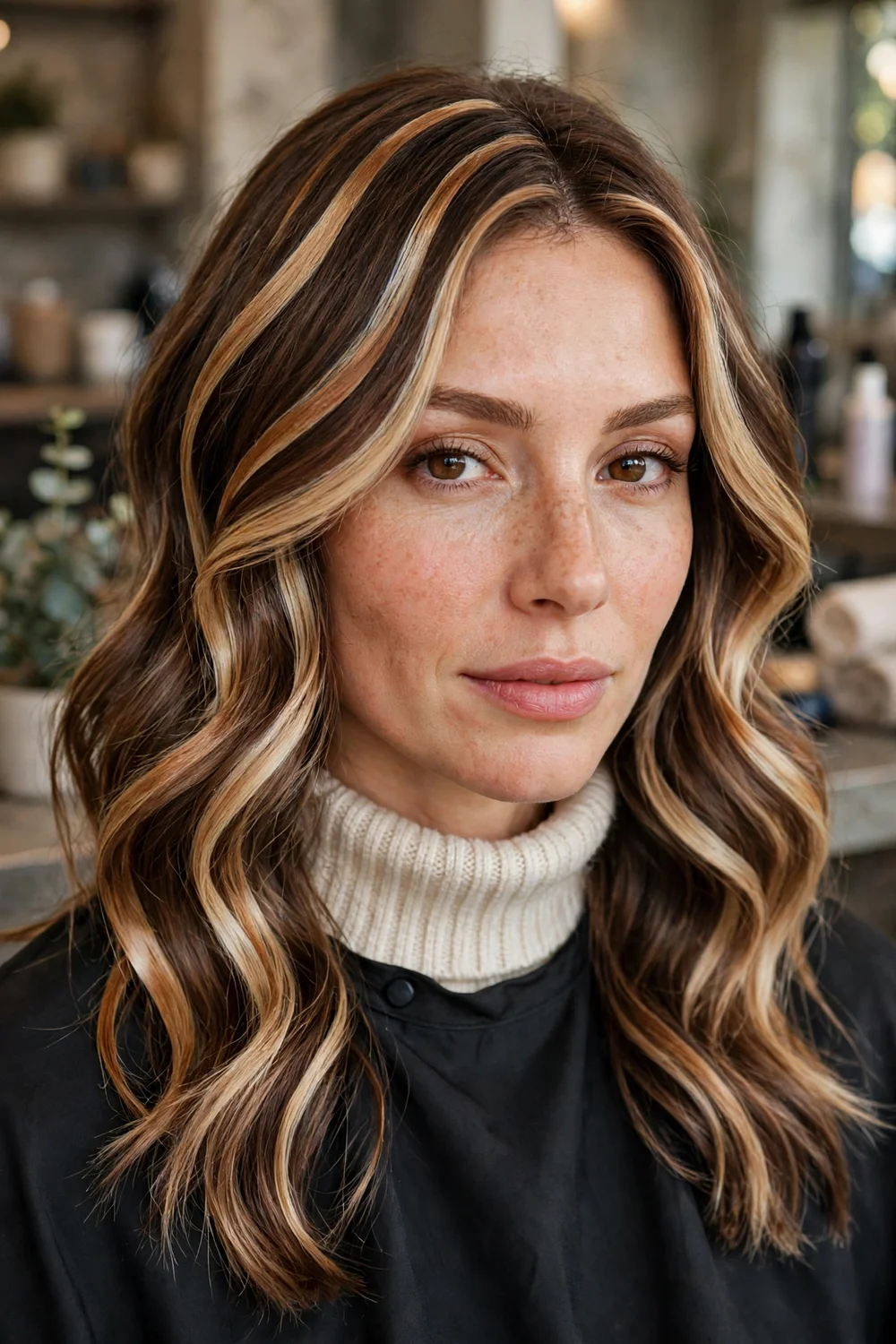
Ribbon balayage paints wide, ribbon-like strands through the hair instead of fine pieces. The ribbons of caramel, honey, or blonde stay visible as separate bands of color, which gives strong dimension and makes fine hair look thicker. It suits warm and medium skin, and waves show the ribbon placement best.
Ribbon placement uses fewer, larger sections, so the lift is focused where the ribbons sit. The bands grow out as bands rather than a soft blur, which means the refresh rebuilds the placement instead of just retoning. Plan a toner at six weeks and a placement refresh around three months.
Try this: decide the ribbon width before the color starts. Fine ribbons read subtle, wide ribbons read bold, and the two are different services in practice.
Difficulty: Medium · Cost: $$ (salon)
25. Partial Balayage
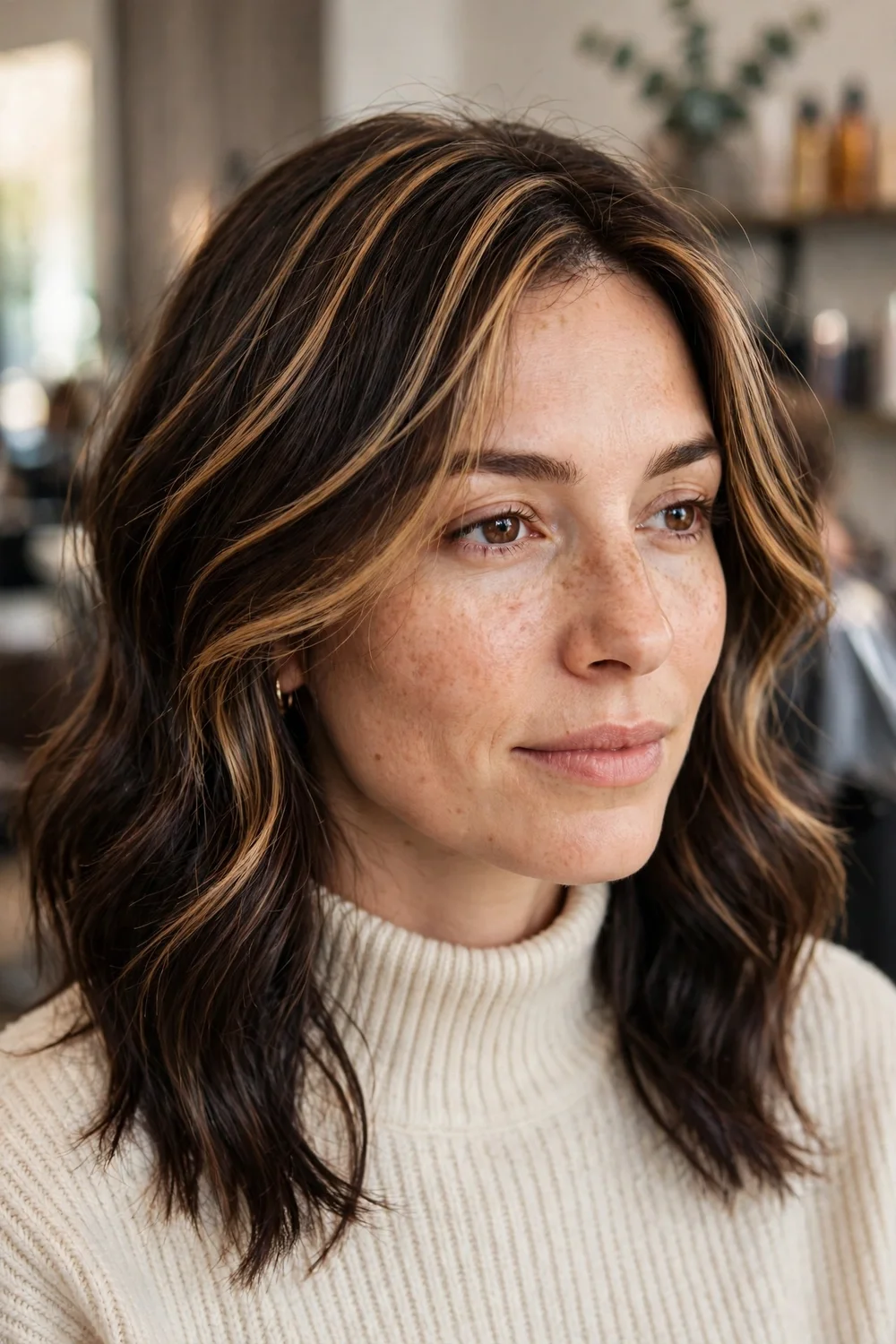
Partial balayage paints only part of the head: the top layer, the front, and the pieces around the face, with the underneath left in its natural color. It gives the visible effect of balayage at a smaller service, and it suits anyone trying the technique for the first time or refreshing an old full balayage.
A partial service is shorter in the chair and gentler on the hair, since most of the head is left alone. The trade-off is coverage: tied-up styles show the uncolored underneath. Most wearers alternate, booking a partial one visit and a full balayage the next.
Try this: book a partial if your underneath color still looks good. Paying to repaint hair no one sees is the most common balayage overspend.
Difficulty: Low to Medium · Cost: $ (salon)
26. Dark-Root Lived-In Balayage
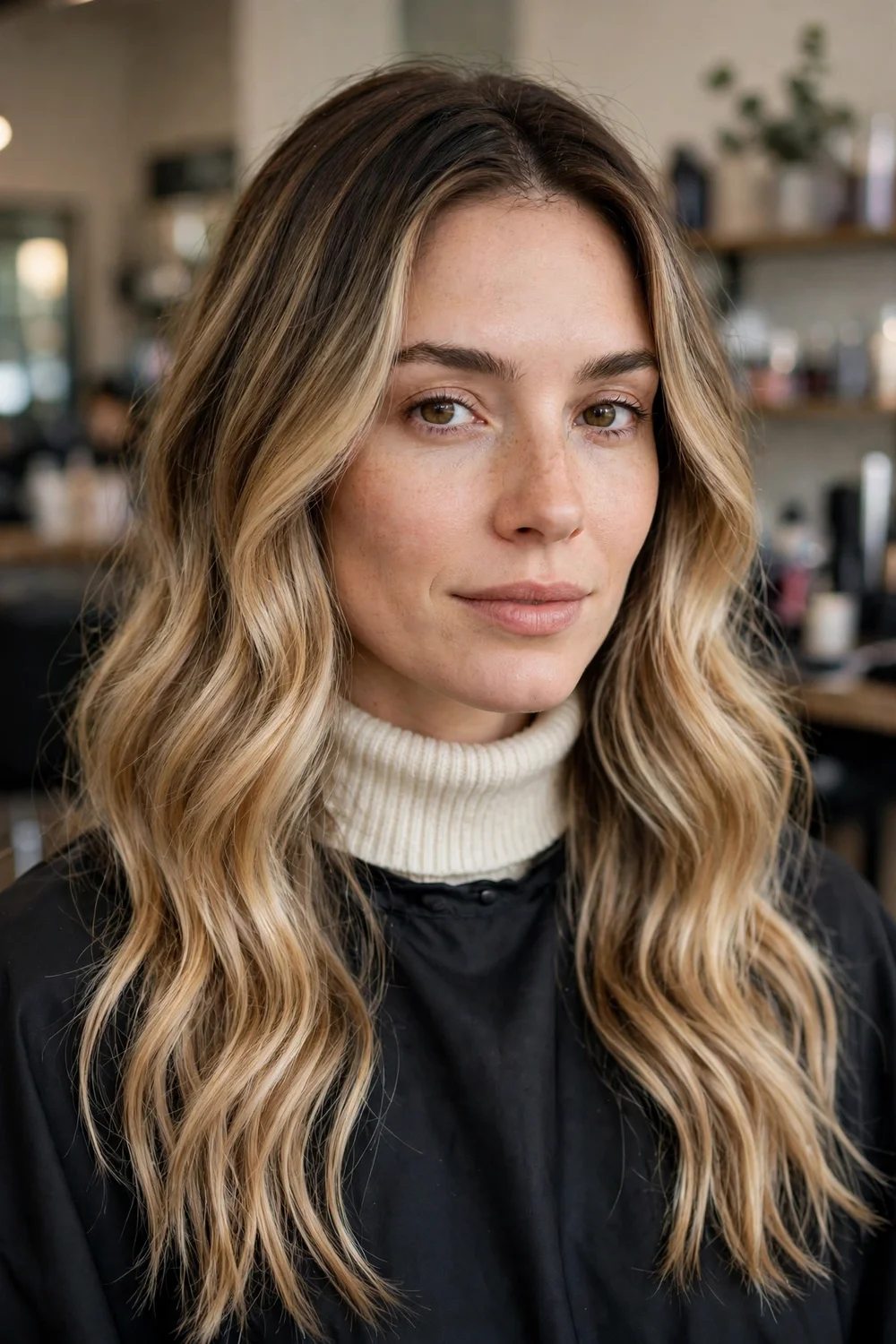
Dark-root lived-in balayage starts the painted color lower than standard balayage, often at cheek or jaw level, and leaves a long stretch of natural dark root above it. The gradient is gradual, so months of regrowth still look like part of the color. It suits almost every skin tone, since the shade near the face stays close to your natural color.
This is the lowest-upkeep full look on the list. The painted lengths still need a gloss at eight weeks or so, but there is no root appointment at all. It is the standard pick for anyone who can only reach a salon a few times a year.
Try this: ask for the color to start where your regrowth will reach in three months. Starting lower than feels right on day one is what makes this placement last.
Difficulty: Medium · Cost: $$ (salon)
Frequently Asked Questions
What is balayage and how is it different from standard highlights?
Balayage is a hand-painted coloring technique. The colorist paints lightener onto the surface of the hair in sweeping sections, so the result is a gradual blend with no clear line where the color starts. Standard highlights are usually done in foils, sit closer to the root, and grow out with a more visible line. Balayage grows out softer and usually needs fewer root appointments.
How long does fall balayage last before it needs a refresh?
The painted placement itself can grow out for three to four months because there is no hard line at the root. The tone fades sooner than the placement does. Warm tones usually need a gloss at six to eight weeks, red tones at four to five weeks, and cool ash tones at five to six weeks. A toner refresh is a short appointment compared with the first service.
Do I need to lighten my hair for balayage on a dark base?
For most shades, yes, the painted pieces need some lift before the new tone can show. Low-contrast options like chocolate, chestnut, and mahogany balayage need only a small lift. High-contrast options like butterscotch and smoky ash need several levels of lift and can take a long session or two sessions. Your colorist can tell you what your hair can reach in a consultation and a strand test.
Which fall balayage shades suit cool skin tones?
Cool skin suits the cool end of this list: ash brown balayage, mushroom balayage, pearl balayage, smoky ash balayage, and the purple-leaning burgundy balayage. Beige blonde balayage also works on many cool skin tones because beige is neutral rather than golden. The shades to approach with care are the golden ones, golden balayage and butterscotch balayage, which can clash with pink undertones.
Should I book a partial or a full balayage?
Book a partial balayage if you want color mainly on the top layer and around your face, if you are trying balayage for the first time, or if you are refreshing a full balayage that still looks good underneath. Book a full balayage if you wear your hair up often, if the underneath is a different color from the top, or if you want the lightest ends all the way around. Many people alternate the two across the year.
Final Thoughts
Fall balayage works because the placement does half the job for you: pick the placement that fits your calendar first, then the shade family that fits your undertone, and the grow-out takes care of itself for months. I would start most readers at caramel, chestnut, or beige blonde for a first service, and save the heavy-lift shades, butterscotch and smoky ash, for when you know you will keep the gloss appointments. When the season turns cold, the same painted placement carries deeper tones just as well, and the winter hair color ideas list picks up where this one leaves off.

