


A larger forehead is a proportion question, and hair answers it in a few reliable ways. Bangs lower the visible hairline. A deep side part sends hair across one corner of the forehead. Face-framing layers and volume at the sides widen the middle of the face, so the forehead stops being the widest part of the picture. Every style on this list uses at least one of those moves, and the notes under each one explain where the hair sits and why it works.
This list collects 27 hairstyles for big foreheads across every length and texture. Bangs come first, in curtain, side-swept, wispy, blunt, and bottleneck shapes. Then come the cuts built around parts and layers, including several routes with no bangs at all. The final section covers styled options such as ponytails, braids, and updos that keep a fringe or front pieces in place. Each idea lists the styling effort at home and a salon cost band, so you can weigh the look against the upkeep before you book anything.
Key Takeaways
- Bangs balance a larger forehead by covering part of it and lowering the visible hairline. Curtain, side-swept, and wispy shapes are the easiest to live with.
- No-bangs routes work too: a deep side part covers one corner of the forehead, and face-framing layers add width at the cheekbones.
- Volume belongs at the sides of the head and at cheekbone level. Flat hair close to the head leaves the forehead looking wider.
- Tight, slicked-back styles expose the full hairline. Loose front pieces, a side part, or a fringe softens them.
- Fringe upkeep is the main cost of bangs: blunt bangs need a trim every two to three weeks, softer bangs every three to five weeks.
How to Choose Your Route
Start with how much coverage you want. Full coverage comes from blunt bangs and bumper bangs. Partial, softer coverage comes from curtain, wispy, bottleneck, and side-swept bangs. If you want no coverage and no new cut, change the part and add waves or layers first, then decide whether you still want a fringe. Texture matters as well: curly hair holds a soft fringe and side volume with little daily work, while straight hair holds blunt lines and sleek bobs best.
| Route | How it balances | Best for | Upkeep |
|---|---|---|---|
| Full bangs (blunt, bumper) | Covers the upper forehead and lowers the visible hairline | Straight and wavy hair, maximum coverage | High: trims every 2 to 3 weeks |
| Soft bangs (curtain, wispy, bottleneck, side-swept) | Covers the corners or part of the forehead with a broken edge | Most textures, first-time bangs | Medium: trims every 3 to 5 weeks |
| Deep side part, no bangs | Hair falls across one corner of the forehead | Medium and long hair, no new cut needed | Low: daily restyle of the part |
| Face-framing layers and side volume | Adds width at the cheekbones so the forehead reads narrower | Long hair, wavy and curly textures | Low to medium: trim every 8 to 10 weeks |
1. Curtain Bangs
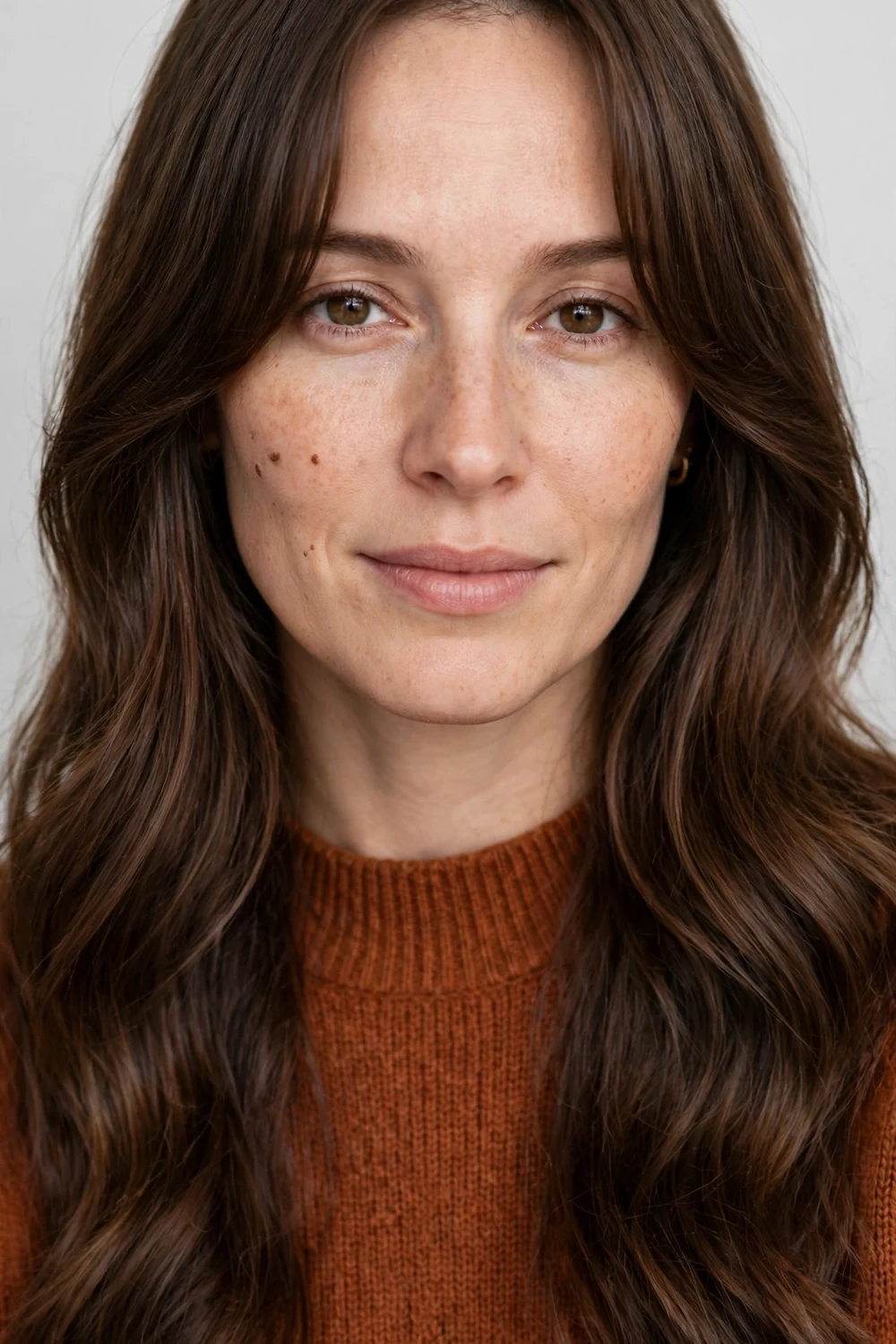
Curtain bangs part in the center and sweep down both sides of the forehead, ending around the cheekbones. The two panels cover the outer corners of the forehead and leave a narrow strip open in the middle. That open strip keeps the look light, while the covered corners make the forehead read narrower and shorter.
The length does most of the work here. Ask for the shortest point to sit between the eyebrows and the cheekbones, with the sides blending into long layers. Blow-dry the bangs forward first, then sweep each side back with a round brush so they open like curtains. The style suits straight, wavy, and lightly curly hair, and it grows out into face-framing layers, which keeps upkeep low. For more length and color variations, see the long hairstyles with curtain bangs roundup.
Try this: Dry the bangs while they are still damp. Once curtain bangs dry flat against the forehead, they are harder to shape for the rest of the day.
Difficulty: Low to Medium · Cost: $ (salon)
2. Long Side-Swept Bangs
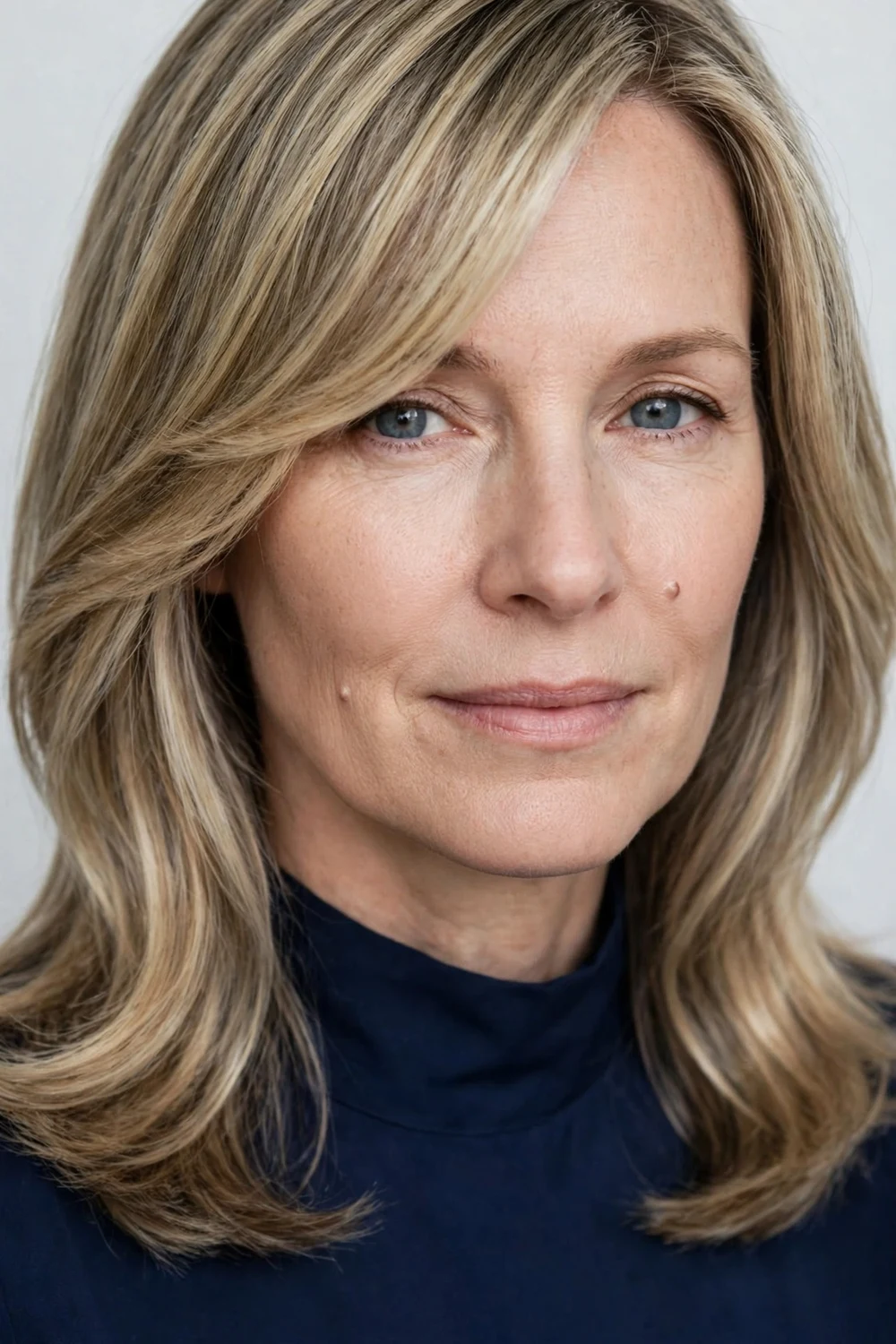
Side-swept bangs run diagonally across the forehead from a deep side part. The diagonal line breaks up the height of the forehead, and the eye follows the sweep toward the cheekbone on the opposite side. Cut long, to the cheekbone or below, the bangs cover a large share of the forehead without a hard horizontal edge.
Ask your stylist to cut the bangs from a part placed above the outer corner of one eye, and to keep the longest point at cheekbone level. At home, blow-dry the bangs across the forehead in the direction of the sweep, then finish with the brush angled down so the ends curve softly. This is a steady option for straight and wavy hair, and for anyone growing out a full fringe.
Try this: Pin the bangs in their swept position for ten minutes after drying. The set holds the diagonal line through the day.
Difficulty: Low to Medium · Cost: $$ (salon)
3. Wispy Bangs

Wispy bangs are a fine, feathered fringe with small gaps between the strands. The forehead shows through in places, so the coverage reads soft. The broken lower edge of the bangs shortens the look of the forehead while the gaps keep the style from sitting like a solid block.
The cut works on fine, medium, and thick hair because the stylist removes weight from the ends of the fringe instead of cutting it blunt. Ask for the longest strands to touch the eyebrows and the edges to taper into the sides. Style with a small round brush or your fingers and a pea-size amount of light styling cream. Heavy wax or oil weighs the strands down and closes the gaps that make the style work.
Try this: Book fringe trims every three to four weeks. Wispy bangs lose their shape faster than blunt bangs because the feathered ends grow unevenly.
Difficulty: Low to Medium · Cost: $$ (salon)
4. Blunt Bangs with a Sleek Bob

Blunt bangs draw one clean horizontal line across the forehead, usually just above the eyebrows. Everything above that line is covered, so the visible forehead ends at the bangs. Paired with a chin-length bob, the covered top third and the width of the bob at the jaw bring the face into closer balance.
This is the highest coverage option on the list, and it asks for commitment. The fringe needs a trim every two to three weeks to hold the line, and cowlicks at the hairline need training with a blow-dryer each morning. The pairing suits straight and slightly wavy hair with medium to thick density. On very curly hair the fringe line is hard to keep straight without daily heat.
Try this: Dry blunt bangs side to side with the dryer nozzle pointing down. This flattens the root and stops the fringe from splitting in the middle.
Difficulty: Medium · Cost: $$ (salon)
5. Bottleneck Bangs
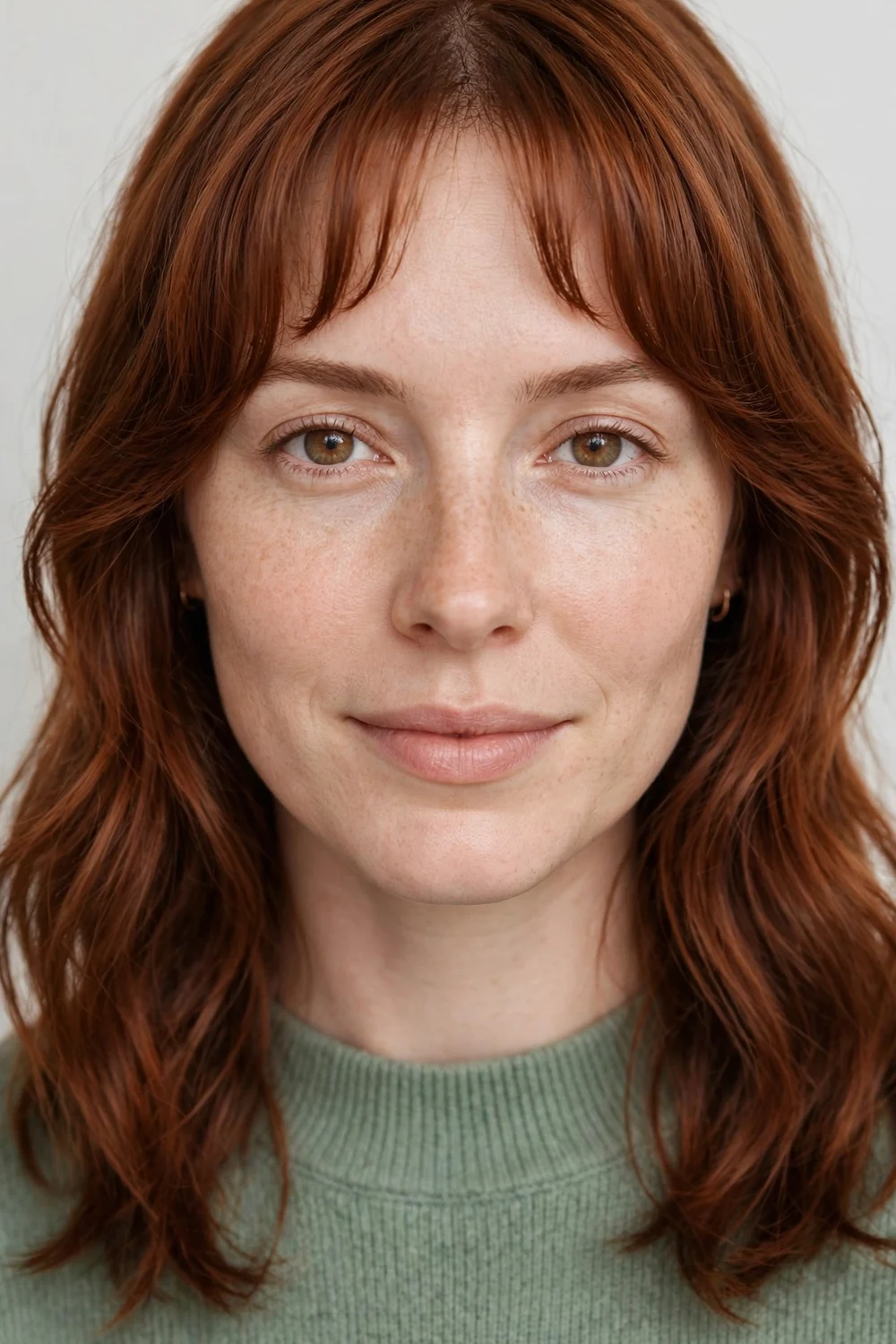
Bottleneck bangs are narrower at the top, shorter in the center, and longer where they curve into the sides of the face. The shape follows the neck of a bottle: a short center section above the eyebrows opens into longer pieces that reach the cheekbones. The covered center shortens the forehead, and the long sides frame the eyes and cheeks.
Ask for the center to sit at eyebrow level and the sides to graduate down without a visible step. The style sits between a full fringe and curtain bangs, so it suits anyone who wants coverage with an easy grow-out path. Style by drying the center forward and sweeping the long sides back. On curly hair, ask the stylist to cut the bangs dry so the spring of the curl sets the true length.
Try this: If you are new to bangs, start with the sides cut longer than planned. You can shorten them at the next visit once you know how your hairline behaves.
Difficulty: Medium · Cost: $$ (salon)
6. Choppy Bangs with a Pixie Cut
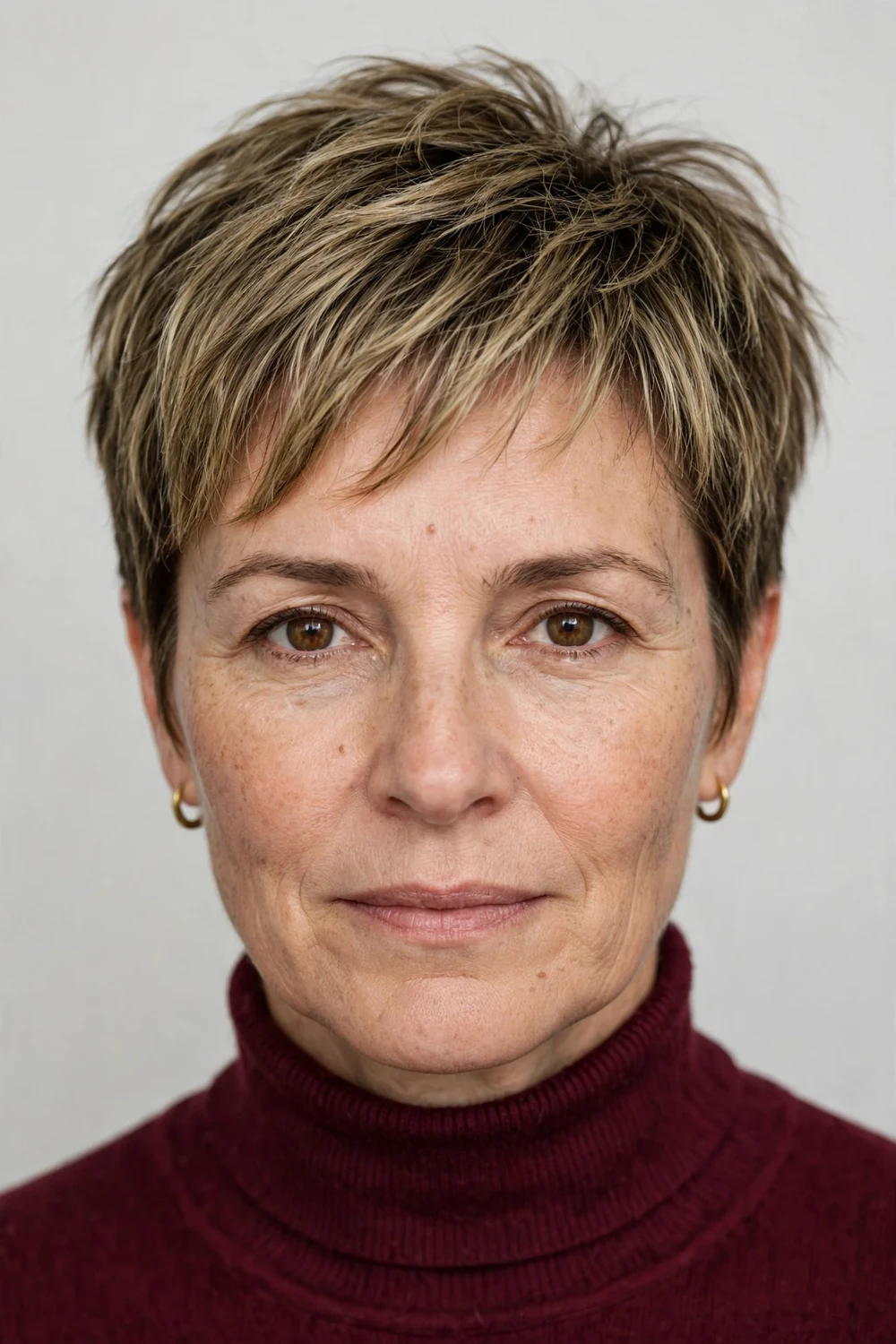
A pixie cut with choppy bangs brings short, textured pieces forward over the top of the forehead. The uneven ends cover the hairline area, and the short length elsewhere puts the visual weight at the eyes and cheekbones. The choppy texture keeps the coverage from looking heavy, which matters on a short cut.
Ask for a longer top that can be worn forward, with the fringe cut in small uneven sections. The sides can sit tapered or softly undercut, depending on how much width you want at the temples. At home, work a small amount of matte paste through the fringe with your fingertips and push the pieces forward and slightly to one side. The pixie bob haircuts for thick hair guide shows longer versions of this shape if a full pixie feels too short.
Try this: Keep the fringe a little longer on top. A pixie fringe cut too short lifts away from the forehead and covers less of it.
Difficulty: Medium · Cost: $$ (salon)
7. Deep Side Part, No Bangs
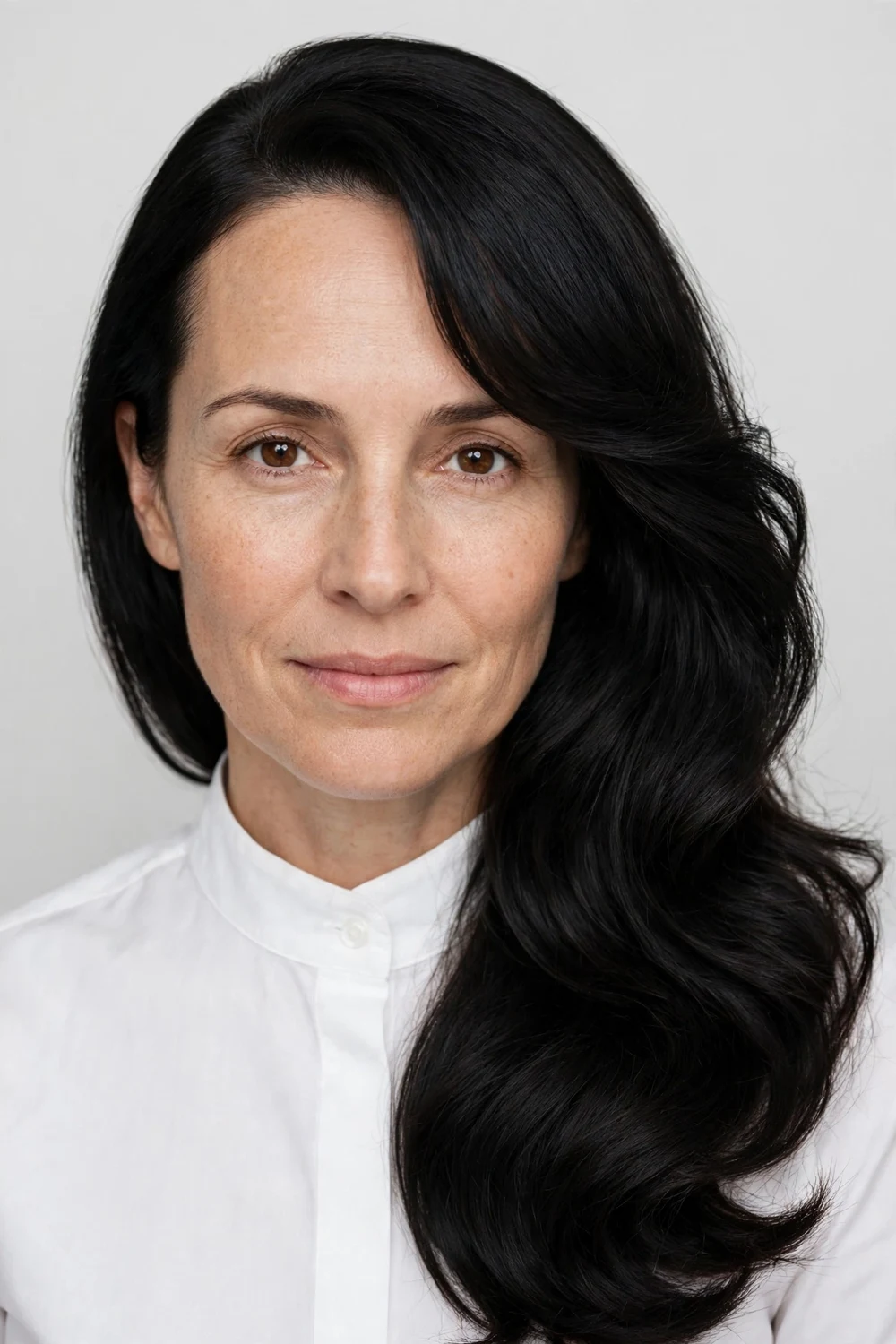
A deep side part moves the part line far to one side, above the outer corner of the eye or beyond. The hair then falls across the top corner of the forehead on the heavy side, which covers one corner and shortens the diagonal across the forehead. The lighter side tucks back or falls close, so the face reads asymmetric in a way that draws the eye sideways.
This route needs no cut at all if your hair is one length, which makes it the fastest change on the list. Use a tail comb to place the part, blow-dry the heavy side across the forehead, and set it with a light hold spray. It suits long and medium hair, straight through curly. If your hair has a strong natural center part, dry the new part under a clip for a few minutes while you finish getting ready.
Try this: Switch sides every few weeks. Hair settles into a part over time, and alternating keeps volume at the root on both sides.
Difficulty: Low · Cost: $ (salon)
8. Face-Framing Layers with a Center Part
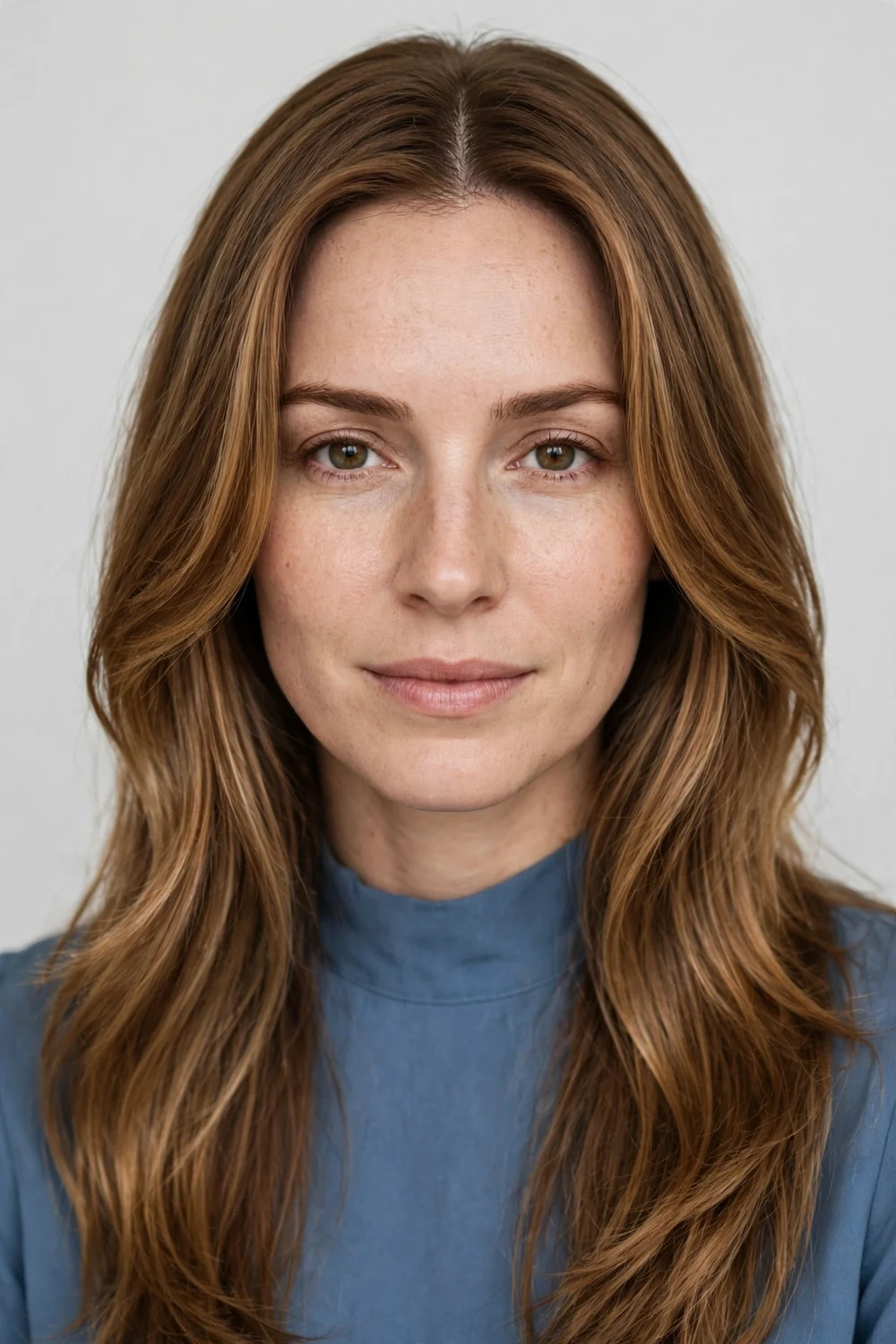
This style keeps the center part and skips bangs. Short face-framing layers start at the cheekbones and curve inward along both sides of the face. Those curved pieces cover the outer edges of the forehead area visually by pulling the eye down to the cheeks, and they add width at cheekbone level, which is where a higher forehead benefits from extra width.
Ask for the first layer to start at or just below the cheekbones, with each following layer stepping down toward the ends. Layers that start too high, near the temples, can open the forehead up further. Style with a large round brush, rolling the front pieces toward the face. The cut suits long straight and wavy hair, and it is a low-risk first step before committing to bangs. The face-framing layers haircut guide covers starting points for finer hair in detail.
Try this: Show your stylist where your cheekbones sit with the hair dry and parted. Layer placement is easier to judge on dry hair.
Difficulty: Low to Medium · Cost: $$ (salon)
9. Textured Wispy Shag

A shag combines wispy bangs with choppy layers through the whole cut. The bangs soften the top of the forehead, and the layers build volume at the sides of the head, around the temples and cheeks. Side volume is the balancing half of this style: width at the sides makes the forehead look narrower by comparison.
Ask for razored or point-cut layers that keep fullness at the sides and remove bulk from the ends. The style suits wavy hair especially well, since natural wave fills out the layers with little styling. Straight hair needs a texturizing spray and some scrunching while it dries. Fine hair can wear a shorter shag with fewer layers, as covered in the trendy shag haircuts for fine hair roundup.
Try this: Scrunch the layers while the hair is damp and let them air dry. Over-brushing a shag pulls out the texture that creates the side volume.
Difficulty: Low to Medium · Cost: $$ (salon)
10. Long Shag with Wispy Bangs

The long shag keeps the length below the shoulders and pairs it with wispy bangs and layers that start around the cheekbones. The bangs take the top off the forehead, and the lower layers add movement and width beside the chin and jaw. That width low on the face balances a longer upper third.
Ask your stylist to keep the back length and concentrate the layers from the cheekbones down. If too much weight comes out of the ends, long hair can look thin, so the layering should stay in the front and mid-lengths. Style with loose waves bent away from the face at the front and toward the face at the cheekbone pieces. The style works across a wide age range because the bangs and layers can be cut softer or stronger to suit the wearer.
Try this: Sleep with the bangs pinned loosely to one side. Long wispy bangs crease overnight, and a pin keeps the shape until morning.
Difficulty: Medium · Cost: $$ (salon)
11. Choppy Lob with Curtain Bangs

A lob ends between the jaw and the collarbones, and the choppy version adds textured, uneven ends. Curtain bangs cover the corners of the forehead, and the lob length places width and movement beside the jaw. The combination shortens the forehead at the top and widens the lower face at the bottom.
Ask for the ends to be point-cut so they sit piecey rather than blunt, and for curtain bangs that reach the cheekbones. This length suits most hair types because it holds a wave without weighing it down. Style with a flat iron bend through the mid-lengths, leaving the ends straighter, which keeps the choppy outline visible. Grown-out roots and a soft wave make this one of the lower upkeep cuts on the list.
Try this: Ask for the lob to end below the jaw if your face is long. A lob that ends right at the chin adds width at the jaw, while a shorter bob can stretch the face further.
Difficulty: Low to Medium · Cost: $$ (salon)
12. Wavy Bob with Side-Swept Bangs

A wavy bob ends around the jaw, and side-swept bangs cross the forehead on a diagonal. The waves add width at the sides of the head at exactly the height of the cheeks. Between the diagonal bangs above and the width of the waves below, the forehead becomes one section of the face among several, rather than the widest one.
Ask for a bob that sits at or just below the jaw and bangs cut long enough to sweep and stay. A curl cream scrunched into damp hair, then air drying or diffusing, gives the loose wave this cut needs. The style suits natural waves and curls and anyone willing to add a bend with a curling iron on straight hair. It is also a practical pick for gray-blending hair, since waves soften the line where gray grows in at the part.
Try this: Sweep the bangs from the side where your hair parts naturally with more lift. Fighting a strong growth pattern makes the sweep fall apart by midday.
Difficulty: Medium · Cost: $$ (salon)
13. Asymmetrical Long Bob
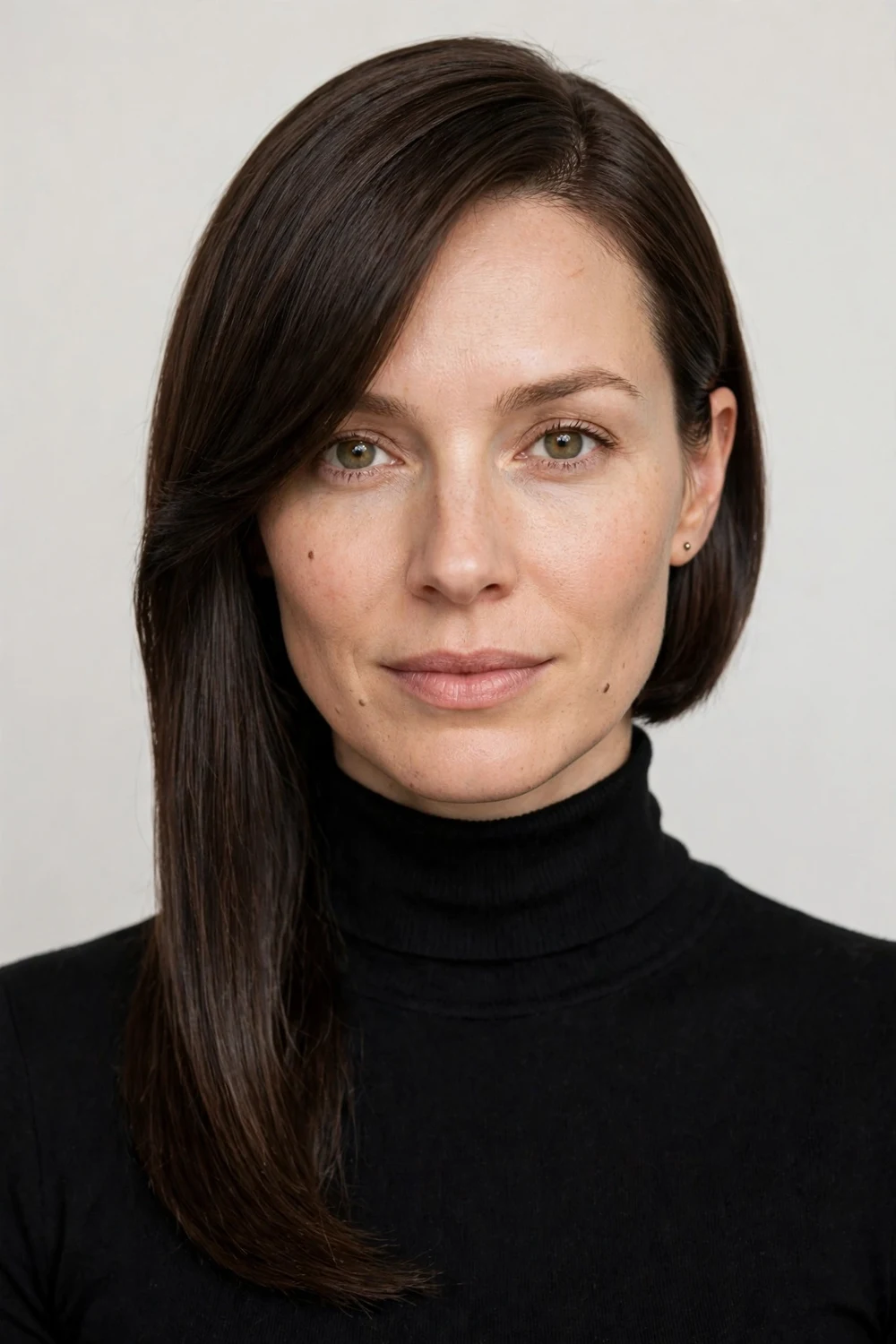
An asymmetrical long bob is cut longer on one side than the other, usually by a few centimeters. Worn with a deep side part, the longer side sweeps across the forehead corner and falls past the jaw, while the shorter side sits closer to the head. The uneven outline keeps the eye moving across the face instead of settling on the forehead.
Ask your stylist to show you the length difference with the hair dry before cutting, since asymmetry reads stronger once the hair is styled sleek. The cut suits straight and smooth wavy hair best, because the shape depends on a clean outline. Style it smooth with a flat iron and tuck the shorter side behind the ear to open one cheekbone. Touch-up cuts run every six to eight weeks to keep the two sides clearly different.
Try this: Start with a small difference between the sides. You can widen the gap at the next cut if you like the effect.
Difficulty: Medium · Cost: $$ (salon)
14. Layered Bob with a Soft Fringe

A layered bob with a soft fringe pairs light, fine bangs with layers that curve around the cheeks. The fringe covers the upper forehead with a thin layer of hair, so the skin shows faintly through it. The layers keep the bob from sitting in one solid block, which can make the forehead look wider by contrast.
Ask for the fringe to be cut with the ends texturized, and for the bob layers to start around the cheekbones. This pairing suits fine to medium hair, since thick hair needs more weight removed from the fringe to keep it soft. Blow-dry the fringe forward with a vent brush, then dry the layers under at the ends so they curve toward the face. The fringe grows out into side-swept bangs, which gives you a second style without a new cut.
Try this: If your fringe separates by midday, carry a small dry shampoo for the bangs only. Oil at the hairline is the usual cause.
Difficulty: Medium · Cost: $$ (salon)
15. Voluminous Layers on Medium Hair

Long layers on medium hair build volume through the sides while the length stays between the shoulders and the collarbones. Worn with a side part and no bangs, the top section falls across one corner of the forehead. The rest of the balance comes from fullness at the sides: flat hair close to the head leaves the forehead as the widest part of the silhouette, and layers correct that.
Ask for layers that start around the chin and keep the outline full at the sides. Blow-dry with your head tilted to each side, lifting the roots with a brush, or use large rollers on the top sections while the hair cools. A root-lifting spray at the part and a light mousse through the layers hold the shape on fine hair. Thick hair may need the ends thinned so the layers move instead of sitting in a triangle shape.
Try this: Dry the front section forward over the forehead first, then sweep it to its side. This gives lift at the root and a soft fall across the corner of the forehead.
Difficulty: Medium · Cost: $$ (salon)
16. Messy Waves with an Off-Center Part

An off-center part sits a short distance from the middle of the head. It gives you most of the softness of a center part while the slight asymmetry stops the forehead from reading as one even, open panel. Messy waves add texture and width through the sides, and the front pieces fall along the temples.
This is a styling change rather than a cut, so it works on almost any medium or long haircut with enough length at the front. Place the part with a comb, then create loose waves with a large-barrel iron, alternating the direction of each section for a less uniform finish. Finger-comb the waves once they cool. If your front pieces are too short to fall along the temples, let them grow to cheekbone length before relying on this style day to day.
Try this: Wave the front sections away from the face at the top and let the ends curve in. This keeps the temples covered while the cheeks stay open.
Difficulty: Low to Medium · Cost: $ (salon)
17. High-Volume Curls with a Side Part

Large curls build width and height around the whole head. With a side part, the curls on the heavy side fall across the top corner of the forehead, and the fullness at the sides and cheekbones widens the middle of the face. A higher forehead looks smaller when the hair around it carries this much volume.
Work with your natural curl pattern where you can. Diffuse damp curls with your head tipped to the side of the part so the roots dry lifted, and avoid brushing the curls once dry. On straight or wavy hair, set large sections on a wide-barrel iron and pin each curl while it cools. Ask your stylist for layers that release the top weight of the curls, since one-length curly hair pulls down and can expose more of the forehead.
Try this: Place the part while the hair is wet. Curls set their direction as they dry, and moving the part later usually means rewetting the roots.
Difficulty: Medium · Cost: $$ (salon)
18. Long Layers with Face-Framing Pieces
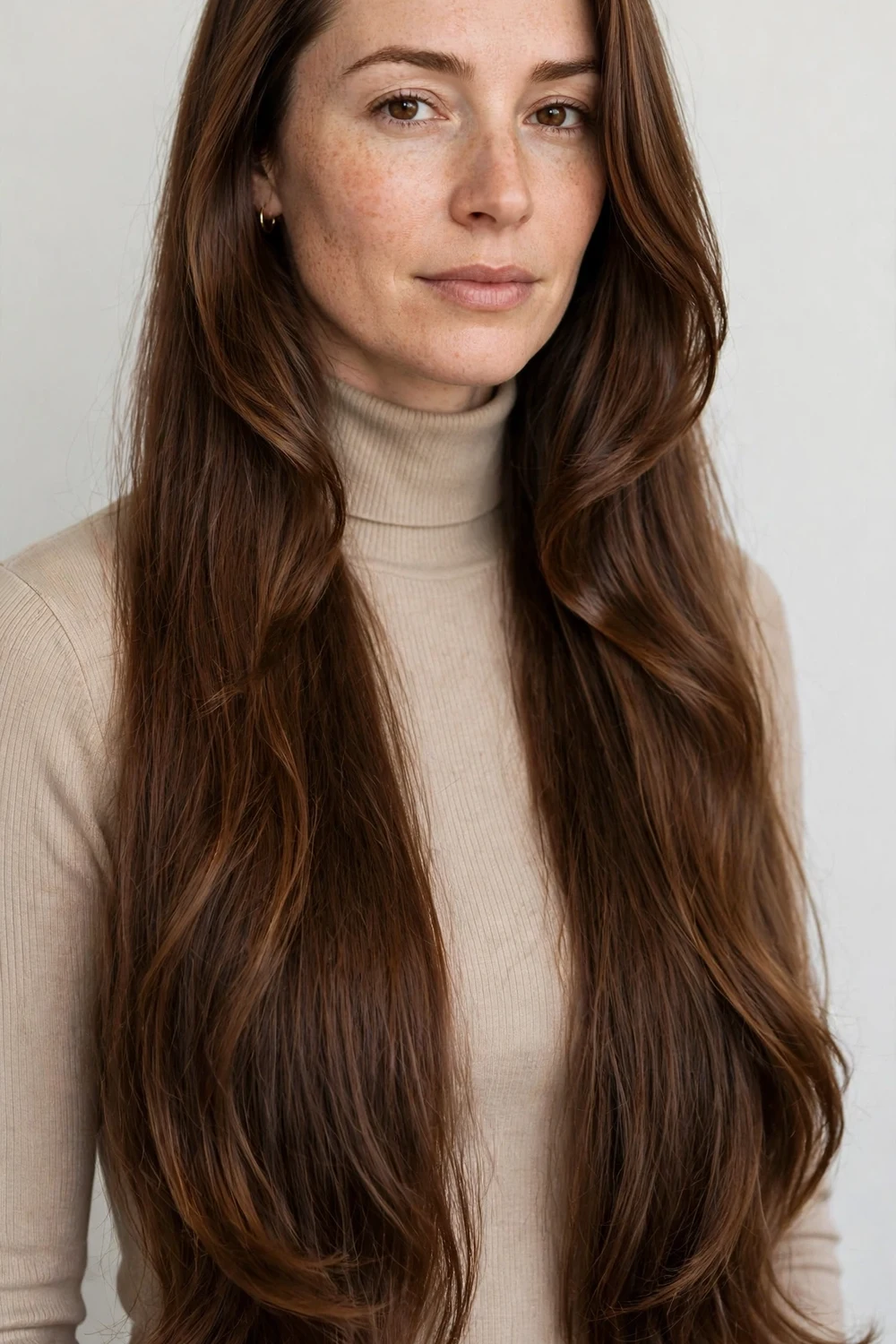
Long layers with face-framing pieces keep the length and cut the front sections to start below the chin. Those front pieces curve along the jaw and bring movement to the lower half of the face. Worn with a side part, the top front section also crosses the corner of the forehead. The balance comes from drawing the eye down the front pieces to the jaw and chest area.
Ask for the framing pieces to start between the chin and the collarbones, and for the layers to blend so there is no shelf between the front and the back lengths. This is a steady route for anyone who wants to keep long hair and skip bangs entirely. It suits straight and wavy hair, and it needs only a trim every eight to ten weeks to keep the front pieces at the right starting point.
Try this: Curl or bend only the front framing pieces on busy mornings. Two minutes on the pieces that border the face refreshes the whole style.
Difficulty: Low to Medium · Cost: $$ (salon)
19. Center Part with Loose Waves
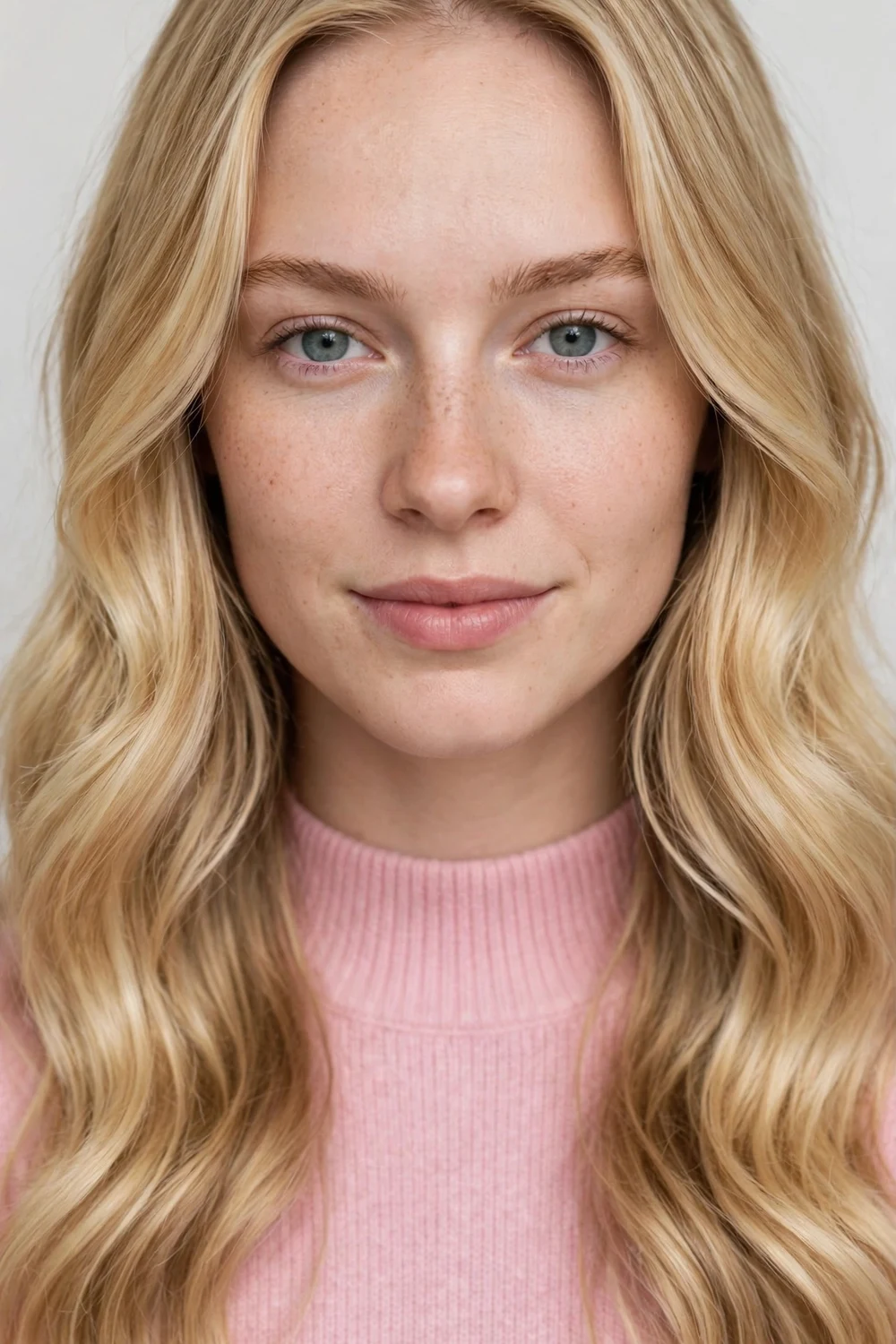
A center part with loose waves lets the hair fall evenly on both sides of the face. The waves start around the temples and curve along the cheeks, which narrows the visible width of the forehead at its edges. The forehead stays open in the middle, so this style suits anyone who wants balance without coverage.
Loose waves are the working part of the style, since straight hair falling flat from a center part can leave the forehead fully exposed. Wrap large sections around a wide-barrel iron, leave the ends out, and brush through once cool for a soft wave. Ask for light face-framing layers if your front hair falls in one straight sheet, since layers help the wave start higher, closer to the temples.
Try this: Keep the waves fullest at cheekbone level. A wave that peaks beside the cheeks widens the middle of the face where it helps most.
Difficulty: Low to Medium · Cost: $ (salon)
20. Straight Hair with Wispy Bangs
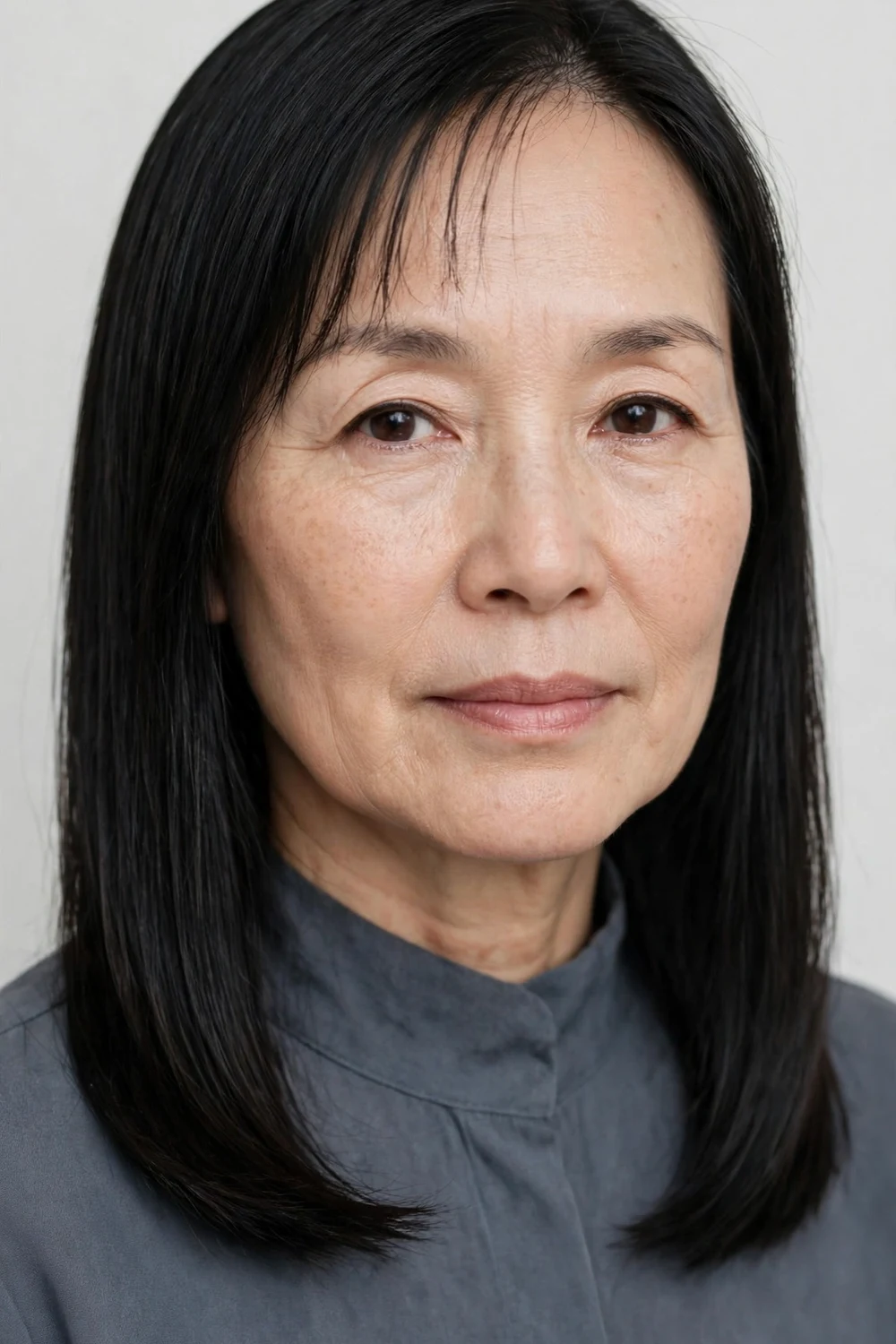
Sleek straight hair worn with wispy bangs pairs a smooth, flat finish with a light fringe. The wispy bangs lower the visible hairline and break up the forehead, while the straight lengths keep the rest of the style simple. The contrast between the soft fringe and the smooth lengths keeps the bangs as the feature of the cut.
Ask for the bangs to be cut on dry hair if your hair dries straighter than it sits when wet, since wet cutting can leave straight fringes shorter than planned. A heat protectant and one pass of a flat iron keep the lengths smooth. This pairing suits naturally straight and relaxed hair. On wavy hair it needs daily heat work, so a shag or layered cut usually serves wavy textures better.
Try this: Trim wispy bangs little and often. Taking off a small amount every three weeks holds the length at the eyebrows without a big change.
Difficulty: Medium · Cost: $$ (salon)
21. Half-Up Style with Side Bangs
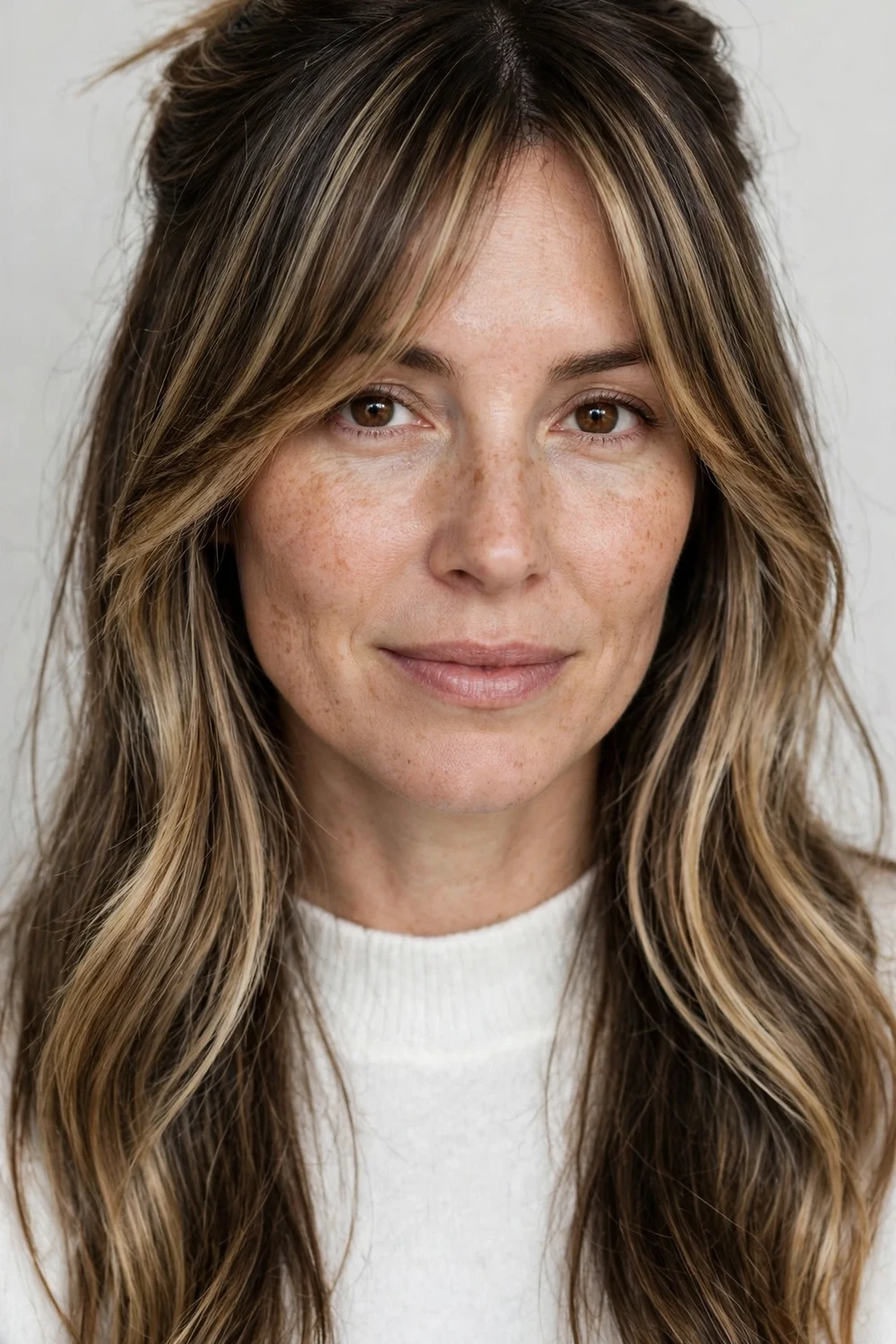
A half-up style lifts the top section of hair back or into a small knot or clip, while long side bangs stay down and sweep across the forehead. The bangs do the balancing work at the front. The lifted top section adds height at the crown, at the back of the head, which shifts the overall proportions without pulling the front hairline back.
Keep the lifted section loose. A tight half-up style pulls the front hair away from the face and can expose the hairline at the temples, which works against the bangs. Secure the section with a clip or a small elastic placed above the crown, and leave two fine strands loose beside the bangs for a softer edge. This style suits medium and long hair and works for both casual days and events. For shorter lengths, the quick updos for short hair collection covers pinned styles that keep a fringe in place.
Try this: Cut or keep your side bangs longer than you think you need. When the top section is lifted, bangs sit slightly higher on the forehead.
Difficulty: Low to Medium · Cost: $ (salon)
22. Loose Ponytail with Side-Swept Bangs

A loose ponytail worn with side-swept bangs keeps hair off the neck and shoulders while the bangs stay in place across the forehead. The ponytail sits low or to one side, and a few loose strands at the front soften the hairline. Because the bangs remain, a higher forehead stays balanced even with the rest of the hair pulled back.
Place the ponytail at the nape or over one shoulder rather than high and tight. A high, tight ponytail pulls the front hair straight back and leaves the hairline fully exposed at the temples. Gather the hair loosely, sweep the bangs across, and pull out two fine strands at the temples before you tighten the elastic. This works on medium and long hair and pairs with wispy or curtain bangs as well as side-swept ones.
Try this: Set the bangs with a light spray before you gather the ponytail. Styling the bangs first stops them from being pulled out of place.
Difficulty: Low · Cost: $ (salon)
23. Loose Side Braid with Face-Framing Pieces
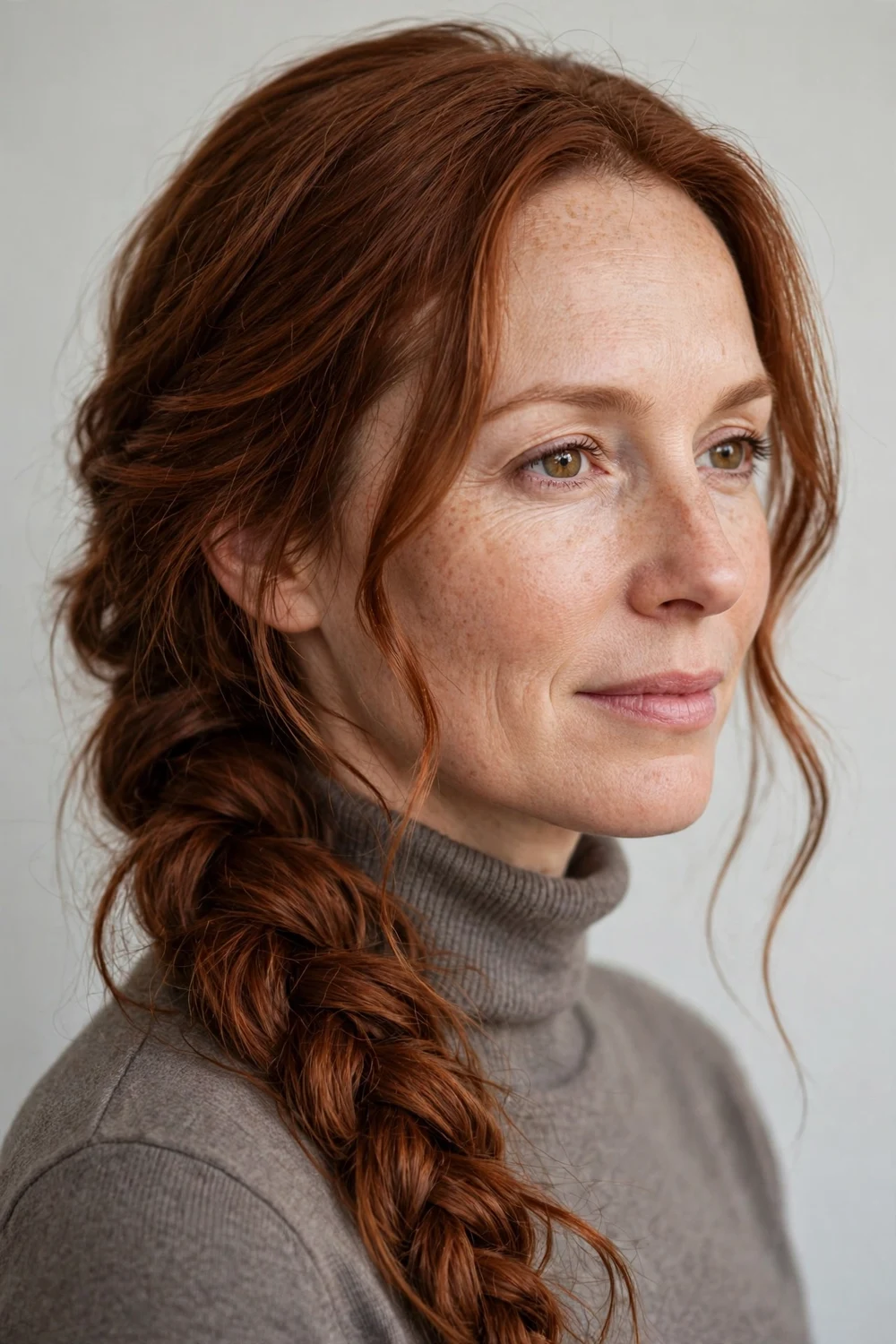
A loose side braid brings all the length over one shoulder and leaves soft face-framing pieces out at the front. The braid itself adds width low on one side of the face, beside the jaw and shoulder. The loose front pieces curve along the temple and cheek on the braid side, which softens the edge of the forehead.
Start the braid at the nape on one side and keep it loose, pulling each section gently outward once the braid is secured to widen it. Leave the front pieces out before you begin braiding, since pulling them out afterward disturbs the braid. A side part works better here than a center part because it feeds more hair into the front pieces on the braid side. The style suits long hair of every texture, including curly hair braided on damp hair with a leave-in conditioner.
Try this: Braid on second-day hair or add a texturizing spray first. Freshly washed hair slips out of a loose braid within hours.
Difficulty: Low · Cost: $ (salon)
24. Low Updo with Soft Bangs
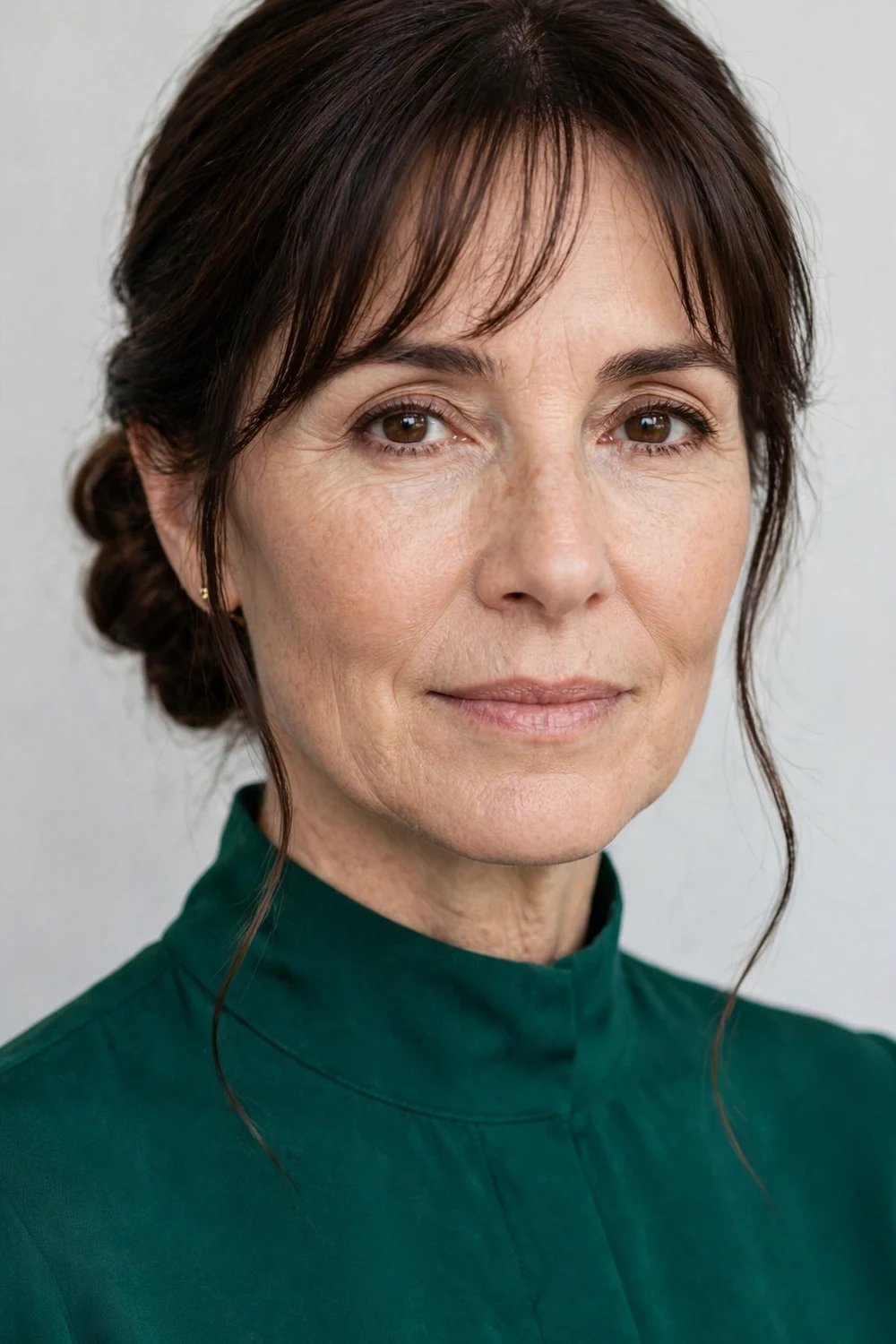
A low updo gathers the hair into a bun or twist at the nape, and soft bangs stay down across the forehead. Two thin strands left loose at the front frame the sides of the face. The bangs keep the forehead balanced while the updo gives a tidy finish, which makes this a reliable option for events and photographs.
Build the updo low rather than high. A high bun adds height above the forehead and can make the upper third of the face read longer, while a low bun keeps the visual weight behind the jaw. Pin the bun, then arrange the bangs and loose strands last so they sit exactly where you want them. This works on medium and long hair, and a texturizing spray at the roots helps fine hair hold the pins.
Try this: Photograph the style from the front before an event. Bangs and loose strands can shift while pinning, and a quick photo check catches it.
Difficulty: Medium · Cost: $$ (salon)
25. Face-Framing Highlights on Long Layers

Face-framing highlights place lighter pieces along the front hairline and down both sides of the face. The lighter pieces draw the eye along the sides of the face, toward the cheeks and jaw. On long layers with a side part, the highlighted front section also crosses the corner of the forehead, so color and cut work together.
Ask for the lightest pieces to start at the hairline beside the part and to continue through the face-framing layers, with the brightness strongest from the cheekbones down. Two to three shades lighter than your base is enough to read clearly without a hard line. This route suits anyone keeping a no-bangs cut who wants a bigger change than a part swap. Upkeep is a toner or gloss between highlight appointments, since the front pieces sit in the most visible position.
Try this: Bring a photo that shows how wide you want the front pieces. Face-framing width varies a lot between salons, from two thin strands to full panels.
Difficulty: Medium · Cost: $$$ (salon)
26. Curly Hair with a Soft Fringe

A soft curly fringe lets short curls rest across the top of the forehead. The curls cover the hairline area in an uneven, rounded line that follows the curl pattern. Full curls at the sides of the head add width at the temples and cheeks, so the fringe and the side volume balance the forehead together.
Ask for the fringe to be cut dry, curl by curl, since wet curly hair hangs far longer than it sits when dry. Keep the center curls long enough to reach the eyebrows once they spring up. Style with a leave-in conditioner and a gel cast that you scrunch out once the hair is fully dry. This style suits natural curls and coils, and the exact fringe length depends on how much your curls shrink, which your stylist can judge from your dry hair.
Try this: Do not stretch the fringe curls while they dry. Stretched curls spring back unevenly and leave gaps in the fringe line.
Difficulty: Medium · Cost: $$ (salon)
27. Bumper Bangs
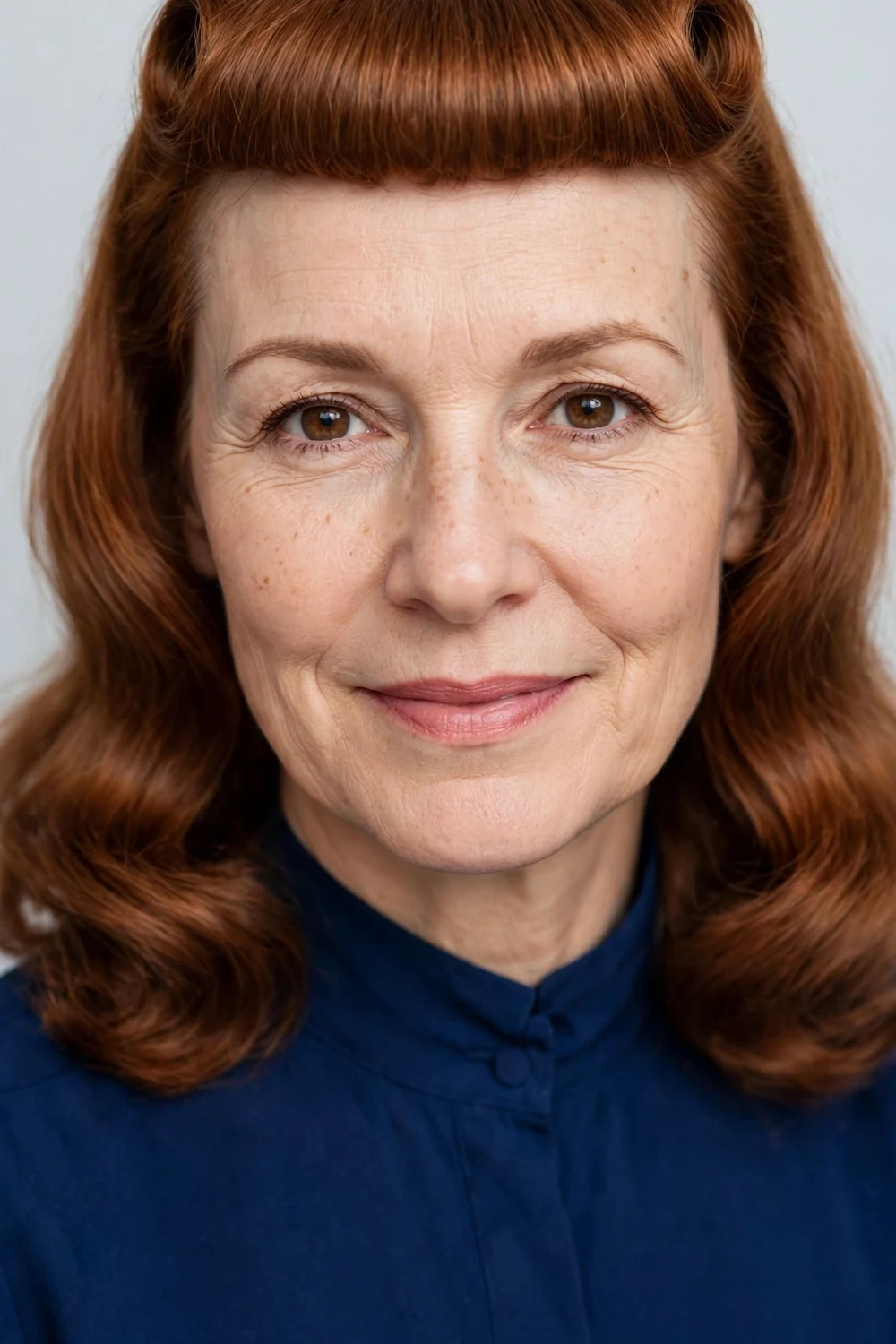
Bumper bangs roll the front section of hair into a smooth horizontal roll that sits across the top of the forehead. The roll covers the upper forehead completely and adds a rounded shape at the hairline. The style comes from 1940s and 1950s dressing, and it pairs with waves or rolls at the sides for a full vintage set.
Form the roll by backcombing the front section lightly, smoothing the surface hair over it, and pinning the ends under at the hairline. A small hair rat or padding piece can hold the shape on fine hair. No cutting is involved, so it works on any hair long enough at the front to roll, and it comes out at the end of the day. It suits anyone who enjoys vintage styling for events, photos, or themed occasions.
Try this: Practice the roll once before the day you plan to wear it. The pinning takes a few attempts to learn, and the second try is always faster.
Difficulty: Medium to High · Cost: $ (salon)
Frequently Asked Questions
What hairstyle balances a big forehead best?
Bangs give the most direct balance because they cover part of the forehead and lower the visible hairline. Curtain bangs, side-swept bangs, and wispy bangs are the most flexible versions. If you skip bangs, a deep side part with face-framing layers balances proportions by covering one corner of the forehead and adding width at the cheekbones.
Do bangs suit every face with a larger forehead?
Most faces with a larger forehead can wear some form of bangs, but the right type depends on hair texture and growth patterns. Straight and wavy hair holds curtain, side-swept, and blunt bangs with the least daily work. Curly hair suits a soft curly fringe cut dry. A strong cowlick at the hairline can split a blunt fringe, so wispy or side-swept bangs are usually the safer pick in that case.
How can I balance a big forehead without bangs?
Use a deep side part so the hair falls across one corner of the forehead, and add face-framing layers that start at or below the cheekbones. Volume at the sides of the head also helps, since flat hair leaves the forehead as the widest part of the silhouette. Loose waves, voluminous layers, and face-framing highlights all follow this route without any fringe.
Which styles tend to make a forehead look larger?
Styles that pull all the hair straight back, such as a tight high ponytail or a slicked-back bun, expose the full hairline and can make a forehead look larger. A center part on flat, one-length hair can have a similar effect because nothing breaks up the open area. Adding a side part, front layers, or loose strands at the temples softens each of these styles.
How often do bangs need trimming?
Blunt bangs usually need a trim every two to three weeks to hold their line. Wispy and curtain bangs can go three to five weeks because their edges are softer and grow out less noticeably. Many salons offer quick fringe trims between full appointments, and keeping the fringe at the planned length is what keeps the proportions of the style working.
Final Thoughts
A higher forehead does not narrow your options much once you know the levers: coverage from bangs, a diagonal line from a side part or side-swept fringe, and width from layers and volume at the cheekbones. Pick the lever that fits your texture and the upkeep you will keep up with, and start with the softer version of any cut, since bangs and layers can always go shorter or stronger at the next visit. If you are still deciding between a fringe and a part change, try the part change for two weeks first. It costs nothing, and it tells you how much balance you get before any scissors come out.

