


Fine hair and the shag were made for each other. Where limp strands fall flat on their own, a shag’s layered, feathered structure builds in the lift, movement, and texture that fine hair cannot manage solo. The cut removes just enough weight in the right places so the rest of the hair sits fuller, which is why salons keep recommending it to clients who want more body without more effort.
This list rounds up 27 trendy shag haircuts for fine hair that cover the whole shag family: feathered pixie shags and cropped shags for the short end, a wide run of medium-length shags with every fringe style, and long shags that prove the cut works past the shoulders too. Every idea here is chosen for fine hair specifically, with notes on what to ask your stylist and how to style it at home.
Quick Takeaways
- Shags suit fine hair because interior layers create the illusion of volume without thinning the ends.
- Short shags, from pixie crops to bixies, need trims every four to six weeks to hold their shape.
- Medium lengths are the sweet spot for fine hair: enough hair for layering, not enough weight to drag it flat.
- Keep products light: a pea-sized mousse or a mist of texturizing spray beats heavy creams that flatten fine strands.
- Ask for point-cutting or slide-cutting rather than aggressive thinning, since over-thinning robs fine hair of body.
1. Feathered Pixie Shag

The feathered pixie shag keeps length close but cuts flicky, airy layers through the top so the crown lifts instead of lying flat. Because the layers are cut with soft, feathered edges rather than hard lines, the shape looks textured with almost no styling. A dab of mousse at the roots and a quick finger-tousle is enough to make fine hair look twice as thick as it is. The short length also means less weight pulling the roots flat, so the crown keeps its lift through the day without re-styling.
This cut flatters women who want a short style that does not read severe, and it suits straight to slightly wavy hair best. Silver or salt-and-pepper tones add dimension that makes the layering even more visible, which is a bonus if you are growing out your natural gray. Ask for feathered texture through the top and slightly longer pieces around the ears to soften the silhouette. Trims every four to six weeks keep the flicky edges crisp and the crown lifted.
For more short cuts with this kind of easy upkeep, these short pixie haircuts for older women gather the most flattering low-maintenance options.
Try this: work a pea-sized amount of mousse into damp roots, then tousle with your fingers as it air-dries.
Difficulty: Low · Cost: $ (salon)
2. Shaggy Bixie

The bixie sits right between a pixie and a bob, and the shaggy version adds stacked layers through the crown with piecey ends at the edges. That combination gives fine hair lift at the top and movement at the sides, so the cut reads fuller than either a classic pixie or a classic bob. It is one of the smartest short picks for hair that refuses to hold volume. The slightly longer side pieces also keep it from looking too severe, which makes the bixie an easy first step into short hair.
Ask your stylist to stack the crown layers and point-cut the ends for separation, which keeps the texture soft rather than spiky. The finish benefits from a light texturizing spray that defines the pieces without weighing them down, and a little goes a long way on fine hair. This cut suits oval, heart, and long faces especially well. Trims every four to six weeks keep the stacked crown from growing heavy and the ends looking sharp.
If choppy layers are your thing, these short shag hairstyles for women show how the cut works on different hair textures.
Try this: spray texturizing spray on dry hair and pinch small sections to define the piecey ends.
Difficulty: Low · Cost: $ (salon)
3. Micro Shag Crop
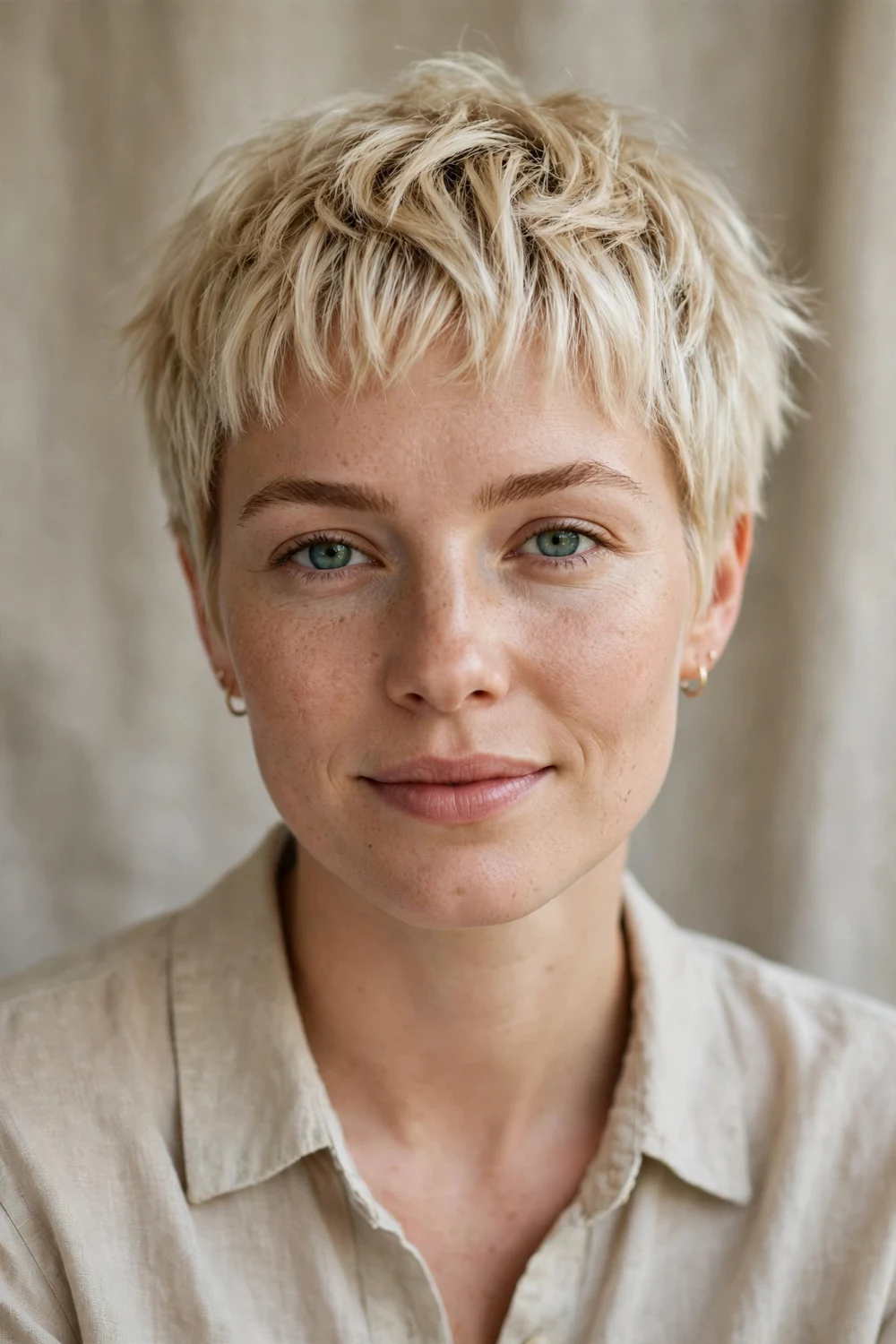
The micro shag crop keeps the overall length short while cutting choppy micro-layers right through the top. Those short layers stack up to create a buoyant crown, which is exactly where fine hair needs help. Pearl blonde or other bright tones make the layering pop, since light shades show separation better than dark ones on short cuts. The micro layers also add grip and texture, which helps fine hair hold a style through the day instead of sliding flat by noon.
A quick round-brush lift at the roots while blow-drying locks in the shape for the day, and the cut air-dries well too, so it works for mornings when you skip the dryer. It suits straight hair best, since the micro layers show most clearly on a smooth texture. Trims every four to five weeks keep the micro-layers crisp and the crown from collapsing. Ask your stylist to keep the sides tidy so the top texture stays the focal point.
Try this: lift the top layers with a small round brush while blow-drying to set the crown height.
Difficulty: Low · Cost: $ (salon)
4. Messy Pixie Mullet
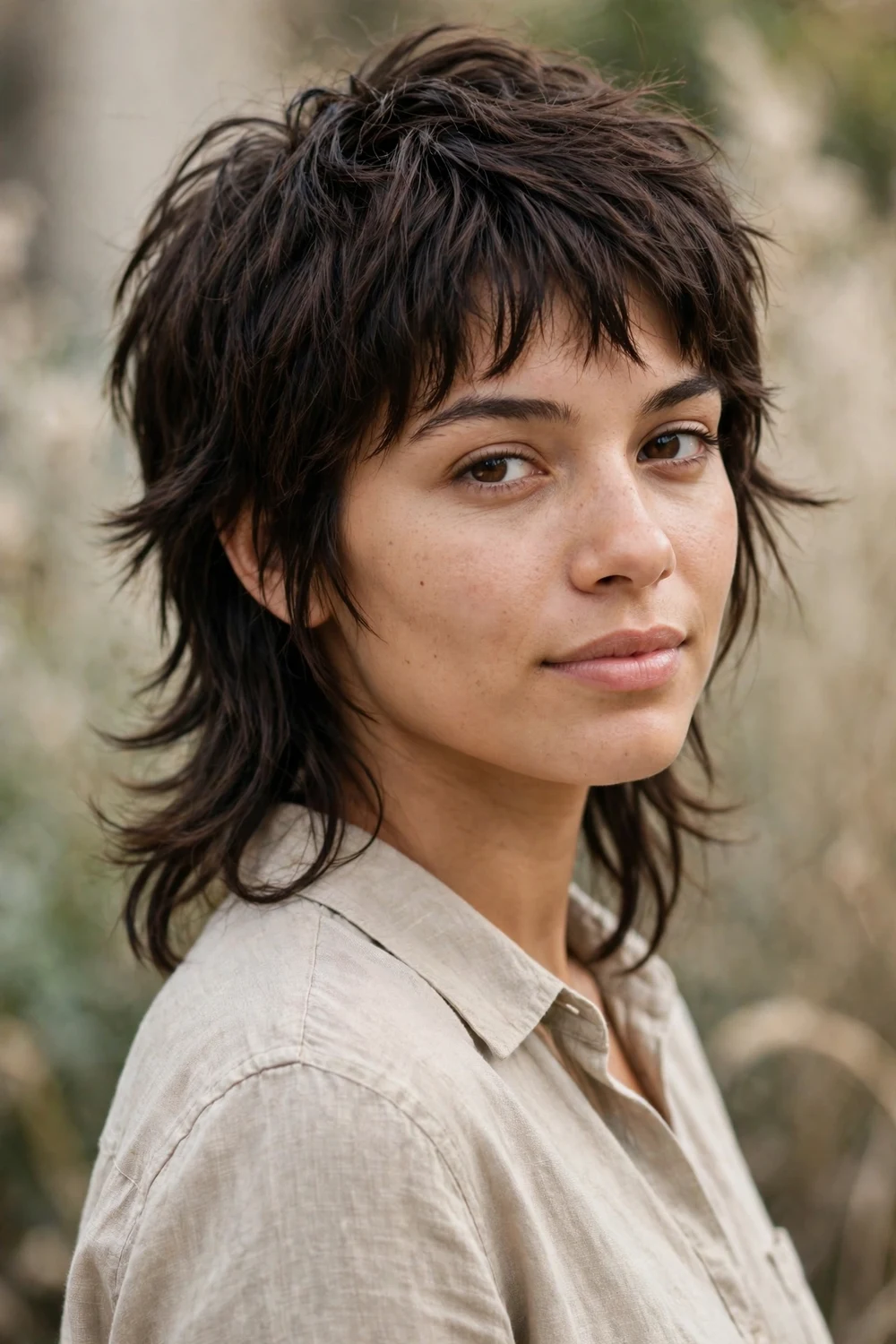
The messy pixie mullet pairs a short, textured top with longer pieces through the sides and nape. Those longer pieces draw the eye downward and make the overall head of hair look fuller, which is a useful trick for fine hair that looks thin at the ends. Cute bangs across the front keep the face framed while the back keeps its length. The contrast between the cropped crown and the longer nape is what gives the cut its signature edge and its visual fullness.
It is an edgy pick that still works on fine hair because the texture is cut in rather than styled in, so you are not fighting your hair’s nature. A little styling cream defines the top layers, and the longer nape pieces need nothing more than a comb-through. Ask your stylist to keep the transitions soft so the cut reads modern rather than retro. Trims every five to six weeks keep the nape tidy and the top texture defined.
Try this: smooth styling cream through just the top layers and leave the nape pieces loose for contrast.
Difficulty: Medium · Cost: $ (salon)
5. Lob-Length Shag with Bangs

This is the short end of the shag spectrum: a lob-length cut with bangs and tousled shag layers that stop just past the jaw. It gives you the shag’s signature texture at a length that feels safer than a full pixie, and the bangs pull attention to the face while the layers do the volumizing work. On fine hair, the collarbone-skimming length keeps ends from looking stringy, and the layered shape means the cut holds its body between washes.
The bangs make the rest of the style look fuller by contrast, since a slightly thinner fringe makes the sides read thicker. Style with a round brush for smoothness or scrunch with mousse for a rougher finish, depending on the day. It suits straight to wavy hair and most face shapes. Ask your stylist to keep the bangs brow-skimming so they blend into the layers, and book trims every six to eight weeks to maintain the shape.
Try this: blow-dry the bangs forward first, then add the layers, so the fringe sets the tone for the whole style.
Difficulty: Low · Cost: $$ (salon)
6. Copper Shag

The copper shag pairs two 2026 trends: the shag’s choppy, rock-inspired layers and the season’s defining copper color. Warm copper tones add visual warmth and dimension that make fine hair look denser, while the heavy interior layers create movement that air-dries well. It is the rare trendy cut that is also genuinely low-maintenance, since the color does half the volumizing work and the layers do the rest. That combination is hard to beat on fine hair.
Ask for a shag with heavy interior layers, curtain bangs, and a level 6 to 7 copper with red-orange undertones. Wavy and curly textures wear it best, since the layers are cut to encourage natural movement rather than fight it. Straight hair can wear it too with a mist of texturizing spray for separation. Because copper fades faster than other shades, plan a gloss appointment between full color sessions to keep the tone rich.
Try this: ask your colorist for a copper gloss between full appointments to keep the tone rich without re-lightening.
Difficulty: Medium · Cost: $$ (cut + color)
7. Wispy Shoulder-Grazing Shag
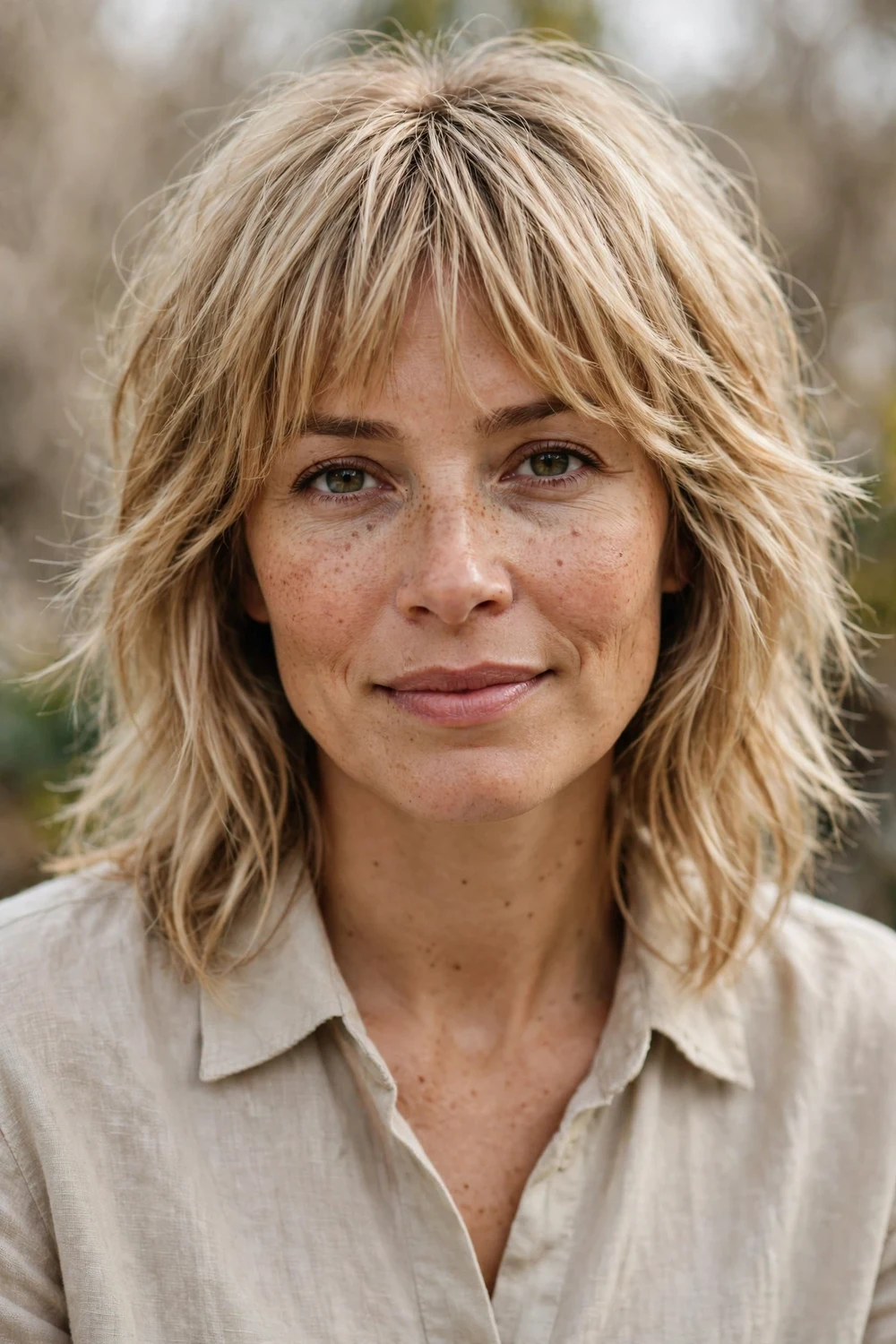
Shaggy layers and feathered bangs are one of the best combinations for making fine hair appear thicker. The shoulder-grazing length gives the layers room to move without adding weight, and the wispy ends keep the cut from looking blunt or heavy. Sandy blonde and other mid tones show the feathering off especially well. The cut also grows out gracefully, since the soft layers have no harsh lines to lose their shape.
Ask your stylist to keep the layers through the mid-lengths and ends rather than stacking them all at the crown, which prevents the top from looking too puffy. It suits straight to wavy hair, and a light mist of salt spray brings out the texture on second-day hair. A trim every six to eight weeks keeps the wispy ends fresh without losing length. This is a forgiving first shag if you have never worn heavy layers before.
Try this: mist salt spray on dry ends and scrunch upward to revive the wispy texture between washes.
Difficulty: Low · Cost: $$ (salon)
8. Razored Shag with Graduated Bangs

A razor-cut shag uses a razor instead of shears to create softer, more broken edges that fine hair wears well. The razor removes bulk in a way that keeps the perimeter looking full, and graduated bangs that shorten toward the center frame the face while emphasizing your features. It is a standout look among more traditional layered cuts, with a slightly undone finish that never reads stiff or overdone. It photographs well too.
Ask for shorter interior layers through the crown and bangs that graduate from cheekbone length toward the middle. The razor work needs a stylist who is confident with the technique, so this is a cut worth booking with someone experienced rather than trying with a new stylist. A little pomade on the ends defines the razor texture. Trims every six to eight weeks keep the broken edges looking intentional instead of ragged.
Try this: warm a pea-sized amount of pomade between your palms and pinch the ends to define the razor texture.
Difficulty: Medium · Cost: $$ (salon)
9. Seamless Blended Shag

If you like the shag’s movement but not its choppiness, the seamless blended shag melts the layers into each other for a softer, more polished finish. The texture is still there, but the transitions are invisible, which makes this a strong pick for conservative workplaces. Fine hair keeps its density better here because the ends are not overly shredded, so the cut reads full from every angle. Nothing about it looks dated.
It is a good middle ground for anyone who wants texture while still liking smooth, wearable shapes. Blow-dry with a round brush for a sleek finish, or air-dry for gentle movement, since the cut works both ways. The grow-out is even, so you can stretch trims to eight weeks without the shape falling apart. Ask for slide-cut layers rather than choppy ones to get the melted effect. This is the most office-friendly shag on the list.
Try this: blow-dry with a large round brush and finish with a smoothing cream for the polished version.
Difficulty: Low · Cost: $$ (salon)
10. Choppy Crown Shag

The choppy crown shag concentrates texture at the top of the head, which helps medium-length fine hair look fuller exactly where it usually falls flat. The shape feels lively without looking messy, and the extra crown height gives the whole silhouette a lift. It is a strong pick if you want volume and a little edge at the same time, since the choppy layers read modern while doing real structural work.
Ask your stylist for short, choppy layers through the crown that graduate into longer pieces through the ends. Backcomb-free volume comes from the cut itself, though a root-lifting spray adds staying power on fine hair that drops by afternoon. It suits straight to wavy hair and oval or round faces. Trims every six weeks keep the crown layers from growing heavy and dragging the top flat again. The lift lasts through the day.
Try this: apply root-lifting spray to damp roots at the crown before blow-drying upside down for maximum lift.
Difficulty: Medium · Cost: $$ (salon)
11. Curtain Bang Medium Shag

Curtain bangs give this shag a soft frame through the eyes and cheekbones, while the medium length keeps the cut easy to wear day to day. The bangs blend into the layers rather than sitting apart from them, so the whole cut reads as one flowing shape. On fine hair, the layers add gentle movement without thinning the ends too much, which keeps the perimeter looking full and healthy. It is easy to love.
It feels relaxed and flattering, and it is one of the easiest shag variations to style at home. Blow-dry the bangs forward with a round brush, then part them in the center for the signature sweep. It suits nearly every face shape and works on straight, wavy, or curly textures. The bangs grow out into face-framing layers, so you never hit an awkward in-between stage between trims. Maintenance stays refreshingly simple.
Try this: twist each curtain side away from your face while blow-drying to train the sweep in place.
Difficulty: Low · Cost: $$ (salon)
12. Face-Framing Medium Shag
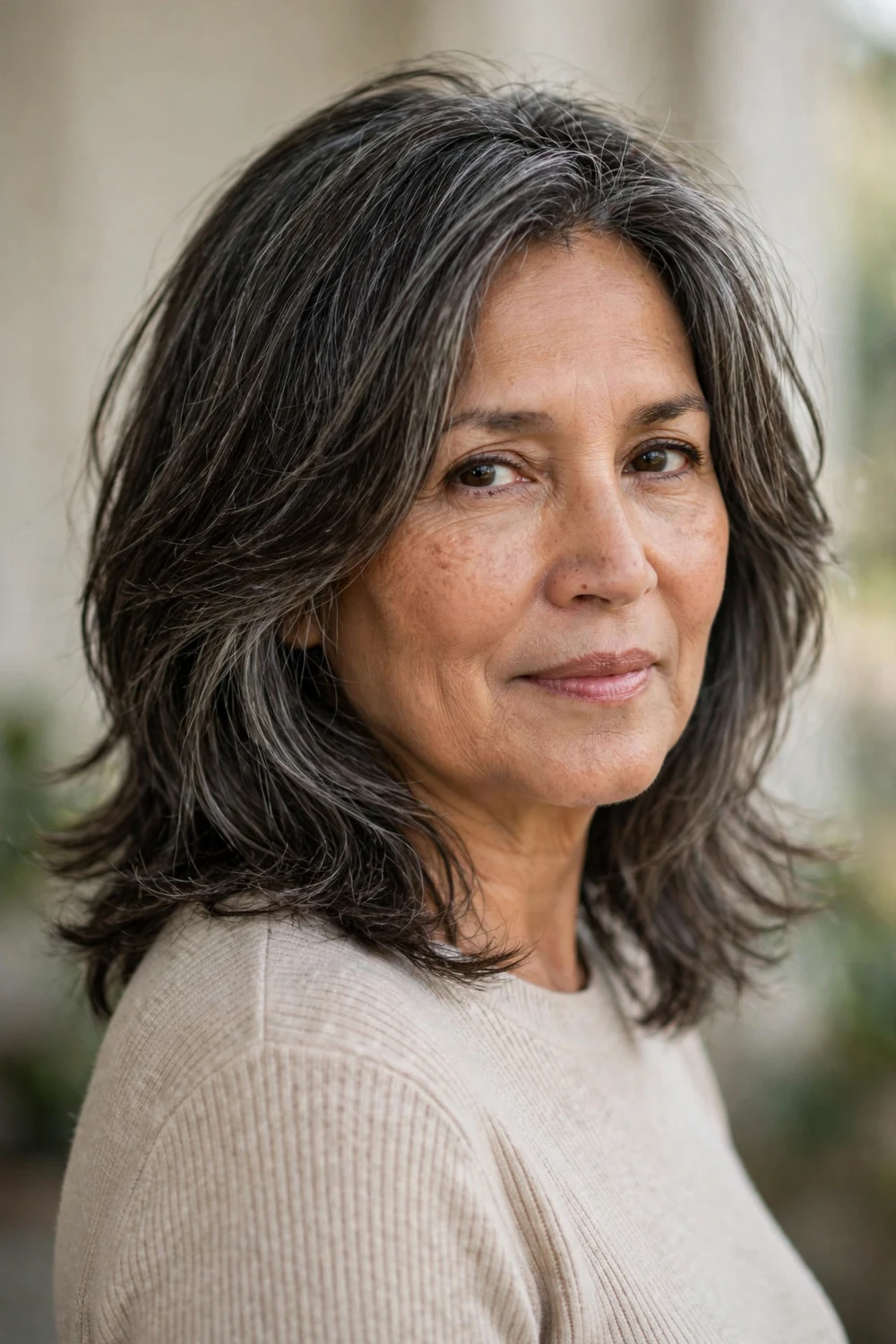
The face-framing pieces do most of the work in this shag, giving the cut shape and movement without heavy layering everywhere else. That restraint makes it especially good for fine hair, since the density stays intact through the back and ends. It feels soft and flattering, with enough texture around the face to keep it from falling flat. The longer front pieces also brighten the whole look by drawing attention upward toward the eyes.
Ask for long layers that start at the chin and get shorter toward the cheekbones, blended into a medium shag base. The effect is gentle enough for any setting, from the office to the weekend, and it grows out without harsh lines. A round brush on the front pieces gives them a soft bend that opens up the face. Trims every six to eight weeks keep the face-framing pieces from growing past their flattering point.
If you like soft layers at this length, these short layered hairstyles for women over 60 show flattering options with similar face-framing shapes.
Try this: curl just the face-framing pieces away from your face for a soft bend that opens the cheekbones.
Difficulty: Low · Cost: $$ (salon)
13. Feathered Medium Shag
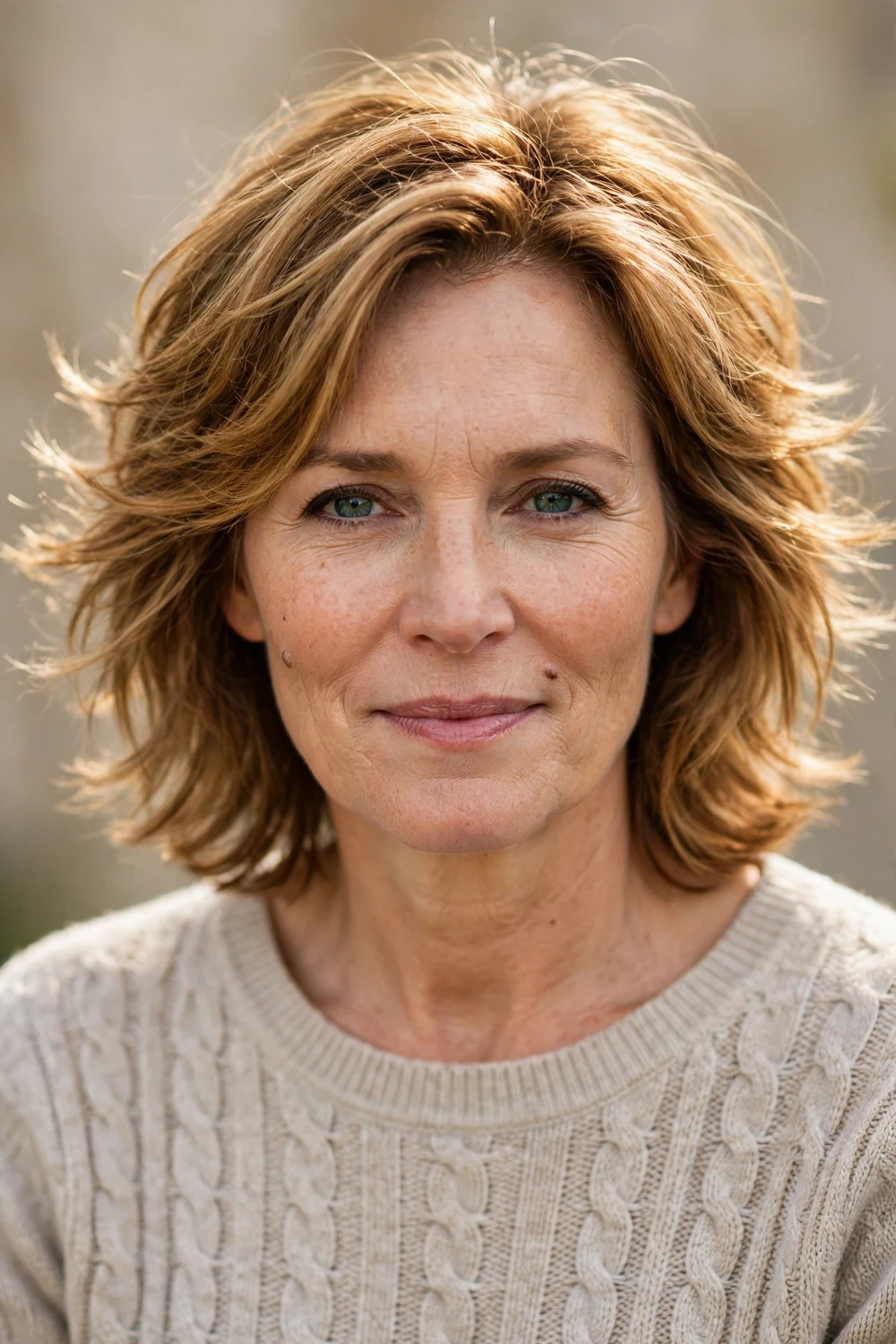
Feathered layers give this shag a lighter finish and more spread through the sides, which helps fine hair look airy instead of limp. The feathering technique thins the very ends of each layer so they flick outward, creating width and movement around the face. It is a good choice if you like soft texture and want the shape to feel open. The flicked-out silhouette also balances longer face shapes by adding horizontal volume.
The cut suits straight to wavy hair and works on medium lengths that sit between the shoulders and collarbone. Blow-drying with a flick outward at the ends emphasizes the feathering, and a large round brush makes it easy. Ask your stylist to keep the feathering through the sides rather than the crown so the top stays smooth. A light texturizing spray holds the flicks in place without stiffness. The shape suits busy mornings well.
Try this: flick the ends outward with a round brush while blow-drying to emphasize the feathered texture.
Difficulty: Medium · Cost: $$ (salon)
14. Middle-Part Modern Shag

A center part gives this shag a cleaner, more current feel than its messier cousins, while the layers underneath keep it from looking flat or plain. The symmetry of the middle part makes fine hair look more deliberate, and the cut sits nicely around the face with balanced volume on both sides. It works best if you like balanced styles that still have texture and movement. The middle part also shows off the layering evenly, which doubles the visual fullness.
Ask for even layers through the mid-lengths with soft face-framing pieces that start at the cheekbones. The middle part needs a fairly precise blow-dry at the roots to sit right, so this is a cut for someone who does not mind five minutes with a dryer. Straight to wavy hair wears it best. A center part can emphasize a cowlick, so mention yours at the consultation if you have one.
Try this: blow-dry the roots flat with a center part before adding texture to the ends, so the part stays crisp.
Difficulty: Medium · Cost: $$ (salon)
15. Parisian Shag

The Parisian shag channels French-girl hair: undone, low-key waves with long bangs that look chic with almost no effort. The messy texture is the whole point, which means fine hair gets away with air-drying and a little tousling. It dresses up or down easily, from a first date to a job interview, without ever looking overdone. The lived-in finish also means day-two hair often looks better than day-one hair. It is effortlessly chic.
Ask for long, piecey layers with bangs that graze the cheekbones and blend into the sides. The cut works on straight, wavy, and slightly curly hair, and a texturizing spray is the only product it needs. Skip the brush between washes so the waves stay soft instead of frizzy. Trims every eight weeks keep the ends from straggling while preserving the undone shape. The cut suits almost every face shape.
For more takes on this kind of French-inspired shape, these short french bobs show how the cut adapts to different hair textures.
Try this: braid damp hair loosely overnight, then undo it in the morning for soft undone waves.
Difficulty: Low · Cost: $$ (salon)
16. Lived-In Wavy Shag

The lived-in wavy shag is the modern answer to the heavy, bouncy shags of past decades. Instead of stiff curls, it has soft waves and natural-looking color that looks good on day three, not just day one. Medium length keeps the waves from dragging fine hair flat, and the layered shape means the style holds without daily heat. The softness of the waves is what makes it so wearable: nothing about it looks stiff or dated.
This is one of the most versatile cuts on the list: it adapts to any outfit and occasion, and it grows out gracefully. Scrunch a little cream into damp waves and let them air-dry for the best finish. It suits wavy hair naturally, and straight hair can fake it with a large-barrel iron on alternating sections. Trims every eight weeks keep the layers bouncy and the ends from thinning out.
Try this: wrap alternating sections around a large-barrel iron in opposite directions for natural-looking waves.
Difficulty: Medium · Cost: $$ (salon)
17. Side-Parted Tousled Shag
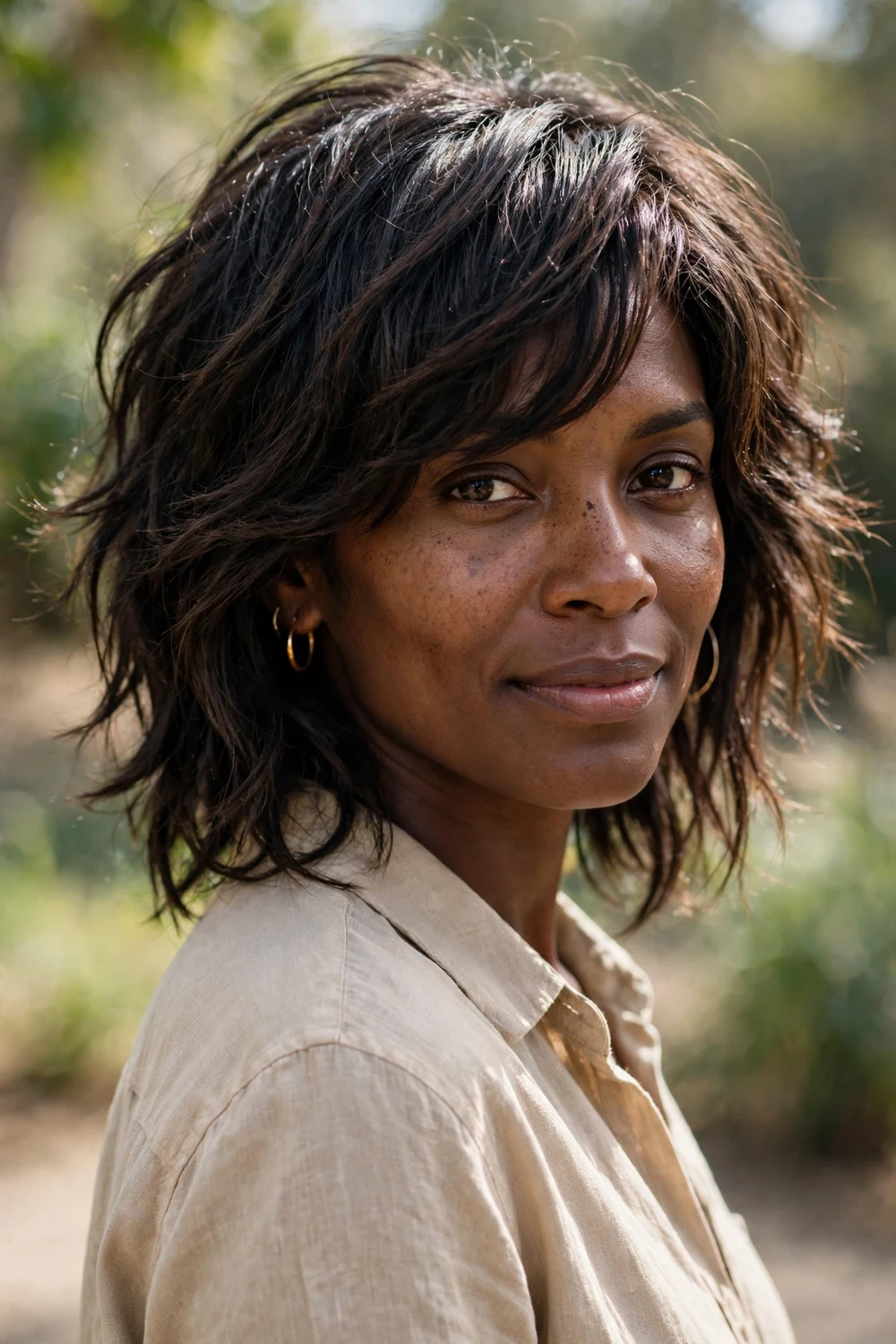
Short haircuts are all about balance, and the side part is what makes this shag work. Heavy side bangs in front add instant volume where fine hair needs it most, while shorter layers through the nape keep the overall shape from feeling heavy. A sea salt spray emphasizes the texture for a relaxed, tousled finish. The asymmetry also creates diagonal lines that make fine hair look thicker than a center part does.
The deep side part flatters round faces by adding diagonal lines, and it holds up well between trims. Ask for the part to sit about two inches off-center and bangs that sweep across the forehead. It suits straight to wavy hair, and the tousled texture hides regrowth between appointments. A light root spray on the heavier side keeps the part from collapsing as the day goes on. The look stays fresh for hours.
Try this: set the deep side part while hair is damp so it dries in place and stays put all day.
Difficulty: Low · Cost: $$ (salon)
18. Wavy Shag with Highlights and Curtain Bangs

This shag layers color and cut together: golden blonde balayage with dark roots, curtain bangs, and face-framing layers that show off every tone. The highlights do real work here, since lighter pieces on a darker base create the illusion of depth and thickness that fine hair needs. Blow out the curtain bangs with a round brush and tousle the crown for the full effect. The dark roots also make the regrowth nearly invisible, which stretches the time between color appointments.
Ask your colorist for a root shadow with balayage pieces through the mid-lengths, then have the shag cut over it so the layers land on the lightened sections. It suits wavy hair best and flatters oval and round faces. The color grows out softly, so touch-ups can wait eight to ten weeks. A purple-toned gloss once in a while keeps the blonde pieces bright instead of brassy. The result is worth the upkeep.
Try this: ask for the balayage pieces to sit where the shortest layers land, so the color and cut highlight each other.
Difficulty: Medium · Cost: $$ (cut + color)
19. Medium Shag with Chunky Highlights and Ombre

Too many layers can backfire on fine hair, making it look flatter instead of fuller. This cut solves that with color instead of extra cutting: chunky highlights on a medium brown base create depth and dimension, finished with a subtle ombre through the ends. The shag layers stay moderate, so the shape keeps its body while the color fakes the thickness. It is the right approach when your hair cannot support a heavily layered cut.
It is a smart pick if your stylist has warned you against over-layering. Ask for highlights two shades lighter than your base, concentrated through the mid-lengths, with the ombre staying in the same shade family. Straight to wavy hair shows the dimension best, and a gloss treatment keeps the color shiny between appointments. Color touch-ups every eight to ten weeks keep the contrast looking fresh. Ask for a gloss to seal the shine.
Try this: keep the ombre within your natural shade family so the grow-out stays soft for months.
Difficulty: Medium · Cost: $$ (cut + color)
20. Modern Wolf Cut

The wolf cut blends shag layers with a mullet-inspired shape: shorter, choppier layers through the crown and longer, tapered pieces at the nape. On fine hair, that crown texture creates volume where it counts, while the longer back pieces make the overall head of hair look fuller. Sandy blonde highlights bring out the separation between layers. It is one of the trendiest cuts on this list, and it works better on fine hair than most people expect because the texture is cut in.
Ask your stylist to keep the nape pieces soft rather than severe so the cut stays wearable daily. A little texturizing spray defines the crown layers without stiffness, and that is all the styling it needs. It suits straight to wavy hair with enough density to fill the layers. Trims every six to eight weeks keep the crown choppy and the nape from growing straggly. The shape stays wearable for weeks.
Try this: work texturizing spray through the crown layers only, leaving the nape pieces smooth for contrast.
Difficulty: Medium · Cost: $$ (salon)
21. Strawberry-Blonde Textured Shag with Micro Fringe
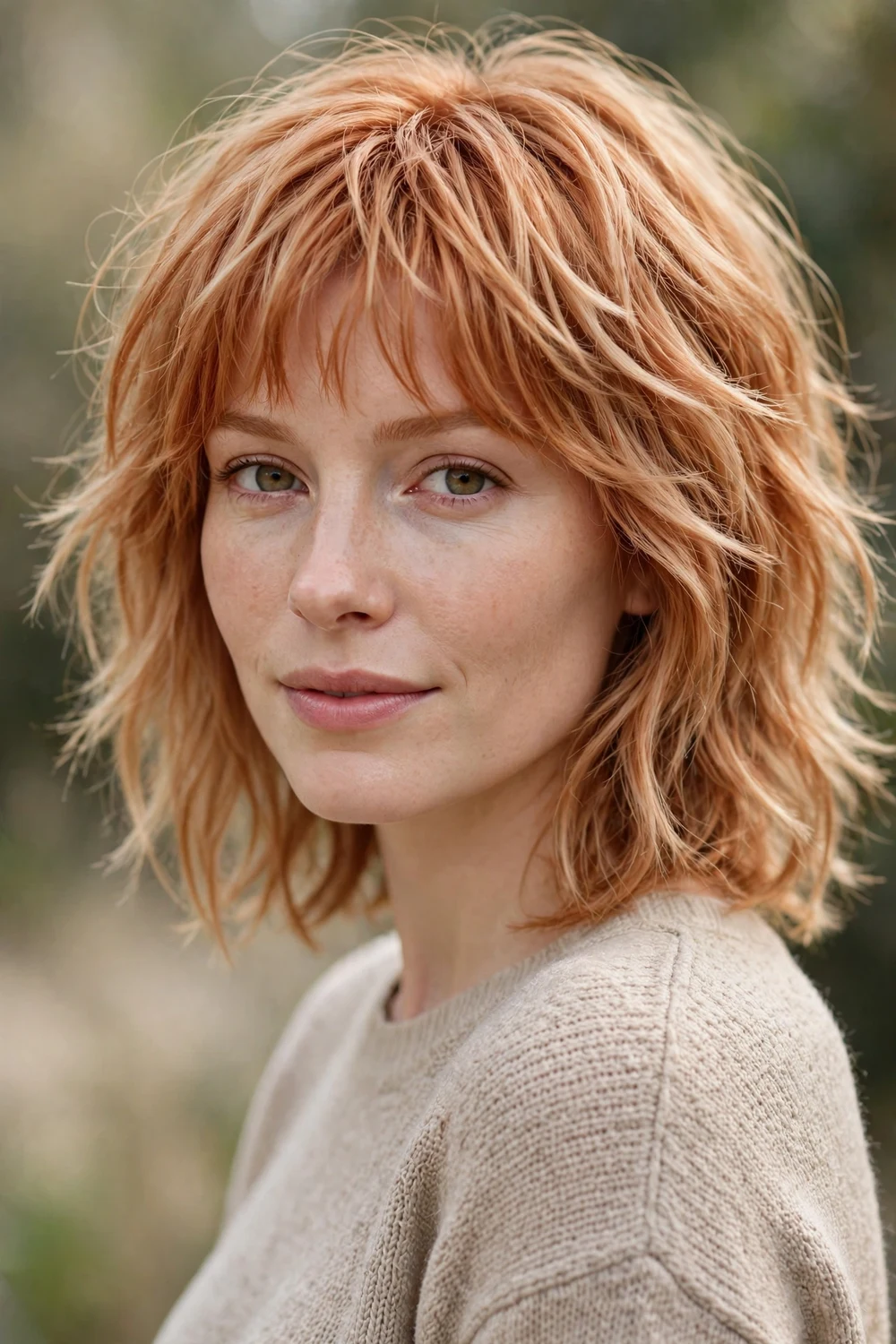
This mid-length shag pairs razor-pointed layers with a feathered micro-fringe and a soft mullet outline for a look that is unmistakably 2026. The strawberry-blonde tone warms up the complexion, while the cropped fringe lifts the jawline and draws the eye upward. Piecey separation through the layers keeps fine hair looking airy rather than sparse. The mullet outline adds an edge that keeps the sweet color from reading too soft. It turns heads everywhere.
Ask for the fringe to sit above the brows with feathered edges, and request point-cutting rather than thinning to preserve weight through the mid-lengths. Warm tones need toning to avoid brass, so a color-depositing conditioner keeps the strawberry shade fresh between salon visits. It suits oval and heart-shaped faces best. The fringe needs trims every three to four weeks to stay above the brows, and the color fades gracefully too.
Try this: use a color-depositing conditioner once a week to keep the strawberry tone from fading or turning brassy.
Difficulty: Medium · Cost: $$ (cut + color)
22. 80s Volume Shag
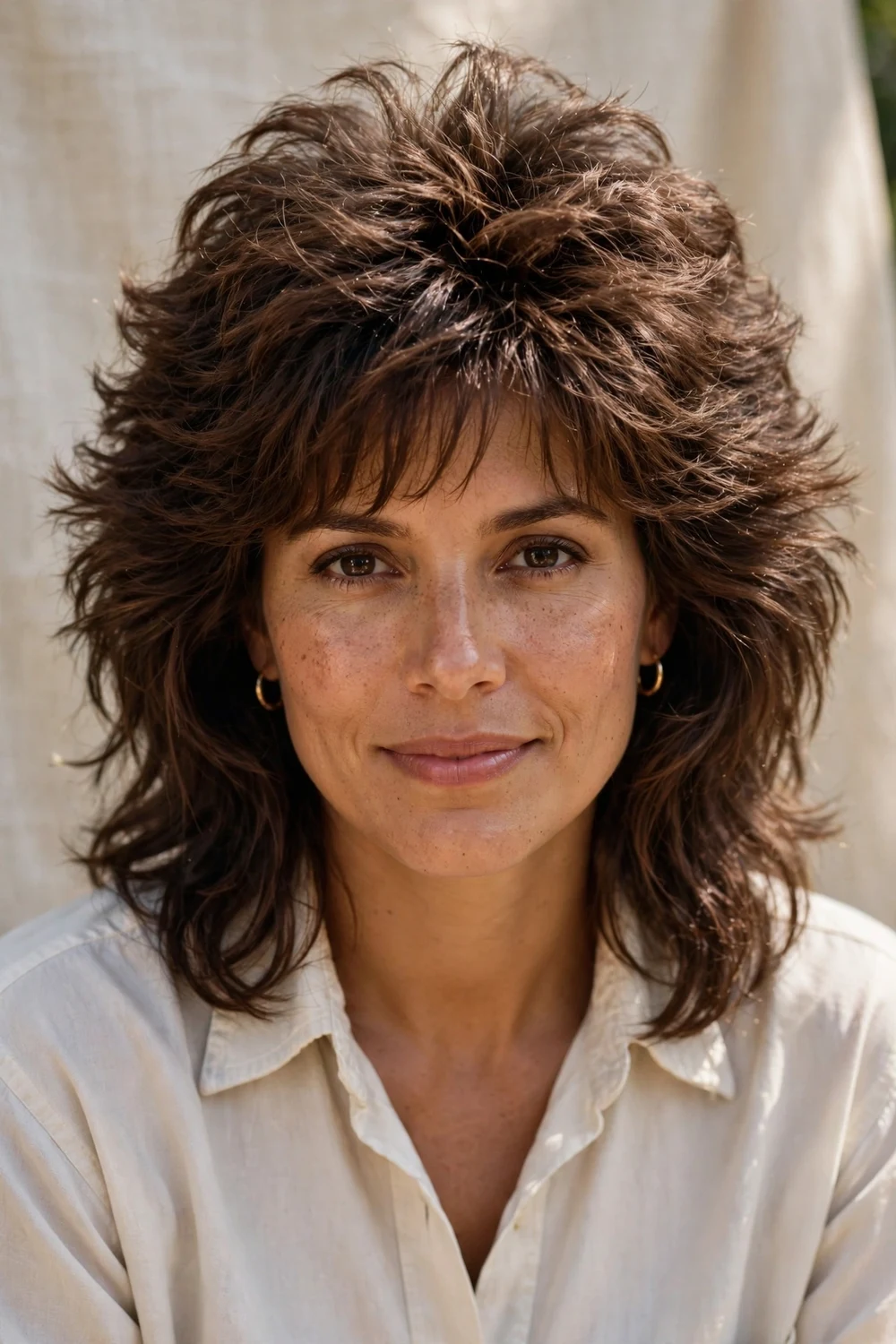
The 80s volume shag is back with a softer edge: big, punk-inspired texture through the crown with feathered layers that keep it wearable in 2026. For fine hair, this is a gift, because the whole cut is engineered around height and fullness at the top. The layers are cut to stand away from the head rather than lie flat against it, which creates the kind of lift that fine hair cannot build on its own.
Ask for heavy texture through the crown with longer pieces through the sides to balance the volume. A volumizing mousse on damp roots plus upside-down blow-drying builds the height, and the cut holds its shape for days. It suits anyone who wants maximum drama with minimum daily effort. Trims every six to eight weeks keep the crown texture from growing heavy and collapsing the height. Volume stays put all day.
Try this: blow-dry the crown upside down with a volumizing mousse for the full 80s height.
Difficulty: Medium · Cost: $$ (salon)
23. Choppy Long Shag with Soft Face-Framing Layers

Long shags work on fine hair when the length stays just past the shoulders, and this cut proves it. Choppy layers through the crown generate movement while soft face-framing layers accentuate your features, and the blend of blunt and layered ends keeps the perimeter looking full. It is versatile enough to dress up or down, and the longer length means more styling options than the shorter shags on this list.
The key is keeping the shortest layers high enough to create lift without exposing too much scalp. Ask your stylist to concentrate the choppy work through the crown and keep the ends lightly layered rather than thinned. It suits oval faces best and needs a trim every eight weeks to keep the layers sharp. A little texturizing spray through the crown adds separation that lasts all day. The cut rewards simple styling.
Try this: flip the ends inward with a flat iron for a polished finish, or leave them raw for a rougher look.
Difficulty: Medium · Cost: $$ (salon)
24. Long Shag with Side Bangs

Most shag cuts for fine hair sit at short to medium lengths, but the long shag earns its place with a simple formula: super short layers through the crown for movement, blended into heavy side bangs for a seamless line. The crown layers do the volumizing while the length stays through the back, so you keep your inches without the flatness. The heavy side bangs also pull focus to the face, which keeps a long cut from dragging your features down.
Ask for the shortest layers to start at the crown and graduate down, with side bangs that sweep from a deep part. The style needs little product: a light mousse at the roots and a quick blow-dry are enough. It suits straight to wavy hair and works on round and square faces especially well. Trims every eight weeks keep the crown layers lifted and the side bangs from growing past their sweep.
Try this: blow-dry the crown layers upward with your fingers for lift, then smooth the side bangs into place.
Difficulty: Medium · Cost: $$ (salon)
25. Long Shag with Jagged Bangs
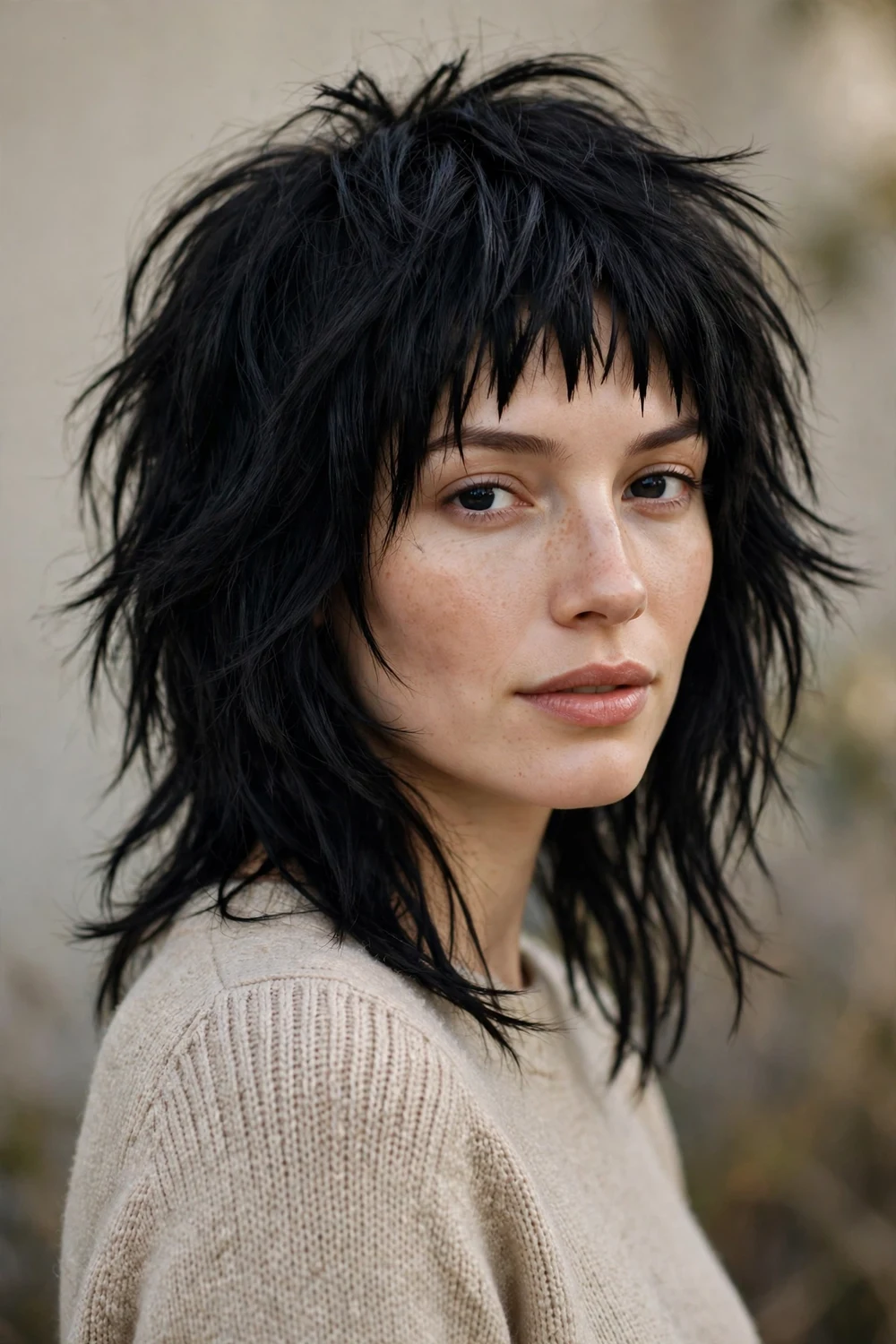
There is something undeniably cool about a long shag with jagged bangs. The crown is cut choppy to bring in volume, and feathered micro bangs add an intriguing edge that a straight-across fringe cannot match. The jagged line makes fine hair look deliberately textured rather than thin, which is exactly the effect you want. The contrast between the edgy fringe and the flowing length is what makes this cut memorable.
The micro bangs need trims every three to four weeks to stay crisp, so factor that into your maintenance. Ask your stylist to point-cut the bangs for a soft, jagged edge rather than a blunt line. It suits oval and long faces and works on straight to slightly wavy hair. Keep the rest of the cut simple so the bangs stay the focal point of the whole style. The fringe does the talking.
Try this: keep the jagged bangs piecey with a tiny amount of pomade instead of smoothing them flat.
Difficulty: Medium · Cost: $$ (salon)
26. Long Shag for Curly Hair
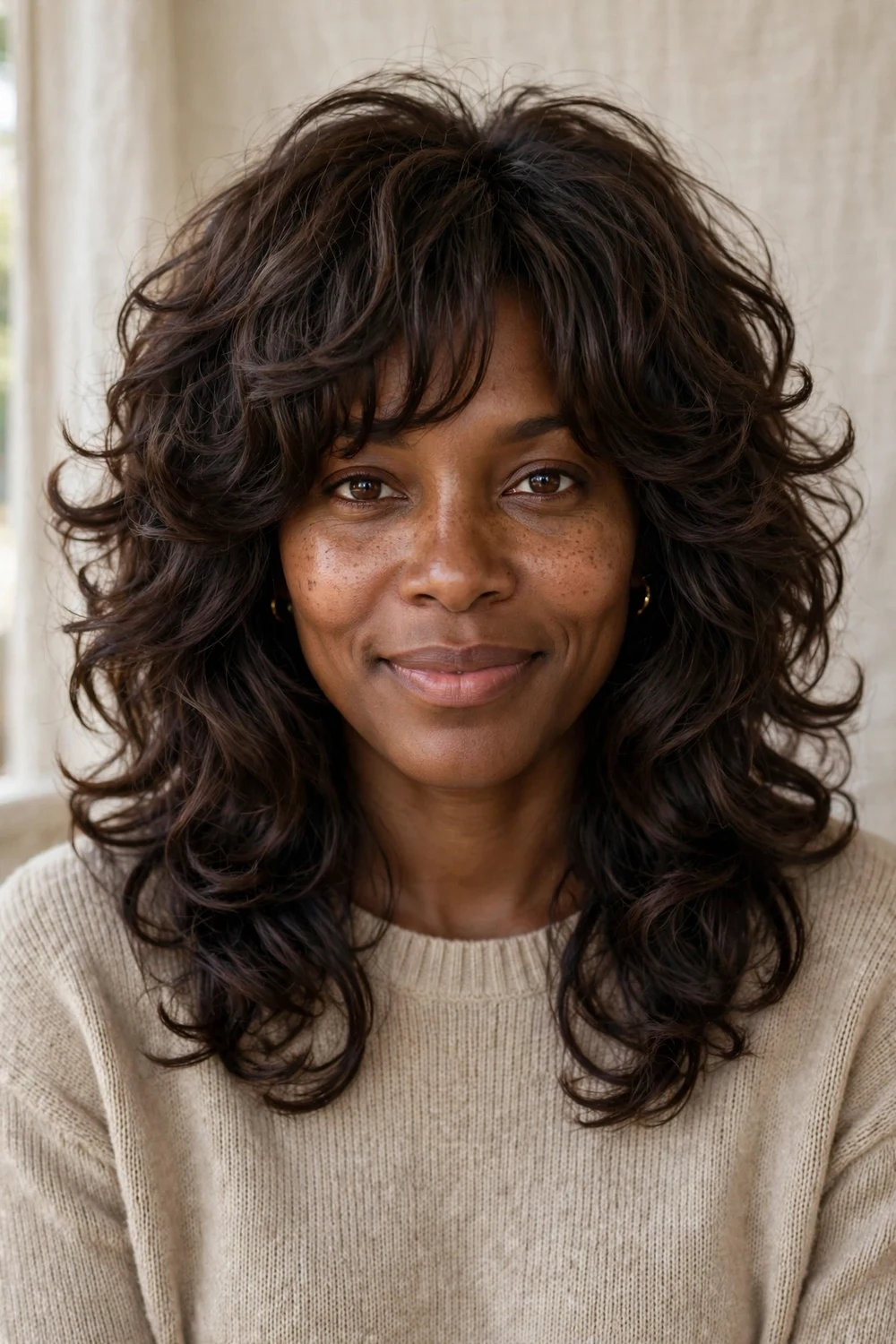
Curly hair can be fine too: the strand itself is thin even when there is plenty of it. A long shag works here because the layers remove weight that would otherwise pull curls flat, letting each curl spring up with more bounce. Soft spirals take fine curls from limp to full, and the layered shape means finger-combing is enough to refresh them. The cut also distributes volume evenly instead of letting it pile at the ends.
Ask your stylist to cut the curls dry so the length lands where you want it once they spring up. Skip strong-hold products that weigh curls down, and use a light curl cream instead. Diffuse on low heat or air-dry, and refresh with water and cream on non-wash days. Trims every eight to ten weeks keep the layers springy and the ends from tangling. Curls stay bouncy between appointments without extra effort.
Try this: ask for a dry cut so your stylist can see each curl’s true length before shaping the layers.
Difficulty: Medium · Cost: $$ (salon)
27. Statement-Color Long Shag

Color is a volume tool, and this long shag uses it boldly: dark roots that make hair appear thicker at the scalp, melting into a purple ombre through the ends. The darker root shadow creates instant depth, while the fashion color shows off the choppy layers. It is the most head-turning idea on this list and the most 2026. The ombre placement also keeps the brightest color away from the roots, which makes regrowth far less obvious.
The cut itself is a classic long shag with choppy layers and piecey ends, so the shape stays wearable even as the color fades. Pre-lightening is needed for the purple to show, and a color-safe routine with extra conditioning keeps the lightened ends healthy. It suits anyone ready for a commitment to their color appointments. Wash with cool water and a color-safe shampoo to slow the fade between visits. The bold color stays vivid for weeks.
Try this: wash with cool water and a color-safe shampoo to slow the fade on fashion colors.
Difficulty: High · Cost: $$$ (cut + color)
At a Glance: 27 Trendy Shag Cuts Compared
| Cut | Length | Best for | Upkeep |
|---|---|---|---|
| Feathered Pixie Shag | Pixie | Straight to wavy hair | Mousse and finger-tousle |
| Shaggy Bixie | Pixie to bob | Oval, heart, long faces | Texturizing spray |
| Micro Shag Crop | Crop | Straight hair | Round-brush root lift |
| Messy Pixie Mullet | Pixie with long nape | Edgy short looks | Cream on top layers |
| Lob-Length Shag with Bangs | Lob | Most face shapes | Round-brush blow-dry |
| Copper Shag | Medium | Wavy to curly hair | Copper gloss between visits |
| Wispy Shoulder-Grazing Shag | Medium | Straight to wavy hair | Salt spray scrunch |
| Razored Shag with Graduated Bangs | Medium | Statement seekers | Pomade on ends |
| Seamless Blended Shag | Medium | Conservative settings | Round-brush and cream |
| Choppy Crown Shag | Medium | Flat-at-the-crown hair | Root-lifting spray |
| Curtain Bang Medium Shag | Medium | Nearly every face shape | Round-brush bang sweep |
| Face-Framing Medium Shag | Medium | Soft, flattering shapes | Bend front pieces outward |
| Feathered Medium Shag | Medium | Straight to wavy hair | Flick ends outward |
| Middle-Part Modern Shag | Medium | Balanced, current styles | Precise root blow-dry |
| Parisian Shag | Medium | Low-effort waves | Overnight loose braid |
| Lived-In Wavy Shag | Medium | Versatile daily wear | Cream scrunch, air-dry |
| Side-Parted Tousled Shag | Medium | Round faces | Set part while damp |
| Wavy Shag with Highlights and Curtain Bangs | Medium | Oval and round faces | Color touch-up every 8 to 10 weeks |
| Medium Shag with Chunky Highlights and Ombre | Medium | Over-layered hair | Gloss between appointments |
| Modern Wolf Cut | Medium | Trend-led cuts | Texturizing spray on crown |
| Strawberry-Blonde Textured Shag with Micro Fringe | Medium | Oval and heart faces | Color-depositing conditioner |
| 80s Volume Shag | Medium | Maximum drama, minimum effort | Upside-down blow-dry |
| Choppy Long Shag with Soft Face-Framing Layers | Long | Oval faces | Trim every 8 weeks |
| Long Shag with Side Bangs | Long | Round and square faces | Mousse at roots |
| Long Shag with Jagged Bangs | Long | Oval and long faces | Bang trims every 3 to 4 weeks |
| Long Shag for Curly Hair | Long | Fine curly hair | Curl cream refresh |
| Statement-Color Long Shag | Long | Bold color lovers | Color-safe routine |
How to Choose the Right Shag for Fine Hair
Start with length. Medium lengths are the sweet spot for fine hair: there is enough hair to layer, but not enough weight to drag the style flat. If you are nervous about a big change, the lob-length shag gives you the texture at a familiar length. If you love short hair, the pixie shag and bixie build the most crown lift of anything here.
Next, match the fringe to your face. Curtain bangs and face-framing layers suit nearly everyone and grow out without drama. A micro fringe or jagged bangs make more of a statement but need trims every three to four weeks. Round faces do best with height on top and asymmetry, like a side part, while long faces suit fullness at the sides from feathered layers.
Finally, be honest about maintenance. Cuts with fashion color (copper, strawberry blonde, purple ombre) need color appointments on top of trims. Precision shags like the razored cut need a confident stylist. If you want wash-and-go, pick the Parisian or lived-in wavy shag, which look better the less you fuss over them.
Caring for Fine Shaggy Hair
Keep products light. Fine hair drowns in heavy creams and thick serums, which flatten the very texture a shag is built on. Use a pea-sized amount of mousse or a mist of texturizing spray, and keep conditioners away from the roots so the crown stays lifted.
Wash smart. A volumizing shampoo at the roots with conditioner only on the mid-lengths and ends keeps the balance right. Washing every day can strip fine hair, but stretching too long lets oil collapse the layers, so most fine-haired shags do best with a wash every one to two days.
Protect the ends. Layered ends on fine hair are more prone to splitting, so a heat protectant before any hot tools is non-negotiable. Trim every six to eight weeks for medium and long shags, and every four to six weeks for pixie-length ones, since grown-out layers lose their shape.
Frequently Asked Questions
Does a shag haircut work on fine hair?
Yes, a shag is one of the best cuts for fine hair. The layers are cut to create the illusion of volume and movement without removing so much weight that the ends look thin. The trick is asking your stylist for point-cutting or slide-cutting rather than aggressive thinning, which can rob fine hair of body. Keeping the cut at a medium length rather than very long also stops fine hair from looking flat.
How many layers should fine hair have in a shag?
Fine hair does best with a moderate number of layers rather than a heavily shredded cut. Too many short layers can make fine hair look thinner instead of fuller, since there is not enough density to fill them out. Ask your stylist to concentrate the layers through the crown and mid-lengths while keeping the perimeter fairly full. The exact number depends on your density, so bring photos and let your stylist adjust the layer count to what your hair can support.
What is the best shag length for fine hair?
Medium length is the most forgiving for fine hair. There is enough hair to build layers that create movement, but not enough weight to pull the style flat. Shoulder to collarbone length is the sweet spot most stylists recommend. Pixie and crop-length shags also work well because short layers stack into real crown height. Very long shags can work too, but they need stronger crown layers to keep the top from looking limp.
How often does a shag need trimming?
Short shags, like pixie shags and bixies, need trims every four to six weeks to hold their shape, since the crown layers lose their lift as they grow. Medium shags can stretch to six to eight weeks, and long shags to eight weeks. Bangs of any length grow out of shape fastest, so micro fringes and jagged bangs may need touch-ups every three to four weeks between full cuts.
Will a shag make my thin hair look thinner?
Not if it is cut correctly. A shag makes fine hair look fuller by building texture and movement into the shape, which reads as volume. The risk comes from over-thinning or too many short layers, which can expose the scalp and make ends look sparse. To avoid that, ask your stylist to keep the perimeter full, use point-cutting instead of thinning shears, and concentrate the shortest layers at the crown rather than through the ends.
Final Thoughts
A shag is the rare cut that gives fine hair more than it takes. Pick the length that fits your routine, match the fringe to your face, and keep your products light so the layers can do their work. With the right shag and a simple care routine, fine hair stops being a limitation and starts being the whole point.

