

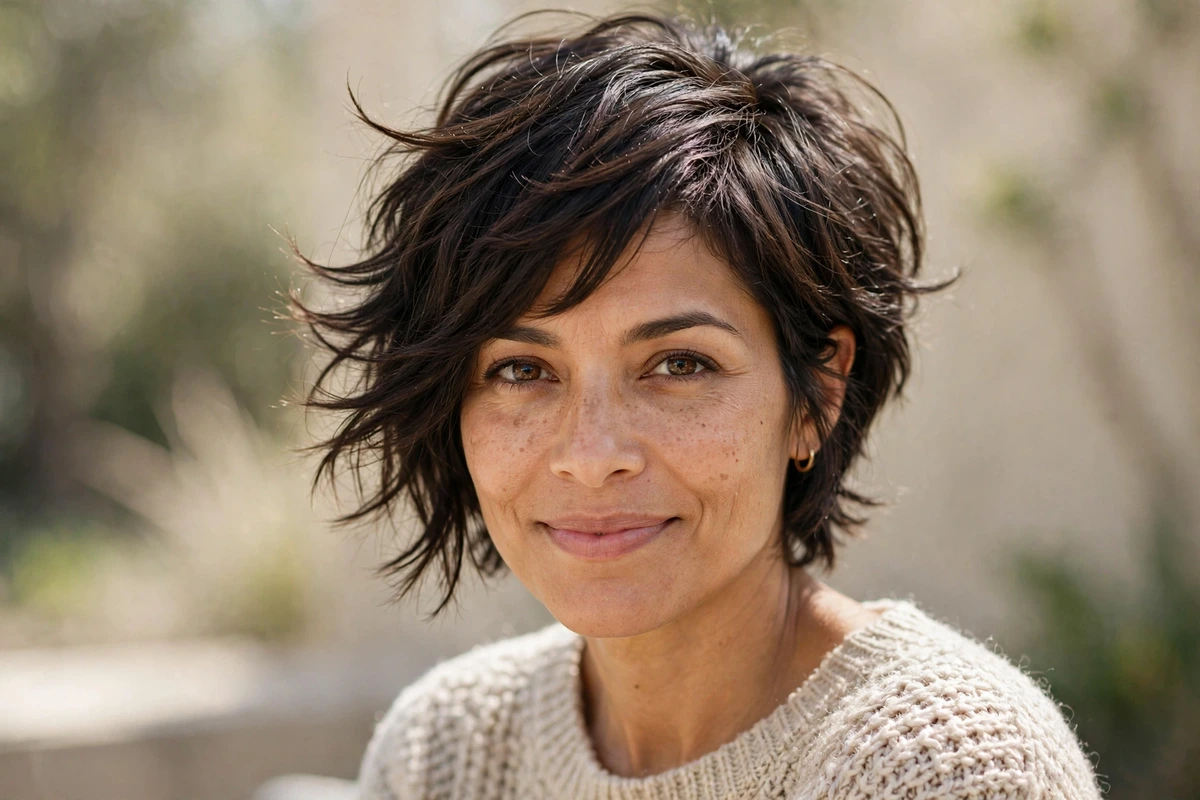
Thick hair and a long pixie are a better match than most people expect, as long as the cut is built to manage density. A long pixie sits at pixie-bob length, longer on top and around the face with a cropped nape, and on thick hair that extra length is exactly what keeps the shape from puffing into a triangle. I’ve spent years watching how thick hair behaves in short cuts, and the winners always have one thing in common: the stylist removed weight on purpose instead of hoping for the best.
This list rounds up 27 long pixie haircuts for thick hair, and every idea names the debulking technique that makes it work, from hidden undercuts to slide-cut layering. Keeping length while removing bulk is its own cutting strategy, and it reads distinctly different from a standard short pixie for thick hair, where the answer is simply going shorter. Pick the technique that matches your density, your texture, and how much daily styling you actually want to do.
Quick Takeaways
- Hidden undercuts remove the heaviest under-layer hair while the long top keeps its length and coverage.
- Slide-cut and point-cut layering hollow out the interior so thick hair lies flat instead of puffing outward.
- Tapered and V-cut napes keep the back close, which stops the dreaded triangle silhouette on dense hair.
- Thinning shears and razor cutting work best through the mid-shaft, not at the ends, for a soft perimeter.
- Most long pixies on thick hair need a trim every 6 to 10 weeks to keep the debulking from growing out unevenly.
1. Long Pixie with a Hidden Nape Undercut

This is the boldest bulk-removal strategy that still looks like a regular long pixie from the front. Your stylist clips the nape close, usually with clippers, while the top stays long and drapes over it. On very thick hair this is transformative, because the heavy underneath hair that pushes everything outward is simply gone, so the top lies exactly where you style it. Nobody sees the undercut when your hair is down, which makes it practical for workplaces that frown on edgy cuts.
Ask your stylist to keep the undercut low, from the occipital bone down, and to leave generous length through the top and front. The contrast between the close nape and the long top also makes the cut look more deliberate and styled, even on second-day hair. The undercut needs a tidy-up every three to four weeks, though many salons do quick nape clean-ups for a small fee between full cuts.
Try this: ask for the undercut “short but not buzzed” so the grow-out stays soft instead of prickly.
Difficulty: Medium · Cost: $$ (salon)
2. Long Pixie with a Concealed Side Undercut

Instead of the nape, this version takes the undercut to one side, hidden beneath a long top that sweeps across. It removes bulk unilaterally, which creates a pleasing asymmetry and stops thick hair from spreading sideways at the temples. When you wear it down, all anyone sees is a long, flowing pixie with a deep side part. Tuck the long side behind your ear and the close-cropped section shows, which gives you two looks from one cut.
This works especially well if your hair grows outward rather than down, since the side undercut removes the exact hair that causes the sideways puff. Ask your stylist to taper the undercut into the nape so there is no harsh line where the sections meet. Styling is simple: define the long top with a pea-sized amount of texturizing putty and let the undercut take care of itself. The asymmetry also means the cut still looks deliberate as it grows, buying you extra time between appointments.
Try this: flip your part to the other side on day two for instant volume and a fresh silhouette.
Difficulty: Medium · Cost: $$ (salon)
3. Choppy Textured Long Pixie

Point-cutting is the technique that makes this cut work on thick hair. Instead of cutting straight across, your stylist snips into the ends at an angle, which breaks up dense sections into piecey bits that move. The choppy layers keep the cut from reading as one solid heavy mass, and the slightly messy finish means the style looks intentional even when you do almost nothing. It is one of the most forgiving options here for hair that has a mind of its own.
Ask for the choppiness concentrated through the mid-lengths and ends, with the top left long enough to style forward or to the side. A lightweight wax or a dab of matte pomade emphasizes the separation without weighing thick hair down. This cut suits straight to wavy textures best, and it flatters oval and round faces because the texture breaks up the width. Trims every six to eight weeks keep the choppy ends from growing into a heavy shelf.
Try this: work pomade through dry hair with your fingers, never a brush, to keep the choppy pieces separated.
Difficulty: Low · Cost: $ (salon)
4. Dry Razor-Cut Lixie
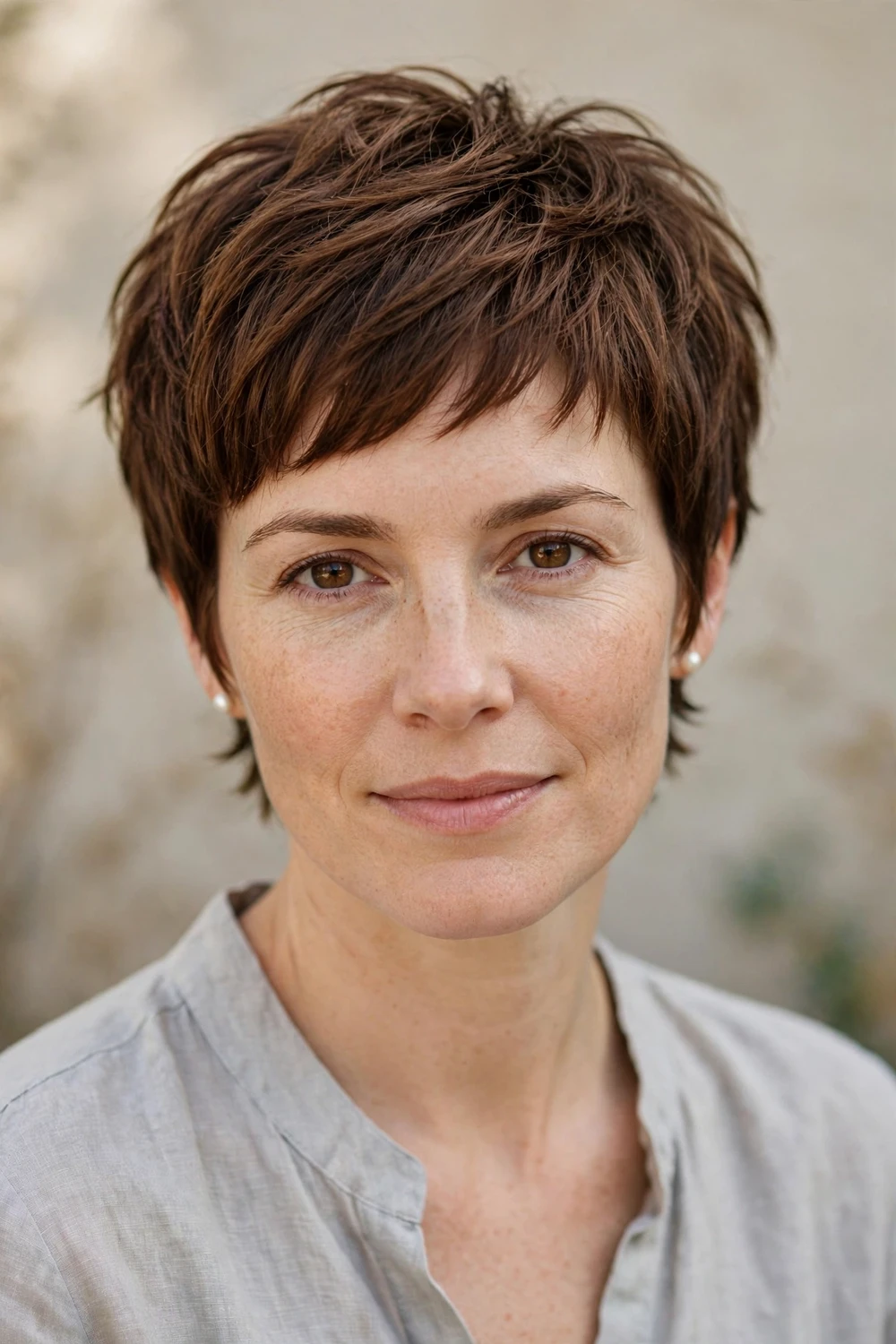
A razor cut on dry hair is one of the softest ways to remove weight from thick hair. Because the razor thins as it cuts, each strand ends at a slightly different length, which creates a feathered effect that no scissor can quite copy. Cut dry, your stylist can see exactly how your hair falls and remove bulk precisely where it puffs. The result is a lixie, the longer pixie-bob hybrid, with unmatched softness and movement.
This is a low-maintenance dream for thick hair: massage a small amount of styling cream through damp hair and air-dry or rough-dry, and the texture does the rest. Ask your stylist whether a razor suits your hair, since very curly or fragile hair sometimes responds better to shears. On straight to wavy thick hair, though, the dry razor cut keeps its soft shape for weeks. If your hair is very coarse, ask for the razor work concentrated through the interior rather than the perimeter.
Try this: skip the round brush and rough-dry with your fingers to preserve the razor’s soft texture.
Difficulty: Low · Cost: $$ (salon)
5. Invisible-Layered Long Pixie

The smartest debulking technique on this list hides in plain sight. Your stylist slide-cuts through the mid-shaft, removing weight from inside the cut while the perimeter stays soft and full. The interior is hollowed out, the outside looks untouched, and the hair suddenly lies flat instead of ballooning outward. Nobody looking at the finished cut would guess how much hair was removed, which is exactly the point. It is the anti-triangle cut, built specifically for thick hair that wants to look sleek at longer pixie length.
Because the layers are invisible, this version styles like a much simpler cut: blow-dry smooth with a paddle brush or let it air-dry with a leave-in cream. Ask your stylist specifically for interior layering rather than surface texturizing, since texturizing at the ends can make thick hair frizz. The smooth silhouette also grows out gracefully, buying you extra weeks between appointments. It also photographs smoothly, since there are no choppy layers catching uneven light.
Try this: say the words “invisible layers” and “slide-cut the interior” at your consultation so the technique is explicit.
Difficulty: Low · Cost: $$ (salon)
6. Feathered Long Pixie
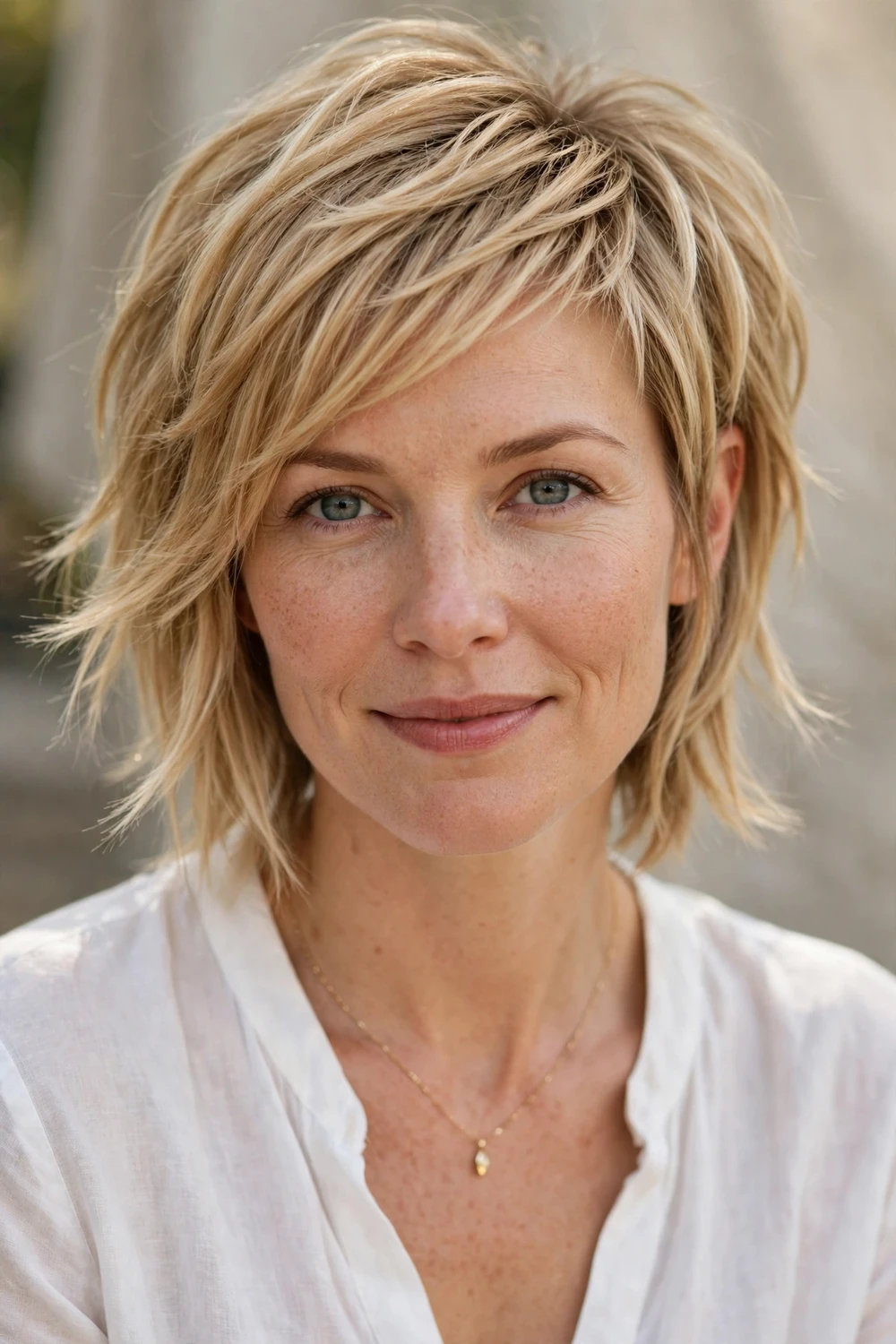
Feathered layers de-bulk thick hair by tapering each section to a soft point, which lets dense hair overlap neatly instead of stacking into bulk. The result is the most touchable cut on this list: you can run your fingers through it all day and it falls right back into place. It keeps enough length through the top and front to feel feminine, while the feathered ends keep the whole shape light and airy.
Ask for feathering through the ends and mid-lengths rather than blunt layering, which can look blocky on thick hair. A pea-sized amount of lightweight cream worked through damp hair is enough styling, and air-drying gives the softest finish. This cut suits straight to slightly wavy hair and flatters most face shapes because the feathered edges soften every line they touch. Book a trim every eight weeks, since feathered ends show split ends faster than blunt ones.
If you like soft layers at this length, these short layered hairstyles for women over 60 show flattering options with similar feathered movement.
Try this: air-dry with a little cream and skip the brush entirely; the feathering is the style.
Difficulty: Low · Cost: $ (salon)
7. Classic Bixie with Soft Layers

The bixie bridges the pixie and the bob, with a cropped neckline and length kept around the face from the cheekbone to the jawline. For thick hair, that front length is doing real work: the weight of the longer pieces pulls the hair downward, which counteracts the outward puff that shorter pixies can cause. Soft blended layers remove bulk evenly, so the cut moves as one fluid shape instead of separating into chunks.
Ask for a graduated shape, shorter at the nape and longer toward the front, with the longest pieces grazing the chin. It styles like a pixie but behaves like a bob on second-day hair, and you can even pin it back. This is the most versatile option on the list and the easiest to grow out, since it is already halfway to a bob. Bring a photo of the exact front length you want, since chin-grazing means different things to different stylists.
Try this: tuck the front pieces behind your ears on day two for a sleeker, more polished line.
Difficulty: Low · Cost: $$ (salon)
8. Inverted Pixie Bob with Stacked Nape
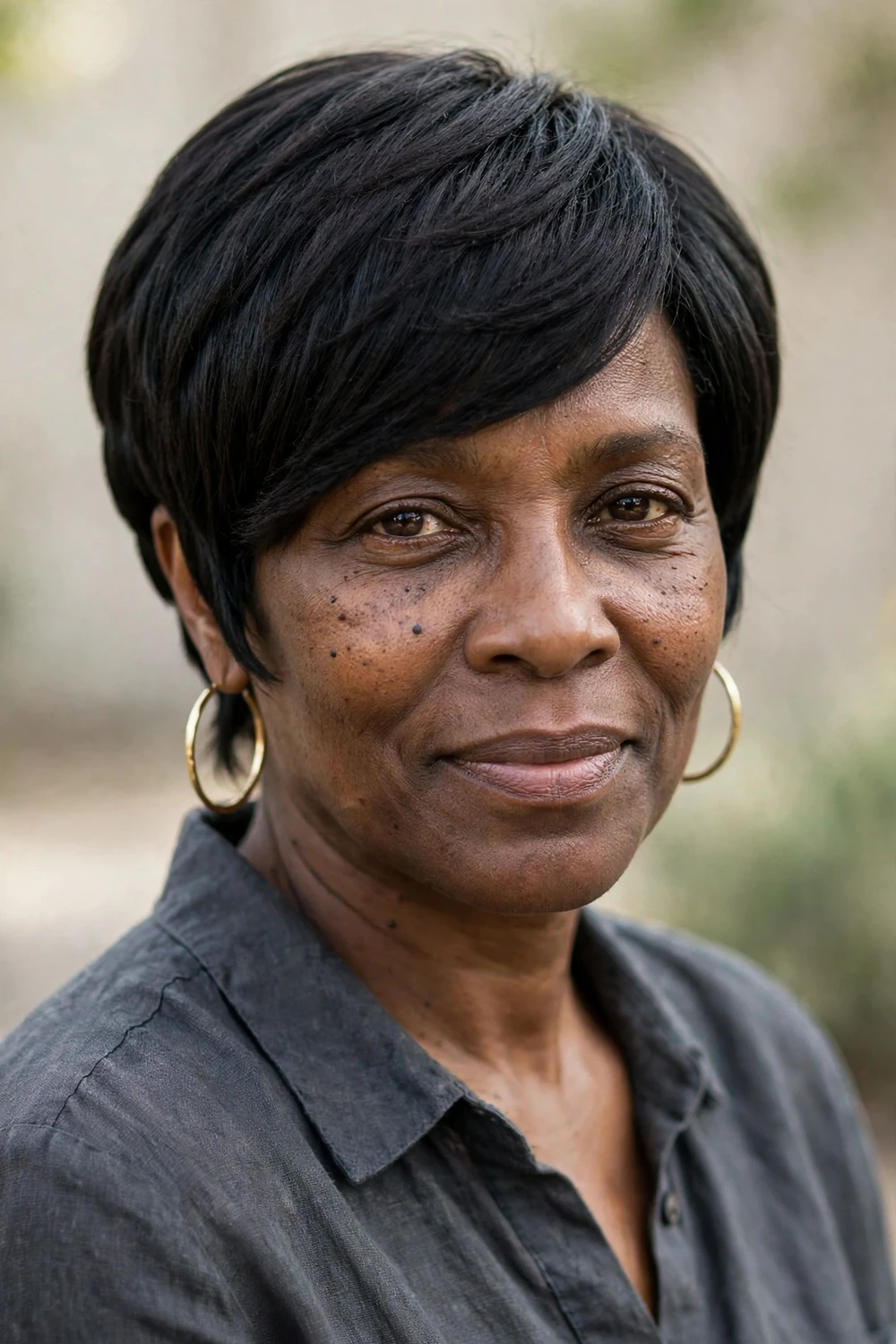
The inverted pixie bob is shorter at the back and longer in front, with the nape stacked in graduated layers that build shape where thick hair usually goes limp or, worse, puffs. The stacking removes weight precisely at the back of the head, which is where dense hair creates the most bulk. The longer front pieces swing forward past the cheekbone, giving the cut its characteristic movement and keeping the face framed.
Ask for the stacked layers to end around the occipital bone, not higher, since stacking too high starts reading dated. Soft feathery side pieces around the face keep the style from looking severe. This cut works on straight to wavy thick hair and suits oval and heart-shaped faces especially well, since the forward swing draws the eye down and in. A shine serum smoothed over the longer front pieces keeps the swing looking polished rather than puffy.
Try this: blow-dry the front pieces forward with a paddle brush to emphasize the inverted swing.
Difficulty: Medium · Cost: $$ (salon)
9. Long Pixie Bob with a Fringe

Adding a fringe to a long pixie bob changes the whole balance of the cut. The bangs draw the eye to the center of the face and break up the width that thick hair can create across the forehead. Soft layers through the rest of the cut keep the density moving, and the fringe itself should be texturized so it lies softly instead of sitting as one heavy shelf. It is a youthful, face-framing combination that works on nearly every face shape.
Ask your stylist to thin the fringe with point-cutting so it stays piecey, and keep it long enough to sweep to the side on days you want a change. A little texturizing spray through the bangs keeps them separated and light. The rest of the cut air-dries easily, which makes this one of the lower-effort options with bangs. Ask for fringe trims between full cuts, since bangs on thick hair grow out of shape faster than the rest.
Try this: sweep the fringe to the side and pin it for an instant asymmetric look on second-day hair.
Difficulty: Medium · Cost: $$ (salon)
10. Long Pixie with a Long Angled Fringe

A long fringe cut on a diagonal gives thick hair a place to go. Instead of the front section puffing upward, the angled bangs direct the density across the forehead in one smooth, controlled sweep. The fringe grazes the brows and blends into the longer face-framing pieces, which keeps the whole front of the cut feeling connected and deliberate. It is especially flattering on round and square faces, where the diagonal line adds slimming angles.
Ask for the fringe cut slightly longer than feels right at the appointment, since it always looks shorter once dry, and have your stylist thin it from underneath. Blow-dry it across the forehead with a small round brush, finishing with a cool shot to set the sweep. It grows out into longer face-framing layers, so the awkward stage barely exists. A cool shot from the dryer at the end locks the diagonal sweep in place for the whole day.
Try this: direct the fringe across your forehead while blow-drying so it falls into place on its own.
Difficulty: Low · Cost: $ (salon)
11. Long Pixie with Curtain Bangs

Curtain bangs part down the middle and frame the face at the cheekbone, which splits thick front hair into two manageable sections instead of one heavy curtain. The trick is having them cut dry, after the main shape is done, because wet hair behaves differently and thick hair shrinks and springs as it dries. Cut right, the bangs fall open naturally and soften the forehead without the commitment of a full fringe.
Style them with a round brush blown away from the face for about thirty seconds, and they will hold their part all day. They suit nearly every face shape and grow out seamlessly into face-framing layers. For thick hair, ask your stylist to keep the bangs on the thinner side so they drape instead of poufing. They also hide a growing-out pixie gracefully, which makes them a smart pick if you are between lengths.
Try this: twist each side away from your face while blow-drying to get the curtain sweep right.
Difficulty: Low · Cost: $ (salon)
12. Long Pixie with a Wispy Fringe
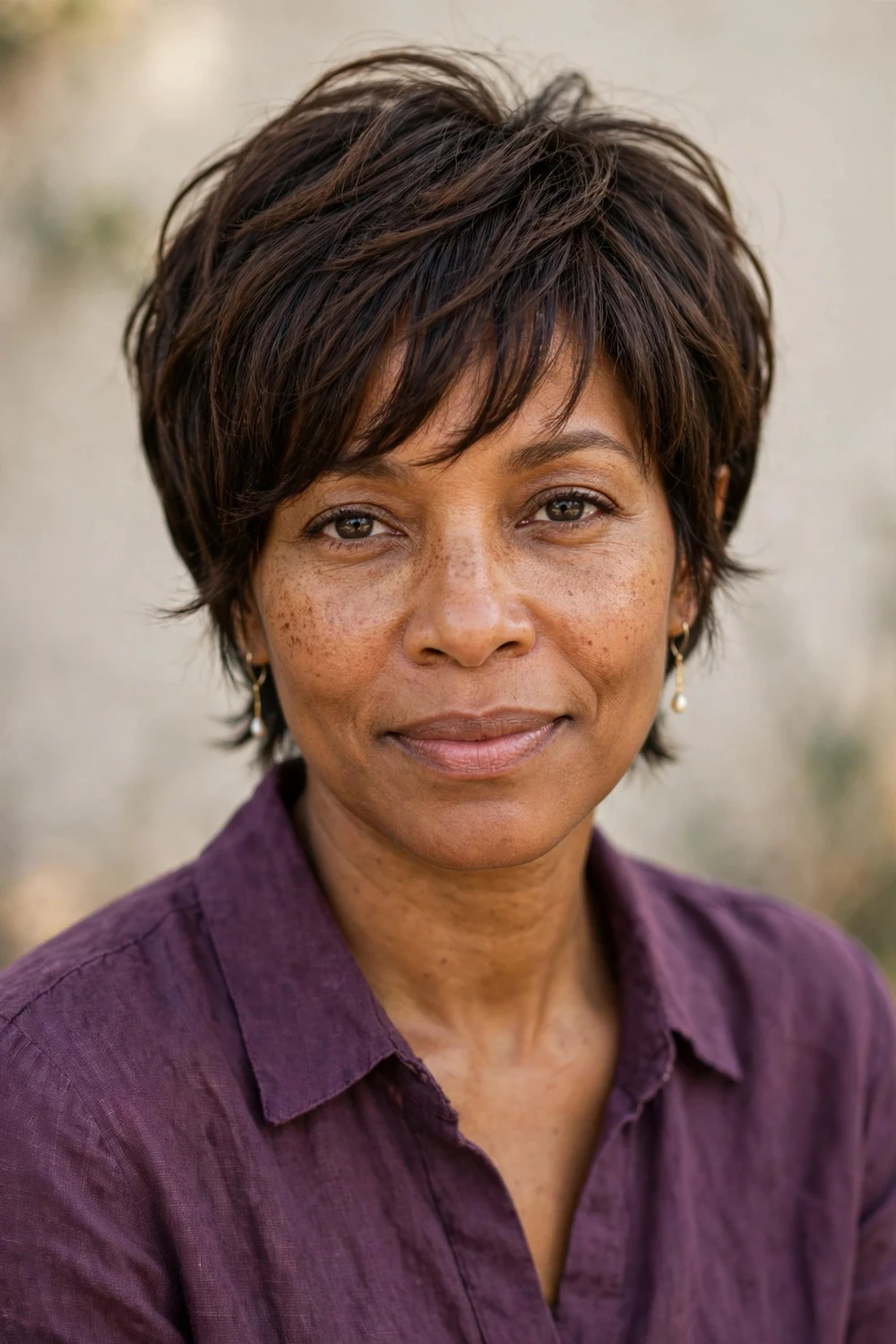
A wispy fringe is the low-commitment way to add bangs to thick hair. The bangs are cut light and airy, with lots of point-cutting through the ends, so they never sit as a dense block on the forehead. Long textured sideburns extend the fringe line down past the ears, which delicately frames the face and keeps the sides from looking blunt. The overall effect is softness and movement rather than structure.
This works best when your stylist thins the fringe aggressively from underneath while keeping the visible length. A texturizing spray keeps the wisps separated, and the fringe forgives second-day hair since piecey is the point. It flatters petite features and oval or heart-shaped faces, where heavy bangs would overwhelm. Keep the fringe ends trimmed regularly, since wispy bangs lose their lightness the moment the ends get blunt. A dusting every four weeks keeps them airy without losing length.
Soft bangs flatter every age, and these short pixie haircuts for older women show the same gentle fringe on shorter, easy-care cuts.
Try this: pinch the fringe ends with a tiny bit of paste to define the wisps on humid days.
Difficulty: Low · Cost: $ (salon)
13. Mussed Long Pixie with Bangs
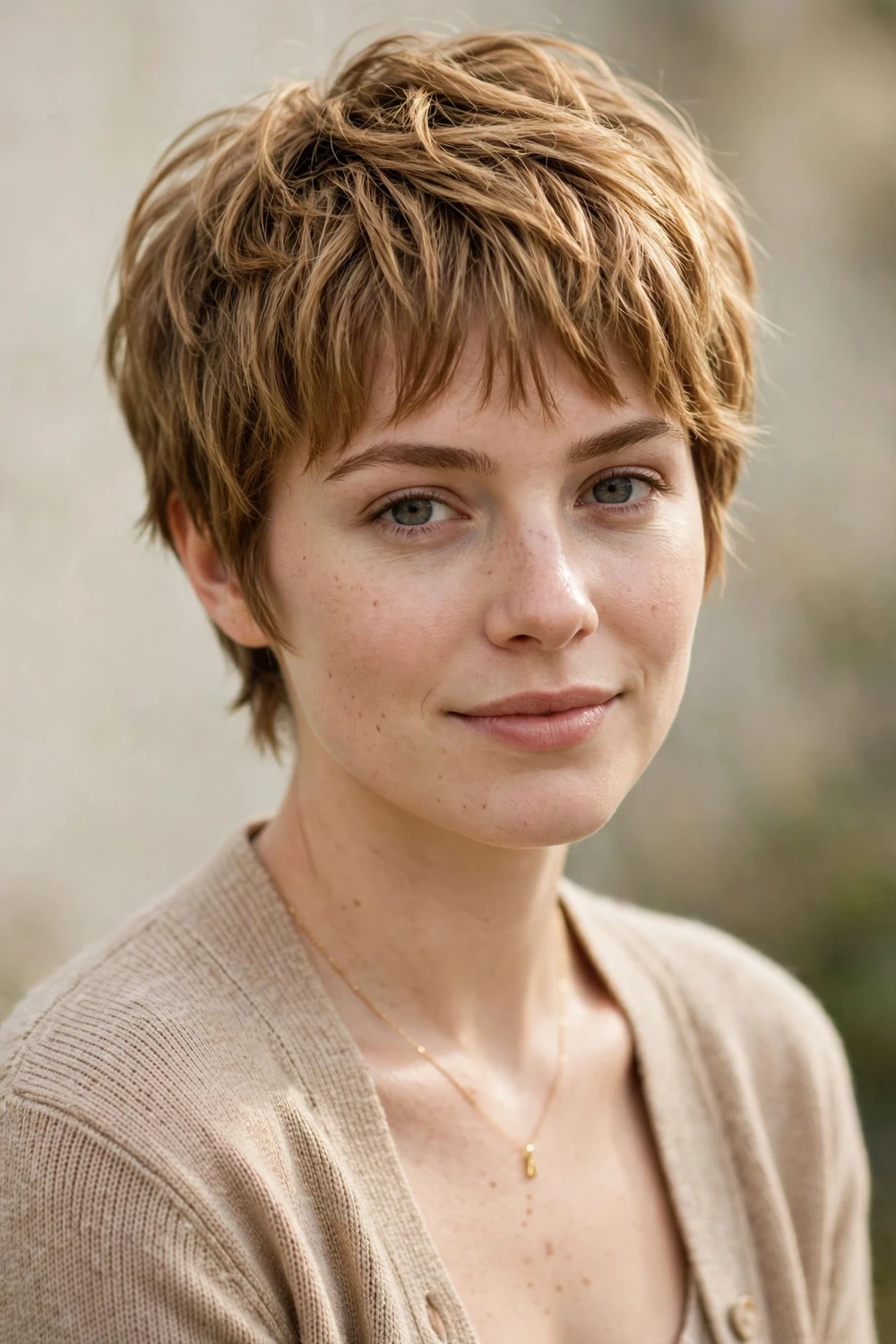
The mussed finish turns thick hair’s natural volume into an asset. Layers and a tapered silhouette are cut in first, then the styling does the talking: a messy, piecey finish that shows off the hair’s movement instead of fighting it. Bangs graze the eyebrows and blend into the tousled top, and sideburns left long over the ears keep the face framed. It is the cool-girl take on the long pixie, and it genuinely looks better slightly undone.
Ask your stylist for a tapered shape underneath the mess, since structure is what keeps a mussed cut from reading sloppy. Style by working a small amount of matte paste through dry hair with your fingers, lifting at the roots. It suits straight to wavy thick hair and needs the least precision of any cut on this list. On flat mornings, flip your head upside down and shake at the roots to bring the mussed texture back to life.
Try this: sleep on it and just reshape with your fingers in the morning; this cut rewards laziness.
Difficulty: Low · Cost: $ (salon)
14. Side-Swept Long Pixie with Crown Volume

A deep side part with volume at the crown solves two thick-hair problems at once. The side sweep directs density diagonally instead of letting it expand outward, and the lifted crown balances the width so the silhouette stays long and lean. Swoopy layers through the front skim the cheekbones, which keeps the longer side of the part from hanging heavy. It is a polished, grown-up shape that still moves. Few cuts flatter thick hair this reliably with this little daily effort.
Ask for the side part cut in, not just styled in, so the shape holds even when your hair is freshly washed. Build the crown volume by applying a root-lifting mousse to damp roots and blow-drying upward with your fingers. This cut flatters round and square faces especially well, since the deep part and height add length to the face. Flip the part to the shallower side on casual days for a softer, less structured version of the same cut.
Try this: set the crown with one large Velcro roller while you do your makeup for lift that lasts all day.
Difficulty: Medium · Cost: $$ (salon)
15. Sleek Side-Parted Long Pixie
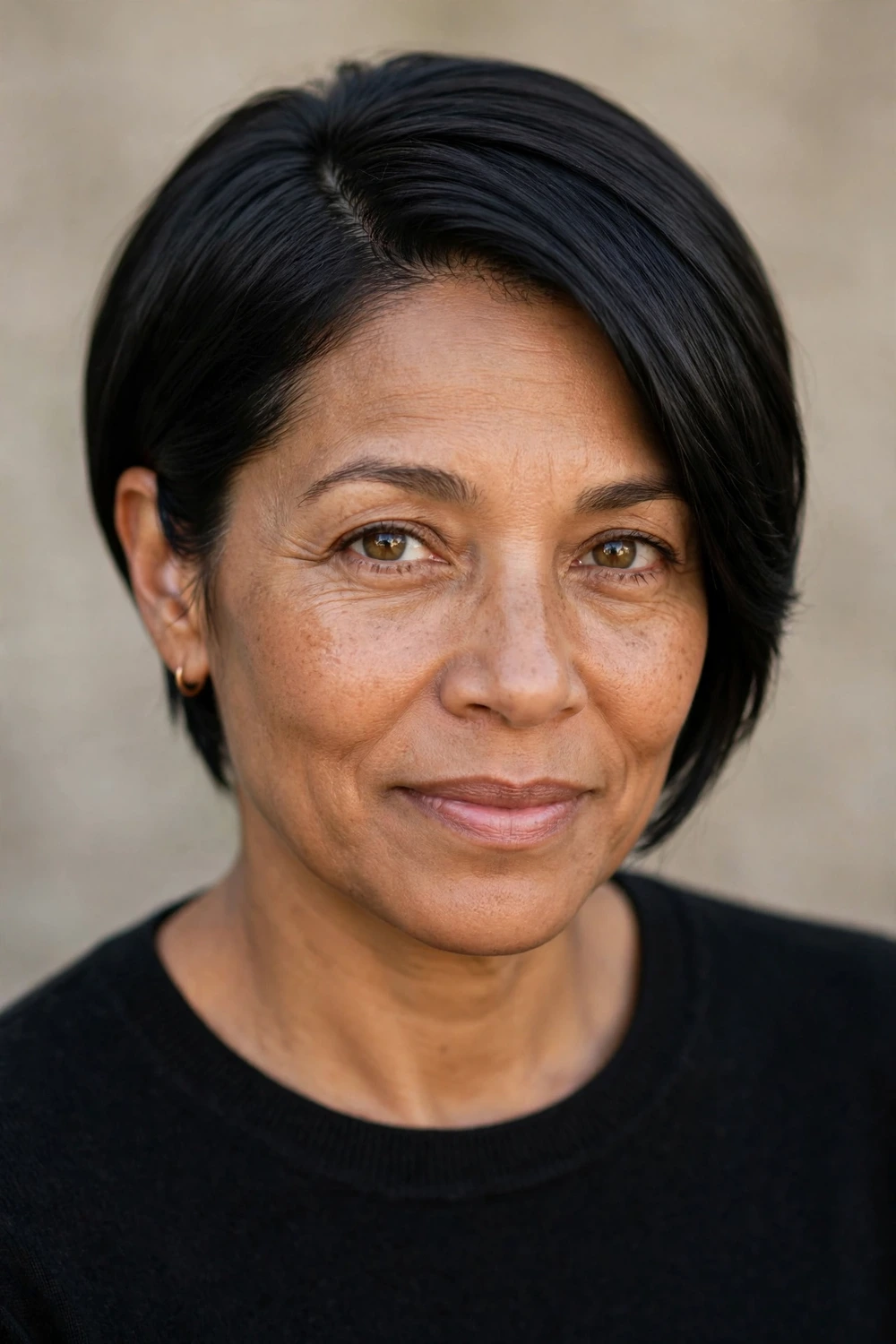
Sleek is a statement on thick hair, because it proves the cut is doing its job. The technique here is interior weight removal paired with a smooth finish: your stylist thins from within, then you flat-wrap or blow-dry the hair smooth so the density reads as shine rather than bulk. The deep side part adds structure, and the clean lines show off the precision of the cut. It is the most office-ready option on this list.
Ask for enough interior layering to let the hair lie flat, since sleek styling cannot fix a cut that is too heavy underneath. Always use a heat protectant before smoothing, and finish with a drop of lightweight serum through the mid-lengths. Thick hair holds this style well once the weight is managed, and it stays neat for days. Sleep on a satin pillowcase to preserve the smooth finish overnight without re-styling in the morning.
If polished bob shapes are your thing, these short french bobs show the classic smooth cut on different hair textures.
Try this: wrap the hair smooth around your head for ten minutes after blow-drying to lock in the sleek finish.
Difficulty: Medium · Cost: $$ (salon)
16. Tapered Nape Long Pixie
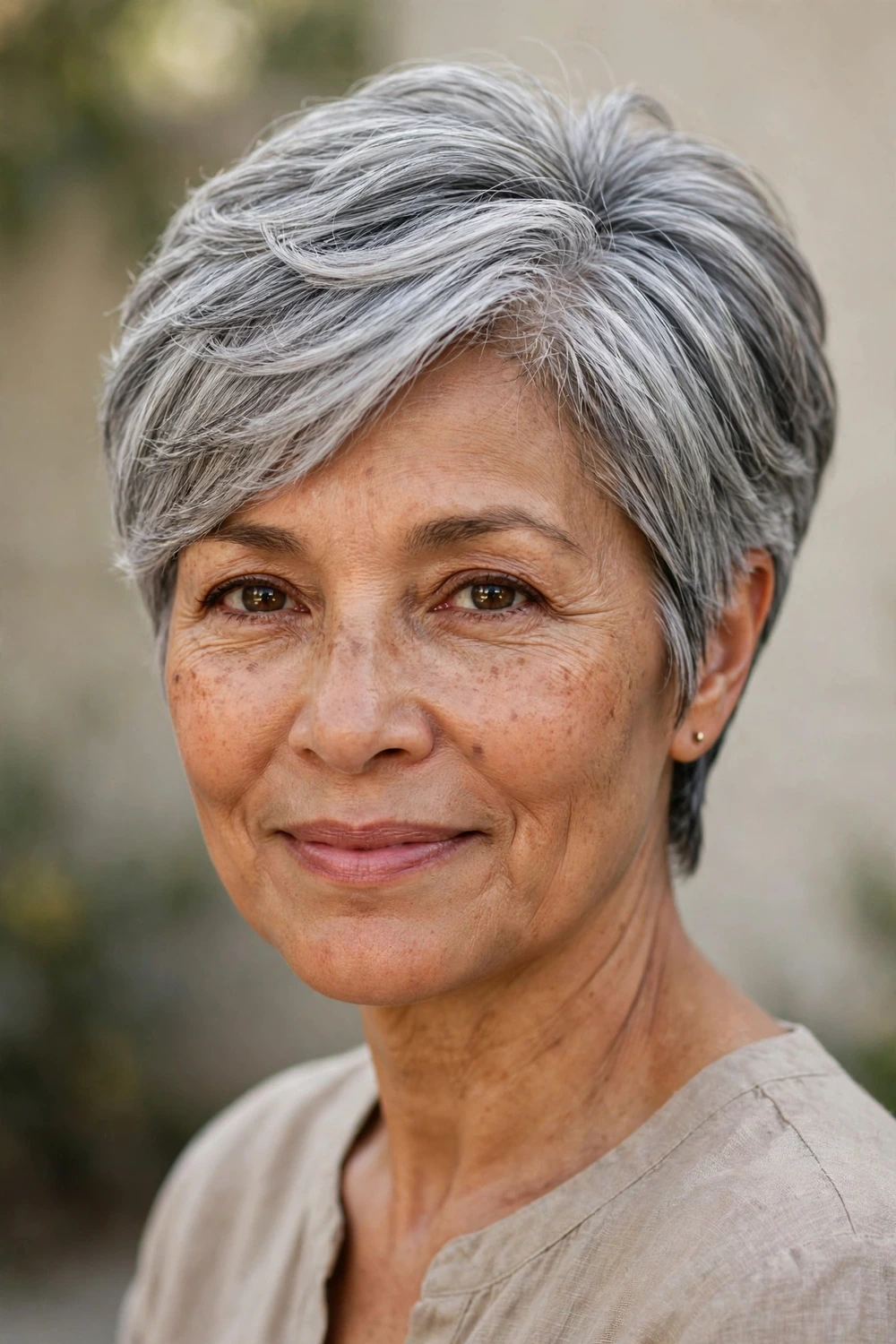
The tapered nape keeps the back of the cut close and clean while the top stays long, which removes bulk exactly where thick hair stacks up. Unlike an undercut, the taper is done with shears, not clippers, using a scissor-over-comb technique that leaves a soft, natural finish. The graduation should be subtle rather than severe, so the back melts into the longer top without a visible line. It is the quietest debulking method here: no shaved sections, no drama, just a back that lies flat.
This is one of the best grow-out cuts for thick hair, since the soft taper extends gracefully instead of hitting an awkward stage. Ask your stylist to point-cut the ends for piecey texture that keeps the longer top from looking heavy. A side part flatters this shape most, and finger-styling with a little cream is all the daily maintenance it needs. Because the taper is soft, this cut also transitions into a bob more gracefully than any other option here.
Try this: smooth a dab of cream over the nape after styling to keep the taper neat all day.
Difficulty: Low · Cost: $ (salon)
17. V-Cut Layered Long Pixie

The V-cut nape and sideburns give this long pixie its distinctive finish. Your stylist uses a scissor-over-comb technique to taper the back into a soft V shape instead of the usual rounded neckline, which removes weight at the nape while leaving a clean, elongated line. Point-cutting creates super short wispy pieces around the fringe and ears, adding pieced-out texture that breaks up density wherever the hair touches the face. The V shape also elongates the neck visually, which is a flattering bonus on a short cut.
Ask for the V kept soft rather than sharp, since a severe point can look harsh on thick hair. The wispy pieces around the ears are what make this cut special, so make sure your stylist textures them deliberately instead of tucking them away. A light styling cream defines the pieces without stiffness. The whole cut takes about five minutes to style, which makes the V-cut one of the sharper low-effort options here.
Try this: define the wispy ear pieces with a tiny amount of wax so they stay visible and intentional.
Difficulty: Medium · Cost: $$ (salon)
18. Long Pixie with Choppy Sideburns

Choppy sideburns are the detail that keeps a long pixie from looking plain on thick hair. The sides are textured into defined, piecey points that fall in front of the ears, which frames the face and breaks up the solid wall of hair that density can create along the jaw. Longer layers through the top keep the cut feeling like a long pixie, while the sideburns add the edge and structure.
Ask your stylist to cut the sideburns with a razor or point-cutting so they stay soft rather than blunt, and to keep them long enough to graze the jawline. They suit oval and heart-shaped faces best, since the vertical lines draw the eye downward. Define the pieces with a little texturizing paste so they stay separated and visible. They also draw attention to earrings, so this is a great cut if you love statement jewelry.
Try this: tuck one sideburn behind your ear and leave the other out for an easy asymmetric detail.
Difficulty: Low · Cost: $ (salon)
19. Wavy Tousled Lixie
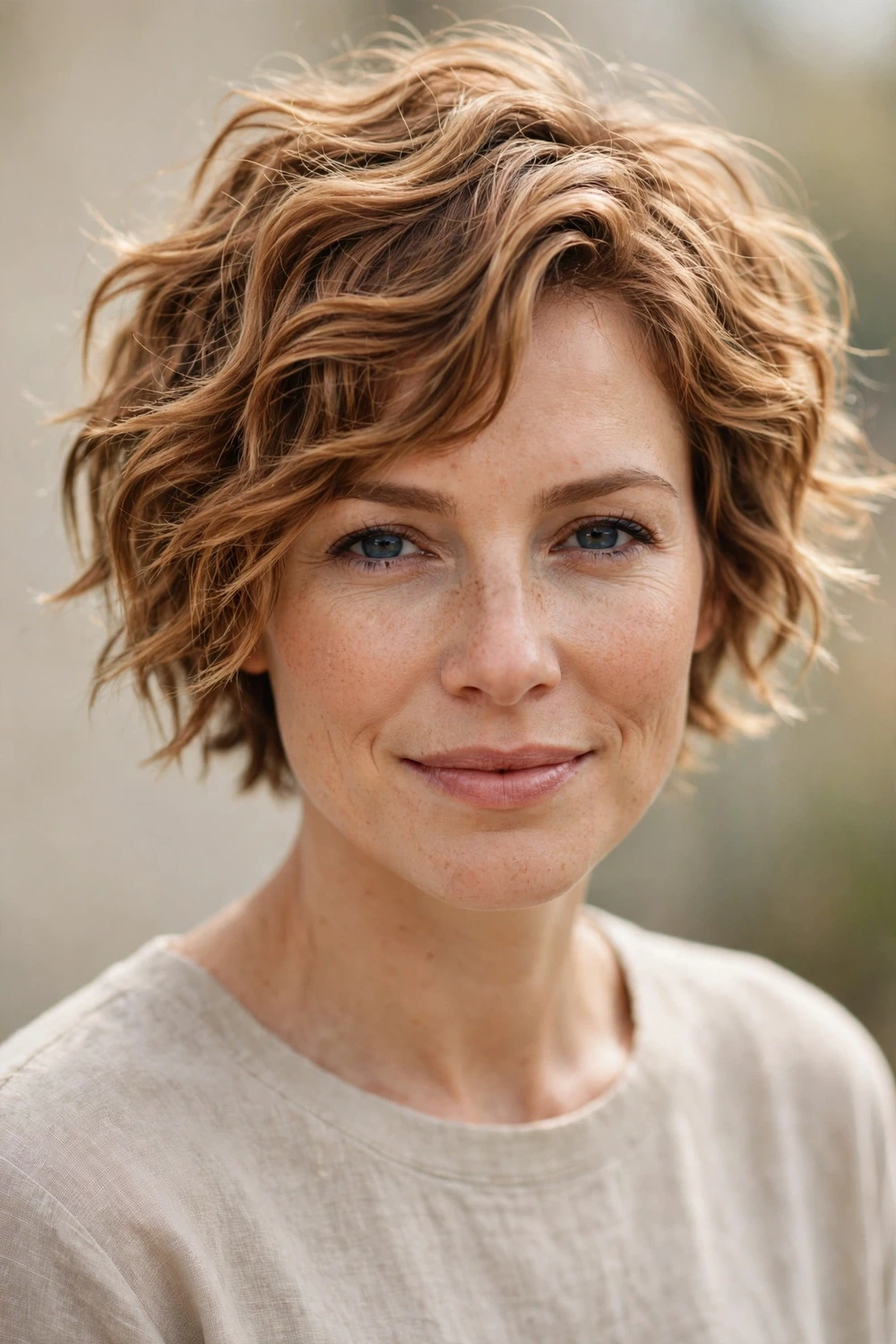
Natural wave is a gift on a long pixie, because the wave pattern breaks up density without any cutting tricks. The lixie keeps the crown longer, which lets the waves form properly instead of springing into a puff, and tousled layers add movement that reads as style rather than bulk. Sea salt spray scrunched into damp hair is genuinely all this cut needs on most days. Thick wavy hair finally gets to do what it wants, and the cut simply organizes it.
Ask your stylist to cut with your natural wave pattern in mind, keeping enough length on top for the waves to do their work. Diffuse on low heat or air-dry, and avoid brushing once dry, since brushing separates waves into frizz on thick hair. This is the most wash-and-go option here for anyone with natural texture. Refresh second-day waves with a mist of water and a scrunch, with no need to rewash.
Try this: scrunch sea salt spray into damp hair and leave it alone while it air-dries; touching it creates frizz.
Difficulty: Low · Cost: $ (salon)
20. Curly Long Pixie

Curls plus thickness need length to behave, which is exactly what the long pixie provides. The top stays long enough for curls to form their full spiral instead of shrinking into a tight cap, while defined layers underneath remove the bulk that makes curly cuts widen. A soft undercut at the nape is a common add-on here, since it takes out the densest curls where they cause the most spread.
Ask for the cut done dry or on stretched hair so your stylist can see the true length of each curl. A leave-in conditioner under a curl cream keeps definition without heaviness, and lightweight mousse defines curls without crunch. Trim every six to eight weeks, since curly long pixies lose their shape faster than straight ones as they grow. Pineapple your hair at night to protect the curl pattern between wash days.
Try this: apply curl cream to soaking-wet hair in sections so every curl gets coated before it dries.
Difficulty: Medium · Cost: $$ (salon)
21. Asymmetric Long Pixie

Asymmetry redistributes thick hair instead of removing it. One side stays noticeably longer, often sweeping past the cheekbone, while the other is cut closer, which shifts the visual weight and stops the cut from expanding evenly in all directions. The unevenness also gives the eye somewhere to travel, so density reads as deliberate style. It is edgy without needing an undercut, which suits anyone who wants the attitude with less maintenance.
Ask your stylist to keep the length difference clear but wearable, usually two to three inches, and to thin the longer side so it drapes instead of poufing. The shorter side can be tucked or styled sleek, while the long side does the talking. This cut flatters strong jawlines and oval faces, where the diagonal line adds interest. Book trims every six weeks, since asymmetry looks sloppy the moment the length difference starts to even out.
Try this: flat-iron just the longer side on mornings when you want the asymmetry to look extra sharp.
Difficulty: Medium · Cost: $$ (salon)
22. Long Pixie with a Shaved Side

This is the visible version of the hidden undercut: one side taken close with clippers, the top left long and textured with a fringe. The shaved side removes a serious amount of bulk in one move, and the contrast with the long top makes the cut look bold and intentional. The fringe softens the edge, keeping the look feminine rather than severe, and the long top can be styled sleek, wavy, or tousled.
Be honest about upkeep before you book it, since the shaved side needs refreshing every two to three weeks to stay crisp. Ask your stylist to shape the hairline into a soft curve where the shave meets the longer hair. It suits confident dressers and strong bone structure, and it photographs strikingly thanks to the high contrast. Pair it with bold earrings on the shaved side to make the contrast look fully intentional.
Try this: sweep the long top fully to the shaved side for maximum drama on nights out.
Difficulty: High · Cost: $$ (salon)
23. Shaggy Long Pixie (Velvixie)
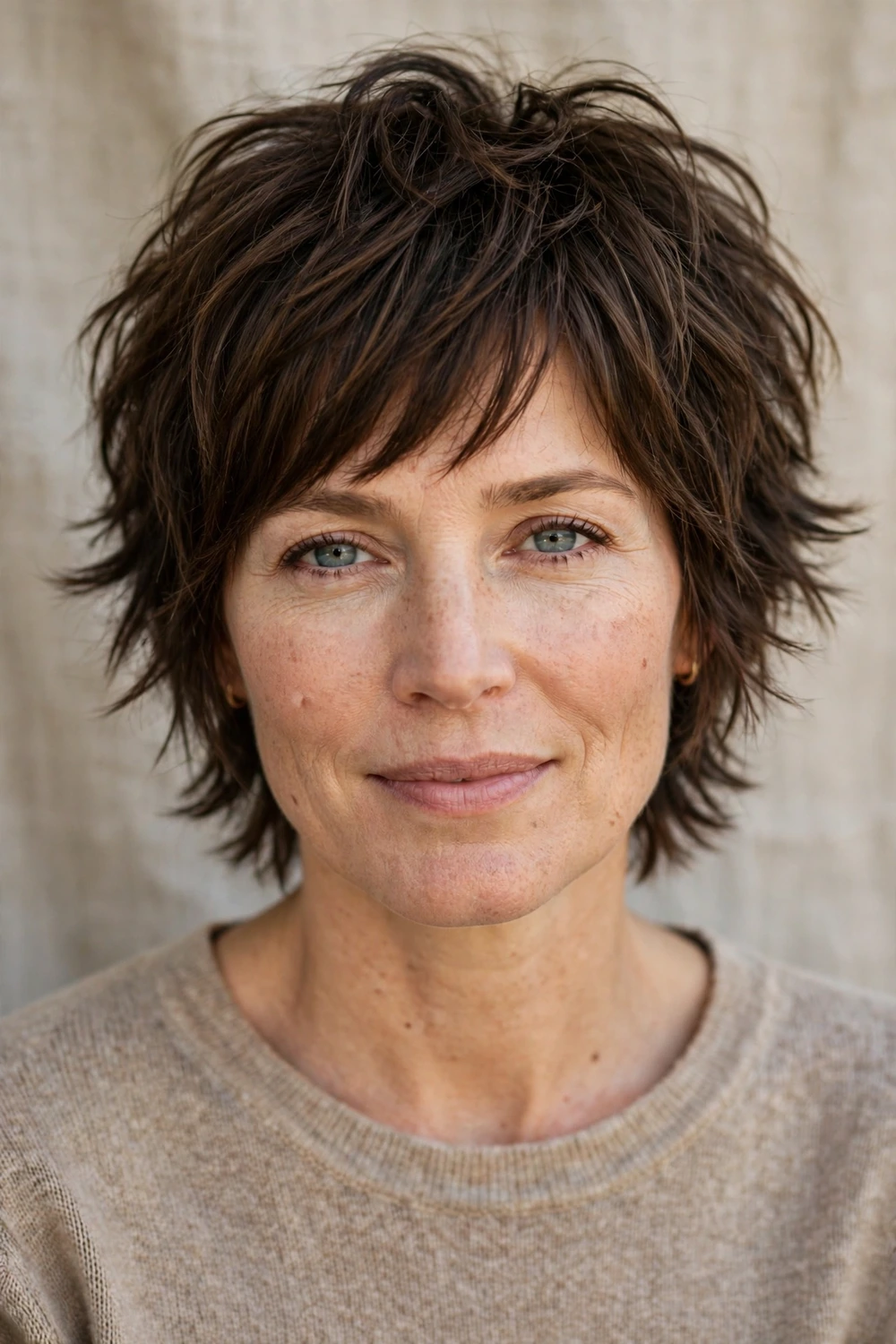
The velvixie is a pixie-shag hybrid, and heavy internal texturizing is what makes it work on thick hair. Your stylist cuts choppy layers through the crown and interior, which removes serious weight while creating the piecey, undone texture the cut is known for. The feathered layers frame the face and keep the perimeter soft, so the shagginess reads as style rather than chaos. It is the edgiest wearable option on this list.
Ask for the texturizing concentrated at the crown and through the interior, with the perimeter left long enough to feel like a pixie and not a mullet. A lightweight styling cream enhances the separation, and the cut air-dries into shape. It suits wavy and straight thick hair with natural texture, and it flatters angular and oval faces. The grow-out stays soft for weeks, since shaggy layers have no harsh lines to lose.
If the shaggy layers win you over, these short shag hairstyles for women show the cut on every hair texture.
Try this: work cream through the crown layers only and leave the ends alone for the signature undone finish.
Difficulty: Medium · Cost: $$ (salon)
24. Long Pixie Mullet

The pixie mullet keeps the crown short and textured while letting the back grow longer, which is a clever way to handle thick hair. The short top removes weight where density creates the most height, and the longer back gives the remaining hair somewhere to fall instead of expanding outward. It is the edgiest silhouette here, and on thick hair it has a practical logic that the fashion version sometimes lacks.
Ask your stylist to keep the transition between the short crown and the longer back blended rather than disconnected, so it reads modern instead of costume. The back length should be texturized to avoid a heavy curtain. It suits straight to wavy hair best, and a little pomade through the crown defines the shorter layers. Keep the back ends texturized at every trim so the mullet shape never turns into a heavy shelf.
Try this: ask for the back texturized, not blunt, so the mullet shape stays soft and wearable.
Difficulty: Medium · Cost: $$ (salon)
25. Angled Long Pixie

Angles give thick hair architecture. The sides are cut into clean geometric lines, longer toward the front and angled up toward the back, which creates a flattering shape that draws the eye along the jawline. Point-cut ends keep the angles from looking too severe, and the longer front pieces can be swept or tucked. The precision of the cut does the styling work, which makes this one of the sharper low-effort options.
Ask your stylist to keep the perimeter edges crisp but the interior thinned, since blunt interior layers on thick hair will push the angles outward. It suits straight to slightly wavy hair and flatters oval and heart-shaped faces, where the angled lines highlight the cheekbones. A flat iron pass on the front pieces sharpens the geometry on days you want extra polish. The geometric lines also grow out cleanly, holding their shape longer than textured cuts between appointments.
Try this: smooth a serum over the front angles after styling to keep the lines clean and frizz-free.
Difficulty: Medium · Cost: $$ (salon)
26. Extra-Long Lixie with Wispy Ends

The extra-long lixie is the gentlest entry point into short hair for anyone nervous about losing length. It keeps the most length of any cut here, with the weight of the longer hair pulling everything downward into a sleek silhouette. The key technique is texturizing the ends: wispy, feathered tips remove just enough bulk at the perimeter to keep the long shape from turning into a heavy bob. It is the safest first step into short hair, with the easiest exit route if you change your mind.
Ask your stylist to keep the top long and concentrate the texturizing through the ends and the interior, so the cut stays light without losing its length. It suits all thick hair textures and is the easiest version to style, since the length gives you the most options: sleek, wavy, tucked, or pinned. It also grows out into a bob with zero awkwardness. Because the length does most of the work, this is also the most heat-styling-friendly cut on the list.
Try this: curl just the ends away from your face for soft movement that shows off the wispy texture.
Difficulty: Low · Cost: $ (salon)
27. Long Pixie with Balayage Dimension

Color can debulk visually. Balayage painted through a long pixie breaks up the solid mass of thick hair into lighter and darker pieces, which makes dense hair look textured and dimensional instead of heavy. Face-framing brightness around the front pieces draws the eye to the cut’s shape rather than its volume. It is the only idea here where the technique is color, not cutting, and it pairs well with any of the textured cuts above.
Ask your colorist for balayage two to three shades lighter than your base, concentrated on the top layers and around the face, with a soft root shadow so the grow-out stays gentle. Keep the lightened hair conditioned, since thick hair can drink up moisture after color. A purple shampoo once a week keeps blonde tones from warming up between appointments. A gloss treatment every couple of months keeps the balayage looking fresh without a full recolor.
Try this: ask for the brightest pieces around your face, where they flatter most and need the least upkeep.
Difficulty: Medium · Cost: $$ (salon, cut + color)
At a Glance: 27 Long Pixies for Thick Hair Compared
| Cut | Best for | Thick-hair perk | Upkeep |
|---|---|---|---|
| Hidden Nape Undercut | Very thick, coarse hair | Removes the heaviest under-layer | Nape tidy-up every 3 to 4 weeks |
| Concealed Side Undercut | Hair that grows outward | Stops sideways puff, hidden when down | Side tidy-up every 3 to 4 weeks |
| Choppy Textured Long Pixie | Straight to wavy hair | Point-cutting breaks up dense sections | Pomade on dry hair |
| Dry Razor-Cut Lixie | Straight to wavy thick hair | Razor thins as it cuts, feathered finish | Cream and air-dry |
| Invisible-Layered Long Pixie | Hair prone to triangle shape | Hollowed interior, soft perimeter | Blow-dry smooth or air-dry |
| Feathered Long Pixie | Straight to slightly wavy hair | Feathered ends let dense hair overlap | Cream, no brush needed |
| Classic Bixie | All thick hair types | Front weight pulls hair downward | Wash and go, pins back easily |
| Inverted Pixie Bob | Oval and heart faces | Stacked nape removes back weight | Blow-dry front pieces forward |
| Long Pixie Bob with Fringe | Nearly every face shape | Texturized fringe breaks up width | Texturizing spray on bangs |
| Long Angled Fringe | Round and square faces | Diagonal sweep controls front density | Round-brush the sweep |
| Curtain Bangs | Every face shape | Splits front hair into two sections | Quick round-brush styling |
| Wispy Fringe | Petite features, oval faces | Light bangs never sit as a block | Texturizing spray on wisps |
| Mussed Long Pixie | Straight to wavy hair | Messy finish uses volume as texture | Finger-style with paste |
| Side-Swept with Crown Volume | Round and square faces | Diagonal part directs density sideways | Mousse at roots, blow-dry up |
| Sleek Side-Parted | Straight or straightened hair | Interior thinning lets hair lie flat | Heat protectant plus serum |
| Tapered Nape | All thick hair types | Shear taper removes nape bulk softly | Cream on the nape |
| V-Cut Layers | Straight to wavy hair | V nape removes weight with a clean line | Wax on wispy ear pieces |
| Choppy Sideburns | Oval and heart faces | Piecey sides break up jawline density | Paste to define pieces |
| Wavy Tousled Lixie | Naturally wavy hair | Wave pattern breaks up density naturally | Sea salt spray, air-dry |
| Curly Long Pixie | Curly, coily hair | Length lets curls spiral, not shrink | Leave-in plus curl cream |
| Asymmetric Long Pixie | Strong jawlines, oval faces | Redistributes weight instead of removing it | Flat-iron the long side |
| Shaved Side | Confident, bold dressers | Maximum bulk removal in one move | Shave refresh every 2 to 3 weeks |
| Shaggy Velvixie | Wavy, textured hair | Crown texturizing removes interior weight | Cream on crown layers |
| Long Pixie Mullet | Straight to wavy hair | Short crown removes height weight | Pomade on crown |
| Angled Long Pixie | Oval and heart faces | Geometric lines contain the shape | Serum on front angles |
| Extra-Long Lixie | All thick hair textures | Length weight pulls hair downward | Style sleek, wavy, or pinned |
| Balayage Dimension | All thick hair types | Color breaks up the solid mass visually | Purple shampoo weekly |
How to Choose the Right Long Pixie for Thick Hair
Start with an honest read of your density and texture. Extremely thick, coarse hair does best with structural removal: a hidden undercut, a tapered nape, or heavy interior texturizing. Medium-thick hair often just needs slide-cut or point-cut layering to behave. Bring photos to your consultation, but also tell your stylist how your hair misbehaves, whether it puffs at the sides, lifts at the crown, or goes flat at the roots, since that tells them where the weight needs to come out.
Next, match the cut to your routine. If you air-dry and want wash-and-go, pick a textured or wavy lixie, a feathered pixie, or the mussed finish, since these look best with minimal heat. If you blow-dry or flat-iron most mornings, the sleek side-parted pixie or the angled long pixie will reward that effort. Undercuts and shaved sides need touch-ups every few weeks, so only choose them if you will actually book the maintenance.
Finally, think about your face shape. Round faces benefit from height at the crown and diagonal lines, like the side-swept pixie or the long angled fringe. Longer faces suit fullness at the sides, which curtain bangs or choppy sideburns provide. Square jawlines soften with wispy or curtain fringes. When in doubt, the classic bixie flatters nearly everyone, which is why it shows up on every stylist’s recommendation list.
Caring for Thick Hair at Long Pixie Length
Washing. Thick hair at this length does well with less frequent washing, since your scalp’s natural oils need time to travel down the strands. A sulfate-free shampoo keeps the cuticle smooth, and a lightweight conditioner on the mid-lengths and ends prevents the dryness that makes thick hair frizz. Rinse with lukewarm water, since hot water roughs up the cuticle and encourages puffiness.
Products. The golden rule: control the interior, don’t coat the surface. A leave-in cream on damp hair tames the inside layers, while a pea-sized amount of serum or lightweight oil smooths the outside. Avoid heavy butters or thick creams at the roots, which collapse the shape the cut just built. For textured finishes, a matte paste or texturizing spray on dry hair defines pieces without weight.
Trims and grow-out. Debulking grows out unevenly, so book a trim every 6 to 10 weeks to keep the shape intentional. Undercuts and shaved sections need quicker touch-ups, every 3 to 4 weeks, though many salons offer cheap in-between clean-ups. The good news: most long pixies grow into bobs gracefully, so if you decide to grow it out, ask your stylist to keep the front length and let the back catch up.
Frequently Asked Questions
Will a long pixie work on very thick, coarse hair?
Yes, and it is often a better choice than a short pixie for very thick hair. The extra length gives the hair weight to lie flat, while techniques like hidden undercuts, slide-cut interior layering, and tapered napes remove the bulk that causes puffing. The key is telling your stylist upfront that bulk management is the priority, so they build the debulking into the cut rather than treating it as an afterthought.
How do stylists remove bulk from a long pixie without losing length?
They work on the interior of the cut while leaving the visible length alone. Common techniques include a hidden undercut at the nape or side, slide-cutting through the mid-shaft to hollow out the inside, point-cutting and razor cutting to thin the ends, and thinning shears used sparingly through dense sections. The perimeter stays long and soft, so the cut keeps its length while the inside gets lighter.
How often do I need trims for a long pixie on thick hair?
Most long pixies on thick hair need a trim every 6 to 10 weeks, since the debulking grows out unevenly and the shape starts to widen as it grows. Cuts with undercuts or shaved sections need touch-ups every 3 to 4 weeks to keep those areas crisp. Fringes need the most frequent attention, usually a quick trim every 3 to 4 weeks, which many salons do free or cheaply between full appointments.
What products keep a thick long pixie from puffing out?
A leave-in cream on damp hair is the foundation, since it tames the interior layers where puffing starts. Follow with a pea-sized amount of serum or lightweight oil on the surface for smoothness, and use a matte paste or texturizing spray on dry hair to define textured finishes. Avoid heavy butters at the roots and skip the round brush on air-dry days, since over-manipulating thick hair encourages it to expand.
Can I grow out a long pixie into a bob?
Yes, and the long pixie is one of the easiest short cuts to grow out. Because it already has length around the face, the grow-out mainly involves letting the nape and crown catch up. Ask your stylist for trims that keep the front length while shaping the back, and the cut will transition into a bob or lob without an awkward in-between stage. The bixie versions on this list are already halfway there.
Final Thoughts
A long pixie gives thick hair something a short pixie cannot: length to work with and weight to lie flat. Pick the debulking technique that matches your density, whether that is a hidden undercut, slide-cut layering, or a tapered nape, and be upfront with your stylist that bulk management is the whole point of the appointment. With the right interior work, thick hair at pixie-bob length is one of the easiest, most flattering cuts you can wear.

