


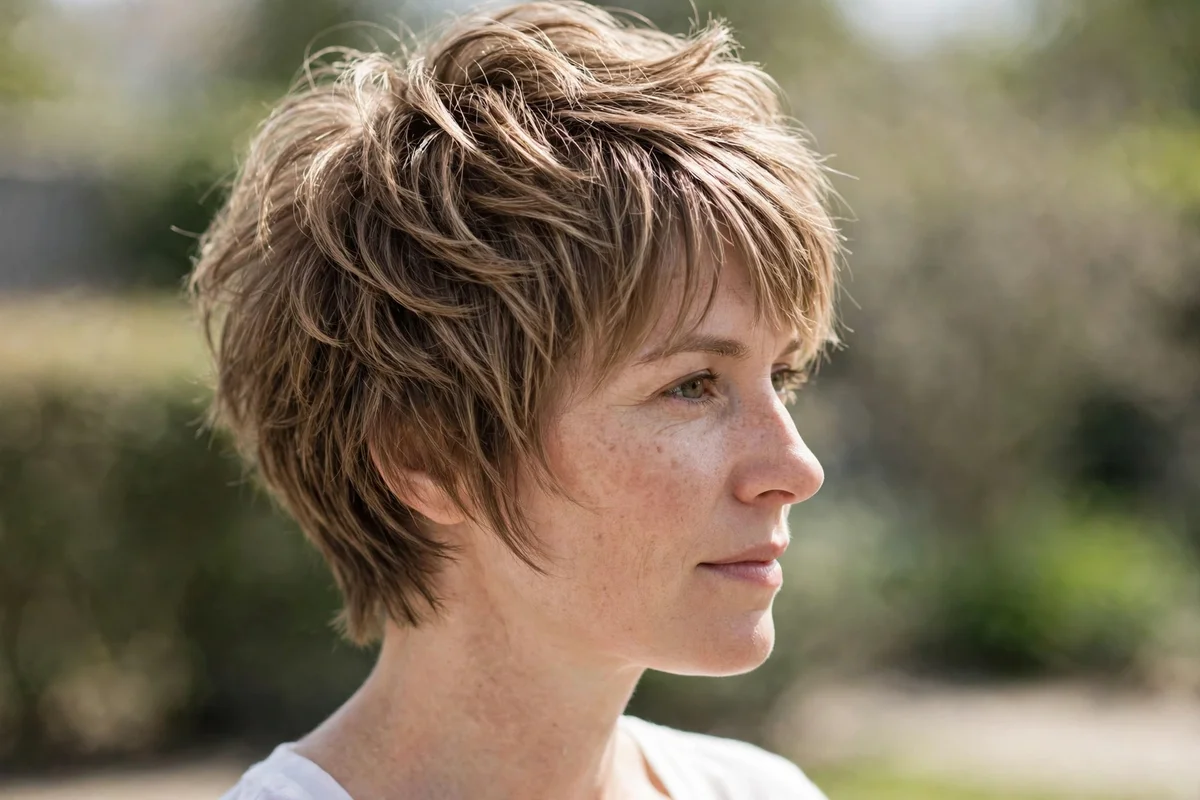
Fine hair and flat roots are a frustrating combo, but a short shag fixes the mechanics of the problem. Shorter lengths fight gravity better, and choppy layers create space between strands so fine hair reads as fuller. Below are 24 short shag haircuts for fine hair, each built around lift, texture, and movement, with styling notes that keep thin strands looking their thickest.
Every cut on this list was chosen with one test in mind: does it make fine hair hold its shape instead of going limp? Razor work, crown stacking, internal layers, and smart fringe placement all pass that test.
Quick Takeaways
- Shorter shags hold lift better than long ones, since fine hair loses volume the longer it grows.
- Choppy, textured layers create air pockets between strands, which reads as fullness.
- A volumizing mousse at the roots plus a flip of the head while drying gives same-day lift.
- Thin, wispy fringe keeps the front light; heavy blunt bangs can drag fine hair down.
- Trims every 6–8 weeks keep shaggy layers from losing their shape.
1. Razor Cut Short Shag
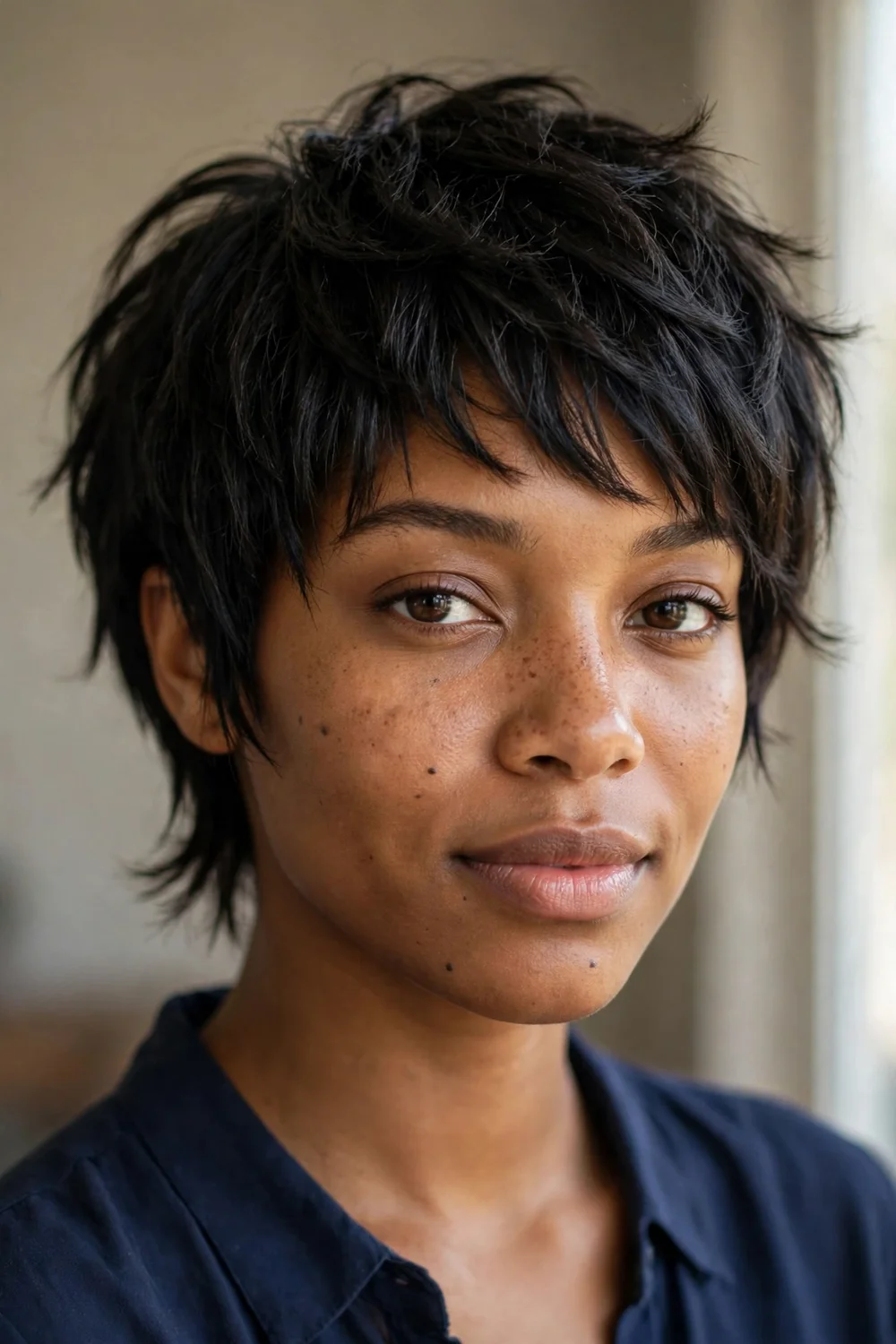
A razor does what scissors can’t for fine hair: it tapers each strand to a soft point, so the layers feather instead of sitting in blunt blocks. This short shag keeps the length between ear and neck, with the razor carving movement through the ends. The feathered finish stops fine hair from clumping into see-through sections.
Styling is minimal. A pea-sized amount of lightweight mousse at the roots, a quick rough-dry, and a shake of the fingers gives it its shape.
Try this: Ask for the razor to be used mainly through the mid-lengths and ends. Too much razor work at the roots can make already-fine hair look sparse.
Difficulty: Easy • Cost: $45–$75 salon cut
2. Short Shag with Micro Bangs
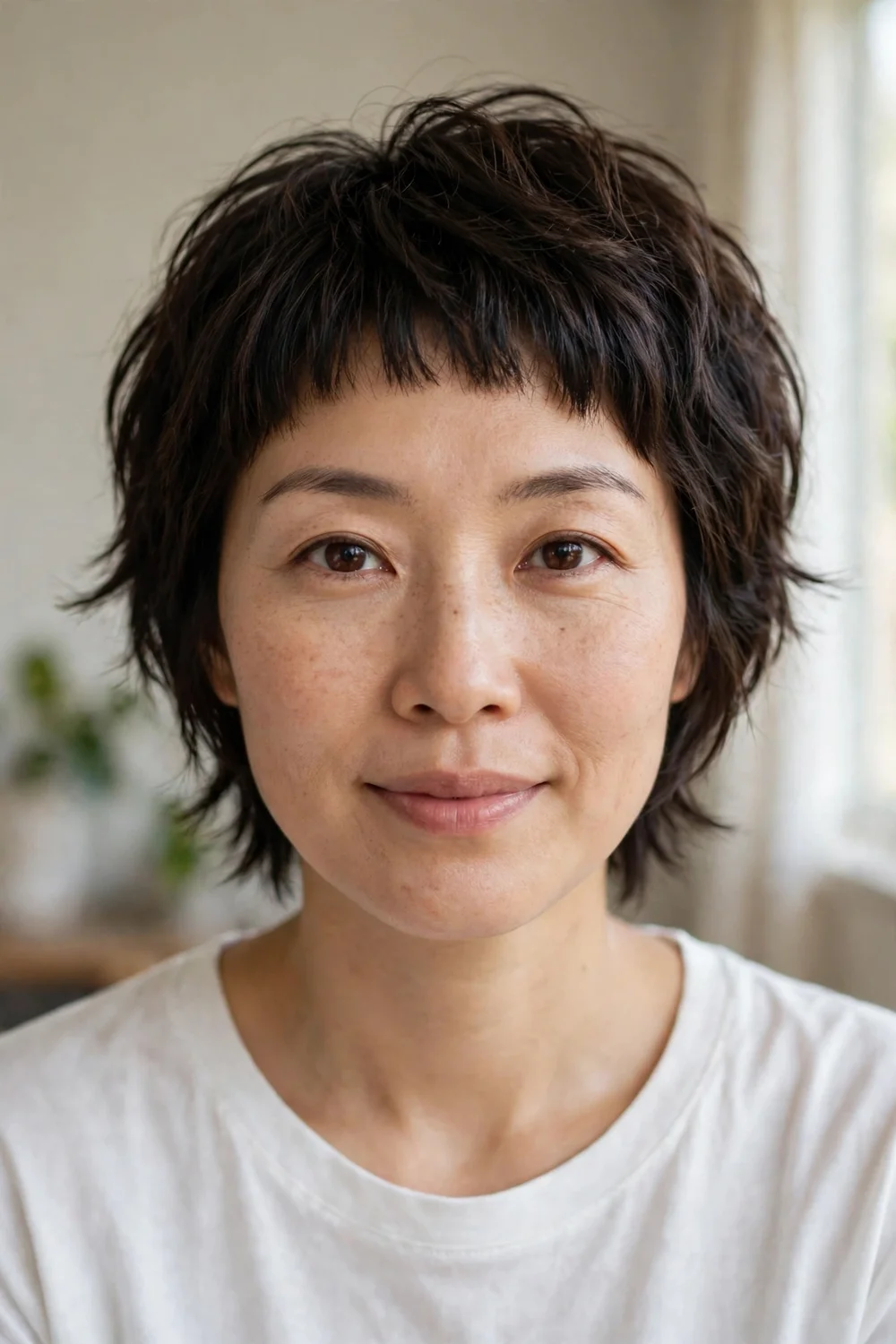
Micro bangs sound risky for fine hair, but they solve a real problem: a full fringe eats density from the crown, while a short micro fringe leaves that hair where it belongs. The cut keeps choppy texture through the sides and back, so the eye reads the whole head as denser. It works best on straight fine hair, where the fringe stays neat.
Keep the fringe just above the brows. Any longer and it loses its lift and starts to lie flat against the forehead.
Try this: Blow-dry the fringe with a small round brush for 20 seconds. That tiny bit of bend keeps short bangs off the skin.
Difficulty: Easy • Cost: $40–$65 salon cut
3. Tousled Wavy Short Shag

Wave gives fine hair an instant boost because every bend doubles the hair’s visual footprint. This short shag layers chin-to-shoulder hair so natural wave can stack instead of dragging down. Even a slight wave pattern gives the cut enough texture to skip daily heat styling.
A spritz of sea salt spray on damp hair, scrunched in and air-dried, brings out the pattern. For straight fine hair, a few loose bends with a 1-inch curling iron do the same job. Use a heat protectant spray first whenever hot tools are involved.
Try this: Sleep with the hair loosely twisted into two buns. Morning waves need zero heat.
Difficulty: Easy • Cost: $45–$70 salon cut
4. Crown-Lifted Short Shag

The crown is where fine hair goes flat first, and this cut targets that exact spot. Short stacked layers through the back build a rounded silhouette with real height at the top, while the sides stay light. On blonde fine hair, the layered edges catch light and read as density.
Round-brush the crown sections upward while drying, then set the roots with a blast of cool air. The shape holds for hours once the roots cool in position.
Try this: A dry texturizing spray aimed at the roots after styling adds grip that fine hair usually lacks.
Difficulty: Moderate • Cost: $50–$80 salon cut
For more short shag inspiration across all hair types, see short shag hairstyles for women.
5. Messy Pixie Mullet

This cut borrows the pixie’s short crown and the mullet’s longer nape, which is a smart trade for fine hair: volume lives on top where it’s visible, and the longer back pieces keep some length without weight. Choppy texturing through the crown stops the top from looking thin against the longer nape.
Work a small amount of matte paste through the crown with fingertips. The pieced finish hides sparse spots and gives the top real presence.
Try this: Keep the nape tapered rather than full. A heavy nape pulls the eye down and flattens the crown’s lift.
Difficulty: Moderate • Cost: $45–$75 salon cut
6. Shaggy Ombre Lob

Ombre does real work for fine hair beyond the color trend. Darker roots create depth at the scalp, and the lighter ends look thicker than a single flat shade. Pair that with shaggy lob layering and the cut has dimension from root to tip. Fringe bangs up front stay thin and light so the rest reads fuller.
Style with soft curls through the ends to amplify the volume. A 1.25-inch curling iron gives bends without tight curls. Always apply a heat protectant spray before curling.
Try this: Refresh the ombre every 10–12 weeks. Grown-out color still works, but faded ends can look thinner.
Difficulty: Moderate • Cost: $120–$200 cut + color
7. Side-Parted Tousled Shag

A deep side part is one of the simplest volume tricks: flipping hair against its natural fall forces instant root lift. This tousled shag balances the heavy fringe side with shorter layers at the nape, so the cut never feels top-heavy. The tousled texture keeps fine hair from separating into thin strands.
Sea salt spray scrunched into damp hair defines the pieces. Let it air-dry for the most natural finish.
Try this: Switch the part to the other side every few days. Hair trains itself to lift higher when the part keeps changing.
Difficulty: Easy • Cost: $40–$65 salon cut
8. Voluminous Shag with Bangs
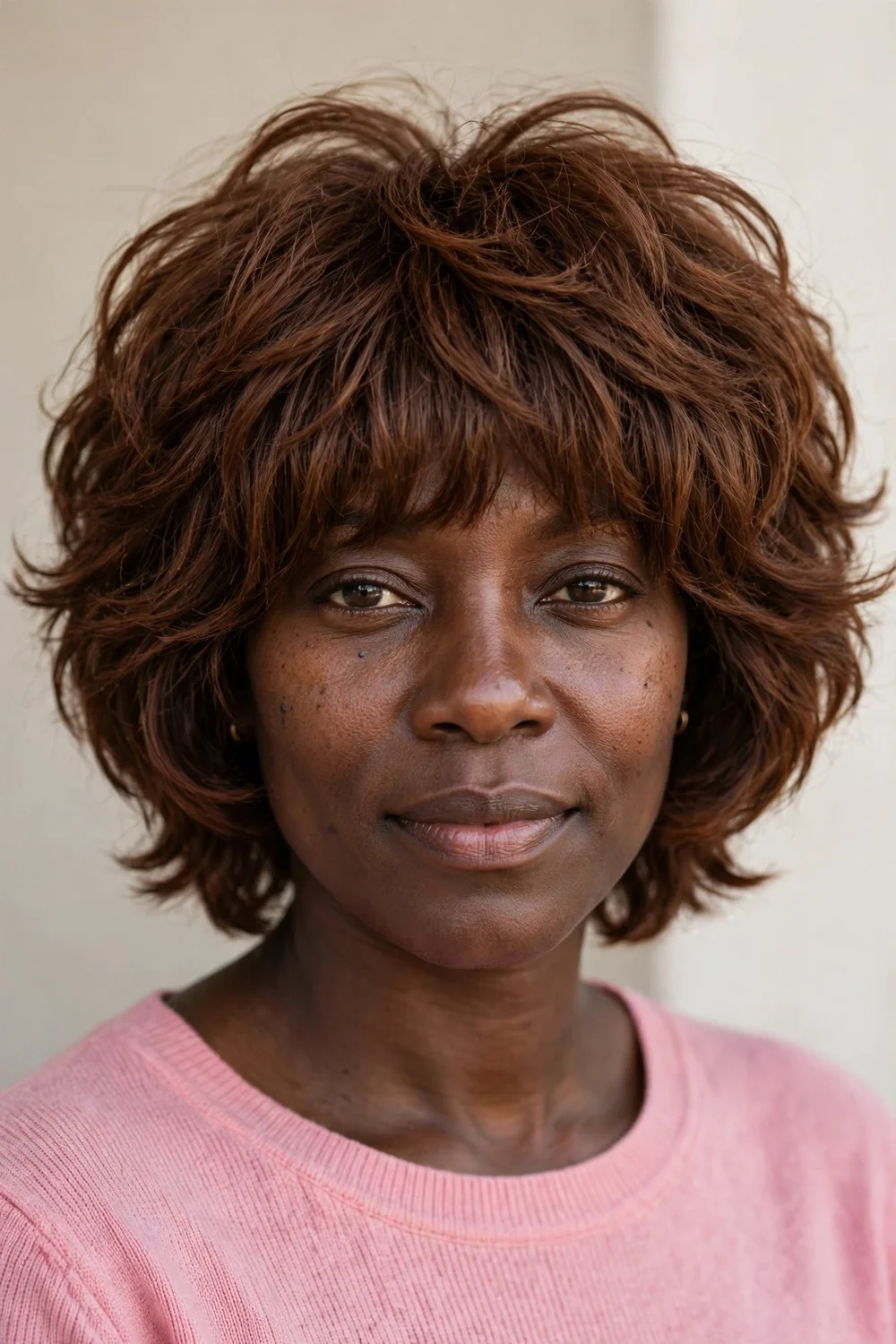
When the whole cut is built for volume, bangs stop being a risk. This version keeps the shag’s layers rounded and airy, then adds choppy bangs that are cut to sit light instead of heavy. On straight fine hair, a quick curl through the layers makes the silhouette read much fuller than its actual density.
Dry the bangs first with a paddle brush pulling them side to side. That stops them from splitting while the rest dries.
Try this: Ask for the bangs to be point-cut rather than cut straight across. The softer edge keeps fine bangs from looking sparse.
Difficulty: Easy • Cost: $45–$70 salon cut
9. Textured Shag for Round Face

Round faces need height and angles, and this shag delivers both without adding width at the cheeks. Arched piecey bangs open up the forehead while tapered sides slim the mid-face, and the textured crown adds the vertical lift that elongates. The layering keeps the sides close so fine hair doesn’t puff outward.
Style the crown with fingers and a little root powder for lift. Let the sides fall naturally rather than flipping them out.
Try this: Keep the longest layer at or above the chin. Longer sides on a round face add width where you don’t want it.
Difficulty: Easy • Cost: $45–$70 salon cut
If bangs are your favorite part of the shag, browse short shag with bangs ideas for more fringe options.
10. Neck-Length Shaggy Bob

The shaggy bob sits at the sweet spot for fine hair: short enough to hold lift, long enough to feel like real hair. This one keeps a fairly clean base at the neck with shaggy texture carved through the top layers. Bright blonde shades make the layered edges pop, which reads as thickness.
Air-dry with a dab of mousse, then tousle. The cut’s shape does most of the styling work.
Try this: Tuck one side behind the ear. The asymmetry shows off the layering and keeps fine hair from hanging in a curtain.
Difficulty: Easy • Cost: $40–$65 salon cut
11. Long Shag with Jagged Bangs

Jagged bangs bring edge to fine hair without the weight of a full fringe. The uneven, spiky finish breaks up the forehead in a way that draws the eye up, while the longer shaggy layers keep movement through the lengths. It’s the most fashion-forward cut on this list and suits straight fine hair that holds texture.
Piece the fringe out with a tiny bit of wax. The separation is what makes jagged bangs read intentional instead of grown-out.
Try this: Trim the bangs yourself between appointments with small vertical snips. Jagged edges forgive beginner cuts.
Difficulty: Moderate • Cost: $45–$75 salon cut
12. Layered Shag with Blunt Bangs

Blunt bangs on fine hair only work when the rest of the cut supports them, and the shag does exactly that. The layered shape through the sides adds width and movement that balances a straight fringe, so the bangs look like a deliberate feature rather than a thin afterthought. Keep the fringe thick enough to hold its line.
Flat-iron the bangs straight after drying for a clean edge. A heat protectant spray keeps fine fringe from frying with daily touch-ups.
Try this: Take the bangs slightly deeper at the parting. More hair in the fringe means a stronger, less see-through line.
Difficulty: Easy • Cost: $40–$65 salon cut
13. Short Back-Swept Shag

Sweeping everything back exposes the hairline, which sounds scary for fine hair until you see what it does: no part means no flat spot, and the roots stand up instead of lying along a line. This short shag keeps shaggy layers at the back and sides for texture while the front lifts away from the face.
Blow-dry the front straight back with a vent brush, then lock it with a light-hold hairspray. The style reads polished and works well for office settings.
Try this: A root-lifting spray applied before drying gives the front enough grip to stay swept all day.
Difficulty: Moderate • Cost: $45–$75 salon cut
14. Short Textured Razor Cut

This is the razor cut’s quieter sibling: less rock-and-roll edge, more soft fullness. Razor thinning through a short shape creates feathered layers that move independently, which is exactly what aging fine hair needs. On silver or grey hair, the textured edges catch light and the cut looks denser than it is.
Finger-style with a light cream. Brushes can flatten the feathering that the razor created.
Try this: A purple shampoo once a week keeps silver tones bright, which makes the texture more visible.
Difficulty: Easy • Cost: $45–$75 salon cut
Styling short hair gets easier with the right routine. Check out how to style short hair for daily techniques.
15. Pixie with Choppy Layers

A pixie is the ultimate fine-hair shape because there’s nowhere for hair to fall flat. The choppy layers on top create height and separation, and short sides keep all the attention on the crown’s texture. This cut needs the least daily effort of anything on the list.
Rub a small amount of texturizing paste between palms and pinch through the top. The whole routine takes under a minute.
Try this: Book trims every 4–5 weeks. A pixie’s shape collapses faster than longer cuts when the layers grow out.
Difficulty: Easy • Cost: $35–$60 salon cut
16. Pixie with Long Side Bangs
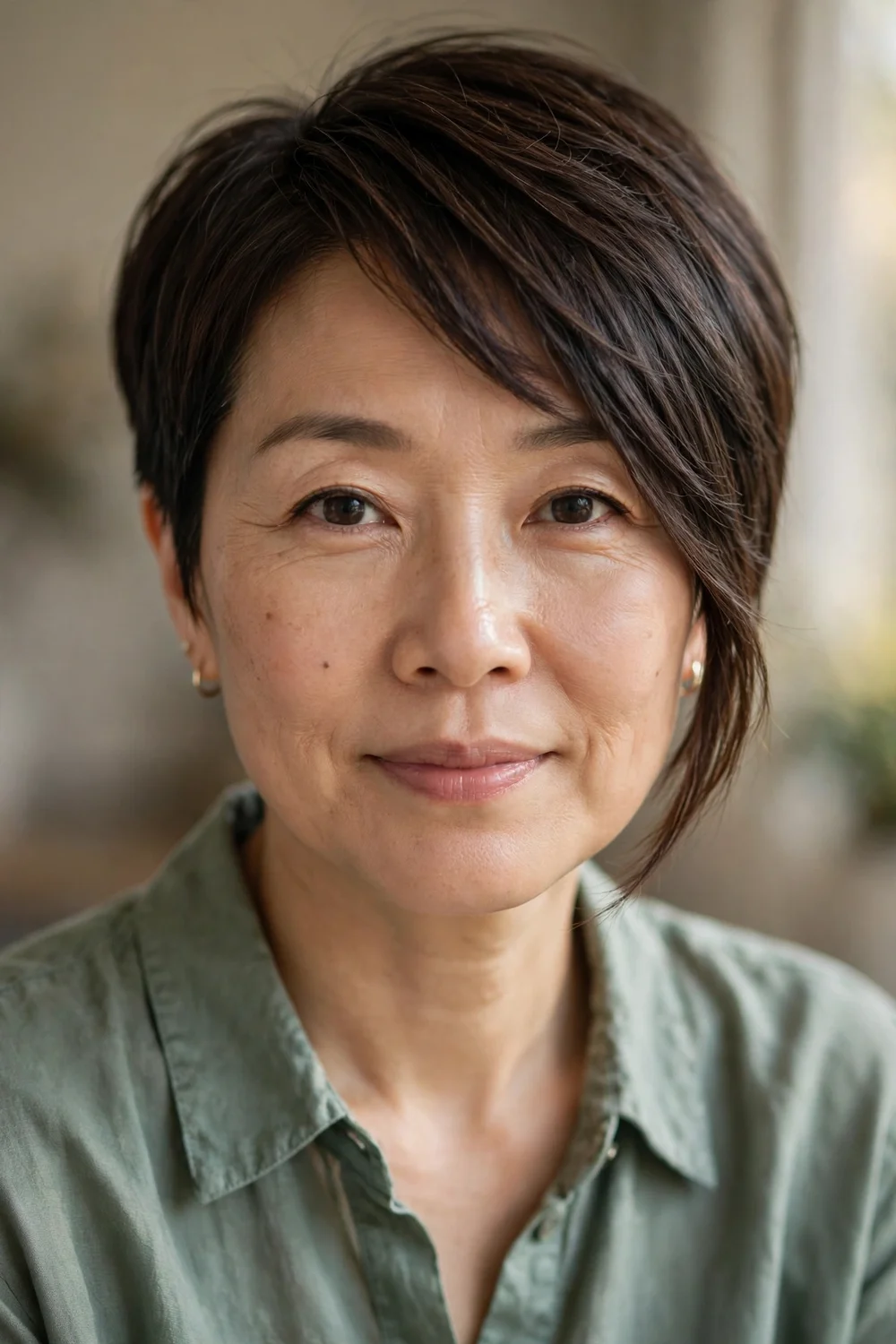
The long side bang is what makes this pixie work for fine hair: it sweeps diagonal volume across the forehead, redirecting hair from the crown to create a fuller front. The back and sides stay short and neat, so the cut keeps its shape for weeks. It’s an elegant option that grows out gracefully.
Dry the fringe to the opposite side first, then sweep it over. That under-direction builds the lift that holds all day.
Try this: A flat iron can smooth the side bang in seconds, but use a heat protectant spray first to guard fine strands.
Difficulty: Easy • Cost: $35–$60 salon cut
17. Spiky Undercut Pixie Shag

An undercut removes bulk where fine hair doesn’t need it, leaving more visual weight on top. The spiky texture stands up instead of lying flat, which is the whole point: every spike is a tiny column of volume. This is a bold choice, but it’s one of the most reliable volume builders here.
Apply a strong-hold wax to dry hair and pull small sections upward. The spikes should look separated, not glued.
Try this: Keep the undercut faded rather than shaved skin-tight. A soft fade grows out without an awkward stage.
Difficulty: Moderate • Cost: $40–$70 salon cut
18. Classic Layered Shag

Some cuts don’t need reinventing. The classic layered shag stacks even, graduated layers around the head, and that all-over layering is genuinely good for fine hair: every layer’s edge adds an outline the eye reads as thickness. It suits oval, round, and heart-shaped faces with almost no adjustment.
A lightweight volumizing mousse through the roots and a simple blow-dry is the full routine. The cut grows out gracefully and needs a trim every 8–10 weeks.
Try this: Ask for the layers to start at the cheekbones. Layers that begin too low leave the crown flat.
Difficulty: Easy • Cost: $45–$75 salon cut
19. Wolf-Cut Shag Hybrid
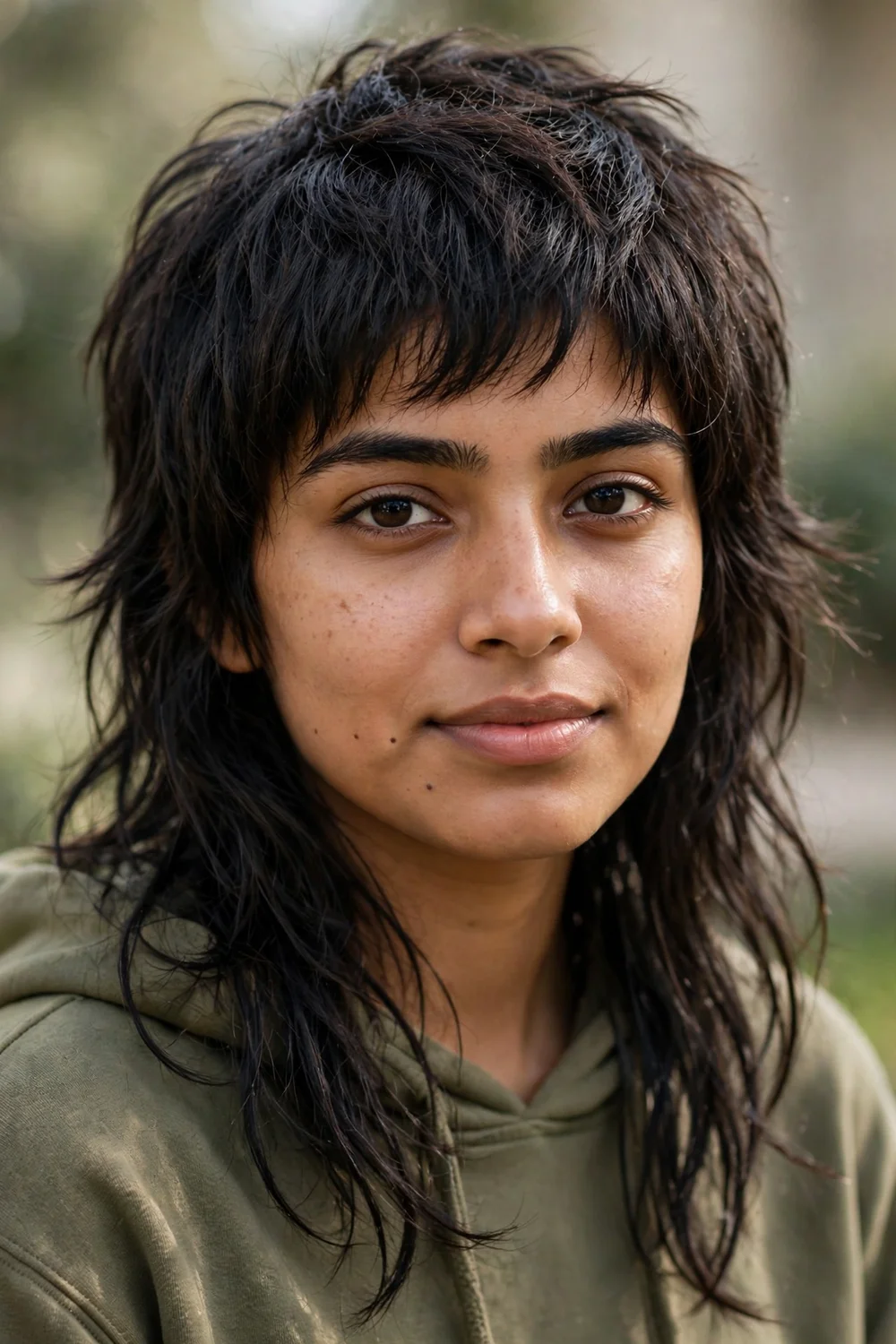
The wolf cut’s short crown layers are a natural fit for fine hair: they concentrate volume exactly where thin hair needs it most. Blended into longer shaggy pieces at the back, the cut keeps an edgy silhouette without sacrificing the fullness up top. The undone finish hides thin spots better than any sleek style.
Sea salt spray or texturizing powder brings out the messy separation. Plan trims every 6–8 weeks to keep the crown layers crisp.
Try this: Keep the layers airy rather than razor-thin at the ends. Wispy ends on fine hair can read as sparse.
Difficulty: Moderate • Cost: $50–$80 salon cut
For thin-hair styling beyond the shag, short hairstyles for thin fine hair covers more volume-friendly cuts.
20. Feathered Collarbone Shag
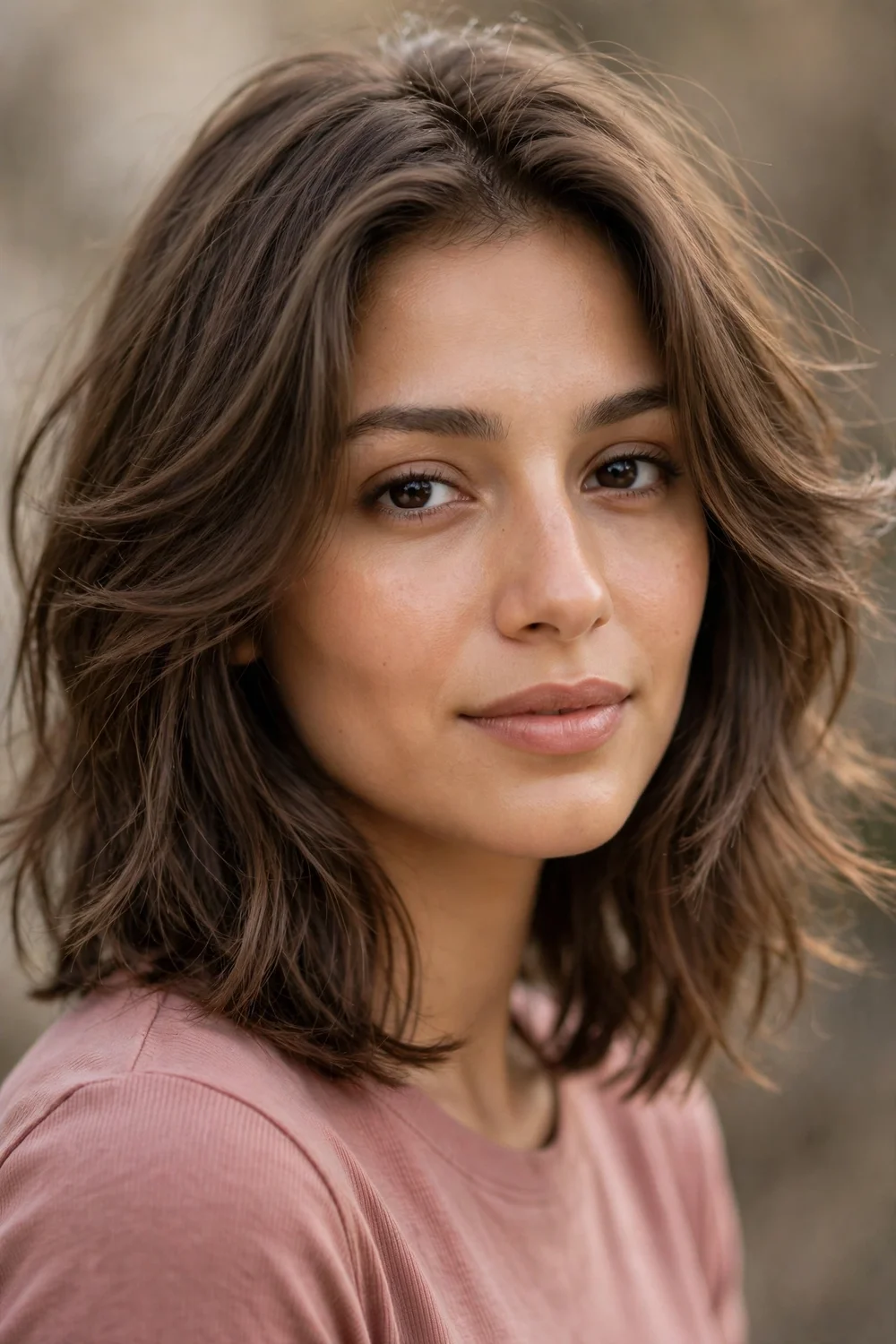
Feathering is the gentlest way to add movement to fine hair. This collarbone-length shag uses soft, flipped layers around the face and through the ends, so the hair moves in pieces instead of hanging as one flat sheet. It’s the longest cut on this list, and it works because the feathering removes just enough weight.
Blow-dry with a round brush flipping the ends outward. A heat protectant spray is a must since this style uses heat most days.
Try this: Add face-framing layers no shorter than chin length. Shorter pieces on fine hair can flip out and look thin.
Difficulty: Moderate • Cost: $50–$80 salon cut
21. Choppy Lob Shag

The choppy lob takes the long bob and roughs it up with disconnected layers, which is great news for fine hair: the uneven lengths create built-in texture that stops strands from clumping. Shoulder-grazing ends keep the cut feeling substantial while the top layers do the volumizing work.
Scrunch in a texturizing cream and let it air-dry for a lived-in finish. A quick shake at the roots revives it on day two.
Try this: Ask for the shortest layer at the crown to sit around 3 inches. That length gives real lift without looking disconnected.
Difficulty: Easy • Cost: $45–$75 salon cut
22. Airy Curtain-Fringe Shag

Curtain fringe is the kindest fringe for fine hair: it parts in the middle, so no single section carries the weight of a full bang. The airy layers through the rest of the shag float instead of sitting flat, and the parted front opens the face. On honey-blonde fine hair, the fringe frames without hiding.
Dry the fringe with a round brush, curving each side away from the part. The bend keeps it from falling into the eyes.
Try this: A center part trains the fringe fastest. An off-center part can work too, but it takes a few days to set.
Difficulty: Easy • Cost: $45–$70 salon cut
23. Root-Lift Shag with Hidden Internal Layers
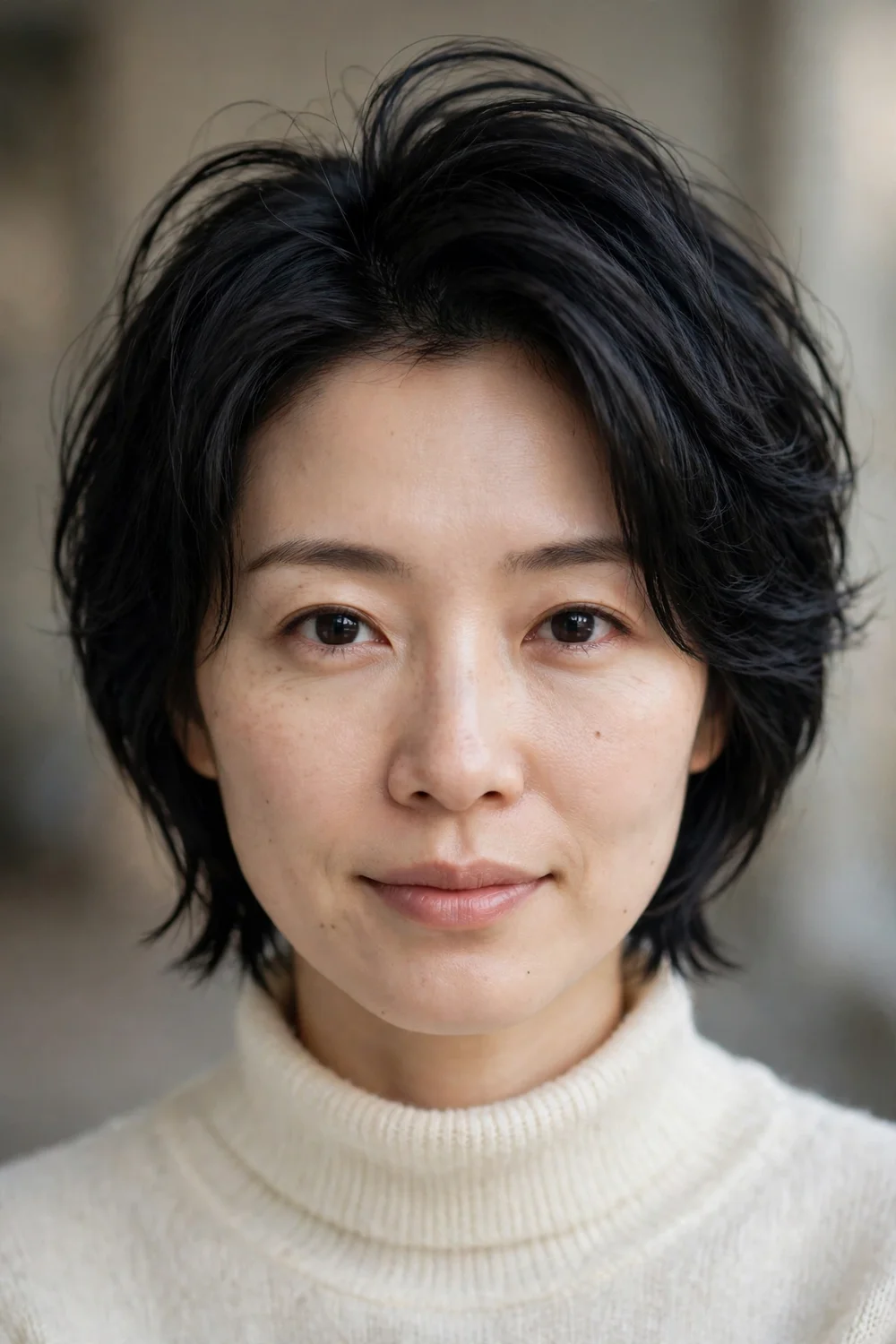
This is a technique more than a shape, and it’s the one competitors rarely explain. Internal layers are cut shorter underneath the top surface, so the outer hair stays smooth while the hidden layers push it up from below. The result is a sleek-looking shag with genuine root lift that doesn’t need backcombing.
Ask your stylist specifically for “internal layering” or “undercut layering.” Not every stylist does it by default, so name the technique.
Try this: Rough-dry upside down for 30 seconds. The internal layers spring up and hold the lift all day.
Difficulty: Moderate • Cost: $55–$85 salon cut
24. Lived-In Shaggy Pixie for Fine Hair

A grown-out pixie can be the best fine-hair cut of all: the soft, undone layers have natural separation that fresh cuts sometimes lack. This lived-in shaggy pixie keeps wispy pieces around the ears and a textured top, giving fine hair body without any styling effort. It’s the lowest-maintenance cut here.
Refresh with dry shampoo at the roots and finger-tousle. That’s the entire routine on most days.
Try this: Let the pixie grow 6–8 weeks past its fresh cut before reshaping. The in-between stage is where the lived-in texture peaks.
Difficulty: Easy • Cost: $35–$60 salon cut
Simple everyday options pair well with these cuts. See cute easy hairstyles for short hair for quick styling ideas.
Short Shag Comparison Table
| Haircut | Best for | Styling time | Trim cycle | Volume rating |
|---|---|---|---|---|
| Razor Cut Short Shag | Straight fine hair | 5 min | 6–8 weeks | High |
| Short Shag with Micro Bangs | Straight hair, bold fringe | 5 min | 6–8 weeks | Medium |
| Tousled Wavy Short Shag | Natural wave | 10 min | 8–10 weeks | High |
| Crown-Lifted Short Shag | Flat crown | 10 min | 6–8 weeks | Very high |
| Messy Pixie Mullet | Edgy, low effort | 3 min | 5–6 weeks | High |
| Shaggy Ombre Lob | Color + volume | 15 min | 8–10 weeks | High |
| Side-Parted Tousled Shag | Quick root lift | 5 min | 6–8 weeks | Medium |
| Voluminous Shag with Bangs | Full fringe lovers | 10 min | 6–8 weeks | High |
| Textured Shag for Round Face | Round face shape | 8 min | 6–8 weeks | High |
| Neck-Length Shaggy Bob | First-time shag | 5 min | 6–8 weeks | Medium |
| Long Shag with Jagged Bangs | Statement fringe | 8 min | 6–8 weeks | Medium |
| Layered Shag with Blunt Bangs | Sleek fringe | 10 min | 5–6 weeks | Medium |
| Short Back-Swept Shag | No-part styles | 10 min | 6–8 weeks | High |
| Short Textured Razor Cut | Silver/grey hair | 5 min | 6–8 weeks | Medium |
| Pixie with Choppy Layers | Minimum styling | 2 min | 4–5 weeks | High |
| Pixie with Long Side Bangs | Elegant pixie | 5 min | 4–6 weeks | Medium |
| Spiky Undercut Pixie Shag | Maximum texture | 5 min | 4–5 weeks | Very high |
| Classic Layered Shag | All face shapes | 8 min | 8–10 weeks | High |
| Wolf-Cut Shag Hybrid | Trendy volume | 8 min | 6–8 weeks | Very high |
| Feathered Collarbone Shag | Longer length | 12 min | 8–10 weeks | Medium |
| Choppy Lob Shag | Shoulder length | 8 min | 8–10 weeks | High |
| Airy Curtain-Fringe Shag | Soft fringe | 8 min | 6–8 weeks | Medium |
| Root-Lift Shag (Internal Layers) | Sleek + lift | 5 min | 6–8 weeks | Very high |
| Lived-In Shaggy Pixie | Zero styling | 2 min | 6–8 weeks | Medium |
How to Choose the Right Shag for Fine Hair
Start with your crown. If it goes flat by midday, pick a cut that builds height there: the crown-lifted shag, the wolf-cut hybrid, or the internal-layers technique. These put the volume where fine hair loses it first.
Next, consider your fringe tolerance. Fine hair and heavy bangs are a difficult pairing, so lean toward micro bangs, curtain fringe, or a side-swept option. If you want a fuller fringe, the voluminous shag with bangs and the blunt-bang version are engineered to support it.
Think about styling time honestly. A pixie takes two minutes; an ombre lob takes fifteen. The best cut is the one you’ll actually style. Fine hair loses its shape faster than thick hair when a styling routine gets skipped.
Finally, bring reference photos to the salon and name the technique you want. Saying “internal layers” or “razor texture” gets you closer than saying “something with volume.” A good stylist will adjust the layer placement to your face shape and density.
Frequently Asked Questions
Do short shag haircuts work for fine straight hair?
Yes. Short shags are one of the most reliable cuts for fine straight hair because shorter lengths hold lift better and choppy layers stop strands from clumping flat. The razor cut short shag and the classic layered shag are the safest starting points for straight textures.
What is the best way to add volume to a fine-hair shag without heat?
Apply a lightweight mousse to damp roots, flip your head upside down, and rough-dry for about 30 seconds. Finish with a dry texturizing spray at the roots. This routine gives lift that lasts most of the day with no hot tools involved.
Are bangs a bad idea for fine hair?
It depends on the type. Thin, wispy options like micro bangs and curtain fringe keep the front light, while heavy blunt bangs can drag fine hair down. The layered shag with blunt bangs works only because the surrounding layers balance the fringe’s weight.
How often should a fine-hair shag be trimmed?
Most short shags need a trim every 6–8 weeks to keep their layered shape. Pixie-length cuts need attention every 4–5 weeks since their shape collapses faster. Longer shag styles like the classic layered shag can stretch to 8–10 weeks.
Will layers make fine hair look thinner?
Badly placed layers can, but the shag’s choppy, textured layering does the opposite: it creates separation and air pockets that read as fullness. The risk comes from over-thinning or razor work done too aggressively at the roots, so ask your stylist to keep the density at the crown.
Final Thoughts
Fine hair doesn’t need more hair; it needs a cut that makes the most of what’s there. Any of these 24 short shags builds lift and texture into the shape itself, so the volume shows up before any product does. Pick the one that matches your styling patience, bring photos to your appointment, and keep the trims on schedule.
