



Fine thin hair and a short bob are a natural match. Shorter lengths take weight off the ends, so strands lift instead of hanging flat, and the right cut creates the look of density where it matters most: at the roots and along the hemline.
This list rounds up 30 short bob haircuts that work specifically for fine thin hair. I’ve watched what works on fine hair over the years, and every cut here earns its spot by adding visible fullness, either through the cut itself or through easy styling. Pick the one that fits your face shape and routine.
Quick answer: The best short bob haircuts for fine thin hair are blunt, stacked, angled, or softly layered cuts kept at chin to neck length. Blunt ends create instant density, stacked layers build crown volume, and angles add width. Avoid cuts longer than neck length and overly thinned-out layers, which make fine hair look thinner.
Quick Takeaways
- Blunt ends make fine hair look instantly thicker along the hemline
- Stacked and graduated layers create real volume at the crown
- Chin to neck length is the sweet spot; longer bobs flatten fine hair
- Texture (waves, tousling, texturizing spray) doubles the illusion of density
- Regular trims every 6 to 8 weeks keep the shape full and clean
Why Short Bobs Work for Fine Thin Hair
Length adds weight, and weight is the enemy of fine hair. The moment hair gets long enough to pull down on itself, roots go flat. A short bob removes that drag, so the cut holds its shape against the head instead of collapsing.
If you also want cuts that flatter a rounder face shape, browse these bob haircuts for thin hair round face ideas that add fullness while slimming the cheeks.
Geometry does the rest. Blunt hemlines stack every strand at one level, which reads as a thicker edge. Graduation piles shorter layers under longer ones at the back, pushing volume up. And because there is less hair overall, products like mousse and dry shampoo coat it more evenly, which means more lift per spray.
1. Blunt Bob

Nothing thickens the look of fine hair faster than a one-length edge. This cut ends at the jaw or just below the chin with zero layering, so every strand lands at the same point and the hemline reads as solid. It suits oval, round, and heart faces, and it is the lowest-effort option on this list because the shape does the talking. Ask your stylist to point-cut just the last millimeter for softness without losing the blunt line. Difficulty: Easy.
Try this: blow-dry with a paddle brush, pulling each section down and under. Two minutes with a flat iron on the ends gives the edge a crisp finish.
2. Stacked Bob
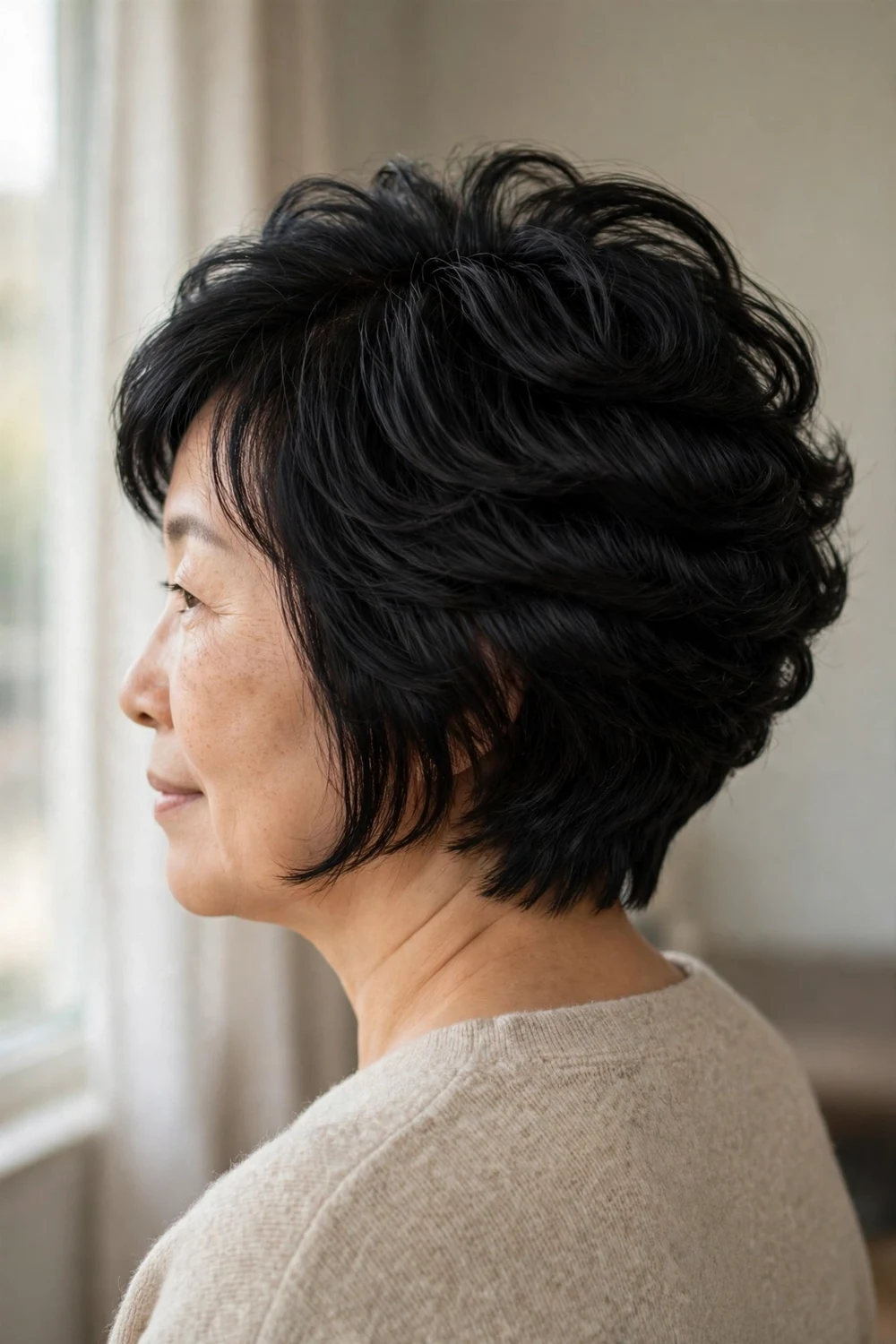
The stacked bob is built for crown volume. Shorter layers are cut into the back and stacked on top of each other, which pushes hair up and out for a rounded silhouette. It is one of the most requested fine-hair cuts in salons because the fullness is structural, not styled in each morning. Keep the front pieces at chin length to balance the shorter back. Difficulty: Medium.
Try this: apply root-lifting mousse at the crown before blow-drying. Use a round brush and roll sections up and away from the scalp.
3. Inverted Angled Bob
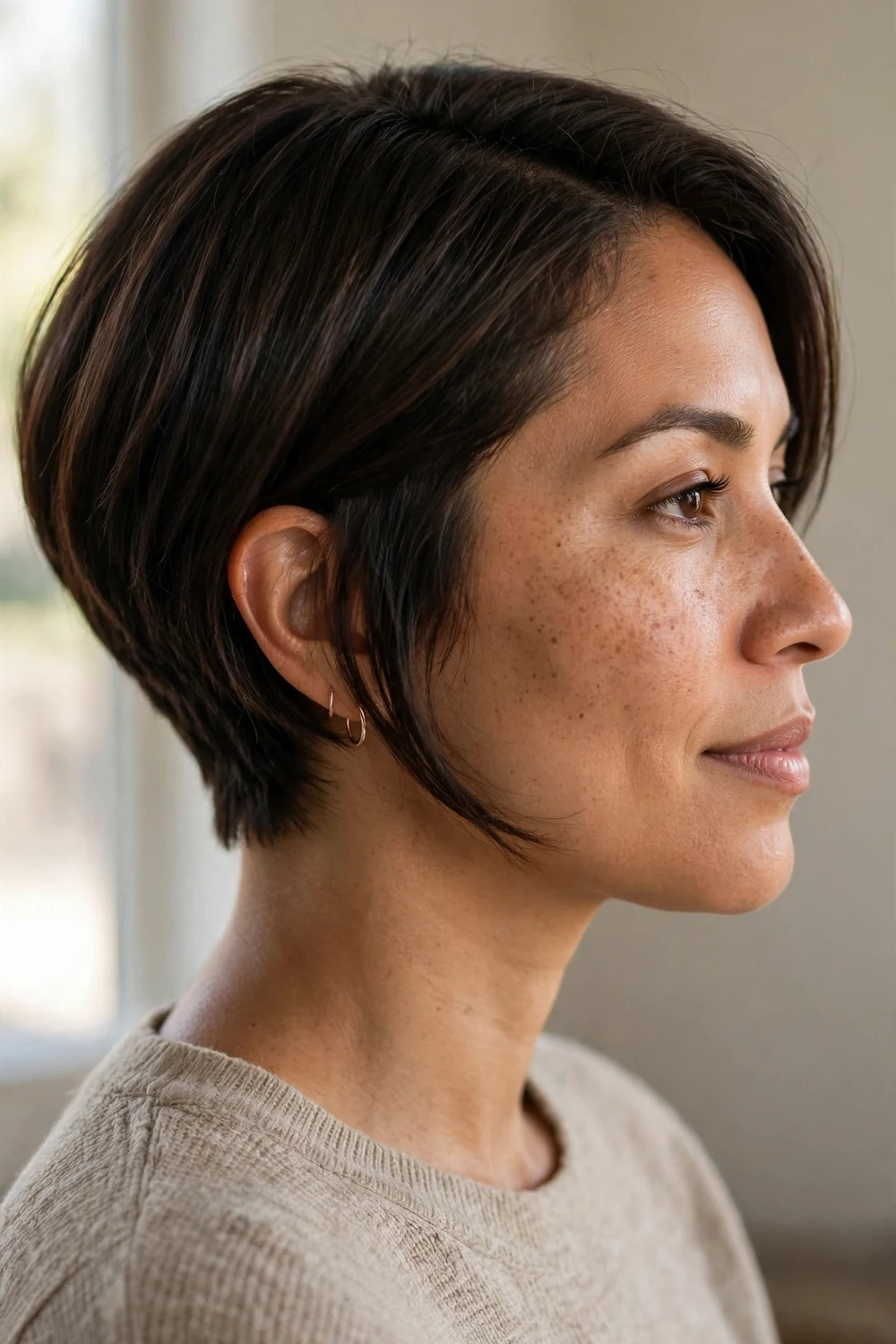
Ask for this cut when you want drama with your density. The back is cut short and stacked while the front angles down to frame the jaw, giving you lift in the back and length in the front. Fine hair benefits from the contrast: the raised back reads as volume, and the longer front keeps the style current. It works worn straight or wavy. Difficulty: Medium.
Try this: curl the front sections away from your face with a 1-inch iron. The bend keeps the angles sharp without looking stiff.
4. Chin-Length Bob
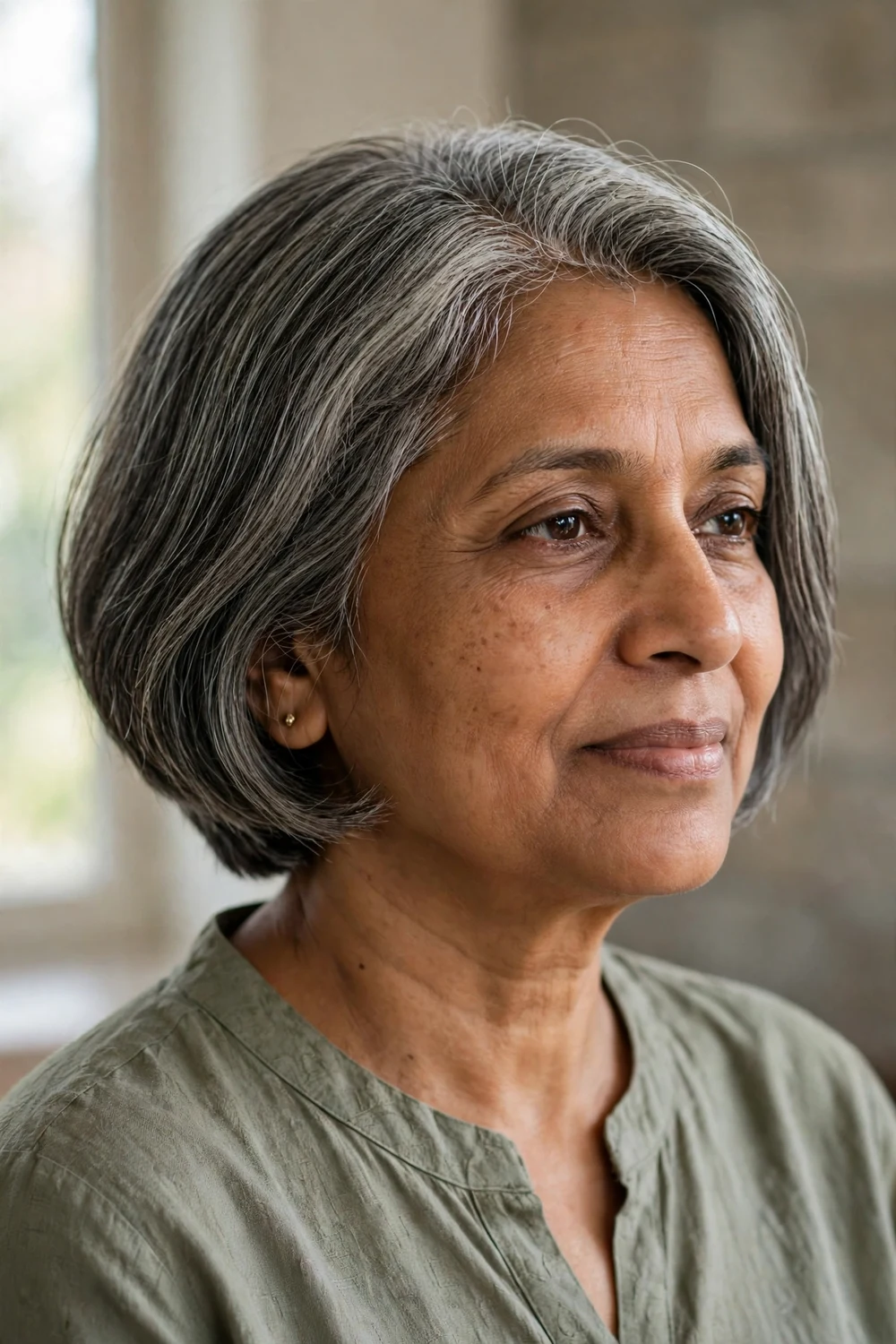
Cutting right at the chin is a simple trick that pays off on fine hair. At this length, hair is too short to lie flat, so it naturally kicks out with movement. A tapered version, slightly shorter at the nape, adds even more fullness through the back. This cut flatters oval and heart faces and suits busy mornings since it dries fast and holds its shape. Difficulty: Easy.
Try this: add a few highlights around the face. Lighter pieces catch the light and make the cut look more textured than it is.
5. A-Line Bob with Textured Ends
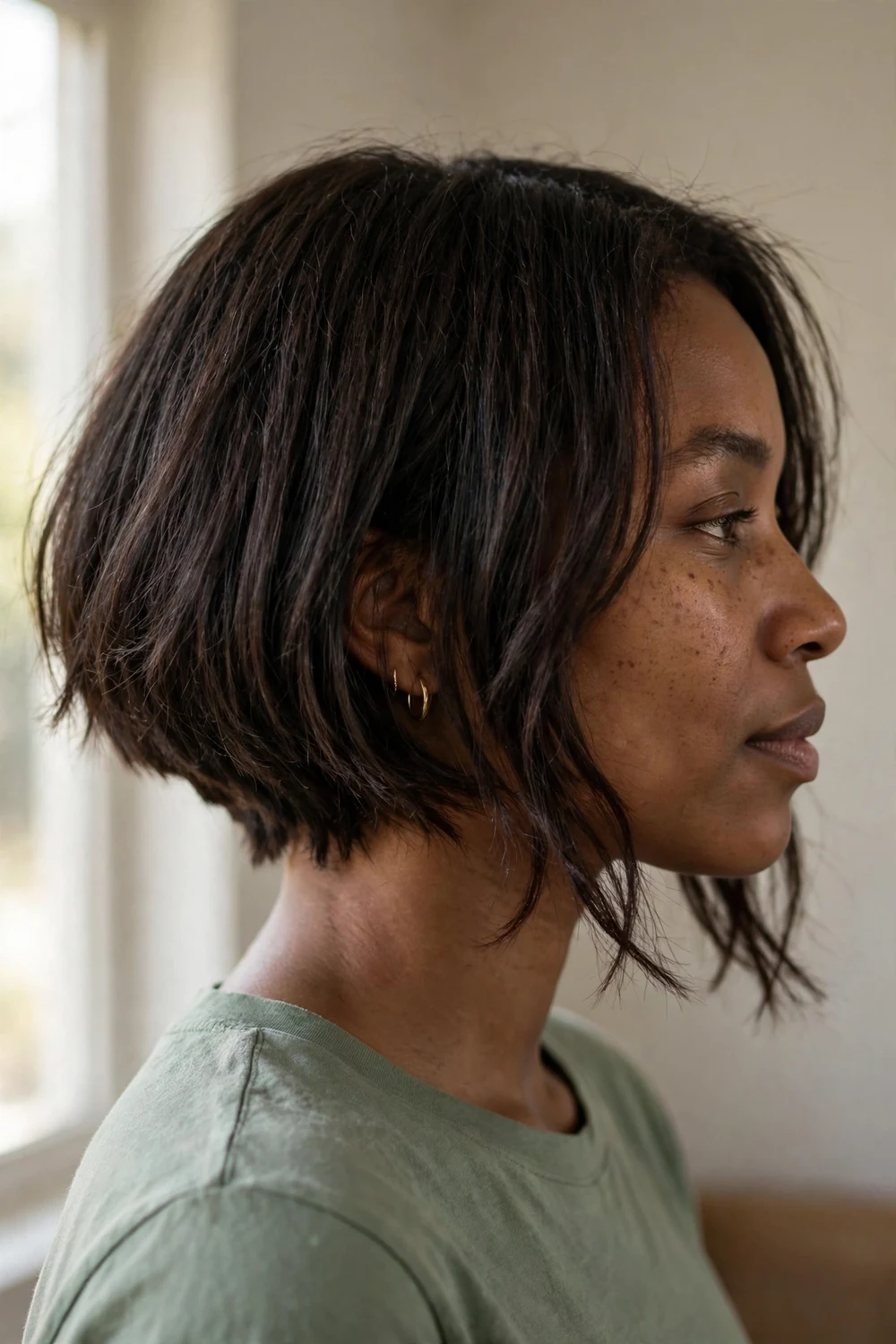
This version keeps the classic A-line angle, longer in front and shorter behind, but roughs up the ends with point cutting. The texture stops the line from looking severe and lets fine hair move naturally instead of pressing flat. It is a good pick if you want the polish of a geometric cut with the ease of a wash-and-go style. Straight hair shows off the line best. Difficulty: Easy.
Try this: rub a pea-sized amount of texturizing paste between your fingers and pinch the ends. The pieces separate and look thicker.
6. Rounded Bob

A small amount of stacking at the back creates a curved, balloon-like silhouette that gives fine hair an all-over sense of volume. The layers stay blended and smooth rather than choppy, so the look reads polished instead of edgy. It suits round and square faces especially well because the curved sides balance angular features. Pair it with bright chunky highlights for extra dimension. Difficulty: Medium.
Try this: round-brush the ends under while blow-drying. The curve reinforces the rounded shape the cut already builds.
7. Graduated Bob
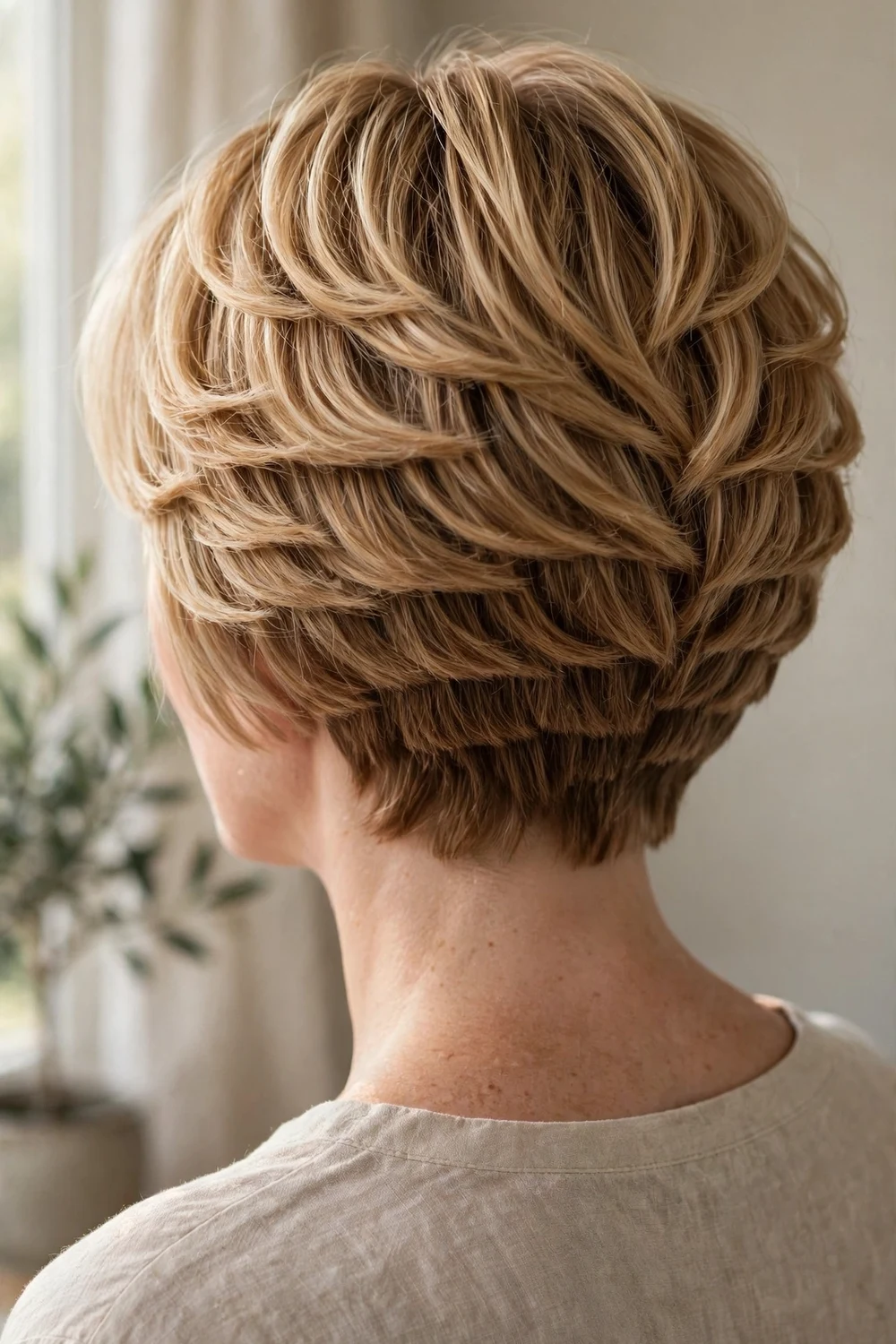
Graduation is the engine behind most volume-building bobs. Each layer is cut slightly shorter than the one above it, creating a stepped structure that sits up and off the neck. Straight fine hair suits this cut well because every angle stays visible. The result is an even, controlled shape that looks full from every side without any teasing. Difficulty: Medium.
Try this: ask for a subtle balayage through the layers. Color separation makes each step of the graduation visible.
8. Tapered Bob
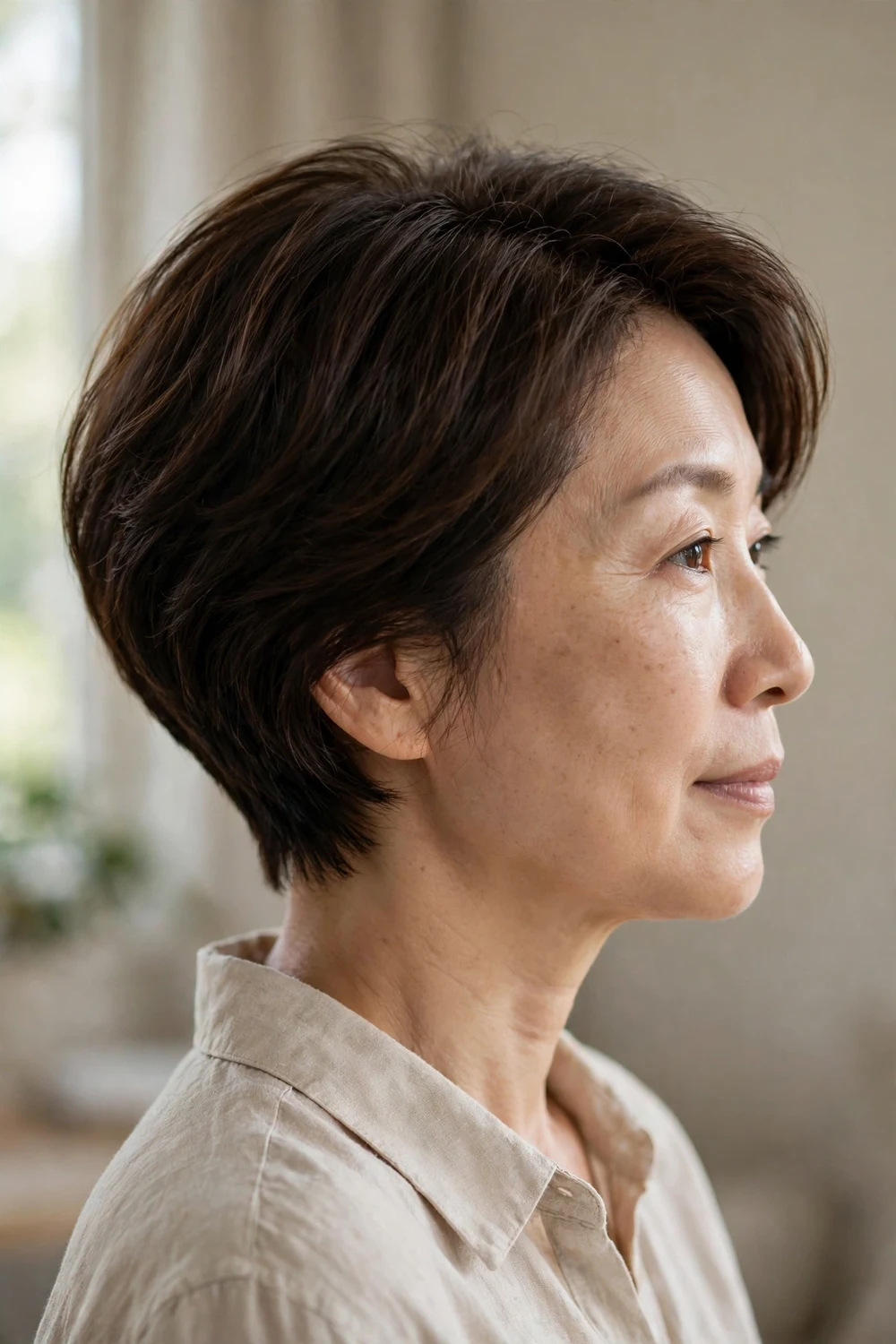
The tapered bob keeps the top and sides full while narrowing toward the neck, which concentrates the visual weight where you want it. Shorter hair means less morning fuss, and the shape keeps its line as it grows out. Highlights through the top layers make the taper pop and draw the eye upward, away from the ends. Difficulty: Easy.
Try this: smooth a light volumizing cream from roots to ends before drying. Heavy products flatten tapered cuts, so keep it light.
If you want a deeper look at choppy, piece-y texture specifically, see our guide to choppy bob hairstyles for fine hair for cuts that build volume through broken-up ends.
9. Short Concave Bob
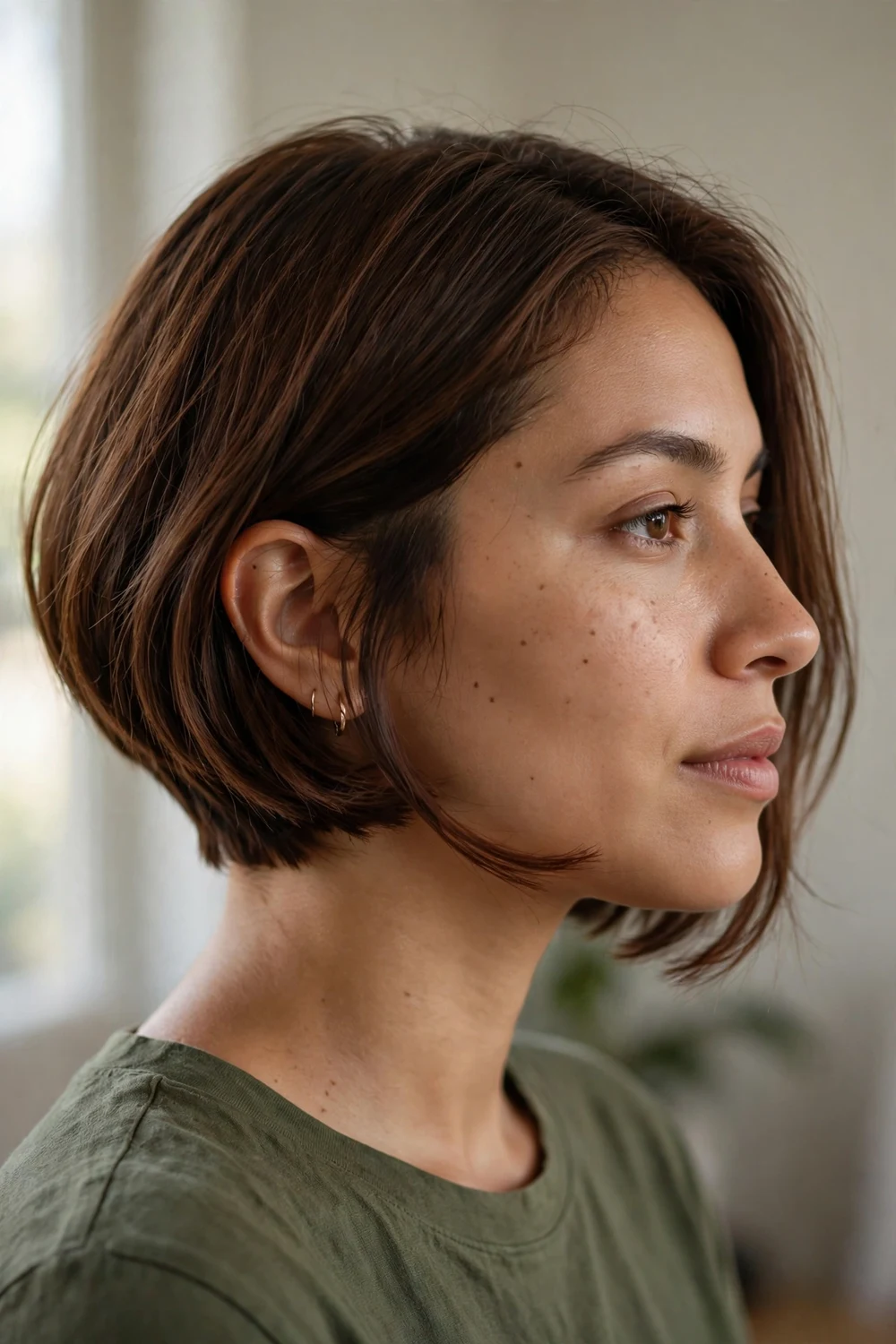
The concave bob dips forward: short in the back, long in the front, with a curved underline connecting them. It is a strong choice when the standard bob feels too plain, because the contrast between the short back and the longer front creates instant visual interest. Cut the front pieces long enough to graze the chin so they elongate the face. Difficulty: Medium.
Try this: ask for long side bangs to blend into the front pieces. The sweep extends the curve and softens the whole cut.
10. Disconnected Reverse Bob
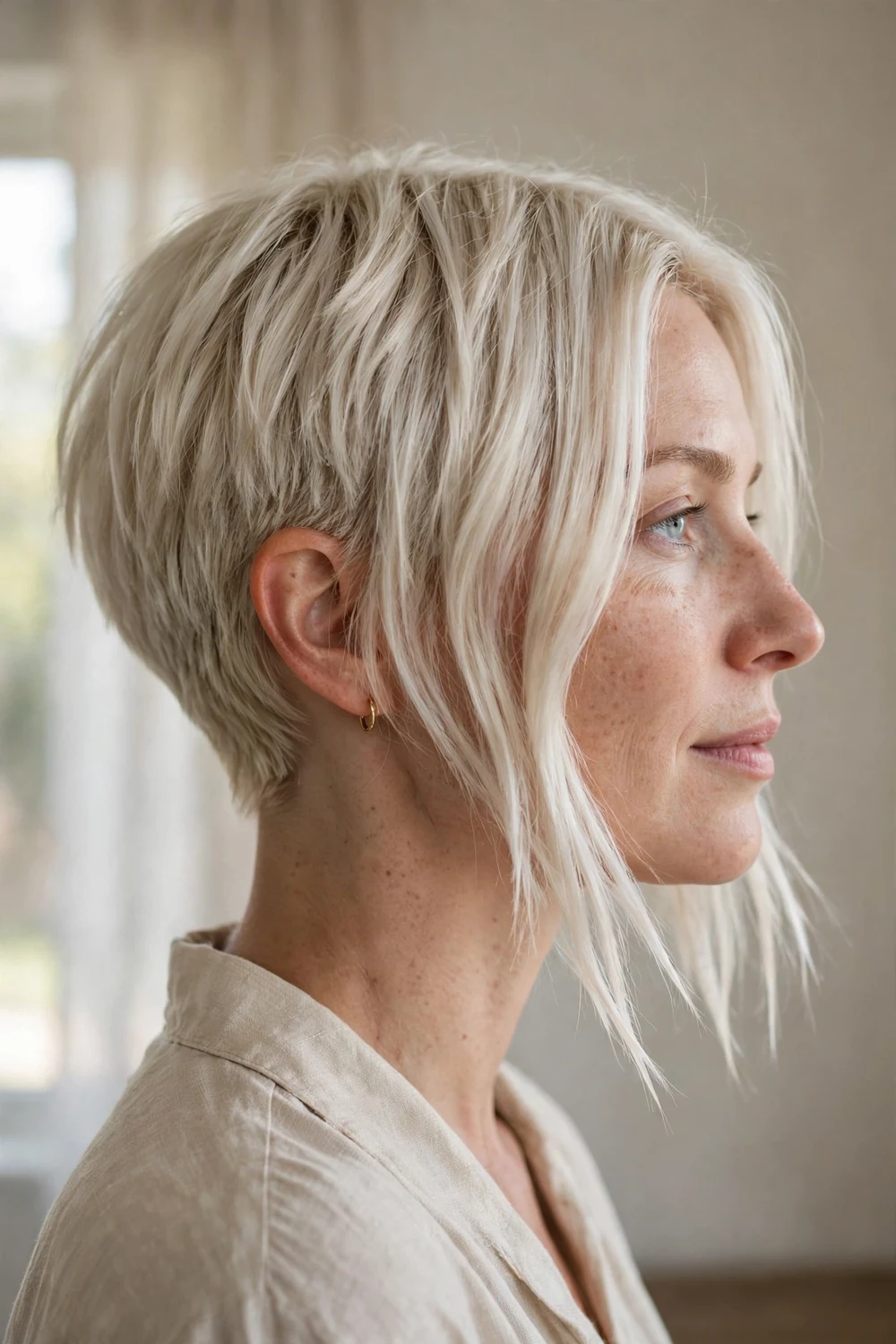
Reverse layering, where shorter pieces sit underneath longer ones at the back, gives fine hair lift it cannot get from a flat one-length cut. Razor the ends for a feathered, airy finish that keeps the cut from looking heavy. It is a little more fashion-forward than the classic stacked bob but delivers the same crown boost. Difficulty: Hard.
Try this: bend the ends slightly with a flat iron after drying. The bend shows off the reverse angles and keeps the cut dynamic.
11. Layered Bob
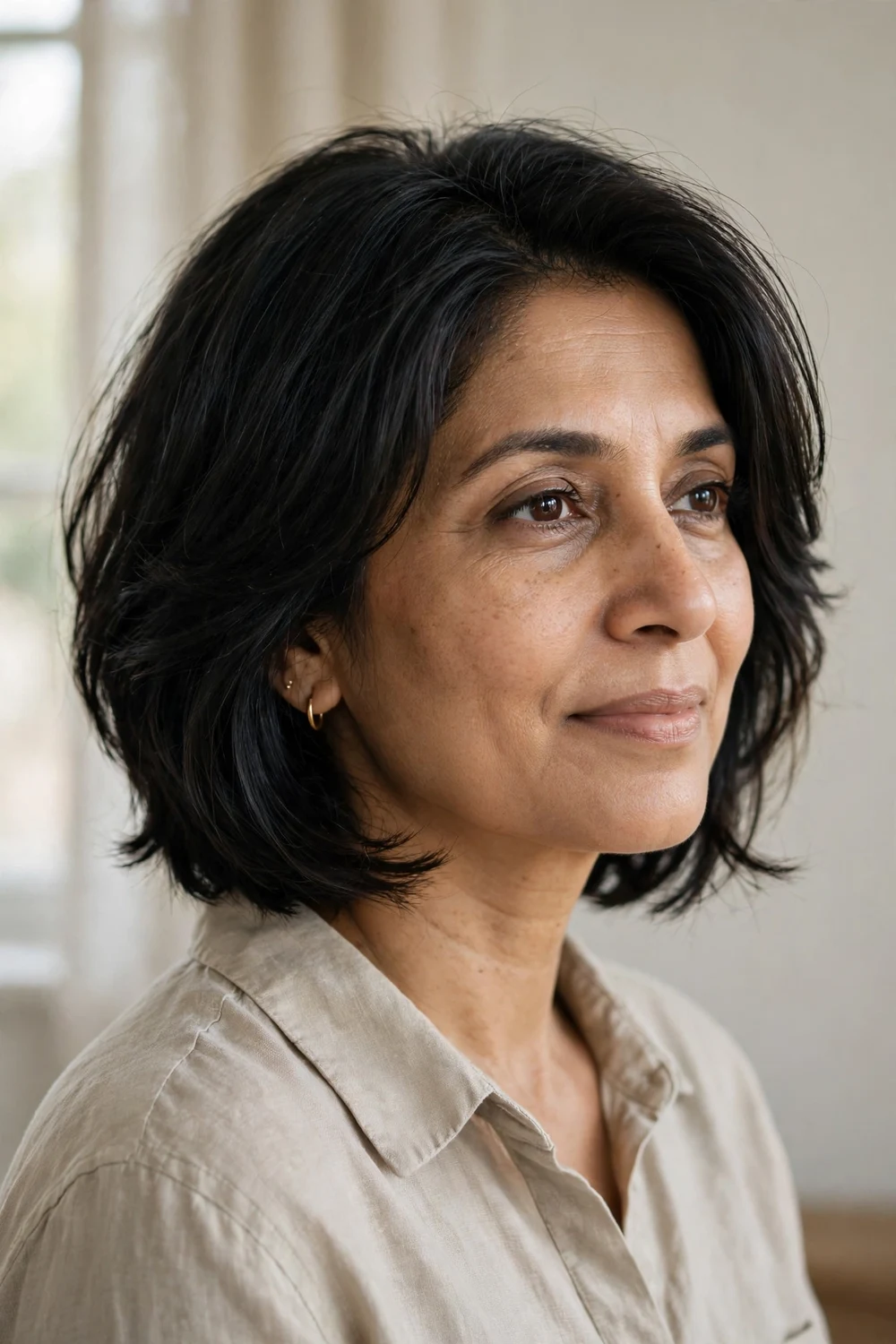
Layers remove weight from the ends and redistribute it through the mid-lengths, which creates movement, and movement reads as volume. The trick for fine hair is keeping layers soft and blended rather than heavy. Ask for point-cut or scissor-cut layers that melt into each other. A chin-to-collarbone length keeps enough visual weight for the style to feel substantial. Difficulty: Easy.
Try this: skip razor cutting, which can make fine ends look wispy. Blunt scissor work on the layers keeps the perimeter dense.
12. Piece-y Layers Bob
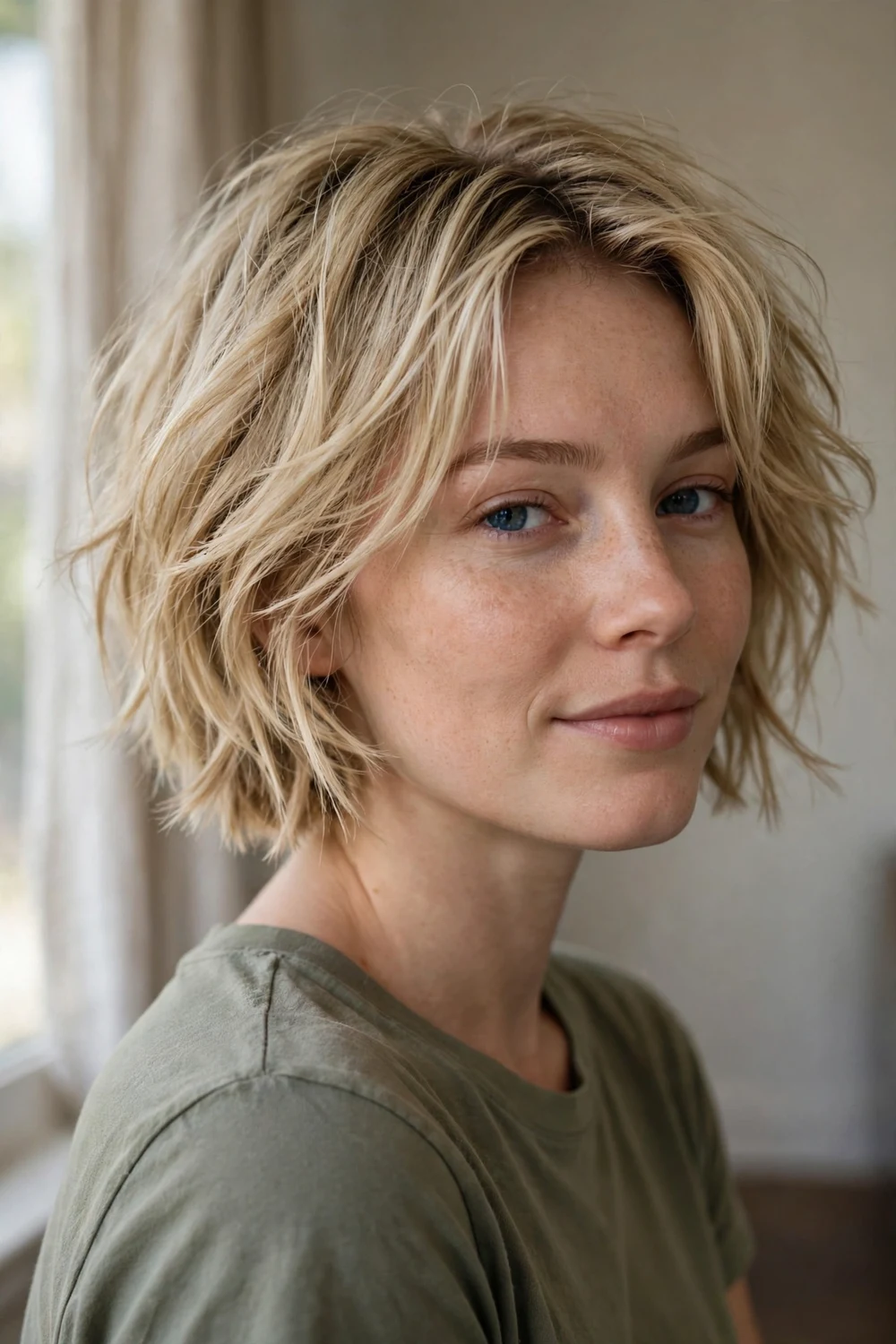
Piece-y layering breaks the cut into separated clumps instead of one smooth sheet, and each piece catches light differently. That variation is what makes thin hair look like more hair. The cut works best with a tousled finish, so it suits anyone who wants texture without a lot of tools. Sea salt spray brings out the separation. Difficulty: Easy.
Try this: after drying, twist small sections with your fingers and hit them with a shot of flexible hairspray. The pieces stay separated all day.
13. Choppy Bob
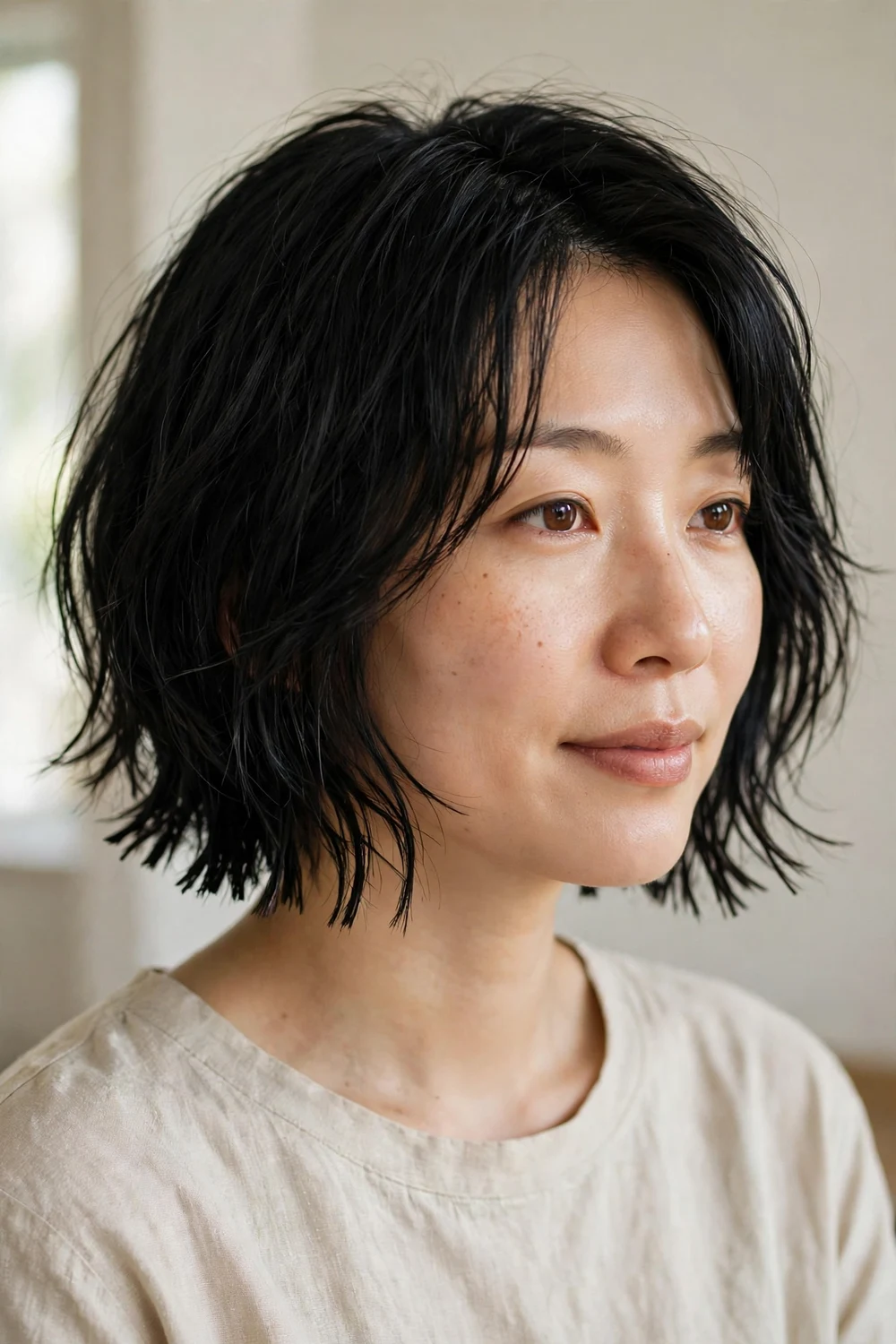
Finely chopped layers at the ends keep fine hair from sitting in one flat plane. The irregular edge reflects light in more directions, which gives the cut a fuller, more dimensional look. Invest in a good texturizing spray, since the cut really comes alive with a bit of product. It is low-maintenance and forgiving as it grows out. Difficulty: Easy.
Try this: book trims every 6 weeks so the chopped edge stays crisp. Add dry shampoo at the crown for extra lift on flat days.
14. Short Messy Bob
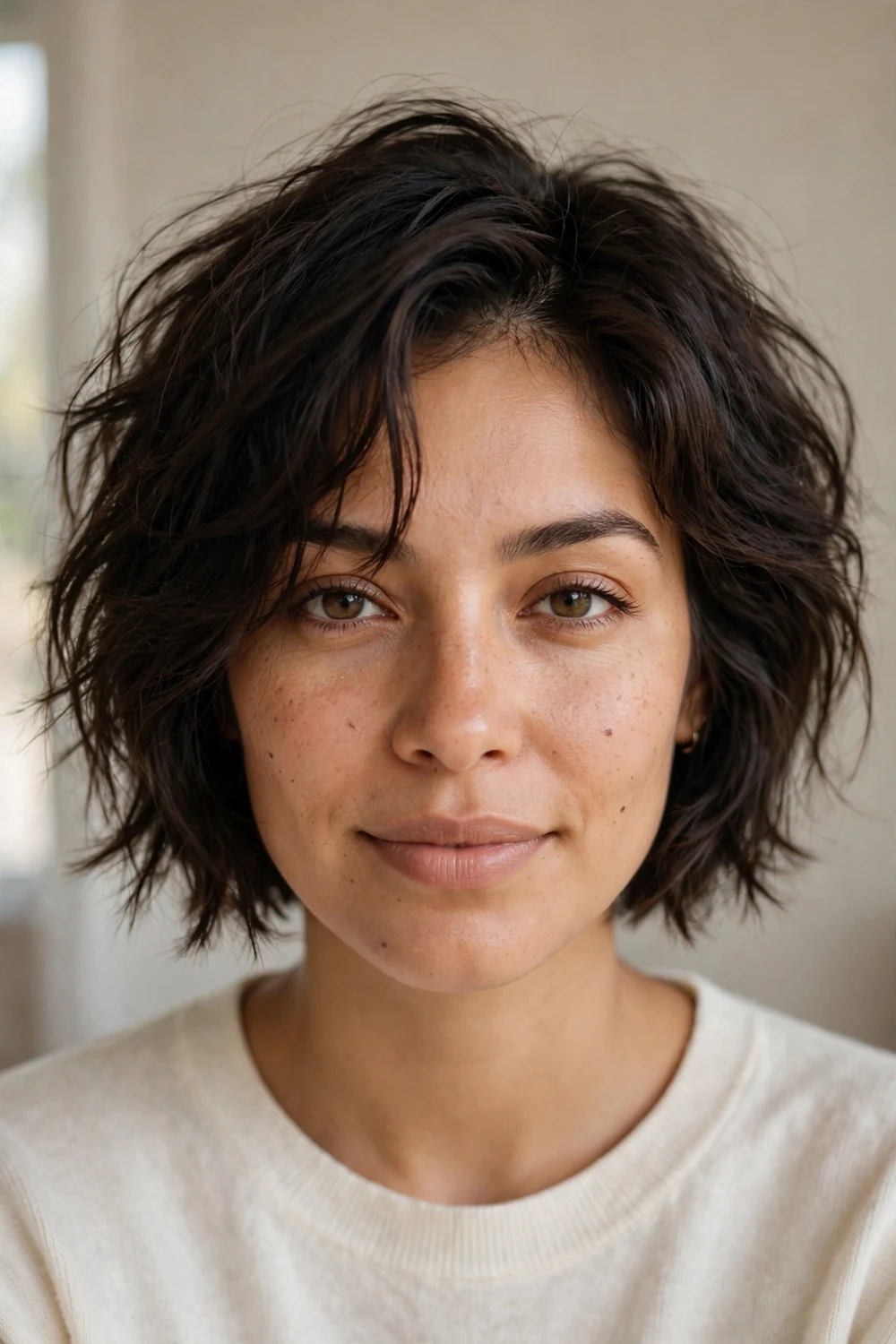
An undone, messy finish is one of the easiest ways to fake density. Chin-length strands with an uneven part and scrambled texture look like twice the hair of the same cut worn smooth. It is genuinely low-effort: air-dry with a bit of mousse, then tousle. This cut flatters round faces because the volume sits around the sides, not on top. Difficulty: Easy.
Try this: sleep with your hair loosely braided. In the morning, undo it and shake. You get the messy texture with zero morning heat.
For more volume-focused short cuts that lean on stacked layers, read our list of short stacked bob haircuts for thin hair to compare silhouettes.
15. Shaggy Bob
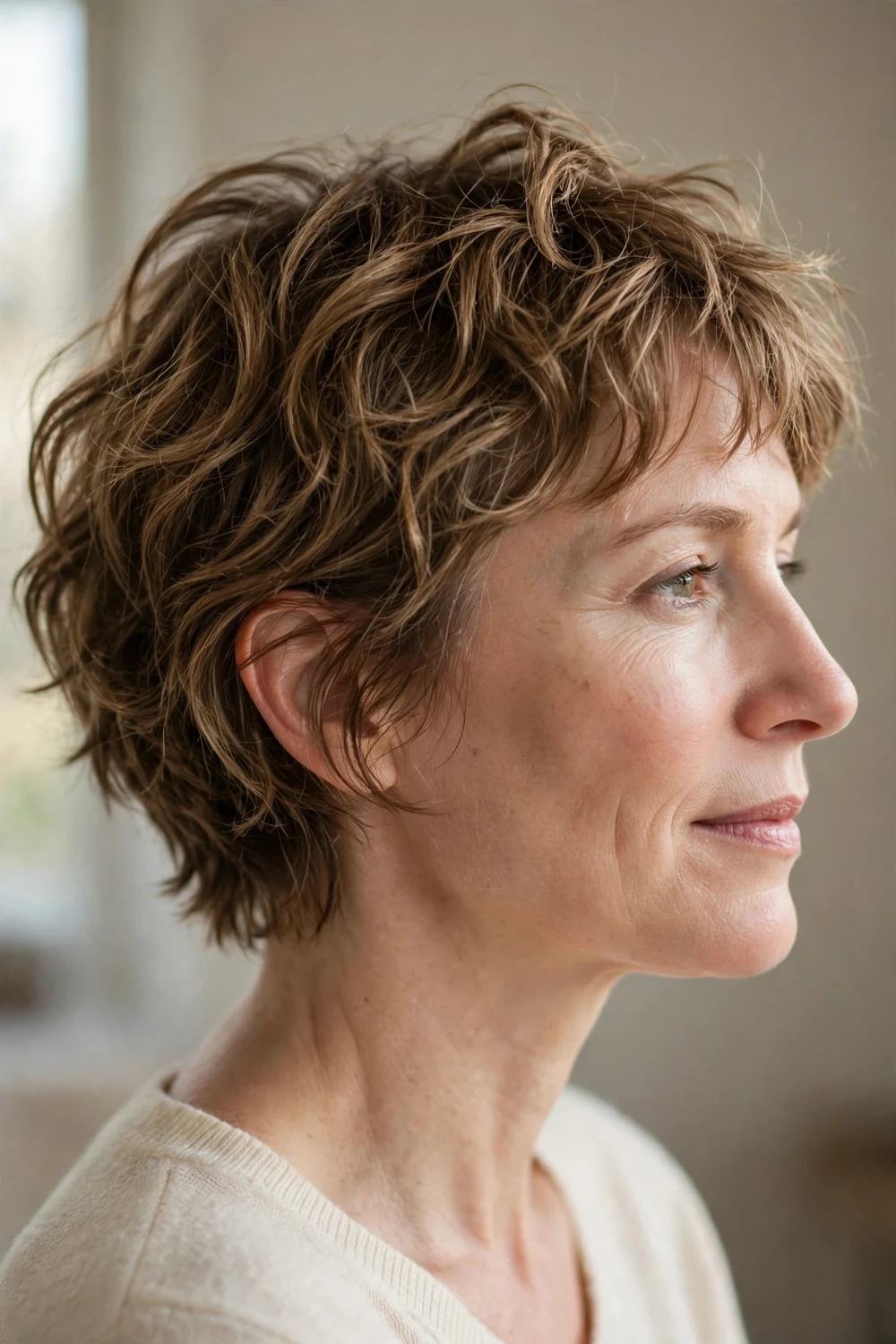
The shaggy bob borrows the shag’s layered chaos but keeps the bob’s clean length. Subtle layering through the crown plus a wavy texture gives you movement without sacrificing the density fine hair needs. It is easy to manage day to day and works for both work and evenings since the style is built into the cut. Difficulty: Medium.
Try this: scrunch in a wave-enhancing cream on damp hair and let it air-dry. The natural wave pattern does the styling for you.
16. Tousled Waves Bob
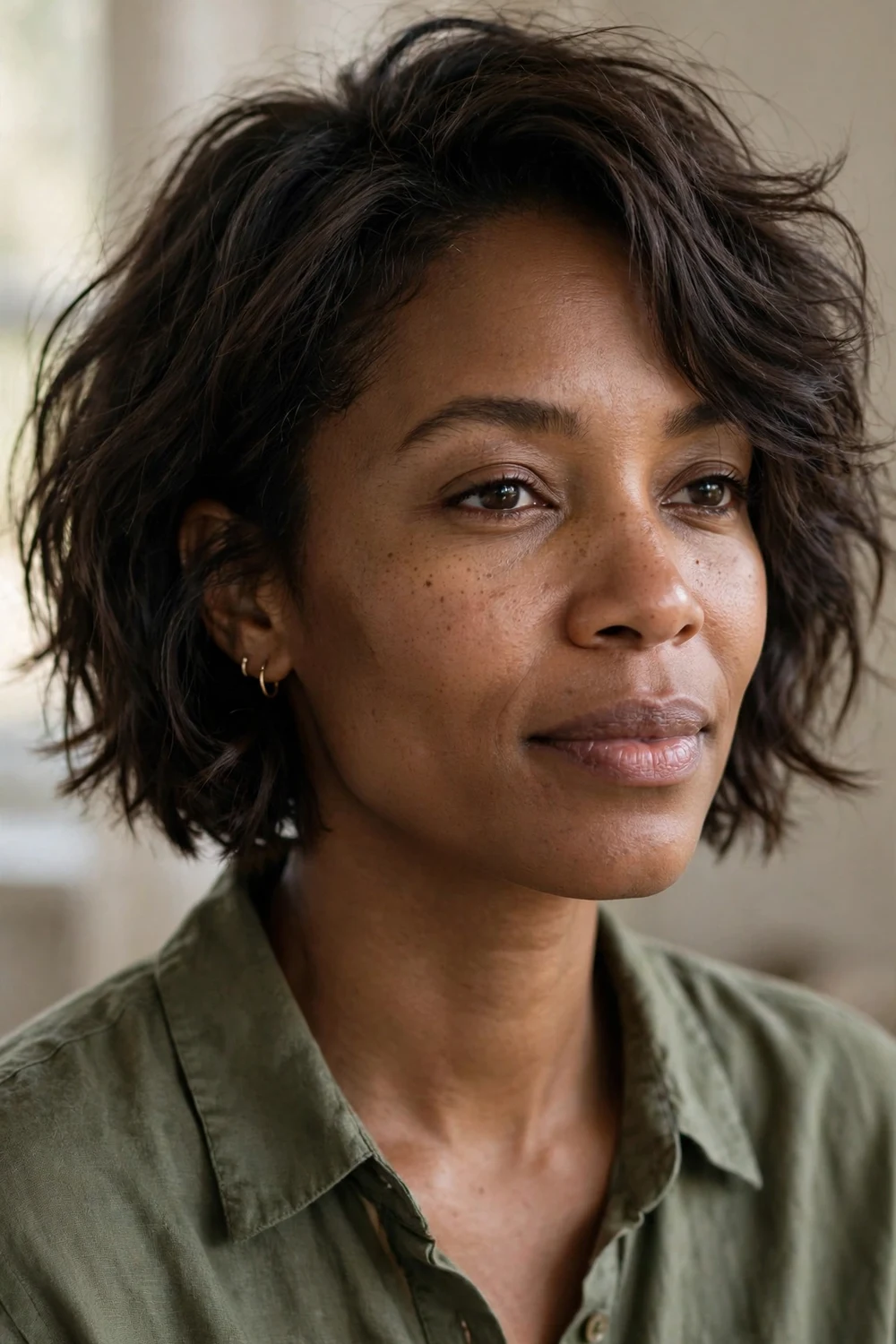
Soft, tousled waves add body through the mid-lengths while the slightly messy finish keeps the cut from looking thin or flat. This is a great everyday cut for hair that falls straight, since the wave pattern is built in at styling rather than in the cut. It suits oval and heart face shapes. Difficulty: Easy.
Try this: curl 1.5-inch sections with a wand, alternating directions. Brush through once for a soft, blended wave.
17. Beach Wavy Bob
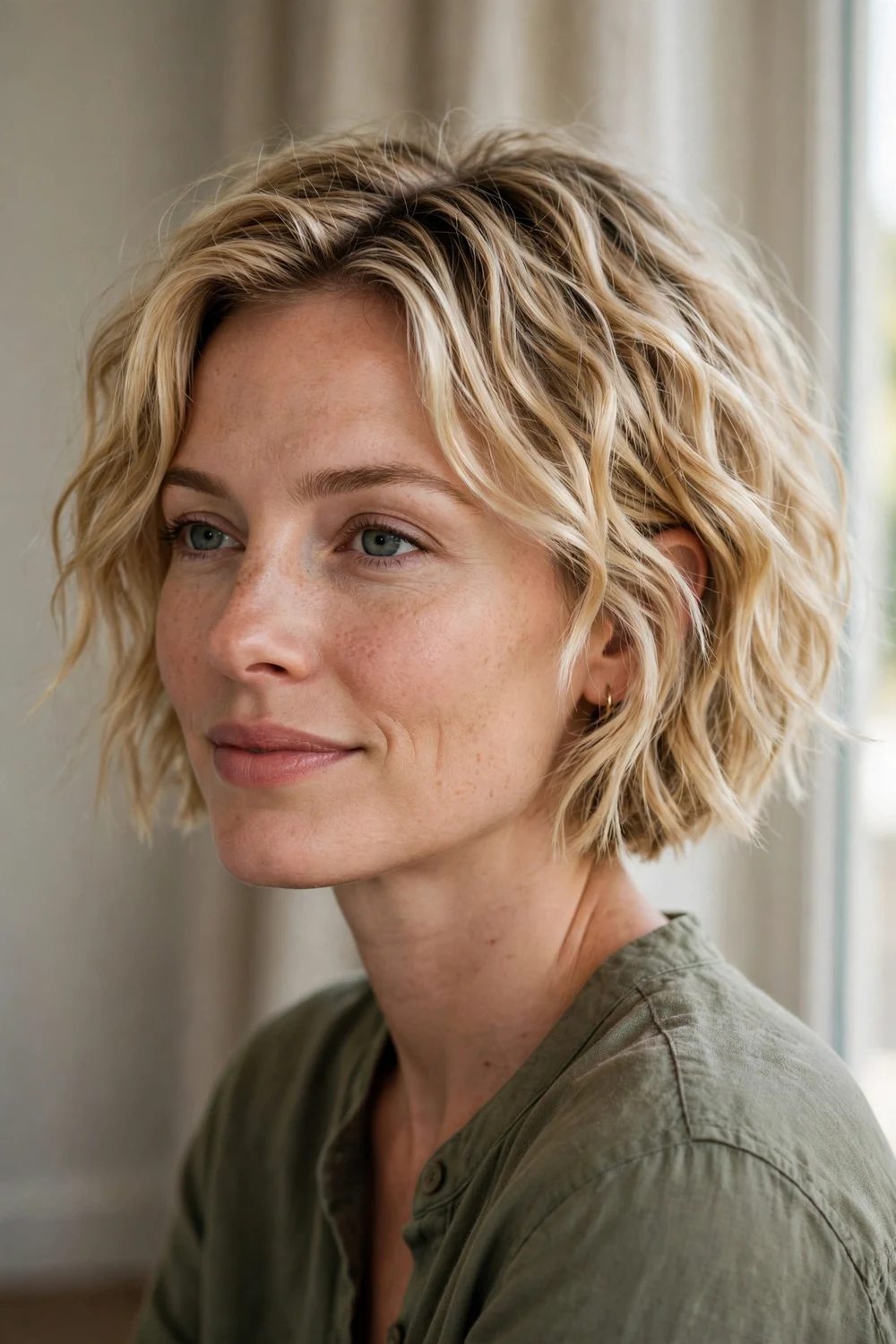
Beach waves give fine hair the lived-in texture that makes it look like more hair. A short cut styled in loose blonde waves is easy to dress up or down, and a shot of hairspray adds grip and body at the roots. The relaxed finish suits round faces because the width lands around the jaw, not across the forehead. Difficulty: Easy.
Try this: mist dry shampoo through the roots before you leave the house, even on clean hair. It adds grit and instant lift.
18. Choppy Bob with Messy Waves
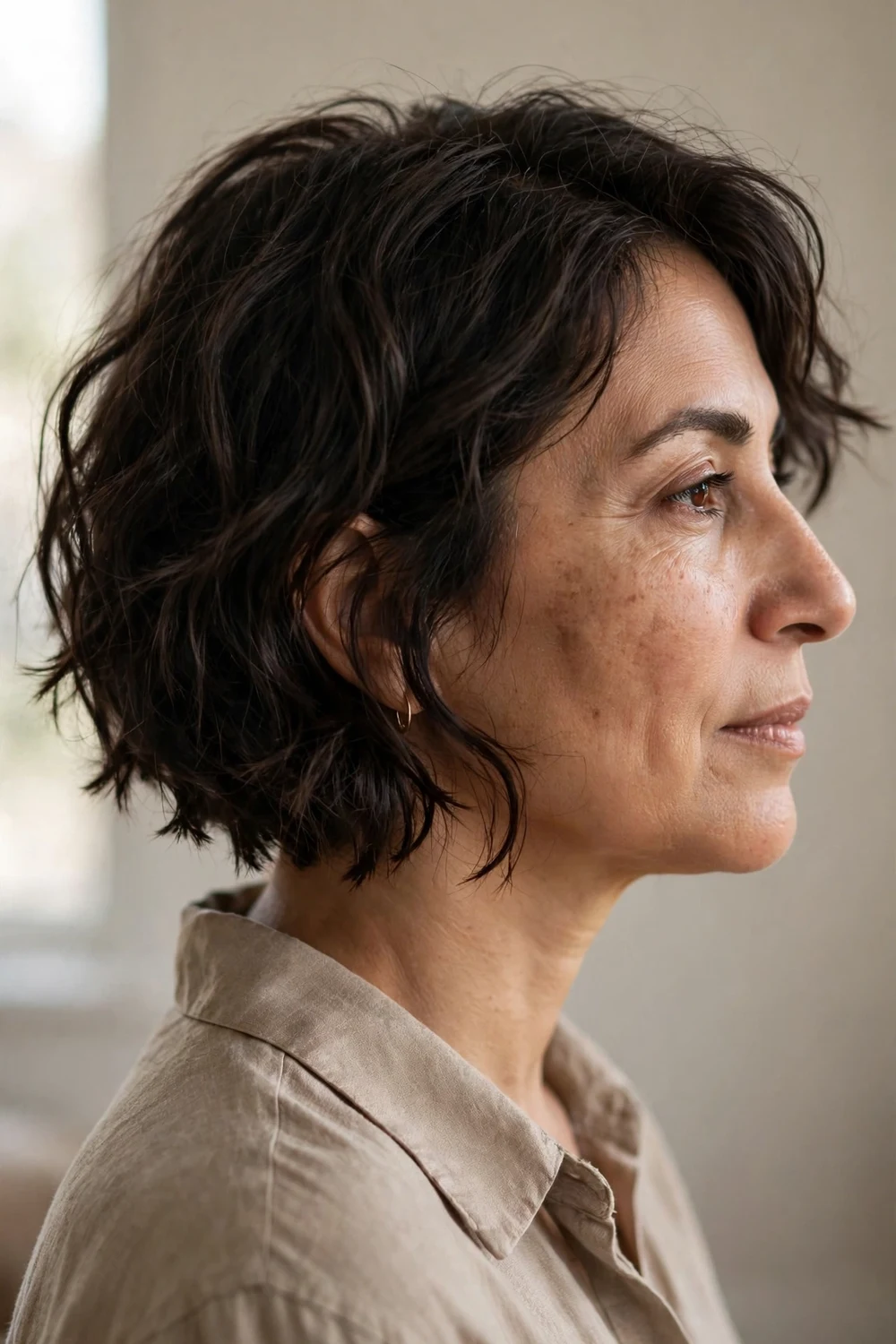
Chopped layers plus messy waves is a double hit of fullness: the cut breaks up the ends, and the waves add body in the middle. Keep the length at or above the chin so the waves have room to move. A texturizing spray is the one product this cut needs. Difficulty: Medium.
Try this: use a flat iron to make S-shaped bends instead of full curls. Flat iron waves hold longer on fine hair than curling-iron curls.
19. Full-Bodied Waves Bob
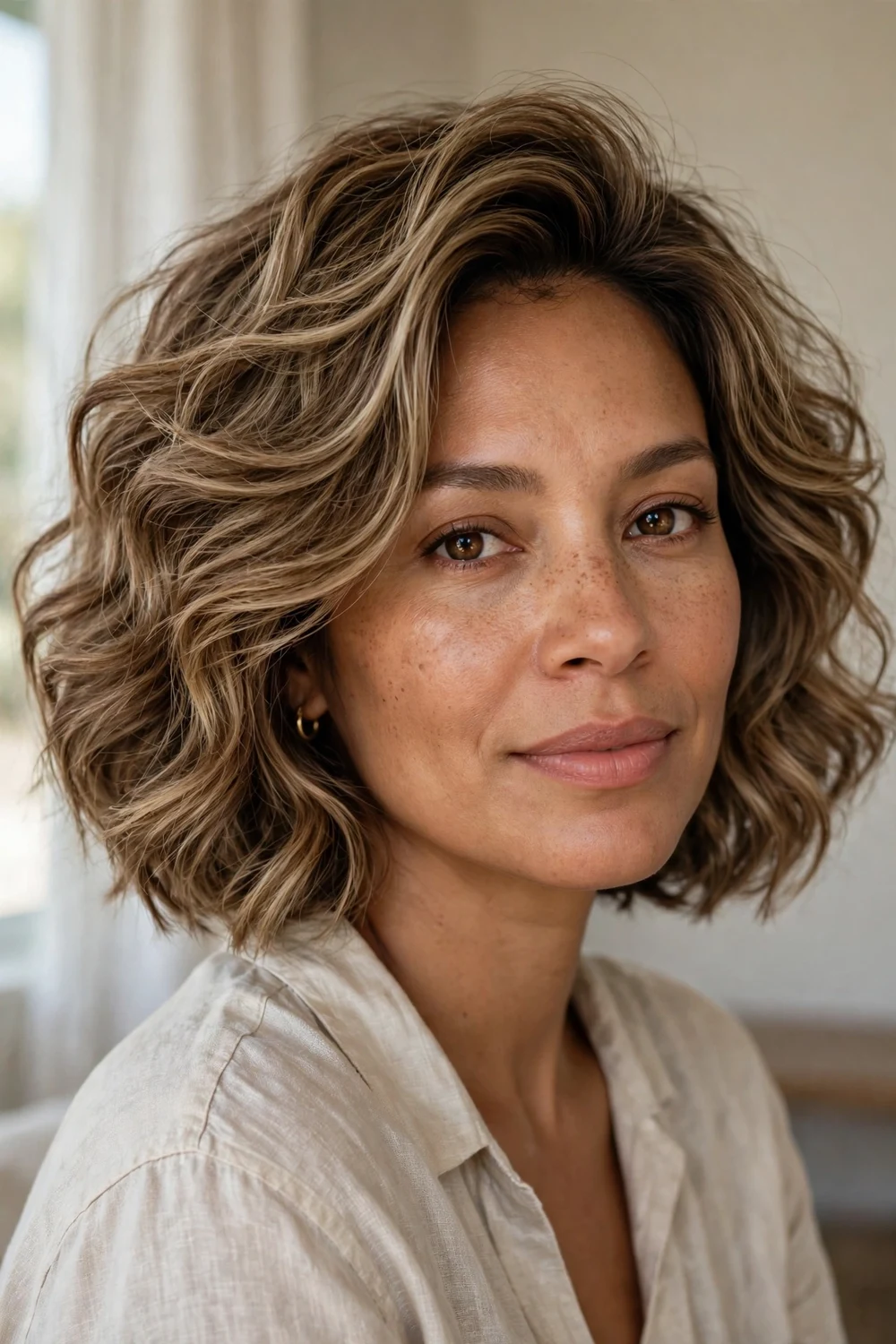
When you want the biggest hair a bob can give you, go for voluminous, layered waves from roots to ends. The waves create the illusion of thickness by expanding the cut outward, and a dimensional color on top makes the waves look even denser. This is a strong choice for evenings and events. Difficulty: Medium.
Try this: set the waves with hot rollers for 10 minutes, then brush out. Hot rollers give fine hair longer-lasting volume than a curling iron.
20. Box Bob with Dark Roots
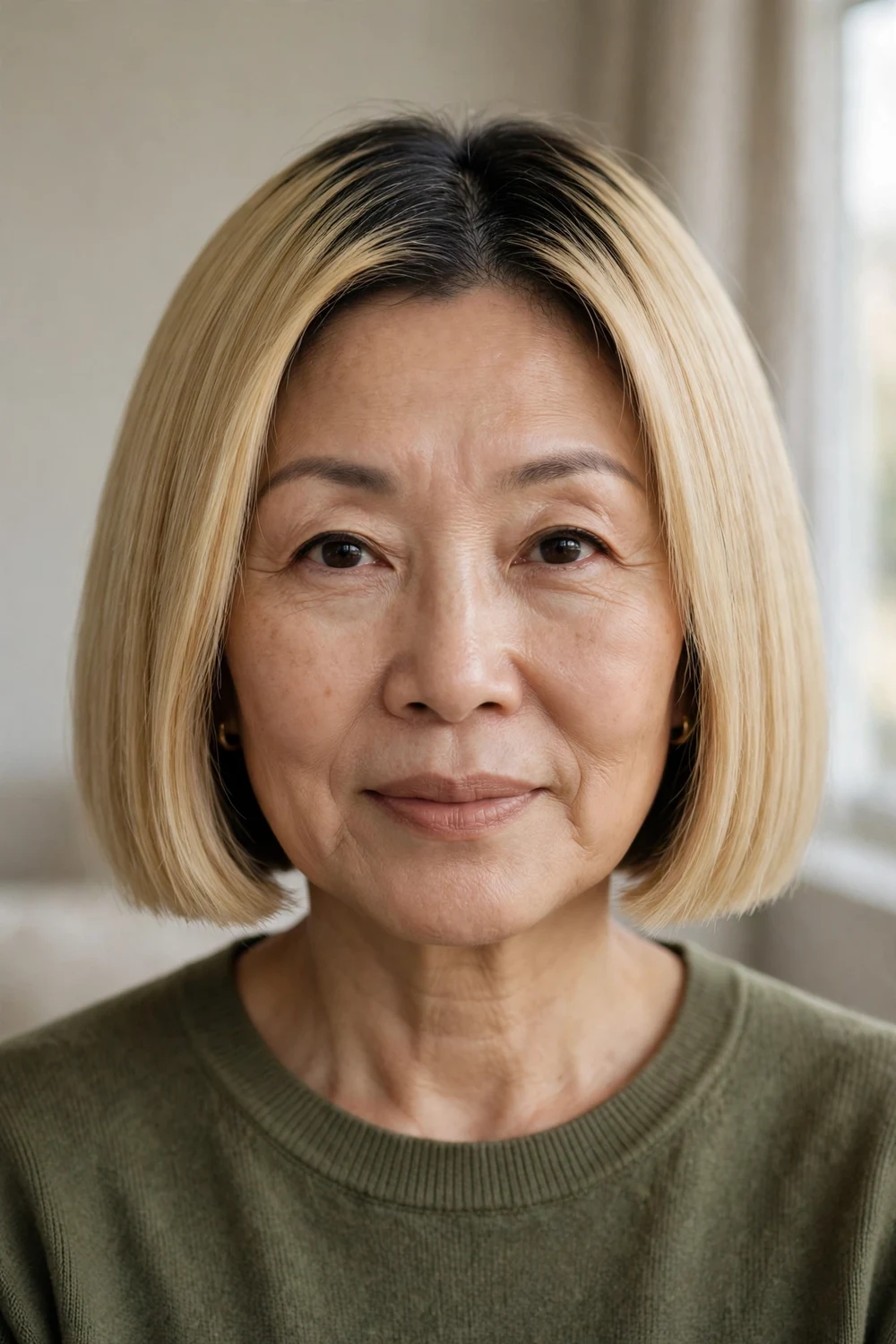
The box bob is a squared-off, structured cut that holds its shape like a frame. On fine hair, the strong geometry creates an edge that looks dense and deliberate. Pair it with dark roots and lighter lengths: the contrast at the root line makes the hair look thicker at the scalp, where it matters. Difficulty: Medium.
Try this: keep the roots touched up every 4 to 5 weeks. The thickness illusion depends on that root contrast staying crisp.
21. Shadow Root Bob
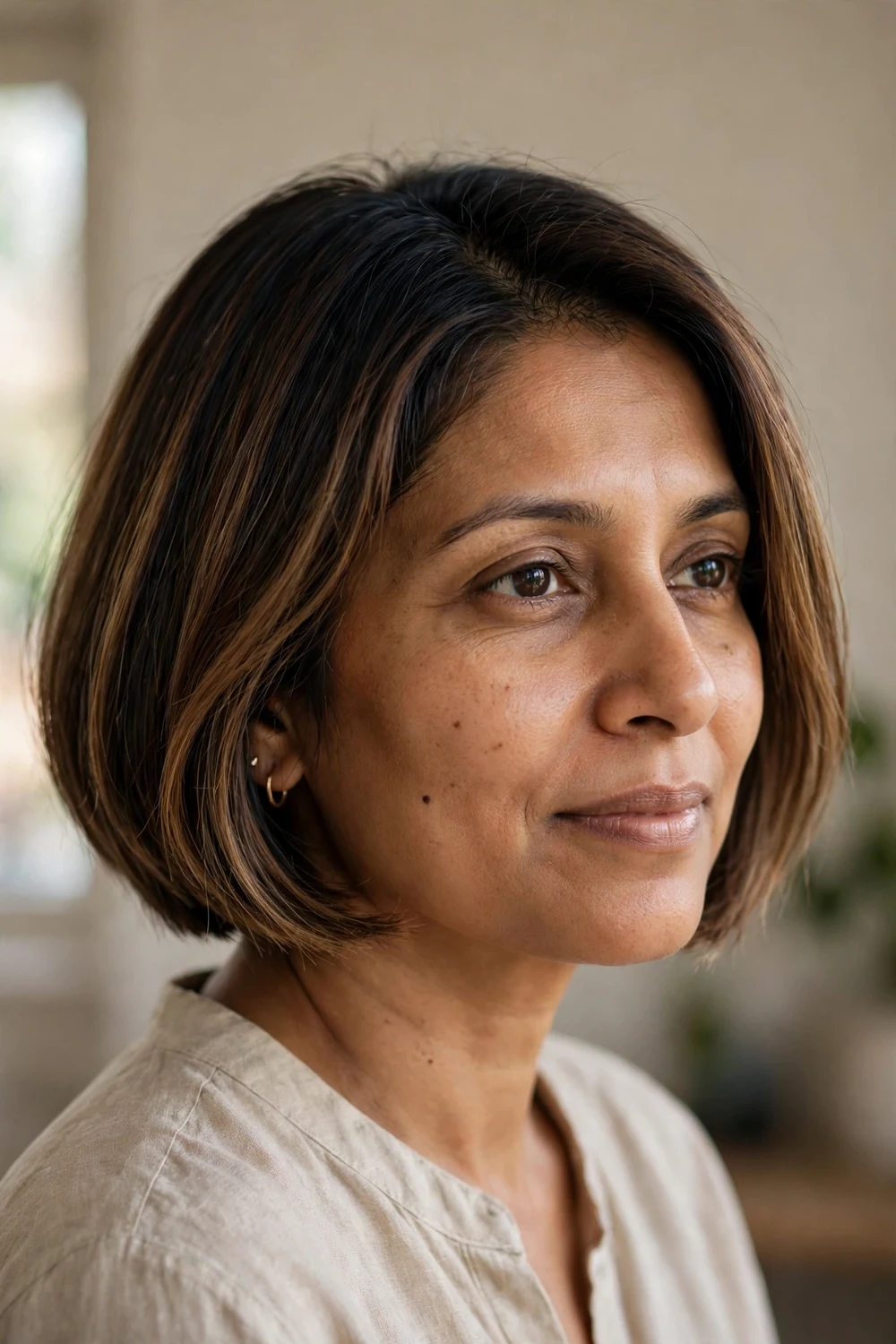
Keeping the roots darker than the lengths is a color trick that makes fine hair look noticeably thicker. The dark base fills in the space between strands at the scalp, and the lighter ends catch the light. Ask your colorist to shadow the roots and stretch the color smoothly so there is no harsh line. It also stretches the time between appointments. Difficulty: Easy.
Try this: go for lowlights woven through the lengths too. The mix of tones adds depth that flat single-process color cannot.
Angled shapes are especially flattering when fine hair needs width and height at the same time. Browse our inverted bob hairstyles for more ways to build volume with sharp angles.
22. Balayaged Bob

Balayage breaks up the flatness of a single-tone base by painting light where the sun would hit. On a neck-length bob, platinum or honey streaks over an ash or brown base give the cut an airy, dimensional quality. The color does some of the thickening work for you, which is helpful when the cut itself is simple. Difficulty: Medium.
Try this: keep the brightest pieces around the face and crown. That is where your eye lands first, so brightness there reads as fullness.
23. Bob with Babylights
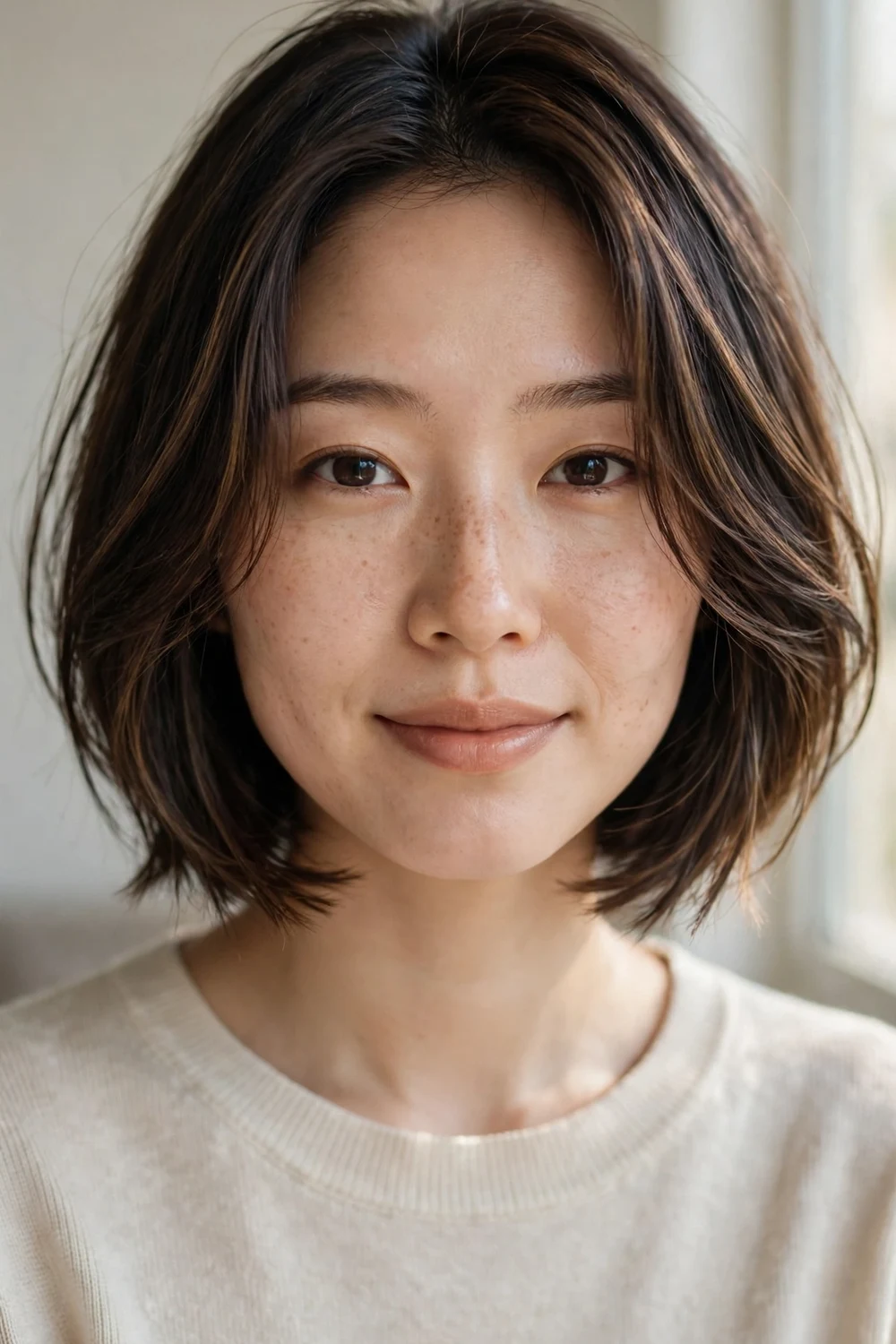
Babylights are ultra-fine highlights that mimic the natural lightness of childhood hair. They add a soft glow across the cut without the commitment of bold color, and the subtle variation keeps fine hair from looking one-dimensional. Pair with a few face-framing layers to tousle the cut into a natural, lived-in look. Difficulty: Medium.
Try this: choose a tone two levels lighter than your base, not four. Subtle contrast keeps the thickness illusion believable.
24. Side-Parted Bob
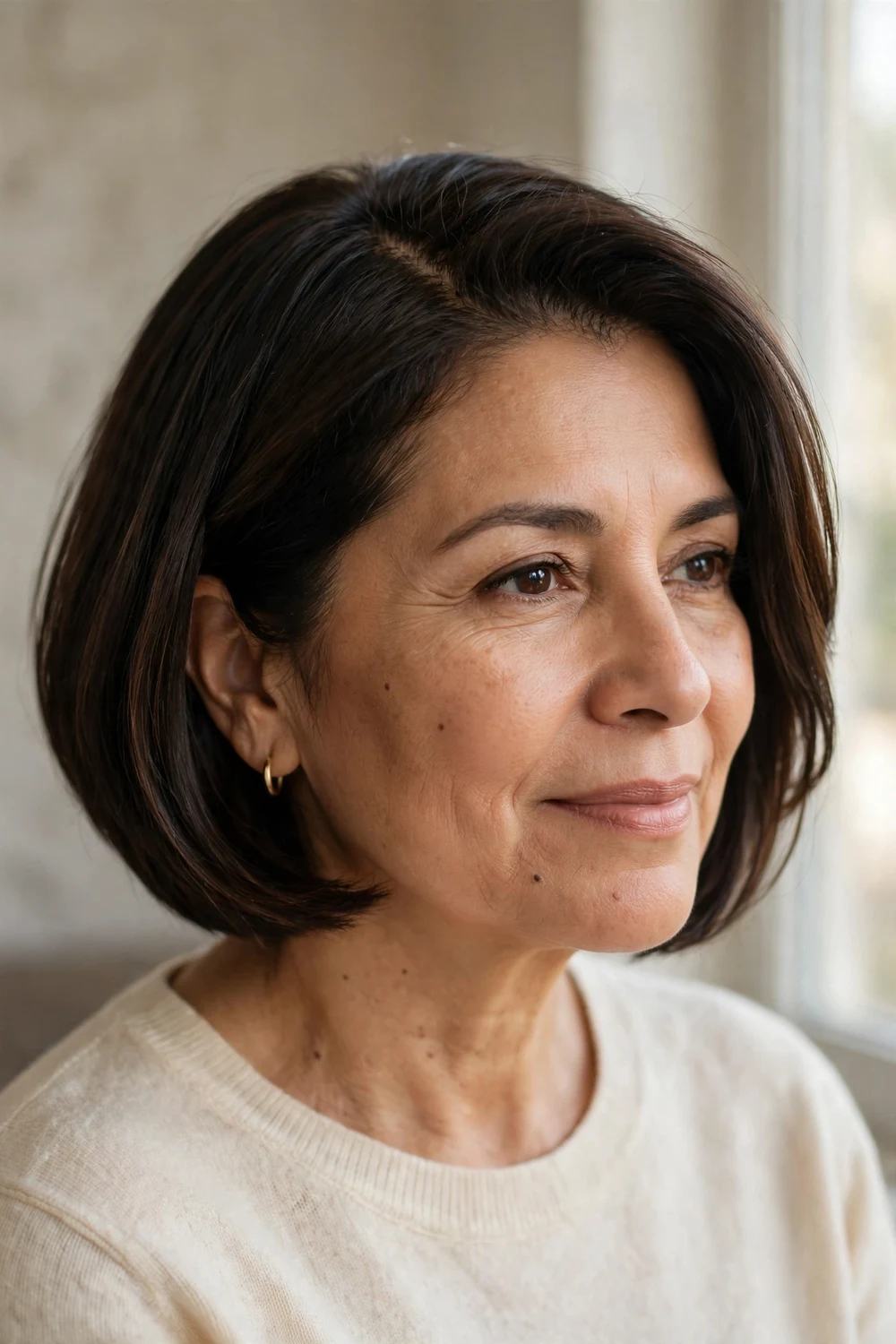
A deep side part is the simplest styling change with the biggest payoff on fine hair. Sweeping the hair to one side creates an asymmetrical weight shift that looks like volume, and the part line itself covers the scalp where thinning shows most. Pair the part with chin-length layers for a soft frame. Difficulty: Easy.
Try this: blow-dry the roots in the opposite direction of your part first, then flip. The roots stand taller against their natural fall.
25. Asymmetrical Bob
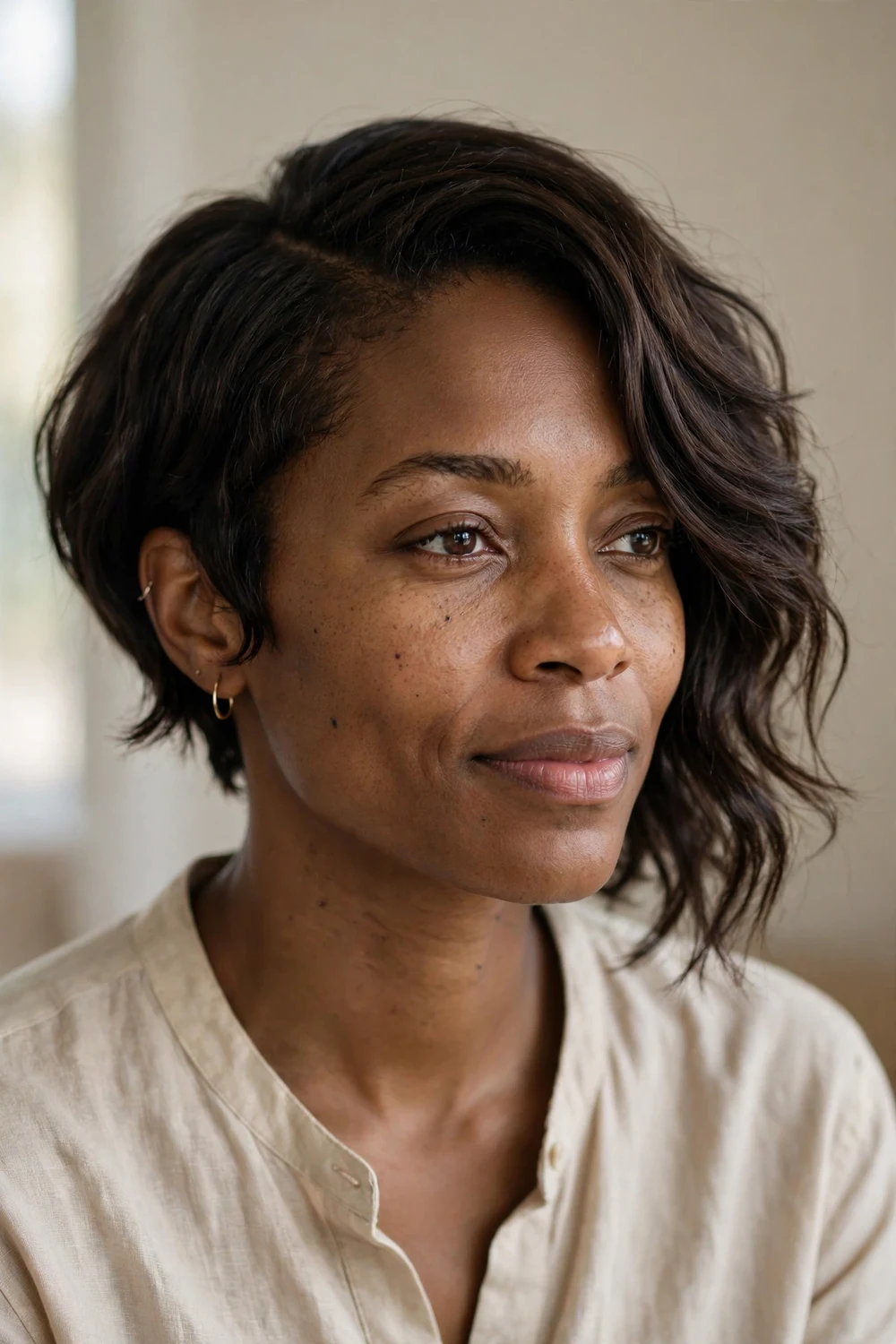
One side cut noticeably longer than the other turns the cut into a style statement and distracts from fine texture at the same time. The eye follows the diagonal line instead of scanning for density. A deep side part amplifies the effect, and wavy texture adds the body the cut needs. It flatters round faces by creating an elongating diagonal. Difficulty: Medium.
Try this: add sea salt spray to the longer side and scrunch. Texture on the longer side keeps the cut balanced.
26. Bob with Side Bangs

Long side bangs swept across the forehead draw the eye upward and frame the face, which keeps attention off the ends. The rest of the cut stays short and dense, and the bangs blend into the longer front pieces for a soft finish. This cut is easy to style: the bangs need a quick sweep, and the back needs almost nothing. Difficulty: Easy.
Try this: blow-dry bangs to the side with a small round brush right after washing. If they dry flat first, they stay flat.
27. Bob with See-Through Bangs
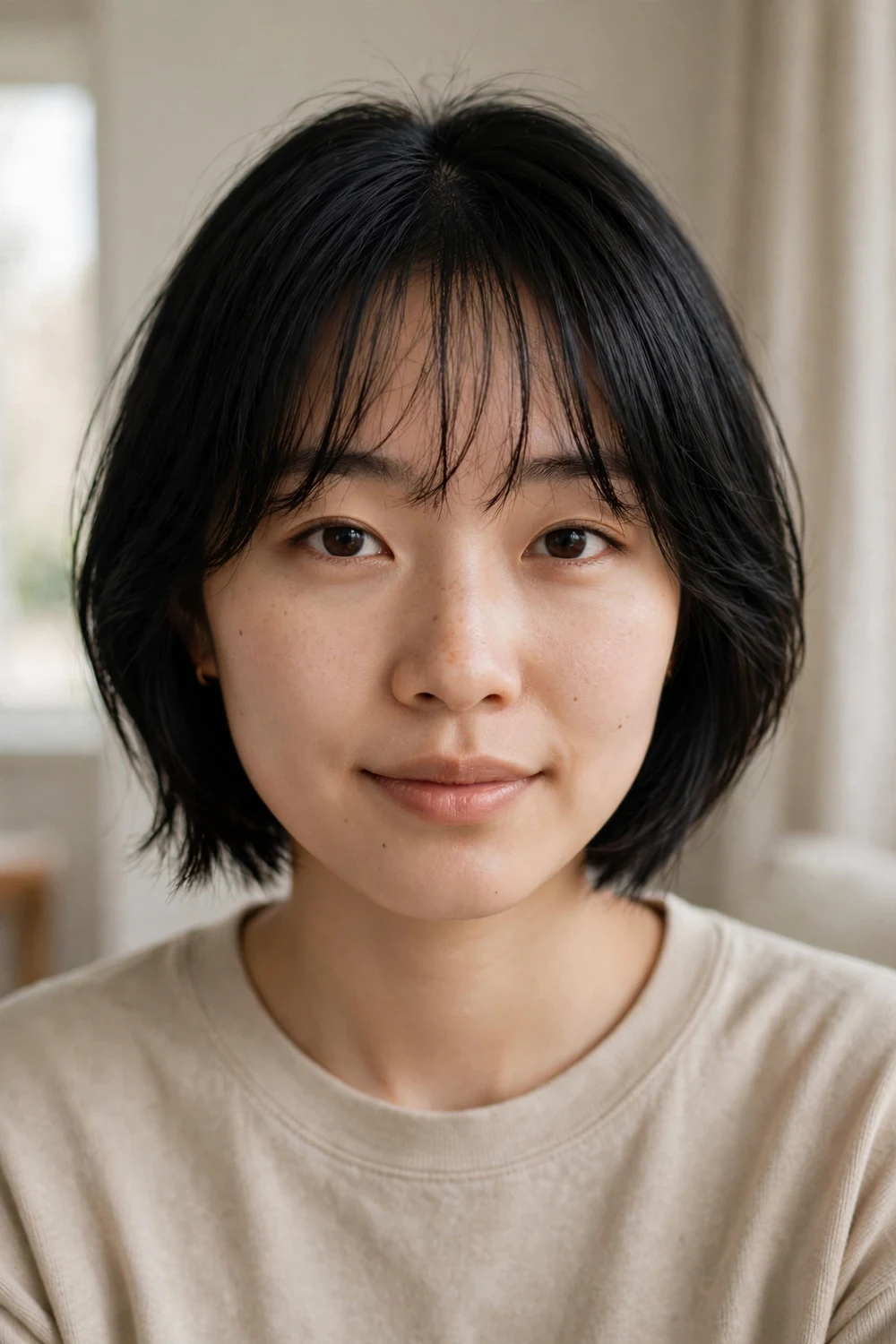
See-through bangs are a safer bet than heavy bangs on fine hair because they need so little hair to work. The wispy fringe covers the forehead without pulling density from the rest of the cut, and it keeps attention around the eyes. Pair it with a finely chopped, slightly angled bob for a relaxed, youthful finish. Difficulty: Medium.
Try this: trim the fringe every 3 weeks at home with point cutting, or between salon visits. Short bangs lose their shape fast.
28. Feathered Fringe Bob

A soft, feathered fringe adds texture around the face without demanding the density a blunt fringe needs. The light layers in the bangs lift away from the forehead, which opens up the face and keeps the cut airy. It pairs well with subtle layers through the rest of the bob. Difficulty: Medium.
Try this: use a pea-sized drop of lightweight serum on the fringe only. Heavy cream near the roots makes fine bangs separate.
Want to see how shaggy texture works on fine bobs? Check out our short shaggy bob hairstyles for more layered, undone options.
29. Short Layered Bob with Blunt Bangs

This edgier pick pairs a straight-across fringe with a messy, layered back. The blunt bangs create a strong focal line that draws attention upward, while the tousled layers behind add the texture fine hair needs. It needs bang trims every few weeks, but the rest of the cut is wash-and-go. Difficulty: Hard.
Try this: keep the bangs thick enough to read as a real fringe. Skimpy bangs on fine hair separate and defeat the purpose.
30. Face-Framing Crop
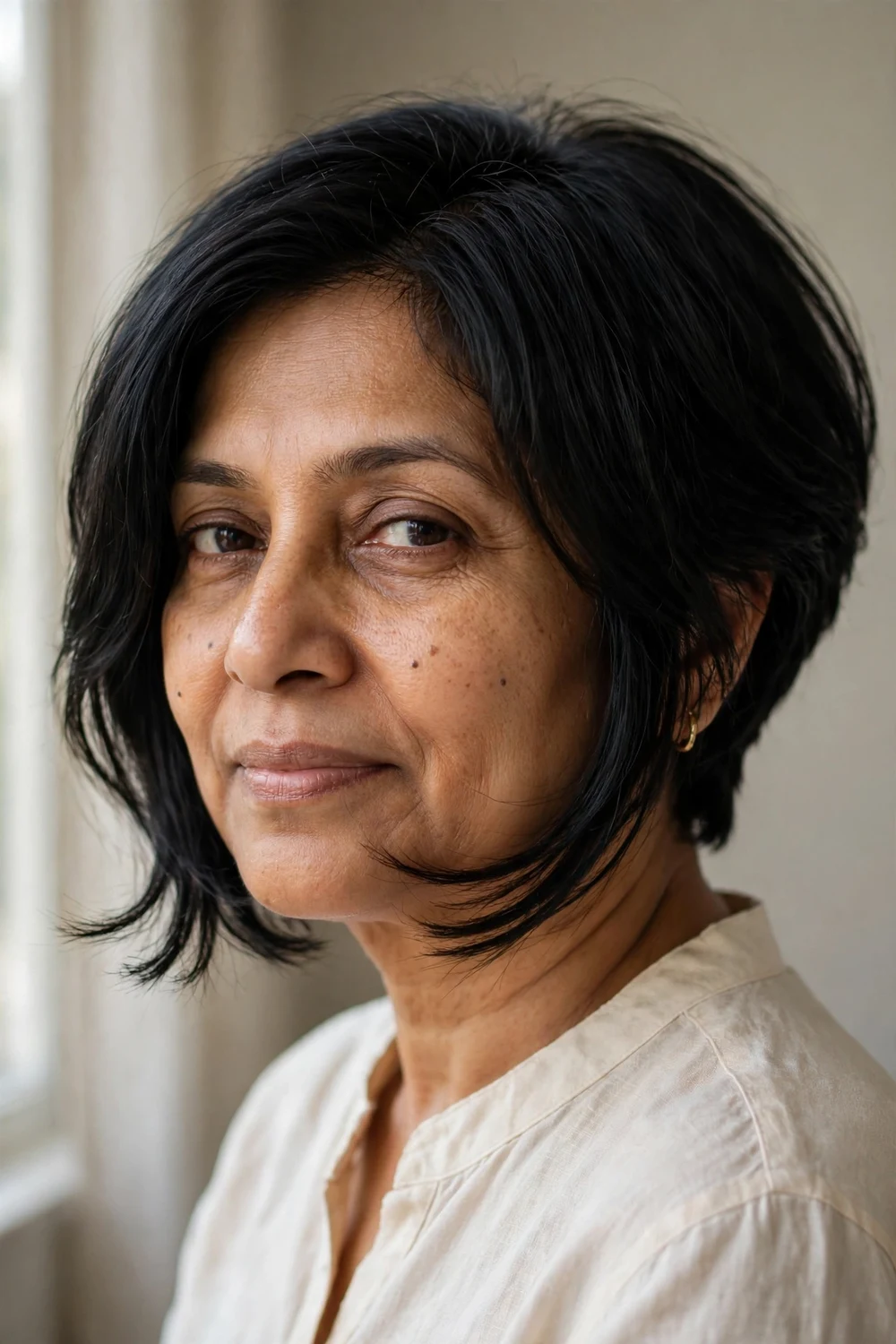
Longer layers cut around the chin and cheeks frame the face while the back stays short and full. The trick is that the length is short enough to bounce, which gives the whole cut energy that long fine hair cannot manage. It suits anyone who wants face-framing softness without giving up the volume benefits of a short cut. Difficulty: Easy.
Try this: curl just the face-framing pieces away from the face. Two curls take 60 seconds and sharpen the whole look.
Short Bob Comparison at a Glance
| Style | Best Occasion | Difficulty | Hold Time |
|---|---|---|---|
| Blunt Bob | Work, everyday | Easy | All day |
| Stacked Bob | Everyday, events | Medium | All day |
| Inverted Angled Bob | Evenings, events | Medium | All day |
| Chin-Length Bob | Everyday, office | Easy | All day |
| A-Line Bob with Textured Ends | Work, casual | Easy | All day |
| Rounded Bob | Events, office | Medium | All day |
| Graduated Bob | Everyday, work | Medium | All day |
| Tapered Bob | Everyday, casual | Easy | All day |
| Short Concave Bob | Evenings, events | Medium | All day |
| Disconnected Reverse Bob | Events, nights out | Hard | 6-8 hours |
| Layered Bob | Everyday, work | Easy | All day |
| Piece-y Layers Bob | Casual, everyday | Easy | 6-8 hours |
| Choppy Bob | Casual, everyday | Easy | 6-8 hours |
| Short Messy Bob | Casual, weekend | Easy | 6-8 hours |
| Shaggy Bob | Everyday, casual | Medium | 6-8 hours |
| Tousled Waves Bob | Everyday, dates | Easy | 6-8 hours |
| Beach Wavy Bob | Weekend, vacation | Easy | 4-6 hours |
| Choppy Bob with Messy Waves | Nights out, events | Medium | 6-8 hours |
| Full-Bodied Waves Bob | Events, evenings | Medium | 4-6 hours |
| Box Bob with Dark Roots | Work, events | Medium | All day |
| Shadow Root Bob | Everyday, casual | Easy | All day |
| Balayaged Bob | Events, everyday | Medium | All day |
| Bob with Babylights | Everyday, work | Medium | All day |
| Side-Parted Bob | Work, everyday | Easy | All day |
| Asymmetrical Bob | Nights out, events | Medium | 6-8 hours |
| Bob with Side Bangs | Everyday, work | Easy | All day |
| Bob with See-Through Bangs | Casual, everyday | Medium | All day |
| Feathered Fringe Bob | Everyday, casual | Medium | All day |
| Short Layered Bob with Blunt Bangs | Nights out, events | Hard | 6-8 hours |
| Face-Framing Crop | Everyday, dates | Easy | All day |
How to Choose the Right Short Bob for You
Start with your styling tolerance. If you blow-dry for five minutes or less, pick a structural cut like the blunt, chin-length, or stacked bob. The shape does the work, so you do not have to. If you enjoy curling and texturizing, the wave-based cuts and choppy finishes give you more room to play.
If the chin-length cut sounds right for you, this guide to chin length bob hairstyles for thin hair walks through thirty versions with styling notes.
Match the cut to your face shape. Chin-length and side-parted cuts soften square faces, longer front pieces on inverted and concave bobs elongate round faces, and the rounded bob balances angular features. For hair that is both fine and sparse, lean toward blunt and box cuts that keep every strand at the perimeter.
Mistakes to Avoid
The biggest mistake is asking for too many layers. On fine hair, heavy layering thins out the ends and removes the very weight that makes a bob look full. Keep layers soft, and keep the perimeter blunt.
Skip the flat iron habit of pressing everything poker-straight with no bend. Dead-straight fine hair clings to the head. One soft bend at the ends, or a quick tousle with dry shampoo, keeps the cut from looking limp. And do not stretch trims past two months: fine hair loses its edge fast, and a grown-out bob thins visually from the bottom up.
If you are still deciding between short lengths overall, our roundup of short bobs covers the full range of short bob styles beyond fine-hair picks.
Frequently Asked Questions
Which bob haircut makes fine thin hair look thicker?
The blunt bob and the stacked bob thicken fine thin hair best. A blunt cut stacks every strand at one level, which makes the hemline look solid, while stacked layers build real volume at the crown through the cut itself. Both create fullness that does not depend on daily styling.
Should fine hair have layers in a bob?
Yes, but keep them soft and minimal. Light, blended layers remove just enough weight to create movement, and movement reads as volume. Avoid heavy or razor-thinned layers, which strip density from the ends and make fine hair look thinner than it is.
What length bob is best for thin hair?
Chin to neck length is the sweet spot for thin hair. At this length the hair is too short to drag itself flat, so it holds lift and shape. Once a bob grows past the shoulders, fine hair loses volume and the ends start to look thin.
How often should I trim a short bob for fine hair?
Get a trim every 6 to 8 weeks. Fine hair shows split ends and shape loss faster than thick hair, and a grown-out bob thins out visually from the bottom up. Regular trims keep the hemline dense and the cut’s volume-building geometry intact.
Do short bobs work for fine hair over 50?
Yes, short bobs are one of the most flattering choices for fine hair over 50. Chin-length and stacked cuts lift the face, the shorter length reads as thicker, and the style is easy to maintain. Soft layers around the face keep the look gentle rather than severe.
Final Thoughts
Fine thin hair does not need more products; it needs the right cut. A short bob, kept at chin to neck length with a blunt edge or stacked shape, gives you density that lasts between washes. Pick one cut from this list, show the photo to your stylist, and ask how to style it in under ten minutes.

