


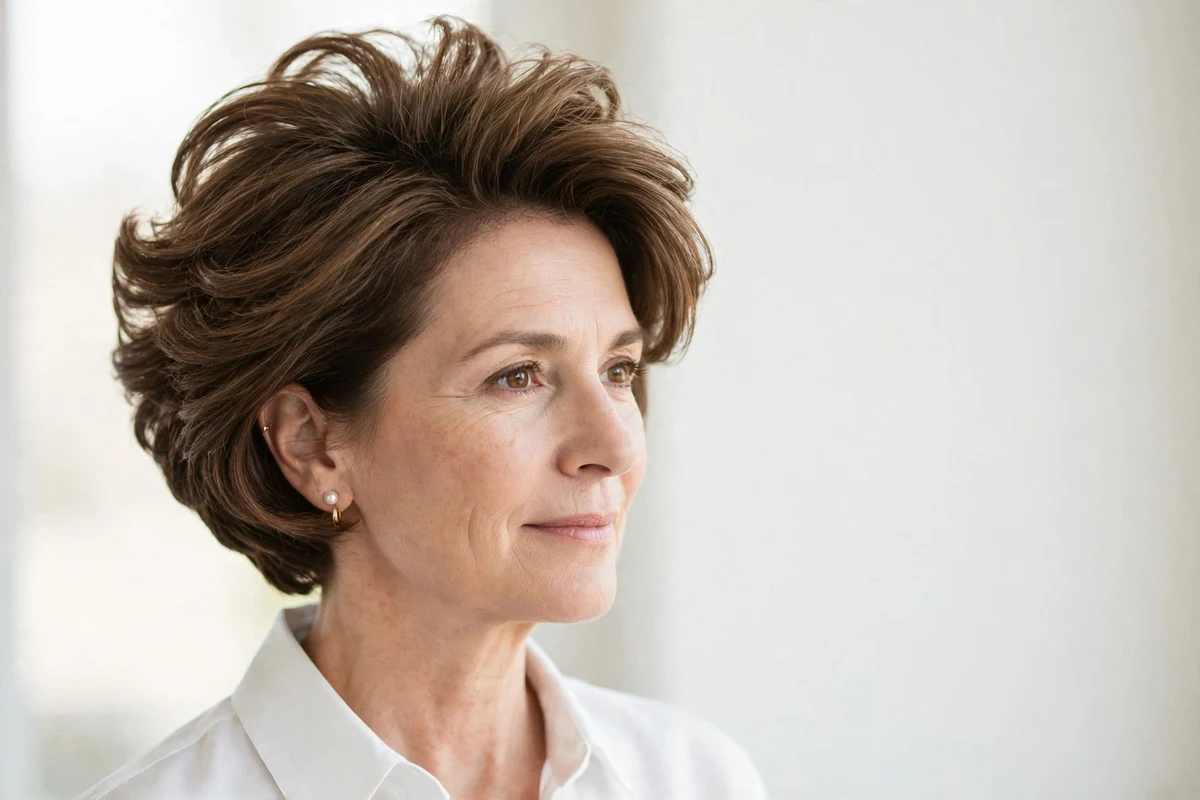
Thin hair does not need more products. It needs a smarter cut. A short stacked bob builds volume into the back of the haircut itself, with graduated layers that lift the crown and make fine strands look denser.
Below are 19 short stacked bob haircuts for thin hair, gathered from the most requested salon variations. I have noted who each version suits, how much styling it takes, and the one technique that makes it work for fine hair.
Quick answer: A short stacked bob flatters thin hair because the shorter graduated layers at the back create lift and the illusion of density. The most volume comes from versions with a tapered nape, textured ends, and a side part for root lift.
Quick Takeaways
- Stacked layers at the back build volume that fine hair cannot get from products alone.
- Keep the perimeter fairly blunt so the ends do not look wispy.
- A trim every 5 to 8 weeks keeps the stacked shape from collapsing.
- Lightweight mousse and root-lifting spray work better than heavy creams on thin hair.
- Side parts, bangs, and texture all add the appearance of fullness around the face.
Why Stacking Works for Thin Hair
A stacked bob cuts the back in short, graduated layers that sit on top of each other. Each layer pushes the one above it outward, which creates a rounded, lifted silhouette. For thin hair, that built-in architecture does what volumizing products only promise.
The front stays longer, usually around the chin, which keeps the cut feminine and gives you styling options. Because the shape comes from the cut, daily styling stays simple: a quick blow-dry with a round brush is often enough.
Before Your Appointment: What to Know
Tell your stylist your hair is thin, not just fine. Fine describes the strand width, while thin describes density, and the cutting approach differs. For thin hair, you want controlled layering: enough to create lift, not so much that the ends disappear.
Ask how the cut will grow out. Stacked bobs lose their shape faster than one-length cuts, so find out whether your stylist recommends 6-week or 8-week maintenance before you commit.
1. Classic Graduated Stacked Bob
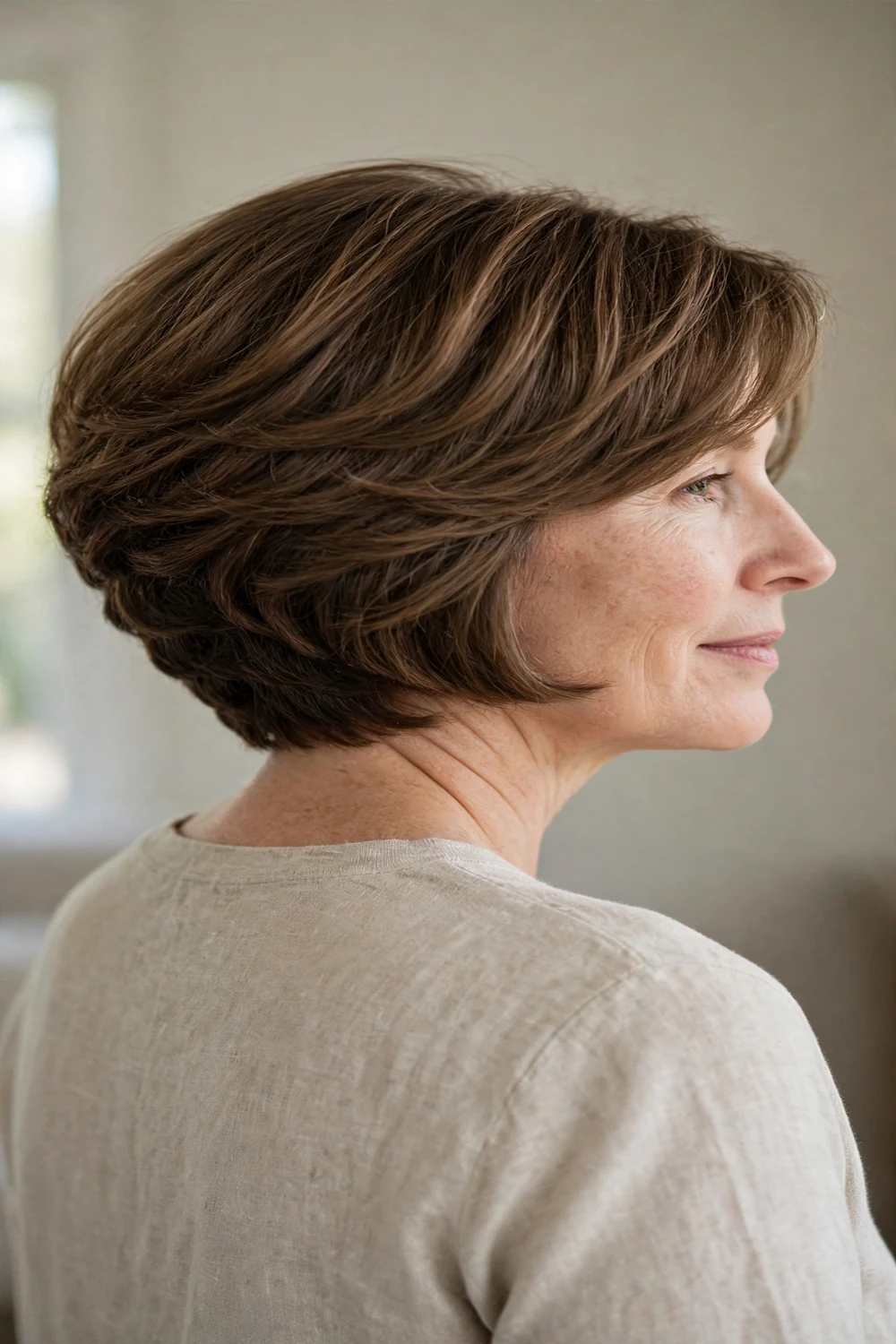
This is the version every other stacked bob is measured against. The back is cut in clean graduated layers that stack neatly from the nape upward, while the front falls to the chin in a smooth line. It suits oval and heart-shaped faces, and it gives thin hair a polished, deliberate shape. The graduation should be smooth rather than choppy so the silhouette reads refined. If you want the most timeless take on this cut, start here.
Try this: Blow-dry the back with a round brush, lifting each section straight up from the head. Let it cool for 10 seconds before releasing so the lift sets.
2. Textured Stacked Bob with Feathered Layers
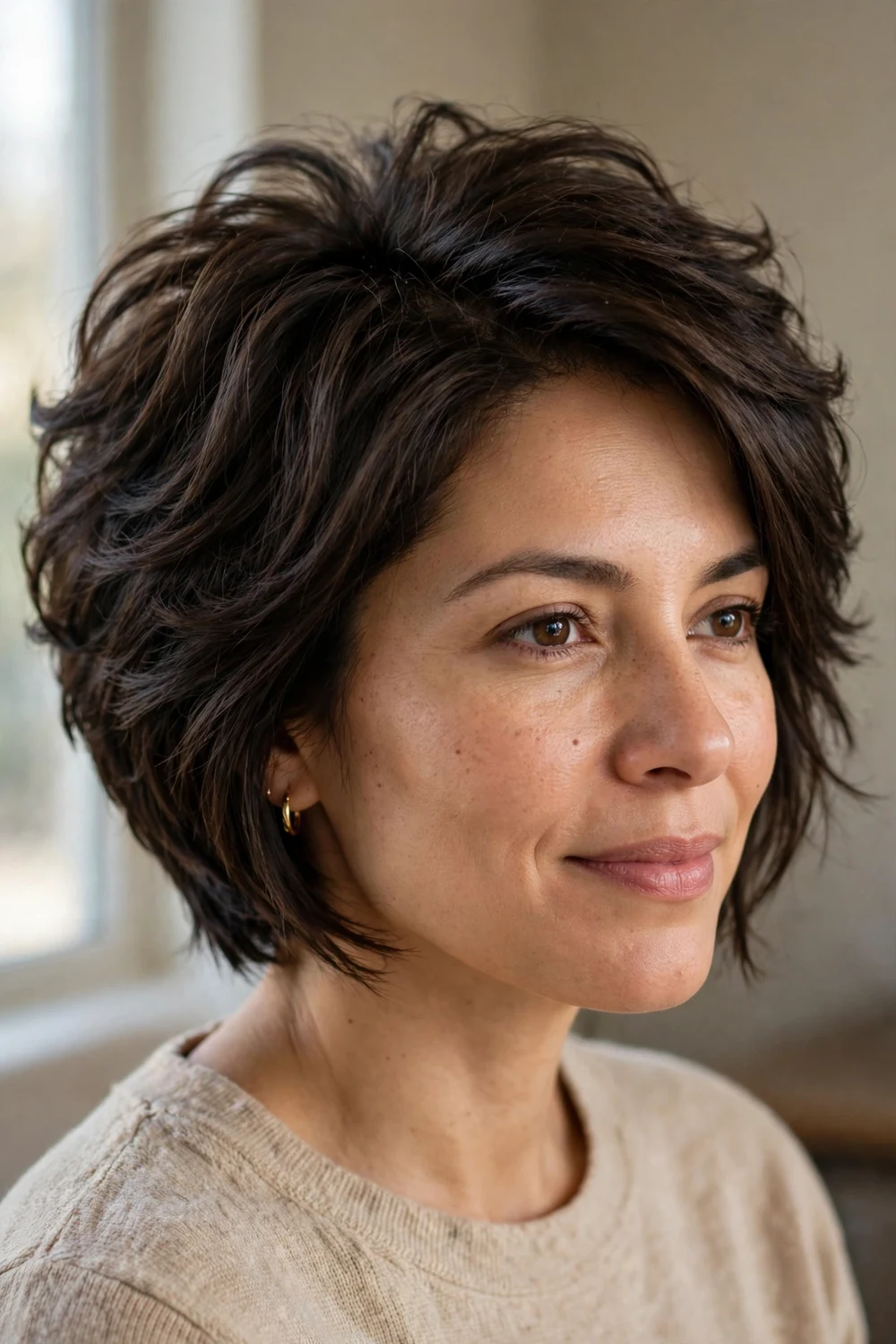
When a smooth stack feels too severe, texture softens it. Feathered layers through the crown and back break up the graduated line so the cut looks modern instead of helmet-like. This version suits women who want volume without a super-polished finish, and it works on straight to slightly wavy hair. The feathering also helps the cut grow out gracefully, since there is no hard line to lose. A relaxed, current take on the classic.
Try this: Apply texturizing spray to dry hair and tousle the crown with your fingertips. Avoid heavy creams, which flatten feathered layers fast.
3. Angled (Inverted) Stacked Bob
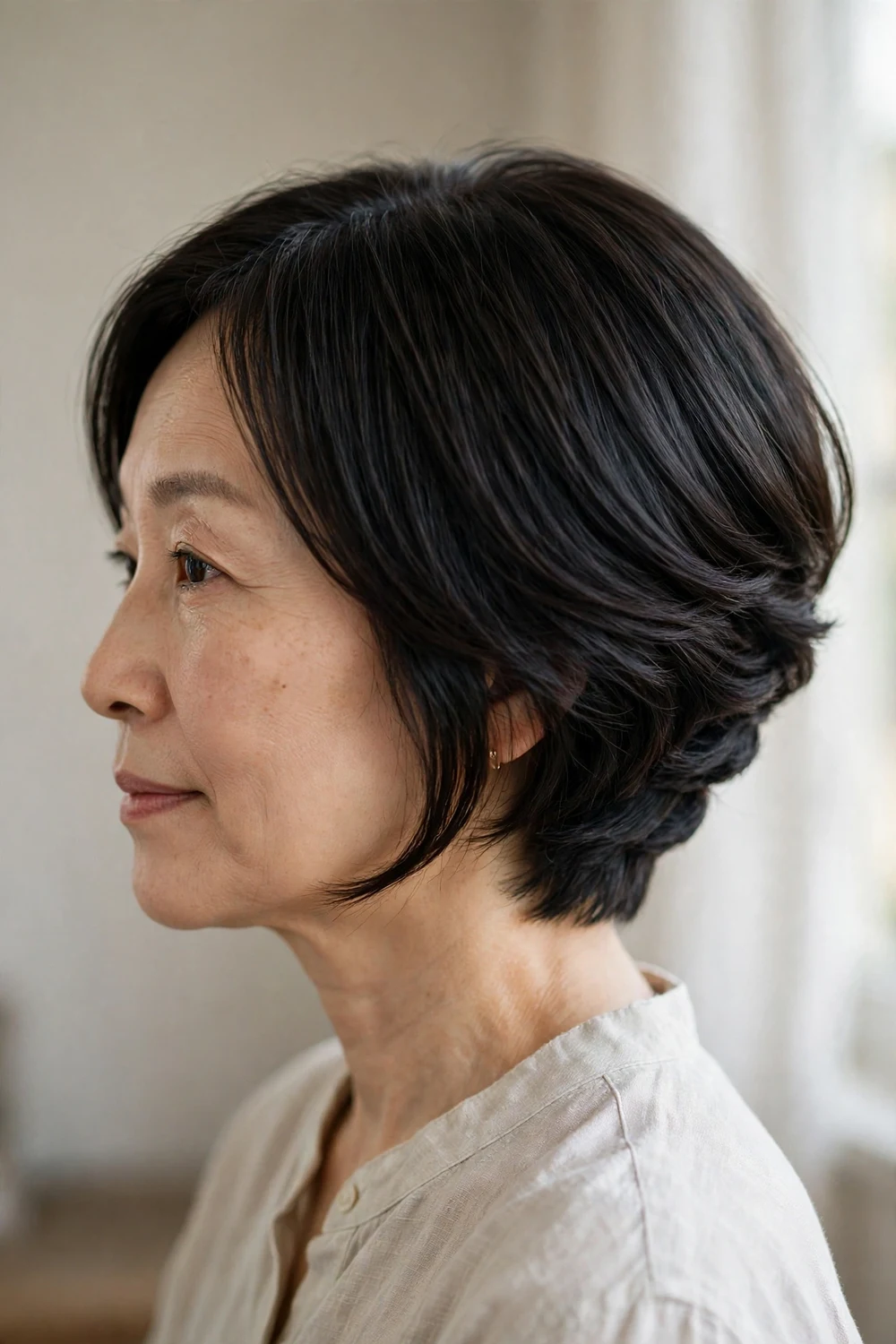
Longer in front, stacked in back: the angled version gives you the best of both shapes. The inverted line elongates the face, which flatters round and square faces, while the stacked back keeps the volume where thin hair needs it. Straight hair shows the angle most clearly, so this is a strong pick if your hair is naturally straight. Keep the angle gradual for work settings or push it sharper for a bolder statement.
Try this: Straighten the front sections so the inverted line reads crisply. Keep the crown lifted with a round brush so the back does not go flat against the angle.
4. Layered Stacked Bob with Side Part
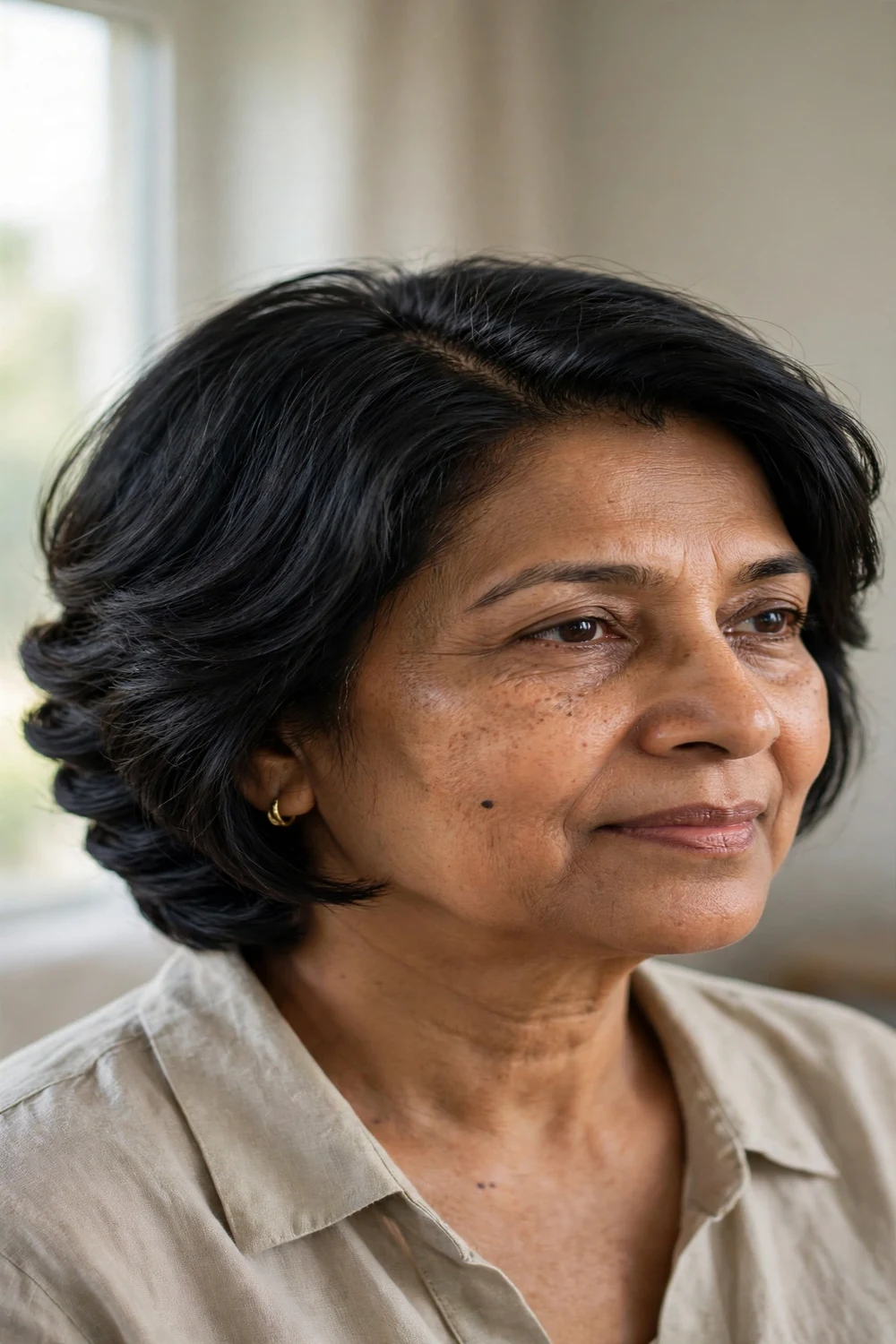
A side part is the cheapest volumizer ever made, and it pairs perfectly with a stacked back. Flipping the part creates instant lift at the roots on the heavy side, doubling the volume the stacking already built. This version suits almost every face shape and works especially well for thin hair that lies flat on top. The layers stay soft and blended so the part does the talking. If your stacked bob ever looks limp, change the part before you change the cut.
Try this: Flip your part to the opposite side while the hair is damp, then blow-dry. The roots will stand up away from their usual direction.
5. Soft Wavy Stacked Bob
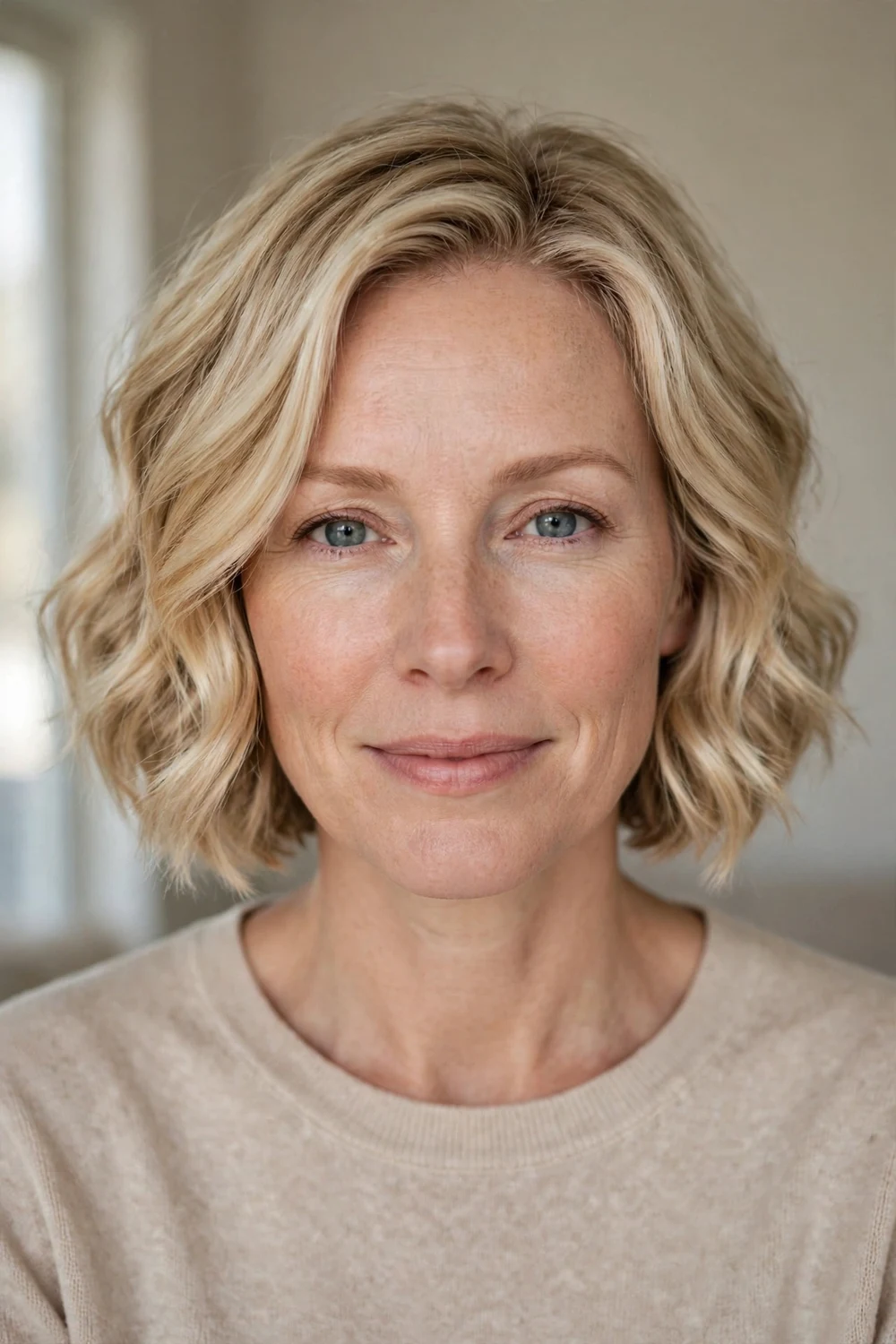
Waves create the illusion of thickness that straight thin hair cannot fake. In this version, loose brushed-out waves run through a softly stacked bob, giving it a feminine, touchable finish. It suits oval and oblong faces, and the wave pattern disguises any sparseness at the ends. Use a large-barrel iron and brush the curls out for softness rather than definition. A romantic option that still keeps the stacked structure underneath.
Try this: Curl random sections in alternating directions, then brush through with a paddle brush. Finish with a flexible-hold spray so the waves stay soft.
6. Dramatic High-Stacked Bob
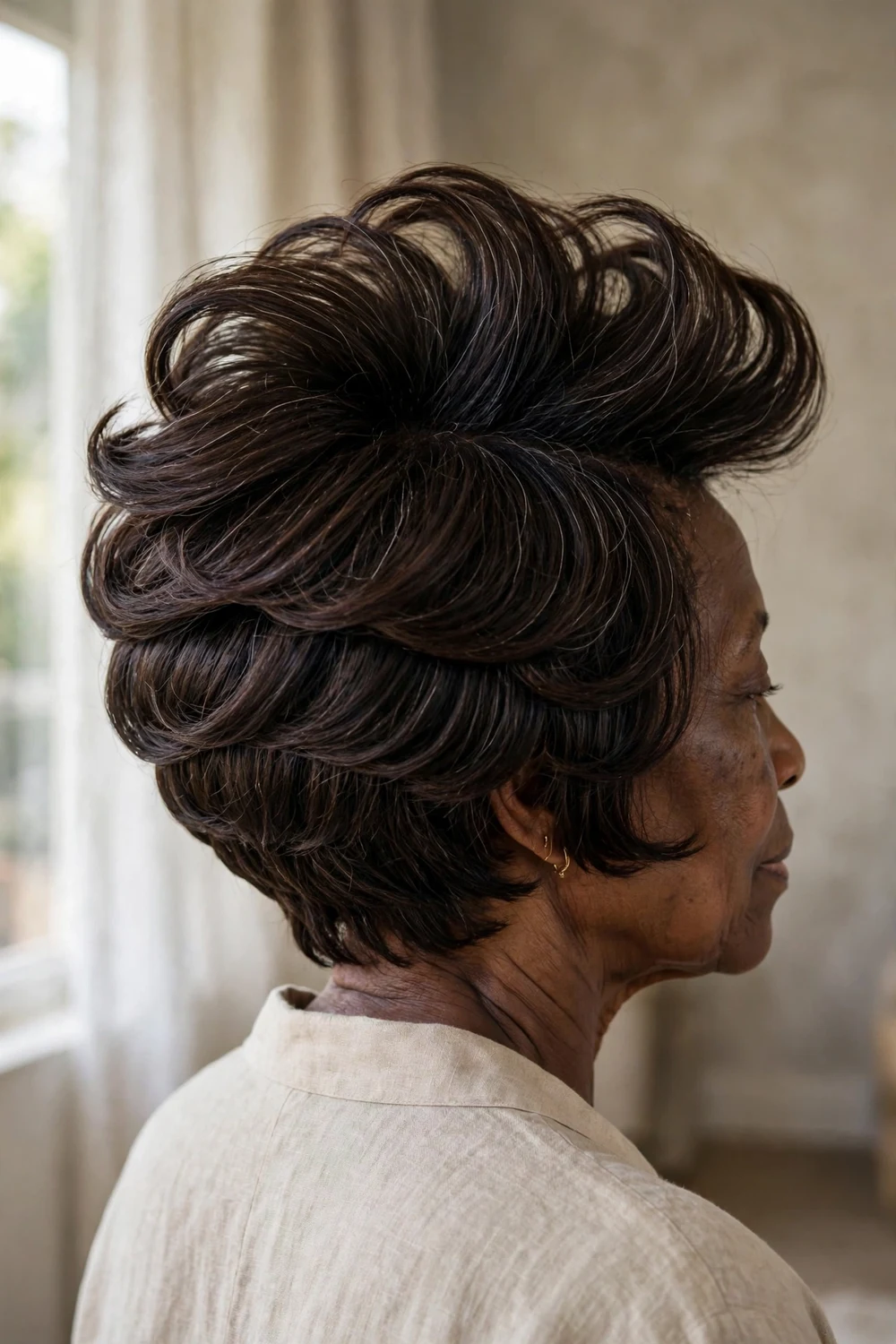
Some thin hair needs maximum intervention, and this cut delivers it. The dramatic high stack uses deep layers and serious graduation to build major height at the crown. It suits women over 50 especially well, since the lift counteracts the flatness that often comes with aging hair. The silhouette is bold, so pair it with simple styling elsewhere. This is the pick when subtle volume has never been enough for your hair.
Try this: Backcomb the crown lightly before smoothing the top layer over it. A root-lifting powder applied directly at the roots extends the height for hours.
7. Super Short Stacked Bob
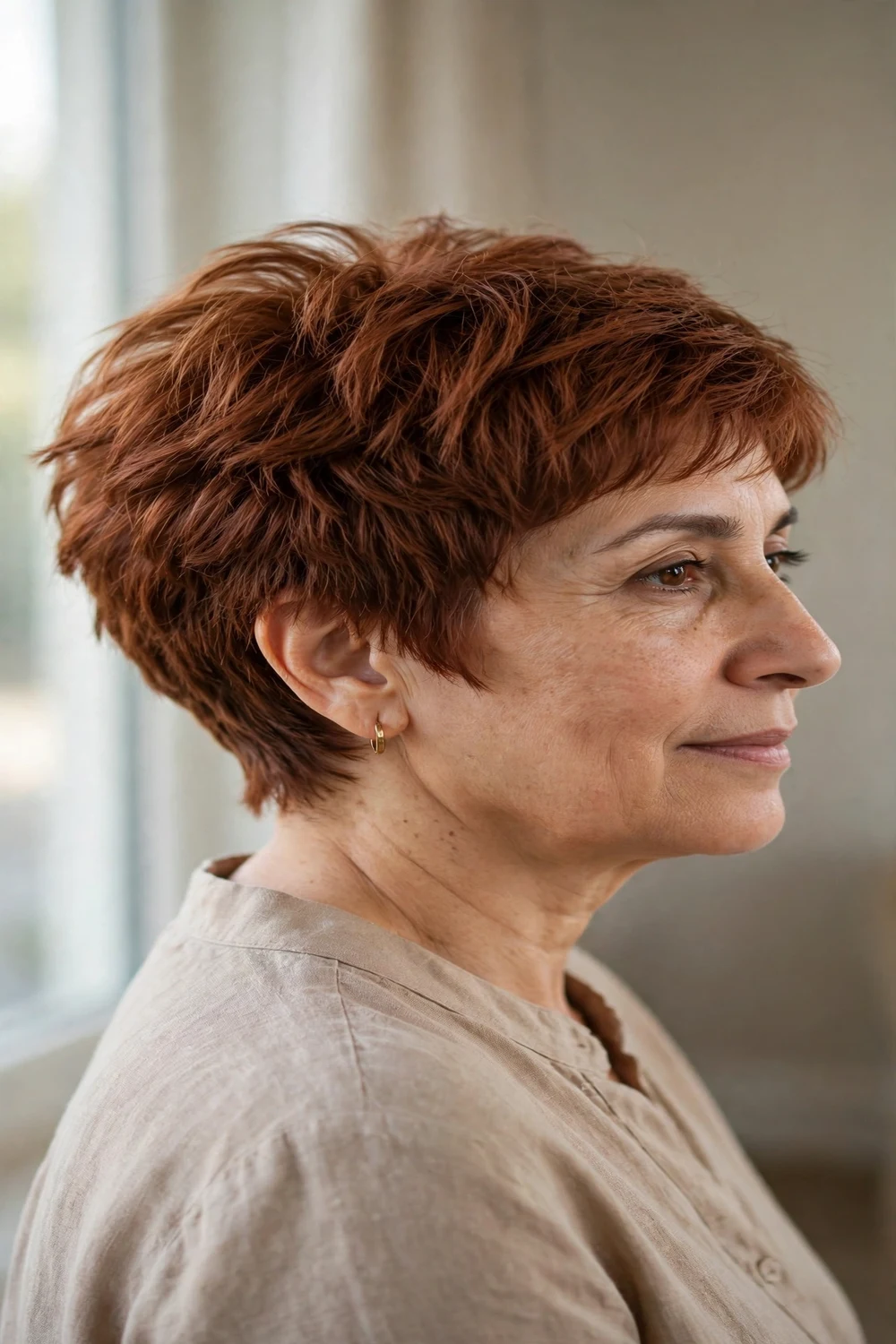
Shorter hair always looks thicker, and this cut proves it. The super short stack hugs the nape with a tapered finish while the crown keeps its stacked volume. It suits petite features and oval faces, and it shows off the neck and jawline. Because the cut is so short, it needs a confident stylist and regular trims to hold the shape. The payoff is a chic, low-bulk cut that makes thin hair look intentionally full.
Try this: Ask for an undercut or tight taper at the nape to remove bulk where you do not need it. Style the top with mousse for piecey separation.
8. Silver Stacked Bob with Tapered Undercut
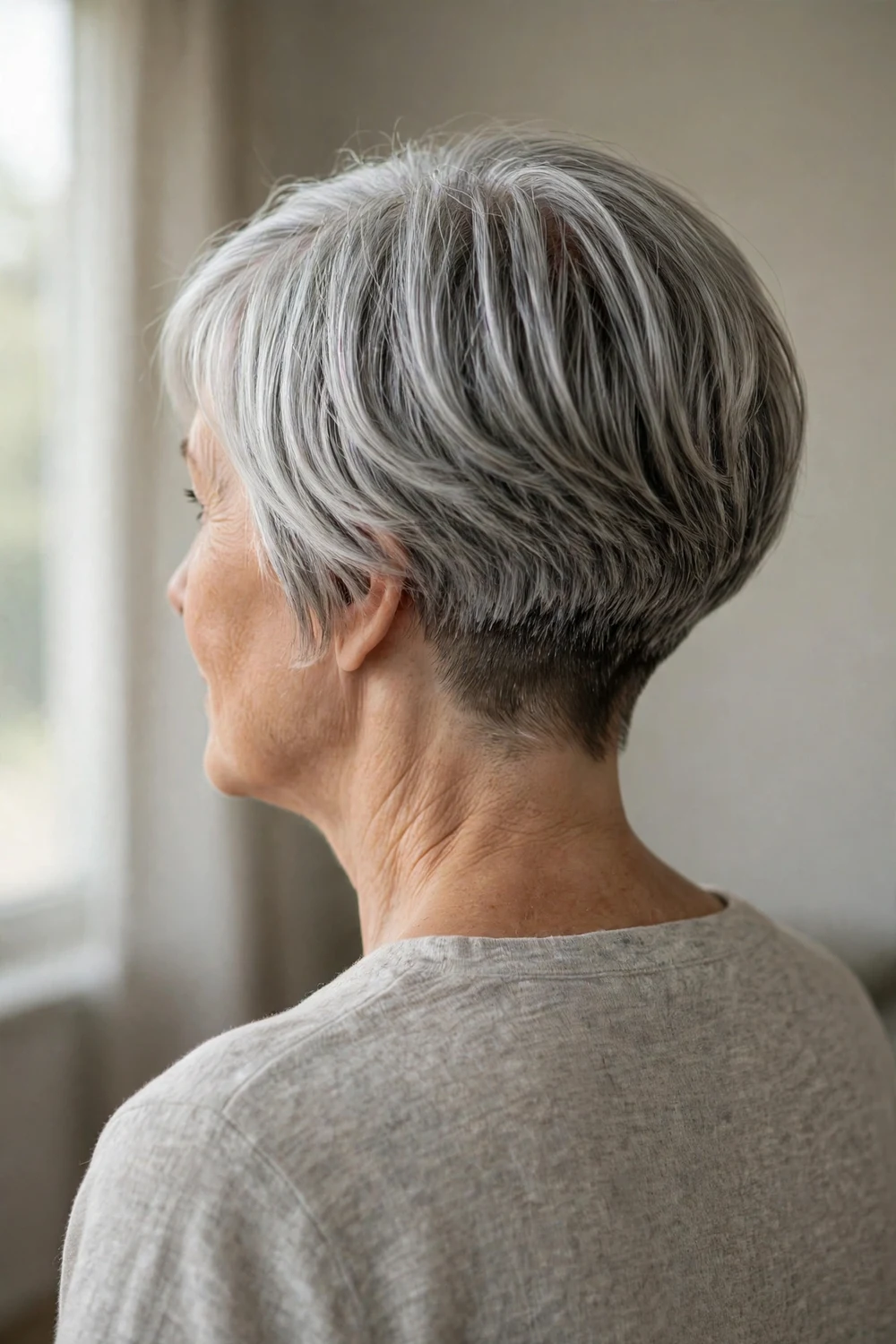
Natural gray and a stacked cut are a strong combination. The silver tone shows off every layer in the stack, since light reflects differently off each graduated level. A clean tapered undercut at the nape keeps the neckline sharp and removes weight exactly where thin hair does not need it. This version suits mature women who have embraced their gray and want a modern, crisp shape. Sleek sides keep the overall look neat and intentional.
Try this: Use purple shampoo weekly to keep the silver bright. Ask your stylist to clean up the tapered nape between full cuts if it grows out fuzzy.
9. Precision-Cut Stacked Bob with Blunt Ends
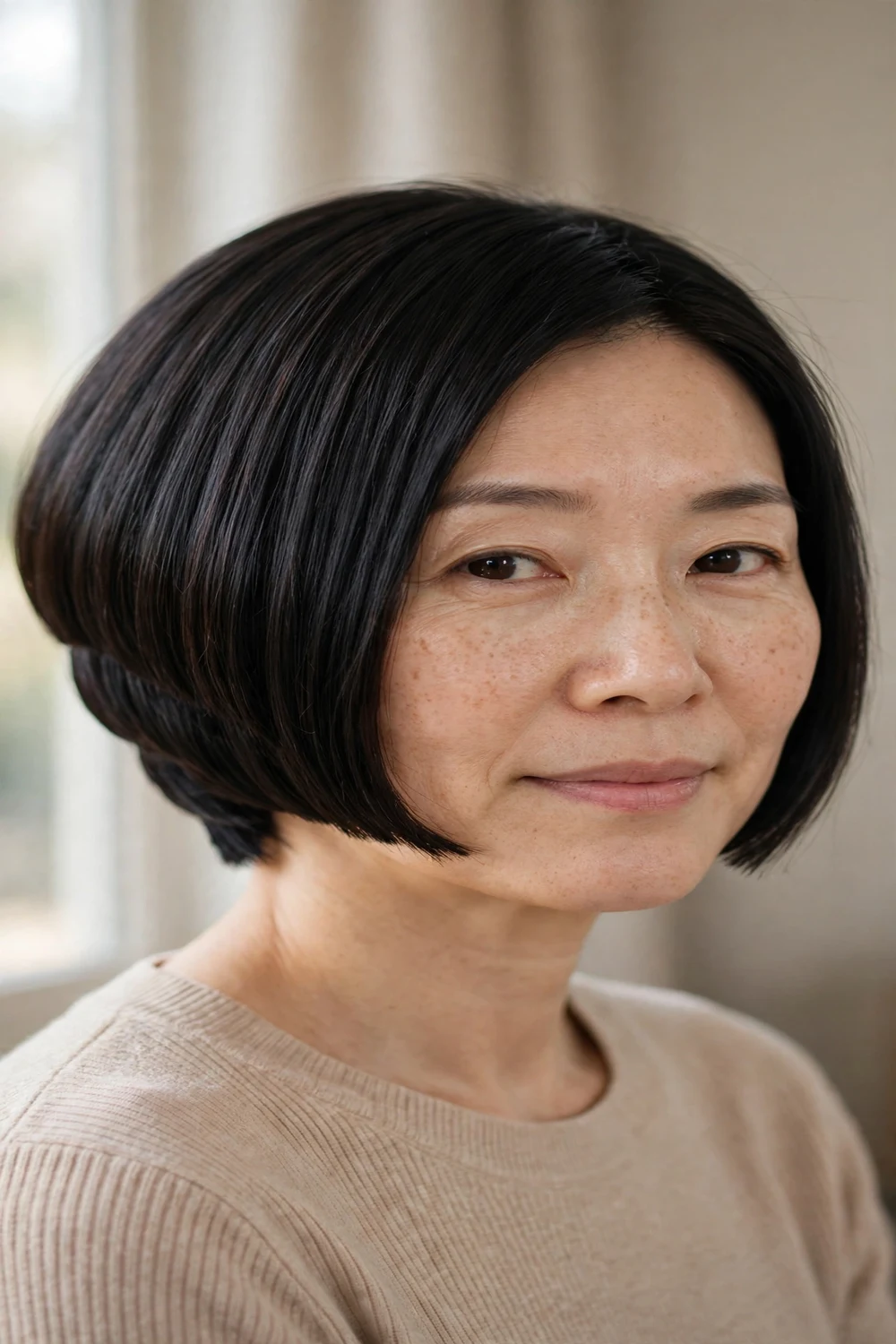
Blunt ends are thin hair’s best friend, and this cut proves why. While the back carries the stacked graduation, the perimeter is cut dead straight, which makes the ends look as thick as possible. It suits straight hair and oval or oblong faces, and the sleek finish reads polished and confident. The contrast between the soft stacked back and the sharp perimeter is what makes this version striking. Choose it when you want structure with an edge.
Try this: Keep the ends healthy with regular trims, since blunt perimeters show damage fast. A single pass with a flat iron keeps the line crisp.
10. Stacked Bob with Side-Swept Bangs
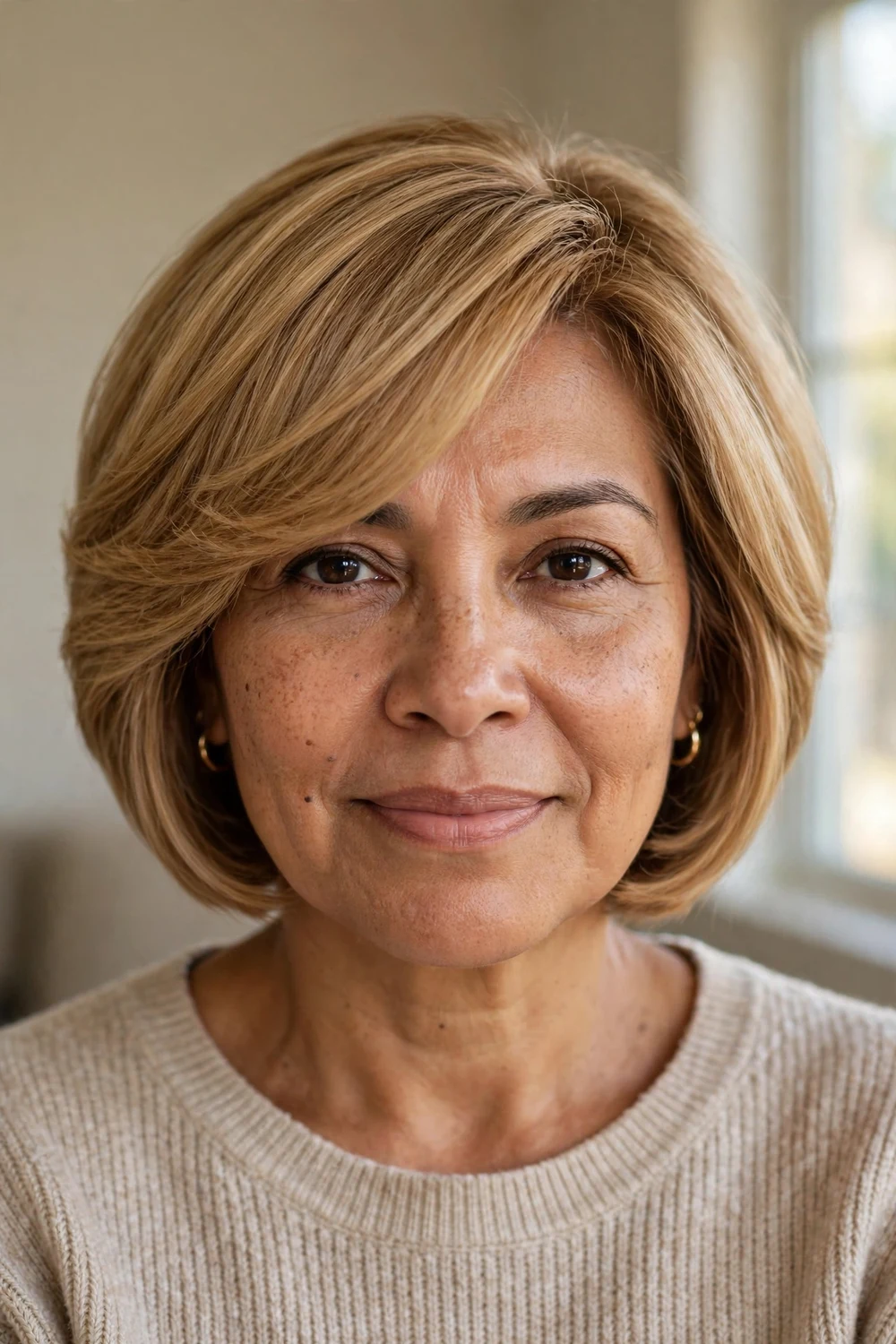
Side-swept bangs add fullness exactly where thin hair often looks sparsest: the front. Swept across the forehead, they create a diagonal line that flatters round and square faces while blending into the stacked layers behind. The rest of the cut stays smooth and polished, so the bangs become the focal point. This is a gentle way to add interest to a stacked bob without changing its architecture. A versatile, face-flattering choice.
Try this: Dry the bangs across the forehead with a small round brush before styling the rest. A light mist of hairspray keeps them swept without stiffness.
11. Stacked Bob with Micro Bangs

Micro bangs are not for the cautious, but they do remarkable things for a stacked bob. The ultra-short fringe opens up the face completely, drawing every eye to your eyes and cheekbones, while the stacked back keeps the volume. It suits oval and heart-shaped faces best, where the short fringe balances the features. The overall effect is artsy and bold. If your style leans creative, this cut will feel like you.
Try this: Keep micro bangs piecey rather than solid by pinching them with a tiny amount of paste. Trim them every 3 weeks so they stay above the brows.
12. Feathered Platinum Stacked Bob
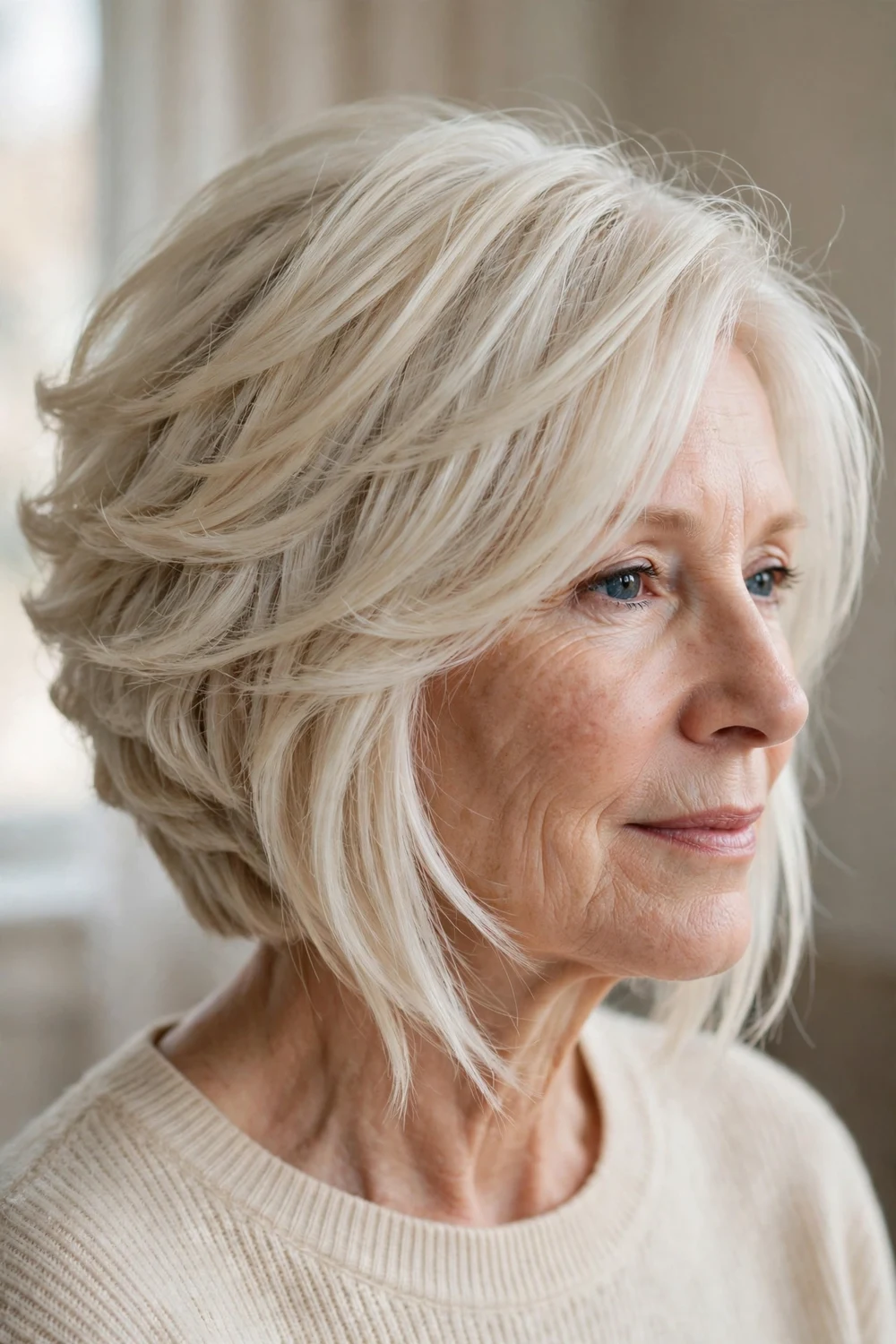
Platinum color and feathered layering amplify each other. The light shade makes every feathered layer visible, which multiplies the appearance of volume in thin hair. The back stays gently stacked for lift while the front tapers into longer face-framing pieces. This version suits fair to medium skin tones and works best on hair that can handle lightening. It is high-maintenance on color but low-maintenance on styling, since the cut holds its shape.
Try this: Protect platinum hair with a weekly bond-building mask, since lightened thin hair breaks easily. Blow-dry with a round brush to keep the feathered layers smooth.
13. Two-Tone Stacked Bob with Bold Color
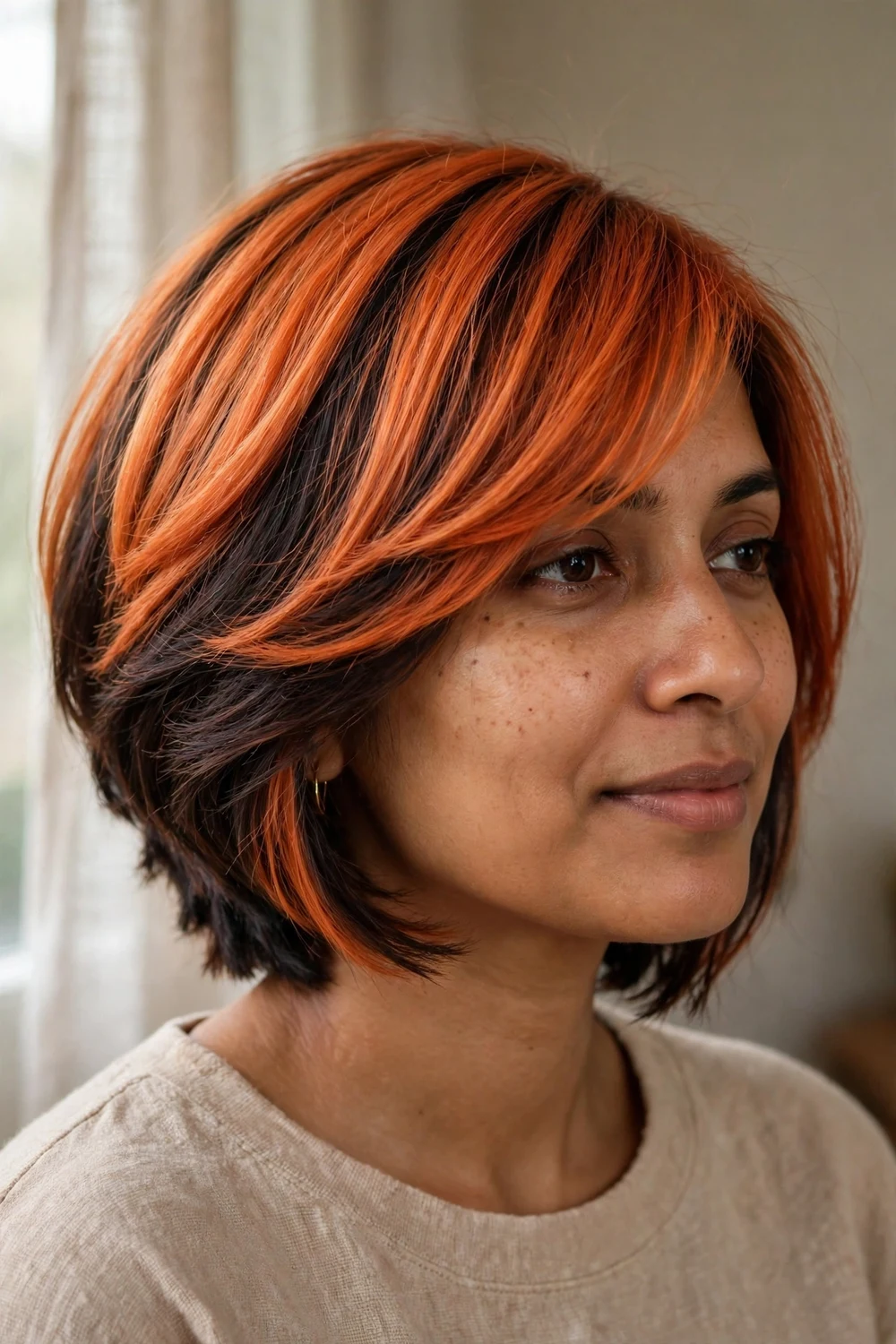
Color can create volume where cutting leaves off. A two-tone stacked bob, like a bright copper top over a dark underlayer, uses contrast to make the layers pop visually. The eye reads the color separation as depth, which makes thin hair look like there is more of it. The cut itself stays classic: stacked back, longer front, sweeping fringe. This is the pick for women who want their haircut to double as a statement.
Try this: Refresh the vivid top color with a color-depositing conditioner every couple of weeks. Keep the underlayer dark and glossy for maximum contrast.
14. Tousled Stacked Bob with Face-Framing Layers
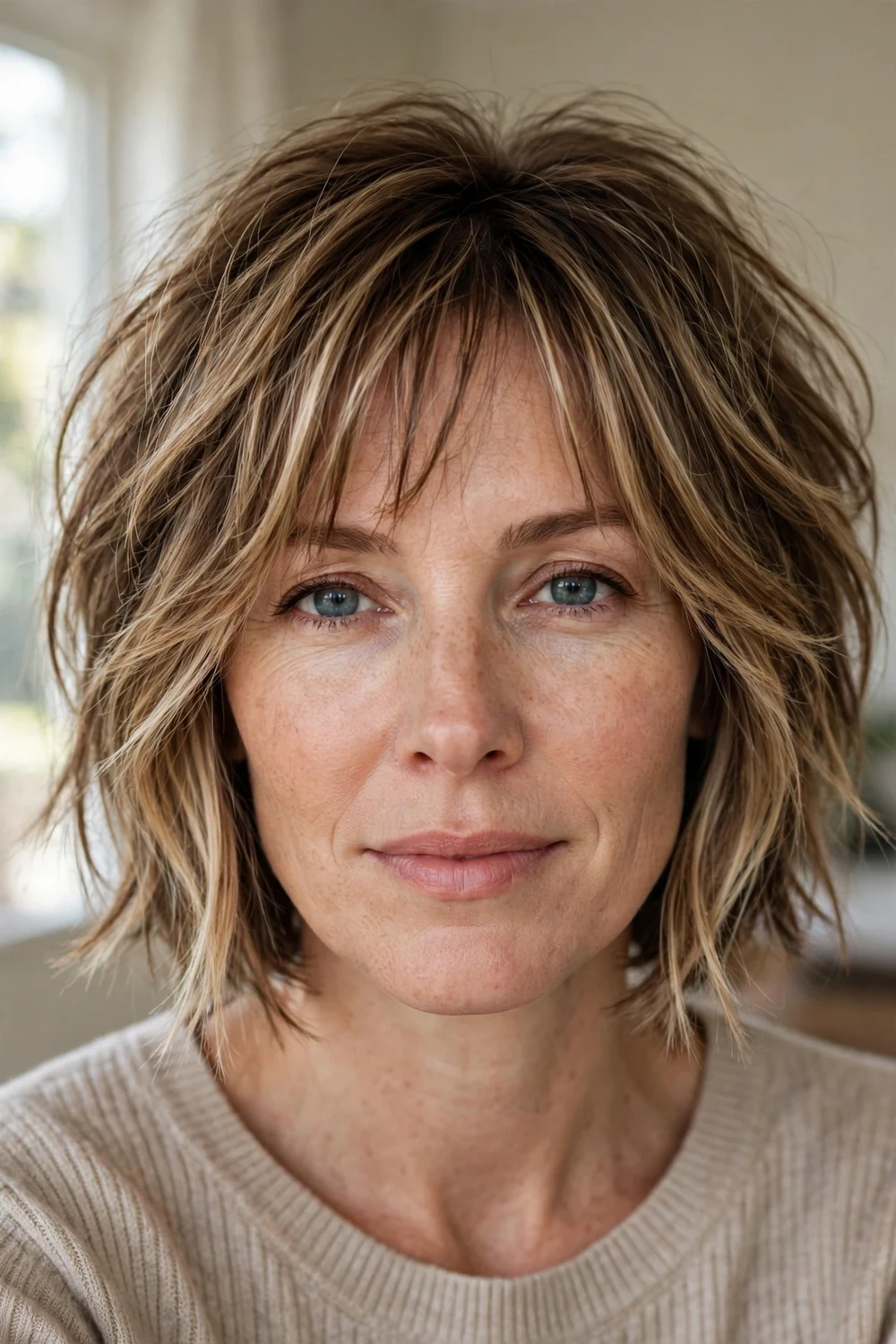
Structure in back, softness in front: this version pairs a lightly stacked back with longer tousled layers around the face. The face-framing pieces, often with highlights over a darker base, add dimension exactly where people look. It suits oval and oblong faces and gives thin hair a fuller look without a severe shape. The tousled finish keeps it relaxed and current. A balanced option when you want volume that does not look try-hard.
Try this: Scrunch a lightweight mousse into damp hair and diffuse on low heat. Let the face-framing pieces fall naturally instead of forcing them into place.
15. Classic Smooth Stacked Bob
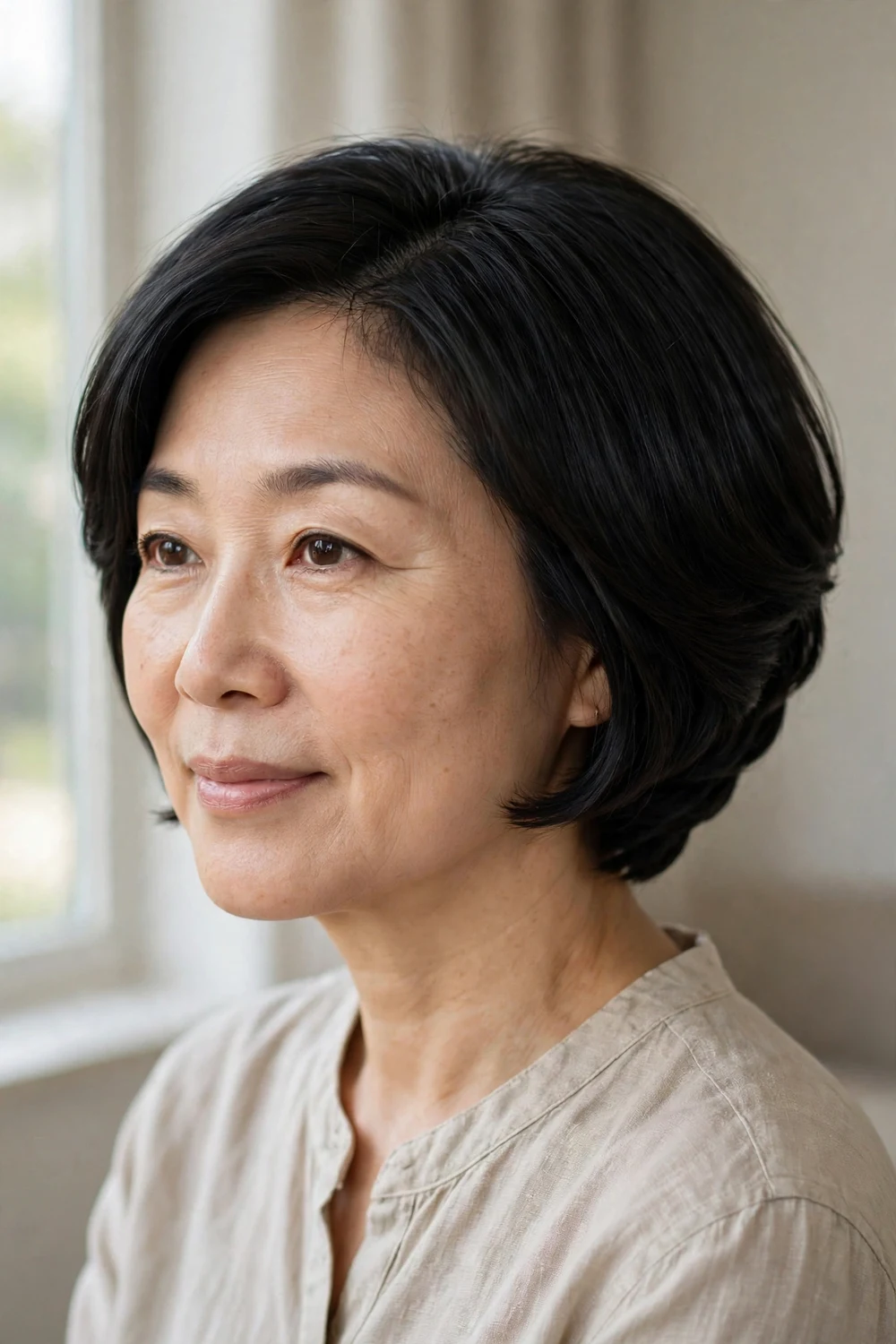
Not every stacked bob needs texture. The classic smooth version is blow-dried sleek, with the stacked layers visible only as a soft rounded silhouette. It suits professional settings and oval or heart-shaped faces, and the polished finish makes thin hair look dense and healthy. Side-swept front pieces keep it from looking severe. This is the most versatile version on the list: it works for the office, events, and every day in between.
Try this: Apply heat protectant and blow-dry in sections with a paddle brush for maximum smoothness. A drop of shine serum on the ends finishes the polished look.
16. Wedge Stacked Bob
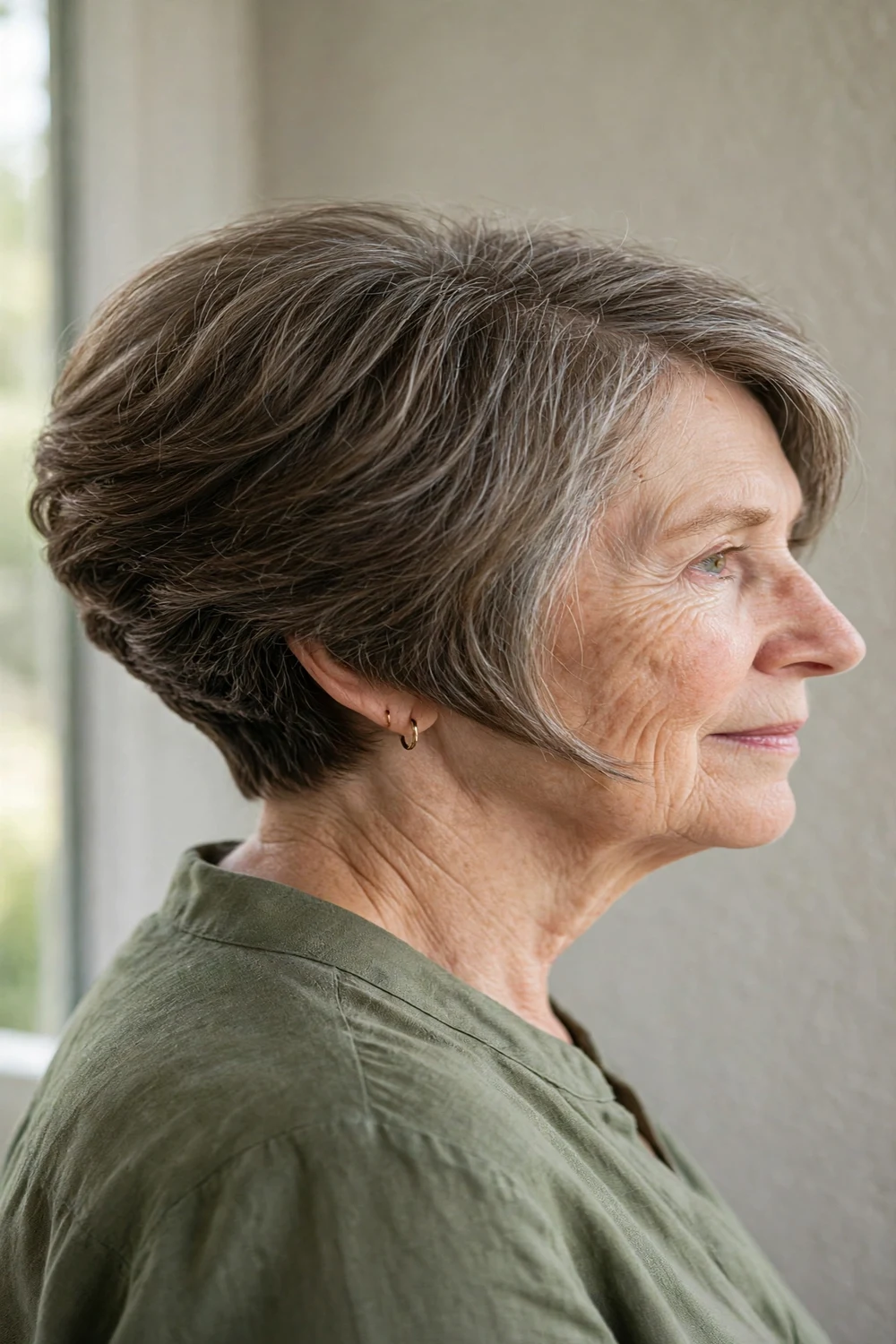
The wedge is the stacked bob’s bolder sibling. Heavier stacking at the back, a steeper angle, and a compact rounded silhouette give it a graphic, architectural feel. It suits women who want unmistakable shape and do not mind a distinctive cut. Thin hair benefits because the extreme graduation creates lift that milder versions cannot match. The trade-off is maintenance: the wedge loses its edge fast as it grows. A statement cut for confident wearers.
Try this: Book trims every 5 weeks to keep the wedge’s sharp lines. Blow-dry the back smooth and flat to emphasize the geometric shape.
17. Curly Stacked Bob
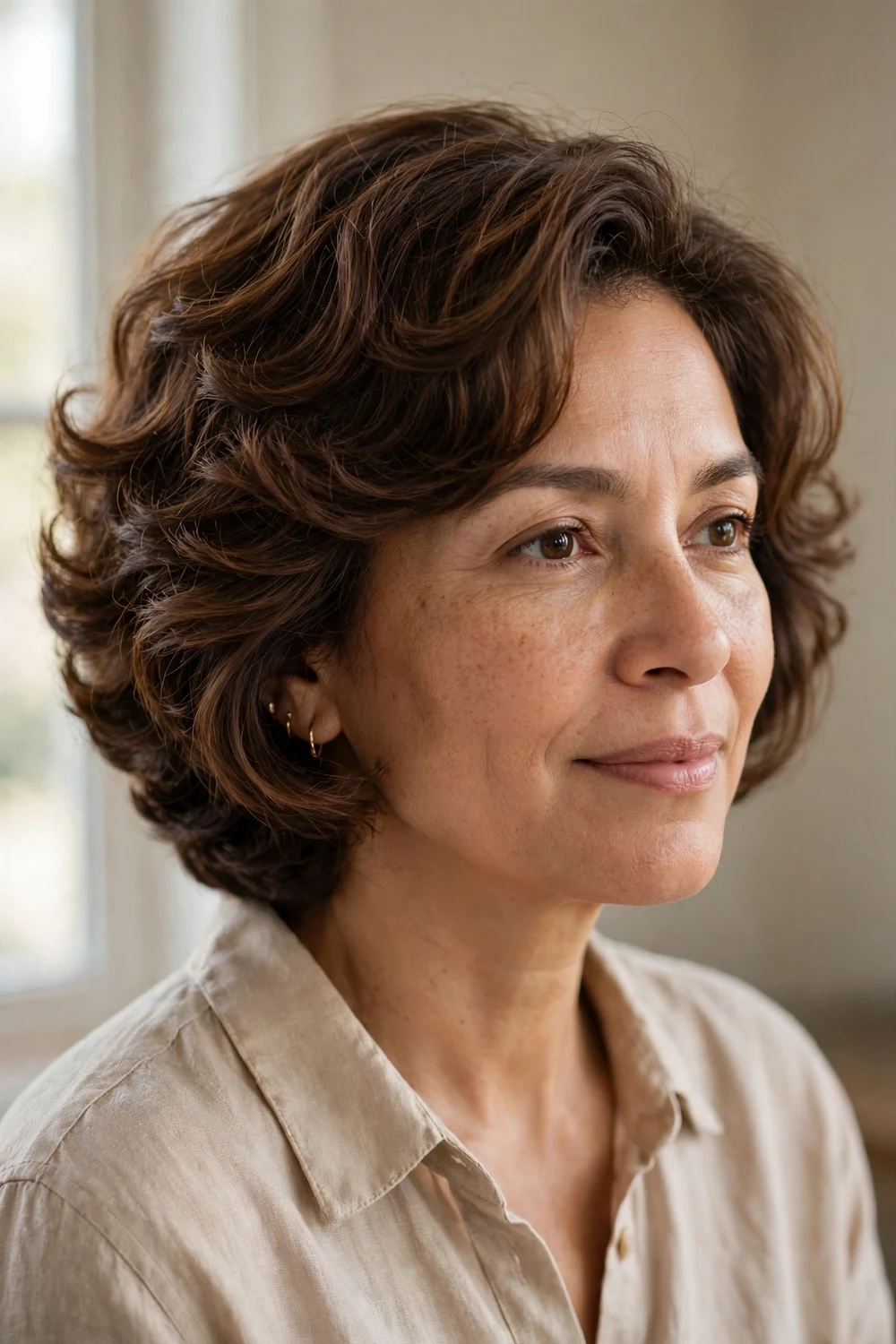
Curly thin hair can wear a stacked bob, but the stacking needs a softer hand. Very short back layers make tight curls expand too much, so the graduation stays longer and more blended. The result is a controlled, rounded shape with natural volume from the curl pattern itself. It suits oval and round faces, where the curls add welcome width and softness. See a stylist experienced with curly cuts, since the layering math differs from straight hair.
Try this: Apply curl cream to wet hair and diffuse on low heat without touching the curls. A layered cut means less product is needed, since the shape does the work.
18. Stacked Bob with Curtain Bangs
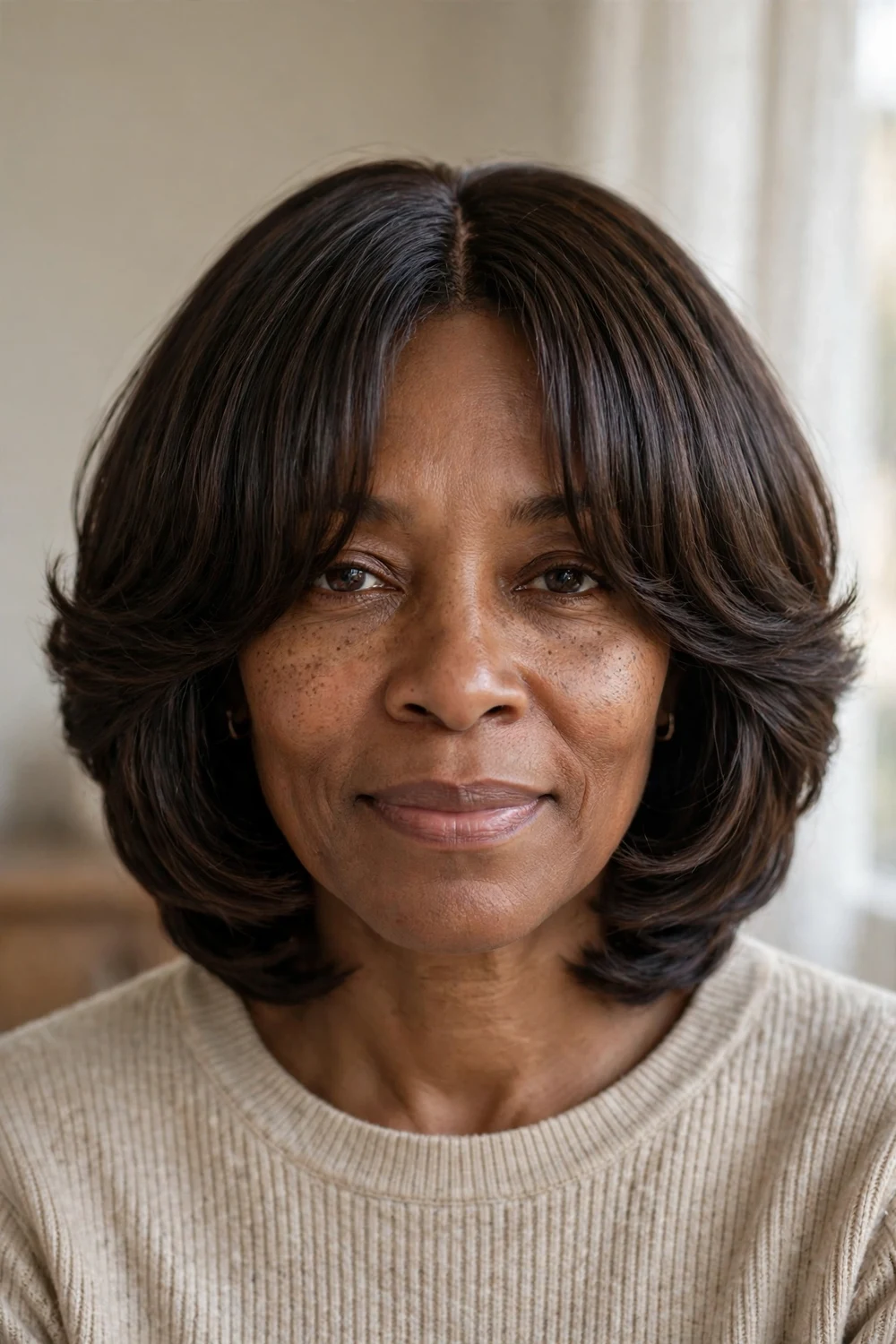
Curtain bangs bring softness to the stacked bob’s structure. Parted in the middle and sweeping to each side, they frame the face while blending into the longer front pieces. This version suits oval and oblong faces best and gives thin hair fullness around the forehead without a heavy fringe. The grow-out is painless, since curtain bangs simply become face-framing layers. A fresh, current combination that stays easy to wear, and it photographs well from every angle since the parted fringe keeps the forehead open.
Try this: Blow-dry the bangs with a round brush, rolling each side away from the face. Let them cool before touching so the sweep holds its shape.
19. Salt-and-Pepper Stacked Bob

Natural gray deserves a cut that shows it off. The mix of silver and darker strands adds visual dimension to every stacked layer, which makes thin hair look thicker without any color appointment. The cut itself stays classic: graduated back, chin-length front, soft finish. It suits every face shape and removes root maintenance from your life entirely. If you are growing out your color, this is the cut to grow it into.
Try this: Use a purple shampoo once a week to keep silver strands from yellowing. A lightweight oil on the ends adds shine that gray hair sometimes lacks.
Stacked Bob Haircuts Comparison at a Glance
| Style | Best For | Styling Effort | Trim Schedule |
|---|---|---|---|
| Classic Graduated Stacked Bob | Oval, heart faces | Medium | 6-8 weeks |
| Textured Stacked Bob with Feathered Layers | Straight to wavy hair | Low | 6-8 weeks |
| Angled (Inverted) Stacked Bob | Round, square faces | Medium | 5-6 weeks |
| Layered Stacked Bob with Side Part | Flat-on-top thin hair | Low | 6-8 weeks |
| Soft Wavy Stacked Bob | Oval, oblong faces | Medium | 6-8 weeks |
| Dramatic High-Stacked Bob | Maximum volume seekers | Medium | 5-6 weeks |
| Super Short Stacked Bob | Petite features | Low | 4-5 weeks |
| Silver Stacked Bob with Tapered Undercut | Natural gray hair | Low | 5-6 weeks |
| Precision-Cut Stacked Bob with Blunt Ends | Straight thin hair | Medium | 5-6 weeks |
| Stacked Bob with Side-Swept Bangs | Round, square faces | Low | 5-6 weeks |
| Stacked Bob with Micro Bangs | Oval, heart faces | Medium | 4-5 weeks |
| Feathered Platinum Stacked Bob | Lightened hair | Medium | 6-8 weeks |
| Two-Tone Stacked Bob with Bold Color | Statement seekers | Low | 6-8 weeks |
| Tousled Stacked Bob with Face-Framing Layers | Oval, oblong faces | Low | 6-8 weeks |
| Classic Smooth Stacked Bob | Professional settings | Medium | 6-8 weeks |
| Wedge Stacked Bob | Bold, graphic looks | Medium | 5 weeks |
| Curly Stacked Bob | Curly thin hair | Low | 8-10 weeks |
| Stacked Bob with Curtain Bangs | Oval, oblong faces | Low | 6-8 weeks |
| Salt-and-Pepper Stacked Bob | Growing out gray | Low | 6-8 weeks |
How to Choose the Right Stacked Bob for You
Start with how much volume you actually need. If your hair is slightly thin, a classic or smooth stack gives plenty of lift. If it is very fine or sparse, go for the dramatic high stack or the wedge, which build the most height.
Then consider your face shape. Round faces do best with longer front pieces and height at the crown. Square faces soften with side-swept bangs or face-framing layers. Long faces should avoid too much crown height and add a little width at the sides instead.
Finally, be honest about maintenance. Stacked bobs need trims every 5 to 8 weeks to hold their shape. If that schedule sounds like too much, pick a textured or tousled version, which disguises grow-out better than precise cuts.
Mistakes to Avoid
The biggest mistake with thin hair is over-layering. Too many short layers make the ends wispy and see-through, which defeats the whole purpose. Ask for controlled layering concentrated at the back, with a fairly blunt perimeter.
Heavy products are the second trap. Thick creams and oils drag thin hair down and separate it into stringy pieces. Stick to lightweight mousse, root-lifting spray, and dry texturizing spray.
Do not skip the nape. The stacked shape lives at the back of the head, and if the nape grows out fuzzy, the whole cut loses its architecture. Ask your stylist to clean it up between full appointments if needed.
To compare with the non-thin-hair versions, see our guide to short stacked bob haircuts for the full range of stacking techniques.
Women over 50 dealing with thinning will find age-specific advice in short stacked bob hairstyles for women over 50, which covers cuts designed for mature hair.
For more volume-building cuts beyond stacking, browse stacked bob hairstyles for fine hair for additional ideas that add fullness.
If bangs are part of your plan, short bob haircuts for fine thin hair shows fringe options that keep thin hair looking dense.
Frequently Asked Questions
Are short stacked bobs good for thin hair?
Yes, they are one of the best cuts for thin hair. The graduated layers at the back stack on top of each other to create lift and the illusion of density, which thin hair cannot get from styling products alone. Keeping the perimeter fairly blunt prevents the ends from looking wispy.
What is the difference between a stacked bob and a graduated bob?
Both use shorter layers at the back, but the intensity differs. A graduated bob blends the layers smoothly for soft, subtle fullness. A stacked bob cuts the back layers shorter and more concentrated, which creates stronger lift at the crown and a more rounded, visible shape.
How often does a stacked bob need trimming?
Every 5 to 8 weeks for most versions. The stacked shape grows out faster than a one-length cut, and once the back layers lengthen, the lift collapses. Precise versions like the wedge or super short stack need attention closer to 5 weeks.
Can a stacked bob work on wavy or curly hair?
Yes, with adjustments. Wavy hair takes well to stacking and adds natural softness to the shape. Curly hair needs longer, more blended back layers so the curls do not expand too much at the nape. A stylist experienced with your texture should plan the graduation accordingly.
Will a stacked bob make my face look rounder?
It can if the volume sits at cheek level, so placement matters. Ask for the fullness concentrated at the crown and back rather than the sides, and keep the front pieces at or below the chin. Longer front pieces and a side part both counteract any widening effect.
Final Thoughts
A short stacked bob is the rare cut that does the work for you. The volume is built into the shape, the styling stays simple, and thin hair finally gets the fullness it has been missing. Pick the version that matches your face shape and your maintenance tolerance, and let the stack do the heavy lifting.
