


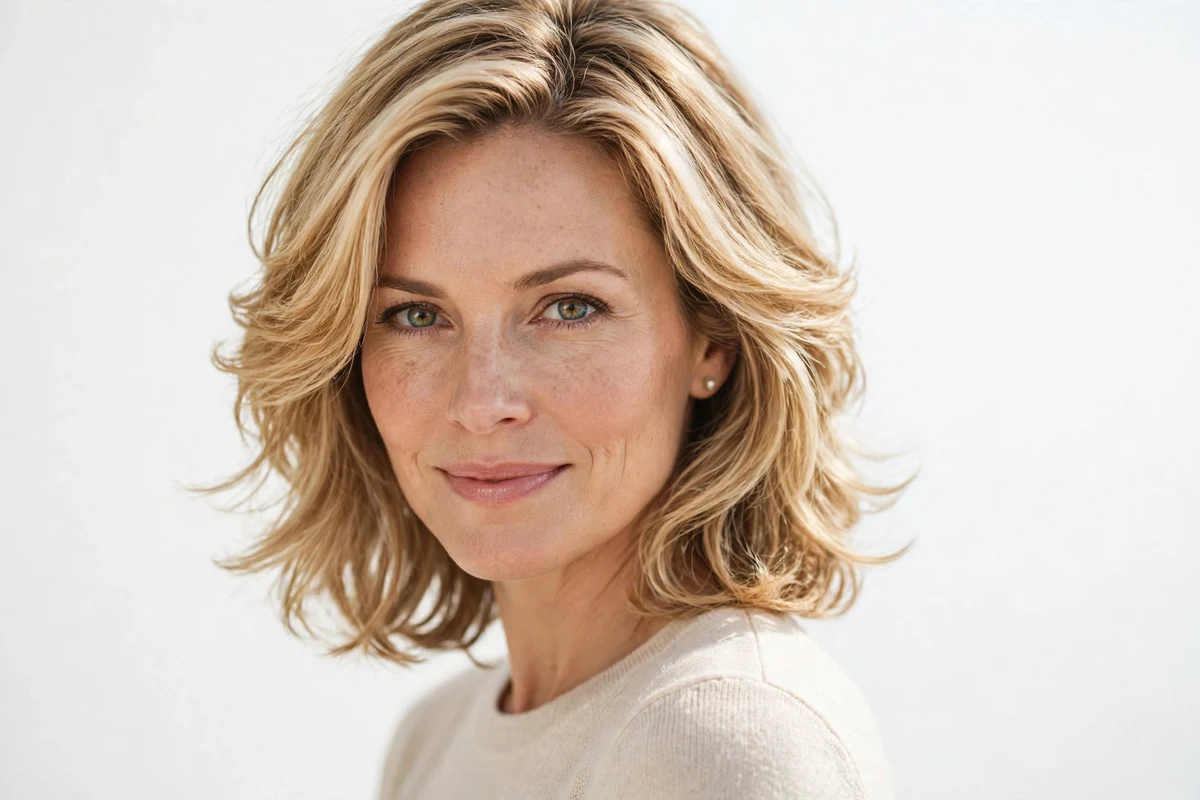
Fine hair and layers have a complicated reputation. Cut the layers too short or too chunky, and thin strands can look even thinner. But ask for the right kind of soft, blended layering, and the same hair suddenly holds a shape, catches light, and lifts at the root instead of lying flat.
I’ve spent a lot of time studying what actually works for fine textures, and the answer keeps coming back to restraint: invisible interior layers, feathered ends, and blunt baselines that keep density where you need it. Below are 30 soft layered hairstyles for fine hair, from chin-length bobs to long cascading cuts, each with a concrete tip for asking your stylist and styling it at home.
Quick answer: The best soft layered hairstyles for fine hair keep the ends dense while hiding movement inside the cut. Ghost layers, feathered ends, and blunt baselines add lift at the crown without thinning the silhouette, so hair looks fuller with less styling effort.
Quick Takeaways
- Soft, blended layers beat chunky ones for fine hair: hidden interior layers create lift without visible steps.
- Keep the baseline blunt. A solid perimeter makes ends look thicker even when the interior is layered.
- Ask for point cutting instead of thinning shears, which can shred fine strands.
- Style roots up and away from the scalp with a round brush and lightweight mousse for the most lift.
- Trim every 6 to 8 weeks. Short layers lose their shape faster than one-length cuts.
Why Soft Layers Work So Well for Fine Hair
One-length hair tends to stick together and reveal every gap in the density. Soft layers break up the surface of the hair, creating multiple endpoints that reflect light differently. That optical effect reads as thickness.
Removing weight from the interior also lets the top sections lift away from the scalp. Root lift is the single biggest factor in making fine hair look full, and it starts with the cut, not the product.
The catch: layers must stay soft and connected. Harsh, disconnected layers remove too much bulk from the ends, and over-texturizing with thinning shears can leave fine hair looking shredded. The 30 styles below all follow the soft approach.
1. Soft Layered Chin-Length Bob
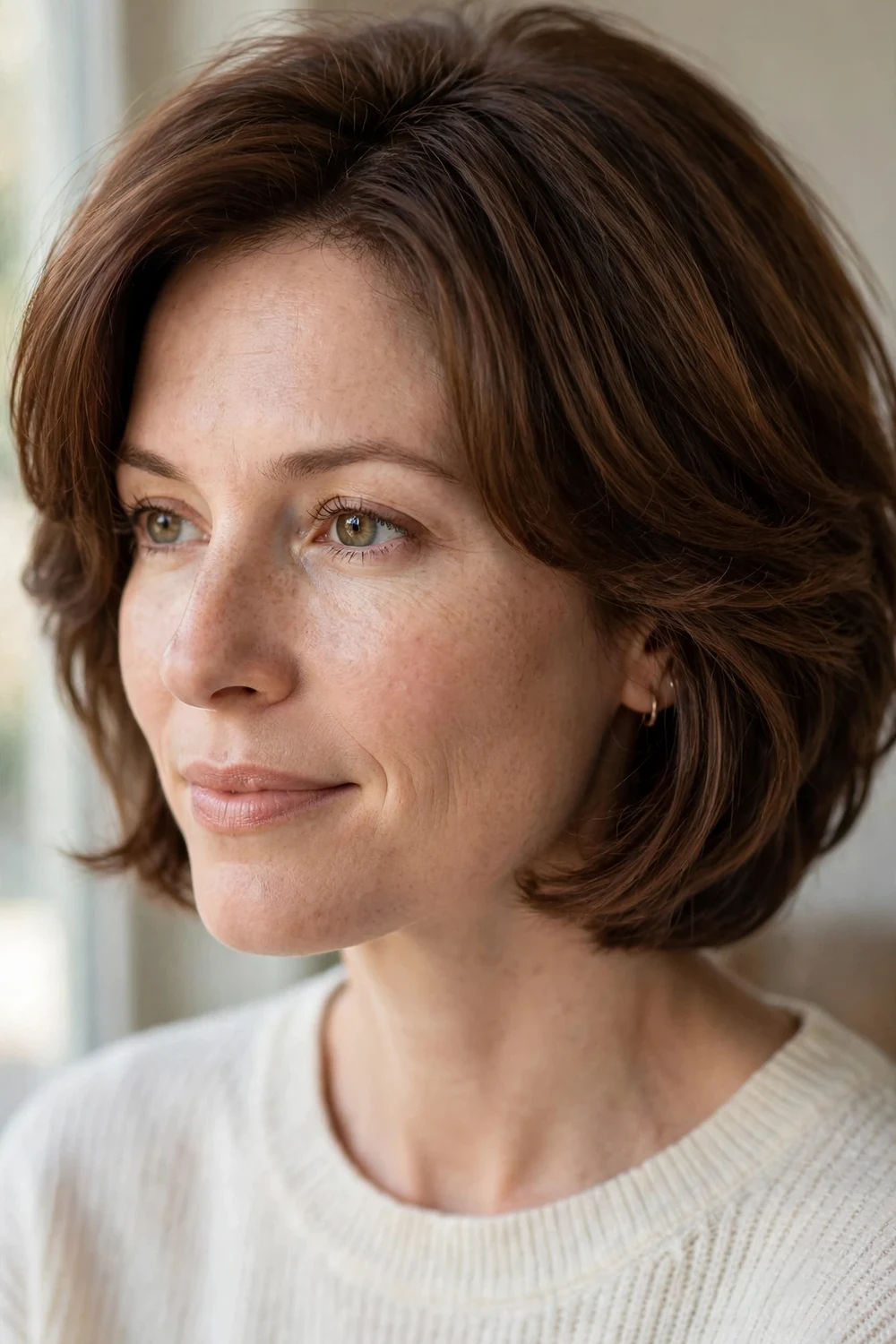
The classic chin-length bob earns its place here because it removes bulk from the ends while keeping the crown full. Layers are kept long and blended, so the silhouette stays rounded and dense rather than wispy. This is the cut to choose when you want fine hair to look deliberately thicker, not just styled.
Try this: Ask your stylist to keep the bottom line blunt and add long layers only through the top and sides. Blow-dry with a medium round brush, curling the ends slightly under for a rounded finish that takes about 10 minutes.
2. Soft Blunt Bob with Ghost Layers
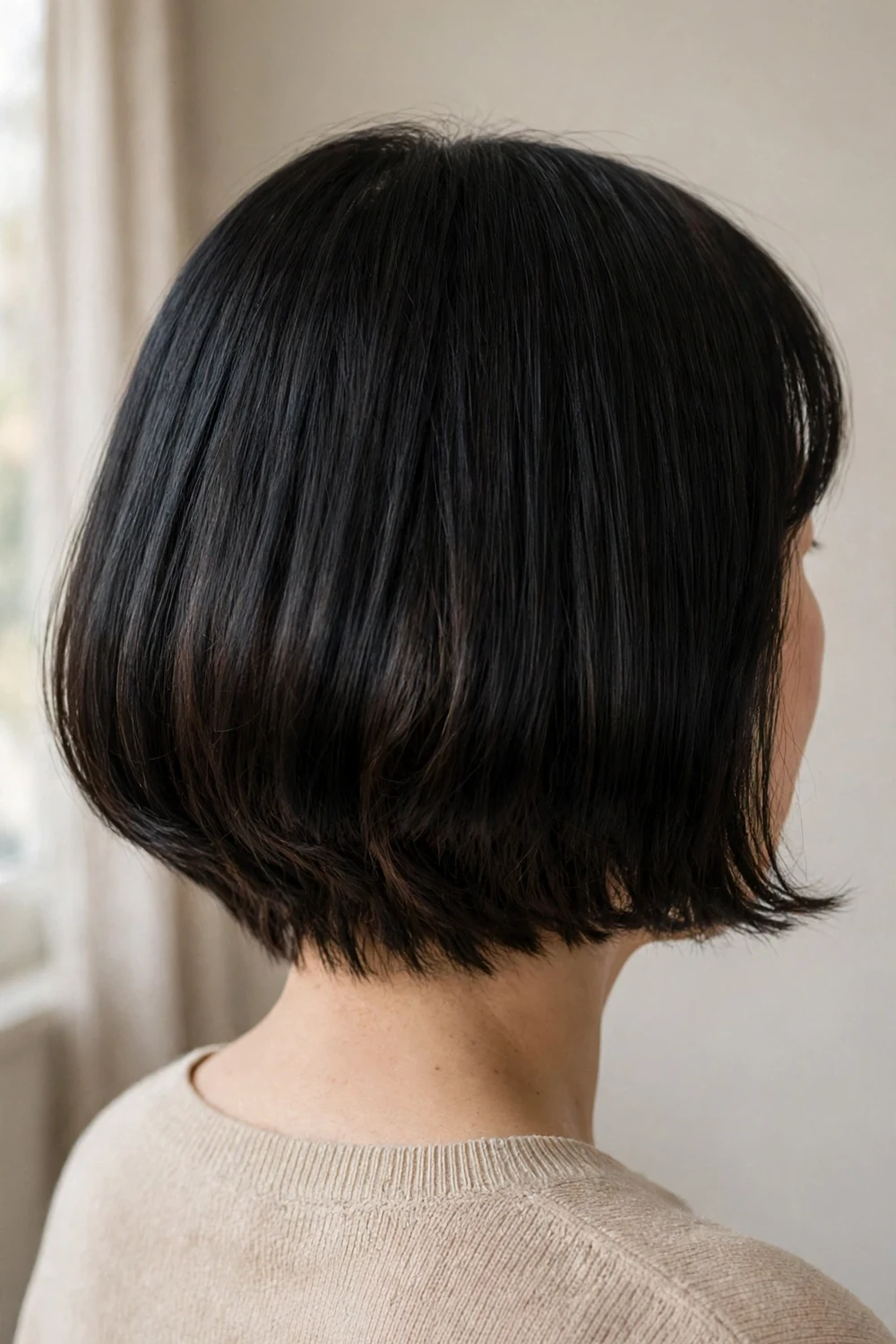
Here is the salon technique behind so many full-looking bobs. The perimeter stays blunt, which gives fine hair a thick baseline, while “ghost layers” are cut underneath the top section where nobody can see them. They remove weight and add swing without creating visible steps or stringy ends.
Try this: Use the exact phrase “internal layers, not external ones” at your appointment. At home, flip your head upside down for the first minute of blow-drying to activate the hidden lift before smoothing the top layer.
3. Soft Layered Pixie Cut
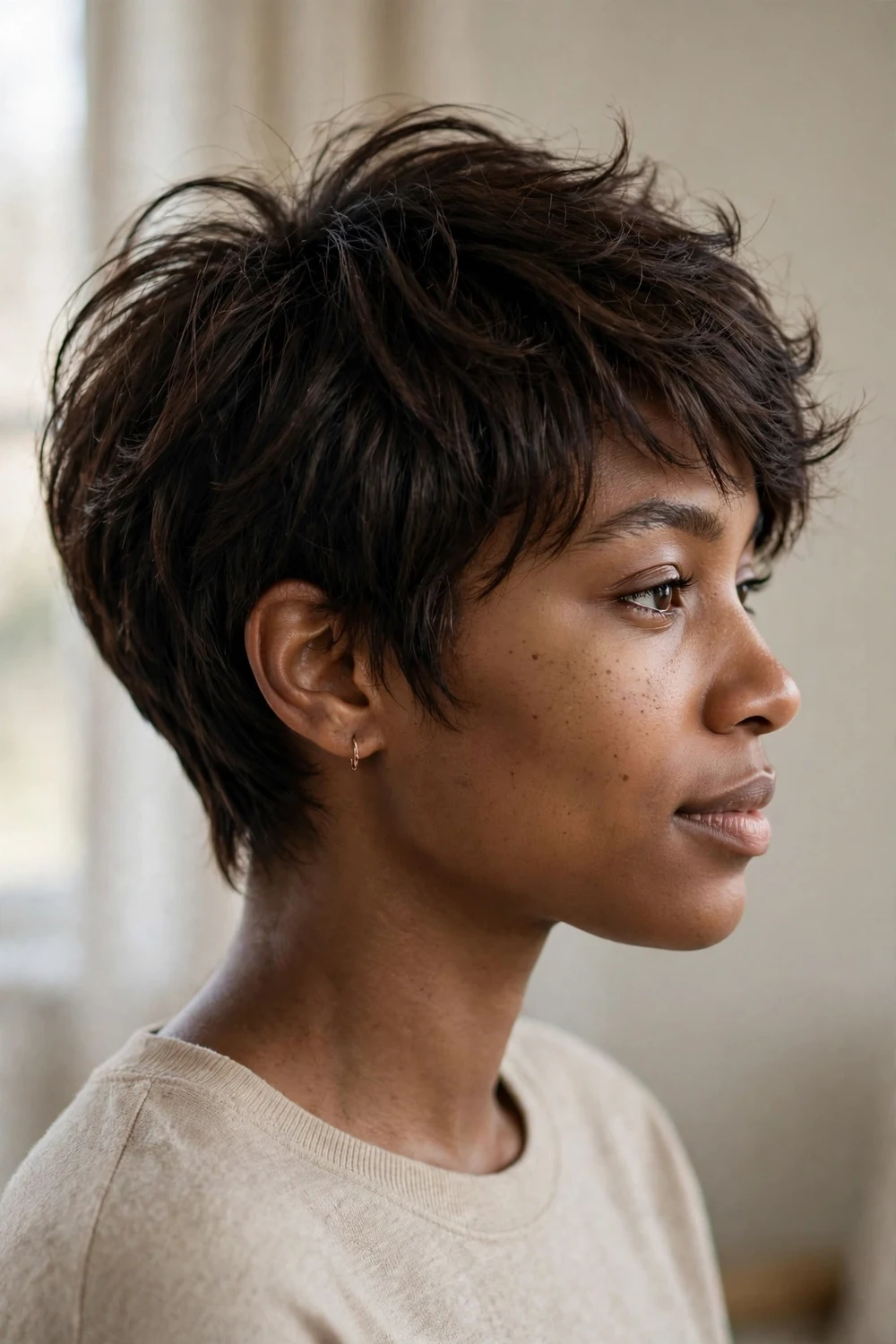
Going short removes the weight that drags fine hair flat, and soft layers on top add instant texture and lift. The trick is keeping the layers piece-y rather than spiky: short, disconnected pieces through the crown that you can tousle with your fingers.
Try this: A pea-sized amount of texturizing paste, warmed between your palms and pinched into the crown pieces, gives all-day lift. Skip heavy wax, which glues fine strands together.
4. Soft Layered Lob
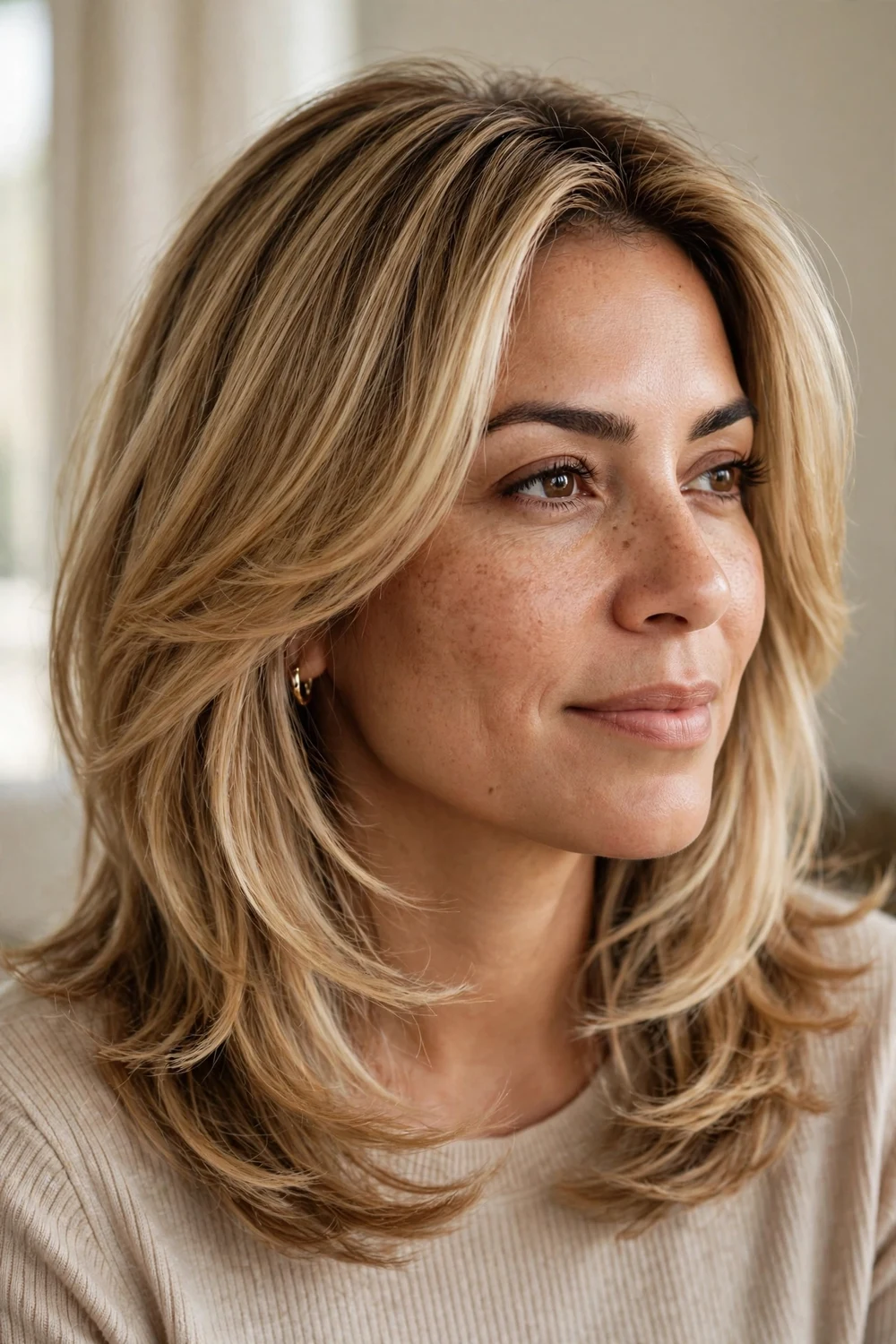
The lob sits just above the shoulders, which is a sweet spot for fine hair: long enough to feel versatile, short enough to hold volume. Long, seamless layers starting around the chin add movement without removing density from the ends. Wear it sleek, wavy, or tousled.
Try this: A deep side part on one side instantly doubles the crown volume on a lob. Change the part every few days so the hair doesn’t develop a flat split line.
5. Soft Layered Shag
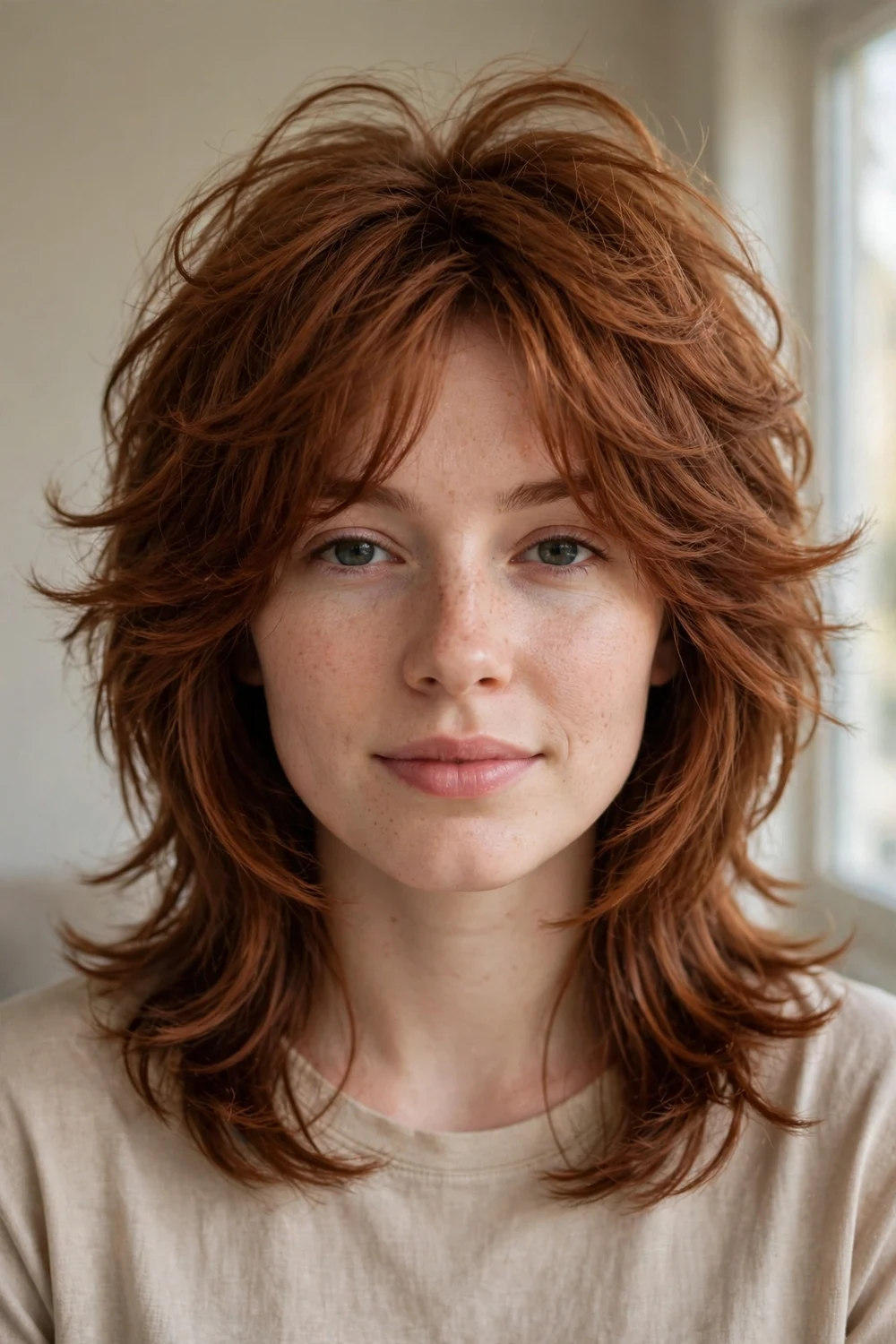
A modern shag concentrates texture around the crown and keeps the ends soft and feathery. That combination builds volume exactly where fine hair usually falls flat. A light mist of texturizing spray on dry hair keeps the layers separated and airy all day.
Try this: Scrunch a golf-ball-sized puff of mousse into damp roots, then rough-dry with your head flipped forward until 80 percent dry. The shag does the rest.
6. Feathered Layers
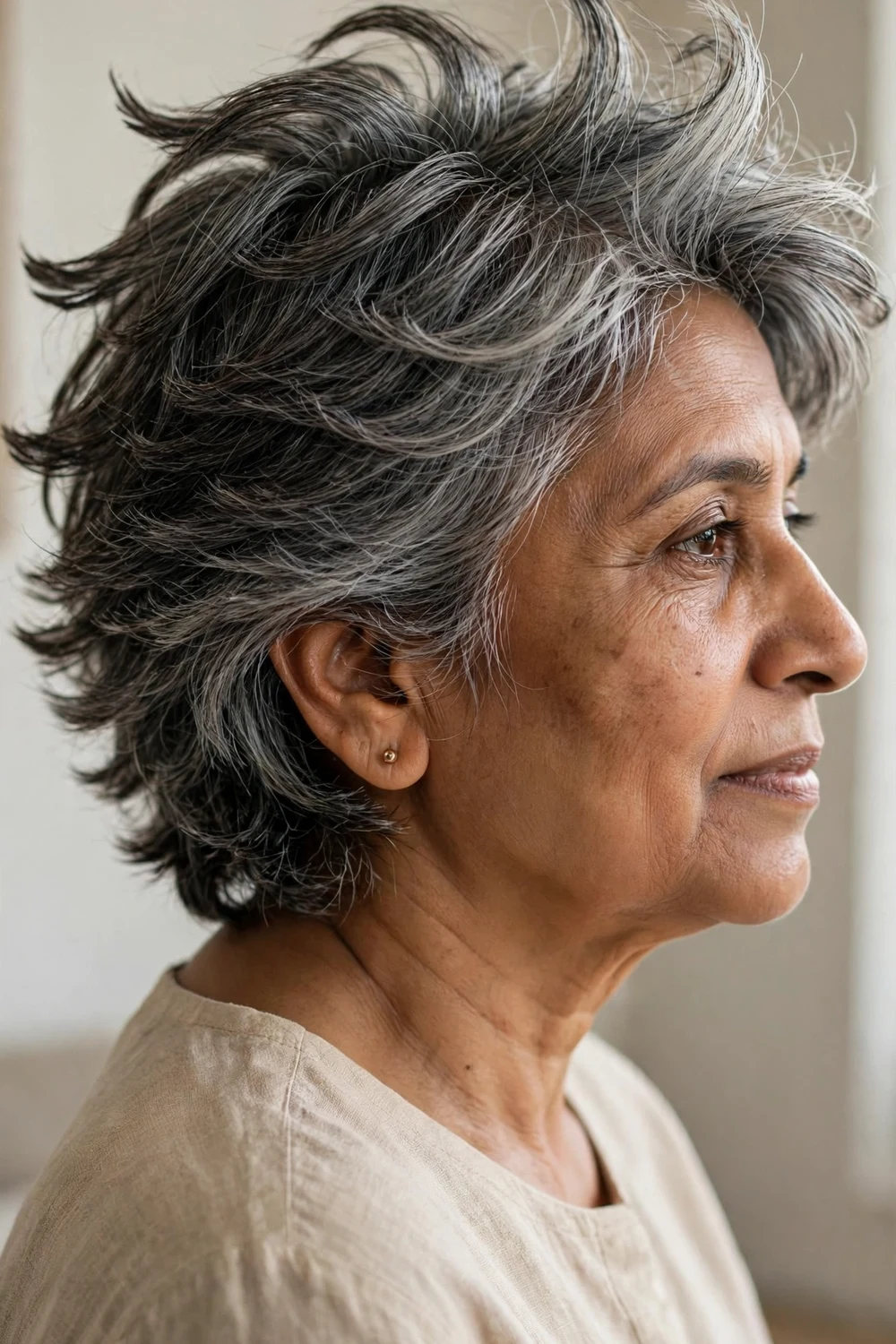
Feathering means cutting the ends at a soft angle so they flip and lift instead of hanging straight down. The result is a weightless, airy texture that makes fine hair look bouncier. This technique suits shorter cuts especially well, since the feathered ends sit close to the face.
Try this: A quick pass with a flat iron, flicking the ends outward instead of straightening them flat, takes 5 minutes and doubles the feathered effect.
7. Stacked Bob with Soft Layers
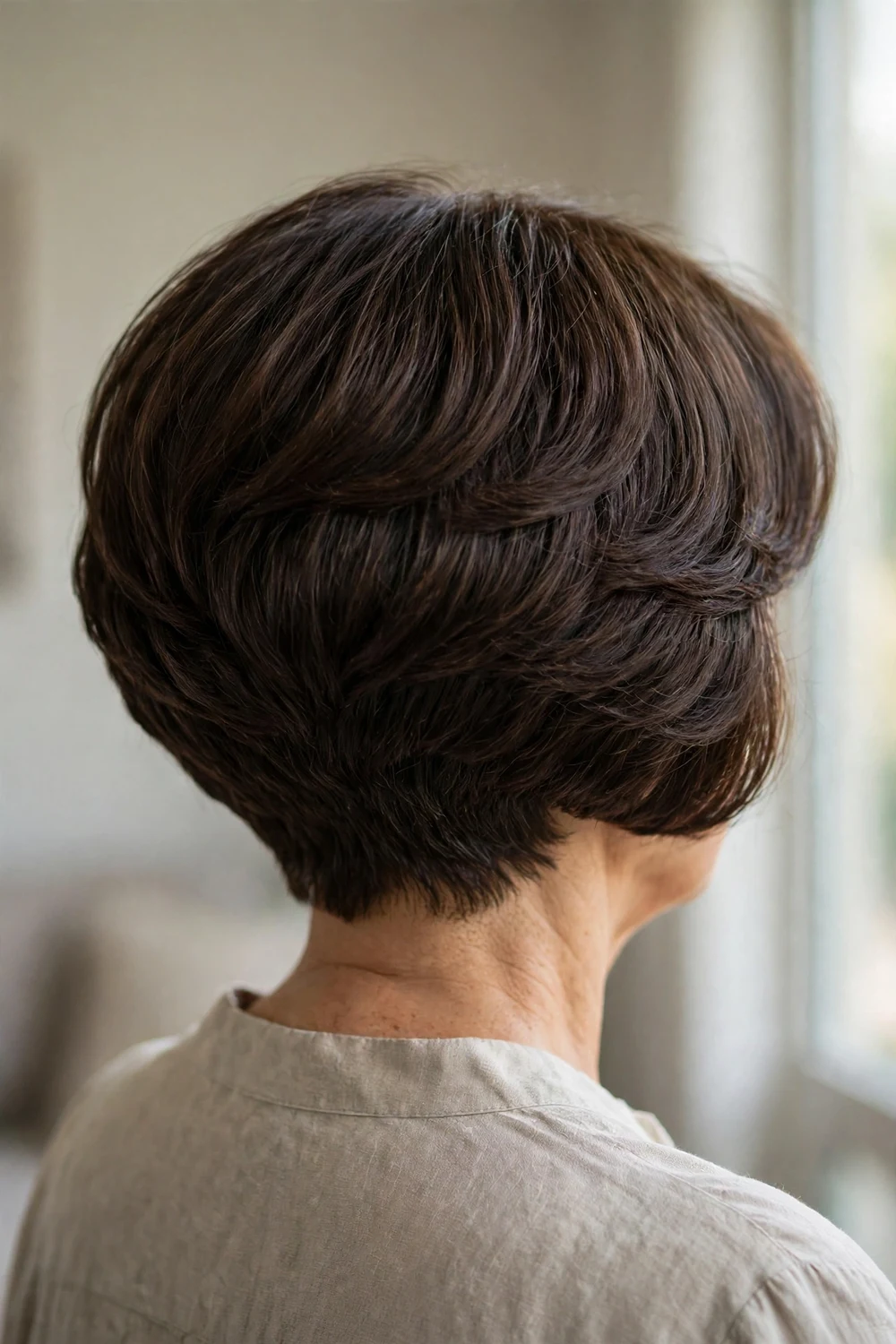
Stacking means the back is cut slightly shorter with graduated layers that pile on top of each other, creating a rounded shelf of volume at the crown. For fine hair, that built-in lift is doing the styling work for you before you pick up a dryer.
Try this: This cut grows out gracefully, but the nape needs a cleanup every 6 weeks or the stacked shape collapses. Book the trim when you book the cut.
8. Cascading Long Layers
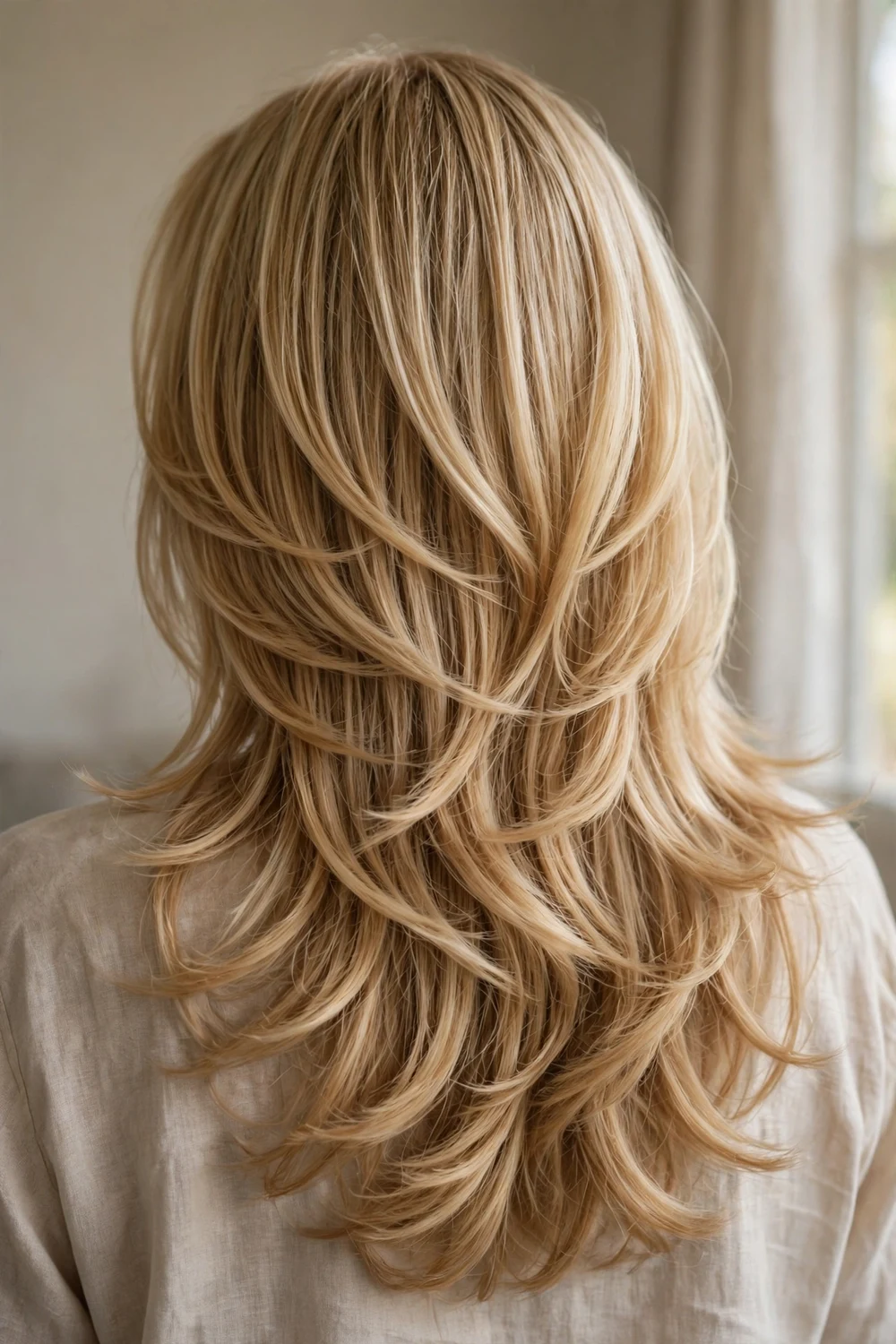
Long fine hair goes flat because of its own weight. Cascading layers fix that by starting the shortest pieces around the face and blending down, so the length stays but the shape moves. The key rule: never let the layers get too short or choppy, or the ends look sparse.
Try this: Ask for layers that are “long and blended, nothing above the collarbone.” Sleep on a satin pillowcase so the long layers don’t crush flat overnight.
9. Face-Framing Soft Layers
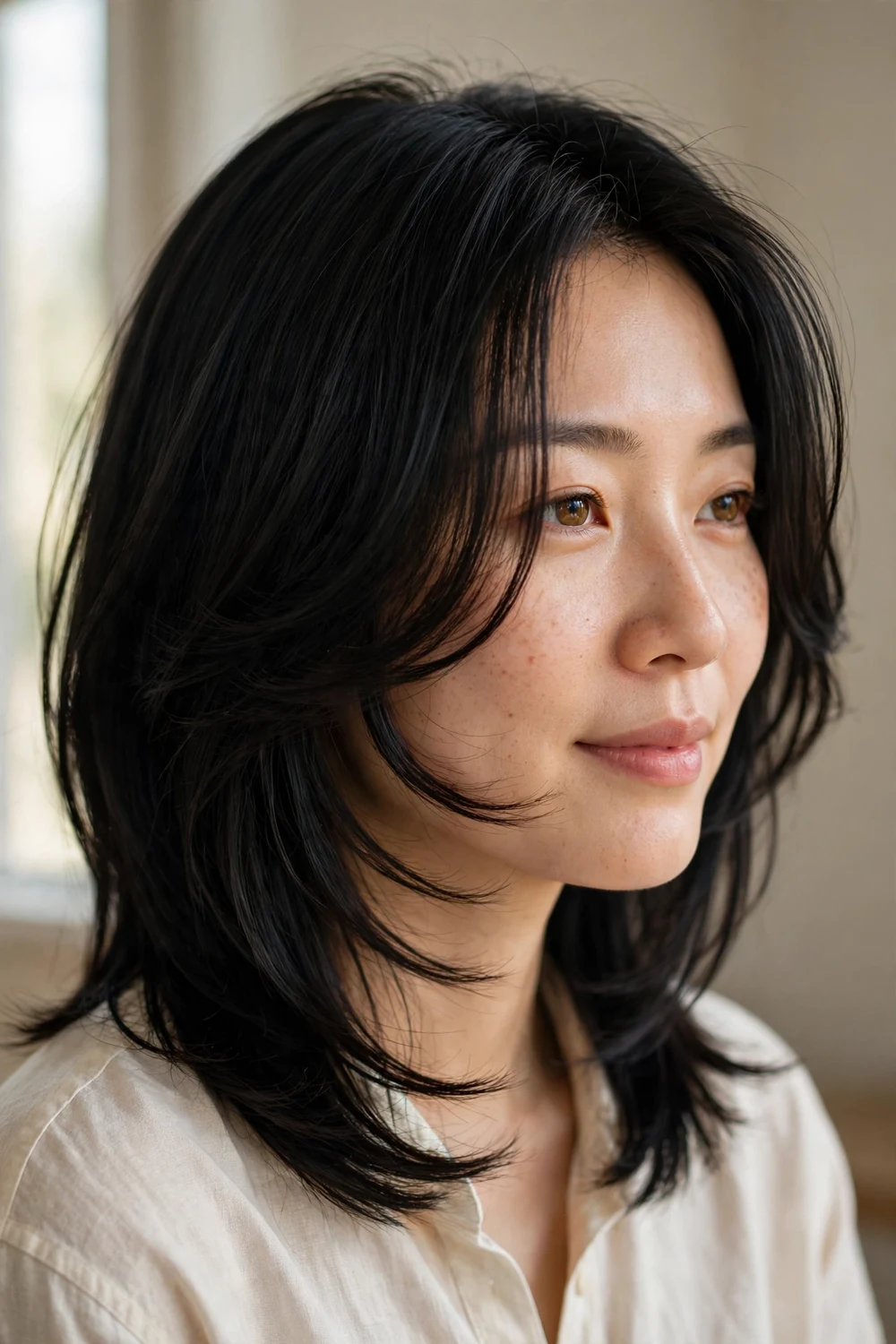
Layers placed around the face do two jobs: they draw attention to your features and create the illusion of fullness at the front, where people actually look. The back can stay nearly one length, which preserves density.
Try this: Blow-dry the face-framing pieces forward with a round brush, then flick them back. That forward-then-back motion builds a soft bend that holds for hours.
10. Soft Layered Curtain Bangs

Curtain bangs part in the middle and sweep to each side, adding weight at the front that makes fine hair look denser around the face. Paired with soft layers through the lengths, the whole cut feels bouncy rather than heavy.
Try this: Dry curtain bangs immediately after washing with a round brush, rolling them away from the face. If they dry flat first, they are much harder to reshape.
11. Soft Layered Haircut with Wispy Bangs

Wispy bangs are cut thin and light so they blend straight into the layers instead of sitting as a separate block. That seamlessness is what makes them work for fine hair: no harsh line, just texture that reads as fullness across the forehead.
Try this: Trim wispy bangs yourself between appointments with sharp hair scissors, cutting vertically into the ends. Horizontal cuts create a blunt line that wispy bangs should not have.
12. Side-Swept Layers with Bangs
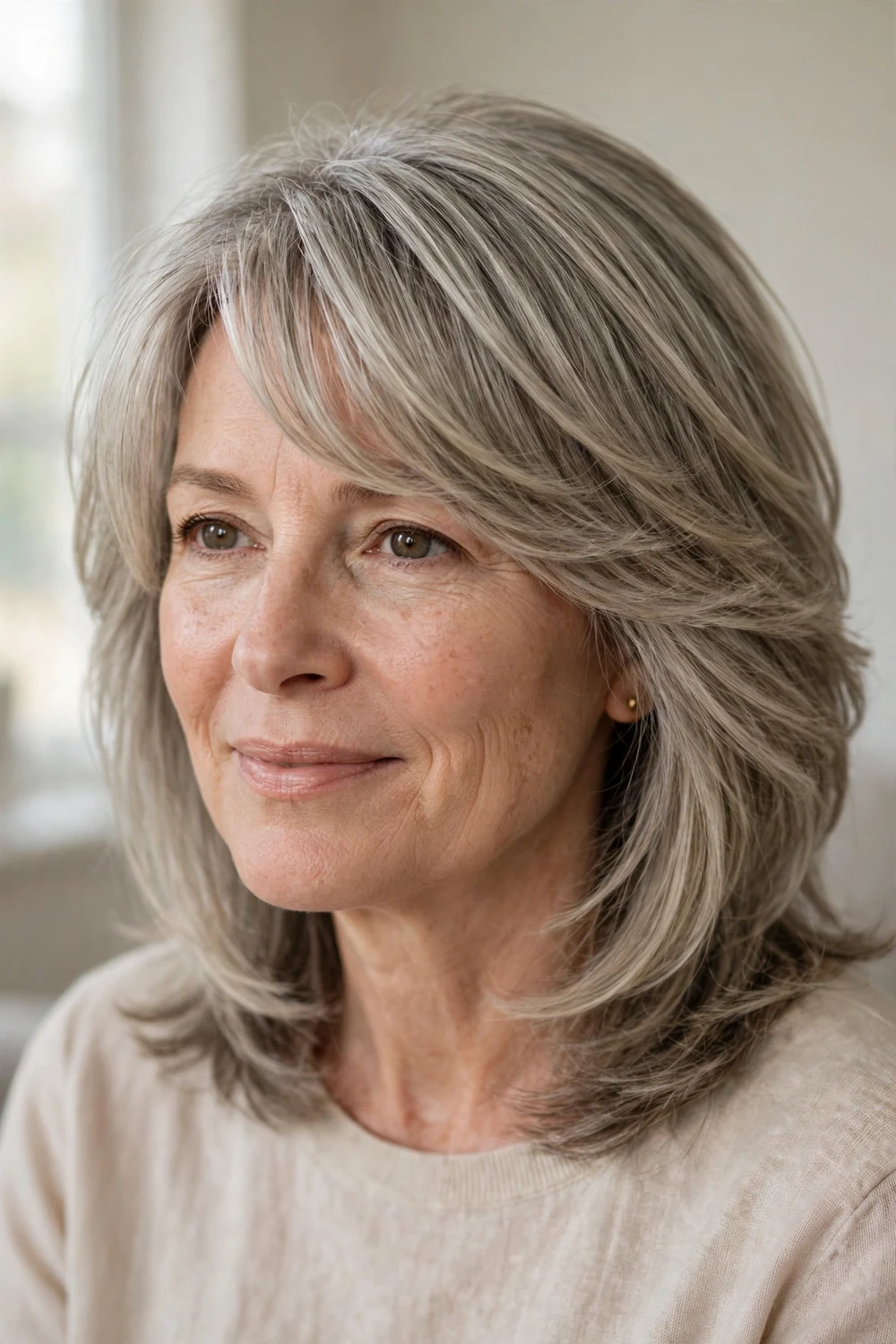
A deep side sweep moves a large section of hair across the forehead, which instantly covers a thin hairline and adds diagonal volume. When the bangs are layered into the rest of the cut, the sweep looks intentional and soft rather than severe.
Try this: Set the sweep with a light-hold hairspray while the hair is still warm from the dryer. Spraying warm hair locks the direction in place.
13. Choppy Soft Layers with Bangs
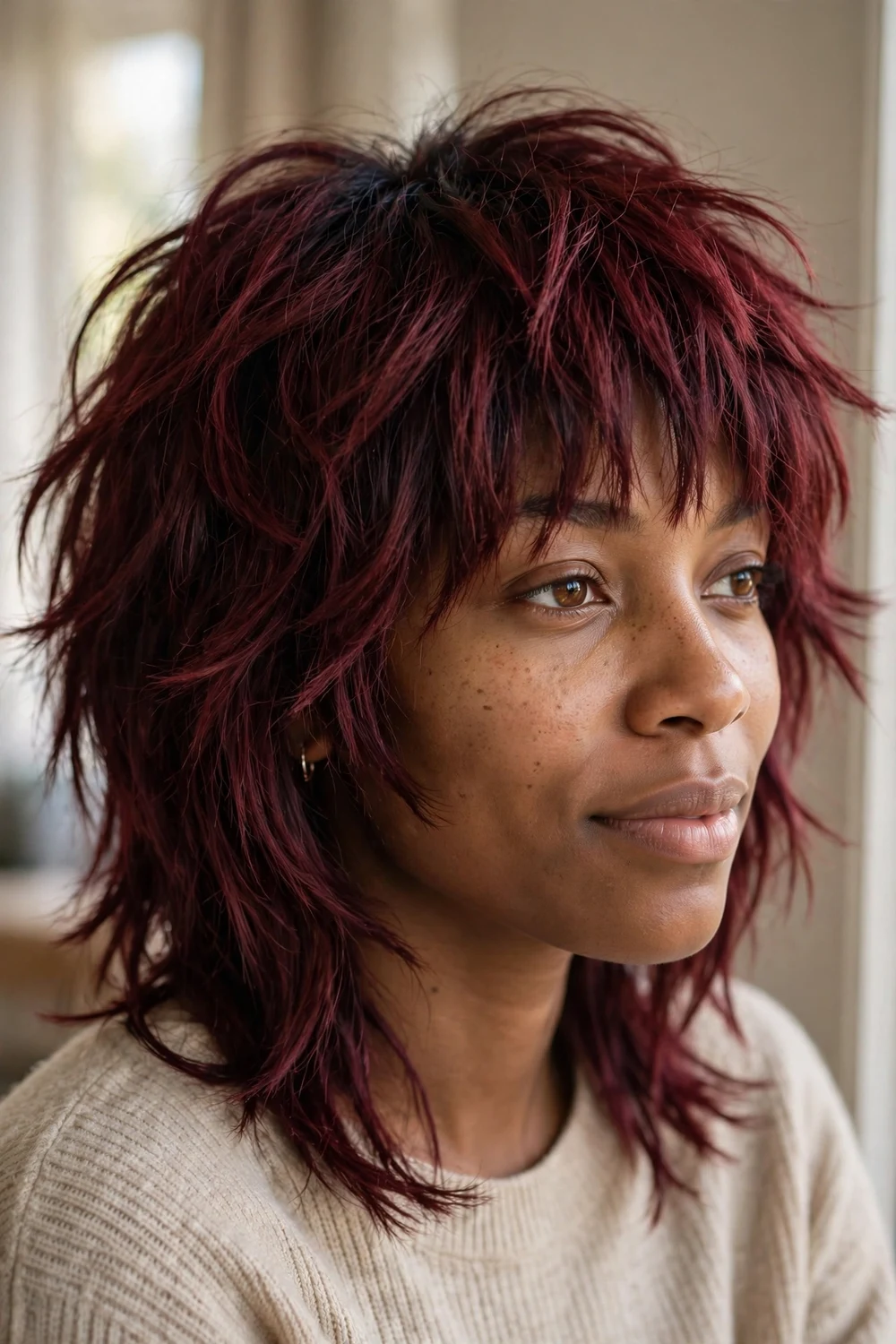
Choppy layers get a bad reputation for fine hair, but kept soft and paired with bangs, they add exactly the texture this hair type lacks. The bangs carry the fullness at the front while the choppy pieces through the lengths keep the style from looking limp.
Try this: This is a wash-and-go friendly cut. Work a dime-sized amount of sea salt spray through damp ends and let it air-dry for a lived-in finish.
14. Soft Layered Bob with Blunt Bangs
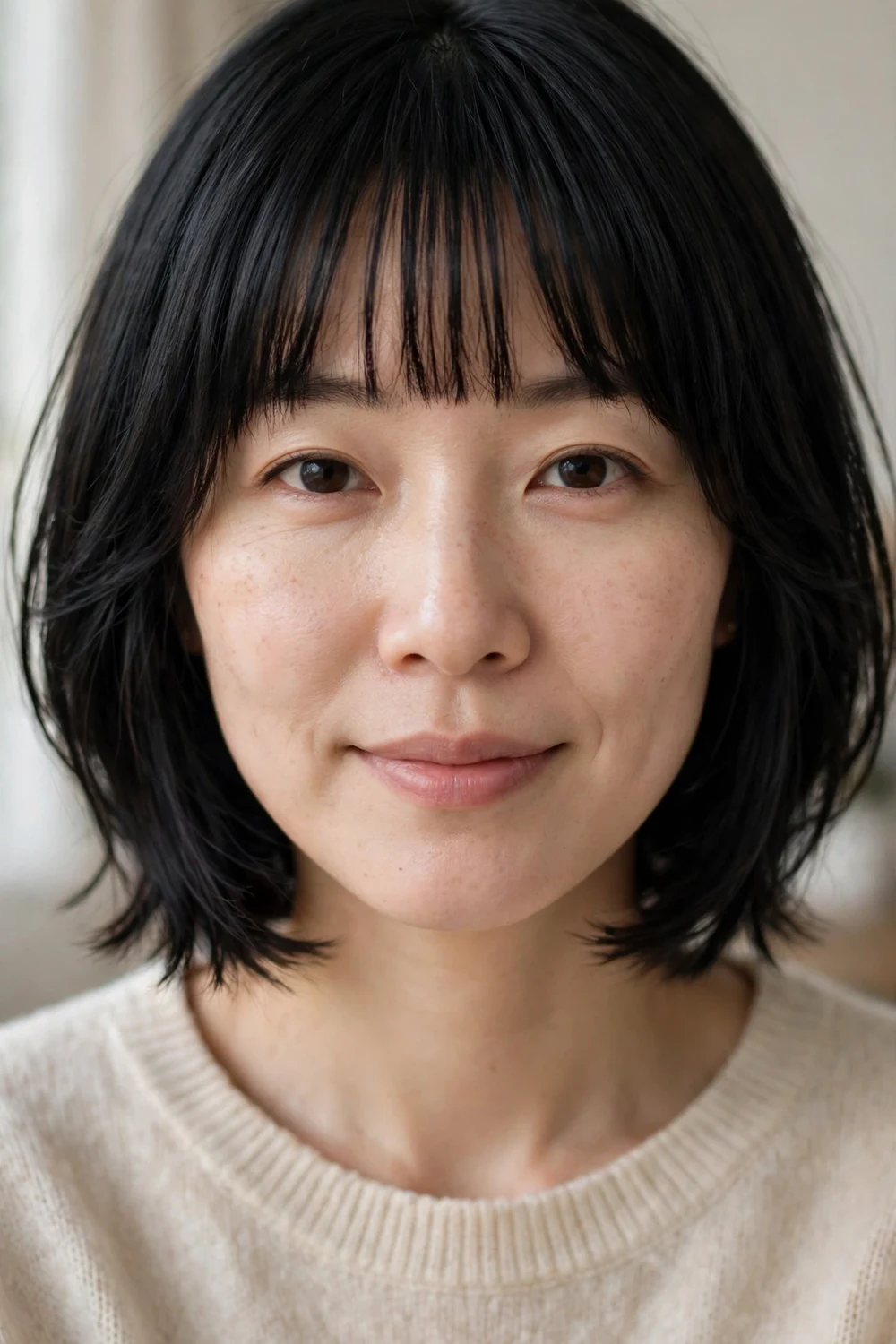
Blunt bangs put a solid block of weight across the forehead, which makes fine hair look instantly denser. Keeping the bob’s layers soft behind them stops the overall cut from feeling heavy. The contrast between the strong fringe and the light layers is what makes this pairing work.
Try this: Blunt bangs need a trim every 3 to 4 weeks to stay sharp. Many salons offer free fringe trims between full appointments, so ask at the desk.
15. Butterfly Layers
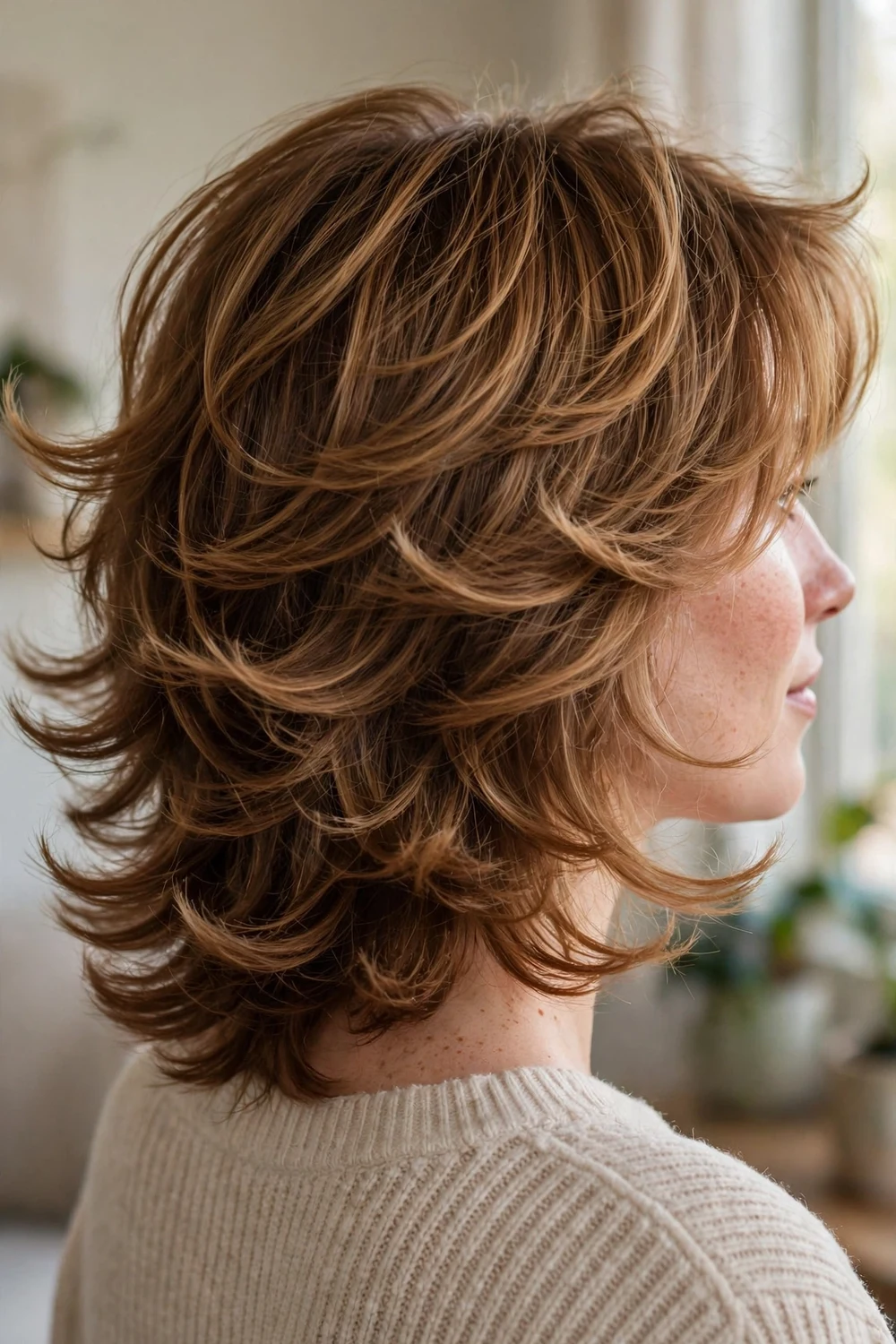
The butterfly cut uses long, bouncy layers that flip outward around the face, creating airy volume without sacrificing length. For fine hair, it is one of the most forgiving trendy cuts because the layers stay long and the density at the ends is protected.
Try this: Style with a large round brush or hot rollers, rolling sections away from the face to get the signature outward flip. A cool shot from the dryer sets each section.
16. Soft Layered Wolf Cut
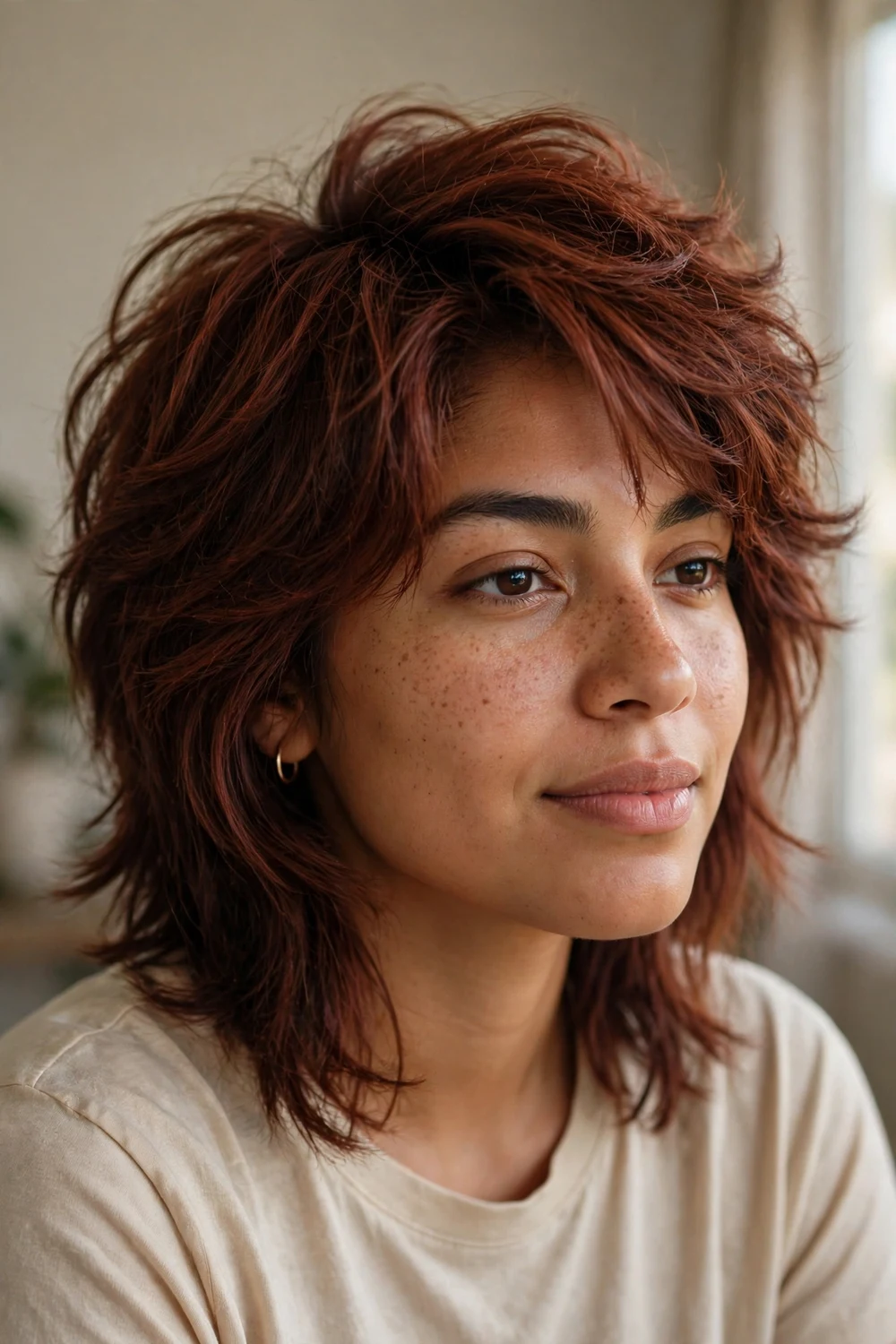
The wolf cut stacks shorter layers at the crown over longer lengths, which gives fine hair that coveted “lots of hair” look at the top. Keeping the layers soft rather than razor-sharp is what separates a wearable wolf cut from a costume one.
Try this: This cut looks best slightly undone. Rough-dry, then pinch the crown pieces with a tiny bit of texture cream and leave the ends alone.
17. V-Cut with Soft Layers
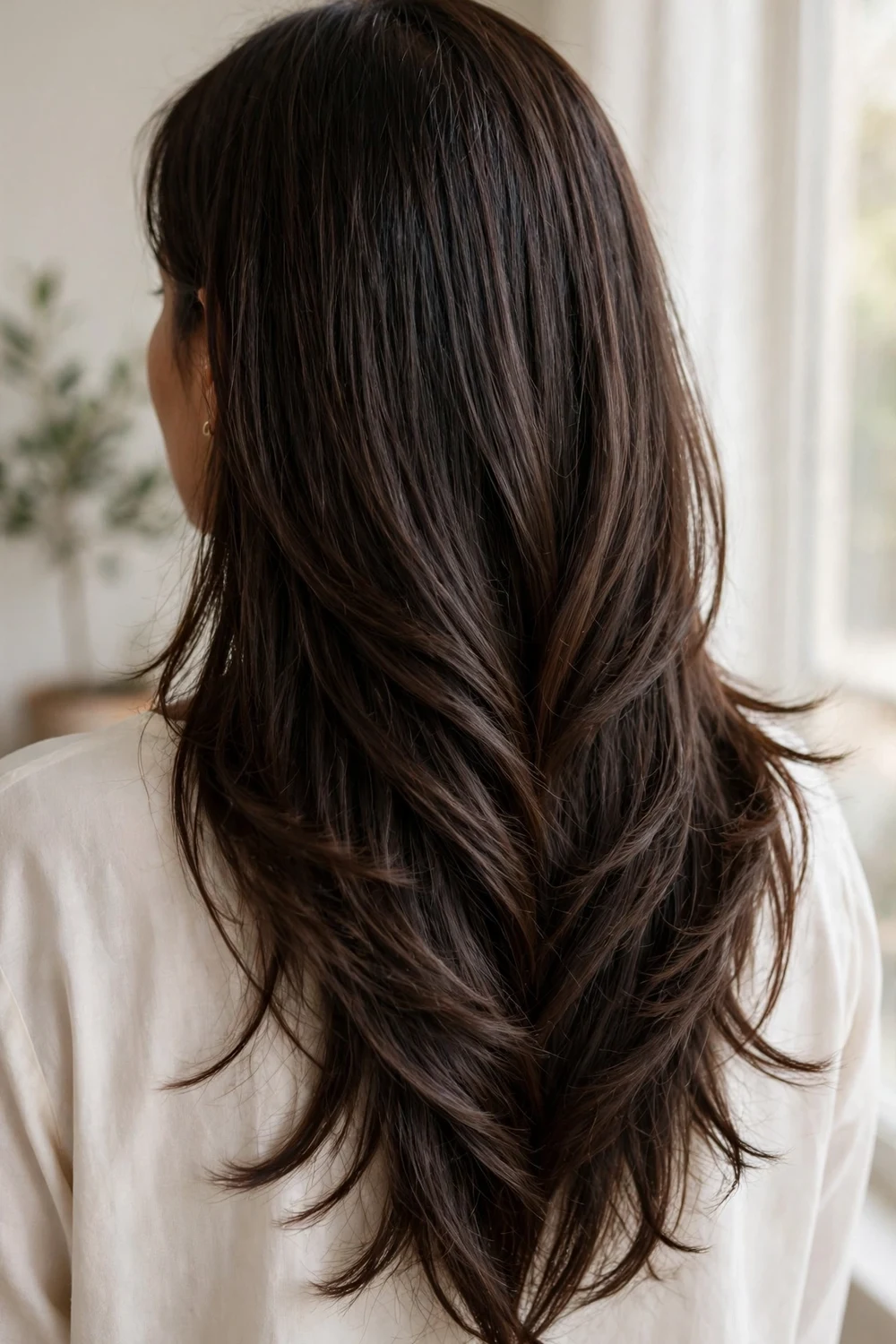
A V-cut shapes the back into a soft point, and layering the ends keeps that point from looking thin or ratty. The layered ends catch the light as they move, which reads as thickness from behind. This is a strong choice if you love length but your ends always look sparse.
Try this: Ask the stylist to “keep the V soft, not sharp.” An aggressive V on fine hair removes too much from the sides.
18. Invisible Soft Layers
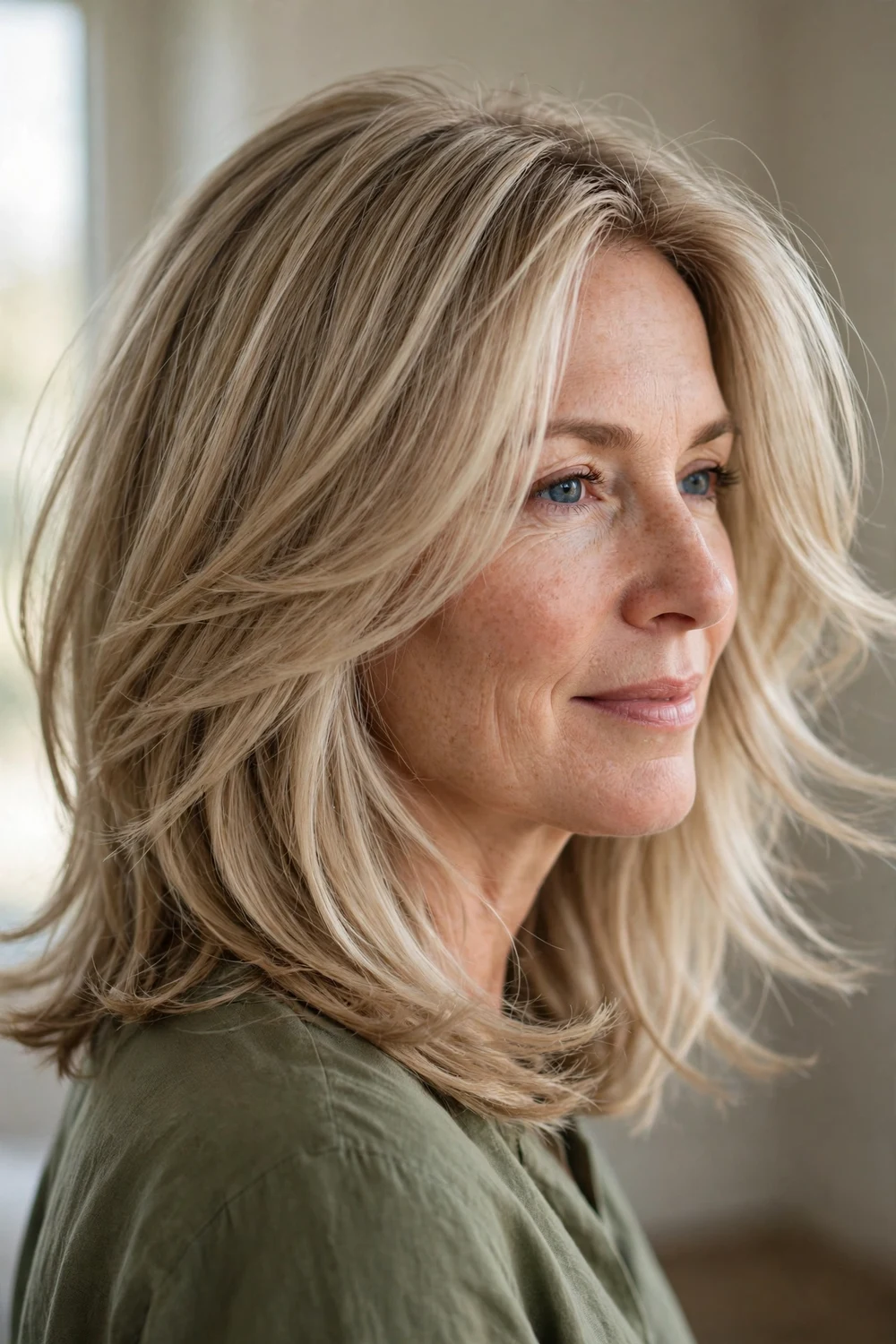
Invisible layers are cut so subtly that the hair looks almost one length, but it moves and swings like layered hair. Fine hair benefits most from this approach because no density is visibly removed anywhere. If you have ever said “I want layers but I don’t want to see layers,” this is your cut.
Try this: Point cutting is the technique to request: the stylist snips into the ends vertically instead of across, which softens without creating steps.
19. Tapered Soft Layered Haircut
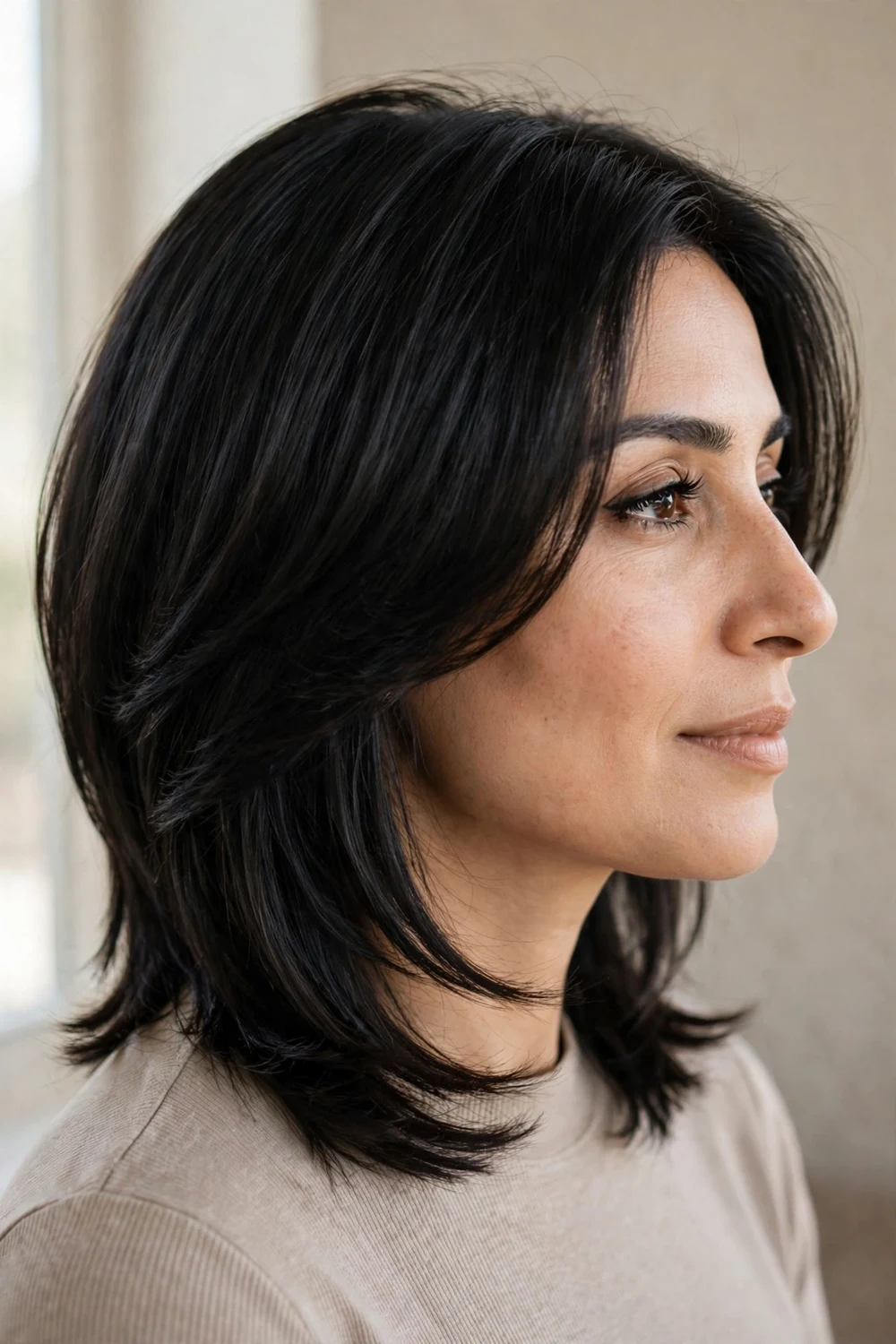
Tapered layering narrows the shape gradually from the crown to the ends, which gives fine hair a polished, intentional silhouette. The smooth transitions keep everything looking thick and controlled, making this one of the most office-friendly options on the list.
Try this: A smoothing cream applied to damp ends before blow-drying gives the tapered shape a glassy finish without weighing it down. Use half of what you think you need.
20. Wispy Layered Collarbone Cut
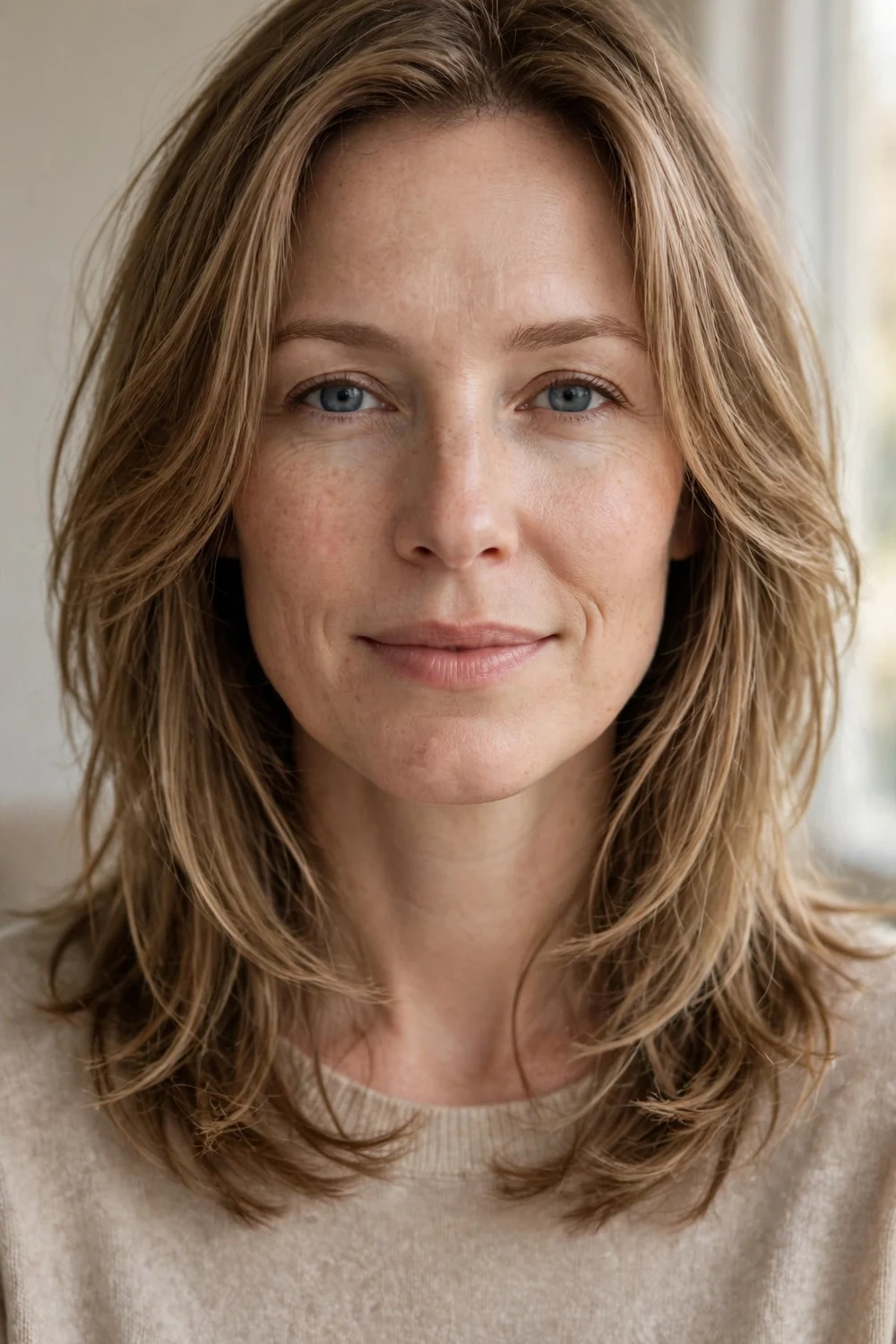
The collarbone is the sweet spot for fine hair: long enough to style, short enough that gravity doesn’t win. Long, wispy layers through the lengths add airiness, and because they are visible, they give the hair a deliberately piece-y texture that looks fuller than a solid cut.
Try this: This length holds a loose wave for days. Wrap 2-inch sections around a 1.25-inch curling iron, alternating directions, for waves that last two days.
21. Asymmetrical Layered Bob
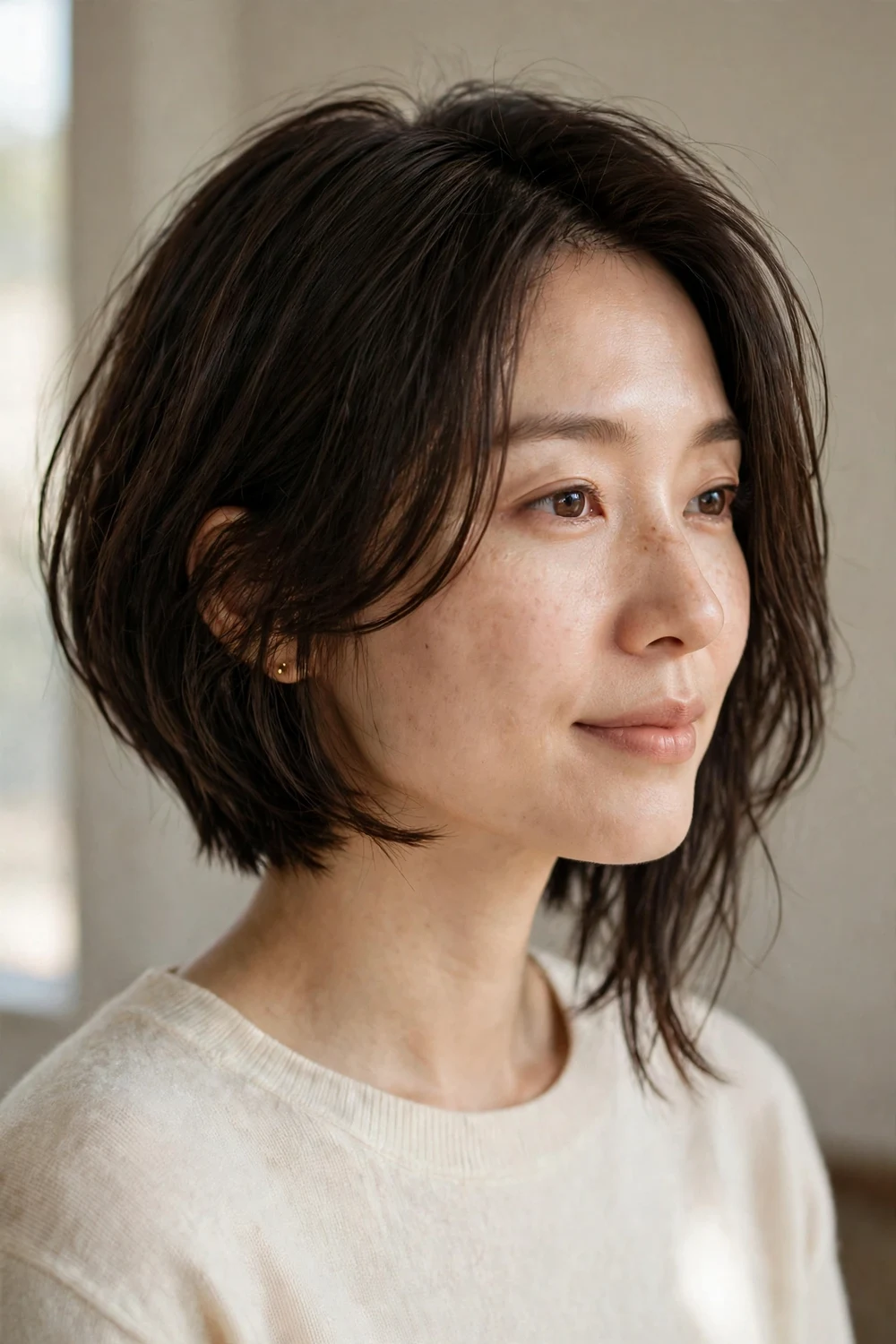
Cutting one side slightly longer than the other creates a diagonal line that tricks the eye into seeing more density and dimension. Internal layers keep the shape soft instead of geometric, so it reads modern rather than severe.
Try this: Part on the shorter side to maximize the dramatic sweep. The asymmetry looks best when the part is deliberate, not centered.
22. Layered A-Line Bob
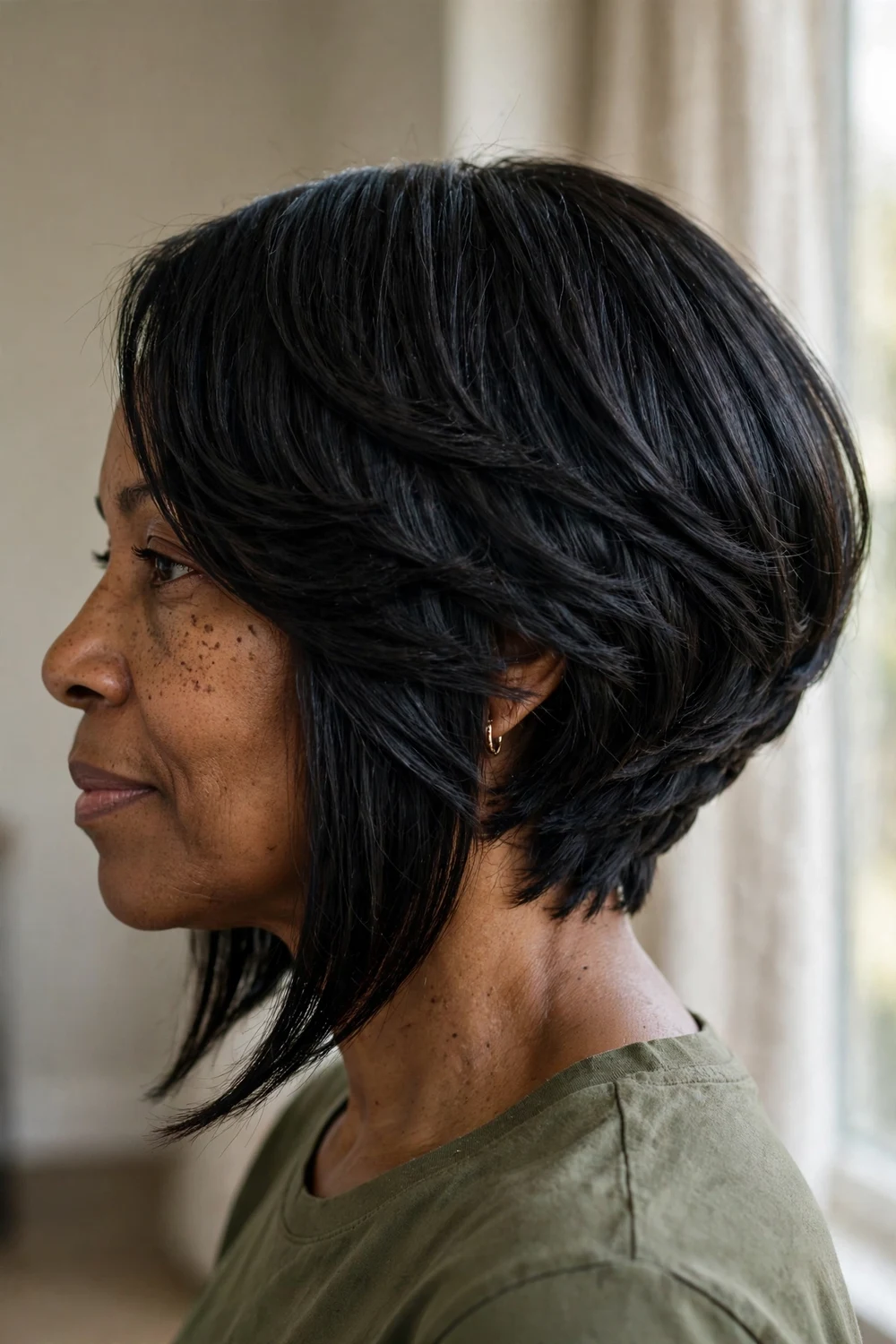
The A-line runs longer in front and shorter in back, and internal layers through the shape give fine hair a strong, full outline. The stacked back builds volume where it is needed most, while the longer front pieces keep the style soft around the face.
Try this: Smooth the front pieces with a flat iron and leave the back piece-y with a little texture spray. That contrast shows off the A-line angle.
23. Layered Midi with Face-Framing Pieces

The midi lands between the shoulders and the chest, and pairing it with face-framing pieces gives fine hair movement right where it counts. Subtle layers through the lengths add shape without thinning the ends, and the framing pieces keep the front from looking heavy.
Try this: This cut pairs well with subtle dimension. Fine babylights through the top layers make each layer visible, which adds perceived depth.
24. Tousled Crop with Long Top Layers
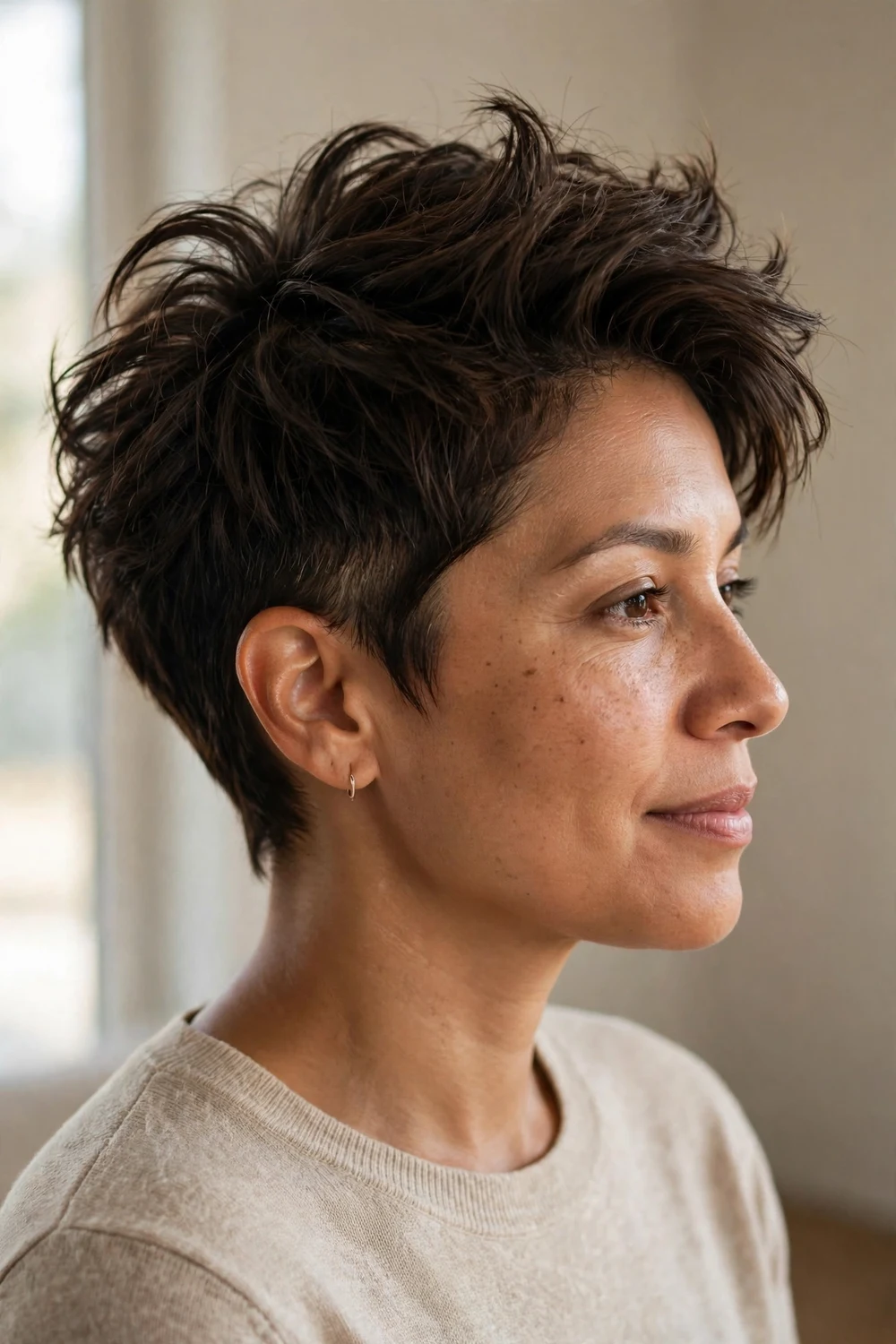
Keeping length on top with shorter sides lets you style volume upward and away from the face, which is exactly what flat fine hair needs. Choppy layers through the top can be roughed up in seconds for a full, tousled finish that looks intentional.
Try this: Blow-dry the top layers forward first, then push them back with your fingers. That change of direction at the root creates lasting lift.
25. Layered Pageboy with Soft Ends
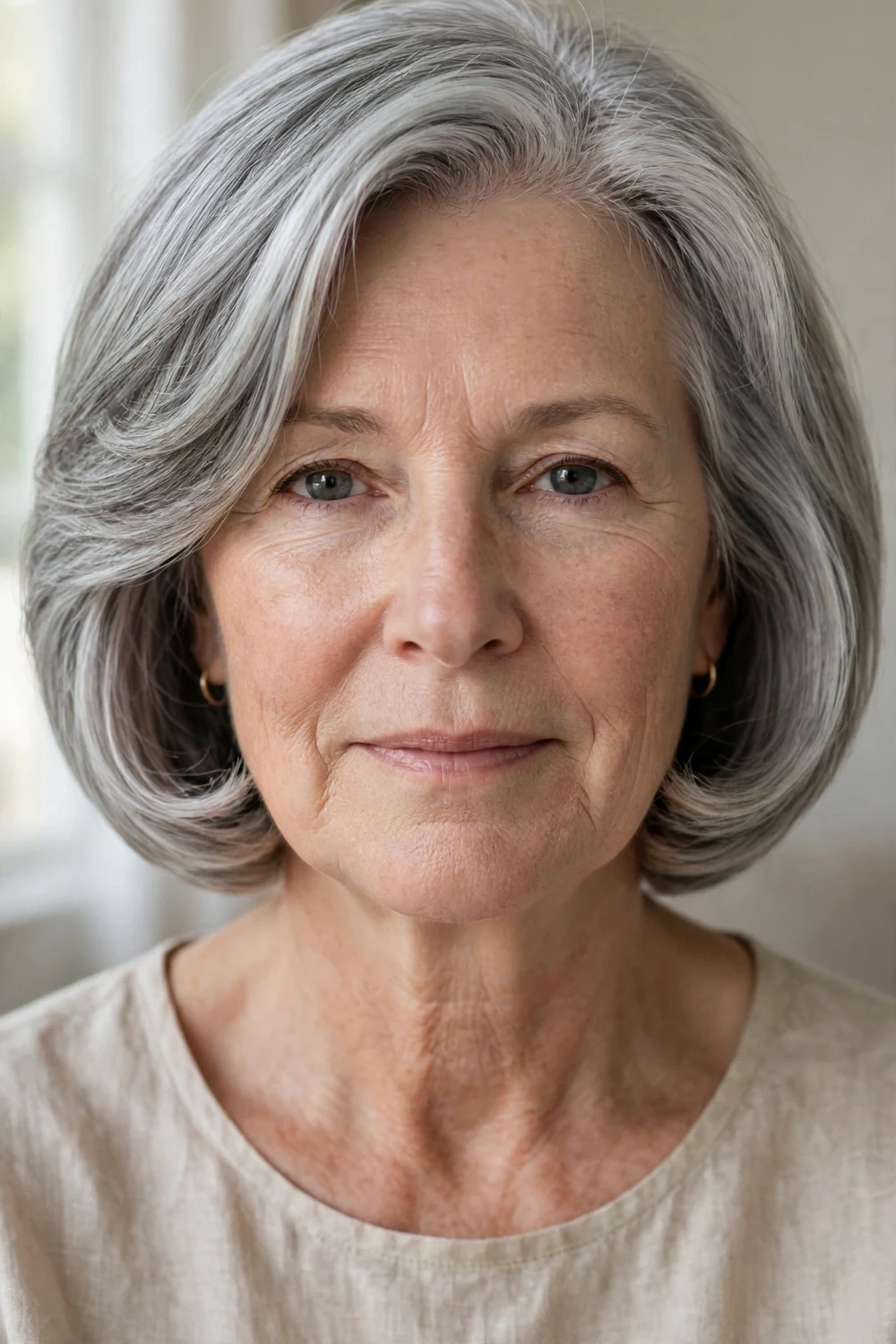
The pageboy’s smooth, inward-turning ends create a solid, dense silhouette that masks thinness. Layering the interior keeps it from looking like a helmet, and the curved ends make fine hair look like there is simply more of it.
Try this: A large round brush is non-negotiable here. Roll each section under as you dry to train the ends into that signature inward curve.
26. Layered Wedge Cut
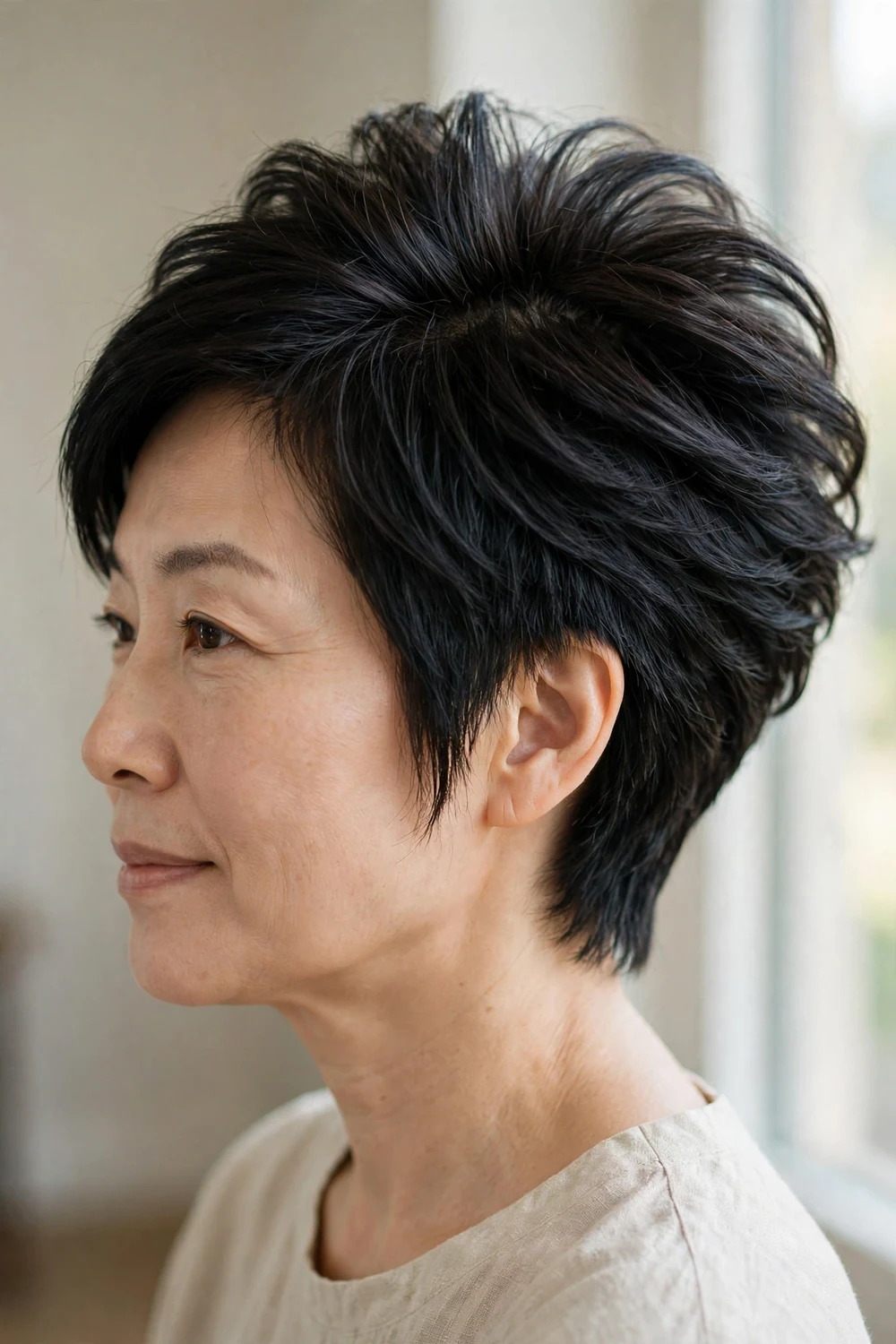
The wedge uses tight, graduated layers in the back that stack and push the hair upward, delivering serious lift for fine strands. It is one of the highest-volume cuts on this list because the shape itself, not just the styling, creates the height.
Try this: This is a precision cut, so find a stylist who is confident with graduation. A sloppy wedge grows out into a mullet-like shape fast.
27. “Undone” Layered Pixie-Bob
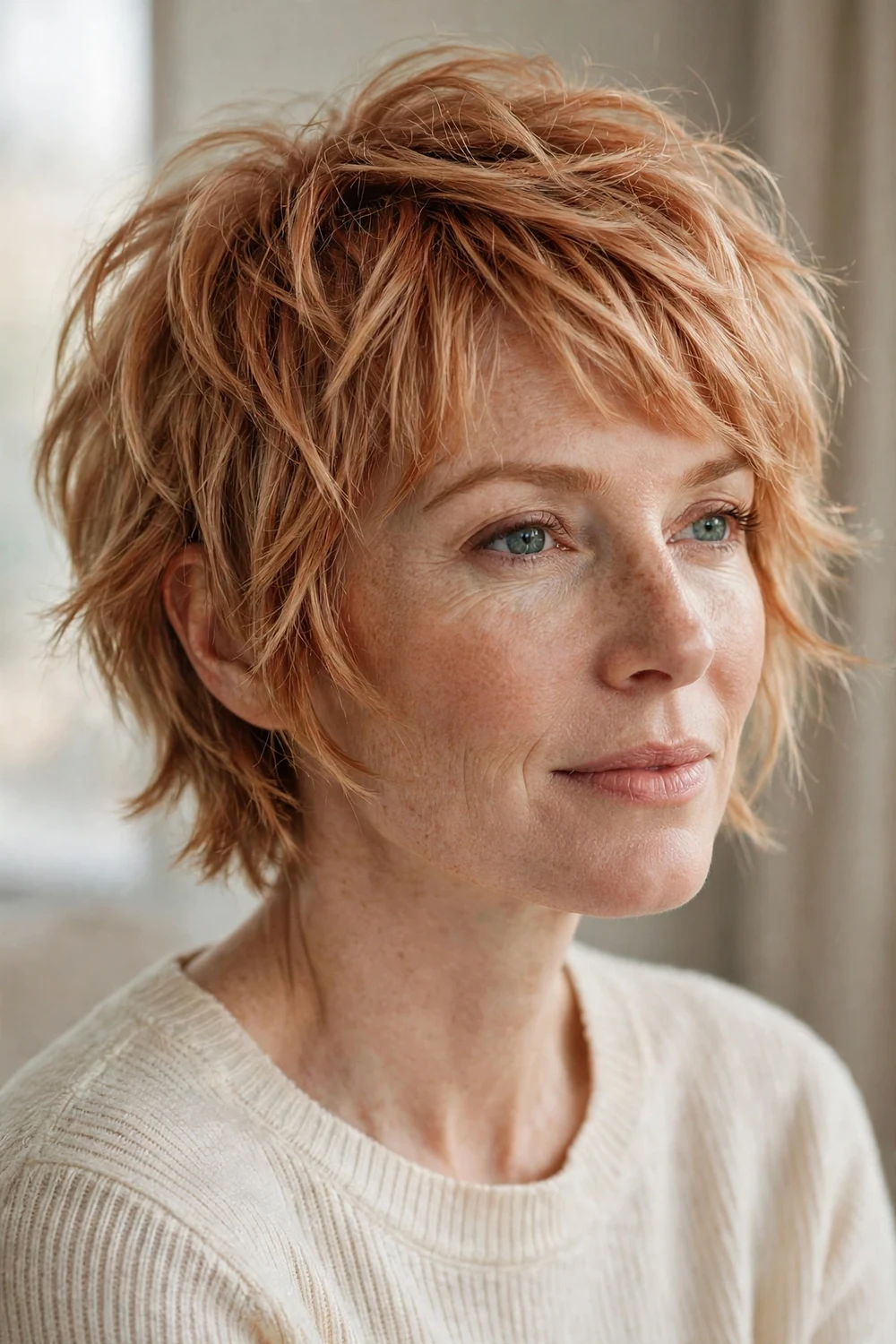
Half pixie, half bob, this cut uses heavy, disconnected layers that you rough up for messy, full-looking texture. The “undone” styling is the point: the more piece-y it looks, the thicker it reads. Fine hair takes to this cut well because the layers are doing all the work.
Try this: Apply texturizing powder directly at the roots on day two. It absorbs oil and adds grit, which makes the disconnected layers stand apart.
28. Cropped Shingle Cut
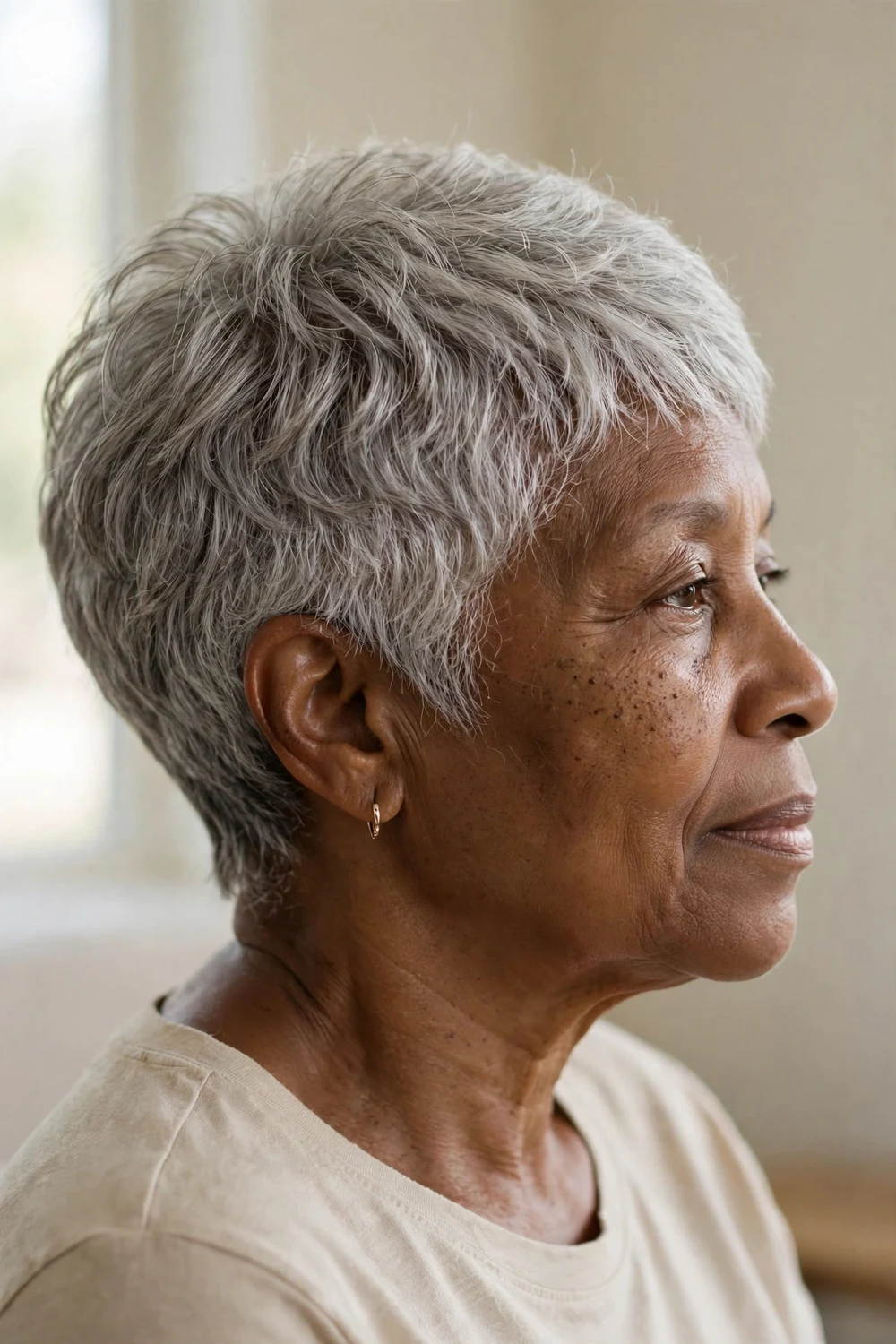
In a shingle cut, fine layers are sculpted to overlap like roof shingles, each layer supporting the next. That architecture creates maximum density on very short hair, with a soft, fluffy texture that looks deliberately full rather than thin.
Try this: Finger-style only. A brush flattens the overlapping layers, while fingers keep them separated and airy.
29. Curly or Wavy Layered Cut for Natural Texture
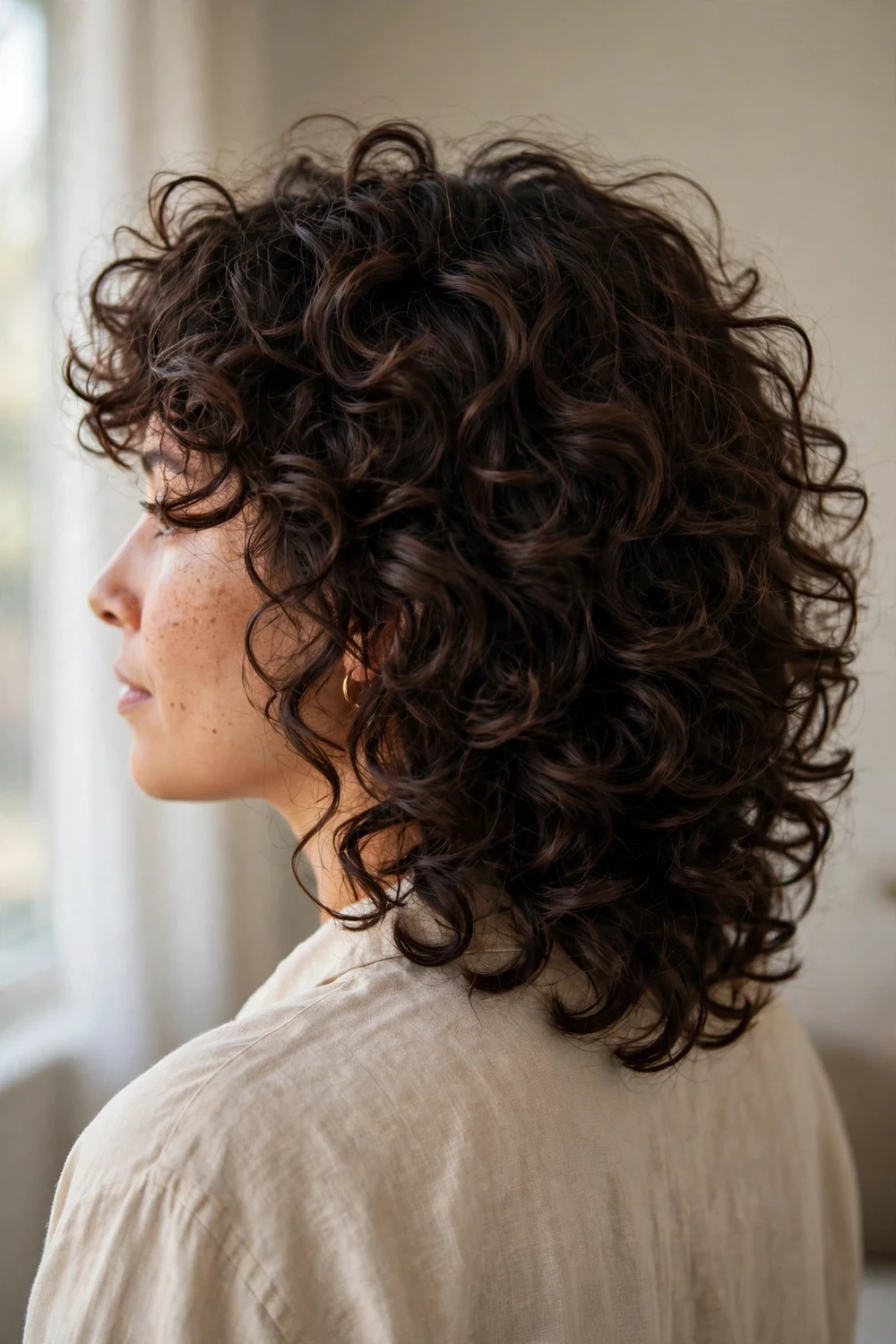
Fine hair with natural curl or wave needs layers that remove weight without removing curl. Strategic “shattered” layers let each curl spring up independently, and the combined volume of lifted curls creates the appearance of abundant hair.
Try this: Get this cut dry, curl by curl, with a stylist experienced in curly hair. Wet cutting can’t account for how much each curl will spring up.
If your fine hair is naturally curly, these curly layered hairstyles for women over 50 show how layer placement changes for curl patterns without losing density.
30. Deep Side-Part Soft Layers

Sometimes the biggest volume trick isn’t a cut at all. Moving your part 2 to 3 inches to one side forces the hair to sweep across the crown, creating instant lift and covering any visible scalp at the part line. Pair it with soft layers and the sweep looks natural, not forced.
Try this: Train a new part by blow-drying the roots in the new direction while damp for a week. After that, the hair starts to fall that way on its own.
Soft Layered Hairstyles for Fine Hair: Comparison at a Glance
| Style | Best For | Difficulty | Upkeep |
|---|---|---|---|
| Soft Layered Chin-Length Bob | Everyday fullness, all face shapes | Easy | Trim every 6-8 weeks |
| Soft Blunt Bob with Ghost Layers | Thicker-looking ends, sleek styling | Easy | Trim every 6-8 weeks |
| Soft Layered Pixie Cut | Maximum lift, low styling time | Easy | Trim every 4-6 weeks |
| Soft Layered Lob | Versatility, growing out a bob | Easy | Trim every 8 weeks |
| Soft Layered Shag | Crown volume, casual texture | Easy | Trim every 8-10 weeks |
| Feathered Layers | Airy movement on shorter cuts | Easy | Trim every 6-8 weeks |
| Stacked Bob with Soft Layers | Built-in back volume | Easy | Nape cleanup every 6 weeks |
| Cascading Long Layers | Keeping length with movement | Medium | Trim every 8-10 weeks |
| Face-Framing Soft Layers | Highlighting features, easy grow-out | Easy | Trim every 8 weeks |
| Soft Layered Curtain Bangs | Forehead fullness, soft framing | Easy | Bang trim every 6 weeks |
| Soft Layered Haircut with Wispy Bangs | Light texture at the front | Easy | Bang trim every 4-6 weeks |
| Side-Swept Layers with Bangs | Covering a thin hairline | Easy | Bang trim every 6 weeks |
| Choppy Soft Layers with Bangs | Wash-and-go texture | Easy | Trim every 8 weeks |
| Soft Layered Bob with Blunt Bangs | Strong fringe, dense front | Medium | Bang trim every 3-4 weeks |
| Butterfly Layers | Bouncy volume without losing length | Medium | Trim every 8-10 weeks |
| Soft Layered Wolf Cut | Edgy crown volume | Easy | Trim every 8 weeks |
| V-Cut with Soft Layers | Long hair with shaped ends | Easy | Trim every 8-10 weeks |
| Invisible Soft Layers | Layers you can’t see | Easy | Trim every 8 weeks |
| Tapered Soft Layered Haircut | Polished, professional finish | Easy | Trim every 6-8 weeks |
| Wispy Layered Collarbone Cut | Sweet-spot length, piece-y texture | Easy | Trim every 8 weeks |
| Asymmetrical Layered Bob | Modern edge, added dimension | Medium | Trim every 6 weeks |
| Layered A-Line Bob | Strong shape, stacked volume | Medium | Trim every 6 weeks |
| Layered Midi with Face-Framing Pieces | Medium length with soft movement | Easy | Trim every 8 weeks |
| Tousled Crop with Long Top Layers | Upward styling, bold texture | Easy | Trim every 5-6 weeks |
| Layered Pageboy with Soft Ends | Dense silhouette, classic look | Medium | Trim every 6 weeks |
| Layered Wedge Cut | Maximum built-in lift | Medium | Trim every 6 weeks |
| “Undone” Layered Pixie-Bob | Messy fullness, creative types | Easy | Trim every 5-6 weeks |
| Cropped Shingle Cut | Very short hair with density | Easy | Trim every 4-6 weeks |
| Curly or Wavy Layered Cut | Natural texture, springy volume | Medium | Trim every 10-12 weeks |
| Deep Side-Part Soft Layers | Instant root lift, any length | Easy | No extra trims needed |
How to Choose the Right Soft Layers for You
Start with your length. Short hair (pixie, crop, chin bob) gives the most automatic lift because there is less weight pulling down. Medium lengths like the lob and collarbone cut balance versatility with volume. Long hair needs the most careful layering: long and blended, never short and choppy.
Next, consider your styling routine. If you air-dry most days, pick cuts that work with your natural texture: the choppy layers with bangs, the undone pixie-bob, or the curly layered cut. If you blow-dry, the pageboy, stacked bob, and tapered cut reward the effort with a polished finish.
Finally, think about your hairline and part. A deep side part or side-swept bangs can hide a sparse hairline better than any product. Bring 2 to 3 reference photos to your appointment and point to the specific layer placement you want, not just the overall vibe.
Mistakes to Avoid
The most common mistake is asking for layers that are too short or too many. On fine hair, short layers remove the very density you are trying to fake. Keep layers long and blended, and tell your stylist to avoid heavy thinning shears.
Product mistakes matter just as much. Heavy oils, butters, and cream leave-ins coat fine strands and drag them flat within hours. Stick to lightweight mousses, root-lifting sprays, and texturizing powders. Apply conditioner only from the mid-lengths to the ends, never at the roots.
Styling mistakes are the third trap. Letting fine layered hair air-dry completely usually means the roots dry flat against the scalp. Even two minutes of upside-down blow-drying at the roots changes the whole result. And don’t brush wet hair aggressively: use a wide-tooth comb, since wet fine hair stretches and snaps easily.
If you love the shorter end of this list, our guide to short layered haircuts goes deeper on crops and bobs that build volume above the shoulders.
For styles that sit right at the shoulders, browse our collection of layered hairstyles for medium hair to compare lobs, midis, and shags side by side.
Keeping your length? These ideas pair well with our layered hairstyles for long hair, which focus on protecting density at the ends.
The butterfly cut above has a full guide of its own: see butterfly cuts for more ways to wear those bouncy face-framing layers.
And if bangs are doing the heavy lifting in your style, our curtain bangs for fine hair over 40 covers fringe options that keep thin hair looking full.
Frequently Asked Questions
Will layers make my fine hair look thinner?
Not when they are cut correctly. Soft, blended layers remove weight from the interior of the hair, which lets the top sections lift away from the scalp and creates the illusion of more hair. The problem only appears with short, chunky layers or aggressive thinning shears, which remove too much density. Ask for long, blended layers with point cutting instead.
What is the best layered haircut for very fine, flat hair?
A chin-length bob with soft layers or a blunt bob with ghost layers usually gives the most visible improvement. Both keep the ends dense while building lift at the crown, and both style in under 15 minutes. If you prefer length, a collarbone cut with wispy layers is the safest long option.
How often should fine layered hair be trimmed?
Every 6 to 8 weeks for most layered cuts. The shortest layers lose their shape fastest, so pixies and crops need attention every 4 to 6 weeks, while long cascading layers can stretch to 10 weeks. Waiting too long lets the ends go flat and stringy, which makes fine hair look thinner than it is.
Should fine hair have layers or stay one length?
Soft layers almost always beat one length for fine hair, because one-length cuts stick together and reveal gaps in density. The exception is very sparse hair at the ends: in that case, a blunt one-length cut with invisible interior layers gives the thickest-looking baseline. Either way, keep the perimeter as solid as possible.
What styling products work best for soft layered fine hair?
Lightweight formulas only. A volumizing mousse at the damp roots before blow-drying is the single most effective product for fine layered hair. Follow with a texturizing spray or dry shampoo on day two for grit and lift. Avoid heavy oils, butters, and cream leave-ins, which weigh layers flat within hours.
Final Thoughts
Fine hair doesn’t need drama to look full. It needs restraint: a blunt baseline, soft blended layers, and styling that lifts the roots instead of coating the ends. Pick one idea from the 30 above that matches your length and routine, bring the photo to your stylist, and use the exact phrases from the “Try this” tips. After years of watching what works for fine textures, that combination of the right cut and the right words at the appointment is what makes the difference.

