


Medium hair and layers are a natural fit. The length gives layers enough room to move, and layers keep the length from hanging flat or boxy.
I’ve spent plenty of time studying which medium cuts hold up best through a workweek, and layered styles consistently come out ahead. Below you’ll find 22 layered hairstyles for medium hair, from soft rounded shapes to bold asymmetrical cuts. Each one includes a practical tip so you can picture the upkeep before you book.
Quick answer: This guide covers the best styles, who they suit, and how to get them right.
Quick Takeaways
- Layers add movement and volume to medium hair without giving up length.
- Long, blended layers suit fine or flat hair. Shorter, choppier layers suit thick hair.
- Face-framing layers flatter nearly every face shape and grow out gracefully.
- Most medium layered cuts need a trim every 8 to 10 weeks to keep their shape.
- Apply heat protectant before blow-drying or ironing layered hair.
Why Medium Hair Loves Layers
Medium hair sits at the point where one-length cuts start to look heavy. Ends rest on the shoulders, which can push hair outward into a boxy line.
Medium layers pair naturally with a soft fringe. For 22 fringe-forward takes built for finer textures, see the chic curtain bangs for fine hair collection.
Layers break up that bulk. Shorter pieces lift the crown while longer ones keep the perimeter full, so the cut has shape from every angle.
The length also keeps layers versatile. You can still pull medium hair into a ponytail or bun, which isn’t always possible once layers get very short.
Layer Types for Medium Length
Long layers run through the bottom half of the hair. They add subtle movement without visible steps, which works well for fine or thin hair.
Shorter layers start near the cheekbones or chin. These create more obvious texture and are the better choice for thick hair that needs weight removed.
Face-framing layers are cut around the front only. They soften the hairline and blend into either layer type, so ask for them as an add-on if your cut feels flat at the front.
1. Long Layered Cut for Volume
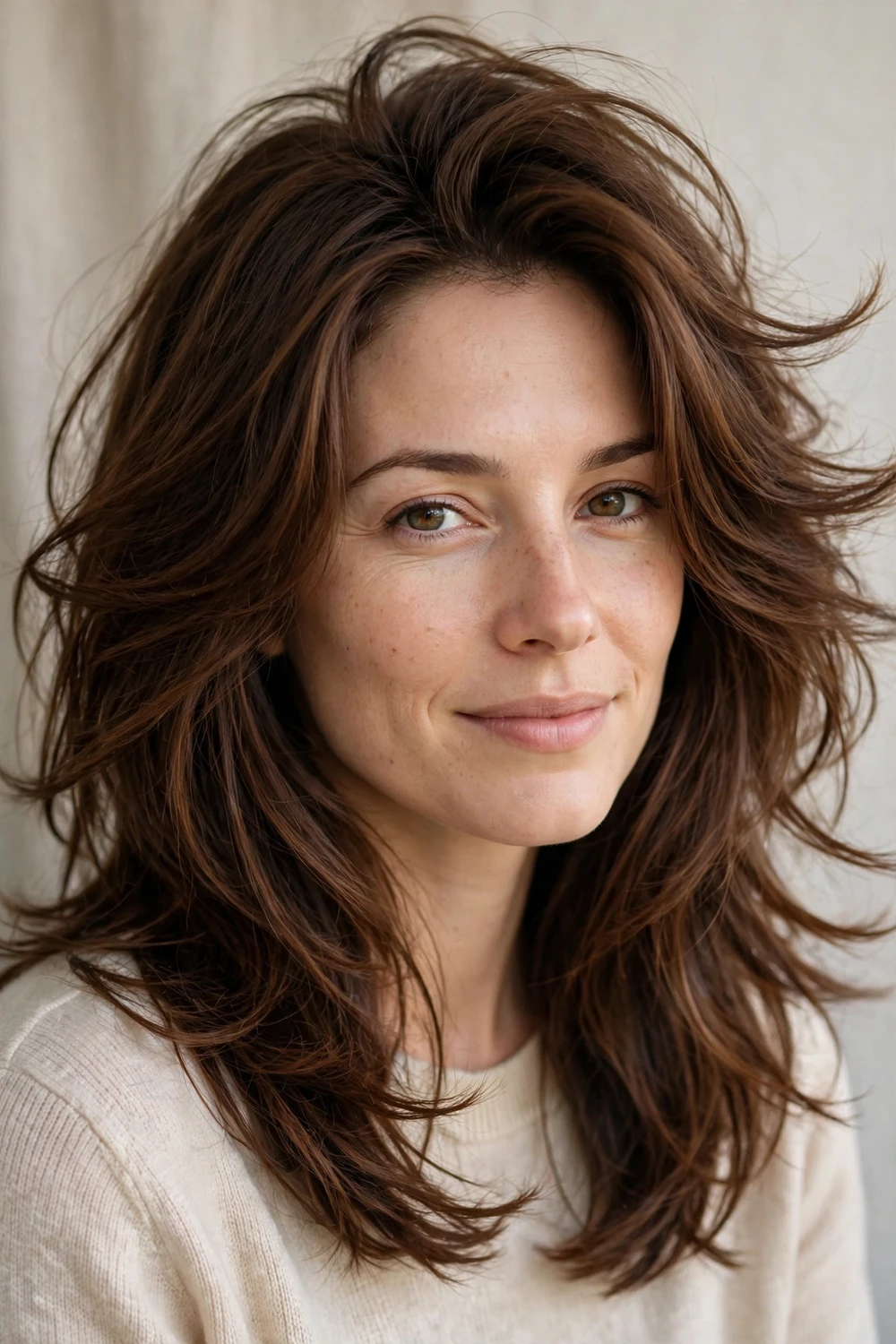
If your medium hair goes flat by midday, long layers are the simplest fix. They keep most of your length while removing weight from the bottom half. The shorter top pieces lift the roots, and the longer bottom pieces keep the ends full. This cut works on straight, wavy, and relaxed curl patterns. It air-dries well and takes a blowout nicely, so styling doesn’t demand much time. Ask for layers that start around the collarbone rather than the chin for the most natural lift.
Try this: Blow-dry the roots with your head flipped forward for two minutes, then flip back. The roots dry standing up, which holds volume through the day.
2. Soft Layers with Rounded Edges
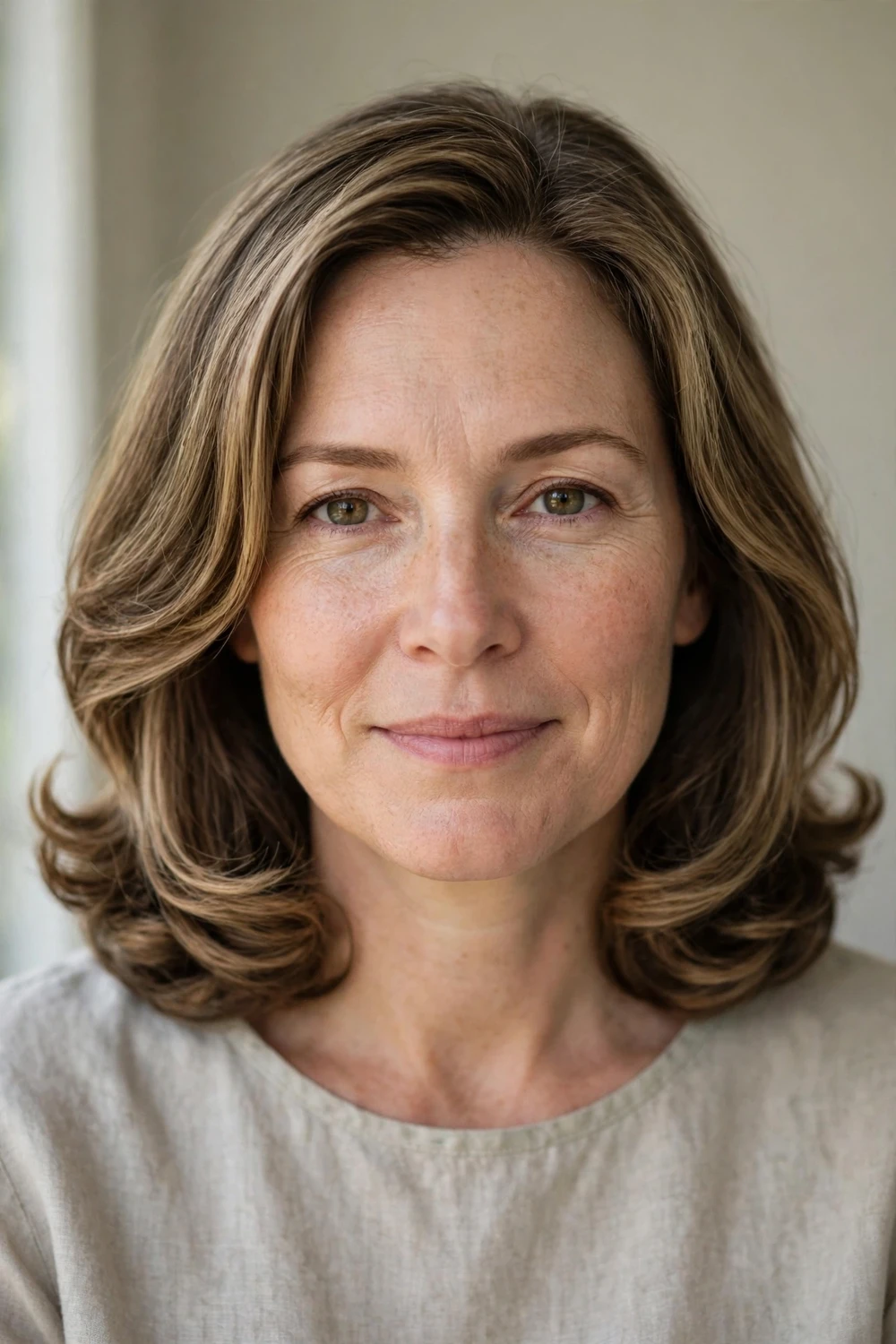
Second-day medium hair can still look styled with soft, rounded layers. The ends are trimmed in a gentle curve instead of a blunt line, so the cut falls into a soft oval shape on its own. Short internal layers add movement without creating visible steps. This cut suits straight to loosely wavy hair and looks tidy even when you skip styling. The rounded edge also means the grow-out stays graceful for weeks.
Try this: Tuck the ends under with a large round brush for 30 seconds per side. It refreshes the rounded shape between washes.
3. Classic U-Shaped Layers

The U-shape is the most requested medium layered cut for a reason. The back dips into a soft U, with shorter layers at the sides and longer ones in the middle. This shape removes weight where hair bunches at the shoulders and keeps the front pieces long enough to tuck or clip back. It flatters straight and wavy hair and works on most face shapes because the length balances the layers. It also photographs well from the back, where the U is most visible.
Try this: Part your hair down the middle after blow-drying. A center part shows off the U-shape’s symmetry.
4. Asymmetrical Layers
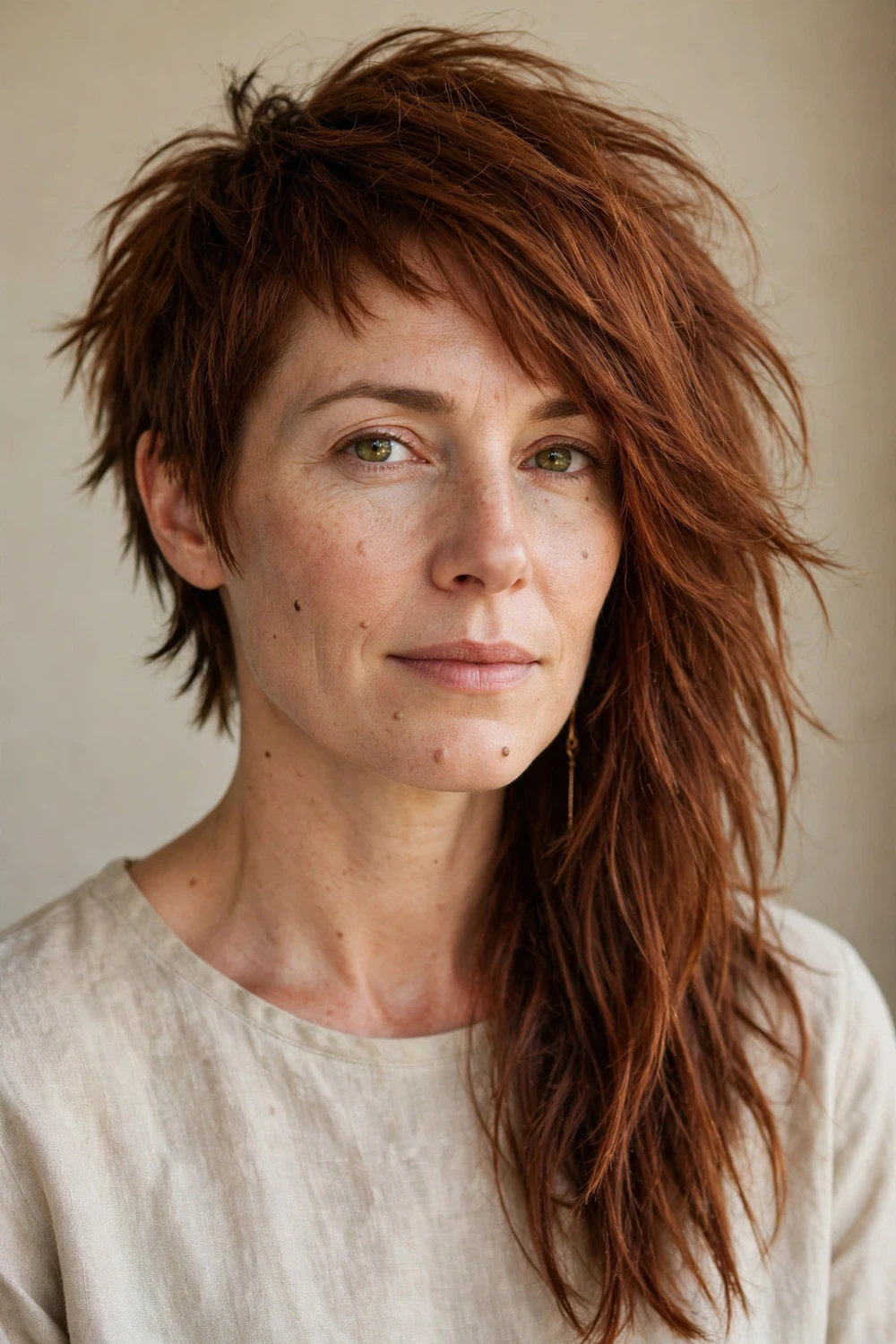
Tell your stylist to keep one side about an inch longer than the other. Asymmetry gives medium layers an instant sense of direction. The shorter side shows off layers near the jaw, while the longer side keeps the cut wearable for work or events. This style suits straight hair best, where the uneven hemline reads clearly. It also works on fine hair because the shorter side removes just enough bulk to create movement. Plan trims every six to eight weeks since the shape grows out fast.
Try this: Sweep the longer side over one shoulder. The contrast between the two sides is what makes this cut interesting.
5. Angled Face-Framing Layers
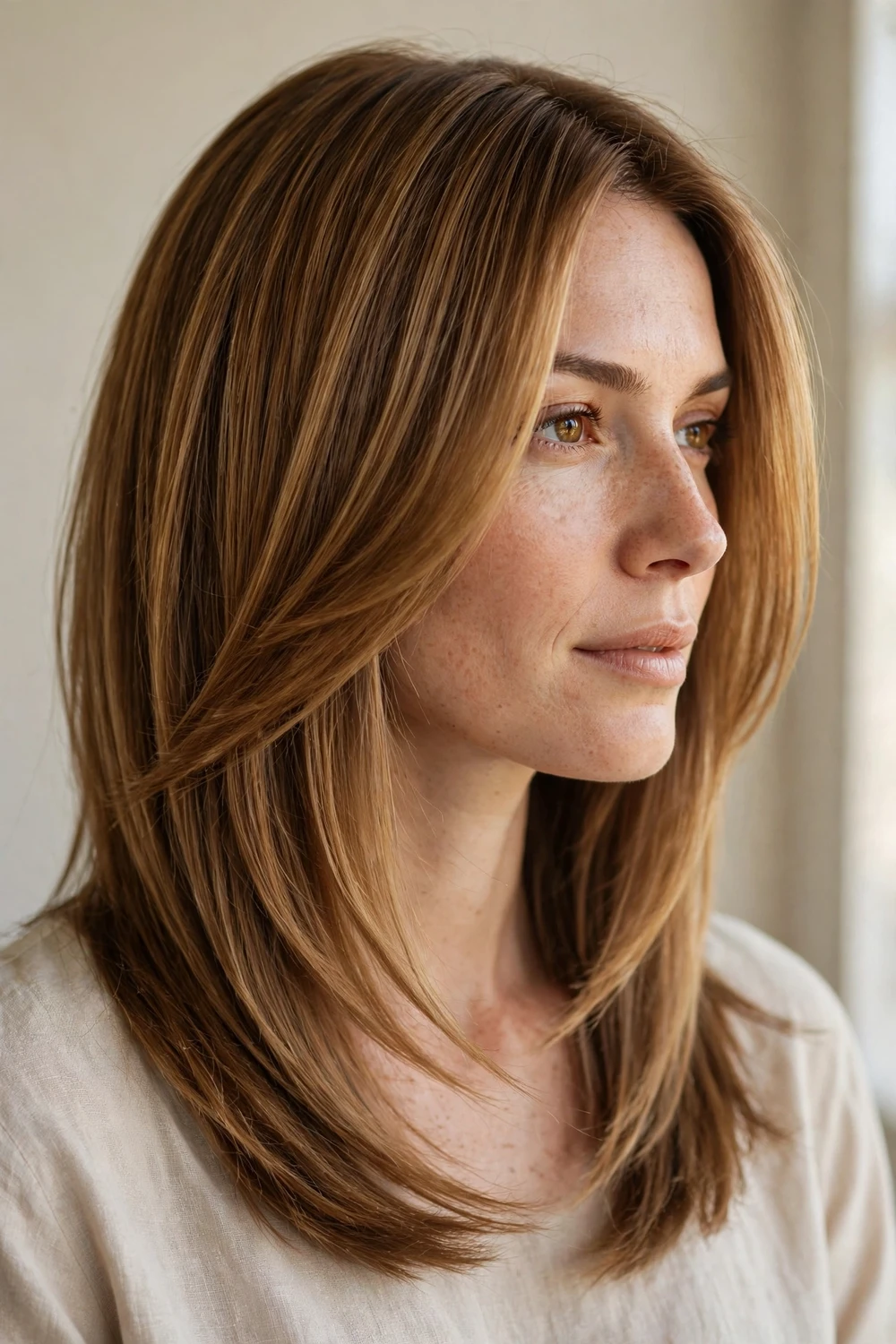
Want layers that draw attention toward your cheekbones? Angled layers start shorter at the front and fall longer toward the back, creating a diagonal line on each side of the face. This angle slims a round face and adds structure to an oval one. The back stays full, so you don’t lose the thickness you want in a medium cut. These layers pair well with both straight and wavy finishes, and they grow out into a soft shape rather than an awkward one.
Try this: Wrap the front sections around a flat iron, bending them away from your face. One pass per side sharpens the angle.
Face-framing layers pair naturally with a soft fringe, and these curtain bangs with layers combinations show exactly how the two cuts work together at this length.
6. Layered Bob with Highlights
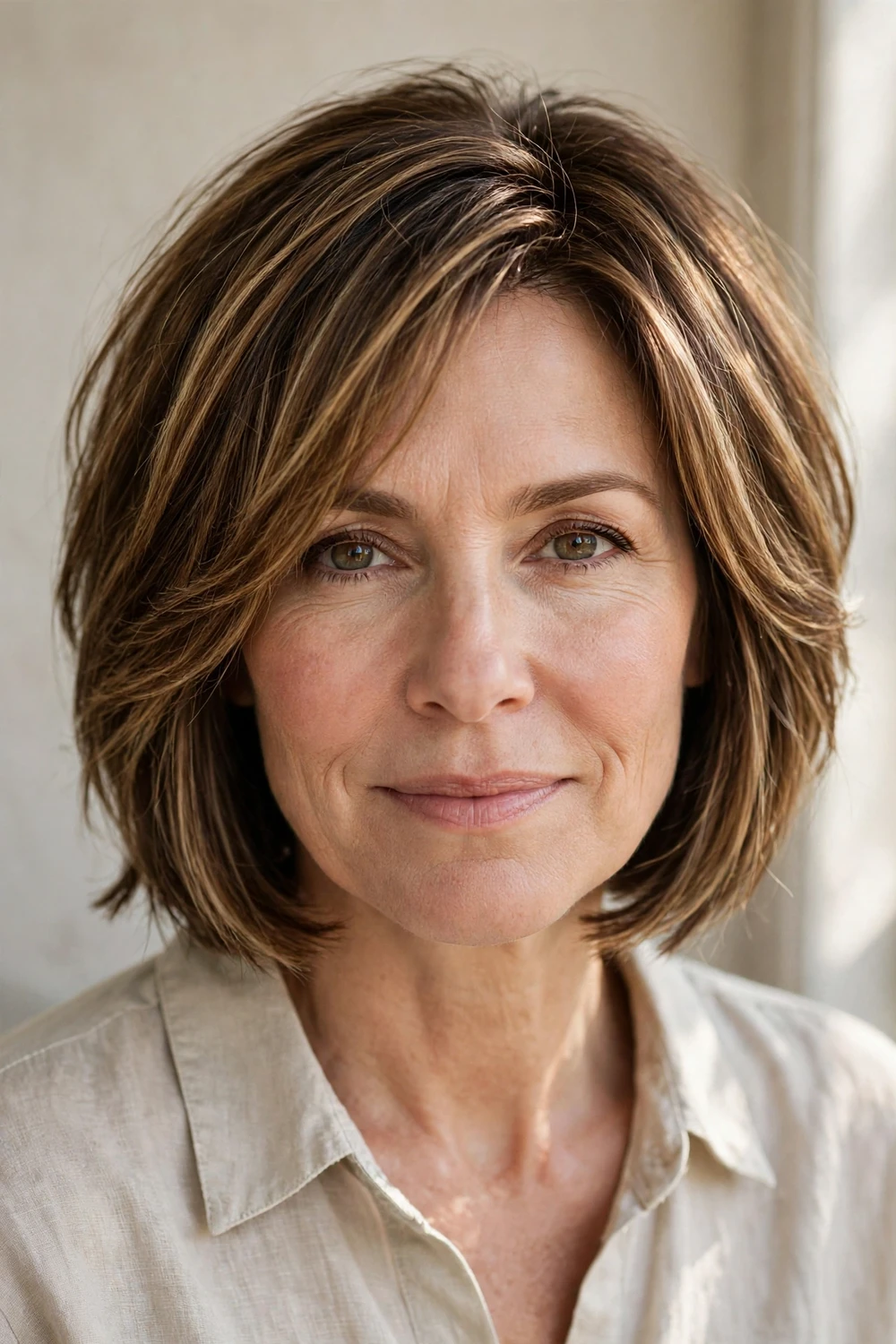
A layered bob that lands between the chin and shoulder is the shortest version of this list’s medium cuts. Layers stop the bob from looking boxy, and highlights on top of them separate the strands so the cut reads as dimensional. This combination works best on fine to medium hair, where the layers create the fullness that highlights emphasize. Keep the highlights within two shades of your base so the regrowth blends while the layers grow out.
Try this: Ask for balayage instead of foils. The softer grow-out keeps the layered shape looking intentional between appointments.
7. Messy Mid-Length Layers
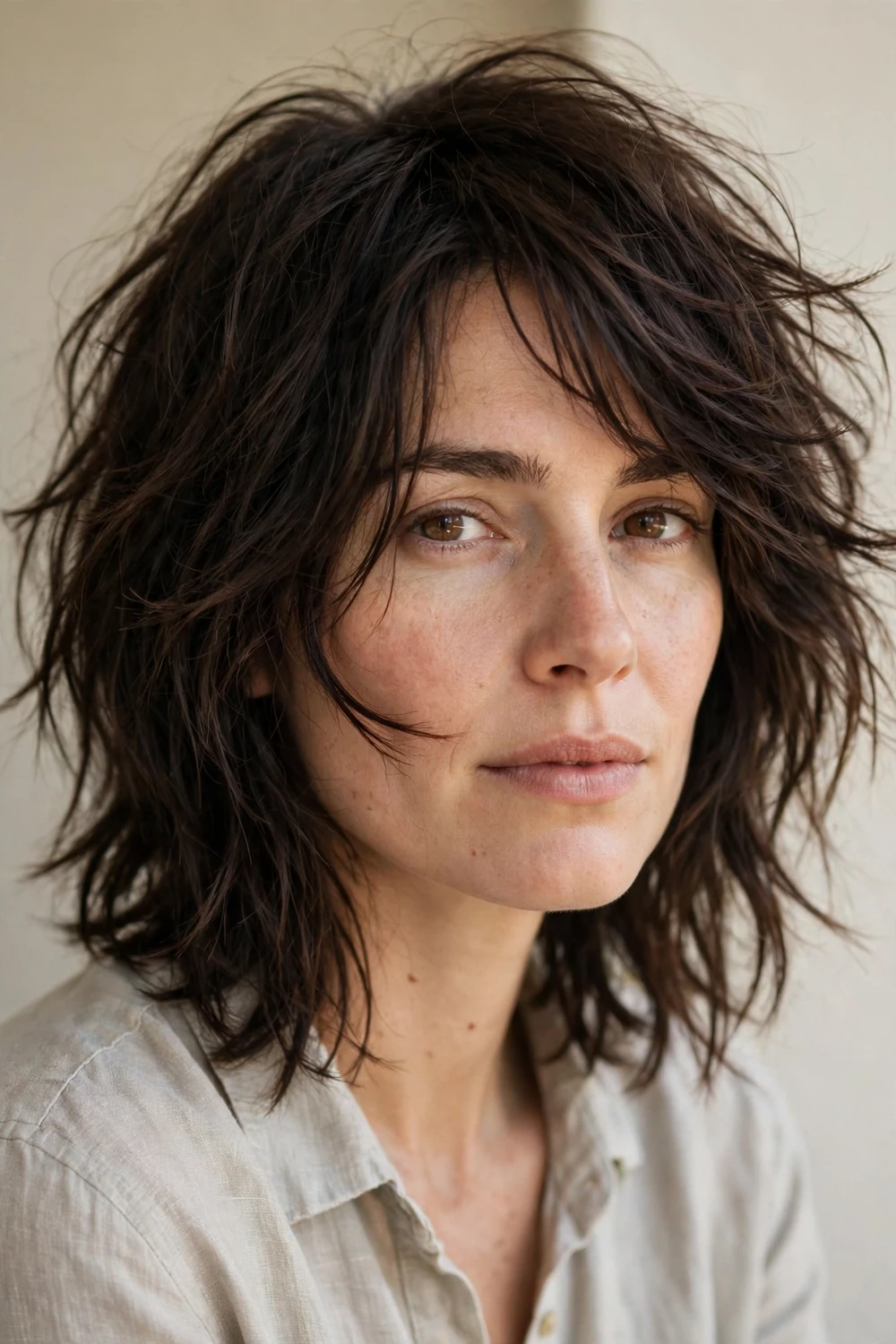
Rough-dry your hair, scrunch in texture spray, and you’re most of the way there. Messy mid-length layers are cut with uneven, choppy ends that look better the less you fuss with them. The layers create natural separation, so this cut suits wavy and wavy-curly hair that already has some bend. It’s also forgiving on fine hair, since the texture hides thin ends. The whole point is controlled imperfection, so skip the flat iron and let the ends do what they want.
Try this: Spray texturizing spray on dry hair and pinch random sections. Pinching separates the layers without combing out the texture.
8. Medium Wavy Ombre Layers
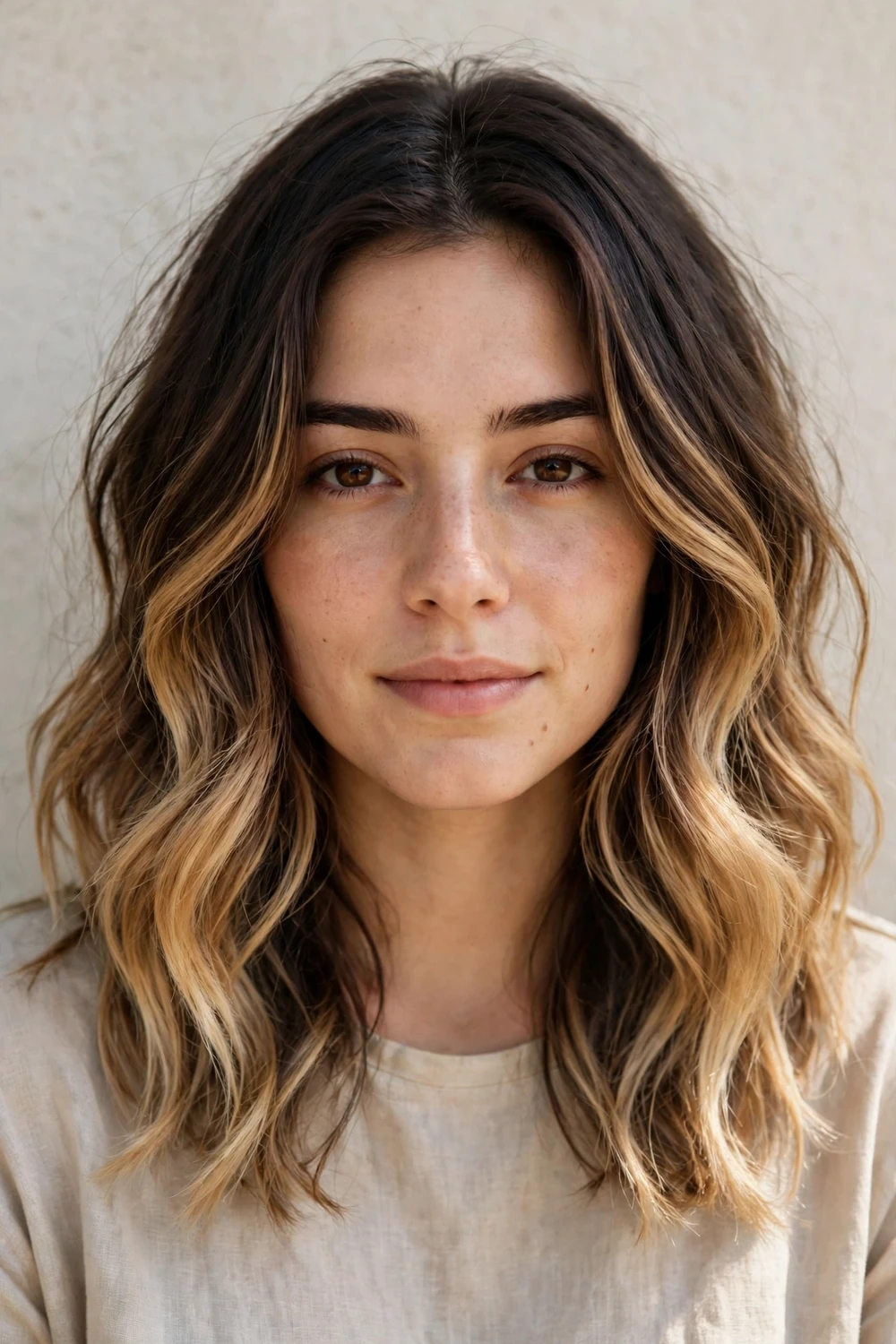
Ombre has more to show off when it lands on layered waves. Layers let the lighter ombre ends sit at different levels, so the color transition looks gradual instead of striped. Medium length is the sweet spot for ombre because there’s enough hair to show the fade without the ends looking thin. Waves help the blend even more. If your hair is damaged from past lightening, ask your stylist to assess the ends before committing, since ombre and layers both work best on healthy hair.
Try this: Twist hair into two loose braids before bed. Morning waves blend the ombre line with zero heat.
9. Medium Layers for Thick Hair

Thick medium hair turns triangular when it’s cut all one length. Internal layers remove bulk from the middle of the hair without shortening the overall length. The result keeps the fullness you like but lets the ends taper instead of stacking. This cut works on thick straight and thick wavy hair. Ask for point-cutting on the ends rather than blunt cutting, since blunt ends on thick hair flip outward and widen the shape. Thinning shears used sparingly at the mids can help too.
Try this: Use a smoothing cream on damp hair before blow-drying. It keeps thick layers lying flat instead of puffing up.
10. Medium Curly Layers
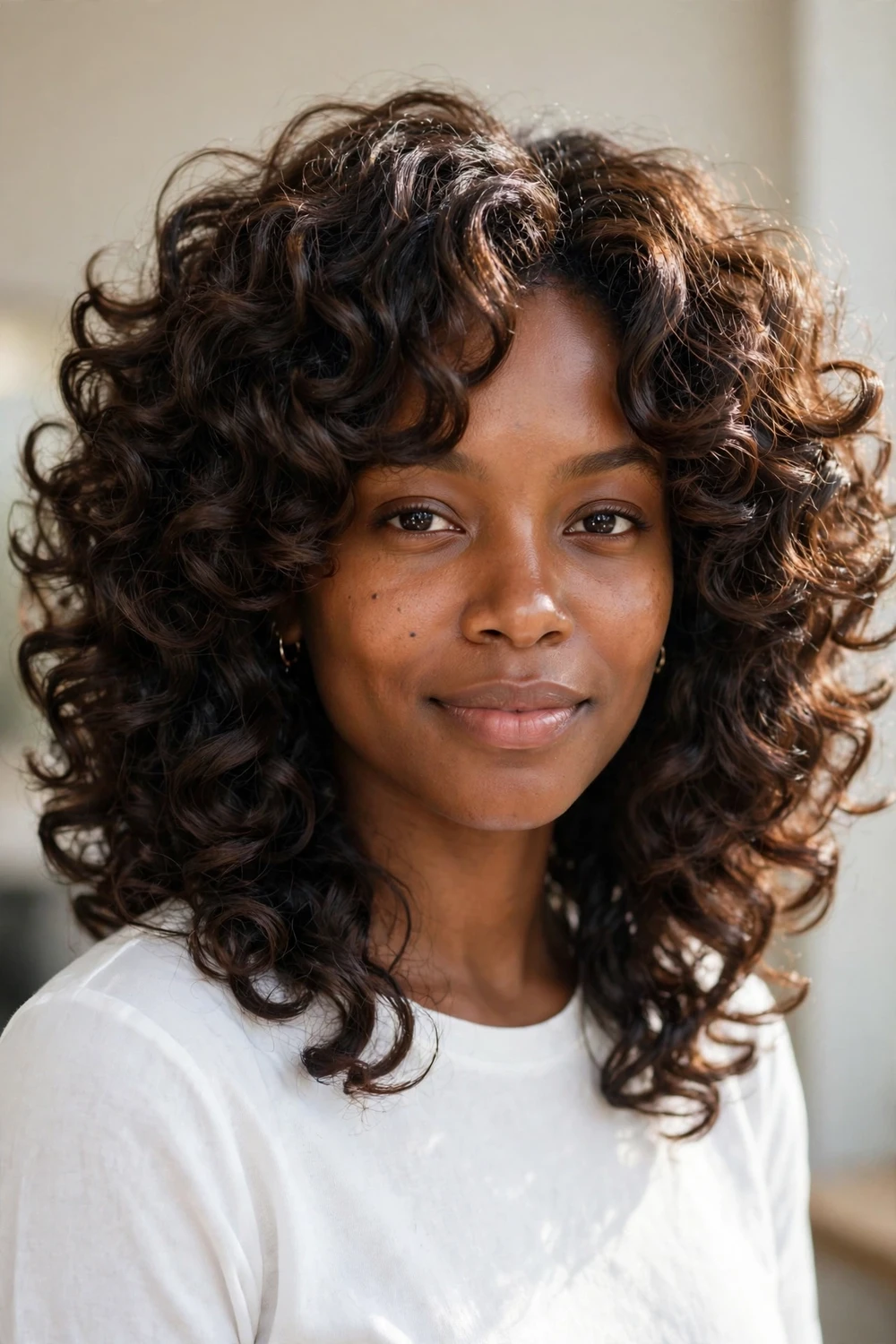
Dry cutting matters more than any product for curly layers. Curls spring up once cut, so a stylist should shape them dry to see where each curl lands. Layers on curly medium hair remove the weight that pulls curls into a triangle and let each curl form its own ringlet. The cut works on all curl patterns from loose waves to tight coils. Keep the shortest layer no higher than chin level so the cut stays wearable pulled back.
Try this: Apply leave-in conditioner to soaking wet hair, then scrunch upward. Drying with the curls scrunched sets the layers evenly.
11. Medium Layers with Bangs
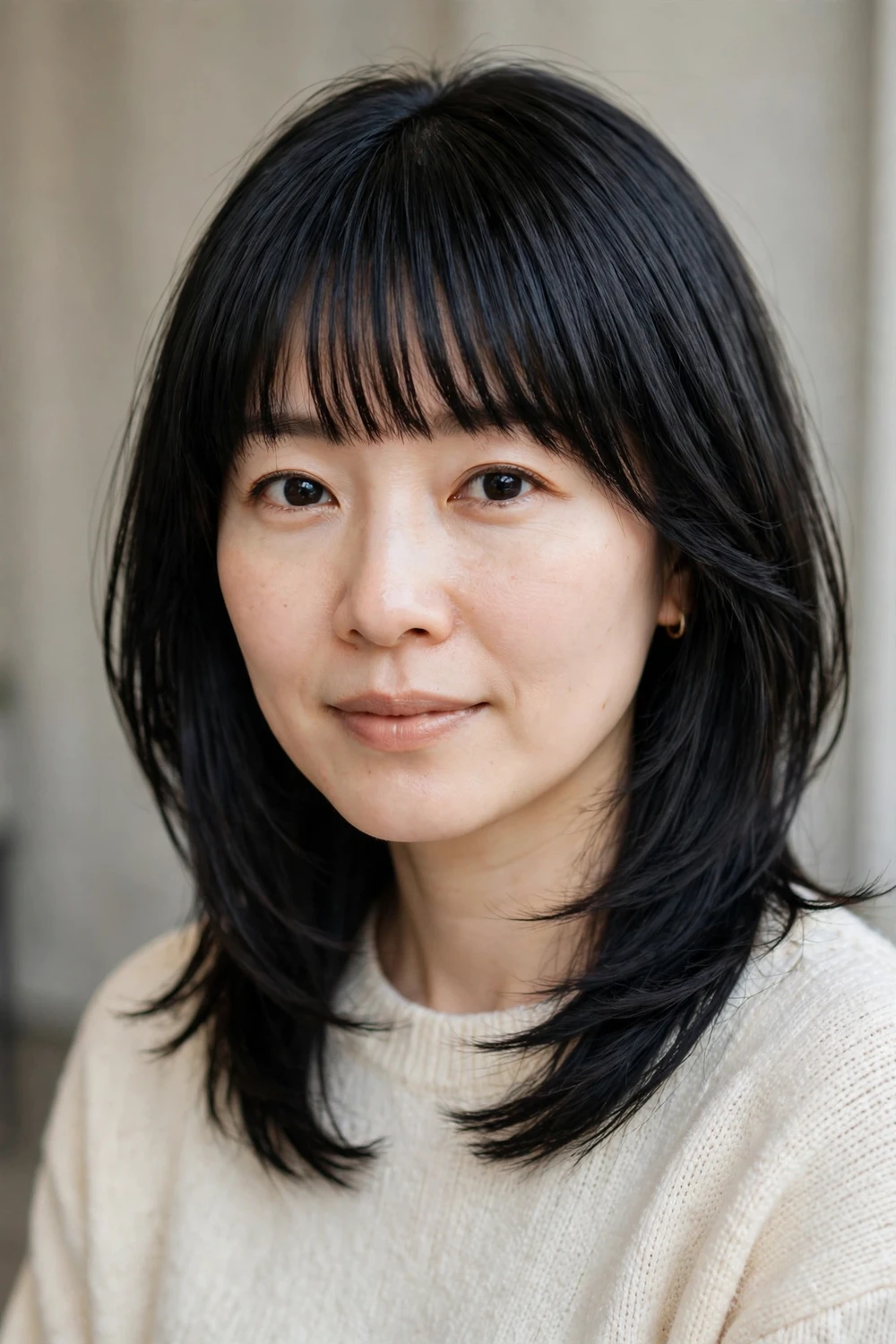
Bangs and layers together solve two problems: a long forehead and flat ends. The bangs shorten the face visually while the layers add movement through the mids and ends. Straight-across, curtain, or side-swept bangs all work. Pick based on your forehead shape and how much styling time you want. The bangs should be cut after the layers are in place so the stylist can blend the two. This cut suits most hair types but needs bang trims every four to six weeks.
Try this: Blow-dry bangs side to side with a paddle brush, not straight down. The side-to-side motion keeps them from separating into a gap.
Side-swept is the most versatile of the three bang styles mentioned above. For a full tour of the fringe options, side swept bangs ideas breaks down 30 cuts by length, texture, and styling time.
12. Bouncy Blowout Layers

This is the cut that makes home blowouts actually hold. Long, smooth layers are cut to flip under at the ends, so a round brush and dryer create the classic bouncy shape. The layers are long enough that the ends curl inward naturally instead of kicking out. This style suits medium to thick straight and wavy hair. A volumizing mousse at the roots before drying makes the bounce last, and a cool shot at the end of each section sets the curl.
Try this: Roll each dried section into a large velcro roller while it cools. The rollers hold the bounce for hours longer.
13. Soft Face-Framing Layers
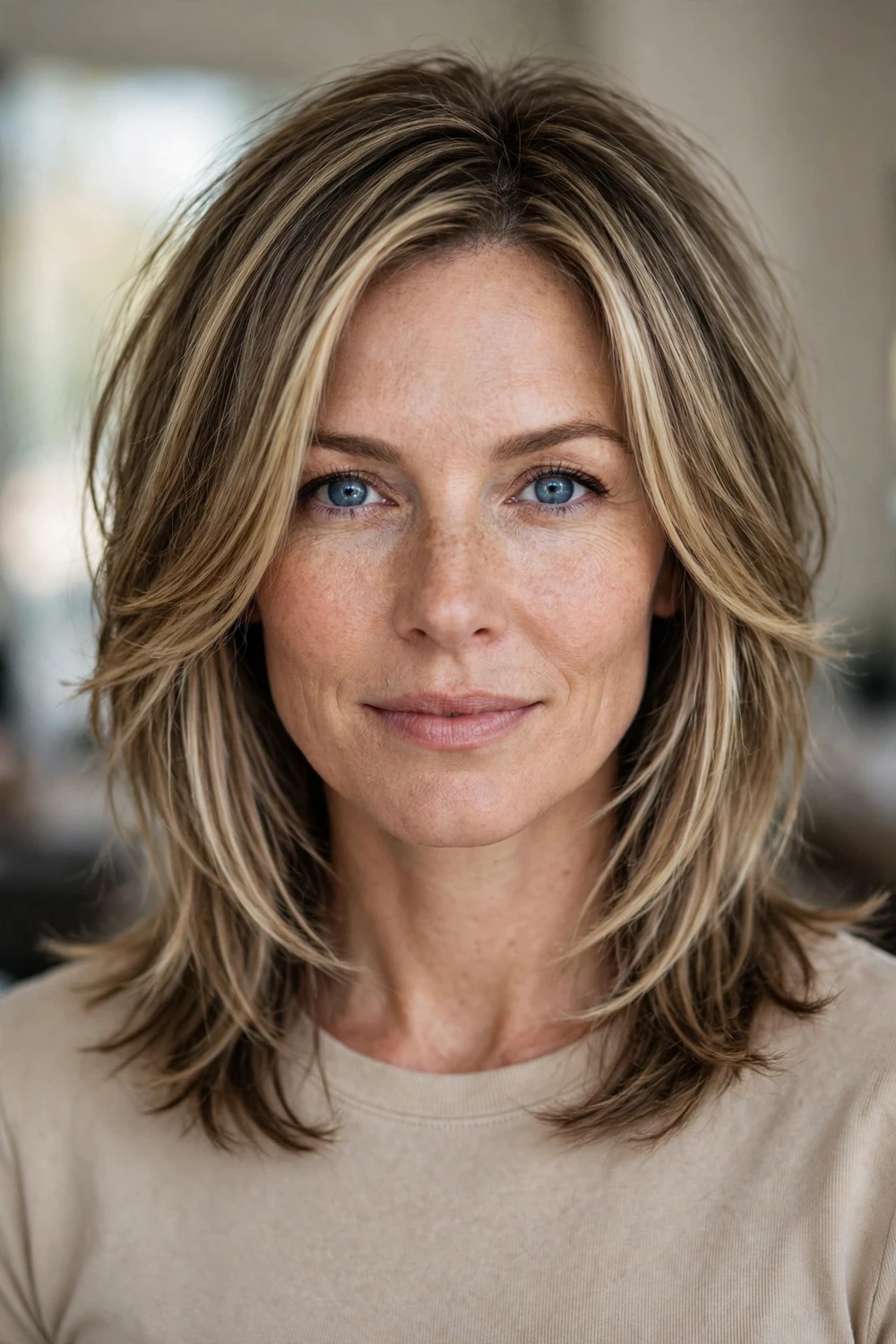
Not every layer has to run through the whole head. Face-framing layers are cut only around the front, starting near the chin or cheekbones. They soften the hairline and give movement right where people look first. Because the back stays one length, this cut needs less styling time than full layers. It’s a good first step if you’re nervous about committing to layers everywhere. These pieces also grow out into curtain-like strands that still look intentional.
Try this: Curl just the front layers away from your face with a 1-inch iron. Five minutes changes the whole look.
14. Curly Shoulder Length with Bangs

Curly bangs are less risky than they look at shoulder length. The length gives curls room to settle, so bangs don’t spring up as high as they would on a shorter cut. Layers through the rest of the hair balance the fullness of the bangs. Ask for the bangs to be cut dry and a little longer than you want, since wet curls shrink noticeably. This cut suits medium to tight curl patterns and looks best when the bangs are cut to blend with the front layers.
Try this: Twist each bang curl into a coil while damp and let them air-dry. Defined coils keep bangs from puffing into a cloud.
Curly fringes come in many textures. Browse these wispy bangs hairstyles for 30 ideas from curtain fringes to pixie bangs.
15. Shoulder Length Flicked Ends
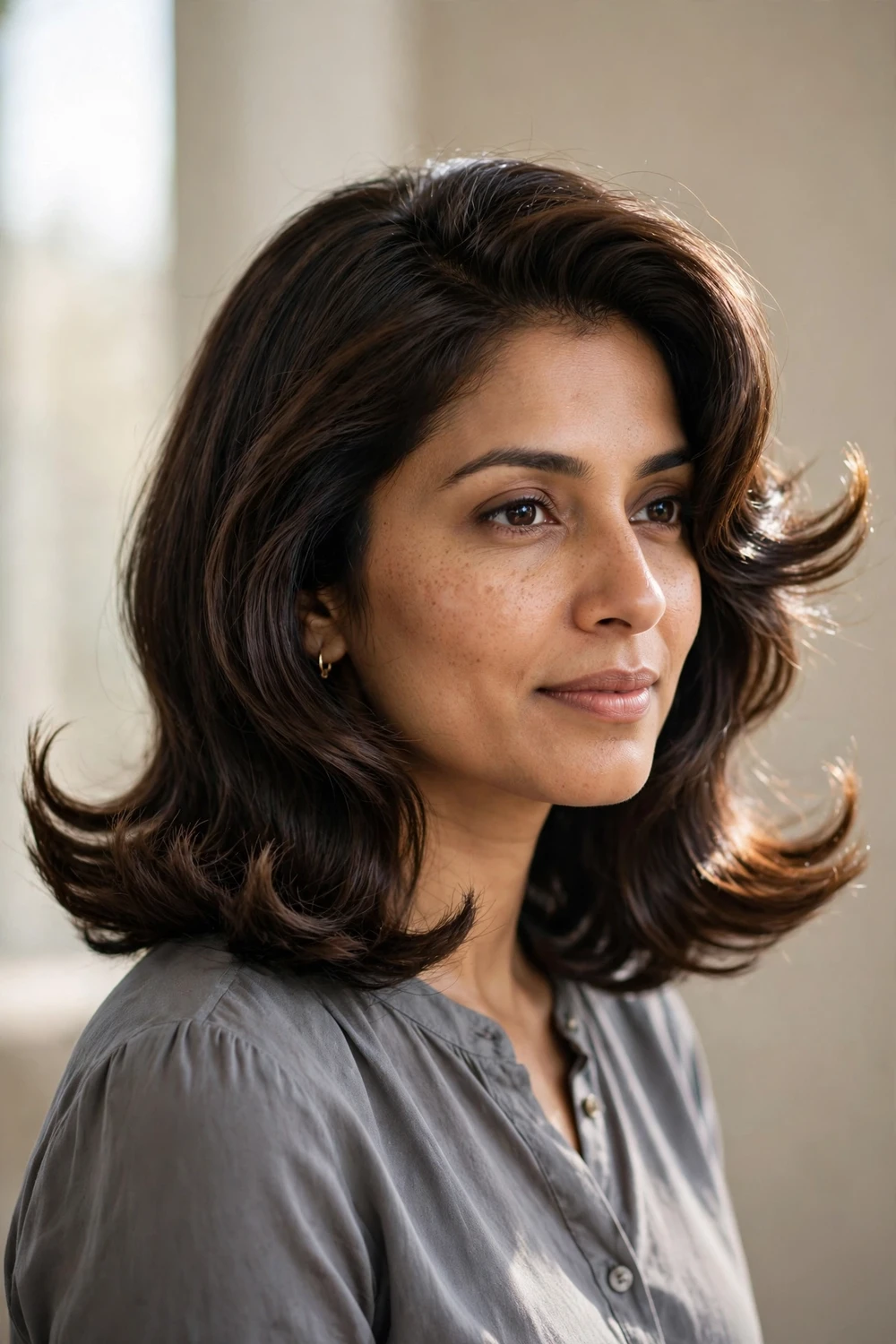
Flicked ends are the lowest-maintenance layered style on this list. The cut keeps medium layers fairly long, and the styling is just a flat iron bent outward at the ends. The outward flick adds width at the jaw, which balances a long or narrow face. This style works best on straight or straightened hair, since the flick needs smooth ends to read clearly. It’s also one of the few layered styles that still looks neat in a half-up ponytail.
Try this: Apply a light hair oil to the ends before flicking them out. Oil keeps the flicks from looking dry or frayed.
16. Messy Feathered Cut
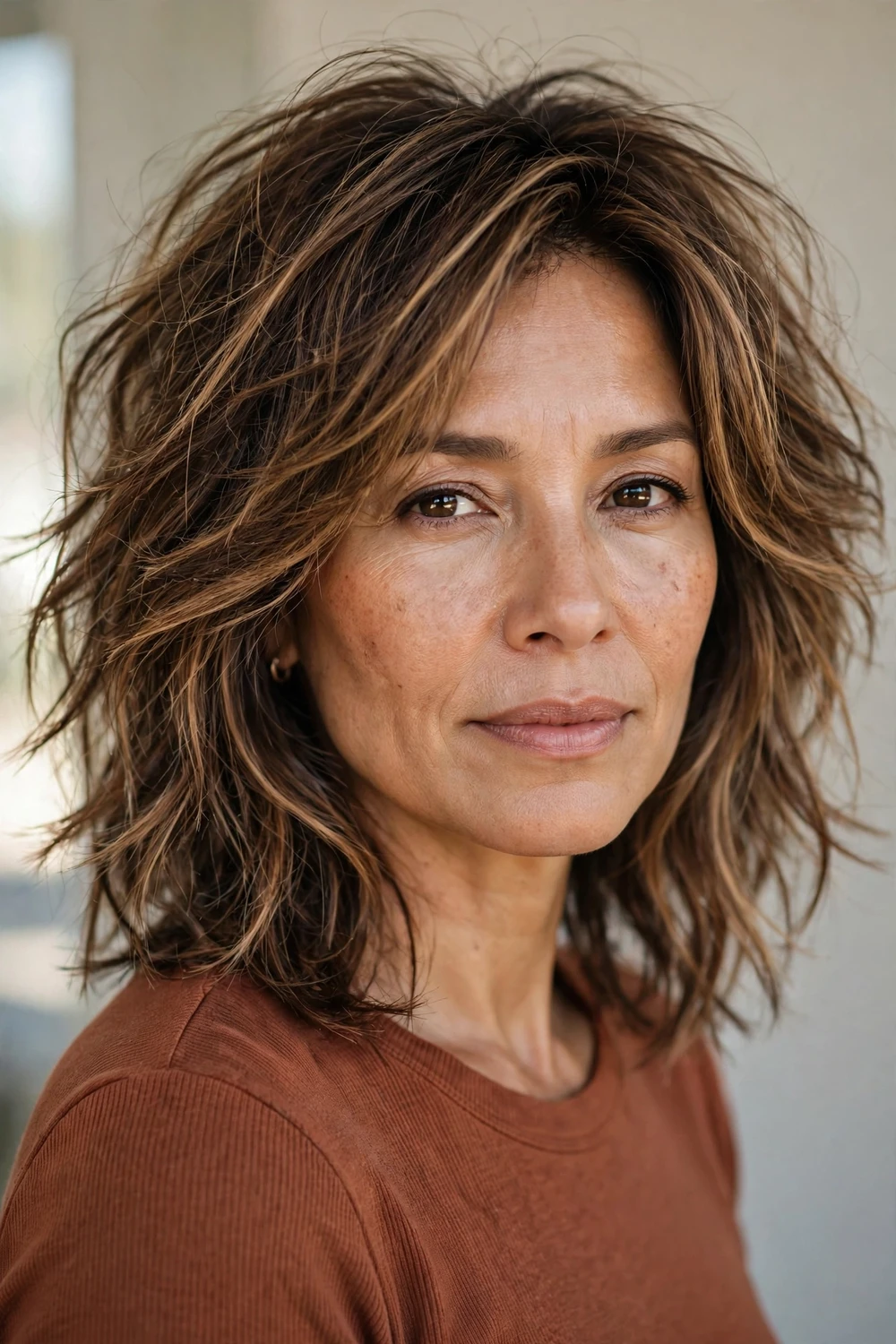
The feathered cut is a seventies shape that’s been updated with softer layering. Layers are cut at a sharp angle so the ends fan outward, but modern versions keep the feathering subtle rather than dramatic. This cut suits medium straight and wavy hair and adds a lot of movement to fine hair. The feathered ends blend as they grow out, so trims can stretch to ten weeks. It needs some texture product to keep the feathered pieces separated instead of clumping.
Try this: Work a pea-sized amount of wax through dry ends. The wax defines the feathered tips without making them stiff.
17. Half-Up Half-Down Layers
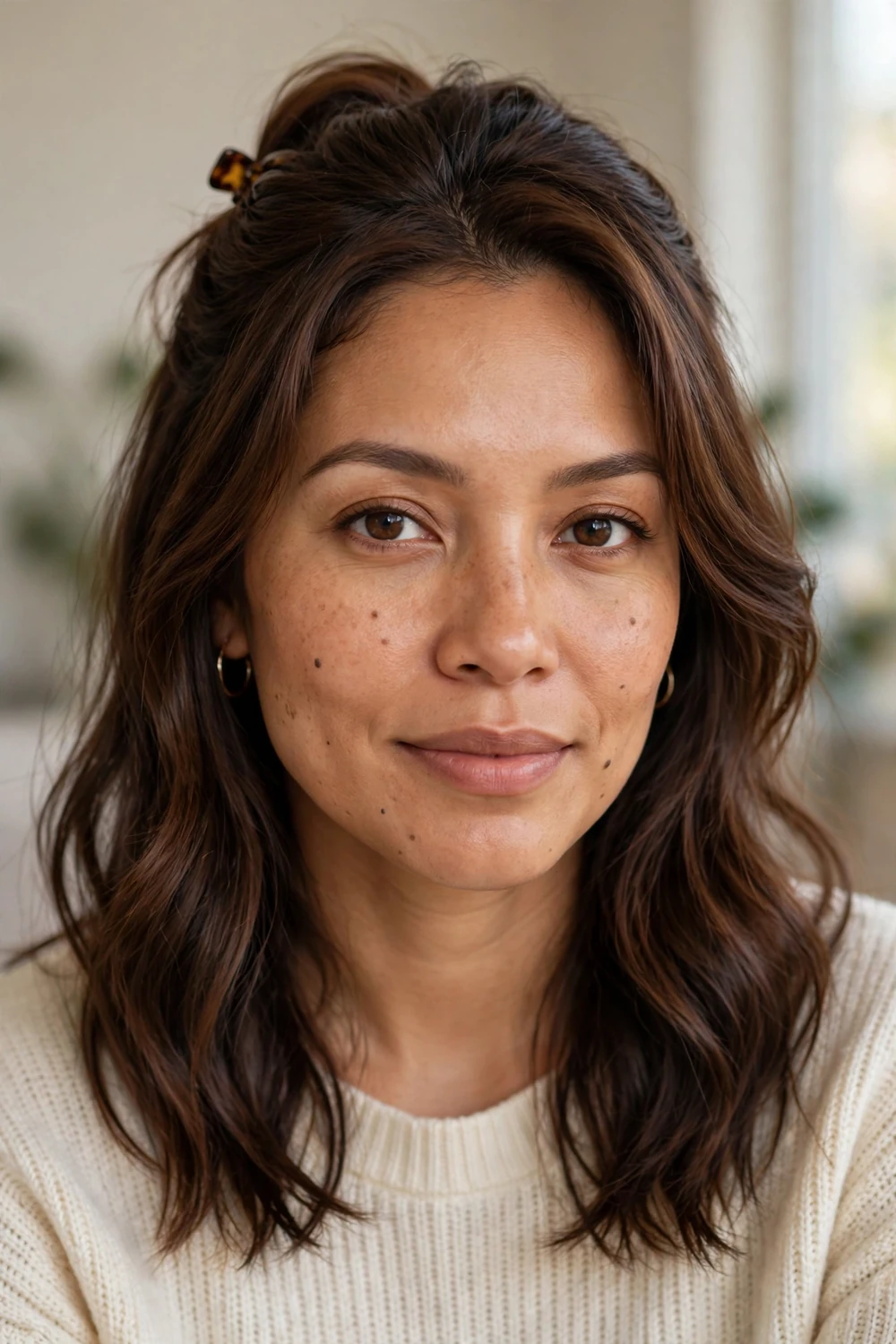
Layers make the classic half-up style look fuller with less effort. Pulling back the top half of layered medium hair leaves the bottom layers free to move, and the shorter top layers create natural texture at the crown instead of lying flat. This style works for everyday wear and for events when you add a twist or braid to the top section. It suits all hair types, though very straight hair may need a texturizing spray at the crown for grip.
Try this: Tease the crown lightly with a comb before pulling the top half back. The teasing gives the half-up section its shape.
18. Braided Updo with Layers
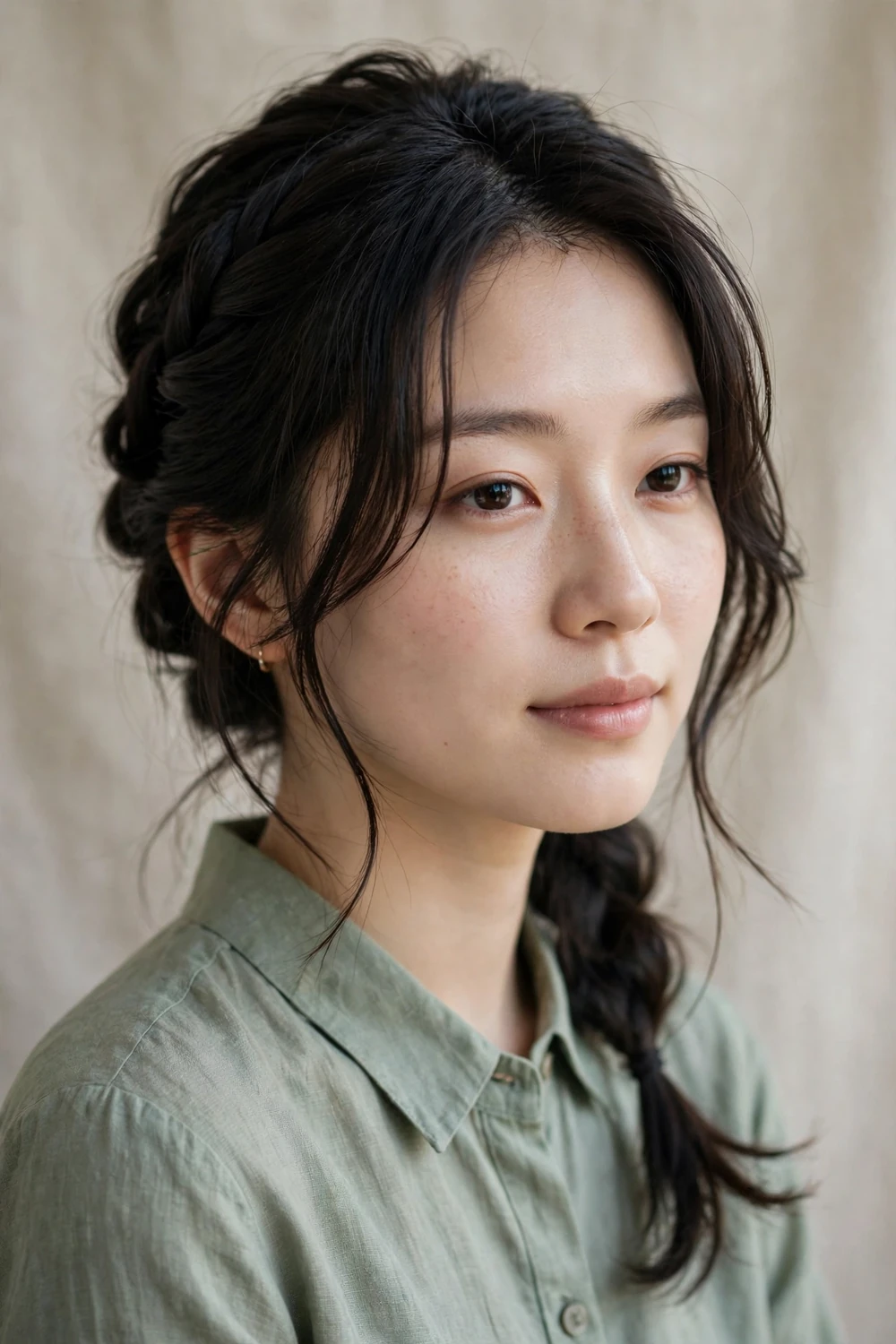
Loose layers are what make a braided updo look soft instead of severe. Shorter face-framing pieces fall out of the braid naturally and frame the face, while the longer layers keep the updo itself full. Medium length is ideal for braided updos because there’s enough hair to braid without the style pulling too tight. This works on straight, wavy, and curly hair. Set the finished braid with a flexible-hold hairspray so the layers can move without the whole style loosening.
Try this: Braid on second-day hair or add dry shampoo at the roots first. The extra grip keeps layered pieces from slipping out.
19. Medium Straight Layers
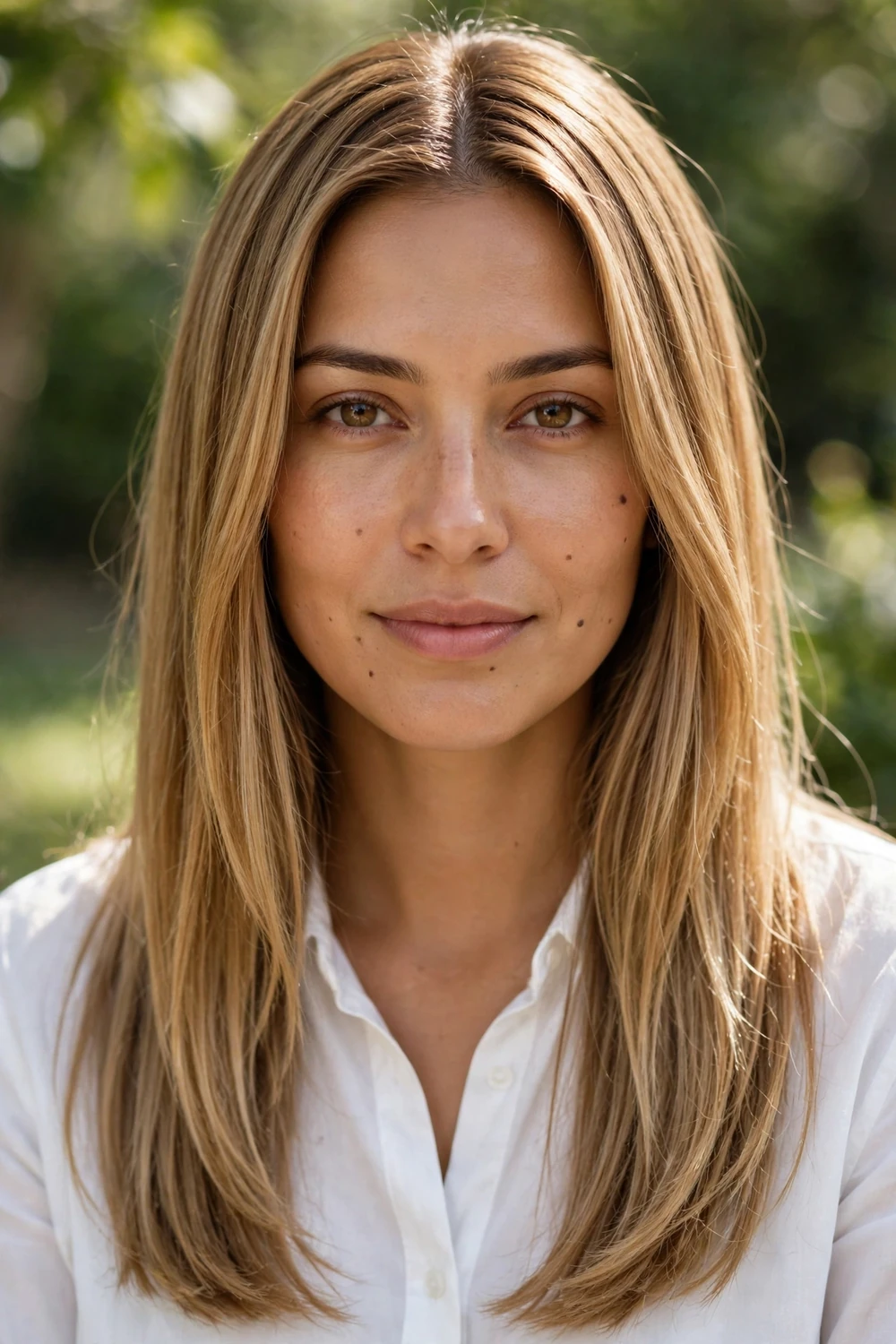
Straight hair shows layer placement more clearly than any other texture. That means the cut has to be precise, since uneven layers are visible immediately on straight hair. Well-cut long layers on straight medium hair create a clean, swung shape that moves when you walk. This cut suits fine to medium straight hair. Very thick straight hair needs shorter internal layers to remove weight. A shine serum on the ends keeps the layers looking healthy between trims.
Try this: Straighten in thin sections with a flat iron, following each pass with a cool blast from the dryer. The cool air sets the straightness longer.
20. Shoulder Length Wavy Layers
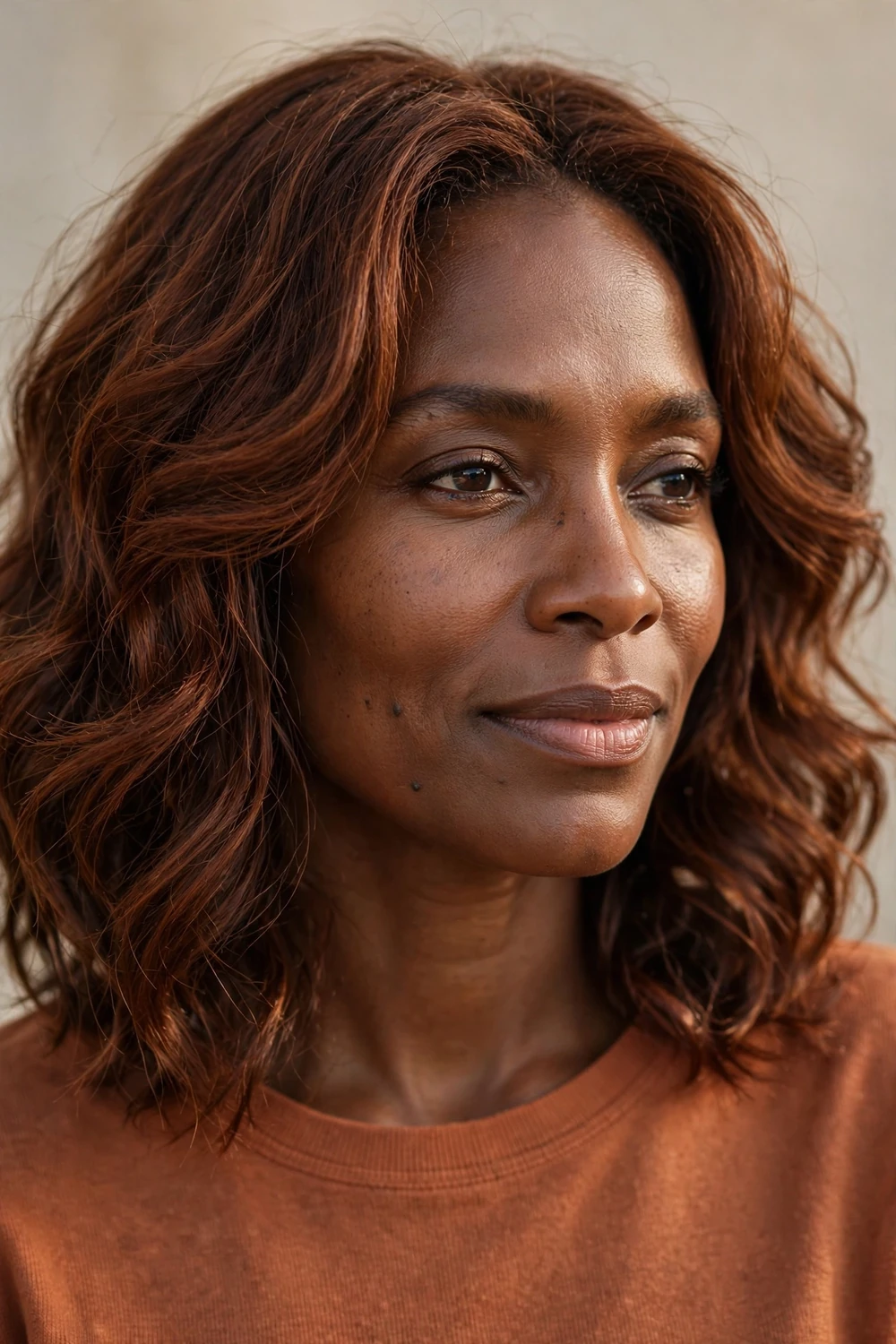
Waves and shoulder length are a natural pairing. The waves give layers something to do, and the layers keep the waves from collapsing into one mass. This cut suits naturally wavy hair best but also works on straight hair styled with an iron. Ask for long layers so the waves stay connected rather than breaking into separate tiers. A sea-salt or wave spray adds hold without the crunch of a gel.
Try this: Wrap sections around a curling wand, leaving the last inch of each section straight. Uncurled ends keep the waves looking relaxed.
21. Medium Layers with Blunt Bangs
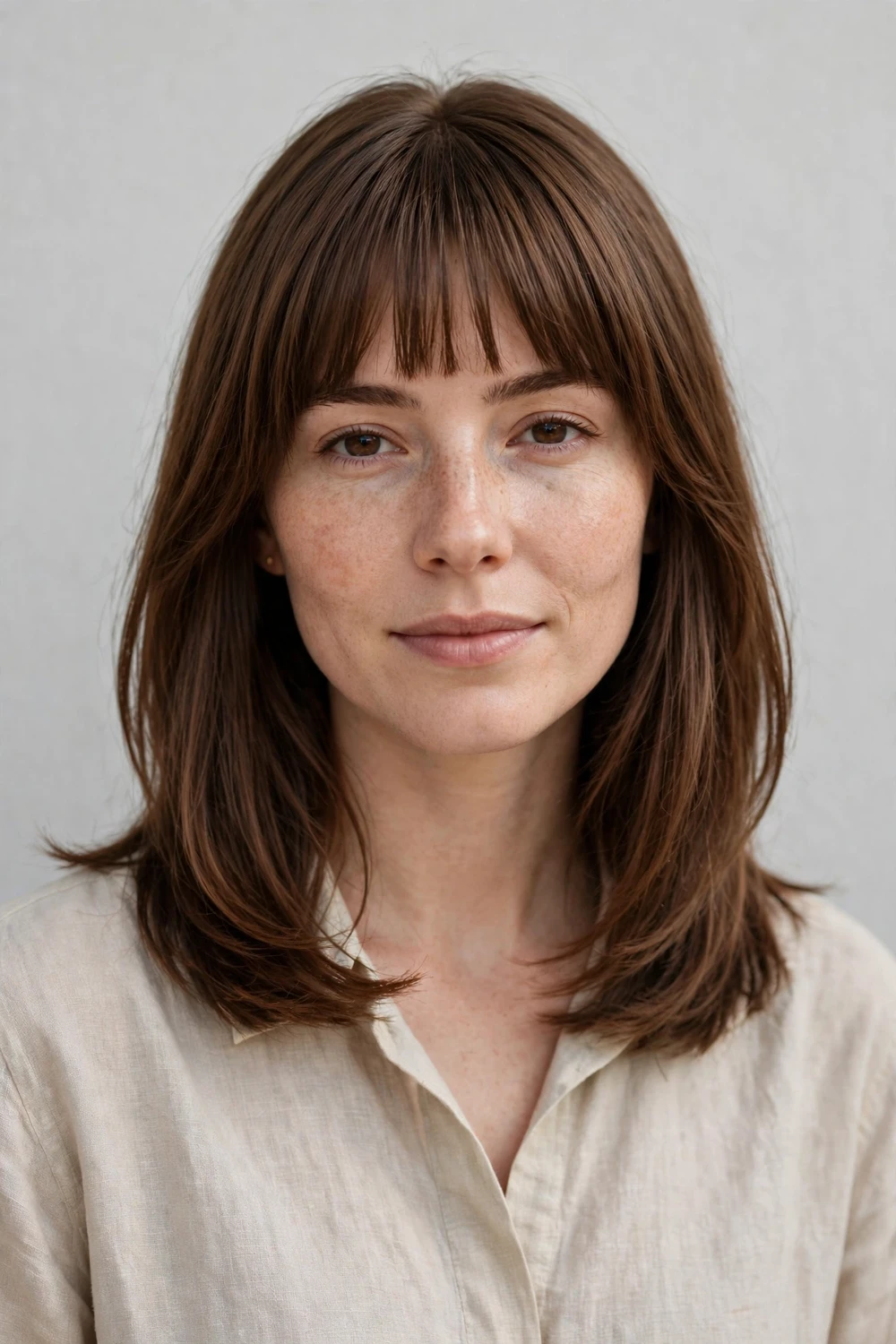
Blunt bangs are the boldest partner medium layers can have. The straight, heavy bang line contrasts with the soft movement of the layers behind it. This combination suits oval and long faces, where the blunt bang shortens the face and the layers add width at the sides. The bangs need trimming every three to five weeks to keep the line sharp. Keep the layers long and blended so they don’t fight the bangs for attention.
Try this: Flat-iron only the bangs each morning and leave the layers natural. Ten seconds keeps the blunt line crisp without restyling everything.
22. Medium Layers with Highlights
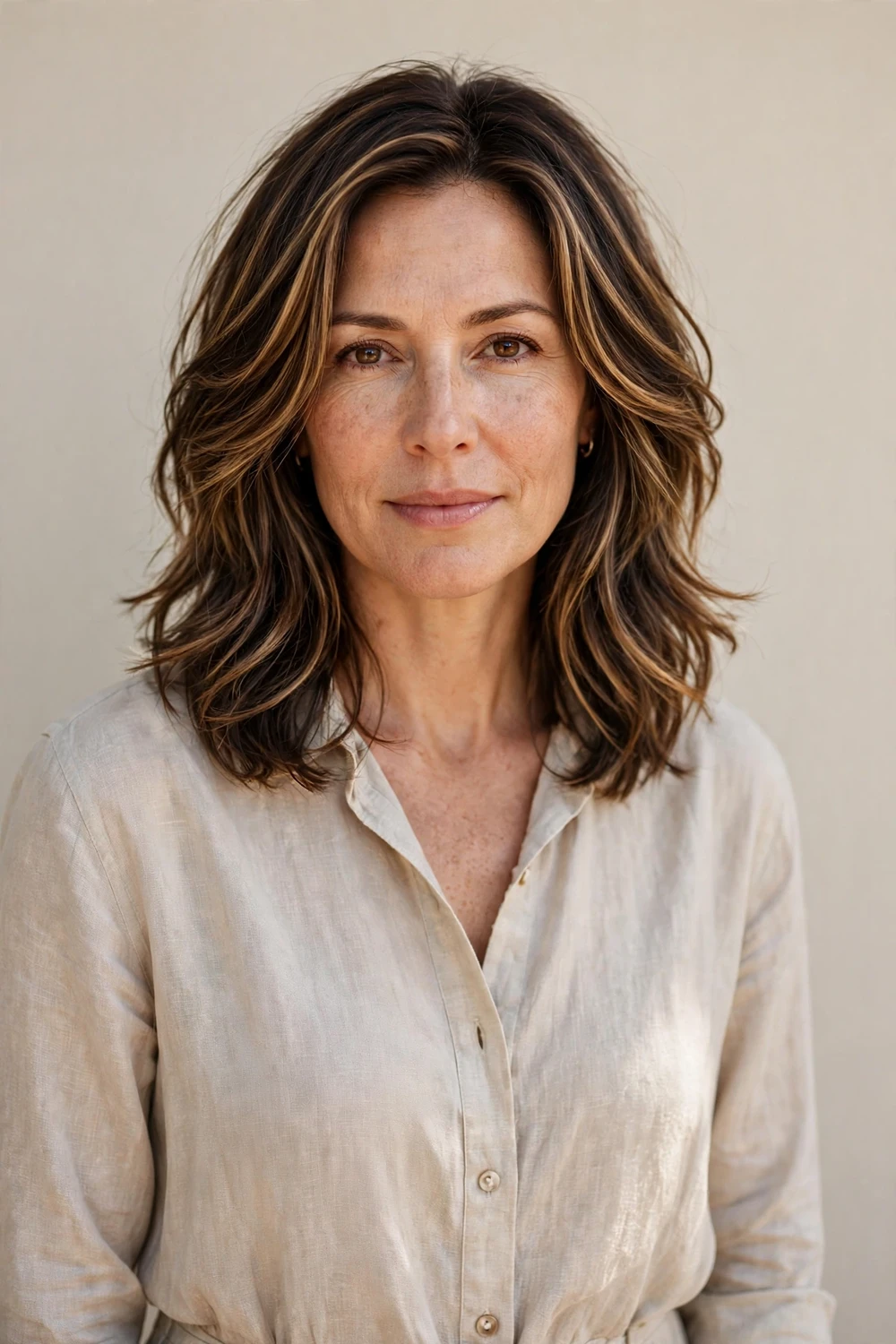
Highlights show up best when layers give them different levels to sit on. Each layer catches the light differently, which makes even a simple highlight pattern look dimensional. This combination works on all hair types and is the easiest way to add interest to medium hair without changing the cut drastically. Keep highlights fine and close to your natural color for low maintenance, or go bolder with face-framing money pieces. Toner every six to eight weeks keeps the color from turning brassy.
Try this: Ask for highlights to be placed on the top layer only. You get the brightness with half the foils and an easier grow-out.
Layered Hairstyles for Medium Hair Comparison at a Glance
| Style | Best Hair Type | Styling Effort |
|---|---|---|
| Long Layered Cut for Volume | Fine, flat | Low |
| Soft Layers with Rounded Edges | Straight, loosely wavy | Low |
| Classic U-Shaped Layers | Straight, wavy | Low |
| Asymmetrical Layers | Fine, straight | Medium |
| Angled Face-Framing Layers | Straight, wavy | Medium |
| Layered Bob with Highlights | Fine, medium | Medium |
| Messy Mid-Length Layers | Wavy, wavy-curly | Low |
| Medium Wavy Ombre Layers | Wavy, color-treated | Medium |
| Medium Layers for Thick Hair | Thick straight, thick wavy | Medium |
| Medium Curly Layers | Curly, coily | Low |
| Medium Layers with Bangs | All types | Medium |
| Bouncy Blowout Layers | Medium to thick | High |
| Soft Face-Framing Layers | All types | Low |
| Curly Shoulder Length with Bangs | Medium to tight curls | Medium |
| Shoulder Length Flicked Ends | Straight, straightened | Low |
| Messy Feathered Cut | Fine, straight, wavy | Medium |
| Half-Up Half-Down Layers | All types | Low |
| Braided Updo with Layers | All types | Medium |
| Medium Straight Layers | Fine to medium straight | Medium |
| Shoulder Length Wavy Layers | Naturally wavy | Low |
| Medium Layers with Blunt Bangs | Straight, wavy | Medium |
| Medium Layers with Highlights | All types | Medium |
How to Choose the Right Medium Layers for You
Start with your hair type. Fine hair does best with long, blended layers that build volume without removing too much weight. Thick hair needs shorter internal layers or the cut will sit wide at the ends.
For a full roundup built around thin textures, see our beautiful soft layered hairstyles for fine hair, with 30 cuts ranked for fine hair specifically.
Think about your face shape next. Round faces benefit from angled or face-framing layers that add vertical lines. Long faces look softer with layers that start around the cheekbones and add width.
Be honest about your styling routine. If you air-dry most days, pick a cut that works with your natural texture, like messy mid-length layers or shoulder-length wavy layers. If you blow-dry regularly, a bouncy blowout cut rewards the effort.
Bring reference photos to your appointment and point out the specific pieces you like. A photo of the layers you want saves more confusion than any description.
Maintaining Medium Layers
Book trims every 8 to 10 weeks. Layers lose their shape faster than one-length cuts, and even a small trim restores the movement.
Use heat protectant every time you blow-dry, curl, or straighten. Layered ends are thinner than the rest of the hair, so they take damage first. This step matters more for layered cuts than for blunt ones.
Deep-condition once a week if your ends feel dry. Focus the conditioner on the mids and ends, not the roots, so you don’t weigh down the volume the layers create.
If you’re weighing whether to keep your length or grow it out, our guide to layered hairstyles for long hair shows how the same layering ideas work past the shoulders.
Mistakes to Avoid
Don’t ask for too many short layers at once. Short layers on top of a medium cut can look choppy instead of textured, and the grow-out takes months. Start with longer layers and go shorter at the next appointment if you want more.
Skipping trims is the fastest way to ruin layers. When the shape grows out, the layers collapse and the cut looks like an uneven one-length bob.
Over-thinning is another common problem. Thinning shears remove weight, but too much thinning makes the ends look wispy and the layers disappear. Ask your stylist to thin conservatively.
Finally, don’t fight your texture. A cut that needs daily straightening on naturally curly hair is the wrong cut for your routine, not a styling failure.
If you’re deciding between medium and a shorter cut, compare the options in our short layered haircuts guide before you commit.
Frequently Asked Questions
Do layers make medium hair look thinner?
Long, blended layers can actually make medium hair look fuller because they add movement and lift at the crown. Short, choppy layers remove more weight, so they can make fine hair look thinner if overdone. Tell your stylist you want to keep fullness, and they’ll adjust the layer length.
How often should I trim medium layered hair?
Every 8 to 10 weeks is the standard for most medium layered cuts. Asymmetrical cuts and cuts with bangs need attention sooner, around 6 weeks. Waiting too long lets the layers grow out unevenly, which flattens the shape.
Are layers good for fine medium hair?
Yes, when the layers are kept long. Long layers add volume and movement without removing the weight fine hair needs. Avoid very short layers or heavy thinning, since both can make fine ends look wispy.
Can I get layers if my hair is curly?
Absolutely. Layers are one of the best cuts for curly medium hair because they remove the weight that drags curls down. Have the layers cut dry so the stylist can see each curl’s true length, and keep the shortest layer at or below chin level.
What is the difference between long layers and short layers?
Long layers are cut through the bottom half of the hair and create subtle movement without visible steps. Short layers start higher, near the chin or cheekbones, and create more obvious texture. Long layers suit fine hair and low-maintenance routines. Short layers suit thick hair and textured styles.
Final Thoughts
If you are 60+, these layered hairstyles for women over 60 are tuned to mature hair needs. Medium hair gives layers the best possible stage: enough length for movement, enough structure to hold a shape. Pick the version that fits your hair type and your routine, and don’t skip the trims. Layers reward upkeep more than almost any other cut.
Medium length is also the sweet spot for one of the most requested layered cuts right now. Take a look at these butterfly cuts if you want shorter face-framing layers sitting over longer lengths underneath.

