

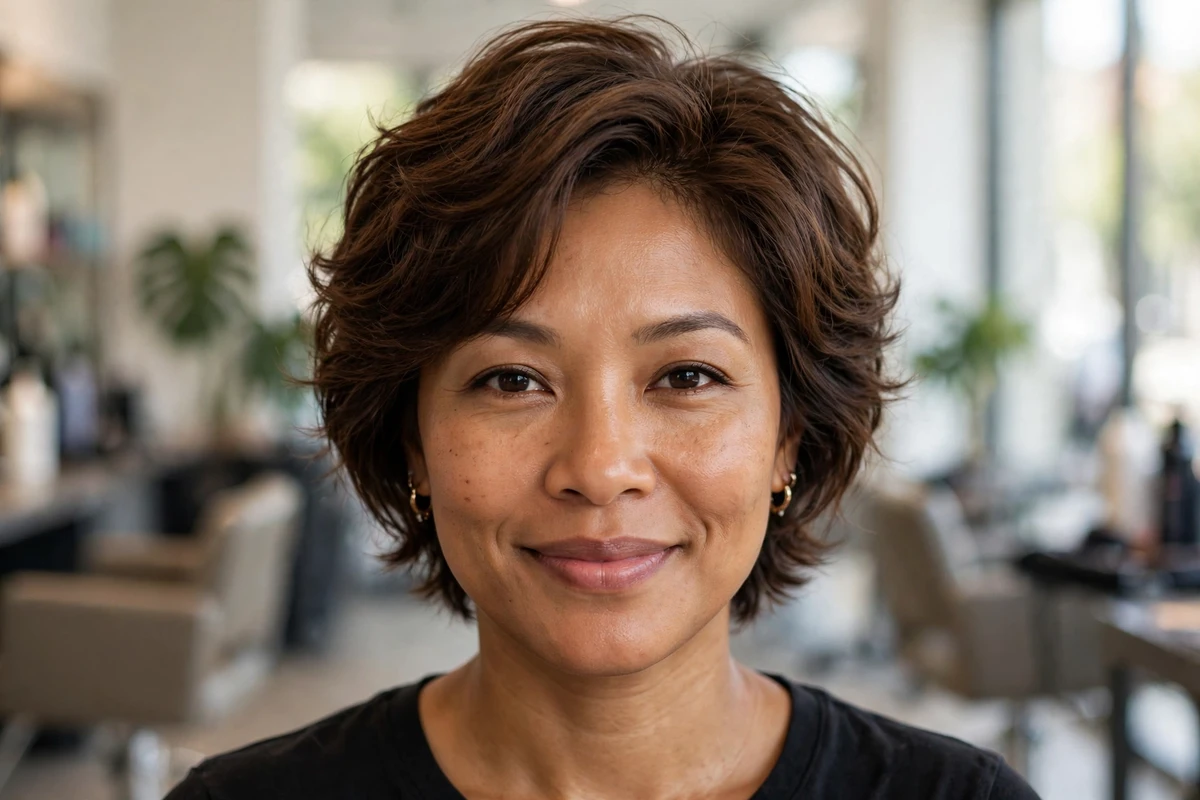
The best short hairstyles for thick hair are layered bobs, textured pixies, and cuts with internal layering that remove weight while keeping volume. They cut styling time to minutes, stop the sides from puffing out, and keep your hair’s natural body. The trick is removing weight from the right places, not removing hair.
This guide covers 20 specific short cuts, each with a styling tip, a difficulty rating, and honest cost notes so you can walk into the salon ready.
Quick Takeaways
- Layers and internal texturing remove weight from thick hair without flattening its natural volume.
- Most of these cuts take 5 to 15 minutes to style, so plan your cut around your real morning routine.
- Expect to pay $60 to $150 for a short salon haircut, with trims every 6 to 8 weeks to hold the shape.
- Use lightweight products: texturizing spray, mousse, and smoothing serum rather than heavy creams.
- Always apply heat protectant before blow drying or hot tools, since thick hair needs more heat to style.
1. Layered Bob

A layered bob removes weight through the mid-lengths while keeping the outline neat. Long layers, 2 to 3 inches apart, let thick hair fall in sections instead of one solid block. Blow dry with a round brush, then finish with a lightweight smoothing serum. Ask for point-cut ends rather than blunt lines, which can stick out on thick hair.
Try this: flip your part on day two for instant root lift.
Difficulty: Easy · Cost: $$ (salon cut)
Want to see how bobs handle different densities? Our short hairstyles for thin hair guide shows the contrast with fine-hair cuts.
2. Textured Pixie Cut

Choppy layers are the whole point of a textured pixie on thick hair. Short, piece-y sections break up density so the cut sits close to the head, and thick hair supplies built-in fullness. Rub a pea-sized amount of matte styling cream between your palms and pinch the layers into place. Ask the stylist to keep weight at the crown and taper the sides and nape.
Try this: let the top air dry, then rough up the layers with your fingers.
Difficulty: Easy · Cost: $$ (salon cut)
3. Stacked Bob

A stacked bob builds graduated layers at the back, with the shortest pieces at the nape and longer pieces framing the face. The stacking lifts thick hair off the neck, which removes the heavy feeling short thick hair can have.
Blow dry the back with a round brush, lifting each section upward to lock in the lift. Round and oval faces wear this cut especially well.
Try this: sleep on a satin pillowcase to keep the rounded back from flattening overnight.
Difficulty: Easy · Cost: $$ (salon cut)
4. French Bob

The French bob stops at the jawline and often pairs with soft bangs or a middle part. On thick hair it looks polished because the jaw-length line keeps the silhouette compact. Subtle internal layers stop the ends from flipping outward.
Style it with a quick blow dry and a flat brush, then add a light texturizing spray for movement. Always use heat protectant before the flat brush, since thick hair needs more heat to smooth.
Try this: tuck one side behind your ear to change the look without any restyling.
Difficulty: Easy · Cost: $$ (salon cut)
5. Italian Bob

The Italian bob keeps thick hair’s natural fullness, then shapes it into a rounded, glossy outline. It sits just below the chin with soft interior layers instead of choppy ones.
Work a lightweight shine serum through damp ends, then blow dry smooth with a paddle brush. It suits oval, square, and heart-shaped faces.
Try this: switch between a center part and a deep side part to alternate the volume.
Difficulty: Easy · Cost: $$ (salon cut)
6. Shaggy Bob

Shaggy layers turn thick hair’s density into an advantage. Choppy, disconnected pieces let the hair move in every direction, which stops thick hair from looking like one solid mass.
Scrunch a texturizing spray into slightly damp hair and let it air dry. That’s the whole routine. Wavy and slightly curly hair gets the best results, since natural texture fills in the layers.
Try this: pinch random pieces with a flat iron for extra definition on second-day hair.
Difficulty: Easy · Cost: $$ (salon cut)
7. Bixie Cut

The bixie blends a bob’s length with a pixie’s short crown, and thick hair wears the mix well. Light layers around the crown remove the bulk that makes short thick cuts feel heavy, while the longer front keeps the shape soft around the face.
Use a lightweight styling cream to define the layers and keep the cut soft through the day. Styling takes under 10 minutes.
Try this: rough dry with your head upside down for extra crown volume.
Difficulty: Easy · Cost: $$ (salon cut)
8. Chin-Length Bob

Chin length gives thick hair a clean, controlled frame. Soft layers through the ends remove the weight that makes blunt chin cuts flare outward.
Wear it straight, softly curled, or wavy. For a sleek finish, smooth the ends with a flat iron over heat protectant, then add a lightweight anti-frizz serum.
Try this: bend just the last inch of the ends under with a round brush for a soft curved finish.
Difficulty: Easy · Cost: $$ (salon cut)
9. Wavy Bob

Natural waves do half the work in this cut. Gentle waves break up thick hair visually, and layers keep the sides from expanding outward.
Spray sea salt spray on damp hair and air dry, or use a 1-inch curling wand on dry hair with the ends left straight. Apply heat protectant first if you use the wand.
Try this: braid damp hair loosely overnight, then undo it in the morning for heat-free waves.
Difficulty: Easy · Cost: $$ (salon cut)
Thick waves need their own care routine at longer lengths too. Our hairstyles for thick wavy hair guide covers cuts past the shoulders.
10. Curly Bob
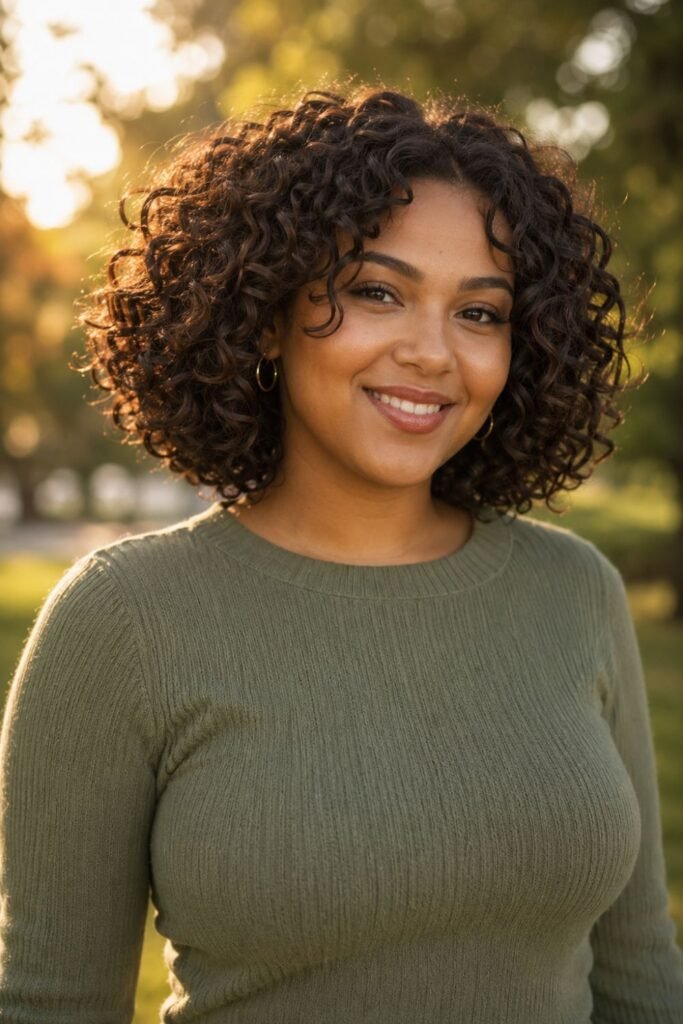
Thick curls need shape more than length. A curly bob uses rounded layers so each curl sits at a different point, which stops the triangle shape and keeps weight off the roots.
Apply a curl-defining cream to soaking wet hair, then dry with a diffuser on low heat. Refresh on day two with water and a little leave-in conditioner instead of re-washing.
Try this: ask for a dry curl-by-curl cut so the stylist can see how each curl falls before cutting.
Difficulty: Moderate · Cost: $$ (curl specialist)
11. Side-Swept Pixie
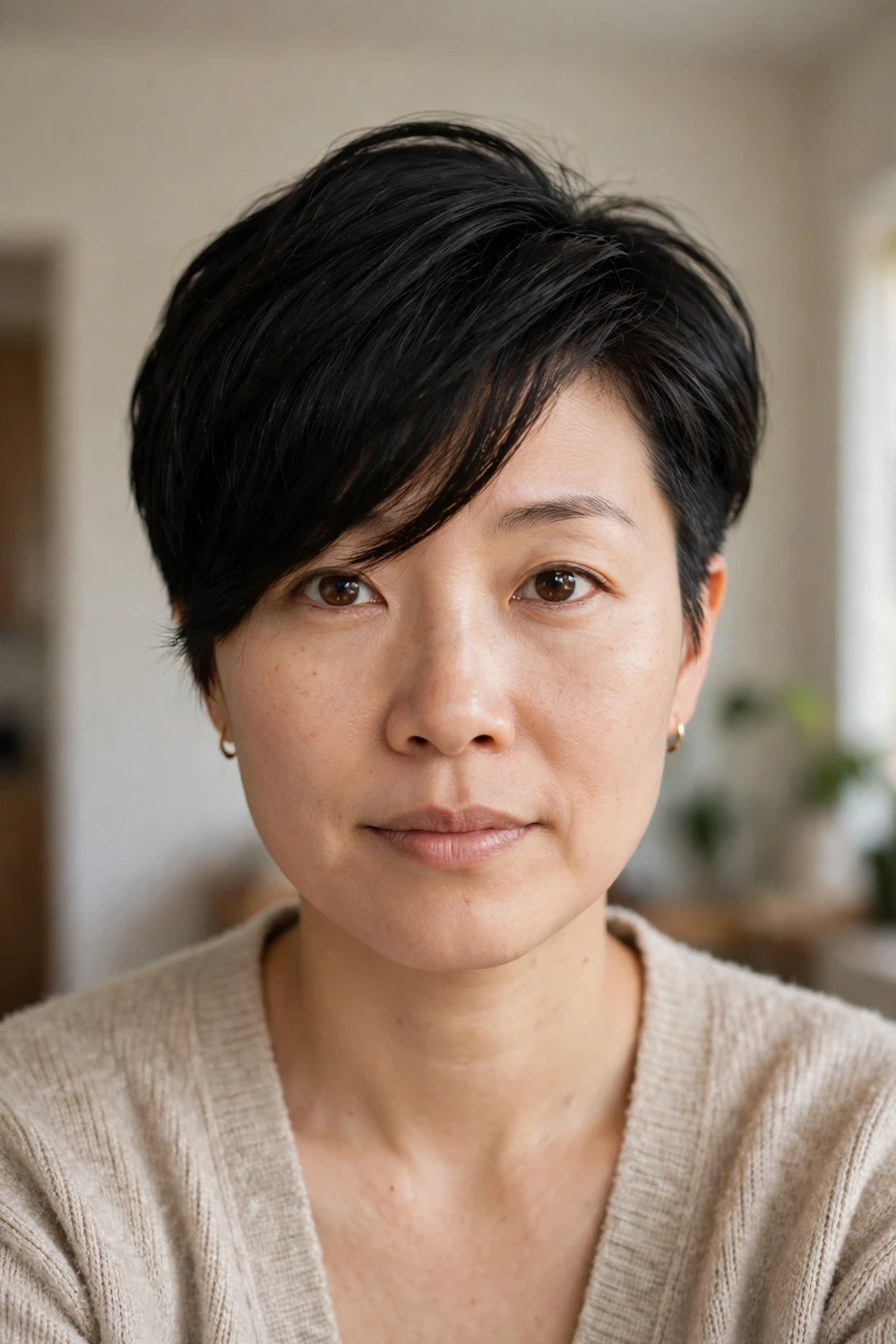
Short sides plus a long fringe swept across the forehead gives thick hair a light, face-framing finish. The sweep pulls the eye sideways, which breaks up the width short thick cuts can create.
Blow dry the fringe to one side with a small round brush, then press a little styling paste through it. It takes about 7 minutes. Keep the sides trimmed every 5 to 6 weeks.
Try this: sweep the fringe to the opposite side once a week to keep the root from lying flat.
Difficulty: Easy · Cost: $$ (salon cut)
12. Feathered Bob

Feathering uses finely sliced layers that taper at the ends, so thick hair moves without looking bulky. The layers keep fullness at the crown, then thin out the weight below.
Blow dry with a round brush, lifting at the roots and flicking the ends outward. Finish with a light-hold hairspray.
Try this: point the blow dryer down the hair shaft to keep the feathered ends smooth.
Difficulty: Easy · Cost: $$ (salon cut)
13. Angled Bob
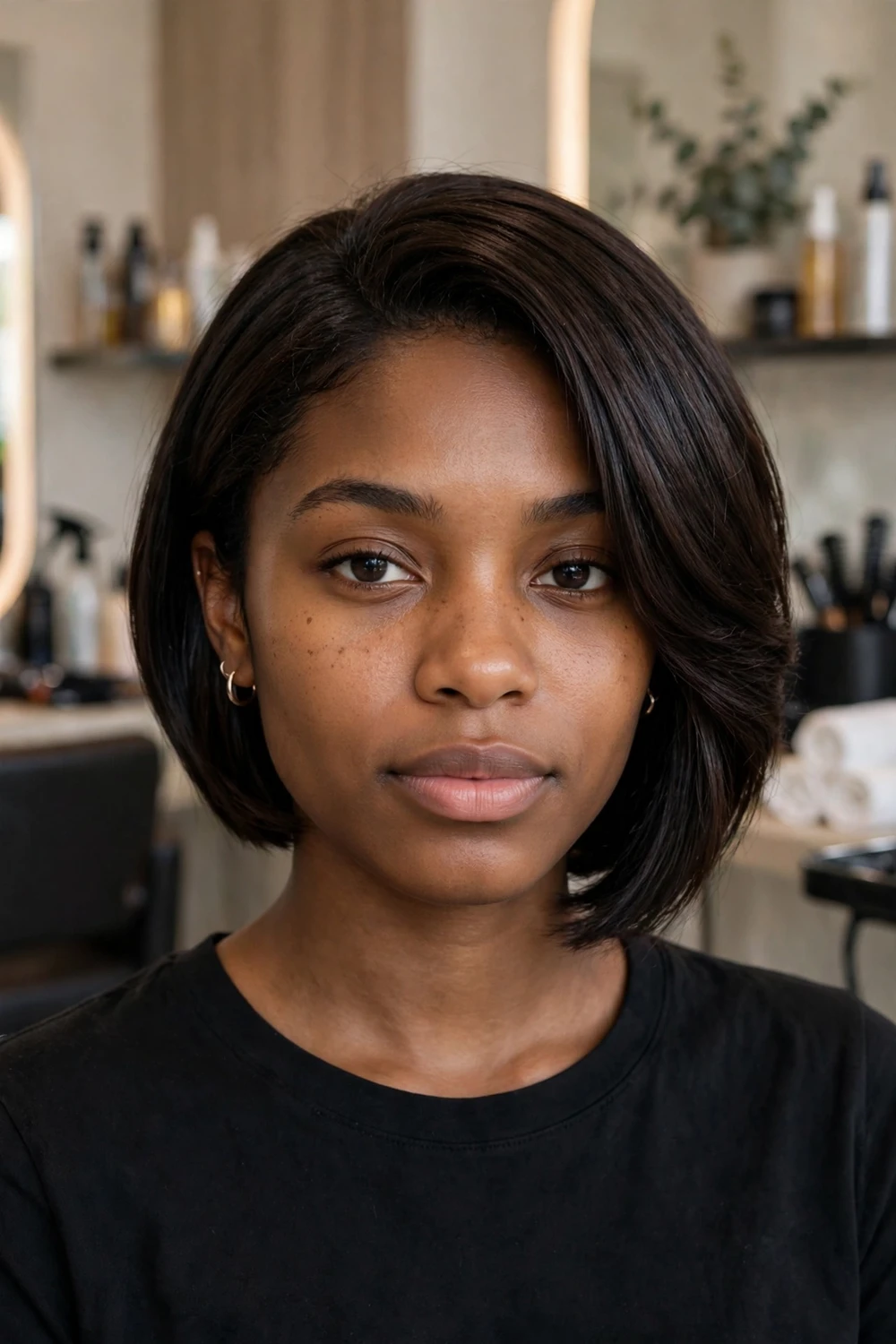
The angle does the weight removal here. Shorter layers at the back take the bulk out of the thickest area, while the longer front pieces keep the face framed.
Straighten the front pieces lightly with a flat iron to show off the angle, using heat protectant first. The back needs only a round-brush blow dry.
Try this: ask for a subtle angle rather than a dramatic one if you wear your hair tucked behind your ears.
Difficulty: Easy · Cost: $$ (salon cut)
14. Asymmetrical Bob

One side lands an inch or two longer than the other, which gives thick hair instant shape without heavy layering. The uneven line keeps the eye moving, so the cut reads lighter than it is.
Part deeply on one side and smooth with a flat brush, then add a lightweight shine spray to show the line of the cut. Trim every 6 weeks to keep the two sides reading intentional.
Try this: wear the longer side in front of your shoulder to make the asymmetry more visible.
Difficulty: Easy · Cost: $$ (salon cut)
15. Undercut Pixie

The undercut removes the most weight of any cut on this list. Closely trimmed sides and back take out the thickest sections, while the longer top keeps your styling options open.
Wear the top sleek with a flat brush or add texture with a lightweight pomade. The undercut needs a buzz every 3 to 4 weeks to stay clean.
Try this: grow the top a little longer than usual so you can sweep it, spike it, or smooth it.
Difficulty: Moderate · Cost: $$ (salon cut)
16. Layered Crop

A layered crop keeps the length short all over but builds in short layers so thick hair never sits flat and heavy. It’s shorter than a bob but longer than a pixie, a good middle ground if a pixie feels like too big a jump.
Blow dry with your fingers instead of a brush for a soft finish, then define pieces with a small amount of styling cream. Expect 8 to 10 minutes.
Try this: twist two or three front pieces away from your face while drying for soft shape.
Difficulty: Easy · Cost: $$ (salon cut)
17. Tapered Pixie

The taper keeps the neckline and sides neat while longer crown layers hold the volume. Thick hair gives this cut structure without product, since the density creates the height.
Use a lightweight styling wax to separate the crown layers and add texture. A weekly edge-up with clippers or a quick salon visit keeps the taper clean.
Try this: push the crown layers slightly forward while drying for a fuller front.
Difficulty: Easy · Cost: $$ (salon cut)
18. Choppy Bob
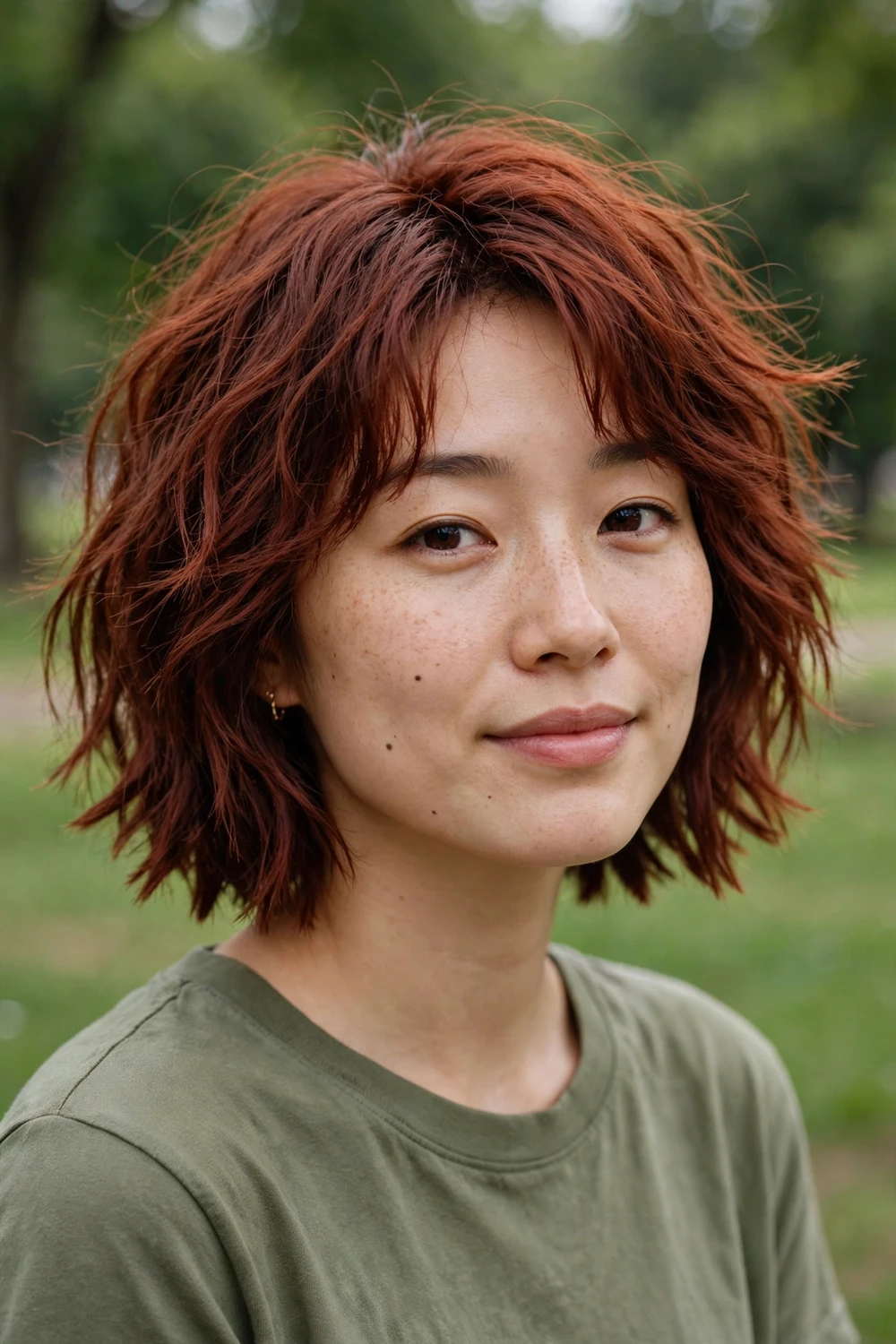
Choppy ends break thick hair into visible pieces, which stops the cut from reading as one heavy block. Finish with a texturizing spray and scrunch the ends to bring out the pieces. It air dries well, so busy mornings stay easy. Trim every 6 to 8 weeks so the ends don’t grow stringy.
Try this: twist small sections while the spray sets for extra piece separation.
Difficulty: Easy · Cost: $$ (salon cut)
Choppy layers sit between bob and lob territory. If you want a bit more length, our lob hairstyles for fine hair guide shows how longer choppy cuts are built.
19. Soft Shag

The soft shag blends face-framing layers through the whole cut, which spreads thick hair’s volume evenly instead of letting it pool at the bottom.
Apply a lightweight mousse to damp hair and air dry or diffuse on low heat. The face-framing pieces need almost no attention. Trim every 7 to 8 weeks.
Try this: scrunch the ends upward while diffusing to build volume at the crown.
Difficulty: Easy · Cost: $$ (salon cut)
20. Pixie Bob

The pixie bob takes a pixie’s short back and blends it into bob-length front pieces. Thick hair fills out both sections, so the cut has body from every angle, and internal layering stops the back from flaring out.
Blow dry with a round brush to add soft volume at the crown and keep the front smooth. It’s a strong pick if you want short hair without the full commitment of a pixie.
Try this: curve the front pieces slightly inward with the round brush for a tidy finish.
Difficulty: Easy · Cost: $$ (salon cut)
Quick Comparison
| Hairstyle | Best for | Styling time | Cost range |
|---|---|---|---|
| Layered Bob | Most hair textures and face shapes | 10 min | $$ |
| Textured Pixie Cut | Fastest styling, bold change | 5 min | $$ |
| Stacked Bob | Lifting hair off the neck | 10 min | $$ |
| Undercut Pixie | Removing the most weight | 7 min | $$ |
| Wavy Bob | Natural texture, low effort | 5 min | $$ |
| Curly Bob | Thick curls that need shape | 15 min | $$ |
| Choppy Bob | Movement without much upkeep | 5 min | $$ |
| Pixie Bob | Short hair without a full pixie | 10 min | $$ |
What to Avoid With Thick Short Hair
Skip one-length blunt cuts with no layers. On thick hair they flare out at the bottom and add width where you don’t want it. If you love a blunt look, ask for hidden internal layers that keep the outline clean while removing weight underneath.
Don’t skip trims. Short thick cuts lose their shape fast, and most of these styles start looking bulky again around week 8. Book the next trim before you leave the salon.
Avoid heavy creams, butters, and thick oils. They flatten thick hair and turn greasy by midday. Lightweight mousses, texturizing sprays, and serums do the same job without the weight. And never use hot tools without heat protectant, since thick hair needs higher heat and longer passes.
More Ideas to Explore
- 11 Short Hairstyles for Women with Oblong Faces
- 20 Best Short Hairstyles for Women Over 70 That Look Younger
- 23 Pixie Cuts For Thick Hair Over 50 That Remove Bulk and Keep the Crown Light
Frequently Asked Questions
Is short hair good for thick hair?
Yes. The right short haircut removes extra weight, cuts styling time, and helps thick hair hold its shape. Choose a cut with layers or texturing that manages the density.
Which bob is best for thick hair?
A layered bob, stacked bob, or angled bob works best. Each removes weight differently: the layered bob through the mid-lengths, the stacked bob at the back, and the angled bob with a shorter back and longer front.
Do layers make thick hair look thinner?
No. Layers remove excess weight and create movement, which makes thick hair feel lighter. The hair still looks full; it just falls in shaped sections instead of one block.
How often should thick short hair be trimmed?
Every 6 to 8 weeks for most cuts on this list. Short styles lose their shape as they grow, and thick hair shows it faster than fine hair. Undercuts need the sides cleaned up every 3 to 4 weeks.
Will a pixie cut work on thick curly hair?
Yes, with the right technique. Ask for a tapered or textured pixie with longer layers on top so curls can spring up. Don’t cut the sides too short, since thick curls shrink and can look wider than expected.
Final Thoughts
The right short cut makes thick hair lighter to wear and faster to style. Pick your cut by your morning routine, bring reference photos to the salon, and ask about internal layering if bulk is your main complaint.
For more hair ideas across every length and texture, browse the full collection at PrimeHairPicks.

