


If you have been typed as a True Autumn, you already know warmth is your best friend. Your skin carries gold or peach, your eyes likely hold flecks of amber or hazel, and cool ash tones drain the life out of your face faster than anything. Hair color works the same way: it has to come from the warm side of the spectrum or it fights your natural coloring.
This list gathers 28 true autumn hair colors, every one of them warm, rich, and sitting in that medium-contrast sweet spot that belongs to this sub-season. You will find auburns, coppers, chestnuts, toffees, and honeyed blondes in the level 3 to 8 range, plus placement techniques that keep warmth dimensional. Pick the shade that matches your natural depth, and bring the name to your colorist.
Quick Takeaways
- True Autumn owns warmth: gold, copper, and red-orange undertones at medium contrast, roughly levels 3 to 8.
- Skip anything described as ash, cool, platinum, mushroom, blue-black, or violet-based, since it clashes with golden skin.
- Ask your colorist for “zero ash” so toners don’t pull gray into your warmth.
- Coppers and warm blondes fade fastest, so a copper or golden gloss every few weeks keeps the richness alive.
- Check new color in natural daylight before you commit, since indoor lighting can hide brass or coolness.
1. Light Golden Brown
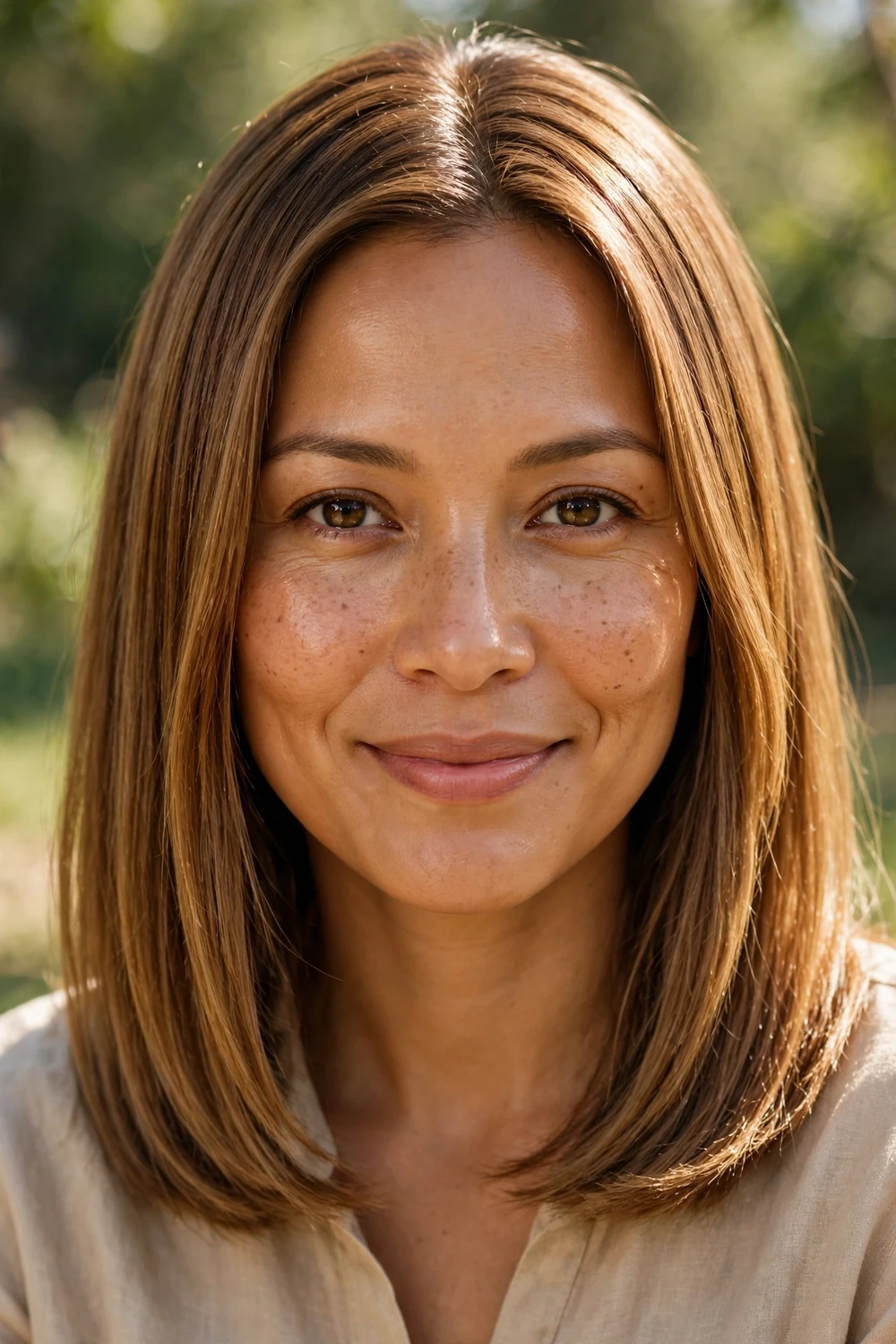
Light golden brown sits around a level 6 to 7 and reads like your natural hair on its best day. It is one of the easiest entries into the True Autumn palette because it keeps enough gold to warm the face while staying close to most natural brown depths. The shade photographs warm without looking dyed.
It works as a single-process color on natural hair that is already close in level, and root growth blends in gently. A demi formula fades gracefully if you would rather test-drive warmth before committing to permanent color.
Try this: ask for a golden gloss at the salon instead of a clear one to keep the gold alive between appointments.
Difficulty: Low · Cost: $$ (salon single process)
2. Golden Brown

A level 5 to 6 golden brown is the backbone of the True Autumn palette, the shade everything else harmonizes with. It is deep enough to read rich but light enough to let golden reflections move through the hair. On warm skin it creates that lit-from-within look people describe as “healthy.”
This shade covers gray well and holds its tone without turning flat. It suits fine to thick hair equally, since the gold adds the look of fullness. Expect touch-ups every five to six weeks for full coverage, or stretch longer with a root gloss.
Try this: keep the formula strictly warm, no ash additive, or the gold will dull within two weeks.
Difficulty: Low · Cost: $$ (salon single process)
3. Rich Chestnut
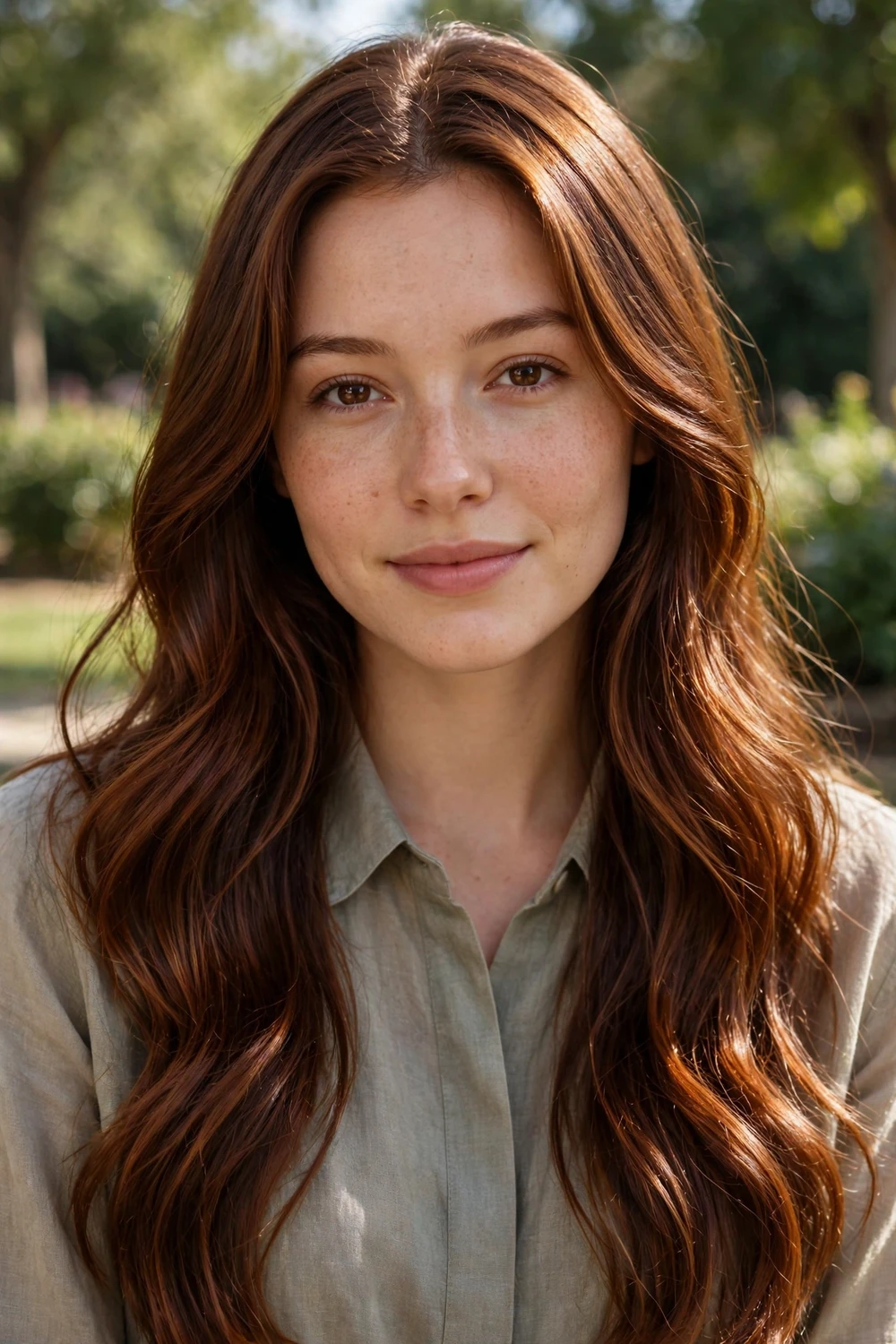
Chestnut blends brown with red and gold in a way that catches light like polished wood. At a level 5 to 6 it flatters nearly every True Autumn complexion, from fair warm ivory to warm olive. The red undertone brings out the warmth in hazel and amber eyes.
It wears cleanly as a single process and rarely needs a toner after application. The warmth holds longer than cooler browns, and fade tends toward gold rather than brass. A sulfate-free shampoo keeps the red notes from washing out early.
Try this: refresh the red undertone at home with a copper-tinted conditioner once a week.
Difficulty: Low · Cost: $$ (salon single process)
4. Warm Chocolate

Warm chocolate is a level 4 to 5 brown with golden undertones, not the cool ashy chocolate so many brunettes default to. It gives True Autumns who want darker hair a way to go deep without crossing into the stark territory that belongs to Deep Autumn. The result reads rich and dimensional instead of heavy.
The shade works best on naturally darker hair, since it requires little lifting. Copper or caramel lowlights woven through prevent it from reading flat in low light. It is also one of the most forgiving colors for covering uneven natural pigment.
Try this: ask for a few warm caramel lowlights at the temples so the depth doesn’t read one-dimensional.
Difficulty: Low · Cost: $$ (salon single process)
5. Espresso with Warm Undertones

This is the darkest a True Autumn should go: a level 3 to 4 brown that shows warmth when light hits it. It looks nearly black indoors but reveals golden depth in daylight. It suits naturally deep coloring best, where the medium contrast of the season still holds.
The risk with espresso is that any cool tone tips it into blue-black, which overwhelms warm features. Tell your colorist to keep the formula golden or copper-based and skip the ash entirely. Subtle copper lowlights keep it reading warm from every angle.
Try this: step outside into daylight before leaving the salon to confirm the warmth is actually visible.
Difficulty: Low · Cost: $$ (salon single process)
6. Toffee

Toffee is a caramelized brown around level 6 to 7, lighter than chocolate but richer than golden brown. It gives True Autumns a sun-kissed look without going full blonde, which is exactly the right amount of lightness for the season’s medium contrast. The caramelized tone glows on peachy and golden skin.
It blends seamlessly over natural warm brown and hides root growth well, so appointments can stretch. A gloss every four to six weeks keeps the caramel notes from fading to plain brown. It also layers well under highlights for extra dimension.
If you want more autumn-toned options beyond the palette, these fall hair colors include warm brunettes that work for golden undertones.
Try this: book a toffee-toned gloss between full color appointments to keep the caramel alive.
Difficulty: Medium · Cost: $$ (salon)
7. Honey Brown

Honey brown is a mid-tone brown with gold running through it, warm enough to glow but still grounded as a brunette shade. Unlike honey blonde, it keeps you clearly in brown territory, which suits True Autumns who want richness rather than lightness. The gold echoes the warmth already in the skin.
From darker brown, a partial balayage brings the honey tones to the surface without bleaching the whole head. From blonde, it is a straightforward deposit. The warmth holds longer than cooler browns and root growth blends in instead of announcing itself.
Try this: concentrate the honey tones through the mid-lengths and ends for the most natural sun-kissed effect.
Difficulty: Medium · Cost: $$$ (partial balayage)
8. Cinnamon Brown
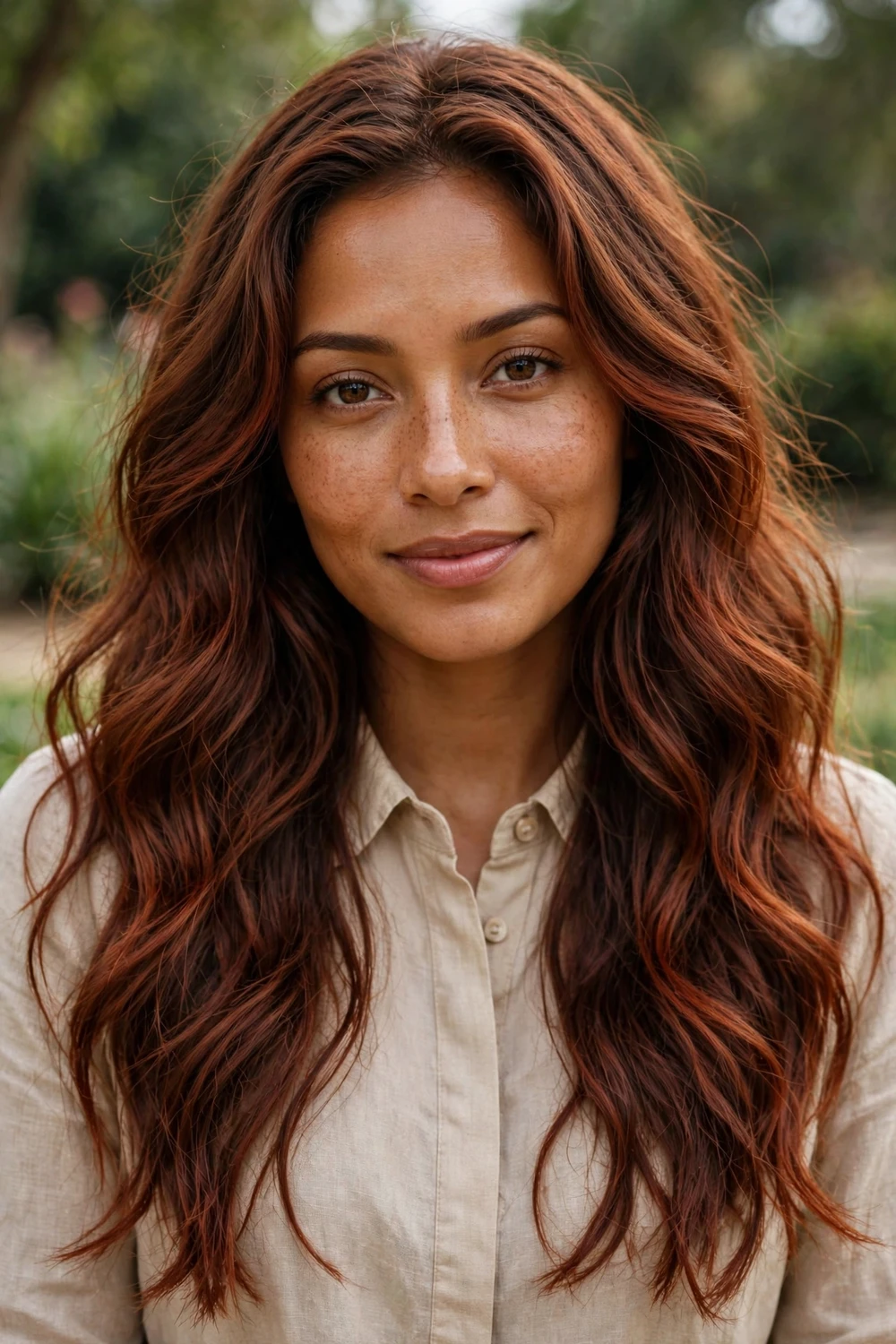
Cinnamon brown adds a spicy red warmth to a medium brown base, like ground cinnamon stirred into cocoa. At level 5 to 6 it brings the signature True Autumn heat without the full commitment of copper. The spice note makes amber flecks in the eyes look more golden.
It fades softer than pure copper, so upkeep is moderate. A color-depositing conditioner in a warm copper shade stretches the life of the spice between appointments. Skip purple shampoo entirely, since it will mute the cinnamon into mud.
Try this: use a cinnamon-toned gloss every three to four weeks to keep the spice visible.
Difficulty: Medium · Cost: $$ (salon)
9. Cinnamon Cookie Butter
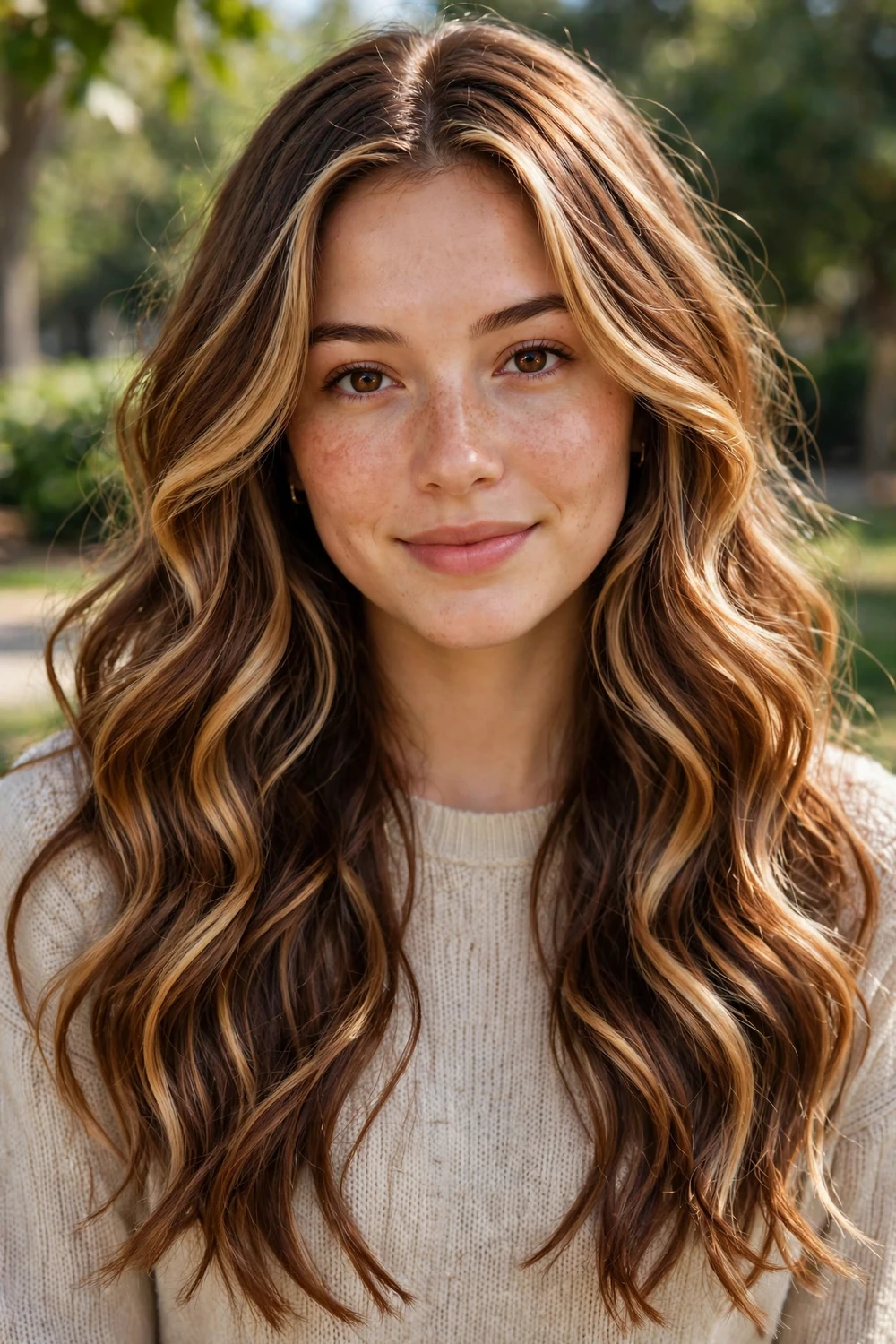
Cinnamon cookie butter is a 2026 trending technique built on True Autumn bones: a cinnamon brown base with buttery caramel ribbons painted through. The multidimensional warmth looks like it glows from inside, and the name alone gets attention on Pinterest boards. It stays within the season’s medium contrast by keeping the lightest pieces no more than two levels above the base.
It is a balayage or foilayage service, so it costs more upfront but grows out softly. Maintenance means a gloss and a toner check every six to eight weeks rather than full color. The caramel ribbons need golden toners only, never ash.
Try this: bring a photo of the cookie-butter ribbon pattern to your consultation, since the technique matters more than the shade name.
Difficulty: High · Cost: $$$ (balayage)
10. True Copper

True copper is the signature True Autumn shade: a shiny-penny orange-red at level 6 to 7 that makes warm complexions glow. No other sub-season wears it as well. It reflects light in a way that makes the whole face glow and turns an ordinary ponytail into a statement, which is why so many color-analysis fans test their season with a copper gloss first.
Copper fades faster than any other shade on this list, so it asks for real commitment. A copper-depositing conditioner weekly and a salon gloss every three to four weeks keep it from fading to a washed-out strawberry. Cold water rinses slow the fade noticeably.
Try this: wash with cool water and a copper-depositing conditioner to buy an extra week between salon visits.
Difficulty: High · Cost: $$$ (salon color)
11. Cowgirl Copper
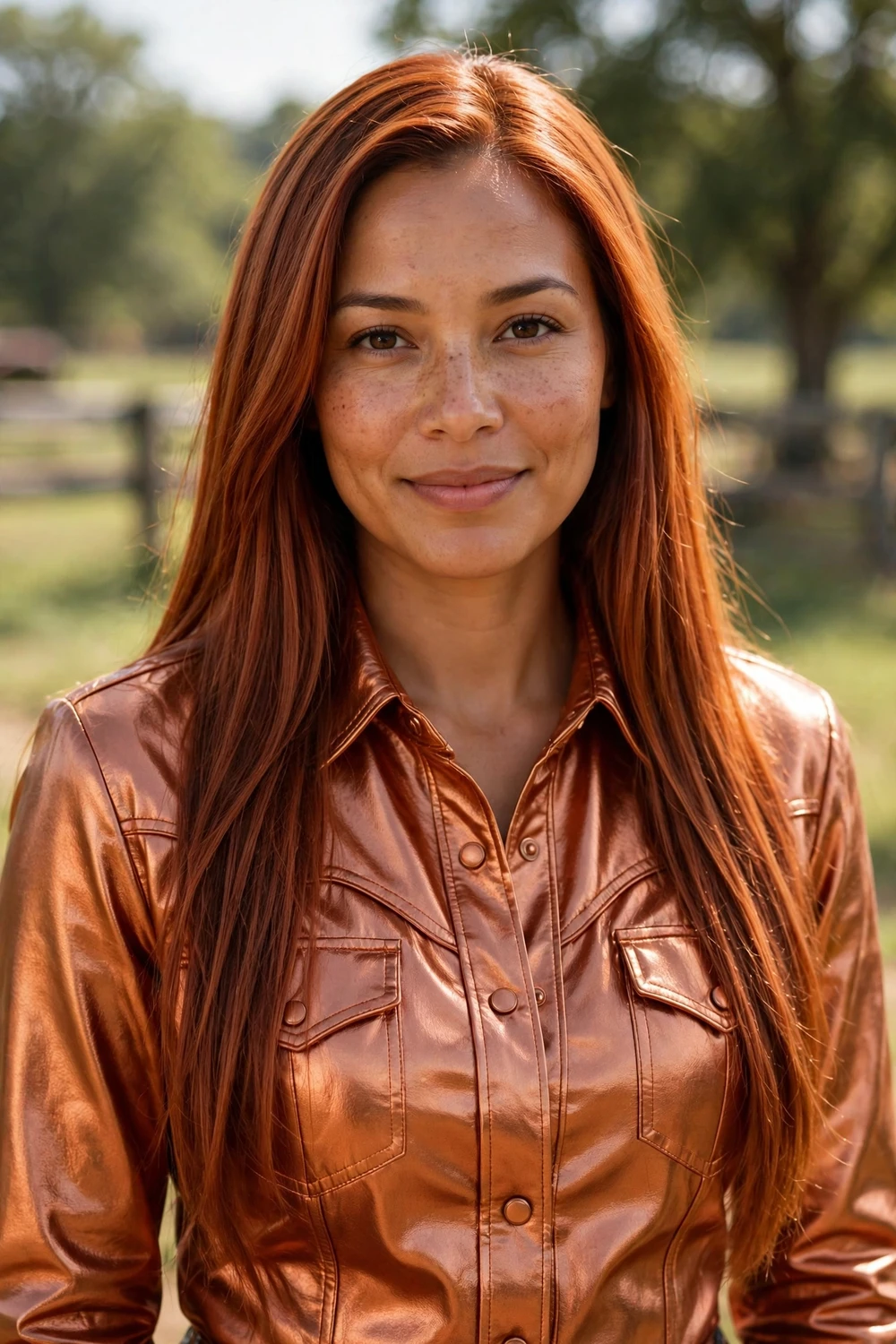
Cowgirl copper is the bolder 2026 cousin of true copper: uniform, rich warmth in reddish-brown and gold from root to tip. It keeps the earthy True Autumn character but turns up the saturation, which suits confident dressers who want their hair to carry the look. The uniformity is the point, so it reads intentional rather than faded.
Uniform color shows fade and roots faster than dimensional techniques, so expect a root touch-up every four weeks. A weekly color-depositing mask and heat protectant are non-negotiable. It rewards high-shine care, so invest in a good shine spray.
Try this: ask your colorist to formulate the roots slightly deeper so regrowth looks intentional, not patchy.
Difficulty: High · Cost: $$$ (salon color)
12. Light Copper / Ginger

Light copper, sometimes called ginger, is a brighter red-orange at level 7 to 8, like fresh ginger root. It is the lightest the red family goes before turning blonde, and it suits True Autumns with fair, warm skin and freckles especially well. The lightness keeps it playful while the warmth keeps it flattering.
Reaching it from a dark natural base usually means some lifting, so expect a longer appointment and possibly two sessions. Once there, copper toners maintain the tone. It fades toward strawberry rather than brass, which stays inside the warm family.
Try this: protect it from hard water if you can, since mineral buildup mutes copper’s brightness fast.
Difficulty: High · Cost: $$$ (lighten + tone)
13. Coppery Red

Coppery red pushes past copper into true red territory, but it keeps the golden fire that makes it work for True Autumn. This is the shade for anyone who wants red to read red, with none of the cool blue undertones that would clash. It is brighter than auburn and bolder than ginger.
Bright reds wash out fastest of all, so this is a high-maintenance relationship. Gloss services every three weeks and a red-depositing shampoo keep it saturated. Sunlight fades it aggressively, so wear a hat or UV spray on bright days.
Try this: ask for golden lowlights through the mid-lengths to anchor the brightness and make it last longer.
Difficulty: High · Cost: $$$ (salon color)
14. Classic Auburn

Classic auburn is a rich red-brown at level 5 to 6, deeper than copper but warmer than chestnut. It is the elegant workhorse of the True Autumn palette: distinctive enough to read as red, restrained enough for professional settings. It flatters golden-beige to warm olive skin without trying too hard.
It covers gray reliably and fades more gracefully than brighter reds. A demi formula works well for first-timers since it fades gradually. Touch-ups every five to six weeks keep the red note from settling into plain brown.
Try this: try it as a demi first if you are nervous about red, then go permanent once you love it.
Difficulty: Medium · Cost: $$ (salon color)
15. Deep Auburn
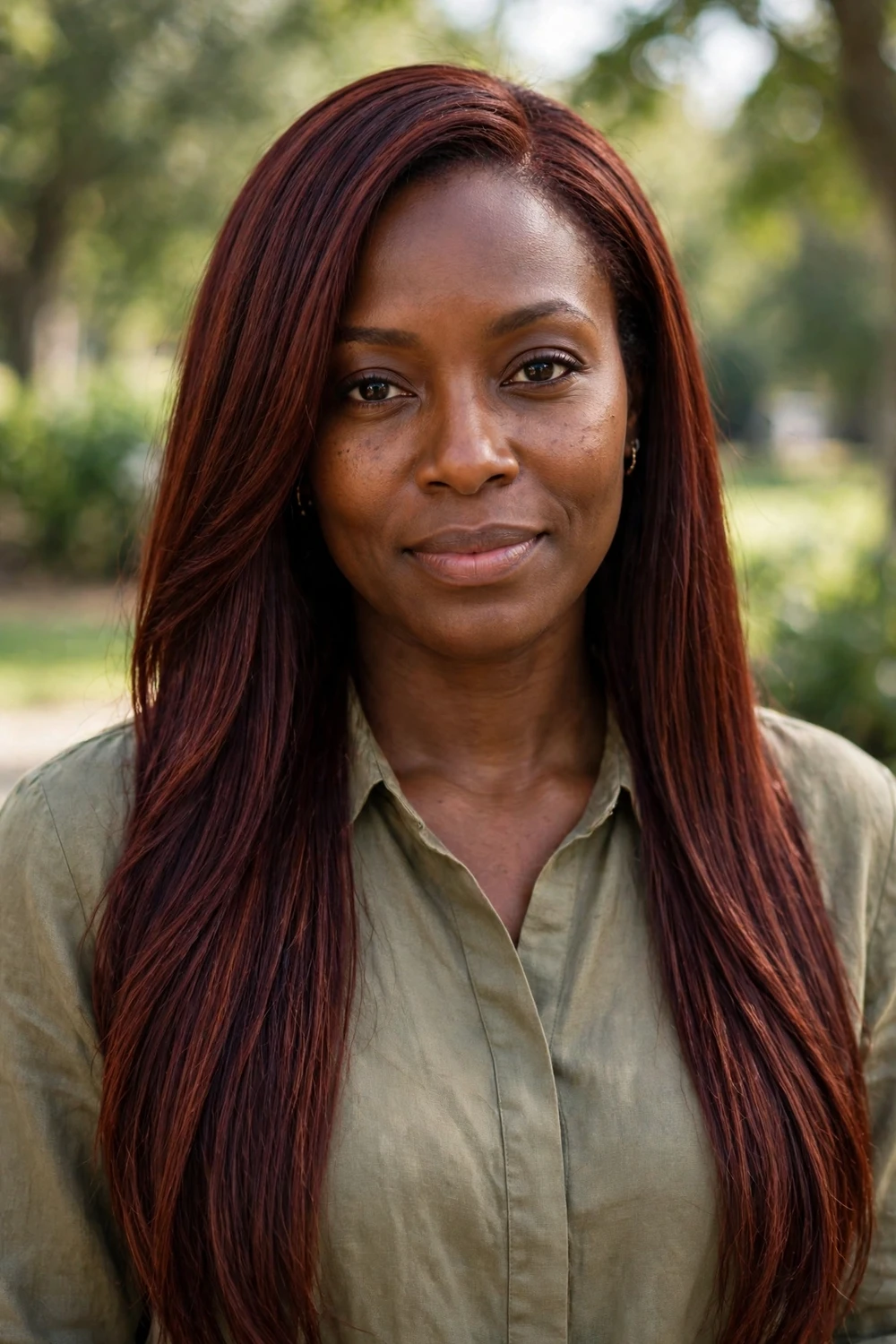
Deep auburn sits at level 4 to 5 with mahogany warmth, giving you the depth of a brunette with the interest of a red. It is one of the most sophisticated choices for True Autumns who want drama without going light. In evening light it reads almost chocolate; in sun it shows its fire.
The formula must stay on the warm side of mahogany, since some mahogany formulas lean violet, and violet-red is a True Autumn enemy. Ask your colorist to confirm the base is red-gold, not red-violet. Copper lowlights keep it lively through the lengths.
Try this: confirm the formula is warm-based at your consultation by checking it against a violet-free swatch.
Difficulty: Medium · Cost: $$ (salon color)
16. Bronze

Bronze is a metallic warm brown with golden-copper undertones, sitting between brown and red at level 5 to 6. It gives True Autumns warmth and richness without committing to an overtly “red” look. The metallic quality catches light, so the hair looks different from every angle.
It works as an all-over color or as lowlights over auburn for added depth. Because it is not a bright red, it fades more quietly than copper. A golden gloss keeps the metallic tone from dulling between appointments.
Try this: wear it with gold jewelry to make the metallic warmth in the hair read even stronger.
Difficulty: Medium · Cost: $$$ (salon color)
17. Warm Mahogany with Golden Threads
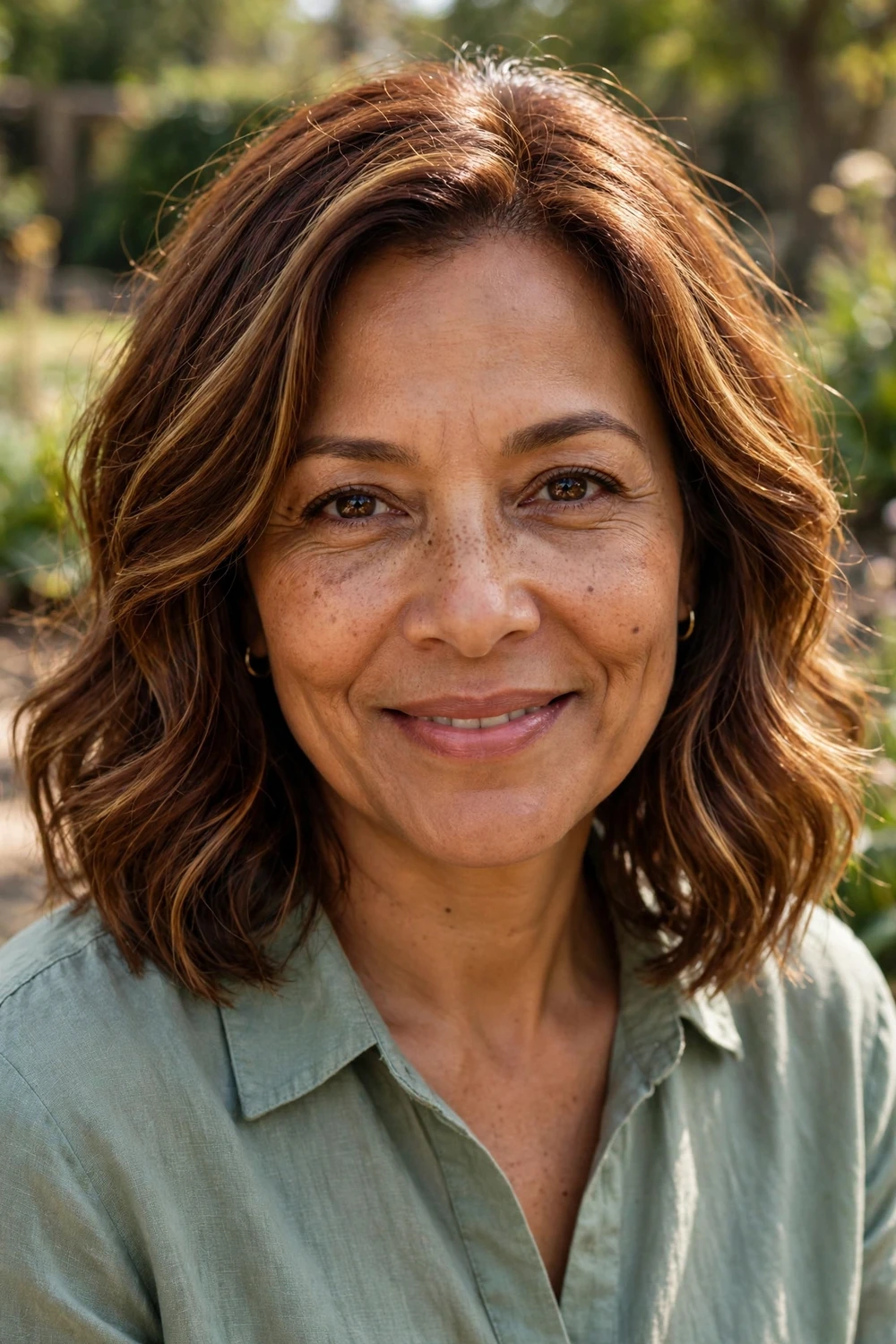
Mahogany only works for True Autumn when it is warm-based and threaded with gold, never the violet mahogany that belongs to cool seasons. Done right at level 4 to 5, it is a deep, luxurious red-brown with genuine dimension. The golden threads are what keep it inside the palette.
This one demands a careful consultation, since so many box formulas called “mahogany” run purple. Ask to see the color line’s swatch and make sure the undertone reads warm red, not blue-red. Golden highlights through the top layer make the threads visible.
Try this: say the words “no violet, no plum” out loud at your appointment so the formula stays warm.
Difficulty: Medium · Cost: $$$ (salon color)
18. Honey Blonde

Honey blonde at level 7 to 8 is the most flattering blonde for True Autumn: light enough to feel fresh but warm enough to harmonize with golden skin. It reads sunlit rather than icy, which is exactly the brief for this season. Face-framing highlights in an even lighter gold add dimension.
Going honey from brown takes lifting, so expect a couple of hours in the chair and a bond treatment. Maintenance is a golden gloss every four to six weeks; skip purple shampoo, which pulls the warmth right out. Roots grow in softer than with cooler blondes.
For more warm blonde inspiration in the season, these fall blonde hair colors round up golden and honey options that suit autumn light.
Try this: ask for the lightest pieces right around the face, since that is where blonde flatters most.
Difficulty: High · Cost: $$$ (lighten + tone)
19. Buttery Blonde

Buttery blonde sits between golden and platinum with enough yellow to read warm, around level 8 to 9. The creaminess keeps it flattering on warm skin without fighting natural undertones, and it stays on the warm side of pale, which is where True Autumn has to stop. It is softer and less saturated than golden blonde.
It needs hair that lifts easily, and starting from dark brown may take a few sessions to get there without damage. The color holds well and stays warmest when you skip purple toning products. A bond-building treatment during the service protects fragile lifted hair.
Try this: deep-condition weekly, since hair this light needs moisture to keep the creamy tone smooth.
Difficulty: High · Cost: $$$ (lighten + tone)
20. Golden Blonde

Golden blonde is a clear, luminous blonde at level 8 to 9 with strong golden undertones. It is brighter and more saturated than buttery blonde, for True Autumns who want their blonde to read bold rather than soft. It stays warm by never touching ash in the formula.
It needs regular golden glosses to keep brass at bay, since brass here would read as dullness rather than glow. A golden or honey-toned gloss every four to six weeks does the job. Keep heat styling moderate, since lifted hair is more fragile.
Try this: schedule gloss appointments at booking time so the color never has a chance to dull.
Difficulty: High · Cost: $$$ (lighten + tone)
21. Caramel Blonde

Caramel blonde is a rich, buttery blonde at level 7 to 8 with caramel depth, deeper than honey but not quite brown. It is the perfect middle ground for True Autumns who want blonde hair with real warmth and substance. The caramel note keeps it grounded and glowing.
It fades toward plain gold if neglected, so a caramel-toned gloss every four to six weeks keeps the richness. It grows out more softly than lighter blondes, which means touch-ups can stretch. Works well with darker roots for a lived-in look.
Try this: try caramel blonde with a slightly deeper root for a low-maintenance lived-in finish.
Difficulty: High · Cost: $$$ (lighten + tone)
22. Strawberry Blonde

Strawberry blonde blends blonde with a hint of copper at level 7 to 8, catching light with a rosy glow instead of flat yellow. It suits True Autumns with fair, warm skin and light eyes, reading romantic without losing the season’s warmth. Natural strawberry blondes are the original True Autumns.
On light brown hair it needs a lift plus a toner with red and gold mixed in; on natural blonde, a gloss can add the warmth without bleach. It fades gently and usually needs a refresh when the warmth starts pulling dull. Copper-tinted conditioners maintain the rosy note at home.
Try this: ask for a copper-gold gloss rather than full color if you only need the strawberry tint.
Difficulty: Medium · Cost: $$$ (tone or gloss)
23. Chestnut and Caramel Balayage

This is the classic True Autumn balayage: a chestnut base with hand-painted caramel ribbons. The balayage technique creates a softer, sun-kissed grow-out than foils, and the caramel keeps everything inside the warm family. It is elegant, low-drama, and works in every setting from office to wedding.
Because balayage is painted on rather than placed in foils, regrowth is soft and appointments stretch to eight or twelve weeks. A caramel gloss midway keeps the ribbons glowing. It costs more upfront than single-process color but needs fewer visits per year.
Try this: ask for the caramel painted mostly through the mid-lengths and ends for the softest grow-out.
Difficulty: High · Cost: $$$ (balayage)
24. Warm Chocolate and Copper Balayage

A warm chocolate base with copper ribbons balayaged through is rich, high-impact warmth. The copper pieces catch the light against the chocolate depth, creating movement that a single color can’t. It is the most dramatic of the True Autumn balayage combos while staying inside the season’s contrast.
Copper ribbons fade faster than caramel ones, so a copper gloss every six weeks keeps the contrast alive. The chocolate base holds steady with minimal help. Expect the service to take two to three hours depending on hair length and thickness.
If dimension through balayage is your goal, this blonde balayage on brown hair shows how painted highlights wear on brown bases, with warm tones that suit golden skin.
Try this: refresh just the copper pieces with a gloss instead of redoing the whole balayage.
Difficulty: High · Cost: $$$ (balayage)
25. Toffee Base with Golden Blonde Highlights

A toffee base with golden blonde highlights gives you beachy warmth without leaving brown territory. The highlights stay within two levels of the base, which is exactly the low-contrast rule the True Autumn palette asks for. The overall effect is dimensional and sun-warmed rather than stripy.
Partial foils or balayage both work; balayage grows out more softly. The golden highlights need golden toners only, and the toffee base hides root growth well. Plan on a gloss and toner check every eight weeks to keep both tones glowing.
Try this: keep the brightest highlights a finger’s width away from the scalp so grow-out stays soft.
Difficulty: High · Cost: $$$ (balayage or foils)
26. Golden Honey Highlights on Brown
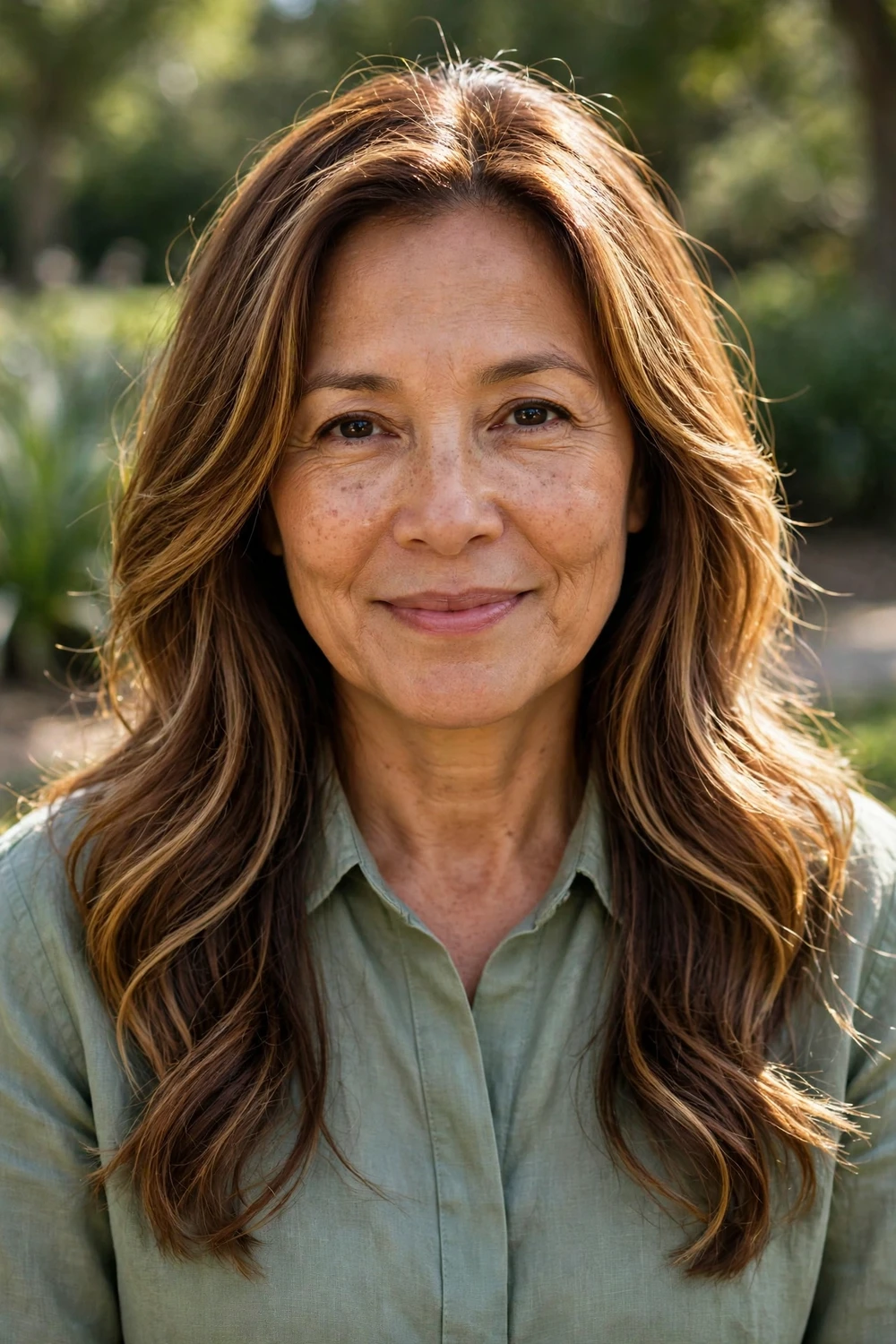
Golden honey highlights thread warm blonde through brown, concentrating brightness where it catches light and lifts the complexion. The technique keeps most of your base color intact, so you get warmth without committing to blonde all over. It is the lowest-commitment way onto this list.
Balayage placement works best since it paints the gold where hair would naturally lighten in the sun. Maintenance is lighter than full color since regrowth is soft, and you can stretch appointments. Face-framing pieces make the biggest difference per dollar.
Try this: start with just face-framing highlights to test warm blonde before committing to more.
Difficulty: Medium · Cost: $$$ (partial highlights)
27. Golden Money Piece

The money piece, chunky lighter highlights right at the front hairline, in golden tones is a statement that keeps the back of the hair natural. It brightens the complexion instantly and draws attention to the eyes, which is exactly what True Autumn eyes want. The gold keeps it inside the season while the placement keeps it current.
It is the cheapest way to change your look since it involves only a few pieces. Regrowth shows fast at the front, though, so plan touch-ups every six to eight weeks. A golden gloss keeps the pieces from fading flat.
Try this: keep the money piece golden rather than white-blonde so it harmonizes with the rest of your warmth.
Difficulty: Medium · Cost: $$ (face-framing pieces)
28. Auburn with Bronze Lowlights

Lowlights in warm bronze woven through an auburn base add depth and richness without more red. The darker pieces anchor the auburn so it doesn’t fade into one flat note, and the bronze warmth keeps everything moving in light. It is the most dimensional way to wear auburn.
Lowlights grow out gracefully since they sit close to the natural depth, so this is lower maintenance than it looks. A gloss every six to eight weeks revives both tones at once. It also works as a correction when an all-over auburn has gone too bright.
Try this: use lowlights instead of more red when your auburn starts looking flat, it adds depth without more commitment.
Difficulty: Medium · Cost: $$$ (lowlights)
At a Glance: 28 True Autumn Hair Colors Compared
| Shade | Best for | True Autumn perk | Upkeep |
|---|---|---|---|
| Light Golden Brown | Natural warm brown hair | Easy entry into the palette | Gloss every few weeks |
| Golden Brown | Most warm complexions | Backbone shade of the season | Touch-ups every 5 to 6 weeks |
| Rich Chestnut | Hazel and amber eyes | Red-gold light play | Copper conditioner weekly |
| Warm Chocolate | Naturally dark hair | Depth without starkness | Caramel lowlights at temples |
| Espresso with Warm Undertones | Deep natural coloring | Darkest warm option | Check warmth in daylight |
| Toffee | Peachy and golden skin | Sun-kissed without blonde | Toffee gloss every 4 to 6 weeks |
| Honey Brown | Those wanting richness, not lightness | Gold within brown depth | Soft grow-out, stretch visits |
| Cinnamon Brown | Amber-flecked eyes | Spicy warmth, subtle change | Cinnamon gloss, no purple shampoo |
| Cinnamon Cookie Butter | Trend lovers, Pinterest fans | 2026 multidimensional warmth | Gloss every 6 to 8 weeks |
| True Copper | Signature-season seekers | Makes warm skin glow | Gloss every 3 to 4 weeks |
| Cowgirl Copper | Confident, bold dressers | Bold 2026 saturated warmth | Root touch-ups monthly |
| Light Copper / Ginger | Fair warm skin, freckles | Lightest warm red | Copper toners, hard-water watch |
| Coppery Red | Statement-red lovers | Red that stays golden | Gloss every 3 weeks, UV spray |
| Classic Auburn | Professional settings | Elegant, restrained red | Touch-ups every 5 to 6 weeks |
| Deep Auburn | Those wanting drama, not lightness | Brunette depth, red interest | Confirm warm formula at consult |
| Bronze | Warmth without obvious red | Metallic light-catching tone | Golden gloss between visits |
| Warm Mahogany with Golden Threads | Luxurious depth seekers | Deep red-brown dimension | Violet-free formula check |
| Honey Blonde | Golden skin, fresh feel | Most flattering warm blonde | Golden gloss, no purple shampoo |
| Buttery Blonde | Easy-lifting hair | Soft creamy warmth | Weekly deep conditioning |
| Golden Blonde | Bold blonde lovers | Bright, saturated warmth | Golden gloss every 4 to 6 weeks |
| Caramel Blonde | Middle-ground seekers | Blonde with real substance | Caramel gloss, deeper root option |
| Strawberry Blonde | Fair warm skin, light eyes | Rosy warmth without brass | Copper-gold gloss refresh |
| Chestnut and Caramel Balayage | Low-drama dimension | Classic warm balayage | Caramel gloss midway |
| Warm Chocolate and Copper Balayage | High-impact warmth | Most dramatic warm combo | Copper gloss every 6 weeks |
| Toffee Base with Golden Blonde Highlights | Sun-warmed dimension | Stays inside low contrast | Toner check every 8 weeks |
| Golden Honey Highlights on Brown | First-time warm color | Lowest-commitment option | Stretch appointments longer |
| Golden Money Piece | Budget-friendly change | Instant face brightness | Touch-ups every 6 to 8 weeks |
| Auburn with Bronze Lowlights | Faded-auburn refresh | Most dimensional auburn | Gloss every 6 to 8 weeks |
How to Choose Your True Autumn Shade
Start with your natural depth and stay within two or three levels of it. True Autumn has medium contrast, so the most flattering shades sit in the level 3 to 8 range. If your hair is naturally dark, warm chocolate or deep auburn will harmonize; if it is naturally medium, golden brown, chestnut, or auburn are home territory; if it is naturally light, honey, caramel, and strawberry blonde are your best moves.
Next, decide how much red you want. Browns with golden undertones (golden brown, toffee, honey brown) are the subtlest entry. Chestnut and cinnamon add visible red warmth without reading “redhead.” Copper, ginger, and cowgirl copper are full statements that announce your season. And if you love your base but want glow, pick a placement technique like golden honey highlights or a money piece instead of changing everything.
Bring photos to your consultation, and say “zero ash” out loud before any formula is mixed. Test the chosen shade against your skin in natural daylight, and ask your colorist what the maintenance schedule looks like before you commit, since copper and reds need far more upkeep than warm browns.
Warm Color Care for True Autumn Hair
Fading. Warm pigments, especially copper and red, wash out faster than any other hair color. Wash with cool water, stretch washes to two or three times a week, and use a color-depositing conditioner in your shade between salon visits. A golden or copper gloss every three to six weeks revives richness before fade gets obvious.
Ash creep. The biggest threat to True Autumn color is accidental coolness: purple shampoo, ashy toners, and even some “neutral” conditioners push gray into warm hair. Skip purple shampoo entirely and ask for golden or copper toners by name. If your color starts reading muddy, a warm gloss brings it back.
Brass vs. glow. Warmth turning brassy is a fine line, and hard water is usually the culprit. A shower filter is the single most underrated tool for protecting copper and caramel tones from mineral buildup. Bond-building treatments during lightening services keep lifted warm blondes from going fragile.
Finally, check your color in natural daylight regularly, since indoor lighting hides both fade and coolness. When you are thinking seasonally, these winter hair color ideas show how warm shades carry through the colder months without losing their glow.
More Ideas to Explore
Frequently Asked Questions
What is the best hair color for True Autumn?
The best hair colors for True Autumn are warm, rich shades with golden, copper, or red-orange undertones: auburn, copper, golden brown, chestnut, toffee, and warm chocolate in the level 3 to 8 range. Warmer blondes like honey, caramel, and strawberry blonde also work if you want to go light. The key is medium contrast and warmth, so avoid anything described as ash, cool, platinum, or violet-based.
Can True Autumn go blonde?
Yes, True Autumn can wear blonde as long as it leans golden rather than cool. Honey blonde, golden blonde, caramel blonde, buttery blonde, and strawberry blonde all harmonize with warm undertones. Stay in the level 7 to 9 range and keep the tone golden: ash blonde and platinum will clash with your coloring and make your skin look washed out.
What hair colors should True Autumn avoid?
True Autumn should avoid ash blonde, cool or mushroom brown, platinum, blue-black, burgundy, and any red with violet undertones. These cool shades fight the golden warmth in your skin and can make your complexion look dull or sallow. When shopping for color, watch for warning words like ash, cool, icy, platinum, mushroom, or violet on the box or formula.
How do I keep copper or auburn hair from fading?
Wash with cool water and stretch washes to two or three times a week, since hot water opens the cuticle and lets warm pigment escape. Use a copper or red color-depositing conditioner weekly, and book a salon gloss every three to six weeks to refresh the tone. A shower filter protects against mineral buildup that dulls warmth, and UV spray helps on sunny days.
What is the difference between True Autumn and Deep Autumn hair colors?
True Autumn is the warmest, most purely golden of the autumn sub-seasons with medium contrast, while Deep Autumn combines autumn warmth with winter depth and can carry near-black shades. True Autumn’s best hair colors sit in the level 3 to 8 range with golden, copper, and red-orange undertones. If a shade needs blue-black or espresso-dark depth to work, it belongs to Deep Autumn, not True Autumn.
Final Thoughts
True Autumn hair color is really about one rule: stay warm and stay rich. Whether you land on a quiet golden brown or a full cowgirl copper, the shade that flatters you most will be the one that echoes the gold in your skin. Pick your depth, name your maintenance budget honestly, and let your warmth do the talking.

