


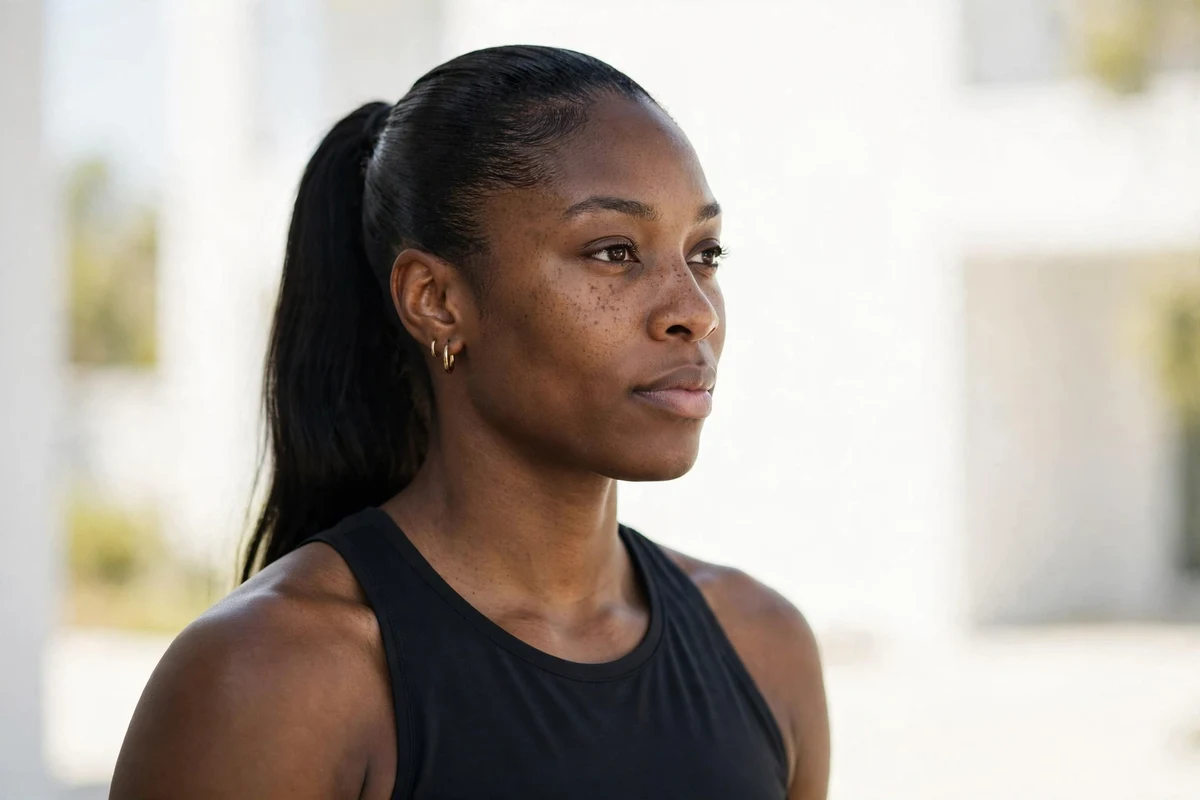
The wrong hairstyle on the court will undo itself by halftime. Loose layers slide into your face during a fast break, a lazy ponytail loosens with every jump, and by the fourth quarter you’re retying instead of defending. The right style changes all of that: it anchors hair at the scalp, manages sweat, and holds its shape through sprints, pivots, and contact.
This guide covers 29 basketball hairstyles for women, from slick-back braids and bubble braids to cornrows, puffs, and low-maintenance cuts. I’ve spent years sorting out which gym styles actually survive a full game, so every idea below is judged on the same test: does it stay put, keep sweat in check, and take less than 15 minutes to do? Pick your length, your hair type, and your tolerance for braiding, and you’ll find a match.
Quick answer: The best basketball hairstyles for women anchor hair close to the scalp with braids, twists, or a slick base. Slick-back braids and cornrows survive the hardest play, while buns and top knots work for medium to long hair. Short cuts like fades and buzz cuts need zero touch-ups. Always finish with edge control and a sweatband to manage moisture.
Quick Takeaways
- Braids and cornrows are the most secure basketball hairstyles, holding up through full games with no retying.
- A slicked-back base with gel or edge control stops flyaways and keeps sweat from soaking the hairline.
- Protective styles like twists and box braids guard natural hair against breakage from sweat and friction.
- For short hair, fades and buzz cuts eliminate styling time entirely and need no touch-ups.
- Match the style to your hair length and type, not to the trend: tight styles on wet braiding hair last longest.
Why Your Court Hairstyle Matters More Than You Think
Basketball moves fast, and your hair moves with it. A style that isn’t secured at the roots will shift every time you cut direction or go up for a rebound. That means your hands go to your hair, your eyes drop, and your focus breaks at the worst moment. Players who pin, braid, or slick their hair down report one less thing to think about, and on the court, one less thing matters.
Sweat is the other problem. It loosens elastics, frizzes natural texture, and mats hair against the neck. Styles that sit off the neckline or use a moisture barrier at the roots handle this better than styles that let hair hang loose. A wide sweatband or headband buys you even more insurance, especially in summer gyms with no air conditioning.
Before you pick from the list below, do three things: start with clean or lightly stretched hair, smooth a nickel-sized amount of edge control or gel along the hairline, and use snag-free elastics instead of rubber bands. That base layer is what turns a decent style into a game-proof one.
1. Slick-Back High Ponytail
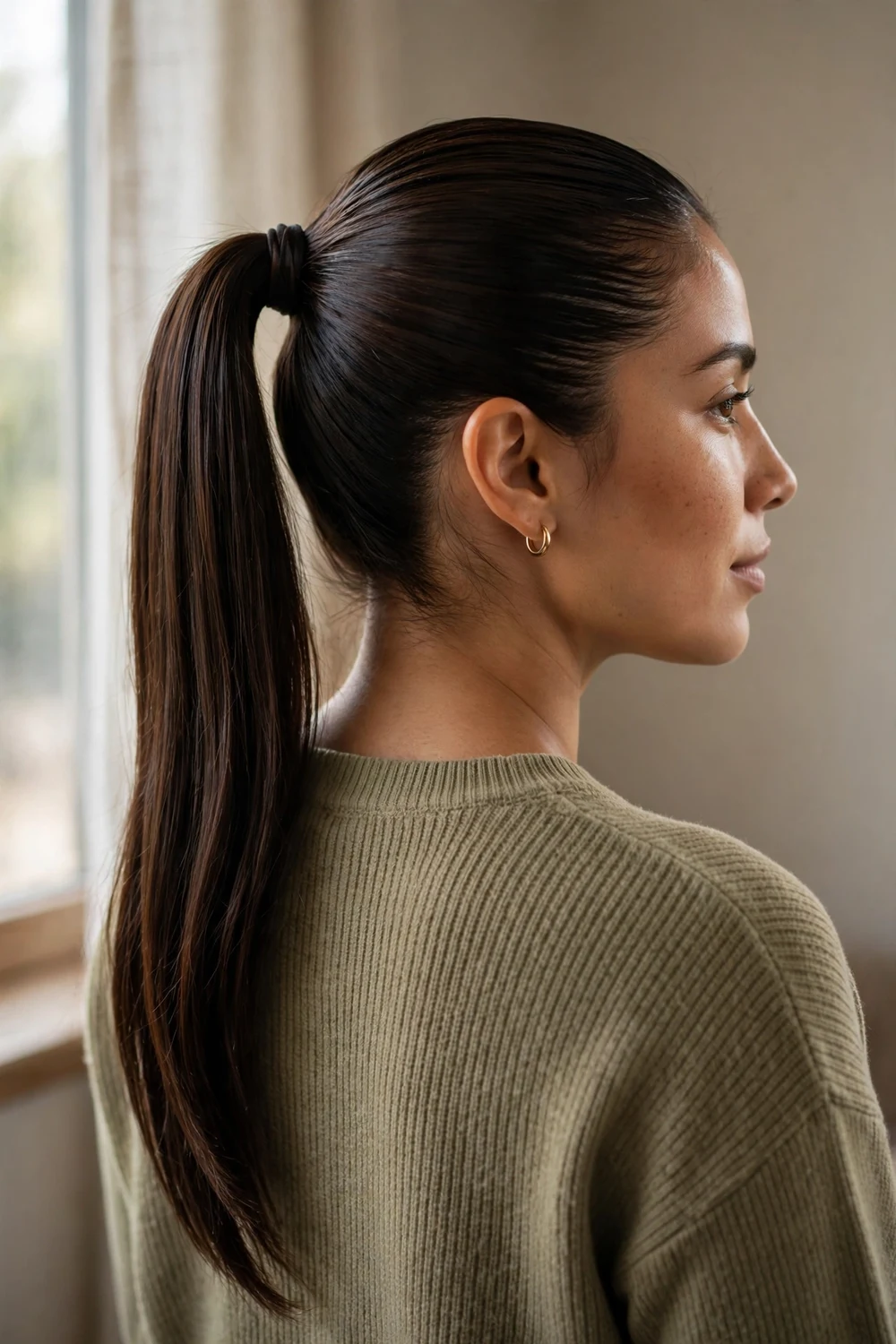
The high ponytail is the court classic for a reason: it gets every strand off your neck and shoulders in under two minutes. Brush all hair straight back from the forehead, smooth the sides with gel, and tie it high at the crown with a thick snag-free elastic. Wrap a small section of hair around the base and pin it underneath for a cleaner finish. It suits long and medium hair best, and it works on straight, wavy, or relaxed textures. Wrap the elastic twice if your hair is heavy, and tilt your head back while smoothing so no bumps form underneath.
Try this: Dab a pea-sized drop of edge control on the hairline after tying, then brush it down with a soft boar brush. That seals flyaways that sweat usually lifts by the second quarter.
2. Slick Back Into Two Braids
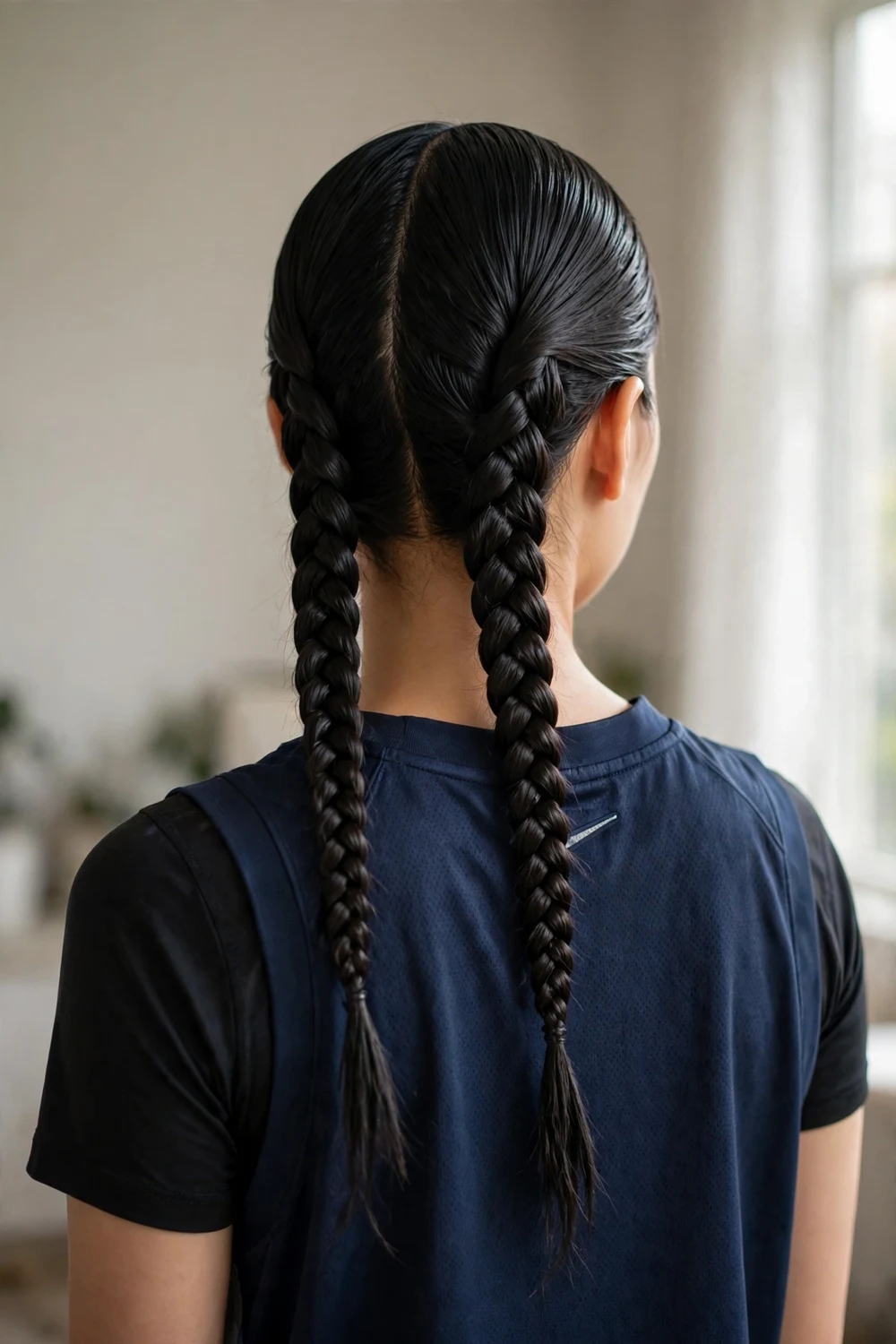
Two braids built on a slicked-back base are one of the most secure styles a player can wear. Part hair down the center or skip the part entirely, brush everything back with gel, and work two Dutch braids from the crown down past the shoulders. The slicked base locks the roots so the braids don’t loosen when you sprint, and the braids themselves weigh less than a swinging ponytail. This one fits medium to long hair and flatters straight to coily textures once the roots are smoothed. Finish each braid end with a small clear elastic and tuck it under with a bobby pin.
Try this: Braid on damp hair with a little leave-in cream. Damp braiding gives a tighter weave that resists the loosening sweat causes on dry hair.
3. Double French Braids
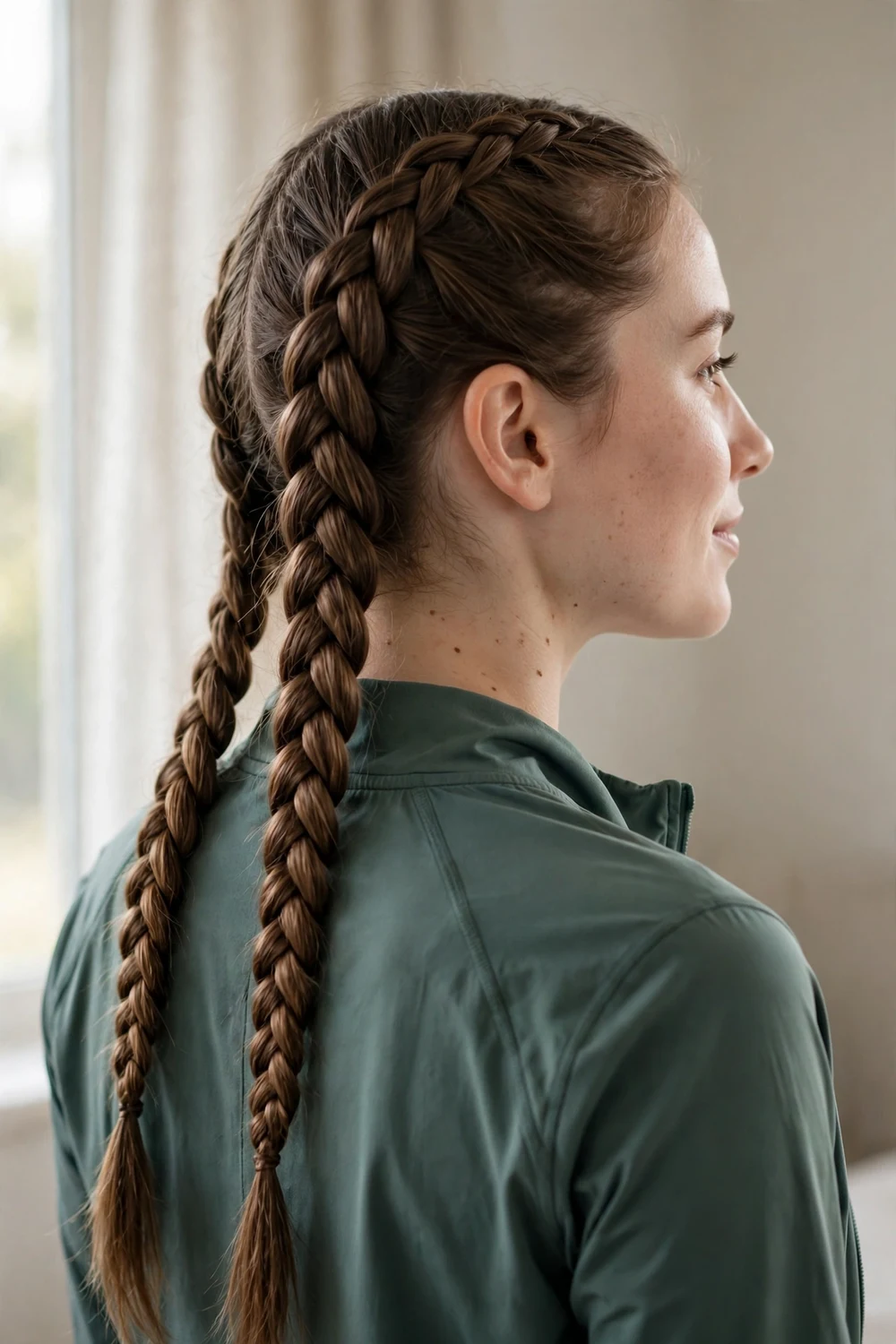
When a single braid feels lopsided during play, two even French braids fix the balance. They distribute weight evenly on both sides of the head, so nothing pulls or shifts when you change direction. Start each braid high near the temple and keep tension consistent as you feed in hair toward the nape. This style holds medium and long hair flat against the scalp, which is exactly what keeps it out of your eyes under a headband or sweatband. It takes about 10 minutes once your hands learn the pattern, and it survives full games without a single re-do.
Try this: Cross the side strands under instead of over to make them Dutch-style braids. They sit raised off the scalp and hold tension longer during hard play.
4. Two Braids Into a Ponytail
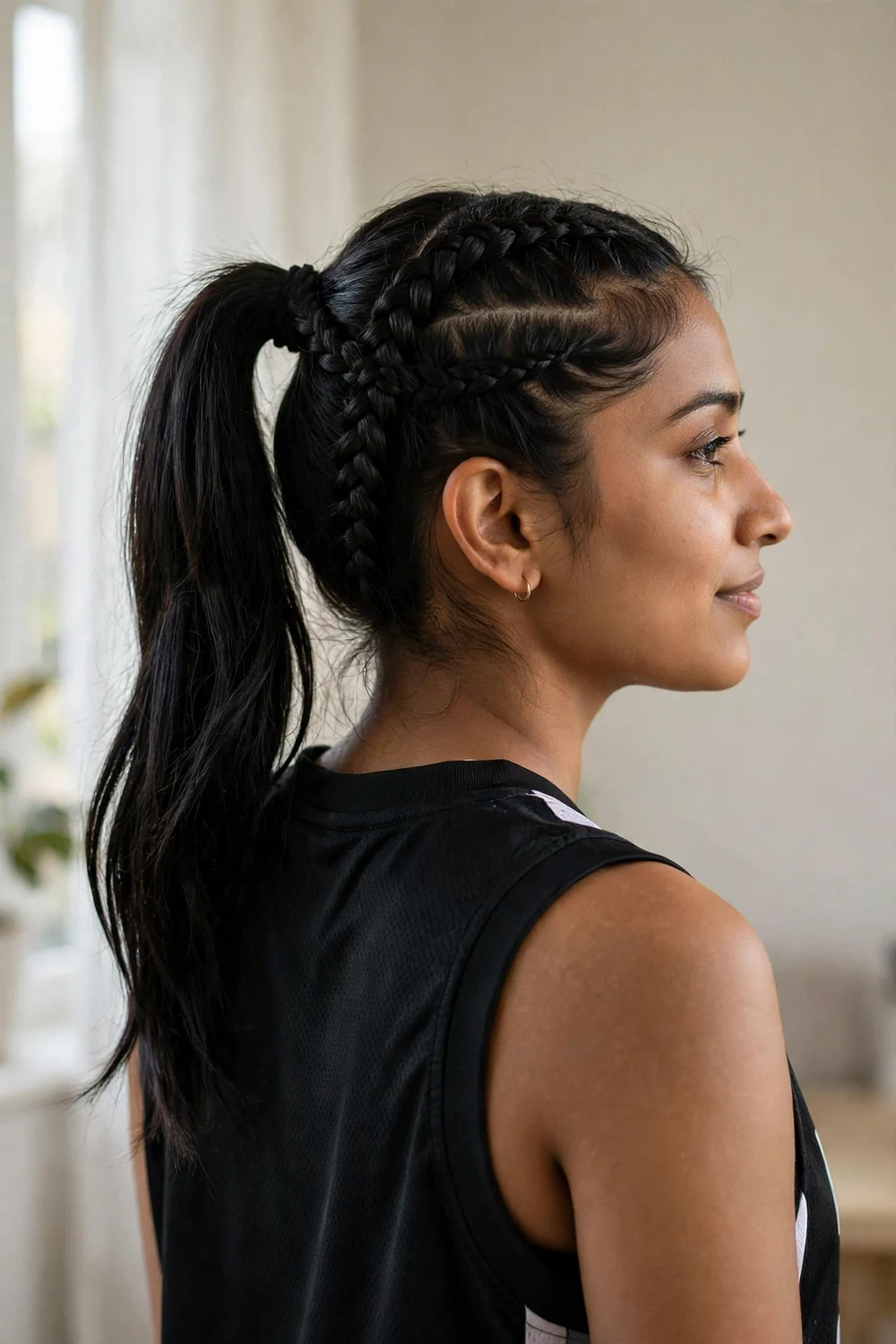
This hybrid gives you the root security of braids with the airflow of a ponytail. Braid two sections from the front hairline back toward the crown, then gather the remaining hair with the braid ends into one high ponytail. The braided front keeps the hairline smooth and stops short layers from escaping, while the ponytail keeps everything off your neck. It works for long hair and for growing-out bangs that otherwise fall forward during layups. Secure the junction with a strong elastic, then wrap one braid end around the base to hide it.
Try this: Add a second elastic two inches down the ponytail. The double anchor stops the whole tail from swinging loose during jump shots.
5. Braided Ponytail
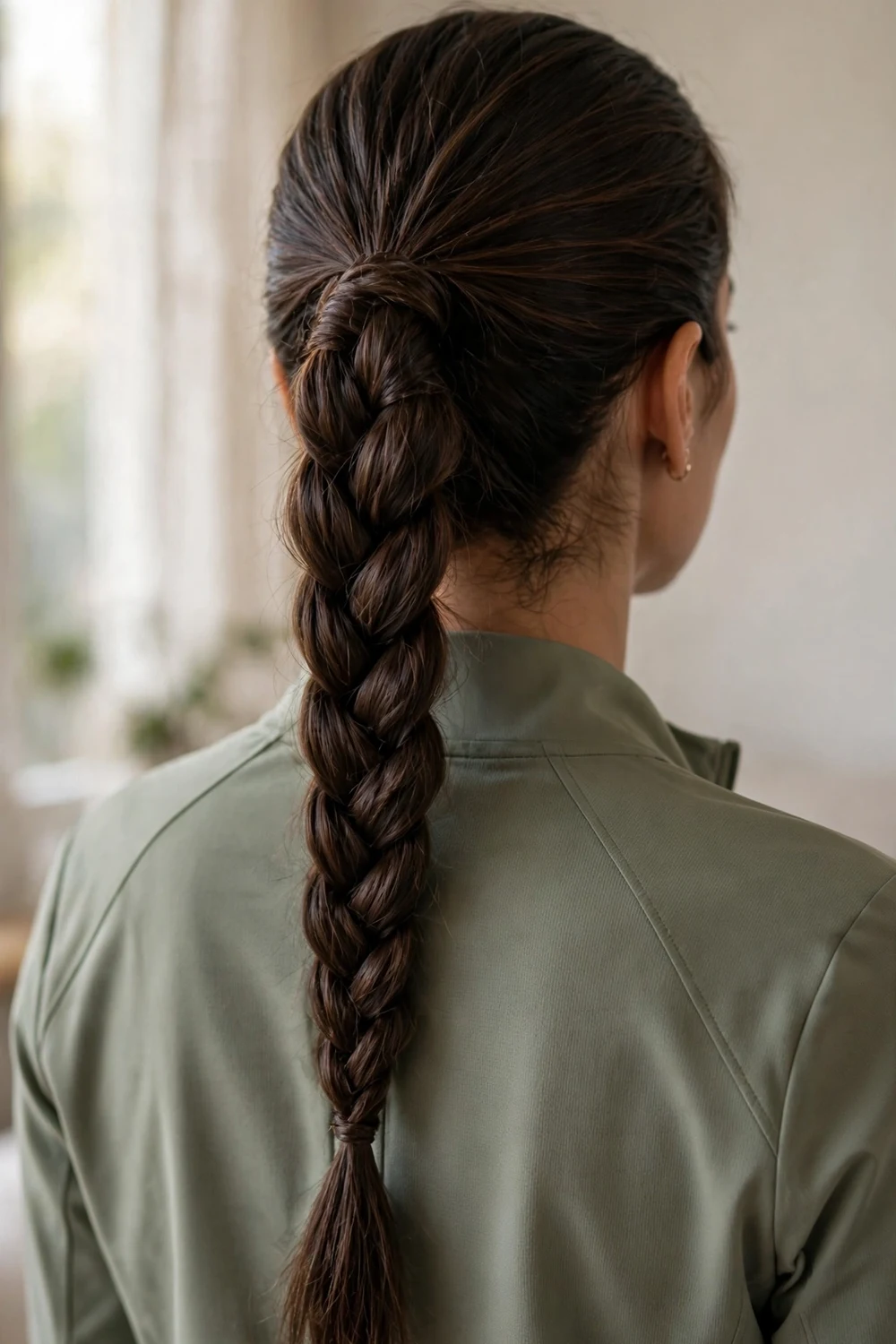
A ponytail that is itself braided solves the biggest complaint about ponytails: the loose tail whipping around. Pull hair into a high or mid ponytail first, then braid the tail all the way down in a simple three-strand braid. The braided tail moves as one solid piece instead of flying apart, which means no hair across your face on a fast break and no tangling after the game. Long hair does best here, though medium lengths can fake the effect with a slightly looser braid. Tie the end with a coated elastic rather than a rubber band to avoid snapping strands.
Try this: Pancake the braid by gently pulling each loop wider after tying. A fuller braid tangles less and is easier to undo without breakage after sweating.
6. Slick Back Into a Bubble Braid
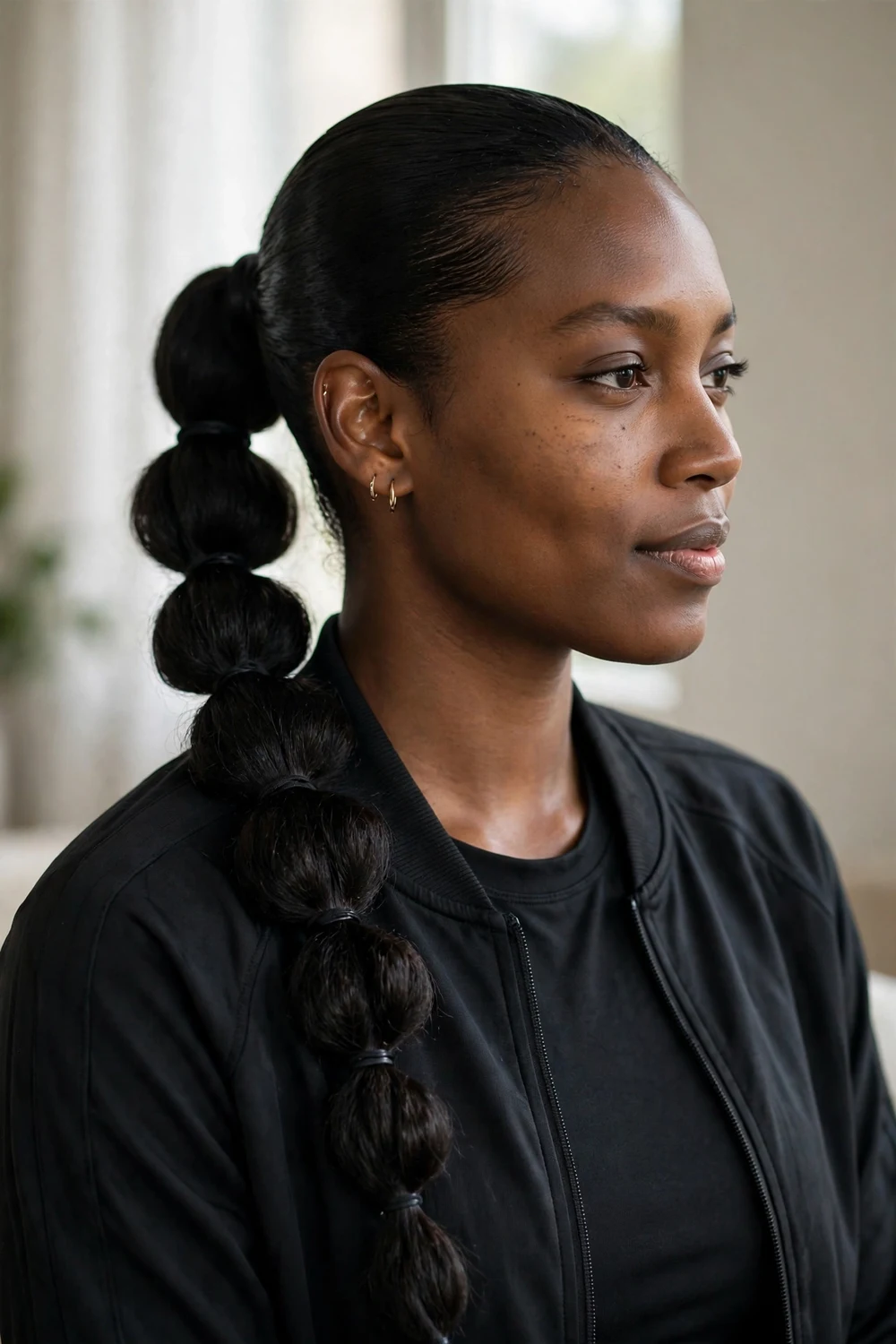
Bubble braids look playful but perform like a serious sport style. Slick all hair into a high ponytail, then place small elastics every two inches down the tail and pull each section out into a rounded bubble. Each elastic acts like a checkpoint, so even if sweat loosens one section, the rest stays put. The style keeps hair completely off the neck and reads as one tidy column from behind. It suits long hair best and takes about 8 minutes once the ponytail is up. Use clear elastics so the bubbles, not the ties, are what people notice.
Try this: Spritz the ponytail with a light flexible-hold hairspray before adding the elastics. It keeps the bubbles smooth through a full hour of play.
7. Two Braids Into a Braided Bubble Braid
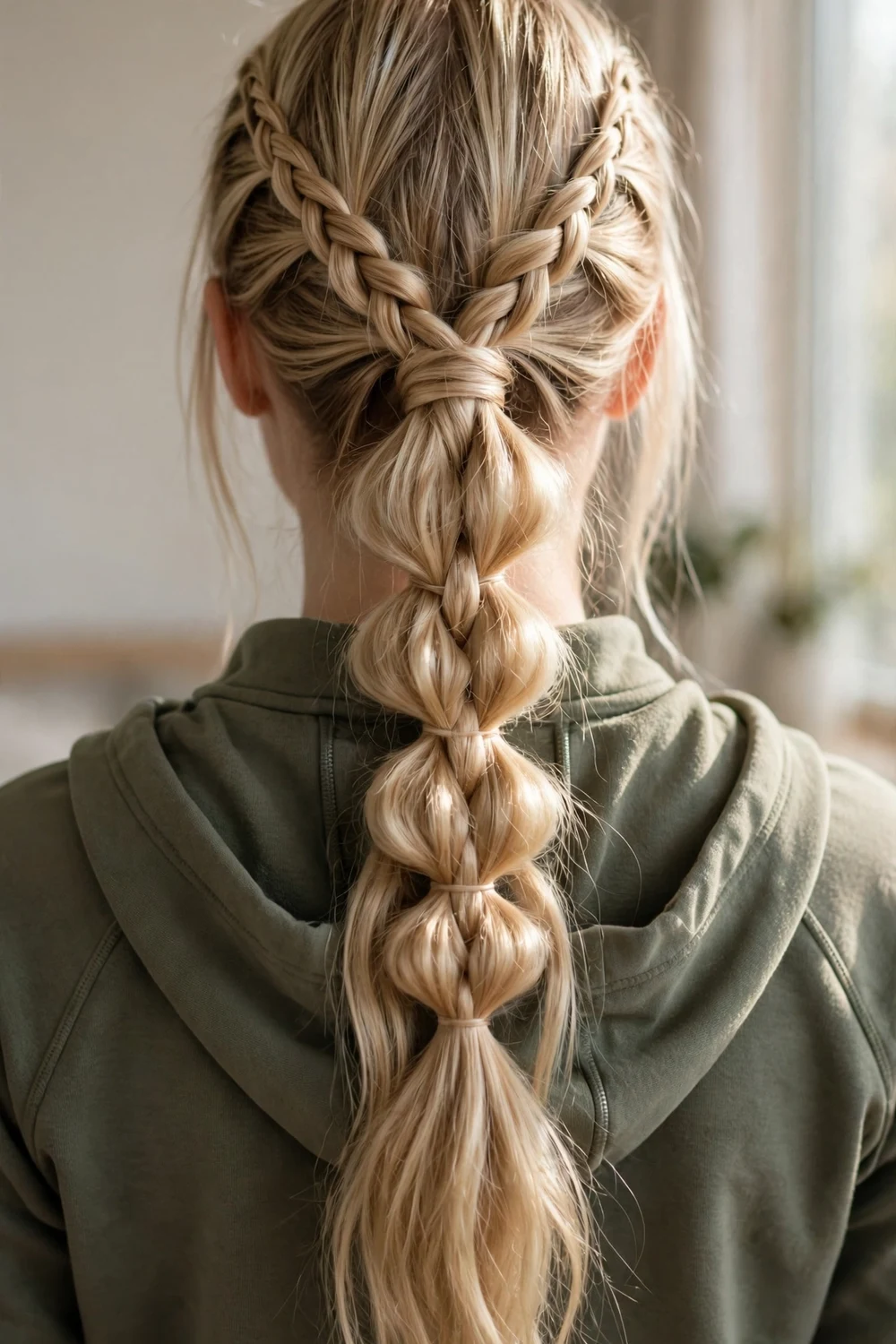
For players who want maximum hold, this combo stacks two techniques. Start with two braids from the hairline, merge them at the crown into a single ponytail, then convert the tail into a bubble braid with spaced elastics. The braided roots prevent any shifting at the scalp, and the bubble tail can’t unravel the way a loose braid sometimes does. It takes 12 to 15 minutes, so it’s a weekend-game style rather than a quick school-morning fix. Long hair carries it best, and it holds through tournaments where you’re playing back-to-back games.
Try this: Coat each elastic in a tiny bit of hair oil before sliding it on. Oiled elastics grip without snagging and come out painlessly after a sweaty game.
8. Slick Back Into a Dragon Braid
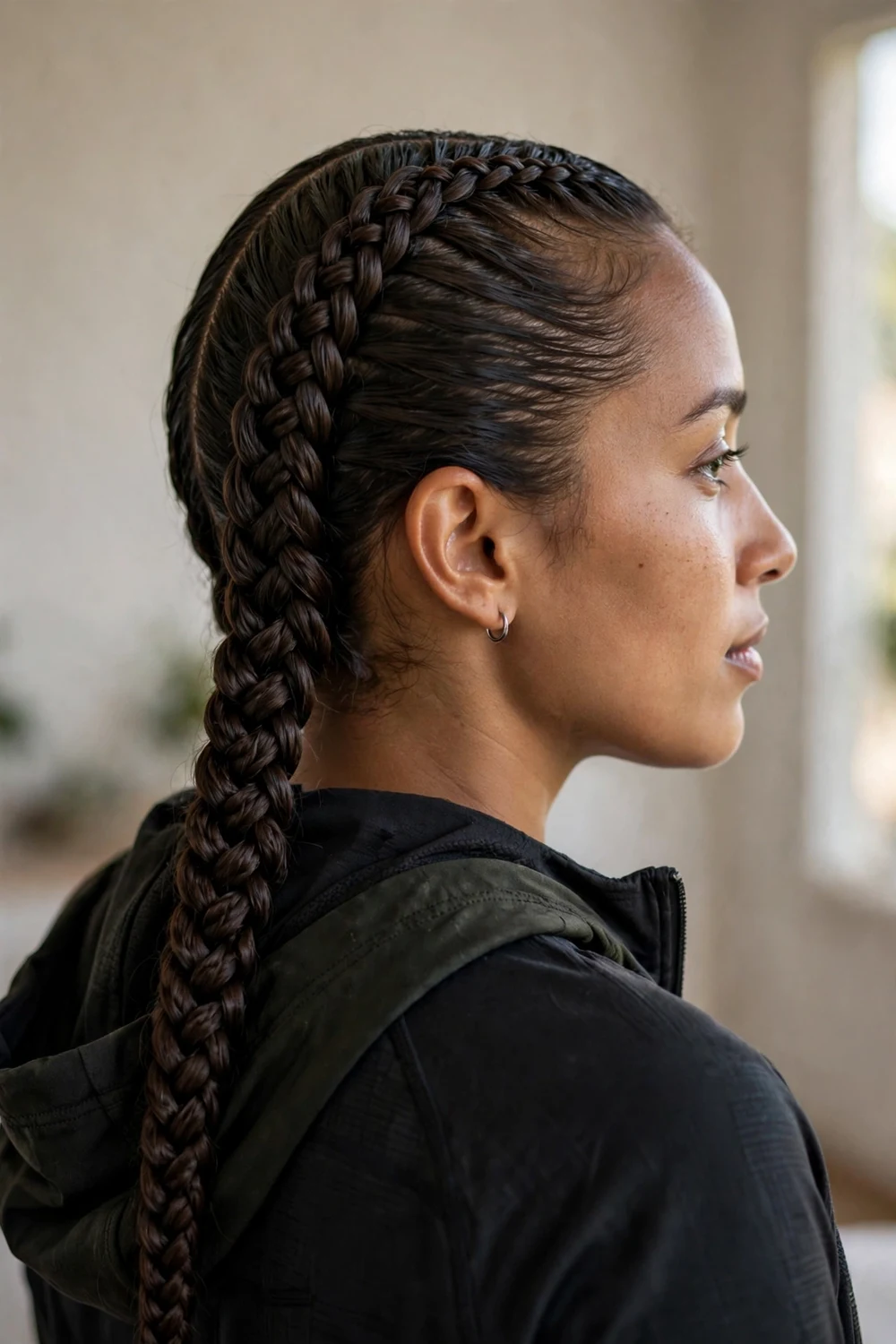
The dragon braid is a raised three-dimensional braid that runs down the center of the head, and on the court it’s as tough as it looks. Brush all hair back with strong-hold gel, then build the braid by pulling hair up and out from the center part instead of weaving flat. Because it stands raised off the scalp, it locks tension from root to tip and refuses to loosen. The slicked base keeps the hairline neat, and the braid’s texture survives contact better than flat styles. Long, thick hair shows it off best. Give yourself 15 minutes the first few times until the hand motion clicks.
Try this: Anchor the braid’s start with two crossed bobby pins at the crown. The braid’s weight can tug the first section loose without them.
9. Double Bubble Braids
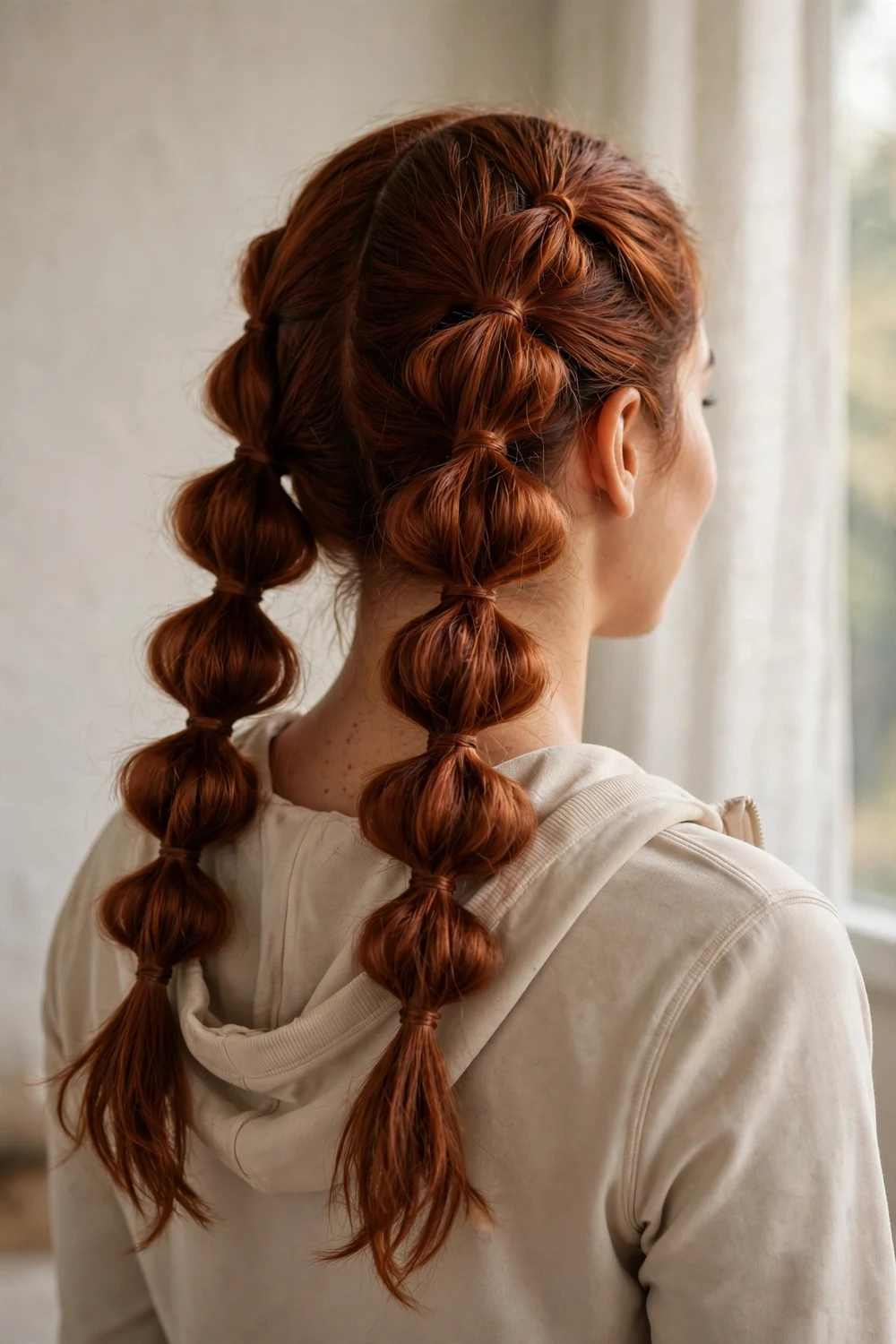
Double bubble braids split hair into two low or mid pigtails, each turned into a bubble braid. Two tails mean less weight pulling on any one spot, and each elastic checkpoint keeps the style from unraveling mid-game. It’s lighter-feeling than one heavy ponytail and keeps hair off both sides of the neck. Medium to long hair works, and the style takes about 10 minutes total. Players with fine hair like this one because the bubbled sections fake fullness without backcombing. Keep the bubbles even on both sides so the weight stays balanced when you run.
Try this: Tie the pigtails slightly higher than you think, near the ears’ top line. Sweat and movement drag tails down, so starting high ends at the right height by game’s end.
10. Slick-Back Sleek Bun
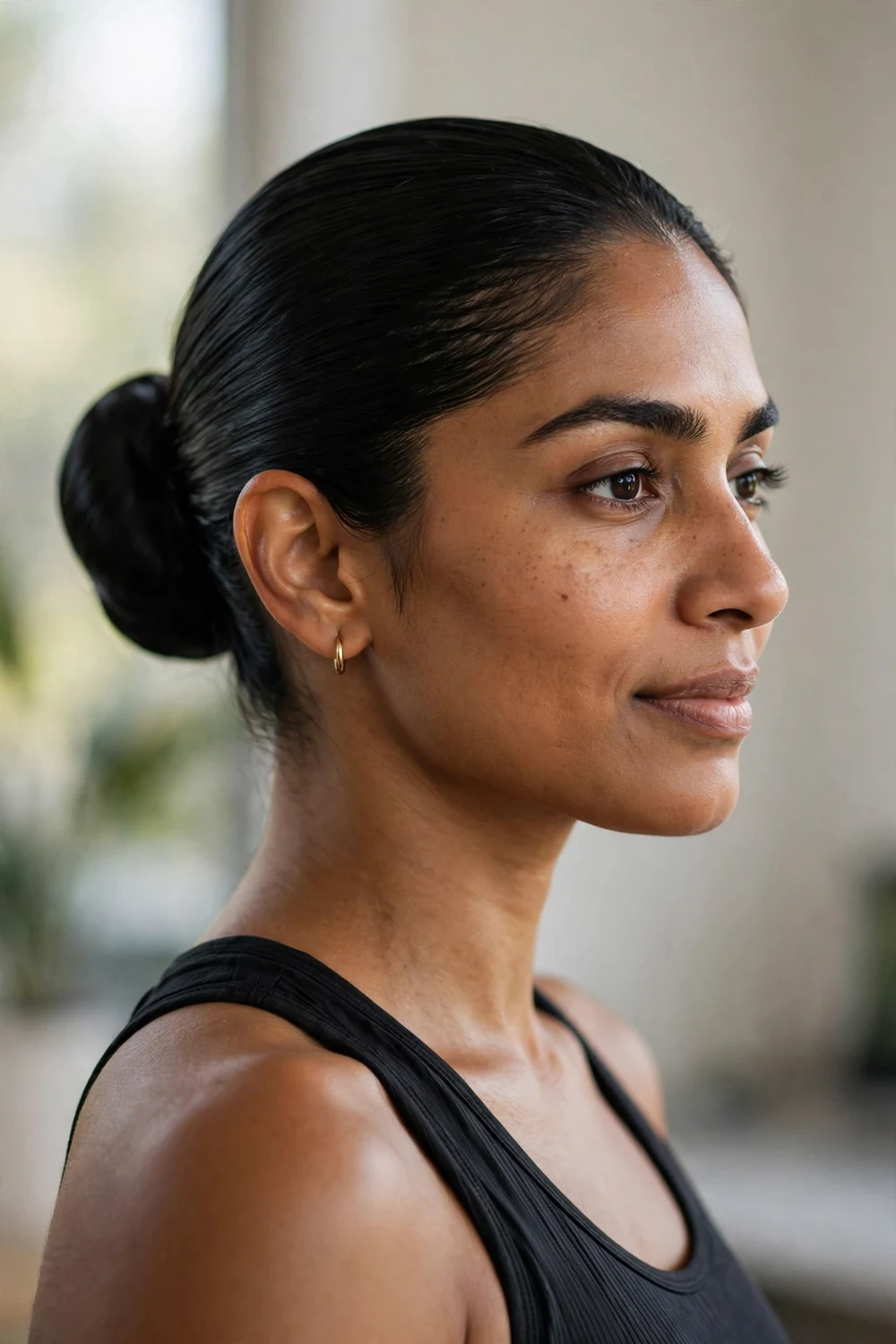
A sleek bun packs all your hair into one compact shape that can’t swing, whip, or tangle. Brush everything straight back, twist the length into a tight coil at the mid-back of the head, and pin it flat with bobby pins in a crisscross pattern. The slicked base and close-to-head shape make it one of the most distraction-free options for guards who need full peripheral vision. Medium to long hair works best, and it takes about 5 minutes with practice. A hair net over the bun adds insurance for championship games.
Try this: Twist the bun against the direction your hair naturally falls. The opposing tension grips the scalp better and the bun stays put through overtime.
11. Top Knot
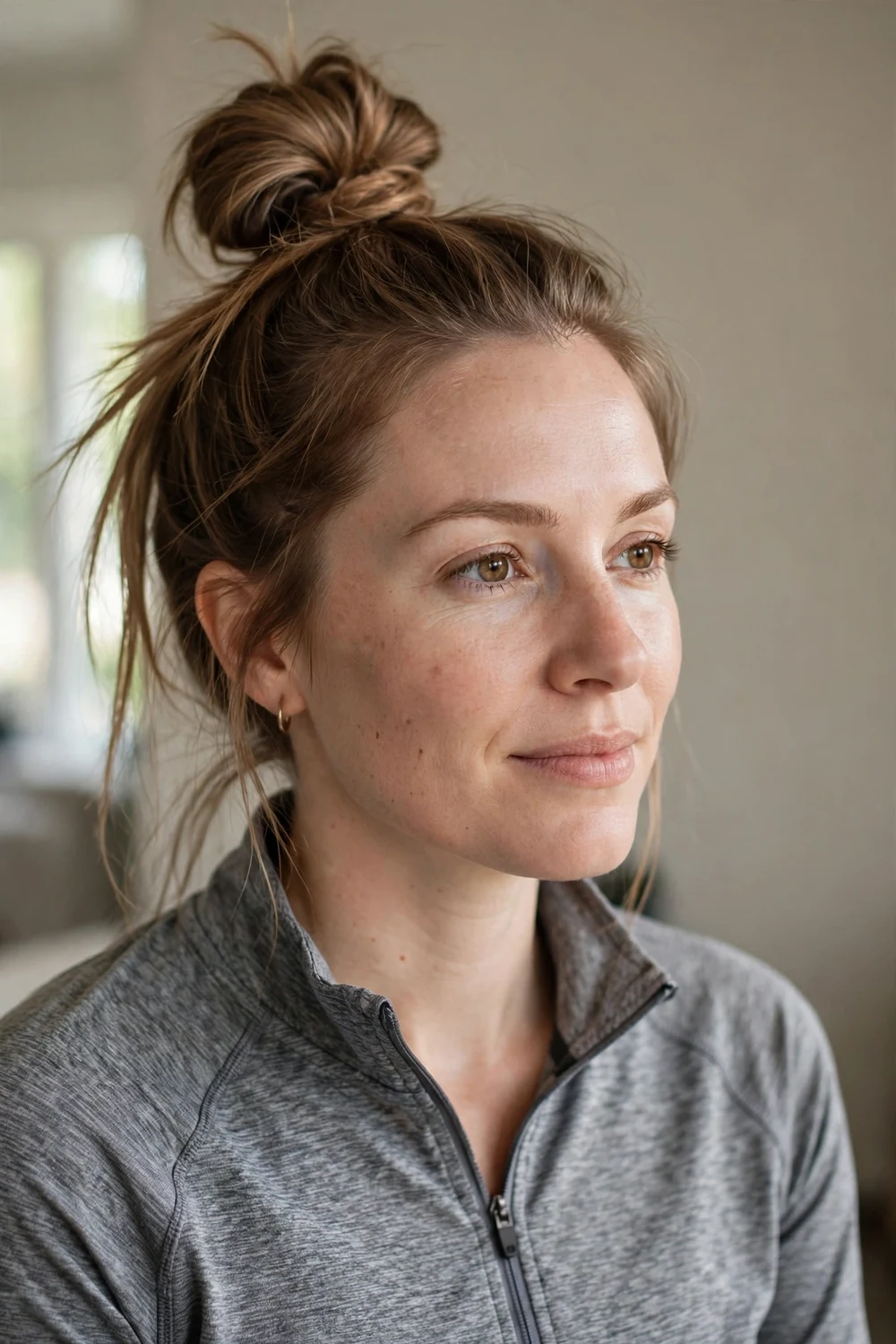
The top knot sits at the very crown, the one spot on the head where hair can’t fall into your face no matter how hard you move. Pull hair straight up, twist it into a tight knot, and pin it down hard with at least four bobby pins. Everything clears your forehead, your ears, and your neck at once. Long and medium hair both work, and thick hair actually holds the knot better because the mass anchors itself. It takes 3 minutes once you know your pin placement. For extra security, loop a second elastic around the knot’s base after pinning.
Try this: Build the knot on second-day hair or add dry shampoo at the roots first. A little grit gives the pins something to bite into, which matters when you sweat.
12. Low Bun

A low bun at the nape keeps hair anchored low and tight, which suits players who wear headbands or goggles since nothing sits under the band. Brush hair back into a low ponytail, twist it into a flat coil against the nape, and pin it in a star pattern so the pins pull in different directions. The low placement keeps weight off the crown and stops the headaches a high tight style can cause in long practices. Medium to long hair works, and the whole style takes 5 minutes. Smooth the sides with gel so no wisps escape during sprints.
Try this: Slide a wide fabric headband over the finished bun’s top edge. It absorbs sweat before it reaches the hairline and adds a second anchor for the style.
13. Two High Buns
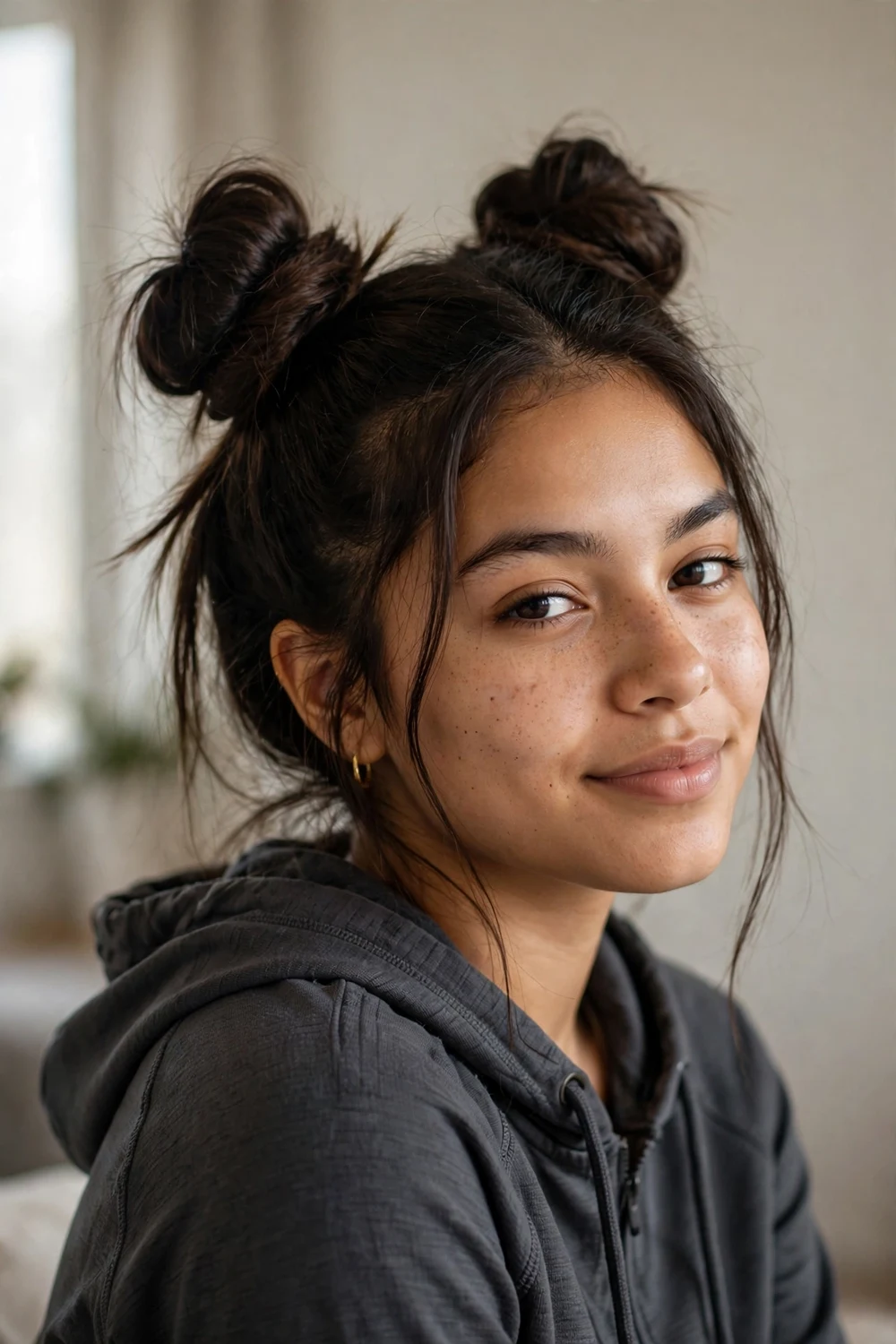
Two high buns, often called space buns, split hair into two compact knots that stay clear of everything. Part hair down the middle, make a high pigtail on each side, then twist each into a tight bun and pin it down. Each bun is half the weight of one big knot, so they don’t pull or bounce loose during play. The style suits medium to long hair and flatters players who want something with personality that still performs. It takes about 8 minutes. Make both buns the same size so the balance feels even when you turn your head fast.
Try this: Braid each pigtail before coiling it into a bun. Braided buns are denser, hold pins better, and survive contact under the basket.
14. Cornrows
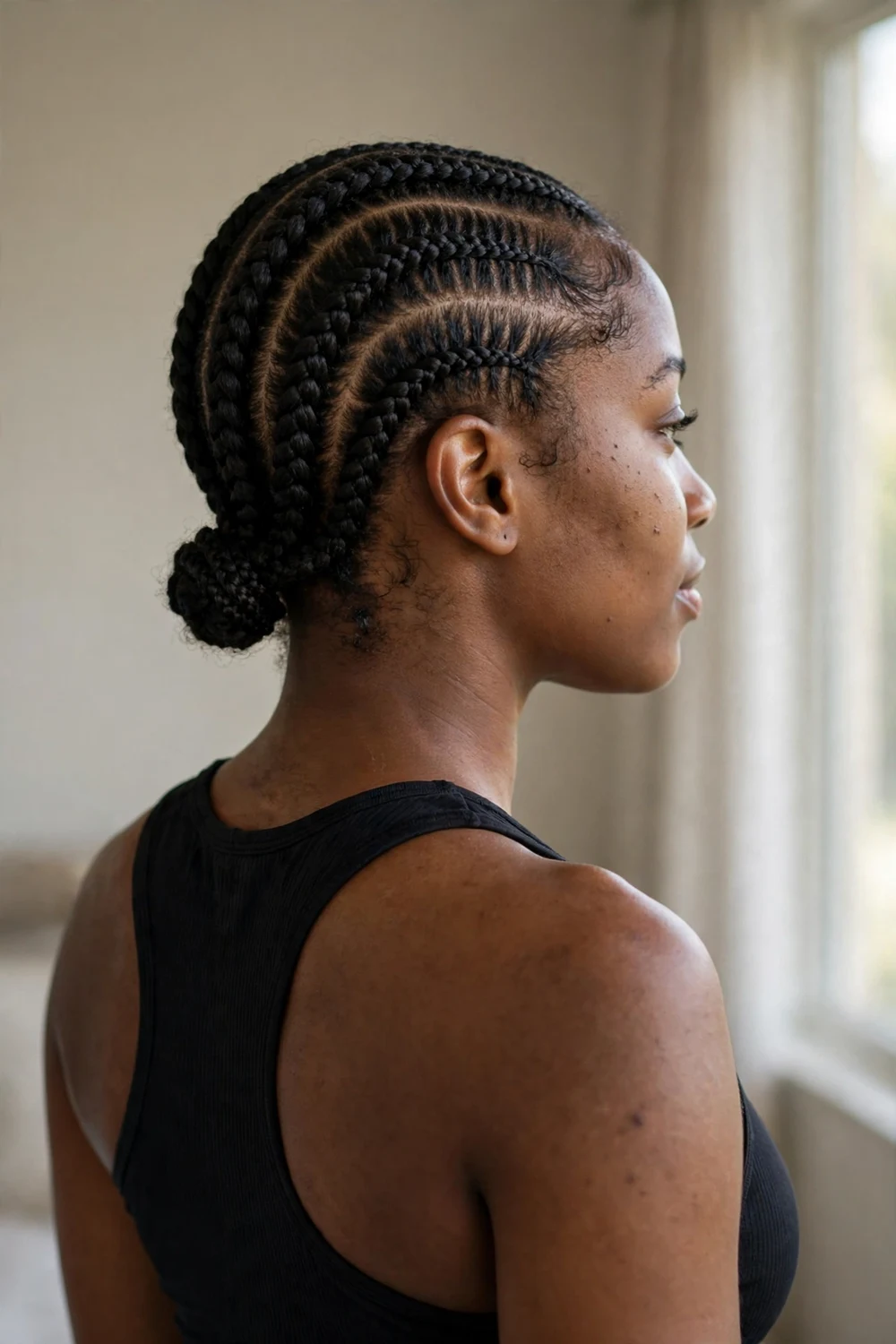
Cornrows are the gold standard for players who want to stop thinking about their hair for weeks. Braided tight to the scalp in clean rows, they don’t move, don’t tangle, and handle sweat, showers, and back-to-back games without a touch-up. They’re a true protective style for natural hair, guarding against the breakage that comes from daily washing and friction. They last 2 to 4 weeks with nightly care. Keep the parts moisturized with a light oil, sleep in a satin bonnet, and they stay neat through an entire season’s worth of practices.
Try this: Ask for feed-in cornrows rather than knot-based ones. The gradual feed-in puts less tension on the hairline, which matters when styles stay in for weeks.
15. Two-Strand Twist Braids

Two-strand twists are quicker to install than cornrows but nearly as secure on the court. Each section is twisted rope-style against the scalp or left hanging, and the coiled texture grips itself so the style resists unraveling. They work for natural and relaxed hair, take 1 to 3 hours to install depending on size, and last 1 to 2 weeks. Pull them into a low ponytail or bun on game day for a tidy shape. The twists also stretch natural hair without heat, which is a bonus during heavy training weeks.
Try this: Seal the ends with a dab of shea butter instead of rubber bands. Buttered ends hold the twist together and rinse out cleanly when you take the style down.
16. Mini Twists
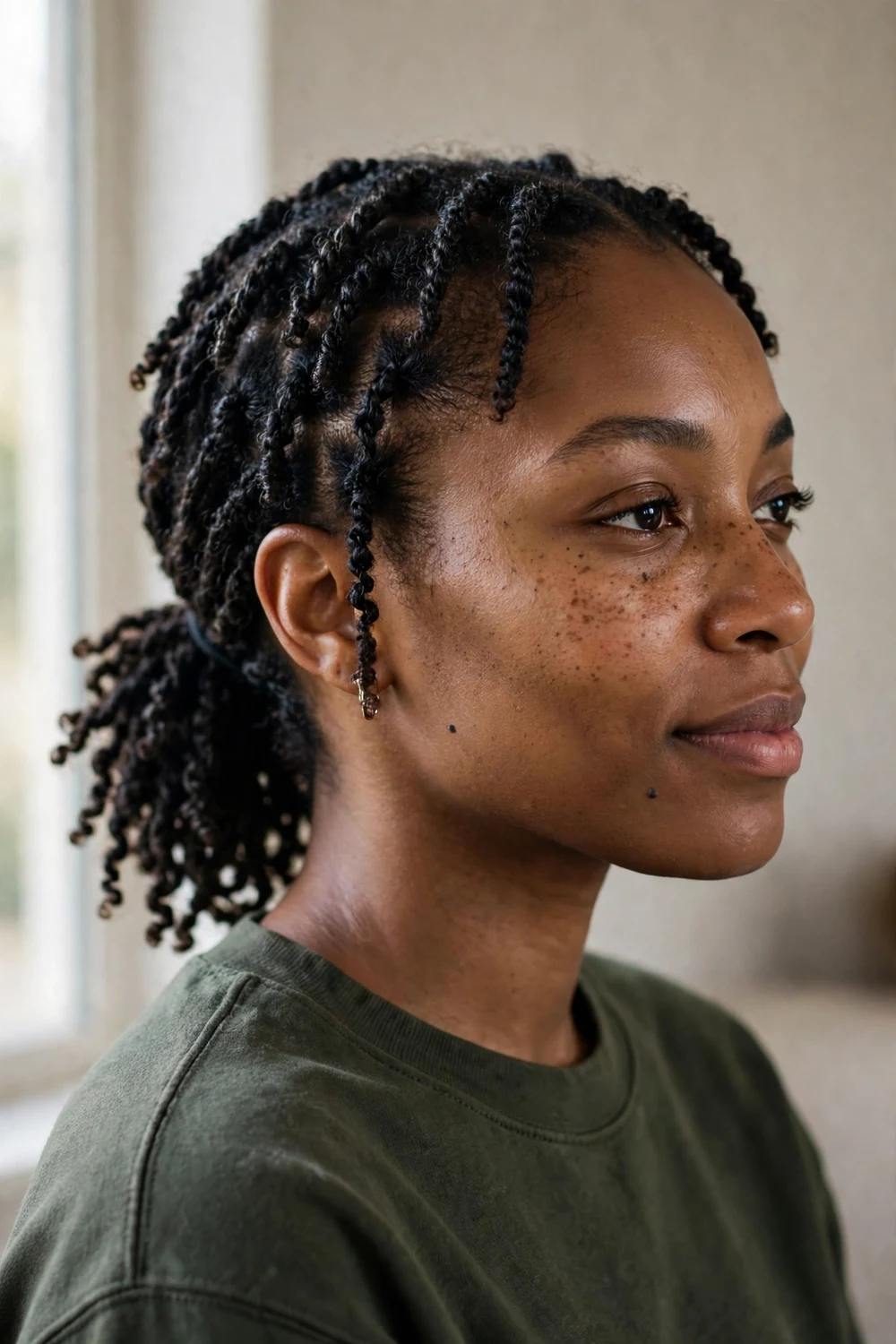
Mini twists take the twist concept smaller: dozens of thin twists that move freely but stay put as a unit. They’re lighter than chunky twists, dry faster after washing, and can be styled into ponytails, buns, or puffs on game day. Installation takes longer, usually 3 to 5 hours, but they last 3 to 4 weeks with care. On the court, gather them into a high ponytail and the mass moves as one piece instead of flying apart. They’re one of the lowest-touch options for natural hair during a busy season.
Try this: Rinse sweat out with water after games instead of shampooing every time. A water rinse plus light oil on the scalp keeps twists fresh between wash days.
17. Box Braids Pulled Into a Ponytail
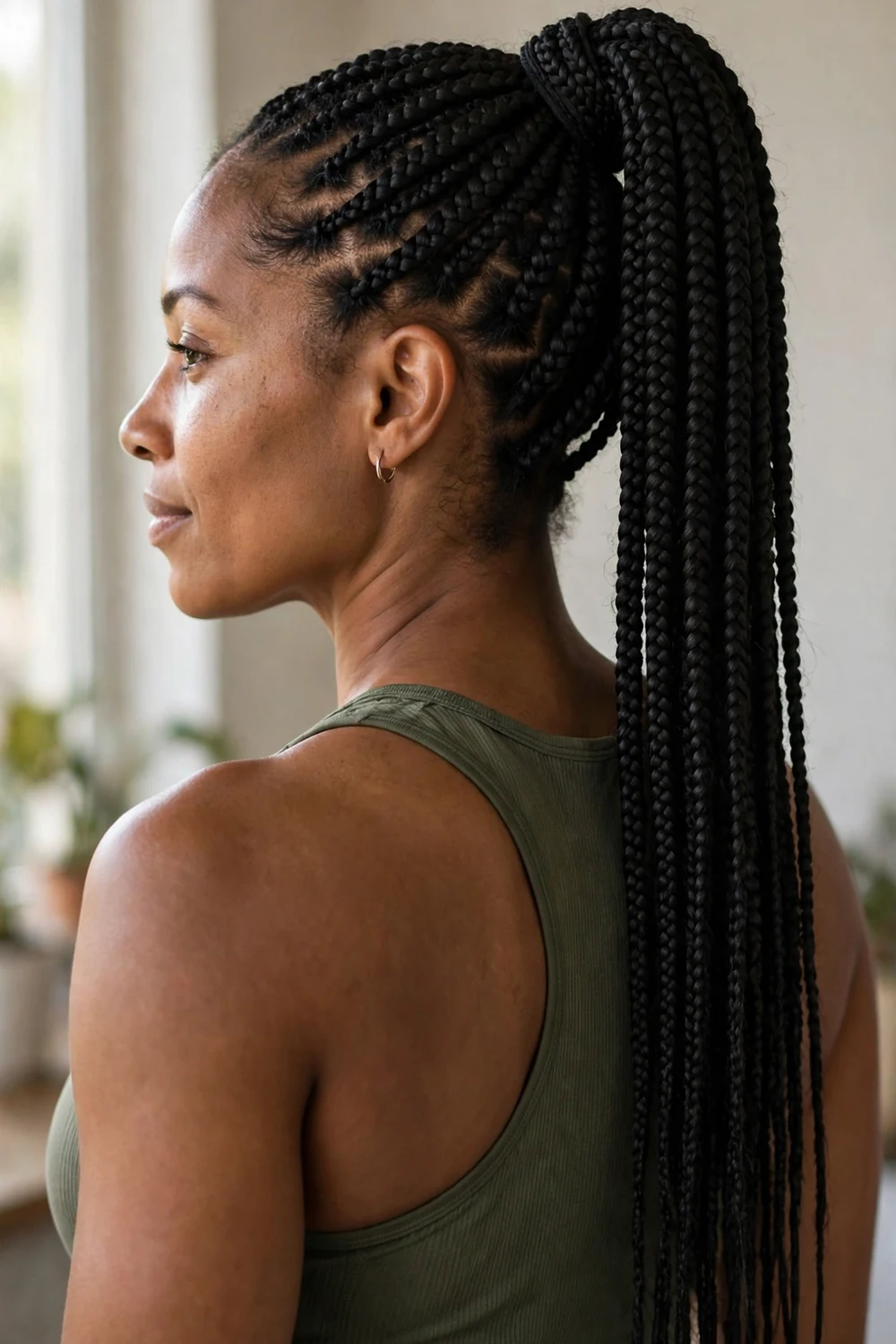
Box braids are a season-long investment that pay off every game day. Worn loose they can swing, so the court version gathers them into a high ponytail with a thick elastic or a braided wrap. The braids’ weight keeps the ponytail hanging straight instead of bouncing, and nothing comes undone no matter how physical the game gets. They last 4 to 6 weeks, survive sweat and swimming, and need only scalp oiling between washes. Tie them up high enough that the tail clears your shoulders during defense.
Try this: Use a large fabric scrunchie over the elastic. It grips braids without slipping and won’t snap strands the way thin elastics can.
18. Afro Puff
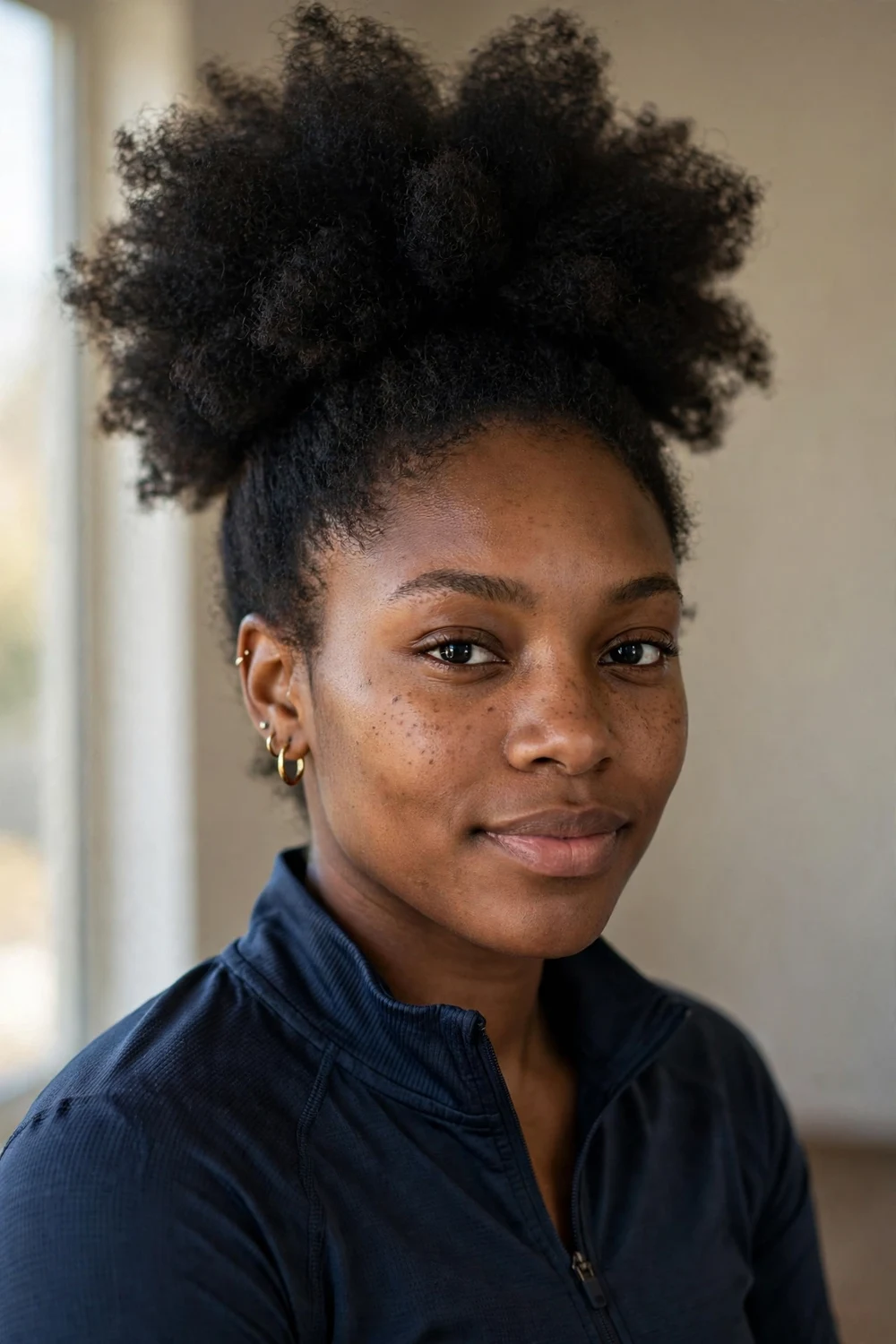
The afro puff gathers natural hair into one rounded shape at the crown, and it’s as functional as it is striking. Brush stretched or picked-out hair up and secure it with a wide band, letting the puff sit high and full. Because all the hair is anchored at one point, nothing falls forward, and the puff absorbs sweat at the band line instead of letting it run down the face. It suits medium to long natural hair and takes 5 minutes on stretched hair. Fluff the puff with an afro pick after securing so it keeps its shape through the game.
Try this: Use two bands in an X pattern instead of one. The cross anchor stops the puff from sliding down as you sweat, which is the most common failure point.
19. High Puff Ponytail
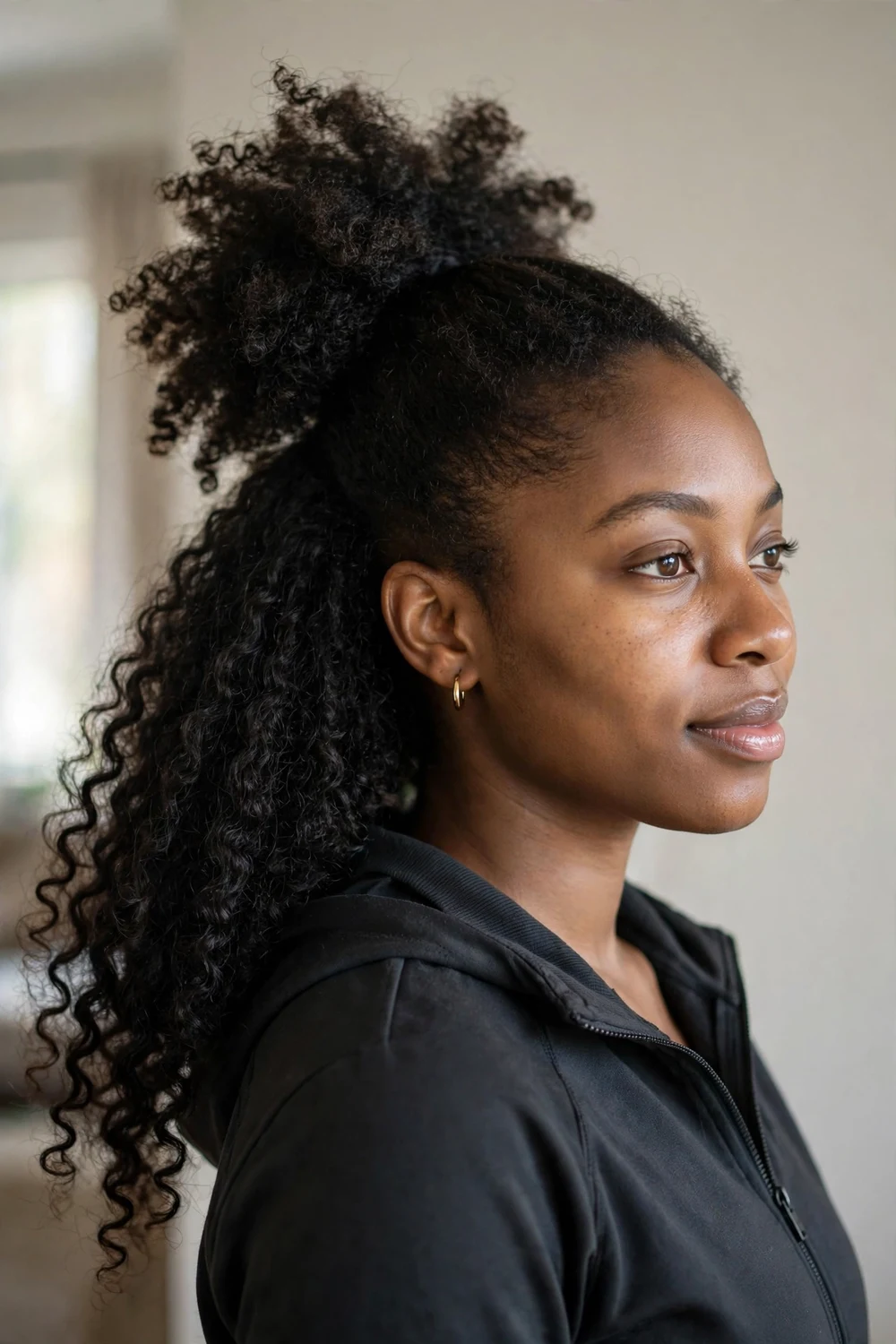
A puff ponytail is the middle ground between an afro puff and a traditional ponytail: the base is banded tight at the crown while the length flows free in a defined puff. It keeps the roots completely secure while giving natural texture room to move. Brush hair up with a paddle brush, band it firmly, and define the puff with a curl cream so the ends don’t frizz out by halftime. It works for medium to long natural and curly hair and takes about 7 minutes. The style also transitions straight to post-game plans without restyling.
Try this: Apply curl cream to the puff in sections before banding, then scrunch. Defined sections hold their shape longer under sweat than one big scrunch.
20. Side Braids
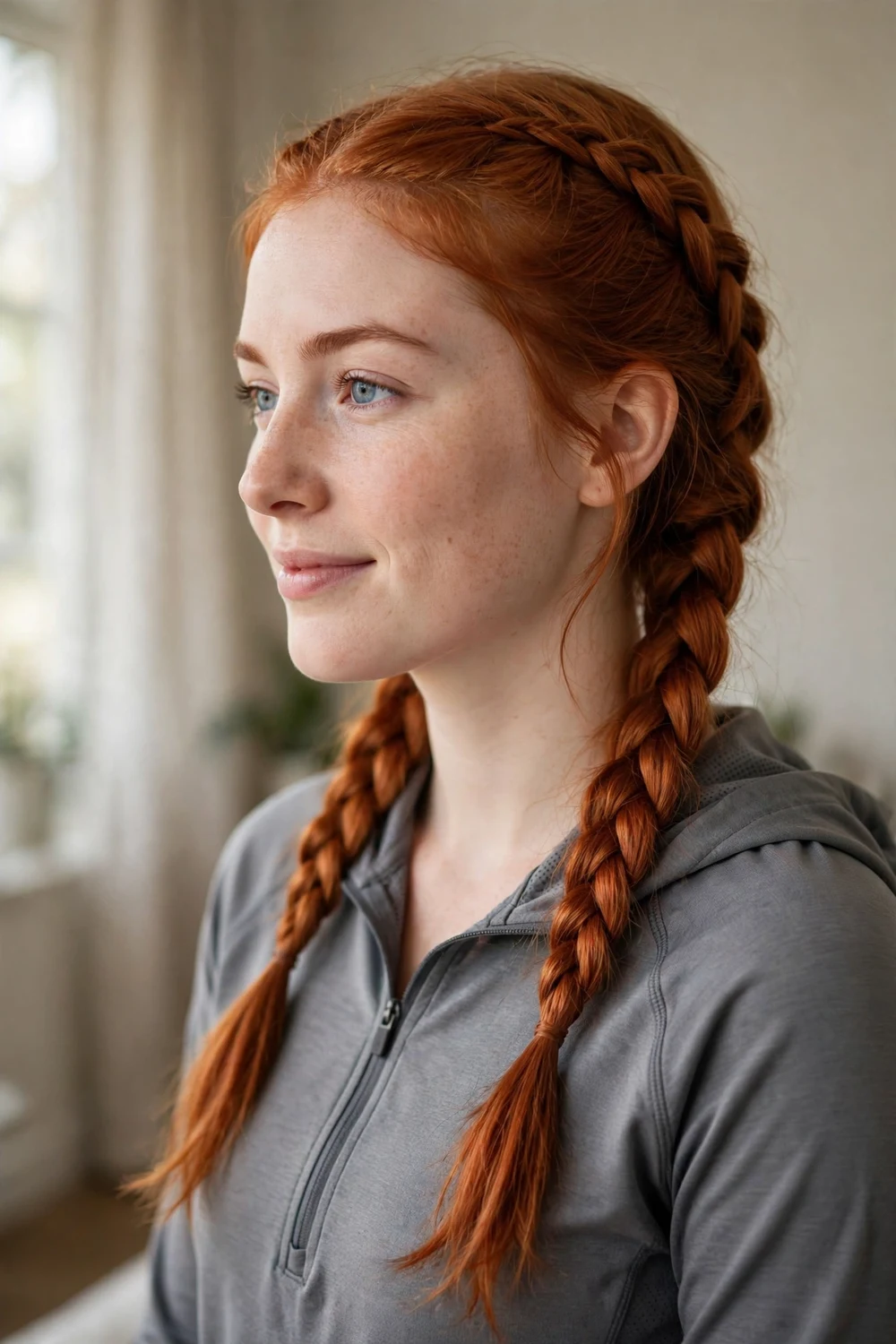
Side braids sweep all hair over one shoulder in one or two braids, which keeps it off the neck on hot courts while staying fully secured. Brush hair to one side, braid from behind the ear down past the shoulder, and tie it off with a coated elastic. The side placement means the braid never sits between your back and the floor during a fall, a small safety plus. Long hair carries it best. It takes 6 minutes and holds through a game because the braid’s own weight keeps it draped instead of bouncing.
Try this: Start the braid behind the ear rather than at the nape. The higher start keeps short layers from popping out at the hairline during sprints.
21. Half-Up, Half-Down With Clips
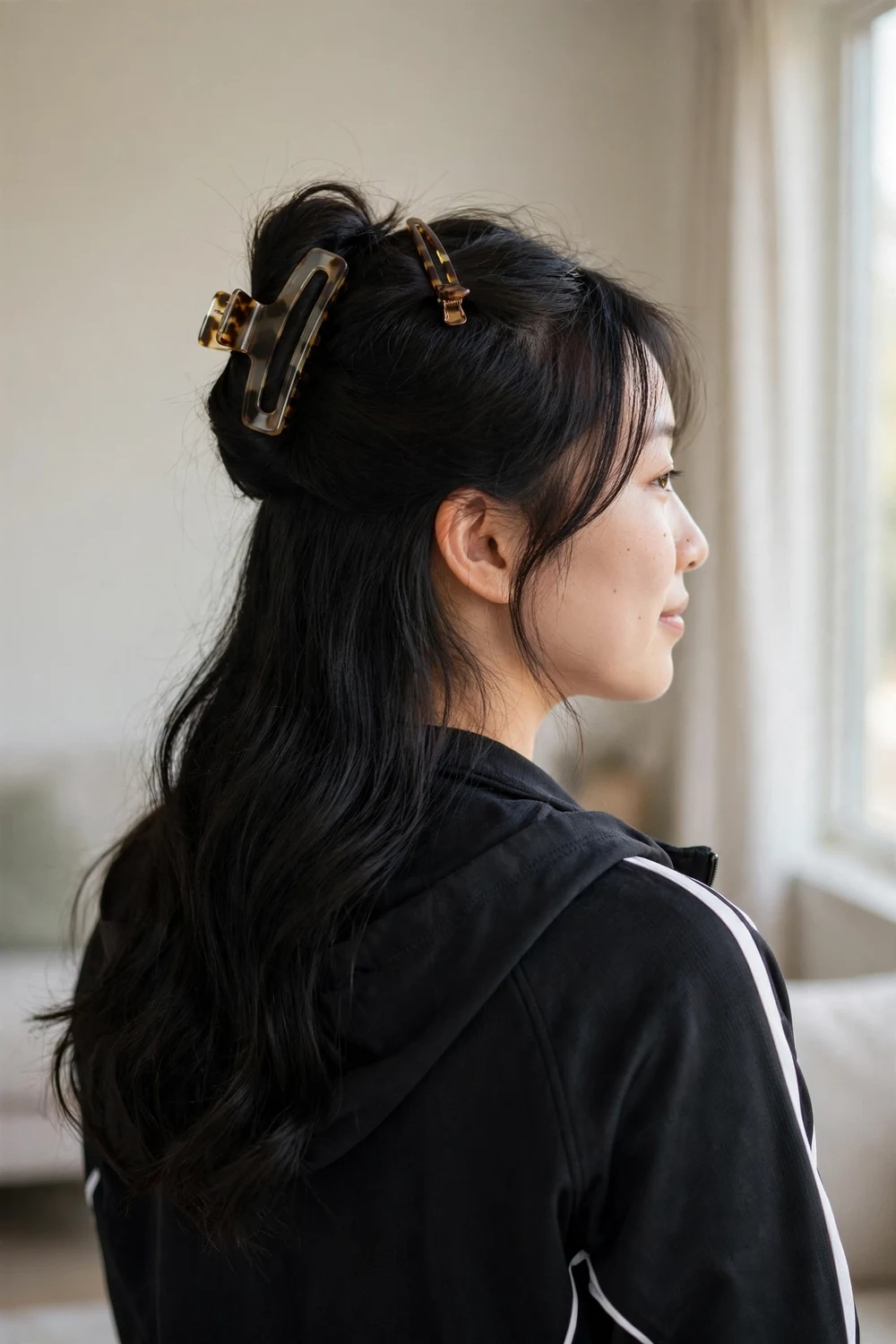
Not every player wants all their hair pulled back, and the half-up style is the compromise that still works. Take the top section from temple to temple, smooth it back, and secure it with two flat clips or a small elastic at the crown. The top anchor keeps hair out of the eyes and off the forehead while the rest stays down. It suits medium to long hair and takes 3 minutes. This is a light-practice or warm-up style rather than a full-contact game choice, since the loose length can still shift during hard play.
Try this: Use flat no-crease clips instead of bobby pins. They grip more hair with less slipping and don’t leave dents for post-game styling.
22. Wide Headband Over a Low Ponytail
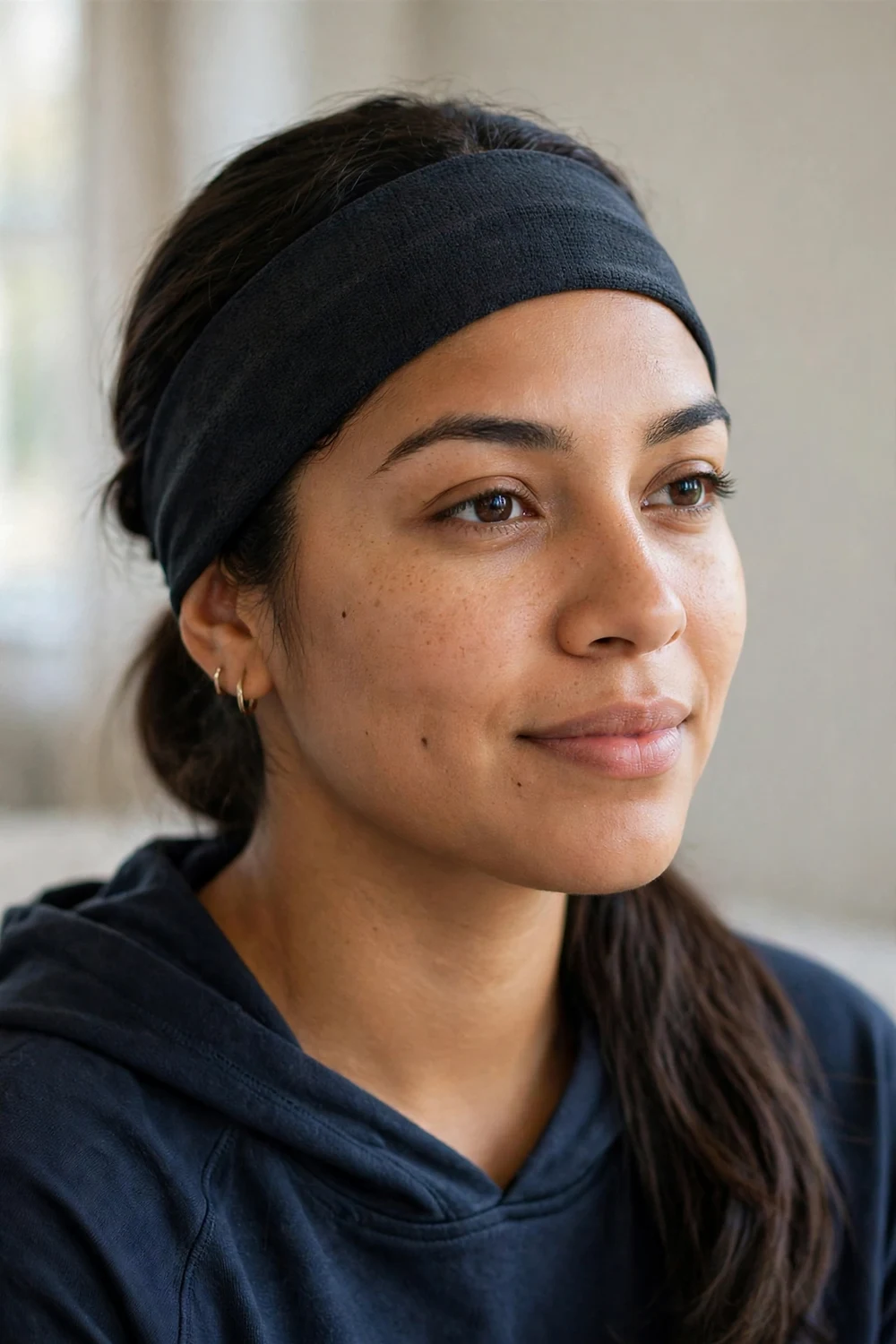
Sometimes the accessory does the heavy lifting. A wide fabric headband worn over a low ponytail locks the hairline down, absorbs sweat before it reaches your eyes, and stops short layers from escaping at the temples. Tie the ponytail low at the nape first, then slide the band on so it sits an inch behind the hairline. The double system handles medium to short hair that can’t quite make a secure high style yet. It’s also the fastest option here at under 2 minutes, and the headband can be rinsed and reused all season.
Try this: Choose a headband with silicone grip strips on the inside. The strips stop it from riding up when you sweat, which is where plain fabric bands fail.
23. Low Fade
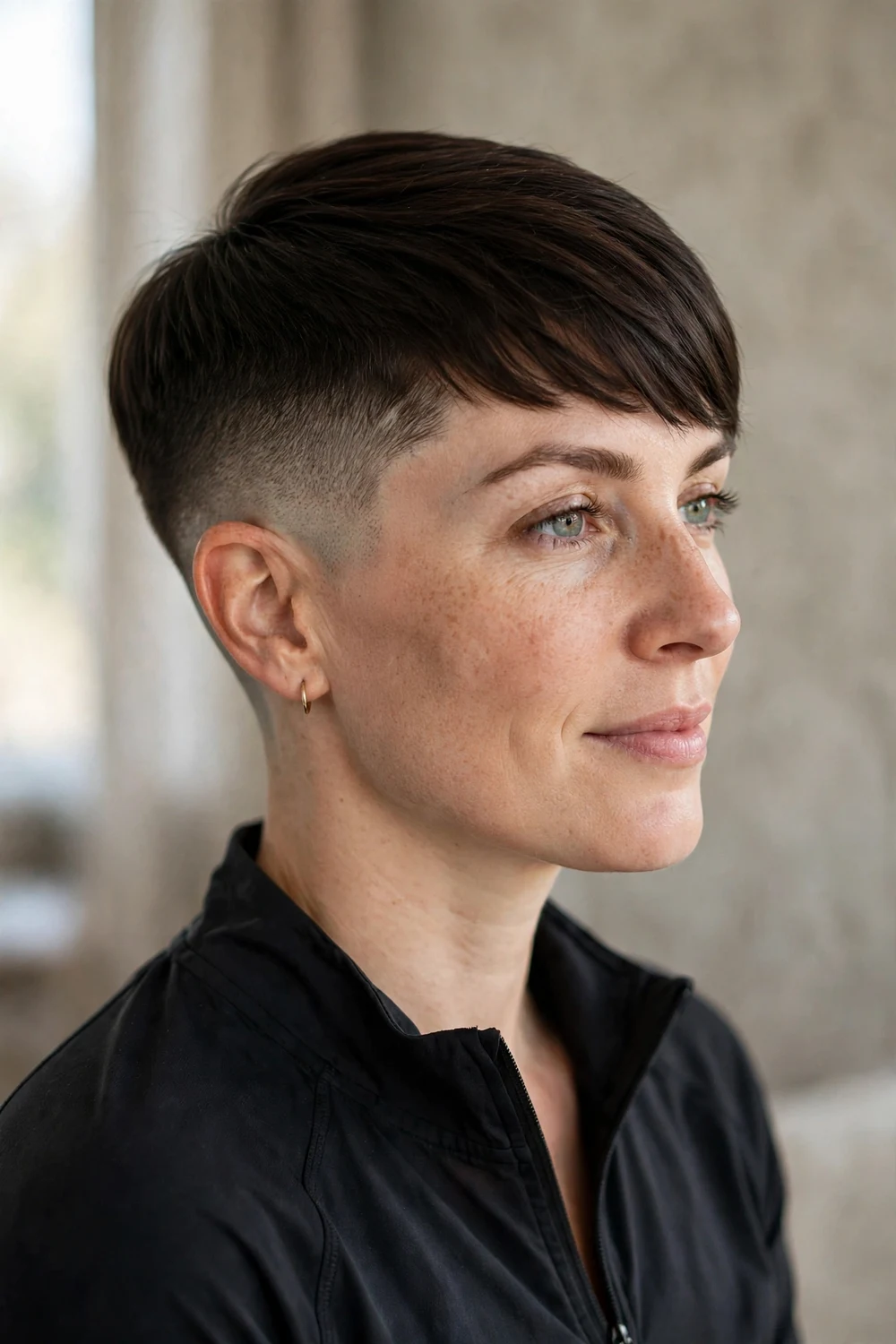
The low fade keeps hair short at the sides and nape with a gradual blend into a slightly longer top, and for players it’s the definition of zero maintenance. There’s nothing to tie, pin, or re-do. You wash, towel off, and walk onto the court. The short length means sweat evaporates fast and no hair ever touches your face or neck. It needs a barber touch-up every 2 to 3 weeks to keep the blend sharp. Players who hate pre-game styling routines usually end up here and stay here.
Try this: Keep a soft brush in your gym bag and brush the top forward after toweling off. Thirty seconds of brushing keeps the fade looking intentional between cuts.
24. Taper Fade
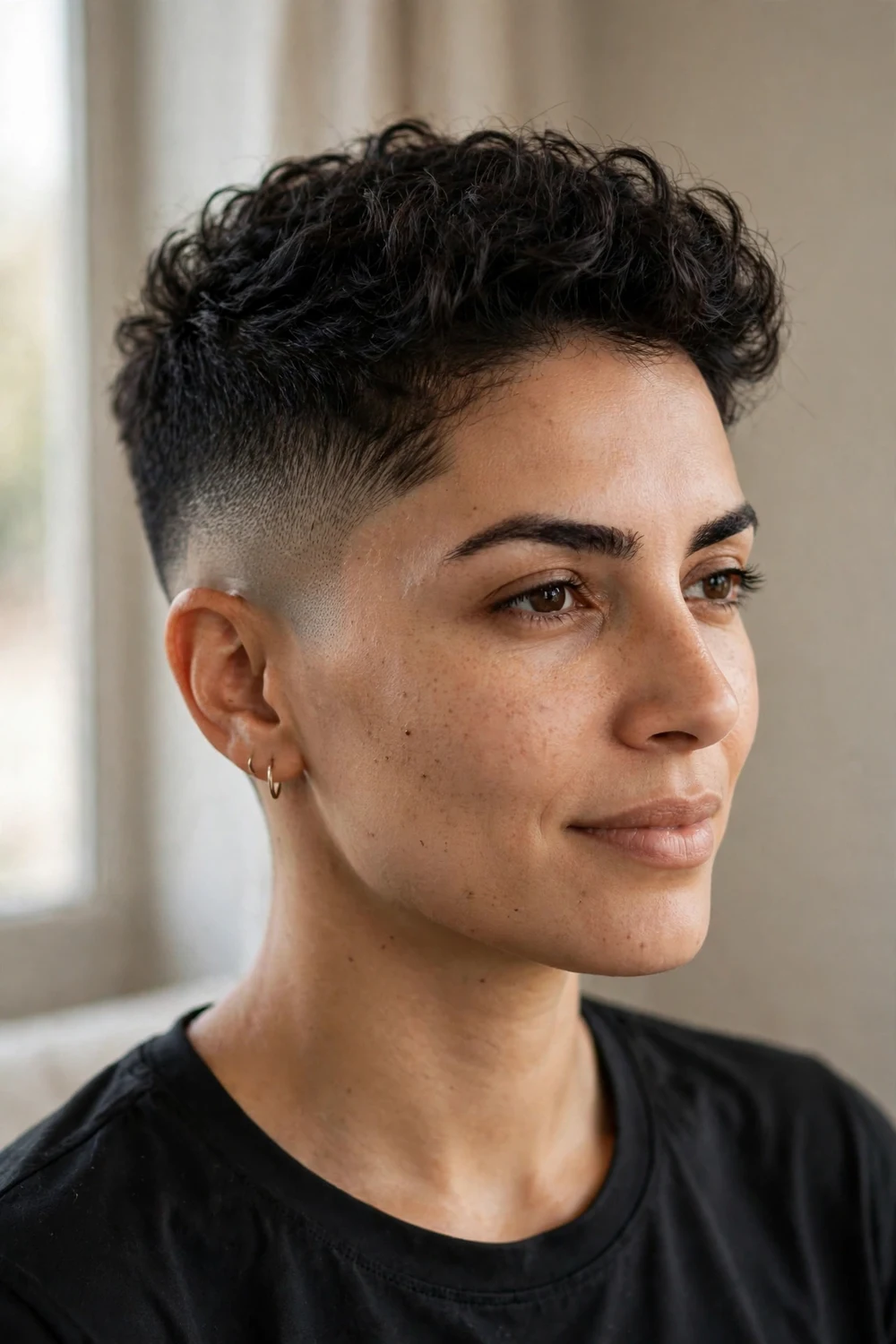
A taper fade is the sharper cousin of the low fade: the sides taper down gradually while the top stays full enough to style. On the court it behaves the same way, with no loose hair and no styling needed before tip-off. Off the court it gives you more to work with, a little texture on top you can push forward or spike with product. It suits straight to coily textures and needs the same 2 to 3 week barber rhythm. The clean lines also pair well with a sweatband without bunching.
Try this: Ask your barber to keep the taper low and tight around the ears. A tight taper handles sweat better because there’s less hair for moisture to cling to.
25. High Top Fade
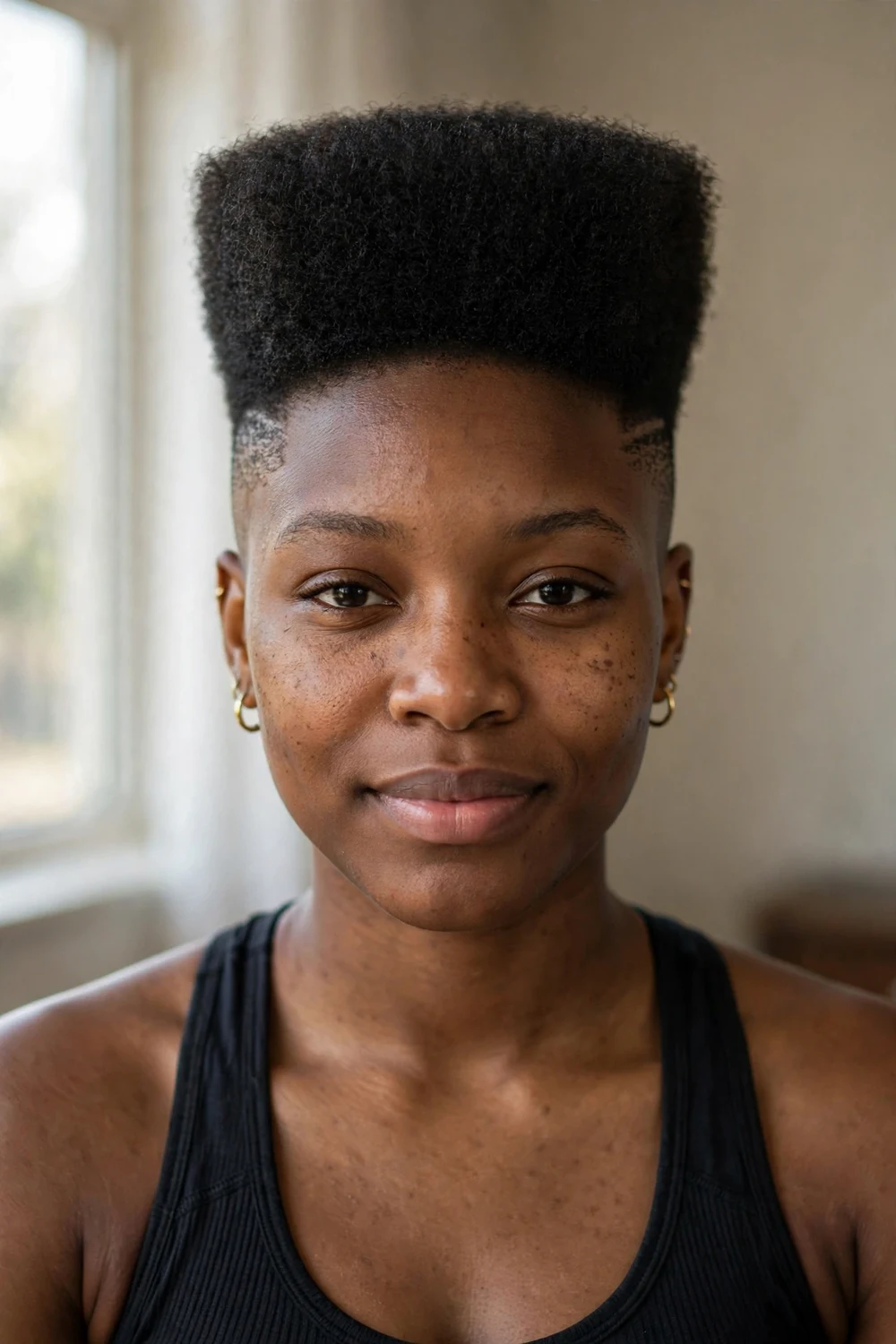
The high top fade keeps the sides very short while the top stands tall and full, and it’s a statement that needs nothing on game day. The height on top doesn’t interfere with play because the sides are clipped close and the top is shaped to stay put. Sweat management is built in: short sides dry fast and the shaped top doesn’t collapse into your face. It needs a barber every 2 weeks to hold the silhouette. Players with coily or curly texture get the most natural volume from this cut with the least product.
Try this: Wrap the top in a durag overnight. It trains the hair to lay in the right direction and keeps the shape crisp between cuts.
26. Faux Hawk Fade
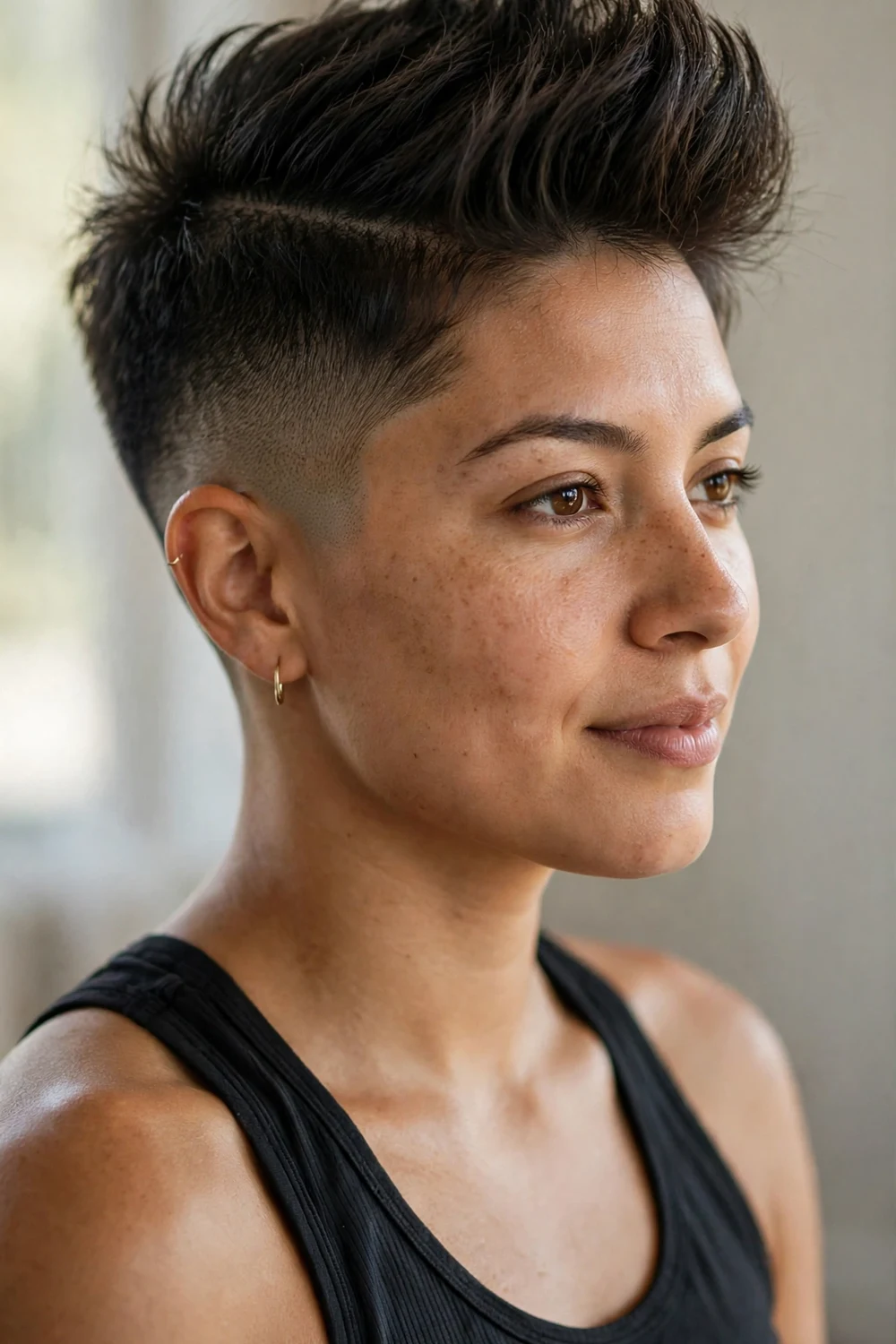
The faux hawk fade runs a strip of longer hair down the center with faded sides, giving edge without the upkeep of long hair. Nothing touches your face, nothing needs tying, and the center strip is short enough to stay put through contact. It’s cut to hold its shape, so your pre-game routine is just a quick brush or a dab of matte product through the strip. Touch-ups every 2 to 3 weeks keep the fade lines clean. Players who want personality in their cut without sacrificing function land here.
Try this: Use a matte clay instead of gel on the center strip. Clay holds without shine and won’t run when you sweat the way gel can.
27. Curly Top Fade
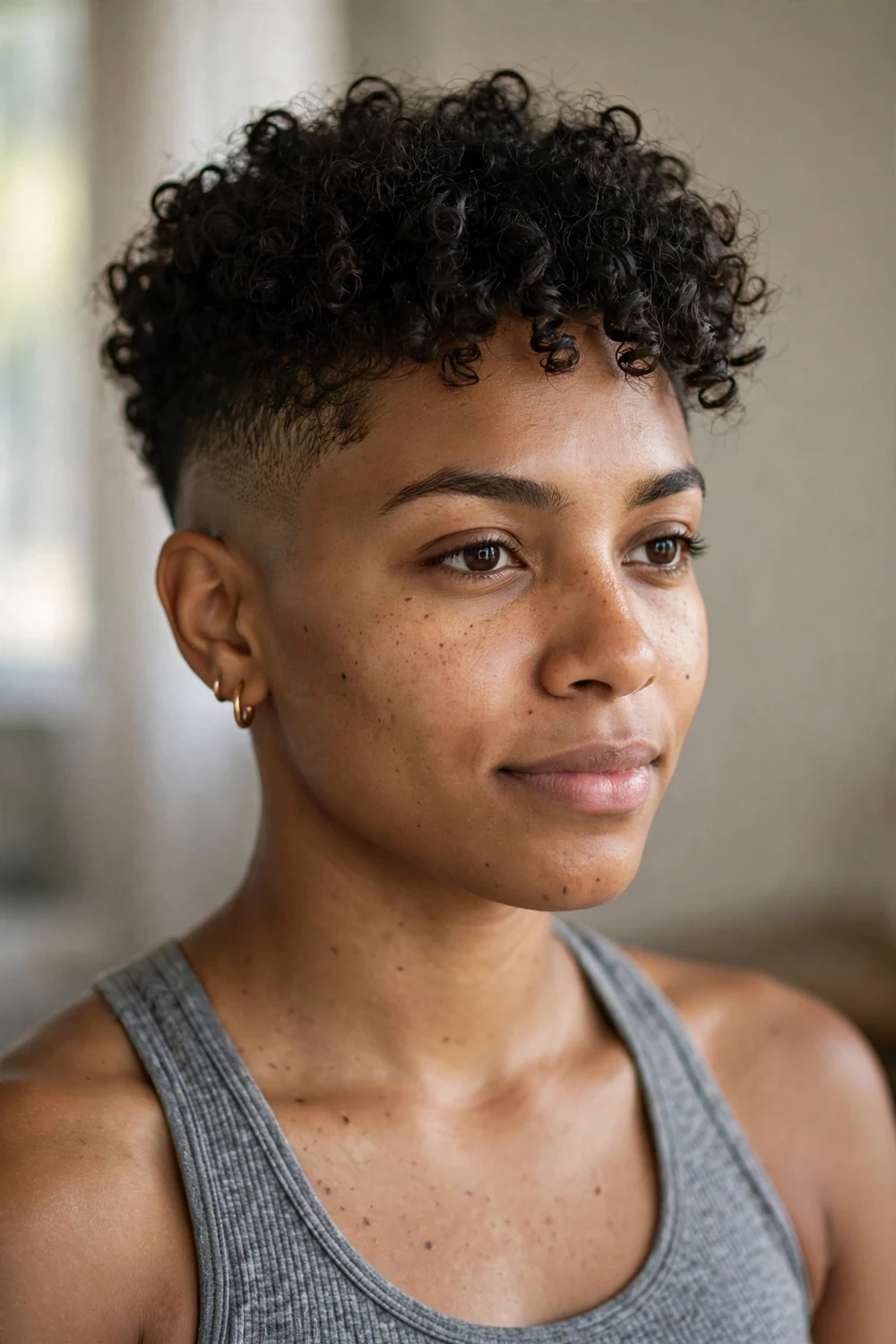
A curly top fade lets natural curls do the talking: faded sides keep everything neat while defined curls sit on top. The curls are short enough that they don’t fall into the eyes, and the faded sides handle all the sweat. Define the top with a curl cream after washing and the shape holds through a game without restyling. It suits coily to curly textures best and needs a barber every 2 to 3 weeks. The cut also grows out gracefully, so a missed appointment doesn’t ruin the look.
Try this: Refresh the top with a water spritz and a pea-sized amount of curl cream before games. It reactivates the curl pattern without a full wash.
28. Dreadlocks Tied Back
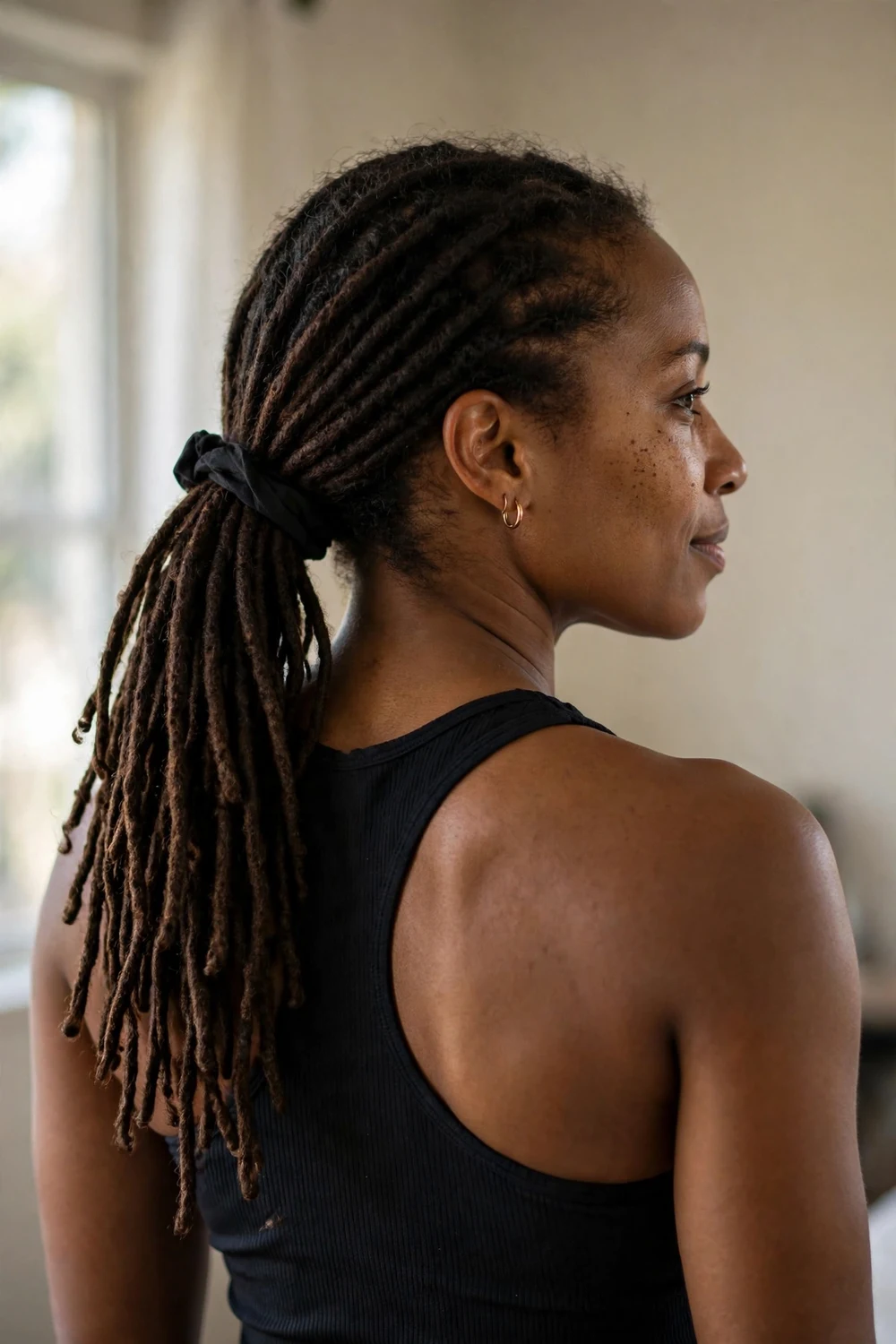
Dreadlocks are already low maintenance, and tying them back makes them fully game-ready. Gather the locs into a low or high ponytail with a thick band, or braid two front locs back to keep the hairline clear. The locs’ weight keeps the tail hanging straight instead of bouncing, and the style survives the most physical games without a touch-up. Palm-roll new growth weekly and keep the scalp clean with a residue-free shampoo, and locs stay healthy through a sweaty season. Tie them high enough that the tail clears your shoulders on defense.
Try this: Wrap the ponytail base with one loc instead of an elastic. A wrapped loc distributes weight evenly and never snaps the way a tight band can.
29. Buzz Cut
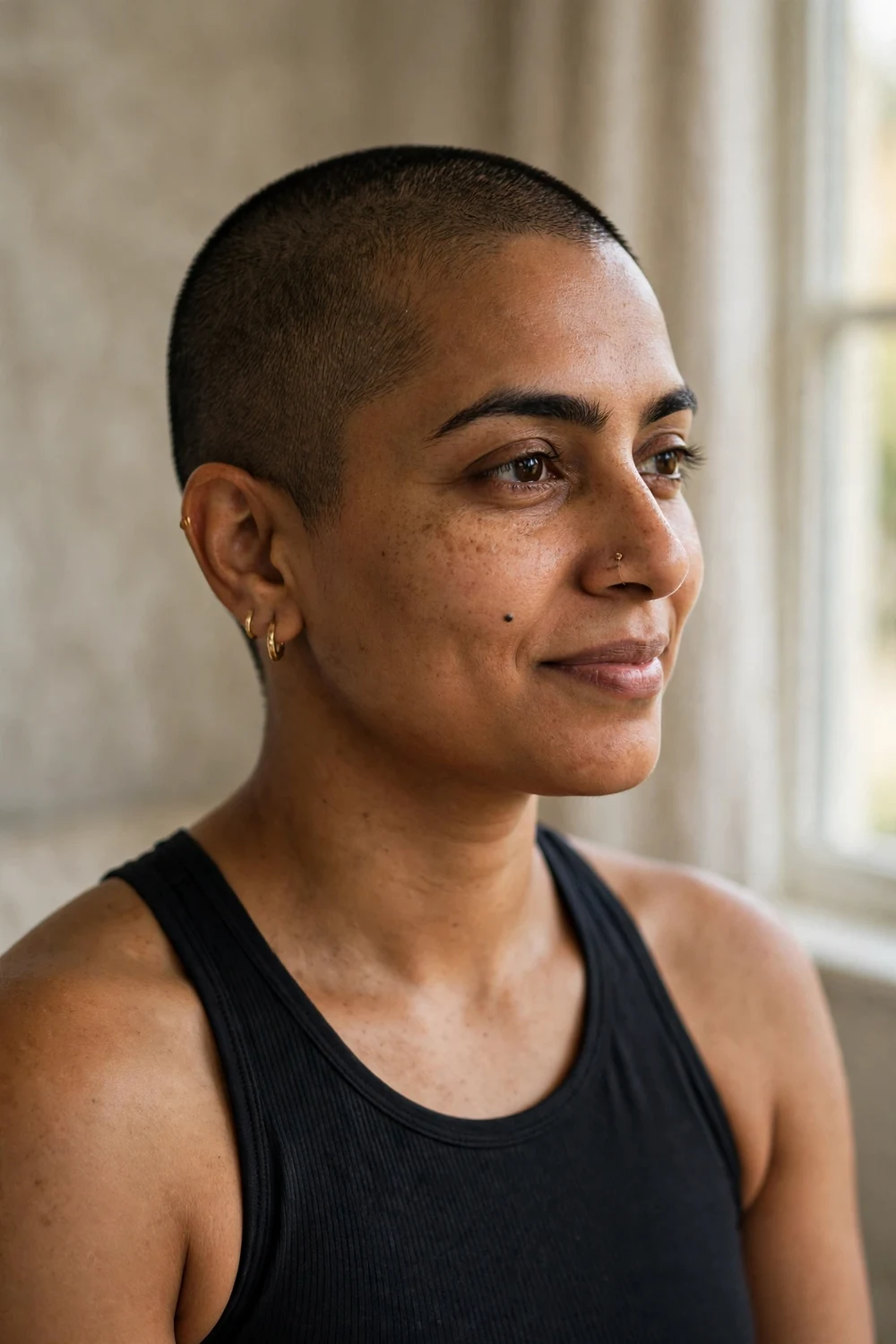
The buzz cut is the ultimate set-it-and-forget-it court style. Clipped to one even length all over, it needs no styling, no ties, no pins, and no touch-ups between games. Sweat evaporates in minutes, nothing touches your face, and your pre-game routine drops to zero. Maintenance is a clipper pass every 2 to 4 weeks, which many players do at home. It’s also the most honest test of the list’s core rule: the best basketball hairstyle is the one you never have to think about. If styling time is your enemy, this wins.
Try this: Apply sunscreen to your scalp before outdoor games. A buzzed scalp burns fast, and most players forget it until the first red practice.
Basketball Hairstyles Comparison at a Glance
| Style | Best For | Difficulty | Hold Time |
|---|---|---|---|
| Slick-Back High Ponytail | Quick game-day fix | Easy | 2 to 3 hours |
| Slick Back Into Two Braids | Full-game security | Medium | Full game |
| Double French Braids | Balanced, even hold | Medium | Full game |
| Two Braids Into a Ponytail | Taming front layers | Medium | Full game |
| Braided Ponytail | Long hair control | Easy | Full game |
| Slick Back Into a Bubble Braid | Trendy secure tail | Easy | 3 to 4 hours |
| Two Braids Into a Braided Bubble Braid | Tournament days | Hard | All day |
| Slick Back Into a Dragon Braid | Maximum root lock | Hard | Full game |
| Double Bubble Braids | Lightweight pigtails | Easy | 3 to 4 hours |
| Slick-Back Sleek Bun | Zero distractions | Easy | Full game |
| Top Knot | Fastest updo | Easy | 2 to 3 hours |
| Low Bun | Headband wearers | Easy | Full game |
| Two High Buns | Balanced weight | Easy | 3 to 4 hours |
| Cornrows | Weeks of no styling | Hard | 2 to 4 weeks |
| Two-Strand Twist Braids | Natural hair protection | Hard | 1 to 2 weeks |
| Mini Twists | Low-touch season style | Hard | 3 to 4 weeks |
| Box Braids Into a Ponytail | Long-term protection | Hard | 4 to 6 weeks |
| Afro Puff | Natural texture volume | Easy | Full game |
| High Puff Ponytail | Curly secure base | Easy | Full game |
| Side Braids | Off-neck drape | Easy | 3 to 4 hours |
| Half-Up, Half-Down | Light practice days | Easy | 1 to 2 hours |
| Headband + Low Ponytail | Short or growing hair | Easy | 2 to 3 hours |
| Low Fade | Zero styling routine | Easy | Until next cut |
| Taper Fade | Sharp low upkeep | Easy | Until next cut |
| High Top Fade | Bold short style | Easy | Until next cut |
| Faux Hawk Fade | Edgy short cut | Easy | Until next cut |
| Curly Top Fade | Natural curl showcase | Easy | Until next cut |
| Dreadlocks Tied Back | Loc wearers | Easy | Full game |
| Buzz Cut | No-maintenance play | Easy | Until next cut |
How to Choose the Right Basketball Hairstyle for You
Start with your hair length. Long hair has the most options but needs the most anchoring, so lean toward braided bases or high ponytails with double elastics. Medium hair does best with buns, top knots, and double braids that don’t need much length to hold. Short hair is the easiest of all: fades and buzz cuts need nothing, and a headband handles anything in between.
Then factor in your hair type. Natural and coily hair holds braids, twists, and cornrows longer than any other texture, and those protective styles guard against the breakage that comes from constant sweating and washing. Fine or thin hair slips out of smooth styles faster, so choose textured options like bubble braids or double braids that grip themselves. Thick hair holds buns and knots well but needs stronger elastics and more pins.
Finally, be honest about your time. If you have 3 minutes before school, the slick-back ponytail, top knot, or headband combo is your game. If you have 15 minutes on a weekend, braids and bubble braids reward the effort with all-day hold. And if you want to stop styling entirely for a month, cornrows or box braids are the answer.
Mistakes to Avoid
The most common mistake is tying hair too loosely at the start. A style that feels comfortable in the locker room will be falling apart by the third quarter. Tie it snug, then loosen slightly only if it pulls. The second mistake is using rubber bands or worn-out elastics that snap mid-game; keep fresh snag-free elastics in your bag and replace them monthly.
Another frequent error is skipping edge control on the hairline. Sweat lifts fine baby hairs first, and once they start sticking to your forehead they distract you for the rest of the game. A thin layer of gel or edge control before styling prevents it. Players with protective styles also go wrong by leaving them in too long without scalp care; oil the scalp weekly and rinse sweat out after games so the style stays healthy underneath.
Don’t wash and restyle right before a game either. Freshly washed hair is slippery and holds styles worse than second-day hair. If you must wash on game day, add dry shampoo or a texturizing product at the roots for grip. And never wear loose bobby pins: one pin on the court is a hazard, so crisscross every pin and count them when you take the style down.
If your hair is on the longer side, our guide to cute hairstyles for long hair has more everyday options that pair well with these sport styles.
Players with finer texture should read easy hairstyles for thin hair for styles that grip without slipping during activity.
Student athletes juggling school and practice will like cute hairstyle ideas for school, which includes quick morning styles that transition to the court.
And if you want a cut that needs almost no styling at all, see low maintenance haircuts for busy women for options that work on and off the court.
Frequently Asked Questions
What is the best hairstyle for playing basketball?
Braided styles hold up best during basketball. Double French braids, slick-back braids, and cornrows anchor hair at the scalp so nothing shifts during sprints or contact. They also manage sweat better than loose styles because the hair is woven tight instead of hanging free. For players who don’t braid, a slick-back high ponytail or bun with edge control is the next most secure choice.
How do I keep my hair from falling out during a basketball game?
Start with a slicked base using gel or edge control, then choose a style that anchors at the roots like braids or a pinned bun. Use two elastics instead of one on ponytails, crisscross your bobby pins so they pull in different directions, and add a sweatband or headband as a second line of defense. Styling on second-day hair or with dry shampoo at the roots also gives pins and elastics more grip than freshly washed hair.
Are braids good for basketball?
Yes, braids are one of the best options for basketball. They distribute tension across the scalp instead of pulling from one point, they don’t tangle during play, and they stay intact through sweat. French braids, Dutch braids, cornrows, and box braids all work, and they double as protective styles for natural hair. The only downside is styling time, so practice the technique before game day.
How do I manage sweat with my basketball hairstyle?
Wear a wide sweatband or headband to absorb moisture before it reaches your hairline, and choose styles that keep hair off the neck where sweat collects. Slick the hairline with gel or edge control to stop baby hairs from sticking to your forehead. After the game, rinse sweat out with water even if you don’t do a full wash, since dried sweat makes hair brittle and itchy over time.
Can short hair work for basketball?
Short hair is ideal for basketball because there’s nothing to secure. Fades, buzz cuts, and taper cuts need zero pre-game styling and never fall into your face. If your short hair is in a growing-out phase, a wide headband with silicone grips keeps the front section back. Short styles also dry the fastest after sweating, which is a practical bonus during tournaments.
Final Thoughts
The right basketball hairstyle is the one you forget about once the game starts. Whether that’s cornrows you installed two weeks ago, a five-minute slick-back bun, or a buzz cut that needs nothing at all, the test is always the same: no retying, no hair in your face, no distractions. Pick the style that fits your hair and your schedule from the 29 above, and you’ll spend every quarter thinking about the game instead of your hair.

