



Fine hair gets a bad reputation it doesn’t deserve. The strands are simply smaller in diameter, so each one bends and falls faster than thick hair. That’s why a heavy serum can flatten fine hair in seconds, and why the same cut can look full at breakfast and tired by dinner. The good news is that fine hair is wonderfully responsive. It takes a curl fast, it holds a blowout beautifully, and it moves with real swing once the dead weight is gone. I’ve seen chin-length cuts give fine hair a completely new lease of life, because this is the length where gravity finally stops winning.
This guide pulls together 27 chin length hairstyles for thin fine hair, drawn from what stylists actually recommend: cuts with a strong perimeter, smart layering, and fringe options that fake density. You’ll find blunt classics, low-effort textures, and a few under-the-radar shapes most fine-hair guides skip. Each style includes a “Try this” tip with the exact technique or product that makes it work.
Quick answer: The best chin length hairstyles for thin fine hair keep the perimeter strong and the layering light. Blunt, A-line and stacked bobs create the illusion of density, while point-cut ends, deep side parts and lightweight root products keep the body going all day.
Quick Takeaways
- A blunt or near-blunt perimeter makes fine hair look denser. Skip heavy internal layers, which thin the ends out.
- Chin length is the sweet spot for fine hair. Less weight means the roots can actually stand up.
- Point-cut ends and a few soft, shallow layers build movement without removing body.
- Lightweight products only: volumizing mousse at the roots, dry shampoo between washes, and nothing heavy on the ends.
- Regular trims every 5 to 6 weeks keep the shape sharp, since chin-length cuts grow out fast.
Why Chin Length Works So Well for Thin Fine Hair
Long hair pulls fine strands flat from their own weight. Cut it to the chin and that drag disappears, so the roots lift naturally and the crown holds height without much effort. The perimeter ends up at the jawline, which is exactly where fine hair tends to thin out, so the strongest part of the cut sits where the eye lands. That is the whole trick behind the chin-length bob, and why it keeps showing up in every fine-hair roundup.
The details matter as much as the length. A blunt edge reads thicker than a ragged one. Point-cutting breaks up the ends so the shape keeps real movement instead of falling in one flat sheet. Layers should stay shallow and start no higher than the chin, because over-layered fine hair turns wispy fast. Color can help too: babylights or soft balayage create dimension that tricks the eye into seeing more hair than is actually there.
1. Chin-Length Blunt Bob
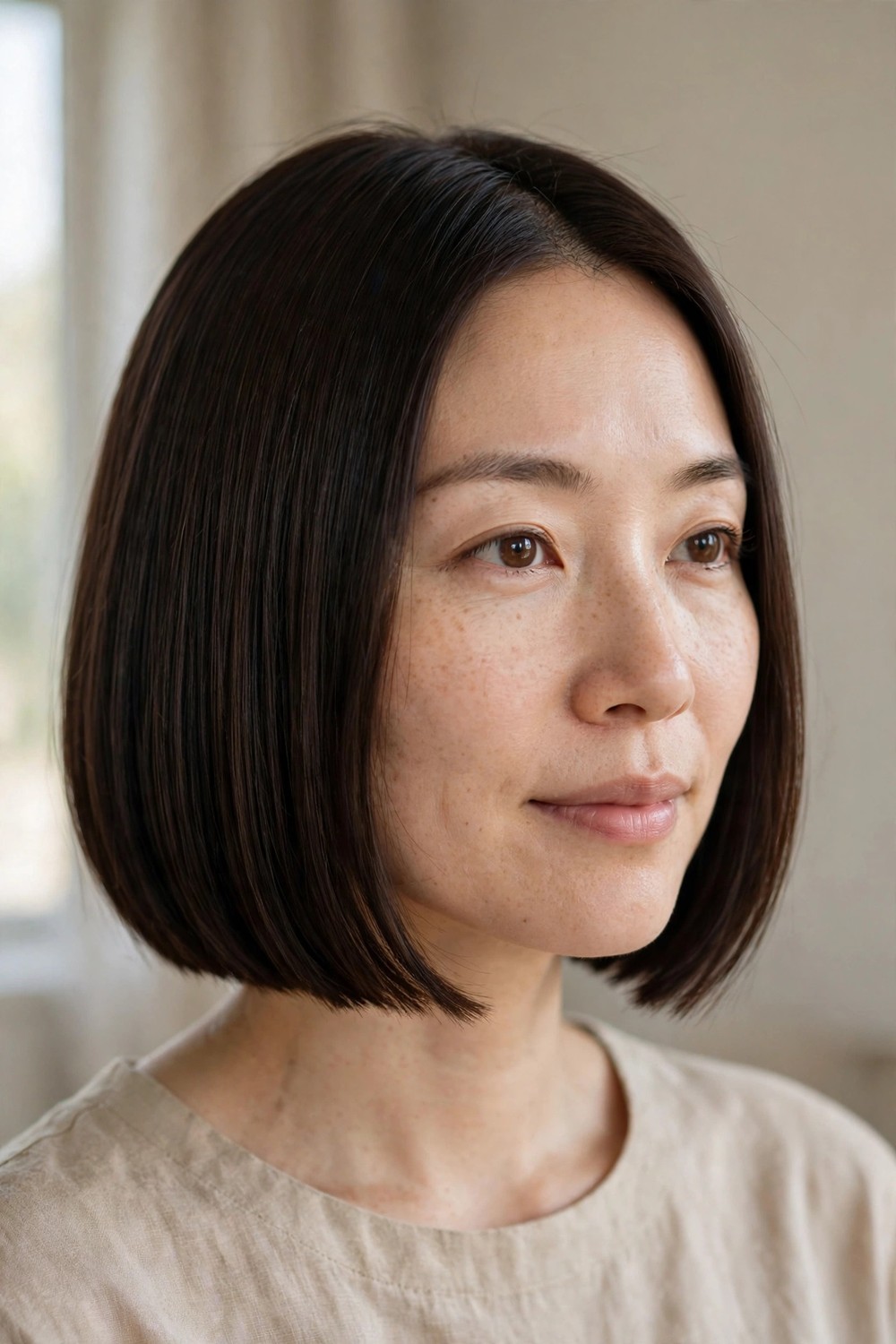
A single-length cut hitting right at the chin gives fine hair its strongest possible silhouette. The unbroken perimeter is what sells the density here, so the styling stays simple and the cut does the talking. This is the style to show your stylist if you want fuller-looking hair without learning a new routine. It works on straight and slightly wavy textures, and it grows out gracefully when you keep up with trims.
Try this: Ask for zero internal layers and have the ends point-cut, not chopped straight across. Blow-dry with a paddle brush, then finish with a blast of cool air to lock in the smooth line.
2. French Bob

For a chin-length style with instant personality, the French bob delivers. Cropped just below the ear and often paired with a short blunt fringe, this cut creates root lift from its short length alone, which is exactly what fine hair needs most. The fringe adds density around the hairline, the first place fine hair tends to look sparse. Style it with sea salt spray for soft Parisian texture, or smooth it for a sharper finish.
Try this: Air-dry with sea salt spray scrunched through the ends instead of precision styling. Book a trim every 5 weeks to keep the cropped silhouette intact.
3. Italian Bob

The Italian bob sits at the chin with a precise blunt line and subtly choppy tips. The bold perimeter creates an instant illusion of thicker hair, and the glossy finish reflects light in a way that makes fine strands look fuller. This one runs a touch dressier than a regular bob, so it suits anyone who likes a polished look without spending an hour styling. Bend the very ends slightly inward with a flat iron for the signature finish.
Try this: Finish with a shine spray instead of a heavy serum, and run the flat iron on low heat only. Fine hair scorches faster than you think.
4. A-Line Bob

Stacked shorter at the back and angling longer toward the chin, the A-line bob builds its volume from shape alone. The stacked back creates genuine height at the crown, which is usually the first place fine hair goes flat. Seen from the side, the silhouette lifts up and away while the longer front pieces frame the face softly. Keep the angle moderate rather than dramatic for a current finish. It flatters most face shapes without demanding much daily effort.
Try this: Ask your stylist to cut the nape short and angle gradually toward the chin, keeping internal layers light. Push the crown up with a round brush while drying for extra height.
5. Inverted Bob
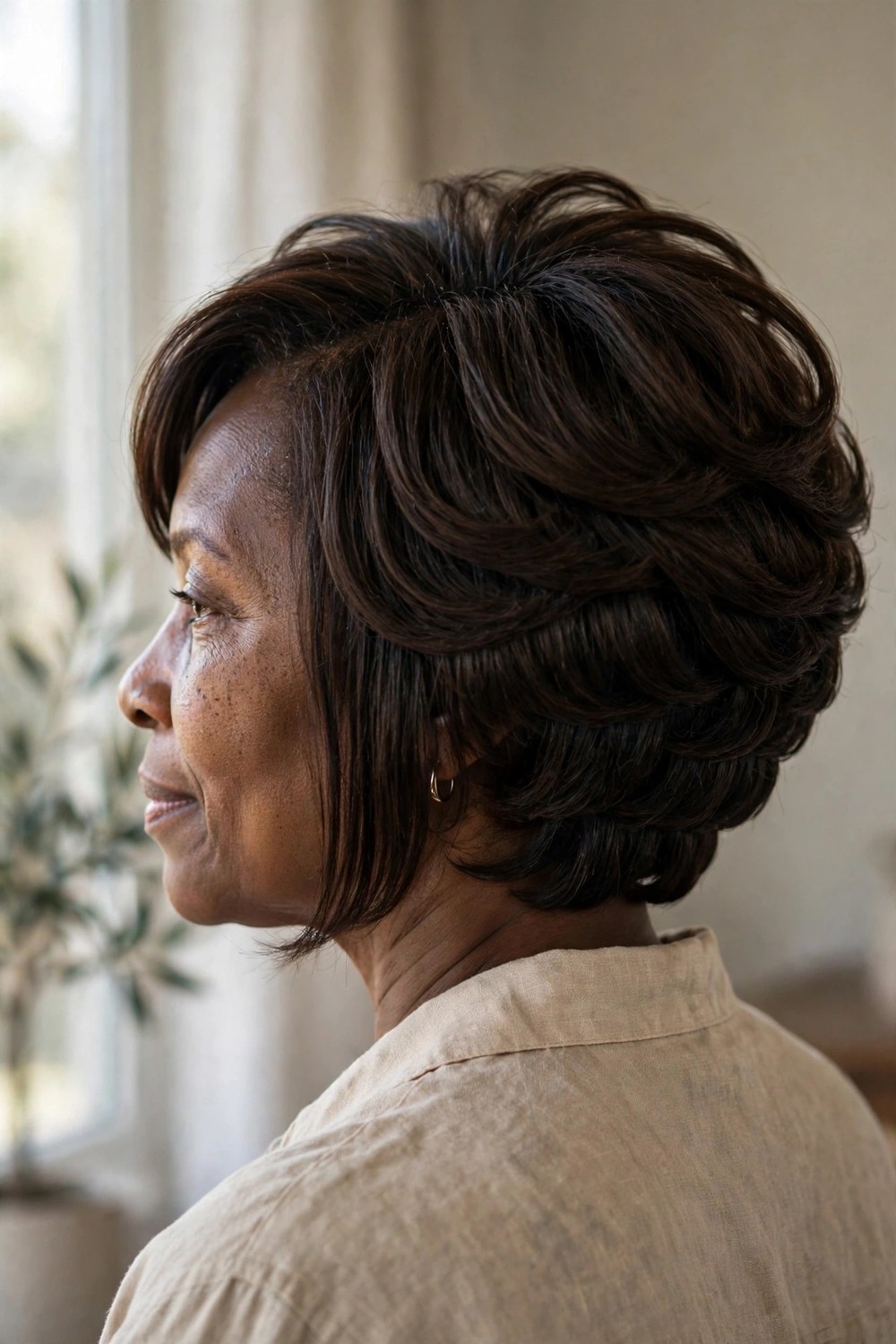
Structurally similar to the A-line but with more graduation at the back, the inverted bob piles weight at the crown where fine hair flattens fastest. The stacking creates real dimension while the longer front length keeps the look soft around the jawline. Because the cut itself carries the volume, you don’t need heavy product to hold it up. Flip the back layers slightly outward with a flat iron for definition.
Try this: Trim the back stack every 6 weeks. Once that graduation grows out, the whole shape loses its lift.
6. Bixie Cut
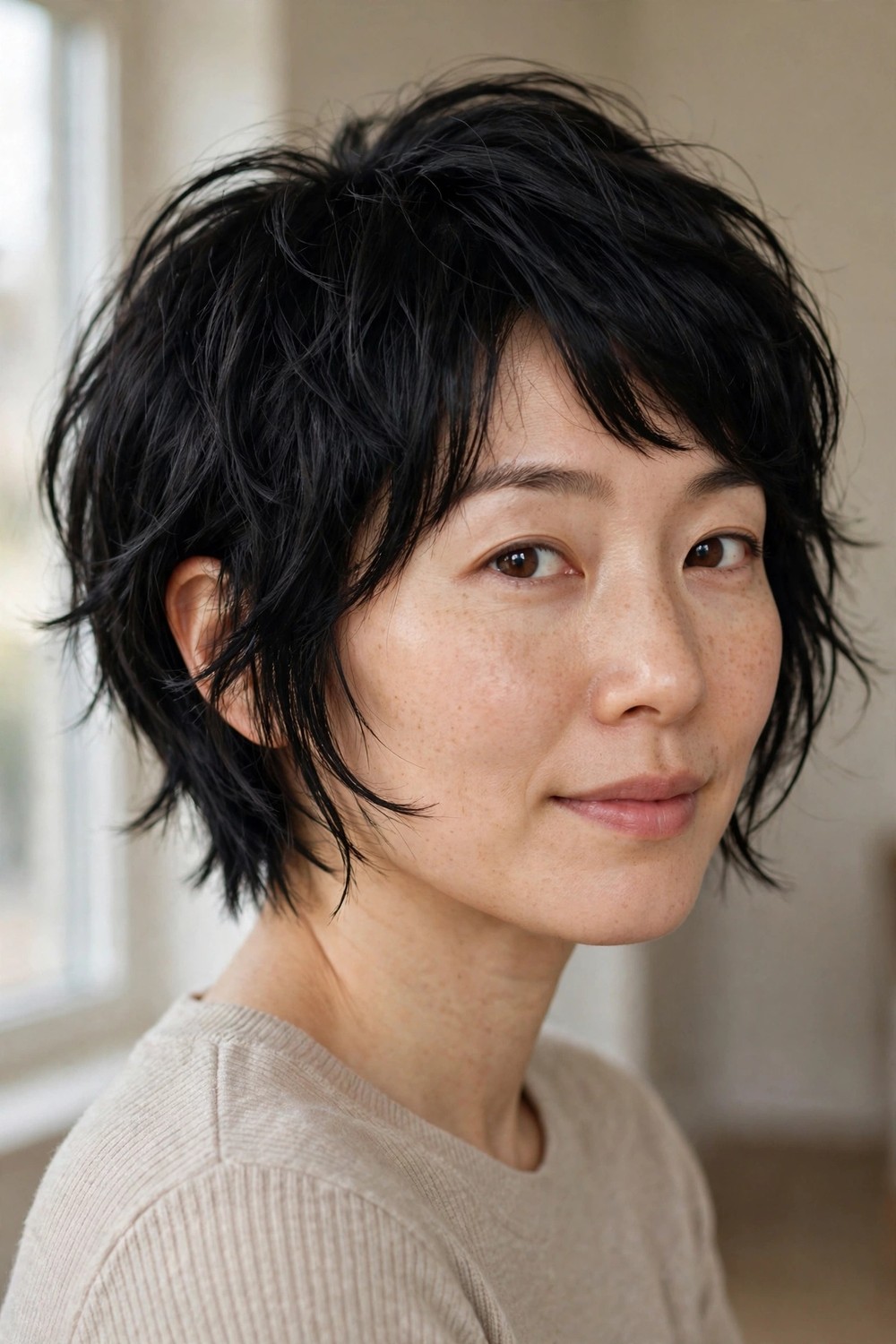
The bob-pixie hybrid lands between ear and chin with cropped layers throughout. Fine hair finds its sweet spot here: enough length for shape, short enough for natural lift. The cut suits oval, heart and square face shapes especially well, and it styles fast because the texture is built in. The short length lets the roots lift naturally, even on air-dried days. Work a matte texture paste through dry strands for piecey movement that reads thicker than it is.
Try this: Refresh every 5 weeks since the precise shape grows out fast. A pea-sized amount of matte paste is plenty; more will flatten it.
7. Pixie Bob

Shorter than a bixie and bolder than a bob, the pixie bob pairs a bob-shaped silhouette with pixie-like cropped sides. The dual-length structure lifts at the crown while keeping a perimeter, so fine hair looks full from every angle. Bend the ends slightly under with a small round brush when styling, then dust the crown with dry texture spray to hold the height through the day. The cropped sides also make the top look fuller by comparison.
Try this: Lift the top pieces straight up while blow-drying, then set the direction with cool air. Trim every 5 weeks to keep the tapered sides crisp.
8. Chin-Length Shag Bob

If you’ve been told shags are only for thick hair, this version will change your mind. The chin-length shag bob keeps its layers shallow and end-focused rather than internal, so fine hair gets texture without losing weight. Face-framing pieces around the cheekbones add fullness exactly where the eye lands, and the undone finish is forgiving between washes. Air-dry whenever possible to preserve the natural movement. Between washes, a quick scrunch revives the texture in seconds.
Try this: Scrunch sea salt spray into damp hair and finger-comb through. Tell your stylist explicitly: shallow layers, nothing cut short at the crown.
9. Stacked Chin-Length Bob
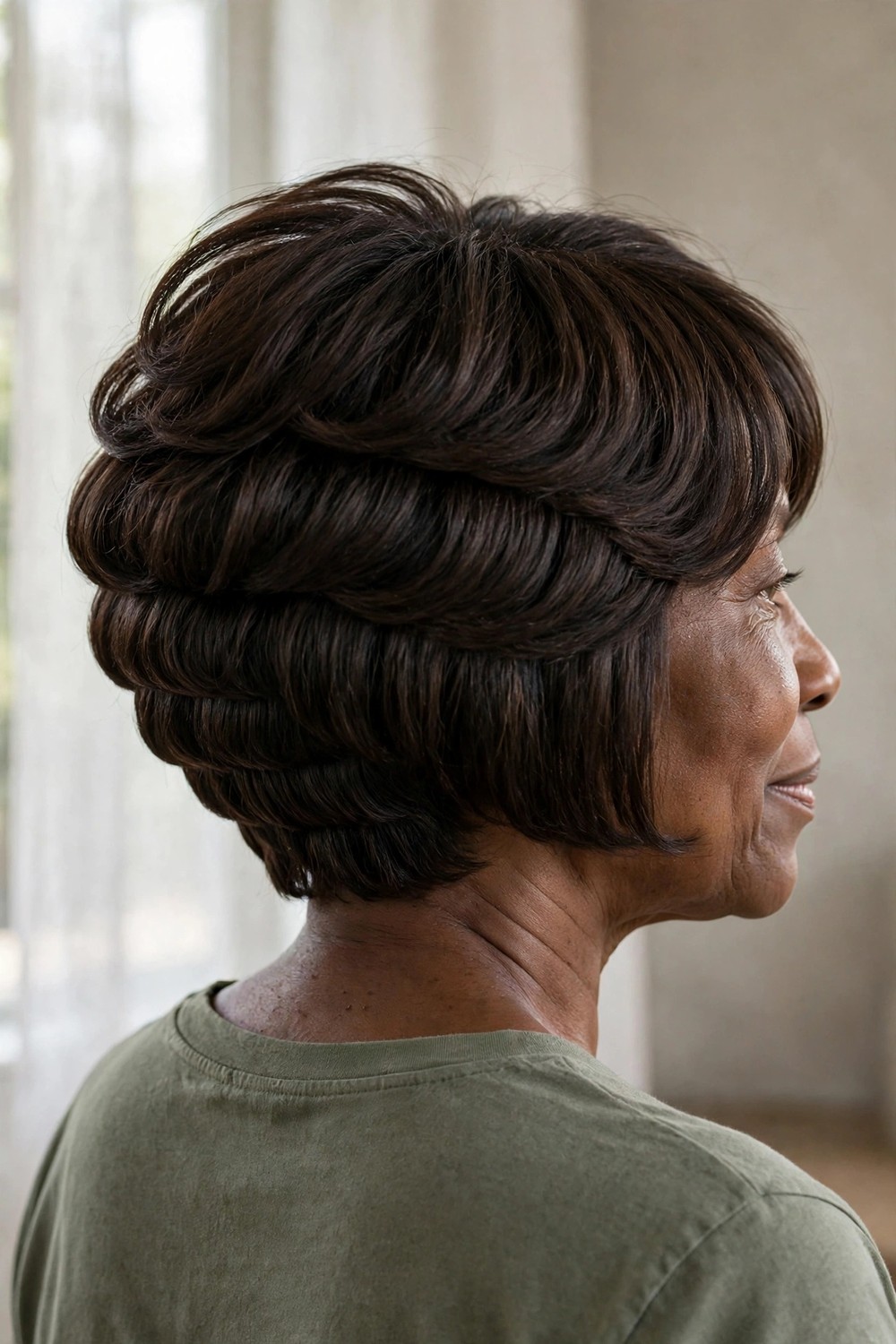
Stacking builds volume where fine hair needs it most: the crown. Graduated back layers pile on top of each other to create genuine height, while the front stays smooth at the jawline. This is one of the best chin-length options for anyone whose hair falls flat by noon, because the shape holds itself up without product doing all the work. Seen from the back, the graduation is the whole point, so ask for it to be cut precisely.
Try this: Dry the crown section first with a round brush, lifting each section straight up. A light mist of texturizing spray at the back keeps the stack from collapsing.
10. Layered Chin-Length Bob

Done right, layers are a fine-hair asset. The trick is restraint: a few soft, shallow layers through the mid-lengths give the hair something to push against, so it lifts away from the head and holds height through the afternoon. Done wrong, over-layering turns the ends stringy. Ask for layers that start no higher than the chin and keep the perimeter intact. The result is airy body with the ends still looking thick.
Try this: Request “soft invisible layers” by name, and skip thinning shears entirely. Dry upside down for 30 seconds to set the lift at the roots.
11. Textured Chin-Length Bob

Texture earns fine hair more body than almost anything else. Relaxed, end-focused layers and tousled shaping create airy softness and lightweight movement without making the strands look sparse. This is the bob that looks effortlessly full even on second-day hair, and it suits a wash-and-go routine better than most chin-length cuts. The shorter length keeps everything looking fresh while the texture does the heavy lifting. It’s also forgiving on second-day hair, when fine strands usually fall flat.
Try this: Mist a texturizing spray through the mid-lengths once dry, then rake through with your fingers. Don’t brush it out; the piecey separation is the point.
12. Choppy Bob with Micro Fringe

A graphic fringe plus a chipped-up perimeter makes this the boldest pick on the list. The micro bang sits high on the forehead and draws the eye, which works especially well on fine textures because it creates a strong focal point. Rough point-cutting at the ends brings the choppy element without thinning the lengths. Style it with sea salt spray and finger-combing for an undone, confident finish. The strong fringe keeps the focus high, right where fine hair needs it.
Try this: Keep the micro fringe piecey with a tiny bit of pomade on the very tips. It needs a trim every 4 weeks or it loses its edge fast.
13. Sleek Chin-Length Bob
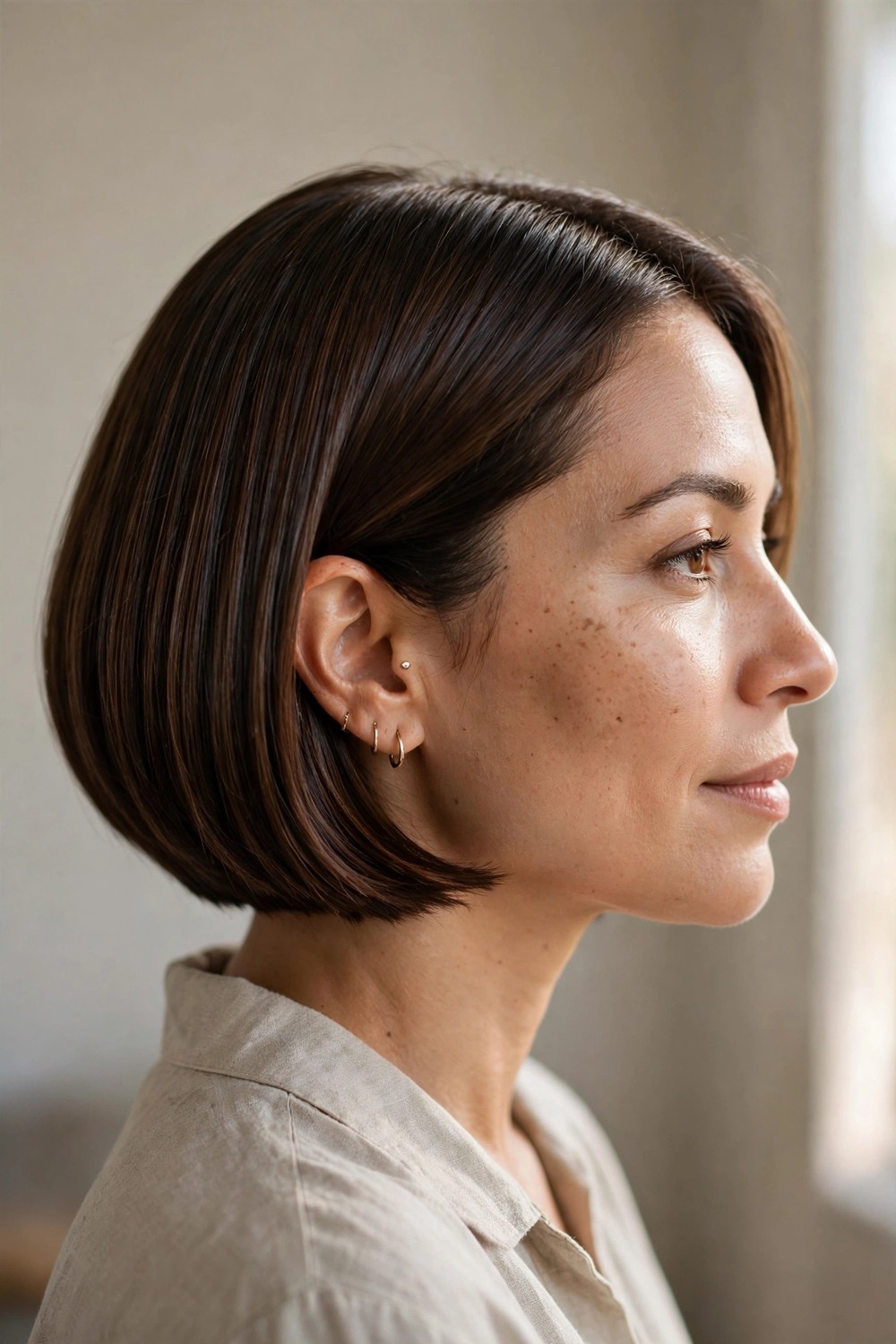
Some fine hair looks thicker when it’s smoothed, not ruffled. A sleek chin-length bob gives a polished finish while the sharp silhouette creates the illusion of denser ends. The light reflecting off the smooth surface does real work here, making the strands read fuller. Use a flat iron on low heat and keep products feather-light, since anything heavy will undo the effect in an hour. Book trims on schedule, because the sharp line is what sells the density.
Try this: Apply a pea-sized amount of smoothing cream to damp ends only, never the roots. Flat-iron in thin sections on low heat, then lock it with cool air.
14. Wavy Chin-Length Bob

Few styling tricks add more volume to fine hair than waves. The combination of a chin-length bob and loose bends gives the hair extra body and bounce, whether the waves are natural or made with an iron. Gentle texture photographs as serious fullness, which is why this style shows up in almost every fine-hair roundup. Alternate the curl direction section by section so the waves don’t merge into one uniform ribbon.
Try this: Wrap sections around a medium barrel iron, leaving the ends out for a modern finish. A light flexible-hold spray keeps the waves without crunch.
15. Side-Parted Chin-Length Bob with Lift

A deep side part is the simplest volume trick in the book. Flipping the part creates instant lift at the roots and fuller movement through the crown, because the hair is trained to stand up against its natural fall. The chin-length shape keeps everything balanced so the part reads intentional, not messy. This works on any bob in this guide, but it deserves its own spot because the technique matters more than the cut here.
Try this: Blow-dry against the part direction first, then flip it over for trapped body. Set the crown with a velcro roller for a few minutes before brushing out.
16. Chin-Length Bob with Curtain Bangs
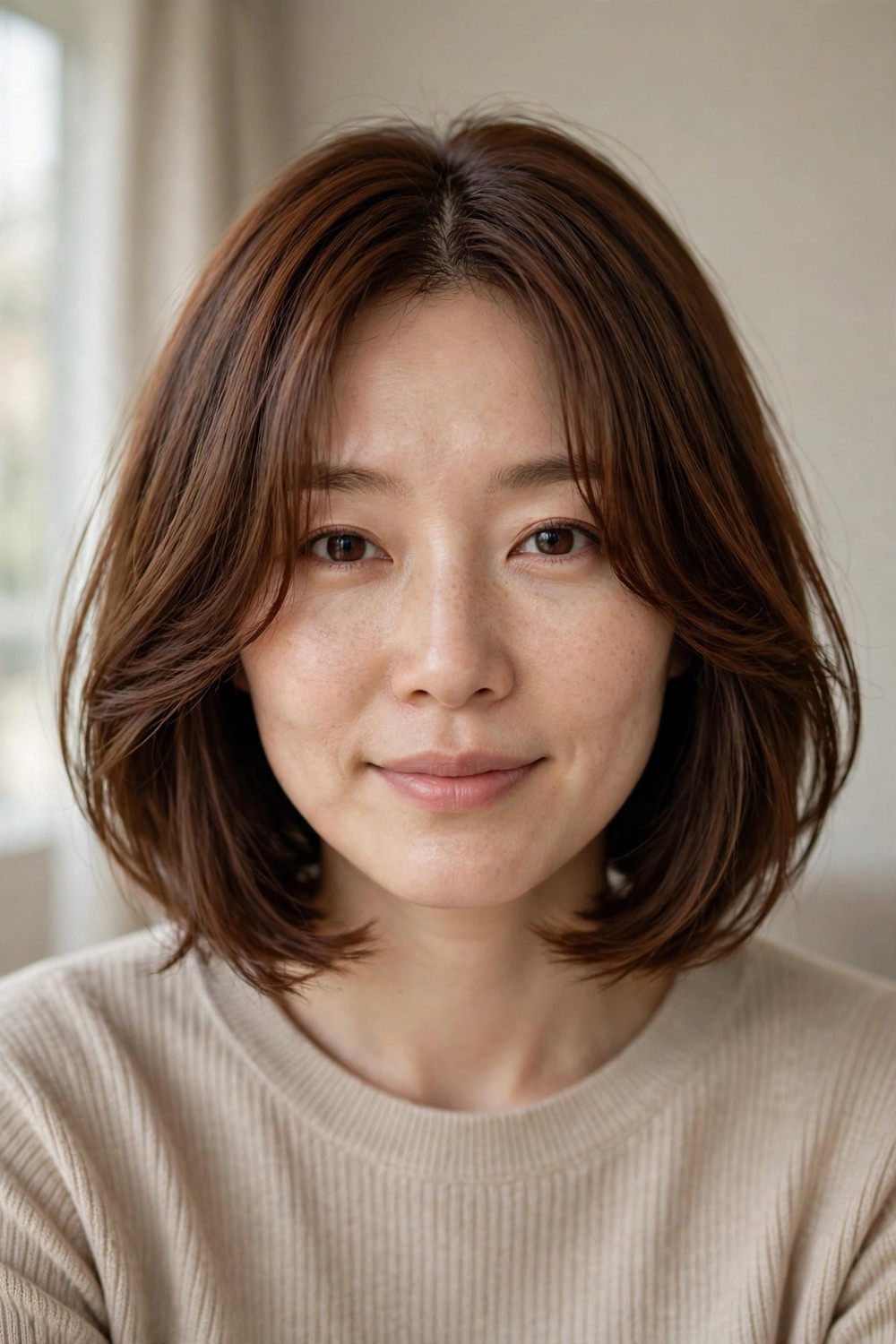
Curtain bangs soften a chin-length bob while adding fullness around the face and forehead. The parted fringe blends seamlessly into face-framing layers, creating more movement through the cut without removing any real weight. Because the bangs are wispy and split, they don’t need much hair to look substantial, which is ideal for thin fine hair. Blow-dry them forward first, then split and train each piece outward. Once dry, the bangs need almost no touching up through the day.
Try this: Dry the bangs before the rest of your hair, while they’re still damp, so they fall the right way before they set. Touch up every 6 weeks.
17. Chin-Length Bob with Side-Swept Bangs

Side-swept bangs are a quiet powerhouse for fine hair. Cut at a slight angle and swept across, they add the look of thickness around the face and give you a built-in reason to lift the roots every morning. Keep the bang soft and wispy rather than heavy, since a solid fringe can look sparse on fine hair. Grazing the cheekbone is the sweet spot: long enough to sweep, short enough to hold.
Try this: Direct the fringe across with a small round brush, then set with a light mist of hairspray. Trim the fringe every 4 weeks to keep it off the brow.
18. Chin-Length Bob with Soft Full Fringe

A full fringe works on fine hair when it’s cut soft, not solid. Feathered ends with a little texture read as intentional and modern, and the fringe adds density across the forehead where shedding often shows first. Ask your stylist to keep it just above the brow with light point-cutting through it. Pair it with a clean chin-length perimeter and the contrast between the two makes both look thicker. A regular trim keeps the feathered edge from turning blunt.
Try this: Keep the fringe slightly piecey rather than smoothed flat. A tiny amount of dry shampoo at the fringe roots between washes keeps it from separating.
19. Curly Chin-Length Bob
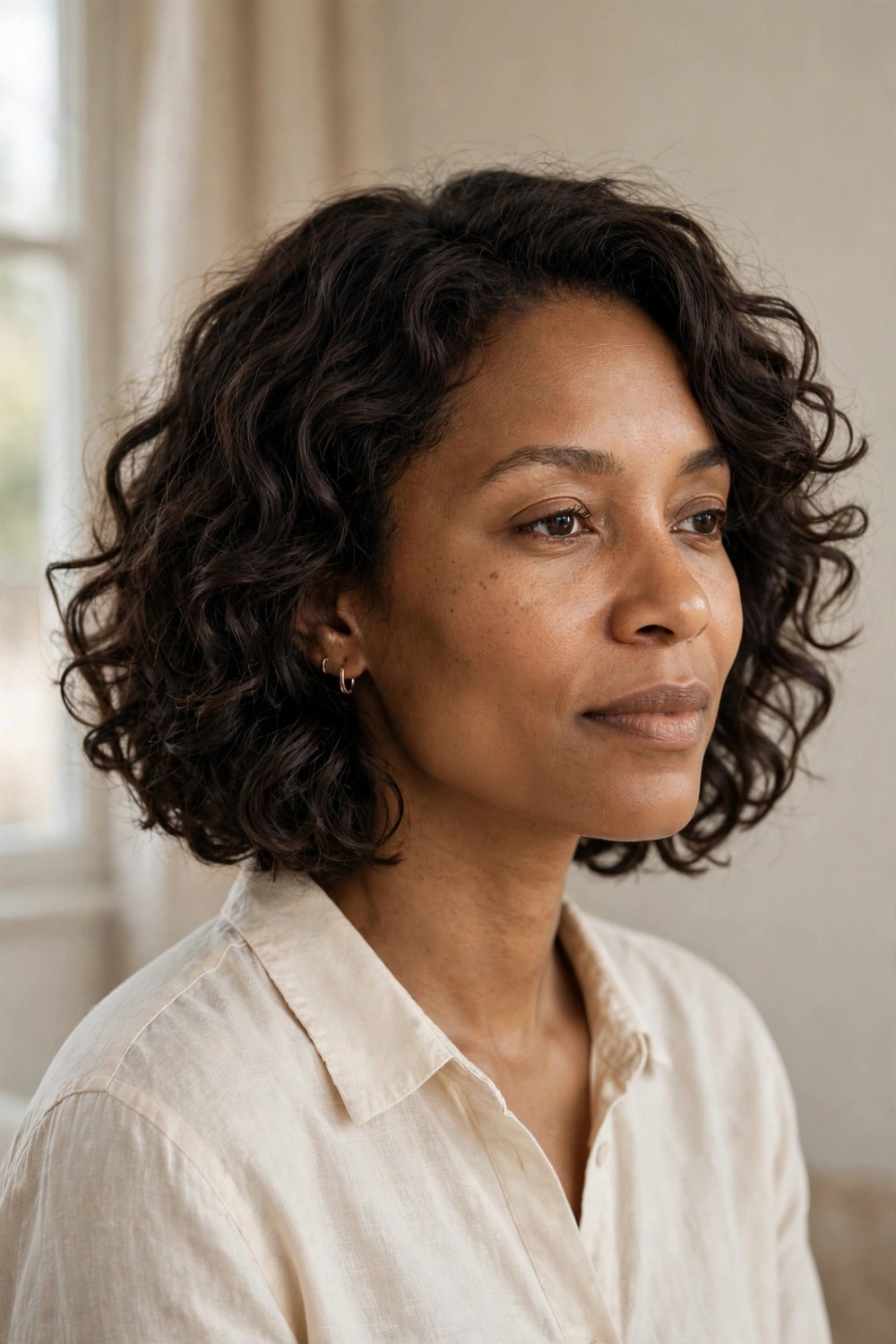
Curls are a built-in volume machine. Soft curls through a chin-length bob create instant texture and visual fullness, and layered shaping keeps the silhouette light instead of heavy. The shorter length stops curls from stretching out under their own weight, so the shape holds longer between washes. Define with a curl cream applied to damp hair, then diffuse on low heat so the strands don’t frizz. A silk pillowcase keeps the curls intact overnight without refreshing.
Try this: Scrunch with a microfiber towel instead of terry cloth, and sleep on a silk pillowcase to keep second-day curls intact without refreshing.
20. Tousled Chin-Length Bob

The tousled bob trades polish for airy movement, and fine hair loves the trade. Relaxed waves and soft layers keep the cut from looking overly structured, while the airy finish reads as fuller and more youthful. It’s also one of the most forgiving styles here: the texture hides the mid-day flatness that plagues finer strands. A quick scrunch with texturizing spray is often all the refresh it needs. The undone finish also hides midday flatness better than polished styles.
Try this: Sleep with your hair loosely twisted into a low bun. Undo it in the morning for instant tousled body without heat.
21. Chin-Length Bob with Choppy Ends
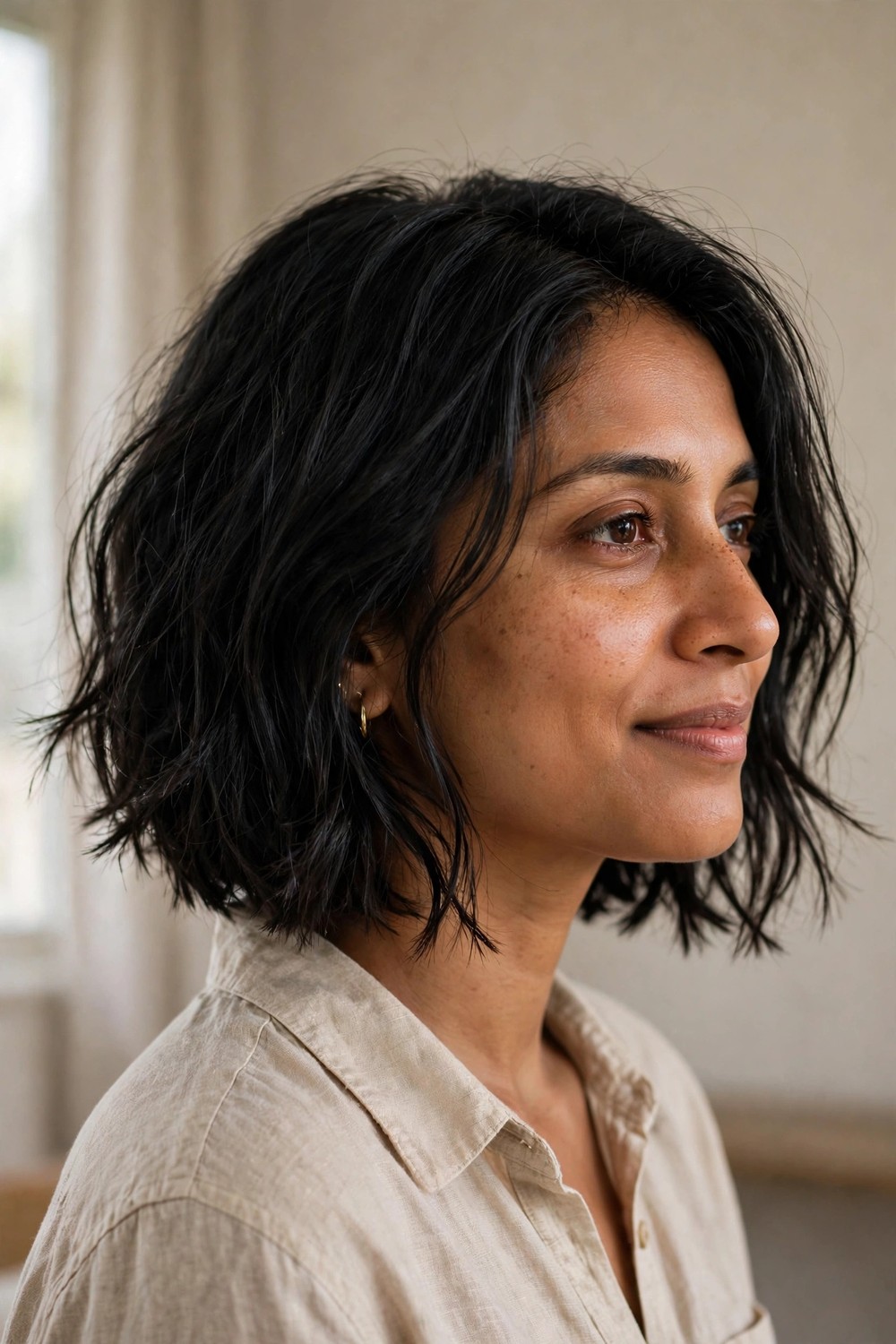
Choppy ends are the difference between a bob that swings and a bob that sits there. When the ends are softly chipped into, fine hair picks up a piece-y, lived-with quality that catches movement all day. Pair that with subtle graduation through the body and you get a cut that looks fuller from every angle. The choppy texture also grows out more gracefully than a razor-sharp line. Keep product minimal so the piecey separation stays light.
Try this: Work a pea-sized bit of texture paste through the ends for separation, or add a half-inch flick at the tips with a flat iron for extra attitude.
22. Chin-Length Bob with Flipped-Out Ends
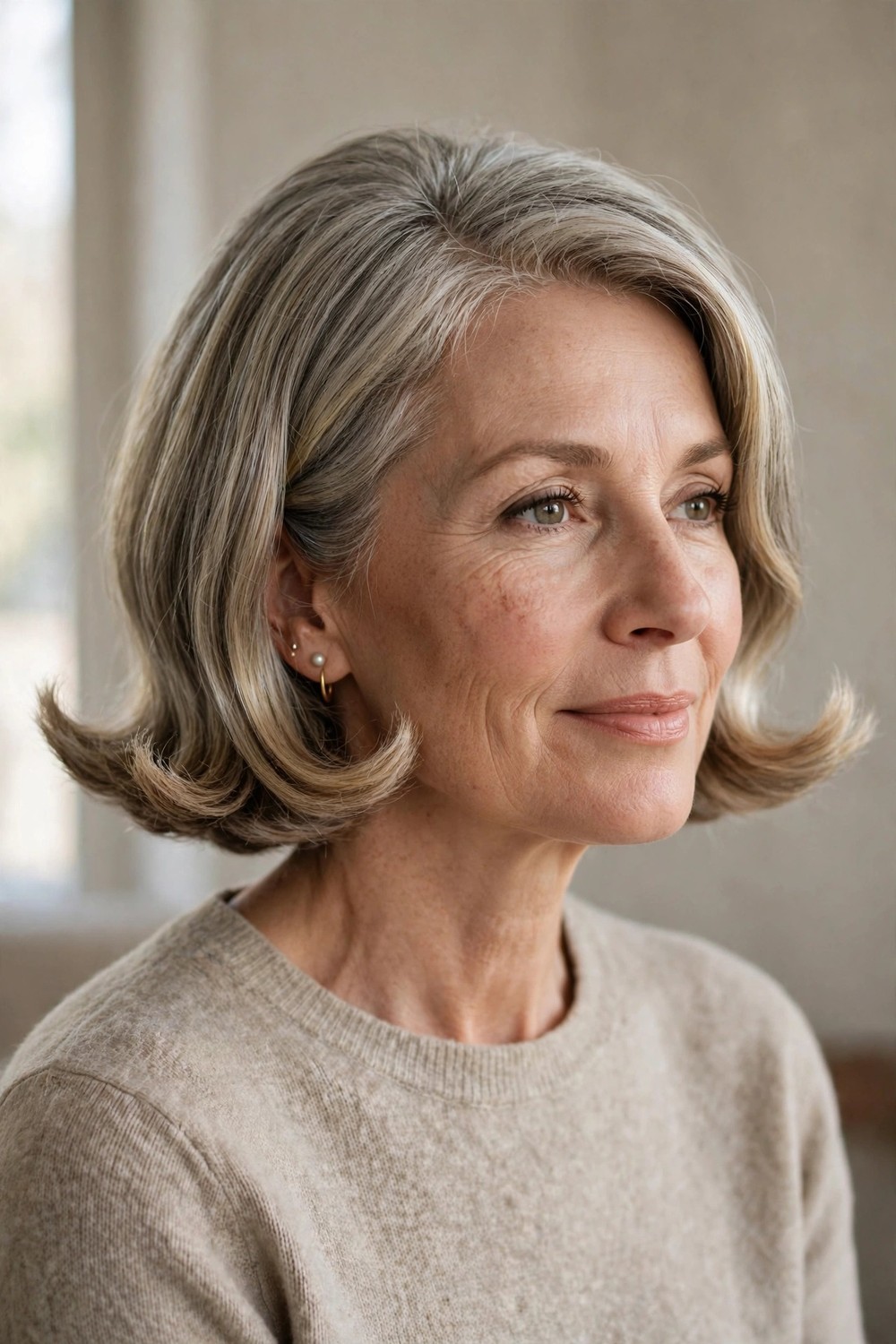
The flipped-out bob nods to the 1960s and works beautifully on fine hair. Flicking the ends outward instead of tucking them in gives the perimeter visible movement and stops the cut from collapsing flat against the jaw. All you need is a round brush, a blow dryer and a few spritzes of setting spray. The finish is playful rather than severe, which flatters mature faces especially well. It’s also one of the quickest styling routines on this list.
Try this: Roll the ends outward around a medium round brush while blow-drying. Hit each section with cool air before releasing so the flip holds.
23. Rounded Chin-Length Bob
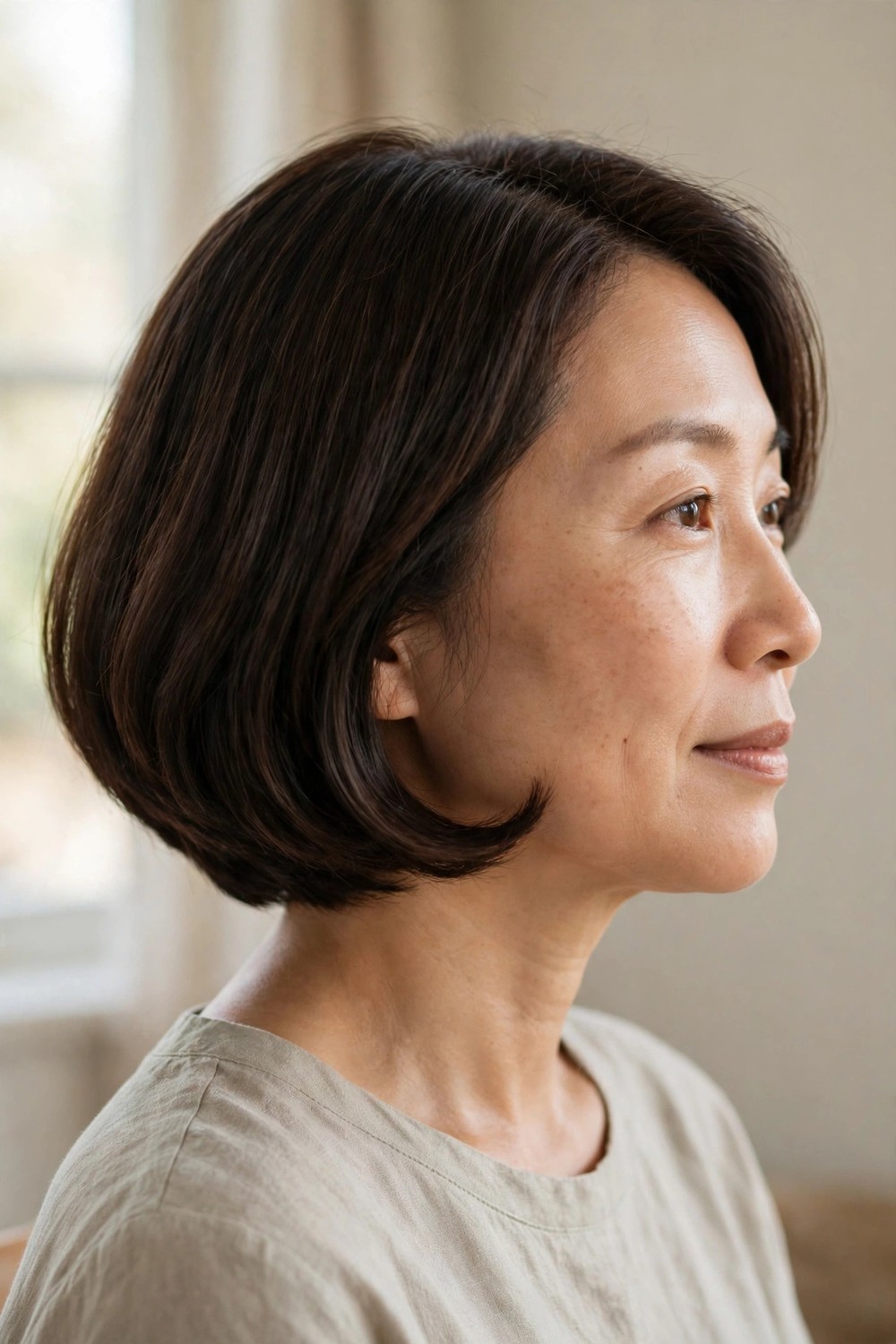
Where the flipped bob kicks out, the rounded bob curves in. Ends bent gently under the chin form a soft curved silhouette that reads thicker because the perimeter closes in on itself. The rounded shape is a classic for a reason: it flatters most face shapes and makes the jawline look defined. Blow-dry with a round brush, rolling the ends under as you go, and the shape practically builds itself.
Try this: Dry in sections with a medium ceramic round brush, under-directing the roots first for lift. A light gloss spray on the surface adds the fullness illusion.
24. Chin-Length Bob with Dimensional Color
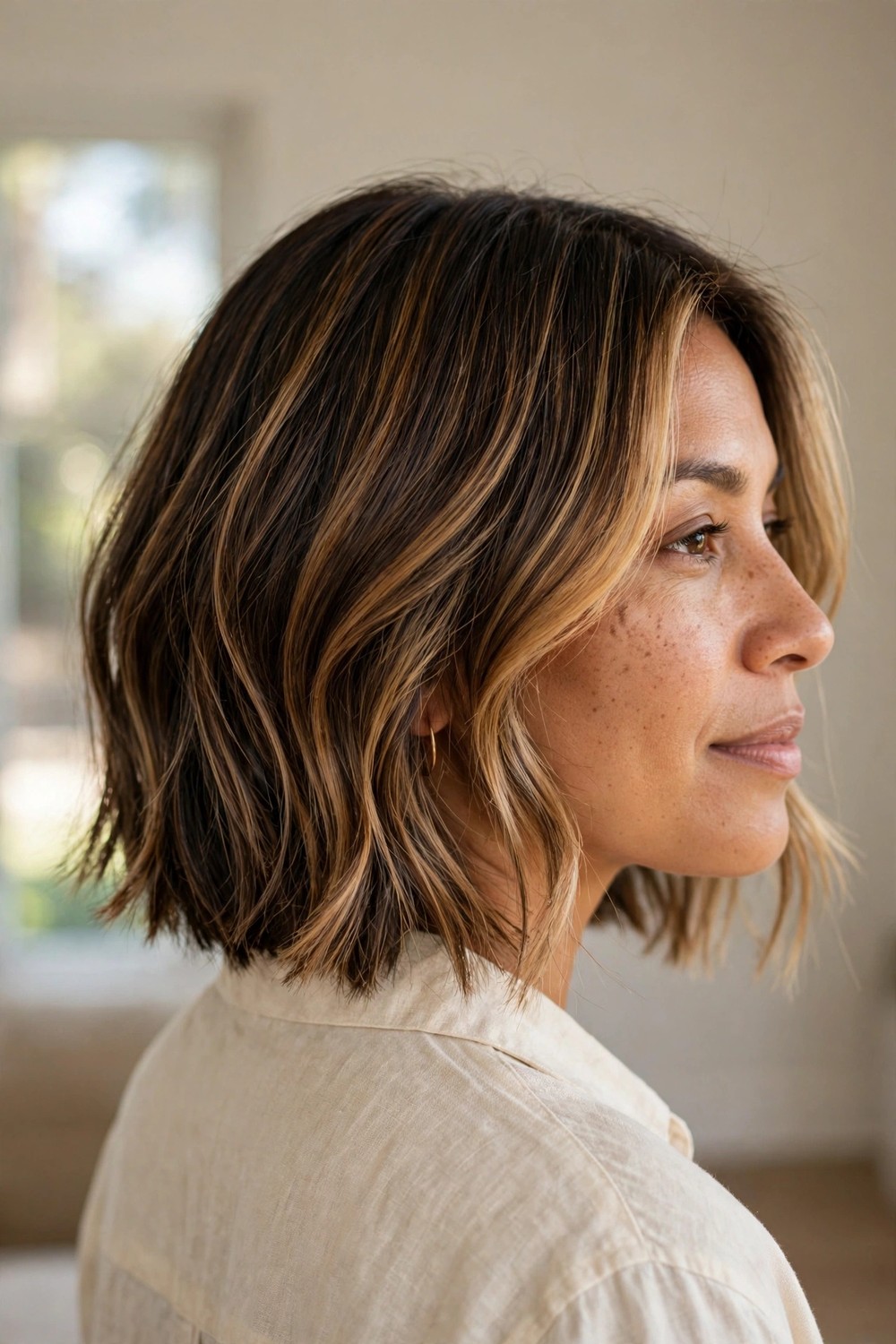
Never underestimate what color can do for fine hair. Flat, single-process color reads thin, while babylights or soft balayage create depth and contrast that trick the eye into seeing more hair. Face-framing brightness draws the eye up and out, and lowlights tucked underneath make the surface look denser. Keep the base close to your natural shade for low-maintenance upkeep. The added dimension makes the same head of hair look noticeably fuller, especially under natural light.
Try this: Ask for woven babylights around the face and a few painted pieces through the mid-lengths. Wash with cool water and gloss every two months to keep the tones fresh.
25. Bottleneck Bob

The bottleneck bob is named for the way its curtain-like layers narrow and widen around the face, framing the cheekbones and jawline in a soft bottle shape. Those sweeping layers add fullness exactly where the eye lands, and they blend into a chin-length base that keeps the ends looking thick. Finger-comb the layers forward with a little product to create rich, natural texture. It photographs beautifully because of all that face-framing movement.
Try this: Blow-dry the front layers forward and under with a round brush. A light texturizing spray at the mid-lengths keeps the sweep from falling flat.
26. Chin-Length Bob with Wispy Bangs
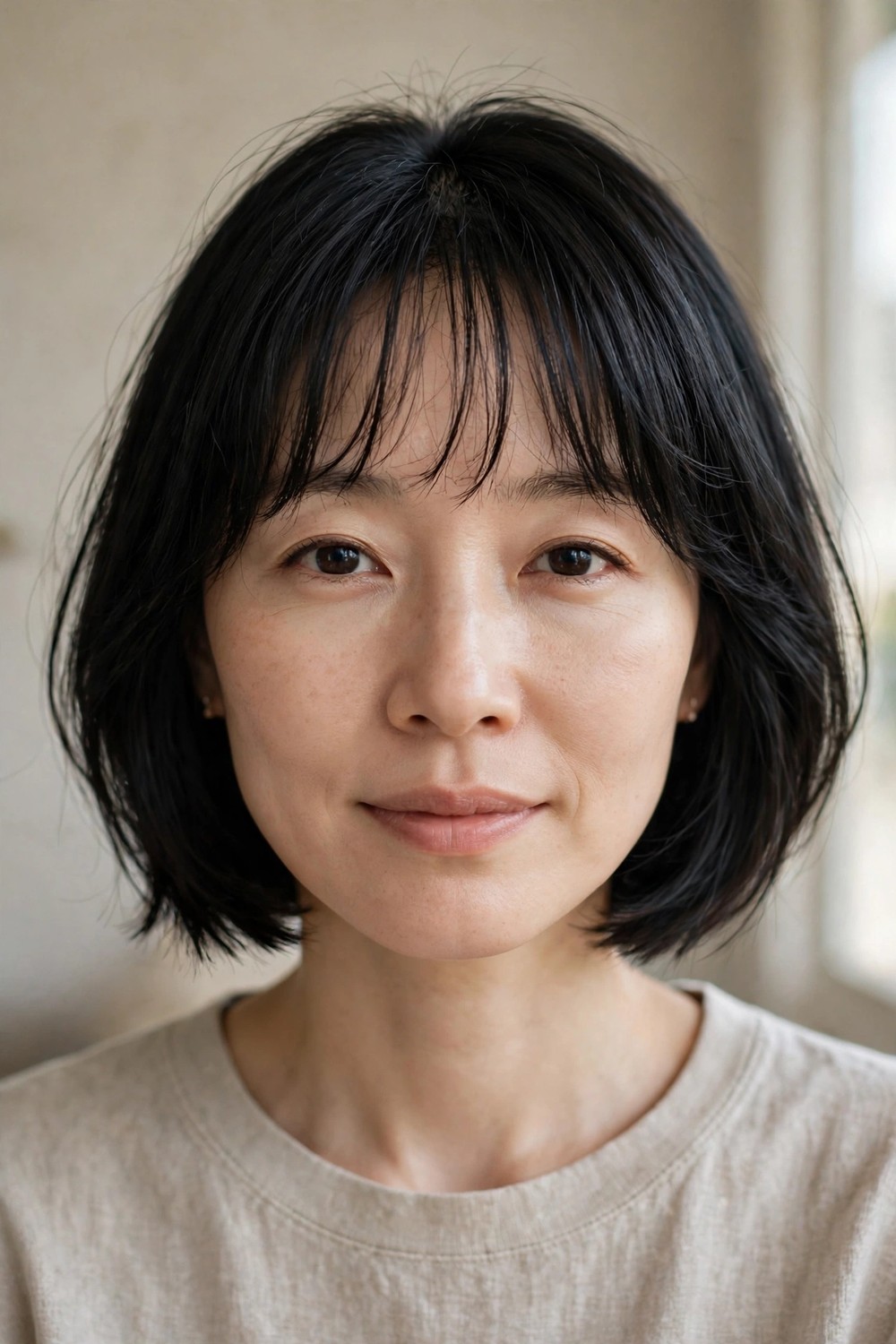
Lightweight, feathered bangs with airy gaps between strands add visual density without any weight. Because the fringe is broken up, it needs very little hair to look full, which makes it one of the safest fringe choices for thin fine hair. The wisps work especially well on straight or slightly wavy textures. Bend them slightly with a small round brush before setting with a light spray. Keep the rest of the bob clean and blunt for flattering contrast.
Try this: Cut them just above the brow so they stay light and airy. Trim every 3 to 4 weeks; wispy bangs grow out of their shape fast.
27. Asymmetrical Chin-Length Bob
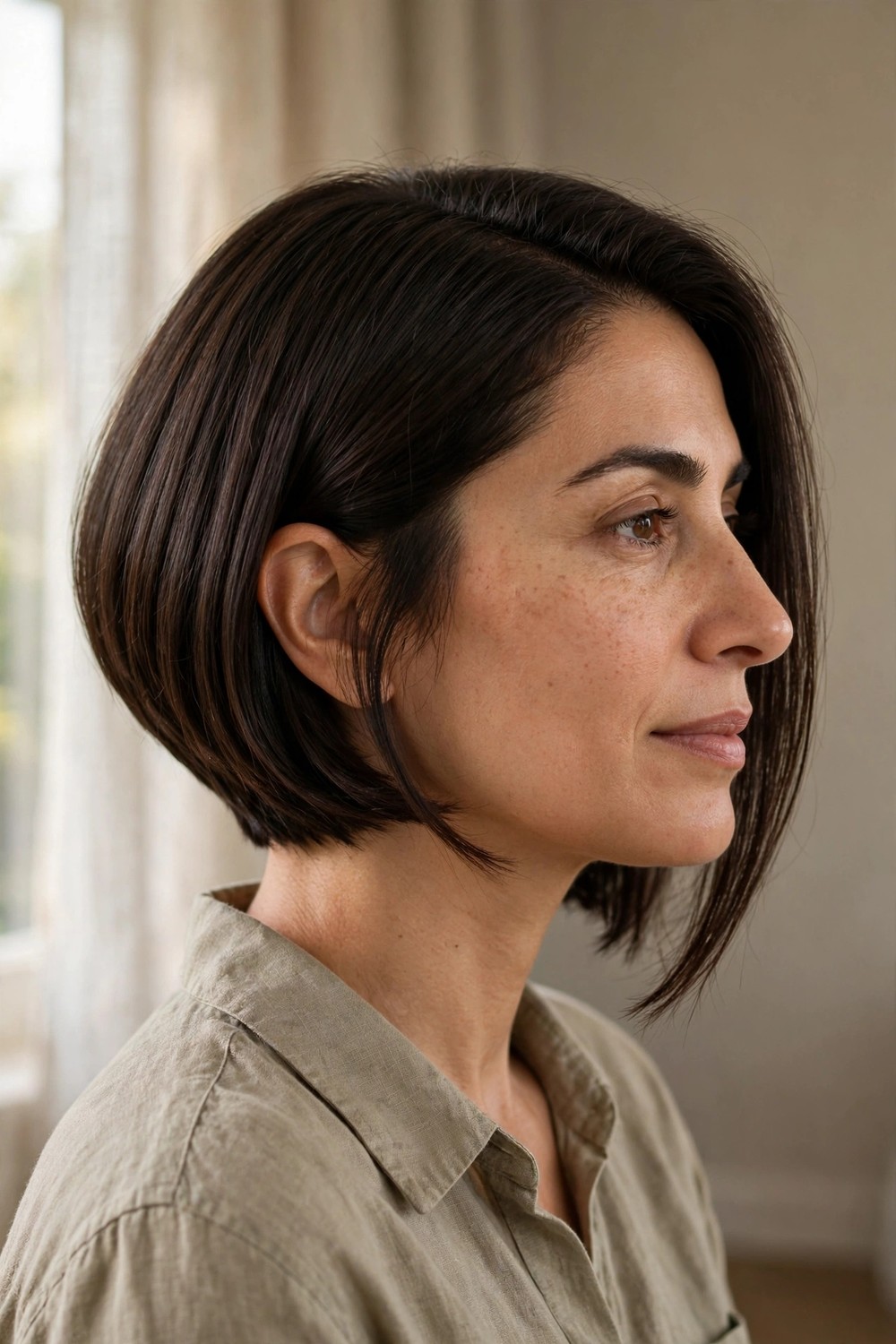
One side falling slightly longer than the other creates intentional contrast through the cut. The asymmetry distracts from any thinning areas and adds character that a symmetrical bob can’t offer. Tuck the shorter side behind the ear for a sleek profile, or let both sides swing for full effect. Keep the contrast subtle rather than extreme for a more refined finish that still reads modern. The longer side frames the jawline beautifully as it swings.
Try this: Style the longer side with a slight inward bend and the shorter side tucked smooth. Texture paste on the longer edge defines the piecey finish.
Chin Length Hairstyles Comparison at a Glance
| Style | Best Occasion | Difficulty | Hold Time |
|---|---|---|---|
| Chin-Length Blunt Bob | Work, formal events | Easy | All day |
| French Bob | Creative settings, weekends | Easy | All day |
| Italian Bob | Evenings, special occasions | Easy | All day |
| A-Line Bob | Everyday, office | Easy | All day |
| Inverted Bob | Work, date nights | Easy | All day |
| Bixie Cut | Weekends, casual | Easy | All day |
| Pixie Bob | Everyday, creative work | Easy | All day |
| Chin-Length Shag Bob | Casual, concerts | Easy | 6-8 hours |
| Stacked Chin-Length Bob | Office, events | Medium | All day |
| Layered Chin-Length Bob | Everyday | Easy | All day |
| Textured Chin-Length Bob | Casual, weekends | Easy | 6-8 hours |
| Choppy Bob with Micro Fringe | Creative, nights out | Medium | 6-8 hours |
| Sleek Chin-Length Bob | Formal, work | Medium | All day |
| Wavy Chin-Length Bob | Parties, weddings | Medium | 6-8 hours |
| Side-Parted Bob with Lift | Everyday, work | Easy | All day |
| Bob with Curtain Bangs | Weekends, dates | Easy | All day |
| Bob with Side-Swept Bangs | Office, everyday | Easy | All day |
| Bob with Soft Full Fringe | Creative, casual | Medium | 6-8 hours |
| Curly Chin-Length Bob | Everyday, events | Medium | All day |
| Tousled Chin-Length Bob | Casual, travel | Easy | 6-8 hours |
| Bob with Choppy Ends | Weekends, evenings | Easy | All day |
| Bob with Flipped-Out Ends | Parties, retro looks | Medium | 6-8 hours |
| Rounded Chin-Length Bob | Work, formal | Medium | All day |
| Bob with Dimensional Color | Everyday, photos | Easy | 6-8 weeks |
| Bottleneck Bob | Dates, weekends | Medium | All day |
| Bob with Wispy Bangs | Everyday, casual | Easy | 6-8 hours |
| Asymmetrical Chin-Length Bob | Nights out, creative | Easy | All day |
How to Choose the Right Chin-Length Style for You
Start with your hairline and your mornings. If your hair thins around the temples, a fringe style like curtain bangs or wispy bangs covers that ground better than a bare forehead. If you have five minutes to style, pick a cut that holds its own shape: blunt, A-line or stacked bobs need the least daily work. If you enjoy styling, the wavy, tousled and bottleneck versions reward the effort.
Face shape matters less than you’d think at this length, but a couple of tweaks help. Longer front pieces (A-line, inverted, bottleneck) soften wider jawlines. A deep side part widens the look of a narrow forehead. And if you’re between cuts, remember this: fine hair almost always looks thicker with a strong perimeter, so whichever style you pick, protect that bottom line.
Mistakes to Avoid
The biggest one is over-layering. Layers get sold as a volume fix, but too many will thin fine hair out and leave the ends stringy. A few soft, well-placed layers build far more body than heavy layering ever will. Ask your stylist to keep layers shallow and starting no higher than the chin, and skip thinning shears, which can leave fine hair wispy and see-through.
Product mistakes run a close second. Heavy serums, rich creams and oils belong on coarse hair; on fine strands they smother the body in an hour. Keep formulas lightweight and put them where they matter: volumizing mousse at the roots, dry shampoo at the scalp between washes, and nothing heavy on the ends. The third mistake is skipping trims. Chin-length cuts lose their shape fast, so book every 5 to 6 weeks.
For a deeper look at blunt versus textured finishes, see our guide to chin length bob hairstyles for thin hair, which breaks down the perimeter details that matter most for density.
If bangs are part of your plan, our roundup of chin length bob hairstyles with bangs walks through every fringe option that flatters a chin-length cut.
If you prefer to style your chin-length cut up for events, our ideas for chin length bob hairstyles updo show how to pin fine hair up without losing volume.
And for the full collection of cuts at this length, browse chin length bob hairstyles, covering every variation from blunt to bottleneck.
Frequently Asked Questions
Is chin length good for thin fine hair?
Yes. Chin length is widely considered the sweet spot for thin fine hair because it removes the weight that pulls strands flat, letting the roots stand up naturally. The perimeter lands at the jawline, exactly where fine hair tends to thin out, so the strongest part of the cut sits where the eye lands. Stylists consistently recommend it over longer cuts for creating the look of density.
Should fine hair have layers at chin length?
A few soft, shallow layers can add body, but heavy internal layering will thin fine hair out and leave the ends looking wispy. Ask for layers that start no higher than the chin and keep the perimeter strong. Point-cut ends add movement without removing weight. If your hair is very sparse, a one-length blunt cut is often the safer choice.
What bangs work best on thin fine hair at chin length?
Soft, broken-up fringes work best: curtain bangs, wispy bangs and side-swept bangs all add density around the face without needing much hair. Avoid heavy, solid fringes, which can look sparse on fine strands. Cut bangs to graze the cheekbone or sit just above the brow, and dry them first while still damp so they fall correctly.
How do I keep a chin-length bob from going flat by noon?
Start at the roots: work volumizing mousse into damp roots and dry them first, lifting each section straight up. Use dry shampoo at the scalp before the hair looks oily, since it absorbs oil and props up the body. Skip heavy serums and creams on the ends. Flip your head upside down for a 30-second root blast at the end of drying to reset the lift.
How often should I trim a chin-length bob for fine hair?
Every 5 to 6 weeks. Chin-length cuts grow out of their shape fast, and once the perimeter softens, the density illusion weakens with it. Fringe styles like micro bangs may need a trim every 3 to 4 weeks. Regular trims also keep split ends from traveling up the strand, which is especially important on fine hair.
Final Thoughts
Fine hair doesn’t need fighting; it needs the right shape. A chin-length cut gives you the strongest perimeter, the lightest weight and the easiest path to all-day body. Pick the style that fits your routine, keep the trims regular, and keep the products light. I’ve found that once fine hair gets a cut that works with it instead of against it, the mirror finally agrees with the morning effort.

