



Fine hair is not a sentence to flatness. The right cut builds lift into the shape itself, so you stop fighting gravity every morning. These thirty cuts all use the same handful of tricks: shorter lengths, strategic layers, textured ends, and parts that shift weight where you want it.
Below you will find the full list, each with a photo, a styling routine, and a quick tip. I have spent years working with fine hair, and these are the cuts that actually hold their volume past lunchtime. Pick the one that fits your length comfort zone and your mornings.
Quick answer: Short, layered cuts boost volume in fine hair best. A stacked bob, textured pixie, or shag with interior layers removes the weight that drags roots down. Keep the perimeter solid for density, use lightweight mousse at the roots, and avoid heavy oils that flatten fine strands.
Quick Takeaways
- Shorter cuts lift more: less weight means roots stand up instead of lying flat.
- Keep the bottom edge solid. A dense perimeter reads thicker than wispy ends.
- Interior and ghost layers add hidden lift without visible choppiness.
- A deep side part is the fastest free volume trick in the book.
- Lightweight products only: mousse and texture spray help, heavy creams hurt.
Why These Cuts Build Real Volume
Volume in fine hair comes from structure, not products. When a cut removes weight from the right places, the remaining hair has room to lift. Stacked backs push the crown up. Undercuts let the top layers sit higher. Texture breaks up the surface so light bounces in more directions, which the eye reads as thickness.
Length works against all of this. Every extra inch adds weight that pulls the roots flat, which is why so many of the strongest options here sit at or above the collarbone. You do not have to go super short, but you do have to respect the trade-off between length and lift.
1. Layered Bob with Root Lift
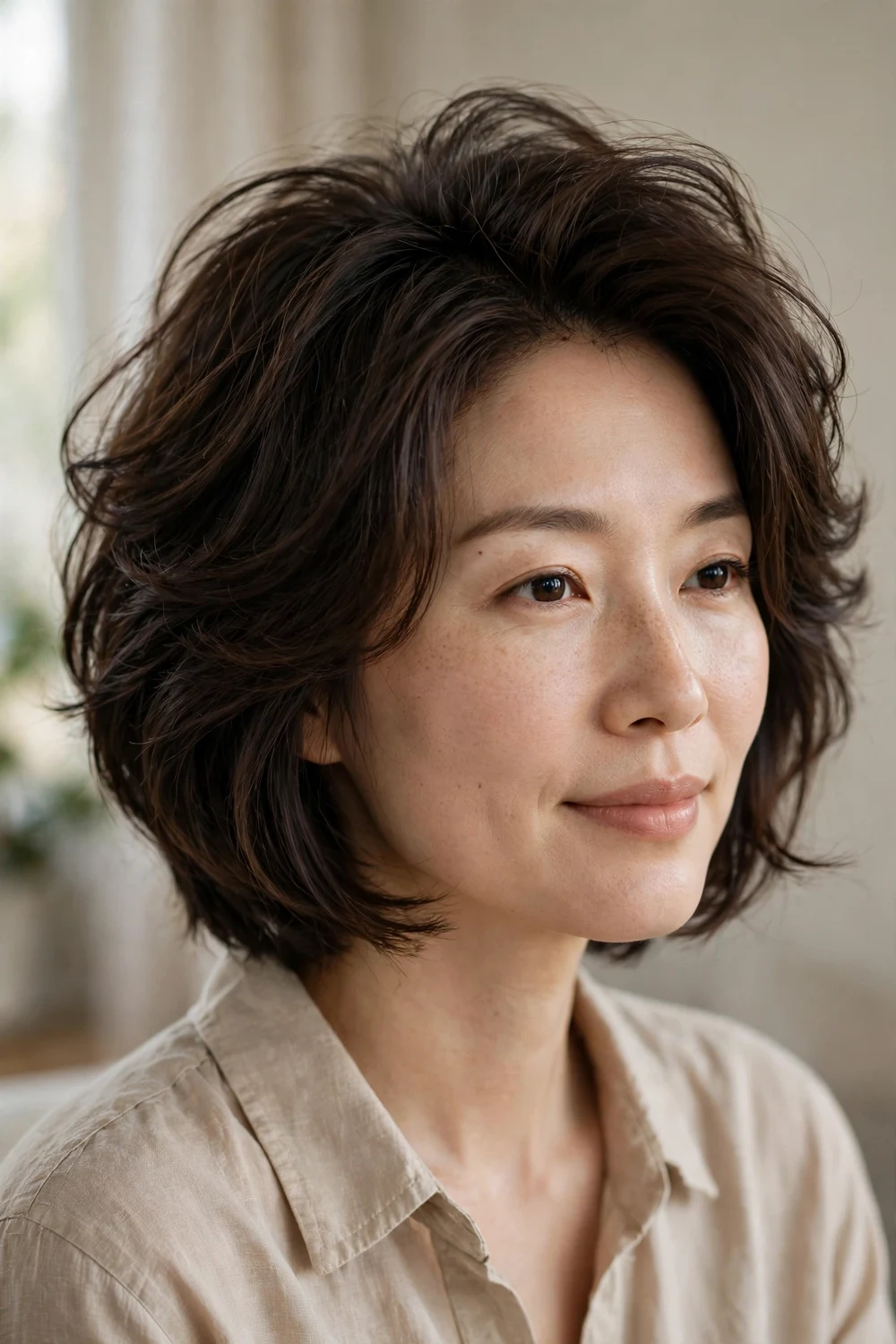
Short, stacked layering at the crown is what gives this bob its lift. The back is cut slightly shorter so the top layers sit forward and up instead of collapsing flat. Stylists usually keep the front near chin length, which frames the face while the graduated back adds height where fine hair needs it most. Blow-drying with a round brush for three minutes is enough to hold the shape. A pea-sized amount of mousse at the roots does the rest. Difficulty: Easy.
Try this: Try this: flip your part to the opposite side every few days. Fine hair trains itself to lie flat, and switching sides resets the root lift.
2. Textured Pixie with Crown Volume
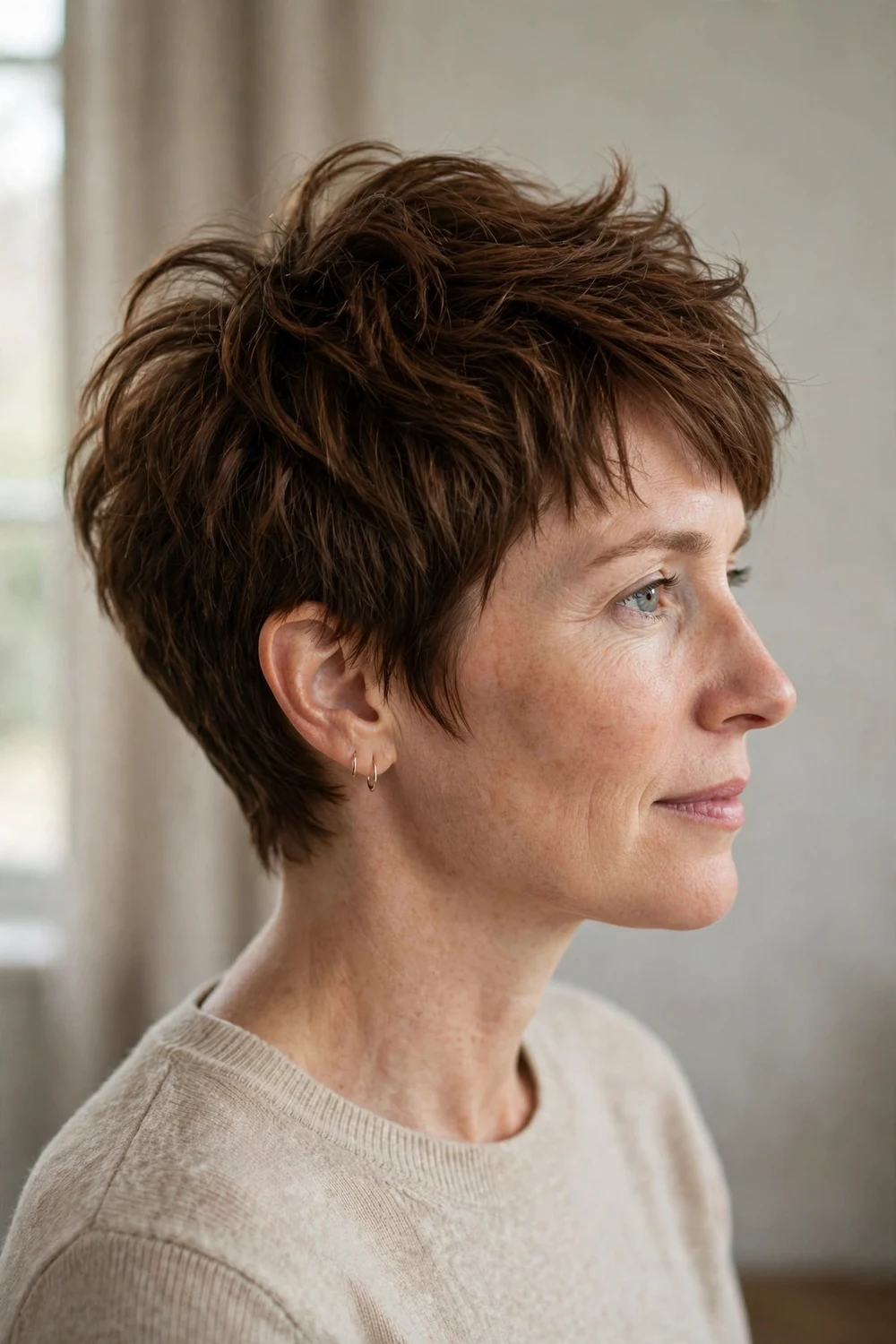
Less weight means more lift, and a pixie takes that rule to the limit. Point-cut texture through the crown breaks up the surface so light hits in more directions, which reads as thickness. Ask your stylist to keep two to three inches of length on top and taper the sides close. The longer top can be pushed forward, swept to the side, or scrunched up with paste. It grows out into a shaggy pixie, so trims can stretch to eight weeks. Difficulty: Easy. If you are comparing short options across age groups, our roundup of short hairstyles for thin fine hair collects even more close-cropped ideas.
Try this: Try this: warm a pea-sized dab of matte paste between your palms and work it through dry hair, lifting the crown pieces upward as you go.
3. Textured Lob with Teased Roots
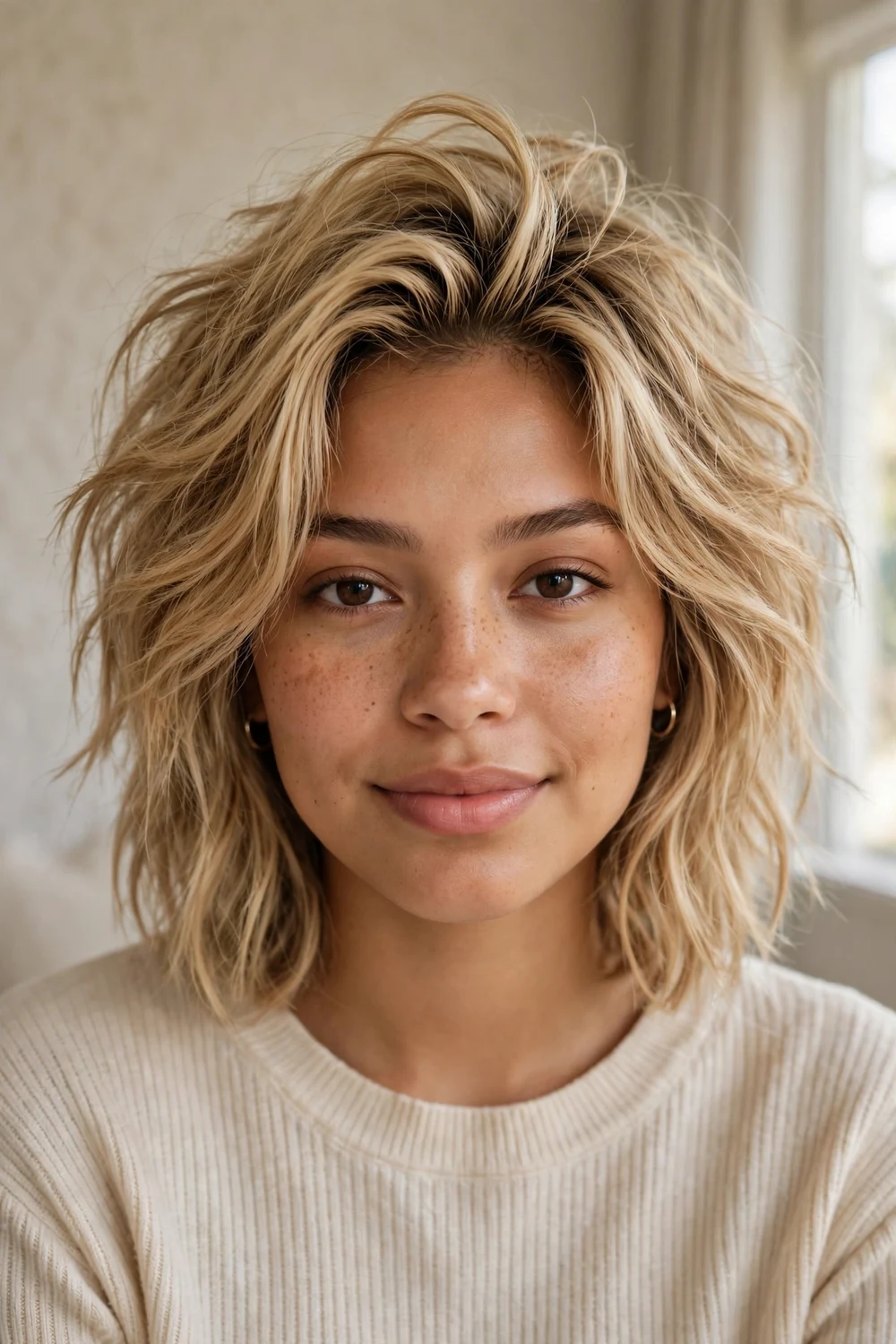
For anyone not ready to go short, the lob lands right at the sweet spot. The length sits around the collarbone, which is short enough to bounce but long enough to tie back. Choppy layers through the mid-lengths keep the ends from looking stringy, while backcombing at the crown builds the height this cut is named for. A light mist of texturizing spray holds the tease without turning crunchy. The whole routine takes about ten minutes. Difficulty: Medium.
Try this: Try this: backcomb only the underlayer of the crown section, then smooth the top layer over it. You get the lift without visible tangles.
4. Modern Shag with Face-Framing Layers
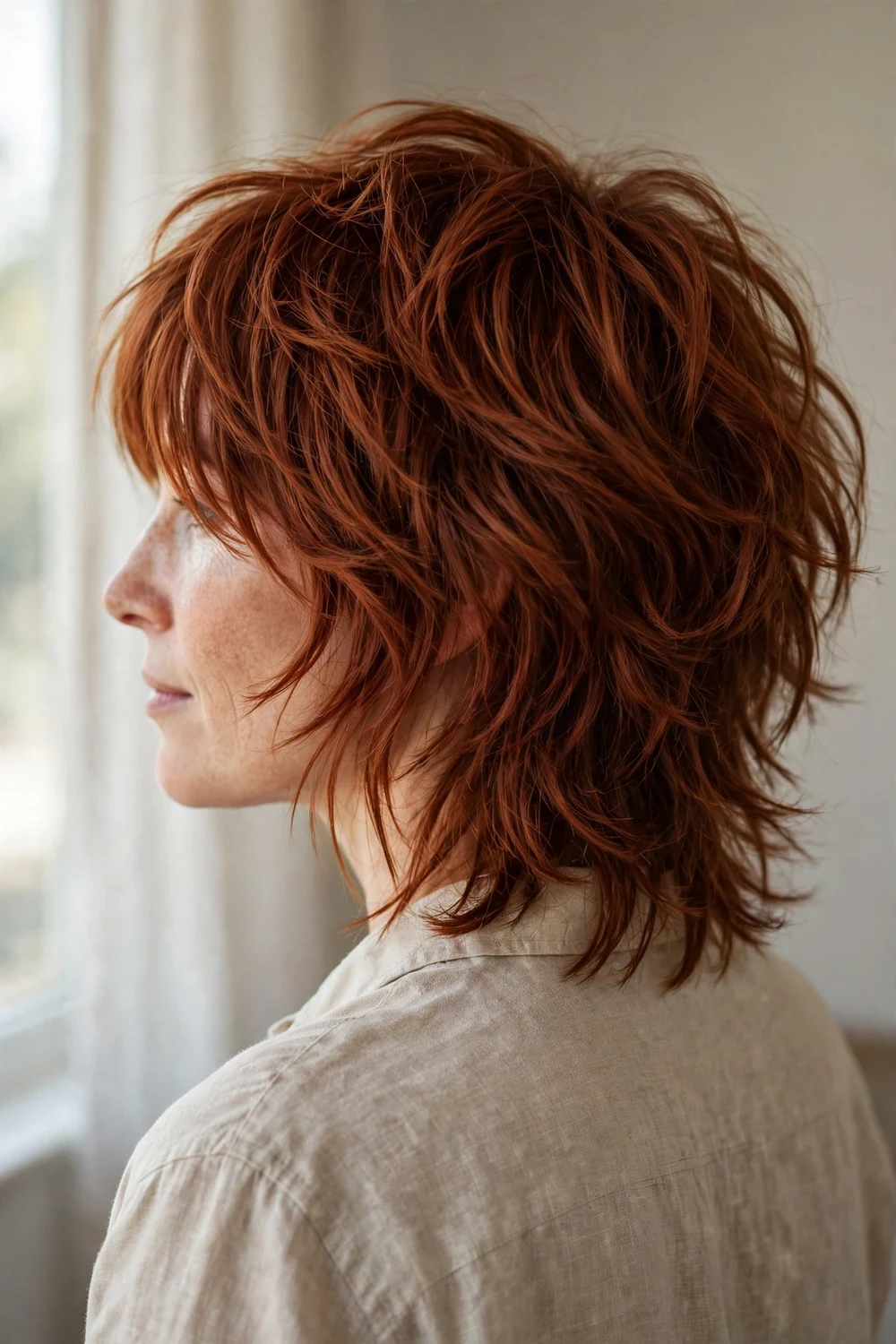
Shaggy layers are one of the fastest ways to add movement to fine hair. The layers are cut at different lengths throughout, so the hair never settles into one flat sheet. Face-framing pieces start near the cheekbone and cascade down, which opens up the front while the back stays full. Air-drying with a little sea-salt spray gives it the lived-in texture this cut is known for. It suits straight, wavy, and curly textures alike. Difficulty: Easy.
Try this: Try this: scrunch a quarter-sized pump of lightweight mousse into damp hair, then let it air-dry to keep the layers separated and airy.
5. Feathered Bob
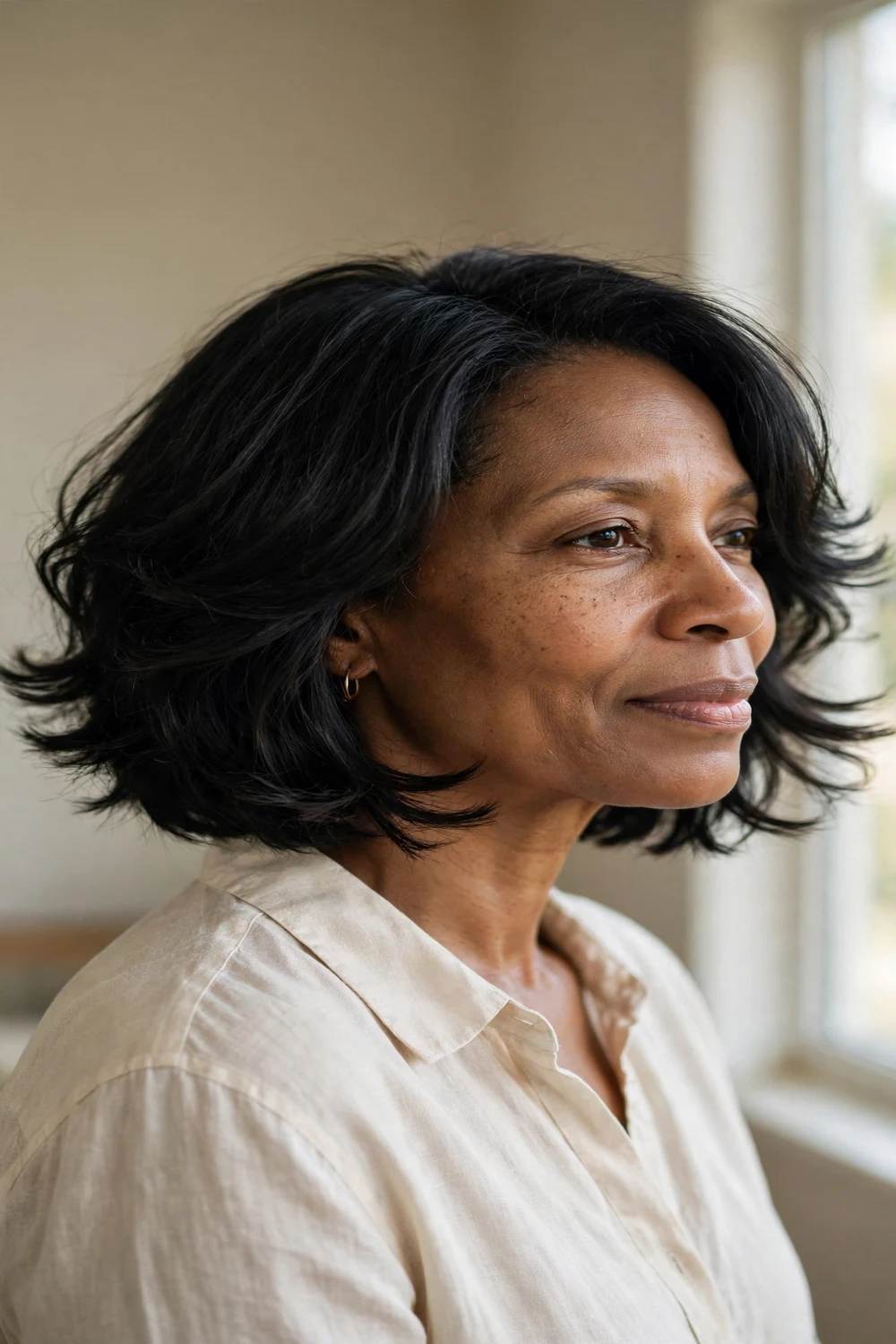
Feathering thins the ends in soft, angled slivers instead of blunt chunks. That keeps the perimeter light so the bob swings instead of hanging. The technique works especially well at jaw or chin length, where each feathered piece can be flicked outward with a flat iron for instant width. A quick pass with a round brush during the blow-dry sets the flick. Fine hair holds this shape well because the ends are light. Difficulty: Easy.
Try this: Try this: run a flat iron outward through the bottom inch of each section to get the feathered flick that widens the silhouette.
6. Blunt Bob with Textured Ends
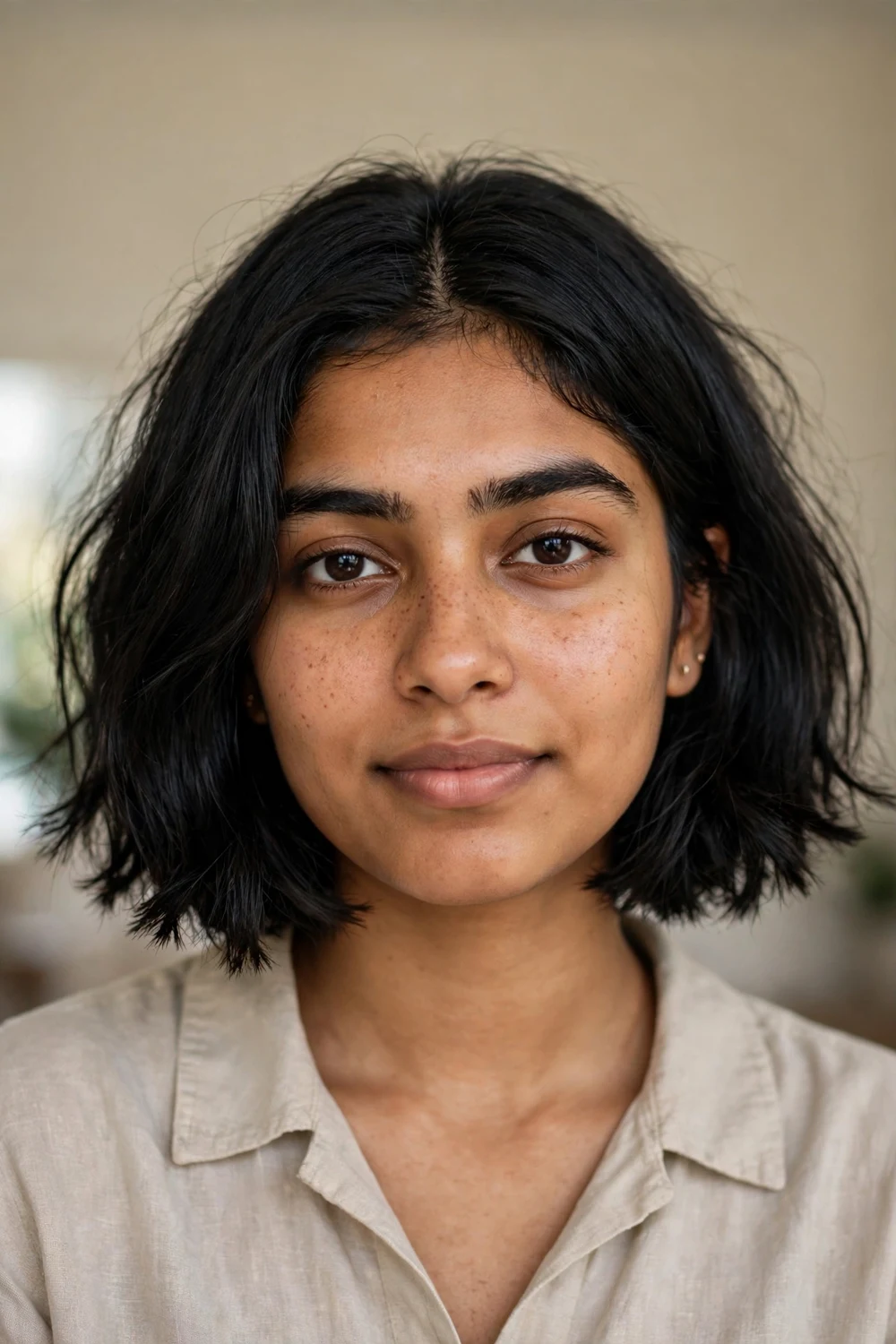
A solid blunt perimeter is the oldest trick for making ends look thicker. By keeping every strand the same length, the hem reads dense instead of wispy. Adding light texture just at the very tips stops the cut from looking heavy or stiff. This version sits at the jawline and pairs well with a middle or side part. It is one of the lowest-maintenance options here: wash, blow-dry straight down, done. Difficulty: Easy.
Try this: Try this: seal the blunt edge with a tiny drop of smoothing serum. Sleek ends make the whole cut read thicker.
7. Wispy Bangs with Shoulder-Length Layers
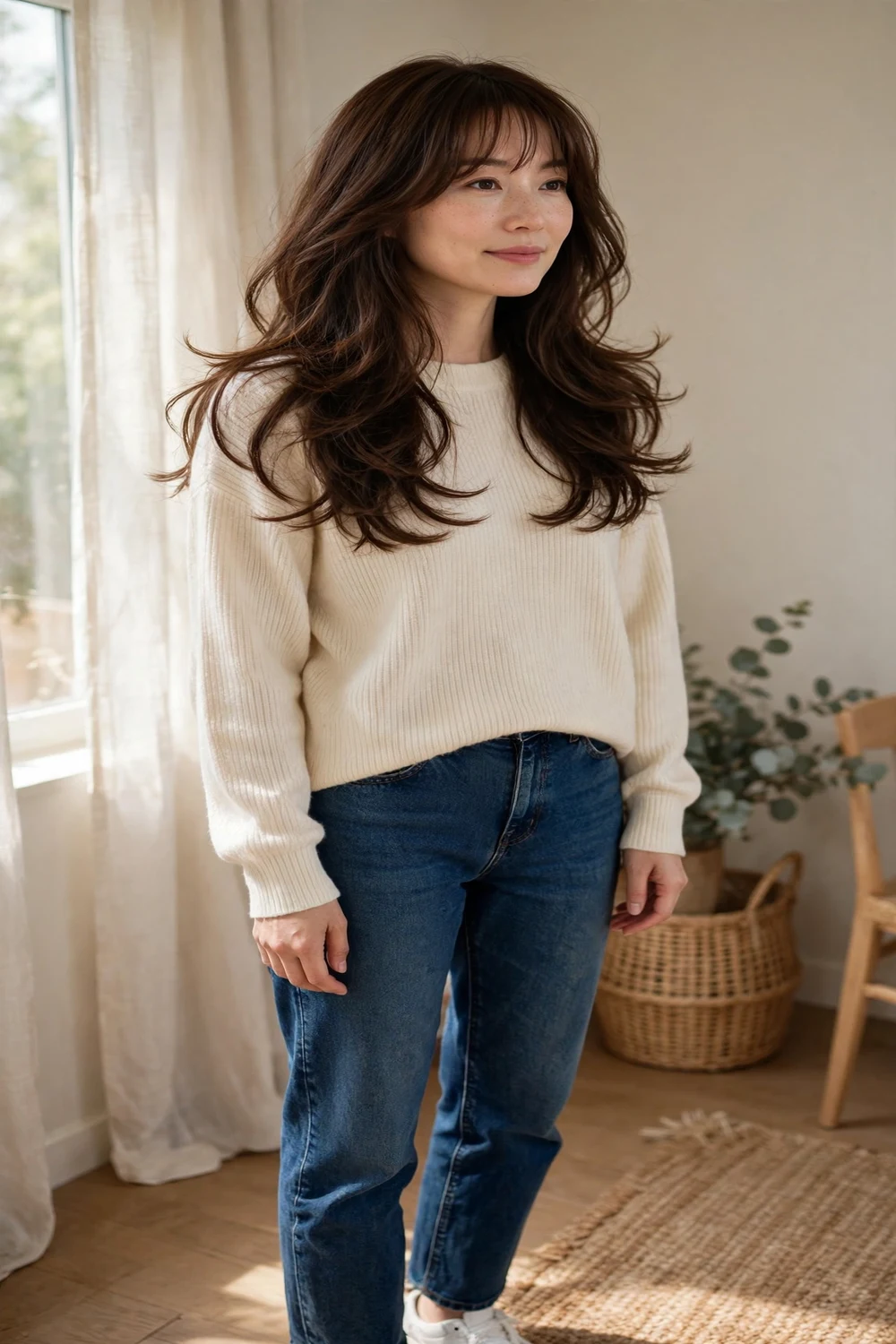
Wispy bangs change the whole front profile of fine hair. Instead of one flat sheet across the forehead, see-through strands create softness and movement right where flatness shows most. Paired with long, barely-there layers through the lengths, the style keeps its fullness while gaining shape. The layers should start below the chin so the ends keep their density. A quick blow-dry with a round brush gives the bangs their lift. Difficulty: Easy.
Try this: Try this: blow-dry wispy bangs with a small round brush, rolling them away from the face for lift at the front.
8. Razor-Cut Pixie
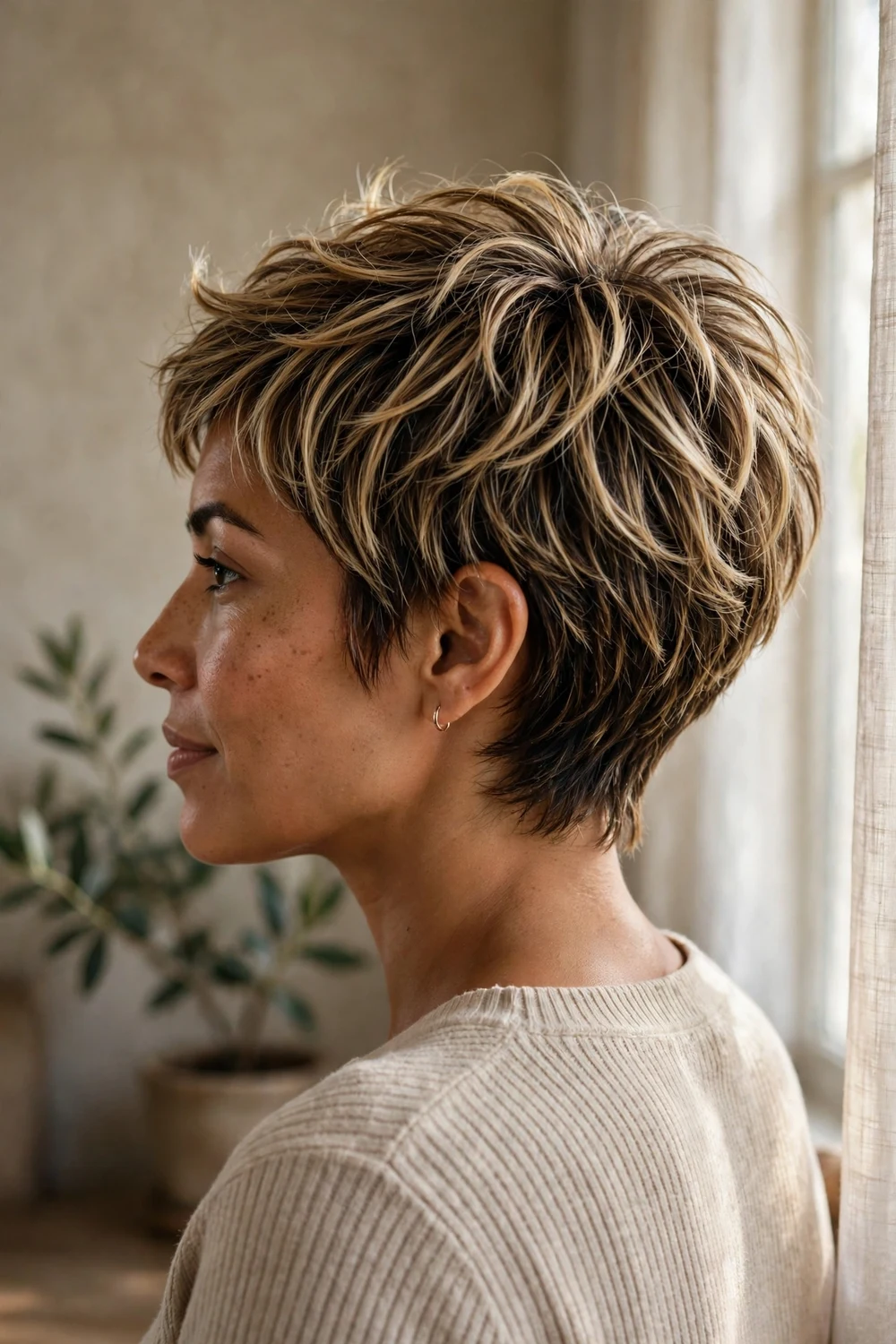
A straight razor slices the ends at an angle, which creates soft, feathery tips instead of the blunt line scissors leave. On a pixie, that means the layers blend into each other and the crown looks fuller without extra bulk. The razor also removes hidden weight, so the top layers stand up with less product. Styling is mostly finger work: wax or paste, thirty seconds, out the door. Trims every six weeks keep the edges clean. Difficulty: Easy.
Try this: Try this: ask your stylist to razor only the last half inch. Over-razoring can make fine hair look wispy instead of full.
9. Tousled Long Layers
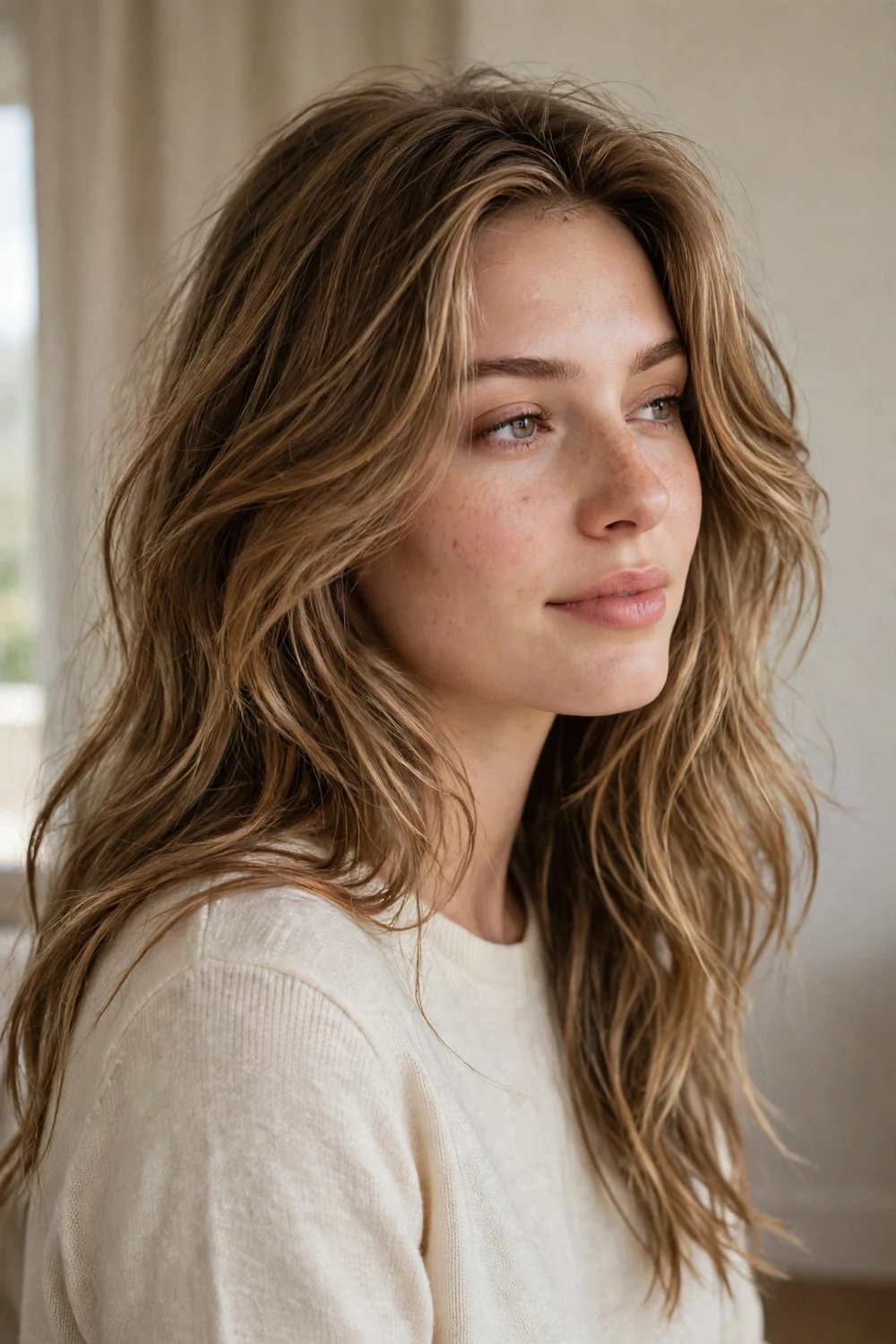
Keeping length does not mean giving up volume. Long, widely spaced layers start around the collarbone, which leaves the bottom half dense while the top moves freely. Tousling the lengths with a curling iron in loose bends creates the width fine hair lacks when it hangs straight. A shake at the roots and a mist of flexible hairspray finish the look. It holds for a full day on most fine hair. Difficulty: Medium.
Try this: Try this: curl one-inch sections away from the face, leave the last two inches out of the iron, and shake them loose for natural-looking body.
10. Pixie Bob with Feathered Layers
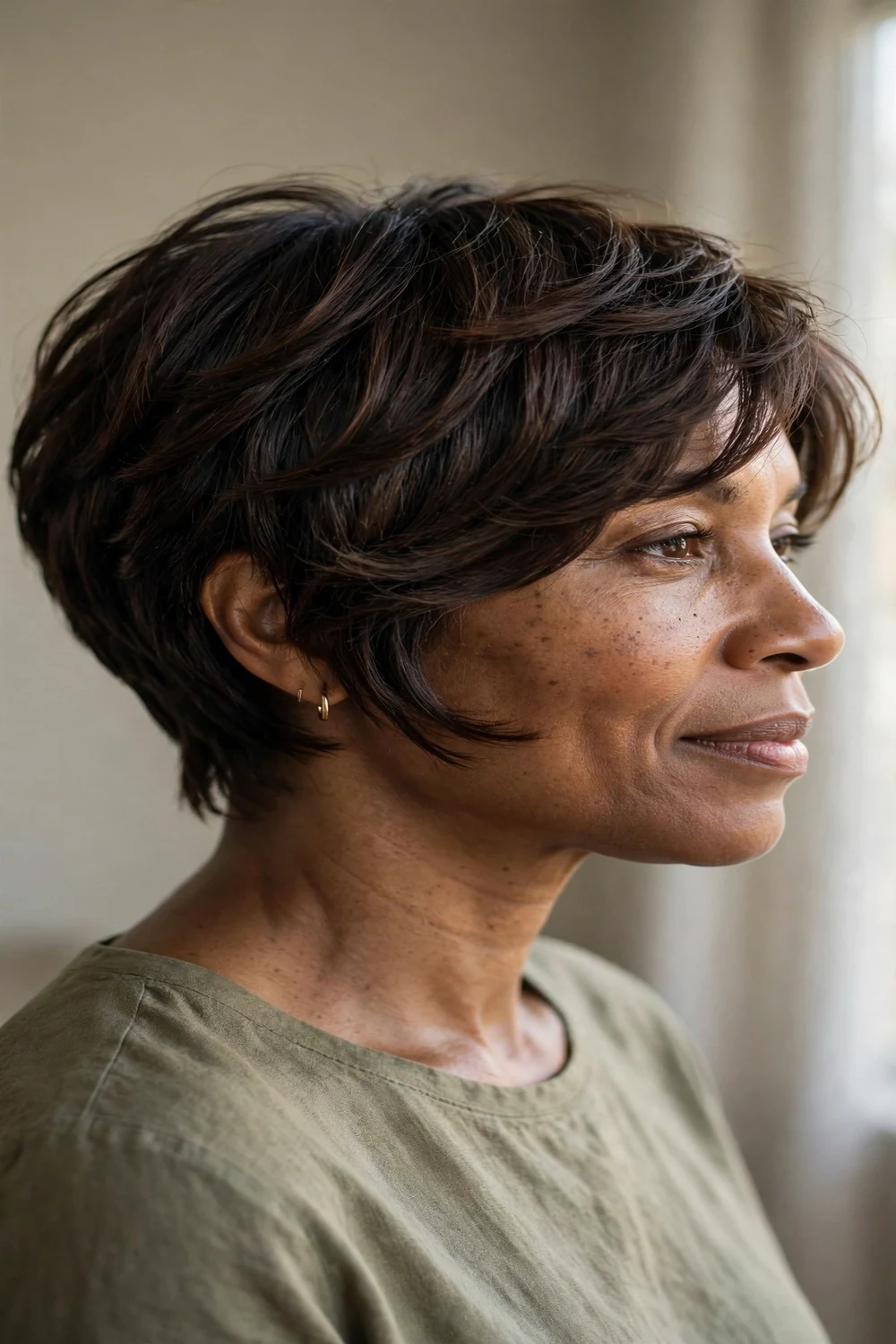
Longer in front, shorter in back: the pixie bob borrows the fullness of a pixie and the softness of a bob. Feathered layers through the top keep the crown lifted while the longer front pieces skim the jawline. The back is tapered so it hugs the neck, which makes the whole head shape look rounder. It is a strong pick for oval and heart faces. Styling takes five minutes with a blow-dryer and a vent brush. Difficulty: Easy.
Try this: Try this: blow-dry the crown forward and down first, then flick the front pieces outward. The contrast builds the shape.
11. Rounded Bob with Soft Layers

Subtle graduation around the head is what makes this bob curve inward instead of flaring out. The interior layers are kept invisible, so the outside stays smooth while the inside holds the shape. It usually sits just under the chin and suits round and square faces because the curve softens the jawline. A large round brush during the blow-dry does most of the work. For a broader look at short styles for mature hair, see our guide to short hairstyles for women over 50, which covers several similar rounded cuts. Difficulty: Easy.
Try this: Try this: dry each section under and inward with a large round brush. The inward curve is what gives this bob its rounded fullness.
12. Angular Bob with Deep Side Part
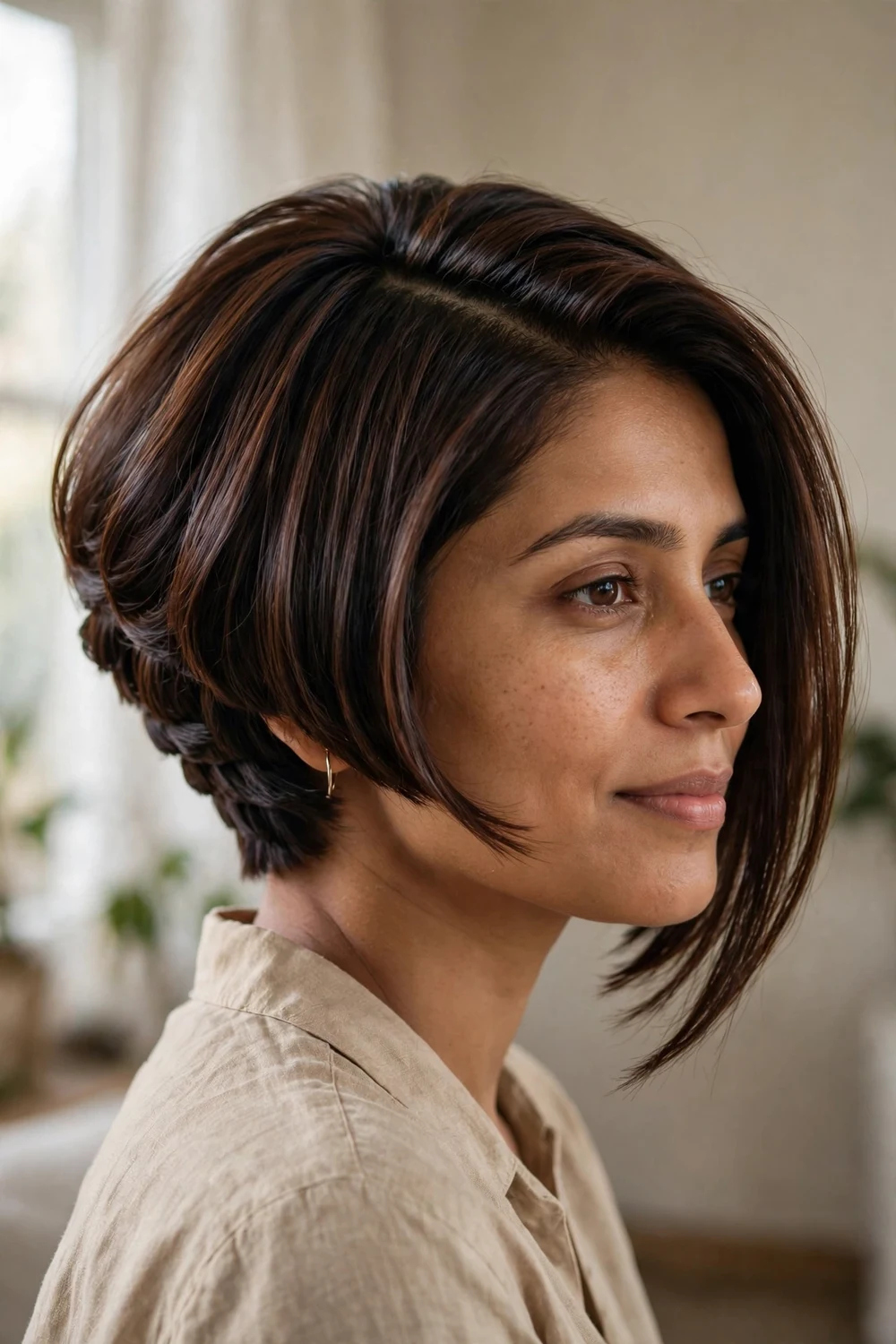
The deep side part is doing half the work here. Sweeping most of the hair to one side doubles the volume on that side instantly. The cut itself is stacked at the back and angles down toward the chin in front, which creates a strong diagonal line. That line pulls the eye along the face and makes the hair look denser. A flat iron pass through the front pieces keeps the angle sharp. Difficulty: Medium.
Try this: Try this: set the part three inches off-center while hair is damp, then blow-dry the heavy side up and over for maximum sweep.
13. Short Layered Shag
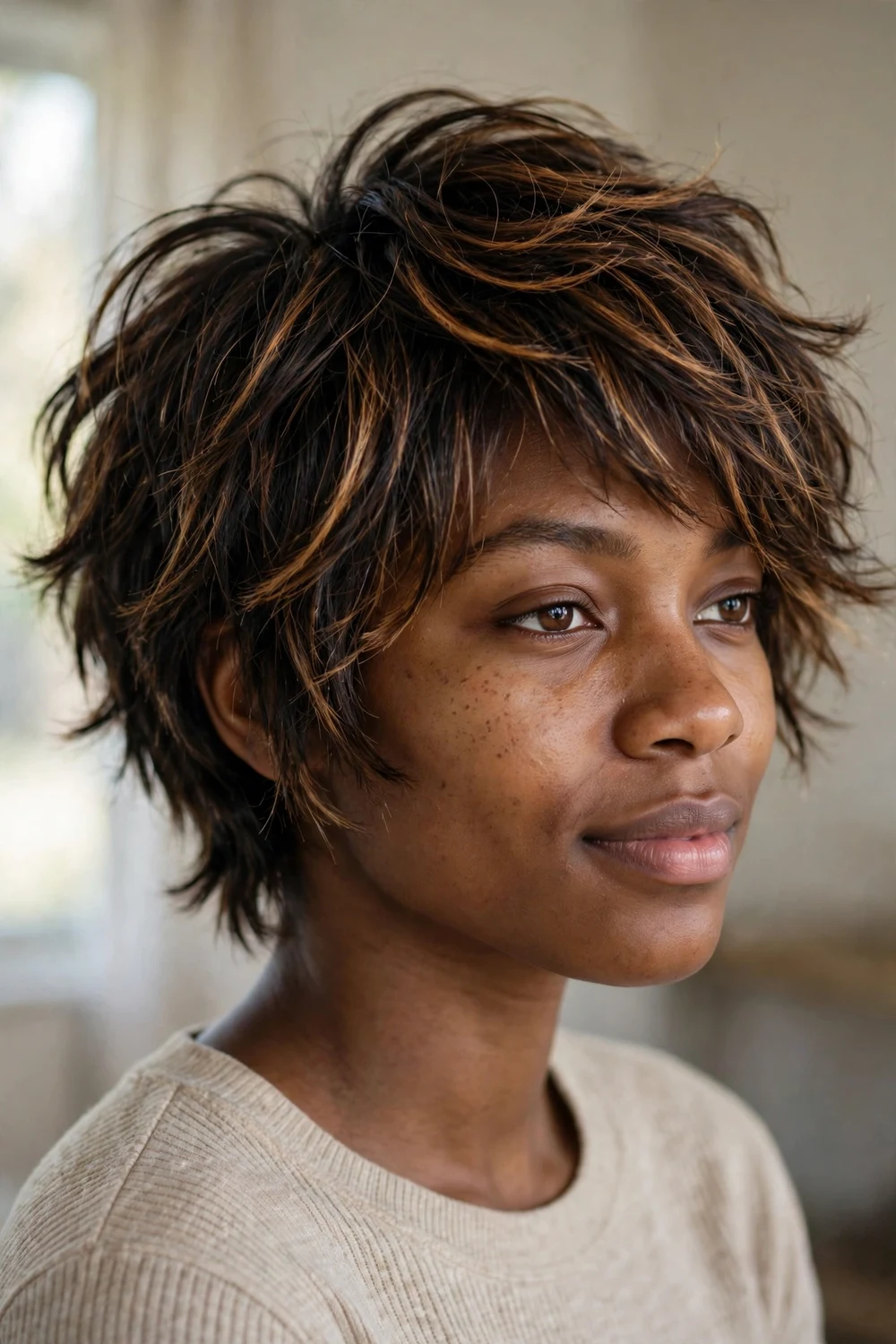
Take the shag, cut it above the chin, and you get a style that practically styles itself. The short layers stack on top of each other, and because each layer is a different length, the hair cannot fall into one flat layer. Fine hair especially benefits because the short lengths dry fast and hold texture spray well. Wash-and-go works if you scrunch in a little product. It reads playful without trying too hard. Difficulty: Easy.
Try this: Try this: apply texture spray to towel-dried hair and twist small sections as it air-dries. The twists set into piecey, separated layers.
14. Asymmetrical Bob with Curtain Bangs
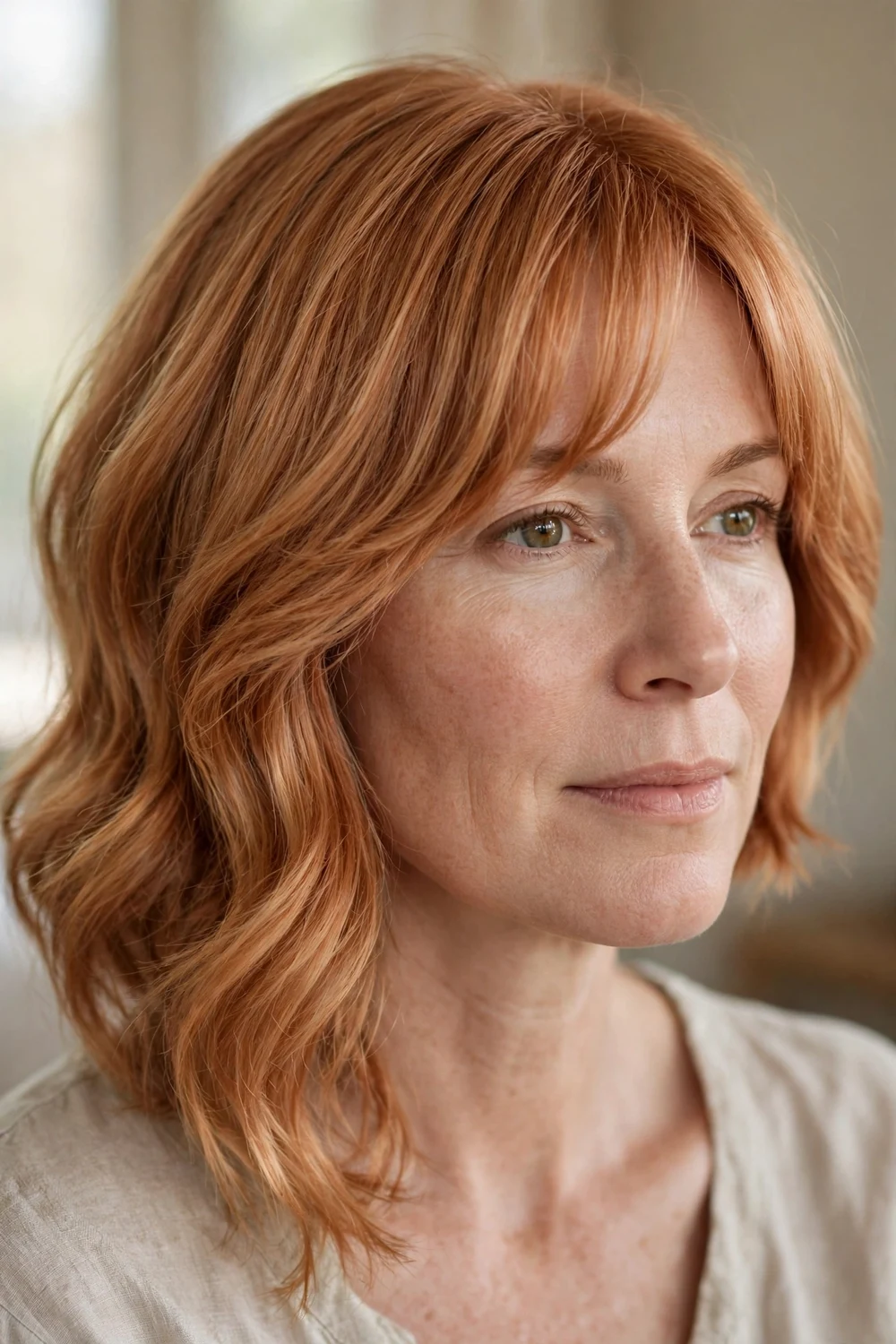
When every strand is a slightly different length, the hair cannot settle into a flat pattern. That is the logic behind this cut: one side runs longer than the other, and curtain bangs split down the middle to frame both sides. The asymmetry builds natural movement while the bangs add fullness across the forehead. It looks deliberate rather than messy, which makes it office-friendly. Difficulty: Medium.
Try this: Try this: blow-dry the curtain bangs with a round brush, rolling each half away from the center part so they open like curtains.
15. Midi Cut with Swoopy Layers
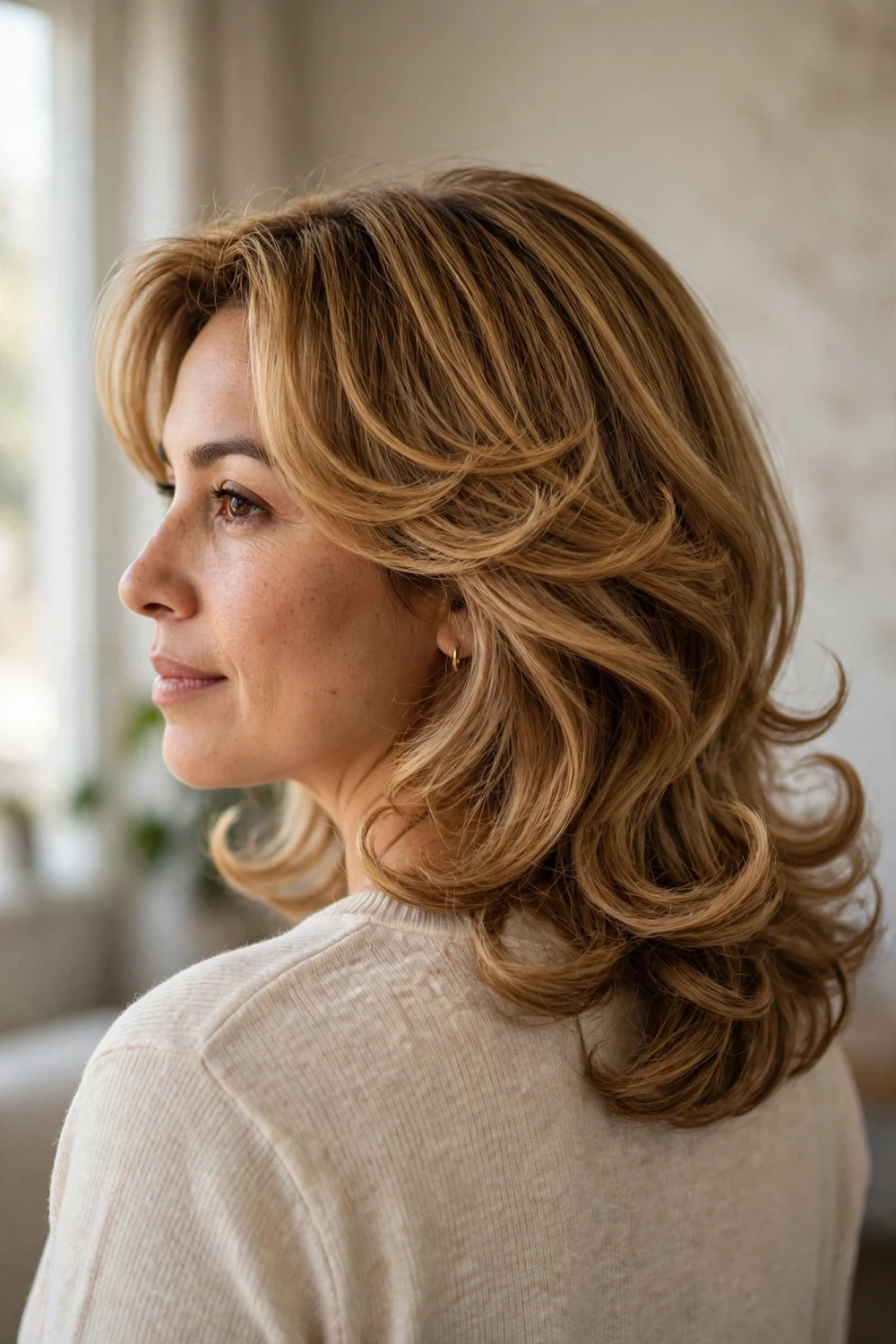
Swoopy layers curve under at the ends, which makes the bottom of the hair look thicker than it is. The mid-length cut keeps enough weight to pull the style down while the layers add swing. A blowout with a large round brush gives the classic swoop; the curve should tuck under, not flip out. This is one of the most polished options on the list and photographs well from every angle. Difficulty: Medium.
Try this: Try this: over-direct each section upward before rolling it under. Drying against the growth pattern builds the root volume this cut needs.
16. Bob with Nape Undercut
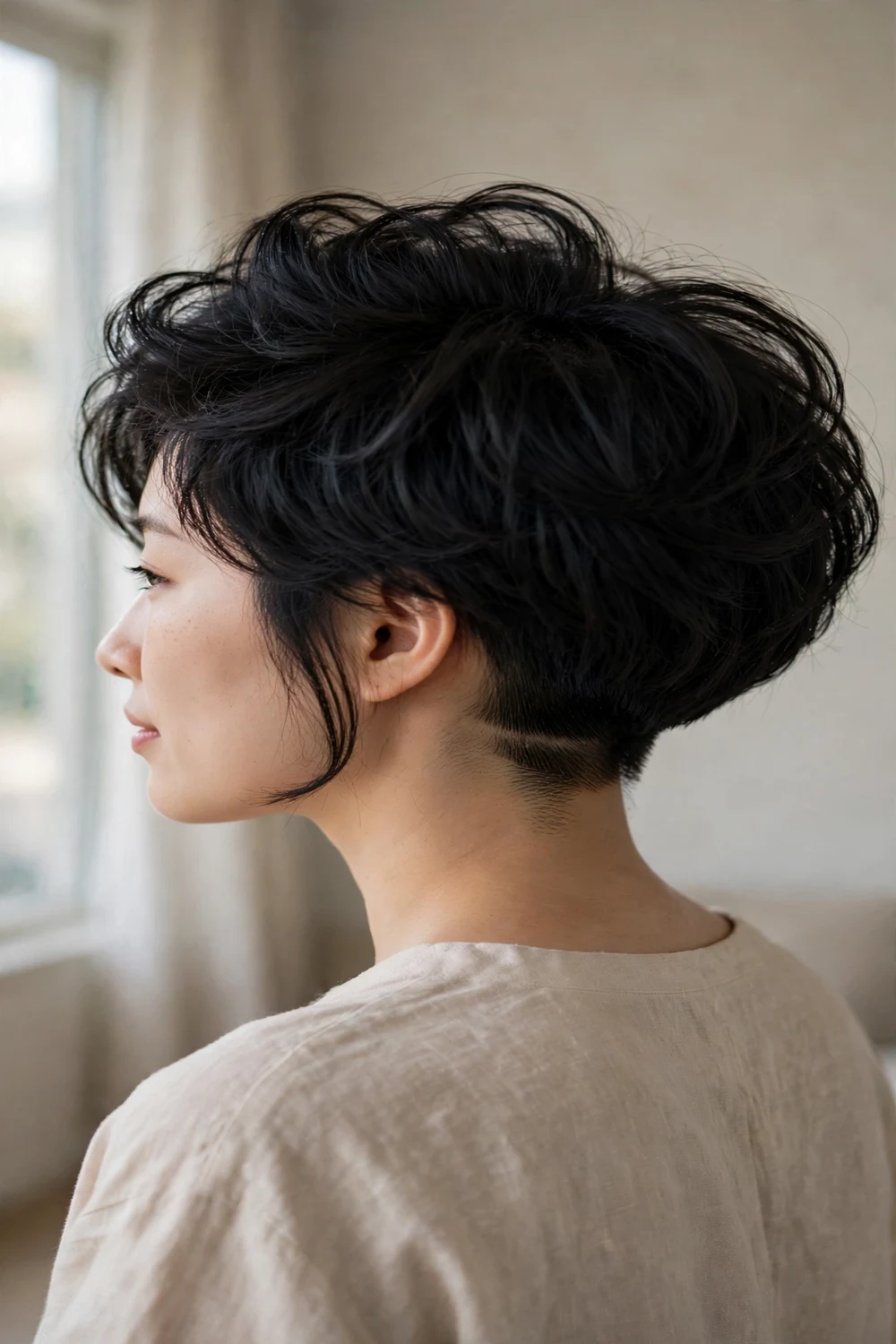
The volume trick here is hidden underneath. Shaving or closely clipping the nape removes the bottom layer of hair that normally drags everything down. The longer top layers then fall over the undercut and look noticeably thicker by comparison. Nobody sees the undercut unless you lift the hair, so it works for conservative workplaces too. It also cuts drying time in half. Anyone comparing undercut options for thinning hair may also like our guide to older short hairstyles for fine hair over 60, which includes similar weight-removal cuts. Difficulty: Easy.
Try this: Try this: keep the undercut trimmed every four to five weeks. Once it grows out, the top layers lose their contrast and the volume effect fades.
17. Wolf Cut for Fine Hair
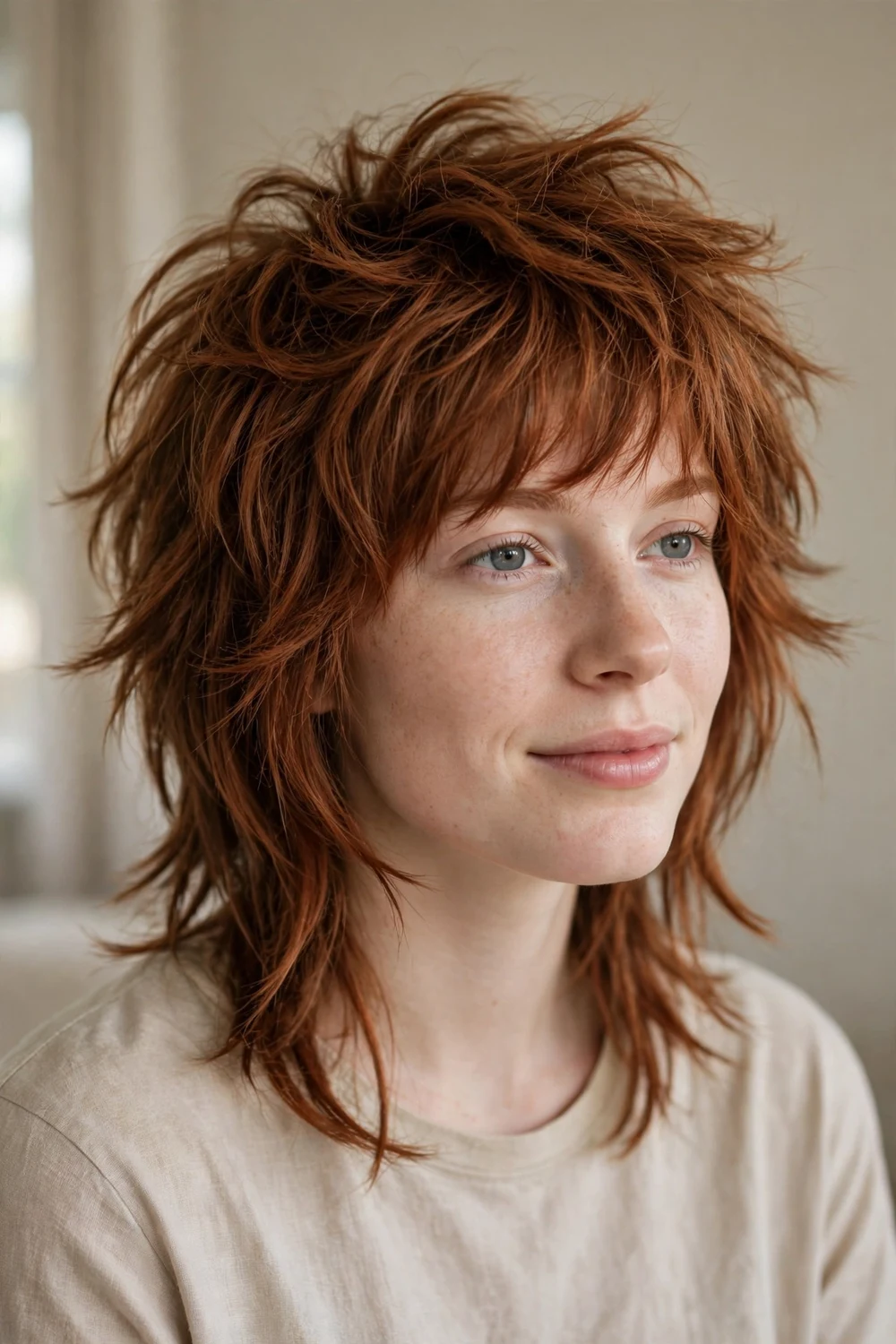
The wolf cut packs heavy layers into the crown and thins out toward the ends. On fine hair, that top-heavy structure is exactly what creates lift: the shorter crown layers stand up while the longer pieces fall over them. The result reads bigger than the actual amount of hair. It needs texture spray to keep the layers separated, but the daily routine is short. It suits wavy and straight textures best. Difficulty: Medium.
Try this: Try this: lift the crown layers with a round brush while blow-drying, and let the longer ends stay straighter for contrast.
18. One-Length Wavy Bob
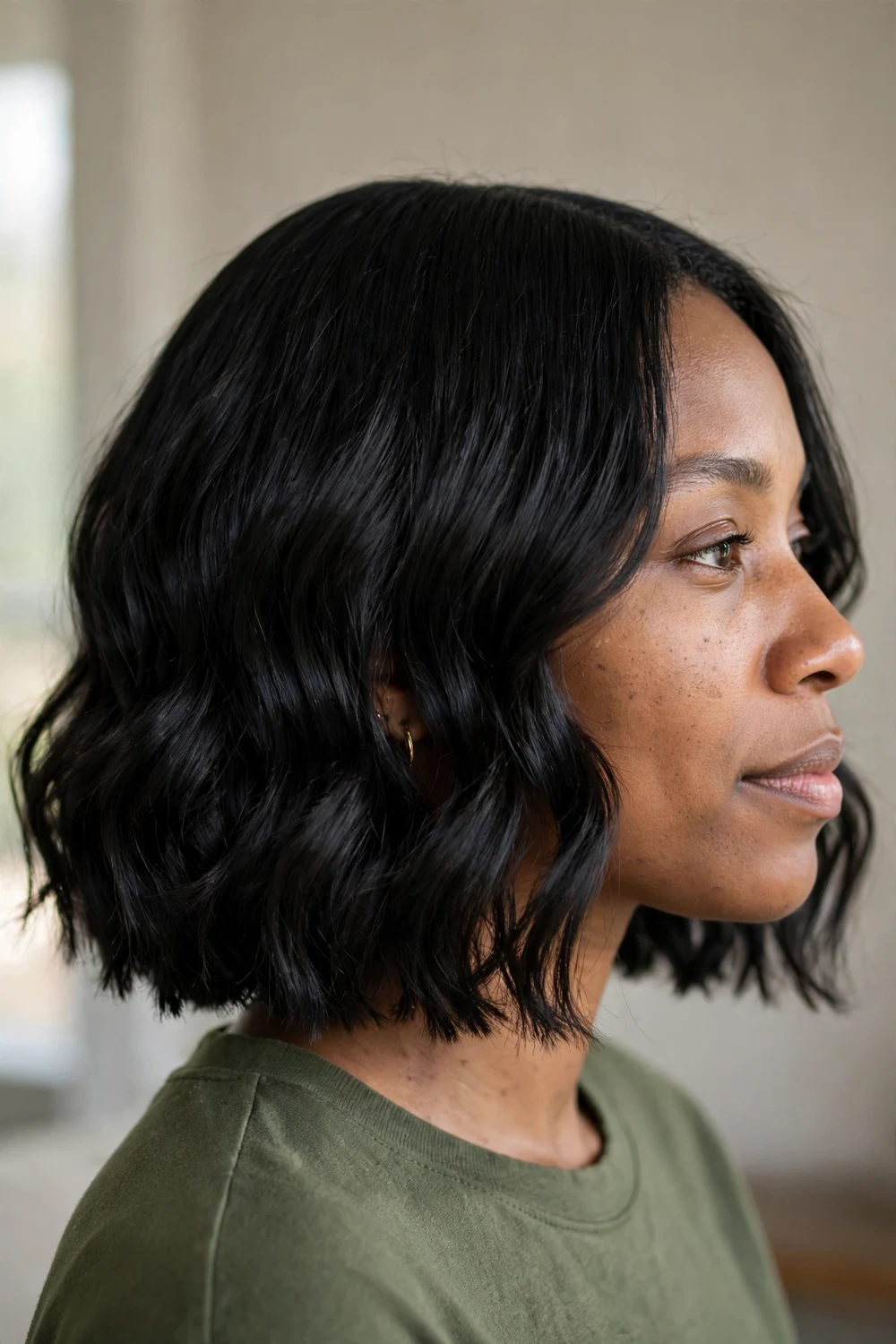
No layers at all is sometimes the bravest choice for fine hair. A one-length perimeter makes the bottom edge look as dense as the hair gets, and adding soft waves builds the width layers normally provide. The waves should be loose S-bends, not tight curls, so the silhouette stays wide. It works at chin or jaw length. Styling is simple: curl, cool, brush out. Difficulty: Easy.
Try this: Try this: after curling, wait two minutes for the hair to cool, then brush through with a paddle brush. Cooled waves turn into soft, full bends.
19. Collarbone Cut with Middle Part
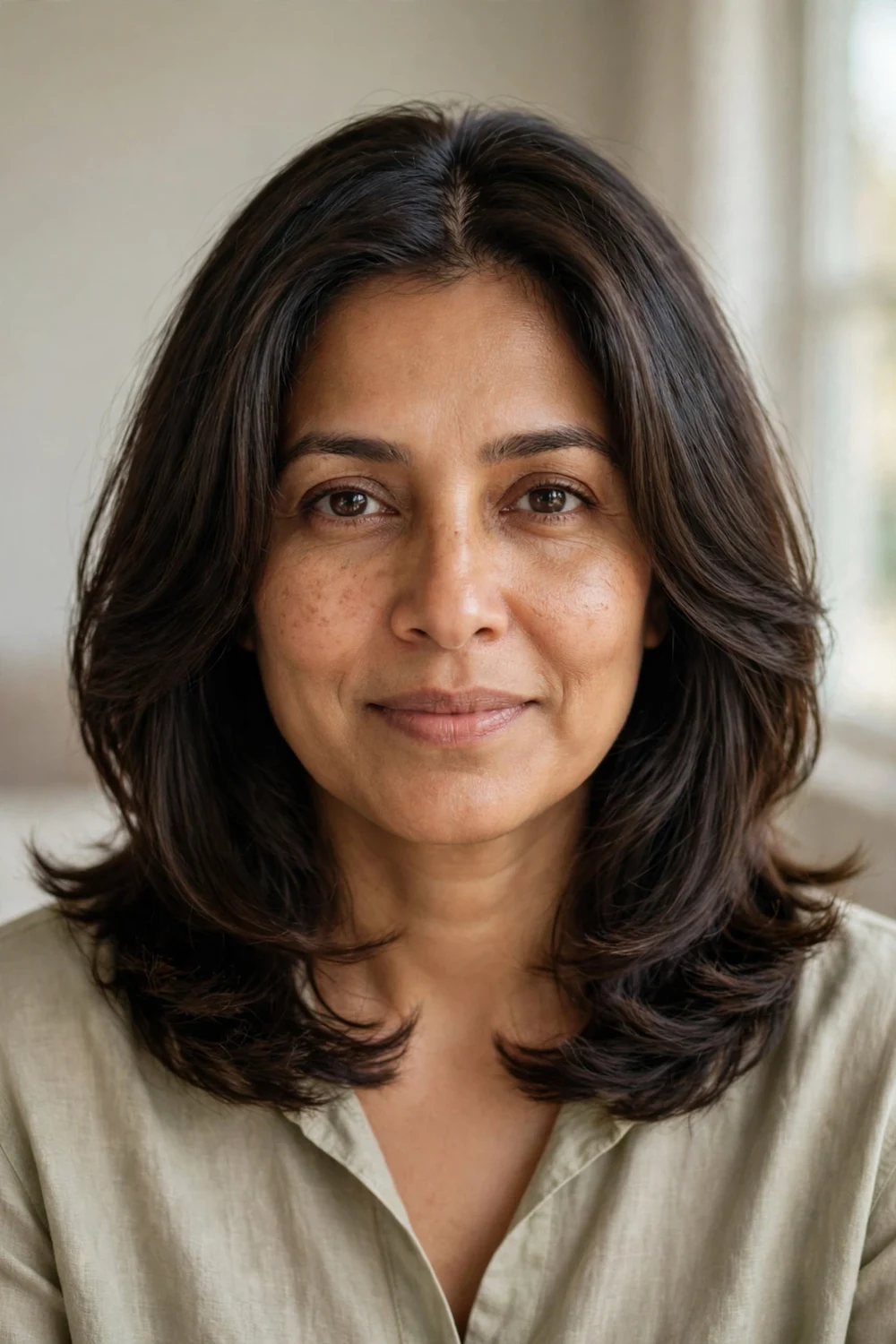
Ending the cut right at the collarbone gives fine hair a natural bounce point: the ends kick outward slightly when they hit the shoulders. A clean middle part keeps the style balanced and modern. Light, long layers through the last few inches stop the perimeter from looking heavy. It is the longest cut on this list that still holds its volume, so it suits anyone growing hair out. Difficulty: Easy.
Try this: Try this: flip the ends outward with a flat iron for ten seconds per section. The outward kick makes the cut look thicker at the baseline.
20. Choppy Midi with Curtain Bangs
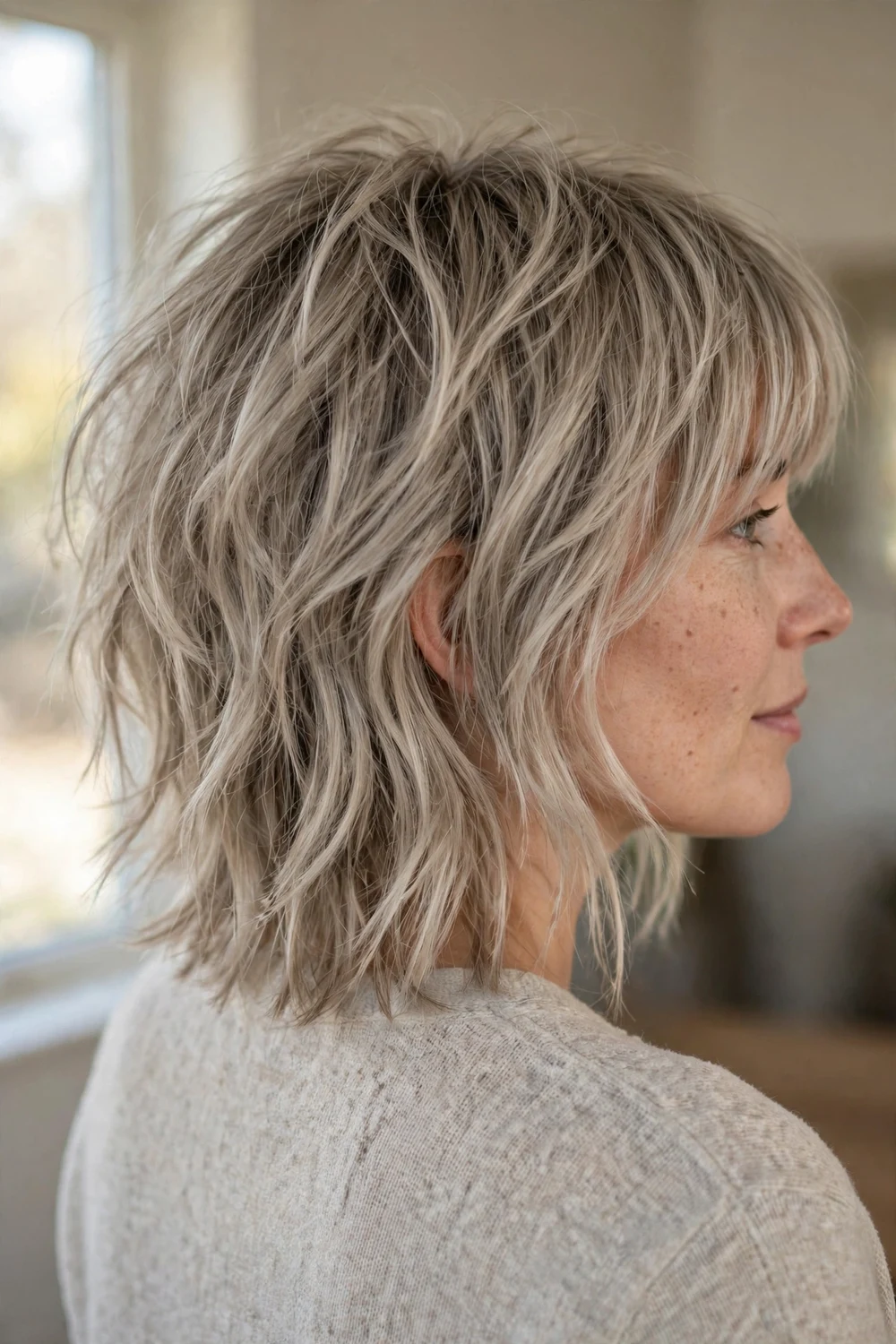
Choppiness is a cutting technique, not a texture: the stylist point-cuts into the ends so they land at slightly different lengths. On a mid-length cut, that means the ends separate into airy pieces instead of clumping. Curtain bangs open the face while the choppy lengths keep the body. It holds up well between washes because the texture hides oil. Difficulty: Easy.
Try this: Try this: refresh second-day roots with dry shampoo, then re-scrunch the choppy ends with damp hands to bring the texture back.
21. Pixie with Nape Undercut
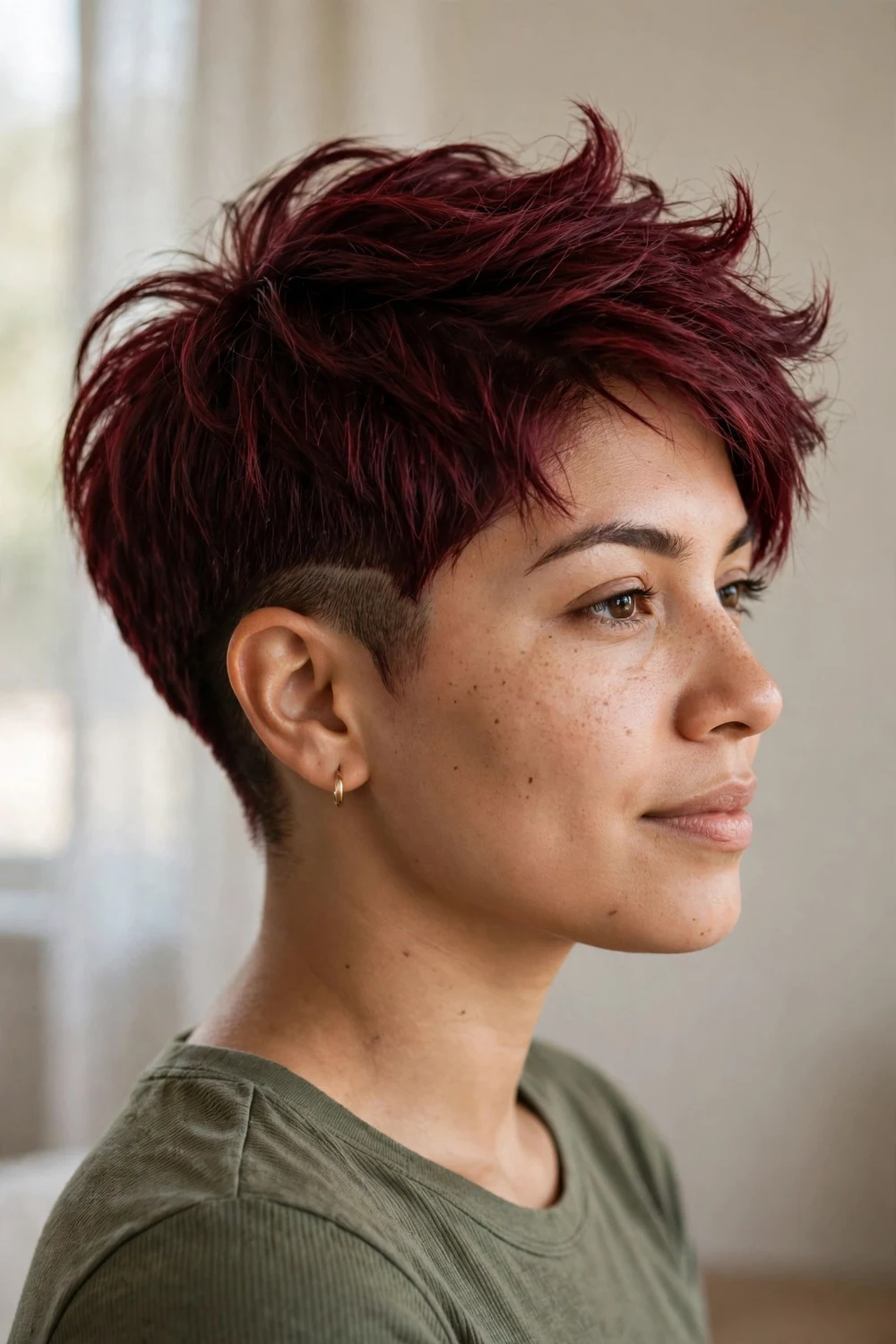
This is the highest-contrast option on the list. The nape and sides are clipped short while the top keeps three to four inches of textured length. That contrast makes the top look dramatically fuller than it is. Styling is flexible: sweep it forward for a soft look or spike it up for edge. The undercut needs a trim every three to four weeks to stay sharp. Difficulty: Easy.
Try this: Try this: work a small amount of fiber cream through the top layers and push them in different directions for lived-in texture.
22. Blonde Bob with Face-Framing Layers
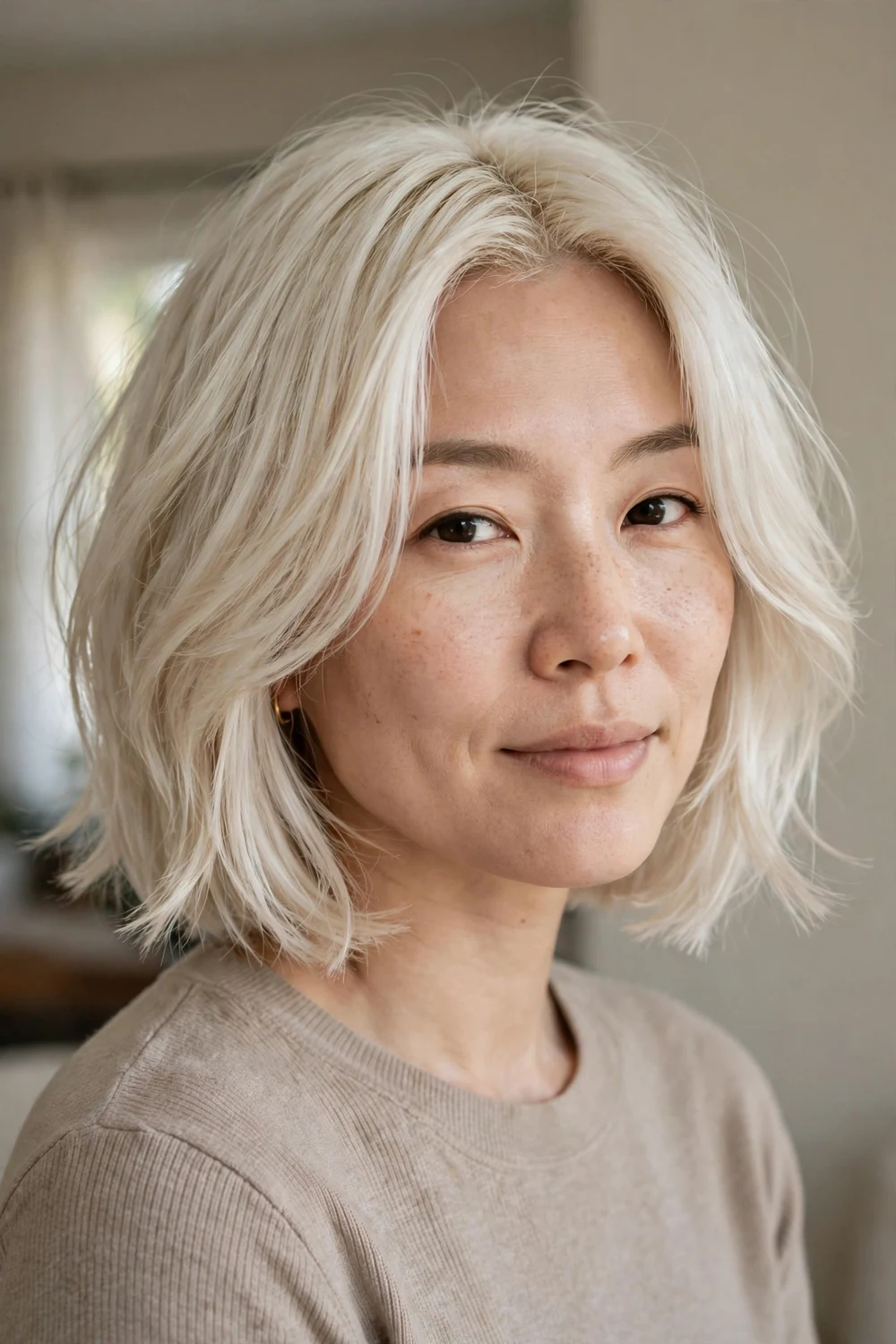
Light color adds an optical dimension that dark, single-process color cannot. Face-framing layers in a lighter blonde break up the front of the hair so it reads as movement rather than one flat color block. The contrast between the lighter front pieces and the base shade creates depth, and depth reads as thickness. Keep the layers within two inches of the face for the strongest effect. Difficulty: Medium.
Try this: Try this: ask your colorist for face-framing pieces two levels lighter than your base. The contrast does the volumizing work for you.
23. Shaggy Bob with Center Part
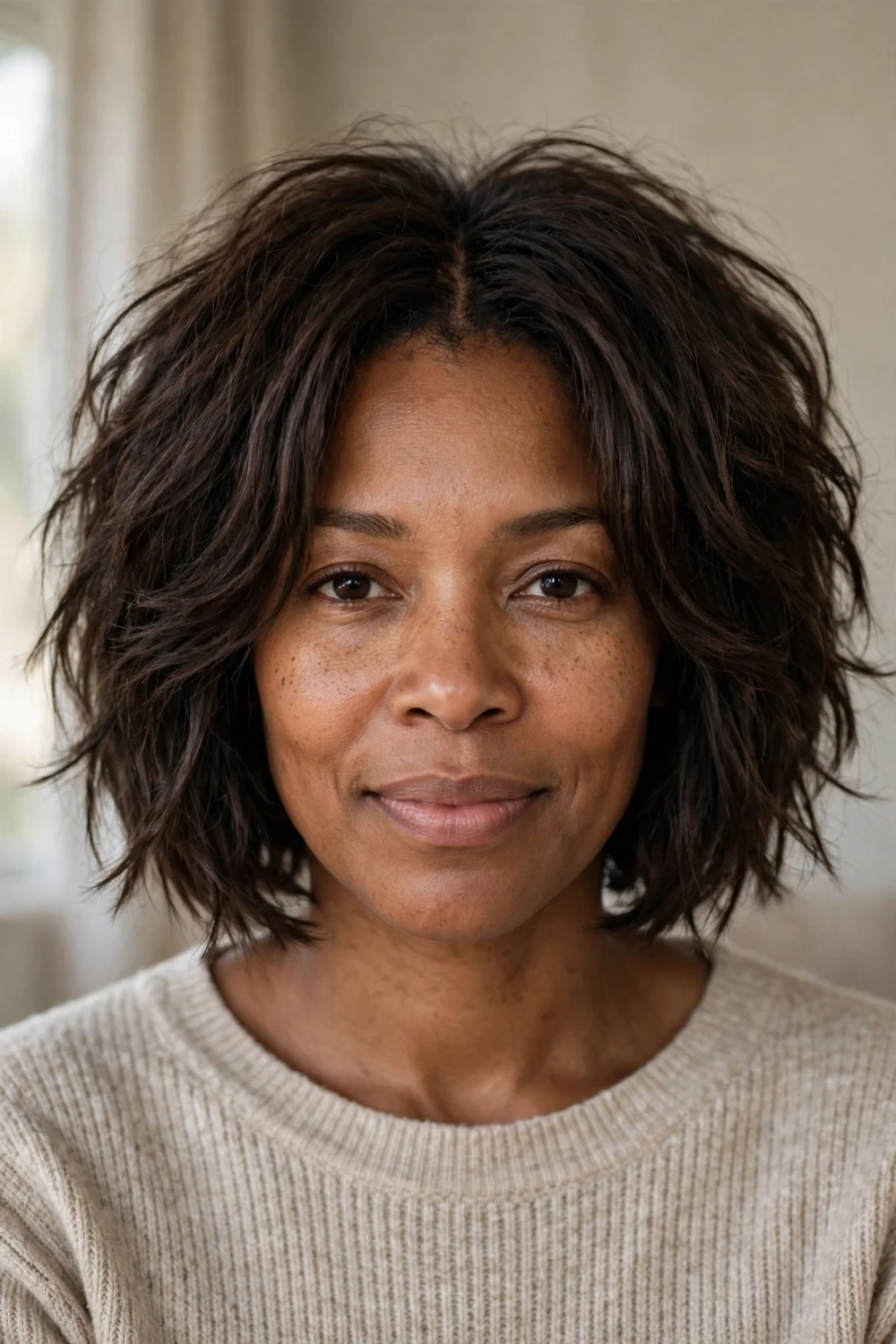
The center part splits the volume evenly, which works when the cut itself is full of texture. Tousled, piecey layers throughout keep both sides bouncy, and the shaggy finish stops it from looking too neat. It suits symmetrical features and reads modern without effort. A little sea-salt spray is the only product it really needs. Fine hair takes to this cut well because the layers are short enough to hold their shape. Difficulty: Easy.
Try this: Try this: rough-dry with your head flipped upside down for two minutes, then flip back. The roots stand up and the shag sets full.
24. Edgy Pixie Bob with Swoopy Bangs
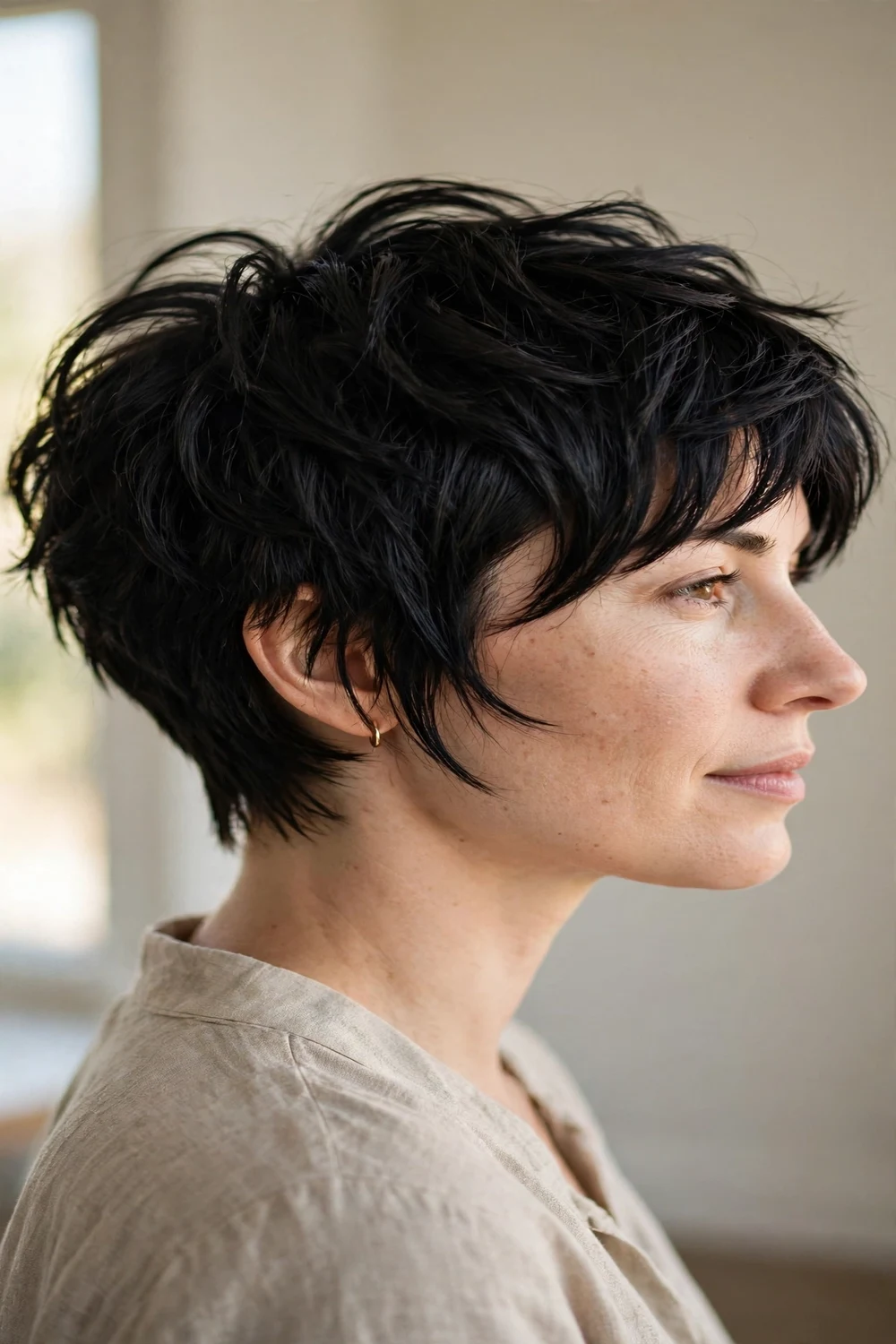
Swoopy bangs sweep diagonally across the forehead, which draws the eye along a long line and makes the cut look bigger. The angled sides taper into the neck while the top stays long enough to swoop. This one has more attitude than a classic pixie bob, and the asymmetry keeps it from ever looking flat. It flatters round faces because the diagonal line breaks up the width. See more bold short options in our roundup of short trendy hairstyles for women 2026 if you want even edgier ideas. Difficulty: Medium.
Try this: Try this: blow-dry the bangs across the forehead with a flat brush, then set the swoop with a light mist of flexible hairspray.
25. Shag with Piece-y Bangs
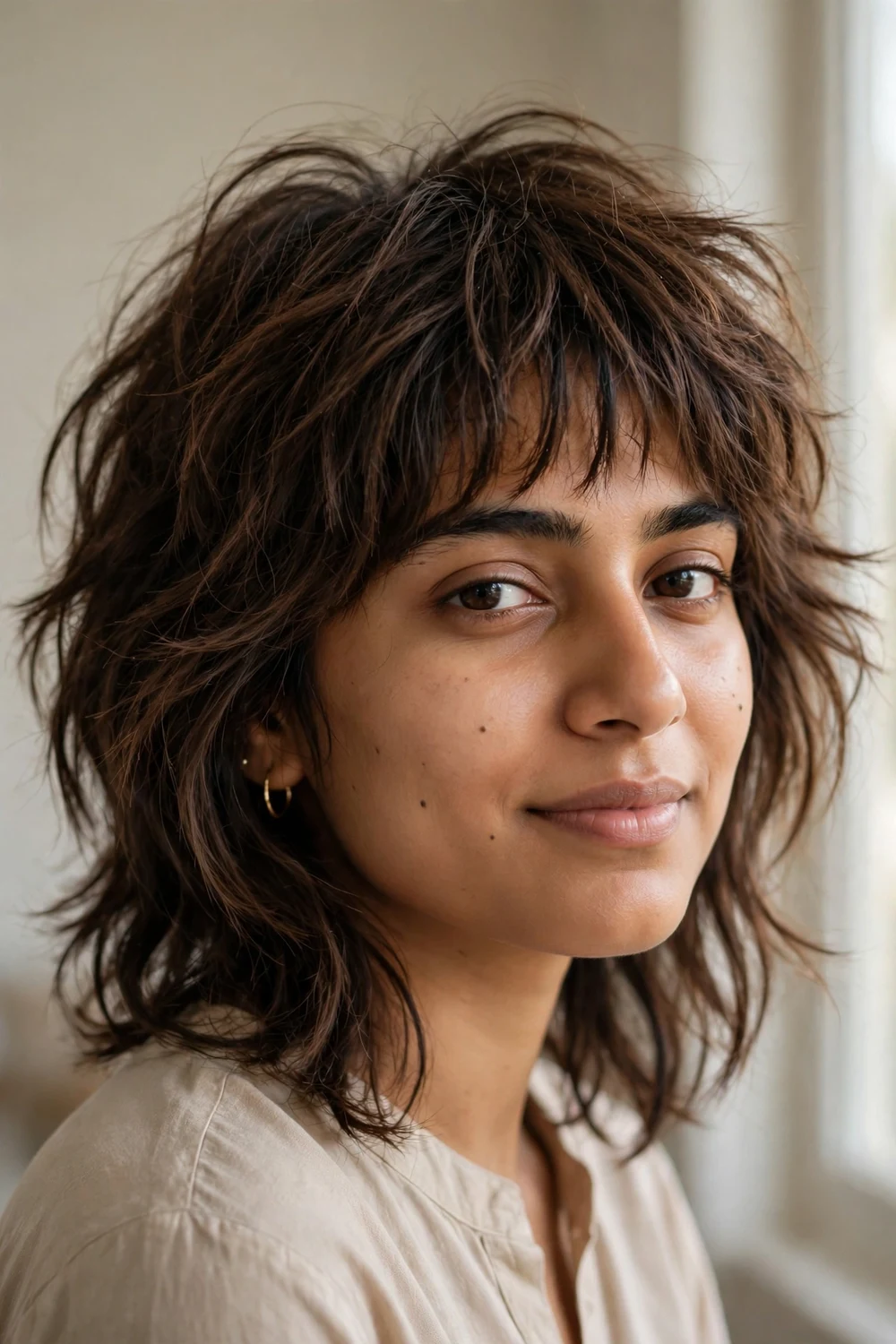
Piece-y bangs are cut into separated strands rather than one solid fringe, so the forehead shows through in places. That see-through effect makes the whole style look lighter and more textured. The shag underneath does the volume work with its stacked, uneven layers. Together they create a cut that looks full without being heavy. It is a strong pick for wavy hair types. Difficulty: Easy.
Try this: Try this: twist individual bang pieces with your fingers after applying a dab of wax. Defined pieces look intentional instead of messy.
26. Deep Side-Part Blunt Bob
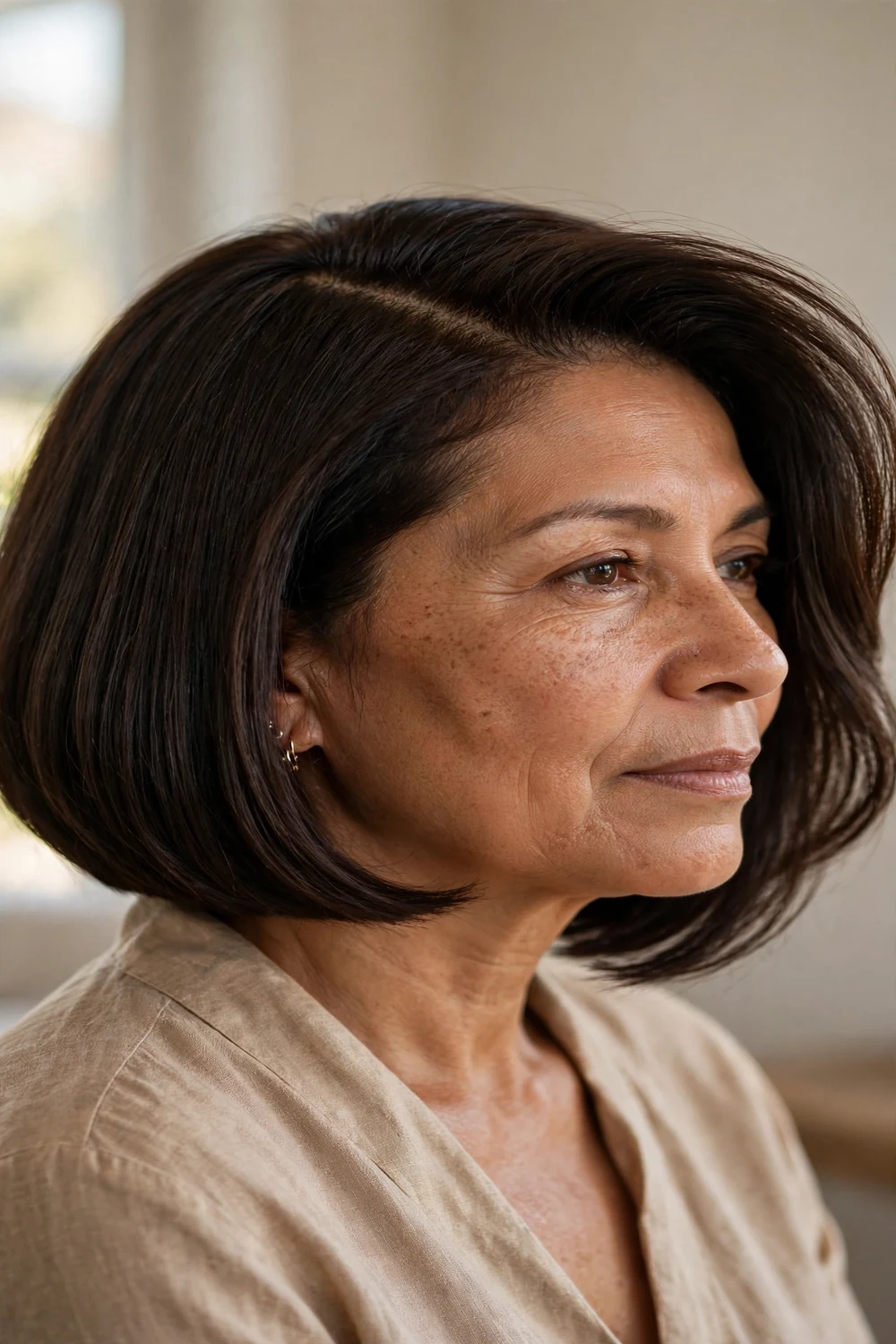
Moving the part deep to one side shifts most of the hair’s weight across the head, which builds instant height at the crown. The blunt perimeter underneath keeps the ends dense, so the style gets volume on top and thickness at the bottom. It is a simple formula that works on almost every face shape. A smoothing blow-dry keeps it sleek rather than puffy. Difficulty: Easy.
Try this: Try this: set the deep part while hair is soaking wet. Parts trained wet stay put; parts set dry tend to drift back by noon.
27. Feathered Shag with Bangs
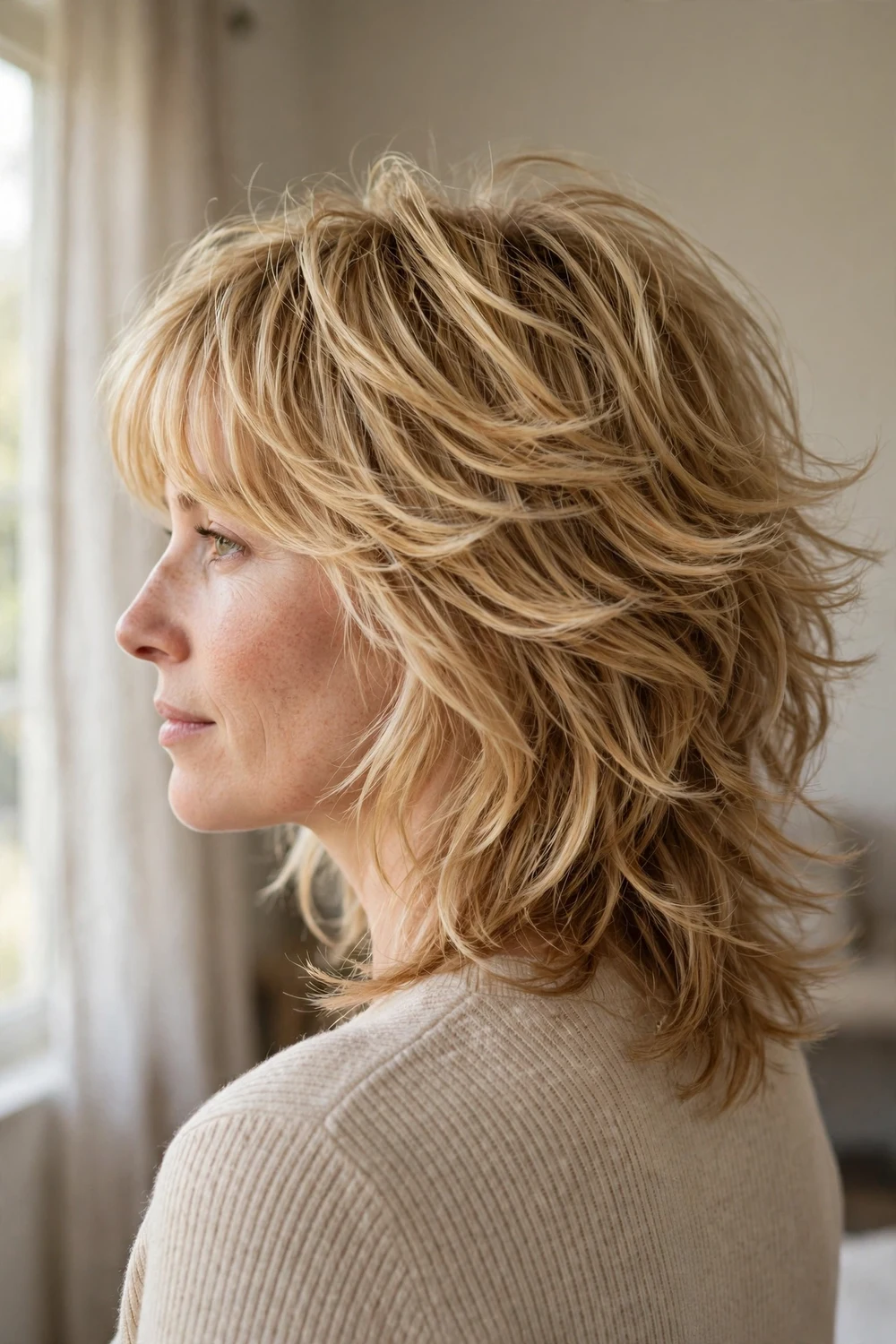
This combines two volume techniques in one cut. The shag layers build height through the crown, while feathered ends keep the perimeter light and swingy. Soft bangs across the forehead tie the front together and add fullness where fine hair often looks thinnest. The feathering means it grows out gracefully, so you can stretch trims to ten weeks. It suits oval and long faces especially well. Difficulty: Medium.
Try this: Try this: use a vent brush and direct the bangs side to side while blow-drying. The motion builds lift right at the hairline.
28. Curly Short Cut for Fine Hair
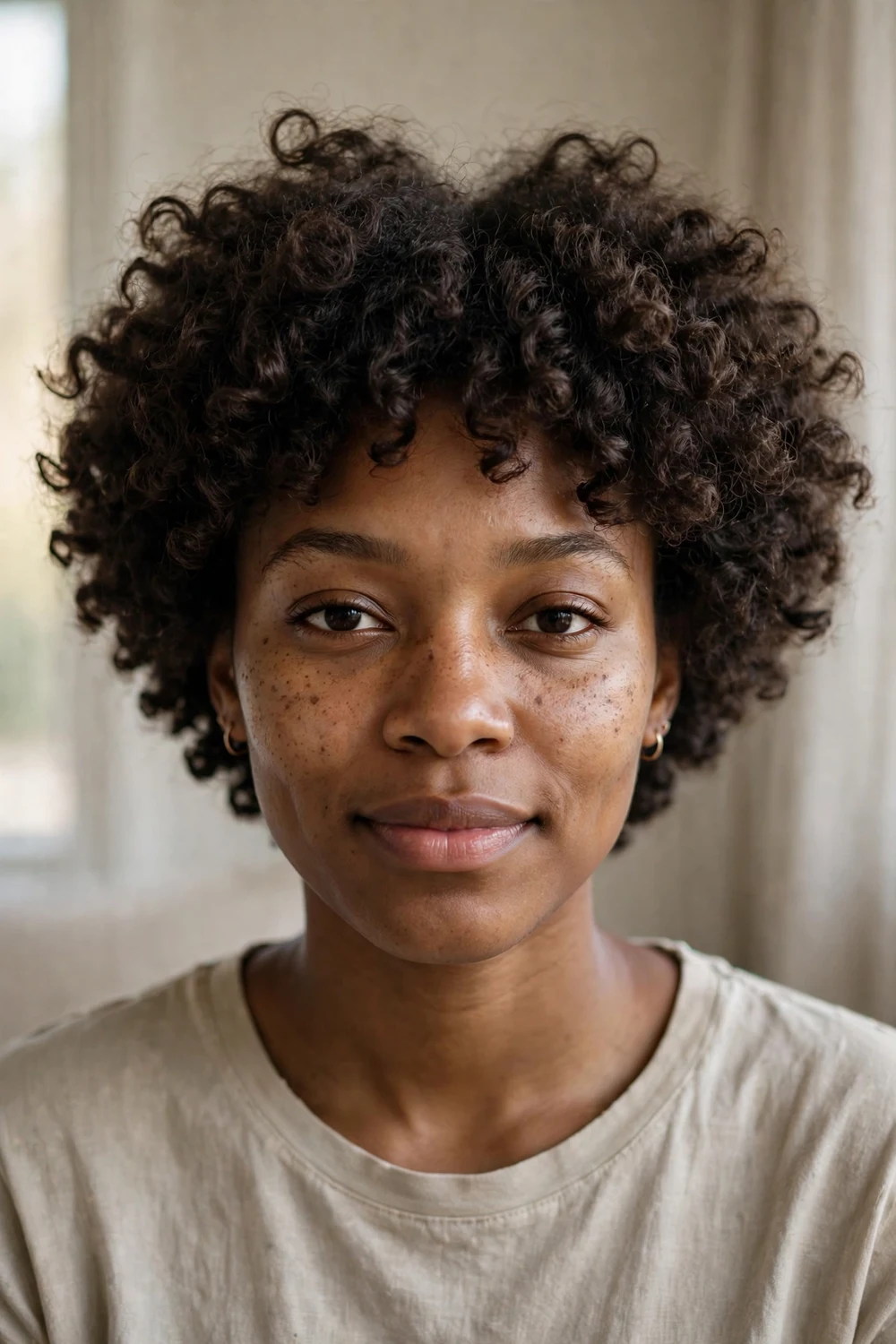
Curls are nature’s volume, and a short cut lets them do their best work. Kept rounded and above the jaw, tight or loose curls stack into a full halo that no straight cut can match. The key is cutting the curls dry or at their natural length so the shape stays balanced as it shrinks. A curl cream and a diffuser are the whole routine. Fine curly hair frizzes less at this length too. Difficulty: Easy.
Try this: Try this: apply curl cream to soaking-wet hair and scrunch upward, then diffuse on low heat. Wet styling sets the curl pattern cleanly.
29. Wispy Long Layers with Highlights
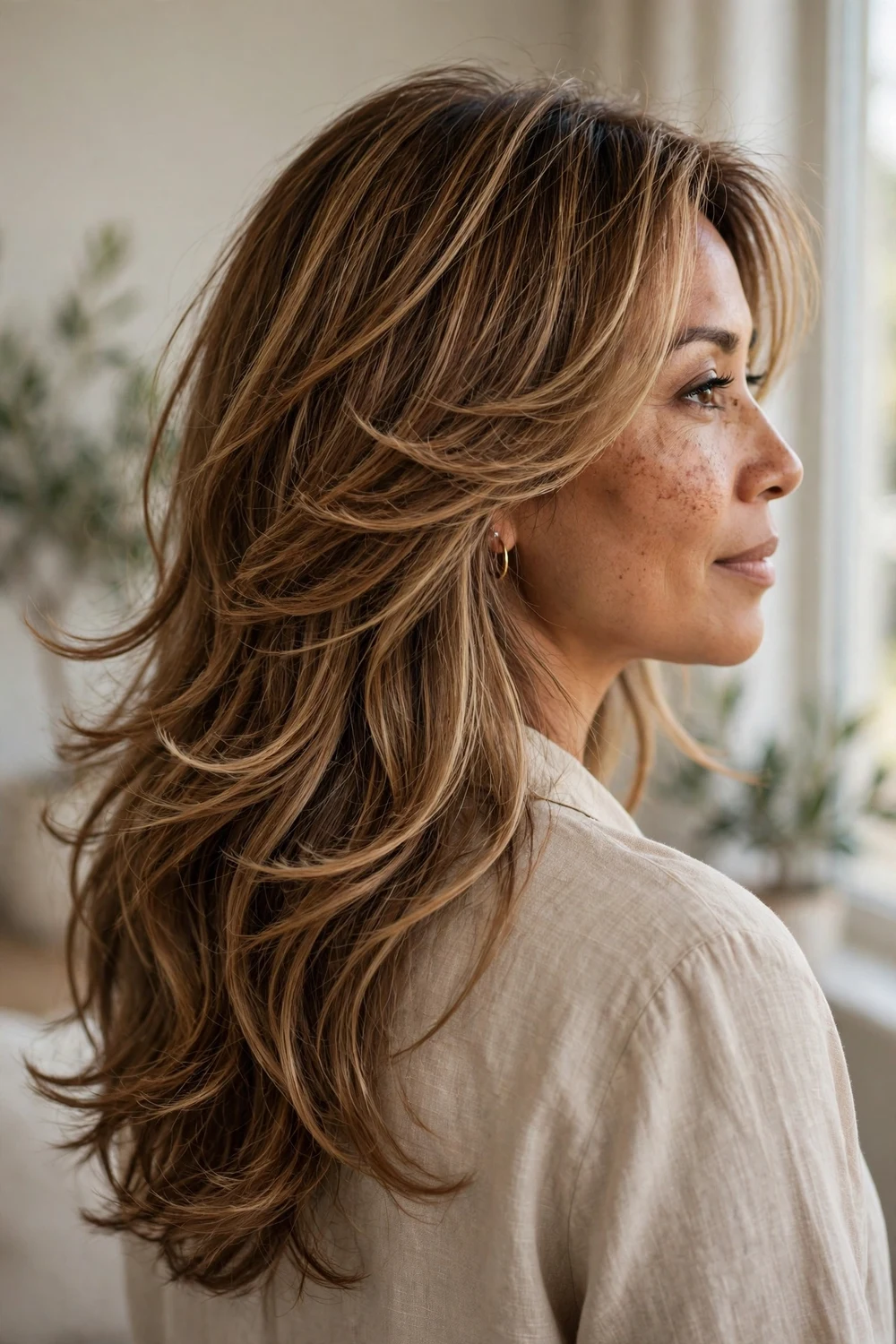
When the layers are wispy and the color has dimension, long fine hair can look full. The highlights catch light at different depths, which creates the illusion of density even when the strands are thin. Keep the layers long and sparse: too many short layers can make fine hair look stringy. The wispy ends move freely, so the style never looks stiff. It is the best long option for anyone who refuses to cut. Difficulty: Medium.
Try this: Try this: ask for babylights through the top layers rather than chunky highlights. Fine strands of light color blend better on fine hair.
30. Ghost Layers Lob
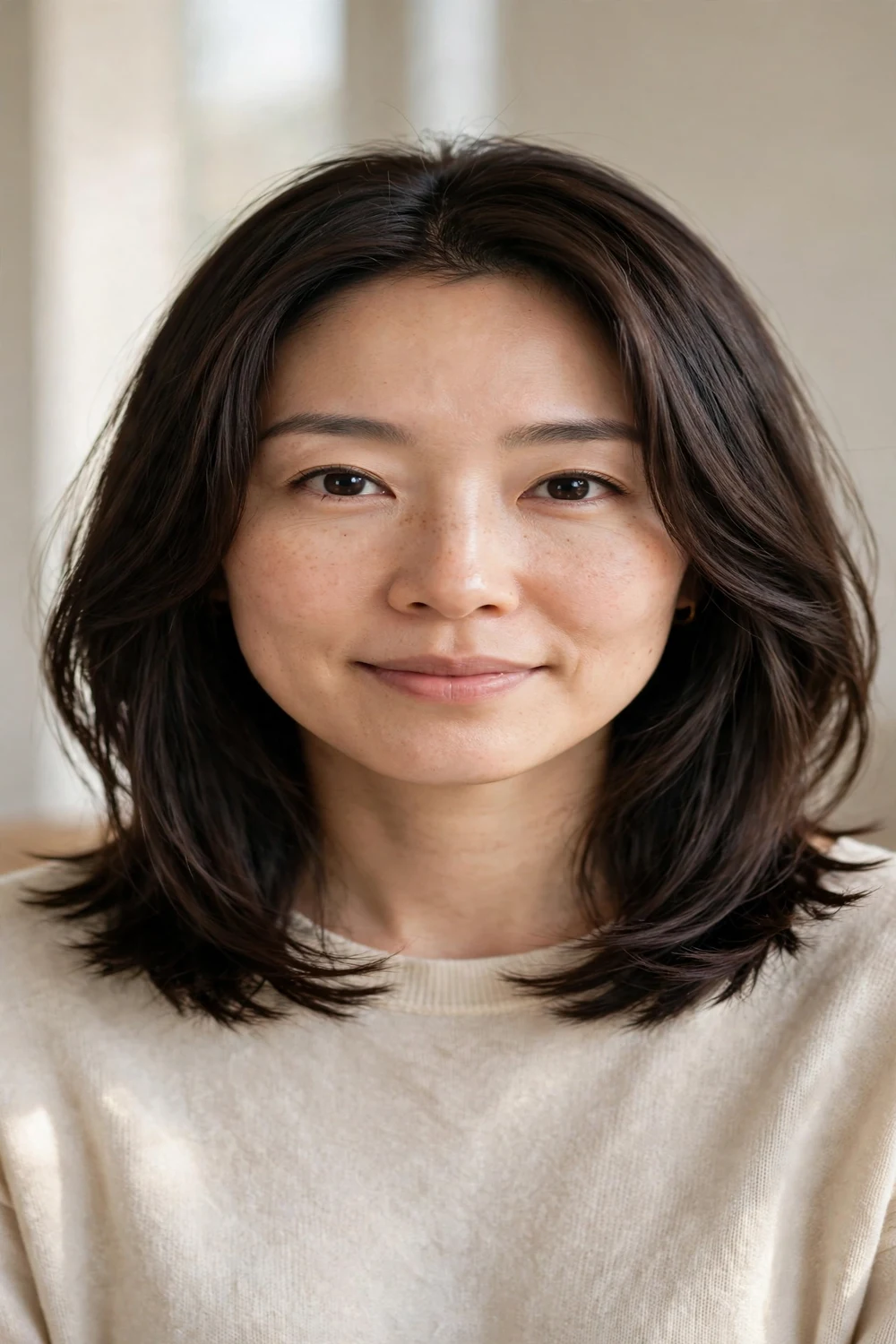
Ghost layers are cut into the interior of the hair and stay invisible from the outside. The exterior looks like a smooth, one-length lob, but the hidden shorter pieces push the top layers up from underneath. It is the subtlest technique on this list: all the lift, none of the visible layering. It works best on straight to slightly wavy hair. Ask your stylist specifically for interior or hidden layers. Difficulty: Medium.
Try this: Try this: tell your stylist you want lift without visible layers. Not every stylist cuts ghost layers by default, so name the technique.
Volume Boosting Haircuts Comparison at a Glance
| Style | Length | Difficulty | Best For |
|---|---|---|---|
| Layered Bob with Root Lift | Chin length | Easy | Oval, heart faces |
| Textured Pixie with Crown Volume | Very short | Easy | Round, oval faces |
| Textured Lob with Teased Roots | Collarbone | Medium | All face shapes |
| Modern Shag with Face-Framing Layers | Medium | Easy | Wavy, straight textures |
| Feathered Bob | Chin length | Easy | Square, oval faces |
| Blunt Bob with Textured Ends | Jaw length | Easy | Low-maintenance routines |
| Wispy Bangs with Shoulder-Length Layers | Shoulder | Easy | High foreheads |
| Razor-Cut Pixie | Very short | Easy | Thick-feeling texture fans |
| Tousled Long Layers | Long | Medium | Length keepers |
| Pixie Bob with Feathered Layers | Short | Easy | Oval, heart faces |
| Rounded Bob with Soft Layers | Chin length | Easy | Round, square faces |
| Angular Bob with Deep Side Part | Chin length | Medium | Fine, flat roots |
| Short Layered Shag | Above chin | Easy | Wash-and-go routines |
| Asymmetrical Bob with Curtain Bangs | Chin length | Medium | Modern, bold looks |
| Midi Cut with Swoopy Layers | Medium | Medium | Polished blowouts |
| Bob with Nape Undercut | Chin length | Easy | Thick-at-the-crown effect |
| Wolf Cut for Fine Hair | Medium | Medium | Wavy textures |
| One-Length Wavy Bob | Chin length | Easy | Maximum density at ends |
| Collarbone Cut with Middle Part | Collarbone | Easy | Growing hair out |
| Choppy Midi with Curtain Bangs | Medium | Easy | Second-day hair |
| Pixie with Nape Undercut | Very short | Easy | High-contrast styles |
| Blonde Bob with Face-Framing Layers | Chin length | Medium | Color dimension lovers |
| Shaggy Bob with Center Part | Chin length | Easy | Symmetrical features |
| Edgy Pixie Bob with Swoopy Bangs | Short | Medium | Round faces |
| Shag with Piece-y Bangs | Medium | Easy | Wavy hair types |
| Deep Side-Part Blunt Bob | Chin length | Easy | All face shapes |
| Feathered Shag with Bangs | Medium | Medium | Oval, long faces |
| Curly Short Cut for Fine Hair | Short | Easy | Natural curls |
| Wispy Long Layers with Highlights | Long | Medium | Color dimension lovers |
| Ghost Layers Lob | Shoulder | Medium | Invisible-lift seekers |
How to Choose the Right Volume Cut for You
Start with your length limit. If you will not go above the chin, the best lifters are the textured pixie, the razor-cut pixie, and the bob with a nape undercut. If the collarbone is your floor, look at the ghost layers lob, the textured lob, and the collarbone cut with a middle part.
Next, think about your mornings. Wash-and-go people do best with shags, pixies, and one-length wavy bobs. If you enjoy a ten-minute blow-dry, the rounded bob, swoopy midi, and feathered cuts reward the effort. Be honest here: a high-maintenance cut you never style looks worse than a simple one you do.
Finally, consider your texture. Straight fine hair holds stacked bobs and blunt edges well. Wavy fine hair loves shags and tousled layers. Curly fine hair gets its biggest win from a short rounded cut that lets the curls stack into a halo.
Mistakes to Avoid
The most common mistake is over-layering. Too many short layers on fine hair remove the weight that gives the style its body, and the ends go wispy. Keep layers long and sparse unless the cut is specifically designed to be choppy.
Heavy products are the second trap. Thick creams, butters, and oils coat fine strands and pull them flat within hours. Stick to mousse, light sprays, and root-lifting powders. Apply everything at the roots first and keep the ends nearly product-free.
Skipping trims is the third. Fine hair shows grown-out layers faster than thick hair does, and a shaggy perimeter loses its shape. Most of these cuts need a trim every six to ten weeks, with undercuts needing touch-ups every four.
Frequently Asked Questions
What haircut makes fine hair look thickest?
A blunt bob or one-length cut makes fine hair look thickest because every strand ends at the same point, so the hem reads dense instead of wispy. For maximum lift, a textured pixie or a stacked bob builds volume at the crown where fine hair lies flat. The right choice depends on your face shape and how short you are willing to go.
Are layers good for fine hair?
Layers help fine hair when they are the right kind. Long, sparse layers and interior ghost layers add movement and lift without removing too much weight. Short, choppy layers can backfire on very fine hair by making the ends look thin. Ask your stylist to keep the perimeter solid and put the layers inside the cut.
Should fine hair be short to get volume?
Shorter cuts usually give fine hair more volume because there is less weight pulling the roots down. Bobs, lobs, and pixies all lift better than waist-length hair. That said, a well-layered collarbone or shoulder cut can hold volume if the layers are placed correctly, so you do not have to go short if you do not want to.
How do I style fine hair for more volume?
Start with a volumizing mousse on damp roots, then blow-dry upside down or with a round brush to lift the roots. Backcombing the crown adds height that lasts, and a light texturizing spray keeps the layers separated. Avoid heavy oils and thick creams near the roots, since they weigh fine hair down.
Do bangs help fine hair look fuller?
Yes, when they are the right style. Wispy, curtain, and piece-y bangs add texture across the forehead where fine hair often looks thin. A heavy, blunt fringe can work too, but it uses up hair from the crown, which can reduce volume on top. Discuss the trade-off with your stylist before committing.
Final Thoughts
Every cut on this list earns its place the same way: it builds lift into the shape so your mornings get easier, not harder. Start with the length you are comfortable with, keep the products light, and give any new cut two weeks before you judge it. Fine hair rewards the right structure more than any product ever could.

