



Thin hair and fine hair are two separate problems, and having both at once calls for a specific kind of cut. Thin means fewer strands per square inch, so the scalp shows through at the part and crown. Fine means each strand is narrow, so hair slips out of shape and lies flat by midday. A cut that only chases volume can leave fine ends looking wispy. A cut that only thickens the outline can collapse before lunch.
The fix is a short cut built for both jobs: a strong, clean perimeter that reads as density, plus light, well-placed texture that lifts without chewing up the ends. Shorter lengths help too, because they remove the weight that drags fine hair down. The 20 styles below are chosen for that double duty. Each one includes a styling tip and honest upkeep notes so you can choose with a clear head.
Quick Takeaways
- Thin means low density and fine means narrow strands. The best short cuts handle both with a blunt perimeter plus light interior texture.
- Keep the bottom edge blunt. Too many layers make fine hair look thinner at the ends, not fuller.
- Shorter lengths remove weight, and less weight is what lets fine hair hold lift through the day.
- Cuts that build root lift, like stacked backs and deep side parts, do more work than heavy styling products.
- Stick to lightweight products. Mousse and dry shampoo help fine hair; heavy oils and butters press it flat.
20 Short Hairstyles for Thin Fine Hair
1. Blunt Micro Bob

A micro bob ends right at the jawline with a one-length perimeter and zero layering through the bottom. That unbroken edge is the whole trick. Fine hair cut blunt looks twice as dense at the hemline because every strand ends at the same point instead of trailing off. Ask your stylist to cut it dry or nearly dry so the true length shows, since wet fine hair stretches and springs up shorter.
Style it smooth with a flat iron and a light heat protectant, then tuck one side behind the ear for a clean line. The common mistake is asking for layers “for movement,” which thins out the very edge doing all the work. Trims every 6 to 7 weeks keep the line sharp.
Try this: blow-dry with a paddle brush pulling straight down, then press the ends once with the flat iron for a glassy finish.
Difficulty: Easy · Cost: standard haircut ($45–$80)
2. Graduated Stacked Bob
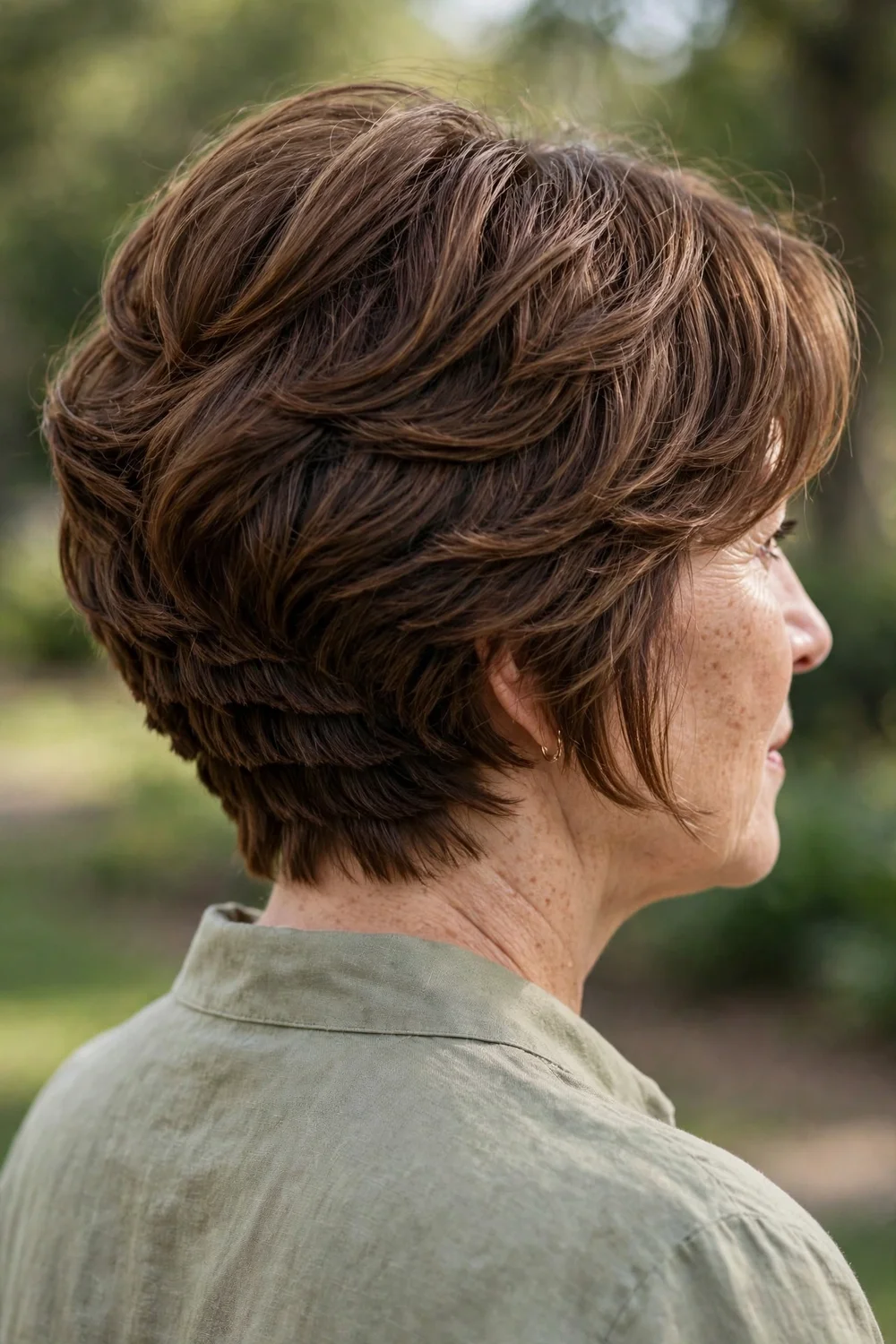
Stacked layers through the back build height exactly where fine hair tends to collapse: the crown. The graduation is cut shorter at the nape and longer toward the front, so the back literally props itself up. For thin density, this matters because the lifted crown draws the eye up and away from any scalp showing at the part.
Blow-dry the back sections upward with a small round brush to set the stack. This cut grows out in about 6 weeks, and the shape goes lumpy fast once the nape layers lose their edge, so book the next trim before you leave the salon. A pea-sized amount of mousse at the roots is enough; more will weigh the stack down.
Try this: flip your head upside down for the last minute of blow-drying to lock lift into the crown.
Difficulty: Easy · Cost: precision haircut ($55–$95)
3. Long-Top Textured Pixie

Keeping two to three inches of length on top while tapering the sides gives fine hair somewhere to build volume. Point cutting through the top breaks up the ends just enough for piecey separation without removing real bulk. The tapered sides make the top look fuller by contrast, which helps when density is low all over.
Work a dab of matte paste through dry hair, lifting pieces upward at the crown. Fine hair responds well to this because there is so little weight fighting the style. Wash-and-go is realistic here; the cut does most of the work and styling takes under five minutes.
Try this: apply paste to fingertips first, then pinch small sections at the crown instead of raking it through.
Difficulty: Easy · Cost: pixie cut ($45–$85)
If your main concern is sparseness rather than strand texture, our short hairstyles for thin hair guide tackles density-first cuts in more depth.
4. Sleek Glass Bob

Fine hair has one natural advantage: it goes silky smooth with very little effort. A glass bob turns that into the whole look. Cut blunt at chin length with no layers, then polished straight, the hair reads as a solid, glossy sheet. Density looks higher because light reflects off an unbroken surface instead of scattering through texture.
Use a heat protectant every time, since fine strands heat-damage faster than coarse ones. Keep the iron at a medium setting and do one slow pass rather than several hot ones. This style shows regrowth and split ends quickly, so a trim every 6 weeks keeps it looking intentional.
Try this: finish with one drop of lightweight shine serum, warmed between palms, smoothed only over the very ends.
Difficulty: Easy · Cost: standard haircut ($45–$80)
5. Choppy Bixie

The bixie sits between a bob and a pixie, ending around the nape with choppy, broken ends. Those uneven tips create movement and separation, which stops fine hair from hanging in one flat sheet. Because the chop is concentrated at the ends rather than layered through the whole head, the interior keeps its density.
Air-dry with a little texturizing spray scrunched in, or rough-dry for more lift. The cut is forgiving as it grows; the nape just turns into a soft bob shape over 8 weeks. Ask your stylist to keep the chopping shallow near the crown so scalp does not peek through.
Try this: twist two front sections away from your face while damp, then release once dry for soft bends.
Difficulty: Easy · Cost: standard haircut ($50–$90)
6. Deep Side-Part A-Line Bob

Flipping the part deep to one side is the fastest root lift available, and it costs nothing. Pair it with an A-line shape, shorter in back and longer in front, and fine hair gains both height at the crown and swing at the front. The angled front pieces also frame the face, which pulls attention toward your features instead of the hair’s density.
Blow-dry the roots in the opposite direction first, then flip to the deep part for maximum lift. Switch the side of the part every few months so the hair does not train flat in one direction. The A-line angle needs a trim every 7 weeks or the back starts to look grown out.
Try this: sprinkle a little dry shampoo at the roots on day two, then re-flip the part for instant refresh.
Difficulty: Easy · Cost: standard haircut ($45–$85)
7. Feathered Pixie

Feathering cuts soft, wispy ends instead of chunky steps, which suits fine hair better than heavy layering. The result is airy movement that never looks stringy. On thin density, feathered pieces around the hairline soften the transition between forehead and hair, so a sparse hairline looks deliberate rather than thin.
Style with fingers and a lightweight cream; a brush will flatten the feathering out. This pixie grows gracefully because the soft ends blend into each other, stretching trims to 7 or 8 weeks. Keep the feathering away from the very ends at the nape so the outline stays clean.
Try this: sweep the top softly to one side while damp and let it air-dry for a natural feathered fall.
Difficulty: Easy · Cost: pixie cut ($45–$85)
8. Chin Bob with Wispy Bangs

A chin-length bob gives fine hair a solid base, and wispy bangs add interest at the front without demanding density you may not have. Blunt bangs can separate into gaps on fine hair, but a sparse, feathered fringe looks intentional and airy. The bangs also camouflage any thinning around the temples.
Trim the fringe every 3 to 4 weeks; bangs grow faster than the eye expects and start poking the eyes. Style the bob smooth and let the bangs fall naturally with just a quick pass of the blow dryer. Many salons offer free fringe trims between appointments, so ask.
Try this: blow-dry bangs side to side with a small brush to stop them clumping into one strip.
Difficulty: Easy · Cost: standard haircut ($45–$80)
For more bob shapes cut with fine texture in mind, browse our bob hairstyles for fine hair collection.
9. Inverted Bob

The inverted bob stacks the back short while the front angles longer toward the chin. Pushing that length forward does two favors for thin fine hair: the eye reads fullness where the hair lands, and the stacked back builds volume behind the crown. Fine strands cooperate because there is little weight to fight the forward angle.
Blow-dry with a round brush, rolling the front sections forward and under. The dramatic angle grows out in about 6 weeks, after which it reads as a regular bob, so plan trims accordingly. A light volumizing mousse through the back keeps the stack from falling flat.
Try this: part slightly off-center so the longer side gets extra swing and movement.
Difficulty: Medium · Cost: precision haircut ($55–$95)
10. Tousled Piecey Pixie

Piecey separation breaks the surface of the hair into small defined bits, and that broken surface hides scalp show-through better than one smooth sheet. A tousled pixie uses this on purpose: short all over, with the top long enough to pinch into pieces. Fine hair takes to it easily because the strands are light enough to stay separated once product sets them.
Use a matte clay or paste, warmed between your palms, and pinch random sections upward. Less product beats more; fine hair goes stringy fast when overloaded. Morning styling takes about three minutes, and second-day hair often looks better than fresh.
Try this: sleep with the top loosely pinned up, then shake it out in the morning for ready-made separation.
Difficulty: Easy · Cost: pixie cut ($45–$85)
11. Blunt Lob with Barely-There Layers

Collarbone length is about as long as fine hair should go in one length before weight starts dragging it down. This lob keeps a blunt bottom edge for density and allows only one or two very long interior layers for slight movement. The restraint is the point: every layer you skip is thickness you keep at the ends.
Wear it straight or with a slight bend through the mid-lengths, using a heat protectant before any hot tool. Fine hair at this length tangles easily, so a wide-tooth comb on damp hair prevents breakage that would thin the ends further. Trims every 8 weeks keep the blunt edge from fraying.
Try this: curl only the bottom two inches outward with a flat iron for a flipped edge that looks thicker.
Difficulty: Easy · Cost: standard haircut ($45–$85)
12. Soft S-Wave Bob

Waves add sideways width, and width reads as fullness. An S-wave bob bends the hair in loose, alternating curves that stop fine strands from hanging in a flat curtain. The key for fine hair is keeping the waves soft rather than tight; ringlets separate and expose the scalp, while broad waves stack over each other.
Apply mousse to damp hair, then wrap sections around a one-inch iron, alternating directions, and use a heat protectant first. Fine hair heats fast, so keep the iron on medium and hold each section only a few seconds. Brush the waves out gently with fingers for a soft finish.
Try this: wave only from the ears down, leaving roots smooth so the top does not puff out.
Difficulty: Medium · Cost: standard haircut ($45–$85)
13. French Bob with Micro Fringe

The French bob ends at the jaw with a short fringe, and its compact shape is naturally kind to fine hair. There is simply less hair to go flat. The micro fringe adds a bold frame around the eyes while the blunt jawline edge keeps the bottom looking solid. On thin density, the small silhouette means less scalp visible overall.
Style with minimal effort: air-dry or quick blow-dry, then smooth the fringe with fingers. The fringe needs a trim every 3 to 4 weeks to stay above the brows. This cut suits straight to slightly wavy fine hair best; very curly hair will fight the blunt line.
Try this: tuck both sides behind the ears to show off the fringe and jawline shape.
Difficulty: Easy · Cost: standard haircut ($50–$90)
Want the bob a touch longer? These lob hairstyles for fine hair keep the same density-first approach past the chin.
14. Tapered-Nape Pixie
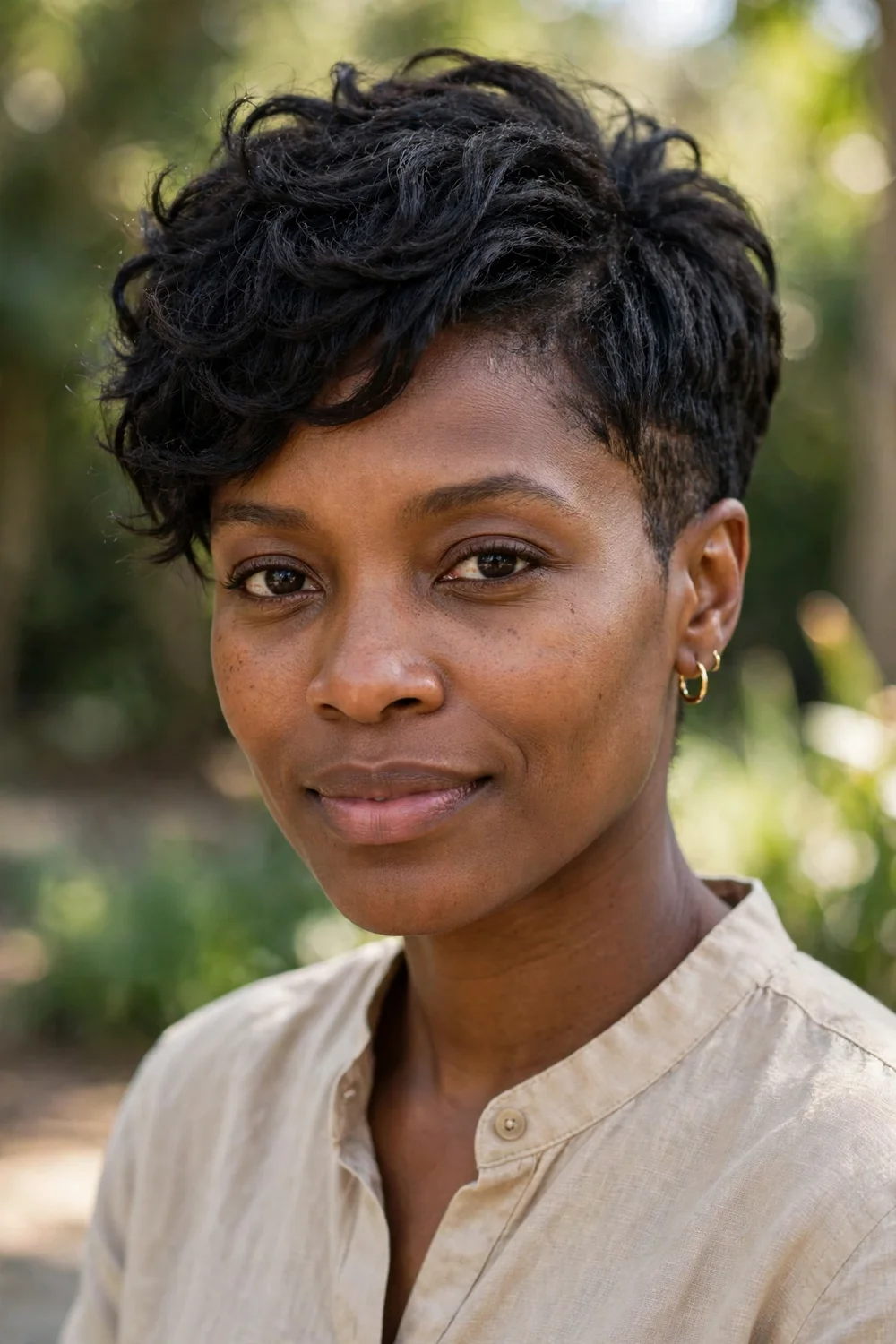
A clean taper at the nape removes bulk where it does nothing for you, and the contrast makes the top look denser than it is. This is a visual ratio trick: when the bottom is neat and close, the eye assumes the fuller top is the real story. For thin fine hair, that assumption works in your favor.
Keep the top around two inches with soft texture, styled forward or to the side. The nape needs a cleanup every 4 to 5 weeks or it grows shaggy and ruins the contrast. A tiny amount of styling cream is enough; the shape holds itself.
Try this: ask the stylist to taper with clippers over comb for the softest grow-out line.
Difficulty: Easy · Cost: pixie cut ($45–$80)
15. Rounded Bob with Crown Volume

A rounded bob curves under at the ends and swells gently at the crown, giving fine hair a full silhouette from every angle. The round shape is built with a blow dryer and round brush rather than heavy layering, so the ends stay dense. It is one of the most forgiving shapes for thin density because the curve itself suggests fullness.
Blow-dry in sections with a medium round brush, rolling under at the ends and lifting at the roots. A root-lifting spray applied to damp hair makes the crown hold longer. This style takes about 15 minutes to set properly, so it suits mornings when you have a little time.
Try this: set the crown with one large velcro roller while you do makeup, then remove for lasting lift.
Difficulty: Medium · Cost: standard haircut ($50–$90)
16. Side-Swept Asymmetric Crop
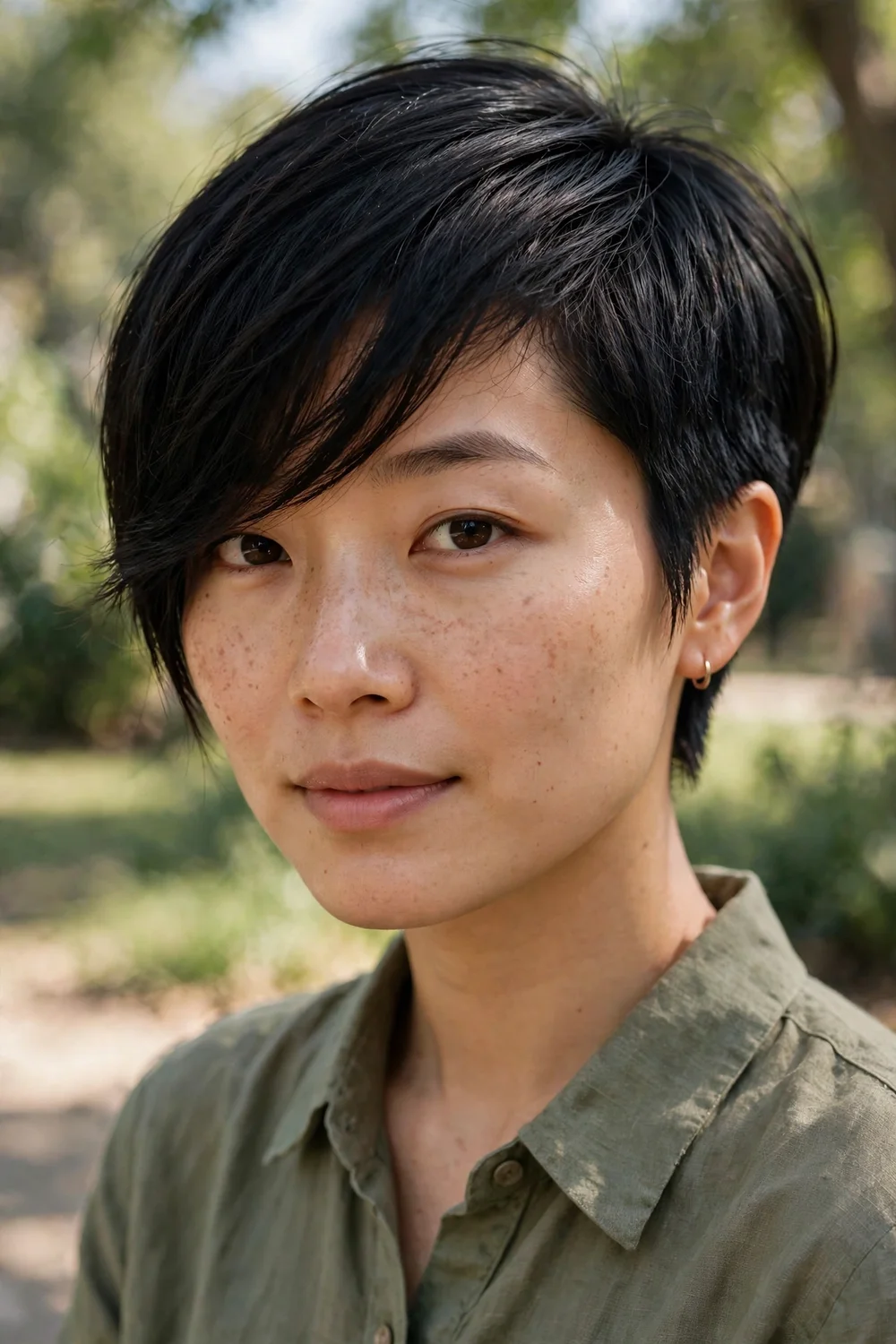
A long sweep across the forehead covers the temples, which is often where thinning shows first. The asymmetry keeps the eye moving instead of settling on any sparse spot. Cut short through the back with the front left long enough to sweep, this crop gives fine hair direction and purpose rather than letting it hang.
Blow-dry the fringe across with a paddle brush, then set it with a light-hold spray. Fine hair takes direction well, so the sweep usually stays put all day. Trim the sweep every 5 to 6 weeks; once it passes the eyebrows it starts looking heavy instead of sleek.
Try this: train the sweep by blow-drying it flat against the forehead for the first week after the cut.
Difficulty: Easy · Cost: standard haircut ($45–$85)
17. Root-Lifted Layered Crop

These layers are cut specifically to stand the roots up. Shorter pieces underneath push the longer top pieces away from the scalp, creating lift that is built into the cut rather than styled in each morning. For fine hair that goes flat within hours, that built-in structure makes the difference between volume at 8am and volume at 5pm.
Blow-dry upward with your fingers or a vent brush; the layers will find their lift on their own. A root powder or spray adds grip for fine strands that slip. Keep the layering in the top half only so the ends keep their weight and density.
Try this: massage a pinch of volumizing powder directly into dry roots at the crown for all-day lift.
Difficulty: Medium · Cost: precision haircut ($55–$95)
Stacked backs are the classic root-lift cut. See more versions in our stacked bob hairstyles for fine hair roundup.
18. Curly-Textured Pixie
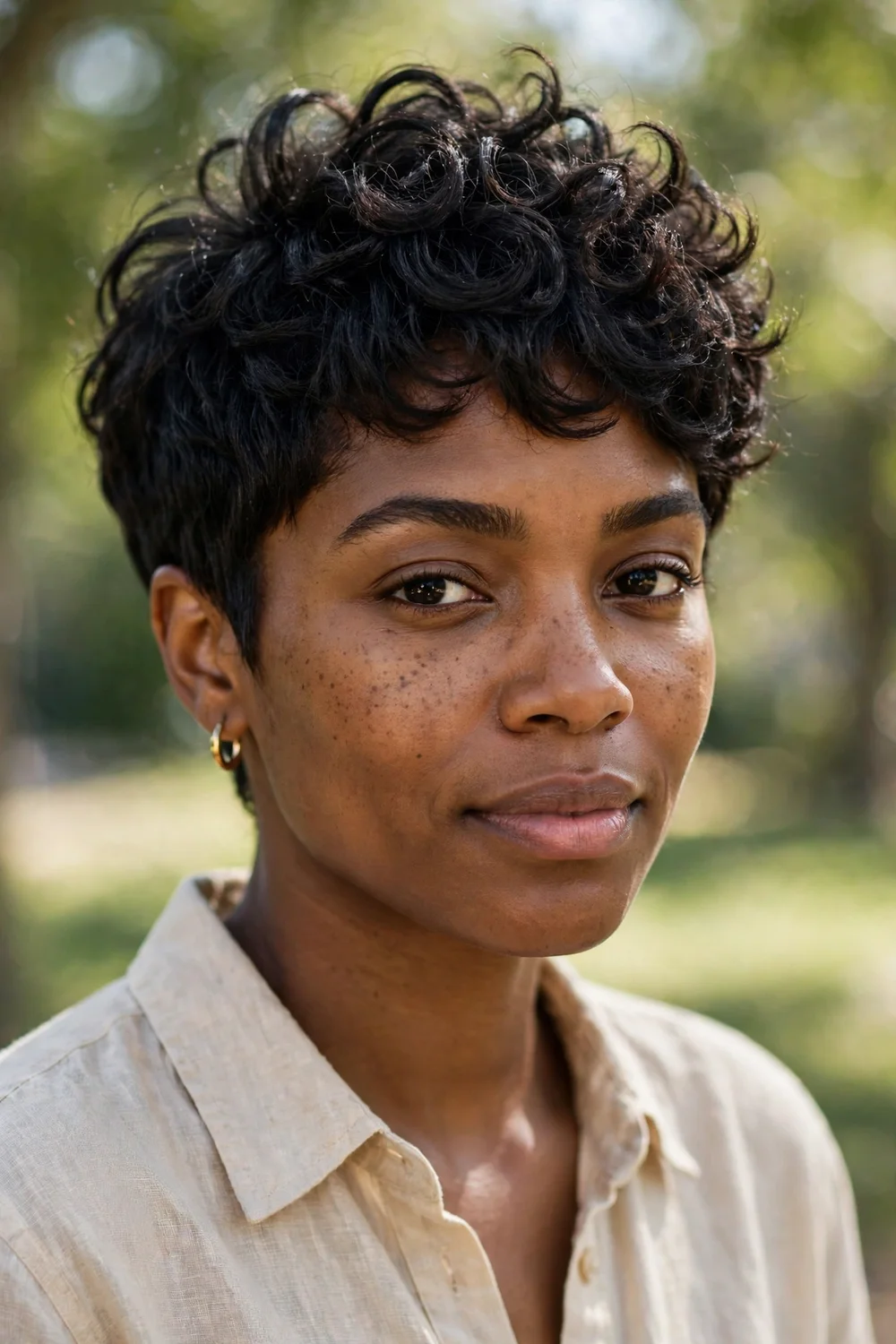
Natural curl or wave is a genuine asset for thin fine hair, and a pixie lets it work at full strength. Each curl takes up more visual space than a straight strand, so density reads higher with zero teasing. The cut keeps sides neat while the top keeps enough length for the curl pattern to form properly.
Scrunch a curl cream into damp hair and diffuse on low heat, or air-dry for a softer result. Fine curls frizz easily, so skip rough towel-drying and use a microfiber towel or cotton shirt instead. Trims every 6 to 8 weeks keep the shape from growing into a round helmet.
Try this: pineappling the top loosely overnight preserves curl definition for day two.
Difficulty: Easy · Cost: curly cut ($60–$100)
19. Full-Fringe Blunt Bob

A straight-across fringe with a blunt bob is the boldest density play on this list, and it comes with an honest condition: it works when your front hairline has enough hair to make a solid fringe. When it does, the result is striking, a thick frame that makes the whole head of hair look denser. Ask your stylist to check your hairline density before committing.
If the hairline is sparse, take the fringe slightly thinner and more textured rather than forcing a heavy line. Style the bob sleek and straight for maximum impact. Fringe trims every 3 to 4 weeks are non-negotiable with this cut.
Try this: have the stylist cut the fringe dry so you see exactly how it falls on your hairline.
Difficulty: Medium · Cost: standard haircut ($50–$90)
20. Undercut Pixie-Bob

A hidden undercut at the nape removes the weakest, thinnest hair, the part that always looks stringy on fine heads. What stays on top instantly looks thicker because the straggly bottom is gone. The longer top layers fall over the undercut, so it reads as a normal pixie-bob until you tuck your hair up.
Keep the undercut maintained every 4 to 6 weeks or the grow-out gets fuzzy. Style the top with light texture for a modern edge. This is the most daring option here, but also one of the most effective at hiding thin ends.
Try this: start with a subtle undercut just at the nape; you can take it higher at the next appointment if you love it.
Difficulty: Medium · Cost: pixie cut + undercut ($60–$100)
Quick Comparison
| Hairstyle | Best for | Upkeep | Daily styling |
|---|---|---|---|
| Blunt Micro Bob | Maximum density illusion | Trim every 6-7 weeks | 10 min |
| Graduated Stacked Bob | Flat crowns | Trim every 6 weeks | 10 min |
| Long-Top Textured Pixie | Wash-and-go volume | Trim every 5-6 weeks | 5 min |
| Chin Bob with Wispy Bangs | Temple thinning | Fringe trim every 3-4 weeks | 10 min |
| Tousled Piecey Pixie | Hiding scalp show-through | Trim every 6 weeks | 3 min |
| Undercut Pixie-Bob | Stringy thin ends | Undercut every 4-6 weeks | 5 min |
What to Avoid with Thin, Fine Hair
Over-layering is the biggest offender. Layers remove weight, but on fine hair each layer also removes visible density at the ends. If your stylist reaches for thinning shears through the lengths, ask what the goal is; bulk removal at the roots is fine, but thinning the ends makes them disappear.
Skip one-length cuts past the collarbone. The weight of longer hair pulls fine strands flat against the scalp, and thin density means the bottom third looks sparse. Heavy oils, butters, and silicone-loaded serums do the same thing from the product side; they coat fine strands and press them down.
Avoid tight ponytails and buns worn daily. Constant tension stresses follicles, and thin hair has fewer follicles to spare. If you tie it back, use a soft scrunchie and vary the position.
How to Choose the Right Cut
Start with a density check. Part your hair down the middle in bright light and look at how much scalp shows at the part and crown. A lot of scalp means you need the density-first options: blunt bobs, micro bobs, French bobs. Less scalp showing means you can lean into texture: shags, bixies, piecey pixies.
Factor in your morning reality. A rounded bob with crown volume looks full but needs 15 minutes and a round brush. A tousled pixie needs three minutes and your fingers. Pick the cut you will actually style, because an unstyled precision cut looks worse than a styled simple one.
Bring photos to the consultation and ask for two things by name: a blunt perimeter and light interior texture. Those six words tell a good stylist exactly what thin fine hair needs.
If flat roots are your main frustration, our best volume boosting haircuts for fine hair guide focuses on cuts built to lift, from ghost layers to nape undercuts.
Frequently Asked Questions
Should thin fine hair be layered or cut blunt?
Go blunt at the perimeter with only light interior layering. A blunt edge makes fine hair look denser because every strand ends at the same point. Heavy layering through the lengths thins out the ends, which is the opposite of what thin fine hair needs. One or two long interior layers for movement are plenty.
How short should I cut thin fine hair for the most volume?
The chin-to-pixie range gives the most lift because shorter hair carries less weight. Ear-length to chin-length bobs and pixies consistently outperform longer cuts for volume. Avoid one-length cuts past the collarbone, since the extra length drags fine hair flat.
Can fine hair hold curls or waves?
Yes, with the right prep. Apply mousse to damp hair and always use a heat protectant before hot tools. Fine hair heats through quickly, so use a medium iron setting and hold each section only a few seconds. The style may drop faster than on coarse hair, so a light-hold spray helps it last.
Which products add volume without weighing fine hair down?
Stick to mousse, root-lifting sprays, volumizing powders, and dry shampoo. These add grip and lift without coating the strand. Avoid heavy oils, butters, and silicone-heavy serums, which press fine hair flat and make thin density more visible.
How often does thin fine hair need trimming?
Every 6 to 8 weeks for most cuts, sooner for precision shapes like stacked bobs and pixies. Fine hair shows split ends faster than coarse hair, and split ends make thin hair look even sparser at the bottom. Regular trims keep the perimeter looking solid.
Final Thoughts
Thin fine hair does best with a plan, not a pile of products. Pick a cut with a blunt edge and built-in lift, keep the products light, and trim on schedule. Do that, and fine strands stop looking like a limitation and start looking like a texture with its own advantages: shine, smoothness, and styles that hold their shape.
For more on this topic, see short hairstyles for women over 60.
For more on this topic, see short hairstyles for older black women.
Love the stacked shape? These short stacked bob hairstyles for women over 50 add volume exactly where mature hair needs it.

