

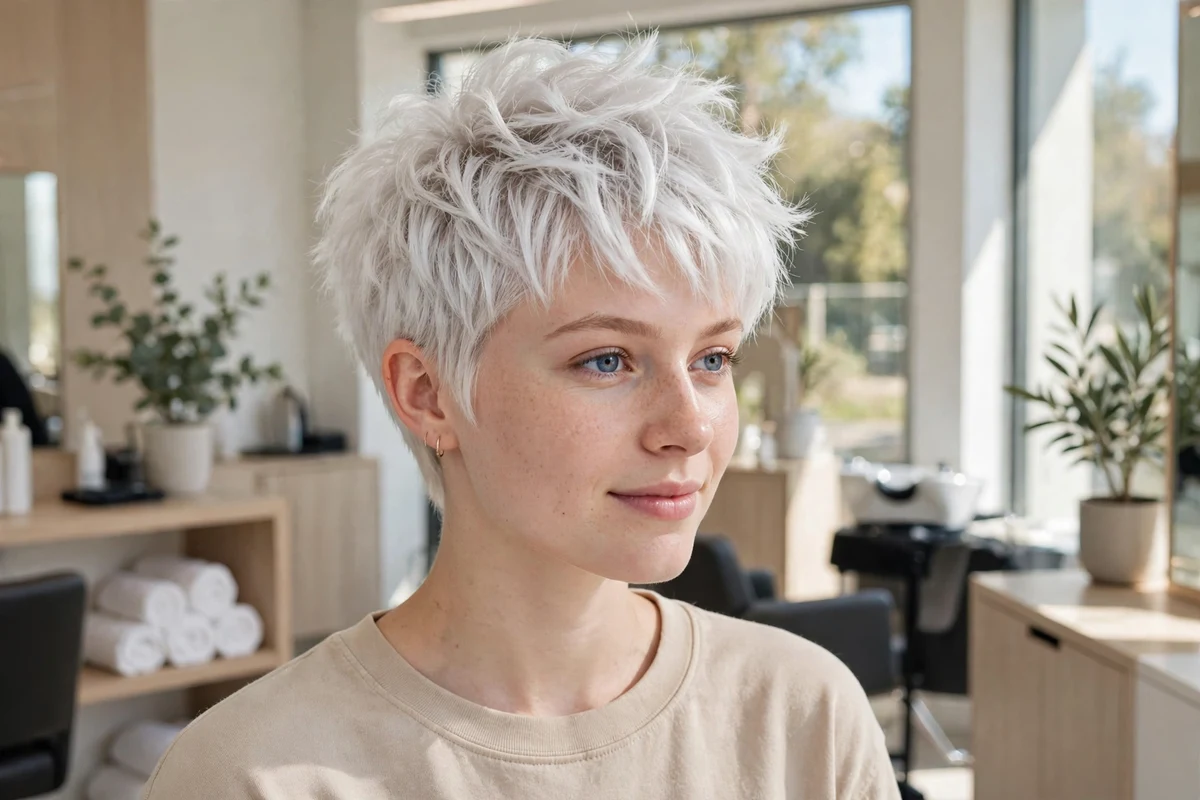
An edgy pixie haircut takes the classic short cut and adds contrast: shaved sides, razor-sharp angles, choppy texture, or a bold color. The edge comes from that contrast, not from length alone. A pixie with one buzzed side reads edgy; a pixie with soft layers reads classic. The 15 cuts below cover every version of edge, from subtle texture to full undercut, so you can pick the one that fits your face shape, hair type, and how much styling time you actually have.
Each of the 15 cuts below includes a styling tip, a difficulty rating, and honest upkeep notes with real costs.
Quick Takeaways
- Edgy pixies get their attitude from contrast: shaved sections, uneven lengths, choppy texture, or bold color.
- Expect $30 to $90 for most cuts, and $90 to $180 for versions with bleach or fashion color.
- Shaved sides and micro lengths need a trim every 4 to 6 weeks to stay sharp; textured styles stretch to 8 weeks.
- A pea-sized amount of matte wax or clay does most of the daily styling. Blow-dry only if you want extra lift, and use heat protectant first.
- Purple shampoo once a week keeps platinum, silver, and icy blonde versions from turning yellow.
1. Textured Platinum Pixie

Platinum is the fastest way to make a pixie look edgy. The near-white shade turns even a textured cut into a statement because there is no soft tone for the eye to rest on. Choppy layers on top keep it from reading flat. This version works best on hair that can handle bleach, so ask for a bond-building treatment if your hair is fine or previously colored.
At home, the daily routine is short: rough-dry, then work matte paste through the layers with your fingers. The color is the high-maintenance part. Weekly purple shampoo keeps the tone clean, and roots need a touch-up every 4 to 5 weeks.
Try this: ask your colorist to leave the roots a half-shade darker than the lengths. The shadow root makes grow-out look intentional instead of sloppy.
Difficulty: Moderate · Cost: $$ (cut + bleach and tone)
2. Shaved Side Pixie

One side buzzed down to a #1 or #2 guard while the top stays long enough to sweep across the forehead. That single contrast is the whole idea, and it works on straight, wavy, and thick hair. You can part the longer top toward the shaved side to show the buzz, or away from it to hide it for workdays.
The top styles with a dab of clay in about two minutes. The shaved side is what needs attention: it grows out in about 3 weeks, so plan a cleanup every 4 to 6 weeks. Barbershops do a quick side cleanup for under $20 between full cuts.
Try this: bring a reference photo that shows exactly how high up the shave goes. A half-inch difference in the shave line changes the whole look.
Difficulty: Easy to style, regular upkeep · Cost: $ (cut; cleanups $)
Want the shaved-side look explored further? Our pixie cut shaved sides guide covers 24 variations, from subtle fades to full side designs.
3. Choppy French Pixie

The French pixie is the quiet rebel of this list. It keeps the short length and wispy fringe but adds point-cut, uneven ends so it never looks polished. The cut sits close to the head with longer, feathered pieces around the ears. It flatters oval and heart-shaped faces because the wispy bangs soften the forehead without hiding it.
Styling is close to zero: air-dry and scrunch a tiny amount of texturizing spray into the ends. The cut grows out gracefully, so trims every 6 to 8 weeks are enough. This is the best pick if you want edge without shaving or bleach.
Try this: ask for the fringe cut with a razor instead of scissors. Razor-cut bangs get the wispy, piecey finish this style needs.
Difficulty: Easy · Cost: $ (cut)
4. Long Side Fringe Pixie

A long fringe that sweeps from a deep side part across the forehead gives this pixie its edge against short, textured sides. The asymmetry creates movement and frames one side of the face, and draws attention to the eyes and cheekbones. It suits round faces because the diagonal line breaks up the width. Keep the fringe long enough to tuck behind one ear.
Blow-dry the fringe forward with a small round brush, then sweep it aside. Use heat protectant before the dryer. A pea-sized amount of smoothing cream tames flyaways. Trim the fringe every 4 weeks so it stays out of your eyes; the rest can go 6 to 8.
Try this: part your hair while it is still damp. Pixies lock into their part quickly, and a damp part sets cleaner.
Difficulty: Easy · Cost: $ (cut; fringe trims often free)
5. Asymmetrical Pixie Cut

One side cropped close, the other left long enough to graze the cheekbone or jaw. The uneven silhouette is what makes this cut read as fashion-forward rather than just short. Precision matters here: the sharp lines only work if the cut is exact, so pay a senior stylist for this one. It flatters angular faces and strong jawlines because it mirrors their structure.
Style the longer side smooth with a flat iron for a sleek finish, or tousle it with wax for texture. Always use heat protectant with the iron. Regrowth shows fast with asymmetry, so book trims every 4 to 5 weeks to keep the two sides distinct.
Try this: wear a single statement earring on the short side. It turns the asymmetry into a deliberate style choice.
Difficulty: Moderate · Cost: $ (precision cut)
6. Spiky Textured Pixie
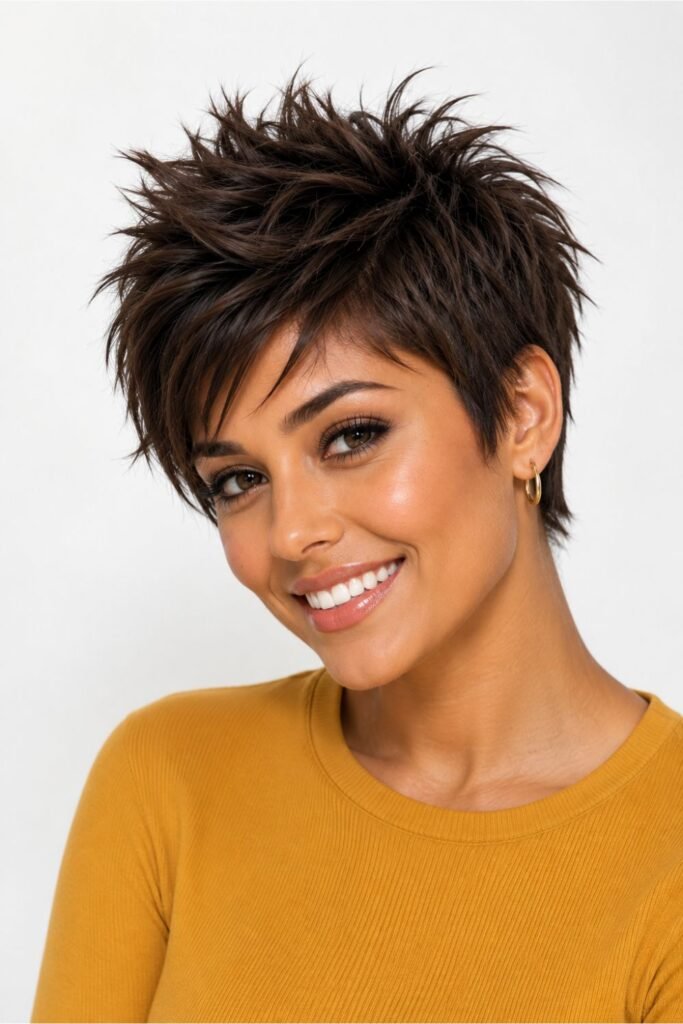
Short layers through the crown, styled upward and outward into defined spikes with matte product. This is the most traditionally edgy pixie here, and it still works because the spikes are controlled rather than chaotic. Thick and coarse hair holds the shape longest; fine hair needs a strong-hold clay and a blast of cool air from the dryer to lock it in.
Work product into dry hair, pinch small sections, and pull them upward. Skip the flat iron here, but if you blow-dry for lift, apply heat protectant first. It lasts all day on most hair types, and it refreshes with a little water and re-pinching on day two.
Try this: use a matte clay, not a shiny gel. Shine makes spikes look dated; matte keeps them modern.
Difficulty: Easy · Cost: $ (cut + product)
7. Jet Black Micro Pixie

Cut close all over with sharp, clean edges at the hairline and nape, worn in an intense black. Precision is the edge here: at this length, every millimeter shows, so a crisp hairline and even sides are everything. Dark hair makes the cut look shorter and more graphic. It suits oval faces and anyone who wants almost zero daily effort.
Styling takes almost no time: smooth a drop of serum through and go. If you want a sleeker finish, a flat iron pass takes two minutes; use heat protectant first. The trade-off is upkeep. It loses its shape in about 3 weeks, so budget for trims every 4.
Try this: get the nape and sideburns cleaned up between full cuts. It keeps the cut looking fresh for an extra week or two.
Difficulty: Easy to style, frequent trims · Cost: $ (cut)
8. Curly Tapered Pixie
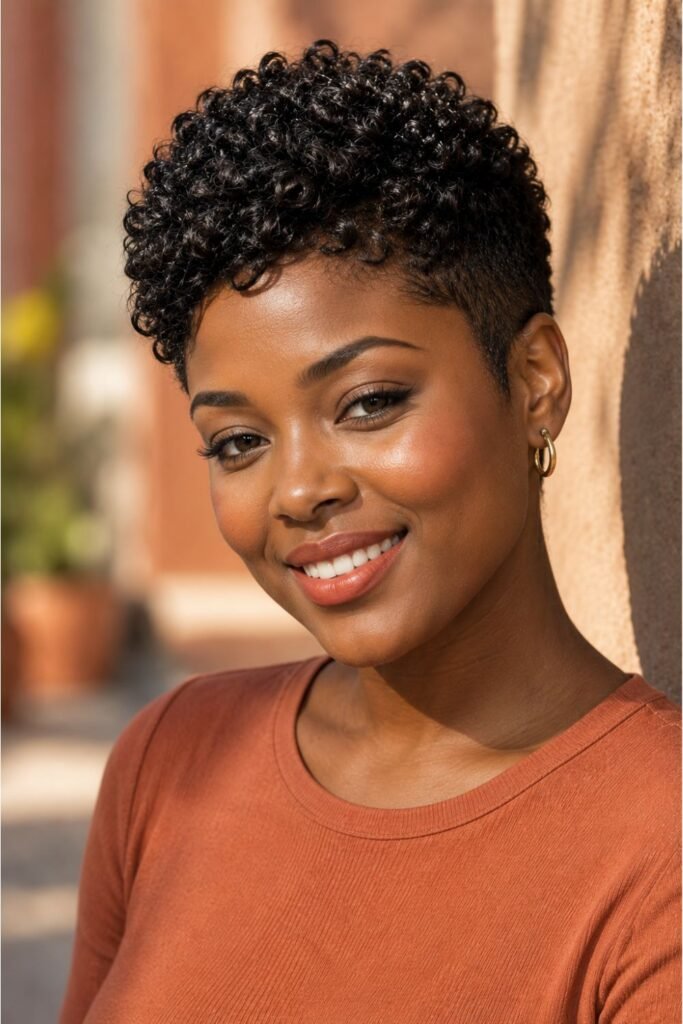
Tapered, close sides with defined natural curls left longer on top. The contrast between the neat sides and the free curls is what gives this cut its edge, and it is a strong option for natural texture worn short. Ask a stylist who cuts curly hair dry, because curls shrink and a wet cut can end up shorter than planned.
Scrunch curl cream into damp hair and let it air-dry or diffuse. The sides need a taper cleanup every 4 to 5 weeks, but the top can grow out for 8. A satin pillowcase keeps the curls defined between wash days.
Try this: ask for the taper faded gradually rather than cut blunt. A soft fade makes the grow-out less obvious.
Difficulty: Moderate · Cost: $ (curly specialist cut)
Curly pixies deserve their own deep dive, so our curly pixie haircuts roundup has 27 more ideas built around natural texture.
9. Silver Layered Pixie

A soft silver-gray shade over feathered layers. Unlike icy platinum, silver has a slightly muted, smoky finish that reads modern rather than stark. Feathered layers keep the cut light around the face, which suits fine hair because it removes weight without removing length. It also works well on hair that is already going gray, since the color blends with natural regrowth.
Style with a lightweight mousse for lift, then finger-shape the layers. Purple shampoo every second wash keeps the silver from yellowing. Color refreshes every 6 to 8 weeks, since the tone fades faster than the cut grows out.
Try this: check the shade in daylight before you leave the salon. Silver looks darker under salon lighting than it really is.
Difficulty: Moderate · Cost: $$ (cut + color)
10. Feathered Blonde Pixie
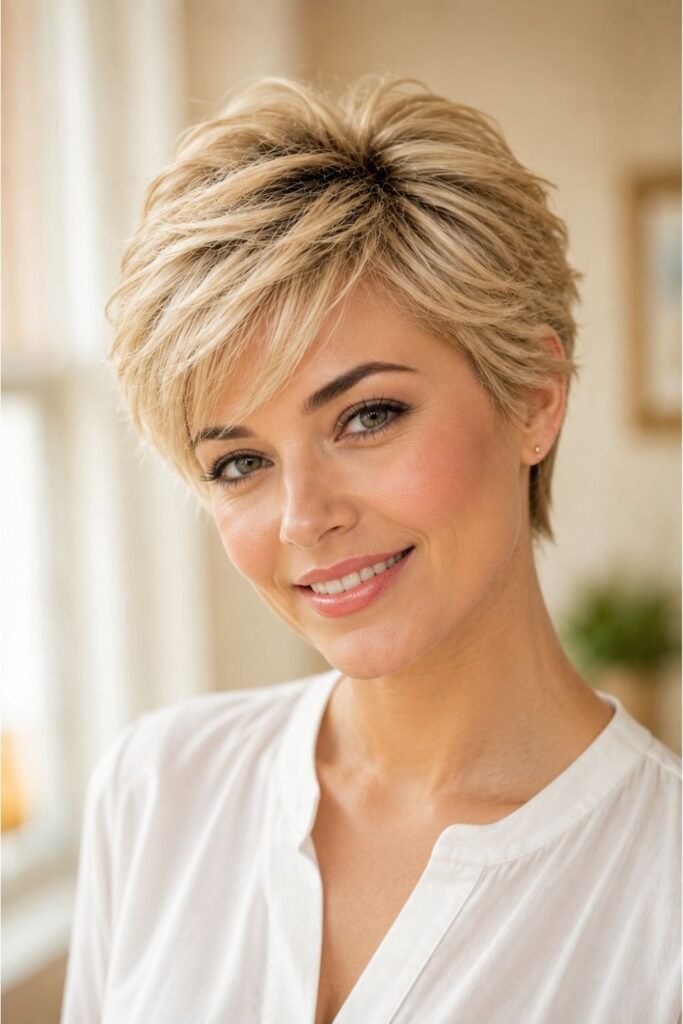
Soft, feathered layers in a golden blonde with lifted volume at the crown. This is the most wearable cut on the list: the edge is gentle, coming from the texture rather than from shaving or hard angles. It suits fine to medium hair because the feathering creates the illusion of thickness. Round faces benefit from the crown height, which adds visual length.
Blow-dry with a round brush for the lifted finish, using heat protectant first. On lazy days, air-dry and scrunch in texturizing spray for a softer version. Root touch-ups every 6 weeks keep the blonde clean; the cut itself holds its shape for 6 to 8.
Try this: ask for the layers point-cut through the crown only. Point-cutting the sides too can make the cut look thin.
Difficulty: Easy · Cost: $$ (cut + blonde color)
If you like your pixie on the softer side, our short pixie cuts collection has 24 chic, low-maintenance versions for every face shape.
11. Undercut Pixie with Volume

Both sides and the back trimmed close while the top keeps long, voluminous layers. The full undercut creates a stronger contrast than the single shaved side, and the volume on top strengthens the contrast. Thick hair wears this best, since the top needs enough density to hold the height. Backcomb the crown lightly or use root-lifting powder.
Work volumizing mousse into damp roots, blow-dry the top upward, then define pieces with matte wax. Use heat protectant before the dryer. The undercut grows out fast, so plan a trim every 4 to 5 weeks. If the back gets itchy as it grows, a softer nape line from your stylist fixes it.
Try this: wear the top swept to one side for evenings out and pushed straight back for a sharper daytime look. Same cut, two moods.
Difficulty: Moderate · Cost: $ (cut)
12. Burgundy Textured Pixie
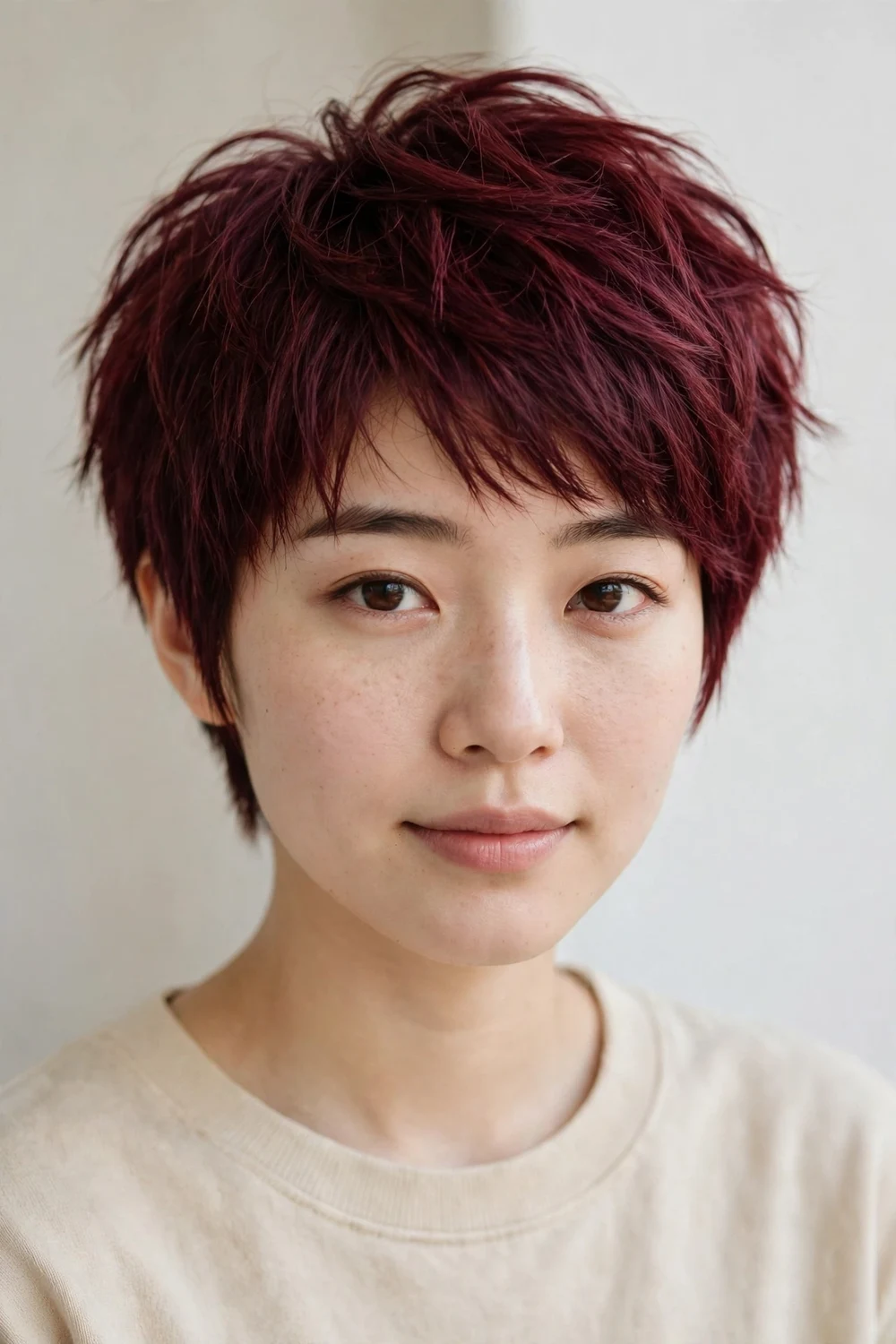
A deep red-wine shade over choppy, textured layers. Burgundy gives the pixie an edge through color alone: it is rich indoors and glows in sunlight, which makes the texture more visible. It suits medium and warm skin tones, and it flatters dark eyes. Because red tones fade faster than other colors, this version needs more color care than the rest of the list.
Wash with a color-safe, sulfate-free shampoo and rinse in cool water to slow fading. Style with matte paste for definition. A color-depositing conditioner in a red shade once a week keeps the tone rich between appointments. Gloss refreshes every 6 weeks.
Try this: ask your colorist to formulate the burgundy slightly deeper than you think you want. It fades to your target shade within a week.
Difficulty: Moderate · Cost: $$ (cut + color)
13. Icy Blonde Pixie with Side Bangs
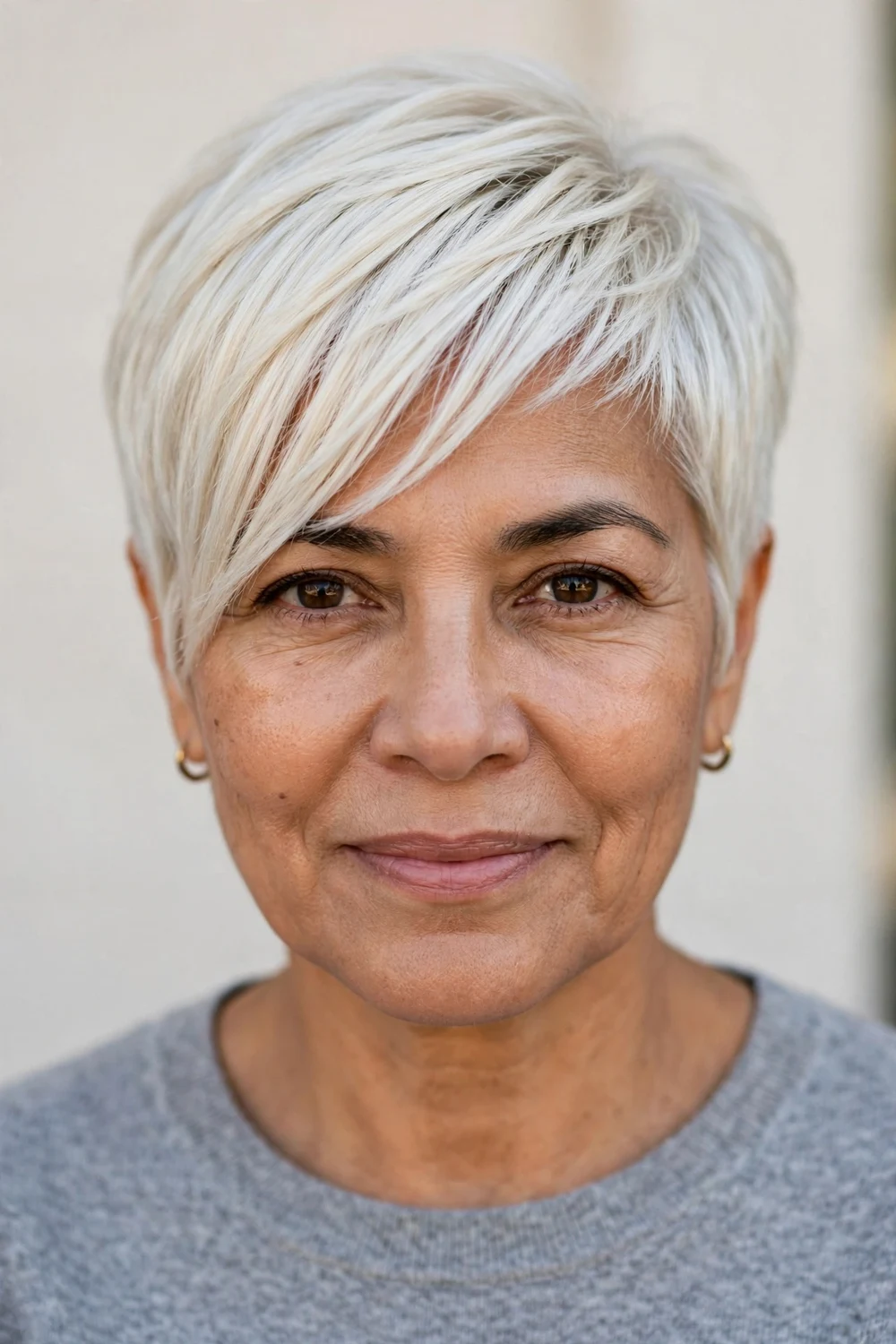
A cool, almost-white blonde with long side bangs sweeping across the forehead. The icy tone makes the cut look sharp and deliberate, while the longer bangs keep it from feeling severe. It flatters cool and neutral skin tones and looks particularly striking on mature women, where the silver-blonde tone blends with natural gray at the roots.
Use purple shampoo once a week and a moisturizing mask every other week, since the lift needed for icy blonde dries the hair out. Style the bangs with a round brush and a light smoothing cream. Root touch-ups every 4 to 5 weeks keep the tone even.
Try this: bring a photo of the exact icy tone you want, because “platinum” means different things to different colorists.
Difficulty: Moderate to high maintenance · Cost: $$ (cut + bleach and tone)
Short and sharp suits every decade. Our short hairstyles for women over 50 roundup has 20 easy, youthful cuts with the same low daily effort.
14. Pixie Mullet Hybrid

Short, textured pixie layers in front with longer, tapered length left at the back. The hybrid borrows the mullet’s back length and fuses it with a pixie’s clean front, which makes it one of the most fashion-forward cuts here. It suits straight and wavy hair best; the back length needs to lie smooth to read as intentional.
Scrunch texturizing spray into the front layers and smooth the back with a flat iron. Use heat protectant on the back section. The front needs trimming every 5 to 6 weeks, while the back can grow out for 8 to 10. Decide the back length with your stylist before the appointment starts.
Try this: decide where the back ends while you are in the chair, looking in the mirror. Guessing at home leads to cutting it too short later.
Difficulty: Easy · Cost: $ (cut)
15. Copper Pixie with Textured Fringe

A warm copper-orange shade with a choppy, textured fringe and tapered sides. Copper makes the pixie stand out in any room, and the textured fringe keeps it playful rather than formal. It flatters warm and neutral skin tones and looks especially good with freckles or golden undertones. Like burgundy, copper is a fast-fading color, so expect regular tone upkeep.
Wash in cool water with color-safe shampoo. Define the fringe with matte wax, pulling the pieces slightly forward. A copper color-depositing conditioner every 10 days keeps the orange from dulling to brown. Salon glosses every 6 weeks.
Try this: have the shortest fringe pieces cut through the center, with longer pieces at the corners. That unevenness is what makes a textured fringe work.
Difficulty: Moderate · Cost: $$ (cut + color)
Quick Comparison
| Pixie style | Edge factor | Upkeep | Cost range |
|---|---|---|---|
| Textured Platinum Pixie | Near-white color | Roots every 4–5 weeks | $$ |
| Shaved Side Pixie | Buzzed contrast | Side cleanup every 4–6 weeks | $ |
| Choppy French Pixie | Wispy, uneven ends | Trims every 6–8 weeks | $ |
| Asymmetrical Pixie Cut | Uneven silhouette | Trims every 4–5 weeks | $ |
| Jet Black Micro Pixie | Ultra-short precision | Trims every 4 weeks | $ |
| Undercut Pixie with Volume | Full undercut + height | Trims every 4–5 weeks | $ |
| Burgundy Textured Pixie | Red-wine color | Gloss every 6 weeks | $$ |
| Pixie Mullet Hybrid | Back length fusion | Front every 5–6 weeks | $ |
How to Choose Your Edgy Pixie
Start with your upkeep tolerance, not your inspiration photos. Shaved sides, micro lengths, and icy blondes look sharp but need appointments every 4 to 6 weeks. If that schedule does not fit your life, pick a choppy French pixie, a feathered blonde, or a curly tapered cut, which all grow out gracefully for 6 to 8 weeks.
Then match the cut to your hair type. Thick hair holds undercuts, spikes, and volume on top. Fine hair does better with feathered layers and textured fringes, which create the illusion of density. Curly hair needs a stylist who cuts dry, or the cut will end up shorter than you planned.
At the consultation, tell your stylist three things: how short you are willing to go on the sides, whether you want color, and how often you will come back for trims. Bring two or three photos of the exact versions you like, not just the general vibe. That conversation is what separates a pixie you love from one you grow out for a year.
Frequently Asked Questions
What makes a pixie haircut edgy?
Contrast. An edgy pixie pairs something extreme with something soft: a buzzed side against a long swept top, choppy texture against clean lines, or a bold color like platinum, burgundy, or copper against a classic cut. A pixie with soft, even layers reads classic. Add one contrasting element and it reads edgy.
Will an edgy pixie suit my face shape?
Yes, with the right version. Oval faces suit almost every pixie on this list. Round faces do well with long side fringes, asymmetrical cuts, and crown height, which add angles and length. Heart-shaped faces suit wispy French fringes that soften the forehead. Square faces suit textured, tousled versions that break up strong lines. Show your stylist your face shape concern at the consultation.
How often do edgy pixie cuts need trimming?
Shaved sides, micro pixies, and asymmetrical cuts need trims every 4 to 6 weeks to keep their sharp lines. Textured, layered, and curly versions stretch to 6 to 8 weeks. Color versions like platinum, silver, and burgundy need tone refreshes every 4 to 8 weeks depending on the shade, separate from the cut schedule.
Can I style an edgy pixie without heat?
Yes. Most of the cuts on this list style with matte wax, clay, or texturizing spray worked through dry hair with your fingers. Air-drying works for textured, curly, and choppy versions. Heat helps with sleek finishes and crown lift, but it is optional. When you do use a dryer or flat iron, apply heat protectant first.
Do edgy pixie cuts work on thick or curly hair?
Yes. Thick hair holds undercuts, spikes, and volume better than fine hair. Curly hair works well in tapered pixies, where the sides stay neat and the curls on top provide the texture. Ask for a stylist who cuts curly hair dry, use curl cream on damp hair, and plan taper cleanups every 4 to 5 weeks.
For bang-focused takes on the edgy crop, see our choppy pixie cut with bangs roundup.
Prefer your volume without the edge? These pixie haircuts thin fine hair easy to style keep things soft, simple, and low-effort.
Final Thoughts
Edgy pixie haircuts work because one bold choice does all the talking: a buzzed side, an icy color, or razor-sharp lines. Pick your edge based on how much upkeep you will honestly do, match the cut to your hair type, and bring clear photos to your stylist. The right pixie takes five minutes to style and looks like you meant it.
For more short-hair ideas across every length, browse the full collection at PrimeHairPicks.
Love the bold side of short hair? These choppy pixie cuts for women round out the edgy options with 30 textured cuts, styling routines, and face-shape advice.

