


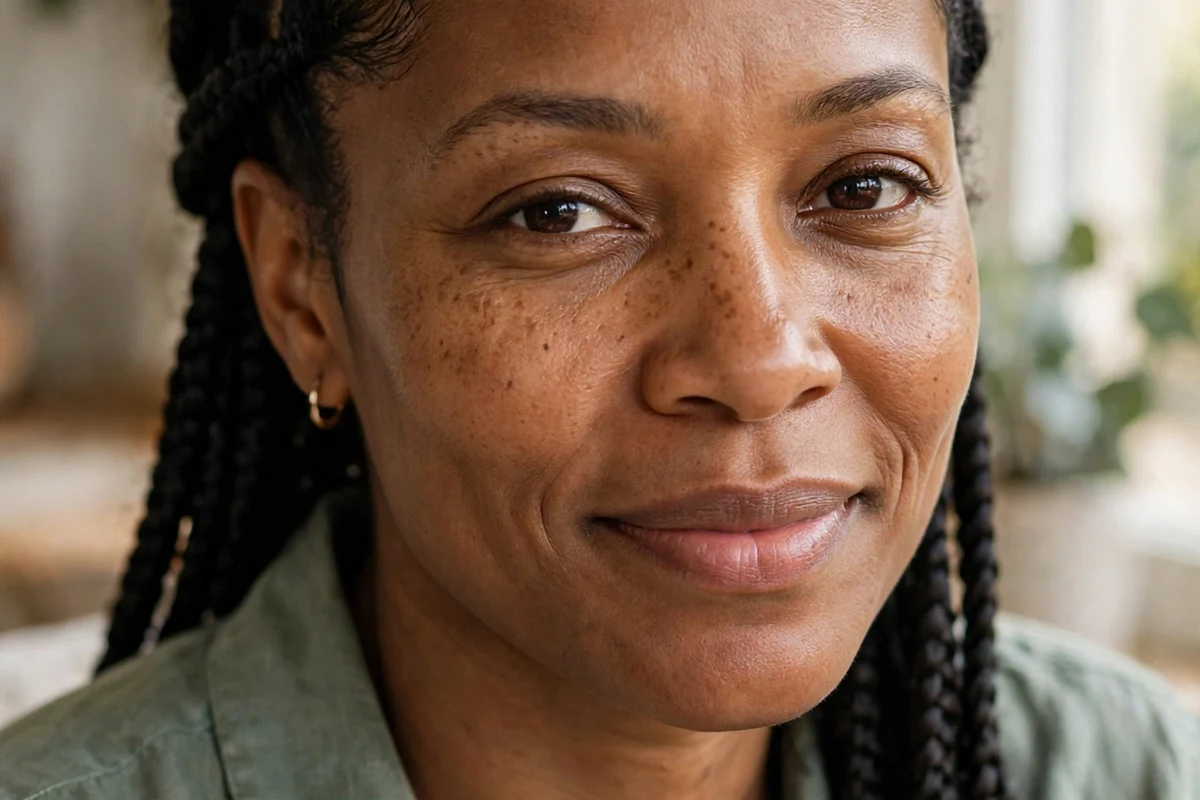
Box braids hairstyles for Black women remain the most-worn protective style for a reason: square-parted, three-strand braids that last six to eight weeks with minimal daily work. This list covers 46 ideas across every size, length, color, and styling option, with realistic costs and care notes for each.
Every style below is a true box braid (knotless or classic knotted), organized from sizes and installs through lengths, colors, updos, and finishing details. Pick your size first, then your length, then the fun parts.
Quick Takeaways
- Box braids are square-parted, three-strand braids done with extension hair; knotless versions start with a feed-in instead of a knot for less root tension.
- Size sets the trade-off: jumbo installs fastest and feels lightest overall, micro looks most natural but takes a full day, medium is the all-rounder.
- Most full sets cost $120 to $300, with small, micro, and extra-long installs sitting at the high end.
- Take braids down by week eight; leaving them longer lets new growth mat at the root and stresses edges.
- Wash every two to three weeks and dry braids completely, since trapped moisture can cause mildew and odor.
1. Classic Long Box Braids
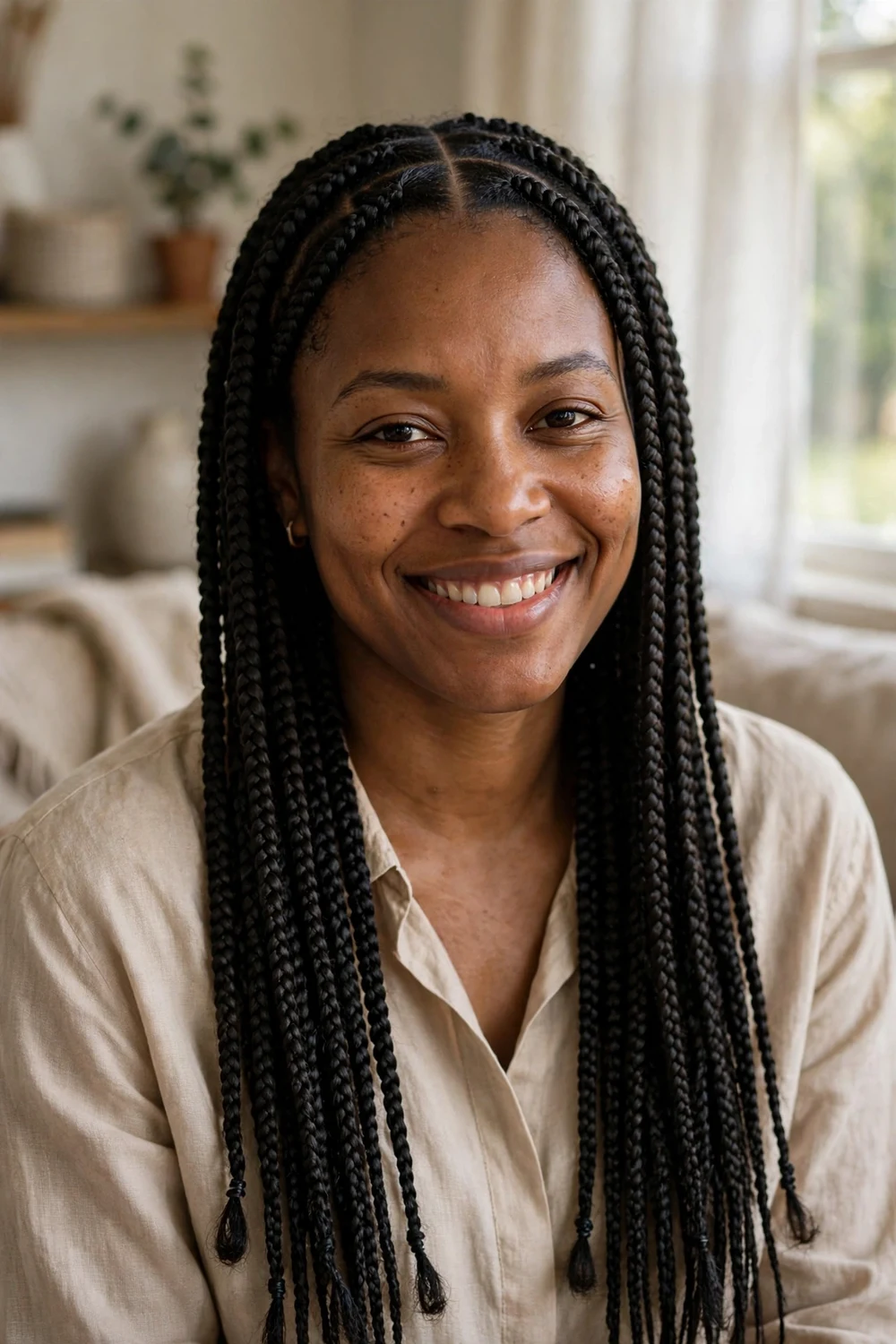
Classic long box braids are the benchmark everything else answers to: medium-thickness, square-parted braids falling past the shoulders. They balance comfort, durability, and polish, sitting in the sweet spot where braids are small enough to last but not so fine that the install eats your whole day. Ask for a center or side part and sealed, dipped ends.
Long enough to sweep into a bun or ponytail, light enough to wear down for weeks.
Try this: Wrap in a satin scarf nightly and moisturize the parts every few days to reach the full eight weeks.
Difficulty: Medium · Cost: $150–$250
2. Jumbo Box Braids
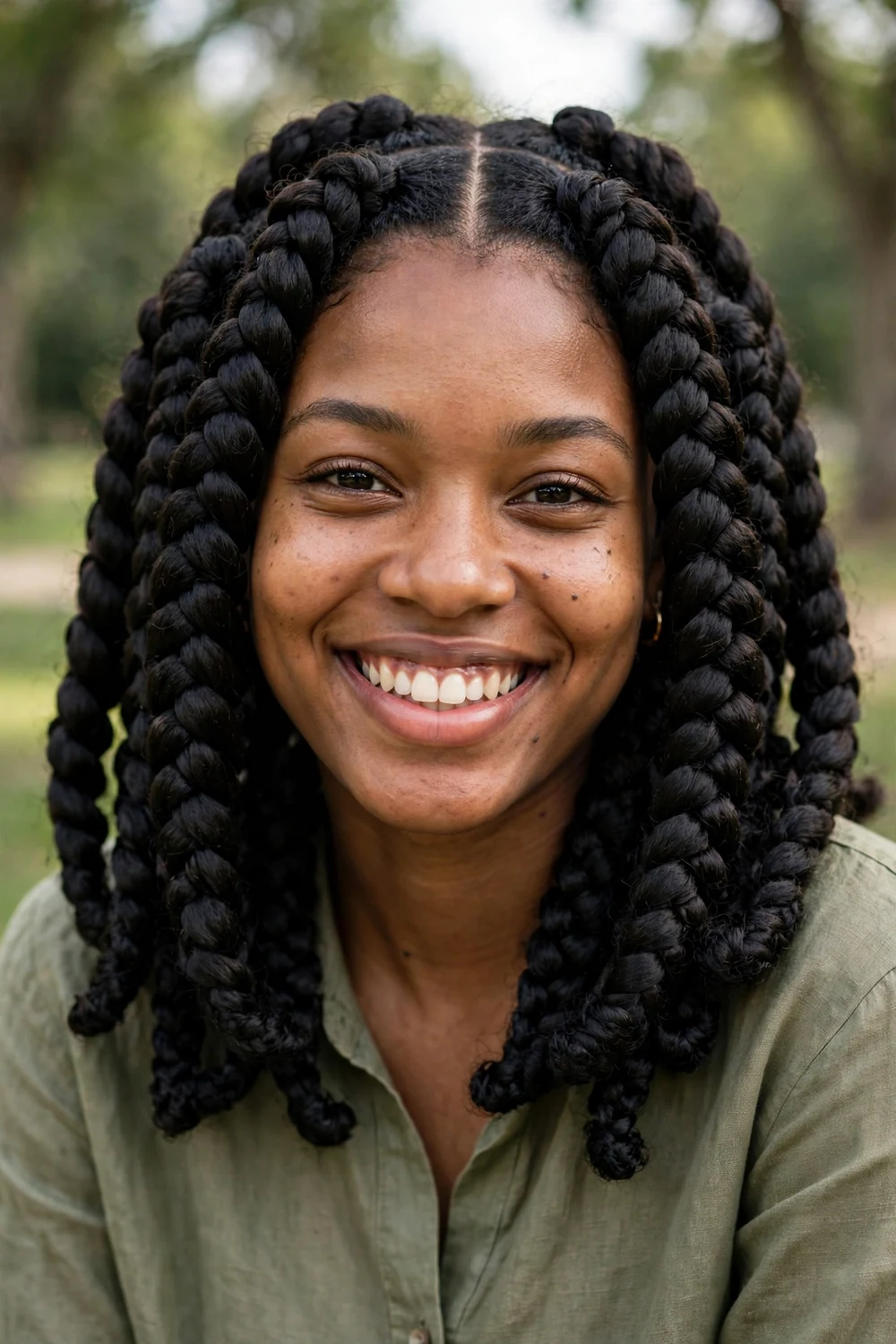
Jumbo box braids use thick, chunky sections, so the install is the fastest of any size on this list. Fewer braids also mean less total weight on the scalp, which is a genuine relief if a heavy install has ever strained your hairline. The trade-off is a shorter wear window, since bigger parts demand more of each root.
Plan takedown around four to five weeks for jumbos rather than eight.
Try this: Keep the perimeter braids slightly thicker than the crown ones to ease tension on edges.
Difficulty: Low · Cost: $120–$200
3. Medium-Sized Box Braids
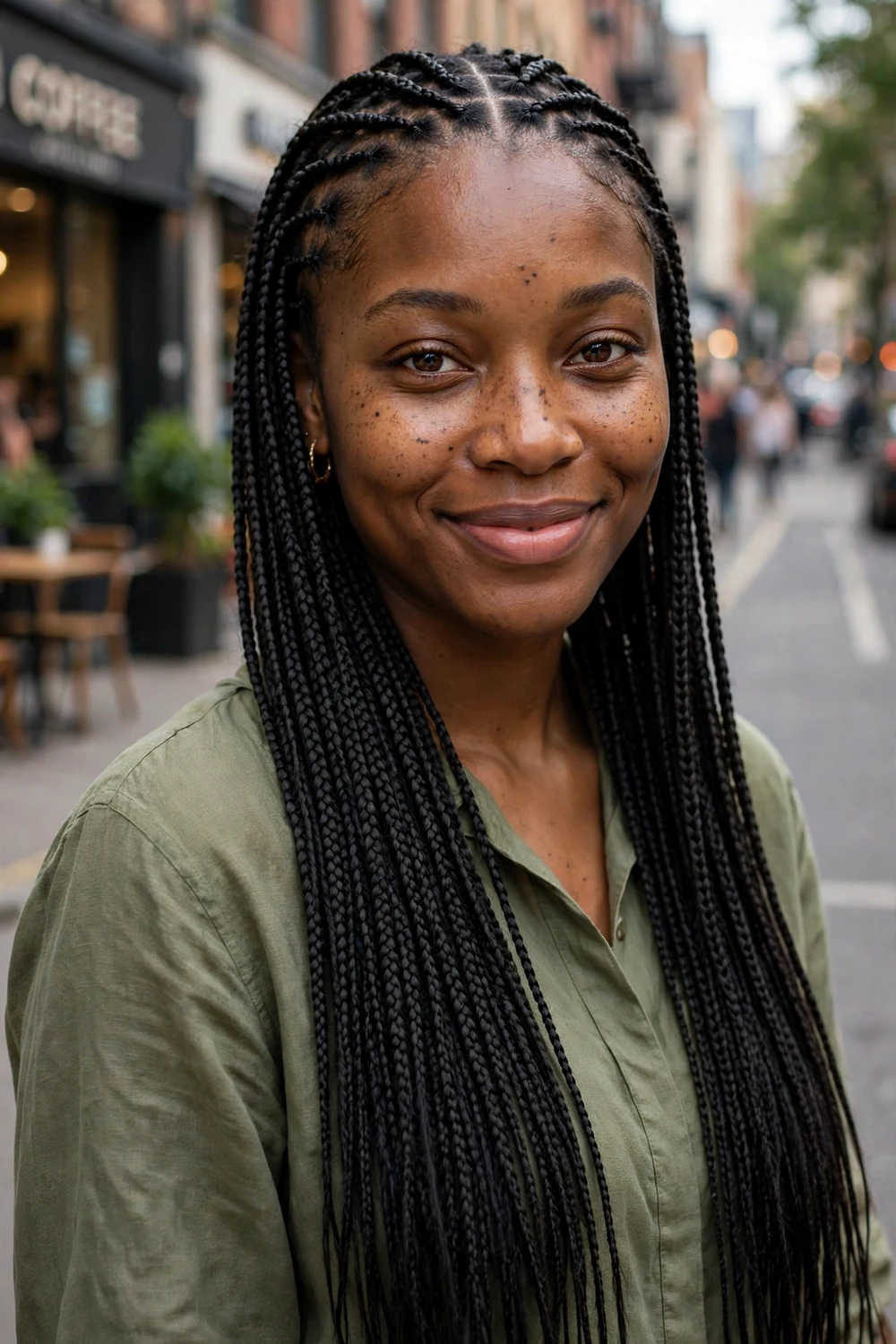
Medium box braids are the practical middle ground: quicker than small or micro, longer-lasting and more versatile than jumbo. They gather into updos and ponytails without feeling heavy, hold their shape for weeks, and spread tension evenly enough to suit most hairlines. For most people, this is the size that quietly does everything well.
If you are booking blind, book medium; it is the safest default on the list.
Try this: Ask for slightly larger parts at the hairline so the edges carry less weight.
Difficulty: Medium · Cost: $150–$250
4. Small Box Braids
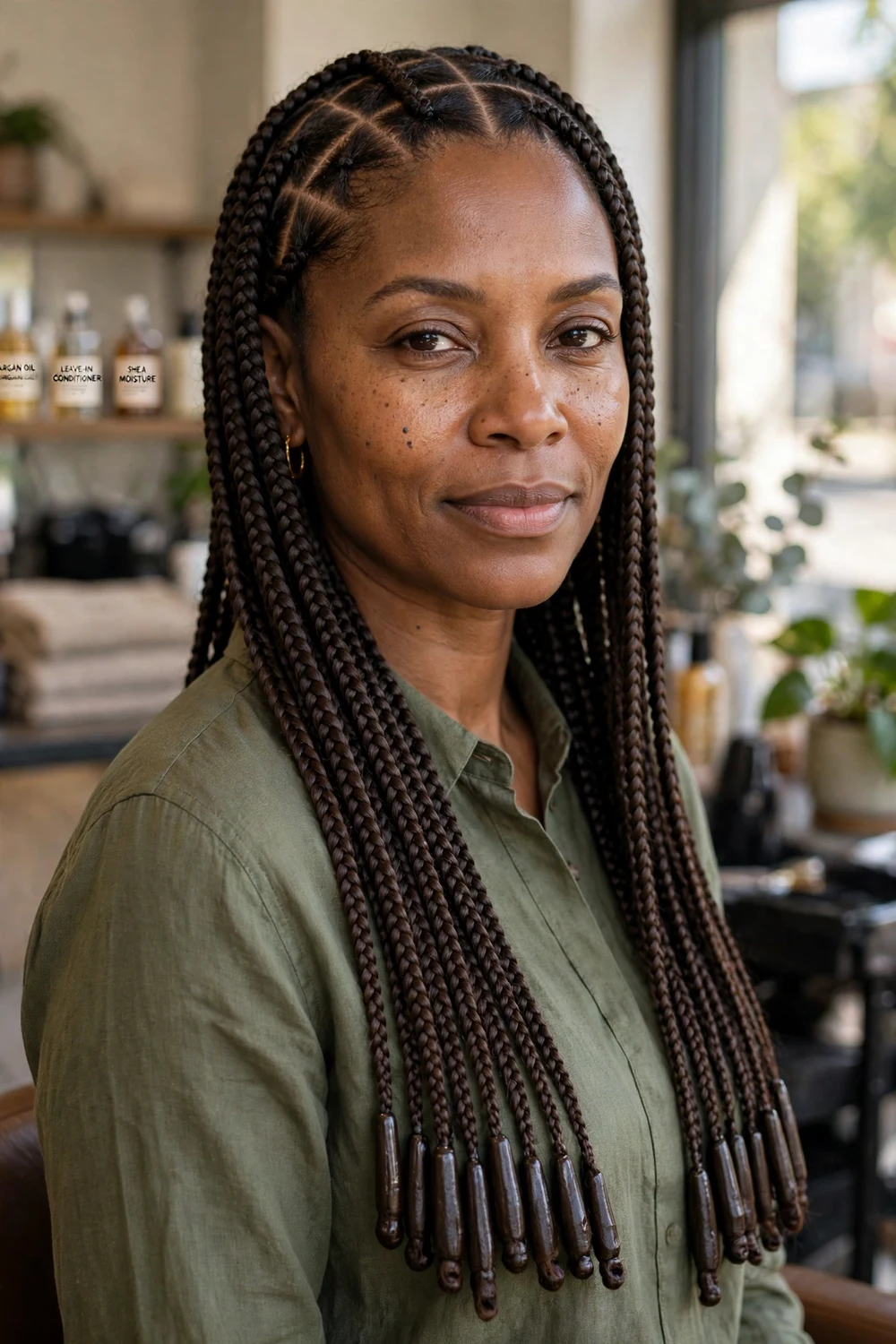
Small box braids give a refined, detailed finish that reads closer to natural hair density. They last longer than medium or jumbo sets and style with the most flexibility, from sleek ponytails to intricate buns. The cost is time: expect six to eight hours in the chair and a higher price for the labor.
Small sets demand careful takedown, since many fine braids tangle more easily at the root.
Try this: Take them down with a slippery conditioner and a rat-tail comb, working one braid at a time.
Difficulty: High · Cost: $180–$300
5. Micro Box Braids
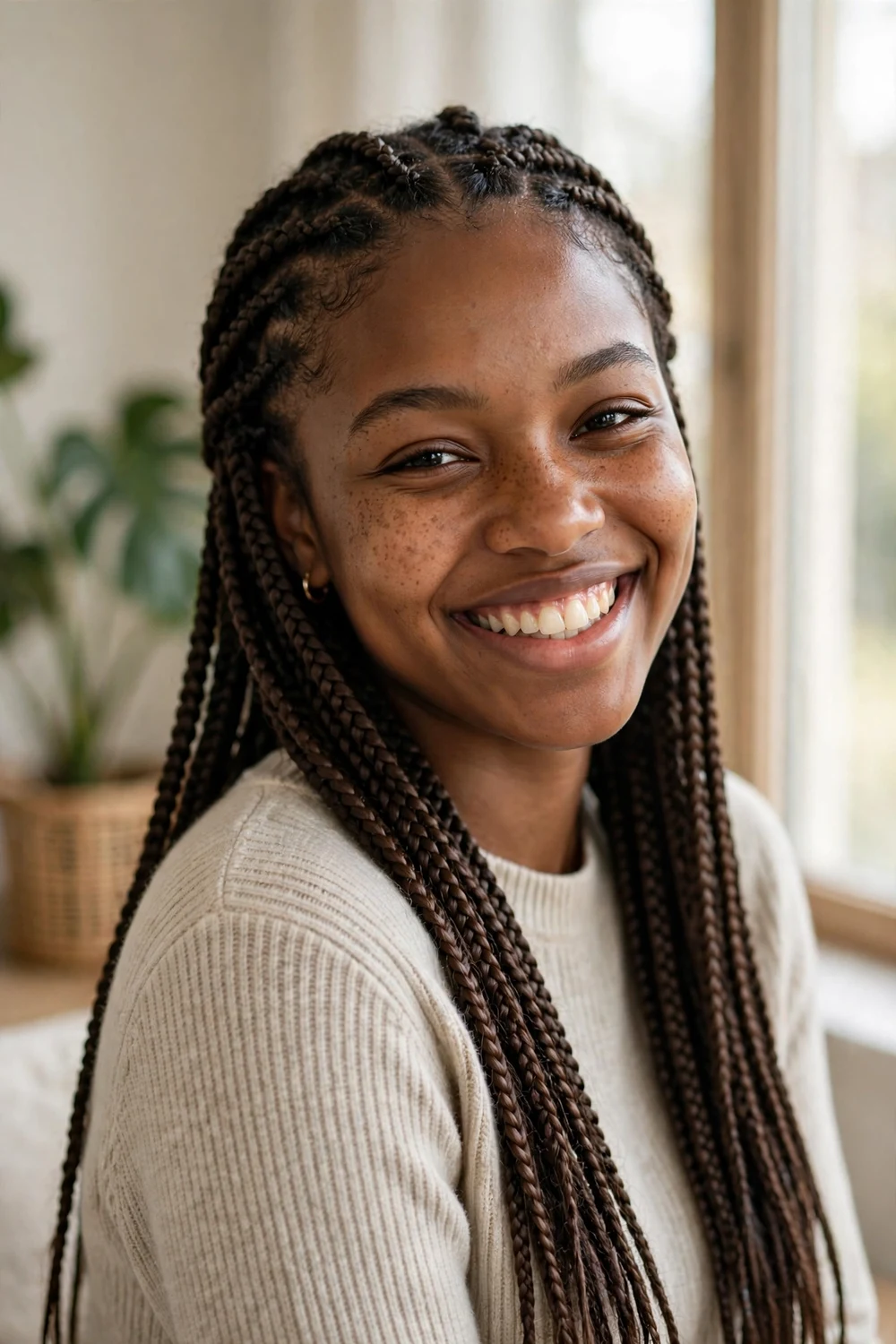
Micro box braids are pencil-thin and fluid, the closest braids come to moving like loose hair while still giving full protective coverage. That versatility is exactly why people fall for them, but they ask the most of you: often a full day in the chair, the highest price on the list, and the longest takedown. They are not a first-timer’s pick.
Never rush micro takedown; hurried unraveling stresses the very hair the braids protected.
Try this: Spread takedown over two evenings instead of one long session to protect your strands.
Difficulty: High · Cost: $250–$400
6. Knotless Box Braids
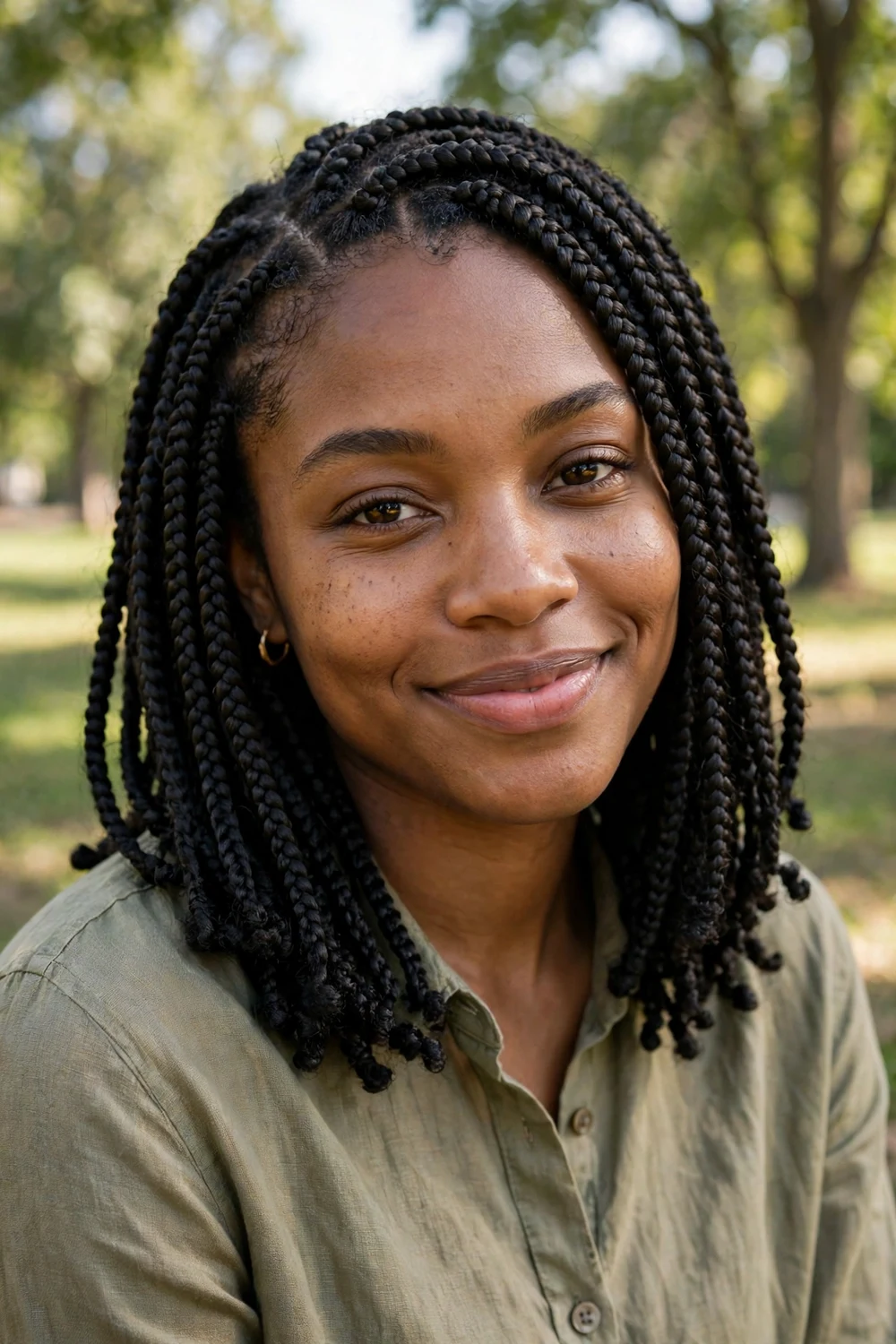
Knotless box braids replace the traditional knot at the root with a gradual feed-in start: your own hair begins the braid, and extension hair is added a few crosses down. The braid lies flat, feels lighter, and pulls far less at the scalp, which makes knotless the gentlest option for fine or fragile edges. They also style comfortably from day one, with no stiff knots to work around.
Knotless is the default recommendation for anyone with thinning edges or a tender hairline.
Try this: Tell your braider upfront if your edges are fragile so the feed-in starts even smaller.
Difficulty: Medium · Cost: $170–$300
If you are weighing braid families before you book, the different types of braids guide breaks down how box braids compare to twists, cornrows, and locs.
7. Mixed-Size Knotless Box Braids
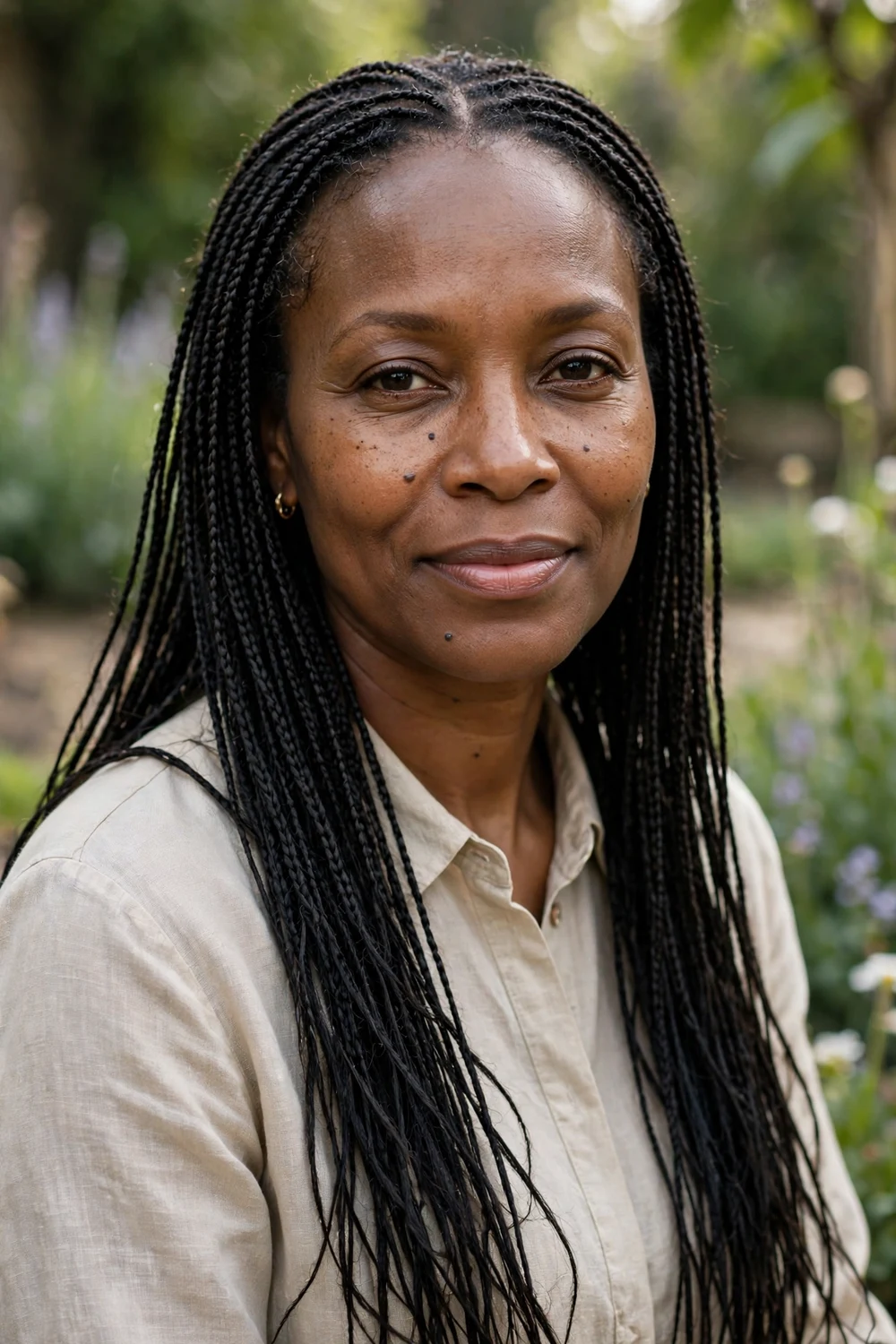
Mixed-size knotless braids keep the face-framing braids thin and the crown and back braids noticeably thicker. You get the detailed look where it actually matters, around the face, while the thicker back sections save serious install time. The knotless feed-in keeps every root flat and low-tension, so this suits fragile edges as well as standard knotless does.
The visible parting grid stays neat because tension is even from scalp to tip.
Try this: Ask for a clean center or side part; the size contrast shows best with a defined part.
Difficulty: Medium · Cost: $170–$300
8. Crochet Box Braids
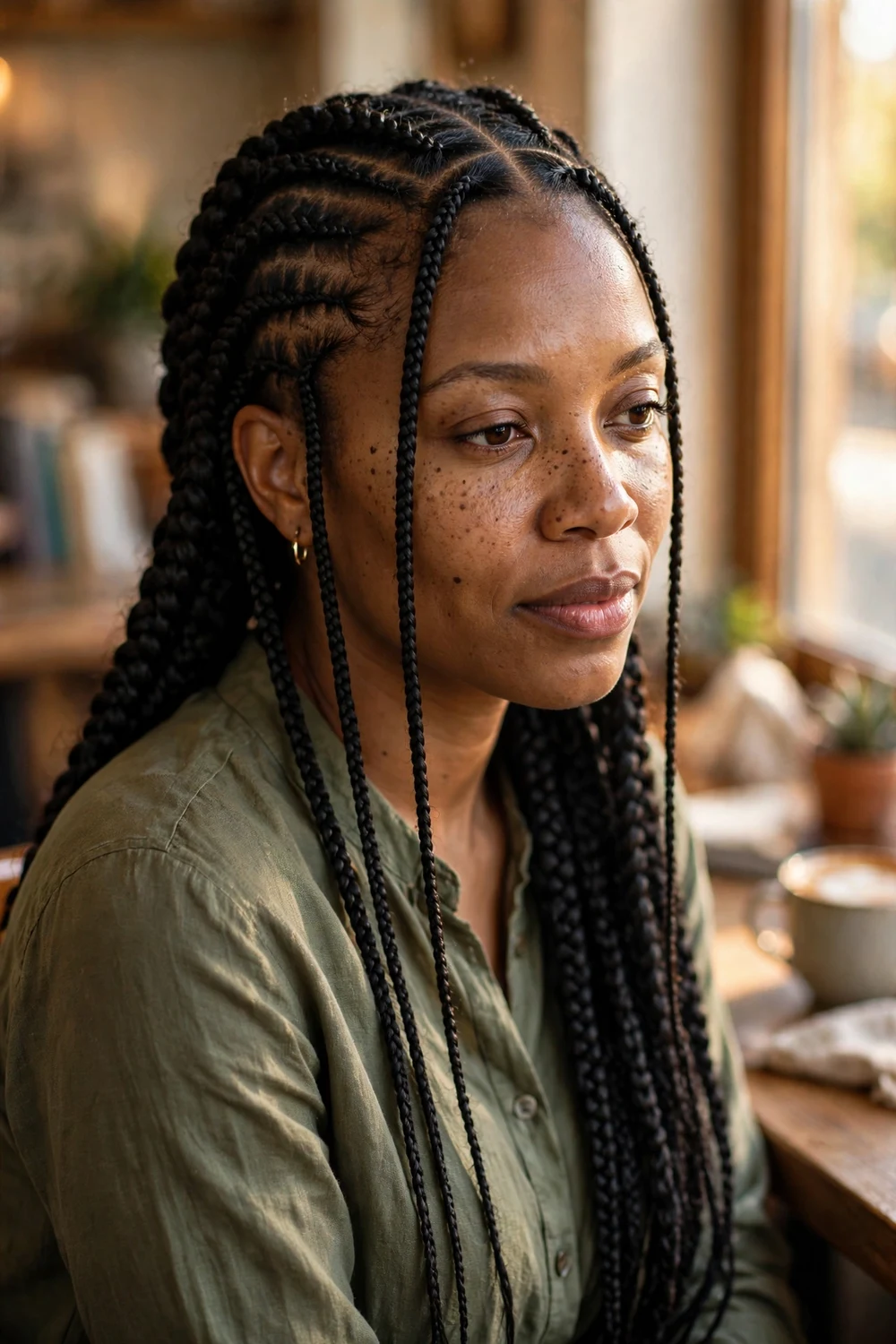
Crochet box braids are installed by looping pre-braided or pre-twisted hair through cornrowed natural hair with a crochet hook. The install is much faster than individual braiding, the price is lower, and the result looks like classic box braids from a normal viewing distance. Communicate the braid size and pattern you want before the appointment, since the crochet method limits mid-install changes.
Crochet is the best value entry point if budget matters more than a perfect root finish.
Try this: Keep the base cornrows in a straight-back pattern for the most natural-looking parting.
Difficulty: Low · Cost: $100–$180
9. Waist-Length Box Braids
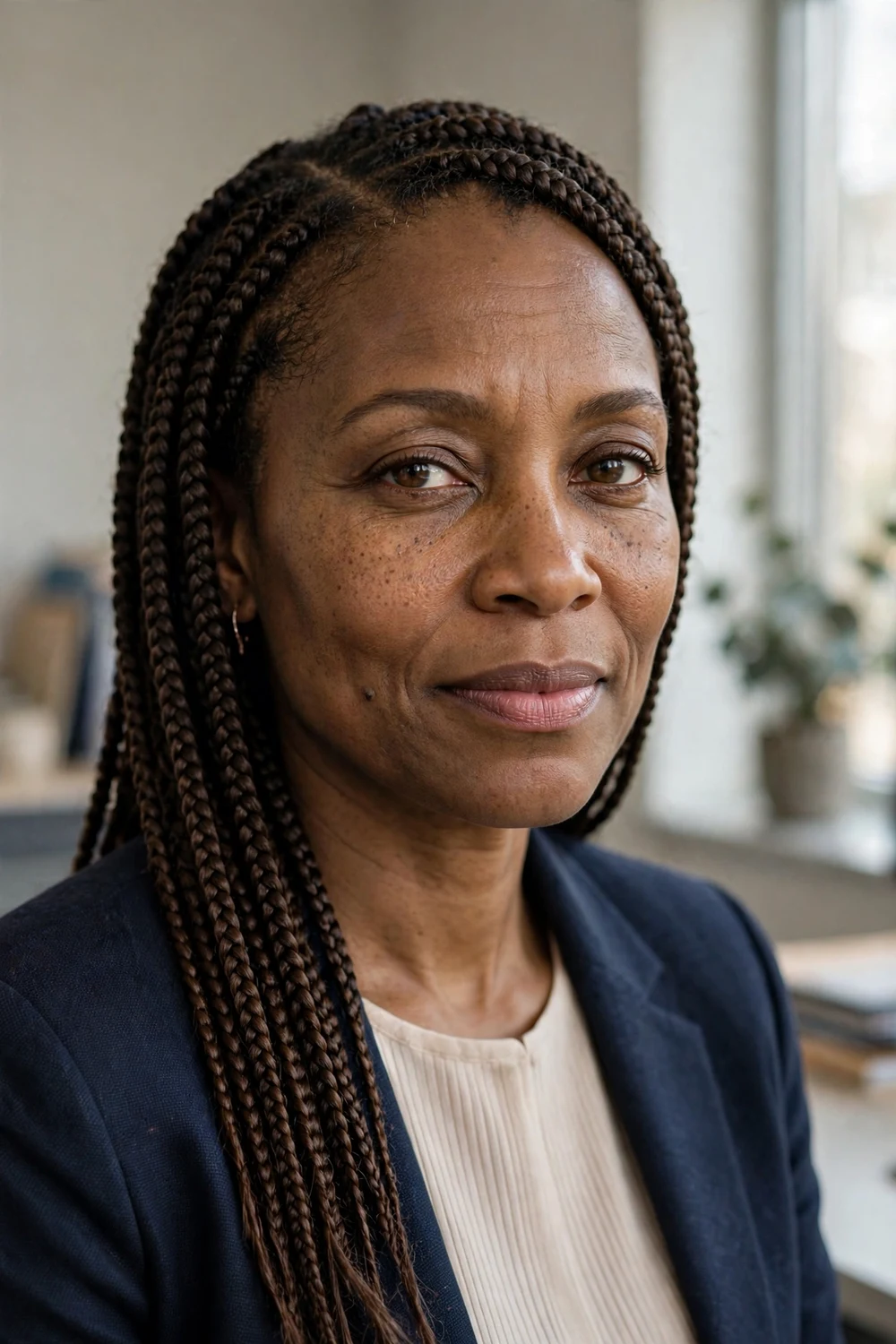
Waist-length box braids are the drama everyone pictures: braids falling well past the mid-back with real swing. That length carries real weight, so a medium size spreads the load better than thin braids at this length, and knotless roots keep the scalp comfortable. On busy days, lifting the weight into a high bun gives your roots a rest.
Wrap the length loosely at night to prevent tangling and overnight tension.
Try this: Sleep with the braids in a loose top-of-head wrap so the weight pulls away from the hairline.
Difficulty: Medium · Cost: $180–$300
10. Hip-Length and Extra-Long Box Braids
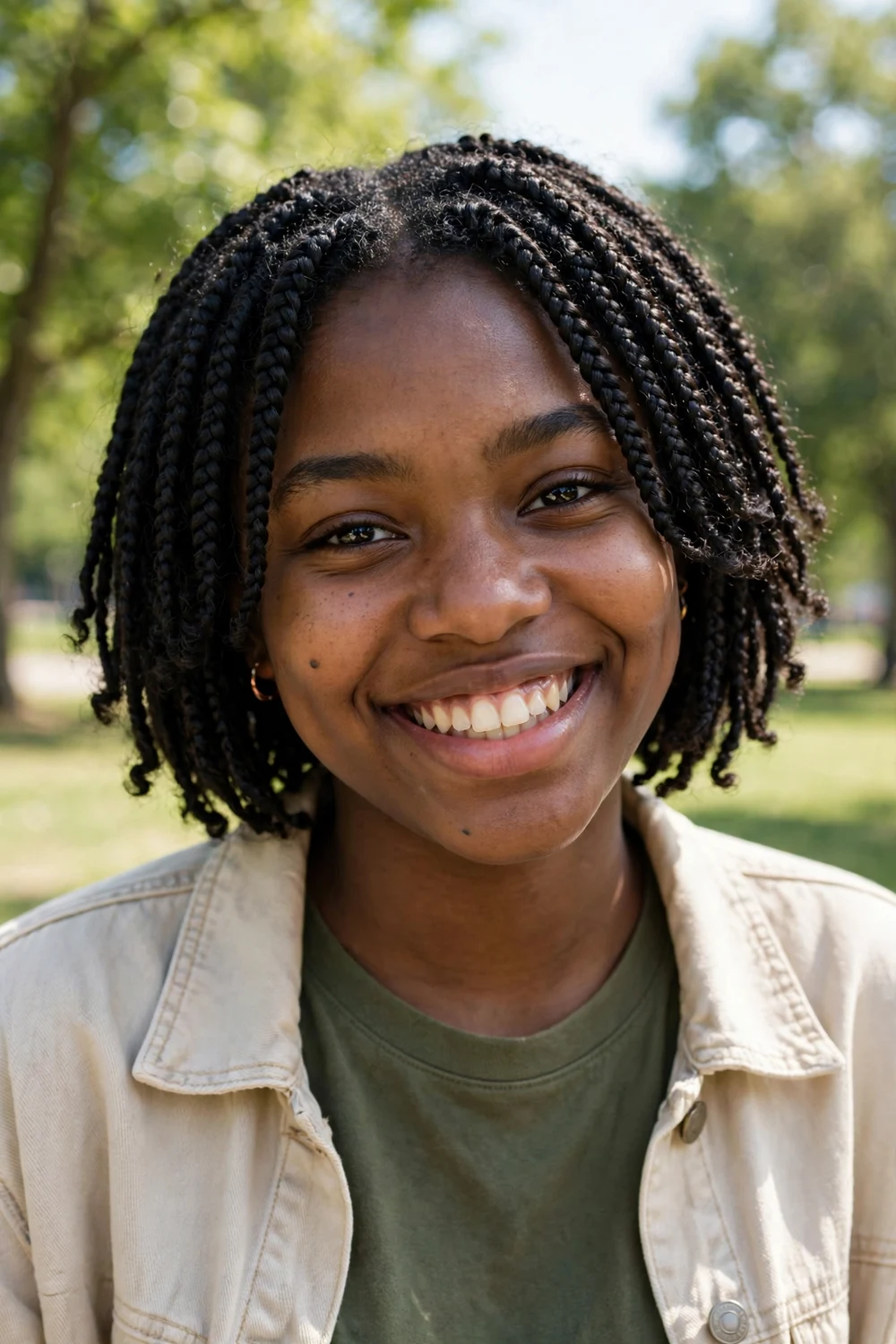
Hip-length and extra-long box braids push past the waist for maximum impact. At this length, extension weight is the whole conversation: fine natural hair or fragile edges cannot safely carry hip-length installs, and even sturdy hair should take these down by week six. Knotless medium braids with clean partings keep the crown flat while the length does the talking.
This length is heavy; if your scalp is sensitive, stop at waist length instead.
Try this: Alternate wear-down days with high-bun days to give your roots regular breaks.
Difficulty: High · Cost: $200–$350
11. Shoulder-to-Chest Box Braids
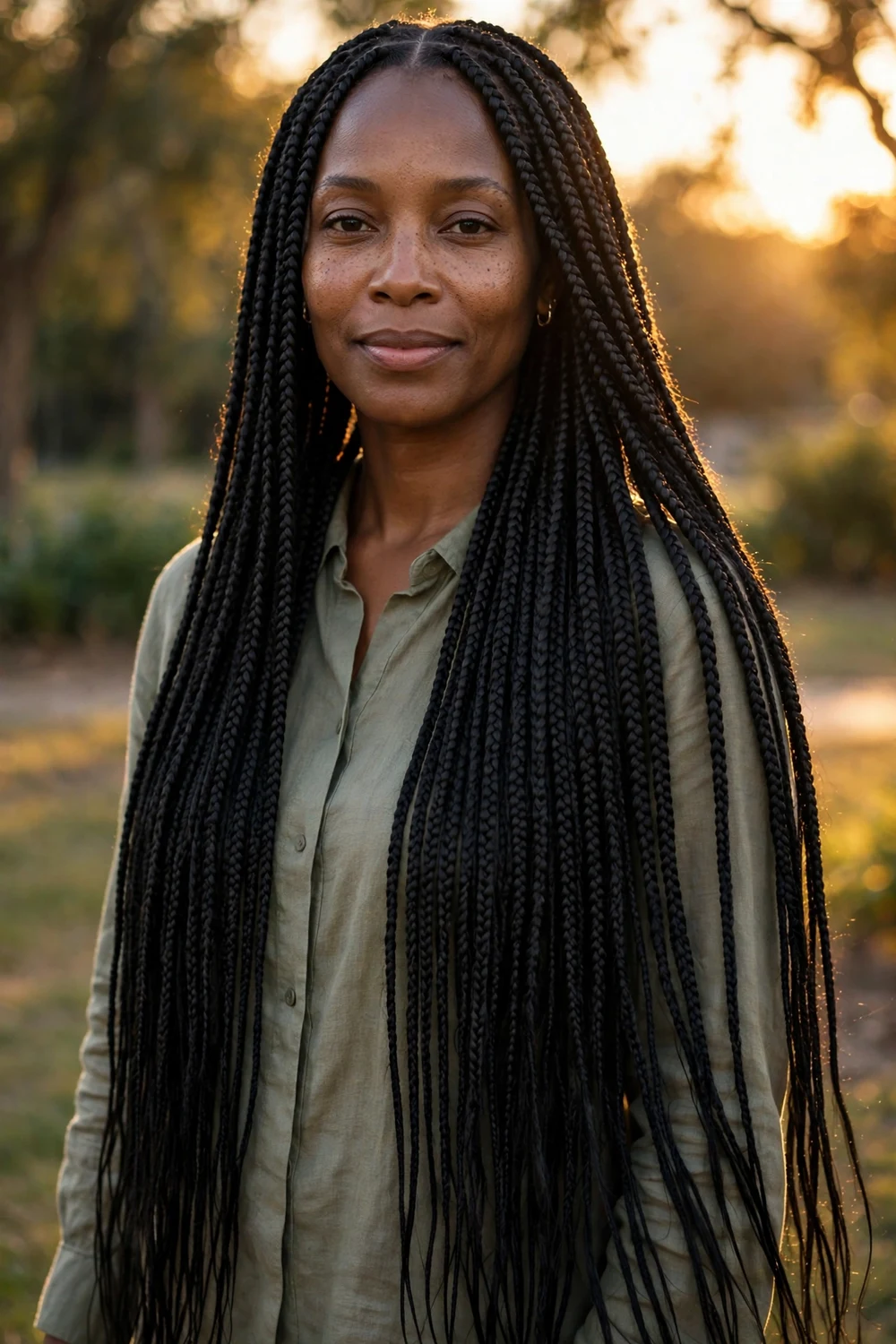
Shoulder-to-chest box braids are the everyday workhorse length: light on the scalp, quick to install, and easy to style up or down. They suit warm months, busy schedules, and first-time braid wearers, since there is far less weight pulling at the roots than longer sets. This length also ages well, with new growth staying discreet for weeks.
Shorter sets are the kindest option for edges that need a break.
Try this: Flip the part from center to side mid-wear for an instant refresh that hides new growth.
Difficulty: Medium · Cost: $140–$220
12. Short Box Braids
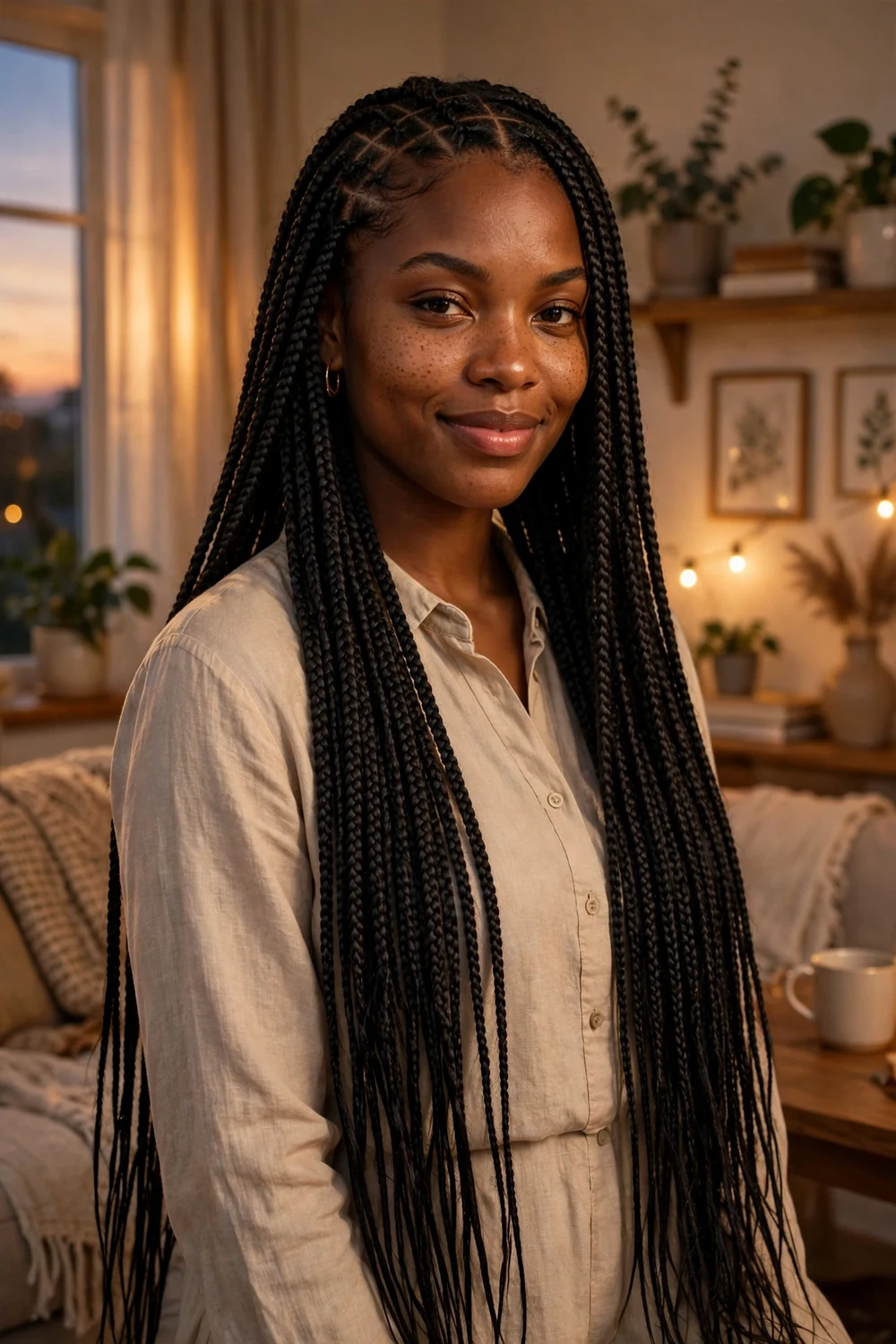
Short box braids sit above the chin and deliver the full protective payoff in the lightest possible package. With almost no braid weight pulling on the scalp, they are the most edge-friendly length on this list and the quickest install. The ends sit exposed, so they can unravel faster around the neckline where friction is constant.
Seal the ends well and expect a slightly shorter wear window than longer sets.
Try this: Re-dip the ends in hot water at week three to reseal any that have started to loosen.
Difficulty: Low · Cost: $120–$180
13. Chin-Length Bob Box Braids

Chin-length bob box braids curve inward at the ends to sit right against the jawline, giving a modern, shaped finish. The medium braid size stays consistent with a feed-in at the roots for clean, flat parts. Oval and heart-shaped faces get the most from this length; on rounder faces it can cut across the fullest point.
Short bobs unravel faster at the neckline, so plan a slightly earlier refresh.
Try this: Ask for the ends to be tucked under during the hot-water dip for the curved bob shape.
Difficulty: Low · Cost: $130–$200
14. Grey Asymmetrical Box Braid Bob
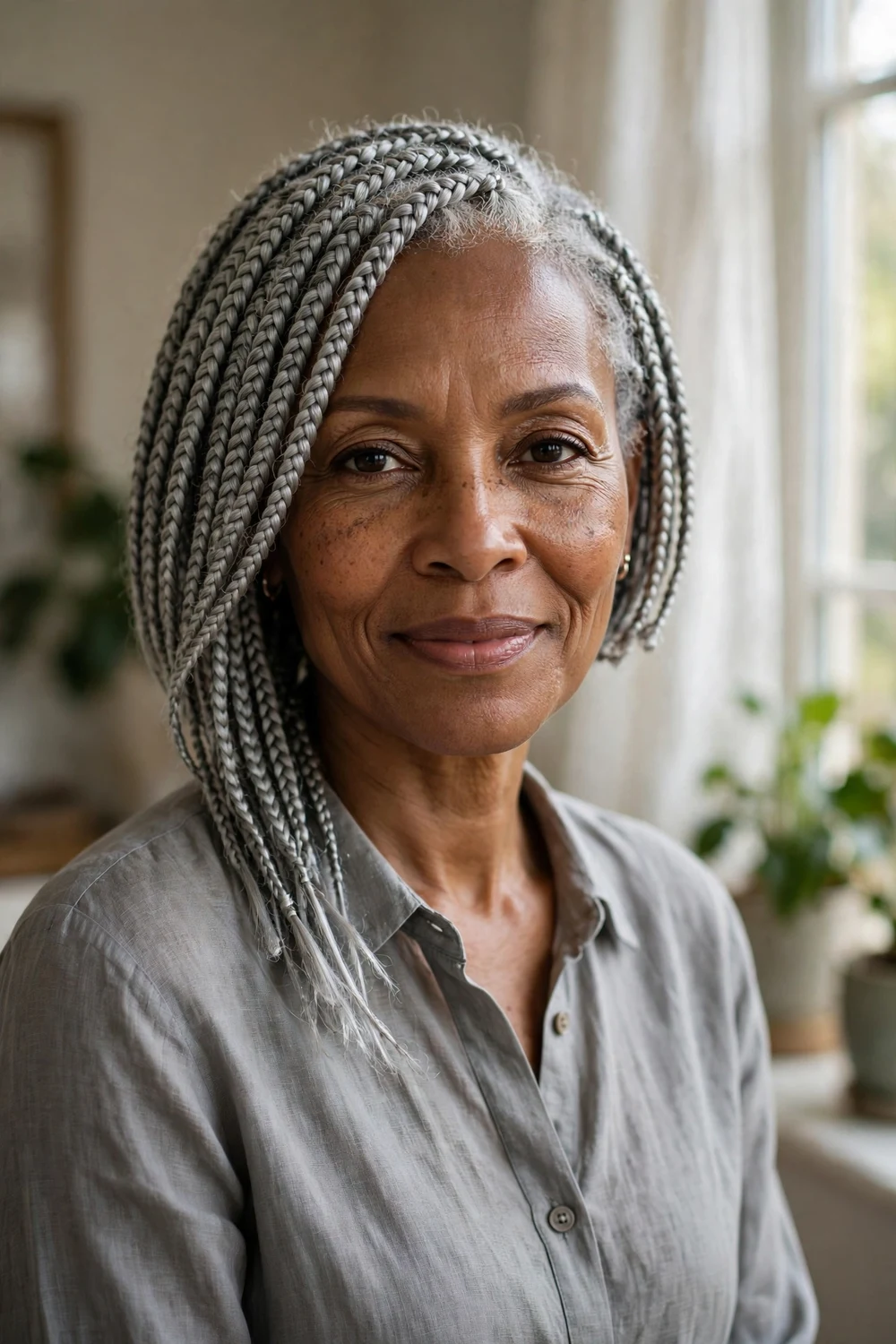
The grey asymmetrical box braid bob pairs a mature silver-grey shade with a longer front on one side. It is low on maintenance, lightweight, and can last up to eight weeks, making it a strong pick for women who want polish without fuss. The asymmetry keeps the grey from reading flat, and the braided texture adds depth the color alone would not have.
Grey braiding hair can look dull in flat light, so ask for a shade with silver dimension.
Try this: Keep the longer side swept forward to show off the asymmetry.
Difficulty: Medium · Cost: $140–$220
15. A-Line Bob Box Braids
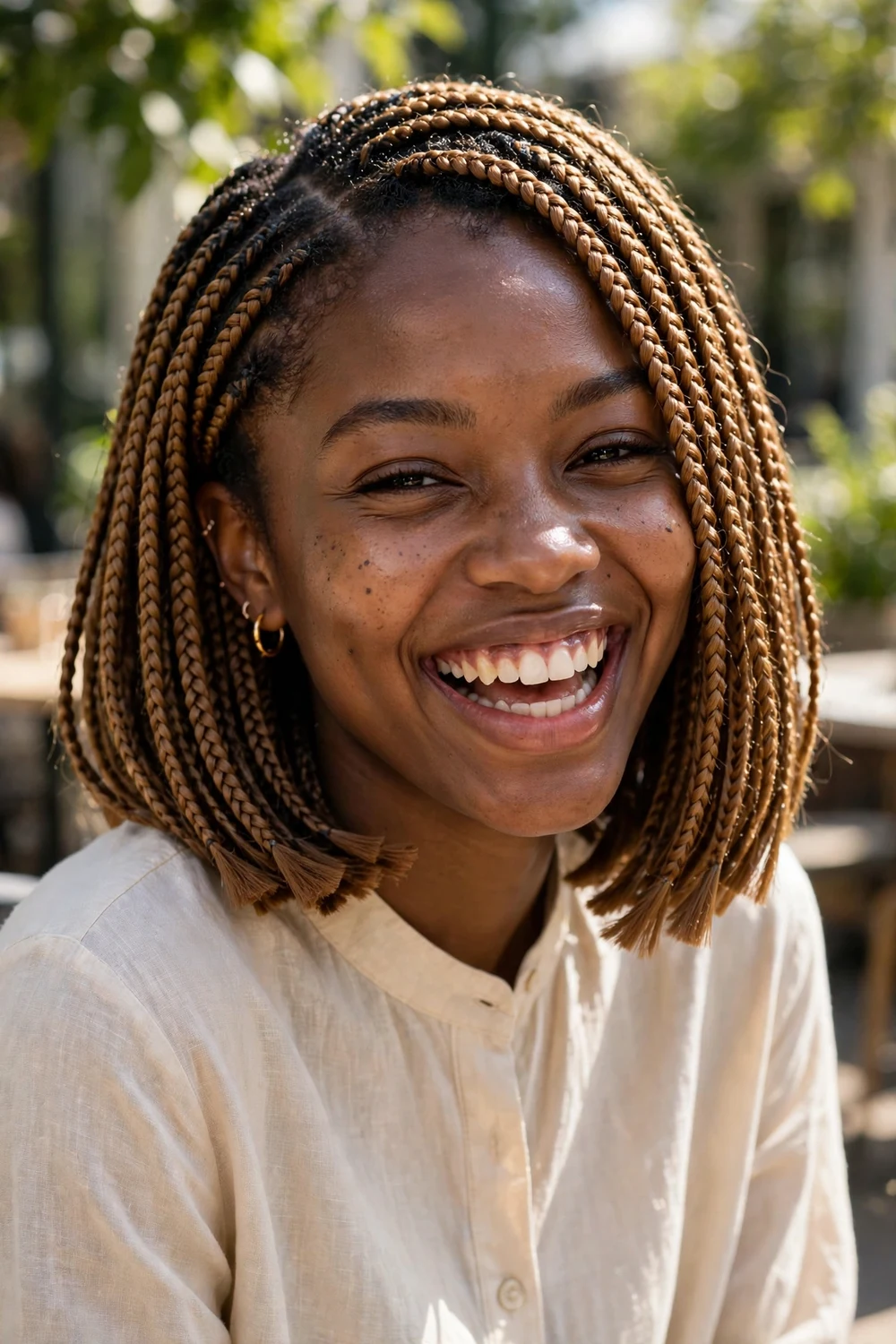
A-line bob box braids are cut shorter at the back and angled longer toward the front, giving the classic bob a sharper silhouette. The angled outline frames the face while the braided texture keeps it from looking severe. This shape works best in medium sizes, since micro braids lose the clean angle and jumbo braids lose the sleekness.
The angle needs a braider comfortable cutting braids; not every installer shapes them.
Try this: Confirm the angle with a hand mirror before the braider seals the ends.
Difficulty: Medium · Cost: $140–$220
16. Long Bob (Lob) Box Braids
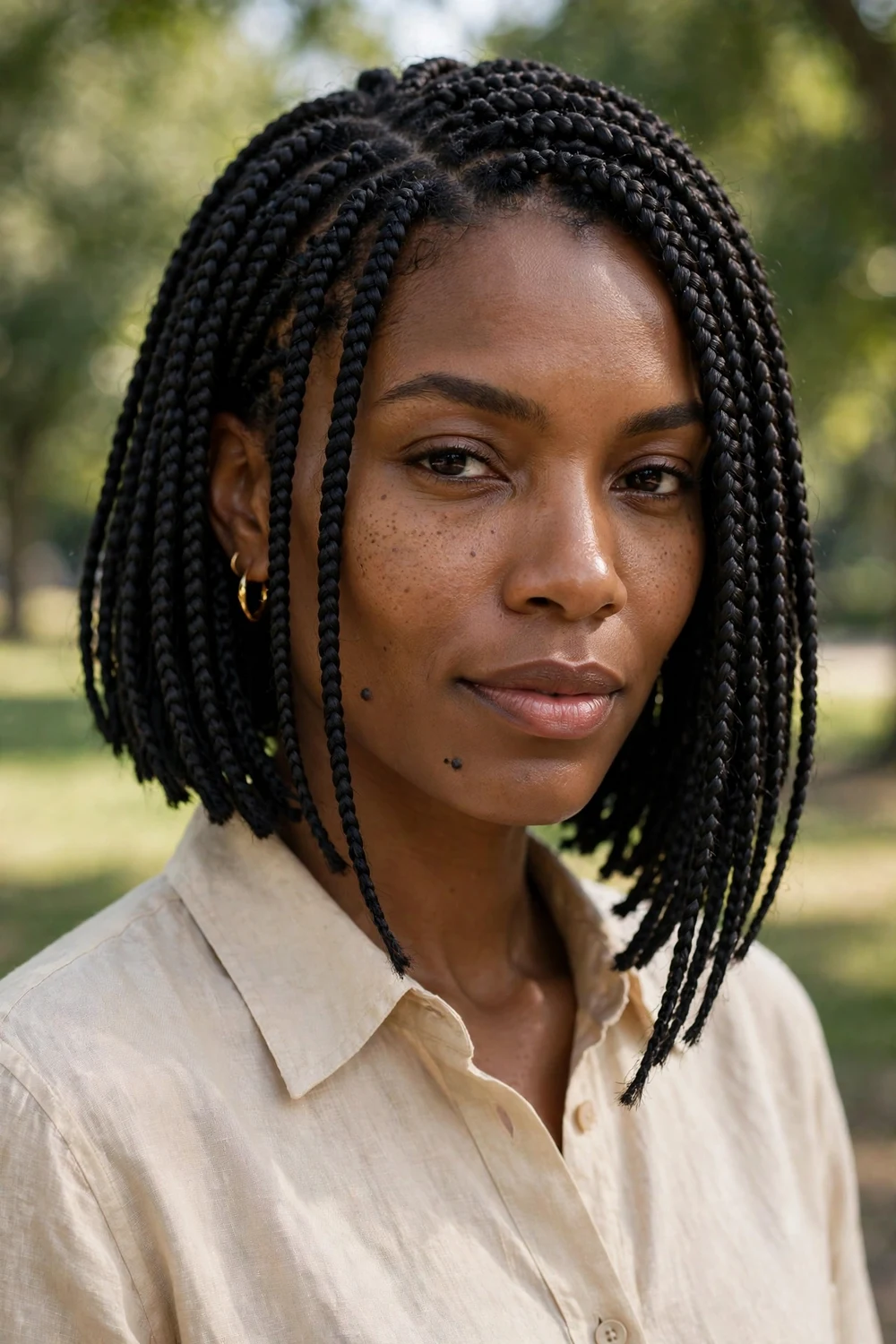
The lob gives you the swing of a bob with enough length to tie back at the gym. A honey-brown shade with a darker root keeps the parts from standing out as the set ages, and cutting the ends straight across gives a blunt, weighted finish. Collarbone length keeps the weight fully manageable for daily wear.
The darker root is doing quiet work here, hiding new growth for weeks.
Try this: Part deep to one side for an evening look without restyling a single braid.
Difficulty: Low · Cost: $140–$220
Wondering whether braids actually support growth goals? The do braids help your hair grow guide separates what protective styling can and cannot do for length retention.
17. Dark Brown Box Braids

Dark brown box braids with precise square partings are the quiet classic: a simple protective style that flatters nearly every skin tone without drawing attention to the color itself. Plaited cleanly at the base, this look can be done in the salon or at home by anyone who braids consistently. It is the color to choose when you want the style, not the shade, to be the point.
Dark brown reads natural, so it suits conservative workplaces and low-key routines.
Try this: Add gold cuffs sparingly; the dark base makes metal accessories stand out.
Difficulty: Medium · Cost: $150–$250
18. Jet Black Box Braids with Tapered Ends
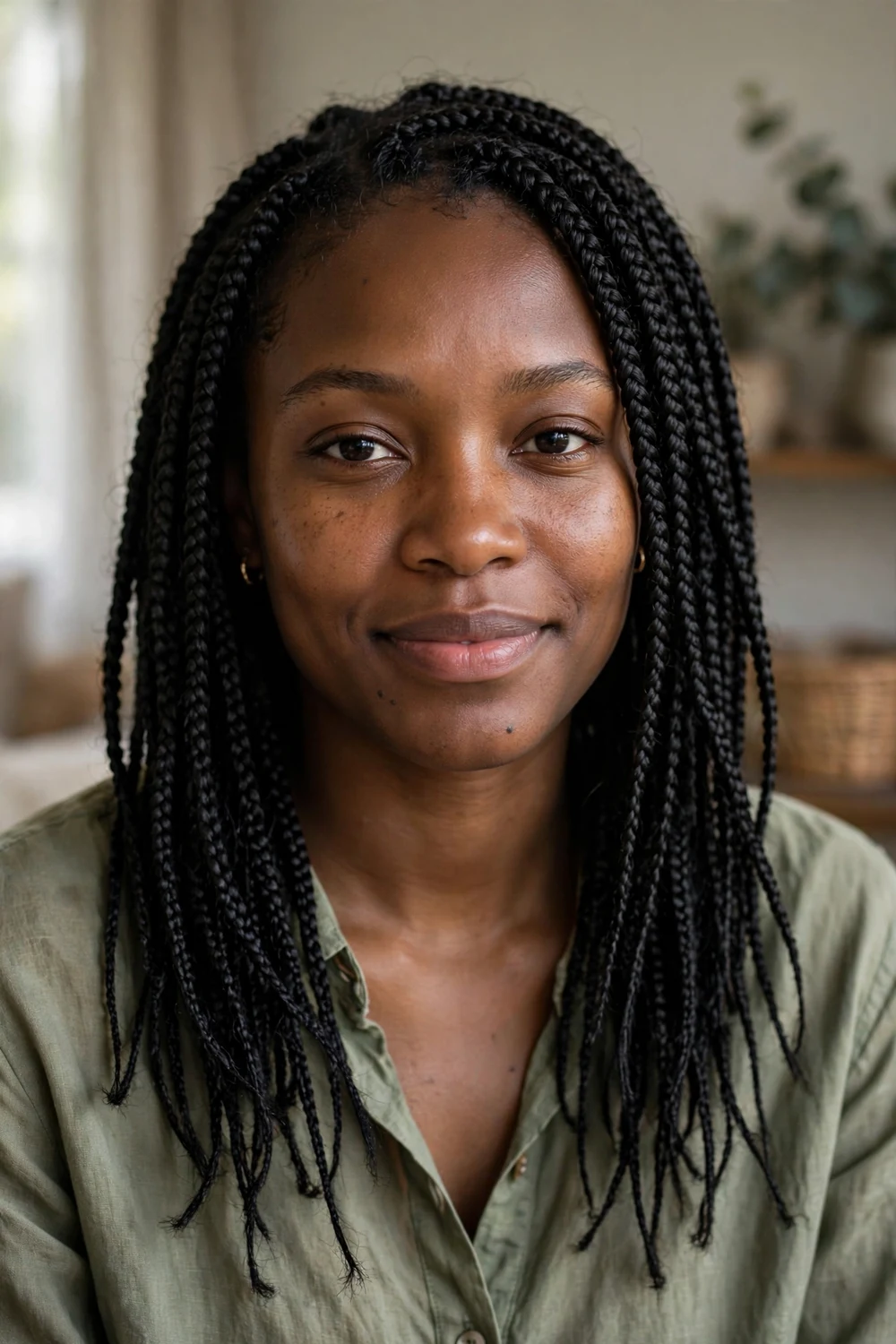
Jet black box braids with tapered ends leave the tips unsealed and slightly unraveled instead of dipped blunt. Each braid ends in a natural taper that reads more casual than a sealed finish, and the solid black keeps the whole set sleek. Collarbone length keeps it manageable, and the medium size suits medium to fine density hair that cannot handle excess tension.
Unsealed ends need a light edge-control product to keep them from frizzing outward.
Try this: Smooth the tapered tips with a dab of mousse after the first wash.
Difficulty: Medium · Cost: $150–$250
19. Bright Blonde Box Braids
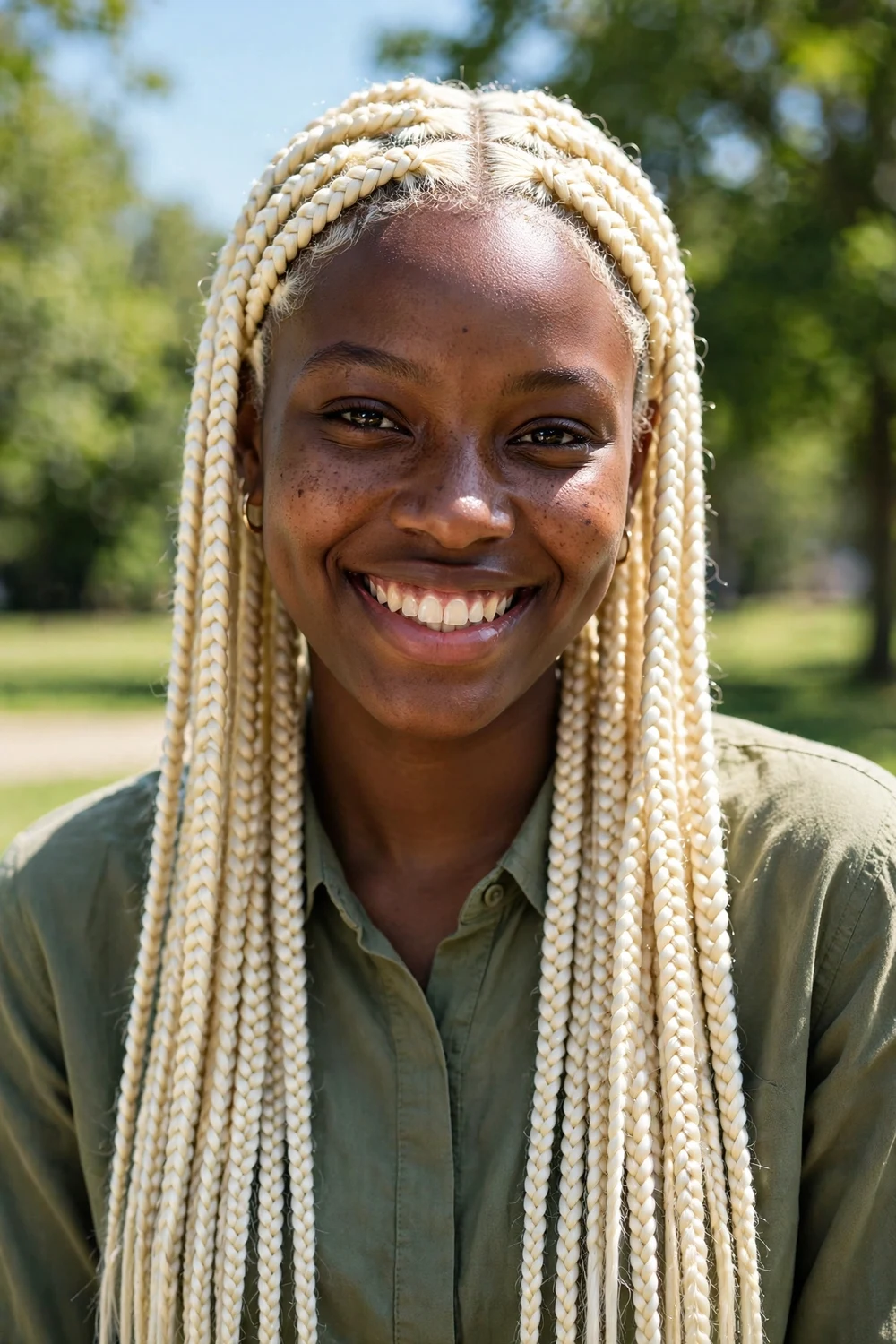
Bright blonde box braids go all in on light color with no bleach touching your natural hair. The bold shade against deep skin is striking, and because the color lives entirely in the extension hair, you can wear platinum-level brightness for eight weeks and then go back to natural with zero damage. Keep the size medium so the bright color does not overwhelm the face.
Bright braiding hair can tangle more than dark, so a silk scarf at night matters even more here.
Try this: Pair bright blonde with a middle part to keep the look balanced rather than loud.
Difficulty: Medium · Cost: $160–$280
20. Burgundy Box Braids
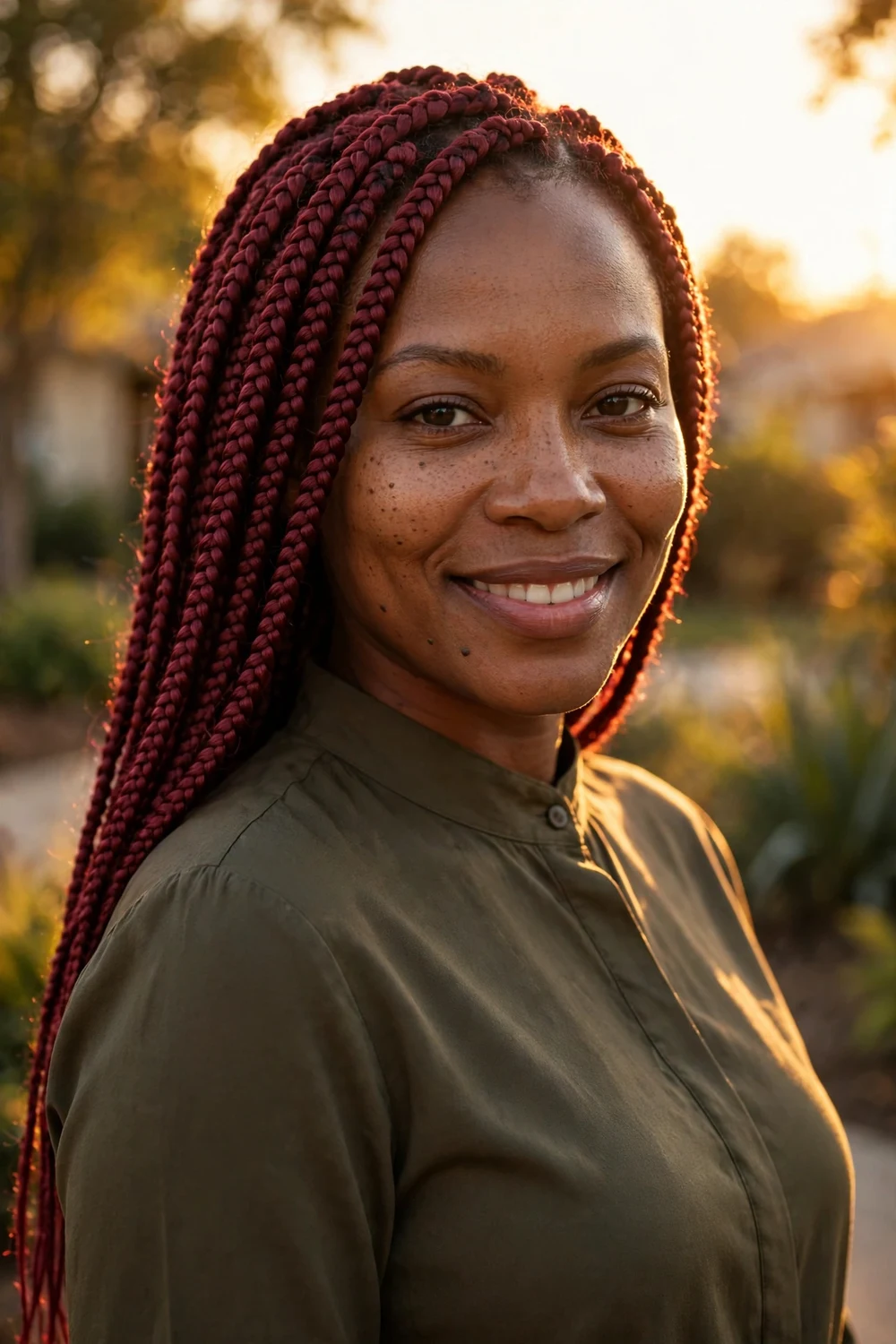
Burgundy box braids bring a rich wine-red depth that flatters deep skin tones well. The color reads bold in sunlight and near-black indoors, which makes it one of the most wearable statement shades: dramatic without the upkeep anxiety of brighter colors. A solid burgundy set needs no accessories to carry the look.
Burgundy fades the least of the fashion colors, so it ages gracefully over eight weeks.
Try this: Rinse with cool water to slow the red from washing out.
Difficulty: Medium · Cost: $160–$280
21. Purple Box Braids
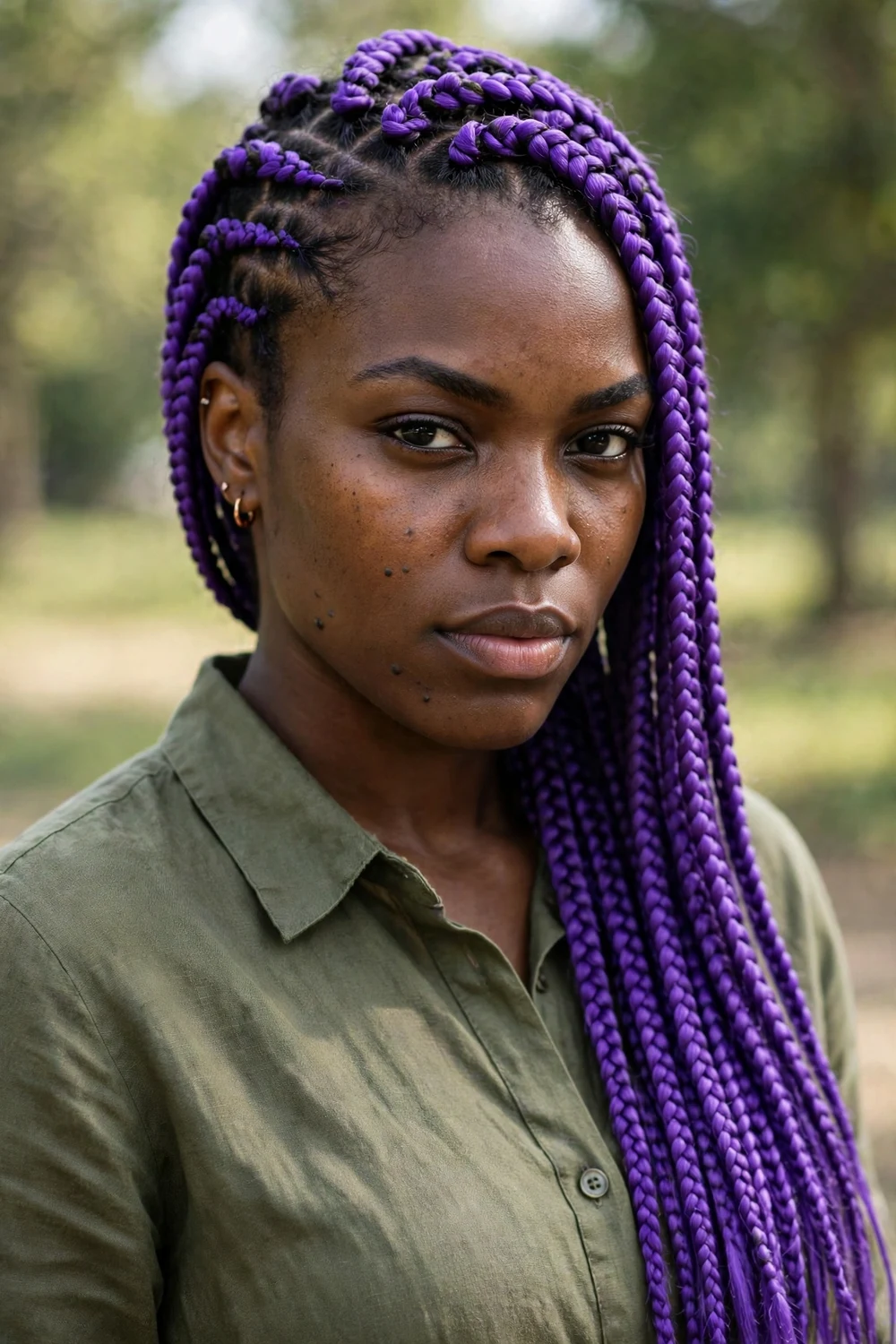
Purple box braids in a side-swept style pair a classic knotted base with blunt-cut ends and a vivid violet shade. The color is unmissable, which is exactly the point, and the knotted root gives a structured, traditional finish that knotless cannot. Sweeping the braids to one shoulder adds asymmetry that flatters round and oval faces.
Vivid purples can stain pillowcases in the first week, so sleep in a dark scarf until the color settles.
Try this: Keep makeup and outfits neutral on day one and let the hair carry everything.
Difficulty: Medium · Cost: $160–$280
22. Rainbow and Multicolor Box Braids
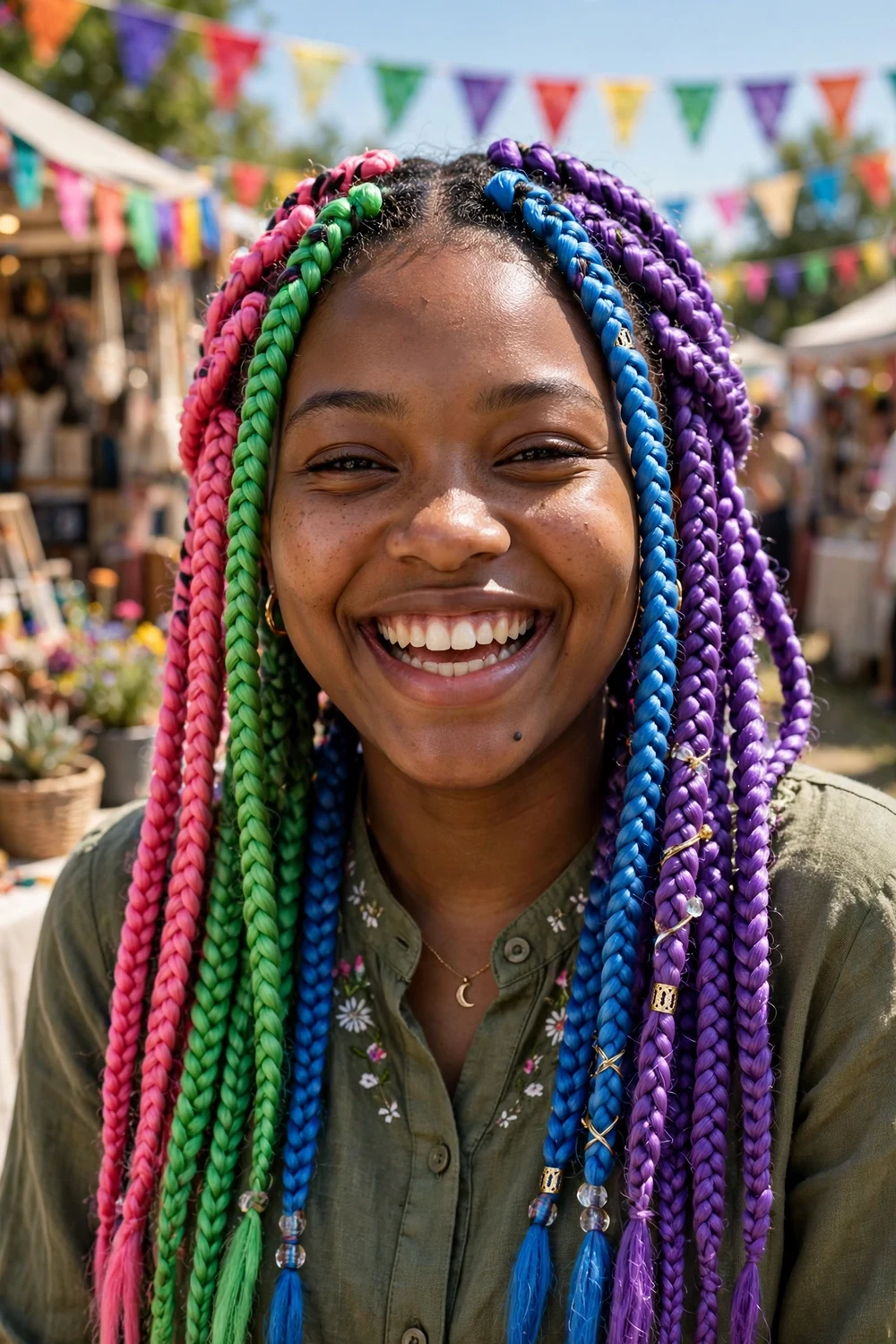
Rainbow box braids use vivid extension hair in pink, green, blue, and purple for a playful, festival-ready set. Instead of blending every color into every braid, most braiders assign colors by section, which keeps the finish readable instead of muddy. This is the highest-commitment color on the list, since the brightness fades unevenly across shades.
Multicolor sets photograph best in natural light; indoors they read darker than expected.
Try this: Ask for the brightest colors at the crown and ends, where light hits first.
Difficulty: High · Cost: $180–$320
23. Ombre and Gradient Box Braids
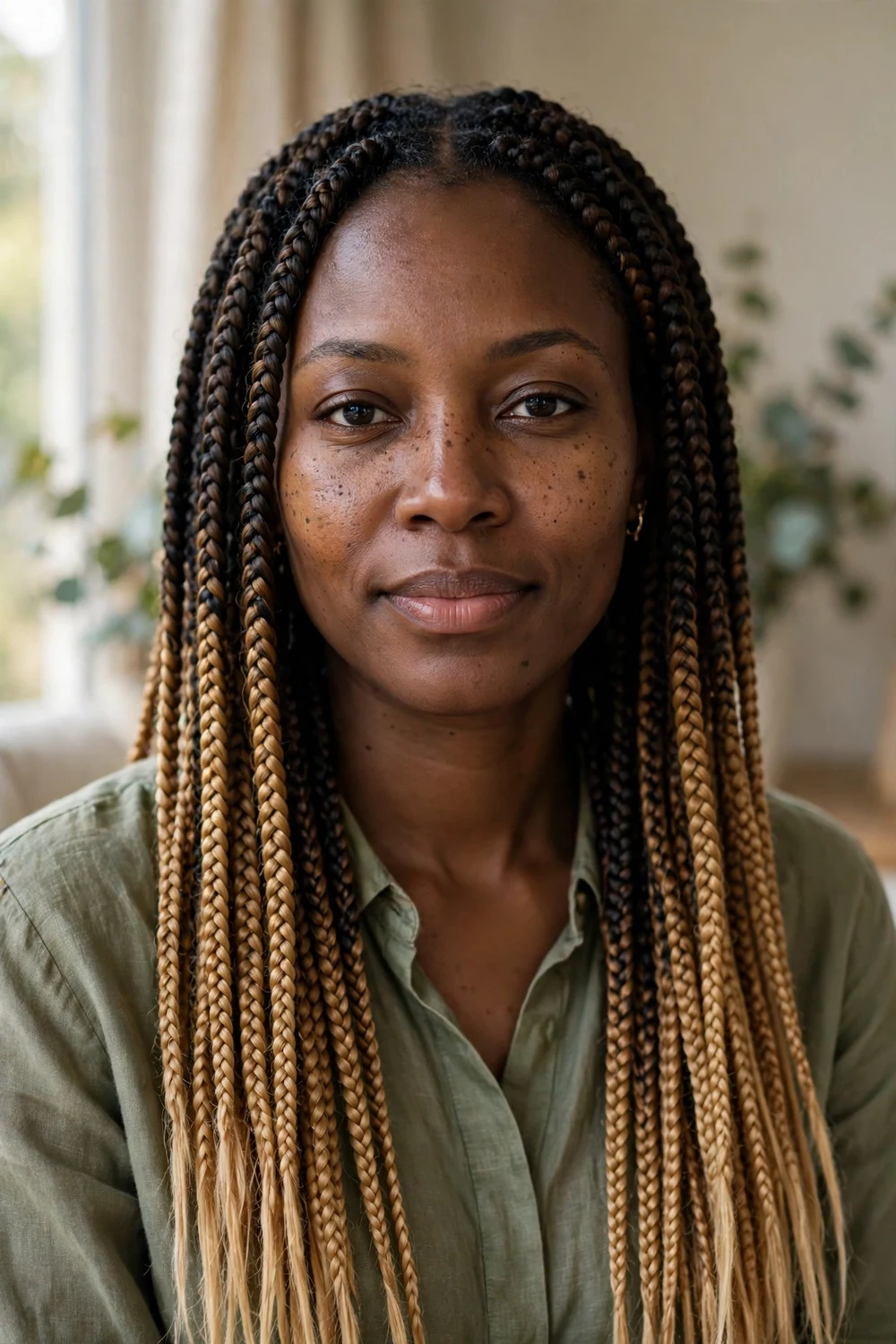
Ombre and gradient box braids melt a dark root into honey blonde, caramel, lavender, or copper through the lengths. Starting the transition past the shoulders keeps the roots looking intentional as the set ages, and the darker root hides new growth far better than a solid light color. The gradient must be built into the braiding hair during install, not dipped after.
Because the color lives in the extensions, no bleach or dye ever touches your own hair.
Try this: Choose a transition that starts lower than you think; it ages better and looks more expensive.
Difficulty: High · Cost: $170–$300
24. Teal and Pink Accent Braids
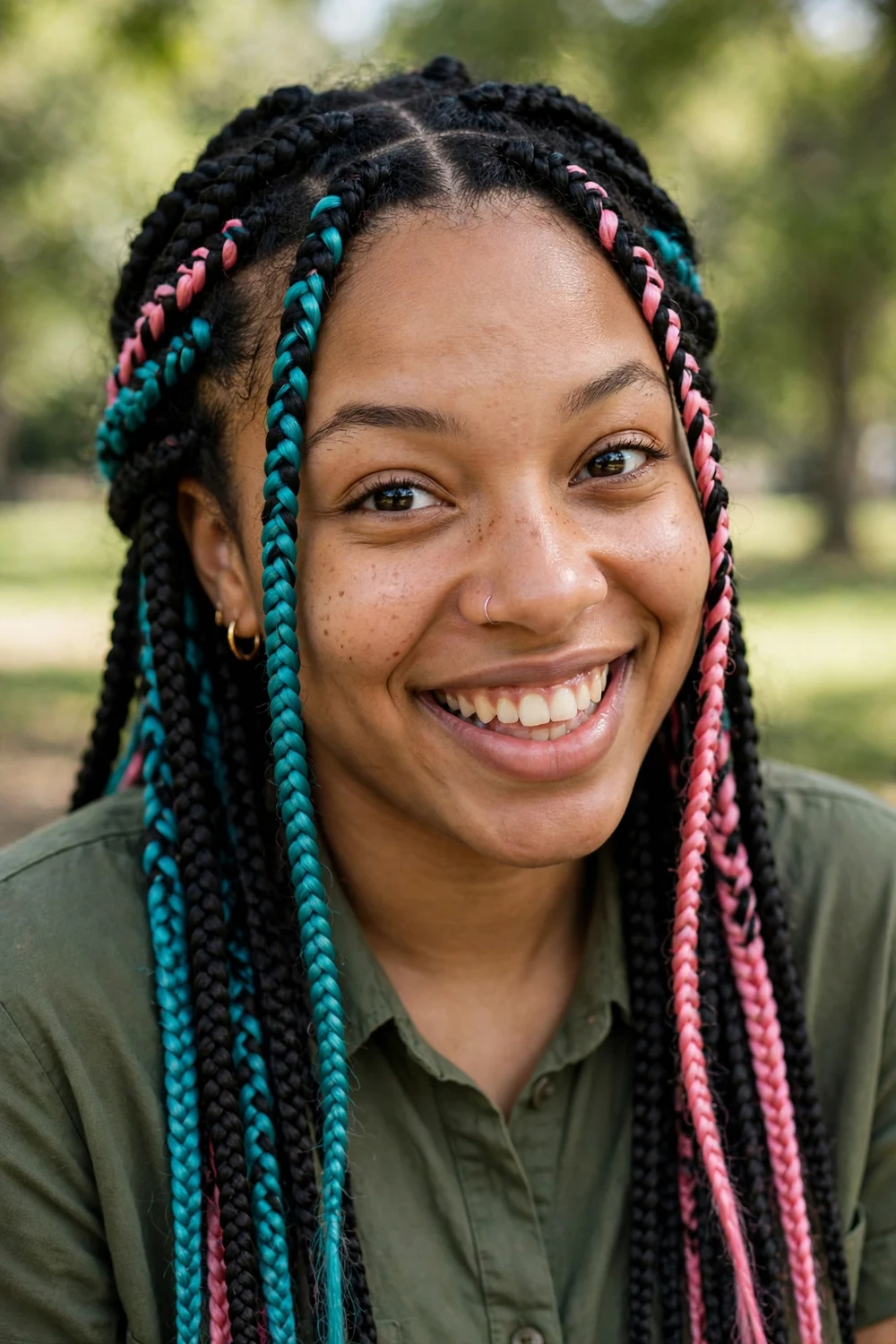
Teal and pink accent braids scatter a few vivid braids through an otherwise natural set. You get the personality of fashion color without committing a whole head to it, and the accents can be concentrated at the face or the ends depending on the effect you want. This is the easiest color idea to reverse: the accent braids can be replaced individually if you tire of them.
Keep the accent count under a dozen braids or the set tips from accented to multicolor.
Try this: Place the brightest accents around the face where they frame your features.
Difficulty: Medium · Cost: $160–$280
25. Half-Up, Half-Down Box Braids
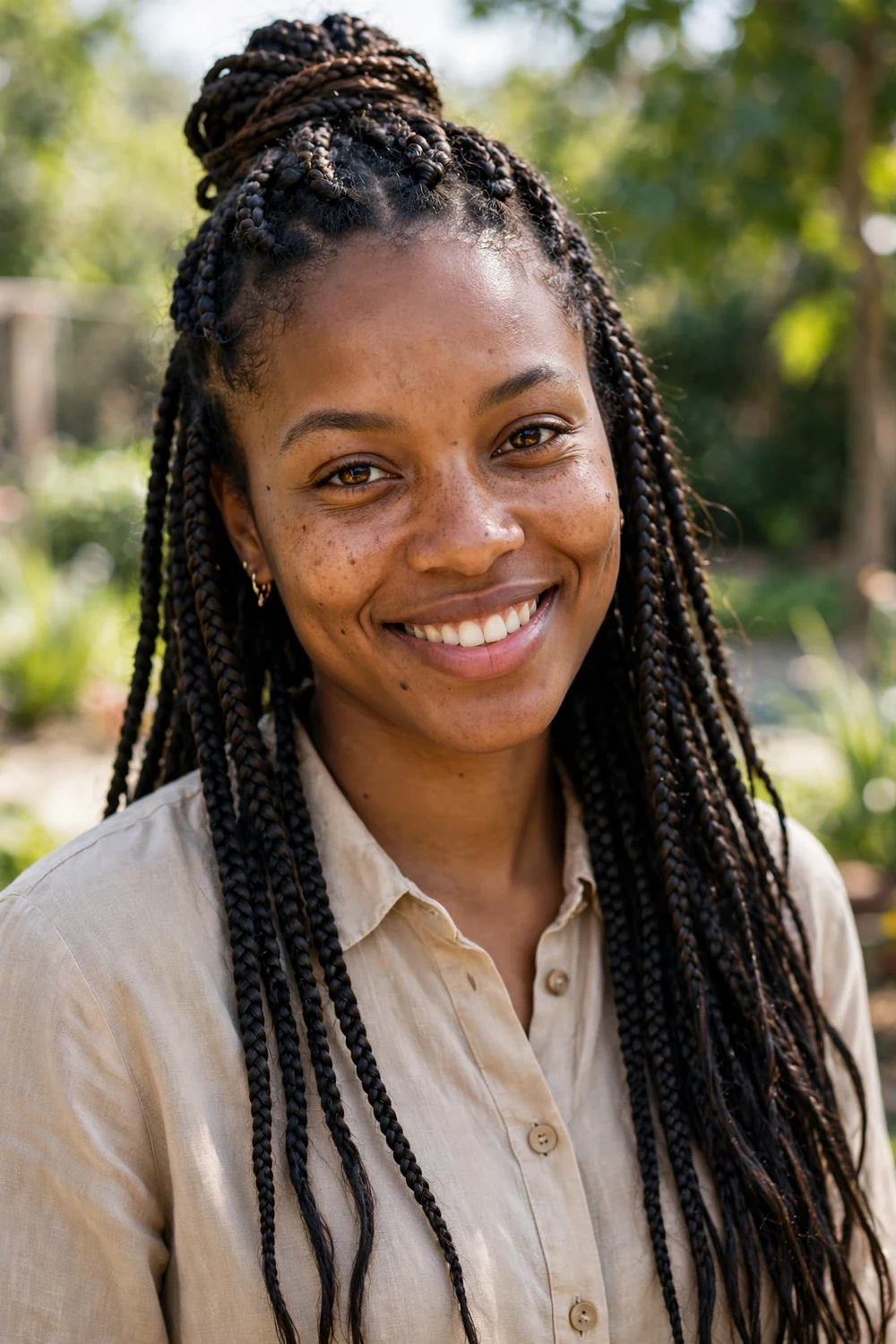
Half-up, half-down box braids gather the top section into a bun or ponytail while the rest flows free, giving you length on show and hair off your face at once. It works for the office kept sleek, for a night out dressed with gold cuffs at the gathered section, and for the gym secured high. This is the most versatile everyday styling on the list.
Gather loosely; a tight top section strains the same edges the braids should protect.
Try this: Wrap one braid around the gathered base to hide the band for a clean finish.
Difficulty: Low · Cost: Free (style at home)
26. High Ponytail Box Braids
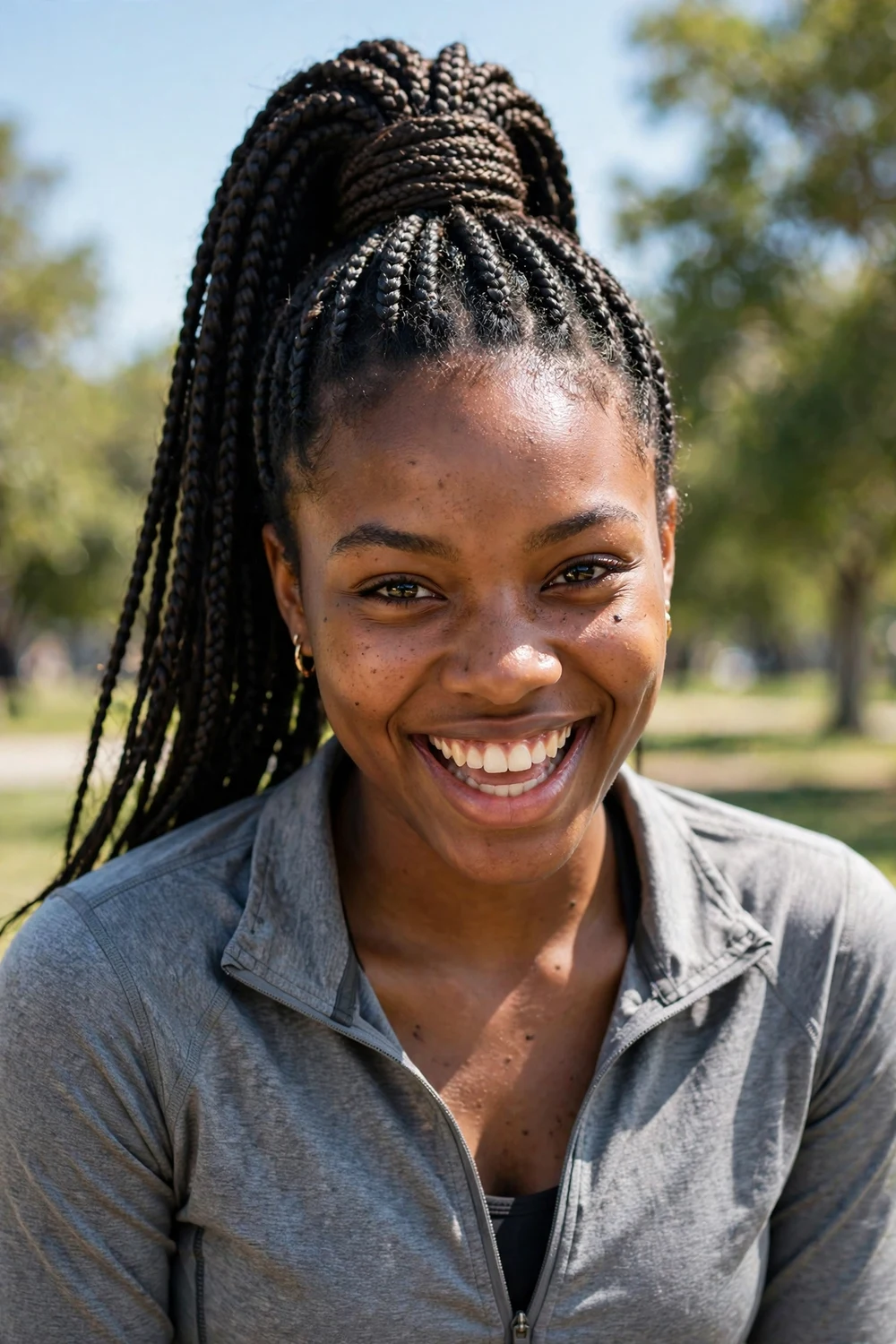
Gathering box braids into a high ponytail is the fastest way to look lifted and pulled together. The height flatters the face and sweeps every braid off the neck, which is a lifesaver on hot days. Wrap a braid around the base to hide the band, smooth the baby hairs with a light gel, and keep the gather comfortable rather than drum-tight.
A too-tight high pony strains the hairline, so comfort matters more than height.
Try this: Use a thick fabric scrunchie instead of a thin elastic to distribute the gather’s pressure.
Difficulty: Low · Cost: Free (style at home)
27. Side-Swept Box Braids
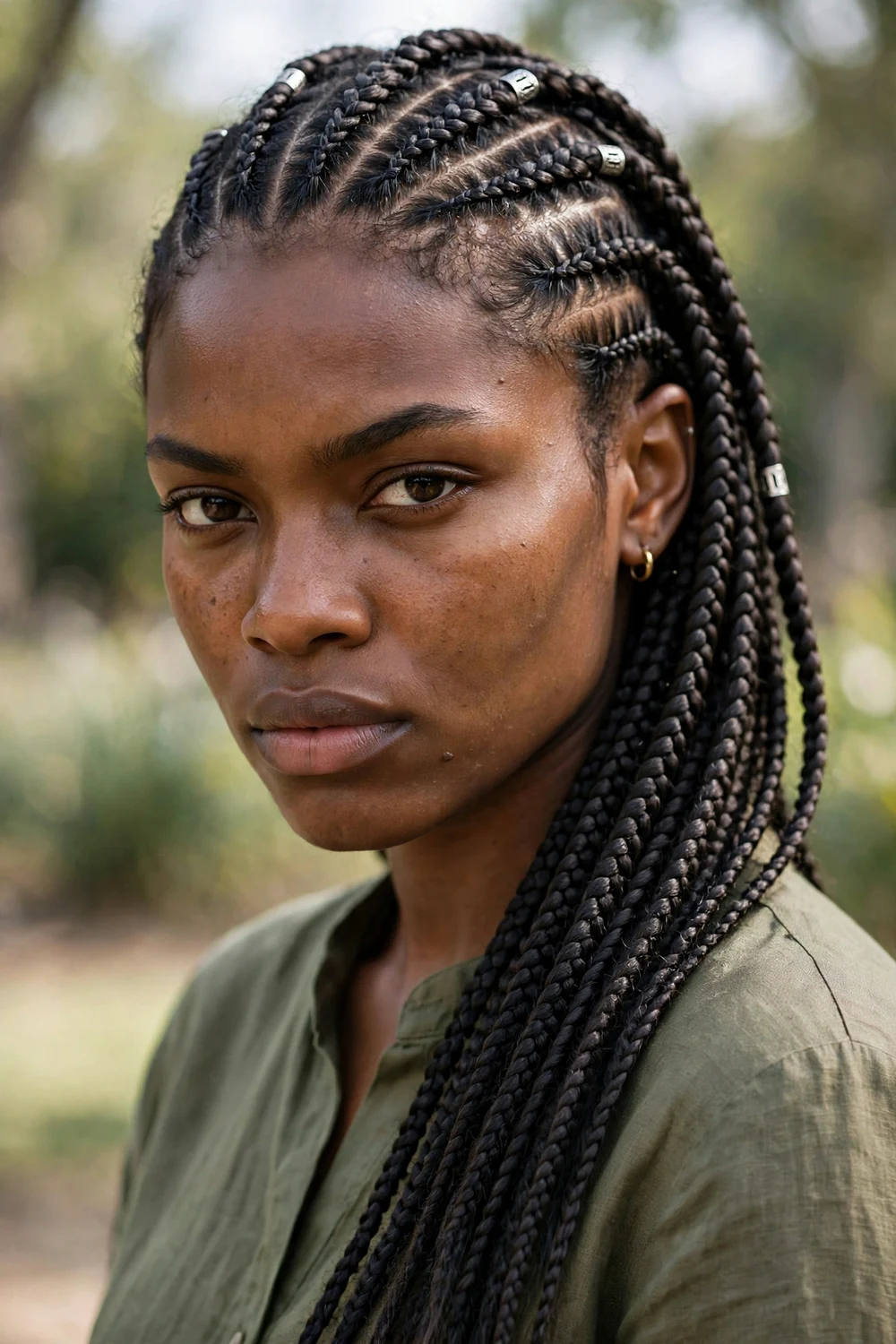
Sweeping all your braids over one shoulder is the simplest styling move in this guide. The cascade adds asymmetry and a red-carpet feel with zero tools and zero extra time. It also quietly refreshes an aging set, since a deep side part moves where the new growth shows. Switch which side you sweep day to day to rest your part and edges.
Add a cuff or two near the face for a little sparkle on evening versions.
Try this: Part deep to one side and let the braids fall naturally for the most drama.
Difficulty: Low · Cost: Free (style at home)
28. Cornrow-to-Box Braids with Cuffs
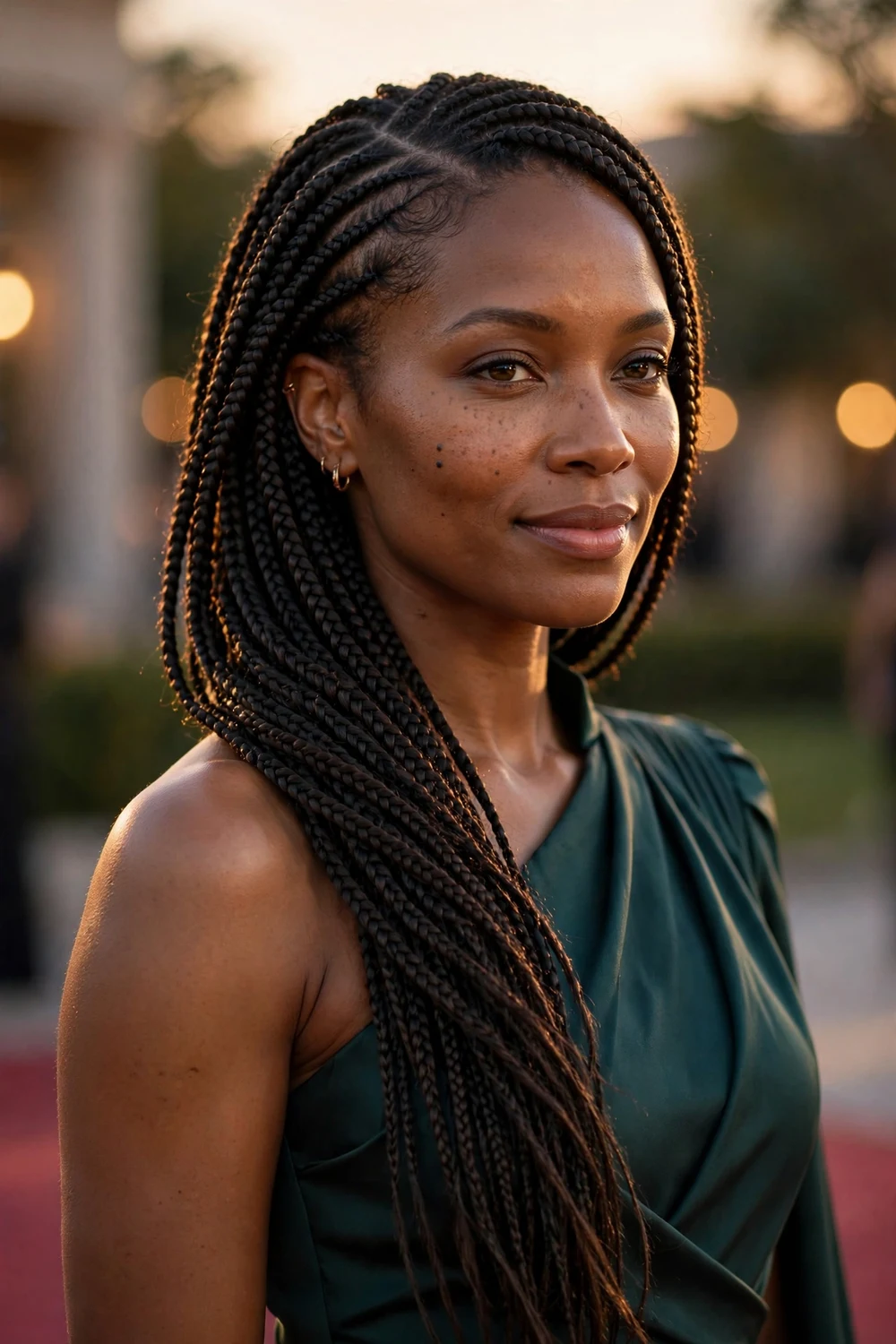
Cornrow-to-box braids start with cornrows along the crown that feed directly into medium box braids past the collarbone. The transition is cleaner than most expect, and silver cuffs placed near the roots draw the eye upward toward the parting pattern. The side-swept direction creates asymmetry that lengthens round and oval faces.
Medium natural-hair density is the minimum for the cornrow section to hold without edge tension.
Try this: Ask for the cornrows to stop at the crown so the braids still move freely.
Difficulty: High · Cost: $180–$300
To stretch any of these styles to the full eight weeks, the how to make your braids last longer guide covers washing, nighttime wrapping, and edge care.
29. Two-Bun Box Braids
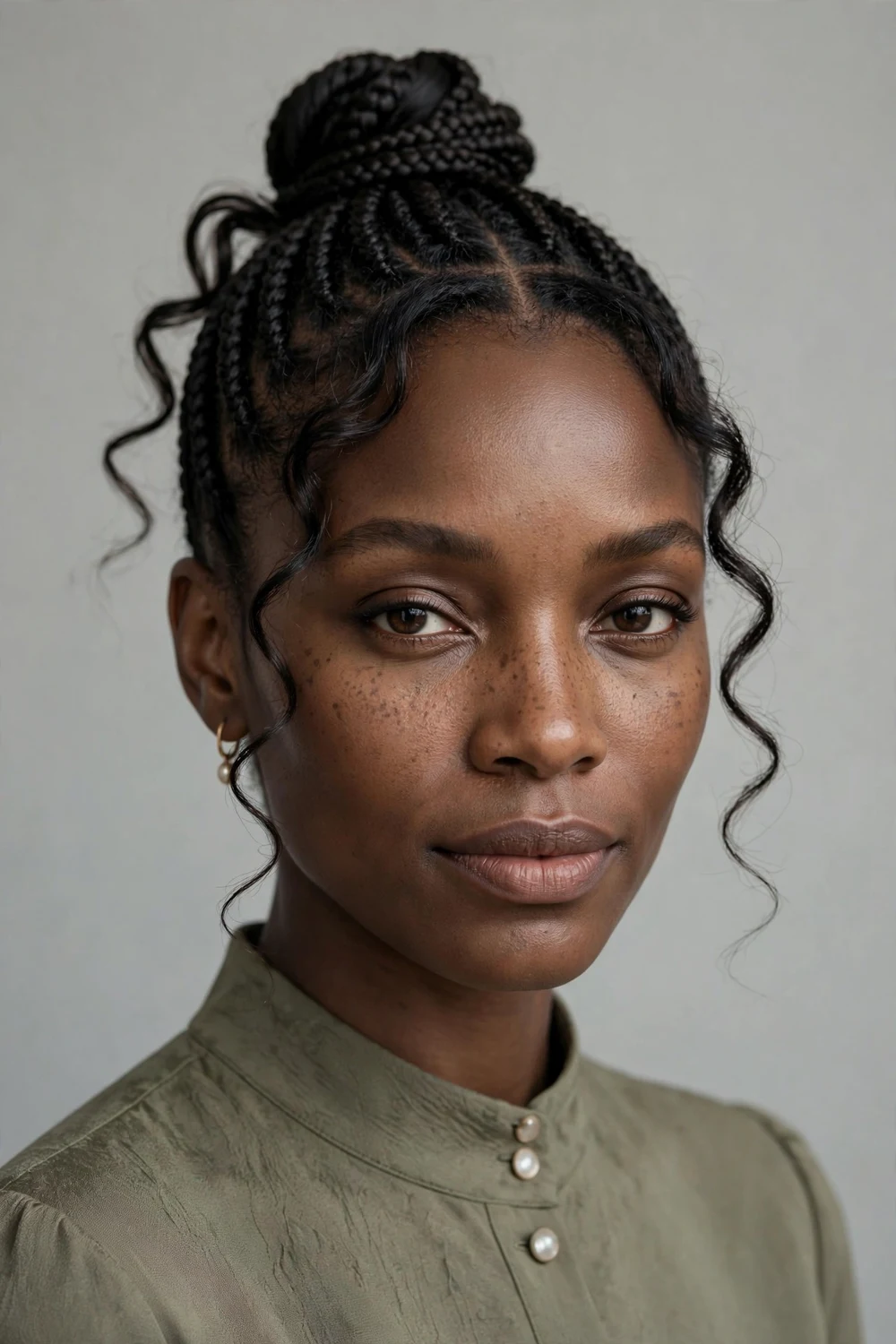
Two-bun box braids split the set into a pair of high buns, giving a playful, youthful finish that keeps every braid off the neck. The style works on medium to long sets and takes five minutes once the braids are in. Keep each bun’s base loose rather than twisted tight, since two tight anchors double the tension on the crown.
Leave two thin braids out at the front as face-framing tendrils for a softer version.
Try this: Secure each bun with a large scrunchie first, then wrap braids over it for fullness.
Difficulty: Low · Cost: Free (style at home)
30. High Bun Box Braids
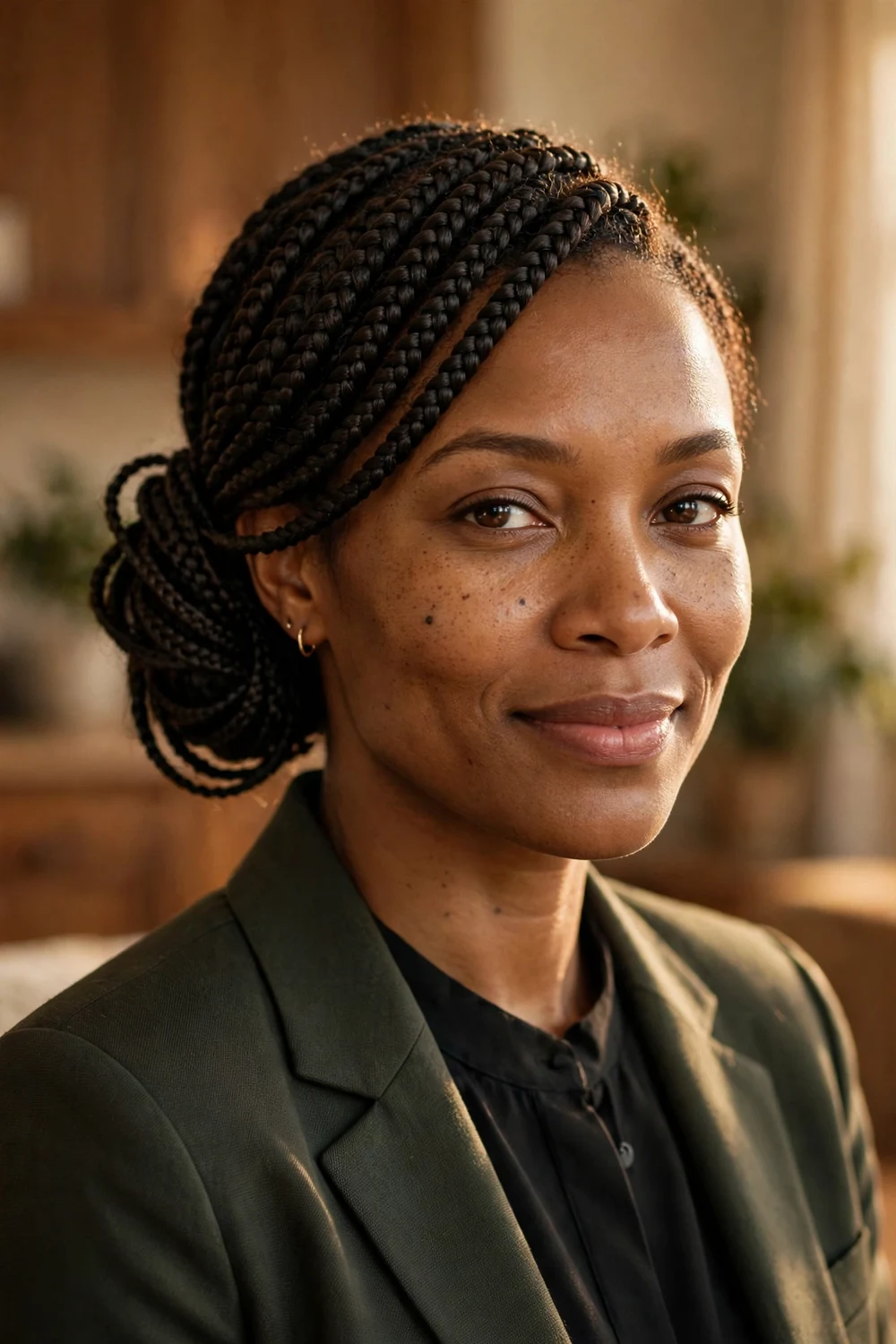
High bun box braids wrap the full set into one polished bun at the crown. It is the most practical way to manage long or heavy sets on busy days: the weight comes off the neck and the roots get a rest. Woven vertically from the crown and banded horizontally, the bun holds all day without pins if the braids are long enough.
Do not sleep in a high bun; the overnight tension pulls at the same hairline all night.
Try this: Let the bun sit slightly forward on the crown for a more flattering profile.
Difficulty: Low · Cost: Free (style at home)
31. Topknot Box Braids
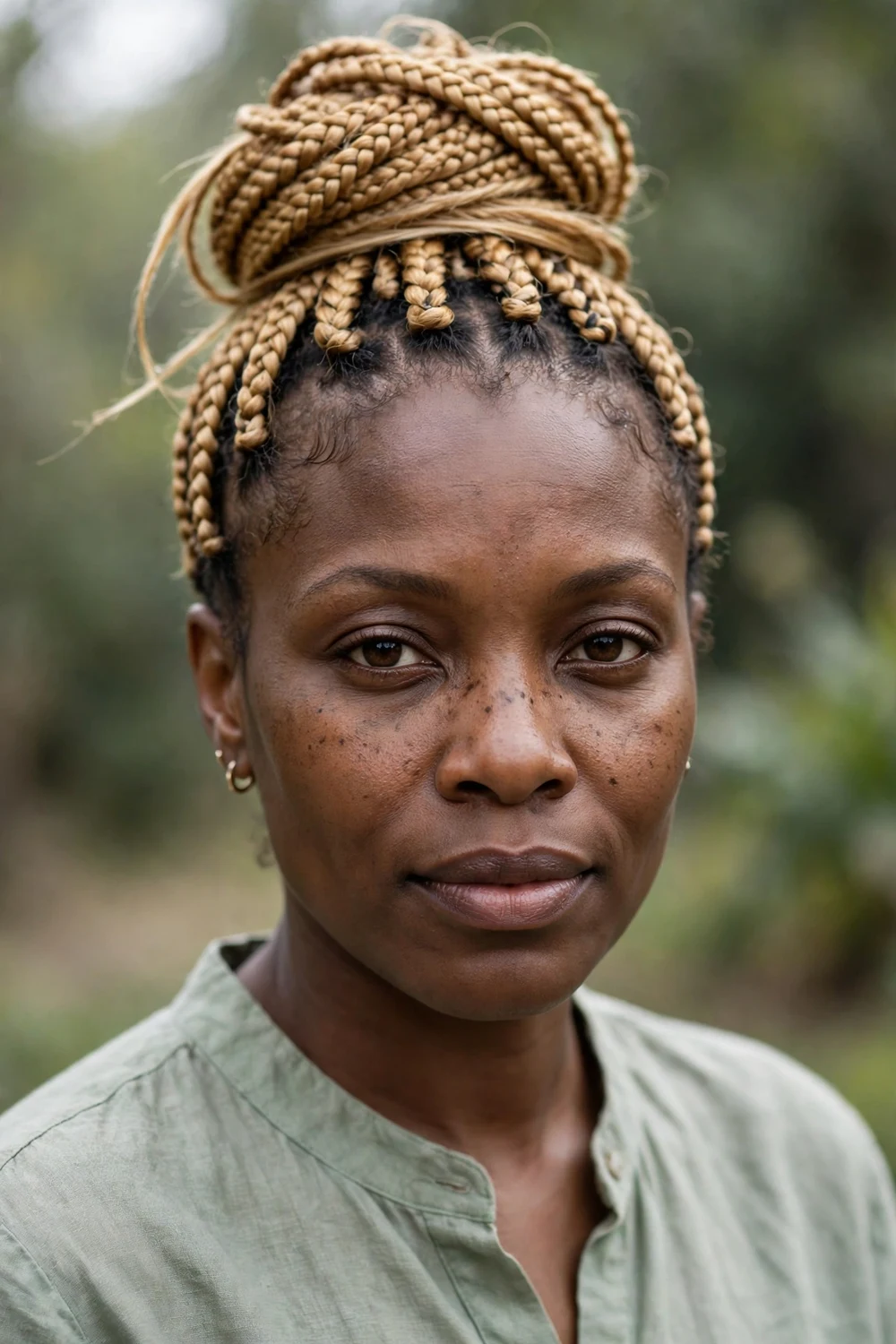
Topknot box braids gather the set into a single sleek knot with comb-style ties for a polished, editorial finish. A few strands can be curled with a curling iron and left open around the knot to soften the look, though a heat protectant is a must on extension hair. This is the dressiest bun option on the list and suits formal occasions.
Test-curl one hidden braid first; some synthetic hair melts under hot tools.
Try this: Use a heat protectant on any extension strands before they meet a curling iron.
Difficulty: Low · Cost: Free (style at home)
32. Side-Swept Box Braid Bun
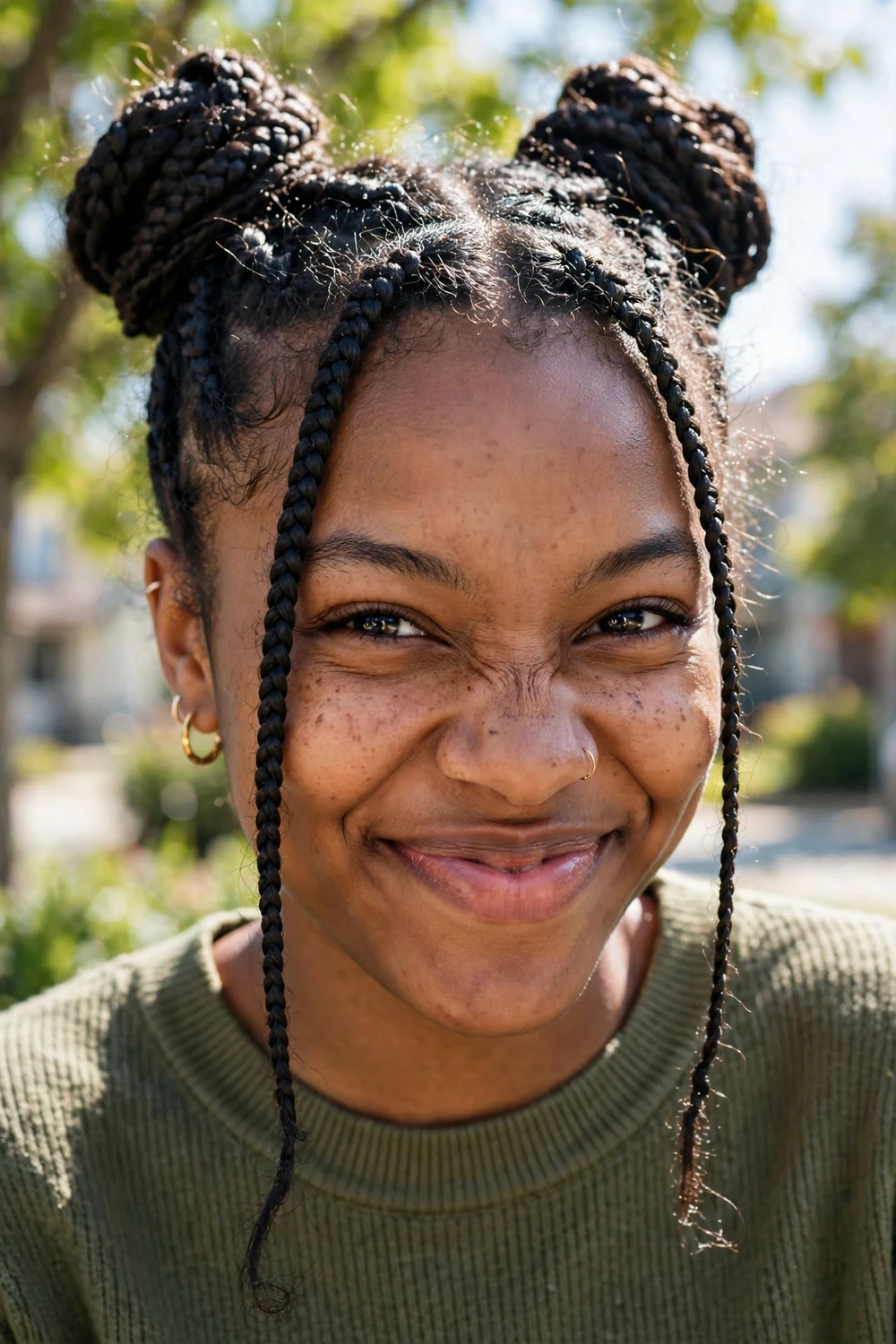
The side-swept box braid bun sweeps the braids to one side and coils them into a low bun below the ear. The asymmetry is elegant and a little unexpected next to the usual centered buns, and the low placement is gentler on the hairline than a high gather. It reads formal enough for weddings with zero extra accessories.
Pin the coil with large U-pins rather than small bobby pins for a hold that lasts.
Try this: Leave the front section slightly loose so the sweep looks soft, not scraped.
Difficulty: Low · Cost: Free (style at home)
33. Flower Crown Box Braids
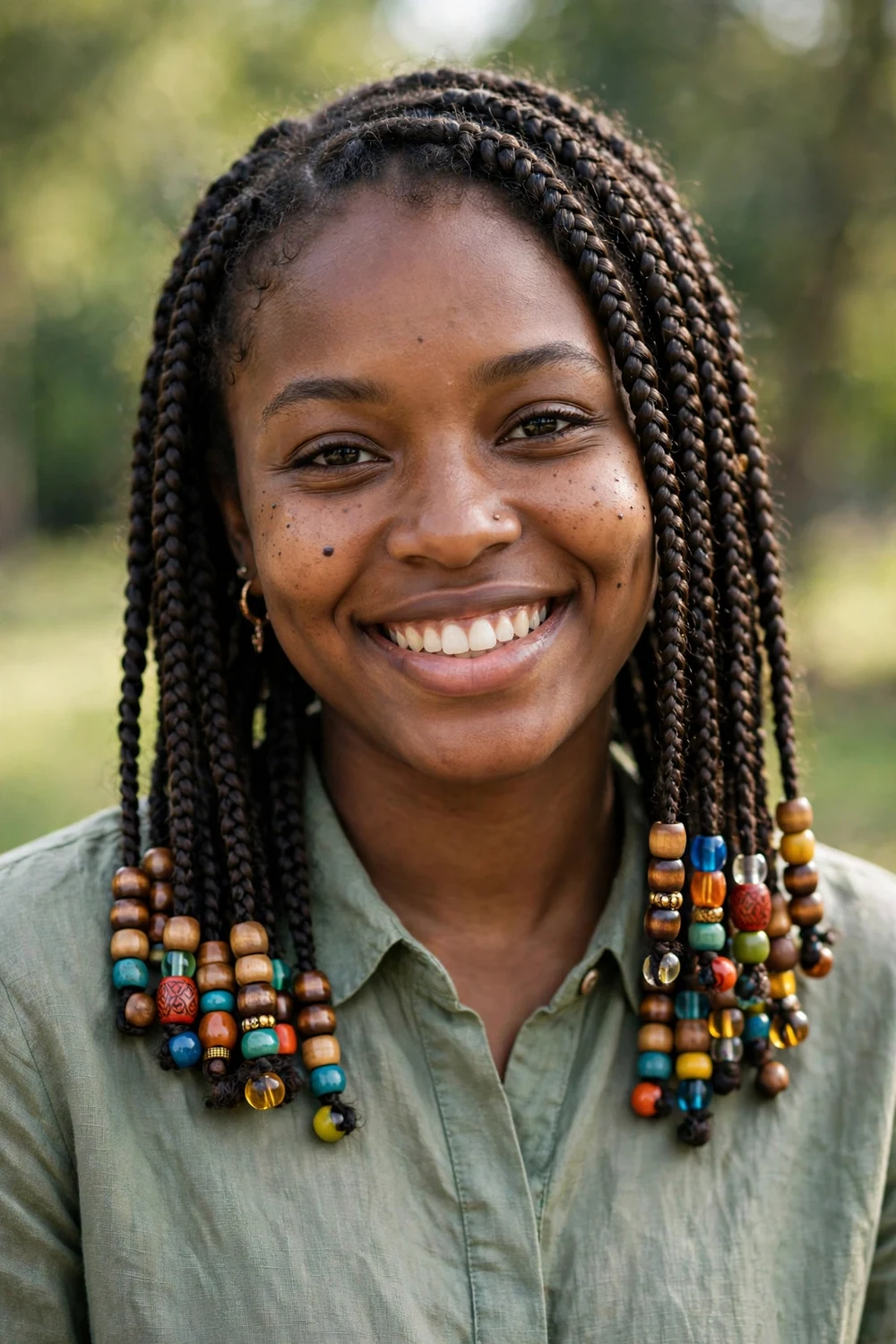
Flower crown box braids shape the crown braids into a floral pattern, with the scalp partings forming petal-like sections that bloom outward. The structure blends into a braided bun at the back, so the floral detail sits exactly where it shows. It is a special-occasion style that needs a skilled braider, since the petal partings are drawn freehand.
Book extra time; the crown pattern alone can add an hour to the appointment.
Try this: Bring a reference photo of the exact petal count you want.
Difficulty: High · Cost: $200–$320
34. Front-Knot Box Braids
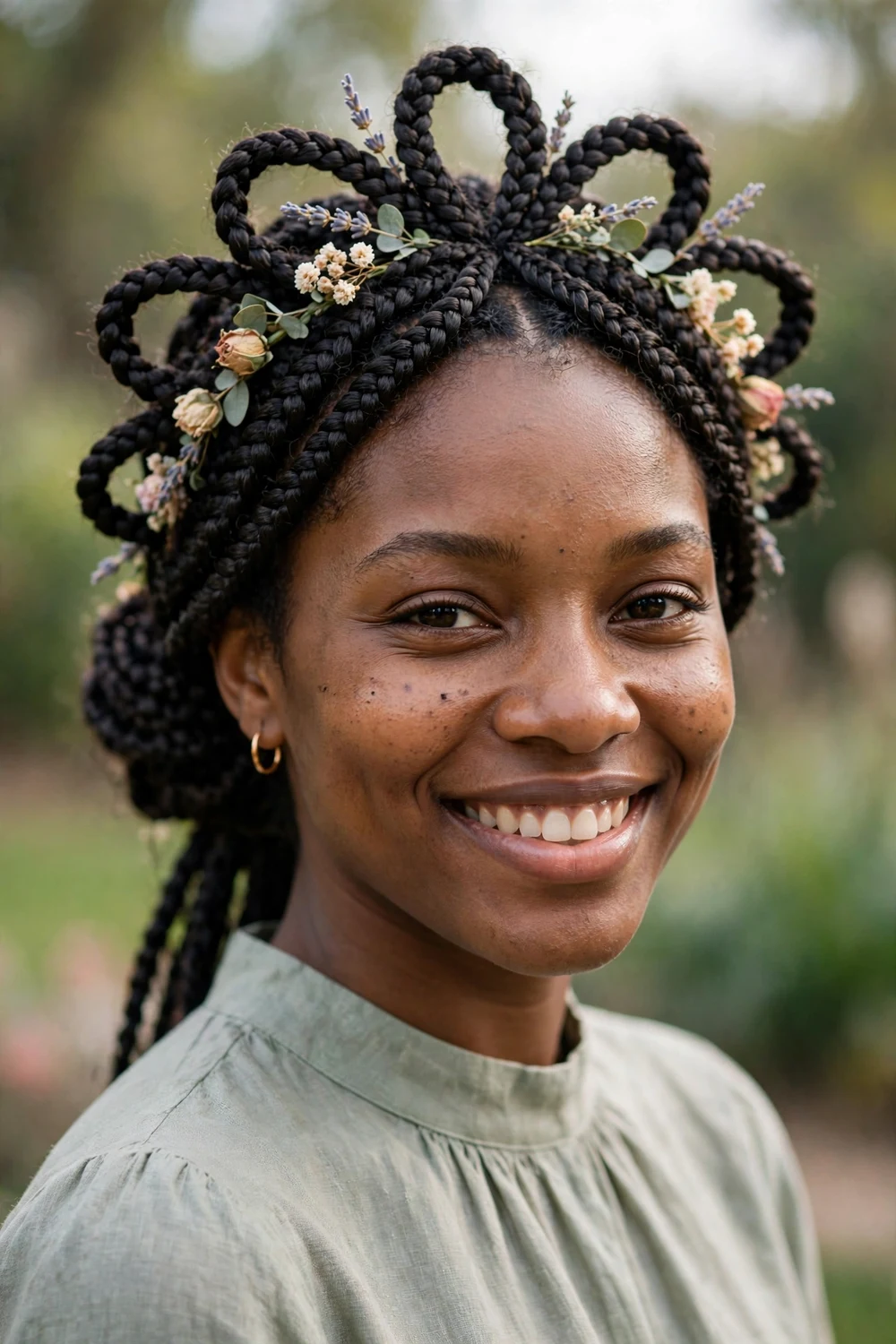
Front-knot box braids wrap the front braids into an elegant knot at one side of the hairline, with the remaining length pulled into a ponytail below the shoulder. The knot gives a sophisticated, wrapped finish that suits weddings and formal events. The wrap should sit snug but not tight, since the hairline carries the whole style.
If the hairline feels sore within a day, the knot was wrapped too tight; loosen it immediately.
Try this: Place the knot slightly off-center for a more natural-looking wrap.
Difficulty: Low · Cost: Free (style at home)
35. Beaded Box Braids
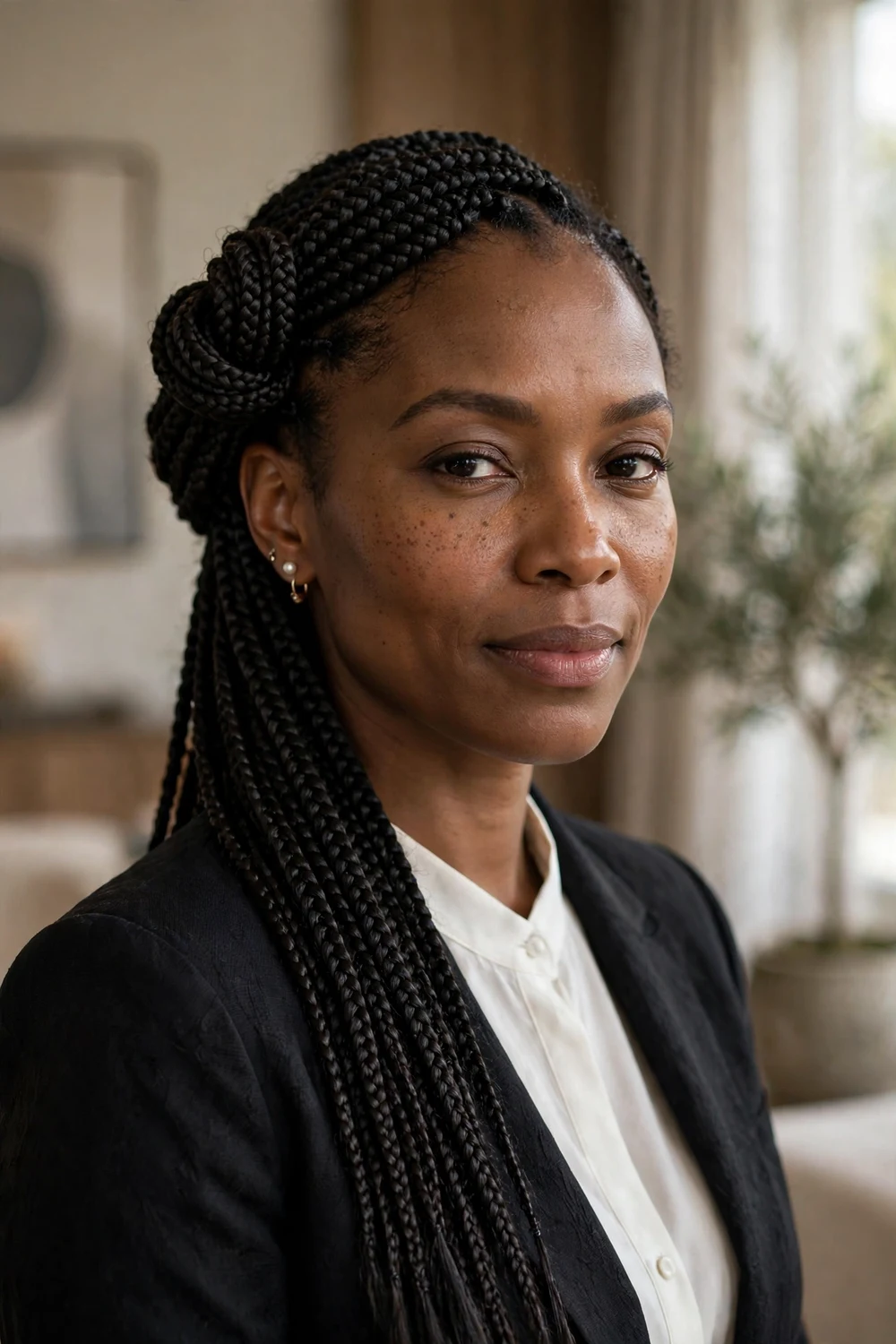
Beaded box braids thread beads onto the braid ends for a decorative finish with deep roots across the African diaspora. Wooden, metallic, and colored glass beads each change the mood; place them sparingly at the ends or thread them throughout for full impact. Concentrate heavier beadwork on thicker braids so the weight does not drag on finer sections.
Secure the ends well so nothing slides off, and match bead size to braid thickness.
Try this: Start with beads on ten to fifteen braids and add more only if the weight feels fine.
Difficulty: Low · Cost: $10–$30 (beads)
36. Box Braids with Metal Cuffs and Rings
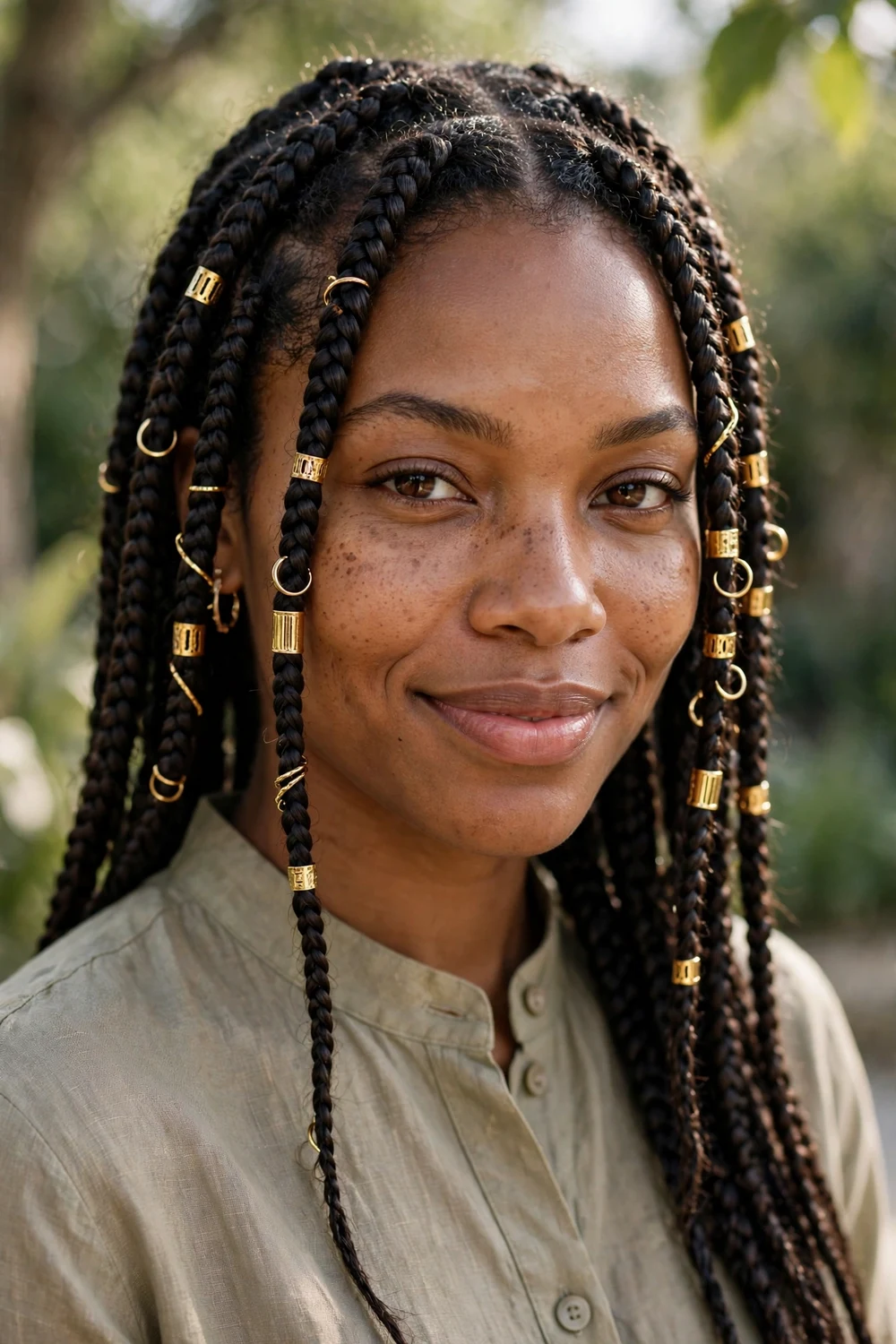
Metal cuffs and rings clamp around individual braids for a jewelry-like finish that catches light as you move. Gold and silver both work; place them near the roots to frame the face or scatter them down the lengths for an all-over effect. Unlike beads, cuffs add almost no weight, so they suit even fine, lightweight sets.
Choose cuffs sized to your braid thickness or they slide down within days.
Try this: Cluster three cuffs on the two braids framing your face for maximum effect with minimum fuss.
Difficulty: Low · Cost: $8–$25 (cuffs)
If your scalp ever feels sore or itchy under a fresh set, the how to loosen tight braids guide shows how to ease tension safely at home.
37. Box Braids with Strings and Charms
Strings, ribbons, and charms wrapped around box braids give a fun, festival-style finish. Embroidery thread wrapped in crisscross patterns, thin ribbons tied at the ends, and small metal charms each add personality without the weight of heavy beadwork. The wrapped sections also protect the braid underneath from frizz, which is a quiet practical bonus.
Wrapped thread can trap moisture after washing, so dry those sections thoroughly.
Try this: Wrap thread around every fifth braid for a patterned look that is not overwhelming.
Difficulty: Low · Cost: $5–$20 (supplies)
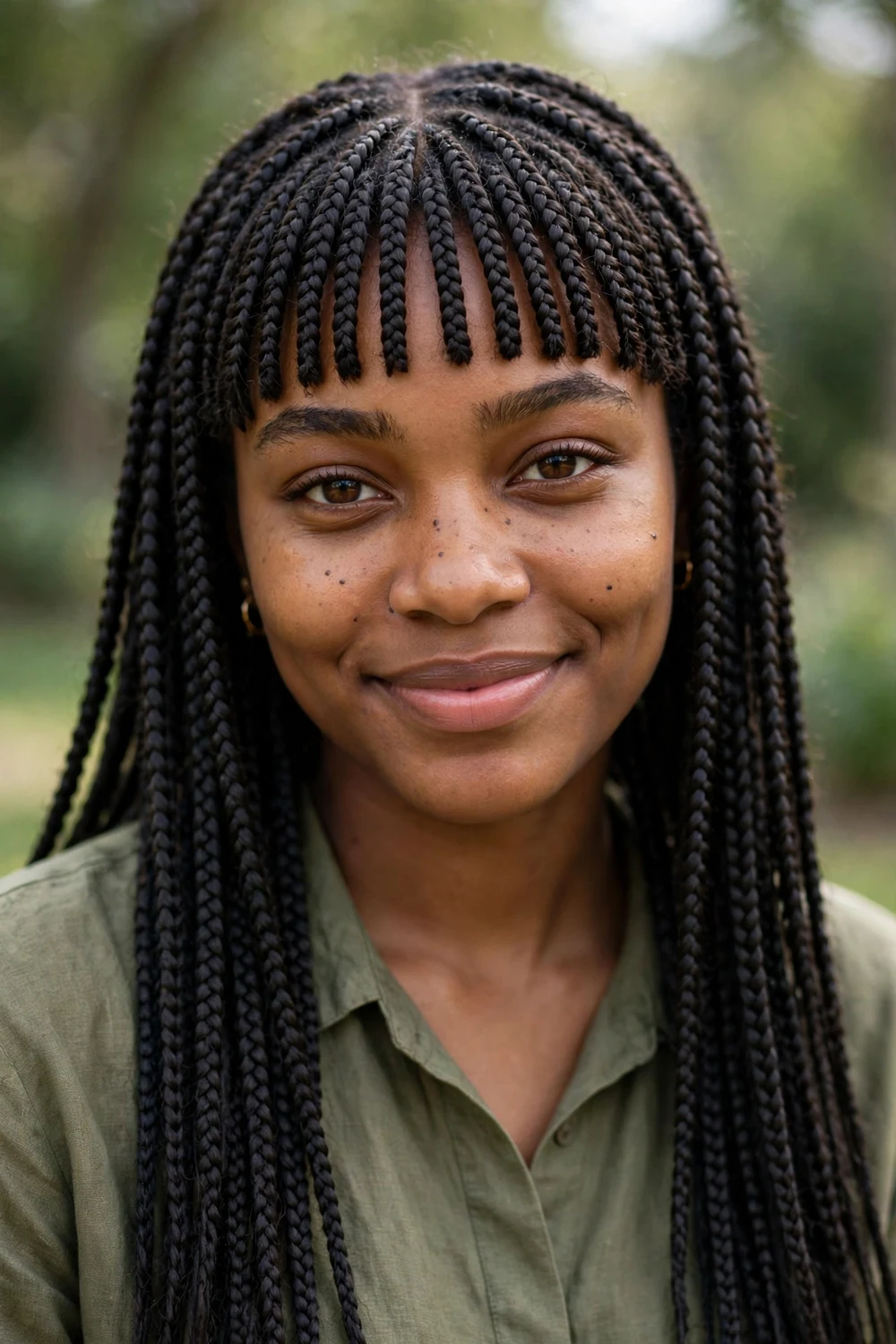
38. Box Braids with Bangs
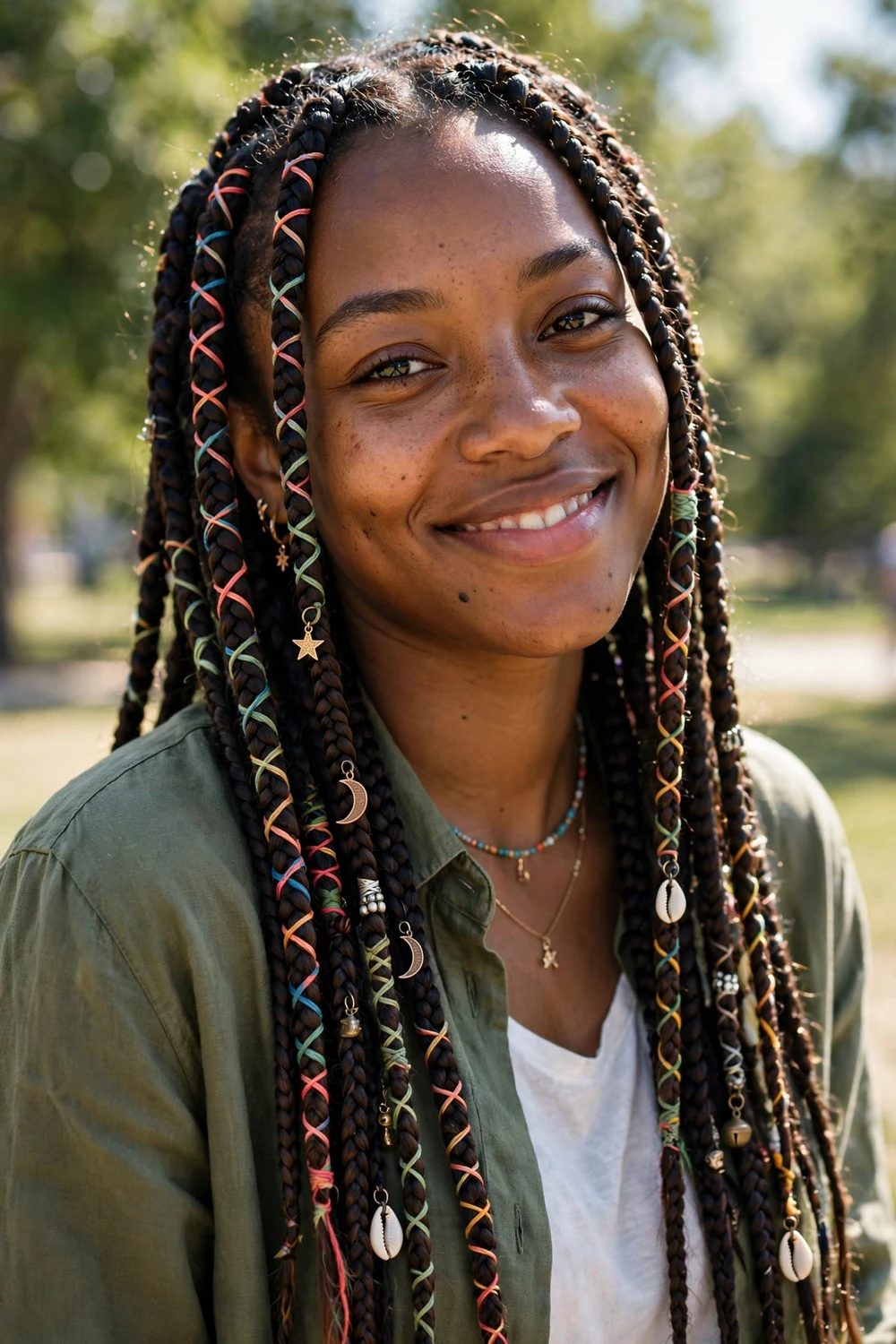
Box braids with bangs cut the front braids into a full fringe across the forehead. The braided fringe frames the face and pairs especially well with ombre color, since the shorter front braids show the shade transition up close. The fringe needs occasional trimming as the set grows out, which is the only maintenance beyond the usual routine.
Keep the fringe braids slightly thinner so they sit flat instead of bulky.
Try this: Ask for the fringe cut after the braids are installed so the length is exact.
Difficulty: Medium · Cost: $150–$260
39. Fishtail Box Braids
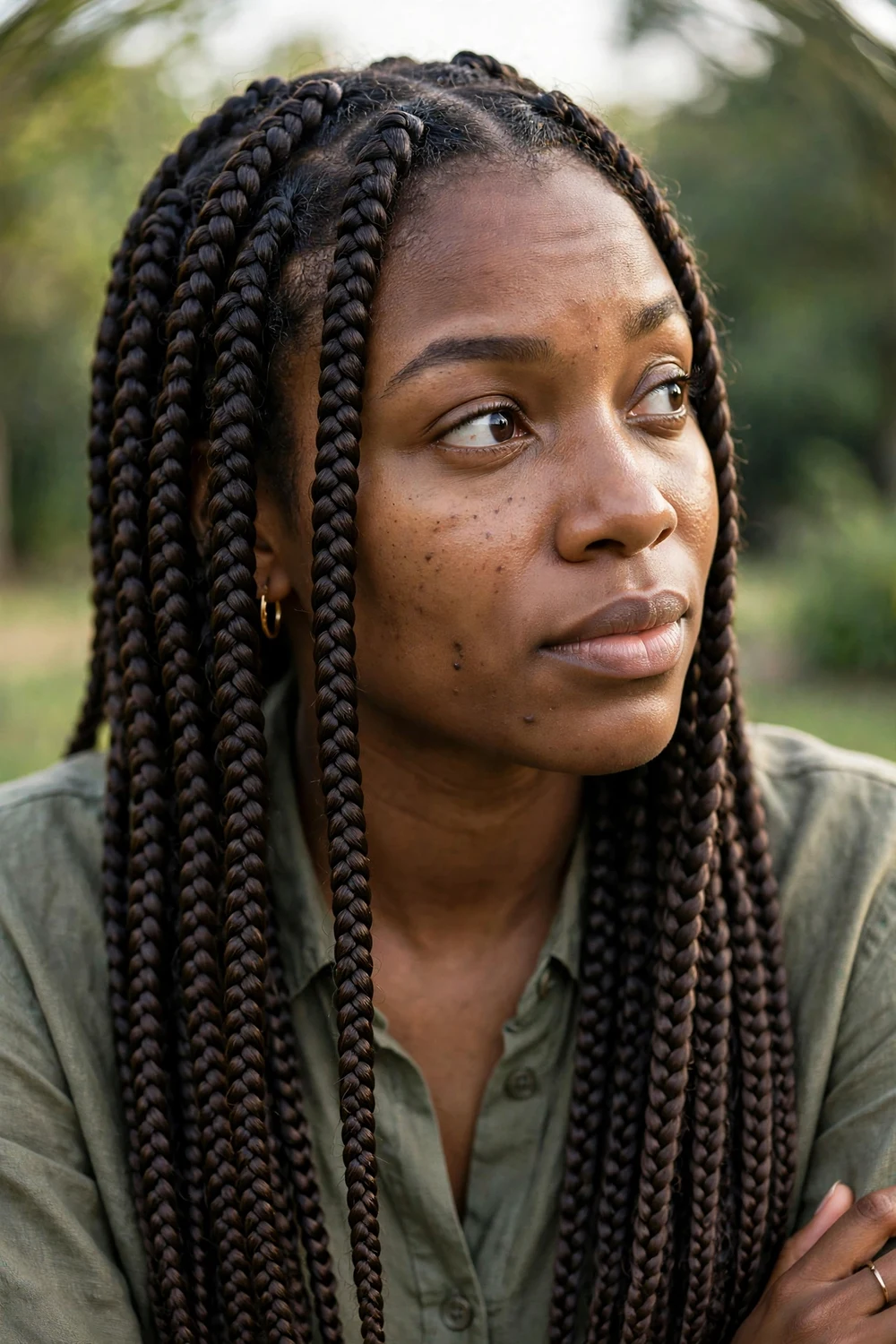
Fishtail box braids combine the fishtail technique with the box braid base: each section is braided in the two-strand fishtail pattern instead of the usual three-strand plait. The result has a flatter, more intricate texture that reads distinct from standard box braids at a glance. It takes longer to install, since fishtailing is slower than three-strand braiding.
Confirm your braider does fishtails well; the pattern unravels fast if the tension is uneven.
Try this: Wear fishtails in a medium size; small fishtails take prohibitively long.
Difficulty: High · Cost: $180–$320
40. French Box Braids
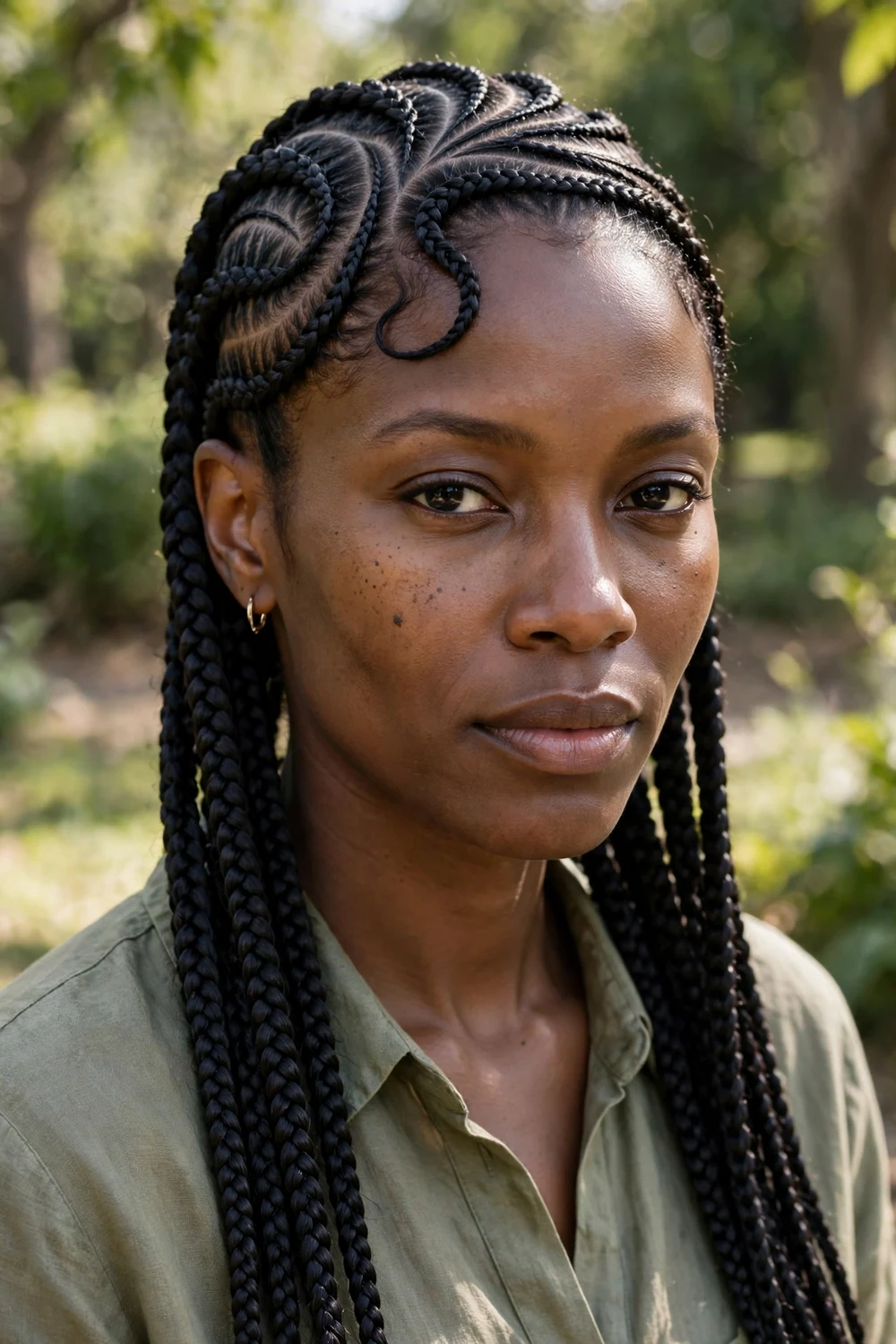
French box braids blend French braiding technique with box braiding: the crown is French-braided close to the scalp in curving sections, then the lengths continue as individual box braids. The scalp-hugging top gives a sleek, sculpted finish that standard box braids cannot, while the free-hanging lengths keep the versatility. Uniform section sizes keep the curves smooth.
The French-braided crown shows new growth sooner, so this set ages faster than standard box braids.
Try this: Ask for the French sections to follow your natural hairline curve for the cleanest result.
Difficulty: High · Cost: $180–$300
41. Triangle-Part Box Braids

Triangle-part box braids swap the usual square grid for crisp triangular sections. The geometric pattern draws across the scalp with real intention, and it shows off most in updos and ponytails where the scalp work takes center stage. Angled sections also distribute tension a little differently, which can help braids fall in flattering directions.
The pattern rewards a skilled braider; uneven triangles look messy instead of geometric.
Try this: Wear the first week in a high ponytail to show off the parting pattern.
Difficulty: High · Cost: $170–$300
42. Classic Square-Part Box Braids
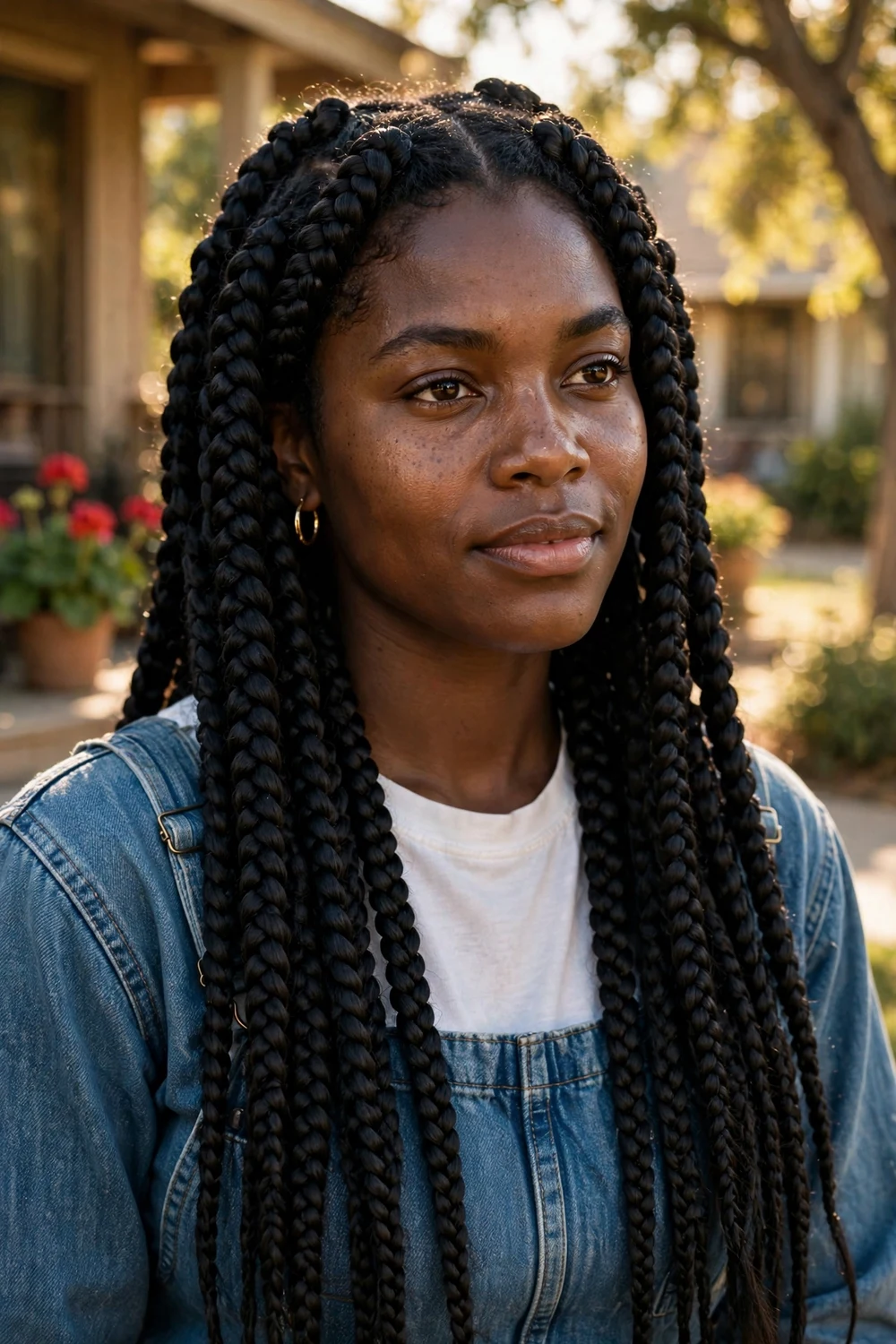
Classic square-part box braids are the original: the hair divided into neat square or rectangular sections, each braided from root to tip with the traditional knot. Square parts are fashionable and adaptable, giving the most even tension distribution of any parting pattern. When someone says “box braids” with no qualifier, this is what they mean.
The knotted root gives the most secure hold but the most initial tension; communicate comfort clearly.
Try this: If the knots feel tight on day one, ask the braider to redo the perimeter before you leave.
Difficulty: Medium · Cost: $150–$250
43. Poetic Justice Braids
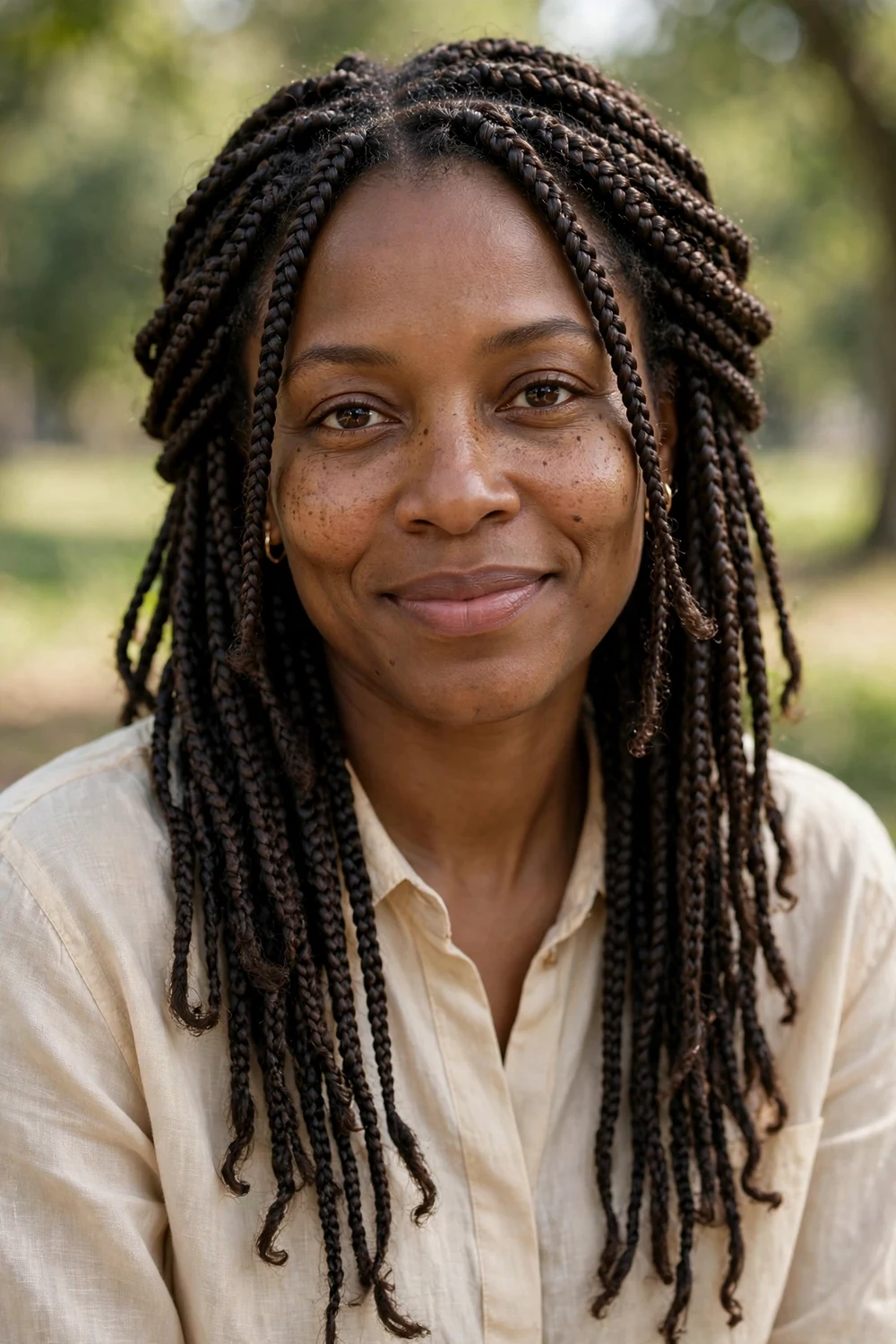
Poetic Justice braids are the long, chunky box braids Janet Jackson wore in the film: thick sections, serious length, and an unmistakable 90s silhouette. The jumbo size keeps the install fast, and the length gives endless styling options. It remains one of the most-requested reference photos in braid shops decades later.
Chunky sections mean fewer braids, so the overall weight stays manageable despite the length.
Try this: Part down the middle and wear them long and loose for the true film reference.
Difficulty: Low · Cost: $130–$220
44. Layered Box Braids
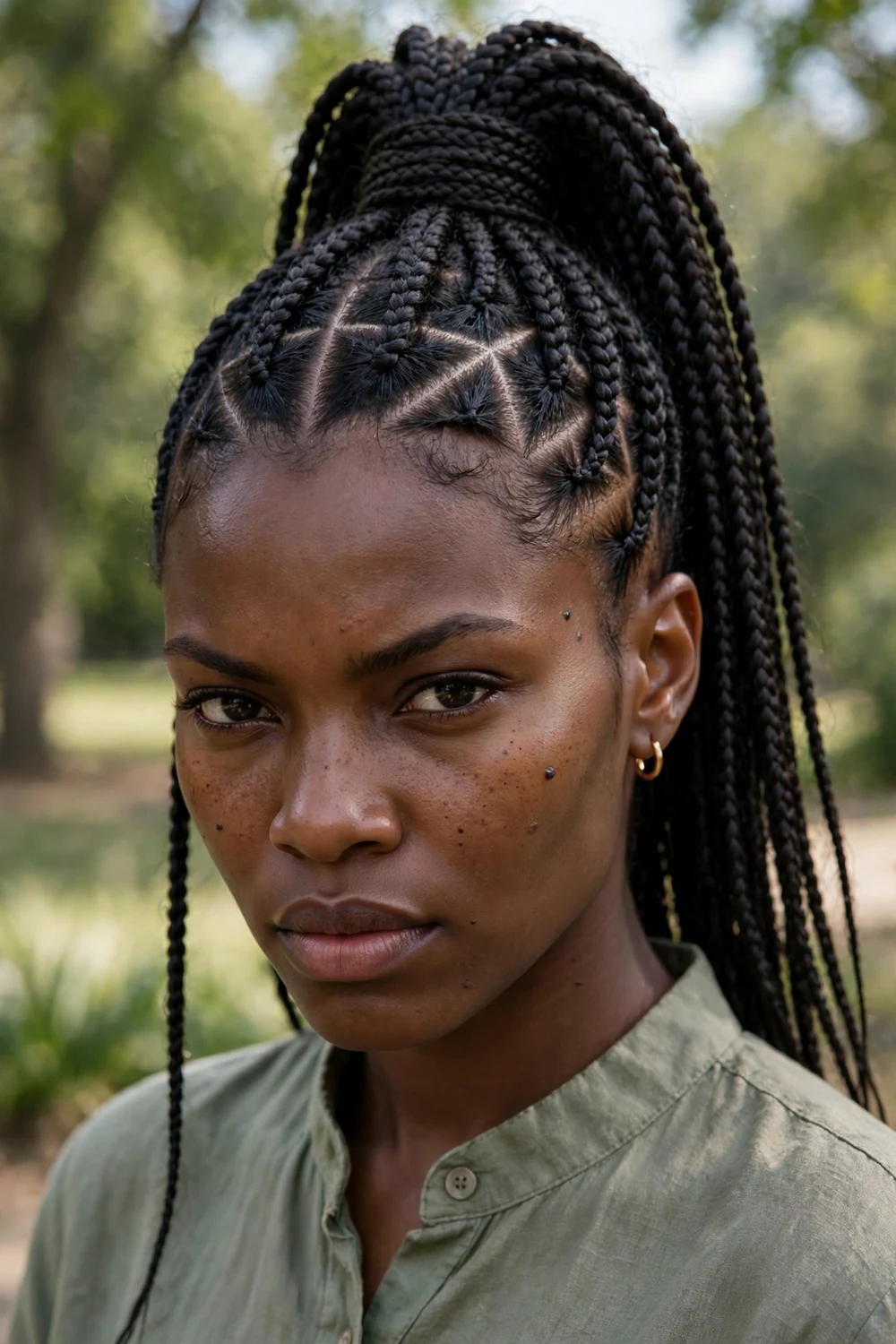
Layered box braids are cut at staggered lengths after install so the set moves like layered hair instead of hanging in one blunt line. The face-framing layers soften the look and add swing that one-length sets lack. This works best on medium to long installs; short sets do not have enough length to show the layers.
Cutting braids is permanent for the set, so agree on the shortest layer before the scissors come out.
Try this: Keep the shortest layer at chin length so the layers frame rather than chop.
Difficulty: Medium · Cost: $160–$270
Persistent itching under a new set is common but fixable; the why do braids itch guide explains the causes and the rinses that calm it.
45. Low-Tension Edge-Safe Box Braids
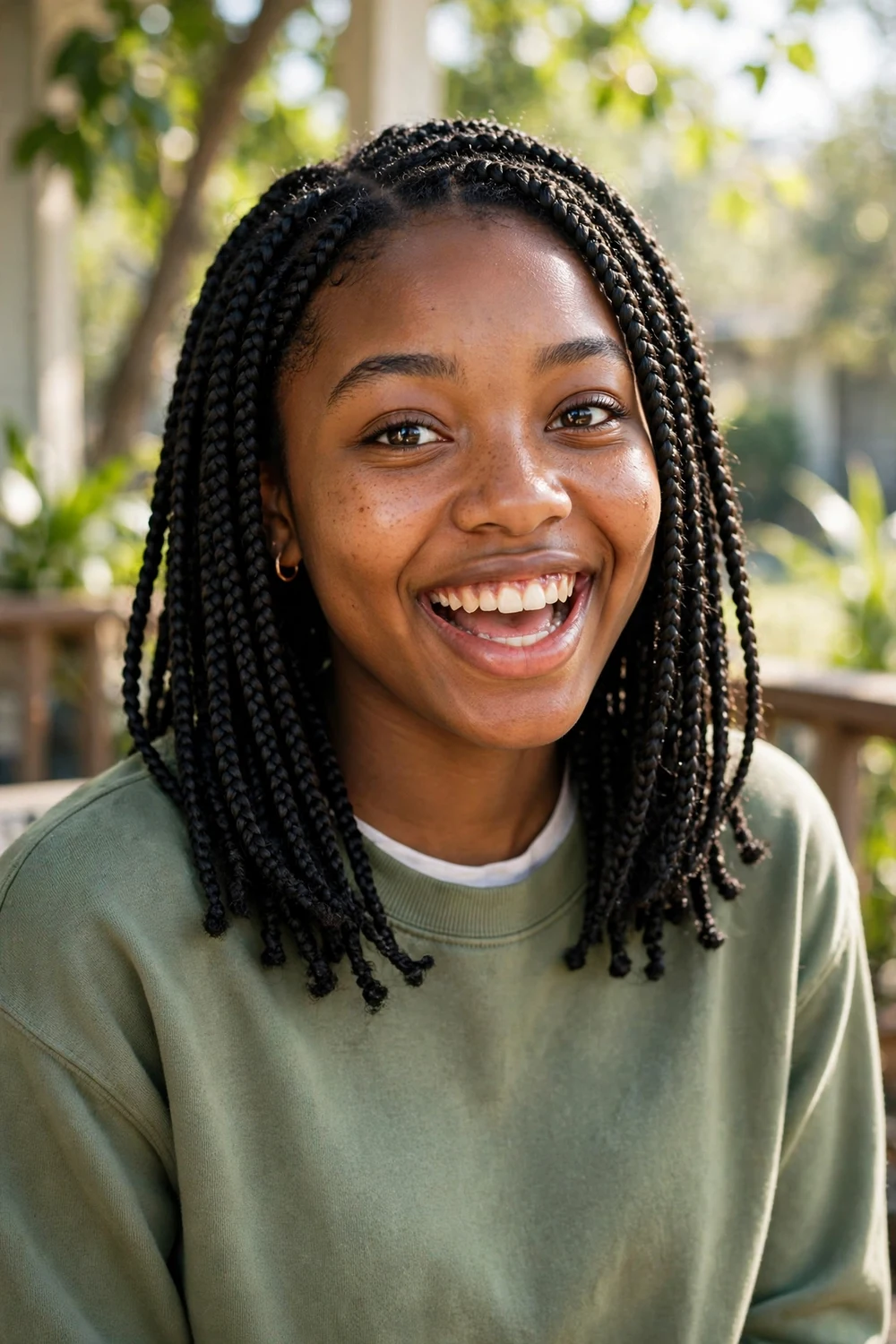
Low-tension edge-safe box braids are a booking strategy, not a look: knotless feed-in, medium size, larger parts at the hairline, and an explicit no-pain rule with your braider. This is the install to request when your edges are thinning, your hairline is tender, or past tight installs have caused breakage. Traction alopecia from repeated tight braiding is real and often permanent, so the gentle install is worth the extra conversation.
Speak up during the install; pain is never a required part of neat braids.
Try this: Say “I want these comfortable enough to sleep in tonight” before the first braid goes in.
Difficulty: Medium · Cost: $170–$300
46. Beginner-Friendly First Set
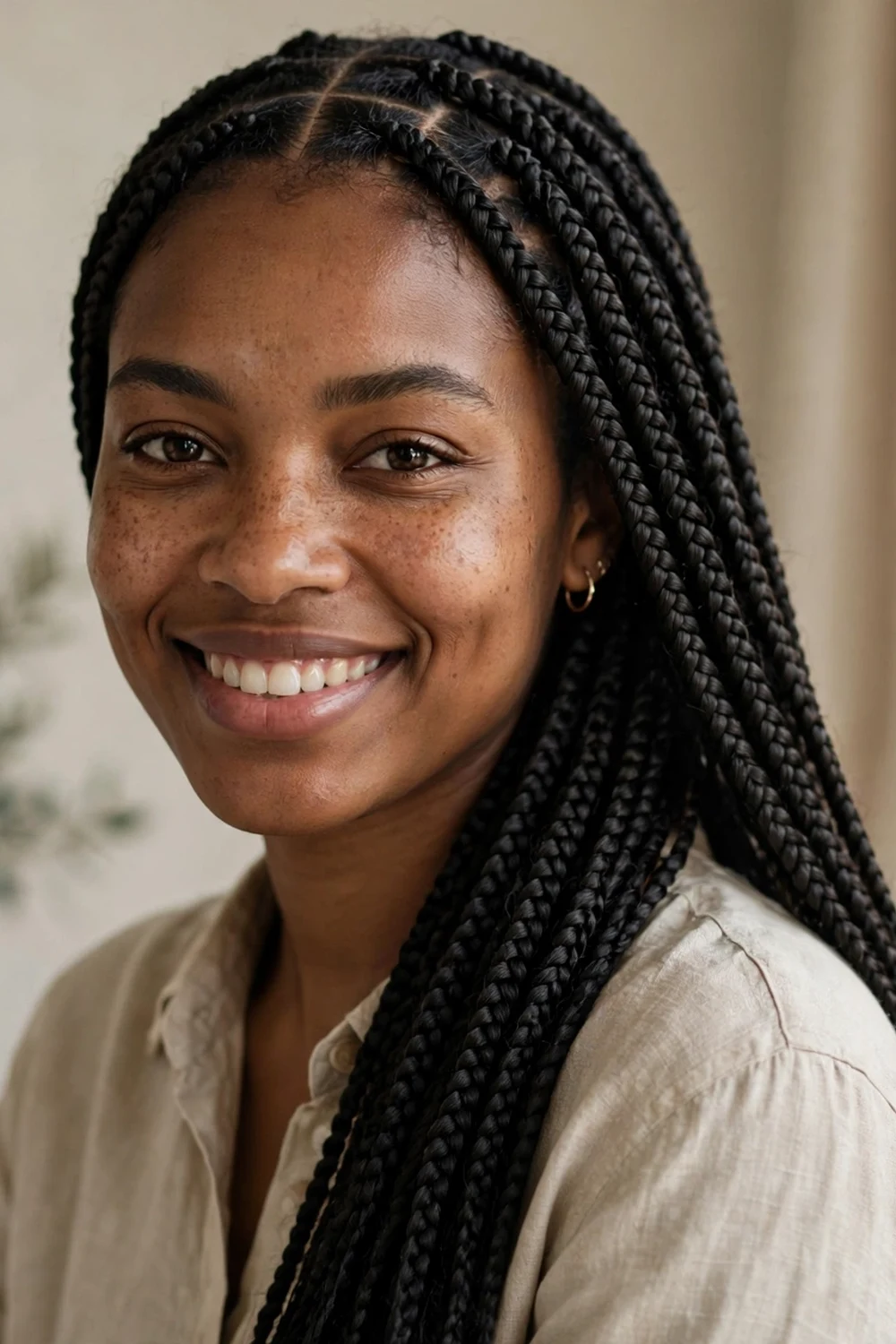
The beginner-friendly first set is medium, knotless, shoulder-length, in your natural black: the lowest-risk combination on this list. Medium braids install in a reasonable session, knotless roots stay comfortable, shoulder length keeps the weight light, and natural black hides new growth the longest. Get one easy set under your belt before chasing micro sizes, vivid color, or waist length.
One good first experience teaches you your real tolerance for install time and weight.
Try this: Book a morning appointment so a long install does not run past your bedtime.
Difficulty: Low · Cost: $140–$220
Box Braid Sizes Compared
| Size | Install Time | Wear Time | Typical Cost | Best For |
|---|---|---|---|---|
| Jumbo | 2–4 hours | 4–5 weeks | $120–$200 | Fast installs, sensitive scalps |
| Medium | 4–6 hours | 6–8 weeks | $150–$250 | Most people, most routines |
| Small | 6–8 hours | 6–8 weeks | $180–$300 | Detailed finish, versatile styling |
| Micro | 8–12 hours | 8–10 weeks | $250–$400 | Natural movement, experienced wearers |
How to Choose (and What to Avoid)
Choose size by honesty about your week: jumbo or bob-length if you want it done fast and light, medium if you want one set to cover a busy month, small or micro only if you have a full day for the install and patience for takedown. Choose length by your edges: fine or previously stressed hairlines do best with shoulder-length or shorter in knotless, while sturdy hair can carry waist length without much strain.
Avoid installs that hurt. Tenderness, bumps along the hairline, or headaches after an appointment mean the braids are too tight, and tension at the edges is the leading cause of braid-related thinning. Avoid keeping any set past eight to ten weeks, since matted new growth at the root damages more hair than the style protected. And avoid washing without fully drying: braids that stay damp develop mildew and odor that no product fixes.
For more on this topic, see knotless braids hairstyles.
FAQs
How long do box braids last?
With good care, most sets hold six to eight weeks. Moisturizing the scalp, washing gently every two to three weeks, and wrapping at night extend their life. Jumbo sets last four to five weeks, while micro sets can reach eight to ten.
Do box braids damage your hair?
Box braids protect hair when installed without excessive tension and removed on time. Damage comes from braids that are too tight, left in past eight to ten weeks, or taken down roughly. Knotless installs place the least tension on edges.
How much do box braids cost?
A full set generally runs $120 to $300, with smaller sizes and longer lengths at the higher end because they take more time and hair. Jumbo and bob-length sets are the most budget-friendly; micro sets can reach $400.
Are knotless box braids better than regular box braids?
For most people, yes. Knotless braids start with a feed-in instead of a knot, so they pull less at the root and feel lighter from day one. That matters most for fine or fragile edges. Regular knotted box braids hold slightly longer and cost a little less.
How do you wash box braids?
Dilute sulfate-free shampoo, work it into the scalp with your fingertips, rinse thoroughly, and let the braids air-dry completely or sit under a hooded dryer. Never leave braids damp and bunched, since trapped moisture causes mildew and odor.
Once your braids are in, explore our box braids hairstyles styling ideas for 30 ways to wear them.
Final Thoughts
Box braids work because the formula is proven: protective coverage, weeks of low-maintenance wear, and endless variation in size, length, and color. Start with size and length, since those decide comfort and longevity, then add the color, beads, or updo that makes the set yours. Guard your hairline with low-tension installs, take the set down on time, and the style will keep giving back to the hair underneath.

