


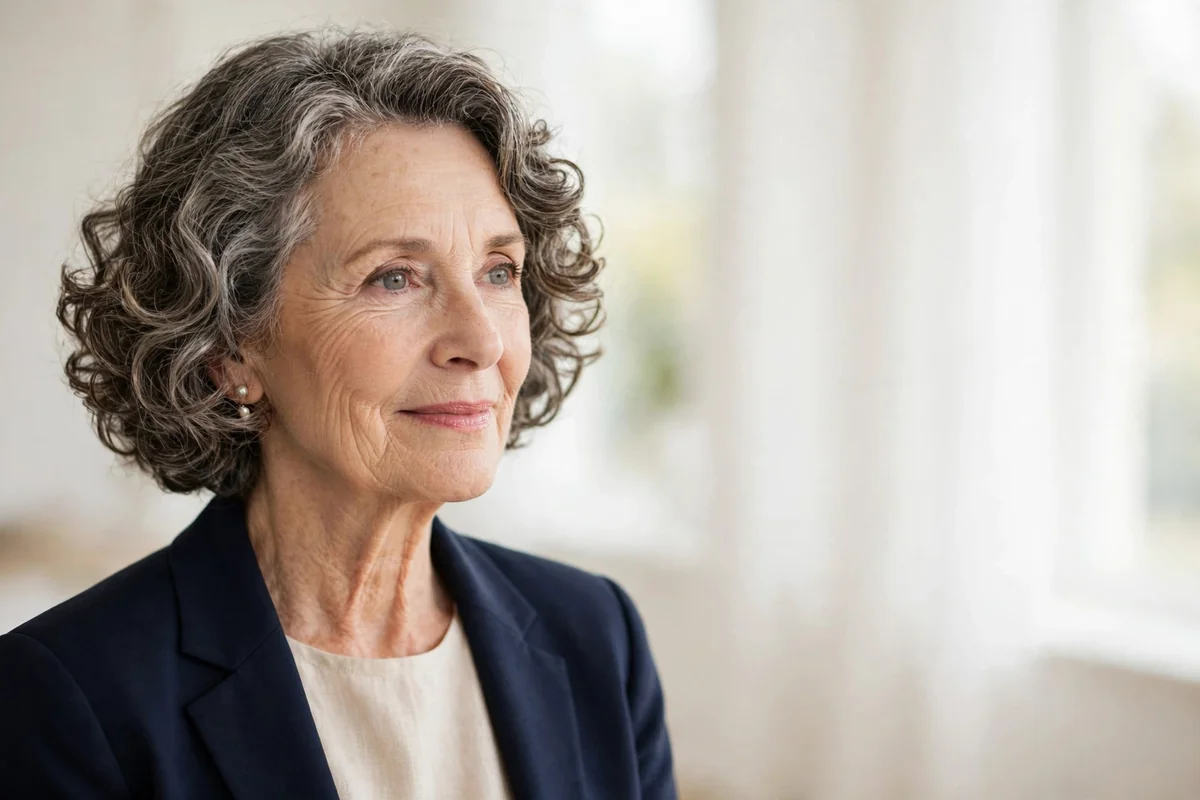
A curly bob might be the most forgiving haircut a woman over 50 can choose. It lifts the face, works with natural texture instead of fighting it, and takes less daily effort than most longer styles.
This guide rounds up 30 curly bob hairstyles for older women, covering every curl pattern, gray-blending color idea, and maintenance level. I’ve spent years studying which bob variations actually suit mature hair, so each pick below notes who it suits best and how much upkeep it needs.
Quick answer: The most flattering curly bobs for older women sit between the ear and chin, use soft internal layers to prevent a triangle shape, and keep the curls defined with cream or mousse on damp hair. Trims every 6 to 8 weeks keep the shape crisp.
Quick Takeaways
- Chin-length and jaw-length bobs lift the face and keep curls springy without dragging features down.
- Soft internal layers stop the dreaded triangle shape and let each curl sit in its own space.
- Ask your stylist to cut curls dry or account for shrinkage, since wet cuts can end up 2 to 3 inches shorter than expected.
- Gray, silver, and salt-and-pepper tones add natural dimension that makes curls look fuller.
- Curl cream on soaking-wet hair plus diffusing or air-drying gives definition that lasts 2 to 3 days.
Why the Curly Bob Works So Well After 50
Curls naturally create volume, which is exactly what mature hair often loses. A bob frames that volume around the face instead of letting it pull downward, and the shorter length means each curl springs up instead of stretching out under its own weight.
Maintenance is another win. Most of the styles below need under 10 minutes in the morning: refresh with water, smooth on a little product, and go. Women who wear glasses get a bonus too, since a bob that ends at or above the jawline keeps hair clear of frames.
Before You Book: What to Tell Your Stylist
Bring photos of the exact variation you want, not just “a curly bob.” Say whether you want bangs, how short the back can go, and whether you wear your hair with a side or middle part most days.
Mention shrinkage. Tight curls can spring up 2 to 4 inches as they dry, so a cut that looks chin-length when wet may land near the ears when dry. Stylists who cut curls dry, curl by curl, avoid this surprise. If your stylist cuts wet, ask them to leave extra length and check the shape as it dries.
Talk about your real routine. If you will not diffuse every morning, say so. A good stylist will choose layering that air-dries well instead of a cut that only looks right with heat styling.
1. Classic Defined Curly Bob
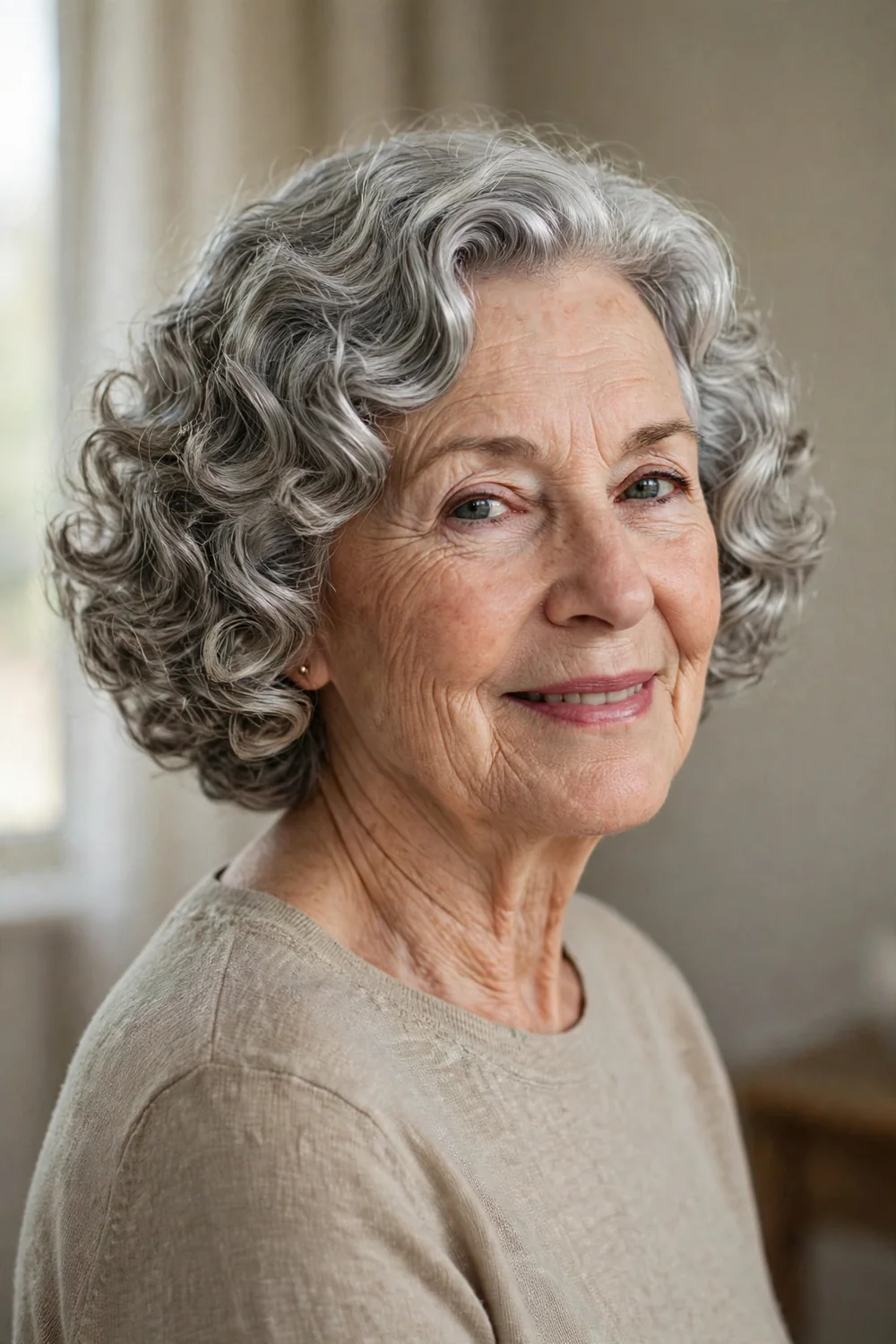
Start with the version that never dates. The classic defined curly bob keeps one clean length around the chin with softly shaped ends, and every curl is encouraged to clump and spring rather than frizz out. It suits women with 2C to 3B curl patterns best, and it reads polished enough for work yet relaxed enough for weekends. The shape grows out gracefully too, which means you can stretch trims to 8 weeks without losing the silhouette.
Try this: Rake a quarter-sized amount of curl cream through soaking-wet hair, then scrunch upward with a microfiber towel. Diffuse on low heat for 5 minutes or air-dry completely before touching the curls.
2. Stacked Curly Bob
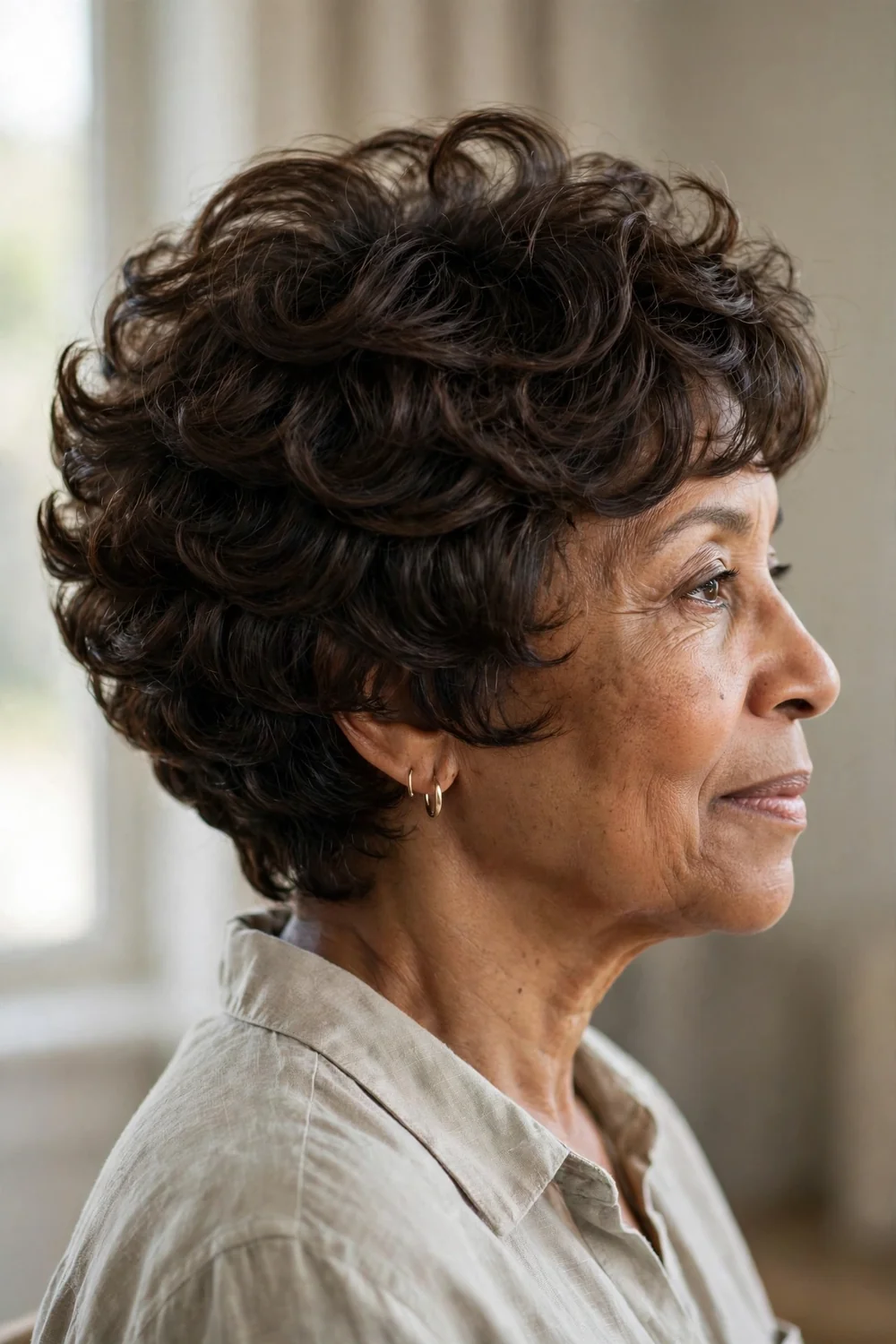
When the back of your hair falls flat, stacking fixes it. This cut builds graduated layers through the nape so the back sits higher and rounder, giving fine or limp curls visible lift they would not get from a one-length cut. The front stays longer around the jawline, which keeps the style from looking dated. It works especially well on 3A to 3C curls that have natural spring but lose it at the crown.
Try this: Flip your head upside down and diffuse the roots first for 2 minutes. That sets the stacked volume in place before you define the ends.
3. Curly Bob with Curtain Bangs
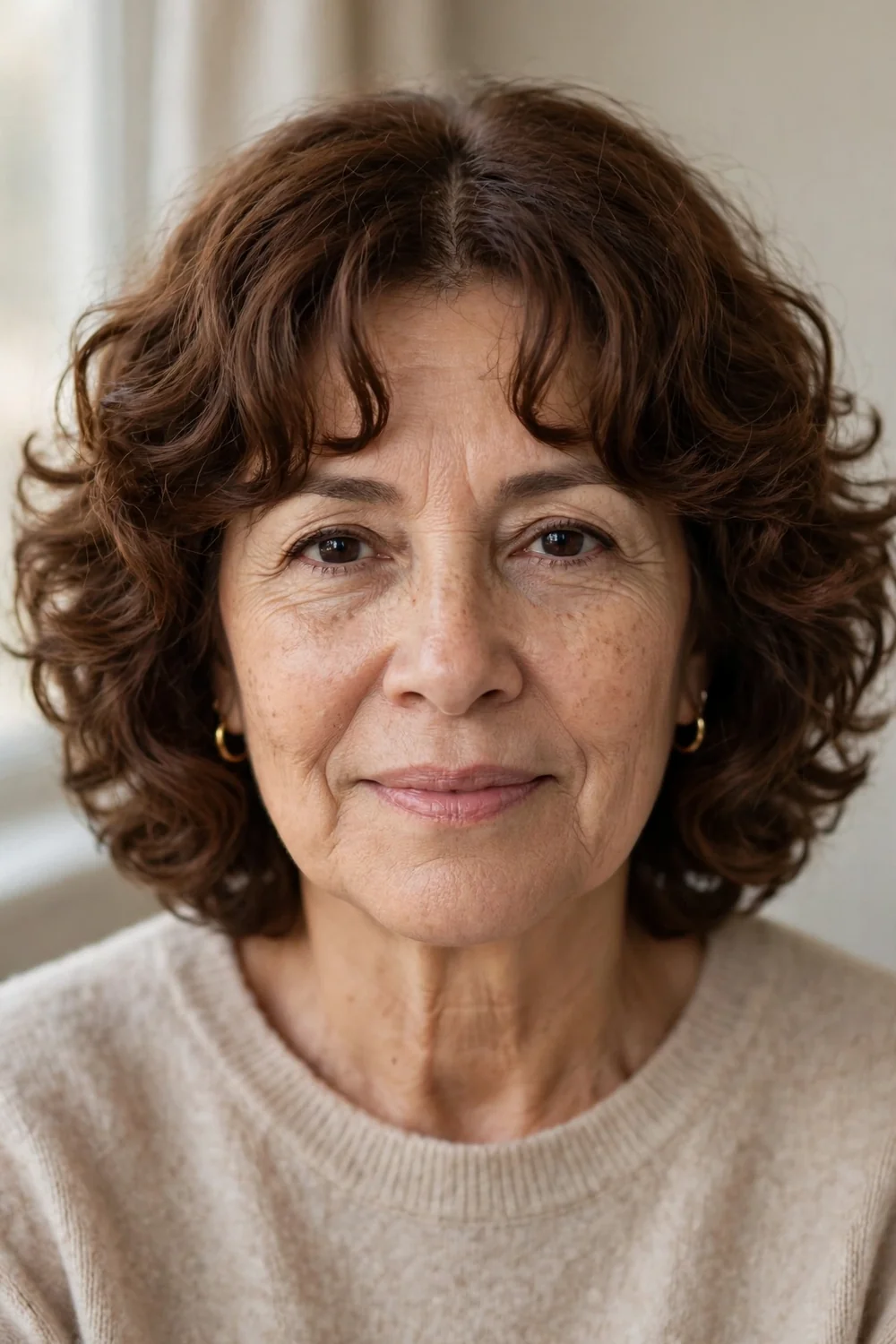
Curtain bangs part in the middle and melt into the sides of the bob, so they never need the precision a straight-across fringe demands. On curly hair they fall as soft tendrils that frame the forehead and cheekbones, which flatters women who want coverage without committing to full bangs. The key detail is length: keep them long enough to tuck behind the ears on days you want them out of the way.
Try this: Finger-coil the two front sections while damp so they dry into defined ribbons instead of puffing up. A pea-sized dab of gel on just those pieces adds hold.
4. Layered Curly Bob with Soft Texture
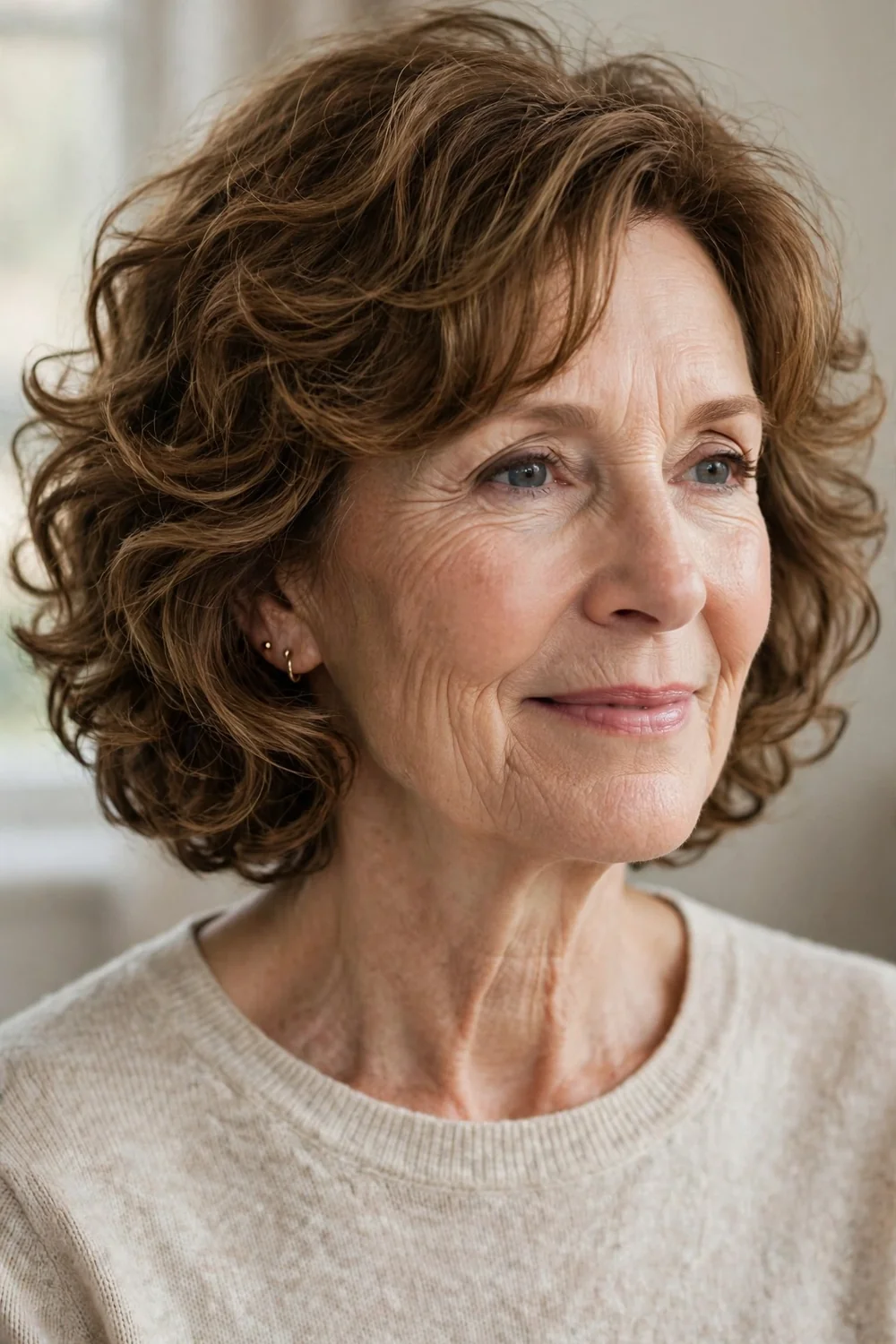
Layers are the difference between a curly bob that moves and one that sits like a helmet. Soft, long layers through the interior remove just enough weight for curls to bounce independently, while the perimeter stays full enough to read as a bob. This is the safest first curly bob for women growing out longer hair, since the length feels familiar but the shape feels new. Ask for the layers to start no higher than cheekbone level so the crown keeps enough weight to lie smooth.
Try this: Ask for layers cut into dry hair so your stylist can see exactly where each curl lands. If you want more layering ideas in this family, browse these cute layered bob haircuts for curly hair for variations on length and texture.
5. Jaw-Length Curly Bob with Tight Ringlets
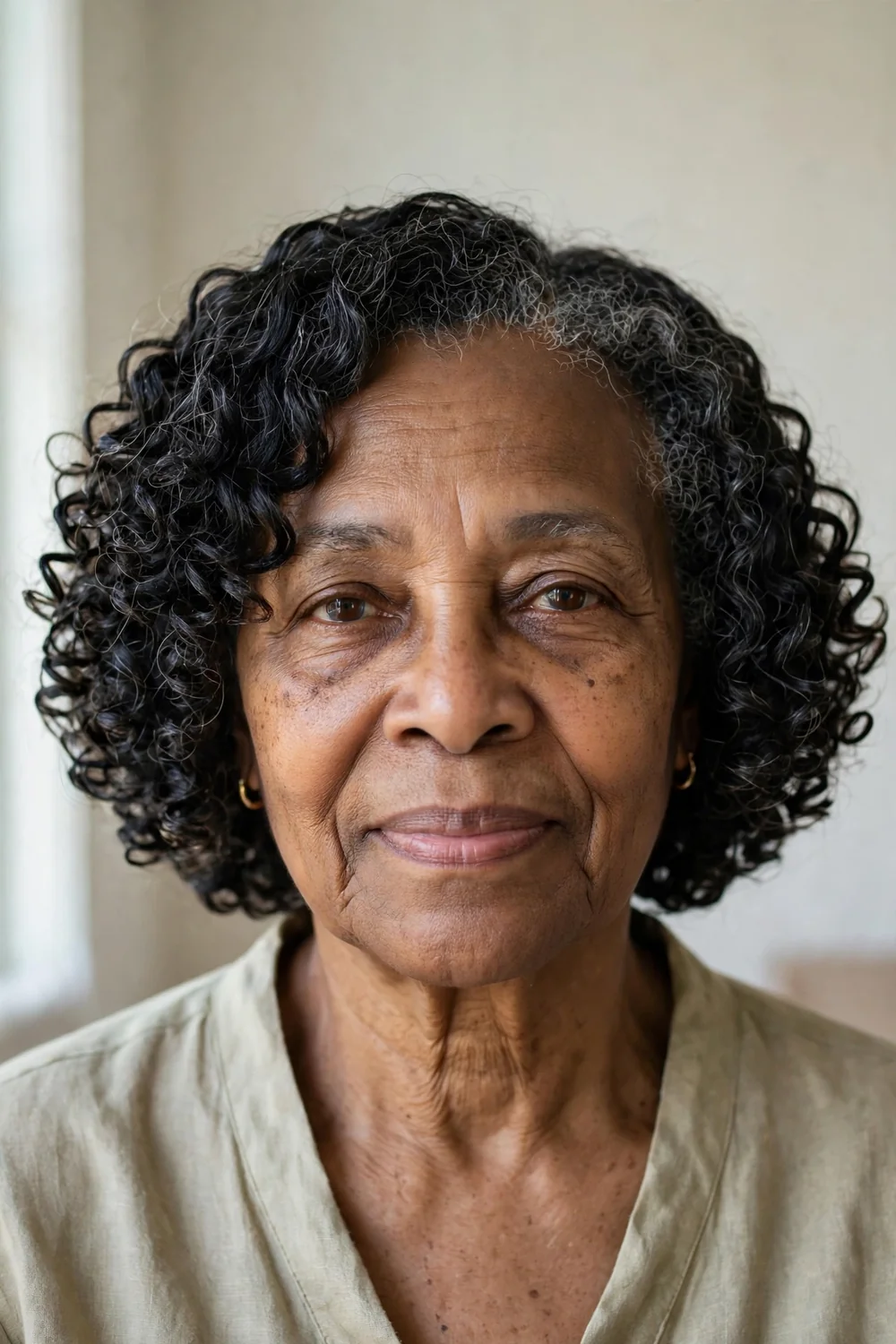
Tight 3C to 4A ringlets shrink dramatically, so jaw-length when dry is the sweet spot: short enough to show off the curl pattern, long enough to keep styling options open. This cut defines each ringlet with minimal layering, letting the natural coil do the visual work. Women with this texture often find longer cuts tangle at the nape, and the bob length sidesteps that problem entirely. A silk or satin bonnet at night keeps the ringlets separated and defined until wash day.
Try this: Work in 4 sections and apply leave-in conditioner to each before styling. Sectioning keeps dense ringlets from matting at the roots between washes.
6. Voluminous Curly Bob with Bold Curls
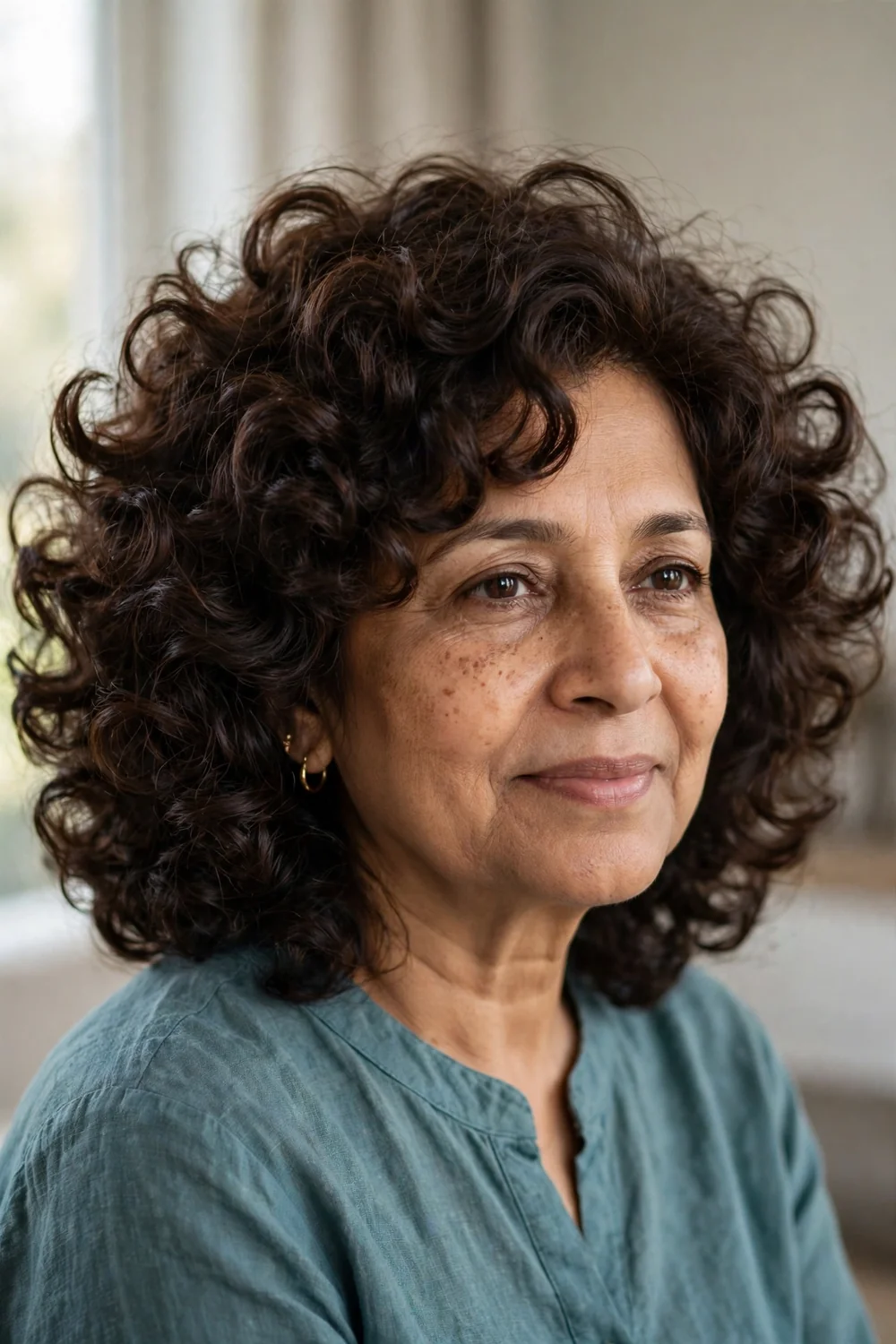
Some women want their hair to make an entrance, and this cut obliges. Big, bold curls are built with shorter layers at the crown and longer length at the perimeter, so the silhouette stays wide and full without tipping into triangle territory. It suits naturally dense hair best, since the cut amplifies what is already there rather than manufacturing volume. Expect compliments from strangers; this is not a quiet hairstyle.
Try this: Diffuse with your head tilted to each side to build width evenly. Finish with a light oil on the ends only, never the roots, to keep the volume from collapsing by midday.
7. Angled A-Line Curly Bob
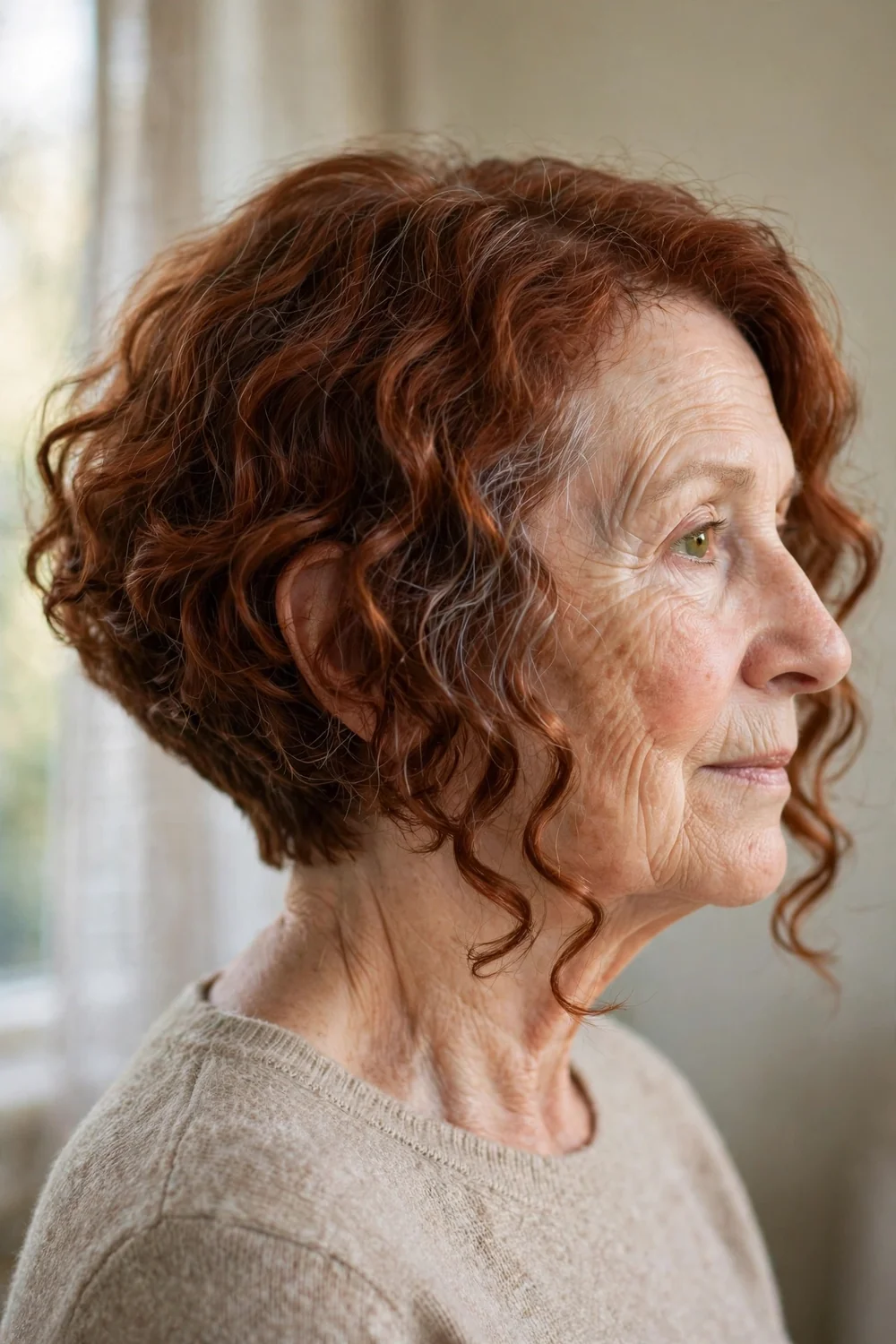
Shorter in the back and longer toward the front, the A-line gives curly hair a deliberate shape that reads modern at any age. The angle draws the eye along the jawline, which flatters rounder faces and softens a strong jaw on square faces. Because the front pieces are the longest part of the cut, they frame the face even on days when the back is still damp and undefined. Most stylists need about 45 minutes for this cut when the hair is worn curly and dry-cut.
Try this: Smooth a little curl cream just through the two front sections and twist each away from the face while damp. That keeps the face-framing pieces defined and frizz-free.
8. Graduated Curly Bob
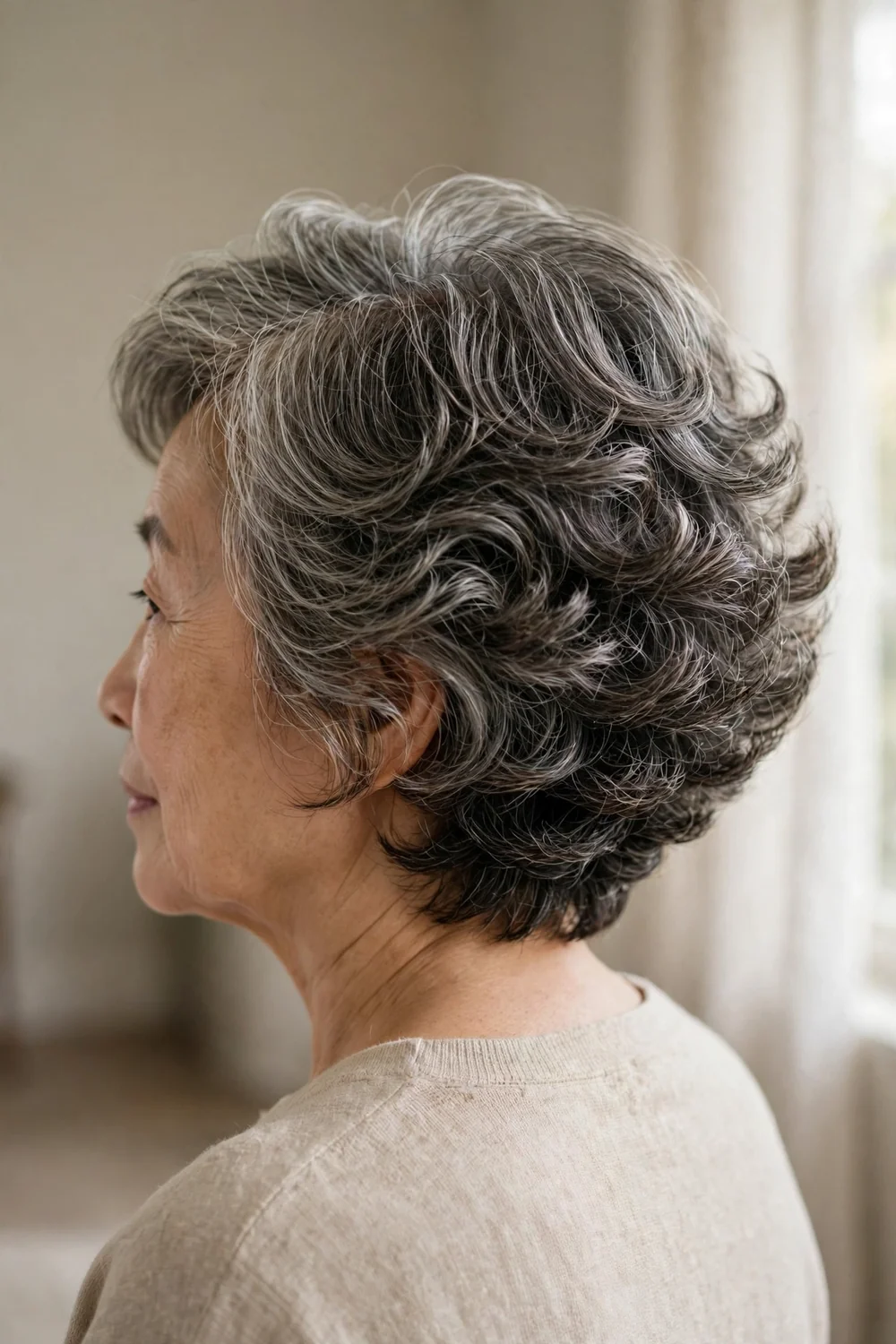
Graduation is stacking’s subtler cousin. The back rises gently through stacked layers while the overall outline stays soft, so you get lift without an obvious shelf. Women with fine curly hair gain the most here, since the build-up at the back creates fullness that fine texture cannot produce on its own. Salt-and-pepper color shows off the graduation especially well because each layer catches light differently. It also pairs well with glasses, since the lifted back keeps hair clear of the frames’ arms.
Try this: Sleep on a satin pillowcase to protect the graduated shape overnight. Cotton absorbs moisture and flattens the back layers by morning.
9. Messy Tousled Curly Bob
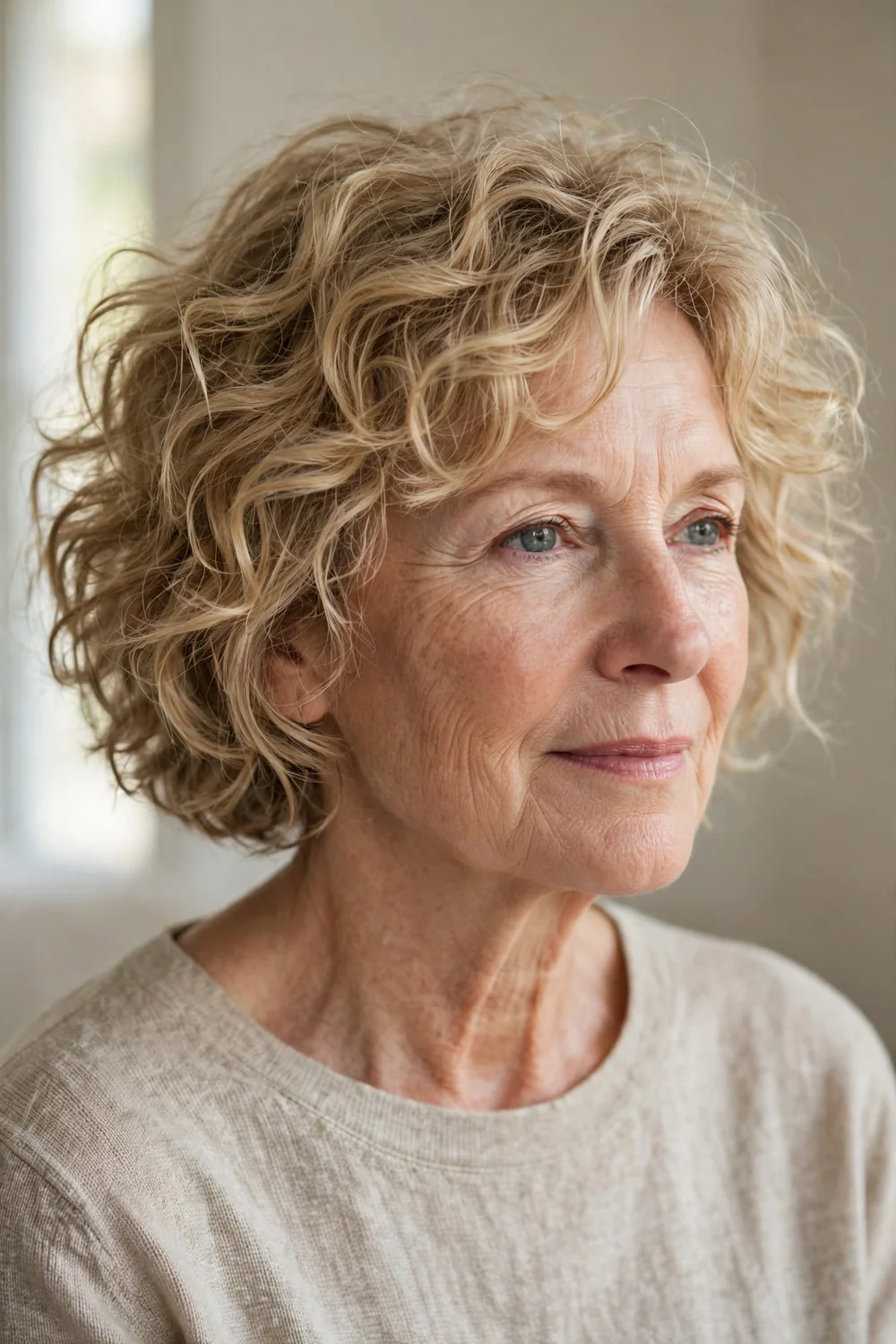
Not every curly bob needs to look done. The tousled version keeps the same chin-length shape but styles it for separation and movement instead of polish: curls are scrunched, shaken at the roots, and left to fall where they want. It suits women who dislike fussy routines and looks best on second-day hair, when natural oils have relaxed the curl pattern slightly. A dime-sized amount of mousse scrunched into dry hair revives the texture without a full wash.
Try this: On day two, mist with water mixed with a teaspoon of leave-in conditioner, scrunch, and go. Skip the brush entirely; fingers are the only tool this style needs.
10. Curly Bob with Subtle Highlights
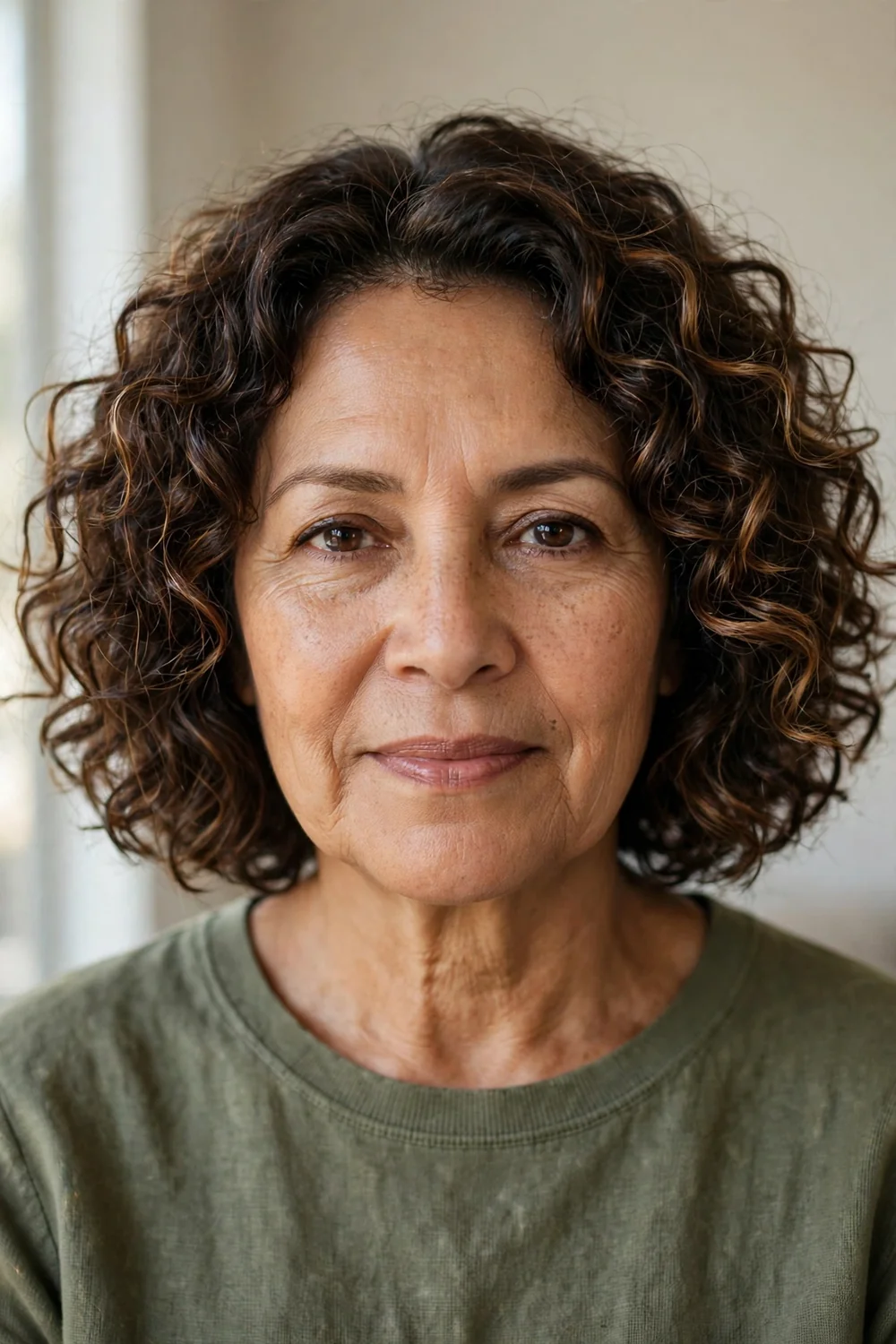
Highlights do more than add color on curly hair: they map the curl pattern so each spiral reads individually. Subtle, tone-on-tone pieces woven through the mid-lengths create that effect without an obvious dyed look. This is the color to request if you want dimension but need to keep grow-out low maintenance, since soft highlights blur into natural regrowth for 10 to 12 weeks. Keep the pieces within two levels of your base color so the grow-out stays soft and believable.
Try this: Ask your colorist for balayage-style placement rather than foils. Hand-painted pieces follow the curl’s natural fall and look softer as they grow out.
11. Side-Parted Curly Bob
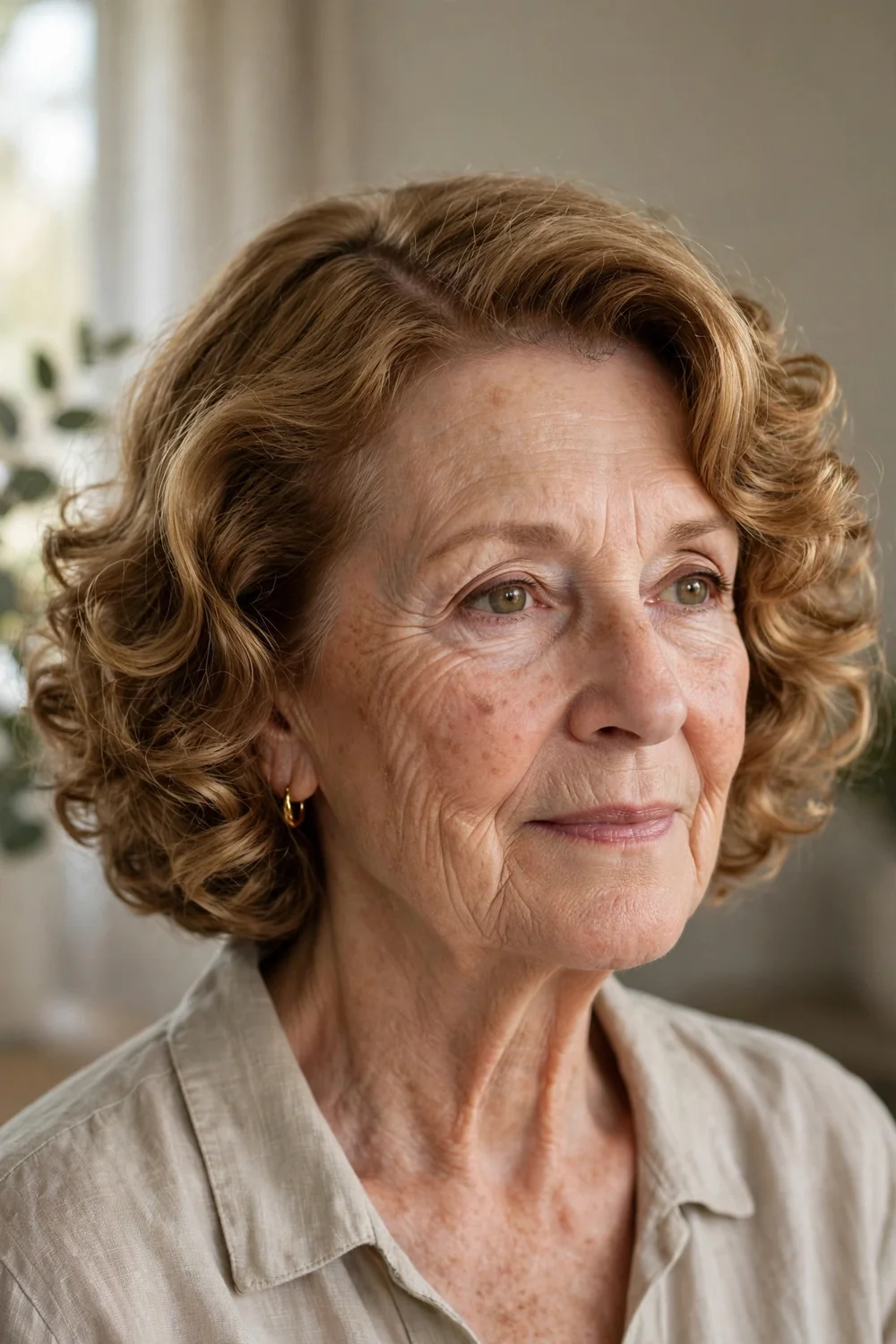
Changing nothing but the part can remake a bob. A deep side part throws most of the hair to one side, which builds instant volume at the crown and creates flattering asymmetry around the face. It works on every curl pattern and every face shape, and it costs nothing to try before committing to a cut. Women with thinning at the part line find the deep side especially useful for coverage.
Try this: Set the part while hair is soaking wet and clip the roots on the heavy side for 10 minutes as it dries. That trains volume into the crown without teasing.
12. Natural Gray and Silver Curly Bob
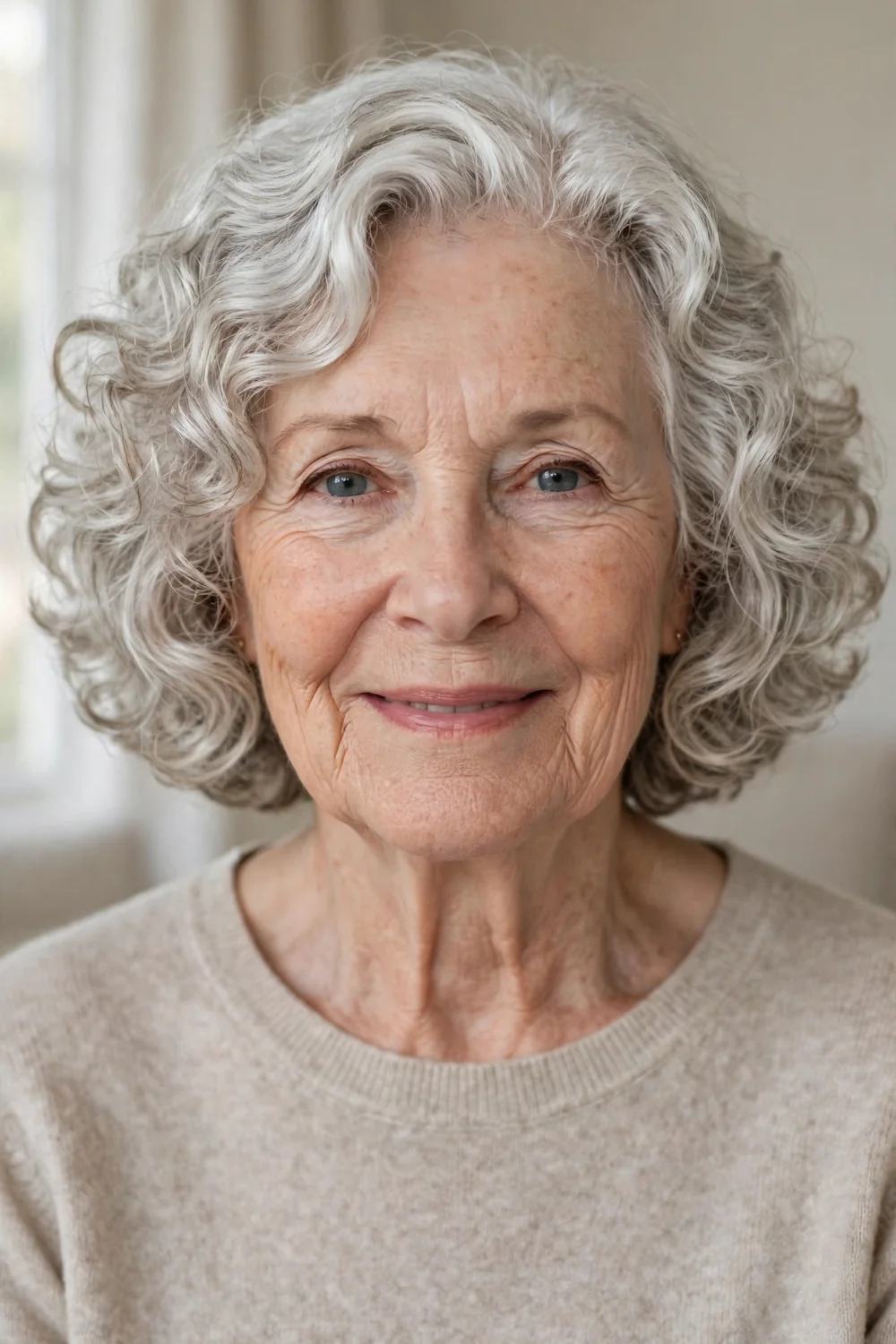
Gray curls have built-in dimension that dyed hair tries to imitate. This style simply lets natural silver, white, and charcoal tones do the work inside a well-shaped bob, and the varied pigment makes every curl look thicker. The cut matters more than ever here: crisp ends and regular trims keep gray hair looking intentional rather than neglected. A purple shampoo once a week prevents the yellowing that dulls silver tones.
Try this: If your hair is thinning as well as graying, these bob hairstyles for older women with thin hair pair cutting techniques that add fullness with the same gray-friendly approach.
13. Curly Bob with Face-Framing Layers
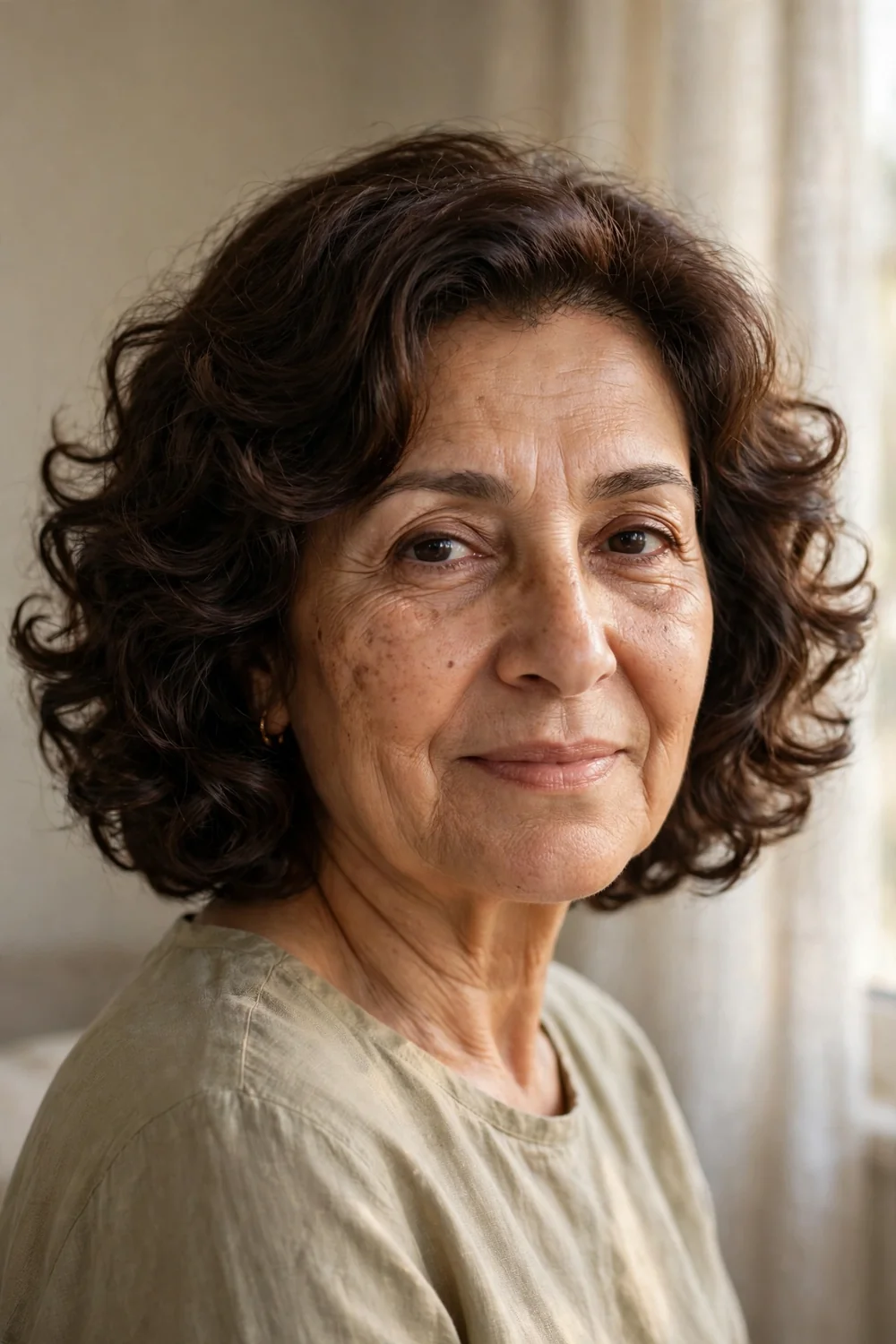
Shorter pieces around the face change how the whole bob reads. Face-framing layers start at cheekbone level and blend into the bob’s length, drawing attention to the eyes and softening the jawline. This detail suits women who feel a blunt perimeter looks severe on them. It also gives you styling flexibility: tuck the front pieces behind the ears for a sleeker look or let them spring free for softness. They also grow out invisibly, blending into the bob’s length within two trims.
Try this: Dry the face-framing pieces first while they are still very wet, twisting each away from the face. Front curls dry fastest and frizz first, so they deserve priority.
14. Curly Bob with Side-Swept Bangs
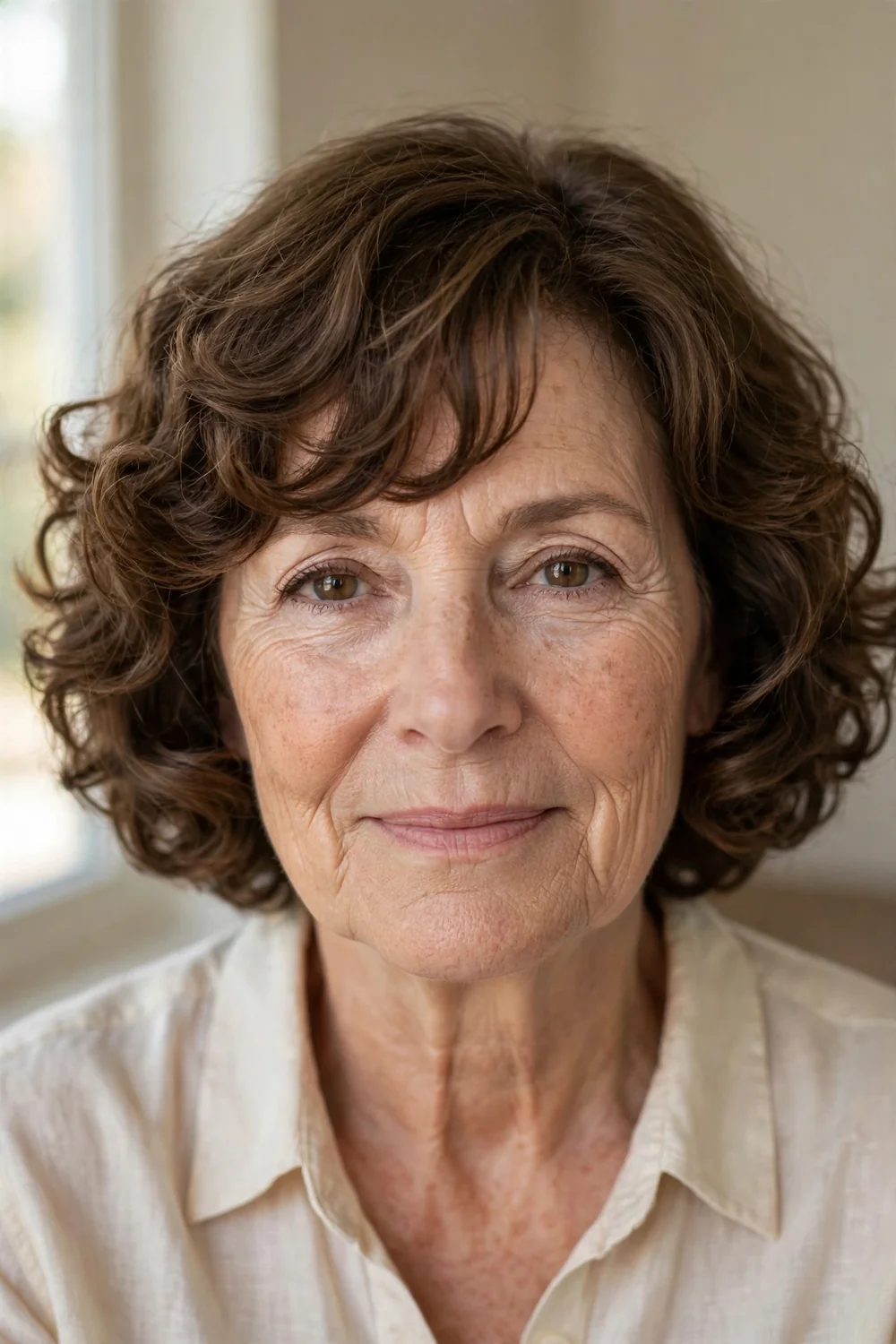
Side-swept bangs are the lowest-risk fringe for curly hair. Cut long enough to blend into the bob’s side, they sweep across the forehead in soft curls instead of demanding daily straightening. They suit women with high foreheads or anyone who wants to break up a long face shape. Because they merge with the rest of the cut, growing them out takes weeks, not months, and they balance a strong jawline by drawing the eye diagonally.
Try this: Direct the bangs to the side with a diffuser while damp, then pin them in place with a single bobby pin for 5 minutes. Remove the pin and the sweep holds all day.
15. Curly Bob with Wispy Bangs
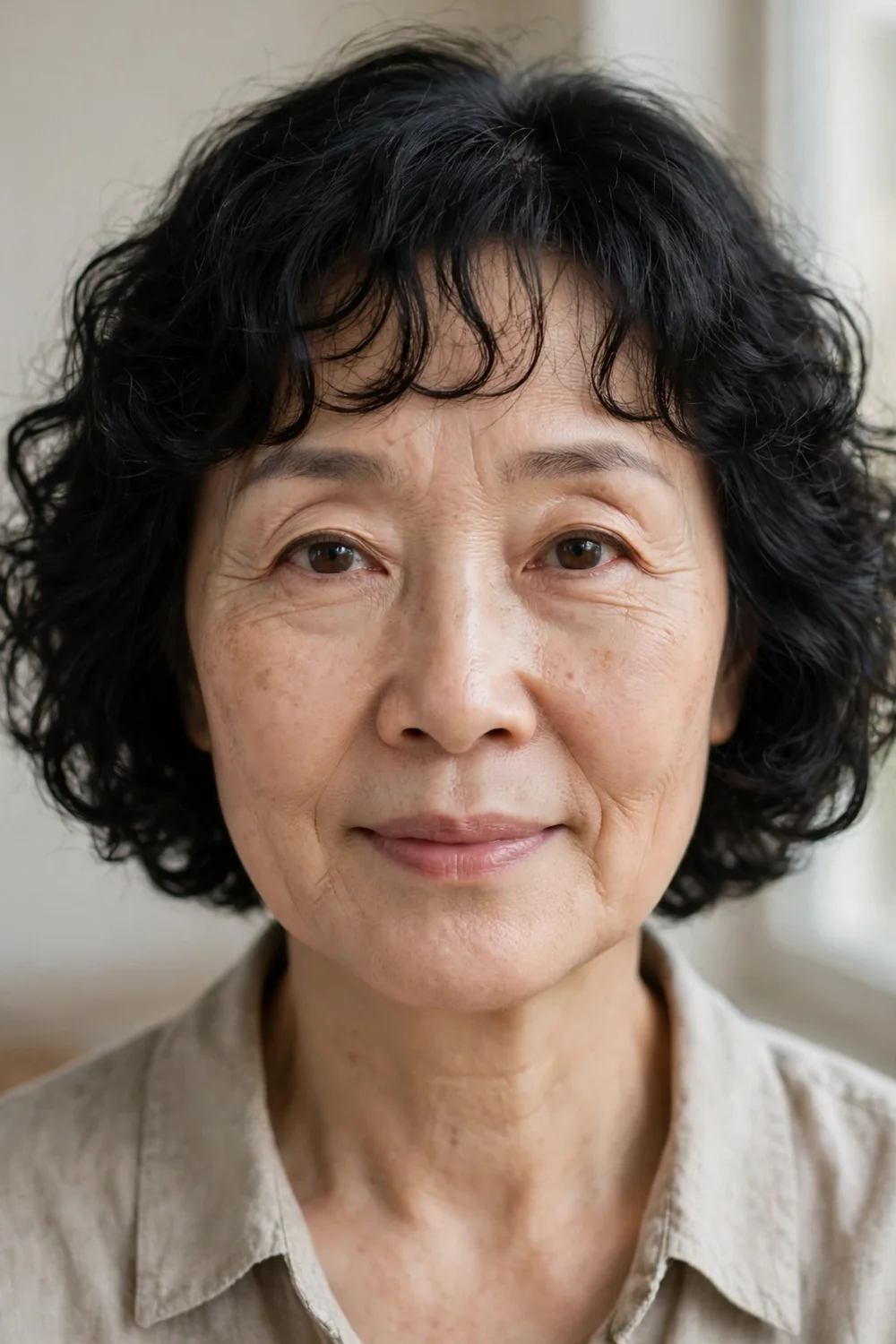
Wispy bangs take a light hand: thin, separated curls that barely graze the forehead rather than a solid wall of fringe. They work best on fine to medium curl patterns, since dense coils can make wispiness hard to maintain. The payoff is a soft, youthful frame that never looks heavy. Ask your stylist to cut them longer than you think; curly bangs always spring up as they dry, and trim them yourself between appointments only when fully dry.
Try this: Style bangs with just water and a drop of leave-in, no gel. Heavy product makes wispy pieces clump into one solid chunk instead of staying separated.
16. Inverted Curly Bob with Layered Back
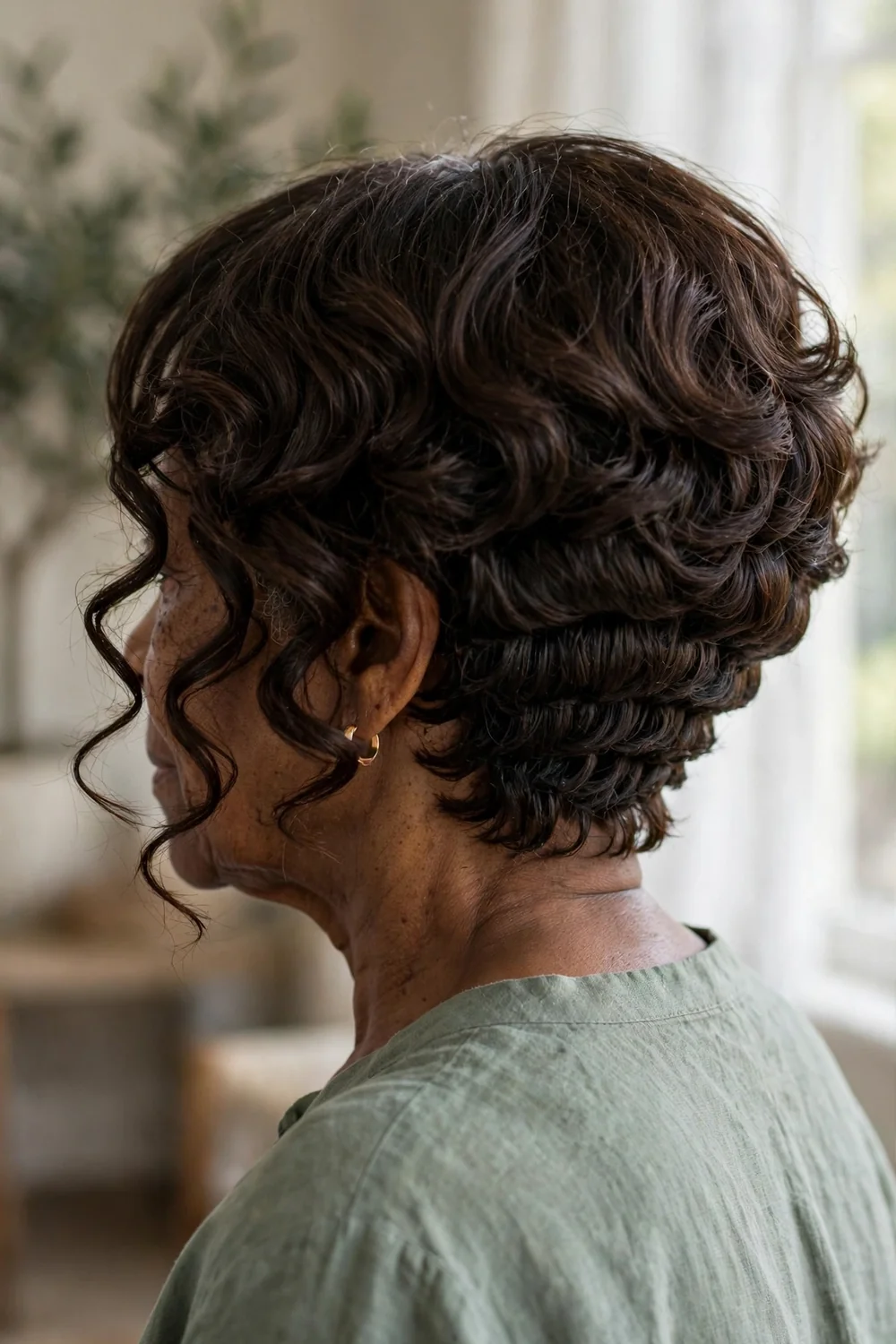
The inverted bob keeps the drama in the back: stacked layers build height at the crown while the front falls longer past the chin. On curly hair this creates a rounded, almost sculptural silhouette that looks deliberate from every angle. Women with thick, heavy curls benefit most, since the stacked back removes bulk exactly where it tends to mushroom outward. The silhouette looks striking from behind, so it suits women who want the back view to count as much as the front.
Try this: For more takes on the angled-back family, look through these inverted bob hairstyles to compare lengths and stacking heights before your appointment.
17. Curly Bob with Subtle Balayage
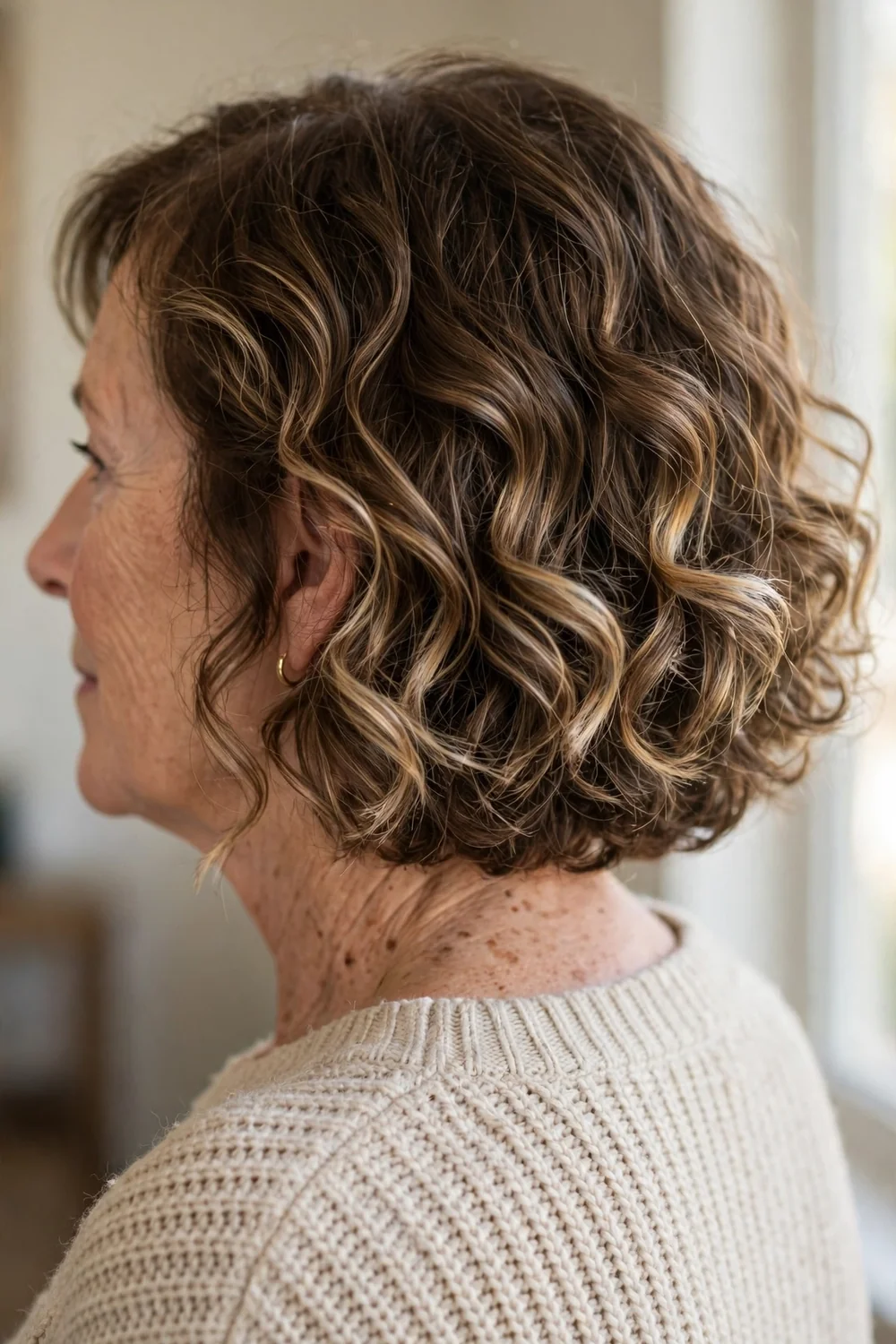
Balayage and curls were made for each other. The hand-painted lightness concentrates on the mid-lengths and ends, so each curl shows a gradient from deeper roots to brighter tips. Kept subtle, meaning one to two levels lighter than your base, it adds glow without an obvious color job. Grow-out is the gentlest of any highlight technique, which suits women who color every 3 to 4 months rather than every 6 weeks.
Try this: Bring a photo showing the exact lightness level you want at the ends. “Subtle” means different things to different colorists, and a picture removes the guesswork.
18. Curly Bob with Choppy Layers and Piecey Texture
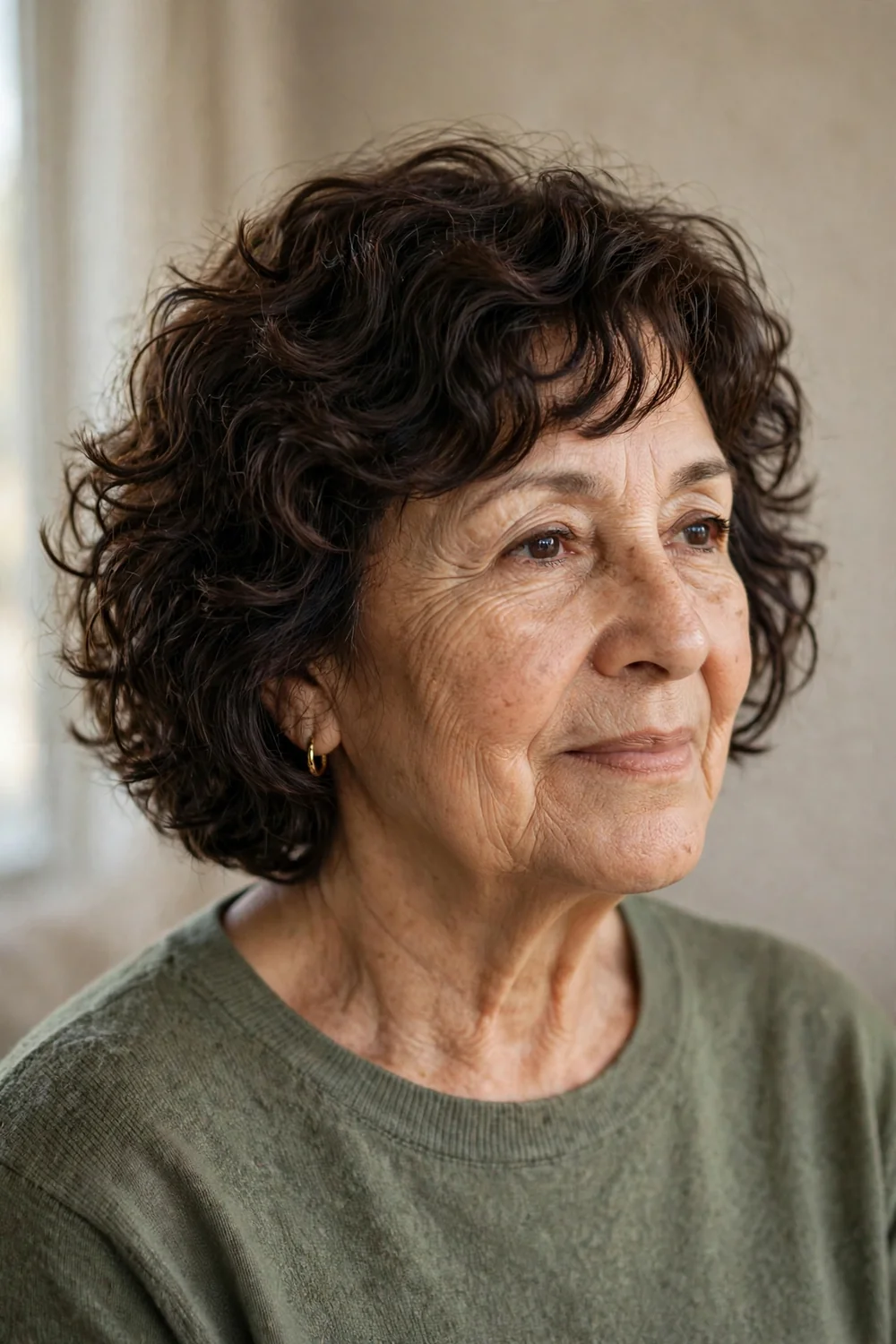
Choppy does not mean messy here. Short, varied layers are cut into the bob so curls separate into defined pieces with space between them, giving an edgy, modern finish that still reads age-appropriate. This suits women who find uniform curls boring and want visible texture. The cut needs a confident stylist: choppy layers on curls must be cut dry, since wet cutting cannot predict where each piece will land, and the result reads confident without trying too hard.
Try this: Emphasize the piecey finish by smoothing a tiny amount of pomade over individual curl clumps once dry. Work piece by piece, not through the whole head at once.
19. Curly Bob with Caramel Highlights
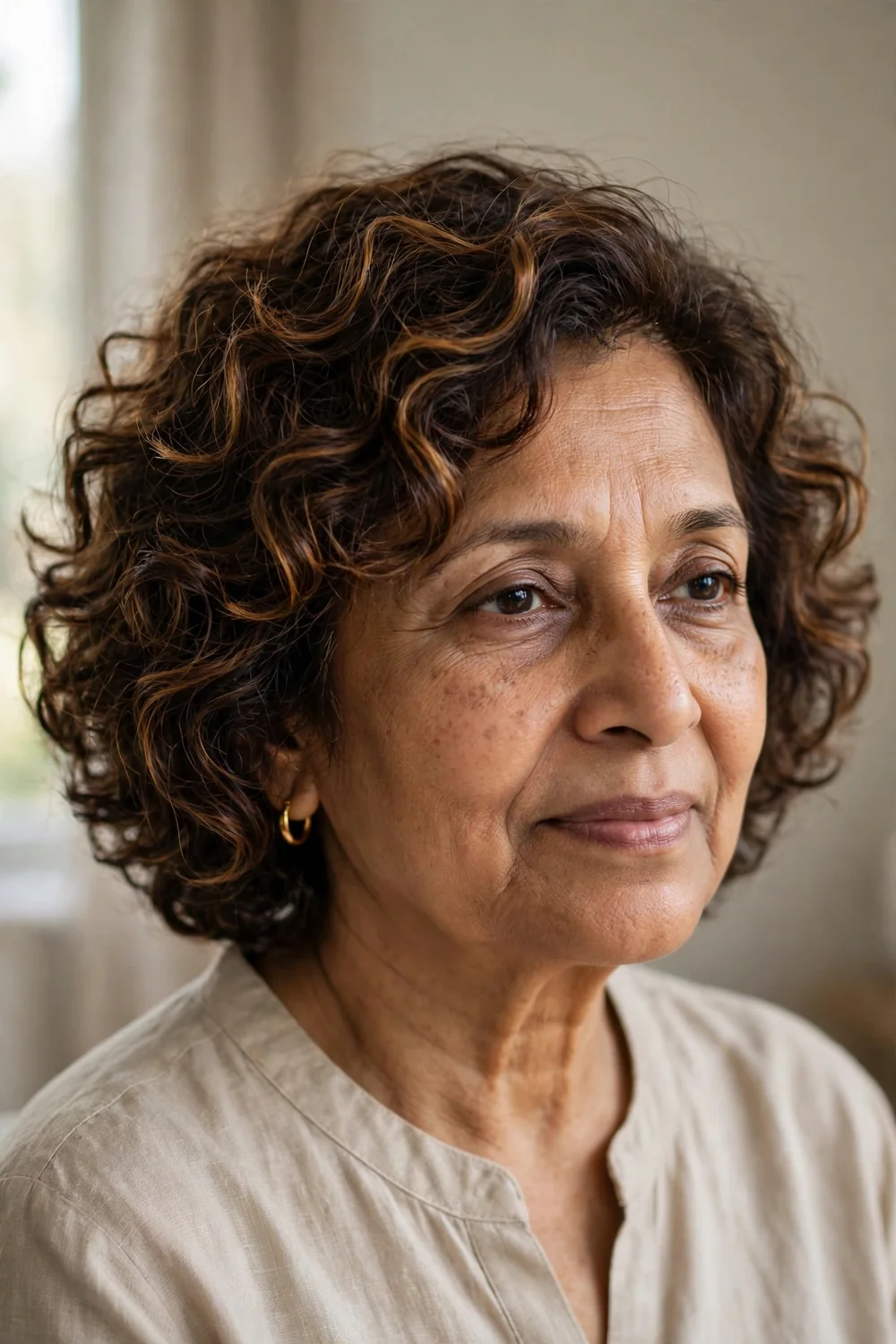
Caramel is the warm neutral of highlight colors: it flatters warm and neutral skin tones and blends with brown, black, and salt-and-pepper bases. Woven through a curly bob, caramel pieces catch light as the curls move, which makes the whole style look thicker and more dynamic. It is also one of the most forgiving colors for at-home root touch-ups between salon visits, since the warm tone disguises regrowth lines. On gray-blending hair, caramel pieces bridge the gap between dyed lengths and natural silver roots.
Try this: Protect the color with a sulfate-free shampoo. Sulfates strip warm tones fast, and caramel turns brassy within weeks under harsh cleansers.
20. Curly Bob with Lowlights
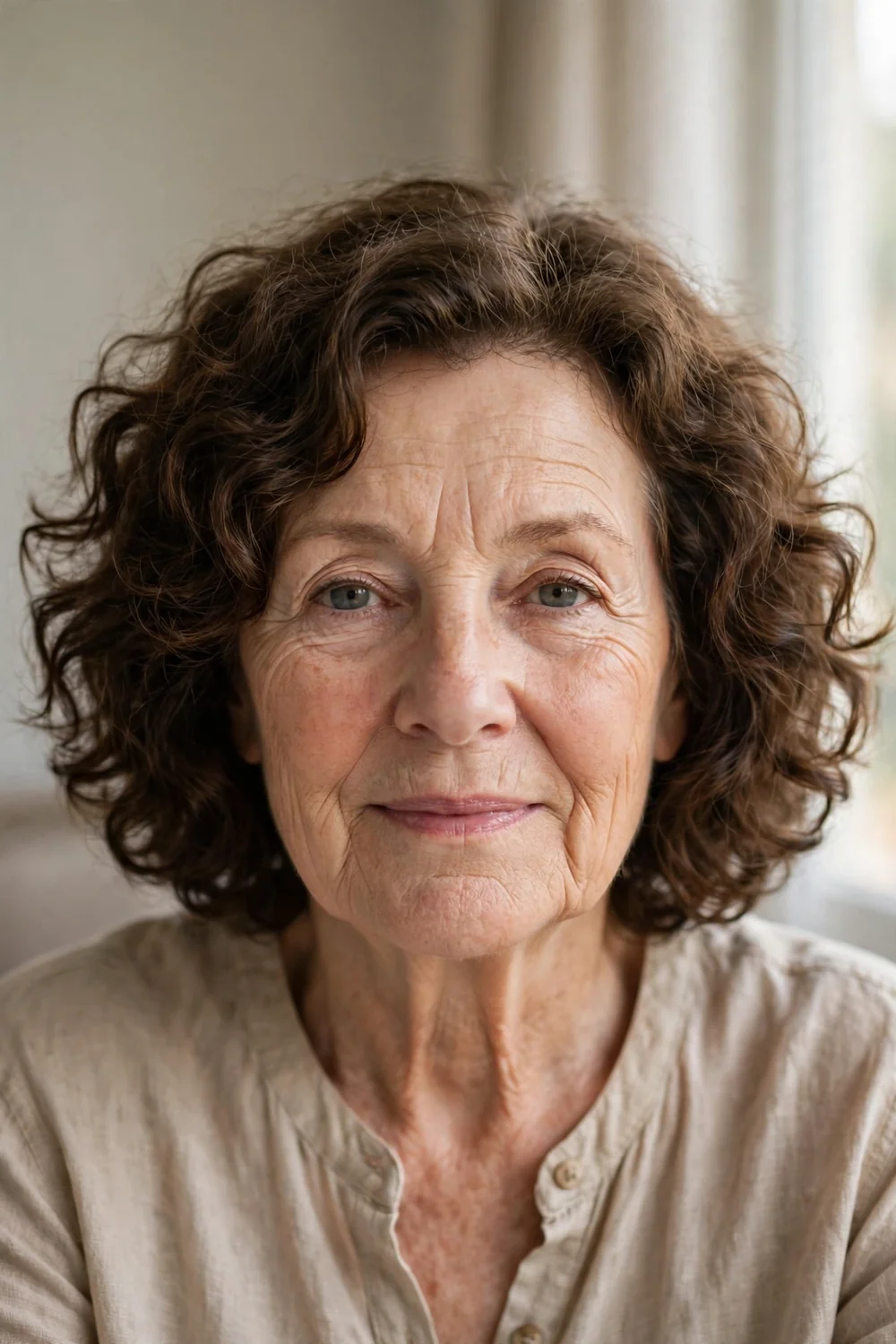
Highlights get the attention, but lowlights do the quiet work. Adding deeper pieces between lighter curls creates shadow and contrast, which makes the overall style look denser. Women whose color has gone flat from years of all-over dye gain the most: lowlights restore the dimension that single-process color erases. The effect is subtle enough for conservative workplaces but visible enough to notice in sunlight. They also grow out invisibly, since the darker pieces simply melt back into the base.
Try this: Ask for lowlights two levels deeper than your current color, placed mostly underneath and through the interior. That placement builds depth without darkening the face-framing pieces.
21. Curly Bob with Chunky Highlights
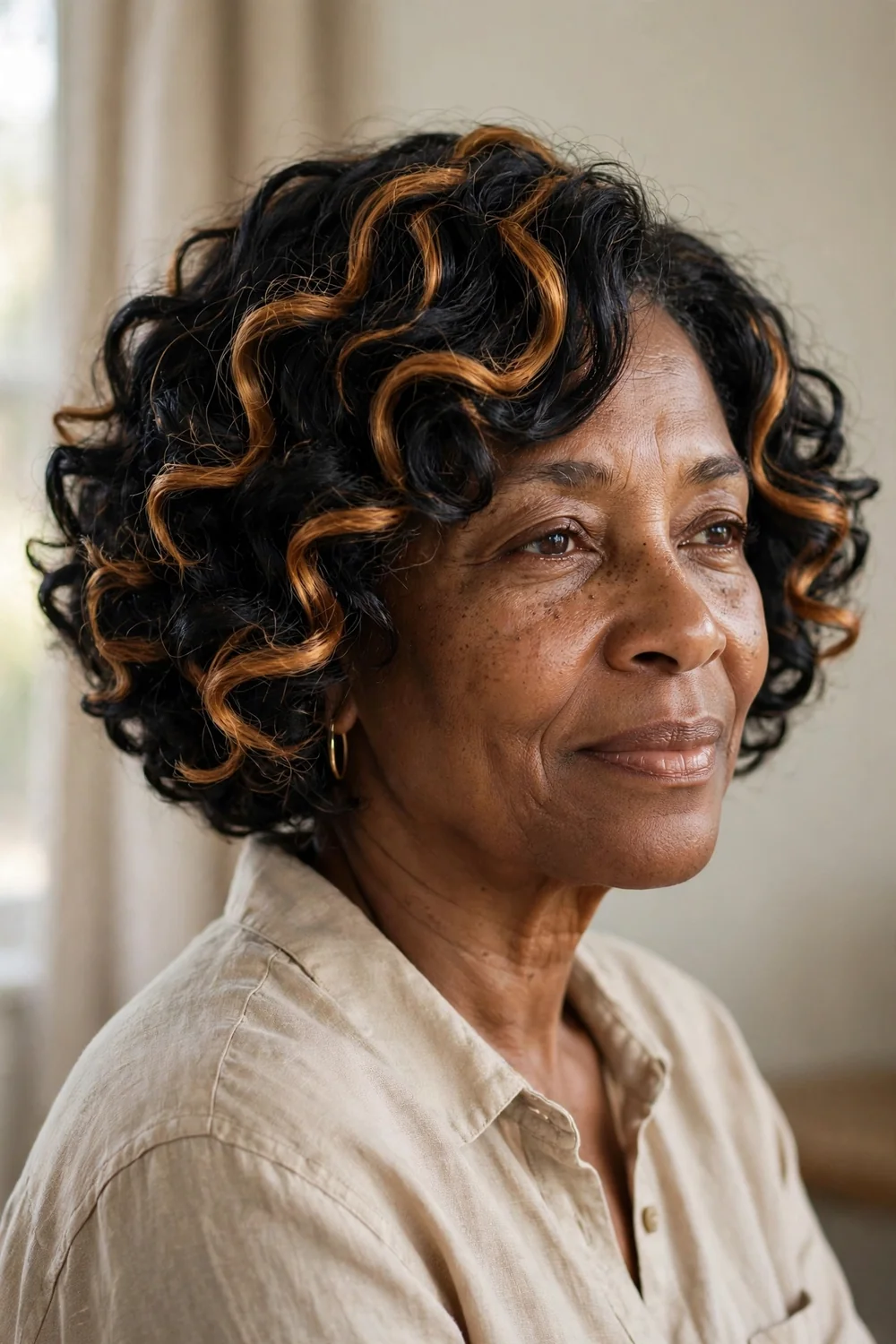
Thin, blended highlights whisper; chunky ones speak up. Thicker ribbons of lighter color woven through dark curls create bold contrast that shows off every twist and turn of the curl pattern. This suits confident dressers and women who want their hair to read as a deliberate style choice. The contrast does fade with washing, so plan a toner refresh around week 6 to keep the pieces crisp, and keep the chunkiest pieces away from the hairline for a softer grow-out.
Try this: Place the boldest pieces through the interior and crown where they catch the most light. Interior placement gives the drama without an obvious regrowth line at the part.
22. Curly Bob with Red and Auburn Highlights
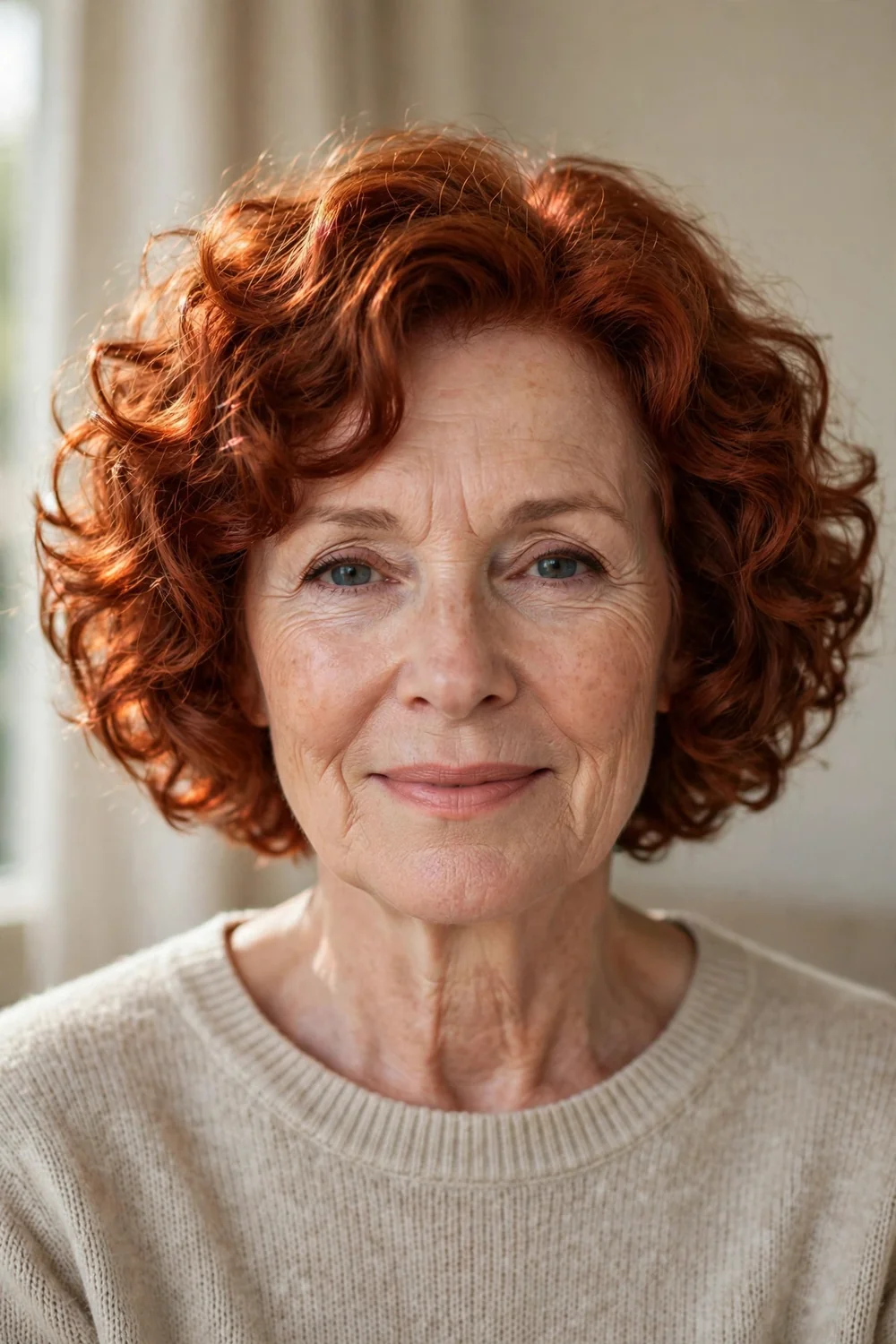
Red wakes up a curly bob like nothing else. Auburn and copper pieces add warmth that flatters most skin tones over 50, and the color seems to glow from inside curly texture. Women with naturally warm undertones can wear the boldest versions; cooler skin tones do better with deeper auburn rather than bright copper. Red fades faster than any other color, so commit to color-safe products before you book. A gloss treatment at week four revives the richness without a full color appointment.
Try this: Wash in the coolest water you can stand. Hot water opens the cuticle and releases red molecules fast; cool rinses can double the time between color appointments. For lighter warm-toned options, these blonde bob hairstyles for women over 50 show how brightness works on mature hair.
23. Shaggy Curly Bob
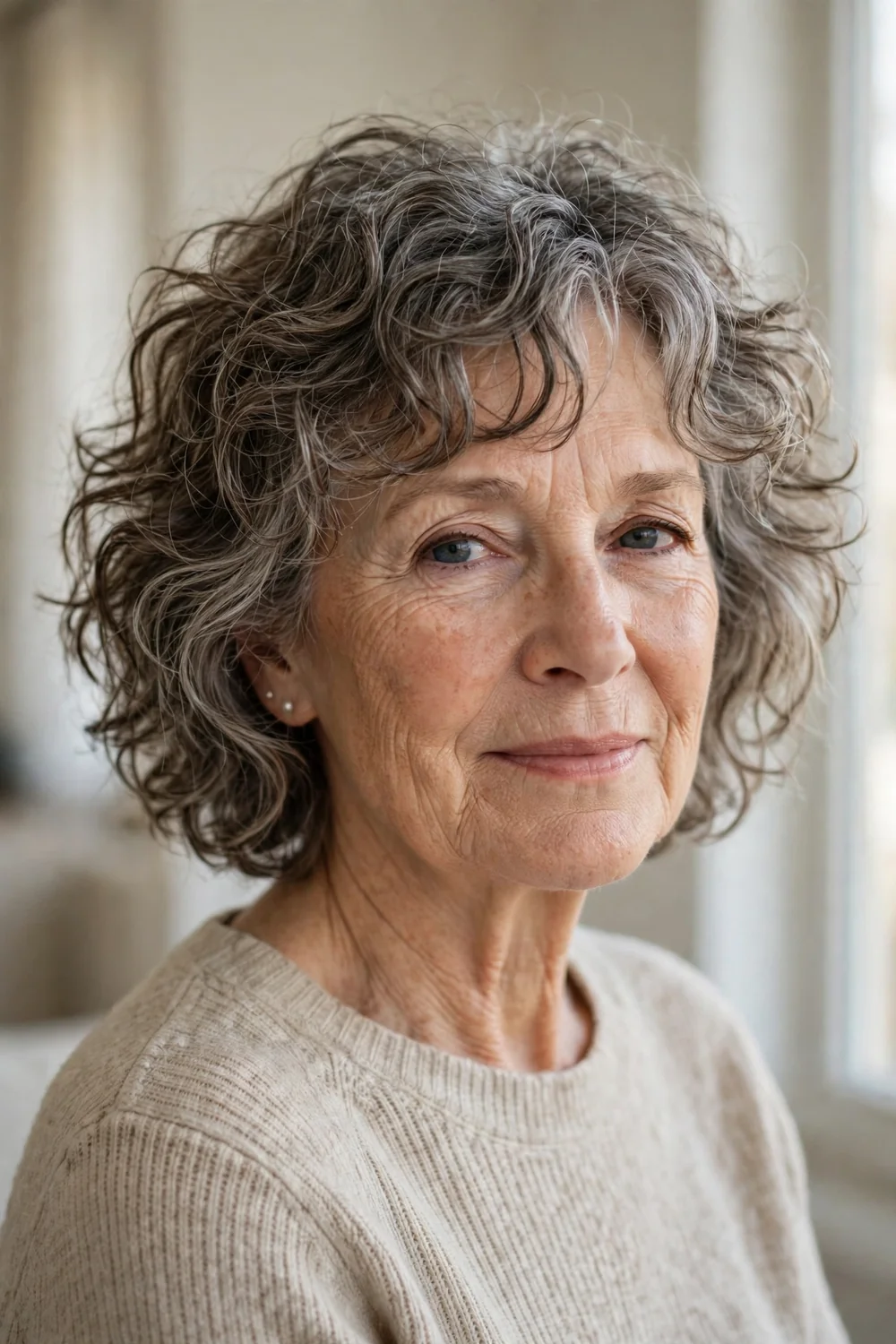
The shag brings rock-and-roll ease to the bob: many short layers, airy ends, and a deliberately undone finish. On curly hair it prevents the heavy, rounded look that one-length bobs can develop, since the layers let curls fall at different lengths. Salt-and-pepper hair looks particularly good in a shag because the varied layers show off every tone. This cut grows out better than most, making it ideal if you stretch salon visits to 10 or 12 weeks.
Try this: Let it air-dry completely, then shake the roots with your fingertips. The shag’s texture comes from movement, not product, so keep styling products minimal.
24. Curly Lob at Collarbone Length
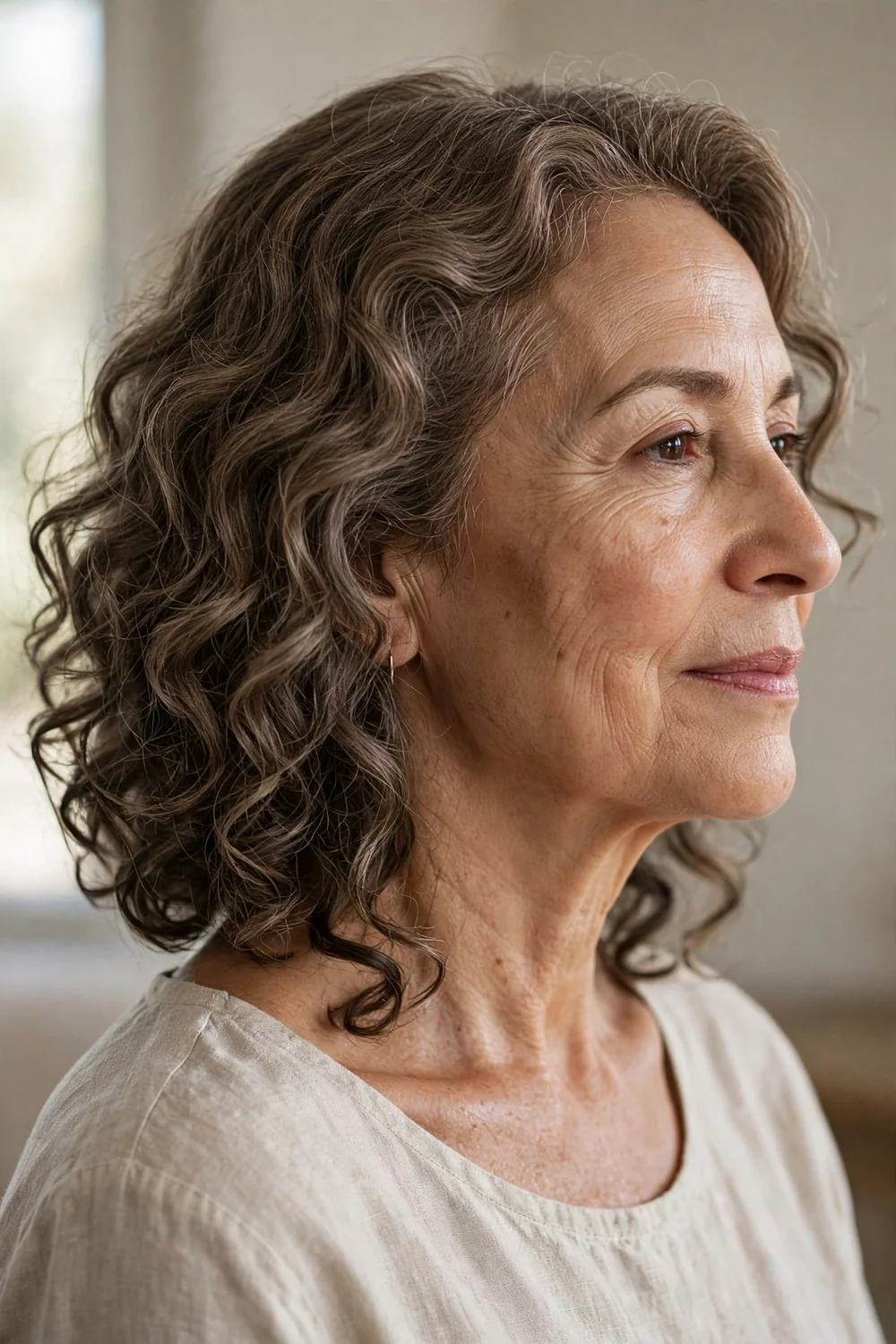
Not ready to go short? The lob keeps you in the bob family with extra length insurance. Falling at the collarbone, it gives curls room to elongate and relax while still delivering the bob’s face-framing effect. This length suits women transitioning from long hair, since the change feels significant without feeling drastic. It also offers the most styling versatility here: the length can still pull into a low ponytail on busy days.
Try this: Long layers are non-negotiable at this length. Without them, the weight of the extra inches pulls the top flat while the ends puff out.
25. Low-Maintenance Wash-and-Go Curly Bob
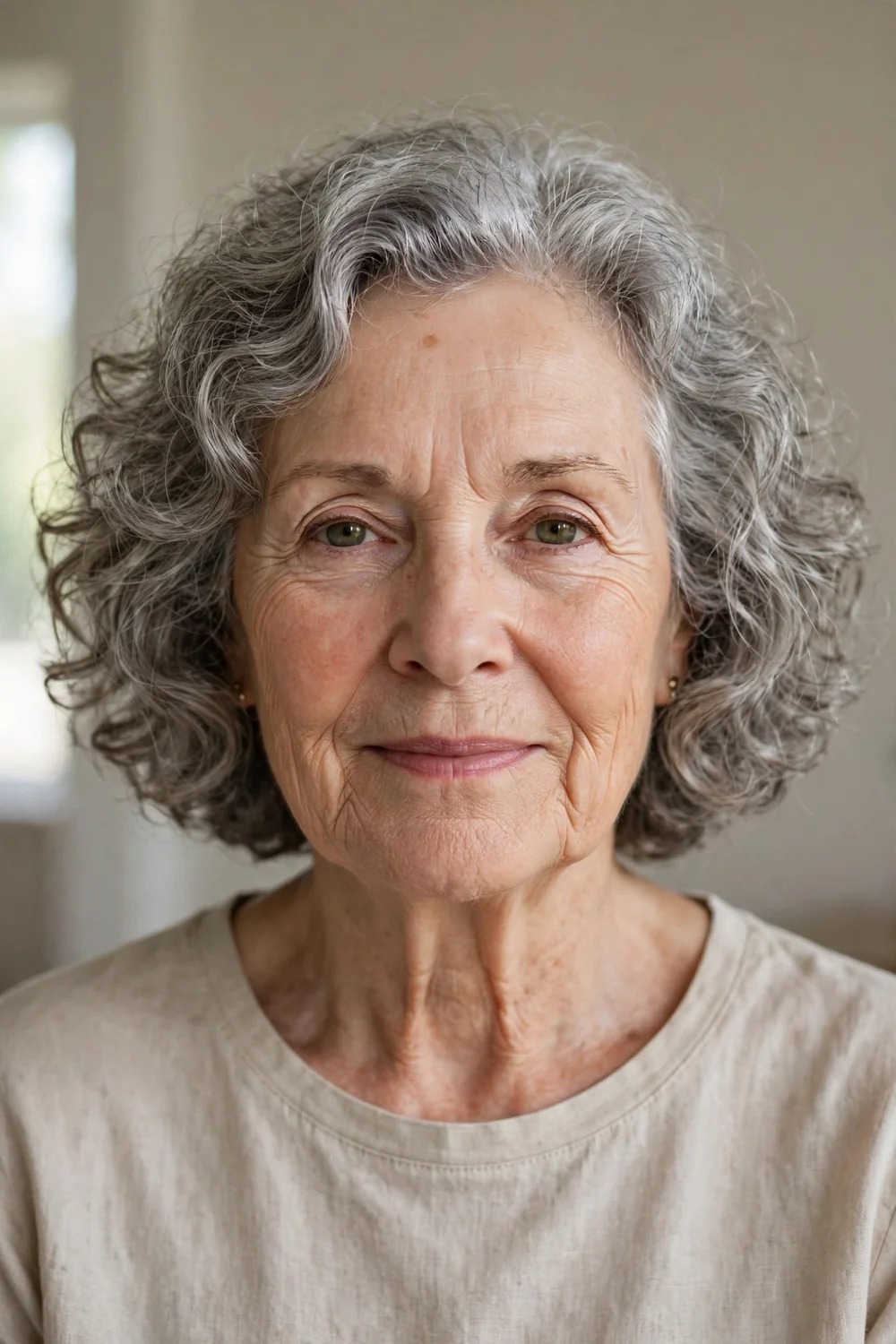
This is the cut for women who want to stop thinking about their hair. Shaped with minimal layering and a blunt-ish perimeter, it relies on your natural curl pattern to provide the shape, so styling means applying product to wet hair and walking away. It works best on 2C to 3B patterns that form reliable clumps on their own. Honest caveat: wash-and-go still means wash day takes 20 minutes; the payoff is zero effort on the days between.
Try this: Pineapple your hair at night: gather it into a loose high ponytail with a silk scrunchie. Morning curls need only a water mist to revive.
26. Curly French Bob
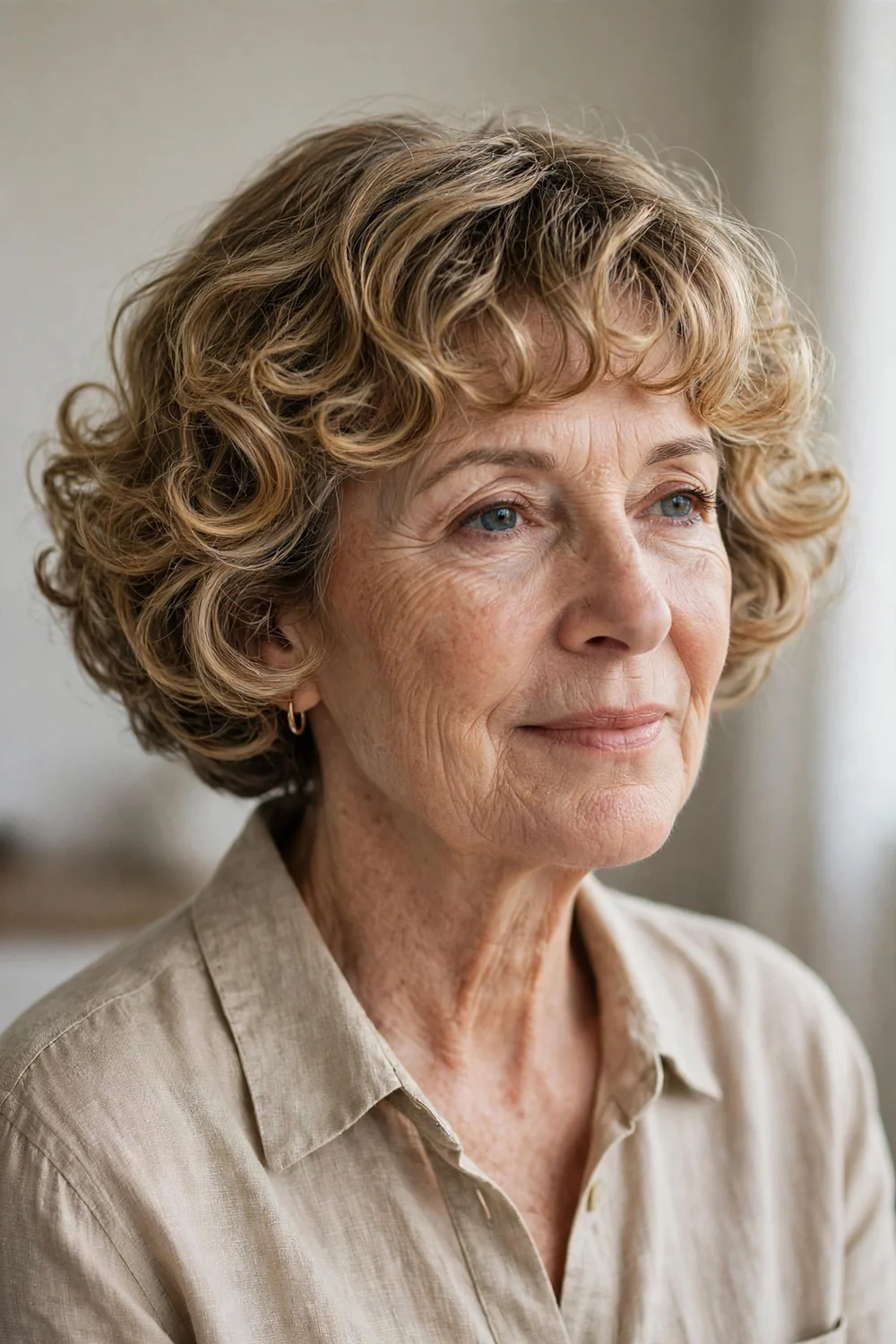
The French bob crops the classic cut shorter, ending at the cheekbone with a full fringe, and the curly version softens the geometry into something romantic. It suits petite faces and women who like a distinctive, fashion-forward look. The fringe needs trimming every 3 to 4 weeks to stay at the right length, so factor that maintenance into your decision before committing. The payoff is a look with real personality that stands out in a sea of longer styles.
Try this: Style the fringe by finger-coiling each curl while very wet, then let it air-dry without touching. Curly fringe frizzes the moment fingers get involved mid-dry.
27. Middle-Parted Curly Bob
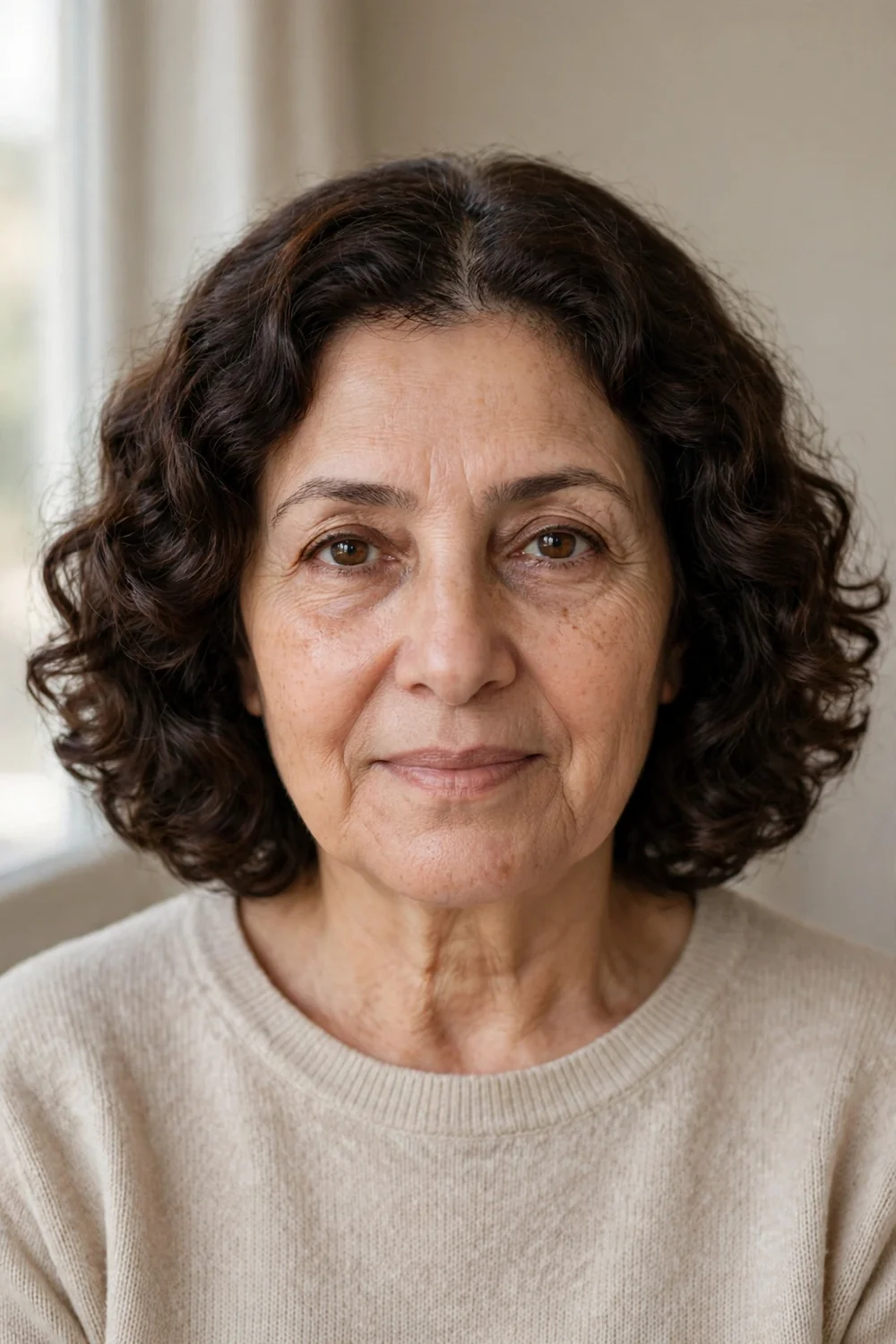
The middle part divides the bob into two even curtains of curls, which suits oval and heart-shaped faces particularly well. It reads calm and symmetrical compared with the energy of a side part, and it shows off both sides of the haircut equally. Women with a strong cowlick at the front hairline should test-drive this part for a week before cutting, since a stubborn cowlick can fight a center part daily.
Try this: Establish the part on soaking-wet hair with the tail of a rattail comb. Once curls dry around a part, they remember it for days.
28. Curly Bob for Thick Hair
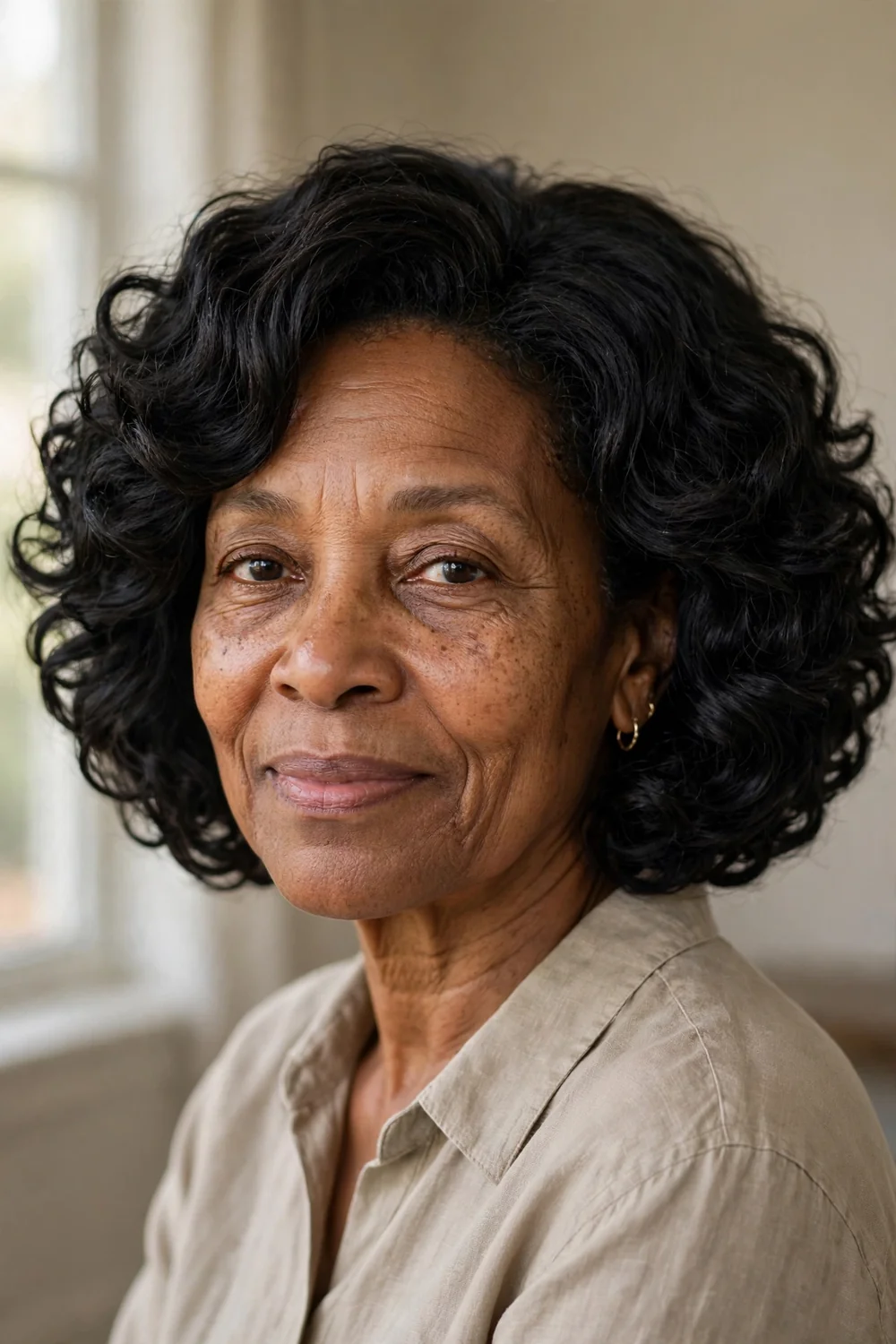
Thick curly hair in a bob needs interior weight removal, not just a shorter length. This cut keeps the chin-length outline but thins the inside with long layers and careful texturizing, so dense curls sit in a controlled rounded shape instead of expanding outward. Women with thick 3B to 4A hair finally get a bob that does not grow wider every humid day. Tell your stylist you want debulking, not just layering; the techniques differ.
Try this: Dry with a diffuser attachment that has a wide bowl. It dries dense hair faster without blasting the curl pattern apart the way a concentrator nozzle does.
29. Short Curly Wedge
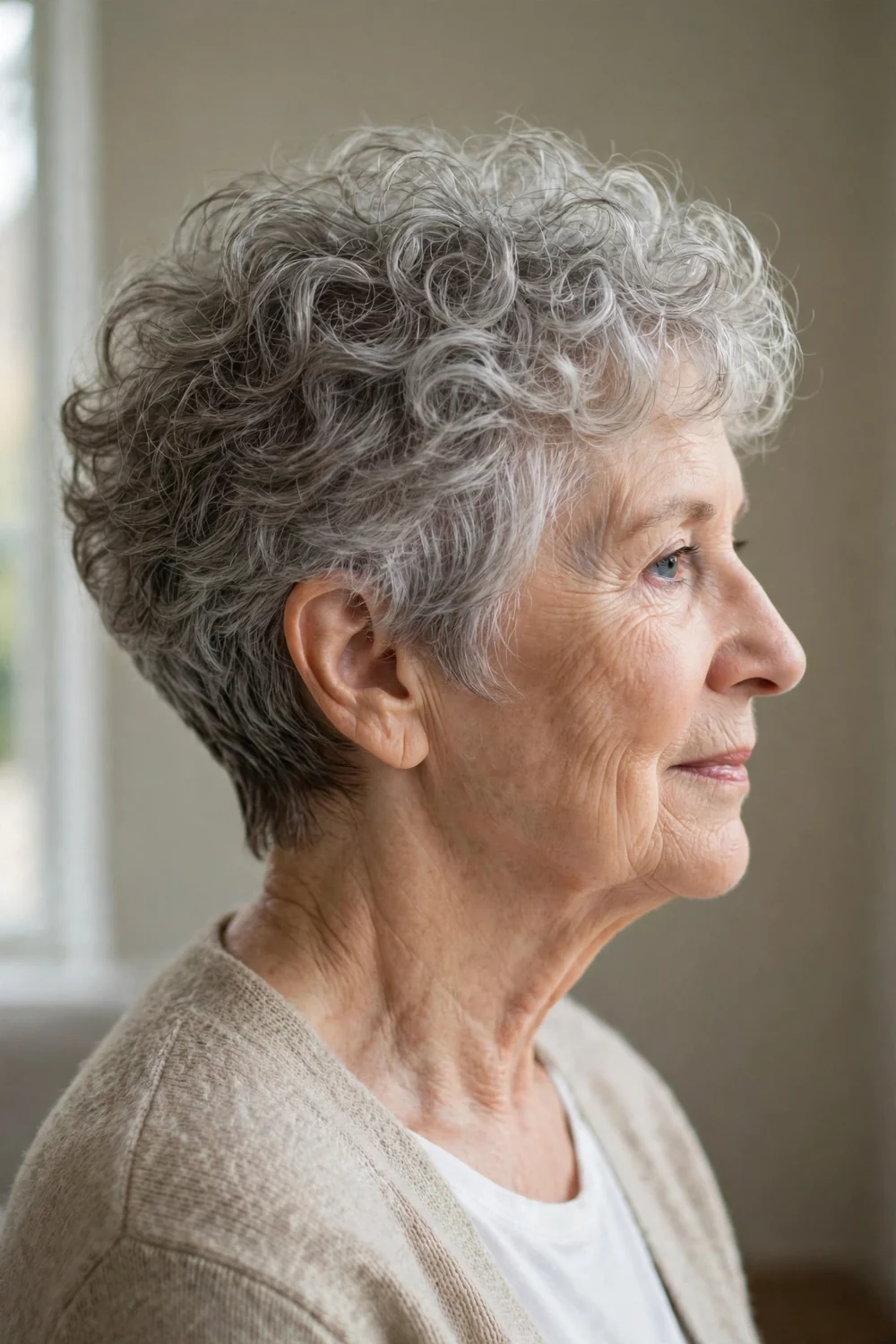
The wedge tapers close at the nape and builds volume through the crown, creating a sleek triangular silhouette that shows off the neck and jawline. On curly hair the texture softens the wedge’s sharp geometry, so it reads chic rather than severe. It suits women who wear earrings and necklaces often, since the tapered nape puts jewelry on display. Fine curly hair gains the most, as the stacked shape manufactures fullness.
Try this: Keep the nape trimmed every 4 to 5 weeks. The wedge’s clean line at the neck is the first thing to lose its shape as hair grows.
30. Asymmetric Curly Bob
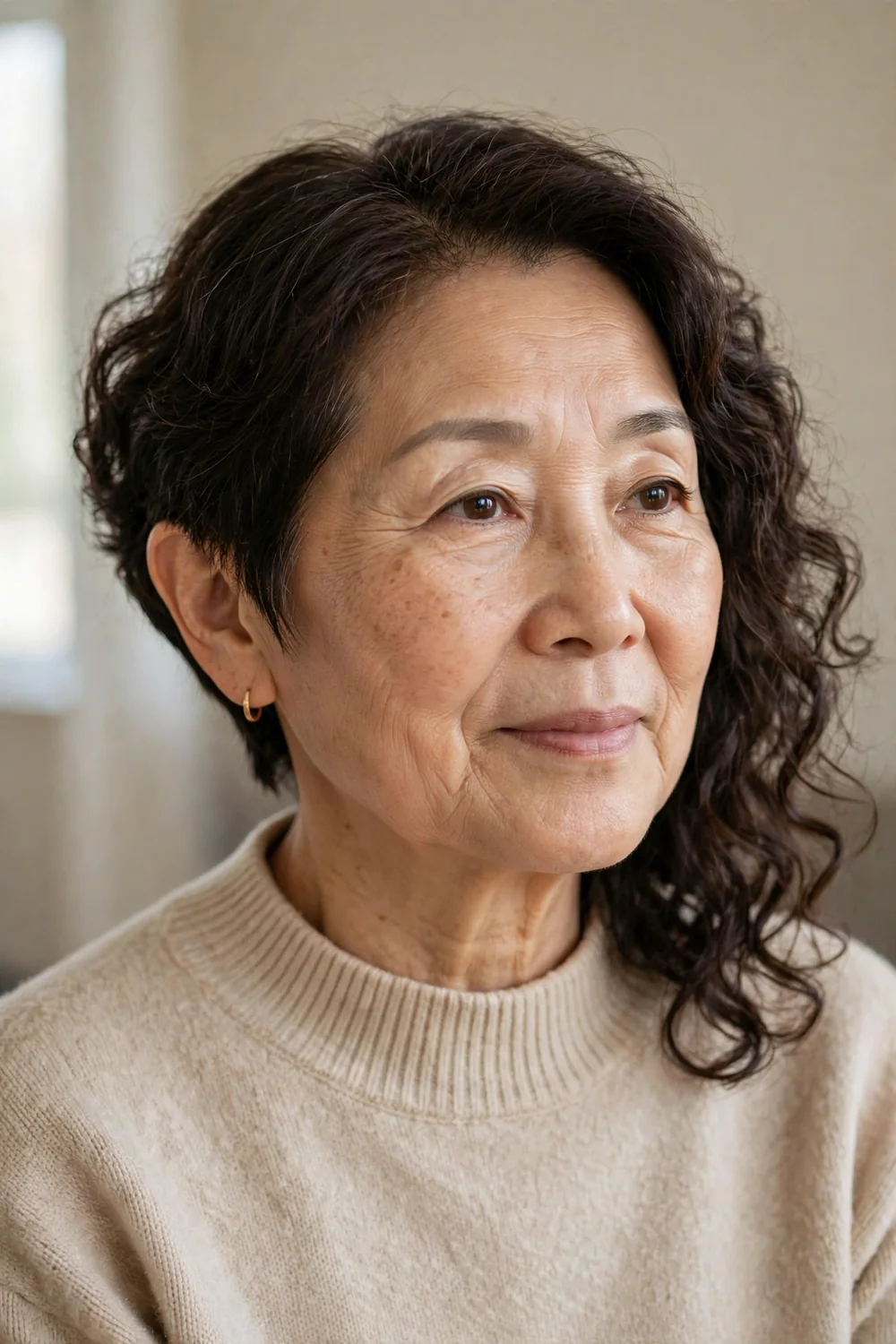
One side grazes the chin while the other tucks shorter behind the ear, and the imbalance makes the whole style feel intentional and modern. The asymmetry draws the eye diagonally across the face, which flatters most face shapes and adds interest to fine curl patterns that can look plain in a symmetrical cut. It grows out into a graduated bob naturally, so the in-between stage still looks deliberate. It also photographs well from the longer side, so part your hair to show that side in pictures.
Try this: Tuck the shorter side behind your ear and add a small clip or earring on that side. The asymmetry becomes a frame for accessories.
Curly Bob Styles Comparison at a Glance
| Style | Best For | Maintenance | Grow-Out |
|---|---|---|---|
| Classic Defined Curly Bob | 2C to 3B curls, any face shape | Low | 8 weeks |
| Stacked Curly Bob | Fine or flat-at-crown curls | Medium | 6 weeks |
| Curly Bob with Curtain Bangs | Women wanting soft forehead coverage | Low | 8 weeks |
| Layered Curly Bob | First-time bob wearers | Low | 8 weeks |
| Jaw-Length Tight Ringlets | 3C to 4A coils | Medium | 8 weeks |
| Voluminous Bold Curls | Dense hair, statement looks | Medium | 6 weeks |
| Angled A-Line Bob | Round or square faces | Low | 6 weeks |
| Graduated Curly Bob | Fine curls needing back fullness | Medium | 6 weeks |
| Messy Tousled Bob | Low-effort routines, second-day hair | Low | 10 weeks |
| Subtle Highlights | Dimension without obvious color | Low | 12 weeks |
| Side-Parted Bob | All curl types, instant volume | Low | 8 weeks |
| Natural Gray and Silver | Embracing natural gray | Low | 8 weeks |
| Face-Framing Layers | Softening jawline, highlighting eyes | Low | 8 weeks |
| Side-Swept Bangs | High foreheads, long faces | Low | 6 weeks |
| Wispy Bangs | Fine to medium curls | Medium | 4 weeks |
| Inverted Bob | Thick hair needing back debulking | Medium | 6 weeks |
| Subtle Balayage | Glow with gentle grow-out | Low | 12 weeks |
| Choppy Piecey Layers | Women wanting visible texture | Medium | 8 weeks |
| Caramel Highlights | Warm skin tones, brown bases | Medium | 10 weeks |
| Lowlights | Restoring depth to flat color | Low | 12 weeks |
| Chunky Highlights | Bold contrast lovers | Medium | 8 weeks |
| Red and Auburn | Warm undertones, statement color | High | 6 weeks |
| Shaggy Curly Bob | Stretching salon visits | Low | 12 weeks |
| Curly Lob | Transitioning from long hair | Low | 10 weeks |
| Wash-and-Go Bob | Minimal styling routines | Low | 8 weeks |
| Curly French Bob | Petite faces, fashion-forward looks | High | 4 weeks |
| Middle-Parted Bob | Oval and heart faces | Low | 8 weeks |
| Bob for Thick Hair | Dense 3B to 4A curls | Medium | 8 weeks |
| Short Curly Wedge | Fine curls, showing off neckline | Medium | 5 weeks |
| Asymmetric Bob | Fine curls wanting visual interest | Low | 8 weeks |
How to Choose the Right Curly Bob for You
Match the cut to your curl pattern first and your face shape second. Tight coils need the jaw-length styles that account for shrinkage; loose waves need the layering that creates curl where the pattern is weak. Then consider your routine honestly: a wash-and-go cut you will actually maintain beats a high-maintenance style you will resent by week three.
Color is the second decision. If you are growing out gray, choose one of the silver-friendly styles and stop fighting regrowth. If you color regularly, pick a technique with the grow-out window that matches your salon schedule. Bring two or three photos to your appointment, and point to exactly what you like in each one so your stylist sees the pattern in your picks.
Mistakes to Avoid
The most common error is cutting wet without accounting for shrinkage. Always confirm with your stylist how much length the curls will lose as they dry, and when in doubt, keep the first cut longer; you can take more off at a follow-up, but you cannot add it back.
Skipping layers is the second mistake. A one-length bob on curly hair almost always becomes a triangle, wide at the bottom and flat at the top. Even minimal interior layering prevents this. Third, avoid brushing dry curls, which separates the pattern into frizz. Detangle only when wet with conditioner in the hair, using a wide-tooth comb from the ends upward.
Frequently Asked Questions
Will a curly bob work if my hair is thinning at the crown?
Yes, with the right cut. Stacked, graduated, and wedge shapes build volume exactly where thinning shows, and a deep side part covers a widening part line. Ask your stylist to keep weight at the crown rather than layering it away, and avoid very dark all-over color, which contrasts with the scalp and makes sparseness more visible.
How often should I trim a curly bob?
Every 6 to 8 weeks for most variations. The shape is the whole style in a bob, so waiting 12 weeks usually means the silhouette has collapsed into something shapeless. Fringe versions like the French bob need fringe trims every 3 to 4 weeks, which many salons do free or cheap between full appointments.
How do I fight frizz in a curly bob?
Apply product to soaking-wet hair, never damp hair, since water helps distribute product evenly and locks the curl pattern before frizz can form. Sleep on a satin or silk pillowcase, and refresh second-day hair with a water mist instead of dry-brushing. If frizz persists, your hair may need more moisture: add a weekly deep-conditioning mask for a month and reassess.
Can I get a curly bob if my hair is wavy rather than curly?
Yes. Loose 2A to 2C waves take well to layered and tousled bob variations, which create curl-like movement through cutting rather than relying on natural coil. Use a diffuser and scrunching to encourage the wave pattern, and choose cuts with more layering, since waves need the encouragement that true curls get for free.
What should I ask for at the salon to avoid the triangle shape?
Ask for interior layers and texturizing through the mid-lengths, with weight kept at the crown. The triangle happens when the bottom is heavy and the top is flat, so the fix is removing bulk from the lower half while building the top. A stylist experienced with curly hair will also cut dry or partially dry so they can see the true shape as they work.
Final Thoughts
The right curly bob does not fight your hair or your age; it uses both. Pick the variation that matches your curl pattern and your real morning routine, keep up with trims, and let the texture do the talking. After years of watching these cuts on mature hair, the women who love their bobs most are the ones who chose honesty over aspiration at the salon chair.

