


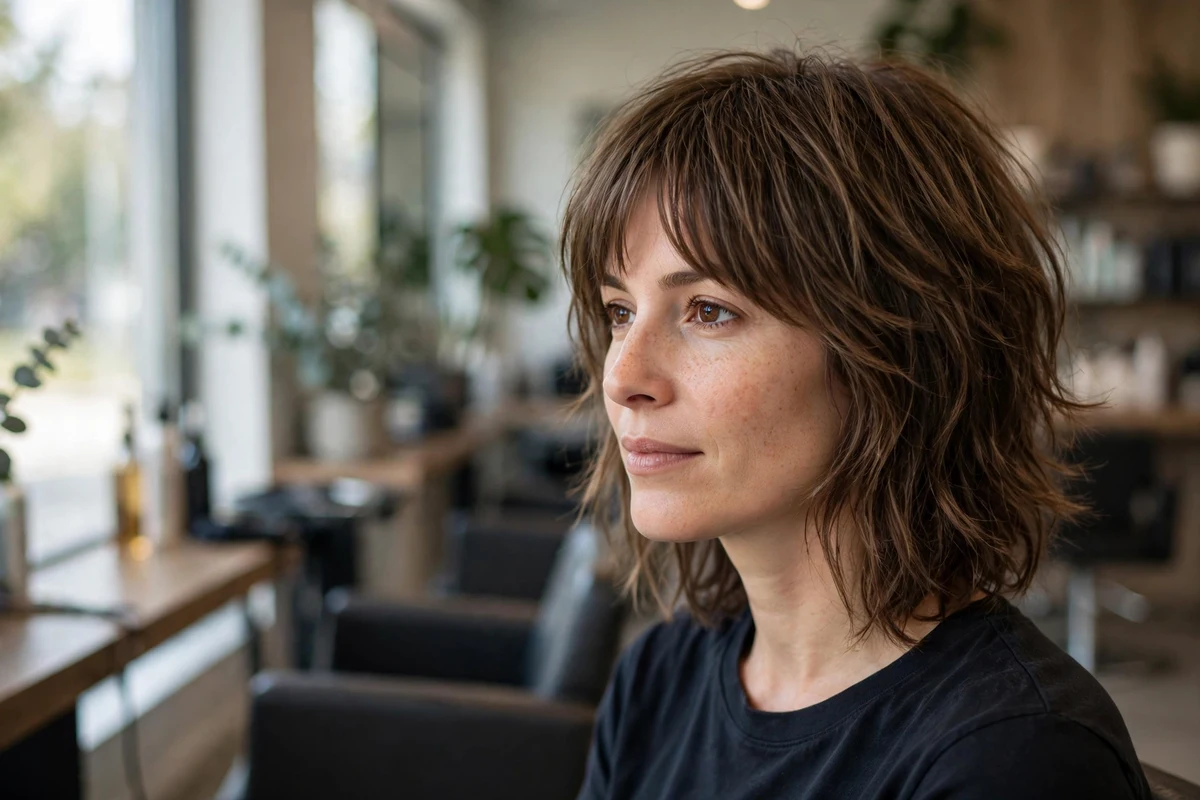
A modern shag haircut is a layered cut built on choppy texture, piecey ends, and face-framing that runs from pixie-short to collarbone-long. The 2026 version drops the heavy 70s curtain and leans into hybrids: wolf cuts with mullet energy, butterfly shags with airy volume, octopus cuts with dramatic length contrast, and soft french shags with brow-skimming fringe. If you want movement without spending an hour styling, this group of cuts delivers.
Quick takeaways:
- A modern shag is defined by interior layers and textured ends, not one fixed length.
- Wolf, butterfly, octopus, bixie, and french shags are all variations on the same cut.
- Curtain, bottleneck, and baby bangs are the current fringe pairings.
- Most modern shags air-dry well; texture products matter more than hot tools.
- Book a trim every 6 to 8 weeks to keep the layers crisp.
1. Textured Shag with Choppy Layers
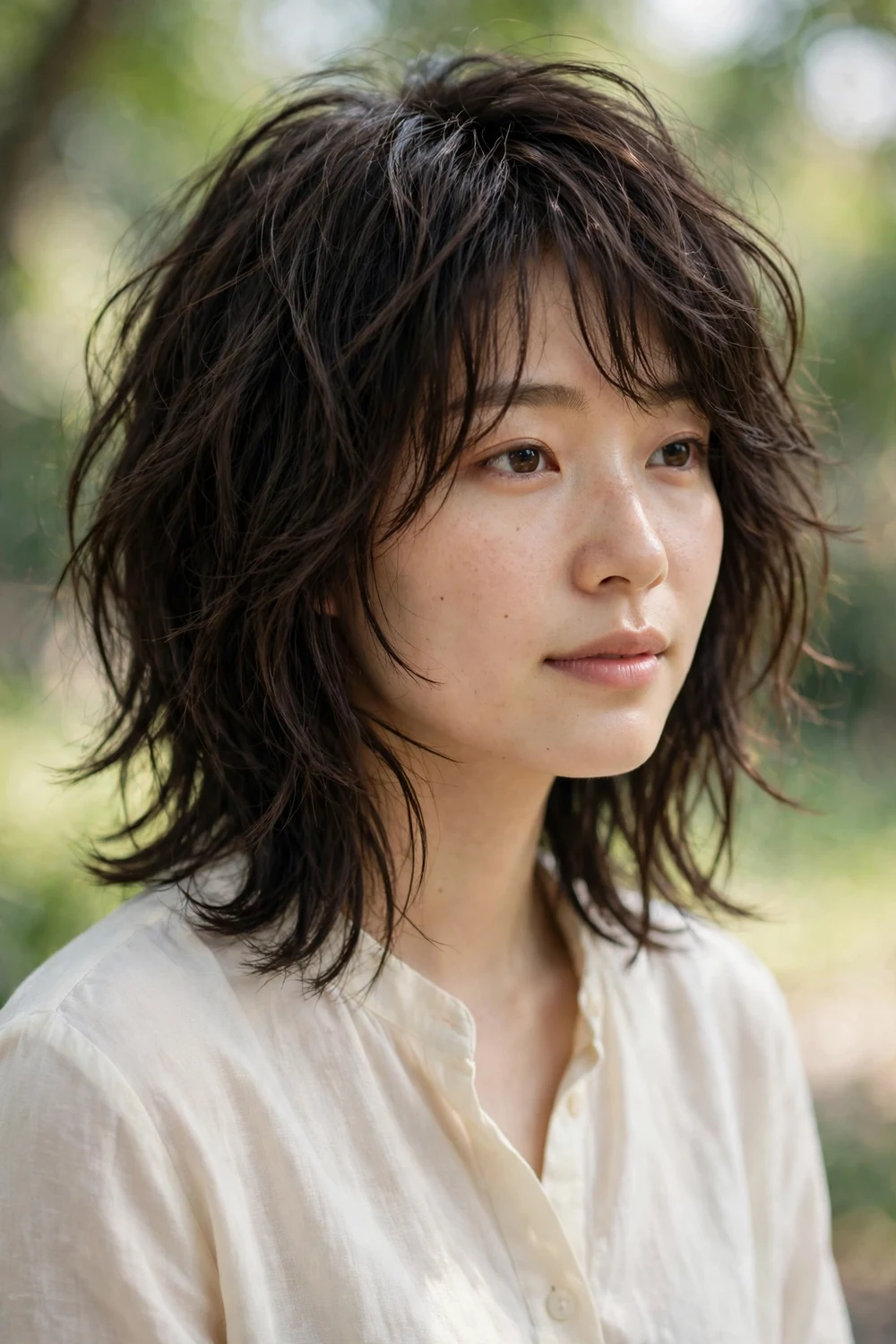
For the full retro take on this shape, the 70s shag haircut long for women article covers 30 ideas including feathered, curly, and mullet versions.
This is the baseline modern shag everything else riffs on. A stylist cuts short interior layers through the crown, then point-cuts the ends so they break apart instead of sitting in a blunt line. The result has built-in movement at shoulder length and looks styled with almost no effort. Thick hair loses bulk, fine hair gains the illusion of density. Ask for layers that start around the cheekbones. Most appointments take 45 minutes, and the cut suits wash-and-go routines.
Try this: Mist damp hair with sea-salt spray and scrunch upward, then let it air-dry for piecey separation.
Difficulty: Easy | Cost: $70–$120 salon cut
2. Curly Medium Shag
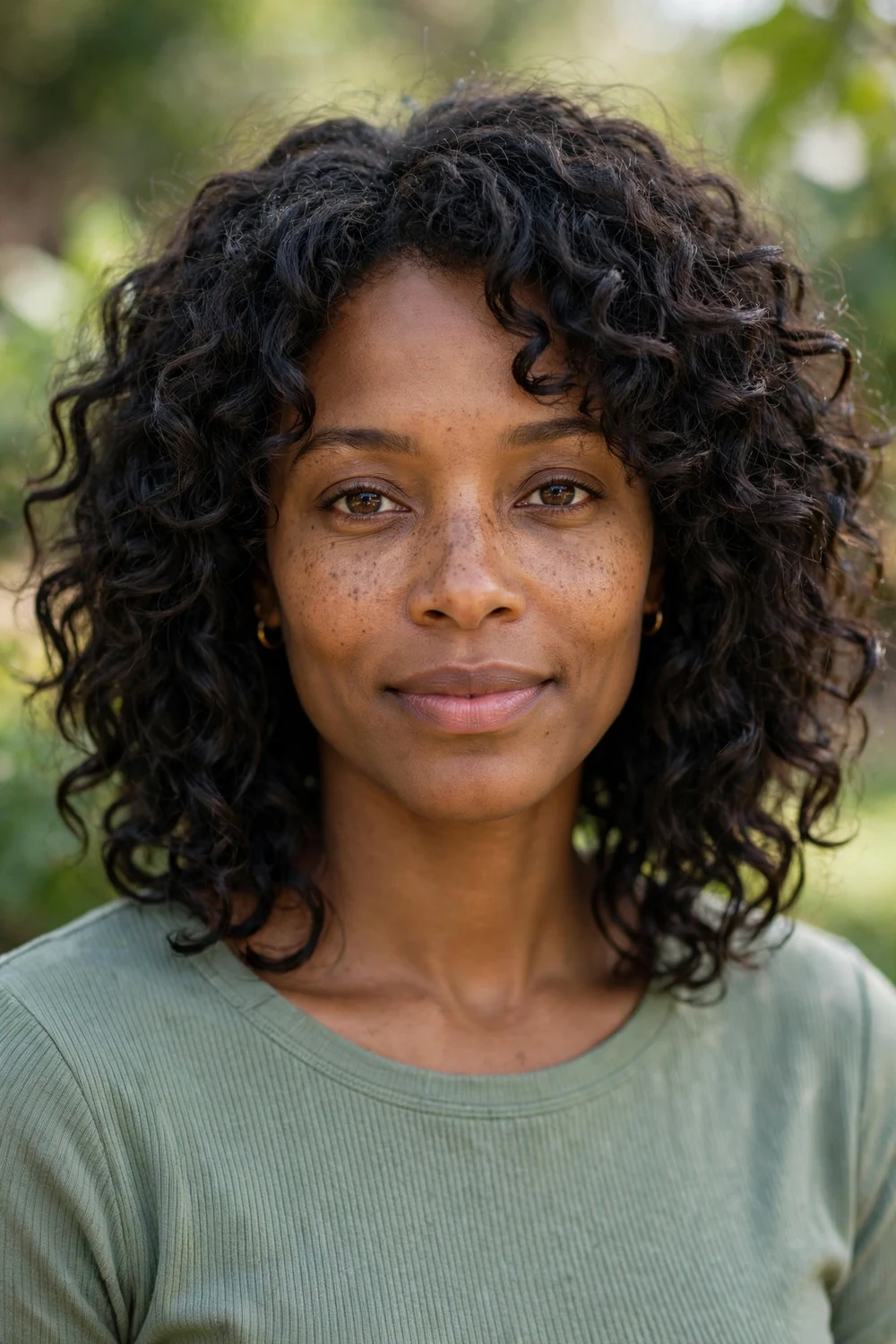
Curls and shags were made for each other. Cut dry, curl by curl, the layers stack into a rounded shape that keeps volume through the sides instead of collapsing at the roots. Lengths land between the chin and shoulders, with shorter pieces around the face to lift the curl pattern. The shape reads current because the outline stays full rather than triangular. Bring reference photos showing your exact curl type, since shrinkage changes everything.
Try this: Rake curl cream through soaking-wet hair, then diffuse on low heat or air-dry without touching the curls.
Difficulty: Easy | Cost: $80–$140 salon cut
3. Sleek Shag with Wispy Bangs
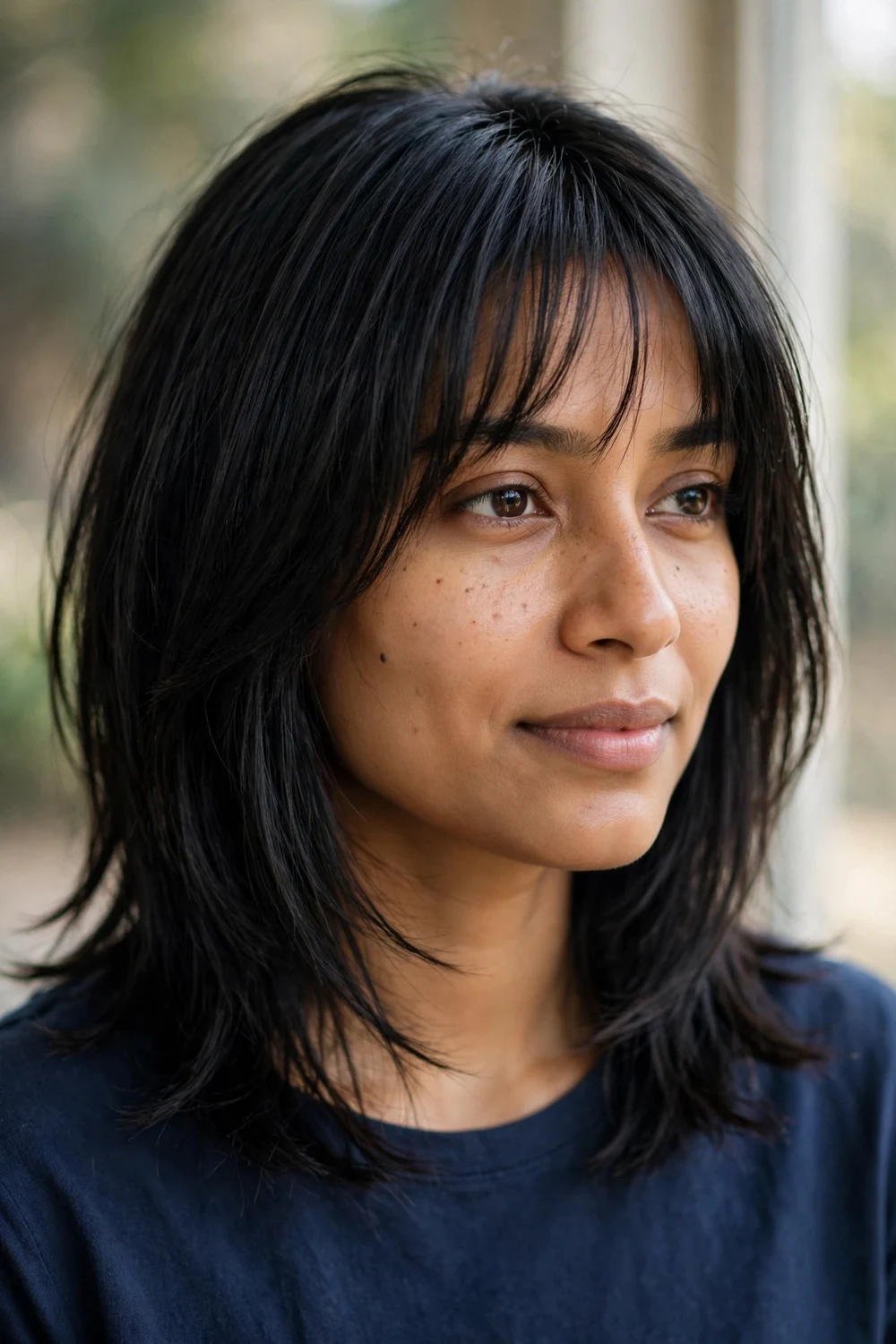
Not every shag has to be tousled. This version keeps the layered skeleton but wears it smooth, which suits straight hair and sharper dress codes. A flat iron glides over the layers to make them lie in clean ribbons, and thin wispy bangs soften the forehead line. Apply a heat protectant spray before any hot tool touches the hair, then finish with a pea-sized drop of serum on the ends only.
Try this: Flat-iron in small sections, flicking the ends outward at the bottom layer for a flipped finish.
Difficulty: Medium | Cost: $75–$130 salon cut
4. Shag with Face-Framing Highlights
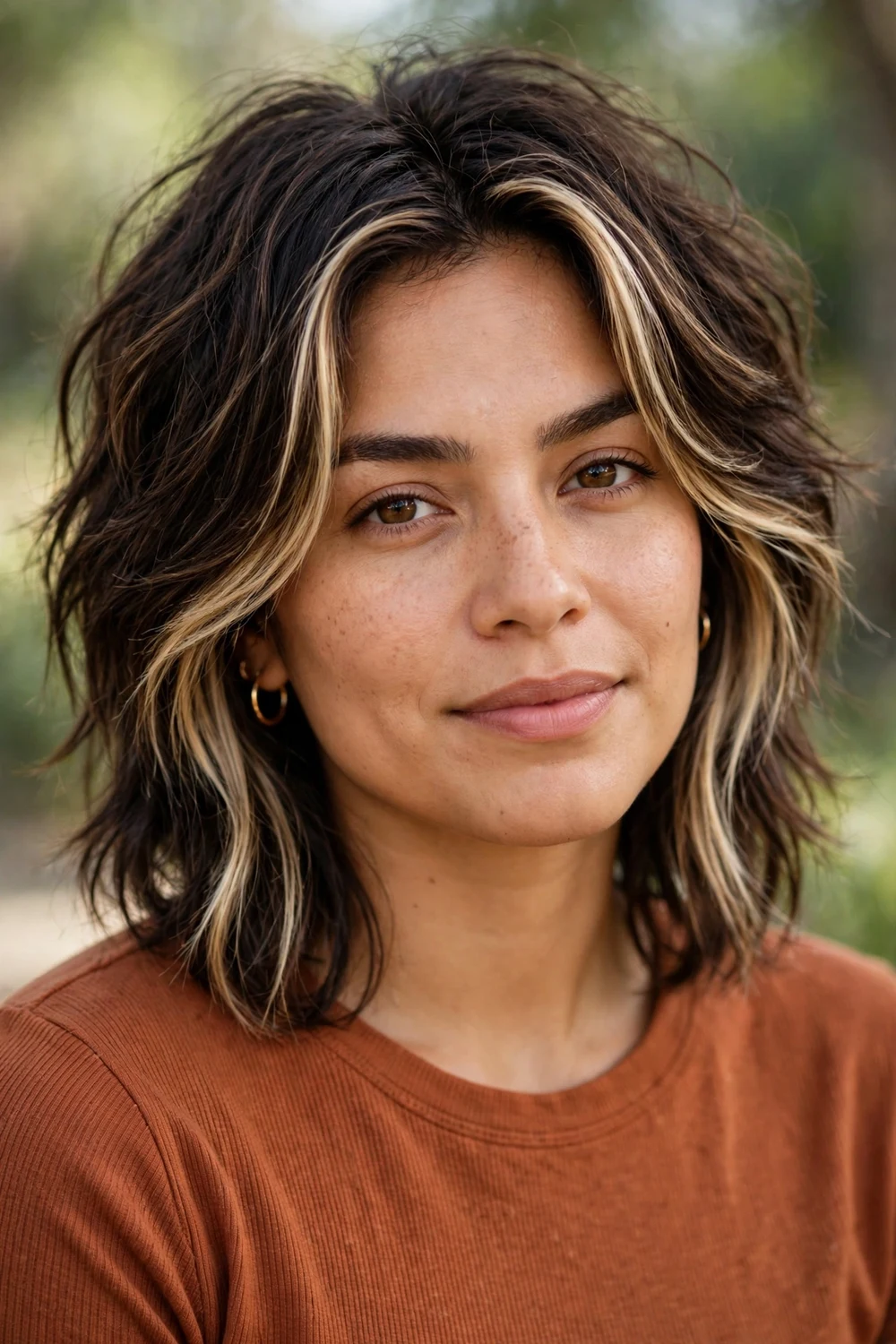
Color does half the work here. Two to three shades lighter than the base, painted in thin ribbons around the face, make every layer edge visible. The technique works on any shag length and suits brunettes best, where the contrast reads clearly. Keep the highlights within the front six inches of hair so the back stays dimensional but calm. Toner every 8 weeks stops the pieces from turning brassy. A clear gloss at week four keeps the ribbons bright between toners.
Try this: Ask for a “money piece plus”, the classic face frame extended slightly deeper into the sides.
Difficulty: Medium | Cost: $120–$220 cut and color
5. Long Layered Shag for Thick Hair
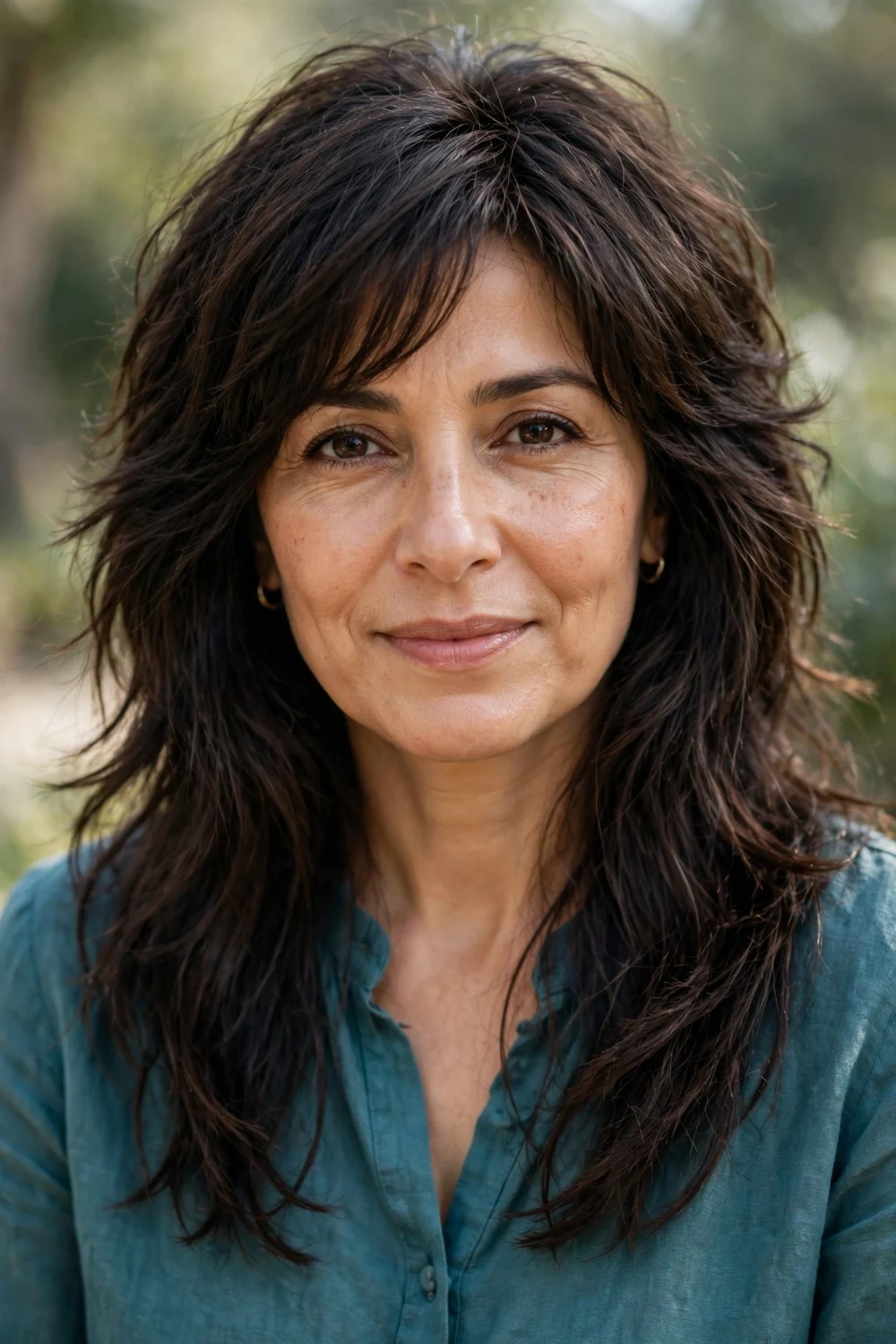
Thick hair past the shoulders can feel like a curtain. This cut removes interior weight with long, disconnected layers starting below the chin, so the mass moves instead of hanging. The perimeter stays long while the top gets airy, which keeps length you can still pull into a ponytail. Stylists often thin the mid-lengths with a razor to stop the ends from flaring. Schedule 60 to 90 minutes for the appointment.
Try this: Blow-dry with a round brush only at the roots, then let the lengths fall naturally to avoid puffiness.
Difficulty: Medium | Cost: $85–$150 salon cut
6. Very Curly Shag Bob
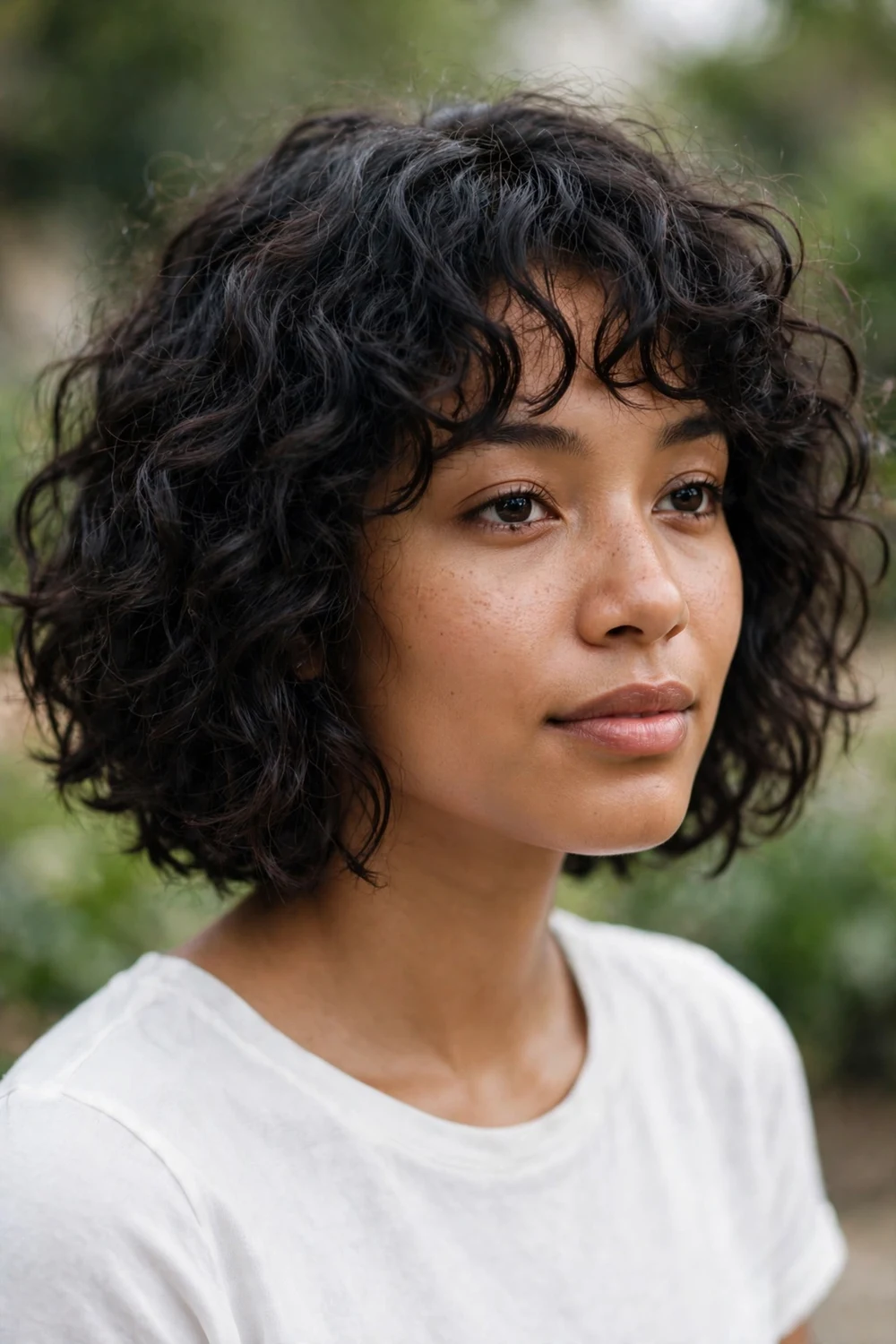
Short, round, and full of spring. This bob-length shag stacks tight layers through the crown so very curly hair builds height instead of width. The nape gets tapered close while the top stays long enough to coil. It is one of the lowest-effort cuts on this list because the shape does the styling. Sleep in a satin bonnet to keep the crown from flattening overnight. Day-three hair often looks better than day one, once the curls settle.
Try this: Refresh day-two curls by misting with water and smoothing a dab of gel over the canopy only.
Difficulty: Easy | Cost: $70–$120 salon cut
7. Choppy Blonde Shag with Curtain Bangs

Blonde plus choppy layers reads fresh rather than dated when the ends are deliberately uneven. The cut sits at the shoulders with shattered layers throughout, and curtain bangs part in the middle to frame both cheekbones. A buttery or beige blonde keeps the texture visible; icy tones can wash out the dimension. Root shadow at the crown stretches the time between color appointments to 10 or 12 weeks. A purple shampoo once a week keeps the blonde clean between visits.
Try this: Twist small sections with a dab of pomade to make the choppiest pieces pop.
Difficulty: Easy | Cost: $130–$230 cut and color
Curtain bangs carry a lot of shag styles right now; for more ways to pair fringe with layered cuts, browse these short shag with bangs ideas.
8. Shaggy Layers with Thick Bangs
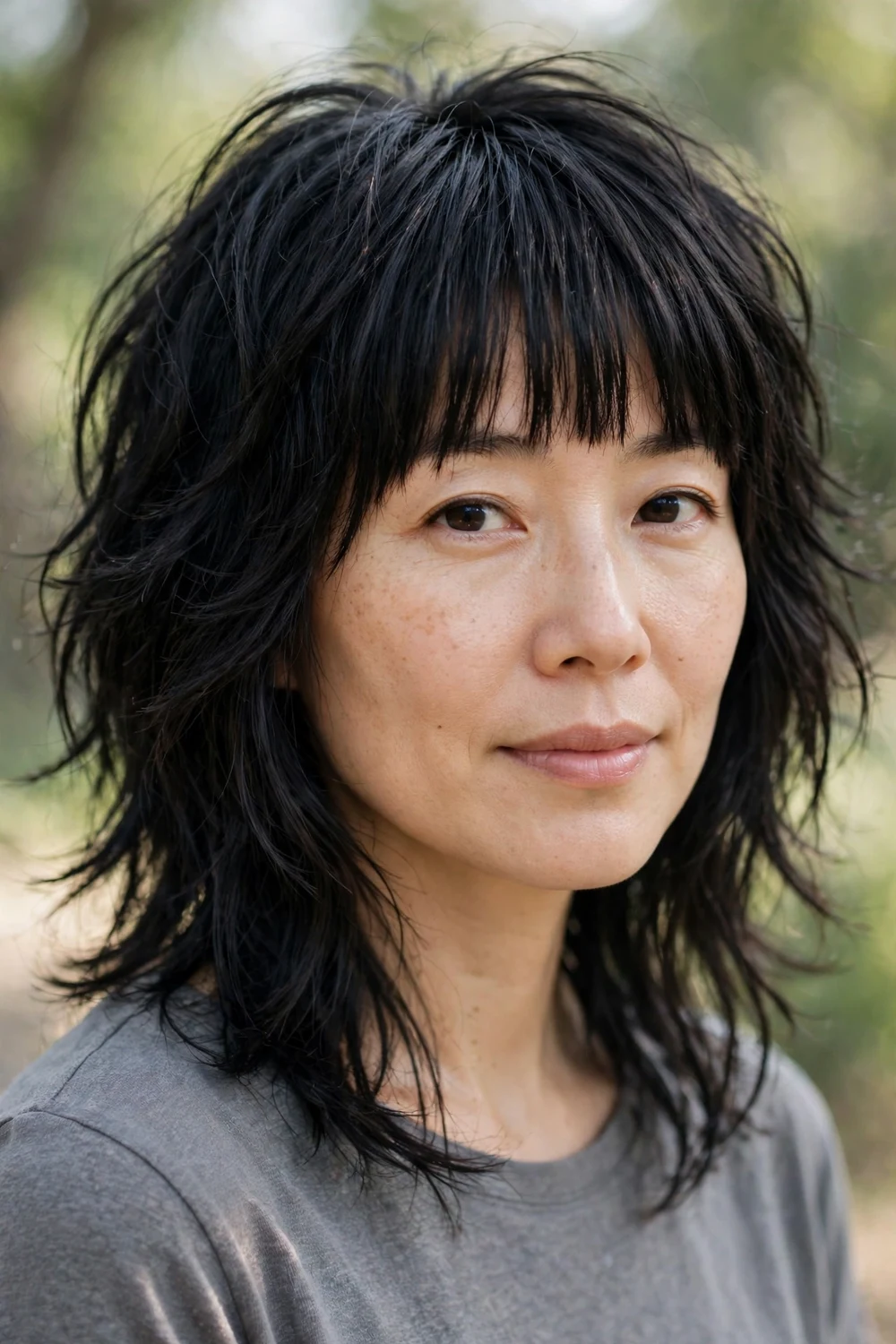
A heavy, straight-across fringe gives this shag its attitude. The bangs are cut thick and blunt at brow level, then the layers below shatter into texture, which creates a strong contrast between the solid fringe and the broken-up lengths. It suits oval and long face shapes best, since the fringe visually shortens the forehead. Trim the bangs every 3 to 4 weeks so they stay above the lashes. Blow-dry the fringe with a paddle brush for a smooth, even line.
Try this: Dry the bangs first with a small round brush, rolling under, before styling the rest.
Difficulty: Medium | Cost: $75–$130 salon cut
9. Feathered-Ends Shag
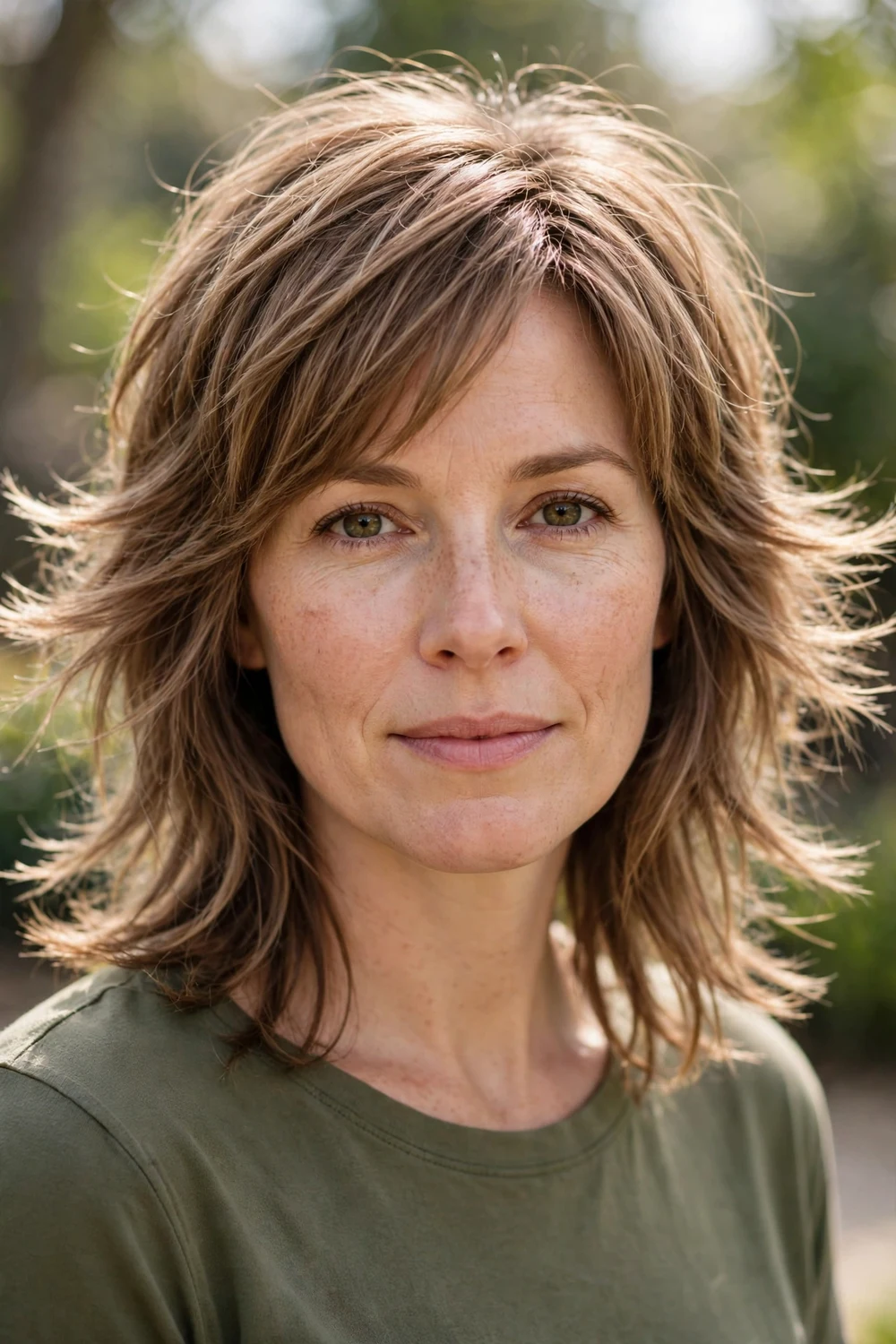
Feathering is a razor technique that tapers each strand to a soft point. Across a shag, it produces ends that flick outward in light wisps rather than chunky pieces. The finish feels airy and works well on fine to medium hair that can’t hold heavy texture. Layers start at the jaw and graduate downward. A light-hold hairspray keeps the flicks in place without gluing them together. This finish pairs well with air-drying, since heat can collapse the wisps.
Try this: Use a 1-inch curling iron on just the bottom two inches, alternating directions for the feathered flip. Apply heat protectant first.
Difficulty: Medium | Cost: $70–$120 salon cut
10. Short Razor Shag
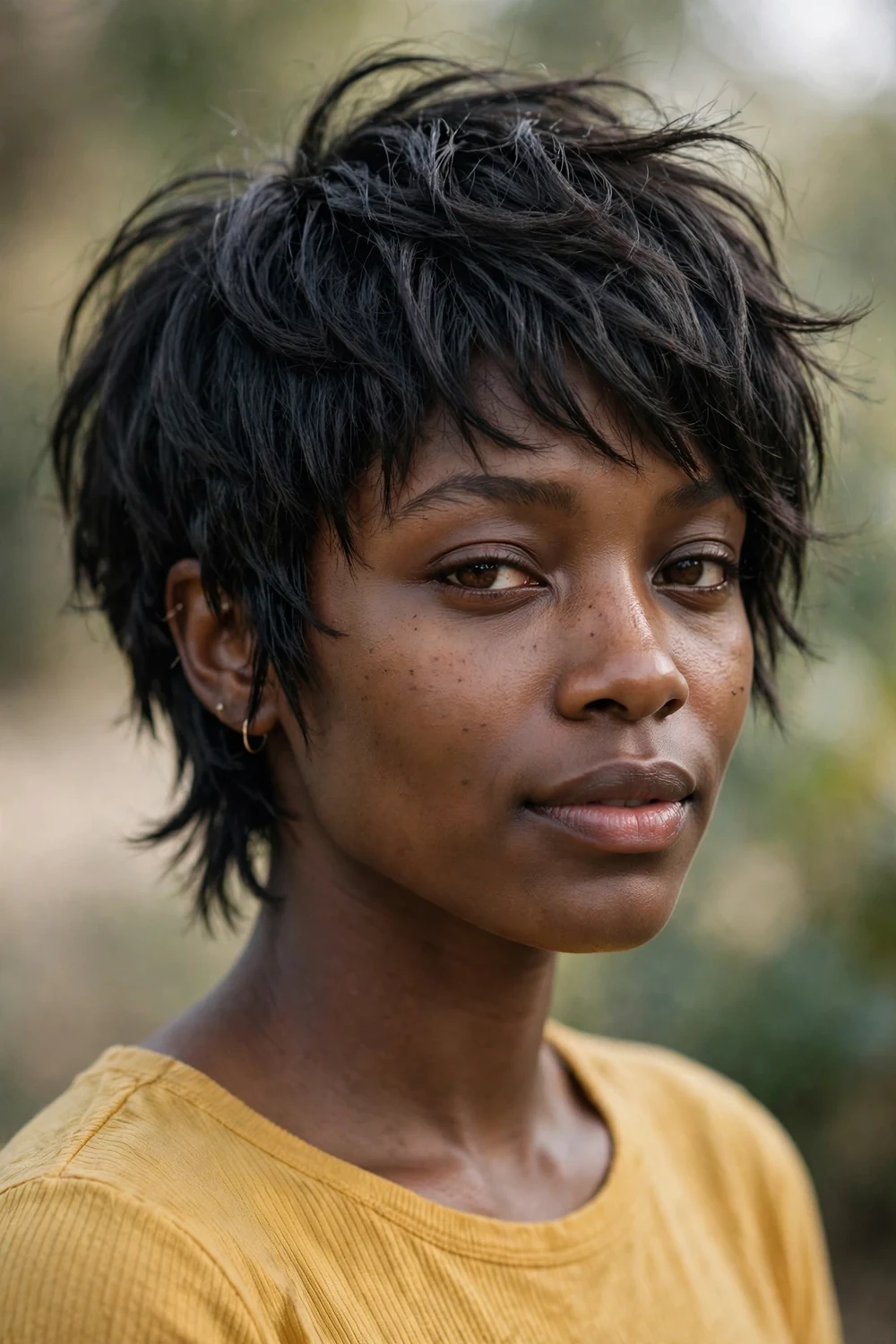
Cut entirely with a razor, this short shag has the softest, most shattered edges possible. Lengths hover around the ears and nape, with longer texture left on top for piecey movement. Razor work removes weight at the same time it creates the edge, so thick hair lies flatter and fine hair looks fuller. It grows out gracefully because there is no blunt line to betray regrowth. Most wearers stretch appointments to eight weeks without losing the shape.
Try this: Work a matte clay through dry hair, pinching the ends to emphasize the razor texture.
Difficulty: Easy | Cost: $65–$110 salon cut
11. Layered Shag Pixie

The pixie and the shag meet in the middle here. Sides stay short and tapered while the crown keeps enough length for true shag layers to form. It reads edgier than a classic pixie because the top breaks into pieces instead of lying smooth. Styling takes about three minutes with a texturizing product. This cut flatters strong jawlines and shows off earrings nicely. It also grows out into a tidy pixie-bob instead of an uneven in-between stage.
Try this: Blow-dry the crown forward with fingers, then piece it out with wax for separation.
Difficulty: Easy | Cost: $60–$100 salon cut
If the pixie side of this hybrid is what draws you in, these short shaggy pixie haircuts push the short end of the shag even further.
12. Wavy Shag Bob
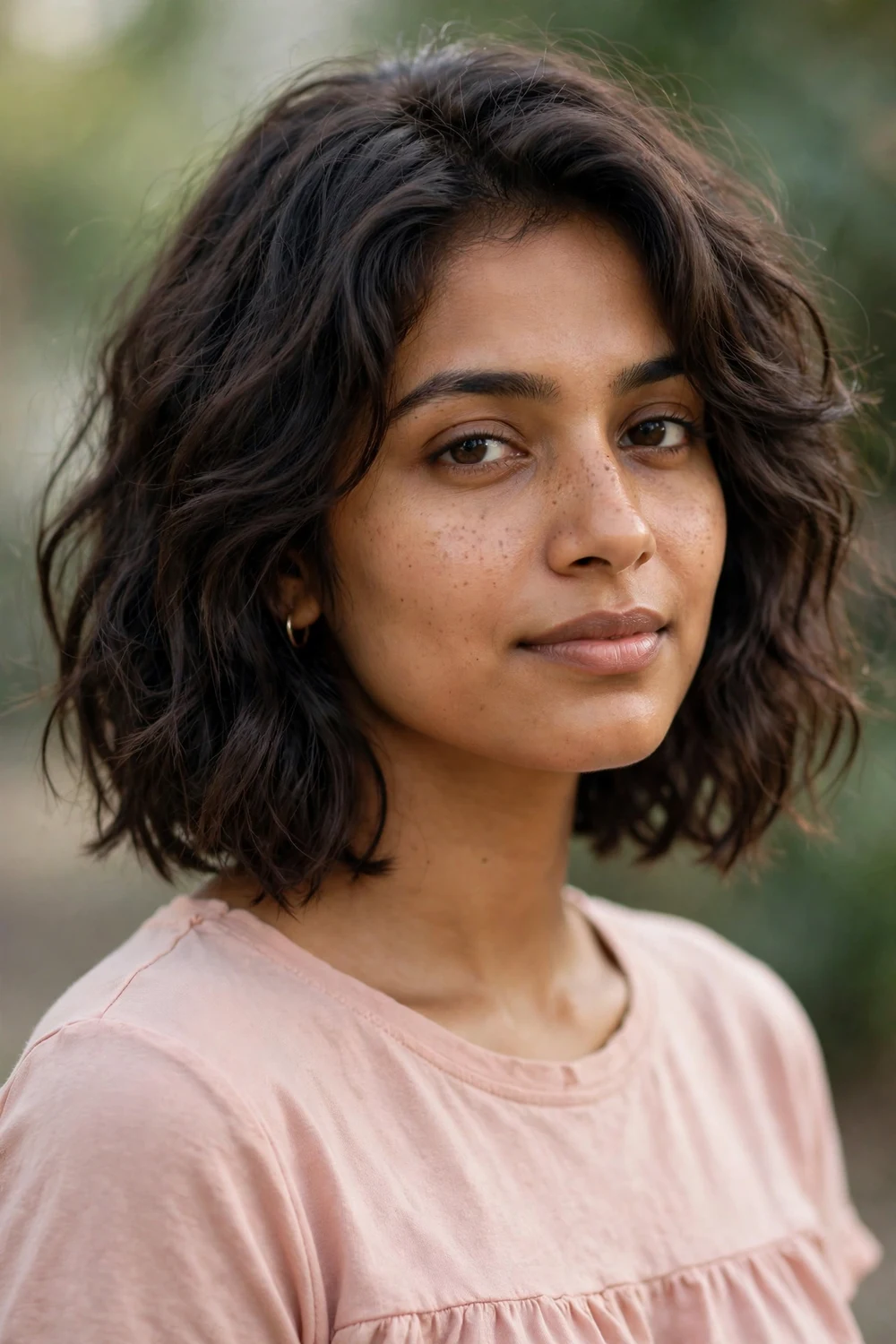
Chin-to-neck length with loose, broken waves is the shag world’s most wearable entry point. The bob outline keeps it tidy while interior layers create the tousle. Natural wave patterns do most of the work; straight hair needs a wave-enhancing mousse scrunched in while damp. It is office-friendly but never stiff, and it photographs well from every angle. Ask for interior layers rather than blunt ends, so the wave pattern has room to form. A trim every seven weeks keeps the outline tidy.
Try this: Braid damp hair loosely overnight, undo in the morning, and shake out the waves with fingers.
Difficulty: Easy | Cost: $65–$110 salon cut
The five-minute styling routine for this length is covered step by step in this how to style short hair guide.
13. Cropped Shag with Side Bangs
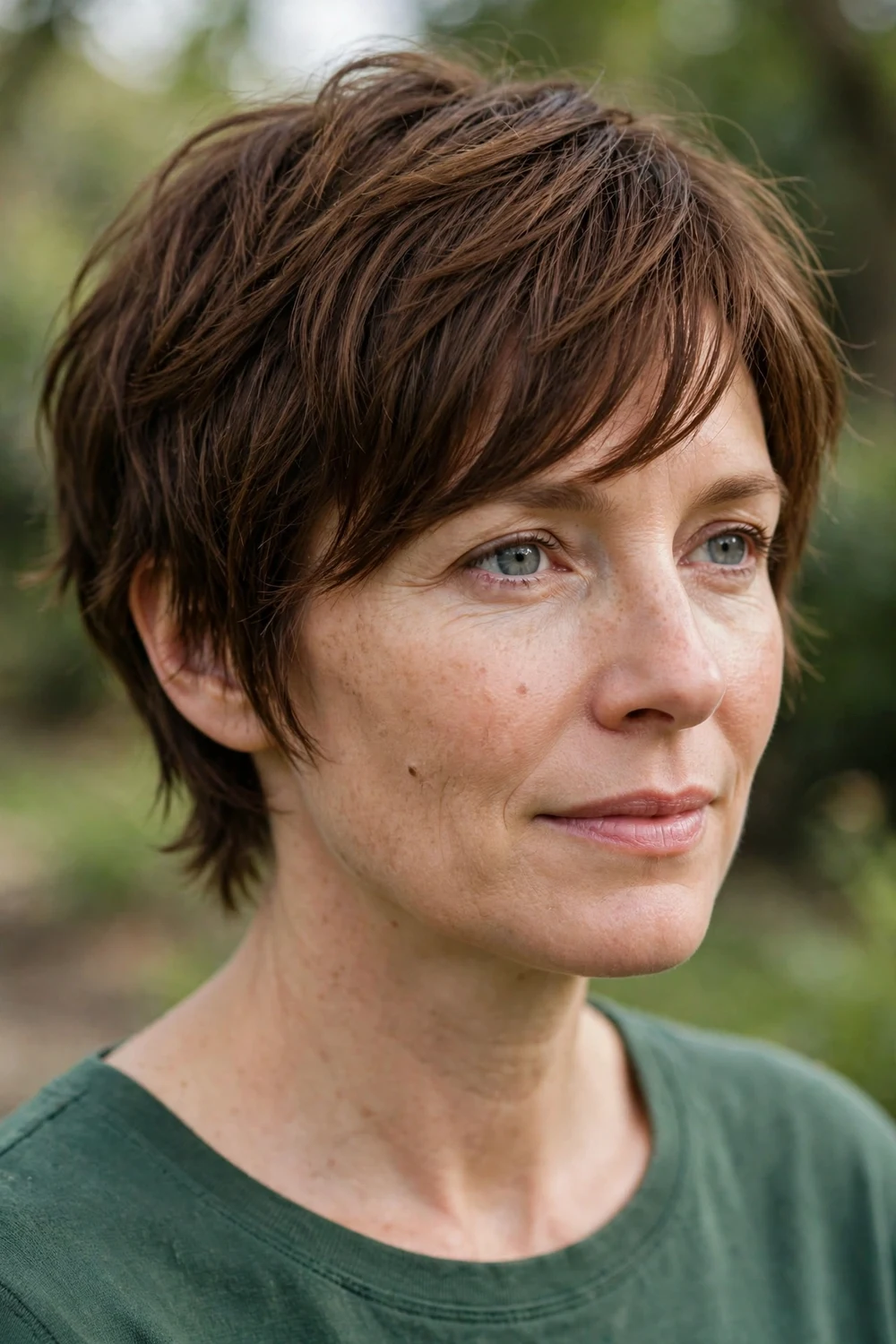
Above the ears, textured all over, with bangs swept to one side. The asymmetry of the fringe keeps this short cut from feeling severe, and the choppy layers give it a current edge. It suits petite features because nothing overwhelms the face. A deep side part sets the sweep; train it with a blow dryer on day one and it falls into place after that. A pea-sized amount of pomade on the bang pieces adds definition without stiffness.
Try this: Tuck one side behind the ear and let the longer bang pieces fall forward for contrast.
Difficulty: Easy | Cost: $60–$100 salon cut
14. Piecey Short Shag
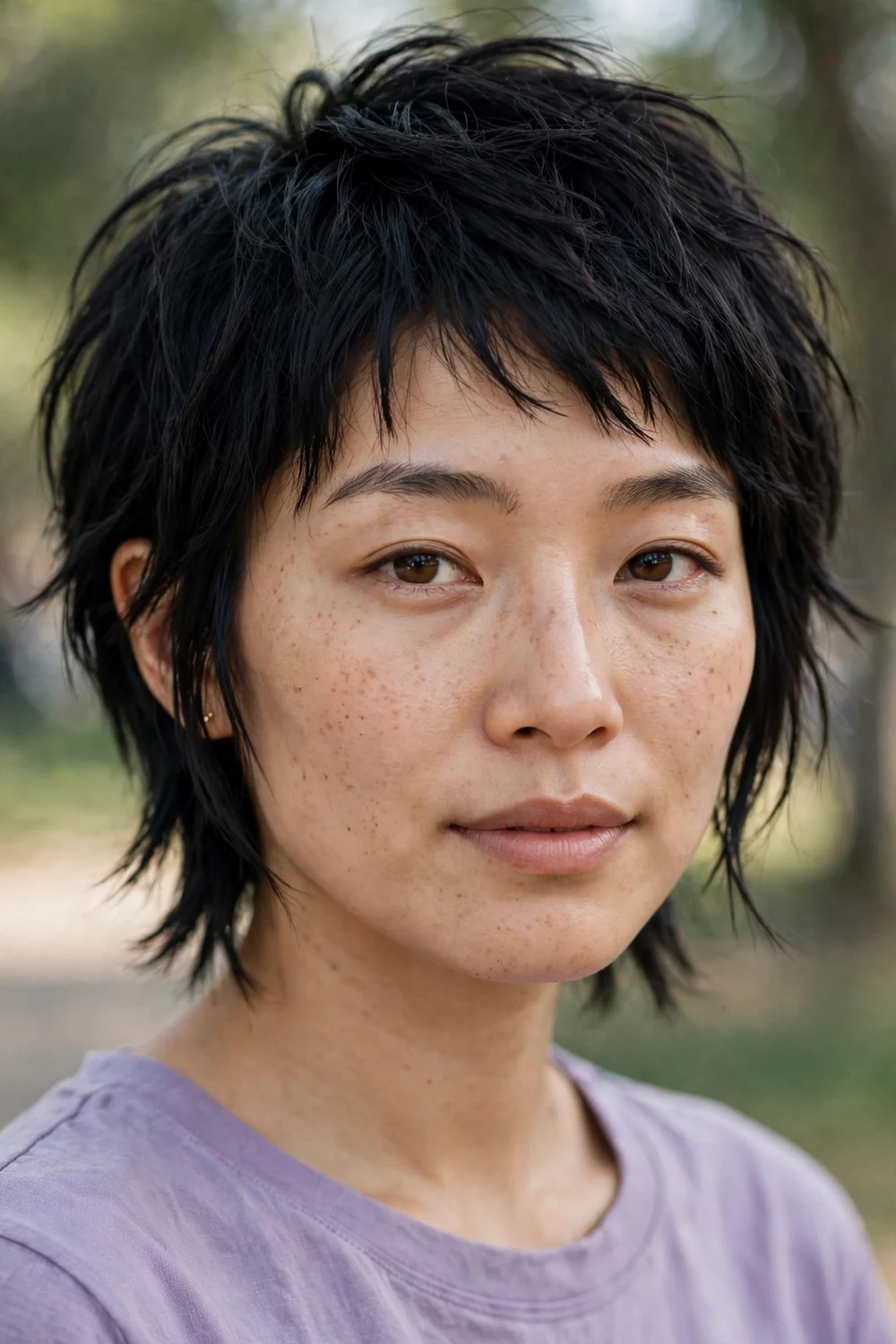
Separation is the whole point. Each layer is cut to stand slightly apart from the layer beside it, and a fiber paste defines the pieces so the cut never looks like one solid mass. Lengths sit between the ears and jaw. It works on straight and wavy hair alike, though very curly hair needs longer pieces to keep the separation controlled. The cut needs reshaping every 5 to 6 weeks as the pieces grow together.
Try this: Emulsify a pea-sized amount of fiber paste and pinch individual ends, working from the crown down.
Difficulty: Easy | Cost: $65–$110 salon cut
For more cropped, textured takes in this category, see these short shag hairstyles for women.
15. Modern Short Shaggy Bob
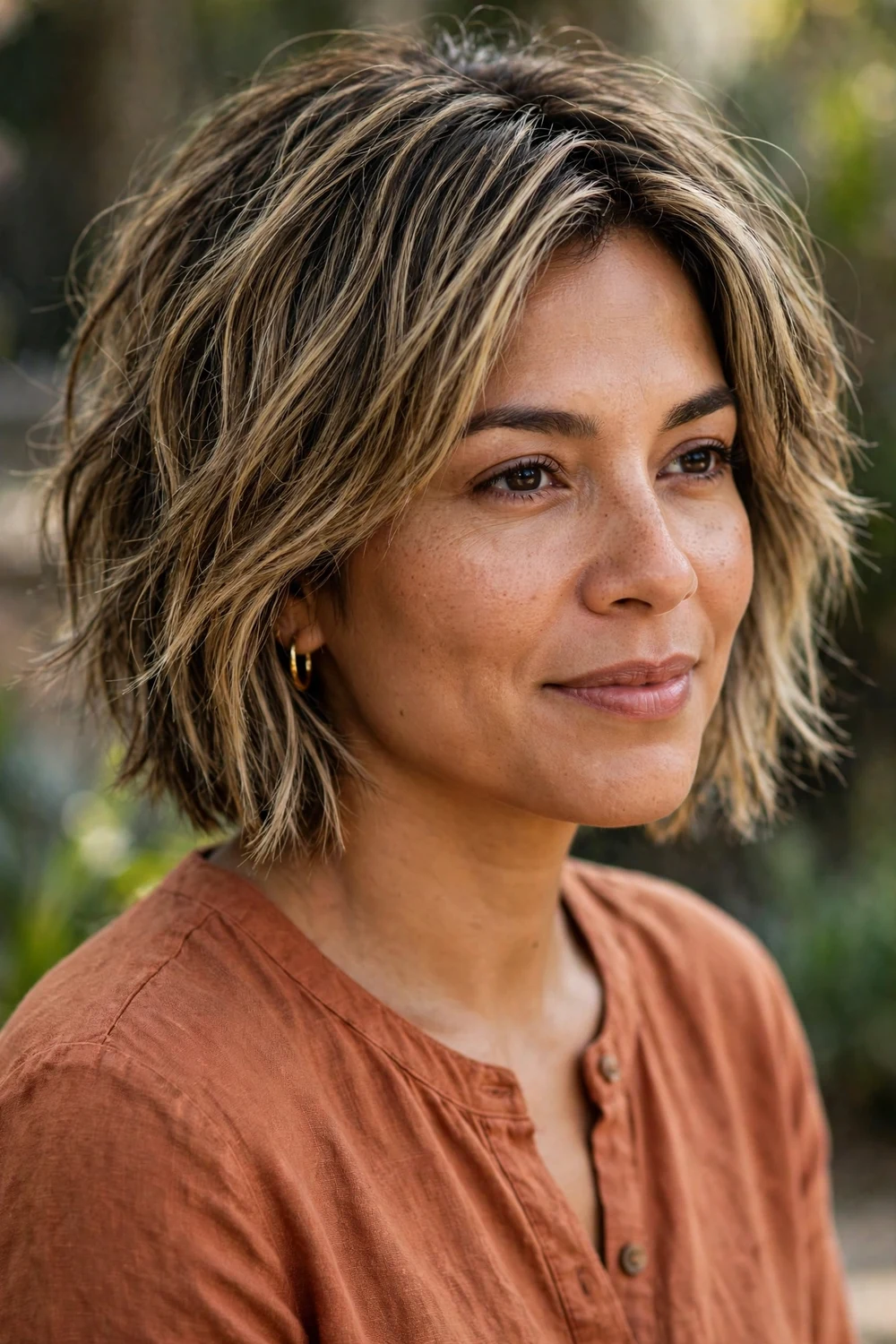
Think bob first, shag second. The perimeter holds a clean jaw-length line while the interior gets carved into shaggy layers. You get the polish of a bob with the movement of a shag, which makes it the safest modern shag for conservative workplaces. It suits straight to wavy hair best. Ask the stylist to keep the bottom line soft rather than razor-sharp for easy grow-out. This version takes well to both center and side parts, which changes the whole mood.
Try this: Tuck the front pieces behind the ears and let the textured crown do the talking.
Difficulty: Easy | Cost: $65–$115 salon cut
16. Modern Shag with Side-Swept Bangs
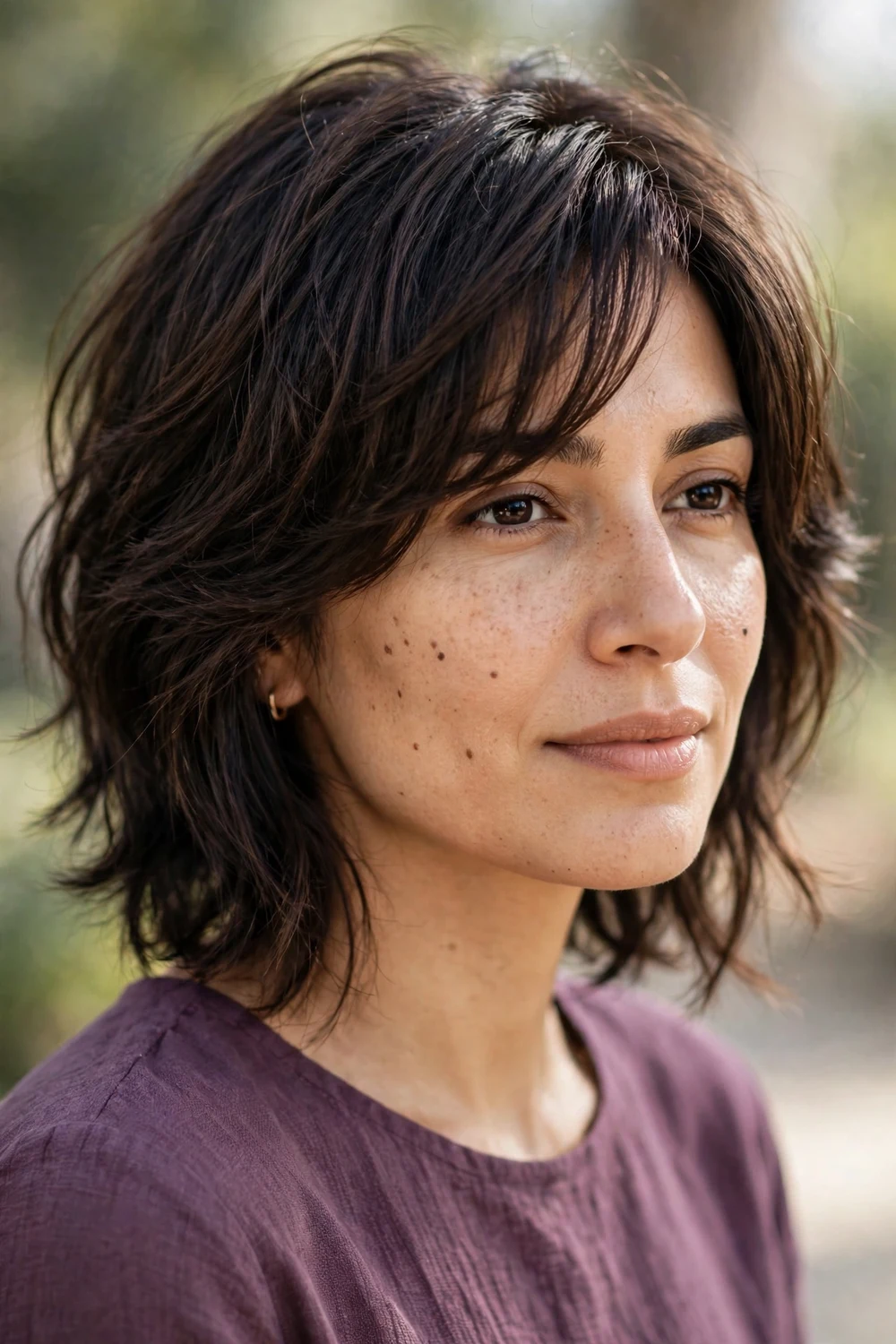
Side-swept bangs give the shag a softer, more romantic line than a straight fringe. They blend into the face-framing layers at the cheekbones, so the transition looks seamless. This pairing flatters round faces because the diagonal line adds the illusion of length. Medium to long shag lengths carry it best. Keep the bangs long enough to tuck behind one ear. A round brush swept diagonally across the forehead sets the angle in seconds.
Try this: Sweep bangs to the side while damp and clip them in place for 10 minutes to train the direction.
Difficulty: Easy | Cost: $70–$120 salon cut
17. Soft Shag with Sombre
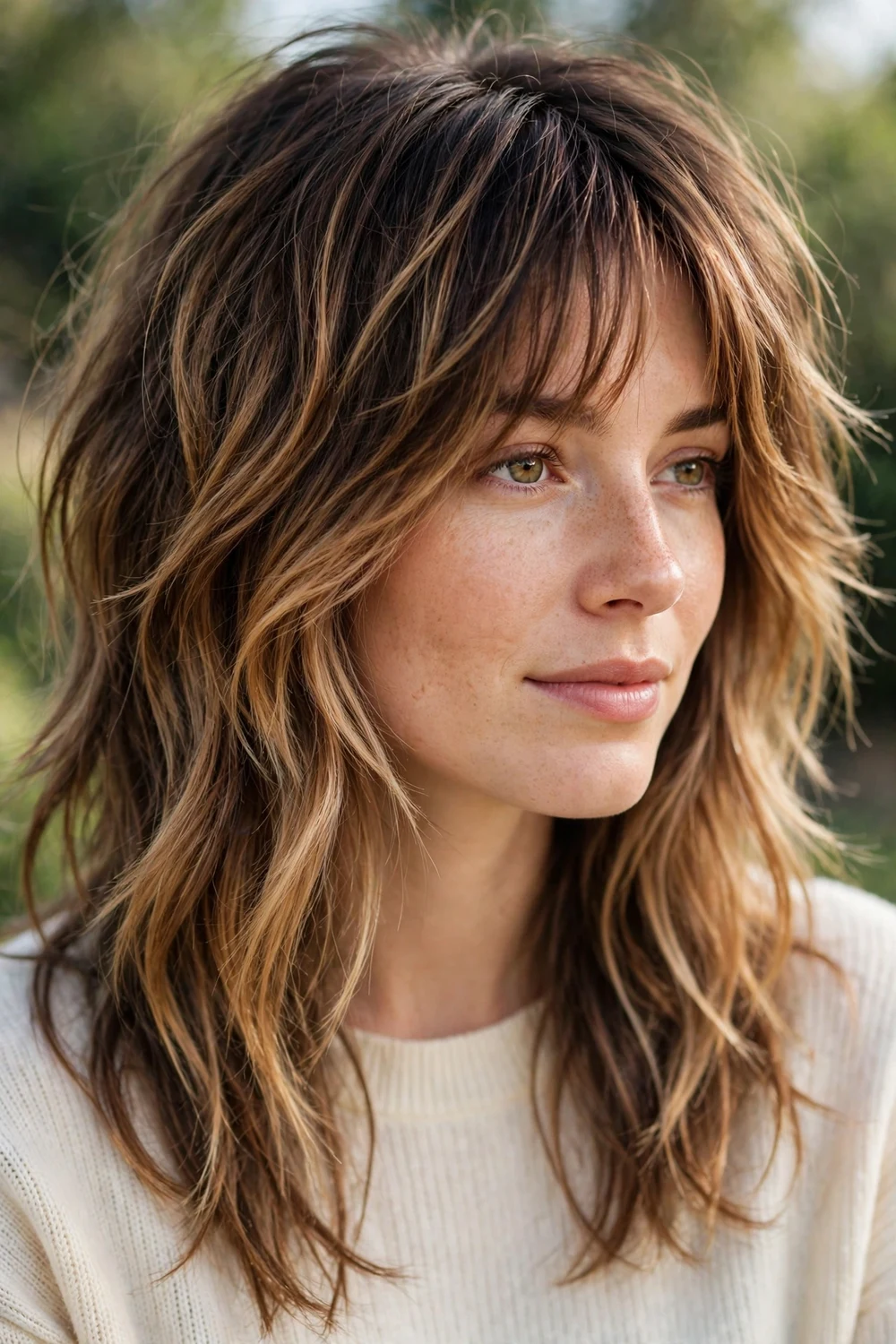
Sombre, the softer cousin of ombre, melts one shade into another with no visible line. On a shag, the gradual lightening toward the ends makes each layer edge catch the light differently. Brunette bases with caramel ends are the classic pairing. The grow-out is forgiving, stretching color appointments to 12 or even 16 weeks. A gloss treatment between visits keeps the blend shiny. The technique costs more upfront but pays back in fewer salon trips per year.
Try this: Ask for the lightest pieces to sit at the face frame and the very ends, nowhere else.
Difficulty: Easy | Cost: $140–$240 cut and color
18. Warm Orange Shag
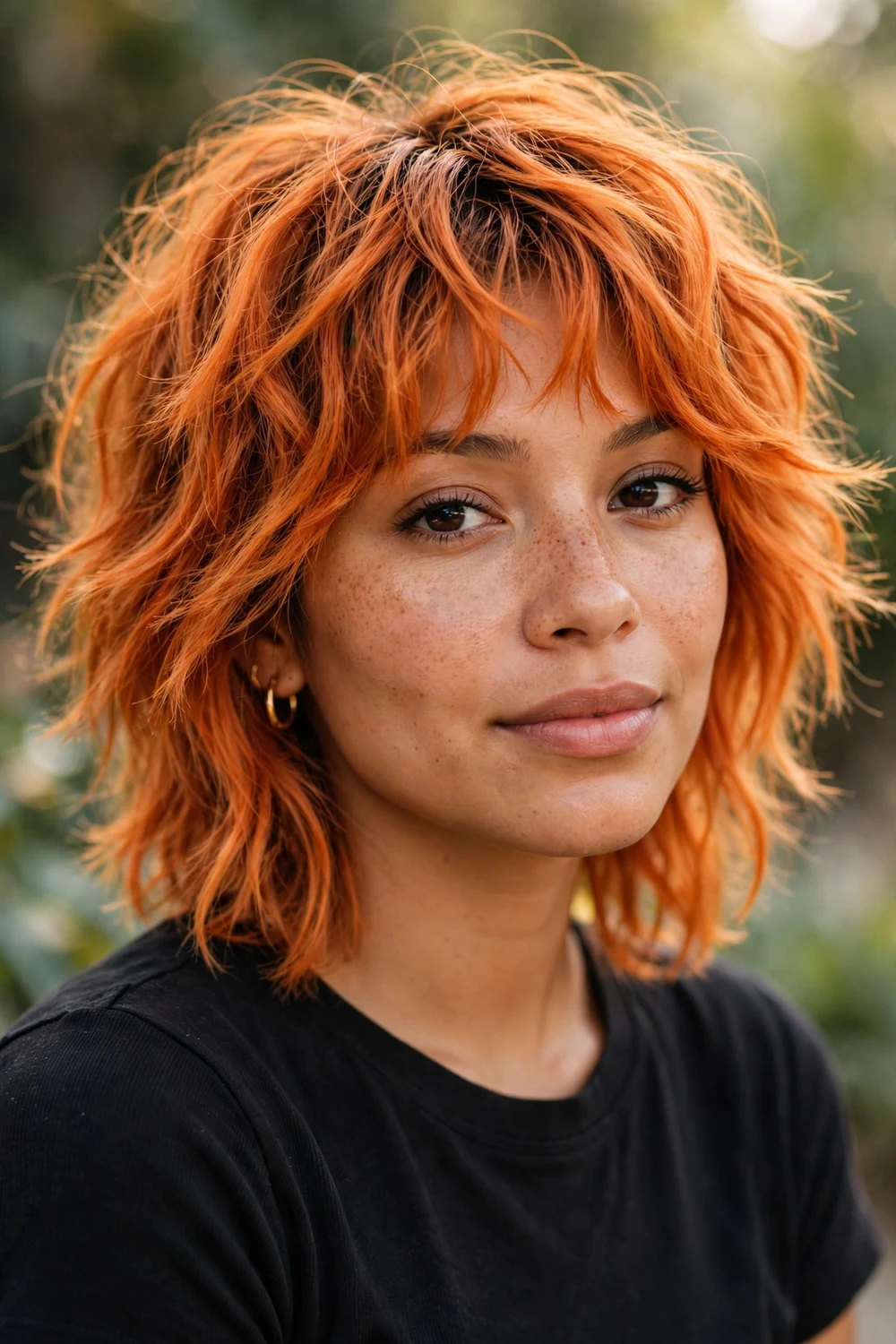
Sunset orange sits between copper and tangerine, and it turns a shag into a statement. The color shows off texture better than almost any shade because every separated piece reads as its own ribbon of color. Warm skin tones carry it most naturally. Expect a gloss or toner refresh every 4 to 6 weeks, since vivid warm tones fade fastest. Sulfate-free shampoo slows the fade noticeably. Book the color and cut together, since the shade shows best on fresh layers.
Try this: Pair the color with undone, air-dried texture so the cut looks effortless against the bold shade.
Difficulty: Medium | Cost: $150–$260 cut and color
19. Rainbow-Lex Shag
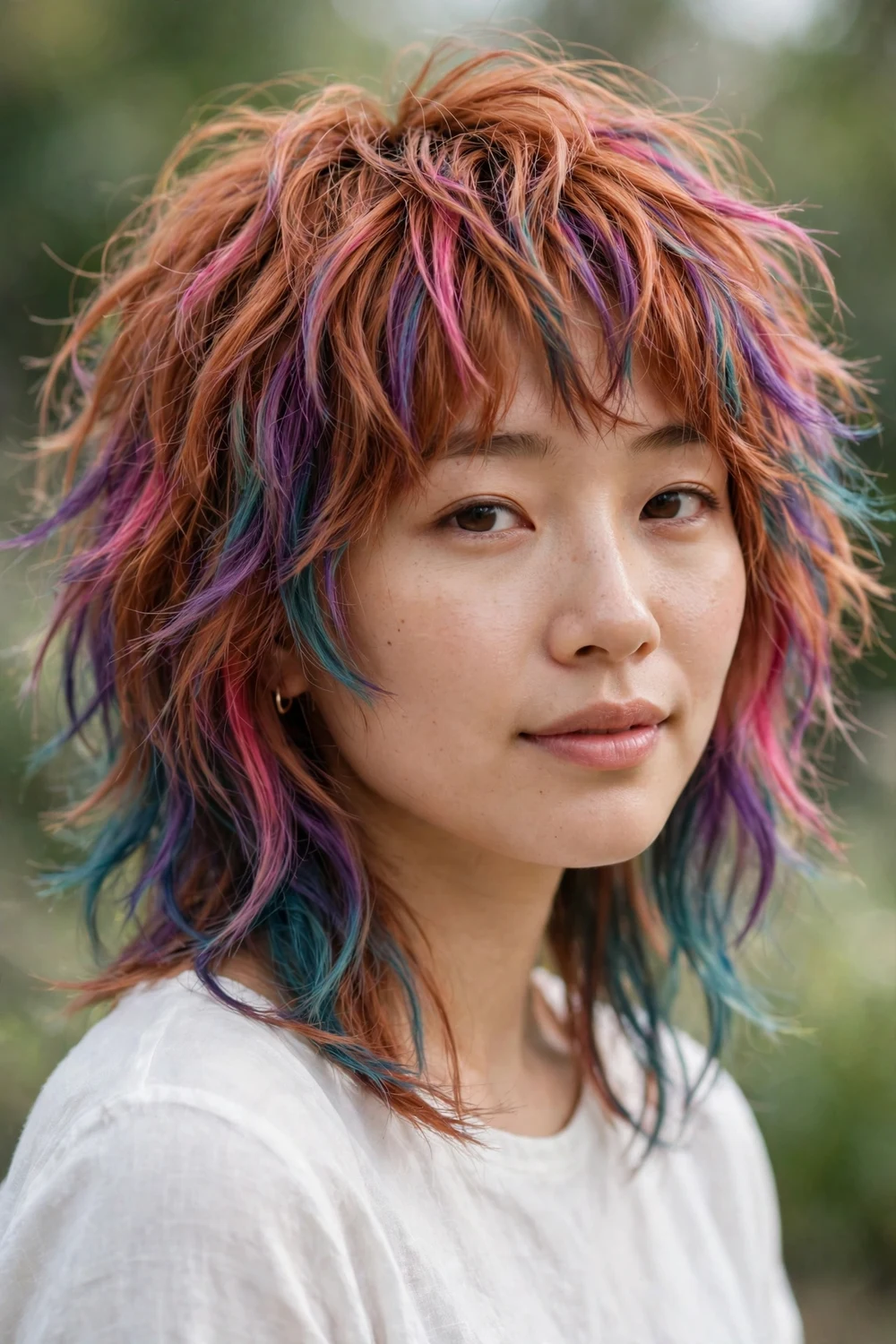
Multiple fashion shades melt through the layers here, with a copper “lex” base tying the rainbow together so it reads wearable instead of chaotic. The shag’s broken layers are ideal for multi-tonal color because each piece can hold a different shade. Placement matters more than the palette: keep brights at the mid-lengths and ends. Cold-water rinses extend the life of every shade involved. Plan for a three-hour appointment, since multi-tonal work cannot be rushed.
Try this: Start with three shades maximum if this is a first fashion color; more can be added at the next visit.
Difficulty: Hard | Cost: $200–$350 cut and color
20. Choppy Layers Shaggy Cut
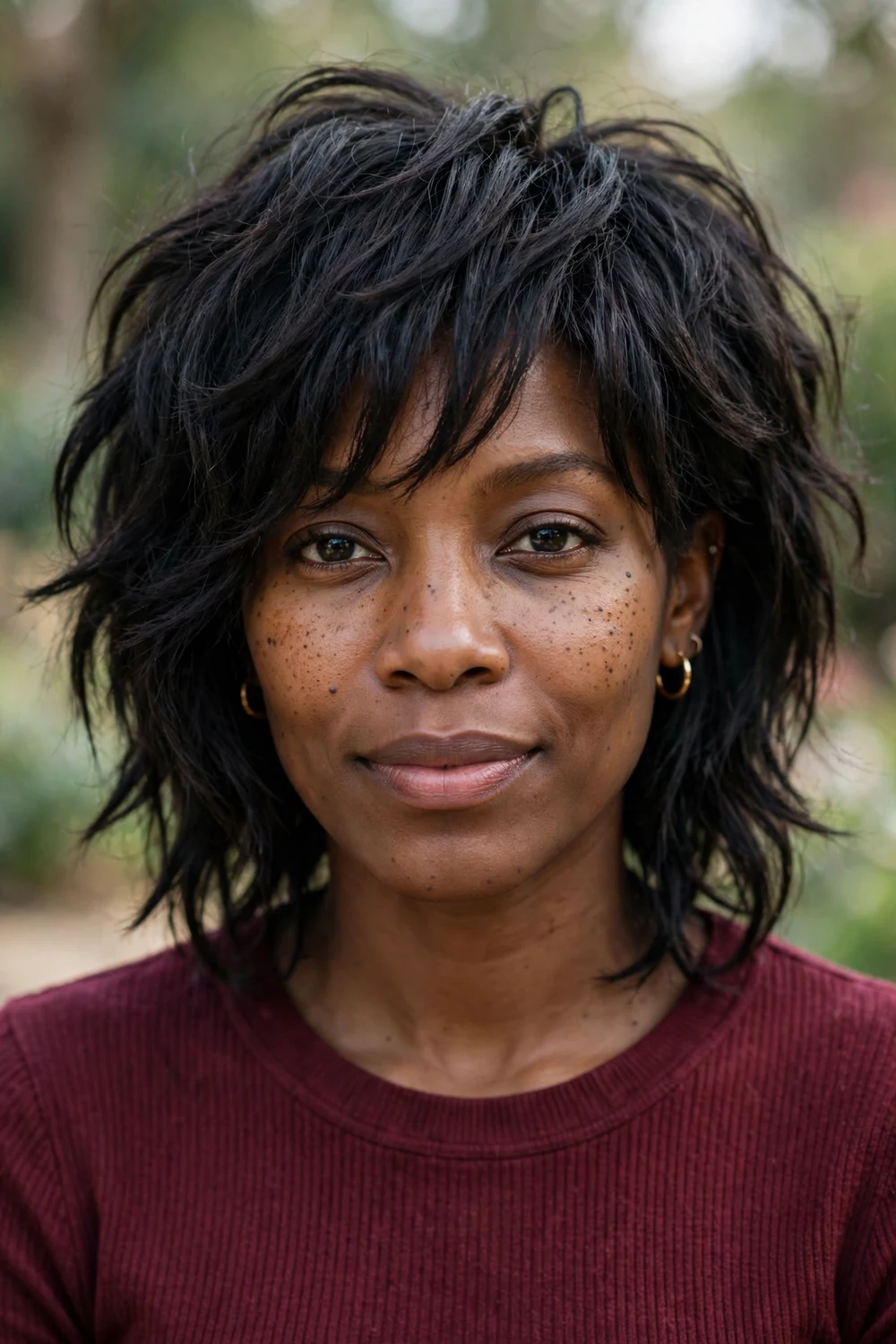
Where the feathered shag goes soft, this one goes bold. Layers are cut with visible, chunky separation at the ends, creating a deliberately jagged outline. It gives fine hair the most volume of any cut on this list because the choppy ends stack and push each other up. Medium lengths show the effect best. A texturizing spray, not oil, keeps the pieces distinct. Sleeping on a silk pillowcase preserves the chunky separation until morning.
Try this: Flip the head upside down while blow-drying the roots for maximum lift at the crown.
Difficulty: Easy | Cost: $70–$120 salon cut
21. Shaggy Wolf Cut
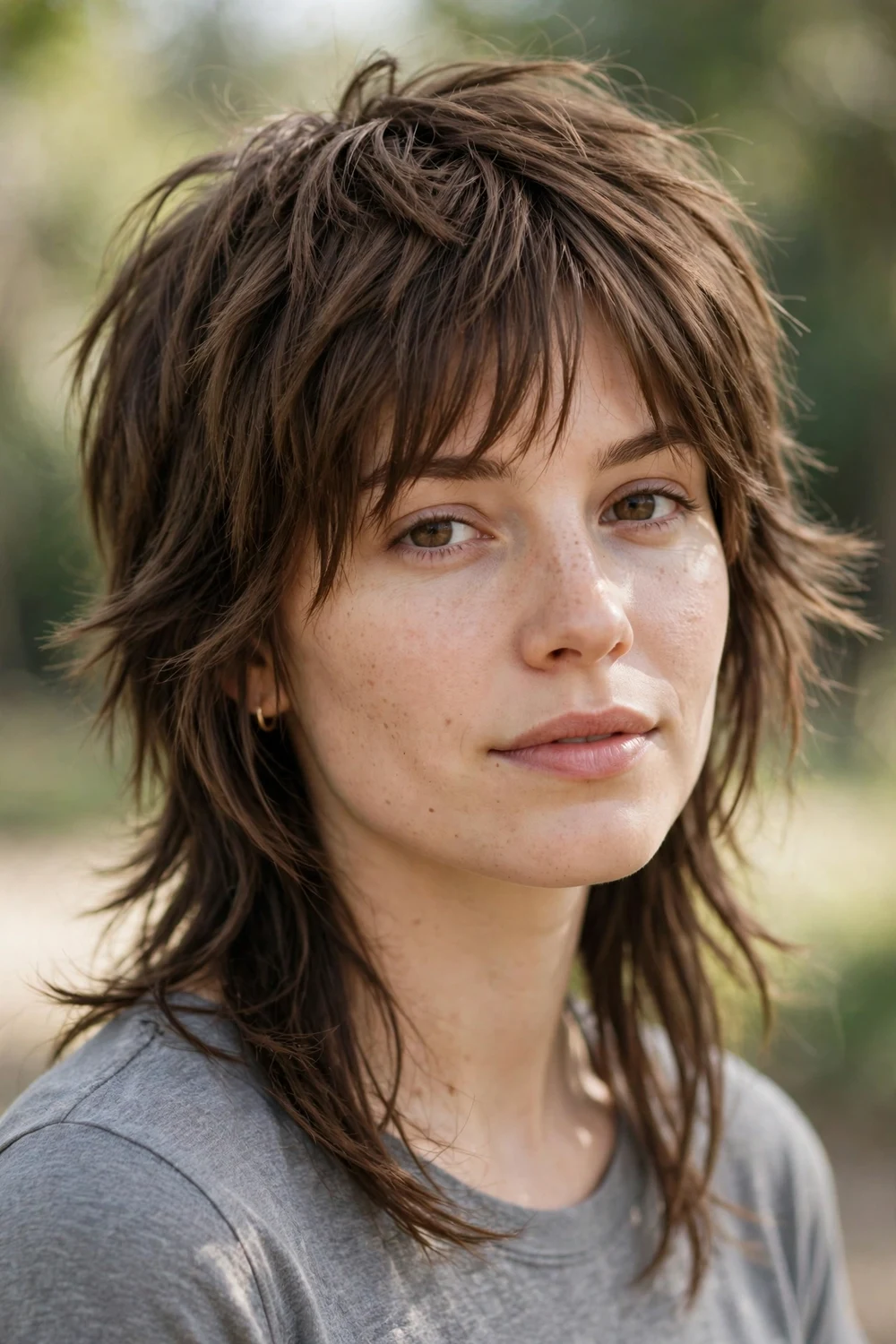
The wolf cut fuses shag layers on top with mullet length at the back. Short, choppy crown layers create height while the back stays long and wispy, giving the silhouette its wild outline. It suits thick, wavy hair best because the texture fills out the shape. The cut looks most current with curtain bangs blending the front into the sides. Maintenance trims every 6 weeks keep the mullet section from overtaking the layers.
Try this: Scrunch a curl-defining mousse into damp hair and diffuse upside down for the full wolf volume.
Difficulty: Medium | Cost: $75–$135 salon cut
22. Edgy Mullet-Curtain Shag
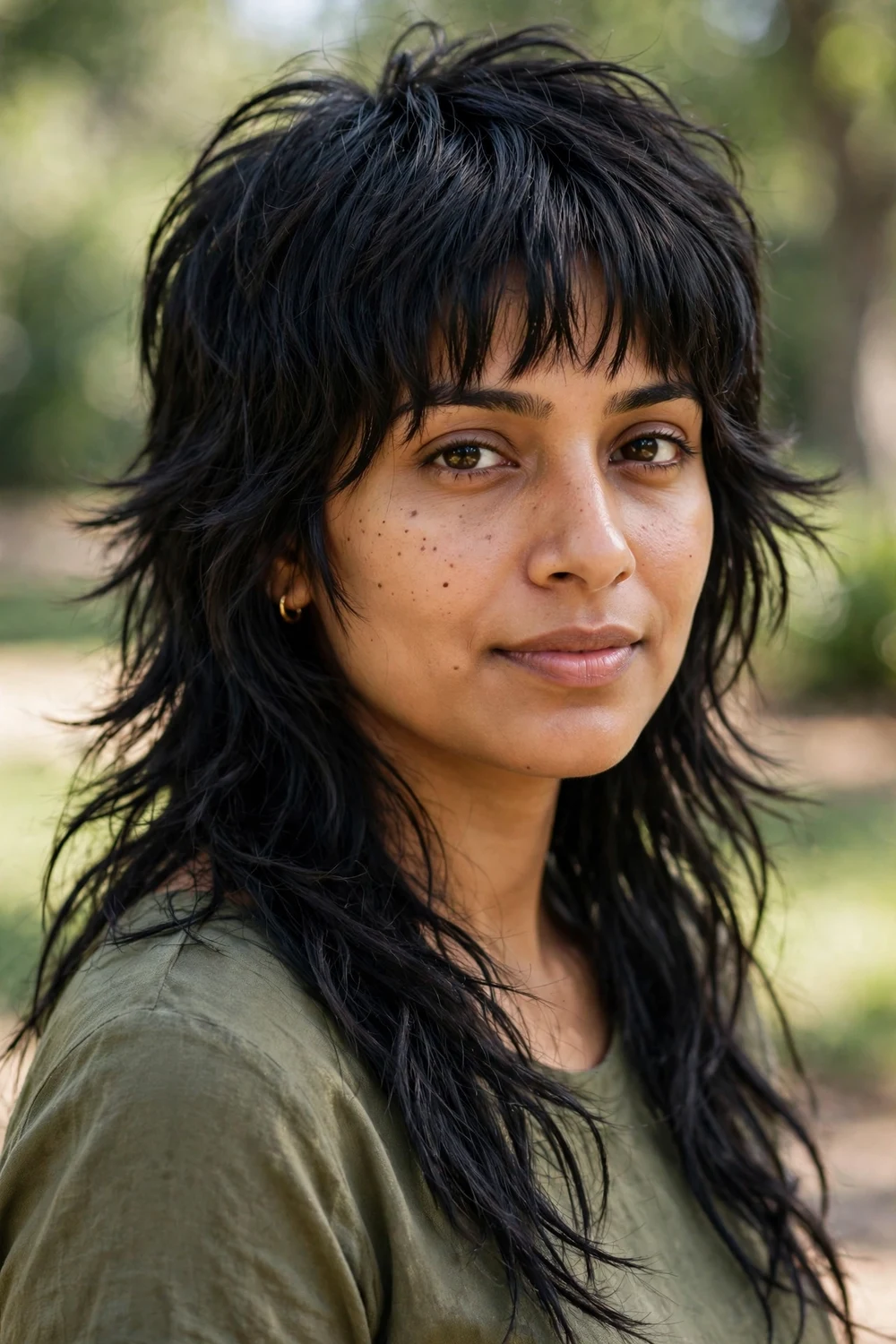
Business at the fringe, party at the nape. This hybrid keeps the front polished with curtain bangs and soft face framing, then lets the back run long and jagged like a mullet. The contrast is the appeal: neat from the front, rebellious from behind. It works on straight and wavy textures. Tell the stylist exactly how long the back can go, since “mullet” means different lengths to different people. Bring two reference photos, one for the front and one for the back.
Try this: Straighten only the front sections for polish and leave the back piecey and undone.
Difficulty: Medium | Cost: $75–$130 salon cut
23. Octopus Shag
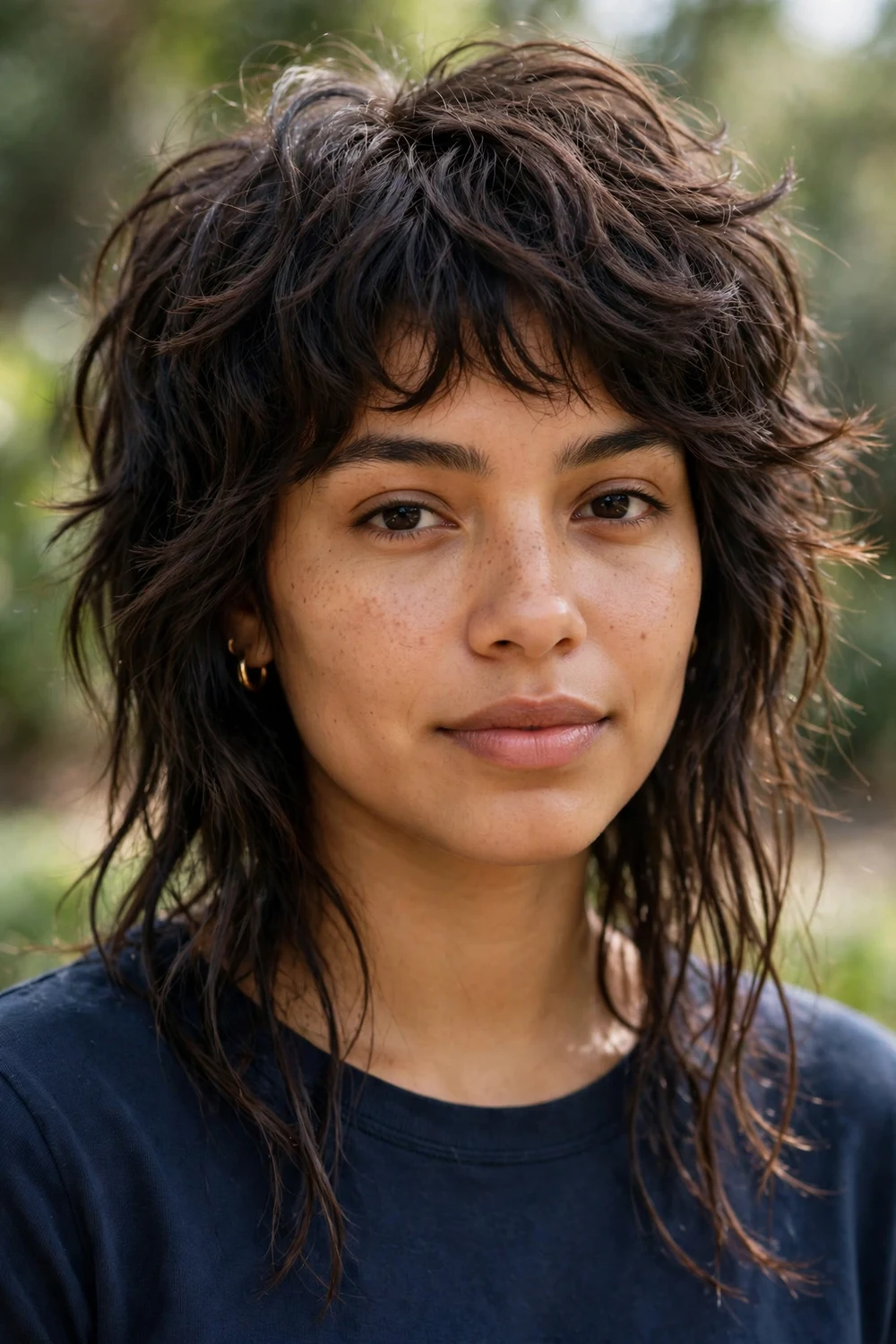
The octopus cut earns its name from the silhouette: a short, rounded top with long, thin pieces falling well past the shoulders. It is the most dramatic length contrast among modern shags. The top layers sit around the crown and ears while the separated bottom pieces hang long and straight. Straight or slightly wavy hair shows the shape best. This is a commitment cut; growing out the long pieces takes patience.
Try this: Flat-iron the long bottom pieces so the contrast against the textured top reads clearly. Use heat protectant first.
Difficulty: Hard | Cost: $80–$140 salon cut
24. Butterfly Shag
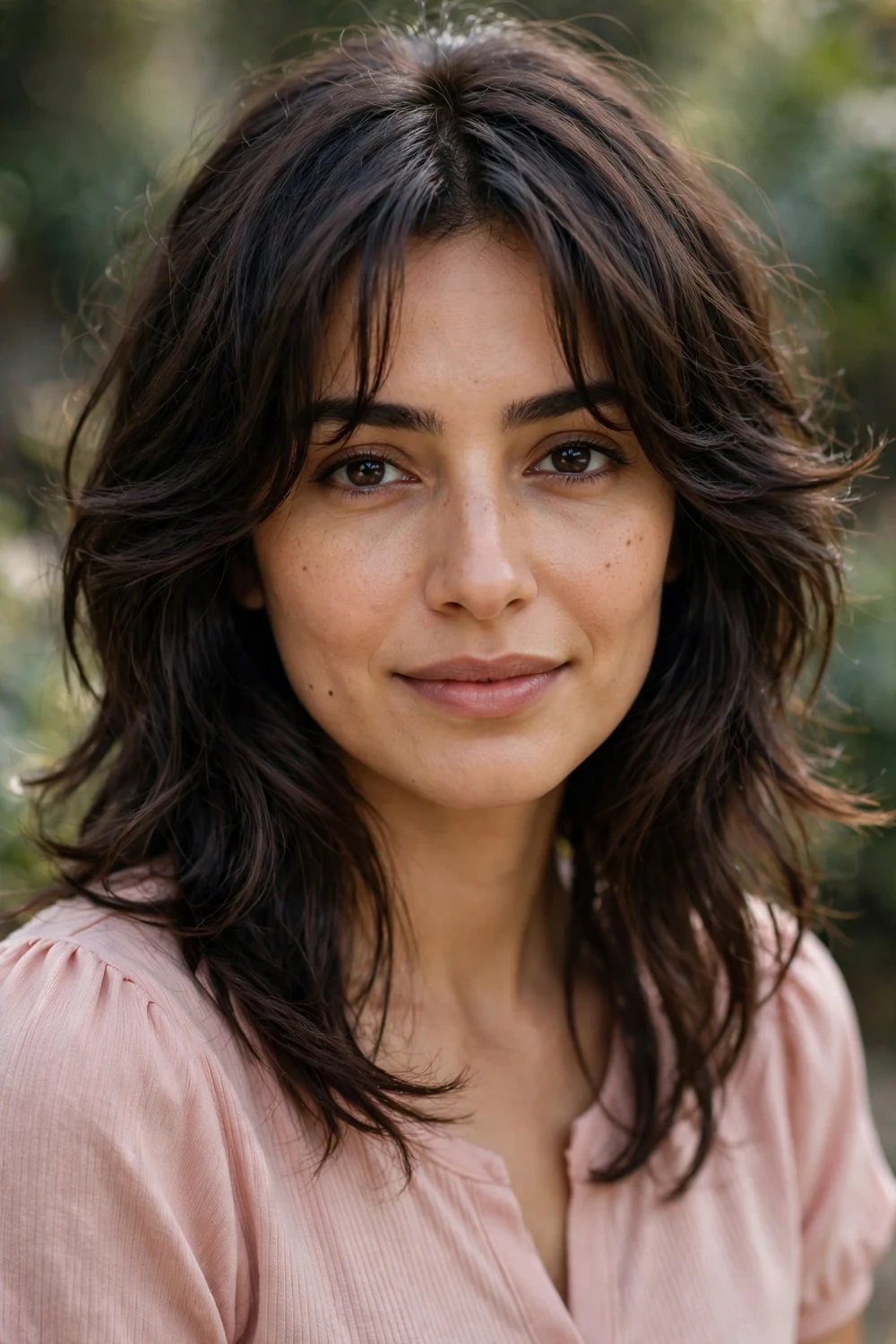
The butterfly shag is the softest of these styles. Long, airy layers start at the chin and curve outward with movement, with curtain bangs completing the face frame. It gives the volume of a shag without any harsh edges, which makes it the easiest sell for shag skeptics. Medium to long hair carries it best. Blow-drying the front layers away from the face with a round brush creates the signature lift.
Try this: Part the bangs in the center and flick each side outward with a round brush for the wing effect.
Difficulty: Easy | Cost: $75–$130 salon cut
25. Disconnected Grunge Shag
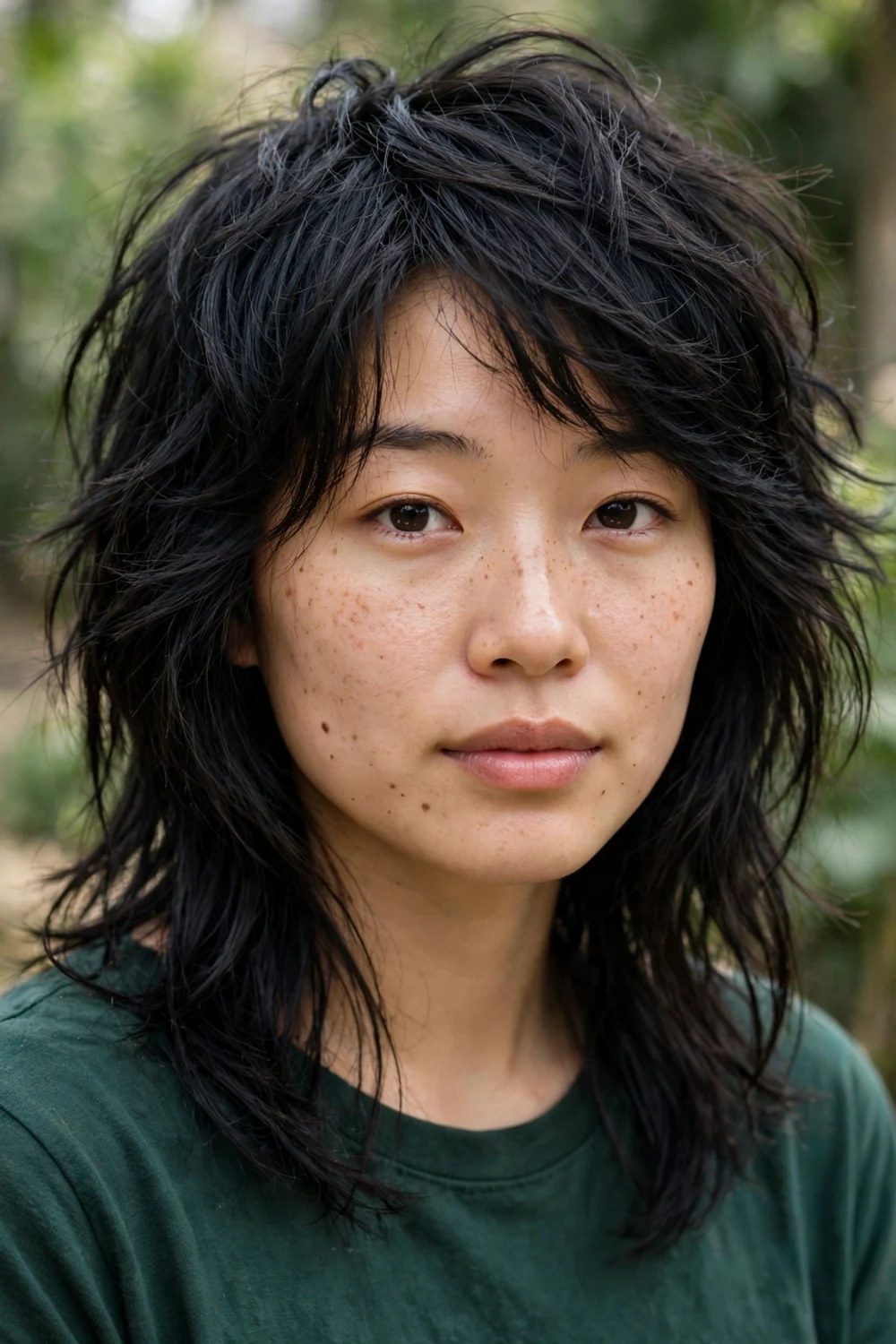
Disconnected means the layers don’t blend; they sit in visible, deliberate chunks. This grunge-leaning shag embraces that rawness with uneven ends and a slept-in finish. It suits thick hair that can hold the chunky separation. An undercut at the nape is a common add-on for extra edge and less bulk. The cut hides regrowth well, so trims can stretch to 8 or 10 weeks. A matte paste worked through dry ends brings out the deliberate chunkiness.
Try this: Rub a small amount of dry shampoo into the roots on day one for instant grit and separation.
Difficulty: Medium | Cost: $70–$125 salon cut
26. Geometric Micro Shag
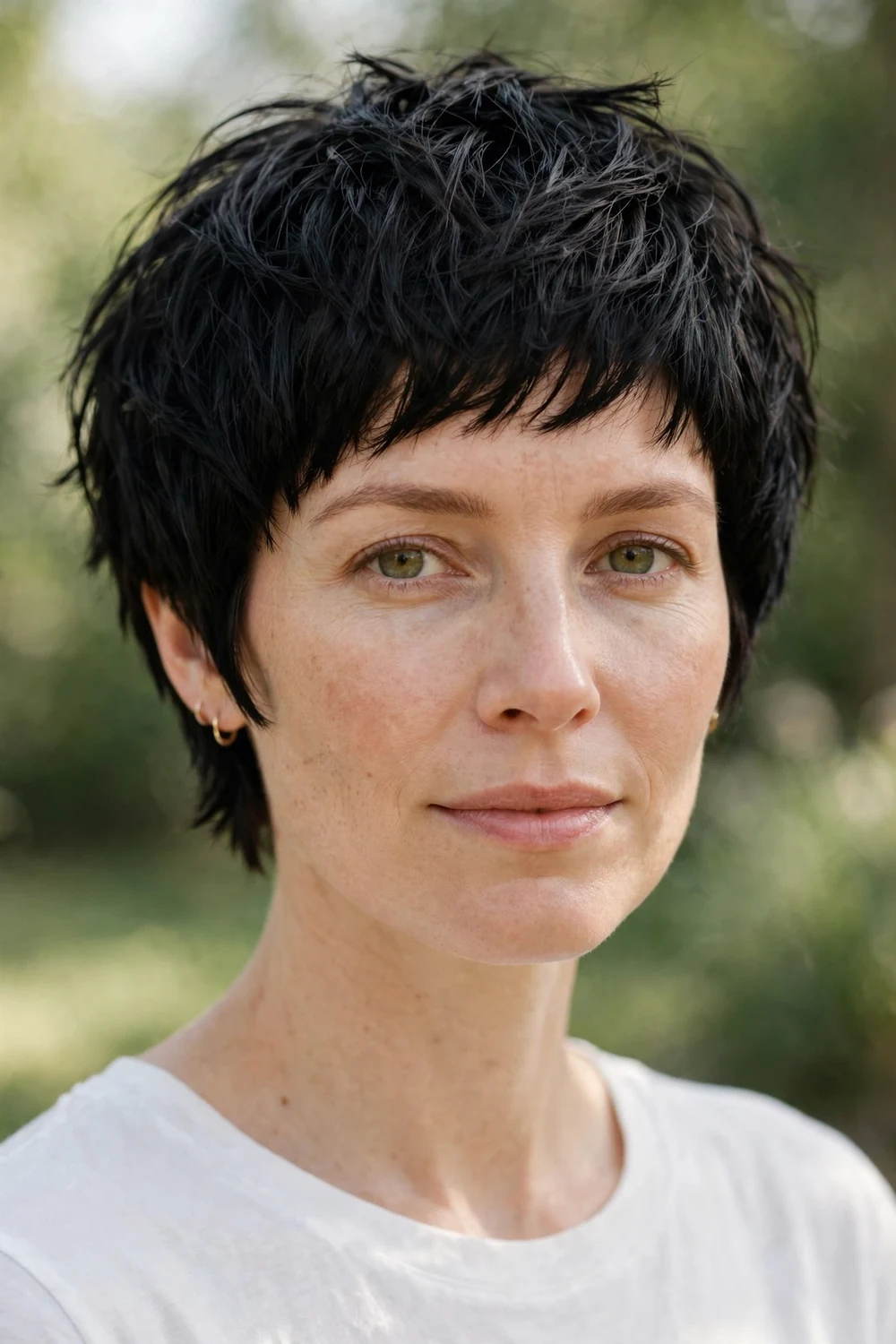
Precision meets texture. This micro-length shag keeps every layer short, around the jaw or above, but cuts them with geometric intention: clean lines at the perimeter, shattered texture inside. It reads architectural rather than messy. Straight, fine hair shows the geometry best. Because the shape is so exact, it needs reshaping every 4 to 5 weeks, more often than longer shags. Book the next appointment before leaving the salon to protect the schedule.
Try this: Smooth with a flat iron and a shine serum to make the geometric lines read razor-clean. Heat protectant first.
Difficulty: Hard | Cost: $70–$120 salon cut
27. French Shag with Brow Fringe
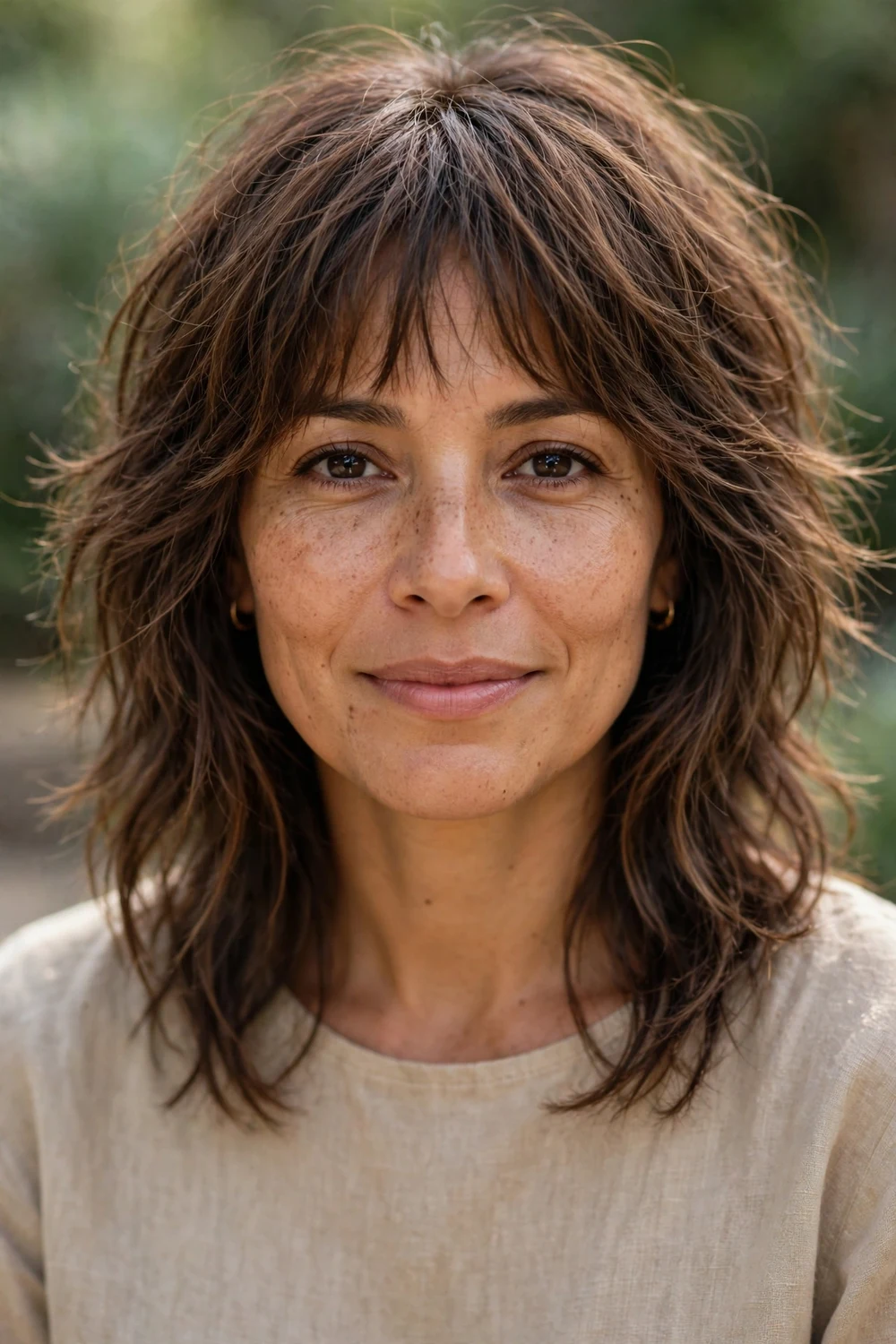
The french shag channels Parisian nonchalance: soft, collar-grazing layers with a fringe that just kisses the brows. The fringe is cut piecey, never blunt, so it can be worn straight or swept aside. This is the most grown-up modern shag, low-drama and endlessly wearable. It suits wavy textures that air-dry with natural bend. A trim every 7 weeks keeps the fringe at brow level. It pairs naturally with minimal styling, since the cut supplies the shape.
Try this: Let the fringe air-dry naturally and finger-comb it; the slight imperfection is the point.
Difficulty: Easy | Cost: $70–$120 salon cut
28. Bottleneck-Bangs Shag
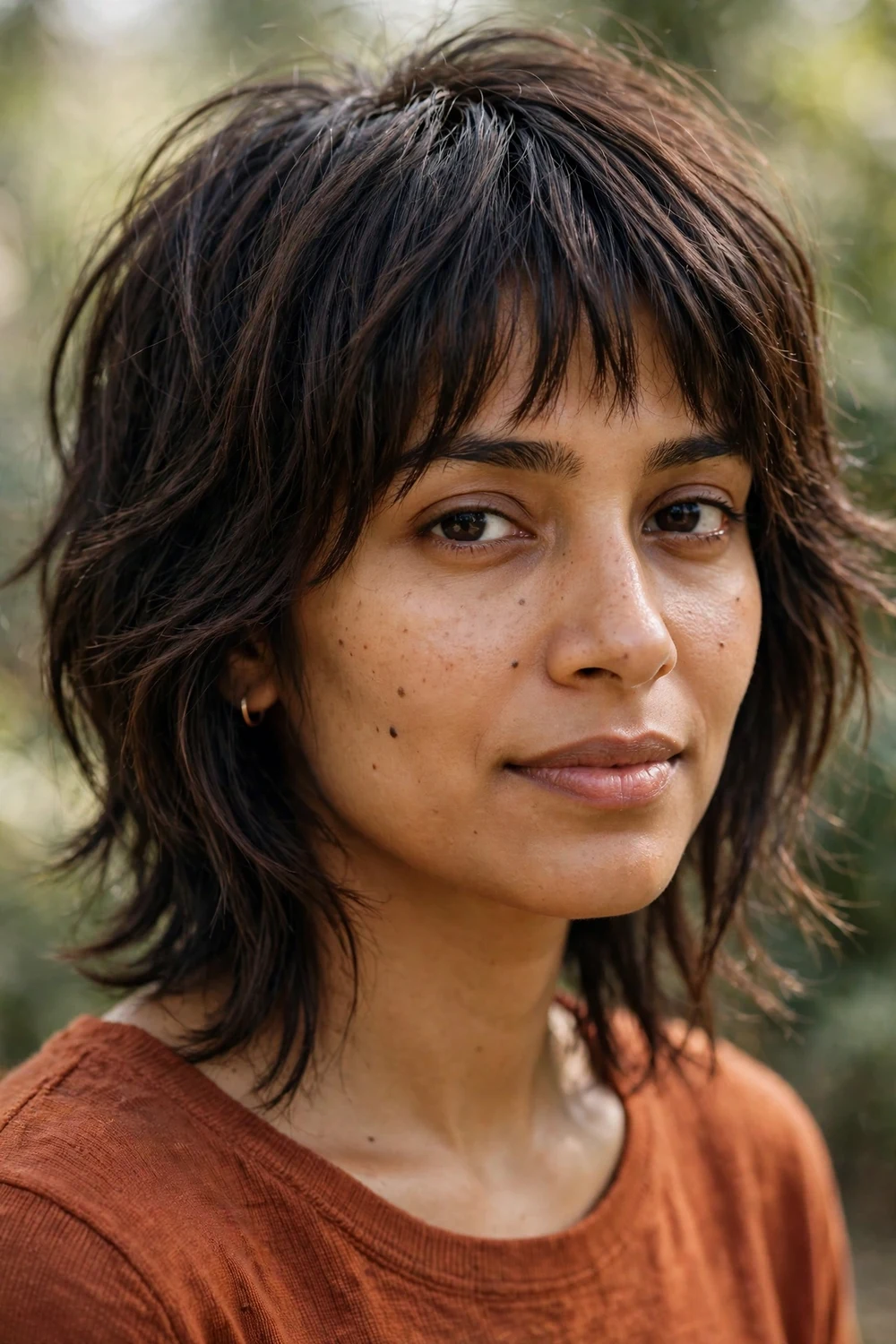
Bottleneck bangs start narrow at the top and widen toward the cheekbones, following the shape of a bottle’s neck. Paired with a shag, they melt directly into the face-framing layers with no harsh line. The style flatters most face shapes because the widening fringe opens up the cheekbones. It works at any shag length. Grow-out is gentle since the shape already blends. The fringe needs only a quick blow-dry to fall into its widening shape.
Try this: Blow-dry the bangs downward with a paddle brush, then pinch the ends apart with fingers.
Difficulty: Easy | Cost: $70–$120 salon cut
29. Shattered Lob Shag

A lob (long bob) with its ends shattered into texture. The length sits at the collarbone, and deep point-cutting breaks the perimeter into jagged pieces. It is the professional-friendly way to wear shag texture at a longer length. Straight to wavy hair works best. Flip the ends outward with a flat iron for a retro flick, remembering heat protectant before styling. It also grows out into a tidy long bob, so there is no uneven in-between phase.
Try this: Apply texturizing spray to dry hair and twist random sections to emphasize the shattered ends.
Difficulty: Easy | Cost: $70–$120 salon cut
30. Curly Salt-and-Pepper Shag
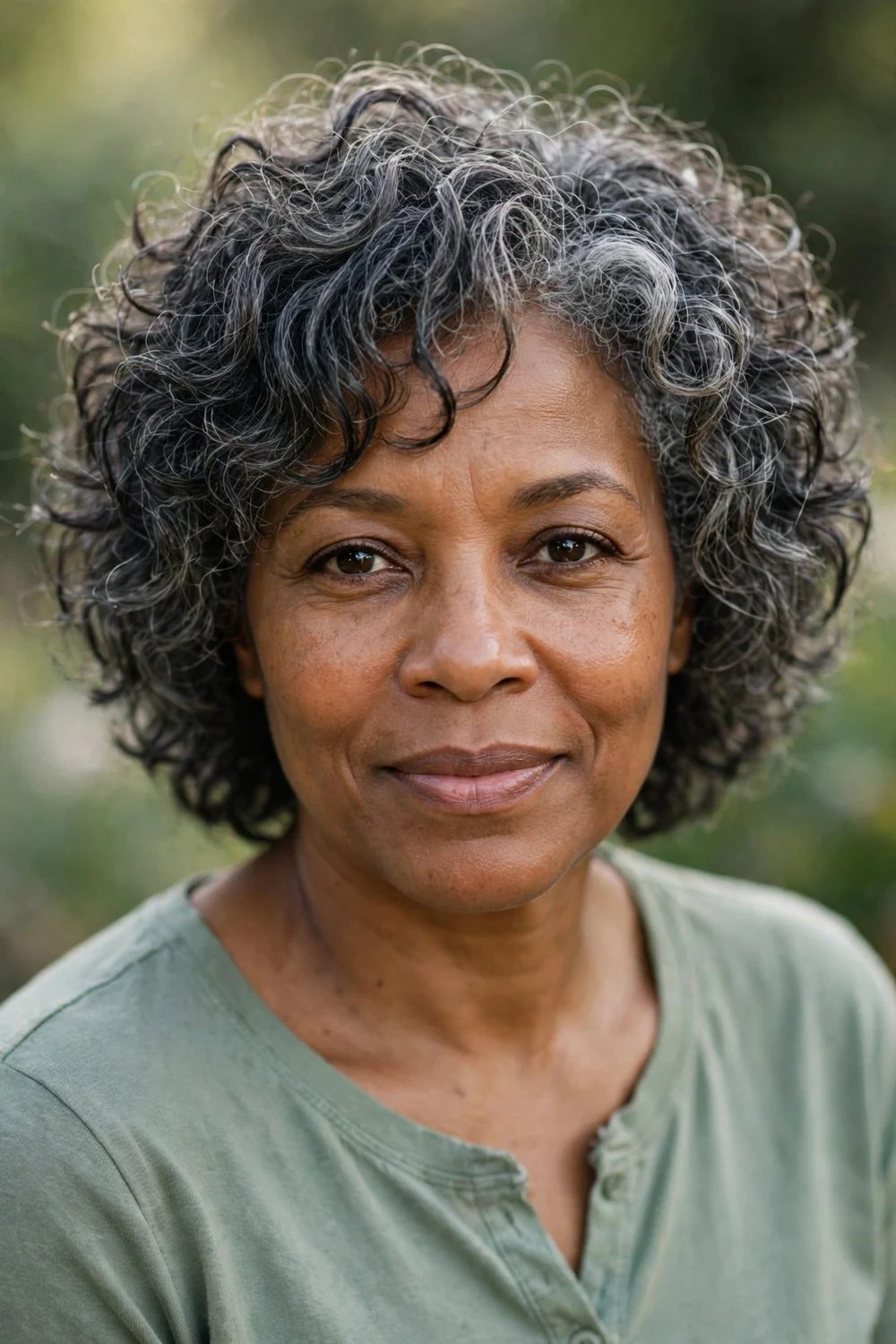
Natural grey curls plus shag layers create dimension no dye can copy. The salt-and-pepper mix makes every curl read as its own shade, and the shag shape keeps the volume balanced. Cut dry to account for shrinkage, with layers that encourage the curls to stack rather than widen. Purple shampoo once a week keeps the silver pieces bright instead of yellow. A monthly deep-conditioning mask keeps mature curls soft, springy, and defined.
Try this: Scrunch in a curl cream with light hold, then air-dry; grey curls tend to be drier and need the moisture.
Difficulty: Easy | Cost: $75–$130 salon cut
31. Messy Platinum Shag with Baby Bangs
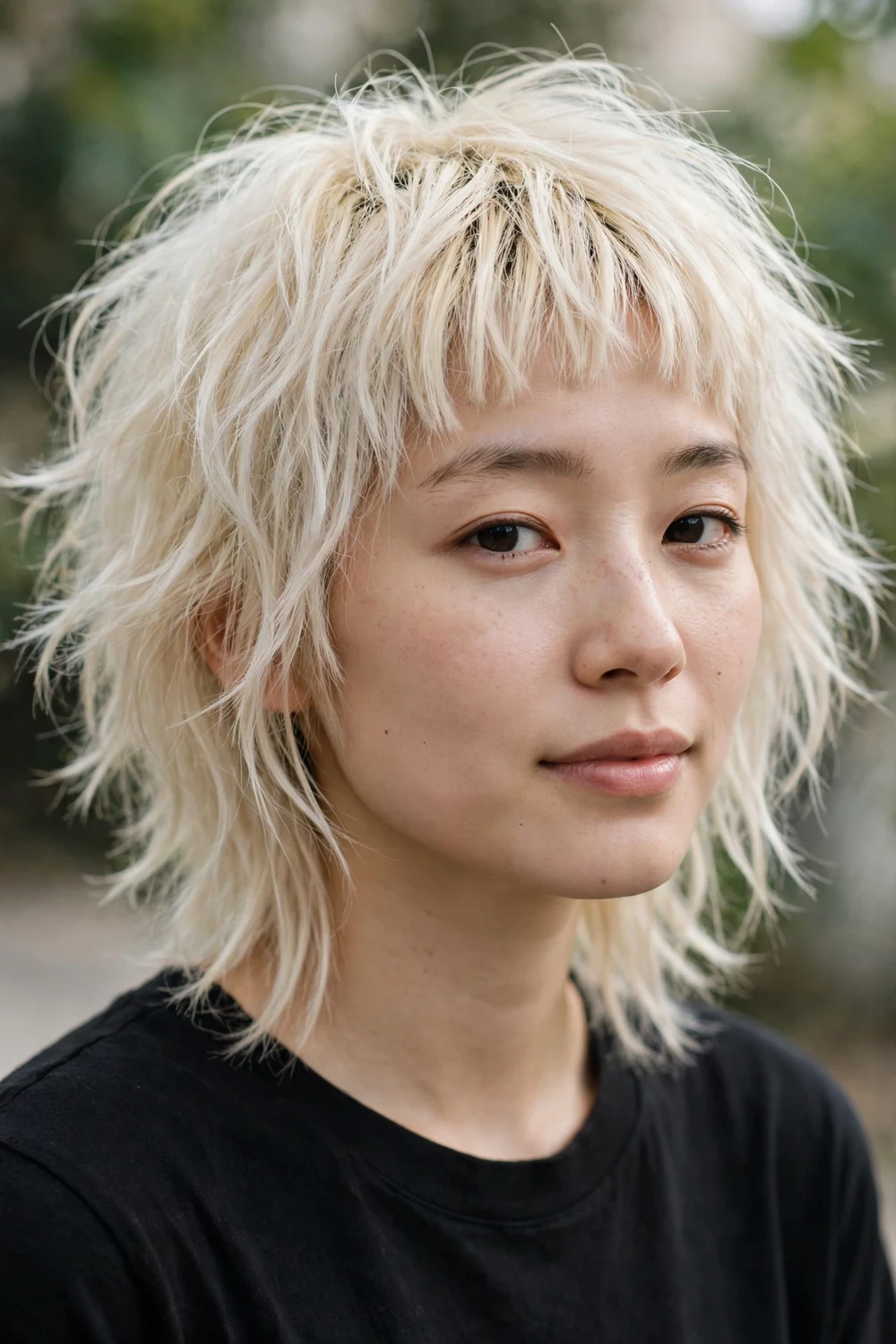
Platinum blonde plus micro baby bangs is the boldest pairing on this list. The bangs sit high on the forehead, cut short and choppy, while the shag below stays deliberately undone. Bleaching to this level needs a skilled colorist and a bond-building treatment to protect the hair. Purple shampoo twice a week holds the icy tone. This cut-color combo photographs strikingly but demands real upkeep. Root touch-ups land every four to six weeks to keep the blonde seamless.
Try this: Keep styling products minimal; the color and the baby bangs already make the statement.
Difficulty: Hard | Cost: $180–$300 cut and color
32. Bixie Shag
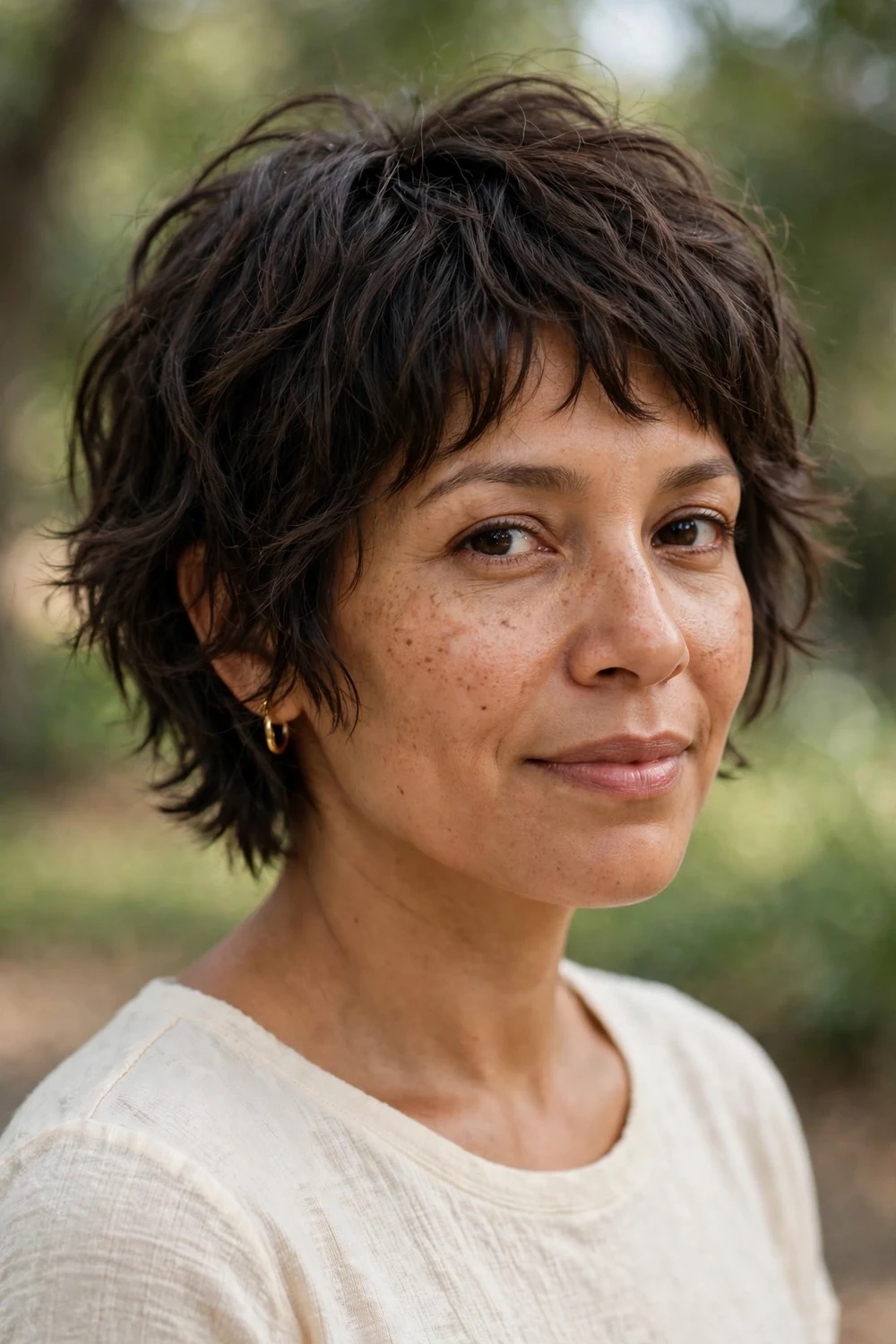
The bixie lands between a bob and a pixie, and the shag version adds choppy layers throughout. Lengths graze the ears and nape with longer texture on top. It is the lowest-maintenance short shag here because the shape holds itself together. Fine hair benefits most, gaining fullness from the stacked layers. A trim every 5 weeks keeps the bixie from sliding into bob territory. It dries fast, which makes it a strong pick for busy mornings.
Try this: Tousle with a dime-sized amount of pomade for a lived-in finish in under a minute.
Difficulty: Easy | Cost: $60–$100 salon cut
33. Smoky Lavender Shag
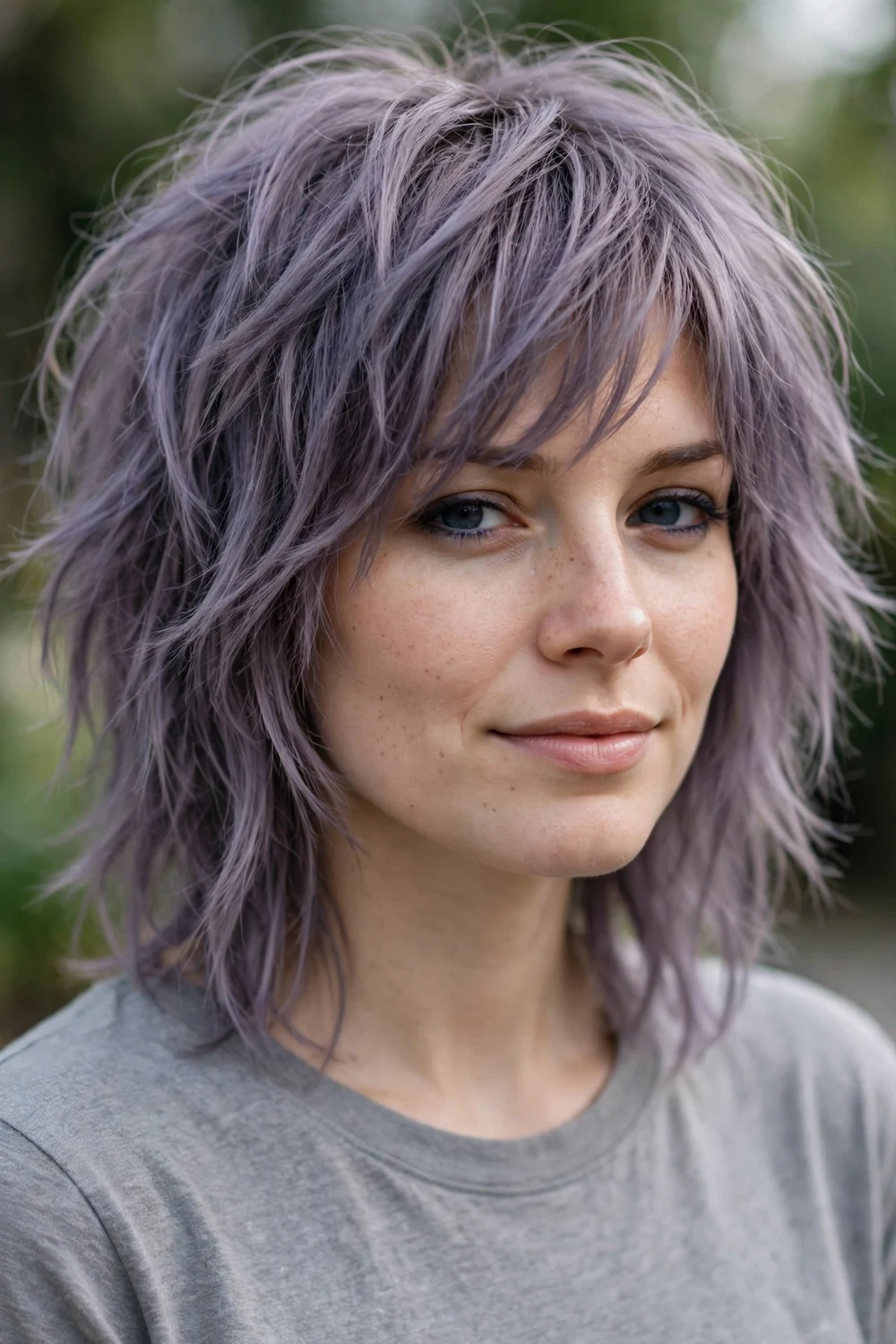
Smoky lavender is muted, greyed-out purple that reads sophisticated rather than playful. On a shag, the dusty tone settles into the layers and makes the texture look soft and expensive. It needs pre-lightening on most hair, then a demi-permanent toner. The shade fades gracefully into silver, which many wearers enjoy as a second phase. Cold rinses and color-safe shampoo extend each application. The fade into silver often becomes a favorite phase, so many skip the refresh.
Try this: Refresh the tone at home with a lavender color-depositing conditioner between salon visits.
Difficulty: Hard | Cost: $160–$280 cut and color
Cool-toned shades like this pair well with seasonal color trends; see these winter hair color ideas for more inspiration.
34. Bronze Balayage Soft Shag
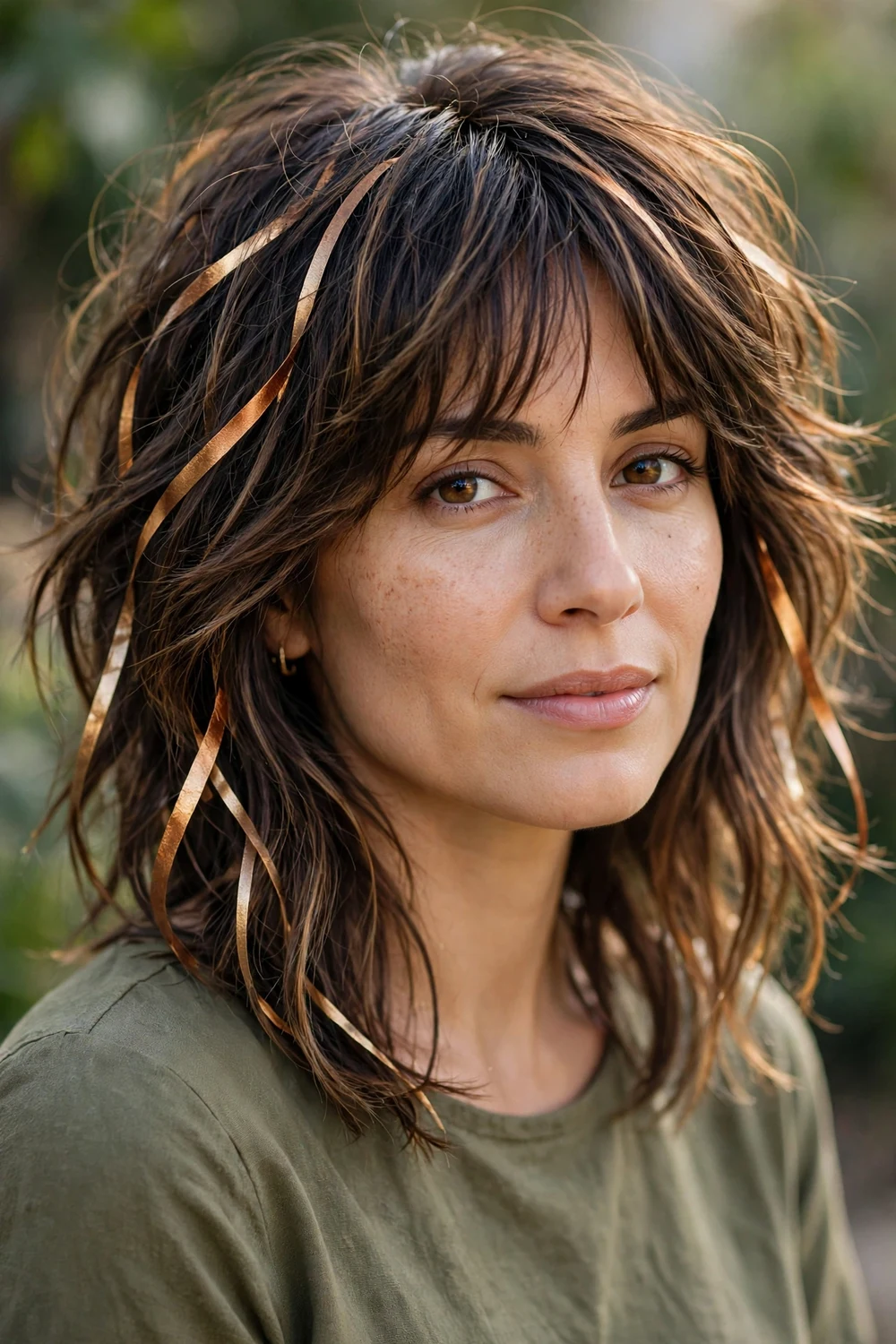
Bronze balayage hand-paints warm metallic ribbons through a soft shag. The color catches light on every layer edge, which makes even a simple cut look dimensional. It suits medium brunette bases and warm to neutral skin tones. Balayage grows out softly, so touch-ups come every 12 to 16 weeks. A gloss at the 8-week mark revives the metallic reflect. Ask the colorist to vary the ribbon width so the metallic effect looks natural.
Try this: Ask for the brightest bronze pieces around the face and ends, keeping the crown deeper.
Difficulty: Medium | Cost: $160–$280 cut and color
35. Espresso Choppy French Shag
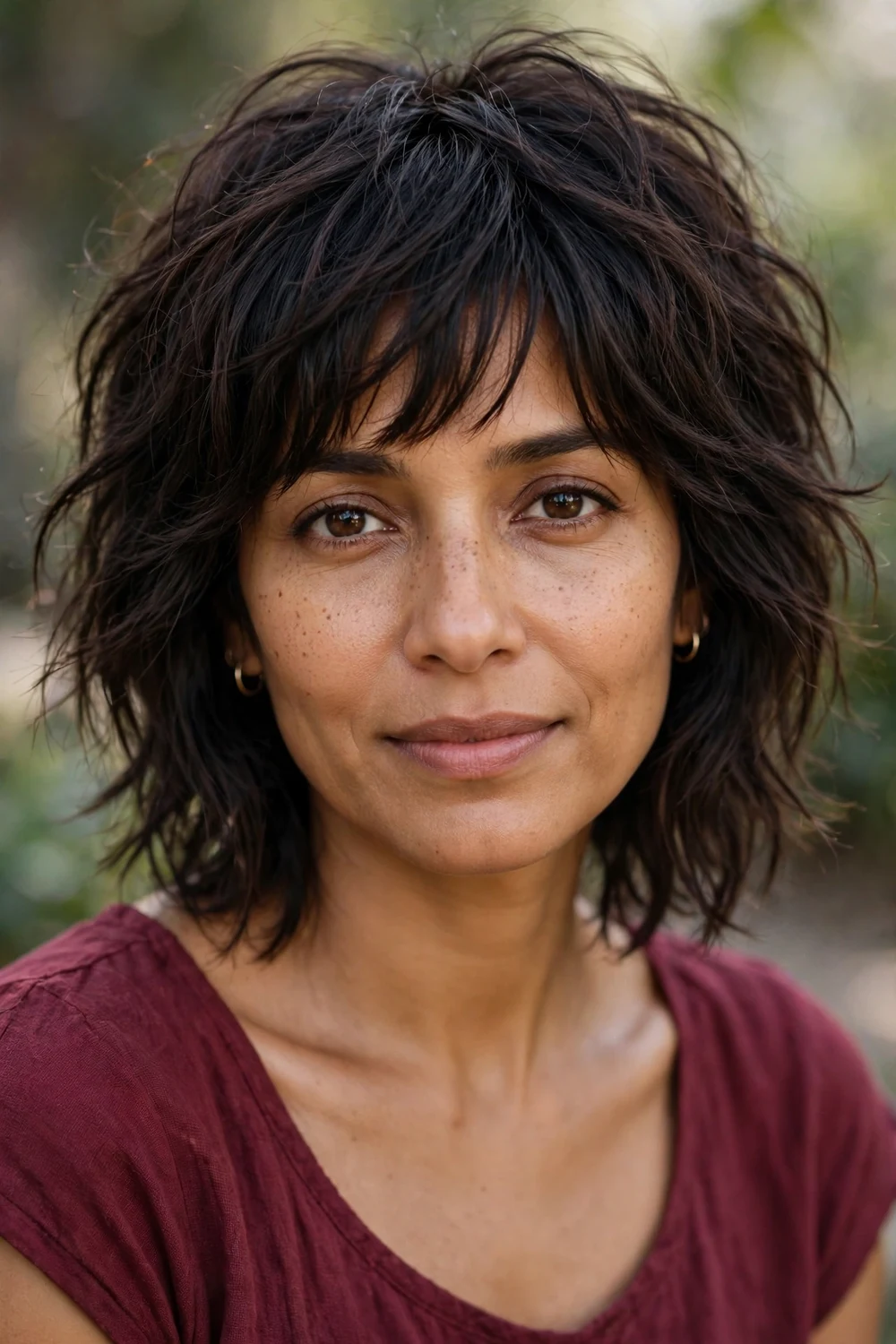
Deep espresso brown gives the french shag a richer, moodier finish than the classic sunlit version. The dark base makes the choppy texture stand out through shine and shadow rather than color contrast. It is a strong choice for anyone who wants the shag shape without lightness or warmth. Gloss treatments every 6 weeks keep the dark shade from looking flat. The dark base also hides regrowth well, stretching color visits to eight weeks.
Try this: Finish with a shine spray; dark hair shows texture best when light can bounce off it.
Difficulty: Easy | Cost: $90–$160 cut and color
36. Strawberry Blonde Bottleneck Shag
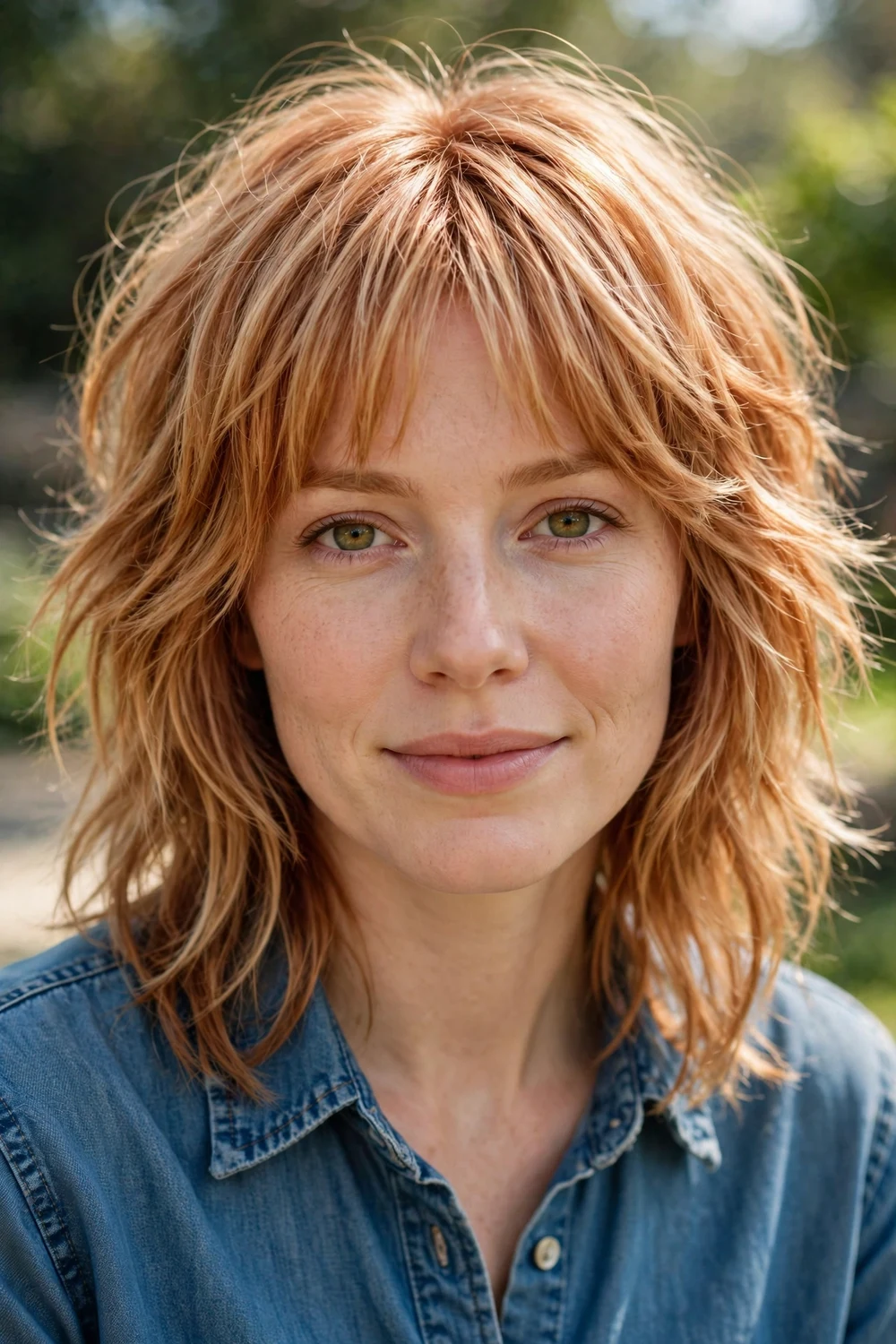
Strawberry blonde, that copper-gold in-between shade, warms up the bottleneck-bang shag. The color brightens the face-framing layers and makes the widening fringe glow against the skin. Fair to medium skin tones wear it best. The shade fades faster than deeper coppers, so a color-depositing conditioner helps between appointments. Keep the cut’s texture soft to match the gentle color. A lightweight leave-in conditioner keeps the fine layers moving without ever weighing them down.
Try this: Request a gloss in a strawberry tone at each trim to keep the color fresh without full recoloring.
Difficulty: Medium | Cost: $140–$240 cut and color
37. Charcoal Grey Edgy Bixie Shag
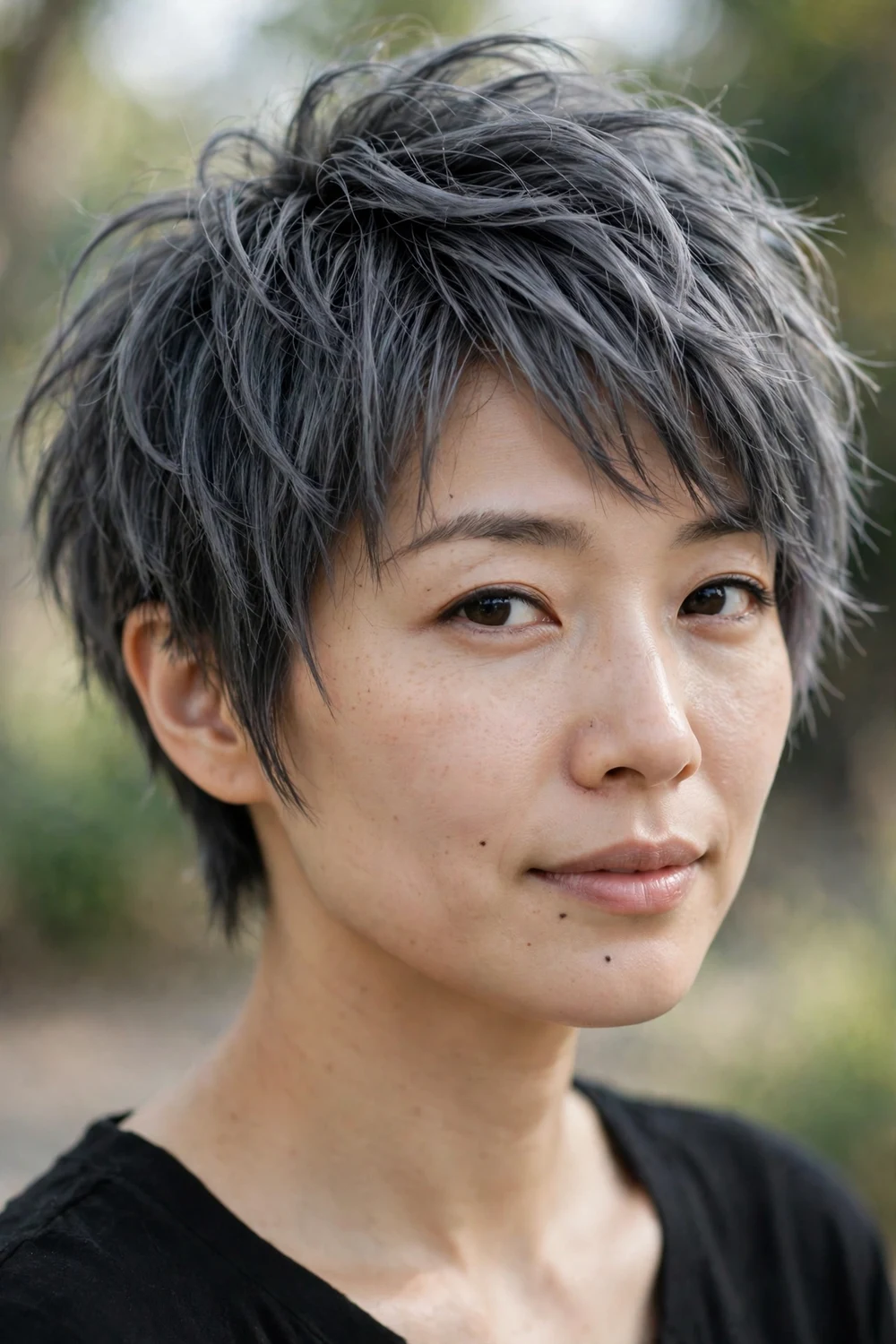
Charcoal grey turns the bixie shag into something sharp and urban. The cool, dark-silver shade outlines every choppy layer with precision. It needs bleaching first on most hair, then a charcoal toner that fades toward silver over 4 to 6 weeks. The cut itself stays short and edgy with tapered sides. This combination suits confident dressers and creative workplaces. Pair it with strong brows and simple makeup, since the color does the talking.
Try this: Use a silver-depositing shampoo weekly to slow the fade from charcoal to washed-out grey.
Difficulty: Hard | Cost: $160–$280 cut and color
38. Honey-Balayage Shag
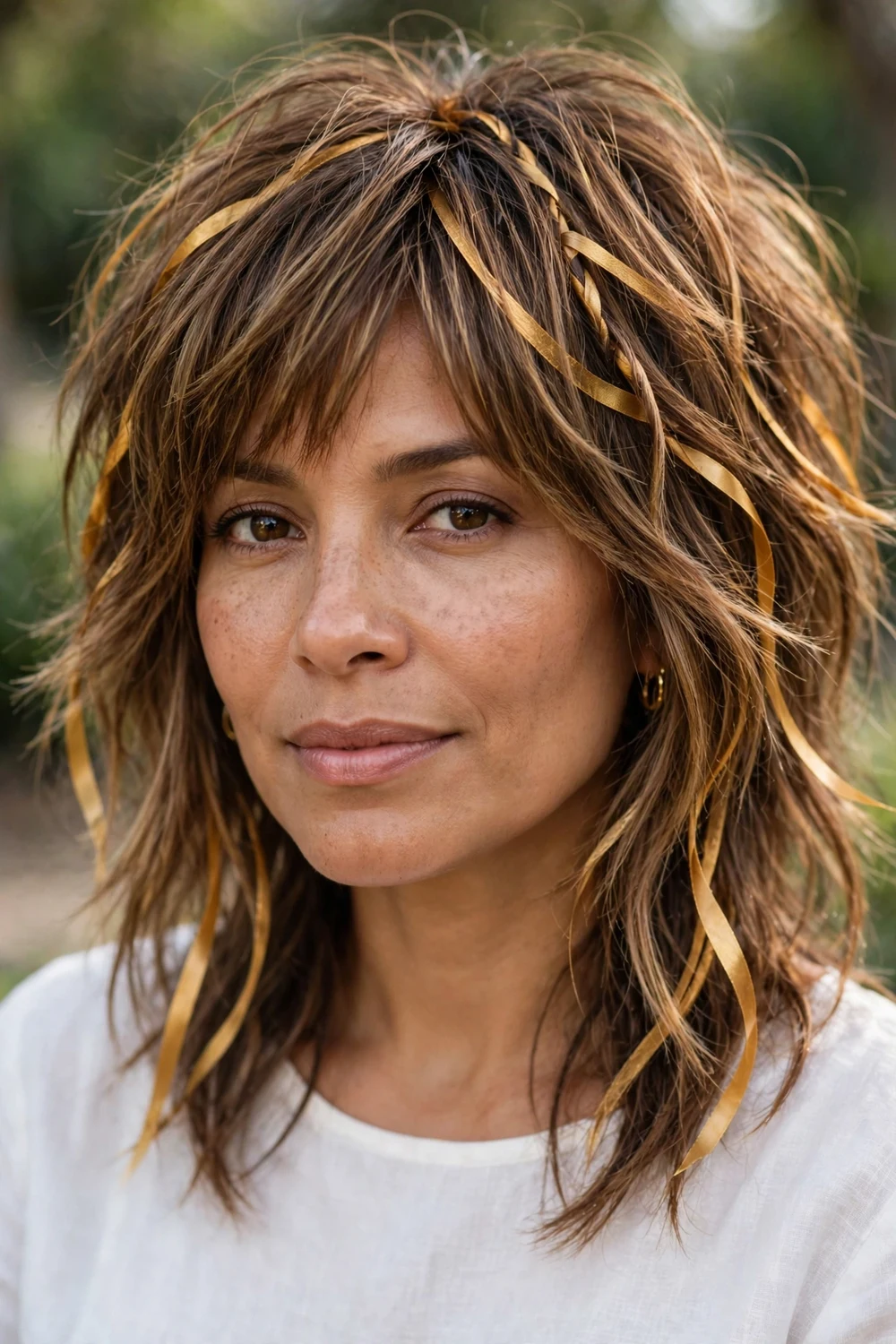
Honey balayage is the warm, golden hand-painted color that flatters the widest range of skin tones. Through shag layers, the honey ribbons create a sunlit effect that moves as the hair moves. It works on light brown to dark blonde bases. The grow-out stays soft for 12-plus weeks. This is the color to choose when the goal is warmth without the commitment of copper or red. It photographs warmly in daylight, which flatters the golden ribbons.
Try this: Ask the colorist to concentrate honey pieces at the ends and around the face for maximum glow.
Difficulty: Medium | Cost: $150–$260 cut and color
39. Ultra-Textured Silver Razor Shag
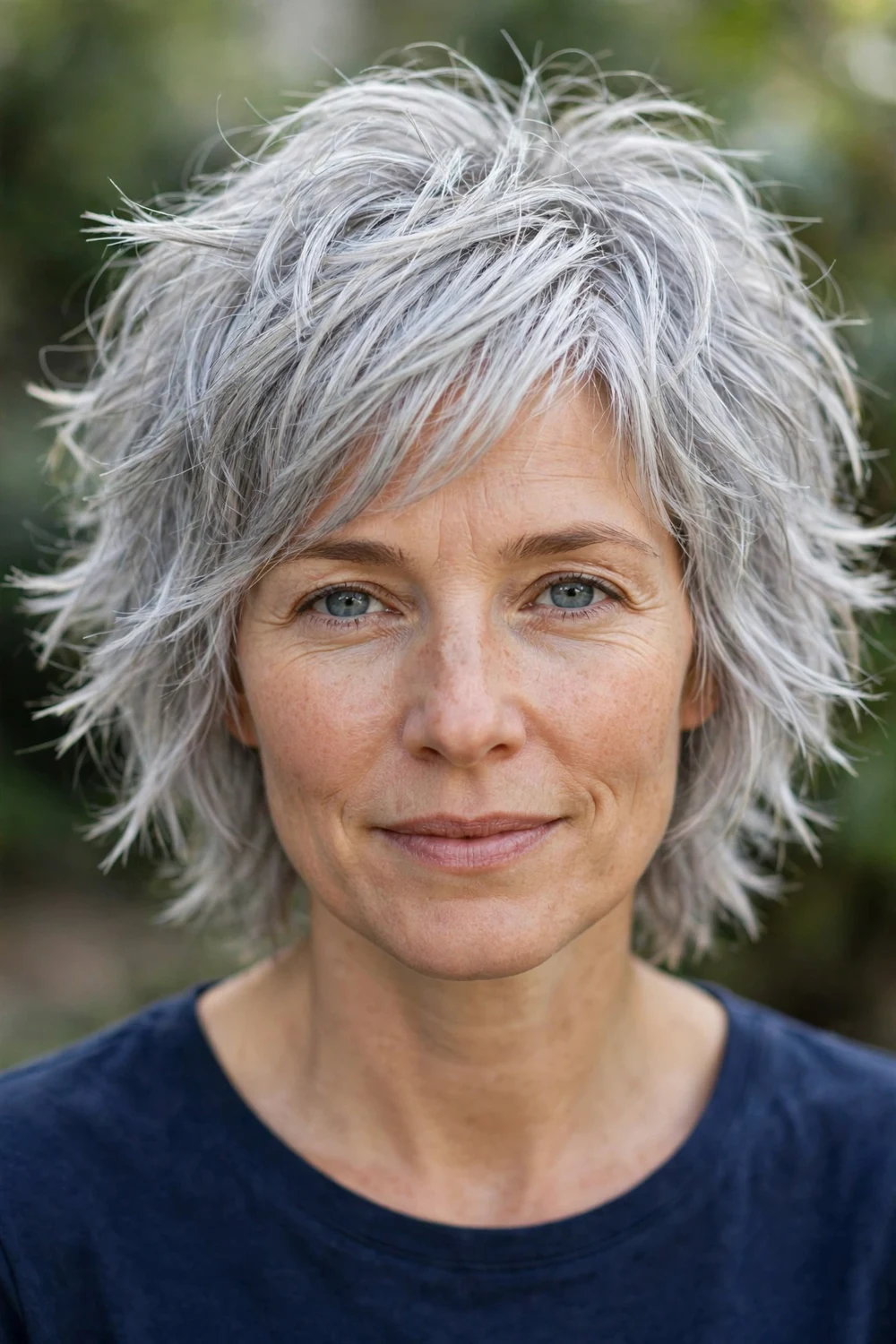
Silver hair plus maximum razor texture creates a cut that looks almost sculptural. Every layer is thinned and shattered so the metallic shade refracts light differently from each angle. The cut works at short to medium lengths. Silver needs regular toning to stay bright, and bleached hair needs deep conditioning weekly. The payoff is a head-turning finish that suits all ages. Keep a purple mask on hand, since silver turns yellow fast without toning.
Try this: Cocktail a silver toner with conditioner for a quick at-home refresh between salon toners.
Difficulty: Hard | Cost: $170–$290 cut and color
40. Sculpted Curly Shag with Crown Volume
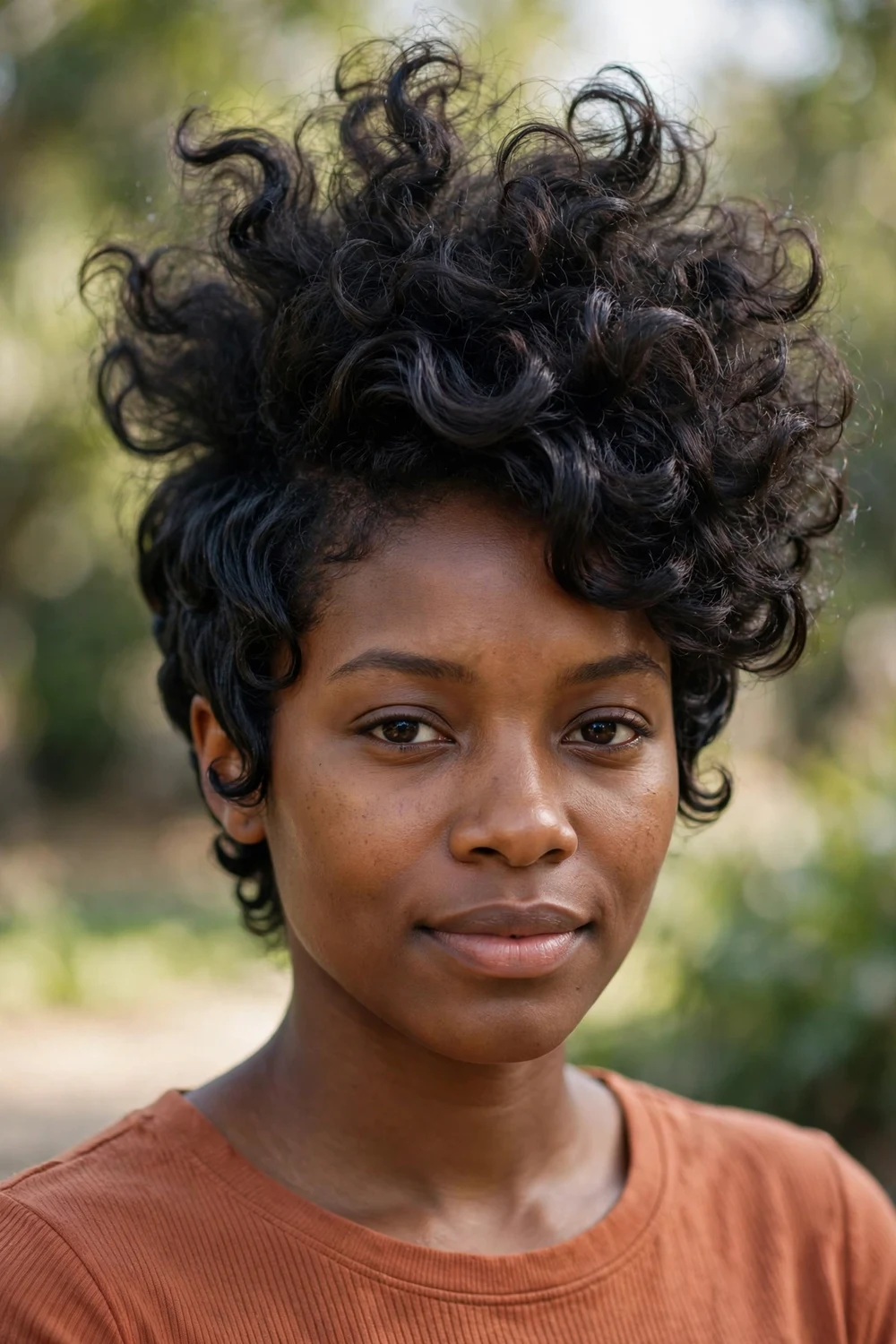
This shag builds height on purpose. Short layers through the crown lift curly hair upward while the sides and back stay controlled, creating a sculpted silhouette with real presence. It suits tight curls and coils that naturally want volume. A pick at the roots, used gently, maintains the lift without disturbing the curl pattern. Satin pillowcases protect the crown shape overnight. A quarterly shape-up trim keeps the crown lift from collapsing under its own weight.
Try this: Diffuse the crown first with the head tilted forward, then let the sides fall into place.
Difficulty: Medium | Cost: $80–$140 salon cut
41. Lived-In Air-Dry Shag
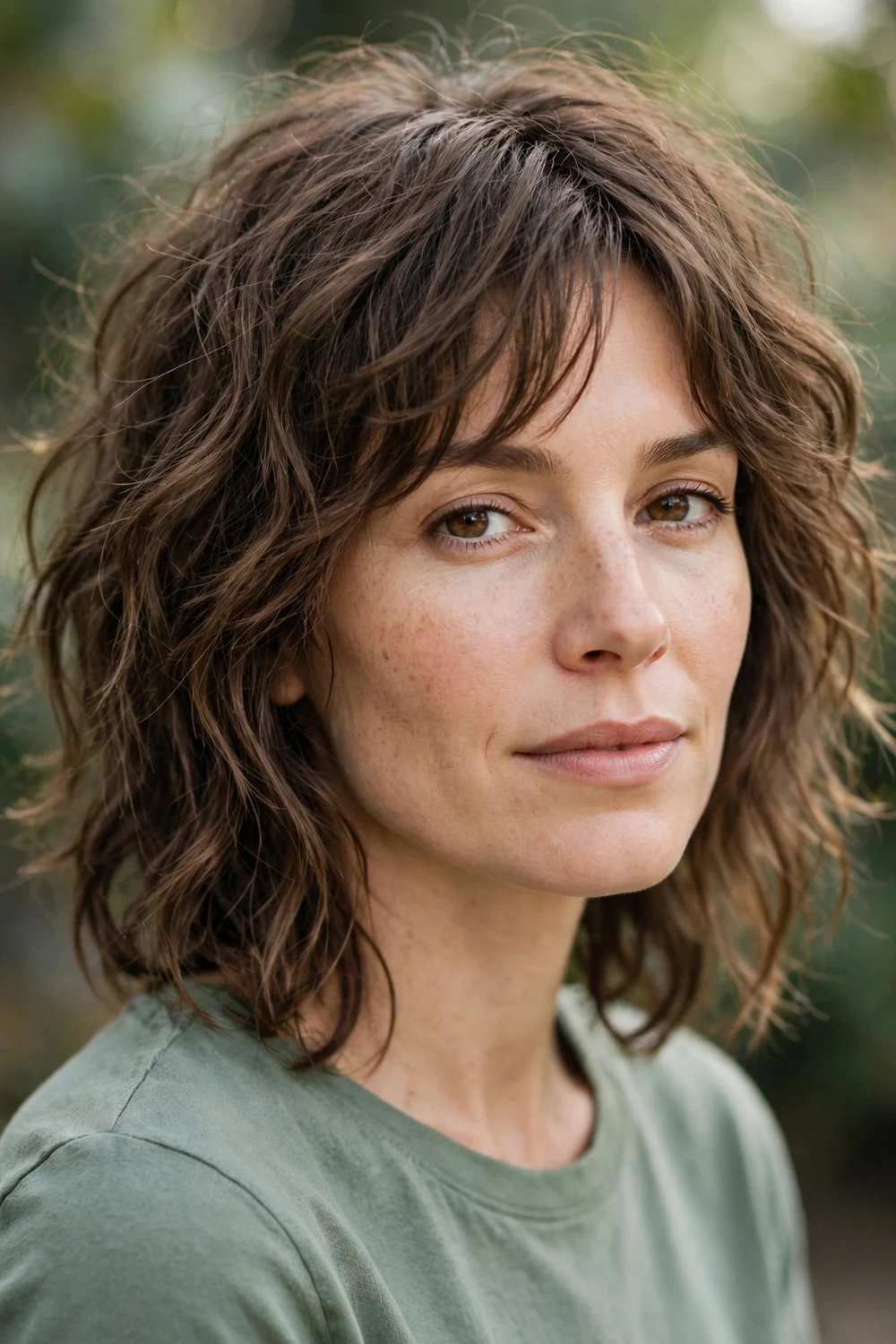
Cut specifically to be left alone. The stylist maps the layers to the natural fall of the hair, so air-drying produces the intended shape with zero heat. A leave-in cream is the entire routine. This is the modern shag for low-maintenance routines and hair health, since skipping hot tools keeps ends intact longer. Trims every 8 weeks keep the shape from going shapeless. This cut rewards patience on wash day, since touching wet hair creates frizz.
Try this: Apply leave-in cream to damp hair, twist two or three random sections, and don’t touch it until fully dry.
Difficulty: Easy | Cost: $70–$120 salon cut
42. Copper Cowboy Shag
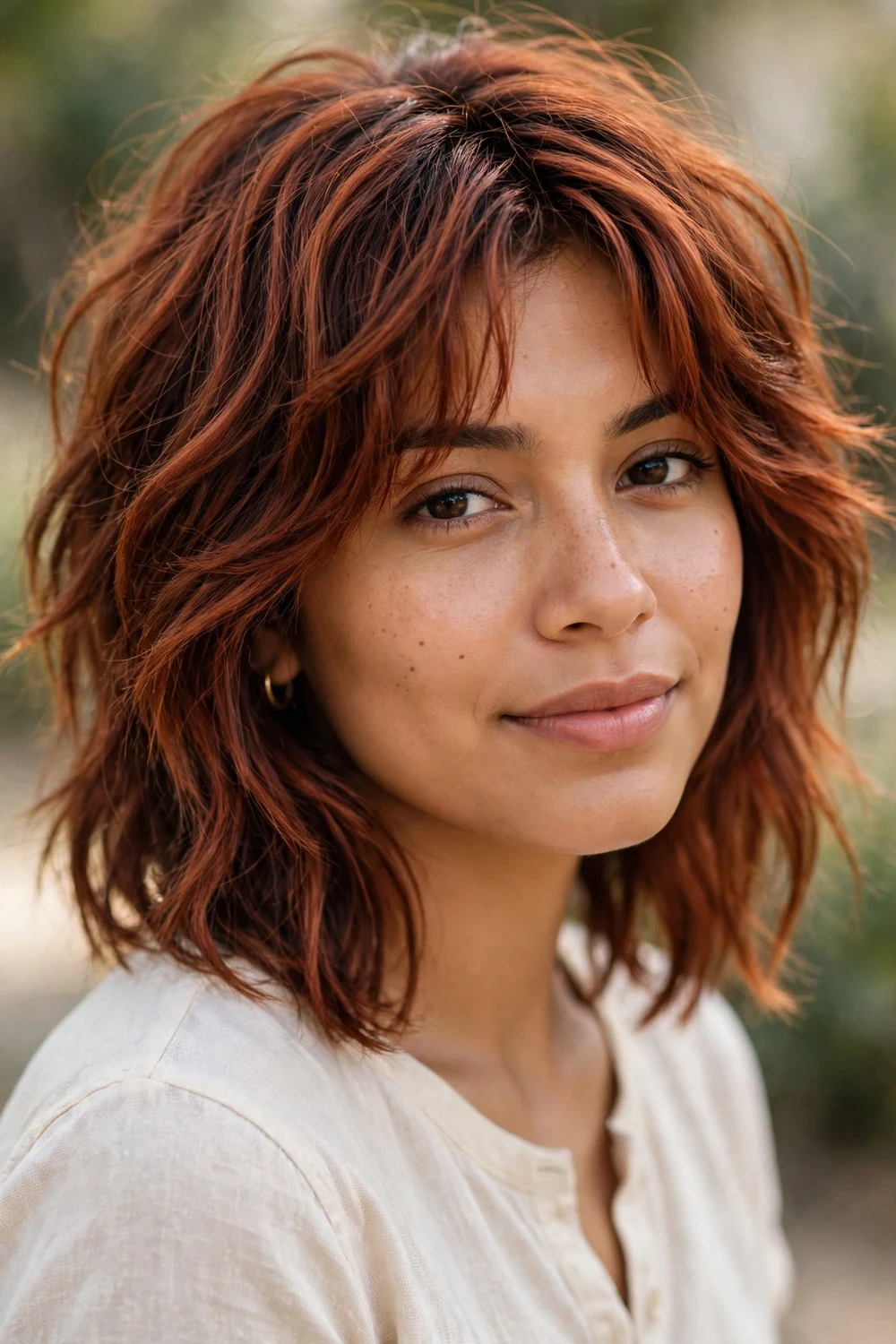
Cowboy copper blends brown and red into a rich, wearable copper that keeps trending year after year. On a shag, the dimensional shade shifts across the layers as the hair moves. It flatters warm and neutral skin tones especially well. The color fades softer than fashion reds, settling into a pretty caramel over 6 to 8 weeks. A copper-depositing conditioner extends the richness between visits. The shade flatters green and hazel eyes especially, pulling out their warmth.
Try this: Ask for dimension, not one flat copper; at least two copper tones make the layers readable.
Difficulty: Medium | Cost: $150–$260 cut and color
43. Textured Shullet

The shullet is the shag-mullet hybrid in its purest form: shaggy layers through the top and crown, mullet length through the back, all heavily textured. Shorter than a wolf cut’s back section, wilder than a classic shag’s. It suits straight to wavy hair that can hold the jagged texture. This is the cut for anyone who wants the most current silhouette in the room. Grow-out needs reshaping every 6 weeks.
Try this: Rough-dry with fingers and finish with texture spray; polished styling fights this cut’s nature.
Difficulty: Medium | Cost: $75–$130 salon cut
Modern Shag Comparison: Which Cut Fits Your Hair?
| Shag style | Length | Bang pairing | Suits this hair | Upkeep |
|---|---|---|---|---|
| Textured shag | Shoulder | Curtain or none | All types | Trim every 6–8 weeks |
| Wolf cut | Short crown, long back | Curtain bangs | Thick, wavy | Trim every 6 weeks |
| Butterfly shag | Medium to long | Curtain bangs | Straight to wavy | Trim every 7–8 weeks |
| Octopus shag | Short top, very long ends | Wispy fringe | Straight, fine to medium | Trim every 6 weeks |
| Bixie shag | Ear to nape | Piecey fringe | Fine to medium | Trim every 5 weeks |
| French shag | Collarbone | Brow fringe | Wavy | Trim every 7 weeks |
| Curly shag | Chin to shoulder | Curly fringe or none | Curly, coily | Trim every 8–10 weeks |
| Shullet | Short top, mullet back | Choppy fringe | Straight to wavy | Reshape every 6 weeks |
| Shattered lob | Collarbone | Side-swept or none | Straight to wavy | Trim every 6–8 weeks |
| Feathered shag | Shoulder | Feathered fringe | Fine to medium | Trim every 6–8 weeks |
How to Choose Your Modern Shag
Start with texture, not length. Thick hair needs interior weight removed, so long layered shags, wolf cuts, and disconnected grunge shags work best. Fine hair needs stacking and shattered ends, so bixies, feathered shags, and choppy short shags give the most lift.
Next, match the fringe to the face. Curtain and bottleneck bangs suit most shapes. Baby bangs and thick blunt fringes suit longer faces. Side-swept bangs soften round faces.
Finally, be honest about upkeep. Fashion colors like platinum, lavender, and charcoal need salon visits every 4 to 6 weeks. Natural shades and lived-in cuts stretch to 10 or 12. Pick the shag that fits the routine as well as the photo.
Frequently Asked Questions
What is a modern shag haircut?
A modern shag is a layered haircut with choppy texture, piecey ends, and face-framing layers, worn anywhere from pixie-short to collarbone-long. The 2026 versions include hybrids like the wolf cut, butterfly shag, octopus cut, bixie shag, and french shag.
What is the difference between a shag and a wolf cut?
A wolf cut is a type of shag. It combines shaggy layers on the crown with mullet-like length at the back, creating more contrast between the top and the ends than a classic shag, which keeps its layers more evenly distributed.
Do modern shags work on fine hair?
Yes. Choppy layers, razor texture, and stacked shapes like the bixie and feathered shag create the illusion of fullness in fine hair. Ask the stylist to keep the ends shattered rather than thinned, since over-thinning removes the density fine hair needs.
How often should a shag haircut be trimmed?
Most shags need a trim every 6 to 8 weeks to keep the layers crisp. Very short versions like bixies and geometric micro shags need reshaping every 4 to 5 weeks, while curly and lived-in shags can stretch to 8 or 10 weeks.
Can a shag be styled without heat?
Yes, most modern shags are designed for it. Scrunching in mousse, sea-salt spray, or curl cream and air-drying gives the intended tousled finish. The lived-in air-dry shag is cut specifically so no hot tools are needed at all.
Final Thoughts
The modern shag earns its staying power by adapting. Whether the goal is a soft butterfly shag, a sharp bixie, or a full wolf cut, the formula stays the same: layers with intention, texture with control, and a cut that works with the hair’s natural behavior. Bring two or three reference photos to the salon, discuss the upkeep honestly, and pick the version that fits daily life.
