


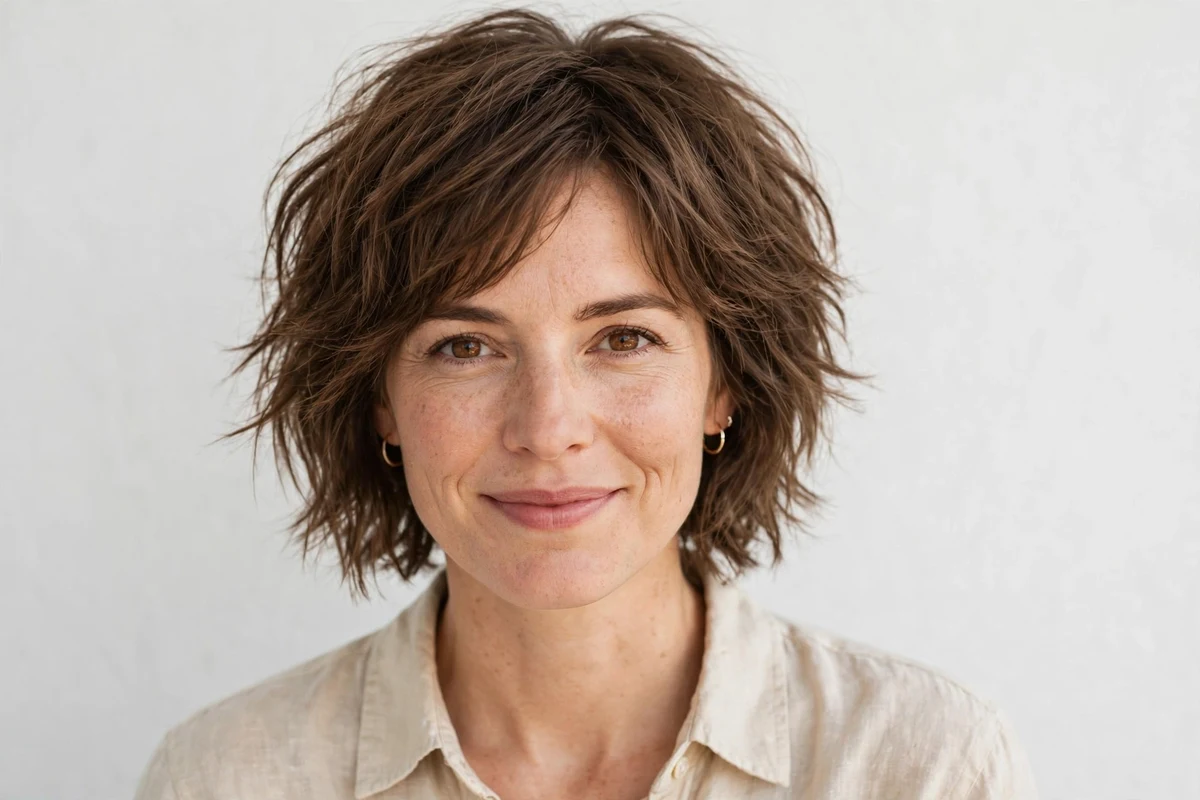
Choppy bob haircuts for fine hair work because they solve the two biggest problems fine strands have: flatness at the crown and see-through ends. Point-cut and razor-cut layers remove weight so each section can lift, while the uneven ends break the hair into pieces that look thicker than one solid sheet. The result is a cut that adds texture, movement, and the illusion of density without heavy product or daily heat styling.
If you are deciding between cut families, our bob hairstyles for fine hair guide compares choppy cuts with blunt and soft-layered options side by side. The ideas below focus only on choppy texture, from razor-cut and stacked to bangs, color, and shaggy takes.
Quick Takeaways
- Choppy layers create the illusion of fullness. Broken-up ends and piecey texture make fine hair look denser than a blunt one-length cut.
- Weight removal is the real trick. Razor or point cutting takes bulk out of the mid-lengths so the crown can lift instead of lying flat.
- Shorter usually reads thicker. Jaw-to-chin lengths remove the dragging weight that pulls fine hair flat; collarbone length still works with the right layering.
- Typical salon cost: $50 to $90 for the cut, plus $30 to $80 for highlights, balayage, or fashion color if you add it.
- Upkeep: trims every 6 to 8 weeks keep choppy ends from growing stringy; lightweight mousse or texture spray is enough for daily styling.
1. Short Choppy Bob with Textured Ends

This is the highest-impact version of the cut: above the jaw, with ends point-cut so they separate into airy pieces. Removing that much length takes all the dragging weight off fine strands, so the hair springs up instead of hanging limp. It suits straight to slightly wavy textures best, and it grows out into a chin-length bob without an awkward phase.
Try this: rough-dry with your fingers and a pea-sized amount of lightweight mousse, then pinch the ends with a dab of texture paste for separation.
Difficulty: Easy · Cost: $50–$75
2. Wavy Choppy Bob
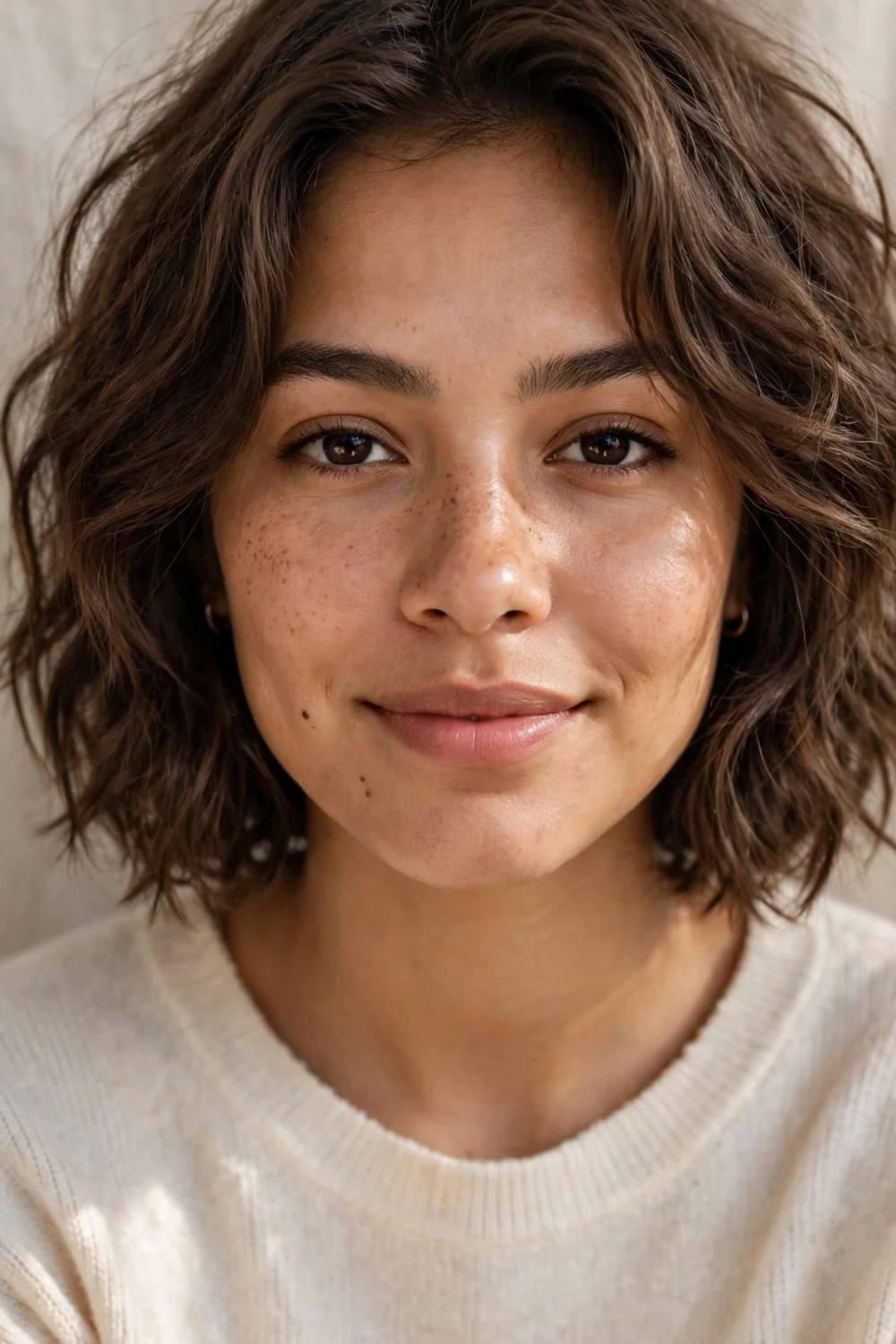
Waves and choppy layers are a natural pair for fine hair. The bends push sections of hair outward, which reads as width and body, while the choppy ends keep the waves from clumping into one flat sheet. Ask for layers that start at the cheekbone so the wave pattern has room to form. A 1-inch curling wand gives the fastest version of this look; always use a heat protectant first.
Try this: wrap random sections around a 1-inch wand, alternating directions, then shake the hair out with your fingers instead of brushing.
Difficulty: Easy · Cost: $55–$80
3. Choppy Bob with Curtain Bangs

Curtain bangs part in the middle and sweep to each side, blending straight into the choppy layers. On fine hair they pull density forward around the face, which fills in the temple area that often looks sparse. The bangs should start at the cheekbone and get longer toward the jaw so they connect with the bob instead of sitting apart from it.
Try this: blow-dry the bangs with a round brush, rolling them away from the face on each side for lift at the part.
Difficulty: Medium · Cost: $60–$85
4. Razor-Cut Choppy Bob

A razor slices the ends at an angle instead of cutting them straight across, which creates feathered, wispy tips with built-in movement. For fine hair this is useful because it removes just enough weight for bounce without thinning the perimeter to nothing. Skip this if your hair is extremely sparse at the ends; point cutting is safer there.
Try this: work a little dry shampoo through the mid-lengths on day two; the grit makes razor-cut ends look fuller.
Difficulty: Easy · Cost: $55–$85
5. Choppy Bob with Stacked Back
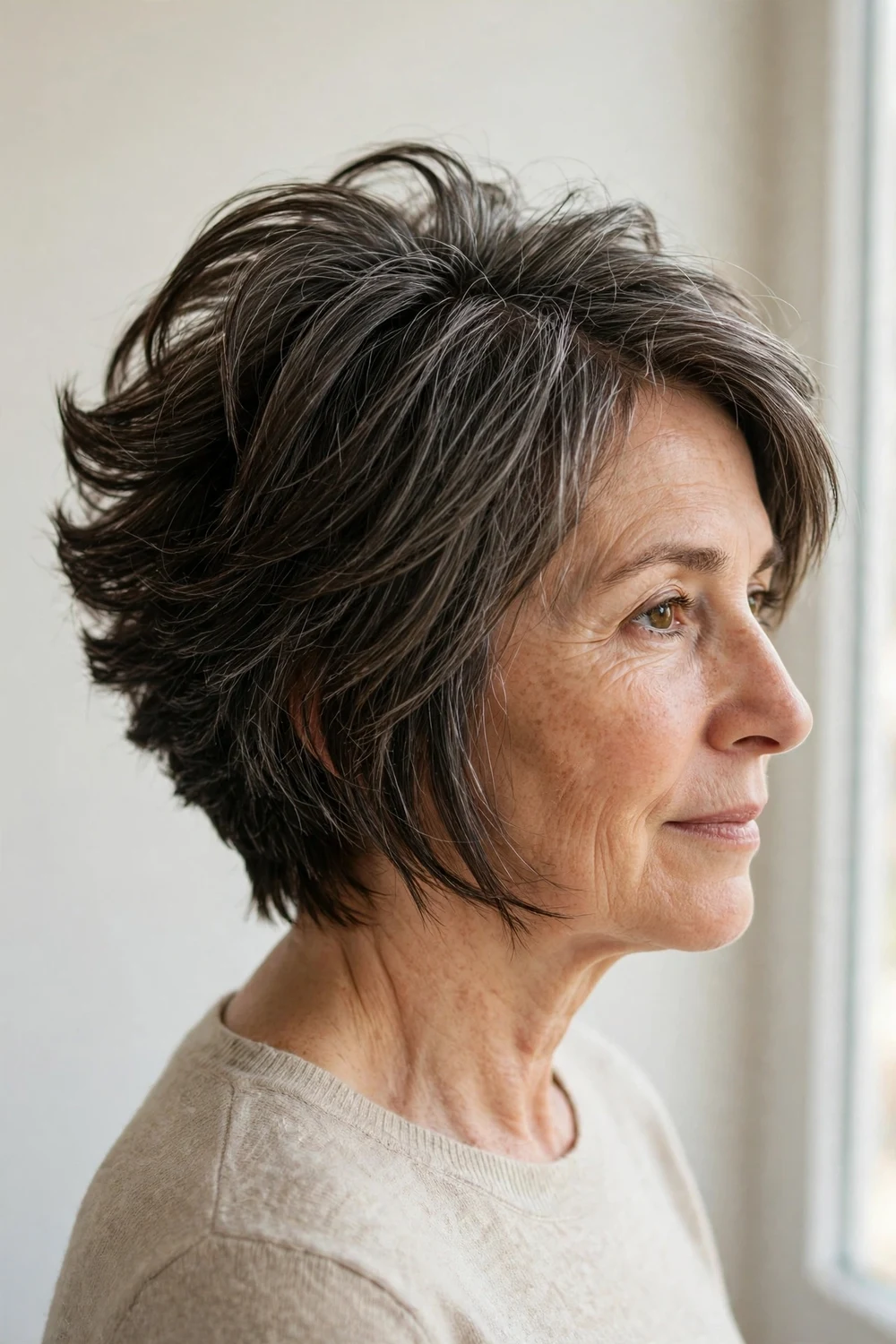
Stacking means the back is cut in graduated layers that build on each other, which creates automatic height at the crown and nape. Pair that structure with choppy ends and fine hair gets lift it could never hold on its own. The front stays longer, around the chin, so the shape still reads as a bob rather than a wedge.
For more graduated shapes, our stacked bob hairstyles for fine hair guide covers the full range of stacked cuts.
Try this: apply root-lifting spray to damp hair and blow-dry the back sections upward with a round brush for extra height.
Difficulty: Medium · Cost: $60–$90
6. Layered Choppy Bob with Tapered Ends

This is the controlled version of the choppy bob: light internal layers with ends that taper softly instead of being visibly chunked. It suits fine hair that frizzes easily, because the tapering keeps the surface smooth while the interior layers still create lift. Ask your stylist to keep the perimeter fairly solid so the ends do not look thin.
Try this: flat-iron in small sections with a heat protectant, bending the very ends slightly inward for a polished finish.
Difficulty: Easy · Cost: $55–$80
7. Textured French Choppy Bob

The French bob sits at the jaw with soft, undone texture and often a wispy vintage-style fringe. On fine hair the short length does most of the volumizing work, and the slightly messy finish hides any thin spots. It is one of the lowest-maintenance options here: wash, add a little texture spray, and let it air-dry.
Try this: twist damp sections loosely and let them air-dry for natural-looking bends without heat.
Difficulty: Easy · Cost: $55–$80
8. Choppy Bob with Micro Texture

Micro-texturizing thins the very ends in tiny, invisible amounts instead of cutting visible layers. For ultra-fine hair this is the safest way to get movement: the cut looks almost one-length, but the ends lift and separate instead of sticking together. Tell your stylist you want texture without visible layer lines, and ask them to keep thinning shears away from the top half.
Try this: use a lightweight volumizing mousse at the roots only; heavy products erase the effect of micro texture.
Difficulty: Easy · Cost: $50–$75
9. Asymmetrical Choppy Bob

One side falls past the chin while the other sits at the jaw, and the imbalance makes the eye move across the cut instead of noticing thin areas. Micro layers through the shape add separation without bulk. Keep the difference between the sides to about an inch; more than that and the short side can look sparse on fine hair.
Try this: straighten the longer side with a flat iron and heat protectant to emphasize the contrast between the two lengths.
Difficulty: Medium · Cost: $60–$90
10. Rounded Choppy Bob
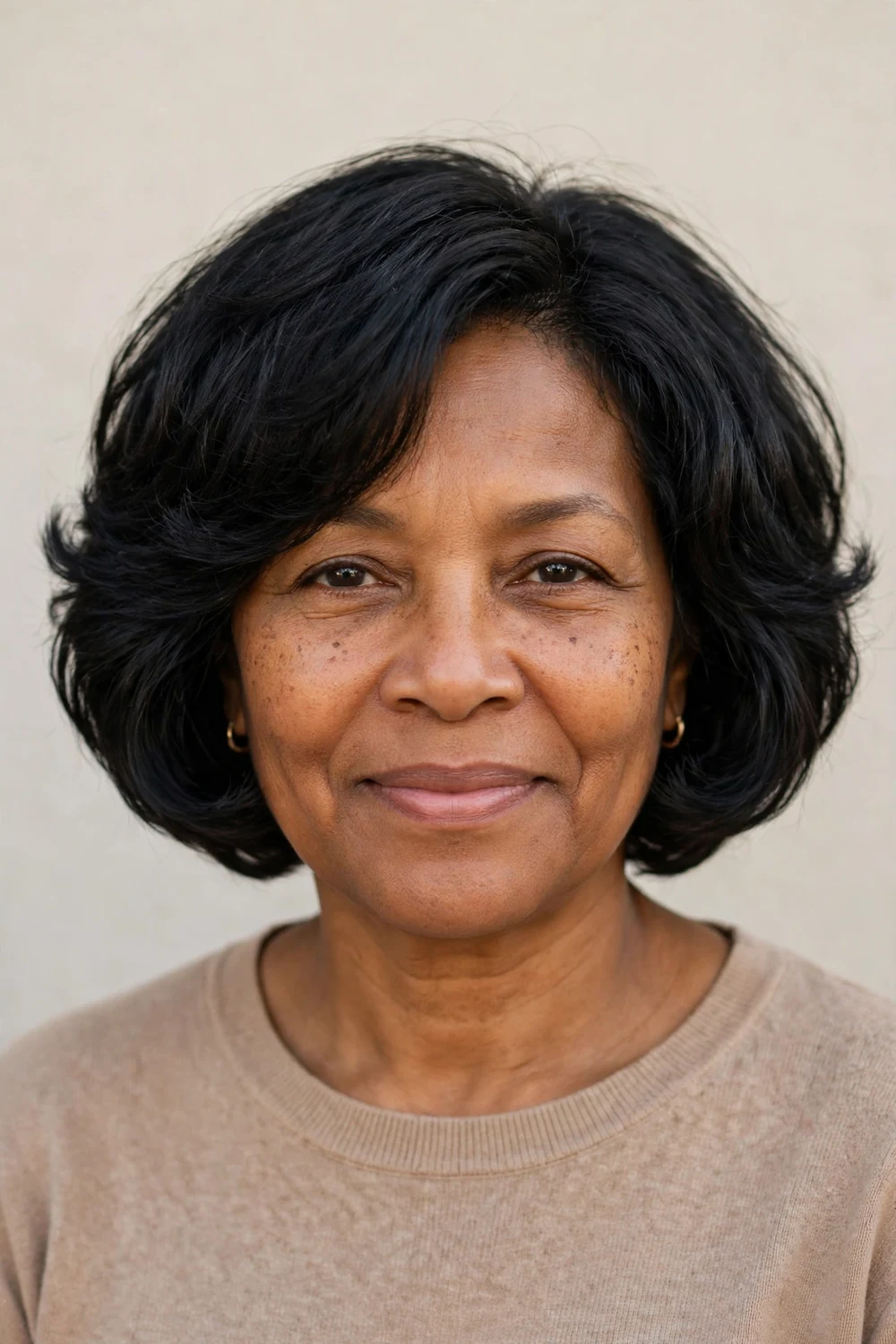
A softly rounded silhouette curves under at the chin, which tucks the ends inward and makes them look denser. Light choppy pieces through the shape keep it from turning into a helmet. This is a good pick for fine hair that tends to flip outward on its own, because the under-curve works with the hair instead of fighting it.
Try this: blow-dry with a medium round brush, rolling the ends under as you go, for a smooth rounded finish.
Difficulty: Easy · Cost: $55–$80
11. Classic Choppy Bob

The baseline version: jaw-length, even all around, with choppy layers cut through the ends. It is the cut to choose when you want texture without committing to bangs, asymmetry, or color. On fine hair it works best with a center or slight side part and ends that are piecey rather than blunt.
For choppy bobs designed around thicker hair types too, see our choppy bob hairstyles roundup for the wider family of cuts.
Try this: scrunch a small amount of sea salt spray into dry hair for instant piecey texture with zero heat.
Difficulty: Easy · Cost: $50–$75
12. Textured Choppy Bob with Side Part
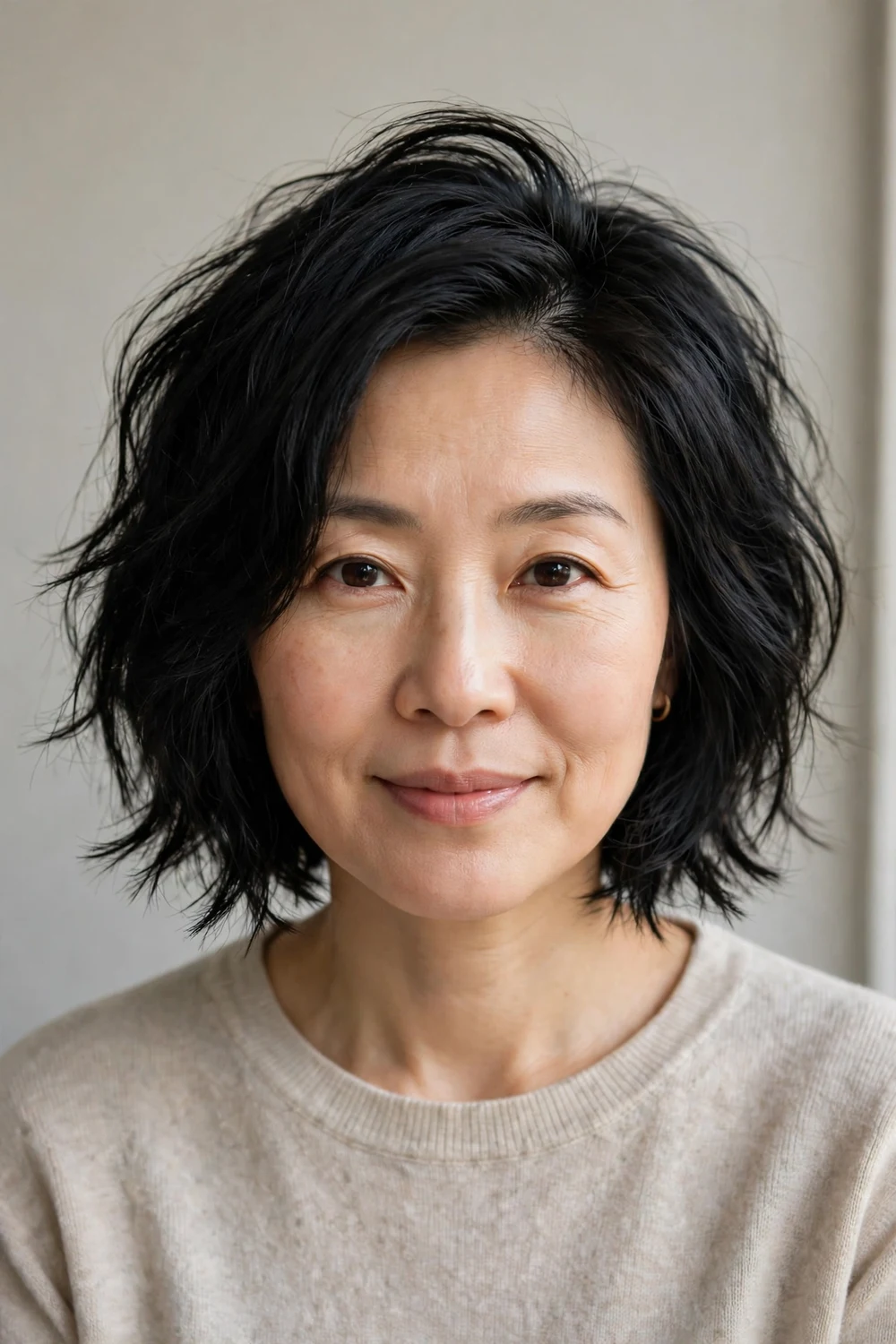
Moving the part to the side is the cheapest volume trick there is: it forces the roots to stand up instead of falling flat along a center line. Combined with choppy layers, the heavy side gets fullness while the light side stays sleek. This suits oval and heart-shaped faces especially well.
Try this: set the part while hair is damp and blow-dry the roots in the opposite direction first, then flip to your side for extra lift.
Difficulty: Easy · Cost: $50–$75
13. Blunt Choppy Bob

This cut keeps a solid, straight-across perimeter for maximum thickness at the ends, then adds choppy layers only through the interior. You get the density of a blunt bob with the movement of a choppy one. It needs trims every 6 weeks to keep the blunt line crisp, since grown-out ends thin the look fast.
Try this: smooth the ends with a flat iron and heat protectant, then add a drop of shine serum just on the tips for a clean finish.
Difficulty: Easy · Cost: $55–$80
14. Choppy Bob with Full Fringe

A full fringe brings a large section of hair forward, which instantly makes fine hair look like there is more of it around the face. The choppy bob underneath keeps the overall shape light so the fringe does not overwhelm. Keep the fringe slightly piecey rather than perfectly straight; a little separation stops it from looking heavy.
Try this: blow-dry the fringe straight down with a paddle brush, then use your fingers to break it into soft pieces.
Difficulty: Medium · Cost: $55–$85
15. Layered Choppy Bob

Multiple layers of varying lengths stack through the cut to build real volume, while the choppy finish keeps the layers from looking dated. The key for fine hair: keep layers in the bottom half and leave weight at the crown so the top does not go wispy. This is the most forgiving option if your hair has both fine texture and medium density.
If you like this family of cuts, our layered bob hairstyles guide has softer, less choppy takes on the same idea.
Try this: flip your head upside down and blow-dry the roots for two minutes to build volume through the layers.
Difficulty: Medium · Cost: $60–$90
16. Curly Choppy Bob
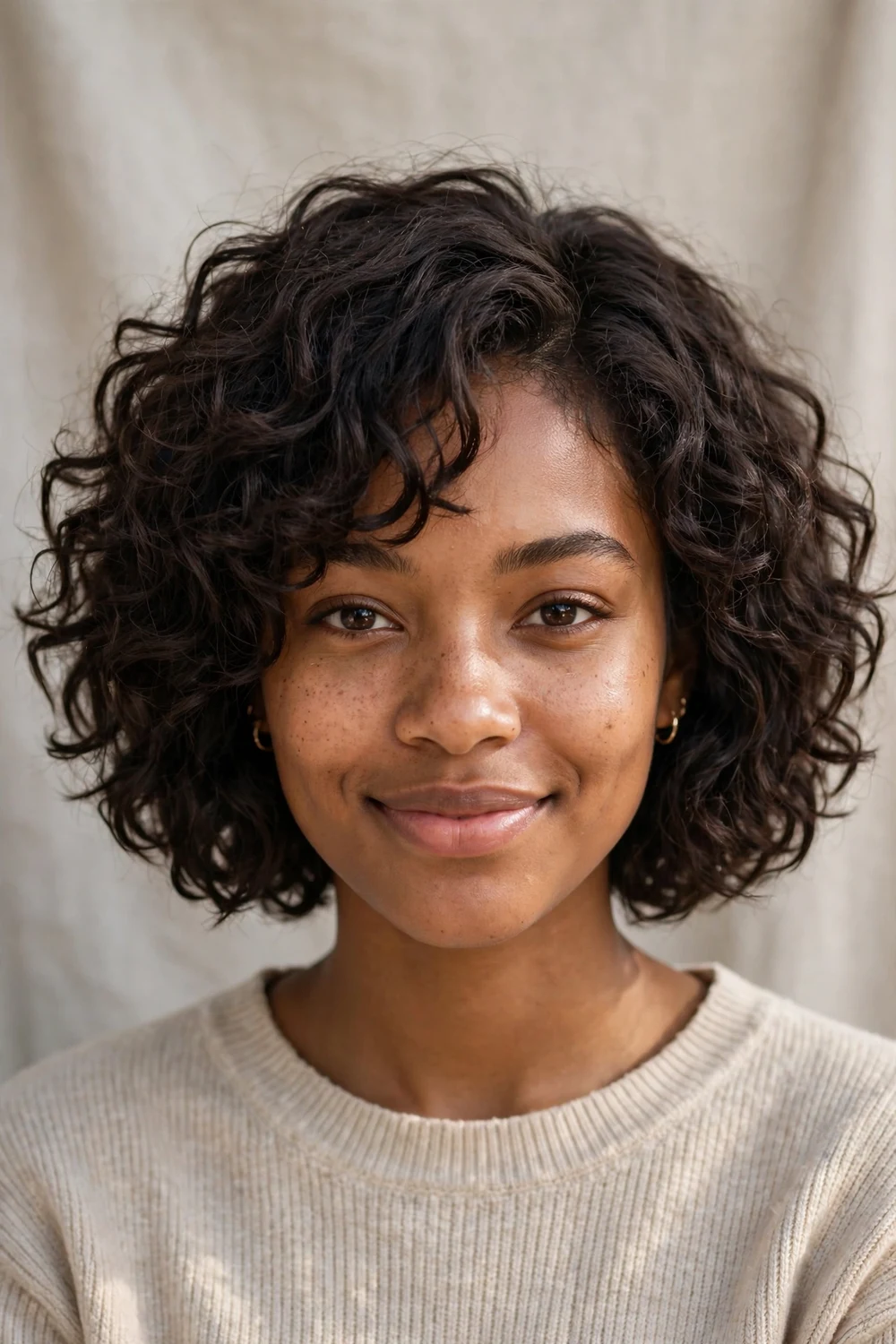
Curls are nature’s volumizer, and choppy layers define each curl so they spring up instead of stretching out. On fine curly hair, keep the layers long enough that the curls do not shrink past the jaw; chin-length dry is the sweet spot. A lightweight curl cream defines without weighing the pattern down.
Try this: rake curl cream through soaking-wet hair, scrunch, then diffuse on medium heat with a heat protectant mist first.
Difficulty: Medium · Cost: $60–$90
17. Choppy Bob with Dimensional Highlights
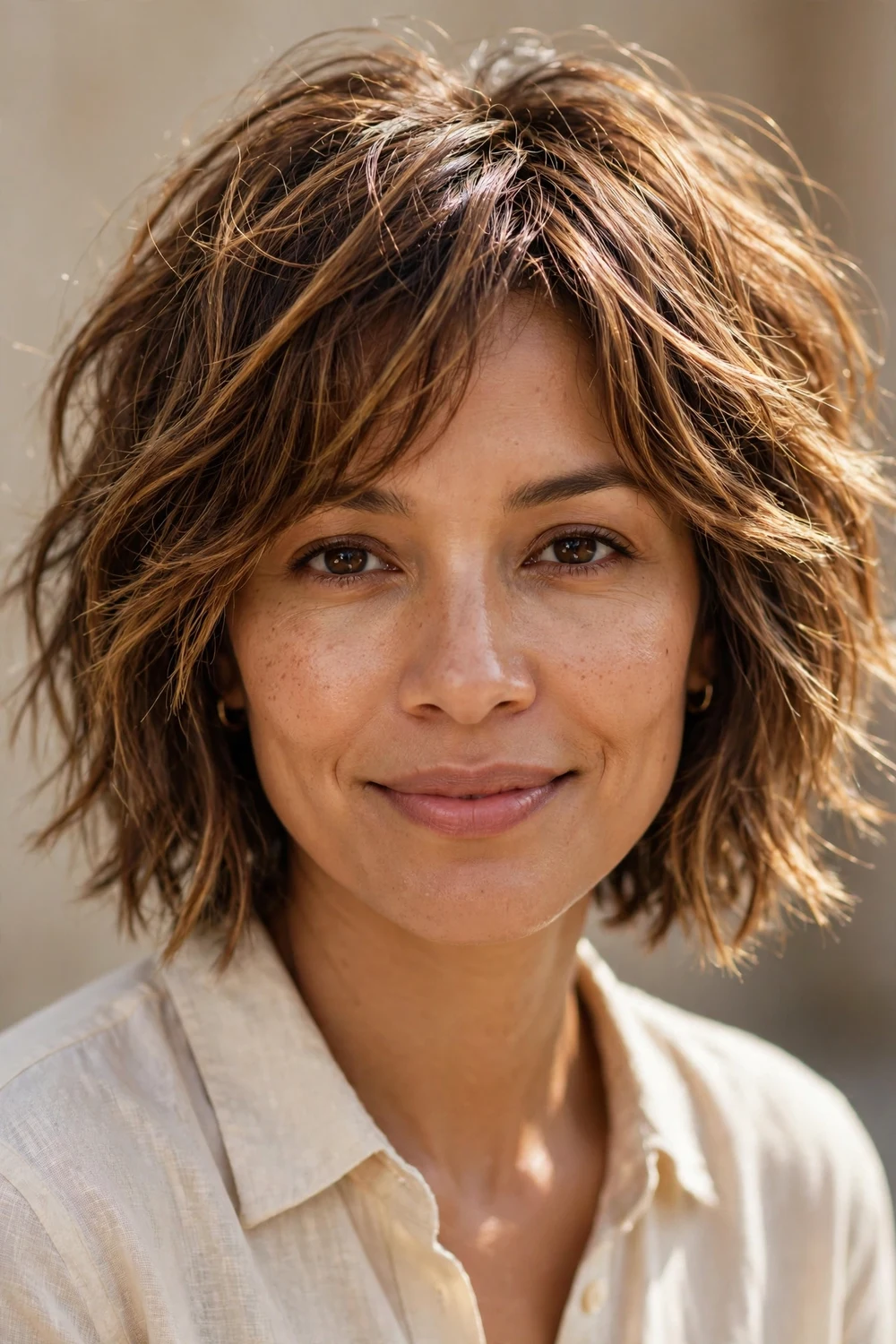
Highlights add contrast between light and dark strands, and that contrast reads as depth, which reads as thickness. On a choppy bob, place the lightest pieces around the face and through the ends so the texture catches the light. Subtle, blended highlights work better than chunky ones on fine hair.
Try this: ask for babylights or a soft balayage rather than foils; the grow-out is gentler and touch-ups stretch to 10 to 12 weeks.
Difficulty: Medium · Cost: $90–$160
18. Angled Choppy Bob
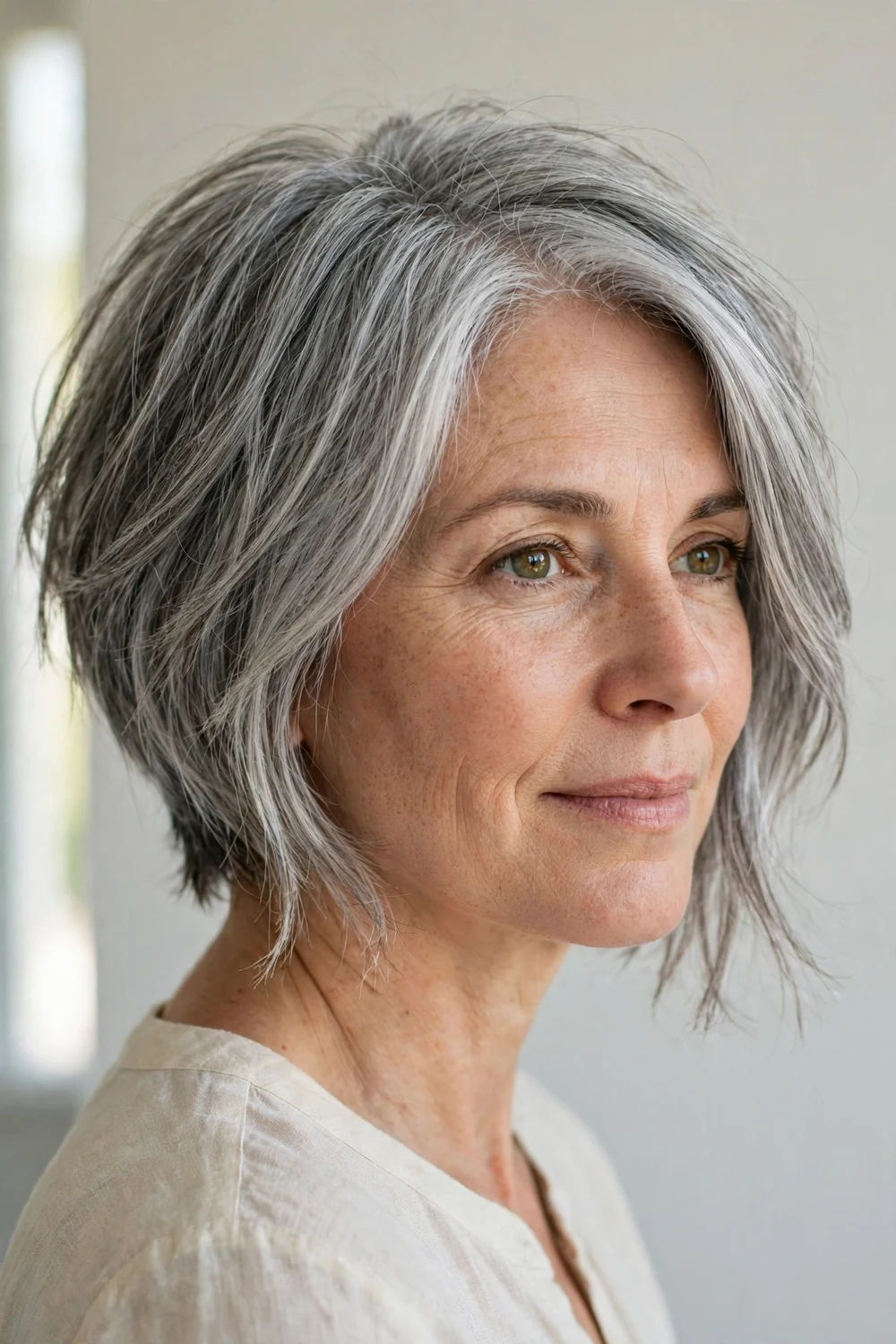
Shorter at the back and angling longer toward the front, this cut builds volume where fine hair needs it most: the back and crown. The forward angle also frames the face and gives the style direction. Choppy ends keep the strong geometry from looking severe.
Try this: blow-dry with a round brush, directing the front sections forward and slightly under to show off the angle.
Difficulty: Medium · Cost: $60–$90
19. Messy Tousled Choppy Bob

This is the wash-and-go version: uneven layers, piecey separation, and an intentionally undone finish. The messiness is strategic, because separated pieces look thicker than hair that lies in one flat sheet. It is the lowest-effort style on this list, and second-day hair actually looks better than fresh.
Try this: spray dry shampoo at the roots, massage it in, then tousle the ends with a tiny amount of texturizing paste.
Difficulty: Easy · Cost: $50–$75
20. Root-Volume Choppy Bob

Some choppy bobs are cut specifically to support root lift: shorter crown layers, a slightly stacked back, and ends light enough to stay up. The styling matters as much as the cut here. Root-lifting spray on damp hair plus upside-down blow-drying gives fine hair the kind of height it cannot hold on its own.
Try this: after blow-drying, set the crown with two large velcro rollers for 10 minutes while you do your makeup.
Difficulty: Medium · Cost: $60–$85
21. Choppy Bob with Face-Framing Layers

Shorter layers around the cheeks and jaw draw fullness toward the face, which balances wider foreheads and softens square jawlines. Keep the back one length so the overall cut does not lose density. This is a smart add-on to almost any bob on this list rather than a standalone cut.
Try this: curl just the face-framing pieces away from the face with a 1-inch iron and heat protectant for a polished frame.
Difficulty: Easy · Cost: $55–$80
22. Choppy Bob with Undercut
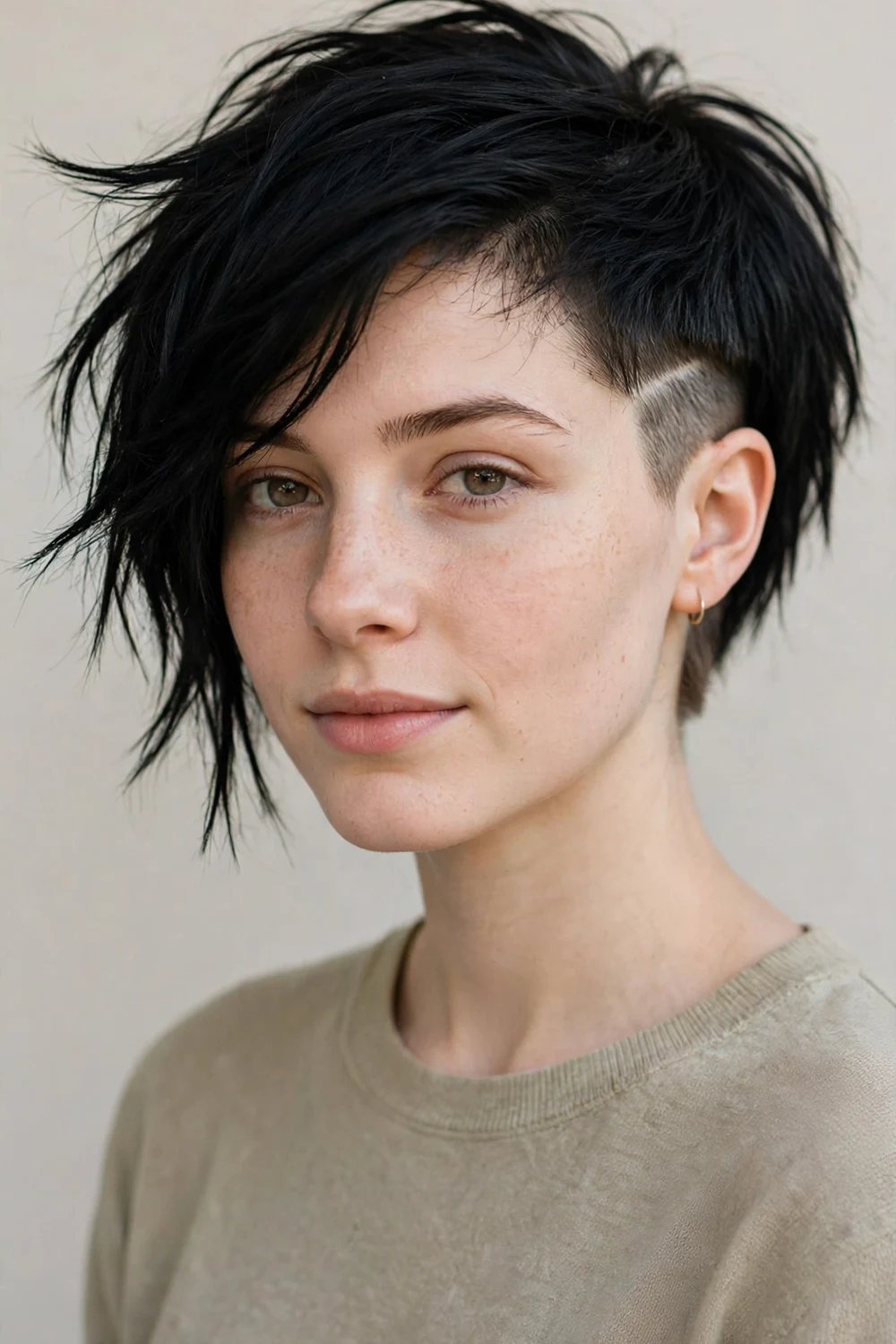
An undercut removes the hair underneath at the nape or one side, so the top layers sit higher and look thicker by comparison. On fine hair this is a bold move: it reduces overall bulk, so only choose it if your hair has at least medium density. A hidden nape undercut gives the effect without changing the silhouette.
Try this: sweep the top layer to one side to reveal the undercut, or wear it down for a completely classic look.
Difficulty: Hard · Cost: $65–$95
23. Sleek Choppy Bob

Sleek does not have to mean flat. A smooth, glossy choppy bob with subtle texture in the ends looks polished while the interior layers keep it from hanging limp. Fine hair holds sleek styles well because there is less bulk to fight. A heat protectant is non-negotiable with this much flat-iron work.
Try this: flat-iron in thin sections with heat protectant, then finish with a pea-sized drop of shine serum on the mid-lengths only.
Difficulty: Medium · Cost: $55–$80
24. Side-Swept Choppy Bob

The deep side sweep pushes most of the hair to one side, which doubles the visible density on that side. Choppy layers keep the heavy side from looking like a curtain. This is a good evening version of the everyday side-part bob: same cut, more drama, no extra salon visit.
Try this: tuck the lighter side behind your ear and pin it flat to maximize the contrast with the full side.
Difficulty: Easy · Cost: $50–$75
25. V-Shaped Choppy Bob
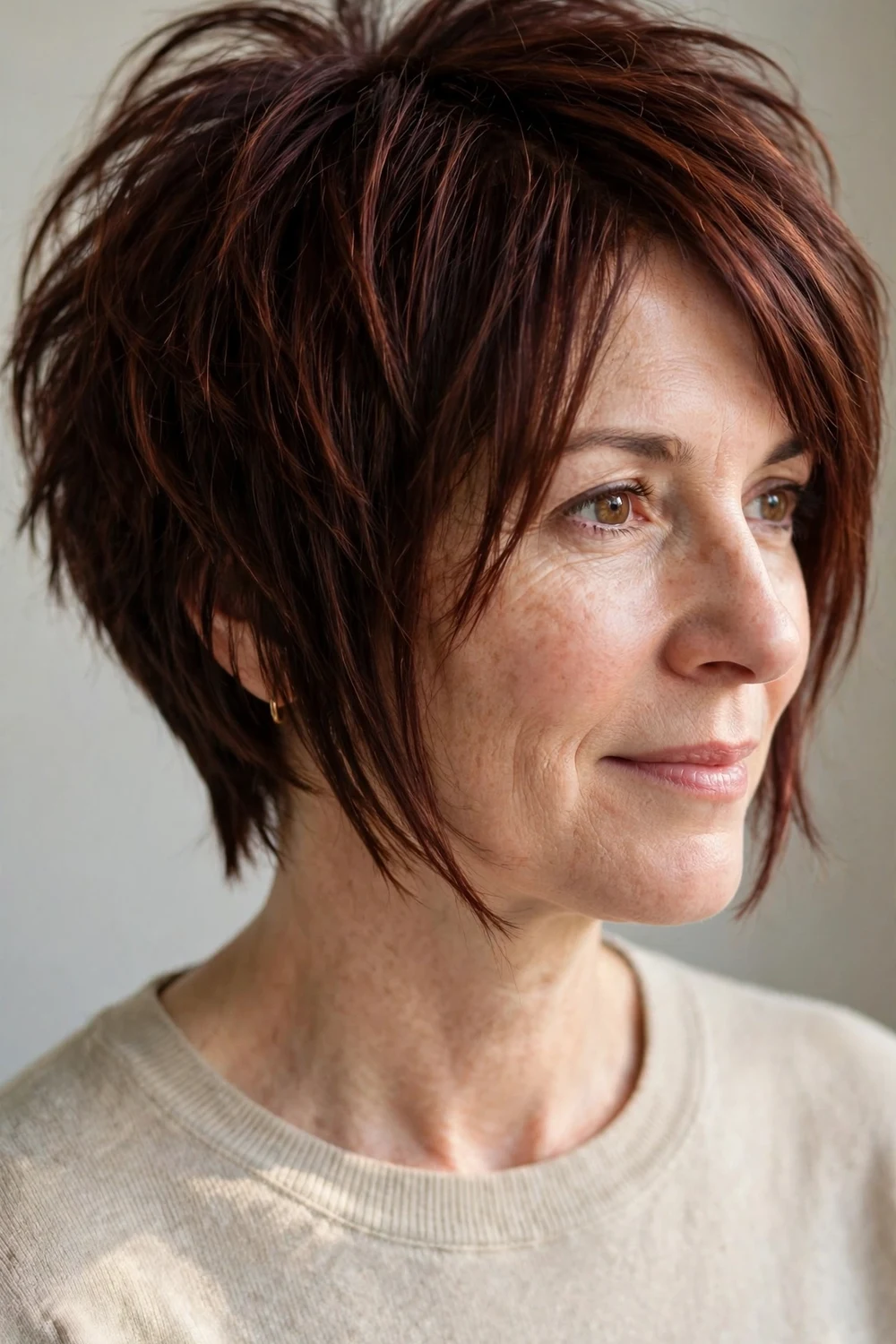
The V shape dips lower at the back and rises toward the front, which piles volume at the nape where fine hair usually goes flat. The angled perimeter also gives the cut a clear direction so it looks intentional rather than grown out. Choppy layers through the shape keep the V soft instead of harsh.
Try this: blow-dry the back sections with a round brush, lifting at the roots to emphasize the built-up volume.
Difficulty: Medium · Cost: $60–$90
26. Choppy Bob with Wispy Bangs

Wispy bangs are cut thin and feathery so they add softness without stealing density from the rest of the cut. On fine hair this matters: a heavy fringe can make the bob underneath look sparse. The wispy fringe melts into the choppy layers, so the whole cut reads as one textured shape.
Try this: style the bangs with a light mousse and your fingers only; a brush makes wispy bangs look stringy.
Difficulty: Easy · Cost: $55–$80
27. Collarbone-Length Choppy Lob

Not ready to go short? The choppy lob keeps the texture but sits at the collarbone, which is the longest length that still flatters fine hair. Choppy face-framing layers remove the weight that would otherwise drag the style flat, and the length still allows ponytails and half-ups.
For more long-bob options, browse our lob hairstyles for fine hair guide.
Try this: add loose waves with a 1.25-inch wand and heat protectant; the longer length shows off the bends.
Difficulty: Easy · Cost: $55–$85
28. Shaggy Choppy Bob with Curtain Bangs

The shag version adds more layers through the crown and sides than a standard choppy bob, with curtain bangs completing the retro shape. On fine hair, keep the crown layers long enough that they do not go wispy; the shag should read as texture, not thinning. This is the most high-texture option on the list.
Try this: scrunch in sea salt spray and let it air-dry for the full shaggy effect with minimal effort.
Difficulty: Medium · Cost: $60–$90
29. Platinum Shaggy Choppy Bob

Platinum blonde roughs up the hair cuticle slightly, which gives fine hair extra grip and volume, and the icy color makes every choppy layer visible. This is a high-commitment look: bleaching fine hair needs a careful colorist, and purple shampoo plus deep conditioning become part of the routine.
Try this: use purple shampoo once a week and a bond-building mask every other wash to keep bleached fine hair healthy.
Difficulty: Hard · Cost: $150–$250
30. Pastel Pink Choppy Bob

Pastel pink or peach over a choppy bob turns the texture into the star: the color variation makes each piece distinct, which amplifies the fullness illusion. Lightening first is usually required, so this suits fine hair that is healthy enough for bleach. Semi-permanent color keeps the commitment low since it fades in 4 to 6 weeks.
Try this: wash with cool water and sulfate-free shampoo to stretch the pastel color as long as possible.
Difficulty: Hard · Cost: $140–$220
31. Short Textured Choppy Bob with Bangs
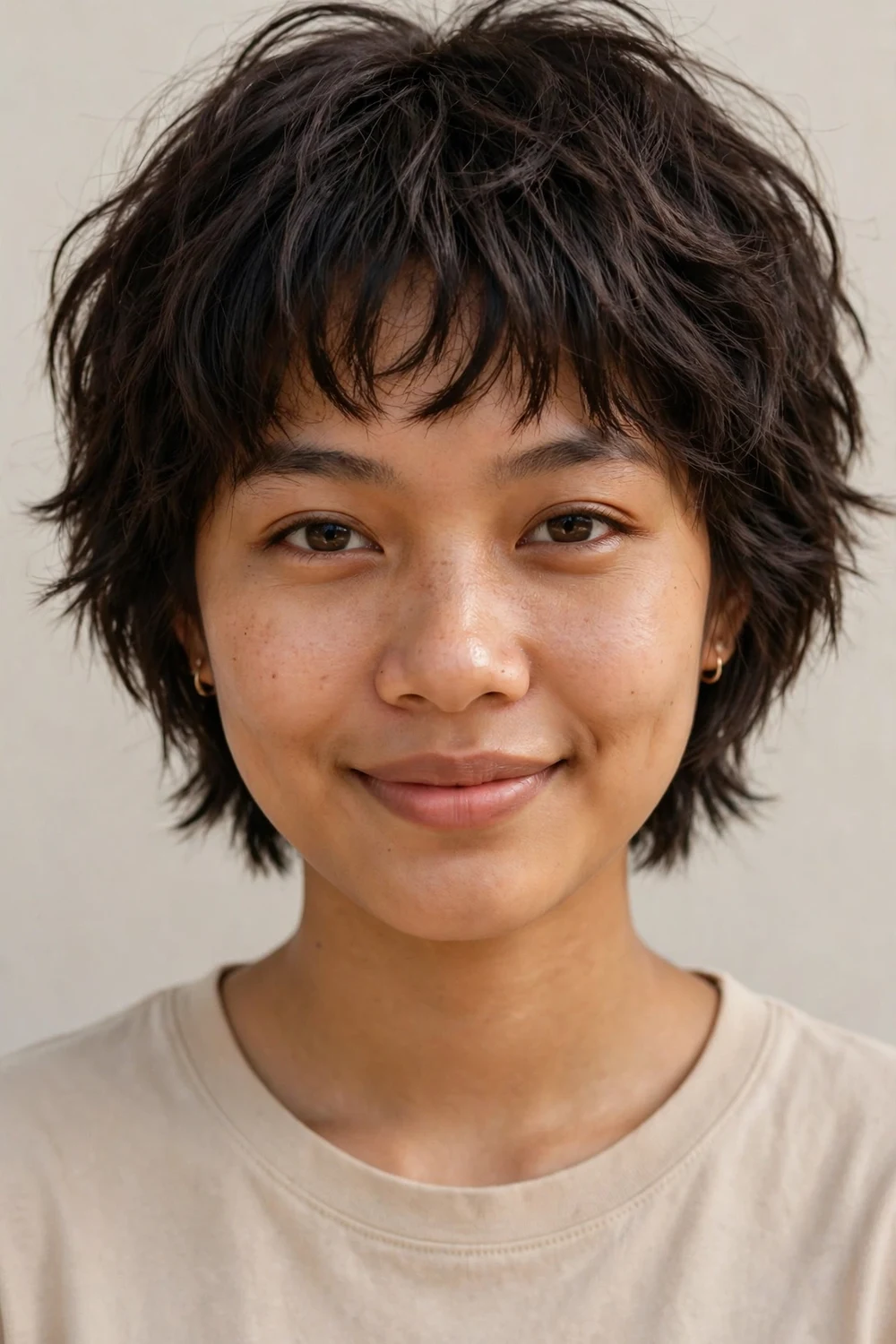
Above the jaw with a textured fringe, this is the boldest short option here. The bangs add a focal point up top, which balances the shortness of the cut, and the choppy texture keeps it youthful. It grows out gracefully: the fringe becomes curtain bangs and the bob reaches the chin in about 8 weeks.
Try this: piece the bangs out with a tiny amount of pomade for definition that lasts all day.
Difficulty: Easy · Cost: $55–$80
32. Middle-Part Wavy Choppy Bob

A center part with soft waves frames the face symmetrically and lets the choppy layers fall evenly on both sides. This works best on oval and longer face shapes; round faces get more slimming from a side part. The waves are doing the volumizing work here, so keep them loose rather than tight.
Try this: part damp hair down the middle, then wrap sections around a 1.25-inch wand away from the face, using heat protectant.
Difficulty: Easy · Cost: $55–$80
33. Choppy Bixie for Fine Hair
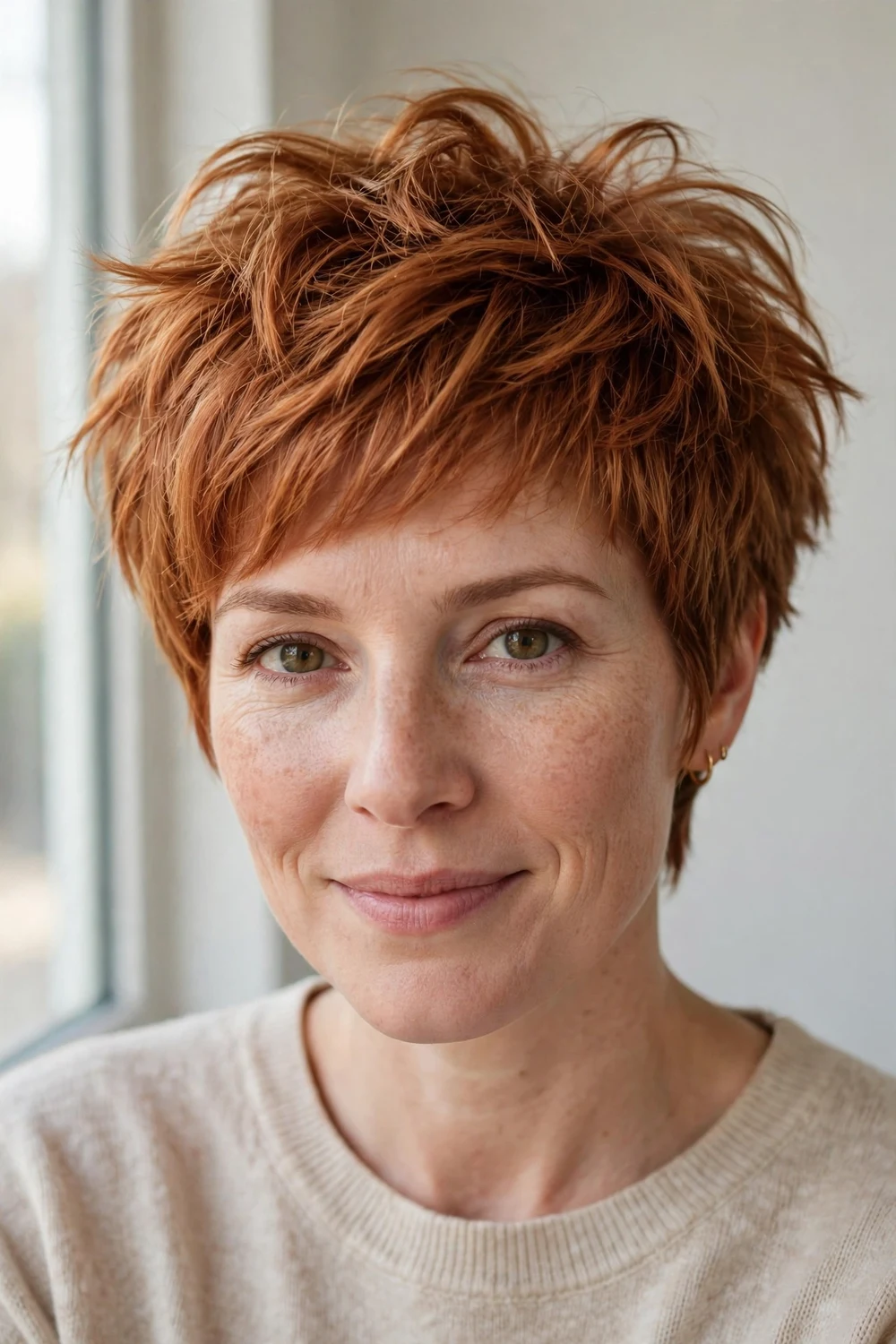
The bixie sits between a pixie and a bob: shorter than every other cut on this list, with long choppy layers on top. Removing this much length gives fine hair maximum lift, and the piecey crown looks deliberately textured rather than thin. It needs trims every 4 to 6 weeks to hold the shape.
Try this: rub a small amount of matte paste between your palms and pinch the crown pieces for separated, spiky texture.
Difficulty: Medium · Cost: $50–$80
34. Choppy Bob with Flipped-Out Ends

Flipping the ends outward adds width at the bottom of the cut, which makes fine hair look bouncier and more voluminous. The choppy layers help here because each piece flips independently instead of as one stiff sheet. A round brush and blow-dryer do this in minutes; a flat iron with heat protectant works too.
Try this: blow-dry the ends with a round brush, rolling outward, then set with a light-hold hairspray.
Difficulty: Easy · Cost: $50–$75
35. Choppy Bob with Shadow Root

A shadow root keeps the roots darker and melts them into lighter lengths, which creates depth at the scalp exactly where fine hair looks thinnest. The darker base makes the lighter choppy ends pop, doubling the texture effect. It also stretches color appointments to 12 weeks or more since there is no harsh grow-out line.
Try this: ask your colorist for a root melt two shades darker than your ends for the most natural blend.
Difficulty: Medium · Cost: $120–$180
36. Choppy Bob for Thinning Hair

When fine hair also starts thinning with age, the choppy bob still works if the cut is adjusted: keep the perimeter as solid as possible, place texture only through the mid-lengths, and avoid razors near sparse areas. Soft layers at the crown create lift over thinning spots without exposing the scalp. This is the most forgiving cut here for low-density hair.
Try this: use a volumizing powder at the part line; it disguises sparse areas better than any spray.
Difficulty: Easy · Cost: $50–$80
Choppy Bob vs Other Bobs for Fine Hair
| Cut | Volume Effect | Daily Styling Time | Trim Schedule | Typical Cost |
|---|---|---|---|---|
| Choppy bob | High: piecey texture reads as fullness | 5 to 10 minutes | Every 6 to 8 weeks | $50 to $90 |
| Blunt bob | Medium: thick ends but flat crown | 10 to 15 minutes | Every 4 to 6 weeks | $50 to $80 |
| Layered bob | Medium-high: lift but can go wispy | 10 to 15 minutes | Every 8 to 10 weeks | $55 to $90 |
| Stacked bob | High: built-in back volume | 10 to 20 minutes | Every 6 to 8 weeks | $60 to $95 |
How to Choose the Right Choppy Bob
Start with your density, not just your texture. Fine hair with medium density can handle razor cuts, undercuts, and heavy shag layering. Fine hair that is also sparse should stick to micro texture, tapered ends, and solid perimeters that protect the ends.
Next, pick a length based on how much styling you will actually do. Jaw-length cuts look full with almost no effort; collarbone length needs waves or layers to avoid going flat. Be honest about your routine and choose accordingly.
Bring reference photos to your appointment and point at the ends, not just the overall shape. Tell your stylist whether you want piecey separation or soft tapering, because the cutting technique changes completely. And ask them to cut the layers dry or check them dry if your hair shrinks or waves up when it dries.
What to Avoid with Fine Hair
Heavy thinning shears through the top half of the hair are the biggest mistake; they create the wispy, see-through crown that makes fine hair look thinner. Ask for weight removal only through the mid-lengths and ends.
Skip one-length cuts past the shoulders. Long, unlayered fine hair pulls flat under its own weight and shows every thin spot. If you want length, the choppy lob is the longest safe option.
Go easy on heavy oils and butters. Fine hair gets weighed down fast, so stick to lightweight mousses, root sprays, and dry shampoo. And when you use hot tools, a heat protectant is not optional: fine hair shows heat damage faster than any other type.
Frequently Asked Questions
Are choppy bobs good for fine hair?
Yes. Choppy layers remove weight so fine hair can lift at the crown, and the uneven ends break the hair into pieces that look thicker than a solid one-length cut. The key is keeping the perimeter fairly solid and placing the texture through the mid-lengths and ends rather than thinning the top.
Should fine hair be razor cut?
A razor cut can work well on fine hair with medium density because it creates feathered, airy ends with natural movement. Skip the razor if your ends are very sparse or damaged, since it can make thin ends look thinner. Point cutting is the safer alternative in that case.
How often should I trim a choppy bob on fine hair?
Every 6 to 8 weeks. Choppy ends grow out unevenly, and on fine hair grown-out layers quickly turn stringy instead of textured. Regular trims keep the piecey shape intact and the ends looking full.
What is the best choppy bob length for fine hair?
Jaw to chin length flatters fine hair most because it removes the dragging weight that pulls hair flat. A collarbone-length choppy lob also works if the layers are placed to keep the ends light. Anything past the collarbone usually needs significant layering to avoid looking limp.
How do I style a choppy bob for more volume?
Apply a lightweight mousse or root-lifting spray to damp hair, blow-dry the roots upward or upside down, and finish with texture spray or dry shampoo for separation. Avoid heavy creams and oils, which flatten fine hair. Velcro rollers at the crown for 10 minutes add lift that lasts all day.
Final Thoughts
A choppy bob is one of the smartest cuts for fine hair because the texture does the volumizing work for you. Pick the version that matches your density and your styling routine, keep up with trims every 6 to 8 weeks, and let the layers create the fullness that fine strands cannot build on their own.
For more on this topic, see short french bobs.
For more on this topic, see bob haircuts for women over 50.

