


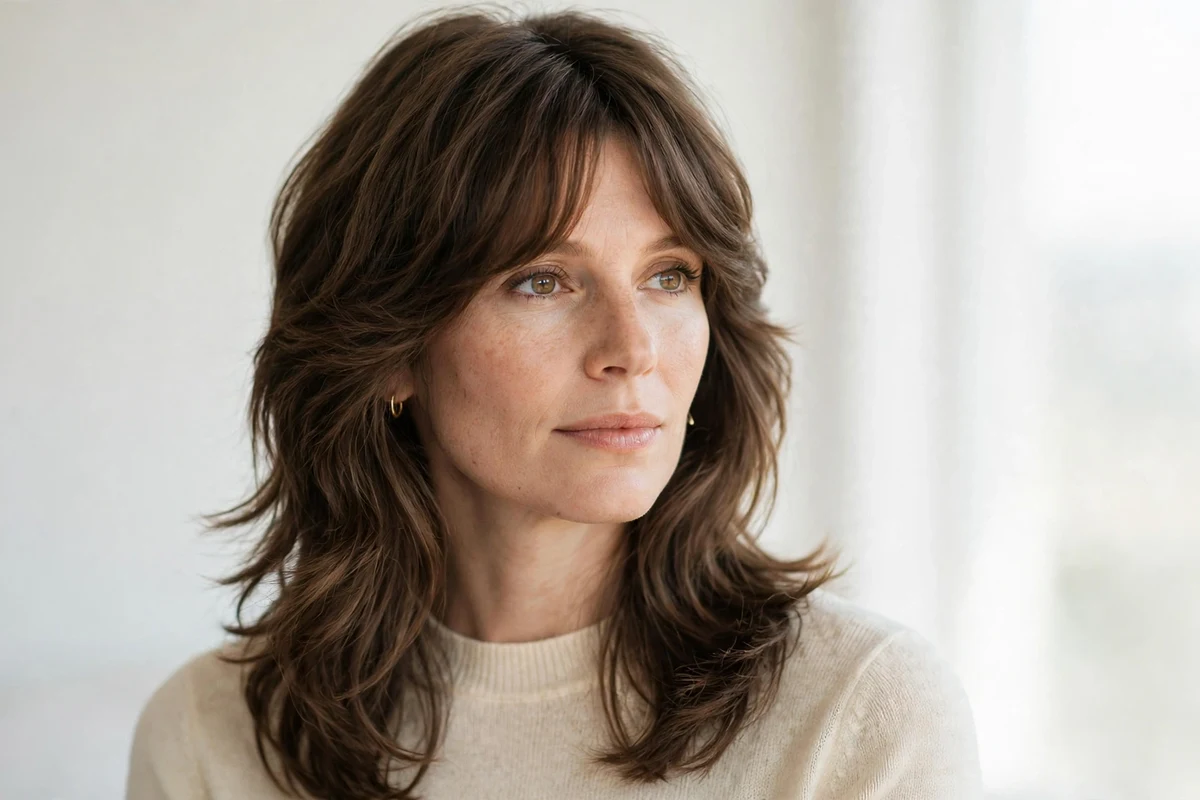
The 70s shag haircut long for women is one of those rare cuts that never really left. It showed up on Jane Fonda in 1971, on Stevie Nicks through the whole decade, and now it sits on mood boards everywhere again. The formula is simple: long length kept intact, choppy layers through the crown and ends, and bangs that do the framing work.
What makes the long version so wearable is that it keeps your length while removing the flat, heavy feeling long hair often gets. This cut works on fine hair, thick hair, curly hair, and everything between, which is rare for a single haircut.
Quick answer: The 70s shag haircut long for women keeps hair long past the shoulders with short, choppy layers at the crown and feathered ends. It suits most hair types, grows out well, and needs little styling. Pick your bangs style from the 30 ideas below.
Quick Takeaways
- The long 70s shag keeps full length while adding choppy, feathered layers for movement.
- Bangs define the look: curtain, wispy, blunt, or micro. Choose by face shape and hair texture.
- Wavy and curly hair types get the most volume from this cut with the least effort.
- The cut is low maintenance and grows out gracefully without harsh lines.
- A 6 to 8 week trim keeps the layers fresh and the ends healthy.
Why the Long 70s Shag Still Works
The original shag was cut by Paul McGregor in the early 70s, and it caught on because it was the opposite of stiff salon hair. Long shags keep that spirit. The layers are cut at different lengths so hair falls with natural separation instead of one solid sheet.
It also suits women who want a change without losing length. You keep the inches you have spent months growing, but the haircut feels entirely new. That is the appeal that keeps it coming back every decade.
1. Wispy Bangs with Feathered Shag
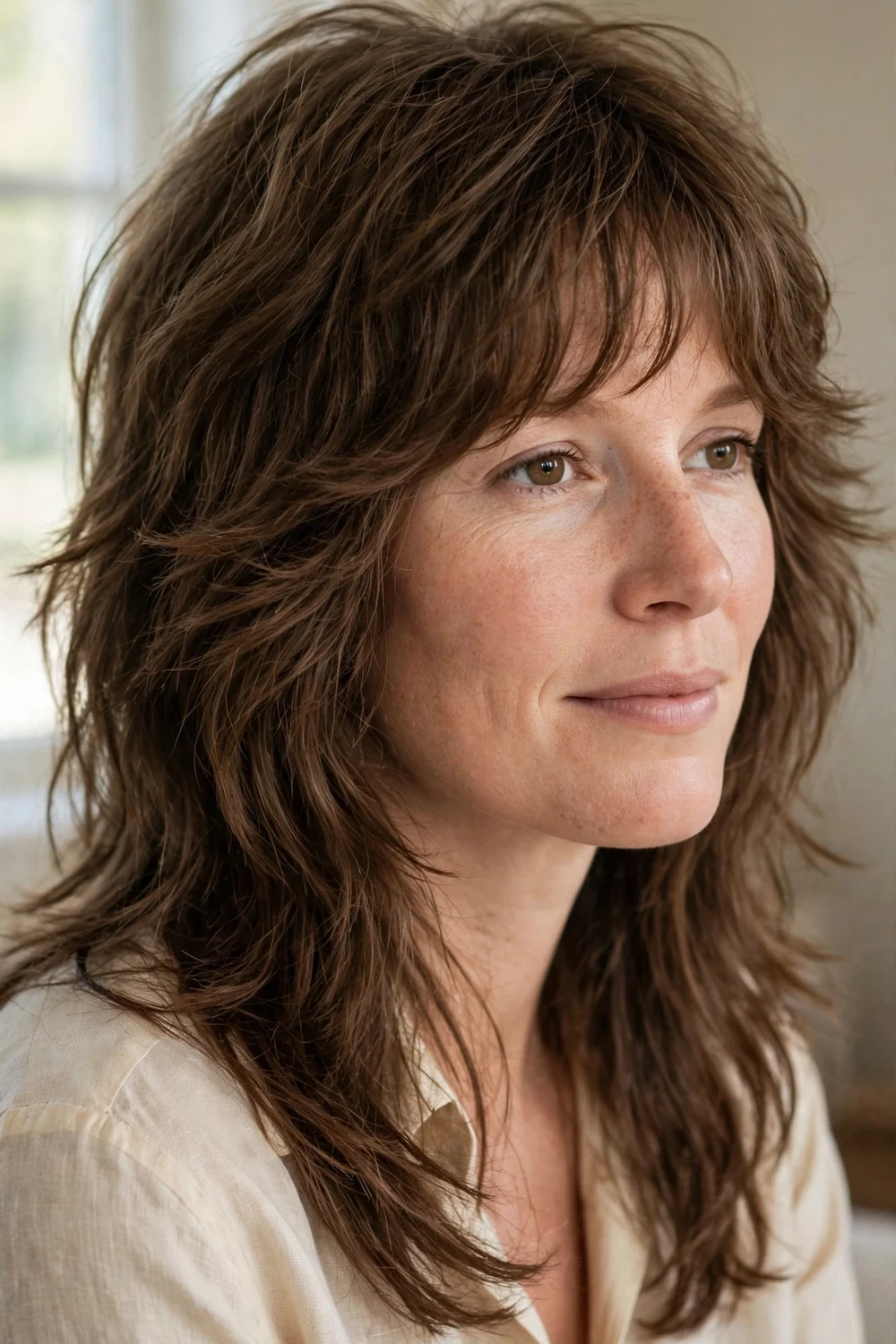
Start with the most classic pairing in the 70s playbook. Wispy bangs skim the brows with light, airy ends, while the back is cut in feathered layers that flick outward instead of lying flat. The effect is soft around the face and full through the crown, which suits straight and wavy hair types best. Ask your stylist to point-cut the fringe so it stays piecey rather than solid. This is the version people picture when they say “70s shag.” Difficulty: easy. Try this: Blow-dry the bangs forward with a small round brush, then flip the ends of the layers outward for the feathered finish.
2. Long Shag with Choppy Bangs
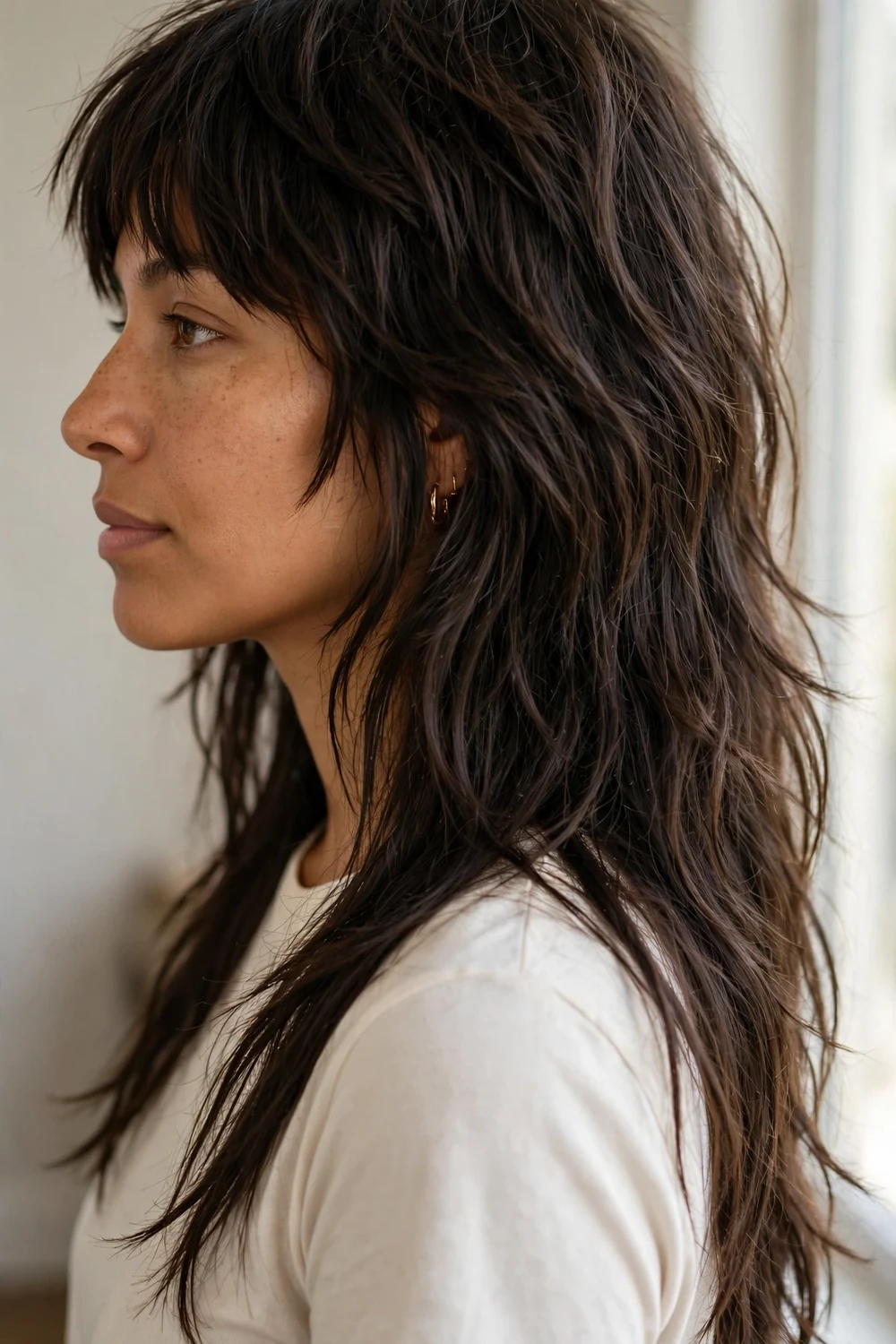
Choppy bangs bring a rougher edge to the long shag. Unlike the soft wispy fringe, these are cut with visible texture and uneven ends, which matches the shag’s stepped layers perfectly. The front and sides are kept short compared to the back, so the haircut reads bold even when the color is natural. It works on straight to wavy hair and flatters oval and heart-shaped faces. The look needs a trim every 6 weeks to keep the choppy ends from growing shaggy in the wrong way. Difficulty: easy. Try this: Rub a pea-sized amount of texturizing paste between your palms and pinch the bang ends for piece-by-piece separation.
3. Long Shag with Curtain Bangs
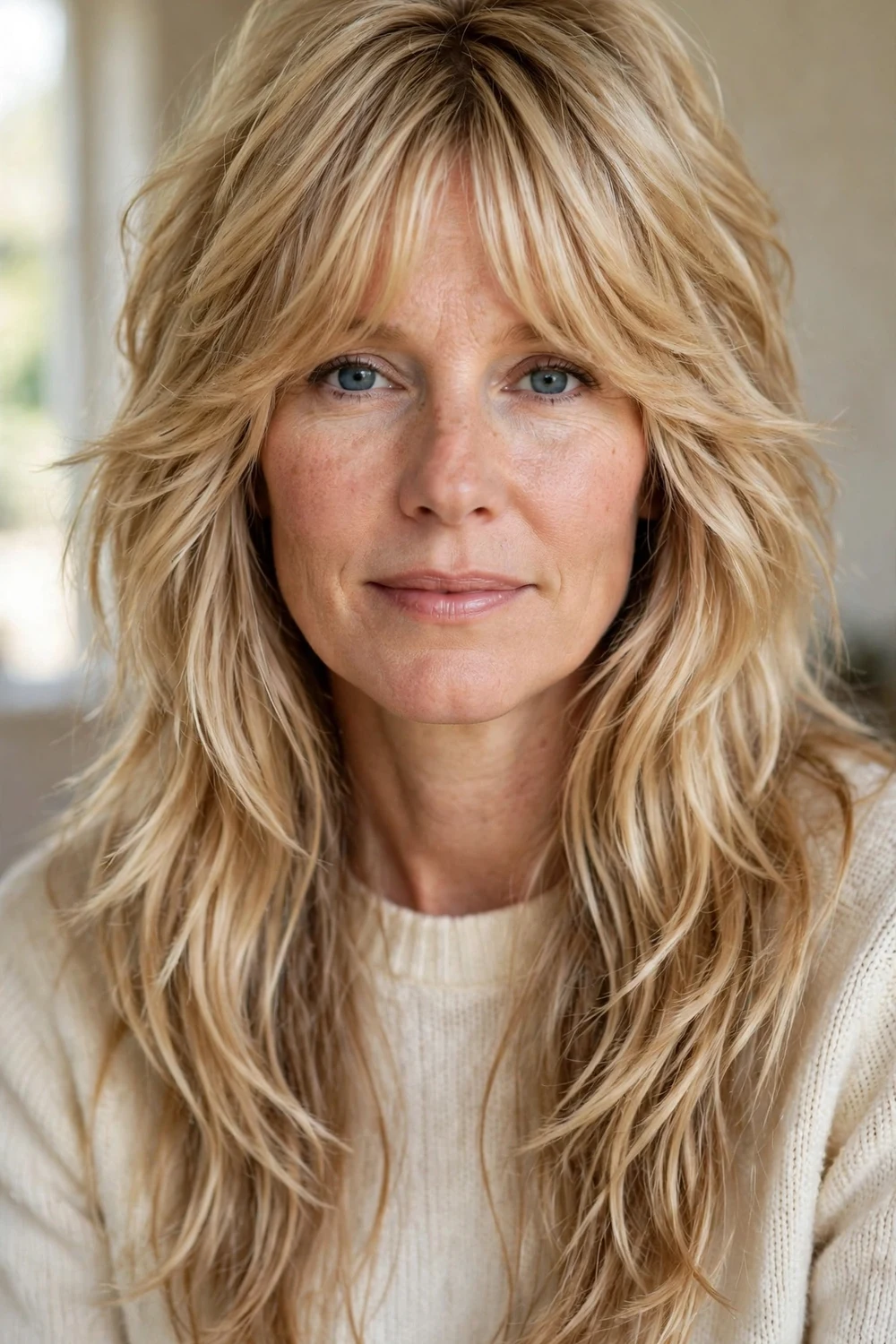
If one bangs style owns the 70s shag, it is curtain bangs. Parted in the middle and swept to each side, they open up the face while the long layers add width through the cheeks and jaw. This was Farrah Fawcett’s signature, and it still works on the same face shapes today: oval, square, and heart. The bangs blend into the face-framing layers, so grow-out is painless. Wavy hair gives this style its best version, but straight hair can fake it with a curling iron. Difficulty: easy. Try this: Blow-dry the curtain pieces with a round brush, curving them away from the face, then set with a light flexible-hold spray.
4. Blunt Bangs with Textured Shag
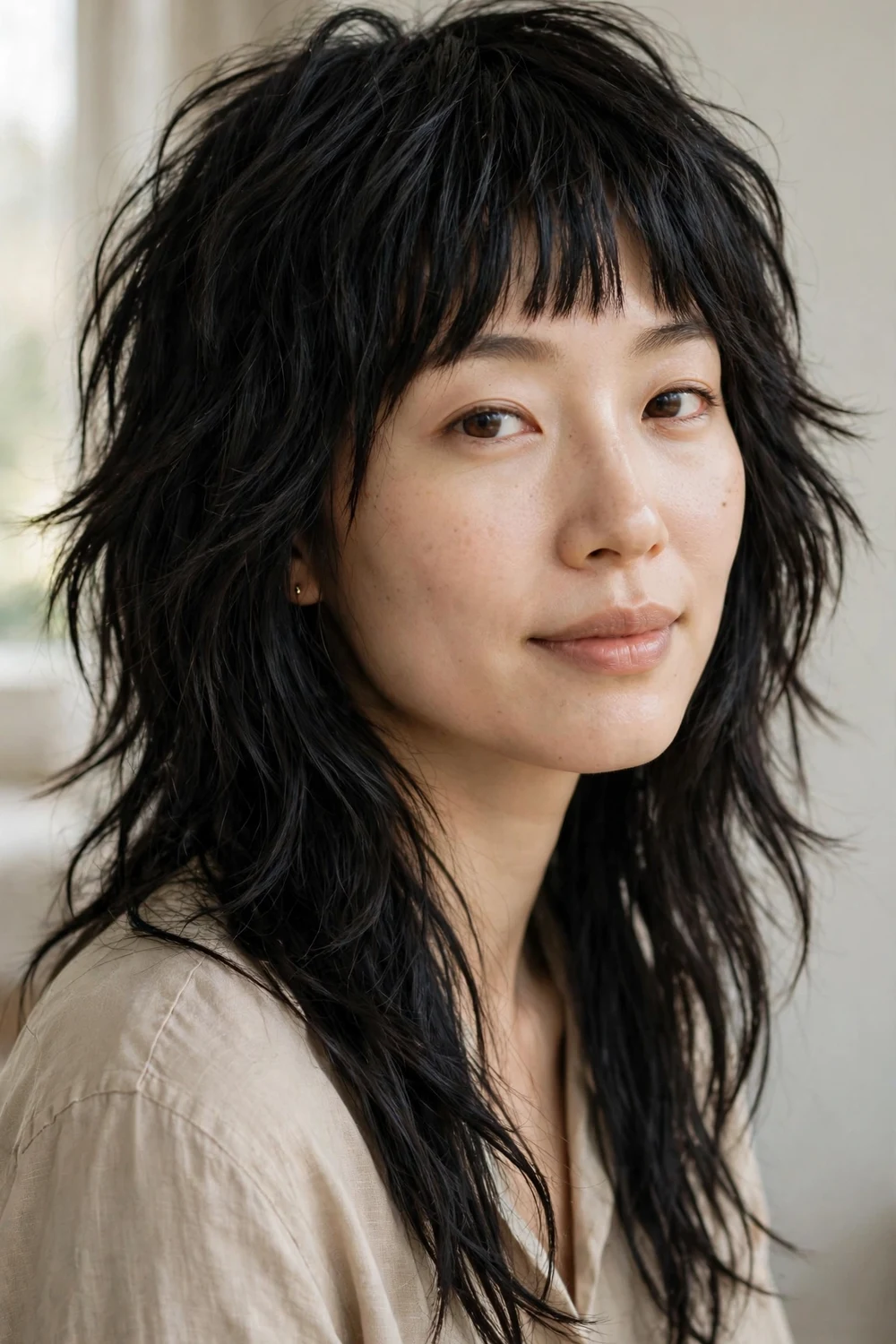
Blunt bangs plus a textured shag should not work, but it does. The straight-across fringe creates a strong horizontal line, and the choppy, piecey layers below break it up so the look stays relaxed instead of severe. This pairing suits thick hair best because the blunt fringe has enough density to sit properly. Keep the bangs hitting just above the brows and the layers long and broken through the ends. The contrast is what makes it modern. Difficulty: medium. Try this: Flat-iron the bangs straight down, then rough up the layers with a sea-salt spray for the texture contrast.
5. Straight Bangs with Curly Shag
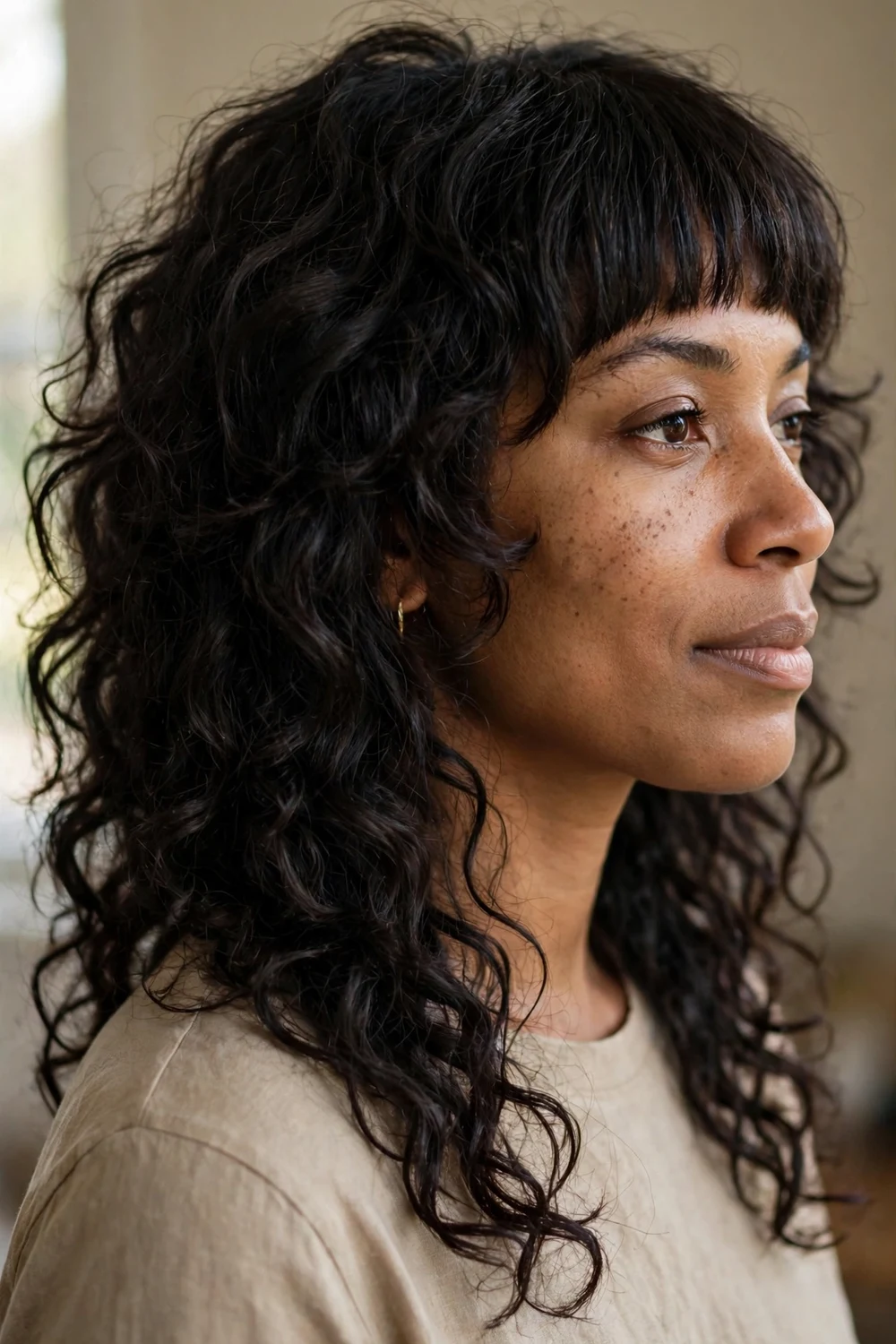
Here is a bold mix: smooth, straight bangs on top with a full curly shag through the back and sides. The straight fringe frames the forehead neatly while the curls bring volume and movement below. It works best on naturally curly hair, since the bangs are the only section that needs heat styling. Have the curls cut in stepped layers so they stack instead of forming a triangle. Heart-shaped faces carry this combination well. Difficulty: medium. Try this: Straighten only the bang section with a flat iron, then scrunch curl cream through the rest for defined, separated curls.
6. Curly Messy Shag
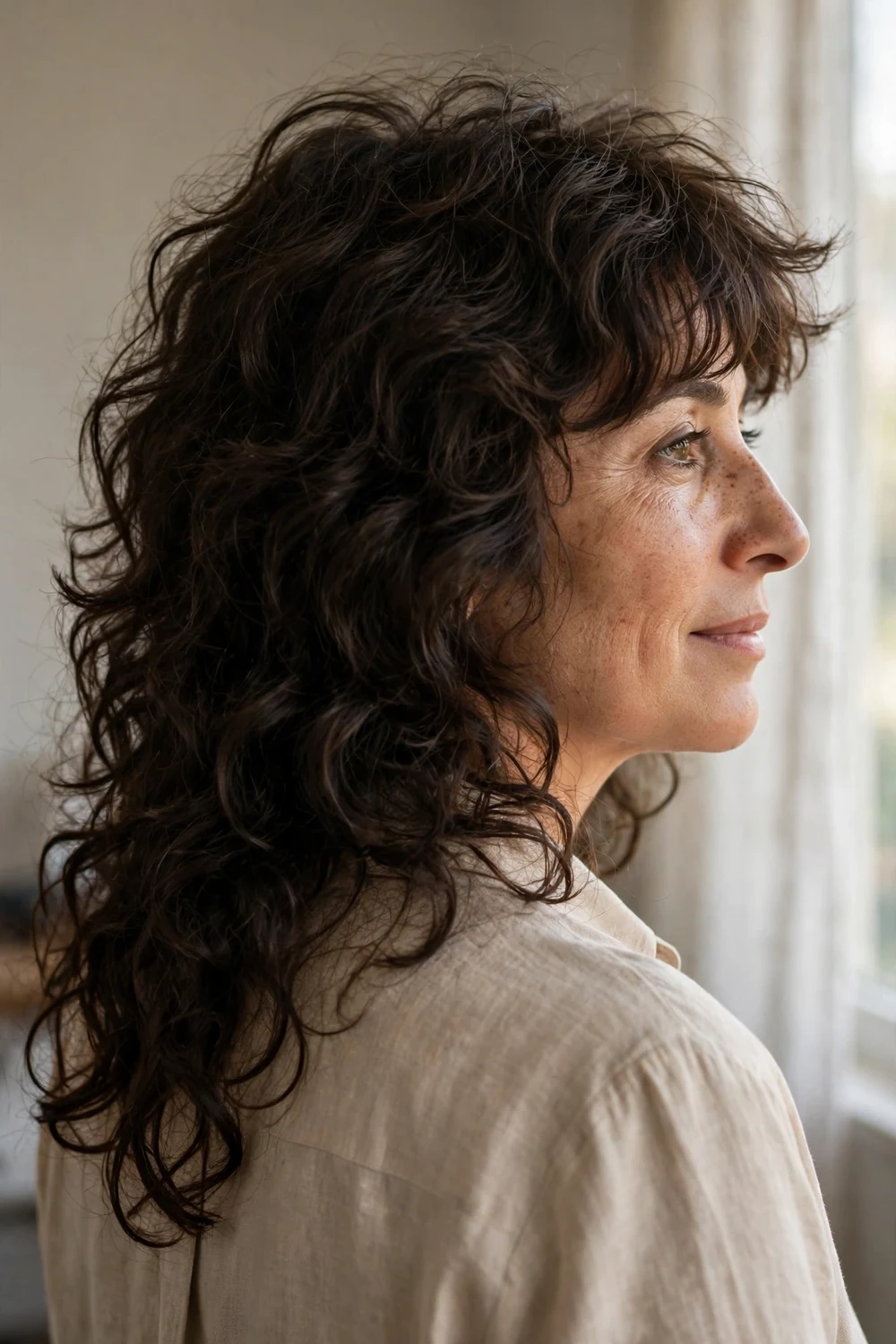
The messy curly shag is the most low-effort idea on this list. Hair is cut in steeped layers and worn without brushing, which lets curls clump and separate naturally. The front is cut shorter and left loose on the forehead for a lived-in fringe effect. This cut removes weight from thick curly hair so the shape stays rounded instead of wide. It also works on wavy hair that you scrunch dry. Skip the brush entirely and let the texture do the talking. Difficulty: easy. Try this: Apply curl cream to soaking wet hair, scrunch upward, and diffuse on low heat for maximum volume.
7. Curly Shag with Defined Layers
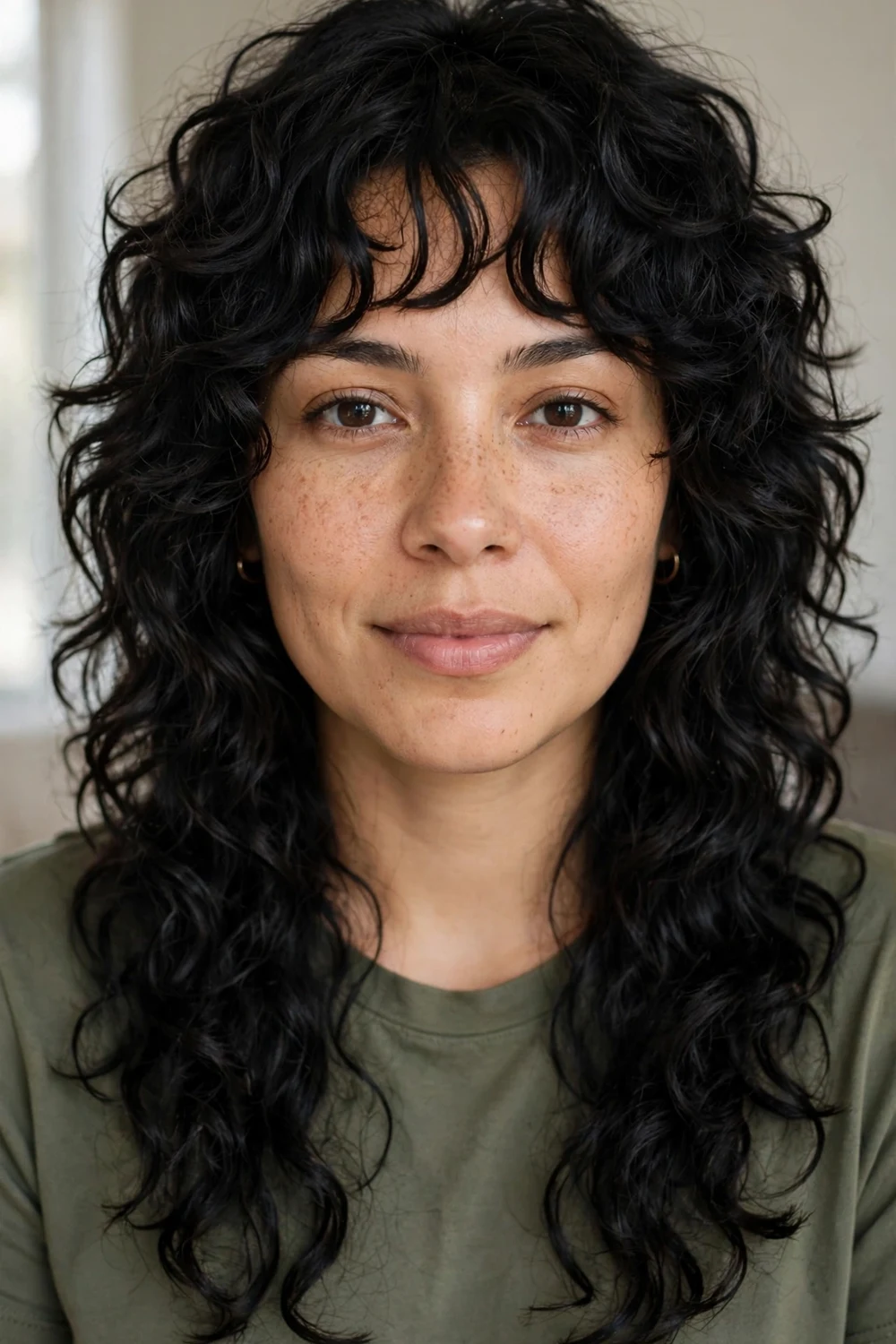
Where the messy version goes wild, this one stays controlled. The layers are cut to define each curl instead of blurring them together, so the shag shape reads clearly even on tight curl patterns. The bangs soften the forehead and blend into the sides, giving the whole cut balance. This is the better pick if you like the 70s shag shape but want a polished result for work or events. A curl-enhancing cream and gentle diffusing bring out the best in it. Difficulty: medium. Try this: Twist small sections around your finger while damp to set the curl pattern, then let the crown air-dry for lift.
8. Wavy Shag with Swoop Bangs

Swoop bangs are swept to one side across the forehead, and on a wavy shag they look straight out of a 70s record sleeve. The front hair is cut shorter than the back and directed diagonally, which draws attention to the eyes and cheekbones. The back keeps stepped layers for that voluminous shag silhouette. This style suits wavy and straight hair that you are willing to touch up with a curling iron. It photographs well and wears well. Difficulty: easy. Try this: Part the bangs deep on one side and blow-dry them across the forehead with a vent brush for the sweep.
9. Sleek Side-Swept Long Shag
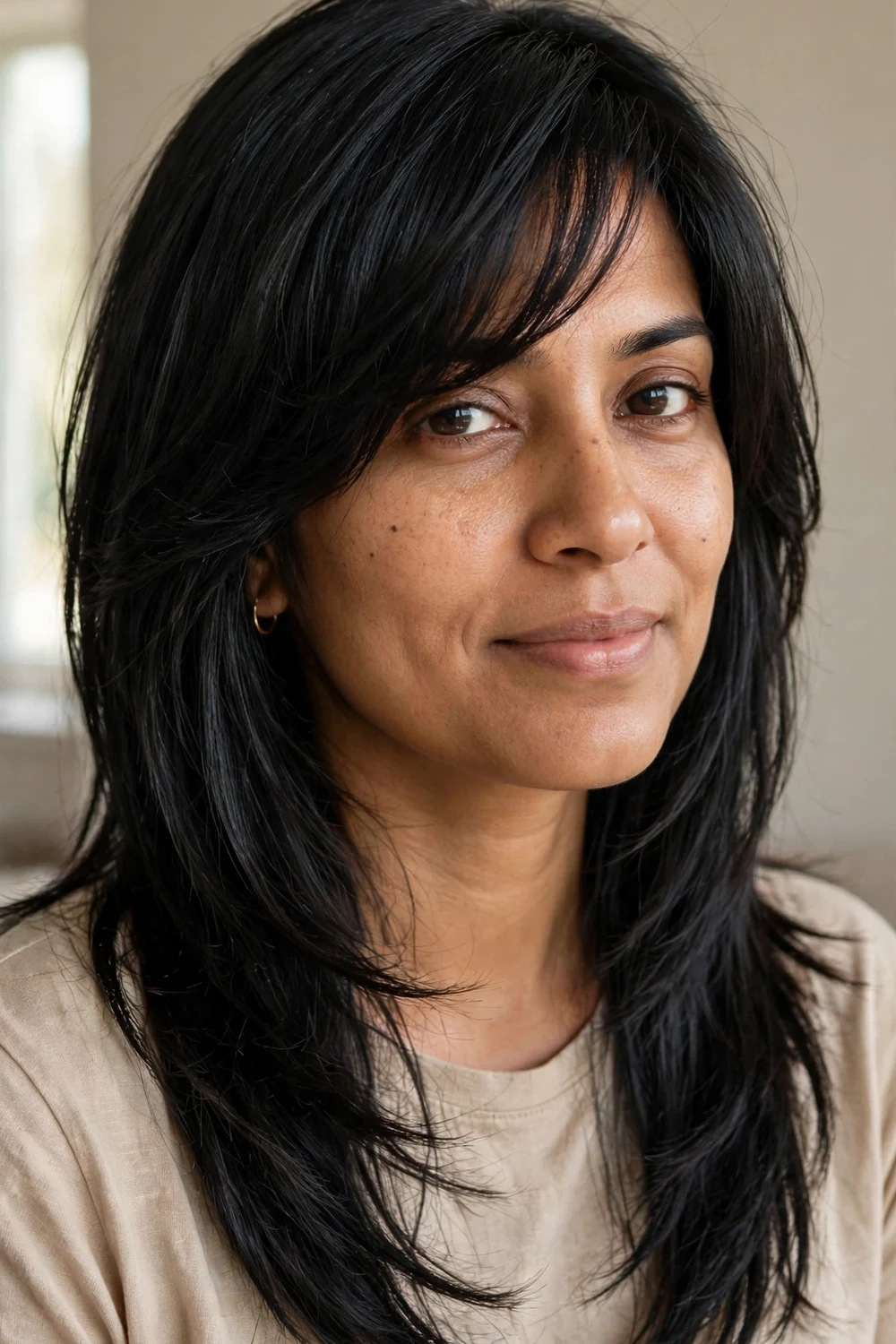
Prefer your shag smooth instead of tousled? The sleek side-swept version keeps the choppy layered structure but finishes it glossy. Side-swept bangs create a soft diagonal across the face, and the length flows down with tapered ends. This is a good pick for fine to medium hair because the layering adds lift without frizz. It is also one of the easiest long shags to grow out, since there are no harsh lines to soften. Difficulty: easy. Try this: Blow-dry with a paddle brush pointing the nozzle downward, then run a smoothing serum through the mid-lengths.
10. Feathered Shag with Straight Bangs
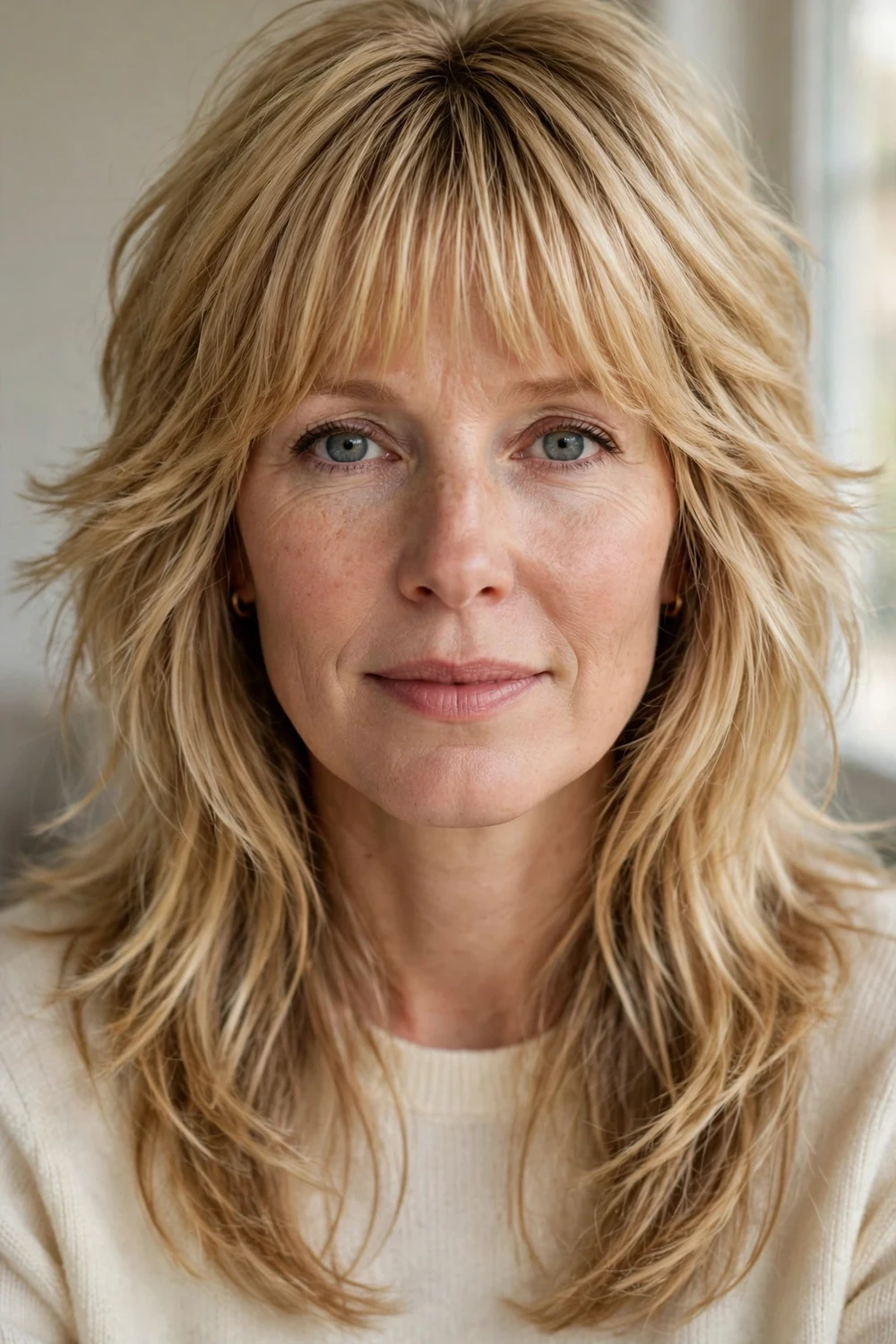
Feathering is the technique that made the 70s shag famous, and it pairs well with straight bangs. The front fringe is cut straight across the brows while the back and sides are layered so the ends flick and separate like feathers. The wavy texture through the lengths is what sells it, so this is best on wavy hair or hair you curl. The straight bangs keep the look grounded and neat around the face. It is an easy style to maintain at home. Difficulty: easy. Try this: Wrap 1-inch sections around a curling wand away from the face, then brush through gently for the feathered flick.
11. Sleek 70s Shag with Straight Layers
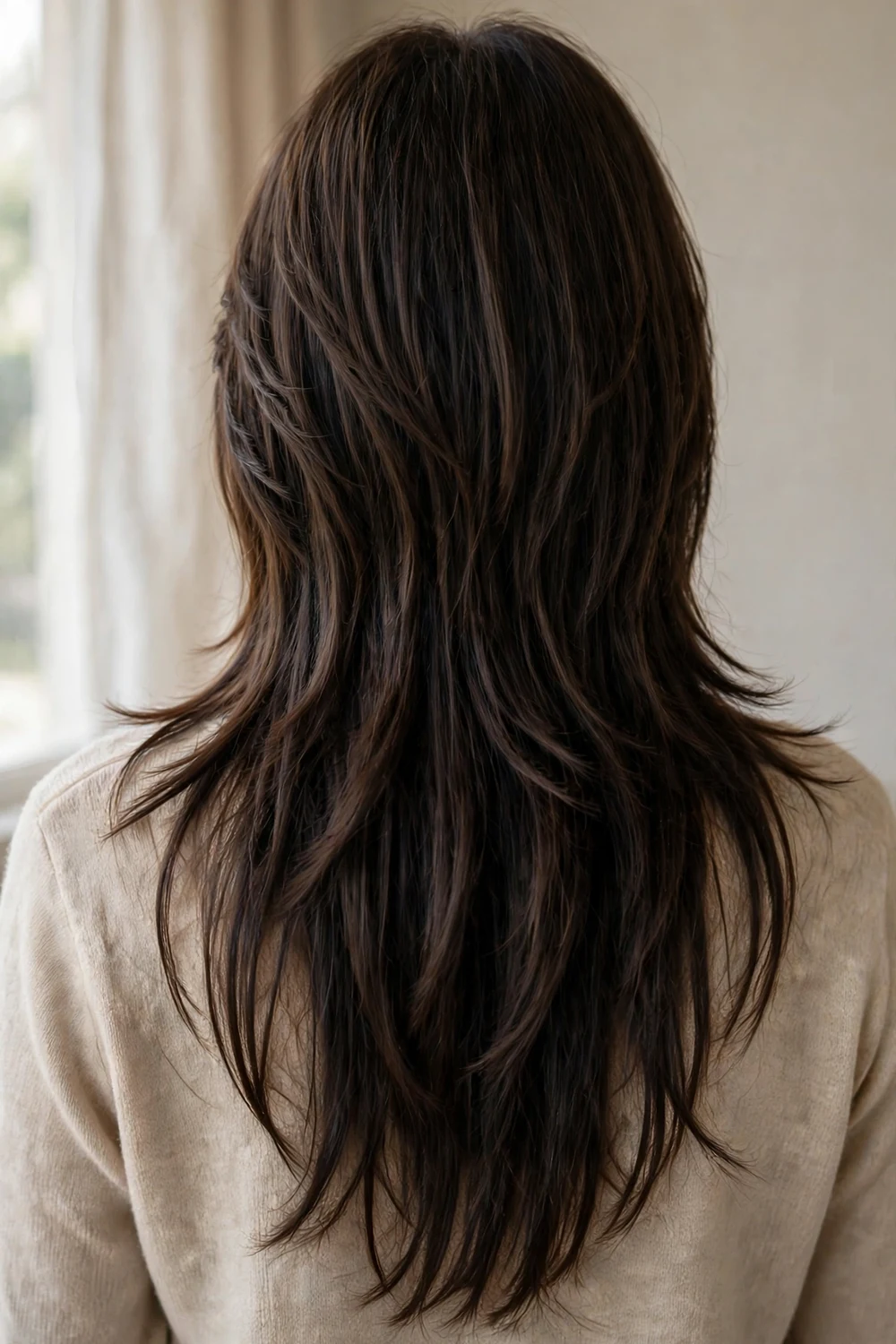
This is the refined side of the 70s shag. The layers are cut straight and tapered rather than razored, so the silhouette stays smooth while keeping the shag’s signature movement. Bangs sit neatly across the forehead and the length falls past the shoulders with softly thinned ends. Fine straight hair benefits most because the subtle layering creates body without frizz. It reads classic rock in a quiet, wearable way. Difficulty: easy. Try this: Use a flat iron on the ends with a slight outward bend, then finish with a shine spray for the polished surface.
12. Shag with Butterfly Bangs
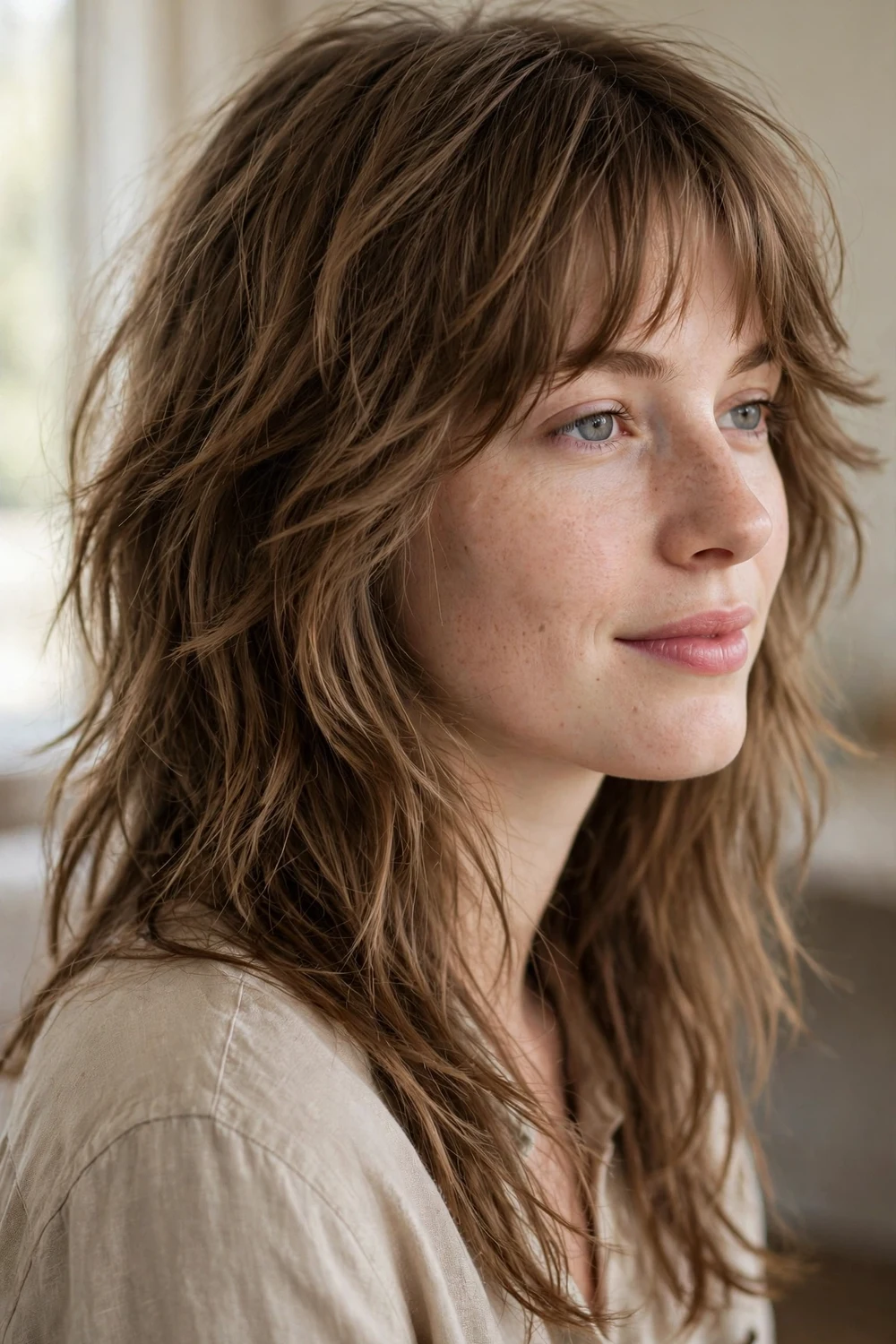
Butterfly bangs are the fuller cousin of curtain bangs, with more volume and a wider sweep that opens like wings. On a long shag, they sit at the front of a shoulder-grazing cut and blend into wavy layers. This style needs some heat to create the butterfly curve on the front sections, but straight and fine hair can hold it well. It gives the 70s shag a softer, more romantic reading than the choppier versions. Difficulty: medium. Try this: Curl the two front sections away from the face with a large-barrel iron, then shake them out for the winged shape.
13. Fringe Bangs Shag Mullet
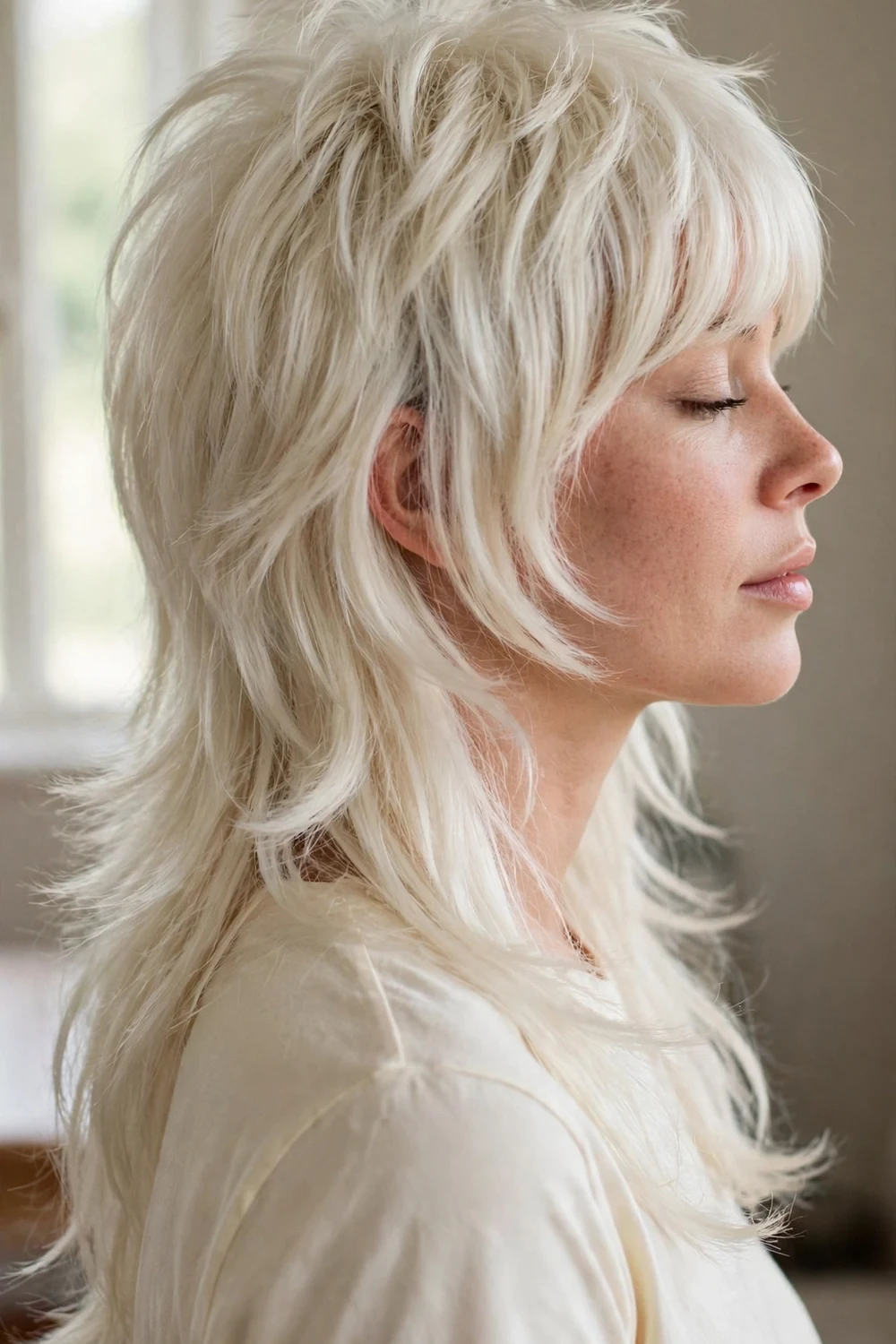
The shag mullet is the boldest entry here. The front and sides are cut short with fringe bangs that sit above the brows, while the back stays long past the shoulders. It keeps the 70s DNA but adds a modern edge that turns heads. This is not the cut for a conservative office, but for creative settings it is unmatched. Wavy texture through the back is key; straight hair should be scrunched or curled. Difficulty: medium. Try this: Keep the crown piecey with matte paste and let the back air-dry with wave spray for the full mullet contrast.
14. Curtain Bangs Shag Mullet
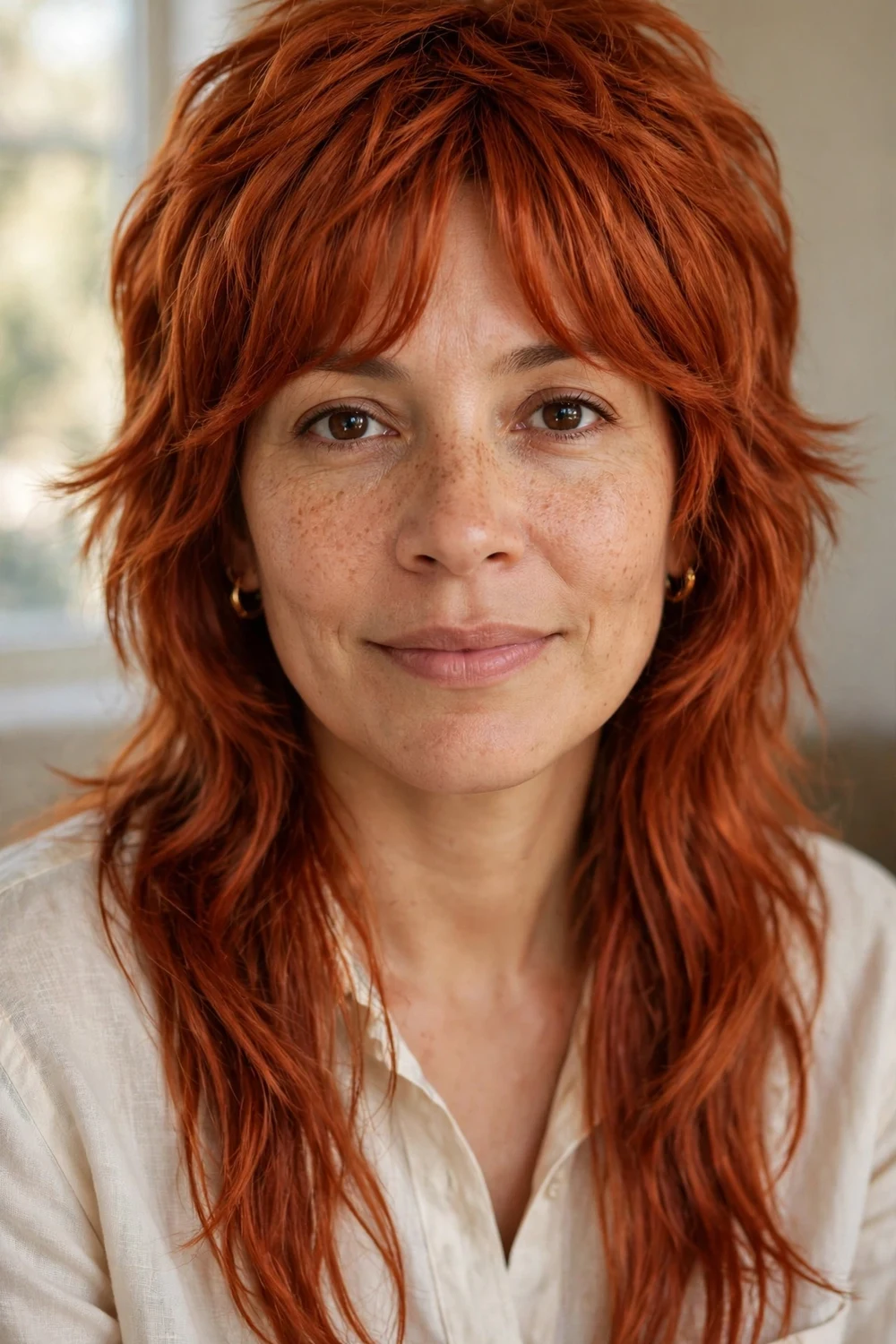
Swap the fringe for curtain bangs and the shag mullet gets noticeably softer. The middle-parted bangs frame the face and ease the transition between the short crown and the long back. The sides stay short, the back stays long and wavy, and the whole thing reads retro without feeling like a costume. If you like the mullet idea but want something easier to wear daily, this is the version to show your stylist. Difficulty: medium. Try this: Blow-dry the curtain pieces outward with a round brush and scrunch the back with mousse for texture.
15. Choppy Long Shag without Bangs
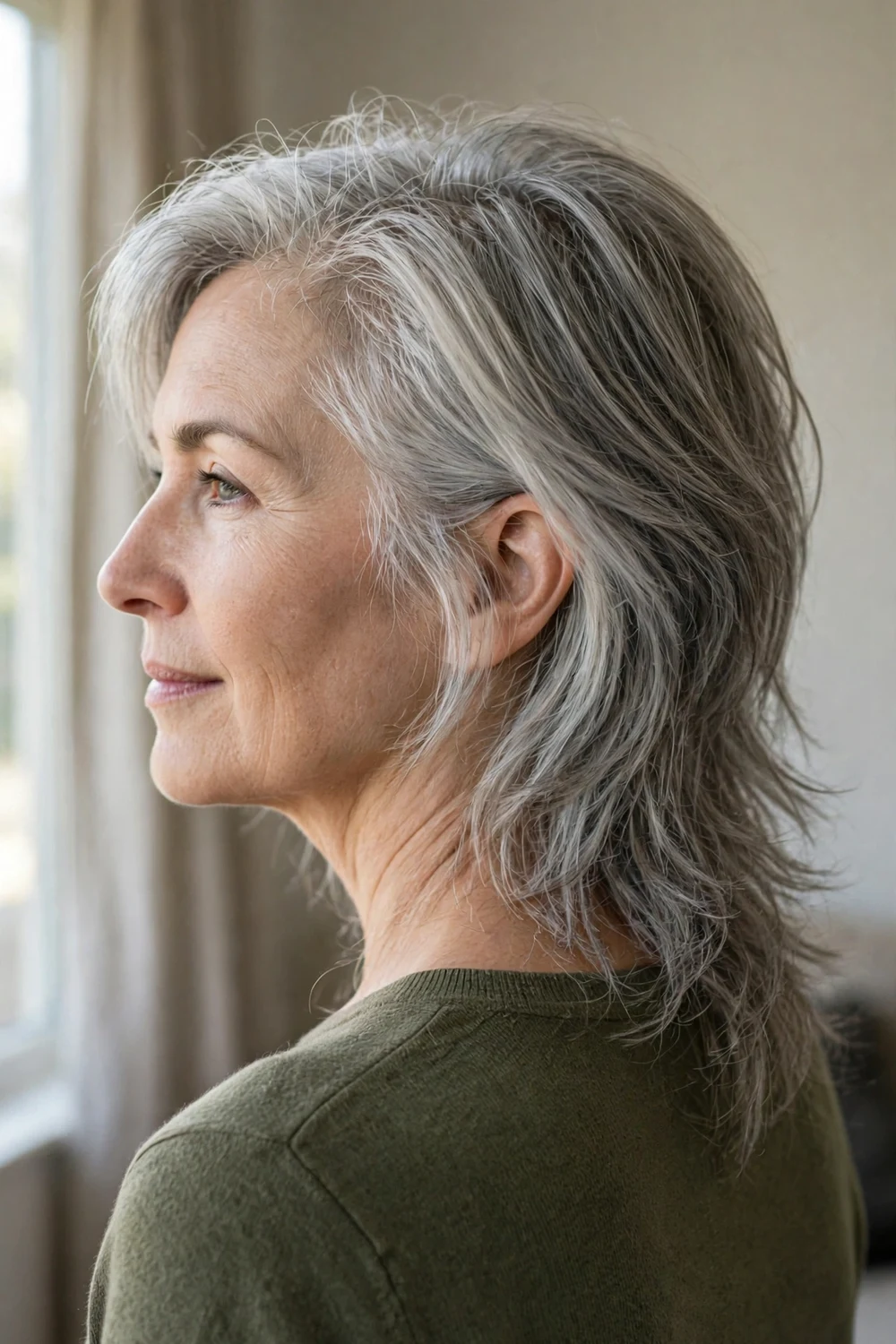
Not everyone wants bangs, and the shag does not require them. This version keeps the choppy internal layers and face-framing pieces but skips the fringe entirely. The result is modern and easy to grow out, with softness around the face instead of a heavy bang line. Fine hair gains subtle volume from the internal layering, and a quick flat-iron bend finishes the style in minutes. It is the most low-commitment long shag on the list. Difficulty: easy. Try this: Add a slight bend through the mid-lengths with a flat iron and finish with dry texturizing spray at the roots.
16. Effortless 70s Long Shag with Soft Bangs
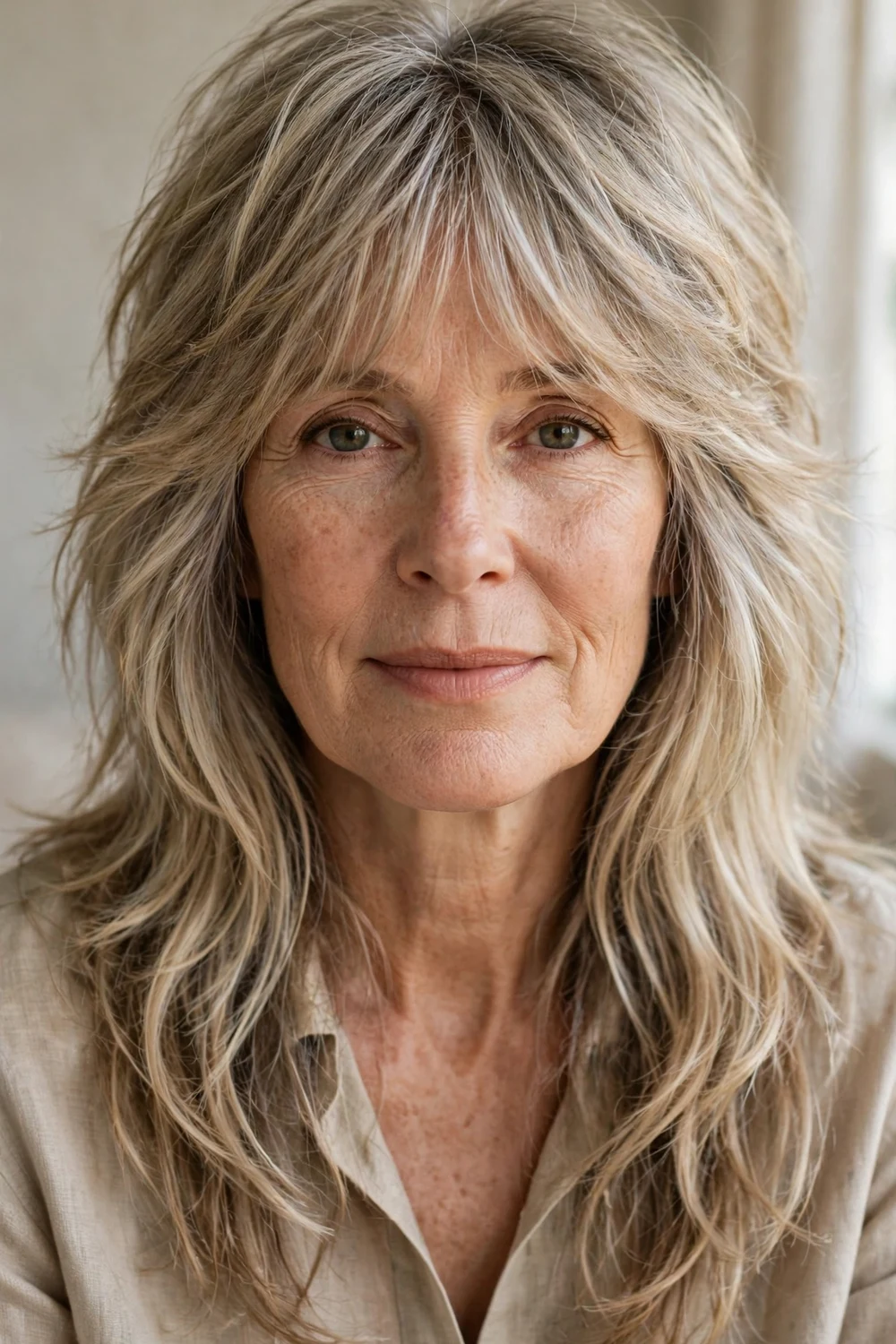
Soft bangs skim the brows without a hard edge, and paired with loose lived-in layers they create the most relaxed take on the 70s shag. The length falls naturally, the crown has gentle lift, and nothing looks overworked. This cut suits wavy or naturally textured hair best, since the shape comes from the texture itself. A little air-dry cream and scrunching is often all the styling it needs. It is the wash-and-go version of retro. Difficulty: easy. Try this: Apply a lightweight air-dry cream to damp hair, scrunch, and leave it alone until fully dry.
17. Sleek Long Shag with Micro Bangs

Micro bangs sit well above the brows and give the long shag a graphic, fashion-forward edge. The length flows smoothly past the shoulders while the short fringe structures the face. This pairing works on fine to medium straight hair because the subtle layering keeps movement without thinning the ends. Keep the micro bangs neat with regular trims, since even a quarter inch of growth changes the look. It is bold but surprisingly wearable. Difficulty: medium. Try this: Blow-dry the micro fringe straight down with a small brush and keep the lengths smooth with a shine serum.
18. Modern Grown-Out Long Shag

The modern grown-out shag takes the 70s shape and relaxes it. Layers are longer and less choppy, the fringe is feathered and grown past the brows, and the overall feel is undone rather than cut-with-a-razor. Think of it as the 2020s answer to the original: same DNA, softer execution. It suits women who want the shag vibe without the maintenance of short bangs. Most hair types carry it well. Difficulty: easy. Try this: Let the fringe grow to cheekbone length and sweep it to the sides for the grown-out curtain effect.
19. French-Inspired Undone Shag
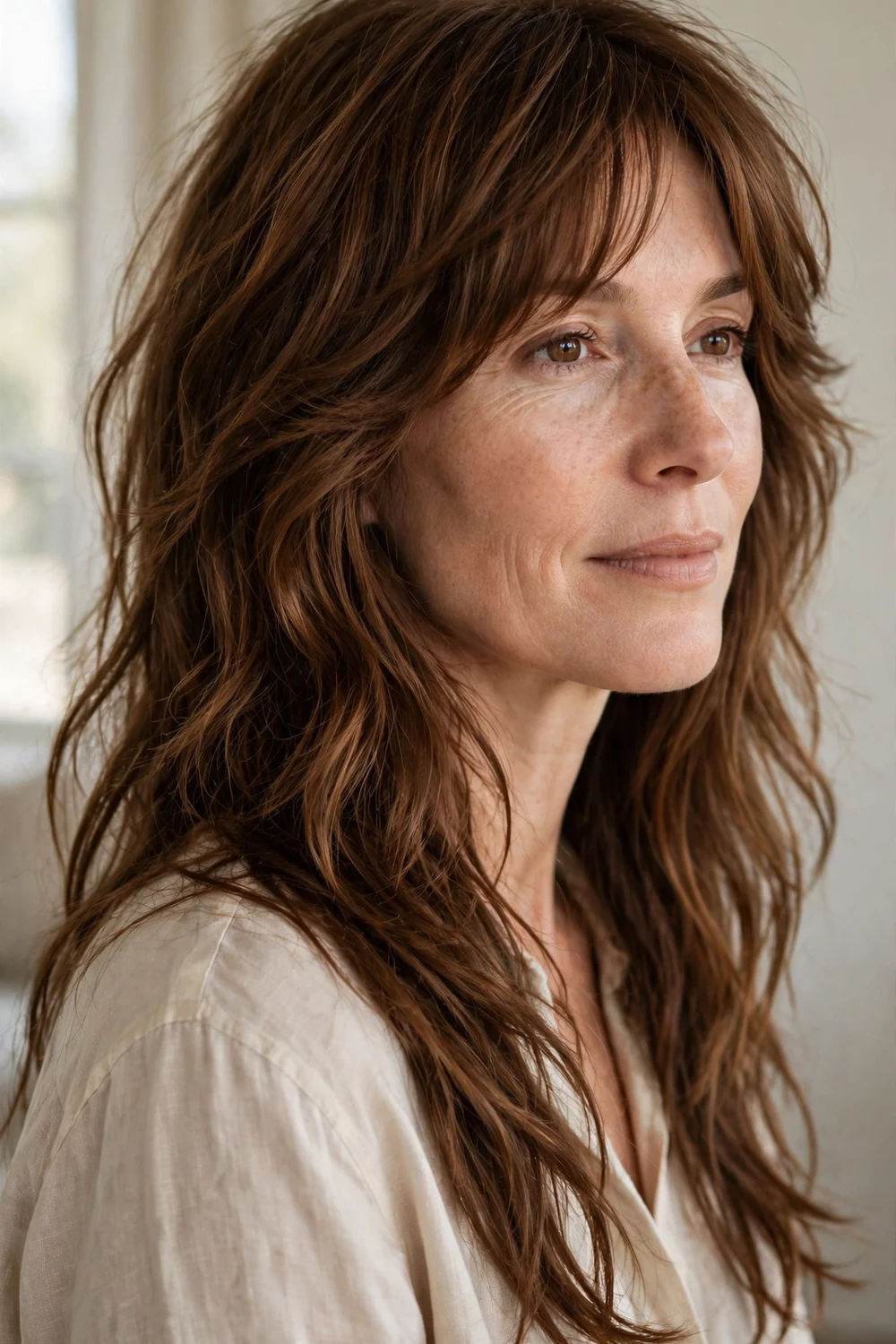
The French take on the shag is all about looking like you did nothing. Soft bangs, messy finish, and waves that seem accidental. The layers are cut to fall naturally without styling, which makes this one of the most practical long shags for busy routines. It flatters most face shapes and works on straight to wavy hair. The key is restraint: less product, less heat, more air-drying. Difficulty: easy. Try this: Braid damp hair loosely overnight, undo in the morning, and shake out the waves with your fingers.
20. Voluminous Retro Textured Shag
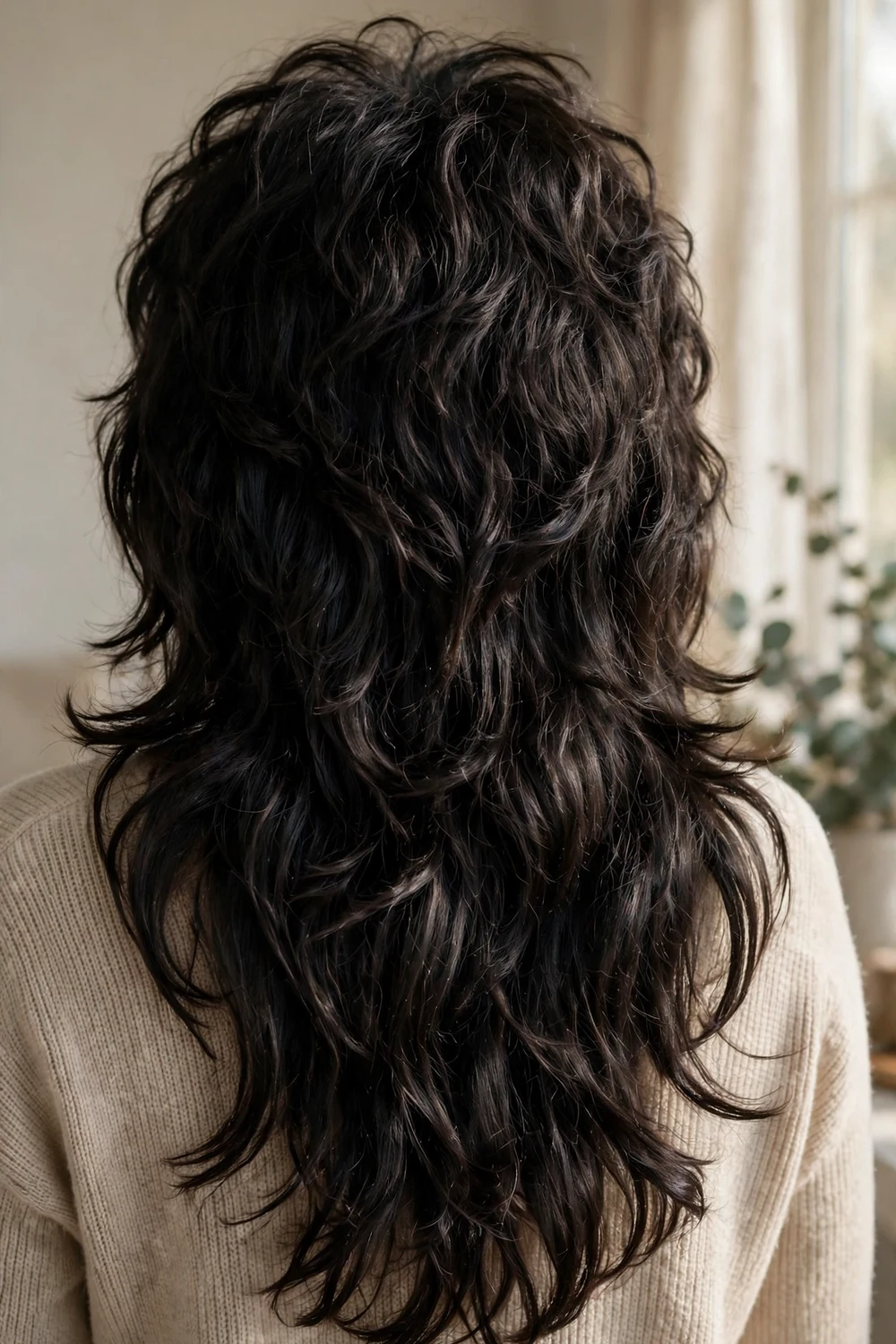
Go full 70s with maximum volume. This version stacks layers through the crown and back so the hair sits big and textured, with shorter bangs completing the retro silhouette. It is best on medium to long hair with natural wave or curl, since the texture builds the volume for you. Thick hair gets the most dramatic result. Use a diffuser or round brush to lift the roots and keep the shape from falling flat by midday. Difficulty: medium. Try this: Flip your head upside down and rough-dry the roots first for instant crown volume.
21. Long Copper Shag with Full Fringe
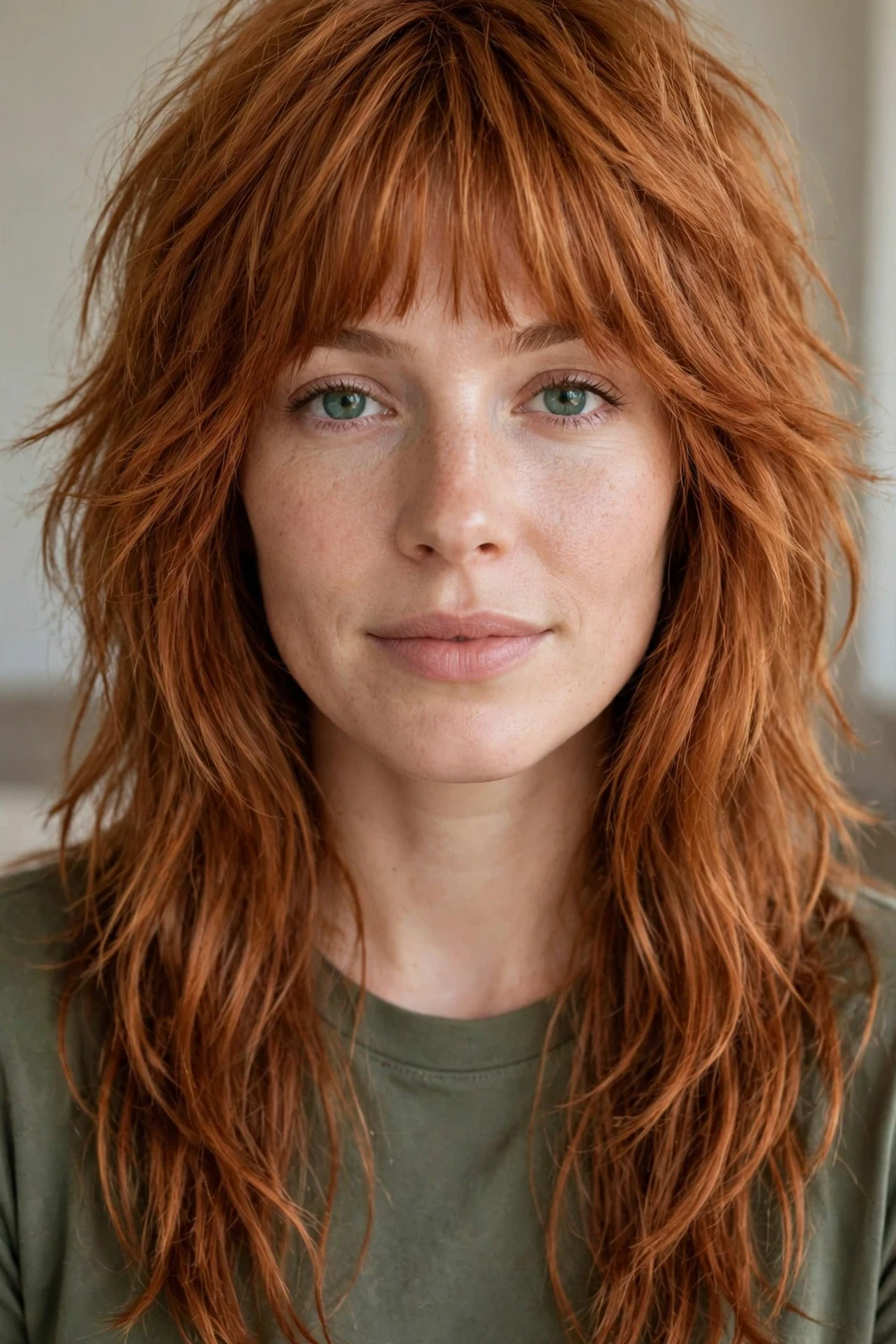
Copper and the 70s shag were made for each other. The warm, rich tone catches light in every layer, and a full fringe blends into the layered lengths for that effortless lived-in texture. Thick or naturally wavy hair shows this cut off best because the layering removes bulk while keeping swing at the ends. A light mousse and a quick diffuser session are often enough for styling. The color does half the talking. Difficulty: medium. Try this: Use a color-safe shampoo and a weekly gloss treatment to keep the copper tone bright between salon visits.
22. Sleek Auburn Long Shag with Full Bangs
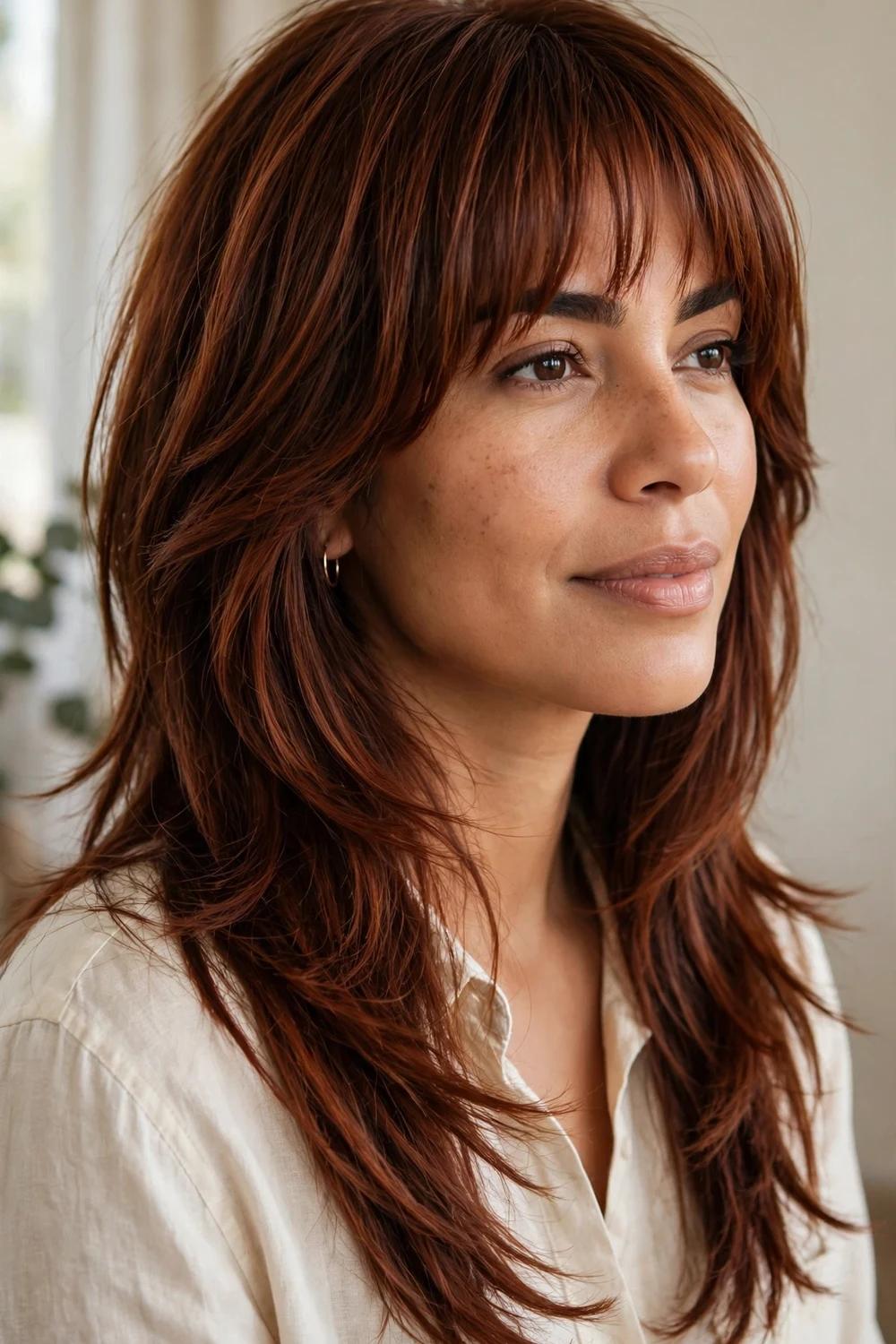
Auburn brings a polished warmth to the shag. The full bangs frame the eyes, the long layers fall in smooth controlled waves, and the glossy finish keeps everything feeling current. This is the dressed-up cousin of the copper shag: same color family, sleeker execution. Straight to slightly wavy hair types get the smoothest result. A smoothing cream and a round brush at the crown maintain the flow. Difficulty: medium. Try this: Blow-dry with a large round brush, rolling sections under for the smooth curved finish.
23. Voluminous Chocolate Shag with Full Bangs
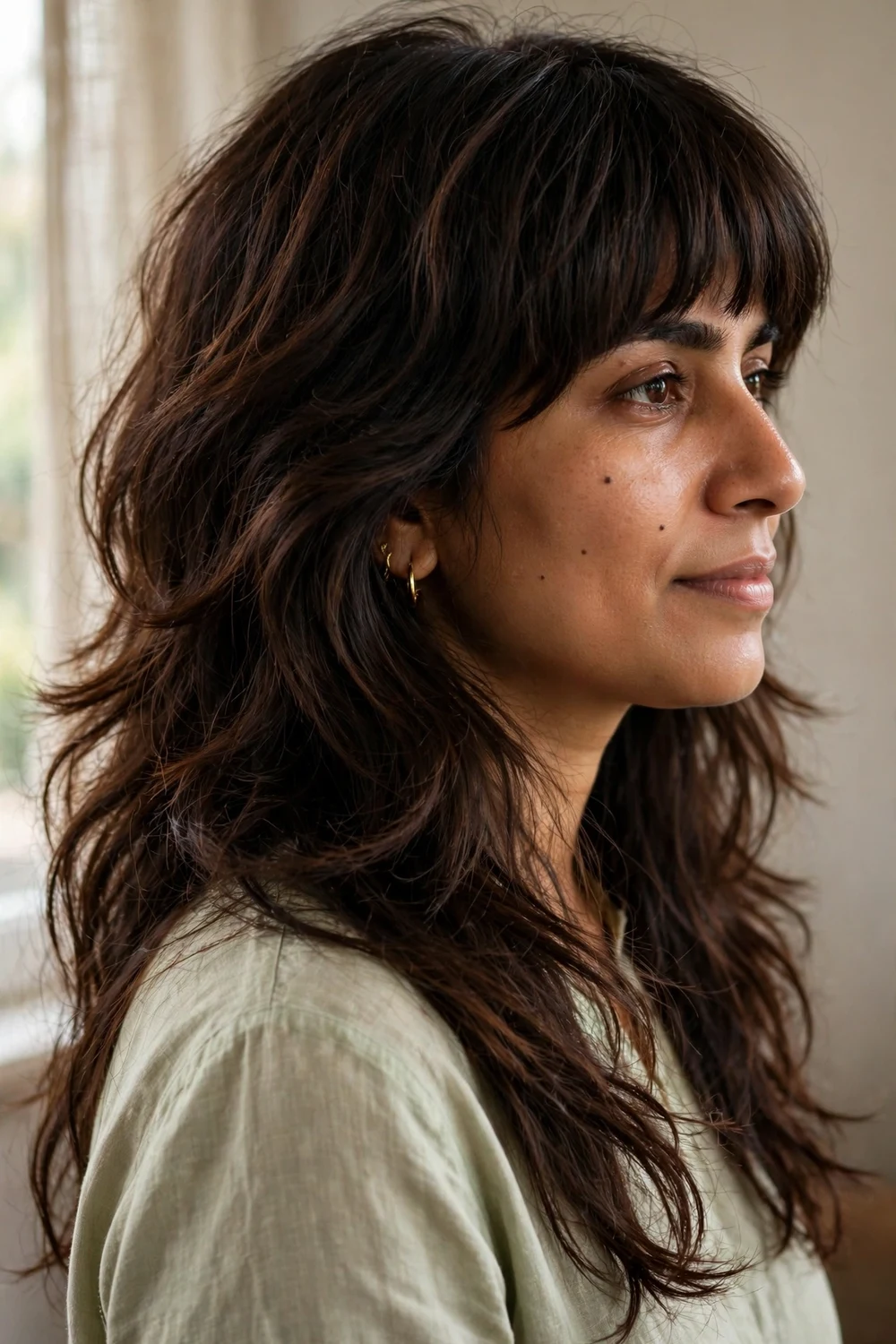
Deep chocolate brown gives the long shag richness and depth. Sweeping full bangs create a face-framing effect that feels soft yet confident, and the generous fluid layers add body without heaviness. Thick wavy hair is the ideal canvas because the layers remove bulk while keeping movement. Blow-drying with a large round brush emphasizes the curve in the layers. Compared to a plain long layered cut, this version has far more personality. Difficulty: medium. Try this: Add a few caramel face-framing pieces to break up the dark tone and brighten the complexion.
24. Blonde Long Shag with Soft Layers
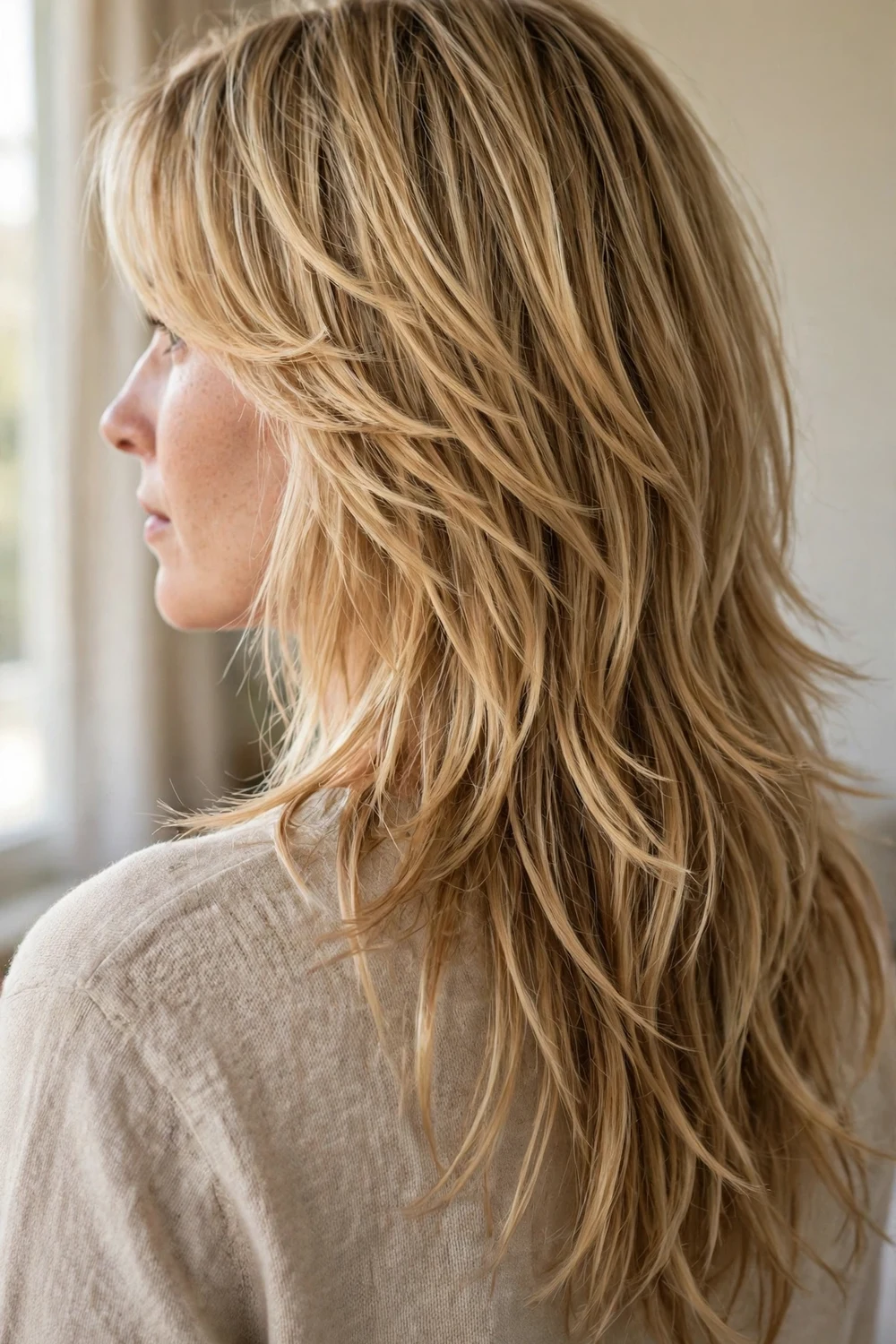
Honey blonde and soft shag layers are a natural match. The light tone shows off every layer, and the feathered ends catch the light as you move. This version keeps the bangs soft and blended rather than statement-making, which makes it one of the most versatile blonde shags. It suits straight to wavy hair and flatters most face shapes. The color grows out softly if you keep the roots close to your natural shade. Difficulty: easy. Try this: Ask for balayage rather than full highlights so the blonde grows out without a harsh line.
25. Icy Blonde Long Shag
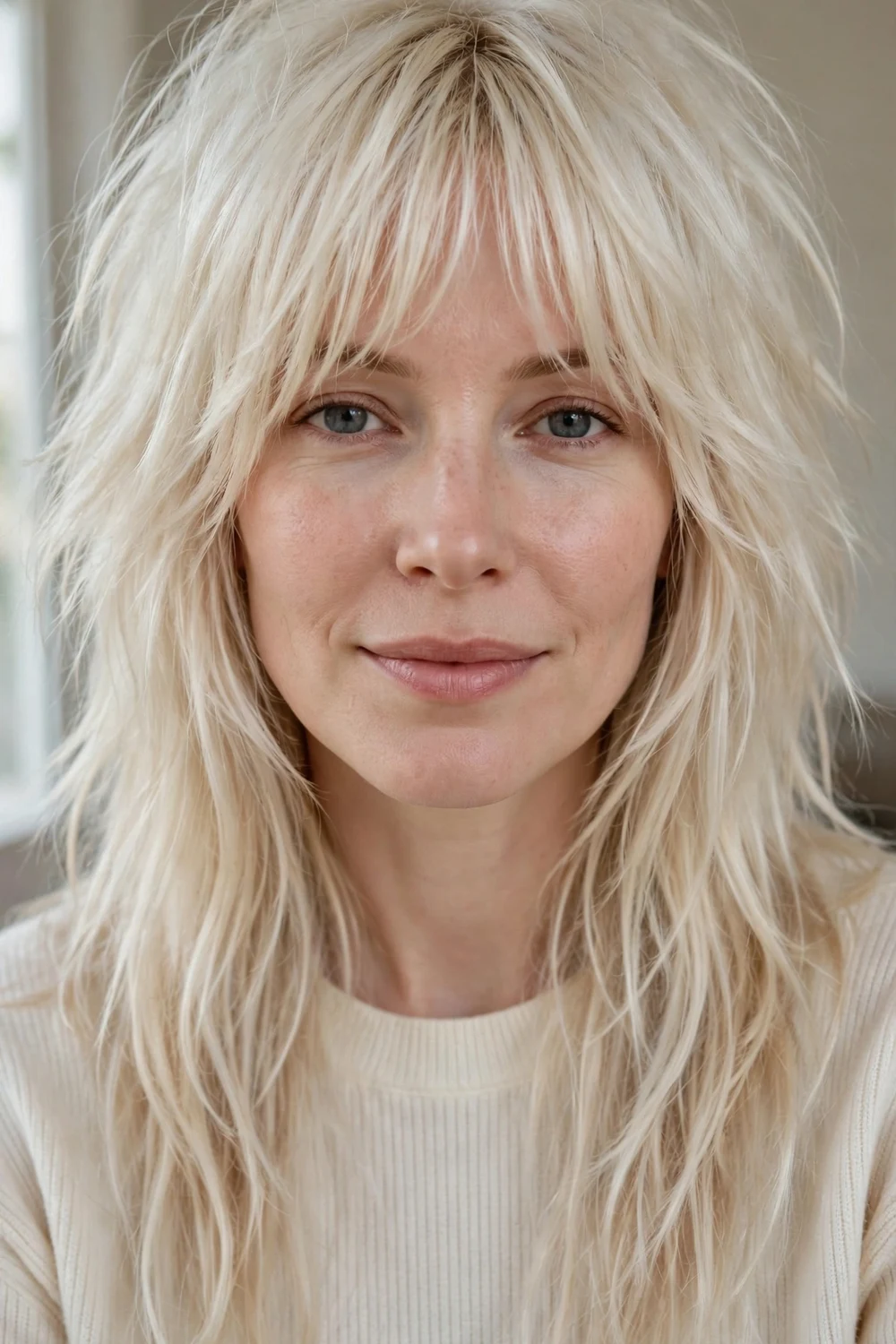
Icy platinum takes the shag in a cooler, edgier direction. The pale tone makes the choppy layers and wispy fringe look sharper and more graphic. This is a high-maintenance color that needs purple shampoo and regular toning, but the payoff is a head-turning retro-meets-modern look. Best on hair that can handle bleach, so talk honestly with your colorist about your hair’s condition first. Difficulty: hard. Try this: Use purple shampoo once a week and a deep conditioning mask to keep the icy tone clean and the ends healthy.
26. Smoky Gray Long Shag
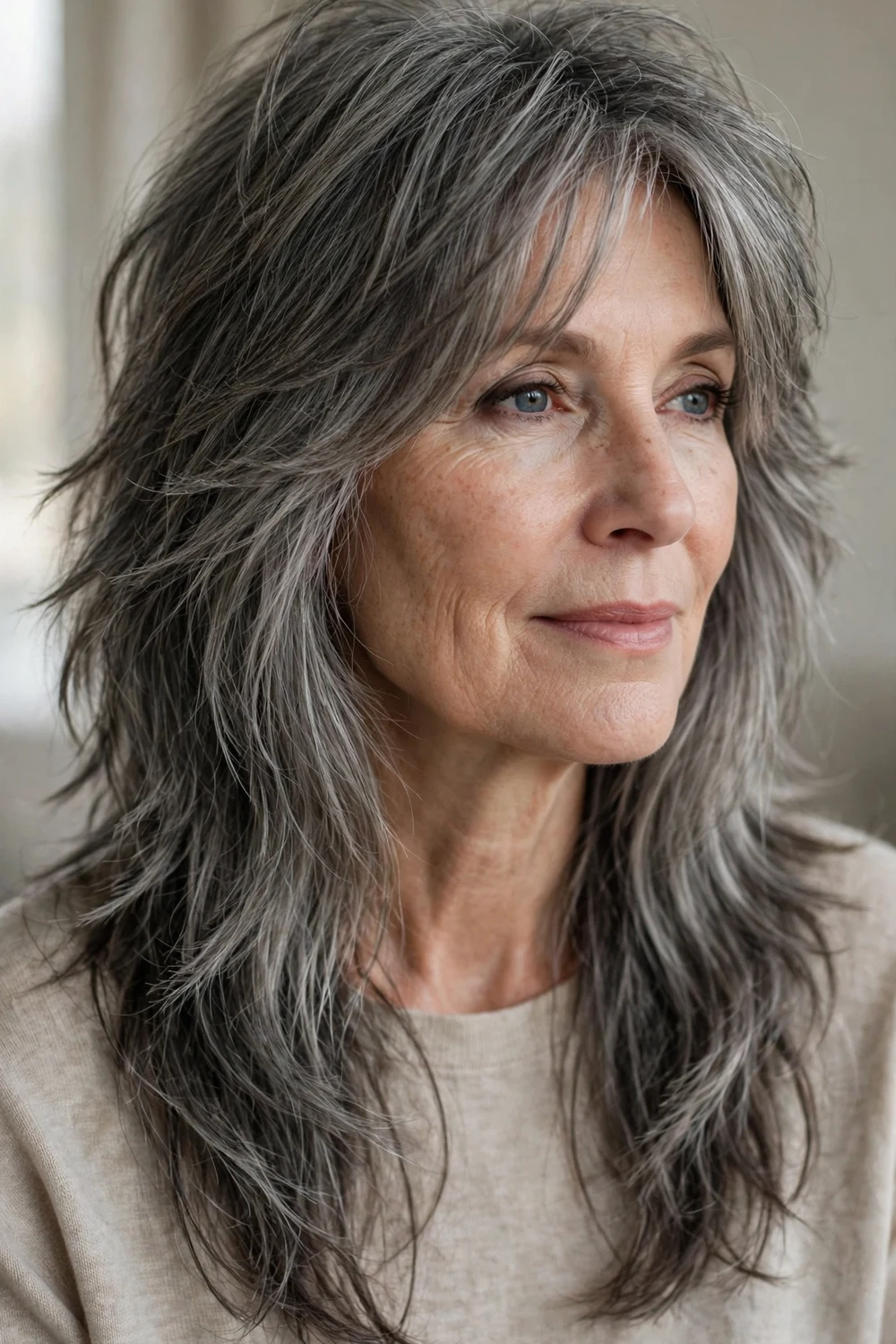
Smoky gray gives the 70s shag a sophisticated edge. The cool tone works with the textured ends and soft bangs to create a look that is modern without trying too hard. It suits women embracing their natural gray as well as those going gray by choice. The shag’s layers keep gray hair from looking flat or dull. Both fine and thick hair carry this well. Difficulty: medium. Try this: Use a silver-enhancing shampoo to keep the gray bright and prevent yellowing.
27. Pastel Pink Long Shag
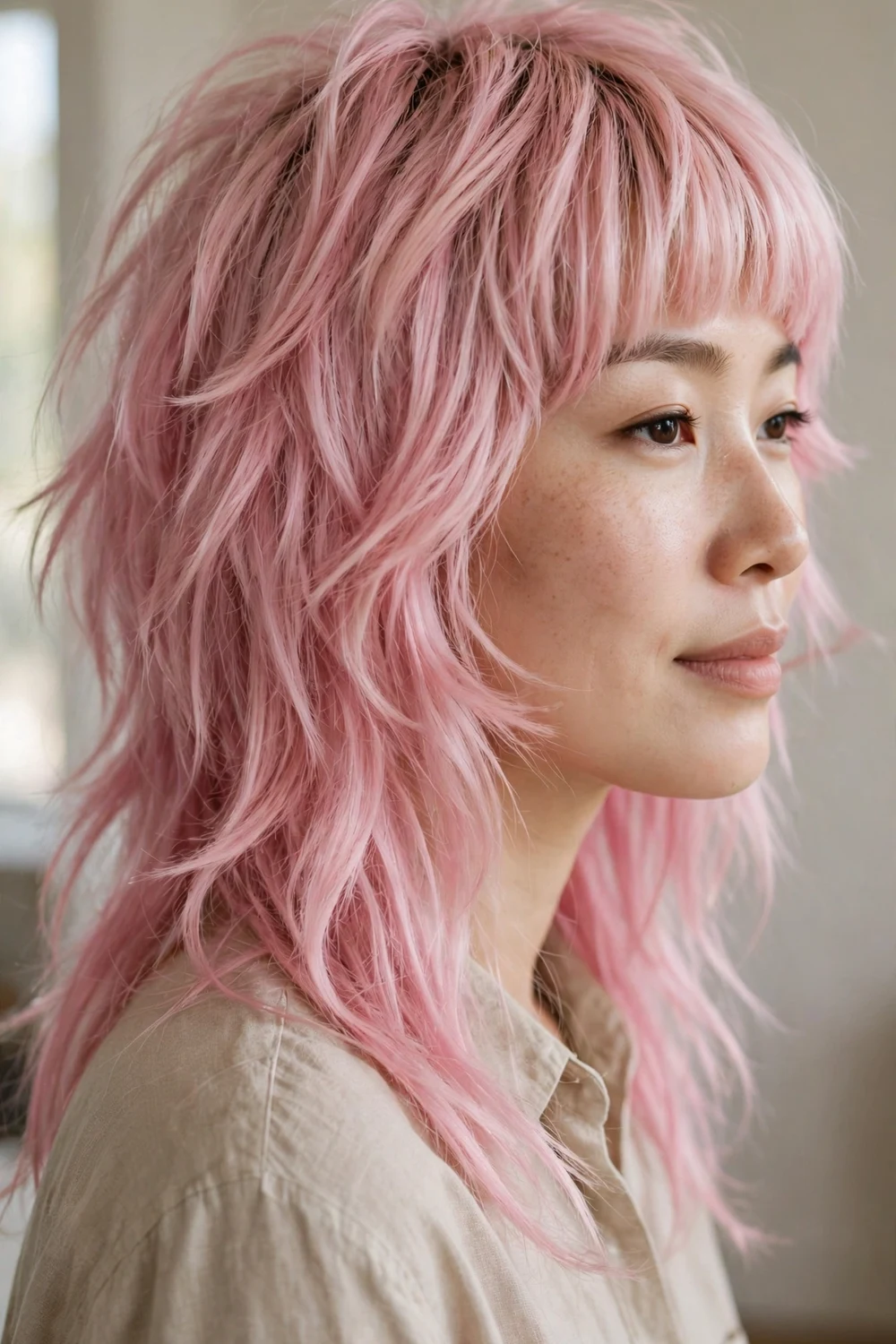
Pastel pink turns the retro shag playful. The soft color keeps the look light and approachable while the layered texture and retro bangs keep the 70s spirit. Fine straight to wavy hair takes pastel best, since the color shows most evenly on lighter bases. It fades gracefully over a few weeks, so plan for touch-ups if you want to keep it. This is the fun pick of the color ideas. Difficulty: medium. Try this: Wash with cool water and sulfate-free shampoo to make the pastel tone last as long as possible.
28. Two-Toned Shag with Bold Highlights

Two-tone color makes the shag’s layers impossible to miss. Dark roots with bold blonde highlights (or the reverse) create contrast that follows every choppy layer. The layered cut adds depth to the color, and the color adds definition to the cut. Thick hair shows this off best. It is a bolder choice than single-process color, but the shag’s texture keeps it from looking flat or striped. Difficulty: hard. Try this: Ask for the highlights to be placed on the top layers only, so the contrast moves with the hair.
29. Smoky Ombre Long Shag
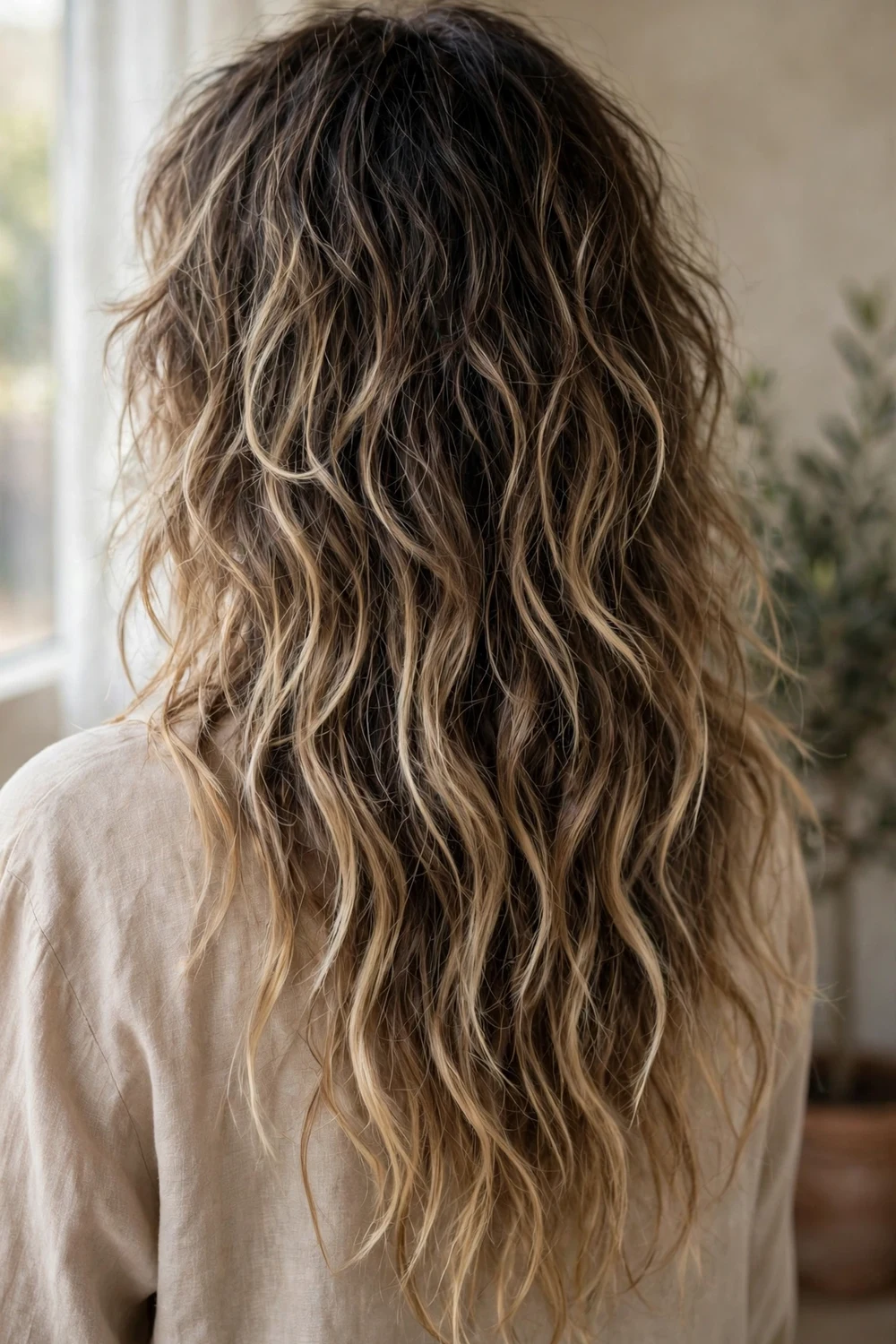
Smoky ombre fades dark roots into lighter tips, and on a long shag the gradient follows the layers down from crown to tips. The waves and feathered ends show off the color transition at every length. It is ideal for long hair because there is enough length for the fade to develop gradually. The look balances drama and wearability, and grow-out is graceful since the roots are already dark. Difficulty: medium. Try this: Keep the darkest tone at the crown and let it melt into the lighter ends for the smoothest blend.
30. Half-Up Long Shag
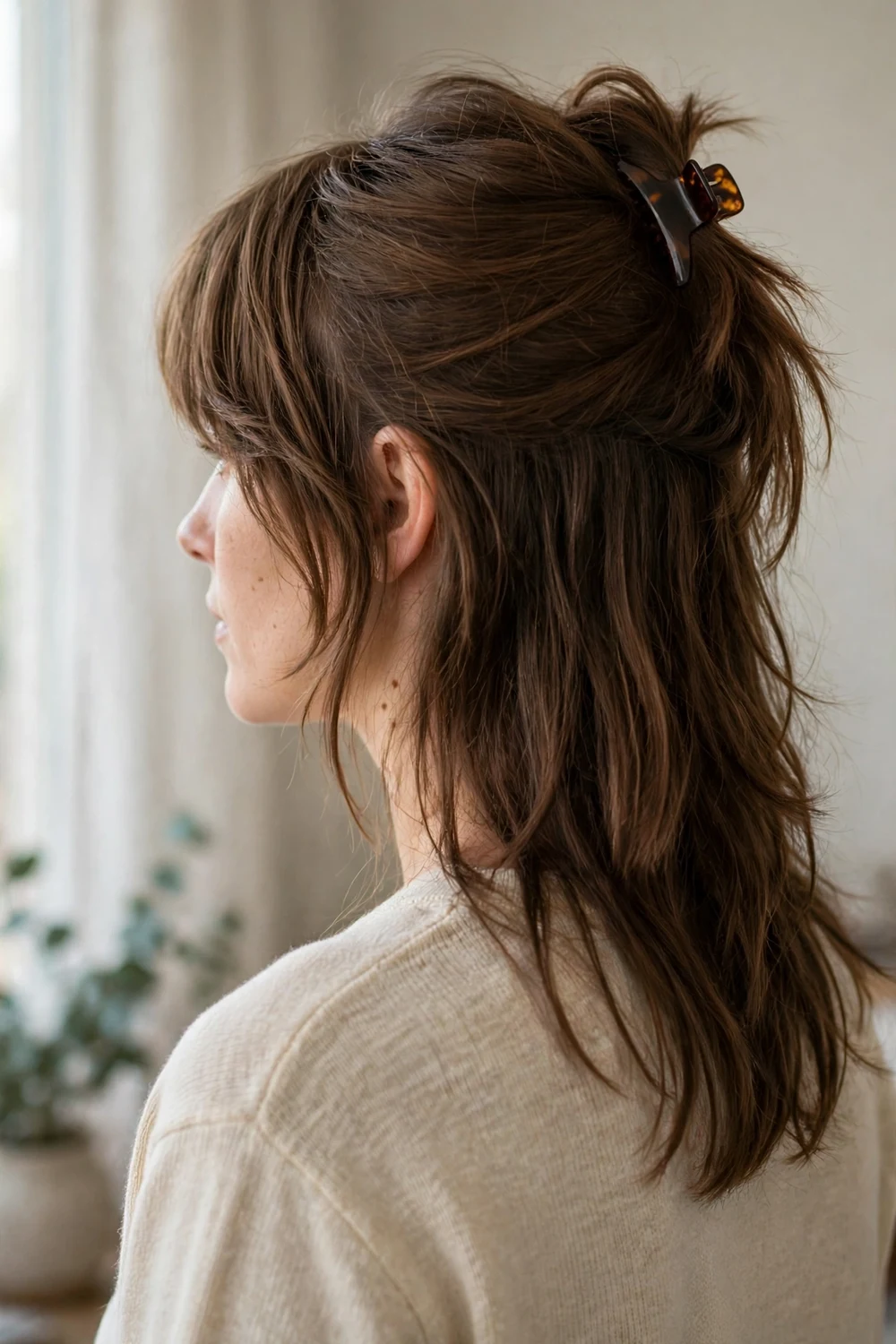
The long shag is not just a down style. Pulling the top half up shows off the layers and curtain bangs while keeping length flowing behind. The shorter crown layers create natural volume in the half-up section, and the face-framing pieces stay loose around the cheeks. It works for casual days and dressed-up evenings alike. Secure with a small claw clip or elastic and let the texture stay undone. Difficulty: easy. Try this: Tease the crown lightly before pinning the top section for extra 70s volume.
70s Shag Haircut Long for Women Comparison at a Glance
| Style | Best Hair Type | Difficulty | Upkeep |
|---|---|---|---|
| Wispy Bangs with Feathered Shag | Straight to wavy | Easy | Trim every 6-8 weeks |
| Long Shag with Choppy Bangs | Straight to wavy | Easy | Trim every 6 weeks |
| Long Shag with Curtain Bangs | Wavy to straight | Easy | Trim every 8 weeks |
| Blunt Bangs with Textured Shag | Thick | Medium | Trim every 4-6 weeks |
| Straight Bangs with Curly Shag | Curly | Medium | Heat-style bangs as needed |
| Curly Messy Shag | Curly to wavy | Easy | Trim every 8-10 weeks |
| Curly Shag with Defined Layers | Curly | Medium | Style curls per wash |
| Wavy Shag with Swoop Bangs | Wavy to straight | Easy | Touch up bangs with iron |
| Sleek Side-Swept Long Shag | Fine to medium | Easy | Trim every 8 weeks |
| Feathered Shag with Straight Bangs | Wavy | Easy | Trim every 6-8 weeks |
| Sleek 70s Shag with Straight Layers | Fine straight | Easy | Trim every 6-8 weeks |
| Shag with Butterfly Bangs | Straight to fine | Medium | Heat-style front sections |
| Fringe Bangs Shag Mullet | Wavy | Medium | Trim every 6 weeks |
| Curtain Bangs Shag Mullet | Wavy | Medium | Trim every 6-8 weeks |
| Choppy Long Shag without Bangs | Fine to medium | Easy | Trim every 8 weeks |
| Effortless 70s Long Shag with Soft Bangs | Wavy to textured | Easy | Trim every 8 weeks |
| Sleek Long Shag with Micro Bangs | Fine to medium straight | Medium | Trim bangs every 3-4 weeks |
| Modern Grown-Out Long Shag | Most types | Easy | Trim every 8-10 weeks |
| French-Inspired Undone Shag | Straight to wavy | Easy | Minimal styling |
| Voluminous Retro Textured Shag | Thick wavy to curly | Medium | Style volume per wear |
| Long Copper Shag with Full Fringe | Thick wavy | Medium | Gloss every 4-6 weeks |
| Sleek Auburn Long Shag with Full Bangs | Straight to wavy | Medium | Gloss every 4-6 weeks |
| Voluminous Chocolate Shag with Full Bangs | Thick wavy | Medium | Trim every 6-8 weeks |
| Blonde Long Shag with Soft Layers | Straight to wavy | Easy | Tone every 6-8 weeks |
| Icy Blonde Long Shag | Bleach-safe hair | Hard | Tone every 3-4 weeks |
| Smoky Gray Long Shag | Fine to thick | Medium | Silver shampoo weekly |
| Pastel Pink Long Shag | Fine to wavy, light base | Medium | Refresh color every 3-4 weeks |
| Two-Toned Shag with Bold Highlights | Thick | Hard | Touch up every 6-8 weeks |
| Smoky Ombre Long Shag | Long, most types | Medium | Refresh ends every 8-10 weeks |
| Half-Up Long Shag | Most types | Easy | Style as worn |
How to Choose the Right 70s Shag for You
Start with your hair texture. Wavy and curly hair get the shag’s volume almost for free, while straight hair needs more styling to keep the layers lively. Fine hair does best with the sleeker versions and fewer razored layers, since too much texture can make fine hair look thin.
Then pick your bangs. Curtain bangs suit the most face shapes and grow out the easiest. Blunt and micro bangs make a stronger statement but need frequent trims. If you are unsure, the no-bangs version is a safe first step into the shag.
Bring reference photos to your stylist and talk about how much daily styling you actually do. A good shag should work with your routine, not against it. If you want more length-focused inspiration, long shag cuts covers modern takes on the same silhouette.
Color changes how the cut reads. Darker shades show the shape, while blonde and copper show the layers. For bangs-specific guidance across shag lengths, shag haircuts with bangs breaks down every fringe pairing.
Mistakes to Avoid
The most common mistake is cutting the layers too short on the first visit. You can always go shorter at the next appointment, but you cannot put length back. Ask for the longest version of the shag you want, then adjust.
Another mistake is skipping the bangs discussion. The bangs define a shag more than the layers do, so decide on the fringe style before the first cut. Also avoid over-thinning: razored layers on already fine hair can leave the ends wispy instead of full.
If you prefer a contemporary finish over full retro, modern shag haircuts shows softer 2026 versions. And if low effort is the priority, low maintenance shag haircuts for women focuses on cuts that style themselves.
Frequently Asked Questions
What is a 70s shag haircut for long hair?
A 70s shag haircut for long hair keeps the length past the shoulders while adding short choppy layers at the crown, feathered ends, and bangs. The layers remove weight and add movement, so long hair looks full instead of flat. It was popularized in the 1970s by Jane Fonda and Stevie Nicks.
Does a long shag suit fine hair?
Yes, with the right execution. Ask for fewer razored layers and keep the ends blunt enough to hold density. The sleek and grown-out versions add volume at the crown without thinning the lengths. Avoid over-texturizing, which can make fine hair look sparse.
How often should I trim a long shag?
Every 6 to 8 weeks keeps the layers fresh and the ends healthy. Bangs need more frequent trims: blunt and micro bangs every 3 to 4 weeks, curtain and wispy bangs every 6 to 8 weeks. The shag grows out gracefully, so you can stretch the schedule if needed.
Can I get a 70s shag without bangs?
Yes. The choppy long shag without bangs keeps the layered structure and face-framing pieces but skips the fringe. It is the most low-commitment version and the easiest to grow out. It suits women who want the shag’s movement without daily bang styling.
How do I style a long 70s shag at home?
For waves, apply mousse to damp hair and scrunch or diffuse. For a sleek finish, blow-dry with a round brush and add shine serum. For the feathered look, curl 1-inch sections away from the face and brush through. Most versions need only 10 to 15 minutes of styling.
Final Thoughts
The 70s shag haircut long for women earns its staying power. It gives long hair shape and personality without taking length away, and it adapts to nearly every texture and color. Pick the bangs that suit your face, keep up with trims, and let the layers do the work. Few long haircuts offer this much change for this little commitment.

