


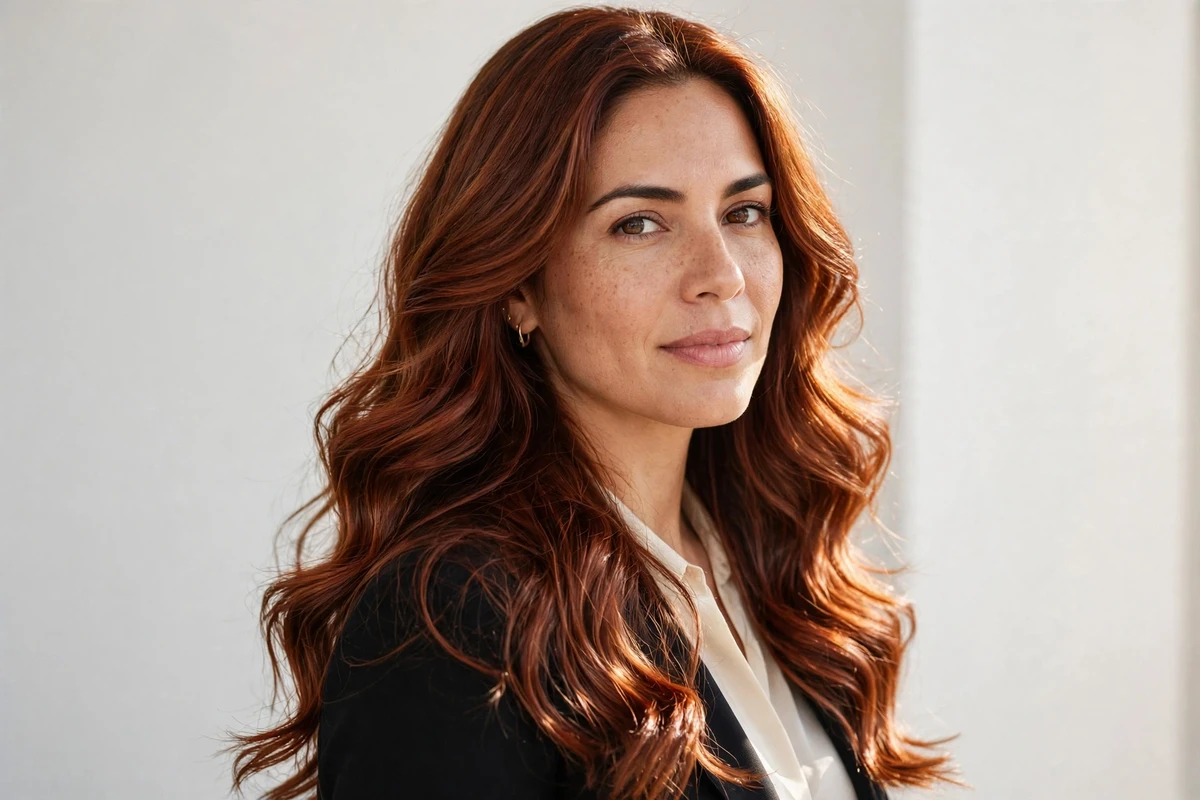
Auburn sits in the sweet spot between red and brown, and it does something special to a haircut: it makes texture, layers, and shine easier to see. I’ve spent a lot of time comparing how different cuts hold red tones, and the same auburn shade can look completely different in a pixie than it does in long waves.
This guide covers 30 auburn hairstyles, organized by length and style, from short crops to updos. Each idea notes who it suits and how to style it, so you can pick a cut that works with your hair type and routine.
Quick answer: Auburn flatters most hair types and skin tones because it mixes red warmth with brown depth. Short cuts like pixies and bobs show off the color’s shine, medium cuts add movement, and long styles let the red tones glow in waves and braids. Updos concentrate the color for formal events.
Quick Takeaways
- Auburn works on short, medium, and long hair, but the cut changes how the color reads: short shows shine, long shows dimension.
- Warm skin tones suit copper-leaning auburn; cooler skin tones suit deeper, wine-leaning auburn.
- Layers and texture make auburn look richer than one-length cuts on the same shade.
- Red tones fade faster than brown, so color-safe shampoo and cooler wash water matter more here.
- Updos and braids are the easiest way to show off auburn for events without restyling your whole cut.
Why Auburn Works on Almost Every Hairstyle
Auburn hair color is built on two pigments: red and brown. The red gives it warmth and glow under light, while the brown keeps it natural enough for everyday wear. That mix means the color adapts to the cut rather than fighting it.
On short hair, auburn’s shine becomes the main event because there is less length to distract from it. On long hair, the red tones shift as the hair moves, which is why waves and layers pair so well with it. If your skin has warm undertones, a copper-leaning auburn tends to flatter. If your skin runs cool, a deeper auburn with wine or mahogany depth usually looks better.
One practical note: red dye molecules are smaller than brown ones, so auburn fades faster. Plan on color-safe products and touch-ups every 6 to 8 weeks if you want the red to stay bright.
1. Auburn Pixie Cut
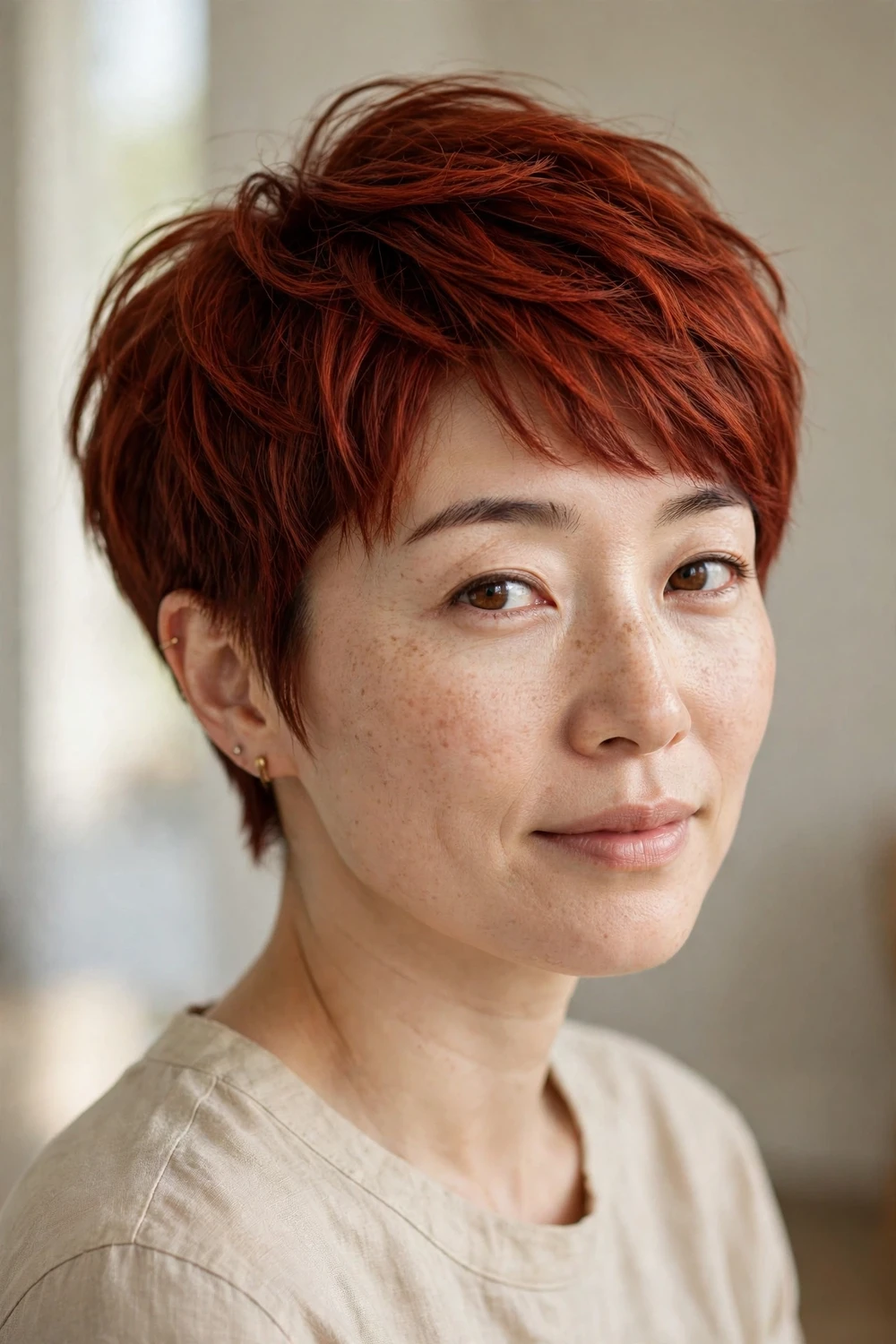
Ask your stylist for a pixie with tapered sides and 2 to 3 inches of piecey length on top, then have it colored in a rich auburn with a level 5 base. The short length keeps every strand close to the scalp, so the red pigment reflects light evenly and the color looks more intense than it would on longer hair. This cut suits oval, heart, and square faces and works best on straight to wavy hair. Maintenance is a trim every 4 to 5 weeks to keep the taper sharp.
Try this: Rub a pea-sized amount of matte pomade between your palms and pinch the top layers for definition. It takes under 5 minutes.
2. Auburn Textured Crop
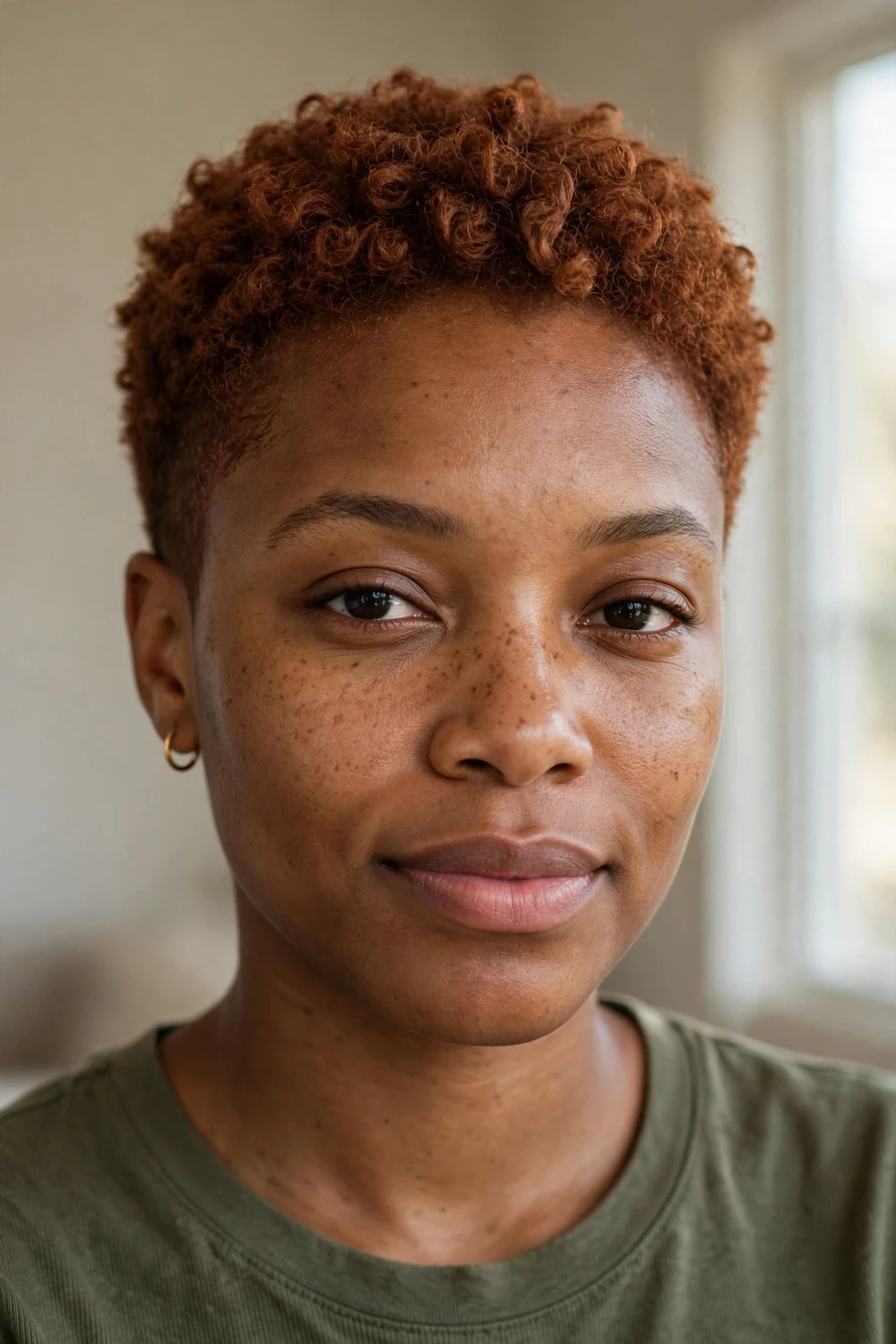
Curly and coily hair types can wear auburn in a close crop that keeps the texture front and center. Keep about an inch of defined curl on top with tapered edges, and choose an auburn-brown blend (around level 4) so the curls show warm dimension instead of flat color. The warm red-brown tone flatters deep skin tones especially well. Refresh the color with a tinted conditioner between salon visits, since frequent washing fades red fastest on textured hair.
Try this: Apply curl cream to damp hair, then scrunch with a microfiber towel. Diffuse on low heat for 10 minutes to lock in the shape.
3. Auburn Classic Bob
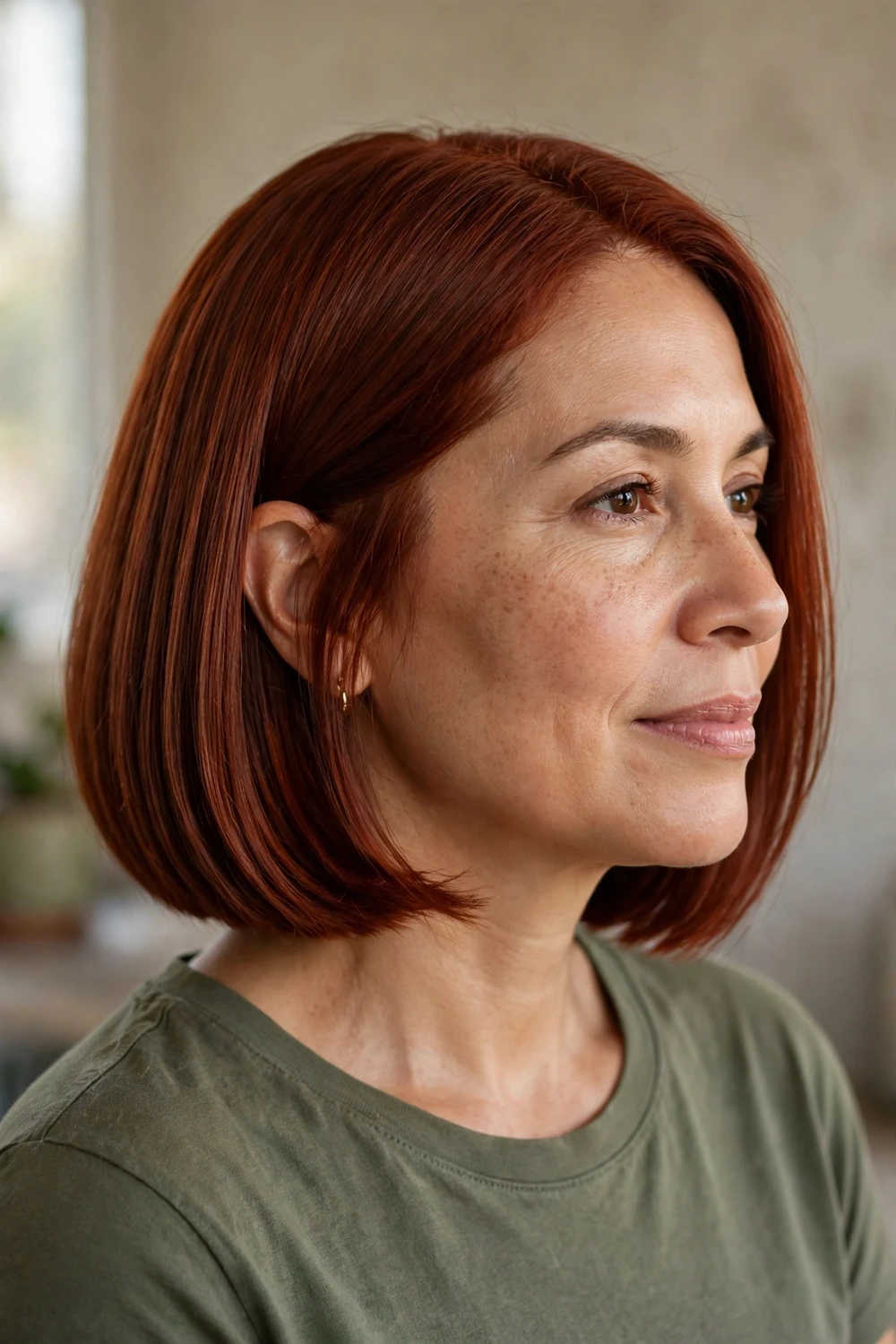
A chin-length blunt bob is one of the cleanest canvases for auburn. One even length from root to tip means the color reads as one rich sheet, which makes the red look deeper and more expensive. Ask for a blunt cut with no layers and a gloss treatment in a medium auburn shade. This style suits fine to medium hair because the blunt ends make hair look thicker. Blow-dry with a paddle brush and finish with a light serum for the mirror shine this cut is known for.
Try this: Tuck one side behind your ear and add a simple gold cuff earring. The color contrast draws the eye to the jawline.
4. Auburn Angled Bob
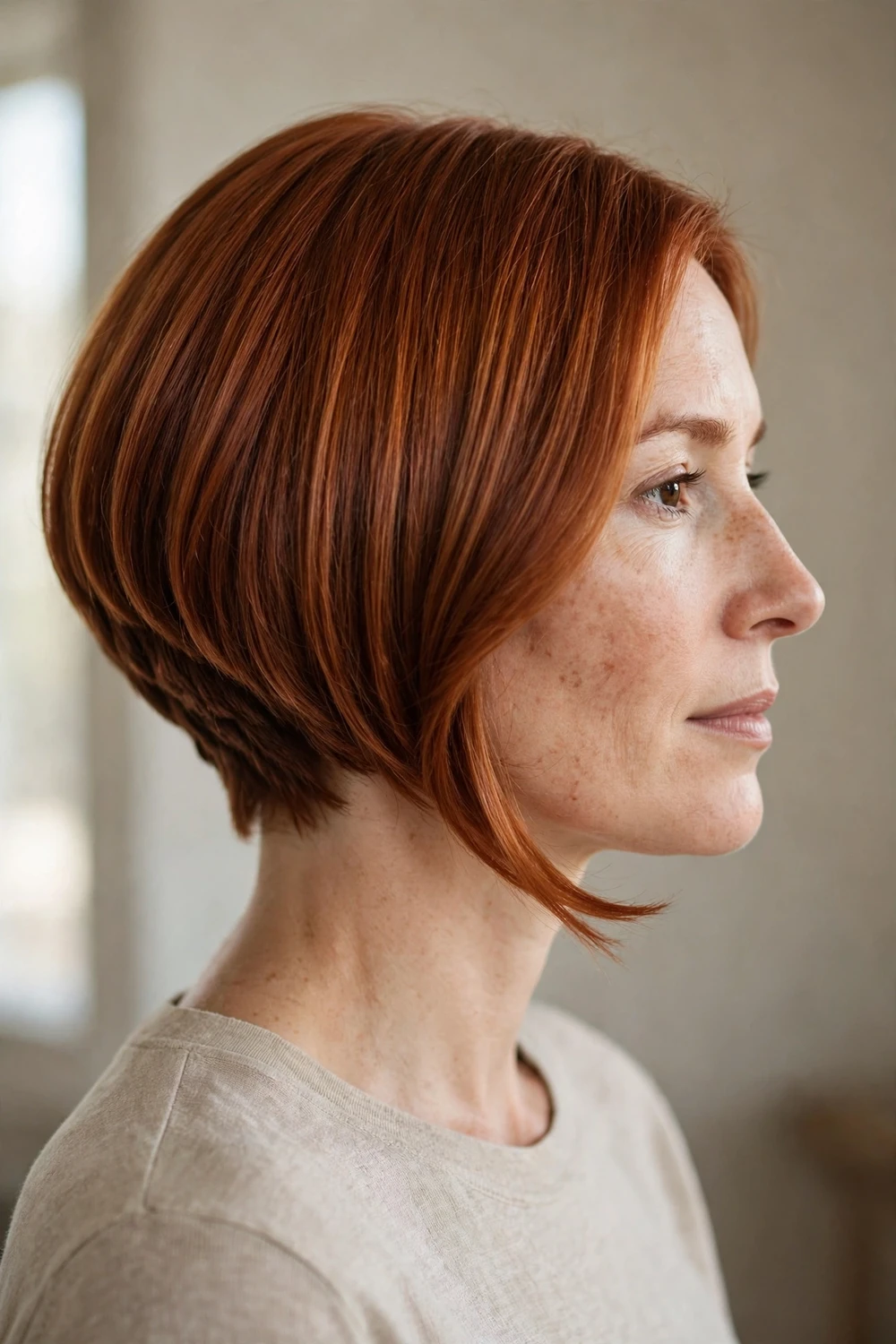
Longer in front and stacked short at the back, the angled bob gives auburn a built-in highlight effect: the stacked layers at the nape catch light differently than the longer front pieces. Go for a copper-leaning auburn here, since the angle shows off warm tones. This cut flatters round faces because the longer front pieces draw the eye downward. Style it smooth with a flat iron for a sharp line, or bend the ends under with a round brush for softness.
Try this: Flip your part to the deeper side once a month. The new part line makes roots look fresher and adds instant volume.
5. Auburn Bob with Bangs
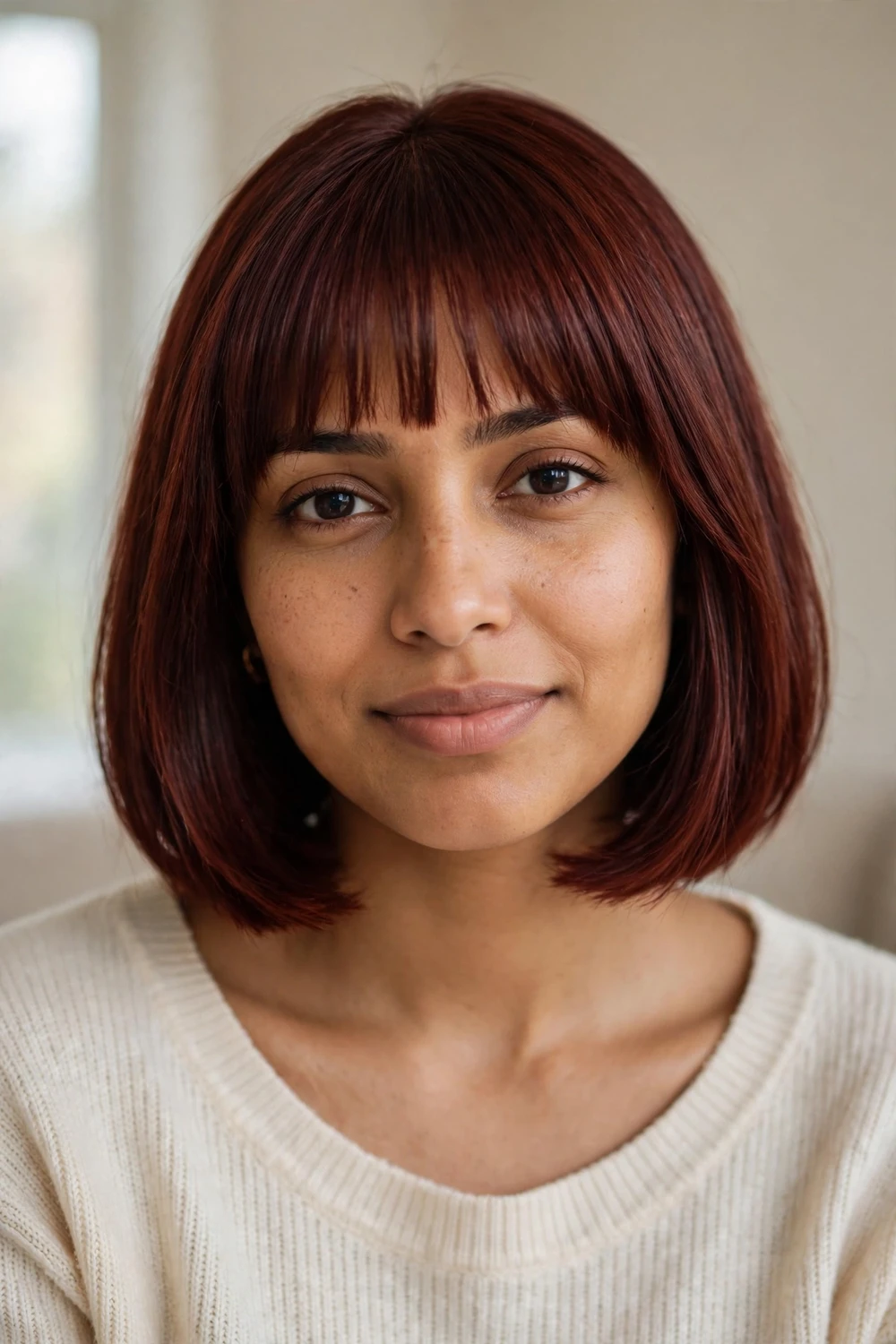
Pair a jaw-length bob with full straight-across bangs and the auburn frames your entire face. The bangs put the color right against your skin, which is why this cut suits people who want the shade to warm up their complexion. Keep the bangs just above the lashes and the bob at jaw level for balance. Straight to slightly wavy hair holds this shape best. Trim the bangs every 3 weeks, since grown-out bangs change the whole look.
Try this: Blow-dry bangs first, before the rest of your hair, using a small round brush. They set faster and lie flatter that way.
6. Auburn Wavy Lob
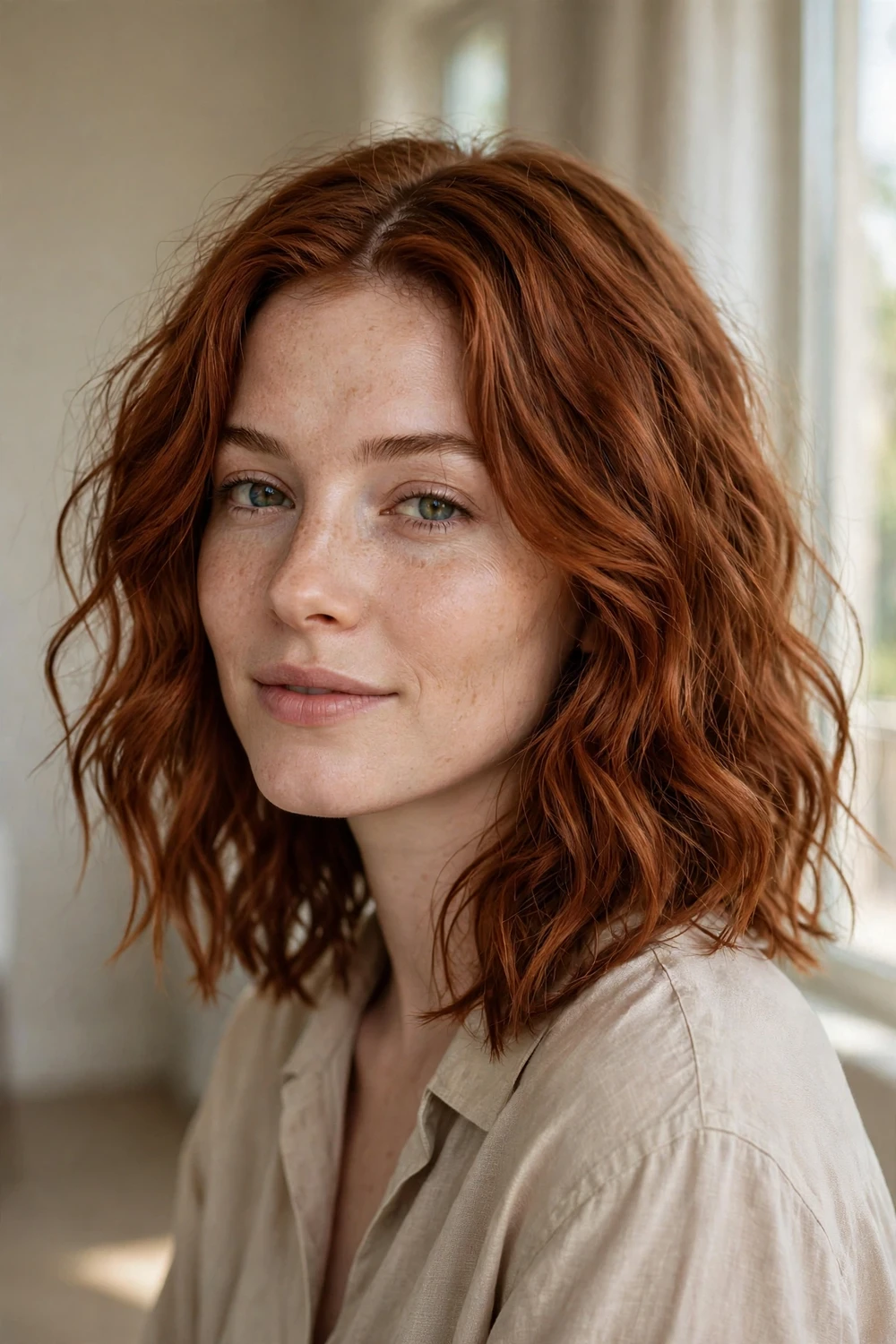
The wavy lob is the most forgiving way to wear auburn. Collarbone length keeps the cut light enough to hold waves, and loose waves break the color into light and shadow so the red looks dimensional. Ask for long layers through the ends and a medium auburn base. This works on nearly every hair type and face shape, which is why it shows up everywhere. Air-dry with sea salt spray for texture, or use a 1.25-inch curling iron for more polished waves.
Try this: Braid damp hair into two loose braids before bed. Undo them in the morning for heat-free waves that last all day.
7. Auburn Sleek Lob
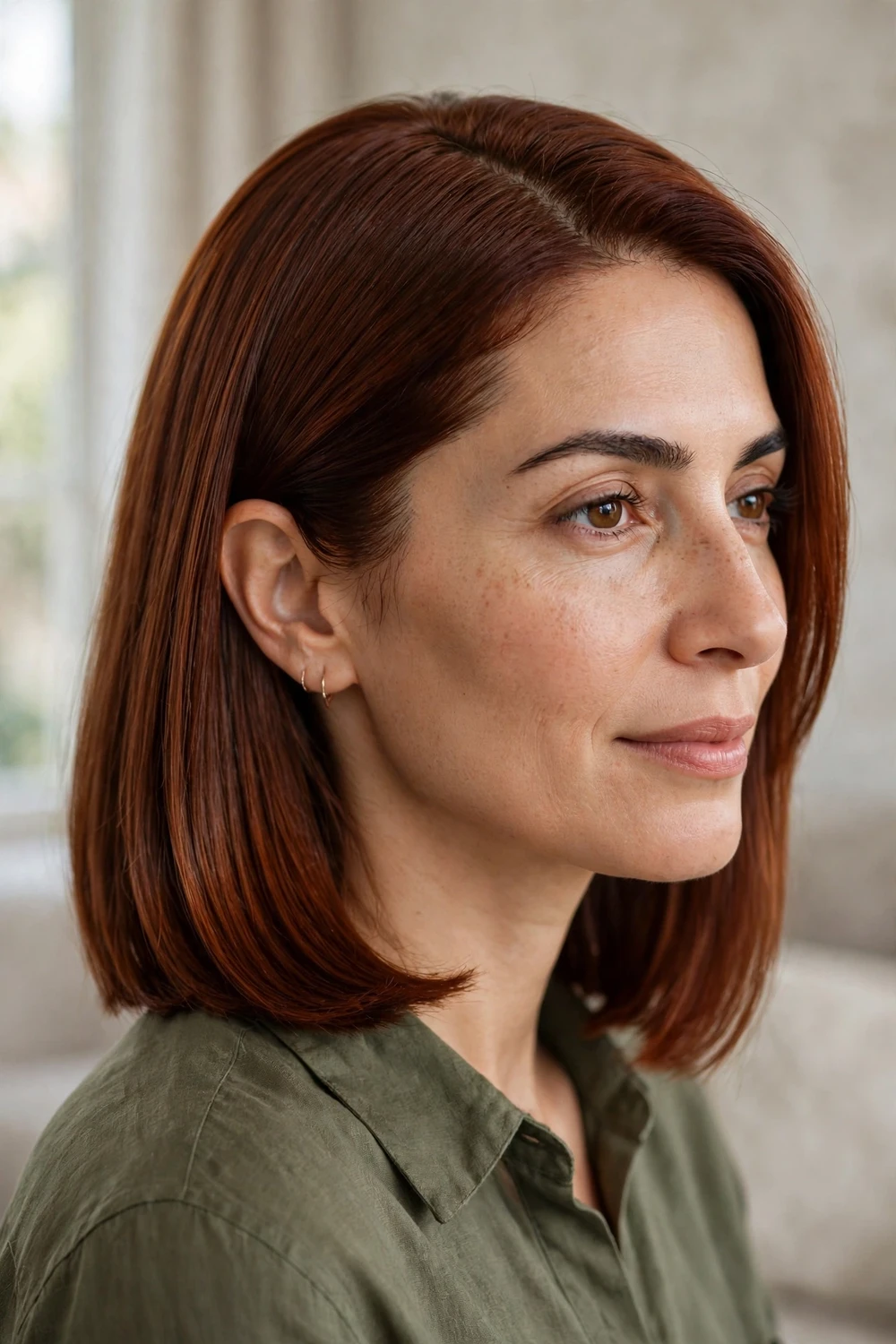
If waves aren’t your thing, a sleek lob turns auburn into a mirror. A deep side part plus pin-straight styling makes the red-brown shade look almost metallic in sunlight. This cut needs healthy ends to pull off, so book a dusting trim every 8 weeks and use a heat protectant every time you flat iron. A medium-to-deep auburn shade gives the most shine here. Fine hair benefits most, since the sleek finish makes it look denser.
Try this: Run a flat iron over a boar-bristle brush pass for extra smoothness. One pass per section is enough if the hair is fully dry.
8. Auburn Shag Cut
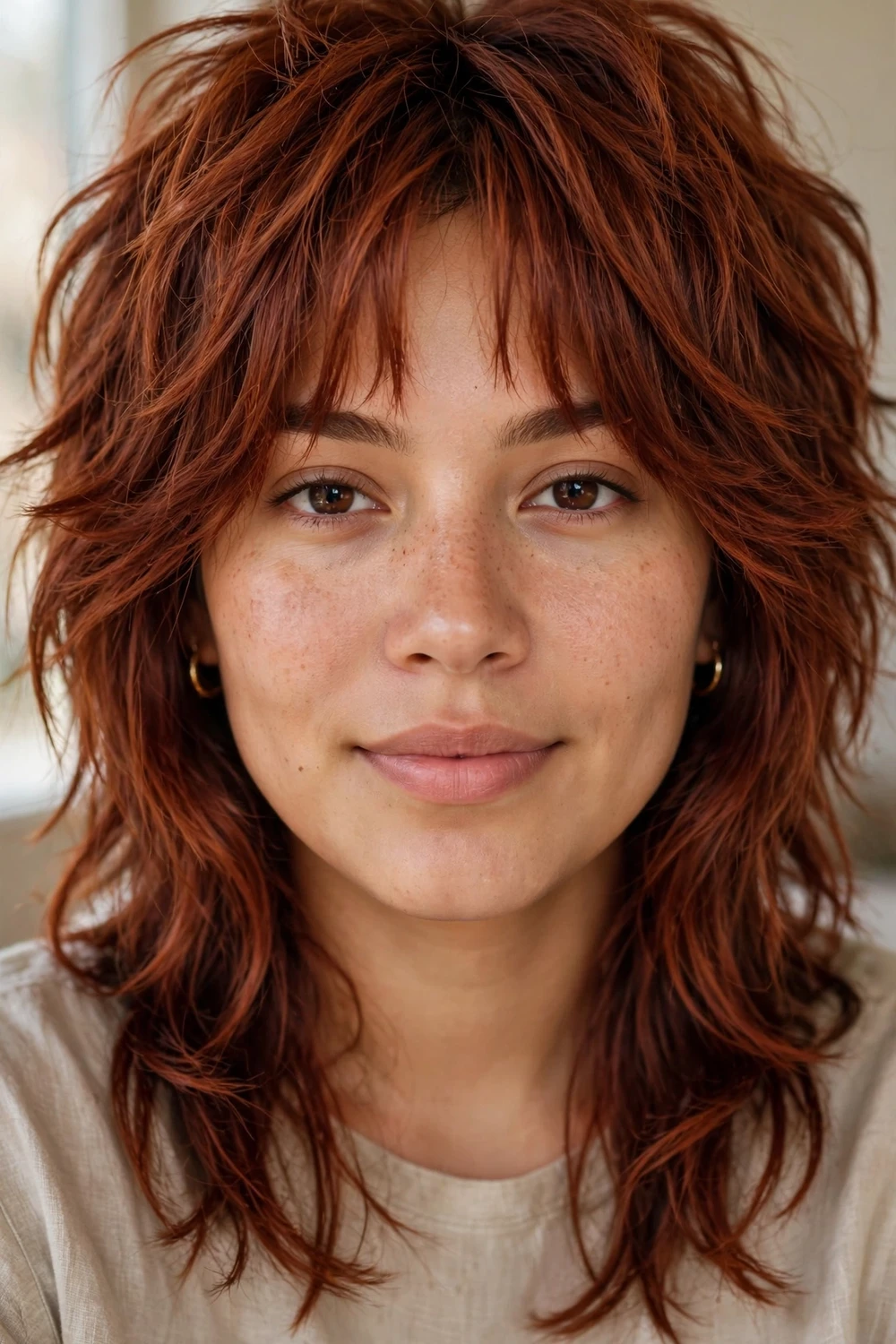
A shag’s choppy layers and curtain fringe give auburn exactly what it loves: texture. Each layer catches light at a different angle, so a single auburn shade reads as three or four tones. Ask for heavy layering through the crown and ends with face-framing pieces starting at the cheekbones. This cut suits thick hair best because the layers remove bulk. Style with texturizing spray and scrunch the ends for the lived-in finish.
Try this: Flip your head upside down and rough-dry the roots for 2 minutes. It builds the crown volume a shag needs.
9. Auburn Butterfly Cut
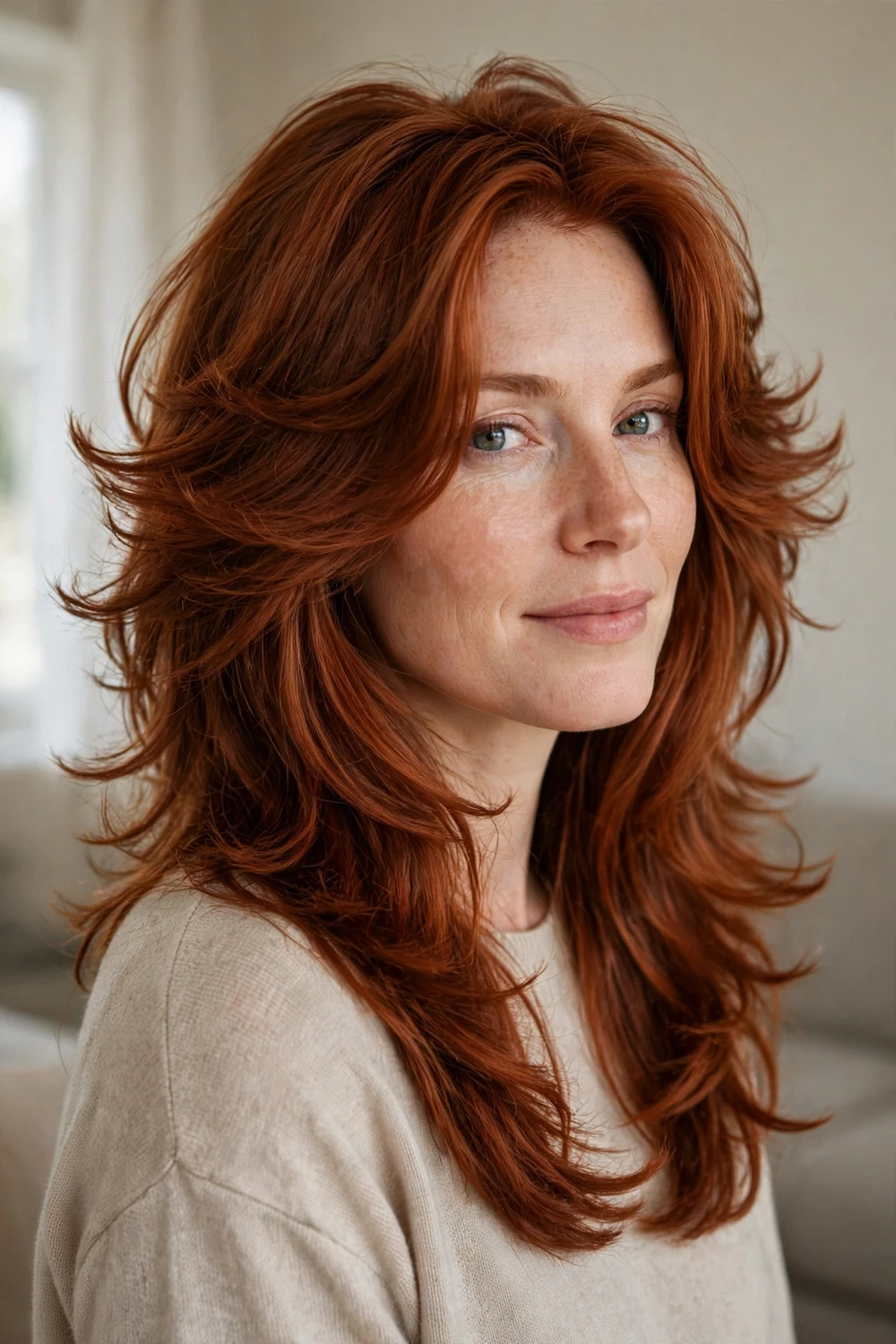
For long hair that needs movement, the butterfly cut layers auburn into two zones: shorter face-framing pieces that feather outward and long lengths behind. The shorter layers lighten the color around your face while the lengths behind stay deep, which creates natural-looking depth. This suits long faces and thick hair. Blow out the front layers with a round brush, flipping them away from the face for the feathered effect. The cut also grows out well, since the layers simply get longer.
Try this: Clip the front layers back for a day when you want a simpler look. The long back layers still show the full auburn.
10. Auburn Wolf Cut
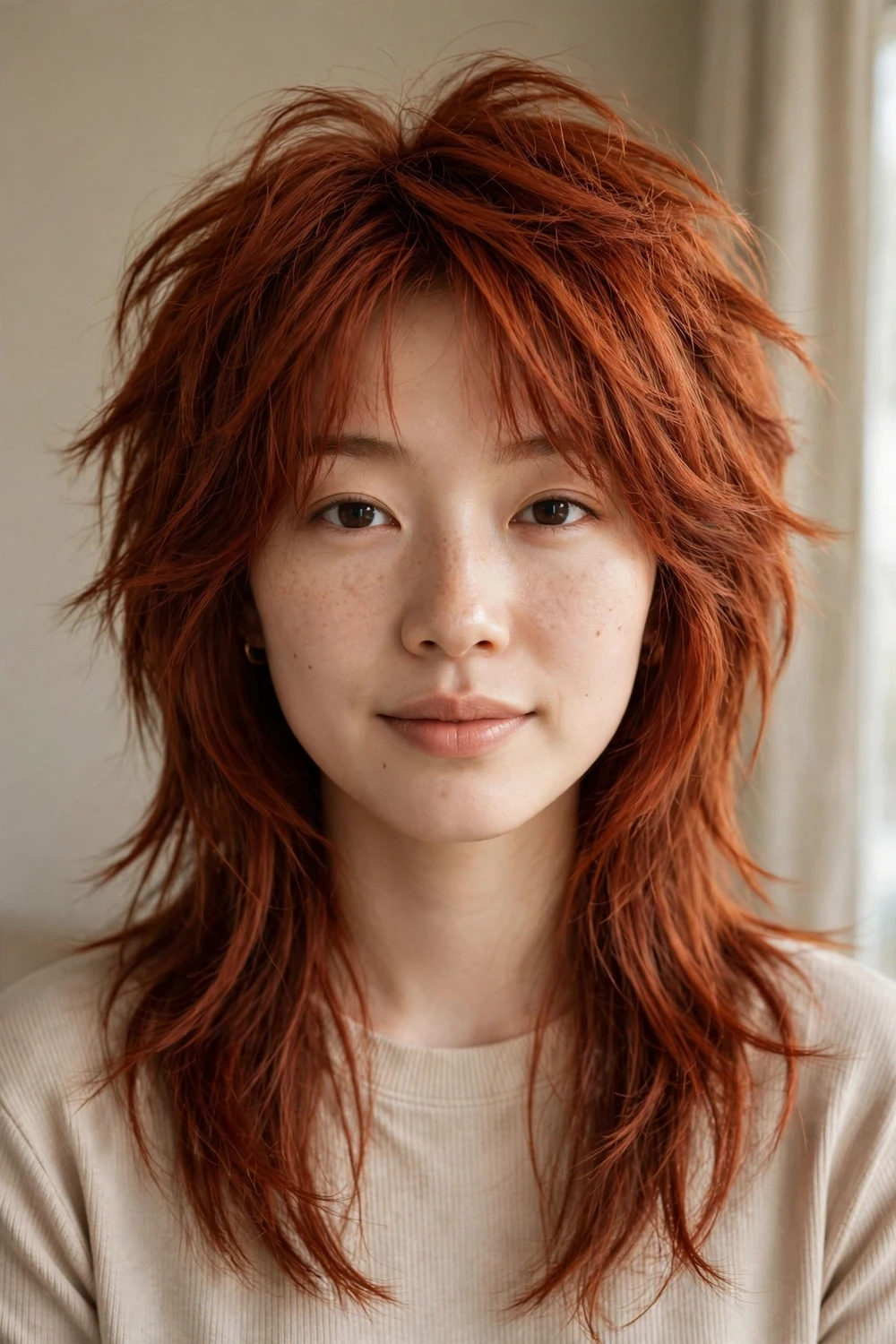
Edgier than a shag, the wolf cut stacks short, choppy volume at the crown over longer tapered ends. In auburn-red, the disconnected layers make the color look almost two-toned as the shorter top pieces catch more light. This is a bold pick for wavy and straight hair; very curly hair can go too wide at the crown. Keep the ends texturized rather than blunt so the taper stays soft. A copper-leaning auburn shade shows the layer separation best.
Try this: Work a small amount of wax through the crown pieces only. It separates the layers and shows off the color variation.
11. Auburn Long Layers
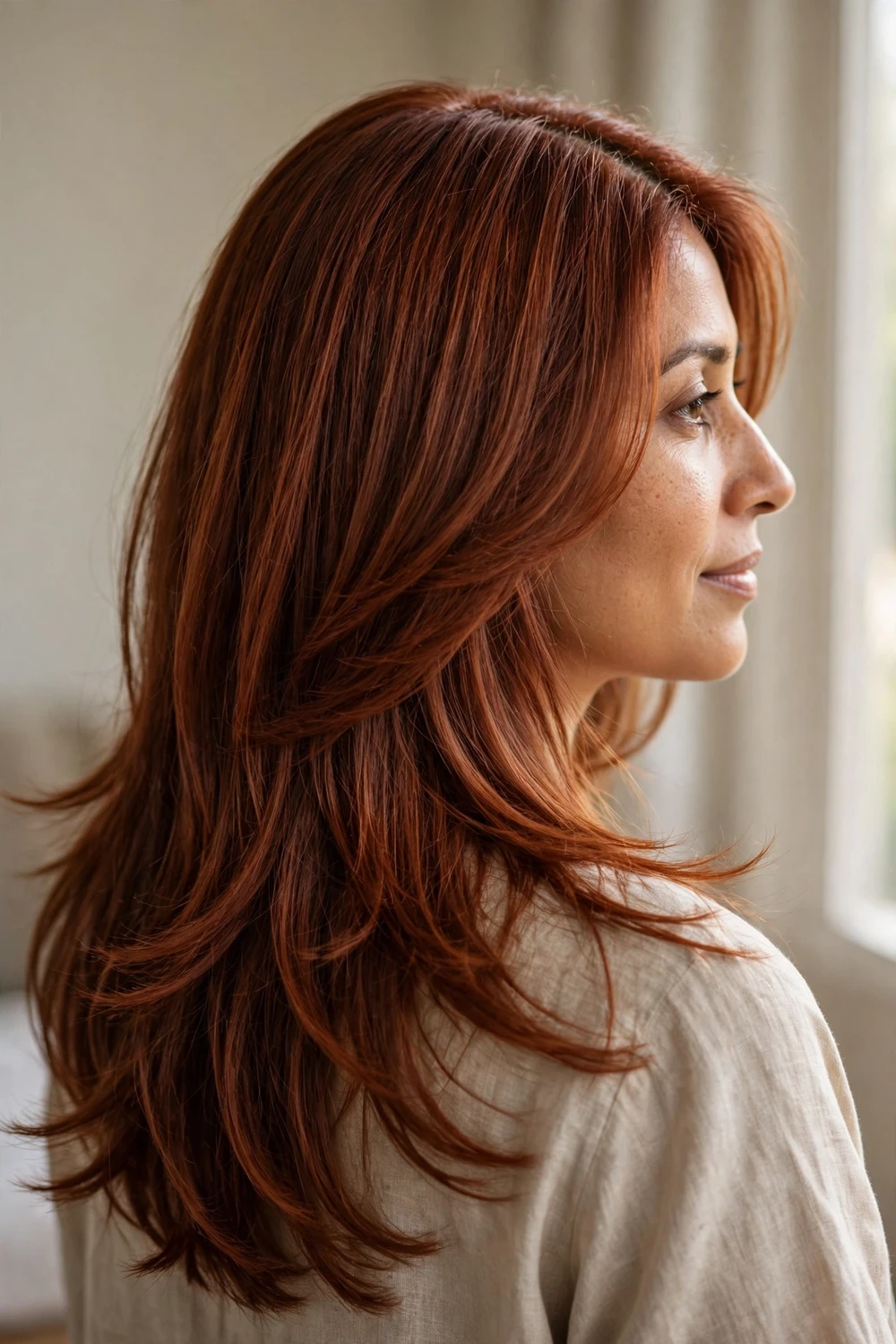
Long layers starting below the chin keep length while giving auburn room to move. The layered ends catch light as you turn your head, which is where the red really shows. Ask for a center part and layers that blend gradually rather than in steps. This is the safest long-hair option for auburn because it suits all hair types and grows out gracefully. A clear gloss every 10 weeks keeps the red from dulling on the ends, which fade first.
Try this: Curl just the bottom 3 inches of each section away from your face. It gives the layers definition without a full styling session.
12. Auburn Beach Waves
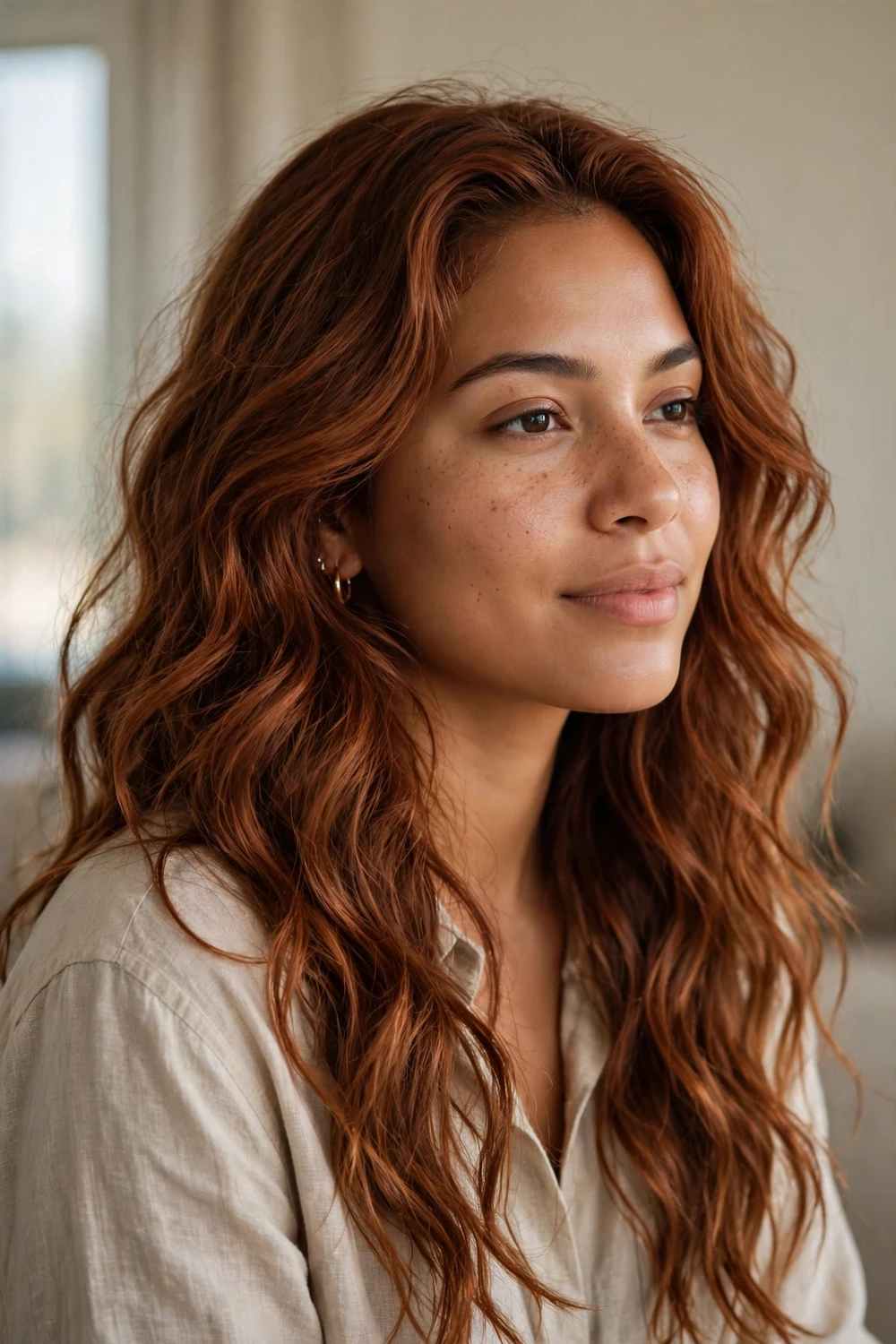
Loose, slightly undone waves are the classic auburn pairing for a reason. The bends in the hair alternate between catching light and falling into shadow, so one auburn shade looks like several. This works on medium to long hair with any natural texture. Use a 1.5-inch iron and leave the last inch of each section straight for the relaxed finish. Sea salt spray adds grip for fine hair that won’t hold a wave.
Try this: Alternate the curl direction of each section. It stops the waves from clumping into one uniform pattern.
13. Auburn Glossy Straight
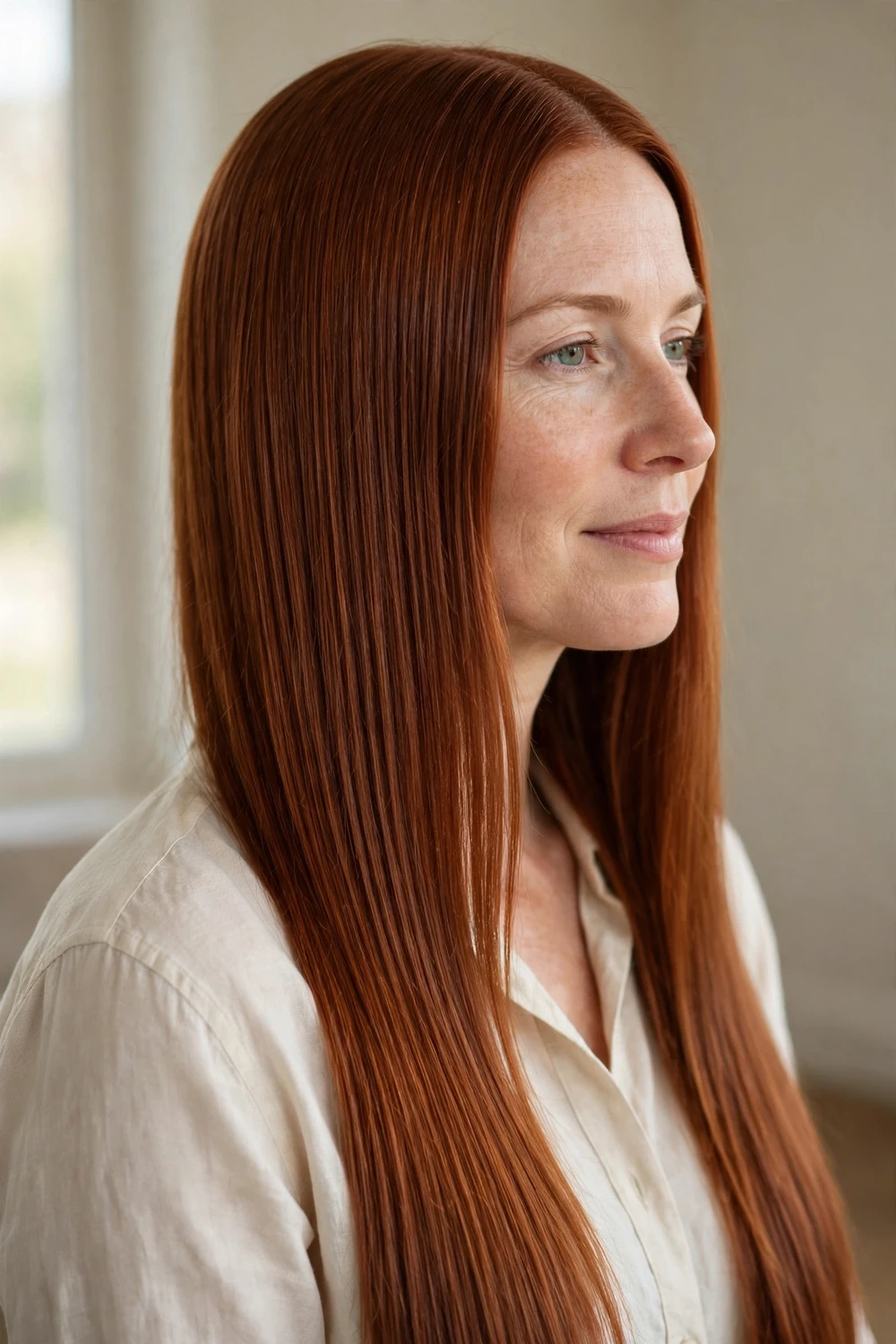
Very long, pin-straight auburn hair is a statement because the unbroken surface acts like glass. Every bit of red reflects at once, so the color looks its most saturated here. This needs commitment: trims every 8 weeks, weekly deep conditioning, and heat protectant without exception. A deep auburn shade holds up best to daily heat styling. If your hair is fine, ask for minimal layering so the ends stay thick.
Try this: Finish with a silicone-free shine oil on the mid-lengths only. Roots stay clean longer and the ends get the gloss.
14. Auburn Center-Parted Long Hair
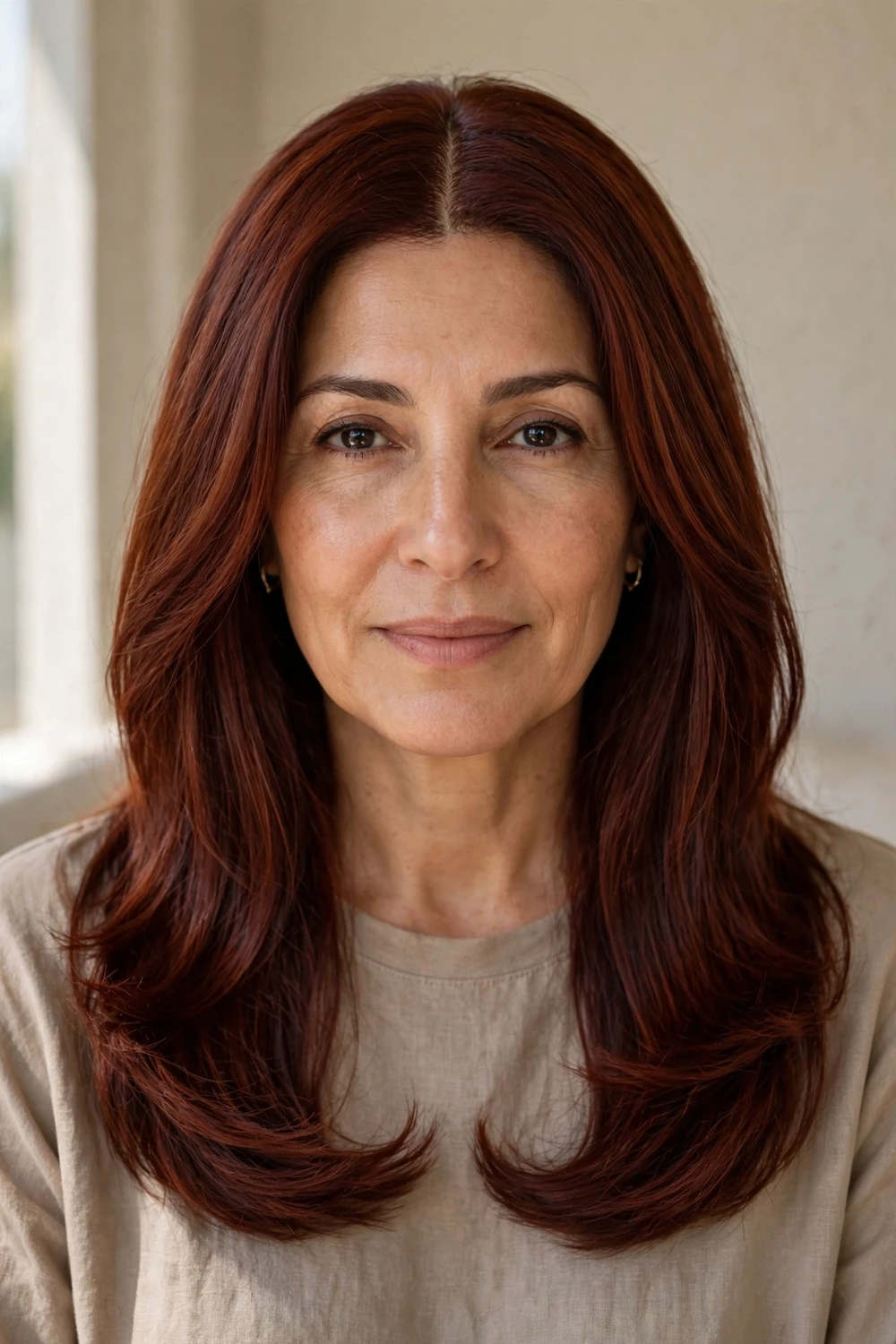
A clean center part with a soft blowout splits auburn evenly across both sides of the face, which balances strong features. The symmetry puts the focus on the color itself rather than the styling. Blow-dry with a large round brush for rounded ends and root lift, then set the part with a cool shot from the dryer. Deep auburn shades suit this best since the polished finish reads as rich rather than flat. Oval and heart faces carry a center part most easily.
Try this: Set the part while hair is still damp, not after drying. It trains the hair and the part stays put all day.
15. Auburn Defined Curls
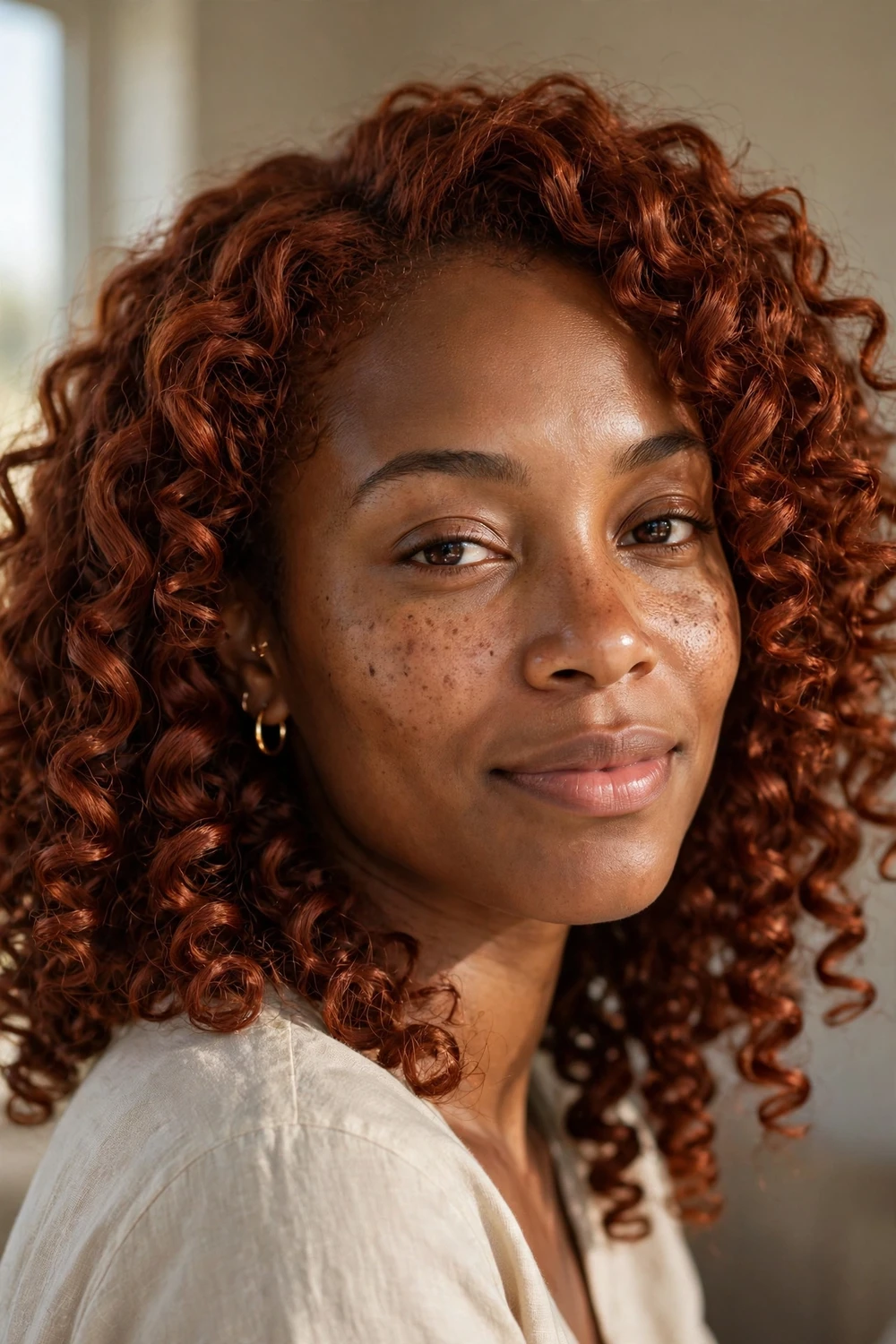
Defined ringlets turn auburn into a 3D effect. Each curl has a highlight side and a shadow side, so the red-brown shade looks richer than it ever could on straight hair. Use the curly girl method basics: sulfate-free cleanser, leave-in conditioner, and gel scrunched into soaking-wet hair. A red-brown auburn around level 5 shows the most dimension on curls. Pineapple your hair at night to protect the curl pattern. Refresh second-day curls with a water and leave-in mix in a spray bottle.
Try this: Diffuse with the dryer on low speed and medium heat. High speed breaks curl clumps apart and causes frizz.
16. Auburn Vintage Waves
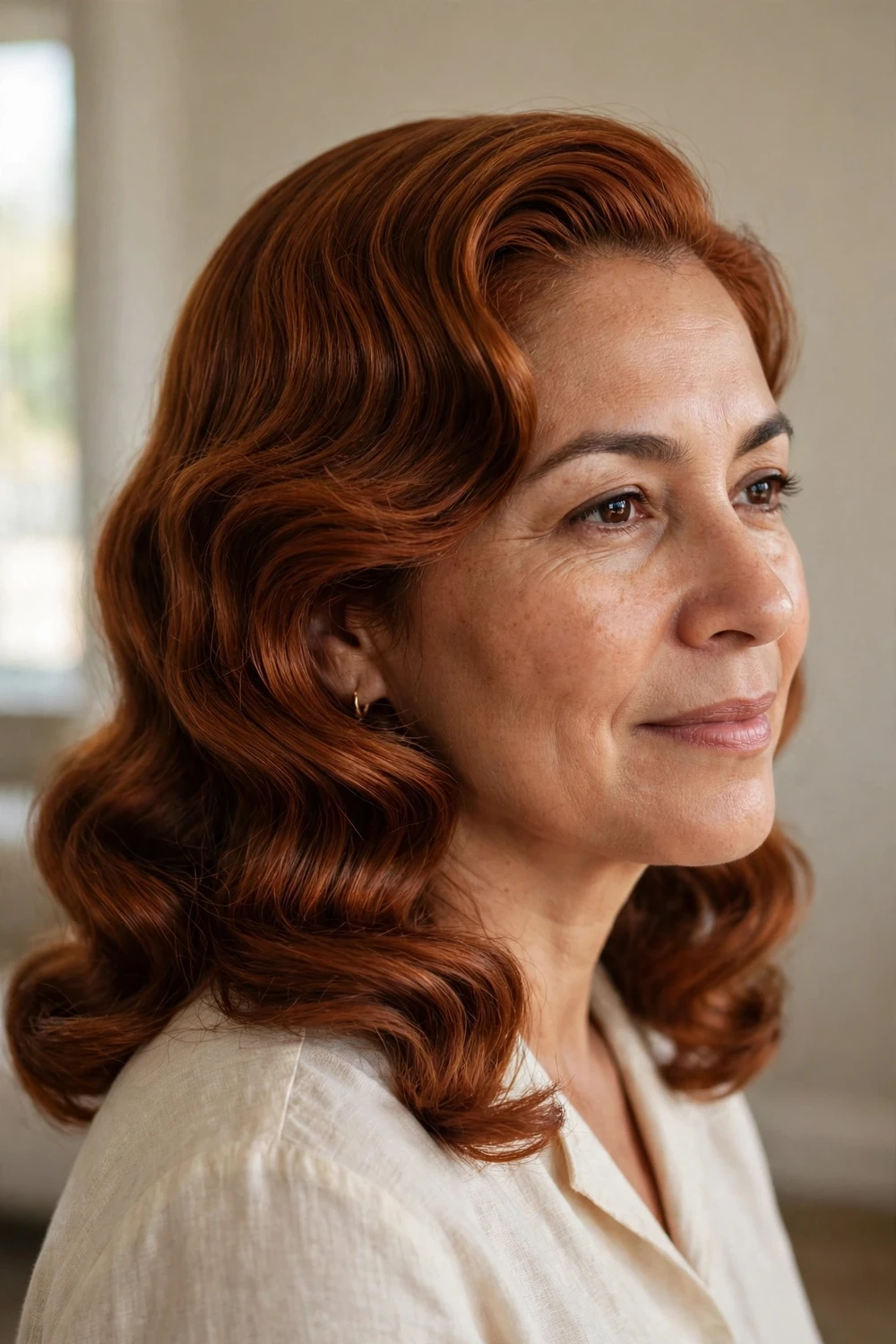
Sculpted S-waves with a deep side part give auburn an old-Hollywood finish. The smooth, set waves reflect light in unbroken ribbons, which makes the red look deep and expensive. Set the waves with a 1-inch iron all in the same direction, clip each wave while it cools, then brush out gently for the smooth finish. This is an event style more than an everyday one, since the set takes 30 to 40 minutes. Medium auburn shades photograph best in this finish.
Try this: Mist each section with flexible-hold hairspray before curling. It helps the set survive humidity for hours.
17. Auburn Side Part with Volume
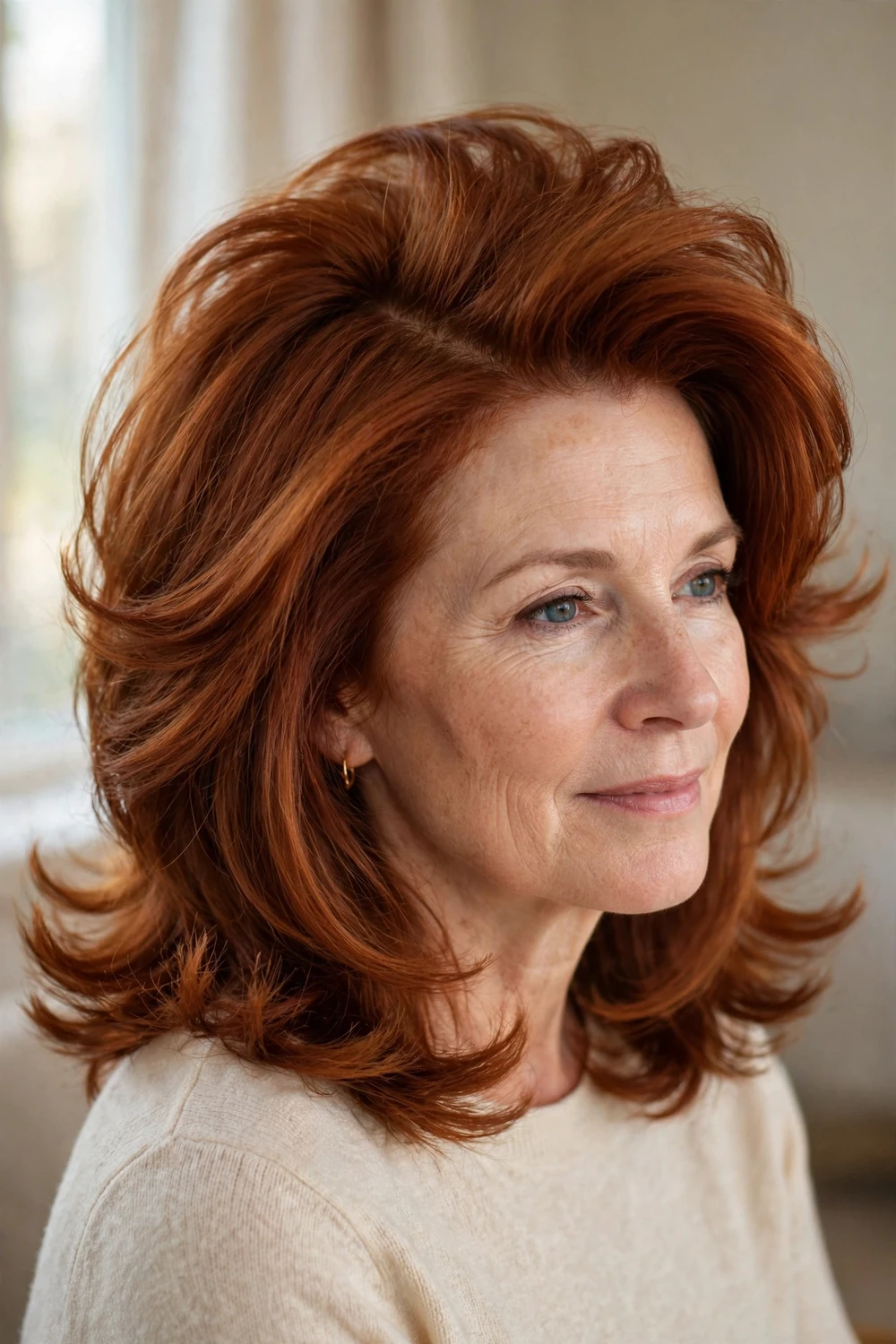
Moving your part to the side is the fastest way to add volume to auburn hair. The deep part lifts the roots on the heavy side and the extra height catches light, brightening the red. Blow-dry the roots upward with a round brush, then flip the part over for the final set. Shoulder-length hair holds this best. A warm copper-auburn shade makes the most of the added light at the crown.
Try this: Sprinkle a little volumizing powder at the roots on the heavy side. It holds the lift for a full day.
18. Auburn Curtain Bangs
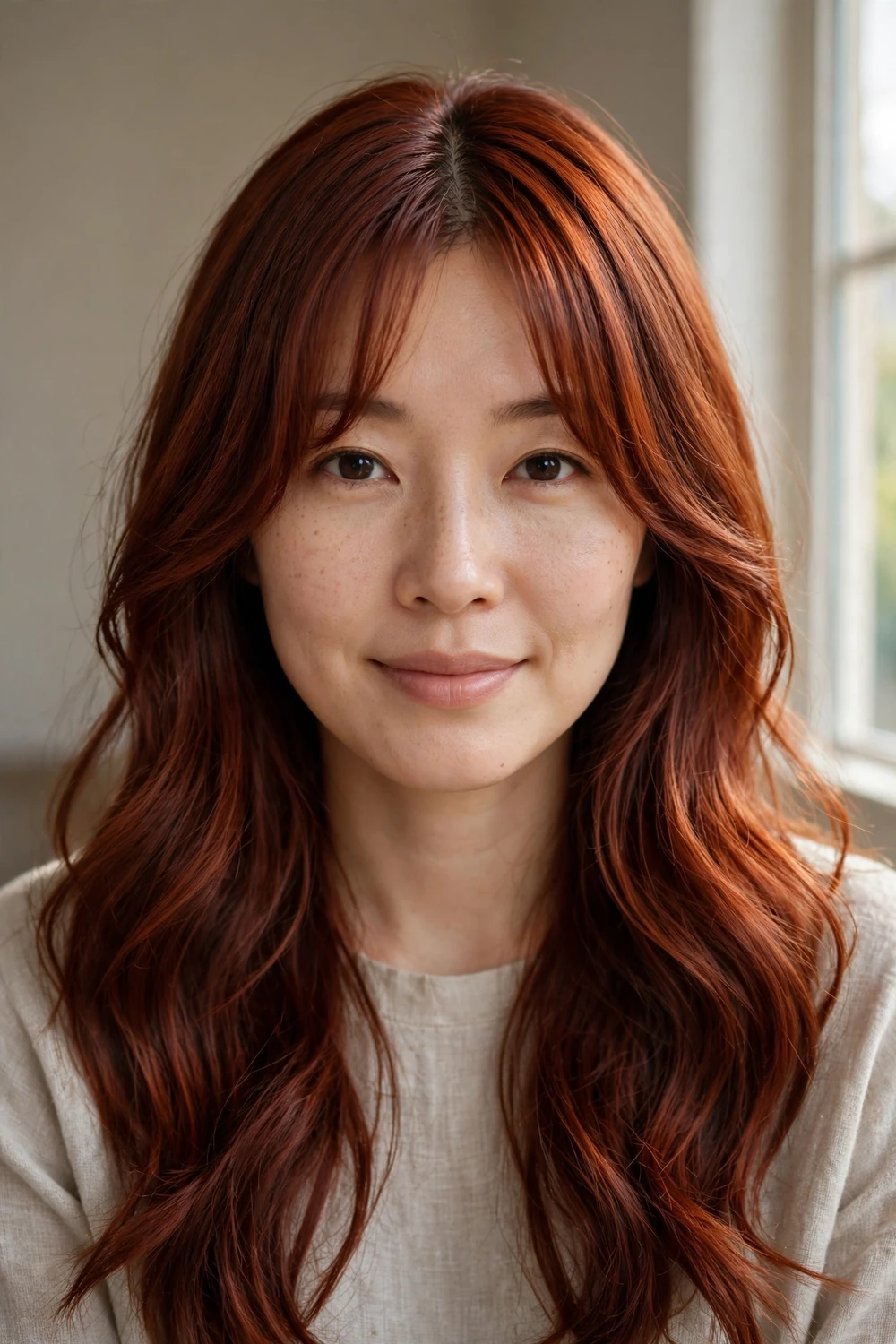
Curtain bangs part in the middle and sweep to each side, framing the forehead and cheekbones in auburn. They soften a strong jawline and grow out more gracefully than straight bangs, blending into layers after about 6 weeks. Keep them at cheekbone length and style with a round brush, curving each side away from the face. Long and medium hair both work. The bangs put warm color near your eyes, which brightens most complexions.
Try this: Twist each bang section away from your face while blow-drying. The twist trains the sweep direction.
19. Auburn Side-Swept Bangs

Long bangs swept diagonally across the forehead add asymmetry to any auburn cut. They cover a high forehead, soften a square hairline, and give bobs and lobs instant polish. Ask for bangs that start at the cheekbone on the short side and end near the jaw on the long side. Blow-dry them in the sweep direction with a paddle brush. This works on straight and wavy hair; very curly hair needs the bangs cut longer to account for shrinkage.
Try this: Pin the bangs to the side with a flat clip for 10 minutes after styling. They’ll hold the sweep without extra product.
20. Auburn Low Chignon
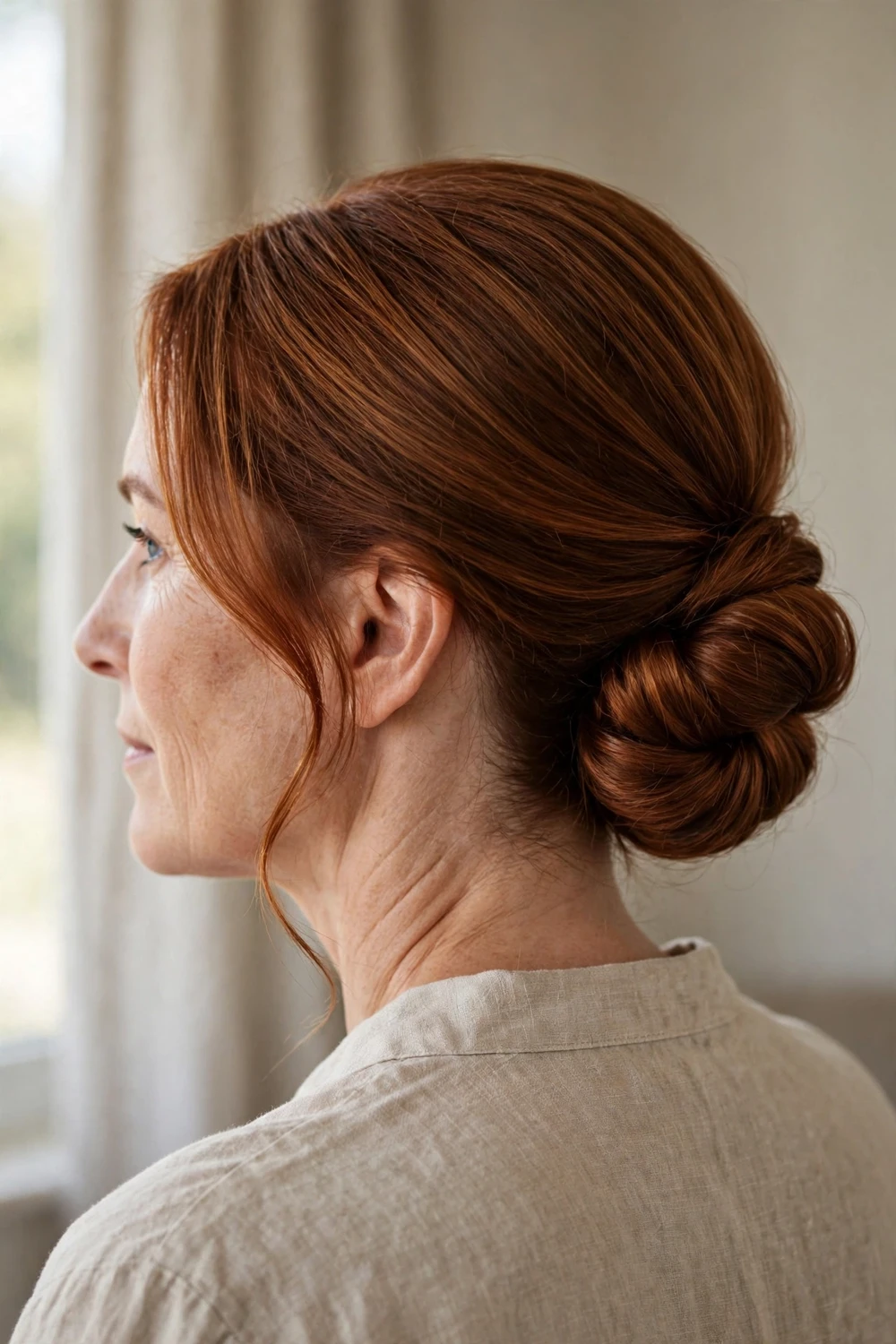
A low chignon at the nape concentrates all your auburn into one polished shape. The wrapped bun shows the color’s depth up close, which is why it suits weddings and formal events. Gather hair into a low ponytail, twist it loosely, wrap it around the base, and pin in a crossed pattern. Leave two soft face-framing strands out. Medium to long hair works best. Set with flexible-hold hairspray so the bun moves naturally instead of looking stiff.
Try this: Tease the crown lightly before gathering. The extra height keeps the chignon from looking flat against the head.
21. Auburn Messy Top Bun
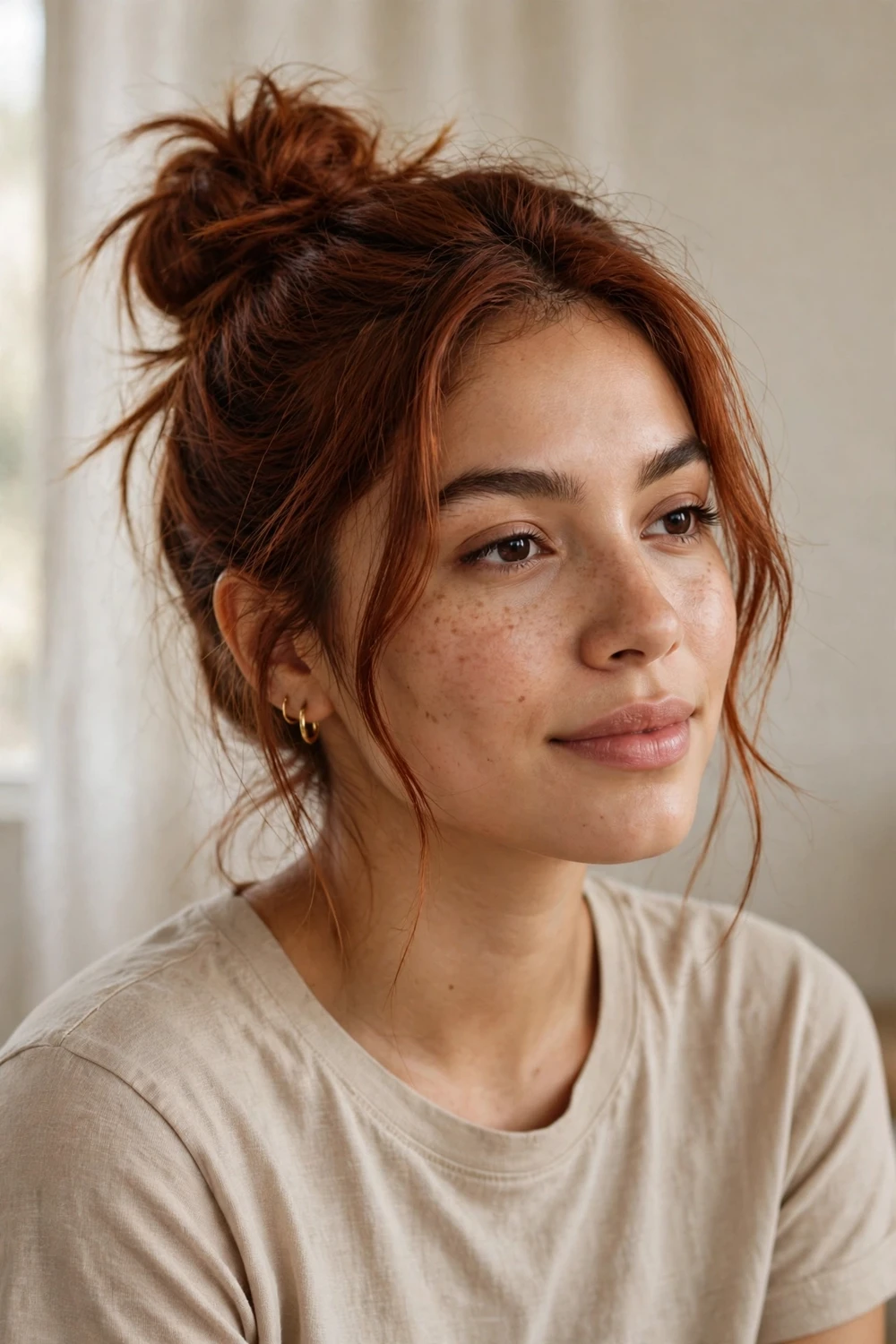
For everyday wear, a messy top bun keeps auburn out of your face while still showing the color. Pull hair into a high ponytail, twist it loosely, wrap it into a bun, and pin the ends wherever they land. Pull out a few wisps around the face and nape for softness. Second-day hair holds this better than freshly washed hair because it has more grip. A dry shampoo at the roots before styling adds texture and extends the style.
Try this: Wrap a small section of hair around the elastic to hide it, then pin underneath. It takes 30 seconds and looks far more polished.
22. Auburn French Twist
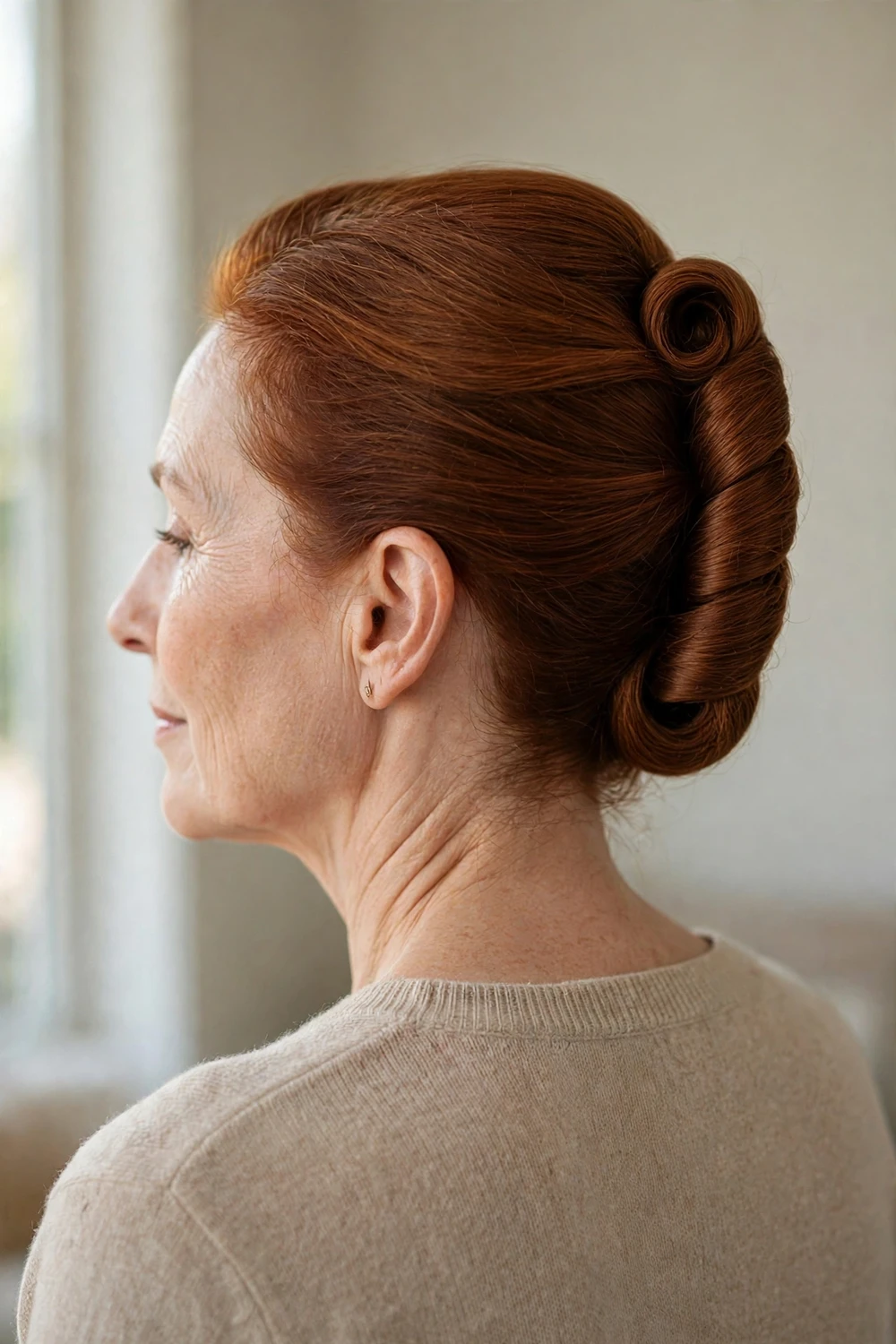
The French twist rolls auburn vertically along the back of the head, which lines up the red tones in one sleek column. Smooth all hair to one side, roll it upward against the head, tuck the ends in, and secure with long pins. This suits medium to long straight hair and works for offices and formal events alike. A deep auburn shade looks especially refined in this shape. Practice twice before wearing it out; the roll technique takes a few tries.
Try this: Insert pins in an X pattern instead of parallel. Crossed pins grip far better and the twist won’t slide.
23. Auburn Half-Up Style
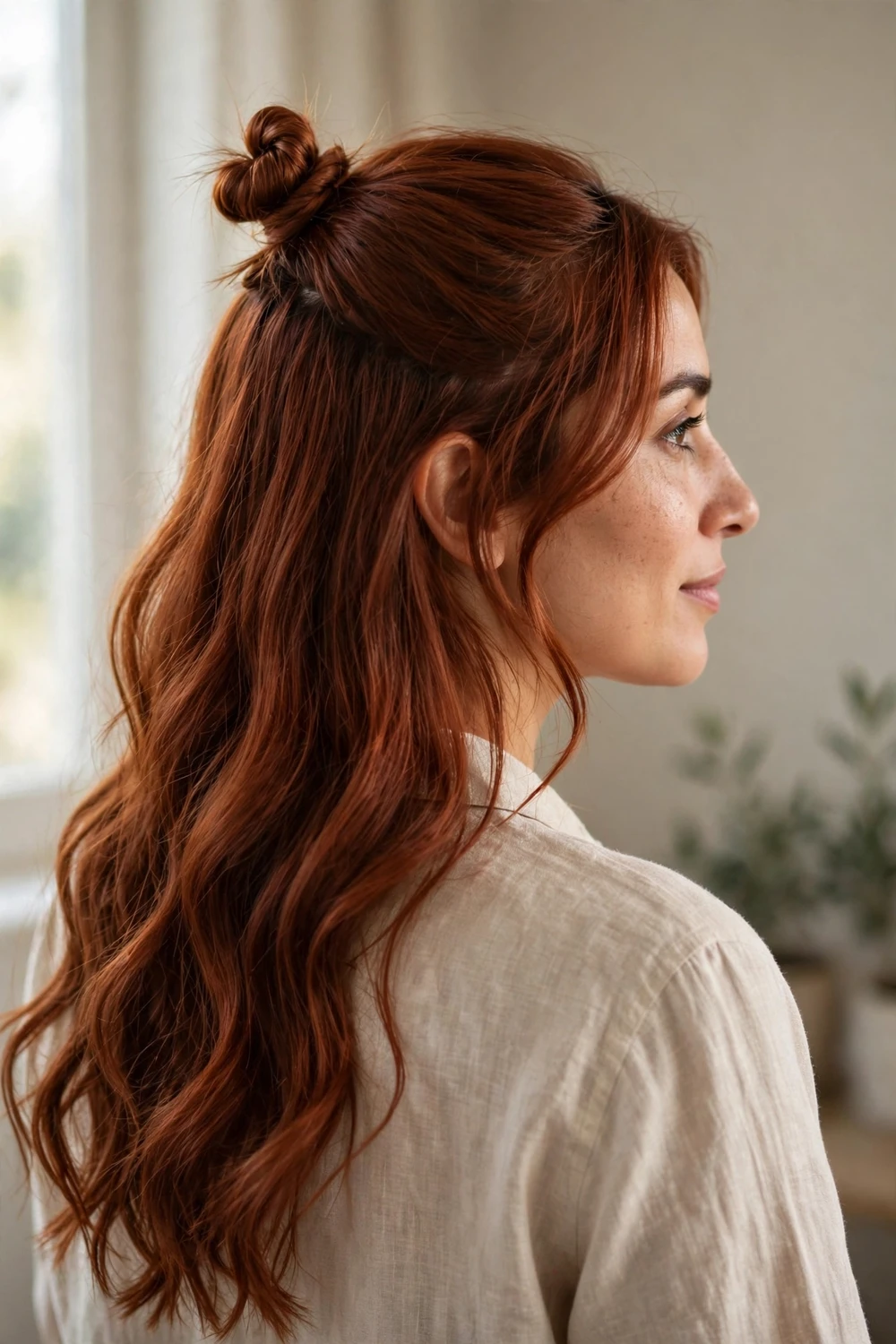
Half-up styles give you the best of both: the top section shows off auburn’s shine pulled back from your face while the rest flows in waves. Gather the top third of your hair, twist it once, and pin it at the crown or tie it into a small knot. This works on medium to long hair and suits every face shape. Add a small braid into the gathered section for extra interest. The style takes under 10 minutes and holds through a full workday.
Try this: Tease the crown section before pinning it back. The lift stops the half-up from sitting flat on your head.
24. Auburn High Ponytail
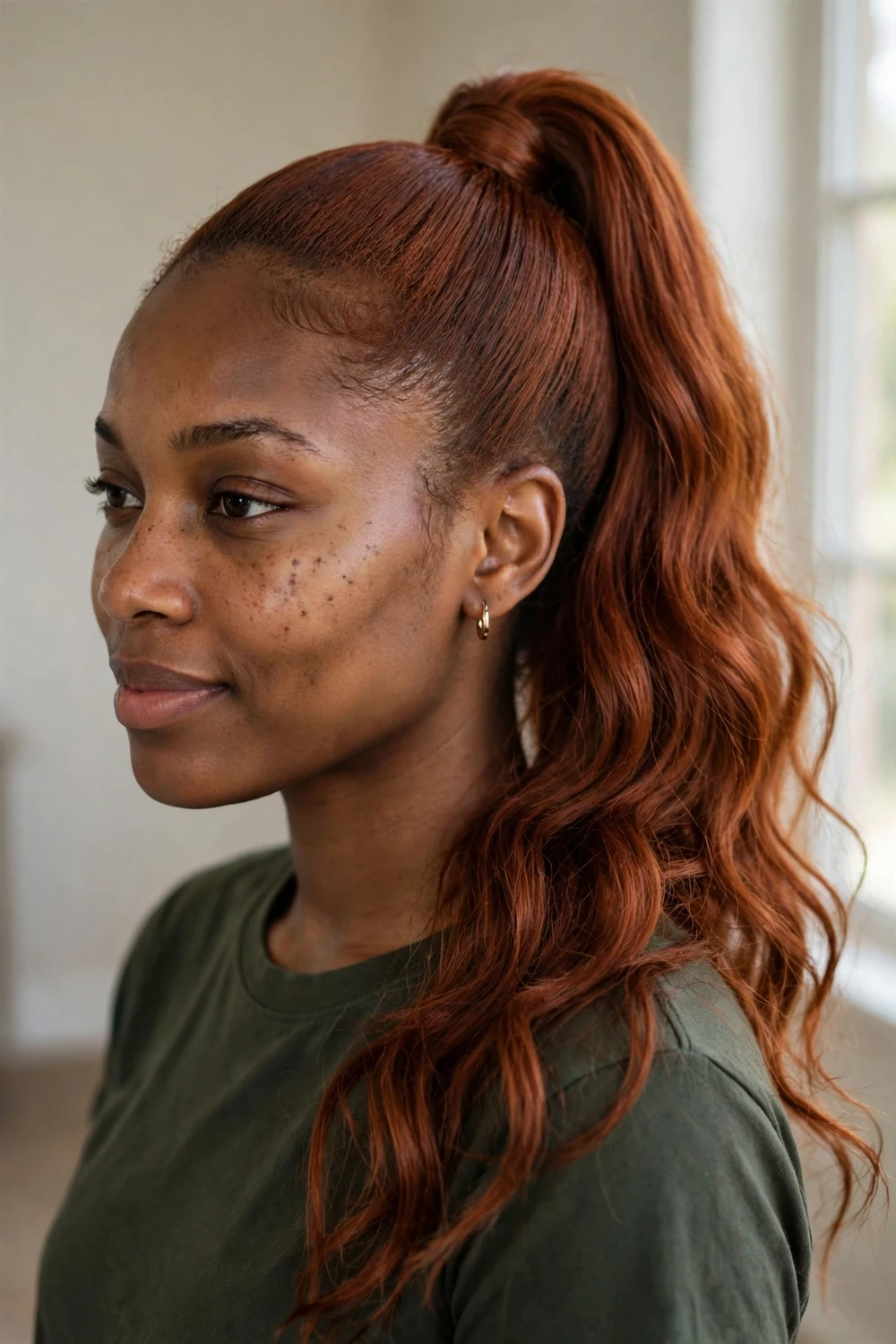
A high ponytail at the crown pulls auburn taut at the roots, which makes the color look brighter and more saturated. Smooth the top with a boar-bristle brush and a little gel for a sleek finish, then let the tail fall in loose waves for contrast. This lifts the face visually and suits long hair best. Wrap a strand of hair around the base to hide the elastic. Medium auburn shades with copper tones shine most in this style.
Try this: Tilt your head back while securing the ponytail. The angle gives you a tighter, higher placement.
25. Auburn Braided Crown
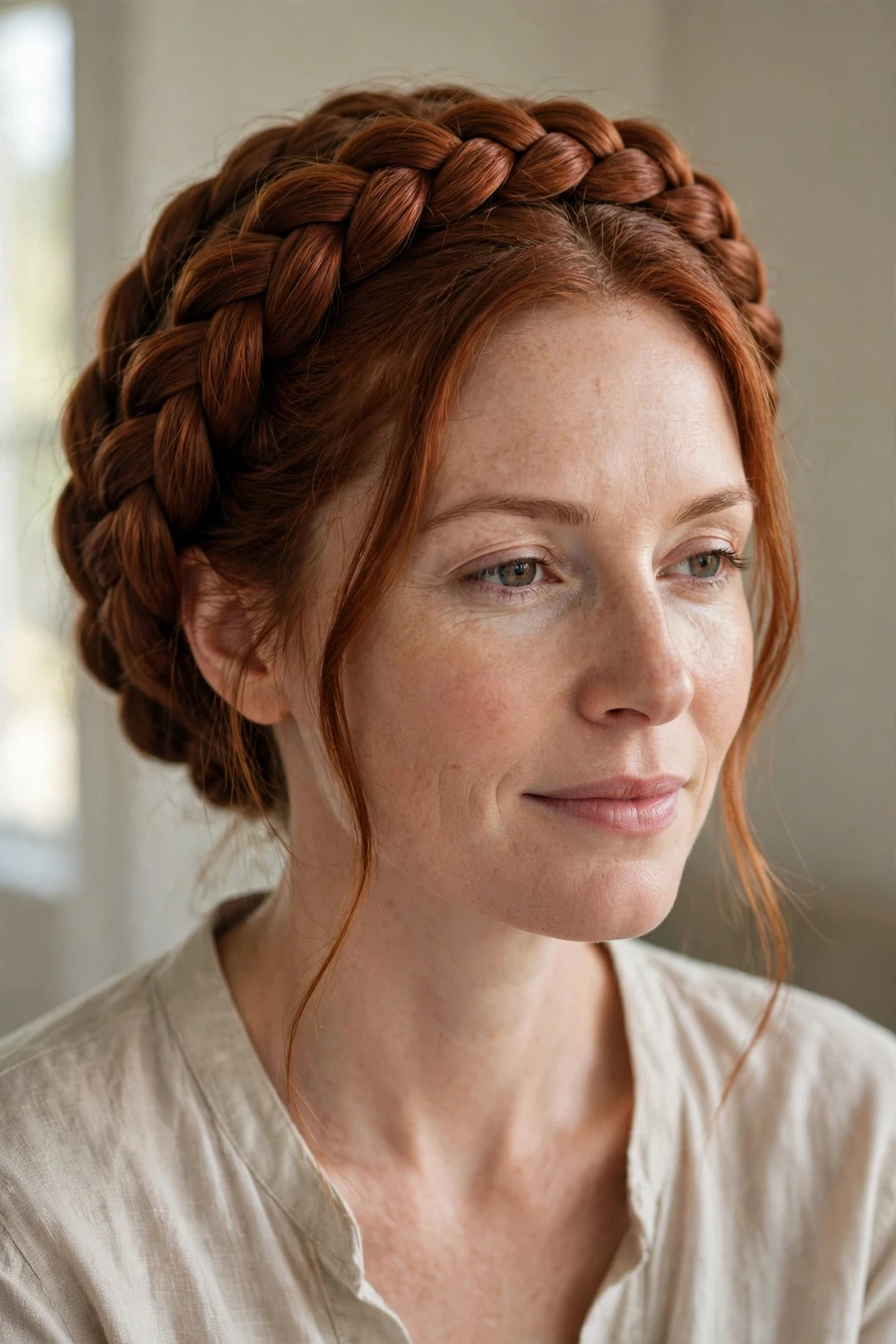
A dutch braid wrapped around the head like a halo turns auburn into a woven pattern. The braid’s raised sections catch light while the recessed parts go darker, so the red looks incredibly dimensional. Braid from one ear around to the other, pancake the braid by gently pulling the edges wider, then pin the tail underneath. Medium to long hair works; extensions can add thickness if needed. This suits outdoor events since it keeps hair fully secured.
Try this: Braid on second-day hair with texturizing spray. Clean, slippery hair won’t grip and the braid loosens.
26. Auburn Fishtail Braid
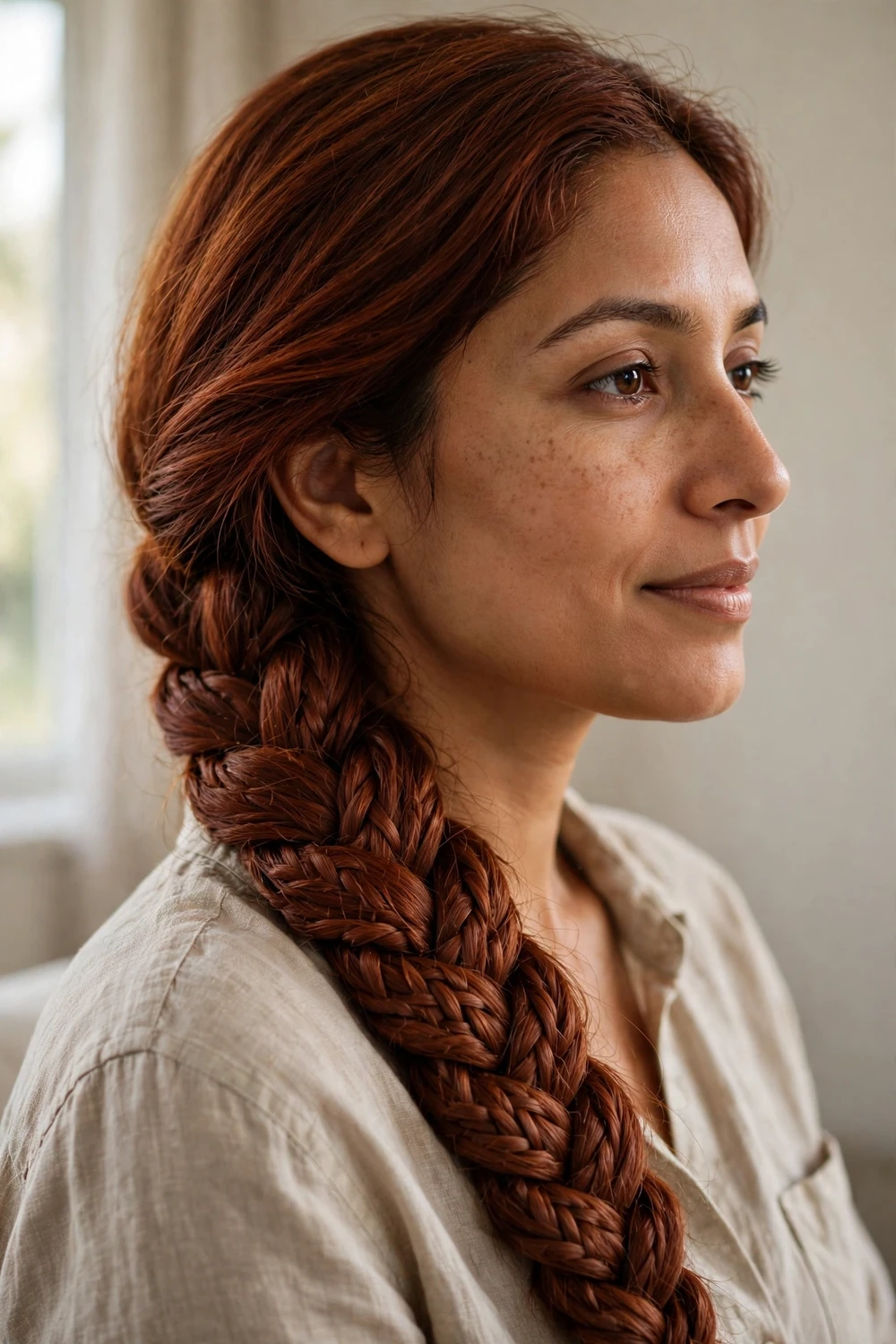
The fishtail’s fine woven pattern shows auburn’s color shifts better than a regular three-strand braid. Each small crossover alternates light and dark, which makes the red look almost iridescent. Divide hair into two sections, cross small pieces from the outside of each section to the inside of the other, and work down to the ends. Drape it over one shoulder for the full effect. Long hair is needed for a substantial fishtail; shoulder-length hair makes a thinner version.
Try this: Pancake the braid by tugging each woven edge outward. It doubles the braid’s width and the color shows more.
27. Auburn Balayage
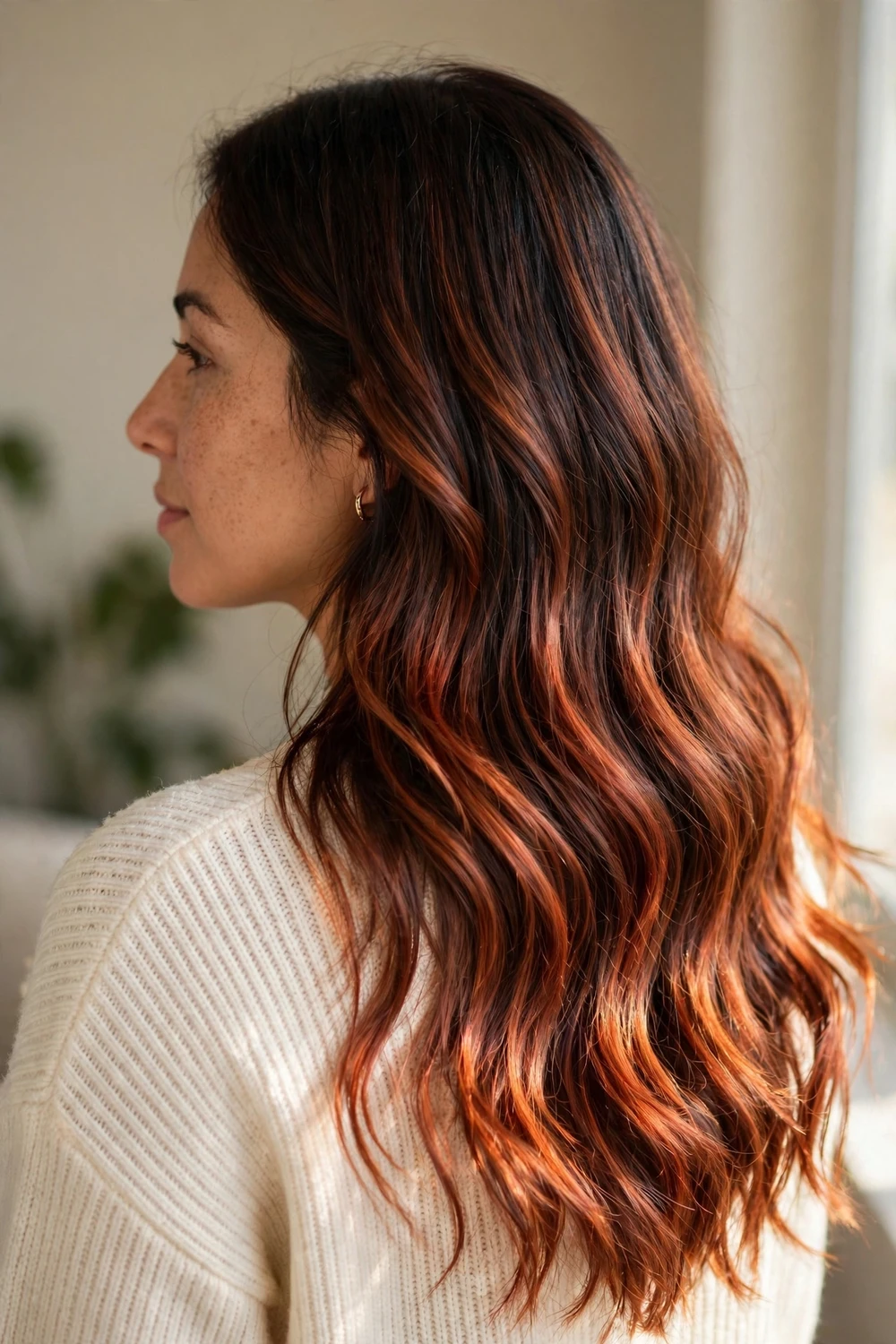
Hand-painted auburn balayage lets brunettes try the shade without a full commitment. The colorist paints auburn from the mid-lengths down, keeping your natural root color for easy grow-out. The painted sections blend softly instead of showing a harsh line. This suits anyone growing out color or trying auburn for the first time. Touch-ups every 12 weeks are enough since the root stays natural. Ask for a gloss at each visit to keep the painted red bright.
Try this: Request the balayage slightly heavier around your face. The front pieces frame your features in the warmest tone.
28. Auburn Ombre Melt
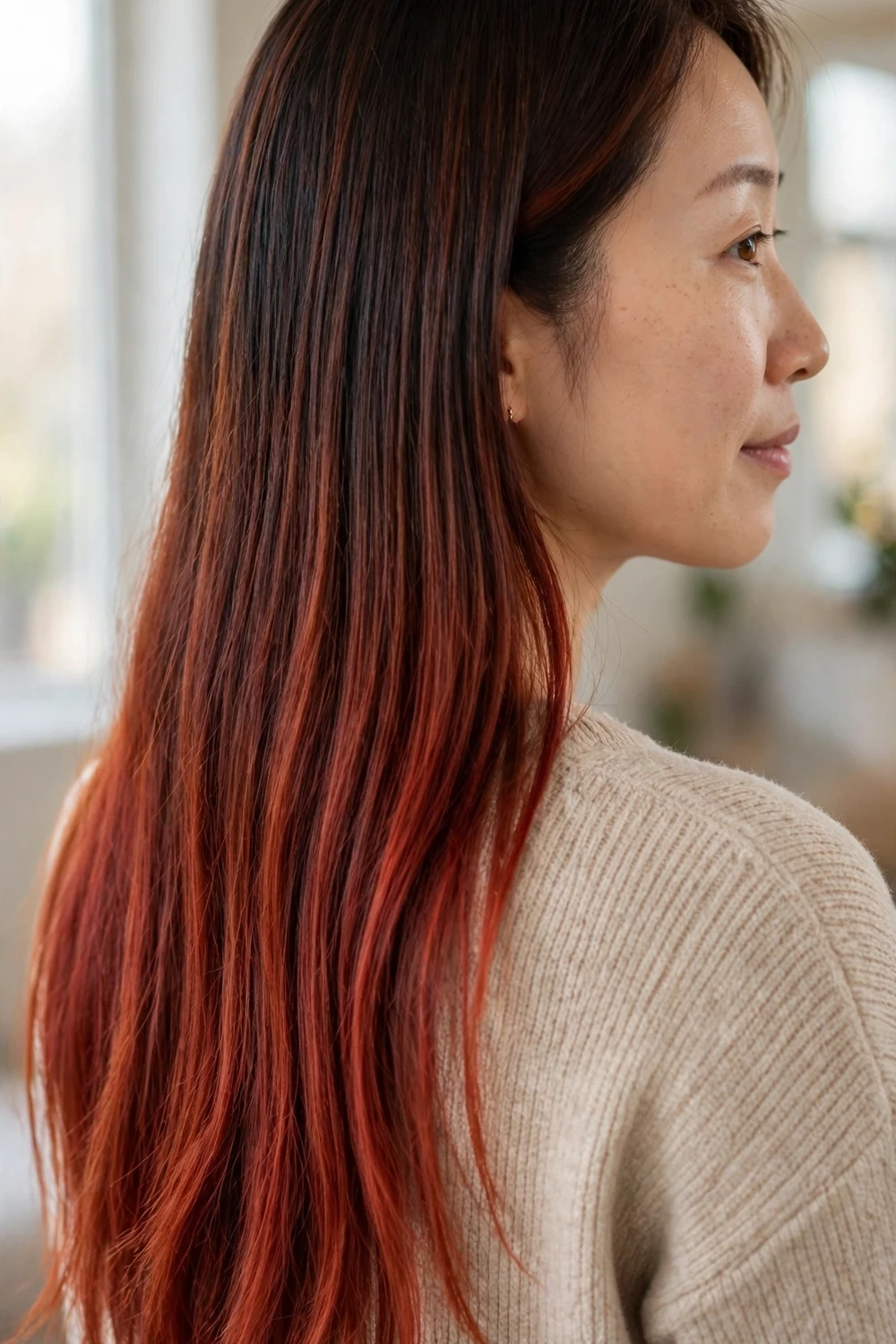
An ombre melt fades deep espresso roots gradually into vivid auburn ends with no visible line between them. The gradient makes hair look thicker at the ends because the bright red draws the eye down. This suits long straight hair best, where the melt shows cleanly. The dark root means 8 to 10 weeks between touch-ups. Use a color-depositing conditioner in auburn once a week to keep the ends from washing out to orange.
Try this: Wear it straight the first week after coloring. The smooth surface shows the gradient at its cleanest.
29. Auburn Face-Framing Highlights
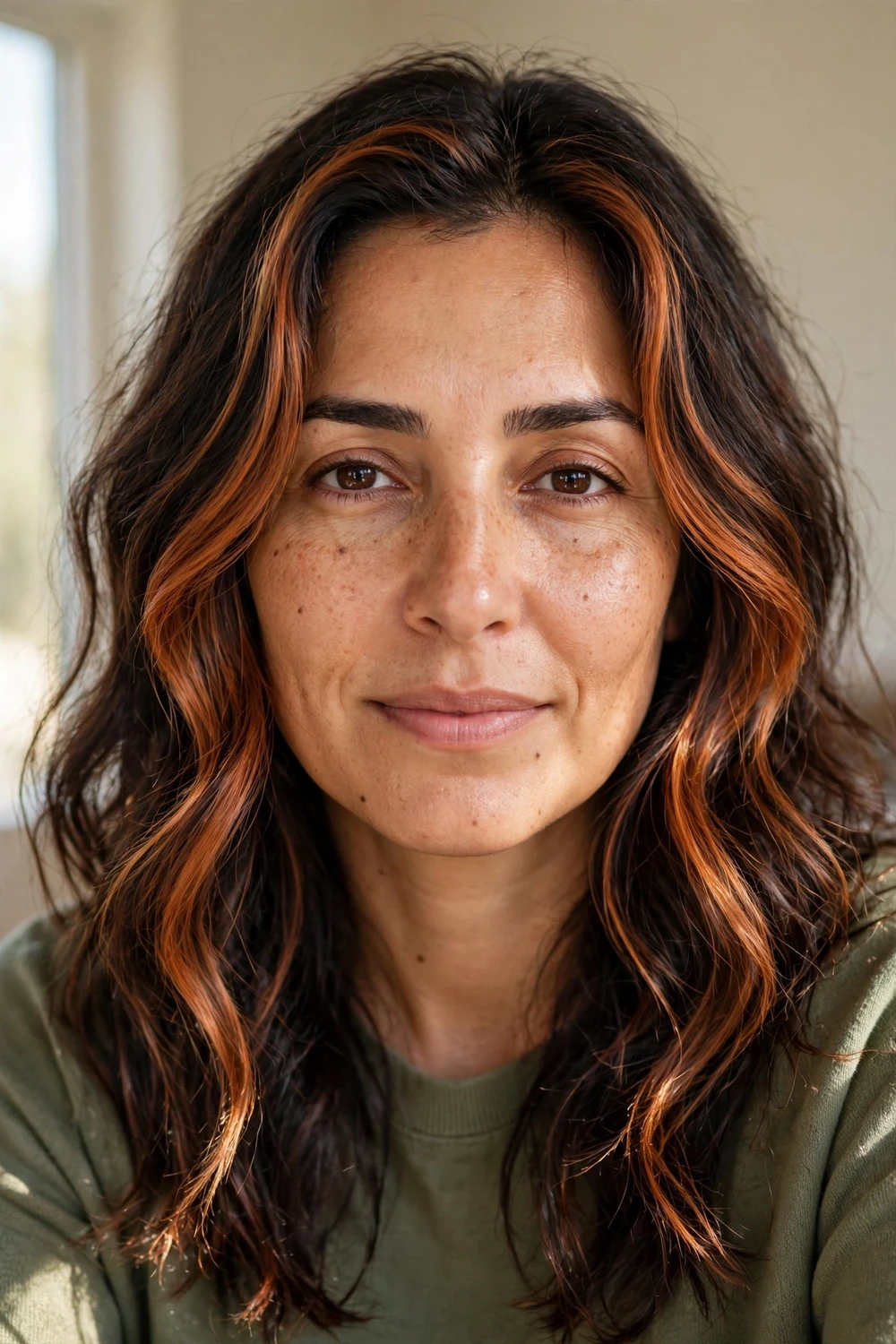
Bright copper-auburn pieces along the front hairline warm up your whole face without coloring all your hair. The lighter front sections brighten your complexion and draw attention to your eyes. This works on any base from dark brown to medium blonde and suits every hair length. The grow-out is soft because only the front is lightened. Refresh the front pieces every 8 weeks; the rest of your hair can go longer between visits.
Try this: Curl the front pieces away from your face after styling. The outward flip shows the highlight placement best.
30. Auburn Shadow Root
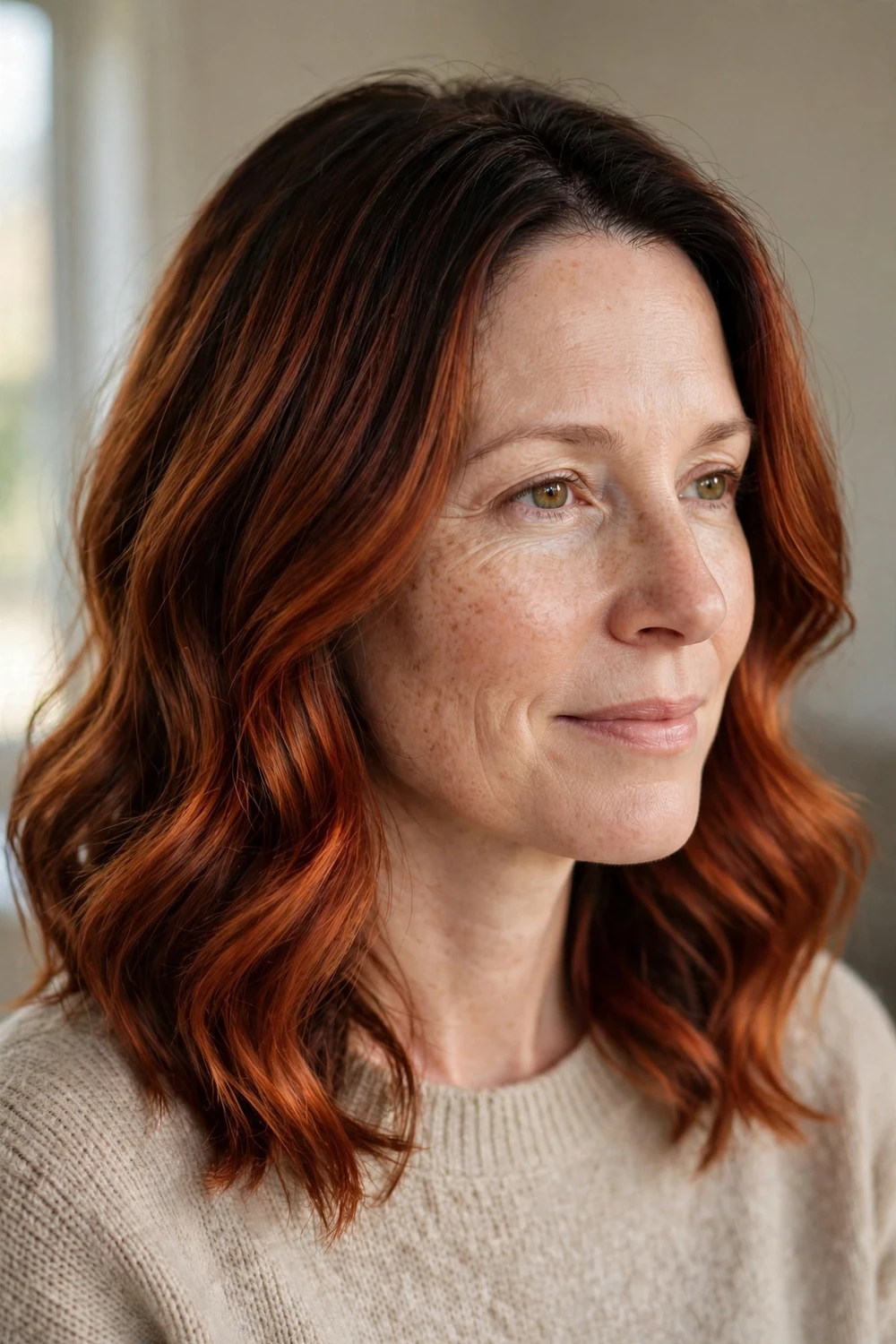
A shadow root keeps your natural dark root and blends it softly into glowing auburn lengths. The dark-to-red transition adds depth at the crown, which makes fine hair look thicker. This is the lowest-maintenance auburn option: the root is already your color, so regrowth blends invisibly for 10 to 12 weeks. Medium to long hair shows the blend best. Ask your colorist for a root smudge rather than a hard line.
Try this: Style with loose waves to blur the transition zone further. Straight styling can make the blend line more visible.
Auburn Hairstyles Comparison at a Glance
| Style | Best Occasion | Difficulty | Hold Time |
|---|---|---|---|
| Auburn Pixie Cut | Everyday, office | Easy | All day |
| Auburn Textured Crop | Everyday, casual | Easy | All day |
| Auburn Classic Bob | Office, dinner | Easy | All day |
| Auburn Angled Bob | Office, events | Medium | All day |
| Auburn Bob with Bangs | Everyday, dates | Easy | All day |
| Auburn Wavy Lob | Everyday, weekends | Easy | 8-10 hours |
| Auburn Sleek Lob | Office, formal | Medium | All day |
| Auburn Shag Cut | Casual, concerts | Easy | All day |
| Auburn Butterfly Cut | Everyday, dates | Medium | All day |
| Auburn Wolf Cut | Casual, creative | Medium | All day |
| Auburn Long Layers | Everyday, office | Easy | All day |
| Auburn Beach Waves | Weekends, vacations | Easy | 6-8 hours |
| Auburn Glossy Straight | Formal, photos | Medium | All day |
| Auburn Center-Parted Long Hair | Office, events | Medium | All day |
| Auburn Defined Curls | Everyday, events | Medium | All day |
| Auburn Vintage Waves | Weddings, galas | Hard | 6-8 hours |
| Auburn Side Part with Volume | Office, dinner | Easy | All day |
| Auburn Curtain Bangs | Everyday, casual | Easy | All day |
| Auburn Side-Swept Bangs | Office, dates | Easy | All day |
| Auburn Low Chignon | Weddings, formal | Medium | 8-10 hours |
| Auburn Messy Top Bun | Everyday, gym | Easy | 6-8 hours |
| Auburn French Twist | Formal, office | Hard | 8-10 hours |
| Auburn Half-Up Style | Everyday, dates | Easy | 8-10 hours |
| Auburn High Ponytail | Casual, workouts | Easy | All day |
| Auburn Braided Crown | Weddings, festivals | Hard | 8-10 hours |
| Auburn Fishtail Braid | Weekends, events | Medium | 8-10 hours |
| Auburn Balayage | Everyday, low upkeep | Easy | 10-12 weeks |
| Auburn Ombre Melt | Everyday, statement | Easy | 8-10 weeks |
| Auburn Face-Framing Highlights | Everyday, refresh | Easy | 8 weeks |
| Auburn Shadow Root | Everyday, low upkeep | Easy | 10-12 weeks |
How to Choose the Right Auburn Hairstyle for You
Start with your hair type. Fine hair looks fuller in blunt cuts like the classic bob or with a shadow root that adds depth at the crown. Thick hair handles layers well, so shags, butterfly cuts, and long layers keep the weight manageable. Curly hair shines in defined ringlets or a textured crop that works with the curl pattern instead of against it.
Then think about upkeep honestly. A pixie needs a trim every 4 to 5 weeks, while balayage and shadow-root styles go 10 to 12 weeks between visits. If you wash your hair daily, know that red fades faster with frequent washing; dry shampoo on non-wash days protects the color. Cooler water and color-safe shampoo slow fading for every auburn shade.
Match the shade depth to your skin. Warm undertones pair with copper-leaning auburn, cool undertones with deeper wine-leaning auburn, and neutral skin can wear either. When in doubt, ask your colorist for a strand test behind your ear before committing to a full application.
Mistakes to Avoid
The biggest mistake with auburn is washing it like brown hair. Hot water and clarifying shampoo strip red pigment fast, so switch to lukewarm water and a sulfate-free formula made for color-treated hair. Skipping heat protectant is the second mistake; flat irons and curling wands fade auburn noticeably within two weeks of daily use.
Don’t choose a shade from a box photo alone. Box images show the result on pre-lightened hair, so the same dye on dark hair comes out much deeper and less red. A strand test tells you the real result. Finally, avoid overlapping permanent color on already-colored ends at touch-ups; apply permanent dye to regrowth only and refresh the lengths with a gloss or color-depositing conditioner.
If you love how red tones brighten brown hair, these copper hair color ideas show brighter orange-red options in the same family.
For a deeper take on warm brunette shades, these copper brown hair color ideas blend brown depth with copper glow.
Readers who want the full red-brown spectrum will find more options in these red brown hair color ideas, from auburn to mahogany.
And if you want auburn shades explored purely as color, this guide to auburn copper hair for women covers 30 copper-leaning variations.
Frequently Asked Questions
Which auburn hairstyle suits my face shape?
Oval faces suit nearly every cut on this list. Round faces look best with longer front pieces, like an angled bob or long layers, which draw the eye downward. Square faces soften with curtain bangs or face-framing layers. Heart faces balance well with a lob or side-swept bangs that add width at the jaw. The color itself flatters all face shapes; it is the cut lines that do the shaping work.
Does auburn hair need more upkeep than brown hair?
Yes, noticeably more. Red dye molecules are smaller than brown ones, so they wash out faster. Expect a gloss or toner refresh every 6 to 8 weeks for all-over auburn, and use color-safe shampoo with lukewarm water. Balayage, ombre, and shadow-root versions need less upkeep because the regrowth blends in, stretching visits to 10 to 12 weeks.
Can I get auburn hair without bleaching first?
On light to medium brown hair, yes. Auburn dye deposits red over your natural base without bleach, though the result runs deeper and less vivid than the box photo. On dark brown or black hair, you will need a lift first or the red barely shows. A strand test behind your ear shows the true result before you commit to a full head.
How do I keep auburn hair from fading?
Wash less often, use cool to lukewarm water, and choose a sulfate-free shampoo made for color-treated hair. Apply heat protectant before every hot tool, since heat fades red fast. A color-depositing conditioner in an auburn shade once a week tops up the red between salon visits. Limit clarifying shampoos, which strip red pigment aggressively.
Which skin tones suit auburn best?
Auburn suits most skin tones because it spans warm to cool. Warm undertones pair with copper-leaning auburn shades. Cool undertones pair with deeper auburn that leans toward wine or mahogany. Neutral undertones can wear either. If you are unsure, hold fabric swatches in copper and burgundy tones near your face in daylight and see which makes your skin look clearer.
Final Thoughts
Auburn rewards the right cut. Pick a style that matches your hair type and the upkeep you will actually do, keep the red fresh with color-safe habits, and the shade does the rest. After years of comparing cuts side by side, the ones that show texture, whether a shag, waves, or a braid, always make auburn look its richest.

