


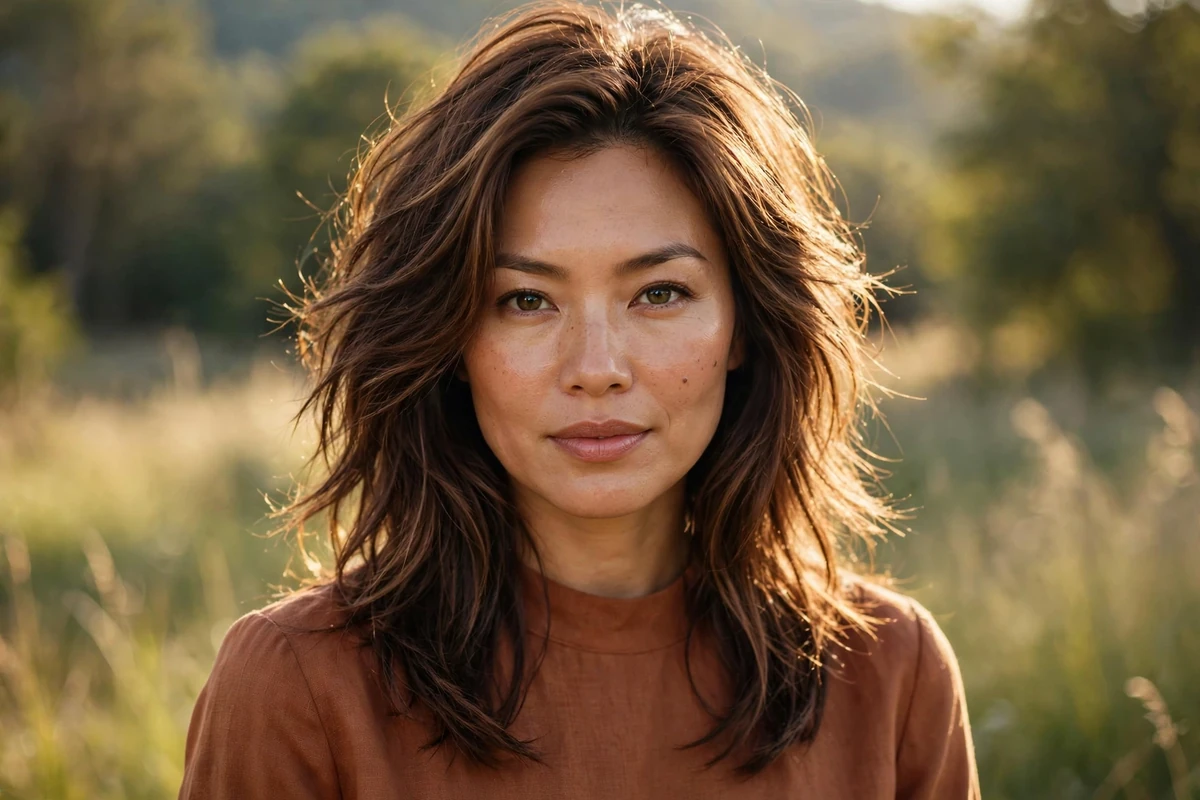
A long shag cut keeps your length while adding the layers, texture, and movement that make hair look alive. Unlike a classic one-length cut, long shag cuts carve shorter pieces through the interior and around the face, so the perimeter stays long and the silhouette gains shape. This guide collects 27 long shag cuts for every hair type, face shape, and commitment level, from feathered 70s throwbacks to edgy wolf-cut hybrids. I always come back to a shag when I want movement without giving up length.
Each idea below includes what to ask for in the salon chair, who it suits best, and a specific styling tip. You will also find a comparison table, a how-to-choose section, a daily styling routine, maintenance guidance, and answers to the five most common questions about long shag cuts.
Quick answer: Long shag cuts add movement and texture to long hair with layered ends, face-framing pieces, and effortless volume.
Quick Takeaways
- Long shag cuts layer the interior and face frame while keeping the perimeter long, which adds movement without sacrificing length.
- Fine hair needs slide-cut, nearly invisible layers, while thick hair needs interior weight removal to avoid a bulky triangle shape.
- Most long shags air-dry well, so they suit anyone who skips daily heat styling.
- Trim every 8 to 12 weeks to keep layers defined; blunt perimeters stretch that window to 12 weeks.
- Always use heat protectant before flat irons or blow-dryers, and ask your stylist not to over-thin the ends.
Why Long Shag Cuts Work in 2026
The shag keeps returning because it solves a real problem: long hair goes flat, but short hair feels like too much commitment. A long shag cuts that tension by hiding shorter layers inside long hair. You keep the length you want and gain the body you miss.
If you love this retro direction, the 70s shag haircut long for women roundup collects 30 ways to wear it, from curtain bangs to curly layers.
This cut adapts to texture better than most layered styles. Straight hair gets flicked, feathered ends; wavy hair gets piece-y definition; curly and coily hair gets stacked crown layers that prevent the dreaded triangle. Color also reads better on a shag, since highlights and balayage flash through the separated pieces as hair moves.
Maintenance stays reasonable for a precision look. Most versions refresh with a trim every 8 to 12 weeks, and many air-dry without heat. The trade-off is styling product: shags rely on texture, so keep a texturizing spray, light mousse, or sea salt spray on hand.
1. Low-Maintenance Long Shag

Ask your stylist for a blunt, one-length perimeter with deep point-cut layers carved underneath the surface. The outside reads full and tidy while the hidden interior carries all the movement, so you get shape without visible choppiness. Wash, rake a quarter-sized amount of leave-in conditioner through damp hair, and let it air-dry while you scrunch lightly with your fingers. The blunt edge keeps grow-out clean for eight to twelve weeks, which cuts salon visits down to four or five a year. Fine, medium, and thick hair all work with this version.
Try this: Skip the blow-dryer entirely and twist two front sections loosely while drying for soft face framing.
2. Boho Soft Long Shag

If regular layers feel like too much, start here. The boho version uses low-elevation layers cut close to the head, so the movement looks natural rather than styled. Curtain bangs stay optional and barely-there, or you can skip them completely. This is the beginner-friendly entry point to the shag family, and it suits wavy and straight textures equally. Sleep in a loose braid for overnight waves, then shake them out in the morning with a drop of hair oil on the ends.
Try this: Mist damp hair with sea salt spray before the overnight braid for waves that last into day two.
3. Sleek Polished Long Shag

Here the shag hides in plain sight. Razor-cut hidden layers sit under a smooth, blown-straight surface, so the hair looks one-length until it moves and reveals its shape. Ask your stylist to keep the layers internal and the perimeter strong, then blow-dry with a round brush for tension and finish with a pea-sized amount of shine oil. Straight and slightly wavy hair takes this best. Apply heat protectant before every blow-dry, since the polished finish depends on healthy, reflective ends.
Try this: Run a flat iron over the last two inches only, flicking outward, for controlled movement at the ends.
4. Classic 70s Feathered Long Shag

The original 70s version still leads the pack. Feathered ends begin around the cheekbones and cascade downward, while curtain bangs parted down the middle open up the face. A round brush and blow-dryer flick the ends outward for that signature bounce, though rollers set for twenty minutes give the same lift without heat. Medium to thick hair holds the feathered shape longest, but fine hair works with lighter layering. This cut photographs well from every angle because the layers create constant movement.
Try this: Set the top section on two large Velcro rollers while you do your makeup, then release for instant volume.
5. Retro Blunt-End Shag

Blunt ends and a shaggy interior sound like opposites, but together they solve fine hair’s biggest complaint. The interior layers add movement and lift, while the blunt perimeter keeps the ends looking thick and deliberate instead of wispy. This combination suits straight and fine hair especially well, since it creates the illusion of density. Blow-dry smooth with a paddle brush, then flip the ends outward with a flat iron for a retro finish. Trim every ten weeks to keep the blunt line crisp.
Try this: Add a root-lifting spray at the crown before blow-drying to boost the interior layers.
6. Center-Part Retro Shag

Nothing reads 70s faster than a dead-center part. This symmetrical take keeps layers straight or slightly wavy through the lengths, then flat-irons the ends outward for that flipped finish. The center part suits oval and heart-shaped faces best, since it balances width at the cheeks. Keep the parting exact with the tail of a comb, apply heat protectant, and work the iron in two-inch sections. Layers near the jaw should start no higher than chin level to keep the shape soft rather than severe.
Try this: Switch the part slightly off-center on second-day hair for a more casual variation.
7. Wispy Long Shag for Fine/Thin Hair

Fine hair needs layers that subtract almost nothing. Slide-cutting creates feather-light separation through the mid-lengths while leaving the perimeter completely intact, so the ends keep every bit of their density. Ask your stylist to avoid thinning shears, which turn fine ends see-through fast. Dust a pea-sized amount of volumizing powder directly onto the roots, then work it in with your fingertips for lift that survives the whole day. This version trims every eight weeks to prevent the ends from going stringy.
Try this: Flip your head upside down and rough-dry for ninety seconds before styling right-side up.
8. Modern Textured/Disheveled Shag

Want the cut to look undone on purpose? Modern textured shags use visibly disconnected, choppy layers and frayed ends for a deliberately rough finish. Optional wispy bangs blend into the shortest face-framing pieces, and the whole look thrives on air-drying. Scrunch a quarter-sized amount of texturizing spray into damp hair, twist random sections while drying, and skip the brush the next morning. This style suits thick and wavy hair best, since the texture already exists and the cut just organizes it.
Try this: Sleep with hair in a high loose bun to wake up with enhanced piece-y texture.
9. Grunge Messy Shag

Skip the brush entirely for this one. The grunge shag embraces intentionally imperfect bedhead with jagged ends and zero polish. Warm a dime-sized amount of matte pomade between your palms, rake it through dry hair from mid-lengths to ends, and stop. No combing, no smoothing, no second-guessing. The cut does the heavy lifting with uneven layers, so your only job is enhancing the separation. Wavy and straight textures both work; curly hair can join in with extra-long layers. Wash every two to three days, since slight oil adds to the lived-in effect.
Try this: Rub a tiny amount of pomade on your fingertips and pinch individual ends to define pieces.
10. Long Shag with Side-Swept Curtain Bangs

Side-swept curtain bangs put all the drama near your face while the length stays untouched. The bangs sweep diagonally from a deep side part, softening fuller cheeks and wide foreheads with diagonal lines. Loose waves through the lengths keep the look romantic rather than severe, and the bangs grow out gracefully into face-framing layers. Style the bangs with a round brush angled to the side, and let the rest air-dry for contrast. Trim the bangs every three to four weeks between full haircuts to keep the sweep in place.
Try this: Blow-dry bangs forward first, then sweep them to the side for extra root lift.
11. Long Shag with Long Side-Swept Bangs

A long side-swept bang behaves more like a layer than a fringe, which keeps upkeep low. Cut to cheek or jaw length, it melts into the surrounding layers and sweeps across the forehead with almost no styling. This version reads polished enough for the office and relaxed enough for weekends, making it the most versatile bang pairing in this guide. Straight and wavy hair both cooperate. When the bang grows past your chin, it becomes a face-framing layer automatically, so trims stay optional rather than urgent.
Try this: Tuck the bang behind one ear on busy mornings for an instant asymmetrical detail.
12. Long Shag with Wispy Fringe

Wispy fringe softens the whole cut without demanding daily commitment. The light, feathered bang diffuses across the forehead and connects to the face-framing layers on each side, so nothing looks disconnected. Blow-dry it inward with a small round brush for two minutes, and the shape holds all day. This fringe suits straight and slightly wavy hair and flatters longer foreheads especially well. Keep the fringe sheer rather than heavy, since density here fights the airy mood of the rest of the cut.
Try this: Blast the fringe dry immediately after washing, before it sets in an unwanted direction.
13. Long Shag with Micro/Baby Bangs
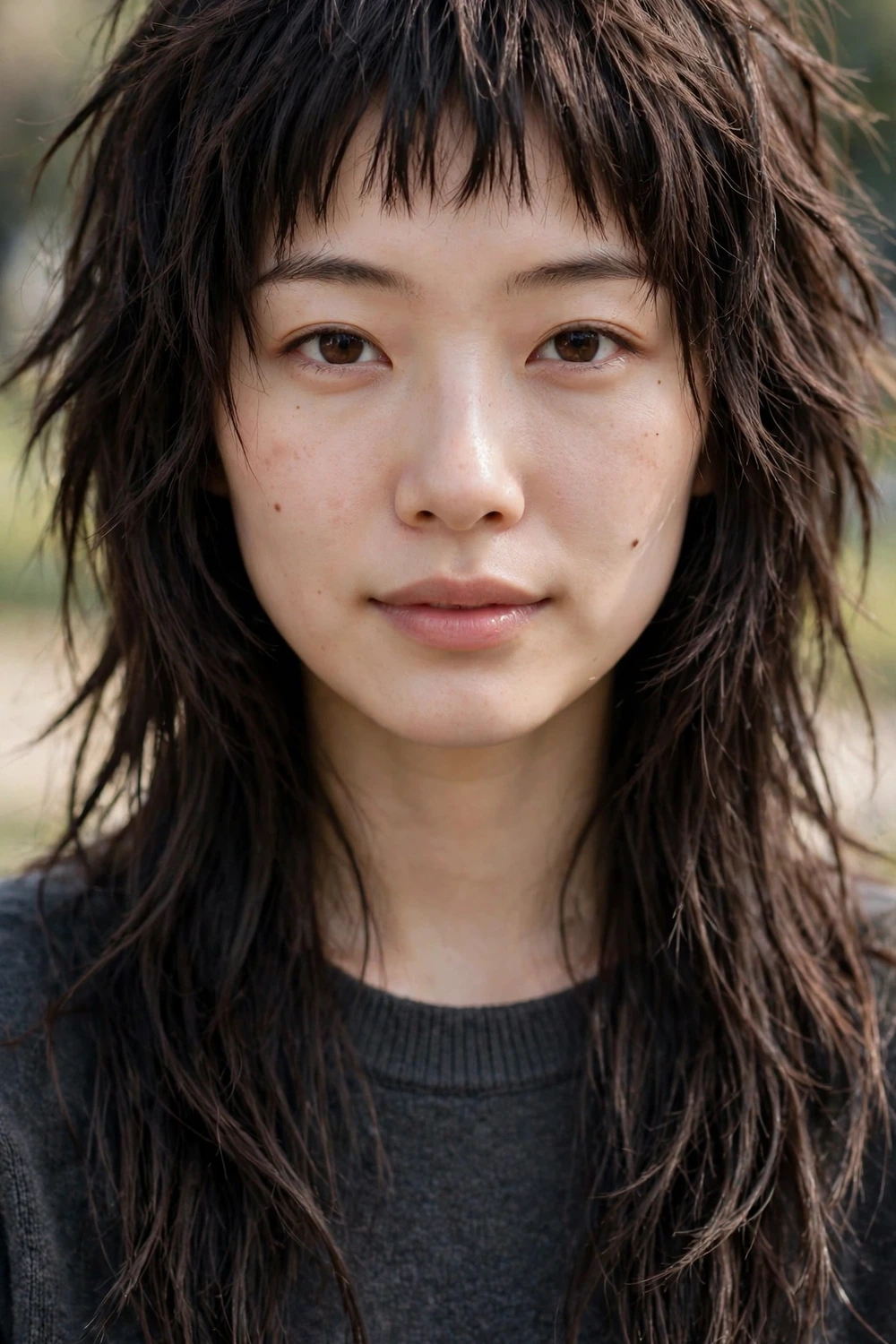
Cut one to two inches above the brow, micro bangs collide with long jagged layers for maximum edge. The short, blunt fringe exposes the forehead and eyebrows, which draws attention upward and makes the long lengths feel even longer by contrast. This bold choice suits straight hair and strong features best, and it needs trimming every two to three weeks to stay above the brow line. Style it with a quick pass of the flat iron and a drop of smoothing serum to keep the short line crisp.
Try this: Ask for the bangs cut slightly textured rather than razor-straight to soften the grow-out.
14. Long Shag with Bottleneck Bangs

Bottleneck bangs earn their name from their shape: narrow at the forehead center, widening toward the temples, then blending straight into the first layer. This curved outline suits nearly every face shape because it follows the natural brow line instead of fighting it. The bangs need only a rough blow-dry to fall into place, and they grow out into curtain bangs without an awkward phase. Pair them with soft shaggy layers and let the bangs air-dry while the lengths get the heat styling. Trim every four weeks to hold the curve.
Try this: Twist the bangs once while damp, then release for a natural bend that skips the brush.
15. Shag with Face-Framing Highlights

Color does half the talking in this version. Balayage or foilyage placed on the outer layers and face frame catches light every time the pieces separate and move. The contrast between the darker interior and the lighter frame makes the layers read deeper than they are. Style in loose beach waves with a one-inch curling iron, leaving the last inch straight for a modern finish. This color placement grows out softly, so touch-ups stretch to twelve weeks. Always use heat protectant before the iron to protect the lightened pieces.
Try this: Alternate the curl direction on each section for waves that look naturally varied.
16. Shag with Soft Ombre

A soft ombre stretches every salon appointment further. Dark roots melt gradually into lighter ends across the long layers, and the grow-out looks intentional for months because no harsh line ever appears. The gradient also emphasizes the layered structure, since each layer ends at a slightly different tone. This works on all textures and suits anyone returning to their natural color or testing lighter ends without commitment. Refresh the ends with a gloss every eight weeks to keep the lighter tones from turning brassy.
Try this: Use a purple-tinted shampoo once a week if your ombre ends lean blonde.
17. Curly/Coily Long Shag
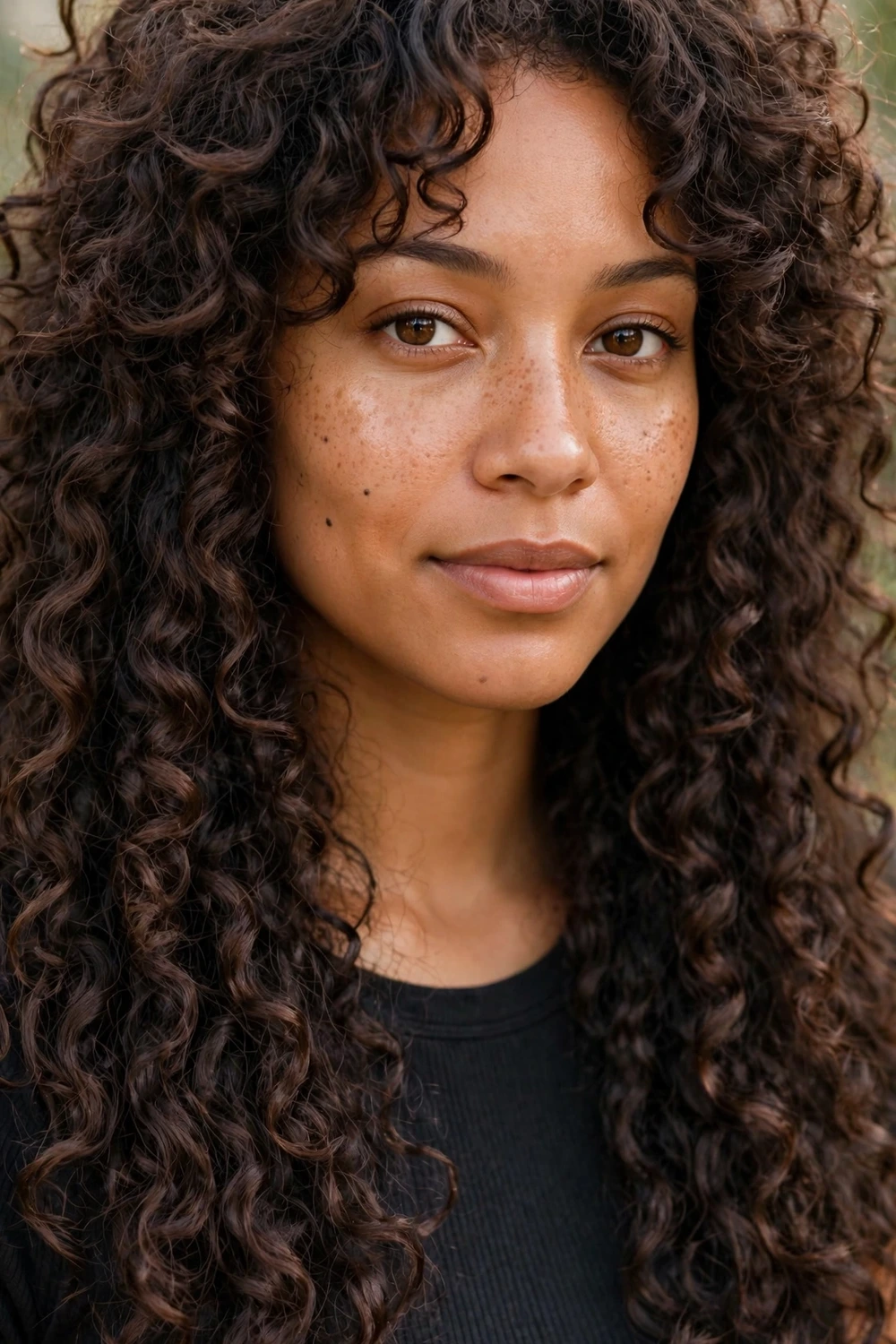
Curly hair needs a completely different cutting approach. Your stylist should cut dry, carving curl by curl to remove the bulk that creates triangle head while preserving each curl’s spring. Stacked layers at the crown build height, and the longest pieces fall past the shoulders to balance the volume up top. Diffuse with a quarter-sized amount of curl mousse scrunched into soaking-wet hair, and never brush the curls dry. Trim every ten to twelve weeks, and ask specifically for a curl-trained stylist rather than a general one.
Try this: Pineapple your hair in a loose high ponytail at night to protect the crown layers.
18. Asymmetrical Long Shag

Deliberate imbalance flatters more faces than you would expect. One side carries shorter, heavier layers while the other falls longer, and a diagonal part sells the asymmetry. Round faces gain angles from the diagonal line, while square faces soften under the uneven lengths. Keep the difference between sides to two or three inches so the cut reads intentional rather than mistaken. Style with a deep side part and let the shorter side tuck behind the ear to show off the contrast. This cut needs reshaping every eight weeks.
Try this: Flip the part to the opposite side occasionally for a completely different silhouette.
19. Rocker Mullet-Inspired Shag

Borrow the mullet’s attitude without going full costume. The crown stays stacked and short with heavy texture, while the back perimeter falls long and piece-y. The result reads rocker, not retro novelty, especially with matte texture instead of shine. Mist sea salt spray through damp hair and air-dry, scrunching the crown for extra lift. Straight and wavy hair hold the shape best. This cut demands confidence more than maintenance, since the strong silhouette does the styling work for you. Trim the crown every six to eight weeks to hold the shape.
Try this: Work a small amount of matte clay into the crown pieces for extra grit and separation.
20. Wolf Cut / Long Shag Hybrid
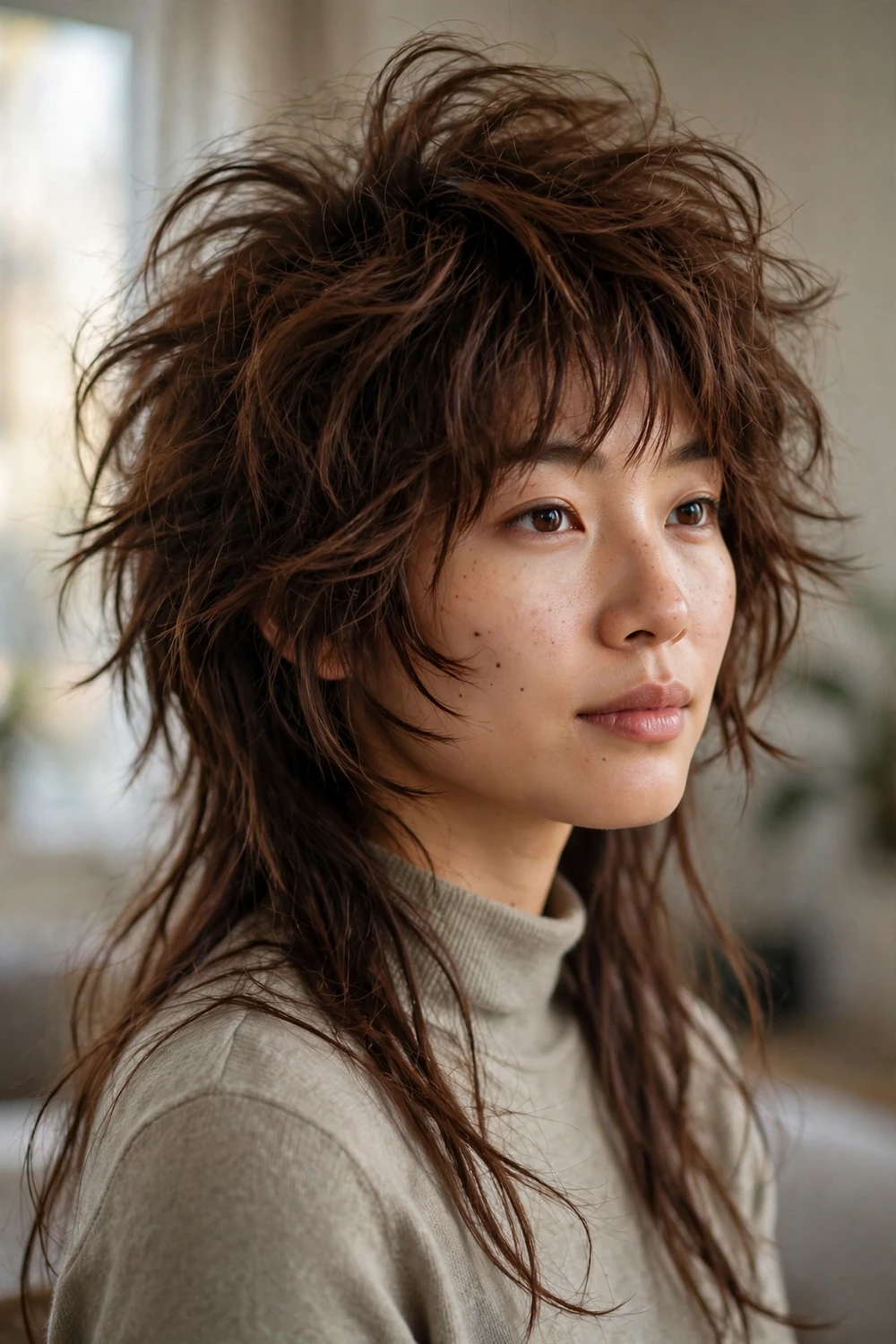
The wolf cut is the shag’s wilder cousin, and this hybrid keeps the length long. Extreme volume stacks at the crown, the back tapers abruptly through the lengths, and shorter face-framing pieces complete the wild finish. Diffuse upside down or rough-dry with your fingers to maximize the lift, then finish with texturizing spray for separation. This high-drama cut suits thick hair best, since fine hair struggles to hold the crown height. Book a stylist who has actually cut wolf cuts before, because the crown-to-length ratio makes or breaks the result.
Try this: Tease the crown lightly with a fine-tooth comb on days you want maximum volume.
21. Extra-Long / Waist-Length Shag

On waist-length hair, layer placement changes the whole equation. The shortest layers should start no higher than the collarbone, with the rest cascading down to distribute weight evenly and prevent a bottom-heavy curtain. This keeps the perimeter full while the interior layers create movement through the extreme length. Detangle with a wide-tooth comb from the ends upward, and deep-condition weekly since very long ends dry out faster. Trim every ten to twelve weeks, removing half an inch to keep the ends thick.
Try this: Braid the lengths loosely at night to prevent tangles without crushing the layers.
22. Mature / Silver Long Shag

Gray hair grows in with more texture, and a shag turns that texture into an advantage. Softer graduation through the lengths keeps the cut graceful rather than severe, while a gentle fringe softens lines around the eyes and forehead. The layered structure makes silver hair look fuller, which matters since gray strands run finer. Style with a lightweight cream instead of heavy oils, and keep the fringe slightly longer for easy styling. This cut flatters women 50 and beyond who want length with polish. Trim every eight to ten weeks.
Try this: Use a silver-enhancing shampoo every third wash to keep the gray bright and clear.
23. Formal & Updo Styling for Long Shag

Long shags behave surprisingly well in updos because the layers create built-in texture. Half-up styles show off the face-framing pieces while the back falls long. Soft low buns work with the layers instead of against them, since the shorter pieces escape naturally for a romantic finish. For formal events, curl the lengths with a one-inch iron, pin loosely at the nape, and let the face frame fall free. Always apply heat protectant before curling, and secure with U-pins rather than tight elastics to protect the layered ends.
Try this: Leave the two shortest face-framing pieces out of any updo for a softer result.
24. Hemline Shapes: U-Cut vs V-Cut vs Straight
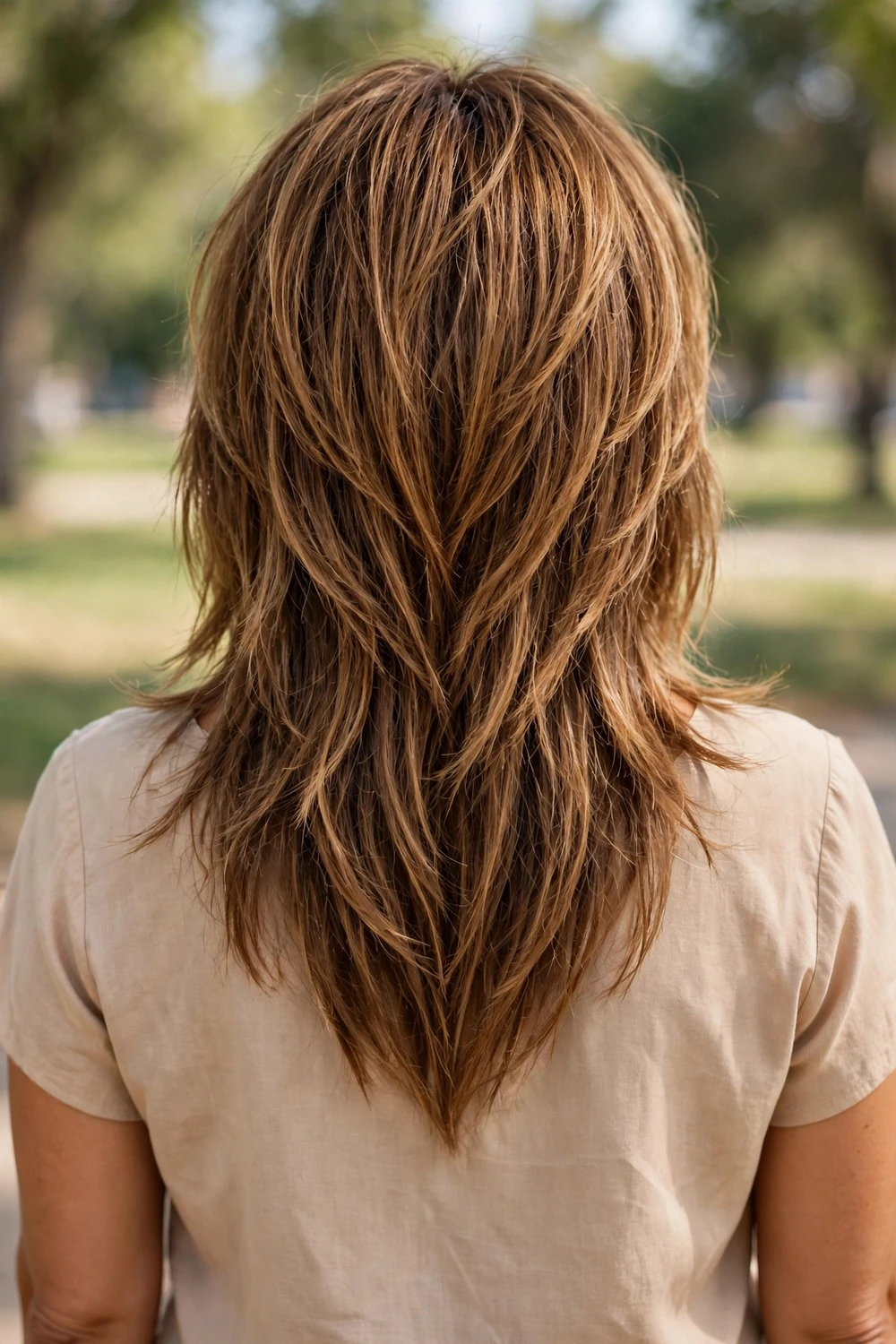
The hemline decides how your layers read from behind. A U-cut rounds the perimeter, which suits thick hair and square faces by softening the bottom edge. A V-cut tapers to a point, which elongates the silhouette and suits finer hair that needs the illusion of length. A straight hemline keeps maximum weight at the bottom, which suits fine hair best and reads the most modern. Discuss your hair density honestly with your stylist, since the wrong hemline on the wrong density fights the layers above it. The hemline choice costs nothing extra at the appointment.
Try this: Ask your stylist to show you the hemline in a hand mirror before you leave the chair.
25. Chunky 90s Color-Block Shag
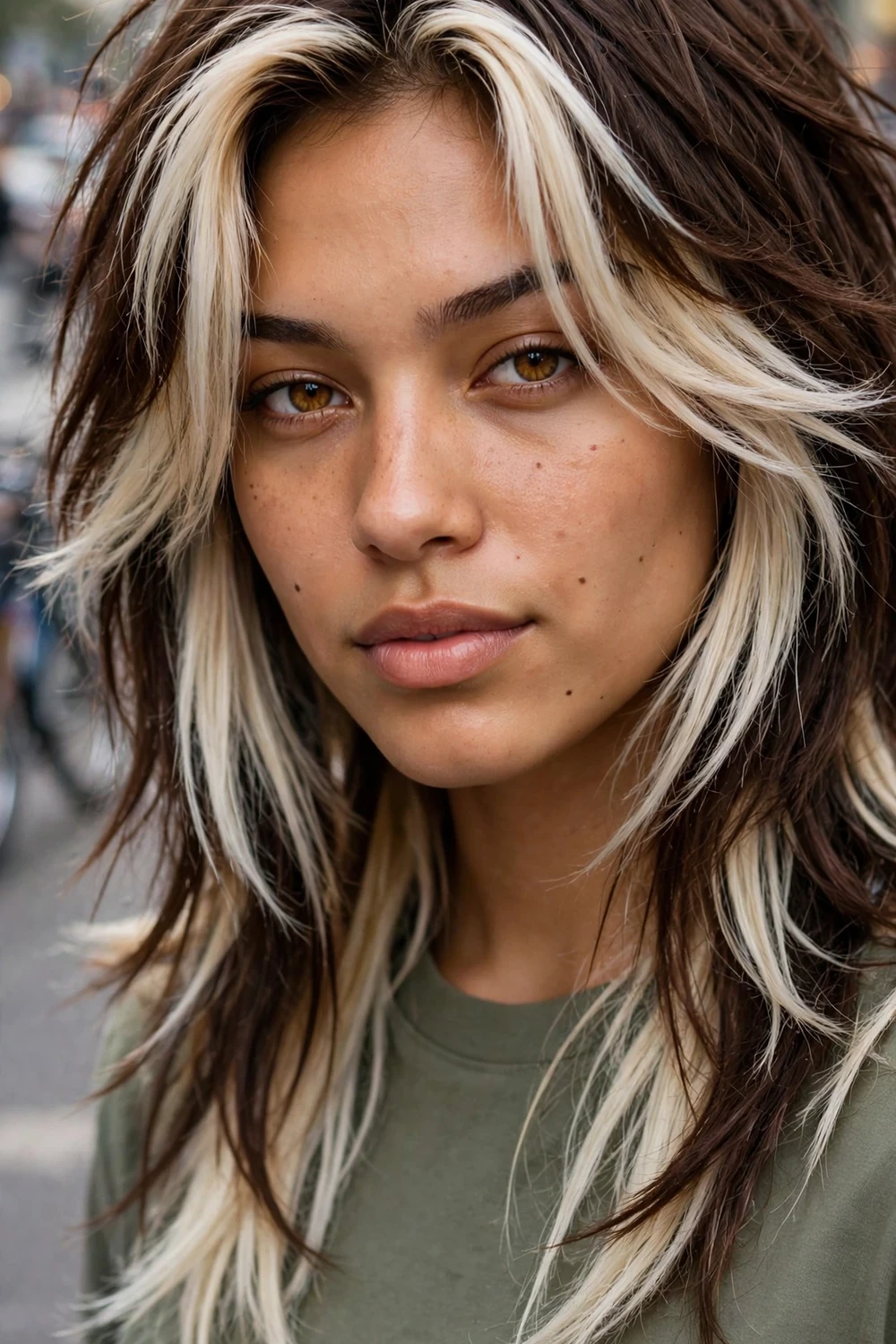
Color-blocking brings the 90s back with zero subtlety. Bold panels of color sit in the face frame or hide as peekaboo streaks underneath the top layers, flashing through whenever the hair moves. Blonde on dark brown, copper on black, or pastel on blonde all read as deliberate Y2K revival rather than accident. The shag’s separated pieces show off the color placement better than a one-length cut ever could. This needs a colorist experienced with panel placement, and the bold sections need glossing every six weeks to stay vivid.
Try this: Start with one peekaboo panel before committing to full face-framing color blocks.
26. Heavy Thick-Hair Debulking Shag
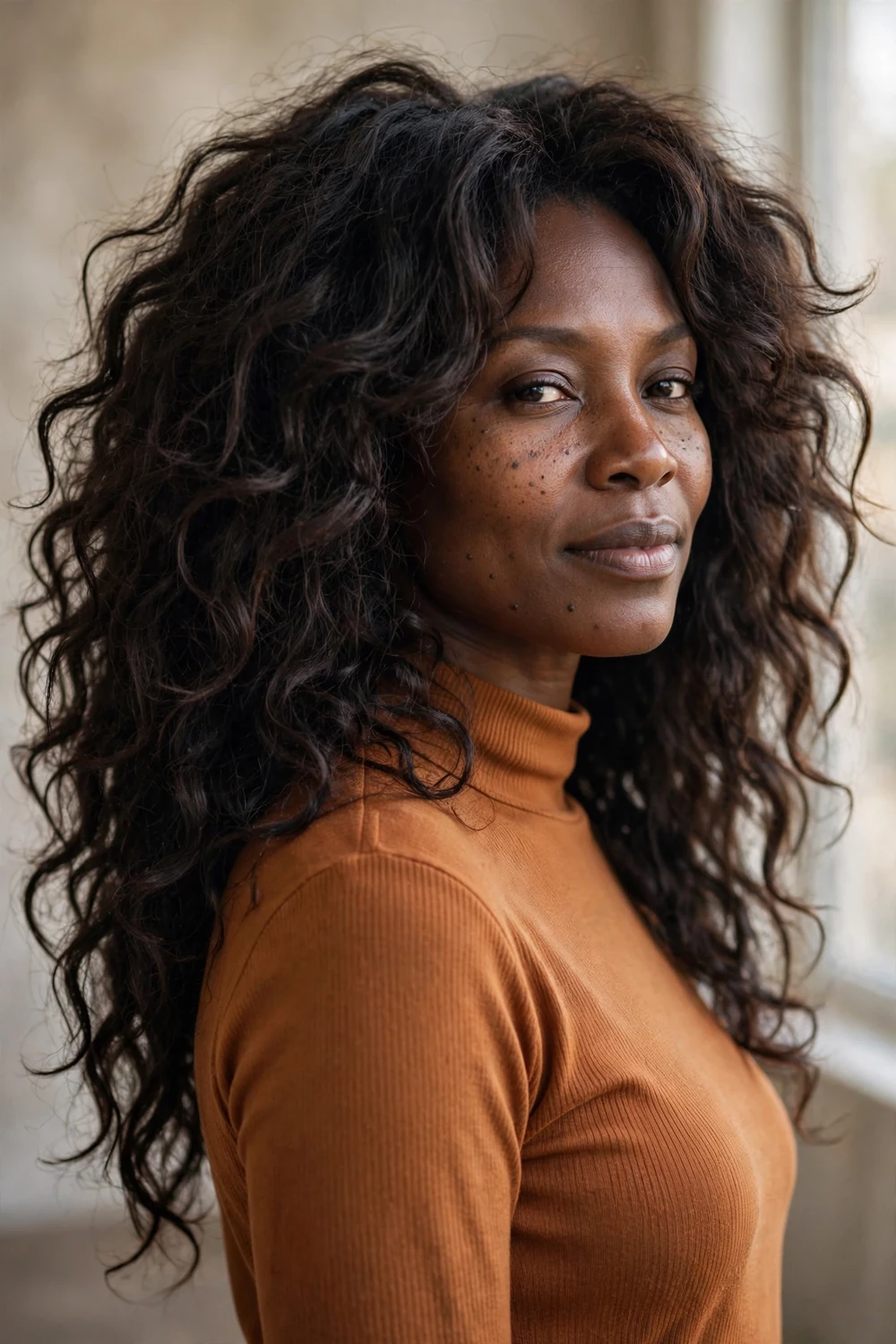
Thick hair drowns in ordinary layering, so this version engineers weight out from the inside. Your stylist removes bulk through the interior with deep point-cutting and channel cutting, while the visible length and perimeter stay completely intact. The result moves freely instead of hanging in one stiff sheet, and drying time drops noticeably. Warn your stylist against over-thinning the ends, since too much removal turns thick hair frizzy rather than light. This cut needs a full 90-minute appointment and a stylist comfortable with heavy density.
Try this: Ask your stylist to cut your hair dry at the end so you can see exactly how the weight falls.
27. Second-Day Refresh Routine

Day-two hair usually suits a shag better than fresh hair. Start with dry shampoo at the crown, spraying six inches from the roots and massaging it in after two minutes. Mist the mid-lengths lightly with water or a steam spray to reactivate yesterday’s texture, then scrunch upward to rebuild the piece-y separation. Smooth only the very ends with a drop of oil if they look dry. At night, sleep in a loose topknot or on a satin pillowcase to preserve the layers for the next morning. This routine stretches washes to three or four days easily.
Try this: Keep a travel dry shampoo in your bag for midday crown touch-ups.
Long Shag Cuts Comparison at a Glance
| Style | Best Occasion | Difficulty | Hold Time |
|---|---|---|---|
| Low-Maintenance Long Shag | Everyday wear | Easy | 2-3 days |
| Boho Soft Long Shag | Casual weekends | Easy | 2 days |
| Sleek Polished Long Shag | Work and events | Medium | 1-2 days |
| Classic 70s Feathered Long Shag | Parties and photos | Medium | 1 day |
| Retro Blunt-End Shag | Office and dinners | Easy | 2 days |
| Center-Part Retro Shag | Evening events | Medium | 1 day |
| Wispy Long Shag for Fine/Thin Hair | Everyday wear | Easy | 1-2 days |
| Modern Textured/Disheveled Shag | Concerts and nights out | Easy | 2 days |
| Grunge Messy Shag | Casual and creative settings | Easy | 2-3 days |
| Long Shag with Side-Swept Curtain Bangs | Date nights | Medium | 1 day |
| Long Shag with Long Side-Swept Bangs | Work and everyday | Easy | 2 days |
| Long Shag with Wispy Fringe | Everyday and events | Easy | 1-2 days |
| Long Shag with Micro/Baby Bangs | Fashion events | Medium | 1 day |
| Long Shag with Bottleneck Bangs | Everyday wear | Easy | 2 days |
| Shag with Face-Framing Highlights | Photos and events | Medium | 1-2 days |
| Shag with Soft Ombre | Everyday wear | Easy | 2-3 days |
| Curly/Coily Long Shag | Everyday wear | Medium | 2-3 days |
| Asymmetrical Long Shag | Creative workplaces | Medium | 1-2 days |
| Rocker Mullet-Inspired Shag | Concerts and festivals | Easy | 2 days |
| Wolf Cut / Long Shag Hybrid | Nights out and shoots | Hard | 1 day |
| Extra-Long / Waist-Length Shag | Everyday wear | Medium | 2-3 days |
| Mature / Silver Long Shag | Everyday and events | Easy | 2 days |
| Formal and Updo Styling | Weddings and galas | Hard | 1 day |
| Hemline Shapes Guide | Salon planning | Easy | N/A |
| Chunky 90s Color-Block Shag | Parties and festivals | Medium | 2 days |
| Heavy Thick-Hair Debulking Shag | Everyday wear | Easy | 2-3 days |
| Second-Day Refresh Routine | Between washes | Easy | 1 day |
How to Choose the Right Long Shag Cut for You
Start with your texture. Fine hair needs the wispy, slide-cut approach with an intact perimeter; thick hair needs the debulking version with serious interior weight removal; curly hair needs dry curl-by-curl carving. Matching the cutting technique to your density matters more than picking a pretty name from the list.
Next, decide how much daily effort you will actually give. If you air-dry and go, pick the low-maintenance, boho, or grunge versions. If you enjoy round-brush blowouts, the feathered 70s and sleek polished versions reward the effort. If you want the easiest version first, low maintenance shag haircuts for women rounds up cuts that air-dry well.
Finally, factor in your face shape and fringe tolerance. Curtain and bottleneck bangs flatter most faces with minimal upkeep, while micro bangs demand commitment and frequent trims. Bring two or three reference photos to your appointment, and tell your stylist exactly where you want the shortest layer to start.
Daily Styling Routine for Long Shag Cuts
Start with heat protectant on damp hair any day you plan to use a blow-dryer, flat iron, or curling iron. No exceptions, since layered ends split faster than blunt ones. For air-dry days, rake leave-in conditioner or curl cream through damp hair, scrunch the layers upward, and let them set without touching.
Once dry, add texture where the cut needs it. A light mist of texturizing spray through the mid-lengths separates the pieces, while a pea-sized amount of volumizing powder at the crown lifts the roots. Use matte products for grunge and rocker versions, and shine oil for the sleek and polished versions. When your length sits around the shoulders instead of the waist, medium length shag haircuts shows how these layers adapt to shorter lengths.
Finish by checking the face frame in the mirror. Tuck, pin, or sweep the shortest pieces into place, since these are the first to misbehave. The whole routine takes five to ten minutes once you know your version, which is exactly why the shag survives every trend cycle.
Long Shag Cut Maintenance and Upkeep
Book trims every 8 to 12 weeks to keep the layers defined. Blunt perimeters stretch to 12 weeks, while crown-heavy cuts such as the rocker and wolf hybrid need reshaping at 6 to 8 weeks. Bangs follow their own schedule: micro bangs every two to three weeks, curtain and bottleneck bangs every four.
Wash two to three times per week at most, since daily washing flattens the texture that makes a shag work. Tell your stylist not to over-thin the ends at any appointment, because aggressive thinning turns layered ends frizzy and wispy within weeks. Deep-condition every one to two weeks, focusing on the mid-lengths and ends where the layers are oldest.
Between appointments, the second-day refresh routine in idea 27 keeps the cut presentable without extra heat. For the most current takes on the trend, modern shag haircuts covers choppier, disconnected versions worth discussing at your next visit.
Frequently Asked Questions
Will a long shag cut work on fine or thin hair?
Yes, with the right cutting technique. Ask for slide-cut layers that keep the perimeter intact, and tell your stylist to skip thinning shears, which make fine ends look see-through. Volumizing powder at the roots adds lift that lasts all day. The wispy long shag in idea 7 was designed specifically for fine and thin hair.
How often does a long shag need trimming?
Most long shags need a trim every 8 to 12 weeks to keep the layers defined. Blunt-perimeter versions stretch to the full 12 weeks, while crown-heavy versions such as the wolf hybrid need reshaping every 6 to 8 weeks. Bangs follow their own schedule: micro bangs every two to three weeks, and curtain or bottleneck bangs every four weeks.
Can I get a long shag with curly or coily hair?
Absolutely, but the cut must be done dry, curl by curl. Dry carving removes the bulk that causes triangle head while preserving each curl’s natural spring. Stacked layers at the crown build height, and diffusing with curl mousse defines the shape. Always book a curl-trained stylist rather than a general one for this version.
What is the difference between a long shag and a wolf cut?
A long shag distributes layers more evenly through the lengths for a balanced, wearable shape. A wolf cut stacks extreme volume at the crown and tapers abruptly through the back, which creates a wilder, more dramatic silhouette. The hybrid in idea 20 blends both: shag length with wolf-cut crown volume. Thick hair handles the wolf cut best, while all densities suit a classic long shag.
How do I style a long shag without heat?
Air-drying is the shag’s natural habitat. Rake leave-in conditioner through damp hair, scrunch the layers upward, and let them set untouched. Sea salt spray or texturizing spray adds separation, and sleeping in a loose braid creates overnight waves. On non-wash days, dry shampoo at the crown plus a water mist through the mid-lengths revives the texture in minutes.
Final Thoughts
Long shag cuts earn their staying power by giving you length and movement at the same time. Pick the version that matches your texture and your real styling habits, bring clear reference photos to your stylist, and protect those layered ends with heat protectant and regular trims. My own test for any cut is simple: if it still looks good on day three, it stays in the rotation, and the shag passes that test easily.

