


The best hairstyles for thick wavy hair start with layers. Long layered waves, a modern shag, a textured lob, or a wavy bob all remove weight so your natural wave can actually move. For days you want hair off your face, half-up styles, low buns, and braided crowns work with the texture instead of fighting it.
Each of the 18 ideas below includes a styling tip, a difficulty rating, and honest maintenance notes for thick, wavy hair.
Quick Takeaways
- Layers are the single most important cut detail for thick wavy hair. They remove bulk and let waves move instead of sitting in one heavy block.
- Frizz control starts in the shower: sulfate-free shampoo, conditioner only from mid-lengths down, and a microfiber towel instead of a rough bath towel.
- Most of these styles air-dry well. When you do use a curling iron, flat iron, or blow-dryer, apply heat protectant first.
- Expect $50 to $90 for a salon cut with layers, and trims every 8 to 12 weeks to keep thick hair from losing its shape.
- Sleep on a satin pillowcase or in a loose top bun to wake up with waves that need far less morning fixing.
1. Long Layered Waves
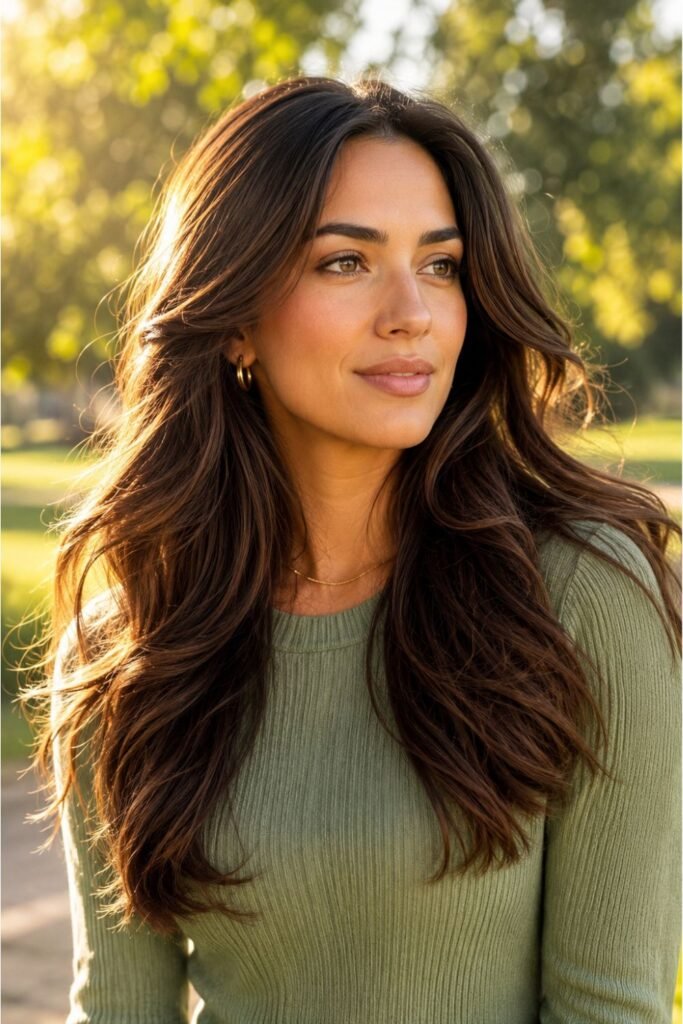
Long layers are the default cut for thick wavy hair for good reason. Layers starting around the chin and spaced every few inches down take weight out of the mid-lengths, which stops the triangle effect where hair goes flat on top and wide at the bottom. The length stays, the heaviness goes.
This cut styles itself most days. Scrunch a golf-ball-sized amount of mousse into damp hair and let it air-dry or diffuse on low heat. The most common mistake is asking for layers that are too short up top, which creates shelf-like steps on thick hair instead of smooth movement.
Try this: ask your stylist to point-cut the ends rather than cut them blunt. Point-cutting thins the last inch so thick ends taper instead of sitting in a shelf.
Difficulty: Easy · Cost: $ (salon cut with layers)
2. Butterfly Layer Cut

The butterfly cut pairs long hair in back with much shorter, face-framing layers in front. Those front pieces, usually falling between the chin and collarbone, swing forward and read like a grown-out curtain bang. On thick wavy hair, the short front layers lift while the long back layers keep their weight.
Style the front layers with a round brush and blow-dryer, flicking them away from your face, and let the back air-dry. Apply heat protectant before the blow-dryer since those front pieces take the most heat. The cut grows out gracefully because the front layers simply become longer layers.
Try this: clip the back up while the front dries so you can shape the face-framing pieces without the rest getting in the way.
Difficulty: Moderate · Cost: $$ (salon cut)
3. Shoulder-Length Layered Hair

Shoulder-length hair is the sweet spot for thick waves that take forever to dry. Dropping six to eight inches of length cuts drying time noticeably, and layers through the mid-lengths keep the shape from going boxy. The waves land right where they look fullest, around the collarbone.
Work a leave-in conditioner through damp hair, scrunch, and go. This length is short enough that air-drying actually finishes before you leave the house. Book a trim every 8 to 10 weeks, since thick hair at this length grows into a wide shape faster than longer hair does.
Try this: flip your part to the opposite side while the hair is still damp. The root lift you get costs nothing and lasts all day.
Difficulty: Easy · Cost: $ (salon cut)
4. Textured Lob

A textured lob falls between the chin and the collarbone with choppy, piecey ends. The texture is the whole point: thinning the ends with point-cutting or a razor keeps thick hair from flaring outward at the bottom. It reads modern and undone rather than fussy.
Sea salt spray on damp hair, a rough scrunch, and air-drying is the entire routine. The cut looks better slightly messy, which makes it forgiving on rushed mornings. If your waves fall flat by afternoon, pinch the ends with a pea-sized amount of pomade to bring the texture back.
Try this: ask for the ends to be texturized but not thinned at the roots. Root thinning on wavy hair creates frizz that no product fully fixes.
Difficulty: Easy · Cost: $ (salon cut)
5. Soft Curtain Bangs with Waves

Curtain bangs parted down the middle frame the face and blend into wavy layers on each side. On thick hair, the key is keeping them wispy: your stylist should thin the bang section so it falls in soft pieces rather than one heavy curtain. They soften a wide forehead and grow out into face-framing layers.
Blow-dry bangs first while they are still very damp, brushing them side to side so they dry in a curved shape. Apply heat protectant since bangs sit close to the face and take daily heat. A trim every 4 to 6 weeks keeps them out of your eyes; many salons do bang trims free or cheap.
Try this: on no-wash days, re-wet just the bangs at the sink instead of washing all your hair. Thick hair takes too long to fully rewash for bangs alone.
Difficulty: Moderate · Cost: $ (cut with bangs)
6. Modern Shag Haircut

The modern shag stacks choppy layers through the crown and thins out toward the ends. All that layering removes serious bulk, which is why thick wavy hair wears a shag better than fine hair does. The natural wave does the styling work; the cut just gives it places to go.
Scrunch mousse into damp hair and diffuse upside down for maximum crown lift. The shag looks intentional when the top has volume and the ends stay piecey. Skip heavy oils on this cut, since they drag the choppy layers down and undo the whole effect.
Try this: bring reference photos that show the back of the head, not just the front. The shag’s shape lives in the crown layering, which front photos hide.
Difficulty: Easy · Cost: $$ (salon cut)
7. Wavy Bob with Soft Layers

A chin-to-jaw-length bob with soft internal layers gives thick wavy hair a compact, swingy shape. The layers are the non-negotiable part: without them, a bob on thick hair goes wide instead of sleek. Ask for the weight removed from underneath so the surface stays smooth.
Let it air-dry with a little curl cream and the waves settle into place on their own. This is one of the fastest-drying options on the list. A trim every 6 to 8 weeks matters more here than on long hair, since a bob loses its line quickly.
Try this: tuck one side behind your ear while it dries. The slight asymmetry keeps a thick bob from looking too round.
Difficulty: Easy · Cost: $ (salon cut)
If cropped cuts are calling your name, our short hairstyles for thick hair roundup has more above-the-shoulder options built to cut bulk.
8. Face-Framing Layers

Face-framing layers are the shortest pieces around your face, usually starting at the cheekbone and getting longer as they fall. They are not a full haircut on their own, but they change how any length looks. On thick wavy hair, they pull attention to your face and keep the front from looking like a solid wall of hair.
They also make ponytails and buns look finished, since the short pieces fall out and soften the style. Style them with a quick bend from a flat iron, using heat protectant first. When they grow past your chin, they simply become regular layers, so there is no awkward phase.
Try this: ask for the shortest piece to start no higher than your cheekbone. Shorter than that on thick hair, and the pieces spring up instead of lying flat.
Difficulty: Easy · Cost: $ (add-on to a cut)
9. Deep Side Part with Loose Waves

Moving your part two to three inches to one side is the fastest volume trick for thick wavy hair. The deep part forces the roots to stand up instead of lying flat, and the heavy side sweeps across in loose waves. It takes ten seconds and changes the whole shape of your hair.
Reinforce the waves with a large-barrel curling iron on the top sections only, leaving the underneath natural. Apply heat protectant before the iron. Set the part while the hair is damp and blow-dry the roots in that direction for a day or two, and your hair starts to hold the new part on its own.
Try this: use the arch of your eyebrow as the part line guide. Starting the part above the outer brow keeps it dramatic without looking severe.
Difficulty: Easy · Cost: $ (styling only)
10. Beachy Waves with Long Layers

Beachy waves are a styling finish rather than a cut: relaxed, separated waves with slightly undone ends, worn over long layers. The long layers underneath keep the thickness from bunching up, while the beachy texture on top keeps it from looking too polished or heavy. It is the most-requested finish for thick wavy hair at salons.
The no-heat version works well on this hair type. Braid damp hair into two loose braids before bed, undo them in the morning, and shake the waves out. If you use a wand instead, wrap two-inch sections and leave the last inch straight, and always apply heat protectant first.
Try this: spray texturizing spray only on the mid-lengths and ends. Spray at the roots on thick hair makes the top look fuzzy instead of tousled.
Difficulty: Easy · Cost: $ (styling product)
11. Half-Up Half-Down Hairstyle

The half-up pulls the top section back and pins it at the crown, leaving the rest of your waves loose. On thick hair, this does two jobs: it gets hair off your face and it thins the visual weight around the top of your head. The pinned section also shows off the wave pattern in the hair left down.
Tease the crown lightly before pinning for lift, and secure with two crossed bobby pins instead of one elastic. One elastic slides on thick hair; crossed pins hold. Leave a few face-framing pieces out so the style doesn’t look scraped back.
Try this: twist the top section once before pinning. The twist grips thick hair far better than a straight pull-back.
Difficulty: Easy · Cost: $ (styling only)
Want more ways to wear this shape? Our half up half down hairstyles collection has 20 variations, from twisted crowns to braided versions.
12. High Ponytail with Natural Waves

A high ponytail on thick wavy hair has built-in drama: the density makes the tail look full without any teasing. Gather it at the crown and let your natural wave do the rest. Smoothing just the top keeps it polished while the waves in the tail keep it from looking severe.
Flip your head upside down to gather the hair, which distributes the weight evenly and stops the sides from sagging. Use two elastics stacked for extra hold, since one stretches out fast under thick hair. Wrap a small strand around the base to hide the elastic and pin it underneath.
Try this: tilt the ponytail slightly forward when you tie it. Thick ponytails pull backward and give you a headache by noon if the anchor sits too far back.
Difficulty: Easy · Cost: $ (styling only)
13. Messy Low Bun

A low bun at the nape with loose, textured pieces left out is the easiest updo for thick wavy hair. The thickness fills out the bun so it looks full with zero padding, and the natural wave gives it texture that straight hair needs products to fake. It works for workdays and weddings with the same five minutes of effort.
Gather the hair loosely, twist it into a bun, and pin with four to six bobby pins pushed in from different angles. Pull out a few tendrils around your face after pinning, not before, so you control exactly what comes loose. A light mist of flexible hairspray holds it without stiffness.
Try this: don’t brush first. Day-old hair with its natural texture grips pins better and looks more relaxed than freshly washed hair.
Difficulty: Easy · Cost: $ (styling only)
14. Wolf Cut for Thick Wavy Hair
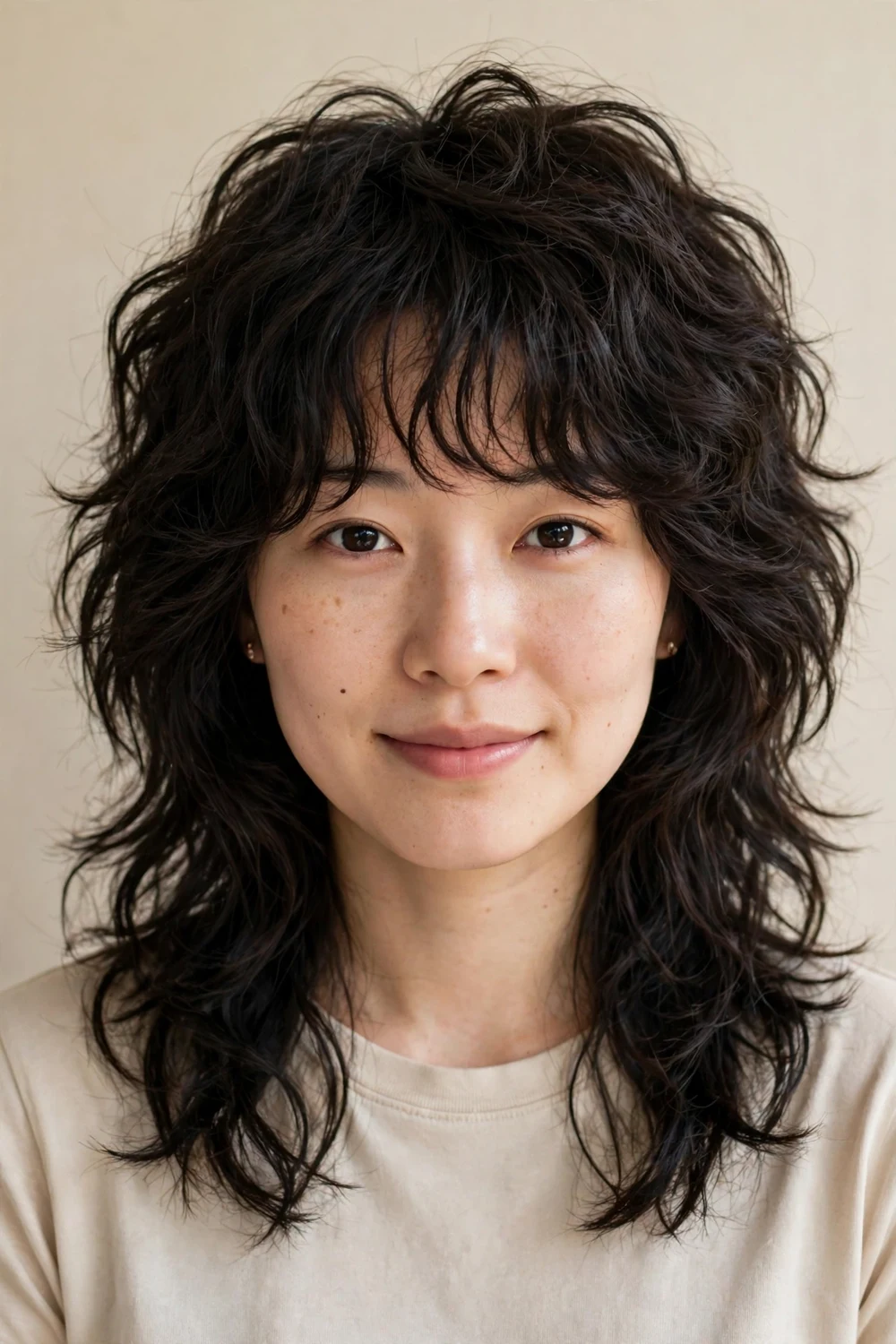
The wolf cut mixes a shag’s choppy layers with a mullet’s shorter top and longer back. It is bolder than a regular shag: the crown layers are cut noticeably shorter, which takes serious weight off the top of thick hair. The result is big volume up top that tapers into longer wavy ends.
Styling is minimal. Scrunch in mousse and diffuse, and the cut’s built-in texture takes over. The wolf cut needs a trim every 6 to 8 weeks to keep the short crown from growing into the longer back, so factor that maintenance into your decision.
Try this: make sure your stylist has cut a wolf cut before, and look at their photos of it on wavy hair specifically. The layering is technical, and a bad version is hard to grow out.
Difficulty: Moderate · Cost: $$ (salon cut)
15. Textured Pixie Cut
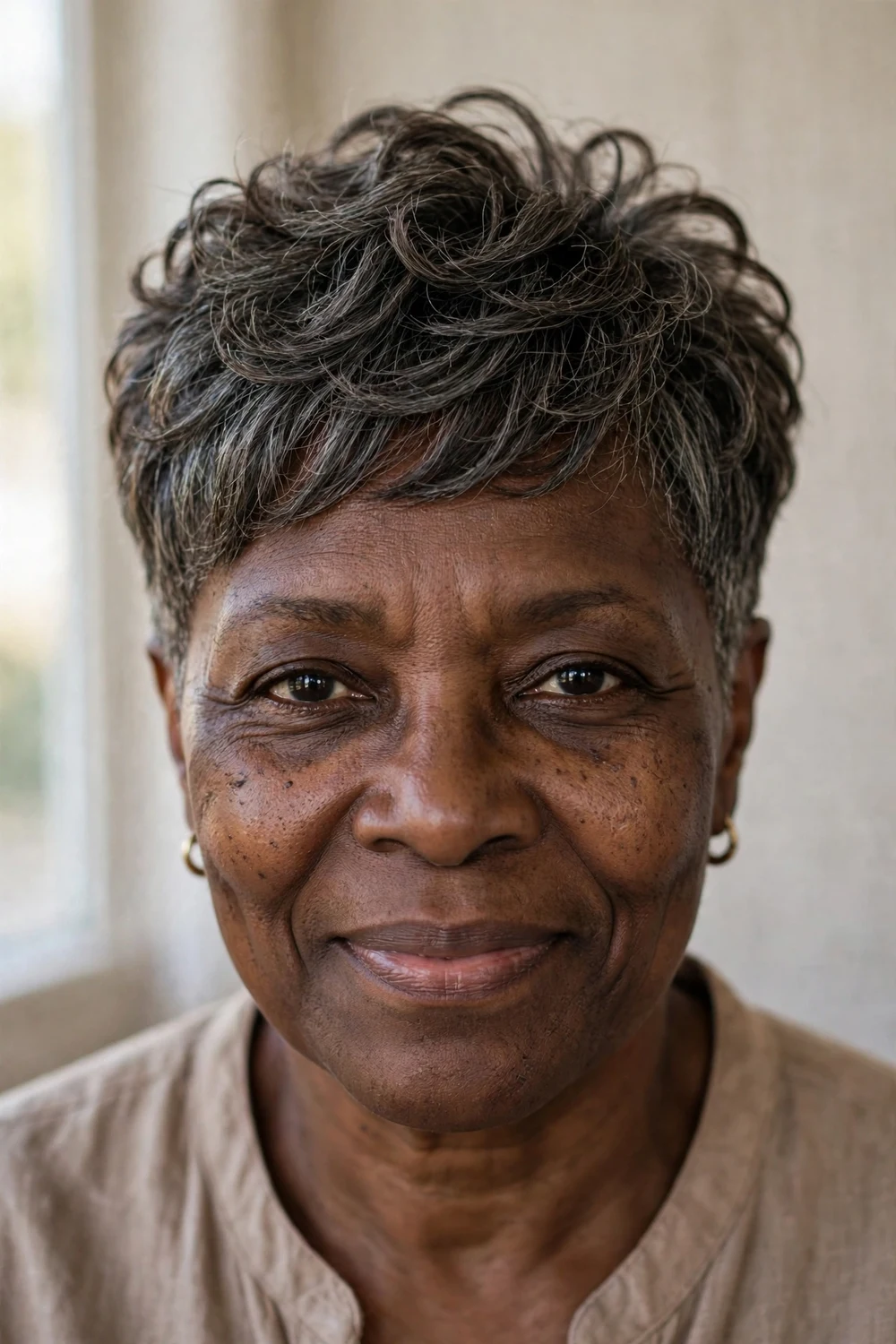
A textured pixie with wavy length left on top is the boldest bulk-remover on this list. Tapered sides take the thickness away where it causes the most trouble, while the wavy top keeps enough length to show your texture. It cuts wash-and-dry time down to minutes.
Rub a small amount of matte paste between your palms and work it through the top for piecey definition. This cut needs a trim every 4 to 6 weeks to keep the taper sharp. It is a commitment, so try a shorter bob first if you have never gone short.
Try this: ask for the top left long enough to tuck behind your ears. That extra inch makes the pixie grow out without an awkward in-between stage.
Difficulty: Moderate · Cost: $ (salon cut)
If your waves lean toward true curls, our short curly hairstyles for women guide shows how pixies and crops handle tighter textures.
16. Braided Crown with Loose Waves

A braided crown wraps a loose braid across the top of your head like a headband while the rest of your waves flow free. Thick hair is an advantage here: the braid looks full with just one pass, where fine hair needs pancaking and filler. It keeps hair off your face for hours without a single pin showing.
Braid from one ear, over the crown, to the other ear, and pin the tail under the starting side. Keep the braid loose on purpose; pulling it tight on thick hair creates tension headaches. Mist with flexible hairspray, since thick braids loosen as the day goes on.
Try this: braid on second-day hair. Freshly washed thick hair is too slippery and the braid slides apart within an hour.
Difficulty: Moderate · Cost: $ (styling only)
17. Sleek Low Ponytail with Wavy Ends

This style splits the difference: smooth, polished roots with your natural waves left untouched from the elastic down. Smoothing the top tames the frizz that thick hair gets at the crown, while the wavy ends keep the ponytail from looking flat or overworked. It reads professional but still shows your texture.
Apply a smoothing serum to the top section, brush it back with a boar bristle brush, and secure low at the nape. If you flat-iron the top for extra sleekness, apply heat protectant first. Scrunch the tail with a little curl cream to define the waves.
Try this: part the top section cleanly down the middle before pulling it back. A neat part is what separates this from a gym ponytail.
Difficulty: Easy · Cost: $ (smoothing serum)
18. Romantic Hollywood Waves

Hollywood waves are deep, uniform, glossy waves with a side part, the old red-carpet finish. Thick hair holds this style longer than fine hair does, since the density keeps each wave’s shape for hours. It is the most formal option on this list and the one worth the effort for events.
Curl every section in the same direction with a one-inch curling iron, let each wave cool completely, then brush through with a soft bristle brush to merge them into smooth S-curves. Apply heat protectant before you start and work in small sections, since thick hair needs the heat to reach every strand evenly.
Try this: pin each curl to your scalp while it cools. The ten extra minutes doubles how long the waves last on thick hair.
Difficulty: Hard · Cost: $ (heat protectant and pins)
Quick Comparison
| Hairstyle | Best for | Maintenance | Cost range |
|---|---|---|---|
| Long Layered Waves | Keeping length while removing bulk | Trim every 8–12 weeks | $ |
| Butterfly Layer Cut | Face-framing movement with long hair | Trim every 8–12 weeks | $$ |
| Textured Lob | Low-effort modern cut, fast drying | Trim every 8–10 weeks | $ |
| Modern Shag Haircut | Maximum bulk removal with texture | Trim every 8–12 weeks | $$ |
| Wavy Bob with Soft Layers | Compact shape, quickest drying | Trim every 6–8 weeks | $ |
| Wolf Cut | Bold volume with edgy layering | Trim every 6–8 weeks | $$ |
| Messy Low Bun | Everyday updo with zero heat | None | $ |
| Romantic Hollywood Waves | Formal events, long-lasting waves | None | $ |
How to Pick the Right Style for Your Thick Wavy Hair
Start with how much time you want to spend. If your mornings are tight, pick a cut that air-dries well: long layers, a textured lob, or a shag. If you enjoy styling, the butterfly cut and Hollywood waves reward the extra effort. Be honest about this, because the best cut is the one you will actually maintain.
Then think about bulk. If your hair feels heavy and sits in one block, you need real weight removal: a shag, a wolf cut, or layers with the undercut thinned out. If your hair is thick but the waves already move well, lighter options like face-framing layers or a deep side part give you change without a big cut.
Finally, talk to your stylist about frizz before the scissors come out. Ask them to cut your waves dry or barely damp so they can see the true curl pattern, and ask for point-cutting on the ends instead of blunt cuts. Bring photos of the exact style you want from at least two angles. That conversation is what separates a cut that works with your waves from one you fight every morning.
More Ideas to Explore
- 20 Sassy Haircuts for Women Over 40 (2026 Guide)
- 34 Long Hairstyles for Round Faces That Elongate and Flatter
- 20 Hairstyles for Over 70 Year Old Women (2026 Guide)
Frequently Asked Questions
What is the best haircut for thick wavy hair?
Long layers are the safest best haircut for most people with thick wavy hair. They remove bulk through the mid-lengths without sacrificing length, and they work with air-drying. If you want more change, a modern shag or textured lob removes even more weight while keeping the waves intact.
How do I reduce frizz in thick wavy hair?
Use a sulfate-free shampoo, condition from mid-lengths to ends, and dry with a microfiber towel instead of a rough bath towel. Apply leave-in conditioner or curl cream to damp hair, and avoid brushing it dry, which breaks up the wave pattern and creates frizz. A satin pillowcase also helps overnight.
How often should I trim thick wavy hair?
Every 8 to 12 weeks for most cuts. Shorter styles like bobs, pixies, and wolf cuts need trims every 4 to 8 weeks to hold their shape, since thick hair grows into a wide silhouette faster than fine hair. Regular trims also stop split ends from traveling up the wave.
Can I thin out thick wavy hair?
Yes, but ask for it carefully. Point-cutting and slide-cutting remove weight while keeping the wave pattern intact. Traditional thinning shears used aggressively at the roots can create frizz and uneven regrowth on wavy hair, so tell your stylist you want weight removed from the ends and mid-lengths, not the roots.
How can I style thick wavy hair without heat?
Sleep in two loose braids for beachy waves, twist damp hair into a low bun for soft bends, or pin the top half up and let the rest air-dry. Mousse or curl cream applied to damp hair defines the natural wave without any hot tools. A diffuser on the cool setting speeds up drying without adding frizz.
Final Thoughts
Thick wavy hair is easier to wear than most people think once the cut does the heavy lifting. Pick your layers by how much bulk you want gone, pick your styling by how much morning time you have, and give any new cut two weeks before you judge it. Waves settle as they adjust to a new shape.
Readers over 40 may also like our wavy hairstyles for women over 40 roundup, which covers age-friendly versions of these same cuts. For more hair ideas across every hair type, browse the full collection at PrimeHairPicks.

