

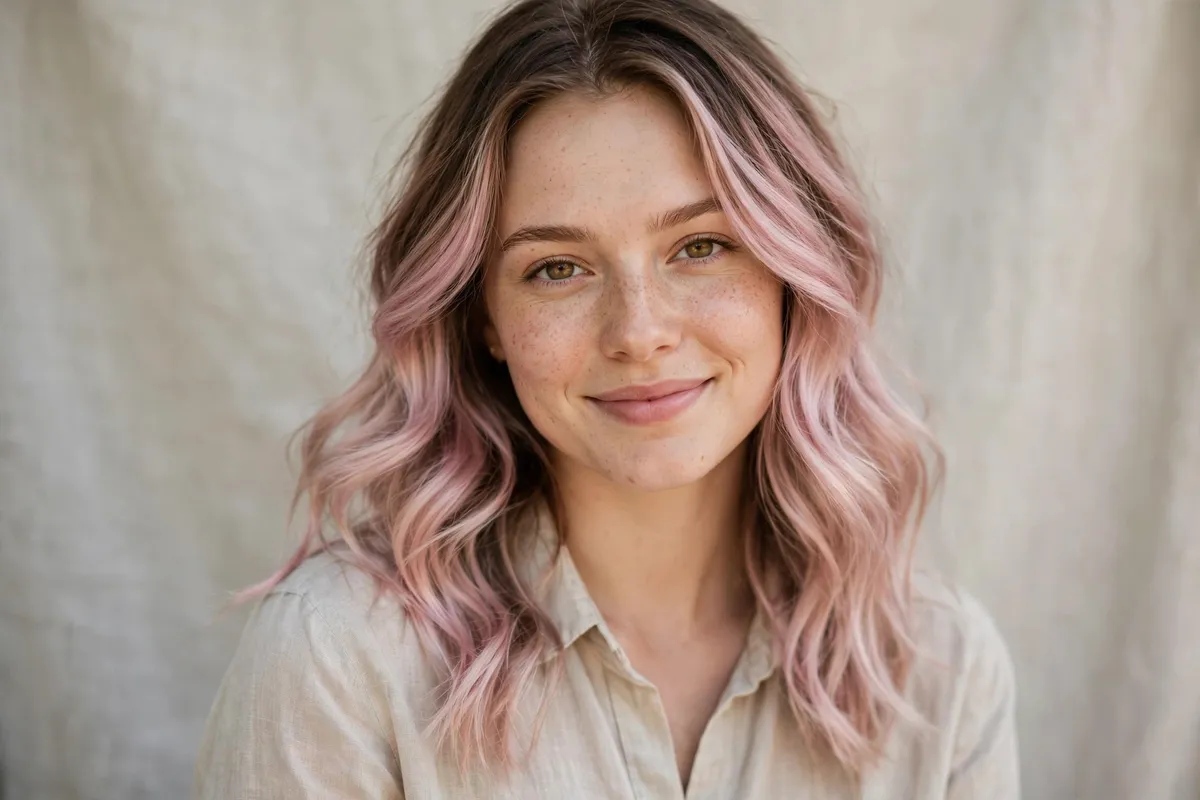
Pink is one of the most versatile fantasy shades a colorist can mix. It stretches from a sheer, barely-there blush to a saturated neon, which means there is a version for every skin tone, base color, and comfort level. You do not have to commit to a full head of color to wear it well, and you do not have to go bold to make it count.
This list of 28 pink hair color ideas moves from the softest pastels up through rich vivids, then into the placement techniques that make pink wearable for blondes, brunettes, and everyone in between. Each idea includes a base-color note and a realistic fade expectation, so you can pick a shade that fits your maintenance tolerance before you sit in the salon chair.
Quick Takeaways
- Pastels like baby pink and blush pink need a pre-lightened base, usually level 9 or 10, to show up true to tone.
- Vivid shades like hot pink and magenta last longer between appointments than pastels, but they stain everything they touch.
- Cool skin tones suit blush, mauve, and berry-leaning pinks; warm skin tones suit peach, coral, and rose gold.
- Pink fades fastest of all fantasy colors, so wash with cool water and a sulfate-free, color-safe shampoo.
- A color-depositing mask every week keeps pastel and mid-tone pinks fresh without a salon trip.
1. Pastel Pink

Pastel pink is the classic gateway shade: soft, muted, and romantic without being loud. The formula mixes a clear pink pigment with a lot of conditioner or a pastel diluter, so the result reads light and airy rather than saturated. It looks best on pre-lightened hair, around level 9 or 10, because any yellow left in the base will turn the pastel peachy. On a clean blonde canvas, it fades gracefully over two to four weeks toward an even softer blush.
Loose waves keep the color looking dreamy and stop it from reading flat, since movement catches the light differently across the strands. This shade suits fair to medium skin tones with cool or neutral undertones. Ask your colorist for an even pastel application with a clear gloss on top, which helps the color wear off without patchiness. Plan on a refresh appointment every three to four weeks if you want the pastel tone to stay visible.
Try this: use a pink color-depositing conditioner once a week to push the pastel tone back up between appointments.
Difficulty: High · Cost: $$$ (salon)
2. Baby Pink

Baby pink sits a step lighter than standard pastel pink, with a milky, near-white cast and a pearl-like sheen. The formula leans on iridescent or opal-toned pigments, which gives the shade its delicate, editorial finish. Because the pigment load is so low, it needs the lightest possible base, a true level 10, and it fades the fastest of any pink on this list, often washing out in one to three weeks. That makes it a low-commitment way to sample pink for a special event or a short experiment.
Long, silky straight hair shows baby pink at its best, since the smooth surface reflects the pearly reflect evenly. It flatters fair skin tones in particular, and it pairs well with minimalist styling because the color itself does the talking. Ask your colorist for a milky pastel pink with a pearl additive rather than a flat pink tone. Keep washes to twice a week maximum with cool water to slow the fade.
Try this: book it for a season or event rather than a long-term look, since the fade happens fast.
Difficulty: High · Cost: $$$ (salon)
3. Cotton Candy Pink

Cotton candy pink takes the softness of pastel and turns up the sweetness: brighter, more saturated, and unmistakably pink from across the room. It keeps the sugary lightness of a pastel but adds enough pigment to read clearly even in dim indoor light. The base still needs to be well lightened, around level 9, but it tolerates a slightly less perfect canvas than baby pink. Expect three to five weeks of visible color before it washes down to a soft pastel.
Long straight or wavy hair carries this shade best, since length gives the bright tone room to move. It works on a wider range of skin tones than the palest pinks, including warm and medium complexions. Ask your colorist for an even cotton candy application with no shadow root, so the sweetness reads uniformly from roots to ends. A sulfate-free shampoo and cool final rinses will stretch each appointment further.
Try this: wear it with simple styling and neutral makeup so the playful color stays the focus.
Difficulty: High · Cost: $$$ (salon)
4. Bubblegum Pink

Bubblegum pink is a saturated candy shade with a muted rose undertone that keeps it wearable. It reads bold without tipping into neon territory, which is why it suits both long waves and short, punchy cuts. The color holds longer than pastels, usually four to six weeks, and it fades into a soft cotton candy rather than disappearing outright. It works on pre-lightened bases but forgives a little residual warmth better than the palest shades.
Curls and short bobs give bubblegum pink extra energy, since the shape bounces light around the color. It flatters a wide range of skin tones, especially medium and warm complexions. Ask your colorist for a mid-saturation bubblegum tone with a rose base rather than a blue base. Because the pigment load is higher, it can stain towels and pillowcases, so sleep on dark or old pillowcases for the first few washes.
Try this: try it on a short bob first if a full head of long bubblegum feels like too much commitment.
Difficulty: Medium · Cost: $$$ (salon)
5. Blush Pink

Blush pink is the sheerest shade on this list: a barely-there rosy wash that reads almost natural. It sits closer to a tinted gloss than a full fashion color, which makes it the most low-key entry into pink. The formula is a diluted rose tone applied like a toner, so it works on level 8 to 10 hair and fades within two to four weeks. Because the pigment is so light, the grow-out is nearly invisible, and there is no harsh line as your roots come in.
This is the pick for anyone who wants pink without explaining it at work. It suits fair to light skin tones and anyone nervous about fashion color. Ask your colorist for a blush pink gloss or a rose-toned toner rather than a permanent-style fashion color. The maintenance is minimal: a color-depositing mask every week or two keeps the wash visible, and skipping a refresh just returns your hair to its base color quietly.
Try this: ask for it as a gloss over your existing blonde so the commitment stays close to zero.
Difficulty: Low · Cost: $$ (salon)
6. Dusty Rose Pink
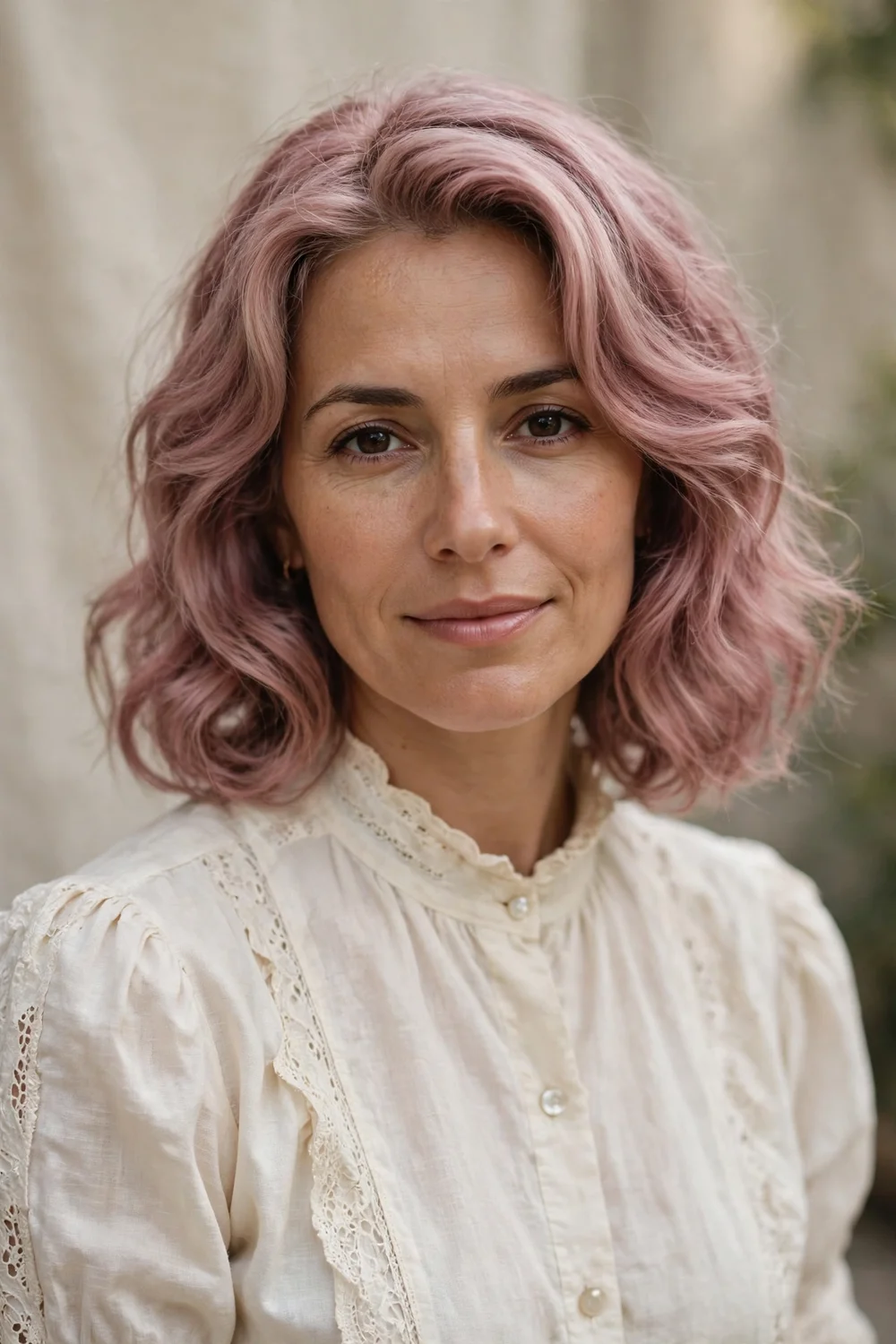
Dusty rose pink has a muted, vintage feel, like a pink that has already been softened by sunlight. The formula mixes pink with a beige or gray-beige base to mute the saturation, which gives it an antique, understated character. It works on level 7 to 9 hair and does not demand a perfectly white canvas, since the muted tone hides minor base inconsistencies. Fade time runs three to five weeks, and it fades into a warm, smoky beige-pink that still looks intentional.
Layered waves suit dusty rose best, because the layers break up the muted tone and add dimension. It flatters medium skin tones and anyone who finds bright pinks too loud. Ask your colorist for a dusty rose with a beige-pink base rather than a clear pink, so the vintage cast comes through. This is also a smart choice if you want pink that pairs with a neutral wardrobe, since the muted tone blends with beiges, grays, and blacks.
Try this: pair it with a layered cut so the muted tone reads dimensional instead of flat.
Difficulty: Medium · Cost: $$$ (salon)
7. Rose Gold

Rose gold blends pink with warm golden metallic reflect for a luminous, jewelry-like finish. The formula layers pink over a gold base, which is why it flatters warm and neutral skin tones so well and why it works well as balayage on a brunette or dark blonde base. It needs lightening to around level 8 or 9 for full effect, though the gold tones are more forgiving of warmth than pure pinks. Expect four to six weeks of wear before it settles into a softer golden pink.
This shade gets its glow from the metallic reflect, so ask your colorist for a rose gold with a true metallic additive rather than a flat pink-gold mix. It looks best in long waves or balayage placements where the gold and pink can shift in the light. Maintenance sits in the middle: a color-safe shampoo and a gold-rose gloss at home extend the shine. It is one of the most requested pink-adjacent shades at salons, so most colorists know the formula well.
Rose gold consistently ranks among the most requested pink-adjacent shades, and these best hair colors for women show why warm metallic tones suit so many complexions.
Try this: ask for rose gold balayage if you want the glow with minimal root maintenance.
Difficulty: Medium · Cost: $$$ (salon)
8. Champagne Pink

Champagne pink mixes gold and pink pigments into a shade that sits halfway between pink and blonde. The result is discreet and modern: pink enough to notice, blonde enough to blend into everyday life. It works on level 8 to 10 hair and functions almost like a creative toner rather than a fashion color. Fade time is three to five weeks, and it fades toward a warm blonde with a pink memory, which keeps the grow-out soft.
This is a strong pick for blondes who want a change without going full fantasy. It suits fair to light skin tones and anyone who needs a work-friendly color. Ask your colorist for a champagne formula with equal parts gold and pink, not a pink with a hint of gold, so the balance stays right. Because the pigment is light, the upkeep is simple: a weekly color-depositing mask or a pink-gold gloss keeps it lively.
Try this: try it as a toner refresh at your regular blonde appointment to test pink with no extra visits.
Difficulty: Low · Cost: $$ (salon)
9. Strawberry Pink
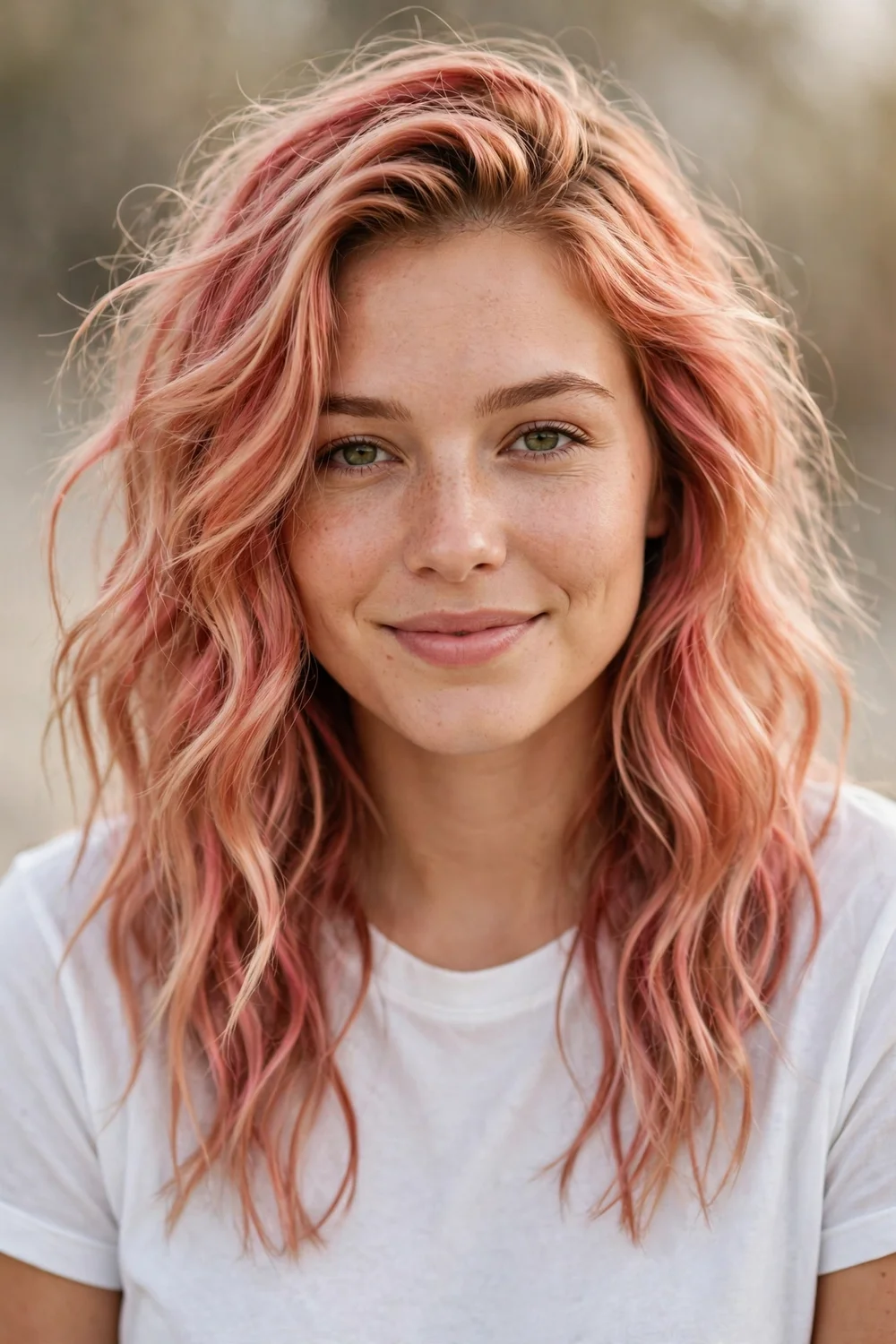
Strawberry pink blends pink with warm red-blonde undertones for a sweet, sun-kissed result. The formula sits between pink and strawberry blonde, which makes it one of the most natural-looking shades on this list. It works on level 7 to 9 hair and is forgiving of residual warmth, since the shade already leans warm. Expect four to six weeks of visible color, fading toward a warm strawberry blonde that still looks like a real hair color.
Beachy waves are the natural pairing, because the texture reinforces the sun-kissed feel. It flatters fair to medium skin tones with warm undertones and suits anyone who wants pink that reads as a real hair color rather than a fantasy shade. Ask your colorist for a strawberry pink with red-gold warmth rather than a cool pink base. The warmth also makes it one of the easier pinks to transition out of, since it fades into a shade close to natural.
Try this: style it with loose beach waves and a salt spray to lean into the sun-kissed look.
Difficulty: Medium · Cost: $$$ (salon)
10. Peach Pink
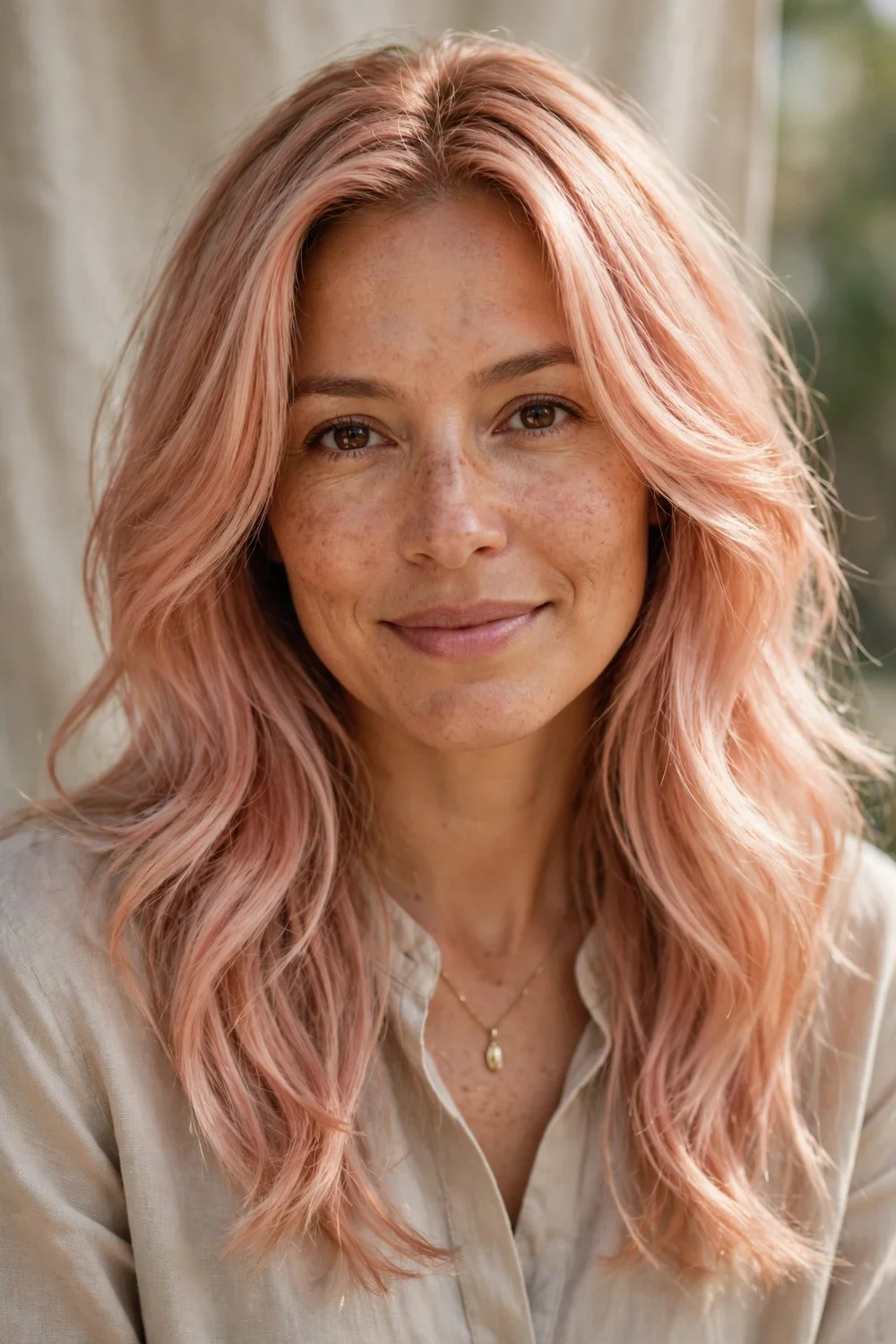
Peach pink is a warm pastel with a peachy glow, and it is one of the easiest pinks for blondes to try. The formula mixes pink with orange-gold tones, so it needs only a level 8 or 9 base and welcomes the warmth that other pastels fight. Fade time runs two to four weeks, washing down toward a warm pale blonde. Because it starts from a light base, the grow-out is gentle and the transition back to blonde is painless.
A soft lob or shoulder-length cut shows peach pink at its best, keeping the warm tone neat and current. It flatters fair skin tones and anyone with warm undertones, and it is especially kind to natural blondes making their first color change. Ask your colorist for a peach pink with balanced orange and pink pigment, not a straight orange, so it reads pink first. A color-depositing peach or coral mask keeps the tone fresh between visits.
Try this: use a coral or peach color-depositing mask weekly to stop the shade from washing out to plain blonde.
Difficulty: Medium · Cost: $$$ (salon)
11. Coral Pink

Coral pink brings pink-orange energy with a bright, summery punch. The formula balances true pink with a clear orange, so it reads lively without tipping fully into orange territory. It needs a lightened base around level 8 or 9 and holds well for four to six weeks because the warm pigment grips the hair. The fade moves through a softer peach-pink before washing out, which keeps it attractive at every stage.
Long straight hair shows coral pink at full intensity, since the smooth surface keeps the color even and bright. It flatters warm and medium skin tones best, and it suits anyone who wants a shade with real energy. Ask your colorist for a coral formula with more pink than orange, so it stays in the pink family. Sun exposure fades coral fast, so a UV-protectant spray or a hat on bright days will protect the investment.
Try this: wear a UV-protectant spray outdoors, since sun fades coral pink faster than any wash does.
Difficulty: Medium · Cost: $$$ (salon)
12. Blorange

Blorange mixes pink, gold, and red into a rosy-orange hybrid that made waves as a trend shade. The formula is a true blend rather than a layering, so the result shifts between pink and copper depending on the light. It works on level 7 to 9 hair and forgives warmth completely, since warmth is part of the recipe. Expect four to six weeks of wear, fading toward a soft coppery pink that still looks deliberate.
Wavy, mid-length hair shows blorange best, because the movement lets the pink and copper tones take turns. It flatters warm complexions and anyone who finds both pink and orange appealing but cannot choose. Ask your colorist for a blorange with visible pink and red in the mix, not just copper with a pink name. Because the warm pigment is strong, it can be stubborn to remove completely, so treat it as a medium-term commitment.
Try this: commit to it for a season, since the warm pigment takes effort to fully remove later.
Difficulty: Medium · Cost: $$$ (salon)
13. Mauve Pink
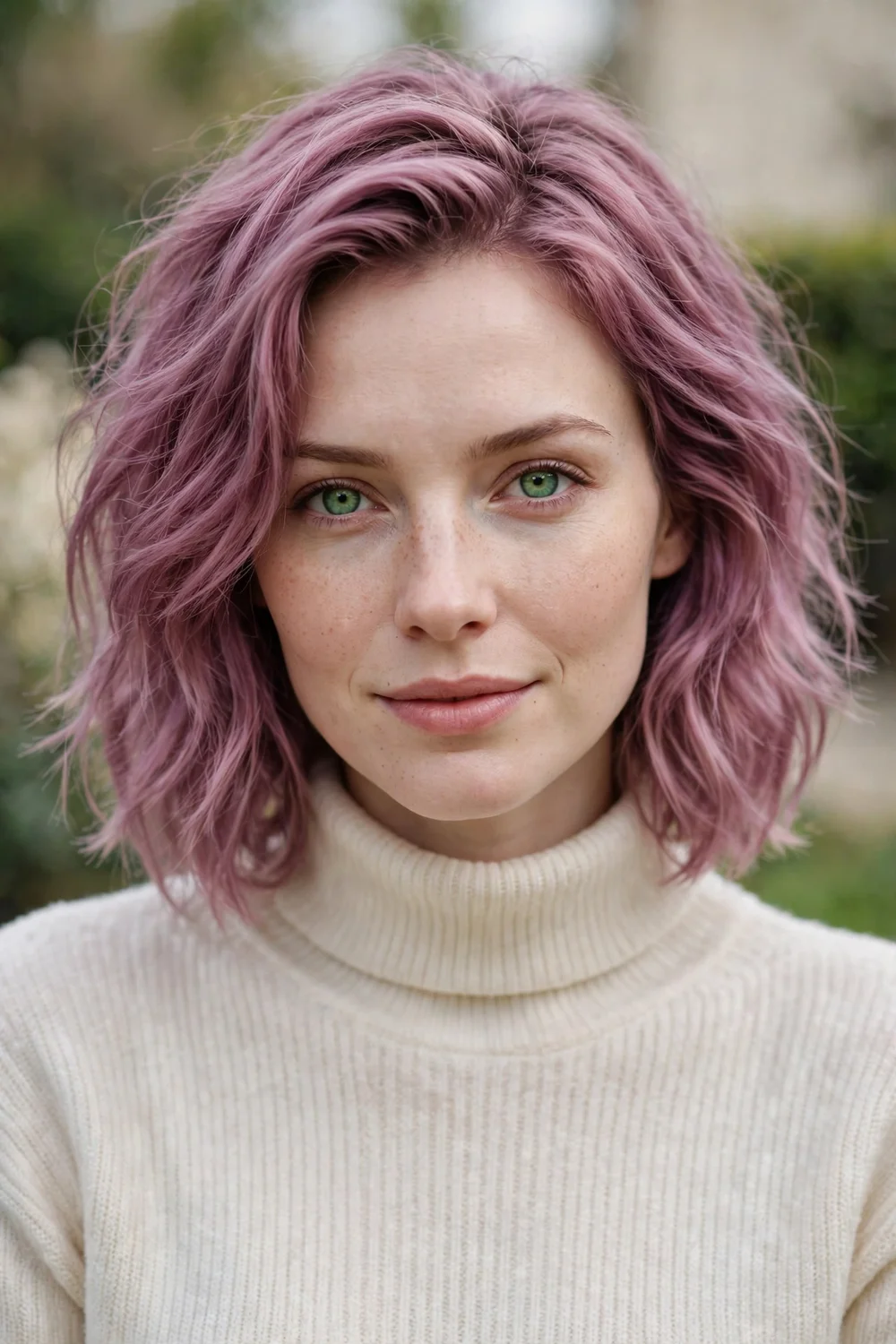
Mauve pink is a dusty purple-pink with a sophisticated, muted finish. The formula pulls pink toward violet with a gray-beige undertone, which keeps it calm and wearable in professional settings. It works on level 7 to 9 hair and hides base imperfections well, since the muted tone does not demand a perfect canvas. Fade time runs three to five weeks, moving toward a soft lavender-gray that still looks like a real color.
Bobs and lobs suit mauve pink best, because the neat shape matches the polished tone. It flatters cool and neutral skin tones and anyone who wants pink with a grown-up edge. Ask your colorist for a mauve with a true violet lean rather than a pink with purple on top, so the sophistication reads clearly. It pairs well with cool-toned wardrobes and silver jewelry, since the violet undertone echoes those palettes.
Try this: pair it with a sleek bob so the muted tone reads polished rather than dull.
Difficulty: Medium · Cost: $$$ (salon)
14. Hot Pink

Hot pink is the classic bold choice: vivid, saturated, and impossible to ignore. The formula uses a high-pigment direct dye with no diluter, so the color goes on strong and stays strong. It needs a lightened base around level 8 or 9, but the heavy pigment covers minor base inconsistencies easily. Expect six to eight weeks of bold color, fading through softer pinks that still look intentional, and it will stain everything it touches for the first few washes.
Sleek straight styles show hot pink at maximum impact, since the smooth surface reflects the saturation evenly. It flatters deep and medium skin tones especially well, and it suits anyone ready for a real statement. Ask your colorist for a true hot pink with no purple lean, so it reads clean and bright. Cold-water washes and a dedicated dark towel are non-negotiable with this shade, because the transfer is real.
Try this: keep a dark towel and dark pillowcases ready, since hot pink transfers for the first several washes.
Difficulty: Medium · Cost: $$$ (salon)
15. Neon Pink

Neon pink is the highest-intensity option on this list: fluorescent, electric, and unapologetic. The formula is a UV-reactive direct dye with maximum pigment load, and it literally glows under blacklight. It needs a near-white base, level 10, to reach full fluorescence, and it holds for six to eight weeks because the pigment is so concentrated. The fade moves through hot pink to a bright cotton candy, which means even the fade looks bold.
Short cuts like pixies, bobs, and undercuts carry neon pink best, since the compact shape keeps the intensity focused instead of overwhelming. It suits fair to medium skin tones and anyone with the confidence to match the color. Ask your colorist for a true neon formula rather than a brightened hot pink, since only neon dye gives the fluorescent pop. This shade demands commitment: removal takes multiple sessions, so be sure before you book.
Short neon looks lean on the cut as much as the color, so these short shaggy pixie haircuts offer more ways to wear the shape while you decide on length.
Try this: try it on a pixie or undercut first, since short neon grows out faster if you change your mind.
Difficulty: High · Cost: $$$ (salon)
16. Magenta

Magenta is a cool, deep pink with a purple lean that reads dramatic from every angle. The formula mixes pink with violet pigment, which gives it depth that pure pinks lack. It needs only a level 6 to 8 base to show up richly, since the dark pigment covers well, and it holds for six to eight weeks. The fade moves through a softer berry pink before washing out, and the deeper start means the fade looks good for longer than pastel fades do.
This shade flatters pale through deep complexions, with cool undertones especially. Long waves or sleek straight hair both show the violet depth well. Ask your colorist for a magenta with a true cool base rather than a warmed-up pink, so the dramatic tone stays intact. Cold-water washes are a must, because the violet-pink pigment runs readily in hot water. It also stains light fabrics, so plan your light towels accordingly.
Try this: rinse with the coolest water you can stand, since hot water pulls the violet tone out fast.
Difficulty: Medium · Cost: $$$ (salon)
17. Fuchsia

Fuchsia is magenta’s brighter, punchier sibling: a vivid purple-pink that pops in any light. The formula carries more pink than magenta does, which gives it a livelier, less moody character. It works on level 7 to 9 hair and holds for six to eight weeks, fading through bright pink toward a soft rose. The concentrated pigment means strong staining potential, so dark towels and pillowcases are part of the package for the first week.
Waves with lighter pink ends show fuchsia at its best, since the gradient adds dimension to the vivid base. It flatters cool to neutral skin tones and suits anyone who wants bold without going neon. Ask your colorist for a fuchsia with a pink-forward formula, not a purple-forward one, to keep the brightness. A weekly color-depositing mask in a matching fuchsia keeps the ends from washing out ahead of the roots.
Try this: ask for lighter pink ends over the fuchsia base to add dimension without extra maintenance.
Difficulty: Medium · Cost: $$$ (salon)
18. Metallic Pink

Metallic pink adds reflective, liquid-shine pigment to pink for a polished, almost chrome finish. The formula uses metallic or foil-reflect additives over a pink base, which is why the color seems to glow from within. It needs a lightened base around level 9 and holds for four to six weeks, though the metallic reflect fades faster than the pink itself. The fade leaves a soft pink underneath, so the color never looks unfinished as it wears off.
Blunt cuts show metallic pink best, since the even edge creates one smooth reflective surface. It suits fair to medium skin tones and anyone who loves a bold, fashion-forward finish. Ask your colorist for a metallic pink with a true shine additive rather than a flat pink with a gloss, because the reflect is the whole point. Shine serums and smoothing treatments keep the reflective finish alive and glowing between appointments.
Try this: finish styling with a shine serum to keep the metallic reflect catching light all day.
Difficulty: High · Cost: $$$ (salon)
19. Pink Balayage
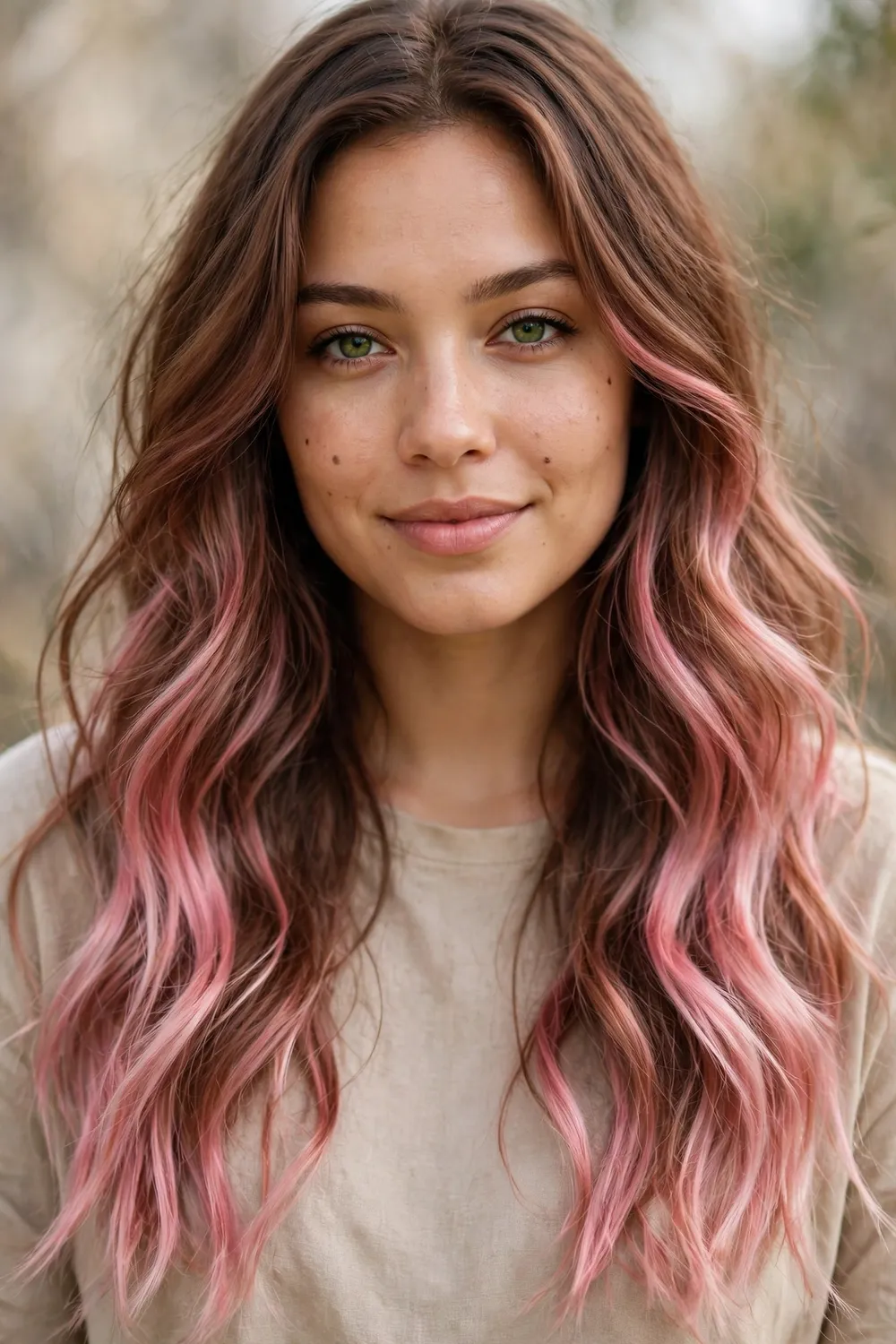
Pink balayage hand-paints pink through the mid-lengths and ends while keeping your natural base near the roots. The technique creates soft, blended dimension rather than a solid wall of color, which is why it works over both brown and blonde bases. Only the painted sections need lightening, so the appointment is gentler on your hair than a full-head bleach. Grow-out is graceful, with no harsh line, and the pink refresh can stretch to eight or twelve weeks.
This is the lowest-maintenance way to wear pink, and it suits anyone who cannot visit the salon every month. It flatters every skin tone, since your colorist can mix the pink to match your exact undertones. Ask for hand-painted pink balayage with a melted transition, not choppy foiled highlights, so the blend stays soft. A pink color-depositing mask on the lightened sections keeps the tone bright and fresh between appointments.
If you are torn between techniques, this balayage vs highlights guide compares placements so you can pick the right one for pink.
Try this: ask for the pink concentrated through the ends with a soft melt, so regrowth stays invisible.
Difficulty: Medium · Cost: $$$ (salon)
20. Pink Ombré

Pink ombré creates a smooth root-to-tip gradient, from blonde or lilac at the top melting into pink through the ends. The technique differs from balayage in its visible transition: ombré is a deliberate gradient, while balayage is a scattered blend. It works on medium to long hair, where the gradient has room to develop, and the base can be blonde, light brown, or even silver. The ends carry the most pigment, so trims naturally remove the most faded color over time.
This placement suits anyone who wants a modern, clearly styled color with built-in dimension. It flatters fair to medium skin tones, and the gradient draws the eye downward, which lengthens the look of the hair. Ask your colorist for a melted ombré with no visible line between the base and the pink. The ends will fade fastest, so a color-depositing conditioner focused on the last few inches keeps the gradient crisp.
Try this: concentrate color-depositing conditioner on the ends, since they fade fastest in an ombre.
Difficulty: Medium · Cost: $$$ (salon)
21. Pink Money Piece
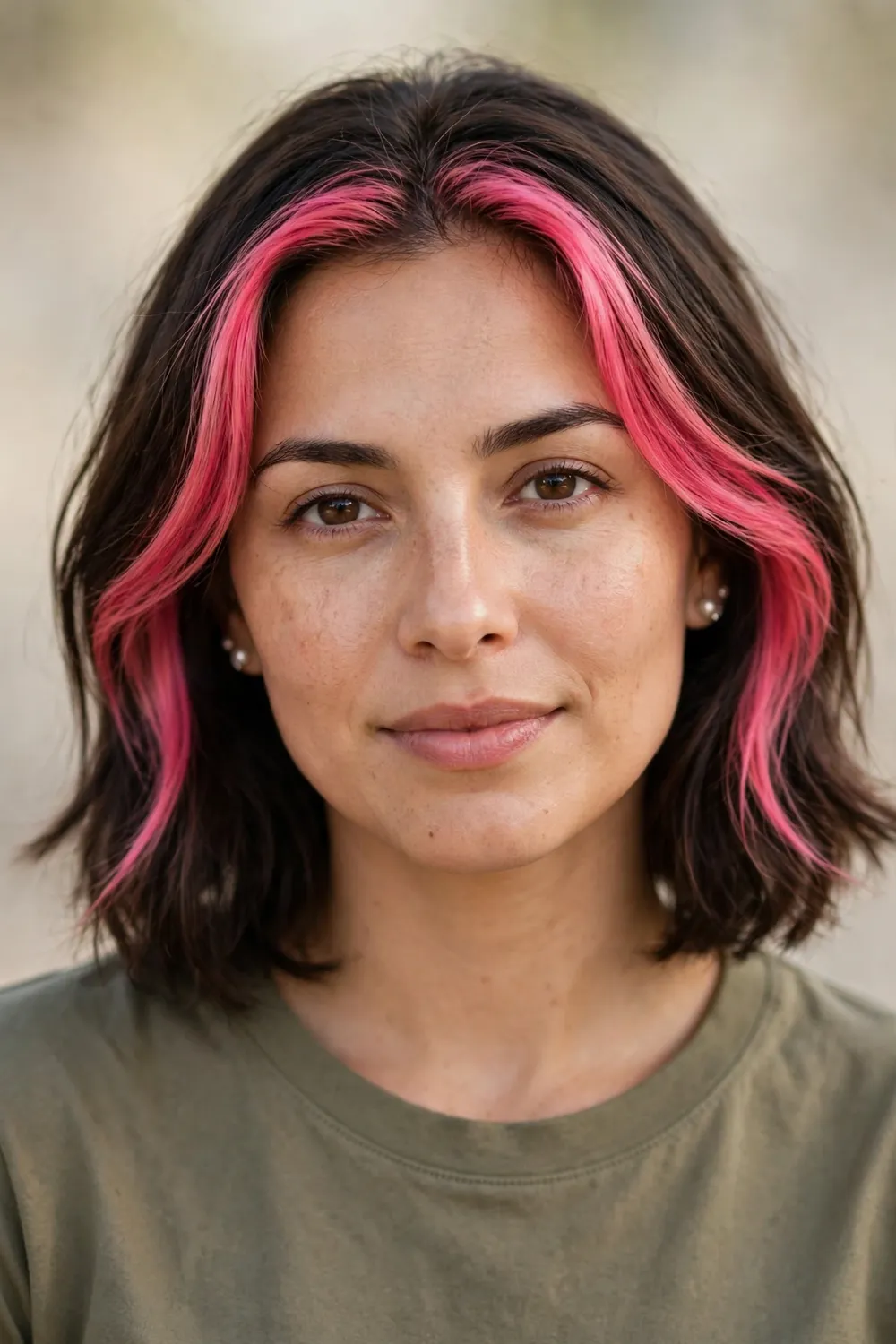
The pink money piece puts face-framing pink highlights around the front hairline for instant brightness. Only a small section of hair gets lightened and colored, so the appointment is quick and the cost stays low. The placement brightens the complexion like a frame around the face, and it works over any base color, including dark brown, since only the front pieces need lightening. Grow-out is soft, and a refresh every six to eight weeks keeps it crisp.
This is the lowest-commitment pink on this list, ideal for anyone testing fashion color for the first time. It flatters every skin tone, because the pink sits right against the face where your colorist can match it to your undertones. Ask for bold, visible front pieces rather than subtle ones, since the money piece only works when you can see it. The small amount of colored hair also means minimal staining and easy grow-out.
Try this: go bolder on the front pieces than feels safe, since the money piece needs visibility to work.
Difficulty: Low · Cost: $$ (salon)
22. Pink Babylights

Pink babylights weave ultra-fine, delicate pink strands through the hair for subtle dimension. The technique uses tiny weaves rather than chunky sections, so the pink reads as a whisper of color rather than a statement. It works best on blonde or light brown bases where the fine pink strands can show, and the grow-out is nearly invisible. The effect lasts six to ten weeks before the fine strands fade into the base.
This placement suits anyone who wants pink that coworkers might not even name as color. It flatters fair to light skin tones and anyone with fine hair, since the delicate strands add dimension without weight. Ask your colorist for fine pink babylights with a soft toner, not bold pieces, so the subtlety stays intact. Maintenance is minimal: a gentle color-safe shampoo and an occasional clear gloss keep the strands visible.
Try this: ask for the babylights concentrated around the crown and part, where they catch the most light.
Difficulty: Medium · Cost: $$$ (salon)
23. Chunky Pink Highlights
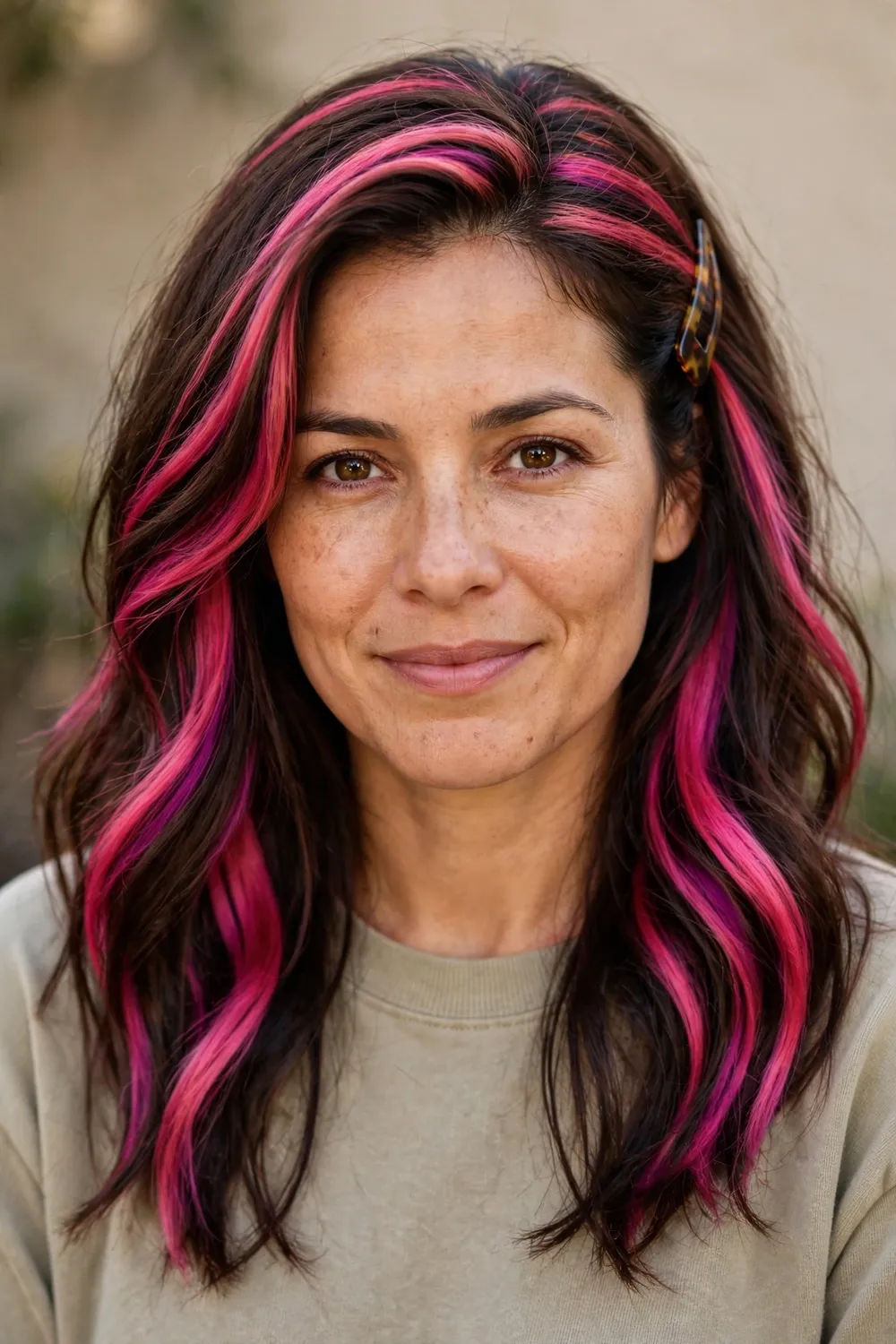
Chunky pink highlights bring back ’90s-style striped color in dark pink or magenta. The technique uses wide, visible sections rather than blended foils, so each stripe reads clearly against the base. It works best on dark brown or black bases, where the contrast makes the pink pop, and only the highlighted sections need lightening. The bold stripes hold for six to eight weeks, and the grow-out has a deliberate, graphic look rather than a messy one.
This placement suits anyone who loves nostalgic ’90s trends and wants dimension with real attitude. It flatters medium to deep skin tones, and the dark base keeps the overall look nicely grounded. Ask your colorist for wide, evenly spaced pink sections rather than thin foils, since the chunkiness is the point. The stripes fade at different rates than the base, so a weekly color-depositing mask keeps them even between appointments.
Try this: keep the stripes wide and evenly spaced so the retro effect reads clearly.
Difficulty: Medium · Cost: $$$ (salon)
24. Peekaboo Pink
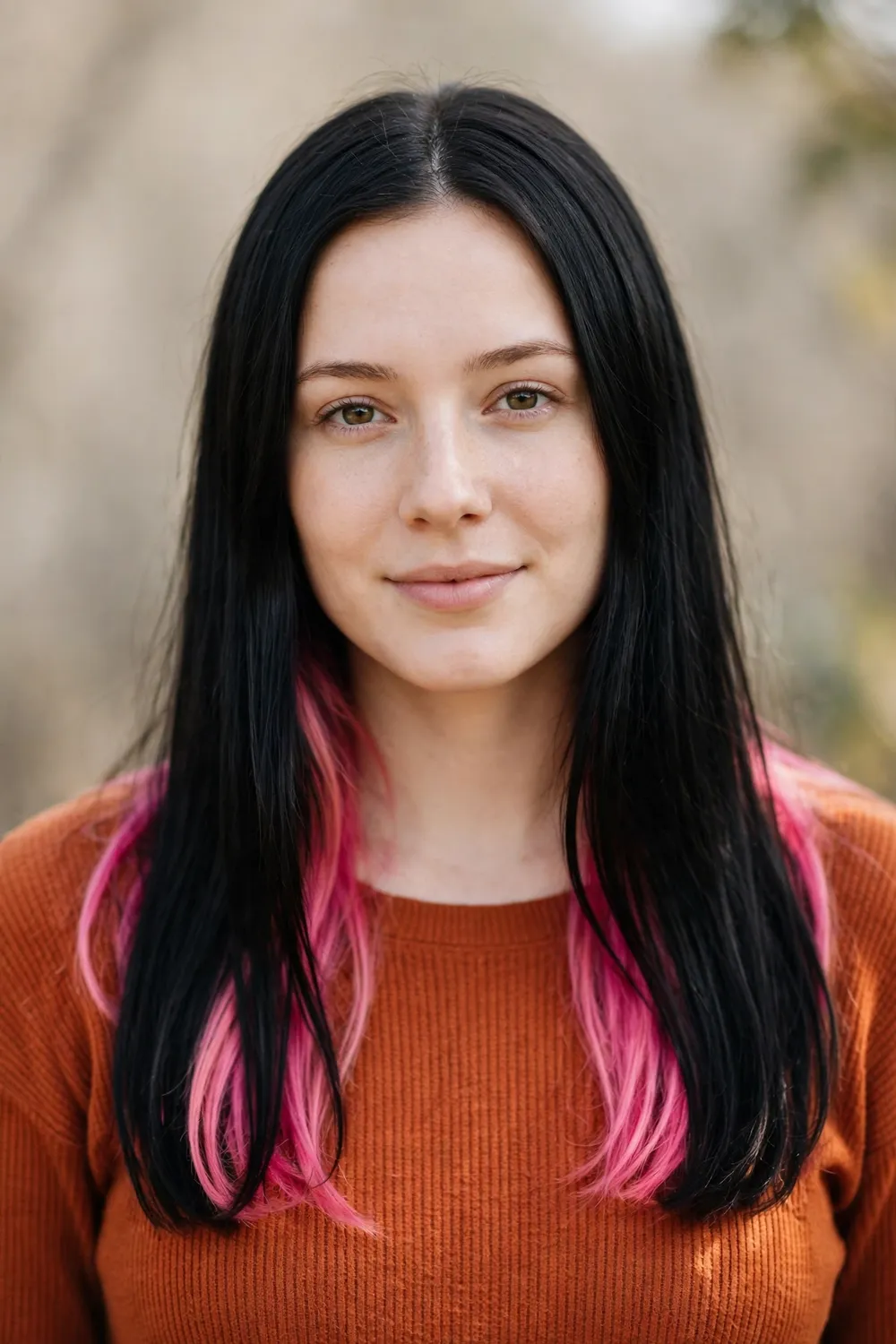
Peekaboo pink hides the color in the underlayer, revealed only when the hair moves or gets tucked behind an ear. The technique colors the bottom section while the top layer stays natural, so the pink appears and disappears with movement. It works on any base color and any hair length long enough to cover the underlayer. The hidden placement means professional settings stay safe, and the color refreshes every six to eight weeks.
This is the perfect placement for anyone who wants pink on their own terms. It suits every skin tone, since the visible amount is small and easy to match. Ask your colorist for a full underlayer in your chosen pink, not scattered pieces, so the reveal has real impact when it shows. Because the top layer protects the color from sun and washing, peekaboo pink fades slower than surface placements.
Try this: flip your part to the opposite side occasionally to show off the hidden color.
Difficulty: Low · Cost: $$ (salon)
25. Shadow-Root Pink
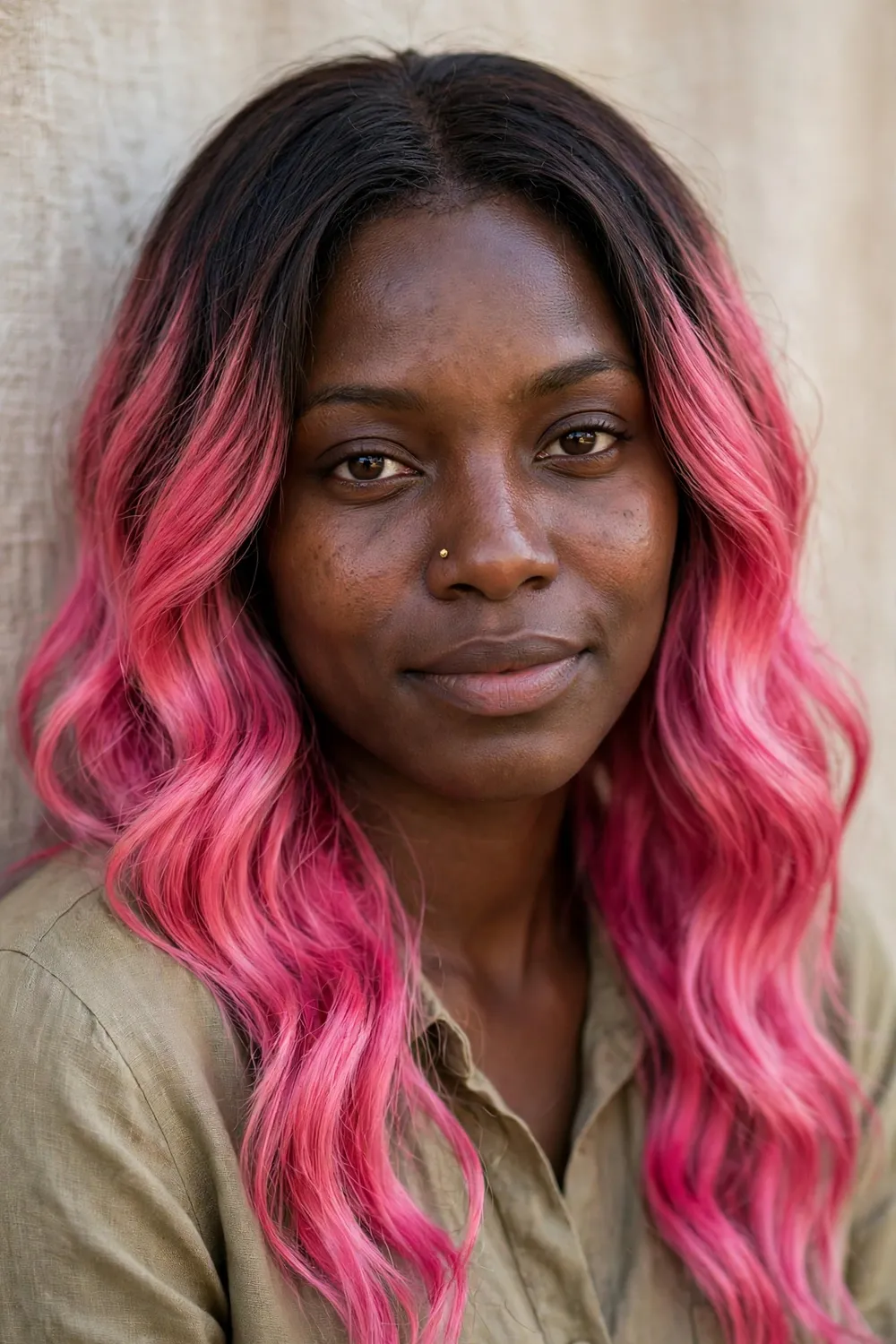
Shadow-root pink keeps the roots deliberately dark while the lengths go pink, creating a melted, lived-in transition. The technique applies a dark root color that blends into the pink, so regrowth looks intentional instead of neglected. It works on any base color and suits medium to long hair best, where the melt has room to develop. The dark roots mean touch-ups stretch to ten or twelve weeks, making this one of the most grow-out-friendly pinks.
This placement suits anyone who loves the pink look but hates the constant root-maintenance cycle. It flatters every skin tone, and the dark root adds welcome depth that makes the pink look richer. Ask your colorist for a shadow root that melts about two to three inches, not a harsh line, so the transition stays soft and natural. The roots stay natural-colored while only the faded pink lengths need refreshing.
The grow-out-friendly roots pair well with an easy cut, and these low maintenance shag haircuts for women keep the whole look effortless between appointments.
Try this: ask for the shadow root melted two to three inches so the grow-out looks deliberate.
Difficulty: Medium · Cost: $$$ (salon)
26. Gemini Split-Dye Pink

Gemini split-dye pink divides the hair into two halves: one side blonde, one side bubblegum pink. The technique parts the hair down the middle and colors each side separately for a graphic, high-contrast result. Each side needs its own maintenance plan, since the pink half fades faster than the blonde half. The look holds for four to six weeks before the pink side needs a refresh, and the center part keeps the divide crisp.
This placement suits anyone who wants an edgy, unmistakable look. It flatters fair to medium skin tones and works best on medium to long hair, where the two halves have room to show. Ask your colorist for a clean center part and an even bubblegum tone on the pink side. The blonde side can go lighter or darker to change the contrast, and the two sides can be styled together or separately for different effects.
Try this: keep the center part crisp with a tail comb, since a clean divide makes the look.
Difficulty: High · Cost: $$$ (salon)
27. Pink and Purple Duo
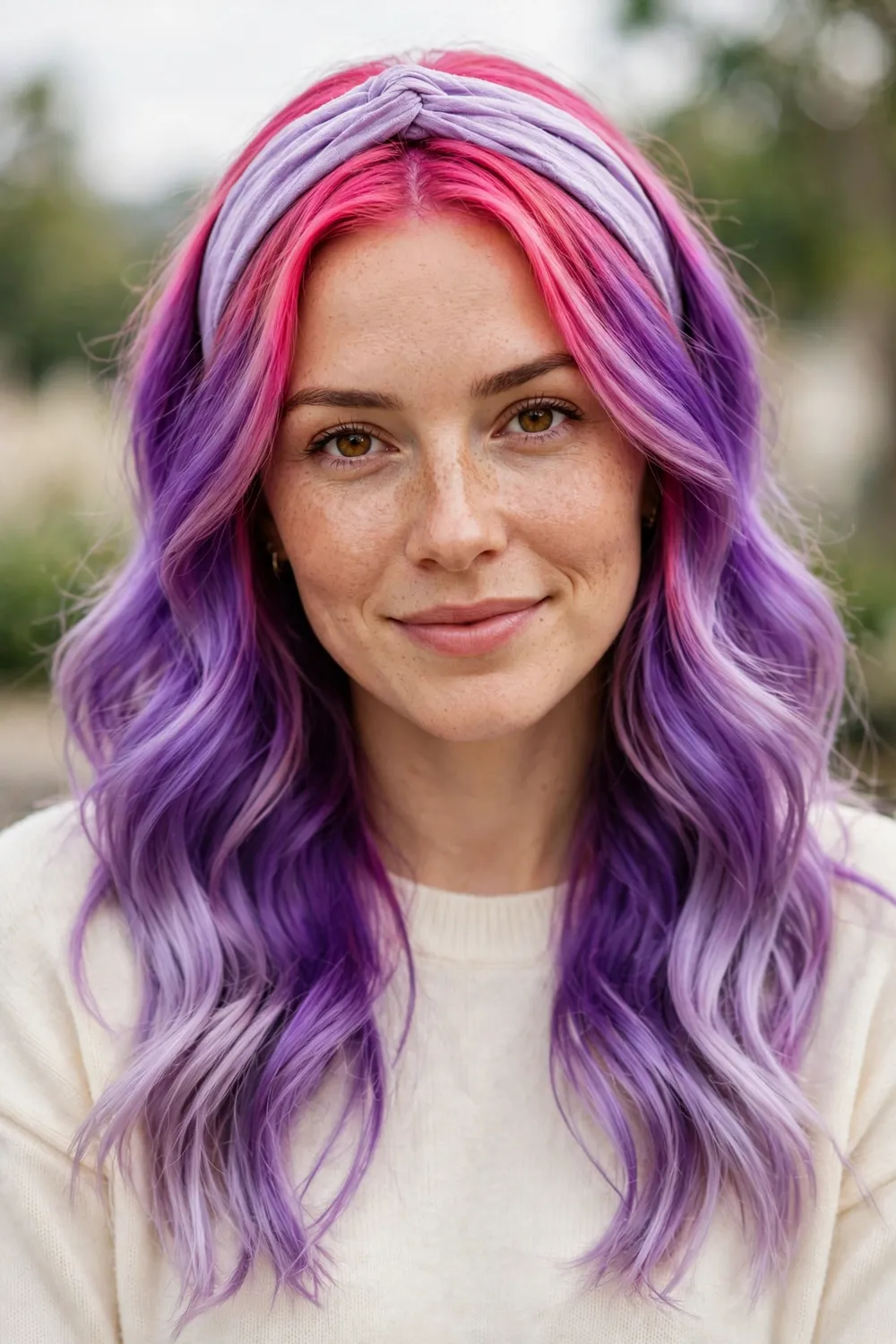
The pink and purple duo pairs pink with violet through color blocking, gradients, or lavender tips. The two colors sit next to each other on the color wheel, so they blend smoothly where they meet and create dimensional transitions. It works on lightened bases from level 7 to 10, and the purple sections tend to outlast the pink ones, so the balance shifts over time. Expect four to six weeks before one side needs refreshing.
Color-blocked panels or a pink-to-purple gradient both show this duo well, and it suits fair to medium skin tones with cool or neutral undertones. Ask your colorist to plan the fade: the pink will wash out faster, so starting the pink slightly deeper keeps the duo balanced longer. Lavender tips over a pink base are the lowest-commitment version, since the tips can be trimmed off if you tire of the combo.
Try this: start the pink slightly deeper than the purple, since pink fades faster and the duo stays balanced.
Difficulty: High · Cost: $$$ (salon)
28. Pink and Blue Duo

The pink and blue duo mixes pink with aqua, ice blue, or midnight blue for a cotton-candy or mermaid effect. The technique can be a root blend, a gradient, or alternating mermaid layers of hot pink, blue, and purple. Blue pigment is the most stubborn fashion color to remove, so this is a longer-term commitment than it looks. The pink fades first, usually in three to five weeks, while the blue lingers, so plan the refresh around the pink sections.
Mermaid layers show off this duo at its absolute best, with each color getting its own bold, visible panel. It suits fair to light skin tones and anyone ready for a true, head-turning fantasy look. Ask your colorist about eventual removal before you commit, since stubborn blue can take multiple sessions to fully lift. A gentle sulfate-free, cool-water routine keeps both colors bright and saturated for as long as possible.
Try this: ask about blue removal before committing, since it takes multiple sessions to fully lift.
Difficulty: High · Cost: $$$ (salon)
At a Glance: 28 Pink Shades and Placements Compared
| Shade or placement | Best for | Fade speed | Upkeep |
|---|---|---|---|
| Pastel Pink | First-time pink, romantic looks | Fast, 2 to 4 weeks | Color-depositing conditioner weekly |
| Baby Pink | Editorial, event looks | Fastest, 1 to 3 weeks | Minimal washing, cool water |
| Cotton Candy Pink | Playful color lovers | Fast, 3 to 5 weeks | Sulfate-free shampoo, cool rinses |
| Bubblegum Pink | Curls and short bobs | Medium, 4 to 6 weeks | Dark towels, weekly color mask |
| Blush Pink | Subtle first venture into color | Fast, 2 to 4 weeks | Gloss refresh every few weeks |
| Dusty Rose Pink | Vintage, understated style | Medium, 3 to 5 weeks | Color-safe shampoo, few washes |
| Rose Gold | Warm skin tones, balayage fans | Medium, 4 to 6 weeks | Gold-rose gloss at home |
| Champagne Pink | Blondes testing pink | Medium, 3 to 5 weeks | Weekly color-depositing mask |
| Strawberry Pink | Natural-looking warm color | Medium, 4 to 6 weeks | Standard color-safe routine |
| Peach Pink | Blondes, warm undertones | Fast, 2 to 4 weeks | Coral or peach color mask weekly |
| Coral Pink | Summery, high-energy looks | Medium, 4 to 6 weeks | UV protection outdoors |
| Blorange | Warm complexions, trend lovers | Medium, 4 to 6 weeks | Warm-pigment color mask |
| Mauve Pink | Professional settings | Medium, 3 to 5 weeks | Violet-toned color mask |
| Hot Pink | Bold statements | Slow, 6 to 8 weeks | Cold-water washes, dark towels |
| Neon Pink | Maximum impact, short cuts | Slow, 6 to 8 weeks | Cold water, plan removal early |
| Magenta | Pale to deep complexions | Slow, 6 to 8 weeks | Cold-water washes |
| Fuchsia | Cool and neutral undertones | Slow, 6 to 8 weeks | Matching fuchsia color mask |
| Metallic Pink | Fashion-forward, blunt cuts | Medium, 4 to 6 weeks | Shine serums, smoothing treatments |
| Pink Balayage | Low-maintenance pink | Slow, 8 to 12 weeks | Color mask on lightened sections |
| Pink Ombré | Medium to long hair | Medium, ends fade first | Conditioner focused on ends |
| Pink Money Piece | Testing pink, low commitment | Medium, 6 to 8 weeks | Quick salon refresh |
| Pink Babylights | Subtle dimension lovers | Slow, 6 to 10 weeks | Occasional gloss |
| Chunky Pink Highlights | Dark bases, retro style | Slow, 6 to 8 weeks | Color-depositing mask |
| Peekaboo Pink | Work-safe hidden color | Slow, 6 to 8 weeks | Standard color-safe routine |
| Shadow-Root Pink | Grow-out-friendly color | Slow, 10 to 12 weeks | Refresh pink lengths only |
| Gemini Split-Dye Pink | Edgy, graphic looks | Medium, 4 to 6 weeks | Refresh pink side regularly |
| Pink and Purple Duo | Two-tone dimension | Medium, 4 to 6 weeks | Refresh pink side more often |
| Pink and Blue Duo | Fantasy, mermaid looks | Uneven, blue outlasts pink | Refresh pink, plan blue removal |
How to Choose Your Pink
Start with your skin’s undertone. Cool undertones pair best with blush, mauve, magenta, and fuchsia, since the blue-violet lean matches the skin. Warm undertones suit peach, coral, rose gold, strawberry, and blorange, where the golden warmth echoes your complexion. If you are unsure, look at the veins on your wrist: blue or purple veins suggest cool undertones, green veins suggest warm ones, and a mix means neutral skin that can wear either family.
Next, consider your base color and how much lightening you will accept. Pastels and neons need a very light base, usually level 9 or 10, which means bleach for anyone with medium or dark hair. Deep shades like magenta, hot pink, and chunky highlights show well on level 6 to 8 hair with less lightening. Placement matters too: balayage, money piece, and peekaboo pink let brunettes wear pink with only localized lightening, while full-head pastels demand the most commitment.
Finally, be honest about maintenance. Pastels fade in two to four weeks and need regular refreshes or color-depositing products at home. Vivid shades like hot pink and magenta hold for six to eight weeks but stain fabrics. Low-maintenance placements like shadow root and balayage stretch appointments to ten or twelve weeks. Pick the combination of shade, base, and placement that fits the schedule and budget you will actually keep.
How to Care for Pink Hair
Washing. Pink fades faster than any other fashion color because the pigment molecules are large and wash out easily. Wash with cool or lukewarm water, never hot, and stretch washes to two or three times a week with dry shampoo in between. A sulfate-free, color-safe shampoo keeps the cuticle closed so the pigment stays put longer.
Color maintenance. A color-depositing mask or conditioner in a matching pink, used once a week, pushes the tone back up without a salon visit. Pastels and mid-tones benefit most from this, since they fade the fastest. For vivid shades, a dedicated color-depositing product keeps the saturation even as the weeks pass. Sleep on dark pillowcases and use dark towels for the first week, since fresh pink transfers easily.
Protection. Sun, heat tools, and chlorine all strip pink faster than normal wear. Use a UV-protectant spray before long days outdoors, a heat protectant before any hot tool, and a swim cap or pre-swim rinse before pools. Deep-condition weekly, since lightened hair underneath the pink is more fragile and needs the extra moisture to hold color well.
Frequently Asked Questions
Does pink hair require bleaching first?
Most pink shades need some lightening first. Pastels, baby pink, and neon pink need a very light base, around level 9 or 10, to show up true to tone. Deeper shades like magenta, hot pink, and fuchsia work on level 6 to 8 hair with less lightening. Placement techniques like money piece, peekaboo, and balayage only lighten the colored sections, so dark hair can wear pink without a full-head bleach. A strand test at the salon shows exactly what your base needs.
How long does pink hair color last?
It depends on the shade depth and your routine. Pastels like baby pink fade in one to four weeks, mid-tones like bubblegum and rose gold last four to six weeks, and vivid shades like hot pink and magenta hold for six to eight weeks. Placement matters too: shadow root and balayage stretch to ten or twelve weeks because the grow-out stays graceful. Cool-water washes, sulfate-free shampoo, and a weekly color-depositing mask extend every shade.
What shade of pink suits my skin tone best?
Cool undertones suit blush, mauve, magenta, and fuchsia, where the blue-violet lean matches the skin. Warm undertones suit peach, coral, rose gold, strawberry, and blorange, where golden warmth echoes the complexion. Neutral undertones can wear either family. Deep skin tones look striking in magenta, fuchsia, and hot pink, while fair skin flatters pastels and baby pink. When in doubt, bring reference photos to your colorist and ask what works with your undertones.
How do I keep pink hair from fading so fast?
Wash less often, with cool water and a sulfate-free, color-safe shampoo. Use a color-depositing mask or conditioner in a matching pink once a week to push the tone back up. Protect your hair from sun, heat tools, and chlorine, since all three strip pink fast. Dry shampoo between washes stretches the time between full shampoos. Pastels will always fade fastest, so expect a refresh every two to four weeks if you want a pastel tone to stay visible.
Can I try pink without dyeing my whole head?
Yes, several placements give you pink with minimal commitment. A money piece colors only the face-framing front sections, peekaboo pink hides color in the underlayer, and balayage paints pink through just the mid-lengths and ends. Blush pink as a gloss over blonde is another low-commitment option that fades quietly. All of these grow out gracefully and cost less than a full-head color service.
Final Thoughts
There is a pink for every skin tone, base color, and maintenance level. Pick a shade that matches your undertones, a placement that fits your commitment, and a care routine you will actually follow. With the right choice, pink stays bright and wearable instead of becoming a chore.

