

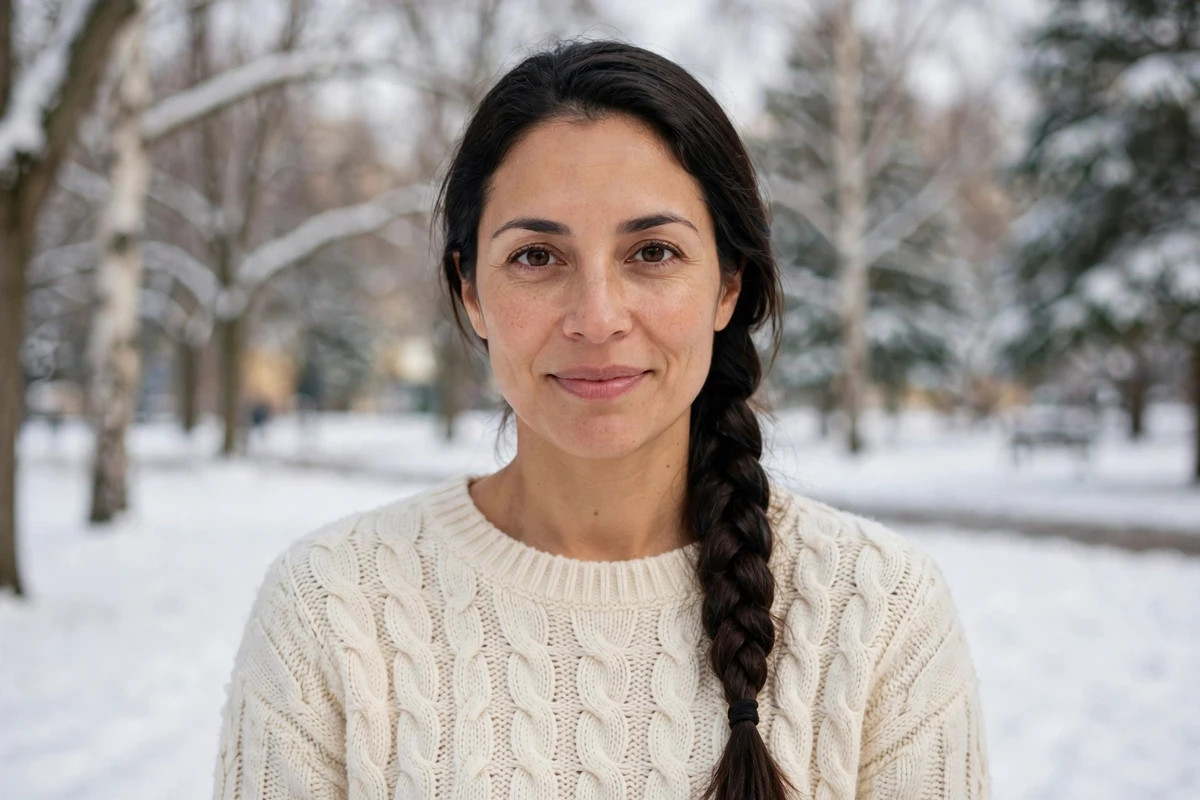
Winter asks a lot from your hair. A style that looks great indoors can fall apart the moment you pull on a beanie, and long hair left loose tangles into scarves by lunchtime. The good news is that the most practical winter hair styles are also the easiest: braids, buns, and twists that tuck ends away and hold their shape through the whole day.
This list gathers 30 winter hair styles picked for real cold-weather life. Every one survives hats and scarves, stands up to dry air and static, and works for a range of hair types. Pick the ones that fit your length, your texture, and the mornings you actually have.
Quick Takeaways
- Styles that secure the length, like braids and low buns, keep ends away from scarf friction and coat zippers.
- Low placements (nape buns, low ponytails) fit under beanies; high placements do not.
- Braids and twists double as protective styling, locking in moisture during the driest months.
- Static drops when hair is hydrated and contained, so winter favors updos over hair worn loose.
- A satin or silk lining inside hats cuts frizz and breakage from wool and acrylic.
1. Low Braided Ponytail

The low braided ponytail combines two winter-proof ideas: the polish of a ponytail and the security of a braid. Gather hair at the nape, secure it, then braid the length. The style sits flat against your back, so scarves slide over it without snagging, and the braid keeps the ends tucked away from dry air.
It works on medium to long hair of any texture. Keep the braid firm but not tight, and add a drop of oil to the ends before you start for extra protection.
Try this: braid slightly to one side so the tail clears your coat zipper.
Difficulty: Low · Cost: $ (DIY)
2. Side French Braid

A French braid swept over one shoulder is one of the most reliable winter hair styles for medium to long hair. Starting the braid near the opposite temple and working it across keeps the hairline neat, and pulling the finished braid gently apart (pancaking) adds soft fullness that balances chunky knits. Everything stays contained no matter how windy it gets.
This is also a smart overnight style: braid damp hair before bed and wake up to soft waves. A touch of cream on the front pieces tames flyaways around the face.
Try this: pancake the braid after finishing for a fuller look that still holds all day.
Difficulty: Low · Cost: $ (DIY)
3. Classic Dutch Braid

The Dutch braid weaves strands under instead of over, which makes the braid sit raised and defined along the scalp. For winter, that raised structure is a feature: the braid holds its shape even under a hat, and the clean sections resist the fuzzing that dry air causes. One braid down the back is the simplest version.
It suits straight, wavy, and lightly textured hair. If your hair is fine, rough up the texture slightly with a texturizing spray before braiding so the braid has something to grip.
Try this: rub a little texture spray into your palms before braiding fine hair.
Difficulty: Low · Cost: $ (DIY)
4. Double Braided Pigtails

Two braids, one on each side, keep hair evenly contained and balanced under winter layers. Double braids work especially well with beanies, since the part and the braid lines stay neat even when the hat compresses everything. Draping both braids forward over the shoulders also keeps them off wet coat collars.
This style suits most hair types and lengths past the shoulders. Keep the two braids symmetrical for a clean finish, or let them be slightly uneven for a more relaxed look.
Try this: pull both braids forward over your shoulders to keep them dry under a hooded coat.
Difficulty: Low · Cost: $ (DIY)
5. Double Dutch Braids into Curls

Braid Dutch-style from the crown to the nape, then leave the last few inches loose and curly. You get the security of braids where hats and scarves cause the most friction, plus the softness of curls at the ends. It is a good middle ground when you want your hair secured but not fully tied up.
Curl the loose ends with a wand or let them spring up naturally if your hair is textured. A light hold spray keeps the curls defined without crunch.
Try this: stop braiding at the nape and twist the loose ends around your finger to define them.
Difficulty: Medium · Cost: $ (DIY)
6. Double Fishtail Braids

The fishtail braid uses small sections crossed over in pairs, which creates a flat, intricate pattern that lies close to the head. That low profile is exactly what you want in winter: the braids slide under beanies without bulk and stay neat under scarves. The texture also reads more dressed-up than a basic three-strand braid.
Fishtails work best on medium to long hair with some grip. If your hair is very silky, braid with slightly damp hair or a light cream so the small sections stay put.
Try this: widen the finished fishtails by pulling the edges for a fuller, softer braid.
Difficulty: Medium · Cost: $ (DIY)
7. Chunky Pull-Through Braid
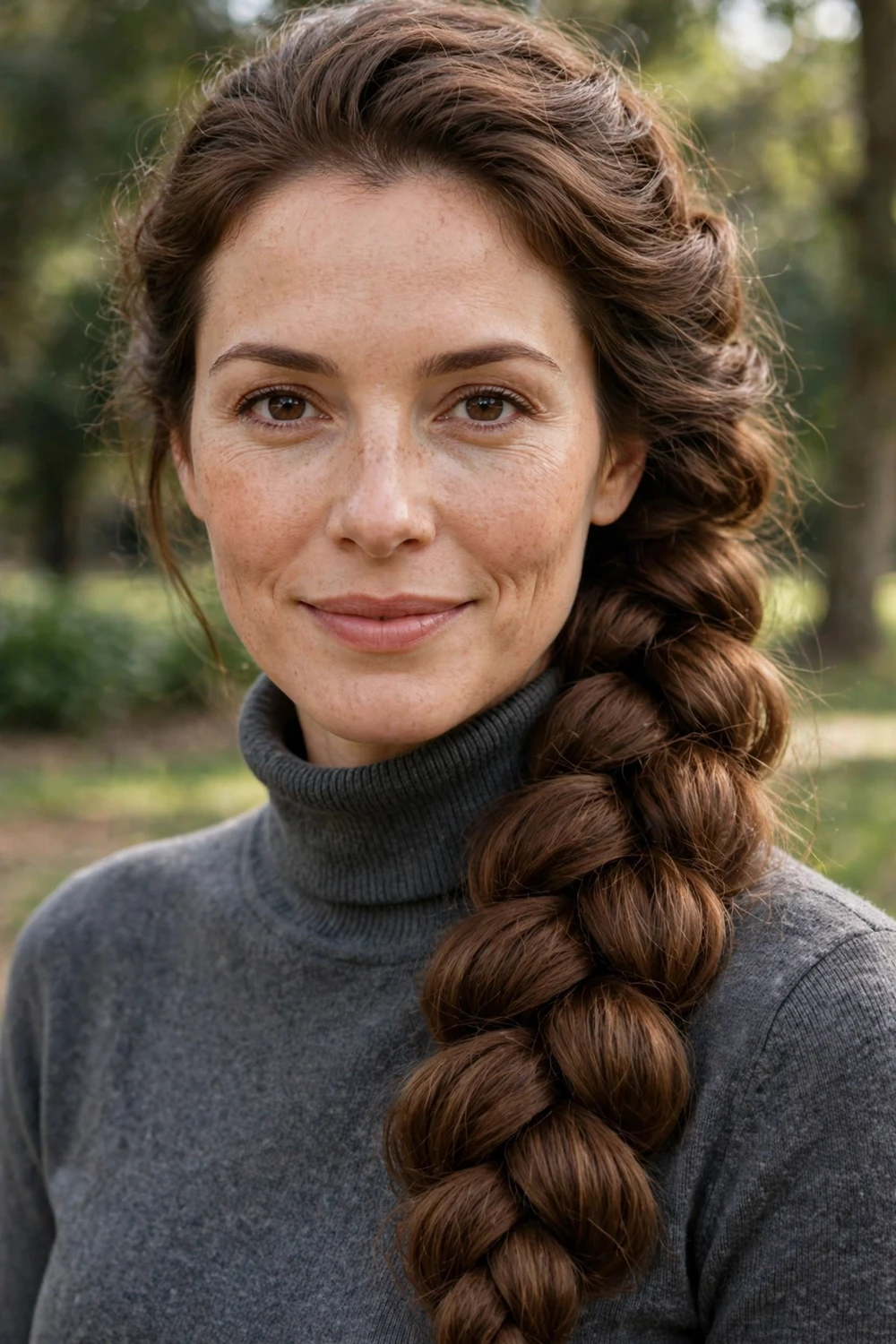
The pull-through braid is built from a series of small ponytails looped through each other with elastics, which creates a thick, bubble-like braid that looks far more complicated than it is. The structure is very stable, so it holds up to wind and hat removal, and the fullness stands out against winter coats.
It is a great option for thinner hair, since the technique creates volume you don’t have naturally. Use clear or hair-colored elastics so the mechanics stay invisible.
If you like braid tutorials, these fall hairstyle trends include more textured braid ideas that carry into winter.
Try this: use mini elastics in your hair color so only the braid texture shows.
Difficulty: Medium · Cost: $ (DIY)
8. Crown Braid

A crown braid wraps around the head like a headband, keeping the front hair completely out of your face while the rest stays loose. In winter, that front section is usually the first to frizz from hat elastic, so pinning it into a braid solves the problem at the source. It dresses up an everyday look with very little extra effort.
Braid from one ear to the other across the crown, pinning the end underneath. It works on shoulder-length and longer hair, straight or wavy.
Try this: braid the crown loosely so a headband or beanie can still sit comfortably over it.
Difficulty: Medium · Cost: $ (DIY)
9. Side French Twist Braid

This hybrid starts like a French twist along one side and feeds into a braid, giving you a style that reads romantic but stays put. The twist section lies flat against the scalp, which means it works under hats better than most side styles, and the braided tail keeps the ends protected.
It suits medium to long hair. Secure the twist with pins before it transitions into the braid, and finish the tail with a small elastic.
Try this: pin the twist section well, since it carries the whole style.
Difficulty: Medium · Cost: $ (DIY)
10. Twisted Low Bun

Twist two sections of hair around each other, coil them into a low bun, and pin. The twist adds texture that keeps the bun looking intentional even when it loosens slightly, and the nape placement means beanies go on and off without touching the style. For textured hair, this is also a protective style that keeps ends sealed and moisturized.
It works on nearly every hair type. If your hair is fine, tease the crown lightly before twisting so the bun has something to grip.
Try this: oil your ends before twisting for a protective style that also conditions.
Difficulty: Low · Cost: $ (DIY)
11. Sleek Low Bun

The sleek low bun is the workhorse of winter hair styles: smooth the hair back, twist it into a bun at the nape, and pin it flat. It sits completely below a beanie’s hemline, so you can put on a hat, take it off, and the style looks exactly the same. It also keeps hair clear of turtlenecks and statement necklaces.
A boar-bristle brush and a pea-sized amount of smoothing cream give the polished finish. For extra hold through a long day, set it with a light mist of hairspray.
Try this: smooth the hairline with the back of a brush for a finish that needs no touch-ups.
Difficulty: Low · Cost: $ (DIY)
12. Big Messy Bun
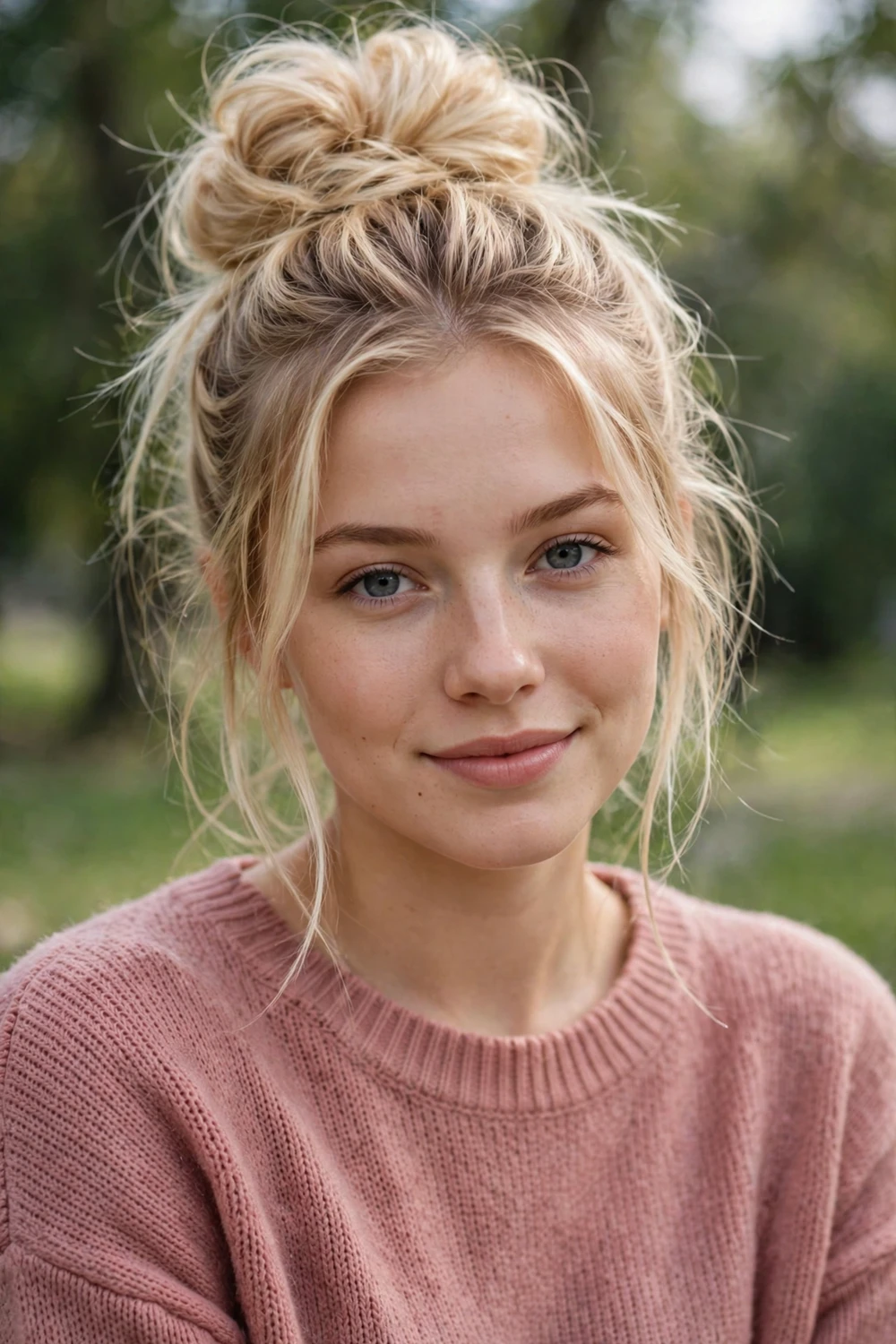
A big, soft bun piled on top of the head adds instant height and volume on days when winter hats have flattened everything else. The trick is keeping it soft rather than tight: pull out a few pieces around the face and let the bun look lived-in. Texture hides hat lines better than a smooth style ever could.
This style works best on medium to thick hair that can fill out the bun. A scrunchie or a donut form helps finer hair build the same fullness.
Try this: leave the face-framing pieces out before you put the bun up, not after.
Difficulty: Low · Cost: $ (DIY)
13. Braided Crown Bun

Make a high bun, then wrap a braid around its base like a crown. The braid adds structure and decoration in one move, and the whole style keeps every strand off your neck and shoulders, which is ideal under heavy coats. It looks elaborate but only takes about ten minutes once you have the motions down.
Braid a side section separately, then wrap it around the bun and pin. For finer hair, a bun form underneath gives the height the style needs.
For more updo inspiration, these christmas hairstyles for women include elegant bun variations that work for winter events.
Try this: pancake the wrapping braid first so it covers the bun’s base neatly.
Difficulty: Medium · Cost: $ (DIY)
14. Ringlet Updo
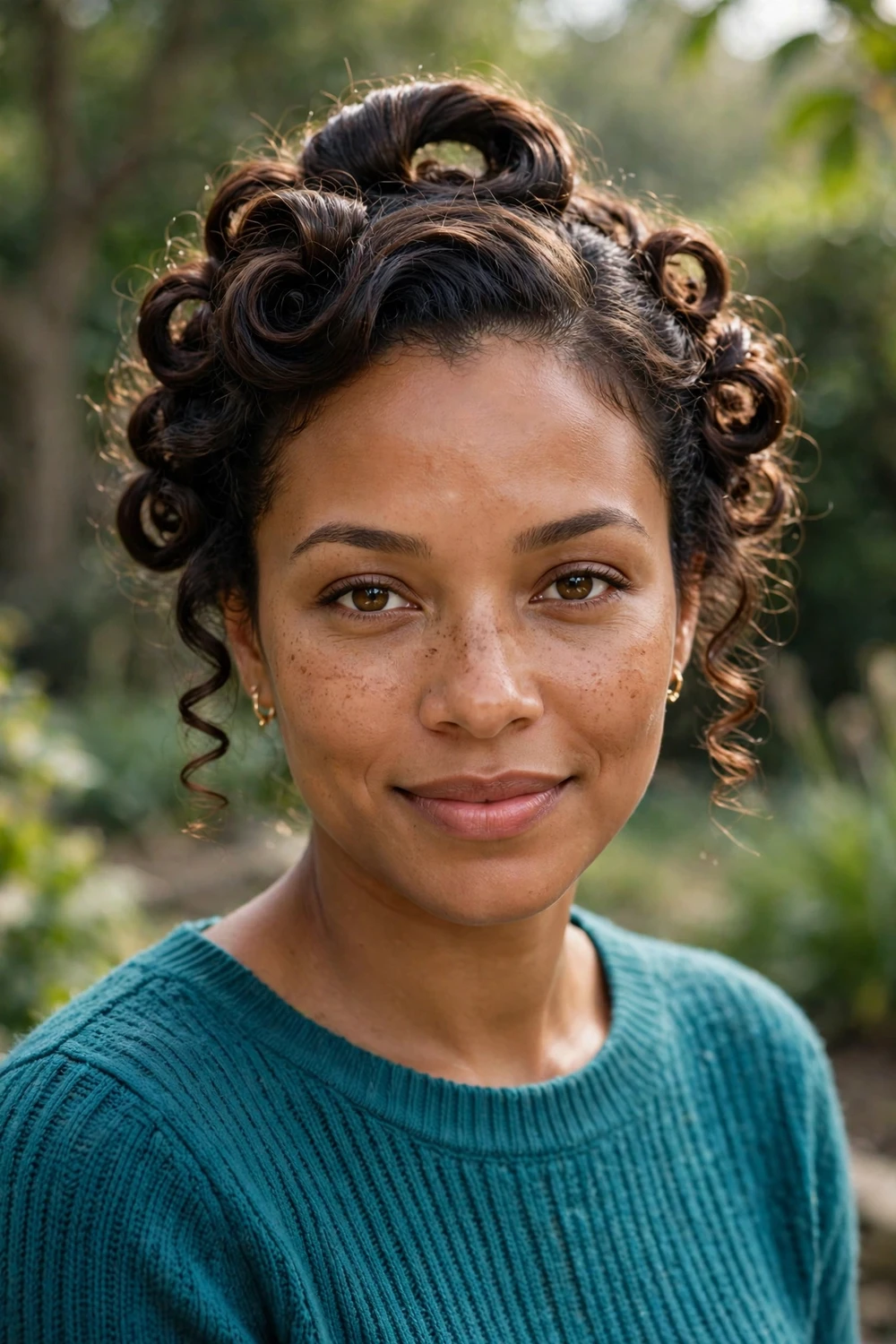
The ringlet updo pins defined curls up and away from the shoulders, which protects curly hair from the two things winter does worst: scarf friction and dry air. Pinned up, the curls keep their shape for days instead of frizzing out, and the style looks finished enough for evenings out.
Define curls with cream first, then pin sections loosely into an updo shape. Leaving the curls a little loose matters more than perfect placement, since the texture is the style.
Try this: pin curls up while they are still slightly damp for a set that lasts for days.
Difficulty: Medium · Cost: $ (DIY)
15. Knotless Braids Styled Half-Up

If you already wear knotless braids, a half-up style is the easiest way to change your silhouette without touching the protective style itself. Pull the top half into a ponytail or bun and leave the rest down: the face stays clear, the length still shows, and the braids keep doing their protective job underneath.
Use a snag-free elastic and keep the half-up section loose to avoid tension at the hairline. A light oil on the scalp keeps everything comfortable between washes.
Try this: switch between a half-up pony and a half-up bun through the week for variety with zero restyling.
Difficulty: Low · Cost: $$$ (salon install)
16. Box Braids with a Beanie

Box braids are one of the strongest protective winter hair styles: the ends stay tucked away for weeks, moisture stays sealed in, and you barely have to style. Paired with a beanie, the look is effortless, and the braids are long enough to drape over a coat for that classic winter silhouette.
A silk or satin-lined beanie prevents the knit from roughing up the braid roots. Moisturize your scalp regularly while the braids are in, since winter dryness affects scalps too.
Try this: choose a satin-lined beanie to stop knit friction from fuzzing your braid roots.
Difficulty: Low · Cost: $$$ (salon install)
17. Cornrows

Cornrows lie completely flat against the scalp, which makes them the lowest-profile protective style on this list. Hats, earmuffs, and headbands all fit over them with zero bulk, and the style lasts for weeks with almost no daily effort. They also give your natural hair a full rest from heat and manipulation through the harshest months.
Keep the parts moisturized and wear a satin scarf or bonnet at night to extend the style. Straight-back patterns are the simplest; curved or feed-in designs add detail.
Try this: tie a satin scarf over cornrows at night to keep the edges neat for weeks.
Difficulty: Low · Cost: $$ (salon install)
18. Two-Strand Twists

Two-strand twists are a gentle protective style you can install yourself: twist two sections of damp, conditioned hair around each other from root to tip. They keep ends sealed against dry air, require no heat, and unravel into a twist-out with even more texture when you are ready for a change.
Apply a leave-in conditioner and a light butter or cream before twisting so each twist holds moisture. Smaller twists last longer; larger twists install faster.
Try this: twist on damp, conditioned hair for the smoothest, longest-lasting result.
Difficulty: Medium · Cost: $ (DIY or salon)
19. Defined Wash-and-Go

A defined wash-and-go lets your natural curl pattern do the work: wash, condition, apply a curl-defining product, and go. In winter, the key adjustment is layering more moisture than usual, since cold outdoor air and dry indoor heat both pull water from curls faster. Done right, it is the lowest-effort style on this list.
Use the LOC or LCO layering method (liquid, oil, cream) to lock in hydration. Refresh midweek with a water-and-cream spritz instead of a full rewash.
Try this: add one extra moisture layer in winter compared to your summer routine.
Difficulty: Low · Cost: $ (DIY)
20. Voluminous Natural Curls

Big, full curls worn with a side part bring the volume that winter outfits need. Heavy coats and chunky knits can swallow finer styles, but voluminous curls hold their own. A side part adds lift at the root, which helps curls keep their shape when a hat comes off.
Diffuse on low heat for definition without frizz, or air-dry fully before going outside. A curl cream plus a light gel gives the hold winter demands.
For curl care across seasons, these summer hairstyles for black women share styling tips that adapt well to winter moisture routines.
Try this: flip your part to the deeper side before a hat goes on for instant root lift after.
Difficulty: Medium · Cost: $ (DIY)
21. Sleek Low Ponytail

Smooth everything back into a low ponytail at the nape, then wrap a small strand around the elastic to hide it. The result is clean, professional, and completely hat-compatible: nothing sits above the beanie line. It works for offices, video calls, and dinners alike.
A smoothing brush and a drop of serum keep the finish glassy. If your hair is long, drape the tail inside your coat to shield it from wind.
Try this: wrap the base strand and pin it underneath for a finish that looks salon-done.
Difficulty: Low · Cost: $ (DIY)
22. High Ponytail with Face-Framing Pieces

A high ponytail lifts everything off your neck and collar, which is exactly where winter tangles happen. Leaving two soft pieces out around the face keeps it from looking severe, and those pieces frame earrings and scarves nicely. It is the most energetic style on this list and takes about two minutes.
Tease the crown slightly before gathering for extra lift. Secure with a strong elastic, since a high pony carries more weight through the day.
Try this: curl the face-framing pieces once with a wand so they fall softly instead of sticking out.
Difficulty: Low · Cost: $ (DIY)
23. Soft Wavy Half-Up

Pull the top half of your hair back and leave the rest in soft waves. You get the face-clearing benefit of an updo with the softness of hair worn down, and the waves catch winter light in a way straight hair doesn’t. A ribbon tied at the half-up point adds a seasonal touch without committing to a full accessory look.
Curl the loose lengths first, then gather the top section so the waves stay intact. Pin or tie just above the crown for the most flattering lift.
Try this: gather the top section with your head tilted slightly forward for natural volume at the crown.
Difficulty: Low · Cost: $ (DIY)
24. Half-Up Twisted Curls

Twist two front sections back and pin them, letting the curls fall freely below. The twists add a little structure that keeps the front neat through a whole day of hats and scarves, while the loose curls keep the look soft. It is one of the easiest ways to make curls look styled rather than just worn.
Twist away from the face on each side and pin where the twists meet. A curl cream applied before styling keeps the twists smooth.
Try this: cross the two twists over each other once before pinning for extra hold.
Difficulty: Low · Cost: $ (DIY)
25. Half-Up Top Knot

Gather the top half into a small knot at the crown and leave the rest down. The knot keeps the front and crown secure (the zones that frizz first in winter), while the loose length keeps the look casual. It is a five-minute style that works for everything from errands to dinner.
Loop the top section into a loose bun rather than a tight knot for a softer finish. Wavy or textured hair holds the knot best.
Try this: loop the knot twice around the elastic base instead of twisting it tight.
Difficulty: Low · Cost: $ (DIY)
26. Half-Up Claw Clip

Twist the top half of your hair up and clamp it with a large claw clip. The clip does in seconds what pins take minutes to do, and it is gentler on hair than tight elastics, which matters when winter hair is already fragile. It works over straight, wavy, curly, and braided textures alike.
Choose a clip sized to your hair’s thickness so it grips without slipping. Position it at the back of the crown so the loose length still falls full around your shoulders.
Try this: twist the section once before clipping so the clip has more to grip.
Difficulty: Low · Cost: $ (clip)
27. Claw Clip French Twist
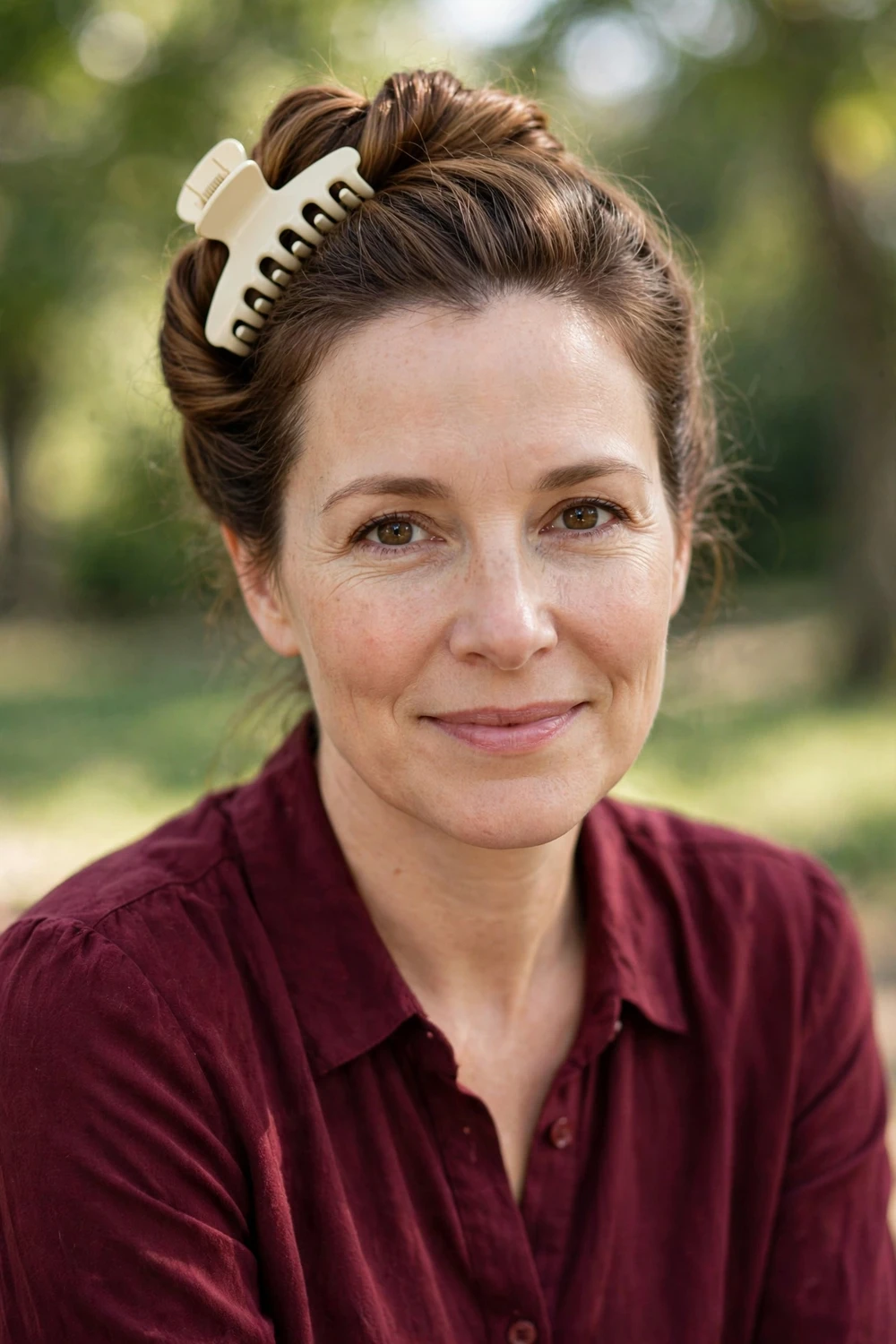
For a more polished take on the claw clip, twist all of your hair vertically up the back of your head and clamp it with a large clip. The French twist keeps your full length away from scarves and coat collars, and the clip version skips the pins and hairspray the classic requires. It looks intentional enough for work and dinner.
Smooth the sides with your palms as you twist so the finish stays sleek. A medium-hold clip works better than an oversized one for this vertical placement.
Claw clips pair well with seasonal color, and these winter hair color ideas show shades that look especially good in winter updos.
Try this: tuck the twisted ends under the clip’s top jaw so nothing pokes out.
Difficulty: Low · Cost: $ (clip)
28. Long Loose Curls

Long, loose curls are the classic winter look for a reason: they add movement and softness that balance heavy seasonal fabrics. The trick for winter is locking in moisture first, since dry air pulls curls apart. A leave-in under your curl product keeps the shape intact far longer.
For a heat-free version, braid damp hair into two loose braids overnight and unravel in the morning. If you use heat, always apply a heat protectant first.
Try this: sleep in two loose braids for heatless curls that are ready by morning.
Difficulty: Medium · Cost: $ (DIY)
29. Sleek Straight Hair

Sleek, straight hair with a glossy finish is a winter staple, especially for textured hair worn as a silk press. Winter’s low humidity actually helps straight styles last longer, since there is no summer moisture to puff them up. The key is starting with deep conditioning so the hair stays smooth instead of drying out.
Flat-iron in small sections with a heat protectant, and finish with a light oil for shine. Wrap hair in a silk scarf at night to stretch the style for days.
Try this: wrap straightened hair in a silk scarf overnight to keep it smooth for days.
Difficulty: High · Cost: $ (salon press or DIY)
30. Blowout with a Knitted Headband

A bouncy blowout plus a wide knitted headband solves winter’s two problems at once: the headband keeps your ears warm and covers the front hairline (where hat frizz starts), while the blowout gives you volume through the lengths. It refreshes a day-old blowout without another round of heat.
Add volume at the roots with a round brush, then slide the headband on and fluff the hair above it. Choose a soft knit that won’t snag.
Try this: place the headband behind your front hairline, not on it, to avoid a dent.
Difficulty: Medium · Cost: $ (DIY)
At a Glance: 30 Winter Hair Styles Compared
| Style | Best for | Winter perk | Upkeep |
|---|---|---|---|
| Low Braided Ponytail | Medium to long hair | Flat under scarves, no tangles | Braid daily, oil the ends |
| Side French Braid | Medium to long hair | Windproof, doubles as overnight waves | Rebraid daily |
| Classic Dutch Braid | Straight to wavy hair | Raised braid resists hat flattening | Rebraid daily |
| Double Braided Pigtails | Shoulder-length and longer | Balanced under beanies | Rebraid daily |
| Double Dutch Braids into Curls | Long hair | Secure top, soft ends | Braid plus curl refresh |
| Double Fishtail Braids | Medium to long hair | Low profile under hats | Rebraid daily |
| Chunky Pull-Through Braid | Thin to medium hair | Big volume, very stable | Restyle every 1 to 2 days |
| Crown Braid | Shoulder-length and longer | Tames the frizz-prone hairline | Rebraid daily |
| Side French Twist Braid | Medium to long hair | Flat twist fits under hats | Repin and rebraid daily |
| Twisted Low Bun | All hair types | Beanie-proof nape placement | Restyle daily |
| Sleek Low Bun | Straight to wavy hair | Survives hat on and off | Smooth and pin daily |
| Big Messy Bun | Medium to thick hair | Texture hides hat lines | Toss up daily |
| Braided Crown Bun | Medium to long hair | Everything off neck and shoulders | Restyle daily |
| Ringlet Updo | Curly hair | Curls hold shape for days | Refresh with cream |
| Knotless Braids Styled Half-Up | Knotless braid wearers | Protective style, new silhouette | Salon install, lasts weeks |
| Box Braids with a Beanie | Textured hair | Ends protected for weeks | Salon install, oil the scalp |
| Cornrows | Textured hair | Zero bulk under any hat | Salon install, satin at night |
| Two-Strand Twists | Textured hair | No-heat protective style | DIY, lasts 2 to 4 weeks |
| Defined Wash-and-Go | Curly and coily hair | Lowest daily effort | Extra moisture layers |
| Voluminous Natural Curls | Curly hair | Volume balances heavy coats | Diffuse and refresh |
| Sleek Low Ponytail | All hair types | Hat-compatible and office-ready | Smooth daily |
| High Ponytail with Face-Framing Pieces | Medium to long hair | Clears collars and scarves | Gather daily, 2 minutes |
| Soft Wavy Half-Up | Medium to long hair | Face clear, length soft | Curl then gather |
| Half-Up Twisted Curls | Curly and wavy hair | Front stays neat all day | Twist and pin |
| Half-Up Top Knot | Medium to long hair | Five-minute casual style | Knot daily |
| Half-Up Claw Clip | All textures | Gentle grip, no breakage | Clip and go |
| Claw Clip French Twist | Medium to long hair | Full length away from scarves | Twist and clamp |
| Long Loose Curls | Medium to long hair | Softness against heavy fabrics | Heatless braids or heat styling |
| Sleek Straight Hair | Straight or straightened hair | Low humidity extends the style | Protect, press, wrap at night |
| Blowout with a Knitted Headband | Medium to long hair | Warm ears, no second heat round | Refresh with the headband |
How to Choose Your Winter Style
Start with your hat habit. If you wear a beanie every day, build your rotation around low placements: nape buns, low ponytails, and braids that sit below the hat’s hemline. High buns and top knots fight with hats, so save those for days you go bareheaded. If you wear earmuffs or headbands instead, you have more freedom with crown volume.
Next, match the style to your hair’s winter behavior. Hair that goes static and flyaway does better fully contained in braids or buns than worn loose. Hair that flattens under hats benefits from texture, like a pull-through braid or a messy bun, which hides compression lines. Curly and coily hair does best in protective styles that lock in moisture, since dry air pulls water from curls fast.
Finally, be honest about your mornings. Braids and buns reward the ten minutes they take by lasting all day without touch-ups. If you truly have two minutes, a claw clip, a low ponytail, or a half-up top knot will do. Pick the styles you will actually repeat, because the best winter style is the one you wear.
Winter Hair Care for Styled Hair
Moisture. Cold air and indoor heating pull water from hair faster in winter, and styling only helps if the hair underneath is hydrated. Switch to a moisturizing shampoo and conditioner, add a weekly deep-conditioning mask, and layer a leave-in product before braiding or twisting. Protective styles hold moisture in, but only if you put moisture in first.
Static. Static comes from dryness plus friction with hats, scarves, and coat collars. Contained styles like braids and buns create less static than hair worn loose, since there is less surface rubbing. A light oil on the ends, a natural-bristle brush, and silk or satin hat linings cut what remains.
Breakage. Hair is more fragile when dry, so the winter rules are simple: never brush aggressively, never put a hat on soaking-wet hair, and keep heat styling to a minimum. Tight styles worn for days can stress the hairline, so vary your placements and give your edges a rest between installs.
Frequently Asked Questions
What are the best winter hair styles for wearing hats?
Styles that sit low and flat work best with hats: low braided ponytails, nape buns, low ponytails, and cornrows. The rule is simple: nothing should sit above the beanie’s hemline. High buns and top knots get crushed by hats, so save those for bareheaded days. A silk or satin lining inside your hat also prevents frizz from knit friction.
Which hairstyles protect hair from winter damage?
Protective styles keep ends tucked away from dry air and friction: box braids, cornrows, two-strand twists, knotless braids, and twisted buns. Even non-protective updos like French braids and low buns help, since contained hair loses less moisture than hair worn loose. The key step is moisturizing well before styling, since a protective style only seals in what you put there.
How do I stop static in my hair during winter?
Static comes from dryness and friction. Keep hair hydrated with a moisturizing conditioner and a weekly mask, since hydrated hair holds less static charge. Wear contained styles like braids and buns instead of leaving hair loose against scarves. Finish with a light oil on the ends, switch to a natural-bristle brush, and line knit hats with silk or satin to cut friction at the source.
What hairstyles work best with scarves and turtlenecks?
Anything that keeps the length secured and off the collar: braids, low buns, low ponytails, and French twists. Loose hair gets caught in scarf folds and coat zippers, which causes tangles and breakage. If you want hair down, a side braid draped forward over one shoulder keeps it clear of the scarf line.
How often should I wash my hair in winter?
Most hair types do better with less frequent washing in winter, since shampooing strips the natural oils that protect against dry air. Once or twice a week works for many people; curly and coily hair can often stretch further, especially in protective styles. When you do wash, use lukewarm water, a moisturizing shampoo, and always follow with conditioner.
Final Thoughts
Winter hair doesn’t need to be complicated. Braids, buns, and twists handle hats, scarves, and dry air better than almost anything else, and most of them take ten minutes or less. Pick a few favorites from this list, keep your hair moisturized underneath, and the cold months get a lot easier.

