


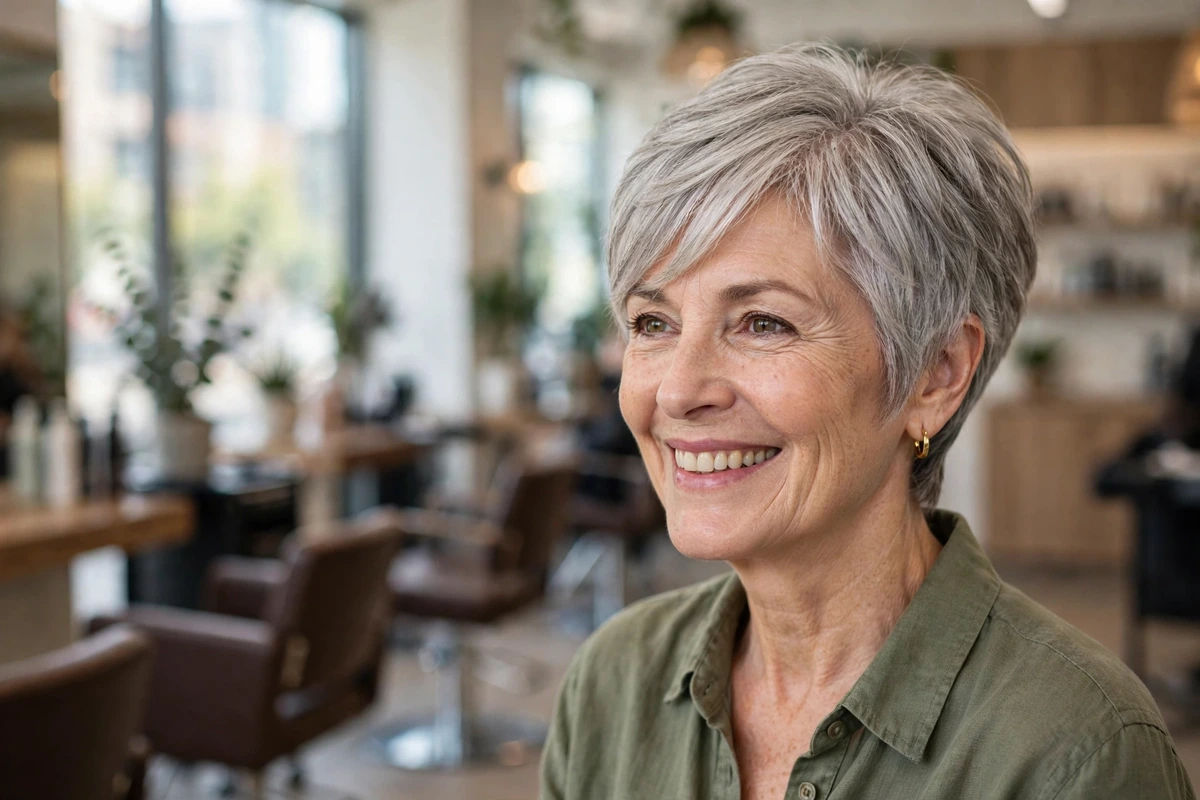
A pixie bob, often called a bixie, sits exactly between a pixie and a bob: longer and softer than a cropped pixie, shorter and lighter than a classic bob. For older women it solves a real problem. Hair over 50 and 60 tends to get finer, drier, and thinner at the crown, and a bixie keeps fullness where you need it while removing the weight that drags thin hair flat.
Below are 20 pixie bob haircuts for older women, each with a styling tip, a difficulty rating, and honest upkeep notes so you know the full picture before you book the appointment.
If your main concern is thin strands rather than age, pixie bob haircuts for fine hair focuses the same hybrid cut on density-building shapes made for fine hair.
Quick Takeaways
- A pixie bob (bixie) is longer than a pixie and shorter than a bob, with soft layers through the crown.
- It suits fine and thinning hair because the shorter back removes weight while layers build volume on top.
- Most versions need a trim every 6 to 8 weeks and 5 to 10 minutes of morning styling.
- Side-swept bangs and face-framing pieces soften the forehead and draw attention to the eyes.
- Gray and silver tones blend naturally into this cut, which makes grow-out between color appointments easier.
1. Classic Silver Bixie with Side-Swept Bangs

This is the reference cut for the whole category: a neat tapered nape, soft length through the crown, and bangs swept to one side. The side sweep breaks up the forehead and brings focus to the eyes, which flatters almost every face shape after 50. Silver hair needs no color upkeep, and the cut itself grows out in a tidy shape.
Ask your stylist to keep the bangs long enough to tuck behind one ear. That single detail gives you two looks, swept or tucked, with no extra styling. A pea-sized amount of smoothing cream on damp hair, dried with your fingers, is the entire routine.
Try this: dry the bangs to the opposite side first for root lift, then sweep them into place once dry.
Difficulty: Easy · Cost: $45–$75 per cut
2. Stacked Pixie Bob with Crown Volume

Stacked layers at the back build a rounded shape that lifts the crown, which is exactly where thinning shows first. The graduation does the volumizing work for you, so even fine hair looks denser. The front stays long enough to frame the jawline, keeping the cut soft rather than severe.
This cut earns its keep on busy mornings. Wash, add a golf-ball of volumizing mousse at the roots, mist on heat protectant, and blow-dry with a small round brush for five minutes. The shape holds for two to three days, and dry shampoo at the crown stretches it further. Trims every six weeks keep the stack crisp.
Try this: flip your head upside down for the last 30 seconds of drying to lock in crown lift.
Difficulty: Easy · Cost: $50–$80 per cut
3. Textured Salt-and-Pepper Bixie

Growing out natural salt-and-pepper hair pairs well with texture because the mixed tones add dimension that a flat cut cannot. Ask for point-cut ends through the top and sides so the layers separate into soft pieces. The result looks intentional during every stage of the grow-out, with no harsh line where color meets gray.
Texture paste is the only product you need. Rub a dime-sized amount between your palms and pinch it through dry ends to define the pieces. If your grays feel coarse, a weekly deep-conditioning mask keeps them soft. If you want more gray-friendly ideas at slightly longer lengths, these wash-and-wear haircuts for women over 60 follow the same low-effort logic.
Try this: sleep on a satin pillowcase to keep the textured pieces from flattening overnight.
Difficulty: Easy · Cost: $45–$70 per cut
4. Layered Bixie with Face-Framing Pieces

Longer layers that fall along the cheeks and jawline soften angular features and draw the eye inward toward the face. This is the bixie to request if a short pixie has ever felt too exposing around the ears. The framing pieces give coverage without the weight of a full bob.
Keep the framing layers at cheekbone length or just below for the most flattering effect. Style them with a flat iron over heat protectant, bending the last inch inward, or leave them to air-dry for a more relaxed line. Because the pieces sit near the face, a trim every six weeks keeps them from going straggly.
Try this: tuck one side behind the ear and leave the other loose for an easy asymmetrical feel.
Difficulty: Easy · Cost: $50–$80 per cut
5. Sleek Straight Pixie Bob

For naturally straight hair, a sleek bixie is the lowest-effort polished cut you can own. The clean lines show off bone structure, and the smooth finish reads neat even on day three. Ask for a slightly graduated back so the silhouette stays rounded rather than flat against the head.
Always use heat protectant before the flat iron, and keep the temperature at or below 350°F to avoid stressing finer strands. A silicone-free smoothing serum on the ends adds shine without buildup. This cut grows out gracefully, so you can stretch trims to eight weeks if the shape still holds.
Try this: flat-iron in small sections and finish with a cool shot from the dryer to set the smoothness.
Difficulty: Easy · Cost: $45–$75 per cut
6. Wavy Bixie with Soft Waves

Natural wave is a gift at this length because the bixie shape lets waves form without the triangle effect longer cuts can cause. Layers through the mid-lengths remove bulk so waves spring up instead of spreading out. The result has movement built in, which means less daily styling.
Scrunch a curl-enhancing cream into damp hair and let it air-dry, or diffuse on low heat for more definition. On day two, mist with water and scrunch again rather than re-washing. A trim every seven to eight weeks keeps the wave pattern from getting bottom-heavy.
Try this: twist two front sections away from the face while damp, then release once dry for polished face-framing waves.
Difficulty: Easy · Cost: $45–$75 per cut
7. Curly Pixie Bob with Defined Curls

Curly hair at bixie length gives you a rounded, full shape with real presence. The key is cutting the curls dry or stretched so the length lands where you expect after shrinkage. Tapered sides keep the silhouette neat while the top keeps its bounce and height.
Hydration matters more than styling skill here. Use a leave-in conditioner, then a curl cream, and avoid brushing dry curls. Pineapple the hair at night with a loose satin scrunchie to protect the shape. Ask for a curly-hair specialist if your last cut came back uneven once the curls dried.
Try this: apply products to soaking-wet hair in the shower for the most defined curl clumps.
Difficulty: Moderate · Cost: $55–$90 per cut
8. Asymmetrical Bixie

One side cut noticeably longer than the other adds a modern edge without going edgy. The longer side sweeps across the cheek and draws the eye diagonally, which is flattering on round and square faces. The short side keeps the cut feeling light and easy around the ear and nape.
Part your hair on the shorter side to show off the length difference. Style the longer section with a round brush over heat protectant for a smooth sweep, and keep the short side tucked or textured with paste. The asymmetry needs a trim every five to six weeks, since grow-out shows faster on the short side.
Try this: switch the part to the other side on day two for instant volume at the roots.
Difficulty: Moderate · Cost: $50–$85 per cut
9. Pixie Bob with Wispy Bangs

Wispy bangs soften the forehead without the commitment of a heavy fringe. They blend into the bixie layers so there is no obvious line where bangs end and cut begins, which makes grow-out painless. This is a good first step if you have never had bangs.
Trim the wisps yourself between appointments with sharp hair scissors, taking off only a few millimeters at a time. Style them with a small round brush over heat protectant, or just your fingers and a touch of paste. Because wispy bangs are forgiving, you can stretch salon visits to eight weeks.
Try this: blow-dry bangs side to side at the roots to stop them splitting down the middle.
Difficulty: Easy · Cost: $45–$70 per cut
10. Tapered Nape Bixie

A closely tapered nape gives the bixie a clean, tailored finish at the back while the top keeps its softness. This detail matters in warm weather and for anyone who dislikes hair touching the neck. The contrast between the neat nape and the fuller crown also makes the top look thicker.
The nape grows out fastest, so plan a cleanup trim every four to five weeks if you want the crisp line to last. Between visits, a little pomade smoothed over the nape keeps it lying flat. Pair it with longer layers on top and the cut stays feminine and soft from the front.
Try this: ask the stylist to taper with clippers on the lowest setting only at the very hairline for the neatest grow-out.
Difficulty: Easy · Cost: $45–$75 per cut
11. Voluminous Round-Brush Bixie

If your hair has gone flat with age, a round-brush blowout on a bixie brings back the body. The cut needs enough length on top to wrap around a medium brush, about two to three inches, while the sides stay short. Lift at the roots while drying and the volume lasts all day.
Work in sections and always use heat protectant before the dryer. Roll each section up and away from the face, then pin the top sections to cool for ten minutes while you get dressed. That cooling step is what makes the lift last past lunchtime. A large-barrel brush gives smooth volume; a small one gives more curl.
Try this: finish with a light mist of flexible-hold hairspray, held 10 inches away so it never looks stiff.
Difficulty: Moderate · Cost: $50–$80 per cut
12. Choppy Textured Bixie

Choppy ends give the bixie a current, lived-in feel that works well on straight to wavy hair. The uneven texture breaks up the outline so the cut never looks helmet-like, and it hides the sparse spots that bother many women over 60. Ask for the chop cut into dry hair so the stylist can see exactly how each piece falls.
Styling is finger work, not brush work. Warm a small amount of texture cream between your palms and rake it through dry hair, pulling a few ends outward. For a stronger texture story at a slightly longer length, these choppy bob hairstyles use the same piecey technique on more length.
Try this: twist random half-inch sections with paste for extra separation on second-day hair.
Difficulty: Easy · Cost: $50–$80 per cut
13. Bixie with a Deep Side Part

Moving the part deep to one side is the fastest way to add volume and drama to a bixie. The heavy sweep across the forehead covers thinning at the temples, and the weight of hair falling to one side creates natural lift at the crown. It suits oval, heart, and long faces especially well.
Set the part while hair is damp so it dries in place, and train it for a week by parting the same way every day. A root-lifting spray on the heavy side keeps the sweep from going flat by afternoon. This is also the easiest bixie to grow out, since the long top blends into a bob over a few months.
Try this: tuck the short side behind the ear with a decorative clip for evening.
Difficulty: Easy · Cost: $45–$75 per cut
14. Feathered Pixie Bob

Feathered layers flick outward at the ends for an airy, lightweight finish that flatters fine hair. The technique removes bulk without removing length, so the cut keeps its bixie shape while feeling much lighter. It works beautifully on blonde and highlighted hair, where the feathering catches the light.
Style with a round brush, flicking the ends outward as you dry, and always use heat protectant first. A lightweight volumizing spray at the roots stops the feathering from collapsing by evening. Trims every six to seven weeks keep the flicked ends from looking ragged.
Try this: flip just the front feathered pieces outward and leave the back smooth for a mixed finish.
Difficulty: Moderate · Cost: $50–$80 per cut
15. Pixie Bob with a Subtle Undercut Nape

A hidden undercut at the nape removes bulk where thick hair piles up, while the longer top falls over it so the detail stays discreet. Nobody sees the undercut unless you lift the top layer, which makes it office-friendly. It also cuts drying time noticeably on dense hair.
The undercut needs maintenance every four to six weeks or it grows into an awkward ledge. Between visits, the top layer hides all grow-out, so the cut stays presentable. Tell your stylist how short you want the undercut; a number-two guard leaves softness, while a closer cut feels cooler in summer.
Try this: sweep the top up into a clip for a day to show off the undercut when you feel like it.
Difficulty: Moderate · Cost: $55–$85 per cut
16. Gray-Blending Balayage Bixie

Gray blending uses soft balayage to merge natural silver with your base color, so grow-out has no visible line. On a bixie the painted pieces sit through the crown and around the face, where they catch the light and add dimension to fine hair. It is the color version of low maintenance.
Expect to refresh the blend every 10 to 12 weeks, which is far less often than full gray coverage. Use purple shampoo once a week to keep the silver pieces bright and stop brassiness in the blonde sections. The cut itself needs its usual six-to-eight-week trim to hold the bixie shape.
Try this: ask for the lightest pieces around the face and deeper tones underneath for the most natural blend.
Difficulty: Easy · Cost: $120–$200 for color, $50–$75 per cut
17. Auburn Pixie Bob

Warm auburn brings life back to complexions that have paled with age, and the glossy color makes fine hair look thicker. On a bixie the rich tone shows best through the layered crown, where light hits each piece differently. Copper and cinnamon shades suit warm skin tones; deeper auburn flatters cooler ones.
Red tones fade faster than other colors, so wash with cool water and color-safe shampoo to stretch each appointment to six weeks. A color-depositing conditioner once a week keeps the warmth vivid between visits. If gray roots bother you, ask for a root smudge in a matching tone at the same appointment.
Try this: add a clear gloss treatment every other month for shine without changing the color.
Difficulty: Easy · Cost: $80–$140 for color, $50–$75 per cut
18. Pixie Bob with Curtain Bangs

Curtain bangs parted down the middle soften the forehead and frame the eyes, and on a bixie they blend straight into the side layers. The center part draws attention to the middle of the face, which balances wider cheekbones. Keep the bangs at cheekbone length so they sweep rather than hang.
Dry the bangs first while damp, wrapping each side around a round brush over heat protectant and pulling outward for the signature sweep. A cool shot from the dryer sets the bend for the day. Trim the bangs every five weeks; the rest of the cut can wait the usual six to eight.
Try this: use a flat iron over heat protectant to touch up just the bang bend on day two.
Difficulty: Moderate · Cost: $50–$80 per cut
19. Tousled Bedhead Bixie

The bedhead bixie turns natural texture into the style itself. Layers cut with plenty of separation let the hair fall where it wants, and the deliberate messiness hides thin spots better than any sleek cut can. It suits women who want to stop fighting their hair every morning.
Work a salt spray or texture powder into dry roots and scrunch. That is the whole routine, under three minutes. The cut forgives skipped wash days because the texture looks intentional. Trims every seven weeks keep the layers piecey instead of puffy.
Try this: twist one-inch sections with texture paste for extra definition before a night out.
Difficulty: Easy · Cost: $45–$70 per cut
20. Polished Blowout Pixie Bob

For events and evenings, a polished blowout takes the same bixie cut somewhere dressier. Smooth volume through the crown, curved-under ends, and a deep shine make it read formal without a single pin. Ask your stylist to leave enough length on top for the brush to grip, since too-short layers will not smooth.
Use heat protectant, then blow-dry with a large round brush in sections, rolling each under at the ends. A silk serum as the final step adds the reflective finish. The style holds for two days with a satin pillowcase, and a morning touch-up with the brush takes five minutes.
Try this: add a slim headband or jeweled clip to turn the blowout into event hair in seconds.
Difficulty: Moderate · Cost: $50–$80 per cut
How to Choose Your Pixie Bob
Match the cut to your hair texture first. Fine hair needs stacked layers and crown volume, which rules out the sleekest versions. Thick hair needs internal thinning or an undercut nape so the bixie does not balloon. Curly hair needs a dry cut from a curl specialist. Then think about your mornings: wash-and-go women should pick the textured, tousled, or wash-and-wear-friendly versions, while women who enjoy styling can choose the round-brush or polished blowout styles. If you are torn between this hybrid and a true crop, our short pixie haircuts for older women guide lays out the shorter end of the spectrum so you can compare honestly.
Pixie Bob Haircuts for Older Women: Comparison Table
| Style | Daily Styling | Trim Cycle | Best Hair Type |
|---|---|---|---|
| Classic Silver Bixie | 3 min finger-dry | 6–8 weeks | Straight, gray |
| Stacked Pixie Bob | 5 min round brush | 6 weeks | Fine, thin |
| Curly Pixie Bob | 5 min scrunch | 8–10 weeks | Curly, coily |
| Asymmetrical Bixie | 7 min brush | 5–6 weeks | Straight, thick |
| Tapered Nape Bixie | 3 min smooth | 4–5 weeks | All textures |
| Gray-Blending Balayage | 5 min style | 6–8 weeks | Graying, fine |
| Tousled Bedhead Bixie | 3 min scrunch | 7 weeks | Wavy, fine |
| Polished Blowout Bixie | 15 min blowout | 6–8 weeks | Straight, medium |
Frequently Asked Questions
What is a pixie bob haircut?
A pixie bob, often called a bixie, is a hybrid cut that sits between a pixie and a bob. It keeps the short tapered back and nape of a pixie with longer layers through the crown and front, usually ending around the ears to the jawline. It is longer and softer than a true pixie but shorter and lighter than a classic bob.
Is a pixie bob good for thin hair over 60?
Yes, it is one of the better choices. The short back removes weight that drags thin hair flat, while stacked or textured layers through the crown create the look of density. Ask for point-cut layers rather than blunt ends, and keep the top long enough to build volume with a round brush or mousse.
How often does a pixie bob need trimming?
Most versions need a trim every 6 to 8 weeks to hold their shape. Precision styles like the tapered nape or asymmetrical bixie need attention every 4 to 6 weeks, while curly and tousled versions can stretch to 8 to 10 weeks. Bangs usually need a quick trim between full appointments.
Can older women with curly hair wear a pixie bob?
Absolutely. Curly hair at bixie length forms a full rounded shape with natural volume. Have it cut dry or on stretched curls so the length is accurate after shrinkage, keep the sides tapered for a neat outline, and use leave-in conditioner plus curl cream instead of brushing. A curl specialist will get the most even result.
What is the difference between a bixie and a bob?
A bob is one length or graduated around the whole head, usually ending at the jaw or chin with the weight at the bottom. A bixie is shorter at the back and nape like a pixie, with the length concentrated on top and in front. The bixie feels lighter, shows more texture, and needs less bulk removed than a bob on thick hair.
For shorter takes with fringe, browse our choppy pixie cut with bangs collection.
Final Thoughts
The pixie bob earns its popularity with older women for a simple reason: it asks little and gives a lot. Pick the version that matches your texture and your mornings, keep the trim schedule, and the cut does the rest. For a wider look at short options beyond the hybrid, browse our short hairstyles for older women collection and compare the bixie against the full range.

