


A medium blunt hairstyle is cut to one length, with a straight-across edge that lands between the chin and the collarbone. That single line does most of the work: it makes ends look fuller, gives straight hair a clean outline, and still leaves enough length to tie back, wave, or curl. The 23 ideas below cover the main ways salons vary that line, through parting, bangs, texture, color, and hair type.
Use this list by starting with your hair type, then your daily styling time. Fine and thin hair gains the most from a true one-length edge, thick hair usually needs hidden layering inside the cut, and curly hair needs a stylist who plans for shrinkage. If you want a wider starting point first, the general hairstyles for medium-length hair guide shows how blunt cuts sit beside layered and shag styles at this length.
Key Takeaways
- A blunt cut is one length with a straight edge and no layers thinning the ends, which is why the bottom of the cut looks full.
- Medium length runs from the chin to the collarbone. That range still allows a low ponytail on most of these cuts.
- Fine and thin hair should keep layering at zero or ends-only. Thick hair does better with layers hidden inside the cut.
- Parting and bangs change the look more than length does: center, deep side, curtain, full, wispy, and side-swept versions all use the same base cut.
- Plan a trim every 6 to 8 weeks. A blunt line shows uneven growth sooner than a layered cut does.
1. Classic Shoulder-Length Blunt Cut

This is the base version of the cut: one length all the way around, no layers, and a straight-across edge that sits right on the shoulders. The single length keeps the ends looking full, and the flat line shows shine clearly on straight and slightly wavy hair.
Ask your stylist to cut it dry or to check the edge dry after cutting, because wet hair springs up and the line can land shorter than planned. At home, a paddle brush blow-dry followed by one flat iron pass keeps the edge flat. Book a trim every 6 to 8 weeks so the line stays even.
Try this: Blow-dry with the nozzle pointing down and finish the last inch with a flat iron for the sharpest edge.
Difficulty: Low · Cost: $ (salon)
2. Center-Part Blunt Lob

A lob sits between the chin and the collarbone, and the center part splits this one into two even sides. The symmetry suits oval and heart faces, and the blunt ends stop the longer length from looking thin at the bottom.
This length still fits into a low ponytail, which shorter bobs often miss. Style it with a round brush for a smooth bend at the ends, or leave it flat for a stricter look. The related long bob hairstyles roundup shows more ways to wear this length.
Try this: Part the hair while it is wet. A center part trained during drying stays in place far longer than one forced in dry.
Difficulty: Low · Cost: $ (salon)
3. Deep Side-Part Blunt Cut

Moving the part far to one side changes the whole shape without changing the cut. The heavy side sweeps across the forehead, the tucked side sits close, and the root lift on the deep side adds height that a center part cannot give.
This version suits oval and square faces and works on fine to medium hair. Blow-dry the roots away from the part first, then smooth the lengths. Flip the part to the other side in the evening and the same cut gains fresh volume at the crown.
Try this: Set the deep part with a tail comb right after washing, then clip it flat for ten minutes while you finish getting ready.
Difficulty: Low to Medium · Cost: $ (salon)
4. Asymmetric A-Line Blunt Lob

The back sits shorter at the nape and the front pieces reach the collarbone, with a blunt edge running along the angle. The longer front lengthens the look of the face, and the short back keeps the neck clear and the shape light.
This cut needs straight or loosened texture to show the angle; strong curl hides the line. Ask for the angle to start gently, because a steep A-line grows out unevenly and needs reshaping sooner. Flat iron the front pieces last so they hang at full length.
Try this: Take a side profile photo at the salon. The angle is easiest to judge from the side, and small fixes are simple while you are still in the chair.
Difficulty: Medium · Cost: $$ (salon)
5. Choppy Medium Blunt Bob

The outline stays blunt while the last inch is point-cut into choppy pieces. That broken edge adds movement to fine and medium hair and stops a blunt bob from sitting in one solid block.
Work a pea-size amount of texture paste into dry ends and pinch small sections apart. Too much product weighs choppy ends down and the pieces clump together. This version suits oval and heart faces and grows out softly between trims.
Try this: Apply texture product to the ends only, never the roots, so the choppy finish reads at the edge where the cutting was done.
Difficulty: Low to Medium · Cost: $$ (salon)
6. Soft-Texture Blunt Bob
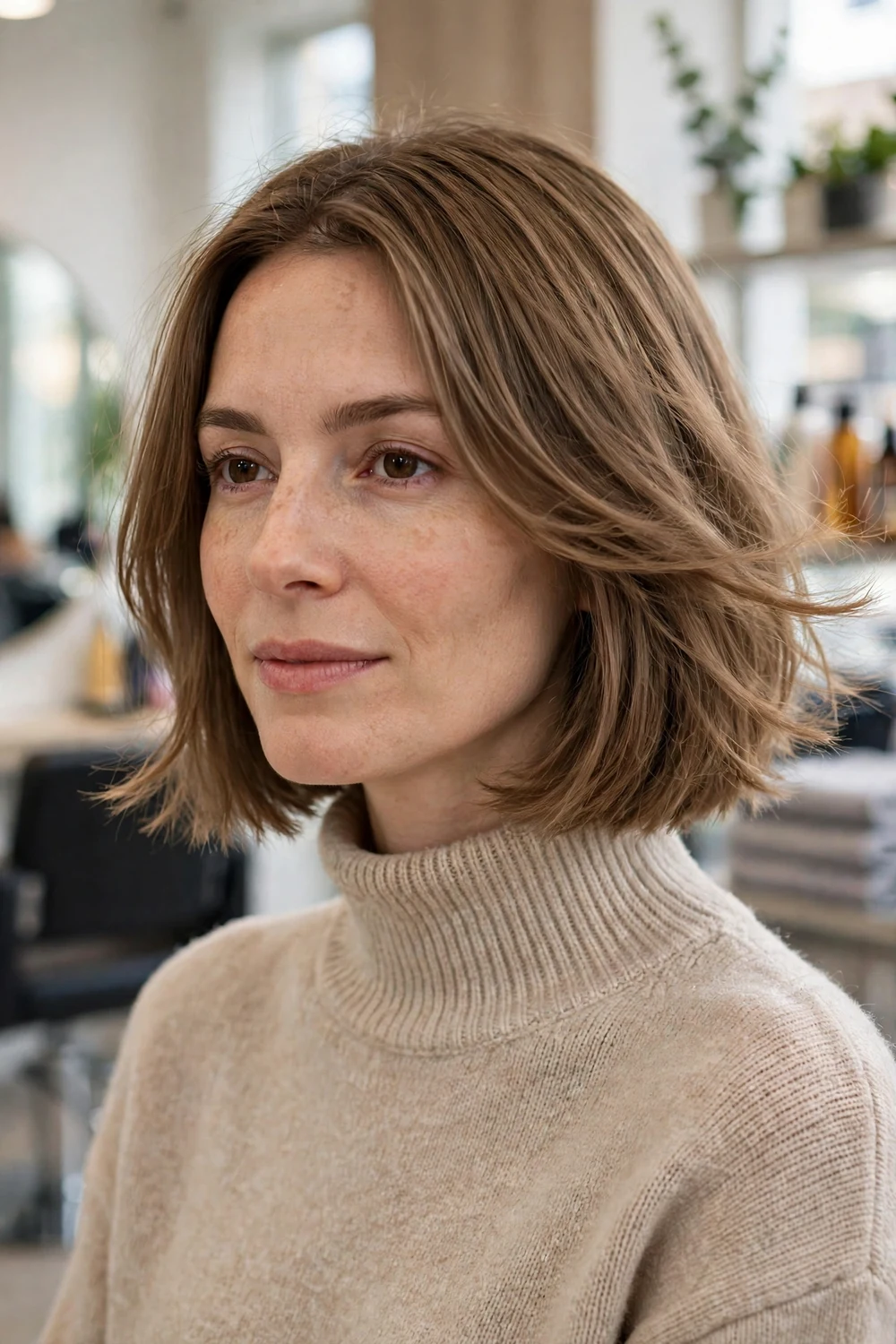
Subtle layering lives only in the last inch or two of this bob, so the outline stays blunt and the surface moves more freely. It suits women who found a true one-length cut too heavy or too still around the face.
The soft ends bend easily with a round brush or a large curling iron, and the cut still air-dries into a tidy shape on wavy hair. Keep the layering request specific at the salon: ends only, with the perimeter left at full thickness.
Try this: If your hair is fine, ask your stylist to show you the removed hair. Soft texture should take very little weight away.
Difficulty: Low to Medium · Cost: $$ (salon)
7. Layered Blunt Cut for Thick Hair
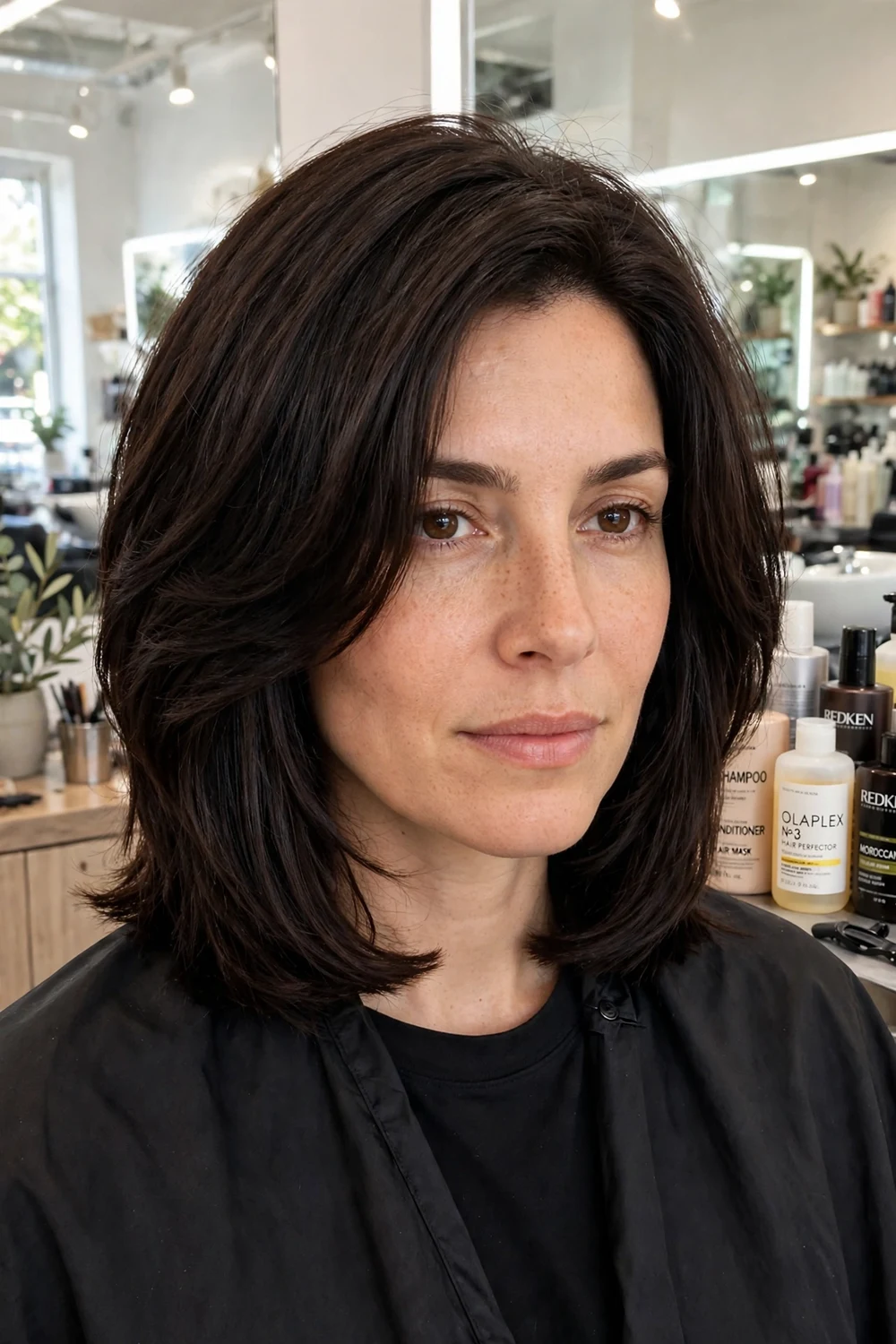
Thick hair in a pure one-length cut can flare out at the sides. Here the layers sit inside the cut, removing bulk from the middle lengths while the outer edge stays blunt and solid at the shoulders.
Ask for internal or invisible layering by name, and check that the bottom edge still looks full in the mirror before you leave. At home, dry the hair in sections; thick blunt cuts trap moisture underneath and stay damp at the nape if dried in one pass.
Try this: Book the longer appointment slot. Thick hair needs sectioned cutting and sectioned drying, and rushing either one shows in the finish.
Difficulty: Medium · Cost: $$ (salon)
8. Blunt Cut with Curtain Bangs
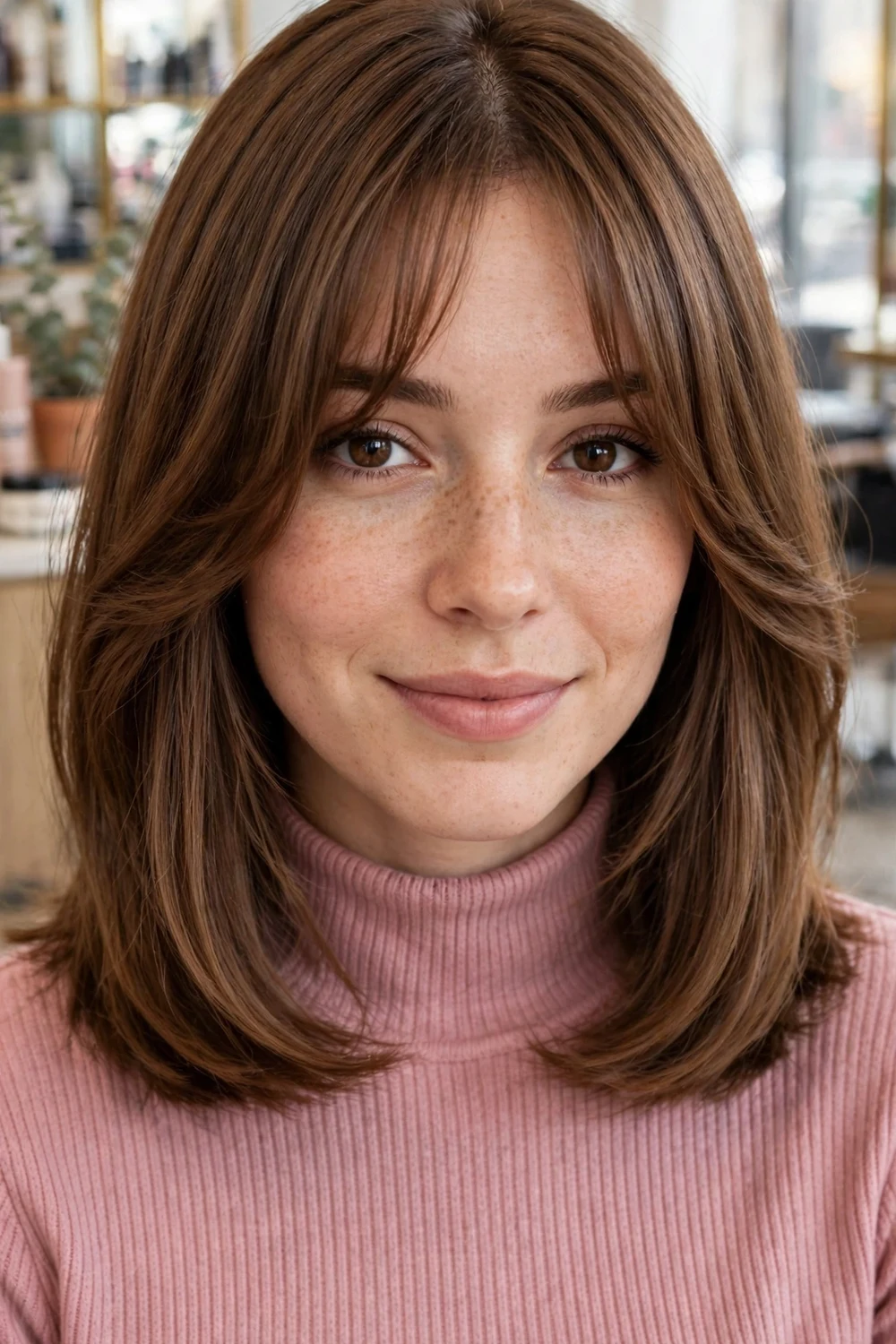
Curtain bangs part in the middle and sweep out to the cheekbones on each side, softening the straight edge of a shoulder-length blunt cut. The fringe grows out into face-framing layers, so this is the lowest-commitment bangs option on the list.
Blow-dry the bangs forward first, then sweep them to each side with a round brush; drying them sideways from wet sets them in the wrong direction. More fringe and length pairings sit in the medium-length hairstyles with bangs collection.
Try this: Dry the curtain bangs before the rest of the hair, even on rushed mornings. They set fast and are hard to restyle once dry.
Difficulty: Medium · Cost: $$ (salon)
9. Blunt Cut with Full Straight Bangs
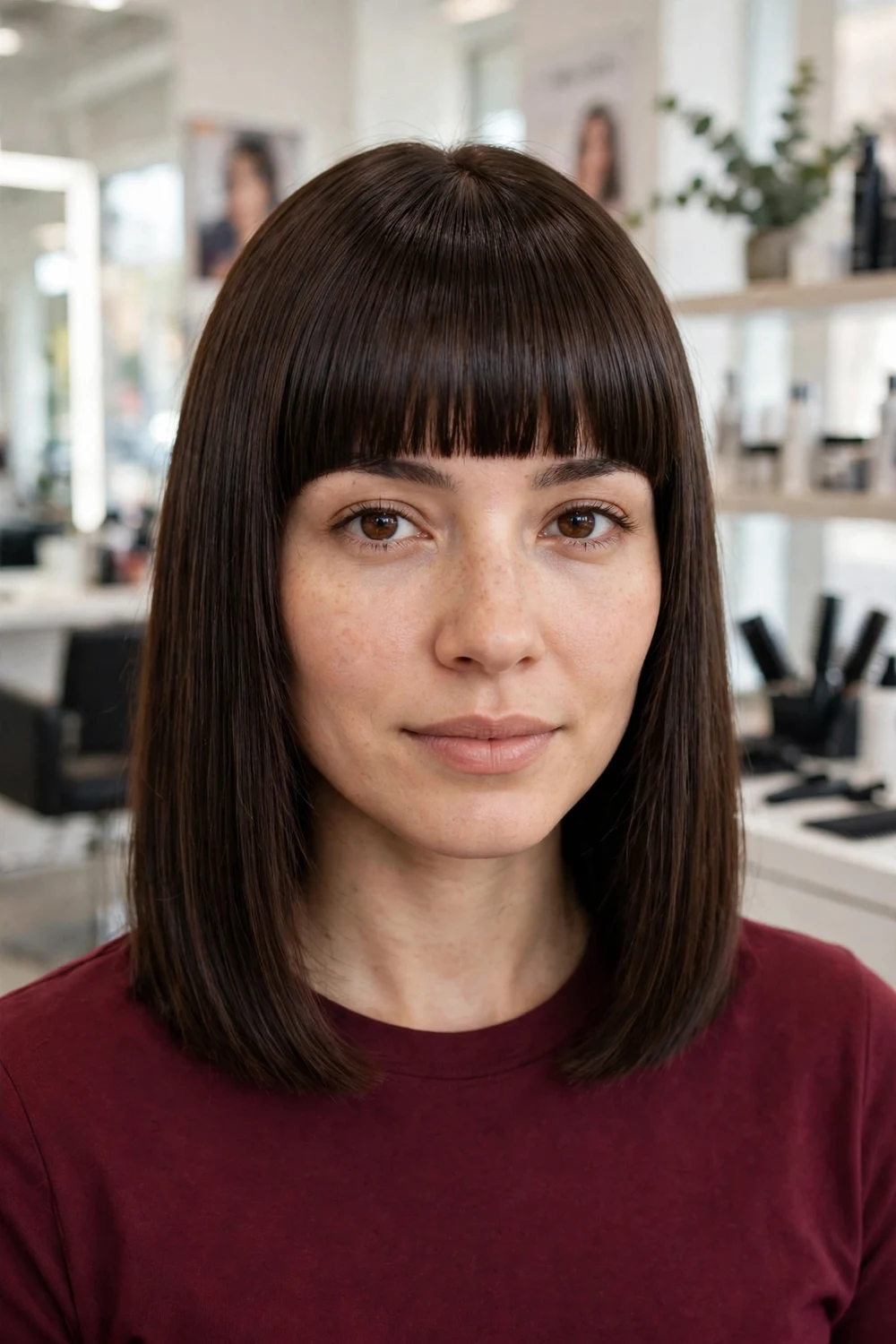
A straight-across fringe cut at the eyebrows pairs with a one-length blunt edge for the strongest outline in this roundup. The fringe draws attention to the eyes and shortens the look of a longer forehead.
Full bangs need a fringe trim between haircut appointments, and many salons offer quick fringe trims at low or no charge when you ask in advance. Blow-dry the fringe down and side to side with the nozzle above it; air-drying often leaves a split or a cowlick line in the middle.
Try this: Wash only the fringe in the sink on second-day hair. It freshens the whole style in three minutes.
Difficulty: Medium · Cost: $$ (salon)
10. Blunt Cut with Wispy Bangs

Wispy bangs are cut light and feathery, with small gaps that let the forehead show through. Against a solid blunt edge at the shoulders, the soft fringe keeps the style from reading too severe.
This pairing suits straight and fine hair best, because thick hair makes wispy bangs look sparse in the wrong places. Use a small round brush and low heat, and skip heavy serums on the fringe; wispy bangs separate and look greasy faster than the lengths do.
Try this: Carry a mini dry shampoo for the fringe only. A light dusting at midday keeps wispy bangs airy.
Difficulty: Low to Medium · Cost: $$ (salon)
11. Blunt Cut with Side-Swept Bangs
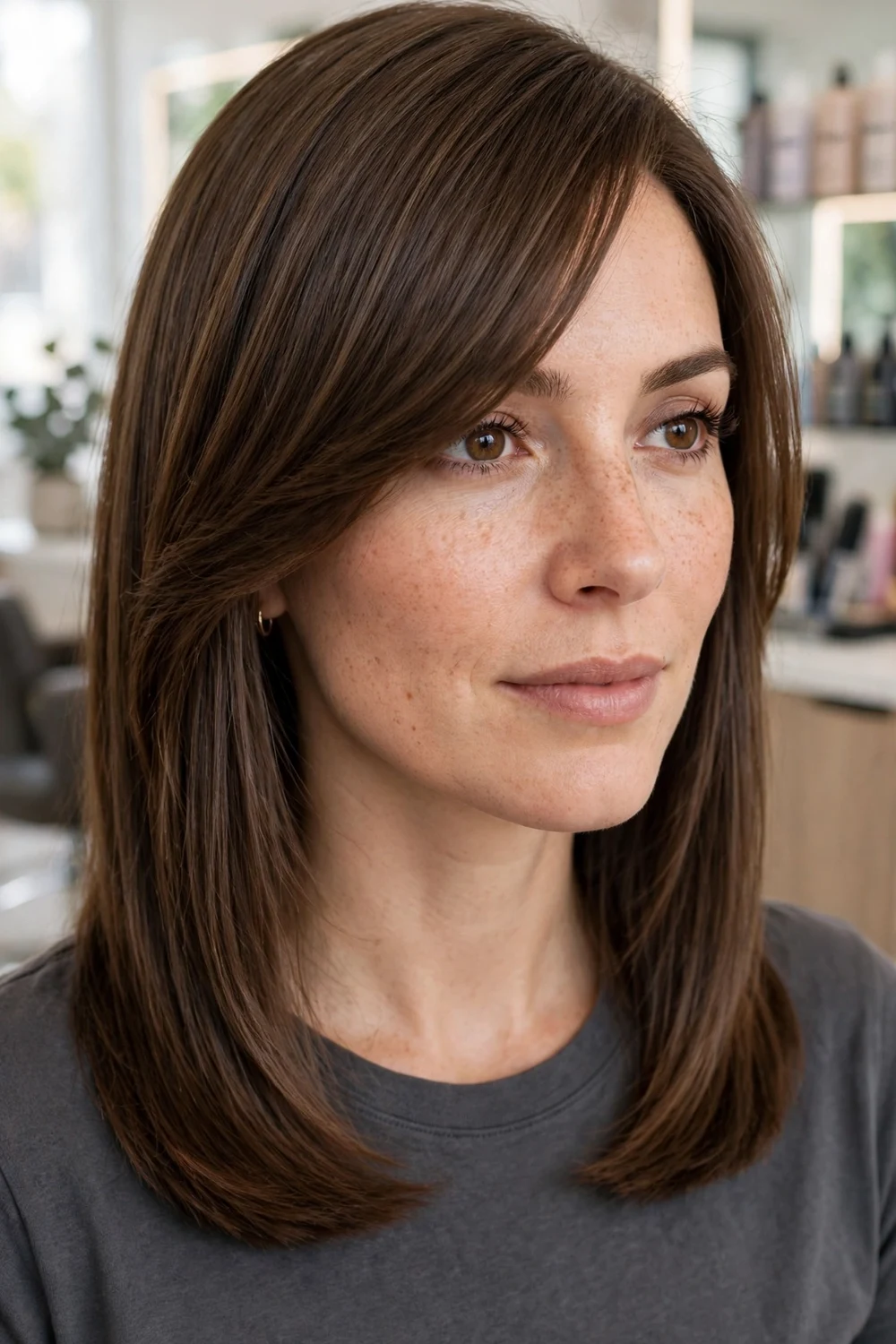
A long side-swept fringe runs diagonally across the forehead and blends into the longer side of the cut. The diagonal line softens square and heart faces and gives a one-length cut a clear focal point.
This version works on medium to thick hair and on straight or wavy texture. Blow-dry the fringe across the forehead in the direction it will lie, then smooth the blunt lengths. The fringe reaches the cheekbone, so it tucks behind the ear on days you want it out of the way.
Try this: Pin the fringe in place for five minutes after drying. The short set helps it hold the sweep without hairspray.
Difficulty: Low to Medium · Cost: $ (salon)
12. Tousled Wavy Blunt Cut
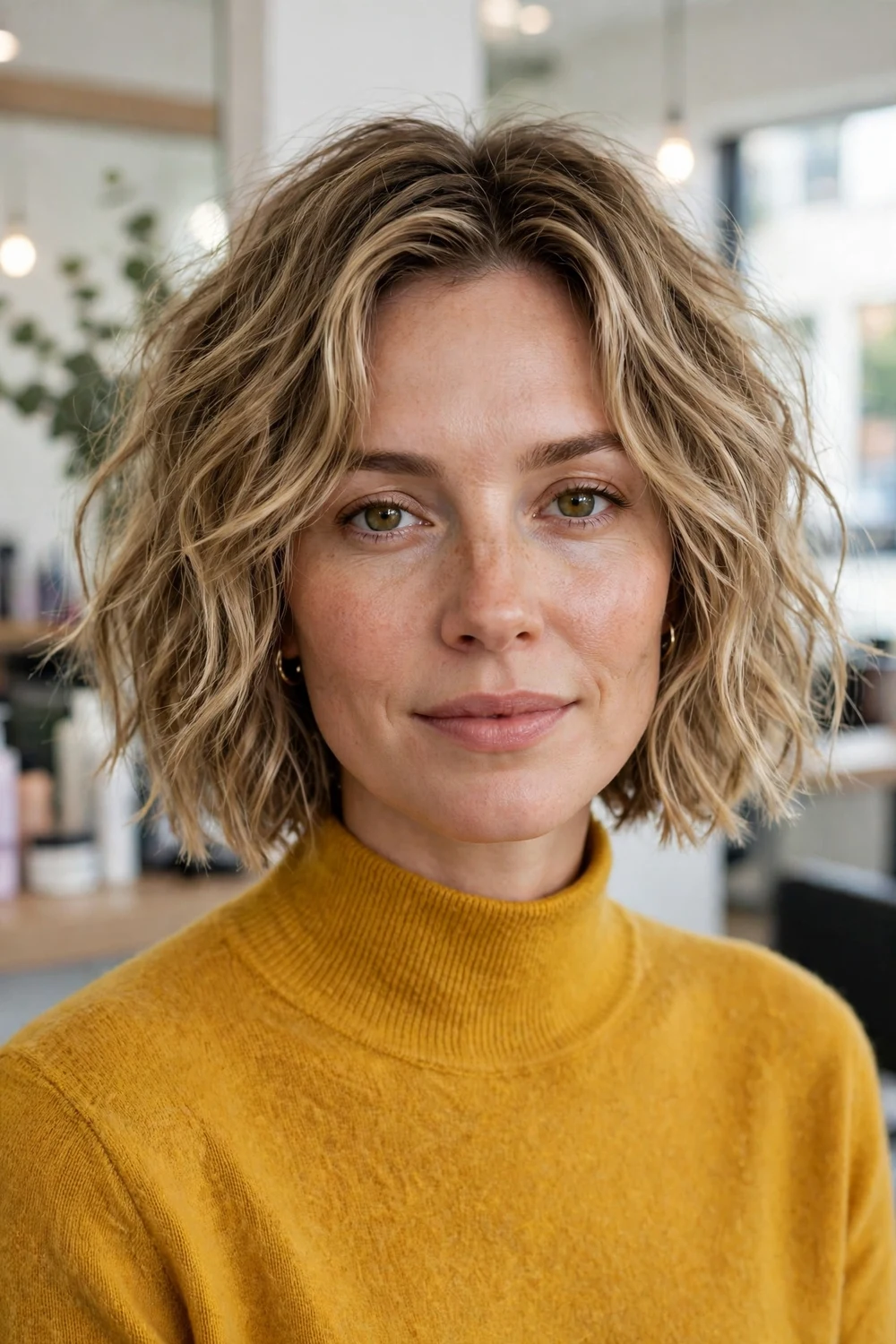
Loose waves bend the lengths while the ends stay blunt, and that contrast between soft waves and a firm edge is the whole point of this style. It suits fine to medium hair that needs visible volume.
Create the waves with a curling iron on the middle lengths only, leaving the last inch straight so the blunt line still shows. Finger-comb once cool. Brushing waves out turns the shape wide and frizzy at the ends.
Try this: Wave alternate sections in opposite directions. The mix stops the curls from joining into one uniform ringlet pattern.
Difficulty: Medium · Cost: $ (salon)
13. Blunt Cut for Curly Hair

Curly hair cut to one blunt length at the shoulders forms a strong, even shape that holds its outline as the curls dry. Cutting curl by curl or dry helps the stylist see where each section will sit at its natural spring.
Ask how the stylist handles shrinkage before the first cut, and start longer than your target length; curls can spring up several inches from wet to dry. The medium bob hairstyles guide covers more bob shapes by texture. Diffuse on low heat or air-dry, and refresh day-two curls with water and a little leave-in conditioner.
Try this: Bring a photo of your hair fully dry on a good curl day. That photo tells the stylist more than any wet-hair consultation.
Difficulty: Medium · Cost: $$ (salon)
14. Sleek Blunt Cut for Fine Hair
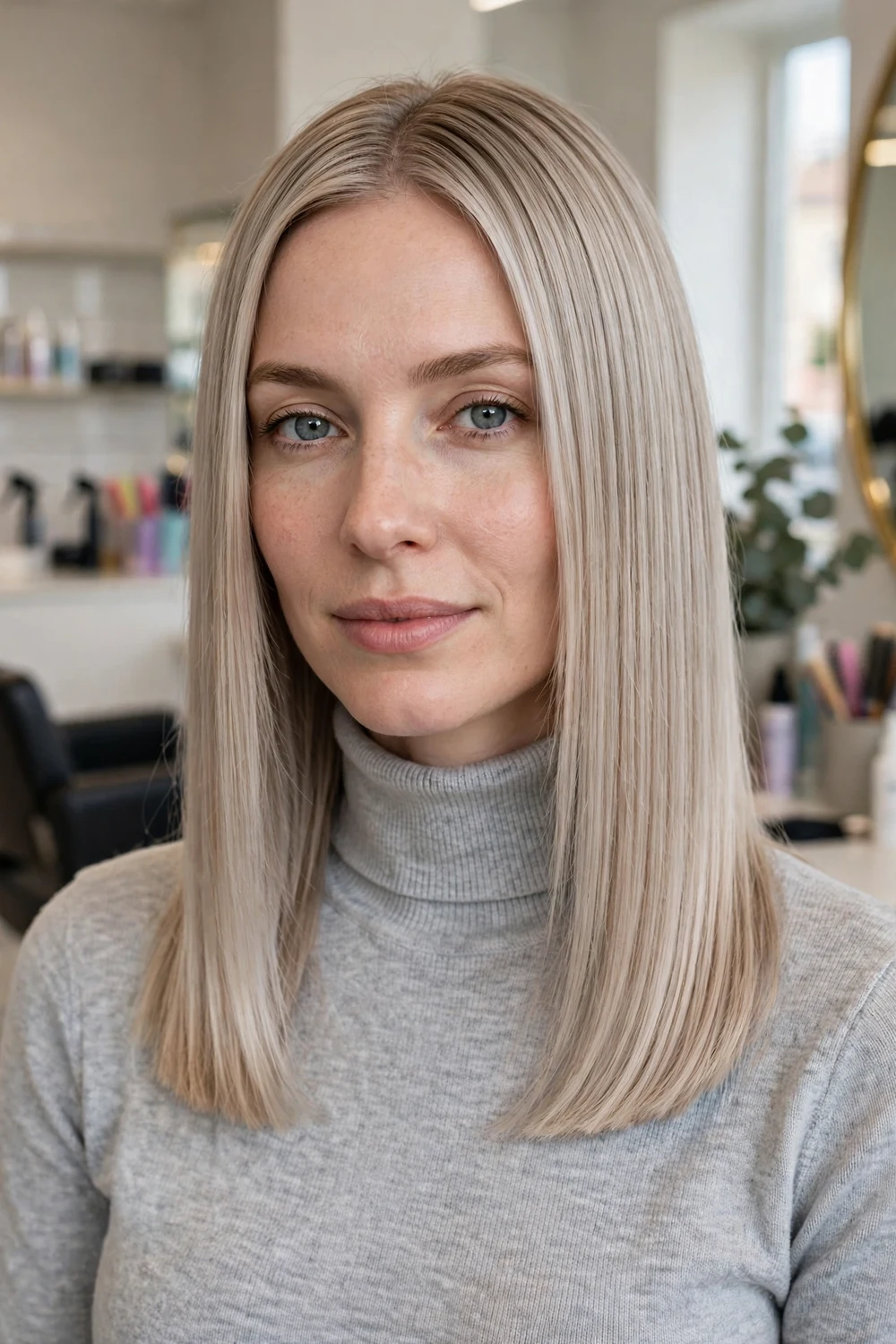
Fine hair loses density at the ends when layers are cut in, so this version keeps every strand at one length just below the shoulders. The shared endpoint makes the bottom edge look thicker than the hair above it.
Keep styling products light: a volumizing mousse at the roots and nothing heavy on the ends. Flat iron on a moderate setting, because fine hair shows heat damage quickly and damaged ends undo the blunt effect. A trim every 6 weeks protects the edge.
Try this: Ask for zero layering in writing on your salon notes. Future stylists then keep the same plan at every visit.
Difficulty: Low · Cost: $ (salon)
15. Long Blunt Cut for Round Faces
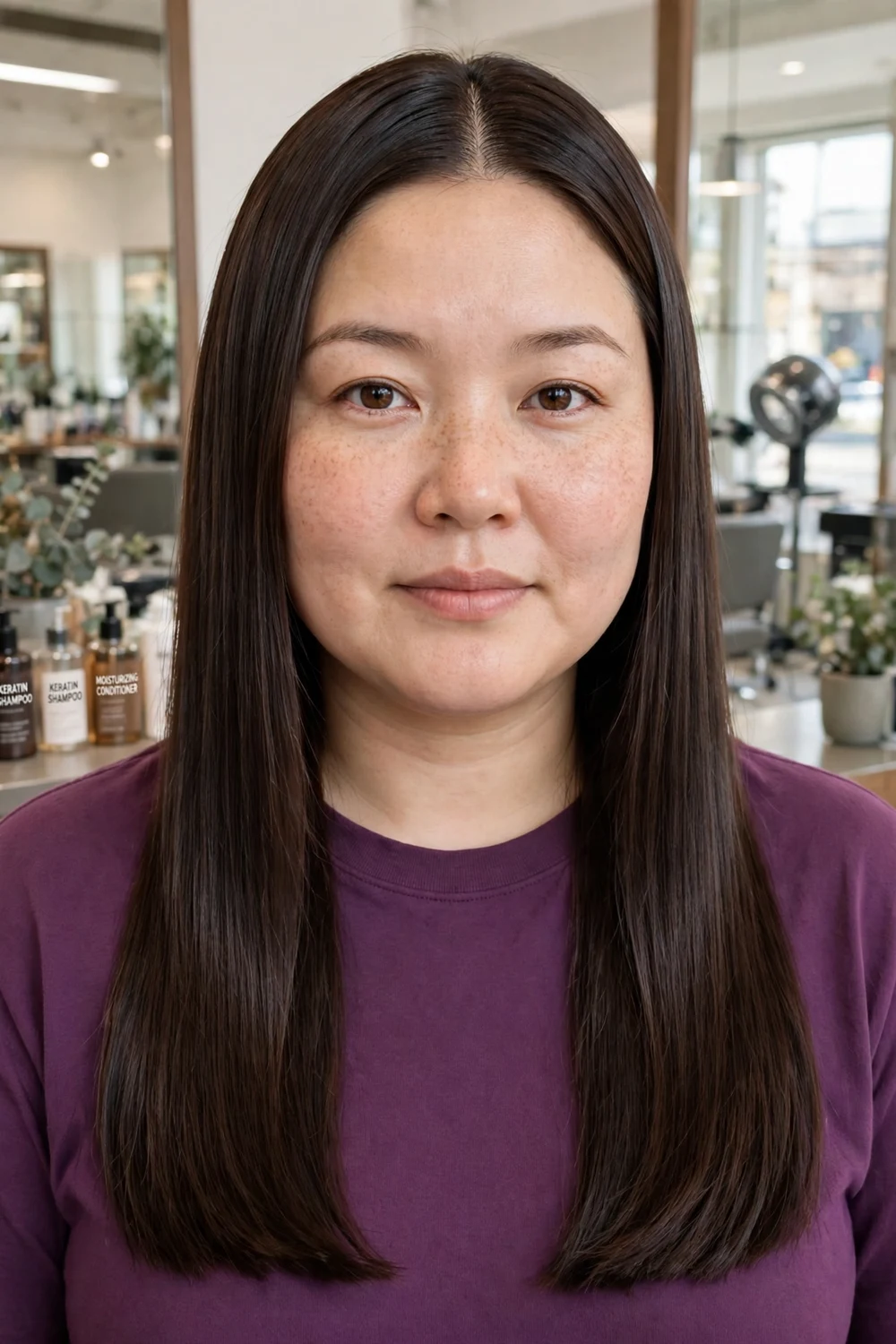
Length is the tool here. The blunt edge falls below the shoulders, past the widest part of the face, and the straight sides draw the eye downward. A center or slightly off-center part keeps the sides even.
Avoid chin-length versions if your goal is lengthening; the edge stops right at the jaw and widens that zone. Keep volume at the crown rather than the cheeks, and dry the front sections forward and down so they lie close.
Try this: Check the length with your head level, chin parallel to the floor. Tilting the head hides how far below the shoulders the edge truly sits.
Difficulty: Low · Cost: $ (salon)
16. Silver Blunt Cut for Women Over 60

Natural silver hair cut to one blunt length looks tidy and deliberate, and a soft side part adds lift at the front. The length sits just below the shoulders, long enough to tie back and short enough to dry quickly.
Gray hair often has a wirier texture than pigmented hair, so a smoothing cream on damp lengths helps the blunt edge lie flat. Purple shampoo once a week keeps silver tones clear of yellow cast from minerals and sun. The cut itself needs no color appointments, which keeps upkeep low.
Try this: Ask your stylist to check the edge from the back with a hand mirror. Evenness matters more on silver hair because the light color shows gaps.
Difficulty: Low · Cost: $ (salon)
17. Ombre Blunt Lob

Dark roots fade gradually into lighter ends along a blunt lob, and the straight edge gives the color melt a clean finish line to land on. Because the lightener sits at the ends, root regrowth stays soft for months.
The ends carry both the oldest hair and the lightest color, so they need the most care: a weekly conditioning mask and heat protection before any hot tool. Trimming the blunt edge on schedule also removes the driest part of the ombre before it splits.
Try this: Schedule the color and the cut together. Fresh blunt ends make an existing ombre look newly done, even months later.
Difficulty: Medium · Cost: $$$ (salon)
18. Blunt Lob with Caramel Highlights

Caramel ribbons run through a dark brown blunt lob and catch light along the straight edge. Placing a few lighter pieces near the face brightens the front, while the blunt cut keeps the highlighted ends looking full.
Highlights on blunt hair show every placement line, so ask for fine, blended weaves rather than thick stripes. A gloss appointment between full highlight sessions refreshes the caramel tone when it fades warm or dull.
Try this: Show your colorist where your part sits every day. Highlight placement should follow your real part, or the brightest pieces hide underneath.
Difficulty: Medium · Cost: $$$ (salon)
19. Jet Black Blunt Cut with Glass Finish

Jet black color plus a mirror-smooth finish turns a simple one-length cut into the sharpest look on this list. The dark color fills the outline completely, and the flat surface reflects light in one unbroken sheet.
This finish depends on condition: frizzy or damaged lengths scatter light and break the glass effect. Use a heat protectant before the flat iron, work in small sections, and finish with a light shine spray held well away from the hair so it mists rather than spots.
Try this: Iron each section once slowly instead of three times fast. One controlled pass gives more shine and less heat damage.
Difficulty: Medium · Cost: $$ (salon)
20. Buttery Blonde Blunt Lob

A warm buttery blonde softens the firm edge of a collarbone blunt lob. The single-length cut also helps blonde hair, which can look thin at the ends after lightening, hold a fuller outline.
Blonde ends are fragile, so keep the flat iron temperature moderate and use a bond care or protein-balanced conditioner in rotation with a moisturizing one. Roots show sooner on an all-over blonde, so plan color and cut appointments on the same cycle when you can.
Try this: Ask for the tone slightly deeper at the root. A soft root shadow stretches the time between color visits and keeps the lob looking fresh.
Difficulty: Medium to High · Cost: $$$ (salon)
21. Beveled Blunt Bob with Curve-Under Ends

The edge of this bob is beveled so the ends curve under in a smooth roll instead of hanging straight. The shape sits above the shoulders, hugs the jaw line, and gives round and oval faces a neat frame.
Blow-dry with a round brush, rolling the ends under as each section cools. The bevel is cut into the last half inch, so heavy layering requests will remove the very part that creates the curve; keep the rest of the cut one length.
Try this: Let each rolled section cool fully before touching it. Warm hair resets its shape the moment it is handled.
Difficulty: Medium · Cost: $$ (salon)
22. Face-Framing Blunt Cut

The back and sides stay blunt at shoulder length while two longer pieces at the front outline the face. This is a gap many blunt roundups skip: keeping the strong edge and still getting softness where the hair meets the face.
Keep the framing pieces at chin length or longer; shorter pieces spring out and fight the blunt line. Style them with a round brush swept away from the face, then smooth the back sections straight so the contrast between the two zones stays clear.
Try this: Decide the framing length by your ponytail habit. Pieces that reach the tie stay out of your face on tied-back days too.
Difficulty: Low to Medium · Cost: $$ (salon)
23. Blunt Collarbone Cut for Thin Hair

This collarbone version was built for thin hair: one length, no layers, and texturizing kept to a minimum so every strand reaches the edge and adds to its density. The collarbone length also stops thin hair from separating into strings, which longer lengths tend to do.
For readers comparing lengths built around fine hair, the lob hairstyles for fine hair roundup covers the same density logic in more shapes. At home, dry thin hair with your head tipped forward for root lift, then smooth only the surface.
Try this: Skip thinning shears entirely at the salon. On thin hair they remove exactly the ends this cut is trying to keep.
Difficulty: Low · Cost: $ (salon)
| Cut type | Best hair type | Styling time | Trim interval |
|---|---|---|---|
| One-length sleek blunt (ideas 1, 14, 19) | Straight, fine to medium | 10 to 15 minutes | Every 6 weeks |
| Blunt lob with parting focus (ideas 2, 3, 4) | Straight to wavy, fine to thick | 10 minutes | Every 6 to 8 weeks |
| Textured blunt (ideas 5, 6, 12) | Fine to medium, wavy | 15 minutes | Every 6 to 8 weeks |
| Blunt with bangs (ideas 8, 9, 10, 11) | Straight to wavy, fine to thick | 10 to 15 minutes plus fringe trims | Cut every 6 to 8 weeks, fringe sooner |
| Blunt for thick or curly hair (ideas 7, 13) | Thick, curly, coarse | 15 to 20 minutes or air-dry | Every 8 weeks |
| Blunt with color focus (ideas 17, 18, 20) | Any type, color-treated | 10 to 15 minutes | Cut every 6 to 8 weeks, color by regrowth |
Frequently Asked Questions
What does blunt mean in a medium haircut?
Blunt means the hair is cut to one length with a straight-across edge and no layers removing weight from the ends. At medium length that edge usually lands between the chin and the collarbone. The shared endpoint makes the bottom of the cut look full and gives the style its clean outline.
Does a blunt cut make medium hair look thicker?
Yes, especially on fine and thin hair. Layers spread the ends out at different lengths, while a blunt cut lines every strand up at the same point, so the edge reads denser. The effect is strongest when the edge is trimmed on schedule and the ends stay free of split damage.
How often does a medium blunt cut need a trim?
Every 6 to 8 weeks keeps the edge even for most hair types. Fine and thin hair benefits from the shorter end of that range, because a small amount of wear shows quickly on a blunt line. Curly hair can often stretch a little longer, since small length differences hide inside the curl pattern.
Can you wear a blunt cut with wavy or curly hair?
Yes. Waves and curls sit above a blunt edge and give the cut more volume, as the tousled wavy and curly ideas in this list show. Ask your stylist how they account for shrinkage and curl pattern before cutting, and start longer than the target length so the dry result lands where you planned.
Should thick hair get a blunt cut or layers?
Thick hair usually needs both ideas combined: a blunt outer edge with layers cut inside the hair to remove bulk. A pure one-length blunt cut on very thick hair can flare at the sides and feel heavy at the nape. Internal layering solves the weight problem while the visible edge stays blunt.
Final Thoughts
Start with the base cut that matches your hair type, then choose one change at a time: a new part, a fringe, a wave pattern, or a color shift. A medium blunt cut holds its shape well, so small changes stay visible for weeks. Bring two or three photos from this list to your appointment, name the length by body marker (chin, shoulder, or collarbone) rather than by inches, and agree the trim schedule before you leave, so the edge you liked on day one is the edge you still have two months later.

