



Turning sixty often changes your hair: it thins, loses some bounce, and grey starts taking over. A bob answers all three at once. Shorter lengths make fine hair look fuller, layered shapes add movement back, and the right cut lets grey look intentional instead of neglected.
This guide covers 81 bobs for women over 60, grouped from short to long: chin-length bobs, medium cuts, and lobs. You will find a style for fine, thick, curly, and grey hair, plus guidance on face shape, styling, and upkeep. After years of researching cuts for thinning, greying hair, I can say the bob is the most reliable choice in this age group.
Quick answer: This guide covers the best styles, who they suit, and how to get them right.
Quick Takeaways
- Bobs lift fine hair because shorter lengths weigh less, so strands sit higher at the crown.
- Stacked, graduated, and layered shapes build fullness where thinning shows most: the top and sides.
- Most bobs need a trim every 6-8 weeks to hold their shape, since growth shows fast on shorter cuts.
- Grey blending, purple shampoo, and gloss treatments keep silver and white bobs looking bright.
- The lob (long bob) suits women who still want to tie hair back while keeping a structured cut.
Why Bobs Flatter After 60
Hair past sixty tends to grow slower and shed more, which makes long lengths look sparse at the ends. Cutting to bob length removes the weakest part of the hair and leaves a thicker-looking perimeter. The face gets more attention, and cheekbones look more defined.
Bobs also simplify mornings. A chin-length cut dries in minutes, and one round of a round brush gives it shape. For women managing stiffness or limited arm mobility, that shorter drying time matters. The cut does the work instead of the styling routine.
What Is a Bob?
A bob is a haircut that sits between the ear and the shoulder, with a defined perimeter. It can be one-length (blunt), layered, stacked at the back, or graduated from short to long. A lob is the longer version: it grazes the collarbone or shoulder and keeps the structured shape of a bob with more length to play with.
Variations like the A-line (shorter in back, longer in front), the concave bob (curving under at the ends), and the inverted bob (stacked layers lifting the back) all share the same idea: a compact, shaped cut that frames the face. None of these require daily heat styling to look finished.
How to Choose a Bob by Face Shape
Round faces gain definition from longer front pieces, angled cuts, and side parts that break up width. Chin-length bobs with volume at the crown pull the eye upward instead of outward. Avoid cuts that end exactly at the widest part of the cheek unless layers soften the edge.
Oval faces suit nearly every bob length, so the decision comes down to hair texture and maintenance preference. Square faces soften with face-framing layers, curtain bangs, and wavy texture that rounds off the jawline. Heart faces balance a wider forehead with volume at the jaw: bobs that end at chin level with flipped or curled ends do this naturally.
Long faces look best with bobs that add width at the sides. Fringe, either straight or curtain, shortens the forehead and keeps the face from appearing longer. Chin-length bobs with a slight outward flip work the same way.
If your hair is fine or thinning, layered bob hairstyles for women over 60 pair well with several of the ideas below.
Best Bob for Your Hair Type and Concerns
Fine hair needs lift at the roots and minimal weight on the ends. Stacked bobs, graduated shapes, and short layers give fine hair structure it can’t build on its own. A volumizing mousse at the roots before blow-drying multiplies the effect.
Thick hair needs the opposite: texturizing, razor work, or invisible layers that remove bulk without changing the outline. Blunt cuts on thick hair look heavy unless the interior is thinned. Coarse or curly hair suits slightly longer bobs, since too-short curls can spring up wider than intended.
Grey hair benefits from cuts with clean lines, because white and silver shades show every uneven edge. Purple shampoo once a week cancels yellow tones, and a gloss treatment every few months keeps grey from looking dull. Grey-blending color at the salon can soften the grow-out line for women still transitioning.
Short Bobs (ideas 1-43): chin-length and above. Maximum fullness, minimum styling time.
1. Classic Layered Bob with Piece-y Layers
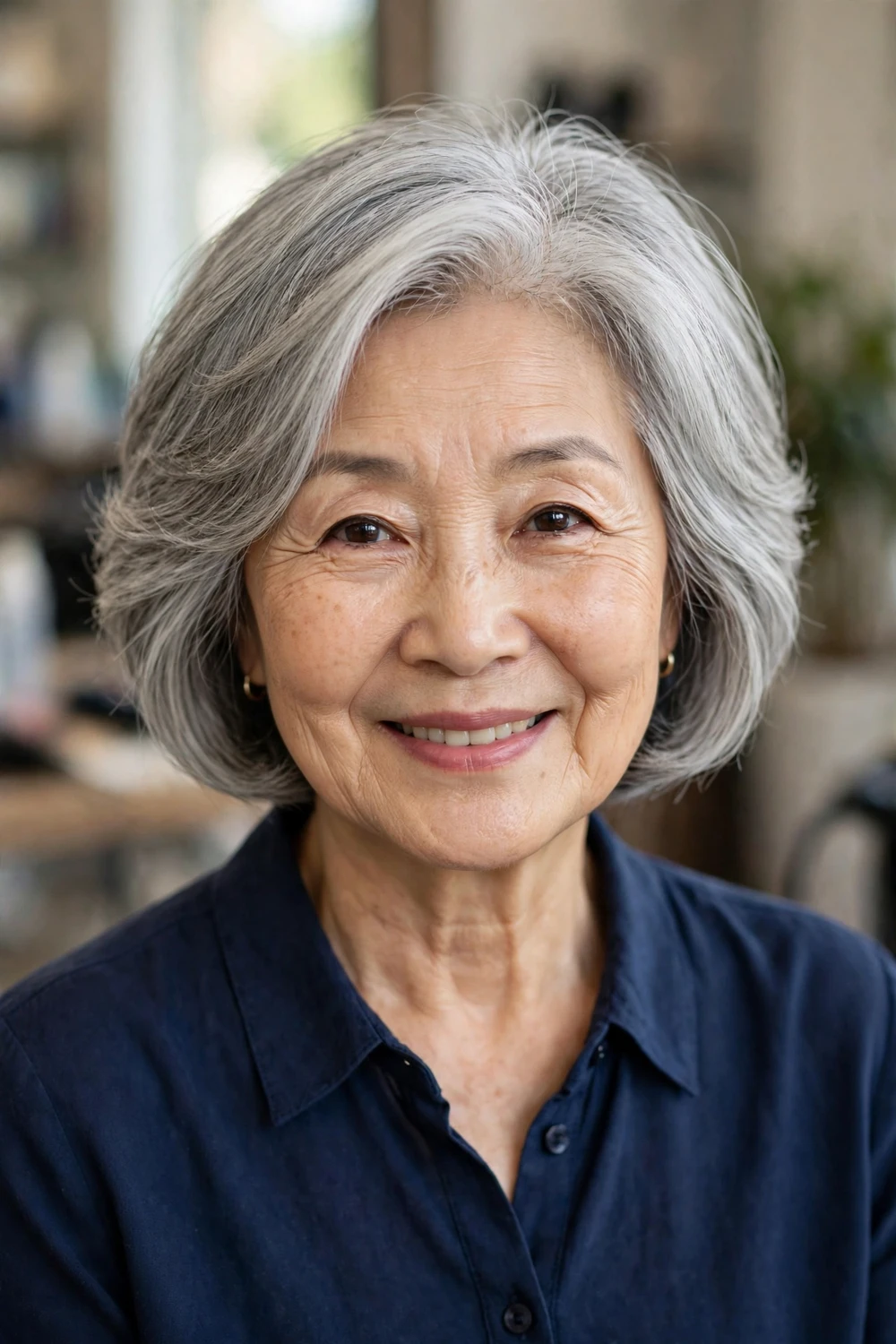
Ask your stylist for a chin-length bob with soft, separated layers cut throughout the crown and sides. The piece-y finish keeps the cut from looking blunt or helmet-like, and it gives fine hair the movement that aging hair often loses. Layers should be cut with scissors, not a razor, so the ends stay thick enough to hold the shape. This version flatters round and oval faces because the layers draw the eye down past the cheek. It grows out gracefully between appointments, though the pieces need reshaping at each trim to stay defined.
Try this: Rub a pea-sized amount of texturizing paste between your palms and pinch the ends. It separates the pieces without making them look messy.
For a deeper collection focused only on this length, see chin length bob hairstyles older women, with 29 styles for women over 50 and 60.
2. Blunt Chin-Length Bob
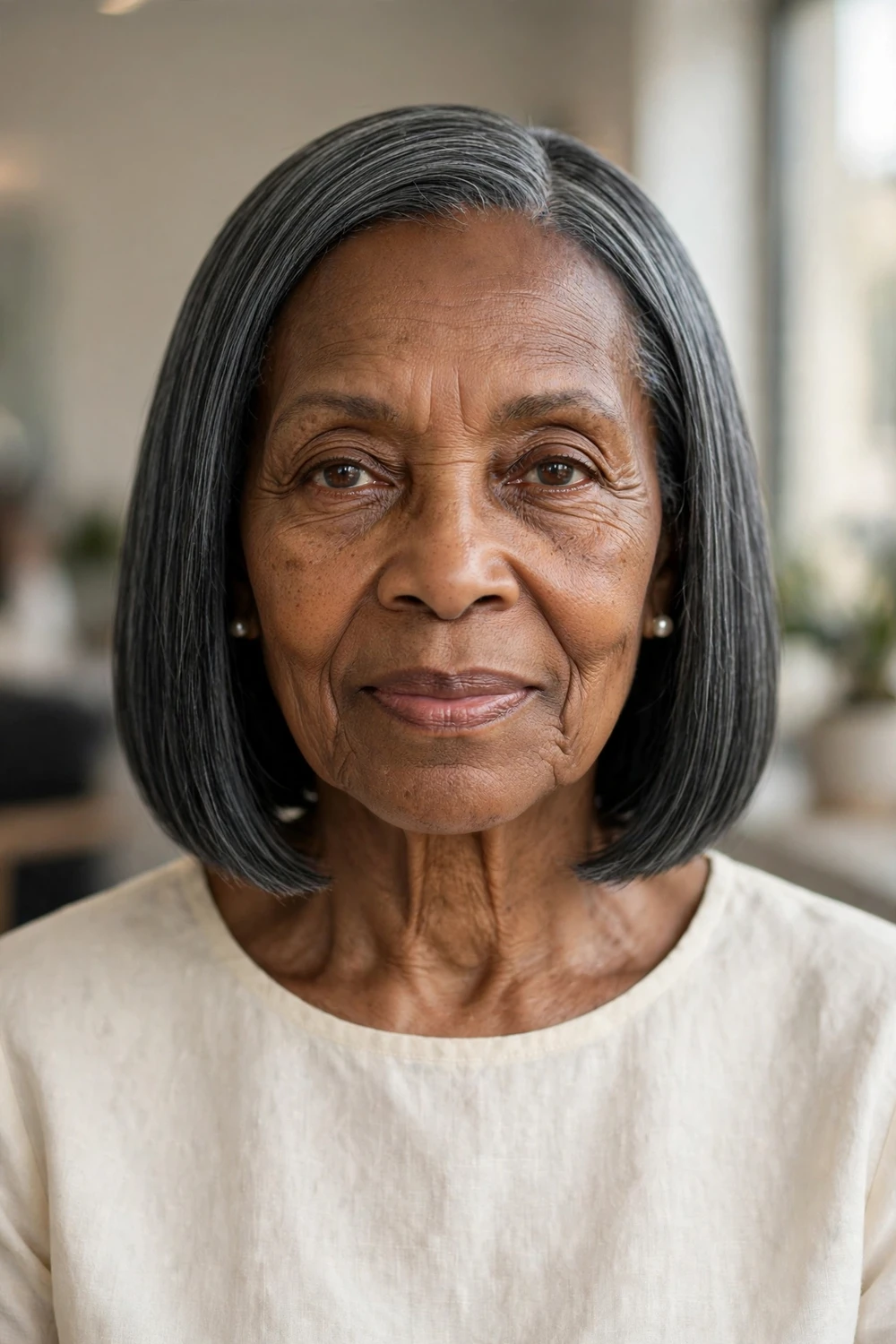
A sharp one-length cut ending right at the chin makes the perimeter look as thick as possible, which helps thinning hair most. No layers means every strand ends at the same point, so the hemline reads full. This cut works best on straight or slightly wavy hair, since curls shrink and change the line. Ask for the back cut a fraction shorter than the front to keep it sitting neatly against the neck. It suits oval and heart faces especially well, and it frames the jaw in a way that reads confident.
Try this: Flat-iron the ends with a slight inward curve after drying. The polish makes the blunt line look intentional, not grown out.
3. Micro-Bob with Side Fringe
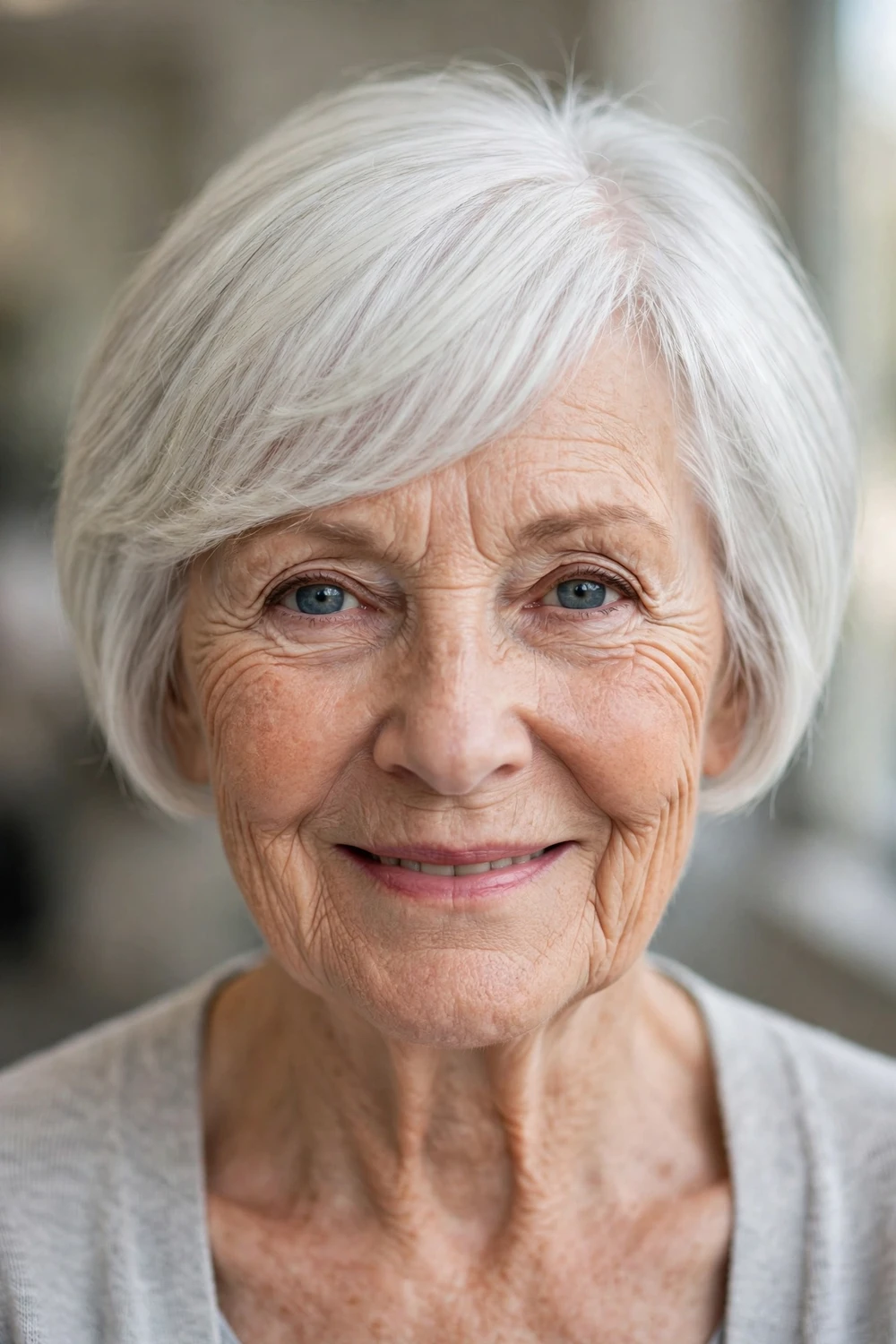
For women who want the shortest bob that still counts as a bob, the micro-bob ends just below the ear. A side-swept fringe adds softness across the forehead and draws attention to the eyes. The short length means maximum volume at the crown, because there is almost no weight pulling the roots down. This cut is easy to style: a quick blow-dry with a paddle brush is usually enough. It suits petite women and oval faces, and it pairs well with statement earrings since the ears stay visible.
Try this: Blow-dry the fringe to the side while it is still damp. Once it dries straight down, it resists sweeping over.
4. Mini Bob with Bangs and Layers
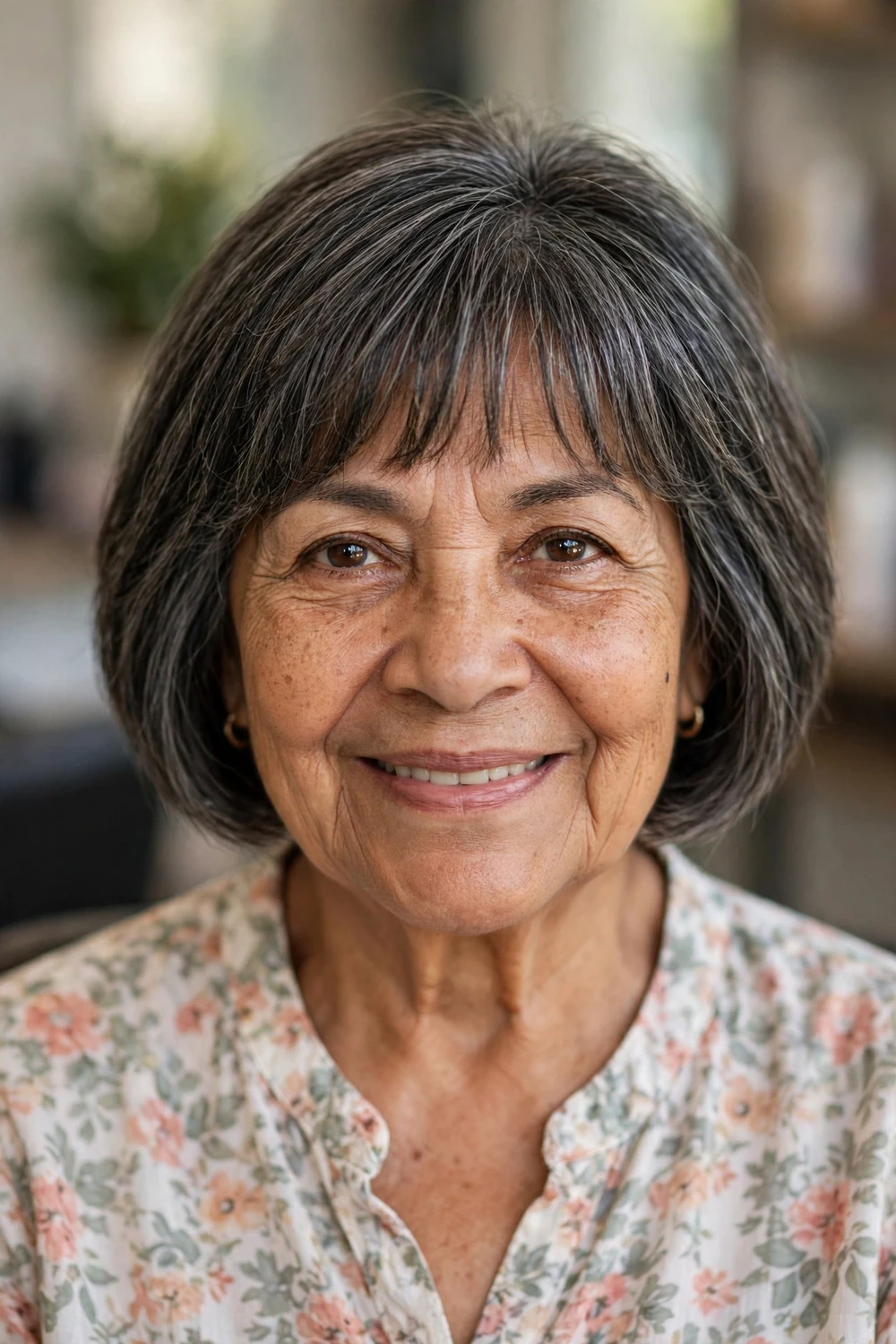
This playful cut sits at ear level with soft bangs and layers through the sides. The bangs cover forehead lines, and the short layers give fine hair a full, rounded shape. Keep the bangs at brow length or slightly longer so they can be swept aside as they grow. The layers around the ears should be point-cut for a soft edge. It suits small to medium faces, since the short length can overwhelm very long faces. Maintenance is simple: the shape holds well, but bangs need a trim between full appointments.
Try this: Dry bangs with a small round brush, rolling them under once. One pass keeps them from flipping outward during the day.
5. Textured Bubble Bob
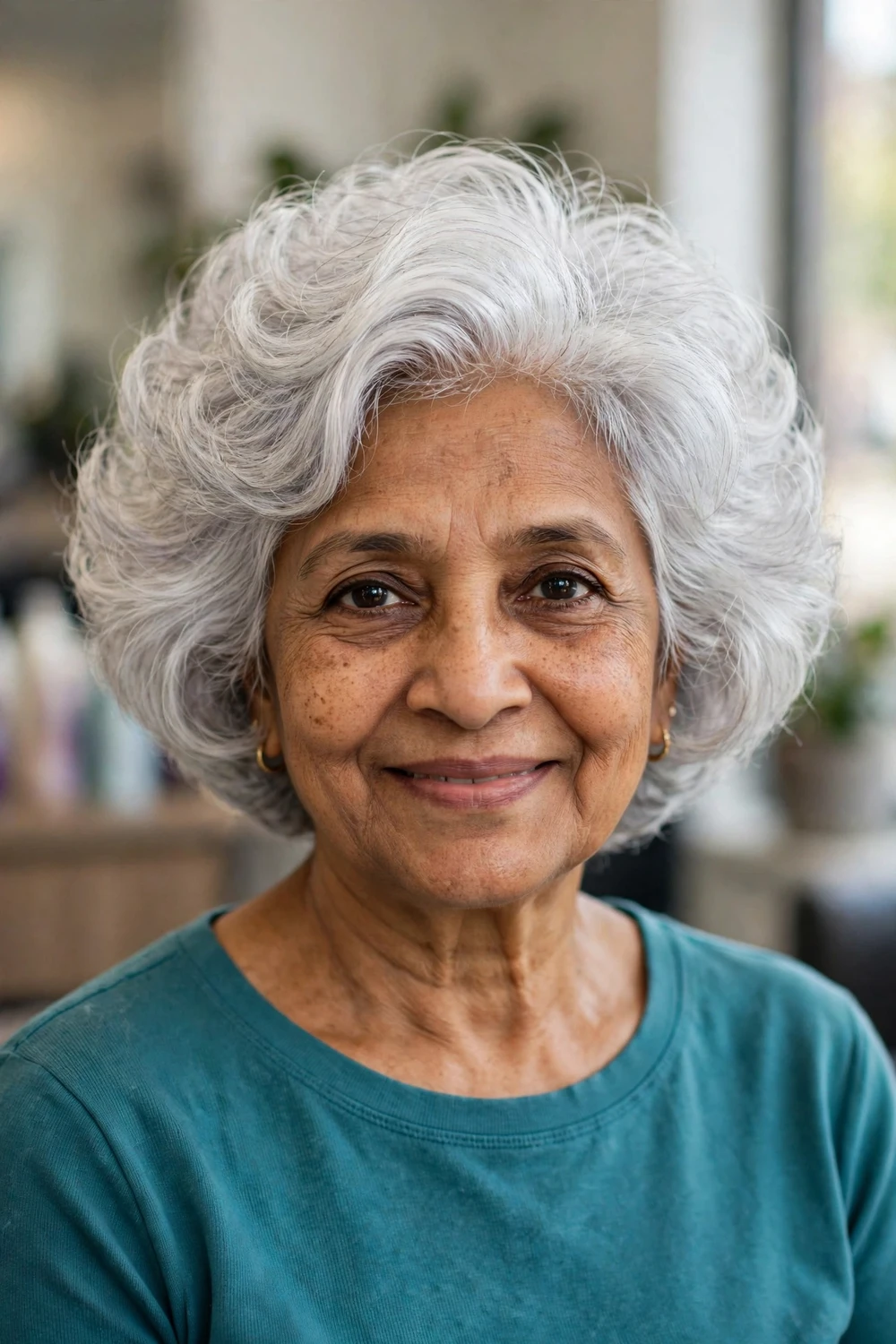
Fullness comes from within in this cut: interior layers and texturizing build a rounded, bubble-like silhouette that looks abundant even on fine hair. The perimeter stays at chin length while the inside is carved out to create lift. Your stylist should use thinning shears or a razor only on the interior, never on the outline, so the edges stay solid. This shape flatters round faces because the height at the crown lengthens the face visually. It needs a root lifter at the crown to hold the roundness through the day.
Try this: Flip your head upside down and blast the roots with the dryer for 30 seconds. The heat sets the lift before you style the ends.
6. Wavy Italian Bob

Channel understated polish with this chin-length cut that relies on natural wave and a center or slightly off-center part. The Italian bob has minimal layering: the shape comes from the weight of the hair itself, falling in soft, full waves. It suits women with natural body in their hair who want a low-effort routine. A clear perimeter keeps it looking neat while the waves keep it from looking severe. Ask for the ends cut blunt so the waves have a clean foundation to sit on.
Try this: Scrunch damp hair with a curl cream and let it air-dry. The cut is designed to look good without a brush.
7. Soft-Layered Silver Bob
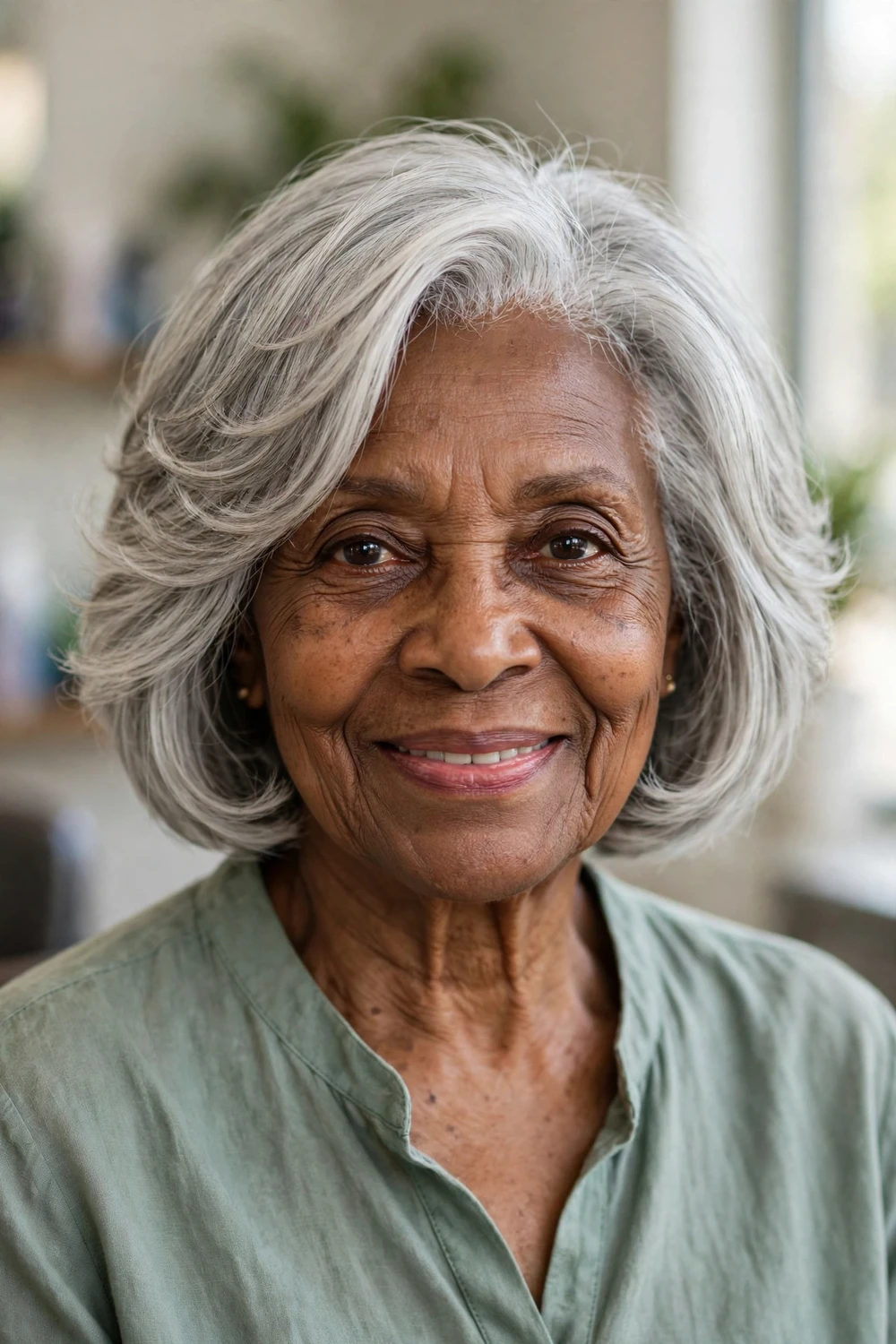
Grey hair takes on new life in a soft layered bob that lets the silver be the star. Gentle layers through the mid-lengths keep the hair moving, and a slightly forward-angled perimeter draws the eye to the jawline. Silver hair can look wiry, so ask your stylist to point-cut the ends for softness. Purple shampoo keeps the tone bright instead of yellowing. This cut suits every face shape because the layers can be adjusted: more around the front for round faces, more at the crown for long ones.
Try this: Use purple shampoo once a week and follow with a moisturizing conditioner. Silver hair dries out faster than pigmented hair.
8. Stacked Bob for Thin Hair

The stacked nape is the single most reliable trick for thin hair: short, graduated layers at the back of the head build a wedge of volume that makes the whole cut look thicker. The front stays longer, ending near the chin, so the face keeps its framing. This cut works because the stacking removes weight exactly where thin hair goes flat. It suits straight to wavy hair best. Ask your stylist to keep the stack tight and high; a loose stack on thin hair collapses by midday.
Try this: Apply volumizing mousse to the nape section before blow-drying, and direct the dryer nozzle upward into the stack to lock in the lift.
9. Graduated Bob with Wispy Layers

Graduation means the back is cut shorter and the hair lengthens toward the front, creating a smooth slope. Adding wispy layers on top softens the slope so it looks modern rather than severe. The wispy pieces around the face blur the jawline, which flatters square and heart faces. This cut gives fine hair built-in body at the back while keeping length where the face needs framing. It holds its shape well between trims because the graduation guides regrowth along the same line.
Try this: Wrap the front sections around a medium round brush, rolling outward. The flip shows off the graduated line.
10. Layered Inverted Bob
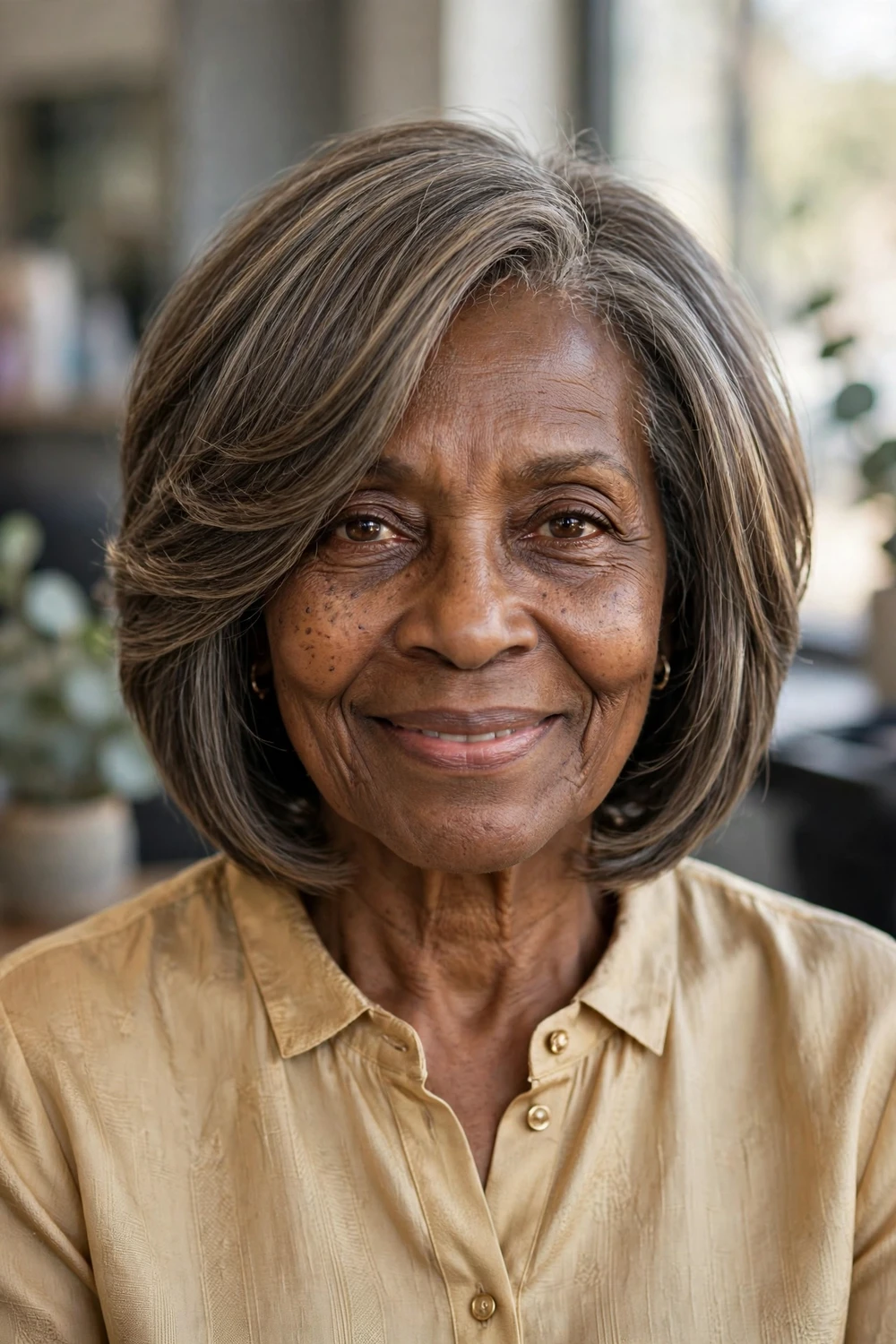
Shorter at the back and longer at the front, the inverted bob uses stacked layers to push volume up at the crown. The inversion creates a flattering diagonal line that elongates the neck and slims the face. Layers through the top keep the back from looking bulky, which matters for thick hair. For fine hair, the cut alone creates fullness; for thick hair, ask for interior texturizing so the back lies smooth. The angled front pieces suit round and square faces especially well.
Try this: Smooth a flat iron over just the front pieces, curving them under slightly. The contrast with the lifted back defines the inversion.
11. Angled Bob with Layers and Bangs
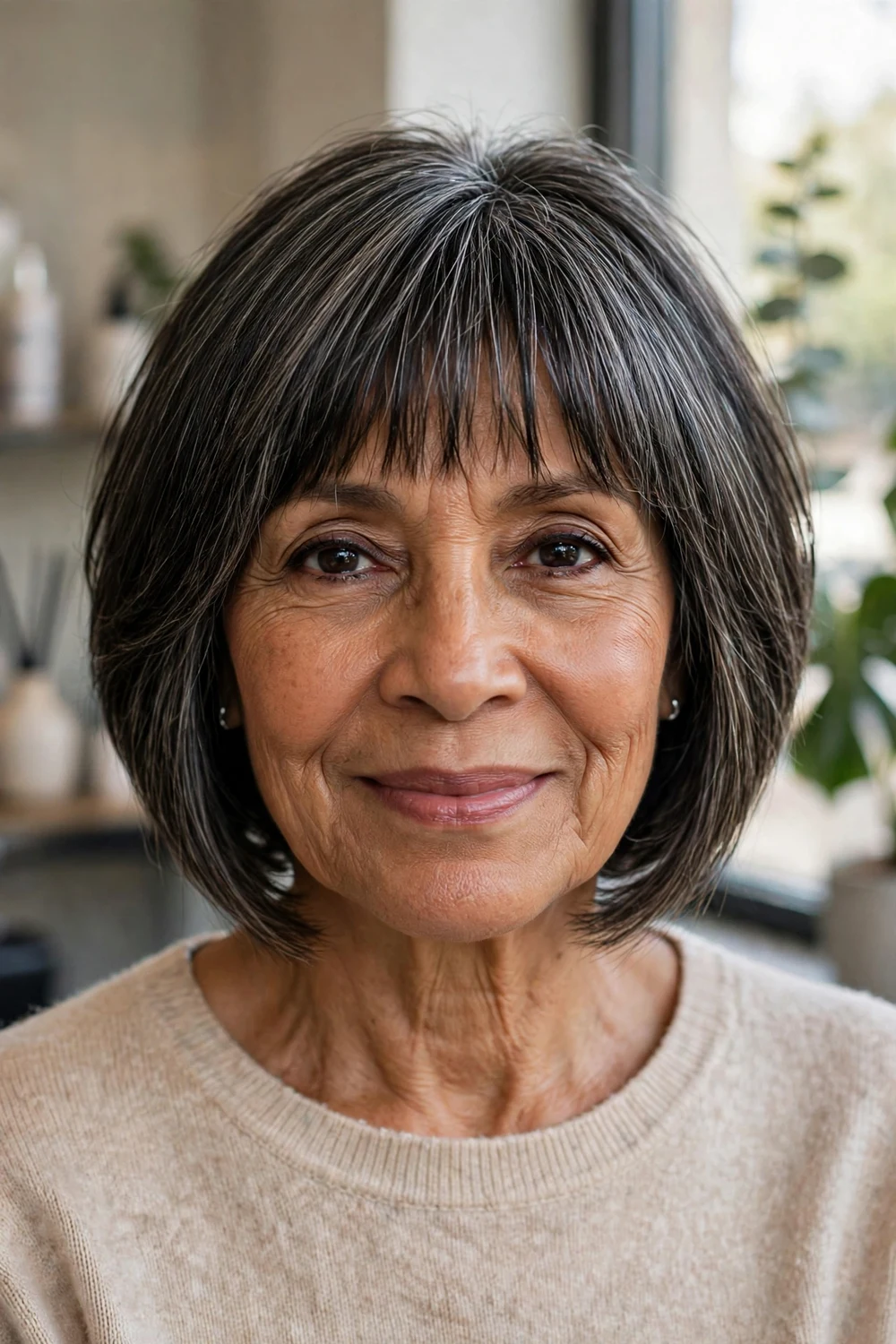
A steep diagonal line from the short back to the long front gives this cut its drama, and layers through the mid-lengths keep it wearable. Bangs balance the sharp angle by adding softness across the forehead. This combination suits women who want an edge without going asymmetric: both sides are even, but the angle does the talking. It flatters round faces because the long front pieces draw the eye downward. Keep the back short enough that the angle reads clearly, or the cut loses its point.
Try this: Part the bangs slightly off-center. A centered bang with an angled cut can look too symmetrical and stiff.
12. A-Line Bob (Wedge Cut)
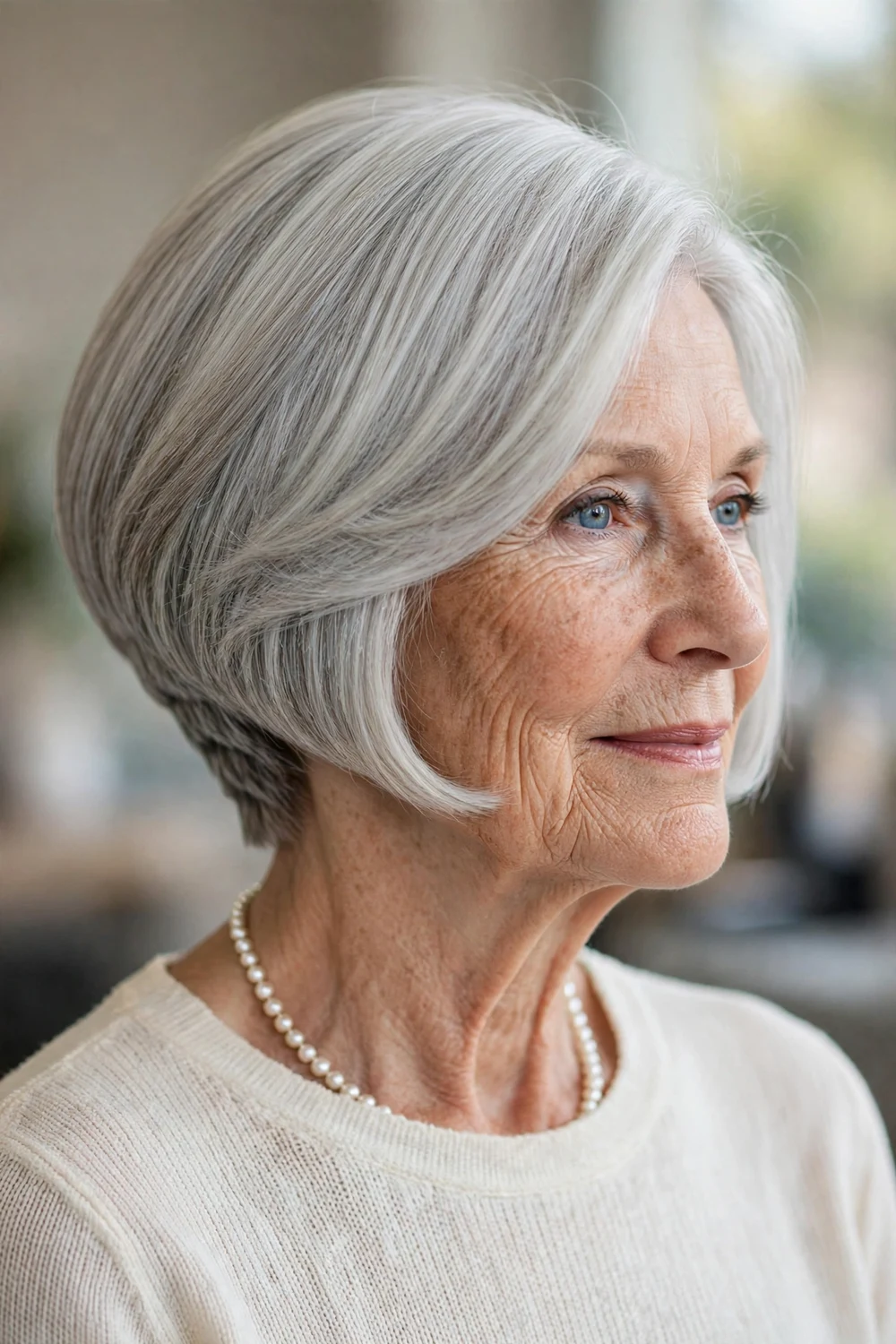
The wedge is the classic short stacked cut: hair is cut in a smooth, rounded shape that is shortest at the nape and lengthens toward the front. There are no visible layers on the surface; the stacking happens underneath to create the rounded form. This cut gives fine hair a solid, full look and suits women who prefer a neat, polished style. It works best on straight hair, since waves can distort the smooth wedge shape. Ask for the nape tapered close so the wedge keeps its crisp line.
Try this: Blow-dry with a paddle brush, directing everything down and slightly under. The wedge shape forms itself when the hair lies flat.
13. Edgy Asymmetrical Bob
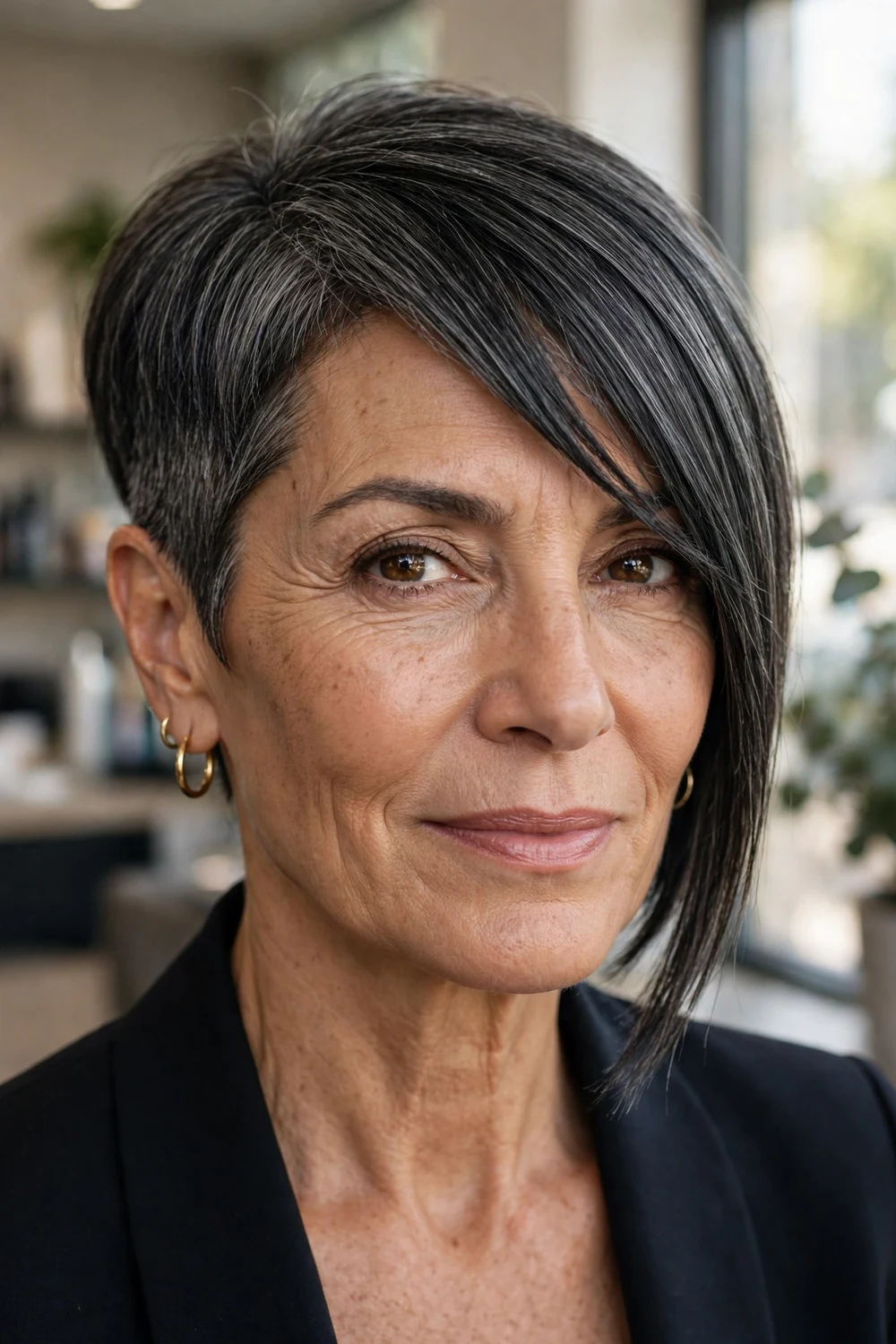
One side sits at chin length while the other drops an inch or two lower, and the imbalance is the whole point. The asymmetry adds visual interest and suits women who find symmetrical cuts boring. It works on straight hair best, since the length difference needs to read clearly. The longer side can be tucked behind the ear for a softer daytime look and released for evening. This cut flatters round faces because the longer side breaks up the width. Confidence carries it: wear it like you meant it.
Try this: Use a flat iron on the longer side only. Keeping that side sleek makes the asymmetry look deliberate.
14. Concave Bob
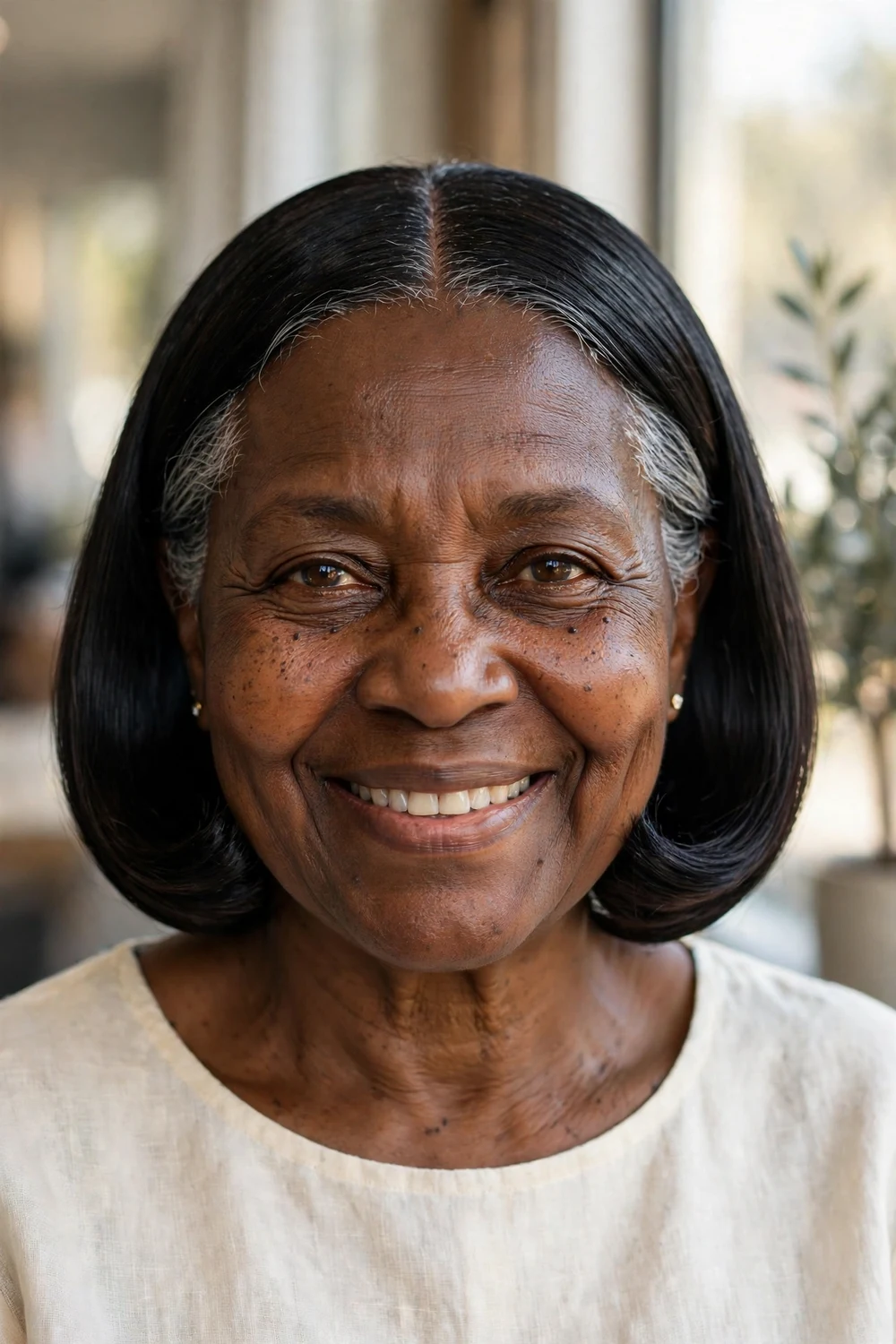
The concave shape curves inward at the ends, hugging the jaw and neck for a sleek, sculpted finish. This cut is a bob with the perimeter rolled under, which creates the illusion of thicker ends. It suits straight, fine-to-medium hair and flatters oval and heart faces. The curve needs to be cut into the shape, not just styled: ask your stylist to bevel the ends inward. Because the cut is precise, it needs trims on schedule or the concave line relaxes into a plain bob.
Try this: Finish with a round brush, rolling each section under as you dry. The heat sets the inward curve for the day.
15. Shaggy Bob with Curtain Bangs

Curtain bangs part in the middle and sweep to each side, framing the eyes and cheekbones while covering the outer forehead. Paired with a shaggy, layered bob, they create a relaxed shape with plenty of movement. The shag layers remove weight through the mid-lengths, which suits medium to thick hair. This cut is forgiving on growing-out color and needs little precision styling. It flatters most face shapes because the curtain opening can be adjusted wide or narrow.
Try this: Dry the curtain bangs forward with a round brush, then part them in the middle. The forward drying gives them their signature swoop.
16. Salt-and-Pepper Razored Bob

Razor-cut ends give this bob a feathered, lived-in texture that suits salt-and-pepper hair well. The razor thins the very ends so the two tones blend instead of sitting in a hard line. This cut works best on straight to wavy hair of medium density; very fine hair can look thinner with razor work, so ask your stylist to judge. The natural color variation becomes the feature here, no dye needed. Keep the length at or above the chin so the texture stays light and springy.
Try this: Work a light styling cream through the ends only. It defines the razor texture without weighing the roots down.
17. Choppy Bob for Thick Hair
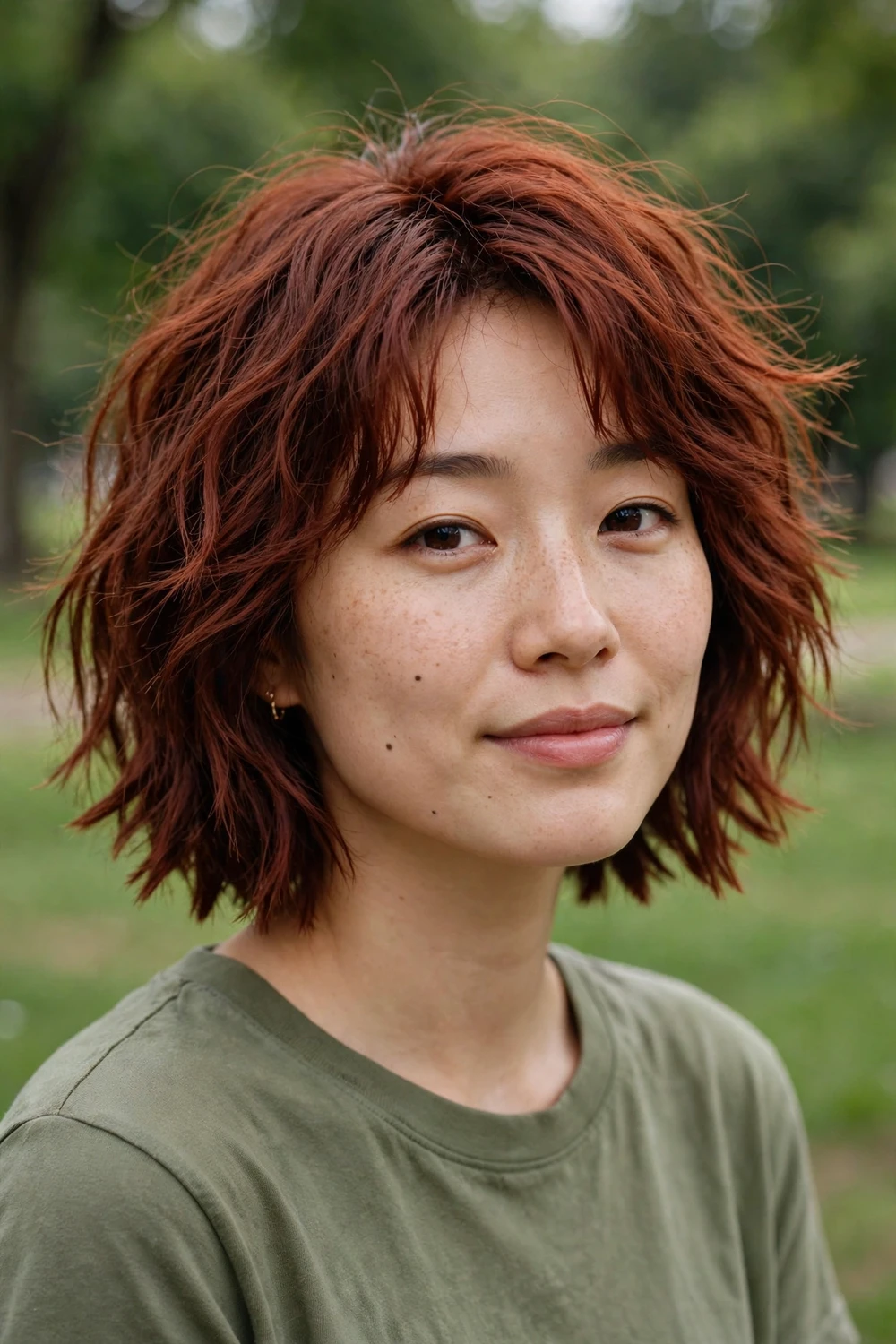
Thick hair needs internal work, and this cut delivers it: choppy layers carved through the interior remove bulk while the perimeter stays strong at chin length. The choppy finish keeps thick hair from forming a solid, heavy block. Your stylist should texturize with shears or a razor deep inside the cut, leaving the surface smooth. This shape suits square and round faces because the broken-up texture softens strong lines. It air-dries well, which is a bonus for women who want less heat styling.
Try this: Apply a smoothing serum to damp hair before air-drying. It keeps the choppy ends from frizzing outward.
18. Tousled Bob with Fringe
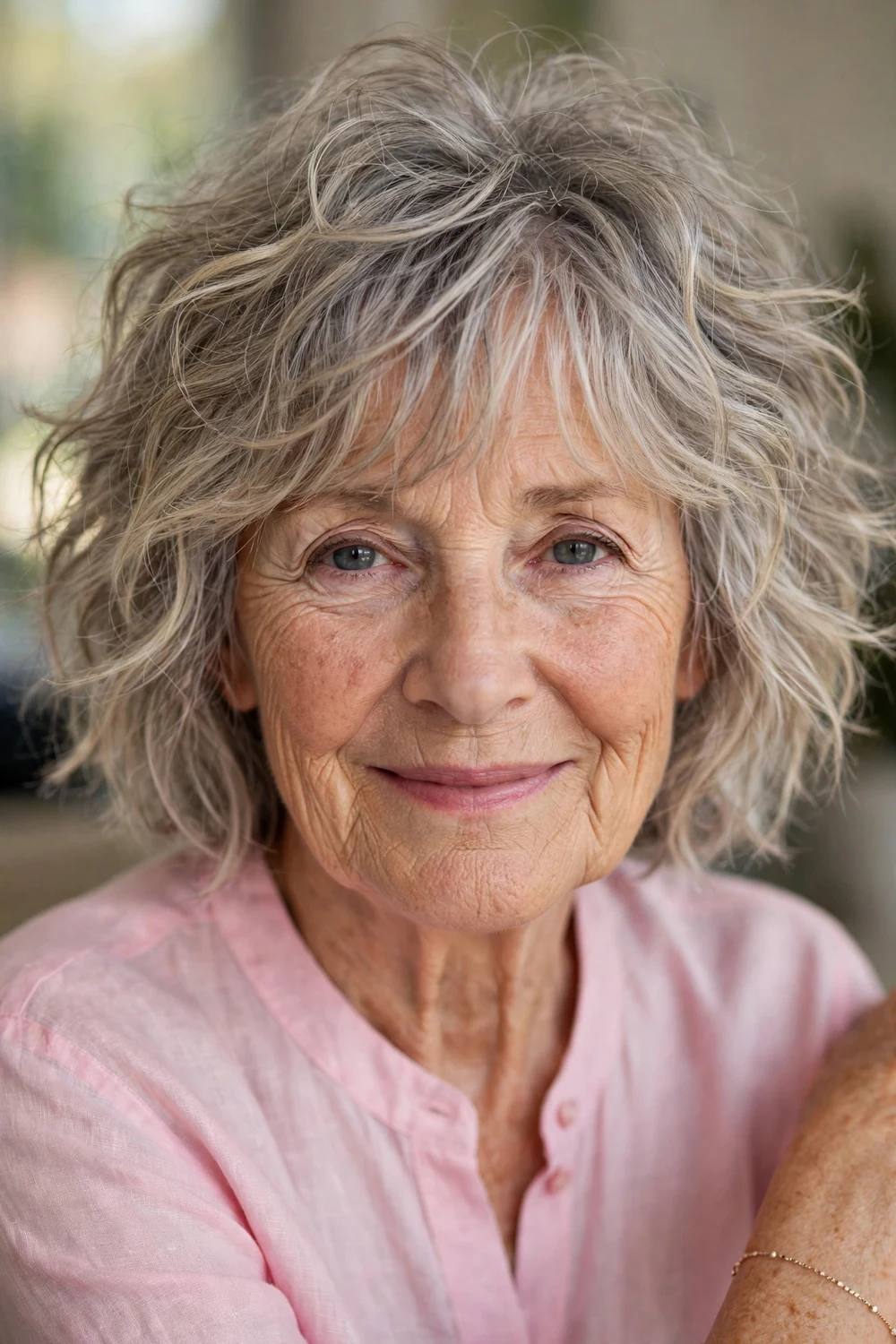
Air-dried texture is the foundation of this cut: soft layers and a light fringe are shaped to look good with minimal effort. The tousled finish hides thinning better than sleek styles do, because the uneven surface reads as full. A fringe at brow length softens the forehead and blends into the side layers. This cut suits wavy hair best, but straight hair can fake the texture with a sea-salt spray. It flatters long and oval faces especially well.
Try this: Mist damp hair with sea-salt spray, scrunch, and leave it alone. Touching it while it dries creates frizz instead of waves.
19. Wavy Choppy Bob with Side Bangs
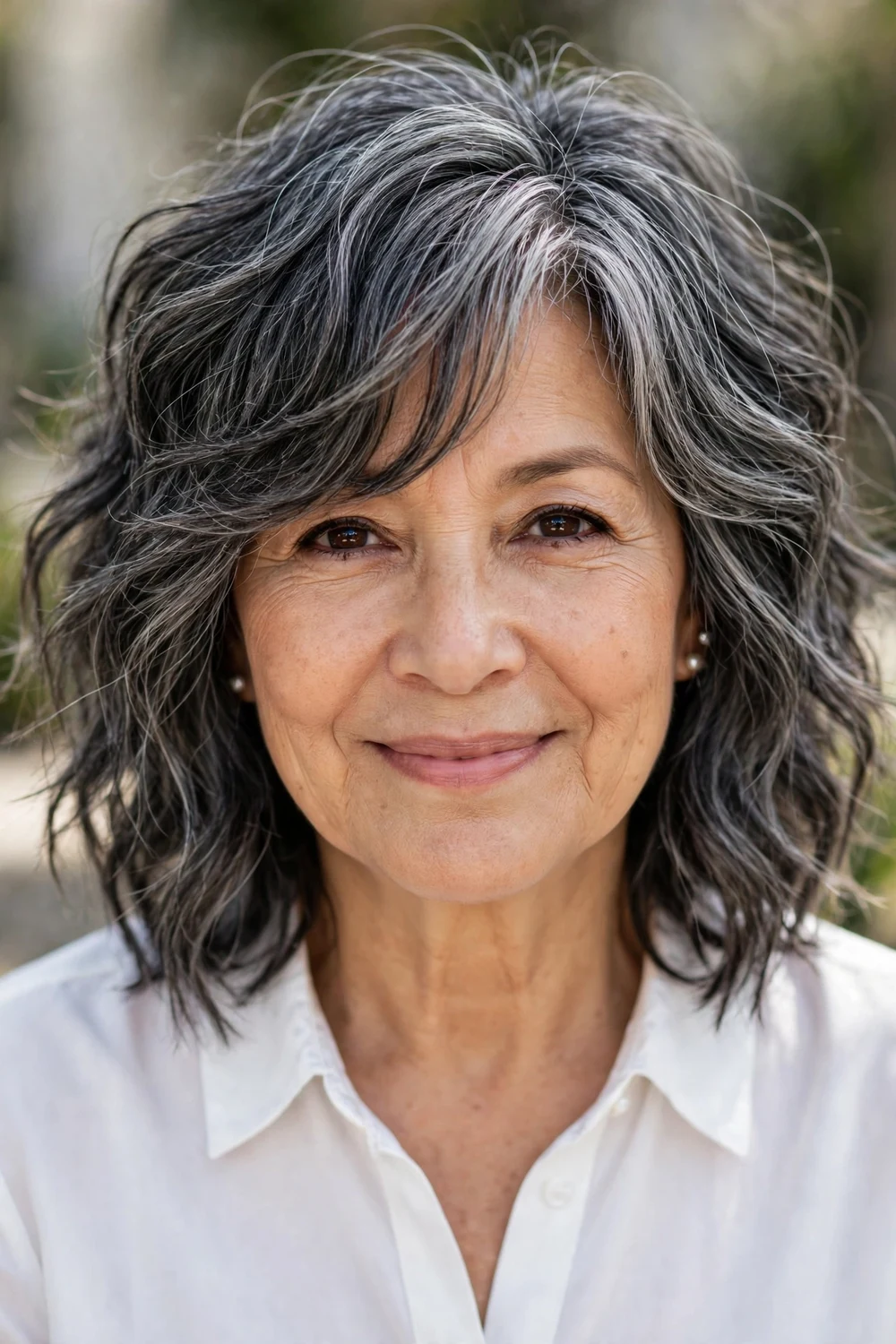
Side bangs sweep across the forehead and merge into choppy, wave-friendly layers in this relaxed cut. The side sweep suits women growing out a full fringe or softening a high forehead. Choppy layers through the ends encourage natural wave and keep the cut from looking blunt. This style works for fine to medium hair; very thick hair needs extra texturizing to keep the waves from puffing out. The asymmetry of the side bang flatters round faces.
Try this: Twist damp sections around your finger and let them dry. The finger twists create defined waves without heat.
20. Layered Pixie-Bob
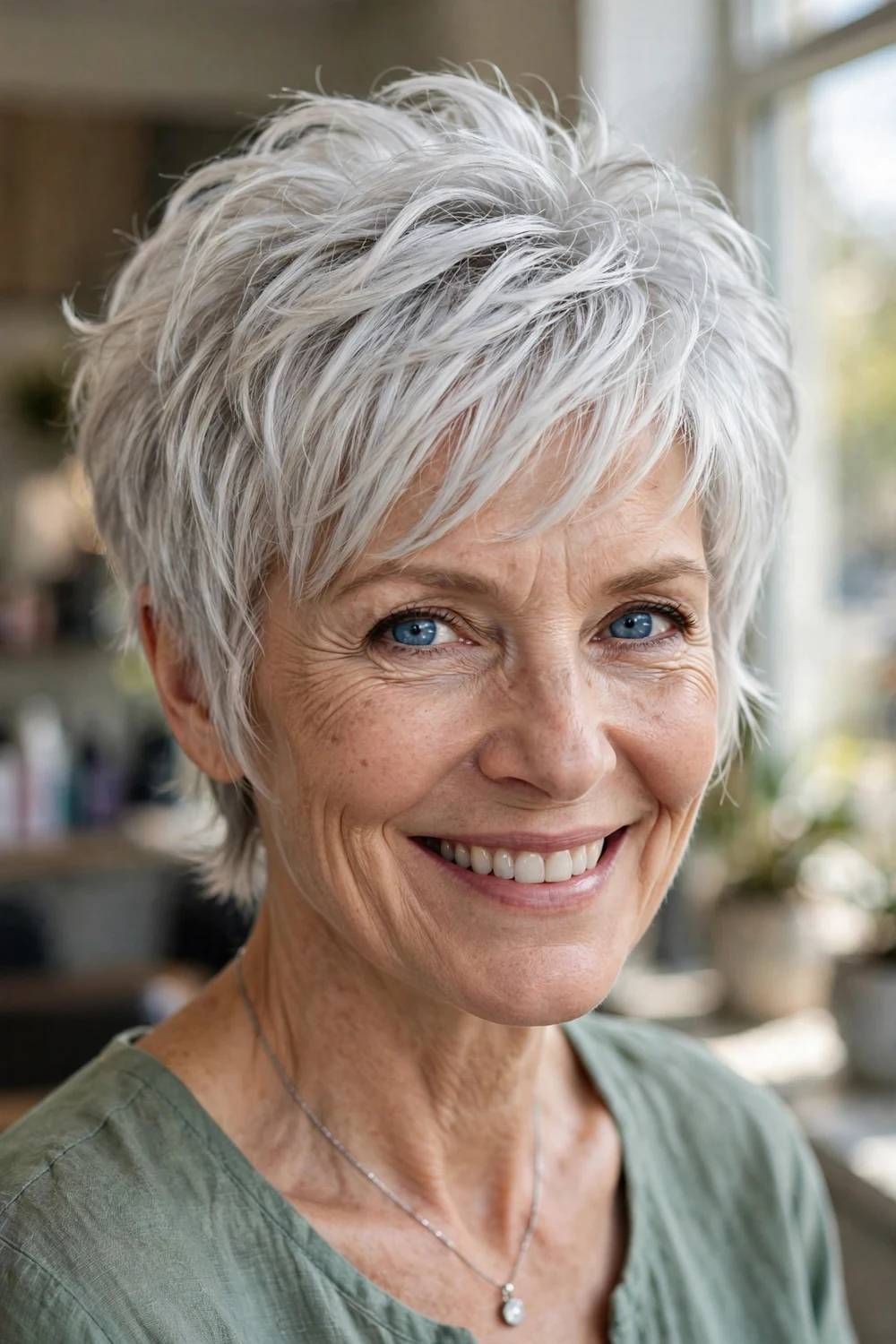
Between a pixie and a bob, this hybrid keeps pixie-short length at the back and sides with longer, layered pieces on top and around the face. The extra length on top gives styling options a pixie lacks: it can be swept, tucked, or lifted. Layering through the crown creates fullness where thinning often starts. This cut suits oval and heart faces and works well for fine hair. It needs frequent trims to keep the pixie-short sections from losing their shape.
Try this: Lift the top with a small round brush while blow-drying. The height on top is what separates this from a plain pixie.
21. Very Short Bob with Undercut
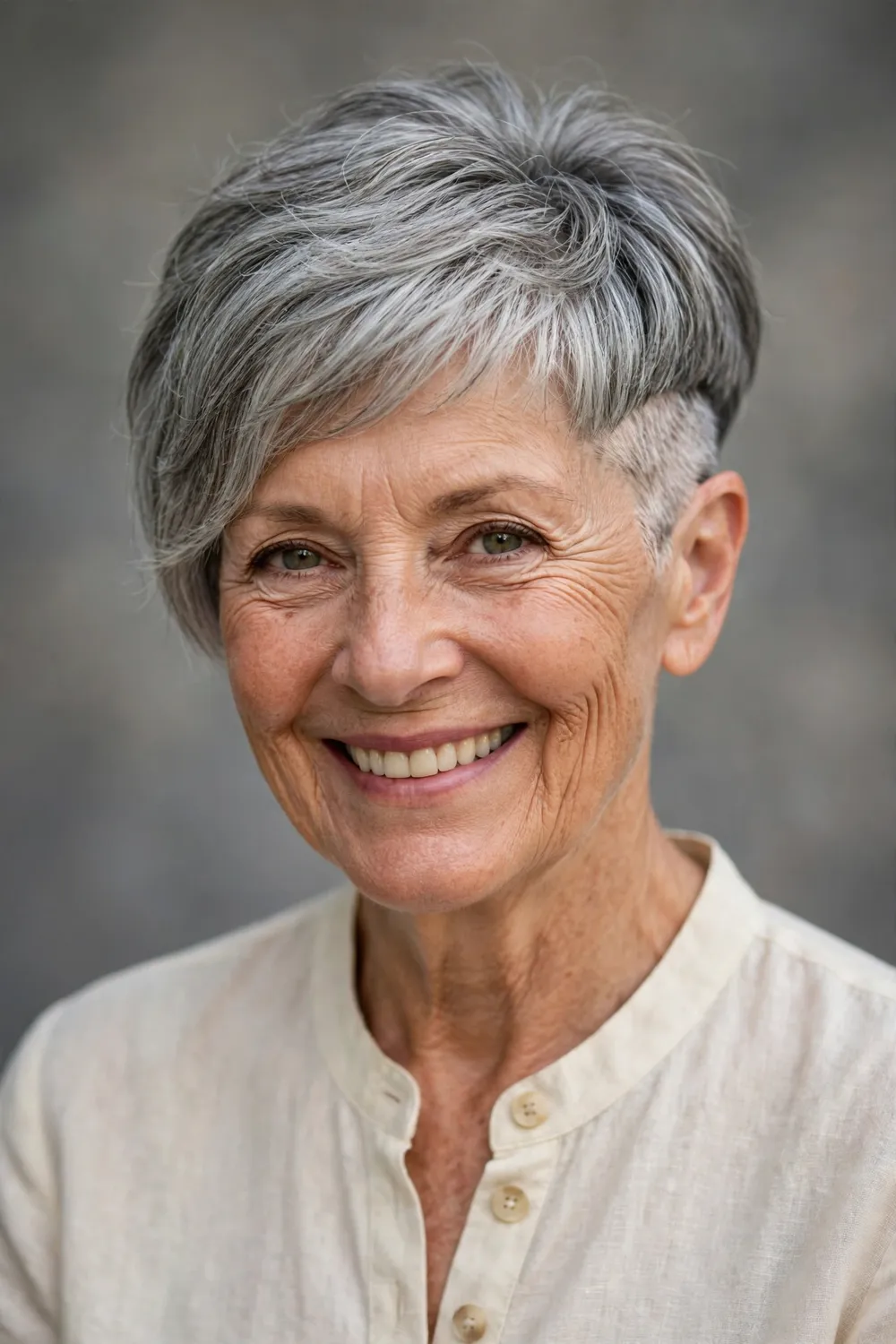
An undercut hidden beneath the top layers removes bulk at the nape and sides, letting the visible bob sit sleek and close. From the outside, it reads as a neat short bob; the undercut only shows when the wind catches it or you tuck your hair. This cut is a strong choice for thick, heavy hair that puffs out in short styles. It also reduces drying time dramatically. Ask for the undercut kept subtle, not shaved to the skin, for an age-appropriate finish.
Try this: Smooth the top layer over the undercut with a paddle brush while drying. The contrast between the two sections is the point.
22. Feathered Air Bob

Feathered ends, cut at an angle with a razor or point-cutting, create a light, airy edge that moves with the slightest breeze. The interior stays solid enough to look full, while the feathered perimeter removes any heaviness. This cut suits fine to medium hair and flatters women who find blunt ends too severe. The feathering around the face softens jawlines and cheekbones. It is one of the easiest bobs to style: the cut itself provides the movement.
Try this: Flick the ends outward with a flat iron on just the front sections. The flip shows off the feathering.
23. Skinny Bob with Curtain Bangs

Fine hair stays sleek and close to the head in this cut, with the interest coming from curtain bangs and a clean chin-length line. “Skinny” here means slim through the sides: no stacking, no bulk, just a neat column of hair. The curtain bangs add the softness the slim sides lack. This cut suits straight, fine hair and small to medium faces. It is wash-and-wear friendly, since there is no volume to build or maintain.
Try this: Use a lightweight leave-in conditioner only. Heavy products collapse this cut’s slim shape.
24. Jaw-Level Rounded Layered Bob
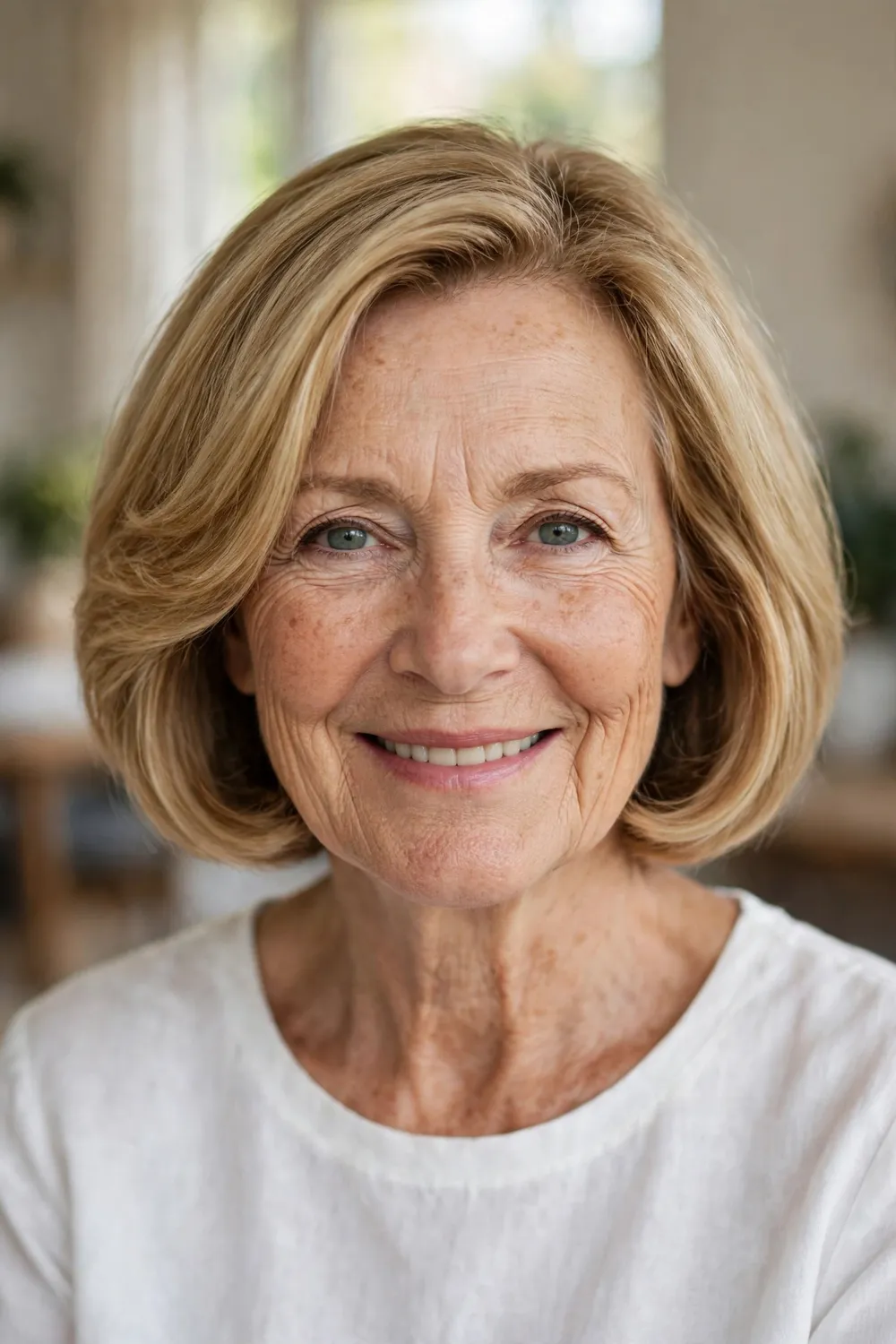
A rounded silhouette that cups the jaw gives this bob its soft, full appearance. Layers are cut to follow the curve of the head, building volume through the sides rather than just the crown. This shape suits women with fine hair who want fullness everywhere, not only on top. It flatters oval and long faces because the side fullness adds width. The rounded form needs a round brush to maintain; air-drying can let it fall flat or flip unevenly.
Try this: Dry each side section with a large round brush, rolling under. Work in four sections so the roundness stays even.
25. Precision-Cut Layered Bob
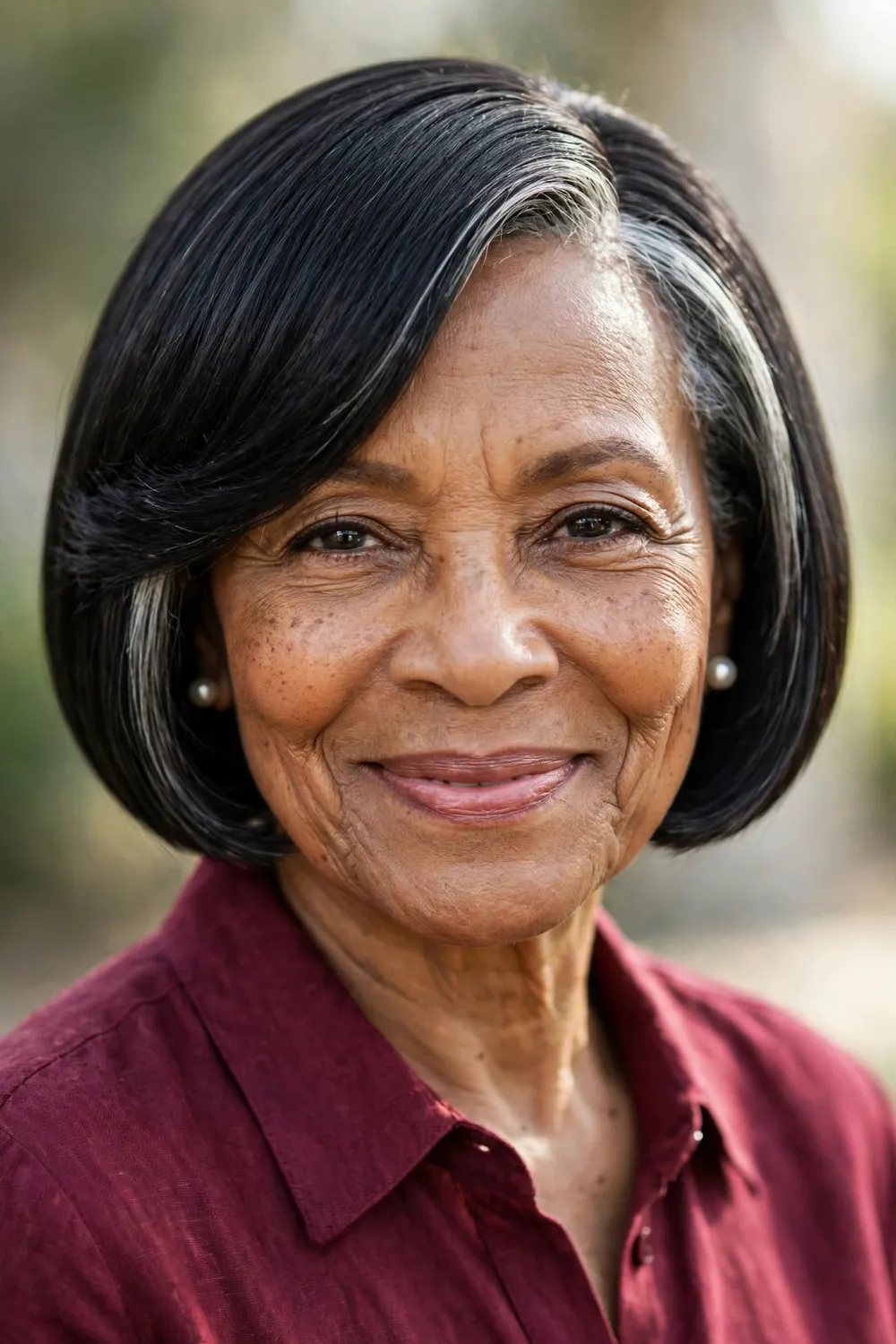
Sharp, geometric lines define this cut: every layer is cut to an exact length for a crisp, architectural result. The precision gives thin hair a strong outline that reads thicker than it is. This is a salon-dependent cut; it needs a stylist skilled in precision cutting and regular trims to keep the lines clean. It suits straight hair best, since the geometry shows most clearly on smooth texture. Oval and heart faces carry the strong lines well.
Try this: Apply a heat protectant and flat-iron in small sections. The cut only looks precise when the hair is smooth.
26. Bob with Blended Layering

Seamless layers that melt into each other give this bob movement without any visible steps. The blending is done with slide-cutting or careful point-cutting so no single layer stands out. This technique suits women who want the fullness of layers with the polish of a one-length cut. It works on fine to medium hair and flatters every face shape, since the layers can be placed wherever fullness is needed. The grow-out is forgiving because there are no harsh lines to lose.
Try this: Blow-dry with your fingers instead of a brush. The cut’s internal movement shows best with a natural finish.
27. Choppy Fringe Layered Bob
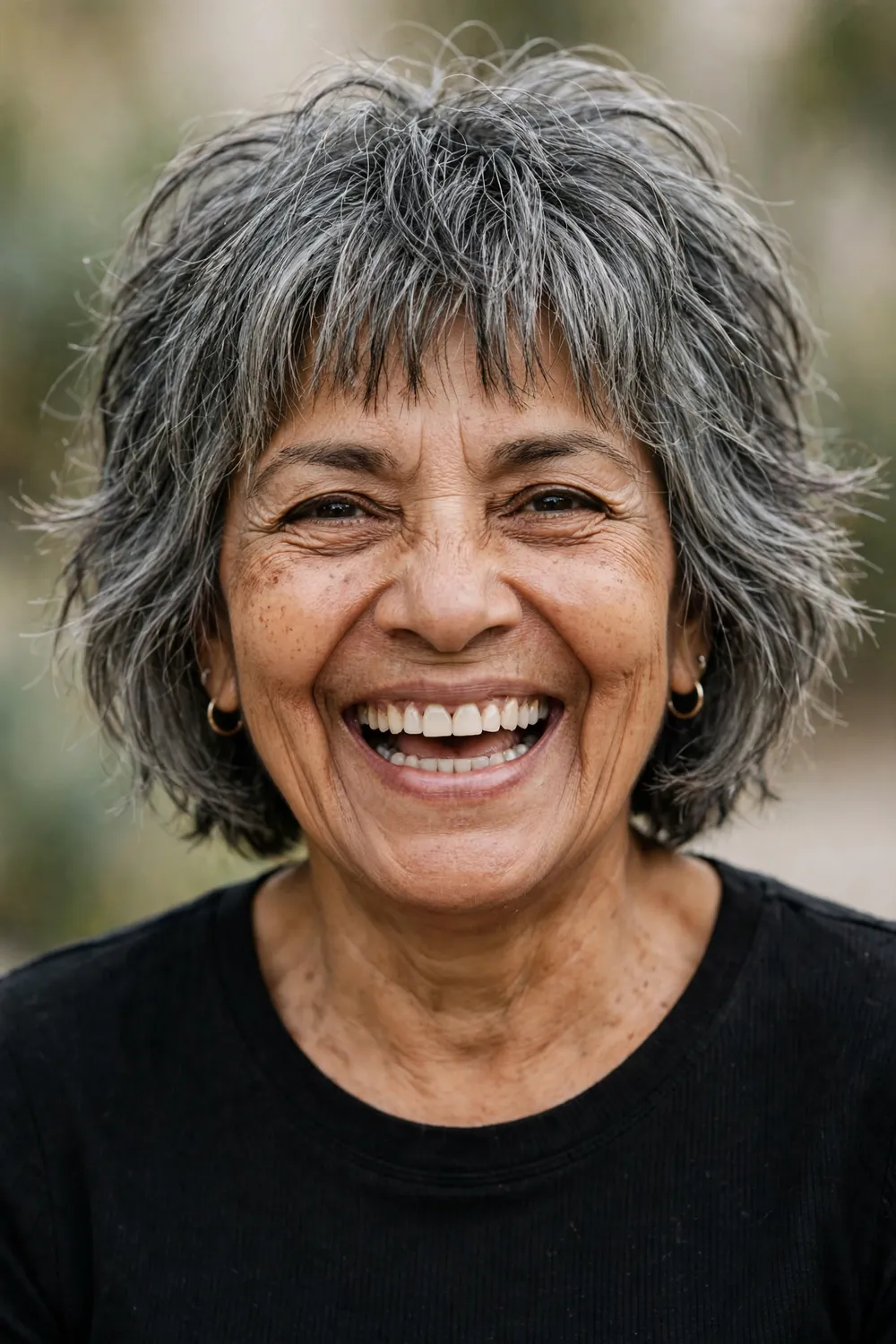
A full fringe with a choppy, textured edge pairs with a layered bob for a youthful but appropriate look. The choppy fringe covers the forehead while staying light enough to show some skin through. Layers through the bob echo the fringe’s texture so the whole cut feels cohesive. This style suits straight to wavy hair and flatters high foreheads and long faces. The fringe needs trimming every 3-4 weeks to stay at the right length.
Try this: Point a dryer downward at the fringe while brushing it side to side. The motion keeps a choppy fringe from splitting.
28. Short Sophisticated Side-Part Bob
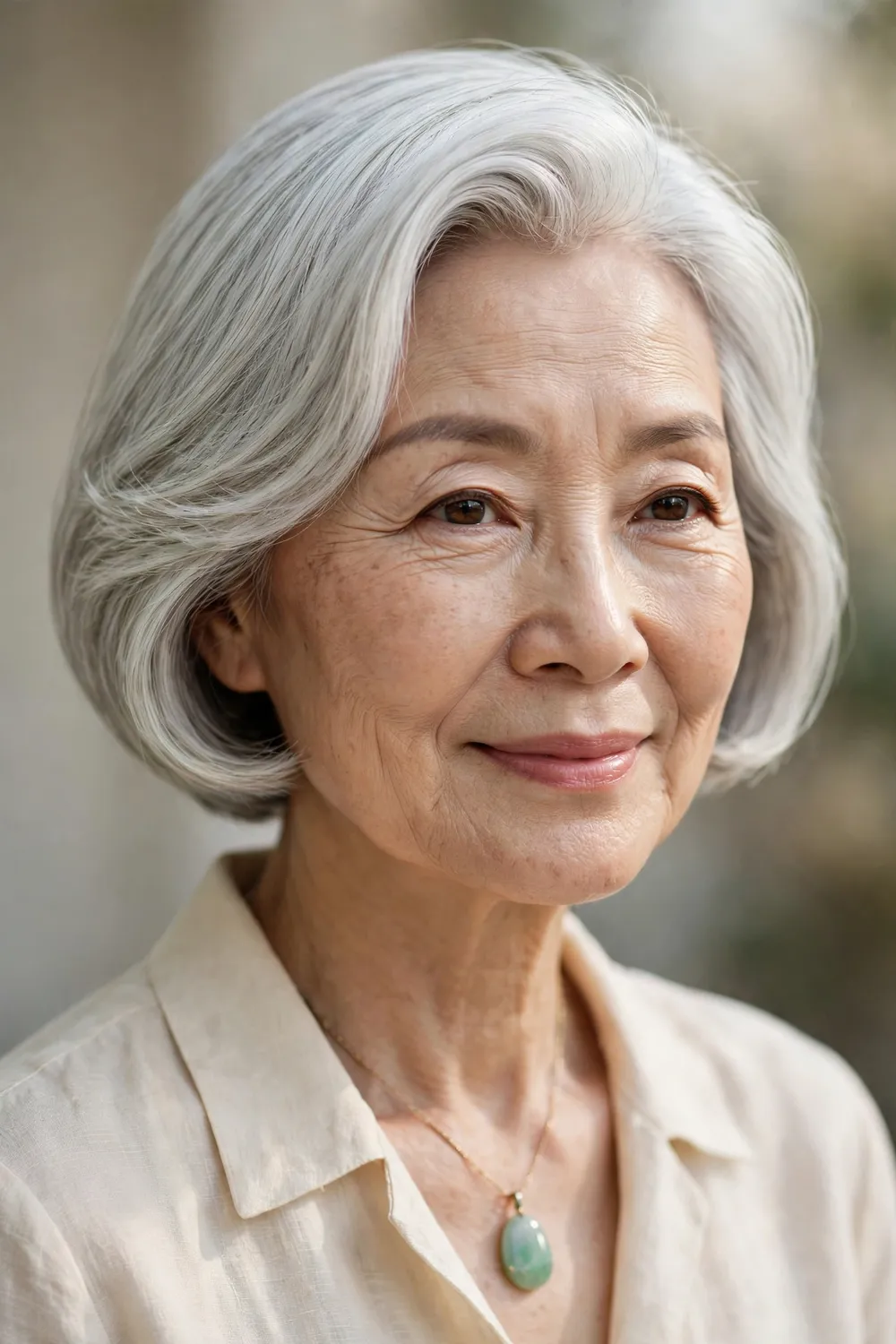
A deep side part is the styling trick here: flipping most of the hair to one side creates instant volume at the crown and a flattering diagonal across the forehead. The cut itself is a simple short bob at chin length with light layering. The side part does the heavy lifting, which makes this one of the easiest bobs to maintain. It suits round and square faces because the diagonal breaks up symmetry. Switch the part occasionally to prevent the hair from lying flat along the part line.
Try this: Set the part while hair is wet, then lift the roots on the heavy side with a root lifter for lasting volume.
29. Flowy Airy Bob

Lightness comes from long, barely-there layers that let the hair swing freely. This cut avoids the stacked or graduated shapes entirely; instead, the hair falls in one soft curtain to the chin. It suits medium-density hair with natural movement. Fine hair may need a root lifter so the airy lengths don’t go limp, and thick hair needs light texturizing so the flow doesn’t turn bulky. The simplicity flatters oval and heart faces.
Try this: Shake your head gently after drying and let the layers fall where they want. Over-styling ruins the airy effect.
30. Bob with Visible Feminine Layers
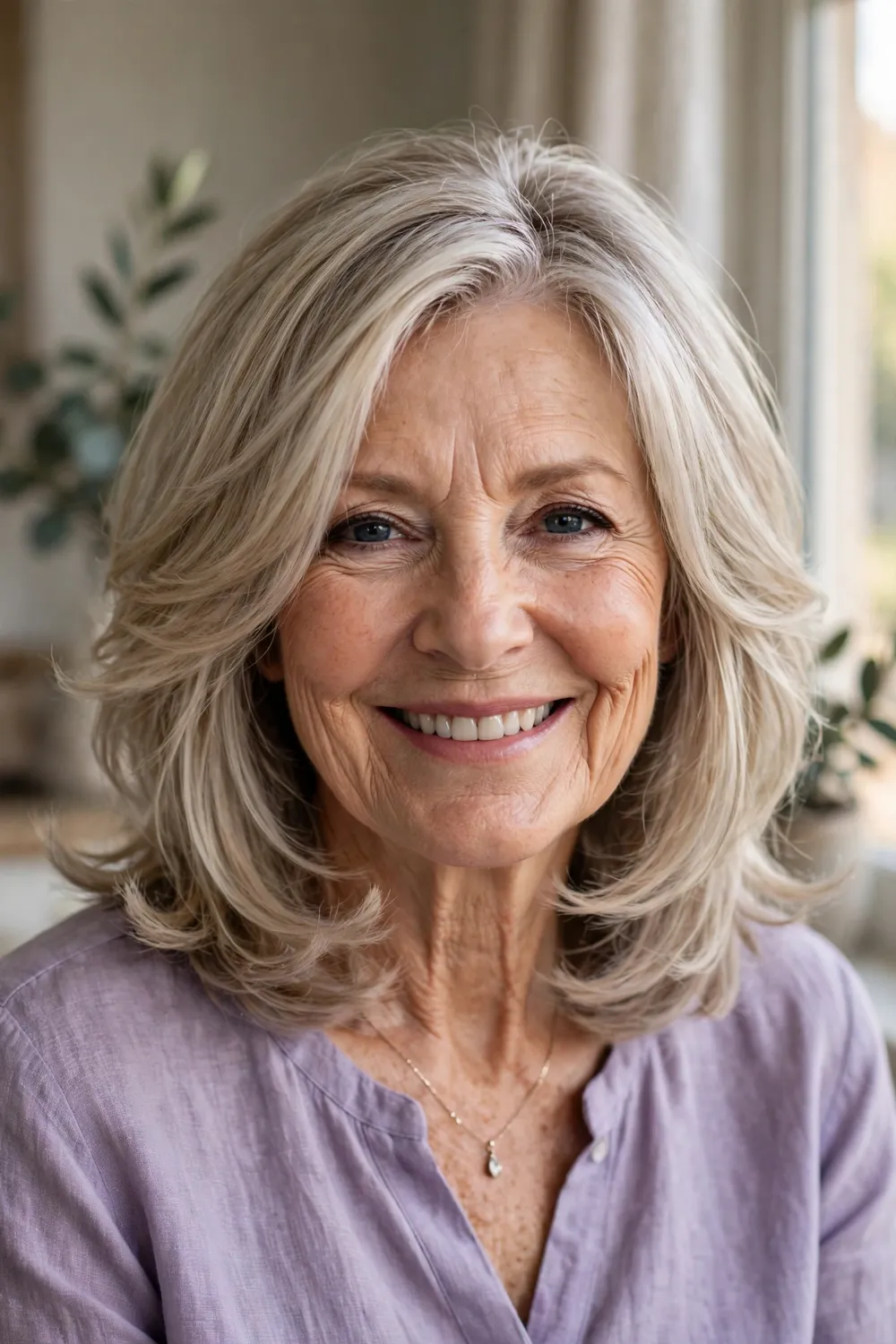
Deliberately visible layers, cut to show as soft steps around the face and through the ends, give this bob its character. Unlike blended layering, here the layers are meant to be seen: they frame the cheekbones and create flicked, feminine ends. This cut suits medium hair density and straight to wavy texture. It flatters square faces because the visible pieces break up the jawline. Ask your stylist to keep the steps soft, not chunky, for an age-appropriate finish.
Try this: Curl just the face-framing pieces away from the face with a medium iron. The flicked layers become the focal point.
Bob Styles Comparison at a Glance
| Style | Best For | Difficulty | Maintenance |
|---|---|---|---|
| Classic Layered Bob with Piece-y Layers | Fine hair needing movement | Easy | 6-8 week trims |
| Blunt Chin-Length Bob | Thinning hair, oval faces | Easy | 6 week trims |
| Micro-Bob with Side Fringe | Petite women, maximum volume | Easy | 5-6 week trims |
| Mini Bob with Bangs and Layers | Small faces, forehead coverage | Easy | 6 week trims, bang touch-ups |
| Textured Bubble Bob | Fine hair, round faces | Moderate | 6-8 week trims |
| Wavy Italian Bob | Natural wave, low effort | Easy | 8 week trims |
| Soft-Layered Silver Bob | Grey hair, all face shapes | Easy | 6-8 week trims, purple shampoo |
| Stacked Bob for Thin Hair | Thin, flat hair | Moderate | 6 week trims |
| Graduated Bob with Wispy Layers | Fine hair, square faces | Moderate | 6-8 week trims |
| Layered Inverted Bob | Adding crown height | Moderate | 6 week trims |
| Angled Bob with Layers and Bangs | Round faces, edgy taste | Moderate | 6 week trims |
| A-Line Bob (Wedge Cut) | Straight fine hair, neat style | Easy | 5-6 week trims |
| Edgy Asymmetrical Bob | Straight hair, bold style | Moderate | 6 week trims |
| Concave Bob | Straight hair, sculpted look | Moderate | 6 week trims |
| Shaggy Bob with Curtain Bangs | Medium-thick hair, relaxed style | Easy | 8 week trims |
| Salt-and-Pepper Razored Bob | Natural grey blend, medium hair | Easy | 6-8 week trims |
| Choppy Bob for Thick Hair | Thick, heavy hair | Easy | 8 week trims |
| Tousled Bob with Fringe | Wavy hair, hiding thinning | Easy | 8 week trims |
| Wavy Choppy Bob with Side Bangs | Fine-medium wavy hair | Easy | 6-8 week trims |
| Layered Pixie-Bob | Fine hair, short-hair fans | Easy | 4-5 week trims |
| Very Short Bob with Undercut | Thick hair, fast drying | Easy | 4-6 week trims |
| Feathered Air Bob | Fine-medium hair, soft look | Easy | 6-8 week trims |
| Skinny Bob with Curtain Bangs | Straight fine hair | Easy | 6-8 week trims |
| Jaw-Level Rounded Layered Bob | Fine hair, oval faces | Moderate | 6 week trims |
| Precision-Cut Layered Bob | Straight hair, sharp outline | Moderate | 5-6 week trims |
| Bob with Blended Layering | Fine-medium hair, polish | Easy | 8 week trims |
| Choppy Fringe Layered Bob | High foreheads, long faces | Easy | 6 week trims, fringe trims |
| Short Sophisticated Side-Part Bob | Fine hair, round faces | Easy | 6-8 week trims |
| Flowy Airy Bob | Medium hair, natural movement | Easy | 8 week trims |
| Bob with Visible Feminine Layers | Medium hair, square faces | Moderate | 6-8 week trims |
If you are deciding between a shorter and a longer version, bob haircuts for women over 50 cover many of the same shapes with a slightly different length focus.
How to Style a Bob for Thickness
Start with volumizing mousse on damp roots. Apply it only at the crown and sides, not through the ends, or the lengths get sticky. A root lifter sprayed directly at the scalp before blow-drying adds grip that mousse alone can’t give.
Blow-dry with your head tilted so the roots lift away from the scalp. Use a round brush on the top sections, rolling each one up and away from the face. For the ends, a slight under-roll keeps the bob’s shape neat. Always apply a heat protectant before any hot tool touches your hair, including the dryer on high heat: aging hair is drier and damages faster.
Finish with a light texturizing spray rather than heavy hairspray. The spray adds separation without stiffness, and you can revive it the next day by shaking the roots with your fingers.
What to Ask Your Stylist
Bring photos of the exact cut you want, not just a general vibe. Point to the length, the fringe, and the back shape, since “layered bob” means different things to different stylists. Ask whether the cut suits your hair’s density: fine hair needs a different layering plan than thick hair.
Ask how the cut grows out and when you should return. A good stylist will tell you the trim window honestly. If you color, ask whether grey blending or a gloss would suit the cut, and how often the color needs refreshing. Finally, ask for a styling lesson: have them show you the brush, the product order, and the drying direction once, so you can repeat it at home.
Trim Frequency for Bobs After 60
Most bobs hold their shape for 6-8 weeks. Shorter and more precise cuts, like the micro-bob, French bob, or box bob, need attention every 4-6 weeks because even half an inch of growth changes the line. Longer lobs can stretch to 8-10 weeks.
Bangs are the exception: full fringes need a trim every 3-4 weeks to stay out of the eyes. Many salons offer free or low-cost bang trims between appointments, so ask. Booking your next trim before you leave the salon keeps you on schedule.
For shorter layered options specifically, short layered bob hairstyles show how layering changes the same basic shape.
Mistakes to Avoid
The most common mistake is cutting too many layers into fine hair. Layers create movement, but over-layered fine hair looks thinner, not thicker. Keep the perimeter strong and let a few well-placed layers do the work.
Another mistake is skipping trims to save money. A bob is a shaped cut, and the shape is the whole point. An overgrown bob doesn’t look like a lob; it looks untidy. A third mistake is using heavy products on fine hair: oils and thick creams collapse the volume the cut was designed to create. Choose lightweight formulas and apply less than you think you need.
Frequently Asked Questions
Are bobs a good haircut for women over 60?
Yes. Bobs are one of the most flattering choices after sixty because shorter lengths make thinning hair look fuller and draw attention to the face. Layered, stacked, and graduated shapes add volume where aging hair goes flat. Most bobs also dry and style in minutes, which suits simpler routines.
How often should I trim my bob after 60?
Every 6 to 8 weeks for most bobs. Short, precise cuts like the French bob or micro-bob need trims every 4 to 6 weeks because growth shows quickly. Waiting longer lets the shape collapse, and the cut starts looking grown out rather than styled.
Which bob is best for thin hair after 60?
A stacked or graduated bob builds the most fullness, since the short layers at the back create volume that thin hair cannot make on its own. Keep the perimeter solid rather than heavily layered, and use a volumizing mousse at the roots. Blunt chin-length bobs also work because the one-length edge looks thicker.
Can I wear a bob with grey hair?
Absolutely. Grey and white hair look striking in bobs with clean lines, since the color shows off the cut’s shape. Use purple shampoo once a week to prevent yellowing, and add a gloss treatment every few months for shine. Grey-blending color at the salon softens the transition if you are still growing out dye.
Should women over 60 wear bangs with a bob?
Bangs suit many women over sixty because they soften the forehead and draw attention to the eyes. Side-swept and curtain bangs are the most forgiving, since they grow out gracefully. Full straight bangs also work but need trimming every 3 to 4 weeks. The right choice depends on your face shape and how much upkeep you want.
The French-inspired shapes in this guide pair well with short french bobs if you want to explore that style further.
If your hair is on the finer side, these bob haircuts for women over 60 with fine hair are worth a look: each cut is chosen to build volume and density where thinning shows first.
Final Thoughts
For the 50-something take on the same cut, browse these layered bob haircuts for women over 50. The right bob after sixty is the one that matches your hair’s reality: its thickness, its texture, and how much time you want to spend on it. Pick a shape from this guide, bring the photo to your stylist, and keep the trims on schedule. A well-kept bob does more for your appearance than any product can.
For the easiest wash-and-wear versions of these cuts, browse these choppy bob hairstyles women over 60 low maintenance, each built around five-minute mornings and longer stretches between trims.

