


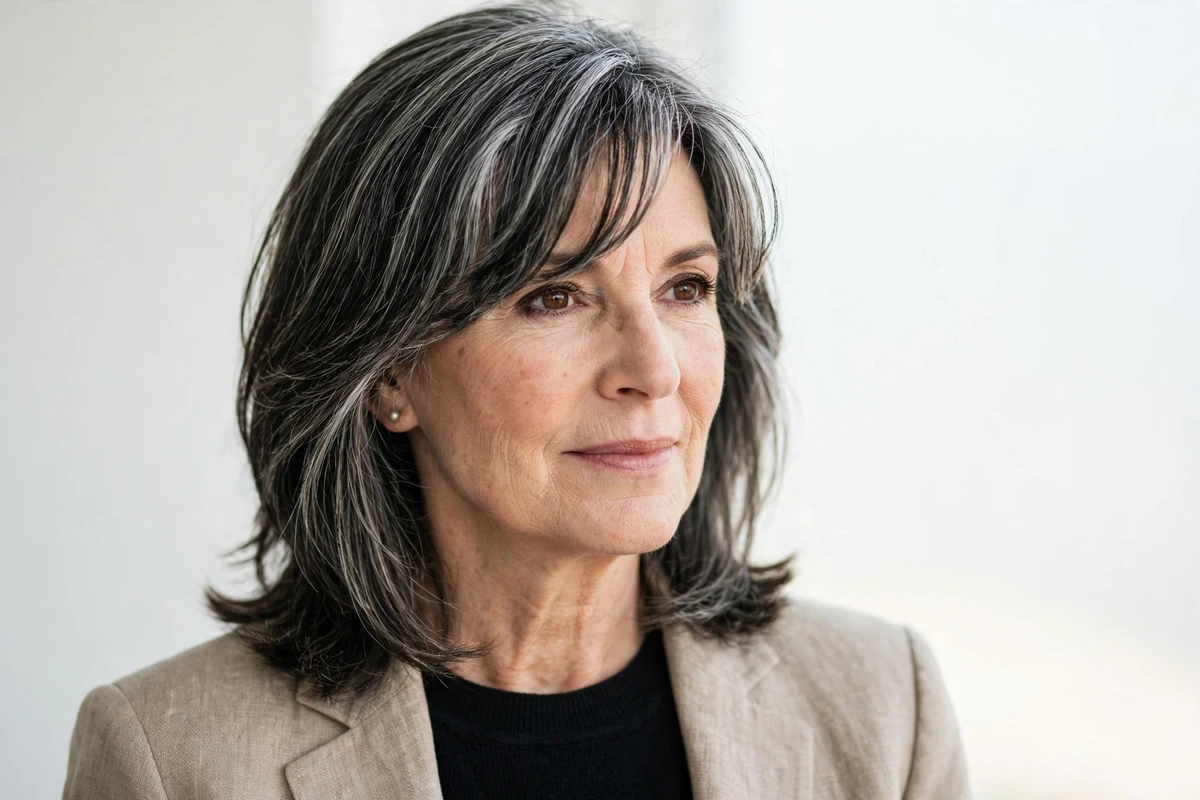
The right bangs can do in one salon visit what a new wardrobe tries to do: shift attention to your best features and soften the rest. After 50, hair changes, finer texture, a hairline that creeps a little higher, less volume at the crown, and a well-cut fringe works with those changes instead of fighting them.
Below are 16 soft, flattering bang styles for women over 50, from side-swept and wispy to curtain, feathered, and a few modern cuts you may not have tried yet. Each one includes styling tips, upkeep notes, and the face shapes and hair types it suits, so you can pick your fringe with confidence.
Quick answer: The most flattering bangs for women over 50 are soft and textured, think side-swept, wispy, curtain, and feathered styles. They soften forehead lines, pull focus to the eyes, and work with fine or thinning hair. Keep the fringe light, book a trim every 2 to 4 weeks, and skip heavy straight-across cuts that can harden the face.
Quick Takeaways
- Side-swept and curtain bangs flatter almost every face shape after 50.
- Wispy and feathered fringes add fullness without weight, ideal for fine or thinning hair.
- Soft texture matters more than length: rounded, piecey ends look fresher than sharp lines.
- Most bangs need a trim every 2 to 4 weeks to stay flattering.
- Match the fringe to your texture: thicker hair can carry blunt cuts, fine hair needs lighter bangs.
Why Bangs Work So Well After 50
A fringe is the closest thing to a no-commitment refresh. It covers forehead lines, shortens a long face, and draws the eye to your eyes and cheekbones, which is exactly where you want attention.
Hair gets finer with age, and that actually favors bangs. A lighter, textured fringe adds the illusion of density around the face without borrowing weight from the rest of your hair. The trick is keeping it soft: thinned, point-cut, and slightly rounded at the edges.
The one honest caveat is upkeep. Bangs sit against the forehead and pick up oil fast, so they need a quick refresh and regular trims. If you are willing to give them two minutes a day, they give a lot back.
1. Side-Swept Bangs
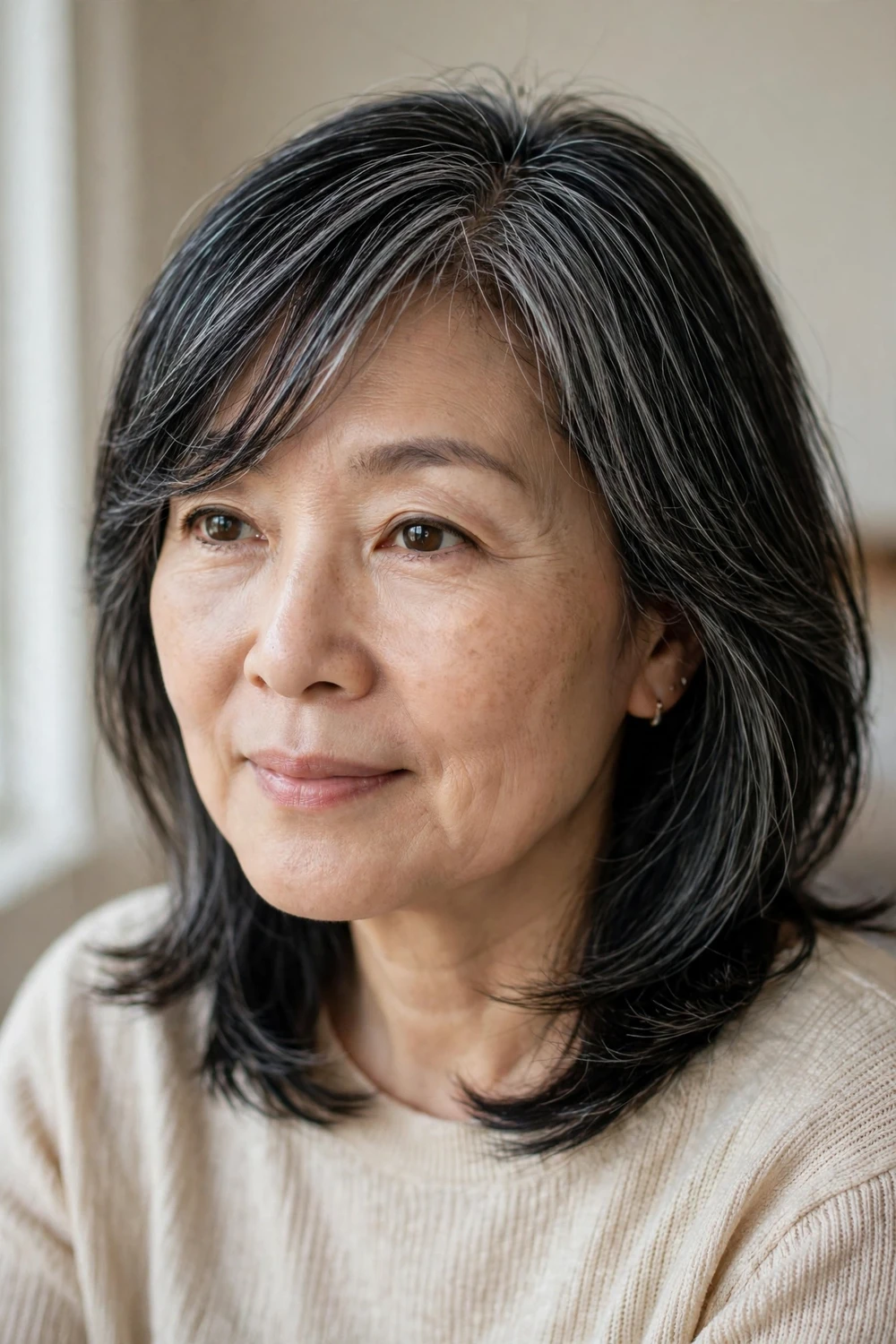
Ask stylists to name the safest fringe after 50 and most will start here. Side-swept bangs angle across the forehead, usually grazing the cheekbone, which slims round cheeks and softens a square jawline in one move. They pair with almost any cut, bobs, lobs, and shoulder-length layers all work, and they grow out without an awkward phase because the angled shape just gets longer.
Try this: blow-dry the fringe first while it is still damp, sweeping it to one side with a round brush so it does not set flat. Ask your stylist for about 3 inches of length at the longest edge so it clears your eyes.
Difficulty: Easy · Upkeep: trim every 3 to 4 weeks.
For a whole gallery of this look, see side swept bangs ideas for every hair type and length.
2. Wispy Bangs
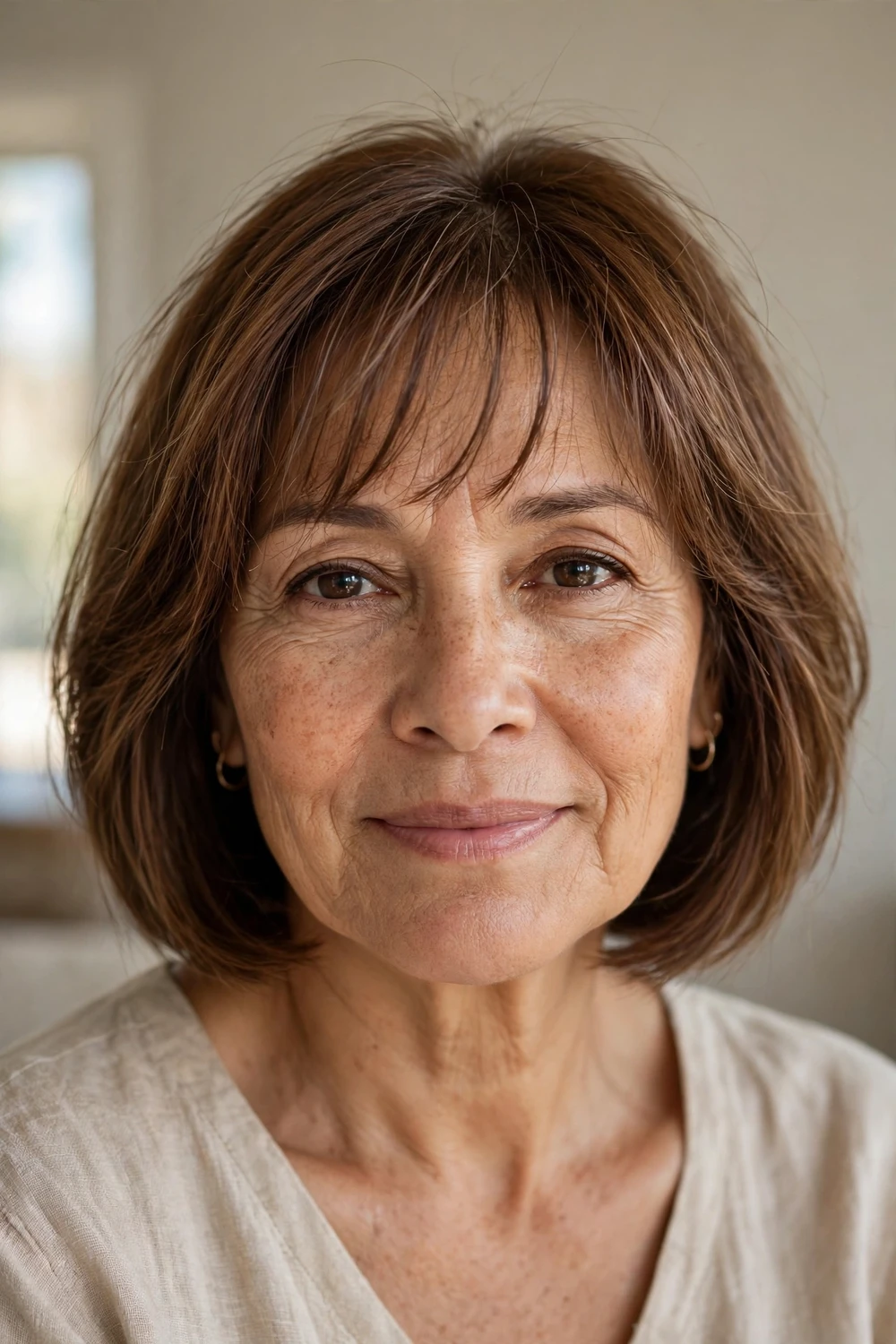
Fine hair has a quiet advantage with this fringe. Wispy bangs use less hair than any other style on this list, so they add softness around the forehead without exposing thinness anywhere else. The light, airy ends blur forehead lines and sit gently on the skin, which suits women who find heavier bangs itchy or too warm. They look best on bobs and shoulder-length cuts.
Try this: keep a small bottle of dry shampoo at your vanity and dust the roots each morning. Wispy bangs go limp fastest, and this keeps them airy between washes.
Difficulty: Easy · Upkeep: trim every 4 to 6 weeks, the lightest touch of all.
If this airy look appeals to you, browse wispy bangs hairstyles for every hair length.
3. Curtain Bangs
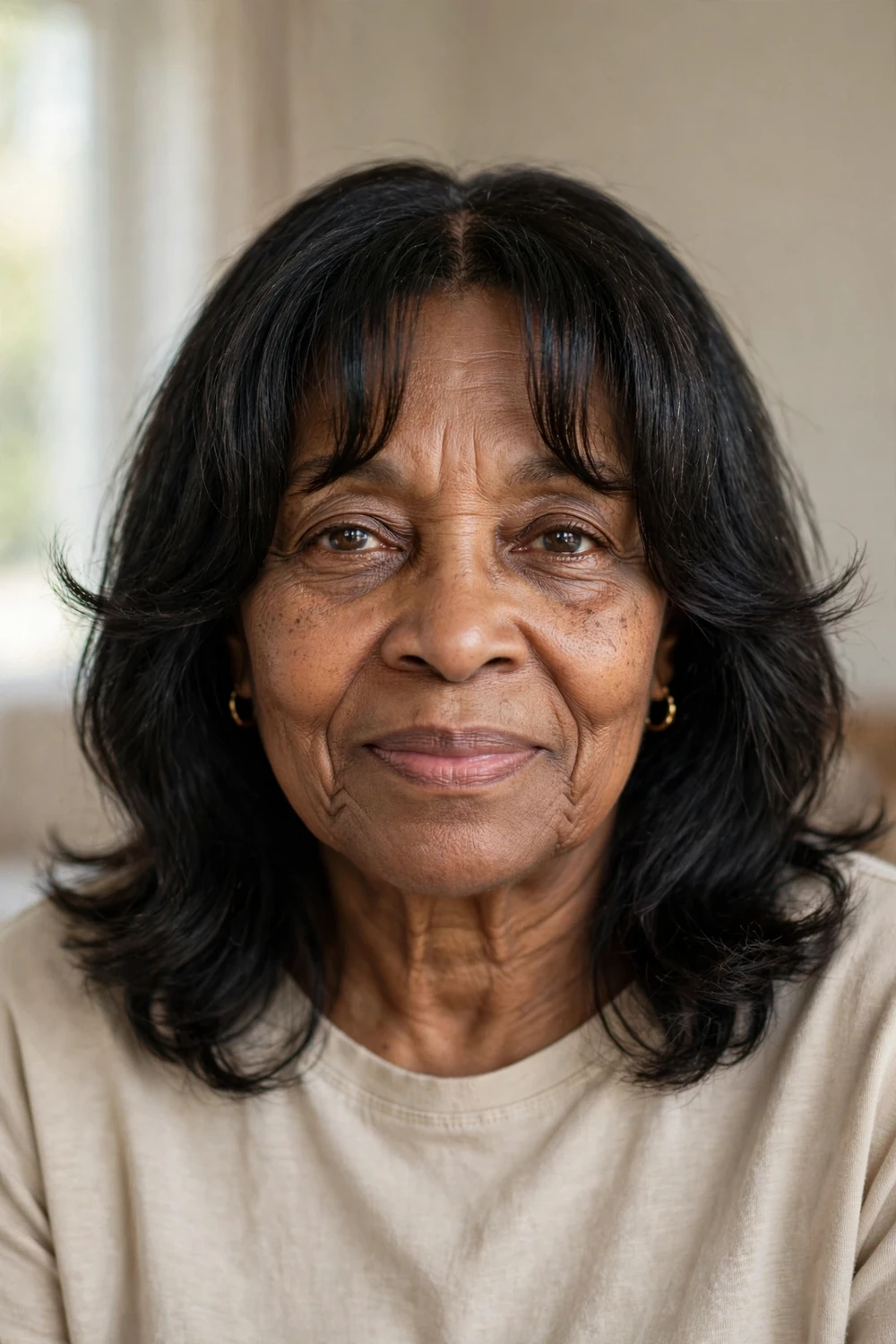
Parted down the middle and swept toward the cheeks, curtain bangs frame the face like a soft window. They suit round, square, and heart-shaped faces equally well because the open center keeps the forehead from looking closed off. Of every bang here, these grow out the most gracefully, blending into face-framing layers within a couple of months. That makes them the ideal first fringe if you are nervous about committing.
Try this: dry each side with a round brush rolled outward, away from the face, to get the signature swoop. A large velcro roller set for five minutes works just as well on lazy mornings.
Difficulty: Easy · Upkeep: trim every 4 to 6 weeks.
4. Feathered Bangs
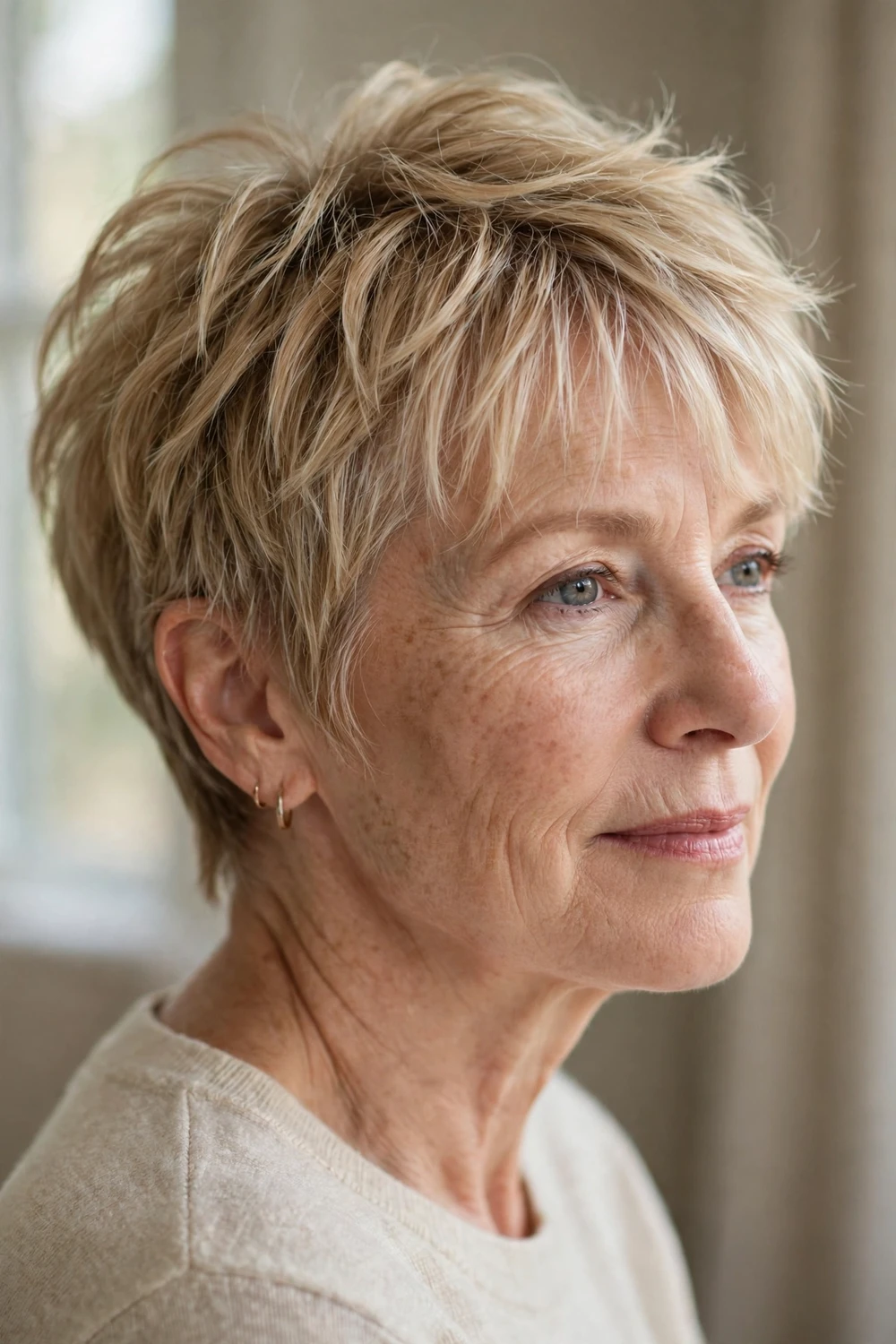
The name tells you how this fringe is cut: thinned and textured so each strand tapers like a feather. Feathered bangs are a natural fit for pixies and short layered cuts, where they soften the forehead without adding bulk. They are also one of the kindest options for fine hair, since the airy texture never looks sparse the way a solid fringe can. Fingertip styling is usually all they need.
Try this: ask your stylist to cut them with thinning shears rather than straight scissors. Work a pea-sized amount of styling cream through the ends for definition.
Difficulty: Easy · Upkeep: trim every 4 to 5 weeks.
For cuts that pair a fringe with layers for extra lift, look at layered hairstyles for women over 50.
5. Soft Blunt Bangs
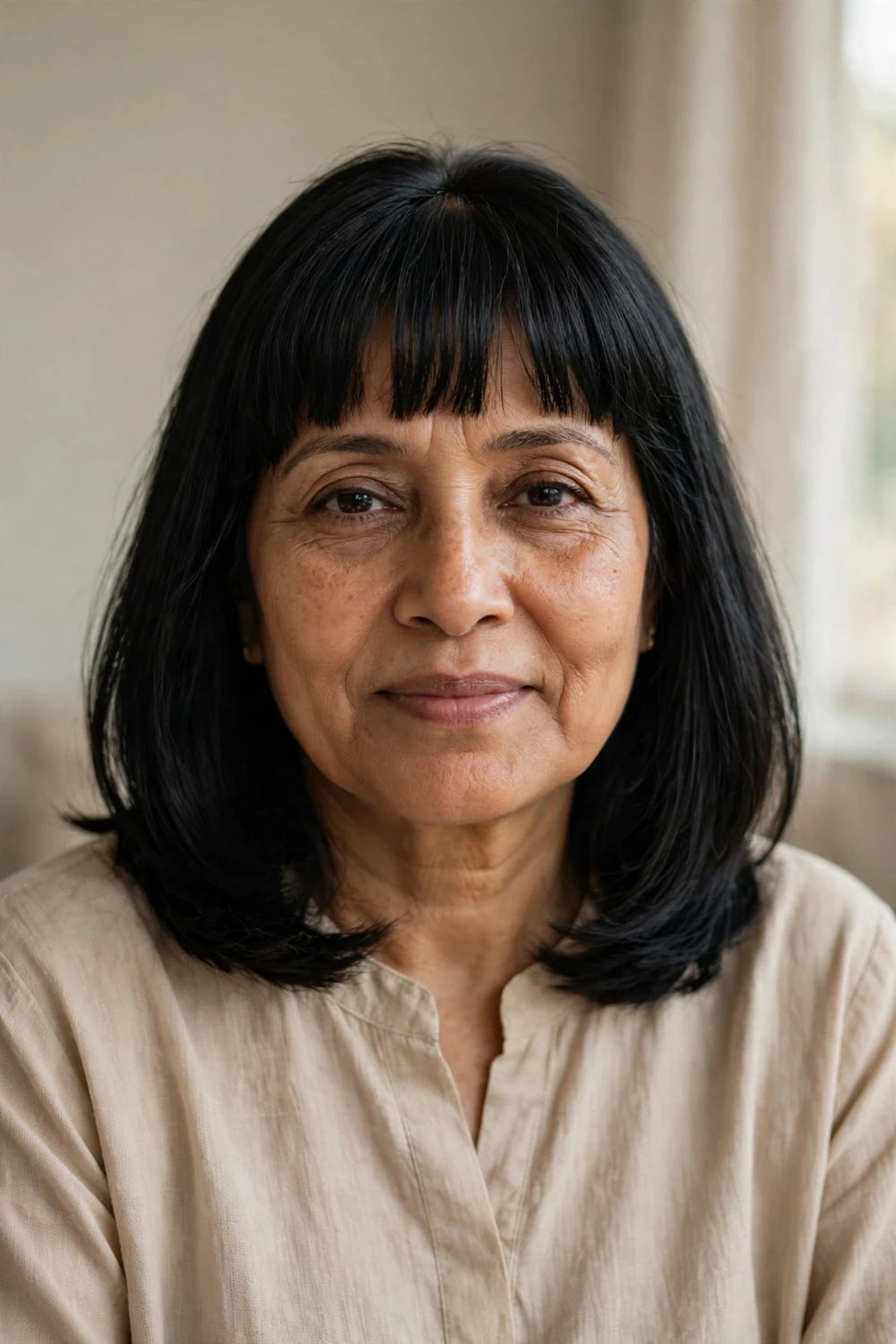
A blunt fringe gets a bad rap after 50, but the problem is usually the cut, not the style. The trick is softening the line: keep the bangs just above the brows and ask for slightly rounded, textured ends instead of a hard horizontal edge. This version suits thicker, straighter hair best and pairs with a sleek bob or lob for a clean, confident look. It reads modern, not severe, when the edges have movement.
Try this: curve the ends under with a flat iron for ten seconds after blow-drying. That tiny bend is what separates a soft blunt fringe from a severe one.
Want the full-strength version of this look? Our roundup of blunt bangs hairstyles covers 24 ways to wear the classic straight line, from pixie pairings to deep-set heavy fringes.
Difficulty: Medium · Upkeep: trim every 2 to 3 weeks to hold the line.
6. Choppy Bangs
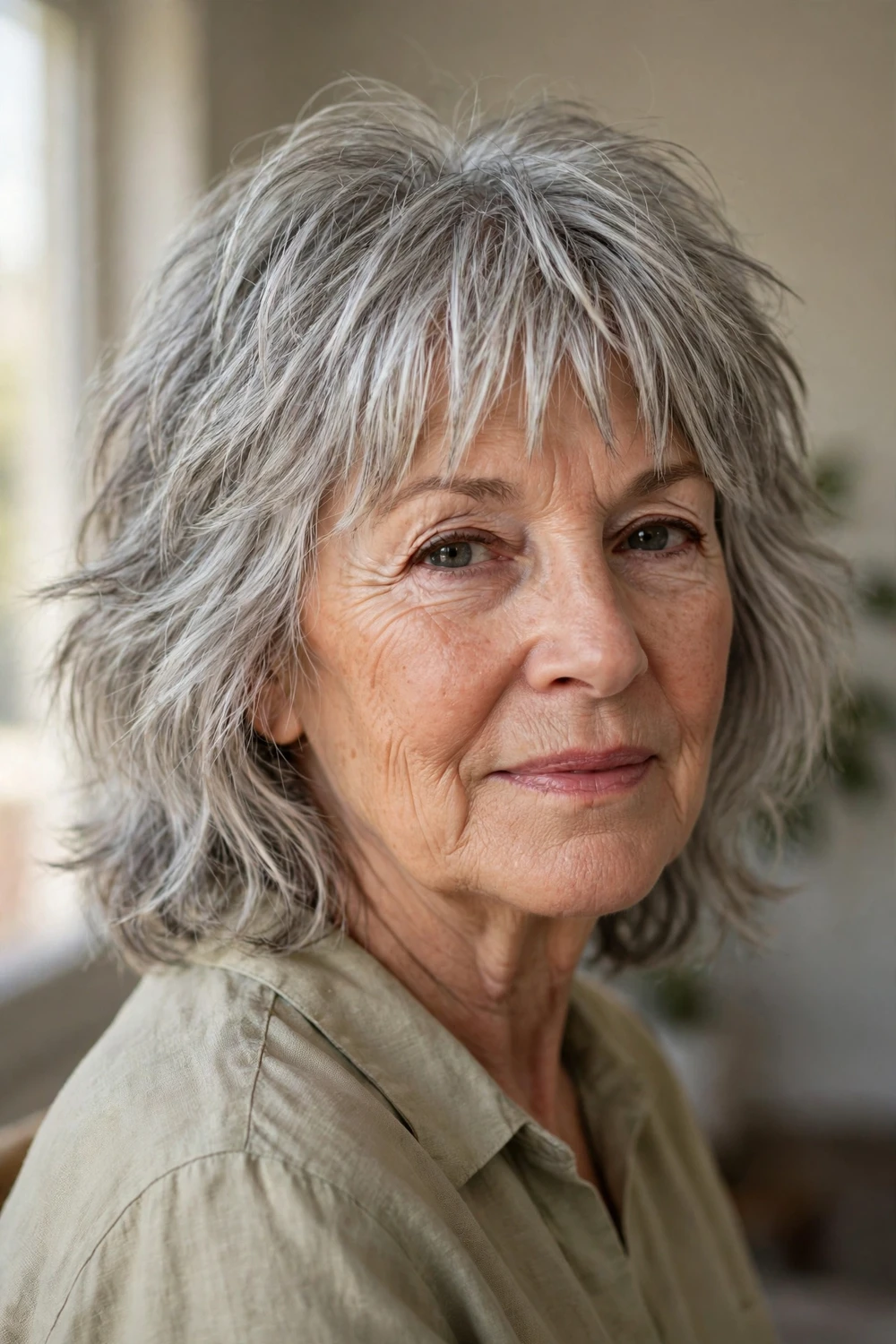
When hair starts to thin, texture becomes your best friend. Choppy bangs are cut with jagged, uneven ends that create the illusion of fullness, making them a strong choice for medium to thick hair that has lost some density. They sit naturally on a shag, where the fringe melts into the textured layers around it. This is a forgiving cut too: because the ends are intentionally uneven, regrowth does not show the way it does on a blunt fringe.
Try this: mist with texture spray and scrunch the fringe with your fingers instead of brushing it. Brushing flattens choppy ends and kills the effect.
Difficulty: Easy · Upkeep: trim every 4 weeks.
7. Piecey Bangs
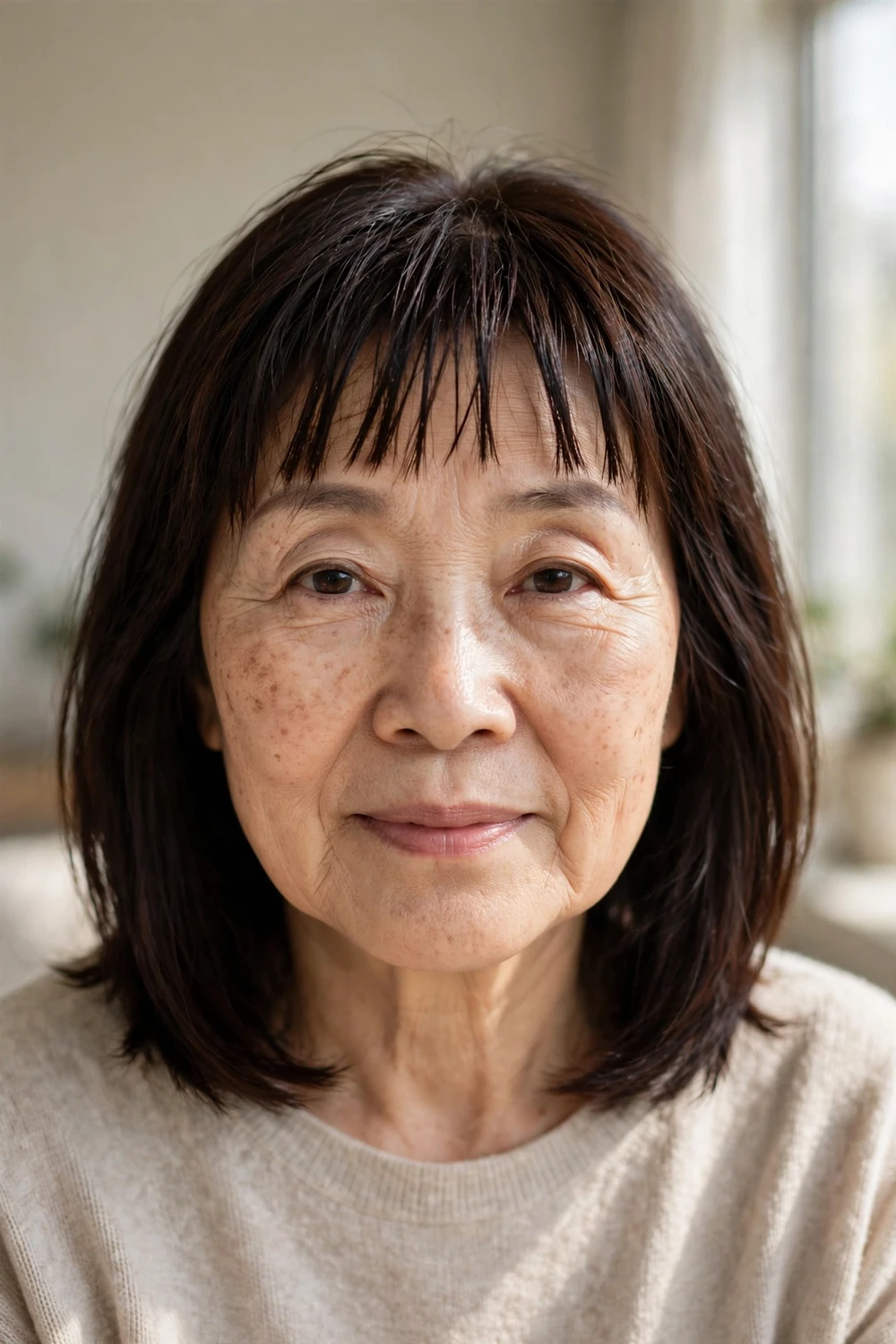
Where choppy bangs get their texture from the cut, piecey bangs get it from styling. The fringe is cut fairly straight, then separated into distinct strands with a little product, which keeps it looking lived-in rather than fussy. This is a smart option for a straight lob or shoulder cut, since the separated pieces echo the sleek lines of the rest of the hair. It reads youthful without trying too hard.
Try this: warm a dab of styling wax between your fingertips and twist small sections of the fringe. Less product than you think, you want separation, not stiffness.
Difficulty: Easy · Upkeep: trim every 3 to 4 weeks.
For fine hair that needs the same light touch through the whole cut, see layered hairstyles for women over 50 with thin hair.
8. Curved Bangs
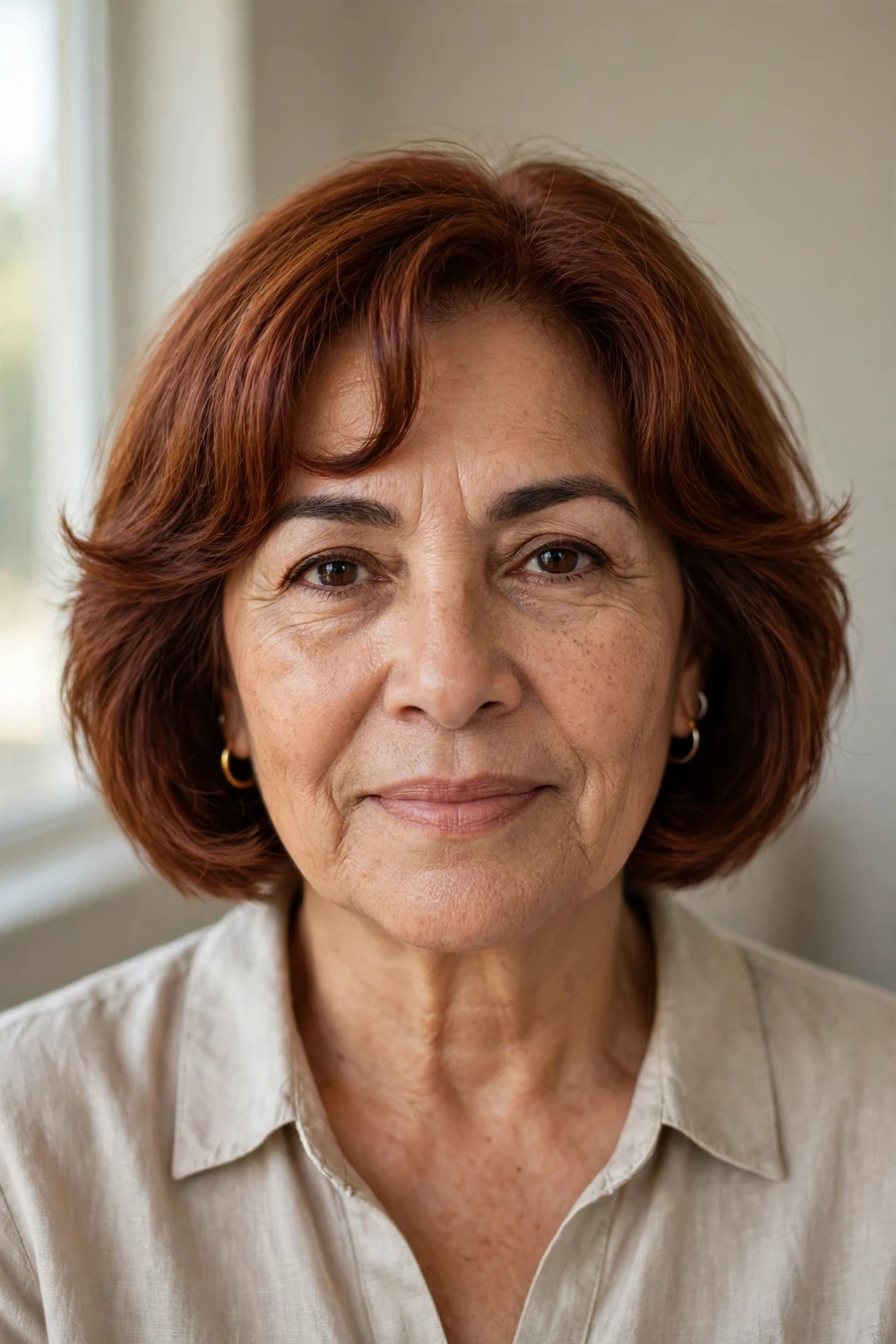
Follow the natural curve of your brow and you get this fringe: slightly shorter in the center, gently sweeping longer toward the temples. Curved bangs open up the face in a way that straight-across cuts cannot, because the arch mirrors your bone structure. They are especially kind to oval and heart-shaped faces, and they sit neatly on a chin-length or jaw-length bob. The soft arc also keeps the fringe out of your eyes longer between trims.
Try this: bring a photo to your appointment, because the arch is all about proportion. The curve should echo your brow shape, not fight it.
Difficulty: Medium · Upkeep: trim every 3 to 4 weeks.
9. Layered Bangs
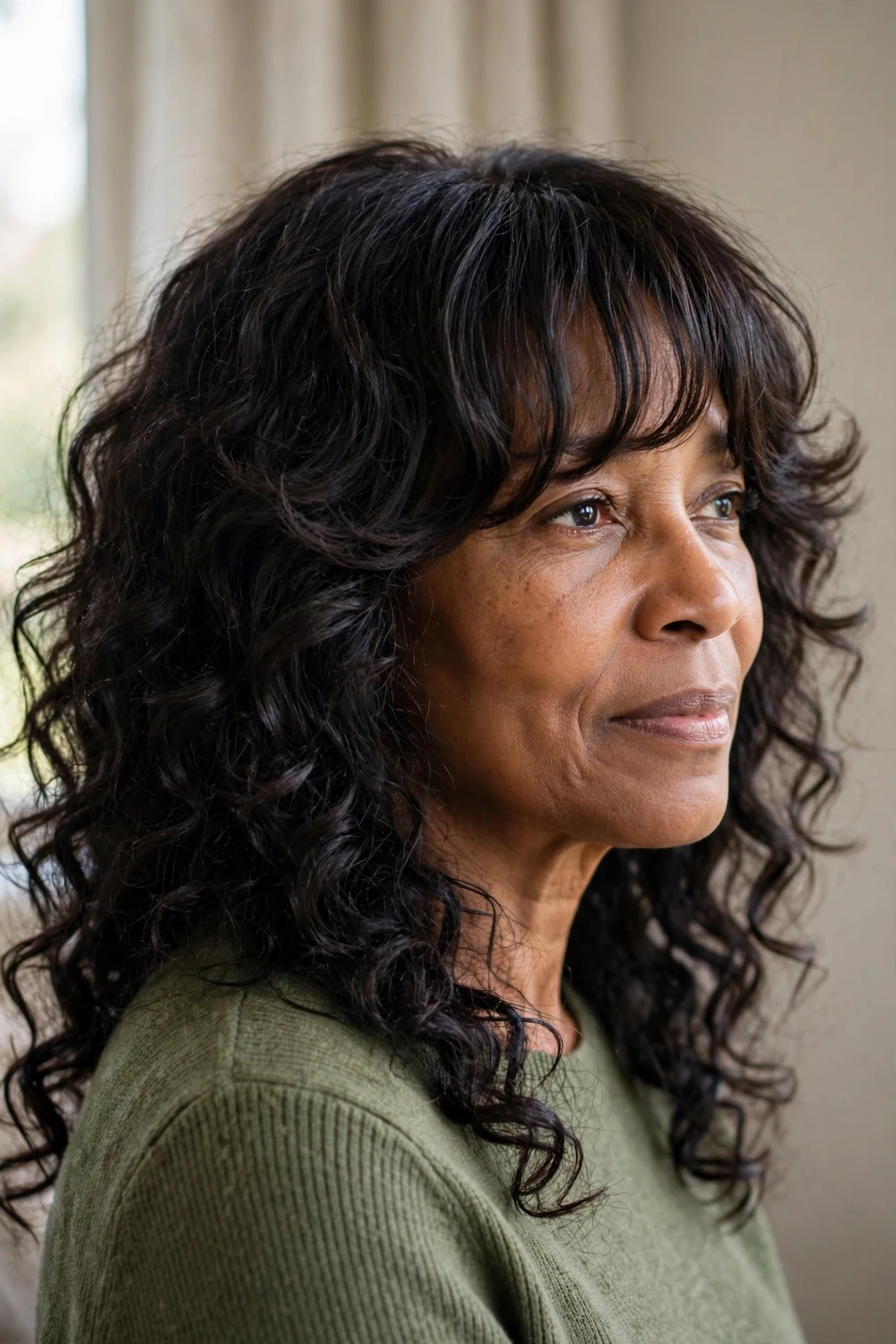
These bangs refuse to end at the forehead. Layered bangs graduate from the fringe into the face-framing layers around the cheeks, so the whole front of the haircut moves as one. That makes them a standout choice for curly and wavy hair, where a separate, distinct fringe would fight the natural pattern. Cut the fringe a touch longer than you think you need, since curls spring up as they dry.
Try this: ask your stylist to cut curly bangs dry, curl by curl. Work curl cream through the fringe and let it air-dry for the most natural result.
Difficulty: Medium · Upkeep: trim every 5 to 6 weeks.
10. Brow-Grazing Bangs
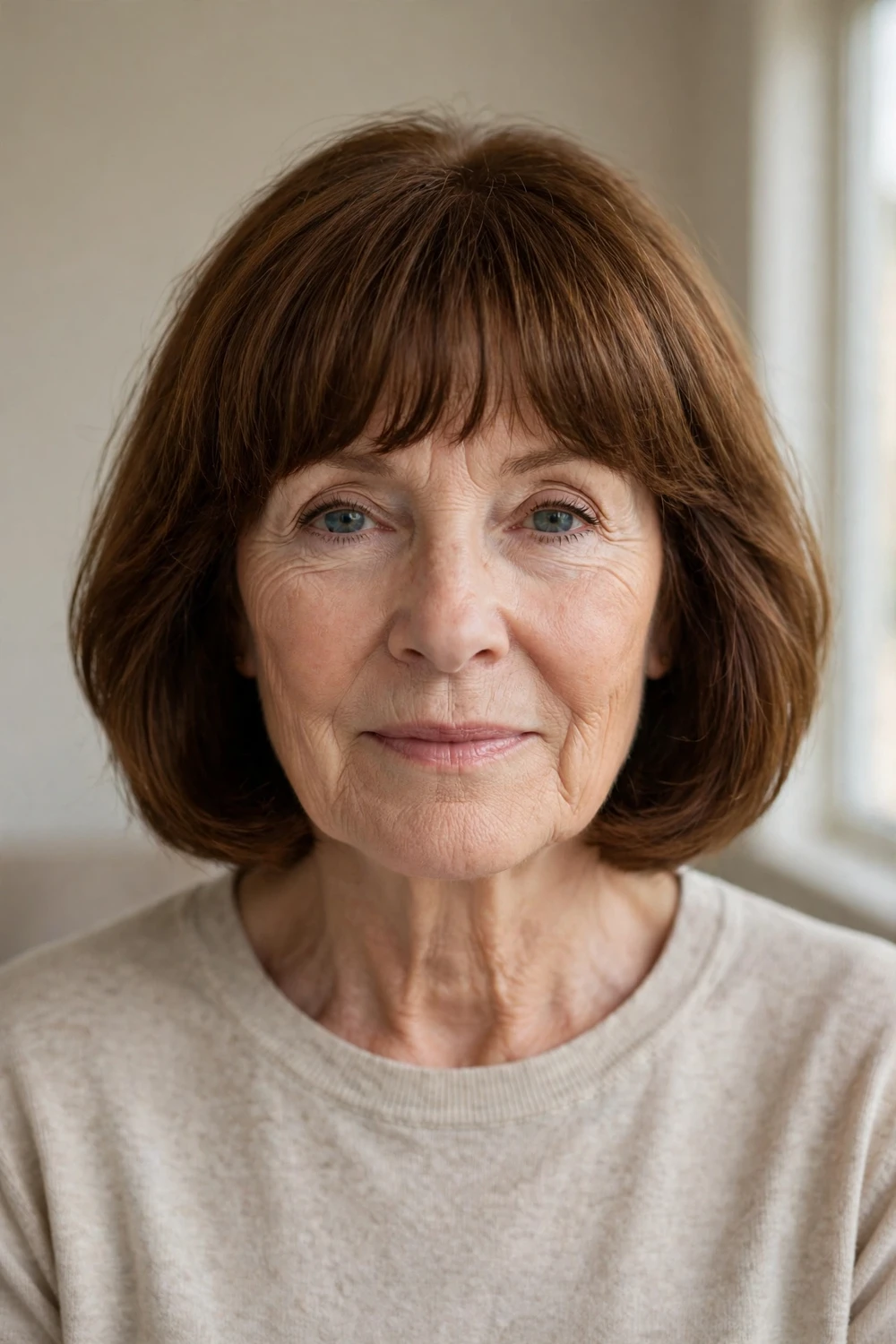
One length, one job: this fringe skims right along the brows, pulling all attention to the eyes. Brow-grazing bangs work on straight or slightly wavy hair and flatter a soft bob or shoulder cut without stealing volume from the rest of the style. The key is keeping them soft rather than thick, so they read as a gentle frame instead of a heavy curtain. They also do a quiet job of minimizing lines across the forehead.
Try this: blow-dry the fringe side to side with a paddle brush first, then down, so it does not settle into a stiff block. Book the trim the moment it starts touching your lashes.
Difficulty: Easy · Upkeep: trim every 2 to 3 weeks.
11. Tapered Bangs
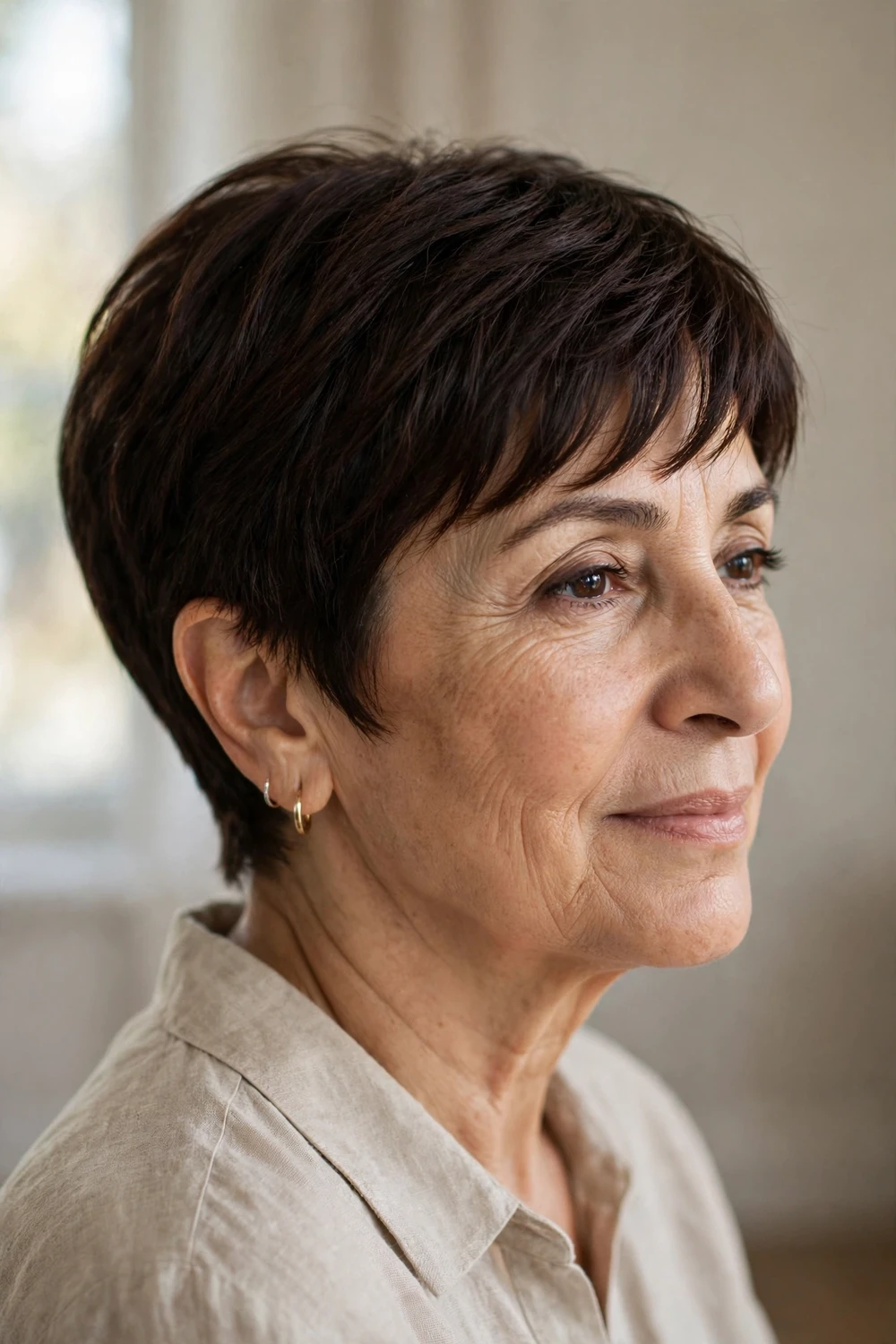
Short hair does not mean skipping the fringe. Tapered bangs graduate from longer on top into the shorter sides of a pixie, which gives the cut a soft front instead of an abrupt hairline. This fringe flatters the eyes and cheekbones while keeping the wash-and-go ease that makes pixies so popular after 50. It also grows out neatly, since the taper just gets a little longer everywhere.
Try this: keep the top slightly longer than the sides so the taper is visible. A small amount of wax, worked through with your fingertips, defines the shape in under a minute.
Difficulty: Easy · Upkeep: trim every 4 to 5 weeks.
12. Long Blended Bangs
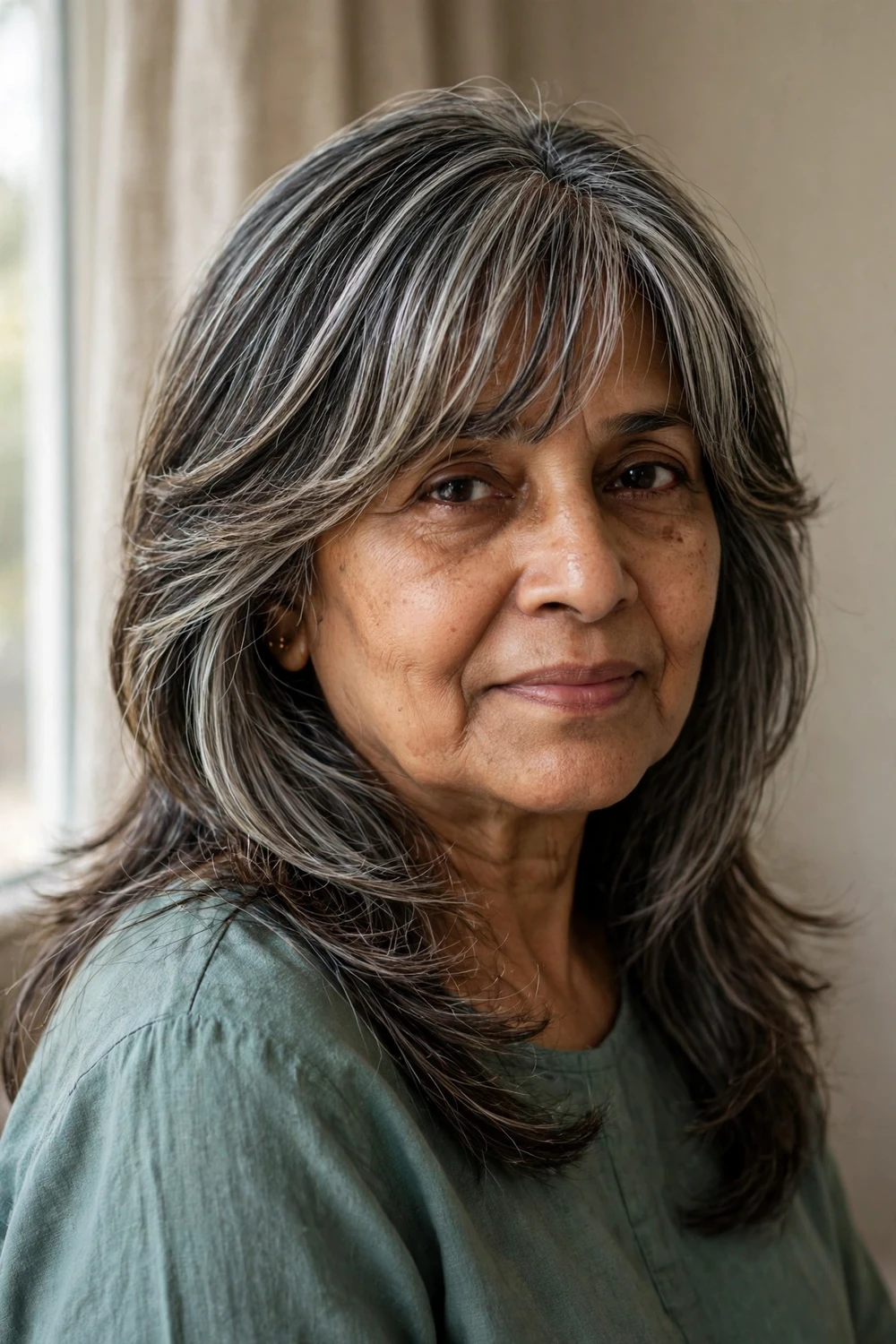
This is the lowest-commitment fringe on the list. Long blended bangs graze the brows or even the lashes, then melt into the face-framing layers so there is no visible line where the bangs end. They suit long and medium hair best, and they are the easiest fringe to grow out if you change your mind. Women with cowlicks at the hairline also do well here, since the length has enough weight to sit properly.
Try this: this is the fringe to request if you want bangs for an event but are not ready to commit. Ask for brow length and see how you feel in a week.
Difficulty: Easy · Upkeep: trim every 5 to 6 weeks.
Shorter cuts wear a fringe well too; browse short layered hairstyles for women over 60 for age-flattering ideas.
13. Shaggy Bangs
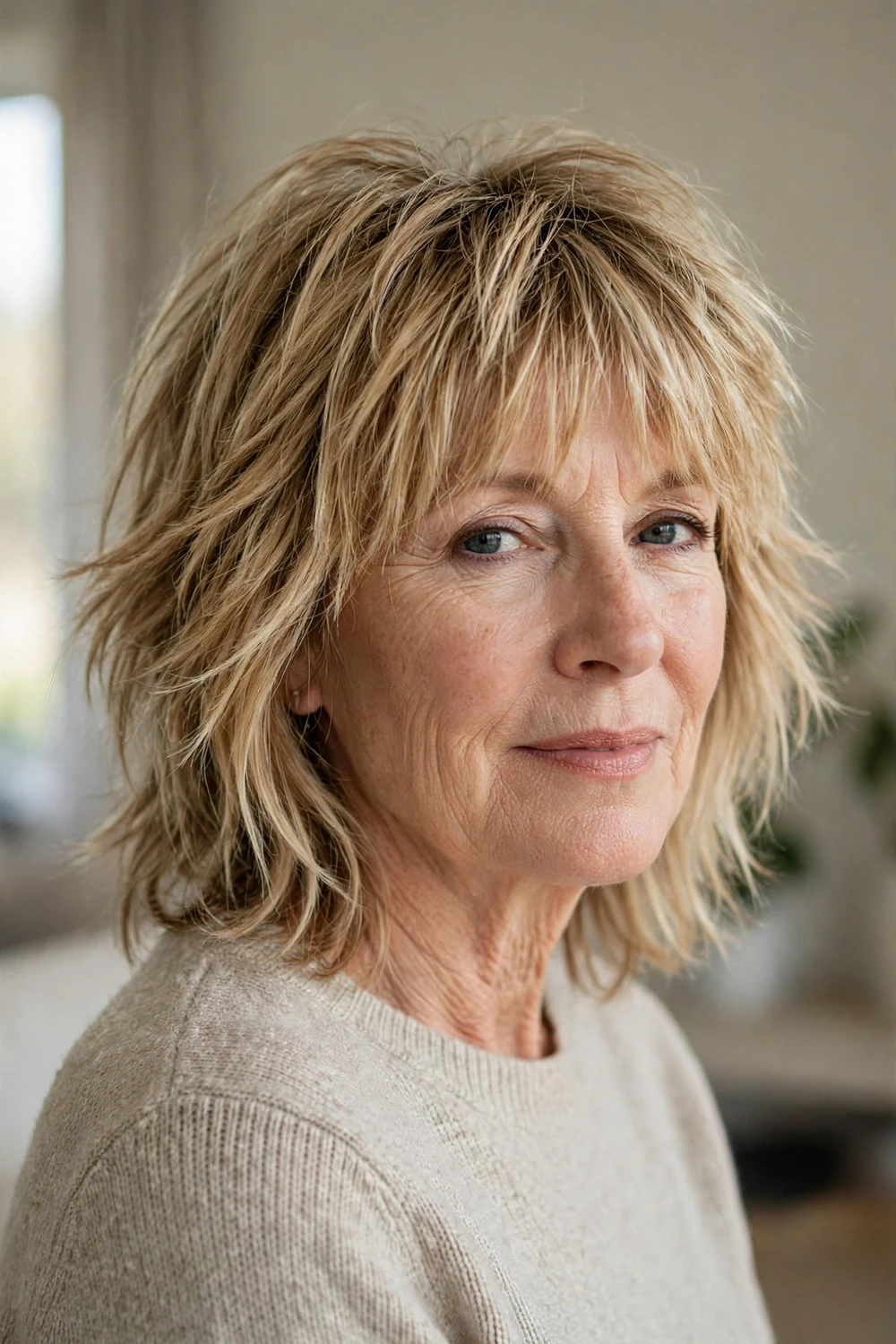
A shag without the fringe is only half the story. Shaggy bangs are tousled, textured, and deliberately undone, blending straight into the choppy layers of the cut. They are made for medium hair with natural wave or body, and they are one of the most forgiving styles here: the messier they look, the better they look. If your morning routine is five minutes, this fringe was cut for you.
Try this: let the fringe air-dry and scrunch in a little salt spray. Skip the brush entirely, this style loses its charm the moment it looks polished.
Difficulty: Easy · Upkeep: trim every 5 to 6 weeks.
14. Angled Bangs
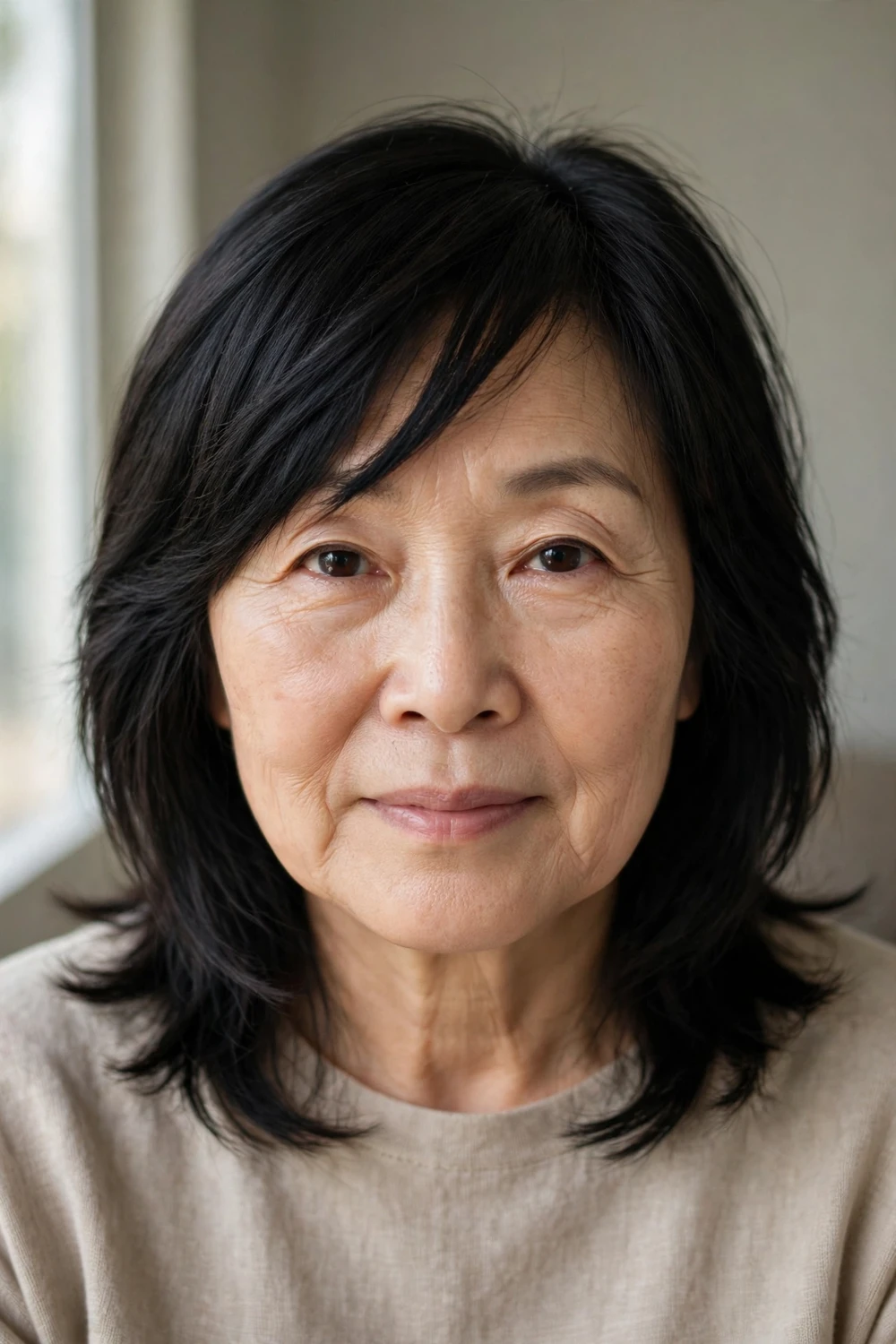
Cut on a clear diagonal from short to long, angled bangs bring instant structure to a haircut. The slant draws the eye across the face rather than straight down, which flatters round faces and adds interest to fine, straight hair. They pair well with layered shoulder cuts and asymmetric bobs, where the angled line echoes the geometry of the rest of the style. Think of them as side-swept bangs with more attitude.
Try this: part your hair on the short side of the angle so the long edge sweeps across. Blow-dry along the angle, not against it, to keep the line clean.
Difficulty: Medium · Upkeep: trim every 3 to 4 weeks.
15. Micro Bangs
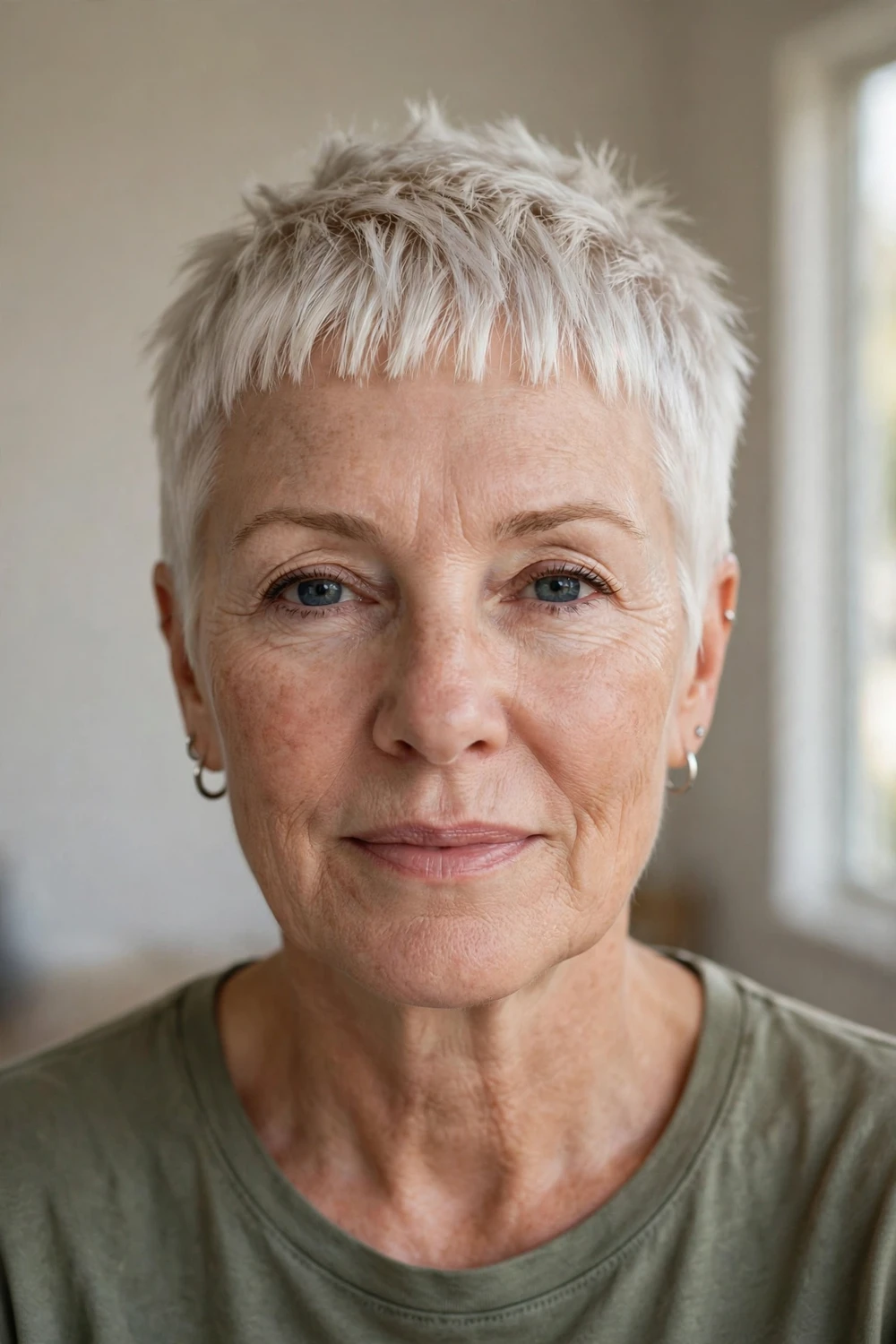
This is the boldest choice here, and the one that surprises people most. Micro bangs sit well above the brows, opening up the whole face and putting your eyes, cheekbones, and even your glasses front and center. They work best on oval faces and pair with a cropped pixie for maximum effect. They are not for everyone, but on the right face they look striking and modern, never costume-y.
Try this: be honest about your forehead before you commit. Micro bangs reveal it fully, so they suit women who are comfortable showing theirs. Keep them textured, not ruler-straight.
Difficulty: Medium · Upkeep: trim every 2 to 3 weeks.
16. Bottleneck Bangs
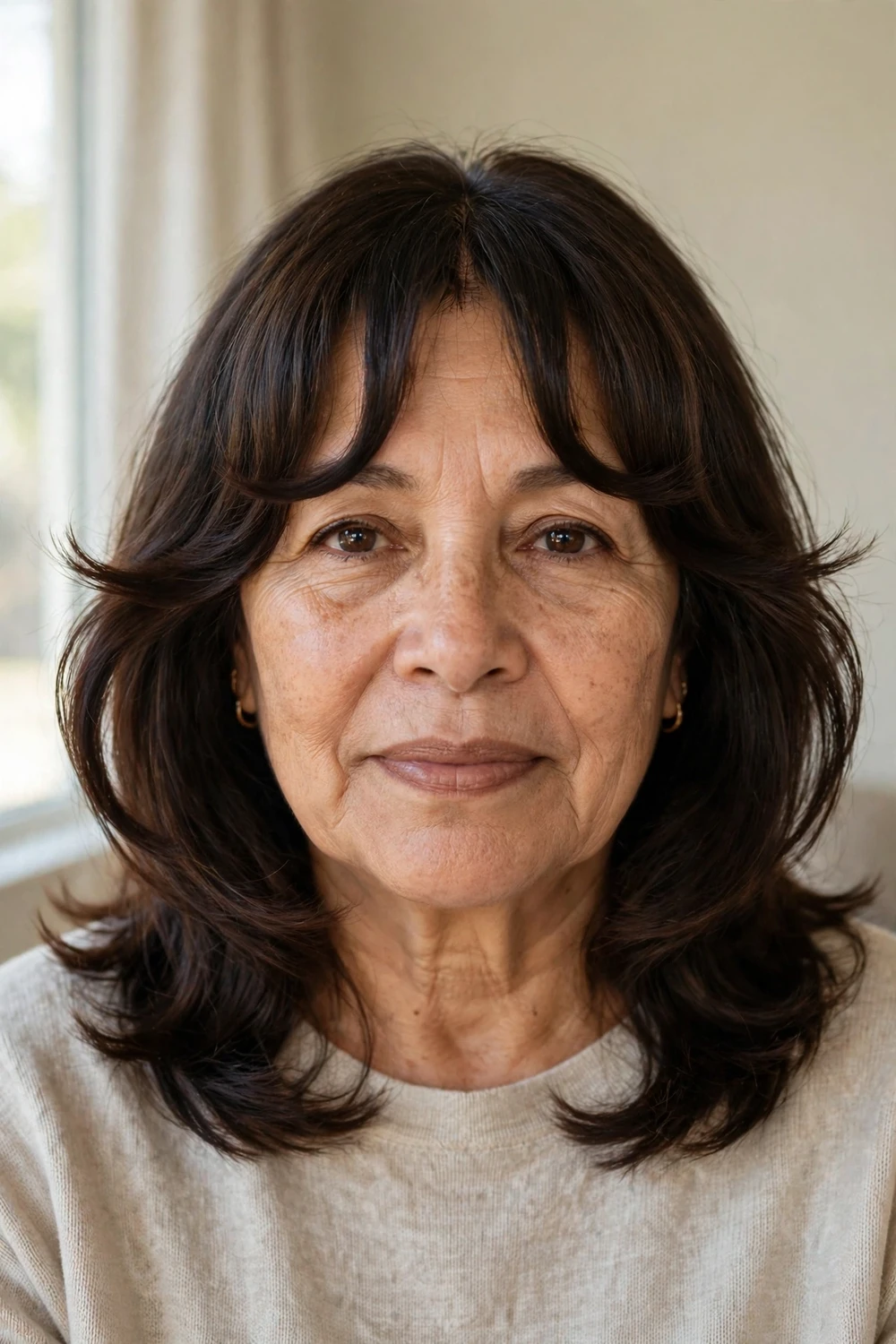
Narrow and short at the center of the forehead, then widening and curving around the cheekbones, bottleneck bangs are named for exactly what they look like. The shape is a cousin of curtain bangs, but with a shorter center that gives more forehead coverage. They flatter high foreheads and pair with shoulder-length cuts, where the curved sides melt into the layers. It is a modern style that none of the classic lists covered, and it deserves the attention.
Try this: dry the center forward with a small round brush and sweep the sides inward toward the cheeks. The center-parted shape does most of the work on its own.
Difficulty: Medium · Upkeep: trim every 3 to 4 weeks.
Bang Styles Comparison at a Glance
| Bang Style | Best For | Difficulty | Trim Schedule |
|---|---|---|---|
| Side-Swept Bangs | Round and square faces | Easy | Every 3 to 4 weeks |
| Wispy Bangs | Fine or thinning hair | Easy | Every 4 to 6 weeks |
| Curtain Bangs | Most face shapes, first-timers | Easy | Every 4 to 6 weeks |
| Feathered Bangs | Pixies and fine hair | Easy | Every 4 to 5 weeks |
| Soft Blunt Bangs | Thick, straight hair | Medium | Every 2 to 3 weeks |
| Choppy Bangs | Shags and medium hair | Easy | Every 4 weeks |
| Piecey Bangs | Straight lobs | Easy | Every 3 to 4 weeks |
| Curved Bangs | Oval and heart faces | Medium | Every 3 to 4 weeks |
| Layered Bangs | Curly and wavy hair | Medium | Every 5 to 6 weeks |
| Brow-Grazing Bangs | Straight or wavy bobs | Easy | Every 2 to 3 weeks |
| Tapered Bangs | Classic pixies | Easy | Every 4 to 5 weeks |
| Long Blended Bangs | Long hair, low commitment | Easy | Every 5 to 6 weeks |
| Shaggy Bangs | Medium hair, low routine | Easy | Every 5 to 6 weeks |
| Angled Bangs | Round faces, straight hair | Medium | Every 3 to 4 weeks |
| Micro Bangs | Oval faces, bold style | Medium | Every 2 to 3 weeks |
| Bottleneck Bangs | High foreheads | Medium | Every 3 to 4 weeks |
How to Choose the Right Bangs for You
If your fringe sits inside a textured cut, see our choppy hairstyles for older women for 30 choppy pixies, bobs, and shags that pair bangs with piecey layers.
Start with your face shape, but do not overthink it. Round faces gain length from side-swept, curtain, or angled bangs. Longer faces do better with fuller fringes, like brow-grazing or curved styles, that add width. Square jawlines soften under wispy or curtain bangs. Oval faces can wear nearly anything, including micro bangs.
Next, be honest about your texture. Thick, coarse, or greying hair needs the fringe thinned and point-cut or it sits heavy and flicks out at the ends. Fine hair wants a little more weight left in so the bangs do not look sparse, which is why wispy and feathered styles work so well. And check your cowlicks before you commit: a strong swirl at the hairline rules some short fringes out, but longer blended bangs usually win that fight.
Finally, match the style to your routine. If daily styling is not your thing, choose curtain, long blended, or shaggy bangs, which look fine growing out. If you love a polished look and do not mind the salon, blunt or micro bangs reward the effort. The best fringe is the one you will actually maintain.
Mistakes to Avoid
The most common error is going too heavy. A thick, solid fringe on fine or thinning hair exposes the scalp and makes the crown look thinner by comparison. Keep the bangs light, ask for thinning shears, and remember that less hair in the fringe usually looks like more hair on the head.
The second is the stark, straight-across cut with no texture. A severe horizontal line hardens mature features instead of softening them. If you want a full fringe, soften it: round the edges, point-cut the ends, and keep it just above the brows rather than sitting on them.
The third is neglecting trims. Bangs grow faster than the rest of your hair and show it first, and a fringe that has drifted into your eyes stops flattering you. Many salons tidy a fringe between full cuts for little or no charge, so there is no reason to let it go.
Last, do not choose a fringe in isolation. Bangs have to work with the rest of your cut, so bring your stylist the full picture: how you part your hair, how often you heat-style, and how much time you will actually spend each morning. A five-minute fringe on a thirty-minute haircut is a mismatch.
Frequently Asked Questions
What is the most flattering bang style for women over 50?
Side-swept and curtain bangs win this round. Both soften forehead lines, draw attention to the eyes, and grow out gracefully without harsh lines. They suit fine, thick, straight, and wavy hair alike. If you only pick one, start with a side-swept fringe, since it is the most forgiving of all.
Can women over 50 wear blunt bangs?
Yes, with two conditions. Blunt bangs work best on thicker, straighter hair and look softer when the ends are slightly rounded rather than cut in a hard line. Pair them with a bob or lob so the geometry feels intentional. They need trims every 2 to 3 weeks, so commit to the upkeep first.
How often should bangs be trimmed after 50?
Every 2 to 4 weeks for most styles, since a fringe sits right against the forehead and shows growth fast. Wispy and curtain bangs can stretch to 4 to 6 weeks because they blend into the layers. Many salons offer a free or low-cost fringe tidy between full appointments, so ask your stylist.
Do bangs make you look younger after 50?
The right bangs can. They cover forehead lines, lift attention to the eyes and cheekbones, and add softness around the face. Soft, textured styles like side-swept, wispy, and curtain bangs do this best. A heavy, severe fringe can do the opposite, so texture matters more than length.
Are bangs good for thinning hair after 50?
Yes, with the right cut. Wispy and feathered bangs add fullness around the face without taking weight from the rest of your hair. Keep the fringe light and ask your stylist to thin it slightly so it does not look sparse or reveal the scalp. Avoid very thick, heavy bangs, which expose thinness at the crown.
Final Thoughts
The best bang style for you is the one that fits your face, your texture, and your mornings. Start with a soft, textured fringe like side-swept or curtain bangs if you are unsure, and tell your stylist exactly how much upkeep you will do. A fringe is a small cut with an outsized effect, and after 50, that is exactly the kind of change worth making.

