


Fine hair after 60 needs a cut that does the heavy lifting. The right bob removes the weight that drags roots flat, keeps the perimeter solid so ends look thick, and builds lift exactly where thinning shows first. I have spent years writing about cuts for fine and thinning hair, and the bob remains the style I recommend most for this age group.
This list covers 30 bob haircuts for women over 60 with fine hair, from blunt one-length cuts to layered, stacked, and textured versions. Every style below is chosen for one job: making fine hair look visibly fuller, with honest notes on styling effort and upkeep.
For a version that leans harder into texture, choppy bob hairstyles for over 60 shows how choppy ends and crown layers create extra fullness on fine, mature hair.
Quick answer: Bob haircuts make fine hair look fuller by concentrating weight at the ends and building lift at the crown. For women over 60, the most reliable pick is a chin-length blunt or lightly layered bob, styled with volumizing mousse at the roots and a round-brush blowout.
Quick Takeaways
- A one-length blunt bob creates the strongest illusion of density because all the weight stays at the ends.
- Strategic layering adds crown lift and movement, but heavy layering thins fine hair, so keep layers light.
- Chin length is the fullest-looking length for fine hair after 60; longer bobs tend to lie flat.
- Volumizing mousse at the roots plus upside-down blow-drying adds body that lasts through the day.
- Trim every six to eight weeks to keep the shape sharp and the ends looking thick.
Why Bobs Work So Well for Fine Hair After 60
Hair naturally gets finer and less dense with age. Long hair pulls flat under its own weight, which exposes a widening part and thin ends. A bob cuts that weight away. The shorter the perimeter, the less gravity works against your roots.
A bob also hides thinning smartly. A deep side part covers a wider part line, stacked layers fill the back where hair often flattens, and a blunt edge makes sparse ends read as thick. Color adds another trick: multi-tonal highlights and lowlights create depth that makes hair look denser than a flat single-process color ever could.
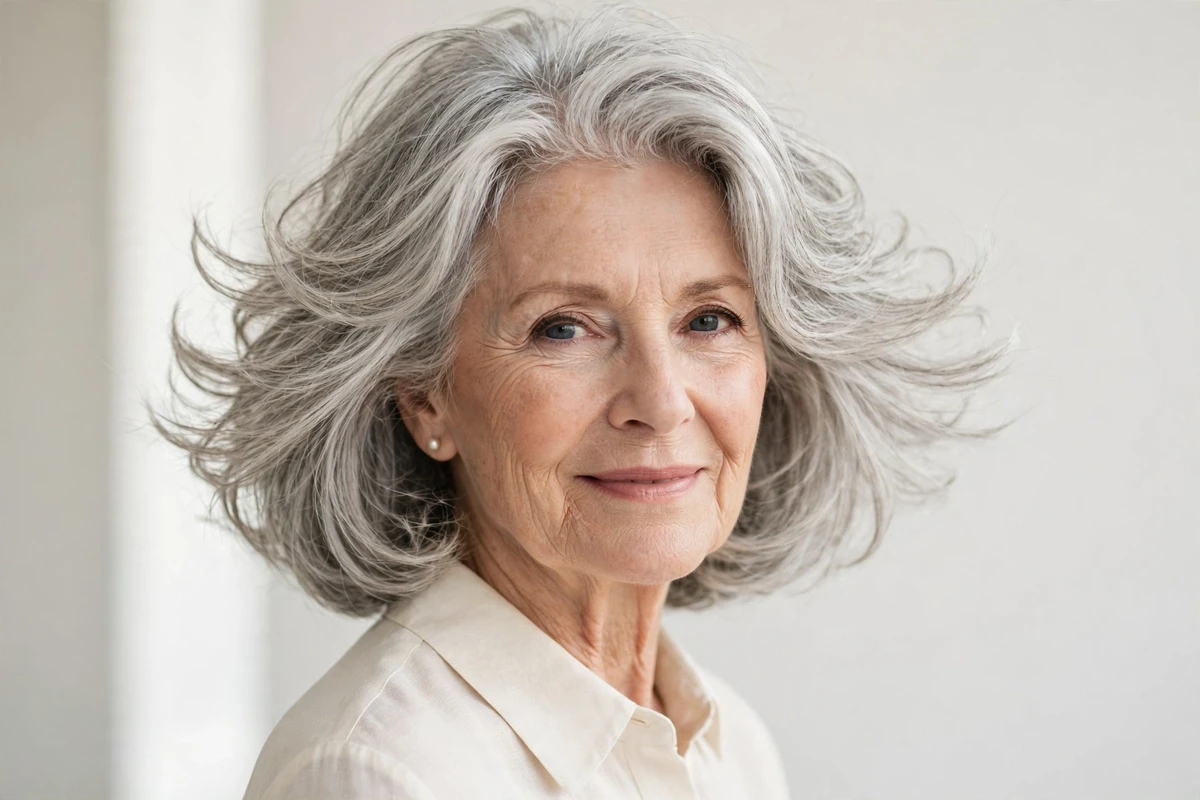
1. Feathered Layered Bob with Effortless Volume

Soft feathering at the ends keeps this bob from sitting flat against the head. The layers are cut light and airy, which gives fine hair the movement it needs to catch light and look thicker. Grazing the jawline, the cut frames oval and heart-shaped faces without overwhelming them. It needs very little daily work, since the texture does most of the styling for you. The feathered edges also grow out gracefully, so you can stretch appointments a week or two past the usual mark.
Try this: Scrunch a pea-sized amount of texturizing spray into the mid-lengths while damp, then tousle with your fingers as it air-dries for weightless volume.
2. Textured Wavy Bob
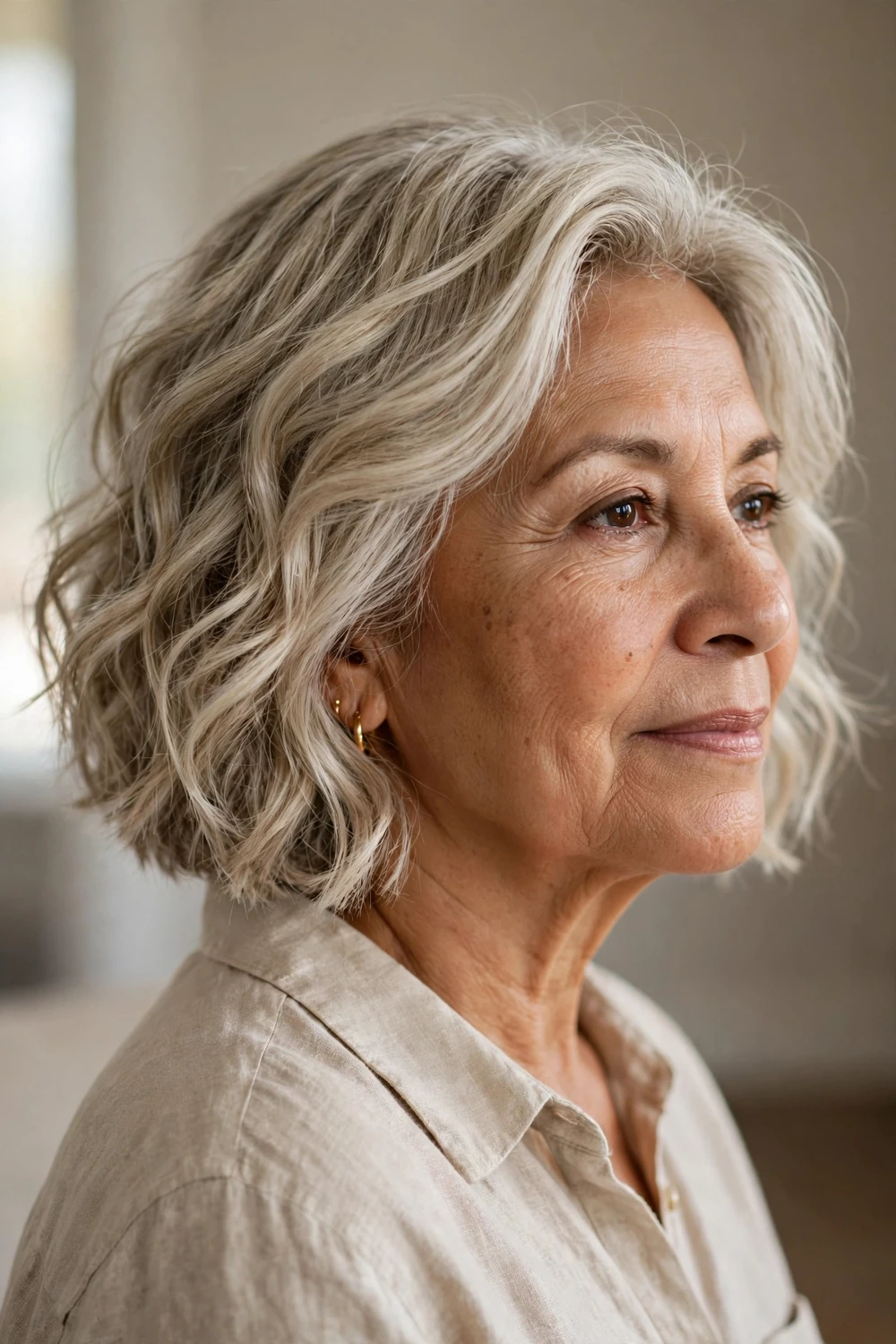
Looking for a cut that adds body without a complicated routine? This chin-length wavy bob does it through texture alone. The waves break up the surface of the hair so light hits at different angles, which reads as fullness. It suits oval and heart face shapes especially well, and the shape stays balanced as it grows. The cut works with your natural texture instead of fighting it, so second-day hair often looks better than fresh blowouts. Keep the waves loose rather than tight for the fullest effect.
Try this: Wrap one-inch sections around a curling iron, alternating directions, then brush through with a wide-tooth comb for soft, blended waves.
3. Textured Short Gray Bob
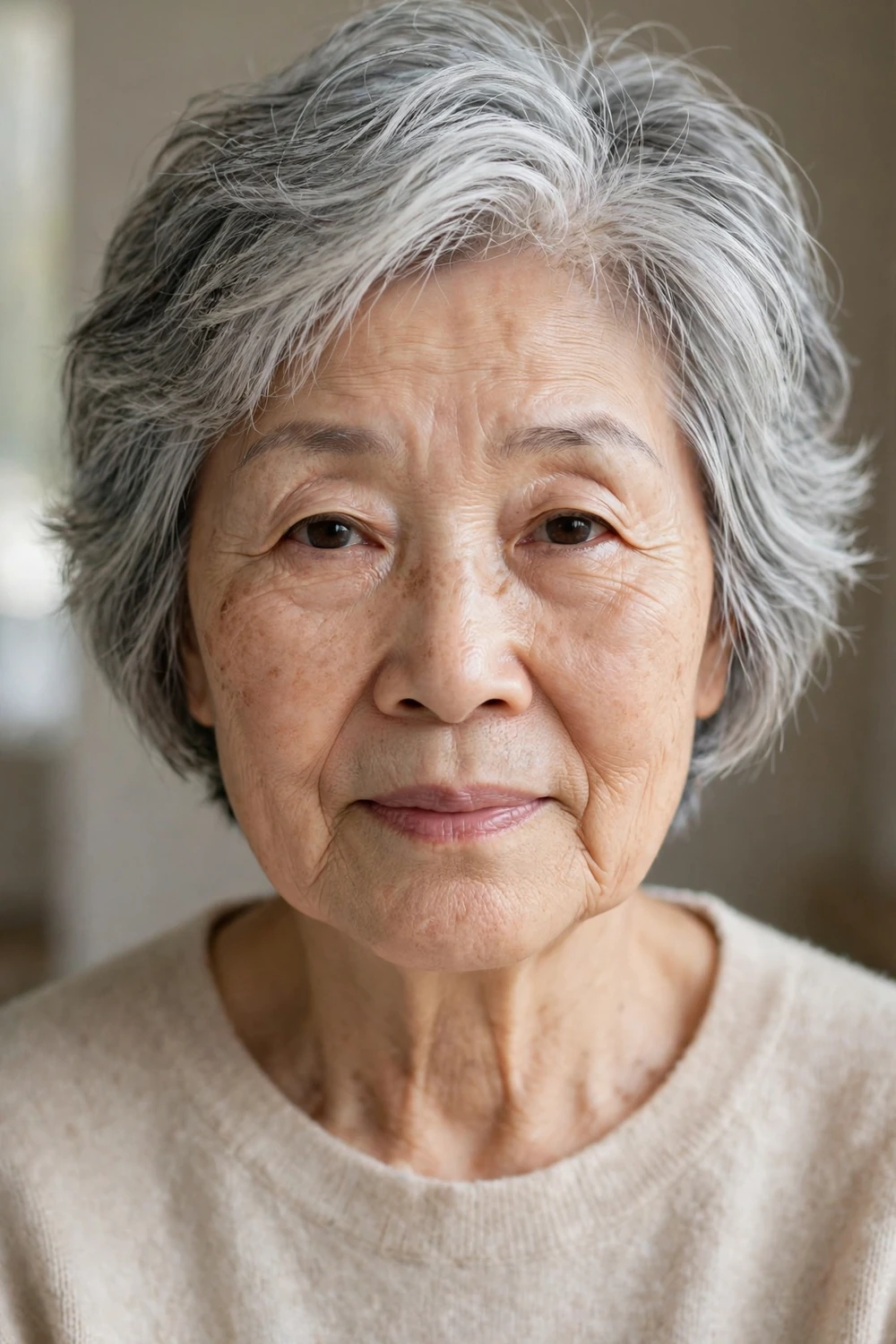
Embracing your natural gray becomes easier with a cut that turns fine texture into an asset. This short bob uses soft layers and tousled texture to add movement exactly where gray hair tends to look flat. The length sits just above the jawline, which draws attention up to your eyes and cheekbones. Styling is minimal: a little mousse, a quick tousle, and you are done. The natural gray shade needs no root maintenance, which makes this one of the lowest-effort options on this list.
Try this: Use a purple-toned shampoo once a week to keep the gray bright and prevent yellowing.
4. One-Length Blunt Bob for Thinning Hair
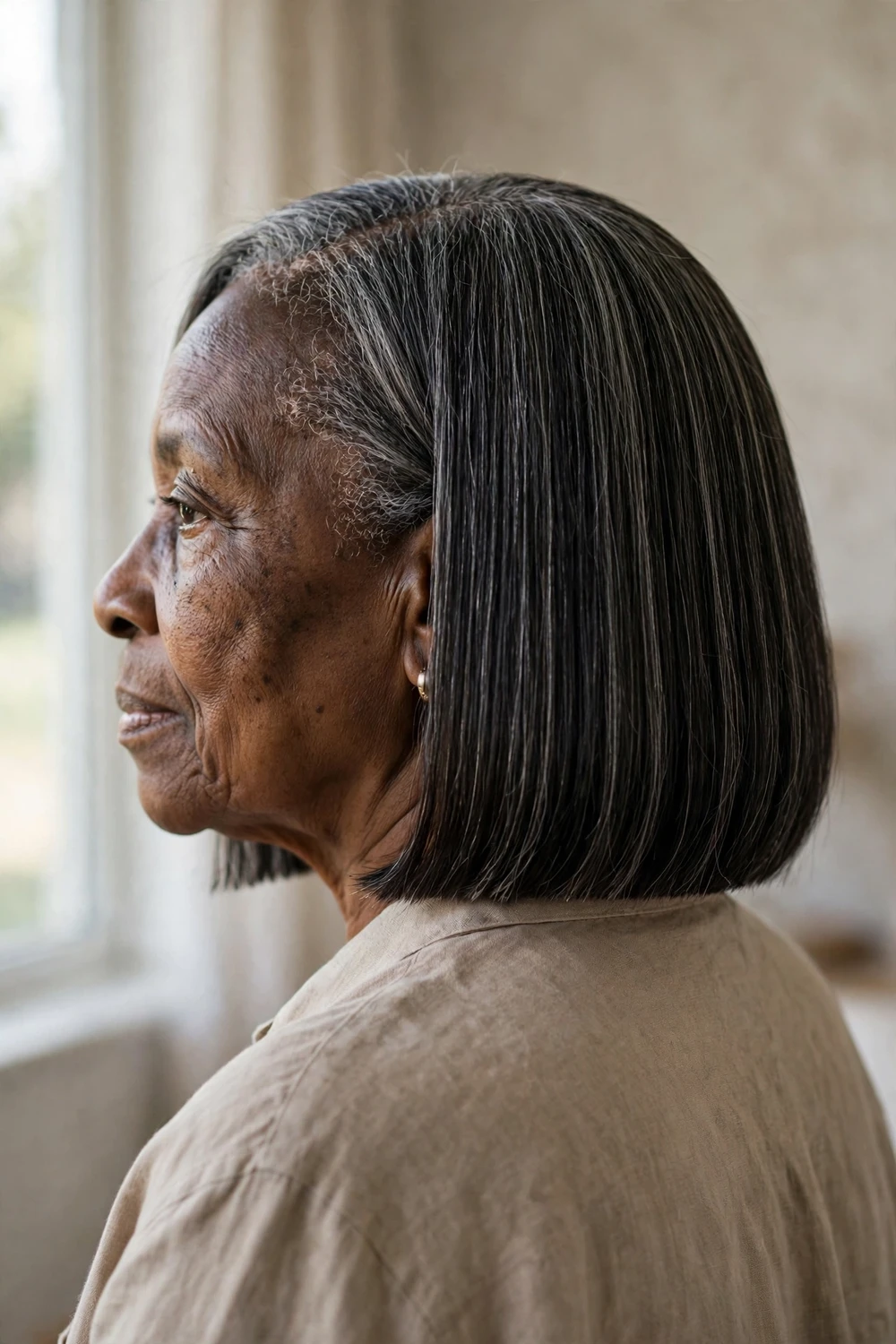
If your hair is visibly thinning, this is the cut to ask for first. A blunt one-length perimeter packs every strand into a single solid line at the bottom, which creates the strongest possible illusion of thickness. There are no layers to feather the ends away, so nothing is removed where you need weight most. It is also one of the easiest bobs to style: a round brush gives it lift, or a curling iron adds waves for evenings out. Keep the length at or above the chin for maximum density.
Try this: Blow-dry with a round brush, rolling the ends slightly under, to create a dense, polished edge.
5. Voluminous Silver Bob with Layers
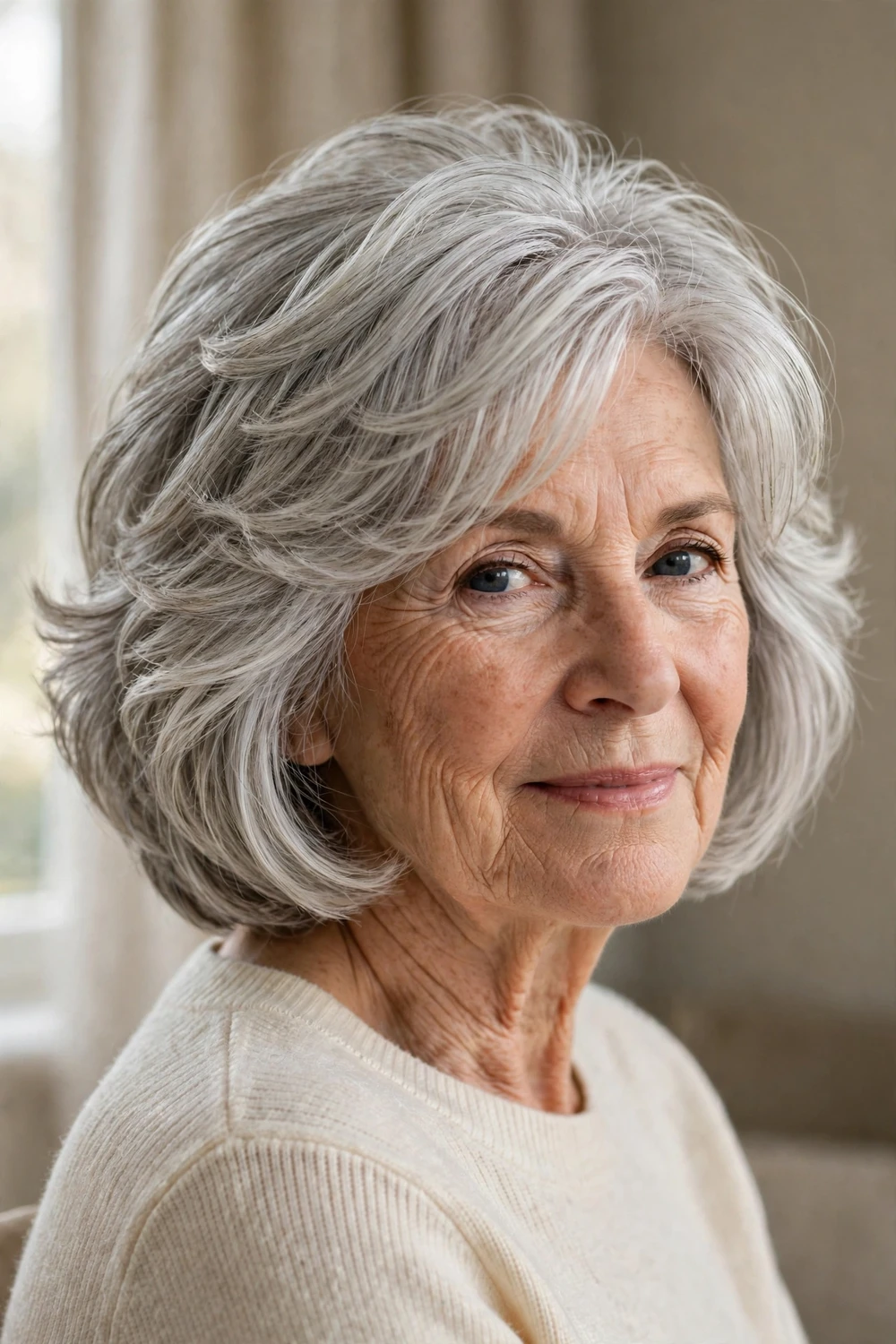
Silver hair and fine texture pair well in this below-the-chin bob. The layering is placed to build body through the mid-lengths, so the hair looks fuller from every angle rather than just at the roots. The silvery tone blends with natural gray growth, which softens features and keeps the look modern. A round-brush blowout lifts the roots for real fullness, though you will want lightweight products so the layers do not fall flat. Schedule layering refreshes regularly to keep the shape from collapsing.
Try this: Apply root-lifting foam only at the crown, then blow-dry with the brush lifting straight up for lasting height.
6. Tousled Bob with Graduated Layers
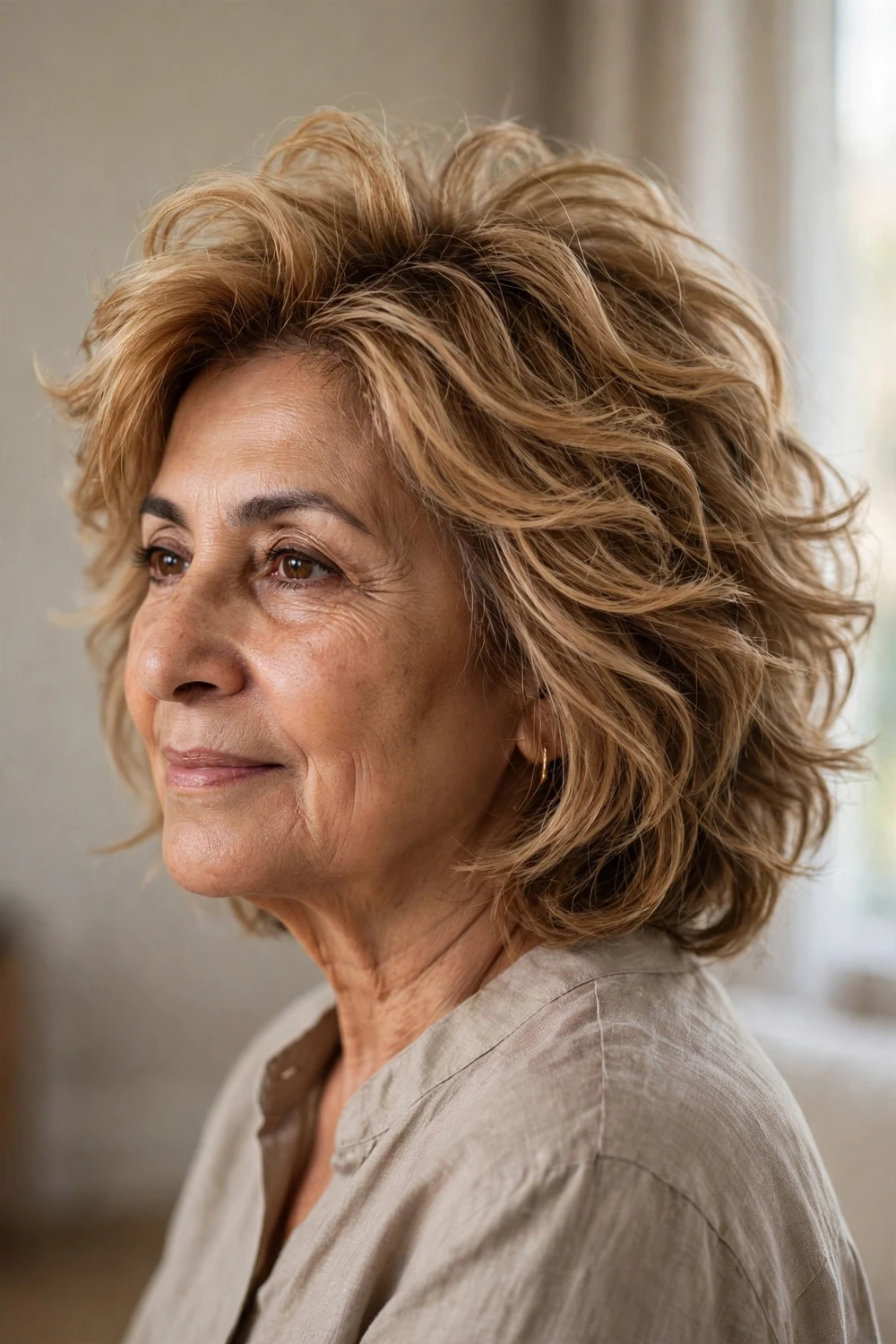
Graduation is the quiet trick behind this cut. The layers stack from shorter at the back to longer at the front, which builds automatic fullness around the crown where fine hair usually flattens. The tousled finish keeps it relaxed instead of stiff, and the shoulder-skimming length gives you styling flexibility. Warm caramel tones blend gray regrowth subtly, which stretches the time between color appointments. It flatters square and round faces by adding height on top.
Try this: Ask your colorist for caramel-blonde highlighting around the face to add dimension that mimics fullness.
7. Layered A-Line Bob
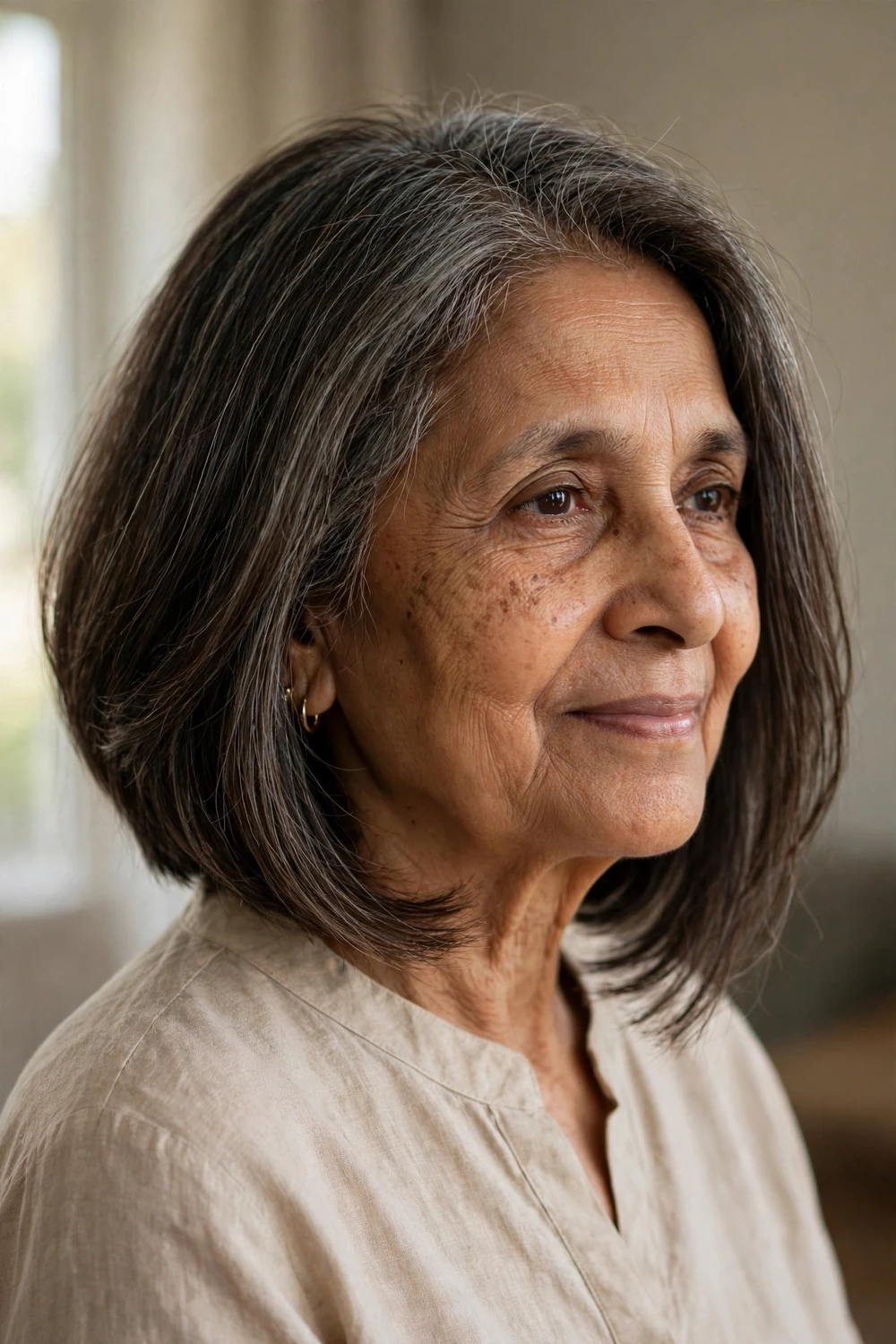
Start with the classic A-line shape and add light layering, and you get a cut that builds volume in two directions at once. The shorter back pushes hair forward and up, while the layers through the mid-lengths create dimension that makes fine strands look like more than they are. The longer front pieces frame the face and slim the jawline. This version works for most face shapes and grows out without losing its structure, which keeps it looking intentional between trims.
Try this: Dry the back sections first, directing them upward with a round brush to lock in the A-line lift.
8. Stacked Bob with Bangs
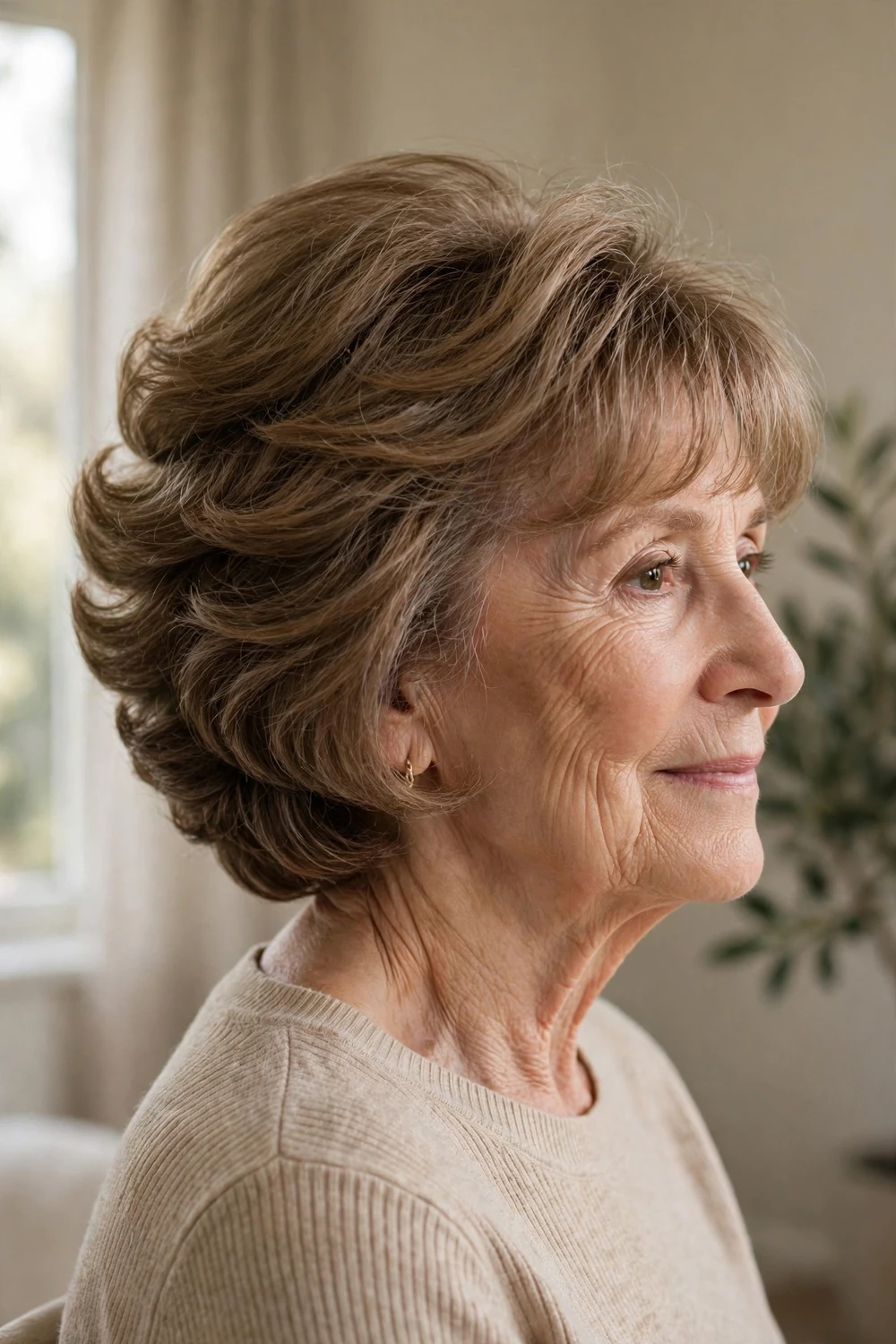
Stacking is the fastest way to manufacture fullness at the back of the head. Short, graduated layers pile on top of each other to create height exactly where fine hair lies flat. The wispy bangs soften the forehead and draw the eye toward your eyes rather than your hairline. This is an architectural cut, so it holds its shape well and needs less daily styling than it looks like it should. The stacked shape also elongates the neck, which is flattering on most women in their 60s.
Try this: Keep the bangs trimmed every three to four weeks so they stay wispy instead of heavy.
If you want a broader look at bob options for your age group, see bobs for women over 60 for more styles worth discussing with your stylist.
9. Asymmetrical Bob
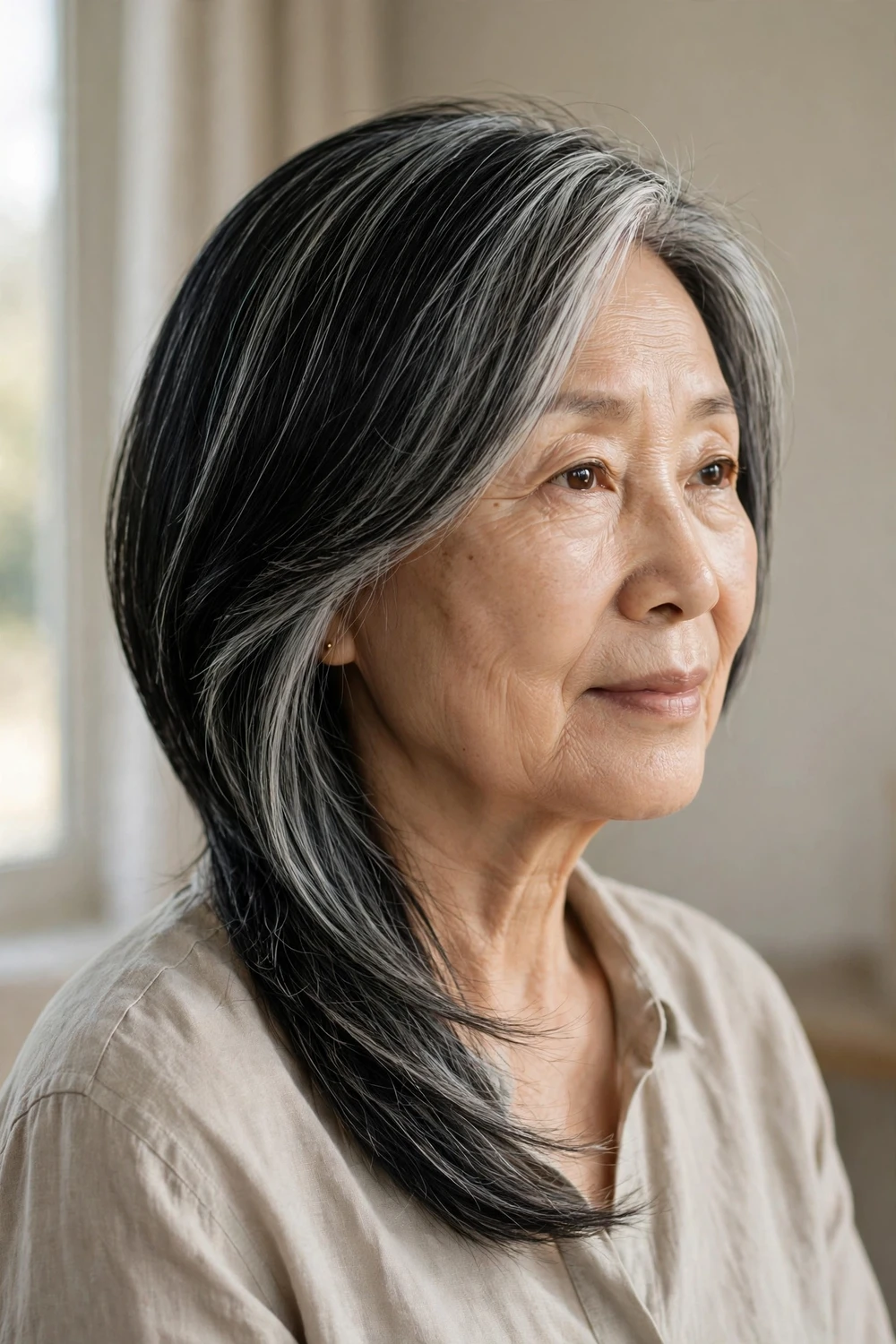
A longer side and a shorter side create movement that fine hair usually lacks on its own. The uneven line draws the eye along the angle instead of across a flat perimeter, which makes thinning far less noticeable. This cut has a modern edge that still works in professional and everyday settings. Style it sleek for a sharp finish or add a slight wave for softness. The asymmetry also distracts from an uneven hairline or one thinner temple, which many women notice after 60.
Try this: Part on the shorter side so the longer side sweeps across the forehead and adds instant volume.
10. French Bob with Wispy Fringe

The Parisian bob brings its fullness from density at the jawline rather than from length. Hitting just below the chin with a wispy fringe, this cut packs the visual weight into a compact shape that fine hair can actually support. The fringe fills the forehead area where hair often thins, while the short length keeps roots from being pulled flat. It is chic without trying hard, and it works especially well on oval and heart-shaped faces.
Try this: Keep the fringe piecey with a dab of lightweight pomade on the ends rather than heavy styling cream.
11. Shaggy Layered Bob
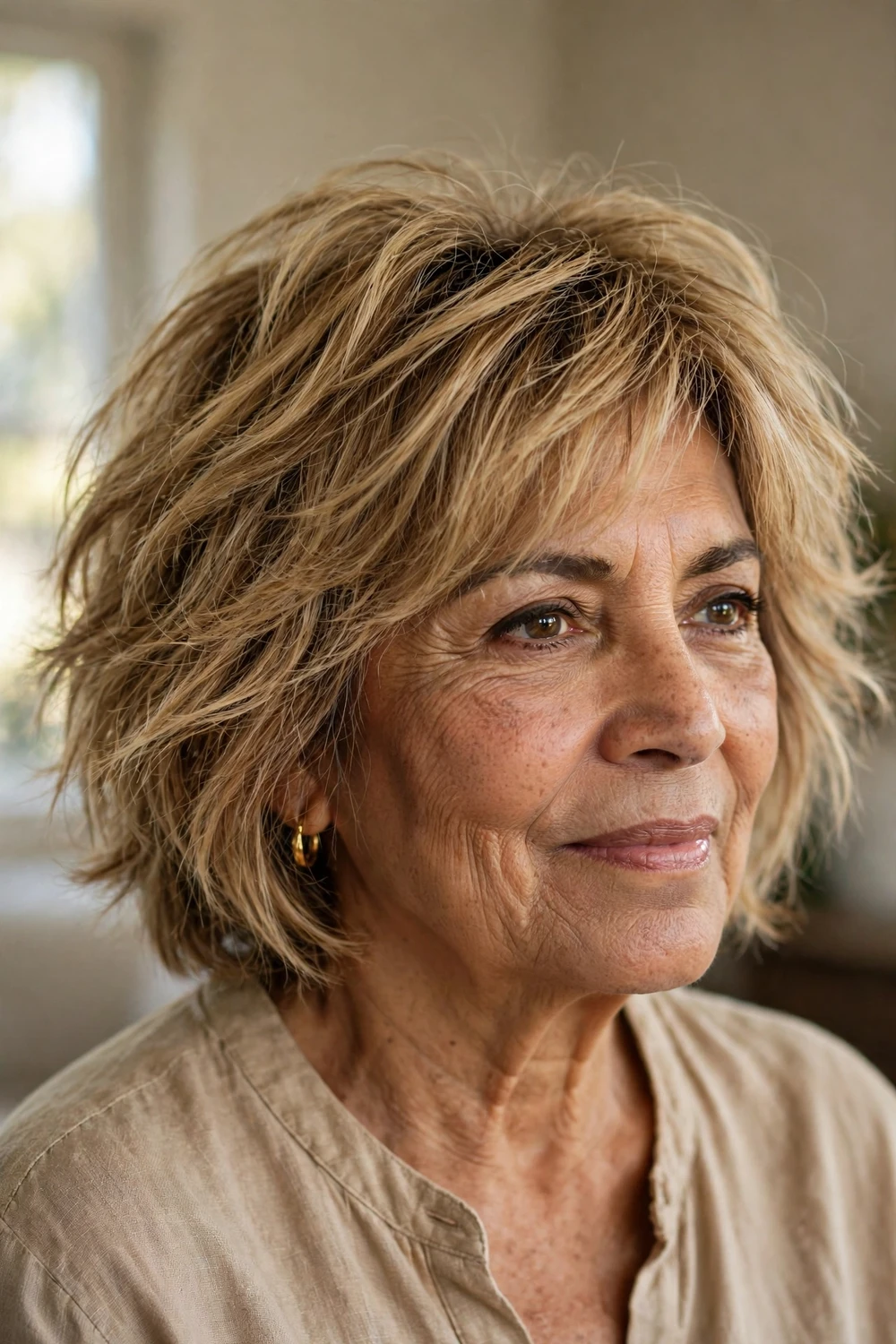
Shaggy layers are made for fine hair because the deliberately messy finish creates the illusion of more hair than there is. Feathery layers run through the whole cut, lifting the crown and breaking up the ends so they do not hang limp. This is a forgiving style: it looks good air-dried, looks good slept on, and rarely needs a brush. The carefree texture suits relaxed daily routines while still looking intentional and put-together.
Try this: Mist damp hair with sea salt spray and scrunch upward, then leave it alone to air-dry for natural lift.
12. Choppy Wedge Bob
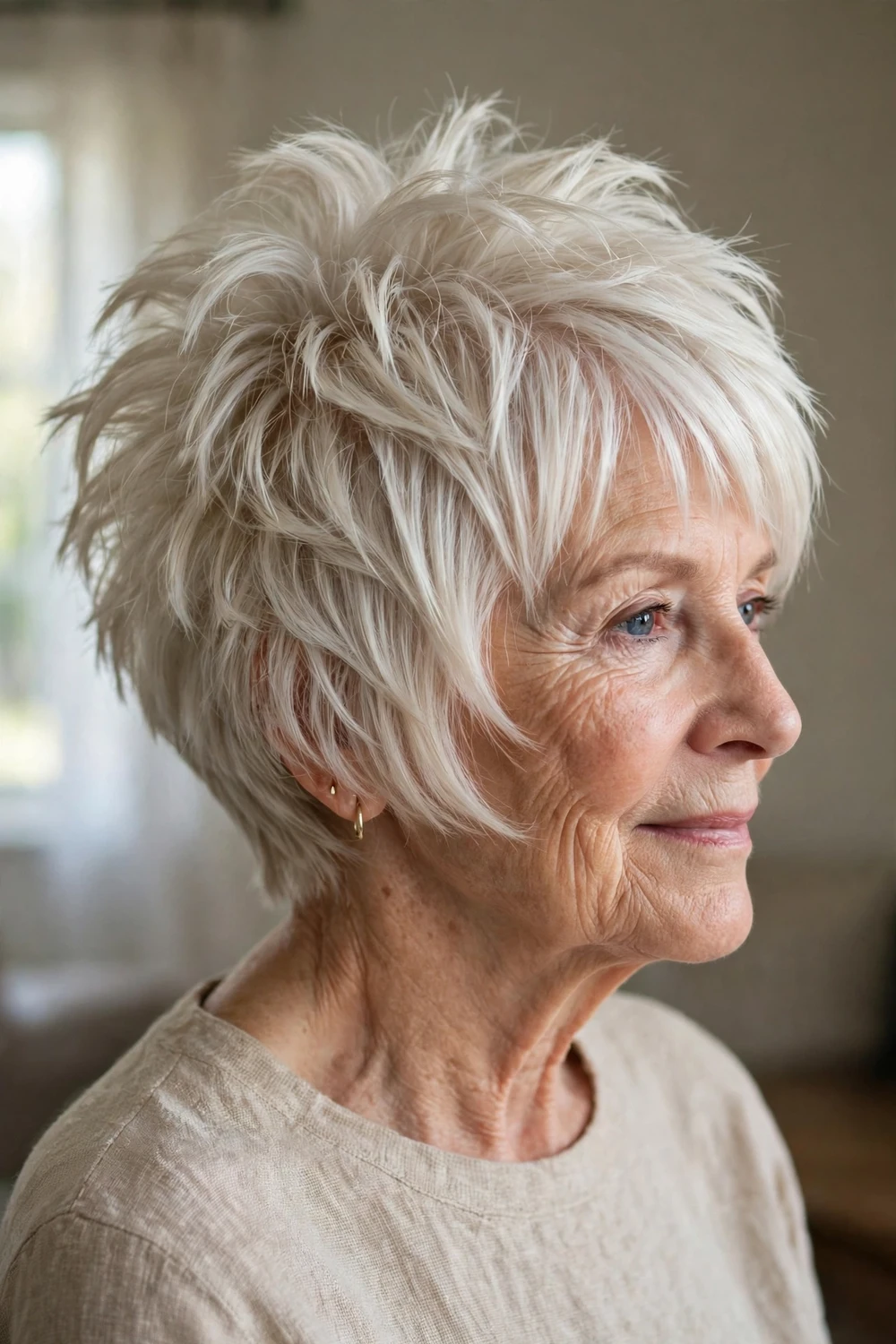
Taking the classic wedge and adding choppy texture turns a stiff retro cut into a modern volume builder. The lifted back creates permanent height that fine hair cannot achieve on its own, while the textured ends keep it from looking helmet-like. Face-framing pieces soften the angles around the cheeks and jaw. This cut flatters most face shapes because the height on top balances wider or rounder features. Keep the front pieces light so the lifted back stays the focus of the shape.
Try this: Ask your stylist to point-cut the ends at each trim to keep the choppy texture fresh between visits.
13. Curly Bob with Layers
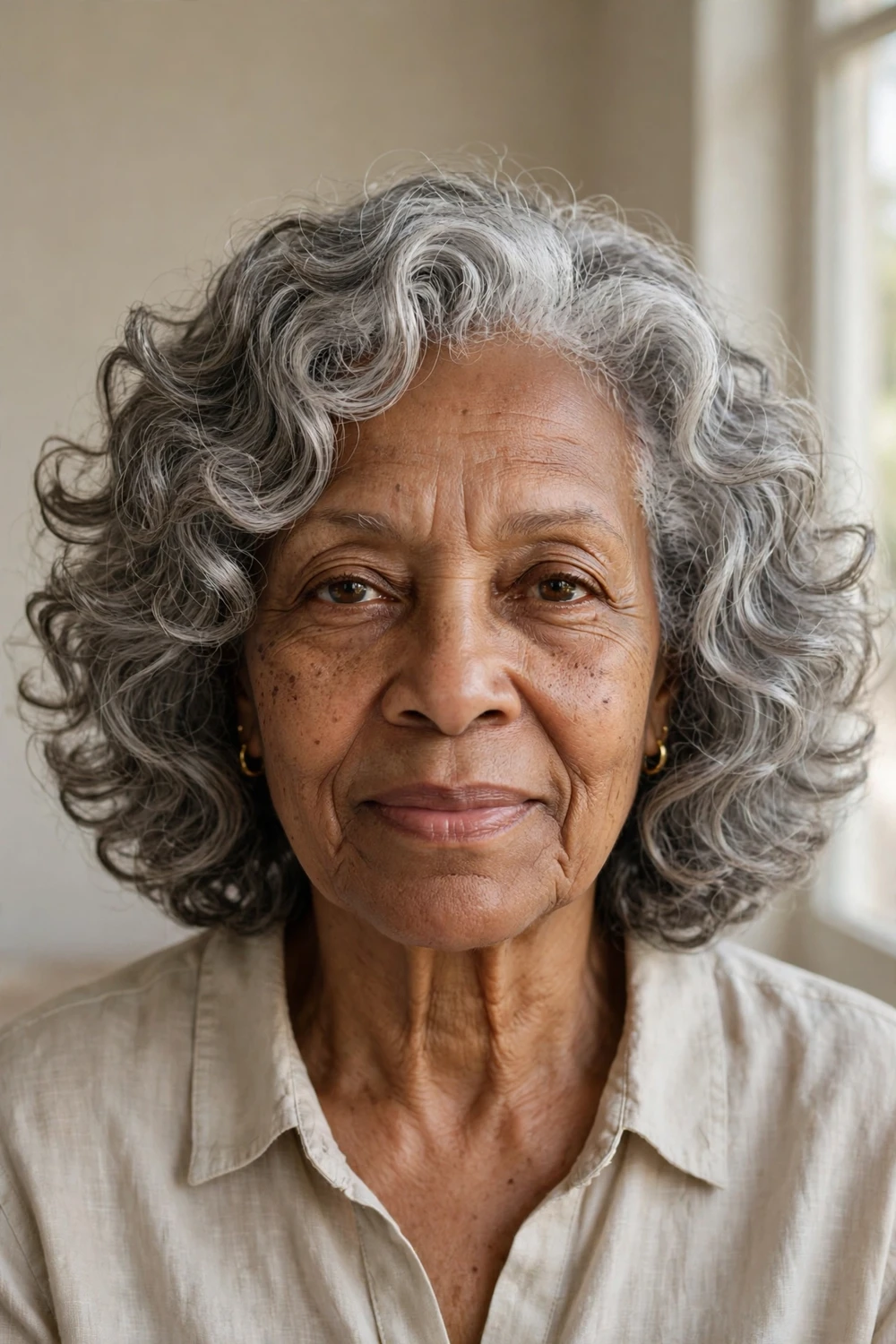
Fine curly hair gets instant body from curl itself, and this cut makes the most of it. Strategic layers prevent the triangle shape that weighs curls down, while keeping enough length for bounce and movement. The layered shape lets each curl spring up instead of stretching flat. For women with natural wave or curl, this is one of the easiest ways to look full with almost no styling products. Letting the curls do the work keeps daily effort close to zero.
Try this: Scrunch a curl-defining cream into soaking-wet hair and diffuse on low heat for springy, full curls.
14. Pageboy Bob with Volume
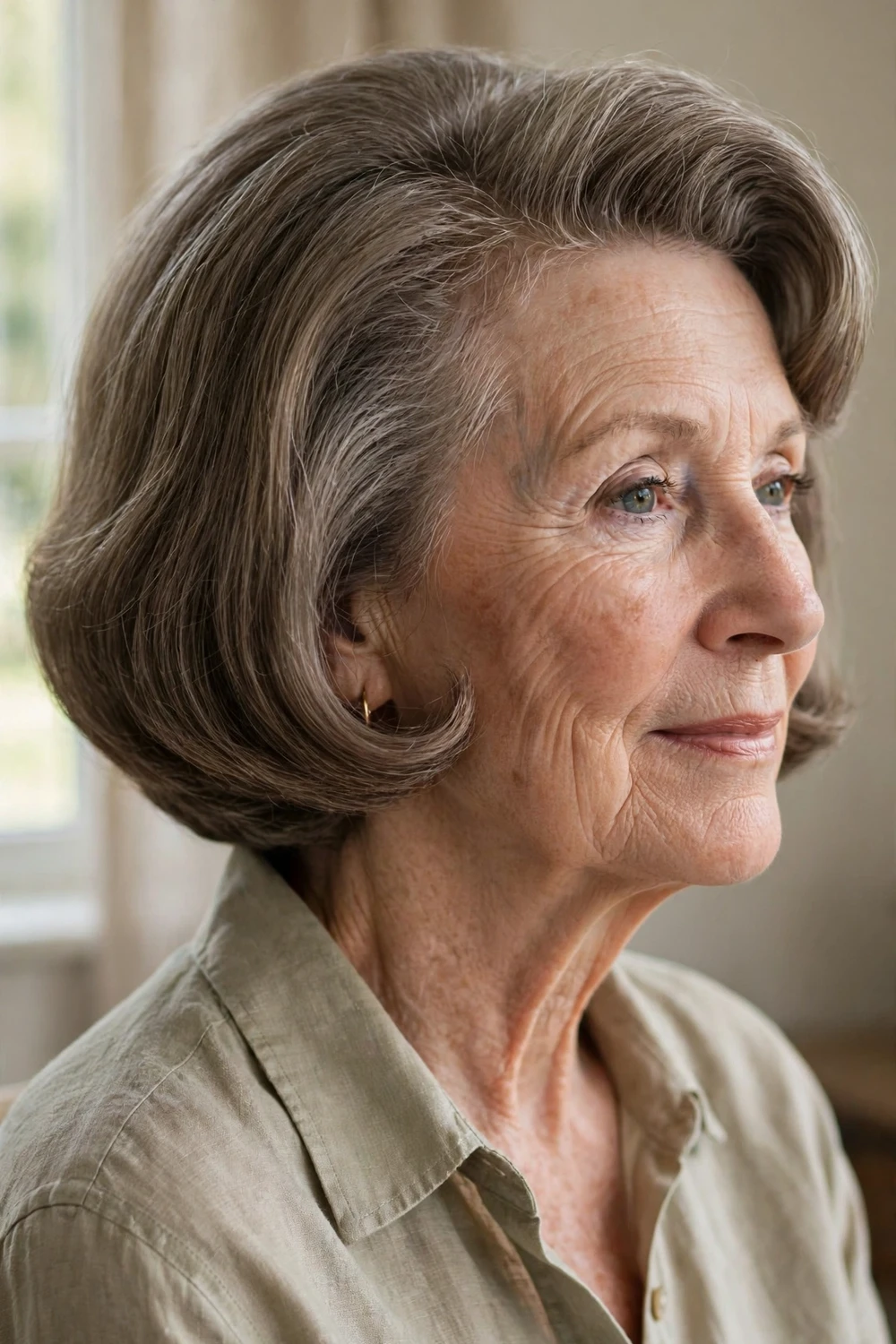
The pageboy comes back with a softer, modern finish that fine hair loves. The rounded under-shape builds structure and curves the ends inward, which creates a solid, dense-looking perimeter. Soft internal layers keep it from sitting too flat against the head. This is a polished option for women who like a neat, classic silhouette but need the cut itself to supply the fullness. It holds its shape well between appointments.
Try this: Finish with a boar-bristle brush to smooth the curved-under ends into a dense, glossy edge.
For layered takes on this length, browse layered bob hairstyles for women over 60 for more fullness-building ideas.
15. Tousled Bob with Root Lift
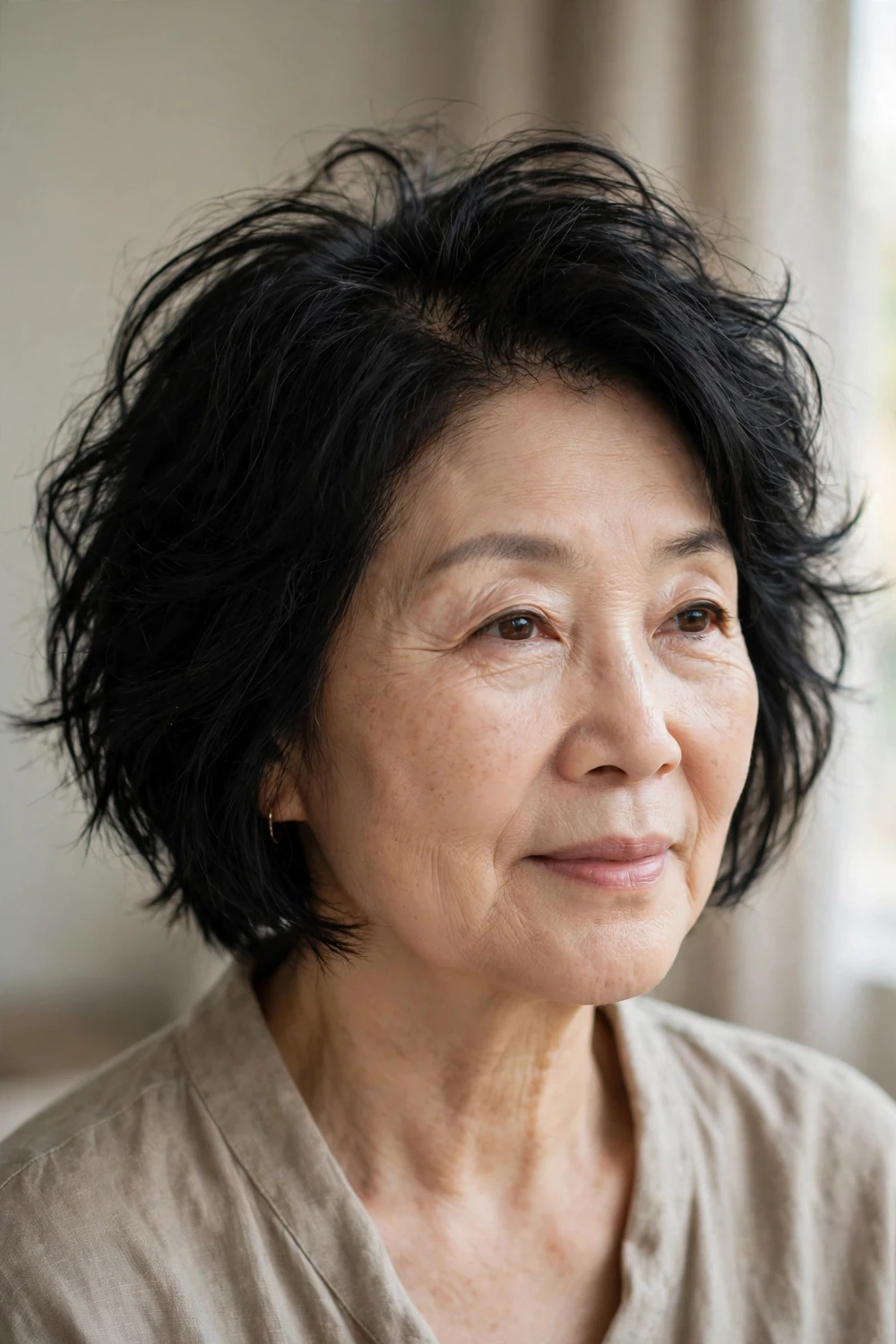
Root lift is the whole point of this cut. The layering is concentrated at the crown so the roots stand up instead of lying flat, and the tousled finish makes the lift look natural rather than teased. This is an effortless style that suits busy mornings: a quick blast with the dryer and it is done. The texture also disguises a visible scalp at the part, which is one of the first places thinning shows. It works best on straight to slightly wavy hair.
Try this: Spray dry shampoo at the roots on day two to revive the lift without washing.
16. Angled Bob with Razored Ends
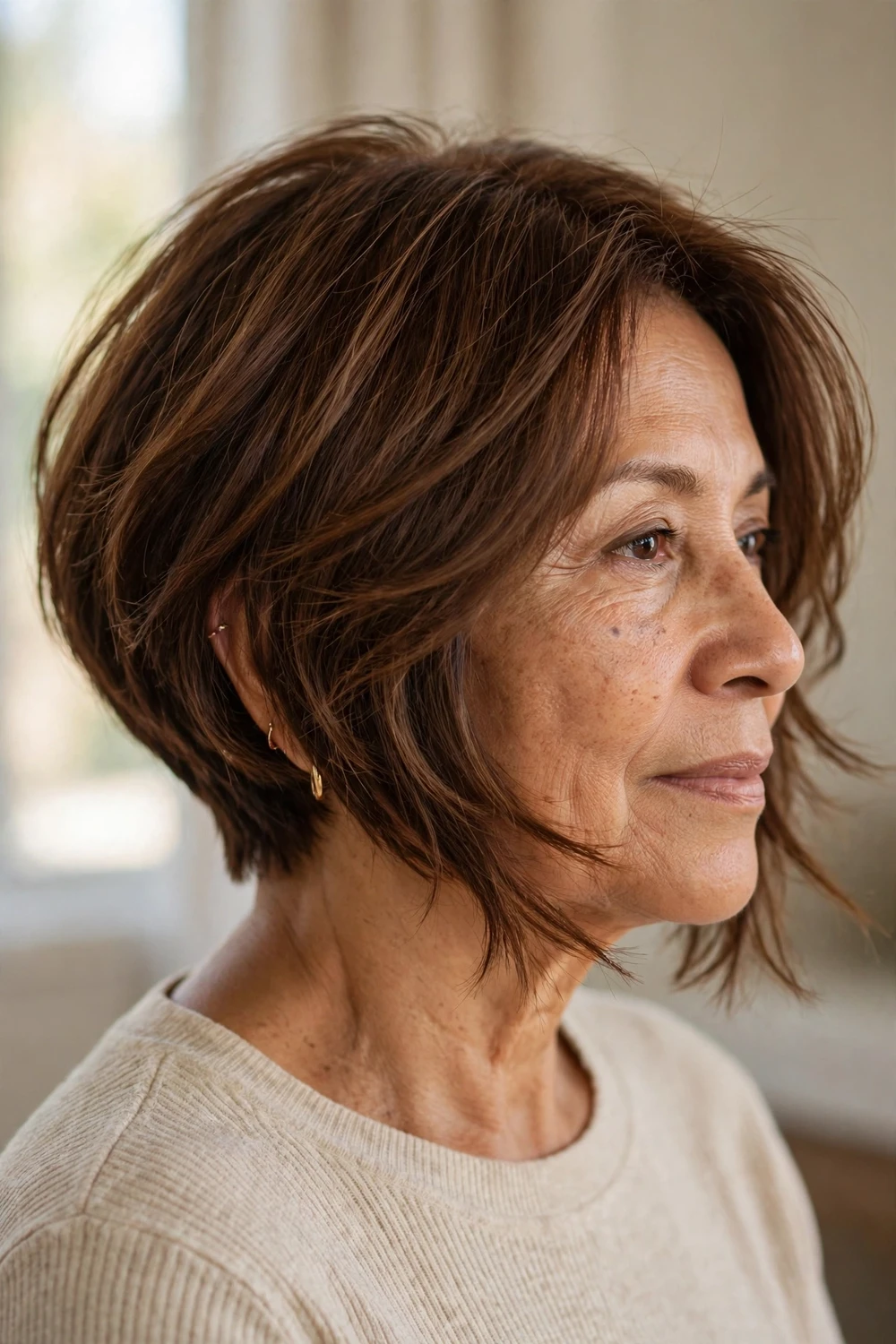
Razor cutting changes how the ends behave. Instead of a heavy blunt line, the ends feather out and move when you move, which makes fine hair look like it has more of it. The angled silhouette runs shorter at the nape and longer at the chin, building visual weight exactly where fine hair needs support. The shape is sleek enough for the office and relaxed enough for weekends. The razor work also removes bulk without thinning the ends away.
Try this: Shake your head after drying and let the ends settle on their own for a natural, airy finish.
17. Rounded Bob with Crown Volume
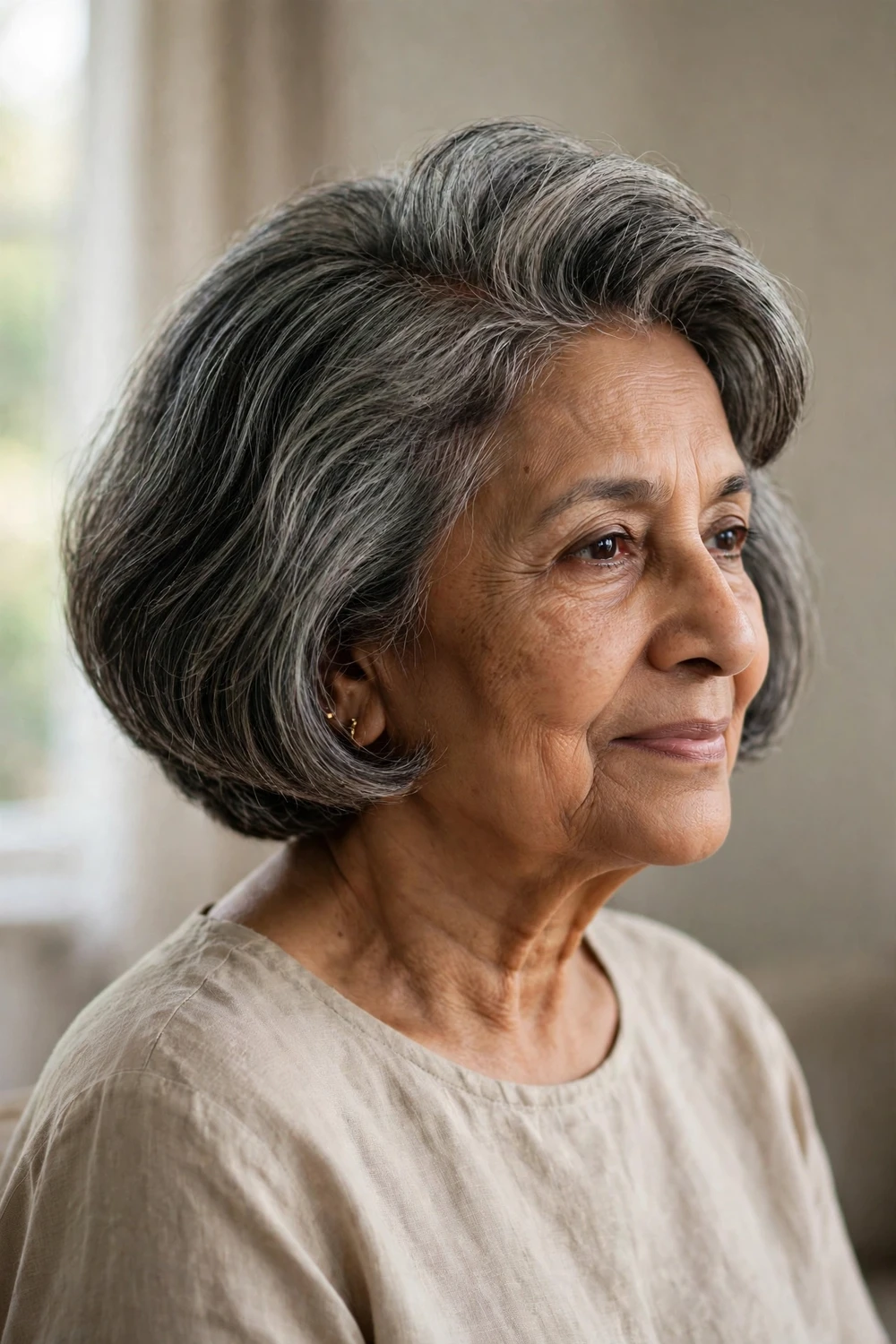
Curved lines do the volume work here. The cut builds height through the crown while the ends tuck softly under, creating a flattering dome shape that reads as thick from every angle. This precision cut distributes weight carefully, so fine hair looks denser without any heavy product. It suits oval, round, and heart-shaped faces, and the rounded shape softens strong jawlines. The polished finish also photographs well for family events.
Try this: Roll the top sections of a round brush vertically at the crown for a smooth, lasting dome.
18. Lob with Face-Framing Layers
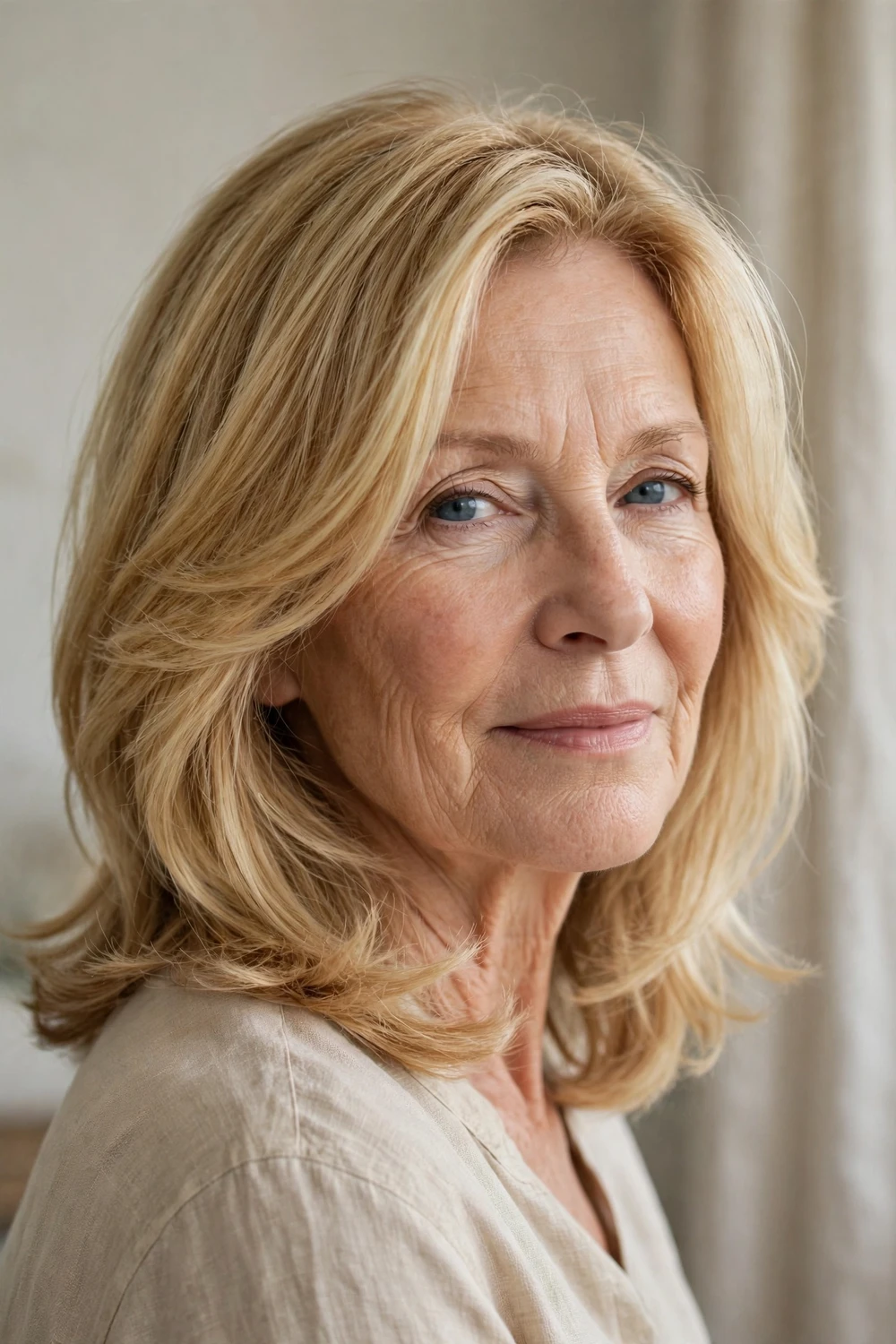
Not ready to go short? The lob keeps collarbone length while the face-framing layers add the movement fine hair needs to avoid looking limp. The longer length gives you styling flexibility, from sleek blowouts to loose waves, while the layers around the face brighten your features. It is a good middle ground if you want fullness without committing to a chin-length cut. Keep the layers concentrated around the face and crown rather than throughout, so the ends stay solid.
Try this: Curl only the face-framing pieces away from the face for a quick volume boost on busy days.
19. Compact Taper Bob
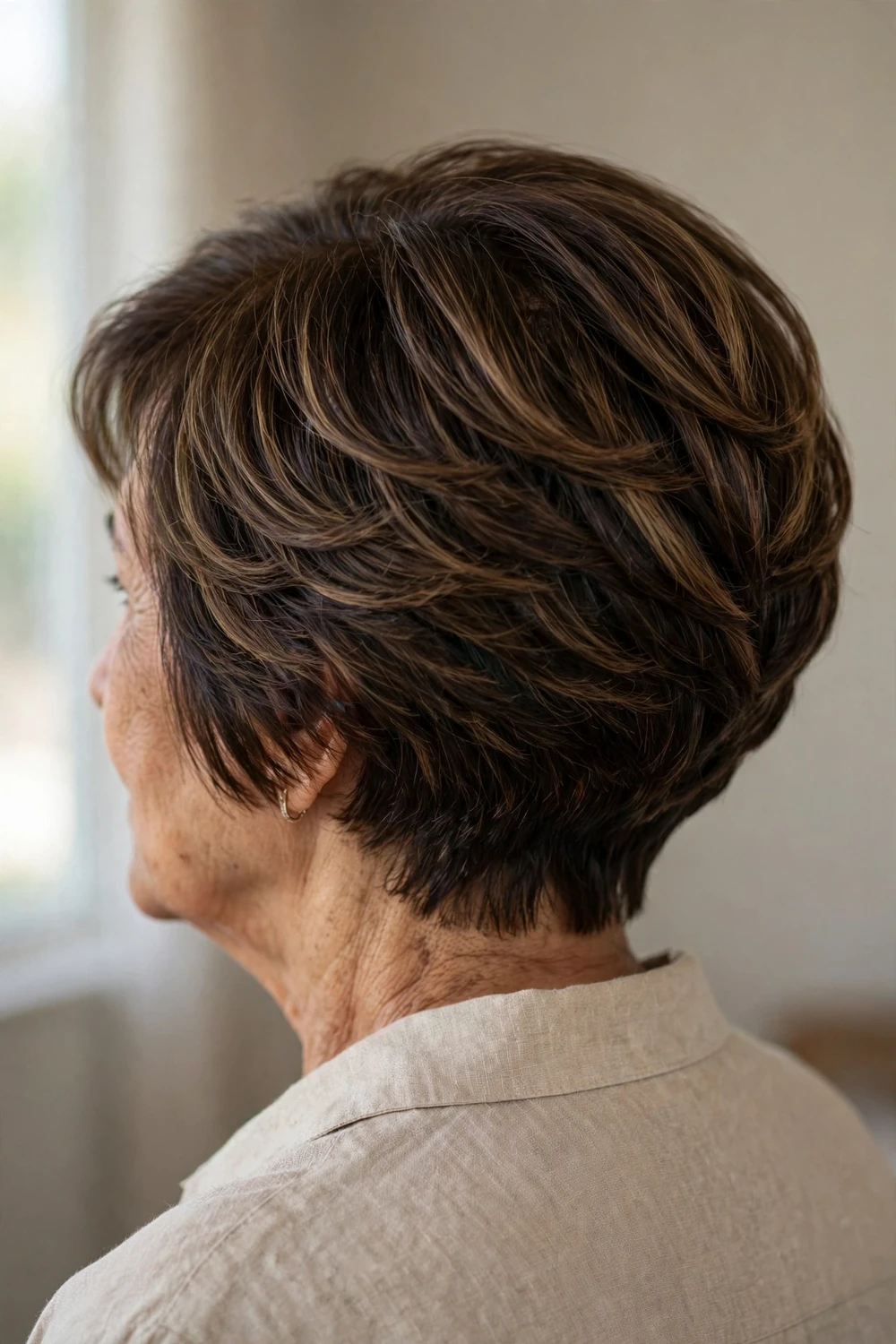
The back view of this cut does all the talking. Stacked layers pile up through the back to create the illusion of thickness, while the tapered nape elongates the neck and keeps the shape neat. Subtle layering lets the style hold its form without looking bulky. This is a no-fuss cut that asks for almost nothing each morning. The stacked back also hides thinning at the crown, which is where many women over 60 notice sparseness first.
Try this: Use a pea-sized amount of texturizing paste at the nape to define the taper and prevent flat spots.
20. Deep Side-Parted Bob
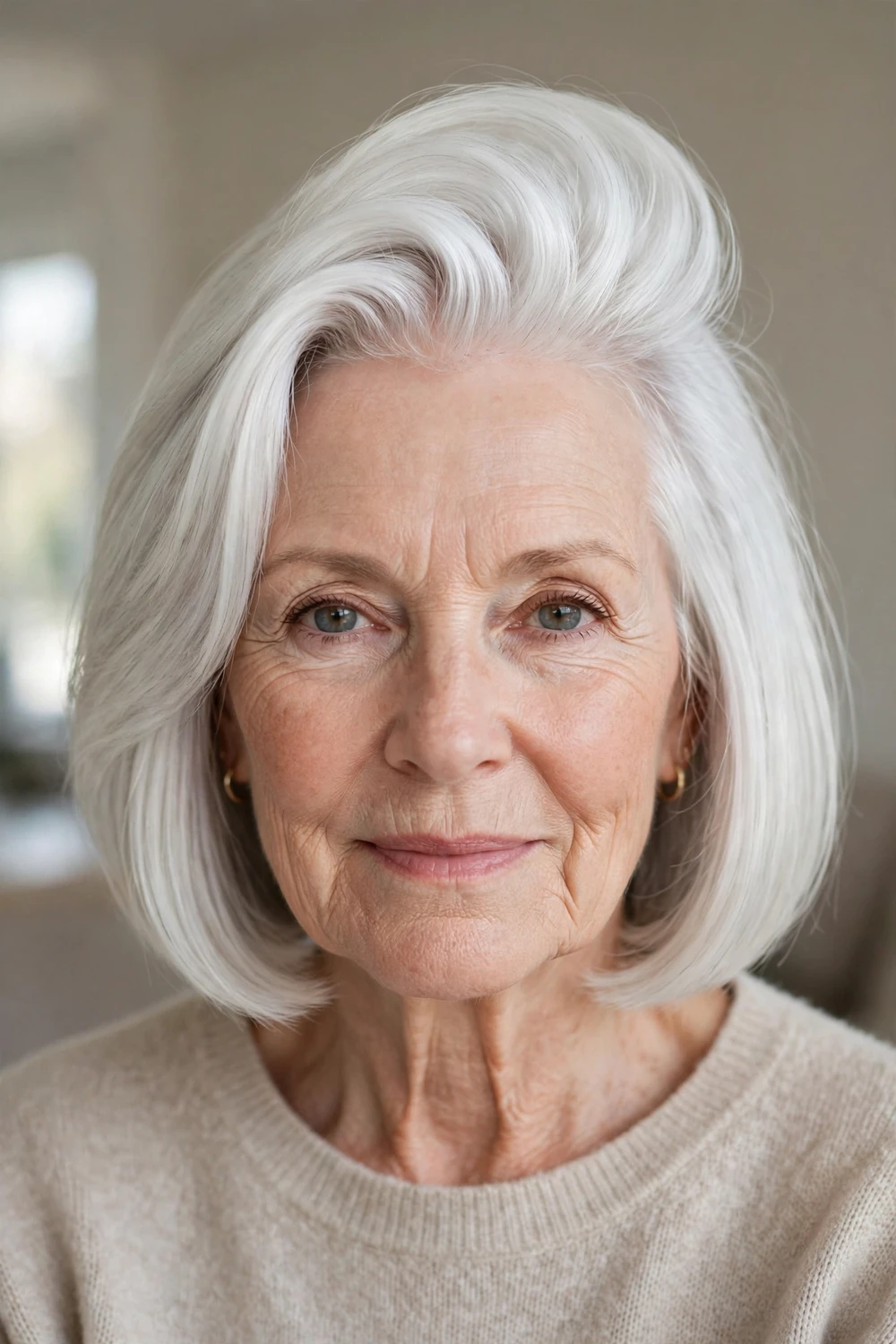
Sometimes the biggest volume change comes from the part, not the cut. A deep side part flips most of the hair to one side, which instantly creates lift at the crown and hides a widening center part. This sleek white bob pairs that part with a clean chin-length shape for a polished result. The off-center division also lets hair fall with natural movement instead of splitting flat. It is one of the quickest styling tricks on this list and works on almost any bob you already have.
Try this: Switch your part to the opposite side while hair is damp for even more root lift as it dries.
21. Textured Micro Bob
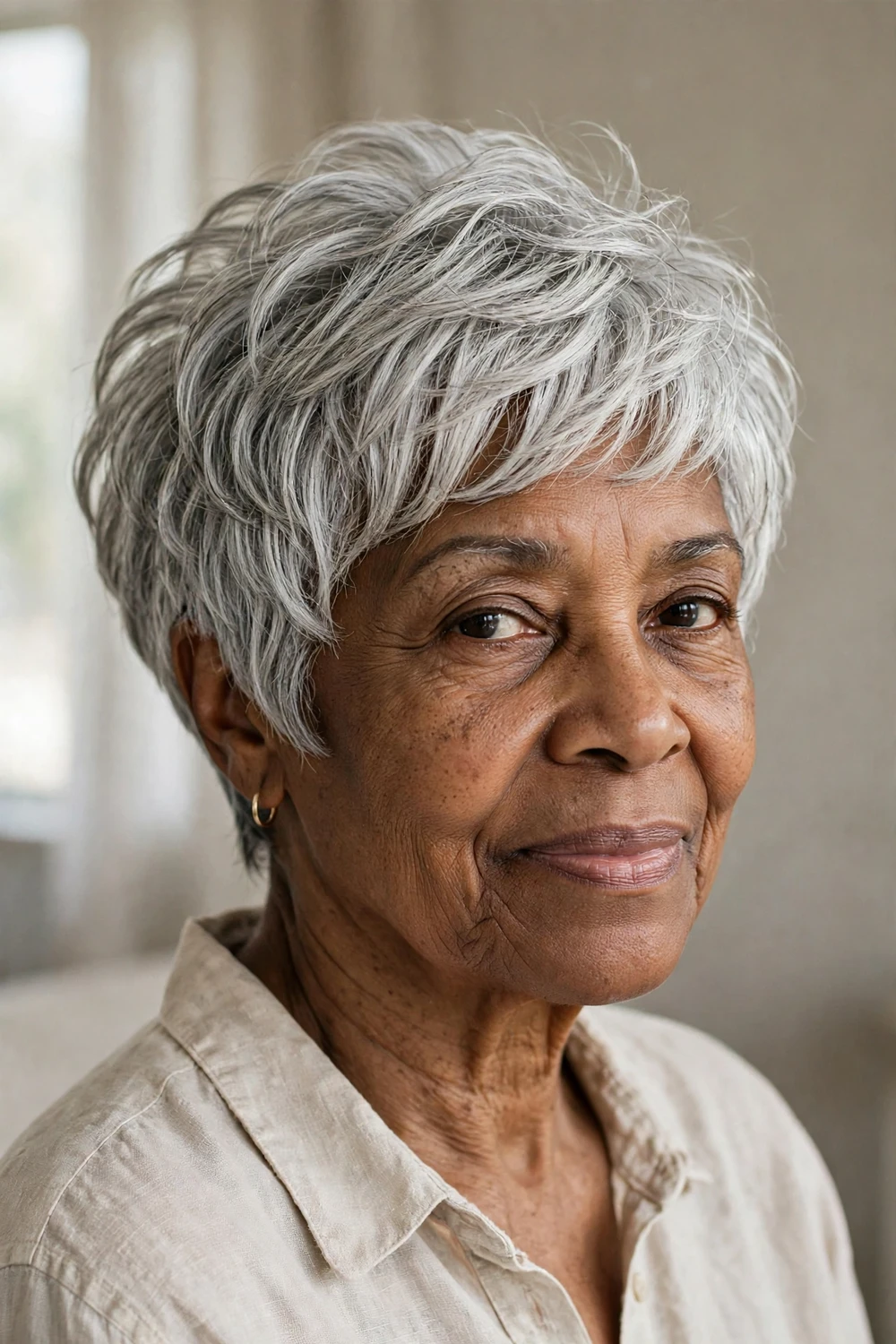
Going shorter than a classic bob removes the weight that pulls fine hair down. This cropped cut uses textured layers to create lift through the whole head, so the hair stands away from the scalp naturally. It is a bold choice that reads modern and confident, and the short length means styling takes minutes. The texture keeps it from looking severe. If you have been thinking about going short, this is one of the most flattering ways to do it after 60.
Try this: Work a small amount of mousse through damp hair and dry with your fingers for piecey, lifted texture.
22. Wavy Bob with Curtain Bangs
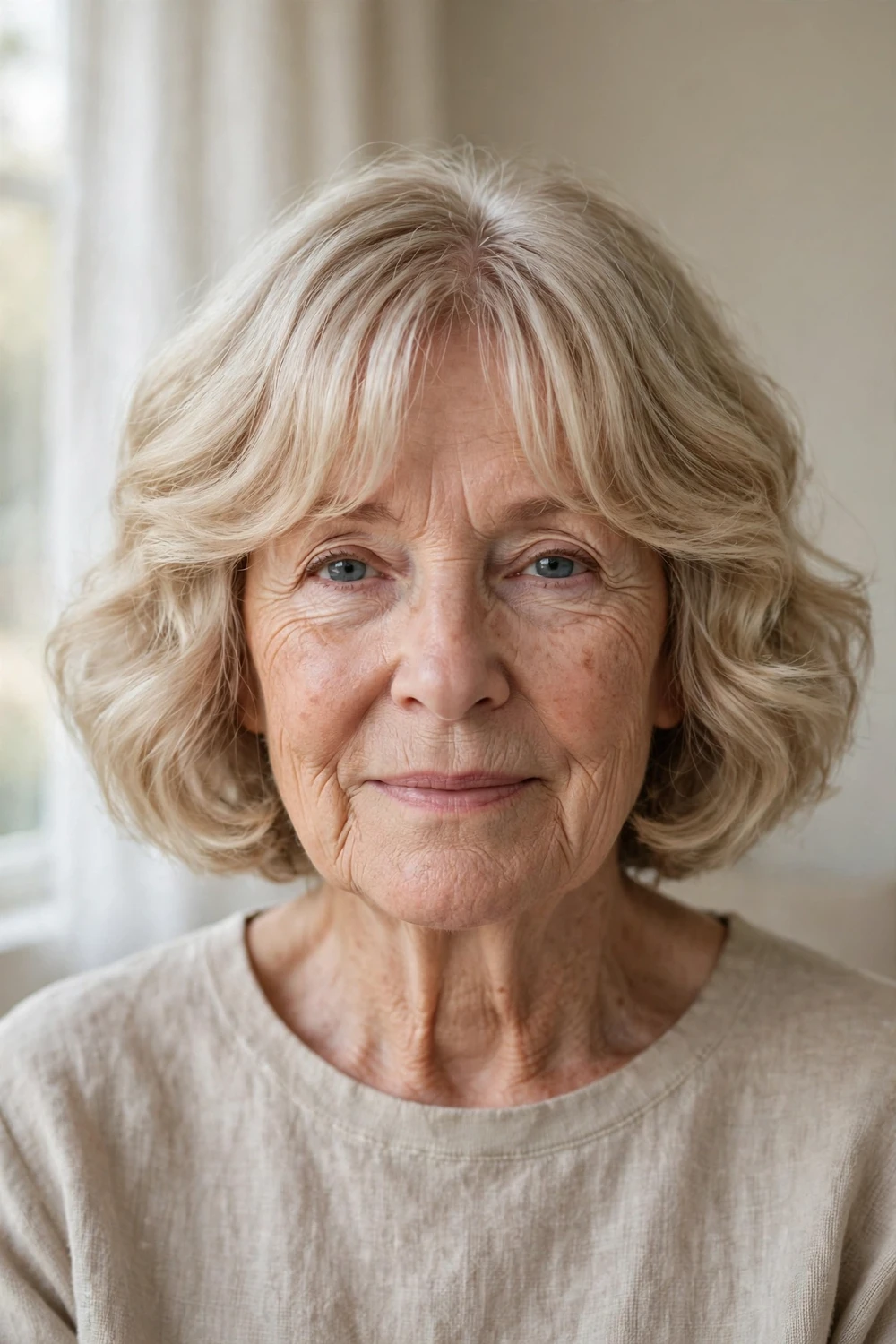
Curtain bangs solve two fine-hair problems at once: they fill the forehead with hair where thinning shows, and they frame the face to draw attention to your eyes. Paired with soft waves, the whole cut reads as full and bouncy. The waves add body through the mid-lengths, while the parted bangs keep the front light. This combination works on most face shapes and grows out better than straight-across bangs do.
Try this: Blow-dry the curtain bangs forward with a small round brush, then split them down the middle for a soft frame.
If stacked shapes appeal to you, take a look at stacked bob haircut for women over 60 for more height-building options.
23. Sleek Silver Bob with Feathered Layers
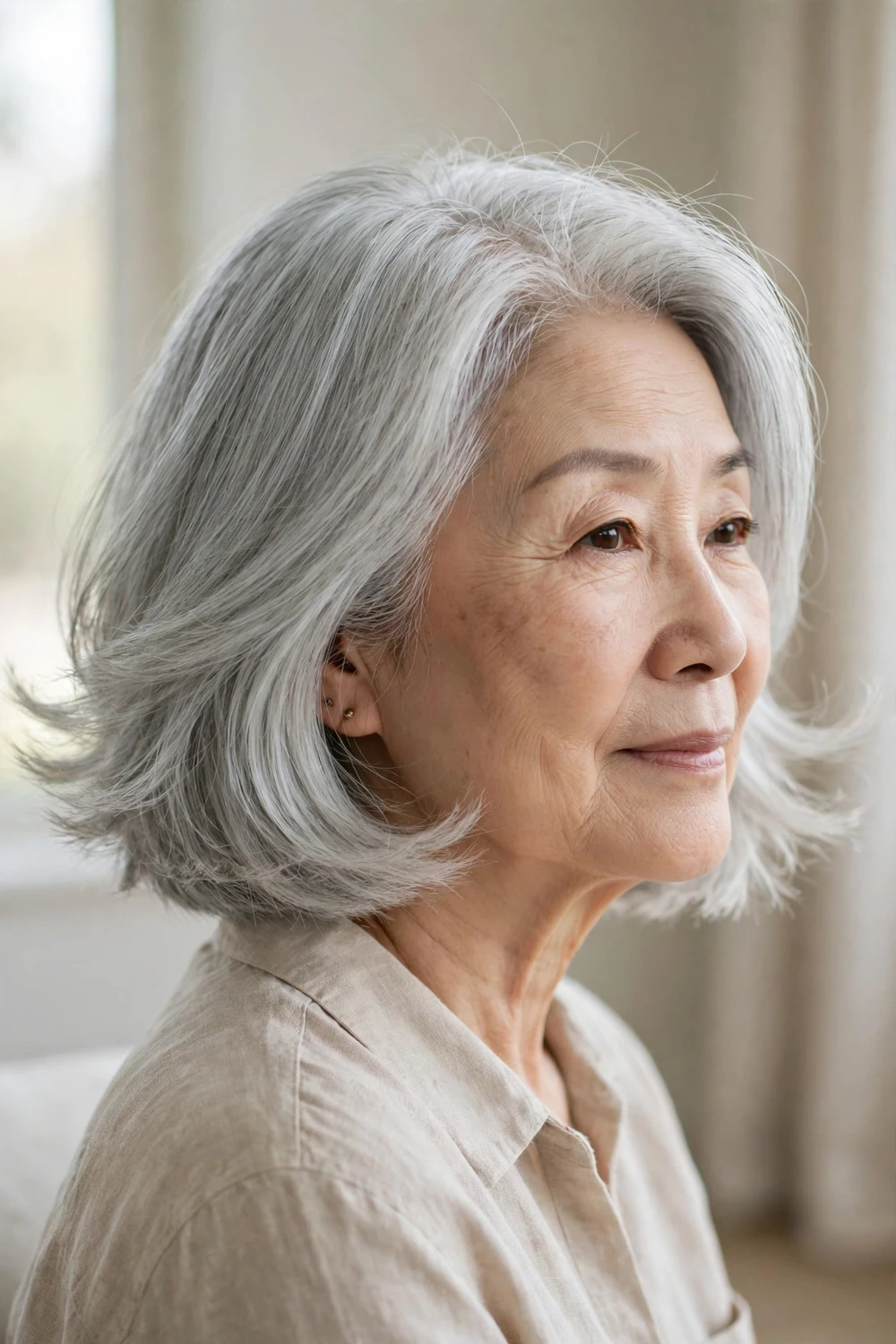
Sleek does not have to mean flat. This silver bob keeps a smooth, polished surface while feathered layers at the ends add the air and movement that make fine hair look thicker. The cut suits cooler skin tones and gives softened features a refined frame. It is versatile too: wear it smooth for a neat finish or tousle it for texture. The feathering also prevents the ends from looking sparse, which is the main risk of wearing a sleek style with fine hair.
Try this: Flat-iron only the top layer for sleekness, and leave the feathered ends natural for contrast.
24. Blunt Bob with Bangs and Beachy Waves
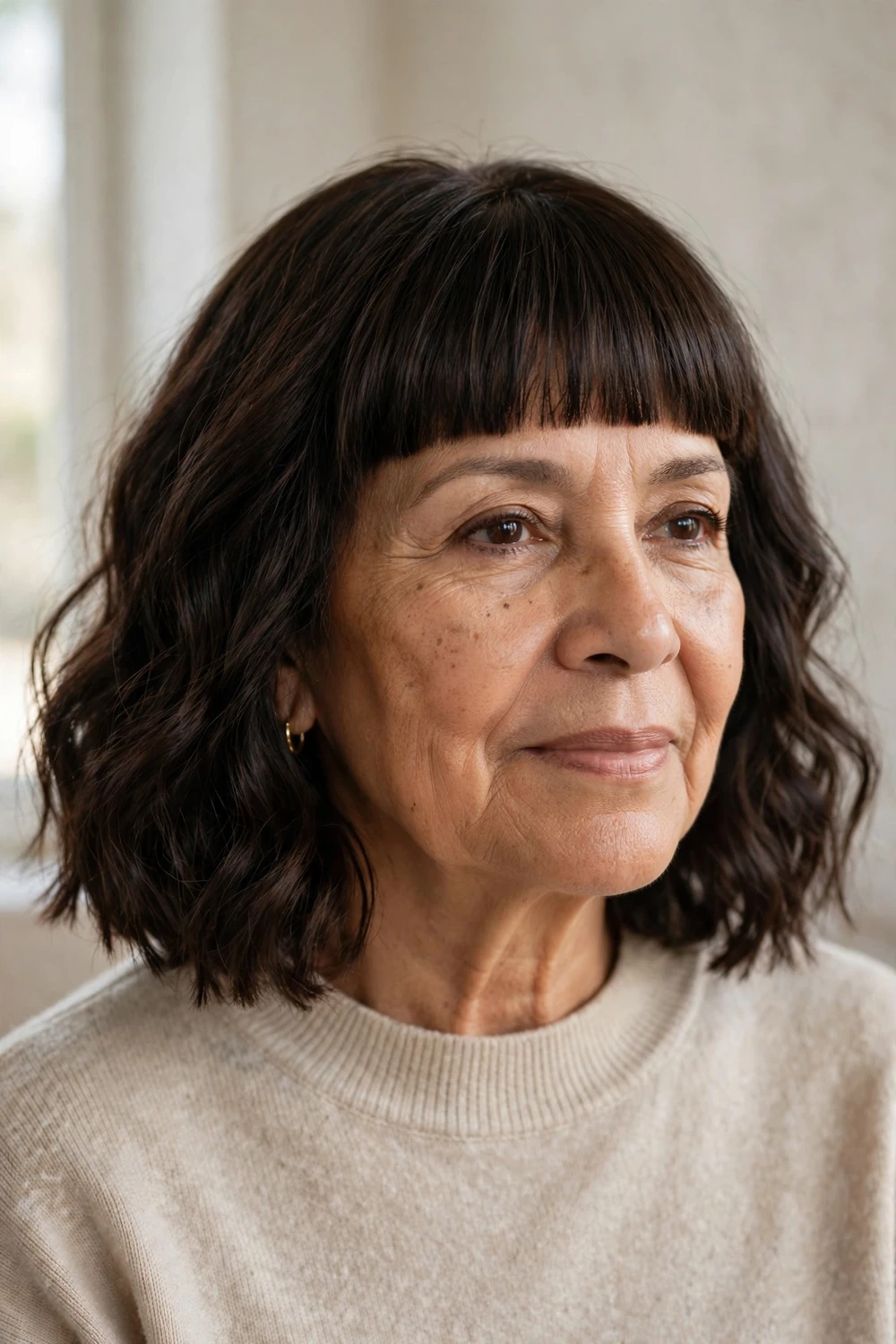
This cut combines three volume tricks in one. The blunt perimeter keeps the ends dense, the straight-across bangs fill the forehead, and the loose beachy waves break up the surface so the hair reads as full. It is a fuller-looking take on the classic bob that still suits professional settings when the waves are kept loose. The waves also forgive second-day roots, since texture hides oil better than a sleek finish does.
Try this: Braid damp hair loosely overnight for heat-free waves by morning.
25. Razor-Cut Textured Bob with Fringe
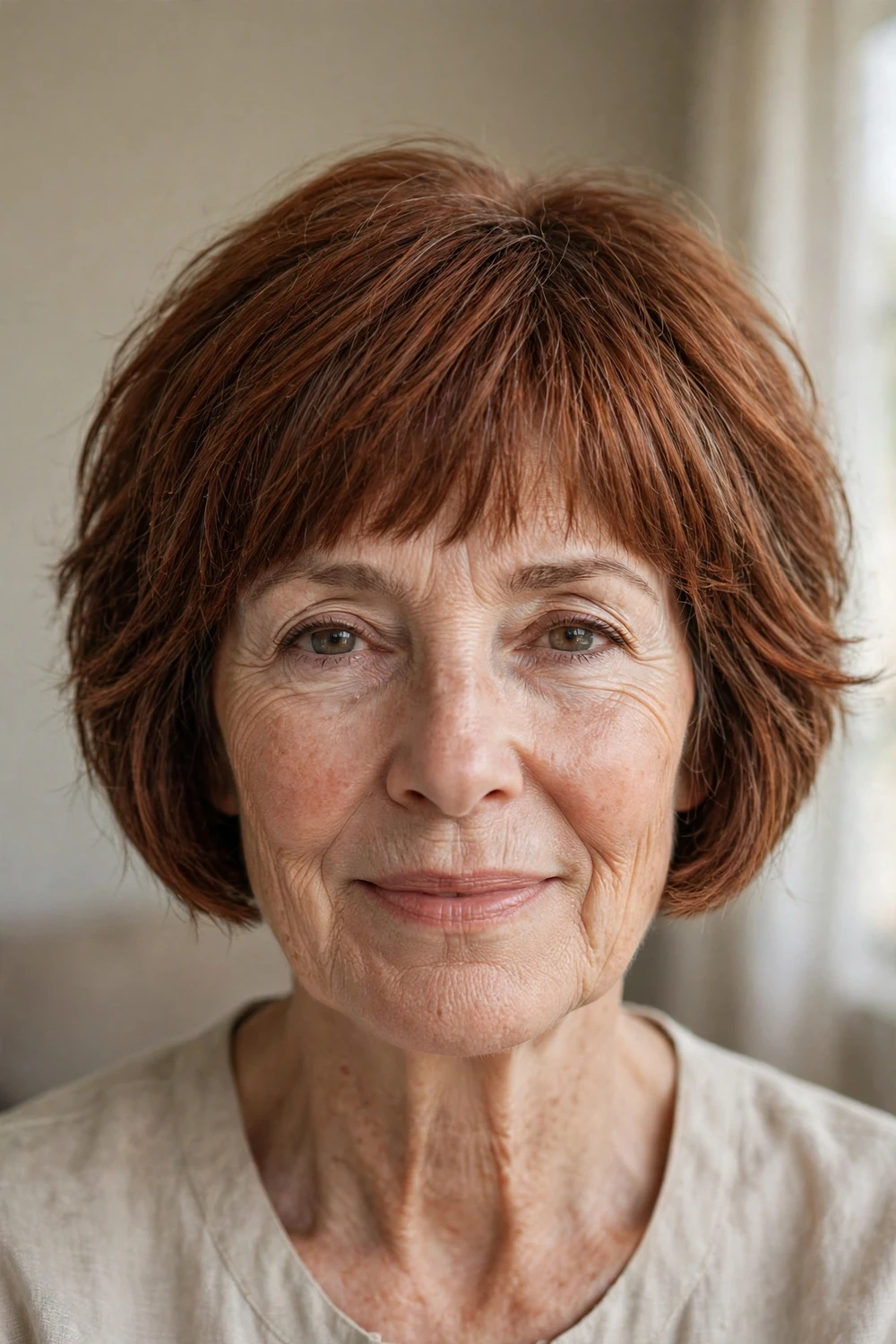
A razor gives this bob its lived-in edge. The textured ends flick and move instead of hanging straight, which creates the impression of more hair. The soft fringe adds forehead coverage while keeping the front light and youthful. Warm auburn tones add dimension that flatters mature skin. This is a good pick if you like a little attitude in your cut but still need the practicality of an easy style. The texture means it rarely needs a brush to look finished.
Try this: Twist small sections while damp and let them air-dry for defined, piecey texture.
26. Chin-Length Blunt Bob for Women with Glasses
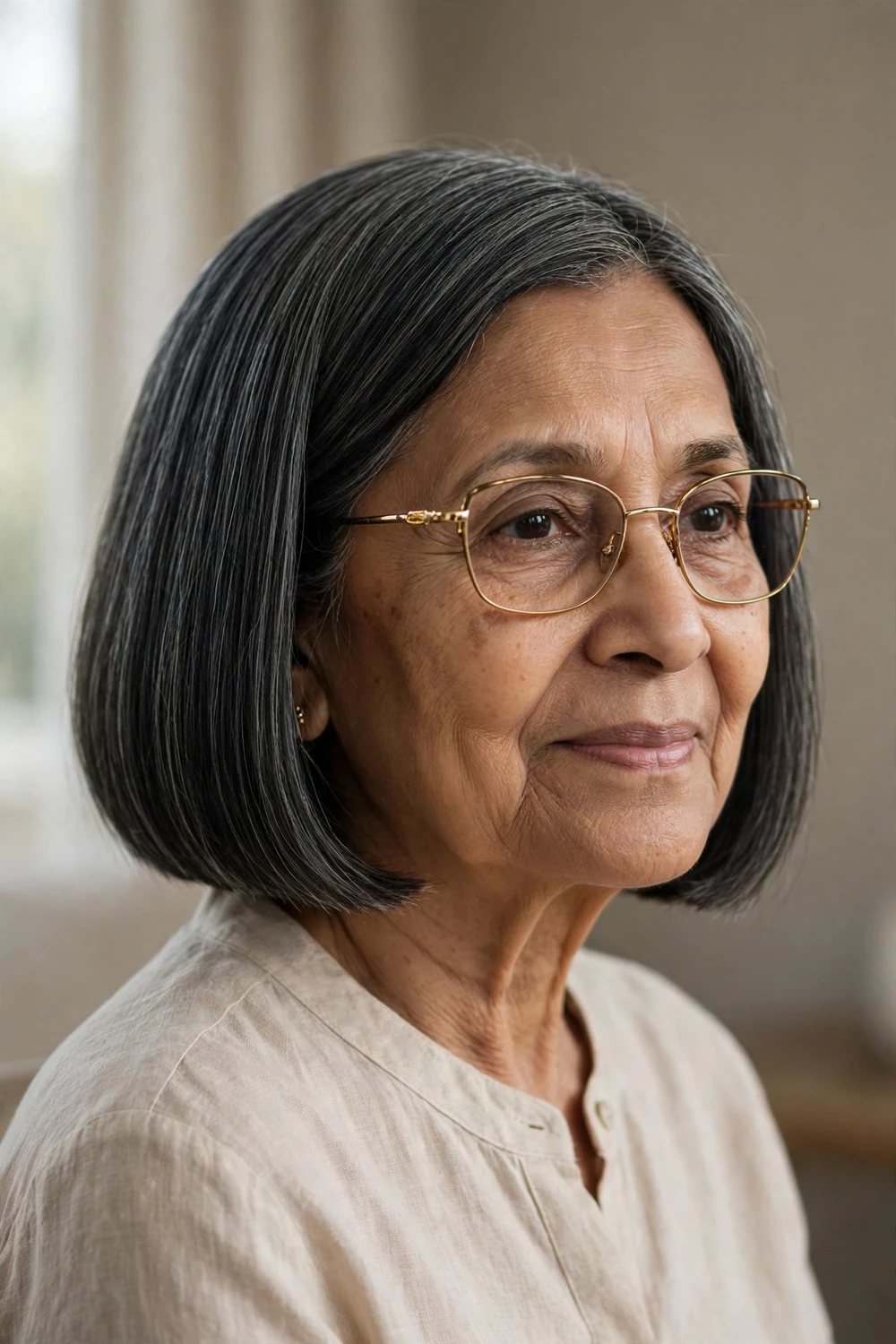
Glasses and bobs go together well when the proportions are right. This chin-length blunt cut sits at exactly the level that frames the face without competing with your frames. The clean perimeter keeps the ends dense, and the solid shape balances the horizontal line of glasses. It is a neat, low-effort style that looks deliberate every day. Ask your stylist to keep the sides tucked close so the frames stay the focal point.
Try this: Tuck the front sections behind your ears to show off your frames and keep hair off the lenses.
27. Aircut Inverted Bob
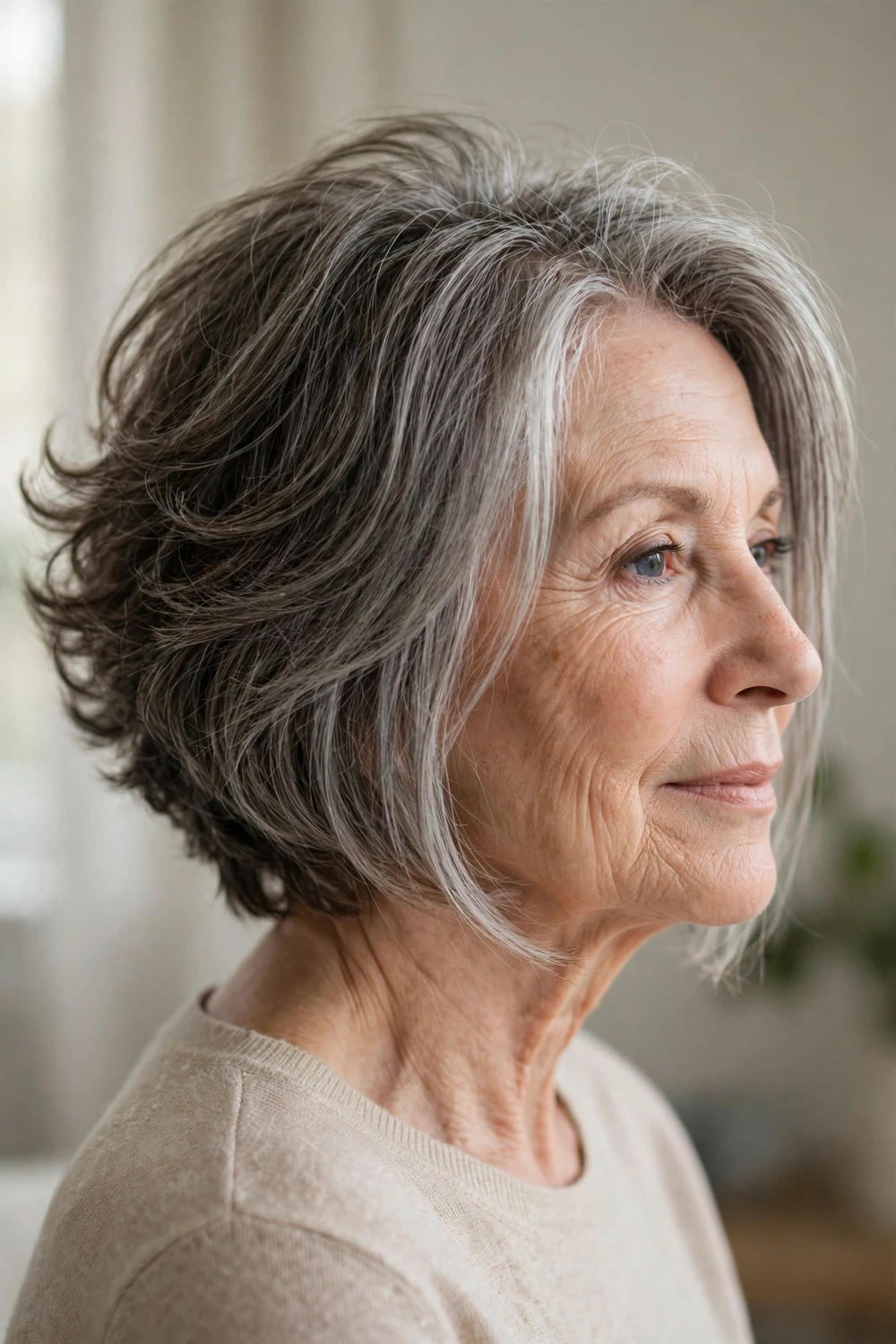
The aircut technique carves out internal weight so the back of the bob lifts with bounce while the front stays sleek and longer. That contrast is flattering on softer jawlines, since the longer front pieces elongate the face. It suits graying and salt-and-pepper hair especially well, because the airy texture shows off multi-tonal color. The shape is low maintenance in itself; the main upkeep is regular trims to keep the airy dimension from growing out shapeless.
Try this: Dry the back with a round brush first, lifting each section, to set the inverted shape before smoothing the front.
28. Short Bob with Wispy Fringe
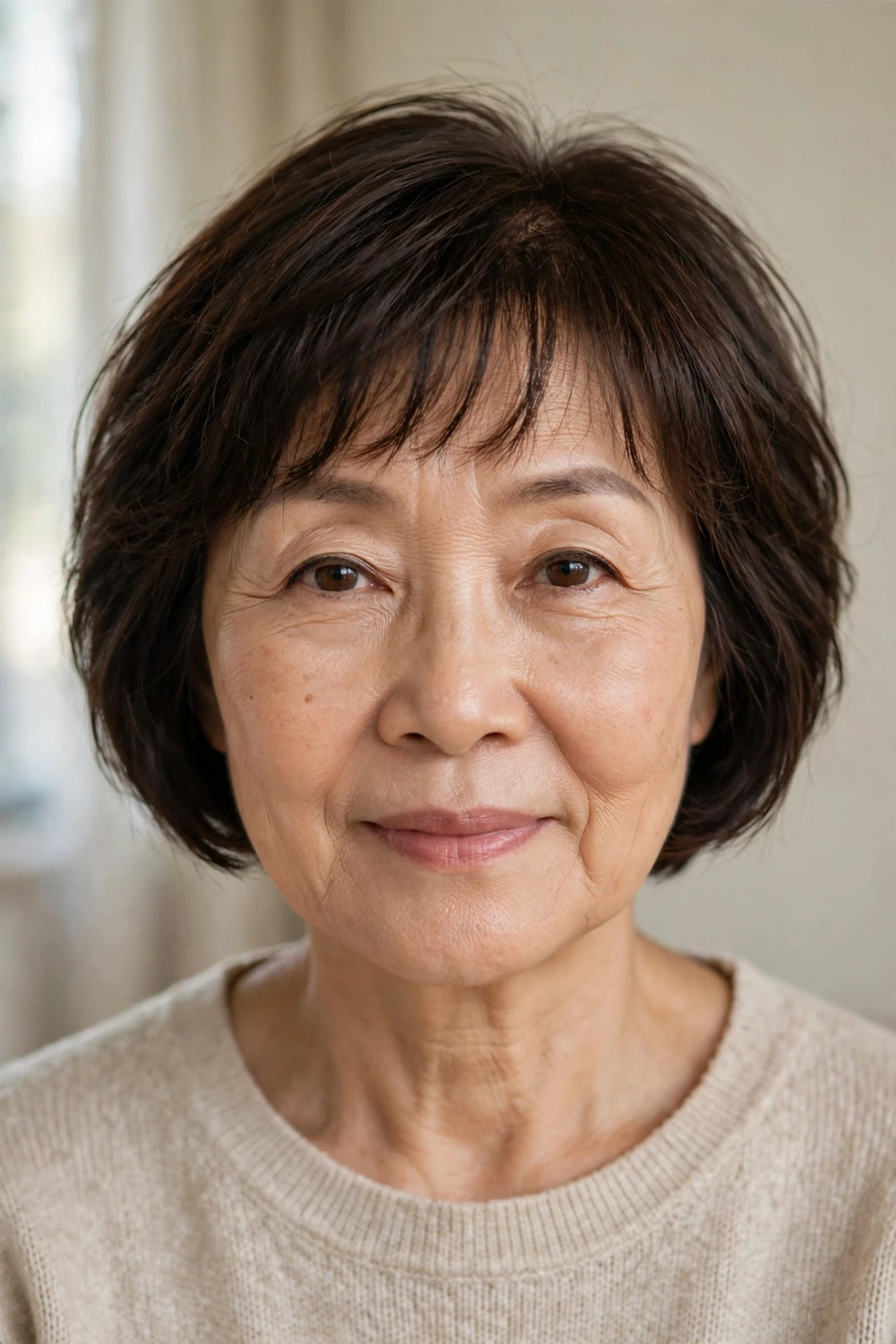
A wispy fringe is the lightest way to get forehead coverage. Unlike a heavy straight fringe, the wispy version lets skin show through, which keeps fine hair from looking weighed down at the front. The short bob shape keeps the perimeter dense and the styling quick. This is a youthful combination that works across face shapes, since the softness of the fringe balances the structure of the bob. It is also easy to grow out if you change your mind.
Try this: Trim just the fringe between appointments with sharp scissors, taking off tiny amounts at a time.
For easy-care textured options, see choppy bob hairstyles women over 60 low maintenance for cuts that style themselves.
29. Subtle Bounce Bob

The bounce in this bob comes from a soft curl at the ends rather than from heavy layering. That curl turns the ends under just enough to create a full, rounded silhouette that flatters square and angular faces. Light tousling keeps the finish casual and airy. On very limp strands, this cut needs a volumizing mousse or a round-brush blowout to hold the shape, but on medium-density fine hair it holds well on its own. It is a gentle, approachable style that never looks overdone.
Try this: Set the ends on medium Velcro rollers for ten minutes while you finish getting ready.
30. Air-Dried Undone Bob
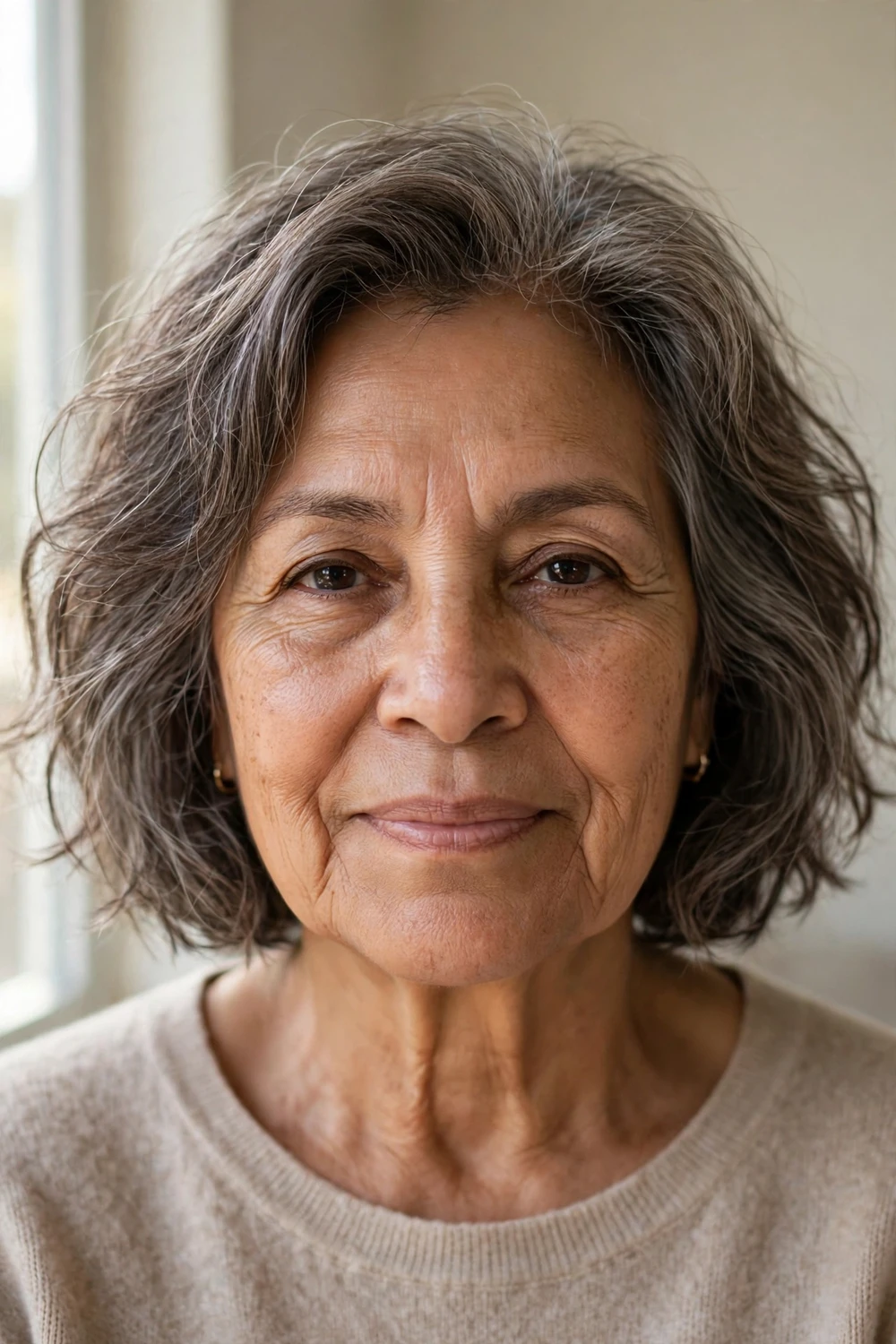
The lowest-maintenance cut on this list asks for no heat at all. This bob is shaped so your natural texture does the styling: the cut builds in enough movement that air-drying leaves you with a relaxed, effortless finish. It suits women who want to stop fighting their hair every morning. The undone texture hides uneven density better than a polished style, since there is no flat surface to expose thin spots. A little leave-in product is the whole routine.
Try this: Apply a lightweight leave-in conditioner to damp hair, scrunch once, and do not touch it until it is dry.
Bob Haircuts for Fine Hair Over 60: Comparison at a Glance
| Style | Best For | Difficulty | Upkeep |
|---|---|---|---|
| Feathered Layered Bob | Oval and heart faces | Easy | Trims every 7-8 weeks |
| Textured Wavy Bob | Natural wave texture | Easy | Trims every 6-8 weeks |
| Textured Short Gray Bob | Natural gray hair | Easy | Trims every 6 weeks |
| One-Length Blunt Bob | Visible thinning | Easy | Trims every 6 weeks |
| Voluminous Silver Bob | Silver and gray tones | Medium | Round-brush blowouts |
| Tousled Bob with Graduated Layers | Square and round faces | Easy | Trims every 7-8 weeks |
| Layered A-Line Bob | Most face shapes | Easy | Trims every 6-8 weeks |
| Stacked Bob with Bangs | Flat crowns | Easy | Trims every 6 weeks |
| Asymmetrical Bob | Uneven hairlines | Medium | Trims every 6 weeks |
| French Bob with Wispy Fringe | Oval and heart faces | Easy | Trims every 5-6 weeks |
| Shaggy Layered Bob | Low-effort routines | Easy | Trims every 8 weeks |
| Choppy Wedge Bob | Round and wide faces | Medium | Trims every 6 weeks |
| Curly Bob with Layers | Natural curls and waves | Easy | Trims every 8 weeks |
| Pageboy Bob with Volume | Classic, neat styles | Easy | Trims every 6-8 weeks |
| Tousled Bob with Root Lift | Straight, limp hair | Easy | Trims every 6-8 weeks |
| Angled Bob with Razored Ends | Fine, straight hair | Medium | Trims every 6 weeks |
| Rounded Bob with Crown Volume | Oval, round, heart faces | Medium | Round-brush blowouts |
| Lob with Face-Framing Layers | Keeping some length | Easy | Trims every 8 weeks |
| Compact Taper Bob | Thin crowns | Easy | Trims every 6 weeks |
| Deep Side-Parted Bob | Widening parts | Easy | Trims every 6-8 weeks |
| Textured Micro Bob | Bold, modern looks | Easy | Trims every 4-5 weeks |
| Wavy Bob with Curtain Bangs | Most face shapes | Medium | Trims every 6 weeks |
| Sleek Silver Bob | Cooler skin tones | Medium | Trims every 6 weeks |
| Blunt Bob with Bangs and Waves | Thin foreheads | Medium | Trims every 6 weeks |
| Razor-Cut Textured Bob | Edgy, low-effort styles | Easy | Trims every 6-8 weeks |
| Chin-Length Blunt Bob | Glasses wearers | Easy | Trims every 6 weeks |
| Aircut Inverted Bob | Salt-and-pepper hair | Medium | Trims every 6 weeks |
| Short Bob with Wispy Fringe | Most face shapes | Easy | Trims every 5-6 weeks |
| Subtle Bounce Bob | Square and angular faces | Medium | Round-brush blowouts |
| Air-Dried Undone Bob | No-heat routines | Easy | Trims every 8 weeks |
How to Choose the Right Bob for Fine Hair After 60
Start with your density, not your dream photo. If your ends are see-through, pick a blunt or near-blunt cut like ideas 4, 24, or 26, since layers would only remove what little weight you have. If your density is decent but your roots lie flat, go for stacked, graduated, or rounded shapes like ideas 8, 6, or 17 that manufacture lift.
Next, match the cut to your face shape and routine. Round faces look slimmer with height on top (ideas 12, 17) or longer front pieces (ideas 7, 27). If you style your hair daily, a blowout-friendly cut like the voluminous silver bob is worth the effort. If you want wash-and-go, the shaggy bob, air-dried undone bob, or curly bob ask for almost nothing. Bring photos to your stylist, but also tell them honestly how much styling you will do, because the best cut is the one you will actually maintain.
Mistakes to Avoid
The most common mistake is over-layering. Too many layers on fine hair remove weight from the ends, which is exactly where you need it, and the result looks thinner than when you walked in. Ask for texture that builds body, not layers that take bulk away.
Heavy products are the second trap. Rich creams, oils, and butters coat fine strands and drag the roots down by midday. Stick to lightweight mousses, foams, and dry shampoos applied at the roots. Skip daily heat on the highest setting too: fine aging hair is fragile, and scorched ends split faster, which thins the perimeter you worked to build. Finally, do not skip trims. A bob that has grown past its shape looks wispy instead of full, and six to eight weeks is the window that keeps the cut doing its job.
Frequently Asked Questions
What is the best bob haircut for women over 60 with fine hair?
A chin-length one-length blunt bob is the most reliable choice, because the solid perimeter concentrates all the weight at the ends and creates the strongest illusion of density. If you want more movement, a lightly layered bob with crown volume runs a close second. The right pick depends on your face shape and how much daily styling you are willing to do.
Should I get layers in my bob if my hair is fine and thinning?
Yes, but keep them strategic rather than heavy. Soft layers through the crown and feathered ends lift the roots and add movement without removing the weight you need at the perimeter. Over-layering thins the ends and makes fine hair look sparser, so ask your stylist for texture that builds body instead of taking bulk away.
What bob length makes fine hair look thicker?
Chin length and slightly above the chin are the sweet spot for fine hair. Shorter lengths remove weight that pulls hair flat, which lets the roots lift naturally. Once a bob reaches the shoulders, fine strands start to drape and lie flat, so keeping it at or above the jawline gives you the fullest look.
How do I style a bob for maximum volume at home?
Start with a golf-ball-sized amount of volumizing mousse worked into the roots of damp hair. Flip your head upside down and blow-dry until it is about 80 percent dry, then finish with a medium round brush, lifting sections at the crown up and outward. A light mist of texturizing spray at the end adds grit and keeps the volume from collapsing by midday.
How often should I trim a bob to keep fine hair looking full?
Every six to eight weeks. A bob depends on a precise shape, and fine hair shows ragged ends faster than thick hair does. Regular trims keep the perimeter blunt and clean, which is exactly what creates the illusion of density. Between appointments, use lightweight sulfate-free products so buildup does not weigh the roots down.
Final Thoughts
Fine hair after 60 does not need more products. It needs a smarter shape. A well-cut bob gives you density at the ends, lift at the crown, and a routine that fits real mornings. I have written about enough of these cuts to know the difference a good one makes, so pick the idea that matches your density and your routine, and take it to a stylist who understands fine hair.

