


Short wavy hair works best when the cut follows the wave pattern instead of fighting it. Going shorter takes weight off the ends, so loose waves spring up, separate, and hold their shape through the day with very little heat.
This list gathers 24 short wavy hairstyles, from textured pixies and crops to bobs, lobs, shags, and wolf cuts. Each idea notes the length, the layer placement, and the styling it needs, so you can match a cut to your wave pattern and your morning routine. If you are also weighing a much shorter route, the pixie haircuts guide shows the cropped end of the range, and the lob haircuts collection covers the longer end.
Key Takeaways
- Let the wave pattern lead. Cuts that follow your natural bend need less heat and less daily styling.
- Length decides the wave. Pixies need a little length left on top, and bobs show the fullest wave at chin length.
- Layers lift the crown and lighten the ends, which stops short waves from puffing out at the sides.
- Most of these cuts air dry well with mousse, salt spray, or a light cream, plus a trim every four to eight weeks.
1. Wavy Textured Pixie

The top keeps enough length for each wave to bend and separate, while the sides and nape sit close and neat. Point cut ends keep the outline soft, so the texture reads piecey rather than puffy.
Ask for the crown a touch longer than the sides if your waves sit flat at the roots. A trim every four to five weeks holds the tapered shape.
Try this: Scrunch a pea sized amount of light mousse into damp hair and let it air dry, then pinch the ends to separate the waves.
Difficulty: Easy | Cost: $ | Time: 10 minutes
2. Beach Wave Bob

This chin length bob lets loose waves fall in wide, relaxed bends from a center or slightly off center part. Soft layers through the last inch keep the ends light, so the shape swings instead of sitting in one solid block.
It suits medium density hair well, and fine hair gains visible body from the shorter length. Keep the longest pieces at the chin so the waves can still form a full curve.
Try this: Mist sea salt spray over damp hair, scrunch upward in sections, and leave the front pieces to dry tucked behind one ear.
Difficulty: Easy | Cost: $ | Time: 15 minutes
3. Tousled Wavy Crop

The crop sits above the ears with short, uneven layers that let waves fall in different directions. Razor or point cut ends remove bulk at the perimeter, which keeps thick waves from widening at the cheeks.
Styling stays forgiving because the finish is meant to look undone. Push the front forward on day one and sweep it to the side on day two for a change of shape.
Try this: Work texturizing cream through dry hair with your fingertips and tousle only at the roots for lift.
Difficulty: Easy | Cost: $ | Time: 5 minutes
4. Layered Wavy Bob

Shorter layers at the crown lift the roots, and longer pieces underneath hold the curve of the bob together. The layers follow the natural wave pattern, so the hair dries into shape with very little heat.
This is a steady choice for waves that fall flat on top and puff out at the ends. Book a trim every six to eight weeks so the layer balance stays even.
Try this: Diffuse on low heat while scrunching, then leave the hair alone until it is fully dry before shaking out the roots.
Difficulty: Easy | Cost: $$ | Time: 15 minutes
5. Side Parted Wavy Bob

A deep side part sweeps the waves across the forehead and builds height on the heavier side. The diagonal line at the hairline adds shape to a plain bob without any change to the cut itself.
Part the hair while it is still damp, because waves set their direction as they dry. The shorter side can tuck behind the ear to show the part clearly.
Try this: Blow dry the front section in the direction of the sweep, then finish with a light hold spray.
Difficulty: Easy | Cost: $ | Time: 10 minutes
6. Wavy Shag Cut

Choppy layers stack through the crown and sides, and a light fringe blends straight into the waves. The broken up outline gives fine and thick wavy hair the same lively, separated finish.
Keep the layers following your wave pattern rather than cutting against it. Heavy creams weigh this cut down, so stay with sprays and light foams.
Try this: Spray texturizing spray at the roots, scrunch the ends, and let the flicked out tips dry as they fall.
Difficulty: Medium | Cost: $$ | Time: 15 minutes
7. Short Wavy Fringe Bob

A light, wispy fringe sits above the brows and melts into jaw length waves on both sides. The fringe softens the forehead and gives the bob a clear focal point at the front.
Ask your stylist to cut the fringe longer than the final length you want, since waves spring up as they dry. Fringe trims every four to five weeks keep it clear of your eyes.
Try this: Dry the fringe first with your fingers, sweeping it side to side, then let the rest air dry.
Difficulty: Easy | Cost: $ | Time: 10 minutes
8. Chin Length Waves Bob

The length stops right at the chin, short enough to feel light and long enough for each wave to complete a full bend. A few long layers through the ends stop the perimeter from puffing outward.
This length works across most face shapes because the waves frame the jaw without covering it. One length ends make fine hair look thicker at the bottom edge.
Try this: Wrap one inch sections around a medium barrel for a few seconds and leave the last inch straight for a modern finish.
Difficulty: Medium | Cost: $ | Time: 20 minutes
9. Wavy Asymmetric Bob

One side falls about two inches longer than the other, and the loose waves make the angle easy to read. The longer side sweeps forward over the jaw while the shorter side keeps the shape sharp.
Part on the side opposite the longer length so the long side gets the full sweep. The angle stays clear for weeks and grows out in a tidy line.
Try this: Use a light cream on damp hair to define the waves, and keep heat off the ends to protect the angle.
Difficulty: Medium | Cost: $$ | Time: 15 minutes
10. Soft Wavy Undercut Pixie

The sides are cropped close, though kept soft rather than shaved to the skin, and the long wavy top carries all the movement. With at least four inches on top, the waves have room to form and sweep.
Sweep the top to one side for a stronger line, or push it forward for a softer frame. The cropped sides also keep the neck cool in warm weather.
Try this: Book the sides for a tidy up every three weeks, and style the top with a small amount of cream on damp hair.
Difficulty: Medium | Cost: $ | Time: 5 minutes
11. Wavy Blunt Bob

A straight, blunt line at the jaw gives the waves a clean edge to fall from, and the ends look dense and even. Only a few hidden layers sit underneath, so the surface stays smooth while the interior moves.
Fine and medium hair gain the most here, because blunt ends make the hair look thicker. Ask for the line to sit at the jaw, clear of the shoulders.
Try this: Run a flat iron once over the top layer only, then scrunch the ends to bring the waves back.
Difficulty: Medium | Cost: $$ | Time: 15 minutes
12. Wavy French Bob

The jaw length shape pairs with a short fringe that hits just above the brows. Soft waves keep the outline relaxed, and the whole cut dries well without heat.
Air drying gives the most natural result, since the wave pattern sets the fringe direction on its own. A trim every five to six weeks keeps the jaw line crisp.
Try this: Scrunch in a little leave in conditioner and let it air dry, then break up the waves with your fingers only.
Difficulty: Easy | Cost: $ | Time: 10 minutes
13. Wavy Rounded Bob

The sides stay full and curve under at the ends, wrapping the hair into one smooth, rounded outline. The curve frames the face evenly and gives the waves a neat place to sit.
A round brush does most of the work here, turning the ends under as you dry. Medium density hair holds the curve best between trims.
Try this: Blow dry in sections with a round brush, rolling the ends under, and finish with a cool blast to set the curve.
Difficulty: Medium | Cost: $$ | Time: 20 minutes
14. Wavy Stacked Bob

Graduated layers at the back build volume at the nape and push the shape upward. The front pieces stay longer and reach toward the chin in soft waves, so the bob looks full from every angle.
Thicker wavy hair holds the stacked shape with the least effort. Ask for the graduation to start at the nape and blend, with no hard shelf line.
Try this: Blow dry the back with a round brush for height, then let the front waves fall and dry naturally.
Difficulty: Medium | Cost: $$ | Time: 15 minutes
15. Wavy Feathered Pixie

Feathered layers flick softly around the face and follow the direction of the wave. The flicked ends keep the pixie light, which suits fine wavy hair that needs body without weight.
Keep the top long enough for the waves to bend, or the feathering reads flat. This cut refreshes fast in the morning with water and mousse alone.
Try this: Apply light mousse at the roots, tousle with your fingers, and lift the front pieces upward as they dry.
Difficulty: Easy | Cost: $ | Time: 10 minutes
16. Wavy Swing Bob

The front sits longer than the back, so the bob swings forward over the jaw as you move. That motion shows the waves in a smooth sweep and catches light along the front sections.
A deep side part pairs well with this cut and adds root lift on the heavier side. The shape stays tidy for six to eight weeks between trims.
Try this: Blow dry the front pieces forward with a round brush, and add a drop of shine serum to the ends only.
Difficulty: Medium | Cost: $$ | Time: 15 minutes
17. Wavy Micro Pixie
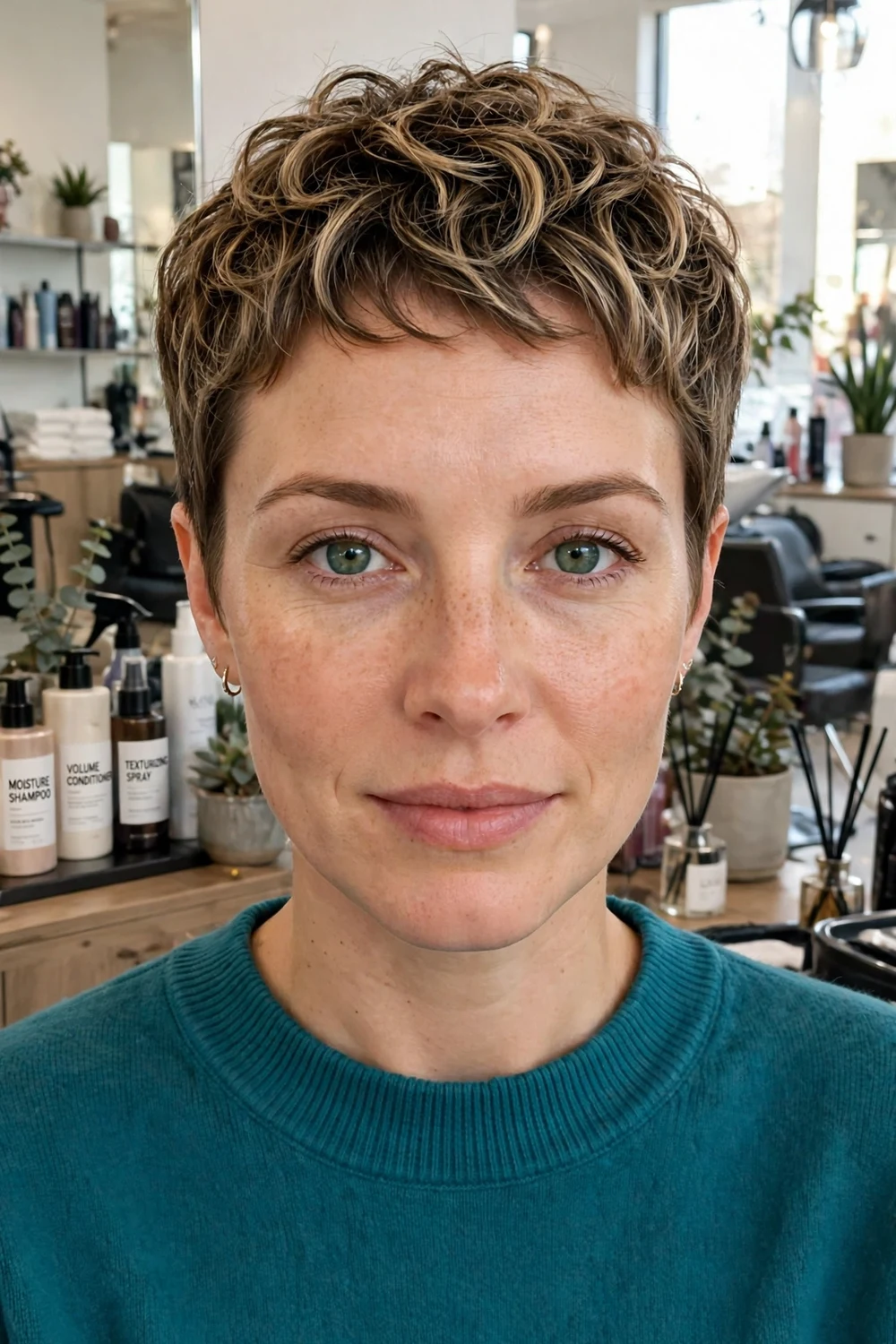
This is the shortest cut in the list, with point cut texture through the top and neatly tapered sides. Leaving a little length on top is the whole trick, because the waves still need room to bend and lift.
The cut suits women who want wash and go hair with almost no styling time. A trim every four weeks keeps the tapered sides clean.
Try this: Rub a dab of matte paste between your palms and pinch the top pieces upward for definition.
Difficulty: Easy | Cost: $ | Time: 5 minutes
18. Textured Wavy Lob

The lob falls between the chin and the collarbone with scattered layers and a tousled, air dried finish. The extra length gives waves room to stretch out, which suits stronger wave patterns.
This is the easiest short length to grow out, and it still ties back for the gym or work. Layers at the ends keep the longer shape from dragging at the roots.
Try this: Scrunch curl cream into damp hair and diffuse briefly, or air dry and refresh the front with a spray bottle on day two.
Difficulty: Easy | Cost: $$ | Time: 15 minutes
19. Wavy Bixie Cut

The bixie blends cropped pixie layers at the sides and back with bob length left through the top and front. Loose waves soften the join, so the cut reads playful rather than severe.
It is a practical middle step if you are growing out a pixie or cutting a bob shorter for the first time. Keep the sides clearly shorter than the top so the shape holds.
Try this: Scrunch mousse through damp hair and push the front pieces forward, then let everything air dry.
Difficulty: Easy | Cost: $ | Time: 10 minutes
20. Wavy Wolf Cut

Heavy layers on top meet a longer, softer length at the back, and the waves blur the join between the two. Crown volume adds height, while the face framing pieces keep the front light.
Medium and thick wavy hair hold the layered shape best. Ask for the back length to stay soft and wispy rather than heavy.
Try this: Apply salt spray to damp hair, diffuse or rough dry, and finger shape the ends once dry.
Difficulty: Medium | Cost: $$ | Time: 15 minutes
21. Wavy Mullet
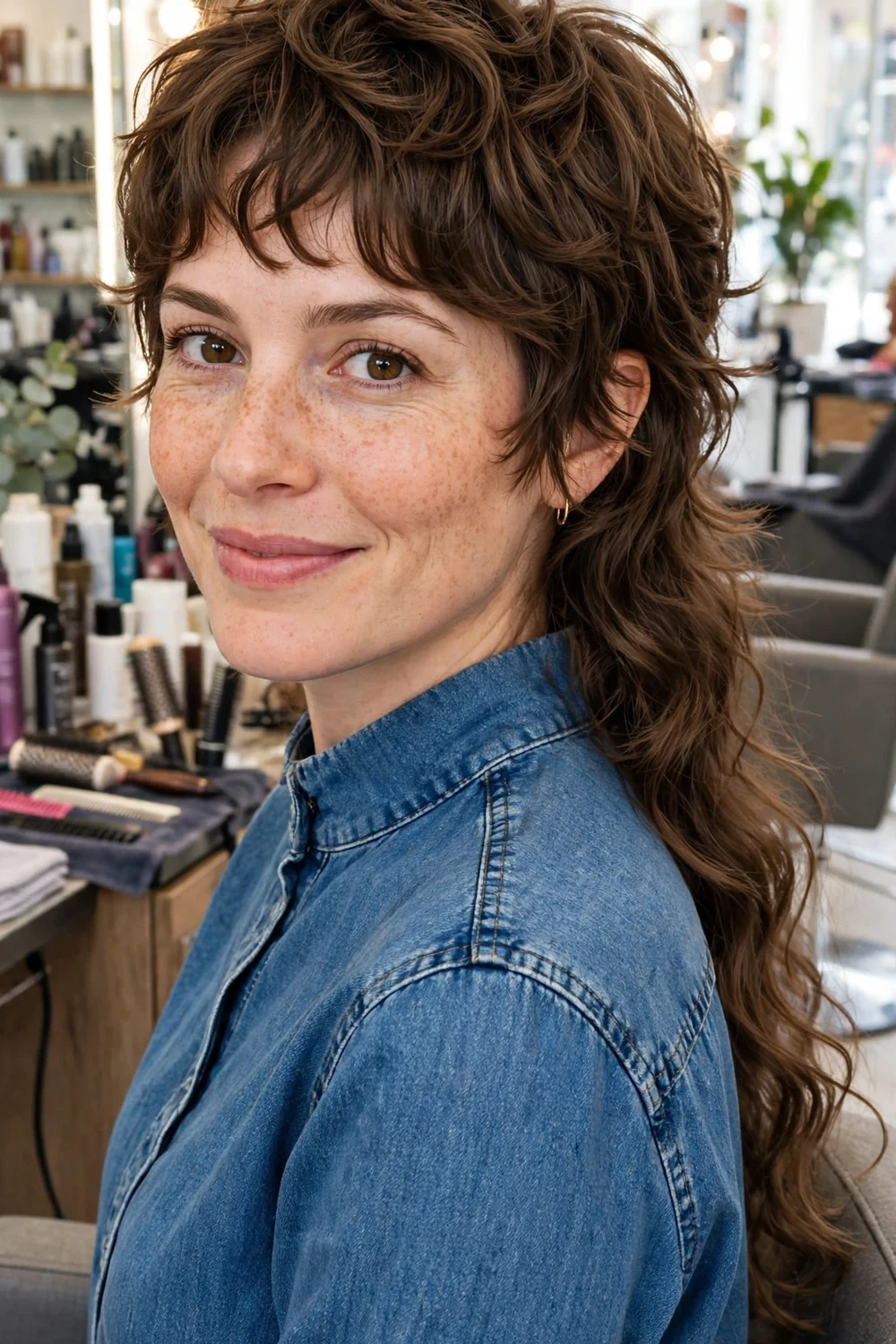
Shorter layers at the front and crown give way to longer waves at the back. The waves soften the outline of a classic mullet, so the contrast reads as texture rather than a hard step.
Keep the sides neat around the ears so the back length stays the feature. This cut needs a trim every six weeks to stop the back from looking heavy.
Try this: Scrunch texturizing spray through the back sections and let the longer waves air dry in place.
Difficulty: Medium | Cost: $ | Time: 10 minutes
22. Choppy Wavy Crop

Short choppy layers cut at varied lengths build texture and volume through the whole crop. The messy, separated finish suits women who like an undone look that still holds a shape.
Choppy ends help fine hair look fuller, and they remove weight from thick hair at the same time. Keep the fringe pieces uneven so they blend with the layers.
Try this: Work a small amount of matte cream through dry hair and twist a few front pieces for separation.
Difficulty: Easy | Cost: $ | Time: 5 minutes
23. Mushroom Wavy Bob

A rounded, chin length cut graduates into a smooth curve from the fringe to the nape. Waves give the curved outline lift, so the shape frames the face in one clean sweep.
The perimeter defines this cut, so trims every six to eight weeks matter more than daily styling. Medium density hair holds the curve with the least work.
Try this: Blow dry with a round brush and tuck the ends under, then mist lightly to hold the curve.
Difficulty: Medium | Cost: $$ | Time: 20 minutes
24. Wavy Bob with Baby Bangs

Soft layers run through a jaw length bob, and a very short fringe sits well above the brow. The short fringe opens up the face and gives the waves a strong, playful frame.
Baby bangs need a steady hand, so ask your stylist to cut them dry and shorter in small steps. The fringe grows fast, and a tidy up every three to four weeks keeps the line.
Try this: Dry the fringe straight down with your fingers first, then scrunch the rest of the bob and air dry.
Difficulty: Medium | Cost: $$ | Time: 10 minutes
Quick Comparison
| Style | Best For | Upkeep | Cost Band |
|---|---|---|---|
| Wavy Textured Pixie | Fine to medium waves | Every 6 to 8 weeks | $ |
| Beach Wave Bob | Most wave patterns | Every 6 weeks | $ |
| Tousled Wavy Crop | Thick waves | Every 5 weeks | $ |
| Layered Wavy Bob | Flat roots, puffy ends | Every 6 to 8 weeks | $$ |
| Side Parted Wavy Bob | Most face shapes | Every 6 weeks | $ |
| Wavy Shag Cut | Fine or thick waves | Every 6 to 8 weeks | $$ |
| Short Wavy Fringe Bob | High foreheads | Fringe trim at 4 weeks | $ |
| Chin Length Waves Bob | Most face shapes | Every 6 to 8 weeks | $ |
Frequently Asked Questions
How short can wavy hair go before the waves disappear?
Waves need a little length to bend, so keep at least a few inches on top for pixies and crops. Very short sides are fine, because the wave shows through the top and front sections.
Should short wavy hair be cut wet or dry?
Many stylists cut wavy hair partly dry, or check the shape dry before you leave, because waves spring up as they dry and the dry length is shorter than the wet length. Ask at booking if dry finishing is available.
What products suit short wavy hair?
Light products work best at short lengths. A mousse, a salt spray, or a light cream adds definition without weighing the waves down, and heavy oils or thick creams can flatten the roots.
How often does a short wavy cut need a trim?
Most short wavy cuts hold their shape for four to eight weeks. Pixies and undercuts sit at the shorter end of that range, while lobs and blunt bobs can stretch closer to eight weeks.
Can fine wavy hair wear a short cut?
Yes. Shorter lengths help fine waves look fuller, and blunt ends, choppy layers, and feathered pixies all add visible body. Keep layers light so the ends stay dense.
Final Thoughts
Short wavy hair gives you a lot of range in a small amount of length. A textured pixie keeps mornings down to a scrunch and go, a chin length bob shows the fullest wave, and a lob leaves you room to tie the hair back. Pick the cut that matches your wave pattern first and your styling time second, and bring two or three photos to your appointment so your stylist can see the exact length and layer placement you want. For nearby ideas, the medium hairstyles with waves and the easy short hairstyles for busy mornings guides sit in the same family, and the hairstyles for naturally curly hair list covers tighter textures.

