



Cowboy copper balayage pairs the trendiest red of the moment with the most forgiving coloring technique. The shade itself is a brown-based copper with auburn, cinnamon, and golden undertones, and the balayage application paints it through the mid-lengths and ends so the color melts instead of stopping at a hard line.
I’ve spent the last few fall seasons tracking this copper trend across salon chairs and social feeds, and the balayage version is the one colorists recommend most for real life. You’ll find 25 ideas below, from barely-there blends to high-impact reds, plus what to ask for at the salon and how to keep the color rich between visits.
Quick answer: Cowboy copper balayage is a hand-painted copper color with brown-based, earthy red tones. It suits medium to dark bases, grows out softly without a harsh line, and typically needs a gloss refresh every 4 to 8 weeks to stay rich.
Quick Takeaways
- Cowboy copper is a muted, brown-based copper, softer than bright orange copper and richer than strawberry blonde.
- Balayage placement means the roots stay natural or get a root shadow, so grow-out is soft and touch-ups are easy.
- Red and copper pigments fade faster than browns, so color-safe shampoo and cool water matter more here.
- Bring 3 to 5 inspiration photos to your salon visit and say whether you want the result subtle, bright, dark, or redder.
- A copper gloss or toner every 4 to 8 weeks keeps the warmth rich without a full recolor.
What Is Cowboy Copper Balayage?
Cowboy copper is a warm copper shade built on a brown base, mixed with red, auburn, and golden tones. Unlike classic copper, which can read bright and orange, cowboy copper looks more rustic and dimensional. It has that expensive-brunette-meets-red finish that keeps showing up in salon portfolios.
Balayage is the hand-painted technique that places that color through the lengths and ends while leaving the roots deeper. That placement is what makes it wearable: the color has movement and shine, the regrowth line stays soft, and most people can go months between appointments. Darker bases keep rich roots with brighter copper lengths, while lighter bases can carry the copper higher up.
The same base shade can look completely different depending on placement and intensity, which is why the 25 ideas below each name a specific look. If you want to see where cowboy copper sits among its close relatives before you commit, our guide to copper hair breaks down the shades, who they suit, and how to get them.
1. Classic Cowboy Copper Balayage
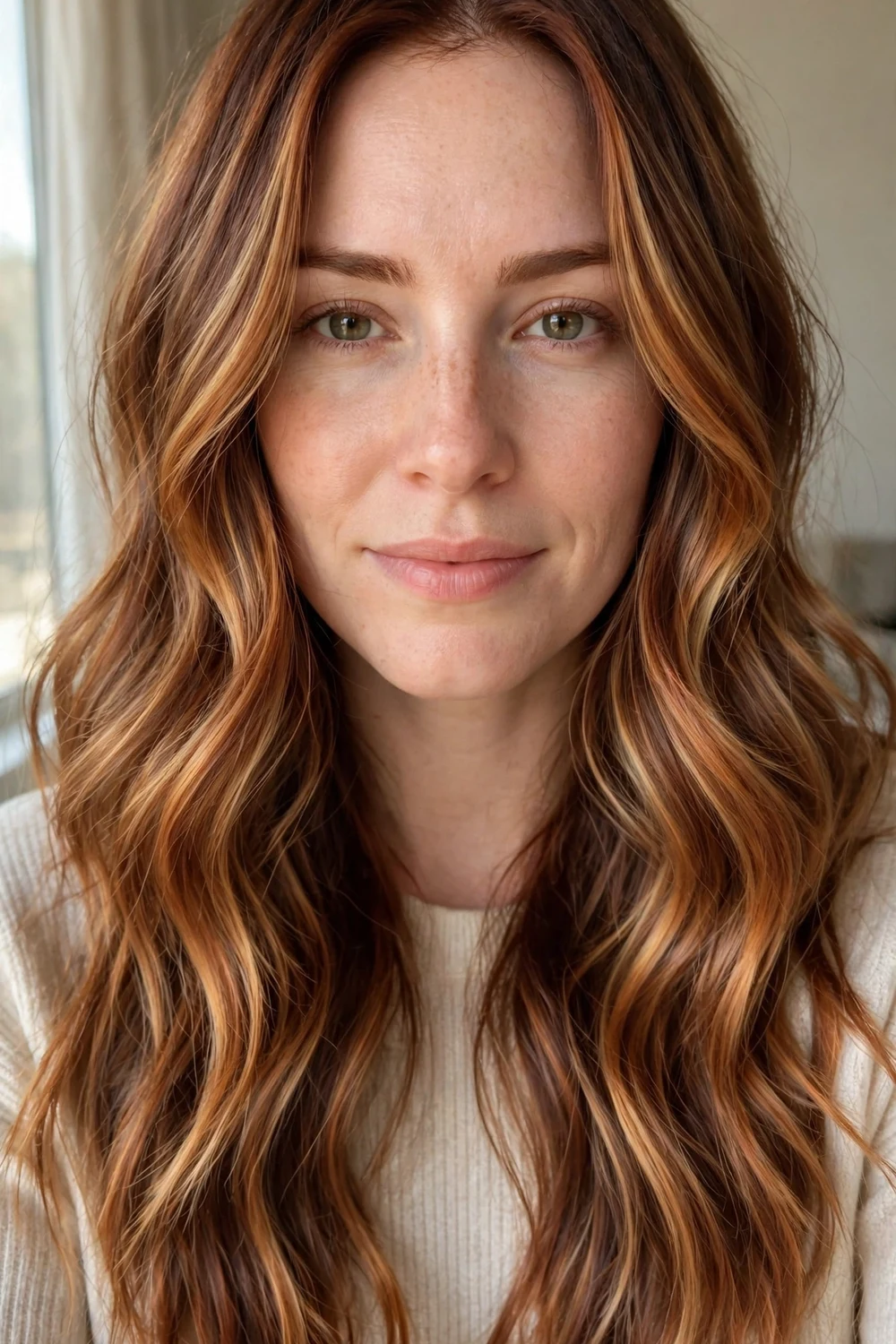
The signature version is where every consultation should start. A warm copper-brown base carries soft auburn balayage pieces through the mid-lengths and ends, with a root shadow keeping the top natural. It is not too red and not too orange, which makes it the safest first step into copper if you have never gone red before. Long waves show the blend best, because the movement opens up the color so each tone reads separately. This version also grows out the most gracefully of any idea on this list.
Try this: Ask for the lightest pieces to sit at the ends and around the face, with the roots left at your natural depth. Finish with a copper gloss to seal the shine.
2. Subtle Cowboy Copper Balayage
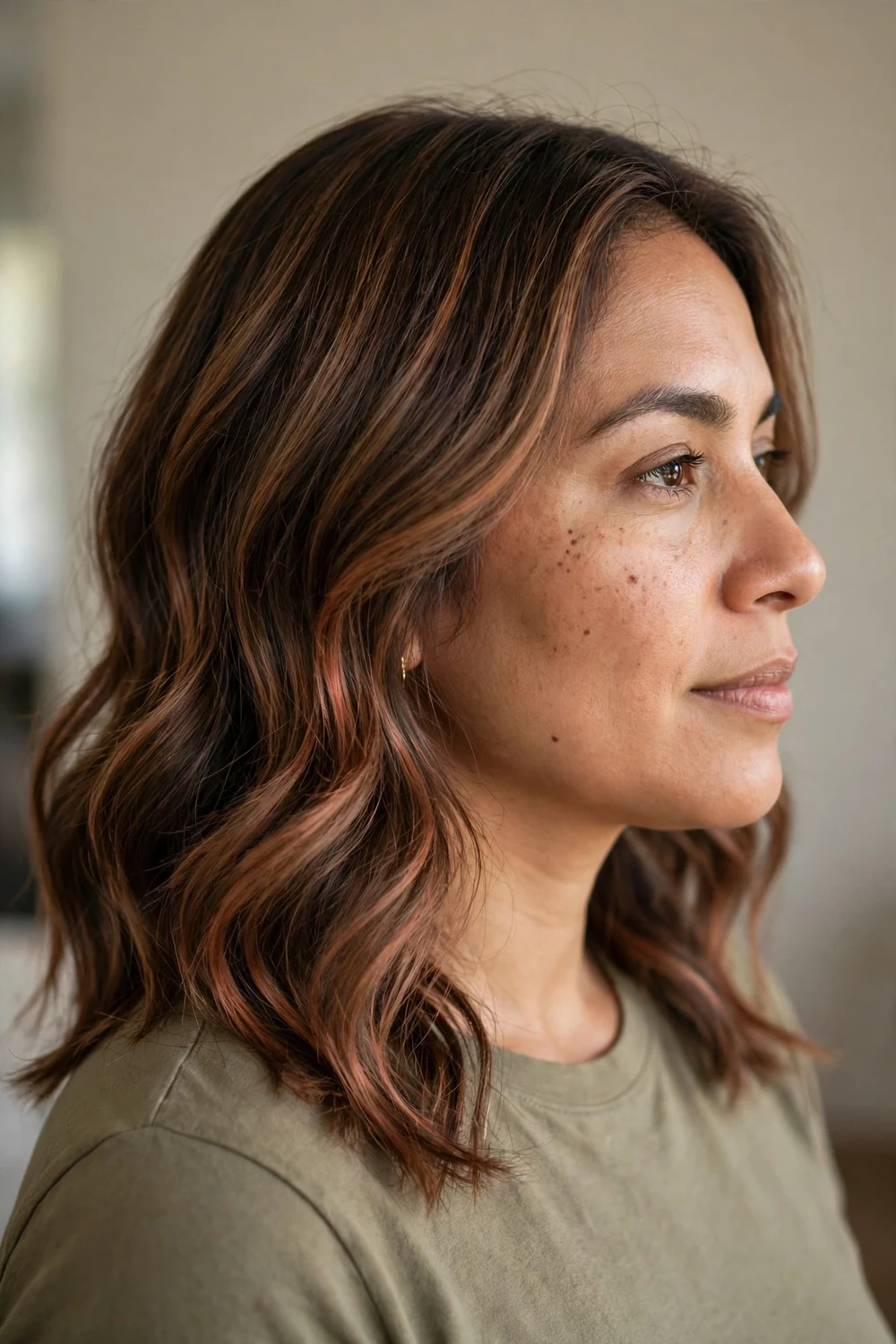
Not ready for a visible color change? The subtle take keeps the difference between your base and the copper pieces to one or two levels. The result reads as brunette hair with warmth rather than red hair, which makes it office-friendly and easy to reverse if you change your mind. It works best on medium brown bases where the copper ribbons melt in without any lifting drama. Style it straight to see the ribbons, or wavy to blur them further.
Try this: Ask for a copper gloss over your natural base instead of lightened pieces. You get the warmth with zero lightener and almost no maintenance.
3. Dark Cowboy Copper Balayage
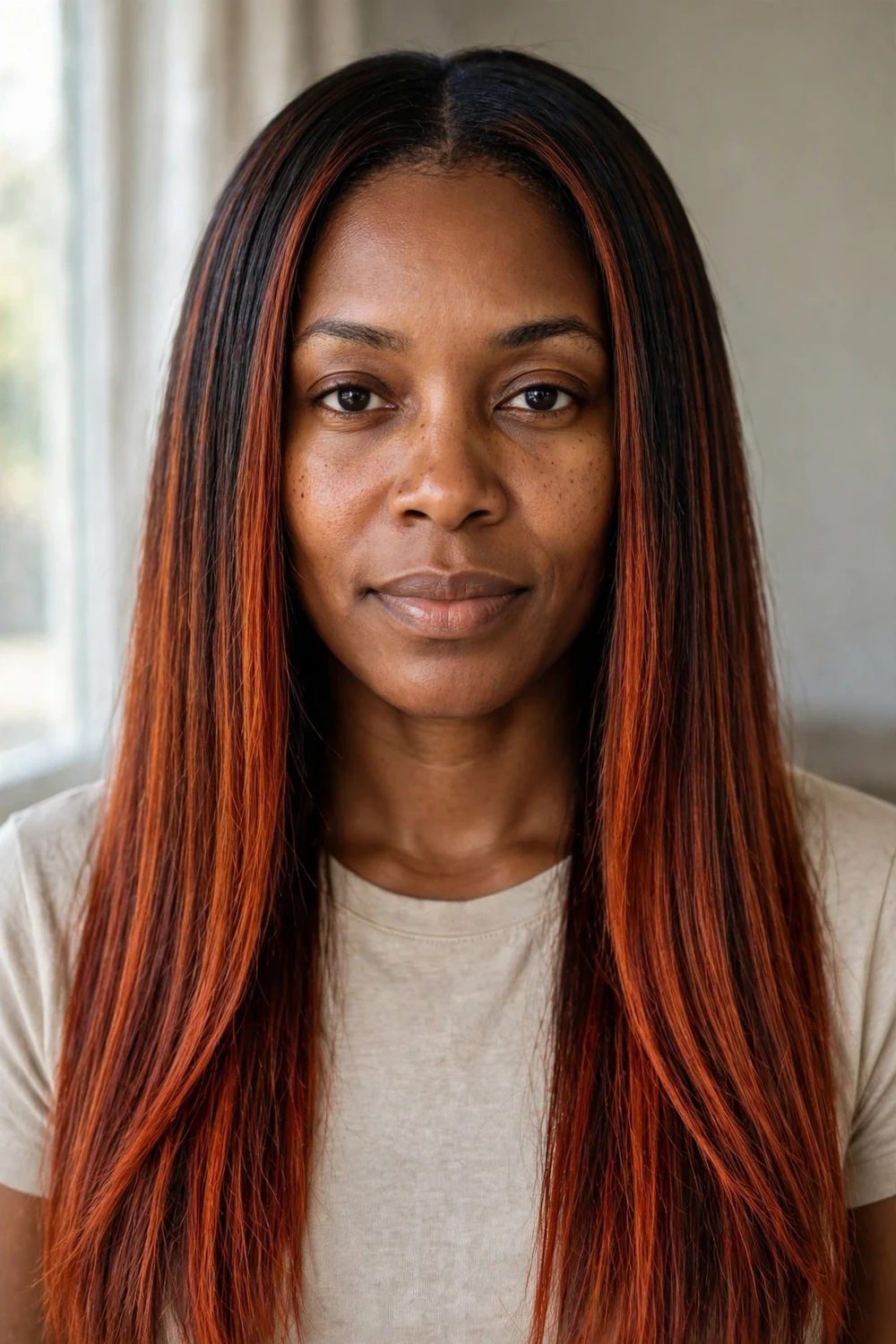
Brunettes get one of the best versions of this trend. Dark cowboy copper keeps the roots rich and deep, then adds copper-red balayage through the lengths that glows in sunlight. If your hair is very dark, the colorist may lift the painted sections slightly so the copper actually shows instead of disappearing into the base. The contrast between the dark top and warm ends gives the color its expensive look, and the dark root means regrowth never looks harsh.
Try this: Have the colorist paint the brightest copper on the pieces that catch the most light: the crown and the ends. Keep the underneath sections deeper for contrast.
4. Bold Copper Balayage
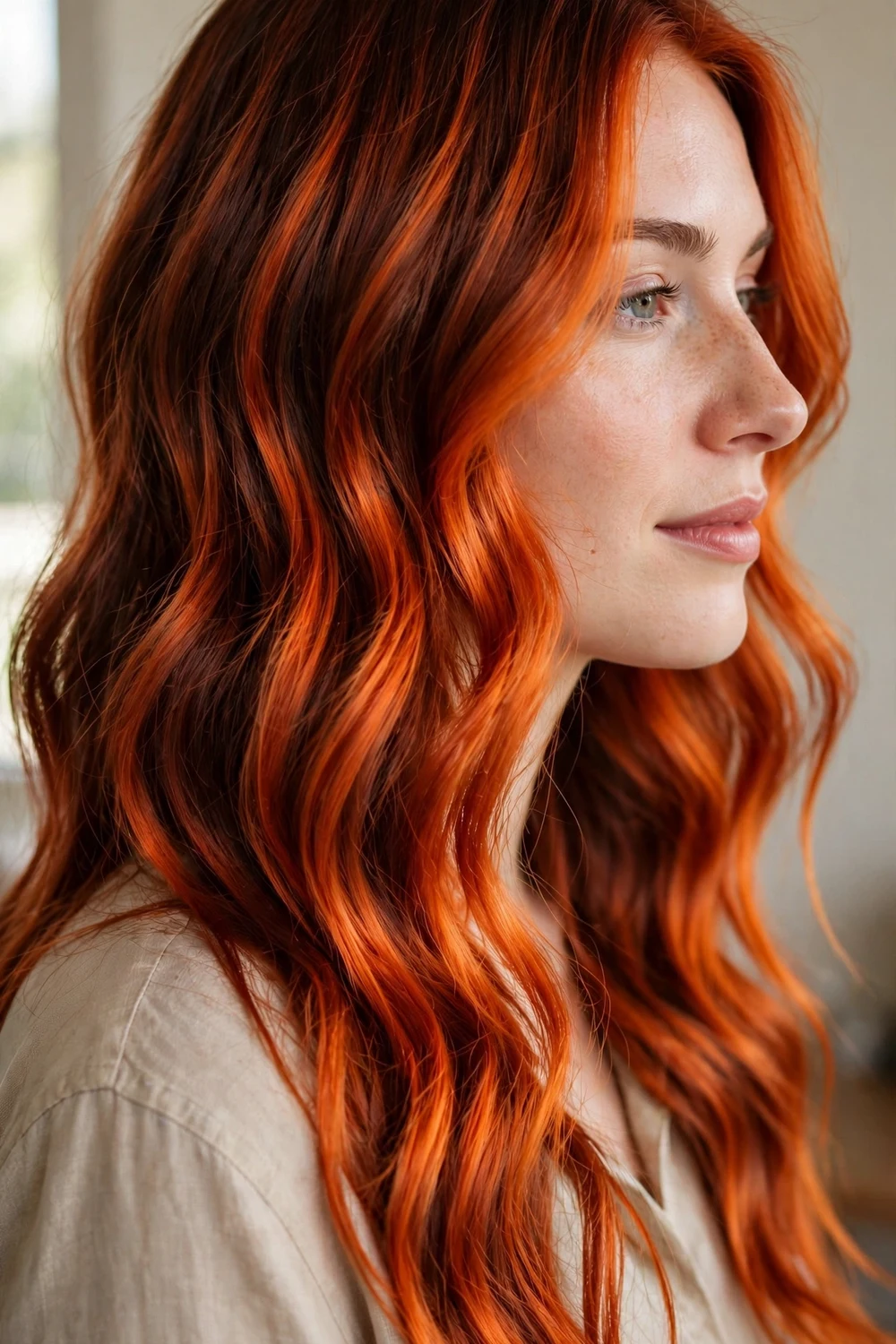
Some people want the copper to do the talking, and the bold version delivers. Saturated copper balayage covers the lengths with strong, fiery pigment, and the dimension comes from leaving slices of the darker base visible between the copper pieces. This is a bigger appointment: it needs lightening on most bases and a precise gloss to keep it copper instead of orange. Book a colorist who posts copper work regularly, because this shade leaves no room for muddy formulation.
Try this: Plan a gloss refresh at 4 weeks, not 8. Bright copper fades fastest in the first month, and an early top-up keeps it punchy.
5. High-Contrast Cowboy Copper Balayage
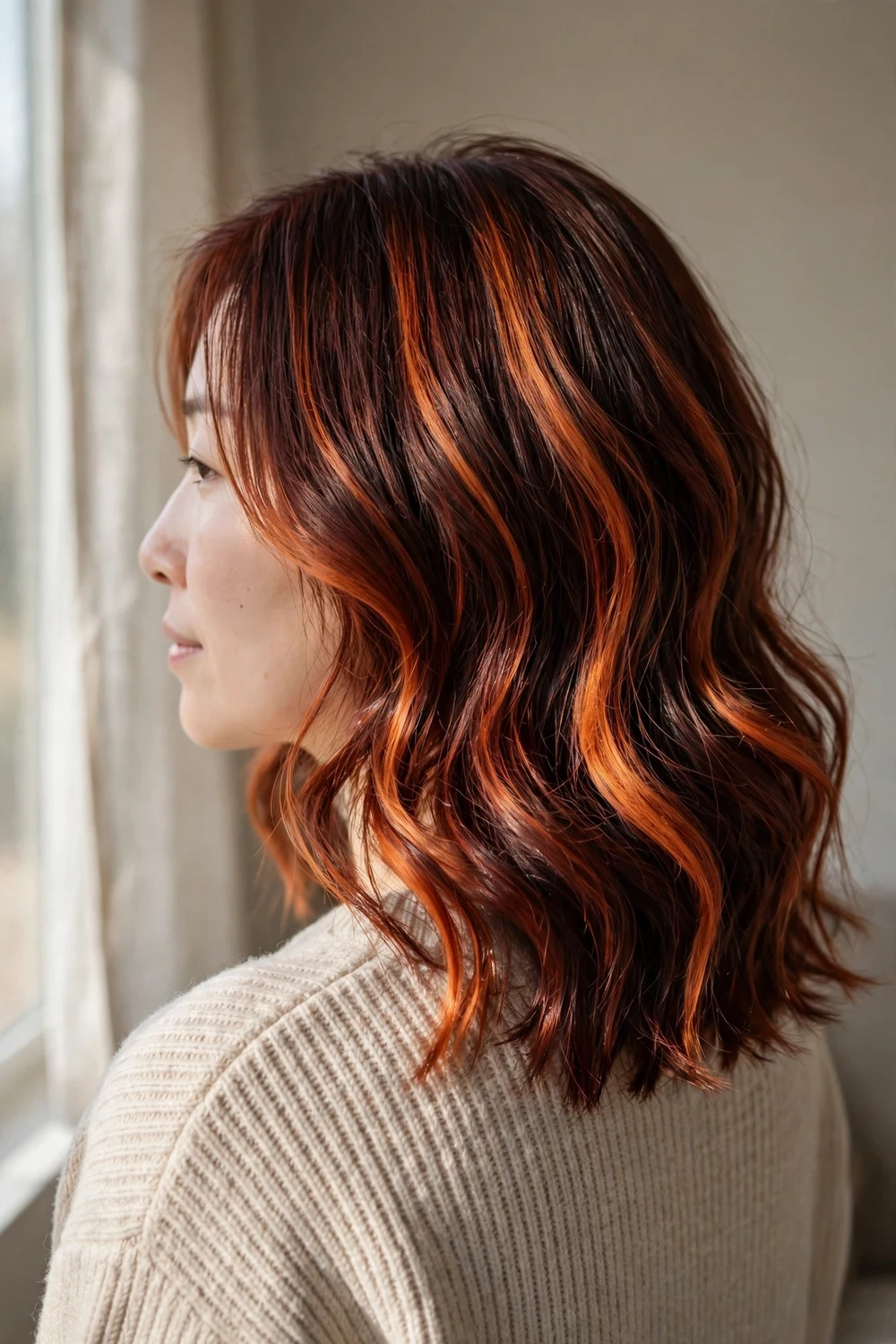
High contrast is the drama-lover’s answer to cowboy copper. A deep reddish-brown base sits underneath much brighter copper pieces, and the gap between the two tones is the whole point. The brighter the pieces, the more the base looks like shadow, which makes the color read three-dimensional even in flat lighting. This needs more lightening than most versions on this list, so factor in a longer appointment and a bond-building treatment during the service.
Try this: Ask for the brightest pieces concentrated around the face and through the top layer, with the underlayers kept deeper. That placement reads bold without coloring every strand.
6. Sunset Blaze Balayage
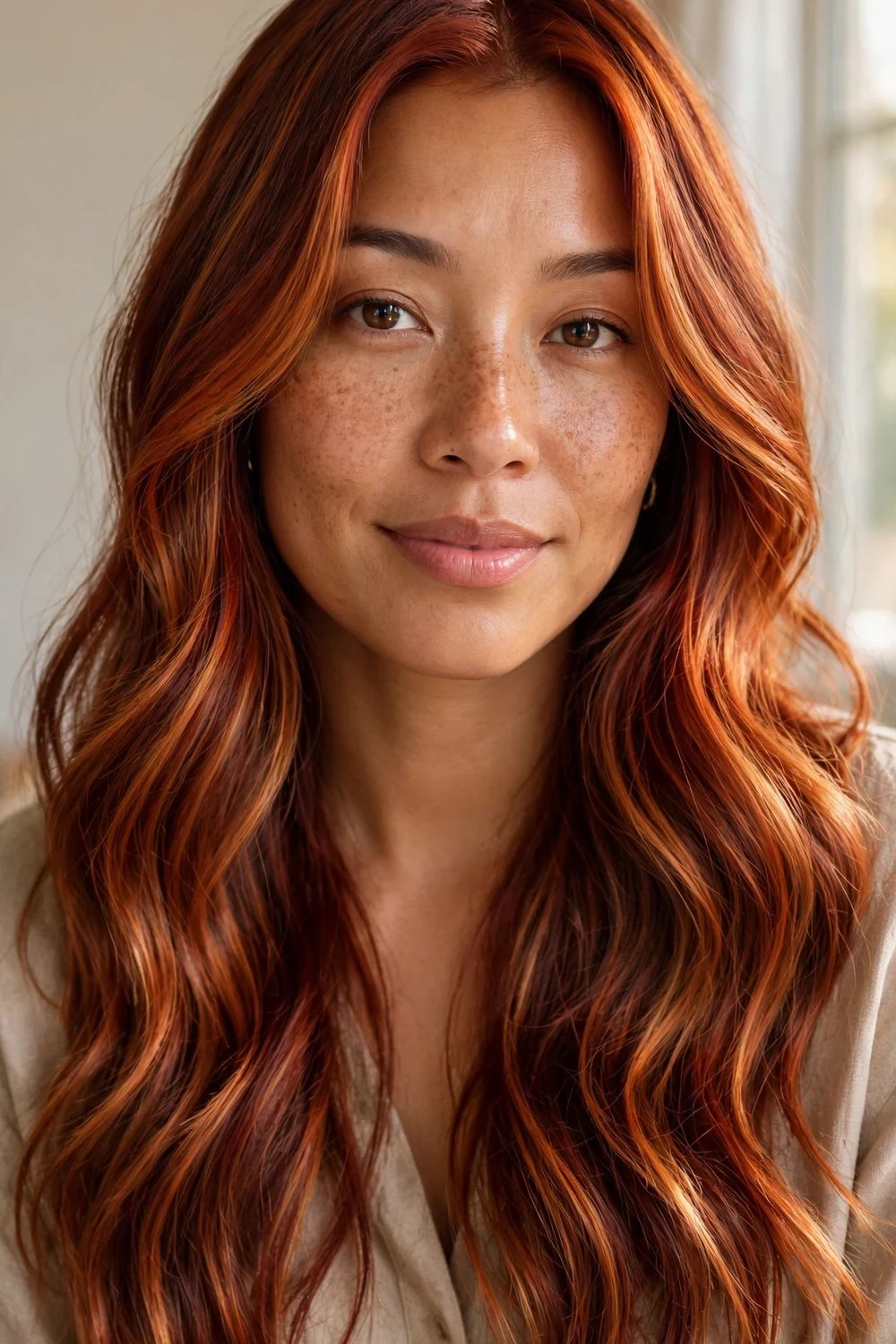
A red base with bright copper balayage highlights layered over it gives this one its sunset name. The red sits underneath like a sunset sky and the copper pieces act as the lighter bands of color. It leans redder than classic cowboy copper, which suits anyone whose skin loves warm red tones. The blend needs a skilled hand: too much red at the top and it loses the balayage softness, too little and it reads as regular copper highlights.
Try this: Bring photos that show the red-to-copper ratio you want, since “red base” means different things to different colorists. Name the ratio out loud at the chair: mostly red, half and half, or copper-dominant.
7. Flame-Kissed Balayage
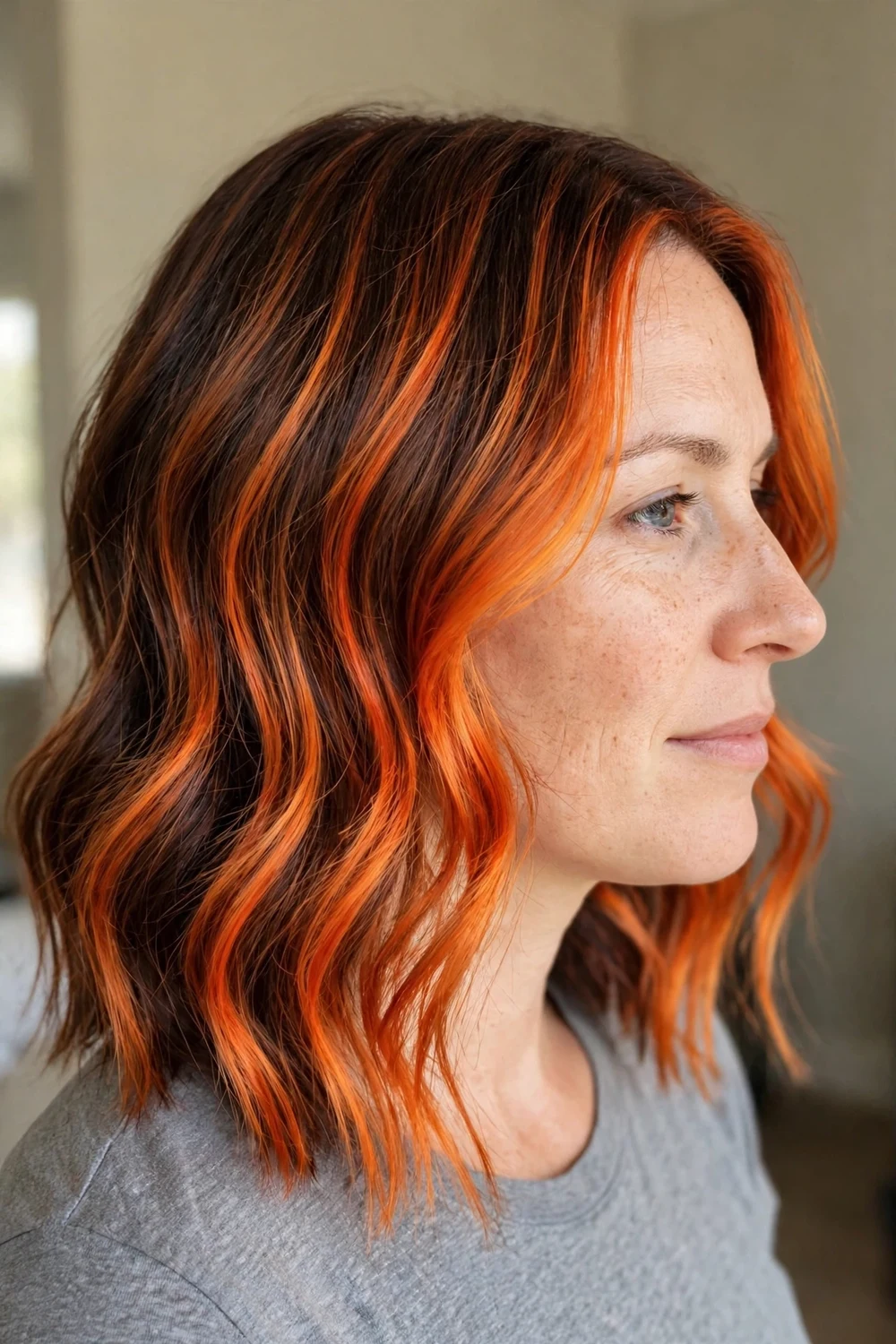
Flame-kissed is the brightest idea on this list. Intense orange-copper balayage pieces run through the lengths with almost no brown left visible, which gives a near-neon warmth that photographs incredibly well. This is high-maintenance color: bright coppers fade the fastest of any red family, and the brightness you leave the salon with will soften within two to three weeks. Commit to the aftercare routine (color-safe products, cool water, a color-depositing mask) before you book it.
Try this: Buy the copper color-depositing mask your colorist recommends at the same appointment, and use it once a week starting week two. Waiting until the color fades makes it harder to bring back.
8. Copper Canyon Balayage
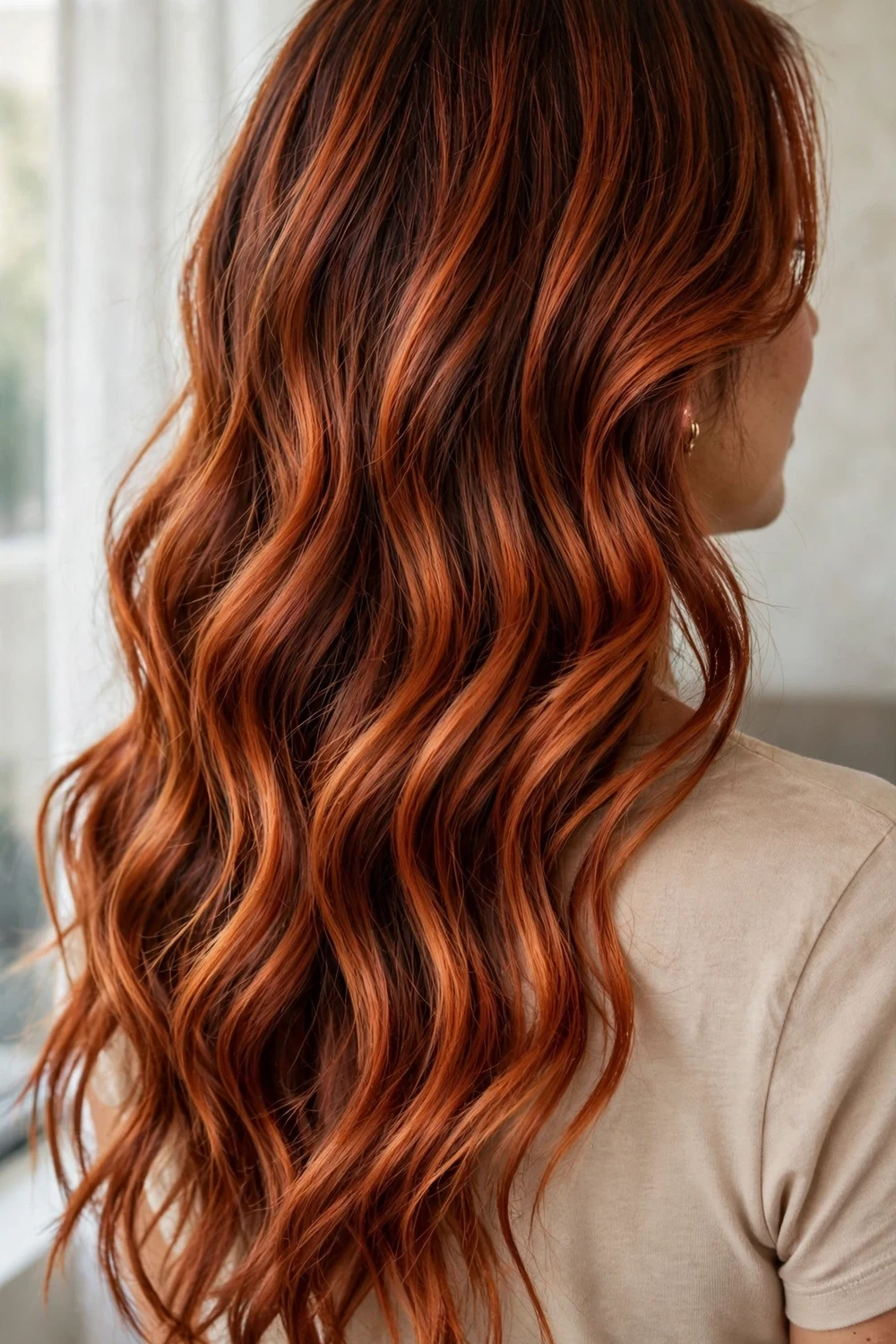
Deep, saturated copper from root to tip defines copper canyon. The color stays in one rich family instead of jumping between dark and light, which gives a lacquered, almost liquid look in the light. It suits thick hair especially well, since density shows off the depth of a single saturated tone. Because the base is darker than the brightest coppers, this fades more gracefully than the vivid versions. A gloss every 6 to 8 weeks is usually enough to keep it rich.
Try this: Style it with big, soft waves for the first week after coloring. The wave pattern breaks the light across the deep copper and shows the dimension you paid for.
9. Deep Red Cowboy Copper Balayage
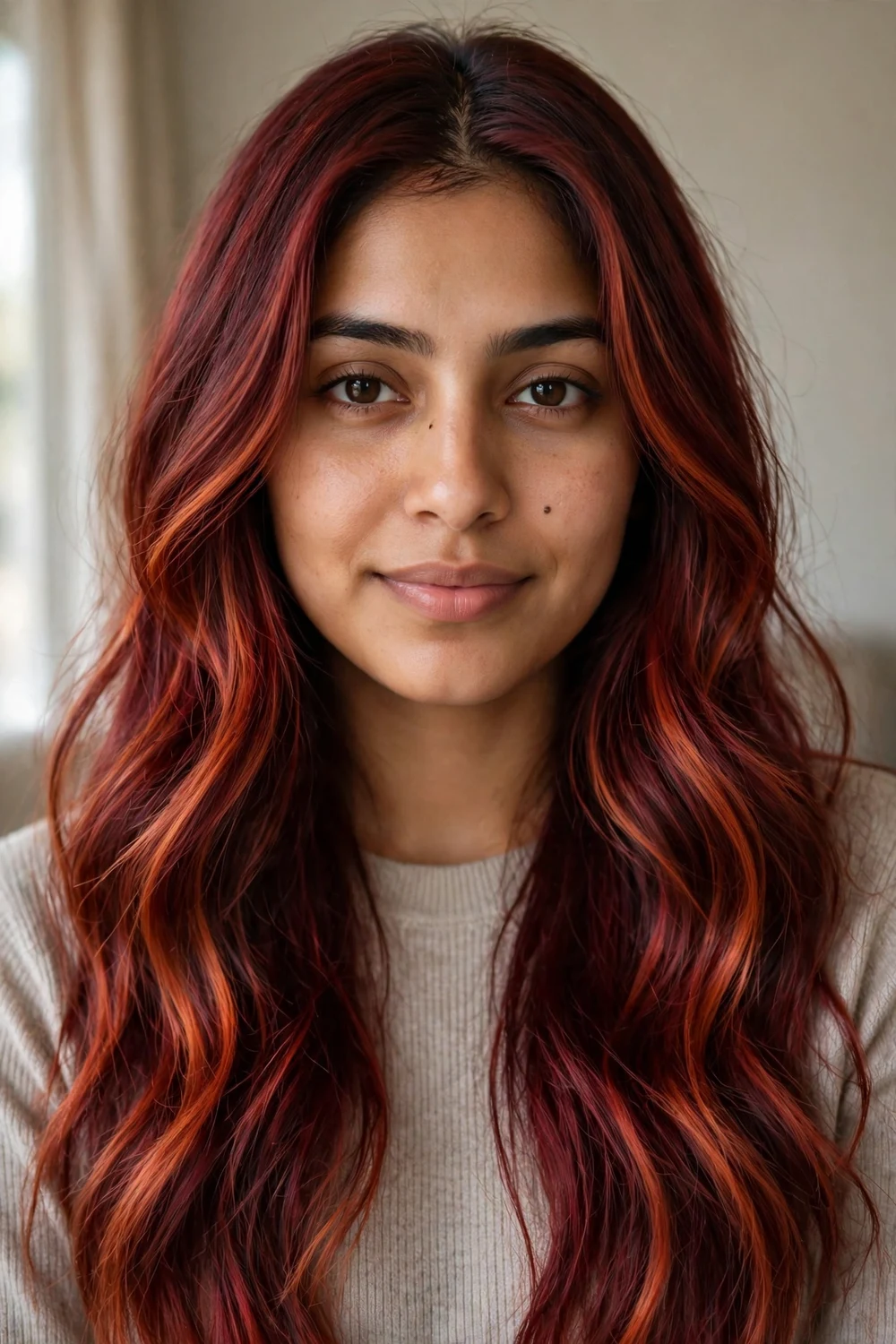
Starting from a deep red base changes the whole character of cowboy copper. The colorist paints brighter copper pieces over a dark, soulful red, and the contrast gives a two-tone effect that reads dramatic without neon brightness. Deep skin tones carry this combination especially well, since the dark base harmonizes with the complexion while the copper pieces add light. It needs the same care as other reds (cool water, infrequent washing), but the dark base hides fading better than brighter versions.
Try this: Ask for the copper pieces to be painted slightly thicker than standard balayage. Thin pieces disappear into a deep red base; chunkier ones actually show.
10. Rich Red Copper Balayage
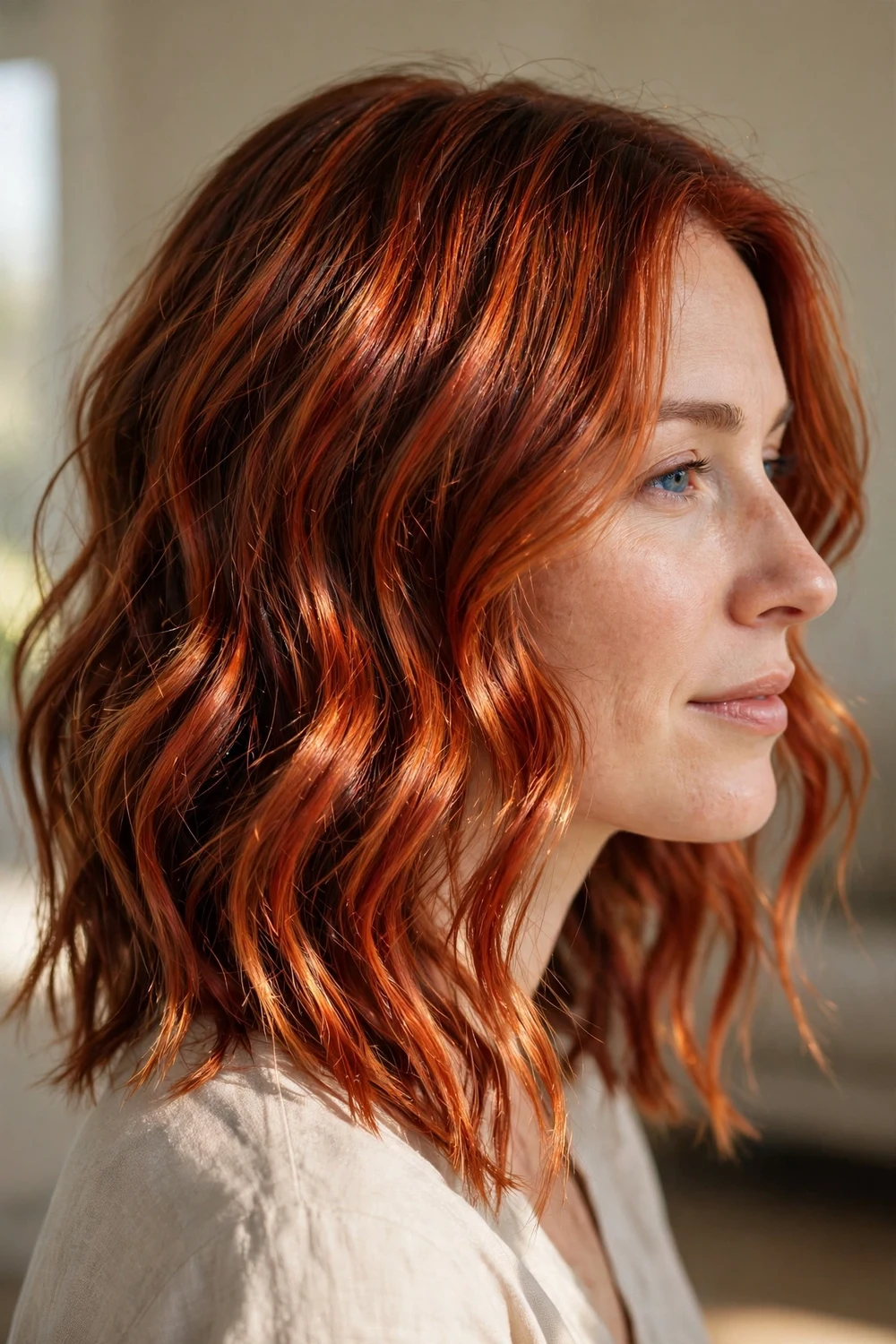
Where deep red copper goes dark, this one goes glossy. Rich red copper is a red-copper blend with a high-shine finish that makes the copper tones sparkle in the light. A clear or copper gloss at the end of the appointment is what creates that glassy surface, so don’t skip it. This suits straight or sleek styles, because smooth hair reflects more light and amplifies the glow. If your hair is naturally dull or porous, a deep conditioning treatment a week before the appointment helps the color take evenly.
Try this: Run a pea-sized amount of shine serum through the mid-lengths after styling. On this shade, added shine reads as added richness.
If the deeper reds are calling to you but you want a brunette anchor instead, copper brown hair color ideas collects warm brunette takes on the copper family, including low-maintenance blends.
11. Saddle Brown Balayage
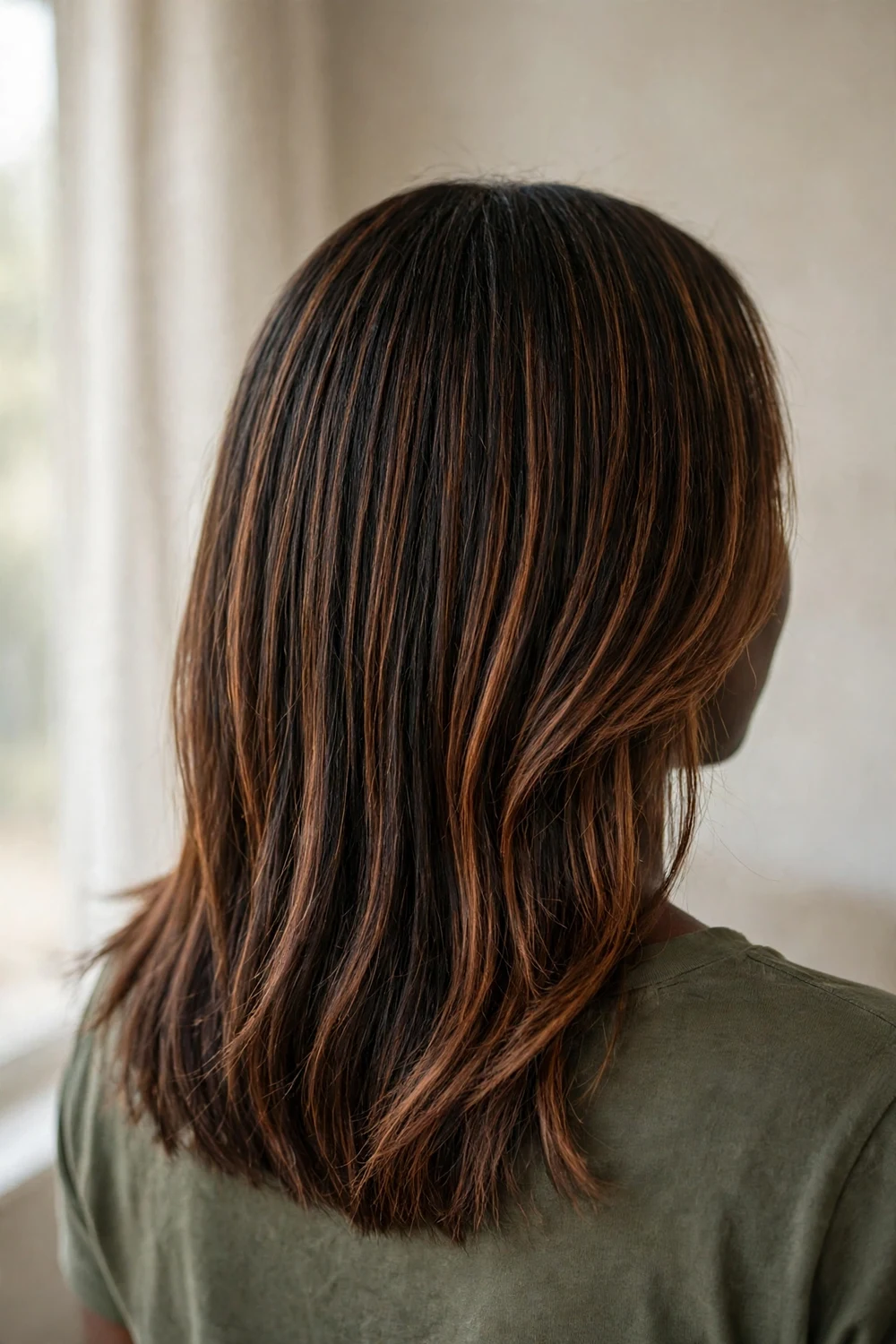
Saddle brown is the toned-down entry point: a muted copper-brown balayage that reads as warm brunette in most lighting. It suits anyone who wants the cowboy copper mood without an obvious red transformation, and it is one of the most wearable options for conservative workplaces. The maintenance is minimal because the color sits close to a natural brown. A sulfate-free routine and an occasional gloss are all it asks for, and grow-out is nearly invisible.
Try this: Wear it straight for a week after coloring to check the true tone. Waves can make muted copper look brighter than it is, and you want to love it in its quietest form first.
12. Rustic Auburn Balayage

Leaning auburn gives cowboy copper a more sophisticated, red-brown finish. The balayage pieces carry cinnamon and rust tones instead of bright orange, which flatters anyone who finds pure copper too loud. It also photographs as more natural, so it suits people who want warmth without a trend-forward statement. Cool undertones can wear this version well if the colorist keeps the auburn balanced with brown softness instead of pushing it orange.
Try this: Ask your colorist to formulate it between a level 5 and 7 copper with red-brown mixed in. Naming the level range keeps the result in the sophisticated zone instead of drifting bright.
13. Patina Balayage
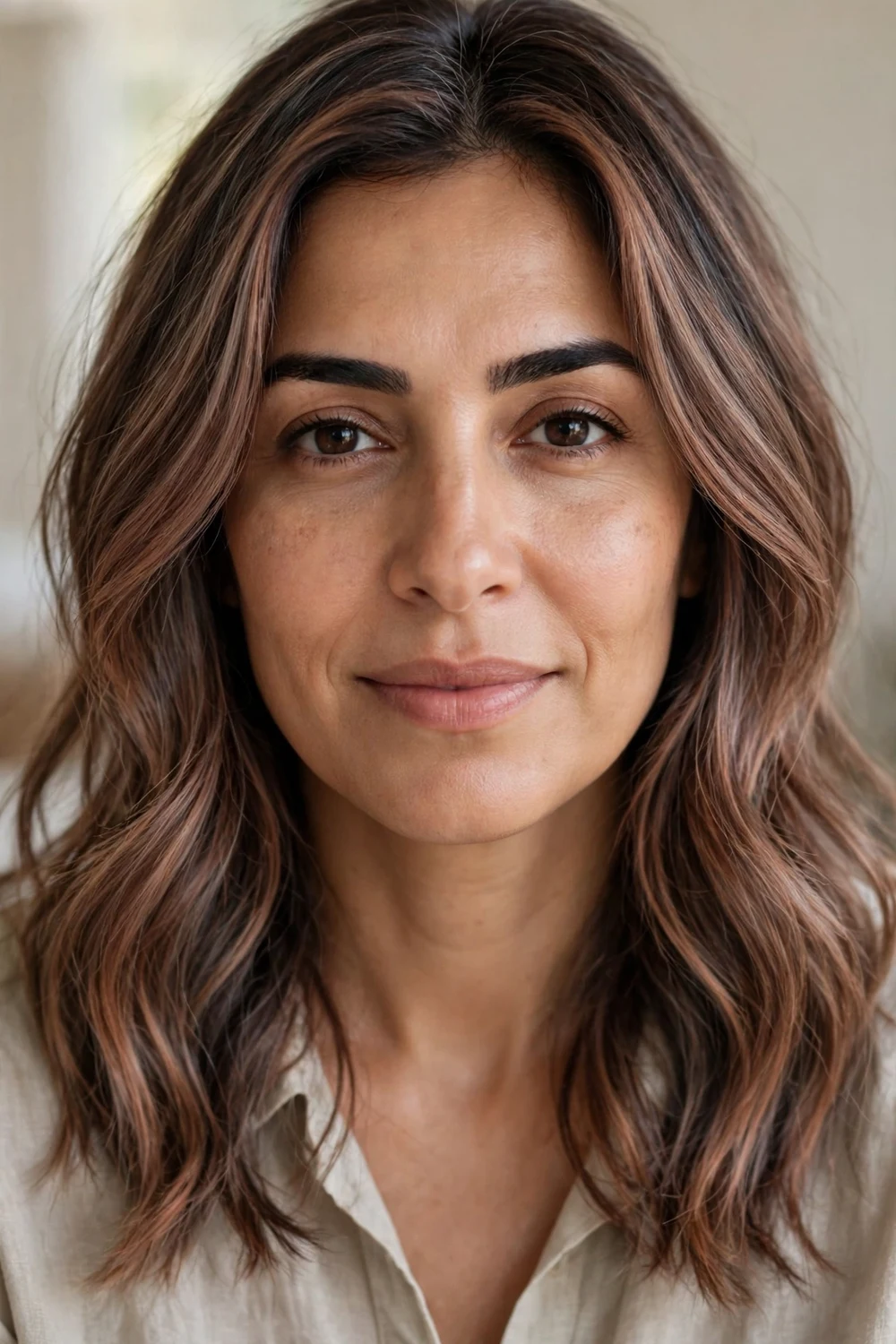
Patina takes cowboy copper in a weathered direction: desaturated, matte, and understated, like aged metal. The colorist mutes the copper with smoky or ash-brown tones so the warmth reads as lived-in rather than fresh. This is a genuinely different lane from the glossy versions, and it suits anyone drawn to muted, editorial color. The matte finish means shine products work against it, so embrace the softness. It fades less noticeably than vivid coppers because there is less saturation to lose.
Try this: Skip shine serums on this one and use a lightweight leave-in for smoothness instead. Matte color needs moisture without the mirror finish.
14. Golden Lasso Highlights
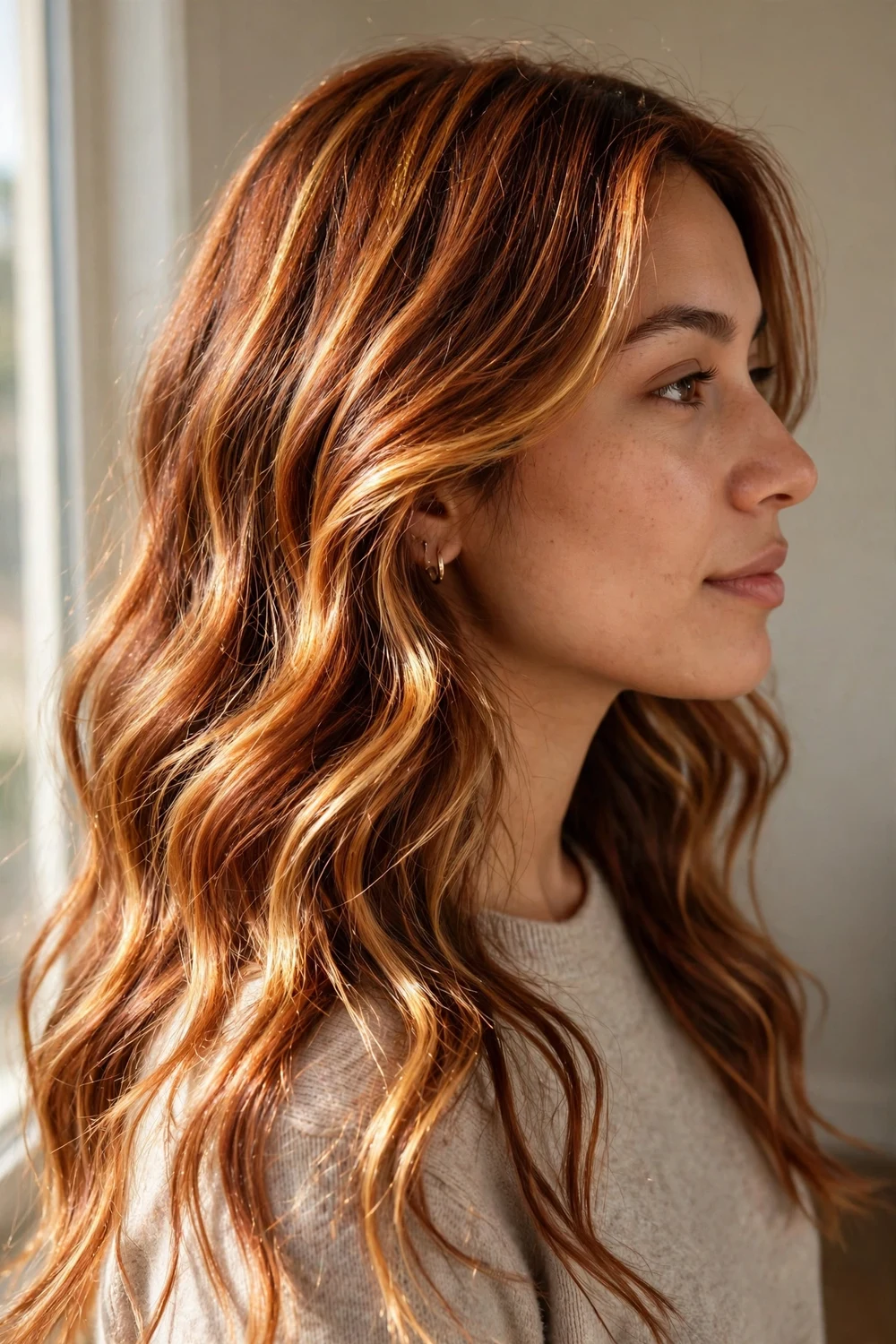
Golden highlights woven through cowboy copper create a sunlit effect that brightens the whole head. The colorist paints golden-copper ribbons around the face and through the top layer, leaving the deeper copper underneath for contrast. This is the version to choose if your complexion loves gold: warm undertones glow against it, and the brightness around the face acts like a built-in highlight for your skin. It needs a gloss to keep the gold from going brassy, so plan for regular toning.
Try this: Concentrate the golden pieces on the hairline and the top of the part. Those are the spots that catch daylight, so the brightness reads strongest where it counts.
15. Bronze Balayage Accents
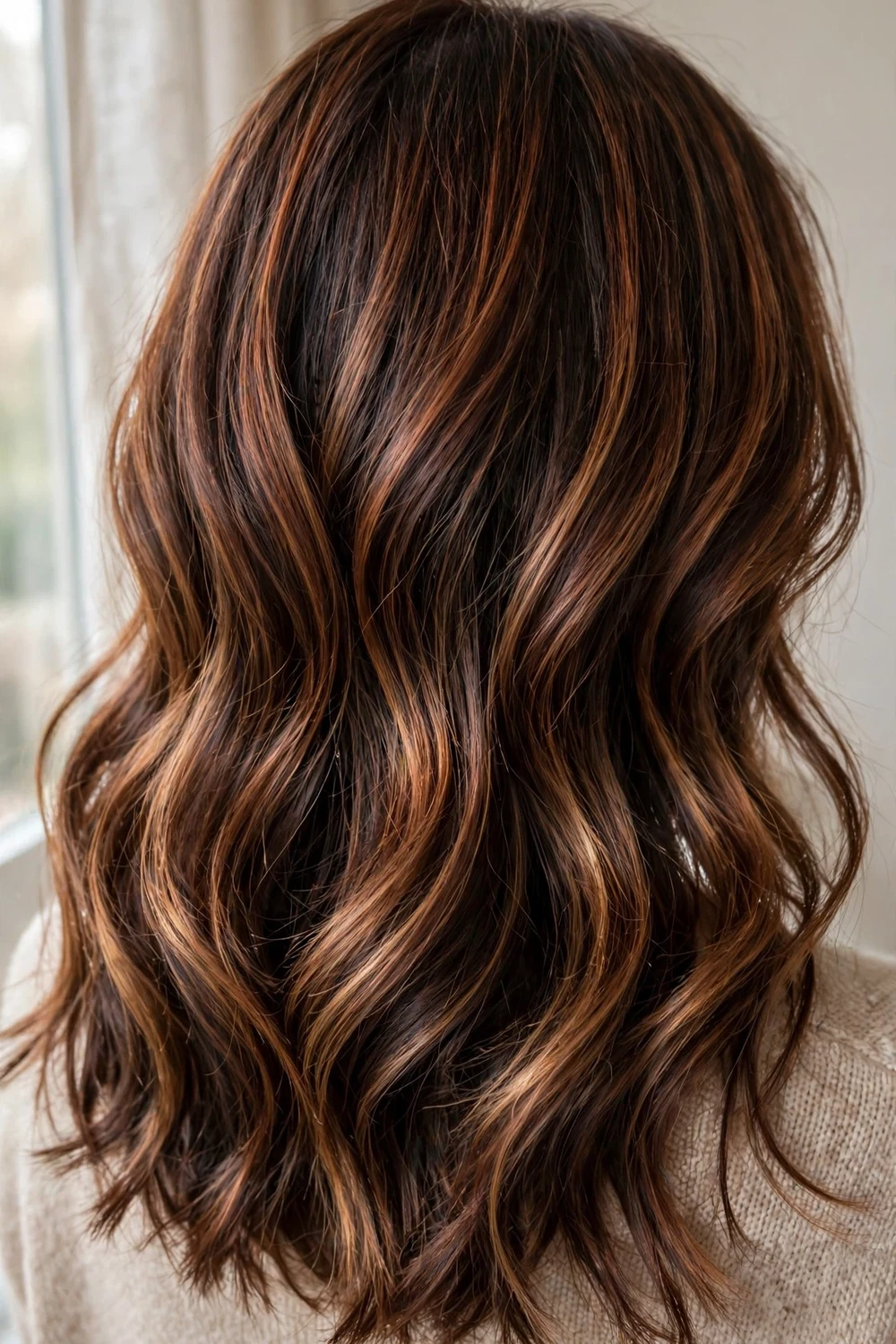
Bronze accents are the quiet luxury version of copper highlights. Instead of bright golden pieces, the colorist paints metallic bronze ribbons through the mid-lengths and ends, which gives a deeper, almost antique shimmer. The effect is most visible in movement: the bronze catches light differently than the surrounding copper as the hair swings. It suits darker cowboy copper bases best, where the bronze has enough depth beneath it to read as shimmer rather than stripe.
Try this: Style it with loose curls for the first reveal. The curl pattern turns each bronze ribbon into a separate band of light.
16. Red-to-Copper Fade Balayage
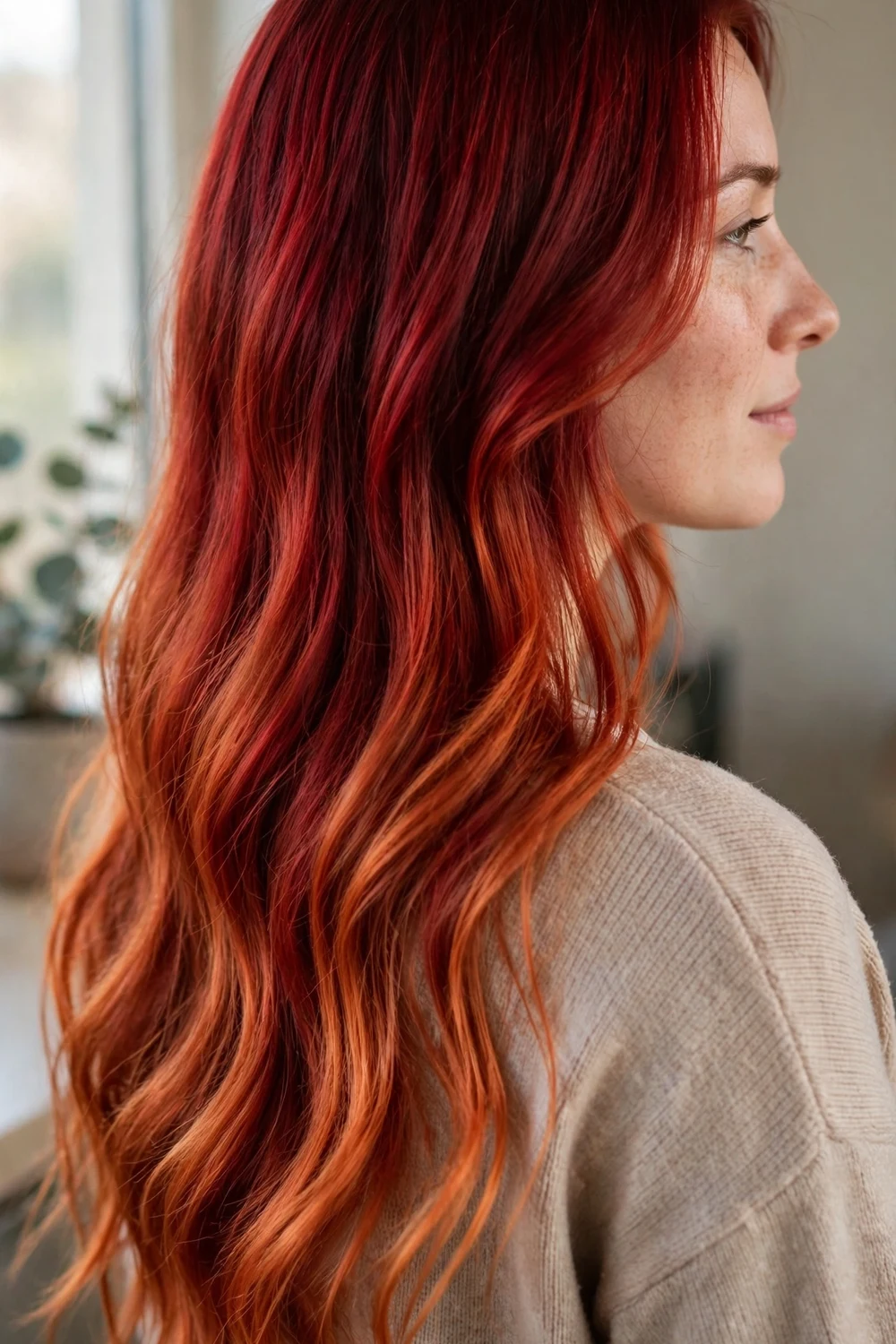
A true gradient melt defines this one: deep red at the roots dissolving into bright copper at the ends with no visible transition line. It is the most technical idea on this list, because a smooth melt needs careful blending at the overlap zones. Ask to see the colorist’s melt work specifically, not just their balayage, since the skill sets overlap but aren’t identical. The grow-out is soft by design, and the ends can be refreshed with a copper gloss without touching the roots.
Try this: Photograph your hair in natural light at the two-week mark. If the transition zone is holding, your colorist nailed the blend; if it looks stripy, you know to ask for a softer melt next time.
17. Face-Framing Copper Highlights
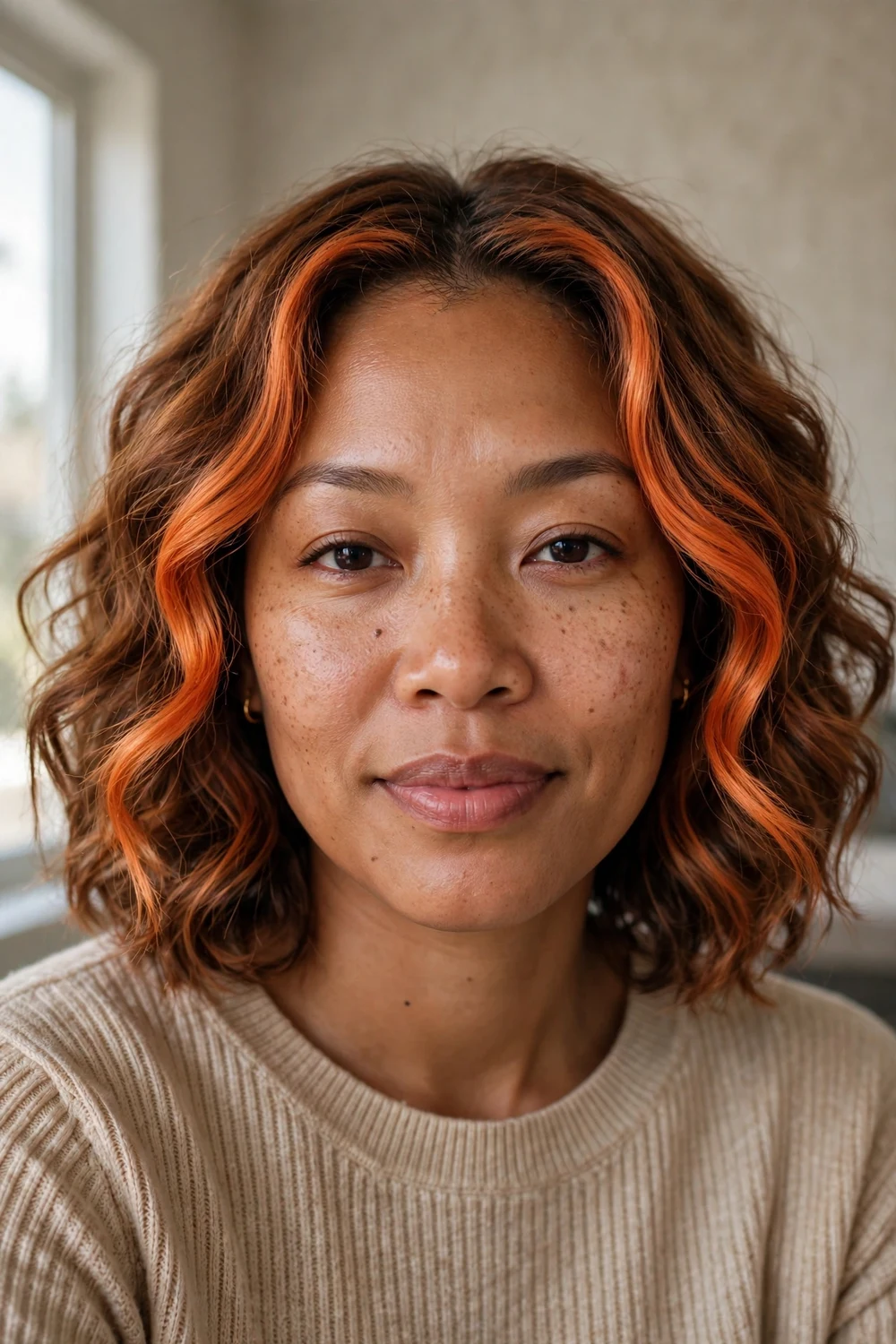
The money piece version concentrates the brightest copper on the two front sections framing the face, with the rest of the balayage kept softer behind them. It is the fastest way to make cowboy copper feel fresh without coloring the whole head, and it flatters nearly everyone because the brightness sits exactly where it lifts the complexion. It also costs less and takes less chair time than a full balayage. When it fades, refreshing just the front pieces is a quick partial appointment.
Try this: Part your hair where you actually wear it before the colorist paints the front pieces. A money piece placed for a center part looks off when you wear a side part daily.
18. Cowboy Copper Balayage on Layers
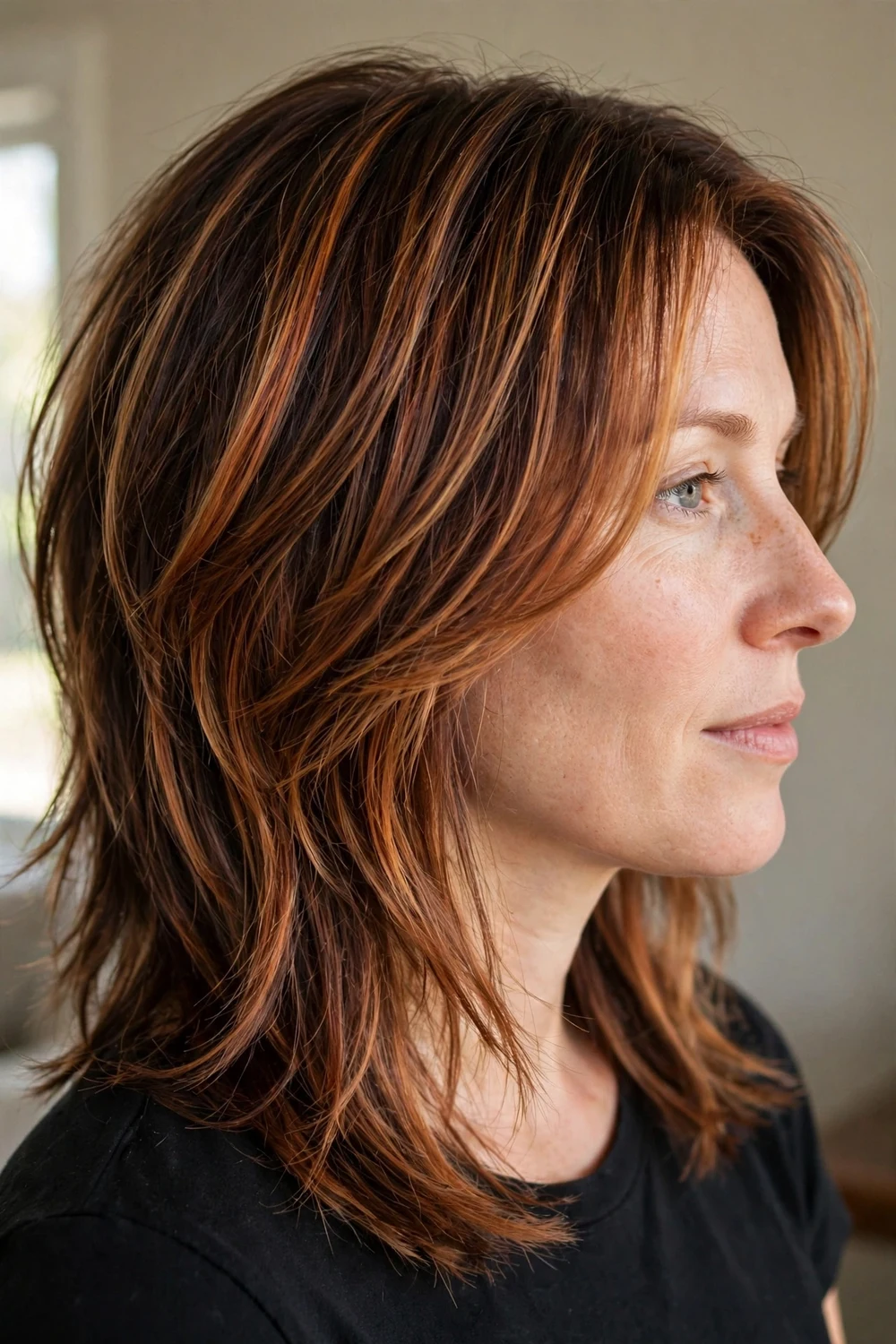
Layers and balayage were made for each other. Each layer catches the copper at a different length, which multiplies the dimension without any extra color. Ask the colorist to paint with the layers in mind: the shortest layers get the brightest pieces, the longest layers carry the deeper tones. This also works as a grow-out strategy, since the layered ends can be trimmed gradually without losing the color’s shape. Medium to thick hair shows this best, because fine hair can look stringy when layers and highlights compete.
Try this: Blow-dry with a round brush, flipping the layers outward at the ends. The outward flip fans the copper pieces apart so each layer’s color shows.
19. Cowboy Copper Balayage on Short Hair

Short hair doesn’t mean missing out. On bobs, lobs, and pixie cuts, the colorist paints copper pieces closer to the root, since there is less length for a gradual melt. The result reads bolder per square inch than the same color on long hair, because the copper density is higher. Texturizing spray or wax on the layers makes the pieces separate and show. This is also one of the cheapest versions to maintain, since short hair needs less product and less color at each visit.
Try this: Add soft waves with a flat iron instead of a curling iron on short lengths. The flat iron gives a modern bend that shows copper dimension without curling the ends under.
20. Curly Cowboy Copper Balayage
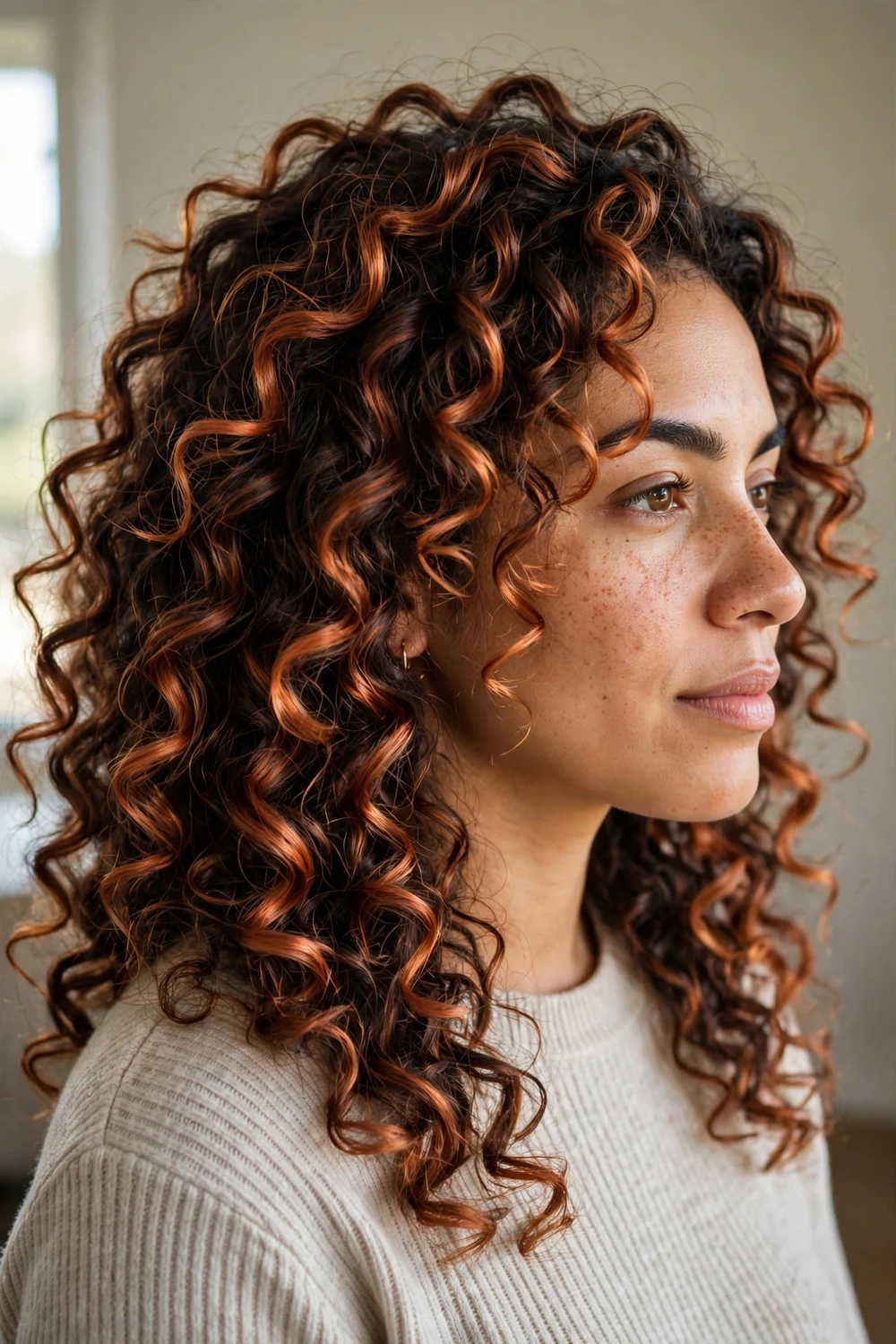
Curls make cowboy copper look richer than any other texture, because every curl reflects light at a different angle. The colorist should paint the balayage on dry, defined curls rather than stretched hair, so the placement matches how the curls actually fall. Ask for a glossing treatment after the color to boost shine, since curly hair’s texture can scatter light and mute the copper. Hydration matters double here: curly hair plus red pigment is the combination most prone to dryness.
Try this: Refresh the color between appointments with a copper color-depositing conditioner used as a mask on wash day. Leave it on for 10 minutes before rinsing.
21. Long Wavy Cowboy Copper Balayage
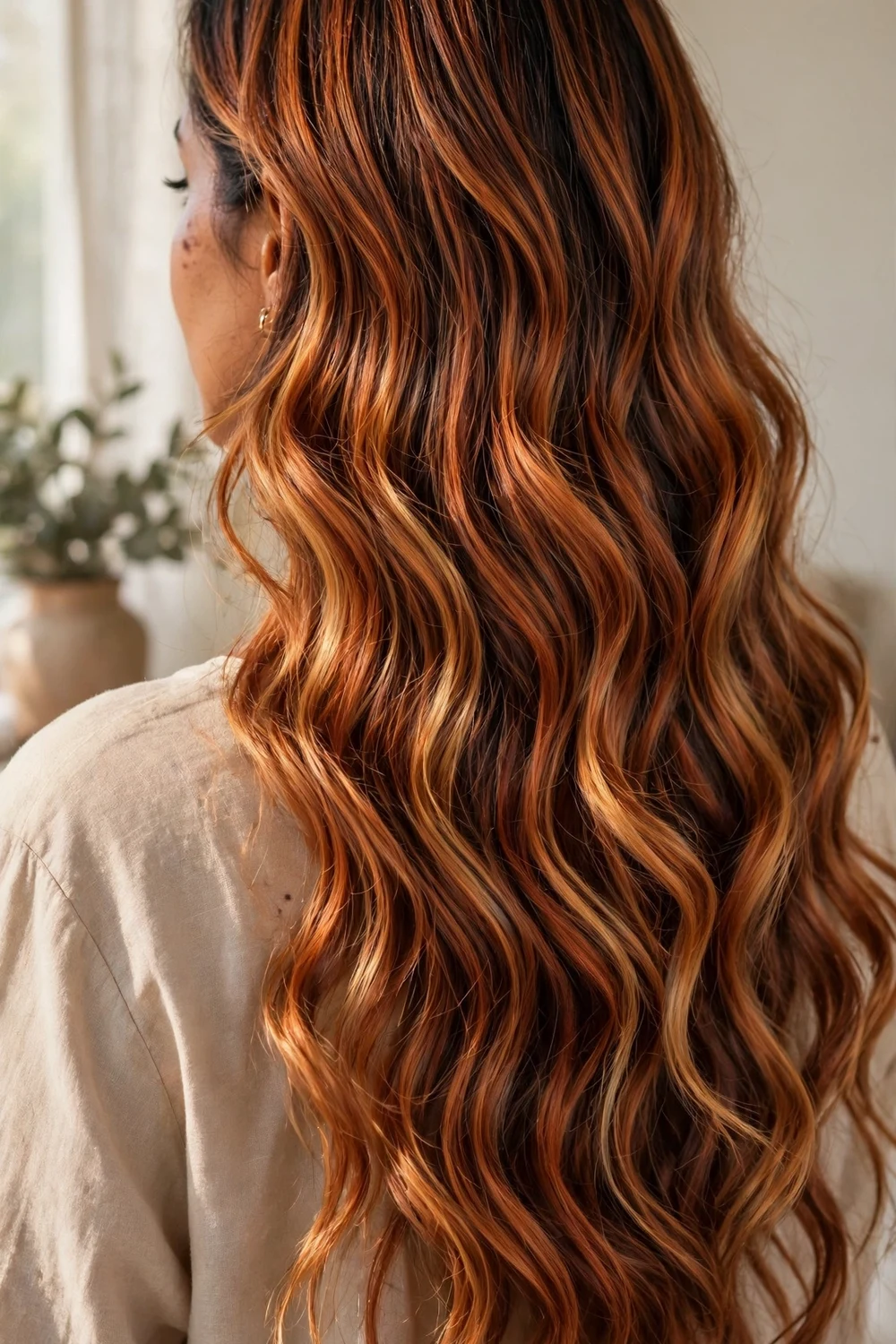
Long waves are the classic canvas for this color. The length gives the balayage room for a full journey: deeper copper at the crown, auburn through the middle, golden copper at the ends. That progression is what makes the color look expensive instead of flat. It does need commitment: long hair uses more product, takes longer to color, and the ends fade fastest because they are the oldest hair. A trim every 8 weeks keeps the faded ends from dragging the color down.
Try this: Sleep with your hair in a loose braid. It protects the lengths from friction fade and gives you heat-free waves in the morning.
22. Pumpkin Spice Balayage

Bright, warm, and unapologetically orange-copper, pumpkin spice is the fall seasonal favorite of this family. The balayage carries pumpkin tones with golden warmth through the lengths, brightest at the ends. It suits light to medium bases best, since very dark hair needs significant lifting to reach this brightness. Like all bright coppers, it fades faster than the muted versions, so the aftercare routine is non-negotiable. Time it for autumn and it feels intentional; the rest of the year it reads as a bold personal signature.
Try this: Book it 2 to 3 weeks before any event you want it for. Bright copper settles into its most flattering tone after the first few washes.
23. Root-Shadow Cowboy Copper Balayage
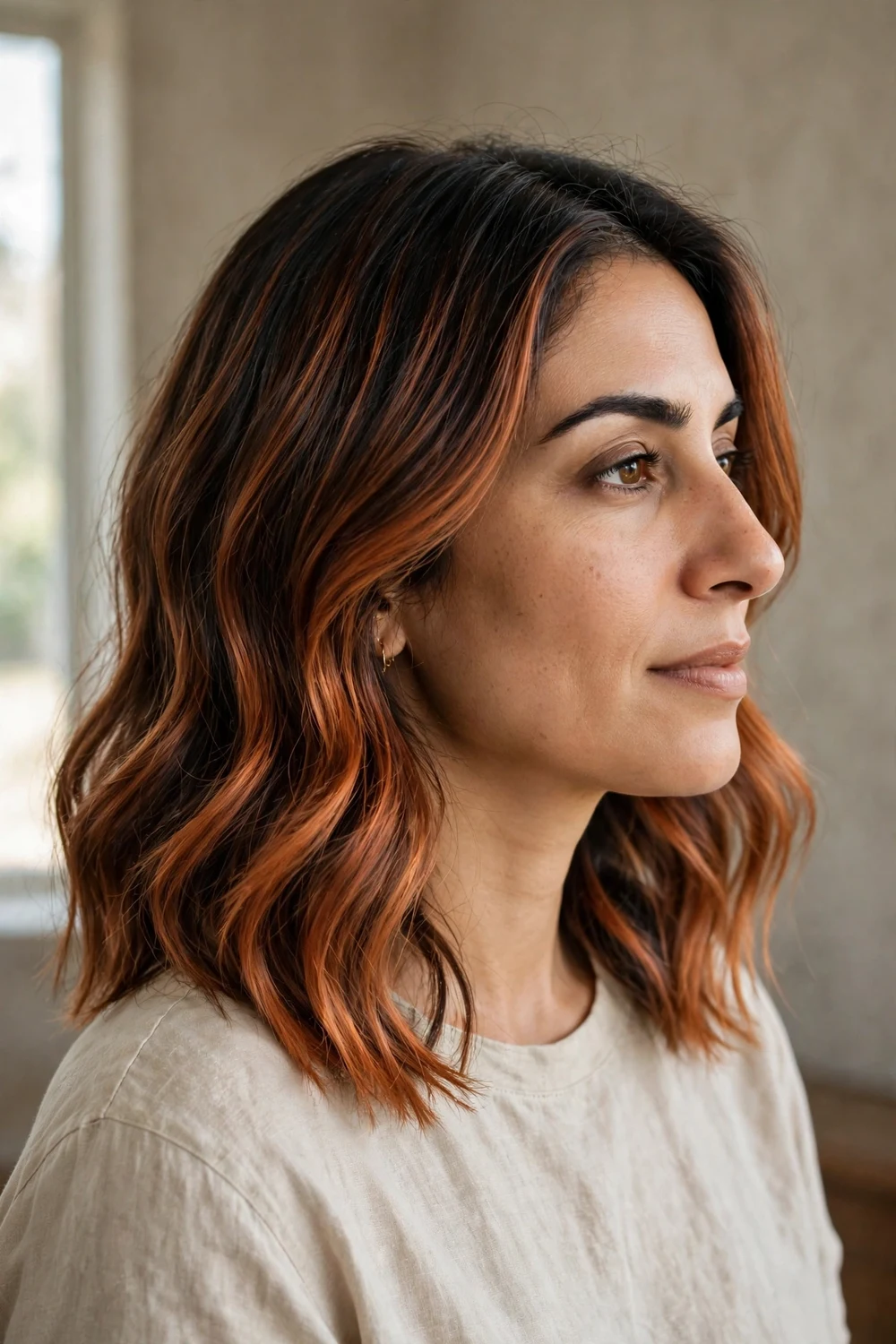
The root shadow version melts your natural root color into the copper balayage with a soft smudge, erasing any line between regrowth and color. This is the lowest-maintenance idea on the list: many people stretch appointments to 4 or 5 months because the grow-out looks deliberate. It also suits anyone whose natural base is much darker than copper, since the shadow bridges the gap. The tradeoff is a slightly moodier result, with less brightness at the crown than the classic version.
Try this: Ask for the shadow to be applied at the shampoo bowl as a separate step, not rushed at the chair. Bowl application gives the softest melt.
24. Cowboy Copper Balayage with Curtain Bangs
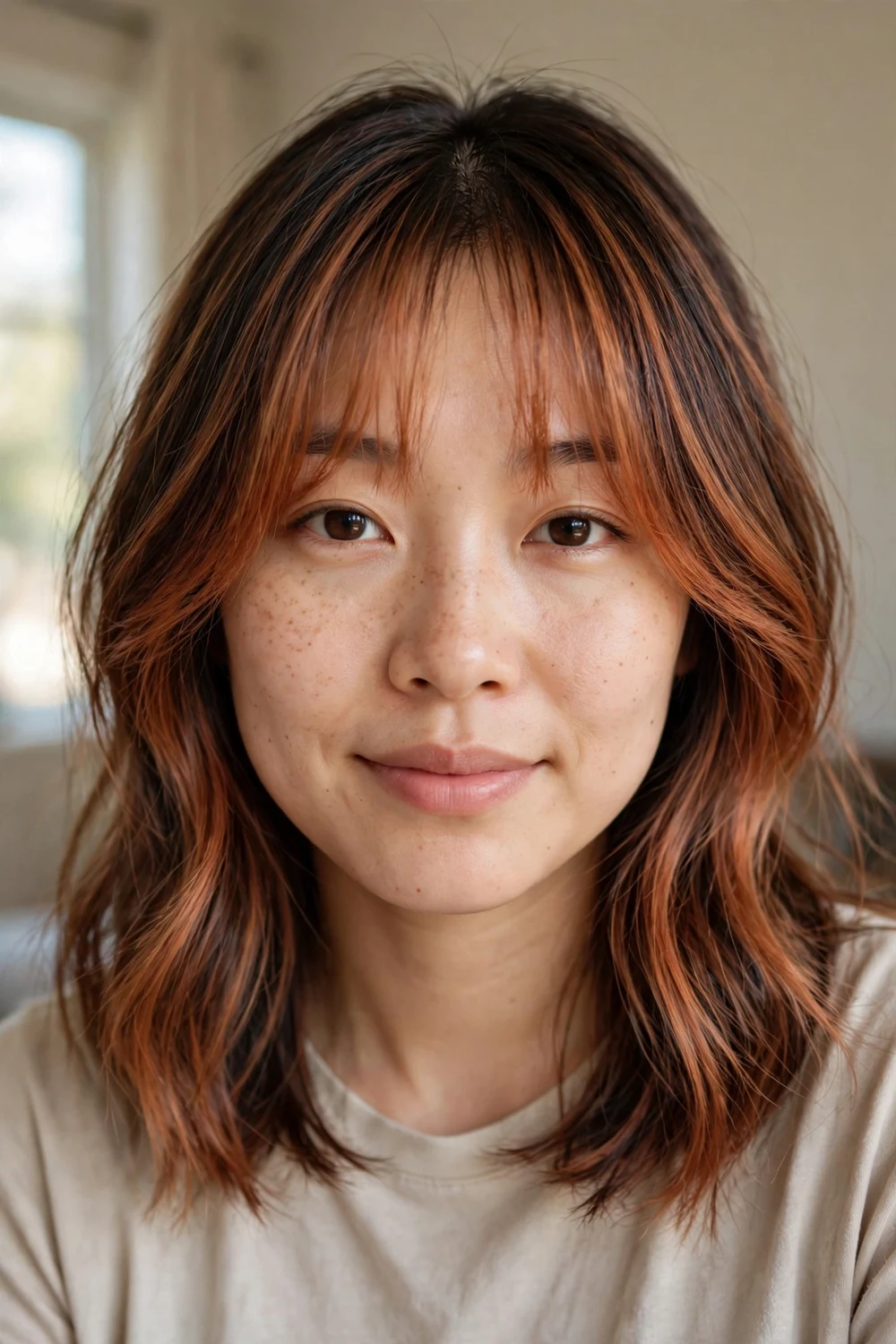
Curtain bangs change how the color frames the face. The bangs get painted with the same copper balayage, usually slightly brighter at the tips, so the fringe becomes part of the color story instead of a separate element. This works best when the bangs are long enough to sweep: chin-length or longer curtain bangs carry the painted color better than short, blunt fringe. Style the bangs with a round brush, sweeping them outward, so the copper catches the light on each side of the face.
Try this: Have the colorist paint the bangs last, while they are styled the way you wear them. Bangs painted flat look different from bangs painted in their swept shape.
25. Cowboy Copper Blonde Balayage Blend
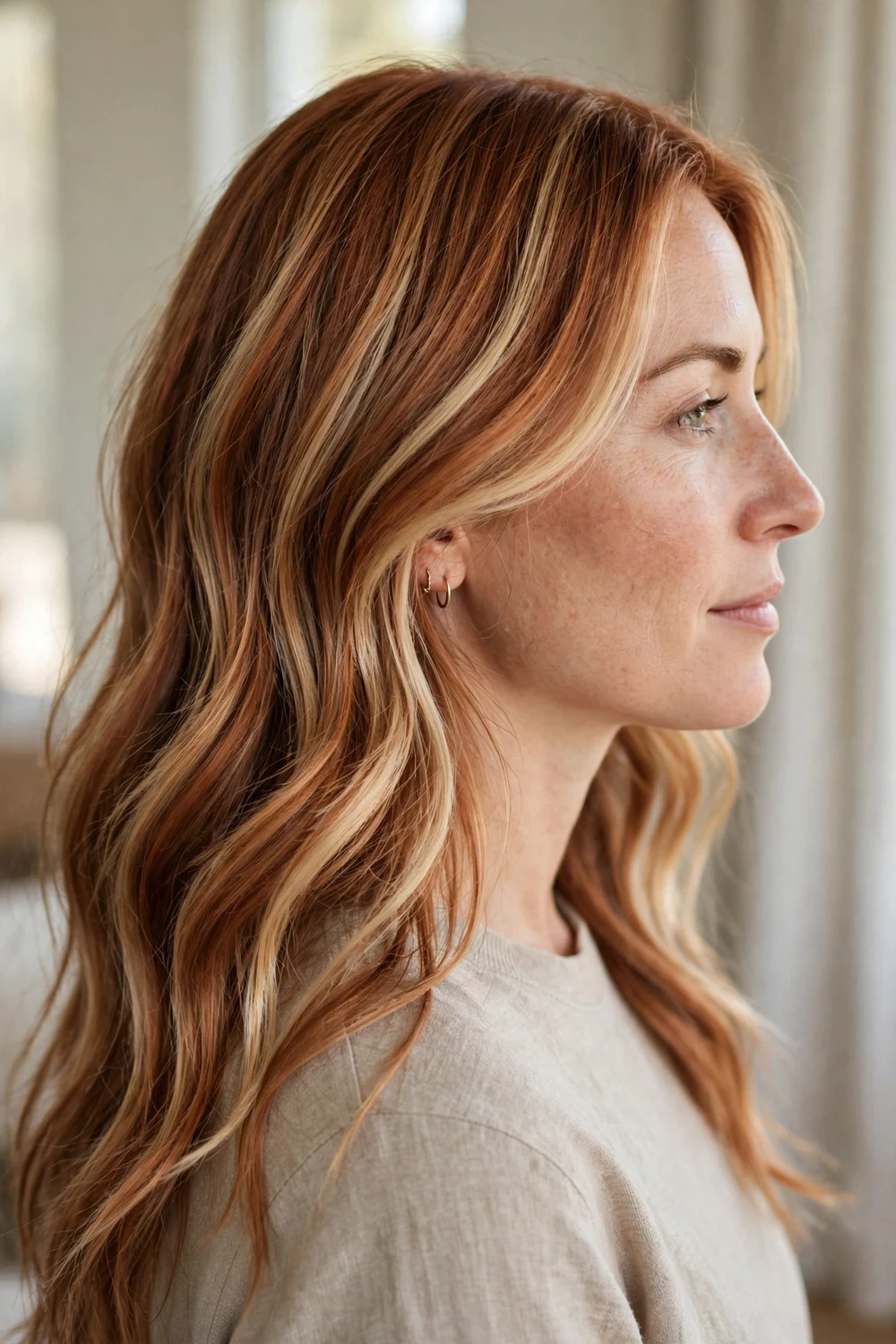
Weaving subtle blonde balayage through cowboy copper creates a sun-kissed, multi-toned effect that softens the red. The blonde ribbons make the copper pieces look brighter by contrast, and the overall result fades more gracefully because the lightest pieces blend into the grow-out. This suits anyone transitioning from blonde to copper, or anyone who loves dimension but finds pure copper too intense. Keep the blonde ribbons fine and scattered: thick blonde chunks turn it into a different color story.
Try this: Ask for the blonde pieces to be toned warm, not ashy. Ash blonde next to copper creates a muddy clash; warm blonde keeps the blend harmonious.
Cowboy Copper Balayage Comparison at a Glance
| Style | Best For | Maintenance | Grow-Out |
|---|---|---|---|
| Classic Cowboy Copper Balayage | First-time copper wearers | Medium | Soft, 3 to 4 months |
| Subtle Cowboy Copper Balayage | Conservative workplaces | Low | Nearly invisible |
| Dark Cowboy Copper Balayage | Brunettes going warm | Medium | Soft, 3 to 4 months |
| Bold Copper Balayage | Statement color lovers | High | Noticeable at 6 weeks |
| High-Contrast Balayage | Drama and dimension seekers | High | Noticeable at 6 weeks |
| Sunset Blaze Balayage | Warm red lovers | High | Soft, 2 to 3 months |
| Flame-Kissed Balayage | Maximum brightness | Very high | Noticeable at 4 weeks |
| Copper Canyon Balayage | Thick hair, rich depth | Medium | Soft, 3 to 4 months |
| Deep Red Balayage | Deep skin tones | Medium-high | Soft, 2 to 3 months |
| Rich Red Copper Balayage | Glossy, polished looks | Medium-high | Soft, 2 to 3 months |
| Saddle Brown Balayage | Understated warmth | Low | Nearly invisible |
| Rustic Auburn Balayage | Sophisticated red-brown | Medium | Soft, 3 to 4 months |
| Patina Balayage | Muted, editorial color | Low-medium | Soft, 3 to 4 months |
| Golden Lasso Highlights | Warm undertones, glow seekers | Medium-high | Soft, 2 to 3 months |
| Bronze Balayage Accents | Subtle metallic shimmer | Medium | Soft, 3 to 4 months |
| Red-to-Copper Fade | Gradient color fans | Medium-high | Soft by design |
| Face-Framing Highlights | Budget-friendly refresh | Low-medium | Soft, 3 months |
| Balayage on Layers | Medium to thick hair | Medium | Soft, 3 to 4 months |
| Short Hair Balayage | Bobs, lobs, pixie cuts | Low-medium | Trims reset it |
| Curly Balayage | Curly and coily textures | Medium-high | Soft, 3 to 4 months |
| Long Wavy Balayage | Long hair, full dimension | Medium-high | Soft, 3 to 4 months |
| Pumpkin Spice Balayage | Fall seasonal color | High | Noticeable at 6 weeks |
| Root-Shadow Balayage | Lowest maintenance | Low | Deliberate, 4 to 5 months |
| Balayage with Curtain Bangs | Fringe wearers | Medium | Bangs need trims |
| Copper Blonde Blend | Blonde-to-copper transition | Medium | Soft, 3 to 4 months |
What to Ask Your Colorist For
Walk in with clear language and you will walk out with the right color. Ask for a brown-based copper with auburn warmth, and specify soft copper-red tones rather than neon orange. Say whether you want the result subtle, bright, dark, or redder, because the same inspiration photo can be read four different ways at the chair.
Bring 3 to 5 inspiration photos and point to the exact elements you like: the root depth, the brightness of the pieces, the placement around the face. Ask for dimension through painted pieces, lowlights, or a gloss, and request a root shadow if you want the easiest maintenance. A gloss or toner at the end controls brightness and adds the shine that makes copper look expensive.
On formulation, cowboy copper generally lives between a level 5 and 7 copper mixed with red-brown, gold, or auburn, adjusted for your starting base. Dark, previously colored, or damaged hair needs a professional assessment first, and very dark bases usually need some lightening for the copper to show. A strand test settles any uncertainty about how your hair will take the color.
How Long Does Cowboy Copper Balayage Last?
The balayage placement lasts longer than the tone does. The painted pieces grow out softly for 3 to 4 months, but the copper warmth itself starts fading within weeks because red color molecules wash out faster than brown or blonde. That is normal for every red family, and it is why the aftercare routine matters more here than the appointment itself.
Wash 2 to 3 times per week instead of daily, and use lukewarm or cool water, since hot water opens the cuticle and releases pigment faster. Switch to a sulfate-free, color-safe shampoo and conditioner, and add a copper color-depositing mask once a week to top up the warmth between visits. Always use heat protectant before hot tools, and add UV protection if you spend time in strong sun.
Plan a gloss appointment every 4 to 8 weeks. A gloss brings back shine and warmth without a full recolor, and it is the single highest-value maintenance step for this color. Bright versions need the 4-week end of that range; muted versions can stretch to 8.
How to Choose the Right Shade for You
Match the intensity to your skin tone and your maintenance tolerance, not just to the photo you love. Fair skin usually suits softer, golden cowboy copper; if your undertone is cool, ask for balanced copper with brown softness so it doesn’t pull orange. Medium and olive skin carry the classic warm copper-cinnamon blend well. Deep skin tones glow with dark copper red and deep cinnamon versions kept darker at the roots.
Then match the version to your starting hair color. Blonde bases can go bright with no lightening; light brown takes the classic version directly; medium brown gets rich copper-brown, sometimes with lifting; dark brown and black usually need lightening for brightness, or a deep copper tint if you want to skip it. If auburn-leaning reds appeal to you more than the earthy copper lane, auburn copper hair for women covers that side of the family in detail.
Mistakes to Avoid
The most common mistake is going too orange. Cowboy copper should feel warm and earthy, not neon, so if the formula looks vivid on the swatch, ask the colorist to mute it before it goes on your head. The second is skipping the strand test, especially on previously colored or box-dyed hair, where old pigment can turn the copper brassy or uneven.
At home, clarifying shampoo is the quiet color killer: use it sparingly, because it strips copper pigment fast. Ignoring your hair history causes the other big surprise, since old bleach or damage grabs color unevenly and fades it faster. And heat styling without protectant dulls the shade within days. For a broader look at the whole shade family before you decide, copper hair color ideas rounds up the options by tone and skin-tone match.
Frequently Asked Questions
What is cowboy copper balayage?
Cowboy copper balayage is a hand-painted hair color that places a brown-based copper shade through the mid-lengths and ends. The cowboy copper tone blends copper, auburn, cinnamon, and golden notes into a warm, earthy red that is softer than bright orange copper. The balayage technique keeps the roots deeper, so the color melts down the lengths and grows out without a harsh line.
Will cowboy copper balayage work on dark hair?
Yes, dark hair is one of the best bases for it, because the shade already contains brown undertones. The colorist keeps your roots rich and paints copper pieces through the lengths, which gives depth and glow. Very dark or black bases may need lightening on the painted sections for the copper to show clearly, so a consultation and strand test come first.
Does cowboy copper balayage fade fast?
Like most reds and coppers, it fades faster than brunette or blonde color because red pigment molecules wash out more easily. The balayage placement still grows out softly, but the warmth needs upkeep. Washing 2 to 3 times a week with sulfate-free products, rinsing with cool water, using a copper color-depositing mask, and booking a gloss every 4 to 8 weeks keeps it rich.
What should I ask my colorist for?
Ask for a brown-based copper with auburn warmth, soft copper-red tones rather than neon orange, and dimension through painted pieces, lowlights, or a gloss. Request a root shadow if you want the easiest maintenance. Bring 3 to 5 inspiration photos, point to the root depth and brightness you like, and say whether you want the result subtle, bright, dark, or redder.
Can I do cowboy copper balayage at home?
A single-process copper gloss is doable at home on light to medium brown hair that is healthy and never box-dyed. The balayage technique itself, though, is best left to a salon, because the painted placement and blending are hard to control on your own head. If your hair is dark, previously colored, or damaged, a professional colorist is the safer choice.
Final Thoughts
Cowboy copper balayage earns its popularity by being both striking and forgiving: the color has real presence, and the technique lets it grow out gracefully. Pick the intensity that fits your skin tone and your maintenance appetite, find a colorist who posts copper work, and protect the warmth with the right routine. After tracking this trend across seasons, the balayage version remains the easiest way to wear it well.

