


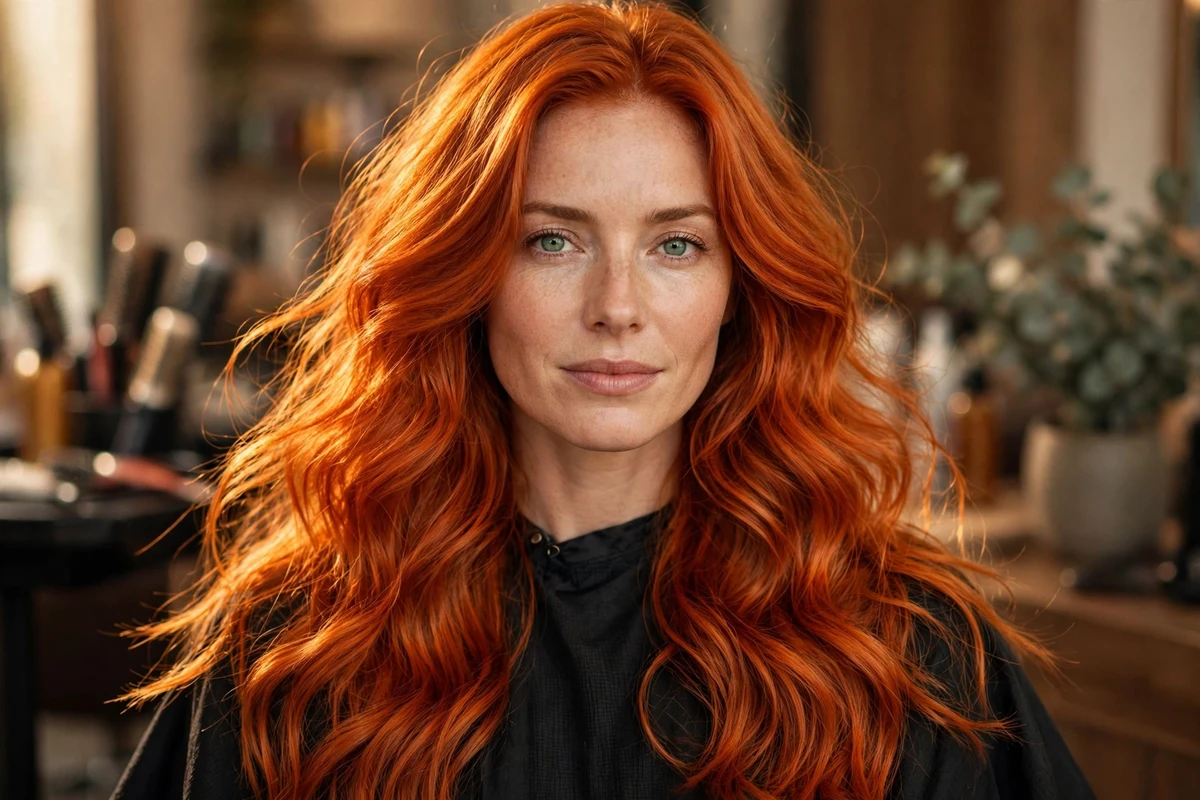
Copper hair sits in the warm red family, somewhere between ginger and auburn. It blends red and bronze tones with a golden undertone and a pop of orange brightness, which gives it that lit-from-within glow in daylight.
This guide covers everything about copper hair: what the color actually is, the full shade spectrum, how to tell whether it will suit your skin tone, how to get it at the salon or at home, and how to keep it from fading.
Quick answer: Copper hair is a warm red-orange shade built from red, bronze, and golden tones. There is a copper for most skin tones, from pale copper blonde to deep copper brown. It fades faster than most colors, so plan on sulfate-free washing, a color-depositing shampoo, and a salon gloss every 4 to 6 weeks.
Quick Takeaways
- Copper hair is a warm red-orange shade with a golden undertone. It is not the same as auburn, which runs deeper and browner.
- Warm skin tones suit most coppers. Cool skin tones do best with muted, brown-leaning coppers, and olive skin suits gold-leaning coppers low on red.
- Going more than two shades lighter than your current color usually requires bleach first.
- Copper fades fast. Wash once or twice a week with a sulfate-free, color-depositing shampoo.
- Book a gloss refresh every 4 to 6 weeks to keep the tone rich between full color appointments.
What Is Copper Hair?

Copper hair is a blend of red and bronze. Because no natural hair grows in this exact tone, every copper shade comes from dye. Its base components are warm: yellow, orange, and gold, with a subtle golden undertone under the orange brightness.
Copper is slightly brighter and more orange than auburn, and deeper and redder than strawberry blonde. Some coppers lean so far toward gold that they border on blonde, while others carry enough red to look almost cherry in indoor light. That range is what makes the shade family so adaptable.
One thing to know up front: copper is high-maintenance color. Red dye molecules are larger than other color molecules, so they slip out of the hair shaft faster with every wash. Anyone going copper should expect a dedicated upkeep routine.
Confused about where copper ends and auburn begins? Our guide to auburn copper hair for women breaks down the overlap between the two families.
The Copper Hair Shade Spectrum
Copper is not one color. It runs from pale golden coppers to deep red-browns, and each step along the spectrum suits different skin tones and starting hair colors.
Copper Blonde

Copper blonde sits at the palest end of the family, close to strawberry blonde. It carries very little red and a lot of gold, which makes it the easiest copper to wear on fair, warm skin. Natural blondes and light brunettes reach it without heavy bleaching. The trade-off is that pale copper shows fading the fastest, since there is less pigment deposited to begin with.
Classic Copper
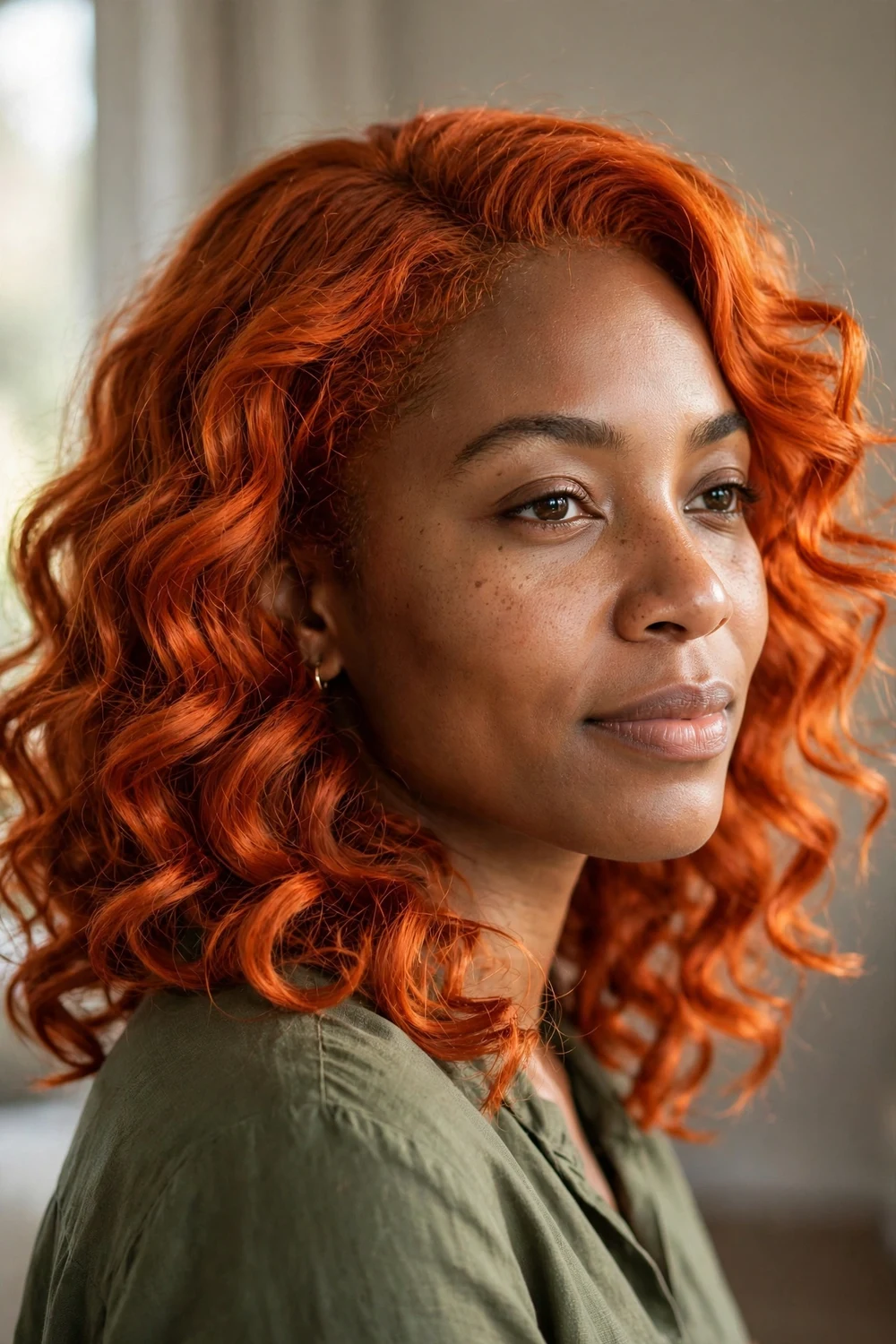
Classic copper is the shade most people picture: vivid orange-red with real shine in sunlight. It has the highest contrast against the skin of all the coppers, so it flatters light to medium complexions and makes green and hazel eyes stand out. Darker starting hair needs lifting to reach this brightness, and the upkeep is the most demanding of the family.
Deep Copper

Deep copper pushes toward red-brown territory with extra depth at the roots. It suits medium to deep skin tones and anyone who wants the warmth of copper without full brightness. The added depth helps the color hold longer than brighter coppers, and it grows out more gracefully on dark natural hair.
Copper Brown

Copper brown builds copper reflects on a brunette base. It reads as a warm brown indoors and flashes copper in the sun, which makes it the most low-key entry point into the family. Brunettes can often reach it without bleach. If this sounds like your lane, browse copper brown hair color ideas for brunette-friendly versions.
Cowboy Copper
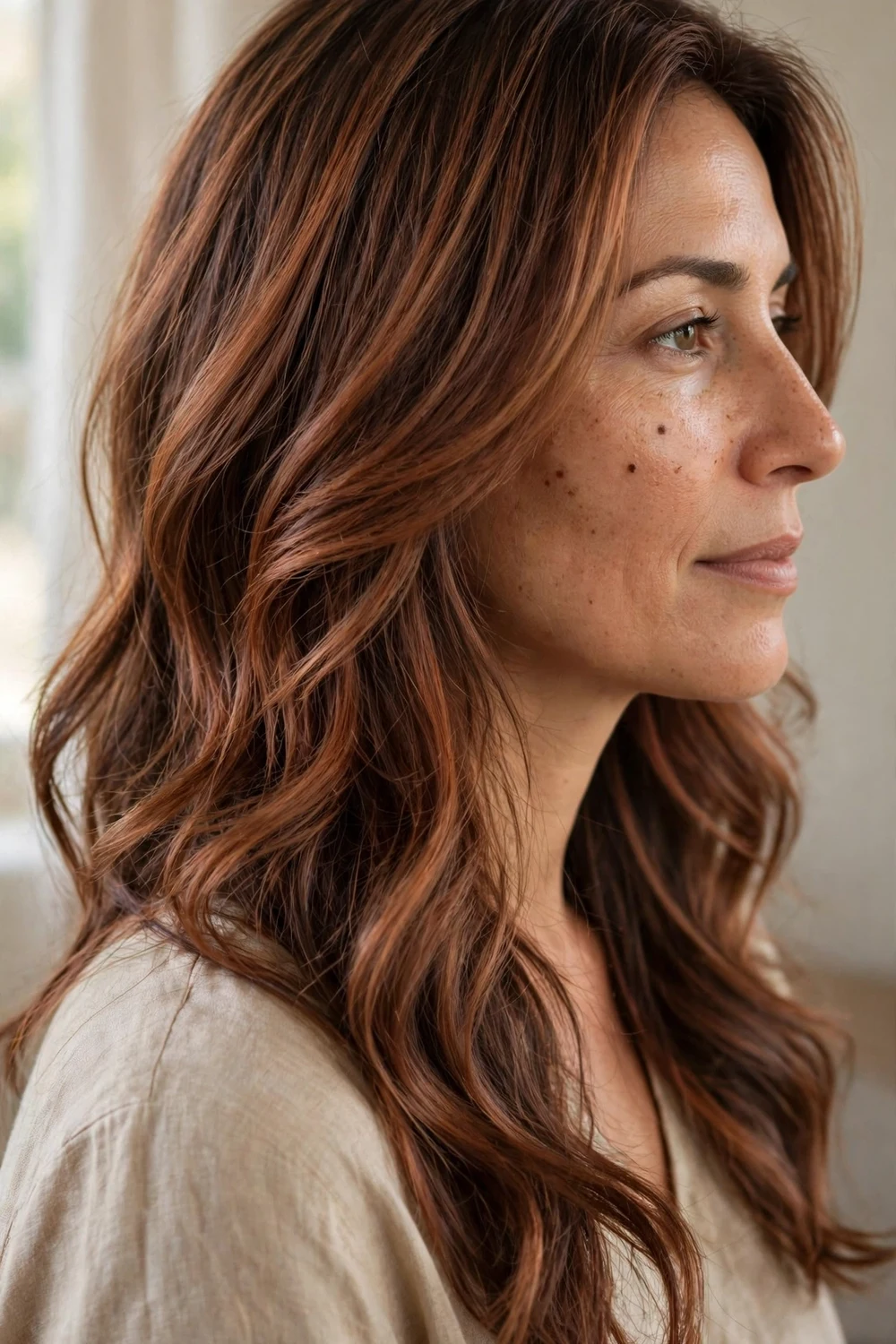
Cowboy copper is a muted copper on a soft brown base, like worn leather in late-afternoon light. The brown keeps it richer and less orange than classic copper, and it fades more gracefully. It works as an all-over shade or woven through with balayage for more movement.
If you want that hand-painted version done properly, cowboy copper balayage walks through 25 variations, from subtle blends to high-impact reds.
For the full rundown of individual shades, see copper hair color ideas, which covers shades for every skin tone.
Copper Hair Shades at a Glance
| Shade | Undertone | Suits Best | Upkeep Level |
|---|---|---|---|
| Copper blonde | Golden, low red | Fair, warm skin | High |
| Classic copper | Vivid orange-red | Light to medium skin | Very high |
| Deep copper | Red-brown | Medium to deep skin | Moderate |
| Copper brown | Warm brunette | Most skin tones | Low to moderate |
| Cowboy copper | Muted brown-copper | Warm and neutral skin | Moderate |
How to Tell If Copper Hair Will Suit You
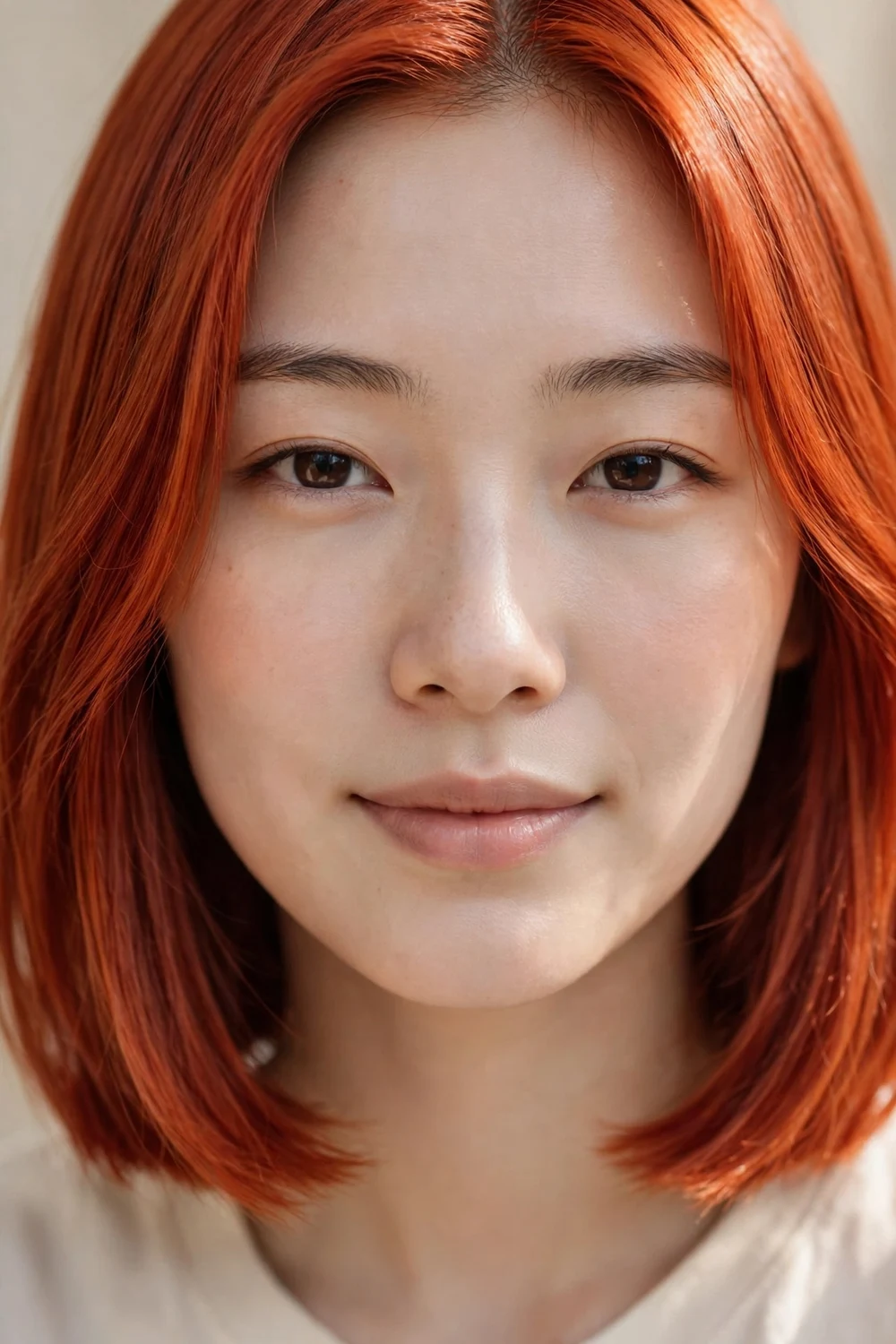
Start by finding your skin undertone. The vein test is the simplest method: hold your wrist up to natural light. Blue or purple veins point to a cool undertone, green veins point to warm, and a mix of both means neutral.
If your undertone leans warm, most copper shades will work on you, from copper blonde to deep copper. Yellow and red-leaning coppers both sit comfortably against warm skin.
If your undertone is cool, choose with more care. A muted copper with plenty of brown or gold reads better against pink undertones than a vivid orange copper does. Cowboy copper and copper brown are the safest starting points.
Olive skin needs the most caution. The redder the copper, the more it can pull sallow green tones out of olive skin. Shades that are low on red and high on gold or yellow undertones flatter olive complexions best.
Copper also plays well with light eyes and freckles, since the warm hair picks up the same golden tones. Darker eyes pair well with the deeper coppers, where the contrast feels balanced rather than stark.
How to Get Copper Hair at the Salon
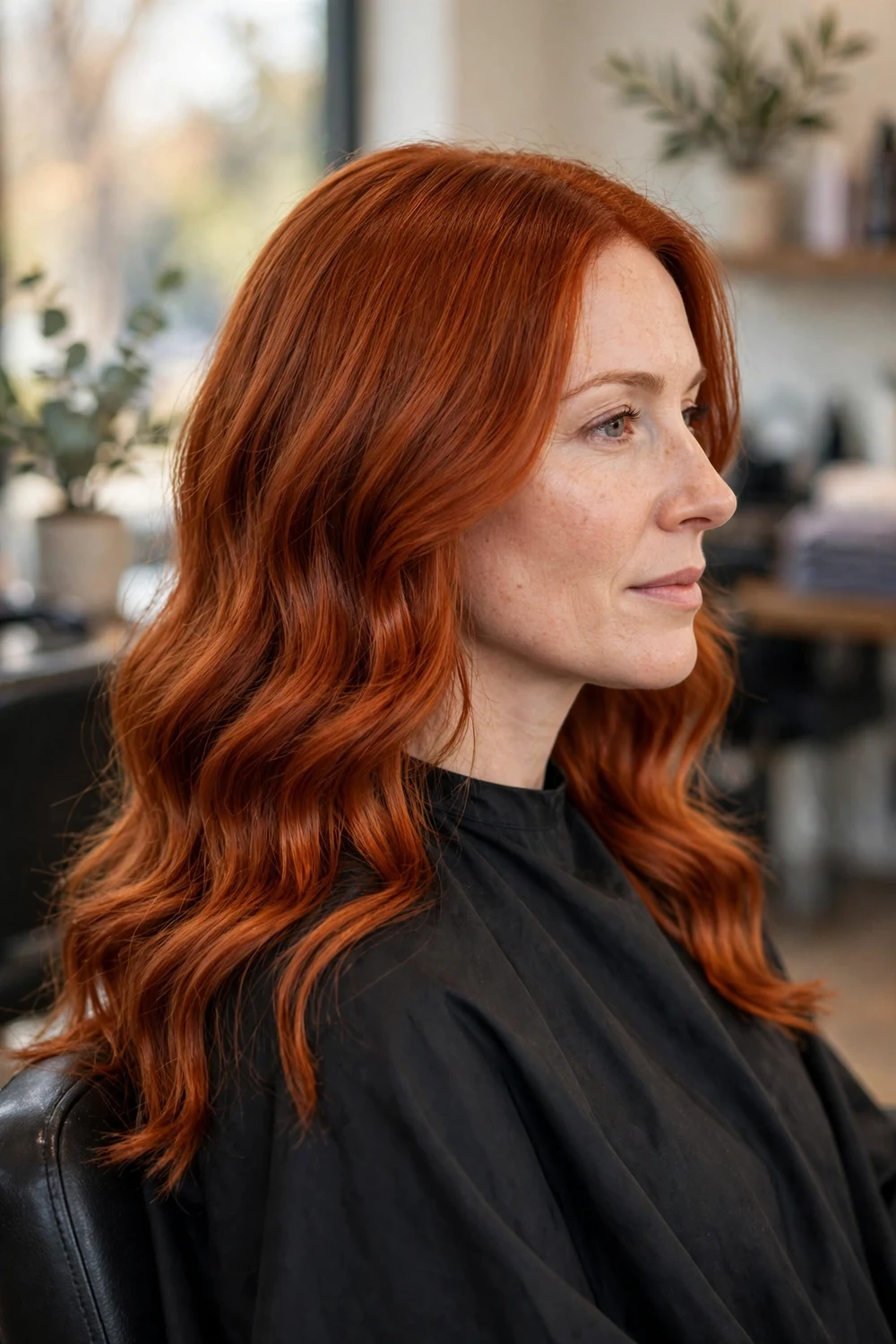
A salon colorist is the safest route to copper, especially on dark or previously colored hair. Bring reference photos to your consultation. Copper covers a wide range, and photos close the gap between what you say and what your colorist hears.
Expect an honest assessment of your starting level. If your target copper is more than two shades lighter than your current color, your colorist will need to lift with bleach before depositing the copper tone. Hair with old box dye or multiple layers of color may need color correction first.
Ask about the service format that fits your goal. Root-to-end color gives one rich, even copper from root to tip. Balayage builds copper through the lengths with a deeper root, which means softer grow-out and longer gaps between appointments. A clear gloss over any copper service adds shine and deepens the reflect; see how it works in blonde balayage with copper for a dimensional take.
Plan the maintenance conversation before you leave the chair. Ask which sulfate-free, color-safe products your colorist recommends and how soon to book the first gloss refresh.
How to Dye Hair Copper at Home
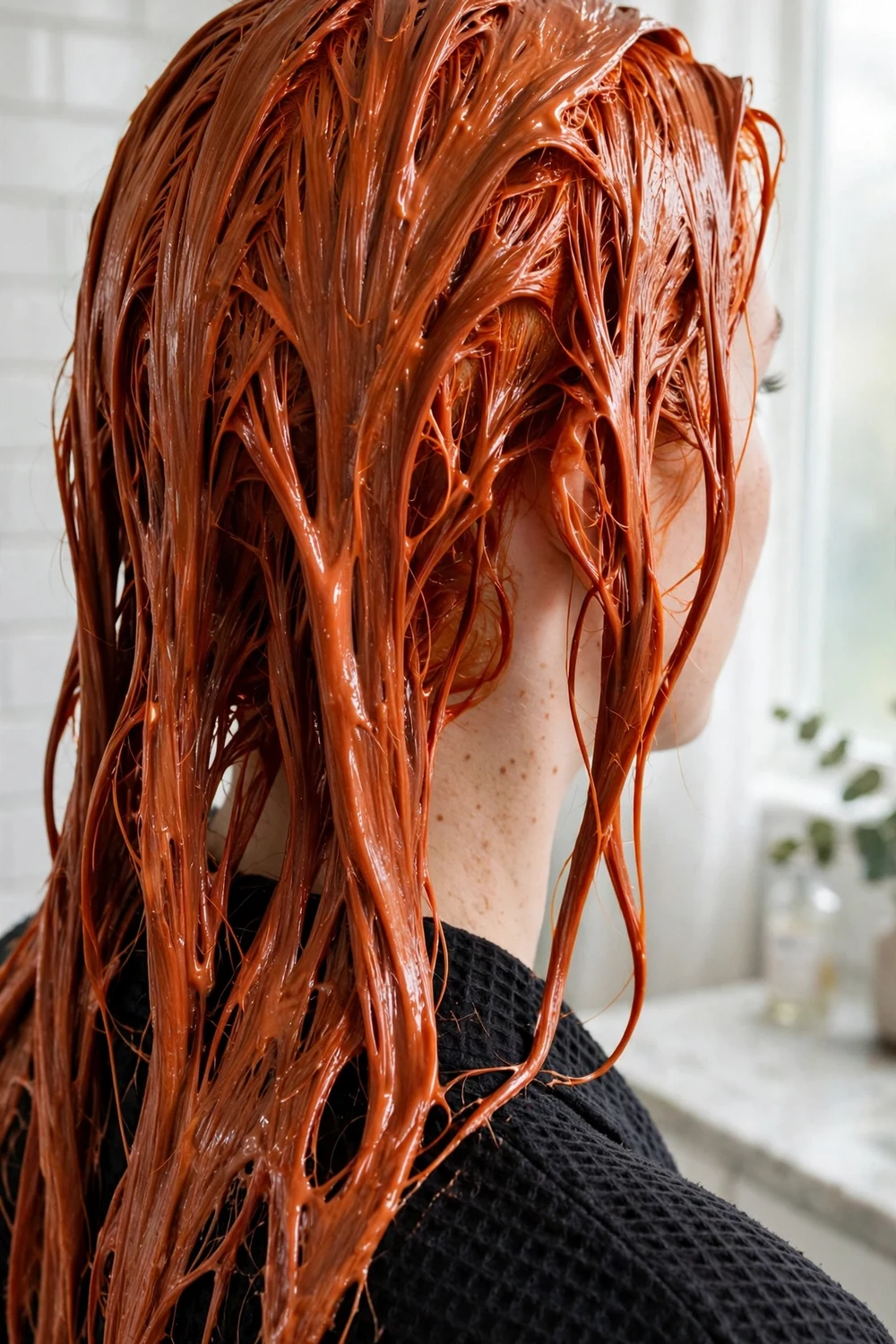
Box dye can work for copper, but only on the right starting hair. Most copper dyes tint rather than lift, so they show up best on light brown hair or lighter. Dark hair dyed with copper box dye alone usually turns out muddy instead of bright.
Do a patch test 48 hours before coloring, especially if you have never dyed your hair. Dab a small amount of mixed dye behind your ear and watch for redness, itching, or swelling. A strand test on a hidden section also shows how the shade develops on your hair.
Skip shampooing for two to three days before dyeing. Natural scalp oils protect your skin and help the color take evenly. If you bleached to lighten first, wait a few days between bleaching and dyeing and do a deep conditioning mask in between. Processing twice in one day does real damage.
On dye day, protect your hairline with petroleum jelly, wear gloves, and work in sections with clips. Apply from roots to ends, massaging each section so every strand is coated. Standard processing time is around 30 minutes, but follow your kit’s instructions. Rinse thoroughly, condition, and do not shampoo. Air-dry if you can, and skip shampoo for the next two to three days so the color settles.
How to Keep Copper Hair From Fading
Wash as little as possible. Every wash strips some copper, even with gentle shampoo. Once or twice a week is the target, with dry shampoo covering the days in between.
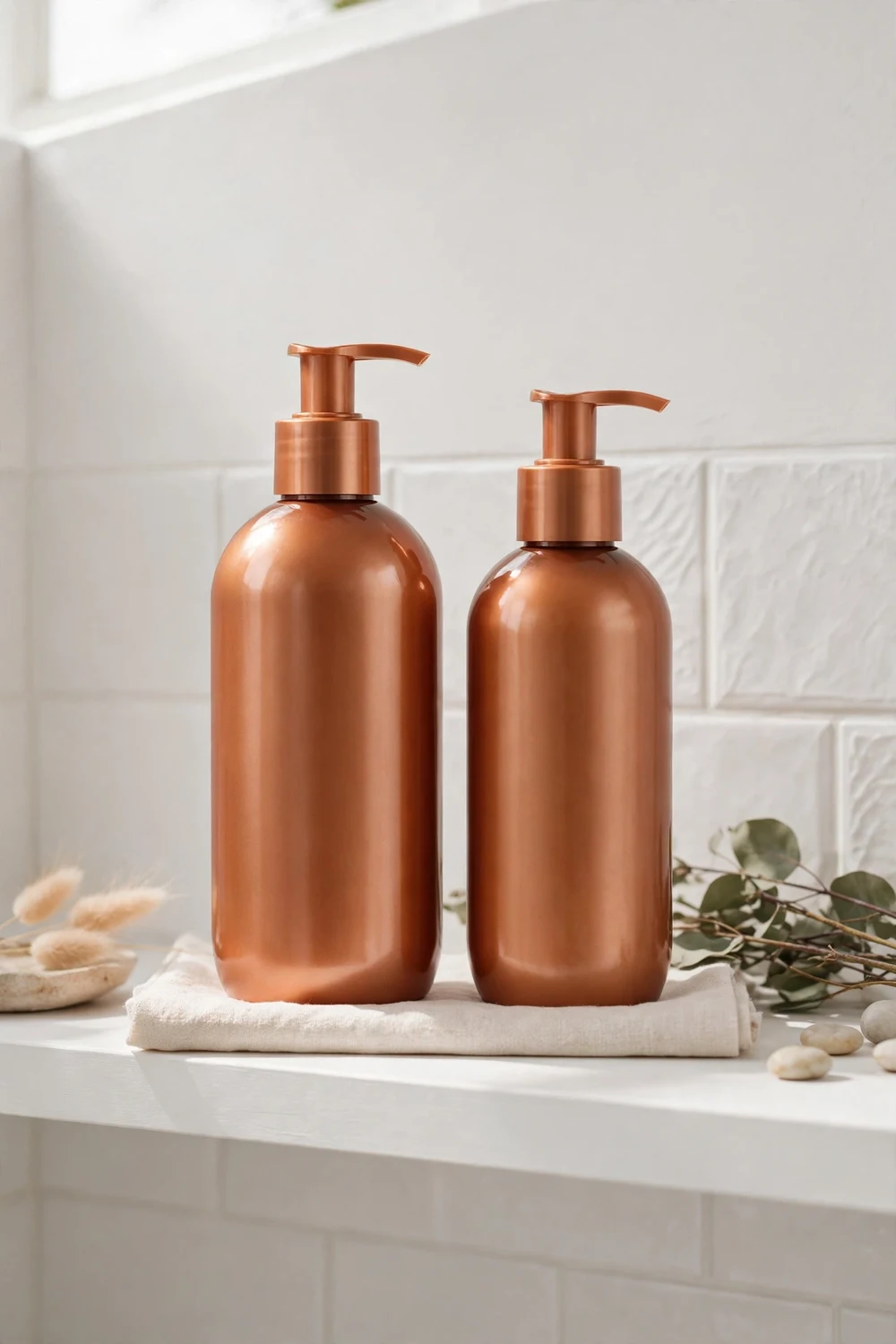
Switch to a sulfate-free shampoo. Sodium lauryl sulfate and sodium laureth sulfate are common cleansers that pull copper out fast. A sulfate-free, color-depositing shampoo in a copper or red tone is the best option, since each wash drops a little pigment back in.
Cut back on heat styling. Flat irons and curling wands open the hair cuticle and let color escape, so use them less often and always with a heat protectant. Low-heat blow drying with a diffuser does less damage than high heat.
Guard against sun and chlorine. UV light fades copper quickly, so wear a hat in strong sun or use a UV-protective hair product. Rinse hair before swimming and wear a swim cap in chlorinated pools, which can shift copper toward strange tones.
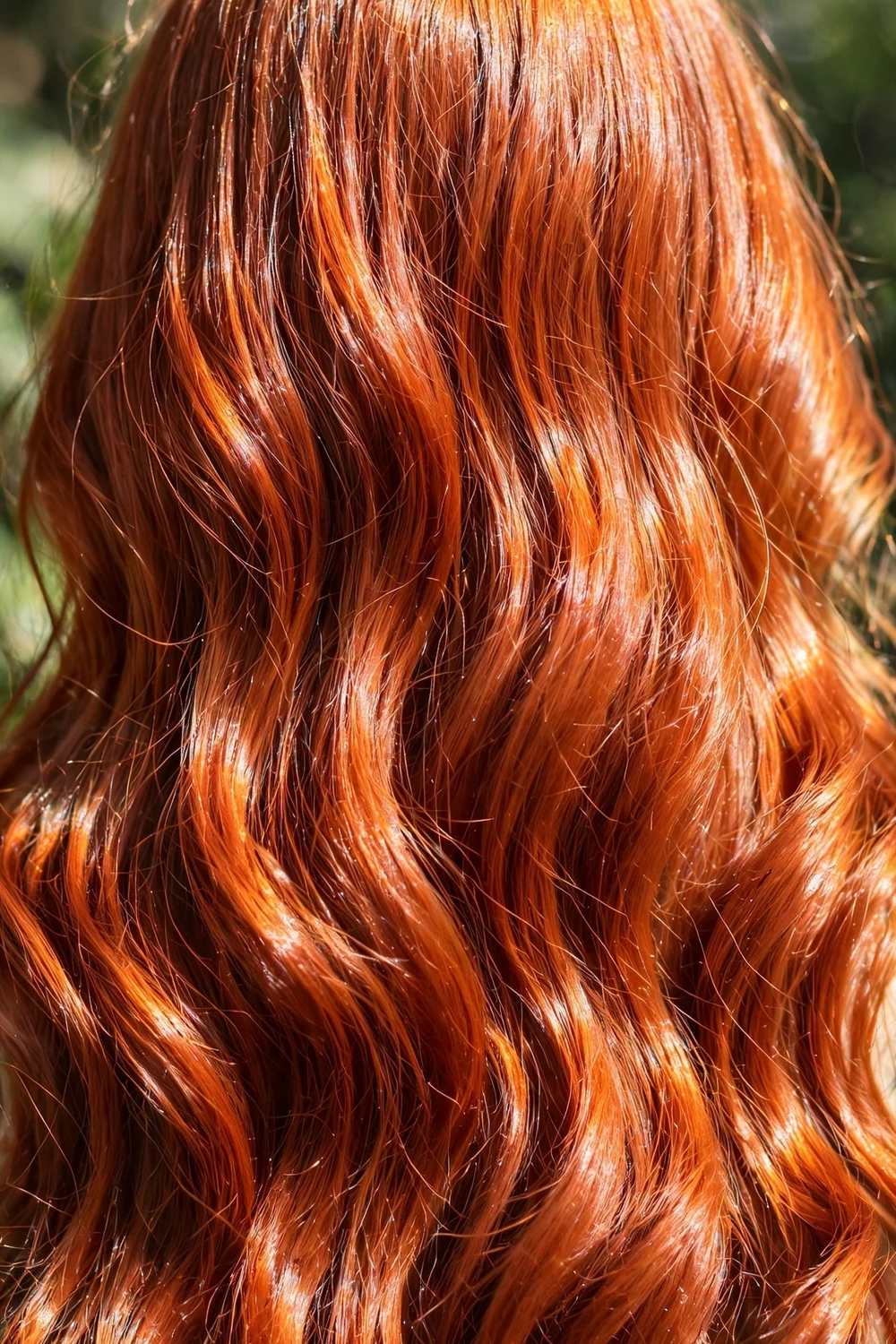
Book maintenance before the color looks tired. A salon gloss or toner every 4 to 6 weeks refreshes the reflect far more cheaply than a full recolor. Touching up roots on schedule also beats waiting until the grow-out line is obvious. Choosing a root-shadowed or balayage placement stretches the time between appointments even further.
Makeup and Wardrobe Notes for Copper Hair
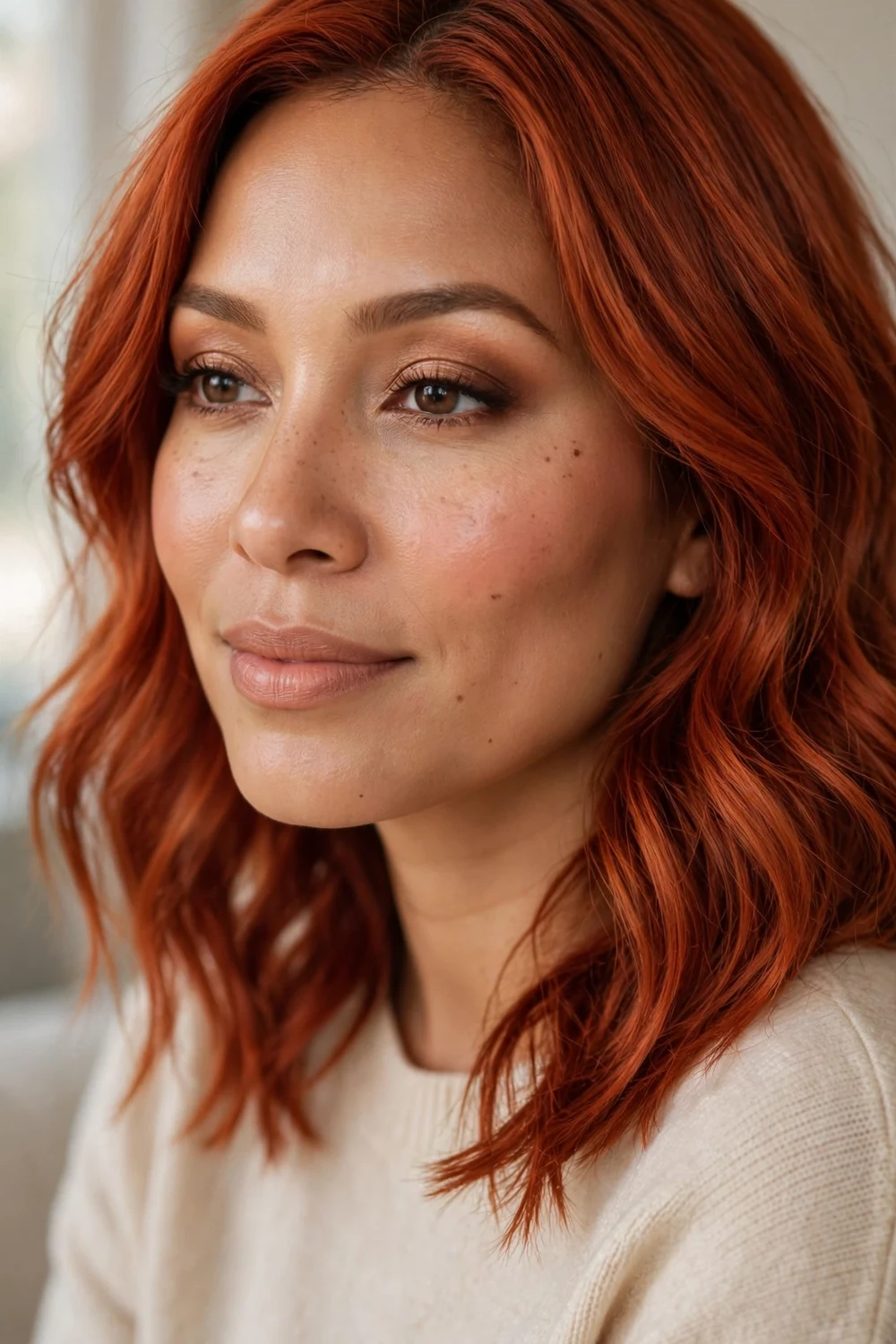
Copper hair changes how your makeup reads, and small adjustments keep everything balanced. Warm blush shades in peach, apricot, or brick complement copper, while cool pink blush can clash with the warmth. The same goes for highlighter: champagne, gold, or coppery tones work better than icy ones.
Update your brow product. Brows that matched brown or blonde hair often look off against copper. A brow shade with a warm undertone, a soft brown with a hint of red, ties the face together without looking dyed to match.
For eyes, lean on color theory. Greens, teals, bronze, and warm neutrals make copper hair glow. Heavy black liner still works, but brown-black can look softer and more current.
Wardrobe follows the same logic. Forest green, cream, navy, camel, and warm browns pair well with copper. Bright red or orange clothing can fight with the hair, so try those pieces on in daylight before committing.
Mistakes to Avoid
Do not skip the strand test. Copper develops differently on every starting color, and a hidden test strand is the only way to know what you will get before committing your whole head.
Do not dye over old box color and expect a clean copper. Layered old dye grabs unevenly, which leaves patchy, muddy results. Tell your colorist about every box dye you have used so they can plan correction work.
Do not wash daily with regular shampoo. Nothing fades copper faster than hot water and sulfates every morning. Lukewarm water and a weekly wash schedule protect the tone far better.
Do not pick the brightest copper if you want low maintenance. Classic copper is the prettiest in week one and the neediest by week three. If upkeep sounds like a chore, start with copper brown or cowboy copper and go brighter later.
Frequently Asked Questions
Is copper hair warm or cool?
Copper hair is firmly warm. Its base components are yellow, orange, and gold, with a subtle golden undertone under the orange brightness. Even the most muted coppers, like cowboy copper, read warm rather than cool.
Will copper hair suit my skin tone?
There is a copper for most skin tones. Warm undertones suit nearly every copper shade. Cool undertones do best with muted, brown-leaning coppers. Olive skin suits gold-leaning coppers that are low on red, since strong reds can pull out sallow tones.
Does copper hair need bleaching?
It depends on your starting color. If your target copper is more than two shades lighter than your current hair, you will need to lift with bleach first. Dark hair almost always needs lightening for bright coppers, while copper brown often works on brunettes without bleach.
How long does copper hair last?
Copper fades faster than most colors because red dye molecules wash out quickly. With sulfate-free products and weekly washing, the richness holds for about 4 to 6 weeks before it needs a gloss refresh. Color-depositing shampoo stretches that window.
What is the difference between copper and auburn hair?
Copper is brighter and more orange, while auburn runs deeper and browner with a red-wine cast. Cowboy copper sits between the two: a muted copper on a brown base that captures auburn’s depth with copper’s warmth.
Final Thoughts
Copper hair rewards commitment. Pick the shade that matches your undertone, get the color done right the first time, and protect it with gentle washing and regular glosses. Do that, and the color stays rich enough to justify the upkeep.

