



Short shaggy haircuts work because the layers do the styling for you. Choppy, textured layers add volume to fine hair, remove weight from thick hair, and give natural waves and curls a defined shape. Almost every version here can be adjusted to your face shape with a change in bang style or layer length.
Below are 17 specific cuts, each with a styling tip, a difficulty rating, and honest maintenance notes, so you can walk into your appointment knowing exactly what to ask for.
Quick Takeaways
- A short shaggy haircut uses choppy layers to build volume and movement, and it adapts to fine, thick, straight, wavy, and curly hair.
- Bangs set the tone: curtain bangs soften the face, wispy bangs keep things light, and micro bangs add edge.
- Plan a trim every 6 to 8 weeks. Shag layers lose their shape faster than one-length cuts.
- A texturizing spray or pea-sized amount of styling cream is usually enough for daily styling. Apply heat protectant before any hot tool.
- Bring 3 to 4 inspiration photos and ask your stylist to customize the layers for your texture and face shape.
1. Soft Shag with Curtain Bangs
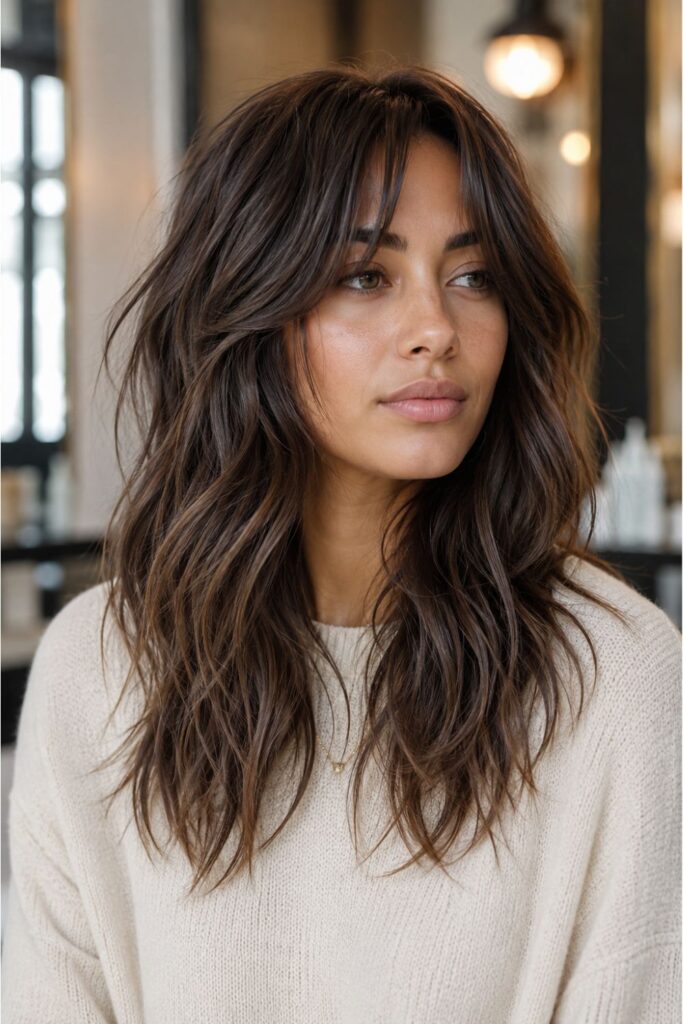
This is the most requested shag at salons right now, and the reason is simple: it suits almost everyone. The layers sit soft through the mid-lengths while curtain bangs part in the middle and melt into face-framing pieces. It works on straight, wavy, and loosely curled hair, and the grow-out is forgiving because nothing is cut blunt.
Ask for the bangs to hit at cheekbone level so they blend instead of hanging as a separate fringe. Styling takes five minutes: rough-dry, then bend the front pieces away from the face with a round brush. Most people wear this cut for 8 weeks before the bangs need a reshape.
Try this: part the bangs in the center while damp so they dry into that swept-open shape.
Difficulty: Easy · Cost: $45–$75 (cut)
2. Choppy Pixie Shag
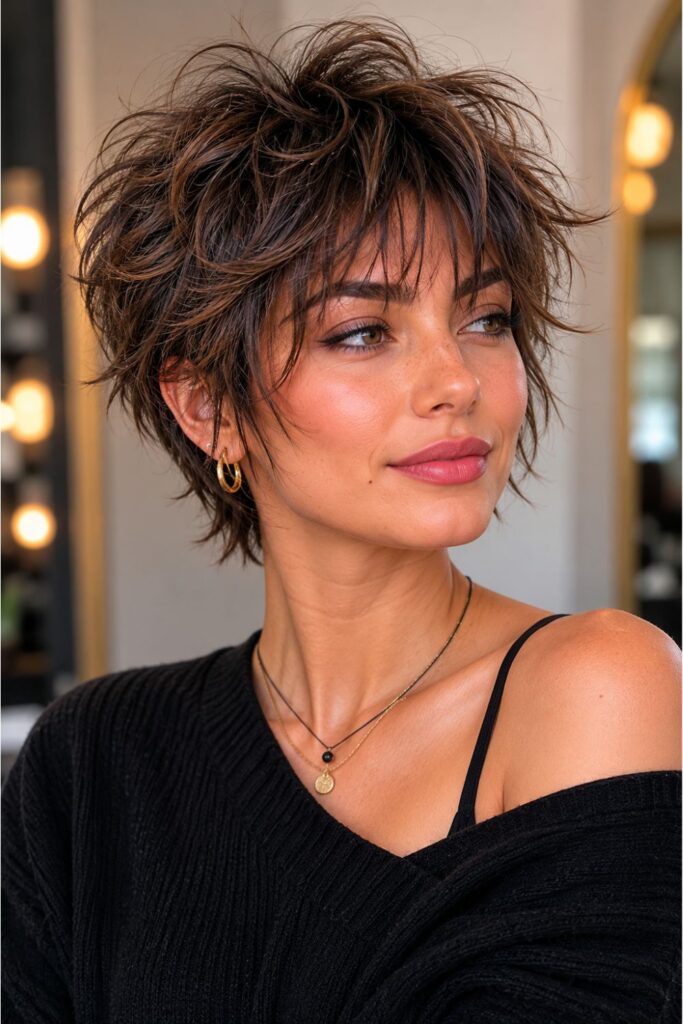
A pixie shag keeps the back and sides short like a classic pixie but leaves the top long enough for real texture. The crown layers get point-cut so they separate into pieces instead of lying flat. This cut flatters oval and heart-shaped faces, and it shows off earrings and necklines.
The trade-off is upkeep. Short layers grow out fast, so book a trim every 4 to 6 weeks or the shape goes soft around the ears. A fingertip of texturizing paste worked through dry hair is the whole styling routine.
Try this: ask for extra length through the fringe so you can sweep it to the side on days you want a change.
Difficulty: Moderate · Cost: $50–$85 (cut)
Want more short-and-textured options? Our edgy choppy pixie haircuts for women over 50 roundup leans into the same piecey finish.
3. Wavy Shag Bob

Natural waves and a shag bob are a strong match. The cut sits between the chin and the collarbone, with layers that let each wave spring instead of dragging it down. Air-drying works well here, which makes it a favorite for low-effort mornings.
The layers should be cut on dry or natural waves whenever possible, since wet cutting can take off more length than planned on wavy hair. Scrunch in a lightweight mousse while damp, then leave it alone. Touch the hair as little as possible while it dries.
Try this: sleep in a loose topknot to stretch second-day waves without heat.
Difficulty: Easy · Cost: $45–$80 (cut)
If the bob length appeals to you, our bob hairstyles collection covers blunt, layered, and textured versions beyond the shag.
4. French Bob Shag

The French bob shag ends at the chin or just below, with soft internal layers that keep the shape from looking boxy. Wispy bangs finish the look. It reads polished but not stiff, which is why it works for both office days and weekends.
This cut demands precision, so choose a stylist who is comfortable with short bobs. The line has to be even or the asymmetry shows. Blow-dry with a paddle brush for a smooth finish, or rough-dry for more texture. Either way, the layers keep it from falling flat.
Try this: tuck one side behind your ear to show off the layer work around the jaw.
Difficulty: Moderate · Cost: $55–$90 (precision cut)
5. Short Wolf Shag

The wolf cut borrows the shag’s layers but pushes the volume higher at the crown and keeps more length through the back. The short version keeps everything above the shoulders, so it stays manageable. Choppy ends and wispy bangs give it that undone finish.
This cut suits thick and wavy hair best, since the texture fills out the shape. On very fine hair it can look sparse, so ask your stylist to keep the layers connected if your hair is thin. A salt spray on damp hair builds the piecey texture.
Try this: flip your head upside down while blow-drying to build crown volume in under two minutes.
Difficulty: Moderate · Cost: $50–$85 (cut)
6. Curly Shag with Fringe

Curls give a shag built-in texture, so the cut focuses on shape instead. Layers are cut to follow the curl pattern, which removes bulk without creating a triangle silhouette. A soft fringe at the front frames the eyes and keeps the top from looking heavy.
Book a stylist who cuts curls dry. Wet curls spring up as they dry, and a dry cut is the only reliable way to judge the true length. Apply curl cream in sections while the hair is soaking wet, then diffuse or air-dry without touching. Most curly shags hold their shape for 8 to 10 weeks between trims.
Try this: reshape the fringe with damp fingers on non-wash days instead of re-wetting your whole head.
Difficulty: Moderate · Cost: $60–$95 (curl specialist)
For more curl-specific shapes, our short curly hairstyles for Black women guide focuses on cuts that honor tight curl patterns.
7. Layered Shag for Fine Hair

Fine hair needs layers that add movement without removing too much weight. This version keeps the layers long and soft through the ends, which creates the look of fullness instead of thinning the hair out. The cut sits above the shoulders so gravity does not pull it flat.
The common mistake is over-layering, which makes fine hair look stringy. Ask your stylist to keep the perimeter fairly solid and concentrate the layers through the crown and face frame. A volumizing mousse at the roots before blow-drying adds lift that lasts.
Try this: blow-dry with your head flipped over, then flip back for instant root lift.
Difficulty: Easy · Cost: $45–$75 (cut)
8. Razor Cut Shag
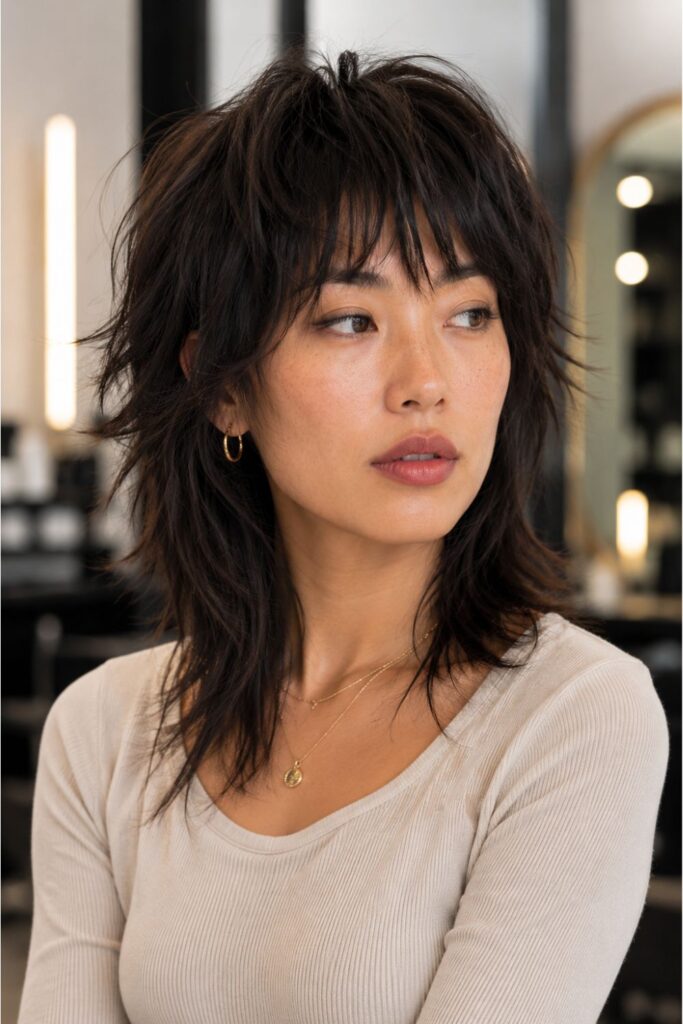
A razor replaces scissors for the layering, which gives the ends a feathered, wispy finish that scissors cannot quite copy. The result is a shag with soft, separated ends and natural movement. It works best on straight to slightly wavy hair.
Razor cutting is a skill, so ask specifically whether your stylist razor-cuts before booking. Done badly, a razor can fray the ends. Done well, the cut air-dries with texture already worked in. A light styling cream on the ends keeps the feathering defined.
Try this: skip the round brush and rough-dry with your fingers to keep the razor texture intact.
Difficulty: Moderate · Cost: $55–$90 (razor cut)
9. Shag with Wispy Bangs

Wispy bangs are cut thin enough to see skin through, which makes them the lowest-commitment fringe. They blend into the shag’s layers instead of sitting as a heavy block across the forehead. This works on most face shapes and grows out without an awkward stage.
Trim the bangs every 3 to 4 weeks to keep them wispy; left alone, they thicken as they grow. Style them with a quick pass of a flat iron, bending the ends slightly under. Use heat protectant first, since bangs take heat damage fast from daily styling.
Try this: wash just the bangs in the sink on non-wash days to revive them in two minutes.
Difficulty: Easy · Cost: $45–$75 (cut)
10. Copper Shag
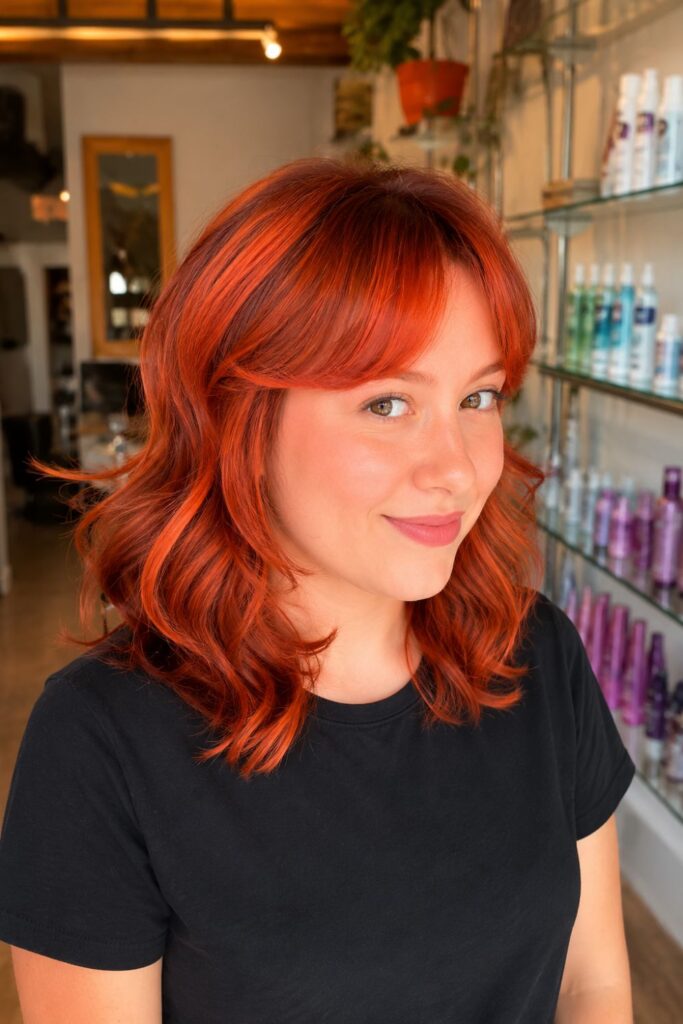
Copper turns a shag into a color story. The warm red tone catches light differently on every layer, which makes the texture look deeper than it is. Curtain bangs and loose waves show the color off best.
Red fades faster than any other shade, so plan a gloss refresh every 6 to 8 weeks. Wash in cool water with a color-safe shampoo, and expect the copper to soften toward strawberry blonde between appointments. The cut itself follows standard shag maintenance.
Try this: ask your colorist for a copper formula with a brown base if you want the color to fade gracefully.
Difficulty: Moderate · Cost: $140–$220 (cut + color)
11. Textured Crop Shag
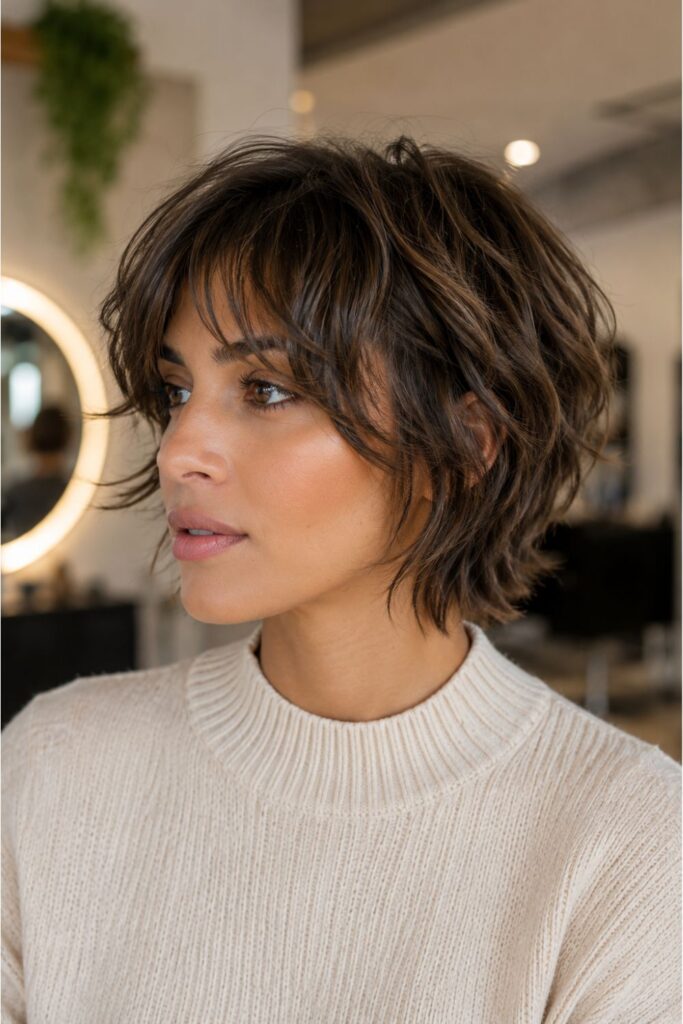
The textured crop is the shortest shag on this list. Uneven layers all over create a piecey finish that needs almost no styling. It suits people who want to wash and go without reaching for tools.
Because the layers are short, this cut shows regrowth quickly. Plan trims every 4 to 6 weeks to keep the texture sharp. A pea-sized amount of texturizing paste is enough product; more than that weighs short layers down.
Try this: work the paste in with your fingertips, lifting at the roots, instead of smoothing it over the top.
Difficulty: Easy · Cost: $45–$75 (cut)
12. Pixie Mullet Shag
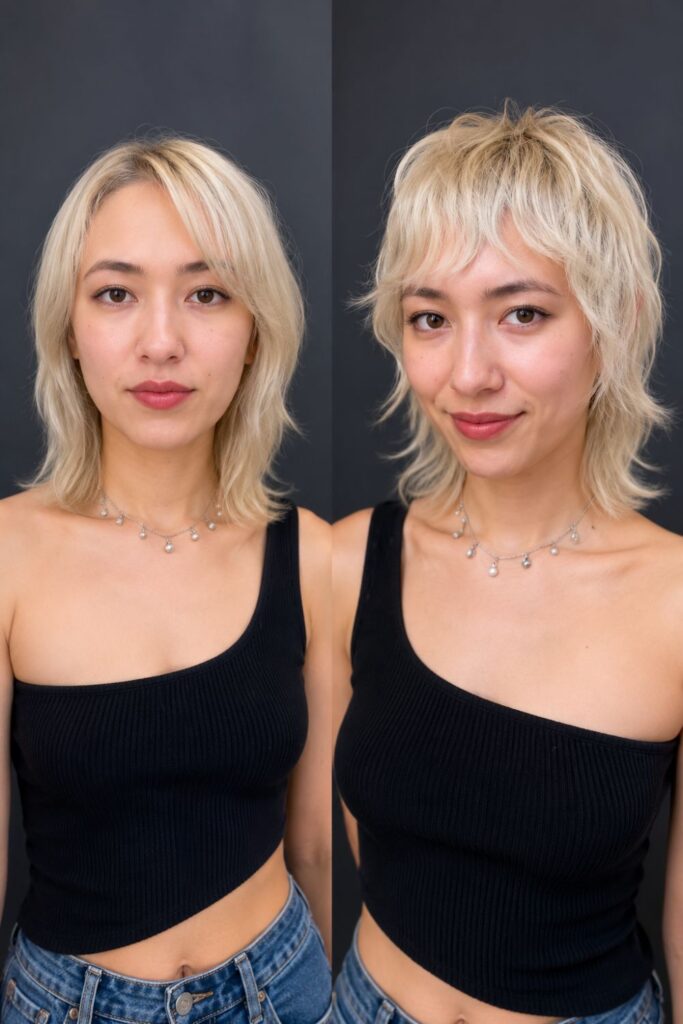
This cut mixes three shapes: a pixie at the front and crown, a mullet’s longer length at the nape, and shag layers tying them together. The result is edgy but wearable, with enough texture to style soft or piecey.
The back needs regular shaping or the mullet section grows into a shaggy neckline. Ask your stylist to show you how the back should sit, and book cleanups every 5 to 6 weeks. It styles fast: paste through the top, smooth the nape.
Try this: wear the top piecey and the nape smooth for a contrast that shows off the cut’s shape.
Difficulty: Moderate · Cost: $55–$90 (cut)
13. Soft Brunette Shag
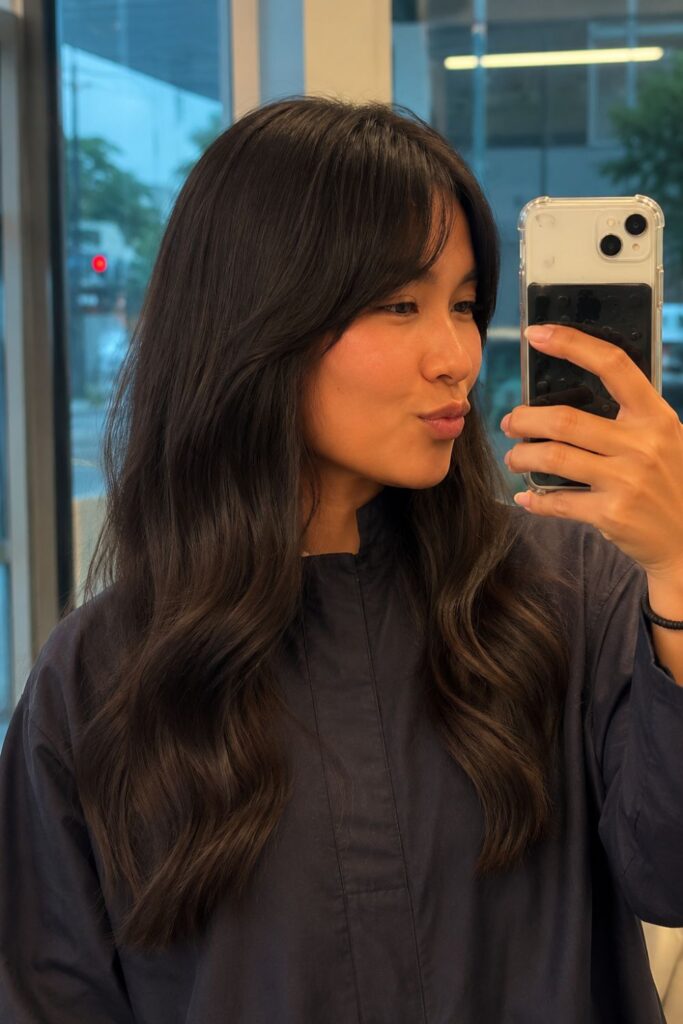
Dark hair shows shag layers clearly, since every layer edge catches the light. This version keeps the color close to natural brunette with soft dimension through the mid-lengths. Curtain bangs and loose waves complete the look.
A clear gloss every 8 to 10 weeks keeps brunette hair shiny and the layers defined. This is one of the lowest-maintenance color options, since the shade sits near most natural bases and grows out without a visible line.
Try this: ask for a demi-permanent gloss instead of permanent color to keep the grow-out invisible.
Difficulty: Moderate · Cost: $120–$200 (cut + gloss)
14. Platinum Shag
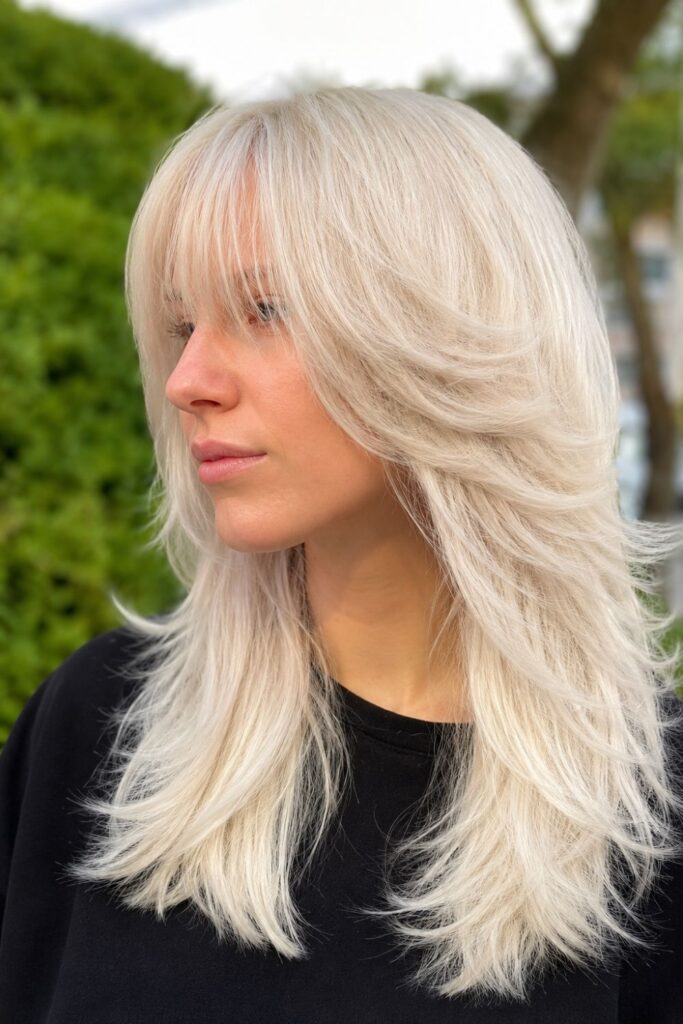
Platinum makes every layer of a shag visible. The bright, cool blonde shows the texture in a way darker shades cannot, which is why this cut photographs so well. Feathered layers and soft curtain bangs keep it from looking harsh.
The maintenance is real: roots need lifting every 4 to 6 weeks, and bleached hair needs weekly deep conditioning. Use a purple shampoo once a week to keep the tone icy, and never skip heat protectant on bleached hair.
Try this: book a bond-building treatment with each bleach session to keep the layers from snapping.
Difficulty: Hard · Cost: $180–$300 (cut + bleach)
15. Salt and Pepper Shag
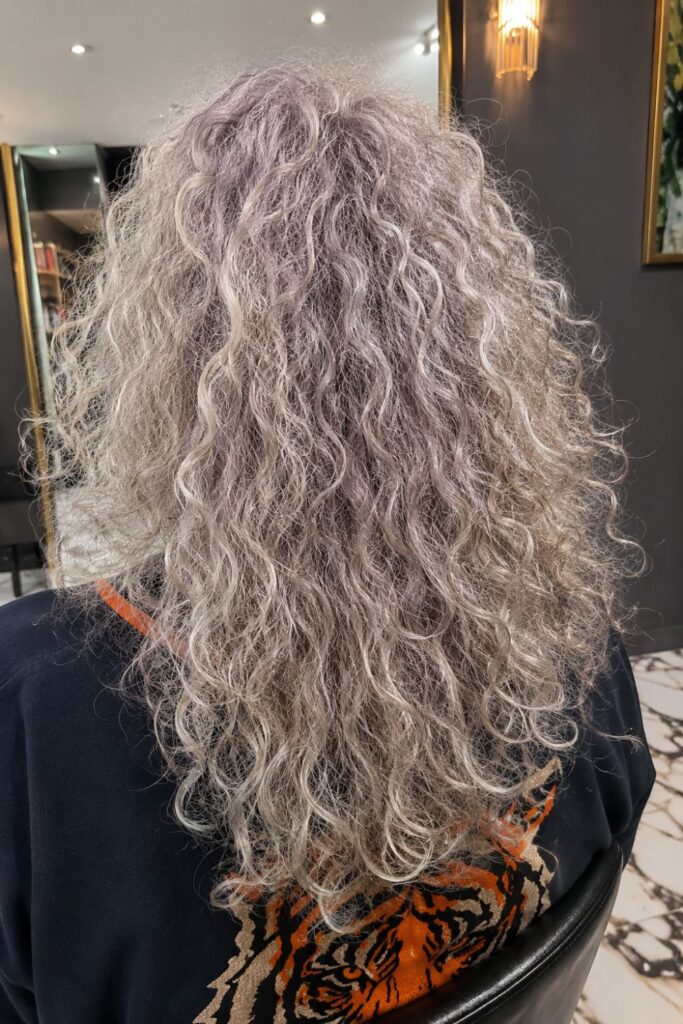
Natural gray hair and shag layers are a strong match. The layers add movement that keeps gray hair from looking flat, and the mix of silver and darker strands creates built-in dimension. Soft volume through the crown finishes the shape.
Gray hair can turn yellow from sun and heat, so a purple shampoo every second or third wash keeps the silver bright. This cut needs no color appointments, which makes it one of the cheapest options to maintain long-term.
Try this: ask your stylist to cut with your natural part so the gray pattern falls where it grows.
Difficulty: Easy · Cost: $45–$80 (cut)
Embracing your natural gray? Our salt and pepper hairstyles for women over 50 has more cuts built around silver tones.
16. Shag for Thick Hair
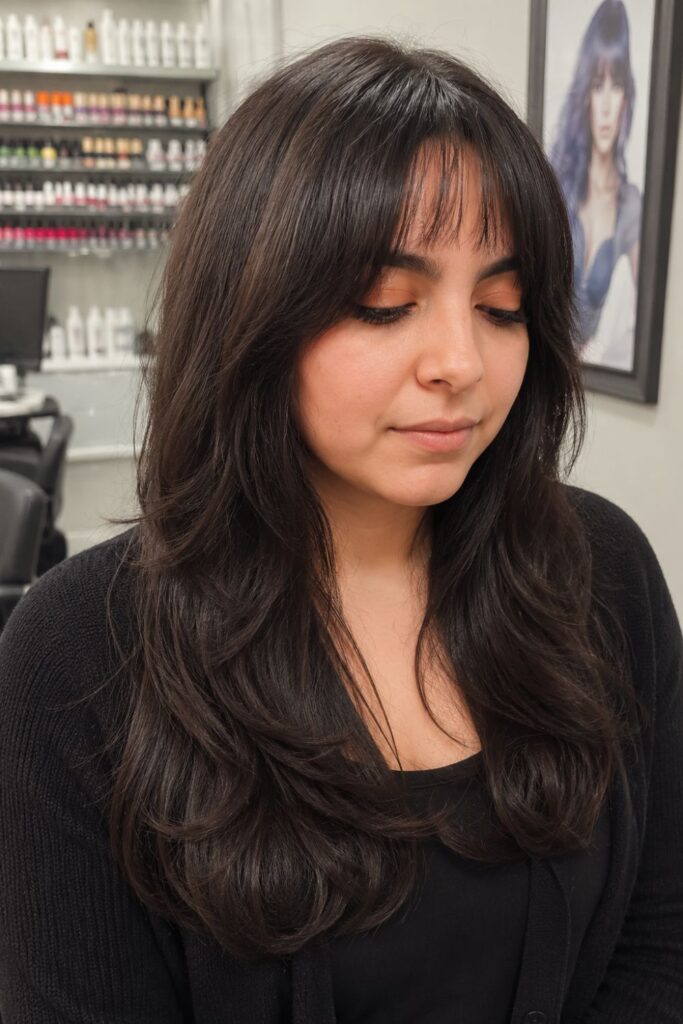
Thick hair can feel heavy in a one-length cut. A shag removes the weight with internal layers, so the hair moves instead of hanging heavy. Full bangs and face-framing pieces keep the front soft.
Ask for the layers to be thinned through the interior as well as the ends, or the bulk returns as it grows. This cut holds its shape well, so trims can stretch to 8 to 10 weeks. A smoothing cream on damp hair tames frizz without flattening the texture.
Try this: have your stylist check the cut dry as well as wet, since thick hair shifts shape as it dries.
Difficulty: Moderate · Cost: $55–$90 (cut)
17. Shag with Micro Bangs
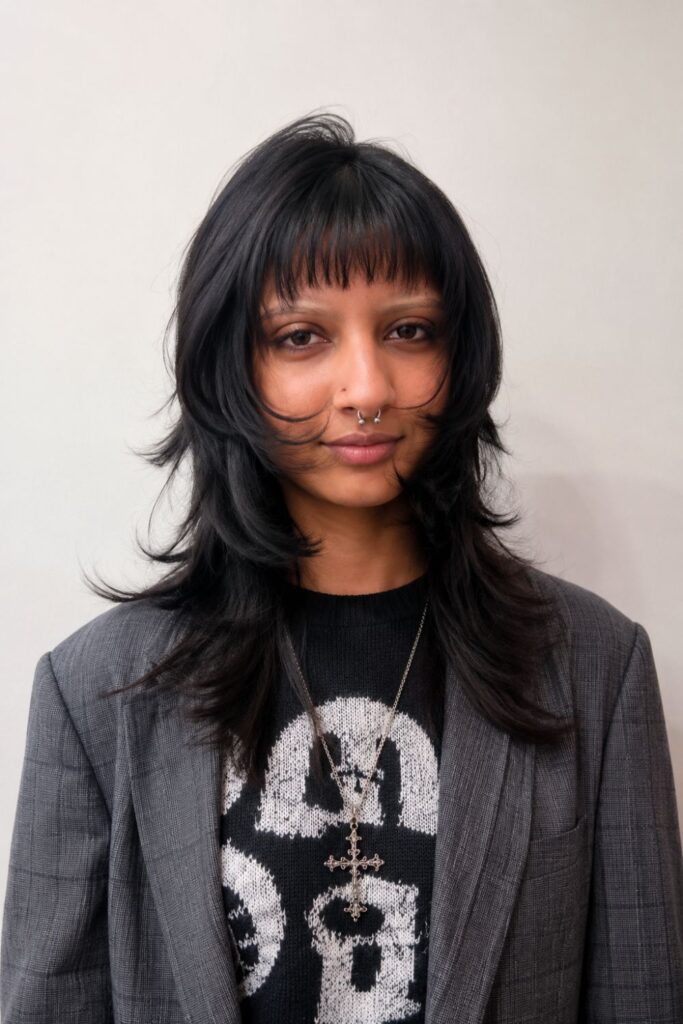
Micro bangs stop well above the eyebrows, which opens up the face and puts the focus on the eyes. Paired with choppy shag layers, they give the cut a fashion-forward edge. This fringe suits oval and long face shapes especially well.
Micro bangs grow out fast and need trimming every 2 to 3 weeks to hold the length. Many salons offer free bang trims between appointments, so ask at your visit. Style them straight down with a flat iron for the graphic finish, and use heat protectant first.
Try this: try clip-in micro bangs for a week before committing to the cut.
Difficulty: Moderate · Cost: $50–$85 (cut)
Quick Comparison
| Cut | Best for | Trim cycle | Salon cost |
|---|---|---|---|
| Soft Shag with Curtain Bangs | Most hair types, first-time shag | 8 weeks | $45–$75 |
| Choppy Pixie Shag | Oval and heart faces, bold change | 4–6 weeks | $50–$85 |
| Wavy Shag Bob | Natural waves, air-dry routine | 6–8 weeks | $45–$80 |
| Curly Shag with Fringe | Curly and coily texture | 8–10 weeks | $60–$95 |
| Layered Shag for Fine Hair | Fine or thin hair | 6–8 weeks | $45–$75 |
| Copper Shag | Warm red color lovers | 6–8 weeks | $140–$220 |
| Platinum Shag | High-contrast texture | 4–6 weeks | $180–$300 |
| Salt and Pepper Shag | Natural gray, low upkeep | 6–8 weeks | $45–$80 |
How to Choose Your Shag
Start with your face shape. Round faces benefit from height at the crown and curtain bangs that draw the eye downward. Oval faces can wear almost any shag on this list. Square faces look softer with wispy bangs and layers that start below the jaw. Heart-shaped faces do well with chin-length layers that fill out the lower half. Long faces need fuller sides and a textured fringe to create width.
Then match the cut to your hair type. Fine hair needs long, connected layers and a solid perimeter so the ends do not go stringy. Thick hair needs interior thinning so the bulk does not return within weeks. Curly hair should be cut dry by a curl specialist. Straight hair gets its texture from razor or point-cut ends.
Finally, be honest about your routine. If you air-dry and go, pick the wavy shag bob, the textured crop, or the curly shag. If you enjoy heat styling, the French bob shag and razor cut shag reward the effort. Color versions like copper and platinum double your salon visits, so only choose them if you like the upkeep.
What to Avoid
- Over-layering fine hair until the ends look thin and stringy.
- Cutting curly hair wet without accounting for how much it springs up dry.
- Skipping trims past 10 weeks. Shag layers lose their definition and start to look grown out rather than textured.
- Choosing micro bangs if you will not trim them every 2 to 3 weeks.
- Using heavy butters or oils near the roots. They flatten the texture a shag is built on.
- Copying a photo exactly instead of asking for the layers to be adjusted to your texture.
Frequently Asked Questions
Are short shaggy haircuts good for thin hair?
Yes, they can be. The right layers add movement and can make fine hair look fuller when paired with a volumizing product at the roots. Ask your stylist to keep the layers long and the perimeter solid, and to avoid removing too much weight if your hair is very thin.
Do short shaggy haircuts work on curly hair?
Absolutely. Curly hair often looks great with shaggy layers because they shape the curls and remove bulk that would otherwise weigh the style down. A curl cream or leave-in conditioner keeps the definition, and a dry cut gives the most predictable result.
Are shag haircuts hard to maintain?
Most short shaggy haircuts are easy to maintain. A trim every 6 to 8 weeks and a simple styling routine are usually enough to keep the layers looking fresh. Shorter versions like pixie shags need trims closer to every 4 to 6 weeks.
Can women over 50 wear a short shaggy haircut?
Yes. A soft shag with light layers adds movement and creates a current look at any age. The salt and pepper shag on this list is designed around natural gray, and the cut can be adjusted to suit your hair texture and personal preference.
What is the difference between a shag and a wolf cut?
Both haircuts use layers, but a wolf cut usually has more dramatic volume at the crown and a stronger contrast between the top and bottom sections. A classic shag tends to have a softer and more balanced shape. The short wolf shag on this list sits between the two.
Final Thoughts
A short shaggy haircut is one of the most forgiving cuts you can get, because the texture hides grow-out and the layers adapt to your hair instead of fighting it. Pick your bangs by face shape, pick your layers by hair type, and bring photos to your consultation. The right shag should take less than ten minutes to style on a normal morning.
For more short-hair inspiration across every style family, browse the full collection at PrimeHairPicks.

