



Thin hair and short cuts are a tricky pair. Cut too short and you lose what little weight you had. Keep it too long and the ends turn wispy. A chin length bob sits right in the sweet spot, short enough to remove dragging weight, long enough to look intentional.
I’ve spent years testing bob lengths on fine hair, and the chin-grazing cut keeps winning for one simple reason: it concentrates every strand where people actually look. Below you will find 30 chin length bob hairstyles for thin hair, each with styling notes so you know exactly what to ask for at your next appointment.
Quick answer: A chin length bob makes thin hair look fuller by concentrating weight at the perimeter. Blunt and stacked cuts create the most density, while soft waves and texture add the illusion of volume. Trims every 6 to 8 weeks keep the shape from going stringy.
If your strands are both thin and fine, our guide to chin length hairstyles for thin fine hair adds 27 more cuts built specifically for that combination.
Quick Takeaways
- A chin-grazing length removes the wispy ends that make thin hair look thinner.
- Blunt perimeters read as density; stacked backs build height where hair lies flat.
- Soft waves and piecey texture multiply perceived volume without removing weight.
- Deep side parts and curtain bangs redirect fullness toward the hairline.
- Book trims every 6 to 8 weeks, since grown-out ends undo all the fullness fast.
Why a Chin Length Bob Works for Thin Hair
Density is mostly an optical trick. Hair looks thickest where the most ends land in one place. A chin length bob lands every strand at roughly the same point, so the eye reads one solid edge instead of scattered wisps. That single fact explains why the cut keeps showing up in stylist recommendations for fine hair.
Length also matters for weight. Long fine hair pulls itself flat at the roots, which exposes the scalp and kills volume. Cutting to the chin removes that downward pull, and roots spring up a little on their own. You get lift without teasing, and the style holds its shape through the day instead of collapsing by lunch.
There is one honest caveat. This length shows regrowth quickly. Roots grow out, layers drop, and the clean edge softens into something shapeless around week eight. That is not a flaw in the cut, it is just maintenance math. Plan the trim schedule before you commit, and the style pays you back every day.
What to Tell Your Stylist
Bring photos of the exact bob you want, not just the keyword. Chin length means the perimeter sits at or just below the chin, so be clear whether you want it grazing the jaw or dipping slightly lower in front. Ask your stylist to keep weight at the perimeter if your ends are sparse, and to layer only through the interior if you want movement.
Mention your thin spots directly. If your crown lies flat, ask for graduation or stacking through the back. If your hairline looks thin, talk about bangs or a deep side part before the cut, since fringe changes where the weight lands. A good consultation takes five minutes and prevents a cut that fights your growth patterns.
1. Classic Chin Length Bob

The classic chin length bob is the foundation every other version builds on. Hair is cut to one even length that ends right at the chin, with no layers and no angle. Because nothing is thinned out, the ends stay as dense as your hair gets, which is exactly what thin hair needs. The shape suits straight and slightly wavy textures, and it takes about ten minutes to style on a normal morning.
Try this: Blow-dry with a paddle brush, ends tucked slightly under, and finish with a pea-sized drop of shine serum on the mid-lengths only.
2. Blunt Chin Length Bob
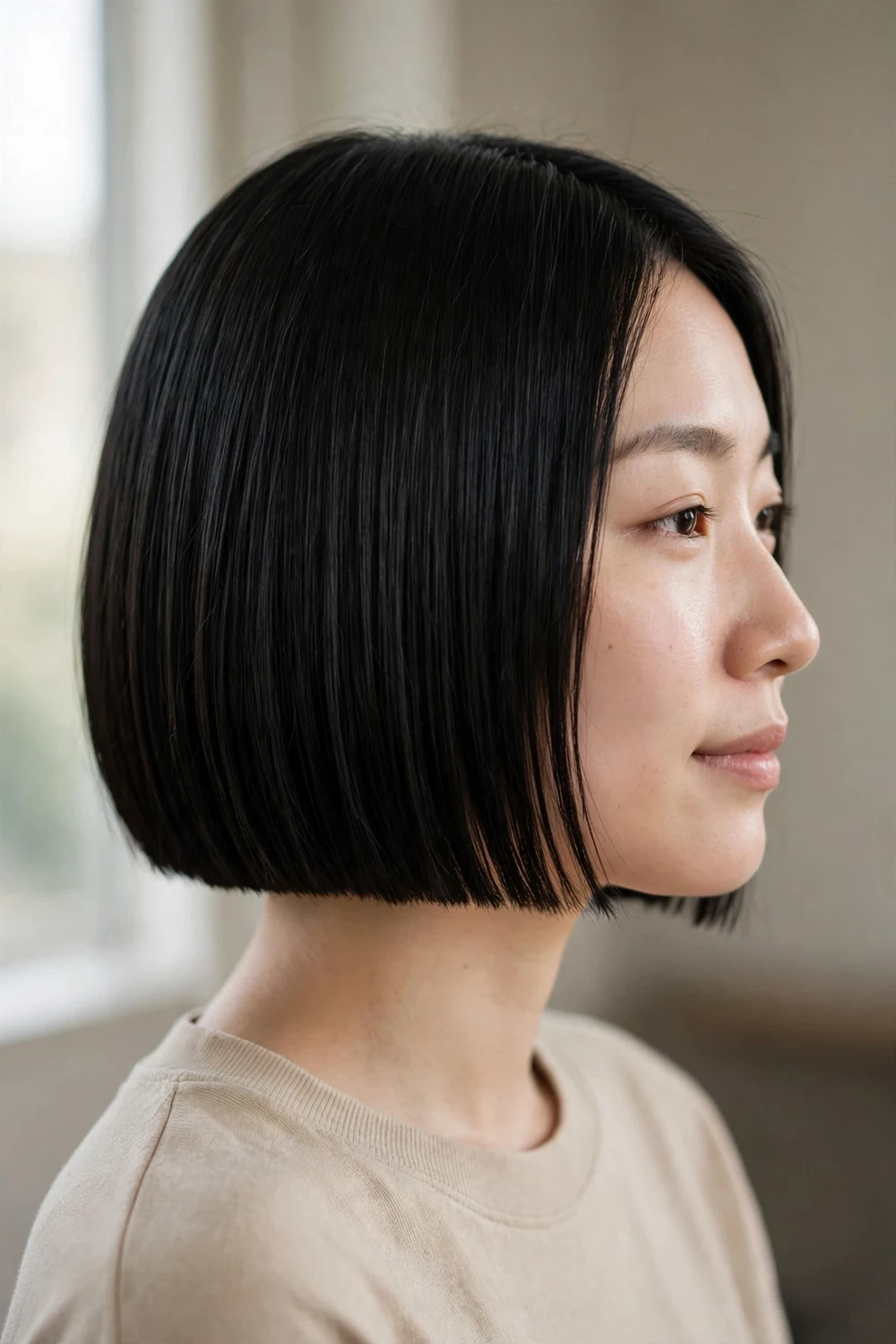
Ask for the sharpest perimeter your hair can hold. A blunt chin length bob cuts every strand to the exact same point, and that solid edge reads as thickness even when the hair itself is fine. The chin-grazing length keeps it from looking severe, and the weight line catches light evenly, which adds to the dense impression. It works best on straight or straightened hair, since waves soften the line that does the work.
Try this: Flat-iron the last two inches in small sections, then press a flexible-hold hairspray through with your palms to seal the edge.
3. Layered Chin Length Bob
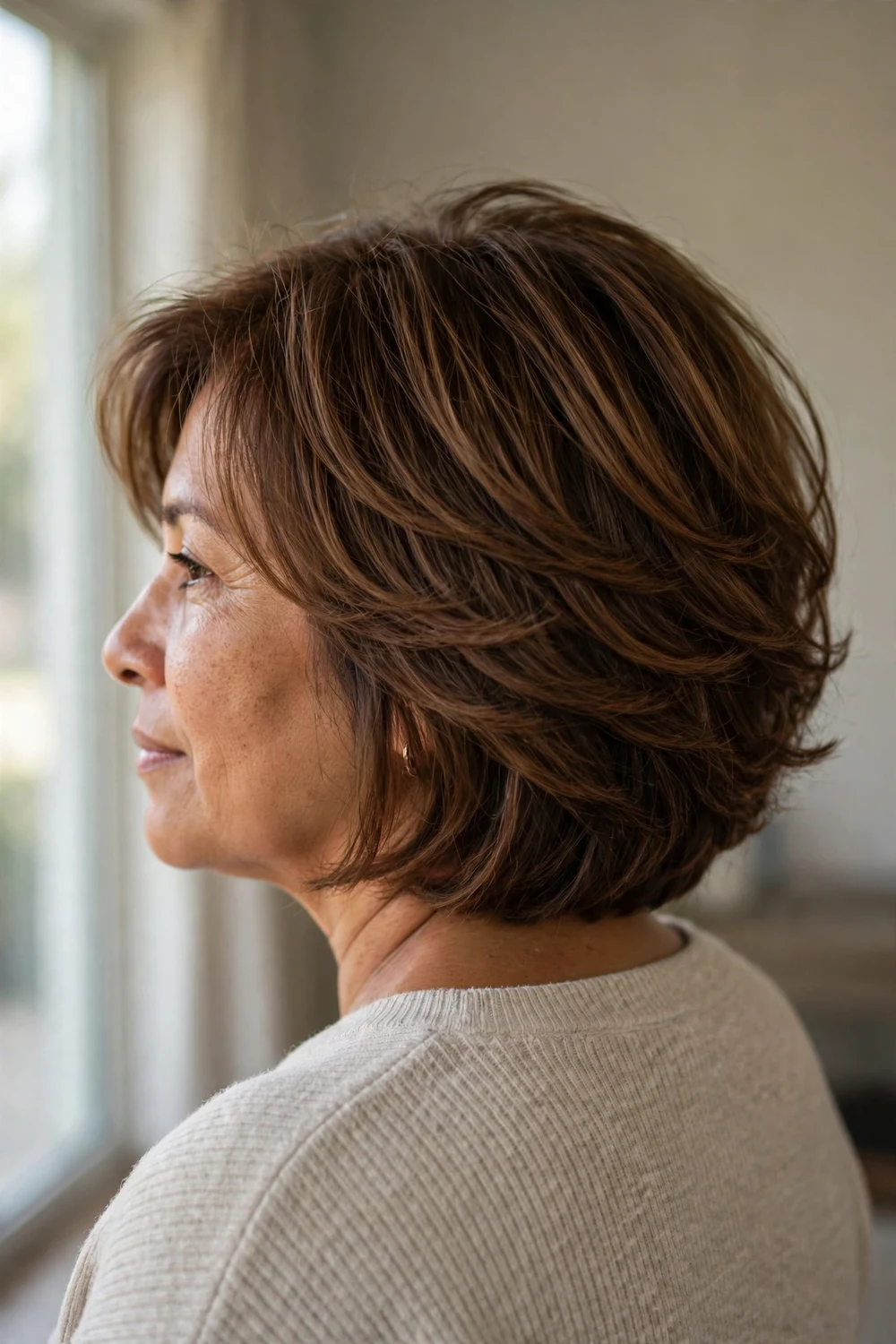
Layers get a bad reputation for thin hair, but the right kind adds movement without stealing density. In a layered chin length bob, the layering stays in the interior and the crown while the perimeter keeps its weight. That combination lifts the top, lets the pieces separate, and leaves the ends looking full. It flatters oval and long faces especially, since the movement breaks up a long line. Ask for the layers to start at the crown rather than the mid-lengths, since crown layers do the actual lifting work.
Try this: Apply volumizing mousse to damp roots, then blow-dry with a round brush, lifting each crown section straight up before rolling it under.
4. Angled A-Line Bob
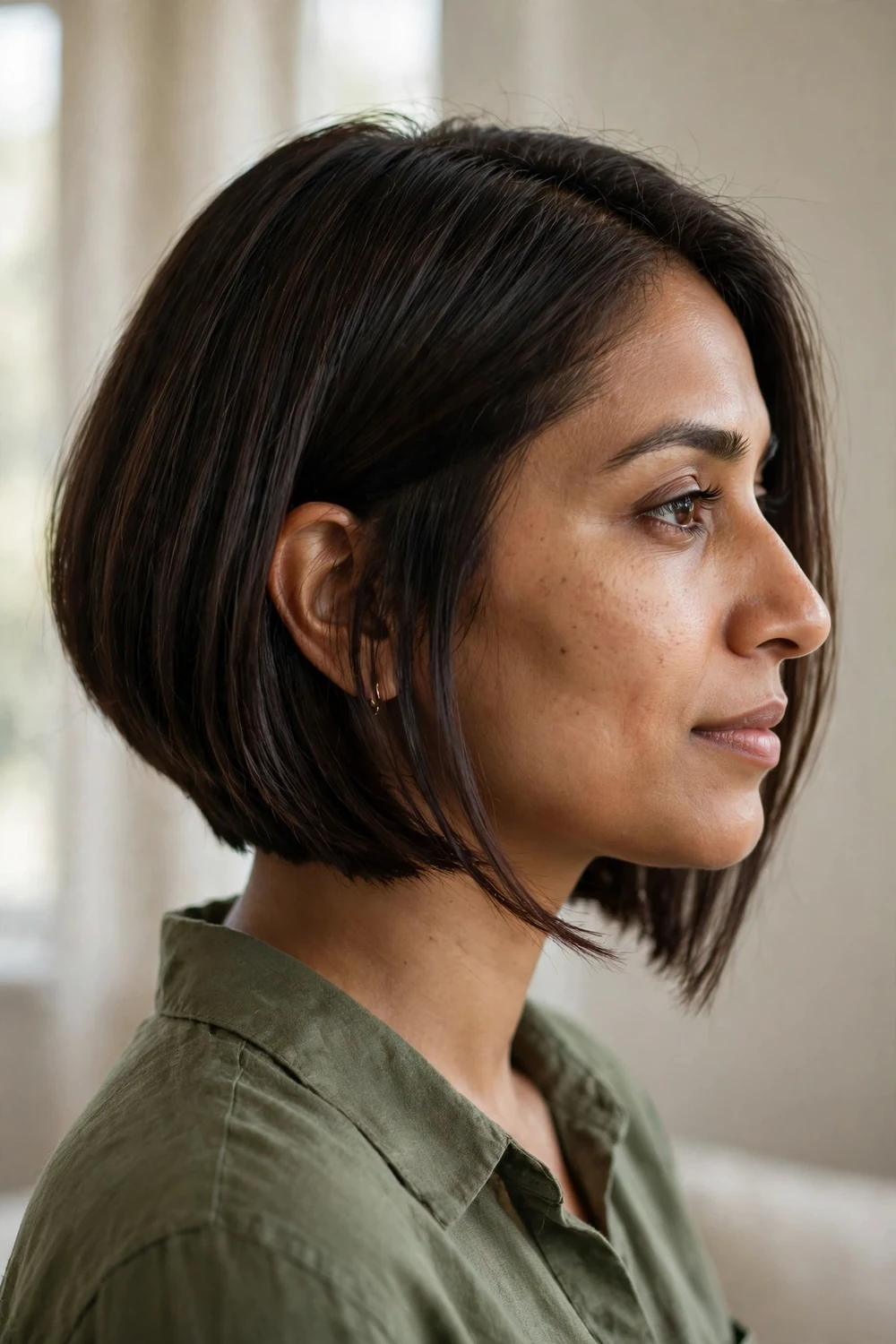
Shorter in the back, longer in the front: the angled A-line bob uses geometry to fake fullness. The diagonal line draws the eye forward along the jaw, which keeps attention on your face instead of your ends. Meanwhile the shorter back sits closer to the head, so whatever hair you have packs into a smaller area and looks denser. Side parts emphasize the angle even more. A center part softens the geometry, while a side part plays up the sharp diagonal line even more.
Try this: Dry the front sections forward and under with a round brush so the long pieces curve toward the chin and frame the jawline.
5. Stacked Graduated Bob
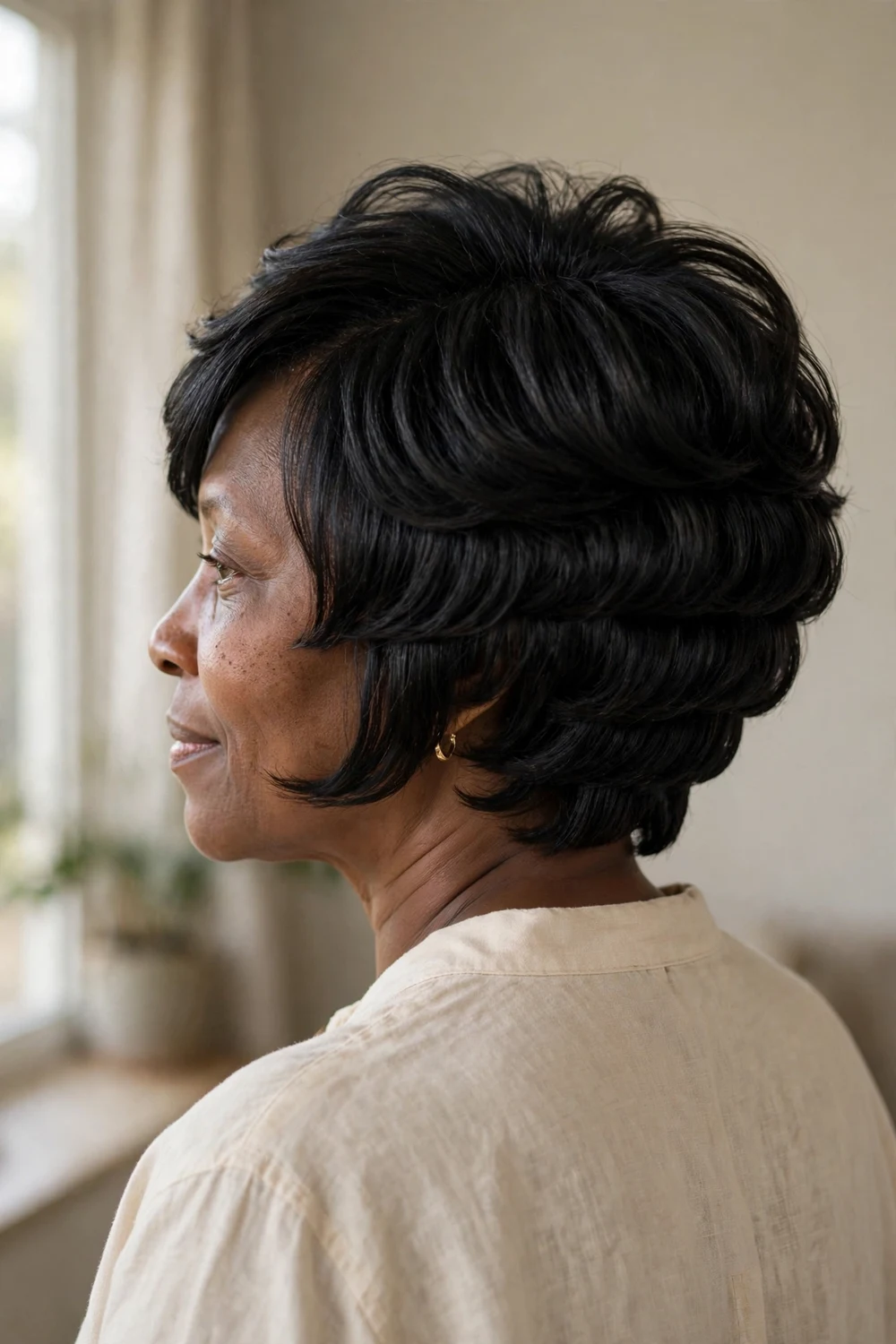
When the back of your head lies flat, stacking is the fix. A stacked graduated bob builds short, overlapping layers at the nape and crown, which forces the hair to push outward instead of hugging the scalp. The front still reaches the chin, so you keep the flattering frame while the back does the volume work. It needs a trim every five to six weeks to keep the stack from sagging.
Try this: Rough-dry the back upside down first, then smooth only the front pieces with a round brush so the crown keeps its lift.
6. Asymmetrical Bob
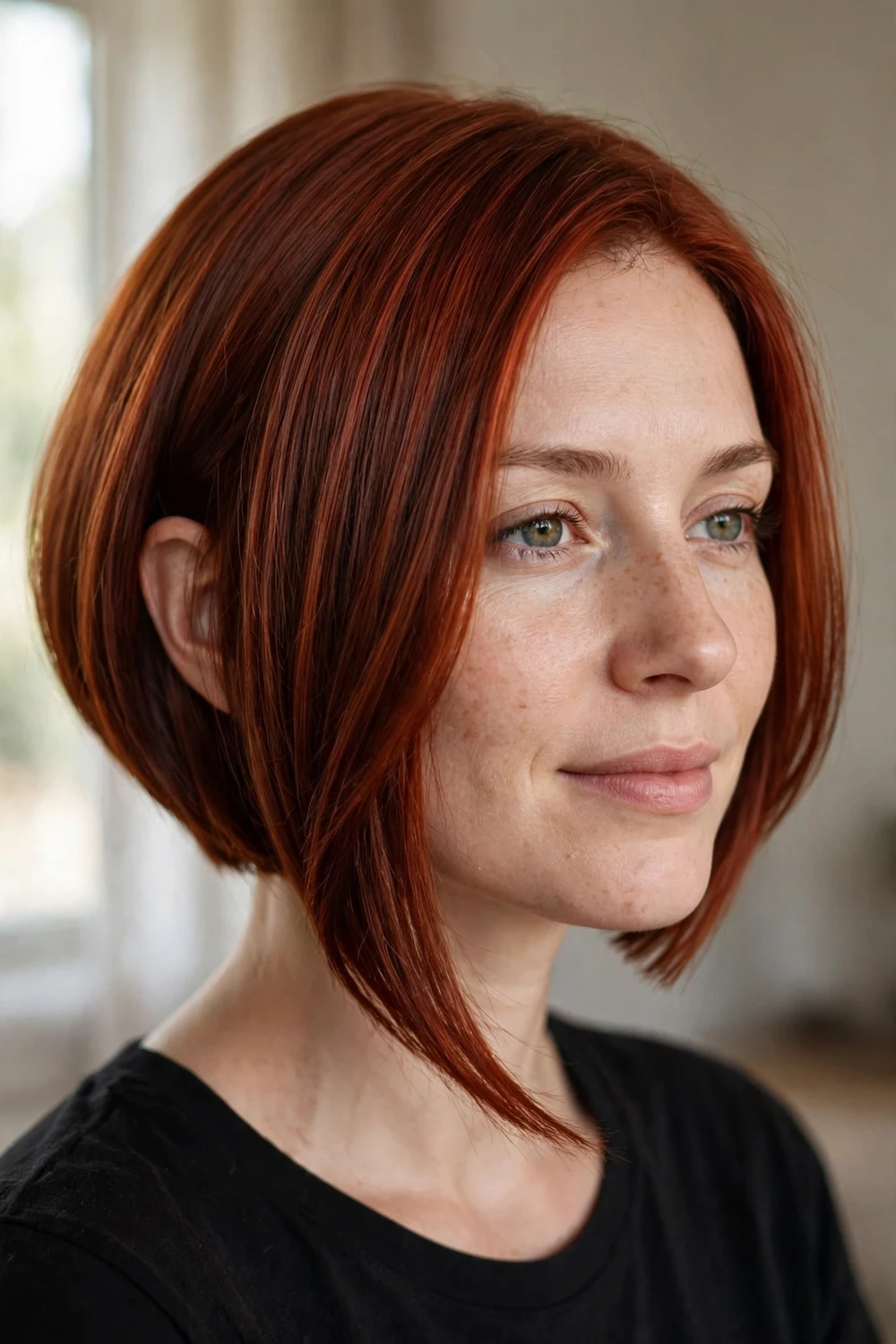
One side longer than the other sounds dramatic, but it solves a real thin-hair problem: a flat, even curtain of hair shows every sparse patch. The asymmetrical bob breaks that curtain into two different lengths, and the uneven edge creates visual interest that distracts from density. Wear the long side forward to cover a thin hairline, or tuck the short side behind the ear to show off earrings. Ask your stylist to keep the difference between the two sides between one and three inches so it reads as intentional rather than grown out.
Try this: Part on the shorter side and sweep everything toward the long side for instant asymmetry and root lift in one move.
7. Choppy Textured Bob

Point-cut ends change everything for fine hair. A choppy textured bob uses texturizing to break the perimeter into separated pieces, and those pieces catch light at different angles, which reads as depth. The cut looks intentional even when you air-dry it, which makes it one of the lowest-effort options on this list. Keep the chopping in the last inch so the body of the cut keeps its weight. The style also hides cowlicks well, since the separated pieces fall where they want instead of fighting your growth pattern.
Try this: Work a pea-sized amount of texturizing paste through dry ends with your fingers, twisting a few pieces for definition.
8. Wavy Chin Length Bob
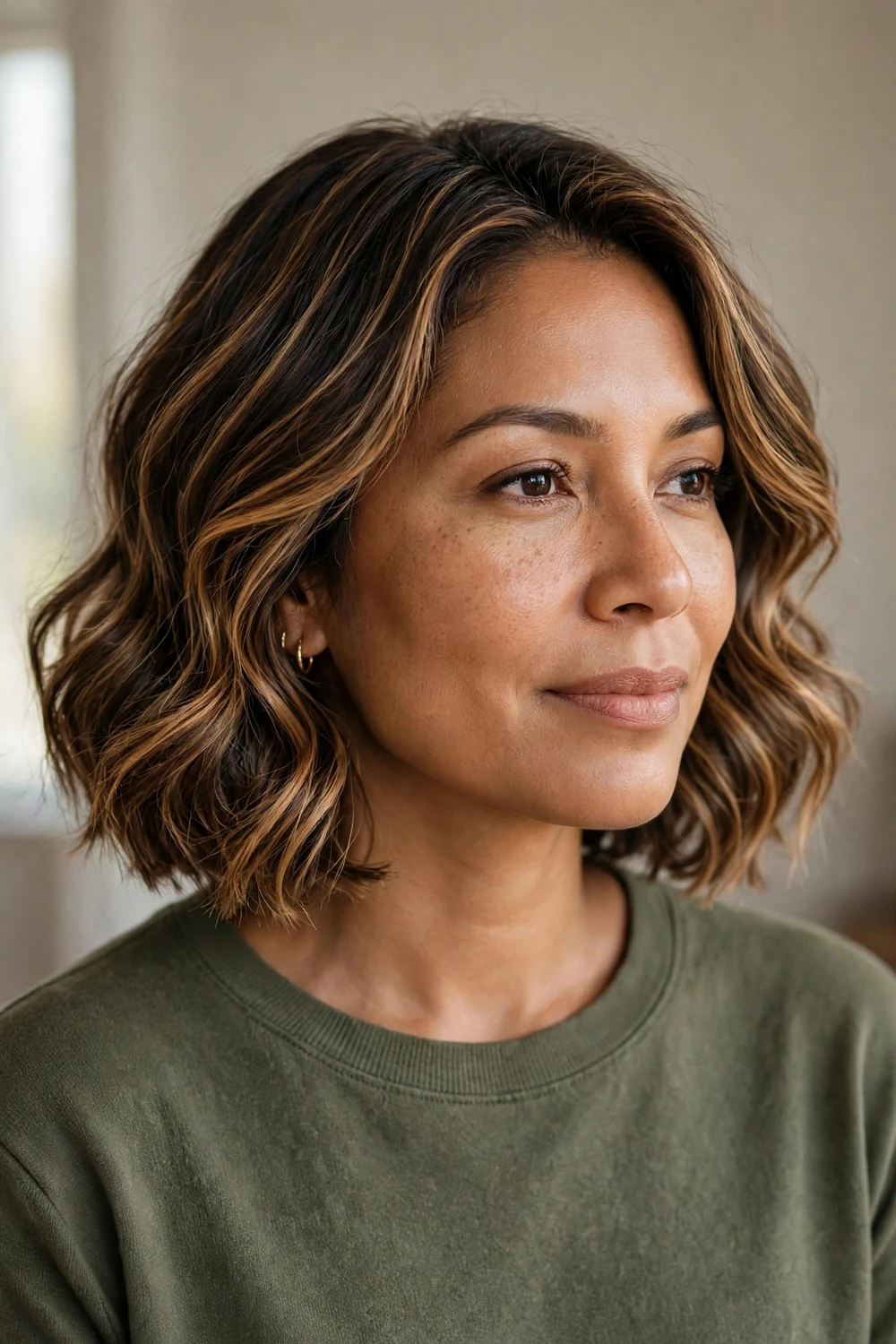
Waves multiply the space between strands, and space is what thin hair lacks. A wavy chin length bob with soft, defined waves lifts each section away from its neighbor, so the whole head looks wider and fuller. The chin length keeps the waves from stretching out under their own weight. Use a one-inch curling iron and alternate directions for waves that look natural instead of pageant-perfect. A heat protectant is non-negotiable here, since thin hair shows heat damage faster than thick hair does.
Try this: Curl away from the face, let each section cool in your palm for five seconds, then shake the roots loose with your fingers.
9. Tousled Beach Wave Bob
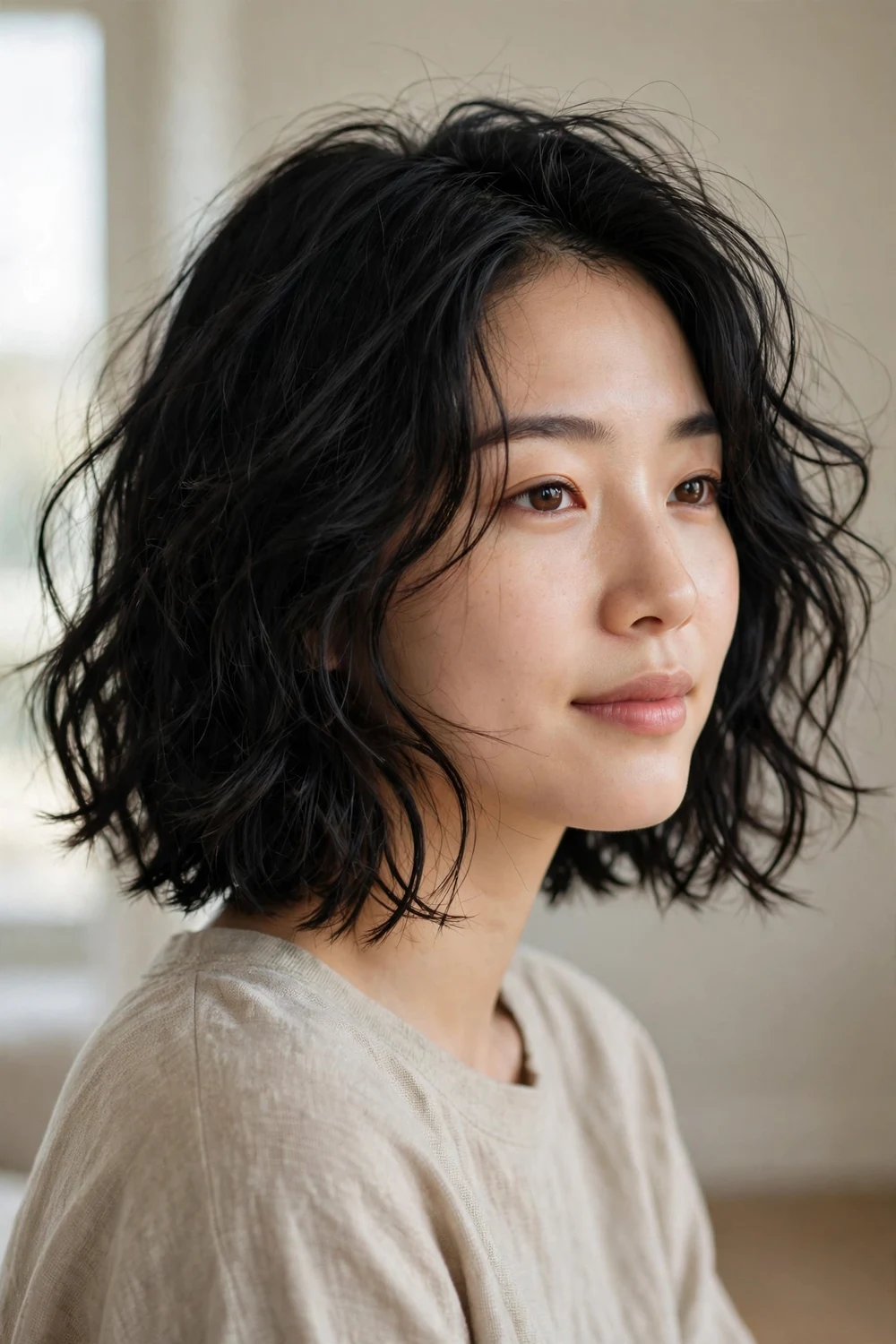
The beach wave version goes looser and messier than polished waves, and that looseness flatters thin hair even more. A tousled beach wave bob relies on salt spray and air-drying rather than hot tools, so you get texture without heat damage thinning your ends further. The casual finish also grows out gracefully, since there is no crisp line to lose its shape. On humid days, a light anti-frizz cream keeps the waves defined without turning them stiff or crunchy.
Try this: Mist damp hair with sea salt spray, twist two loose sections, and let it air-dry before scrunching the twists apart.
10. Undone Tousled Bob

Some days your hair will not cooperate, and the undone tousled bob turns that into the look. The style is built on second-day texture: slightly lived-in roots, bends instead of curls, and ends that flip wherever they want. For thin hair, that controlled messiness creates width and movement that a sleek style cannot. It takes five minutes with dry shampoo and a flat iron. A silk pillowcase helps this style survive to day two, since cotton roughs up the bends overnight.
Try this: Spray dry shampoo at the roots, bend random sections with a flat iron, then muss everything with your fingers and leave it alone.
11. Side Swept Bob with Volume

Where you part your hair changes where the volume lands. A side swept bob with a deep side part piles most of the hair onto one side, and that heavier side gets natural root lift from the direction change. The sweep across the forehead also covers a thinning hairline, which is a quiet confidence boost. It works on any chin length bob you already have, so it doubles as a styling trick, not just a cut.
Try this: Part damp hair two inches off center, blow-dry the heavy side up and over with a round brush, then lock it with a light mist.
12. Shaggy Bob
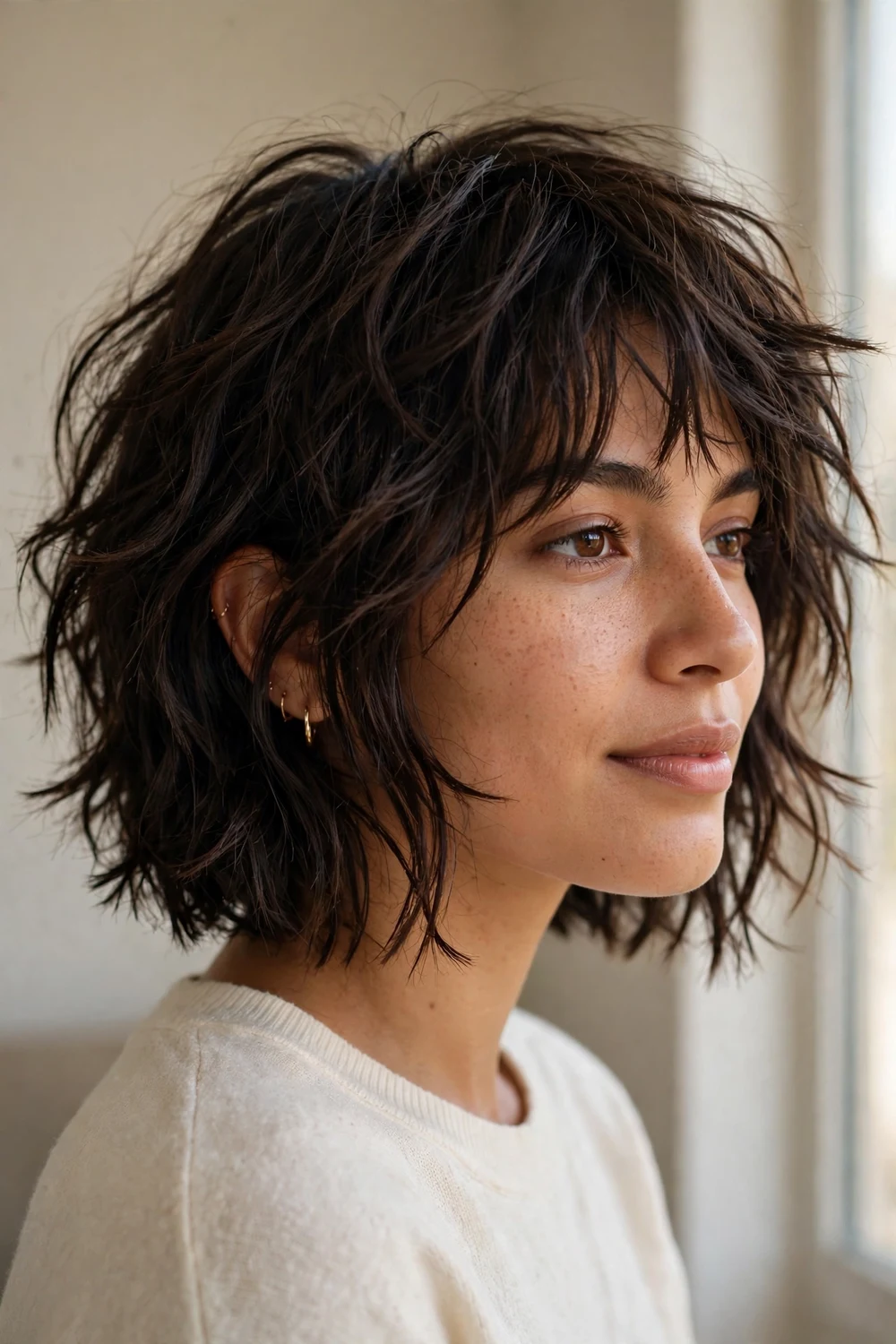
The shaggy bob piles on the layers, and for once, that helps. All those shattered, uneven layers keep hair from settling into one flat sheet, which is thin hair’s worst look. The texture creates constant separation and movement, so the eye reads fullness everywhere. Keep the shortest layers around the crown and the perimeter near the chin, and the shape stays a bob instead of drifting into a mullet. Skip heavy pomades with this cut, since they clump the shattered layers together and undo the separation you paid for.
Try this: Scrunch a lightweight mousse into damp hair and diffuse on low heat, lifting sections at the roots as you go.
13. Razored Bob with Feathered Ends
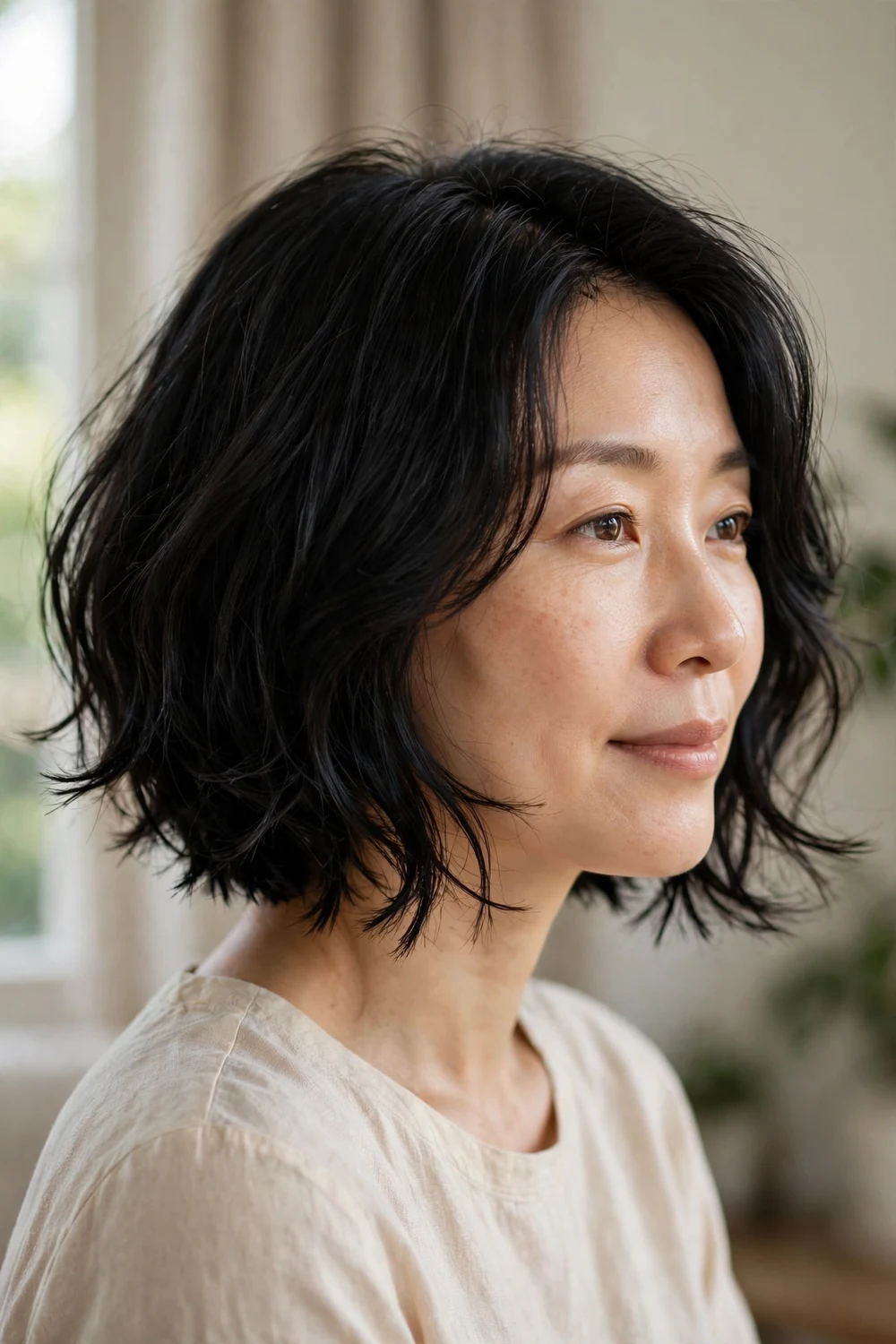
A razor cuts differently than scissors, and the difference shows. A razored bob with feathered ends gets soft, tapered tips that lie gently instead of ending in a hard line. For thin hair, that softness is forgiving: no blunt edge to expose sparseness, just airy movement. Ask your stylist to razor only the last inch or two, since razoring through the whole cut can remove too much interior weight. This cut also suits fine hair that tangles easily, since the tapered ends slip past each other instead of knotting.
Try this: Smooth a drop of lightweight oil over dry ends to keep the feathered tips from frizzing apart by afternoon.
14. Curly Bob

Curls are a gift for thin hair, and a chin length curly bob uses them fully. Each curl springs up and out, stacking volume in every direction at once. The short length keeps curls from stretching under their own weight, so they stay springy instead of going limp. Get it cut dry, curl by curl, because wet cutting never accounts for how much curly hair shrinks. Sleeping in a loose pineapple ponytail keeps the curls springy for a second day without rewetting everything.
Try this: Apply curl cream to soaking-wet hair, scrunch upward, and diffuse with your head flipped over for maximum root lift.
15. Feathered Air Bob

Fine, straight hair that collapses by lunchtime needs a different strategy than more weight. The feathered air bob uses internal thinning shears to carve tiny pockets of air through the interior, which lets the hair float instead of lying flat. The ends stay intact, so you lose no perimeter density. The result looks fluffy and expensive without a single teased section. Because the technique thins the interior rather than the ends, the perimeter keeps its full density.
Try this: Mist roots with a texturizing spray, then brush through with a boar brush to keep the feathers separated and bouncy.
16. French Bob

Shorter than a classic chin bob, the French bob ends between the earlobe and the jaw, and that brevity concentrates thin hair into a dense little shape. The Parisian styling, a bit of bend, a hint of fringe, minimal product, keeps it from looking severe. It is a bold length, but thin hair actually benefits most here because there is nowhere for sparse ends to hide. A middle part keeps it classic Parisian, while a side part makes the short length feel softer and more wearable.
Try this: Air-dry with a dab of styling cream, then tuck one side behind the ear for that effortless French finish.
17. Bob with Bangs

Bangs add a whole extra section of hair at the front, and thin hair needs every section it can get. A chin length bob with bangs frames the eyes, covers a thin hairline, and makes the overall cut look more substantial. Blunt bangs make the strongest statement, while wispy bangs keep things soft. Either way, the fringe pulls attention forward to your face instead of down to your ends. Thick, heavy bangs can overwhelm fine hair, so ask for bangs piecey enough to let a little forehead show through.
Try this: Blow-dry bangs first, while they are still very damp, using a small round brush and directing them side to side to kill any cowlick.
18. Rounded Bob

A rounded bob curves under at the ends and follows the shape of the head, creating a soft dome of hair. That curved silhouette reads as fullness from every angle, and the tucked-under ends hide any thinness at the tips. It is a gentle, polished style that suits conservative workplaces and formal events, and it flatters round and square faces by softening the jawline. This is one of the best bobs for interviews and formal events, since it always looks deliberate and tidy.
Try this: Round-brush the ends under in sections, then set each cooled section with a large velcro roller for ten minutes.
19. Sleek Straight Bob
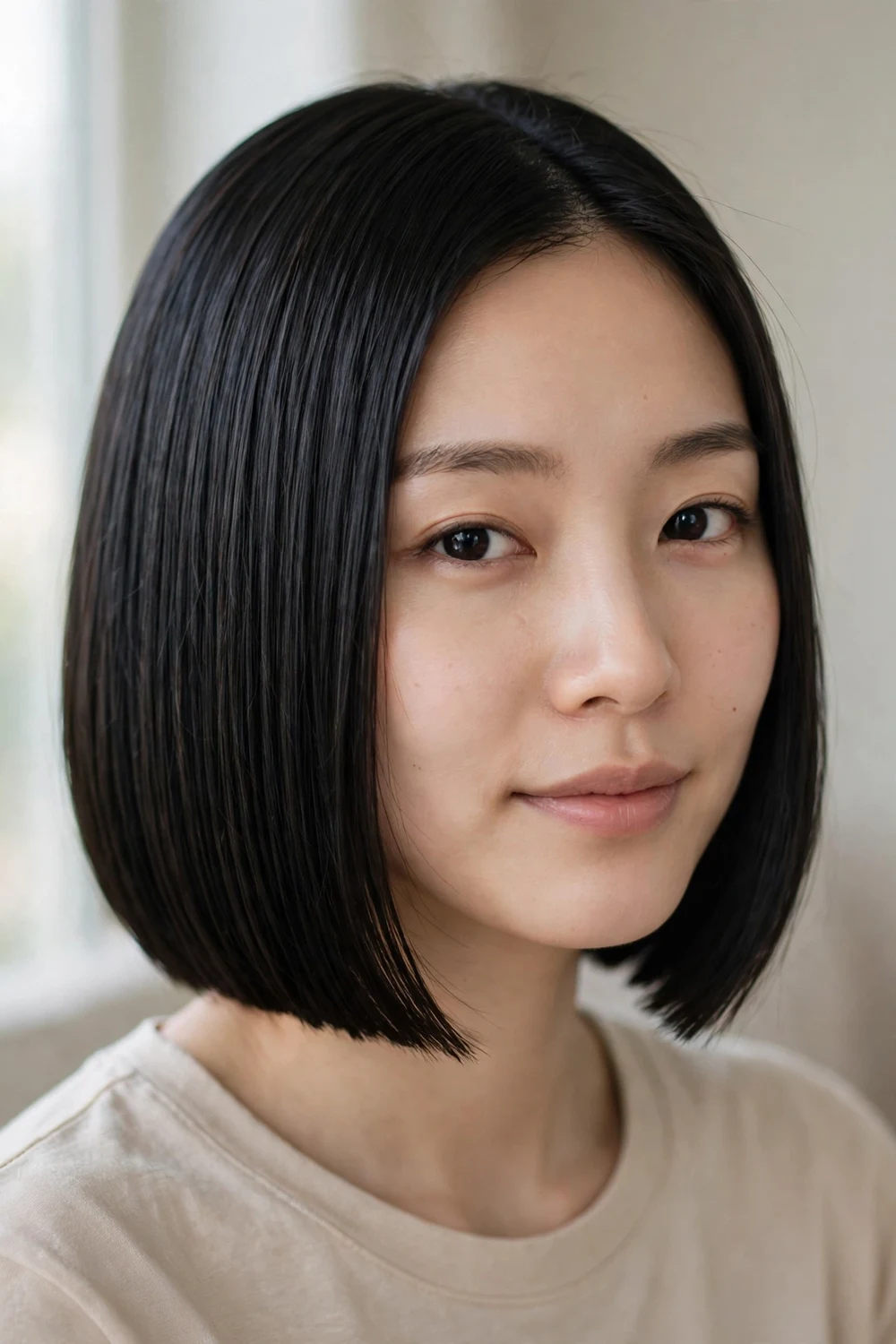
Going sleek with thin hair sounds risky, but a sharp straight bob leans into what fine hair does naturally. The glassy finish reflects light evenly, which makes the hair look healthier and more expensive. The key is keeping the ends immaculate: split ends show immediately on a sleek cut. A middle part keeps it symmetrical and modern. Glossing treatments between cuts keep the shine high, since dull hair makes thinness more noticeable.
Try this: Apply heat protectant, straighten in half-inch sections, and finish with an anti-humidity spray so the sleekness survives the day.
20. Bob with Face Framing Layers
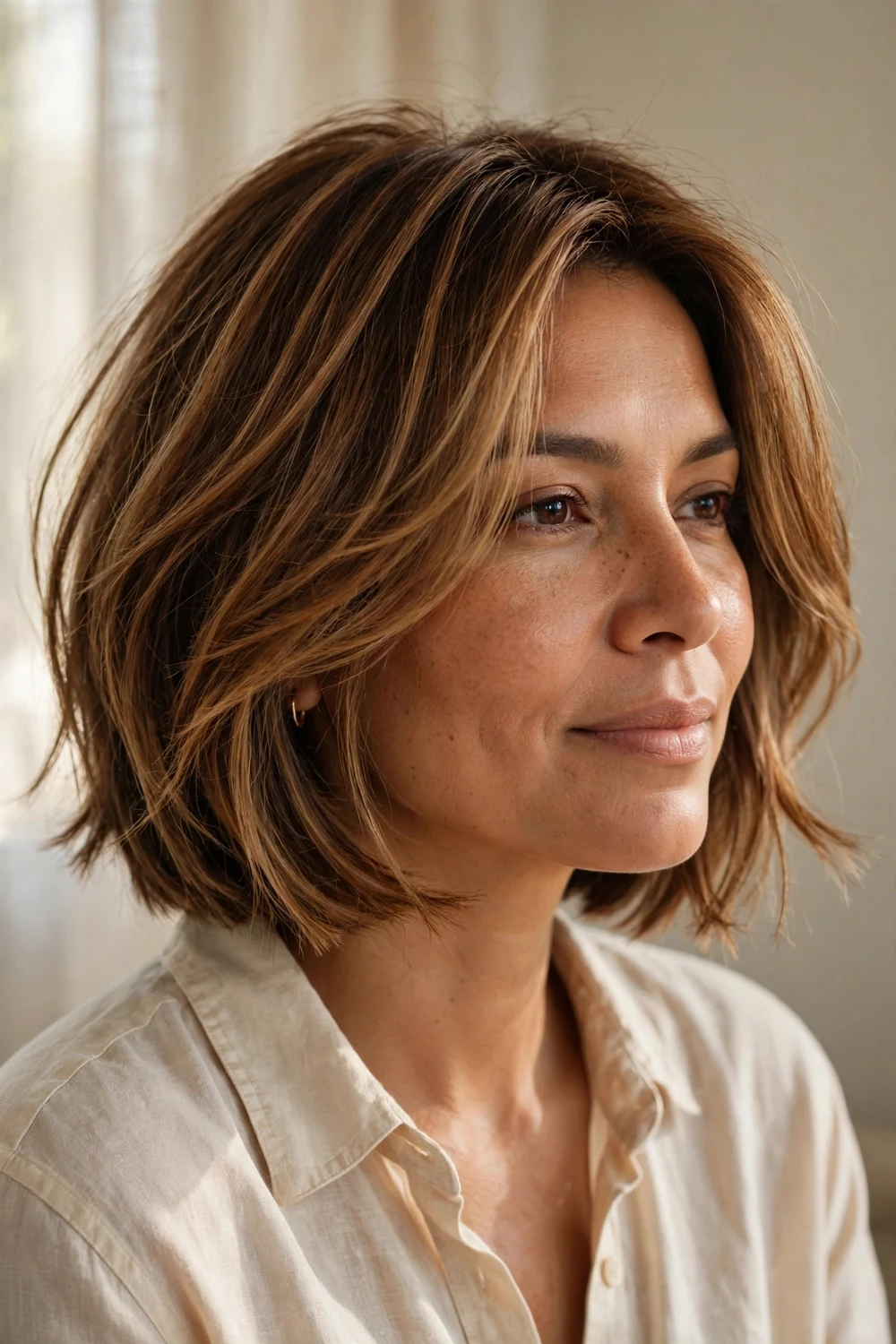
Shorter pieces around the face do two jobs at once. A bob with face framing layers draws the eye inward toward your features, and the graduated lengths create depth that makes the whole cut look more dimensional. The pieces start around the cheekbones and blend into the chin-length perimeter. It is an easy add-on to any bob you already have. The effect is subtle from a distance but very flattering up close, which is why it photographs so well.
Try this: Wrap the front pieces around a one-inch barrel away from the face, then let them cool before running your fingers through once.
21. Bob with Undercut

Removing hair to make hair look fuller sounds backward until you try it. A bob with an undercut takes the underneath sections very short, which removes the flat layer that drags everything down. The top falls over it looking thicker and moving more freely. Keep it hidden for the office or tuck a side back to show the edge, it is two styles in one. Grow-out is simple too, since the undercut just blends back into the bob as it lengthens.
Try this: Ask for one to two inches underneath, clipped short at the nape, and keep the top perimeter at full chin length for coverage.
22. Voluminous Blowout Bob

Sometimes the cut is fine and the styling is the whole game. A voluminous blowout on a chin length bob can double the perceived fullness of thin hair in twenty minutes. The method is simple: lift at the roots, curve the ends under, and let it cool before touching it. Root-lifting spray applied before drying does half the work for you. Work in small sections rather than rushing, since thin hair cools fast and the lift sets better that way.
Try this: Blow-dry upside down until 80 percent dry, then finish in sections with a large round brush, hitting each with the cool shot.
23. Micro Bob
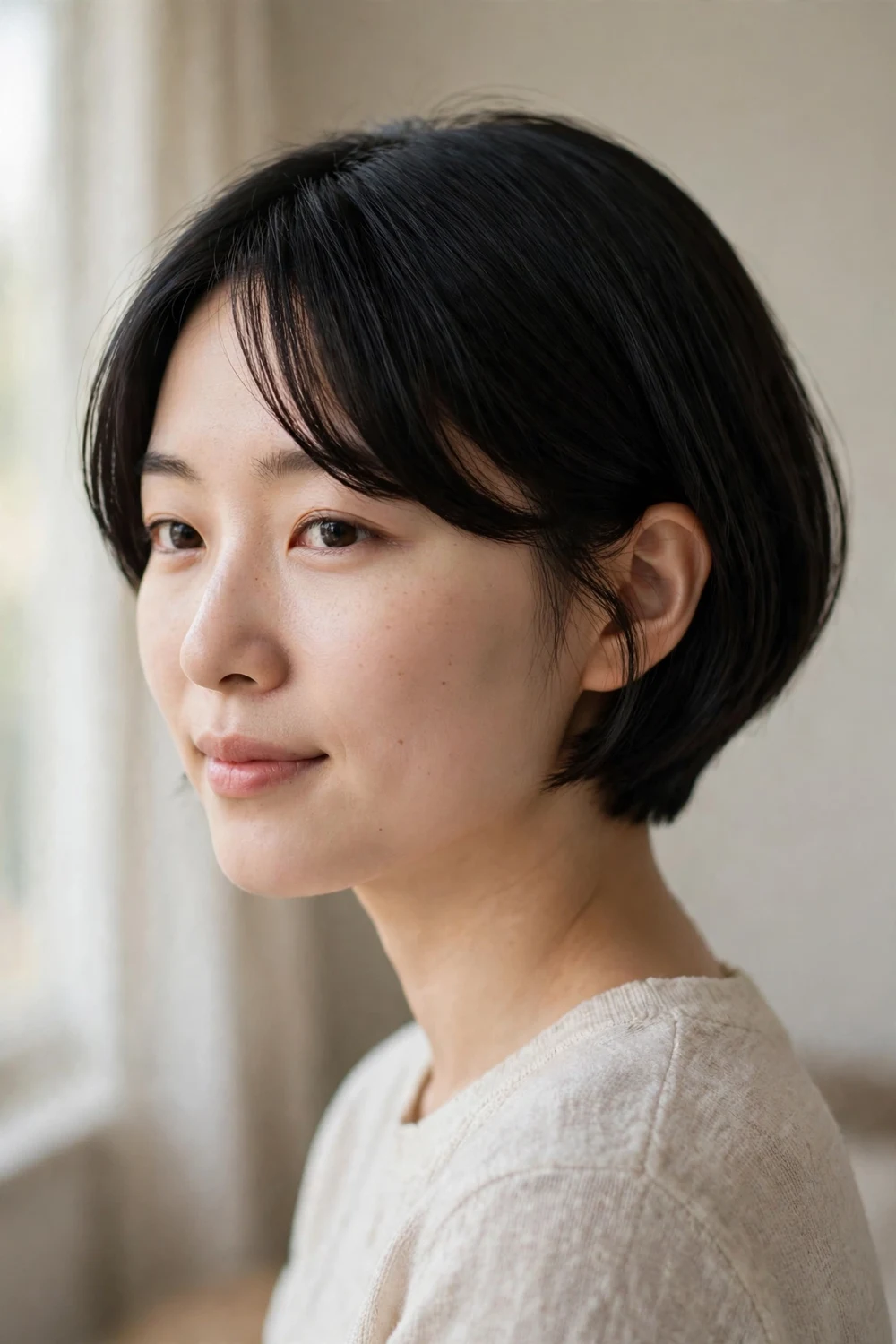
The micro bob ends just below the ears, and that extreme shortness packs thin hair into the densest possible shape. Wispy see-through ends simply cannot exist at this length. Add a side-swept fringe and you get softness around the hairline exactly where many women notice thinning first. It needs frequent trims, but each appointment is quick. Statement earrings pair perfectly with this length, since the short cut puts your ears and jawline on display.
Try this: Flick the ends outward with a flat iron for lift, and keep the fringe swept to the side with a light-hold spray.
24. Sliced Bob

Slicing is a cutting technique, not a style, and it changes how thin hair moves. In a sliced bob, the scissors slide down the hair shaft instead of cutting straight across, which removes a little weight and leaves soft, tapered ends. The hair floats and bounces instead of hanging. It sits nicely between a blunt cut and heavy layering. The technique works on straight and wavy hair alike, since slicing follows the natural fall of the strands.
Try this: Let it air-dry with a lightweight leave-in, then shake the ends loose once dry for that weightless sliced finish.
25. Layered Lob

If chin length feels too big a jump, the layered lob is your compromise. It keeps the collarbone length you are used to while borrowing the bob’s structure: long layers for movement, a clean perimeter for density. The extra length still allows a low ponytail on lazy days. Add loose waves through the ends and the whole thing reads much fuller than straight long hair. It is also the easiest bob to grow out if you change your mind, since the length is already halfway there.
Try this: Curl only the bottom third with a one-and-a-quarter-inch iron, leaving the roots smooth for a modern lived-in wave.
26. Chin Length Bob with Highlights

Color is a volume tool most people overlook. A chin length bob with highlights uses lighter ribbons through the mid-lengths and ends to create depth, and depth reads as fullness. The contrast between light and dark strands makes the eye see more hair than is actually there. Keep the base close to your natural color so regrowth stays soft and low-maintenance. Placement matters more than quantity, so ask for the lightest pieces around the face and crown where they build the most dimension.
Try this: Ask for hand-painted balayage rather than foils, since the softer grow-out means fewer salon visits for thin, fragile hair.
27. Silver Chin Length Bob

Gray and silver hair is often fine and delicate, and this cut works with that instead of against it. A silver chin length bob with soft, wispy layers at the crown creates lift that disguises scalp visibility, which is the biggest worry with thinning silver hair. The light color itself reflects more light, adding to the airy fullness. Embrace the silver and style it to move. Silver hair can yellow from heat styling, so keep hot tools at medium heat and always use a heat protectant.
Try this: Use a purple shampoo once a week to keep the silver bright, and a root lifter at the crown before blow-drying.
28. Bubble Bob
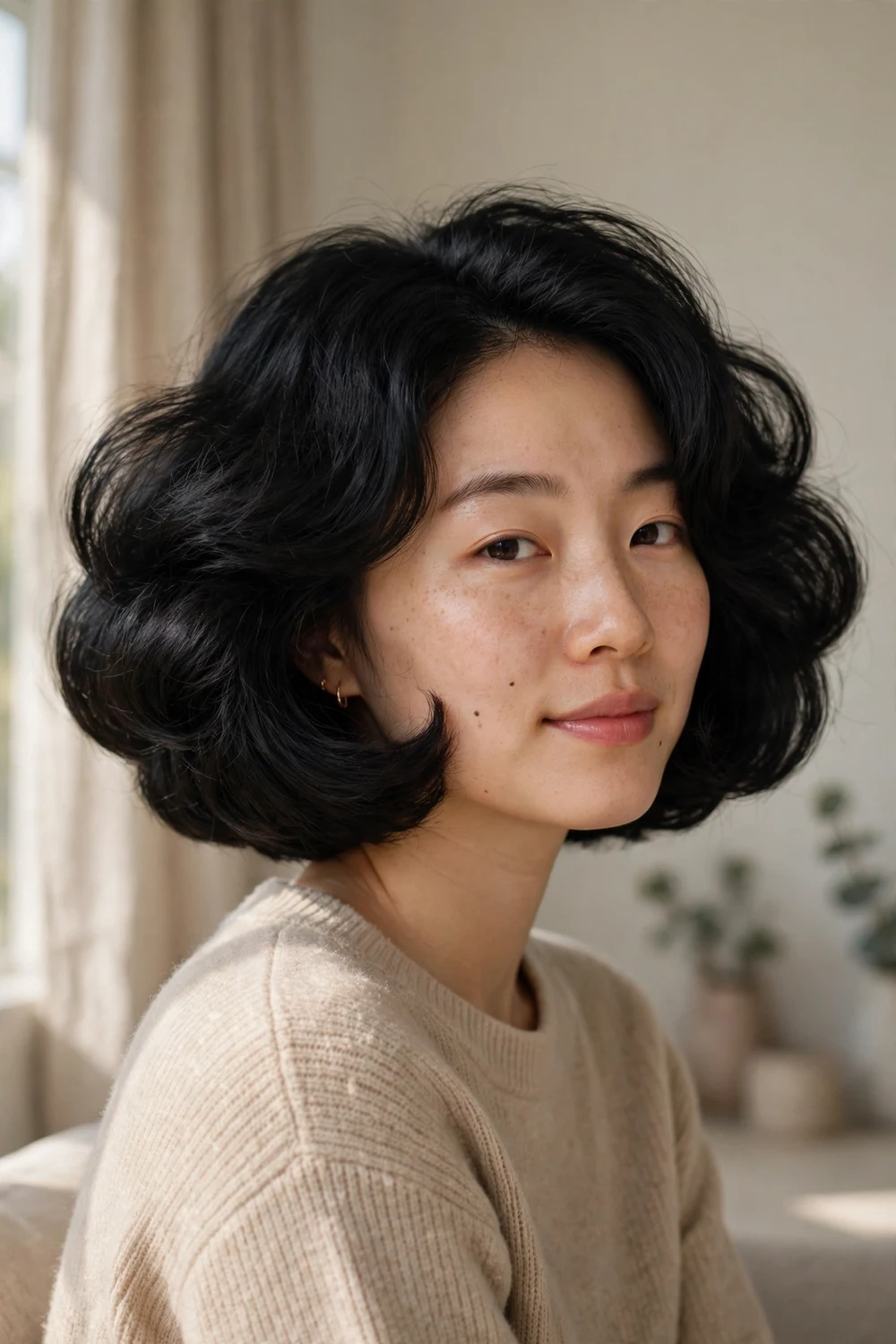
The bubble bob builds its shape from rounded layers that form a soft C curve through the hair, like a plush little dome. That rounded architecture mimics natural fullness instead of forcing volume where there is none. It flatters oval and heart faces especially, adding width right where fine hair tends to fall flat. Air-dry with a wave spray and it practically styles itself. The rounded shape also softens a strong jawline, since the curve breaks up the angular line.
Try this: Scrunch a salt-free wave spray into damp hair and air-dry, bending the ends gently inward toward the face as they set.
29. Skinny Bob with Curtain Bangs

Longer and narrower than a classic bob, the skinny bob keeps things soft and current. Paired with curtain bangs, it adds face-framing volume right at the hairline, which redirects attention toward the eyes. The slightly extended length keeps the style versatile while the narrow shape avoids the triangle effect wider cuts can create on thin hair. The narrow shape suits petite frames especially well, since it never overwhelms a smaller face.
Try this: Blow-dry curtain bangs with a round brush, rolling them away from the face for that soft swinging finish.
30. Wavy Italian Bob

The Italian bob keeps its ends chunky and heavy, then adds a natural wave running through. For thin hair, that combination is magic: the weight at the bottom reads as density while the wave hides any gaps in coverage. It is meant to look a little tousled, never stiff, which makes it forgiving on days your hair will not behave. The look improves as it grows out slightly, since a little extra length lets the waves fall even more naturally.
Try this: Wrap two-inch sections around a large curling wand, leave the ends out for a modern bend, and finish with a flexible texturizing spray.
Chin Length Bob Styles Comparison at a Glance
| Style | Best For | Difficulty | Upkeep |
|---|---|---|---|
| Classic Chin Length Bob | First-time bob wearers | Easy | Trim every 6-8 weeks |
| Blunt Chin Length Bob | Maximum density illusion | Easy | Trim every 6 weeks |
| Layered Chin Length Bob | Movement without losing ends | Medium | Trim every 6-8 weeks |
| Angled A-Line Bob | Face-framing drama | Medium | Trim every 6 weeks |
| Stacked Graduated Bob | Flat crowns and napes | Medium | Trim every 5-6 weeks |
| Asymmetrical Bob | Bold, modern looks | Medium | Trim every 6 weeks |
| Choppy Textured Bob | Low-effort texture | Easy | Trim every 8 weeks |
| Wavy Chin Length Bob | Instant width and fullness | Medium | Trim every 6-8 weeks |
| Tousled Beach Wave Bob | Casual, air-dried styles | Easy | Trim every 8 weeks |
| Undone Tousled Bob | Second-day hair | Easy | Trim every 8 weeks |
| Side Swept Bob with Volume | Thin hairlines | Easy | Style daily, trim every 6-8 weeks |
| Shaggy Bob | Texture lovers | Easy | Trim every 8-10 weeks |
| Razored Bob with Feathered Ends | Soft, airy finishes | Easy | Trim every 6-8 weeks |
| Curly Bob | Natural curls | Medium | Trim every 8-12 weeks dry |
| Feathered Air Bob | Fine, straight hair | Easy | Trim every 6-8 weeks |
| French Bob | Confident minimalists | Easy | Trim every 4-5 weeks |
| Bob with Bangs | Forehead coverage | Medium | Bang trims every 3-4 weeks |
| Rounded Bob | Polished, soft looks | Medium | Trim every 6 weeks |
| Sleek Straight Bob | Glass-like shine | Medium | Trim every 6 weeks |
| Bob with Face Framing Layers | Softening features | Easy | Trim every 6-8 weeks |
| Bob with Undercut | Edgy, lightweight feel | Medium | Undercut every 3-4 weeks |
| Voluminous Blowout Bob | Event-ready fullness | Medium | Style per wear |
| Micro Bob | Maximum density | Easy | Trim every 4-5 weeks |
| Sliced Bob | Weightless movement | Easy | Trim every 8 weeks |
| Layered Lob | Keeping some length | Easy | Trim every 8 weeks |
| Chin Length Bob with Highlights | Color dimension | Medium | Color every 10-12 weeks |
| Silver Chin Length Bob | Gray and silver hair | Easy | Trim every 6-8 weeks |
| Bubble Bob | Soft, plush shape | Easy | Trim every 6-8 weeks |
| Skinny Bob with Curtain Bangs | Narrow, modern shape | Medium | Bang trims every 4-6 weeks |
| Wavy Italian Bob | Chunky, tousled texture | Medium | Trim every 6-8 weeks |
How to Choose the Right Chin Length Bob for You
Start with your thinnest area. If the crown lies flat, pick a cut that builds height there: stacked, graduated, or a voluminous blowout style. If the ends are the problem, go blunt and keep the perimeter heavy. Matching the cut to the weak spot beats picking the prettiest photo.
Next, be honest about styling time. A sleek straight bob looks sharp but needs daily heat. A choppy or shaggy bob looks fine air-dried. If you want fringe, check out bob haircuts for thin hair with bangs for cuts that pair bangs with thin hair specifically.
Face shape matters less than people think, but it still guides the details. Round faces do well with height on top and length in front, like an angled or A-line cut. Longer faces suit width at the cheeks, which waves and side sweeps provide. When in doubt, bring three photos to your stylist: one you love, one close second, and one you hate, since the hate photo tells them what to avoid.
Finally, factor in grow-out. Shorter bobs need trims every four to six weeks, while textured cuts stretch to eight or ten. If salon visits are a hassle, lean toward the shaggy, tousled, or sliced end of the list. For more volume-focused options in the same family, browse layered bob hairstyles for fine hair to compare layering approaches side by side.
Mistakes to Avoid
The biggest mistake is over-layering. Layers remove weight, and thin hair has none to spare. If you want movement, keep layers long and interior, and never let them chew into the perimeter. Tell your stylist plainly that density at the ends matters more to you than texture.
Heavy products are the second trap. Butters, thick oils, and heavy creams flatten fine hair within an hour. Stick to mousses, root lifters, and light texturizing sprays, and apply everything sparingly at the roots first. If texture is your goal, the right techniques are covered in choppy bob haircuts for fine hair, which breaks down razor and point-cut methods that add texture without removing density.
Skipping trims undoes everything. Thin ends split faster and look stringy sooner, so pushing past eight weeks turns a sharp bob into a sad one. Book the next appointment before you leave the salon. And if you are debating between bob and lob lengths, lob hairstyles for fine hair shows how a little extra length changes the styling math.
Frequently Asked Questions
Does a chin length bob make thin hair look thicker?
Yes, when the perimeter stays solid. Cutting to chin length removes the wispy ends that expose thinness and lands every strand at one point, which reads as density. Blunt and stacked versions do this best. Wispy, over-layered bobs can have the opposite effect, so keep the ends heavy.
How often should I trim a chin length bob if my hair is thin?
Every six to eight weeks for most versions. Thin ends split and taper faster than thick hair, and a grown-out bob loses the clean edge that creates the fullness illusion. Shorter styles like the micro bob and French bob need trims every four to five weeks to hold their shape.
Are layers good or bad for thin hair in a bob?
Short layers through the whole cut are bad, since they remove the weight thin hair needs. Long interior layers are good, because they add movement and crown lift while the perimeter stays dense. Ask your stylist to layer the crown and interior only, and to leave the last two inches of the ends alone.
What is the best styling product for a chin length bob on thin hair?
A volumizing mousse applied to damp roots covers most needs: it adds lift without weight. Add a root-lifting spray for extra height at the crown, and a light texturizing spray for piecey styles. Avoid heavy oils, butters, and thick creams, which flatten fine hair within an hour of styling.
Can a chin length bob work if my hair is thinning at the crown?
Yes, and it is one of the better cuts for crown thinning. Stacked and graduated bobs build height exactly where the crown lies flat, and the shorter back pushes hair forward and up. A deep side part or curtain bangs can also redirect coverage over thin spots at the hairline.
Final Thoughts
Thin hair does not need more hair, it needs a smarter cut. A chin length bob concentrates what you have into one strong shape, and the thirty versions above give you a real choice instead of a single default. Pick the one that matches your thinnest spot, book the trim schedule, and enjoy hair that looks fuller every morning. After years of testing lengths on fine hair, I keep coming back to this cut for good reason.
Thin hair can still be pinned up with the right prep, and chin length bob hairstyles updo shows which twists and buns hold best on fine, short hair.
The same jawline length works across every density too: these chin length bob hairstyles for black women show the cut on thick, curly, and coily hair as well as fine.

