



There are more types of bangs than most people realize, and the right one depends on your face shape, hair texture, and how much daily styling you will do. This guide covers 15 distinct bang styles with honest notes on upkeep, so you can walk into the salon knowing exactly what to ask for.
Quick Takeaways
- Curtain bangs and side-swept bangs suit the widest range of face shapes and need the least daily styling.
- Blunt, micro, and baby bangs need trims every 2 to 4 weeks, while grown-out fringe needs almost none.
- Fine hair pairs best with wispy, air, or feathered bangs; thick hair carries blunt, heavy, and curly fringe well.
- Bangs haircuts usually cost $0 to $40 as an add-on to a cut, or $75 to $160 for a full cut with fringe.
1. Curtain Bangs
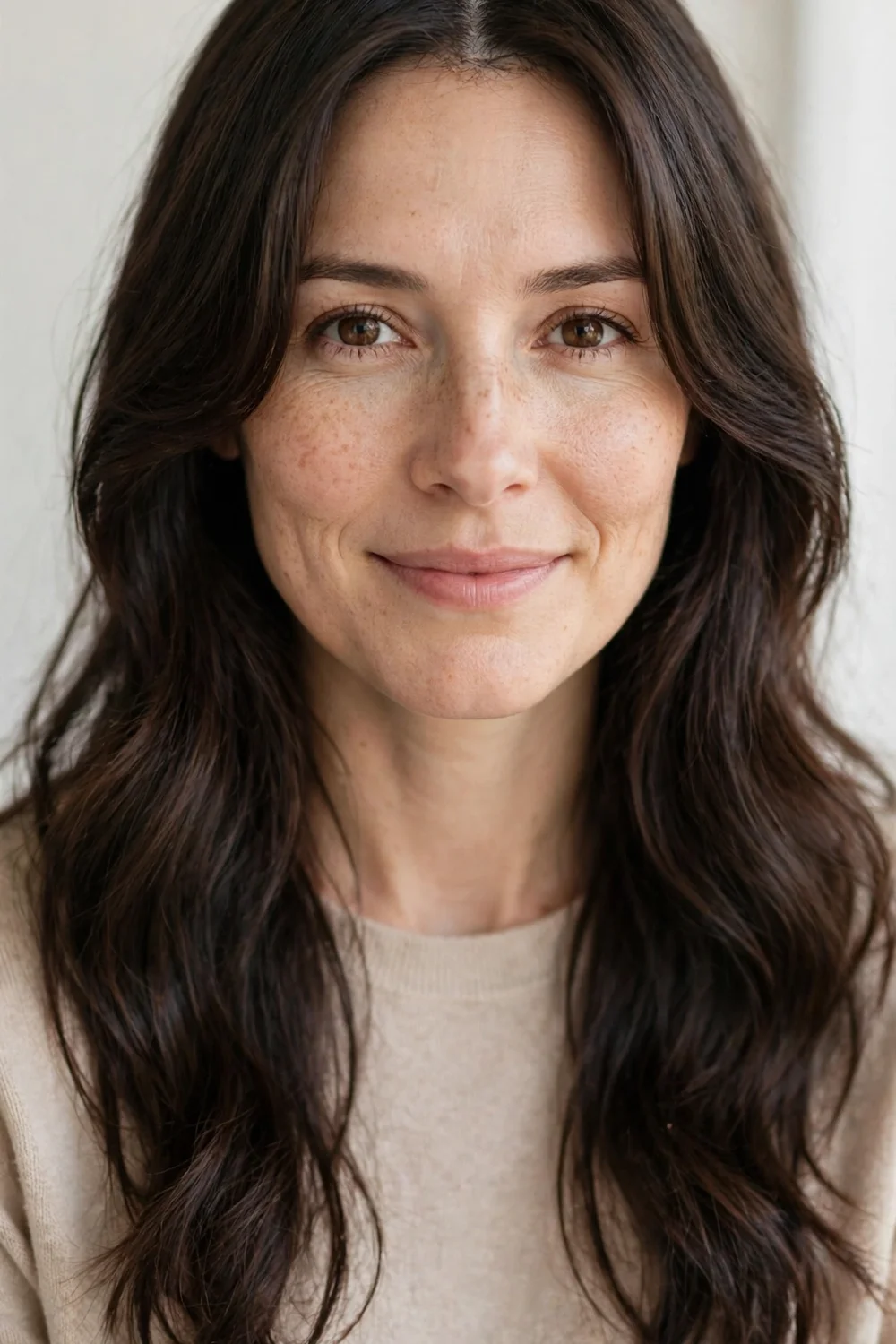
Curtain bangs part down the middle and sweep to each side like a curtain, usually ending between the cheekbones and the jawline. They suit nearly every face shape because the open center keeps the forehead visible while the sides slim the cheeks. Growing them out is painless since they turn into face-framing layers. Style by blow-drying the fringe forward with a round brush, then parting it in the middle. For a full rundown of this style, see our curtain bangs styles for long hair.
Try this: Set the part with two small clips while the bangs cool so the sweep holds all day. Difficulty: Easy. Cost: $0 to $25 as a bang trim add-on.
2. Side-Swept Bangs
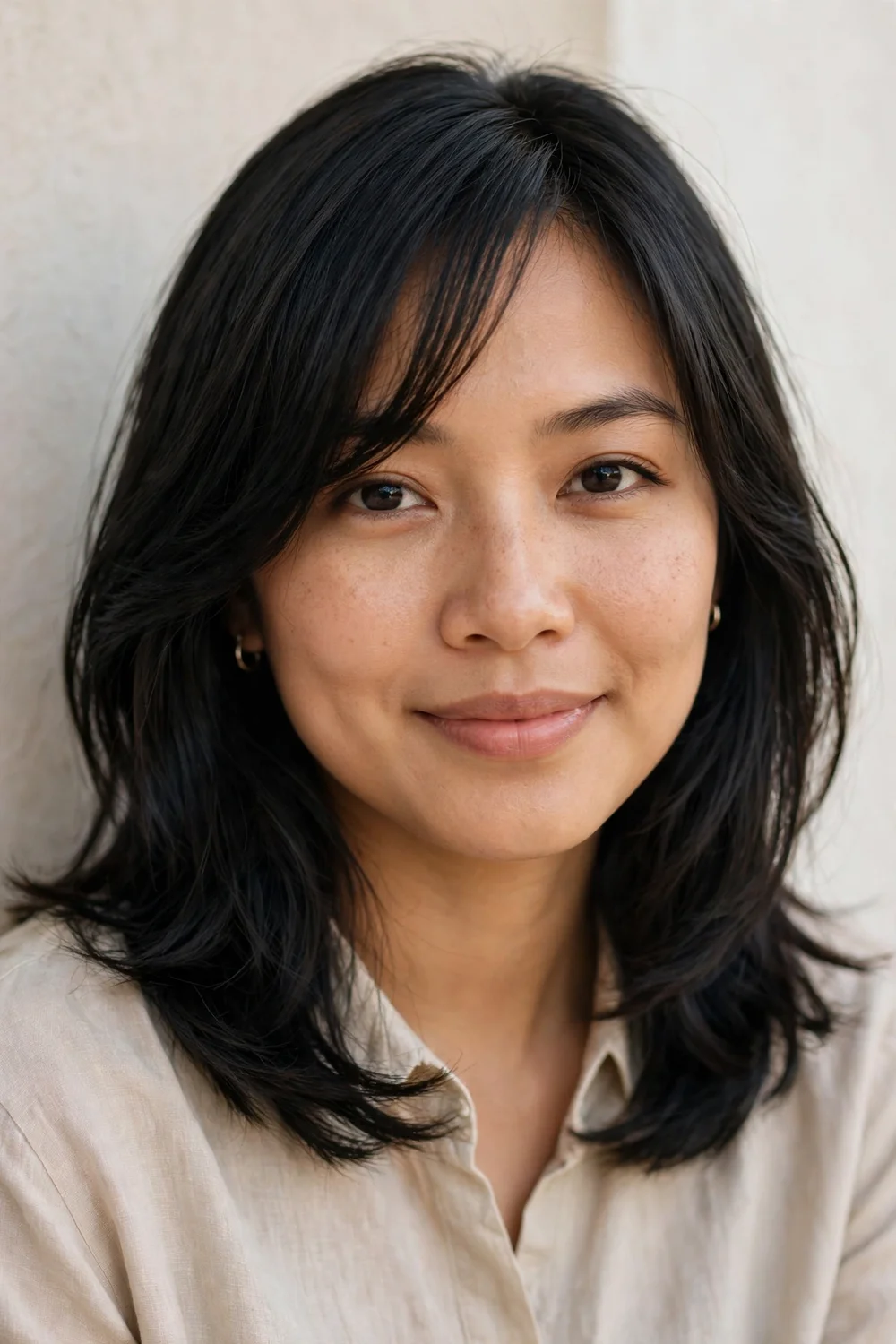
Side-swept bangs are cut on an angle so the longest pieces land near the cheekbones on one side. They flatter round and square faces because the diagonal line breaks up width across the forehead. This is one of the lowest-commitment fringes: it grows out into a side part with no awkward stage. Blow-dry with a deep side part using a paddle brush for a smooth finish. They work on straight, wavy, and curly hair since the angle hides uneven texture.
Try this: Tuck the long end behind your ear on casual days for a different look with no extra effort. Difficulty: Easy. Cost: $0 to $25 as an add-on.
3. Wispy Bangs
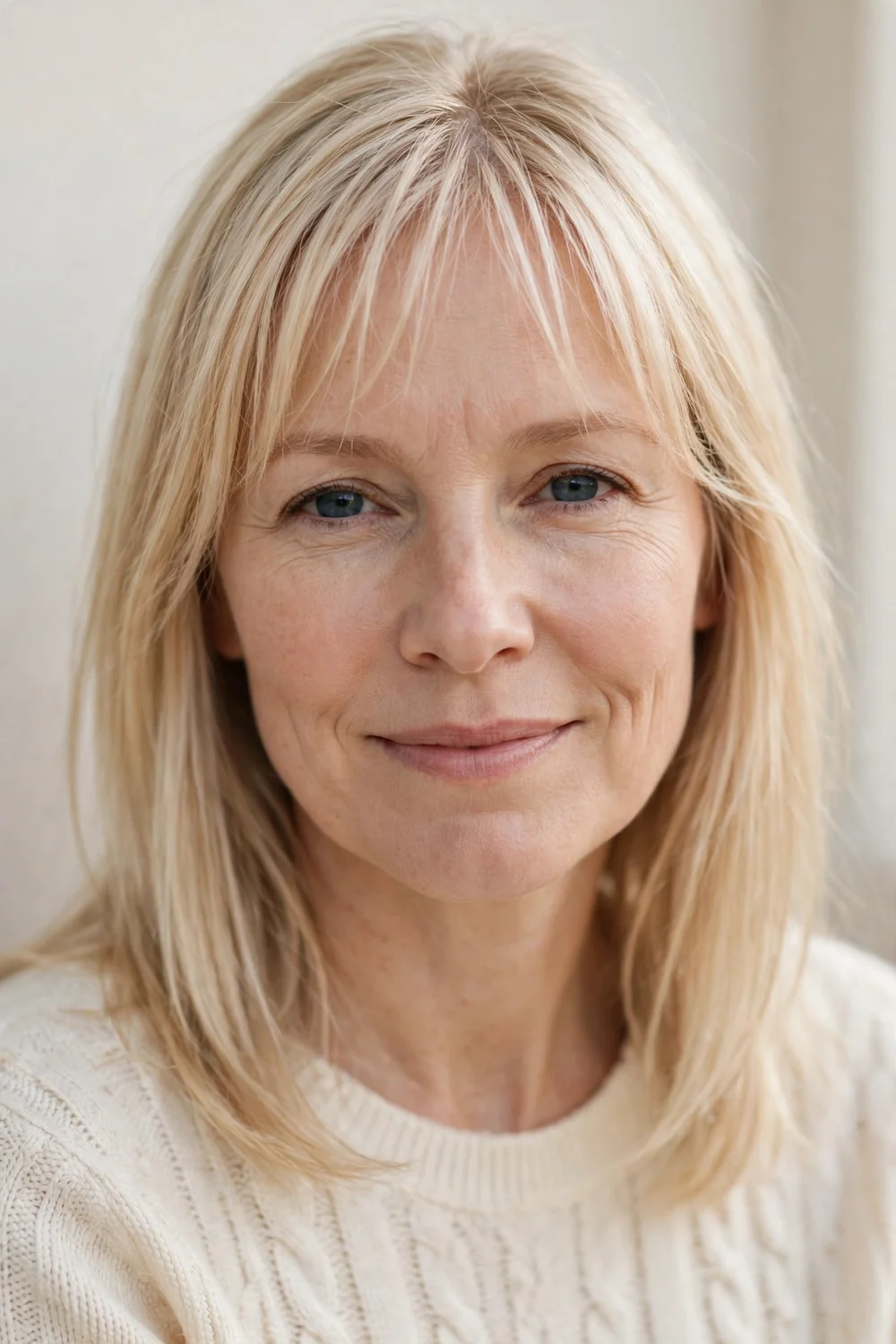
Wispy bangs are cut thin with lots of space between the pieces, giving a light, see-through effect on the forehead. They suit fine hair best because a thin fringe will not go flat or separate strangely. They also work well for a first fringe since they are forgiving if the length is slightly off. Dry them with your fingers instead of a brush to keep the pieces separated. If you like this look on shorter cuts, our curtain bangs on short hair guide covers similar lightweight fringes.
Try this: Wash just the bangs on non-wash days to keep them fresh without a full shampoo. Difficulty: Easy. Cost: $0 to $25 as an add-on.
4. Blunt Bangs

Blunt bangs are cut straight across at one length, usually at or just below the brows, with full density from temple to temple. They suit thick, straight hair and oval or long faces best. This fringe needs a flat iron and heat protectant to keep the line sharp, plus trims every 3 to 4 weeks. The common mistake is cutting them too short on the first visit; start at the brows and go shorter later if you want. They draw attention to the eyes, so they pair well with defined brows.
Try this: Dry blunt bangs immediately after washing, before they have a chance to set with a part. Difficulty: Moderate. Cost: $10 to $40 as an add-on.
5. Arched Bangs
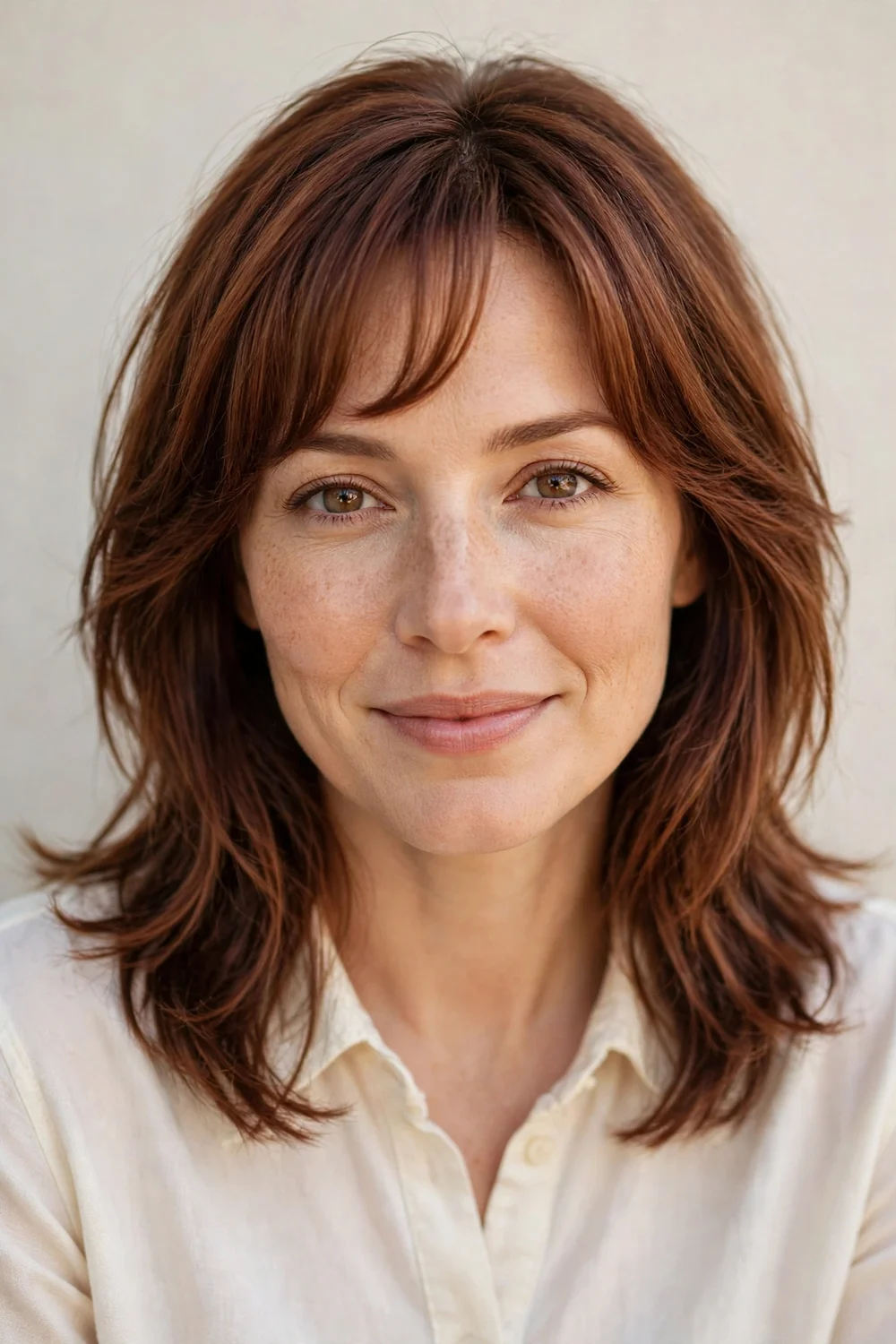
Arched bangs are shorter in the center and curve longer toward the temples, forming a soft arc. This shape flatters wider foreheads and suits oval, round, and heart-shaped faces. Because the cut is precise, bring a reference photo and ask for the longest points at the temples. Style by blow-drying the bangs down and forward, then letting them settle into the curve. They need trims every 3 to 4 weeks to keep the arch crisp.
Try this: Check the arch each morning since sleep can shift it; a quick brush-down resets the shape. Difficulty: Moderate. Cost: $10 to $40 as an add-on.
6. Feathered Bangs
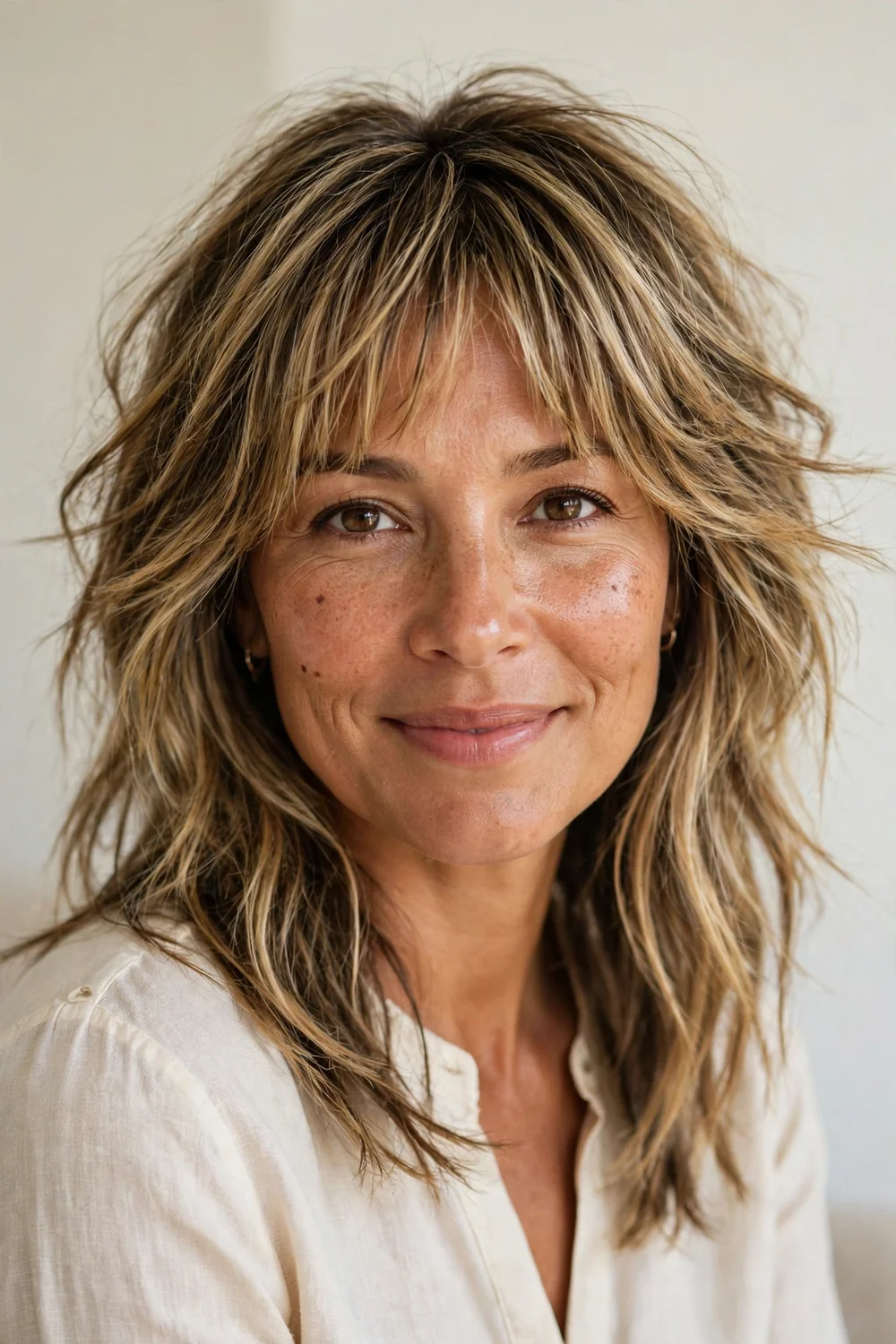
Feathered bangs are layered with uneven, textured edges that flip and move instead of lying flat. They suit medium to thick hair and pair naturally with layered cuts like shags. The texture hides cowlicks well, which is why stylists often recommend them for tricky hairlines. Blow-dry with a round brush, flipping the ends slightly outward. They grow out more gracefully than blunt bangs since the feathered edge softens the grow-out line.
Try this: Add a dab of texturizing cream to the ends to encourage the feathered separation. Difficulty: Easy. Cost: $0 to $25 as an add-on.
7. Blended Bangs (Grown-Out Fringe)
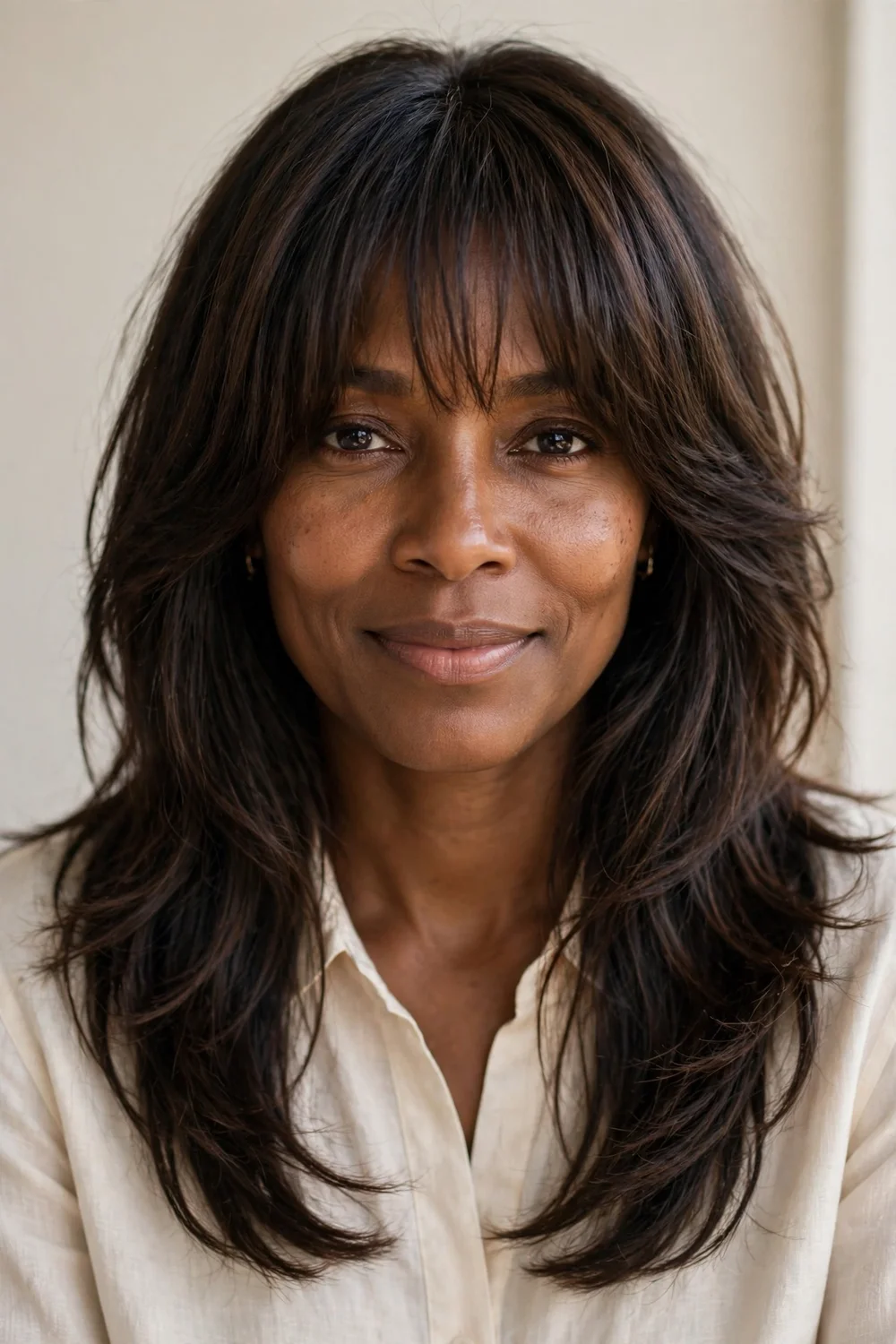
Blended bangs are long fringe cut to melt into the rest of the hair, usually reaching the nose or lips. This is the lowest-commitment fringe of all since there is virtually no grow-out period; it just becomes layers. You still get the face-framing effect without a distinct bang line. They suit every hair texture because the length hides frizz and cowlicks. Style by blow-drying them into the face-framing layers or pinning them back on lazy days.
Try this: Twist each side back and pin for an instant updo-friendly fringe on second-day hair. Difficulty: Easy. Cost: $0 as part of a layered cut.
8. Curly Bangs
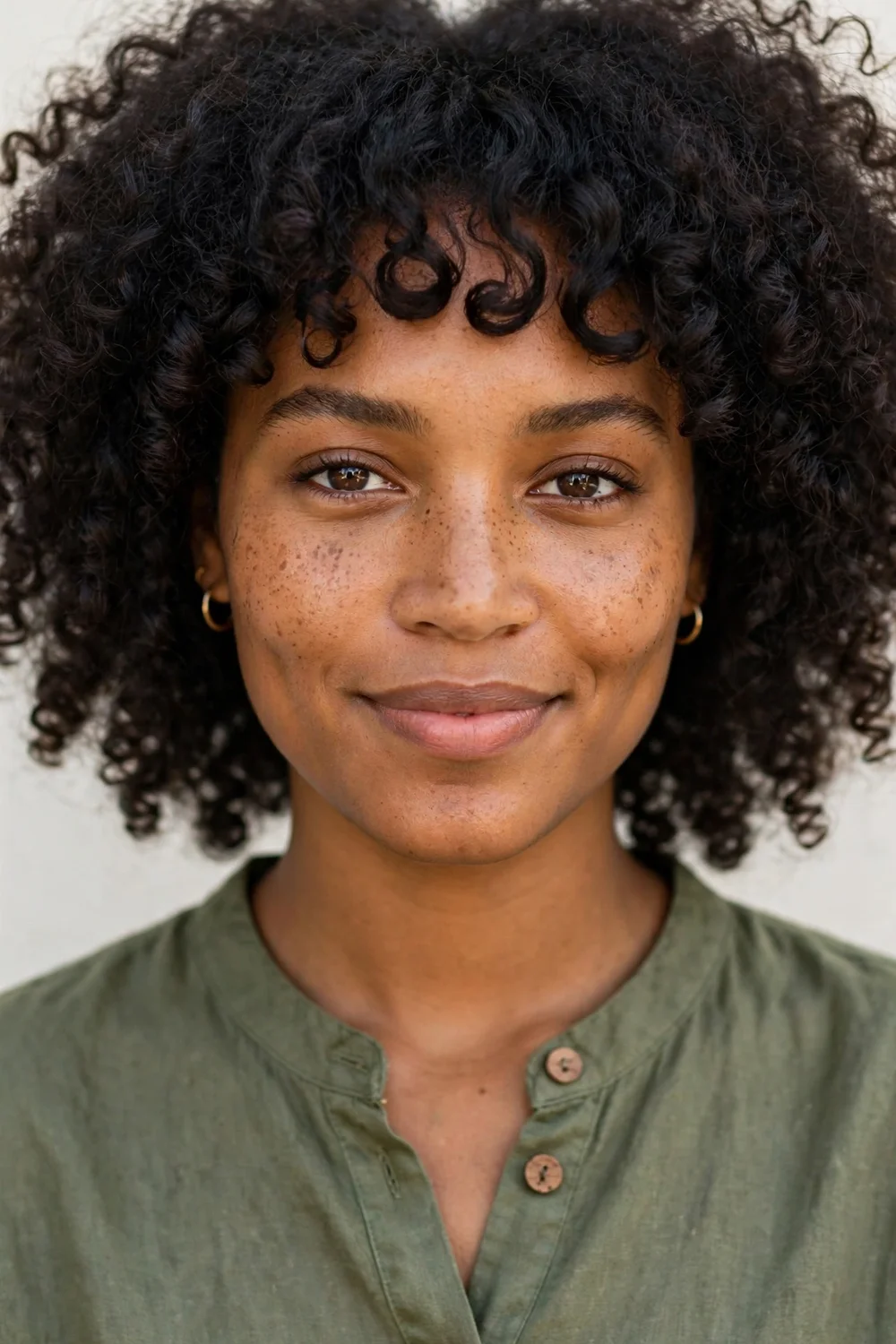
Curly bangs are cut into natural curls and usually worn longer than straight fringe because curls spring up as they dry. The golden rule is cutting them dry, at least an inch longer than the target length. They pair best with curly or wavy hair worn in its natural texture. Use curl cream and scrunch upward, then diffuse on low heat. Curly bangs need trims every 8 to 12 weeks, less often than straight fringe, but only from a stylist experienced with curls.
Try this: Refresh the bangs with a water mist and scrunch instead of rewetting your whole head. Difficulty: Moderate. Cost: $15 to $45 as an add-on.
9. Choppy Bangs
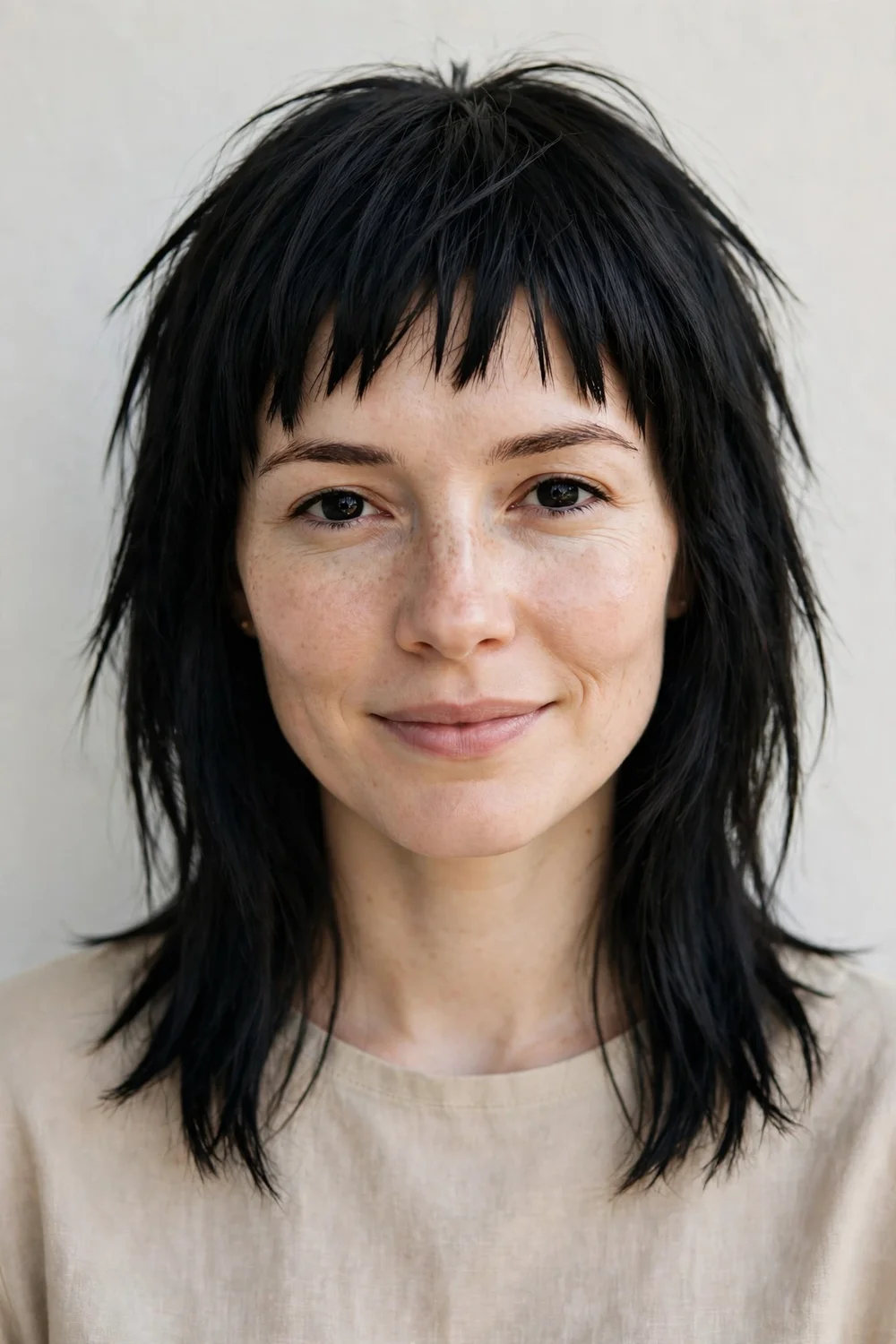
Choppy bangs are point-cut into jagged, uneven pieces that sit around the brows. They suit straight to slightly wavy hair and give an edgy, lived-in feel. The texture hides bad hair days better than a precise fringe. Style with a pea-sized amount of pomade pinched through the ends for definition. They need trims every 3 to 4 weeks to keep the points sharp. If you wear medium-length hair with fringe, our medium length hairstyles with bangs has more choppy options.
Try this: Point-cut the longest pieces at home between appointments only if you are confident; otherwise leave trims to the salon. Difficulty: Easy. Cost: $0 to $25 as an add-on.
10. Bottleneck Bangs
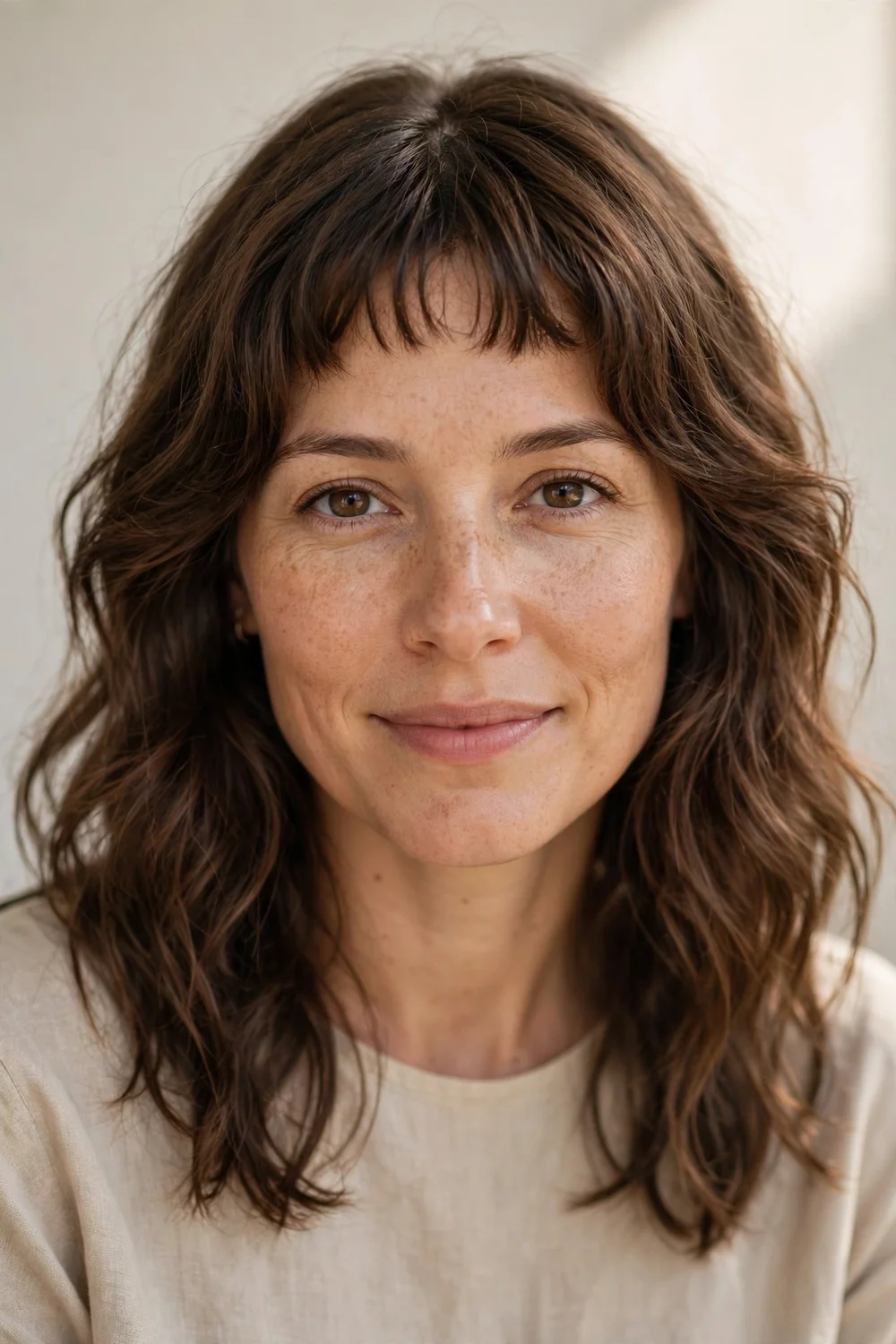
Bottleneck bangs are narrow and short at the top of the forehead, then widen as they reach the cheekbones, like the neck of a bottle. They suit oval and heart-shaped faces and work best on straight to wavy hair. The shape frames the eyes at the top and the cheekbones at the sides. Style by blow-drying them forward with a round brush and letting the sides kick out. They need trims every 3 to 4 weeks since the narrow section grows into the eyes quickly.
Try this: Use a small round brush just on the center section to keep the narrow part from splitting. Difficulty: Moderate. Cost: $10 to $40 as an add-on.
If you want to see the bottle shape on every hair length, our bottleneck bangs hairstyles guide covers 24 cuts from bobs to long layers.
11. Bardot Bangs
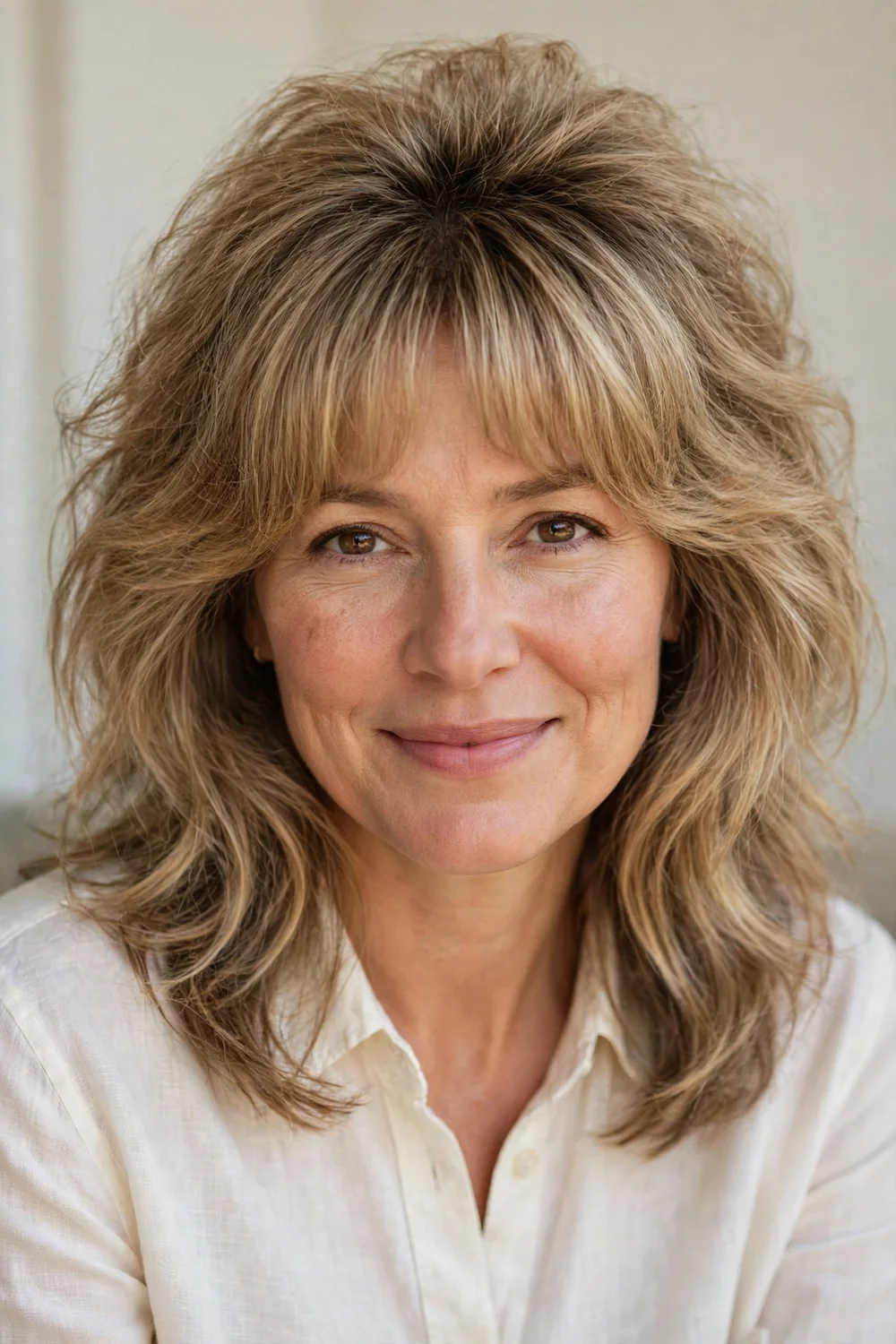
Bardot bangs are a fuller, more voluminous take on curtain bangs, parted in the middle with lots of body at the crown. They suit medium to thick hair that can hold the volume. The look needs a round brush blow-dry or Velcro rollers at the roots to get the lift. Because the fringe is long, usually hitting the cheekbones, it grows out easily. This is a good pick if you want the curtain bang shape with more presence up front.
Try this: Set the roots on large Velcro rollers for 10 minutes while you do makeup for lasting lift. Difficulty: Moderate. Cost: $0 to $25 as an add-on.
12. Micro Bangs (Baby Bangs)
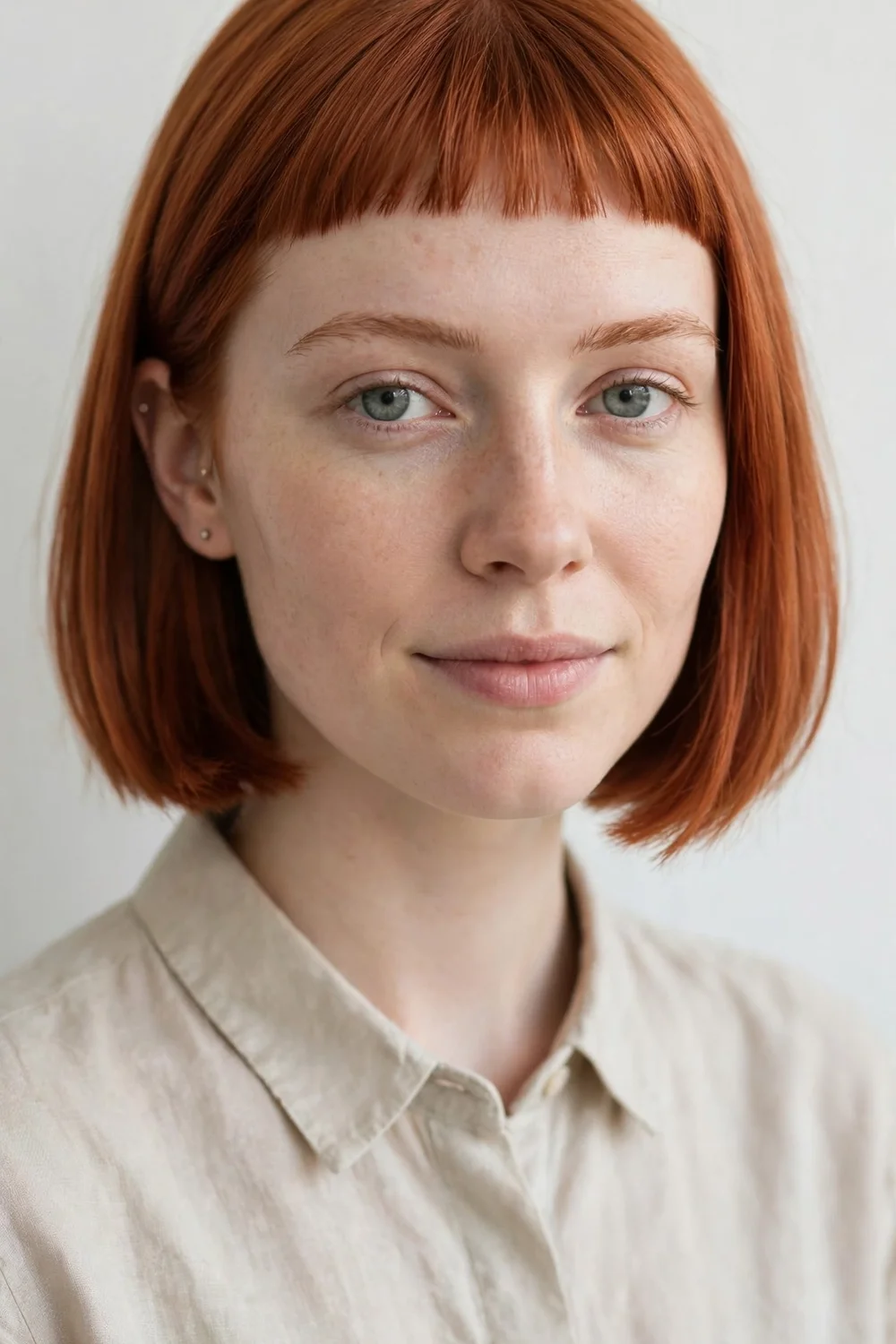
Micro bangs sit well above the brows, usually an inch or more higher than classic fringe. They suit long or oval faces best since they shorten the forehead visually, and they show off the eyes dramatically. This is the highest-commitment fringe: trims every 2 to 3 weeks, and growing them out takes months of pinning back. They need a flat iron and heat protectant to keep the short line crisp. Only choose these if you love the look enough to maintain the schedule.
Try this: Keep micro bangs pin-straight; any wave makes them look unintentional rather than edgy. Difficulty: Hard. Cost: $10 to $40 as an add-on.
13. Shaggy Textured Bangs
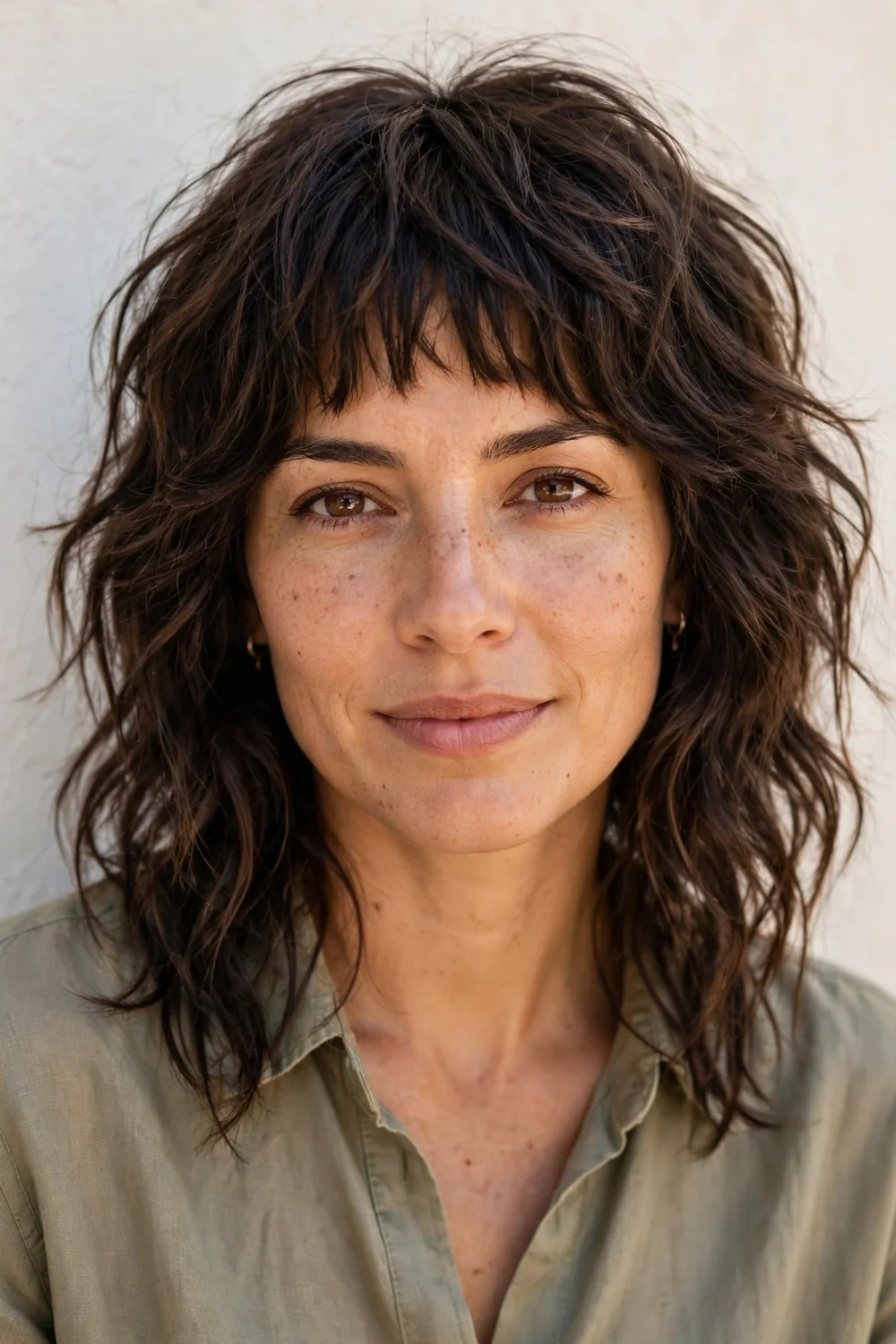
Shaggy textured bangs are cut with a razor into rough, piecey layers that match a shag haircut. They suit wavy and thick hair best since the texture needs some natural body to work. The fringe connects to the layers around the temples so nothing looks separate. Scrunch in sea salt spray and air dry for the full effect. If you wear your fringe on shorter hair, our hairstyles for short hair with bangs rounds up similar textured options.
Try this: Flip your head upside down and scrunch upward for extra texture through the fringe. Difficulty: Easy. Cost: $0 to $25 as an add-on.
14. Air Bangs
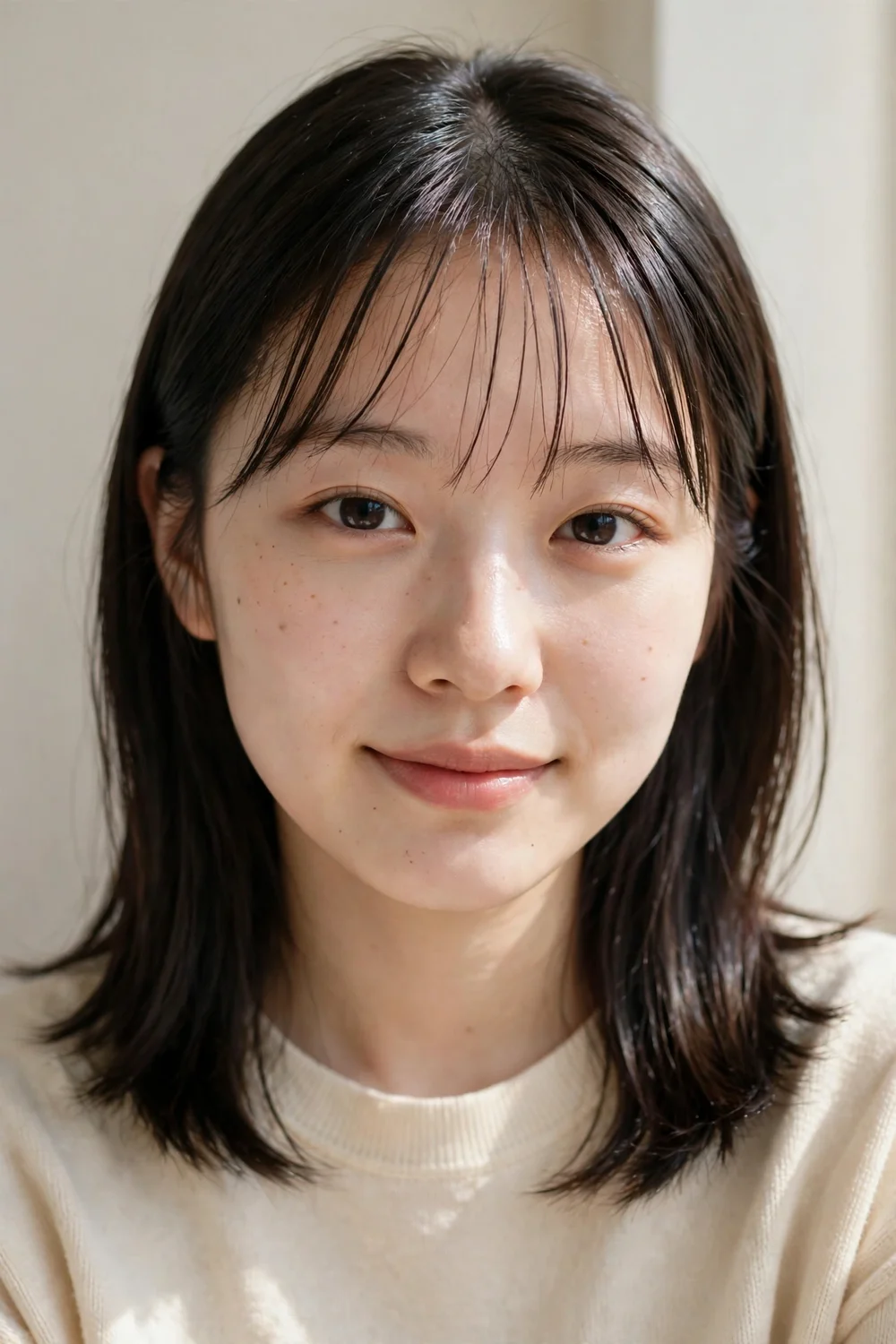
Air bangs are the ultra-thin Korean version of wispy bangs, cut so fine that the forehead shows through clearly. They suit straight, fine hair and smaller faces best since the fringe is delicate. The thinness means they separate easily, so keep a mini brush or comb handy for touch-ups. They need trims every 3 to 4 weeks to stay sheer; letting them grow makes them merge into regular wispy bangs. Dry them straight down with cool air for the signature flat, airy finish.
Try this: Carry blotting papers for the forehead since thin bangs show oil faster than dense fringe. Difficulty: Easy. Cost: $0 to $25 as an add-on.
15. Birkin Bangs

Birkin bangs are long, wispy fringe that grazes the eyelashes and blends into face-framing pieces at the sides. They suit straight to wavy hair and most face shapes because the length softens the look. Named for the 1960s style, they sit between wispy bangs and curtain bangs in both length and commitment. Style by blow-drying forward and letting them fall naturally; they look best slightly imperfect. They need trims every 4 to 6 weeks and grow out into curtain bangs gracefully.
Try this: Let them fall where they want on day two; the lived-in look suits this fringe better than precision. Difficulty: Easy. Cost: $0 to $25 as an add-on.
Types of Bangs Compared
| Bang Type | Best Face Shape | Best Hair Type | Trim Frequency |
|---|---|---|---|
| Curtain | All | Straight, wavy, thick | Every 4-6 weeks |
| Side-swept | Round, square | All | Every 6-8 weeks |
| Wispy | All | Fine, thin | Every 4 weeks |
| Blunt | Oval, long | Thick, straight | Every 3-4 weeks |
| Arched | Oval, round, heart | Straight, wavy | Every 3-4 weeks |
| Feathered | All | Medium, thick | Every 4-6 weeks |
| Blended | All | All | Rarely |
| Curly | All | Curly, wavy | Every 8-12 weeks |
| Choppy | Oval, heart | Straight, wavy | Every 3-4 weeks |
| Bottleneck | Oval, heart | Straight, wavy | Every 3-4 weeks |
| Bardot | Oval, long | Medium, thick | Every 4-6 weeks |
| Micro | Long, oval | Straight | Every 2-3 weeks |
| Shaggy | All | Wavy, thick | Every 4-6 weeks |
| Air | Small, oval | Fine, straight | Every 3-4 weeks |
| Birkin | All | Straight, wavy | Every 4-6 weeks |
How to Choose the Right Bangs
Match the fringe to your face shape first. Round faces look slimmer with curtain, side-swept, or arched bangs that create vertical lines. Long faces balance out with micro or blunt bangs that shorten the forehead. Square faces soften with curtain or side-swept fringe that angles across the forehead. Heart-shaped faces suit wispy, curtain, or bottleneck bangs that fill the wider forehead area.
Then be honest about upkeep. If you will not visit the salon monthly, pick curtain, side-swept, blended, or Birkin bangs that grow out gracefully. If you are happy with frequent trims and daily heat styling, blunt, micro, and arched bangs reward the effort with a sharp look.
Finally, consider your texture. Fine hair needs wispy, air, or feathered bangs that stay light. Thick hair can carry blunt, Bardot, or curly fringe without going flat. Curly hair needs longer fringe cut dry. When you sit in the chair, bring two or three reference photos of the same bang type on hair like yours, and ask how it will grow out before the scissors come out.
Frequently Asked Questions
Which type of bangs is easiest to maintain?
Curtain bangs and side-swept bangs are the easiest. They need trims only every 4 to 8 weeks, grow out into face-framing layers, and look fine on days you skip styling. Blended bangs need even less since they are already long.
What bangs suit a round face?
Curtain bangs, side-swept bangs, and arched bangs suit round faces because they create vertical or diagonal lines that slim the face. Avoid short straight-across fringe that cuts horizontally and emphasizes width.
Can I get bangs with curly hair?
Yes. Curly bangs work well when cut dry and left longer than the target length to allow for shrinkage. Curtain bangs and blended fringe also work on curls since their length hides uneven texture. Make sure your stylist cuts curls dry.
How do I know if bangs will suit me?
Try clip-in bangs for a day before committing; they cost $10 to $20 and show you the effect with zero risk. Also consider your hairline: strong cowlicks suit side-swept or feathered bangs better than blunt fringe.
How long does it take to grow out bangs?
Blunt bangs take about 3 to 4 months to reach chin length, where they can be tucked behind the ears. Curtain and side-swept bangs blend into layers within 6 to 8 weeks. Pinning fringe back with clips or braiding it into the hairline hides the awkward stage.
Final Thoughts
There is no single best type of bangs, only the best type for your face, texture, and routine. Start with a forgiving option like curtain or side-swept bangs if you are unsure; you can always go shorter and sharper on the next visit.

