


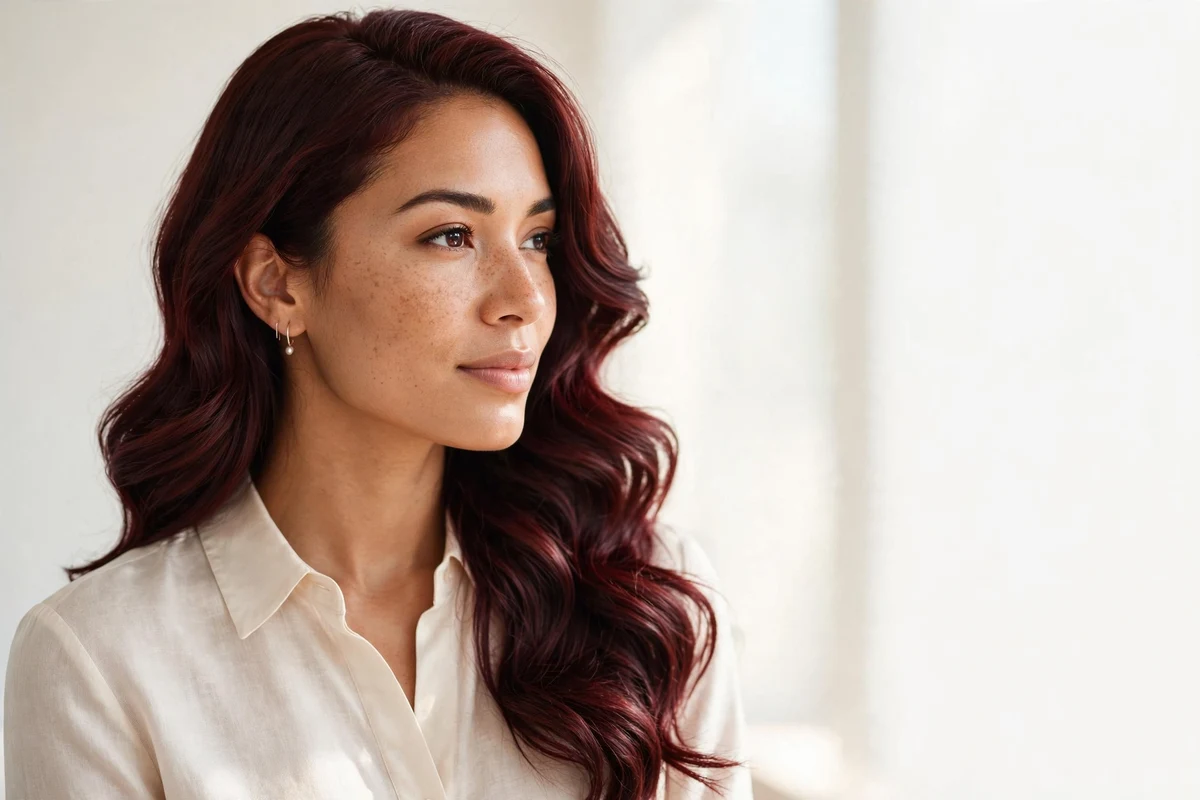
Burgundy is the color that turns heads in fall. It sits between red, violet, and wine, which means it reads cozy in sweater weather and rich under autumn light. The shades below cover every version of it, from a no-commitment gloss to a full violet melt.
This guide rounds up 30 burgundy fall hair colors, with notes on who each one suits and how much upkeep it needs. Burgundy is the shade I recommend most when someone wants drama without bleach, and you’ll see why as you scroll.
Quick answer: Burgundy flatters nearly every skin tone and works on dark bases without bleach. Pick mulled wine or burgundy brown for the easiest wear, plum or violet melts for a bolder look, and a gloss or ombre if you want low maintenance.
Quick Takeaways
- Burgundy deposits onto dark brown and black hair without lifting, which makes it one of the gentlest fall color changes you can make.
- Warm undertones lean toward mulled wine, ruby, and cinnamon burgundy; cool undertones lean toward plum, violet, and berry shades.
- Red-violet pigments fade faster than brown, so color-safe shampoo and cooler water keep the shade rich for weeks longer.
- Ombre, dip dye, and money-piece placements give you the burgundy look with fewer root touch-ups than all-over color.
- A burgundy gloss refreshes fading color in one salon visit and buys you another 4 to 6 weeks of wear.
Why Burgundy Wins in Fall
Burgundy matches the season. The red-violet depth sits comfortably next to darker wardrobes and lower autumn light, and the wine tones echo the colors outside. That is why it returns every fall and why stylists keep reaching for it.
It is also practical. Dark hair takes burgundy without bleach, so the change is affordable and less damaging than going blonde. On light hair, burgundy gives more depth for less lift than most reds. Fewer compromises, more wear per visit.
If you are still weighing the season’s options, fall hair colors rounds up the full autumn palette, from copper to espresso.
1. Deep Burgundy Gloss Over Dark Brown
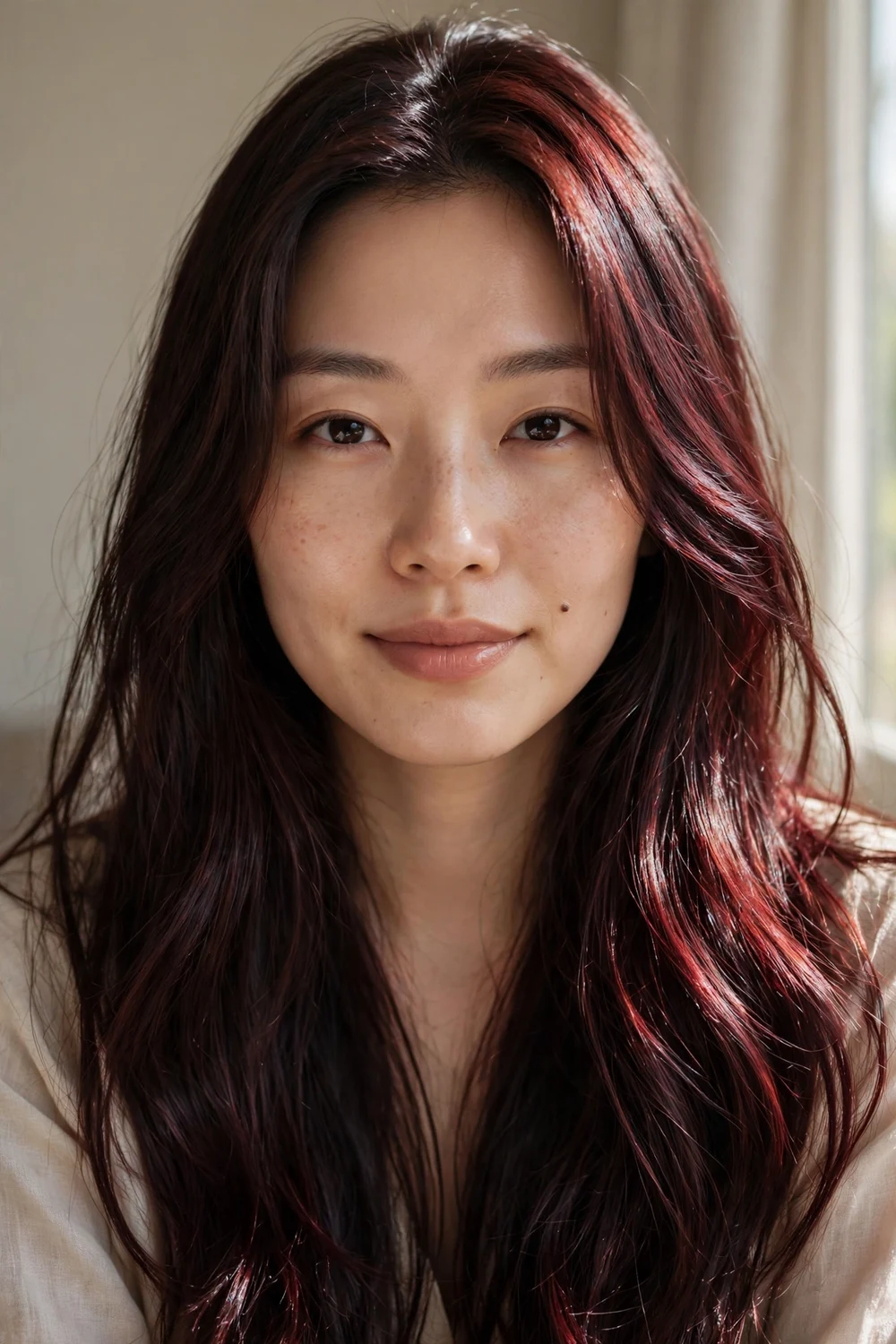
A gloss is the lowest-commitment way into this color. Your colorist paints a demi-permanent wine-toned formula over your natural dark base, and the result shows up as a wine shimmer in daylight and near-black depth indoors. No bleach, no lift, and no regrowth line, since your natural depth stays the base. The appointment takes under an hour and costs far less than full color. It fades gradually over 4 to 6 weeks without harsh lines, so grow-out is painless.
Try this: ask for a level 4 demi-permanent gloss with red-violet reflects, refreshed every 5 weeks to keep the shine.
2. Classic Burgundy Balayage on Dark Hair
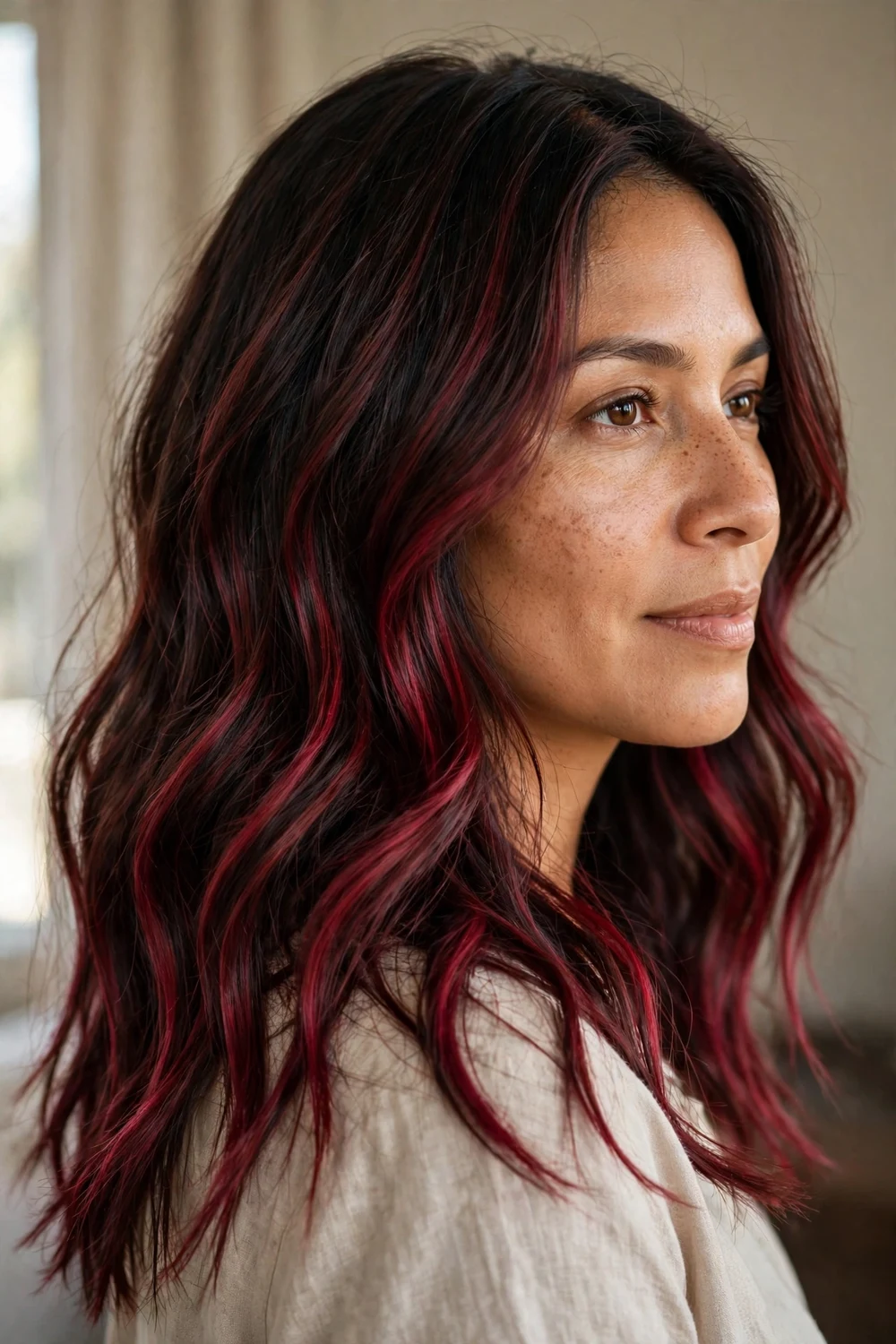
Hand-painted burgundy through the mid-lengths and ends is the workhorse of this list. Balayage keeps the roots dark, so the color grows out softly and appointments stretch to 8 to 12 weeks apart. The burgundy ribbons catch light when the hair moves, which gives flat dark hair visible depth. It suits straight, wavy, and curly textures equally. Dark brown to black bases take the color directly; lighter bases may need a fill first so the wine tones hold.
Try this: ask for burgundy pieces starting at the cheekbones, not the crown, for a softer grow-out.
3. Burgundy Ombre

Ombre keeps things simple: dark roots melt into rich burgundy ends with a smooth, deliberate gradient. Because the color lives on the lower half, root touch-ups are nearly nonexistent and trims handle any dryness at the tips. It is a strong pick for first-time color because the change is bold at the ends but your natural hairline stays untouched. The look works best on medium to long hair, where the transition has room to blend.
Try this: ask for a melted transition around the jawline so the blend looks expensive, not striped.
4. Black to Burgundy Gradient
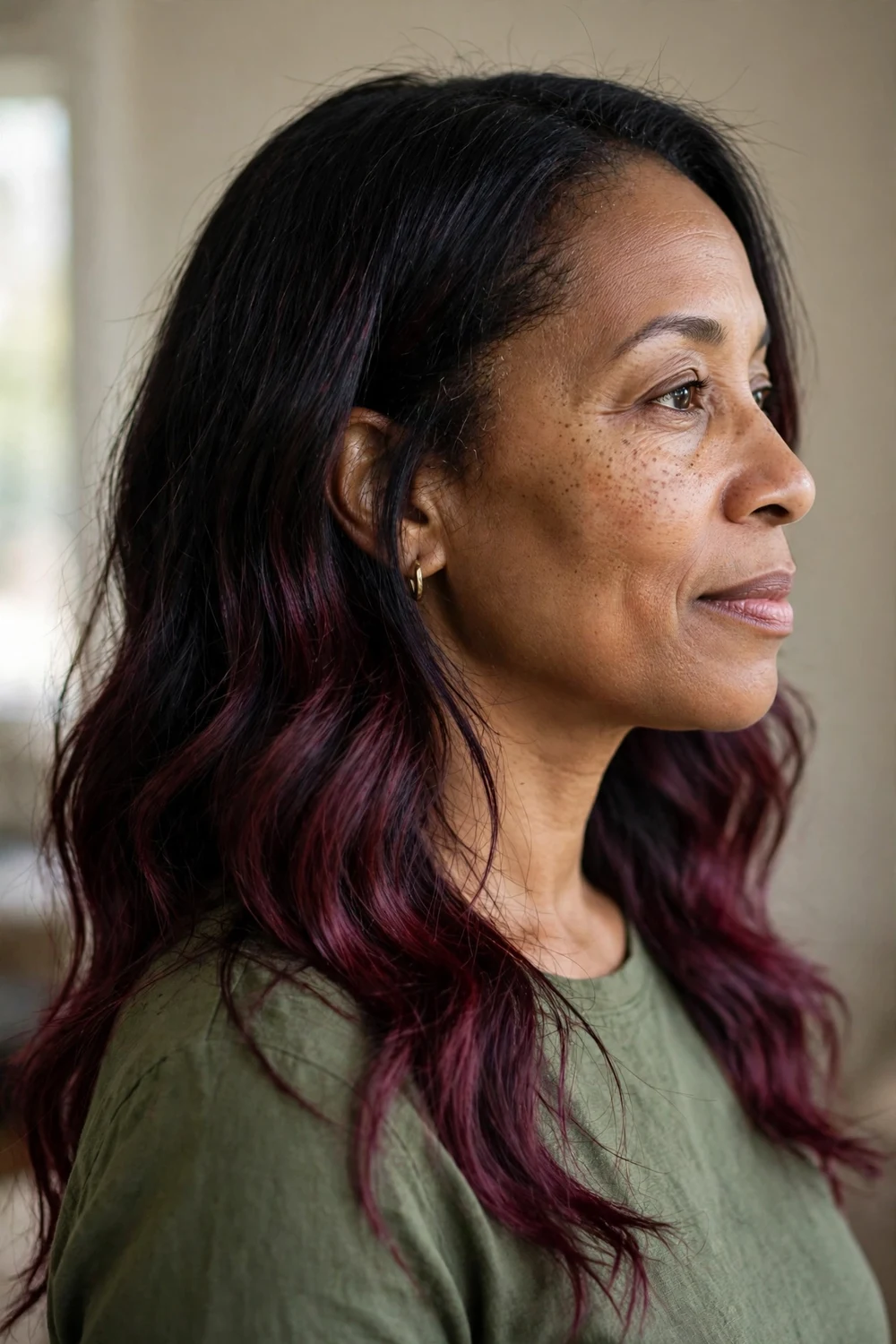
For near-black bases, a soft gradient into burgundy gives dimension without lightening the whole head. The top half stays dark, and wine tones fade in from the ears down, so the effect is closer to a color melt than a true ombre. This version suits coarse or thick hair especially well, since the color reads through the weight of it. Indoors it looks like a richer black; outside, the burgundy shows through clearly.
Try this: use a shine serum on the ends daily, since dark-to-burgundy melts show dryness faster than single-process color.
5. Mulled Wine
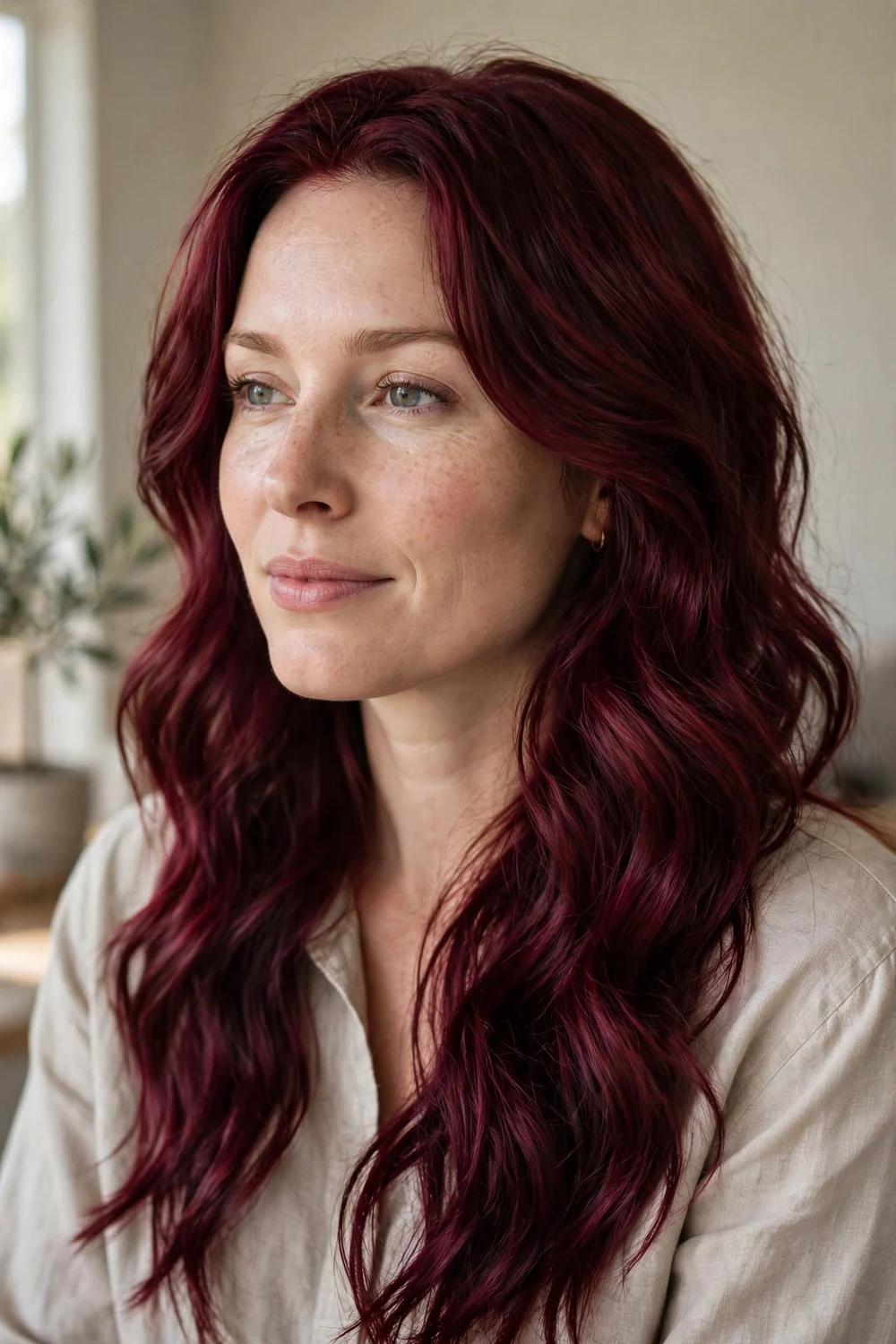
Mulled wine is an intense burgundy blended with red and maroon, like the drink it is named after. It is one of the warmest options on this list, with red tones that dominate over the violet. Fair to medium skin with warm undertones wears it especially well, and it brightens up pale winter complexions when the cold months arrive. The richness makes thin hair look fuller, because the warm reflects bounce more light than flat dark color.
Try this: pair it with a clear gloss every other month; warm burgundy dulls faster than cool-toned versions.
6. Plum Burgundy
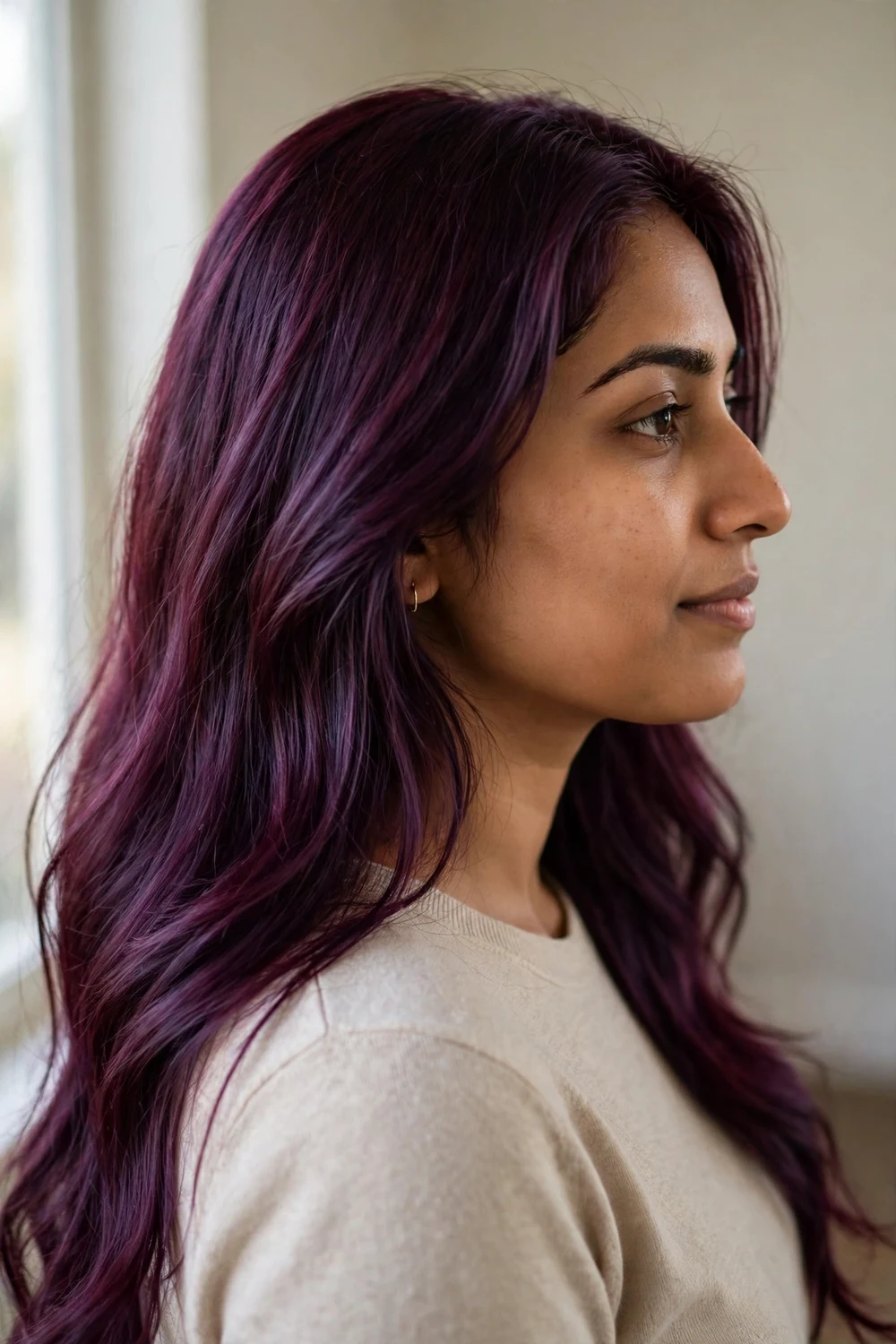
Plum burgundy leans violet, which makes it the cooler cousin of mulled wine. The purple undertone reads more modern and slightly moodier, and it flatters cool and neutral undertones better than warm reds do. On long hair it has real depth: the color shifts from dark wine at the roots to a brighter plum where light hits. It fades toward a soft mauve rather than an orange red, which many people prefer as it washes out.
Try this: wash with a sulfate-free shampoo in lukewarm water to slow the violet pigments from fading.
7. Ruby Burgundy Waves with Gloss
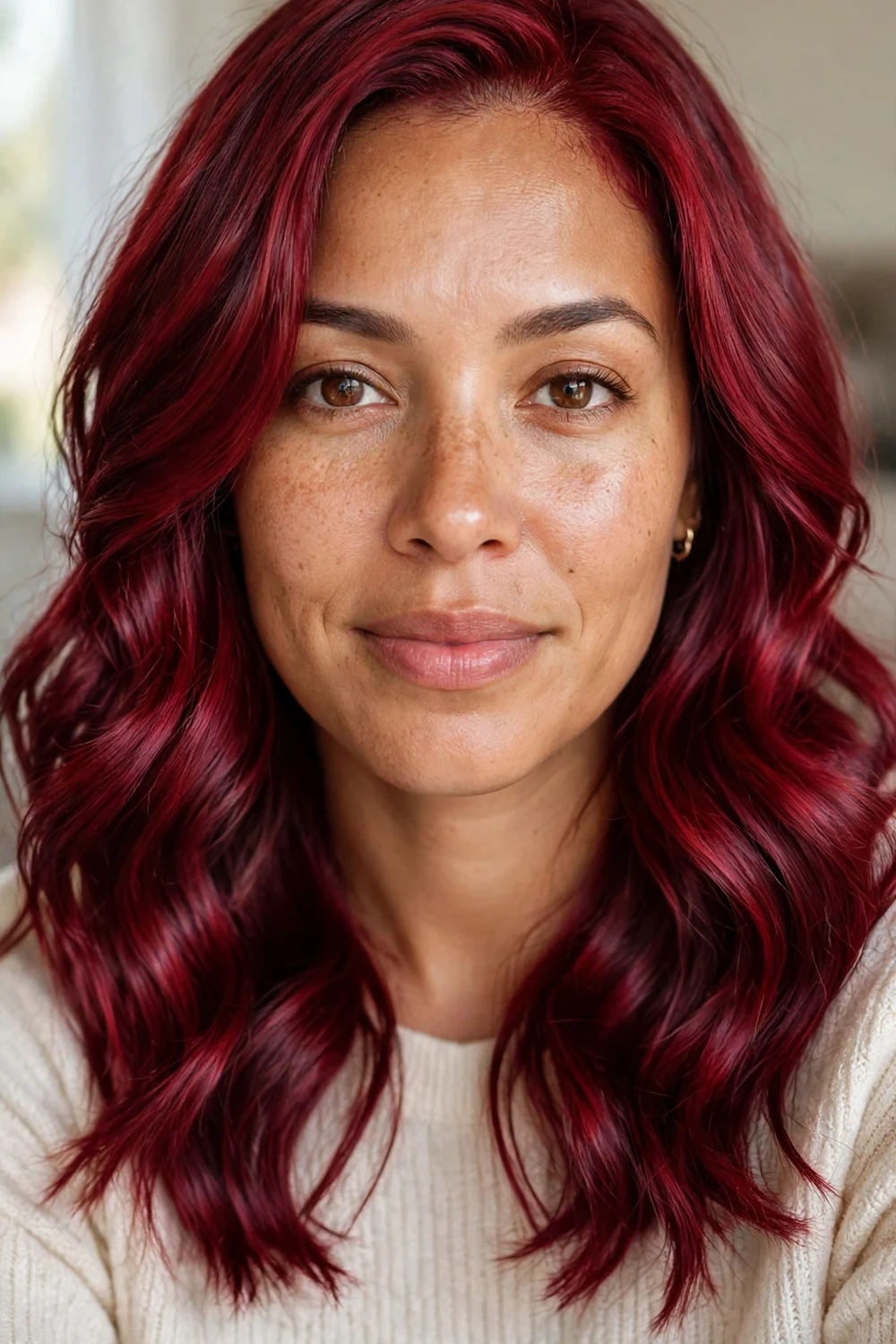
Ruby pushes burgundy toward bright red, so this one has the most energy on the list. Styled in loose waves with a high-shine finish, the color looks almost lit from within. It suits confident color-wearers who want burgundy to read as red, not brown. The gloss topcoat is doing real work here: ruby tones dull quickly, and a clear seal every few weeks keeps the light-catching effect. Medium to thick hair shows this shade off best.
Try this: finish with a cold-water rinse after conditioning; it seals the cuticle and locks the shine in.
8. Crimson Burgundy Balayage with Cascading Curls
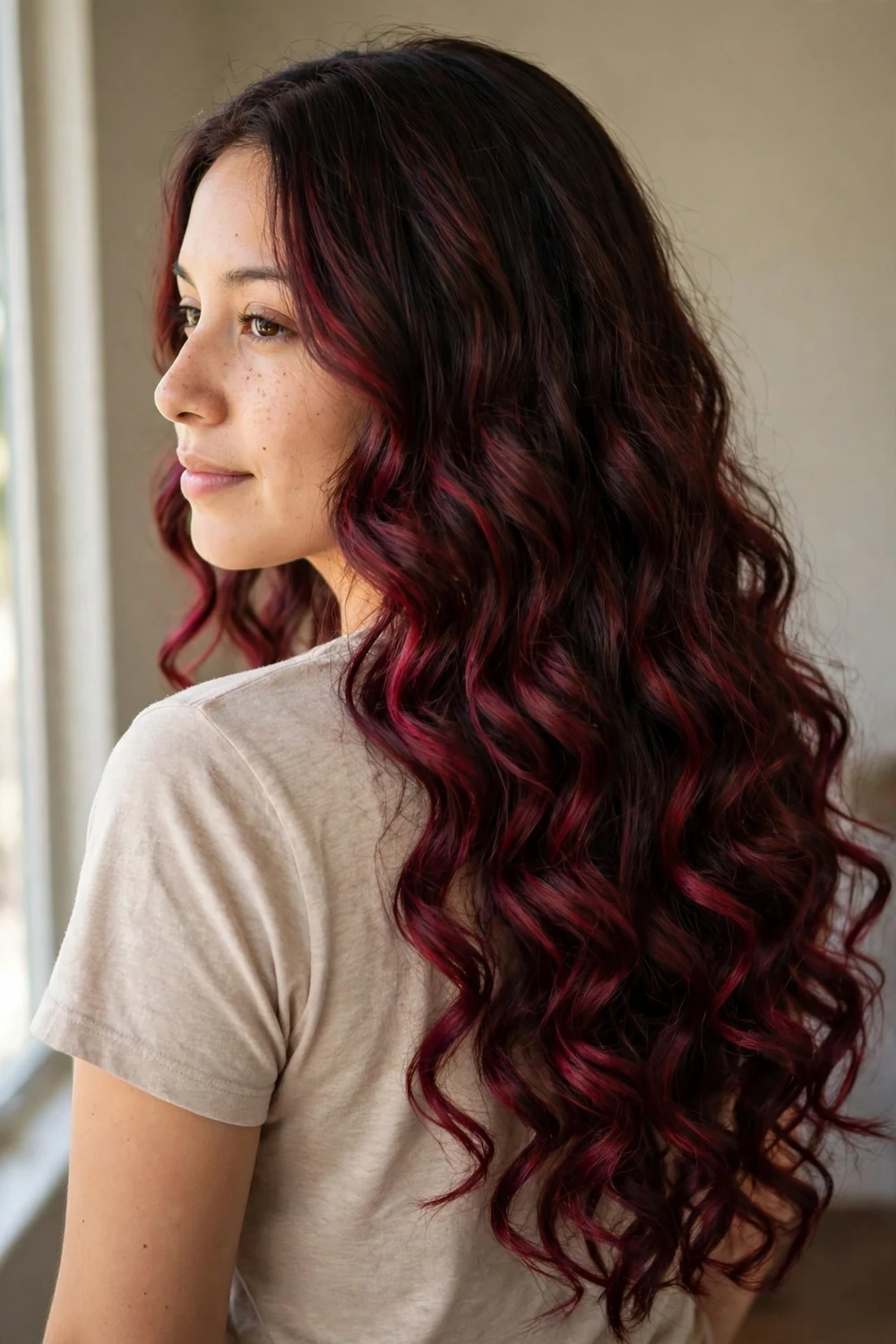
This is balayage pushed toward crimson, worn in long cascading curls rather than waves. The brighter red wine tone separates it from the classic version: it reads bolder, warmer, and more dramatic in photos. Curls give each color ribbon its own spotlight, so the dimension is hard to miss. It is a strong pick for events and evenings. Plan for a gloss refresh at week 6, because crimson tones lose punch before cooler burgundies do.
Try this: curl away from the face in 1-inch sections so the burgundy ribbons frame rather than crowd the face.
9. Burgundy Money Piece
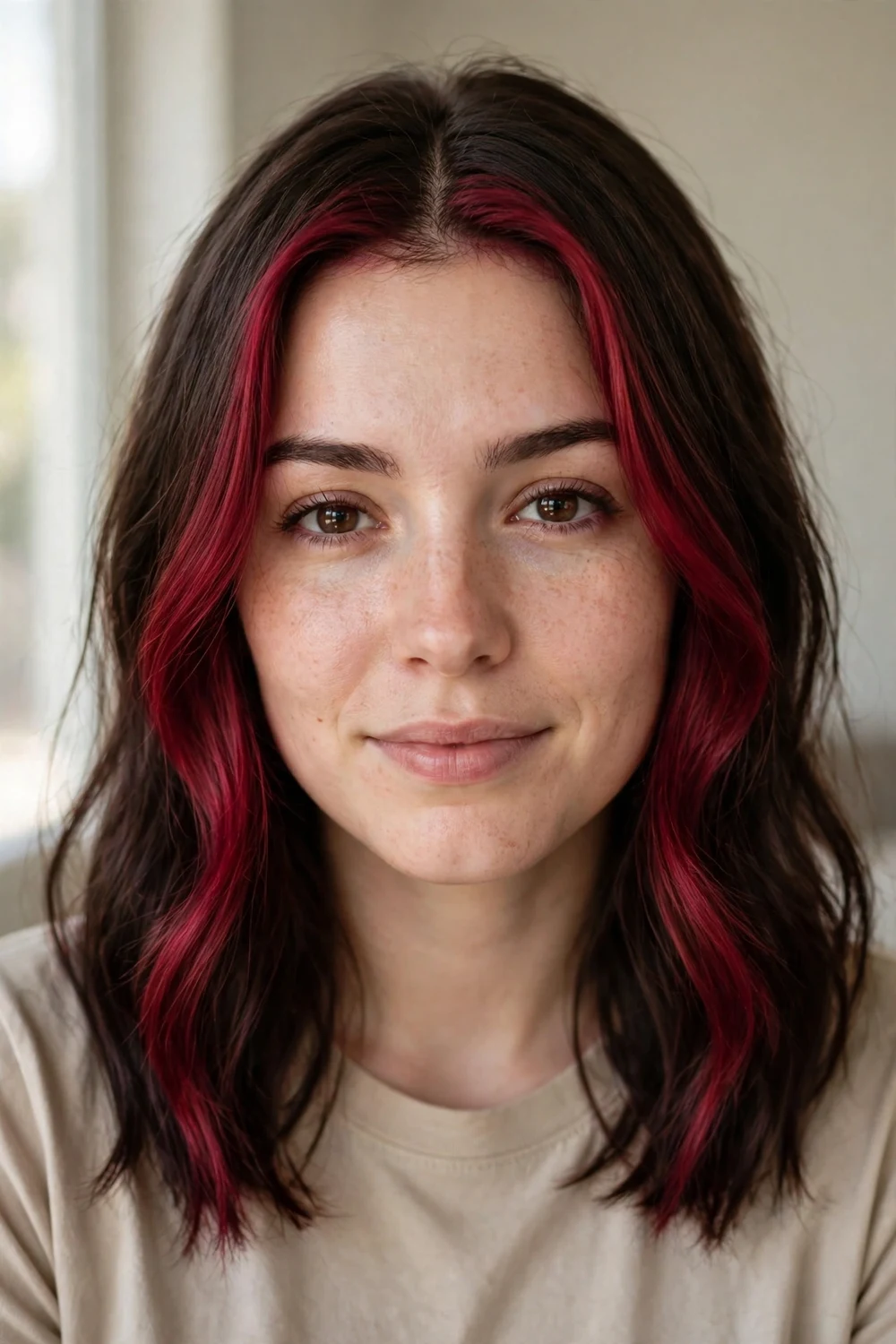
A money piece colors only the front sections around the face, which makes this the fastest route to burgundy. The appointment takes a fraction of full color, the upkeep is minimal, and the face-framing brightness flatters nearly everyone. It works over any base, dark or light, and you can keep the rest of your hair untouched. Burgundy money pieces look especially sharp with middle parts, where the two front panels sit symmetrically.
Try this: keep the pieces thin, about half an inch wide, so they read as an accent instead of a stripe.
10. Burgundy Dip Dye Ends
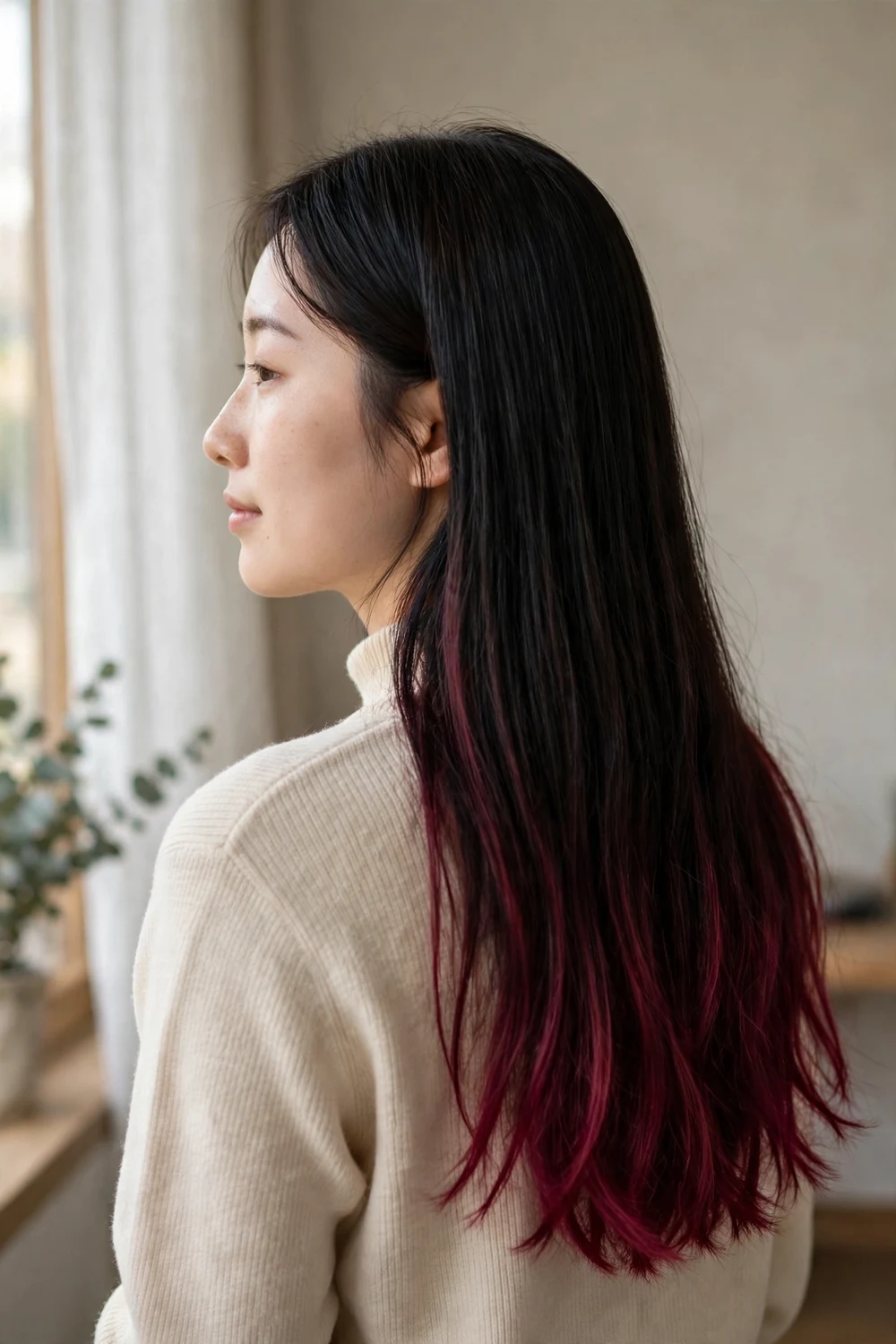
Dip dye is ombre’s bolder sibling. Instead of a smooth gradient, the burgundy starts at a defined point and runs to the tips with stronger contrast. It is playful, easy to grow out, and simple to trim away if you change your mind. Because the color sits only on the ends, damage stays contained and touch-ups are rare. Dark bases get the strongest contrast; on light hair the burgundy reads softer and more blended.
Try this: start the dip at chin level or below on long hair, higher on bobs, so the proportion looks deliberate.
If warm reds are your thing but you want more of them, red brown hair color ideas covers the full auburn to mahogany range.
11. Burgundy Lowlights

Lowlights do the opposite of highlights: they add darker, wine-toned ribbons that deepen the base and make the lighter pieces pop. On brown hair, burgundy lowlights create the kind of dimension that looks natural in indoor light and rich in sunlight. The upkeep is gentle, since lowlights sit below the top layer and regrowth blends in. This is a smart pick if your hair feels flat or one-dimensional and you want depth without going darker overall.
Try this: ask for lowlights two levels deeper than your base, woven in fine sections for a seamless finish.
12. Burgundy Highlights on Dark Hair
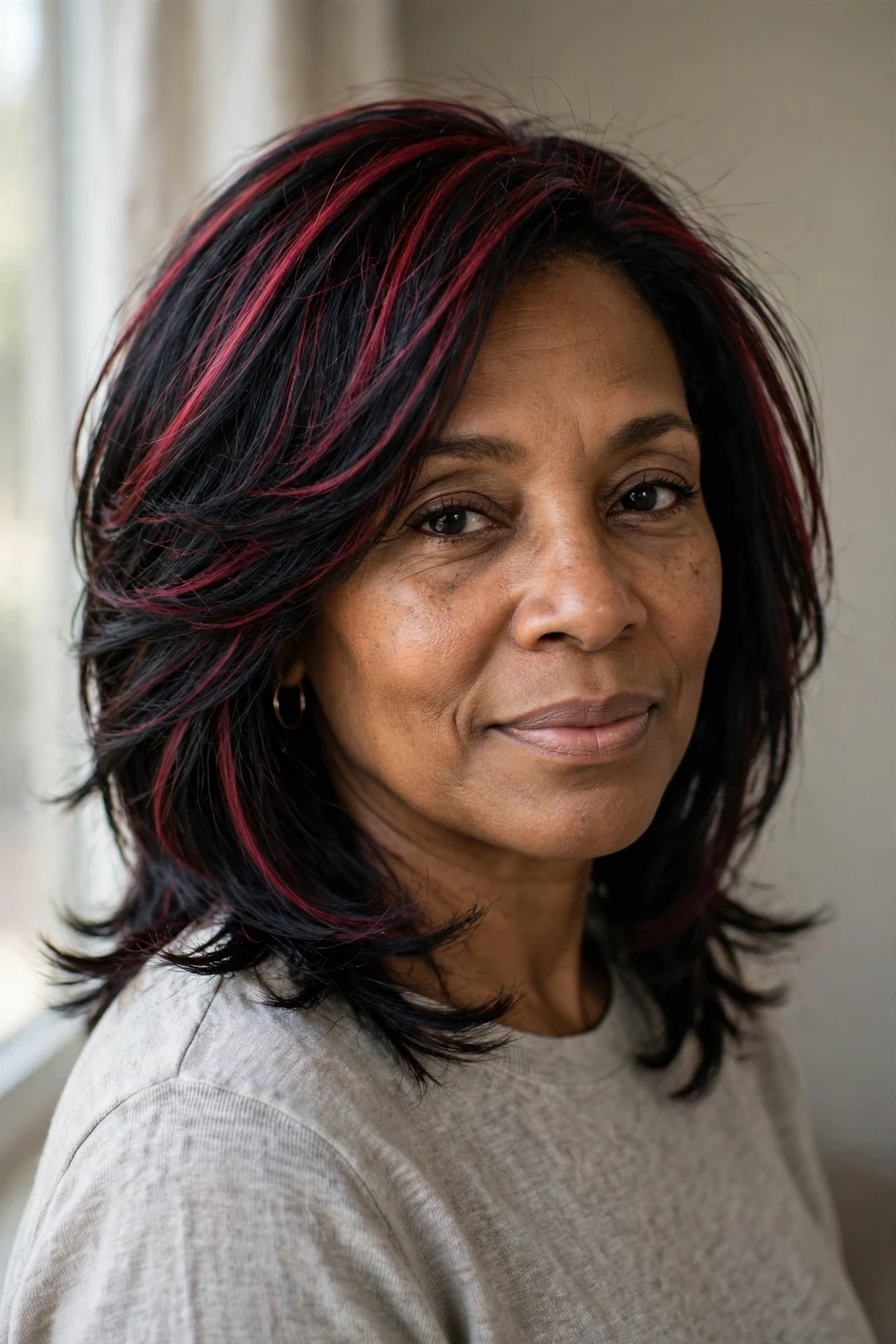
Where lowlights deepen, highlights lift: thin burgundy ribbons painted over a dark base add brightness and movement. The contrast is striking on black and dark brown hair, because the wine tones stand out against the depth. Highlights show best on layered or textured cuts, where the pieces sit at different lengths. Ask your colorist to keep them fine and well-blended; chunky burgundy highlights can read dated, while fine ribbons read modern.
Try this: space highlights about a quarter inch apart through the top layer only, leaving the underlayer dark for contrast.
13. Violet Burgundy Melt
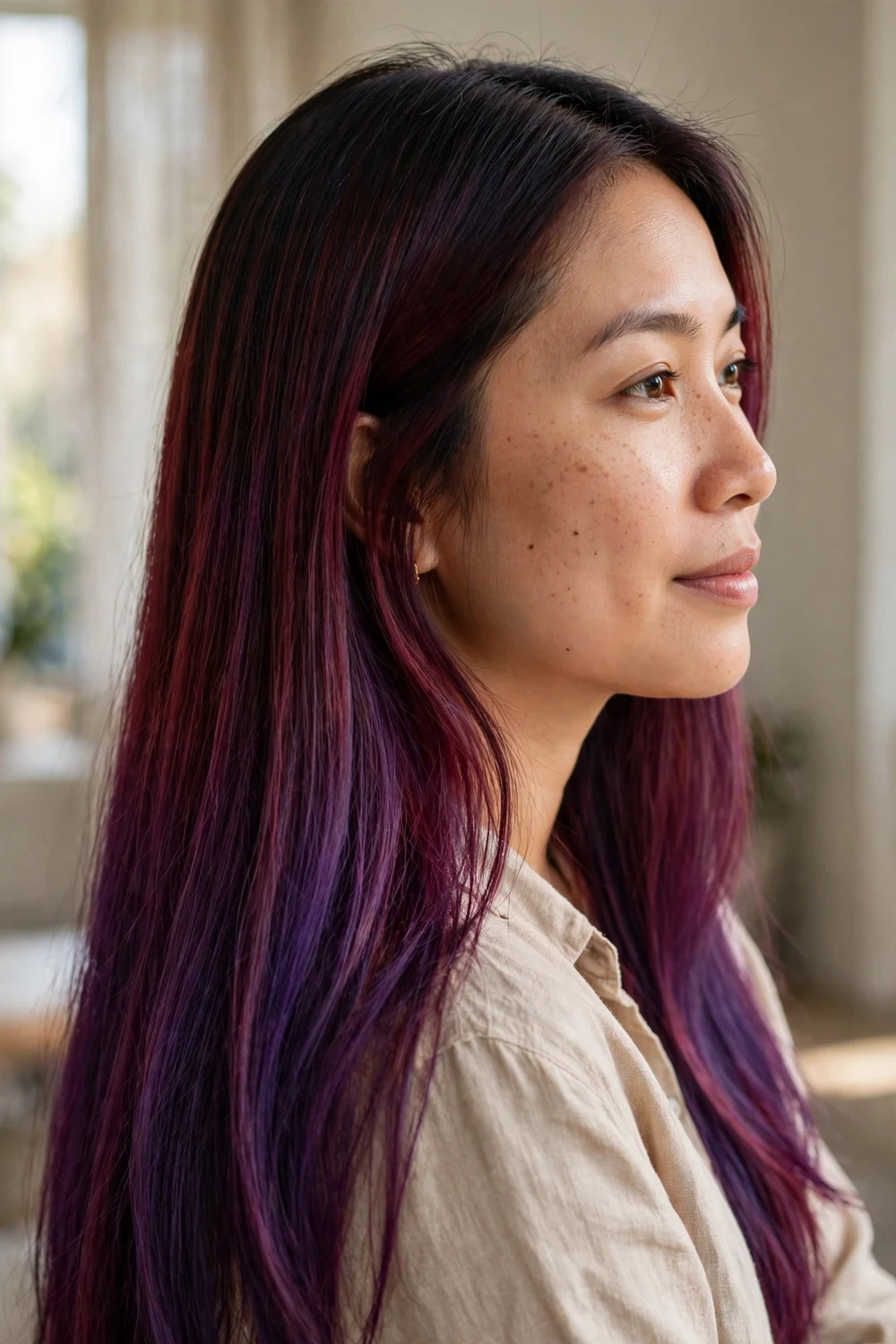
A melt is about the transition, not just the shade. Dark roots flow into a violet-leaning burgundy through the lengths, with no visible line where one color ends and the next begins. The technique suits people who want a fashion color that still looks polished at work. It is lower maintenance than all-over violet burgundy, because the dark root does the grow-out work for you. Straight and wavy hair show the melt best; curls break it up but still look rich.
Try this: ask your colorist to start the melt at least two inches below the root for a natural, expensive-looking grow-out.
14. Burgundy Brown
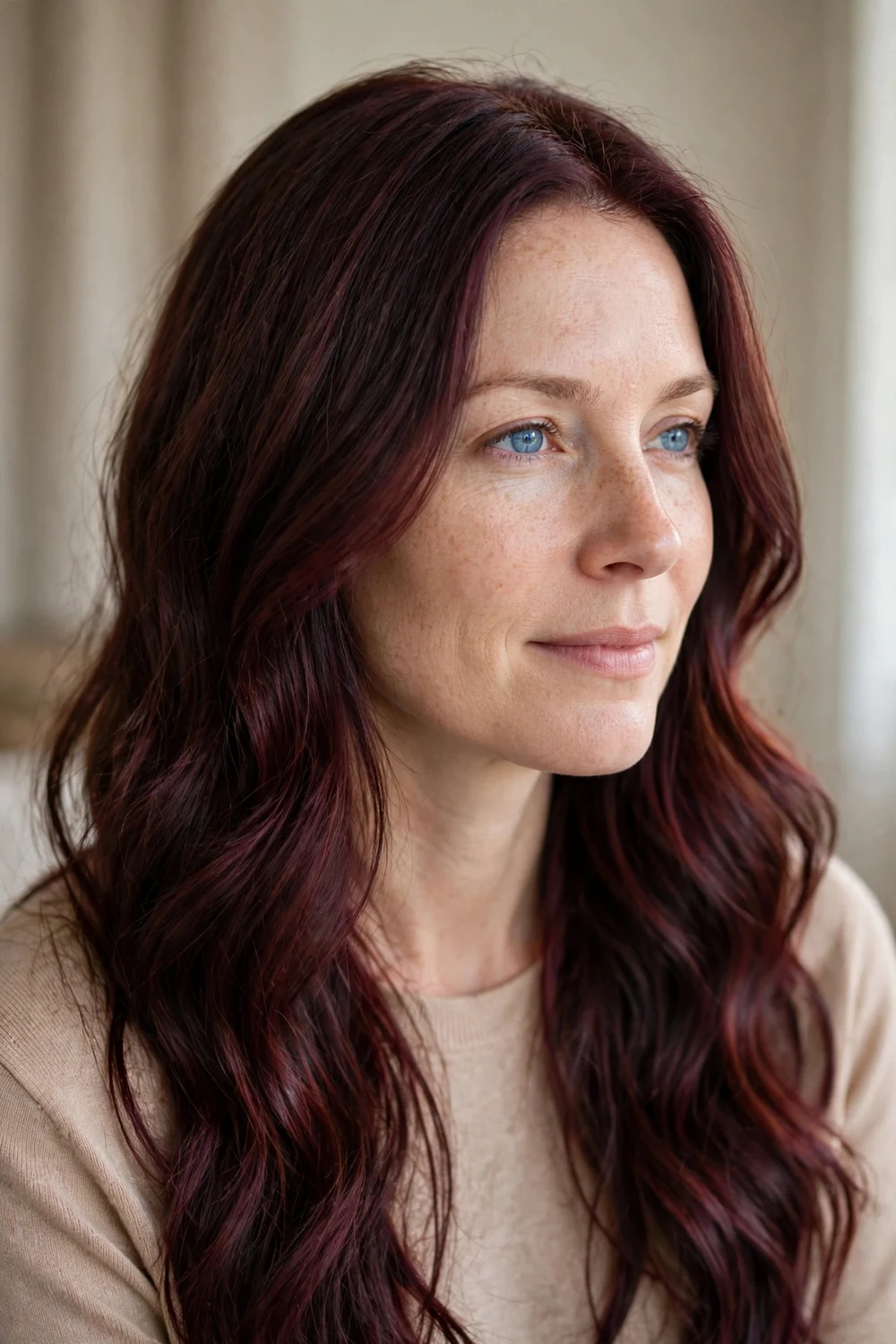
Burgundy brown blends the two into one wearable shade: mostly brunette, with wine warmth running through it. It reads like a rich brown indoors and shows its red-violet side in sunlight, which makes it the most office-friendly burgundy on this list. Fair skin with blue or green eyes wears it well, and it looks close enough to natural that regrowth barely shows. If you want burgundy without announcing it, this is the one.
Try this: keep the formula at a level 4 or 5 base with red-violet reflects so the burgundy shows without going bright.
15. Auburn-Tinted Burgundy Waves
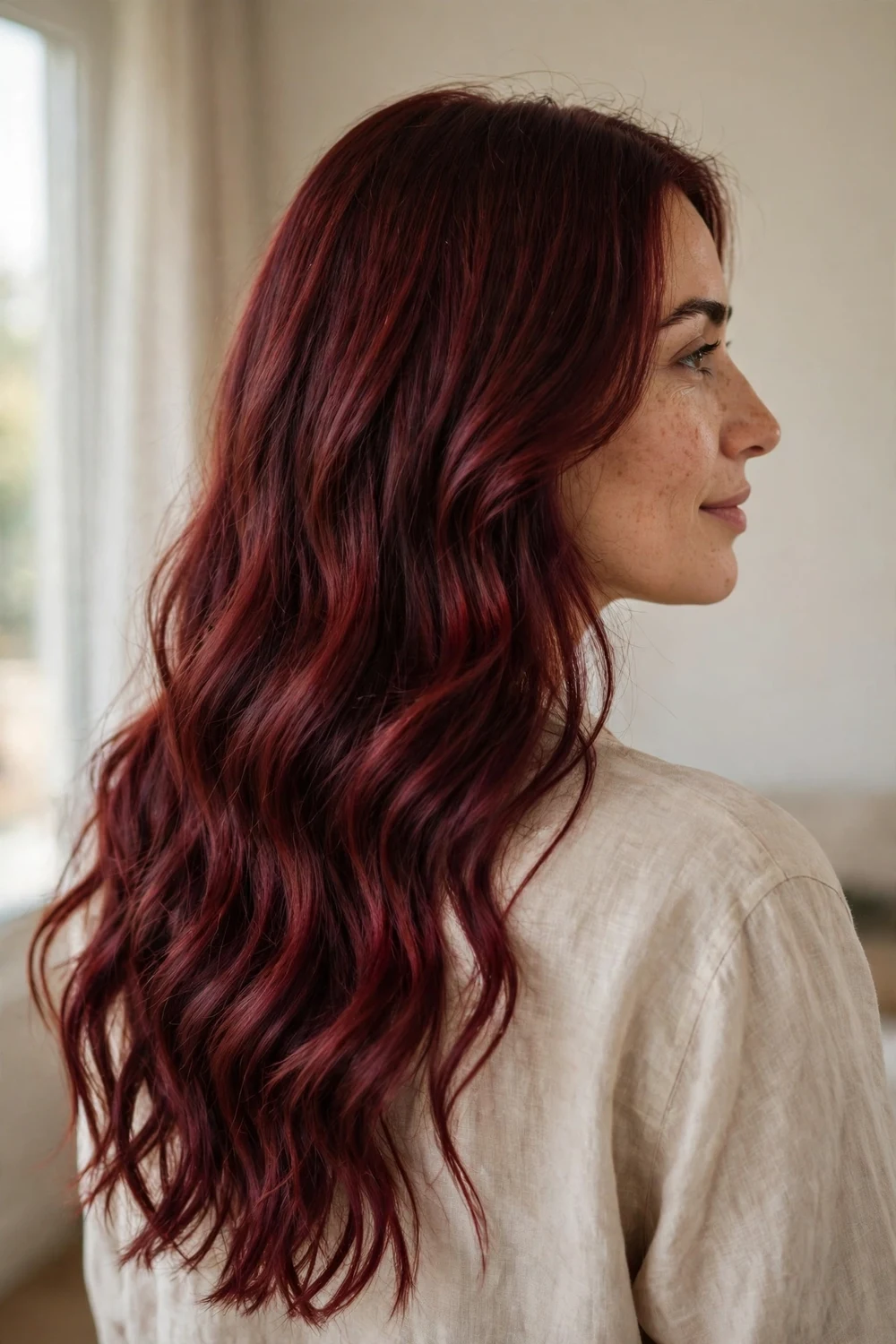
Here burgundy gets an auburn tilt: the wine base carries reddish-brown warmth that softens the violet edge. The result is gentler than pure burgundy and warmer than plum, sitting right in the middle of the red family. Worn in loose waves, the auburn reflects warm the whole look up. It suits warm and neutral undertones, and it transitions well into copper if you ever want to go lighter later, since the warm pigments are already in place.
Try this: ask for auburn reflects mixed into the burgundy formula rather than layered on top, so the blend stays seamless.
16. Cinnamon-Undertoned Burgundy Waves
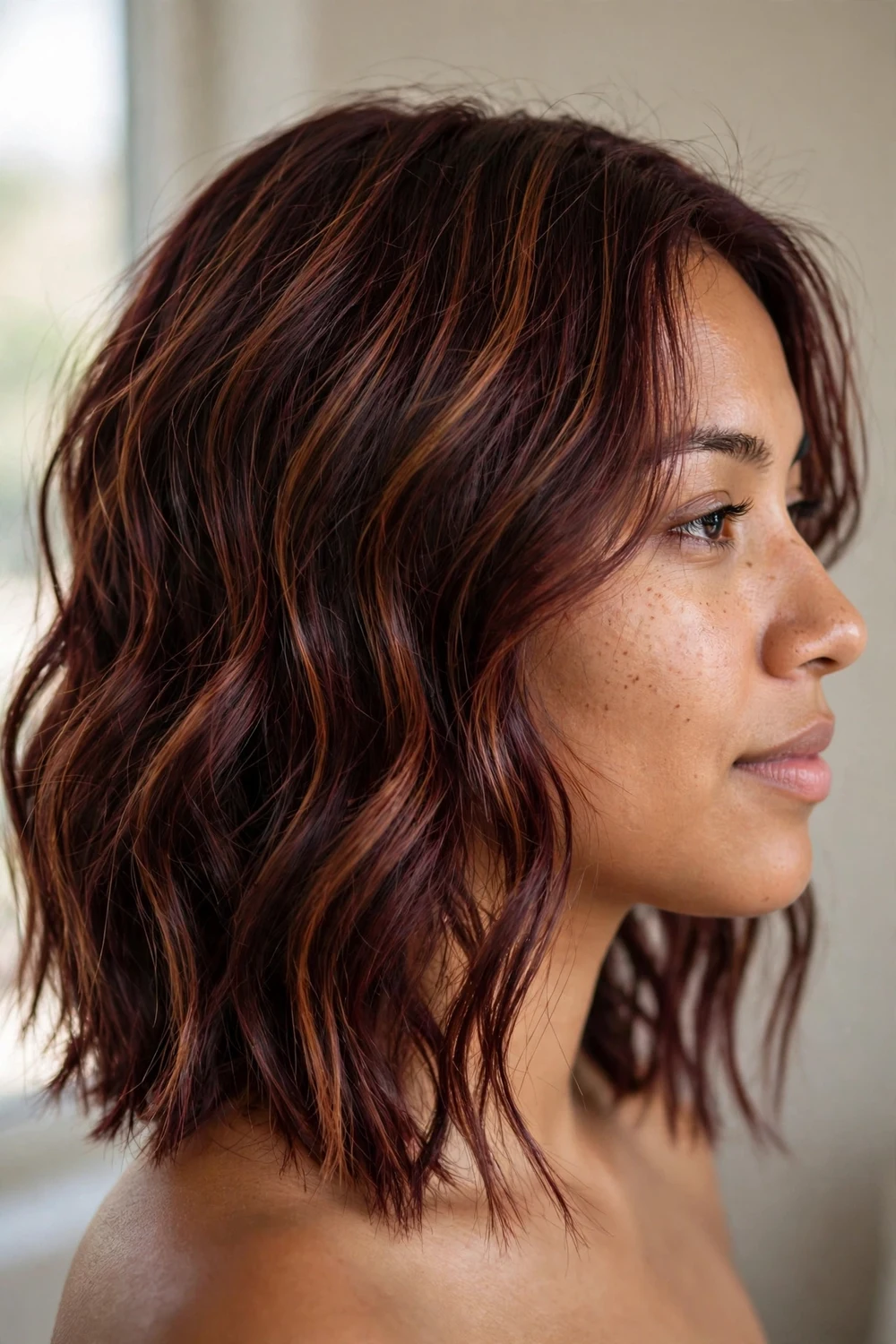
While the last idea warms burgundy with auburn, this one spices it with cinnamon: brighter, spiced ribbon highlights woven through a burgundy base. The cinnamon pieces read almost copper where light hits, which gives textured waves a lit, dimensional finish. It is one of the most autumn-specific looks on the list. The ribbon technique means maintenance is easy, since the base burgundy can be refreshed without redoing the highlights.
Try this: style with a texture spray instead of oil; cinnamon ribbons show best on matte, separated texture.
17. Chestnut Burgundy Root Fade
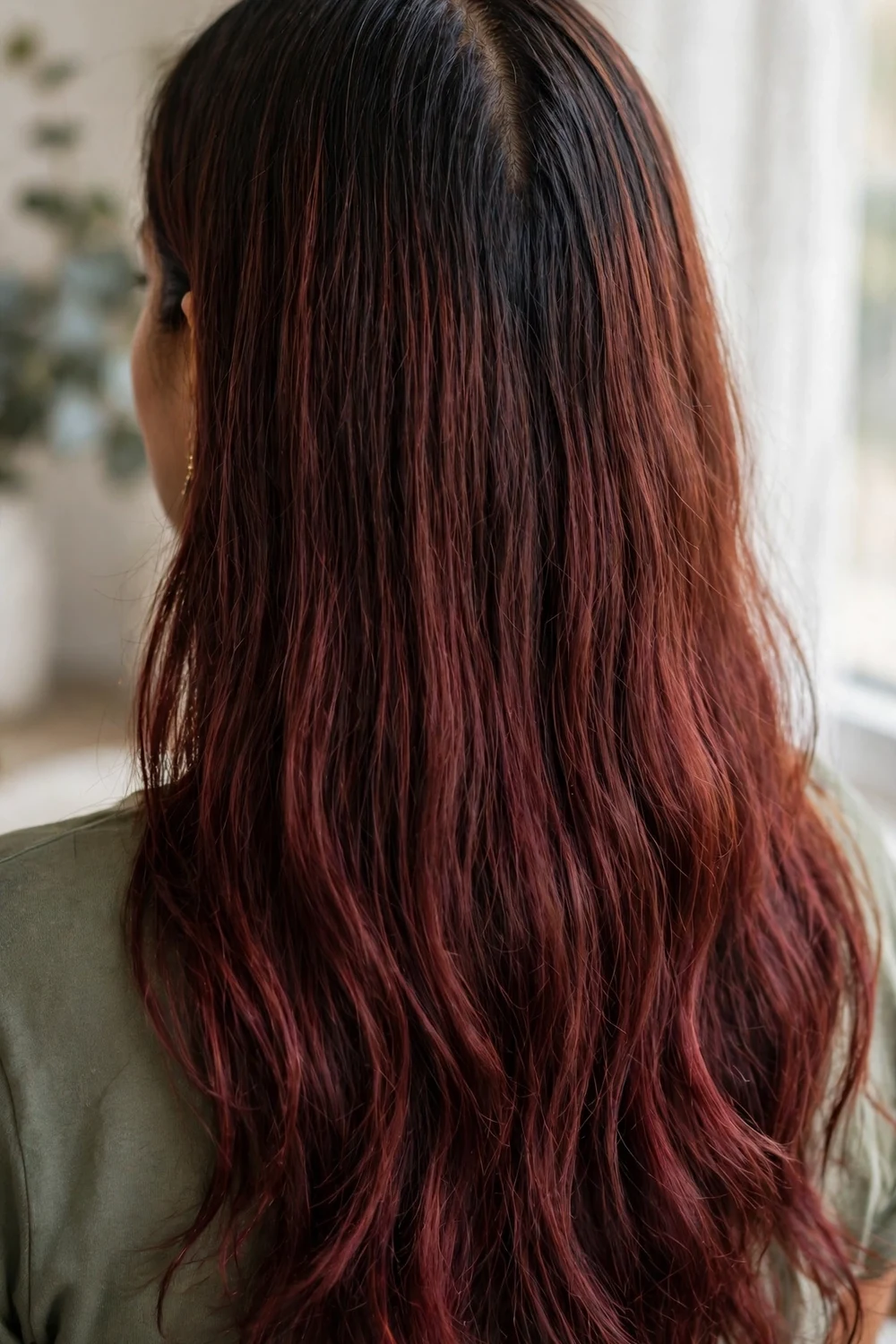
Natural roots fade into a chestnut-burgundy blend through the lengths, which gives you a color that looks grown-in from day one. The chestnut base is warm and earthy, and the burgundy on top adds the wine depth. This is the easiest burgundy to maintain of all: there is no regrowth line to chase, because the root is already your natural color. It suits medium to long hair and looks best with a middle or off-center part that shows the fade.
Try this: refresh only the mid-lengths at the salon; the root never needs a touch-up on this one.
18. Mauve Burgundy Loose Waves
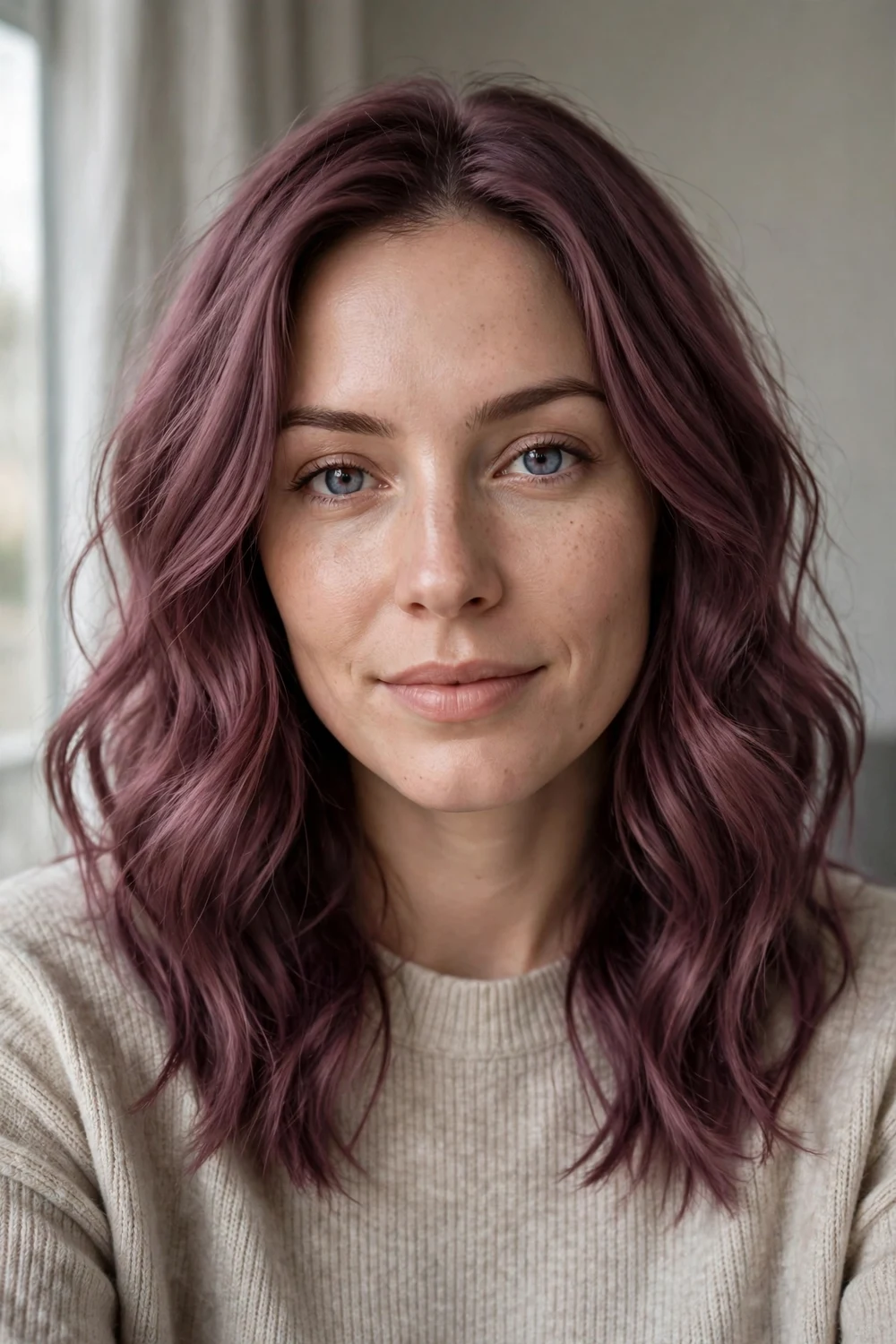
Mauve burgundy is the muted end of the family: a dusty, soft wine that reads more understated than the bolder shades. It suits people who want burgundy’s depth without its drama. On loose waves the muted tone looks modern and calm, and it flatters cool undertones that wash out in warmer reds. The softness also means fading is forgiving; when mauve washes out, it settles into a gentle warm brown.
Try this: skip heat styling for the first week after coloring; mauve tones set best when the cuticle is left undisturbed.
19. Deep Burgundy Bob
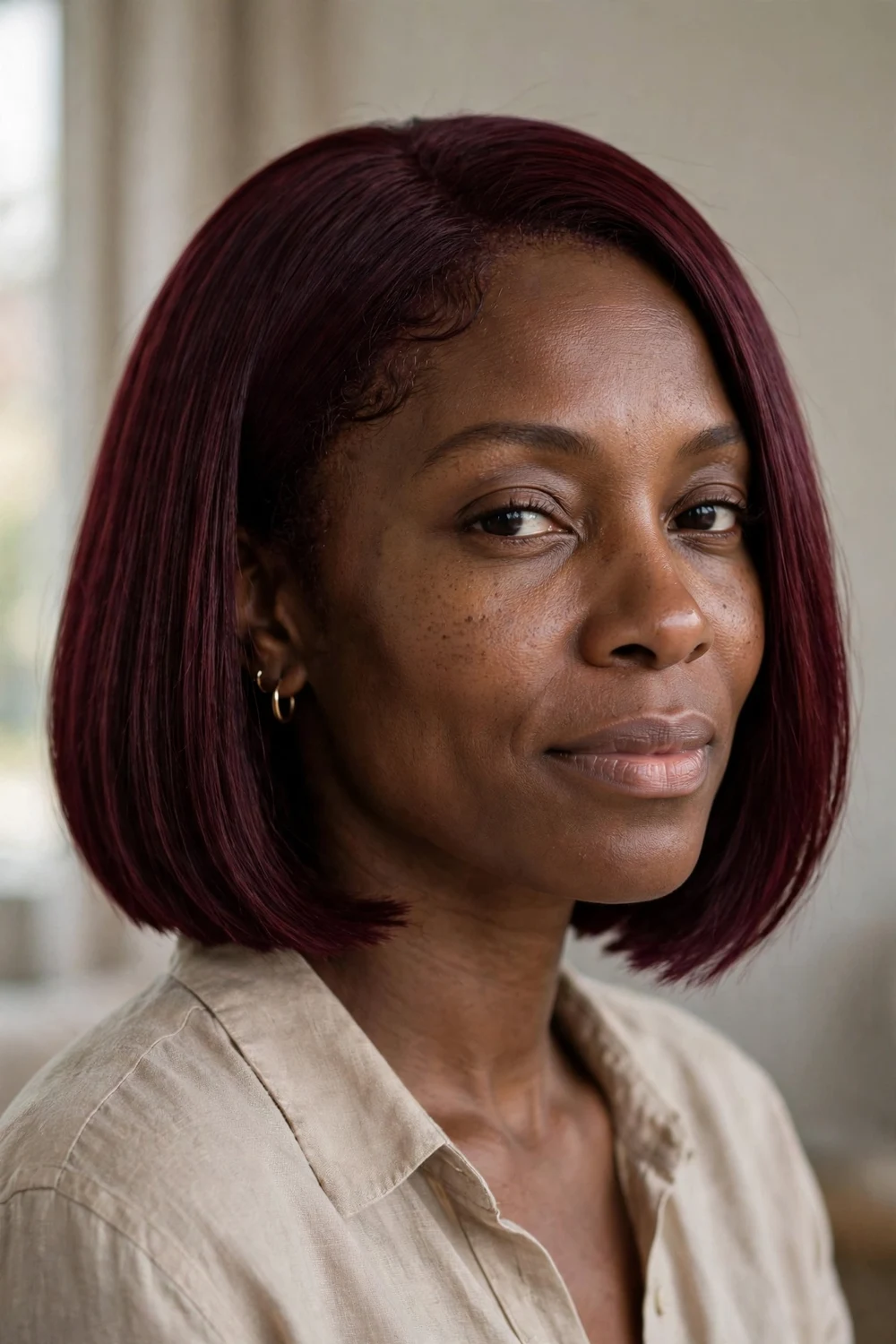
A deep, single-process burgundy on a classic bob is proof that short hair carries color just as well as long. The solid shade looks polished and deliberate, and the bob’s clean lines show the color’s depth without distraction. This version suits darker and medium skin tones well, where the deep wine adds richness without washing the complexion out. Short hair also means cheaper color appointments and faster grow-out if you want a change.
Try this: keep the ends blunt and the color one level deeper than you think; solid burgundy reads brighter on short cuts.
20. Burgundy Lob with Blunt Bangs
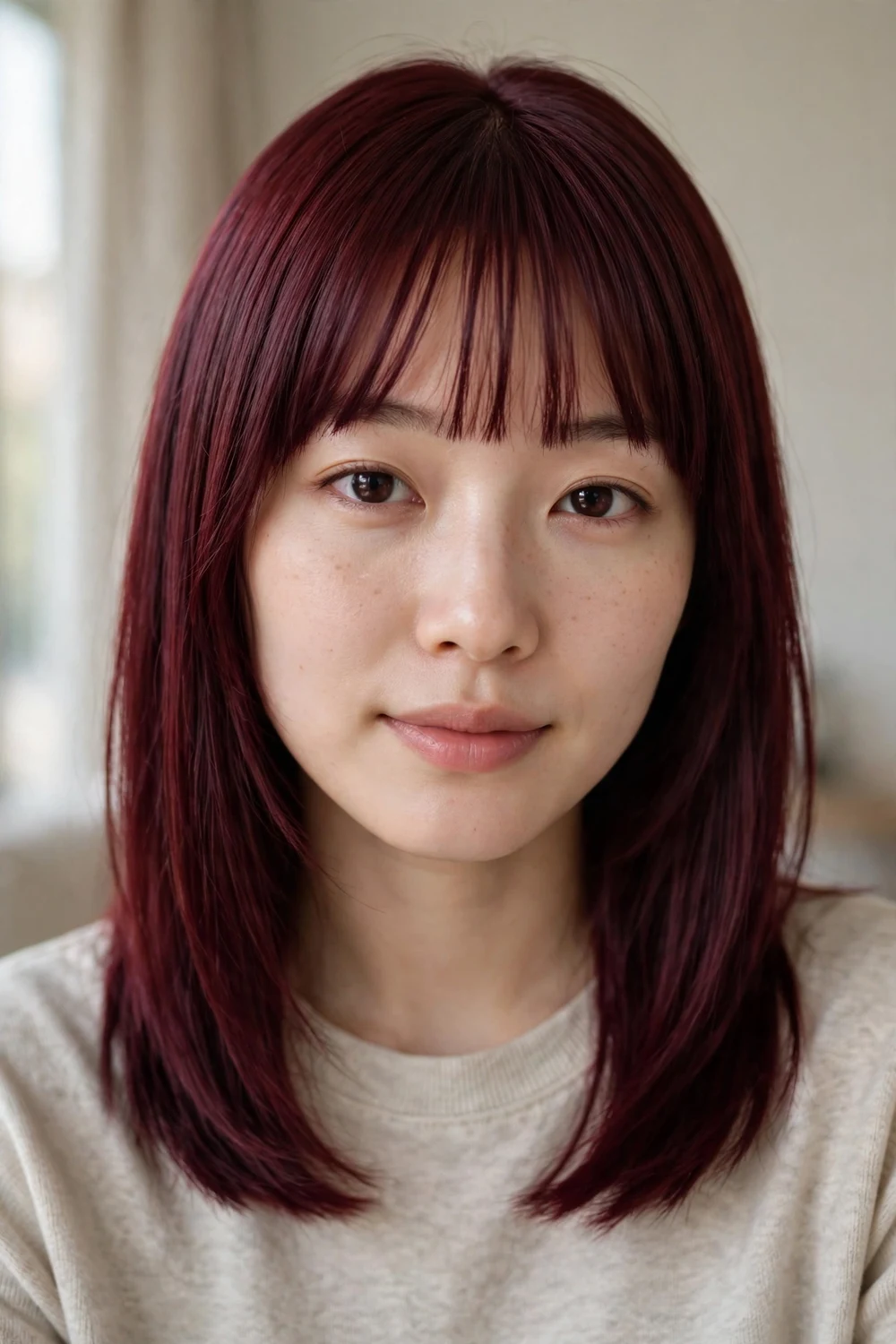
The lob gets a burgundy update with the addition of blunt bangs, which frame the eyes and make the wine color impossible to ignore. Sleek, straight styling shows the shade at its richest, because light reflects evenly off smooth hair. The blunt bangs add structure that balances burgundy’s softness, and the collarbone length keeps the style wearable for most occasions. This is a strong pick for thick, straight hair that holds a smooth blowout well.
Try this: trim bangs every 3 to 4 weeks to keep the line sharp; grown-out bangs blur the whole look.
21. Burgundy Pixie with Undercut
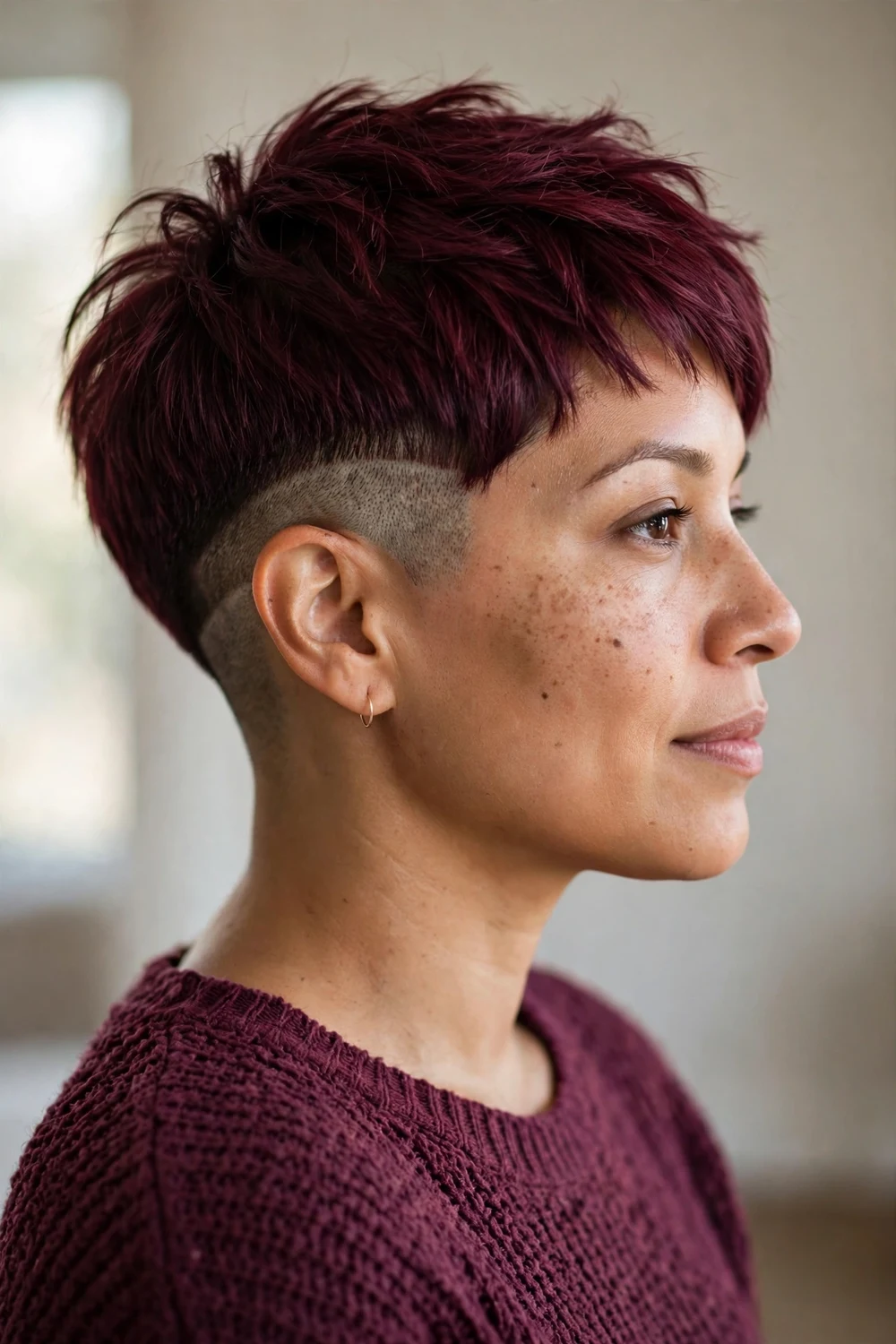
Not for the faint of heart: a pixie with a cool undercut, dyed plum burgundy. The short length makes the color look edgier than the same shade on long hair, and the undercut adds texture that catches light. It is the lowest-maintenance color routine here, since short hair grows out fast and color appointments are quick. The plum tone keeps it from reading flat, which matters when there is less hair to show dimension.
Try this: use a matte styling paste to define the texture; the plum burgundy shows through separation best.
22. Burgundy Box Braids
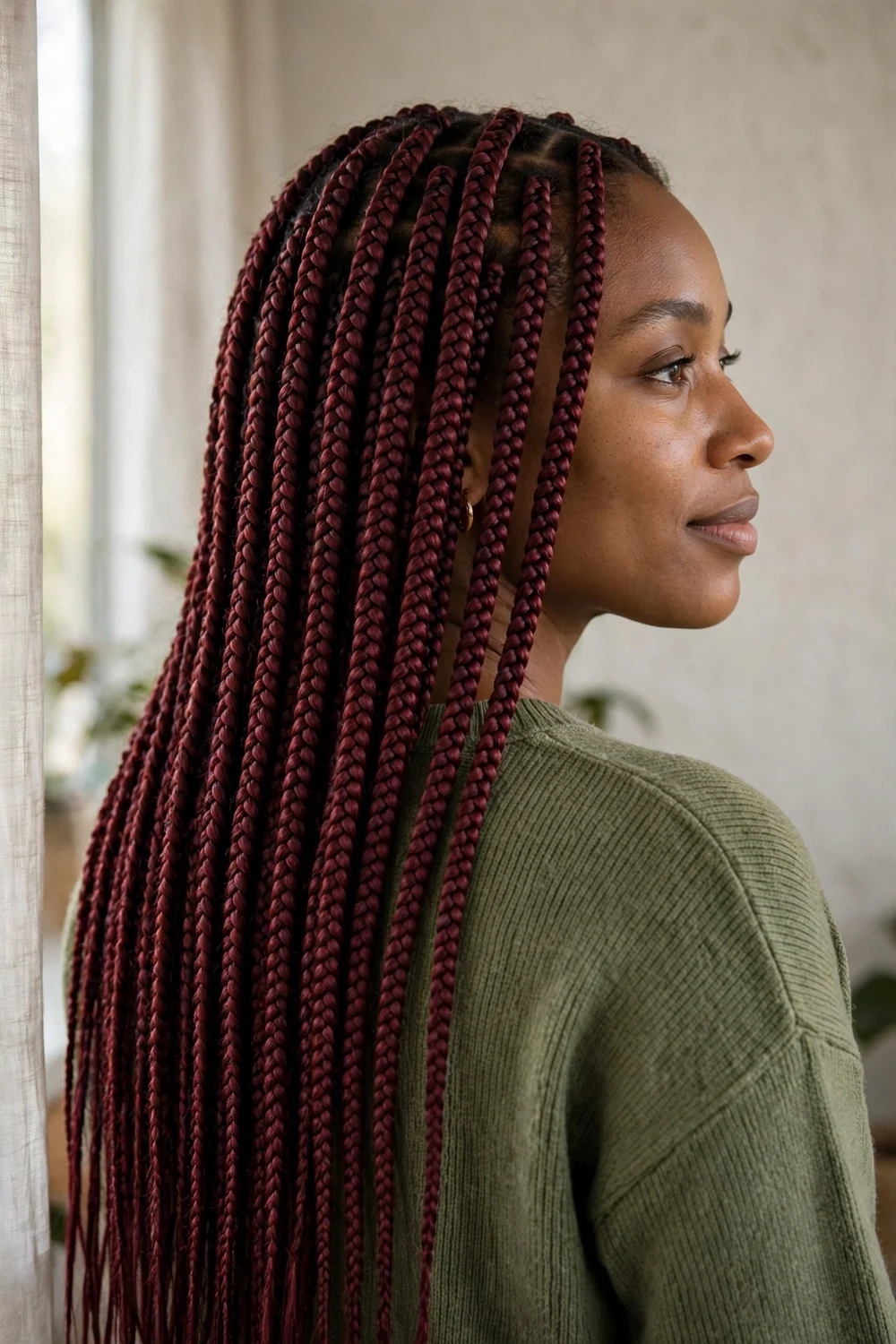
Box braids in burgundy give you the color with zero chemical commitment, since the shade comes from the braiding hair. It is a daring change that doubles as a protective style, and the deep wine tone looks rich against most skin tones. Toned-down burgundy extensions read more wearable than bright red ones. Braids also solve the fade problem entirely: when you take them out, your natural hair is untouched.
Try this: choose a medium burgundy braiding hair, not the brightest option, for a shade that looks expensive rather than costume.
23. Burgundy Crown Braid Updo
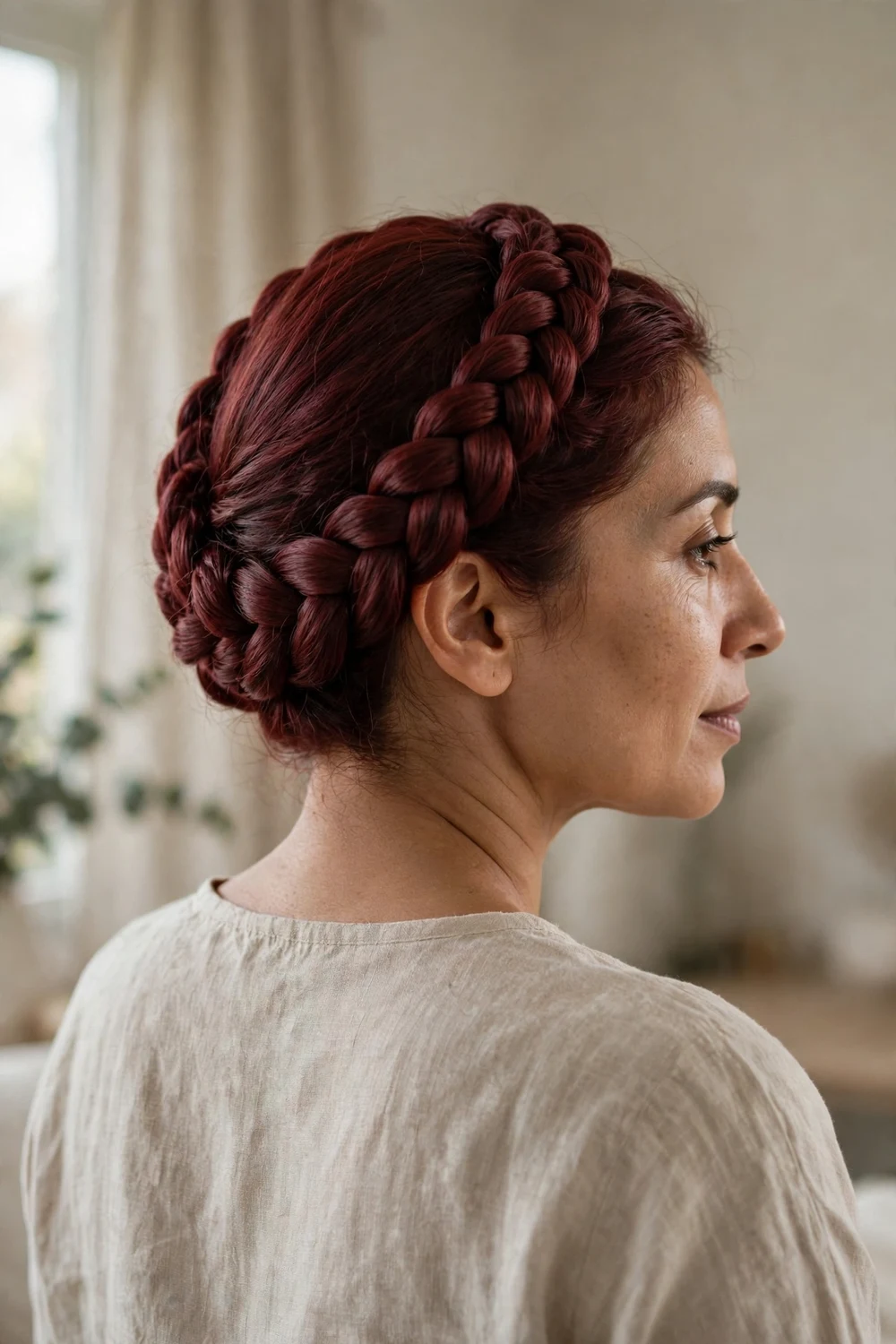
A crown braid wrapped around the head shows burgundy from every angle, which is exactly what you want from an updo. The warm wine tone flatters medium to deep skin tones, and the braid’s texture catches light differently on every curve. It works for weddings, holidays, and anywhere you want the color to read as an event rather than an everyday shade. Second-day hair holds a crown braid best, so plan it the day after a wash.
Try this: pancake the braid gently to widen it; the pulled-apart texture shows more of the burgundy.
24. Dark Burgundy Half Updo with Ringlets
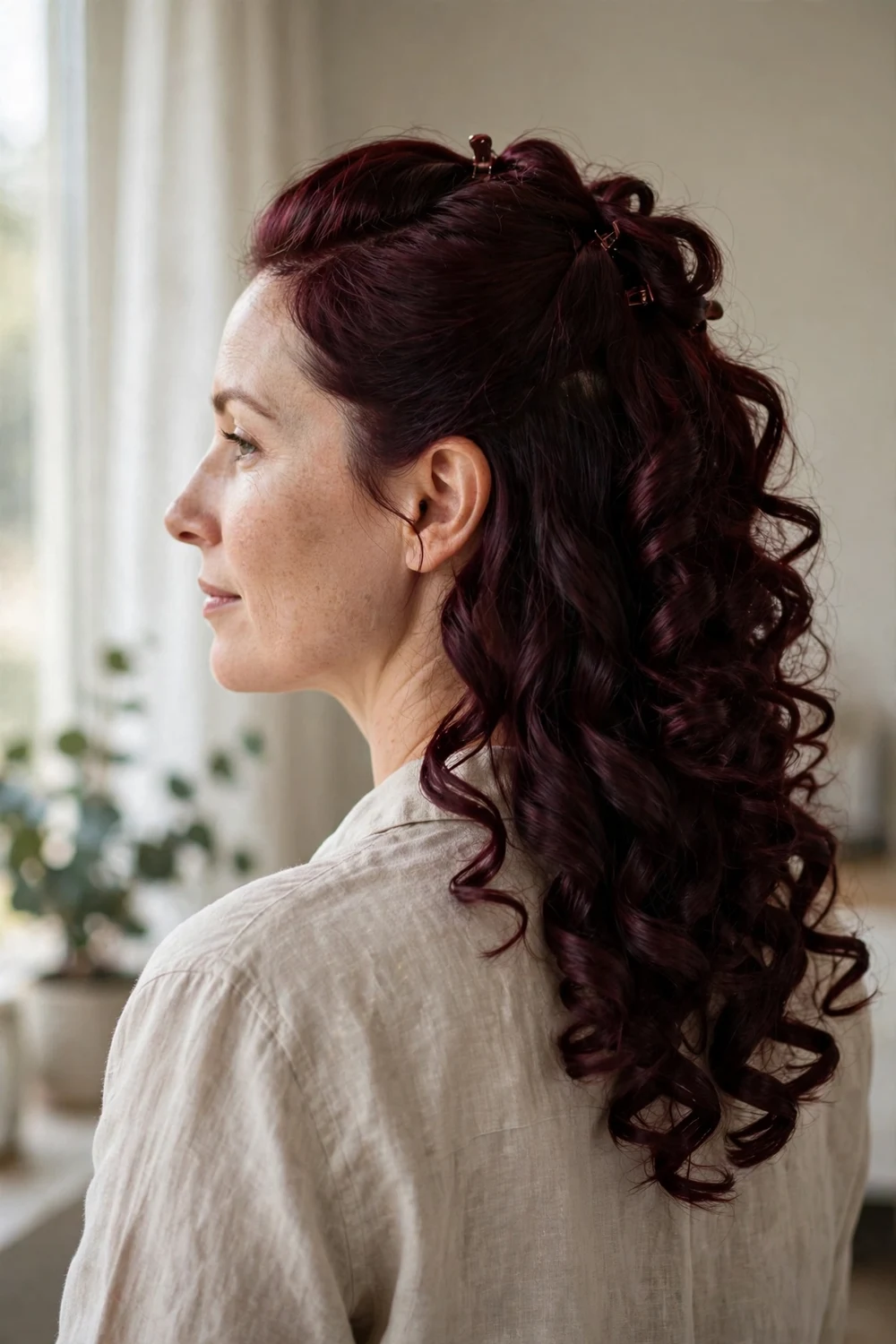
A half updo with dark burgundy ringlets keeps the face open while showing off the color’s depth in the falling curls. It is an easy party style: pull the top half back, let the rest fall in defined curls, and the wine tones do the visual work. Dark burgundy reads almost black in the pinned section and brighter in the loose curls, which gives the style built-in contrast. It suits medium to long hair with natural wave or curl.
Try this: set curls with a 3/4-inch iron and let them cool before touching; defined ringlets hold the shape all evening.
25. Layered Burgundy Blowout
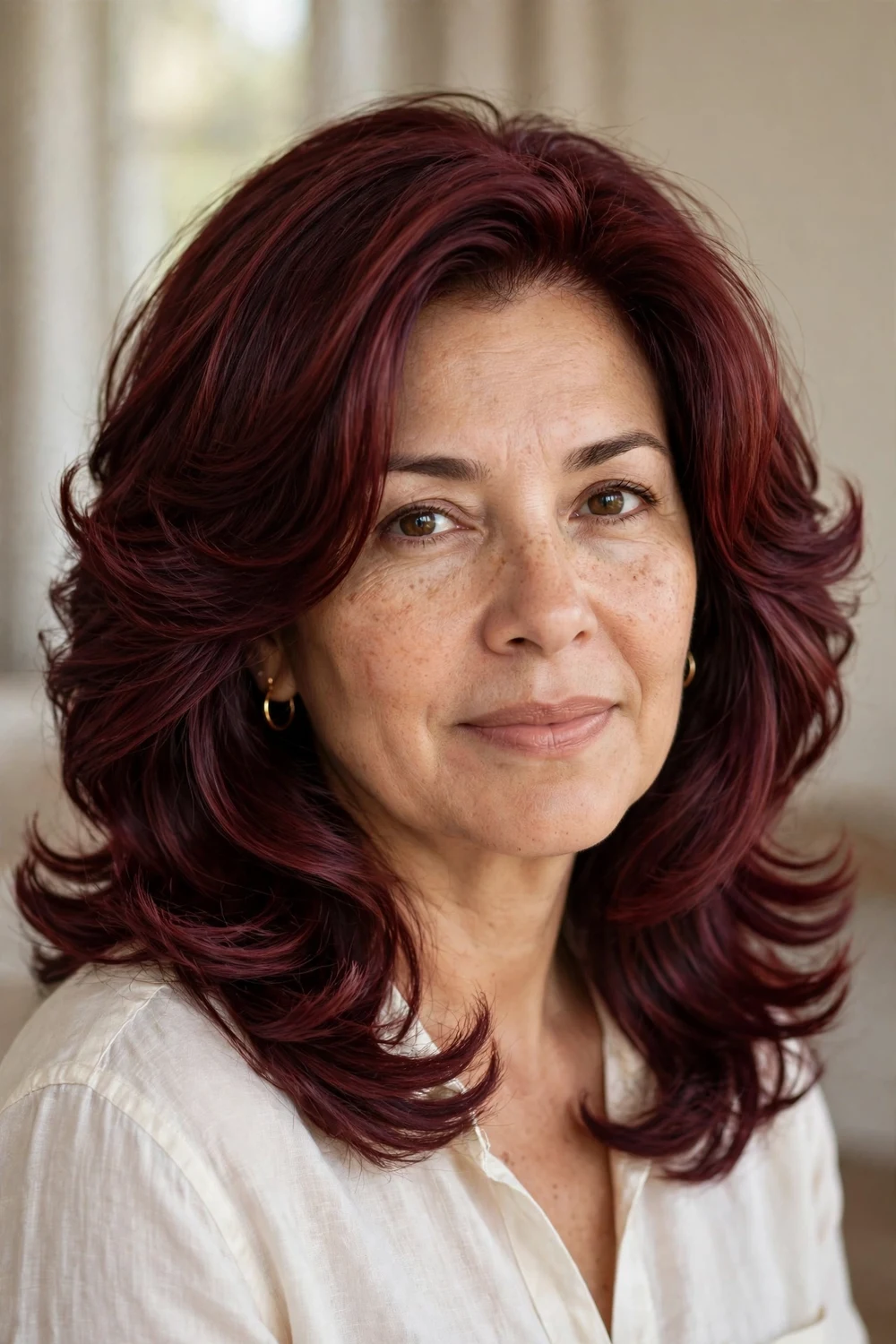
A bouncy, layered blowout in burgundy is the salon-fresh look that lasts all week. Layers give the color somewhere to move: each layer catches light at a different angle, so the wine tones look dimensional even in a single-process shade. The satin finish from a proper round-brush blowout adds the shine burgundy needs. It suits medium to thick hair that holds volume, and it is the easiest style to recreate at home with a round brush and a dryer.
Try this: blow-dry with a boar-bristle round brush and finish with a cool shot; the smooth finish doubles the color’s depth.
26. Hollywood Curls with Deep Burgundy Shine
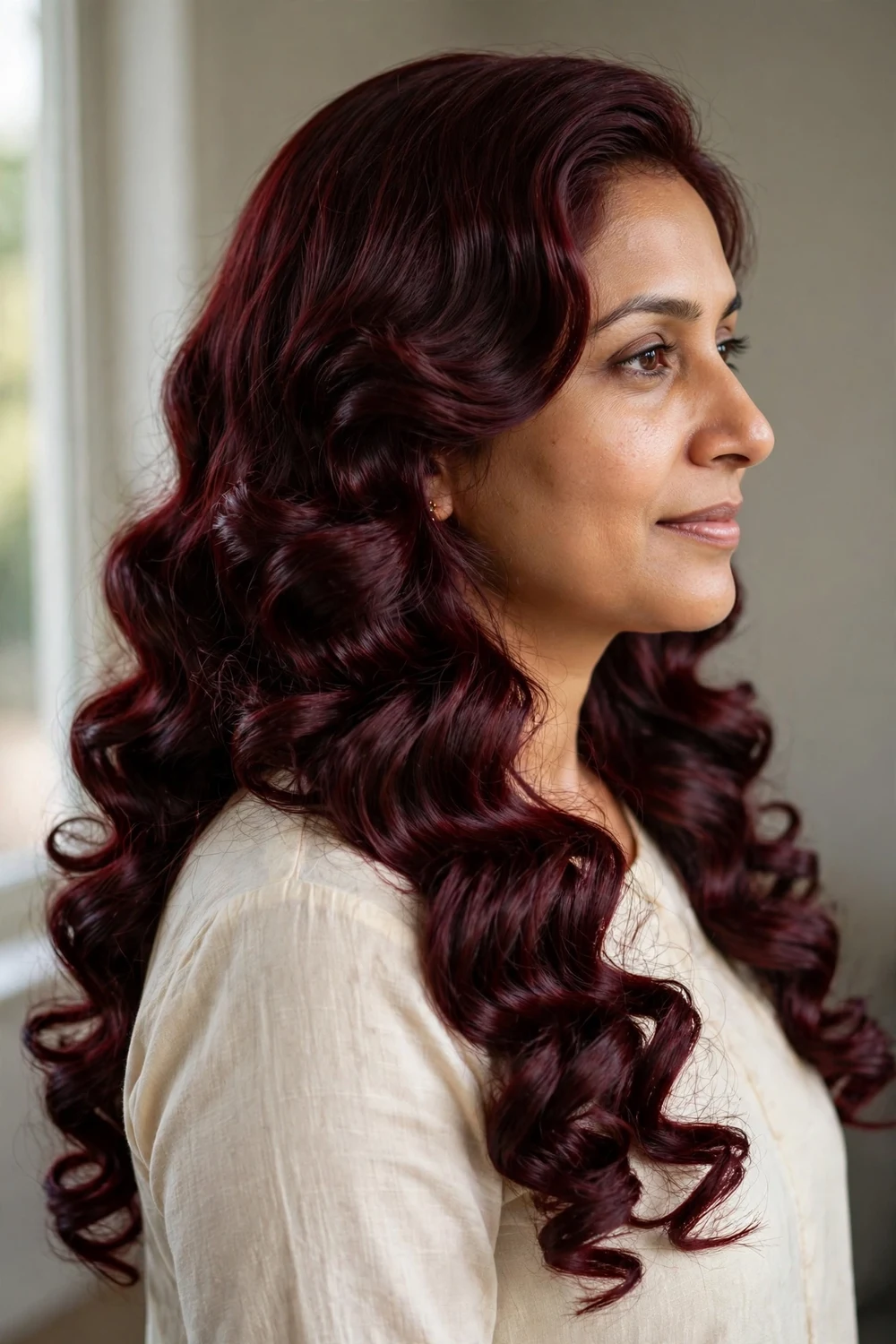
Old-glamour curls meet deep burgundy, and the combination is built for evenings. The uniform curl pattern reflects light in sheets, which makes a deep burgundy base look almost liquid. This works best on long hair with a deep, even base color; the curls supply all the dimension the style needs. It is higher effort than the everyday options, but nothing on this list photographs better. A shine spray at the end is non-negotiable.
Try this: pin each curl to cool for 10 minutes before releasing; the set lasts hours longer that way.
27. Shadow-Root Burgundy Layers
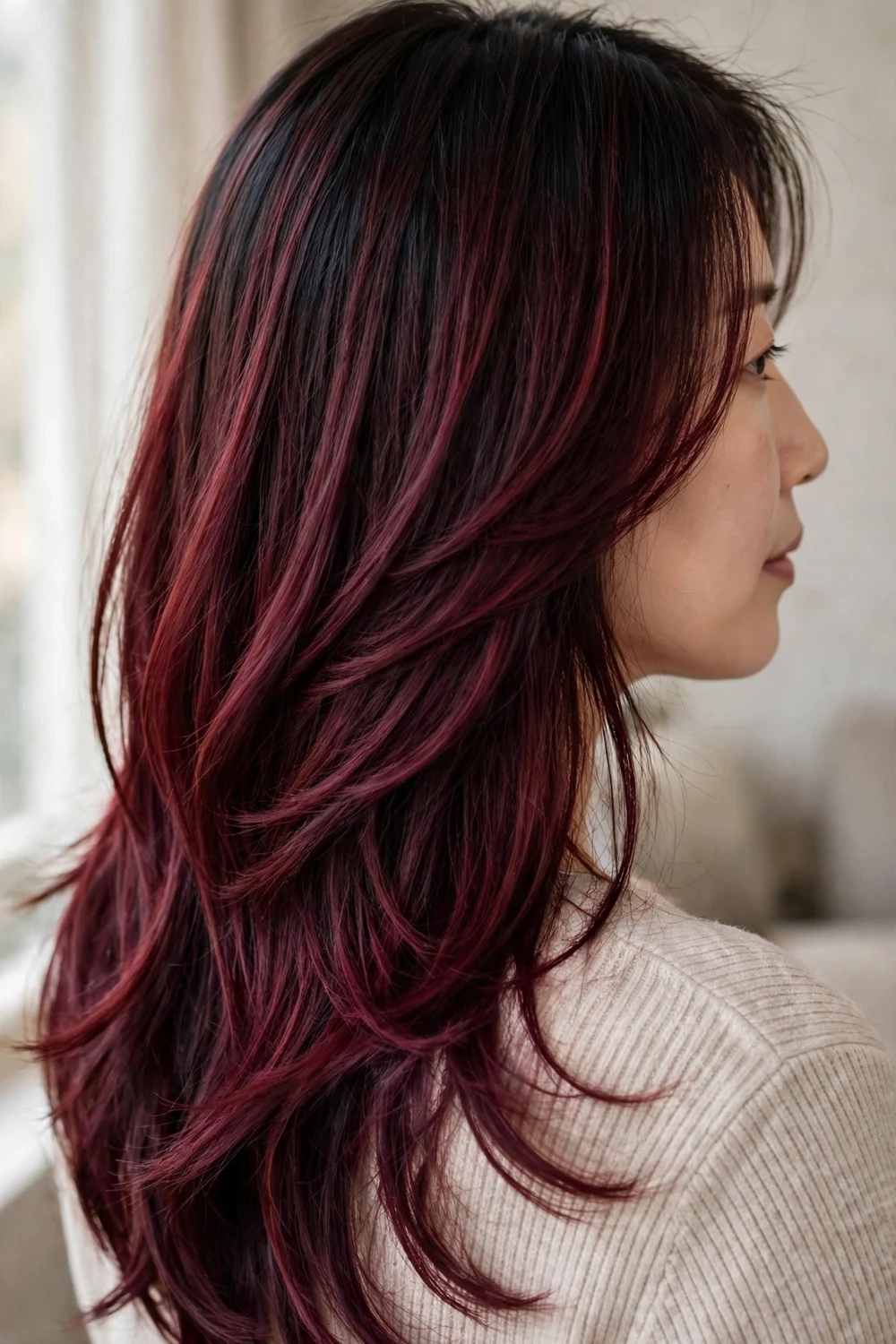
A shadow root keeps the first inch or two dark, then lets burgundy take over through dimensional layers. The dark root adds contrast that makes the wine color look brighter by comparison, and grow-out is graceful because the root is already dark. Layers through the lengths keep the color from sitting flat. This is the pick for people who want burgundy brightness without the maintenance of a bright root.
Try this: ask for the shadow root in your natural level so the grow-out is invisible for months.
28. Berry Burgundy Fade, Sleek Finish
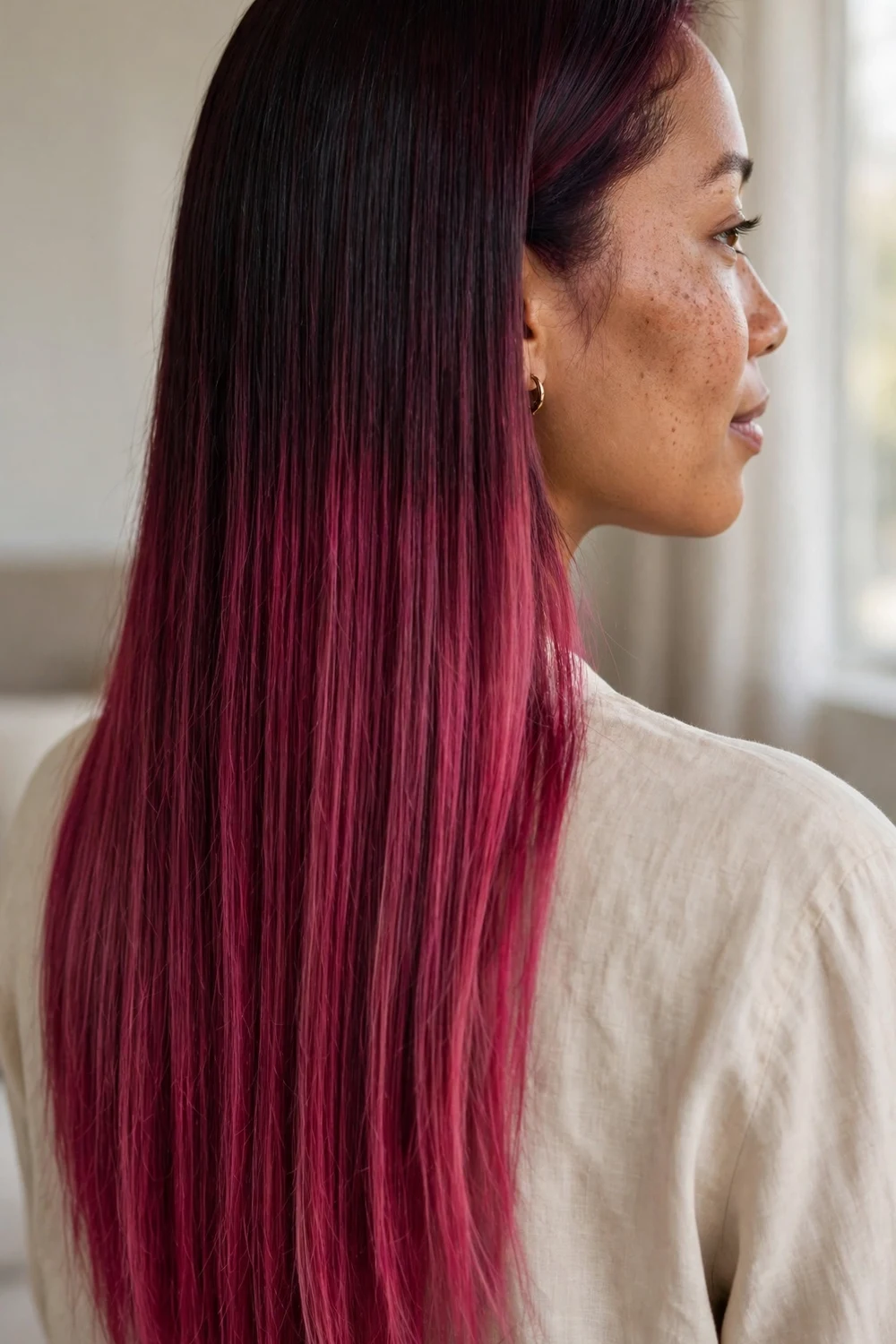
Berry burgundy fades from a deeper wine at the roots to a brighter berry through the ends, worn pin-straight for maximum shine. The sleek finish is what sells it: straight hair reflects light evenly, so the fade reads as a smooth gradient rather than two colors. It suits fine to medium hair that straightens easily. The berry brightness needs a gloss at week 5 or 6 to stay fresh, since the lighter ends fade first.
Try this: flat-iron in thin sections with a heat protectant; even straightness is what makes the fade look intentional.
29. Burgundy Highlights on Blonde Hair
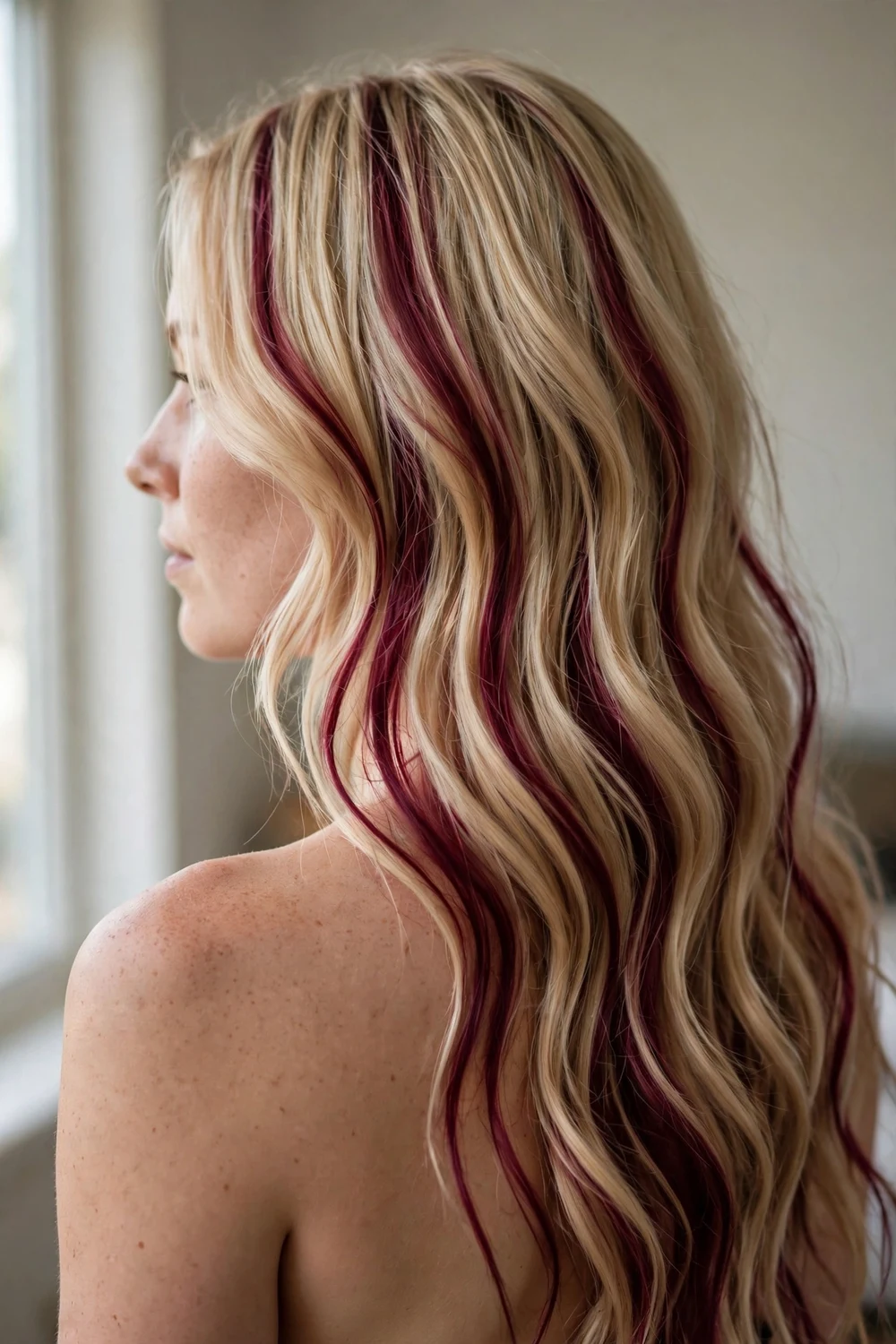
Blondes can wear burgundy too, and highlights are the way in. Wine-toned ribbons woven through blonde hair give a spiced, autumnal effect that reads softer than burgundy on dark bases. The contrast is lower, so the look is more blended and less dramatic. It is also easy to reverse: the highlights can grow out or be toned away. Ask for the burgundy in medium-width sections so the wine reads clearly against the blonde.
Try this: use a color-depositing conditioner in a red-wine shade every other wash to keep the burgundy ribbons from fading to pink.
30. Silky Straight Burgundy with Curtain Bangs
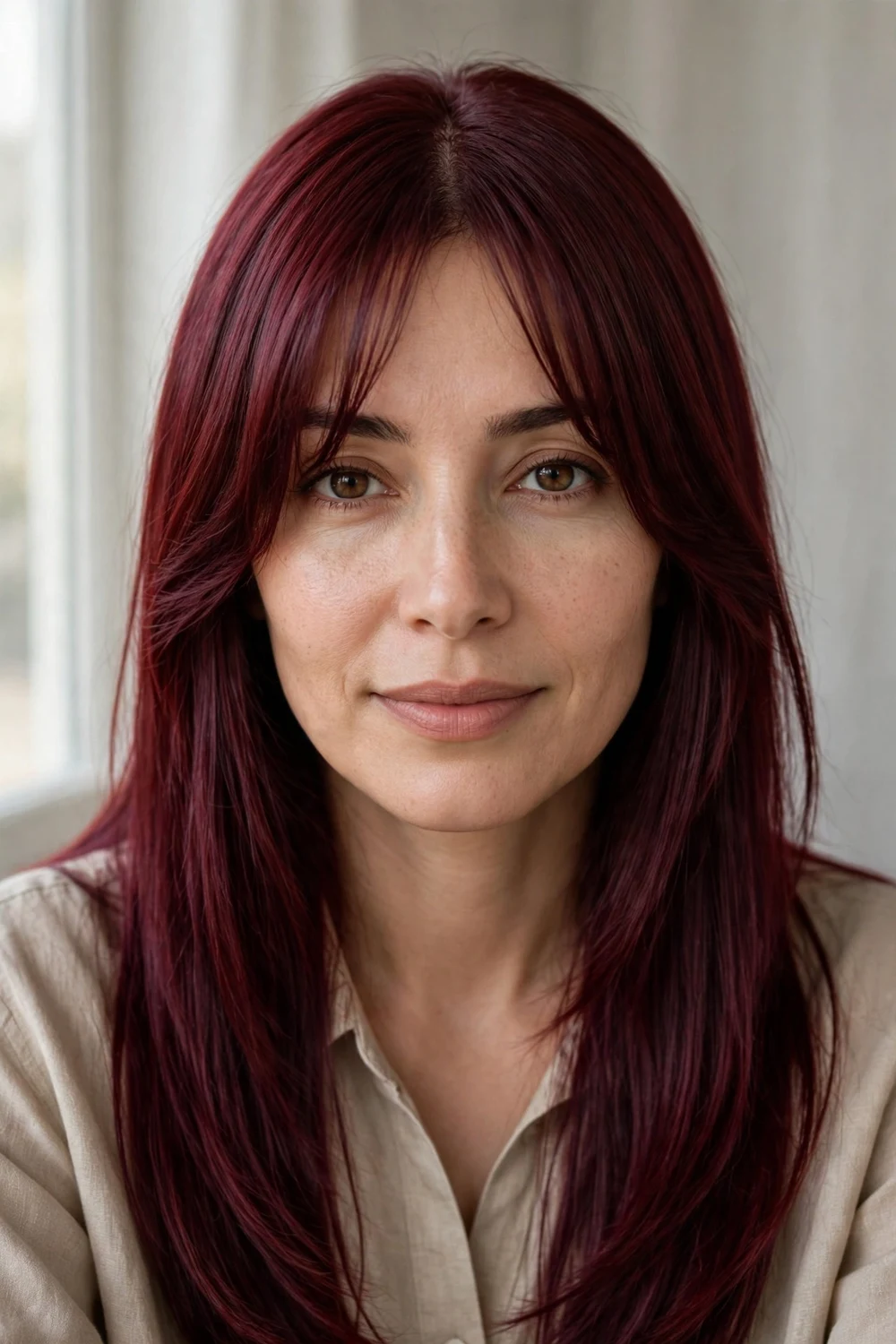
Silky straight burgundy with soft curtain bangs closes the list on a polished note. The all-over wine shade looks glassy on straight hair, and the curtain bangs soften the forehead while framing the eyes. It suits most face shapes, since the bangs can be parted to adjust the effect. The maintenance is straightforward: regular trims, color-safe shampoo, and a gloss every couple of months to keep the shine.
Try this: blow-dry bangs forward with a round brush first, then part them in the middle while still warm for a natural fall.
For more warm-toned autumn inspiration beyond burgundy, auburn fall hair colors pairs well with everything on this list.
Burgundy Fall Hair Colors Comparison at a Glance
| Style | Best For | Upkeep | Grow-Out |
|---|---|---|---|
| Deep Burgundy Gloss Over Dark Brown | First-timers, dark bases | Gloss every 5 weeks | Fades evenly, no line |
| Classic Burgundy Balayage on Dark Hair | Low-maintenance dimension | Salon every 8 to 12 weeks | Soft, no harsh roots |
| Burgundy Ombre | Bold ends, natural roots | Trims and toners | Easy, trim handles it |
| Black to Burgundy Gradient | Near-black bases | Gloss every 6 weeks | Dark root blends in |
| Mulled Wine | Warm undertones, fair skin | Color-safe routine | Fades warm, still wearable |
| Plum Burgundy | Cool and neutral undertones | Sulfate-free shampoo | Fades toward soft mauve |
| Ruby Burgundy Waves with Gloss | Bold color lovers | Gloss every 4 to 6 weeks | Needs refresh to stay bright |
| Crimson Burgundy Balayage with Cascading Curls | Events and evenings | Gloss at week 6 | Balayage grows out softly |
| Burgundy Money Piece | Quick change, any base | Toner every 6 weeks | Grows out unnoticed |
| Burgundy Dip Dye Ends | Playful, low commitment | Almost none | Trim it away |
| Burgundy Lowlights | Flat hair needing depth | Salon every 8 weeks | Sits under top layer |
| Burgundy Highlights on Dark Hair | High contrast on dark bases | Toner every 6 to 8 weeks | Blends as it grows |
| Violet Burgundy Melt | Polished fashion color | Gloss every 6 weeks | Dark root does the work |
| Burgundy Brown | Office-friendly wear | Standard color routine | Barely visible regrowth |
| Auburn-Tinted Burgundy Waves | Warm and neutral undertones | Color-safe shampoo | Fades to warm brown |
| Cinnamon-Undertoned Burgundy Waves | Autumn texture lovers | Refresh base as needed | Ribbons fade gradually |
| Chestnut Burgundy Root Fade | Zero-maintenance color | Mid-length refresh only | Already grown-in look |
| Mauve Burgundy Loose Waves | Cool undertones, subtle taste | Gentle routine | Fades to warm brown |
| Deep Burgundy Bob | Short hair, bold color | Color every 6 weeks | Fast grow-out on short cuts |
| Burgundy Lob with Blunt Bangs | Thick straight hair | Bang trims every 3 to 4 weeks | Bangs need upkeep |
| Burgundy Pixie with Undercut | Edgy short styles | Cuts every 4 weeks | Quickest reset of all |
| Burgundy Box Braids | Protective styling | Scalp care between installs | Remove braids, done |
| Burgundy Crown Braid Updo | Weddings and holidays | Style-only, no color upkeep | Not applicable |
| Dark Burgundy Half Updo with Ringlets | Parties, medium to long hair | Style-only | Not applicable |
| Layered Burgundy Blowout | Medium to thick hair | Weekly styling | Color fades evenly |
| Hollywood Curls with Deep Burgundy Shine | Evenings, long hair | Shine spray per wear | Even base grows out well |
| Shadow-Root Burgundy Layers | Brightness without upkeep | Salon every 10 weeks | Invisible grow-out |
| Berry Burgundy Fade, Sleek Finish | Fine to medium hair | Gloss at week 5 or 6 | Ends fade first |
| Burgundy Highlights on Blonde Hair | Blondes going autumnal | Color-depositing conditioner | Tones away easily |
| Silky Straight Burgundy with Curtain Bangs | Most face shapes | Trims and glosses | Even fade |
How to Choose the Right Burgundy Fall Hair Color for You
Start with your undertone. Warm skin wears mulled wine, ruby, cinnamon, and auburn-tinted burgundy best. Cool skin wears plum, violet, mauve, and berry shades better. Neutral undertones can go either way, which is most people.
Next, match the technique to your maintenance tolerance. A gloss, dip dye, or money piece asks almost nothing of you. All-over color and bright reds ask for salon visits every 4 to 6 weeks. Ombre, balayage, and shadow roots sit in the middle: bold color with lazy grow-out.
Finally, consider your base. Dark brown and black hair take burgundy without bleach, which keeps the hair healthier and the bill lower. Blonde and light brown bases need a fill or pre-pigment so the wine tones do not wash out to pink.
If you lean warm overall, copper hair color ideas is the natural next list to browse after this one.
Mistakes to Avoid
Do not skip the strand test on light hair. Burgundy over porous blonde can grab unevenly and turn patchy, and a 20-minute test saves a correction appointment.
Do not wash with hot water and harsh shampoo in the first two weeks. Red-violet molecules are larger and slip out of the cuticle faster than brown; cool water and sulfate-free formulas keep them in.
Do not go brighter than your wardrobe handles. Burgundy shows up in every mirror and photo, so pick a depth you will still like on a tired Monday, not just on salon day.
Do not forget the gloss appointment. Burgundy looks best in the first month and good in the second; a quick gloss at week 5 or 6 is the cheapest way to keep it in the best-looking window.
Frequently Asked Questions
Does burgundy hair color work on dark brown or black hair without bleach?
Yes. Burgundy is one of the few fashion colors that deposits onto dark bases without lifting. A demi-permanent or permanent wine-toned formula shows up clearly on level 2 to 4 hair. The result is deeper and more subtle than on light hair, but the color reads clearly in daylight. Very resistant black hair may need a slightly stronger developer, which your colorist will judge in person.
Which skin tones suit burgundy fall hair colors?
Nearly all of them, because burgundy spans warm and cool. Warm undertones suit mulled wine, ruby, cinnamon, and auburn-tinted shades. Cool undertones suit plum, violet, mauve, and berry shades. Deep skin tones carry the richest, darkest burgundies well, while fair skin often looks best with the brighter wine and ruby versions that add warmth to the complexion.
How long does burgundy hair color last?
A permanent burgundy lasts 4 to 8 weeks before fading noticeably, while a demi-permanent gloss lasts 4 to 6 weeks. Red-violet pigments fade faster than browns because the color molecules wash out of the cuticle more easily. Color-safe shampoo, cool water, and less frequent washing stretch every burgundy shade. A gloss refresh halfway through buys another month of rich color.
Is burgundy high maintenance in fall?
It depends on the placement. All-over bright burgundy needs salon visits every 4 to 6 weeks to stay rich. But ombre, balayage, dip dye, money pieces, and shadow roots are genuinely low maintenance, since the grow-out is part of the look. A gloss is the easiest option of all: one quick appointment, no bleach, no regrowth line.
What is the difference between burgundy, plum, and mahogany hair color?
Burgundy is the middle ground: a red-violet wine shade. Plum leans further toward purple and reads cooler and moodier. Mahogany leans toward red-brown and reads warmer and more natural. If you want drama, pick burgundy or plum. If you want warmth that looks close to natural, pick mahogany. All three suit fall, and the choice comes down to how much violet versus red you want to see.
Final Thoughts
Burgundy earns its fall reputation every year: it is rich, it is flattering, and it is one of the kindest dramatic colors to dark hair. Pick the shade that matches your undertone and the technique that matches your schedule, and the color will do the rest. If I had to name one fall color that never disappoints, burgundy would be it.

