


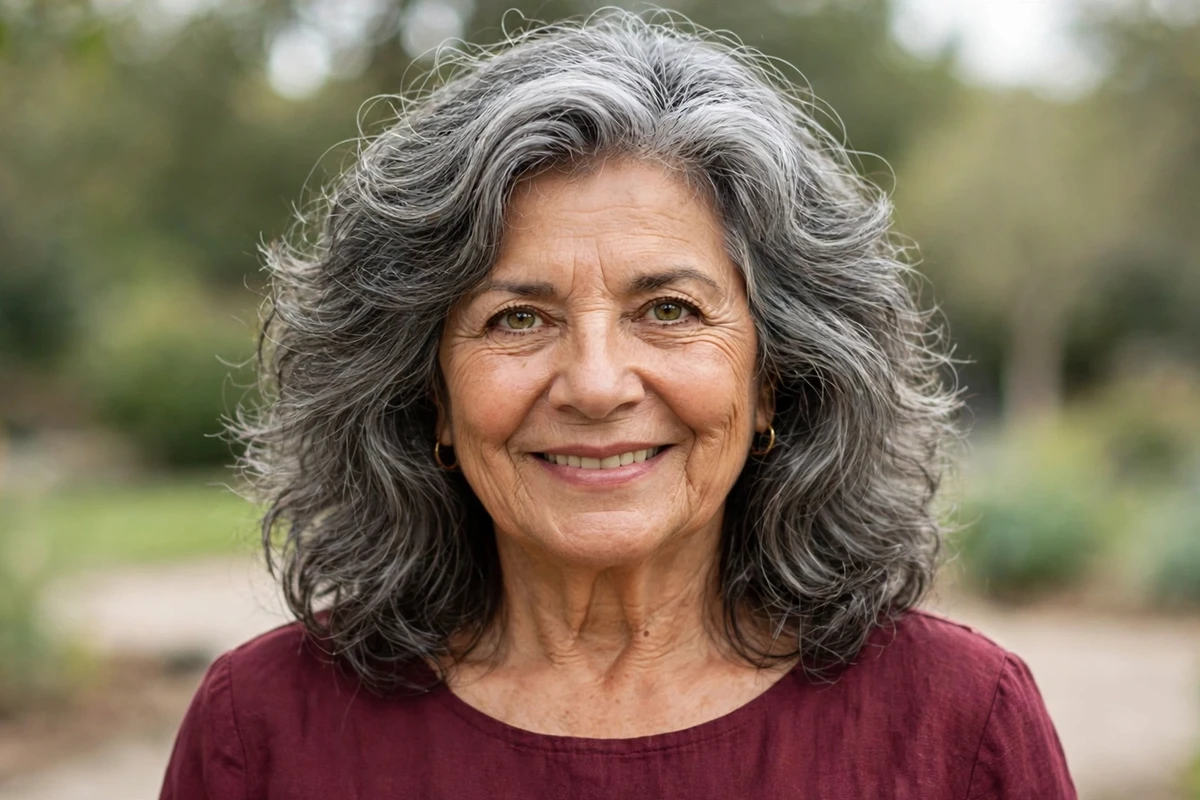
Finding flattering hairstyles for thick hair over 60 comes down to one skill: removing bulk where it weighs you down and keeping fullness where it frames your face. Dense hair is a genuine asset at this age, giving body that finer hair types lose over time, but only when the cut channels that density on purpose. This guide covers 51 cuts and styles built for mature women with thick hair, from wash-and-go pixies to long layered lengths that keep every bit of their movement.
I’ve spent years helping women with dense, coarse hair find cuts that actually behave on a busy morning, and the pattern is consistent: texture beats length, and internal layering beats thinning shears. Every idea below names the technique, the upkeep, and one concrete styling move so you leave the salon with a plan, not just a haircut.
Quick Takeaways
- Internal layering and texturizing remove bulk without sacrificing the length you want to keep.
- Shorter sides and nape with a longer crown control thickness where it sits heaviest.
- Dry cutting keeps curly and wavy textures honest, since curls cut wet shrink shorter than expected.
- Fringe on thick hair needs point-cutting and regular trims. A straight-across cut thickens the edge instead of softening it.
- Silver and gray tones pair naturally with these cuts, and many of them need no color upkeep at all.
Why Thick Hair Needs a Different Cutting Strategy After 60
Hair density doesn’t retire at 60, but its texture changes. Strands often turn coarser or drier, gray hair can feel wiry, and styles that worked at 40 now puff up or sit flat in the wrong places. The fix sits in the cut itself: internal layers, razored or feathered ends, and strategic weight removal at the nape and sides. These techniques take the mass out of the middle of the hair instead of just shortening it.
A good consultation names the technique before the scissors come out. Ask how your stylist plans to remove bulk, whether through internal layering, slide cutting, or a hidden undercut panel, and how the cut will grow out between appointments. For mornings when you want the simplest option, these low maintenance haircuts for thick hair need almost no styling to look finished.
Silver and gray hair often arrives with a mind of its own, more frizz and more wire than before. Shorter, textured shapes control it better than long one-length cuts, and they show off gray’s natural brightness instead of letting it drag downward. The ideas below are organized from shortest to longest so you can jump to the length you live in.
1. Wash-and-Wear Layered Crop
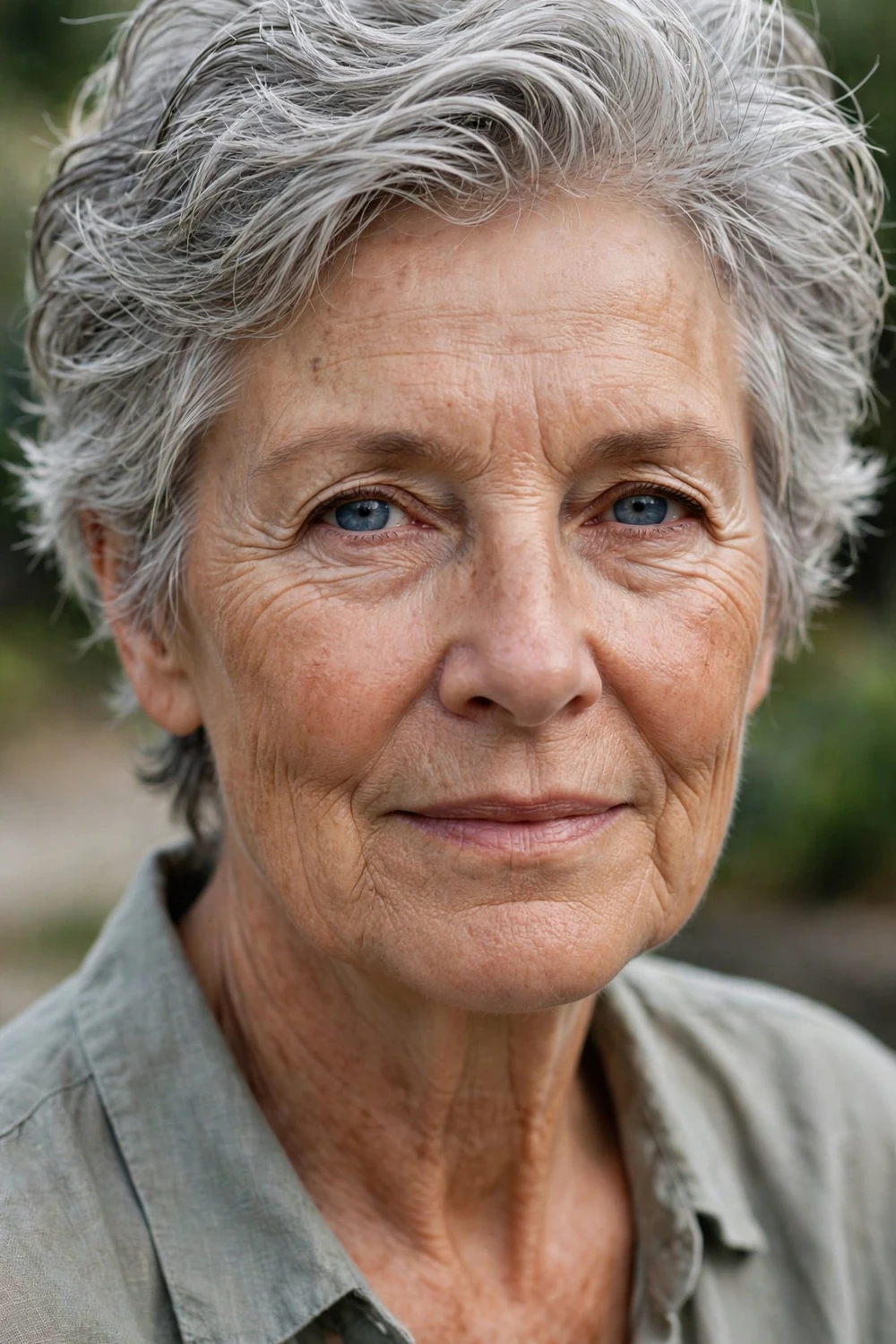
Towel off your hair, push it back with your fingers, and head out. That is the entire styling routine for this cut. Short layers through the crown and sides take the weight out of thick hair, so it falls into place instead of puffing outward. The cut works especially well on gray, where the short length shows off silver tones without any frizz halo around the head. Ask your stylist to keep the layering internal so the outline stays neat as it grows. This is the lowest-maintenance option on this list, and it makes no apology for it.
Try this: Work a pea-sized amount of lightweight styling cream through damp hair, push it back with your fingers, and let it air-dry. Book a trim every 5 to 6 weeks to keep the shape crisp.
2. Feathered Pixie with Tapered Nape
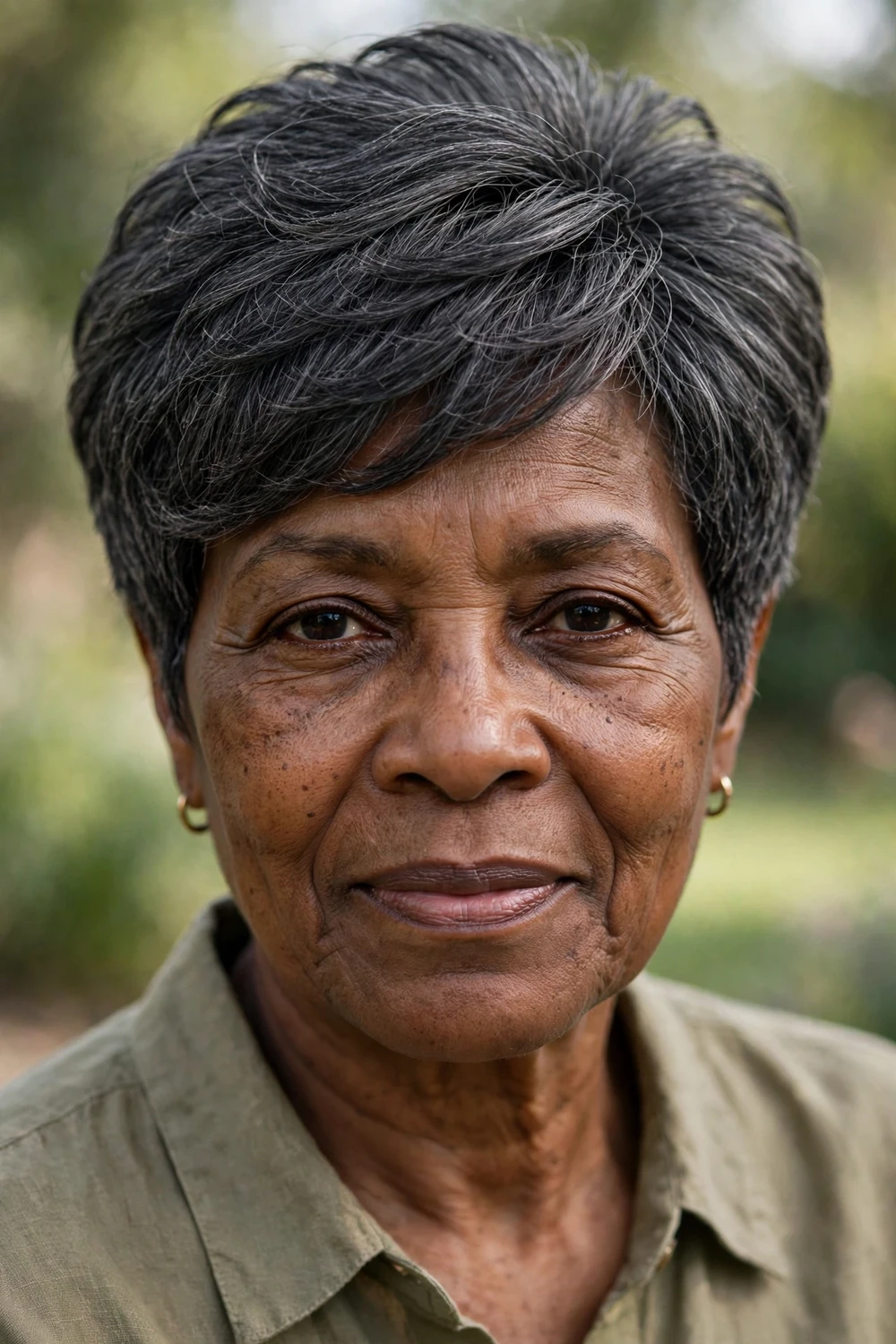
If a standard pixie feels too puffy and rounded on your head, feathering changes the whole picture. Thin, sliced layers let thick hair lie close to the head while keeping soft movement through the crown. The tapered nape trims the bulk right where density collects at the back, giving a sleek silhouette that needs no daily taming. This cut suits oval, square, and heart face shapes, and it grows out gracefully because the feathered edges blend instead of forming a hard line. Gray and silver tones look sharp against the close nape.
Try this: Rub a dab of texturizing paste between your palms and pinch the ends through the crown for definition. Clean up the nape with clippers or a salon visit every 4 weeks.
3. Curly Pixie with Defined Ringlets (Dry-Cut)
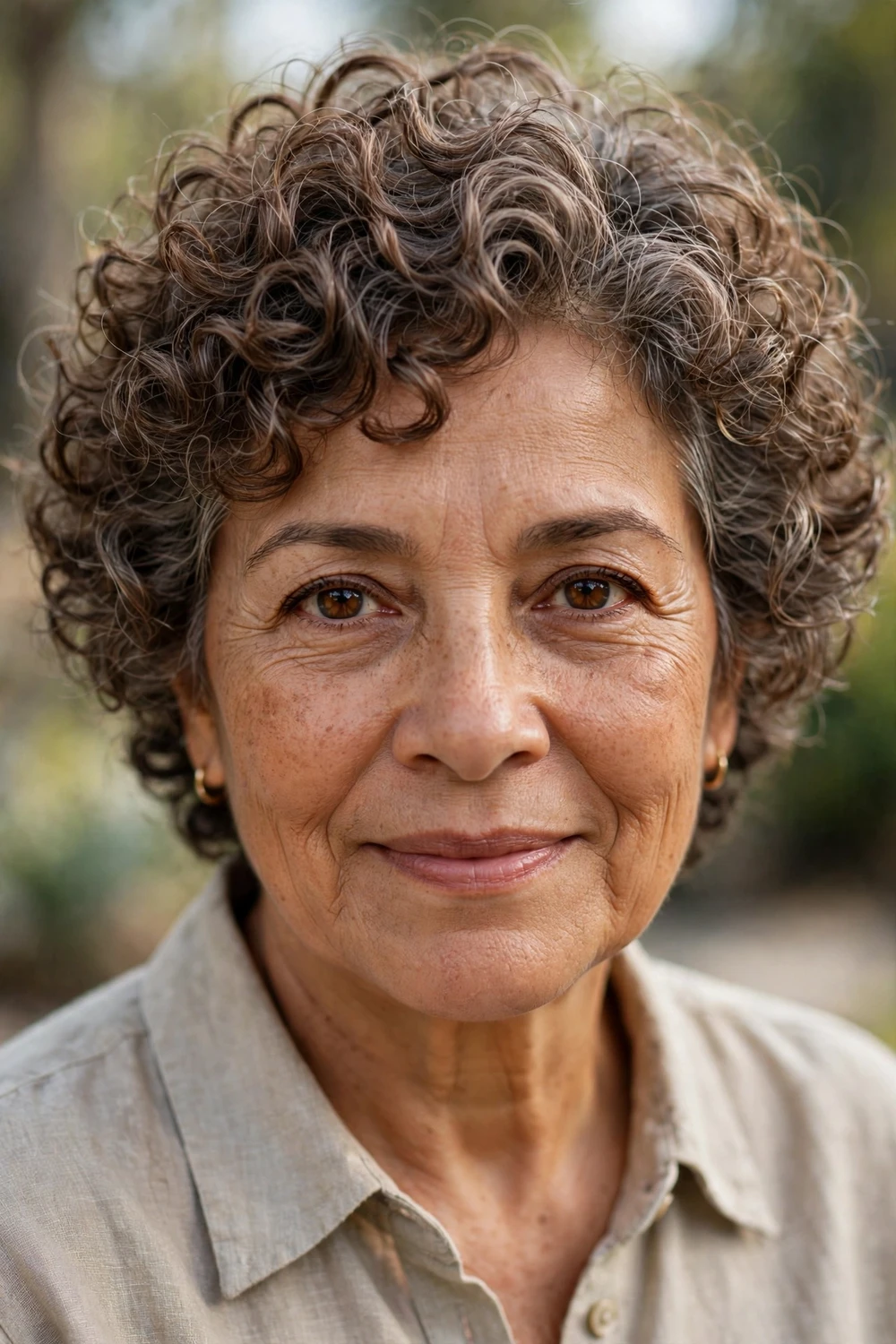
Curls cut wet bounce up shorter than planned, which is why dry cutting wins here. Your stylist cuts each ringlet in its natural dry state, ringlet by ringlet, so nothing ends up too short and no section weighs down the rest. The result is a pixie with defined, springy curls that sit close at the sides and lift at the crown. Thick curly hair finally gets to do what it wants without the pyramid effect. Curl cream scrunched into damp hair plus a diffuser keeps the ringlets separated and frizz-free through the day.
Try this: Scrunch curl cream into soaking damp curls, then diffuse on low heat until 90 percent dry. Sleep on a satin pillowcase to keep the ringlets intact overnight.
4. Choppy Pixie with Wispy Bangs
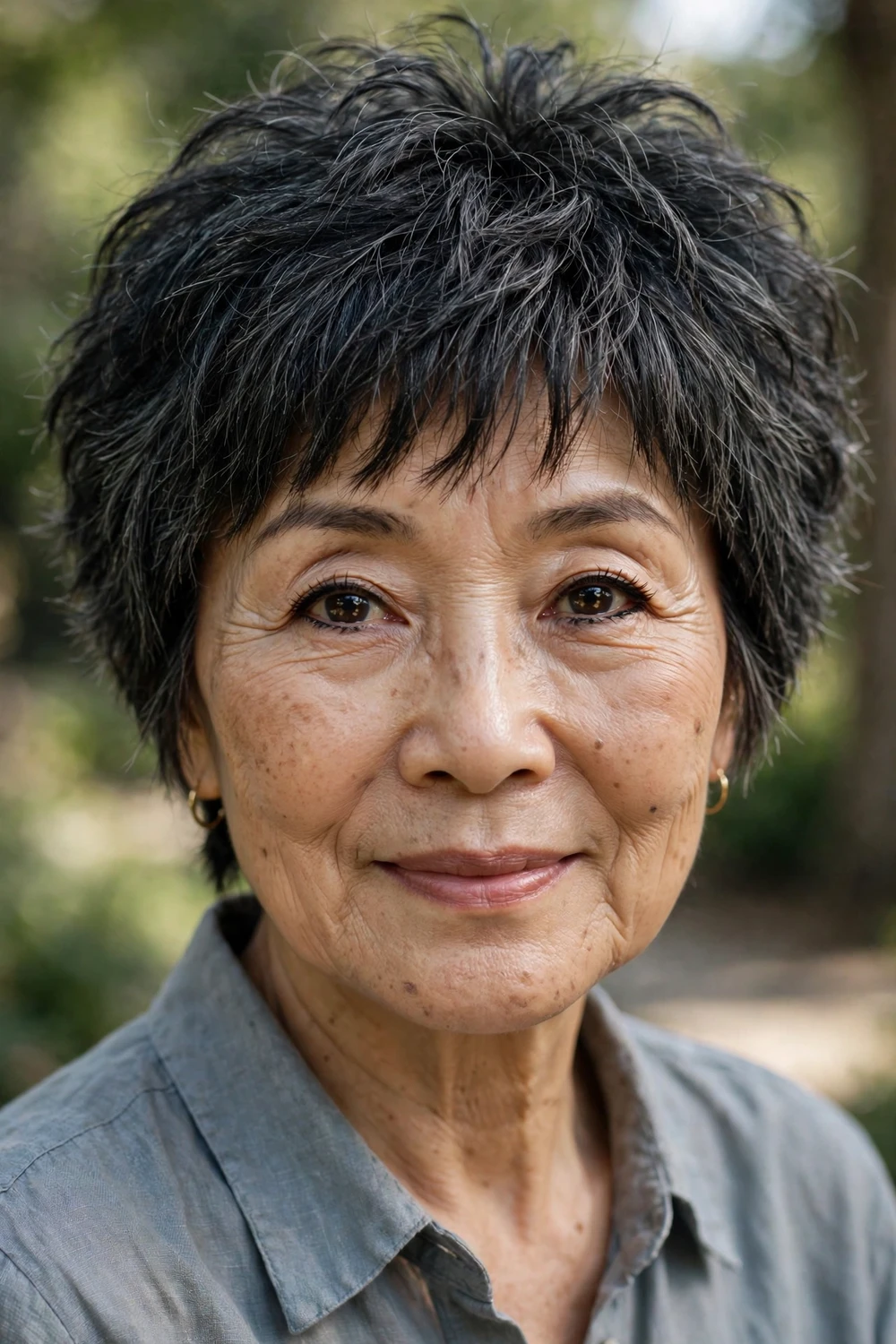
Point-cut bangs are the quiet hero of this cut. Instead of a heavy straight fringe, the stylist snips into the ends vertically, which thins the bang line and lets your eyes and cheekbones take over. The choppy layers through the crown break up thick density so the whole head dries in minutes. This pixie flatters round and square faces because the wispy fringe opens up the forehead without adding width. It also handles gray grow-out well, since the texture blends new growth with colored ends.
Try this: Blow-dry the bangs forward with a small round brush for 60 seconds, then finger-tousle the crown. Ask for a bang trim every 3 to 4 weeks to keep them wispy.
5. Spiky/Tousled Pixie with Long Crown
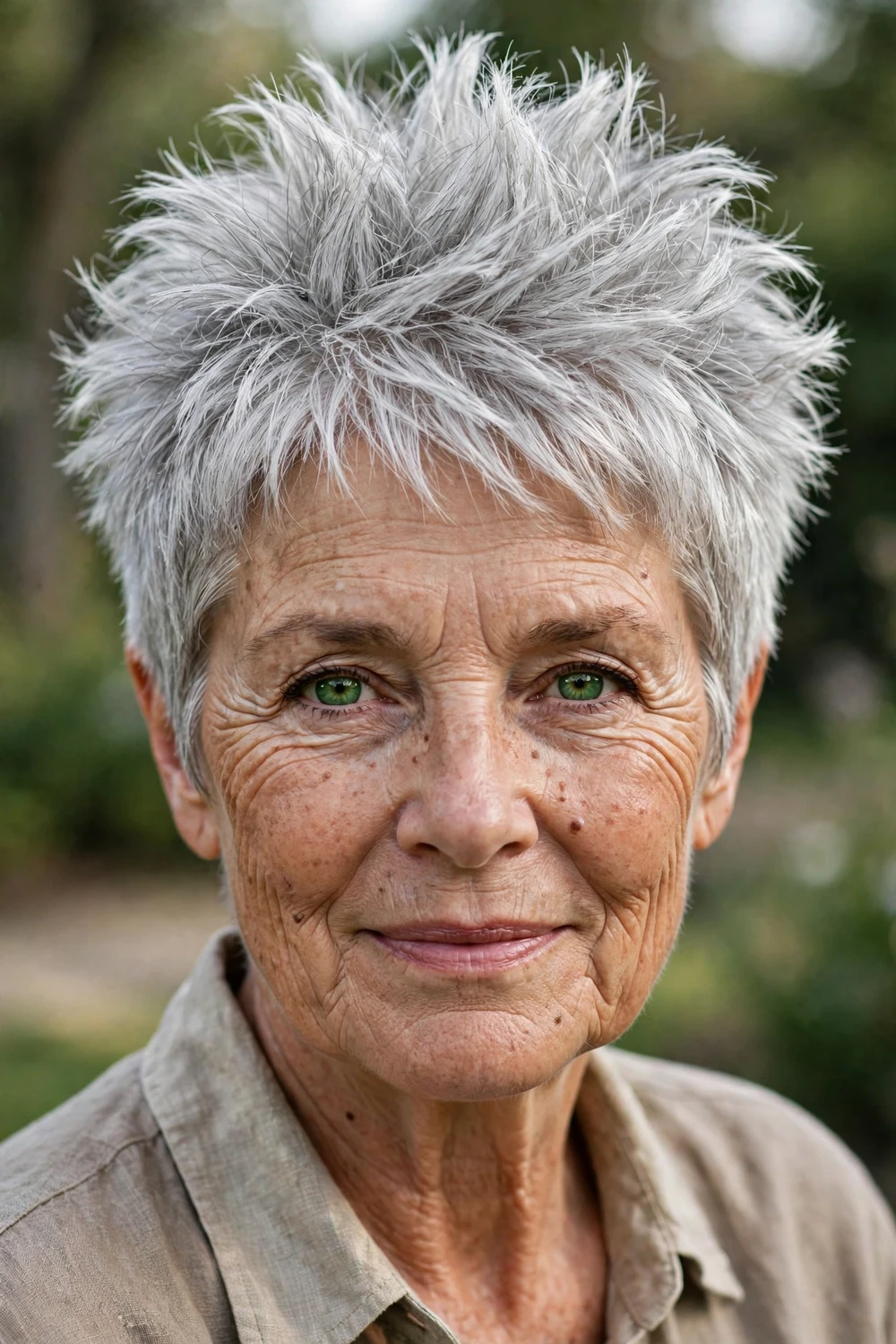
Short sides and a tall crown is the formula that makes this pixie work for thick hair. Clipped or closely tapered sides control the bulk completely, while the longer top gets textured with point cutting so it spikes or tousles without turning into a solid mass. The height on top elongates round faces and draws the eye upward, which reads as youthful without trying too hard. It is bold, it is low-maintenance, and it takes about three minutes with product in the morning.
Try this: Apply a matte styling wax to dry hair and twist small sections upward at the crown. A weekly clarifying rinse keeps product from weighing the top down.
6. Tapered Pixie with Long Side-Swept/Swooping Bangs
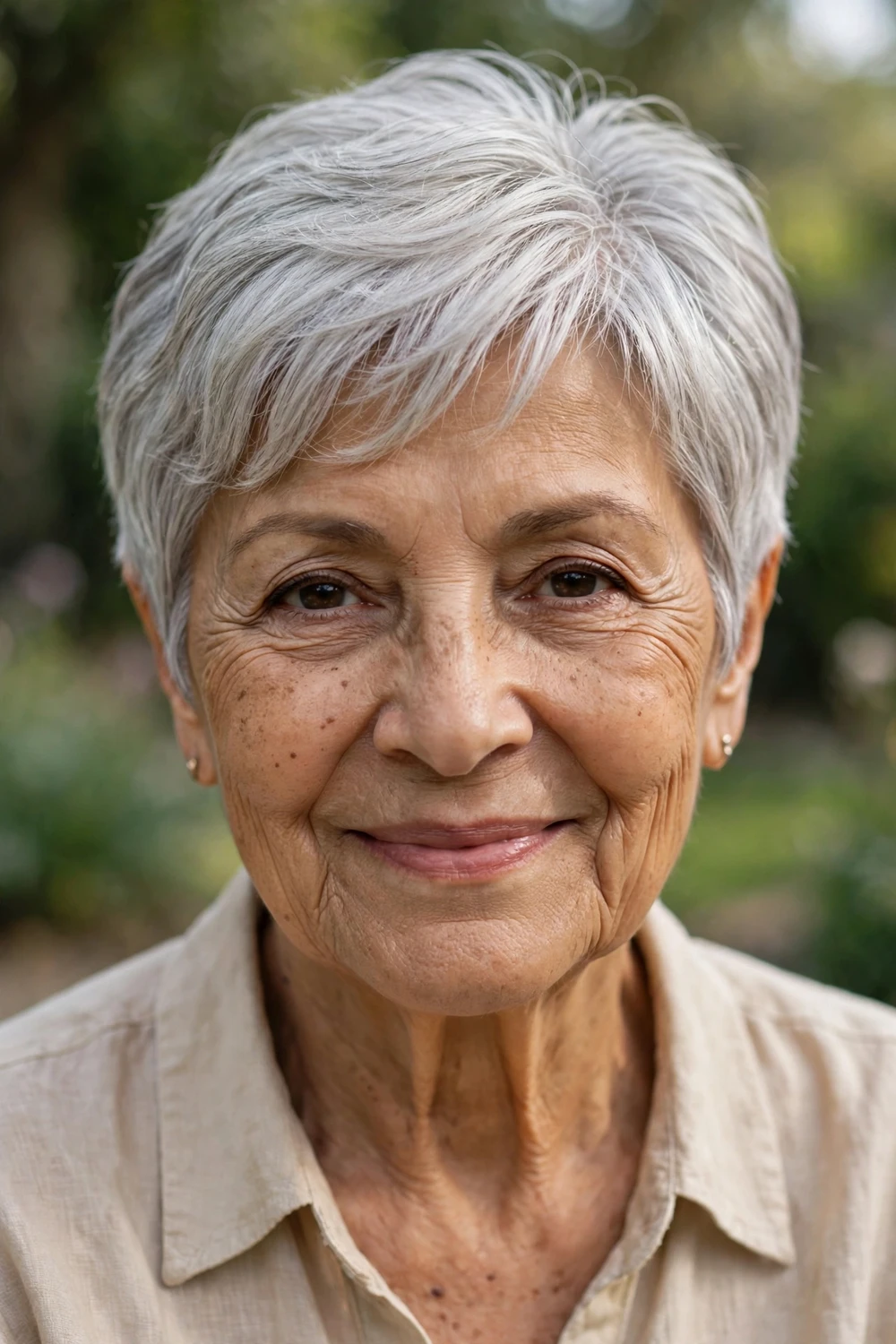
One length of fringe, several ways to wear it. The sides and back stay tapered close to control volume, while the long swooping bangs can part deep, sweep across the forehead, or tuck behind one ear. That versatility matters when thick hair has a strong growth pattern or cowlick, because the weight of the fringe keeps it in place. The cut suits women who want short hair without committing to a fully exposed forehead. Silver strands through the fringe catch light and add natural dimension.
Try this: Blow-dry the fringe to the side with a paddle brush while it is still damp, then set the sweep with a light-hold spray. Change the part monthly to keep volume at the roots.
7. Textured Silver Pixie with Undercut
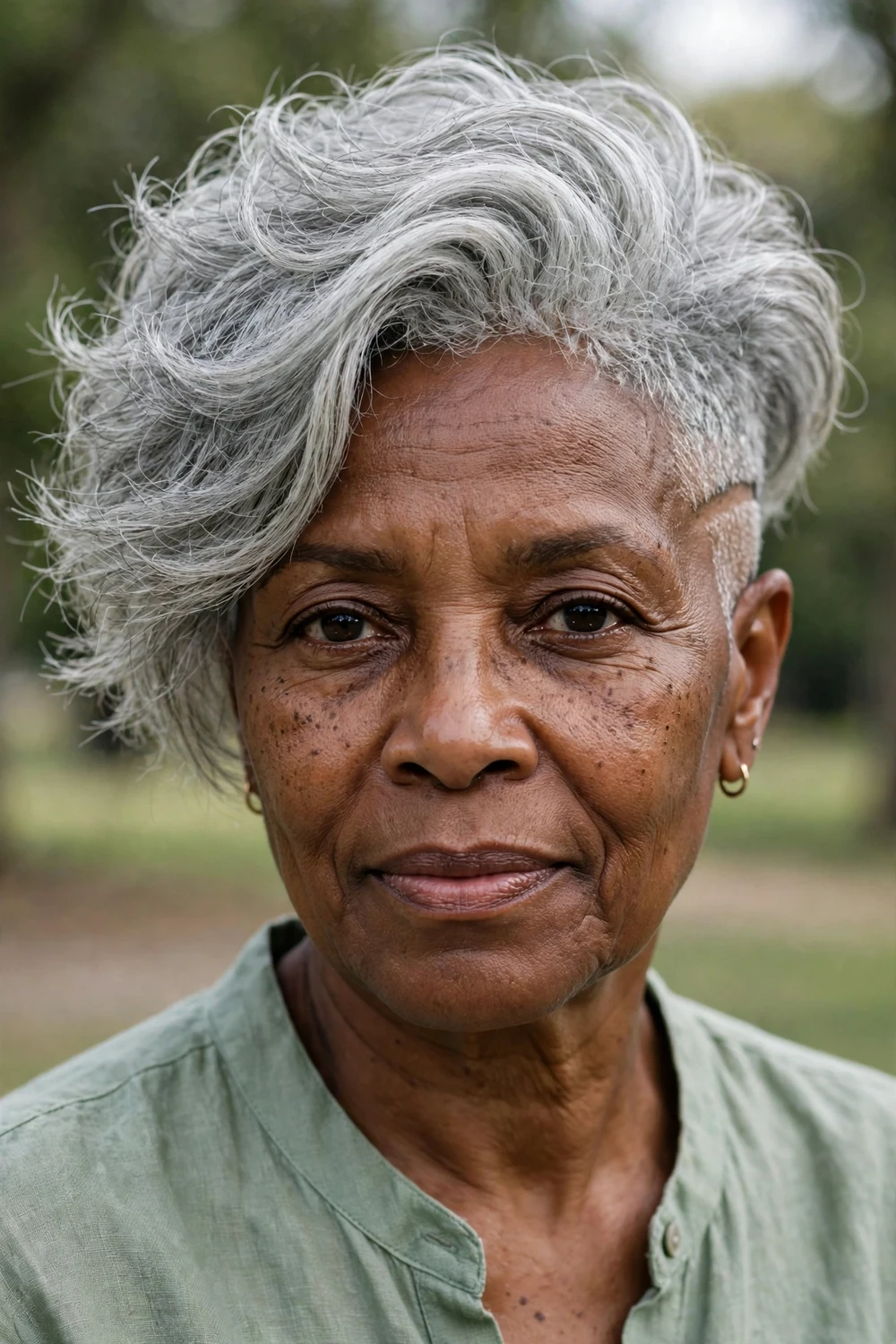
An undercut removes more bulk in one appointment than months of texturizing ever could. The sides and back get clipped short underneath while the longer textured top falls over them, so from the front it reads as a full silver pixie and from the side it reveals a sharp, modern edge. Thick hair that used to mushroom outward now lies exactly where you put it. This is an edgy way to embrace gray, and the contrast between the soft top and the close sides shows off silver color at its brightest. Regrowth stays hidden under the top layer.
Try this: Lift the top layer and clip the undercut every 3 to 4 weeks to keep the bulk from returning. Use a silver-toning shampoo once a week to keep the gray bright.
8. Salt-and-Pepper Layered Pixie
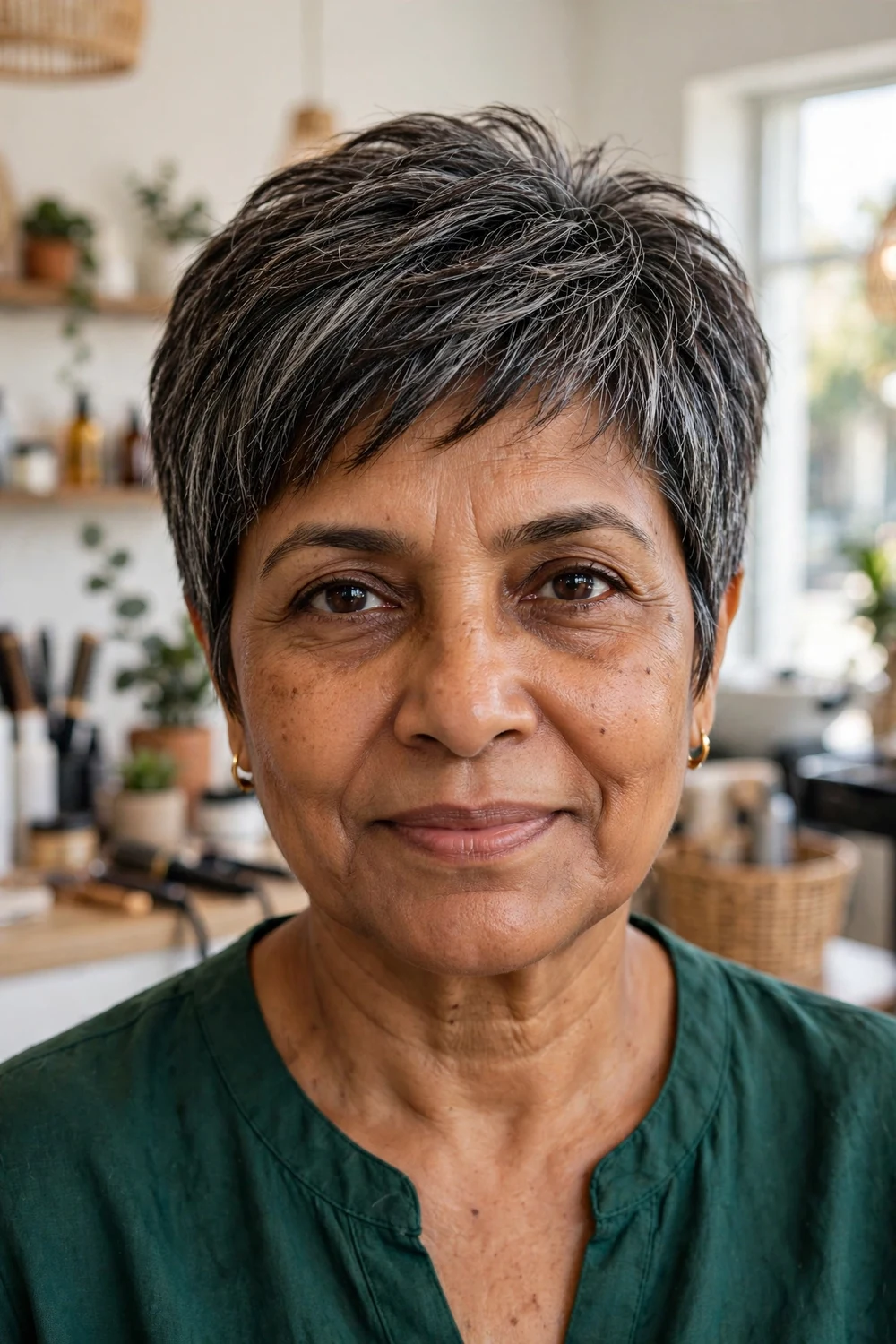
Growing out gray does not have to mean months of awkward roots. Textured layers break up the line where your natural gray meets the remaining color, blending the two tones into what reads as intentional salt-and-pepper. The layering also thins out thick density so the cut stays light and movable. This is the ideal transition cut because every trim removes more of the old color while the shape keeps looking deliberate. Within three to four cuts, most women reach full natural gray without ever having a bad-hair phase.
Try this: Ask your colorist for a few lowlights during the transition if the line of demarcation bothers you. A glossing treatment every 8 weeks keeps both tones shiny.
9. Stacked Bob with Angled Layers
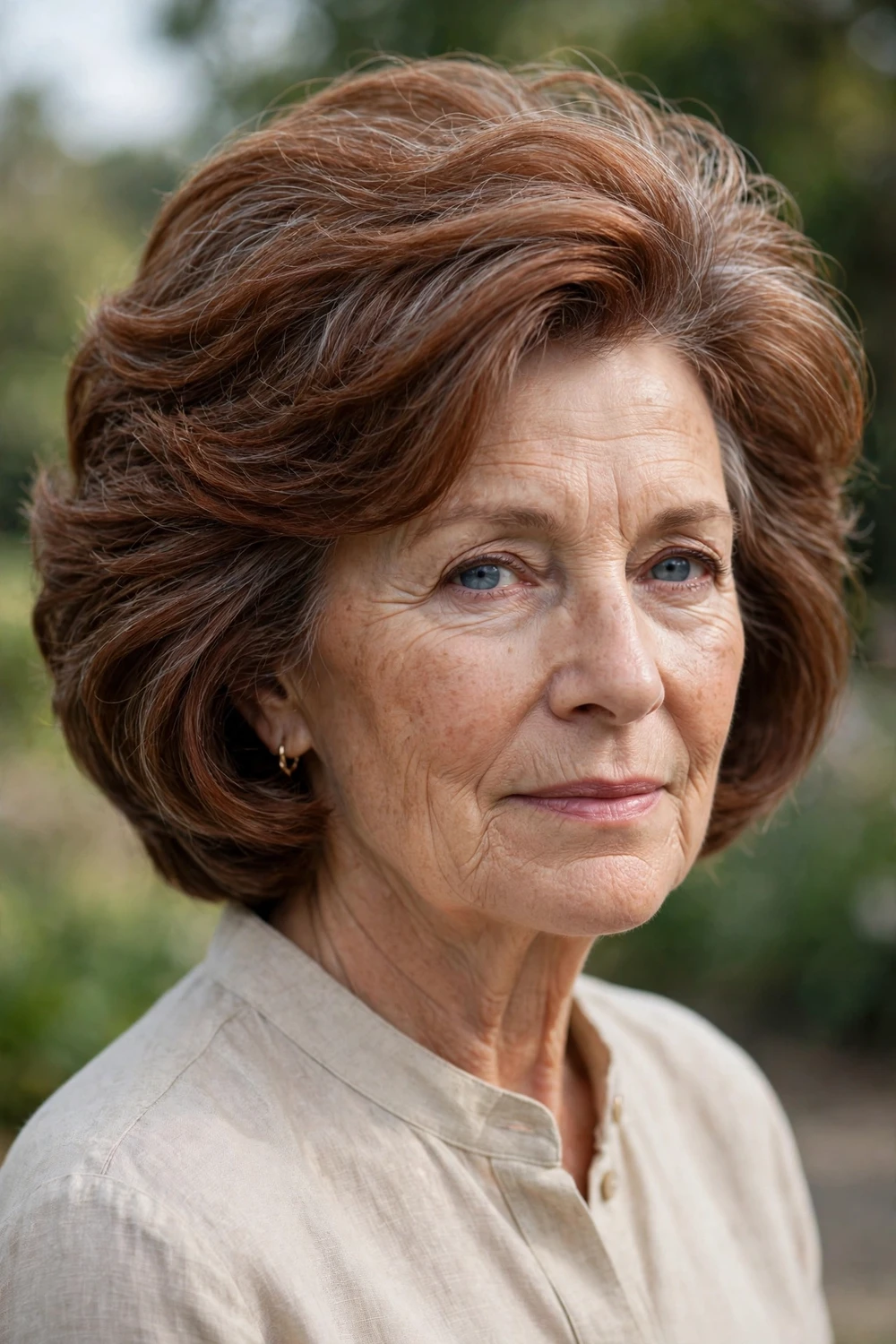
The stacked bob builds its height in the back and keeps it there on purpose. Graduated layers at the nape create structured volume while the front angles longer toward the chin, which slims the face and balances thick density through the sides. Because the weight sits high at the back, the ends stay light and never flip out uncontrollably. This cut reads as polished and deliberate, the kind of shape that looks finished even on second-day hair. It flatters women who want structure without stiffness.
Try this: Round-brush the back sections upward while blow-drying to activate the stack. A dime-sized drop of smoothing serum on the ends keeps the angled front sleek.
10. Gray Wedge Cut
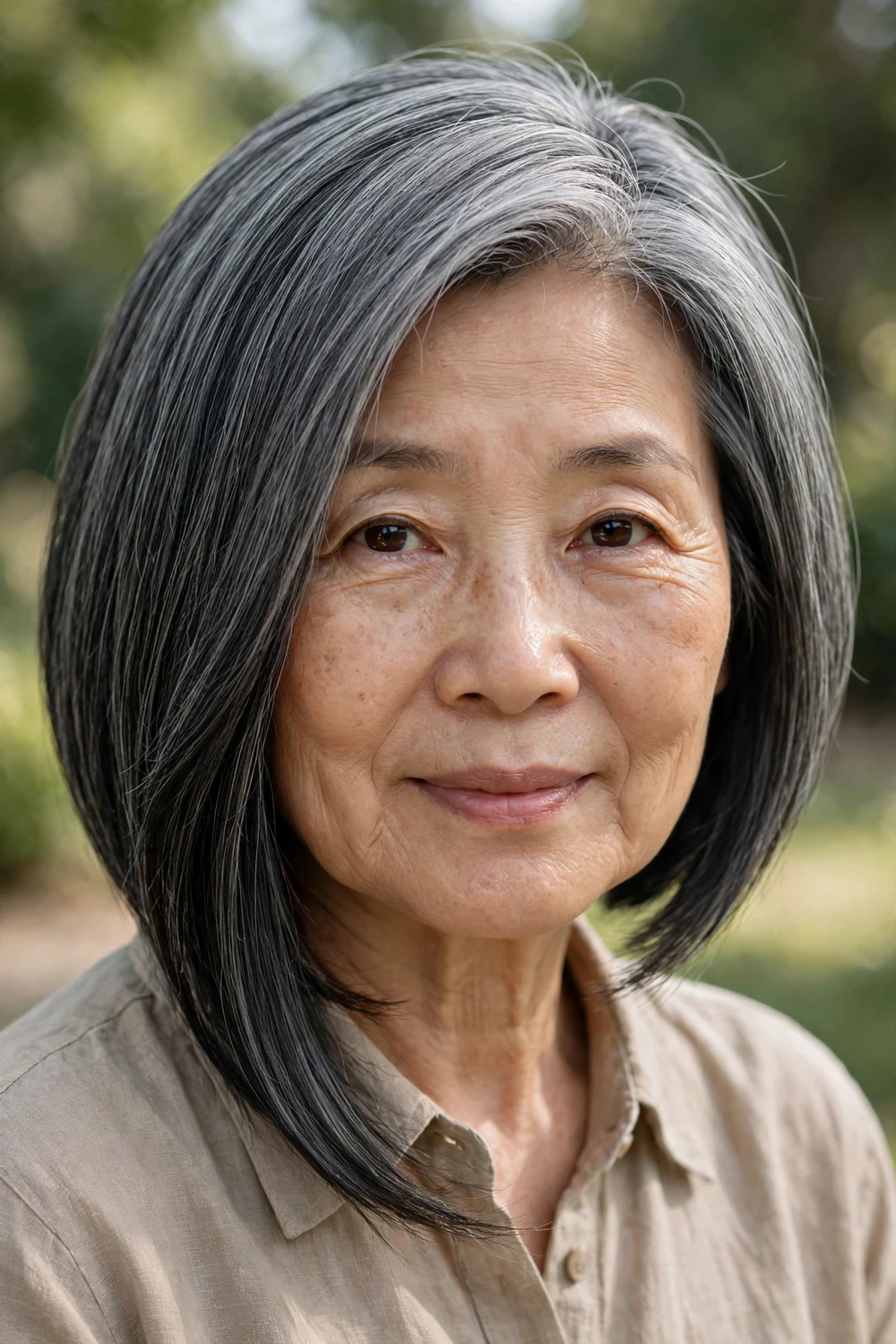
Short at the back, angled longer toward the chin. The wedge is geometry doing the work for you. Its graduated back removes serious bulk from thick hair while the longer front pieces keep the cut feminine and face-framing. Gray hair looks especially crisp in this shape because the clean lines show off silver tones without any frizz to blur them. The wedge suits straight to slightly wavy textures best, and it holds its shape for weeks, which means fewer styling decisions each morning and a cut that photographs well from every angle.
Try this: Blow-dry with a paddle brush, directing the front pieces forward and under. Refresh the nape graduation every 5 weeks so the wedge keeps its angle.
11. Silver Pageboy
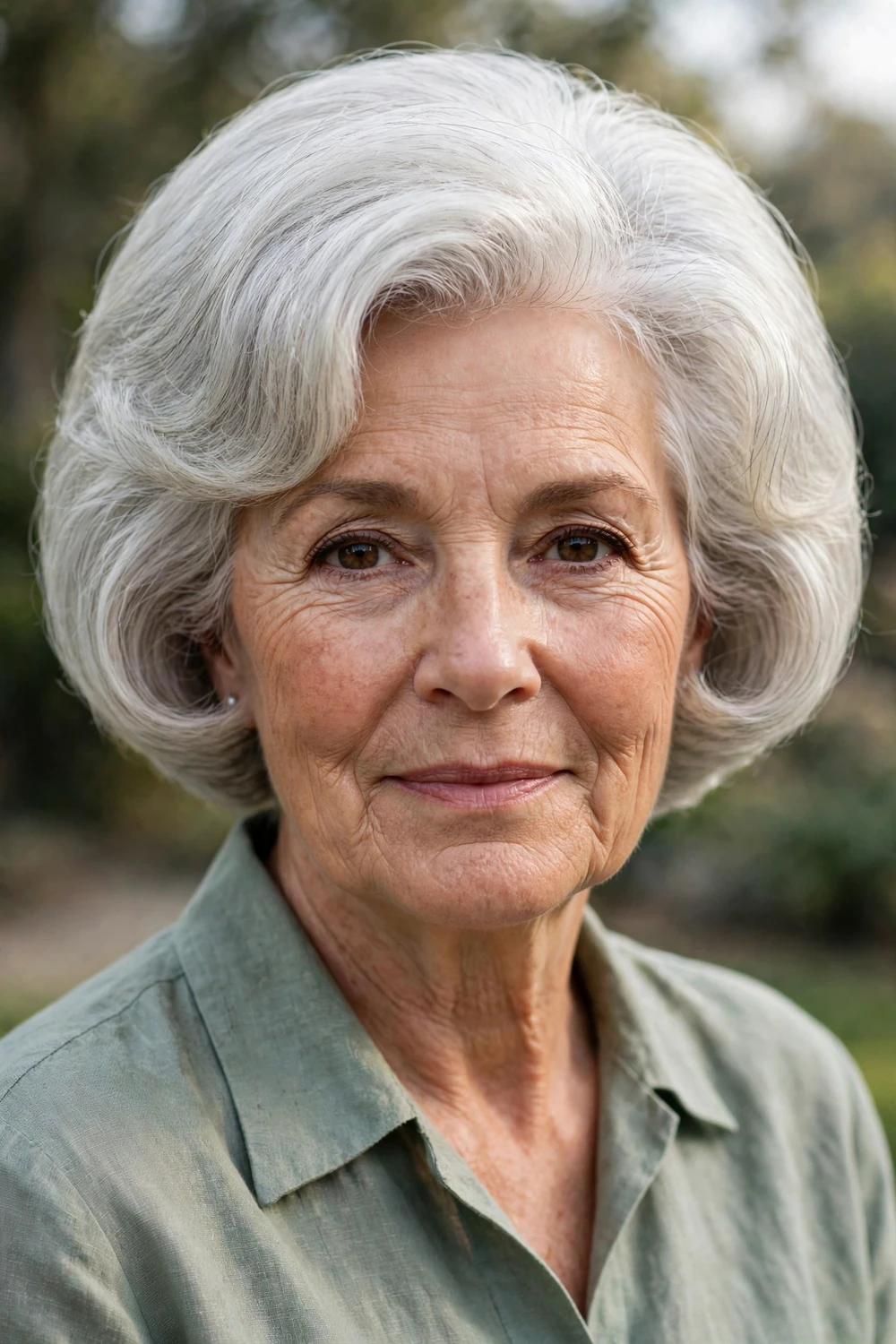
The pageboy has come back around, and thick hair makes it better than ever. The rounded shape with ends curving inward uses your natural density to hold the curve, something fine hair needs hot tools to fake. A smooth finish tames thick texture into a glossy, sculpted outline that frames the face evenly. Silver color takes this cut from retro to striking, since the uniform shape frames the gray cleanly. It works best on straight or easily straightened hair and suits oval and long face shapes.
Try this: Flat-iron the ends under in one smooth pass, then mist with shine spray. Always apply a heat protectant before any hot tool touches your hair.
12. Pixie Bob (Bixie) with Tapered Back
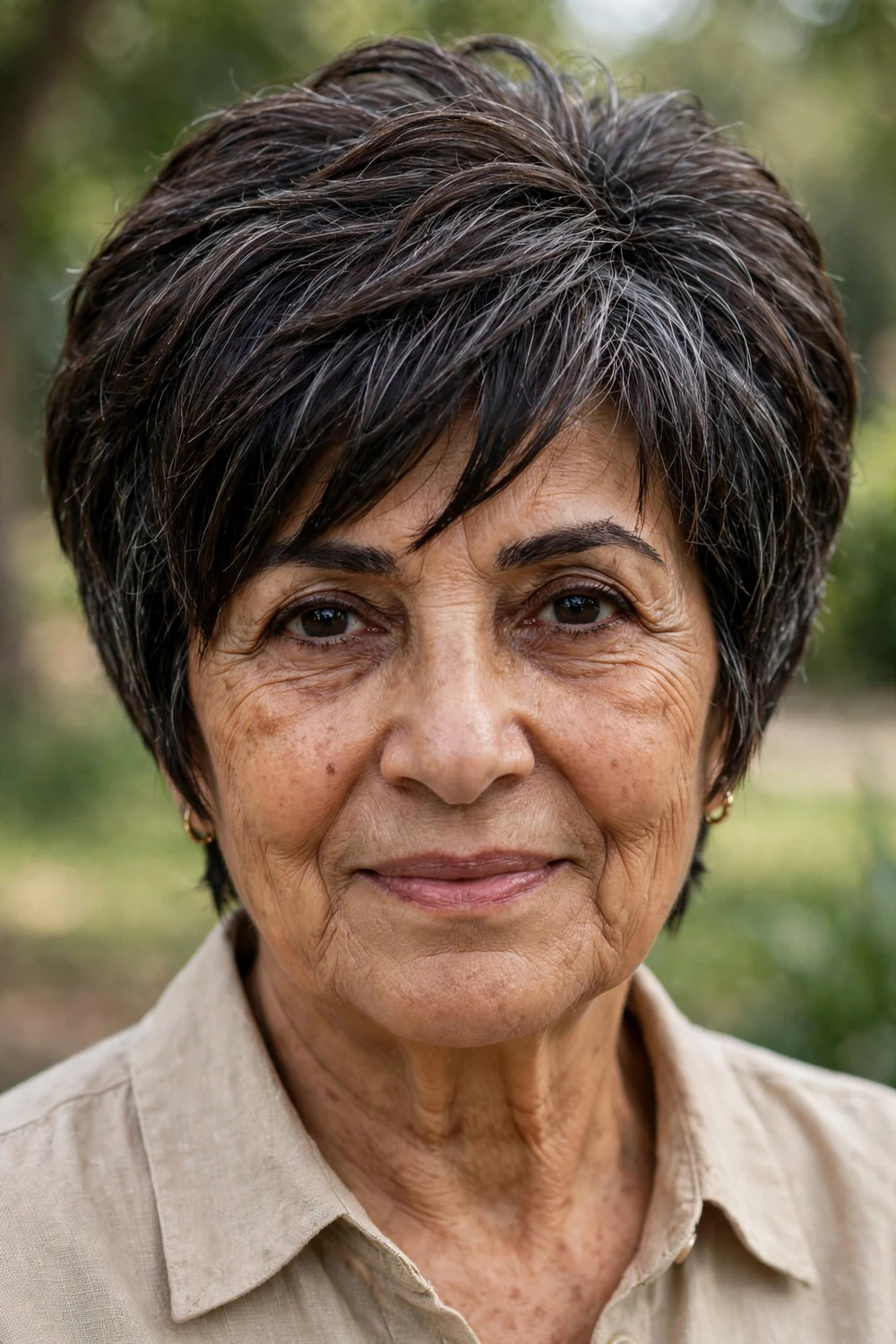
Sharp lines up front, tapered close at the back. The bixie is the hybrid for women who find a bob too heavy and a pixie too short. The front keeps enough length to tuck behind the ears or sweep to the side, while the tapered back removes the bulk that makes bobs puff out on thick hair. It reads modern and confident, with a clean neckline that elongates the neck. This cut adapts to straight, wavy, and curly textures because the tapering technique adjusts to each hair type.
Try this: Air-dry with a little mousse scrunched into the front for soft texture. Keep the back tapered with a cleanup trim every 4 to 5 weeks.
13. Sleek Chin-Length Blunt Bob with Side Part
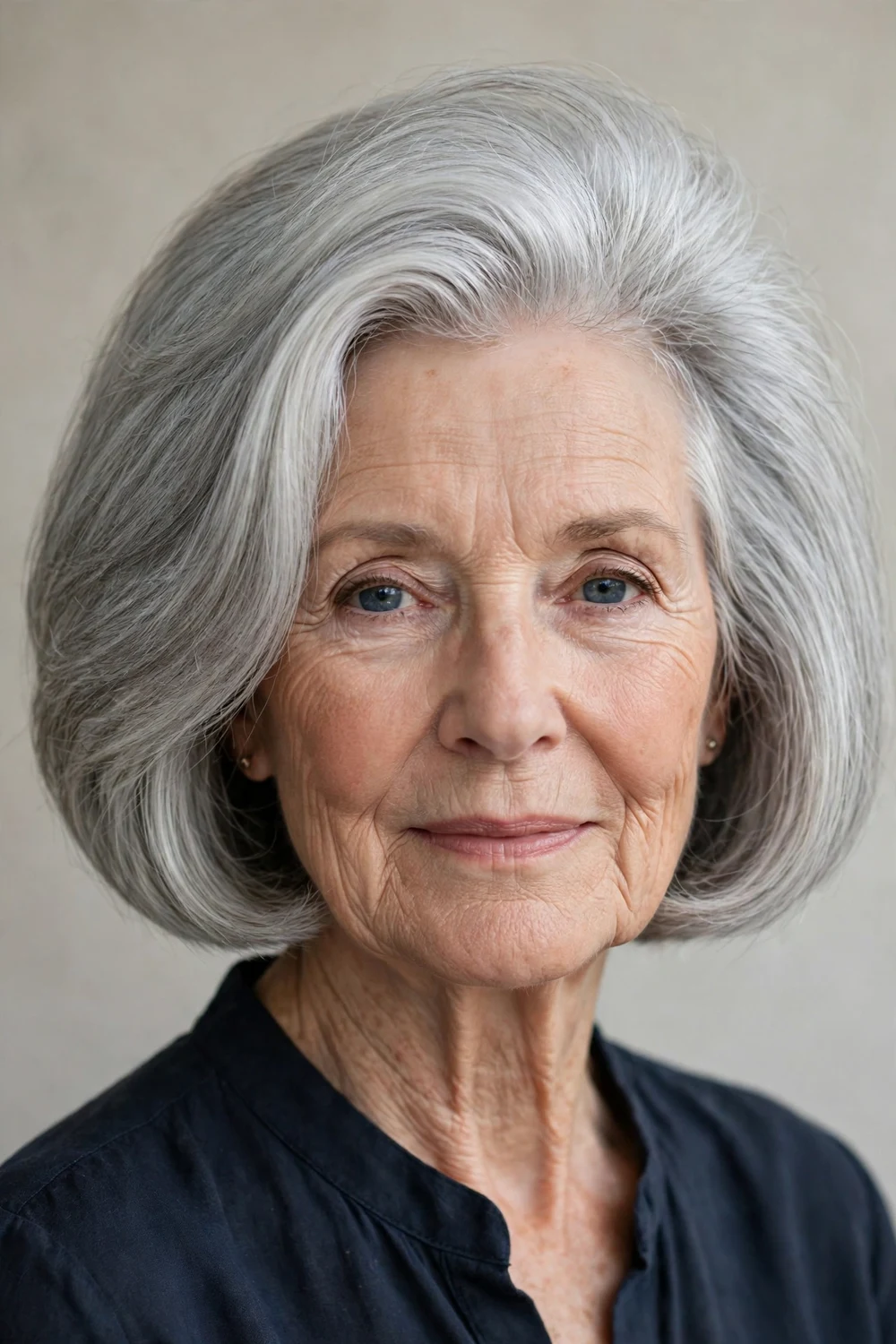
A timeless polished line does more for thick hair than most people expect. The blunt ends give weight and control to the bottom of the cut, stopping thick hair from flaring outward, while a deep side part lifts the crown and adds asymmetry that flatters mature faces. The chin length elongates the neck and draws attention to the jawline. This bob demands smooth styling to look its best, so it suits women who don’t mind five minutes with a blow-dryer and a round brush each morning.
Try this: Blow-dry section by section with a round brush, rolling the ends slightly under. A pea-sized amount of anti-frizz serum on dry ends keeps the line glassy.
14. Polished Chin-Length Bob with Curved Ends
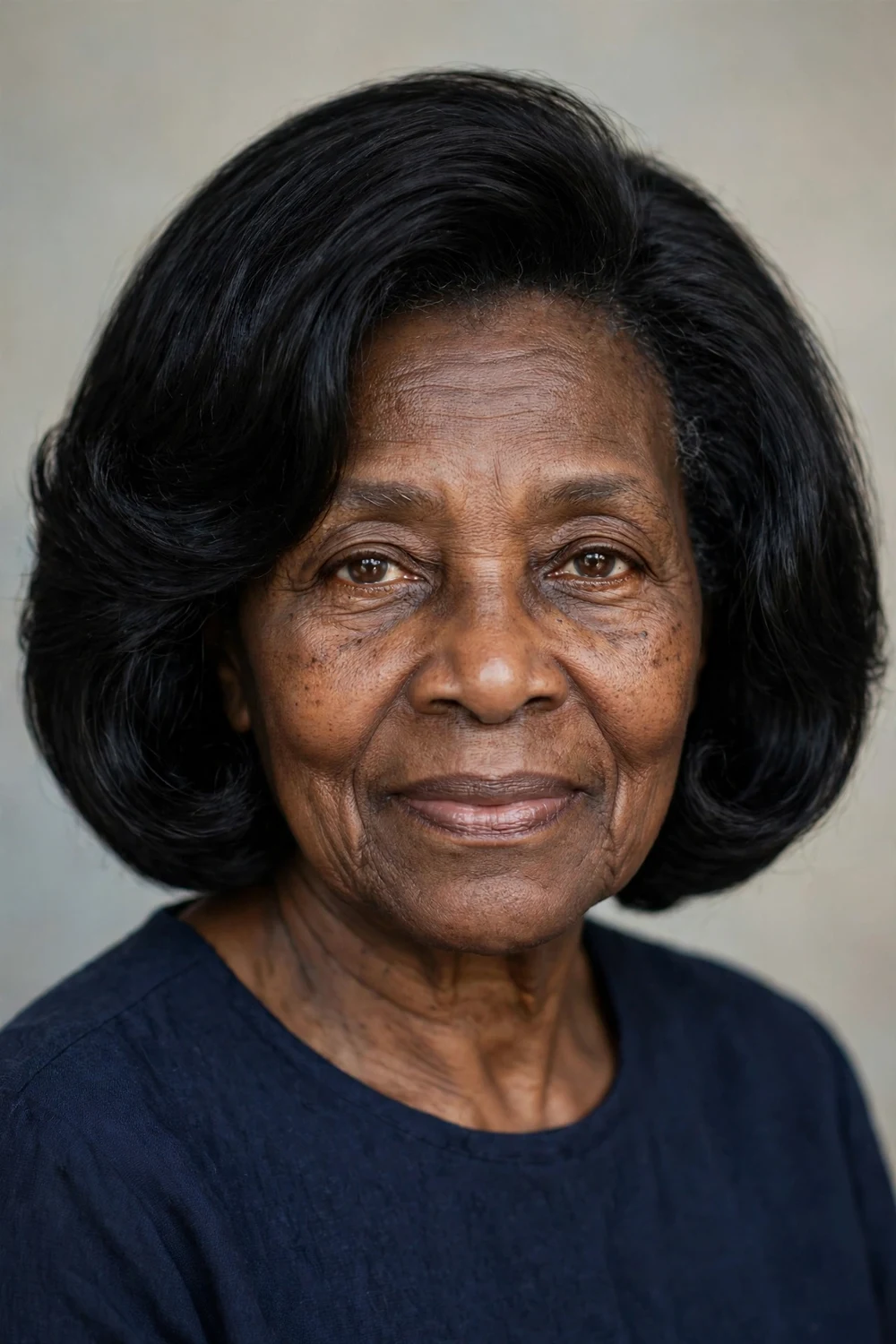
Curve the ends under and thick hair suddenly behaves. The inward curve uses the hair’s own weight to keep the outline contained, which controls thickness without any visible layering. This softens the face at the same time, since the curved ends wrap gently around the jawline instead of cutting a hard line across it. The cut suits straight and wavy textures and looks especially refined in solid gray or silver. It is a quiet, confident choice for women who prefer polish over trend.
Try this: Use a medium round brush to curve the ends under while blow-drying. Finish with a cool shot from the dryer to lock the curve in place.
15. Choppy Textured Bob (Platinum Option)
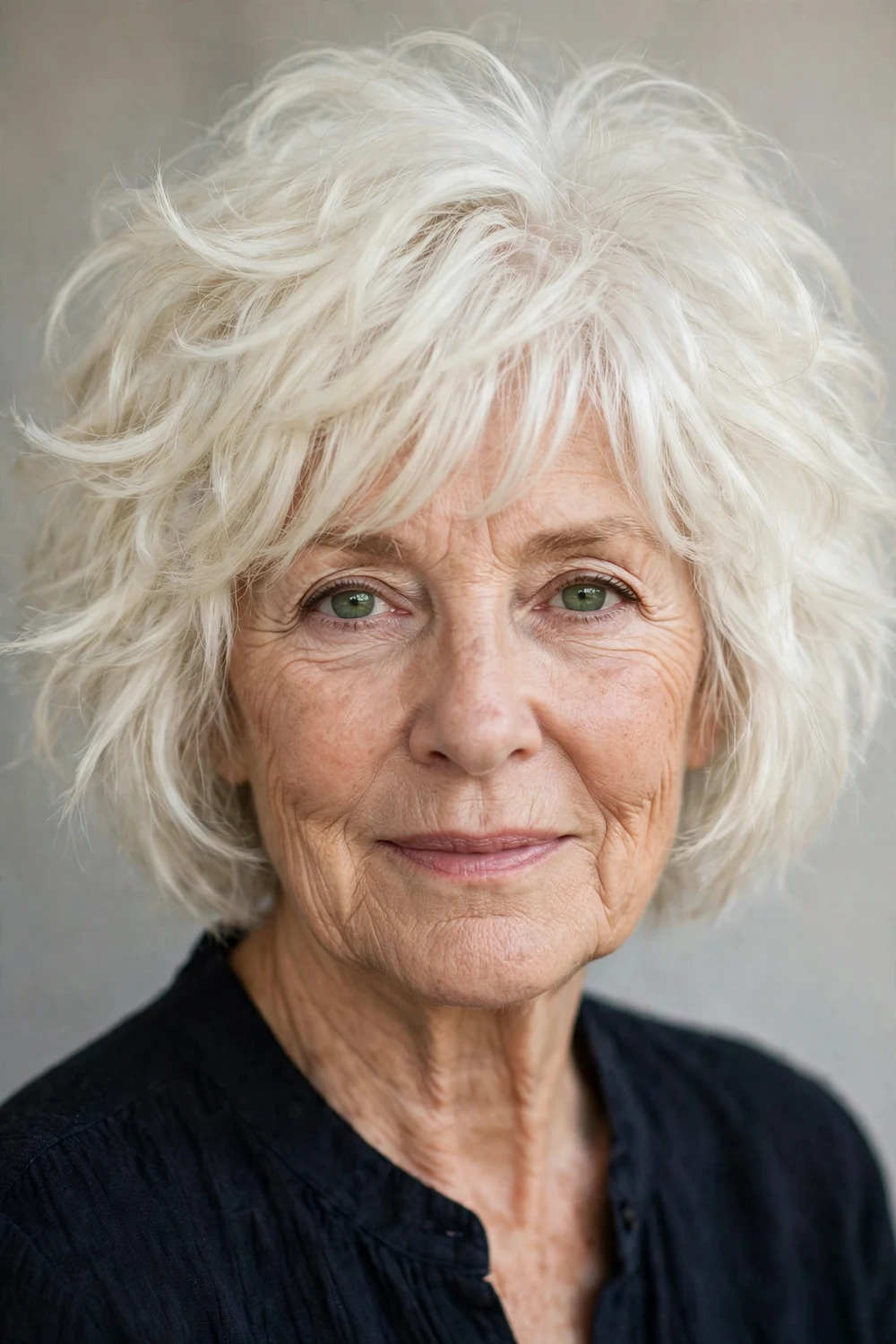
Thick hair and platinum are a pairing that works harder than either one alone. The choppy, point-cut ends break up density and add movement, while platinum blonde brightens the complexion and softens the look of fine lines. The texture also hides regrowth better than a solid blonde, since the varied ends blur the root line. This bob suits women ready for a lighter, more luminous look, though platinum needs toning upkeep to stay icy rather than brassy. Keep the length at or above the chin for the most flattering frame.
Try this: Use a purple toning shampoo once a week to keep the platinum bright. Scrunch a texturizing spray into dry ends for piece-y separation.
16. Voluminous Bob with Side-Swept Bangs
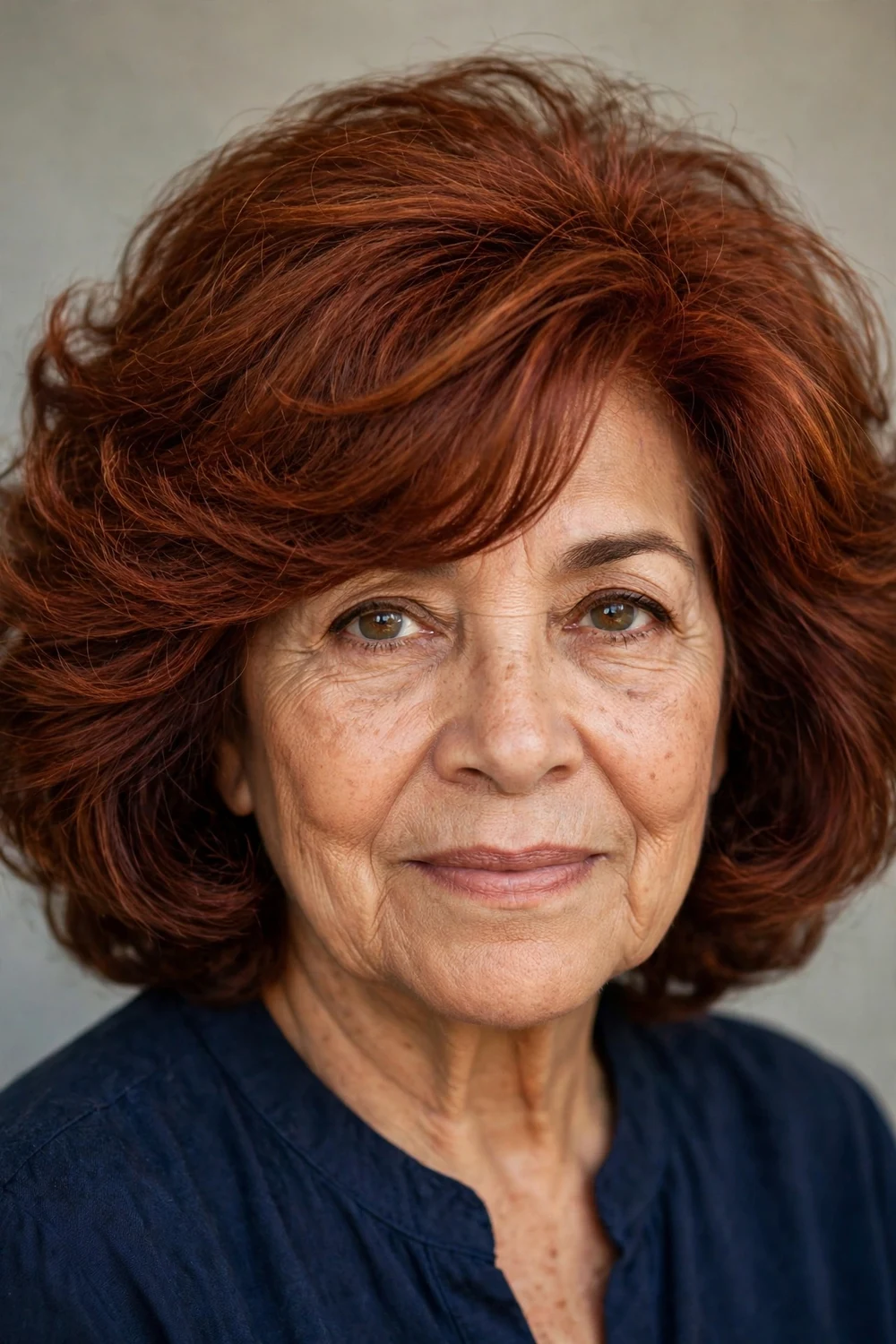
Body and movement without the bulk is the promise of this cut. Layers through the crown create lift where thick hair tends to sit flat on top, while the side-swept bangs soften facial features and draw attention to the eyes. The fringe is cut long enough to blend into the layers, so it never forms a heavy curtain across the forehead. This bob works on straight, wavy, and curly textures because the volume comes from the cut, not from teasing. It is a dependable choice for women who want fullness with shape.
Try this: Blow-dry the crown with a round brush, lifting at the roots for volume. Sweep the bangs to the side while damp and let them set naturally.
17. Layered Bob with Soft Waves and Deep Side Part
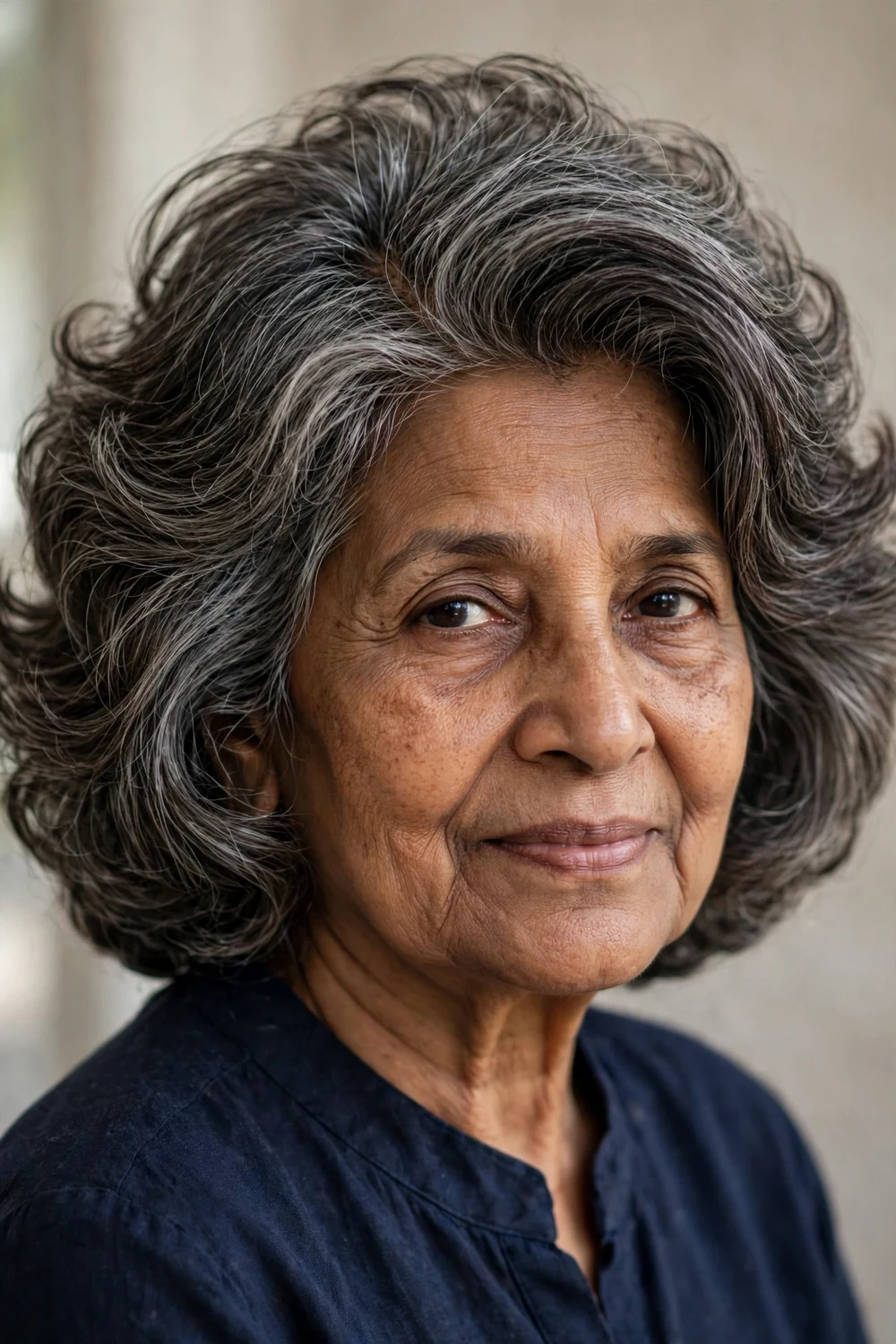
Part your hair deep on one side and the whole silhouette shifts. The deep part creates instant crown volume, the layers thin out thick density through the mid-lengths, and soft waves add a romantic finish that dresses up or down. This bob moves from daytime errands to evening events with nothing more than a change of earrings. The waves also disguise the frizz that thick hair picks up in humidity, since texture hides what smoothness would show. It flatters most face shapes and suits wavy to curly natural textures best.
Try this: Wrap 1-inch sections around a curling wand, alternating directions, then brush through for soft waves. Always apply a heat protectant first.
18. Glasses-Friendly Bob with Fringe
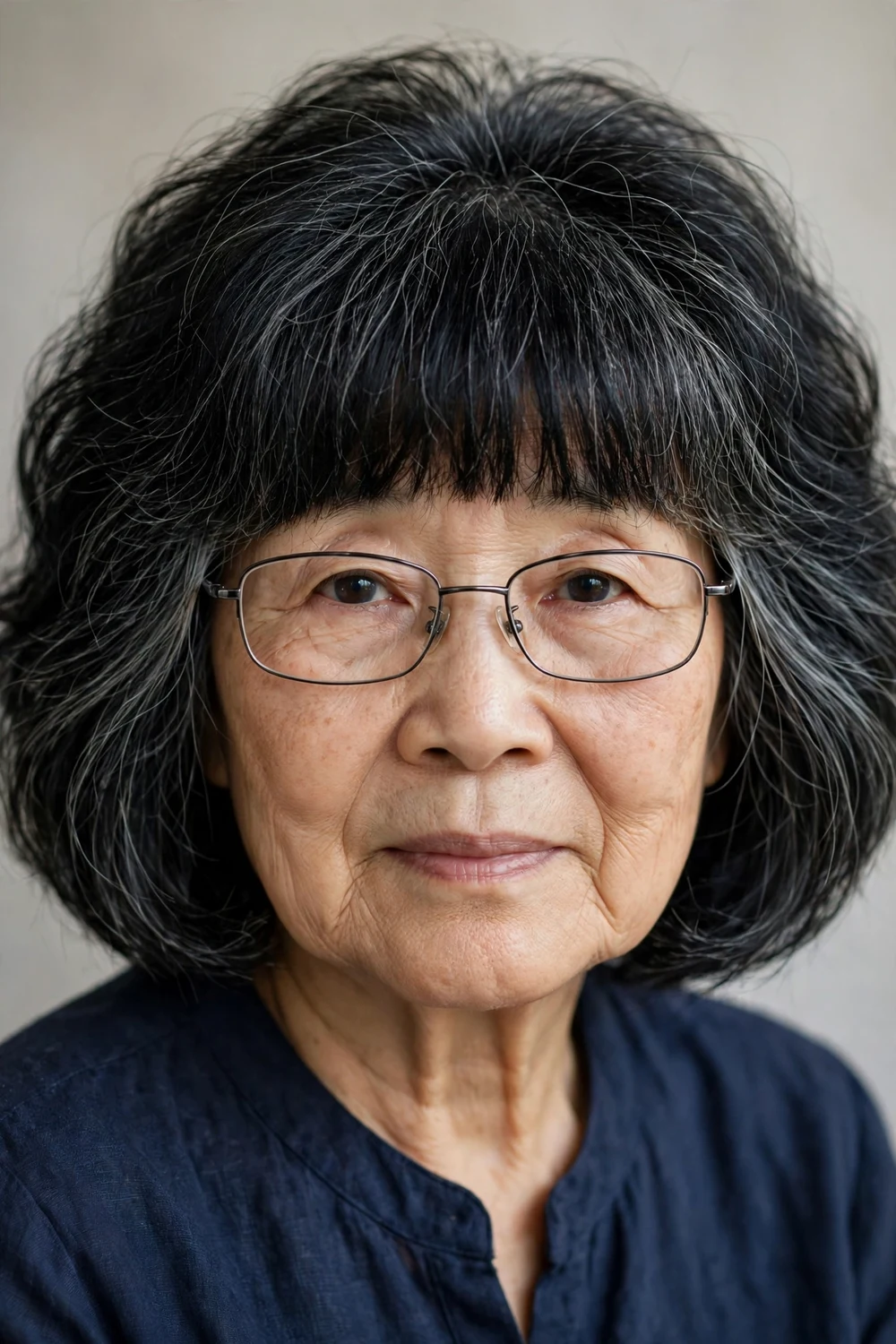
Your fringe and your frames need to agree, so the fringe gets cut with the glasses on. The bang line sits just above the frames, clearing them completely while still softening the forehead. A straight bob keeps the outline simple beside glasses, which matters because frames already add a strong horizontal line to the face. Thick hair fills out the bob so it never looks sparse next to bold frames. This combination suits women who wear glasses daily and want a cut that works with them instead of competing.
Try this: Bring your glasses to every bang trim so the length stays accurate. Blow-dry the fringe straight down with a paddle brush for a clean line.
If you wear frames every day, it helps to see how other cuts handle the same challenge. These hairstyles for women over 60 with glasses are chosen specifically to sit well with glasses, from bobs to longer layers.
19. Short Shag with Choppy Layers and Wispy Bangs
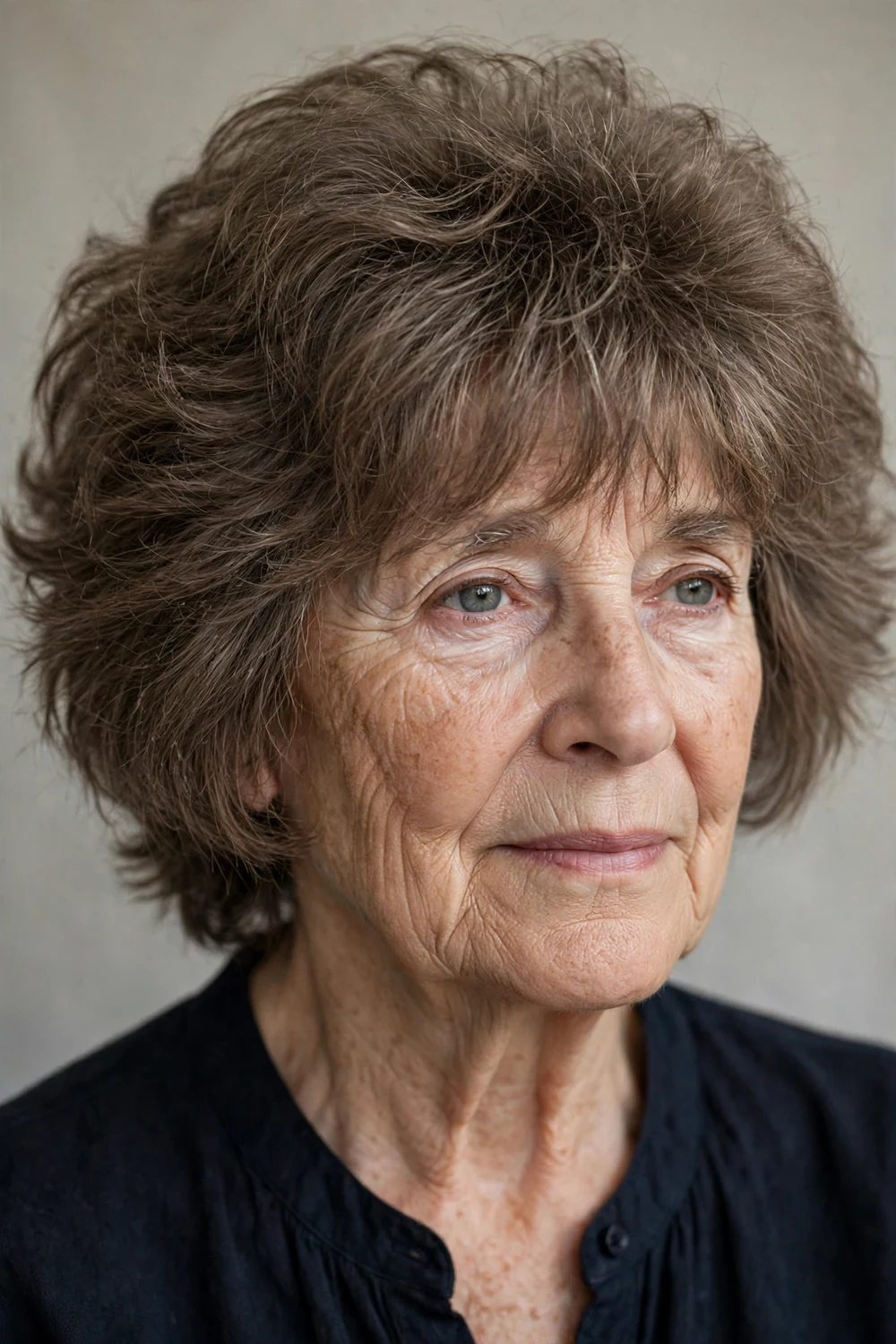
Messy on purpose is the entire point of this cut. Choppy layers throughout remove serious bulk from thick hair, and because the finish is deliberately undone, no strand has to sit exactly right. The wispy bangs blend straight into the layers with no hard line to maintain, which means the cut grows out softly for weeks. This shag suits women who want edge without effort and works on straight, wavy, and curly textures. It is one of the most forgiving shapes on this list.
Try this: Scrunch a small amount of mousse into damp hair and let it air-dry for natural texture. Refresh second-day hair with dry shampoo at the roots.
20. Feathered Shag with Face-Framing Layers
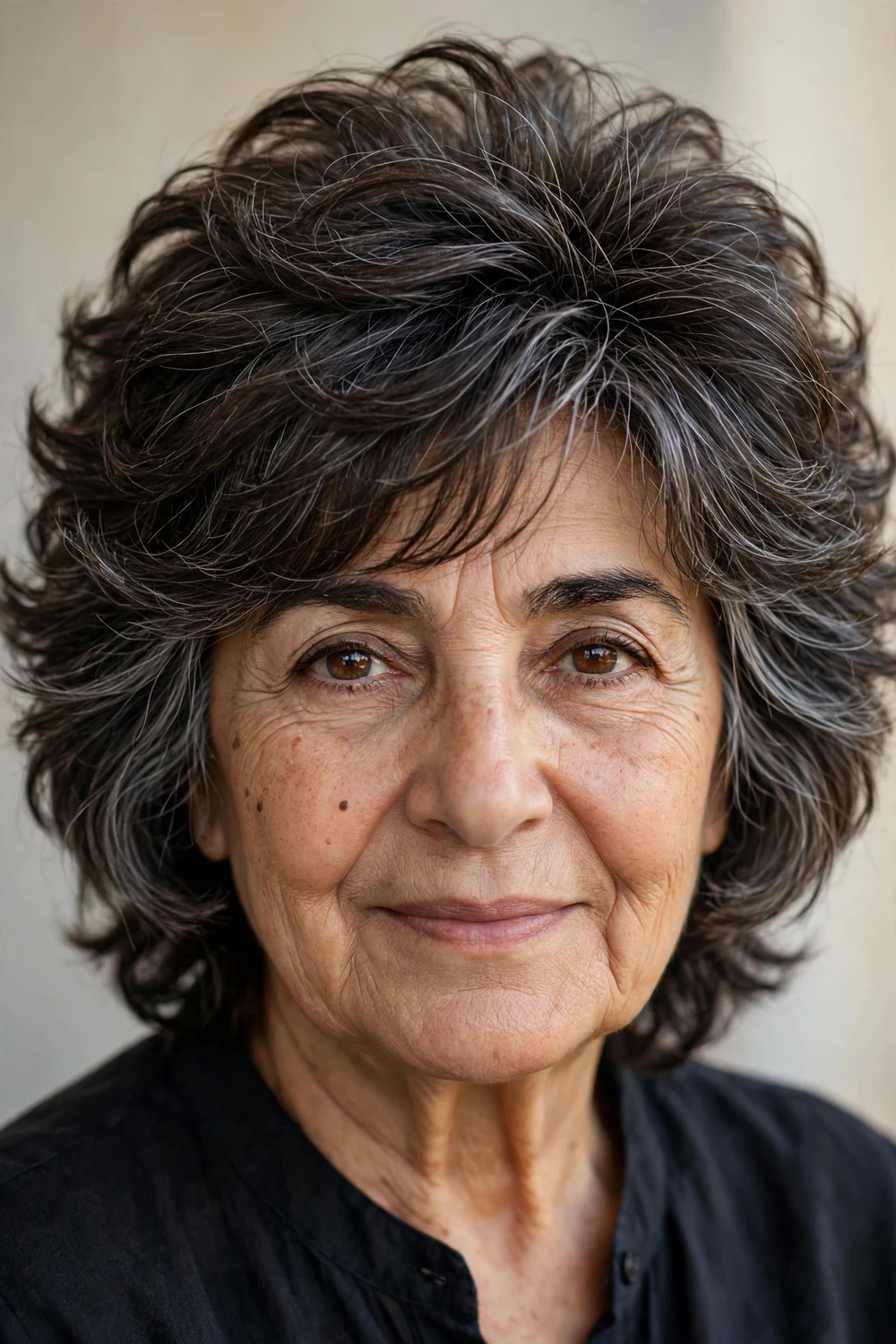
Feathering is a stylist’s term for soft, sliced layers that let thick hair move instead of stacking up. In this shag, the feathered layers balance volume and movement through the whole cut while shorter face-framing pieces highlight the cheekbones and soften the jawline. The result has the shag’s lived-in character with a more polished edge than the choppy version. It suits women who like texture but still want a cut that reads as put-together at a dinner out or special occasion.
Try this: Blow-dry with a round brush, turning the face-framing pieces away from the face. A light mist of flexible-hold hairspray keeps the feathering defined.
21. Curly Shag with Bangs (Dry-Cut)
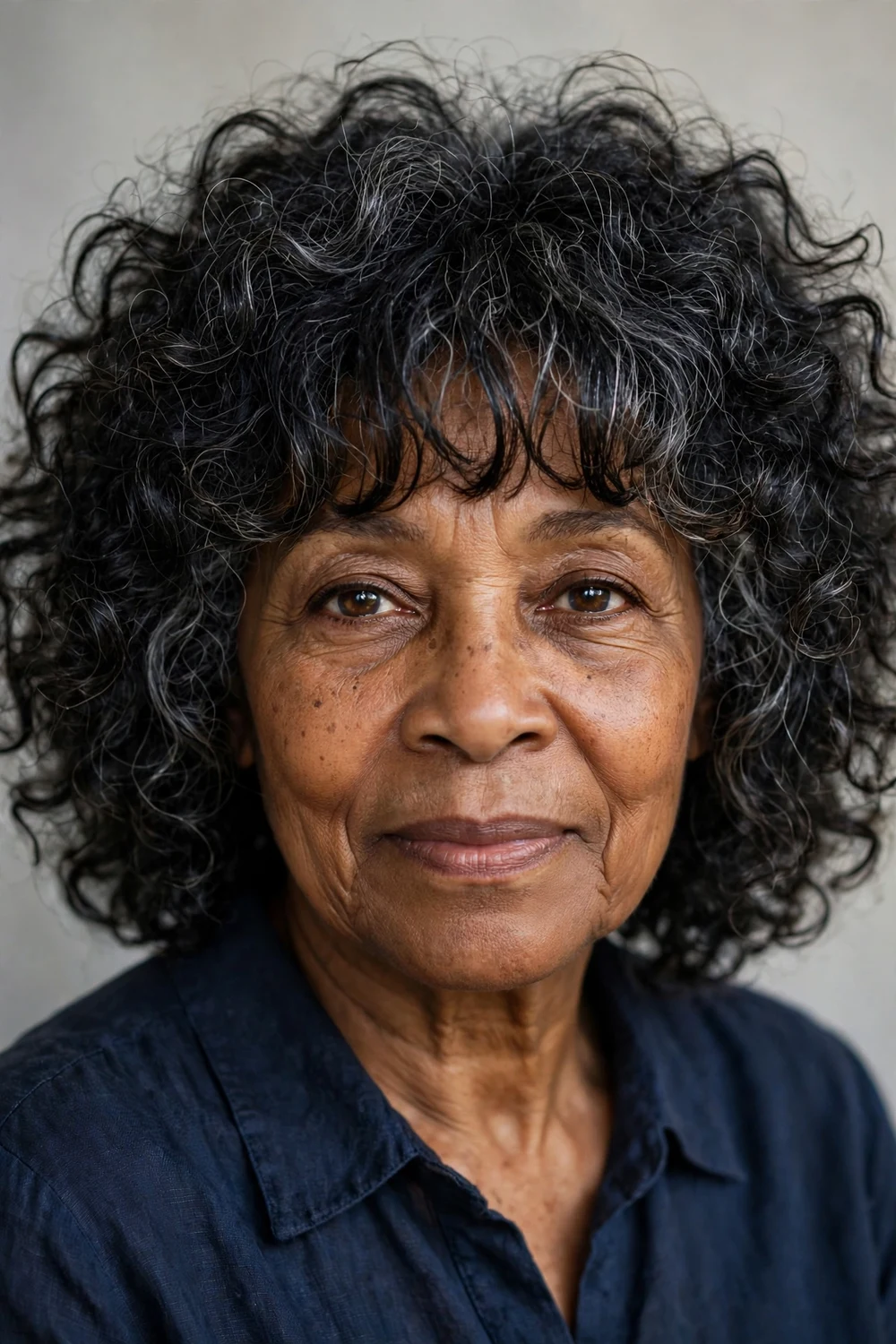
Curly bangs worry people, and this cut shows they shouldn’t. When curls are cut dry, the stylist sees exactly where each ringlet lands, so the fringe gets shaped to spring up softly instead of shrinking into a tight ledge. The shag’s layers let every curl lift at its own level rather than hanging in one heavy sheet, which removes the bulk that drags curly hair flat. The fringe grows out into face-framing layers, so there is no awkward phase between trims. Thick curly hair finally gets the movement it was built for.
Try this: Apply curl cream to damp curls and scrunch upward, then diffuse or air-dry. Trim the fringe every 6 to 8 weeks, always on dry curls.
22. Layered Shag with Curtain Bangs
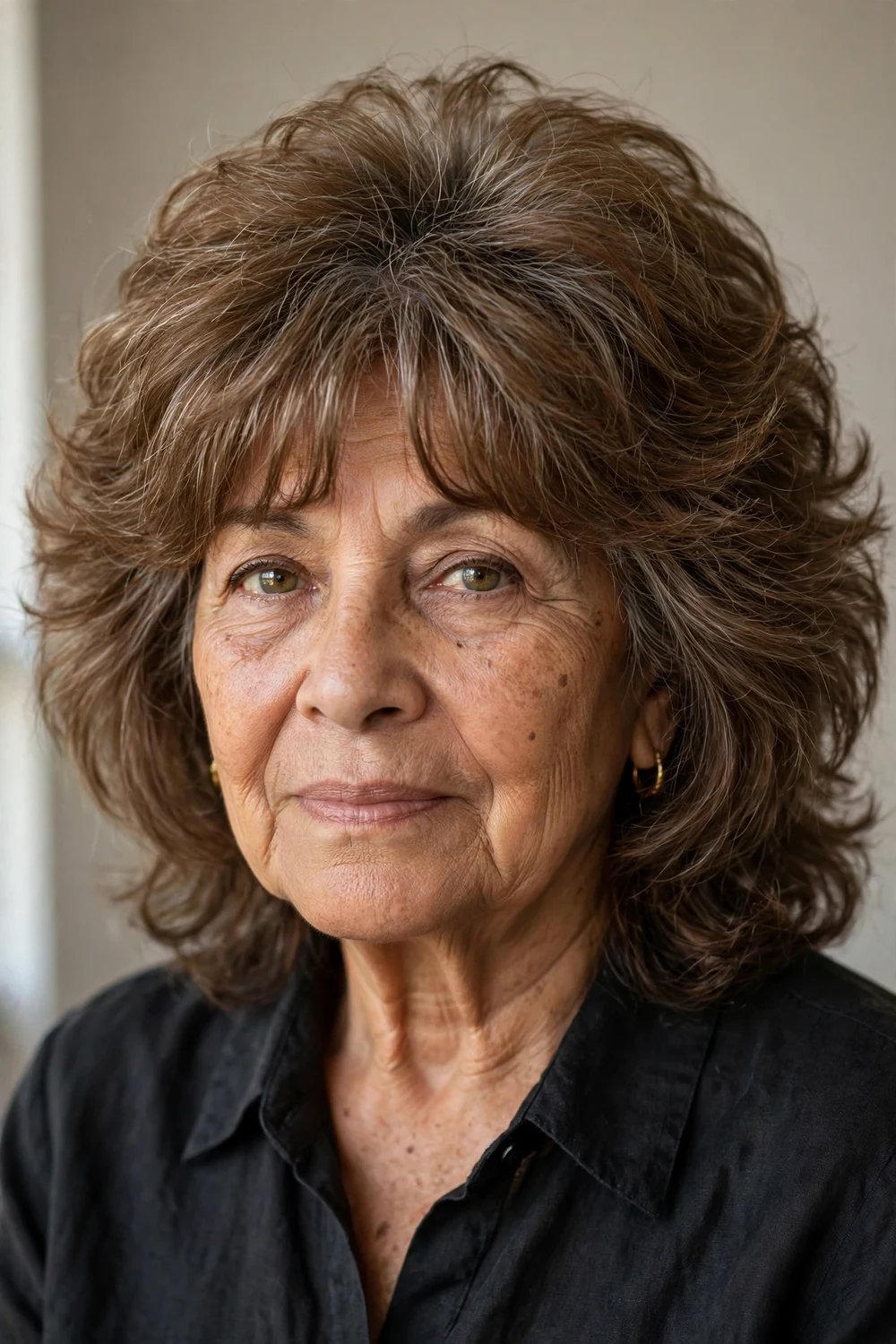
Curtain bangs grow out better than any other fringe, which makes them the practical choice for thick hair. They part in the middle and sweep to each side, framing the face while the shaggy layers underneath cut serious bulk through the lengths. Because the bangs are long and piece-y, they blend into the rest of the cut as they grow, so you can stretch trims to 8 or 10 weeks. This combination suits women who want fringe without the maintenance schedule of a full bang.
Try this: Blow-dry curtain bangs with a round brush, curving each side away from the center part. A tiny bit of styling cream keeps the pieces separated.
23. Short Wolf Cut
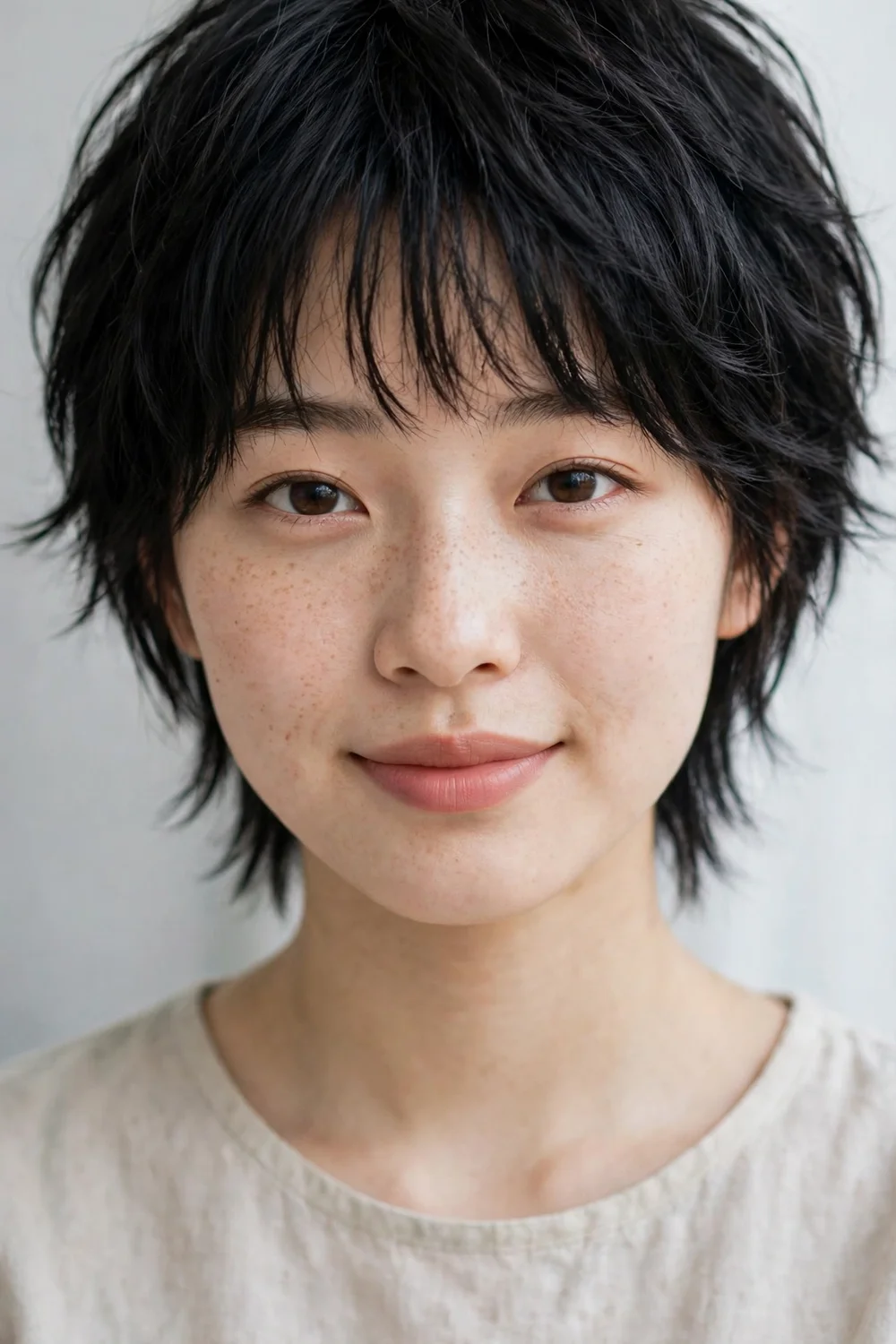
The wolf cut was practically built for thick hair. High crown layers create lift and remove weight from the top, while wispy length at the back keeps just enough hair to show off your density. The cut lets thick texture do what it wants, which means less fighting with a blow-dryer and more working with what you have. It reads modern and a little rebellious, and it suits women who are done with safe haircuts. Straight, wavy, and curly textures all work because the layering adapts to each one.
Try this: Apply texturizing spray to damp hair and scrunch the crown for lift. Let the back pieces air-dry naturally for the signature wispy finish.
24. Silver Blunt Lob
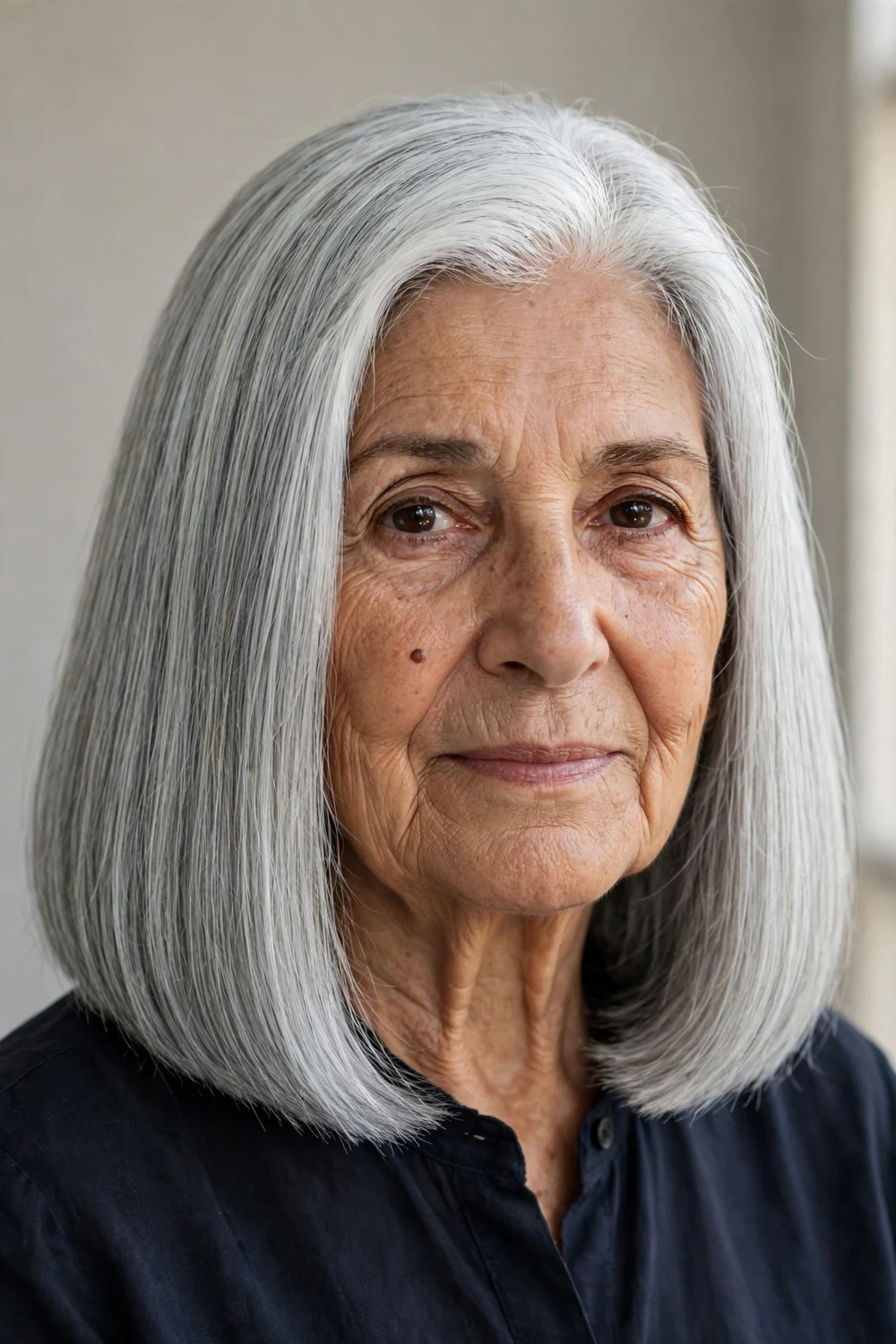
One length, zero layers, maximum polish. The blunt lob uses the weight of thick hair as an advantage, letting the sharp edge swing cleanly at the shoulders. Silver and gray look especially bright in this cut because the solid shape reflects light evenly instead of breaking it up through layers. The shoulder length keeps the hair from puffing out at the jawline, which is where thick hair tends to widen. This lob suits women who want a strong, minimal shape with almost no daily styling decisions.
Try this: Blow-dry smooth with a paddle brush and finish with shine serum on the ends. Trim every 6 to 8 weeks to keep the blunt edge sharp.
25. Asymmetrical Lob with Blunt Ends
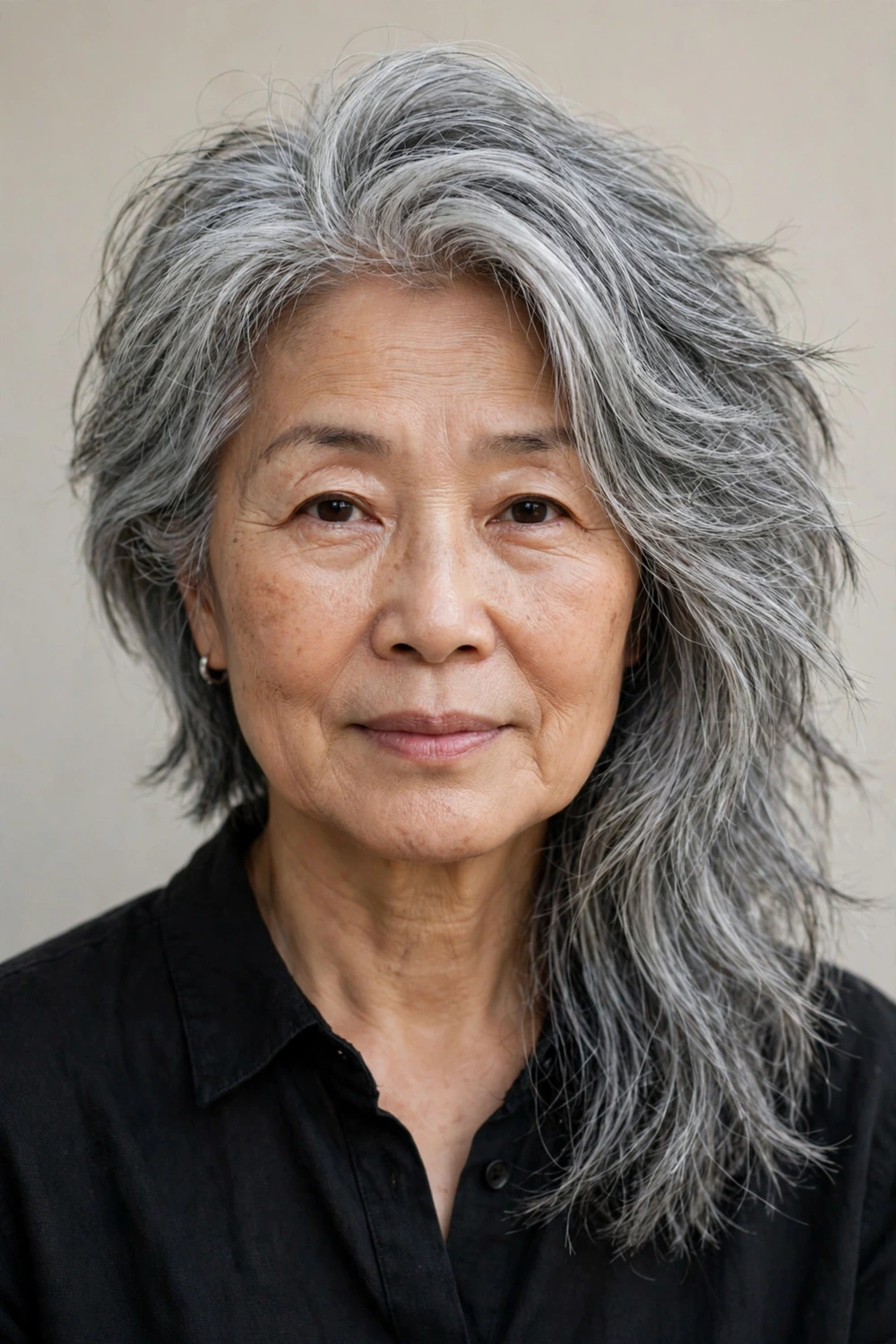
Longer on one side by about two inches, and that small shift changes the whole cut. The asymmetry balances facial features and adds a modern edge that a straight-across lob can’t offer. Blunt ends keep thick hair controlled and swinging cleanly instead of fraying outward. This cut works best on straight or straightened hair, where the uneven hemline reads as intentional rather than accidental. It suits women who want something current without going short, and it grows out into a long bob gracefully.
Try this: Flat-iron in sections for a glassy finish, bending the longer side slightly under. Always apply a heat protectant before flat-ironing.
26. Tousled Wavy Lob with Balayage and Face-Framing Layers
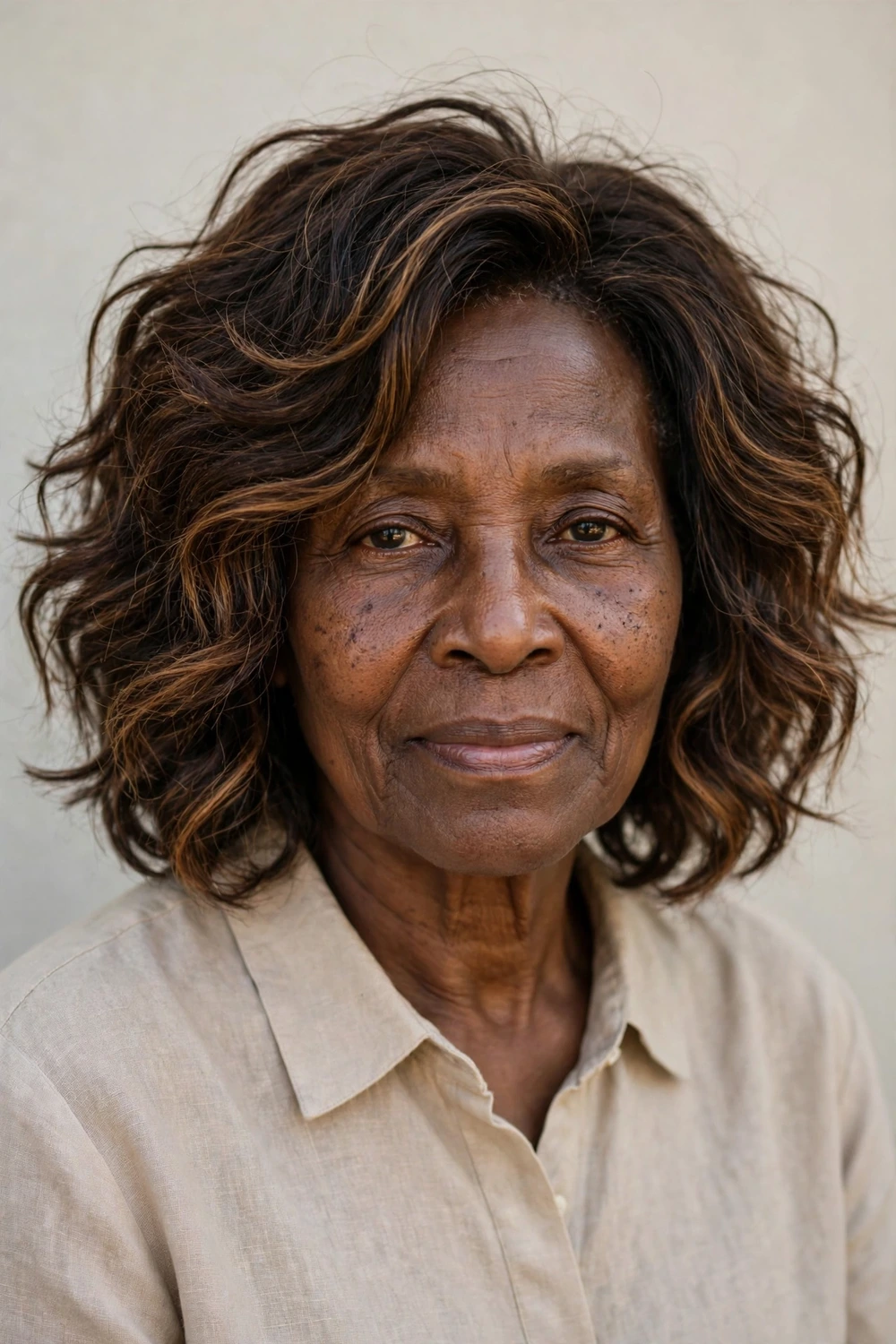
Beachy waves, dimensional color, and a face frame that never needs adjusting. The tousled texture breaks up thick density so the lob moves instead of sitting as a solid block, while balayage highlights add depth that makes the waves look thicker in the right way. Face-framing layers start at the cheekbones and soften the jawline without any extra styling. This combination reads youthful and relaxed, and it suits women who want their hair to look effortless even when some effort went in.
Try this: Braid damp hair loosely overnight for heat-free waves, or use a large-barrel wand. Refresh balayage with a gloss treatment every 10 to 12 weeks.
27. Sleek Lob with Blunt Bangs
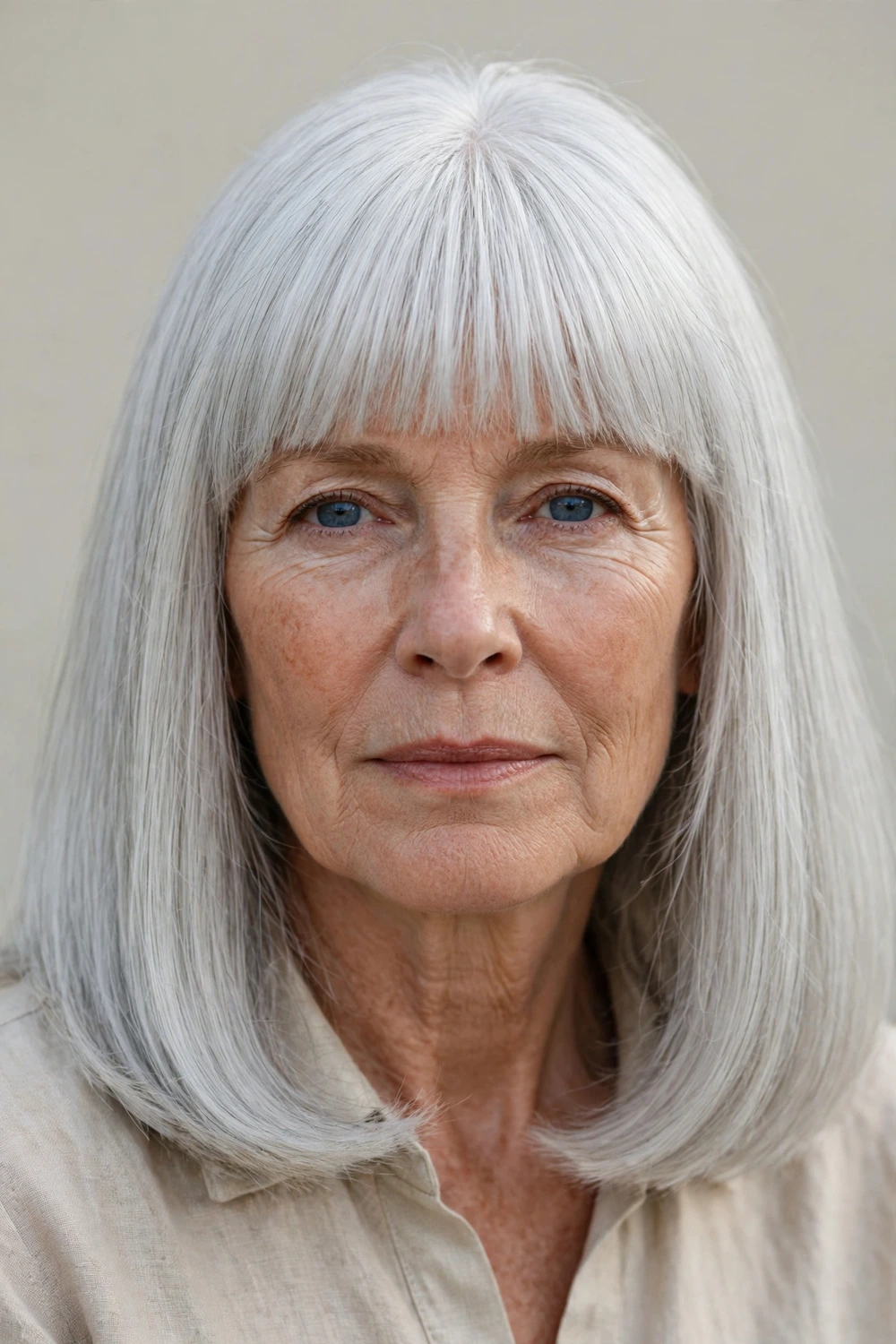
Polished, straight, and framed by a full fringe. The sleek lob controls thick hair through smooth blow-drying and a clean outline, while blunt bangs add a youthful frame that draws attention to the eyes. The bangs need to be thinned at the ends so they don’t form a heavy shelf across the forehead, which is the one technical detail that makes or breaks this cut. It suits straight and wavy textures and women who like a defined, graphic shape. The fringe needs trims every 3 to 4 weeks to stay at brow level.
Try this: Blow-dry the bangs first, while they are wettest, using a small round brush. Ask your stylist to point-cut the bang ends, never cut them straight across.
28. Voluminous Curly Bob with Highlights
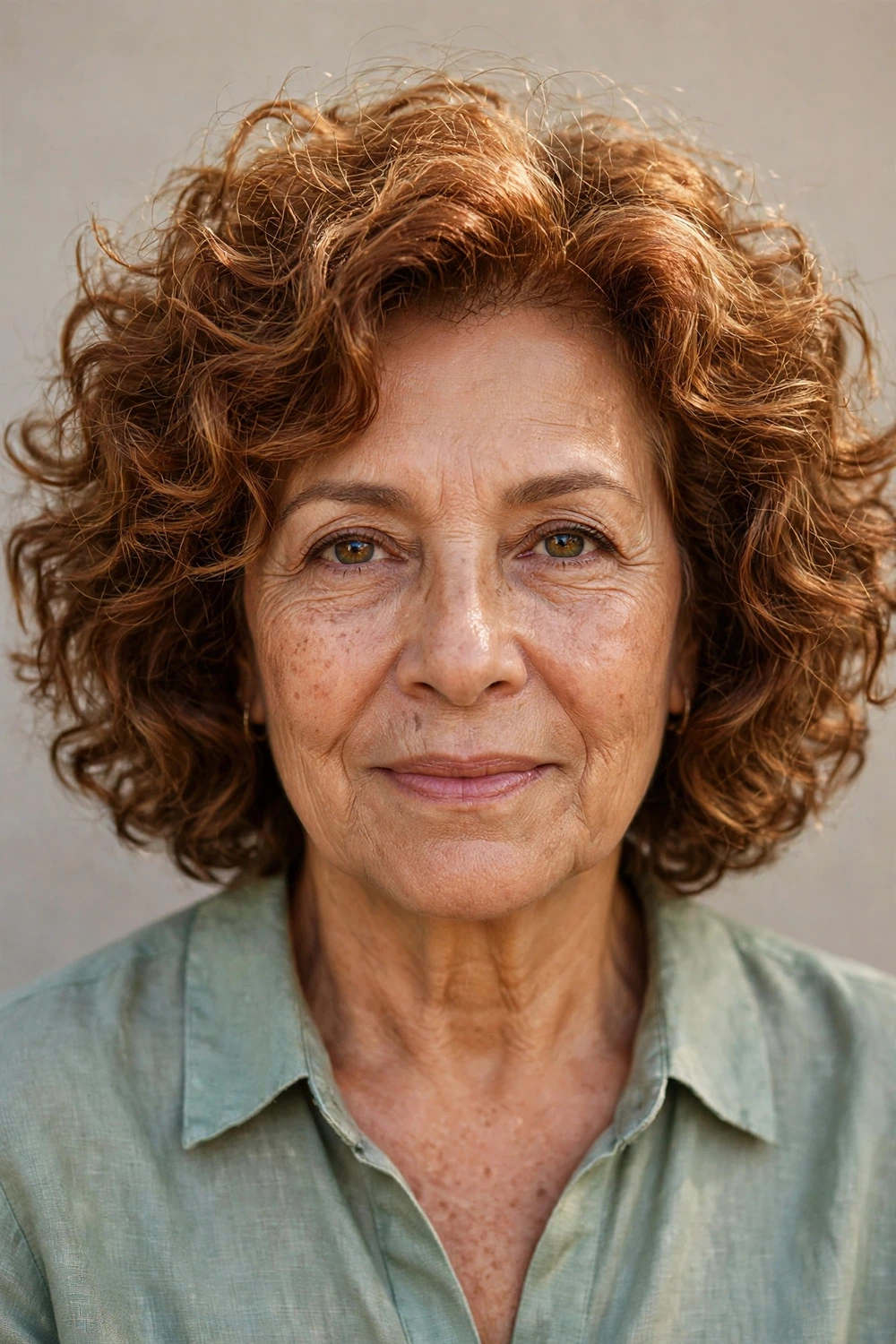
Curls want to take up space, and this cut finally lets them. Layers shaped around the curl pattern keep the volume balanced, full at the crown and sides without widening into a triangle at the bottom. Highlights woven through the curls add warmth and dimension, catching light on each curve so the whole head looks luminous. This bob celebrates natural texture instead of fighting it, which means less heat styling and healthier hair over time. It suits women ready to wear their curls exactly as they grow.
Try this: Scrunch a curl-defining cream into damp hair and diffuse until dry. Pineapple the curls at night to protect the shape while you sleep.
29. Straight Shoulder-Length Bob with Razored Ends and Deep Side Part
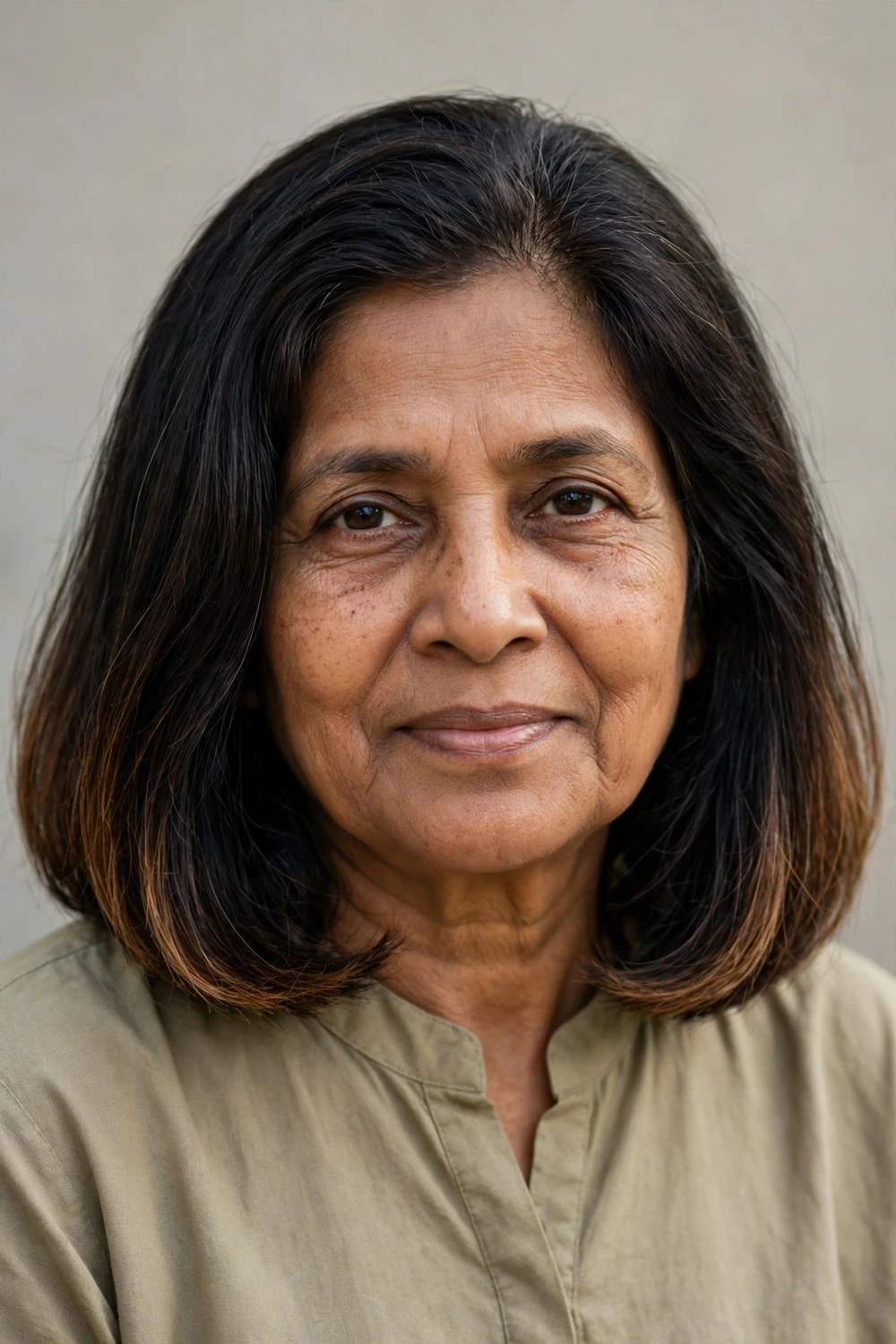
A razor does what scissors can’t: it thins the ends from the inside out. Razored ends remove bulk along the bottom of this bob without any visible layering, so thick hair falls in a clean, tapered line instead of a heavy shelf. The deep side part adds crown lift and a refined asymmetry that suits mature faces. This cut reads modern and precise, and it works best on straight or easily straightened hair. The razored texture also means the cut grows out softly, with no blunt line to maintain.
Try this: Blow-dry straight with a paddle brush, directing hair away from the deep part. Ask for the razor work to be refreshed every 8 weeks.
30. Classic Shoulder-Length Cut with Soft Layers
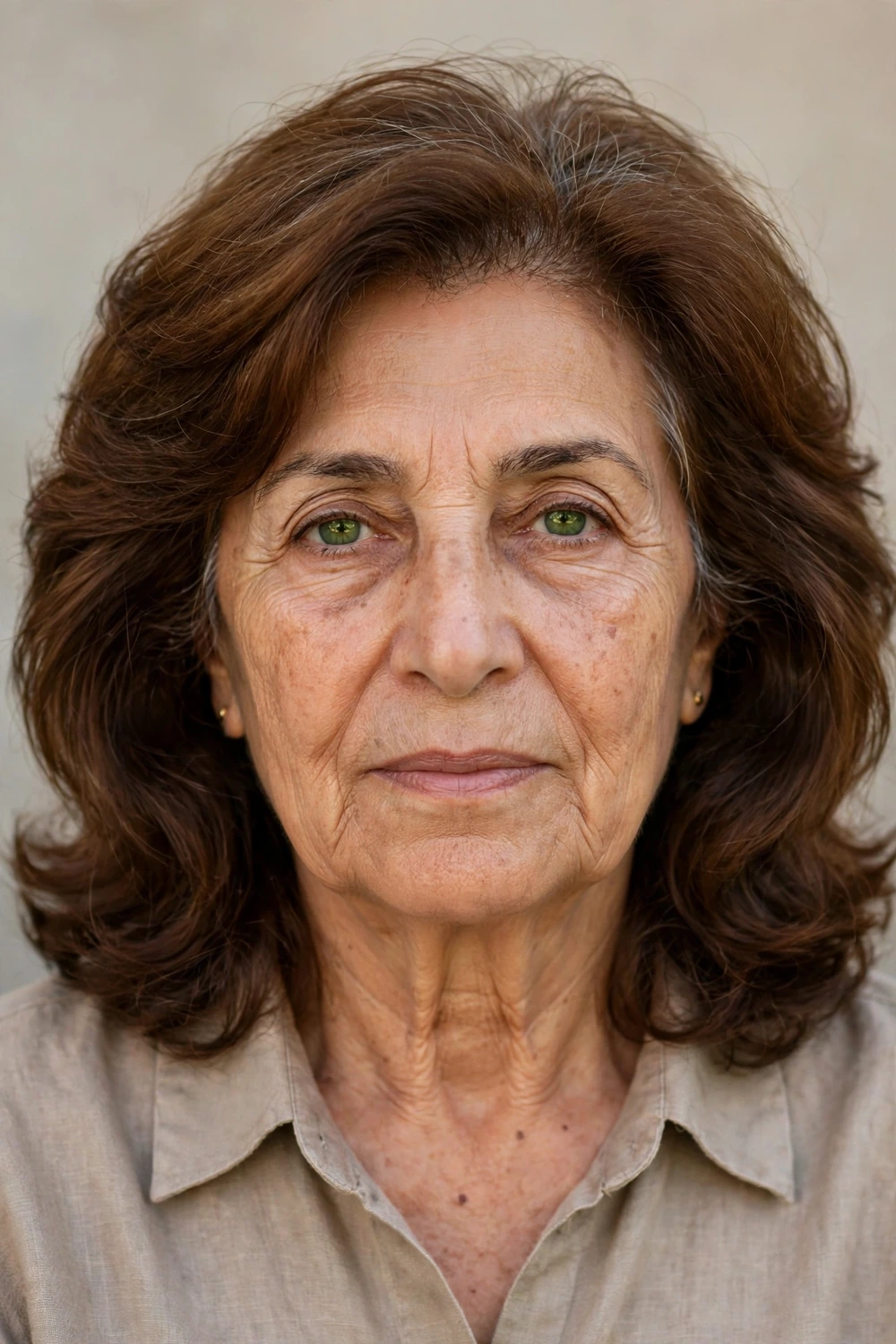
The easy-maintenance workhorse of this list. Soft layers through the mid-lengths cut bulk from thick hair while the shoulder length keeps every styling option open: wear it down, pull it half-up, or twist it into a low bun. Nothing about this cut demands attention, which is exactly its strength. It suits every face shape and every texture, and it grows out so gracefully that trims can stretch to 10 or 12 weeks. Women who change their mind about styling from day to day will appreciate the flexibility most.
Try this: Air-dry with a leave-in conditioner for a natural finish, or round-brush for polish. This is the cut to choose when you want options, not obligations.
31. Shoulder-Length Layered Cut with Balayage Highlights
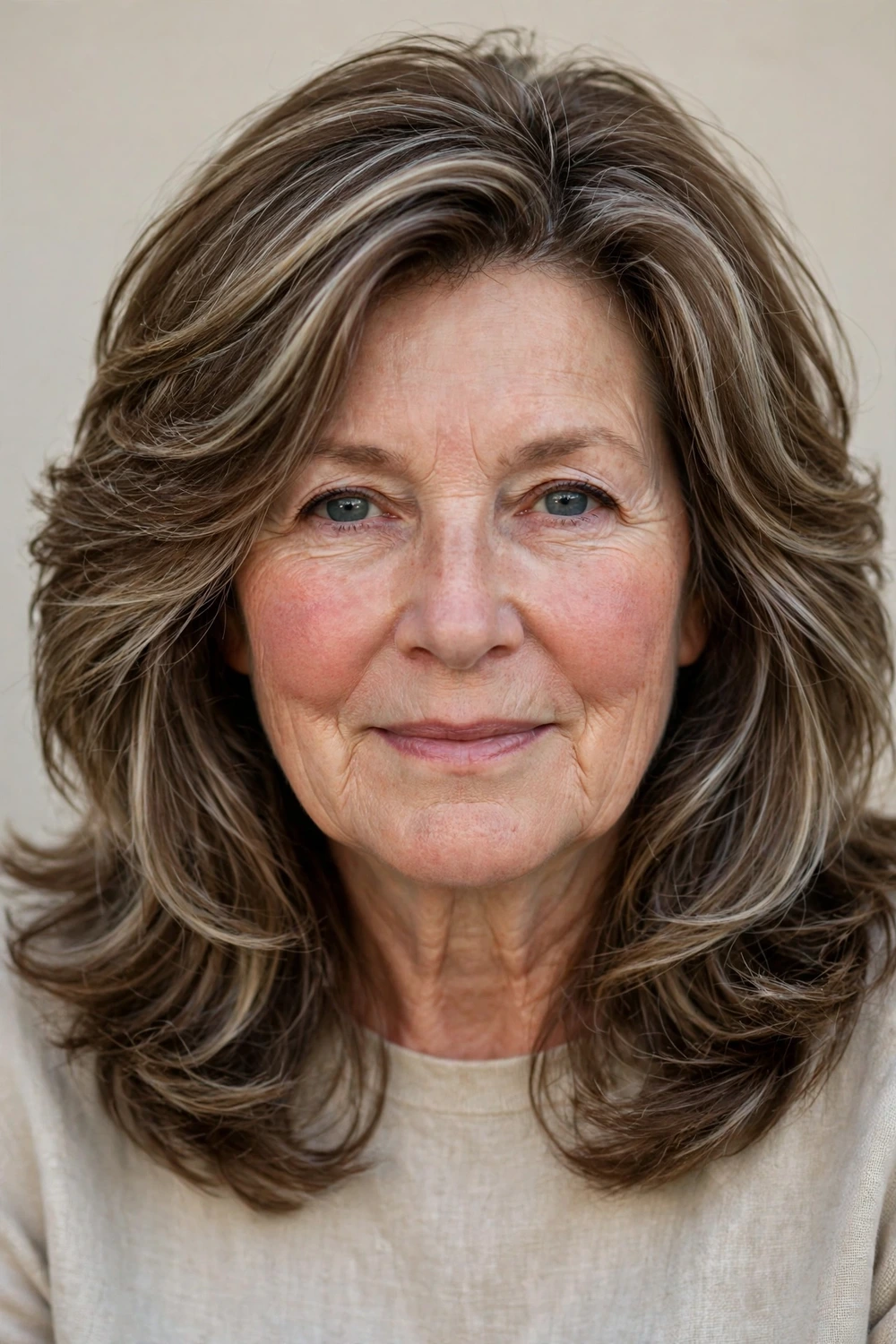
Color does half the work in this cut. Subtle layers remove the bulk from thick hair while balayage highlights add dimension that brightens the face and makes the layers visible. The hand-painted color grows out without a harsh root line, which means fewer salon visits and less maintenance than traditional foils. This combination suits women who want movement and light in their hair without committing to a full color schedule. It works on straight, wavy, and curly textures because the layers adapt to each one.
Try this: Use a color-safe shampoo and a weekly deep-conditioning mask to keep the balayage fresh. Refresh the color with a toner every 12 weeks.
32. Shoulder-Length Cut with Flipped/Flicked Ends (Curtain-Bang Option)
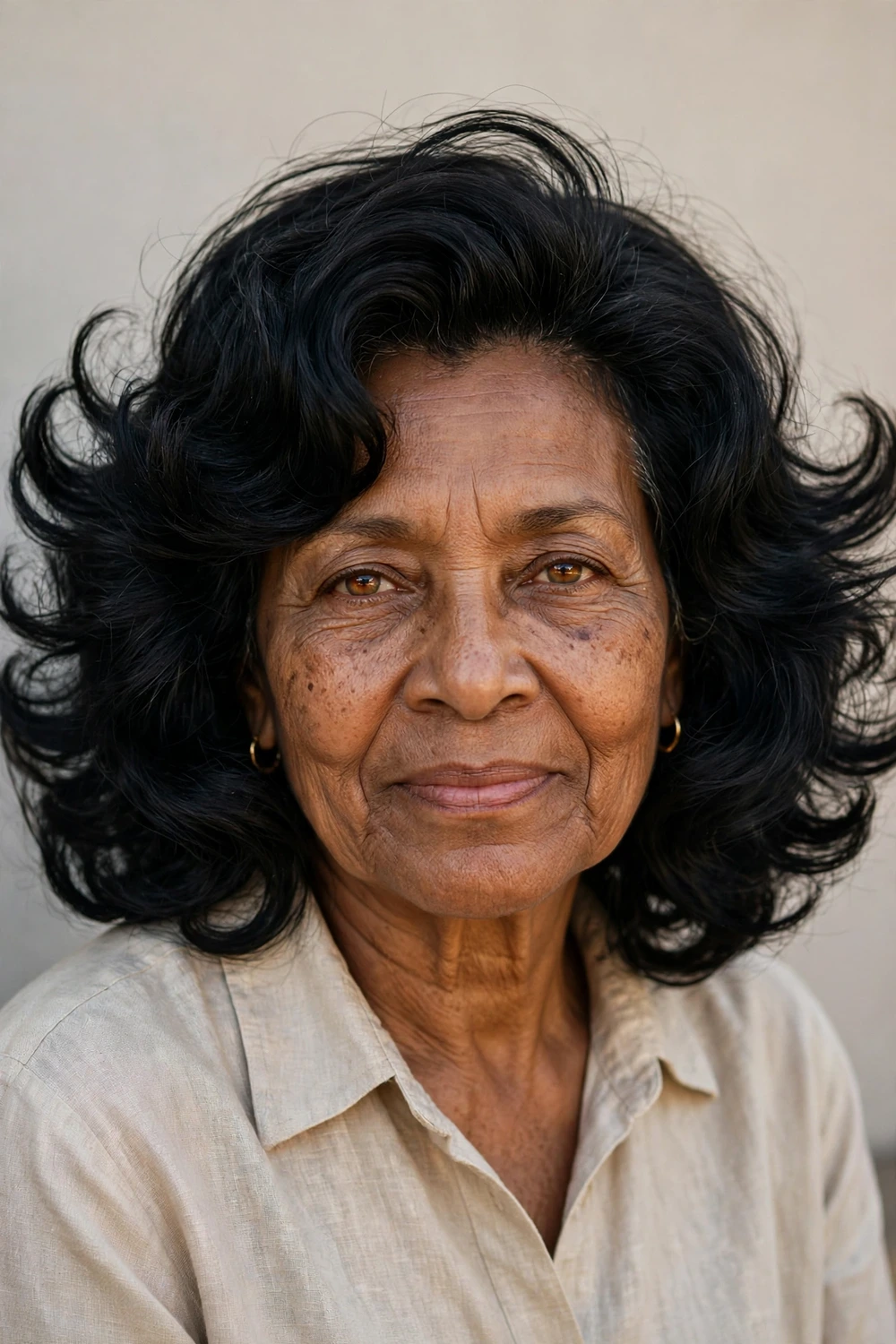
Flip the ends outward and thick hair gets playful in seconds. The retro flicked finish adds bounce and movement to a shoulder-length cut, and it works because the flipped ends break up the solid outline that makes thick hair look heavy. Add curtain bangs for a face-framing finish that blends into the flicked layers. This style suits women who like a little retro character in their hair and works best on straight to wavy textures that hold the flip. A large round brush and a blow-dryer are the only tools you need.
Try this: Blow-dry the ends outward with a large round brush, then set the flip with a cool shot. Curtain bangs pair well here if you want fringe without commitment.
33. Soft Waves on a Layered Shoulder-Length Cut
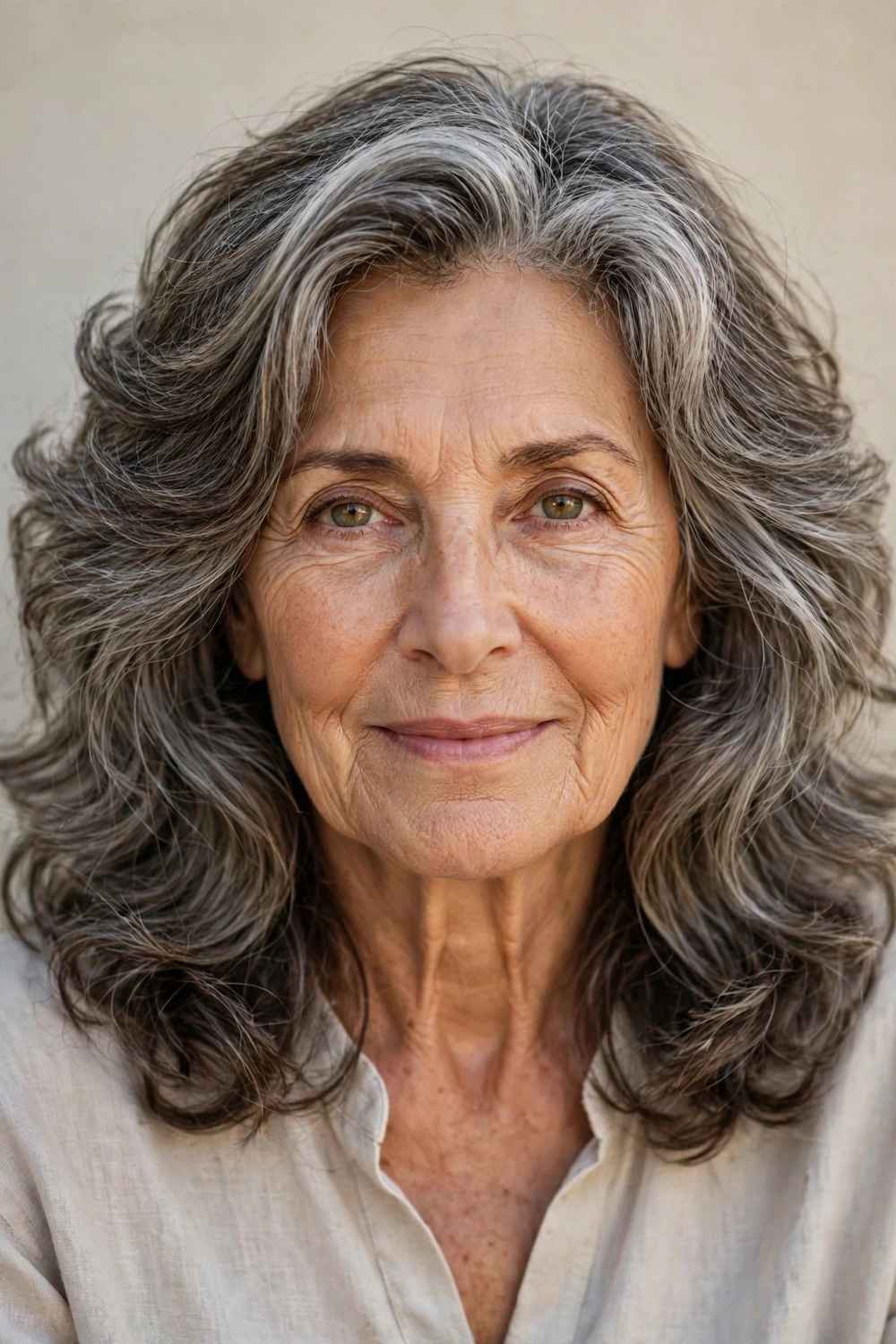
Heat-styled or natural, waves over layers give thick hair the relaxed elegance it rarely gets credit for. The layers underneath remove the bulk that would otherwise make waves look heavy, so each wave moves independently. This style works for daytime polish and evening events with no change except maybe a stronger hold product. It suits wavy and curly natural textures best, since the cut enhances what the hair already does, but straight hair takes the waves well with a curling wand. The finish always looks soft, never stiff.
Try this: Wrap sections around a 1.25-inch curling iron, leaving the ends out for a modern wave. Always apply a heat protectant before heat styling.
34. Voluminous Layered Curls at the Shoulder (Dry-Cut)
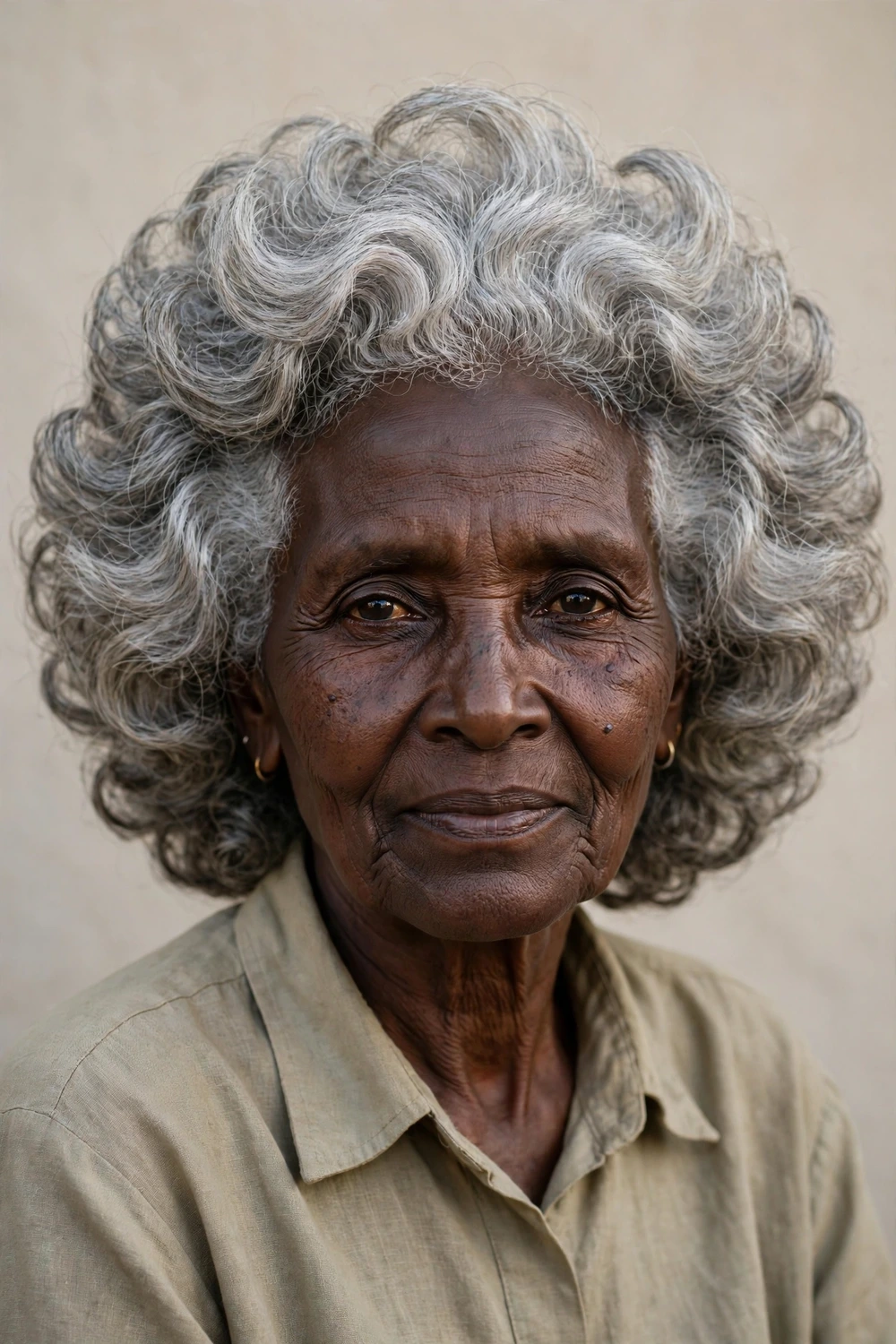
Dry cutting, curl by curl, is the only way to build this much volume without the dreaded triangle. The stylist shapes each curl in its dry, natural state, stacking the layers upward so the fullness sits at the crown and sides instead of pooling at the bottom. Thick curly hair gets to be as big as it wants while keeping a deliberate, rounded silhouette. This cut suits women who love their volume and want it shaped rather than suppressed. Diffusing on low heat keeps the curls defined and frizz under control.
Try this: Diffuse upside down for maximum root lift, then scrunch out any crunch with a drop of hair oil. Get the shape refined every 10 to 12 weeks.
35. Layered Mid-Length Cut with Swept-Back Crown
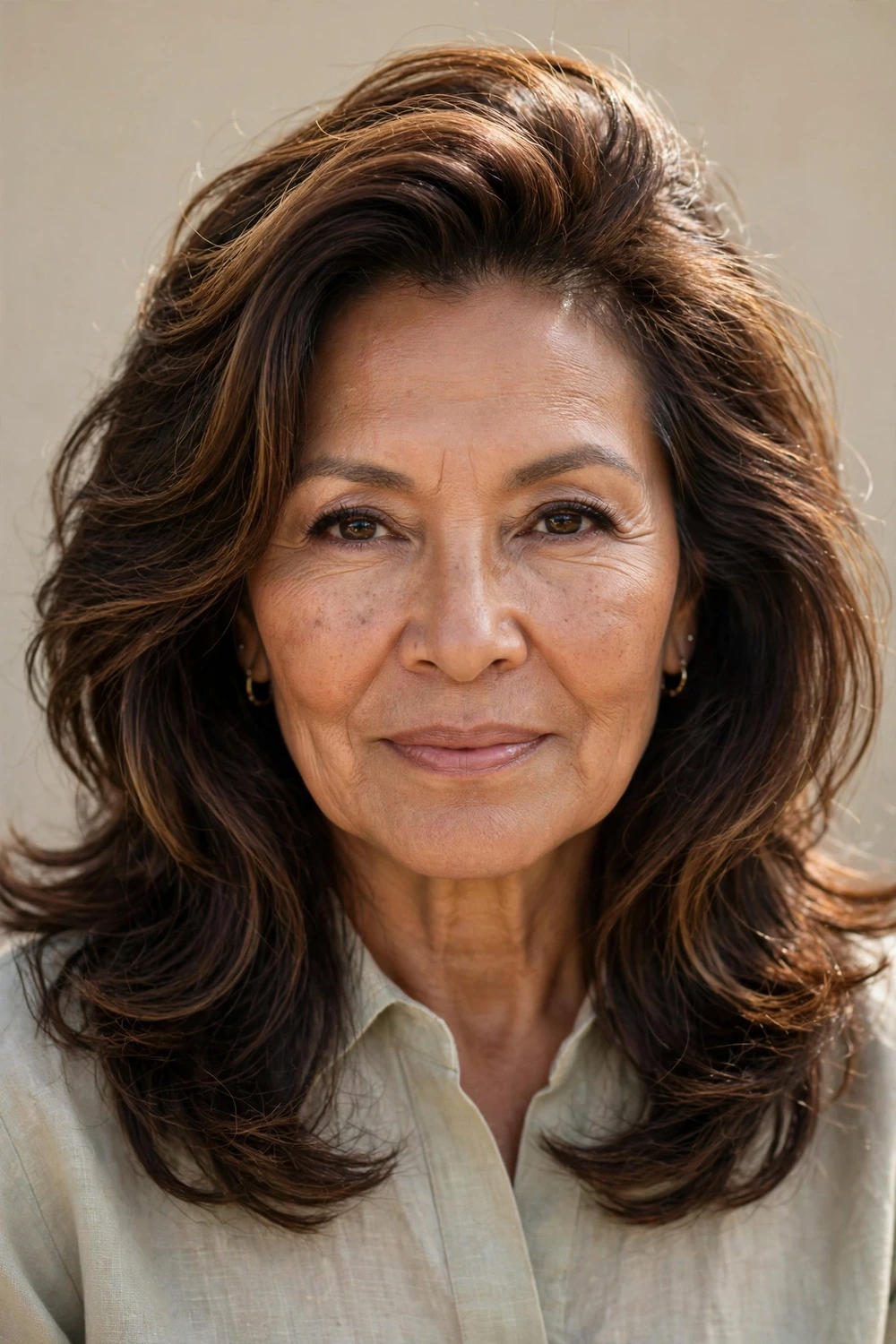
Sweep the crown back and the face looks longer right away. This mid-length cut uses layers to thin out thick density through the sides while the swept-back crown adds height that elongates round and square faces. The style works for daytime polish and evening glamour with the same cut, since the swept crown reads as deliberate either way. It suits straight and wavy textures best and gives women with strong features a flattering, lifted frame. A little root-lifting product makes the sweep hold for hours.
Try this: Apply root-lifting mousse to the damp crown, then blow-dry backward with a round brush. Pin the sweep for 10 minutes while it cools to set the lift.
36. Butterfly Haircut with Curtain Bangs
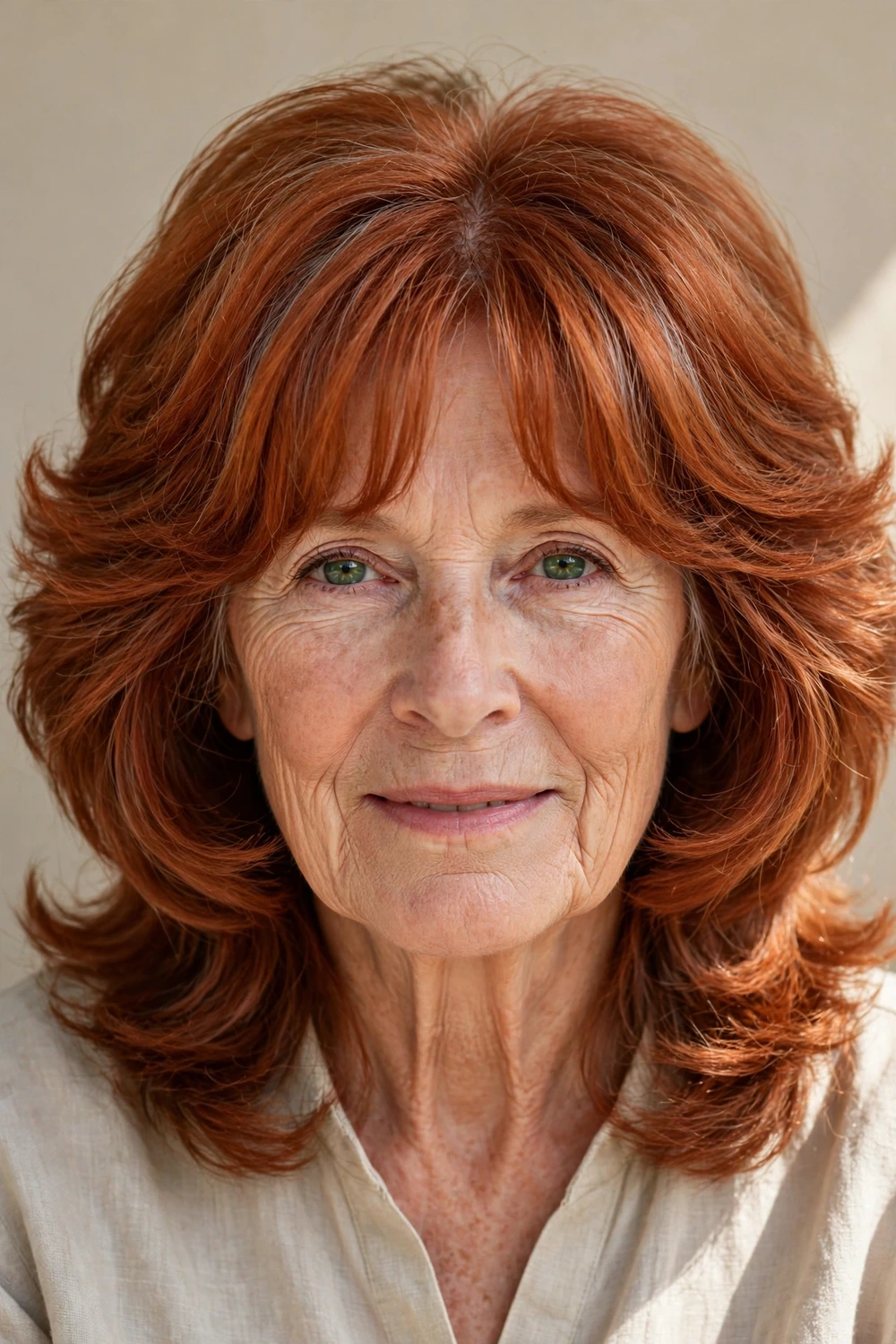
Short at the front, long at the back. The butterfly cut layers the face-framing pieces short, around the chin and cheekbones, while the back layers stay long, so the style reads as short from the front and long from behind. Thick hair benefits because the short front layers remove bulk around the face while the long back keeps the length you want. Curtain bangs complete the frame and grow out softly. This cut suits women who can’t decide between short and long, since it genuinely gives both.
Try this: Blow-dry the front layers with a round brush, curving them away from the face. The back can air-dry naturally for contrast.
37. Long Layers with Face-Framing
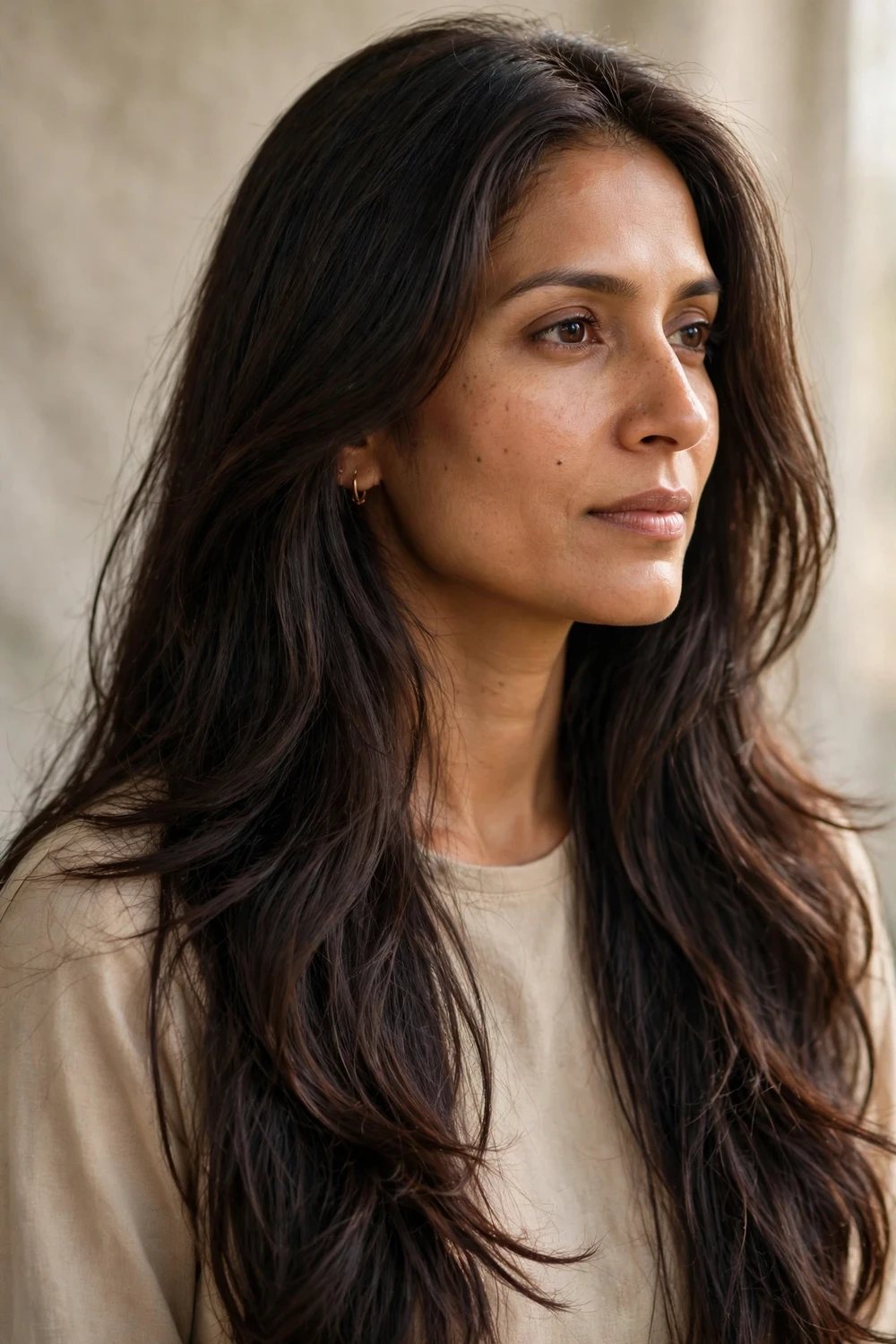
Long hair after 60 has no rules, only requirements: remove the weight and keep the shine. Long layers take bulk out through the lengths so thick hair moves instead of hanging as a solid curtain, while face-framing pieces starting at the chin or cheekbone soften the jawline and draw light to the face. This cut keeps every bit of length while solving the heaviness that makes long thick hair hard to wear. It suits straight, wavy, and curly textures and women who simply aren’t ready to cut it short.
Try this: Ask for the face-framing pieces to start no higher than the cheekbone for the most flattering frame. A shine spray on the lengths keeps long hair looking healthy.
38. V-Cut for Thick Hair
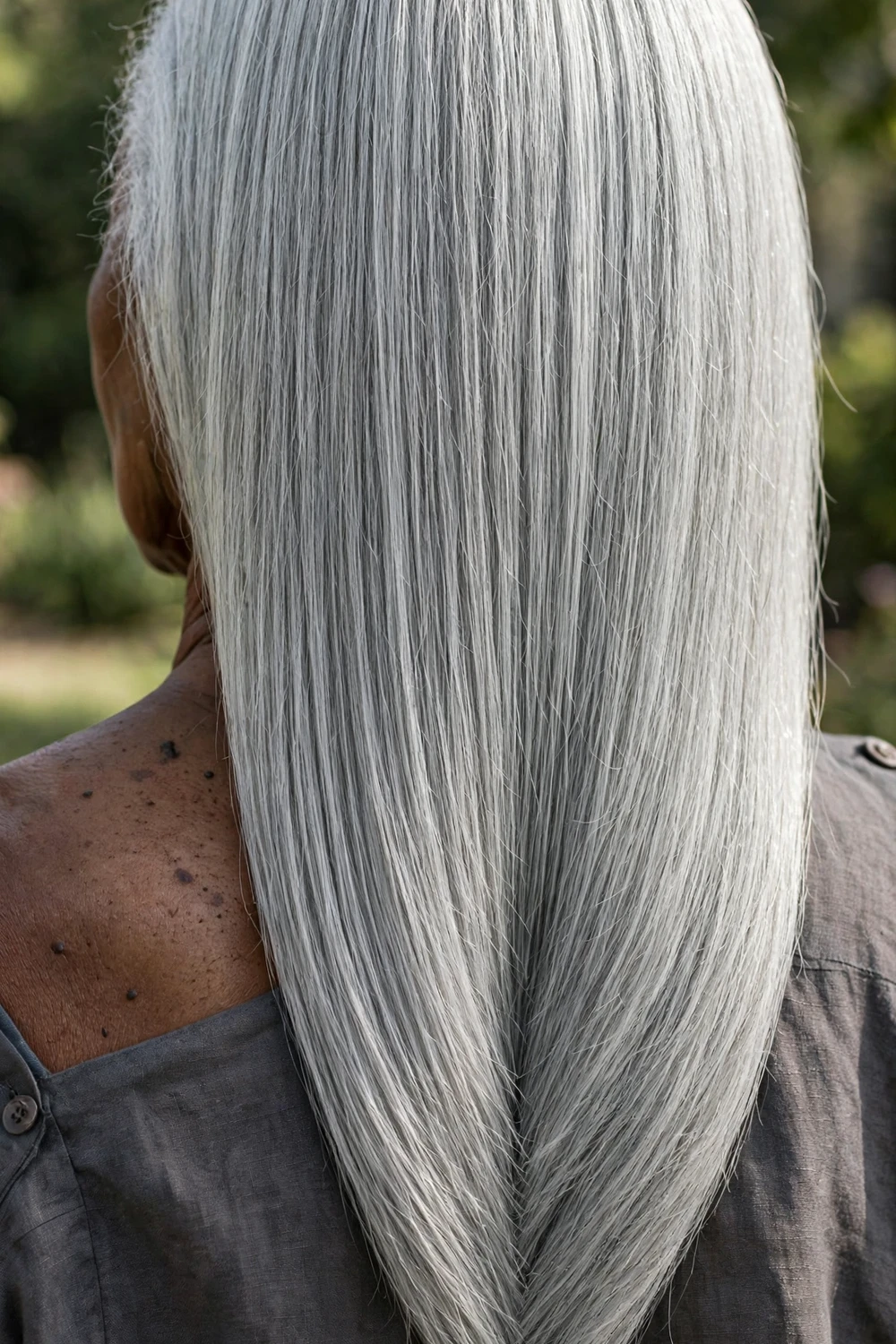
The V-cut takes bulk off exactly where thick hair carries too much of it: the ends. The back hemline comes to a soft point, which removes weight from the bottom of the cut while keeping the length you see from the front. Thick hair that used to end in a heavy, blunt shelf now tapers into a shape with movement. This cut suits women who want to keep serious length but need the ends to behave. It works on straight and wavy textures, and the V shape shows best from the back, so it’s a cut with a reveal.
Try this: Blow-dry the back sections smooth to show off the V shape. Trim the point every 10 weeks to keep it defined rather than straggly.
39. Long Curly Layers (Dry-Cut)
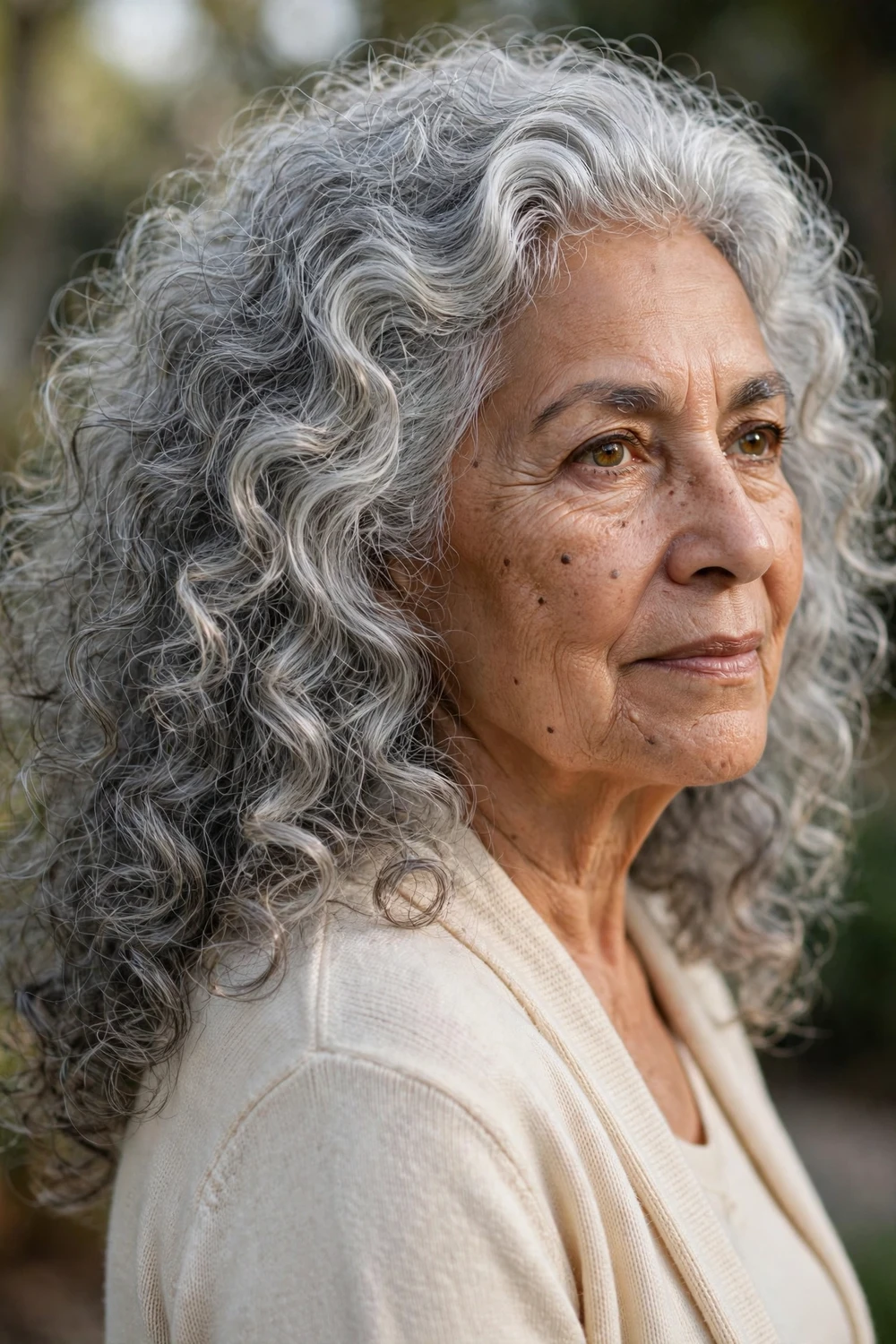
Long curls plus thick hair usually add up to one thing: a triangle. Dry-cut layers fix that by shaping each curl where it actually lives, removing bulk from the bottom and building the shape upward so the silhouette stays rounded. The silver-curly combination works especially well here, since gray curls catch light on every curve. This cut suits women committed to their natural texture and their length. It needs a stylist who specializes in curly dry cutting, which is worth seeking out rather than settling for a wet cut.
Try this: Scrunch curl cream into very wet curls, then diffuse on low heat. Refresh second-day curls with a water and leave-in spray mix.
40. Long Layered Cut with Loose Curls
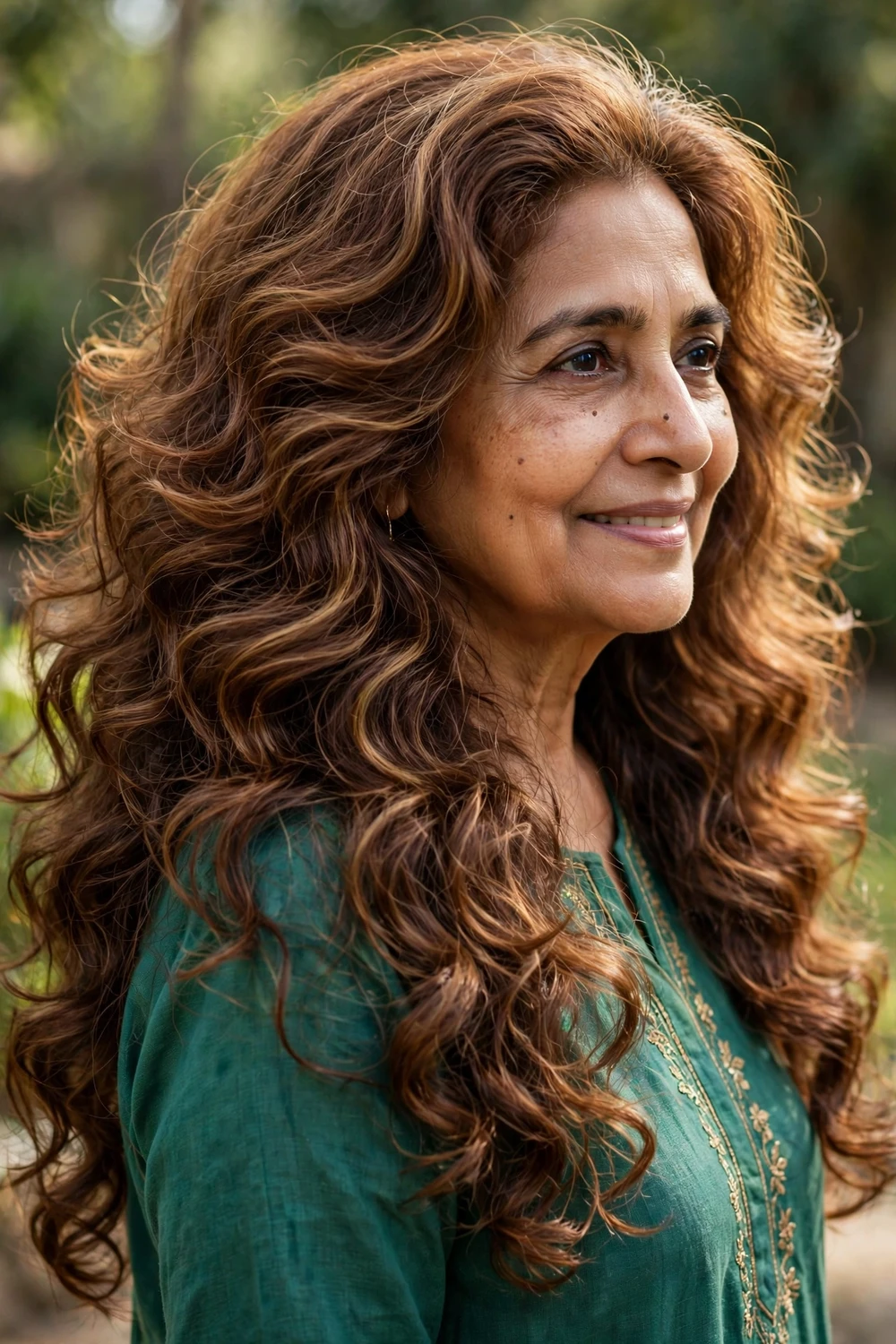
Loose curls need structure underneath them, and long layers provide it. The layers remove enough bulk that each curl can form and move on its own instead of getting lost in the mass, while the length shows off the fullness that thick hair does best. This combination adds softness and movement that a straight long cut can’t offer, and it suits women who want their length to look styled rather than simply grown. It works on wavy and curly natural textures, or on straight hair with a curling wand and patience.
Try this: Curl 1.5-inch sections away from the face, then break them up with your fingers for looseness. Always apply a heat protectant before curling.
41. Sleek Straight Long Hair with Feathered Ends and Blended Highlights
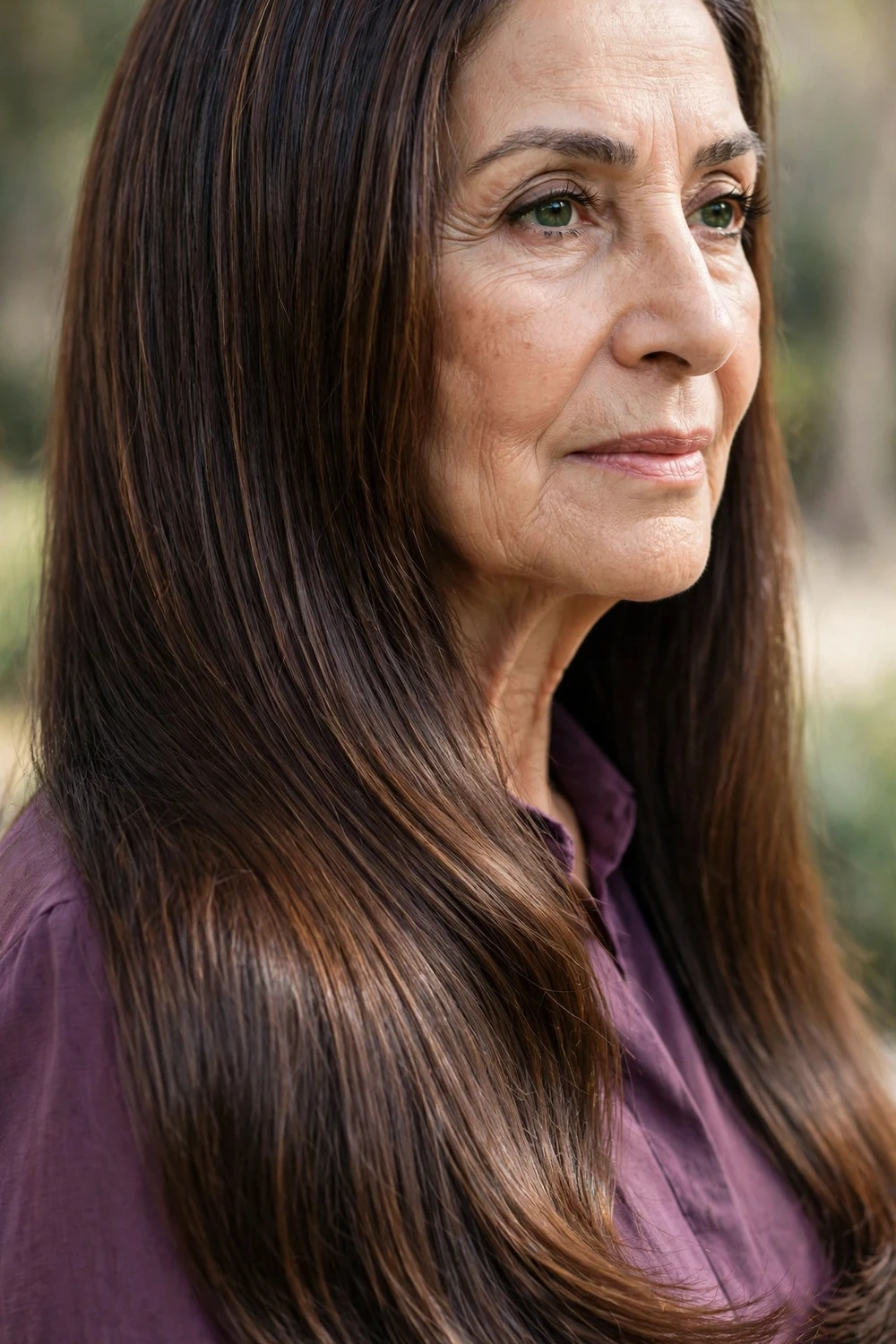
Glassy straight hair on thick density needs two things: feathered ends and shine. The feathered ends thin out the bottom of the cut so it doesn’t end in a heavy block, while blended highlights add softness and light that keep long straight hair from looking severe. The result is polished without being stark, and it suits women who love the drama of long hair and don’t mind the blow-drying time. Straight textures do best here, though wavy hair can be smoothed into it with a flat iron and the right products.
Try this: Blow-dry with a paddle brush in sections, then flat-iron the lengths once. Always apply a heat protectant before any hot tool, and finish with shine serum.
42. Long Hair with Blunt Bangs
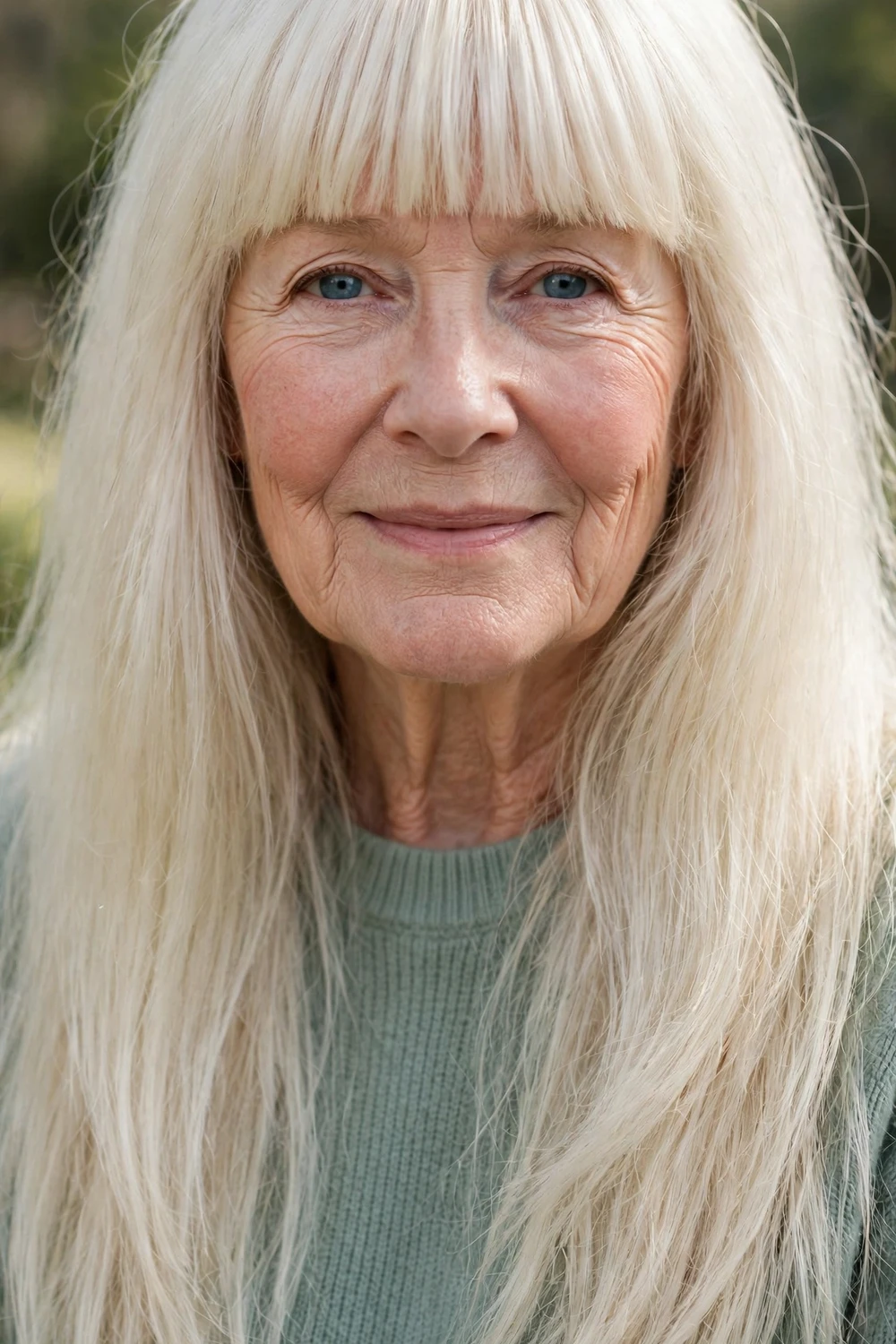
A full brow-grazing fringe changes your whole face without touching your length. The blunt bangs add structure and youth to the front while the long hair behind keeps the length and fullness you love. On thick hair, the fringe must be point-cut at the ends to avoid a heavy shelf, and it needs trims every 3 to 4 weeks to stay at brow level. This combination suits oval and long face shapes best, since the fringe shortens the forehead visually. It is a commitment, but the payoff is a striking, deliberate look.
Try this: Blow-dry bangs straight down immediately after washing, before they set in a part. Never let a stylist cut this fringe straight across on thick hair; point-cutting is required.
43. Classic French Twist with Voluminous Crown or Loose Tendrils
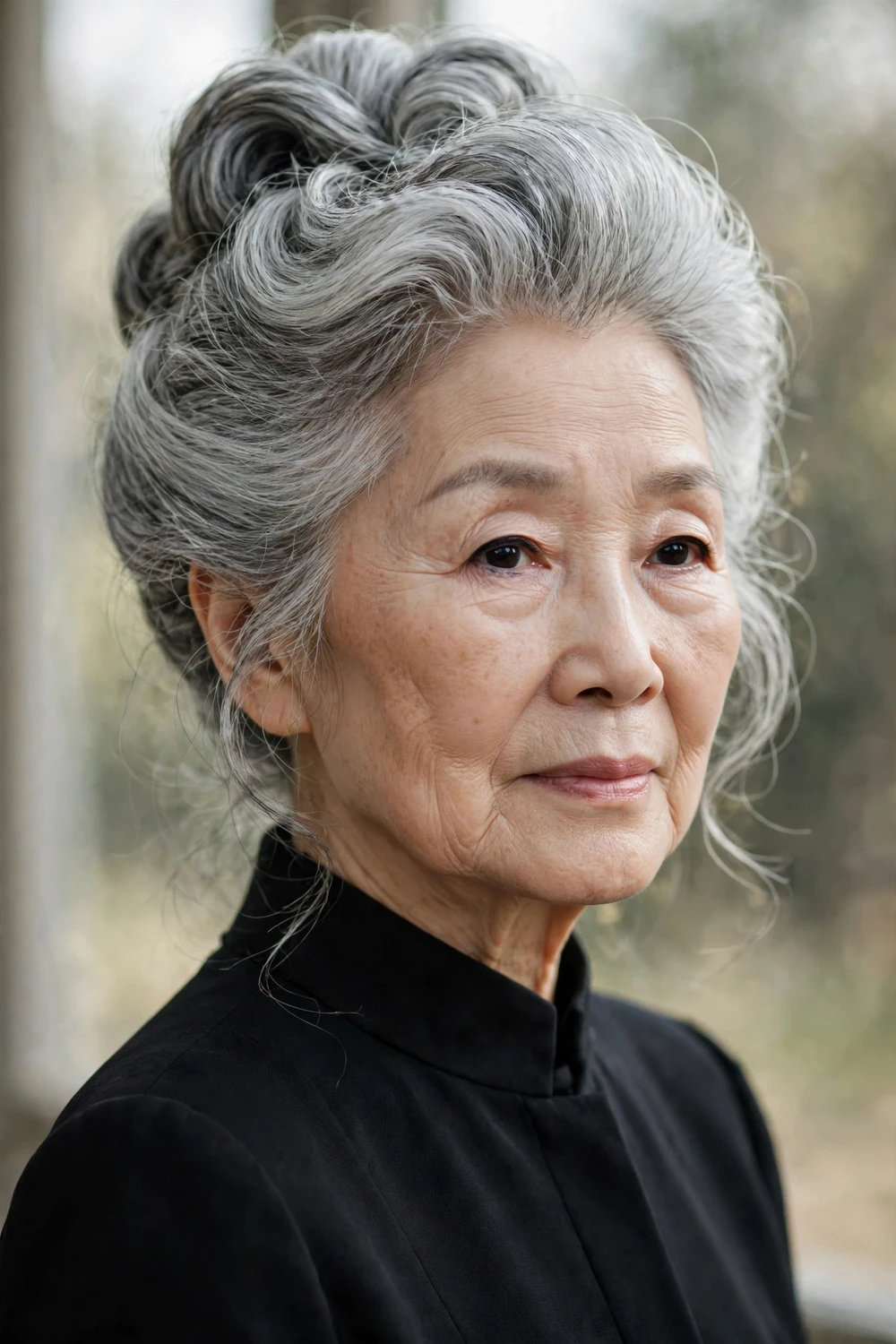
The French twist has outlasted every trend for a reason: it contains thick hair completely while looking elegant from every angle. Teasing or backcombing the crown before rolling adds the volume that modernizes the classic shape, and loose tendrils pulled out around the face soften it for less formal occasions. Thick hair actually holds this style better than fine hair, since the density gives the twist something to grip. It suits weddings, dinners, and any event where you want your hair up and out of the way.
Try this: Work a texturizing powder into the crown before twisting for grip that lasts all evening. Secure with U-shaped pins rather than bobby pins for thick hair.
44. Elegant Gray Updo with Soft Curls
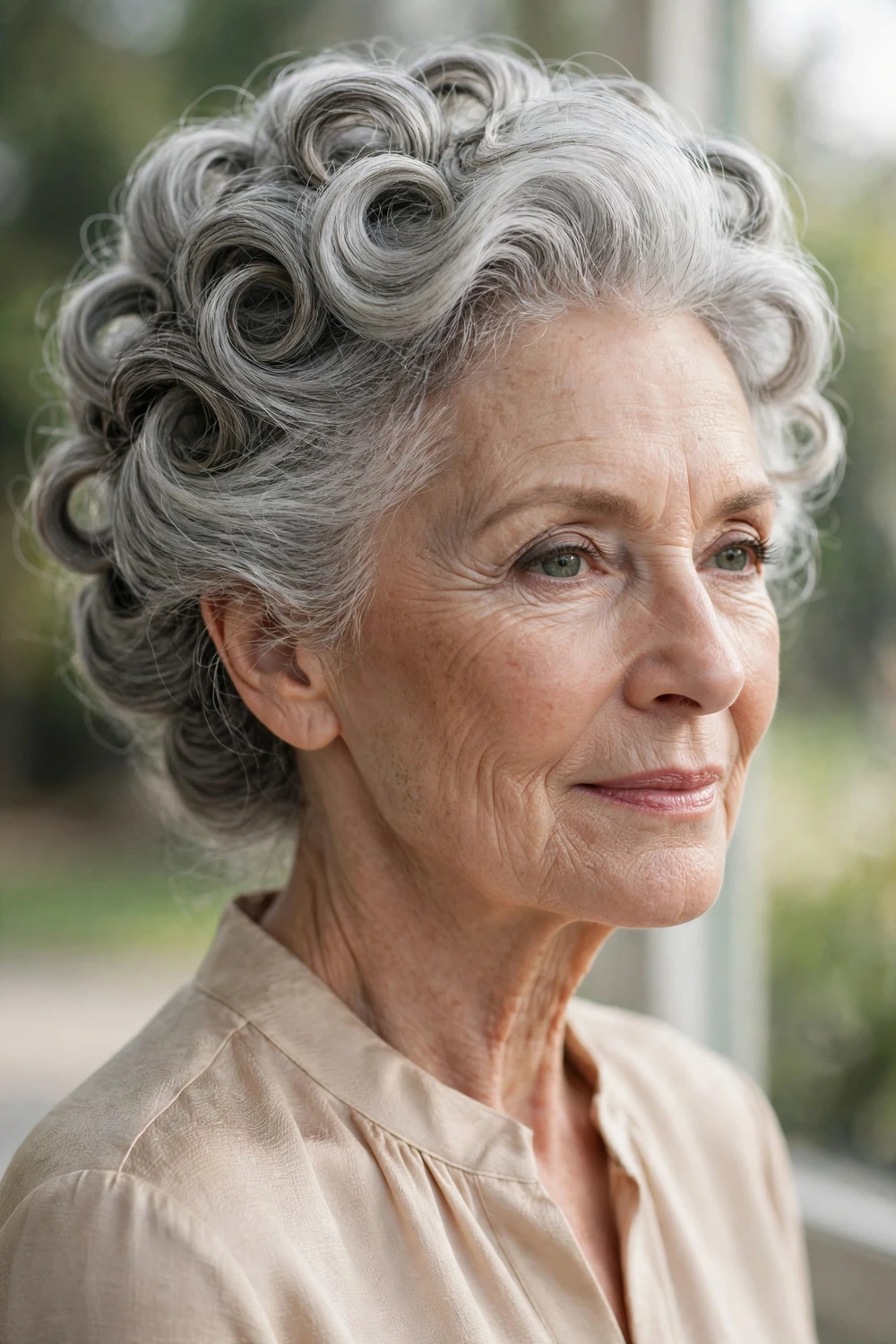
Pinned curls keep thick hair under control while looking formal at the same time. Each section gets curled, then pinned loosely so the updo has softness and dimension instead of a scraped-back severity. Gray and silver tones shine in this style because the curls catch light from multiple directions. It works for formal events or for everyday elegance when you want to feel put-together. The pinning distributes the weight of thick hair across the head, so the style stays comfortable for hours instead of pulling.
Try this: Curl sections with a 1-inch iron, pin each curl loosely, then gently pull a few pieces free for softness. Always apply a heat protectant before curling.
45. Everyday Low Chignon/Bun
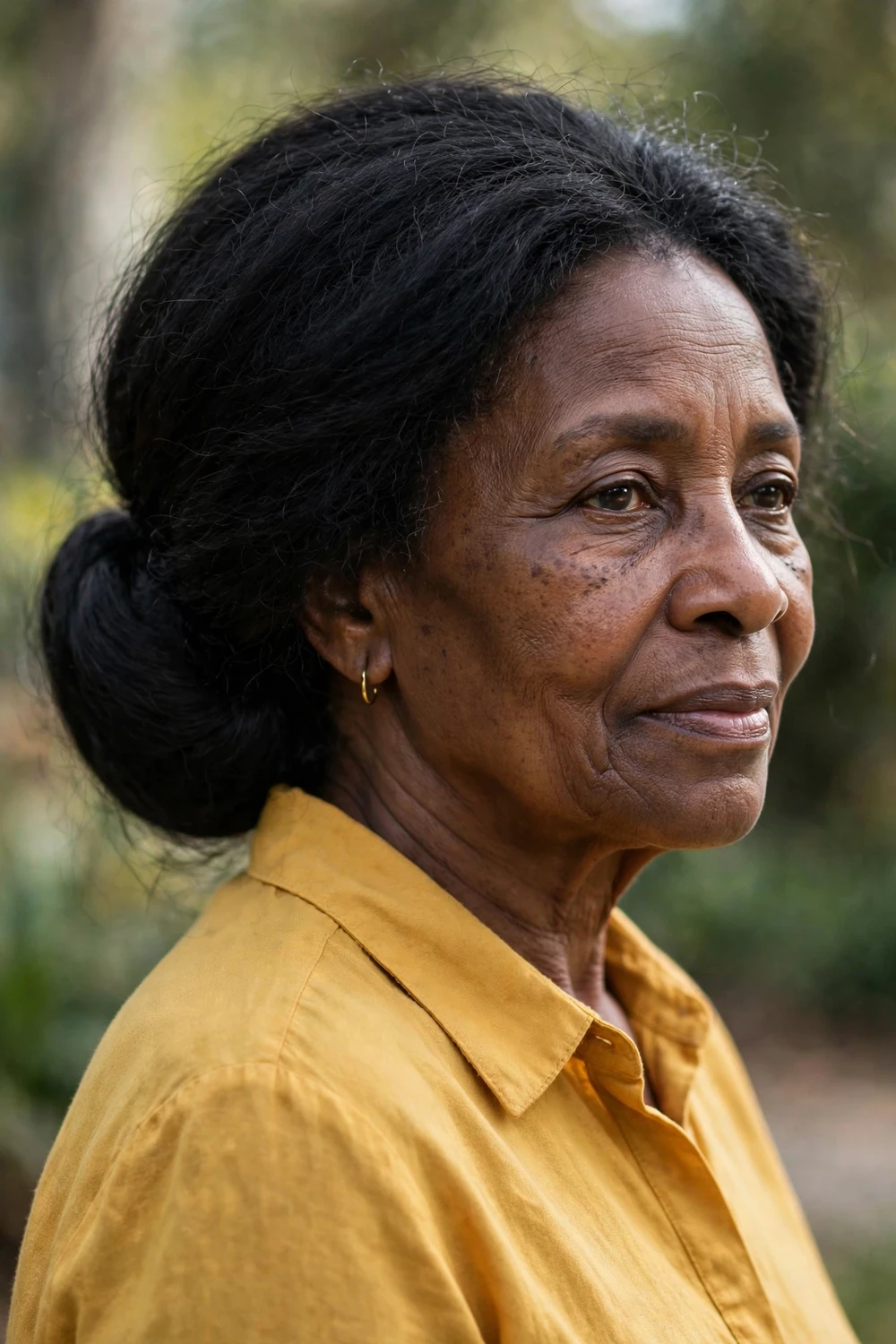
When thick hair needs to disappear for the day, the low chignon does the job. Gathered at the nape and twisted into a simple bun, it contains all that density in one neat shape that stays put through errands, work, and everything between. Thick hair gives the chignon a fullness that fine hair needs padding to fake. This is the daily-wear solution for women who want their hair handled with zero fuss. It takes about two minutes once you have the motion down, and it looks intentional rather than rushed.
Try this: Twist damp or dry hair into the bun and secure with a large claw clip or spin pins. A light mist of hairspray tames flyaways around the hairline.
46. Half-Up, Half-Down Twist
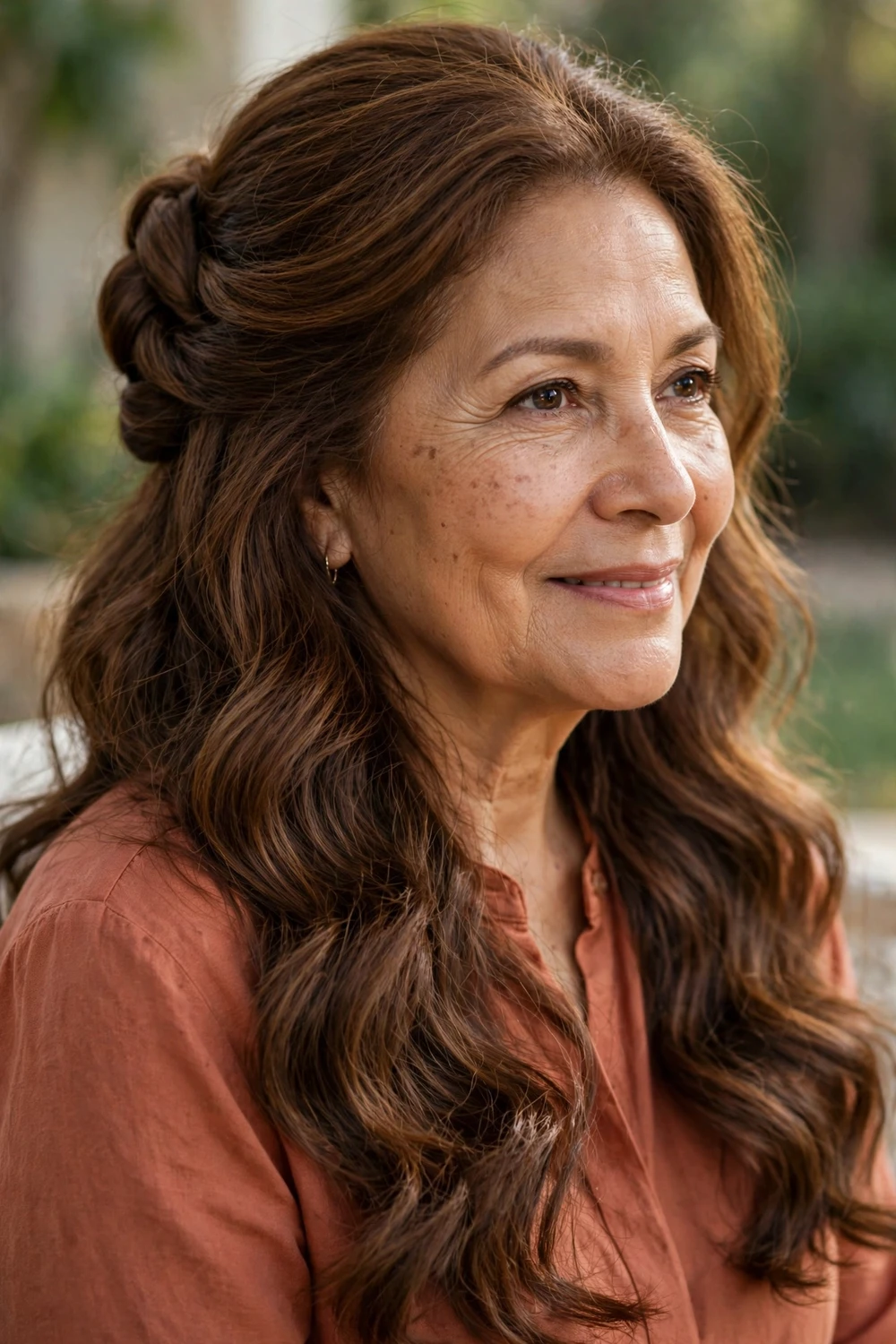
Hair off your face, length on display. The half-up twist splits the difference by pulling the top section back and securing it while the rest falls free. On thick hair, this removes the heavy curtain from around the face, which opens up your features and keeps hair out of your eyes without sacrificing any length. The twist itself adds a detail that lifts the style past a basic ponytail. It suits casual days and dressier occasions alike, and it takes about three minutes with a mirror.
Try this: Twist each top section back and cross them at the crown, securing with two crossed bobby pins. Tease the crown lightly first for extra lift.
47. Loose Side Braid
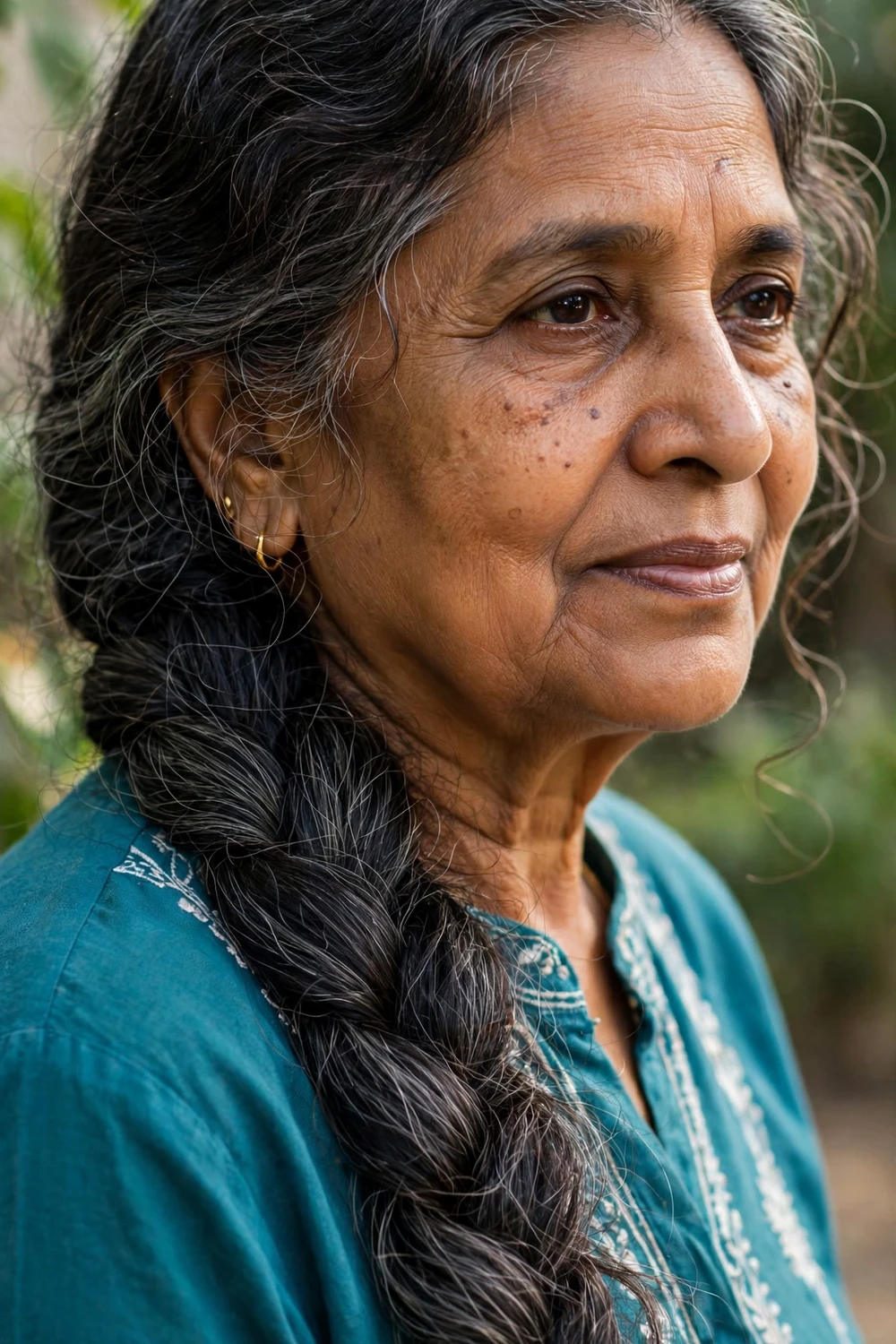
A loose side braid contains a remarkable amount of thickness with zero heat. Swept over one shoulder and braided loosely, it keeps dense hair in one manageable shape while looking soft and relaxed rather than severe. The looseness is the key detail: pulling the braid slightly apart after securing it, a technique called pancaking, makes thick hair look full and intentional instead of ropey. This style suits casual days, travel, and warm weather when you want your hair off your neck. It also protects the ends from friction and breakage.
Try this: Braid loosely to one side, secure with a snag-free elastic, then gently pull the braid apart for fullness. A little texturizing spray beforehand gives the braid grip.
48. Low Wrapped Ponytail
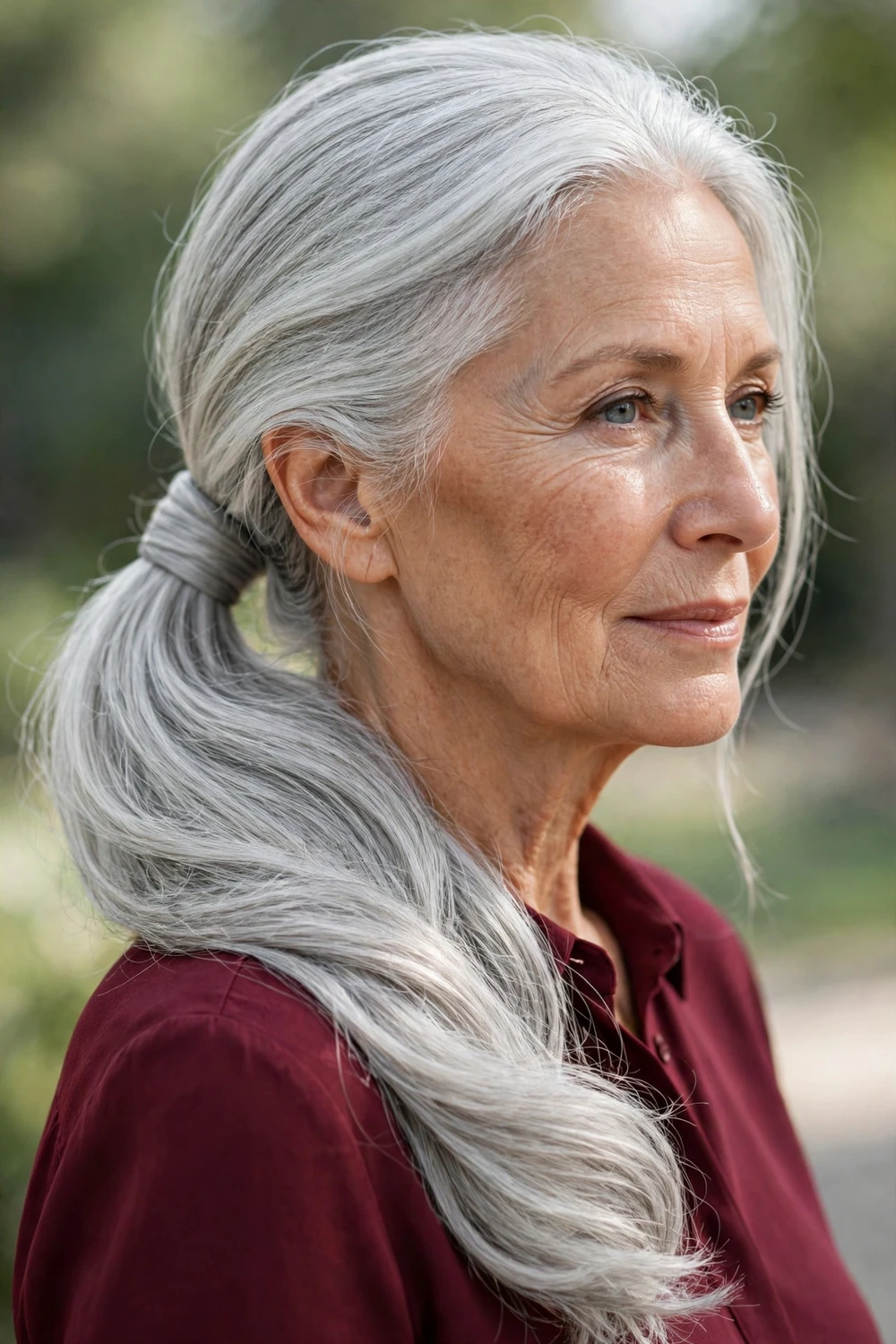
Wrap a strand of hair over the elastic and a plain ponytail looks deliberate. The low placement at the nape keeps thick hair from pulling at the crown, which matters for comfort on long days, while the wrapped section hides the elastic for a polished finish. Thick hair gives this ponytail a fullness that reads as healthy and substantial. It suits workdays, walks, and any occasion where you want your hair secured but still styled. The whole thing takes under two minutes and needs no hot tools at all.
Try this: Secure the pony with an elastic, wrap a half-inch strand around it, and pin underneath. Smooth the top with a boar-bristle brush for a sleek finish.
49. Hidden Undercut Panel for Long Thick Hair
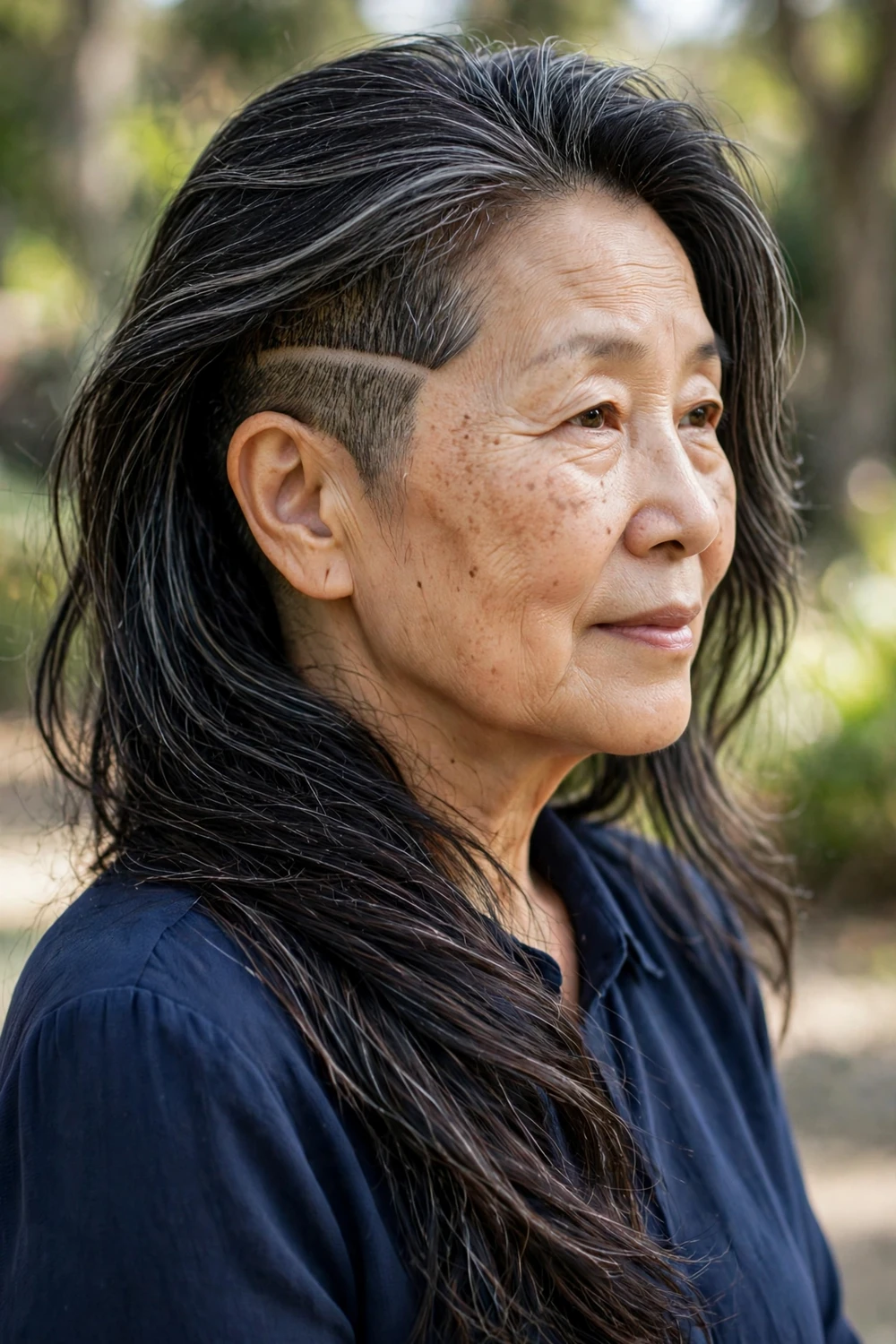
The undercut hides underneath, the bulk disappears, and nobody sees how you did it. A section at the nape gets clipped short beneath the long top layers, removing serious weight from exactly where thick hair sits heaviest. From the front and sides, the hair looks completely normal, full long layers with all their movement. This is the technique for women who refuse to cut their length but need real bulk relief. The undercut needs clipping every 4 to 6 weeks, but the top layers hide the regrowth between visits.
Try this: Ask your stylist for a nape panel about two inches high, hidden under the bottom layer. Mention it at every appointment so the panel stays maintained.
50. Heatless/Air-Dry Styling Routine for Thick Hair
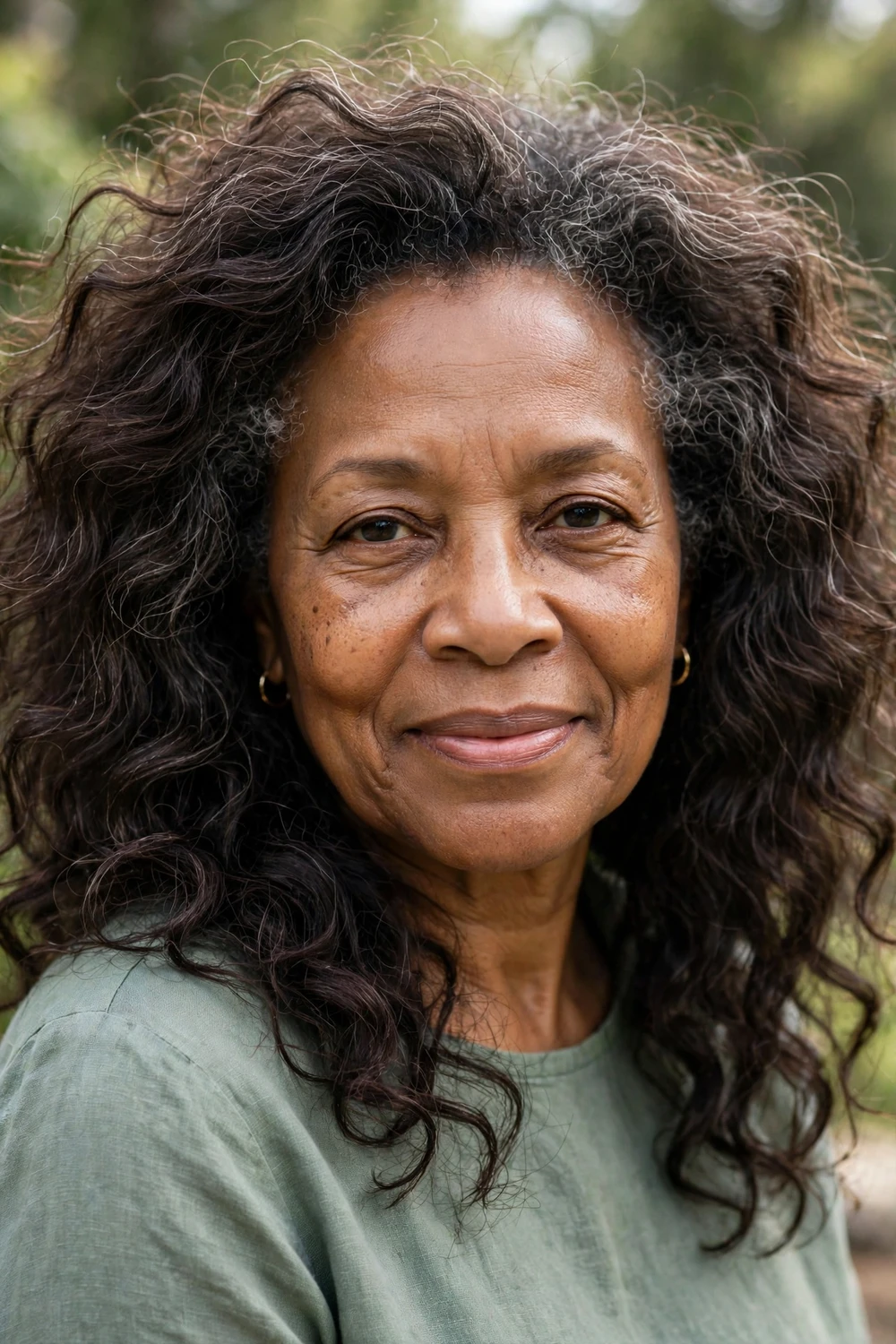
Some mornings you skip the tools entirely, and this routine makes that work. After washing, apply curl cream or wave-enhancing cream to damp hair, scrunch upward to encourage your natural texture, and let it air-dry or diffuse on low heat. Thick hair holds texture well, so the waves or curls last for days with minimal refreshing. This method protects hair from heat damage, which matters more after 60 when strands are often drier and more fragile. It suits wavy, curly, and coily textures best, though straight hair can braid-damp for waves.
Try this: Scrunch product into soaking damp hair, then don’t touch it until fully dry. Refresh day-two texture with a light water mist and a tiny bit of cream.
51. Face-Framing Layers to Soften Jawline and Jowls
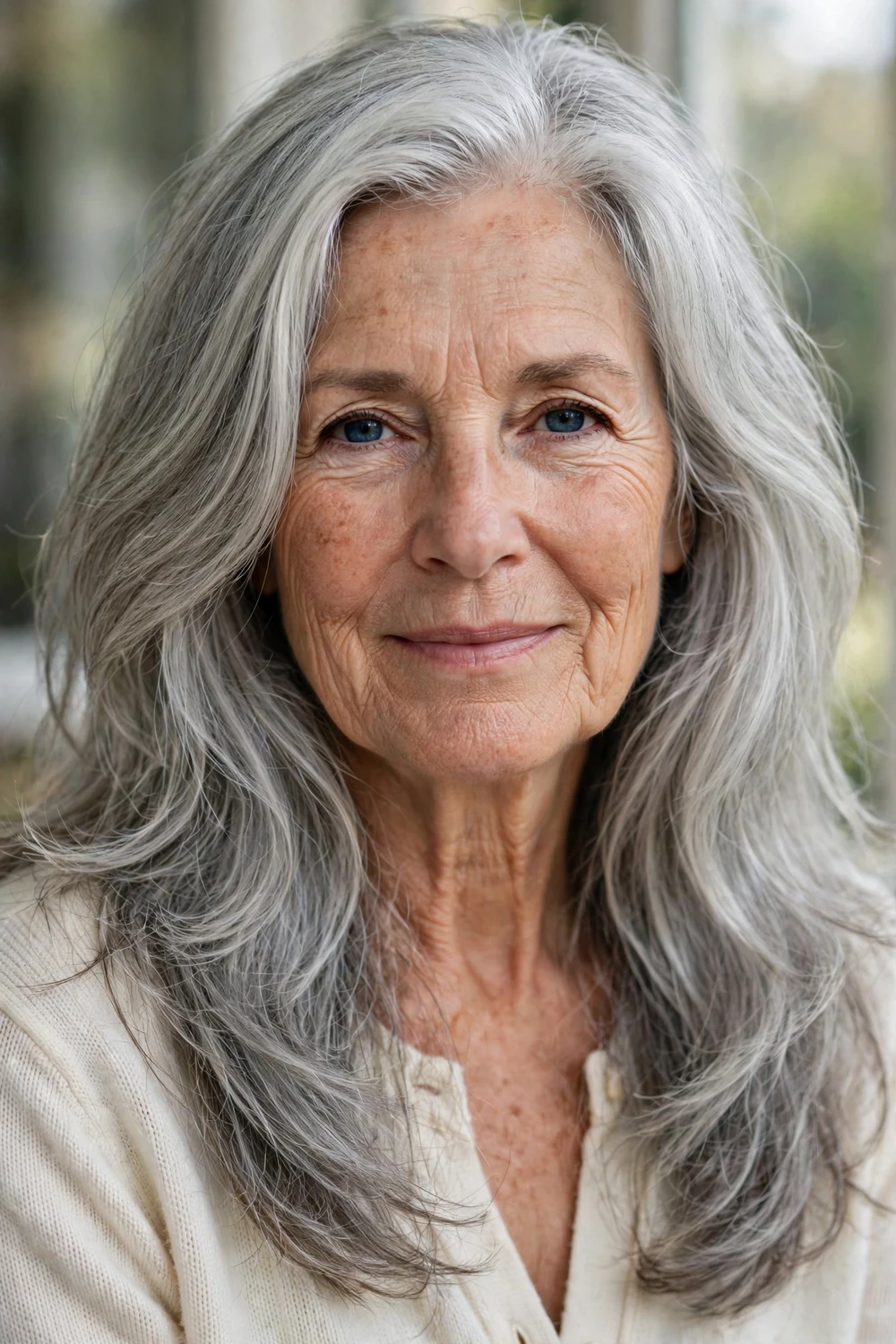
Face-framing layers are an anti-aging tool that works harder than most products. Cut to start at the cheekbone or chin and curve inward, these pieces soften the jawline and jowls by breaking up the hard outline that one-length hair creates against the face. On thick hair, the framing layers also remove bulk from around the face, which keeps the front light while the back keeps its fullness. This technique layers onto almost any cut on this list, from bobs to long hair, and it suits every face shape because the starting point adjusts to each one.
Try this: Ask for the shortest framing piece to hit at the cheekbone, curving under. Blow-dry these pieces forward and under with a round brush for the softening effect.
Hairstyles for Thick Hair Over 60 Comparison at a Glance
| Style | Best Occasion | Difficulty | Hold Time |
|---|---|---|---|
| Wash-and-Wear Layered Crop | Everyday | Easy | Wash to wash |
| Feathered Pixie with Tapered Nape | Everyday | Easy | Wash to wash |
| Curly Pixie with Defined Ringlets | Everyday | Medium | 2 to 3 days |
| Choppy Pixie with Wispy Bangs | Everyday | Easy | Wash to wash |
| Spiky/Tousled Pixie with Long Crown | Evenings out | Easy | All day |
| Tapered Pixie with Long Side-Swept Bangs | Work | Easy | Wash to wash |
| Textured Silver Pixie with Undercut | Evenings out | Easy | Wash to wash |
| Salt-and-Pepper Layered Pixie | Everyday | Easy | Wash to wash |
| Stacked Bob with Angled Layers | Work | Medium | Wash to wash |
| Gray Wedge Cut | Work | Easy | Wash to wash |
| Silver Pageboy | Special occasions | Medium | All day |
| Pixie Bob (Bixie) with Tapered Back | Everyday | Easy | Wash to wash |
| Sleek Chin-Length Blunt Bob with Side Part | Work | Medium | All day |
| Polished Chin-Length Bob with Curved Ends | Special occasions | Medium | All day |
| Choppy Textured Bob | Evenings out | Easy | Wash to wash |
| Voluminous Bob with Side-Swept Bangs | Everyday | Easy | Wash to wash |
| Layered Bob with Soft Waves and Deep Side Part | Evenings out | Medium | All day |
| Glasses-Friendly Bob with Fringe | Everyday | Easy | Wash to wash |
| Short Shag with Choppy Layers and Wispy Bangs | Everyday | Easy | 2 to 3 days |
| Feathered Shag with Face-Framing Layers | Work | Easy | Wash to wash |
| Curly Shag with Bangs | Everyday | Medium | 2 to 3 days |
| Layered Shag with Curtain Bangs | Everyday | Easy | Wash to wash |
| Short Wolf Cut | Evenings out | Easy | 2 to 3 days |
| Silver Blunt Lob | Work | Easy | Wash to wash |
| Asymmetrical Lob with Blunt Ends | Evenings out | Medium | All day |
| Tousled Wavy Lob with Balayage | Special occasions | Medium | All day |
| Sleek Lob with Blunt Bangs | Work | Medium | All day |
| Voluminous Curly Bob with Highlights | Special occasions | Medium | 2 to 3 days |
| Straight Shoulder-Length Bob with Razored Ends | Work | Medium | Wash to wash |
| Classic Shoulder-Length Cut with Soft Layers | Everyday | Easy | Wash to wash |
| Shoulder-Length Layered Cut with Balayage | Everyday | Easy | Wash to wash |
| Shoulder-Length Cut with Flipped Ends | Evenings out | Medium | All day |
| Soft Waves on Layered Shoulder-Length Cut | Special occasions | Medium | All day |
| Voluminous Layered Curls at the Shoulder | Special occasions | Medium | 2 to 3 days |
| Layered Mid-Length Cut with Swept-Back Crown | Evenings out | Medium | All day |
| Butterfly Haircut with Curtain Bangs | Everyday | Easy | Wash to wash |
| Long Layers with Face-Framing | Everyday | Easy | Wash to wash |
| V-Cut for Thick Hair | Everyday | Easy | Wash to wash |
| Long Curly Layers | Everyday | Medium | 2 to 3 days |
| Long Layered Cut with Loose Curls | Special occasions | Hard | All day |
| Sleek Straight Long Hair with Feathered Ends | Special occasions | Hard | All day |
| Long Hair with Blunt Bangs | Everyday | Medium | Wash to wash |
| Classic French Twist | Formal events | Hard | All evening |
| Elegant Gray Updo with Soft Curls | Formal events | Hard | All evening |
| Everyday Low Chignon/Bun | Everyday | Easy | All day |
| Half-Up, Half-Down Twist | Everyday | Easy | All day |
| Loose Side Braid | Active days | Easy | All day |
| Low Wrapped Ponytail | Active days | Easy | All day |
| Hidden Undercut Panel for Long Thick Hair | Everyday | Easy | 4 to 6 weeks |
| Heatless/Air-Dry Styling Routine | Everyday | Easy | 2 to 3 days |
| Face-Framing Layers for Jawline and Jowls | Everyday | Easy | Wash to wash |
How to Choose the Right Cut for Your Thick Hair
Start with your texture and your mornings. If your hair is curly, pick a dry-cut option from this list and a stylist who specializes in curls. If your hair is straight and coarse, razored or feathered ends will do more for you than layers alone. Then be honest about styling time: a pixie needs trims every 4 to 6 weeks but almost no daily work, while long layers need less frequent salon visits but more time with a brush or iron each morning.
Face shape matters less than most people think, but a few rules hold. Height on top flatters round faces, asymmetry flatters square faces, and face-framing pieces flatter everyone. Bring photos of cuts you like to your appointment, and ask your stylist which bulk-removal technique they would use on your specific density. If you are still weighing shorter options, these short layered hairstyles for women over 60 show how much shape a good short cut can give thick hair.
Mistakes to Avoid
The most common mistake is asking for thinning shears alone. Over-thinning creates frizz and wispy ends that make thick hair harder to manage, not easier. Structural removal works better: internal layers, razored ends, slide cutting, or an undercut panel take out weight while keeping the hair’s integrity. Ask for the technique by name so you know what you are getting.
Fringe mistakes come second. A fringe cut straight across on thick hair forms a heavy shelf that thickens the whole front of the cut. Fringe on dense hair must be point-cut into the ends, and it needs trims every 3 to 4 weeks to stay soft. Skipping heat protectant is the third mistake. Thick hair often needs more heat and more passes to smooth, which means more damage without protection. Apply a heat protectant spray or cream before every blow-dry, flat iron, or curling session, no exceptions.
Daily Styling Routine for Thick Hair
A simple routine beats a complicated one you won’t follow. Wash 2 to 3 times per week with a smoothing or moisturizing shampoo, since thick hair rarely needs daily washing and overwashing creates frizz. Apply conditioner from the mid-lengths down, where thick hair is driest, and detangle gently with a wide-tooth comb while the conditioner sits. On styling days, work a leave-in conditioner or lightweight cream through damp hair before anything else.
For heat styling, always apply a heat protectant first, then blow-dry in sections with a paddle or round brush, directing the airflow down the hair shaft to seal the cuticle. Thick hair dries faster in sections than all at once, so divide it into at least four parts. For heat-free days, scrunch curl cream or mousse into damp hair and let it air-dry untouched. Finish any style with a drop of hair oil on the ends to seal in moisture and add shine.
Maintenance and Trim Schedule
Thick hair hides growth well, but the shape still needs upkeep. Pixies and tapered cuts need trims every 4 to 6 weeks to keep the nape and outline clean. Bobs and lobs hold their shape for 6 to 8 weeks. Shoulder-length and longer cuts can stretch to 10 to 12 weeks, though face-framing pieces and fringe need attention every 3 to 4 weeks regardless of length. Undercut panels need clipping every 4 to 6 weeks even when the top looks fine.
Between appointments, deep-condition weekly to keep dense hair supple, and get a glossing treatment every 8 to 12 weeks if you color. Silver and gray hair benefits from a purple toning shampoo once a week to prevent yellowing. Sleep on a satin or silk pillowcase to reduce friction, which cuts down on the frizz that makes thick hair harder to style in the morning.
Frequently Asked Questions
How can I thin out thick hair without losing length?
Ask for internal layering, slide cutting, or razored ends rather than thinning shears. These techniques remove weight from inside the hair while keeping the outer length intact. A hidden undercut panel at the nape removes serious bulk from long hair without changing how it looks from the front. Avoid over-thinning with shears, which creates frizz and wispy ends instead of real weight relief.
What is the best haircut for thick frizzy hair over 60?
Layered cuts with textured ends work best, since layers remove the bulk that turns into frizz and texture lets each section move independently. Good options include the feathered pixie, the short shag, and long dry-cut curly layers. Pair the cut with a moisturizing shampoo, a weekly deep-conditioning mask, and a leave-in product on damp hair. Frizz in thick hair is usually a dryness problem, so moisture matters as much as the cut.
Can women over 60 wear long thick hair?
Yes, with the right structure. Long layers remove weight through the lengths, face-framing pieces keep the front soft, and a V-cut or feathered ends prevent the heavy shelf at the bottom. A hidden undercut panel can remove significant bulk without sacrificing a single inch of visible length. Long thick hair needs regular trims every 10 to 12 weeks and weekly deep conditioning to stay healthy, but there is no age limit on length.
How often should thick hair be trimmed after 60?
Pixies and tapered cuts need trims every 4 to 6 weeks, bobs and lobs every 6 to 8 weeks, and shoulder-length or longer cuts every 10 to 12 weeks. Fringe and face-framing pieces need trims every 3 to 4 weeks no matter the overall length. Undercut panels need clipping every 4 to 6 weeks. Sticking to the schedule keeps the bulk-removal techniques working instead of letting the weight creep back between visits.
Should bangs be point-cut or cut straight across on thick hair?
Point-cut, always. Cutting straight across on thick hair creates a heavy, solid shelf of fringe that thickens the front of the cut and looks harsh against mature features. Point-cutting, where the stylist snips vertically into the ends, thins the bang line and lets it blend softly. Ask for this technique by name at every fringe trim, and keep trims to every 3 to 4 weeks so the bangs stay wispy rather than growing into a curtain.
Final Thoughts
Thick hair after 60 is an advantage waiting for the right cut. Whether you choose a wash-and-go crop, a shaped bob, or long layers with a hidden undercut, the principle stays the same: remove the weight strategically and let the density do the flattering. It starts with one honest conversation with your stylist about how they plan to remove the bulk. Pick the idea that fits your mornings, book the cut, and enjoy hair that finally works with you.

